Official Paper

UGC NET Paper 1: Held on 5th Dec 2021 Shift 2 (Previous Year Paper)

50 questions · 60 minutes · with answers · free

Paper 1 (50 questions)

The following table presents the percentage (%) distribution of students of UG and PG levels in seven different colleges (A-G) in a city during the academic session 2020-21. There is a total number of 52,000 students in all colleges including 27,300 students of UG level.

Based on the data in the table, answer the question.

College - wise percentage (%) of students at

College↓Percentage (%) of students at
UG LevelPG Level
A17%8%
B12%15%
C11%12%
D13%13%
E18%14%
F14%21%
G15%17%
1

How many students of colleges A and F taken together are studying at UG level?

  1. ((a))

    7516

  2. ((b))

    8463

  3. ((c))

    9127

  4. ((d))

    9404

Show Answer
Answer: ((b))

8463

Given:

The number of students of college A and F.

The number of students in UG level is 27300

Calculation:

The number of students of college A in UG level = 17%

The number of students of college F in UG level = 14%

Total number of students of college A and F = 17% + 14%

Total number of students of college A and F = 31%

⇒ 31100×27300\frac{31}{100} × 27300

⇒ 0.31 × 27300

⇒ 8463

∴ Total students are studying at UG level is 8463.

2

Total number of students studying at PG level from the colleges B and C taken together is:

  1. ((a))

    5601

  2. ((b))

    5944

  3. ((c))

    6669

  4. ((d))

    7004

Show Answer
Answer: ((c))

6669

Given:

The number of students of college B = 15%

The number of students of college C = 12%

Calculation:

Total number of students = 52000

Students of UG level = 27300

Students of PG level = 52000 - 27300

Students of PG level = 24700

Total number of students of college of B and C = 15% + 12%


Total number of students of college B and C = 27%

⇒ 27100×24700\frac{27}{100} × 24700

⇒ 0.27 × 24700

⇒ 6669

∴ The total number of students studying in PG level of college B and C are 6669.

3

What is the total number of UG and PG level students in the college E?

  1. ((a))

    8320

  2. ((b))

    7916

  3. ((c))

    9116

  4. ((d))

    8372

Show Answer
Answer: ((d))

8372

Given:

The total number of students of UG level in college E = 18%

The total number of students of PG level in college E = 14%

Calculation:

Total number of UG students = 27300

Total number of PG students = 24700

Number of students in UG level

⇒ 18100×27300\frac{18}{100} × 27300

⇒ 0.18 × 27300

⇒ 4914

Number of students in

⇒ 14100×24700\frac{14}{100} × 24700

⇒ 0.14 × 24700

⇒ 3458

Total number of students in UG level and PG level 

⇒ 4914 + 3458

⇒ 8372

∴ The total number of students of UG level and PG level in the college E is 8372

4

What is the ratio between the number of students studying at PG and UG level respectively from the college F?

  1. ((a))

    14 : 19

  2. ((b))

    19 : 21

  3. ((c))

    17 : 21

  4. ((d))

    19 : 14

Show Answer
Answer: ((d))

19 : 14

Given:

The number of students studying at PG level in college F = 21%

The number of students studying at UG level in college F = 14%

Calculation:

Number of students in PG level = 24700

Number of students in UG level = 27300

Total number of students at PG level in college F 

⇒ 21100×24700\frac{21}{100} × 24700

⇒ 0.21 × 24700

⇒ 5187

Total number of students at UG level in college F

⇒ 14100×27300\frac{14}{100} × 27300

⇒ 0.14 × 27300

⇒ 3822

The ratio of PG students and UG students of college F 

⇒ 5187 : 3822

⇒ 19 : 14

∴ The ratio between number of students studying at PG level and UG level of college F is 19 : 14.

5

What is the ratio between the number of students studying at PG level from the college F and the number of students studying at UG level from the college D?

  1. ((a))

    13 : 19

  2. ((b))

    21 : 13

  3. ((c))

    13 : 8

  4. ((d))

    19 : 13

Show Answer
Answer: ((d))

19 : 13

Given:

The number of students studying at PG level from the college F = 21%

The number of students studying at UG level from the college D = 13%

Calculation:

Number of students at PG level = 24700

Number of students at UG level = 27300

Total number of students at PG level from college F

⇒ 21100×24700\frac{21}{100} × 24700

⇒ 0.21 × 24700

⇒ 5187

Total number of students at UG level from college D

⇒ 13100×27300\frac{13}{100} × 27300

⇒ 0.13 × 27300

⇒ 3549

The ratio  of PG students from college F and the students at UG level form college D

⇒ 5187 : 3549

⇒ 19 : 13

∴ The ratio between the number of students studying at PG level from college F and the students studying at UG level from college D is 19 : 13

6

Which of these is not related to podcasting?

  1. ((a))

    Audio

  2. ((b))

    Spotify

  3. ((c))

    Microphone

  4. ((d))

    Microsoft excel

Show Answer
Answer: ((d))

Microsoft excel

Key Points Podcasting:

  • A podcast is a program made available in digital format for download over the Internet.
  • Streaming applications and podcasting services provide a convenient and integrated way to manage a personal consumption queue across many podcast sources and playback devices.
  • Podcasters require only a computer, microphone, headphones, and recording software to create audio content for listeners to enjoy. In fact, people probably already have some of the equipment needed to create a podcast.

Additional Information Microsoft Excel:

  • Microsoft Excel has the basic features of all spreadsheets, using a grid of cells arranged in numbered rows and letter-named columns to organize data manipulations like arithmetic operations.
  • In addition, it can display data as line graphs, histograms, and charts, with a minimal three-dimensional graphical display.
  • It allows the sectioning of data to view its dependencies on various factors from different perspectives.

Hence, Microsoft excel is not related to podcasting.

7

Identify the examples of Active learning:

(A) Students discuss, debate or brainstorm during class

(B) Students work as team on problems and projects

(C) Students engage in inquiry based learning

(D) Students are exposed to case-based studies.

Choose the most appropriate answer from the options given below:

  1. ((a))

    (A) only

  2. ((b))

    (A), (B) and (D) only

  3. ((c))

    (A), (C) and (D) only

  4. ((d))

    (A) and (D) only

Show Answer
Answer: ((b))

(A), (B) and (D) only

Active Learning:

  • Active learning is an approach to instruction that involves actively engaging students with the course material through discussions, problem-solving, case studies, role plays, and other methods.
  • Active learning approaches place a greater degree of responsibility on the learner than passive approaches such as lectures, but instructor guidance is still crucial in the active learning classroom.
  • Active learning activities may range in length from a couple of minutes to whole class sessions or may take place over multiple class sessions.
  • Active learning is an approach to instruction in which all students are asked to engage in the learning process.
  • Active learning stands in contrast to "traditional" modes of instruction in which students are passive recipients of knowledge from an expert.

Hence, the examples of active learning include when the students engage themselves in debates and brainstorm ideas during the class, work on problems and projects together, and generally get exposed to case-based studies.

8

According to the stages of cognitive development suggested by Piaget, the earliest period is called as:

  1. ((a))

    Formal operational

  2. ((b))

    Existential

  3. ((c))

    Sensori motor

  4. ((d))

    Verbalizer

Show Answer
Answer: ((c))

Sensori motor

According to the stages of cognitive development suggested by Piaget, the earliest period is called the Sensorimotor stage.

Key Points Stages of Cognitive Development suggested by Jean Piaget:

  • Sensorimotor stage: Birth to 2 years- During this earliest stage of cognitive development, infants and toddlers acquire knowledge through sensory experiences and manipulating objects. A child's entire experience at the earliest period of this stage occurs through basic reflexes, senses, and motor responses.
  • Preoperational stage: Ages 2 to 7- The foundations of language development may have been laid during the previous stage, but the emergence of language is one of the major hallmarks of the preoperational stage of development.
  • Concrete operational stage: Ages 7 to 11- While children are still very concrete and literal in their thinking at this point in development, they become much more adept at using logic.
  • Formal operational stage: Ages 12 and up The final stage of Piaget's theory involves an increase in logic, the ability to use deductive reasoning, and an understanding of abstract ideas.

Additional Information Piaget's theory differs in important ways from those of Lev Vygotsky, another influential figure in the field of child development. Vygotsky acknowledged the roles that curiosity and active involvement play in learning but placed greater emphasis on society and culture.

Hence, According to the stages of cognitive development suggested by Piaget, the earliest period is called the Sensorimotor stage.

9

A variable not described by a predictor is called:

  1. ((a))

    Exogenous variable

  2. ((b))

    Non-Predictive variable

  3. ((c))

    Effect variable

  4. ((d))

    Manipulative variable

Show Answer
Answer: ((a))

Exogenous variable

Key Points

 Exogenous Variable- 

  • In an economic model, an exogenous variable is one whose measure is determined outside the model.
  • An exogenous variable is a factor in causal modeling or causal system whose value is independent from the states of other variables in the system; that is, it is a factor whose value is determined by factors or variables outside the causal system under study.
10

'Do not expect to have everything buttoned up in your mind before hand'. This is very much true in the context of:

  1. ((a))

    Article writing

  2. ((b))

    Delivery of speech

  3. ((c))

    Conducting on interview

  4. ((d))

    Supplying background information

Show Answer
Answer: ((c))

Conducting on interview

Key Points

 'Do not expect to have everything buttoned up in your mind before hand'.

  • This phrase is most suitable for conducting an interview.
  • Conducting an interview consists of many steps that helps in knowing a person and judging them whether they are suitable for a job or not.
  • The candidate interview is a vital component of the hiring process.
  • To hire the most qualified candidates, human resource professionals and hiring managers must be well informed on how to conduct interviews effectively.

Additional Information Article Writing-  An article is a piece of writing which explicates ideas, thoughts, facts, suggestions and/or recommendations based on a particular topic.

Delivery of speech-  In the context of public speaking, delivery refers to the presentation of the speech you have researched, organized, outlined, and practiced. Delivery is important, of course, because it is what is most immediate to the audience.

Supplying background information- Incorporating background information into the introduction is intended to provide the reader with critical information about the topic being studied, such as, highlighting and expanding upon foundational studies conducted in the past, describing important historical events that inform why and in what ways the problem exists.

11

A persuasion plan of an educational communicator involves :

(A) Sequencing of ideas

(B) Repeated emphasis

(C) Choice of words

(D) Reference line

(E) Personalisation of issues

Choose the correct answer from the options given below:

  1. ((a))

    (A), (C), (D) only

  2. ((b))

    (A), (B), (C) only

  3. ((c))

    (B), (C), (D) only

  4. ((d))

    (C), (D), (E) only

Show Answer
Answer: ((a))

(A), (C), (D) only

Key Points

  • Persuasive communication is any message that is intended to shape, reinforce, or change the responses of another or others.
  • Such responses are modified by symbolic transactions, which are sometimes, but not always, linked with coercive force and which appeal to the reason and emotions of the target.

Persuasion plan of the educational communicator involves:

(A) Sequencing of ideas - Sequencing of ideas in persuasive communication involves arranging the required information in a systematic and organized manner. The ideas need to be arranged which would help in getting the correct responses from the communicatee**.**

(C) Choice of words - The choice of words will help in creating a string impact on the listener. Incorrect words maybe the reason for fall out of communication. This becomes more crucial in case of strong ideological ideas.

(D) Reference line - Reference line is another important aspect that should be included in persuasive communication. It is more of a means to enhance of expertise and adds credibility to the information.

Hence, a persuasion plan of an educational communicator involves:

(A) Sequencing of ideas

(C) Choice of words

(D) Reference line-

12

Given below are two statements :

Statement I : A blended course is a traditional course of instruction incorporated with online materials and/or intermittent online discussion.

Statement II : A wiki is not a representation of a collaborative tool and website where users assigned in groups can create content collaboratively and where a teacher can monitor their work.

In the light of the above statements, choose the most appropriate answer from the options given below:

  1. ((a))

    Both Statement I and Statement II are correct

  2. ((b))

    Both Statement I and Statement II are incorrect

  3. ((c))

    Statement I is correct but Statement II is incorrect

  4. ((d))

    Statement I is incorrect but Statement II is correct

Show Answer
Answer: ((c))

Statement I is correct but Statement II is incorrect

Key Points Statement I: A blended course is a traditional course of instruction incorporated with online materials and/or intermittent online discussion.

  • The Oxford dictionary defines blended learning as a style of education in which students learn via electronic and online media as well as traditional face-to-face teaching.
  • This method of learning which combines classroom and online education is not only going places, but it is assisting in the emergence of new inferences about learning.
  • One Of those inferences is that not only does online education supplement learning, but it can also transform and improve the learning process.
  • Blended learning has the potential to transform a largely transmissive mode of learning into a largely interactive one.

Statement II: A wiki is not a representation of a collaborative tool and website where users assigned in groups can create content collaboratively and where a teacher can monitor their work.

  • A Wiki can be defined as a web-based tool on which users collaboratively add/delete/modify content directly from the web browser.
  • The most famous wiki is Wikipedia.
  • Wikis are web pages that encourage user collaboration, allowing them to create, edit, delete, and publish information.
  • For this reason, they are useful for a number of synergistic educational activities, including study guide creation and collaborating on group presentations and assignments.

Hence, Statement I is correct, while Statement II is incorrect.

13

Modeling is a direct teaching activity that allows students to imitate from demonstration or infer from observation, the behaviour to be learned. Identify the correct sequence for modeling.

(A) Production

(B) Attention

(C) Motivation

(D) Retention

Choose the correct answer from the options given below :

  1. ((a))

    (A), (B), (C), (D)

  2. ((b))

    (B), (D), (A), (C)

  3. ((c))

    (C), (A), (D), (B)

  4. ((d))

    (B), (A), (C), (D)

Show Answer
Answer: ((b))

(B), (D), (A), (C)

Key Points

 Modelling process:

In observational learning, we learn by watching others and then imitating, or modeling, what they do or say. The individuals performing the imitated behavior are called models.

Bandura described specific steps in the process of modeling that must be followed if learning is to be successful: attention, retention, reproduction, and motivation.

  • Attention- First, we must be focused on what the model is doing- we have to pay attention.
  • Retention- Next, we must be able to retain, or remember, what we observed; this is retention.
  • Production- Then, we must be able to perform the behavior that we observed and committed to memory; this is reproduction.
  • Motivation- Finally, we must have motivation. We need to want to copy the behavior, and whether or not we are motivated depends on what happened to the model.

Hence, the correct sequence of the modelling process is Attention, Retention, Production and Motivation.

14

The ethical considerations in research include:

(A) Free copying from books and journals

(B) Informed consent

(C) Avoiding plagiarism

(D) Proper referencing

(E) Privacy as an insignificant issue

Choose the correct answer from the options given below :

  1. ((a))

    (A), (B), (C) only

  2. ((b))

    (B), (C), (D) only

  3. ((c))

    (C), (D), (E) only

  4. ((d))

    (A), (D), (E) only

Show Answer
Answer: ((b))

(B), (C), (D) only

Key Points

 The ethical considerations in research:

Ethical considerations in research are a set of principles that guide your research designs and practices. Scientists and researchers must always adhere to a certain code of conduct when collecting data from people. It includes:

Voluntary participation- Voluntary participation means that all research subjects are free to choose to participate without any pressure or coercion.

Informed consent- Informed consent refers to a situation in which all potential participants receive and understand all the information they need to decide whether they want to participate. This includes information about the study’s benefits, risks, funding, and institutional approval.

Anonymity- Anonymity means that the researcher does not know who the participants are and they can’t link any individual participant to their data.

Confidentiality- Confidentiality means that the researcher know who the participants are, but they remove all identifying information from the report.

Potential for harm- It means that physical, social, psychological and all other types of harm are kept to an absolute minimum.

Results communication- The way the researcher communicates the research results can sometimes involve ethical issues. Good science communication is honest, reliable, and credible. It’s best to make the results as transparent as possible. It includes avoiding Plagiarism. Plagiarism means submitting others’ works as your own. Although it can be unintentional, copying someone else’s work without proper credit amounts to stealing. It’s an ethical problem in research communication because they may benefit by harming other researchers.

Hence, The ethical considerations in research includes:

(B) Informed consent

(C) Avoiding plagiarism

(D) Proper referencing

15

Given below are two statements :

Statement I : Reflexivity refers to the manner in which speech and action are part of the social world in which they are situated.

Statement II : The term 'reflexivity' is a slippery concept because of 'For and against' arguments, and also because of different meanings.

In the light of the above statements, choose the correct answer from the options given below:

  1. ((a))

    Both Statement I and Statement II are true

  2. ((b))

    Both Statement I and Statement II are false

  3. ((c))

    Statement I is true but Statement II is false

  4. ((d))

    Statement I is false but Statement II is true

Show Answer
Answer: ((a))

Both Statement I and Statement II are true

Statement I : Reflexivity refers to the manner in which speech and action are part of the social world in which they are situated.

  • Reflexivity refers to circular relationships between cause and effect, especially as embedded in human belief structures.
  • A reflexive relationship is bidirectional with both the cause and the effect affecting one another in a relationship in which neither can be assigned as causes or effects.
  • A high level of social reflexivity would be defined by individuals shaping their own norms, tastes, politics, desires, and so on. This is similar to the notion of autonomy.

Statement II : The term 'reflexivity' is a slippery concept because of 'For and against' arguments, and also because of different meanings.

  • Reflexivity generally refers to the examination of one’s own beliefs, judgments and practices during the research process and how these may have influenced the research.
  • If positionality refers to what we know and believe then reflexivity is about what we do with this knowledge.
  • Reflexivity involves questioning one’s own taken for granted assumptions.
  • Reflexivity is often termed as a "slippery" concept because its meaning can be interpretated in different manner.

Hence, both Statement I and Statement II are correct.

16

A prediction regarding 'relationships involving theoretical constructs' is known as

  1. ((a))

    Directional hypothesis

  2. ((b))

    Relational hypothesis

  3. ((c))

    Conceptual hypothesis

  4. ((d))

    Operational hypothesis

Show Answer
Answer: ((c))

Conceptual hypothesis

Key Points

Conceptual Hypothesis:  

  • A conceptual hypothesis is an educated guess about how variables relate.
  • Conceptual hypotheses are “educated guesses” about the relationships between two or more variables.
  • In other words, hypotheses reflect our best guesses about how the world operates.

Additional Information Directional Hypothesis- 

  • A directional hypothesis is a prediction made by a researcher regarding a positive or negative change, relationship, or difference between two variables of a population.
  • This prediction is typically based on past research, accepted theory, extensive experience, or literature on the topic.

Relational Hypothesis- A relational hypothesis is one that suggests variables are related in some way.

Operational Hypothesis- 

  • An operational hypothesis in a research experiment clearly defines what the variables of interest are and how the different variables are related to each other.
  • The operational hypothesis should also define the relationship that is being measured and state how the measurement is occurring.

Hence, A prediction regarding 'relationships involving theoretical constructs' is known as a Conceptual Hypothesis.

17

Match List I with List II :

List I
Statistical test
List I
Application
(A)Chi-square(I)Is used to determine the significance between group means.
(B)t-test(II)A procedure to decompose variation into two or more independent variables.
(C)ANOVA(III)Analyses the relationship between two or more independent variables and a single dependent variable.
(D)Multiple regression(IV)Produces a value that reflects the relationship between expected and observed frequencies.

Choose the correct answer from the options given below :

  1. ((a))

    (A)-(I), (B)-(II), (C)-(III), (D)-(IV)

  2. ((b))

    (A)-(II), (B)-(III), (C)-(IV), (D)-(I)

  3. ((c))

    (A)-(III), (B)-(IV), (C)-(I), (D)-(II)

  4. ((d))

    (A)-(IV), (B)-(I), (C)-(II), (D)-(III)

Show Answer
Answer: ((d))

(A)-(IV), (B)-(I), (C)-(II), (D)-(III)

Statistical testApplication
Chi-squareProduces a value that reflects the relationship between expected and observed frequencies. - A chi-square statistic is a test that measures how a model compares to actual observed data. - The data used in calculating a chi-square statistic must be random, raw, mutually exclusive, drawn from independent variables, and drawn from a large enough sample. - For example, the results of tossing a fair coin meet these criteria.
t-testIs used to determine the significance between group means. - A t-test is a type of inferential statistic used to determine if there is a significant difference between the means of two groups, which may be related in certain features. - The t-test is one of many tests used for the purpose of hypothesis testing in statistics.
ANOVAA procedure to decompose variation into two or more independent variables. - Analysis of variance (ANOVA) is an analysis tool used in statistics that splits an observed aggregate variability found inside a data set into two parts: systematic factors and random factors. - The systematic factors have a statistical influence on the given data set, while the random factors do not. - Analysts use the ANOVA test to determine the influence that independent variables have on the dependent variable in a regression study.
Multiple RegressionAnalyses the relationship between two or more independent variables and a single dependent variable. - Multiple regression is a statistical technique that can be used to analyze the relationship between a single dependent variable and several independent variables. - The objective of multiple regression analysis is to use the independent variables whose values are known to predict the value of the single dependent value.

Hence, the correct matching is (A)-(IV), (B)-(I), (C)-(II), (D)-(III)

18

Given below are two statements :

Statement I: Frames can be a causal factor in decoding educational information.

Statement II: The social background of the learners also influences their frames.

In the light of the above statements, choose the correct answer from the options given below :

  1. ((a))

    Both Statement I and Statement II are true

  2. ((b))

    Both Statement I and Statement II are false

  3. ((c))

    Statement I is true but Statement II is false

  4. ((d))

    Statement I is false but Statement II is true

Show Answer
Answer: ((a))

Both Statement I and Statement II are true

Statement I: Frames can be a causal factor in decoding educational information.

  • The Frame is a strategy designed to assist students as they organize topics, main ideas, and details about reading assignments.
  • This technique includes a basic hierarchic graphic organizer called a “Frame” that can be used to help students think and talk about the key topic and essential related information.
  • It can be only used as a causal factor in decoding the information related to education.

Statement II: The social background of the learners also influences their frames.

  • Frames allow students to identify the main ideas and supporting details while reading texts.
  • The Frame Routine is flexible and can be used with all content areas.
  • The frames are also influenced by the social background of the learners.
  • The Frame Routine can be particularly beneficial to many students with learning disabilities because it depicts the organization of the concepts that students are expected to learn.

Hence, both Statements I and II are correct.

19

The sequence of steps in organizing written material for communication is :

(A) Read over

(B) Evaluate

(C) Jot down points

(D) Construct an outline

(E) Describe

Choose the correct answer from the options given below :

  1. ((a))

    (A), (B), (C), (D), (E)

  2. ((b))

    (C), (A), (B), (D), (E)

  3. ((c))

    (C), (D), (A), (E), (B)

  4. ((d))

    (B), (A), (D), (E), (C)

Show Answer
Answer: ((b))

(C), (A), (B), (D), (E)

Key Points

 The purpose of business writing is to communicate facts and ideas. In order to accomplish that purpose, each document has key components that need to be present in order for your reading audience to understand the message. 

Steps in organizing written material for communication are:

(C) Jot down points- The first step in organizing the written material is to jot down the important points that needs to be communicated to the sender.

(A) Read over- The next step involves reading over the steps that has been jotted down in the first step. If any important point is missed then it can be added back at this stage of organizing the information.

(B) Evaluate- The next step is to evaluate if there are any other requirements that has to be added. The evaluation helps in understanding whether the points jotted down are alligned with the objectives of the communication or not. 

(D) Construct an outline- The next step of the process is to construct an outline for the purpose of communicating. This step helps in getting an idea of how the information is going to be addressed to the communicatee.

(E) Describe- The final step is to describe all the points to the describe in details all the to the communicatee. This step is the main step as all the preparation of communication is done for this purpose only.

20

Match List I with List II :

List I
Models of communication
List II
Characteristic feature
(A)Mathematical model(I)Perceiving
(B)Circular model(II)Global village concept
(C)Medium-centric model(III)Linear
(D)Selectivity model(IV)Decoder becomes encoder

Choose the correct answer from the options given below :

  1. ((a))

    (A)-(II), (B)-(IV), (C)-(I), (D)-(III)

  2. ((b))

    (A)-(IV), (B)-(I), (C)-(III), (D)-(II)

  3. ((c))

    (A)-(I), (B)-(II), (C)-(III), (D)-(IV)

  4. ((d))

    (A)-(III), (B)-(IV), (C)-(II), (D)-(I)

Show Answer
Answer: ((d))

(A)-(III), (B)-(IV), (C)-(II), (D)-(I)

Models of communicationCharacteristic feature
Mathematical ModelLinear - Linear mathematical model is governed by linear differential equations. - A linear model is a model for which the superposition principle can be applied. - The superposition principle states that, for a linear system, the response in time caused by two or more stimuli is the sum of the responses that would have been caused by each stimulus individually.
Circular ModelDecoder becomes encoder - The Circular Model raises the importance of redundancy and that it is an essential part of communication, due to the fact that communication moves in a circular manner. - Another advantage of the model is that it does not separate between sender and receiver, both sender and receiver is the same person. - A more active communication models rather then the linear model that assumes passive receivers.
Medium-centric modelGlobal village concept - In a medium centric model, the medium or propagator is of much importance as compared to the other intermediaries. - This model assumes that the whole world is Global Village, where each of the intermediaries lead to the final destination.
Selectivity ModelPerceiving - Selective exposure is a theory within the practice of psychology, that historically refers to individuals' tendency to favor information which reinforces their pre-existing views while avoiding contradictory information. - Selective exposure has also been known and defined as "congeniality bias" or "confirmation bias" in various texts throughout the years. - This model finds its application in perceiving different situations according pre existing information.

Hence, the correct matching is (A)-(III), (B)-(IV), (C)-(II), (D)-(I)

21

Six bells commence tolling together and toll at intervals of 2, 4, 6, 8, 10 and 12 seconds respectively. In 30 minutes, how many times do they toll together?

  1. ((a))

    4

  2. ((b))

    10

  3. ((c))

    16

  4. ((d))

    20

Show Answer
Answer: ((c))

16

Given:

Six bells commence tolling together and toll at intervals of 2, 4, 6, 8, 10 and 12 seconds respectively.

Concept used:

Least common multiplication 

Calculation:

A least common multiple of (2, 4, 6, 8, 10 and 12)

we can write 2 = 1 × 2

4 = 22 

6 = 2 × 3

8 = 23 

10 = 2 × 5

12 = 22 × 3

A least common multiple of (2, 4, 6, 8, 10 and 12) = 23 × 3 × 5

⇒ 8 × 3 × 5

⇒ 120 sec

Bells ring together after every 120 sec 

Required number of times in 30 minutes (30 × 60 seconds ) = [(30 × 60)/120]

⇒ 15

But we have to add 1 because at starting all bells will be rung once a time after that they ring 15 times.

⇒ 15 + 1

⇒ 16 times 

∴ The required number of times when they toll together is 16.

22

Cost price of two mobilephones is same. One is sold at a profit of 30% and the other for 6300 more than the first. If the net profit is 40%. Find the cost price of each mobile.

  1. ((a))

    42,500

  2. ((b))

    50.000

  3. ((c))

    25,500

  4. ((d))

    31,500

Show Answer
Answer: ((d))

31,500

Given:

Cost price of two mobile phones are same. One is sold at a profit of 30% and the other of Rs. 6300 more than that of first. The net profit is 40%

Calculation:

Let C.P. of each mobile be Rs. x

Selling Price of first phone.

S.P. = C.P. + 30%of C.P.

S.P.=x+30100xS.P. = x + \frac{30}{100}x

S.P. = x + 0.3x

S.P. = 1.3x

Profit = S.P. - C.P.

Profit = 1.3x - x 

Profit = 0.3x

Selling Price of second phone.

S.P. = S.P. + 6300

S.P. = 1.3x + 6300

Profit = S.P. - C.P.

Profit = 1.3x + 6300 - x

Profit = 0.3x + 6300

Net Profit = 40%

Add profit of first and second phone and then divide them by 2.

⇒ Profitoffirstphone+Profitofsecondphone2\frac{Profit of first phone + Profit of second phone}{2}  = 40% of x

⇒ 0.3+0.3x+63002=40×x100\frac{0.3 + 0.3x + 6300}{2} = 40 \times \frac{x}{100}

⇒ 0.6x+63002=0.4x\frac{0.6x + 6300}{2} = 0.4x

⇒ 0.6x + 6300 = 0.8x

⇒ 0.8x - 0.6x = 6300

⇒ 0.2x = 6300

⇒ 2x/10 = 6300

⇒ 2x = 63000

⇒ x = 31500

∴ The cost price of each mobile is RS. 31500

23

Which of the following file format contains exclusively the ASCII file format?

(A) PDF

(B) RTF

(C) JPG

(D) CSV

(E) TXT

Choose the correct answer from the options given below :

  1. ((a))

    (A), (B) and (D) only

  2. ((b))

    (B), (D) and E only

  3. ((c))

    (A), (C) and D only

  4. ((d))

    (C), (D) and E only

Show Answer
Answer: ((b))

(B), (D) and E only

ASCII (American Standard Code for Information Interchange) is the most common character encoding format for text data on computers and on the internet.

Key Points In standard ASCII-encoded data, there are unique values for 128 alphabetic, numeric or special additional characters and control codes.

Important Points

  • A CSV file is a comma delimited ASCII text file. It will open in Excel automatically, because it is made in such a way that Excel can easily parse and display the information in a tabular format.
  • The Rich Text Format (often abbreviated RTF) is a proprietary document file format with published specifications developed by Microsoft Corporation from 1987 until 2008 for cross-platform document interchange with Microsoft products
  • ASCII files are plain text files. They can have extensions .txt or have no extension at all. BINARY files are programs or other non-text files saved in the file format of the application that created them or archived or compressed file formats.

Hence CSV, RTF, and TXT file formats contain exclusively the ASCII file format.

Therefore the correct options are (B), (D), and E only.

 Additional Information

  • PDF : Portable Document Format (PDF), standardized as ISO 32000, is a file format developed by Adobe in 1992 to present documents, including text formatting and images, in a manner independent of application software, hardware, and operating systems.
  • JPG: JPEG is a commonly used method of lossy compression for digital images, particularly for those images produced by digital photography.
24

Millennium Development Goal 8 - 'To develop global partnership for development' has the following targets:

(A) To address special needs of least developed countries.

(B) To halve by 2015 the proportion of population without sustainable access to safe drinking water and basic sanitation.

(C) To deal exhaustively with debt problem of developing nations.

(D) To provide access to affordable essential drugs in developing world in collaboration with private sector.

(E) To have significant improvement in the lives of 100 mn slum dwellers.

Choose the correct answer from the options given below:

  1. ((a))

    (A), (C), (D), (E) only

  2. ((b))

    (A), (C), (D) only

  3. ((c))

    (C), (D), (E) only

  4. ((d))

    (B), (D), (E) only

Show Answer
Answer: ((b))

(A), (C), (D) only

The Millennium Development Goals were eight international development goals for the year 2015 that had been established following the Millennium Summit of the United Nations in 2000.

Key Points

The Millennium Development Goals (MDGs) commit the international community to an expanded vision of poverty reduction and pro-poor growth, one that vigorously places human development at the center of social and economic progress in all countries.

Important Points

Goal 8: Develop a global partnership for development

  • Target 8. A: Develop further an open, rule-based, predictable, non-discriminatory trading and financial system.
  • Target 8. B: Address the special needs of least developed countries.
  • Target 8. C: Address the special needs of landlocked developing countries and small island developing States**.**
  • Target 8.D: Deal comprehensively with the debt problems of developing countries.
  • Target 8. E: In cooperation with pharmaceutical companies, provide access to affordable essential drugs in developing countries.
  • Target 8. F: In cooperation with the private sector, make available benefits of new technologies, especially information and communications.

Hence the given options A, C, and D are correct with respect to Millennium Development Goal 8 - 'To develop a global partnership for development.

25

Ozone layer depletion is on account of:

(A) Chlorinated hydrocarbons

(B) Sulphur containing compounds

(C) Carbon monoxide

(D) Nitrogen containing fertilizers

Choose the correct answer from the options given below :

  1. ((a))

    (A), (C), (D) only

  2. ((b))

    (A), (B), (C), (D)

  3. ((c))

    (A), (B), (C) only

  4. ((d))

    (A), (D) only

Show Answer
Answer: ((d))

(A), (D) only

Ozone, or trioxygen, is an inorganic molecule with the chemical formula O₃. It is an allotrope of oxygen that is much less stable than the diatomic allotrope O₂, breaking down in the lower atmosphere to O₂.

Important Points

  • Ozone Depletion occurs when chlorine and bromine atoms come into contact with ozone in the stratosphere, they destroy ozone molecules.
  • One chlorine atom can destroy over 100,000 ozone molecules before it is removed from the stratosphere. Ozone can be destroyed more quickly than it is naturally created.
  • A type of hydrocarbons that are nonreactive, nonflammable organic molecules in which both chlorine and fluorine atoms replace some of the hydrogen atoms.
  • The use of CFCs is one of the primary causes of stratospheric ozone depletion.
  • Nitrogen oxides contribute most to ozone depletion just above where ozone concentrations are the largest.
  • This leads to efficient ozone destruction from NOx.
  • The ODP of N2O is lower than that of CFCs primarily because only ~10% of N2O is converted to NOx, whereas the CFCs potentially contribute all their chlorine.

Hence ozone layer depletion is on account of chlorinated hydrocarbons and Nitrogen-containing fertilizers.

Therefore options A and D are correct.


Additional Information

  • Carbon monoxide (CO) is an odorless, colorless gas formed by the incomplete combustion of fuels. When people are exposed to CO gas, the CO molecules will displace the oxygen in their bodies and lead to poisoning.
  • Sulfur Contain Compounds: Sulfur compounds such as hydrogen sulfide, dimethyl sulfide, dimethyl disulfide, methanethiol, carbon disulfide, and carbonyl sulfide are produced by industries like aerobic wastewater treatment plants, composting plants, and rendering plants.
26

High values of which of the following parameters indicate good-quality water?

  1. ((a))

    Dissolved oxygen (DO)

  2. ((b))

    Chemical oxygen Demand (COD)

  3. ((c))

    Biochemical oxygen Demand (BOD)

  4. ((d))

    Conductivity

Show Answer
Answer: ((a))

Dissolved oxygen (DO)

Water is an inorganic, transparent, tasteless, odorless, and nearly colorless chemical substance, which is the main constituent of Earth's hydrosphere and the fluids of all known living organisms.

  • It is vital for all known forms of life, even though it provides neither food, energy, nor organic micronutrients.

Important Points

  • Dissolved oxygen (DO) is considered to be one of the most important parameters of water quality in streams, rivers, and lakes.
  • It is a key test of water pollution .
  • The higher the concentration of dissolved oxygen, the better the water quality.
  • Oxygen is slightly soluble in water and very sensitive to temperature.
  • The actual amount of dissolved oxygen varies depending on the pressure, temperature, and salinity of the water.
  • Dissolved oxygen has no direct effect on public health, but drinking water with very little or no oxygen tastes unpalatable to some people.

Hence high values of dissolved oxygen indicate good-quality water.

Additional Information

  • The biochemical oxygen demand (BOD) represents the amount of dissolved oxygen (DO) consumed by biological organisms when they decompose organic matter in water.
  • The chemical oxygen demand (COD) is the amount of oxygen consumed when the water sample is chemically oxidized.
  • **Both COD and BOD test methods aim **to give an indication of the amount of pollution in a water sample.
  • Conductivity is a measure of the ability of water to pass an electrical current.
  • Because dissolved salts and other inorganic chemicals conduct electrical current, conductivity increases as salinity increases.
  • The reason that the conductivity of water is important is that it can tell how many dissolved substances, chemicals, and minerals are present in the water.
  • Higher amounts of these impurities will lead to higher conductivity.
27

Arrange the following solar cell base materials in order of their Band gap energy:

(A) Silicon (Si)

(B) Germanium (Ge)

(C) Gallium Arsenide (Ga As)

(D) Cadmium Sulphide (CdS)

Choose the correct answer from the options given below:

  1. ((a))

    (A) > (B) > (D) > (C)

  2. ((b))

    (A) > (B) > (C) > (D)

  3. ((c))

    (D) > (C) > (A) > (B)

  4. ((d))

    (D) > (A) > (C) > (B)

Show Answer
Answer: ((c))

(D) > (C) > (A) > (B)

Solar cells are devices that use the photovoltaic effect to convert the energy of light directly into electricity, producing electrical charges that can move freely in semiconductors.

Important Points

  • An ideal solar cell has a direct bandgap of 1.4 eV to absorb the maximum number of photons from the sun's radiation.
  • Silicon, on the other hand, has an indirect bandgap of 1.1 eV.
  • The energy band gaps of silicon and germanium are 1.1 eV and 0.7 eV respectively.
  • Gallium arsenide (GaAs) has a bandgap of 1.42 eV, close to the value giving peak solar cell efficiency.
  • CdS Cadmium Sulphide is a semiconductor with a bandgap of 2.42 eV and a maximum absorption peak of 514 nm wavelength which shows that CdS Cadmium Sulphide can absorb visible light and UV light within a wavelength of ≤ 514 nm.

Hence in order of the Bandgap energy, the correct arrangement of solar cell base materials is (D) > (C) > (A) > (B).

28

The National water mission under climate Action plan of Government of India seeks to improve water use efficiency by :

  1. ((a))

    10%

  2. ((b))

    20%

  3. ((c))

    30%

  4. ((d))

    50%

Show Answer
Answer: ((b))

20%

India is faced with the challenge of sustaining its rapid economic growth while dealing with the global threat of climate change.

Key Points

  • The National Action Plan on Climate Change (NAPCC) describes the features of the National Water Mission.
  • A National Water Mission will be mounted to ensure integrated water resource management helping to conserve water, minimize wastage and ensure more equitable distribution both across and within states.

Important Points

  • The Mission will take into account the provisions of the National Water Policy and develop a framework to optimize water use by increasing water use efficiency by 20% through regulatory mechanisms with differential entitlements and pricing.
  • The National Water Policy would be revisited in consultation with States to ensure basin-level management strategies to deal with variability in rainfall and river flows due to climate change.

Hence The National water mission under the climate Action plan of the Government of India seeks to improve water use efficiency by 20%.

Additional Information

Goals of the National Water  Mission 

  • Comprehensive water database in the public domain and assessment of the impact of climate change on water resources
  • Promotion of citizen and state action for water conservation, augmentation, and preservation
  • Focused attention to vulnerable areas including overexploited areas Increasing water use efficiency by 20% Promotion of basin level integrated water resources management.
29

Who is the Visitor of all the Central Universities?

  1. ((a))

    Education Minister of India

  2. ((b))

    UGC chairman

  3. ((c))

    The President of India

  4. ((d))

    The Chief Justice of India

Show Answer
Answer: ((c))

The President of India

Central universities or union universities in India are public universities established by an Act of Parliament and are under the purview of the Department of Higher Education in the Ministry of Education.

Key Points Universities in India are recognized by the University Grants Commission (UGC), which draws its power from the University Grants Commission Act, of 1956.

Important Points

  • The establishment of the Central Universities was influenced by the federal character of the state polity and the need to promote national integration and achievement in quality and performance comparable to international standards.
  • As of 1 June 2020, the list of central universities published by the UGC lists 54 central universities.
  • The President of India is the visitor of the central universities and has the power to appoint the VC.
  • The President can nominate some members to the Executive Committee/Board of Management/Court/Selection Committees of the University in terms of the various statutes and provisions laid down in the University Act.
  • The Ministry of Human Resources and Development MHRD helps the President to appoint Vice Chancellors, Court Nominees, and Selection Committee Nominees.

Hence the President of India is a visitor of the central universities

30

Given below are two statements :

Statement I: UGC has been established by an act of Indian parliament to regulate the quality of higher education.

Statement II: The executive council of a Central University is empowered to decide the minimum qualification for the recruitment of the faculty.

In the light of the above statements, choose the most appropriate answer from the options given below:

  1. ((a))

    Both Statement I and Statement II are correct

  2. ((b))

    Both Statement I and Statement II are incorrect

  3. ((c))

    Statement I is correct but Statement II is incorrect

  4. ((d))

    Statement I is incorrect but Statement II is correct

Show Answer
Answer: ((c))

Statement I is correct but Statement II is incorrect

The University Grants Commission (UGC) came into existence on 28th December 1953 and became a statutory Organization of the Government of India by an Act of Parliament in 1956, for the coordination, determination, and maintenance of standards of teaching, examination, and research in university education.

Important Points

Statement I: UGC has been established by an act of the Indian parliament to regulate the quality of higher education.

  • Soon after Independence, the University Education Commission was set up in 1948 under the Chairmanship of Dr. S Radhakrishnan "to report on Indian university education and suggest improvements and extensions that might be desirable to suit the present and future needs and aspirations of the country".
  • The University Grants Commission (UGC) was formally inaugurated by the late Shri Maulana Abul Kalam Azad, the then Minister of Education, Natural Resources and Scientific Research on 28 December 1953.
  • The UGC, however, was formally established only in November 1956 as a statutory body of the Government of India through an Act of Parliament.

Thus the statement I is correct. 

Statement II: The Executive Council of a Central University is empowered due to decide the minimum qualification for the recruitment of the faculty. 

  • All the rules and regulations of the universities are made by UGC.
  • Professional councils are responsible for the recognition of courses, promotion of professional institutions, and providing grants to undergraduate programs and various awards.
  • Council doesn't decide the minimum qualification of the faculty.

Hence statement II is wrong. 

Thus we can conclude that statement I is correct but statement II is incorrect.

31

Consider the following statements regarding clocks:

(A) When the hands are in opposite directions, they are 30 minute spaces apart.

(B) The hands are in same straight line when they are co incident or opposite to each other.

(C) If a clock indicates 8:45, when the correct time is 9:00, it is said to be 15 minutes too fast.

Choose the correct statements from above:

  1. ((a))

    (A) and (C) only

  2. ((b))

    (B) and (C) only

  3. ((c))

    (A) and (B) only

  4. ((d))

    (A), (B) and (C)

Show Answer
Answer: ((c))

(A) and (B) only

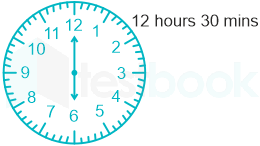
A)

So, from above figure it is clear that when the hands are in opposite direction ,then they are 30 minutes space apart.

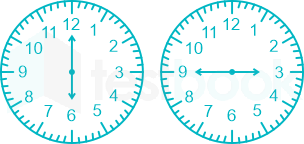
B)

Above figure shows when the hands are in the same straight line and when they are co incident or opposite to each other.

C)Third statement is wrong because if a clock indicates 8:45,when the correct time is 9:00 then, it is said too 15 minutes too slow.(If the clock indicates 9:15 and the correct time is 9:00 then, it is said to be 15 minutes fast.)

Hence, option "3" is correct.

32

In how many years will a sum of 800 at 10% per annum compounded semi annually become 926.10?

  1. ((a))

    5/2 years

  2. ((b))

    3/2 years

  3. ((c))

    2/3 years

  4. ((d))

    4/3 years

Show Answer
Answer: ((b))

3/2 years

Given:

Principal = Rs. 800

Rate = 10%

Amount = 926.10

Formula:

A = P(1 + r/100)t

If interest compounded semi annually, then 

Rate = t/2

Time = 2t

Calculation:

As given interest compounded semi - annually then

Rate = 10/2 = 5%

Time = 2 × t

According to the question

926.1=800[1+5100]2t926.1 = 800[1 + \frac{5}{100}]^{2t}

⇒ [1+120]2t=926.1800[1 + \frac{1}{20}]^{2t} = \frac{926.1}{800}

⇒ (2120)2t=92618000(\frac{21}{20})^{2t} = \frac{9261}{8000}

⇒ (2120)2t=(2120)3(\frac{21}{20})^{2t} = (\frac{21}{20})^3

On Comparing the power

⇒ 2t = 3

⇒ t = 3/2

∴ Required time = 3/2 years

33

Given below are two statements :

Statement I: If a person covers a certain distance at x kmph and an equal distance at y kmph. Then, the average speed during the whole journey is(x+y2xy)\left( {\frac{{x + y}}{{2xy}}} \right)kmph.

Statement II: If the ratio of the speeds of x and y is a:b, then the ratio of the respective time taken by them to cover the same distance is b:a.

In the light of the above statements, choose the correct answer from the options given below :

  1. ((a))

    Both Statement I and Statement II are true

  2. ((b))

    Both Statement I and Statement II are false

  3. ((c))

    Statement I is true but Statement II is false

  4. ((d))

    Statement I is false but Statement II is true

Show Answer
Answer: ((d))

Statement I is false but Statement II is true

Given:

A person covers a certain distance at x kmph

An remaining distance covered by him at y kmph

Ratio of speeds of x and y is a : b 

Formula:

Average Speed = Total distance covered/ Total time taken

Calculation:

Statement I:

Time = 2 hours

Average Speed = x+y2\frac{x + y}{2}

Hence, the statement is incorrect.

Statement II:

x : y = a : b

We know that,

Time is inversely proportional to the speed 

⇒ x : y  = b : a

Hence, the statement is correct.

∴ Statement I is false but statement II is true.

34

"Environmentalists accuse us of blocking the plan to convert Antartica into a World park. In fact nothing could be further from the truth. Antartica is a huge continent teeming with life. It is home to millions of penguins, seals, seabirds and sea lions. Also great schools of finfish and whales inhabit its coastal waters."

Which fallacy is committed in the above argument?

  1. ((a))

    Red Herring

  2. ((b))

    Strawman

  3. ((c))

    Hasty generalization

  4. ((d))

    Slippery slope

Show Answer
Answer: ((a))

Red Herring

Fallacies are common errors in reasoning that will undermine the logic of your argument. Fallacies can be either illegitimate arguments or irrelevant points and are often identified because they lack evidence that supports their claim.

Key Points

  • Fallacies can be committed in many ways. Still, usually, they involve either a mistake in reasoning or the creation of some illusion that makes a bad argument appear good or bad (either).
  • An argument is valid when the truth of the premises guarantees the truth of the conclusion.

 Important Points

  • Red herring: This fallacy is closely associated with missing the point.
  • The arguer diverts the attention of the Reader or Listener by changing the subject to a different but subtly related one.
  • To use the Red Herring fallacy effectively, the arguer must change the original subject of the argument without the Reader or listener noticing it.

Hence in the given example, *"*Environmentalists accuse us of blocking the plan to convert Antarctica into a World park. In fact, nothing could be further from the truth. Antarctica is a huge continent teeming with life. It is home to millions of penguins, seals, seabirds, and sea lions. Also, great schools of finfish and whales inhabit its coastal waters." the fallacy committed is red herring.

Additional Information

  • Strawman: A straw man fallacy occurs when someone takes another person’s argument or point, distorts it or exaggerates it in some kind of extreme way, and then attacks the extreme distortion as if that is really the claim the first person is making.
  • Hasty Generalization: Hasty generalization is a policy that affects inductive generalizations. The fallacy occurs when there is a reasonable likelihood that the sample is not representative of the group. Such a likelihood may arise if the sample is either too small or not when only selected.
  • Slippery Slope: A slippery slope fallacy occurs when someone makes a claim about a series of events that would lead to one major event, usually a bad event. In this fallacy, a person makes a claim that one event leads to another event and so on until we come to some awful conclusion.
35

Given below are two statements :

Statement I : The example (uda\overline{a}haran) is a special feature of the Nya\overline{a}ya syllogism and it illustrates the truth that the universal major premise is the result of a real induction.

Statement II : Induction in Nya\overline{a}ya conception of inference is based on the law of causation and induction and deduction cannot really be separated.

In the light of the above statements, choose the correct answer from the options given below :

  1. ((a))

    Both Statement I and Statement II are true

  2. ((b))

    Both Statement I and Statement II are false

  3. ((c))

    Statement I is true but Statement II is false

  4. ((d))

    Statement I is false but Statement II is true

Show Answer
Answer: ((a))

Both Statement I and Statement II are true

Nyaya school is one of the six astika schools of Indian Philosophy. This school's most significant contributions to Indian philosophy were the systematic development of the theory of logic, methodology, etc

Key Points

  • According to Nyaya Philosophy, nothing is acceptable unless it is in accordance with reason and experience (scientific approach).
  • Nyaya is regarded as a logical thinking technique.

Important Points 

Statement I:  The example (uda\overline{a}haran) is a special feature of the Nyaya syllogism and it illustrates the truth that the universal major premise is the result of a real induction.

  • Inductive reasoning is a method of reasoning in which a body of observations is analyzed to come up with a general principle. It consists of making broad generalizations based on specific observations. Inductive reasoning is distinct from deductive reasoning.
  • If the premises are correct, the conclusion of a deductive argument is certain; in contrast, the truth of the conclusion of an inductive argument is probable, based upon the evidence given.

Thus statement I is true.

Statement II:  Induction in Nyaya's conception of inference is based on the law of causation and induction and deduction cannot really be separated

  • Inference literally means knowledge that follows some other knowledge. Nyāya philosophy considers inference as the second source of valid knowledge.
  • Inferential knowledge can be explained with the typical example of inferring the presence of fire from the perception of smoke.

Thus, this statement II is true.

Hence, both statements I and II are correct.

36

Consider the series "tiger, feline, mammal, animal". Which of the following statement/s is/are true with reference to this series?

(A) It is in order of increasing intension

(B) It is in order of increasing extension

(C) It is in order of decreasing intension

(D) It is in order of decreasing extension

Choose the correct answer from the options given below :

  1. ((a))

    (A) and (D) only

  2. ((b))

    (B) only

  3. ((c))

    (B) and (C) only

  4. ((d))

    (D) only

Show Answer
Answer: ((c))

(B) and (C) only

Logic: tiger, feline, mammal, animal

  • Tigers (Panthera tigris) are mammals of the Felidae family and one of four "big cats" in the panthera genus.
  • They are predatory carnivores and the largest and most powerful of all living cat species.

Kingdom Animalia 

    Class Mammalia Linnaeus

             Family Felidae

                    Species Panthera tigris – Tiger  

Hence, 

(B) It is in order of increasing extension

(C) It is in order of decreasing intension

37

Given below are two statements:

Statement I : An argument form that allows for a substitution instance having true premises and a false conclusion is an invalid form.

Statement II : Any arguments having true premises and a false conclusion is an invalid argument.

In the light of the above statements, choose the correct answer from the options given below :

  1. ((a))

    Both Statement I and Statement II are true

  2. ((b))

    Both Statement I and Statement II are false

  3. ((c))

    Statement I is true but Statement II is false

  4. ((d))

    Statement I is false but Statement II is true

Show Answer
Answer: ((a))

Both Statement I and Statement II are true

A premise is a statement in an argument that provides reason or support for the conclusion. There can be one or many premises in a single argument.

Important PointsStatement  I:  An argument form that allows for a substitution instance having true premises and a false conclusion is an invalid form.

  • A conclusion is a statement in an argument that indicates what the arguer is trying to convince the reader/listener.
  • The argument really does have all true premises and a true conclusion, but still, it is invalid—because it is possible for an argument with this structure to have true premises and a false conclusion.
  • eg: P1: All dogs are mammals. P2: All cats are mammals. C: All cats are dogs. True premises can lead to either a true or a false conclusion in an invalid argument.

Thus the statement I is correct. 

Statement II:  Every argument with true premises and a false conclusion is INVALID.

  • A valid argument cannot possibly have all true premises and a false conclusion.
  • If some argument really does have all true premises and a false conclusion, then it is obviously possible for such an argument to have true premises and a false conclusion.
  • So the argument is invalid.

Thus statement II is correct.

Hence we can conclude that both Statement I and Statement II are true.

38

The Campus Wide Network in a University includes a firewall. Which one of the following is a firewall used for?

  1. ((a))

    Deleting data from a network

  2. ((b))

    Restricting access to a network

  3. ((c))

    Encrypting network data

  4. ((d))

    Collecting transactional data

Show Answer
Answer: ((b))

Restricting access to a network

The institutions of higher learning need to reap the benefits of the internet revolution by integrating ICT into the learning environment.

Key Points

  • The focus is to improve the quality of education and lay a good foundation at the higher learning institution and encourage the institution and its affiliated colleges to share the resources, knowledge content, promotion, and implementation of e-governance, faculty development and exchange of skills.
  • Campus networks are interconnected with high speed Ethernet links operating over optical fiber such as Gigabit Ethernet and 10 Gigabit Ethernet.
  • Tiered hierarchal architecture is used to establish a Campus network with core, distribution & access segments for efficient flow of information & data traffic.

 Important Points

  • A Firewall is a network security device that monitors and filters incoming and outgoing network traffic based on an organization's previously established security policies.
  • At its most basic, a firewall is essentially the barrier that sits between a private internal network and the public Internet.

Hence the Campus Wide Network in a University includes a firewall. The main purpose of using a firewall is to restrict the access.

Additional Information

  • Network encryption is the process of encrypting or encoding data and messages transmitted or communicated over a computer network. It is a broad process that includes various tools, techniques, and standards to ensure that the messages are unreadable when in transit between two or more network nodes.
  • Transactional data, in the context of data management, is the information recorded from transactions.
39

All animals with such and such features are either bisons or buffalos. This animal has those features and it is not a bison. Therefore it is a buffalo. According to Nyāya school this argument exemplifies which one of the following pramāṇas (instrument of knowledge)?

  1. ((a))

    Upamāna (Comparison)

  2. ((b))

    Sabda (Verbal authority)

  3. ((c))

    Arthāpātti (Postulation)

  4. ((d))

    Anumāna (inference)

Show Answer
Answer: ((a))

Upamāna (Comparison)

The Nyaya school holds that there are four valid means of knowledge: perception (pratyaksha), inference (anumana), comparison (upamana), and sound, or testimony (shabda). Invalid knowledge involves memory, doubt, error, and hypothetical argument.

Key Points

  • Nyaya school is one of the six astika schools of Indian Philosophy.
  • This school's most significant contributions to Indian philosophy were the systematic development of the theory of logic, methodology, etc.
  • According to Nyaya's Philosophy, nothing is acceptable unless it is in accordance with reason and experience (scientific approach). Nyaya is regarded as a logical thinking technique.

Important Points

  • Upamana Pramana (Comparison):  It is a kind of knowledge we get by the assumption of similarity between the two different types of knowledge.
  • It is basically based on comparison and not just only perception and assumptions.
  • For example, a person who knows a four-legged animal that barks is called a dog. Therefore, when he goes to a jungle and see a similar-looking animal he can relate that it’s a wild dog that has also four leg and barks.
  • This knowledge is possible when there is an earlier similarity with a particular thing which helps the person to compare both the similar things.

Hence according to the Nyāya school, the given argument exemplifies Upamana Pramana (Comparison)

 Additional Information

  • Sabda (Verbal Testimony ): This is mainly through verbal indication. We get a lot of knowledge through verbal statements, symbols, texts, or words. 
  • A verbal statement must have a valid cause for its information to be true.
  • Arthpatti (Postulation): Arthapatti Pramana, we understand the knowledge which we get through the relation and its implications. It includes supposition, belief, and presumption.
  • We get this type of knowledge either from what we have seen or heard and by pure assumption.
  • Anumana (Inference): Here the knowledge is gained not through any sense organs but through anumana or assumption. We assume knowledge of what we don’t see from what we see.
40

Given below are two statements: One is labeled as Assertion (A) and the other is labeled as Reason (R) :

Assertion (A): A bitmap file format (.BMP) is not suitable for graphics on a website.

Reason (R): Bitmap graphics store information about every individual picture element (pixel) making up an image, thereby giving quite large files.

In the light of the above statements, choose the correct answer from the options given below:

  1. ((a))

    Both (A) and (R) are true and (R) is the correct explanation of (A)

  2. ((b))

    Both (A) and (R) are true but (R) is NOT the correct explanation of (A)

  3. ((c))

    (A) is true but (R) is false

  4. ((d))

    (A) is false but (R) is true

Show Answer
Answer: ((a))

Both (A) and (R) are true and (R) is the correct explanation of (A)

A file format is a standard way that information is encoded for storage in a computer file.

Important Points

Assertion: A bitmap file format (.BMP) is not suitable for graphics on a website.

  • The BMP file format, also known as a bitmap image file, device-independent bitmap file format, and bitmap, is a raster graphics image file format used to store bitmap digital images, independently of the display device, especially on Microsoft Windows and OS/2 operating systems.
  • BMP images are another example of an unsuitable image format for use on the web. BMP images do not compress graphical data.

Thus this assertion is true.

Reason:  Bitmap graphics store information about every individual picture element (pixel) making up an image, thereby giving quite large files.

  • A bitmap is a method by which a display space (such as a graphics image file) is defined, including the color of each of its pixels (or bits). In effect, a bitmap is an array of binary data representing the values of pixels in an image or display.
  • A GIF is an example of a graphics image file that has a bitmap.

       Thus the reason is true.

Hence both (A) and (R) are true and (R) is the correct explanation of (A)

41

Identify the correct order of the following computer storage devices in order of speed of data retrieval from fastest to slowest.

(A) Hard Disk

(B) Main Memory

(C) CD-ROM

Choose the correct answer from the options given below :

  1. ((a))

    (B), (C), (A)

  2. ((b))

    (C), (A), (B)

  3. ((c))

    (A), (C), (B)

  4. ((d))

    (B), (A), (C)

Show Answer
Answer: ((d))

(B), (A), (C)

Storage is a mechanism that enables a computer to retain data, either temporarily or permanently.

  • Storage devices such as flash drives and hard disks are a fundamental component of most digital devices since they allow users to preserve all kinds of information such as videos, documents, pictures and raw data.

Important Points

Hard Disk : 

  • A hard disk drive (HDD), hard disk, hard drive, or fixed disk is an electromechanical data storage device that stores and retrieves digital data using magnetic storage and one or more rigid rapidly rotating platters coated with magnetic material.
  • The platters are paired with magnetic heads, usually arranged on a moving actuator arm, which read and write data to the platter surfaces.

Main Memory : 

  • The main memory in a computer is called Random Access Memory. It is also known as RAM.
  • This is the part of the computer that stores operating system software, software applications, and other information for the central processing unit (CPU) to have fast and direct access when needed to perform tasks.
  • It is called "random access" because the CPU can go directly to any section of main memory, and does not have to go about the process in sequential order.

CD-ROM

  • CD-ROM is a pre-pressed optical compact disc that contains data. Computers can read—but not write or erase—CD-ROMs, i.e. it is a type of read-only memory.
  • Some CDs, called enhanced CDs, hold both computer data and audio with the latter capable of being played on a CD player, while data is only usable on a computer.

Hence the correct order of the computer storage devices in order of speed of data retrieval from fastest to slowest is as follows: main memory, hard disk, and CD-ROM.

Therefore (B), (A), and (C) is the correct answer.

42

Given below are two statements:

Statement I : A copy of the email is sent to a Cc (Carbon copy) address and other recipients can see that address.

Statement II : A copy of the email is sent to a Bcc (Blind carbon copy) address but other recipients cannot see that address.

In the light of the above statements, choose the correct answer from the options given below :

  1. ((a))

    Both Statement I and Statement II are true

  2. ((b))

    Both Statement I and Statement II are false

  3. ((c))

    Statement I is true but Statement II is false

  4. ((d))

    Statement I is false but Statement II is true

Show Answer
Answer: ((a))

Both Statement I and Statement II are true

Electronic mail (email or e-mail) is a method of exchanging messages ("mail") between people using electronic devices.​

Key PointsStatement I: A copy of the email is sent to a Cc (Carbon copy) address and other recipients can see that address.

  • CC simply stands for the familiar term “carbon copy.” In the context of email, a CC  email is a copy sent to an individual other than the main recipient.
  • The CC field allows you to send a copy of the email to any recipient of your choice.
  • In most cases, the CC field is used to keep someone in the loop, or to share the same email with them.

Thus the statement I is true.

Statement  II:  A copy of the email is sent to a Bcc (Blind carbon copy) address but other recipients cannot see that address.

  • BCC stands for “blind carbon copy,” which can be used to send an email to a recipient without the other recipients being able to see it.
  • BCC allows you to hide recipients in email messages. Addresses in the To: field and the CC: (carbon copy) field appear in messages, but users cannot see the addresses of anyone you included in the BCC: field.

Thus this statement II is true.

Hence we can conclude that both statement I and statement II are correct.

Read the following passage and answer question,

Poor self-images of the worst kind are created, or enlarged, when teachers, people in authority or even the general public come in contact with the underprivileged members of the society in a manner that produces inferiority feeling in them. It does not take much imagination to know that the stereotype portrayed would lead to a feeling of inferiority. Another cause of a poor self-image is the tendency to confuse failure in a project with a failure in life. A child who fails a subject in school or who does not make the team, makes the mistake of identifying a single failure with failure in life itself. This is tragically reinforced many times by teachers and /or parents. Once the poor self-image slide starts, the natural tendency is to feed the inferiority feeling. Many people do this when they castigate themselves because they can't remember everything they hear and everybody they meet, which brings us to the cause of an untrained memory. For the moment, there are two warming thoughts which will give you a lot of comfort. First, a perfect memory does not indicate a great mind any more than a huge dictionary, with all the words in it, represents a great piece of literature. Second, the person who cannot remember is infinitely better off than the one who can't forget. These two thoughts are temporarily comforting, but do not hang your hat on them. Actually there is no such thing as a 'good' memory or a 'bad' memory. It is either trained or untrained. The choice of whether you train it or leave it untrained is up to you. One more cause of a self-image is an unrealistic and unfair comparison of experiences. We exaggerate others' successful experience and downgrade our own success. Experience has nothing to do with ability.

43

Poor self-images are the products of:

  1. ((a))

    Group belongingness

  2. ((b))

    Contracted inferiority feelings

  3. ((c))

    Social power equations

  4. ((d))

    Attitudes of teachers

Show Answer
Answer: ((b))

Contracted inferiority feelings

The correct answer is 'Contracted inferiority feelings'

Key Points

Let's look at the excerpt from the passage: ​ 

*"Poor self-images of the worst kind are created, or enlarged, when teachers, people in authority or even the general public come in contact with the underprivileged members of the society in a manner that produces inferiority feeling in them."*​

  • In the given statement, the author is speaking about situations when poor self-images are created.
  • He has suggested that poor self-images are created, or enlarged when privileged members of society produce inferiority feelings among underprivileged members.
  • Hence it is evident that poor self-images are the products of contracted inferiority feelings.

Thus, option 2 is the correct answer.

44

What is the normal reaction of the people to failures?

  1. ((a))

    Ignore the failures

  2. ((b))

    Sympathising with the slide

  3. ((c))

    Projecting a single failure as failure in life

  4. ((d))

    Social ostracisation against failures

Show Answer
Answer: ((c))

Projecting a single failure as failure in life

The correct answer is 'Projecting a single failure as failure in life'

Key Points

Let's look at the excerpt from the passage: ​ 

*"It does not take much imagination to know that the stereotype portrayed would lead to a feeling of inferiority. Another cause of a poor self-image is the tendency to confuse failure in a project with a failure in life."*​

  • In the given statement, the author is speaking about the outlook of people toward failures in life.
  • He has suggested that the cause of a poor self-image is the tendency to confuse failure in a project with a failure in life.
  • Hence according to the author in the given passage, the normal reaction of the people to failures is projecting a single failure as a failure in life.

Thus, option 3 is the correct answer.

45

When people start castigating themselves, they :

  1. ((a))

    Self-feed the inferiority feeling 

  2. ((b))

    Try to ameliorate the suffering

  3. ((c))

    Lose the power of reasoning

  4. ((d))

    Make efforts to improve their images

Show Answer
Answer: ((a))

Self-feed the inferiority feeling 

The correct answer is 'Self-feed the inferiority feeling'

Key Points

Let's look at the excerpt from the passage: ​ 

*"Once the poor self-image slide starts, the natural tendency is to feed the inferiority feeling. Many people do this when they castigate themselves because they can't remember everything they hear and everybody they meet, which brings us to the cause of an untrained memory."*​

  • In the given statement, the author is speaking about the outlook of people toward failures in life.
  • He has suggested that the cause of a poor self-image is the tendency to confuse failure in a project with a failure in life.
  • Hence it is evident from the passage that when people start castigating themselves, they self-feed the inferiority feeling.

Thus, option 1 is the correct answer.

46

A 'great mind' indicates :

  1. ((a))

    Perfect memory

  2. ((b))

    Success in life

  3. ((c))

    The people he/she meets

  4. ((d))

    Trained or untrained mind

Show Answer
Answer: ((d))

Trained or untrained mind

The correct answer is 'Trained or untrained mind'

Key Points

Let's look at the excerpt from the passage: ​ 

"Actually there is no such thing as a 'good' memory or a 'bad' memory. It is either trained or untrained. The choice of whether you train it or leave it untrained is up to you."​

  • In the given statement, the author is trying to emphasize the point that a perfect memory does not indicate a great mind.
  • He has suggested that there is no such thing as a 'good' memory or a 'bad' memory. It is either trained or untrained.
  • Hence it is evident from the passage that a 'great mind' can be a trained or untrained mind.

Thus, option 4 is the correct answer.

47

The passage seeks to focus on the importance of:

  1. ((a))

    Good memory

  2. ((b))

    Untrained mind

  3. ((c))

    Factors determining image self

  4. ((d))

    Experience against ability

Show Answer
Answer: ((c))

Factors determining image self

The correct answer is 'Factors determining self-image.'

Key Points

Let's look at the excerpt from the passage: ​ 

*"The choice of whether you train it or leave it untrained is up to you. One more cause of a self-image is an unrealistic and unfair comparison of experiences. We exaggerate others' successful experiences and downgrade our own success. Experience has nothing to do with ability."*​

  • In the given statement, the author is trying to emphasize the virtues of creating a self-image.
  • In this passage, he has suggested that self-image is an unrealistic and unfair comparison of experiences.
  • Hence the passage seeks to focus on the importance of factors determining the self-image.

Thus, option 3 is the correct answer.

48

Given below are two statements: One is labelled as Assertion (A) and the other is labelled as Reason (R) :

Assertion (A) : The Central Government of our country is trying to increase access to higher education.

Reason (R) : The public-funded universities and colleges can accommodate only a limited number of students.

In the light of the above statements, choose the most appropriate answer from the options given below :

  1. ((a))

    Both (A) and (R) are correct and (R) is the correct explanation of (A)

  2. ((b))

    Both (A) and (R) are correct but (R) is NOT the correct explanation of (A)

  3. ((c))

    (A) is correct but (R) is not correct

  4. ((d))

    (A) is not correct but (R) is correct

Show Answer
Answer: ((b))

Both (A) and (R) are correct but (R) is NOT the correct explanation of (A)

The Department of Higher Education, MoE, is responsible for the overall development of the basic infrastructure of the Higher Education sector, both in terms of policy and planning.

Key PointsUnder a planned development process, the Department looks after the expansion of access and qualitative improvement in the Higher Education, through world-class Universities, Colleges, and Other Institutions

Assertion: The central government of our country is trying to increase access to higher education :

  • The Central Government is planning to increase access to higher education by giving Scholarships, and economic and other funding to the student from the lower strata of the Society.
  • Universities and colleges, in collaboration with EQUIP (Education Quality Upgradation and Inclusion Programme), another initiative of the Government of India, can channel the development of education in the right direction.

Hence assertion is correct. 

Reason: The Public Funded Colleges and Universities can accommodate only limited number of seats:

  • In India there is no limit on the Colleges and universities for admission.
  • Though the seats are fixed, anyone can get admission if they fulfill the criteria of the same.
  • So this is not the reason that Government is trying to increase access to higher education.

Hence Both (A) and (R) are correct but (R) is NOT the correct explanation of (A).

49

Match List I with List II

List IList II
(A)UGC(I)Medicine
(B)AICTE(II)Teacher Education
(C)NCTE(III)General Education
(D)MCI(IV)Technical Education

Choose the correct answer from the options given below:

  1. ((a))

    (A)-(II), (B)-(III), (C)-(I), (D)-(IV)

  2. ((b))

    (A)-(I), (B)-(II), (C)-(IV), (D)-(III)

  3. ((c))

    (A)-(III), (B)-(IV), (C)-(II), (D)- (I)

  4. ((d))

    (A)-(IV), (B)-(I), (C)-(III), (D)-(II)

Show Answer
Answer: ((c))

(A)-(III), (B)-(IV), (C)-(II), (D)- (I)

The University Grants Commission (UGC) is the largest and most prominent organization among these bodies.

Important Points

Statutory bodiesFunctions
UGCThe University Grants Commission (UGC) came into existence on 28th December 1953 and became a statutory Organization of the Government of India by an Act of Parliament in 1956, for the coordination, determination, and maintenance of standards of teaching, examination, and research in university education.
AICTEAll India Council for Technical Education (AICTE) was set up in November 1945 as a national-level apex advisory body to conduct a survey on the facilities available for technical education and to promote development in the country in a coordinated and integrated manner.
NCTENational Council for Teacher Education is a statutory body of the Indian government set up under the National Council for Teacher Education Act, 1993 in 1995 to formally oversee standards, procedures, and processes in the Indian education system.
MCIThe Medical Council of India (MCI) was a statutory body for establishing uniform and high standards of medical education in India until its dissolution on 25 September 2020 when it was replaced by National Medical Commission. The Council granted recognition of medical qualifications, gave accreditation to medical schools, granted registration to medical practitioners, and monitored medical practice in India.

Hence the correct match is (A)-(III), (B)-(IV), (C)-(II), (D)- (I)

50

Given below are two statements :

Statement I: As per the preamble to the constitution, India is a secular country.

Statement II: Setting up educational institutions by religious minority communities is against the constitution.

In the light of the above statements, choose the correct answer from the options given below:

  1. ((a))

    Both Statement I and Statement II are correct.

  2. ((b))

    Both Statement I and Statement II are incorrect.

  3. ((c))

    Statement I is correct but Statement II is incorrect.

  4. ((d))

    Statement I is incorrect but Statement II is correct.

Show Answer
Answer: ((c))

Statement I is correct but Statement II is incorrect.

The Constitution of India is the supreme law of India. The document lays down the framework that demarcates the fundamental political code, structure, procedures, powers, and duties of government institutions and sets out fundamental rights, directive principles, and the duties of citizens. 

Key Points

A preamble is an introductory statement in a document that explains the document’s philosophy and objectives.

Important Points

Statement I: As per the preamble of the constitution, India is a secular country. 

  • It is indicated by the Preamble that the source of authority of the Constitution lies with the people of India.
  • Preamble declares India to be a sovereign, socialist, secular and democratic republic.
  • The objectives stated by the Preamble are to secure justice, liberty, equality to all citizens and promote fraternity to maintain unity and integrity of the nation.
  • The term, secular means that all the religions in India get equal respect, protection, and support from the state.
  • It was incorporated into the Preamble by the 42nd Constitutional Amendment, 1976.

Thus the statement I is correct. 

Statement II: Setting Up an Educational institution for Religious Minorities is Unconstitutional. 

  • Article 29 and 30 of Indian Constitution contain provisions securing rights of minorities and minority-run institutions.
  • Minority institutions have the fundamental right under Article 30 of the Constitution to establish and administer their educational institutions according to their choice.

Thus Statement II is wrong.

Therefore we conclude that statement I is correct but Statement II is incorrect.

Attempt this paper under real exam conditions

Timed interface, section switching, instant scoring, and question-by-question analytics — free.

Start Timed Attempt