Official Paper

UGC NET Paper 1: Held on 3rd Jan 2025 Shift 2 (Previous Year Paper)

50 questions · 60 minutes · with answers · free

Paper 1 (50 questions)

The following table shows the 40% of the number of cameras sold and half of the number of Printers sold by four different shops, namely, A, B, C and D, alongwith the ratio of the number of Cameras to Speakers sold. Based on the data in the table, answer the questions that follow.

Shop-wise Sale Details of Cameras, Printers and Speakers.
Shop40% of the number of Cameras soldHalf of the number of Printers soldRatio of number of Cameras to Speakers sold
A200-5 ∶ 3
B320220-
C-300-
D2401906 ∶ 7


Note :

(1) Total number of Cameras, Printers and Speakers sold by shop A is 1160.

(2) Ratio of number of Cameras to Speakers sold by B is 10 ∶ 7

(3) For shop C, the number of Cameras sold is four times the number of Speakers sold.

(4) Some Values are missing in the table that you are expected to compute, if needed.

1

For shop B, the number of Printers and Speakers sold is _______ % more than the number of cameras sold.

  1. ((a))

    40

  2. ((b))

    25

  3. ((c))

    10

  4. ((d))

    35

Show Answer
Answer: ((b))

25

For shop B; let, number of cameras sold be x : 40100×x=320.\frac{40}{100}× x=320.

x = 800.

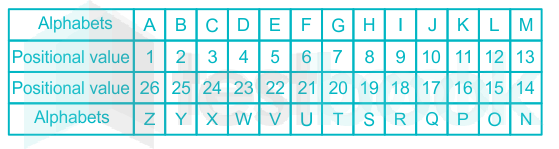
number of printers sold = 220 × 2 = 440.

let, number of speakers sold be y : 107=800y\frac{10}{7}=\frac{800}{y}

y = 560.

reqd percentage = 1000(560+440)800×100=200800×100=25\frac{1000 - (560 + 440)}{800}\times100= \frac{200}{800}\times100 =25%

2

If the average number of Printers and Speakers sold by shop C is 350, then what is the average number of Cameras and Printers sold by shop C?

  1. ((a))

    480

  2. ((b))

    540

  3. ((c))

    420

  4. ((d))

    500

Show Answer
Answer: ((d))

500

number of printers sold = 300 × 2 = 600.

let, the number of speakers sold be x.

600+x2=350.\frac{600+x}{2}=350.

x = 100.

printerspeaker=41\frac{printer}{speaker}=\frac{4}{1}

number of printer = 400.

Avg. = 400+6002=500\frac{400 + 600}{2}=500

3

What is the ratio of the number of speakers sold by shop B to the number of speakers sold by shop D?

  1. ((a))

    9 ∶ 2 

  2. ((b))

    7 ∶ 8

  3. ((c))

    4 ∶ 5

  4. ((d))

    3 ∶ 2

Show Answer
Answer: ((c))

4 ∶ 5

Let, number of speakers sold by B be b;

800b=107\frac{800}{b}=\frac{10}{7}

b = 560.

Let number of speakers sold by D be d;

600d=67\frac{600}{d}=\frac{6}{7}

d = 700.

Reqd. ratio = 560:700

= 4:5.

4

In shop A, if the number of Pen Drives sold is 120% of the average number of Speakers and Cameras sold, then what is the difference between the number of Pen Drives and Printers sold?

  1. ((a))

    120

  2. ((b))

    180

  3. ((c))

    140

  4. ((d))

    160

Show Answer
Answer: ((a))

120

Number of cameras sold by A = 500.

let number of speakers sold be x : 500x=53\frac{500}{x}=\frac{5}{3}

x = 300.

Number of printers sold = 1160-500-300= 360.

Number of pen drive sold = 1.2 × 400 = 480.

difference = 480 - 360 = 120.

5

The total number of Cameras and Printers sold by shop A is _________ more than the number of printers sold by shop D.

  1. ((a))

    480

  2. ((b))

    380

  3. ((c))

    640

  4. ((d))

    300

Show Answer
Answer: ((a))

480

Number of cameras sold by A = 500.

let number of speakers sold be x : 500x=53\frac{500}{x}=\frac{5}{3}

x = 300.

Number of printers sold = 1160-500-300= 360.

Total = 500+360 = 860.

Let number of printers sold by D be x;

x = 190 × 2= 380.

Difference = 860 - 380 = 480.

6

Vikramashila was a renowned centre of

  1. ((a))

    Physical education

  2. ((b))

    Pictorial art

  3. ((c))

    Tantric Buddhism

  4. ((d))

    Culinary art

Show Answer
Answer: ((c))

Tantric Buddhism

The correct answer is - Tantric Buddhism

Key Points

  • Tantric Buddhism
  • Vikramashila was one of the two most important centers of Buddhist learning in ancient India, along with Nalanda.
  • It was established by King Dharmapala of the Pala dynasty in the late 8th or early 9th century.
  • The university specialized in Tantric Buddhism, which is a complex and esoteric form of Buddhism that includes rituals, meditation, and the use of mantras and mudras.
  • Tantric Buddhism is also known as Vajrayana Buddhism and emphasizes the use of rituals and practices for the attainment of enlightenment.

Additional Information

  • Nalanda University
  • Nalanda was another prominent center of learning in ancient India, also supported by the Pala dynasty.
  • It was renowned for its diverse curricula that included subjects like logic, grammar, medicine, and mathematics, in addition to Buddhist studies.
  • Nalanda attracted students from various parts of the world, including China, Korea, Japan, Tibet, Mongolia, Turkey, Sri Lanka, and Southeast Asia.
  • King Dharmapala
  • King Dharmapala was a significant patron of Buddhism and played a crucial role in the establishment and support of Buddhist institutions like Vikramashila and Nalanda.
  • His reign marked a significant period in the history of Buddhism in India, contributing to the spread and development of Buddhist education and practices.
  • Pala Dynasty
  • The Pala dynasty ruled over the eastern Indian subcontinent from the 8th to the 12th century.
  • They were known for their patronage of Buddhism and the establishment of several important Buddhist monasteries and universities.
  • The Palas played a crucial role in the revival and spread of Buddhism in India during their reign.
7

According to Nyaya, Kārana is also known as

  1. ((a))

    Samavayi Karana

  2. ((b))

    Asamvayī Kārana

  3. ((c))

    Nimitta Karana

  4. ((d))

    Sahaj Karana

Show Answer
Answer: ((c))

Nimitta Karana

The correct answer is - Nimitta Karana

Key Points

  • Nimitta Karana
  • In Nyaya philosophy, Nimitta Karana refers to the instrumental cause.
  • It is distinct from the material cause, which is called Samavayi Karana.
  • Nimitta Karana includes factors such as intelligence and will that direct the process of creation or action.
  • For example, a potter is considered the Nimitta Karana of a pot.

Additional Information

  • Samavayi Karana
  • Defined as the inherent cause or the substance in which the effect resides.
  • For instance, clay is the Samavayi Karana of a pot.
  • Asamvayī Kārana
  • Known as the non-inherent cause or the auxiliary condition.
  • For example, the color of the clay used in making a pot.
  • Sahaj Karana
  • This term is less commonly used in Nyaya philosophy.
  • It may refer to a naturally occurring cause but is not a standard classification.
8

Identity the correct chronological sequence of the establishment of the following universities?

A. Bhoj Open University

B. Karnataka State Open University

C. Netaji Subhash Open University

D. Nalanda Open University

E. Yashwant Rao Chavan Open University

Choose the correct answer from the options given below:

  1. ((a))

    A, E, B, D, C

  2. ((b))

    D, E, A, B, C

  3. ((c))

    B, D, E, C, A

  4. ((d))

    C, D, E, A, B

Show Answer
Answer: ((b))

D, E, A, B, C

The correct answer is - D, E, A, B, C

Key Points

  • Nalanda Open University (D)
  • Established in 1987.
  • Located in Patna, Bihar, India.
  • Yashwantrao Chavan Maharashtra Open University (E)
  • Established in 1989.
  • Located in Nashik, Maharashtra, India.
  • Bhoj Open University (A)
  • Established in 1991.
  • Located in Bhopal, Madhya Pradesh, India.
  • Karnataka State Open University (B)
  • Established in 1996.
  • Located in Mysuru, Karnataka, India.
  • Netaji Subhas Open University (C)
  • Established in 1997.
  • Located in Kolkata, West Bengal, India.

Additional Information

  • Open Universities in India
  • They provide flexible learning opportunities for students.
  • Target non-traditional students such as working professionals and individuals unable to attend regular classes.
  • Distance Education
  • Allows learners to study from remote locations.
  • Utilizes various teaching methods including online resources, printed materials, and occasional contact programs.
  • Recognition and Accreditation
  • Open universities in India are recognized by the University Grants Commission (UGC).
  • Ensure that the programs offered meet specific academic standards.
9

A phenomenon in which exposure to a word or concept later makes it easier to recall related information, even when one has no conscious memory of the word or concept, is called

  1. ((a))

    Explicit Memory

  2. ((b))

    Priming

  3. ((c))

    Implicit Memory

  4. ((d))

    Declarative Memory

Show Answer
Answer: ((b))

Priming

The correct answer is - Priming

Key Points

  • Priming
  • Priming is a phenomenon where exposure to a specific stimulus influences a response to a subsequent stimulus.
  • It occurs without conscious awareness, facilitating the recall of related information.
  • For instance, seeing the word "doctor" might make one faster to recognize the word "nurse" due to their related nature.
  • Priming helps in understanding implicit memory where past experiences influence perceptions, thoughts, and actions.

Additional Information

  • Implicit Memory
  • Implicit memory involves recollections that we are not consciously aware of.
  • It includes procedural memory (skills and tasks) and priming.
  • Examples include riding a bike or completing a familiar task without thinking about it.
  • Explicit Memory
  • Explicit memory involves conscious recollection of information.
  • It includes episodic memory (personal experiences) and semantic memory (general knowledge).
  • Examples include recalling a specific event or knowing facts about the world.
  • Declarative Memory
  • Declarative memory is a type of long-term memory involving the recollection of facts and events.
  • It is sometimes used synonymously with explicit memory.
  • Examples include remembering a birthday or the capital of a country.
10

Match the LIST-I with LIST-II

LIST-I (Codes)LIST-II (Description)
A.EncodingI.Many meanings
B.DecodingII.A linguistic system
C.PolysemyIII.Process of creating a message according to a particular code
D.LangueIV.Process of using a code to decipher a message


Choose the correct answer from the options given below:

  1. ((a))

    A - I, B - II, C - III, D - IV

  2. ((b))

    A - II, B - III, C - IV, D - I

  3. ((c))

    A - III, B - IV, C - I, D - II

  4. ((d))

    A - IV, B - I, C - II, D - III

Show Answer
Answer: ((c))

A - III, B - IV, C - I, D - II

The correct answer is - A - III, B - IV, C - I, D - II

Key Points

  • Encoding
  • The process of creating a message according to a particular code. Hence, it is matched with III.
  • Decoding
  • The process of using a code to decipher a message. Hence, it is matched with IV.
  • Polysemy
  • Refers to a word or phrase having many meanings. Hence, it is matched with I.
  • Langue
  • A linguistic system, as described by Ferdinand de Saussure. Hence, it is matched with II.

Additional Information

  • Encoding and Decoding
  • These are fundamental processes in communication theory.
  • Encoding involves formulating the message, while decoding involves interpreting it.
  • Polysemy
  • Common in natural languages, where a single word can have multiple meanings depending on the context.
  • For example, the word "bank" can mean the side of a river or a financial institution.
  • Langue
  • An abstract system of language as defined by structural linguistics.
  • It contrasts with "parole," which refers to the actual use of language in concrete situations.
11

Match the LIST-I with LIST-II

LIST-I (Phrase)LIST-II (ICT Term)
A.An example of high-level computer programming language.I.Mainframe
B.A non-volatile memory that you can read from but not write to.II.LAN
C.These computers are used by airline companies to handle the large volume of data such as ticket reservations.III.Java
D.A type of network where computers are connected together within a home or a companyIV.ROM


Choose the correct answer from the options given below:

  1. ((a))

    A - III, B - I, C - IV, D - II

  2. ((b))

    A - III, B - IV, C - I, D - II

  3. ((c))

    A - II, B - III, C - I, D - IV

  4. ((d))

    A - I, B - II, C - IV, D - III

Show Answer
Answer: ((b))

A - III, B - IV, C - I, D - II

The correct answer is - A - III, B - IV, C - I, D - II

Key Points

  • A - III: Java
  • Java is a high-level, class-based, object-oriented programming language.
  • It is widely used for building enterprise-scale applications, mobile applications, and web applications.
  • B - IV: ROM
  • ROM (Read-Only Memory) is a type of non-volatile memory that can only be read from and not written to.
  • It is used to store firmware or software that is rarely or never updated.
  • C - I: Mainframe
  • Mainframe computers are powerful systems used for large-scale computing purposes that require greater availability and security.
  • They are commonly used by organizations such as banks, airlines, and insurance companies for critical applications, bulk data processing such as census, industry and consumer statistics, and enterprise resource planning.
  • D - II: LAN
  • LAN (Local Area Network) is a network that connects computers within a limited area such as a residence, school, laboratory, or office building.
  • It allows devices to share resources like files and printers and enables communication among connected devices.

Additional Information

  • High-Level Programming Languages
  • Other examples include Python, C++, and C#.
  • They are designed to be easy for humans to read and write.
  • They are abstracted from the details of the computer hardware.
  • Types of Memory
  • RAM (Random Access Memory): Volatile memory used for temporary storage while a computer is running.
  • Cache Memory: A smaller, faster type of volatile memory that provides high-speed data access to the processor.
  • Types of Computers
  • Supercomputers: Extremely fast computers used for scientific simulations, weather forecasting, and complex calculations.
  • Microcomputers: Personal computers used for general computing tasks like internet browsing, document editing, and gaming.
  • Types of Networks
  • WAN (Wide Area Network): A network that spans a large geographic area, such as a city, country, or even the globe.
  • MAN (Metropolitan Area Network): A network that covers a larger geographic area than a LAN but smaller than a WAN, such as a city.
12

Which of the following are contextual variables of mediated violence, listed by W. James Potter?

A. Materialism

B. Religious temperament

C. Reward

D. Identification with media characters

E. Motive

Choose the correct answer from the options given below:

  1. ((a))

    A, B, C Only

  2. ((b))

    B, C, D Only

  3. ((c))

    A, D, E Only

  4. ((d))

    C, D, E Only

Show Answer
Answer: ((d))

C, D, E Only

The correct answer is - C, D, E Only

Key Points

  • Contextual variables of mediated violence are factors that can influence the impact of media violence on individuals.
  • Reward
  • Refers to the positive outcomes or reinforcements that a character receives for violent behavior.
  • Increases the likelihood that viewers will imitate the violent behavior.
  • Identification with media characters
  • Occurs when viewers see themselves in the characters and relate to them.
  • Greater identification can lead to greater impact of the character's actions on the viewer.
  • Motive
  • Refers to the reasons behind the character's violent behavior.
  • Understanding the motive can influence how the viewer perceives and reacts to the violence.

Additional Information

  • Materialism
  • Refers to the importance placed on material possessions and wealth.
  • While it is a significant social factor, it is not specifically listed as a contextual variable of mediated violence by W. James Potter.
  • Religious temperament
  • Refers to an individual's religious beliefs and practices.
  • Though it can impact one's worldview, it is not listed as a contextual variable of mediated violence by W. James Potter.
Code
13

When a person responds the same way to just about every item on a rating scale, this respondent is engaging in

  1. ((a))

    Telescoping

  2. ((b))

    Satisficing

  3. ((c))

    Nondifferentiation

  4. ((d))

    Optimizing

Show Answer
Answer: ((c))

Nondifferentiation

The correct answer is - Nondifferentiation

Key Points

  • Nondifferentiation
  • Occurs when a respondent gives the same response across different items on a rating scale.
  • It indicates a lack of careful consideration of each item, leading to uniform responses.
  • This behavior can introduce bias into survey results, reducing the validity of the data.
  • Common in long or complex surveys where respondents may become fatigued or disinterested.

Additional Information

  • Telescoping
  • Refers to the tendency to recall events as occurring more recently than they actually did.
  • This cognitive bias can affect the accuracy of self-reported data, especially in surveys that ask about past events.
  • Satisficing
  • Occurs when respondents select the first acceptable response rather than the optimal one.
  • Often a result of respondent fatigue or disinterest, leading to less accurate data.
  • Optimizing
  • Involves respondents making an effort to provide the most accurate and thoughtful responses to survey questions.
  • This behavior is desirable as it enhances the reliability and validity of the survey data.
14

Which of the following believed in the technocratic control of media ?

  1. ((a))

    John Milton

  2. ((b))

    Harold Lasswell

  3. ((c))

    Rabindranath Tagore

  4. ((d))

    K. Rama Rau

Show Answer
Answer: ((b))

Harold Lasswell

The correct answer is - Harold Lasswell

Key Points

  • Harold Lasswell
  • Harold Lasswell was a prominent political scientist and communication theorist.
  • He believed in the technocratic control of media, meaning that media should be managed and controlled by experts.
  • Lasswell's ideas were rooted in the belief that media could be used as a tool for social management and political control.
  • He emphasized the importance of media in shaping public opinion and the role of trained professionals in managing this process.

Additional Information

  • Technocratic Control
  • Technocratic control refers to the governance or control of society by technical experts.
  • It implies that decision-making should be based on technical knowledge and expertise rather than political considerations.
  • In the context of media, this means that media operations and content should be managed by individuals with specialized knowledge in communication and media studies.
  • Harold Lasswell's Communication Model
  • Lasswell is well-known for his model of communication, often summarized as "Who says What in Which Channel to Whom with What Effect".
  • This model emphasizes the importance of understanding the communicator, the message, the medium, the audience, and the effect.
  • It is one of the earliest models of communication and has been influential in the study of media and communication.
  • Media as a Tool for Social Control
  • Lasswell believed that media could be a powerful tool for social control, used to influence public opinion and behavior.
  • He argued that in times of crisis, such as war, the media could be used to mobilize the population and maintain social order.
  • This perspective highlights the potential of media to both inform and manipulate audiences.
15

Find the fourth proportional to 4, 9, 12 and third proportional to 16 and 36.

  1. ((a))

    25, 77 respectively

  2. ((b))

    27, 81 respectively

  3. ((c))

    28, 81 respectively

  4. ((d))

    27, 77 respectively

Show Answer
Answer: ((b))

27, 81 respectively

Given:

Numbers: 4, 9, 12, 16, and 36

Formula Used:

Fourth Proportional:

If a, b, c, and d are four numbers, then d is the fourth proportional to a, b, and c if (a : b :: c : d).

Third Proportional:

If a, b, and c are three numbers, then c is the third proportional to a and b if (a : b :: b : c).

Calculations:

The fourth proportional to 4, 9, and 12:

Using the formula for fourth proportional: (4 : 9 :: 12 : d)

So, 4/9 = 12/d

⇒ d = 108/4

⇒ d = 27

Third proportional to 16 and 36:

Using the formula for third proportional: (16 : 36 :: 36 : c)

So, 16/36 = 36/c

⇒ c = (36 × 36)/16

⇒ c = 81

∴ The fourth proportional is 27 and the third proportional is 81.

16

If (L)m represents a number L in base-M number system, then identify the correct ascending order of the following numbers A-D when converted to decimal number system.

A. (11001.11)2

B. (123.2)4

C. (31.5)8

D. (19.6)16

Choose the correct answer from the options given below:

  1. ((a))

    D, A, C, B

  2. ((b))

    B, C, D, A.

  3. ((c))

    C, D, A, B

  4. ((d))

    D, C, A, B

Show Answer
Answer: ((d))

D, C, A, B

The correct answer is - D, C, A, B

Key Points

  • Base-2 to Decimal Conversion
  • (11001.11)2 = 124 + 123 + 022 + 021 + 120 + 12-1 + 1*2-2
  • = 16 + 8 + 1 + 0.5 + 0.25 = 25.75
  • Base-4 to Decimal Conversion
  • (123.2)4 = 142 + 241 + 340 + 24-1
  • = 16 + 8 + 3 + 0.5 = 27.5
  • Base-8 to Decimal Conversion
  • (31.5)8 = 381 + 180 + 5*8-1
  • = 24 + 1 + 0.625 = 25.625
  • Base-16 to Decimal Conversion
  • (19.6)16 = 1161 + 9160 + 6*16-1
  • = 16 + 9 + 0.375 = 25.375

Additional Information

  • Understanding Number Systems
  • Binary System (Base-2)
  • Uses digits 0 and 1.
  • Each digit represents an increasing power of 2.
  • Quaternary System (Base-4)
  • Uses digits 0, 1, 2, and 3.
  • Each digit represents an increasing power of 4.
  • Octal System (Base-8)
  • Uses digits 0 to 7.
  • Each digit represents an increasing power of 8.
  • Hexadecimal System (Base-16)
  • Uses digits 0 to 9 and letters A to F.
  • Each digit represents an increasing power of 16.
  • Conversion Techniques
  • To convert from any base to decimal, multiply each digit by its base raised to the power of its position and sum the results.
  • To convert from decimal to another base, repeatedly divide the decimal number by the new base and record the remainders.
17

Which of the following are physical parameters of water quality?

A. Hardness

B. pH

C. Temperature

D. Turbidity

E. TSS

Choose the correct answer from the options given below:

  1. ((a))

    C, D and E Only

  2. ((b))

    A, B and C Only

  3. ((c))

    B, C and D Only

  4. ((d))

    A, B and E Only

Show Answer
Answer: ((a))

C, D and E Only

The correct answer is - C, D and E Only

Key Points

  • Temperature
  • Temperature affects the solubility of gases in water and the metabolic rates of aquatic organisms.
  • It is a critical physical parameter for determining water quality and ecosystem health.
  • Turbidity
  • Turbidity measures the clarity of water, which is impacted by the presence of suspended particles.
  • High turbidity can reduce light penetration, affecting photosynthesis in aquatic plants.
  • Total Suspended Solids (TSS)
  • TSS represents the concentration of particles suspended in water, which can affect water quality and aquatic life.
  • High levels of TSS can lead to sedimentation and impact the health of aquatic ecosystems.

Additional Information

  • Chemical Parameters
  • pH measures the acidity or alkalinity of water, which is crucial for the survival of aquatic organisms.
  • Hardness indicates the concentration of calcium and magnesium ions, which affects water's ability to form lather with soap.
  • Biological Parameters
  • These include the presence of microorganisms such as bacteria, viruses, and algae, which can impact water quality.
  • Biological indicators are used to assess the health of aquatic ecosystems and the potential for waterborne diseases.
  • Importance of Water Quality
  • Maintaining water quality is essential for supporting diverse aquatic life and ensuring safe drinking water.
  • Regular monitoring of physical, chemical, and biological parameters helps in the management and protection of water resources.
18

Match the LIST-I with LIST-II

LIST-I (Standard Normal Variate (z) Interval)LIST-II (Probability)
A.-1 ≤ Z ≤ + ∞I.~ 0.98
B.-2 ≤ Z ≤ 1II.~ 0.48
C.-∞ ≤ Z ≤ + 2III.~ 0.84
D.0 ≤ Z ≤ + 2IV.~ 0.82


Choose the correct answer from the options given below:

  1. ((a))

    A - III, B - IV, C - I, D - II

  2. ((b))

    A - IV, B - III, C - II, D - I

  3. ((c))

    A - I, B - IV, C - II, D - III

  4. ((d))

    A - II, B - III, C - I, D - IV

Show Answer
Answer: ((a))

A - III, B - IV, C - I, D - II

The correct answer is - A - III, B - IV, C - I, D - II

Key Points

  • -1 ≤ Z ≤ +∞
  • The probability for this interval is approximately 0.84.
  • -2 ≤ Z ≤ 1
  • The probability for this interval is approximately 0.82.
  • -∞ ≤ Z ≤ +2
  • The probability for this interval is approximately 0.98.
  • 0 ≤ Z ≤ +2
  • The probability for this interval is approximately 0.48.

Additional Information

  • Standard Normal Distribution
  • The Standard Normal Distribution is a normal distribution with a mean of 0 and a standard deviation of 1.
  • It is often denoted as Z and follows the notation Z ~ N(0, 1).
  • Properties of Z-Scores
  • Z-scores represent the number of standard deviations a data point is from the mean.
  • A Z-score of 0 indicates that the data point is exactly at the mean.
  • Positive Z-scores indicate data points above the mean, while negative Z-scores indicate data points below the mean.
  • Calculating Probabilities
  • To find the probability associated with a Z-score interval, one can use the Standard Normal Distribution Table or statistical software.
  • These tables provide the cumulative probability from the left up to a given Z-score.
19

The idea of media allowing children to see the world even before they acquire the skill of their roleplay is known as

  1. ((a))

    Early show

  2. ((b))

    Early approach

  3. ((c))

    Early window

  4. ((d))

    Early acculturation

Show Answer
Answer: ((c))

Early window

The correct answer is - Early window

Key Points

  • Early window
  • The term Early window refers to the idea that media allows children to observe and understand the world around them even before they develop the necessary skills to engage in roleplay.
  • This concept is crucial in child development as it provides a way for children to learn about social roles, behaviors, and environmental contexts through media exposure.
  • The Early window theory suggests that media can serve as a window to the world, giving children a vicarious experience that supplements their limited direct interactions.

Additional Information

  • Media's Role in Child Development
  • Media can be an educational tool that helps children learn about different cultures, languages, and social norms.
  • Studies show that educational programs like Sesame Street have positive impacts on children's cognitive and social development.
  • However, it's important to monitor and limit screen time to ensure that children are not exposed to inappropriate content.
  • Roleplay in Child Development
  • Roleplay is a significant activity for children as it helps in developing social skills, understanding social roles, and enhancing creativity.
  • Through roleplay, children can practice and internalize behaviors and norms they observe in their environment and through media.
20

Which of the following are the co-operative learning strategies?

A. Team-pair-solo

B. Fishbowl

C. Think-pair-share

D. Jigsaw

E. Numbered heads together

Choose the correct answer from the options given below:

  1. ((a))

    B, D and E only

  2. ((b))

    A, C and D only

  3. ((c))

    A, B, C, D and E

  4. ((d))

    B, C, D and E only

Show Answer
Answer: ((c))

A, B, C, D and E

The correct answer is - A, B, C, D and E

Key Points

  • Co-operative learning strategies
  • Team-pair-solo - This strategy involves students working together in teams, then pairs, and finally individually to understand and solve problems.
  • Fishbowl - In this strategy, a small group of students discuss a topic while the rest of the class observes, promoting active learning and engagement.
  • Think-pair-share - Students first think about a question individually, then pair up to discuss their thoughts, and finally share their conclusions with the larger group.
  • Jigsaw - This strategy divides a task into segments, with each member of a group responsible for learning one segment and then teaching it to their group members.
  • Numbered heads together - Students are grouped and each assigned a number. They work together to ensure everyone understands the material, and then a number is called to decide which student will represent the group.

Additional Information

  • Benefits of Co-operative Learning
  • Improves academic achievement - Students often achieve higher levels of understanding and retention compared to traditional learning methods.
  • Enhances social skills - Promotes teamwork, communication, and interpersonal skills among students.
  • Increases student engagement - Active participation in group activities keeps students engaged and motivated.
  • Implementation tips
  • Clearly define group tasks and roles to ensure accountability and participation.
  • Provide structured time for reflection and feedback to enhance learning outcomes.
  • Utilize diverse grouping strategies to maximize collaboration and learning opportunities.
21

World Wide Web (WWW) can be best described as

  1. ((a))

    an another name for the Internet

  2. ((b))

    a network of computers accessible by people living in a wide geographical area.

  3. ((c))

    a system of interlinked hypertext documents accessed through the Internet.

  4. ((d))

    A company's private digital workspace.

Show Answer
Answer: ((c))

a system of interlinked hypertext documents accessed through the Internet.

The correct answer is - a system of interlinked hypertext documents accessed through the Internet.

Key Points

  • World Wide Web (WWW)
  • The World Wide Web is a system of interlinked hypertext documents that are accessed via the Internet.
  • These documents are formatted in a markup language called HTML (HyperText Markup Language).
  • Users can navigate between these documents using hyperlinks, which are clickable references to other web documents.

Additional Information

  • Difference between the Internet and the World Wide Web
  • The Internet is a global network of interconnected computers that communicate through standardized protocols.
  • The World Wide Web is a service that operates over the Internet, using it as a medium to share information in the form of web pages.
  • Hypertext and Hyperlinks
  • Hypertext refers to text displayed on a computer or other electronic device with references (hyperlinks) to other text that the reader can immediately access.
  • Hyperlinks are the fundamental building blocks of the World Wide Web, allowing users to navigate from one web page to another.
  • Web Browsers
  • Web browsers are software applications that enable users to access and interact with the World Wide Web.
  • Popular web browsers include Google Chrome, Mozilla Firefox, Microsoft Edge, and Safari.
  • HTML (HyperText Markup Language)
  • HTML is the standard markup language used to create web pages.
  • It structures the content on the web, including text, images, and links to other web pages.
22

Find out the correct chronological sequence of the following

A. British Broadcasting corporation

B. Hip-Hop music

C. Hollywood

D. Hays Code

E. Chomsky's propaganda model

Choose the correct answer from the options given below:

  1. ((a))

    C, A, D, B, E

  2. ((b))

    D, B, A, E, C

  3. ((c))

    E, D, C, A, B

  4. ((d))

    A, E, B, C, D

Show Answer
Answer: ((a))

C, A, D, B, E

The correct answer is - C, A, D, B, E

Key Points

  • C - Hollywood
  • Hollywood emerged as the center of the American film industry in the early 20th century, with the first studio established in 1911.
  • A - British Broadcasting Corporation (BBC)
  • The BBC was established in 1922 as a public service broadcaster in the United Kingdom.
  • D - Hays Code
  • The Hays Code, officially known as the Motion Picture Production Code, was introduced in 1930 to regulate the content of films in the United States.
  • B - Hip-Hop Music
  • Hip-Hop music originated in the 1970s in the Bronx, New York City, as part of the larger cultural movement.
  • E - Chomsky's Propaganda Model
  • Noam Chomsky and Edward S. Herman introduced the Propaganda Model in their book "Manufacturing Consent" in 1988.

Additional Information

  • Hollywood
  • Hollywood is synonymous with the American film industry and has been the birthplace of many iconic movies and stars.
  • British Broadcasting Corporation (BBC)
  • The BBC is renowned for its comprehensive news coverage, educational programs, and entertainment shows.
  • It operates under a Royal Charter and is funded by the television license fee paid by UK households.
  • Hays Code
  • The Hays Code was enforced by the Motion Picture Producers and Distributors of America (MPPDA) and set moral guidelines for films.
  • It remained in effect until the late 1960s when it was replaced by the MPAA film rating system.
  • Hip-Hop Music
  • Hip-Hop encompasses various elements including rap, DJing, graffiti art, and breakdancing.
  • It has grown into a global cultural phenomenon influencing music, fashion, and language.
  • Chomsky's Propaganda Model
  • The Propaganda Model suggests that media serves the interests of dominant, elite groups in society through various filters.
  • It highlights how economic, social, and political factors shape media content and public perception.
23

Match the LIST-I with LIST-II

LIST-I (Intension)LIST-II (Description)
A.SubjectiveI.When a word, phrase is defined in terms of another word or phrase that has the same meaning
B.ObjectiveII.The commonly accepted intension of a term
C.ConventionalIII.Set of all attributes the III. speaker believes to be possessed by the object
D.SynonymousIV.Total set of attributes shared by all the objects in the extension of a term


Choose the correct answer from the options given below:

  1. ((a))

    A - II, B - III, C - I, D - IV

  2. ((b))

    A - I, B - II, C - III, D - IV

  3. ((c))

    A - III, B - IV, C - II, D - I

  4. ((d))

    A - IV, B - I, C - III, D - II

Show Answer
Answer: ((c))

A - III, B - IV, C - II, D - I

The correct answer is - A - III, B - IV, C - II, D - I

Key Points

  • Subjective
  • Set of all attributes the speaker believes to be possessed by the object.
  • Objective
  • Total set of attributes shared by all the objects in the extension of a term.
  • Conventional
  • The commonly accepted intension of a term.
  • Synonymous
  • When a word, phrase is defined in terms of another word or phrase that has the same meaning.

Additional Information

  • Intension
  • Intension of a term refers to the attributes or characteristics that the term connotes.
  • It is crucial to understand how intension differs from extension, which refers to the set of objects the term applies to.
  • Extension
  • Extension of a term involves the set of objects that fall under the term's definition.
  • Understanding extension is essential for correctly categorizing objects based on specific terms.
  • Synonymy
  • Synonymy refers to the relationship between two terms that have the same meaning.
  • This concept is vital for understanding linguistic definitions and avoiding ambiguity.
24

Find the number that can replace the question mark (?) in the series given below:

1, 4, 27, 16, 125, ?, 343

  1. ((a))

    25

  2. ((b))

    64

  3. ((c))

    49

  4. ((d))

    36

Show Answer
Answer: ((d))

36

The logic follows here:

So, the missing term is '36'.

Hence, the correct answer is "Option (4)".

25

The approach to the study of reality that suggests that only knowledge gained through experience and the senses is acceptable, refers to

  1. ((a))

    Symbolic interactionism

  2. ((b))

    Postmodernism

  3. ((c))

    Empiricism

  4. ((d))

    Objectivism

Show Answer
Answer: ((c))

Empiricism

The correct answer is - Empiricism

Key Points

  • Empiricism
  • Empiricism emphasizes that knowledge comes from sensory experience.
  • It relies on observable and measurable evidence as the basis for knowledge.
  • Empiricists argue that all ideas are derived from experience rather than innate ideas.
  • This approach is fundamental in the scientific method, where hypotheses must be tested through experimentation and observation.

Additional Information

  • Symbolic Interactionism
  • A sociological perspective focusing on interpersonal interactions and symbols used in communication.
  • It emphasizes the role of subjective meanings and the importance of social interaction in the formation of self and society.
  • Postmodernism
  • An approach that challenges grand narratives and universal truths, emphasizing pluralism and diversity.
  • Postmodernism is skeptical of objective knowledge and focuses on the relative nature of reality and truth.
  • Objectivism
  • A philosophy developed by Ayn Rand, emphasizing rational self-interest and the pursuit of one's own happiness.
  • Objectivism advocates for objective reality, where facts are independent of feelings, wishes, hopes, or fears.
26

What is the correct sequence, from minimum to maximum, of soot emissions from vehicles running on different types of fuels?

A. CNG fuelled vehicle

B. Petrol fuelled vehicle

C. Diesel fuelled vehicle

D. Hydrogen energy fuelled vehicles

Choose the correct answer from the options given below:

  1. ((a))

    A, D, B, C

  2. ((b))

    A, D, C, B

  3. ((c))

    D, A, B, C

  4. ((d))

    D, A, C, B

Show Answer
Answer: ((c))

D, A, B, C

The correct answer is - D, A, B, C

Key Points

  • Soot Emissions
  • Vehicles running on different types of fuels emit varying amounts of soot, which is a key factor in air pollution.
  • Hydrogen Energy Fuelled Vehicles
  • These vehicles have negligible soot emissions as they produce only water as a byproduct.
  • CNG Fuelled Vehicles
  • Compressed Natural Gas (CNG) vehicles emit very low amounts of soot compared to petrol and diesel vehicles.
  • Petrol Fuelled Vehicles
  • These vehicles emit moderate amounts of soot, higher than CNG but lower than diesel vehicles.
  • Diesel Fuelled Vehicles
  • Diesel vehicles are known for their high soot emissions, contributing significantly to air pollution.

Additional Information

  • Environmental Impact
  • Hydrogen energy is considered a clean energy source with zero emissions of greenhouse gases or pollutants.
  • CNG burns more cleanly than petrol and diesel, producing fewer pollutants, including soot.
  • Petrol engines emit a mix of pollutants, including particulate matter (soot), but generally less than diesel engines.
  • Diesel engines emit higher levels of nitrogen oxides (NOx) and particulate matter (soot), which are harmful to human health and the environment.
  • Regulatory Standards
  • Emission standards for vehicles are set by government agencies to limit the amount of pollutants, including soot, that vehicles can emit.
  • Advancements in technology, such as Diesel Particulate Filters (DPF) and Selective Catalytic Reduction (SCR), are used to reduce soot emissions from diesel engines.
27

Jatin's smartphone has a SIM card installed but Amit's Tablet is without a SIM card. Amit would like to access the internet using Jatin's smartphone network connection. Which of the following could be used to connect the tablet device to the internet?

  1. ((a))

    GPS

  2. ((b))

    Notifications

  3. ((c))

    Tethering

  4. ((d))

    Messaging

Show Answer
Answer: ((c))

Tethering

The correct answer is - Tethering

Key Points

  • Tethering
  • Tethering allows one device (e.g., Jatin's smartphone) to share its internet connection with another device (e.g., Amit's tablet).
  • This can be achieved via Wi-Fi, Bluetooth, or USB connections.
  • By using tethering, Amit's tablet can access the internet through Jatin's smartphone's network connection, even if the tablet itself does not have a SIM card.

Additional Information

  • Other Methods of Internet Sharing
  • Hotspot
  • A Wi-Fi hotspot is a type of tethering where a smartphone creates a wireless network that other devices can join.
  • This method is convenient and allows multiple devices to connect simultaneously.
  • Bluetooth Tethering
  • Involves creating a Bluetooth network between devices to share the internet connection.
  • Typically used when Wi-Fi is not available, but it is generally slower than Wi-Fi tethering.
  • USB Tethering
  • Connects the smartphone and tablet via a USB cable to share the internet connection.
  • This method can offer a more stable connection and faster data transfer rates.
28

Sound or noise is characterized by the following parameters?

A. Pressure

B. Mass

C. Power

D. Quality

E. Intensity

Choose the correct answer from the options given below:

  1. ((a))

    A, B and C Only

  2. ((b))

    B, D and E Only

  3. ((c))

    A, C and E Only

  4. ((d))

    A, C, D and E Only

Show Answer
Answer: ((c))

A, C and E Only

The correct answer is - A, C and E Only

Key Points

  • Pressure
  • Sound is a mechanical wave that propagates through a medium, causing variations in pressure.
  • These pressure variations are detected by our ears and interpreted as sound.
  • Power
  • Sound power is the rate at which sound energy is emitted, reflected, transmitted, or received, per unit time.
  • It is a measure of the energy output of a sound source.
  • Intensity
  • Sound intensity is the sound power per unit area. It describes the energy of the sound wave.
  • It is measured in watts per square meter (W/m²).

Additional Information

  • Mass
  • Mass is not a direct characteristic of sound or noise. It is a property of physical objects, not wave phenomena.
  • Quality
  • Quality, often referred to as timbre, is a subjective characteristic that distinguishes different types of sound that have the same pitch and loudness.
  • It is influenced by the harmonic content and the dynamic characteristics of the sound.
29

With reference to the snapshot of MS-EXCEL worksheet given below, which of the following formule A-E when entered into cell A4 can be used to add the values 10, 20 and 30?

ABC
110
220
330
4
<br>

A. =SUM (A1:A3)

B. =SUM (A1, A3)

C. =A1 + A2 + A3

D. =SUM (A1, A2, A3)

E. =SUM (A1 - A3)

Choose the correct answer from the options given below:

  1. ((a))

    A, C and D Only

  2. ((b))

    B, C and D Only

  3. ((c))

    D and E Only

  4. ((d))

    A, C, D and E Only

Show Answer
Answer: ((a))

A, C and D Only

The correct answer is - A, C and D Only

Key Points

  • Formulas for Adding Values
  • =SUM(A1:A3): This formula adds up all the values in the range A1 to A3.
  • =A1 + A2 + A3: This formula directly adds the values of cells A1, A2, and A3.
  • =SUM(A1, A2, A3): This formula sums the values of cells A1, A2, and A3.
  • These formulas are correct and will yield the sum of 10, 20, and 30, which is 60.

Additional Information

  • Understanding SUM Function
  • The SUM function is used to add up a series of numbers.
  • It can take a range of cells (e.g., A1:A3) or individual cell references (e.g., A1, A2, A3).
  • Incorrect Formulas
  • =SUM(A1, A3): This formula will sum only the values in cells A1 and A3, not A2.
  • =SUM(A1 - A3): This formula will subtract A3 from A1 and then take the sum, which is not correct for this context.
  • Understanding these details helps in correctly utilizing the functions in MS Excel for summing up values.
30

How many 'core national missions' are there in the National Action Plan on Climate Change' ?

  1. ((a))

    5

  2. ((b))

    6

  3. ((c))

    7

  4. ((d))

    8

Show Answer
Answer: ((d))

8

The correct answer is - 8

Key Points

  • National Action Plan on Climate Change (NAPCC)
  • Launched by the Government of India in 2008 to address the challenges posed by climate change.
  • It aims to achieve sustainable development while also addressing climate-related issues.
  • Core National Missions
  • The NAPCC is structured around eight core national missions which represent multi-pronged, long-term, and integrated strategies for achieving key goals in the context of climate change.
  • These missions include:
  • National Solar Mission
  • National Mission for Enhanced Energy Efficiency
  • National Mission on Sustainable Habitat
  • National Water Mission
  • National Mission for Sustaining the Himalayan Ecosystem
  • National Mission for a Green India
  • National Mission for Sustainable Agriculture
  • National Mission on Strategic Knowledge for Climate Change

Additional Information

  • National Solar Mission
  • Aims to promote the development and use of solar energy for power generation and other uses with the ultimate objective of making solar energy competitive with fossil-based energy options.
  • Targets to achieve an installed capacity of 100 GW of solar power by 2022.
  • National Mission for Enhanced Energy Efficiency
  • Focuses on strengthening the market for energy efficiency, which includes creating a conducive regulatory and policy regime for this purpose.
  • Promotes energy efficiency in various sectors including industries, buildings, and appliances.
  • National Water Mission
  • Aims at the conservation of water, minimizing wastage, and ensuring more equitable distribution both across and within states.
  • Focuses on increasing water use efficiency by 20% through regulatory mechanisms and incentives.
31

In a certain code language, "INDORE" is coded as, "KPFQTG". How "CHENNAI" shall be coded in that language?

  1. ((a))

    EIGOPBK

  2. ((b))

    DIFOOBJ

  3. ((c))

    EJGPPCK

  4. ((d))

    KCPPGJE

Show Answer
Answer: ((c))

EJGPPCK

The pattern followed here is:

"INDORE" is coded as, "KPFQTG"

Similarly, 'CHENNAI' will be written as:

So, 'CHENNAI' will be written as 'EJGPPCK'.

Hence, 'Option 3' is the correct answer.

32

Find the value of the expression given below, correct upto 2 decimal places.

(0.96)3(0.1)3(0.96)2+0.096+(0.1)2\frac{(0.96)^{3}-(0.1)^{3}}{(0.96)^{2}+0.096+(0.1)^{2}}

  1. ((a))

    0.84

  2. ((b))

    0.81

  3. ((c))

    0.86

  4. ((d))

    0.82

Show Answer
Answer: ((c))

0.86

Given:

The value of (0.96)3(0.1)3(0.96)2+0.096+(0.1)2\frac{{{{\left( {0.96} \right)}^3} - {{\left( {0.1} \right)}^3}}}{{{{\left( {0.96} \right)}^2} + 0.096 + {{\left( {0.1} \right)}^2}}}{\rm{ }}

Formula Used:

a3b3a2+ab+b2=ab\frac{a^3 - b^3}{a^2 + ab + b^2} = a - b

Calculation:

Here, a = 0.96 and b = 0.1 .

Using the formula:

(0.96)3(0.1)3(0.96)2+(0.96×0.1)+(0.1)2\frac{{(0.96)^3 - (0.1)^3}}{{(0.96)^2 + (0.96 \times 0.1) + (0.1)^2}}

(0.96)3(0.1)3(0.96)2+0.096+(0.1)2\frac{{(0.96)^3 - (0.1)^3}}{{(0.96)^2 + 0.096 + (0.1)^2}}

⇒ 0.96 - 0.1

⇒ 0.86

The correct answer is option 3.

33

Identify the scale(s) of measurement that has/have an absolute zero point

A. Nominal

B. Interval

C. Ratio

D. Ordinal

Choose the correct answer from the options given below:

  1. ((a))

    A and D Only

  2. ((b))

    B and C Only

  3. ((c))

    C Only

  4. ((d))

    B, C and D Only

Show Answer
Answer: ((c))

C Only

The correct answer is - C Only

Key Points

  • Ratio scale
  • The ratio scale is the only scale that has an absolute zero point.
  • An absolute zero point means that the value of zero on this scale indicates the absence of the quantity being measured.
  • Examples of ratio scales include weight, height, and time.

Additional Information

  • Nominal scale
  • The nominal scale classifies data into distinct categories without any order or ranking.
  • Examples include gender, ethnicity, and hair color.
  • Ordinal scale
  • The ordinal scale classifies data into categories that can be ranked or ordered.
  • However, the intervals between the ranks are not necessarily equal.
  • Examples include educational level, customer satisfaction ratings, and letter grades.
  • Interval scale
  • The interval scale classifies data into ordered categories with equal intervals between the categories.
  • However, it does not have an absolute zero point.
  • Examples include temperature scales like Celsius and Fahrenheit.
34

What is the correct sequence of path (from initial to final) of particulate matter exposure to humans?

A. Lungs

B. Soft tissues of organs

C. Blood

D. Inhalation

Choose the correct answer from the options given below:

  1. ((a))

    D, A, B, C

  2. ((b))

    D, A, C, B

  3. ((c))

    A, C, B, D

  4. ((d))

    A, C, D, B

Show Answer
Answer: ((b))

D, A, C, B

The correct answer is - D, A, C, B

Key Points

  • Inhalation
  • The exposure to particulate matter starts with inhalation of the particles present in the air.
  • Lungs
  • After inhalation, the particles enter the lungs, where they can affect respiratory functions.
  • Blood
  • Some particles can move from the lungs into the blood stream, enabling them to be transported throughout the body.
  • Soft tissues of organs
  • Finally, these particles can deposit in the soft tissues of organs, potentially causing health issues.

Additional Information

  • Health Impact
  • Exposure to particulate matter can cause respiratory diseases like asthma and chronic bronchitis.
  • Long-term exposure has been linked to cardiovascular diseases due to particles entering the bloodstream.
  • Particulate matter can also affect other organs, potentially leading to systemic health issues.
  • Particulate Matter Sources
  • Common sources include vehicle emissions, industrial processes, and natural sources like wildfires and dust storms.
  • Efforts to reduce exposure involve controlling emissions and improving air quality standards.
35

The, automatic, often unconscious, transfer of learning to another situation is known as:

  1. ((a))

    Mental set

  2. ((b))

    Low-road transfer

  3. ((c))

    High-road transfer

  4. ((d))

    Memory span

Show Answer
Answer: ((b))

Low-road transfer

The correct answer is - Low-road transfer

Key Points

  • Low-road transfer
  • Refers to the automatic and often unconscious transfer of learned skills or knowledge to a new, similar situation.
  • Occurs without conscious thought, typically in tasks that are well-practiced and familiar.
  • Examples include driving a car with a similar make and model to one you've driven before, or using familiar software applications on different devices.

Additional Information

  • Mental set
  • Refers to a tendency to approach problems in a particular way, often one that has been successful in the past.
  • Can lead to difficulties in solving new problems that require different strategies.
  • High-road transfer
  • Involves the conscious and deliberate application of knowledge and skills to a new and different context.
  • Requires reflective thinking and often involves abstraction and generalization.
  • Memory span
  • Refers to the number of items, usually words or numbers, that a person can hold in working memory at one time.
  • Often measured by tasks such as digit span tests.
36

Match the LIST-I with LIST-II

LIST-I (Document)LIST-II (Recommendation)
A.Macaulay's minuteI.Promotion of Science knowledge among inhabitants
B.Dispatch of 1854II.Establishment of a Sanskrit College at Calcutta
C.Rajaram Mohan Roy MemorandumIII.Establishment of a college in Nadiea
D.Lord Minto's minuteIV.Closure of oriental learning institutions


Choose the correct answer from the options given below:

  1. ((a))

    A - I, B - II, C - III, D - IV

  2. ((b))

    A - II, B - III, C - IV, D - I

  3. ((c))

    A - III, B - IV, C - I, D - II

  4. ((d))

    A - IV, B - I, C - II, D - III

Show Answer
Answer: ((d))

A - IV, B - I, C - II, D - III

The correct answer is - A - IV, B - I, C - II, D - III

Key Points

  • Macaulay's minute - Closure of oriental learning institutions
  • Macaulay's minute in 1835 recommended the promotion of English education and the closure of traditional oriental learning institutions.
  • Dispatch of 1854 - Promotion of Science knowledge among inhabitants
  • The Wood's Dispatch of 1854 emphasized the promotion of science and secular education in India.
  • Rajaram Mohan Roy Memorandum - Establishment of a Sanskrit College at Calcutta
  • Rajaram Mohan Roy's memorandum opposed the establishment of a Sanskrit college at Calcutta, advocating for modern education instead.
  • Lord Minto's minute - Establishment of a college in Nadiea
  • Lord Minto's minute led to the establishment of educational institutions including a college in Nadiea.

Additional Information

  • Macaulay's Minute (1835)
  • The minute proposed the introduction of English as the medium of instruction.
  • It aimed to create a class of anglicized Indians who could serve as cultural intermediaries.
  • Wood's Dispatch (1854)
  • Also known as the "Magna Carta of English Education in India."
  • It recommended the creation of a hierarchy of schools, colleges, and universities.
  • Rajaram Mohan Roy
  • A social reformer who advocated for modern education over traditional education.
  • He played a key role in the establishment of the Hindu College in Calcutta.
  • Lord Minto
  • His contributions to education included the establishment of several colleges in India.
  • His minute aimed at promoting higher education and modern learning.
37

Match the LIST-I with LIST-II

LIST-I (Square of opposition)LIST-II (Result)
A.If 'A' is TrueI.'A' is undetermined; 'I' is True
B.If 'E' is FalseII.'E' is False, 'A' is True
C.If 'I' is TrueIII.'I' is true, 'E' is False
D.If 'O' is FalseIV.'O' is undetermined' 'E' is false


Choose the correct answer from the options given below:

  1. ((a))

    A - I, B - II, C - III, D - IV

  2. ((b))

    A - IV, B - I, C - II, D - III

  3. ((c))

    A - IV, B - III, C - II, D - I

  4. ((d))

    A - III, B - I, C - IV, D - II

Show Answer
Answer: ((d))

A - III, B - I, C - IV, D - II

The correct answer is - A - III, B - I, C - IV, D - II

Key Points

  • Square of opposition
  • The square of opposition is a diagram representing the different ways in which each of the four propositions (A, E, I, O) can relate to each other in terms of their truth values.
  • It helps in understanding the logical relationships between categorical propositions.
  • If 'A' is True
  • 'I' (particular affirmative) must also be true.
  • 'E' (universal negative) must be false.
  • 'O' (particular negative) is undetermined.
  • If 'E' is False
  • 'A' (universal affirmative) is true.
  • 'I' (particular affirmative) must be true.
  • 'O' (particular negative) is false.
  • If 'I' is True
  • 'O' (particular negative) must be false.
  • 'A' (universal affirmative) is undetermined.
  • 'E' (universal negative) is false.
  • If 'O' is False
  • 'A' (universal affirmative) must be true.
  • 'E' (universal negative) is false.
  • 'I' (particular affirmative) is true.

Additional Information

  • Categorical Propositions
  • A (universal affirmative): All S are P
  • E (universal negative): No S are P
  • I (particular affirmative): Some S are P
  • O (particular negative): Some S are not P
  • Relationships in the Square of Opposition
  • Contradictories: A and O, E and I are contradictories; they cannot both be true and cannot both be false.
  • Contraries: A and E are contraries; they cannot both be true, but they can both be false.
  • Subcontraries: I and O are subcontraries; they cannot both be false, but they can both be true.
  • Subalternation: The truth of A implies the truth of I, and the truth of E implies the truth of O. The falsity of I implies the falsity of A, and the falsity of O implies the falsity of E.
38

Match the LIST-I with LIST-II

LIST-ILIST-II
A.Low-road transferI.The transfer of learning that involves thinking about how to apply what has been learned to new situation.
B.High-road transferII.The transfer of learning that involves looking back to a previous situation for information that might help to solve a problem.
C.Forward-reaching transferIII.The transfer of learning from one situation to another that is conscious and effortful.
D.Backward-reaching transferIV.The automatic, often unconscious transfer of learning to another situation.


Choose the correct answer from the options given below:

  1. ((a))

    A - IV, B - III, C - I, D - II

  2. ((b))

    A - III, B - IV, C - I, D - II

  3. ((c))

    A - I, B - III, C - IV, D - II

  4. ((d))

    A - II, B - I, C - III, D - IV

Show Answer
Answer: ((a))

A - IV, B - III, C - I, D - II

The correct answer is - A - IV, B - III, C - I, D - II

Key Points

  • Low-road transfer
  • The automatic, often unconscious transfer of learning to another situation.
  • Typically involves skills or knowledge that can be directly applied without deliberate thought.
  • High-road transfer
  • The transfer of learning from one situation to another that is conscious and effortful.
  • Requires active thinking about how to apply knowledge or skills to a new situation.
  • Forward-reaching transfer
  • The transfer of learning that involves thinking about how to apply what has been learned to new situations.
  • Involves anticipating future situations where current knowledge might be useful.
  • Backward-reaching transfer
  • The transfer of learning that involves looking back to a previous situation for information that might help to solve a problem.
  • Involves recalling past experiences to address current challenges.

Additional Information

  • Transfer of Learning
  • The concept of transfer of learning refers to the ability to apply knowledge or skills learned in one context to new contexts.
  • Understanding the types of transfer can help in designing educational programs that enhance the ability to apply learning effectively.
  • Educational Implications
  • Educators can foster better transfer of learning by encouraging students to actively think about how they can use what they have learned in different situations.
  • Providing varied examples and contexts during teaching can help students make connections and improve transferability.
39

The Banaras Sanskrit college was set up by

  1. ((a))

    Jonathan Duncan

  2. ((b))

    Pandit Madan Mohan Malaviya

  3. ((c))

    Bishop Middleton

  4. ((d))

    Surendranath Banerjee

Show Answer
Answer: ((a))

Jonathan Duncan

The correct answer is - Jonathan Duncan

Key Points

  • Jonathan Duncan
  • Jonathan Duncan was a British administrator who played a crucial role in the establishment of the Banaras Sanskrit College.
  • The college was established in 1791 in Varanasi (Banaras), India.
  • The purpose of the college was to promote the study of Hindu laws and literature.
  • He aimed to preserve and promote traditional Sanskrit scholarship during British rule in India.

Additional Information

  • Banaras Sanskrit College
  • The Banaras Sanskrit College is one of the oldest educational institutions in India dedicated to the study of Sanskrit.
  • It has contributed significantly to the field of Indology and traditional Indian education.
  • The college has produced numerous scholars and has been a center for the promotion of classical Indian knowledge and culture.
  • Jonathan Duncan's Contributions
  • In addition to founding the Banaras Sanskrit College, Jonathan Duncan also served as the Governor of Bombay from 1795 to 1811.
  • He was known for his progressive ideas and efforts to understand and preserve Indian culture and traditions.
  • Duncan's initiatives were part of a broader British policy to engage with and administer their Indian territories by respecting and integrating local traditions and knowledge systems.
40

Which of the following were the recommendations of the Indian Universities Commission, 1902?

A. Adoption of American system of education

B. Establishment of medical universities

C. Reorganization of University government

D. Changes in curricula

E. Changes in the methods of examination

Choose the correct answer from the options given below:

  1. ((a))

    A, B, C Only

  2. ((b))

    B, C, D Only

  3. ((c))

    A, D, E Only

  4. ((d))

    C, D, E Only

Show Answer
Answer: ((d))

C, D, E Only

The correct answer is - 4) C, D, E Only

Key Points

  • Reorganization of University government
  • The Indian Universities Commission of 1902 recommended the reorganization of university governance to improve administrative efficiency.
  • This included restructuring administrative bodies to ensure better management and oversight.
  • Changes in curricula
  • Another significant recommendation was the revision of curricula to make education more relevant and comprehensive.
  • This aimed to modernize the educational content and make it more aligned with contemporary needs.
  • Changes in the methods of examination
  • The Commission also emphasized the need for altering examination methods to better evaluate student learning and competencies.
  • This included implementing more practical and application-based assessment techniques.

Additional Information

  • Indian Universities Commission, 1902
  • The Commission was appointed under the chairmanship of Sir Thomas Raleigh.
  • Its primary objective was to assess and recommend improvements in the higher education system in India.
  • Establishment of medical universities
  • This was not among the key recommendations of the 1902 Commission.
  • Focus was more on general educational reforms rather than specific fields like medical education.
  • Adoption of American system of education
  • The Commission did not recommend adopting the American system of education.
  • The emphasis was on improving and reforming the existing British-influenced educational framework in India.
41

A woman walks 70 meters to the south of her house. She then turns left and walks 30 meters and then again turning to north she walks 40 meters. Now she walks towards her house. In which direction is she walking now?

  1. ((a))

    East

  2. ((b))

    North-East

  3. ((c))

    South-East

  4. ((d))

    North-West

Show Answer
Answer: ((d))

North-West

Given:

A woman walks 70 meters to the south of her house.

She then turns left and walks 30 meters.

Then again turning to the north, she walks 40 meters.

Thus, 'North-West' direction she is walking now.

Hence, "Option 4" is the correct answer.

42

Arrange the following in correct order of their appearance in the APA style of writing a conference presentation reference.

A. Name of conference

B. Year of presentation

C. Last name of author

D. Location of conference

Choose the correct answer from the options given below:

  1. ((a))

    A, B, C, D

  2. ((b))

    A, D, C, B

  3. ((c))

    C, B, A, D

  4. ((d))

    C, A, D, B

Show Answer
Answer: ((c))

C, B, A, D

The correct answer is - C, B, A, D

Key Points

  • Last name of author
  • In APA style, the reference entry starts with the author's last name.
  • Year of presentation
  • The year of the conference presentation follows the author's name, enclosed in parentheses.
  • Name of conference
  • After the year, the title or name of the conference is provided.
  • Location of conference
  • The reference entry concludes with the location where the conference took place.

Additional Information

  • APA style reference for conferences
  • APA style has specific guidelines for citing conference presentations. Following the correct order is crucial for maintaining consistency and clarity.
  • Formatting details
  • Author's last name and initials are followed by the year of presentation in parentheses.
  • The title of the conference presentation, in sentence case, is then mentioned.
  • Details of the conference like the name and location are provided at the end.
  • Example
  • Smith, J. (2021). Title of the conference presentation. Name of Conference, Location.
43

Which of the following is incorrect?

  1. ((a))

    Truth is an attribute of propositions

  2. ((b))

    Validity is an attribute of an argument

  3. ((c))

    Invalidity is an attribute of an argument 

  4. ((d))

    Falsity is an attribute of an argument

Show Answer
Answer: ((d))

Falsity is an attribute of an argument

The correct answer is - Falsity is an attribute of an argument

Key Points

  • Falsity is an attribute of an argument
  • In logic, falsity is an attribute that applies to propositions, not to arguments.
  • An argument is a set of propositions where some propositions (premises) are intended to support another proposition (conclusion).
  • Arguments can be valid or invalid, but individual propositions within the argument can be true or false.

Additional Information

  • Truth and Propositions
  • Truth is a property of propositions or statements, meaning they accurately describe reality.
  • A proposition is said to be true if it corresponds to the way things actually are.
  • Validity and Arguments
  • Validity is a property of arguments, indicating that if the premises are true, the conclusion must also be true.
  • An argument is valid if the logical structure ensures that the conclusion follows necessarily from the premises.
  • Invalidity and Arguments
  • Invalidity is a property of arguments where the conclusion does not logically follow from the premises, even if the premises are true.
44

A teacher wants to create a collaborative learning environment where students can prepare an assignment with the help of each other in a shared document in real time. Which tool would be most suitable/appropriate for this purpose?

  1. ((a))

    Ideaboardz

  2. ((b))

    Google Docs

  3. ((c))

    Screen cast-o-matic

  4. ((d))

    Miro

Show Answer
Answer: ((b))

Google Docs

The correct answer is - Google Docs

Key Points

  • Real-time collaboration
  • Google Docs allows multiple users to collaborate in real-time, enabling students to work together simultaneously.
  • Changes made by any user are immediately visible to all collaborators, ensuring efficient teamwork.
  • Accessibility
  • Google Docs can be accessed from any device with an internet connection, making it easily accessible for all students.
  • Students can access the document from different locations and devices, ensuring flexibility in collaboration.
  • Version control
  • Google Docs automatically saves changes, and its version history feature allows users to track changes and revert to previous versions if needed.
  • Commenting and suggestions
  • Users can add comments and suggestions directly in the document, facilitating communication and feedback.

Additional Information

  • Other collaborative tools
  • Ideaboardz: Useful for brainstorming and organizing ideas but lacks the real-time document editing capabilities of Google Docs.
  • Screen cast-o-matic: Primarily a screen recording tool, not suitable for document collaboration.
  • Miro: Excellent for visual collaboration and whiteboarding, but not specifically designed for text document editing.
  • Integration with other tools
  • Google Docs integrates seamlessly with other Google Workspace tools like Google Drive, Google Sheets, and Google Slides, enhancing productivity.
Code
45

Identify the figure of the following - 'All great scientists are college graduates.

Some professional athletes are college graduates.

Therefore, some professional athletes are great scientists'

  1. ((a))

    Ist figure

  2. ((b))

    IInd figure

  3. ((c))

    IIIrd figure

  4. ((d))

    IVth figure

Show Answer
Answer: ((b))

IInd figure

The correct answer is - IInd figure

Key Points

  • IInd figure
  • The given statement is an example of a syllogism in categorical logic.
  • In this context, the IInd figure is a standard form of syllogistic argument.
  • The structure of the argument is as follows:
  • Major Premise: All great scientists are college graduates.
  • Minor Premise: Some professional athletes are college graduates.
  • Conclusion: Therefore, some professional athletes are great scientists.
  • This structure fits the format of the IInd figure in syllogistic logic.

Additional Information

  • Syllogistic Figures
  • There are four traditional figures in categorical syllogisms:
  • Ist figure: The middle term is the subject in the major premise and the predicate in the minor premise.
  • IInd figure: The middle term is the predicate in both premises.
  • IIIrd figure: The middle term is the subject in both premises.
  • IVth figure: The middle term is the predicate in the major premise and the subject in the minor premise.
  • Understanding these figures is crucial for analyzing the validity of syllogistic arguments.
  • Validity in Syllogisms
  • A syllogism is valid if the conclusion logically follows from the premises.
  • For the syllogism to be valid in the IInd figure, the premises must be structured correctly and follow the rules of categorical logic.

Read the following passage and answer the questions that follow:

Science is the art of organizing and classifying facts. When you wish to make sure you are dealing with facts, seek scientific sources for their testing wherever possible. Men of science have neither a reason nor the inclination to modify or change facts, nor to misrepresent. The scientists are the most accurate thinkers in the world, because they are searching for whatever is there, not for what they would like to find there.

When Madame Curie started out in search of radium, when nobody knew what radium was like, they didn't know how many molecules to the atom, they didn't know where to look for it; she started out with an open mind.

If she hadn't had an open mind, she never would have discovered the existence of radium. She went on the hypothesis through inductive reasoning that there must be a metal known as radium. and by following certain principles of science she eventually isolated that metal and brought it into captivity.

46

To ascertain that one is dealing with facts one should test them by

  1. ((a))

    Being scientific sources

  2. ((b))

    Being guided by one's emotions

  3. ((c))

    Being guided by one's close relatives

  4. ((d))

    fudging facts

Show Answer
Answer: ((a))

Being scientific sources

The correct answer is 'Being scientific sources'.

Key Points

  • The passage emphasizes organizing and classifying facts through science.
  • It suggests that to ensure one is dealing with facts, they should seek scientific sources for testing wherever possible.
  • Men of science have an objective approach, free from personal biases or misrepresentation.
  • The accuracy of scientists' work is emphasized because they search for what is actually there, not for what they want to find.
  • Madame Curie's discovery of radium is used as an example of the importance of an open mind and adherence to scientific principles.

Therefore, the correct answer is 'Option 1'.

Additional Information

  • Option 2: Emotions are not reliable for testing facts.
  • Option 3: Close relatives are not suggested as a source for testing facts.
  • Option 4: Fudging facts goes against the scientific method and accuracy.
47

Science is the art of

  1. ((a))

    Indulging in flights of fancy

  2. ((b))

    Fabricating things

  3. ((c))

    Imagining things

  4. ((d))

    Organizing and classifying facts

Show Answer
Answer: ((d))

Organizing and classifying facts

The correct answer is 'Organizing and classifying facts'.

Key Points

  • The passage clearly states that "Science is the art of organizing and classifying facts."
  • The passage emphasizes the importance of dealing with facts by using scientific sources for testing.
  • Scientists are described as accurate thinkers because they search for whatever is actually there.
  • The passage mentions that scientists do not modify, change, or misrepresent facts.
  • Madame Curie's example highlights the importance of an open mind and the application of scientific principles to discover new elements.

Therefore, the correct answer is 'Option 4'.

Additional Information

  • Option 1: Indulging in flights of fancy is not aligned with the scientific method.
  • Option 2: Fabricating things contradicts the objective nature of science.
  • Option 3: Imagining things is not the primary focus of science as described in the passage.
48

Which of the following is true?

  1. ((a))

    Madame Curie had a closed mind

  2. ((b))

    Madame Curie had a dream about a metal

  3. ((c))

    Madame Curie discovered radium by following the principles of science

  4. ((d))

    Madame Curie already knew what radium was like

Show Answer
Answer: ((c))

Madame Curie discovered radium by following the principles of science

The correct answer is 'Madame Curie discovered radium by following the principles of science'.

Key Points

  • The passage states that Madame Curie started out with an open mind in search of radium.
  • She used inductive reasoning and followed certain scientific principles to hypothesize the existence of radium and eventually isolate it.
  • The passage emphasizes the methodical, scientific approach she took in her discovery.
  • The other options do not accurately represent what is stated in the passage about Madame Curie's discovery.

Therefore, the correct answer is 'Option 3'.

Additional Information

  • Option 1: The passage clearly states that Madame Curie had an open mind, not a closed mind.
  • Option 2: The passage does not mention that she had a dream about a metal; it focuses on her scientific approach.
  • Option 4: The passage states that nobody knew what radium was like when she started her search.
49

Men of science are

  1. ((a))

    Prone to changing facts

  2. ((b))

    Misrepresenting facts

  3. ((c))

    The most accurate thinkers in the world

  4. ((d))

    Prone to think inaccurately

Show Answer
Answer: ((c))

The most accurate thinkers in the world

The correct answer is 'The most accurate thinkers in the world'.

Key Points

  • The passage describes scientists as the most accurate thinkers in the world.
  • Scientists diligently search for facts, rather than what they would prefer to discover.
  • They test facts using scientific sources wherever possible to ensure accuracy.
  • Men of science have no reason or inclination to modify or misrepresent facts.
  • The accurate thinking of scientists is highlighted as their defining quality in the passage.

Therefore, the correct answer is 'Option 3'.

Additional Information

  • Option 1: Men of science are not prone to changing facts, as explicitly mentioned in the passage.
  • Option 2: The passage states that scientists do not misrepresent facts.
  • Option 4: The passage portrays scientists as accurate thinkers, not prone to think inaccurately.
50

Madame Curie discovered

  1. ((a))

    Many metals

  2. ((b))

    Radium

  3. ((c))

    Molecule

  4. ((d))

    Atom

Show Answer
Answer: ((b))

Radium

The correct answer is 'Radium'.

Key Points

  • The passage describes Madame Curie's search for radium.
  • It states that when she started out, no one knew what radium was like.
  • Madame Curie went on the hypothesis that there must be a metal known as radium.
  • She followed scientific principles to eventually isolate radium.
  • The passage clearly emphasizes that her discovery was radium.

Therefore, the correct answer is 'Option 2'.

Additional Information

  • Option 1: The passage does not mention the discovery of many metals by Madame Curie.
  • Option 3: While molecules are mentioned in the passage, they are not the focus of her discovery.
  • Option 4: The atom is discussed in context, but Madame Curie's discovery was specifically radium.

Attempt this paper under real exam conditions

Timed interface, section switching, instant scoring, and question-by-question analytics — free.

Start Timed Attempt