Official Paper

UGC NET Paper 1: Held On 14th June 2023 Shift 1 (Previous Year Paper)

50 questions · 60 minutes · with answers · free

Paper 1 (50 questions)

1

Which of the following are the basic requirements for effective teaching?

A. Teaching only what is included in the curriculum

B. Good communication skills

C. Using a rigid teaching approach

D. Excellent subject knowledge

E. Ability to connect with students

Choose the correct answer from the options given below:

  1. ((a))

    A & C only

  2. ((b))

    C & E only

  3. ((c))

    B, D & E only

  4. ((d))

    A, C & D only

Show Answer
Answer: ((c))

B, D & E only

Effective teaching involves skillfully imparting knowledge and fostering student learning through engaging instruction, clear communication, and a supportive learning environment. 

Key PointsEffective teaching focuses on promoting understanding, critical thinking, and skill development among students to achieve their academic and personal growth.

The basic requirements for effective teaching include

  • having good communication skills to effectively convey information to students,
  • excellent subject knowledge to provide accurate and comprehensive content.
  • the ability to connect with students to create a positive and engaging learning environment.

Additional Information"Teaching only what is included in the curriculum" and "Using a rigid teaching approach," are not considered as basic requirements for effective teaching, as effective educators often go beyond the prescribed curriculum and adapt their teaching methods to suit the needs of their students.

2

What number would replace question mark (?) in the series below? 

1.5, 4, 7.5, 12, 17.5, 24, 31.5, ?

  1. ((a))

    55.5

  2. ((b))

    38

  3. ((c))

    40

  4. ((d))

    45

Show Answer
Answer: ((c))

40

The pattern followed here is:

Hence, the correct answer is "40".

3

The first Education commission of India also adhered to  

  1. ((a))

    The one-language formula 

  2. ((b))

    The two-language formula  

  3. ((c))

    The three-language formula 

  4. ((d))

    The four-language formula 

Show Answer
Answer: ((c))

The three-language formula 

The first Education Commission of India adhered to the three-language formula.

 Key Points

  • The three-language formula, also known as the Tri-lingual policy, was recommended by the first Education Commission of India, chaired by Dr. S. Radhakrishnan in 1948.
  • According to this formula, students in schools should learn three languages:
  • The mother tongue or regional language of the student.
  • Hindi, as the official language of India.
  • English, as an associate official language to promote national and international communication.
  • This formula aimed to ensure a balanced approach to language education, promoting proficiency in the mother tongue while also fostering a deeper understanding of Hindi and English for national and global communication purposes.
4

Given below are two statements:

Statement I: 'The jar does not exist’ is common to all kinds of non-existence.

Statement II: 'The jar will exist’ refers to previous non-existence.

In the light of the above statements. choose the correct answer from the options given below

  1. ((a))

    Both Statement I and Statement II are true 

  2. ((b))

    Both Statement I and Statement II are false 

  3. ((c))

    Statement I is true but Statement II is false 

  4. ((d))

    Statement I is false but Statement II is true 

Show Answer
Answer: ((a))

Both Statement I and Statement II are true 

 Key Points

Statement I: 'The jar does not exist’ is common to all kinds of non-existence. 

  • The phrase 'The jar does not exist' refers to the absence or non-existence of a jar, and it is applicable to all instances where a jar is not present or cannot be found.

The statement I is true. 

Statement II: 'The jar will exist’ refers to previous non-existence.

  • This statement is also true.
  • When we say "The jar will exist," we are implying that the jar currently does not exist but will come into existence in the future.
  • The term "will" indicates a future event, and it presupposes the non-existence of the jar at present.


So, the correct answer is: Both Statement I and Statement II are true.

5

What are the advantages of digital media?

A. Network communication is avoided.

B. People can create and distribute media content.

C. The end-product can be delivered in real time.

D. Reproduction and distribution of information products are less expensive.

E. Online political involvement is of no importance.

Choose the correct answer from the options given below:

  1. ((a))

    A, B, C only

  2. ((b))

    B, C, D only

  3. ((c))

    C, D, E only

  4. ((d))

    A, B, E only

Show Answer
Answer: ((b))

B, C, D only

Digital media refers to electronic content (text, images, videos, etc.) that can be stored, transmitted, and accessed using digital devices and networks.

 Key PointsAdvantages of digital media:

  • People can create and distribute media content, empowering individuals to share their perspectives and creativity.
  • The end product can be delivered in real-time, enabling instant access to information and updates.
  • Reproduction and distribution of information products are less expensive, reducing production costs and increasing accessibility.

Thus B,C, and D are correct options.

 Additional InformationDisadvantages of digital media:

  • Misinformation and fake news can spread rapidly due to the ease of content sharing.
  • Privacy concerns arise as personal data is collected and used for targeted advertising or other purposes.
  • Digital divide may lead to unequal access to information and technology, excluding certain groups from its benefits.
6

Light Water Reactars (LWR) are nuclear reactors

  1. ((a))

    Which use heavy water as a coolant 

  2. ((b))

    Which use graphite rod as moderator 

  3. ((c))

    Which use ordinary water as moderator 

  4. ((d))

    Which use steam as moderator 

Show Answer
Answer: ((c))

Which use ordinary water as moderator 

The light-water reactor (LWR) is a type of thermal-neutron reactor that uses ordinary water, as opposed to heavy water, as both its coolant and neutron moderator.

Key Points

  • The water serves the dual purpose of cooling the reactor core and slowing down the neutrons produced during nuclear fission reactions, making them more likely to induce further fission.
  • This enables a self-sustaining chain reaction and helps regulate the nuclear reactions within the reactor core.
  • The most common types of LWRs are Pressurized Water Reactors (PWR) and Boiling Water Reactors (BWR).

Thus, LWRs are a type of nuclear reactor that uses regular or ordinary water as both a coolant and a moderator.

7

Which of the following are the benefits of collaborative learning environment?

A. Improved communication skills

B. Decreased understanding of different perspectives

C. Increased motivation

D. More opportunities for personal feedback

E. Enhanced problem solving abilities

Choose the correct answer from the options given below:

  1. ((a))

    B, C & D only

  2. ((b))

    A & E only

  3. ((c))

    A, C, D & E only

  4. ((d))

    A, B & D only

Show Answer
Answer: ((c))

A, C, D & E only

Collaborative learning is an educational approach where students actively work together in groups or teams to solve problems, complete tasks, and share knowledge, fostering a cooperative and interactive learning environment.

Key PointsCollaborative learning encourages peer-to-peer interaction, enhancing critical thinking, communication, and social skills while promoting a deeper understanding of the subject matter.

Benefits of a collaborative learning environment include:

  • Improved communication skills, as students interact and exchange ideas with peers.
  • Increased motivation, as collaboration fosters a sense of teamwork and shared responsibility for learning.
  • More opportunities for personal feedback, as students receive input from both peers and instructors.
  • Enhanced problem-solving abilities, as collaborative learning encourages diverse perspectives and approaches to tackle challenges.

 Additional Information"Decreased understanding of different perspectives," is not a benefit of collaborative learning. In fact, collaborative learning promotes a better understanding of different perspectives by encouraging students to engage in discussions and consider various viewpoints.

8

Given below are two statements:

Statement I: Shareware is a software that the users can try out for a trial period only. before being charged.

Statement II: Freeware is a software that the users can download free of charge. but they cannot modify the source code in any way.

In the light of the above statements. choose the correct answer from the options given below

  1. ((a))

    Both Statement I and Statement II are true 

  2. ((b))

    Both Statement I and Statement II are false 

  3. ((c))

    Statement I is true but Statement II is false 

  4. ((d))

    Statement I is false but Statement II is true 

Show Answer
Answer: ((a))

Both Statement I and Statement II are true 

 Key Points

Statement I: Shareware is a software that the users can try out for a trial period only. before being charged.

  • This statement is true because shareware is a type of software that is distributed for free, but the users are encouraged to pay a registration fee if they decide to keep using the software after the trial period.
  • The trial period usually lasts for a few weeks or months, and it allows the users to try out the software and see if they like it. If they do, they can then pay a registration fee to unlock the full version of the software.

Statement II: Freeware is a software that the users can download free of charge. but they cannot modify the source code in any way.

  • This statement is also true because freeware is a type of software that is distributed for free, but the users are not allowed to modify the source code.
  • This means that they cannot change the way the software works. The source code is the original code that was written by the software developers, and it is usually not available to the public.


Thus, The correct answer is 1, both Statement I and Statement II are true.

9

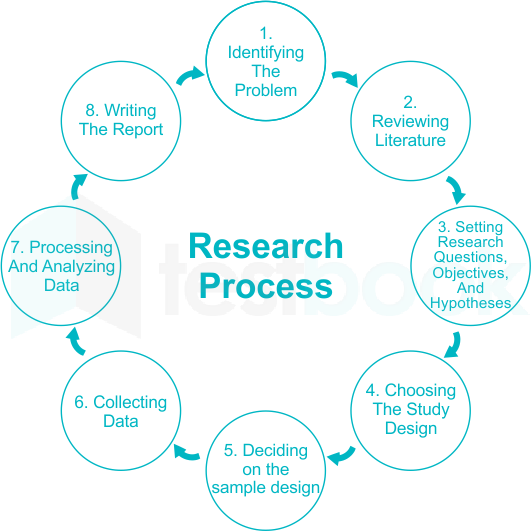
Arrange the following steps involved in a research process in correct order

A. Collecting the data

B. Reviewing the literature

C. Reporting the research outcome

D. Identifying a research problem

E. Analyzing and interpreting the data

Choose the correct answer from the options given below:

  1. ((a))

    A, D, B, E, C

  2. ((b))

    D, A, B, C, E

  3. ((c))

    B, D, A, E, C

  4. ((d))

    D, B, A, E, C

Show Answer
Answer: ((d))

D, B, A, E, C

 Key Points

  • Identifying a research problem: In this initial step, researchers define and articulate the specific topic or issue they want to investigate.
  • It involves recognizing gaps in existing knowledge or areas requiring further exploration.
  • Reviewing the literature: Researchers conduct a comprehensive review of existing literature, scholarly articles, and studies related to their research problem.
  • This step helps them gain a deeper understanding of the topic, identify existing theories and findings, and determine the context for their own research.
  • Collecting the data: In this phase, researchers gather relevant data through various methods such as surveys, experiments, interviews, or observations.
  • Data collection ensures that researchers have the necessary information to address their research problem.
  • Analyzing and interpreting the data: Once the data is collected, researchers analyze and process it using statistical or qualitative techniques to draw meaningful insights.
  • This step helps in identifying patterns, trends, or relationships in the data, enabling researchers to answer their research questions.
  • Reporting the research outcome: The final step involves presenting the research findings, analysis, and conclusions to the academic community or relevant stakeholders.
  • Researchers document their results in a research paper, thesis, or report, providing a clear and comprehensive account of the study's outcomes and implications.

[

](https://www.google.co.in/url?sa=i&url=https%3A%2F%2Ftestbook.com%2Fquestion-answer%2Farrange-the-steps-of-research-in-the-sequence-in-w--5ee0d63be0e7da0d092ee248&psig=AOvVaw0SY4HAcjZQP065S5HD97Sg&ust=1689831350175000&source=images&cd=vfe&opi=89978449&ved=0CBEQjRxqFwoTCKDok7yGmoADFQAAAAAdAAAAABAE)

10

Feedback is immediate in _______ communication. 

  1. ((a))

    Print

  2. ((b))

    Broadcast

  3. ((c))

    Top-down

  4. ((d))

    Face-to-face

Show Answer
Answer: ((d))

Face-to-face

Feedback is the response or reaction received by the sender from the receiver after the communication process.

 Key Points

  • Face-to-face communication is a direct form of interaction where individuals communicate in person, enabling real-time exchange of verbal and non-verbal cues for immediate feedback and better understanding.
  • In face-to-face communication, feedback is immediate as both parties can observe verbal and non-verbal cues, enabling quick clarification and adjustment to the message, fostering effective and efficient communication.

Thus, Feedback is immediate in face-to-face communication. 

 Additional InformationPrint communication: Involves written or visual content published in newspapers, magazines, brochures, or any static medium without real-time interaction.

Broadcast communication: Involves the dissemination of information through radio, television, or internet platforms, allowing one-to-many communication without immediate feedback.

Top-down communication: A hierarchical communication approach where information flows from higher authorities or management to lower-level employees without significant upward feedback, often used in organizations.

11

Which of the following factors affect mediated persuasion? 

A. Extended media reach 

B. Round-the-clock communication 

C. Media differences 

D. Audience fragmentation 

E. Message characteristics 

Choose the correct answer from the options given below:

  1. ((a))

    A, B, C only

  2. ((b))

    B, C, D only

  3. ((c))

    C, D, E only

  4. ((d))

    A, B, E only

Show Answer
Answer: ((c))

C, D, E only

The correct answer is 3, C, D, and E only.

Key Points The factors that affect mediated persuasion are:

  • Media differences: 
  • This refers to the different ways in which different media can be used to persuade people.
  • For example, television is more effective for emotional appeals, while print media is more effective for factual appeals.
  • Audience fragmentation
  • This refers to the increasing number of ways in which people can access media content.
  • This can make it more difficult to reach a specific audience with a persuasive message.
  • Message characteristics: 
  • This refers to the content of the message, as well as the way in which it is delivered.
  • The message characteristics can have a significant impact on the effectiveness of the persuasion attempt.

The other factors listed, extended media reach and round-the-clock communication, are also important, but they are not as directly related to mediated persuasion.

  • Extended media reach refers to the ability of mediated messages to reach a large number of people.
  • Round-the-clock communication refers to the ability of mediated messages to be communicated 24 hours a day, 7 days a week.


Therefore, the factors that most directly affect mediated persuasion are media differences, audience fragmentation, and message characteristics.

12

A man travels from his home to his office at a speed of 4 km/h and reaches his office 30 minutes late. If his speed had been 6 km/h. he would have reached office 5 minutes early. Find the distance of his office from his home. 

  1. ((a))

    8.5 km

  2. ((b))

    7 km

  3. ((c))

    8 km

  4. ((d))

    9 km

Show Answer
Answer: ((b))

7 km

Shortcut Trick

Distance = [ (Product of Speeds) ÷ (Difference of Speeds) ] × Total Time Difference

Time Difference = 30 min (late) + 5 min (early) = 35 min = 35/60 hours

Distance = [ (4 × 6) ÷ (6 − 4) ] × (35/60)

Distance = (24 ÷ 2) × (7/12) = 12 × (7/12) = 7 km

∴ The correct answer is 7 km.

Alternate Method

Given:

Speed1 (S1) = 4 km/h (Late by 30 min)

Speed2 (S2) = 6 km/h (Early by 5 min)

Formula Used:

Since Distance is constant, Speed is inversely proportional to Time (S ∝ 1/T).

Calculations:

Ratio of Speeds (S1 : S2) = 4 : 6 = 2 : 3

Ratio of Times (T1 : T2) = 3 : 2

⇒ Difference in time units = 3 − 2 = 1 unit

⇒ Actual time difference = 30 min + 5 min = 35 min

⇒ 1 unit = 35 min

⇒ Time taken at 4 km/h (T1) = 3 units = 3 × 35 = 105 min

⇒ T1 in hours = 105 ÷ 60 = 7/4 hours

Distance = Speed1 × T1 = 4 × (7/4) = 7 km

∴ The correct answer is 7 km.

Additional Information

Average Speed

When a person covers two equal distances at speeds x and y, the Average Speed = 2xy ÷ (x + y).

Relative Speed

When two objects move in the Same Direction, Relative Speed = S1 − S2. When they move in Opposite Directions, Relative Speed = S1 + S2.

Unit Conversion

To convert speed from km/h to m/s, multiply by 5/18. To convert from m/s to km/h, multiply by 18/5.

13

Given below are two statements:

Statement I: The Upanayana ceremony which marked the initiation of a child into a study of the Vedas was performed for boys as well as for girls.

Statement II: Both boys and girls received education in 'Ashrams' and 'Gurukulas' in ancient India.

In the light of the above statements, choose the correct answer from the options given below

  1. ((a))

    Both Statement I and Statement II are true 

  2. ((b))

    Both Statement I and Statement II are false 

  3. ((c))

    Statement I is true but Statement II is false 

  4. ((d))

    Statement I is false but Statement II is true 

Show Answer
Answer: ((a))

Both Statement I and Statement II are true 

Statement I: The Upanayana ceremony which marked the initiation of a child into a study of the Vedas was performed for boys as well as for girls.

  • There is evidence from ancient texts such as the Harita Dharmasutras, Asvalayana Grhya Sutra, and Yama Smriti that girls could also undergo the Upanayana ceremony and were recognized as Vedic students.
  • These girls were known as Brahmavadinis and wore a sacred thread or upper garment over their left shoulder.

Thus, Statement I is True,

Statement II: Both boys and girls received education in 'Ashrams' and 'Gurukulas' in ancient India.

  • In ancient India, both boys and girls had opportunities for education in ashrams and gurukulas, but the education provided to girls was different from that of boys.
  • While boys received Vedic education in gurukulas, girls received education in various arts, crafts, domestic skills, and religious rituals at home or in specialized institutions called gurukulas or gharanas.
  • As both boys and girls had access to education, but the type of education they received differed based on gender roles and societal norms during ancient times in India.

Thus, Statement II is true.

14

In the light of nature of reasoning and argument pick out the incorrect statement(s).

A. An invalid argument can have any combinations of truth or falsity in the premise or conclusion

B. No valid argument can have true premises and a false conclusion

C. Deductive arguments can be 'almost valid’

D. Valid does not mean true.

Choose the correct answer from the options given below:

  1. ((a))

    A & B

  2. ((b))

    B & C

  3. ((c))

    C

  4. ((d))

    D

Show Answer
Answer: ((c))

C

 Key Points

  • An invalid argument can have any combinations of truth or falsity in the premise or conclusion: This statement is true.
  • An invalid argument can have premises and conclusions that are either true or false, or any combination thereof.
  • No valid argument can have true premises and a false conclusion: This statement is true.
  • In a valid argument, if all the premises are true, the conclusion must also be true.
  • If a valid argument has true premises, the conclusion cannot be false.
  • Deductive arguments can be 'almost valid’: This statement is incorrect.
  • A deductive argument is either valid or invalid.
  • There is no notion of an "almost valid" deductive argument.
  • An argument is either valid, meaning the conclusion follows logically from the premises, or invalid, meaning the conclusion does not logically follow from the premises.
  • Valid does not mean true: This statement is true.
  • Validity refers to the logical structure of an argument, meaning that if the premises are true, the conclusion must also be true.

Thus, the correct answer is Deductive arguments can be 'almost valid.’

15

Which of the following is a major advantage of online learning over offline learning? 

  1. ((a))

    Limited access 

  2. ((b))

    Flexibility 

  3. ((c))

    High cost 

  4. ((d))

    Inter-activity 

Show Answer
Answer: ((b))

Flexibility 

Online learning: Education delivered over the internet, enabling flexibility and accessibility for students.

Key PointsOnline learning offers

  • greater flexibility in terms of time and location,
  • allowing students to access course materials and participate in classes from anywhere with an internet connection,
  • enabling them to study at their convenience and adapt learning to their individual schedules.

 Additional InformationOffline learning may have limitations in terms of time and location, making it less flexible compared to online learning options.

16

If man invested Rs. 20,000 in some shares in the ratio 2 ∶ 3 ∶ 5 which pay dividends of 10%, 30% and 20%, respectively. on the investments in that year. Find the total dividend income of the man. 

  1. ((a))

    Rs. 4200

  2. ((b))

    Rs. 4500

  3. ((c))

    Rs. 4800

  4. ((d))

    Rs. 5000

Show Answer
Answer: ((a))

Rs. 4200

Calculation:

The sum of money invested at 10% is = 2/10 × 20000 = 4000, then after 1year dividend will be 4000 × 10/100 = 400

The sum of money invested at 30% is = 3/10 × 20000 = 6000, then after 1year dividend will be 6000 × 30/100 = 1800

The sum of money invested at 20% is = 5/10 × 20000 = 10000, then after 1year dividend will be 10000 × 20/100 = 2000

The total dividend income of the man = (400 + 1800 + 2000) = Rs. 4200

∴ The correct answer is Rs. 4200

17

Given below are two statements:

Statement I: Biomagnification occurs when the toxic burden of large number of organisms at higher trophic level is accumulated and concentrated in the organisms at lower trophic level.

Statement II: The effect of toxins are magnified in the environment through food webs.

In the light of the above statements. choose the correct answer from the options given below

  1. ((a))

    Both Statement I and Statement II are true 

  2. ((b))

    Both Statement I and Statement II are false 

  3. ((c))

    Statement I is true but Statement II is false 

  4. ((d))

    Statement I is false but Statement II is true 

Show Answer
Answer: ((d))

Statement I is false but Statement II is true 

 Key Points

Statement I: Biomagnification occurs when the toxic burden of large number of organisms at higher trophic level is accumulated and concentrated in the organisms at lower trophic level.

  • In a biomagnification process, pollutants or toxins that are present in the environment are absorbed by small organisms at lower trophic levels.
  • As these organisms are consumed by predators at higher trophic levels, the pollutants accumulate and become more concentrated in the predators' bodies.
  • This accumulation happens because the predators consume many of the lower-level organisms, each containing a small amount of the pollutant, resulting in a higher concentration at each level of the food chain.
  • Thus, the toxic burden of certain pollutants increases and becomes more concentrated as it moves up the food chain from lower trophic levels to higher trophic levels.

Thus statement I is false.

Statement II: The effect of toxins are magnified in the environment through food webs.

  • The effect of toxins can be magnified in the environment through food webs, a process known as biomagnification.
  • Biomagnification occurs when certain pollutants or toxins, such as heavy metals or persistent organic pollutants, are ingested by organisms at lower trophic levels in a food chain.
  • As these organisms are consumed by predators at higher trophic levels, the toxins accumulate and become more concentrated in the predators' bodies.
  • This concentration of toxins increases at each trophic level as the predator consumes multiple lower-level organisms, each containing some amount of the pollutant.

Thus, Statement II is true.

18

Given below are two statements:

Statement I: The purpose of a blind study is to prevent the participants from figuring out what the experimental wants.

Statement II: Interaction between the experimenter and the participants is always beneficial in social science research.

In the light of the above statements. choose the correct answer from the options given below

  1. ((a))

    Both Statement I and Statement II are true 

  2. ((b))

    Both Statement I and Statement II are false 

  3. ((c))

    Statement I is true but Statement II is false 

  4. ((d))

    Statement I is false but Statement II is true 

Show Answer
Answer: ((c))

Statement I is true but Statement II is false 

The correct answer is 3, Statement I is true but Statement II is false.

Key PointsStatement I: The purpose of a blind study is to prevent the participants from figuring out what the experimental wants.

  • This statement is true.
  • In a blind study, the participants do not know which group they are in, the experimental group or the control group.
  • This is done to prevent the participants' expectations from influencing the results of the study.

Statement II: Interaction between the experimenter and the participants is always beneficial in social science research.

  • This statement is false.
  • In some cases, interaction between the experimenter and the participants can bias the results of the study.
  • For example, if the experimenter knows which group the participant is in, they may treat the participants differently, which could affect the results.

Therefore, Statement I is true but Statement II is false.

19

Given below are two statements: one is labelled as Assertion A and other is labelled as Reason R

Assertion A: Experimental research allows you to eliminate the influence of many extraneous factors.

Reason R: In experimental research variables are actively manipulated and environment is as controlled as possible

In the light of the above statements. Choose the correct answer from the options given below:

  1. ((a))

    Both A and R are true and R is the correct explanation of A 

  2. ((b))

    Both A and R are true and R is NOT the correct explanation of A 

  3. ((c))

    A is true but R is false 

  4. ((d))

    A is false but R is true  

Show Answer
Answer: ((a))

Both A and R are true and R is the correct explanation of A 

 Key Points

Assertion A: Experimental research allows you to eliminate the influence of many extraneous factors.

  • Experimental research is a scientific method where researchers actively manipulate one or more independent variables while controlling extraneous variables to study their impact on a dependent variable.
  • By doing so, experimental researchers can establish causal relationships and gain greater control over the study's conditions, reducing the influence of unrelated factors on the observed outcomes.
  • Assertion is true.

Reason R: In experimental research, variables are actively manipulated, and the environment is as controlled as possible.

  • In experimental research, researchers intentionally manipulate the independent variables to observe their effects on the dependent variable.
  • Additionally, they take rigorous measures to control the environment and eliminate confounding variables that could interfere with the study's outcomes.
  • By controlling these aspects, researchers can isolate the true effects of the variables they are studying.
  • Thus, reason is true.

Thus, Experimental research's effectiveness lies in its ability to actively manipulate variables and tightly control the study's environment, allowing researchers to establish cause-and-effect relationships and minimize the impact of extraneous factors on the results.

Both A and R are true and R is the correct explanation of A

20

The property of data such that research results apply to situations beyond the particular sample of individuals/ items observed in a single research setting, refers to 

  1. ((a))

    Internal Validity 

  2. ((b))

    Convergent Validity 

  3. ((c))

    Divergent Validity 

  4. ((d))

    External Validity 

Show Answer
Answer: ((d))

External Validity 

 Key Points

External validity refers to the extent to which research findings can be generalized or applied to populations, settings, and situations beyond the specific sample and conditions studied in a research study.

  • In other words, it assesses the degree to which the results of a study are applicable to the real world.
  • When a study has high external validity, its conclusions can be confidently extended to a broader population or different contexts, enhancing the relevance and practical implications of the research.
  • Researchers aim to achieve external validity by using representative samples, diverse settings, and realistic research conditions that reflect real-world scenarios.
  • Maintaining external validity is crucial for ensuring that research findings have meaningful and widespread implications, making them more valuable for decision-making, policy formulation, and general knowledge advancement.

Thus, the property of data such that research results apply to situations beyond the particular sample of individuals/ items observed in a single research setting, refers to external Validity.

 Additional InformationInternal Validity: The degree to which a study accurately measures the relationship between variables without interference from other factors.

Convergent Validity: The extent to which different methods or measures used to assess the same construct in a study produce similar or consistent results.

Divergent Validity: The degree to which different methods or measures used to assess different constructs in a study produce distinct or unrelated results.

21

Given below are two statements:

Statement I: Exposure to noise pollution adversely affects the physiological health of a person.

Statement II: Exposure to noise pollution adversely affects the psychological health of a person.

In the light of the above statements. choose the correct answer from the options given below

  1. ((a))

    Both Statement I and Statement II are true 

  2. ((b))

    Both Statement I and Statement II are false 

  3. ((c))

    Statement I is true but Statement II is false 

  4. ((d))

    Statement I is false but Statement II is true 

Show Answer
Answer: ((a))

Both Statement I and Statement II are true 

 Key PointsStatement I: Exposure to noise pollution adversely affects the physiological health of a person.

  • Exposure to noise pollution has adverse effects on physiological health.
  • Prolonged exposure to loud and disruptive sounds can lead to hearing loss, cardiovascular problems, sleep disturbances, mental health issues, and cognitive impairment.
  • To mitigate these health risks, measures such as noise regulations, soundproofing, and public awareness campaigns are essential to create quieter and healthier environments.

The statement I is true.

Statement II: Exposure to noise pollution adversely affects the psychological health of a person.

  • Exposure to noise pollution can indeed adversely affect the psychological health of a person.
  • Prolonged or excessive exposure to loud and disruptive sounds can lead to stress, anxiety, irritability, and even depression.
  • Noise pollution can disrupt sleep patterns, hinder concentration and productivity, and create an overall sense of unease and discomfort.
  • Psychological well-being is closely linked to environmental factors, and noise pollution can significantly impact a person's mental health and quality of life.
  • Implementing measures to reduce noise pollution can have positive effects on psychological health and contribute to a healthier and more peaceful living environment.

 Thus, Both Statement I and Statement II are true ​​

22

A researcher computes sample correlation coefficients r1, r2, r3 and r4 from four different samples and obtains their p-values 0.99, 0.999, 0.05 and 0.005. respectively. Correlation coefficient significant at 1% level is

  1. ((a))

    r1

  2. ((b))

    r2

  3. ((c))

    r3

  4. ((d))

    r4

Show Answer
Answer: ((d))

r4

The correct answer is 4, r4.

Key Points

  • The p-value is a measure of the probability that the correlation coefficient could have occurred by chance.
  • A p-value of 0.005 means that there is a 0.5% chance that the correlation coefficient could have occurred by chance.
  • Therefore, r4 is the only correlation coefficient that is significant at the 1% level.
  • The other correlation coefficients, r1, r2, and r3, are not significant at the 1% level. This means that there is a greater than 1% chance that they could have occurred by chance.

Here is a table showing the correlation coefficients and their p-values:

Correlation coefficientp-value
r10.99
r20.999
r30.05
r40.005

As you can see, only r4 has a p-value that is less than 0.01. Therefore, only r4 is significant at the 1% level.

23

What is the binary equivalent of the decimal number 85.125?

  1. ((a))

    (1001001.111) 

  2. ((b))

    (1010101.101) 

  3. ((c))

    (1100101.001) 

  4. ((d))

    (1010101.001) 

Show Answer
Answer: ((d))

(1010101.001) 

To convert the decimal number 85.125 to its binary equivalent, follow these steps:

  • Convert the integer part (85) to binary: 85 divided by 2 results in 42 with a remainder of 1, and so on.
  • The binary representation of 85 is 1010101.
  • Convert the fractional part (0.125) to binary: Multiply by 2 repeatedly to get 0.001 as the binary representation.
  • Combine the integer and fractional parts to get 1010101.001 as the binary equivalent of 85.125.

Note: The fractional part conversion might need to be rounded off to a certain number of digits if the binary representation is recurring.

24

Vladimir Zworykin was associated with the invention of 

  1. ((a))

    Colour printing 

  2. ((b))

    Radio

  3. ((c))

    Television

  4. ((d))

    Internet 

Show Answer
Answer: ((c))

Television

 Key Points

Vladimir Zworykin was a prominent engineer and inventor who played a significant role in the development of electronic television.

  • He is widely associated with the invention and refinement of the iconoscope, an early electronic television camera tube.
  • Zworykin worked at the Radio Corporation of America (RCA) and made several key contributions to television technology during the early 20th century.
  • Zworykin's iconoscope, patented in 1933, was a crucial innovation that allowed for the conversion of optical images into electronic signals.
  • His contributions revolutionized the field of broadcasting, enabling the widespread adoption of television as a powerful medium of communication and entertainment.

Thus, Zworykin's work and inventions were instrumental in the establishment of modern television systems, and he is considered one of the pioneers of electronic television.

Confusion Points

  • Electronic television was first successfully demonstrated in San Francisco on Sept. 7, 1927. The system was designed by Philo Taylor Farnsworth

 Additional InformationColor Printing: The invention of color printing is attributed to Johann Gutenberg, who introduced the concept of movable type and the printing press in the 15th century.

Radio: The invention of radio is commonly attributed to Guglielmo Marconi, an Italian inventor and electrical engineer who developed the first practical radio telegraph system in the late 19th century.

Internet: The internet's invention is credited to multiple pioneers, including Vinton Cerf and Bob Kahn, who developed the Transmission Control Protocol (TCP) and Internet Protocol (IP) that laid the foundation for the modern internet.

25

According to Samkhya school of thought a word signifies 

  1. ((a))

    Vyakti

  2. ((b))

    Akriti

  3. ((c))

    Jati

  4. ((d))

    Vyakti- Akriti-Jati

Show Answer
Answer: ((a))

Vyakti

According to the Samkhya school of thought, a word signifies "Vyakti," which refers to the specific individuality or particularity of an object or person. The word represents a unique entity or individual rather than a general concept or category.

Key Points

  • In the Samkhya school of thought, which is one of the six orthodox schools of Indian philosophy, the concept of "vyakti" holds significance in understanding the nature of words and their signification.
  • The word "vyakti" can be translated as "individuality," "particularity," or "specificity."
  • According to Samkhya philosophy, everything in the universe is composed of the three fundamental constituents or gunas: Sattva (purity or truth), Rajas (activity or passion), and Tamas (inertia or darkness).
  • These gunas combine in various proportions to form the material world, including individual objects, beings, and experiences.
  • In the context of language and signification, the Samkhya philosophy emphasizes that words point to the specific individuality or uniqueness of an object or person.
  • Each word represents a particular entity with distinct attributes, rather than conveying a general or abstract concept.
  • For example, if we use the word "tree," according to the Samkhya perspective, it signifies the specific individuality of a particular tree with its unique characteristics, rather than indicating a general idea of trees as a category.
  • In this way, the Samkhya school of thought provides insights into the nature of language and the significance of words in expressing the diversity and individuality of the world around us.
  • The concept of "vyakti" helps us understand that words carry the essence of specific entities and experiences, contributing to a more nuanced and precise mode of communication.
26

Match List I with List II.

LIST I (Data Transmission modes in computer network)LIST II (Description)
A.SimplexI.Data can be sent and received at the same time.
B.DuplexII.Data can only be sent or received.
C.Half-duplexIII.Data can be sent and received but not at the same time.
<br>

Choose the correct answer from the options given below:

  1. ((a))

    A - III, B - I, C - II

  2. ((b))

    A - I, B - III, C - II

  3. ((c))

    A - II, B - III, C - I

  4. ((d))

    A - II, B - I, C - III

Show Answer
Answer: ((d))

A - II, B - I, C - III

Key Points 

Data Transmission modes in computer networkDescription
SimplexData can only be sent or received. In a simplex mode of data transmission, data can flow in only one direction, either from sender to receiver or vice versa, but not both simultaneously.
DuplexData can be sent and received at the same time. In a duplex mode of data transmission, data can be sent and received at the same time, allowing for bidirectional communication between sender and receiver.
Half-duplexData can be sent and received, but not at the same time. In a half-duplex mode of data transmission, data can be sent and received, but not simultaneously. The communication alternates between transmitting and receiving, allowing bidirectional communication but not simultaneously.

Thus, A - II, B - I, C - III is the correct match.

The following table shows the number of males (M) and females (F) (in thousands) in Towns X and Y during the five years from 2018 to 2022. Based on the data in the table, answer the questions.

Year wise numbers of Males and Females in two Towns (in thousands)

YearsTown XTown Y
Number of malesNumber of femalesNumber of malesNumber of females
201850495350
201952495452
202055525554
202153535856
202255526255
27

Find the number of years in which the number of females in Town X and Y is less than their respective average numbers in these two towns.

  1. ((a))

    One, two

  2. ((b))

    Two, Two

  3. ((c))

    Three, Two

  4. ((d))

    Two, one

Show Answer
Answer: ((b))

Two, Two

Concept used:


Average = Sum of observation / Number of observations


Calculation:


The average number of females in Town X in 5 years = 49+49+52+53+525\dfrac{49 + 49 + 52 + 53 + 52}{5} = 51


Average number of females in Town Y in 5 years = 50+52+54+56+555\dfrac{50 + 52 + 54 + 56 + 55}{5} = 53.4


⇒ In town X, in 2018 & 2019, the number of females are less than their average.


⇒ In town Y, in 2018 & 2019, the number of females are less than their average.


∴ The number of years in which the number of females in Town X and Y is less than their respective average numbers in these two towns is Two, Two.

28

For town Y, the percentage increase in the number of females for a given year with reference to the previous year is maximum in the year _____

  1. ((a))

    2022

  2. ((b))

    2021

  3. ((c))

    2020

  4. ((d))

    2019

Show Answer
Answer: ((d))

2019

Calculation:

Number of females in 2019 = 52

Number of females in 2018 = 50

⇒ Percentage increase = ((52 - 50) ÷ 50) × 100 = (2 ÷ 50) × 100 = 4%

Number of females in 2020 = 54

Number of females in 2019 = 52

⇒ Percentage increase = ((54 - 52) ÷ 52) × 100 = (2 ÷ 52) × 100 ≈ 3.85%

Number of females in 2021 = 56

Number of females in 2020 = 54

⇒ Percentage increase = ((56 - 54) ÷ 54) × 100 = (2 ÷ 54) × 100 ≈ 3.70%

Number of females in 2022 = 55

Number of females in 2021 = 56

⇒ Percentage increase = ((55 - 56) ÷ 56) × 100 = (-1 ÷ 56) × 100 ≈ -1.79%

∴ The percentage increase in the number of females for a given year with reference to the previous year is maximum in the year 2019.

29

In which of the following pairs of years, the difference in the number of males and females is maximum for town Y and minimum for Town X respectively? 

  1. ((a))

    2018 and 2021

  2. ((b))

    2022 and 2018

  3. ((c))

    2022 and 2021

  4. ((d))

    2020 and 2022

Show Answer
Answer: ((c))

2022 and 2021

Calculation:

Year 2018:

Difference for Town X: 50 - 49 = 1

Difference for Town Y: 53 - 50 = 3

Year 2019:

Difference for Town X: 52 - 49 = 3

Difference for Town Y: 54 - 52 = 2

Year 2020:

Difference for Town X: 55 - 52 = 3

Difference for Town Y: 55 - 54 = 1

Year 2021:

Difference for Town X: 53 - 53 = 0

Difference for Town Y: 58 - 56 = 2

Year 2022:

Difference for Town X: 55 - 52 = 3

Difference for Town Y: 62 - 55 = 7

∴ The pair of years where the difference in the number of males and females is maximum for Town Y and minimum for Town X respectively is 2022 and 2021.

30

What is the ratio of the average number of males in Town X to the average number of males in Town Y for males the given period? 

  1. ((a))

    269 ∶ 282

  2. ((b))

    265 ∶ 281

  3. ((c))

    265 ∶ 283

  4. ((d))

    265 ∶ 282

Show Answer
Answer: ((d))

265 ∶ 282

Concept used:

Average = Sum of observation / Number of observations

Calculation:

Average number of males in Town X = (50 + 52 + 55 + 53 + 55) ÷ 5 = 265 ÷ 5 = 53

Average number of males in Town Y = (53 + 54 + 55 + 58 + 62) ÷ 5 = 282 ÷ 5 = 56.4

Required Ratio = 53 : 56.4 = 265 : 282

∴ The ratio of the average number of males in Town X to the average number of males in Town Y is 265 ∶ 282.

31

The population of Town X in 2018 and 2019 together approximately _______% of the population of Town Y in 2021 and 2022 together? 

  1. ((a))

    86.6

  2. ((b))

    89.6

  3. ((c))

    81.6

  4. ((d))

    84.5

Show Answer
Answer: ((a))

86.6

Calculation:

Population of Town X in 2018 and 2019 = 50 + 49 + 52 + 49 = 200

Population of Town Y in 2021 and 2022 together = 58 + 56 + 62 + 55 = 231

Required Percentage = 200231\dfrac{200}{231} × 100 = 86.58% ≈ 86.6%

∴ The population of Town X in 2018 and 2019 together approximately 86.6% of the population of Town Y in 2021 and 2022 together

32

Match List I with List II.

LIST I (concept)LIST II (Definition)
A.ArgumentI.A deductive argument that either 1s invalid or has atleast one false premise
B.Strong argumentII.An inductive argument in which the conclusion does not follow probably from the premises
C.Unsound argumentIII.An inductive argument in which the conclusion follow probably from the premises
D.Weak argumentIV.A set of statements in which a claims (conclusion) is defended with reason (premise)
<br>

Choose the correct answer from the options given below:

  1. ((a))

    A - I, B - II, C - III, D - IV

  2. ((b))

    A - II, B - IV, C - III, D - I

  3. ((c))

    A - III, B - I, C - II, D - IV

  4. ((d))

    A - IV, B - III, C - I, D - II

Show Answer
Answer: ((d))

A - IV, B - III, C - I, D - II

Key Points 

ConceptDefinition
ArgumentA set of statements in which a claim (conclusion) is defended with reasons (premises). An argument is a collection of statements, where the conclusion is supported by premises.
Strong argumentAn inductive argument in which the conclusion follows probably from the premises. A strong argument is an inductive argument where the conclusion is likely to be true based on the given premises.
Unsound argumentA deductive argument that is either invalid or has at least one false premise. An unsound argument is a deductive argument that fails to establish the truth of its conclusion due to invalidity or false premises.
Weak argumentAn inductive argument in which the conclusion does not follow probably from the premises. A weak argument is an inductive argument where the conclusion is not strongly supported by the given premises.

Hence the correct match is A - IV, B - III, C - I, D - II

33

Given below are two statements:

Statement I: Moodle is an example of a Learning Management System (LMS)

Statement II: Mentimeter is a tool used for creating online surveys.

In the light of the above statements. choose the correct answer from the options given below

  1. ((a))

    Both Statement I and Statement II are true 

  2. ((b))

    Both Statement I and Statement II are false 

  3. ((c))

    Statement I is true but Statement II is false 

  4. ((d))

    Statement I is false but Statement II is true 

Show Answer
Answer: ((a))

Both Statement I and Statement II are true 

Statement I: Moodle is an example of a Learning Management System (LMS)

  • Moodle is an example of a Learning Management System (LMS).
  • Moodle is a popular open-source LMS used by educational institutions and organizations worldwide to create, manage, and deliver online courses and learning content to students.
  • It provides a platform for educators to interact with learners, deliver course materials, conduct assessments, and facilitate communication and collaboration in an online learning environment.

Thus, Statement I is true.

Statement II: Mentimeter is a tool used for creating online surveys.

  • Mentimeter is a versatile online tool primarily used for interactive presentations and real-time audience engagement during lectures, workshops, or events.
  • It allows users to create various types of interactive content such as polls, quizzes, word clouds, and surveys.
  • One can use Mentimeter as an asynchronous survey tool and allow the voters to answer the questions at their own pace by setting the presentation to Audience Pace.

Thus, Statement II is true.

Hence both Statement I and Statement II are true.

34

A computer processor will operate fastest when the data that it wants is in the 

  1. ((a))

    Cache Memory 

  2. ((b))

    Hard Disk 

  3. ((c))

    Optical Disk 

  4. ((d))

    Main Memory 

Show Answer
Answer: ((a))

Cache Memory 

A computer processor will operate fastest when the data that it wants is in the Cache Memory.

 Key Points

  • CPU cache is a small and fast memory storage located on the processor chip itself or very close to it.
  • It stores frequently accessed data and instructions to reduce the time needed to fetch data from the main memory (RAM), which is relatively slower.
  • When the processor needs data for its computations, it first checks the cache. If the data is present in the cache (cache hit), the processor can quickly retrieve it, resulting in faster execution of instructions.
  • Optimizing the use of CPU cache is crucial for achieving faster processing speeds in modern computers, as it minimizes the time spent waiting for data to be fetched from the slower main memory, leading to improved overall system performance.

Additional InformationOptical Disk: An optical disk is a storage medium that uses lasers to read and write data, such as CDs, DVDs, and Blu-ray discs.

Main Memory: Main memory, also known as RAM (Random Access Memory), is a volatile storage used by the computer to temporarily store data and program instructions currently being executed by the CPU.

Hard Disk: A hard disk is a non-volatile storage device that uses magnetic storage to permanently store data, applications, and the operating system in a computer.

35

Given below are two statements: in the context of NEP 2020:

Statement I: High performing Indian Universities will be encouraged to set up campuses in other countries.

Statement II: Selected universities from among the top 500 universities in the world will be facilitated to operate in India

In the light of the above statements. choose the correct answer from the options given below

  1. ((a))

    Both Statement I and Statement II are true 

  2. ((b))

    Both Statement I and Statement II are false 

  3. ((c))

    Statement I is true but Statement II is false 

  4. ((d))

    Statement I is false but Statement II is true 

Show Answer
Answer: ((c))

Statement I is true but Statement II is false 

Statement I: High performing Indian Universities will be encouraged to set up campuses in other countries.

  • The NEP 2020 states that "Indian institutions should be encouraged to collaborate with top foreign universities through twinning arrangements, joint degrees, student and faculty exchange, and joint research programmes."
  • This implies that high-performing Indian universities may be encouraged to set up campuses in other countries as part of these collaboration efforts.

Thus, statement I is true.

Statement II: Selected universities from among the top 500 universities in the world will be facilitated to operate in India.

  • The NEP 2020 states that "the top 100 universities in the global rankings will be facilitated to operate in India, with full academic and administrative autonomy."
  • This means that these universities will be able to set up campuses in India and offer their own degrees, without being subject to Indian regulations.
  • The policy promotes internationalization of higher education, it does not specify the exact ranking cutoff or the process for foreign universities to establish campuses in India.

Thus, statement II is false.

36

In a certain coded languages:  

A. ‘Best way to win' is written as 'bau mau shau sa' 

B. 'The way to hell' is written as 'tau mau sa hau’ 

C. 'Win of the day' is written as 'shau fau tau dau’ 

What is the code for 'hell' in this language?

  1. ((a))

    'hau'

  2. ((b))

    'mau'

  3. ((c))

    'shau'

  4. ((d))

    'tau'

Show Answer
Answer: ((a))

'hau'

According to the given information,

<br>

Here, we can see that the code for Hell is 'hau'.

Hence, the correct answer is "hau".

37

Most of the countries in International Solar Alliance lie

  1. ((a))

    Above tropic of cancer 

  2. ((b))

    Below tropic of cancer  

  3. ((c))

    Between tropic of cancer and capricorn

  4. ((d))

    In the Southern hemisphere  

Show Answer
Answer: ((c))

Between tropic of cancer and capricorn

The correct answer is 3, between the Tropic of Cancer and Capricorn.

Key PointsInternational Solar Alliance: 

  • The International Solar Alliance (ISA) is an intergovernmental organization of 121 countries that lie between the Tropic of Cancer and Capricorn.
  • The ISA was founded in 2015 with the goal of promoting the use of solar energy in these countries.
  • The Tropic of Cancer is an imaginary line that circles the Earth at 23.5 degrees north latitude.
  • The Tropic of Capricorn is an imaginary line that circles the Earth at 23.5 degrees south latitude. Countries that lie between these two lines receive a lot of sunlight, making them ideal for solar energy production.
  • The ISA has a number of goals, including:
  • Promoting the use of solar energy in member countries
  • Facilitating the transfer of solar energy technology to member countries
  • Raising awareness about the benefits of solar energy
  • The ISA has made significant progress in achieving its goals. In 2018, the ISA launched the Global Solar Policy Forum, which is a platform for countries to share their experiences with solar energy policy.
  • The ISA has also launched a number of initiatives to promote the use of solar energy in member countries, such as the ISA Solar Rooftop Programme and the ISA Solar Training Programme.
  • The ISA is a significant player in the global solar energy market. The organization has the potential to help countries in the tropics to harness the power of the sun and improve their energy security.
38

Given below are two statements:

Statement I: Choice Based Credit System (CBCS) has been adopted only in the central universities of India.

Statement II: Choice Based Credit System (CBCS) assigns credits based on the learning outcomes of a course.

In the light of the above statements. choose the correct answer from the options given below

  1. ((a))

    Both Statement I and Statement II are true  

  2. ((b))

    Both Statement I and Statement II are false 

  3. ((c))

    Statement I is true but Statement II is false 

  4. ((d))

    Statement I is false but Statement II is true 

Show Answer
Answer: ((d))

Statement I is false but Statement II is true 

Statement I: Choice Based Credit System (CBCS) has been adopted only in the central universities of India.

  • The Choice Based Credit System (CBCS) has been adopted not only in the central universities but also in various state universities and deemed universities across India.
  • Its implementation has been widespread in higher education institutions across the country, both at the central and state levels.

Thus, statement I is false.

Statement II: Choice Based Credit System (CBCS) assigns credits based on the learning outcomes of a course.

  • The Choice Based Credit System (CBCS) is a flexible and student-centric system of academic evaluation and progression used in higher education.
  • Under CBCS, credits are assigned to each course based on the learning outcomes or objectives of the course.
  • These learning outcomes define what students are expected to achieve after completing the course, and the credits awarded reflect the workload and depth of learning associated with the course.
  • This allows students to have more control over their academic paths by selecting courses based on their interests and goals while meeting the credit requirements for completing their degrees.

Thus, statement II is True.

Therefore, Statement I is false but Statement II is true.

39

Given below are two statements:

Statement I: Volatile Organic Compounds (VOCs) are emitted from vehicles.

Statement II: Volatile Organic Compounds are emitted from some trees

In the light of the above statements. choose the correct answer from the options given below

  1. ((a))

    Both Statement I and Statement II are true 

  2. ((b))

    Both Statement I and Statement II are false 

  3. ((c))

    Statement I is true but Statement II is false 

  4. ((d))

    Statement I is false but Statement II is true 

Show Answer
Answer: ((a))

Both Statement I and Statement II are true 

 Key PointsStatement I: Volatile Organic Compounds (VOCs) are emitted from vehicles.

  • Volatile Organic Compounds (VOCs) are emitted from vehicles.
  • VOCs are a group of organic chemicals that have a high vapor pressure and can easily evaporate into the air at room temperature.
  • In the context of vehicles, VOCs are released from the combustion of fossil fuels, such as gasoline and diesel, in the engine.
  • These emissions can contribute to air pollution and the formation of ground-level ozone and other pollutants, which can have adverse effects on human health and the environment.
  • To mitigate the impact of VOC emissions from vehicles, various regulations and technologies are in place to control and reduce these emissions.

The statement is true. 

Statement II: Volatile Organic Compounds are emitted from some trees

  • Trees and other plants produce hundreds to thousands of volatile organic compounds (VOCs).
  • These carbon-based chemicals easily evaporate from a liquid or solid into air at much lower temperatures than most chemicals.
  • The sharp scent of pine needles, for instance, is caused by monoterpenes, which are among the group of VOCs.
  • Trees use VOCs to attract pollinators and repel harmful insects and animals.
  • Trees also produce VOCs in response to stress.

**Thus, Both Statement I and Statement II are true.**​

40

Given below are two statements:

Statement I: According to NEP 2020, at present the investment in research and innovation in India is only <1% of GDP.

Statement II: NEP 2020 recommends the establishment of a National curriculum framework for Teacher Education

In the light of the above statements. choose the correct answer from the options given below

  1. ((a))

    Both Statement I and Statement II are true

  2. ((b))

    Both Statement I and Statement II are false 

  3. ((c))

    Statement I is true but Statement II is false 

  4. ((d))

    Statement I is false but Statement II is true 

Show Answer
Answer: ((a))

Both Statement I and Statement II are true

Key PointsStatement I: According to NEP 2020, at present the investment in research and innovation in India is only <1% of GDP.

  • Despite this critical importance of research, the research and innovation investment in India is, at the current time, only 0.69% of GDP as compared to 2.8% in the United States of America, 4.3% in Israel and 4.2% in South Korea.

Thus, statement I is true.

Statement II: NEP 2020 recommends the establishment of a National curriculum framework for Teacher Education.

  • The National Education Policy (NEP) 2020 does recommend the establishment of a National Curriculum Framework for Teacher Education (NCFTE).
  • This framework aims to revamp and strengthen the teacher education system in India, ensuring that teachers are well-equipped with the necessary knowledge, skills, and attitudes to provide high-quality education to students.

Thus, Statement II is true.

Read the passage and answer the next five questions. Choose the most appropriate options from the options given:

As part of the great cultural renaissance generated during the post-independence period, there has occured a most meaningful encounter with tradition in various fields of creative activity. The return to and discovery of tradition was inspired by a search for roots and a quest for identity. This was a part of the whole process of decolonization of our lifestyle, values, social institutions, creative forms and cultural modes.

The modern Indian theatre, product of a colonial theatrical culture, felt the need to search for roots most intensely to match its violent dislocation from the traditional course. Directors like B.V. karanth, K.N. Panikar and Ratan Thiyam have had a most meaningful encounter with tradition and, with their work, have reversed the colonial course of contemporary theatre and put it back on the track of the great Natyashastra tradition. It sounds paradoxial, but their theatre is both avant-garde in the context of conventional realistic theatre, and still belongs to the Natyashastra theatrical tradition.

41

Decolonization is the process of

  1. ((a))

    Becoming independent from

  2. ((b))

    Becoming dependent on

  3. ((c))

    Relying on

  4. ((d))

    Learning from

Show Answer
Answer: ((a))

Becoming independent from

The correct answer is "Becoming independent from"

Key Points 

  • Decolonization is the process of breaking free from colonial rule and gaining independence for a region or nation.
  • It involves dismantling colonial structures, transferring political power to the local population, and establishing self-governance.
  • This transformative journey encompasses redefining national identity, rediscovering cultural heritage, and addressing historical injustices.
  • Decolonization also entails economic and social changes, the establishment of new institutions, and efforts towards reconciliation and healing within the newly independent nation.
  • Look at an example:
  • Decolonization led to the restoration of independence for many countries.

Hence, the correct option is "option 1"

42

The return to and discovery of traditional in post- independence era was inspired by

A. Search for values

B. Search for roots

C. Search for realism

D. Search for identity

Choose the correct answer from the options given below:

  1. ((a))

    A & B only

  2. ((b))

    D & C only

  3. ((c))

    B, C & D only

  4. ((d))

    B & D only

Show Answer
Answer: ((d))

B & D only

The correct answer is "B & D only"

Key Points 

  • Let's analyse the statements:
  • B. Search for roots:
  • The search for one's cultural roots and heritage was a significant motivation behind the return to traditional practices and creative activity.
  • D. Search for identity:
  • The quest for identity was also a driving force behind the exploration and reconnection with traditional values, social institutions, and cultural modes during the cultural renaissance of the post-independence period.
  • The passage doesn't directly specifiy an realism or values.

Hence, the correct option is "option 4"

43

The Natyasastra tradition refers to 

  1. ((a))

    The colonial tradition 

  2. ((b))

    Avant- garde theatre 

  3. ((c))

    Conventional realistic theatre 

  4. ((d))

    Indian theatrical tradition 

Show Answer
Answer: ((d))

Indian theatrical tradition 

The correct answer is "Indian theatrical tradition "

Key Points 

  • The passage mentions that directors like B.V. Karanth, K.N. Panikar, and Ratan Thiyam encountered tradition and put contemporary theatre back on track with the great Natyashastra tradition.
  • Natyashastra is an ancient Indian text that deals with various aspects of performing arts, including theatre, dance, and music, making it an essential part of the Indian theatrical tradition.

Hence, the correct option is "option 4"

44

Post- Independence cultural renaissance in Indian theatre focused on  

  1. ((a))

    Development of Western theatre 

  2. ((b))

    Return to traditional Western theatre 

  3. ((c))

    Search for traditional Indian theatre 

  4. ((d))

    Modern Western theatre 

Show Answer
Answer: ((c))

Search for traditional Indian theatre 

The correct answer is "Search for traditional Indian theatre "

Key Points 

  • During the post-independence cultural renaissance in Indian theatre, there was a concerted effort to search for and embrace traditional Indian theatre.
  • This endeavor was driven by a strong desire to reconnect with the nation's cultural roots and establish a distinct national identity, free from the influences of colonial rule.
  • By seeking out traditional Indian theatre forms, the theatre community aimed to decolonize artistic expression, break away from Western-dominated conventions, and preserve the country's rich cultural heritage.

Hence, the correct option is "option 3"

45

The most significant contribution of Directors like B. V Karanth, K. N. Panikkar and Ratan Thiyam was 

  1. ((a))

    Making Indian theatre totally traditional 

  2. ((b))

    Making Indian theatre backward 

  3. ((c))

    Dislocating Indian theatre from the traditional Indian theatre 

  4. ((d))

    Bringing about an amalgamation of the Indian theatrical tradition with Western realistic theatre 

Show Answer
Answer: ((d))

Bringing about an amalgamation of the Indian theatrical tradition with Western realistic theatre 

The correct answer is "Bringing about an amalgamation of the Indian theatrical tradition with Western realistic theatre  "

Key Points 

  • The most significant contribution of Directors like B.V. Karanth, K.N. Panikkar, and Ratan Thiyam was their meaningful encounter with and revival of traditional Indian theatre.
  • After a dislocation from the traditional course due to colonial influences, these directors passionately searched for their roots, leading to a reconnection with the great Natyashastra tradition.
  • While they may have experimented with elements of Western realistic theatre, their primary focus remained on preserving and blending the rich heritage of Indian theatrical traditions.

Hence, the correct option is "option 4"

46

In light of changes introduced to the existing universities under the Indian Universities Act 1904; which among the following is incorrect?

A. An enlargement of the functions of the universities

B. The introduction of the new principle of election to the senate

C. Easier conditions for affiliation of colleges to universities

D. Definition of the territorial units of the universities

E. Increase in the size of the university senate

Choose the correct answer from the options given below:

  1. ((a))

    A & B

  2. ((b))

    A & D

  3. ((c))

    B & D

  4. ((d))

    C & E

Show Answer
Answer: ((d))

C & E

The correct answer is C, and E.

Key Points

  • The Indian Universities Act of 1904 was a major piece of legislation that brought about a number of changes to the existing universities in India. Some of the key changes included:
  • An enlargement of the functions of the universities: 
  • The universities were given more responsibility for the teaching and examination of students.
  • The introduction of the new principle of election to the senate:
  • Previously, the Senate was composed of members who were appointed by the government.
  • The new law introduced the principle of election, which gave students and teachers a greater say in the running of the universities.
  • Definition of the territorial units of the universities: 
  • The law defined the territorial units of the universities. This meant that universities were no longer able to admit students from outside their designated areas.

Therefore, the correct answer is 4, C and E.

Additional Information

  • On the other hand, the Indian Universities Act of 1904 introduced the concept of affiliating colleges with universities. This system was designed to increase the number of institutions offering university-level courses and examinations and to standardize the qualifications and degrees offered by universities.
  • The affiliation process was not easy for colleges to navigate. Many colleges struggled to meet the criteria set by the universities, and there were often long delays in the processing of affiliation applications. Additionally, the universities had a great deal of discretion in deciding which colleges to affiliate with, and this sometimes led to allegations of favoritism and corruption.
  • Also, the University Act of 1904 reduced the maximum size of the Senate from 200 to 100. The act also introduced the principle of election, with 20 elected members at the universities of Calcutta, Madras, and Bombay, and 15 at the other two universities.
47

The simple interest on a certain principal amount for 4 years at 10% per annum is half of the compound interest on Rs. 1000 for 2 years at 20% per annum. Find the principal amount 

  1. ((a))

    Rs. 500

  2. ((b))

    Rs. 450

  3. ((c))

    Rs. 650

  4. ((d))

    Rs. 550

Show Answer
Answer: ((d))

Rs. 550

Calculation:

The effective rate of 20% for 2years is = 20 + 20 + (20 × 20)/100 = 44%

So, C.I on 1000 for 2 years is = 1000 × 44/100 = 440

Let the principal invest in S.I be P

Now, according to the question,

(P × 4 × 10)/100 = 440/2

⇒ P = 1100/2 = 550

∴  The principal amount be 550

48

Danny is buying a new computer that has an LED display. Which of the following statements about LED displays are true?

A. It is a flat panel display

B. It creates images using red. green and blue diodes.

C. It is not very energy efficient and gives off heat

D. It can be used in mobile devices such as smartphones and tablets

E. It is always a front-lit display

Choose the correct answer from the options given below:

  1. ((a))

    A, B & D only

  2. ((b))

    A, C & D only

  3. ((c))

    B, D & E only

  4. ((d))

    A, B, D & E only

Show Answer
Answer: ((a))

A, B & D only

An LED display is a flat panel display technology that uses light-emitting diodes (LEDs) to create images and display content.

 Key Points

  • LED displays are indeed flat panel displays, which means they are thin and have a flat screen surface.
  • LED displays use a combination of red, green, and blue light-emitting diodes (LEDs) to create images by adjusting the intensity of each diode to produce various colors.
  • LED displays are commonly used in mobile devices like smartphones, tablets, and laptops due to their compact size and energy efficiency.

Thus, A,B, and D are correct options.

 Additional Information

  • LED displays are known for their energy efficiency compared to other display technologies like LCDs and CRTs.
  • They consume less power and generate less heat.
  • LED displays can be either front-lit or backlit, depending on the specific design and usage.
  • Front-lit displays have the light source in front of the display panel, while backlit displays have the light source behind the panel.
49

Identify the fallacy committed in the following argument:

"Capital punishment is morally wrong because it is ethically impermissible to inflict death as punishment for crime”

  1. ((a))

    Two wrongs make a right 

  2. ((b))

    Look who is talking 

  3. ((c))

    Begging the question

  4. ((d))

    Scare tactics 

Show Answer
Answer: ((c))

Begging the question

 Key Points

  • The fallacy committed in the following argument is begging the question.
  • Begging the question is a logical fallacy that occurs when the conclusion of an argument is assumed in the premises.
  • In this case, the argument assumes that it is ethically impermissible to inflict death as punishment for crime. However, this is the very thing that is being argued. Therefore, the argument begs the question.

Overall, the correct fallacy in the given argument is "Begging the question" because it assumes the conclusion without providing sufficient evidence or reasoning to support it, making the argument logically flawed.

Additional InformationTwo wrongs make a right: This fallacy suggests that if one wrong action is committed, then it is justified to respond with another wrong action. This is not relevant in the given argument.

Look who is talking: This fallacy involves attacking the credibility of the person making an argument rather than addressing the argument's content. There is no such personal attack present in the given argument.

Scare tactics: This fallacy involves using fear or threats to persuade someone. The given argument does not rely on fear or threats to make its point.

50

Given below are two statements:

Statement I: Propagandic communication at the National level is supposed to recognize the fact that truth need not be separated from falsehood.

Statement II: The mediated propaganda process blurs truth and falsehood in order to be persuasive.

In the light of the above statements. choose the correct answer from the options given below

  1. ((a))

    Both Statement I and Statement II are true 

  2. ((b))

    Both Statement I and Statement II are false

  3. ((c))

    Statement I is true but Statement II is false 

  4. ((d))

    Statement I is false but Statement II is true 

Show Answer
Answer: ((a))

Both Statement I and Statement II are true 

The correct answer is: Both Statement I and Statement II are true.

Propagandic communication, particularly at the national level, is a strategic communication tool often used by governments, organizations, or groups to shape public opinion. It relies on persuasive techniques that may combine facts with selective distortion, exaggeration, or even misinformation to achieve its objectives. This means that truth and falsehood are not always clearly distinguished in propaganda, as the primary goal is persuasion, not objective accuracy.

Key Points

  • Statement I:
  • National-level propaganda recognizes that people can be influenced even when truth is mixed with falsehood.
  • It acknowledges that separating pure truth from falsehood is not always necessary for communication to be effective.
  • Statement II:
  • The mediated propaganda process uses mass media and digital channels.
  • It blurs the distinction between truth and falsehood to make messages more persuasive and emotionally appealing.
  • Result:
  • Both statements describe the nature of propaganda correctly, making them true.

Additional Information

  • Propaganda Techniques:
  • Repetition of key messages.
  • Emotional appeals (fear, pride, patriotism).
  • Selective use of facts and half-truths.
  • Use of mass media to control narratives.
  • Impact of Propaganda:
  • Can unify or polarize public opinion.
  • Plays a role in politics, advertising, war-time communication, and social campaigns.
  • Critical Thinking:
  • Audiences are encouraged to question and evaluate information to distinguish truth from manipulation.

Attempt this paper under real exam conditions

Timed interface, section switching, instant scoring, and question-by-question analytics — free.

Start Timed Attempt