Official Paper

Territorial Army Official Paper II (Conducted on 26 Sep 2021) (Previous Year Paper)

100 questions · 120 minutes · with answers · free

General Knowledge (50 questions)

1

Which of the following was the first metal used by man? 

  1. ((a))

    Copper

  2. ((b))

    Silver

  3. ((c))

    Bronze

  4. ((d))

    Brass

Show Answer
Answer: ((a))

Copper

The correct answer is Copper.

Key Points

  • Copper was the first metal used by men.
  • Copper was first used by man over 10,000 years ago.
  • It can be found as a naturally occurring native metal that is sometimes found in large lumps on the ground.
  • People learned to make this into copper tools and other things, although, for a metal, it is quite soft.
  • When it was melted over the fire, people learned how to make an alloy called bronze, which is much harder and stronger than copper.

Additional Information

  • Bronze is a copper-based alloy that typically consists of approximately 88% copper and 12% tin.
  • It is one of the first alloys used by mankind and an entire era known as the 'Bronze Age' is known because of the extensive use of the alloy in many human artifacts.
2

Which Mughal king tried to stop the practice of Sati? 

  1. ((a))

    Akbar

  2. ((b))

    Humayun

  3. ((c))

    Shahjahan

  4. ((d))

    Aurangzeb

Show Answer
Answer: ((a))

Akbar

The correct answer is Akbar.

Key Points

  • Akbar tried to stop the practice of Sati.
  • Akbar’s position was dangerous when he succeeded his father Humayun as Delhi was seized by the Afghans.
  • In 1556, in the second battle of Panipat, Akabar defeated Hemu and the army of Hemu fled which made the victory of Mughals was decisive.
  • During the first 5 years of Akbar’s reign, Bairam Khan acted as his regent.
  • Akbar introduced educational reforms.
  • Later, Akbar removed Bairam Khan and sent him to Mecca but Bairam Khan was killed by an Afghan on his way.
  • The military conquests of Akbar were extensive.

Additional Information

  • The Mughals were descendants of two great lineages of rulers.
  • From their mother’s side, they were descendants of Genghis Khan (died 1227), the Mongol ruler who ruled over parts of China and Central Asia.
  • Rulers of Mughal Empire in India were:
  • Babur
  • He is the founder of the Mughal Empire.
  • He fought the first Battle of Panipat in 1526 with Ibrahim Lodhi and laid the foundation of the Mughal Empire.
  • His autobiography Tuzuk-i-Babri was written in the Turkish Language.
  • In 1527 his general Mir Baki built Babri Maszid.
  • He died in 1530.
  • Humayun
  • He was the son of Babur.
  • He was a mathematician and astronomer.
  • His autobiography Humayunama was written by his sister Gulbadan Begum.
  • Akbar
  • He was born in 1542 at Amarkot.
  • He fought the second battle of Panipat in 1556 with Hemu and he defeated Hemu.
  • He abolished the religious tax Jizya.
  • He founded a new religion "Din-i- illahi".
  • His autobiography was written by Abul Fazal " Ain-i-Akbari".
  • Jahangir
  • His childhood name was Salim.
  • He executed the fifth guru of Sikh Arjun Dev.
  • His period was the golden age of painting.
  • Shah Jahan
  • His period was the golden age of architecture.
  • He built the Taj Mahal in memory of his wife Mumtaz Mahal.
  • Aurangzeb
  • He was an accomplished Veena Player.
  • He executed 9th Sikh Guru Tej Bahadur.
  • He adopted the name of Alamgir.
  • He abolished the Persian Festival "Navroj".
  • Bahadur Shah
  • He was the last ruler of the Mughal Empire.
  • He led the  Delhi in 1857 revolt.​
3

The Sultan of Delhi, who is reputed to have built the biggest network of canals in India was ________.

  1. ((a))

    Iltutmish

  2. ((b))

    Ghiyas-ud- din - Tughlaq

  3. ((c))

    Firoz Shah Tughlaq

  4. ((d))

    Sikandar Lodi

Show Answer
Answer: ((c))

Firoz Shah Tughlaq

The correct answer is Firoz Shah Tughlaq.

Key Points

  • Firoz Shah Tughlaq built the biggest network of canals in India.
  • He was born in 1309 and became sultan of Delhi after the demise of his cousin Muhammad-bin-Tughlaq.
  • He was the third ruler of the Tughlaq dynasty that ruled over Delhi from 1320 to 1412 AD. He was in power from 1351 to 1388 AD.
  • The Britisher used to call him Father of irrigation department because of many gardens and canals he built like:​
  • The canal connecting the Yamuna to Hissar city.
  • The Satluj to the Ghaggar.
  • Mandvi and Sirmour Hills to Hansi in Haryana.
  • The Ghaggar to Firuzabad.
  • He is known to establish four new towns, Firuzabad, Fatebabad, Jaunpur, and Hissar.
  • He was the one who started the Imposition of Jaziya on the Brahmans.
  • He died in 1388.

Additional Information

Tughlaq Rulers with their timeline:

RulersTimeline
Ghiyasuddin Tughlaq1320-25
Muhammad  bin Tughlaq1325-51
Firuz Shah Tughlaq1351-88
Nasiruddin Muhammad1390-94
Humayun1394-95
Nasiruddin Mahmud1395-1412
4

Which caves is a network of sculpted caves located in Mumbai harbour?

  1. ((a))

    Ajanta

  2. ((b))

    Ellora

  3. ((c))

    Elephanta

  4. ((d))

    Khajuraho

Show Answer
Answer: ((c))

Elephanta

The correct answer is Elephanta.

Key Points

  • Elephanta cave is a network of sculpted caves located in Mumbai harbour.
  • They are located on Elephanta island (known as the island of Gharapuri) in Maharashtra.
  • They consist of two hills separated by a narrow valley.
  • This temple built in the caves is dedicated to Lord Shiva.
  • Rock-cut "Elephanta caves" were built between the middle of the 5th - 6th century AD.
  • Elephanta Island is 10 km from the Gateway of India in Mumbai in the state of Maharashtra.
  • These caves have been given the status of World Heritage in 1987 by UNESCO.

Additional Information

  • ​The Ajanta Caves were discovered in 1819.
  • The caves were developed in the period between 200 BCE to 700 CE.
  • Reference of the Ajanta caves can be found in the travel accounts of Chinese Buddhist travelers Fa Hien (during the reign of Chandragupta II; 380- 415 CE) and Hieun Tsang (during the reign of emperor Harshavardhana; 606 - 647 CE).
  • Ajanta is a series of rock-cut caves in the Sahyadri ranges on the Waghora river near Aurangabad in Maharashtra.
  • There are a total of 29 caves(all Buddhist).
  • 25 caves were used as Viharas or residential caves while 4 were used as Chaitya or prayer hills.
  • The Ajanta Caves were inscribed by the Buddhist monks, under the patronage of the Vakataka kings.
  • The figures in these caves were done using Fresco painting.
  • The caves were designated a UNESCO World Heritage site in 1983.
  • Ellora is a UNESCO World Heritage Site located in Maharashtra.
  • These caves are related to Hinduism, Buddhism and Jainism.
  • The famous monolithic rock-cut temple, The Kailash Temple is situated here.
  • All of the Ellora monuments were built during the Rashtrakuta dynasty, which constructed part of the Hindu and Buddhist caves, and the Yadava dynasty, which constructed a number of the Jain caves.
  • Chandela Kings built the temples at their capital in Khajuraho. These temples are known for their art and architecture. 
  • These are situated in Chhatarpur, Madhya Pradesh, and are UNESCO world heritage sites.
  • These temples were dedicated to Hinduism and Jainism.
  • Khajuraho is a group of 85 temples built between AD 900 and 1130. However, at present only 25 are surviving. It is presumed that every Chandella ruler had built one temple.
5

The Panama canal links

  1. ((a))

    Pacific and Atlantic Ocean

  2. ((b))

    Atlantic & Arctic Ocean

  3. ((c))

    Pacific and Indian Ocean

  4. ((d))

    Antarctic & Atlantic Ocean

Show Answer
Answer: ((a))

Pacific and Atlantic Ocean

The correct answer is Pacific and Atlantic Ocean.

Key Points

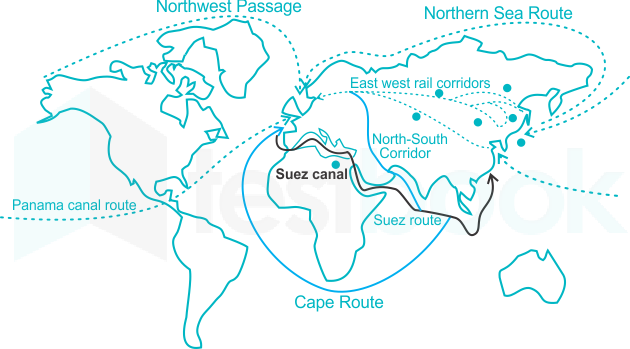
  • Panama Canal connects the Atlantic Ocean and the Pacific Ocean. 
  • The Panama Canal linking the Atlantic and Pacific Oceans is a water passage across the isthmus of Panama where it proved a vital component of expanding global trade routes in the 20th century.
  • Panama Canal is an 82 km long artificial waterway.
  • Firstly the responsibility of the construction was taken by France, but couldn't complete it.
  • Then, the United States took the responsibility of completing the canal.
  • The Panama Canal has reduced the time required by the ships to travel between the Atlantic and Pacific oceans.
  • The Panama Canal was opened in 1914 since the startup of its creation by France in 1881 and later on handed over to the US in 1904.
  • The canal consists of artificial lakes, several improved and artificial channels, and three sets of locks as well as an additional artificial lake, Alajuela Lake (known during the American era as Madden Lake) which acts as a reservoir for the canal.
  • It decreases the distance to go all around South America and anyone can go directly through this canal.

6

India is developing Chabahar port in which of the following countries?

  1. ((a))

     Iraq

  2. ((b))

    Oman

  3. ((c))

    Iran

  4. ((d))

    Pakistan

Show Answer
Answer: ((c))

Iran

The correct answer is Iran.

Key Points

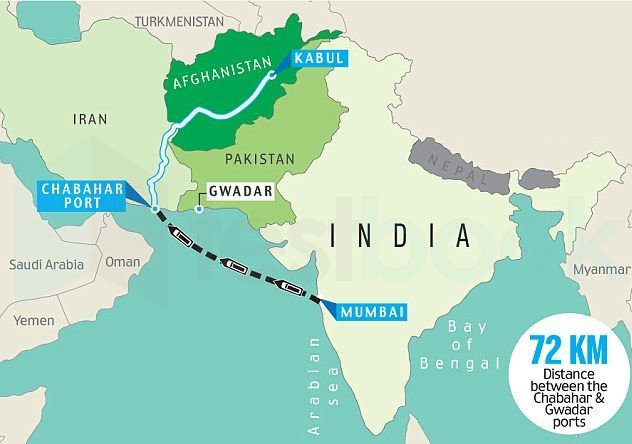
  • Chabahar Port​ is located in Iran.
  • In the Gulf of Oman and is only 72 km away from the Gwadar port in Pakistan which has been developed by China.
  • The port serves as the only oceanic port of Iran and consists of two separate ports named Shahid Beheshti and Shahid Kalantari.

Additional Information

  • Importance of Chabahar Port:
  • ​It is being considered a gateway to golden opportunities for trade by the three countries with other Central Asian countries in the wake of Pakistan denying transit access to India.
  • In future, the Chabahar project and the International North-South Transport Corridor (INSTC) will complement each other by optimizing Indian connectivity with Russia and Eurasia.
  • China is aggressively pursuing its own Belt and Road Initiative (BRI) under the One Belt One Road (OBOR) project.
  • The port can also act as a counter to Pakistan’s Gwadar Port, which is being developed with Chinese investment.

Reported 24-June-2021 Shashi D2

7

Who is the author of the book 'The White Tiger'?

  1. ((a))

    R K Narayan

  2. ((b))

    Aravind Adiga

  3. ((c))

    Vikram Seth

  4. ((d))

    Arundhati Roy

Show Answer
Answer: ((b))

Aravind Adiga

The correct answer is Aravind Adiga.

Key Points

  • The White Tiger is the debut novel by Indian author Aravind Adiga.
  • It was first published in 2008 and won the 40th Man Booker Prize in the same year.
  • The novel provides a darkly humorous perspective of India’s class struggle in a globalized world as told through a retrospective narration from Balram Halwai, a village boy.

Additional Information

  • Rasipuram Krishnaswami Iyer Naryanswami (RK Narayan) was an Indian writer.
  • He was a leading author in early Indian literature in English.
  • He was born in 1906, in Madras.
  • In 1960 he won Sahitya Akademi Award for 'The Guide'
  • Vikram Seth was born in 1952.
  • He trained as an economist and has lived for several years in England, California, China, and India.
  • He is the author of:-
  • Beastly Tales-collection of ten fables as poems
  • The Rivered Earth-contains four libretti  to be set to music
  • From Heaven Lake
  • Arundhati Roy won Man Booker Prize for fiction in 1997 for her novel  “The God of Small Things (1997)”, which became the best-selling book by a non-expatriate Indian author.
  • She is also a political activist involved in human rights and environmental causes like Narmada Bachao Andolan by Medha Patekar.
  • She won the Best Screenplay National Film Award in 1989.
8

Kisan Diwas (Farmer's Day) is observed on?

  1. ((a))

    23rd December

  2. ((b))

    15th July

  3. ((c))

    14rd December

  4. ((d))

    1st May

Show Answer
Answer: ((a))

23rd December

The correct answer is 23rd December.

Key Points

  • Kisan Diwas (Farmer's Day) is observed on 23rd December.
  • It is celebrated on the birthday of former Prime Minister of India Shri. Chaudhary Charan Singh in honor of his contribution in improving the lives of farmers in India.
  • He was a farmer's leader and he introduced many policies to improve the lives of the Indian farmers.

Additional Information

List of Important Days and Dates:

DateName of the Day
January 12National Youth Day (Birth anniversary of Swami Vivekananda)
January 15Army Day
January 23Netaji S.C. Bose’s Birth Anniversary
January 26Republic Day
January 30Martyr’s Day (Mahatma Gandhi’s Death Anniversary)
February 24Central Excise Day
February 28National Science Day
March 23World Meteorological Day
April 7World Health Day
April 17World Hemophilia Day
April 18World Heritage Day
April 22World Earth Day
May 1International Labour Day
May 3International Press Freedom Day
May 8World Red Cross Day
May 21Antiterrorism Day (Rajiv-Gandhi’s Death Anniversary)
May 31Anti-tobacco Day
June 5World Environment Day
June 26International Day against Drug Abuse and Illicit Trafficking
July 11World Population Day
August 15Independence Day
August 29National Sports Day
September 5Teachers’ Day
September 16World Ozone Day
September 27World Tourism Day
October 2Gandhi Jayanti/International Day for Non-Violence
October 3World Habitat Day
October 8Indian Air Force Day
October 14World Standards Day
October 16World Food Day
November 14Children’s Day
December 1World AIDS Day
December 4Navy Day
December 10World Human Rights Day
9

The world economic report is published by?

  1. ((a))

    World bank

  2. ((b))

    UNDP

  3. ((c))

    IMF

  4. ((d))

    UNCTAD

Show Answer
Answer: ((c))

IMF

The correct answer is IMF.

Key Points

  • The world economic report is published by IMF.
  • A Survey by the IMF staff is usually published twice a year.
  • It presents analyses of global economic developments during the near and medium term.

Additional Information

  • International Monetary Fund
  • The IMF was set up along with the World Bank in 1945 after the Second World War to assist in the reconstruction of war-ravaged countries.
  • They are known as the Bretton Woods twins.
  • India joined the IMF on December 27, 1945.
  • The IMF's primary purpose is to ensure the stability of the international monetary system — the system of exchange rates and international payments that enables countries (and their citizens) to transact with each other.
  • The Fund's mandate was updated in 2012 to include all macroeconomic and financial sector issues that bear on global stability.
  • World Bank
  • The World Bank Group is a unique global partnership of 5 institutions working for sustainable solutions that reduce poverty and build shared prosperity in developing countries.
  • The World Bank Group consists of five development institutions.
  • International Bank for Reconstruction and Development (IBRD) provides loans, credits, and grants.
  • International Development Association (IDA) provides low- or no-interest loans to low-income countries.
  • UNCTAD
  • The United Nations Conference on Trade and Development (UNCTAD) was established in 1964 as a permanent intergovernmental body.
  • UNCTAD is the part of the United Nations Secretariat dealing with trade, investment, and development issues.
  • United Nations Development Program (UNDP):
  • UNDP is a specialized agency of United Nations established in 1965 and its headquarters are located in New York City, USA.
  • It was formed by merging Emerging Programme for Technical Assistance & Special Fund and The Economic and Social Council.
  • It works as a capacity development agency in association with various nations to help them achieve Sustainable Development Goals. ​
10

Eutrophication

  1. ((a))

    Is a normal process that converts dry land into marshes

  2. ((b))

    Is slowed by the presence of Phosphate and Nitrate fertilisers.

  3. ((c))

    Is characterised by an excess amount of oxygen in large bodies of water. 

  4. ((d))

    Is characterised by a rapid enrichment of water body with minerals and nutrients. 

Show Answer
Answer: ((d))

Is characterised by a rapid enrichment of water body with minerals and nutrients. 

The correct answer option 4.

Key Points

  • Eutrophication refers to the accumulation of nutrients such as phosphates and nitrates in water bodies over time which stimulates the growth of algae.
  • The source of these nutrients could be industrial wastewater, domestic waste, or agricultural waste.
  • In the process of eutrophication the demand for dissolved oxygen in water increases, while the quantity of dissolved oxygen in water decreases
  • They can have a large impact on the health of rivers and estuaries such as increased production of algae and aquatic plants, depletion of fish species, and general deterioration of water quality.

Additional Information

  • Water pollution occurs when - 
  • There is an addition of undesirable substances into water bodies.
  • In turn, if desired substances get removed then also it will affect the water bodies.
  • If the temperature of water bodies changes then it affects the ecological balance of the water body.
11

Which of the following is not a Directive Principle of the State Policy?

  1. ((a))

    To raise the level of nutrition

  2. ((b))

    To develop a scientific temper.

  3. ((c))

    To promote economic interests of weaker sections.

  4. ((d))

    To separate the judiciary from the executive.

Show Answer
Answer: ((b))

To develop a scientific temper.

The correct answer is To develop a scientific temper.

Key Points

  • Article 47 states that the Duty of the State to raise the level of nutrition and the standard of living and to improve public health. Hence statement 1 is correct.
  • One of the fundamental duties of the people of the Republic of India, according to article 51A Constitution of India is “To develop the scientific temper, humanism and the spirit of inquiry and reform”. Hence statement 2 is not correct.
  • In Article 46 of the Indian Constitution Promotion of educational and profitable interests of slated gentries, slated lines, and other weaker sections. Hence statement 3 is correct.
  • Article 50 of the Constitution of India is a directive principle of state policy. It gives a direction to the State to keep the Judiciary independent of the Executive, particularly in judicial appointments. Hence statement 4 is correct.

Additional Information

  • Directive Principles of State Policy
  • Articles 36-51 under Part IV of the Indian Constitution deal with Directive Principles of State Policy (DPSP).
  • They are borrowed from the Constitution of Ireland, which had copied it from the Spanish Constitution.
  • It refers to the ideals that the State should keep in mind while formulating policies and enacting laws. e.g. the Government should try to ensure equal pay for equal work for men and women etc.
  • Non-justiciable nature on recommendations of Tej Bahadur Committee Report
12

MALABAR is a Naval exercise between India and 

  1. ((a))

    Singapore

  2. ((b))

    USA

  3. ((c))

    China

  4. ((d))

    Britain

Show Answer
Answer: ((b))

USA

The correct answer is USA.

Key Points

  • Malabar series of exercises began in 1992 as a bilateral exercise between the navies of India and US and gained further prominence with the joining of the navies of Australia and Japan.
  • Before 1998, when the Americans suspended exercises after India tested nuclear weapons, three exercises had been carried out.
  • The sea phase of MALABAR 22 was conducted over a period of five days near Yokosuka and witnessed live weapon firings, surface, anti-air and anti-submarine warfare drills and tactical procedures.

Additional Information

Some exercises by the Indian Army:-​

NamePartner Nation
Hand in HandChina
SampritiBangladesh
Mitra ShaktiSri Lanka
Yudh AbhyasUSA
Vajra PraharUSA
IMBAXMyanmar
Harimau ShaktiMalaysia
Garuda ShaktiIndonesia
EkuverinMaldives
IndraRussia
Al NagahOman
Dharma GuardianJapan
MaitreeThailand
Prabal DostykKazakhstan
Nomadic ElephantMongolia
LamitiyeSeychelles
Bold KurukshetraSingapore
KhanjarKyrgyzstan

Some exercises by the Indian Navy:- 

NamePartner Nation
Indra NavyRussia
KonkanUK
VarunaFrance
Indo CorpatIndonesia
SIMBEXSingapore

Some exercises by the Indian Airforce:- 

NamePartner Nation
GarudaFrance
AviaIndraRussia
Eastern bridgeOman
Siam BharatThailand
Desert EagleUAE
IndradhanushUK
13

In a pressure cooker, cooking is faster because the increase in vapour pressure

  1. ((a))

    Increase the specific heat

  2. ((b))

    Decrease the specific heat

  3. ((c))

    Decrease the boiling point

  4. ((d))

    Increase the boiling point 

Show Answer
Answer: ((d))

Increase the boiling point 

The correct answer is Increase the boiling point.

Key Points

  • The pressure cooker is based on the principle that the boiling of water increases with the increase in pressure.
  • In a pressure cooker pressure is created by boiling a liquid, such as water or broth, inside the closed pressure cooker.
  • When we give heat to the pressure cooker then due to an increase in temperature steam is generated in the vessel.
  • Due to this generated steam, the pressure inside the vessel increases.
  • As the pressure rises, the temperature of the water and steam also rises above the normal 100⁰C boiling point.
  • The higher the pressure, the shorter the cooking time because of an increase in the boiling point of a liquid.

Additional Information

  • The pressure at which liquid and vapour can co-exist at a given temperature is called the vapour pressure of the liquid.
  • When a liquid is kept in a closed vessel with some free space, it starts to vaporise.
  • The vapourisation continues until a state of equilibrium is reached between vapourisation and condensation.
  • At equilibrium, the state gets saturated and the pressure exerted by the vapour molecules is called vapour pressure.
14

In 1991, India's first indigenous super computer named ______was developed by Vijay Bhatkar.

  1. ((a))

    Prayag 400

  2. ((b))

    Pragati 5000

  3. ((c))

    Param 8000

  4. ((d))

    Prabhas 6000

Show Answer
Answer: ((c))

Param 8000

The correct answer is Param 8000.

Key Points

  • In 1991, India's first indigenous supercomputer named Param 8000 was developed by Vijay Bhatkar.
  • The PARAM 8000 was the first machine in the series and was built from scratch.
  • Vijay P. Bhatkar is best known as the architect of India's national initiative in supercomputing where he led the development of Param supercomputers.
  • PARAM is a series of supercomputers designed and assembled by the Centre for Development of Advanced Computing (C-DAC).
  • PARAM means "supreme" in the Sanskrit language.
  • As of November 2020, the latest and fastest machine in the series is the PARAM Siddhi AI which ranks 63rd in the world.

Additional Information

  • PARAM series of supercomputers. 
  • PARAM 8000, India's 1st Giga-scale supercomputer.
  • PARAM 10000, 100 Gigaflop supercomputer in 1998.
  • PARAM Padma, 1-Teraflop supercomputer in 2002.
  • This was India's first supercomputer to enter the Top 500 list of supercomputers of the world (ranked 171 in June 2003).
  • PARAM Yuva, a 54 Teraflop supercomputer in 2008 (ranked 69 in November 2008).
  • PARAM Yuva II, a 529 Teraflop supercomputer in 2013 (ranked 69 in June 2013)
  • PARAM Biochrome is an HPC cluster for Bioinformatics applications. The cluster has a computing capacity of 5 Teraflops.
  • PARAM Bio-Blaze: A supercomputing facility with peak compute power of 10.65 TF, was launched on February 18, 2014 to address the challenges in bioinformatics.
  • C-DAC:
  • C-DAC headquarters is in Pune, Maharastra.
  • C-DAC was created in November 1987, originally as the Centre for Development of Advanced Computing Technology (C-DACT).
  • This was in response to issues purchasing supercomputers from foreign sources.
  • The Indian Government decided to try and develop indigenous computing technology.
15

A data warehouse is always

  1. ((a))

    Subject Oriented

  2. ((b))

    Object Oriented

  3. ((c))

    programme Oriented

  4. ((d))

    Compiler Oriented 

Show Answer
Answer: ((a))

Subject Oriented

The correct answer is Subject Oriented.

Key Points

  • Data Warehouse is a subject-oriented central repository of data having information from one or more data sources.
  • It is used mainly in business intelligence.
  • A Data warehouse, also known as an enterprise data warehouse is the electronic storage of a large amount of information by a business.
  • It is a process of collecting and managing data from various internal and external sources compiled by the firm to provide meaningful insights.
  • It is a system used for reporting and data analysis and is considered a core aspect of business intelligence.
  • A data warehouse is solely intended to perform queries and analysis and contains a large amount of historical data.

Confusion Points 

  • A database is a collection of structured data, information that is stored in a computer system in an electronic format.
  • A database is controlled and managed by the Database Management System (DBMS).
  • The data and DBMS together with the association of applications are referred to as database systems.

Additional Information

  • Data mining:
  • Data mining is a process of extracting useful data from a large set of raw data.
  • It is usually applied to credit ratings and to intelligent anti-fraud systems to analyze transactions, card transactions, purchasing patterns, and other customer financial data.
  • Data mining is also known as Knowledge Discovery in Data (KDD).
16

Jallikattu is associated with which Indian festival?

  1. ((a))

    Onam

  2. ((b))

    Pongal 

  3. ((c))

    Bhiku

  4. ((d))

    Hornbill

Show Answer
Answer: ((b))

Pongal 

The correct answer is Pongal.

Key Points

  • Jallikattu is typically practiced in the Indian state of Tamil Nadu as a part of Pongal celebrations on Mattu Pongal day.
  • It occurs annually in January.
  • It is a traditional event in which a bull (Bos indicus), such as the Pulikulam or Kangayam breed is released into a crowd of people, and multiple human participants attempt to grab the large hump on the bull's back with both arms and hang on to it while the bull attempts to escape.
  • Participants hold the hump for as long as possible, attempting to bring the bull to a stop. In some cases, participants must ride long enough to remove flags on the bull's horns.

Important Points

  • Festivals Of Tamil Nadu
  • Pongal.
  • Thiruvaiyaru Festival.
  • Thaipusam.
  • Natyanjali Dance Festival.
  • Mahamaham.
  • Tamil New Year's Day.
  • Karthigai Deepam.

Additional Information

  • The Hornbill Festival is celebrated in Nagaland every year from December 1-10.
  • A bhikkhu is an ordained male monastic ("monk") in Buddhism.
  • Onam is a harvest festival in Kerala.
17

Which of the following countries have an unwritten constitution?

  1. ((a))

    USA

  2. ((b))

    UK

  3. ((c))

    Iran

  4. ((d))

    Pakistan

Show Answer
Answer: ((b))

UK

The correct answer is UK.

Key Points

  • The UK has an unwritten or uncodified constitution.
  • They don't have a single written document that defines all the laws, rules, and regulations.
  • Israel, Canada, Saudi Arabia, and New Zealand are other countries that have no written constitution.

Additional Information

  • The constitution of India is the lengthiest of all the written constitutions of the world.
  • It is a very comprehensive, elaborate, and detailed document.
  • Originally it contained a preamble, 395 articles divided into 22 parts, and 8 schedules.
  • It consists of a preamble, articles divided into 25 parts, and 12 schedules.
  • The various amendments have contributed to its length and diversity.
18

Supernova is

  1. ((a))

    Comet

  2. ((b))

    Asteroid

  3. ((c))

    Exploding Star

  4. ((d))

    Black Hole 

Show Answer
Answer: ((c))

Exploding Star

The correct answer is Exploding Star.

Key Points

  • supernova is the explosion of a star at the end of its life.
  • It can emit more energy in a few seconds than our sun will radiate in its lifetime of billions of years.
  • Supernova is the largest explosion that takes place in space.
  • A supernova happens when there is a change in the core, or center, of a star.
  • Supernovas are often seen in other galaxies. But supernovas are difficult to see in our own Milky Way galaxy because dust blocks our view.
  • In 1604, Johannes Kepler discovered the last observed supernova in the Milky Way.
  • NASA’s Chandra telescope discovered the remains of a more recent supernova. It exploded in the Milky Way more than a hundred years ago.
  • A supernova happens when there is a change in the core, or center, of a star.
  • A change can occur in two different ways, with both resulting in a supernova.

Additional Information 

  • black hole is a region in space where the pulling force of gravity is so strong that light is not able to escape.
  • Comets are cosmic snowballs of frozen gases, rock, and dust that orbit the Sun.
  • An asteroid is a minor planet of the inner Solar System.
19

The largest tiger reserve in India is

  1. ((a))

    Pench

  2. ((b))

    Manas

  3. ((c))

    Nagarjun

  4. ((d))

    Corbett

Show Answer
Answer: ((c))

Nagarjun

The correct answer is Nagarjun.

Key Points

  • Nagarjunasagar - Srisailam Tiger Reserve is the largest tiger reserve in India.
  • It is present in Andhra Pradesh.
  • The core area of this reserve is 1200 km2.

Important Points

  • A Tiger Reserve consists of a 'Core' or 'Critical Tiger Habitat'.
  • It is to be managed as an inviolate area, and a 'Buffer' or Peripheral area immediately abutting a Core area, which may be accorded a lesser degree of habitat protection.
  • This is the typical zonation of a Tiger Reserve.

Additional Information

  • Pench National Park is situated in the districts of Seoni and Chhindwara in Madhya Pradesh.
  • Manas National Park is located in Assam.
  • It is also a UNESCO World Heritage Site.
  • The Corbett Tiger Reserve in Uttarakhand has the highest number of 231 big cats in the country while three reserves in Mizoram, West Bengal, and Jharkhand have none, says a new report released on Tuesday which is based on tiger estimation done last year.
20

Sahara is located in which part of Africa?

  1. ((a))

    Eastern

  2. ((b))

    Western

  3. ((c))

    Northern

  4. ((d))

    Southern

Show Answer
Answer: ((c))

Northern

The correct answer is Northern.

Key Points

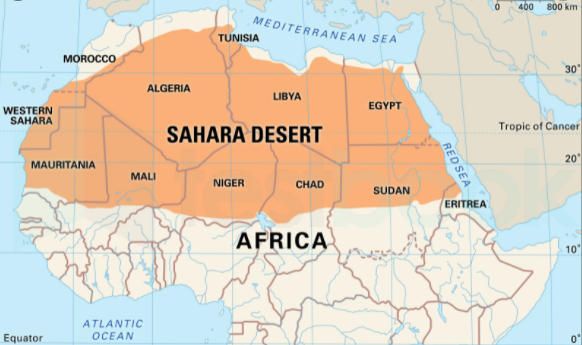
  • The Sahara Desert is located in Northern Africa.
  • It is the largest desert in the world.
  • All of northern Africa is filled with this desert.
  • The total area of the Desert is somewhere about 3,320,000 square miles.

Additional Information

  • In the west, the Desert is bordered by the Atlantic Ocean.
  • The Atlas Mountains and the Mediterranean Sea border the Desert in the north.
  • The Red Sea bounds the Mountain in the East.
  • Atop the African shield, the Sahara sits.
  • Denuded pre-Cambrian rocks make the African shield.
  • Mesozoic deposits cover the Sahara Desert.

Screenshot 2021-06-12 142715

21

Which among the following comes under the primary sector of Indian economy?

  1. ((a))

    Sugar Industry

  2. ((b))

    Dairy

  3. ((c))

    Banking

  4. ((d))

    Transport of goods

Show Answer
Answer: ((b))

Dairy

The correct answer is Dairy.

Key Points

  • Agriculture, Mining, Fishing, Forestry, and Dairy are some examples of the primary sector of the Indian economy.
  • These are called so because it forms the base for all other products.

Important Points 

  • Manufacturing, Gas, Electricity, Construction, and Water supply are some secondary sectors
  • It contributes around 29.6 % of the Indian GDP.
  • Goods transported by trucks or trains, banking, insurance, and finance come under the tertiary sector.

Additional Information

  • The sum of production in the primary, secondary, and tertiary sectors of the Indian Economy gives the value of the Gross Dometic Product.
  • Gross domestic product (GDP) is defined as the total market value at current prices of all final goods and services produced within a year by the factors of production located within a country.
  • Functions of GDP:
  • ​GDP is used to calculate the per annum percentage change in the growth rate of an economy.
  • It is a quantitative aspect and its size gives an estimate of the internal strength of the economy.
  • It is used by the IMF and World Bank to do a comparative analysis of its members.
22

As we go from equator to North Pole, the value of ‘g’(the acceleration due to gravity)

  1. ((a))

    Remains the same

  2. ((b))

    decreases

  3. ((c))

    Increases

  4. ((d))

    None of the above

Show Answer
Answer: ((c))

Increases

The correct answer is Increases.

Key Points

  • As we move from the equator towards the north pole, while remaining on the surface of the earth, then the value of g increases.
  • As the polar radius is smaller than the equatorial radius, therefore the acceleration due to gravity is maximum at the poles and minimum at the equator.
  • If the earth is rotating, then the effect of rotation of the earth on the value of acceleration due to gravity is maximum at the equator and minimum at the poles.
  • If the earth suddenly stops rotating about its axis, then the value of **g will be the same at all places.**​

Additional Information

  • The force of attraction exerted by the earth on a body is called gravitational pull or gravity.
  • We know that when a force acts on a body, it produces acceleration.
  • Therefore, a body under the effect of gravitational pull must accelerate.
  • Acceleration due to gravity at the surface of the earth is given by:
  • g=GM/R2
  • Where G = Universal gravitational constant, M = mass of the earth, and R = radius of the earth.
23

Ozone layer above the surface of earth provides a shield against?

  1. ((a))

    X-rays

  2. ((b))

    Ultra violet rays

  3. ((c))

    Gamma rays

  4. ((d))

    Infra-red rays

Show Answer
Answer: ((b))

Ultra violet rays

The correct answer is Ultra violet rays.

Key Points

  • The ozone layer above the surface of the earth provides a shield against Ultra violet rays.
  • The ozone layer is mainly found in the lower portion of the stratosphere, from approximately 20 to 30 Kilometres (12 to 19 mi) above Earth, although its thickness varies seasonally and geographically.
  • The ozone layer is found in both the troposphere and stratosphere.
  • The stratospheric ozone layer absorbs ultraviolet (UV) radiation, preventing dangerous UV rays from hitting Earth's surface.
  • Ozone found in the troposphere is called negative ozone of bad ozone, as it is not found in the form of the layer but as a component of photochemical smog i.e. as a secondary pollutant.

Additional Information

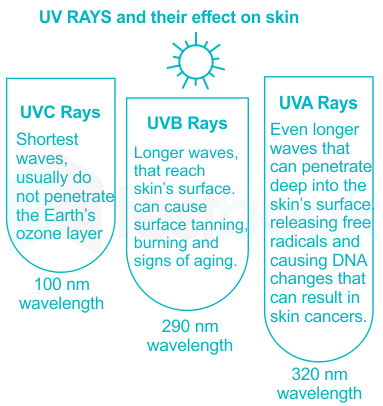
  • UV-C Rays are the most dangerous because they penetrate the second layer of skin and cause skin cancer.
  • Hence, UV C having a wavelength of 100nm has the highest damaging effect, i.e. more dangerous, when compared to UV A.
  • The three types of UV rays and their effects are as follows:

F1 A.B Madhu 09.01.20 D 5

24

Which foreign country is closest to Andaman Islands?

  1. ((a))

    Srilanka

  2. ((b))

    Myanmar 

  3. ((c))

    Indonesia 

  4. ((d))

    Pakistan 

Show Answer
Answer: ((b))

Myanmar 

The correct answer is Myanmar.

Key Points

  • Myanmar is closest to the Andaman Islands.
  • Myanmar, formerly known as Burma, is an exotic travel destination.
  • It is the largest country of the mainland in South-East Asia sharing borders with Bangladesh, India, China, Laos, and Thailand.
  • Hkakabo Razi is a border tripoint between India, China, and Myanmar.
  • Myanmar is known as “The Golden Land” to visitors because of its glittering pagodas everywhere.
  • The Andaman and Nicobar Islands, one of the seven union territories of India, are a group of islands at the juncture of the Bay of Bengal and the Andaman Sea.

Additional Information

  • Andaman and Nicobar Islands situated in the Bay of Bengal, run like a narrow chain in the north-south direction extending between 6° 45′ N to 13° 45′ N.
  • This archipelago is composed of around 265 big and small islands (203 Andaman islands + 62 Nicobar Islands)
  • The Andaman and Nicobar islands extend from 6° 45′ N to 13° 45′ N and from 92° 10′ E to 94° 15′ E for a distance of about 590 km.
  • The total area of this elongated island is 8,249 sq. km.
  • The Andaman islands are divided into three main islands i.e. North, Middle, and South.
  • Duncan's passage separates Little Andaman from South Andaman.
25

Fiscal policy is connected with

  1. ((a))

    Issue of currency

  2. ((b))

    Exports and Imports

  3. ((c))

    Public revenue & expenditure

  4. ((d))

    None of above

Show Answer
Answer: ((c))

Public revenue & expenditure

The correct answer is Public revenue & expenditure.

Key Points

  • Fiscal policy is the means by which a government adjusts its spending levels and tax rates to monitor and influence a nation's economy.
  • It is the sister strategy to monetary policy through which a central bank influences a nation's money supply.
  • Fiscal policy deals with the taxation and expenditure decisions of the government.
  • Some of the major instruments of fiscal policy are as follows:
  • Budget, Taxation, Public Expenditure, public revenue, Public Debt, and Fiscal Deficit in the economy.

Additional Information

  • The general objectives of Fiscal Policy are given below:
  • To maintain and achieve full employment.
  • To stabilize the price level.
  • To stabilize the growth rate of the economy.
  • To maintain equilibrium in the Balance of Payments.
  • To promote the economic development of underdeveloped countries.
  • The fiscal policy of India always has two objectives, namely improving the growth performance of the economy and ensuring social justice to the people.
26

Convertibility of rupee implies

  1. ((a))

    Being able to convert rupee into gold

  2. ((b))

    Allowing the value of rupee to be fixed by market forces

  3. ((c))

    Freely permitting the conversation of rupee to other currencies and vice-versa

  4. ((d))

    Developing an International market for currencies in India

Show Answer
Answer: ((c))

Freely permitting the conversation of rupee to other currencies and vice-versa

The correct answer is Freely permitting the conversation of rupee to other currencies and vice-versa.

Key Points

  • Convertibility of the currency means when the currency of a country can be freely converted into foreign exchange at the market-determined rate of exchange.
  • The exchange rate is determined by the demand for and supply of a currency.
  • In general, the convertibility of rupees means that those who have a foreign exchange (e.g. US dollars, Pound Sterlings, etc.) can get them converted into rupees and vice-versa at the market-determined rate of exchange.
  • The rupee is both convertibles on the capital account and the current account.

Additional Information

  • The exchange rate was earlier controlled by RBI for the conversion of Indian currency into foreign exchange.
  • All the foreign exchange earned was to be sold to an authorized dealer.
  • One had to seek the permission of the central bank to purchase foreign exchange.
  • The main purpose behind this was to utilize the foreign exchange earned by the residents as per the priorities fixed by the government.
  • India is a fast-developing country now and one of the most preferred countries for investment by foreigners.
  • India could not restrict its foreign trade as It needs to grow further.
  • So the government has allowed the convertibility of the rupee in a phased manner on current account transactions.
27

Where did Buddha preach his first sermon?

  1. ((a))

    Kasi

  2. ((b))

    Sarnath

  3. ((c))

    Kushinagar 

  4. ((d))

    Bodh Gaya 

Show Answer
Answer: ((b))

Sarnath

The correct answer is Sarnath.

Key Points

  • Sarnath is a sacred place of Buddhism, as the Buddha gave his first sermon here after attaining enlightenment at Bodh Gaya.
  • The event is known in Buddhist texts as dharmachakra-pravartan, the 'turning of the wheel of law'.
  • At Sarnath, the Buddha also laid the foundation for the sangha or order of monks.
  • According to Buddhist tradition, he attained enlightenment at Bodh Gaya, gave his first sermon at Sarnath, and died in Kushinagar.​

Additional Information

  • Gautama Buddha is the founder of Buddhism.
  • Gautama Buddha is also known as Siddhartha,
  • He was born about 2500 years ago(around 563 BC).
  • He was the son of Suddhodhana and Mahamaya.
  • He belonged to a small gana known as the Sakya gana and was a Kshatriya.
  • He was married to Yashodhara.
  • He learned the technique of meditation from his first teacher Alara Kalama.
  • He attained enlightenment under a peepal tree at Bodh Gaya in Bihar.
  • After attaining enlightenment he went to Sarnath, near Varanasi, where he taught for the first time
  • Buddha preached his first sermon at Sarnath.
  • He also taught people to be kind and to respect the lives of others, including animals.
  • He died in 483 BC under a Sal tree in Kushinagar.

Important Points

CouncilSalient Features
1st Buddhist Council- Convened in 483 BCE at Rajgriha. - Headed by Mahakassapa under the patronage of Ajatashatru of the Haryanka dynasty. - Ananda composed Suttapitaka which comprises the teachings of Buddha. - Mahakassapa is composed of Vinaypitaka which is considered a monastic code of conduct.
2nd Buddhist Council- Convened in 383 BCE at Vaishali. - Headed by Sabakami under the patronage of Kalashoka of the Shishunaga dynasty. - Buddhist order split into Sthaviravadins and Mahasanghiikas.
3rd Buddhist Council- Convened in 250 BCE at Patliputra. Hence option 2 is correct. - Headed by Mogaliputta Tissa under the patronage of Ashoka of the Mauryan dynasty. - Abhidhamma Pitaka was compiled in this council. - Missionaries were sent to different countries.
4th Buddhist Council- Convened in 78 CE at Kashmir. - Headed by Vasumitra and Ashvaghosh under the patronage of Kanishka of the Kushana dynasty. - Buddhist order was finally divided into Hinayana and Mahayana.
28

The only country in the world whose flag is not square or rectangle is?

  1. ((a))

    Sri Lanka

  2. ((b))

    Bhutan

  3. ((c))

    Maldives

  4. ((d))

    Nepal

Show Answer
Answer: ((d))

Nepal

The correct answer is Nepal.

Key Points

  • Nepal is the only country in the world that does not have a square or rectangular national flag.
  • Nepal's national flag is in a triangle shape.
  • Nepal's flag is a combination of two single pennons.
  • It was adopted on 16 December 1962.
  • The crimson-red color in Nepal's national flag indicates the bravery of the Nepali people.
  • The blue border in the national flag represents peace and harmony.
  • Kathmandu is the capital city of Nepal.

![Solved] The only country in the world whose flag is not a square or](https://storage.googleapis.com/tb-img/production/19/12/Nepal-Flag-Transparent-PNG.png)

Additional Information​ 

  • The national flag of India is in rectangular shape.
  • It was designed in the proportion of (width to length)2:3.
  • It was designed by Pingali Venkayya.
  • It was adopted on 22 July 1947.

Flag of India - Wikipedia

  • Srilanka Flag:

Education in Sri Lanka - Wikipedia

Bhutan Flag

![SOLVED] How many background colors are there in Bhutan's national flag? - Self Study 365](https://storage.googleapis.com/tb-img/production/19/11/flag-800.png)

Maldives Flag:

Waving Maldives Flag Official Colors And Ratio Correct Maldives National  Flag Vector Illustration Stock Illustration - Download Image Now - iStock

29

Which one of the following Grand Slam titles is also known as ‘Rolland Garros’ title?

  1. ((a))

    French Open

  2. ((b))

    Wimbledon

  3. ((c))

    US Open

  4. ((d))

    Australian Open

Show Answer
Answer: ((a))

French Open

The correct answer is French Open.

Key Points

  • The French Open is also called Roland Garros and is conducted around late May to early June.
  • The French Open is a major tennis tournament held over two weeks at the Stade Roland-Garros in Paris, France, beginning in late May each year.
  • The Grand Slam tournaments are conducted by the International Tennis Federation.
  • Neither Association of Tennis Professionals nor Women Tennis Association have their roles in Grand Slam.

Additional Information

  • They are the four most important annual tennis events.
  • The four Grand Slams are US Open, French Open, Australian Open and Wimbledon.
  • Australian Open is held in mid January, Wimbledon in June-July.
  • US-open is held in August-September.
  • The Wimbledon is conducted on grass courts, Australian and US open are held in hard courts, French on clay.
30

Who was the first woman President of the Indian National Congress? 

  1. ((a))

    Mrs. Anne Besant

  2. ((b))

    Sucheta Kriplani

  3. ((c))

    Indira Gandhi

  4. ((d))

    Sarojini Naidu 

Show Answer
Answer: ((a))

Mrs. Anne Besant

The correct answer is Mrs. Anne Besant.

Key Points

  • The first woman President of the Indian National Congress was Annie Besant in 1917.
  • First Indian National Congress President was "Womesh Chandra Bonnerjee" in 1885.
  • In 1916 Besant launched the All India Home Rule League along with Lokmanya Tilak, once again modeling demands for India on Irish nationalist practices.

Confusion Points

  • Sarojini Naidu was elected as the President of the Indian National Congress Party in 1925, the first-ever Indian woman to assume that position.
  • She was appointed the governor of Uttar Pradesh after India achieved independence in 1947.

Important Points

  • Some important INC Presidents are following:-
  • Gopal Krishan Gokhale in 1905
  • Dadabhai Naoroji in 1906
  • Madan Mohan Malviya in 1909
  • Motilal Nehru in 1919
  • Lala Lajpat Rai in 1920
  • Hakim Ajmal Khan (Acting President for C.R. Das) in 1921
  • Deshbandhu Chittaranjan Das in 1922.
  • Mahatma Gandhi in 1924
  • Vallabhbhai Patel in 1931
  • Subhash Chandra Bose in 1938
  • JB Kriplani in 1947

Additional Information

  • Indira Priyadarshini Gandhi was the first and, to date, only female Prime Minister of India.
  • Indira Gandhi was the daughter of Jawaharlal Nehru, the first prime minister of India.
31

Solar eclipse occurs when

  1. ((a))

    Earth comes between Sun and Moon

  2. ((b))

    Moon is at right angle of Earth

  3. ((c))

    Moon come between Sun and Earth

  4. ((d))

    Sun comes between Moon and Earth

Show Answer
Answer: ((c))

Moon come between Sun and Earth

The correct answer is Moon come between Sun and Earth.

Key Points

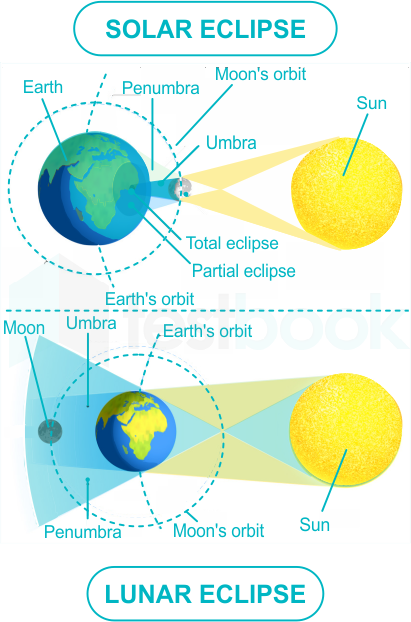
  • A Solar eclipse occurs when the moon comes in between the earth and the sun.
  • It leaves a moving region of shadow on the earth's surface.
  • Eclipse can be classified into four types annular, total, partial, and hybrid.  
  • An annular Solar eclipse occurs when the moon completely covers the sun.
  • A total solar eclipse occurs when the new moon comes between the sun and the earth casting the darkest part of a shadow on Earth.
  • In a total solar eclipse, the moon covers the disc of the sun entirely.
  • It is called the total solar eclipse because at the maximum point of the eclipse the sky goes dark.

Additional Information 

Lunar EclipseEarth is between sun and moonBlocks sunlight going from Sun to Moon
Solar EclipseMoon is between Sun and EarthBlocks sunlight going from Sun to Earth

F1 Sriram Deepak 16.01.2020 D1

32

Who is the first Indian cricketer to take a Hat trick of wickets in test?

  1. ((a))

    BS Bedi

  2. ((b))

    BS Chandra Sekhar

  3. ((c))

    EAS Prasanna

  4. ((d))

    Harbhajan Singh

Show Answer
Answer: ((d))

Harbhajan Singh

The correct answer is Harbhajan Singh.

Key Points

  • Harbhajan Singh is the first Indian bowler to take a hat-trick in test matches on 11 March 2001 in Kolkata.
  • He got wickets of Ricky Ponting, Adam Gilchrist and Shane Warne.
  • It was the 29th hat trick in test Cricket.
  • Irfan Pathan is the second Indian bowler to take a hat-trick in test matches.

Additional Information

  • Indian cricketers who took hat-tricks in the ODI match
  • Chetan Sharma, Kapil Dev, Kuldeep Yadav(2times), and Md. Shami.
33

The first woman to climb Mount Everest was?

  1. ((a))

    Marie Jose Perec 

  2. ((b))

    Florence Griffith Joyner

  3. ((c))

    Junkie Tabei

  4. ((d))

    Jackie Joyner Kersee

Show Answer
Answer: ((c))

Junkie Tabei

The correct answer is Junkie Tabei.

Key Points

  • The first woman to climb Mount Everest was Junko Taibei.
  • Junko Tabei was a Japanese mountaineer, an author, and a teacher.
  • She was the first woman to reach the apex of Mount Everest and the first woman to ascend the Seven Summits, climbing the highest peak on every continent.
  • Tabei wrote seven books, highly participated and organized environmental projects to clean up rubbish left behind by climbers on Everest, and led annual climbs up Mount Fuji for youth affected by the Great East Japan Earthquake.

Additional Information

  • Mount Everest is Earth's highest mountain above sea level, situated in the Mahalangur Himal sub-range of the Himalayas.
  • The China–Nepal border runs across its apex point.
  • Its elevation (snow height) of 8,848.86 m (29,031.7 ft) was at the latest established in 2020 by the Nepali and Chinese authorities.
  • Mount Everest attracts many tourists, and climbers, some of them highly experienced mountaineers.
  • There are two main climbing routes, one approaching the summit from the southeast in Nepal (known as the "standard route") and the other from the north in Tibet.

Important Points

  • Marie-José Pérec is a retired French track and field sprinter who specialized in the 200 and 400 meters and is a three-time Olympic gold medalist.
  • Florence Delorez Griffith Joyner, also known as Flo-Jo, was an American track and field athlete.
  • Jacqueline Joyner-Kersee is a retired American track and field athlete.
  • She won three gold, one silver, and two bronze Olympic medals.
34

Which of the following causes variations in the genetic material of progeny?

(i) Sexual reproduction

(ii) Asexual reproduction

(iii) Mutations

(iv) Epigenetic changes

  1. ((a))

    (i) only

  2. ((b))

     (ii) and (iv)

  3. ((c))

    (i), (iii) and (iv)

  4. ((d))

     (i) and (iii)

Show Answer
Answer: ((d))

 (i) and (iii)

The correct answer is  (i) and (iii).

Key Points

  • In the process of sexual reproduction, the genetic material comes from both parents.
  • This is why there are variations in the offspring that occur due to the genetic material of the two parents of the same species.
  • Genetic variations can arise from gene variants called mutations.
  • In this genetic material is rearranged as a cell is getting ready to divide (known as genetic recombination).
  • Asexual reproduction generates offspring that are genetically identical to a single parent.
  • Hence Sexual reproduction and Mutations cause variations in the genetic material of progeny.

Confusion Points

  • Epigenetics is the study of how your behaviors and environment can cause changes that affect the way your genes work.
  • Unlike genetic changes, epigenetic changes are reversible and do not change your DNA sequence.

Additional Information

  • Genetic material consists of DNA deoxyribonucleic acid and RNA ribonucleic acid genes.
  • DNA is a double helix made of nucleotides joined together. Each joined nucleotide represents a gene.
  • There are 4 base pairs in DNA [A, T, G, C]
  • A = adenine, T = thymine**, G = guanine, C = cytosine**
  • Whereas RNA Is single-stranded and bases are [A, U, G, C]
  • A = adenine, U = uracil, G = guanine, C = cytosine
  • Chromosomes are densely packed long strands of DNA.
35

Shock absorbers are usually made of steel as it

  1. ((a))

    is not brittle

  2. ((b))

    has lower elasticity

  3. ((c))

    has higher elasticity

  4. ((d))

    has no ductile property

Show Answer
Answer: ((c))

has higher elasticity

The correct answer is has higher elasticity.

Key Points

  • Shock absorbers are usually made of steel as it 
  • is not brittle.
  • has lower elasticity.
  • has higher elasticity.

Important Points 

  • A shock absorber is a mechanical or hydraulic device designed to absorb and damp shock impulses.
  • It does this by converting the kinetic energy of the shock into another form of energy (typically heat) which is then dissipated.
  • Most shock absorbers are a form of dashpot.​

Additional Information

  • While traveling over rough roads, the wheels on the vehicles move up and down.
  • The shock absorber system provides a counteracting force opposite to the direction of motion of the wheels.
  • The counteracting force damps the oscillations.
  • This reduces the impact of bumps or rough terrain and provides a comfortable ride.
  • Thus, shock absorbers are used in vehicles to increase ride quality by damping.
36

Which of the following is a biodegradable waste?

  1. ((a))

    Nylon

  2. ((b))

    Plastics

  3. ((c))

    Wool

  4. ((d))

    Polyethene bags

Show Answer
Answer: ((c))

Wool

The correct answer is Wool.

Key Points

  • Wool is a biodegradable product as it can be broken down biologically into natural raw materials such as carbon dioxide, water and naturally occurring minerals.
  • Biodegradable waste is waste material that is and can be contaminated by natural causes such as organisms (e.g. bacteria, fungi, etc.), abiotic elements such as temperature, UV, oxygen, etc.
  • Dead animals, Vegetables and Flowers are the biodegradable waste.

Additional Information

  • Non-biodegradable material can be characterized as a category of substance that can not be broken down by natural organisms and acts as a source of pollution.
  • Non-biodegradable waste is a waste that can not be decomposed or dissolved by natural chemicals.
  • They have existed on earth for thousands of years without any deterioration.
  • Biodegradable material can be described as a substance that can be decomposed by bacteria or other natural organisms and does not contribute to pollution.
37

The first stable product of photosynthesis is?

  1. ((a))

    Starch

  2. ((b))

    Sucrose

  3. ((c))

    Phosphoglycesic acid

  4. ((d))

    Glucose

Show Answer
Answer: ((c))

Phosphoglycesic acid

The correct answer is Phosphoglycesic acid.

Key Points

  • The first stable product of photosynthesis is Phosphoglycesic acid.
  • Melvin Calvin first discovered that the first stable product in C3 plants is 3 Phosphoglyceric acid(3PGA)
  • The cycle that leads to the production of glucose is hence called the Calvin cycle.
  • It consists of 3 steps: carboxylation, reduction, and regeneration.
  • PGA is produced in the first step i.e carboxylation.

Additional Information

  • Photosynthesis is a Physico-chemical process by which green plants use light energy to drive the synthesis of organic compounds mainly carbohydrates using carbon dioxide and water.
  • Photosynthesis takes place in the chloroplast.
  • Within the chloroplast, the membrane system is responsible for trapping the light energy and also for the synthesis of ATP and NADPH.(light reaction).
  • In the stroma, enzymatic reactions synthesize glucose, which in turn forms starch. (dark reaction)
  • Based on the pathway taken by plants to yield sugar, plants can be classified as
  • C3 plants: In these plants, the first stable product is a 3 carbon compound eg. Most plants like rice, wheat, oats, barley, cotton, peanuts
  • C4 plants: These are found in warm regions and have developed mechanisms to prevent excess water, the first stable product is a 4 carbon compound. E.g.  Sorghum, soybean, maize, etc
38

Narain Karthikeyan is a sportsman in the field of?

  1. ((a))

    Golf

  2. ((b))

    Chess

  3. ((c))

    Shooting

  4. ((d))

    Formula one car racing

Show Answer
Answer: ((d))

Formula one car racing

The correct answer is Formula one car racing.

Key Points

  • Kumar Ram Narain Karthikeyan is associated with Auto Racing sports.
  • He was born in Coimbatore, TN.
  • He is the first Auto racing (Formula One) driver from India.
  • He made his first debut for Jordan in 2005.
  • He was the first Indian who won the A1GP race for India in 2008.

Additional Information

  • Formula One also called F1 in short, is an international auto racing sport.
  • F1 is the highest level of single-seat, open-wheel, and open-cockpit professional motor racing contest.
  • List of Formula One drivers and their nationality:
Michael SchumacherGerman
Lewis HamiltonBritish
Max VerstappenBelgium
Sebastian VettelGerman
Daniel RicciardoAustralian
Carlos Sainz Jr.Spanish
39

The process of arranging data in logical sequence is called? 

  1. ((a))

    Classifying

  2. ((b))

    Reproduction

  3. ((c))

    Summarising

  4. ((d))

    Sorting

Show Answer
Answer: ((d))

Sorting

The correct answer is sorting.

Key Points

  • Sorting is the process of putting data in a logical order.
  • Sorting is the process of rearranging a group of objects to place them in a logical order.
  • In both commercial data processing and advanced scientific computers, sorting is critical.
  • Transaction processing, combinatorial optimization, astronomy, molecular dynamics, linguistics, genetics, weather prediction, and a variety of other sciences all have applications.
  • Sorting can be done based on the type of value stored in the cells.

Additional Information

  • The Excel sort function is useful for rearranging data.
  • When working in Excel sorting data can quickly reorganize content too.
  • Filtering data in a spreadsheet allows only certain data to display.
  • This function is useful when we want to focus on specific information.

F1 Savita Engineering 25-5-22 D1

40

Who among the following has not won Nobel prize?

  1. ((a))

    Jawahar Lal Nehru

  2. ((b))

    Kailash Satyarthi

  3. ((c))

    H.G Khorana

  4. ((d))

    Mother Teresa

Show Answer
Answer: ((a))

Jawahar Lal Nehru

The correct answer is Jawahar Lal Nehru.

Key Points

  • Jawahar Lal Nehru has not won Nobel prize.
  • Jawaharlal Nehru was the first Prime Minister of India.
  • He is the Prime Minister who has had the longest term in office.
  • He served as the prime minister of India from 15th August 1947 to 1964.
  • He is the architect of the Preamble of the Indian constitution.
  • He was the Prime Minister of India during the Indo-China war in 1962.
  • He served as the first chairman of the planning commission of India.
  • He was honored with the Bharat Ratna in 1955.
  • The name Panchayati raj was given by Jawaharlal Nehru.
  • National Herald is a newspaper started by Jawaharlal Nehru.
  • He is the first prime minister to die in harness.
  • Shantivan is the cremation ground of Jawaharlal Nehru.
  • He has not won Nobel prize.

Additional Information

  • In 2014, Kailash Satyarthi was awarded the Nobel Peace Prize jointly with Malala Yousafzai for their struggle against the suppression of children and young people and for the right of all children to education.
  • Har Gobind Khorana was an Indian-American biochemist.
  • He shared the 1968 Nobel Prize for Physiology or Medicine with Marshall W. Nirenberg and Robert W. Holley for research that showed the order of nucleotides in nucleic acids.
  • In 1979, Teresa received the Nobel Peace Prize "for work undertaken in the struggle to overcome poverty and distress, which also constitutes a threat to peace".
41

Addition of gypsum to cement

  1. ((a))

    reduces setting time of cement

  2. ((b))

    produce very light color cement

  3. ((c))

    increases setting time of cement

  4. ((d))

    shining surface is formed

Show Answer
Answer: ((c))

increases setting time of cement

The correct answer is increases setting time of cement.

Key Points

  • Cement is important for construction activity like building houses, factories, bridges, roads, airports, dams and for other commercial establishments.
  • This industry requires bulky and heavy raw materials like limestone, silica, alumina and gypsum.
  • Coal and electrical power are needed for production and rail for transportation.
  • When cement is mixed with water, it becomes hard over a period of time.
  • This is called the setting of cement.
  • Gypsum is usually added to cement to prevent early hardening or “flash setting”, allowing extended working time.

Additional Information

  • Gypsum is an ore of Calcium (Ca).
  • The chemical formula of Gypsum is CaSO4.2H2O.
  • Gypsum is mainly used as a fertilizer, as the main constituent in plaster, chalk, etc.
  • Rapid setting of cement is the function of gypsum in cement.
  • It is a crystalline mineral composed of calcium sulfate dihydrate.
  • Gypsum helps in controlling the rate of hardening of the cement.
  • It also prevents early hardening allowing long working time, hence we can say that it helps in the rapid setting of cement.
  • The Bikaner district of Rajasthan has the maximum quantity of Gypsum.
  • Rajasthan produces 90% of total production in India.
42

Which of the following organs does not eliminate waste products from the body?

  1. ((a))

    Large Intestine

  2. ((b))

    Liver

  3. ((c))

    Kidney

  4. ((d))

    Skin 

Show Answer
Answer: ((b))

Liver

The correct answer is Liver.

Key Points

  • Liver does not eliminate waste products from the body.
  • The liver is the largest gland of the Human body.
  • It is also the largest internal organ of the Human body.
  • The liver is the most extensive organ in the human body and human adults can weigh up to 1.5-1.6 kg.
  • The liver performs a multitude of functions in our body and in a single human or artificial organ or system it is difficult to reproduce so many functions.
  • Some of the critical functions of the liver include secretion of bile juices for lipid & vitamin decomposition, preparation of blood plasma proteins that enable blood clotting, and also detoxification.

Additional Information

  • The kidney's function is the filtration of the blood and removing waste(toxic) products.
  • Waste products and excess fluid are removed through the urine.
  • Skin removes excess water and salt via sweat.
  • The wall of the large intestine absorbs most of the water from the food and makes it solid.
  • The rectum is the last part of the large intestine where this solid food for some time is stored and egested from our body through the anus as faeces or stool.
43

Which of the following is not correctly matched?

  1. ((a))

    War Saw - Poland

  2. ((b))

    Rotterdam - Australia

  3. ((c))

    Karachi - Pakistan

  4. ((d))

    Dublin - Ireland

Show Answer
Answer: ((b))

Rotterdam - Australia

The correct answer is Rotterdam - Australia.

Important Points

  • Warsaw officially the Capital City of Warsaw, is the capital and largest city of Poland.
  • Karachi is the most populous city in Pakistan and the 12th most populous city in the world.
  • Dublin is the capital and largest city of Ireland.
  • Rotterdam is a major port city in the Dutch province of South Holland while Canberra is the federal capital of Australia. 
  • Hence Rotterdam - Australia is not correctly matched.

Additional Information

List of Important Countries and its Capitals:

COUNTRYCAPITAL
AfghanistanKabul
AlbaniaTirane
AlgeriaAlgiers
AndorraAndorra la Vella
AngolaLuanda
Antigua & BarbudaSaint John’s
ArgentinaBuenos Aires
ArmeniaYerevan
AustraliaCanberra
AustriaVienna
AzerbaijanBaku
The BahamasNassau
BahrainManama
BangladeshDhaka
BarbadosBridgetown
BelarusMinsk
BelgiumBrussels
BelizeBelmopan
BeninPorto-Novo
BhutanThimphu
BoliviaSucre (constitutional);
La Paz (administrative)
Bosnia& HerzegovinaSarajevo
BotswanaGaborone
BrazilBrasilia
BruneiBandar Seri Begawan
BulgariaSofia
Burkina FasoOuagadougou
BurundiBujumbura
CambodiaPhnom Penh
CameroonYaounde
CanadaOttawa
Cape VerdePraia
Central African RepublicBangui
ChadN’Djamena
ChileSantiago
ChinaBeijing
ColombiaBogota
ComorosMoroni
Congo (Congo-Brazzaville)Brazzaville
CongoKinshasa
Costa RicaSan Jose
Cote d’Ivoire (Ivory Coast)Yamoussoukro
CroatiaZagreb
CubaHavana
CyprusNicosia
Czech RepublicPrague
DenmarkCopenhagen
DjiboutiDjibouti
DominicaRoseau
Dominican RepublicSanto Domingo
East Timor (Timor-Leste)Dili
EcuadorQuito
EgyptCairo
El SalvadorSan Salvador
Equatorial GuineaMalabo
EritreaAsmara
EstoniaTallinn
EthiopiaAddis Ababa
FijiSuva
FinlandHelsinki
FranceParis
GabonLibreville
GambiaBanjul
GeorgiaTbilisi
GermanyBerlin
GhanaAccra
GreeceAthens
GrenadaSaint George’s
GuatemalaGuatemala City
GuineaConakry
Guinea-BissauBissau
GuyanaGeorgetown
HaitiPort-au-Prince
HondurasTegucigalpa
HungaryBudapest
IcelandReykjavik
IndiaNew Delhi
IndonesiaJakarta
IranTehran
IraqBaghdad
IrelandDublin
IsraelJerusalem
ItalyRome
JamaicaKingston
JapanTokyo
JordanAmman
KazakhstanNur-Sultan
KenyaNairobi
North KoreaPyongyang
South KoreaSeoul
KosovoPristina
KuwaitKuwait City
KyrgyzstanBishkek
LaosVientiane
LatviaRiga
LebanonBeirut
LesothoMaseru
LiberiaMonrovia
LibyaTripoli
LiechtensteinVaduz
LithuaniaVilnius
LuxembourgLuxembourg
MacedoniaSkopje
MadagascarAntananarivo
MalawiLilongwe
MalaysiaKuala Lumpur
MaldivesMale
MaliBamako
MaltaValletta
MauritaniaNouakchott
MauritiusPort Louis
MexicoMexico City
MoldovaChisinau
MonacoMonaco
MongoliaUlaanbaatar
MontenegroPodgorica
MoroccoRabat
MozambiqueMaputo
Myanmar (Burma)Naypyidaw
NamibiaWindhoek
NepalKathmandu
Netherlands (Holland)Amsterdam
New ZealandWellington
NicaraguaManagua
NigerNiamey
NigeriaAbuja
NorwayOslo
OmanMuscat
PakistanIslamabad
PanamaPanama City
Papua New GuineaPort Moresby
ParaguayAsuncion
PeruLima
PhilippinesManila
PolandWarsaw
PortugalLisbon
QatarDoha
RomaniaBucharest
RussiaMoscow
RwandaKigali
Saint Kitts& NevisBasseterre
Saint LuciaCastries
Saint Vincent& GrenadinesKingstown
San MarinoSan Marino
Sao Tome& PrincipeSao Tome
Saudi ArabiaRiyadh
SenegalDakar
SerbiaBelgrade
SeychellesVictoria
Sierra LeoneFreetown
SingaporeSingapore
SlovakiaBratislava
SloveniaLjubljana
SomaliaMogadishu
South AfricaPretoria (administrative); Cape Town (legislative); Bloemfontein (judiciary)
South SudanJuba
SpainMadrid
Sri LankaSri Jayewardenepura Kotte (administrative); Colombo (trade)
SudanKhartoum
SurinameParamaribo
SwazilandMbabane(Administrative) / Lobamba (Royal and Legislative)
SwedenStockholm
SwitzerlandBern
SyriaDamascus
TaiwanTaipei
TajikistanDushanbe
TanzaniaDodoma (administrative); Dar es Salaam
ThailandBangkok
TogoLome
TongaNuku’alofa
TrinidadPort-of-Spain
TobagoPort-of-Spain
TunisiaTunis
TurkeyAnkara
TurkmenistanAshgabat
UgandaKampala
UkraineKiev
United Arab EmiratesAbu Dhabi
United KingdomLondon
United States of AmericaWashington D.C.
UruguayMontevideo
UzbekistanTashkent
VanuatuPort-Vila
Vatican City (Holy See)Vatican City
VenezulaCaracas
VietnamHanoi
YemenSanaa
ZambiaLusaka
ZimbabweHarare
44

For determination of which of the following is carbon dating method used?

  1. ((a))

    Fossils

  2. ((b))

    Rocks

  3. ((c))

    Trees

  4. ((d))

     a & b above

Show Answer
Answer: ((d))

 a & b above

The correct answer is a & b above.

Key Points

  • Radiocarbon dating (carbon dating or carbon-14 dating) is a method for determining the age of an object containing organic material (fossils) and Rocks by using the properties of radiocarbon, a radioactive isotope of carbon. 
  • Hence a & b are the correct options.
  • It is based on the fact that radiocarbon (14-C) is constantly being created in the atmosphere by the interaction of cosmic rays with atmospheric nitrogen.
  • The resulting 14-C combines with atmospheric oxygen to form radioactive carbon dioxide, which is incorporated into plants by photosynthesis; animals then acquire 14-C by eating the plants.

Additional Information

  • When the animal or plant dies, it stops exchanging carbon with its environment, and thereafter the amount of 14-C it contains begins to decrease as the 14-C undergoes radioactive decay.
  • Measuring the amount of 14-C in a sample from a dead plant or animal, such as a piece of wood or a fragment of bone, provides information that can be used to calculate when the animal or plant died.
  • The older a sample is, the less 14-C there is to be detected
  • Willard Libby received the Nobel Prize in Chemistry for his work in 1960.
45

In which stadium did Sachin Tendulkar complete his 100th century?

  1. ((a))

    Eden Garden

  2. ((b))

    Shere Bangla Stadium

  3. ((c))

    Firoz Shah Kolta Stadium

  4. ((d))

    None of the above

Show Answer
Answer: ((b))

Shere Bangla Stadium

The correct answer is Shere Bangla Stadium.

Key Points

  • Sachin Tendulkar scored his 100th century at Shere Bangla Cricket Stadium stadium, Mirpur.
  • Sachin Tendulkar is the first and only player to have scored 100 international centuries.
  • He achieved this feat against Bangladesh in 2012.

Additional Information

  • Sachin Tendulkar was born on 24 April 1973.
  • He is the highest run scorer of all time in International cricket.
  • Tendulkar took up cricket at the age of eleven and made his Test debut on 15 November 1989 against Pakistan in Karachi at the age of sixteen.
  • He is also the first batsman to score a double century in an ODI.
  • He holds the record for the most runs in both Test and ODI, and the only player to complete more than 30,000 runs in international cricket
  • He has been awarded Arjuna Award, Rajiv Gandhi Khel Ratna, Padma Shri, Padma Vibhushan, and the Bharat Ratna.
46

From which Country did India procure the aircraft carrier Admiral Gorshkov, to join Indian Navy as INS Vikramaditya?

  1. ((a))

    Russia

  2. ((b))

    Germany

  3. ((c))

    Ukraine

  4. ((d))

    France

Show Answer
Answer: ((a))

Russia

The correct answer is Russia.

Key Points

  • India procures the aircraft carrier Admiral Gorshkov from Russia, to join Indian Navy as INS Vikramaditya.
  • INS Vikramaditya is a modified Kiev class aircraft carrier and the flagship of the Indian Navy.
  • Originally it was commissioned by the Russian Navy in 1987 under the name Baku and was later renamed Admiral Gorshkov before being decommissioned in 1996.
  • The carrier was purchased by India in 2004 after years of negotiations and has been renamed in honor of Vikramaditya, a legendary emperor of India.
  • After completing the trials, she was commissioned in 2013 at a ceremony held at Severodvinsk, Russia and the Prime Minister of India formally inducted INS Vikramaditya into the Indian Navy and dedicated her to the nation in 2014.
  • Mikhail Gorbachev was the eighth and last leader of the Soviet Union and is a former President of the USSR; Admiral Nakhimov is a Russian battlecruiser; Petr Bezobrazov was an admiral in the Imperial Russian Navy.

Additional Information

  • India's first indigenous aircraft carrier (IAC) Vikrant set sail on 24 October 2021 for the second sea trial, ahead of its planned induction into the Indian Navy by August 2022.
  • The warship will operate MiG-29K fighter jets, Kamov-31 helicopters, MH-60R multi-role helicopters.
  • The 40,000-tonne aircraft carrier is the largest and most complex warship to be built in India.
47

The office of Lokpal and Lakayukta in India is based on which of the following?

  1. ((a))

    Parliamentary Commissioner of UK

  2. ((b))

    Ombudsman of Scandinavia

  3. ((c))

    Procurator General of Russia

  4. ((d))

    Council of state in France

Show Answer
Answer: ((b))

Ombudsman of Scandinavia

The correct answer is Ombudsman of Scandinavia.

Key Points

  • The office of Lokpal and Lakayukta in India is based on the Ombudsman of Scandinavia.
  • The Lokpal and Lokayukta Act, 2013 provided for the establishment of Lokpal for the Union and Lokayukta for the States.
  • These institutions are statutory bodies without any constitutional status.

Additional Information

  • They perform the function of an "ombudsman” and inquire into allegations of corruption against certain public functionaries and for related matters.  
  • In 1809, the institution of the ombudsman was inaugurated officially in Sweden.
  • In the 20th century, Ombudsman as an institution developed and grew most significantly after the Second World War.
  • New Zealand and Norway adopted this system in the year 1962 and it proved to be of great significance in spreading the concept of the ombudsman.
  • In 1967, on the recommendations of the Whyatt Report of 1961, Great Britain adopted the institution of the ombudsman and became the first large nation in the democratic world to have such a system.
  • In India, the concept of a constitutional ombudsman was first proposed by the then-law minister Ashok Kumar Sen in parliament in the early 1960s.
  • The term Lokpal and Lokayukta were coined by Dr. L. M. Singhvi.
  • "India Against Corruption movement" led by Anna Hazare put pressure on the United Progressive Alliance (UPA) government at the Centre and resulted in the passing of the Lokpal and Lokayuktas Bill, 2013, in both Houses of Parliament.
  • It received assent from President on 1 January 2014 and came into force on 16 January 2014.
48

Who is the first Air Chief to receive the honour of Marshal?

  1. ((a))

    Arjan Singh

  2. ((b))

    Satish Kumar Sarin

  3. ((c))

    SK Metha

  4. ((d))

    Yashwant Tepnis

Show Answer
Answer: ((a))

Arjan Singh

The correct answer is Arjan Singh.

Key Points

  • The first Air Chief Marshal of The Indian Air Force was Mr Arjan Singh Aulakh in1966.
  • He was the first person who was promoted from Air Marshal to Air Chief Marshal rank in 1966.
  • The headquarters of The Indian Air Force is located in New Delhi.

Additional Information

  • Air chief marshal is a four-star air officer ranked in The Indian Air force.
  • He is the Chief of the Air Staff.
  • The rank of the Chief of the Air Staff was upgraded from Air Marshal to Air Chief Marshal in 1966.
  • The Appointments of the Chief of the Air Staff are made by the Appointments Committee of the Cabinet (ACC), which is chaired by the Prime Minister of India.
  • The term length of the Chief of the Air Staff is three years or until the age of 62 of the holder, whichever is earlier.
49

In banking sector, C stands in CBS for ?

  1. ((a))

    Credit

  2. ((b))

    Core

  3. ((c))

    Contingent

  4. ((d))

    Complete

Show Answer
Answer: ((b))

Core

The correct answer is Core.

Key Points

  • C stands in CBS for Core.
  • Core Banking Solution (CBS) is a networking of bank branches, which allows customers to manage their accounts, and use various banking facilities from any part of the world.
  • It is a centralized back-end system that efficiently processes banking transactions across the various branches of a bank.
  • Core Banking Solution (CBS) helps in speeding up banking transactions and expanding the presence of banking in rural & remote areas.

Additional InformationImportant abbreviations:

Short formFull form
ADAuthorized Dealer
ADAuthorized Dealer
ABMAssistant Branch Manager
AEPSAadhaar Enabled Payments Switch
AFSAnnual Financial Statement
AGMAnnual General Meeting
ASSOCHAMAssociated Chambers of Commerce and Industry of India
BR ActBanking Regulations Act
BCBSBasel Committee on Banking Supervision
BCSBIBanking codes and standards board of India.
BIRDBankers Institute of Rural Development.
BISBank for International Settlements.
BPLRBenchmark Prime Lending Rate.
CADCapital Account Deficit.
CCILClearing Corporation of India Limited
CASACurrent and Savings Account.
CDRSCorporate Debt Restructuring
CMISCurrency Management Information System
CADCurrent Account Deficit
CPFFCommercial Paper Funding Facility
DPNDemand Promissory Note
DPGDeferred Payment Guarantee
DSCRDebt Service Coverage Ratio
DRIDifferential Rate of Interest
EADBEast African Development Bank
ECBsExternal Commercial Borrowings
ECSElectronic Clearing System
EDIElectronic Data Interchange
ELSSEquity Linked Saving Scheme
EFTPOSElectronic Funds Transfer At Point Of Sale
EEFCExchange Earners’ Foreign Currency
EPFOEmployees’ Provident Fund Organization
EDFExport Development Fund
EDPEnterpreneurship Development Programme
EPSEarnings per Share
EFTElectronic Fund Transfer
EIBEuropean Investment Bank
EMIEquated Monthly Installments
FDIForeign Direct Investment
EXIMExport Import Bank of India
EBRDEuropean Bank for Reconstruction and Development
FCNRAForeign Currency Nonresident Account
EPOSElectronic Point Of Sale
FOBFree On Board
FIMMDAFixed Income Money Markets and Derivatives Association
FDIForeign Direct Investment.
FICCIFederation of Indian Chambers of Commerce and Industry
GSTNGoods and Services Network
GNPGross National Product
HDFCHousing Development Finance Corporation
IBAIndian Bank Associations.
ICAIndian Council of Agricultural Research
IIBInternational Investment Bank
ICICIIndustrial Credit and Investment Corporation of India
ICRAIndian Credit Rating Agency.
KVPKisan Vikas Patra
KVICKhadi and Village Industries Corporation
LIBORLondon Inter-Bank Offered Rate.
LABLocal Area Bank
LAFLiquidity  Adjustment Facility
LAMPSLarge Sized Adivasi Multipurpose Socities
MTNMedium Term Note
MUDRAMicro Units Development and Refinance Agency
NABARDNational Bank for Agriculture and Rural Development.
OTCEIOver the Counter Exchange of India
PINPersonal Identification Number.
PPPPurchasing Power Parity/ Public Private Partnership.
PFRDAPension Fund Regulatory and Development  Authority
RIDFRural Infrastructure Development Fund
SENSEXSensitive Index of Stock Exchange.
SIDBISmall Industries Development Bank of India.
SLRStatutory Liquidity Ratio.
SLRSScheme for Liberation and Rehabilitiation of Scavengers
SIPSSysetemically Important Payment System
SPNSShared Payment Network System
SWIFTSociety for Worldwide Interbank Financial Telecommunication.
TINTax Information Network/
Telephone Identification Number.
UIDAIUnique Identification Development Authority of India.
UTIUnit Trust of India
UPINUnique Property Identification Numbers
USSDUnstructred Supplementary Service Data
UPIUnified Payment Interface.
WBCISWeather Based Crop Insurance Scheme
WCTLWorking Capital Term Loan
YTMYield To Maturity
50

The executive power relating to concurrent subjects remain with?

  1. ((a))

    the States

  2. ((b))

    the Centre

  3. ((c))

    the Constitution

  4. ((d))

    the President

Show Answer
Answer: ((b))

the Centre

The correct answer is the Centre.

Key Points

  • The executive power relation to concurrent subjects remains with​ the center.
  • The specific 52 items given to the 7th schedule to the constitution of India is called a concurrent list.
  • It includes the power that remains mostly by the center with executive power.
  • However, both central and union governments have the right to legislate the items that are part of the concurrent list.
  • Both have the right to make laws but in case of any conflict of decisions made by the parliament and the state legislature, the former shall prevail and the decision made by the state legislature shall be void.

Additional Information

  • Under Seventh Schedule, Article 248 deals with the power-sharing between state and centre.
  • Article 248, contains a list divided into three-part containing a number of Subjects over which legislative power of state and centre.
Listimportant Subjects
Union List- Defence of India - Indian Naval, Military, air force. - Relationship with other nation - War and peace - Ports and Communication - Railways - Banking and Insurance - Highways - Citizenship
State List- Public order - Police - Local government - Public health and sanitation - Fisheries - Hospitals and dispensaries - Betting and gambling - Taxes on lands and buildings - Tolls
Concurrent List- Education - Forests - Protection of wild animals and birds - Weights and measures - Marriage and divorce - Administration of justice, constitution and organization of all courts except the Supreme Court and the High Court.

English (50 questions)

Directions Read the passage below and answer the questions that follow:

No one can look back on his schooldays and say with truth that they were altogether unhappy. I have good memories of Oak Grove's, among a horde of bad ones, Sometimes on summer afternoons there were wonderful expeditions across the Duns to a village called Tsango Gap, or to Birchha lake, where one bathed dangerously among the boulders and came home covered with cuts. And there were still more wonderful mid summer evenings, when as a special treat, we were not driven off to bed as usual but allowed to wander about the grounds in the long twilight, ending up with a plunge into a swimming bathe at about nine o' clock. There was a joy of waking early on summer mornings and getting in an hour's undisturbed reading (Premchand, Ruskin Bond, HG Wells, Anton Chekhov were the favourite authors of my childhood) in the sunlit sleeping dormitory. There was also cricket, which I was no good at but with which I conducted a sort of hopeless love affair upto the age of about eighteen. And there was the pleasure of keeping caterpillars- the silky green and purple puss-moth specimen of which could be illicitly purchased for six paise at a shop in the town- and, when one could escape long enough from the master who was talking the walk' there was the excitement of dredging the dew ponds on the Duns for the enormous newts with orange coloured bellies. The business of being out for a walk, coming across something of fascinating interest and then being dragged away from it by a yell from the master, like a dog jerked onwards by the leash, is an important feature of school life and helps to build up the conviction, so strong in many children, that the things you most want to do are always unattainable.

51

We can infer that the author was a

  1. ((a))

    disobedient student

  2. ((b))

    lonely child

  3. ((c))

    mischievous boy

  4. ((d))

    studious boy

Show Answer
Answer: ((c))

mischievous boy

The correct answer is "mischievous boy."

Key Points

  • Option '3’ is correct. The author was a mischievous boy.
  • From the passage ‘……And there was the pleasure of keeping caterpillars- the silky green and purple puss-moth specimen of which could be illicitly purchased for six paise at a shop in the town- and, when one could escape long enough from the master who was talking the walk' there was the excitement of dredging the dew ponds on the Duns for the enormous newts with orange coloured bellies..….’
  • From the passage, it can be seen that he enjoyed exploring the outdoors, going on expeditions and engaging in activities like keeping caterpillars and dredging for newts. He also mentions that these activities were often conducted illicitly, meaning he did not follow the rules set by the school.
  • This mischievous behaviour is further emphasized by the mention of being dragged away from things of interest by a yell from the master, indicating that he often went against authority.
  • Overall, the author's adventurous and rebellious nature suggests that he was a mischievous boy during his school days.
  • There is no evidence in the passage to accept options '1', '2' and '4' as the correct answers.

Hence, the correct answer is "mischievous boy."

52

Why does writer call cricket a hopeless affair?

  1. ((a))

    He was forced to give it up

  2. ((b))

    He did not play it at all

  3. ((c))

    He played it secretly

  4. ((d))

    He tried hard to learn

Show Answer
Answer: ((d))

He tried hard to learn

The correct answer is "He tried hard to learn."

Key Points

  • Option '4’ is correct.
  • From the passage ‘……There was also cricket, which I was no good at but with which I conducted a sort of hopeless love affair upto the age of about eighteen...….’
  • The writer calls cricket a hopeless affair because he says he was no good at it and hence it is implied that he tried hard to learn the game.
  • This means that despite his efforts and attempts, he was not successful in playing cricket. He might have tried hard to learn and improve his skills, but he was not able to achieve his desired level of proficiency in the game. This could be the reason why he refers to his love for cricket as a hopeless affair.
  • Option 1 (He was forced to give it up) is incorrect as there is no mention of him being forced to stop playing cricket.
  • Option 2 (He did not play it at all) is also incorrect as he mentions that he played cricket until he was eighteen.
  • Option 3 (He played it secretly) is not mentioned in the passage, so it cannot be considered correct.

Hence, the correct answer is "He tried hard to learn."

53

“Where one bathed dangerously”. Why the writer call bathing dangerous?

  1. ((a))

    They were punished later

  2. ((b))

    There were snakes in the water

  3. ((c))

    The boulders gave them bruises

  4. ((d))

    The water was too deep

Show Answer
Answer: ((c))

The boulders gave them bruises

The correct answer is "The boulders gave them bruises."

Key Points

  • Option '3’ is correct.
  • From the passage ‘……Sometimes on summer afternoons there were wonderful expeditions across the Duns to a village called Tsango Gap, or to Birchha lake, where one bathed dangerously among the boulders and came home covered with cuts....….’
  • The writer mentions that they bathed dangerously among the boulders, meaning that the area was not safe for swimming as the boulders could cause injury to the bathers.
  • The use of the word "dangerously" suggests that there was a risk involved in bathing in this location, likely because the boulders could cause bruises or other physical harm to those who came into contact with them.
  • Boulders are large rocks that have been naturally eroded and weathered over time, resulting in their distinct, round or jagged shape. They can create a natural obstacle for those exploring the area, or can be used as a decorative feature in landscaping.
  • In the context of the text, the boulders were found in a lake where the writer and others bathed, and they posed a danger as they could cause bruises to those who came into contact with them.
  • Options 1, 2, and 4 are incorrect because there isn't sufficient supportive information in the passage to consider them to be the right answers.

Hence, the correct answer is "The boulders gave them bruises."

54

What is the 'moral' the boy draws from his childhood experiences ?

  1. ((a))

    Things you enjoy doing are always unreachable

  2. ((b))

    Only do the things that masters tell you to

  3. ((c))

    Do not walk alone in the grounds

  4. ((d))

    Do not collect insects like caterpillars

Show Answer
Answer: ((a))

Things you enjoy doing are always unreachable

The correct answer is "Things you enjoy doing are always unreachable."

Key Points

  • Option '1’ is correct. 
  • From the passage ‘……The business of being out for a walk, coming across something of fascinating interest and then being dragged away from it by a yell from the master, like a dog jerked onwards by the leash, is an important feature of school life and helps to build up the conviction, so strong in many children, that the things you most want to do are always unattainable.....….’
  • The boy experiences the frustration of being dragged away from things of fascinating interest while on walks with the master. This experience leads him to believe that the things he wants to do most are always unattainable.
  • This is a negative conclusion that he draws from his childhood experiences, as it implies that he will never be able to fully pursue and experience the things he finds interesting and enjoyable.
  • Unattainable means unable to be obtained or achieved. In this context, the boy believes that the things he finds most interesting and enjoyable will never be able to be fully experienced or pursued.
  • Options 2, 3, and 4 are incorrect because there isn't sufficient supportive information in the passage to consider them to be the right answers.

Hence, the correct answer is "Things you enjoy doing are always unreachable."

55

Which of the following the boys not do on summer mornings ?

  1. ((a))

    Read in bed

  2. ((b))

    Sleep until late

  3. ((c))

    Play cricket

  4. ((d))

    Collect caterpillar

Show Answer
Answer: ((b))

Sleep until late

The correct answer is "Sleep until late."

Key Points

  • Option '2’ is correct. 
  • From the passage ‘……There was a joy of waking early on summer mornings and getting in an hour's undisturbed reading (Premchand, Ruskin Bond, HG Wells, Anton Chekhov were the favourite authors of my childhood) in the sunlit sleeping dormitory......….’
  • The boy wakes up early on summer mornings and spends time reading in the sunlit sleeping dormitory. This implies that he does not sleep until late, but instead wakes up early to enjoy reading in peace.
  • The other options, Play cricket, Collect caterpillar, and read in bed, are not explicitly stated in the text as things the boy does not do on summer mornings.
  • However, these activities are mentioned elsewhere in the text as experiences the boy has had during his school days, suggesting that he did engage in these activities at some point, but not necessarily on summer mornings.

Hence, the correct answer is "Sleep until late."

56

Directions: In the following questions, some part of the sentences have errors and some are correct. Find out which part of a sentence has error. The number of that part is the answer. If a sentence is free from error, your answer is "No error".

A senior doctor (a)/ expressed concern (b)/ about physician's recommended the vaccine (c) / No error (d)

  1. ((a))

    (a)

  2. ((b))

    (b)

  3. ((c))

    (c)

  4. ((d))

    (d)

Show Answer
Answer: ((c))

(c)

The correct answer is “c

Key Points

  • In the given sentence, there is an error in the third part of the sentence.
  • The sentence is referring to multiple physicians, but the possessive form "physician's" implies that the vaccine is being recommended by a single physician. The correct form should be "physicians."
  • A relative clause "who" should be added after "physicians" to describe the noun "physicians."
  • This way, the sentence is grammatically correct and accurately conveys those multiple physicians who recommended the vaccine.

Hence, the correct sentence is "A senior doctor expressed concern about physicians who recommended the vaccine."

Additional Information

  • A relative clause is a clause in a sentence that modifies or provides additional information about a noun or pronoun. It starts with a relative pronoun such as "who," "whom," "whose," "that," or "which," and is usually separated from the rest of the sentence by a comma.  
  • Example: "The man who was walking down the street is my friend."
  • In this sentence, the relative clause "who was walking down the street" provides additional information about the noun "man."
57

Directions: In the following question, a part of the sentence has error Find out which part of a sentence has error. The number of that part is the answer. If a sentence is free from error, your answer is "No error".

 "The Arabian Nights" (a)/ are indeed (b)/ an interesting book (c)/ No error (d)

  1. ((a))

    (a)

  2. ((b))

    (b)

  3. ((c))

    (c)

  4. ((d))

    (d)

Show Answer
Answer: ((b))

(b)

The correct answer is “b”

Key Points

  • In the given sentence, there is an error in the second part of the sentence.
  • The correct form should be "is indeed".
  • "The Arabian Nights" is the name of a book, which is a singular noun. Hence, a singular verb "is" should be used with it instead of a plural verb "are"
  • This error is related to subject-verb agreement, which states that the verb in a sentence must agree with the subject in number. If the subject is singular, the verb should be singular, and if the subject is plural, the verb should be plural.

Hence, the correct sentence is "The Arabian Nights" is indeed an interesting book."

Additional Information

  • Subject-verb agreement: The verb in a sentence agrees in number with the subject. This means that if the subject is singular, the verb must be singular, and if the subject is plural, the verb must be plural.
  • For example,
  • in the sentence "The cat is sleeping," the subject "cat" is singular, so the verb "is" must also be singular.
  • In the sentence "The dogs are barking," the subject "dogs" is plural, so the verb "are" must also be plural.
58

Directions: In the following questions, some part of the sentences have errors and some are correct. Find out which part of a sentence has error. The number of that part is the answer. If a sentence is free from error, your answer is "No error".

A chill wind blew (a)/ and icy fingers of death (b) /crept up my spine (c) / No error (d)

  1. ((a))

    (a)

  2. ((b))

    (b)

  3. ((c))

    (c)

  4. ((d))

    (d)

Show Answer
Answer: ((c))

(c)

The correct answer is “c

Key Points

  • In the given sentence, there is an error in the third part of the sentence.
  • The correct phrase should be "crept up along my spine".
  • The word "up" is used correctly in this sentence, but "along" is needed to make it clear that the icy fingers of death were moving along the length of the person's spine.
  • The word "crept" is an intransitive verb and requires a preposition to show the direction of the movement.
  • "Along" is a preposition that indicates movement along a path or surface, which is appropriate in this context.
  • When using intransitive verbs, a preposition is often needed to indicate the direction of movement.

Hence, the correct sentence is "A chill wind blew, and icy fingers of death crept up along my spine.”

Additional Information

  • An intransitive verb is a type of verb that does not require an object to complete its meaning. It simply describes an action or state without specifying a direct object.
  • For example, "She walks." The verb "walks" describes an action without specifying what she is walking with or to.
  • Intransitive verbs can still have adverbial phrases or prepositional phrases that give more information about the action, but they do not require a direct object.
  • Examples of intransitive verbs:
  • He runs fast.
  • She slept soundly.
  • The sun rises in the east.
59

Directions: In the following questions, some part of the sentences have errors and some are correct. Find out which part of a sentence has error. The number of that part is the answer. If a sentence is free from error, your answer is "No error".

They dreamed of a society (a) /where everyone (b) were equal (c) / No error (d)

  1. ((a))

    (a)

  2. ((b))

    (b)

  3. ((c))

    (c)

  4. ((d))

    (d)

Show Answer
Answer: ((c))

(c)

The correct answer is “c

Key Points

  • In the given sentence, there is an error in the third part of the sentence.
  • The subject "everyone" is a singular noun and therefore it should be accompanied by a singular verb form. In this case, "was" should be used instead of "were".
  • This error is related to subject-verb agreement. According to this rule, the verb must agree with the subject in number, meaning that singular subjects require singular verbs and plural subjects require plural verbs.
  • In this sentence, "everyone" is a singular subject and therefore, it requires a singular verb form. The use of the plural verb form "were" does not agree with the subject "everyone", which leads to an error in the sentence.
  • Examples:
  • Singular subject, singular verb: She is playing the piano.
  • Plural subject, plural verb: They are eating pizza.

Hence, the correct sentence is "They dreamed of a society where everyone was equal".

60

Directions: In the following questions, some part of the sentences have errors and some are correct. Find out which part of a sentence has error. The number of that part is the answer. If a sentence is free from error, your answer is "No error".

Her behavior (a)/ around him (b) /was little oddly (c) No error (d)

  1. ((a))

    (a)

  2. ((b))

    (b)

  3. ((c))

    (c)

  4. ((d))

    (d)

Show Answer
Answer: ((c))

(c)

The correct answer is “c”

Key Points

  • In the given sentence, there is an error in the third part of the sentence.
  • The word ‘oddly’ is an adverb and cannot be used to describe someone’s behaviour. An adjective is required to describe the noun ‘behaviour’.
  • The word ‘oddly’ should be replaced with the adjective ‘odd’.
  • When describing someone’s behaviour, we need to use an adjective and not an adverb.

Hence, the correct sentence is "Her behaviour around him was a little odd".

Additional Information

  • Adverbs are words used to describe verbs, adjectives, and other adverbs. They usually end in -ly and give more information about the action, quality, or manner of the verb or adjective. 
  • For example, in the sentence ‘She sings beautifully’, the word ‘beautifully’ is an adverb modifying the verb ‘sings’.
  • On the other hand, adjectives are words used to describe nouns. They give more information about the noun’s quality, size, color, etc. 
  • For example, in the sentence ‘She has a beautiful voice’, the word ‘beautiful’ is an adjective modifying the noun ‘voice’.
61

Directions: In these questions, out of the four alternatives, choose the one which expresses the meaning of the word given in the bold. 

Loquacious

  1. ((a))

    talkative

  2. ((b))

    slow

  3. ((c))

    content

  4. ((d))

    unclear

Show Answer
Answer: ((a))

talkative

The correct answer is "talkative."

Key Points

  • Loquacious: talkative, tending to speak at length, often in an excessive or excessive manner.
  • Example: "She's so loquacious, I can never get a word in edgewise when we're together."

Let's see the meanings of the given words.

  • Talkative: a person who likes to talk a lot, often excessively or without thinking about others. 
  • Example: "My friend is so talkative, I can never get a word in edgewise when we're together."
  • Slow: having a low speed or pace, not happening quickly.  
  • Example: "I have a slow metabolism, which makes it hard for me to lose weight."
  • Content: feeling satisfied, happy and at peace with one's situation or circumstances.
  • Example: "I am content with my life, even though it's not perfect."
  • Unclear: not easy to understand or explain, vague or indistinct. 
  • Example: "His instructions were unclear, I couldn't figure out what he wanted me to do."

According to the meanings of the given words, the correct answer is Option 1, i.e., talkative.

62

Directions: In these questions, out of the four alternatives, choose the one which expresses the meaning of the word given in the bold.

Bliss

  1. ((a))

    Grief

  2. ((b))

    fantasy

  3. ((c))

    happiness

  4. ((d))

    laughter

Show Answer
Answer: ((c))

happiness

The correct answer is "happiness."

Key Points

  • Bliss: A state of complete happiness and contentment. 
  • Example: "She felt a sense of bliss after finally getting the promotion she had been working so hard for."

Let's see the meanings of the given words.

  • Grief: intense sorrow, especially caused by someone's death.. 
  • Example: "She took pleasure in gardening and would spend hours in her garden every day."
  • Fantasy: An imaginary or unrealistic idea.  
  • Example: "As a child, he had a fantasy of becoming a superhero and saving the world."
  • Happiness: A feeling of contentment, satisfaction, and joy. 
  • Example: "She was filled with happiness when she received a surprise visit from her best friend."
  • Laughter: An expression of joy and happiness through sound, often associated with humor.
  • Example: "The room was filled with laughter as everyone told jokes and had a good time together."

According to the meanings of the given words, the correct answer is Option 3, i.e., happiness.

63

Directions: In these questions, out of the four alternatives, choose the one which expresses the meaning of the word given in the bold.

Labyrinth

  1. ((a))

    meandering 

  2. ((b))

    rotating

  3. ((c))

    pacing 

  4. ((d))

    wriggling

Show Answer
Answer: ((a))

meandering 

The correct answer is "meandering."

Key Points

  • A labyrinth is often thought of as a complex network of paths or passages that twist and turn in an intricate and confusing manner.
  • Example: "She became lost in the labyrinth of caves and struggled to find her way out."

Let's see the meanings of the given words.

  • Meandering - moving or proceeding in a winding or indirect manner. 
  • Example: The river meandered through the countryside.
  • Rotating - turning around a central point. 
  • Example: The earth rotates on its axis.
  • Pacing - walking back and forth or to and fro with regular steps. 
  • Example: He paced the room anxiously as he waited for news.
  • Wriggling - twisting and turning with quick, lively movements. 
  • Example: The fish wriggled on the hook.

According to the meanings of the given words, the correct answer is Option 1, i.e., meandering.

64

Directions: In these questions, out of the four alternatives, choose the one which expresses the meaning of the word given in the bold.

Conscientious

  1. ((a))

    concentrated

  2. ((b))

    honest

  3. ((c))

    scientific

  4. ((d))

    false

Show Answer
Answer: ((b))

honest

The correct answer is "honest."

Key Points

  • Conscientious: It means having a strong sense of responsibility and taking care to do things thoroughly and to a high standard. 
  • Example: "She is a conscientious worker who always makes sure her tasks are completed accurately."

Let's see the meanings of the given words.

  • Concentrated: It means focused or giving full attention to a particular task. 
  • Example: "He was able to solve the problem because he was completely concentrated on it."
  • Honest: It means being truthful and having strong moral principles. 
  • Example: "She has always been known for her honesty and integrity."
  • Scientific: It refers to something related to science or the method of acquiring knowledge through observation and experimentation. 
  • Example: "This study used a scientific approach to investigate the relationship between two variables."
  • False: It means not true or genuine, often intended to deceive. 
  • Example: "The evidence against him was false and he was eventually cleared of all charges."

According to the meanings of the given words, the correct answer is Option 2, i.e., honest.

65

Directions: In these questions, out of the four alternatives, choose the one which expresses the meaning of the word given in the bold.

Fustian

  1. ((a))

    unpretentious

  2. ((b))

    timid

  3. ((c))

    arrogant

  4. ((d))

    courteous 

Show Answer
Answer: ((c))

arrogant

The correct answer is "arrogant."

Key Points

  • Fustian: This word means grandiose, bombastic, or pompous speech or writing. (अतिशयोक्ति,आंडबरपूर्ण भाषा)
    • For example, the politician's fustian speech was full of empty promises and rhetoric.

Let's see the meanings of the given words.

  • Unpretentious: This word means simple, modest, and without affectation. (सरल,विनम्र)
    • For example, "The small town was unpretentious and had a friendly atmosphere."
  • Timid: This word means shy, lacking confidence, or easily intimidated. (कायर,डरपोक)
  • For example, "The timid cat was afraid to come out from under the bed.
  • Arrogant: This word means having an exaggerated sense of one's own importance or abilities. (अहंकारी, अभिमानी) 
  • For example, "The arrogant athlete thought he was the best player on the team."
  • Courteous: This word means polite, respectful, or well-mannered. (नम्र, विनयपूर्ण)
    • For example, "The courteous waiter always greeted customers with a smile."

According to the meanings of the given words, the correct answer is Option 3, i.e., arrogant.

66

Directions: In the questions, four alternatives are given for the Idiom / Phrase in 'bold'. Choose the alternative which best expresses the meaning of the idioms / phrase given in bold.

to show a clean pair of heels

  1. ((a))

    to hide

  2. ((b))

    to escape

  3. ((c))

    to pursue

  4. ((d))

    to follow

Show Answer
Answer: ((b))

to escape

The correct answer is "to escape."

Key Points

  • "To show a clean pair of heels" means to escape or run away quickly.
  • Example: The thief showed a clean pair of heels as soon as he saw the police.
  • In this sentence, the thief quickly ran away when he saw the police, showing a clean pair of heels in order to escape.

Hence, the correct answer is "to escape."

Additional InformationOther expressions and their meanings:

  • To hide: To conceal oneself or something in order to avoid being seen or found.
  • Example: The cat hid under the bed when it heard a loud noise.
  • To pursue: To follow or chase after someone or something in order to catch them.
  • Example: The police are pursuing the robbers who stole the bank's money.
  • To follow: To come after or go after someone or something; to move or go in the same direction as.
  • Example: She followed the road signs until she reached her destination.
67

Directions: In the questions, four alternatives are given for the Idiom / Phrase in 'bold'. Choose the alternative which best expresses the meaning of the idioms / phrase given in bold.

a little gush of gratitude

  1. ((a))

     gradual recovery

  2. ((b))

    friendly feeling

  3. ((c))

    excessive labour

  4. ((d))

    excessive enthusiasm

Show Answer
Answer: ((b))

friendly feeling

The correct answer is "friendly feeling."

Key Points

  • "A little gush of gratitude" - a small burst of thankfulness or appreciation. 
  • For example, "When she received the scholarship, a little gush of gratitude overwhelmed her, and she couldn't stop thanking the donor."
  • Friendly feeling - a positive and warm emotion towards someone or something. 
  • For example, "Sophie had a friendly feeling towards her new classmates, and she was eager to get to know them better."

Hence, the correct answer is "friendly feeling."

Additional InformationOther expressions and their meanings:

  • Gradual recovery - a slow return to normal health or improvement in a situation. 
  • For example, "After a long illness, Jane had a gradual recovery and is now feeling better."
  • Excessive labour - an excessive amount of work that leads to exhaustion or burnout. 
  • For example, "After working for 12 hours straight, David was feeling the effects of excessive labour and needed to rest."
  • Excessive enthusiasm - an overly enthusiastic and energetic attitude that can sometimes be excessive or too intense. 
  • For example, "Katie's excessive enthusiasm for her new project was infectious and inspired her team to work even harder."
68

Directions: In the questions, four alternatives are given for the Idiom / Phrase in 'bold'. Choose the alternative which best expresses the meaning of the idioms / phrase given in bold.

To get wind

  1. ((a))

    to forget

  2. ((b))

    come to know

  3. ((c))

    to tell 

  4. ((d))

    to meet

Show Answer
Answer: ((b))

come to know

The correct answer is "come to know."

Key Points

  • To get wind: to gain knowledge or information about something, often through hearsay.
  • Example: "I just got wind of a new job opportunity, and I'm thinking of applying."
  • To come to know: to gain knowledge or understanding about something through experience or observation.
  • Example: "I've come to know that studying hard pays off in the long run."

Hence, the correct answer is "come to know."

Additional InformationOther expressions and their meanings:

  • To forget: to lose the memory or recollection of something.
  • Example: "I completely forgot to call my friend back yesterday."
  • To tell: to communicate information or knowledge to someone.
  • Example: "Can you tell me the way to the nearest gas station?"
  • To meet: to come into the presence of someone or something.
  • Example: "I'm meeting my friends for dinner tonight."
69

Directions: In the questions, four alternatives are given for the Idiom / Phrase in 'bold'. Choose the alternative which best expresses the meaning of the idioms / phrase given in bold.

a man of straw

  1. ((a))

    a unreasonable person

  2. ((b))

    a man of no substance

  3. ((c))

    a very active person

  4. ((d))

    a worthy fellow

Show Answer
Answer: ((b))

a man of no substance

The correct answer is "a man of no substance."

Key Points

  • a man of straw: This expression refers to a person who is insubstantial or lacks substance.
  • For example, "He may seem confident, but he's just a man of straw - he can't back up his arguments."
  • a man of no substance: This means a person who lacks credibility, value, or is without any worth. 
  • For example, "Despite his impressive resume, he was a man of no substance, and was unable to deliver results."

Hence, the correct answer is "a man of no substance."

Additional Information Other expressions and their meanings:

  • unreasonable person: This refers to a person who is illogical or unfair in their thinking.
  • For example, "She's a very unreasonable person, she never listens to anyone's side of the story."
  • a very active person: This means a person who is energetic and involved in many activities.
  • For example, "She's a very active person, always participating in sports, clubs, and volunteer work."
  • a worthy fellow: This means a person who is deserving of respect and consideration.
  • For example, "He's a worthy fellow, always willing to help others in need."
70

Directions: In the questions, four alternatives are given for the Idiom / Phrase in 'bold'. Choose the alternative which best expresses the meaning of the idioms / phrase given in bold.

was plain sailing

  1. ((a))

    was very easy

  2. ((b))

    was complicated

  3. ((c))

    was competitive

  4. ((d))

    was uncomfortable

Show Answer
Answer: ((a))

was very easy

The correct answer is "was very easy."

Key Points

  • was plain sailing - means that the task was straightforward and without any complications or difficulties. 
  • Example: The road trip was plain sailing, we did not encounter any traffic or roadblocks.
  • was very easy - means that the task was effortless and did not require any significant difficulty or obstacles. 
  • Example: The exam was a piece of cake, it was very easy.

Hence, the correct answer is "was very easy."

Additional InformationOther expressions and their meanings:

  • was complicated - means that the task was challenging and involved many intricate details or difficult aspects.
  • Example: The math problem was so complicated that it took me hours to solve it.
  • was competitive - means that the task involved a contest or competition between two or more people.
  • Example: The soccer match was very competitive, both teams played their hearts out.
  • was uncomfortable - means that the task was unpleasant or caused discomfort or inconvenience.
  • Example: The long flight was uncomfortable, I had trouble sleeping on the plane.
71

Directions: In this questions, out of four alternative choose the one which can be substituted for the given words/ sentences.

A person very reserved in speech

  1. ((a))

     confident

  2. ((b))

    reticent

  3. ((c))

    eloquent

  4. ((d))

    adamant

Show Answer
Answer: ((b))

reticent

The correct answer is "reticent."

Key PointsLet's see the meanings of the given words.

  • Confident - a person who is sure of themselves and their abilities.
  • Example: She walked into the room with a confident stride.
  • Reticent - a person who is reserved or reluctant to speak. 
  • Example: The new employee was reticent and didn't say much during the meeting.
  • Eloquent - a person who is able to speak or write in a persuasive and effective manner.
  • Example: The lawyer was eloquent in his argument and won the case.
  • Adamant - a person who is unyielding or stubborn in their beliefs or opinions.
  • Example: The politician was adamant about not changing his stance on the issue.

According to the meanings of the given words, the correct answer is Option 2, i.e., reticent.

72

Directions: In this questions, out of four alternative choose the one which can be substituted for the given words/ sentences.

Free from punishment

  1. ((a))

    posterity

  2. ((b))

    stoicism

  3. ((c))

    impunity

  4. ((d))

    wrath

Show Answer
Answer: ((c))

impunity

The correct answer is "impunity."

Key PointsLet's see the meanings of the given words.

  • Posterity: refers to future generations, typically used to describe the impact of actions or decisions on future generations.
  • Example: "We must ensure that our actions today are not harmful to posterity."
  • Stoicism: refers to the philosophical belief that one should accept what happens in life with equanimity, or acceptance and calmness, regardless of one's feelings.
  • Example: "He approached the news of his friend's death with stoicism."
  • Impunity: refers to freedom from punishment, harm, or damage, especially for criminal or unethical acts.
  • Example: "The corrupt politicians acted with impunity for years, taking advantage of their power and influence."
  • Wrath: refers to strong anger, usually expressed in a violent or furious manner.
  • Example: "The gods expressed their wrath in the form of a thunderstorm after the humans broke their covenant."

According to the meanings of the given words, the correct answer is Option 3, i.e., impunity.

73

Directions: In this questions, out of four alternative choose the one which can be substituted for the given words/ sentences.

A person who devotes his/her life for the welfare of others

  1. ((a))

    altruist

  2. ((b))

    hermit

  3. ((c))

    volunteer

  4. ((d))

    martyr

Show Answer
Answer: ((a))

altruist

The correct answer is "altruist."

Key PointsLet's see the meanings of the given words.

  • Altruist - a person who selflessly cares for others, putting their own interests aside.
  • Example: Mother Teresa was an altruist who dedicated her life to serving the poor and sick.
  • Hermit - a person who lives in isolation or solitude, away from society.
  • Example: The famous hermit Henry David Thoreau lived in a cabin in the woods for two years, writing about his experience in his book "Walden."
  • Volunteer - a person who offers their time and services to help others without receiving compensation.
  • Example: The local volunteer fire department is staffed by volunteers who are trained to respond to emergencies.
  • Martyr - a person who sacrifices their own life for a cause they believe in, often for religious or political reasons.
  • Example: Many religious figures, such as Saint Stephen, are considered martyrs for their unwavering devotion and ultimate sacrifice for their beliefs.

According to the meanings of the given words, the correct answer is Option 1, i.e., altruist.

74

Directions: In this questions, out of four alternative choose the one which can be substituted for the given words/ sentences.

Excessive desire to work

  1. ((a))

     ergomania

  2. ((b))

    idolomania

  3. ((c))

    islomania

  4. ((d))

    ethnomania

Show Answer
Answer: ((a))

 ergomania

The correct answer is "ergomania."

Key PointsLet's see the meanings of the given words.

  • Ergomania: It is an excessive desire to work, often accompanied by an unhealthy obsession with productivity and efficiency. 
  • Example: John has developed ergomania and works 16 hours a day, 7 days a week without taking any breaks.
  • Idolomania: It is an excessive fascination or adoration of someone or something.  
  • Example: Sarah has an idolomania for Taylor Swift and has all her albums, posters, and merchandise.
  • Islomania can refer to an obsessional enthusiasm or partiality for islands. 
  • Example: a person with islomania might have an intense fascination with and love for island culture, geography, and lifestyle.
  • Ethnomania: It is an excessive or obsessive interest in or devotion to one's own ethnic culture or identity. 
  • Example: Mark has ethnomania and only listens to music, eats food, and associates with people from his cultural background.

According to the meanings of the given words, the correct answer is Option 1, i.e., ergomania.

75

Directions: In this questions, out of four alternative choose the one which can be substituted for the given words/ sentences.

Speaking with stammer or lips

  1. ((a))

    melliloquent

  2. ((b))

    dentiloquent

  3. ((c))

    fatiloquent

  4. ((d))

    stuttering

Show Answer
Answer: ((d))

stuttering

The correct answer is "stuttering."

Key PointsLet's see the meanings of the given words.

  • Melliloquent - This term refers to someone who speaks in a sweet or melodious voice.
  • Example: Her melliloquent voice captivated the audience.
  • Dentiloquent - This term refers to someone who speaks with their teeth.  
  • Example: He had a unique speaking style, often dentiloquent, which made him stand out.
  • Fatiloquent - This term refers to the ability to predict future events or to foretell the future. 
  • Example: The seer's fatiloquent words left the audience in awe as they predicted the future with remarkable accuracy.
  • Stuttering - This term refers to someone who has difficulty in speaking fluently, often repeating sounds or syllables. 
  • Example: He had a stuttering problem which made it difficult for him to communicate effectively.

According to the meanings of the given words, the correct answer is Option 4, i.e., stuttering.

76

Directions: In these questions, sentences are given with blanks to be filled in with an appropriate word (s). Four alternatives are suggested for each question. Choose the correct alternative out the four alternatives

How did these things come _______ ?

  1. ((a))

    about

  2. ((b))

    into

  3. ((c))

    at

  4. ((d))

    down

Show Answer
Answer: ((a))

about

The correct answer is "about."

Key Points

  • About: This word is used to describe how things happen or occur.
  • For example, "I want to know how the accident came about."
  • In this context, the correct word to fill in the blank is "about".
  • The sentence would be "How did these things come about?" which means "How did these things come into existence?"

The correct answer is "about*.*"

Additional Information

Let's see the meanings of the given words.

  • Into: This word is used to describe the process of entering or moving into a particular place or situation.
  • For example, "She came into the room and sat down."
  • At: This word is used to describe the position or location of something.
  • For example, "I arrived at the airport at 2 pm."
  • Down: This word is used to describe a movement from a higher to a lower position.
  • For example, "She climbed down the ladder."
77

Directions: In these questions, sentences are given with blanks to be filled in with an appropriate word (s). Four alternatives are suggested for each question. Choose the correct alternative out the four alternatives

I haven't _______ butter but I have a lot of bread

  1. ((a))

    a lot of

  2. ((b))

    little

  3. ((c))

    much

  4. ((d))

    some

Show Answer
Answer: ((c))

much

The correct answer is "much."

Key Points

  • Much refers to a large quantity or amount of something. It is often used to describe the quantity or extent of something, either positively or negatively.
  • For example
  • "I have much work to do today."
  • "There is much evidence to support this theory."
  • In this context, the correct word to fill in the blank is "much", as the person is saying they don't have a lot of butter.

Hence, the correct answer is "much."

Additional Information

Let's see the meanings of the given words.

  • A lot of: a large quantity of something. 
  • Example: "I have a lot of apples in my fridge."
  • Little: a small amount of something. 
  • Example: "I have little time left."
  • Some: an unspecified or unknown quantity of something. 
  • Example: "I have some money in my wallet."
78

Directions: In these questions, sentences are given with blanks to be filled in with an appropriate word (s). Four alternatives are suggested for each question. Choose the correct alternative out the four alternatives

It is difficult ________ affection on her

  1. ((a))

    showering

  2. ((b))

    to shower

  3. ((c))

    shower

  4. ((d))

    of showering

Show Answer
Answer: ((b))

to shower

The correct answer is "to shower."

Key Points

  • The correct option for the given sentence is "to shower" as it is used to indicate difficulty in performing the action of showering affection on someone.
  • The sentence would read "It is difficult to shower affection on her."
  • to shower - An infinitive form of the verb "shower." 
  • Example: She plans to shower before going to bed.

Hence, the correct answer is "to shower."

Additional Information

Let's see the meanings of the given words. 

  • showering - Present participle form of the verb "shower." 
  • Example: She is showering before going out.
  • shower - Noun form of the verb "shower."
  • Example: She is having a shower after the workout.
  • of showering - Prepositional phrase indicating the act of showering. 
  • Example: She is tired of showering every day.
79

Directions: In these questions, sentences are given with blanks to be filled in with an appropriate word (s). Four alternatives are suggested for each question. Choose the correct alternative out the four alternatives

I always fall ________ old friends in times of need.

  1. ((a))

    over

  2. ((b))

    through

  3. ((c))

    back on

  4. ((d))

    off

Show Answer
Answer: ((c))

back on

The correct answer is "back on."

Key Points

  • Back on: To depend on or rely on someone or something. 
  • Example: I can always fall back on my parents for support.
  • This is the correct option as it refers to relying on someone during a time of need.
  • The sentence would read "I always fall back on old friends in times of need."

Hence, the correct answer is **"**back on."

Additional InformationLet's see the meanings of the given words.

  • Over: To come upon or discuss unexpectedly. (In this case, "over" is not the correct option as it refers to encountering someone unexpectedly, not seeking out old friends during a time of need.)
  • Example: I fell over an old friend at the mall.
  • Through: To complete or carry out successfully. (In this case, "through" is not the correct option as it refers to successfully completing something, not seeking out old friends during a time of need.)
  • Example: I managed to get through the tough exam.
  • Off: To become less intense or less frequent. (In this case, "off" is not the correct option as it refers to decreasing or lessening, not seeking out old friends during a time of need.)
  • Example: The rain started to fall off as we reached home.
80

Directions: In these questions, sentences are given with blanks to be filled in with an appropriate word (s). Four alternatives are suggested for each question. Choose the correct alternative out the four alternatives

Never give your friends ________.

  1. ((a))

     the cold arm

  2. ((b))

    the cold elbow

  3. ((c))

    the cold shoulder

  4. ((d))

    the cold hand 

Show Answer
Answer: ((c))

the cold shoulder

The correct answer is "the cold shoulder."

Key Points

  • The most common completion of a given sentence is "the cold shoulder," which means to ignore or snub someone.
  • It's often used to describe a situation where someone is purposely excluded or disregarded by others.
  • The phrase is used to express feelings of hurt, disappointment, or frustration when someone is treated in this way.
  • Example: Never give your friends the cold shoulder.
  • This phrase is used to advise someone to not treat their friends in a way that is cold or unfriendly, and to always be there for them and be supportive.

Hence, the correct answer is "the cold shoulder."

Additional InformationLet's see the meanings of the given words.

  • Option 1 and 2: This is a phrase that doesn't make much sense in this context and doesn't have a commonly accepted definition or usage.
  • "The cold hand": This phrase means to shake hands in a way that is cold or unfriendly.
  • Example: I didn't like the way my boss gave me the cold hand when I met him for the first time.
81

Directions: In these questions, four words are given out of which only one is mis-spelt. Find that mis-spelt word.

  1. ((a))

    telepathy

  2. ((b))

    antepathy

  3. ((c))

    sympathy

  4. ((d))

    apathy

Show Answer
Answer: ((b))

antepathy

The correct answer is "antepathy."

Key Points

  • The mis-spelt word is: "antepathy" (the correct spelling is "antipathy").
  • Antipathy - This refers to a strong dislike or aversion to someone or something. 
  • Example: "He has an antipathy towards spiders."

Hence, the correct answer is "antepathy"

Additional InformationLet's see the meanings of the given words.

  • Telepathy - This refers to the ability to communicate or transmit thoughts or feelings from one person to another without using any physical means of communication.
  • Example: "She has a strong telepathy with her twin sister."
  • Sympathy - This refers to a feeling of pity or compassion for someone or something.
  • Example: "She felt sympathy for the homeless man on the street.
  • Apathy - This refers to a lack of interest or concern towards something or someone.
  • Example: "He was suffering from apathy and felt nothing towards his surroundings."
82

Directions: In these questions, four words are given out of which only one is mis-spelt. Find that mis-spelt word.

  1. ((a))

    adversery

  2. ((b))

    adultery

  3. ((c))

    advisory 

  4. ((d))

    arbitrary

Show Answer
Answer: ((a))

adversery

The correct answer is "adversery."

Key Points

  • The mis-spelt word is: "adversery" (the correct spelling is "adversary").
  • Adversary - An adversary is a person, group or force that opposes or challenges another. 
  • For example, "The company's biggest adversary is their competitor in the market."

Hence, the correct answer is "adversery"

Additional InformationLet's see the meanings of the given words.

  • Adultery - Adultery is voluntary sexual intercourse between a married person and someone who is not their spouse. 
  • For example, "He was caught in an act of adultery and his marriage ended in divorce."
  • Advisory - Advisory is a type of recommendation, opinion or advice. 
  • For example, "The government has issued an advisory to avoid all non-essential travel due to the current situation."
  • Arbitrary - Arbitrary means based on personal whim or preference rather than reason, facts or law. 
  • For example, "The judge's decision was considered arbitrary as it lacked any proper explanation."
83

Directions: In these questions, four words are given out of which only one is mis-spelt. Find that mis-spelt word.

  1. ((a))

    impetiuous

  2. ((b))

    ignoble

  3. ((c))

    ignominious

  4. ((d))

    idiosyncrasy

Show Answer
Answer: ((a))

impetiuous

The correct answer is "Impetiuous."

Key Points

  • The mis-spelt word is: "Impetiuous" (the correct spelling is "Impetuous").
  • Impetuous - characterized by sudden and rash action, without thought or consideration.
  • Example: His impetuous decision to quit his job caused a lot of trouble.

Hence, the correct answer is "Impetiuous "

Additional InformationLet's see the meanings of the given words.

  • Ignoble - having or showing a lack of honor or morality; unworthy. 
  • Example: The ignoble act of cheating on the exam was unacceptable.
  • Ignominious - deserving or causing public disgrace or shame.  
  • Example: The athlete's ignominious fall from grace resulted in a loss of endorsement deals.
  • Idiosyncrasy - a peculiar habit or way of behaving, a peculiar characteristic. 
  • Example: She had an idiosyncrasy of tapping her foot whenever she was nervous.
84

Directions: In these questions, four words are given out of which only one is mis-spelt. Find that mis-spelt word.

  1. ((a))

     accellerate

  2. ((b))

    exaggerate

  3. ((c))

    liberate

  4. ((d))

     perpetrate

Show Answer
Answer: ((a))

 accellerate

The correct answer is "accellerate."

Key Points

  • The mis-spelt word is: "accellerate" (the correct spelling is "accelerate").
  • Accelerate: It means to make something move faster. 
  • Example: The car accelerated from 0 to 60 mph in just 5 seconds.

Hence, the correct answer is "accellerate".

Additional InformationLet's see the meanings of the given words.

  • Exaggerate: It means to describe something as larger, better, or worse than it really is.
  • Example: The tourist exaggerated the beauty of the city to his friends.
  • Liberate: It means to set free, release, or liberate someone or something.  
  • Example: The army was able to liberate the city from the enemy forces.
  • Perpetrate: It means to commit a crime, wrongdoing, or some other act that is wrong or harmful. 
  • Example: The thief perpetrated the robbery at the bank.
85

Directions: In these questions, four words are given out of which only one is mis-spelt. Find that mis-spelt word.

  1. ((a))

    acquaintence

  2. ((b))

    appeasement

  3. ((c))

    abnormality

  4. ((d))

    accentuate

Show Answer
Answer: ((a))

acquaintence

The correct answer is "acquaintence."

Key Points

  • The mis-spelt word is: "acquaintence" (the correct spelling is "acquaintance").
  • Acquaintance: A person you know well or have met before, but are not close friends with.
  • Example: "I met a new acquaintance at the party last night."

Hence, the correct answer is "acquaintence"

Additional InformationLet's see the meanings of the given words.

  • Appeasement: An act of making someone or something calm or satisfied by giving them what they want. 
  • Example: "The government made an appeasement by reducing taxes."
  • Abnormality: Something that deviates from what is considered normal or typical. 
  • Example: "The abnormality in his behaviour was noticed by everyone."
  • Accentuate: To emphasize or bring attention to something. 
  • Example: "She accentuated her eyes with bold eyeliner."
86

Directions: In these questions, the sentences have been given in Active / Passive voice. From the given alternatives, choose the one which best expresses the given sentence in passive / Active voice.

I remember them taking me to the zoo.

  1. ((a))

    I remember having being taken to the zoo.

  2. ((b))

    I remember to be taken to the zoo. 

  3. ((c))

    I remember being taken to the zoo.

  4. ((d))

    I remember I was taken to the zoo. 

Show Answer
Answer: ((c))

I remember being taken to the zoo.

The correct answer is "I remember being taken to the zoo."

Key Points

  • ​An action in a sentence can be represented in two ways, namely active and passive voice.
  • The given sentence is in the active voice.
  • Structure of Passive Voice: Subject + Verb (to be) + Past Participle form of verb + Object.
  • The passive voice is formed by using a form of the verb "to be" followed by the past participle form of the main verb. 
  • For example, in the sentence "The cake was baked,"
  • the verb "was baked" is in the passive form, using the auxiliary verb "was" and the past participle form "baked." The subject "the cake" is the recipient of the action, rather than the doer of the action.
  • The correct option is 3 as it correctly expresses the sentence in passive voice, where the subject (I) is being acted upon (taken to the zoo) by the action of the main verb (taken).
  • The sentence starts with the subject, followed by the verb to be in the past tense (being), and the past participle form of the main verb (taken).
  • Examples:
  • Active voice: The chef prepares the meal.
  • Passive voice: The meal is being prepared by the chef.

Hence, the correct answer is "I remember being taken to the zoo."

87

Directions: In these questions, the sentences have been given in Active / Passive voice. From the given alternatives, choose the one which best expresses the given sentence in passive / Active voice.

We must endure what we cannot cure.

  1. ((a))

    what cannot cured must endured

  2. ((b))

    what could be cure must be endured

  3. ((c))

    what we cure must be endured.

  4. ((d))

    what cannot be cured must be endured.

Show Answer
Answer: ((d))

what cannot be cured must be endured.

The correct answer is "what cannot be cured must be endured."

Key Points

  • An action in a sentence can be represented in two ways, namely active and passive voice.
  • The given sentence is in the active voice.
  • The structure of the passive voice sentence is: Object + verb (in passive form) + subject. (what cannot be cured must be endured).
  • In the given sentence, "what cannot be cured" is the object and "must be endured" is the verb in passive form. The subject is not explicitly mentioned.
  • Examples:
  • Active: Eating an apple daily keeps the doctor away.
  • Passive: The doctor is kept away by eating an apple daily.

Hence, the correct answer is "what cannot be cured must be endured."

88

Directions: In these questions, the sentences have been given in Active / Passive voice. From the given alternatives, choose the one which best expresses the given sentence in passive / Active voice.

I have made all the reservations.

  1. ((a))

    All the reservations are made by myself.

  2. ((b))

    The reservations are made by myself. 

  3. ((c))

    All the reservations have been made by me.

  4. ((d))

    None of these.

Show Answer
Answer: ((c))

All the reservations have been made by me.

The correct answer is "All the reservations have been made by me."

Key Points

  • In the given sentence, "I have made all the reservations" is in active voice. The subject "I" performs the action of making reservations.
  • Structure of passive voice sentence: Object + auxiliary verb + past participle form of the verb + by + subject.
  • The correct option is 3. In this sentence, the subject is 'I' and the object is 'reservations', so the sentence is converted to 'All the reservations have been made by me.'
  • Examples:
  • Active voice: The teacher graded the exams.
  • Passive voice: The exams were graded by the teacher.
  • In option 1, 'by myself' is not grammatically correct.
  • In option 2, the subject 'the reservations' is repeated, which is not necessary.
  • Option 4 is not a proper sentence.

Hence, the correct answer is "All the reservations have been made by me."

89

Directions: In these questions, the sentences have been given in Active / Passive voice. From the given alternatives, choose the one which best expresses the given sentence in passive / Active voice.

Who did this?

  1. ((a))

    This was done by who?

  2. ((b))

    By who this was done?

  3. ((c))

    By whom this was done? 

  4. ((d))

    By whom was this done?

Show Answer
Answer: ((d))

By whom was this done?

The correct answer is "By whom was this done?"

Key Points

  • An action in a sentence can be represented in two ways, namely active and passive voice.
  • The given sentence is in the active voice.
  • The structure of a passive voice sentence is: "Subject + was/were + past participle of verb + by whom/what".
  • In order to convert it to passive voice, we need to move the object (this) to the beginning of the sentence and change the verb to its passive form (was done)
  • Examples:
  • Active voice: Who called you last night?
  • Passive voice: By whom were you called last night?

Hence, the correct answer is "By whom was this done?".

90

Directions: In these questions, the sentences have been given in Active / Passive voice. From the given alternatives, choose the one which best expresses the given sentence in passive / Active voice.

The mechanic uses old spare parts for the car

  1. ((a))

     Old spare parts were used for the car by the mechanic

  2. ((b))

    Old spare parts was used for the car by the mechanic

  3. ((c))

    Old spare parts is being used for the car by the mechanic.

  4. ((d))

    Old spare parts are used for the car by the mechanic.

Show Answer
Answer: ((d))

Old spare parts are used for the car by the mechanic.

The correct answer is "Old spare parts are used for the car by the mechanic."

Key Points

  • An action in a sentence can be represented in two ways, namely active and passive voice.
  • The given sentence is in the active voice.
  • In the sentence given, the subject is the mechanic, and the action is to use old spare parts for the car.
  • By expressing this sentence in passive voice, the object (old spare parts) is placed before the verb, and the verb is conjugated in the past tense.
  • Structure of a passive voice sentence: Object + Verb (to be) + Past Participle + by Subject
  • Examples:
  • Active: The mechanic repairs the car with new spare parts.
  • Passive: The car is repaired with new spare parts by the mechanic.

Hence, the correct answer is "Old spare parts are used for the car by the mechanic.".

91

Directions: In these questions, the first and the last sentence of the passage are numbered 1 and 6. The rest of the passage are numbered 1 & 6. The part of the passage is split into four parts and named P, Q, R and S. These four parts are not given in their proper order. Read the sentences and find out which of the four combinations is correct.

1: Even today in many countries

P : neglected and despite the

Q : there are people who are

R : continue to be inclined towards

S : negligence, they

6 : educational and vocational training.

  1. ((a))

    PRQS

  2. ((b))

    QPSR

  3. ((c))

    RQPS

  4. ((d))

    SQRP

Show Answer
Answer: ((b))

QPSR

The correct answer is "QPSR"

Key Points

  • Lets look at the correctly arranged sentence:
  • 1: Even today in many countries,
  • Q: there are people who are
  • P: neglected and despite the
  • S: negligence, they
  • R: continue to be inclined towards
  • 6: educational and vocational training.
  • The context tells us that people who are neglected still exist today in many nations, and despite this neglect, they nevertheless favour educational and vocational training.
  • Hence, the correct answer is: QPSR.
92

Directions: In these questions, the first and the last sentence of the passage are numbered 1 and 6. The rest of the passage are numbered 1 & 6. The part of the passage is split into four parts and named P, Q, R and S. These four parts are not given in their proper order. Read the sentences and find out which of the four combinations is correct.

1: Computers and mobile phones

P : grammar and reducing

Q : are turning us into

R : lazy writers

S : ruining and sleeping and

6 : are attention span

  1. ((a))

    QRSP

  2. ((b))

    SPQR

  3. ((c))

    QSPR

  4. ((d))

    SRPQ

Show Answer
Answer: ((a))

QRSP

The correct answer is "QRSP".

Key Points

  • Option ‘1’ is the correct answer.
  • The correct sequence of the parts of the passage is QRSP.
  • The sentence starts with "Computers and mobile phones," which introduces the topic of the passage. This is sentence 1.
  • Sentence Q talks about how computers and mobile phones are turning us into lazy writers.
  • Sentence R talks about how they are ruining our attention span.
  • Sentence S talks about how they are sleeping.
  • Sentence P talks about how they are reducing grammar.
  • Together, these sentences form a cohesive and logical passage about how technology is negatively affecting our writing ability.

Hence, the correct logical sequence of the sentences is: 1QRSP6

  • 1: Computers and mobile phones
  • Q: are turning us into
  • R: lazy writers
  • S: ruining and sleeping and
  • P: grammar and reducing
  • 6: are attention span
93

Directions: In these questions, the first and the last sentence of the passage are numbered 1 and 6. The rest of the passage are numbered 1 & 6. The part of the passage is split into four parts and named P, Q, R and S. These four parts are not given in their proper order. Read the sentences and find out which of the four combinations is correct.

1: In the first year of reign, Ashoka was in autocrat

P : The effect of slaughter on his mind was profound

Q : He was successful but thousands were slain in the battle.

R : About the ninth year he decided to conquer Kalinga

S : This caused a sudden change of heart

6 : He joined the Buddhist community and became a monk

  1. ((a))

    RPQS

  2. ((b))

    RSPQ

  3. ((c))

    RQSP

  4. ((d))

    RQPS

Show Answer
Answer: ((d))

RQPS

The correct answer is "RQPS".

Key Points

  • Option ‘4’ is the correct answer.
  • The correct sequence of the parts of the passage is RQPS.
  • In the first sentence, Ashoka is described as being in autocrat in his first year of reign.
  • R is the second sentence and describes Ashoka's decision to conquer Kalinga.
  • Q is the third sentence and describes the outcome of the conquest.
  • P is the fourth sentence and explains the impact of the battle on Ashoka.
  • S is the fifth sentence and connects the impact of the battle with Ashoka's change of heart.
  • Sentence S describes this causing a sudden change of heart, which led him to join the Buddhist community and become a monk in sentence 6.

Hence, the correct logical sequence of the sentences is: 1RQPS6

  • 1: In the first year of reign, Ashoka was in autocrat
  • R: About the ninth year he decided to conquer Kalinga
  • Q: He was successful, but thousands were slain in the battle.
  • P: The effect of slaughter on his mind was profound
  • S: This caused a sudden change of heart
  • 6: He joined the Buddhist community and became a monk
94

Directions: In this question, the first and the last sentence of the passage are numbered 1 and 6. The rest of the passage are numbered 1 & 6. The part of the passage is split into four parts and named P, Q, R and S. These four parts are not given in their proper order. Read the sentences and find out which of the four combinations is correct.

1: Vegetarianism promotes a natural way of life.

P : A vegetarian's life–style is natural and healthy.

Q : Despite its message of universal love and non-violence, it has not spread.

R : It is best cultivated in the mind.

S : This may be because it is an inward looking habit.

6 : Food and health are closely related.

  1. ((a))

    QSRP

  2. ((b))

    PQRS

  3. ((c))

    QRSP

  4. ((d))

    PRSQ

Show Answer
Answer: ((a))

QSRP

The correct answer is "QSRP".

Key Points

  • Option ‘1’ is the correct answer.
  • The correct sequence of the parts of the passage is QSRP. 
  • Q: This sentence explains that despite the positive message of vegetarianism, it has not gained widespread acceptance.
  • S: This sentence explains why vegetarianism has not spread, suggesting that it is a habit that focuses inward rather than outward.
  • R: This sentence explains that the best way to practice vegetarianism is through a change in mindset.
  • P: This sentence supports the idea of vegetarianism being a natural and healthy way of life.
  • With these sentences in this order, the passage presents an argument for the benefits of vegetarianism and why it may not have spread more widely, but still promotes the idea that it is a positive habit.

Hence, the correct logical sequence of the sentences is: 1QSRP6

  • 1: Vegetarianism promotes a natural way of life.
  • Q: Despite its message of universal love and non-violence, it has not spread.
  • S: This may be because it is an inward-looking habit.
  • R: It is best cultivated in the mind.
  • P: A vegetarian's lifestyle is natural and healthy.
  • 6: Food and health are closely related.
95

Directions: In these questions, the first and the last sentence of the passage are numbered 1 and 6. The rest of the passage are numbered 1 & 6. The part of the passage is split into four parts and named P, Q, R and S. These four parts are not given in their proper order. Read the sentences and find out which of the four combinations is correct.

1: The fame of Bacon as a creative writer rests mainly on his essays.

P : The term is derived from 'essai'.

Q : It may be perhaps desirable to write something on 'Essay'.

R : 'Essai' means experiment, attempt.

S : The essay, covers an enormous range of composition.

6 : In style the essay is often self-revelatory & illustrative

  1. ((a))

    PQRS

  2. ((b))

    QPRS

  3. ((c))

    RPSQ

  4. ((d))

    SPRQ

Show Answer
Answer: ((b))

QPRS

The correct answer is "QPRS".

Key Points

  • Option ‘2’ is the correct answer.
  • The correct sequence for the four parts of the passage is QPRS
  • The first sentence of the passage states that the fame of Bacon as a creative writer rests mainly on his essays. This introduces the topic of the passage, which is the essay.
  • Part Q then explains that it may be desirable to write something on 'Essay'. This is the introductory part that sets the context of the passage.
  • Part P then states that the term essay is derived from 'essai'. This provides further information about the origin of the word and helps to further illustrate the context of the passage.
  • Part R then goes on to explain that 'essai' means experiment, attempt. This provides an explanation of the meaning of the word and provides additional context to the passage.
  • Finally, part S states that the essay covers an enormous range of composition. This provides a conclusion to the passage, which summarises the main point.

Hence, the correct logical sequence of the sentences is: 1QPRS6

  • 1: The fame of Bacon as a creative writer rest mainly on his essays.
  • Q: It may be perhaps desirable to write something on 'Essay'.
  • P: The term is derived from 'essai'.
  • R: 'Essai' means experiment, attempt.
  • S: The essay, covers an enormous range of composition.
  • 6: In style the essay is often self-revelatory & illustrative
96

Directions: In these questions, choose the word opposite in meaning to the word given in the bold.

Analogue

  1. ((a))

    Correlate

  2. ((b))

    Cognate

  3. ((c))

    Dialogue

  4. ((d))

    Difference

Show Answer
Answer: ((d))

Difference

The correct answer is "Difference."

Key Points

  • Analogue is a term used to describe something that is similar to something else, but not necessarily the same. It could mean something that is related, or it could mean something that looks similar, but is actually different. 
  • For example, a digital watch is an analogue of a traditional watch, meaning it looks similar, but the technology is different.

Let's see the meanings of the given words.

  • Correlate is a verb meaning to establish a relationship or connection between two items, usually cause and effect. 
  • For example, scientists often correlate higher levels of carbon monoxide in the atmosphere with higher levels of global warming.
  • Cognate is an adjective used to describe something that is related or connected, usually through a common ancestor. 
  • For example, the English word “father” is cognate with the Spanish word “padre”.
  • Dialogue is a noun meaning a conversation between two or more people. 
  • For example, two people having a dialogue about the effects of global warming would be discussing the topic back and forth.
  • Difference is a noun meaning the quality or state of being different from something else. 
  • For example, there is a difference between a tiger and a lion, even though they belong to the same family.

According to the meanings of the given words, the correct answer is Option 4, i.e., Difference.

97

Directions: In these questions, choose the word opposite in meaning to the word given in the bold.

Procrastinate

  1. ((a))

    Experiment

  2. ((b))

    Expedite

  3. ((c))

    Exclude

  4. ((d))

    Propagate

Show Answer
Answer: ((b))

Expedite

The correct answer is "Expedite."

Key Points

  • Procrastinate means to put off or delay doing something, often because it is unpleasant or boring. 
  • For example,I know I should finish my assignment, but I keep procrastinating and doing other things instead.” Let's see the meanings of the given words.

Let's see the meanings of the given words.

  • Experiment: To attempt to test or discover something, especially by making observations or trying something out. 
  • For example, "The scientists conducted an experiment to test the effects of the new drug on the mice."
  • Expedite means to make something happen quickly or speed up the process.  
  • For example,The manager expedited the delivery of the products to the customers.”
  • Exclude means to leave someone or something out or not include them in something. 
  • For example, “The company excluded their newest employee from the team outing.”
  • Propagate means to spread something or reproduce it. 
  • For example, “The plant propagates by sending out runners.”

According to the meanings of the given words, the correct answer is Option 2, i.e., Expedite.

98

Directions: In these questions, choose the word opposite in meaning to the word given in the bold.

Adept

  1. ((a))

    Ignorance

  2. ((b))

    Inept

  3. ((c))

    Lacuna

  4. ((d))

    Inexperience

Show Answer
Answer: ((b))

Inept

The correct answer is "Inept."

Key Points

  • Adept is an adjective used to describe someone who has a high level of skill or expertise in a particular area. 
  • For example, a person might be adept at playing the piano or adept at speaking a foreign language.

Let's see the meanings of the given words.

  • Ignorance can be defined as the lack of knowledge or understanding about a particular topic or situation. It is often associated with an individual's lack of awareness and can lead to incorrect assumptions about a situation, as well as an inability to properly assess the risks associated with certain actions.
  • For example, an individual may be ignorant of the repercussions of their actions, resulting in unwanted outcomes.
  • Inept is an adjective used to describe someone who is clumsy, foolish, or inept at a particular activity or skill.  
  • For example, someone might be inept at playing chess or inept at understanding calculus.
  • Lacuna is a noun used to describe a gap or a missing part. 
  • For example, there might be a lacuna in a book where a few pages are missing or a lacuna in a person's memory where they have forgotten something.
  • Inexperience is a noun used to describe someone who has not had enough practice or practice in a particular activity or skill. 
  • For example, someone might have inexperience in cooking or inexperience in driving a car.

According to the meanings of the given words, the correct answer is Option 2, i.e., Inept.

99

Directions: In these questions, choose the word opposite in meaning to the word given in the bold.

Impoverished

  1. ((a))

    Pure

  2. ((b))

    Affluent

  3. ((c))

    Important

  4. ((d))

    Efficient

Show Answer
Answer: ((b))

Affluent

The correct answer is "Affluent."

Key Points

  • Impoverished means to be very poor, lacking in possessions or resources. 
  • For example, a person who lives in poverty and is unable to afford basic necessities like food, shelter, and clothing would be considered impoverished.

Let's see the meanings of the given words.

  • Pure means to be completely free of any impurities or contaminants. 
  • For example, a glass of water that has been filtered and is free of any dirt, bacteria, or other substances is considered pure.
  • Affluent means to be wealthy and prosperous. 
  • For example, a person who has a high income, owns multiple properties, and can afford luxuries is considered affluent.
  • Important means to be of great significance and value. 
  • For example, a person who is an expert in their field and has made meaningful contributions to their field of study would be considered important.
  • Efficient means to be able to accomplish tasks quickly and with little waste. 
  • For example, a system that uses few resources and still achieves its intended purpose is considered efficient.

According to the meanings of the given words, the correct answer is Option 2, i.e., Affluent.

100

Directions: In these questions, choose the word opposite in meaning to the word given in the bold.

Bizarre

  1. ((a))

    Droll

  2. ((b))

    Ridiculous

  3. ((c))

    Ordinary

  4. ((d))

    Comical

Show Answer
Answer: ((c))

Ordinary

The correct answer is "Ordinary."

Key Points

  • Bizarre means to be unusual or strange in a way that is hard to understand. 
  • For example, a bizarre outfit made of mismatched colors and patterns.

Let's see the meanings of the given words.

  • Droll means to be amusingly odd or whimsically comical. 
  • For example, a droll comment about the weather made with a straight face.
  • Ridiculous means to be absurdly unreasonable or illogical. 
  • For example*, a ridiculous demand that all employees work 12 hours a day.*
  • Ordinary means to be normal or average in a way that is uninteresting or unexciting. 
  • For example, an ordinary day at the office with no surprises.
  • Comical means to be amusingly funny or entertaining. 
  • For example, a comical joke that gets the whole room laughing.

According to the meanings of the given words, the correct answer is Option 3, i.e., Ordinary.

Attempt this paper under real exam conditions

Timed interface, section switching, instant scoring, and question-by-question analytics — free.

Start Timed Attempt