Official Paper

SSC MTS 2025 Official Paper (Held On: 05 Feb, 2026 Shift 3) (Previous Year Paper)

90 questions · 90 minutes · with answers · free

Session 1 (40 questions)

1

(93+14)56×2+33+15=? (93 + 14) - 56 \times 2 + 33 + 15 = ?

  1. ((a))

    43

  2. ((b))

    38

  3. ((c))

    35

  4. ((d))

    41

Show Answer
Answer: ((a))

43

Shortcut Trick

Solve the brackets and basic operations in chunks.

(93 + 14) = 107

56 × 2 = 112

33 + 15 = 48

107 − 112 + 48 = −5 + 48 = 43

∴ The correct answer is 43.

Alternate Method

Given: (93 + 14) − 56 × 2 + 33 + 15

Follow the BODMAS rule (Bracket, Of, Division, Multiplication, Addition, Subtraction):

⇒ 107 − 56 × 2 + 33 + 15 (Solving the bracket: 93 + 14 = 107)

⇒ 107 − 112 + 33 + 15 (Solving multiplication: 56 × 2 = 112)

⇒ 107 + 33 + 15 − 112 (Grouping positive terms for addition)

⇒ 155 − 112 (Addition: 107 + 33 + 15 = 155)

⇒ 43 (Final subtraction)

∴ The correct answer is 43.

Additional Information

BODMAS/VBODMAS Rule

It defines the sequence of solving mathematical expressions: Vinculum, Bracket, Of, Division, Multiplication, Addition, and Subtraction.

Grouping Symbols

Operations inside Parentheses (), Curly brackets {}, or Square brackets [] must be prioritized before outside operations.

Left-to-Right Execution

For operations at the same priority level (like Addition and Subtraction), always calculate from left to right to ensure accuracy.

2

55+6143+(28+19)×257=? 55 + 61 - 43 + (28 + 19) \times 2 - 57 = ?

  1. ((a))

    111 111

  2. ((b))

    113 113

  3. ((c))

    110 110

  4. ((d))

    117 117

Show Answer
Answer: ((c))

110 110

Shortcut Trick

Solve using the BODMAS priority (Brackets first, then Multiplication).

Bracket: (28 + 19) = 47

Multiplication: 47 × 2 = 94

Final Calculation: 55 + 61 − 43 + 94 − 57 = 110

∴ The correct answer is 110.

Alternate Method

Given:

55 + 61 − 43 + (28 + 19) × 2 − 57

Formula Used:

BODMAS rule: B → Brackets, O → Of, D → Division, M → Multiplication, A → Addition, S → Subtraction.

Calculations:

⇒ 55 + 61 − 43 + (47) × 2 − 57

⇒ 55 + 61 − 43 + 94 − 57

⇒ 116 − 43 + 94 − 57

⇒ 73 + 94 − 57

⇒ 167 − 57

⇒ 110

∴ The correct answer is 110.

Additional Information

BODMAS Rule

The rule defines the order of operations to solve complex mathematical expressions correctly.

Addition and Subtraction Priority

Addition and subtraction have the same priority level and should be solved from left to right in the expression.

Multiplication Shortcut

Always multiply before adding or subtracting values outside of brackets to avoid calculation errors.

3

7448+39 of 2+27÷3(18×1)+16=? 74 - 48 + 39 \text{ of } 2 + 27 \div 3 - (18 \times 1) + 16 = ?

  1. ((a))

    122 122

  2. ((b))

    124 124

  3. ((c))

    111 111

  4. ((d))

    128 128

Show Answer
Answer: ((c))

111 111

Shortcut Trick

Apply VBODMAS rule to prioritize operations: Brackets → Of → Division → Multiplication → Addition → Subtraction.

74 − 48 + (39 × 2) + (27 ÷ 3) − 18 + 16

74 − 48 + 78 + 9 − 18 + 16

Grouping positive and negative terms: (74 + 78 + 9 + 16) − (48 + 18) = 177 − 66 = 111.

∴ The correct answer is 111.

Alternate Method

Given: 74 − 48 + 39 of 2 + 27 ÷ 3 − (18 × 1) + 16

Formula Used: BODMAS rule

⇒ 74 − 48 + 39 of 2 + 27 ÷ 3 − 18 + 16 (Solving Brackets)

⇒ 74 − 48 + 78 + 27 ÷ 3 − 18 + 16 (Solving Of: 39 × 2 = 78)

⇒ 74 − 48 + 78 + 9 − 18 + 16 (Solving Division: 27 ÷ 3 = 9)

⇒ (74 + 78 + 9 + 16) − 48 − 18 (Grouping Addition)

⇒ 177 − 48 − 18 (Solving Addition)

⇒ 177 − 66 = 111 (Solving Subtraction)

∴ The correct answer is 111.

Additional Information

BODMAS Rule

It specifies the order of operations: Brackets (), Orders/Of, Division (÷), Multiplication (×), Addition (+), and Subtraction (−).

Of Operator

In mathematical expressions, "of" acts as a multiplication but must be performed before division and standard multiplication.

Vinculum (V-BODMAS)

A horizontal line (bar) over numbers indicates they must be solved first, even before standard brackets.

4

76+4124+38÷2+(27 of 1)36=? 76 + 41 - 24 + 38 \div 2 + (27 \text{ of } 1) - 36 = ?

  1. ((a))

    119 119

  2. ((b))

    121 121

  3. ((c))

    103 103

  4. ((d))

    108 108

Show Answer
Answer: ((c))

103 103

Shortcut Trick

Solve components using BODMAS priority order.

(27 of 1) = 27 and 38 ÷ 2 = 19.

Group terms: (76 + 41 + 19 + 27) − (24 + 36).

163 − 60 = 103.

∴ The correct answer is 103.

Alternate Method

Given expression: 76 + 41 − 24 + 38 ÷ 2 + (27 of 1) − 36

Formula used: BODMAS (Bracket, Of, Division, Multiplication, Addition, Subtraction)

⇒ 76 + 41 − 24 + 38 ÷ 2 + 27 − 36

⇒ 76 + 41 − 24 + 19 + 27 − 36

⇒ 117 − 24 + 19 + 27 − 36

⇒ 93 + 19 + 27 − 36

⇒ 112 + 27 − 36

⇒ 139 − 36

⇒ 103

∴ The correct answer is 103.

Additional Information

VBODMAS Rule

It defines the sequence of operations: Viniculum, Bracket, Of, Division, Multiplication, Addition, and Subtraction.

'Of' Operator

The 'of' operator is treated as multiplication but holds a higher priority than division and multiplication operators.

Grouping Technique

Summing all positive values together and all negative values together separately minimizes calculation errors in long expressions.

5

The pie chart given below shows the number of students studying in 5 5 sections of a class. The data is presented in the terms of degrees.

Total number of students studying in section C and D = 400 400 .

<br>

Number of students studying in E are what percent of number of students studying in D?

  1. ((a))

    200 200%

  2. ((b))

    100 100%

  3. ((c))

    50 50%

  4. ((d))

    150 150%

Show Answer
Answer: ((a))

200 200%

Given:

Class SectionCentral Angle (Degrees)
Section A108°
Section B54°
Section C90°
Section D36°
Section E72°
Total360°

Total number of students in section C and D = 400

Formula Used:

Percentage = (Value ÷ Base Value) × 100

Since the number of students in each section is directly proportional to the central angle, the percentage can be calculated using the degrees directly.

Required Percentage = (Degrees of Section E ÷ Degrees of Section D) × 100

Calculation:

According to the data extracted from the pie chart,

⇒ Central angle for Section E = 72°

⇒ Central angle for Section D = 36°

⇒ Required Percentage = (72° ÷ 36°) × 100

⇒ Required Percentage = 2 × 100

⇒ Required Percentage = 200%

∴ The correct answer is 200%.

6

The bar graph given below shows the number of pens sold by five given shops.

<br>

<br> <br>

Which shop has sold maximum number of pens?

  1. ((a))

    D

  2. ((b))

    C

  3. ((c))

    A

  4. ((d))

    E

Show Answer
Answer: ((a))

D

Given:

Shop NameNumber of Pens Sold
A50
B40
C30
D90
E60

Formula Used:

Maximum value = The highest value among the given data set.

Calculation:

According to the bar graph, the number of pens sold by each shop is as follows:

⇒ Pens sold by Shop A = 50

⇒ Pens sold by Shop B = 40

⇒ Pens sold by Shop C = 30

⇒ Pens sold by Shop D = 90

⇒ Pens sold by Shop E = 60

On comparing the number of pens sold by all shops:

⇒ 90 > 60 > 50 > 40 > 30

⇒ The maximum number of pens sold is 90.

⇒ The shop corresponding to 90 pens sold is Shop D.

∴ The correct answer is D.

7

A, B, and C can do a job in 12, 15, and 20 days, respectively. All three work together for 4 days. Then A leaves; B and C continue, but at only 3/4 3/4 of their normal daily hours. How many more days are needed to finish?

  1. ((a))

    217 2 \frac{1}{7} days

  2. ((b))

    227 2 \frac{2}{7} days

  3. ((c))

    317 3 \frac{1}{7} days

  4. ((d))

    337 3 \frac{3}{7} days

Show Answer
Answer: ((b))

227 2 \frac{2}{7} days

Shortcut Trick

Total Work = LCM(12, 15, 20) = 60 units.

Efficiencies: A = 5, B = 4, C = 3. Total (A+B+C) = 12.

Work done in 4 days = 12 × 4 = 48 units.

Remaining work = 60 − 48 = 12 units.

B and C reduced efficiency = (4 + 3) × 3/4 = 21/4.

Extra days needed = 12 ÷ (21/4) = 48/21 = 16/7 = 2 2/7 days.

∴ The correct answer is 2 2/7 days.

Alternate Method

Given:

Time taken by A = 12 days

Time taken by B = 15 days

Time taken by C = 20 days

PersonDaysTotal WorkEfficiency
A12605
B154
C203

Calculations:

⇒ Total efficiency of (A + B + C) = 5 + 4 + 3 = 12 units/day

⇒ Work completed in 4 days = 12 × 4 = 48 units

⇒ Remaining work = 60 − 48 = 12 units

⇒ Normal efficiency of (B + C) = 4 + 3 = 7 units/day

⇒ Since they work at 3/4 of normal daily hours, New efficiency = 7 × 3/4 = 21/4 units/day

⇒ Days required to finish = Remaining Work ÷ New Efficiency

⇒ Time = 12 ÷ (21/4) = (12 × 4) / 21 = 48 / 21

⇒ Time = 16 / 7 = 2 2/7 days

∴ The correct answer is 2 2/7 days.

Additional Information

Work and Wages

Wages are always distributed in the ratio of the work done by each individual, which is Efficiency × Time.

Efficiency and Time Relationship

Efficiency is inversely proportional to the time taken to complete the work (Efficiency = 1 / Time).

Pipes and Cisterns

Concept is identical to Time and Work, where outlet pipes have negative efficiency and inlet pipes have positive efficiency.

8

In an election, there were only two candidates. One of the candidates secured 30 30% of the votes and was defeated by the other candidate by 3,65,104 3,65,104 votes. What is the total number of votes polled?

  1. ((a))

    911760

  2. ((b))

    914760

  3. ((c))

    912760

  4. ((d))

    913760

Show Answer
Answer: ((c))

912760

Shortcut Trick

In a two-candidate election, winner votes % = 100% − 30% = 70%

Difference in percentage = 70% − 30% = 40%

Given: 40% of total votes = 3,65,104

Total votes (100%) = (3,65,104 ÷ 40) × 100 = 912760

∴ The correct answer is 912760.

Alternate Method

Given: Votes secured by loser = 30% | Margin of defeat = 3,65,104

⇒ Let the total number of votes polled be V.

⇒ Votes secured by winner = (100 − 30)% = 70%

⇒ Victory margin in percentage = 70% − 30% = 40%

⇒ 40% of V = 3,65,104

⇒ (40 ÷ 100) × V = 3,65,104

⇒ V = (3,65,104 × 100) ÷ 40

⇒ V = 9,127.6 × 100

⇒ V = 9,12,760

∴ The correct answer is 912760.

Additional Information

Election Vote Distribution

In a simple two-candidate election, total valid votes = Winner votes + Loser votes. The win/loss margin is the difference between these two shares.

Percentage to Absolute Value

To find the total value (base) when the difference is given: Total = (Difference value ÷ Difference in percentage) × 100.

Invalid Votes Consideration

If invalid votes are present, Candidate % is usually calculated on valid votes. Total Polled = Valid Votes + Invalid Votes.

9

A lender lends Rs. 10,000 10,000 at 8 8% per annum simple interest for t t years and then lends an additional Rs. 5,000 5,000 at 12 12% per annum simple interest for the same period t t . If the total simple interest at the end of t t years is 5,400 5,400 , find t t (in years).

  1. ((a))

    3.46 3.46 years

  2. ((b))

    4.46 4.46 years

  3. ((c))

    3.86 3.86 years

  4. ((d))

    4.86 4.86 years

Show Answer
Answer: ((c))

3.86 3.86 years

Shortcut Trick

Total annual interest = (10000 × 8%) + (5000 × 12%)

Annual Interest = 800 + 600 = ₹1400

Total time t = Total Simple Interest ÷ Annual Interest

t = 5400 ÷ 1400 = 27 ÷ 7 ≈ 3.86 years

∴ The correct answer is 3.86 years.

Alternate Method

Given: Principal1 (P1) = ₹10,000, Rate1 (R1) = 8%

Given: Principal2 (P2) = ₹5,000, Rate2 (R2) = 12%

Total Simple Interest (SI) = ₹5,400, Time = t years

Formula: SI = (P × R × T) ÷ 100

⇒ SI1 = (10000 × 8 × t) ÷ 100 = 800t

⇒ SI2 = (5000 × 12 × t) ÷ 100 = 600t

⇒ Total SI = SI1 + SI2

⇒ 5400 = 800t + 600t

⇒ 5400 = 1400t

⇒ t = 5400 ÷ 1400

⇒ t = 54 ÷ 14 = 27 ÷ 7

⇒ t ≈ 3.86 years

∴ The correct answer is 3.86 years.

Additional Information

Simple Interest (SI) Formula

SI = (P × R × T) ÷ 100, where P is Principal, R is Rate per annum, and T is Time in years.

Total Amount Formula

Amount (A) = Principal (P) + Simple Interest (SI) = P × (1 + (R × T) ÷ 100).

Effective Rate of Interest

When multiple investments are made, the combined rate Reff = (ΣPiRi) ÷ ΣPi.

10

A man borrowed Rs. 18,000 18,000 at 10 10% per annum simple interest. After 3 3 years, he repaid the borrowed money along with the interest by giving a motorcycle worth 12,000 12,000 and the remaining in cash. Find the amount of cash he paid.

  1. ((a))

    11,600 11,600

  2. ((b))

    12,000 12,000

  3. ((c))

    11,400 11,400

  4. ((d))

    11,000 11,000

Show Answer
Answer: ((c))

11,400 11,400

Shortcut Trick

Effective Simple Interest rate for 3 years = 10% × 3 = 30%

Total Payable Amount = 130% of 18,000 = ₹23,400

Cash to be paid = Total Amount − Motorcycle value

Cash = 23,400 − 12,000 = ₹11,400

∴ The correct answer is ₹11,400.

Alternate Method

Given:

Principal (P) = ₹18,000

Rate (R) = 10% per annum

Time (T) = 3 years

Value of Motorcycle = ₹12,000

Formula Used:

Simple Interest (SI) = (P × R × T) ÷ 100

Total Amount (A) = Principal + SI

Calculations:

⇒ SI = (18,000 × 10 × 3) ÷ 100

⇒ SI = 180 × 30

⇒ SI = ₹5,400

⇒ Total Amount = 18,000 + 5,400

⇒ Total Amount = ₹23,400

⇒ Cash Paid = Total Amount − Motorcycle Value

⇒ Cash Paid = 23,400 − 12,000

⇒ Cash Paid = ₹11,400

∴ The correct answer is ₹11,400.

Additional Information

Simple Interest vs Compound Interest

For the first year, SI and CI are always equal if the interest is compounded annually on the same principal and rate.

Effective Rate of Interest

The effective rate for simple interest over 'T' years is (R ×T)%. In this case, 10 × 3 = 30%.

Total Amount Formula

Amount can also be calculated as A = P(1 + RT/100). Here, A = 18000(1 + 30/100) = 18000 × 1.3 = ₹23,400.

11

Manju sold a scooty with a tagged price of 1,25,000 ₹1,25,000 . After applying a trade concession, the final transaction value became 70,000 ₹70,000 . Calculate the percentage discount given on the marked price.

  1. ((a))

    42 42%

  2. ((b))

    44 44%

  3. ((c))

    43 43%

  4. ((d))

    46 46%

Show Answer
Answer: ((b))

44 44%

Shortcut Trick

Ratio of Tagged Price (MP) to Transaction Value (SP) = 1,25,000 : 70,000 = 125 : 70 = 25 : 14.

Discount units = 25 − 14 = 11 units.

Discount % = (Discount units ÷ MP units) × 100 = (11 ÷ 25) × 100.

Discount % = 11 × 4 = 44%.

∴ The correct answer is 44%.

Alternate Method

Given:

Tagged Price (Marked Price) = ₹1,25,000

Final Transaction Value (Selling Price) = ₹70,000

Formula Used:

Discount % = [ (Marked Price − Selling Price) ÷ Marked Price ] × 100

⇒ Discount = ₹1,25,000 − ₹70,000

⇒ Discount = ₹55,000

⇒ Discount % = (55,000 ÷ 1,25,000) × 100

⇒ Discount % = (55 ÷ 125) × 100

⇒ Discount % = (11 ÷ 25) × 100

⇒ Discount % = 11 × 4 = 44%

∴ The correct answer is 44%.

Additional Information

Successive Discounts

If two successive discounts of a% and b% are given, the single equivalent discount is (a + b − ab/100)%.

Markup Percentage

It is the percentage by which the cost price is increased to reach the marked price: Markup % = [(MP − CP) ÷ CP] × 100.

Selling Price Formula

SP can be calculated directly using MP and discount: SP = MP × (100 − Discount%) ÷ 100.

12

A trader buys an article at 3,500 ₹3,500 and marks it up by 35 35% . He gives two successive discounts of 20 20% and 10 10% . What is his net profit or loss percentage?

  1. ((a))

    Profit of 2.8 2.8%

  2. ((b))

    Profit of 3.8 3.8%

  3. ((c))

    Loss of 2.8 2.8%

  4. ((d))

    Loss of 3.8 3.8%

Show Answer
Answer: ((c))

Loss of 2.8 2.8%

Shortcut Trick

Net multiplier = (1 + Mark-up%) × (1 − d1%) × (1 − d2%)

Net multiplier = 1.35 × 0.80 × 0.90 = 1.35 × 0.72 = 0.972

Net Percentage = 0.972 × 100 = 97.2%

Since 97.2% < 100%, it is a loss of (100 − 97.2)% = 2.8%.

∴ The correct answer is Loss of 2.8%.

Alternate Method

Given: Cost Price (CP) = ₹3,500 | Mark-up = 35% | Successive Discounts = 20% and 10%

⇒ Marked Price (MP) = 3500 + 35% of 3500

⇒ MP = 3500 + (35/100) × 3500 = 3500 + 1225 = ₹4,725

⇒ After 1st Discount (20%): Price = 4725 − (20/100) × 4725 = 4725 − 945 = ₹3,780

⇒ After 2nd Discount (10%): SP = 3780 − (10/100) × 3780 = 3780 − 378 = ₹3,402

⇒ Total Loss = CP − SP = 3500 − 3402 = ₹98

⇒ Loss % = (Loss ÷ CP) × 100 = (98 ÷ 3500) × 100 = 2.8%

∴ The correct answer is Loss of 2.8%.

Additional Information

Successive Discount Formula

For two successive discounts of a% and b%, the equivalent single discount is (a + b − ab/100)%.

Relationship between CP and MP

MP/CP = (100 + Profit%) / (100 − Discount%). If there is a loss, use (100 − Loss%).

Net Percentage Change

The final result is independent of the actual value of CP if only the percentage profit/loss is required.

13

Two cars start from the same point at the same time, moving in the same direction. The first car travels at 60 60 km/h, and the second car at 90 90 km/h. After how much time will they be 45 45 km apart?

  1. ((a))

    1 1 hour

  2. ((b))

    2 2 hours

  3. ((c))

    1 1 hour 15 15 minutes

  4. ((d))

    1 1 hour 30 30 minutes

Show Answer
Answer: ((d))

1 1 hour 30 30 minutes

Shortcut Trick

Relative speed (same direction) = Speed2 − Speed1

Relative speed = 90 − 60 = 30 km/h

Time required = Distance ÷ Relative Speed

Time = 45 ÷ 30 = 1.5 hours = 1 hour 30 minutes

∴ The correct answer is 1 hour 30 minutes.

Alternate Method

Given: Speed of Car 1 = 60 km/h, Speed of Car 2 = 90 km/h, Target separation distance = 45 km.

Formula: Relative Speed (Same direction) = Vhigh − Vlow | Time = Distance ÷ Relative Speed

⇒ Relative Speed = 90 − 60 = 30 km/h

⇒ This means the distance between the cars increases by 30 km every hour.

⇒ Time taken to reach 45 km distance = 45 ÷ 30

⇒ Time = 1.5 hours

⇒ 1.5 hours = 1 hour + (0.5 × 60) minutes = 1 hour 30 minutes

∴ The correct answer is 1 hour 30 minutes.

Additional Information

Relative Speed in Opposite Directions

When two objects move towards each other or away from each other in opposite directions, their relative speed is the sum of their individual speeds: Vrel = V1 + V2.

Unit Conversion

To convert km/h to m/s, multiply the speed by 5/18. To convert m/s to km/h, multiply by 18/5.

Time, Speed, and Distance Relation

Distance = Speed × Time. If distance is constant, speed is inversely proportional to time (S ∝ 1/T).

14

Two cyclists start at the same time from towns A and B, which are 210 210 km apart, and travel towards each other. The cyclist from A rides at 28 28 km/h, and the cyclist from B rides at 32 32 km/h. Find the time (in hours) taken by the cyclist from B to reach town A after meeting.

  1. ((a))

    3.06 3.06 hours

  2. ((b))

    4.06 4.06 hours

  3. ((c))

    3.45 3.45 hours

  4. ((d))

    4.45 4.45 hours

Show Answer
Answer: ((a))

3.06 3.06 hours

Shortcut Trick

Time for B after meeting = (Speed of A × Distance between towns) ÷ [Speed of B × (Speed of A + Speed of B)]

Relative speed = 28 + 32 = 60 km/h

Time for B to reach A after meeting = (28 × 210) ÷ (32 × 60)

Time = (28 × 3.5) ÷ 32 = 98 ÷ 32 = 3.0625 hours

∴ The correct answer is 3.06 hours.

Alternate Method

Given:

Distance (D) = 210 km

Speed of cyclist A (VA) = 28 km/h

Speed of cyclist B (VB) = 32 km/h

⇒ Relative Speed (Towards each other) = VA + VB

⇒ Relative Speed = 28 + 32 = 60 km/h

⇒ Time taken to meet (tm) = Total Distance ÷ Relative Speed

⇒ tm = 210 ÷ 60 = 3.5 hours

⇒ Distance covered by A until meeting (AM) = VA × tm

⇒ AM = 28 × 3.5 = 98 km

⇒ After meeting at point M, cyclist B must cover distance MA to reach town A.

⇒ Time taken by B to cover MA = Distance MA ÷ Speed of B

⇒ Time = 98 ÷ 32 = 3.0625 hours

∴ The correct answer is 3.06 hours.

Additional Information

Relative Speed

When two objects move towards each other, their relative speed is the sum of their individual speeds (S1 + S2).

Meeting Point Time

The time at which two objects starting simultaneously meet is given by t = Distance ÷ (S1 + S2).

After Meeting Formula

If two objects reach their destinations in time T1 and T2 after meeting, the ratio of speeds is V1/V2 = √(T2/T1).

15

Two cyclists start from two towns, A A and B B , which are 180 180 km apart, and move towards each other. The cyclist from A A rides at 40 40 km/h, while the cyclist from B B rides at 50 50 km/h. However, the cyclist from A A starts 45 45 minutes earlier. Find the time (in hours, rounded to two decimals) after A A 's start when they meet.

  1. ((a))

    2.20 2.20 h

  2. ((b))

    3.20 3.20 h

  3. ((c))

    2.42 2.42 h

  4. ((d))

    3.42 3.42 h

Show Answer
Answer: ((c))

2.42 2.42 h

Shortcut Trick

Distance covered by A in 45 min = 40 × (45 ÷ 60) = 30 km.

Remaining distance to be covered by A and B together = 180 − 30 = 150 km.

Relative speed of A and B = 40 + 50 = 90 kmph.

Time taken to meet after B starts = 150 ÷ 90 = 1.67 h.

Total time from A's start = 0.75 + 1.67 = 2.42 h.

∴ The correct answer is 2.42 h.

Alternate Method

Given:

Total distance = 180 km

Speed of cyclist A = 40 kmph | Speed of cyclist B = 50 kmph

Time head-start for A = 45 minutes = 0.75 hours

Formula Used:

Distance = Speed × Time

Relative Speed (Opposite Direction) = Speed1 + Speed2

Calculations:

⇒ Distance covered by A before B starts = 40 × (45 ÷ 60) = 30 km

⇒ Remaining distance between A and B = 180 − 30 = 150 km

⇒ Combined speed (Relative speed) = 40 + 50 = 90 kmph

⇒ Time taken to meet after B starts = 150 ÷ 90 = 1.666... hours ≈ 1.67 h

⇒ Total time after A's start = Time head-start + Time after B starts

⇒ Total time = 0.75 + 1.666... = 2.4166... h

⇒ Rounded to two decimals = 2.42 h

∴ The correct answer is 2.42 h.

Additional Information

Relative Speed Concepts

When moving in opposite directions, relative speed is S1 + S2. When moving in the same direction, relative speed is |S1 − S2|.

Unit Conversion

To convert speed from kmph to m/s, multiply by 5 ÷ 18. To convert m/s to kmph, multiply by 18 ÷ 5.

Average Speed for Entire Journey

If distances are equal, Average Speed = (2 × S1 × S2) ÷ (S1 + S2). Otherwise, use Total Distance ÷ Total Time.

16

9915+9945+9015=? 99 \frac{1}{5} + 99 \frac{4}{5} + 90 \frac{1}{5} = ?

  1. ((a))

    28915 289 \frac{1}{5}

  2. ((b))

    28815 288 \frac{1}{5}

  3. ((c))

    28945 289 \frac{4}{5}

  4. ((d))

    28765 287 \frac{6}{5}

Show Answer
Answer: ((a))

28915 289 \frac{1}{5}

Shortcut Trick

Group integers and fractions: (99 + 99 + 90) + (1/5 + 4/5 + 1/5)

Sum of integers = 288

Sum of fractions = 6/5 = 1 + 1/5

Total = 288 + 1 + 1/5 = 289 1/5

∴ The correct answer is 289 1/5.

Alternate Method

Given expression: 99 1/5 + 99 4/5 + 90 1/5

Formula used: a b/c = a + (b/c)

⇒ (99 + 1/5) + (99 + 4/5) + (90 + 1/5)

⇒ (99 + 99 + 90) + (1/5 + 4/5 + 1/5)

⇒ 288 + (1 + 4 + 1)/5

⇒ 288 + 6/5

⇒ 288 + 1 1/5

⇒ 289 1/5

∴ The correct answer is 289 1/5.

Additional Information

Mixed Fraction Addition

A mixed fraction is the sum of an integer and a proper fraction. They can be added by summing the whole numbers and fractional parts separately.

Improper Fraction Conversion

An improper fraction (numerator > denominator) like 6/5 is converted to a mixed fraction 1 1/5 by dividing the numerator by the denominator.

Like Fractions

Fractions with the same denominator are called like fractions. Their sum is (sum of numerators) ÷ (common denominator).

17

(3.5)3(0.5)38.75(3.5)2(0.5)23.5=?\frac{(3.5)^3 - (0.5)^3 - 8.75}{(3.5)^2 - (0.5)^2 - 3.5} = ?

  1. ((a))

    55

  2. ((b))

    44

  3. ((c))

    5.1255.125

  4. ((d))

    4.254.25

Show Answer
Answer: ((b))

44

Shortcut Trick

Evaluate the numerator: 3.53 − 0.53 − 8.75 = 42.875 − 0.125 − 8.75 = 34

Evaluate the denominator: 3.52 − 0.52 − 3.5 = 12.25 − 0.25 − 3.5 = 8.5

Required Value = 34 ÷ 8.5 = 4

∴ The correct answer is 4.

Alternate Method

Given expression: [(3.5)3 − (0.5)3 − 8.75] ÷ [(3.5)2 − (0.5)2 − 3.5]

Step 1: Calculate the values of squares and cubes.

⇒ 3.52 = 12.25 and 0.52 = 0.25

⇒ 3.53 = 42.875 and 0.53 = 0.125

Step 2: Substitute values into the expression.

⇒ Numerator = 42.875 − 0.125 − 8.75 = 42.75 − 8.75 = 34

⇒ Denominator = 12.25 − 0.25 − 3.5 = 12 − 3.5 = 8.5

Step 3: Perform final division.

⇒ Value = 34 ÷ 8.5

⇒ Value = 340 ÷ 85 = 4

∴ The correct answer is 4.

Additional Information

BODMAS Rule

It defines the order of operations: Brackets, Orders (powers/roots), Division, Multiplication, Addition, and Subtraction.

Algebraic Identities

a3 − b3 = (a − b)(a2 + ab + b2) and a2 − b2 = (a − b)(a + b).

Decimal Multiplication

When multiplying decimals, multiply as whole numbers and place the decimal point such that the number of decimal places equals the sum of places in the factors.

18

10.89+0.1089+0.001089+0.00001089+0.0000001089=?\sqrt{10.89} + \sqrt{0.1089} + \sqrt{0.001089} + \sqrt{0.00001089} + \sqrt{0.0000001089} = ?

  1. ((a))

    3.66665

  2. ((b))

    3.6663

  3. ((c))

    3.66663

  4. ((d))

    3.6661

Show Answer
Answer: ((c))

3.66663

Shortcut Trick

Since √1089 = 33, each root reduces the decimal places by half.

The values are 3.3, 0.33, 0.033, 0.0033, and 0.00033.

Sum = 3.3 + 0.33 + 0.033 + 0.0033 + 0.00033 = 3.66663.

∴ The correct answer is 3.66663.

Alternate Method

Given expression: √10.89 + √0.1089 + √0.001089 + √0.00001089 + √0.0000001089

Method: Standard square root simplification and decimal addition.

⇒ √10.89 = √(1089/100) = 33/10 = 3.3

⇒ √0.1089 = √(1089/10000) = 33/100 = 0.33

⇒ √0.001089 = √(1089/1000000) = 33/1000 = 0.033

⇒ √0.00001089 = √(1089/100000000) = 33/10000 = 0.0033

⇒ √0.0000001089 = √(1089/10000000000) = 33/100000 = 0.00033

⇒ Sum = 3.3 + 0.33 + 0.033 + 0.0033 + 0.00033

⇒ Sum = 3.66663

∴ The correct answer is 3.66663.

Additional Information

Square Root of Decimals

When taking the square root of a decimal, the number of decimal places in the result is always half the number of decimal places in the original number. For example, √0.01 (2 places) = 0.1 (1 place).

Perfect Square Estimation

To find √1089: it lies between 302 (900) and 402 (1600). Since it ends in 9, the units digit must be 3 or 7. Testing 33 × 33 = 1089 confirms the root is 33.

BODMAS Rule

Always prioritize operations in the order: Brackets, Orders (powers/roots), Division, Multiplication, Addition, and Subtraction.

19

In the given figure, angle BCD=155 \text{angle BCD} = 155 degrees and angle ABC=85 \text{angle ABC} = 85 degrees. What is the value (in degrees) of angle BAC \text{angle BAC} ?

<br>

<br>
  1. ((a))

    85 85

  2. ((b))

    70 70

  3. ((c))

    75 75

  4. ((d))

    80 80

Show Answer
Answer: ((b))

70 70

Shortcut Trick

According to the exterior angle theorem, the exterior angle of a triangle is equal to the sum of the two opposite interior angles.

⇒ ∠BAC + ∠ABC = ∠BCD

⇒ ∠BAC = 155° − 85° = 70°

∴ The correct answer is 70°.

Alternate Method

Given:

∠BCD = 155° (Exterior angle at vertex C)

∠ABC = 85° (Interior angle at vertex B)

Formula Used:

Exterior Angle Theorem: Exterior angle = Sum of two opposite interior angles.

Calculations:

⇒ In triangle ABC, ∠BCD is the exterior angle produced by extending side AC to D.

⇒ ∠BCD = ∠BAC + ∠ABC

⇒ 155° = ∠BAC + 85°

⇒ ∠BAC = 155° − 85°

⇒ ∠BAC = 70°

∴ The correct answer is 70°.

Additional Information

Angle Sum Property

The sum of all interior angles in any triangle is always 180°. (∠A + ∠B + ∠C = 180°)

Linear Pair of Angles

Angles on a straight line add up to 180°. Here, interior ∠BCA + exterior ∠BCD = 180°.

Exterior Angle Property

An exterior angle is formed when one side of a triangle is extended; it is always greater than either of the opposite interior angles.

20

In the given figure, PSQ=125\angle PSQ = 125 degrees and PRT=110\angle PRT = 110 degrees. What is the value (in degrees) of SPR\angle SPR?

<br>

  1. ((a))

    45

  2. ((b))

    35

  3. ((c))

    40

  4. ((d))

    55

Show Answer
Answer: ((d))

55

Shortcut Trick

Sum of any two exterior angles of a triangle = 180° + Interior angle of the third vertex.

∠PSQ + ∠PRT = 180° + ∠SPR

125° + 110° = 180° + ∠SPR

235° = 180° + ∠SPR

∠SPR = 235° − 180° = 55°

∴ The correct answer is 55°.

Alternate Method

Given: ∠PSQ = 125° and ∠PRT = 110°

∠PSR and ∠PSQ form a linear pair on line QR.

⇒ ∠PSR + ∠PSQ = 180°

⇒ ∠PSR + 125° = 180°

⇒ ∠PSR = 180° − 125° = 55°

Similarly, ∠PRS and ∠PRT form a linear pair on line ST.

⇒ ∠PRS + ∠PRT = 180°

⇒ ∠PRS + 110° = 180°

⇒ ∠PRS = 180° − 110° = 70°

In ΔSPR, by Angle Sum Property:

⇒ ∠SPR + ∠PSR + ∠PRS = 180°

⇒ ∠SPR + 55° + 70° = 180°

⇒ ∠SPR + 125° = 180°

⇒ ∠SPR = 180° − 125° = 55°

∴ The correct answer is 55°.

Additional Information

Exterior Angle Theorem

An exterior angle of a triangle is equal to the sum of the two opposite interior angles. For ΔSPR, ∠PSQ = ∠SPR + ∠PRS.

Angle Sum Property

The sum of all interior angles of a triangle is always 180°.

Linear Pair Axiom

If a ray stands on a line, then the sum of two adjacent angles so formed is 180°.

21

A series is given with one term missing. Select the correct alternative from the given ones that will complete the series.

<br>

513,506,?,492,485,478,471,464-513, -506, ? , -492, -485, -478, -471, -464

  1. ((a))

    497-497

  2. ((b))

    495-495

  3. ((c))

    502-502

  4. ((d))

    499-499

Show Answer
Answer: ((d))

499-499

The logic followed here is:

thus, "-499" will replace the question mark in the given series.

Hence, the correct option is "Option 4".

22

A series is given with one term missing. Select the correct alternative from the given ones that will complete the series.

<br>

?,50,148,294,880,1758,5272,10542 ? , 50, 148, 294, 880, 1758, 5272, 10542

  1. ((a))

    29 29

  2. ((b))

    30 30

  3. ((c))

    28 28

  4. ((d))

    26 26

Show Answer
Answer: ((d))

26 26

The logic followed here is:

thus, "26" will replace the question mark in the given series.

Hence, the correct option is "Option 4".

23

A series is given with one term missing. Select the correct alternative from the given ones that will complete the series.

<br>

O,V,C,J,Q,?,E,L O, V, C, J, Q, ?, E, L

  1. ((a))

    Y Y

  2. ((b))

    X X

  3. ((c))

    V V

  4. ((d))

    Z Z

Show Answer
Answer: ((b))

X X

The logic followed here is:

So, the missing term = X

Hence, the correct answer is Option 2.

24

A series is given with one term missing. Select the correct alternative from the given ones that will complete the series.

<br>

T, ?, Z, C, F, I, L, O

  1. ((a))

    W

  2. ((b))

    X

  3. ((c))

    U

  4. ((d))

    V

Show Answer
Answer: ((a))

W

The logic followed here is:

So, the missing term = W

Hence, the correct answer is Option 1.

25

If the month of November 2026 started on Friday, then which date will be the first Saturday of May 2027?

  1. ((a))

    5

  2. ((b))

    6

  3. ((c))

    4

  4. ((d))

    3

Show Answer
Answer: ((c))

4

Given: November 1, 2026 was Friday.

Now, find the day on May 1, 2027.

MonthDays
November29
December31
January31
February28
March31
April30

Total = 29 + 31 + 31 + 28 + 31 + 30 = 180 days

Now, 180 ÷ 7 = 25 weeks and 5 odd days

So, 1 May 2027 = Friday + 5 days = Wednesday

DateDay
1 MayWednesday
2 MayThursday
3 MayFriday
4 MaySaturday

Therefore, the first Saturday of May 2027 is 3.

Hence, the correct answer is Option 3.

26

A person was born on 21 September 2018. What day of the week will be on his 11th birthday?

  1. ((a))

    Saturday

  2. ((b))

    Sunday

  3. ((c))

    Friday

  4. ((d))

    Thursday

Show Answer
Answer: ((c))

Friday

Given: We need to find the day on 21 September 2029 (11th birthday).

Now, find the day shift from 21 September 2018 to 21 September 2029:

Total years = 11 years

Leap years in between = 2020, 2024, 2028 = 3 leap years

Ordinary years = 8 years

Leap years = 3 years

Now calculate odd days:

Ordinary years → 8 × 1 = 8 odd days

Leap years → 3 × 2 = 6 odd days

Total odd days = 8 + 6 = 14

14 ÷ 7 = 0 odd days

So, there is no change in weekday.

Now, 21 September 2018 was Friday.

So, 21 September 2029 will also be Friday.

Odd DaysDay
0Sunday
1Monday
2Tuesday
3Wednesday
4Thursday
5Friday
6Saturday

So, the day is Friday.

Hence, the correct answer is Option 3.

27

5 girls A, B, C, D and E are sitting in a row facing north (not necessarily in the same order). Only E is to the left of D. Only C is to the right of A. Who is in the middle of the row?

  1. ((a))

    B

  2. ((b))

    A

  3. ((c))

    D

  4. ((d))

    E

Show Answer
Answer: ((a))

B

Given: Five girls A, B, C, D and E are sitting in a row facing north.

Only E is to the left of D.

Only C is to the right of A.

Middle position (3rd seat) = B

Hence, the correct answer is Option 1.

28

5 persons A, B, C, D and E are sitting in a row facing north (not necessarily in the same order). C is at third position from right end of the row. A is fourth to the left of E. D is to the right of B. What is the position of D from the left end of the row?

  1. ((a))

    Second

  2. ((b))

    Fourth

  3. ((c))

    Third

  4. ((d))

    Fifth

Show Answer
Answer: ((b))

Fourth

Given: Five persons A, B, C, D and E are sitting in a row facing north.

C is at third position from right end.

A is fourth to the left of E.

D is to the right of B.

Position of D from left end = 4th

Hence, the correct answer is Option 2.

29

7 boys A, B, C, D, X, Y and Z are sitting around a circular table facing towards the centre (not necessarily in the same order). B is not the immediate neighbour of X. C is fifth to the left of D. C is the immediate neighbour of B and Y. A is the immediate neighbour of Z and D. Who is sitting fourth to the left of B?

  1. ((a))

    Z

  2. ((b))

    X

  3. ((c))

    Y

  4. ((d))

    C

Show Answer
Answer: ((b))

X

The logic followed here is:

Given: A, B, C, D, X, Y and Z are sitting around a circular table facing the centre

C is fifth to the left of D

C is the immediate neighbour of B and Y

A is the immediate neighbour of Z and D

B is not the immediate neighbour of X


Now, fourth to the left of B = X

Hence, the correct answer is Option 2.

30

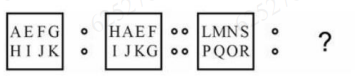
Two figures given on the left side of (::) are related with some logic/rule/relation. Select the missing figure on the right side of (::) from the given alternatives based on the same logic/rule/relation.

<br>

  1. ((a))

  2. ((b))

  3. ((c))

  4. ((d))

Show Answer
Answer: ((d))

Figure Analogy

The logic followed here is:

Logic: The pattern follows a clockwise cyclic rotation where elements shift positions in a fixed cycle, with corner and row elements moving systematically to new positions.

First Pair Transformation:

A, E, F, G / H, I, J, K → H, A, E, F / I, J, K, G

Here, H moves to the top-left, G moves to the bottom-right, and the remaining letters rotate accordingly in a fixed clockwise pattern.

Applying the same rule to the second pair:

L, M, N, S / P, Q, O, R → P, L, M, N / Q, O, R, S

This arrangement exactly matches the configuration given in option 4.

Hence, the correct answer is Option 4.

31

Select the option that is related to the first letter-number cluster in the same way as the fourth letter-number cluster is related to the third letter-number cluster and sixth letter-number cluster is related to fifth letter-number cluster.

(NOTE: Operations should be performed on the whole numbers, without breaking down the numbers into its constituent digits. E.g.13 – Operations on 13 such as adding /subtracting /multiplying etc. to 13 can be performed. Breaking down 13 into 1 and 3 and then performing mathematical operations on 1 and 3 is not allowed)

<br>

AD120:?::BK220:DN720::DL170:FO670 AD120 : ? :: BK220 : DN720 :: DL170 : FO670

  1. ((a))

    CG600 CG600

  2. ((b))

    CG620 CG620

  3. ((c))

    GC520 GC520

  4. ((d))

    GD420 GD420

Show Answer
Answer: ((b))

CG620 CG620

The logic followed here is:

For, BK220 : DN720

For, DL170 : FO670

Now, AD120 : ?

So, AD120 → CG620

Hence, the correct answer is Option 2.

32

Select the option that is related to the first letter-number cluster in the same way as the fourth letter-number cluster is related to the third letter-number cluster and sixth letter-number cluster is related to fifth letter-number cluster.

<br>

(NOTE: Operations should be performed on the whole numbers, without breaking down the numbers into its constituent digits. E.g.13 13 – Operations on 13 13 such as adding /subtracting /multiplying etc. to 13 13 can be performed. Breaking down 13 13 into 1 1 and 3 3 and then performing mathematical operations on 1 1 and 3 3 is not allowed)

<br>

AL400:?::BM520:IJ700::EK710:LH890 \text{AL400} : ? :: \text{BM520} : \text{IJ700} :: \text{EK710} : \text{LH890}

  1. ((a))

    JI620 \text{JI620}

  2. ((b))

    HI580 \text{HI580}

  3. ((c))

    IH580 \text{IH580}

  4. ((d))

    HJ620 \text{HJ620}

Show Answer
Answer: ((b))

HI580 \text{HI580}

The logic followed here is:

For, BM520 : IJ700

For, EK710 : LH890

Now, AL400 : ?

So, AL400 → HI580

Hence, the correct answer is Option 2.

33

Arrange the given words in the sequence in which they occur in the dictionary.

<br>
  1. Finger
  2. Fine
  3. Finite
  4. Five
  5. Firm
  1. ((a))

    12345

  2. ((b))

    23145

  3. ((c))

    12354

  4. ((d))

    21354

Show Answer
Answer: ((d))

21354

The correct order of words as they would appear in the English dictionary is:

  1. Fine
  2. Finger
  3. Finite
  4. Firm
  5. Five

The correct order is ‘2, 1, 3, 5, 4’.

Hence, the correct answer is Option 4.

34

Arrange the given words in the sequence in which they occur in the dictionary.

<br>
  1. Epidemic
  2. Epic
  3. Episode
  4. Episcopal
  5. Epidermis
  1. ((a))

    21345

  2. ((b))

    21543

  3. ((c))

    12354

  4. ((d))

    13254

Show Answer
Answer: ((b))

21543

The correct order of words as they would appear in the English dictionary is:

  1. Epic
  2. Epidemic
  3. Epidermis
  4. Episcopal
  5. Episode

The correct order is ‘2, 1, 5, 4, 3’.

Hence, the correct answer is Option 2.

35

Arrange the given words in the sequence in which they occur in the dictionary.

<br>
  1. Voltage
  2. Voluble
  3. Volt
  4. Volley
  5. Volume
  1. ((a))

    34125

  2. ((b))

    43125

  3. ((c))

    34152

  4. ((d))

    43512

Show Answer
Answer: ((b))

43125

The correct order of words as they would appear in the English dictionary is:

  1. Volley
  2. Volt
  3. Voltage
  4. Voluble
  5. Volume

The correct order is ‘4, 3, 1, 2, 5’.

Hence, the correct answer is Option 2.

36

Select the option that is related to the fourth number in the same way as the first number is related to the second number and fifth number is related to sixth number.

(NOTE: Operations should be performed on the whole numbers, without breaking down the numbers into its constituent digits. E.g.13 – Operations on 13 such as adding /subtracting /multiplying etc. to 13 can be performed. Breaking down 13 into 1 and 3 and then performing mathematical operations on 1 and 3 is not allowed)

<br>

276:506::?:483::145:375 276 : 506 :: ? : 483 :: 145 : 375

  1. ((a))

    249 249

  2. ((b))

    258 258

  3. ((c))

    247 247

  4. ((d))

    253 253

Show Answer
Answer: ((d))

253 253

The logic followed here is:

Logic: The second number is obtained by adding 230 to the first number.

For, 276 : 506

276 + 230 = 506

For, 145 : 375

145 + 230 = 375

Now, ? : 483

Let the number be X

X + 230 = 483

X = 483 − 230 = 253

So, ? = 253

Hence, the correct answer is Option 4.

37

Select the option that is related to the fifth number in the same way as the second number is related to the first number and fourth number is related to third number.

(NOTE: Operations should be performed on the whole numbers, without breaking down the numbers into its constituent digits. E.g.13 – Operations on 13 such as adding /subtracting /multiplying etc. to 13 can be performed. Breaking down 13 into 1 and 3 and then performing mathematical operations on 1 and 3 is not allowed)

<br>

9:1331::13:3375::19:? 9 : 1331 :: 13 : 3375 :: 19 : ?

  1. ((a))

    9261 9261

  2. ((b))

    6859 6859

  3. ((c))

    5836 5836

  4. ((d))

    8000 8000

Show Answer
Answer: ((a))

9261 9261

The logic followed here is:

Logic: Add 2 to the given number and then take the cube of the result.

For, 9 : 1331

9 + 2 = 11

11³ = 1331

For, 13 : 3375

13 + 2 = 15

15³ = 3375

Now, 19 : ?

19 + 2 = 21

21³ = 9261

So, 19 → 9261

Hence, the correct answer is Option 1.

38

In a certain code language, 'human react space' is coded as 'pa ps tq' and 'space has possibilities' is coded as 'tq tm pm'. How will 'space' be coded in that code language?

  1. ((a))

    tq

  2. ((b))

    pm

  3. ((c))

    pa

  4. ((d))

    ps

Show Answer
Answer: ((a))

tq

The logic followed here is:

Given:

human react space → pa ps tq

space has possibilities → tq tm pm

So, space → tq

Hence, the correct answer is Option 1.

39

In a certain code language, 'RAGE' is coded as '76 76 ' and 'POINT' is coded as '60 60 '. How will 'TAIL' be coded in that code language?

  1. ((a))

    62 62

  2. ((b))

    65 65

  3. ((c))

    68 68

  4. ((d))

    64 64

Show Answer
Answer: ((b))

65 65

The logic followed here is:

For, RAGE → 76

Opposite values: R = 9, A = 26, G = 20, E = 22

Sum = 9 + 26 + 20 + 22 = 77

77 − 1 = 76

For, POINT → 60

Opposite values: P = 11, O = 12, I = 18, N = 13, T = 7

Sum = 11 + 12 + 18 + 13 + 7 = 61

61 − 1 = 60

Now, TAIL →

Opposite values: T = 7, A = 26, I = 18, L = 15

Sum = 7 + 26 + 18 + 15 = 66

66 − 1 = 65

Hence, the correct answer is Option 2.

40

A series is given with one term missing. Select the correct alternative from the given ones that will complete the series.

<br>

ZUY8, WQT12, ?, QIJ27, NEE40.5

  1. ((a))

    SMO22

  2. ((b))

    TMO18

  3. ((c))

    TNO20

  4. ((d))

    OMT18

Show Answer
Answer: ((b))

TMO18

The logic followed here is:

So, the missing term = TMO18

Hence, the correct answer is Option 2.

Session 2 (50 questions)

41

What is the approximate time period of second phase of the green revolution in India?

  1. ((a))

    mid- 1970s to mid-1980s

  2. ((b))

    mid- 1980s to mid-1990s

  3. ((c))

    mid- 1970s to mid-1990s

  4. ((d))

    mid- 1950s to mid-1960s

Show Answer
Answer: ((a))

mid- 1970s to mid-1980s

The correct answer is mid- 1970s to mid-1980s.

Key Points

  • The Green Revolution in India was a period when Indian agriculture was converted into an industrial system due to the adoption of modern methods and technology. It is generally categorized into two distinct phases.
  • The second phase of the Green Revolution approximately spanned from the mid-1970s to the mid-1980s. Hence, the correct answer is mid- 1970s to mid-1980s.
  • During this second phase, the High-Yielding Variety (HYV) technology spread to a much larger number of states and benefited a more diverse range of crops beyond just wheat and rice.
  • While the first phase (mid-1960s to mid-1970s) was restricted to affluent states like Punjab, Haryana, and Western Uttar Pradesh, the second phase saw expansion into states like Andhra Pradesh, Tamil Nadu, and parts of the Eastern region.
  • This geographical spread was crucial in ensuring that the benefits of increased food grain production were distributed more equitably across the country, helping India move closer to total food self-sufficiency.

Additional Information

  • Origins of Green Revolution:
  • The revolution was initiated in the 1960s by introducing Mexican wheat varieties.
  • M.S. Swaminathan is known as the Father of the Green Revolution in India for his leadership and role in introducing and further developing HYV wheat varieties.
  • Globally, Norman Borlaug is hailed as the Father of the Green Revolution and was awarded the Nobel Peace Prize in 1970 for his work.
  • Core Components:
  • HYV Seeds: These seeds had a higher yield potential compared to traditional seeds but required a reliable supply of water and the correct proportion of fertilizers and pesticides.
  • Irrigation: The success of the revolution was heavily dependent on assured irrigation facilities, leading to the construction of various dams and tube wells.
  • Chemical Inputs: Increased use of chemical fertilizers, pesticides, and weedicides was necessary to protect and nourish the high-yielding crops.
  • Economic Impact:
  • It resulted in a significant increase in the productivity of food grains, especially wheat and rice.
  • The surplus production allowed the government to maintain a buffer stock through the Food Corporation of India (FCI), which could be used during times of food shortage.
  • It enabled the commercialization of agriculture as farmers began producing for the market rather than just for subsistence.

Important Points

  • Phases Comparison:
  • Phase I (mid-1960s to mid-1970s): Characterized by the use of HYV seeds primarily in wheat-growing regions like Punjab and Haryana.
  • Phase II (mid-1970s to mid-1980s): Marked by the spread of technology to other states and inclusion of rice and other crops in the HYV net.
  • Government Policy:
  • The government provided loans at low-interest rates and subsidized fertilizers so that small farmers could also afford the necessary inputs.
  • This intervention was vital to prevent the "rich getting richer" syndrome and to make the Green Revolution inclusive for small-scale landholders.
  • Environmental Concerns: While the revolution solved hunger, it later faced criticism for soil degradation, depletion of groundwater, and the loss of biodiversity due to monocropping.
42

In India, as per the Industrial Policy Resolution 1956, the second category consisted of industries in which the ______.

  1. ((a))

    private sector could supplement the efforts of public sector

  2. ((b))

    only foreign private sector would be entertained

  3. ((c))

    public sector units had no role

  4. ((d))

    private sector had sole authority to start new units

Show Answer
Answer: ((a))

private sector could supplement the efforts of public sector

The correct answer is private sector could supplement the efforts of public sector.

Key Points

  • The Industrial Policy Resolution (IPR) of 1956 was adopted by the Indian Parliament in April 1956. It formed the basis of the Second Five Year Plan (1956-1961), which focused heavily on the development of heavy industries.
  • This resolution classified industries into three distinct categories based on the role the state and private players would play. The second category, often referred to as Schedule B, consisted of industries that were to be progressively state-owned.
  • In this second category, the State would take the initiative of setting up new industrial units, but the private sector was given the opportunity to supplement the efforts of the State. Hence, the correct answer is the private sector could supplement the efforts of the public sector.
  • There were 12 industries listed under this second category. These included industries like aluminum, other non-ferrous metals, machine tools, ferro-alloys, basic and intermediate products required by chemical industries, antibiotics, fertilizers, and synthetic rubber.
  • The primary objective of this categorization was to ensure that the government maintained control over the "commanding heights" of the economy while allowing private enterprise to contribute to national growth.

Additional Information

  • Schedule A (First Category):
  • This category comprised 17 industries which were the exclusive responsibility of the State. No new units could be started by the private sector in these fields.
  • Examples included arms and ammunition, atomic energy, iron and steel, heavy plant and machinery, coal and lignite, mineral oils, mining of iron ore, and railway transport.
  • Schedule C (Third Category):
  • This category included all the remaining industries not mentioned in Schedules A or B.
  • These were generally left to the private sector, but they were still subject to the framework of social and economic policy of the State, primarily through industrial licensing.
  • Industrial Licensing (The License Raj):
  • Even for industries in the private sector, the 1956 policy mandated a license from the government to start a new industry or expand existing capacity.
  • This system was used to promote regional equality; it was easier to obtain a license if the industrial unit was proposed in an economically backward area.
  • Tax benefits and lower electricity tariffs were also provided to industries established in backward regions to encourage balanced regional development.

Important Points

  • The IPR 1956 is often called the Economic Constitution of India or the "Bible of State Capitalism" because it defined the socialist pattern of society as the ultimate goal of India's economic policy.
  • It was heavily influenced by the Mahalanobis Model, which emphasized the development of capital goods industries to achieve long-term self-reliance.
  • The resolution replaced the Industrial Policy Resolution of 1948, reflecting the shift toward a more dominant role for the public sector in the Indian economy.
  • The policy remained the guiding principle for Indian industrialization until the New Economic Policy of 1991, which introduced liberalization, privatization, and globalization (LPG).
43

Ionosphere is a part of _______.

  1. ((a))

    Troposphere

  2. ((b))

    Stratosphere

  3. ((c))

    Thermosphere

  4. ((d))

    Exosphere

Show Answer
Answer: ((c))

Thermosphere

The correct answer is Thermosphere.

Key Points

  • The Ionosphere is a significant layer of the Earth's atmosphere that is primarily considered a part of the Thermosphere. It extends from an altitude of about 80 kilometers (50 miles) to 400 kilometers (250 miles) above the Earth's surface.
  • This layer is characterized by the presence of ions and free electrons, which are created through the process of photoionization. This happens when high-energy Solar Radiation (such as UV rays and X-rays) hits the atoms and molecules in the upper atmosphere, knocking off electrons.
  • The most critical function of the Ionosphere is its ability to reflect radio waves. Long-distance radio communication is possible because these waves are reflected back to Earth by the charged particles in this layer, rather than escaping into space.
  • Within the Thermosphere, temperatures increase rapidly with altitude due to the absorption of intense solar energy. Despite the high temperatures (which can reach 1,500°C or more), the air is so thin that it would not feel "hot" to a human.
  • The Ionosphere is also the region where spectacular natural light displays known as Auroras (Aurora Borealis and Aurora Australis) occur, caused by the interaction between the solar wind and the Earth's magnetic field.
  • Hence, the correct answer is Thermosphere.

Additional Information

  • Troposphere:
  • This is the lowest layer of the atmosphere, extending from the Earth's surface up to an average height of 13 kilometers (about 8 km at the poles and 18 km at the equator).
  • It contains approximately 75% to 80% of the atmosphere's total mass and nearly all of its water vapor and dust particles.
  • All weather phenomena, such as cloud formation, rainfall, and storms, occur in this layer. The temperature decreases with increasing height at a rate of 6.5°C per kilometer.
  • Stratosphere:
  • Located above the Troposphere, it extends up to a height of 50 kilometers. This layer is very dry and contains very few clouds.
  • The Stratosphere houses the Ozone Layer (Ozonosphere), which protects life on Earth by absorbing harmful Ultraviolet (UV) radiation from the sun.
  • Due to the absence of weather disturbances and vertical air currents, this layer is considered ideal for flying jet aircraft.
  • Mesosphere:
  • The Mesosphere lies above the Stratosphere and extends up to 80 kilometers. It is known as the coldest layer of the atmosphere, with temperatures dropping as low as -90°C.
  • This is the layer where most meteors burn up upon entering the Earth's atmosphere due to friction with the air.
  • Exosphere:
  • This is the outermost layer of the atmosphere, beginning at the top of the Thermosphere and extending into outer space.
  • The air in the Exosphere is extremely thin, consisting mainly of light gases like Helium and Hydrogen, which eventually drift out into space.
  • This layer is where many satellites orbit the Earth.
44

Which of the following is INCORRECT about Stratosphere?

  1. ((a))

    Stratosphere extends up to a height of 50 km.

  2. ((b))

    It lies below the troposphere.

  3. ((c))

    This layer is almost free from clouds and associated weather phenomenon, making conditions most ideal for flying aero planes.

  4. ((d))

    Ozone layer found in this layer of atmosphere.

Show Answer
Answer: ((b))

It lies below the troposphere.

The correct answer is It lies below the troposphere.

Key Points

  • The Stratosphere is the second major layer of Earth's atmosphere, located directly above the Troposphere and below the Mesosphere. It is separated from the troposphere by the Tropopause. Hence, statement 2 is incorrect.
  • This atmospheric layer extends from the top of the troposphere (which varies from about 8 km at the poles to 18 km at the equator) up to a height of approximately 50 km above the Earth's surface. Hence, statement 1 is correct.
  • The Stratosphere is characterized by being almost free from clouds and other weather phenomena (like storms or heavy turbulence). This lack of vertical air movement and moisture makes it the most ideal layer for flying jet aeroplanes and long-distance aircraft. Hence, statement 3 is correct.
  • A crucial feature of this layer is the presence of the Ozone layer (also known as the Ozonosphere). This layer of Ozone gas (O3) absorbs the majority of the Sun's harmful ultraviolet (UV) radiation, protecting life on Earth. Hence, statement 4 is correct.
  • Unlike the troposphere, the temperature in the Stratosphere increases with altitude. This temperature inversion is caused by the absorption of UV rays by the ozone molecules, which converts the radiation into heat.

Additional Information

  • Structure of the Atmosphere:
  • Troposphere: This is the lowest layer of the atmosphere where we live. It contains about 75% to 80% of the atmosphere's mass and almost all the water vapor. All weather changes occur in this layer. The temperature decreases with height here.
  • Mesosphere: Located above the stratosphere, it extends up to 80 km. This is the layer where meteors burn up upon entering the Earth's atmosphere from space. It is the coldest layer of the atmosphere.
  • Thermosphere: Extending between 80 km and 400 km, it contains the Ionosphere. In this layer, temperature rises very rapidly with increasing height. It reflects radio waves back to Earth, facilitating wireless communication.
  • Exosphere: The uppermost layer of the atmosphere. The air is extremely thin here, and light gases like Helium and Hydrogen float into space from this region.
  • The Ozone Layer:
  • The highest concentration of ozone is typically found between 15 km and 35 km altitude.
  • The thickness of the ozone layer is measured in Dobson Units (DU).
  • Depletion of this layer due to Chlorofluorocarbons (CFCs) can lead to increased rates of skin cancer and cataracts due to higher UV exposure.
  • Important Boundaries:
  • Stratopause: The boundary at the top of the stratosphere (at 50 km) where the temperature reaches its maximum.
  • Mesopause: The boundary between the mesosphere and the thermosphere, representing the coldest point in the atmosphere.
45

In humans, rings of cartilage are present in the ___.

  1. ((a))

    stomach

  2. ((b))

    mouth

  3. ((c))

    ear

  4. ((d))

    throat

Show Answer
Answer: ((d))

throat

The correct answer is throat.

Key Points

  • In the human anatomy, the throat contains the trachea (commonly known as the windpipe), which is reinforced by rings of cartilage.
  • These rings are specifically C-shaped and are made of hyaline cartilage. They are stacked one above the other along the length of the trachea. Hence, the option "throat" is correct.
  • The primary function of these cartilaginous rings is to provide structural support and prevent the trachea from collapsing. This ensures that the airway remains open even when there is negative pressure during inhalation.
  • The C-shaped structure is crucial because the open part of the "C" faces the posterior side, where the esophagus is located. This allows the esophagus to expand slightly into the space of the trachea when a person swallows a large bolus of food.
  • Without these rings, the soft tissue of the throat would likely collapse during breathing, leading to asphyxiation or respiratory distress.

Additional Information

  • Cartilage: It is a flexible, resilient connective tissue that is found in various parts of the body. It is composed of specialized cells called chondrocytes that produce a large amount of collagenous extracellular matrix.
  • Types of Cartilage:
  • Hyaline Cartilage: This is the most common type, found in the trachea, nose, and at the ends of long bones (articular cartilage).
  • Elastic Cartilage: Contains more elastic fibers, providing flexibility to structures like the external ear (pinna) and the epiglottis.
  • Fibrocartilage: The strongest type, found in intervertebral discs and the pubic symphysis, designed to withstand heavy pressure.
  • Other Options Analysis:
  • Stomach: The stomach is a muscular organ that lacks cartilaginous rings. Its structure is primarily composed of smooth muscle layers and a mucosal lining.
  • Mouth: The mouth consists of the tongue, teeth, and palate. While the hard palate has a bony base, there are no rings of cartilage present here.
  • Ear: While the outer ear (pinna) is made of elastic cartilage, it does not contain structural rings like the respiratory tract.

Important Points

  • The human trachea typically contains 16 to 20 individual cartilaginous rings.
  • The trachea extends from the larynx (voice box) down to the carina, where it bifurcates into the left and right primary bronchi.
  • The bronchi also contain cartilage, but as they branch further into bronchioles, the cartilage disappears and is replaced by smooth muscle.
  • The open ends of the C-shaped rings are connected by the trachealis muscle, which can contract to narrow the trachea, increasing the force of air during coughing.
  • The inner lining of the trachea is composed of pseudostratified ciliated columnar epithelium with goblet cells that produce mucus to trap foreign particles.
46

The Guptas issued a large number of gold coins called ______.

  1. ((a))

    Dinaras

  2. ((b))

    Tanka

  3. ((c))

    Jital

  4. ((d))

    Tamrarupa

Show Answer
Answer: ((a))

Dinaras

The correct answer is Dinaras.

Key Points

  • The Gupta Empire, which flourished from the 4th to 6th century CE, is renowned for issuing the largest number of gold coins in ancient Indian history. These gold coins were professionally known as Dinaras.
  • The term Dinara is believed to have been derived from the Roman currency known as Denarius, reflecting the strong trade links between India and the Western world during that era.
  • The Gupta gold coins were not only a medium of exchange but also served as a medium for royal propaganda, depicting the kings in various poses such as playing the Veena, hunting lions, or performing religious sacrifices.
  • The early Gupta coinage was heavily influenced by the Kushana style, but later rulers introduced indigenous elements, including Sanskrit inscriptions and figures of Indian deities like Lakshmi and Garuda.
  • While the Guptas issued the maximum number of gold coins, it is noted by historians that the purity of gold in these coins gradually declined during the later part of the dynasty compared to the high-purity coins of the Kushanas.

Additional Information

  • Tanka and Jital:
  • The Tanka (silver coin) and Jital (copper coin) were the standard currencies introduced much later by the Delhi Sultanate.
  • Iltutmish, the Sultan of the Slave Dynasty, is credited with introducing these coins in the 13th century to stabilize the economy of the Sultanate. Hence, options 2 and 3 are incorrect in the context of the Guptas.
  • Rupakas (Silver Coins):
  • The Guptas also issued silver coins known as Rupakas.
  • The issuance of silver coins was primarily started by Chandragupta II (Vikramaditya) after his successful military campaign and victory over the Saka Kshatrapas of Western India.
  • Copper Coins:
  • While gold and silver were prominent, copper coins were also issued by Gupta rulers like Ramagupta and Chandragupta II, though they are found in much smaller quantities compared to the Dinaras.
  • Economic Significance:
  • The abundance of Dinaras indicates a flourishing money economy and significant long-distance trade. However, the scarcity of copper coins in later periods suggests a possible decline in local trade or a shift towards barter systems for daily transactions.

Important Points

  • Samudragupta: Known as the "Napoleon of India," his coins are famous for the "Lyrist type" depicting him playing the Veena, which highlights his interest in music and art.
  • Chandragupta I: He is often credited with the "King-Queen type" coins, which featured him alongside his wife Kumaradevi, a princess of the Lichchhavi clan.
  • Iconography: The reverse side of the Gupta gold coins frequently featured the Goddess Lakshmi seated on a lotus, symbolizing prosperity, which became a hallmark of Indian numismatics.
  • Decline of Coinage: Following the Huna invasions and the internal disintegration of the empire in the 6th century, the standard and quantity of the Dinaras saw a sharp decline, marking the end of the Golden Age of Indian coinage.
47

Which of the following was NOT a reason for Magadh's dominance over other Mahajanapadas?

  1. ((a))

    Fertile river plains

  2. ((b))

    Natural fortifications

  3. ((c))

    Rich iron deposits

  4. ((d))

    Access to the Arabian Sea

Show Answer
Answer: ((d))

Access to the Arabian Sea

The correct answer is Access to the Arabian Sea.

Key Points

  • Magadha emerged as the most powerful Mahajanapada between the 6th and 4th centuries BCE due to several geographical and strategic advantages.
  • Fertile river plains: Magadha was situated in the Gangetic valley, where the confluence of the Ganges, Son, and Gandak rivers provided exceptionally fertile land. This led to a massive agricultural surplus, which allowed the state to maintain a large standing army and a complex administrative machinery. Hence, statement 1 is a correct reason for its dominance.
  • Natural fortifications: The first capital of Magadha, Rajgir (then known as Rajgriha), was surrounded by five hills, making it virtually impregnable to enemies. Later, the capital was shifted to Pataliputra, which served as a water fort (Jaladurga) because it was situated at the junction of major rivers, providing both protection and a means of communication. Hence, statement 2 is a correct reason for its dominance.
  • Rich iron deposits: Magadha had easy access to iron ore mines located in the Chota Nagpur plateau (modern-day Jharkhand). This allowed the Magadhan army to manufacture superior iron weapons and improved agricultural tools, giving them an edge over rivals who relied on copper or bronze. Hence, statement 3 is a correct reason for its dominance.
  • Access to the Arabian Sea: Magadha was an inland kingdom located in Eastern India (modern-day Bihar). While it controlled riverine trade through the Bay of Bengal, it had no direct access to the Arabian Sea, which is located on the Western coast of India. Hence, statement 4 is NOT a reason for its dominance and is the correct answer.

Additional Information

  • The 16 Mahajanapadas: According to the Buddhist text Anguttara Nikaya and the Jaina text Bhagavati Sutra, there were 16 great kingdoms known as Mahajanapadas in ancient India during the Vedic period.
  • Military Innovation: Magadha was the first kingdom to use elephants on a large scale in warfare. These elephants were sourced from the dense forests of the east (modern Odisha and Bengal) and were used to smash enemy forts and formations.
  • Ambitious Rulers: The rise of Magadha is also attributed to the policies of its powerful kings like Bimbisara, Ajatashatru, and Mahapadma Nanda. Bimbisara (Haryanka Dynasty) used matrimonial alliances and conquests to expand his territory.
  • Trade and Commerce: The control over the Ganges river trade route facilitated economic prosperity. Taxes collected from trade and agriculture provided the Mauryan and pre-Mauryan rulers with the wealth needed to build the first great Indian Empire.
  • Strategic Capitals: Udayin, the successor of Ajatashatru, shifted the capital to Pataliputra (modern Patna) to better control the trade routes and the vast plains of Northern India.

Important Points

  • Haryanka Dynasty: Founded by Bimbisara in 544 BCE, this was the first significant dynasty of Magadha. Ajatashatru, his son, famously used new war engines like the Rathamusala (scythed chariot) and Mahashilakantaka (a catapult-like engine).
  • Nanda Dynasty: Founded by Mahapadma Nanda, who is often called the "first empire builder" of Indian history. The Nandas maintained a massive army, including 200,000 infantry and 6,000 war elephants, which allegedly discouraged Alexander the Great from invading further into India in 326 BCE.
  • Mauryan Empire: Following the Nandas, Chandragupta Maurya established the Mauryan Empire in 322 BCE with the help of Chanakya, making Magadha the center of the first pan-Indian empire.
48

What name did ancient Chinese texts use for India?

  1. ((a))

    Bharat

  2. ((b))

    Indica

  3. ((c))

    Yintu

  4. ((d))

    Sindhu

Show Answer
Answer: ((c))

Yintu

The correct answer is Yintu.

Key Points

  • In ancient Chinese literature, the term Yintu (also written as Yin-tu or Yindu) was used to refer to the Indian subcontinent. Hence, option 3 is correct.
  • The name Yintu is a phonetic transliteration of the Sanskrit word Sindhu, which is the name of the river Indus.
  • The famous Chinese Buddhist monk and scholar Xuanzang (Hsuan-tsang), who visited India during the 7th century AD (specifically between 629 AD and 645 AD), standardized this name in his writings.
  • Before Xuanzang, various other names were found in Chinese records, such as Shendu (used during the Han Dynasty) and Tiandu, all of which were early attempts to capture the sound of Sindhu.
  • Xuanzang noted that the name Yintu was more accurate than previous versions to describe the vast land located to the west of China.

Additional Information

  • Bharat:
  • It is the indigenous and constitutional name of India.
  • The name is derived from the ancient Bharata tribe or the legendary King Bharata, a descendant of the Puru dynasty.
  • It is mentioned in ancient Sanskrit texts like the Rigveda and the Puranas, where Bharatavarsha refers to the geographical entity of the subcontinent.
  • Indica:
  • This is the title of a historical account written by Megasthenes, a Greek ethnographer and ambassador.
  • He was sent to the court of Chandragupta Maurya around 300 BC by the Hellenistic king Seleucus I Nicator.
  • The book provides vital information about the Mauryan administration, social classes, and the city of Pataliputra.
  • Sindhu:
  • This is the Sanskrit name for the Indus River, one of the longest rivers in Asia.
  • The Persians, who had difficulty pronouncing 'S', called the river Hindu and the land Hindustan.
  • The Greeks later dropped the 'H' to call the river Indos, which eventually led to the Latin name India.
  • Tianzhu:
  • This was another historical Chinese name for India, especially used during the Han Dynasty.
  • The term translates to "Heavenly Center," reflecting the high regard Chinese Buddhists had for India as the birthplace of Lord Buddha.

Important Points

  • Xuanzang's travelogue, "Great Tang Records on the Western Regions", is a primary source for the history of India during the reign of King Harshavardhana.
  • Cultural and religious exchanges between India and China were primarily facilitated through the Silk Road, leading to the spread of Buddhism in China.
  • The modern Chinese word for India is Yindu, which is a direct phonetic descendant of the ancient Yintu.
  • The diverse names for India across different civilizations (Hindustan, India, Yintu) all share a common etymological root in the Sindhu (Indus) river.
49

Loor' is a popular dance of which of the following Indian state?

  1. ((a))

    Haryana

  2. ((b))

    Goa

  3. ((c))

    Sikkim

  4. ((d))

    Kerala

Show Answer
Answer: ((a))

Haryana

The correct answer is Haryana.

Key Points

  • Loor is a highly popular folk dance that belongs to the state of Haryana, India.
  • The word 'Loor' means 'girl' in the local dialect of the Bangar region of Haryana, where the dance originated.
  • It is traditionally performed exclusively by women and girls during the festive season of Holi and the arrival of the spring season.
  • The dance is unique because it often involves a thematic dialogue in the form of questions and answers between two groups of dancers, usually centered around family life, marriage, or social customs.
  • The Loor dance serves as a medium for young girls to express their joy and is often used to signal the beginning of the Rabi crop harvest. Hence, the correct answer is Haryana.

Additional Information

  • Other Folk Dances of Haryana:
  • Dhamal Dance: This is a traditional dance of Haryana that dates back to the era of the Mahabharata. It is primarily performed by men outdoors on moonlit nights during the month of Phalguna.
  • Phag Dance: Performed by both men and women, this dance is specifically dedicated to celebrating the festival of Holi and the colorful atmosphere of the spring season.
  • Gugga Dance: A ritualistic dance performed by devotees of Gugga Pir (a folk deity) during the month of Bhadra.
  • Khoria Dance: A variety of the Jhumar dance, usually performed by women during weddings and other auspicious occasions in Central Haryana.
  • Folk Dances of Goa:
  • Fugdi: An extremely popular folk dance of Goa performed by women during Hindu festivals like Ganesh Chaturthi.
  • Dekhni: A traditional dance that represents a unique blend of Indian and Western rhythms, often depicting the life of people living in the coastal areas.
  • Folk Dances of Sikkim:
  • Singhi Chham: Also known as the Snow Lion Dance, it is a masked dance that pays homage to the snow lion, a cultural symbol of Sikkim.
  • Yak Chaam: A dance performed to honor the Yak, an animal essential for survival in the high-altitude regions of the Himalayas.
  • Folk Dances of Kerala:
  • Kathakali: A world-famous classical dance-drama known for its elaborate costumes, vibrant makeup, and stylized gestures.
  • Mohiniyattam: A graceful classical dance performed by women, characterized by swaying movements and subtle facial expressions.
  • Thiruvathirakali: A popular folk dance performed by women in groups during the festival of Onam and Thiruvathira.

Important Points

  • The Loor dance is most prominently seen in districts such as Bhiwani, Dadri, and Jind in Haryana.
  • The traditional attire for the dance includes the Ghagra (a heavy long skirt), Kurti (top), and Chundri (a decorated veil), which reflects the vibrant rural culture of the state.
  • Unlike many other folk dances that rely heavily on instruments, the Loor dance is primarily driven by the rhythmic clapping and the melodic singing of the participating women.
  • The themes of the Loor songs are culturally significant, often addressing the birth of a girl, the bond of friendship, and the humorous exchanges between families during marriage negotiations.
50

Which theme is portrayed in the 'Shikaar Nritya' folk dance of Gujarat?

  1. ((a))

    A farming ritual

  2. ((b))

    Rain invocation

  3. ((c))

    A wedding ceremony

  4. ((d))

    Recreation of a hunting scene

Show Answer
Answer: ((d))

Recreation of a hunting scene

The correct answer is Recreation of a hunting scene.

Key Points

  • The Shikaar Nritya, also known as the Hunting Dance, is a traditional folk performance primarily associated with the Siddi community of Gujarat.
  • The central theme of this dance is the Recreation of a hunting scene, where performers mimic the movements and strategies used by their ancestors to track and capture wild animals. Hence, statement 4 is correct.
  • The Siddi people are an ethnic group of African descent (Bantu peoples) who settled in India centuries ago, and this dance serves as a vital link to their African heritage.
  • Performers utilize various traditional props such as spears, bows, arrows, and swords to make the enactment of the hunt look realistic and engaging.
  • The dance is highly energetic and rhythmic, characterized by the intense beat of the Dhamal (a small drum) and other percussion instruments like the Mushira.
  • It is traditionally performed in the Saurashtra region of Gujarat, particularly in areas near the Gir Forest, such as Junagadh and Amreli.

Additional Information

  • The Siddi Community:
  • The Siddis (also known as Habshis) are believed to have arrived in India between the 12th and 19th centuries as sailors, merchants, or slaves.
  • In Gujarat, they are concentrated in the village of Jambur and are known for preserving their unique Afro-Indian culture through music and dance.
  • Other Folk Dances of Gujarat:
  • Garba: A devotional dance performed during Navratri to honor Goddess Durga. It involves circular movements around a lamp or an image of the deity.
  • Tippani: Originally a farming or construction ritual, performed by women laborers in the Chorwad region who use long sticks called Tippanis to beat the ground.
  • Dandiya Raas: A vibrant dance performed with wooden sticks, representing a mock fight between the Goddess and the demon Mahishasura.
  • Padhar Dance: Performed by the Padhar community of the Bhal region, reflecting the lifestyle of fishermen and rowing of boats.
  • Siddi Dhamal:
  • The Shikaar Nritya is often considered a variation or a part of the broader Siddi Dhamal performance.
  • The Dhamal dance was historically performed after a successful hunt or during the Urs (death anniversary) of Sufi saints like Baba Ghor.

Important Points

  • Cultural Significance: The dance is not just entertainment but a form of storytelling that passes down the history of the Siddi warriors and hunters to the younger generation.
  • Attire: Dancers often wear animal skins or vibrant traditional clothes decorated with peacock feathers and apply white paint on their faces to emphasize their tribal roots.
  • Tempo: The dance starts with a slow tempo and gradually reaches a frenzied pace, showcasing the physical stamina and agility of the dancers.
  • Location: While mostly found in Gujarat, smaller Siddi populations also reside in Karnataka, Maharashtra, and Hyderabad, each maintaining slight variations of these African-influenced traditions.
51

______ is present at the growing tips of stems and roots and increases the length of the stem and the root.

  1. ((a))

    Apical meristem

  2. ((b))

    Parenchyma tissue

  3. ((c))

    Intercalary meristem

  4. ((d))

    Lateral meristem

Show Answer
Answer: ((a))

Apical meristem

The correct answer is Apical meristem.

Key Points

  • Apical meristem is a type of meristematic tissue located at the growing tips of stems and roots of plants.
  • The primary function of this tissue is to facilitate primary growth, which directly results in an increase in the length of the plant body.
  • It consists of a group of actively dividing cells that are small, spherical, or polygonal in shape with thin cellulose walls and dense cytoplasm.
  • In the shoot system, it is known as the Shoot Apical Meristem (SAM), which gives rise to leaves and flowers, while in the root system, it is called the Root Apical Meristem (RAM), responsible for penetrating deeper into the soil.
  • As these cells divide, some remain in the meristem to maintain the growing point, while others differentiate into various permanent tissues.

Additional Information

  • Lateral Meristem:
  • This tissue is found on the lateral sides of stems and roots.
  • It is responsible for secondary growth, which increases the girth or thickness of the plant.
  • Examples include the vascular cambium and cork cambium (phellogen), typically seen in woody dicots and gymnosperms.
  • Intercalary Meristem:
  • This meristem is located at the base of leaves or internodes (the regions between two nodes).
  • It is particularly prominent in monocots like grasses and bamboo.
  • It helps in the regeneration of parts removed by grazing herbivores and contributes to the elongation of the internodes.
  • Parenchyma Tissue:
  • Unlike meristematic tissues, Parenchyma is a type of simple permanent tissue.
  • The cells are living, possess thin cell walls, and usually have large vacuoles for storage.
  • Its functions include photosynthesis (when it contains chlorophyll, called chlorenchyma), storage of food/water, and providing buoyancy in aquatic plants (aerenchyma).

Important Points

  • Meristematic Tissue Characteristics: These cells have a very high metabolic rate and lack vacuoles because they are constantly dividing and do not need to store food or waste.
  • Differentiation: This is the process where cells produced by the meristem take up a permanent shape, size, and function and lose the ability to divide further.
  • Plant Growth: Unlike animals, plant growth is localized to specific regions containing meristematic tissues, which is why growth in plants is often considered unlimited or indeterminate at these specific points.
  • Classification: Meristems are classified based on their position (Apical, Lateral, Intercalary) or their origin (Primary and Secondary meristems).
52

In which part of the plant is the intercalary meristem typically located?

  1. ((a))

    At the root tip

  2. ((b))

    Near the node

  3. ((c))

    In the leaves

  4. ((d))

    At the base of the flower

Show Answer
Answer: ((b))

Near the node

The correct answer is Near the node.

Key Points

  • Intercalary meristem is a type of primary meristematic tissue that is located between regions of mature, permanent tissues. It is typically found near the node, at the base of the internodes, or at the base of leaf blades in plants.
  • This tissue is responsible for the longitudinal growth of the plant, specifically contributing to the elongation of internodes. This allows stems to increase in length even if the apical meristem is distant.
  • One of the most vital functions of the intercalary meristem is the regeneration of plant parts. In many grasses, this tissue allows the plant to regrow after the tips have been removed by grazing herbivores.
  • These meristems are essentially remnants of the apical meristem that have been separated from the apex by the development of permanent tissues during the growth process.
  • It is most commonly observed in monocotyledonous plants such as bamboo, sugarcane, and various types of grasses. Hence, the correct answer is Near the node.

Additional Information

  • Apical Meristem:
  • This tissue is located at the growing tips of roots and shoots.
  • It is responsible for primary growth, which increases the height of the plant and the depth of the roots in the soil.
  • The root apical meristem is found at the root tip, protected by the root cap, while the shoot apical meristem is found at the very tip of the stem.
  • Lateral Meristem:
  • These meristems are found on the lateral sides of stems and roots, running parallel to the long axis.
  • They are responsible for secondary growth, which increases the girth or thickness of the plant.
  • Common examples include the vascular cambium and cork cambium (phellogen), typically found in woody dicotyledonous plants and gymnosperms.
  • Meristematic Tissues:
  • These are groups of undifferentiated cells capable of active cell division throughout the life of the plant.
  • Based on their origin, they are classified into pro-meristem, primary meristem, and secondary meristem.
  • Cells in these tissues have thin cellulose walls, dense cytoplasm, and lack large vacuoles.
  • Permanent Tissues:
  • When meristematic cells lose their ability to divide, they take up a specific role and form permanent tissues.
  • They are divided into Simple Permanent Tissue (like Parenchyma, Collenchyma, and Sclerenchyma) and Complex Permanent Tissue (like Xylem and Phloem).
53

In which Indian state is 'Syalde Bikhauti Mela' celebrated?

  1. ((a))

    Goa

  2. ((b))

    Gujarat

  3. ((c))

    Uttarakhand

  4. ((d))

    Andhra Pradesh

Show Answer
Answer: ((c))

Uttarakhand

The correct answer is Uttarakhand.

Key Points

  • The Syalde Bikhauti Mela is a prominent annual cultural fair celebrated in the Kumaon region of the Indian state of Uttarakhand.
  • This fair takes place in the town of Dwarahat, located in the Almora district, and is held during the month of April, specifically coinciding with Vishwat Sankranti (the first day of the Hindu month of Vaishakh).
  • The festival is divided into two distinct parts: Syalde, which is celebrated on the night before the main event, and Bikhauti, which is the primary celebration held on the day of the Sankranti.
  • A unique and historical ritual of this fair is the Oda-Bheta, where devotees strike a particular stone with a stick to symbolize the victory over an ancient rival clan, the Katpuria, reflecting the region's martial history.
  • The fair serves as a platform for the preservation of local folk traditions, featuring traditional dances like the Jhora and Chanchari, and folk songs that narrate the legends of the Himalayan foothills.
  • Thousands of people from neighboring villages and tourists visit the Shitaladevi Temple during this period to seek blessings and participate in the vibrant festivities.

Additional Information

  • Cultural Landscape of Uttarakhand: Known as Devbhoomi (Land of the Gods), Uttarakhand is home to two primary cultural zones, Garhwal and Kumaon, each hosting a variety of fairs linked to seasonal changes and religious legends.
  • Major Fairs in the State:
  • Kumbh Mela: Held in Haridwar every 12 years, it is one of the largest religious congregations in the world and is recognized by UNESCO as an Intangible Cultural Heritage.
  • Nanda Devi Raj Jat: A grand pilgrimage and fair that takes place once every 12 years, tracing a long trek through the high-altitude mountains of Chamoli.
  • Bagwal Mela: Celebrated at the Devidhura temple in Champawat district during Raksha Bandhan, it is famous for its ritualistic stone-pelting tradition.
  • Jauljibi Mela: An international trade and cultural fair held at the confluence of the Kali and Gori rivers, facilitating exchange between people from India, Nepal, and Tibet.
  • Economic and Social Importance: These melas (fairs) are not only religious events but also serve as important trade hubs for local artisans to sell traditional Kumaoni and Garhwali crafts, woolens, and organic mountain produce.
  • Festivals of Uttarakhand: Other significant festivals include Phool Dei (the spring flower festival), Harela (marking the onset of the rainy season), and Ghee Sankranti, all of which emphasize the state's deep connection with nature and agriculture.
54

Chandanakuda Mahotsavam' in Kerala is a festival celebrated in a _______.

  1. ((a))

    temple

  2. ((b))

    church

  3. ((c))

    masjid

  4. ((d))

    buddhist monastery

Show Answer
Answer: ((c))

masjid

The correct answer is masjid.

Key Points

  • The Chandanakuda Mahotsavam is one of the most famous and colorful Islamic festivals celebrated in the state of Kerala, primarily at the Beemapally Dargah Shareef (a masjid) in Thiruvananthapuram.
  • The festival is held to commemorate the death anniversary of Beema Beevi, a woman believed to have possessed miraculous powers, and her son Syedusshuhada Maheen Aboobaker, who belonged to the family of the Prophet Muhammad.
  • The name of the festival, Chandanakudam, literally translates to "Sandalwood Pot". During the celebration, pilgrims carry earthen pots smeared with sandalwood paste (Chandanam), filled with coins, and covered with incense sticks as an offering at the shrine.
  • It is an annual event that lasts for 10 days, occurring during the Islamic month of Jamad-ul-Akhar. The festival concludes with a grand procession and special prayers (Dua).
  • A unique feature of this masjid festival is its display of communal harmony, as it attracts thousands of devotees from different religious backgrounds who participate in the rituals and cultural programs.

Additional Information

  • Beemapally Dargah Shareef: Located near Thiruvananthapuram, this masjid is famous for its distinct architecture with multiple minarets and is considered a major center of pilgrimage for Muslims in South India.
  • Erumely Chandanakudam: Another significant Chandanakudam festival is celebrated at the Erumely Juma Masjid in the Kottayam district. This festival is deeply linked to the Sabarimala pilgrimage and the legend of Lord Ayyappa and his Muslim friend Vavar.
  • Islam in Kerala: Kerala has a long history of Islam, dating back to the 7th century. The Cheraman Juma Masjid in Kodungallur is widely recognized as the first mosque in India, built around 629 AD by Malik Deenar.
  • Cultural Synthesis: Festivals like Chandanakuda Mahotsavam often incorporate local Kerala traditions, such as the use of caparisoned elephants, traditional percussion music (like Panchavadyam), and folk arts, showcasing a blend of Islamic and local cultural elements.
  • Other Masjid Festivals: Other notable mosque-centered festivals in Kerala include the Malappuram Nercha and the Kondotty Nercha, which also draw large crowds and emphasize votive offerings and religious processions.

Important Points

  • The use of sandalwood is significant in these festivals as it is a traditional Indian symbol of purity and reverence, used here to honor the memory of Sufi saints.
  • The Erumely celebration precedes the famous Petta Thullal, an essential ritual for Sabarimala pilgrims, further highlighting the syncretic culture of Kerala.
  • The Government of Kerala often provides special transport and security arrangements for the Chandanakuda Mahotsavam due to the massive influx of tourists and devotees every year.
55

Burrakatha', a traditional ballad that primarily narrates mythological stories, is a folk art of which Indian state?

  1. ((a))

    Kerala

  2. ((b))

    Bihar

  3. ((c))

    Madhya Pradesh

  4. ((d))

    Andhra Pradesh

Show Answer
Answer: ((d))

Andhra Pradesh

The correct answer is Andhra Pradesh.

Key Points

  • Burrakatha is a highly popular and traditional ballad or folk narrative art form from the Indian state of Andhra Pradesh and Telangana.
  • The name of the art form is derived from 'Burra', which refers to the tambura, a stringed musical instrument shaped like a human skull (made of a hollowed-out gourd) used by the lead performer.
  • A Burrakatha performance typically involves a troupe of three members: the lead storyteller called the Kathakudu and two side-performers who play the Dakki (a small drum).
  • The primary objective of this art form was to narrate mythological stories from ancient Indian epics like the Ramayana and the Mahabharata to village audiences.
  • During the mid-20th century, particularly during the Indian Independence Movement, Burrakatha evolved into a medium for social and political awareness, used to spread patriotic messages and educate the public on contemporary issues.
  • In 1942, the Praja Natya Mandali (People’s Theatre Association) popularized it further to reach the masses with messages of reform and revolution. Hence, the correct answer is Andhra Pradesh.

Additional Information

  • Roles of Performers:
  • The Kathakudu (Lead Singer) wears Gajjalu (anklets), plays the Tambura, and leads the narration with rhythmic movements.
  • One assistant, known as the Rajakiya, provides political or social commentary, while the other, known as the Hasyam, provides comic relief to keep the audience engaged.
  • Cultural Significance:
  • It evolved from the Jangam Katha tradition of wandering minstrels who worshipped Lord Shiva.
  • The language used is typically Telugu, and the performance involves a blend of Sahitya (literature), Sangita (music), and Abhinaya (expression).
  • Other Folk Arts of Andhra Pradesh:
  • Kuchipudi: The world-renowned classical dance form named after the village in Krishna district.
  • Butta Bommalu: A folk dance where performers wear large hollow masks/dolls made of wood and dry grass.
  • Veeranatyam: A religious dance associated with the worship of Lord Veerabhadra.
  • Lambadi: A tribal dance associated with the Banjara community of the state.
  • Comparison with Other States:
  • Kerala is famous for Kathakali and Mohiniyattam.
  • Bihar is known for Jat-Jatin and Bideshiya folk theatre.
  • Madhya Pradesh is noted for the Maach folk drama and Matki dance.
56

Why do people sprinkle water on roofs or open ground after a hot sunny day?

  1. ((a))

    To increase the temperature of the surface.

  2. ((b))

    To help water absorb the heat.

  3. ((c))

    To utilize the large latent heat of vaporisation of water for cooling.

  4. ((d))

    To make the surface more slippery.

Show Answer
Answer: ((c))

To utilize the large latent heat of vaporisation of water for cooling.

The correct answer is To utilize the large latent heat of vaporisation of water for cooling.

Key Points

  • When water is sprinkled on a hot roof or open ground, it undergoes the process of evaporation.
  • Evaporation is a surface phenomenon where liquid molecules gain enough energy to transition into the gaseous state even below the boiling point.
  • Water has a remarkably large latent heat of vaporisation, which is approximately 22.6 x 10⁵ J/kg (or 540 calories per gram).
  • This latent heat refers to the "hidden" energy required to break the intermolecular forces (hydrogen bonds) between water molecules to convert them from liquid to steam without a change in temperature.
  • To evaporate, the water droplets absorb this vast amount of thermal energy directly from the hot surface of the roof or the ground.
  • As the surface loses its heat energy to the water, its internal energy decreases, leading to a significant drop in temperature. Hence, the statement in option 3 is correct.

Additional Information

  • Latent Heat: It is the heat energy absorbed or released by a substance during a change in its physical state (phase change) that occurs without changing its temperature. For water, the two main types are latent heat of fusion (melting) and latent heat of vaporisation (boiling/evaporating).
  • Specific Heat Capacity: Water also has a very high specific heat capacity (about 4,184 J/kg·K), meaning it can absorb a lot of heat before its own temperature rises significantly. This makes it an ideal coolant in various industrial and domestic applications.
  • Evaporative Cooling in Nature:
  • Sweating: Humans use the same principle to regulate body temperature. When sweat evaporates from the skin, it takes away body heat, providing a cooling sensation.
  • Earthen Pots (Matka): In summer, water remains cool in clay pots because water seeps through micro-pores and evaporates from the outer surface, taking heat from the water inside.
  • Vaporisation vs. Boiling: While boiling is a bulk phenomenon occurring at a specific boiling point (100°C for water at sea level), evaporation occurs at all temperatures and only at the surface of the liquid.
  • Factors Affecting Evaporation: The rate of cooling through sprinkling water depends on the surface area (larger area increases evaporation), humidity (lower humidity increases evaporation), and wind speed.

Important Points

  • The latent heat of vaporisation for water is much higher than that of most other common liquids, which is why it is the most effective substance for cooling hot surfaces during summer.
  • While conduction and convection also play roles in heat transfer, the primary mechanism for the rapid cooling observed after sprinkling is phase-change cooling via evaporation.
  • In dry climates, this method is extremely efficient, whereas in high humidity, the rate of evaporation slows down, making the cooling effect less pronounced.
57

Which of the following language families is the most spoken in India?

  1. ((a))

    Indo-European

  2. ((b))

    Dravidian

  3. ((c))

    Tibeto-Burmese

  4. ((d))

    Austro-Asiatic

Show Answer
Answer: ((a))

Indo-European

The correct answer is Indo-European.

Key Points

  • The Indo-European language family, specifically the Indo-Aryan branch, is the most spoken language family in India, covering approximately 78.05% of the total population as per the 2011 Census.
  • This family dominates the linguistic landscape of Northern, Western, Central, and Eastern India. It includes major languages such as Hindi, Bengali, Marathi, Gujarati, Punjabi, Odia, Assamese, Urdu, and Sanskrit. Hence, option 1 is correct.
  • Hindi, written in the Devanagari script, is the most widely spoken language within this family and serves as the Official Language of the Union of India under Article 343 of the Constitution.
  • The development of Indo-Aryan languages is generally divided into three stages: Old Indo-Aryan (represented by Vedic Sanskrit), Middle Indo-Aryan (including Prakrit and Pali), and Modern Indo-Aryan (the current vernaculars).
  • The Indo-Aryan group is a branch of the Indo-Iranian subfamily, which in turn belongs to the Indo-European family, showing historical links between Indian languages and those spoken in Europe and Iran.

Additional Information

  • Dravidian Language Family:
  • This is the second-largest language family in India, spoken by about 19.64% of the population.
  • It is primarily concentrated in Southern India and includes the four major classical languages: Telugu (6.70%), Tamil (5.70%), Kannada (3.61%), and Malayalam (2.88%).
  • Other minor languages in this family include Tulu, Kodava, Gondi, and Kurukh.
  • Austro-Asiatic Language Family:
  • Also known as the Nishada family, it is spoken by approximately 1.11% of the Indian population.
  • It is subdivided into the Munda group (spoken in Central and Eastern India like Jharkhand and Odisha) and the Mon-Khmer group (spoken in Meghalaya and the Nicobar Islands).
  • Prominent languages include Santali, Khasi, Ho, and Mundari.
  • Tibeto-Burman Language Family:
  • Belonging to the broader Sino-Tibetan family, these languages are spoken by about 1.01% of the population.
  • They are prevalent in the Himalayan belt and North-Eastern India, including states like Arunachal Pradesh, Manipur, Nagaland, and Mizoram.
  • Key languages include Manipuri (Meitei), Bodo, Garo, and Lushai.
  • Linguistic Diversity in India:
  • The Eighth Schedule of the Indian Constitution recognizes 22 major languages.
  • The Linguistic Survey of India, initiated by Sir George Abraham Grierson in the late 19th century, remains a foundational study of the country's diverse language groups.
  • Apart from the four main families mentioned, India also has speakers of Tai-Kadai and Great Andamanese language groups.
58

What substances were used in the head of early matches to initiate combustion?

I. Antimony trisulphide

II. Potassium chlorate

III. White phosphorus

  1. ((a))

    Only I and II

  2. ((b))

    Only II and III

  3. ((c))

    Only I and III

  4. ((d))

    I, II and III

Show Answer
Answer: ((d))

I, II and III

The correct answer is I, II and III.

Key Points

  • The history of the modern match involves various chemical compositions. In the early 19th century, the head of a friction match was made of a mixture of Antimony trisulphide, Potassium chlorate, and White phosphorus with some glue and starch.
  • Antimony trisulphide (Sb2S3) served as the primary combustible material or fuel in the mixture. It provided the substance that would burn once the ignition temperature was reached. Hence, statement I is correct.
  • Potassium chlorate (KClO3) acted as a powerful oxidizing agent. In any combustion reaction, an oxidizer is required to provide oxygen; the potassium chlorate ensured that the reaction was rapid and vigorous once started. Hence, statement II is correct.
  • White phosphorus was the crucial component for initiation. It has a very low ignition temperature and would catch fire due to the heat generated by friction when the match was struck against a rough surface. Hence, statement III is correct.
  • This specific combination allowed the match to be "strike-anywhere," but the inclusion of white phosphorus proved to be extremely hazardous for both the users and the factory workers involved in the manufacturing process.
  • Hence, the correct answer is I, II and III.

Additional Information

  • Evolution of Matches: The first friction match was invented by John Walker, an English chemist, in 1826. His initial version used Antimony trisulphide and Potassium chlorate, but it did not include phosphorus, making it difficult to ignite.
  • White Phosphorus Toxicity: The use of White phosphorus led to a severe occupational disease called "phossy jaw" (phosphorus necrosis of the jaw). This condition caused the jawbone to decay and was often fatal for match-factory workers.
  • Transition to Safety Matches: Due to the dangers of white phosphorus, Safety Matches were developed. In these, the White phosphorus was replaced by Red phosphorus, which is much less reactive and non-toxic.
  • Striking Surface: In modern safety matches, the match head typically contains only Potassium chlorate and Antimony trisulphide, while the Red phosphorus is applied to the striking surface of the matchbox rather than the match head itself.
  • Chemical Reaction: When a safety match is struck, the friction converts a small amount of Red phosphorus into White phosphorus, which then ignites and sets off the Potassium chlorate in the match head to burn the fuel.

Important Points

  • The Berne Convention (1906): This was an international agreement that effectively banned the use of White phosphorus in the manufacture of matches due to its extreme health risks.
  • Red vs. White Phosphorus: While White phosphorus is poisonous and can spontaneously ignite in air, Red phosphorus is stable at room temperature and much safer to handle, which is why it is the standard in the industry today.
  • Ingredients for Friction: Powdered glass is often added to the striking surface or the match head to increase friction, ensuring enough heat is generated to start the chemical reaction.
59

Which of the following is the main tool of monetary policy of the Reserve Bank of India?

I I . Reverse repo operations

II II . Transfer payments

  1. ((a))

    Only I I

  2. ((b))

    Only II II

  3. ((c))

    Both I I and II II

  4. ((d))

    Neither I I nor II II

Show Answer
Answer: ((a))

Only I I

The correct answer is Only I.

Key Points

  • Reverse repo operations are a fundamental quantitative tool of the monetary policy used by the Reserve Bank of India (RBI) to control the money supply in the economy. Under this operation, the RBI borrows money from commercial banks by providing government securities as collateral, thereby absorbing excess liquidity from the banking system. Hence, statement I is correct.
  • Transfer payments are government expenditures for which no goods or services are received in return, such as pensions, scholarships, and subsidies. These are instruments of Fiscal Policy, which is managed by the Government of India (Ministry of Finance), rather than the monetary policy managed by the central bank. Hence, statement II is incorrect.
  • The Reserve Bank of India (RBI) is vested with the responsibility of conducting monetary policy under the provisions of the Reserve Bank of India Act, 1934.
  • The primary goal of the RBI's monetary policy is to maintain price stability (inflation targeting) while ensuring an adequate flow of credit to productive sectors to support economic growth.
  • Hence, the correct answer is Only I.

Additional Information

  • Repo Rate (Repurchase Rate):
  • This is the interest rate at which the RBI lends money to commercial banks for short-term requirements against government securities.
  • An increase in the repo rate makes borrowing expensive for banks, leading to a decrease in the money supply and helping to curb inflation.
  • Cash Reserve Ratio (CRR):
  • It is the percentage of a bank's total deposits (Net Demand and Time Liabilities) that it must keep with the RBI in the form of liquid cash.
  • The RBI does not pay any interest on the CRR balances maintained by banks.
  • Statutory Liquidity Ratio (SLR):
  • Banks are required to maintain a certain minimum percentage of their NDTL in the form of liquid assets like gold, cash, or unencumbered securities.
  • Unlike CRR, which is kept with the RBI, SLR is maintained by the banks themselves.
  • Qualitative Tools:
  • Besides quantitative tools, the RBI uses qualitative or selective credit control tools like moral suasion, margin requirements, and rationing of credit to regulate the direction of credit to specific sectors.

Important Points

  • Monetary Policy Committee (MPC):
  • The MPC was constituted under Section 45ZB of the amended RBI Act, 1934 in 2016.
  • It consists of six members: three from the RBI (including the Governor as the ex-officio Chairperson) and three external members appointed by the Central Government.
  • The MPC meets at least four times a year to decide the Policy Repo Rate to achieve the inflation target, which is currently set at 4% with a tolerance band of +/- 2% (i.e., 2% to 6%).
  • Liquidity Adjustment Facility (LAF):
  • This facility allows banks to borrow money through repurchase agreements (repos) or to lend money to the RBI through reverse repo agreements.
  • The Reverse Repo Rate is typically lower than the Repo Rate, creating a corridor for short-term interest rates.
60

In 2019 2019 , a new Rs. 20 20 coin was announced in the budget. The shape of this coin is ______ edged polygon.

  1. ((a))

    12 12

  2. ((b))

    10 10

  3. ((c))

    20 20

  4. ((d))

    6 6

Show Answer
Answer: ((a))

12 12

The correct answer is 12.

Key Points

  • The new Rs. 20 coin was first announced by the Government of India during the Union Budget 2019.
  • The shape of the Rs. 20 coin is a 12-edged polygon, technically known as a dodecagon. Hence, the correct answer is 12.
  • This coin was officially unveiled by Prime Minister Narendra Modi in March 2019 as part of a new series of coins.
  • The primary objective of the new design, including the 12-sided shape, was to make the currency easily identifiable for visually impaired individuals.
  • The coin has an outside diameter of 27 mm and weighs approximately 8.54 grams.

Additional Information

  • Physical Composition:
  • The Rs. 20 coin is a bi-metallic coin, similar to the Rs. 10 coin.
  • The outer ring is composed of Nickel-Brass (containing 75% Copper, 20% Zinc, and 5% Nickel).
  • The inner center (piece) is made of Nickel-Brass as well, but with a different golden-hued finish to distinguish the layers.
  • Design Features (Obverse):
  • The face of the coin features the Lion Capital of Ashoka Pillar in the center.
  • The words "Satyamev Jayate" are inscribed below the Lion Capital.
  • The word "Bharat" in Hindi and "INDIA" in English are flank the left and right peripheries respectively.
  • Design Features (Reverse):
  • The reverse side displays the denominational value "20" in the international numeral system.
  • The Rupee symbol (₹) is placed above the numeral value.
  • A motif of grains is depicted on the coin, symbolizing the agricultural foundation of the Indian economy.
  • The year of minting is shown on the center-left of the reverse side.

Important Points

  • New Series of Coins: Along with the Rs. 20 denomination, the government released a new series of Rs. 1, Rs. 2, Rs. 5, and Rs. 10 coins in 2019.
  • Accessibility: These coins were designed following the National Institute of Design (NID) guidelines to ensure they are user-friendly for the divyangjan (persons with disabilities).
  • Minting Locations: These coins are produced at the Security Printing and Minting Corporation of India Limited (SPMCIL) mints located in Mumbai, Kolkata, Hyderabad, and Noida.
  • Coinage Act: The issuance of these coins is governed by the Coinage Act, 2011, which gives the Central Government the power to design and mint coins of various denominations.
61

The principal minerals produced in _______ are Gold Ore, Iron Ore, Limestone, Manganese Ore, Minor Mineral, and Vermiculite.

  1. ((a))

    Andhra Pradesh

  2. ((b))

    Gujarat

  3. ((c))

    Assam

  4. ((d))

    Rajasthan

Show Answer
Answer: ((a))

Andhra Pradesh

The correct answer is Andhra Pradesh.

Key Points

  • Andhra Pradesh is one of the mineral-rich states in India, often referred to as the Ratna Garbha due to its vast and diverse mineral wealth. The state produces a wide array of minerals including Gold Ore, Iron Ore, Limestone, Manganese Ore, Minor Minerals, and Vermiculite.
  • Gold Ore: In Andhra Pradesh, gold deposits are primarily found in the Ramagiri Gold Fields located in the Ananthapuramu district. Historically, these fields have been significant for gold prospecting in southern India. Hence, the statement regarding Gold Ore production is correct.
  • Iron Ore: The state possesses substantial reserves of iron ore, particularly Hematite and Magnetite types. These are located in districts such as Anantapur, Kurnool, Kadapa, and Nellore. These minerals serve as a crucial raw material for the local steel industries. Hence, the statement regarding Iron Ore is correct.
  • Limestone: Andhra Pradesh is a leading producer of Limestone, which is the backbone of the Cement Industry. Massive deposits are found in Guntur, Kurnool, and Krishna districts. The state contributes significantly to the national cement production capacity. Hence, the statement regarding Limestone is correct.
  • Vermiculite and Manganese: The state is the largest producer of Vermiculite in India, with major mines situated in the Nellore district. Additionally, Manganese Ore is predominantly found in the Vizianagaram and Srikakulam districts, contributing to the ferro-alloys sector. Hence, the statement regarding Manganese and Vermiculite is correct.

Additional Information

  • Mineral Diversity of Other States:
  • Gujarat: This state is a major producer of Petroleum (Crude), Natural Gas, and Lignite. It also leads in the production of Fluorite and Silica Sand. The Ankleshwar and Cambay basins are famous for their hydrocarbon resources.
  • Assam: Primarily known for its Energy Minerals. It is home to the oldest oil refinery in India at Digboi, established in 1901. Major minerals include Crude Oil, Natural Gas, and Coal (Tertiary coal).
  • Rajasthan: Known as the "Museum of Minerals," it has a monopoly over Zinc, Lead, and Silver. It also produces significant quantities of Copper (Khetri), Gypsum, and Rock Phosphate.
  • Barytes Production: Andhra Pradesh holds the world's largest Barytes deposit at Mangampet in the Kadapa district. It accounts for more than 90% of India's total Barytes production.
  • Regulatory Bodies: Mineral exploration and data in India are managed by the Geological Survey of India (GSI) and the Indian Bureau of Mines (IBM), established in 1851 and 1948 respectively.

Important Points

  • Economic Impact: The mining sector in Andhra Pradesh contributes roughly 3% to 4% to the State Gross Domestic Product (GSDP). The state government has implemented the Andhra Pradesh Mineral Policy to streamline licensing and promote sustainable mining.
  • Minor Minerals: The state is famous for high-quality Granite (Galaxy Granite) and Beach Sand Minerals (Ilmenite, Rutile, Zircon) found along the coastline in Visakhapatnam and Srikakulam.
  • Classification: Minerals in India are classified into Major Minerals (like Coal, Iron Ore, Gold) and Minor Minerals (like Sand, Gravel, Building Stones) as per the Mines and Minerals (Development and Regulation) Act, 1957.
62

Who is the author of the book ‘My Dateless Diary’, which is based on the interactions with Americans?

  1. ((a))

    R.K. Narayan

  2. ((b))

    Ruskin Bond

  3. ((c))

    Mulk Raj Anand

  4. ((d))

    Khushwant Singh

Show Answer
Answer: ((a))

R.K. Narayan

The correct answer is R.K. Narayan.

Key Points

  • R.K. Narayan is the author of the book ‘My Dateless Diary’, which was first published in 1960.
  • The book is an autobiographical travelogue that recounts his experiences and interactions with Americans during his visit to the United States in 1956.
  • Narayan traveled to America on a Rockefeller Foundation fellowship, and the book serves as a collection of his daily observations and musings without specific dates, hence the title ‘Dateless Diary’.
  • The narrative provides a humorous and gentle critique of mid-20th century American culture, covering various aspects like food habits, social customs, and the intellectual environment of the time.
  • It captures his meetings with several notable figures and common citizens, showcasing his signature style of irony and keen observation of human nature.

Additional Information

  • R.K. Narayan (1906–2001):
  • One of the most prominent Indian writers in English, best known for his works set in the fictional South Indian town of Malgudi.
  • His first novel, ‘Swami and Friends’, was published in 1935.
  • He won the Sahitya Akademi Award in 1958 for his famous novel ‘The Guide’.
  • He was honored with the Padma Bhushan in 1964 and the Padma Vibhushan in 2000.
  • Ruskin Bond:
  • An Indian author of British descent who is widely recognized for his contribution to children's literature in India.
  • His first novel, ‘The Room on the Roof’, written when he was 17, won the John Llewellyn Rhys Prize in 1957.
  • Mulk Raj Anand:
  • A pioneer of Anglo-Indian fiction who focused on the lives of the oppressed and poor in traditional Indian society.
  • His most famous works include ‘Untouchable’ (1935) and ‘Coolie’ (1936).
  • Khushwant Singh:
  • A renowned journalist, editor, and novelist, he is best known for his historical novel ‘Train to Pakistan’, published in 1956, which depicts the Partition of India.
  • He served as the editor of several publications, including The Illustrated Weekly of India.

Important Points

  • Literary Context: ‘My Dateless Diary’ is unique because it moves away from the fictional Malgudi setting to a real-world international setting, yet retains Narayan's characteristic simplicity and Indian perspective.
  • Travel Details: During his 1956 trip, R.K. Narayan visited cities like New York, Berkeley, and Chicago, and the book contains his reflections on the American academia and the fast-paced lifestyle of the West.
  • Publication History: Originally published by Indian Thought Publications, the book remains a significant piece of non-fiction in Indian English literature, highlighting the cross-cultural exchange between the East and the West during the Cold War era.
63

Which structure in Fatehpur Sikri is considered the most imposing gateway in the world?

  1. ((a))

    Jama Masjid

  2. ((b))

    Dewan-i-Khas

  3. ((c))

    Panch Mahal

  4. ((d))

    Buland Darwaja

Show Answer
Answer: ((d))

Buland Darwaja

The correct answer is Buland Darwaja.

Key Points

  • Buland Darwaja, which literally translates to the "Lofty Gate" or "Great Gate," was built by the Mughal Emperor Akbar in 1601 AD.
  • It was constructed to commemorate Akbar's decisive victory over Gujarat in 1573, signifying the expansion of the Mughal Empire.
  • The structure is located at Fatehpur Sikri, a city founded by Akbar near Agra in Uttar Pradesh, India.
  • Standing at a total height of approximately 54 meters (177 feet) from the ground level, it is widely recognized as the highest gateway in the world and an architectural masterpiece.
  • The Buland Darwaja serves as the grand southern entrance to the Jama Masjid (the Friday Mosque) complex within the historic city.

Additional Information

  • Architectural Features:
  • The gateway is built primarily using Red Sandstone and is exquisitely decorated with carvings and inlay work of white and black marble.
  • Its design showcases a perfect blend of Persian and Indigenous Indian architectural styles, featuring a massive semi-octagonal projection.
  • The top of the gateway is adorned with thirteen small domed kiosks (chhatris), and the structure is flanked by smaller turrets.
  • Inscriptions and Significance:
  • The Buland Darwaja bears famous Quranic inscriptions in Naskh script across its pillars and arches.
  • One notable inscription contains a message attributed to Jesus Christ (Isa), emphasizing the transience of the world: "The world is a bridge, pass over it, but build no houses upon it." This reflects Akbar’s broad-minded religious views and his philosophy of Sulh-i-kul (universal peace).
  • Fatehpur Sikri:
  • The city served as the capital of the Mughal Empire for a short period from 1571 to 1585 before being abandoned due to water shortages.
  • The entire complex was designated as a UNESCO World Heritage Site in 1986.

Important Points

  • Dewan-i-Khas: Known as the Hall of Private Audience, it is famous for its unique central stone pillar which supports a circular platform where the Emperor sat during discussions. Hence, option 2 is incorrect regarding the gateway.
  • Panch Mahal: A five-story tiered pavilion built for the ladies of the court and for recreational purposes, characterized by its open-columned levels. Hence, option 3 is incorrect regarding the gateway.
  • Jama Masjid: One of the largest mosques in India, built under the supervision of Akbar; while Buland Darwaja is its gate, the mosque itself is the place of worship. Hence, option 1 is incorrect as the gateway is the specific structure asked.
  • The Buland Darwaja takes 42 steps to reach the main platform, adding to its imposing presence and grandeur.
64

Which of the following is NOT a way by which an insect pests attack the plants?

  1. ((a))

    They cut the root, stem and leaf

  2. ((b))

    They suck the cell sap from various parts of the plant

  3. ((c))

    They bore into stem and fruits

  4. ((d))

    They help in nitrogen fixation

Show Answer
Answer: ((d))

They help in nitrogen fixation

The correct answer is They help in nitrogen fixation.

Key Points

  • Insect pests are organisms that cause damage to crops and plants, leading to a reduction in agricultural yield and quality. They typically attack plants in three main ways: cutting, sucking, and boring.
  • One common method is when pests cut the root, stem, and leaf. Insects such as grasshoppers, caterpillars, and beetles possess biting and chewing mouthparts (mandibles) that allow them to consume plant tissues. This destroys the photosynthetic area and structural integrity of the plant. Hence, statement 1 is a correct way of attack.
  • Another significant method of attack is when they suck the cell sap from various parts of the plant. Pests like aphids, leafhoppers, and whiteflies use piercing and sucking mouthparts (proboscis) to extract nutrient-rich fluids from the phloem or xylem. This leads to yellowing, curling of leaves, and overall wilting. Hence, statement 2 is a correct way of attack.
  • Certain pests also bore into stems and fruits. These are often referred to as internal feeders. Larvae of insects like the stem borer or fruit borer enter the internal tissues to feed, which often results in the death of the plant shoot or the destruction of the harvestable fruit. Hence, statement 3 is a correct way of attack.
  • Nitrogen fixation is a biological process by which atmospheric nitrogen is converted into ammonia or other molecules available to living organisms. This is primarily performed by microorganisms like bacteria (e.g., Rhizobium) and blue-green algae, often in a symbiotic relationship with plant roots. Insect pests do not perform this function; instead, their presence usually hinders the plant's ability to thrive. Hence, statement 4 is NOT a way of attack and is the correct answer.

Additional Information

  • Classification of Insect Pests:
  • Chewing Insects: These include locusts, termites, and larvae of lepidoptera. They physically remove plant parts, reducing the leaf area index.
  • Sucking Insects: These include thrips and bugs. Besides draining nutrients, they often act as vectors for plant viruses, causing secondary infections.
  • Boring Insects: These include weevils and borers. They are difficult to control because they live inside the plant protected from many surface-applied pesticides.
  • Economic Impact:
  • Insect pests can cause crop losses ranging from 10% to 30% annually, depending on the geographical location and the pest density.
  • The Food and Agriculture Organization (FAO) estimates that pests destroy up to 40% of global food crops each year.
  • Biological Nitrogen Fixation (BNF):
  • This process occurs in the root nodules of leguminous plants (like pulses, beans, and peas).
  • The enzyme nitrogenase catalyzes the conversion of Nitrogen gas (N2) into Ammonia (NH3).
  • This is a vital part of the Nitrogen Cycle, enriching the soil fertility naturally without the need for chemical fertilizers.

Important Points

  • Integrated Pest Management (IPM): This is a sustainable approach to managing pests by combining biological, cultural, and chemical tools in a way that minimizes economic, health, and environmental risks.
  • Natural Enemies: Not all insects are pests. Predatory insects like ladybird beetles and parasitoid wasps help control pest populations, acting as biological control agents.
  • Host Plant Resistance: Some plants have evolved morphological features (like thick cuticles or hairs) or biochemical defenses (toxins) to resist attack from cutting, sucking, or boring insects.
65

Daskathia is a form of ballad singing prevalent in ______.

  1. ((a))

    Punjab

  2. ((b))

    Tamil Nadu

  3. ((c))

    Maharashtra

  4. ((d))

    Odisha

Show Answer
Answer: ((d))

Odisha

The correct answer is Odisha.

Key Points

  • Daskathia is a traditional and highly popular form of folk ballad singing that is indigenous to the state of Odisha, particularly prevalent in the Ganjam district.
  • The performance gets its name from Kathia, which are wooden clappers (usually made of teak or gambhari wood) held in the hands to produce a rhythmic beat. The word Das translates to a devotee.
  • This art form is traditionally performed by two male artists: the Gayaka, who is the lead singer and narrator, and the Palia, who acts as the assistant or co-singer.
  • The primary themes of Daskathia revolve around mythological stories, specifically the legends of Lord Shiva (also known as Rudra). Because of its focus on Shiva, it is frequently referred to as Rudra Natak.
  • During the performance, the Gayaka narrates the story through songs and prose, while the Palia provides the rhythmic accompaniment and repeats the refrains, often adding humor and satire to engage the audience. Hence, the correct answer is Odisha.

Additional Information

  • Odisha's Other Folk Arts:
  • Pala: Another major narrative folk form in Odisha that combines elements of Sanskrit drama and local Odia poetry. Unlike Daskathia, it involves a larger group of five to six performers and uses instruments like the Mridanga and Cymbals.
  • Ghumura: A traditional folk dance from the Kalahandi district of Odisha, known for its distinct drum (Ghumura) and energetic movements.
  • Punjab:
  • The state is famous for vibrant dance forms like Bhangra and Gidda. In terms of balladry, Jugni and Heer-Ranjha are significant musical and oral traditions.
  • Maharashtra:
  • Powada is the traditional ballad form of Maharashtra, used to narrate the heroic deeds of Chhatrapati Shivaji Maharaj and other historical figures. Lavani is the state's most famous folk dance.
  • Tamil Nadu:
  • The state features Villu Paatu (Bow Song), a narrative form where a musical bow is used as the primary instrument to tell tales of heroes and gods.

Important Points

  • Performance Attire: The performers usually wear colorful dhotis and turbans. The Gayaka often wears a silk scarf (Uttariya) and bead necklaces, maintaining a regal and devotional appearance.
  • Cultural Significance: While it originated as a purely religious performance dedicated to Lord Shiva, modern Daskathia also incorporates stories from the Ramayana and the Mahabharata to cater to a broader audience.
  • The Instrument: The Kathia clappers are about six inches long and are held between the fingers of the left hand, while the right hand is used to strike them, creating a sharp, rhythmic sound that keeps the pace of the narration.
  • Language: The medium of performance is predominantly Odia, specifically the regional dialect of South Odisha, which adds a distinct flavor to the ballad singing.
66

Which of the following idiom given in the alternatives has the meaning?

Indicate an opinion by being present or absent.

  1. ((a))

    Vote with one's pocketbook

  2. ((b))

    Vote into law

  3. ((c))

    Vote with one's feet

  4. ((d))

    Vote with one's wallet

Show Answer
Answer: ((c))

Vote with one's feet

The correct answer is: Option 3 i.e. Vote with one's feet.

Key Points

  • The idiom "Vote with one's feet" means to express an opinion or preference by choosing to leave or stay in a situation. (अपनी उपस्थिति या अनुपस्थिति द्वारा राय व्यक्त करना)
  • Example: When the company introduced unfair policies, many employees voted with their feet and resigned.
  • In the context of the question, the idiom is used to describe the act of indicating one's opinion by being present or absent.
  • Hence, the correct idiom is "Vote with one's feet" (अपनी उपस्थिति या अनुपस्थिति से राय व्यक्त करना).
  • Example: People dissatisfied with the service at the restaurant voted with their feet and never returned.

Therefore, the correct answer is: Option 3 i.e. Vote with one's feet.

Additional Information

Here are the other options explained along with their Hindi meanings and example sentences:

  • Vote with one's pocketbook (अपने पैसे से वोट करना): This idiom refers to expressing one's preference or opinion by making purchasing decisions.
  • Example: Consumers vote with their pocketbooks by choosing sustainable products over others.
  • Vote into law (कानून में पारित करना): Refers to the act of approving or passing legislation through a voting process.
  • Example: The parliament voted the new education bill into law last week.
  • Vote with one's wallet (अपने पैसे से राय व्यक्त करना): Similar to "Vote with one's pocketbook," it means expressing opinions through financial decisions or purchases.
  • Example: Many people vote with their wallets by supporting local businesses.
67

From the alternatives given below, select the correct meaning of the idiom.

'tout de suite'

  1. ((a))

    Slowly

  2. ((b))

    Later

  3. ((c))

    After the case is over

  4. ((d))

    Immediately

Show Answer
Answer: ((d))

Immediately

The correct answer is: Option 4 i.e. Immediately.

Key Points

  • The phrase "tout de suite" is borrowed from French and translates directly to "immediately" or "right away" in English. (तुरंत)
  • This idiom is used to emphasize urgency or quick action.
  • Example: When I asked her to join me, she said she'd be there tout de suite.
  • Hence, the correct meaning of the idiom "tout de suite" is Immediately (तुरंत).

Therefore, the correct answer is: Option 4 i.e. Immediately.

Additional Information

Here are the other options explained along with their Hindi meanings and example sentences:

  • Option 1: Slowly (धीरे) - Refers to doing something at a slow pace or gradually.
  • Example: He walked slowly to enjoy the beauty of the garden.
  • Option 2: Later (बाद में) - Refers to doing something after some time or at a subsequent period.
  • Example: We can discuss the matter later when you are free.
  • Option 3: After the case is over (केस खत्म होने के बाद) - Refers specifically to an action or event following the conclusion of a legal case or matter.
  • Example: The judge will announce the decision after the case is over.
68

Select the option with the correct spelling that can replace the underlined word in the given sentence. If the spelling in the given sentence is already correct, choose Option “No replacement required”.

The country's hegemoney in the region was challenged by the rising power of its neighbour.

  1. ((a))

    hegemony

  2. ((b))

    hagemony

  3. ((c))

    heggemony

  4. ((d))

    No replacement required

Show Answer
Answer: ((a))

hegemony

The correct answer is option 1.

Key Points

  • The given sentence contains the misspelled word 'hegemoney'.
  • The correct spelling is 'hegemony.'
  • 'Hegemony' is a noun that refers to leadership or dominance, especially by one country or social group over others.
  • Example: The country's hegemony in the region was unchallenged for decades.

Therefore, the correct answer is option 1.

Additional Information

  • Option 2: 'Hagemony' is incorrect as it contains a spelling error.
  • Option 3: 'Heggemony' is also incorrect due to an additional 'g'.
  • Option 4: 'No replacement required' is incorrect because the word in the sentence ('hegemoney') is misspelled.
69

Select the option with the correct spelling that can replace the underlined word in the given sentence. If the spelling in the given sentence is already correct, choose Option "No replacement required".

Her histronic reaction to the minor criticism made the situation feel much more dramatic.

  1. ((a))

    histranic

  2. ((b))

    histrionic

  3. ((c))

    histrianic

  4. ((d))

    No replacement required

Show Answer
Answer: ((b))

histrionic

The correct answer is option 2.

Key Points

  • The misspelled word in the given sentence is 'histronic.'
  • The correct spelling is 'histrionic.'
  • The word 'histrionic' is an adjective, which means excessively theatrical or dramatic in character or style. (नाटकीय)

Correct sentence: Her histrionic reaction to the minor criticism made the situation feel much more dramatic.

Additional Information

  • Other options:
  • Option 1 - 'histranic': Incorrect spelling.
  • Option 3 - 'histrianic': Incorrect spelling.
  • Option 4 - 'No replacement required': Incorrect, as the spelling needs correction.
  • Usage Example: The actor's histrionic performance captivated the audience.
70

Choose the correct synonym of the bold word.

The company invested a considerable amount of money in the new project.

  1. ((a))

    Tiny

  2. ((b))

    Significant

  3. ((c))

    Limited

  4. ((d))

    Differentiate

Show Answer
Answer: ((b))

Significant

The correct answer is: Significant.

Key Points

  • The word "considerable" means large in size, amount, or extent; something noteworthy or significant. (महत्वपूर्ण)
  • Example: The company made a considerable profit this year despite market challenges.
  • "Significant" means something important or noteworthy, often having a substantial impact. (महत्वपूर्ण)
  • Example: The discovery of antibiotics was a significant milestone in medical science.
  • Hence, we can infer that the synonym of 'considerable' is 'significant'.

Therefore, the correct answer is: Significant.

Additional Information

Here are the other options explained along with their Hindi meanings and example sentences:

  • Tiny (छोटा): Extremely small in size or amount.
  • Example: The ant is a tiny insect but plays an important role in the ecosystem.
  • Limited (सीमित): Restricted in size, amount, or extent.
  • Example: The resources for the project were limited, so we had to make the most of what we had.
  • Differentiate (अंतर करना): To recognize or ascertain what makes someone or something different.
  • Example: It’s important to differentiate between facts and opinions when reading news articles.
71

Match the word with its closest synonym.

Word: Amusement

  1. ((a))

    Boredom

  2. ((b))

    Entertainment

  3. ((c))

    Anger

  4. ((d))

    Confusion

Show Answer
Answer: ((b))

Entertainment

The correct answer is: 2 i.e. Entertainment.

Key Points

  • The word "Amusement" refers to a feeling of enjoyment or pleasure, often derived from entertainment or fun activities. (मनोरंजन)
  • Example: The children felt great amusement while watching the clown perform tricks.
  • "Entertainment" denotes activities or performances that provide amusement, enjoyment, or diversion. (मनोरंजन)
  • Example: The movie provided excellent entertainment for the whole family.
  • Hence, the closest synonym for "Amusement" is "Entertainment".

Therefore, the correct answer is: 2 i.e. Entertainment.

Additional Information

Here are the other options explained along with their Hindi meanings and example sentences:

  • Boredom (उबाऊपन): A feeling of being uninterested or lacking excitement.
  • Example: The lecture was so long and monotonous that it caused boredom among the students.
  • Anger (गुस्सा): A strong feeling of displeasure or hostility.
  • Example: She couldn't hide her anger when her favorite vase was broken.
  • Confusion (उलझन): A state of not understanding or being uncertain.
  • Example: The complex instructions left everyone in confusion.
72

Choose the word that is most opposite in meaning to "concentrate".

  1. ((a))

    Focus

  2. ((b))

    Consolidate

  3. ((c))

    Assemble

  4. ((d))

    Disperse

Show Answer
Answer: ((d))

Disperse

The correct answer is: Disperse.

Key Points

  • The word "concentrate" means to focus all attention or mental effort on a particular object or activity. (एकाग्र करना)
  • Example: She needs to concentrate on her studies to perform well in exams.
  • "Disperse" refers to the act of scattering or spreading things over a wide area, which is the opposite of concentrating. (बिखेरना)
  • Example: The crowd began to disperse after the rally ended.
  • Hence, the word most opposite in meaning to "concentrate" is "disperse."

Therefore, the correct answer is: Disperse.

Additional Information

Here are the other options explained along with their Hindi meanings and example sentences:

  • Focus (ध्यान केंद्रित करना): To pay particular attention to something.
  • Example: He needs to focus on completing his project before the deadline.
  • Consolidate (मजबूत करना): To combine or strengthen something into a more effective or solid form.
  • Example: The company plans to consolidate its operations to increase efficiency.
  • Assemble (इकट्ठा करना): To gather or bring together people or things.
  • Example: The workers assembled in the hall for the meeting.
73

Choose the word that is most opposite in meaning to "colorful".

  1. ((a))

    Vivid

  2. ((b))

    Monochrome

  3. ((c))

    Radiant

  4. ((d))

    Vibrant

Show Answer
Answer: ((b))

Monochrome

The correct answer is: Option 2 i.e. Monochrome.

Key Points

  • The word "colorful" means full of colors or having a variety of bright and vivid hues. (रंगीन)
  • Example: The garden was colorful with flowers of every shade imaginable.
  • "Monochrome" refers to something that is either black-and-white or done in shades of a single color. (एक रंग वाला)
  • Example: The artist's monochrome painting created a striking visual impact.
  • Hence, "monochrome" is the word most opposite in meaning to "colorful."

Therefore, the correct answer is: Option 2 i.e. Monochrome.

Additional Information

Here are the other options explained along with their Hindi meanings and example sentences:

  • Vivid (ज्वलंत): Producing powerful feelings or strong, clear images in the mind; bright or colorful.
  • Example: The movie left a vivid impression on the audience.
  • Radiant (चमकीला): Sending out light; shining brightly.
  • Example: Her radiant smile made everyone feel welcomed.
  • Vibrant (जीवंत): Full of energy and enthusiasm; bright and striking.
  • Example: The vibrant colors of the festival decorations were mesmerizing.
74

Choose the word that is the antonym of Glanced.

  1. ((a))

    Peeked

  2. ((b))

    Stared

  3. ((c))

    Skimmed

  4. ((d))

    Peeped

Show Answer
Answer: ((b))

Stared

The correct answer is: Stared.

Key Points

  • The word "glanced" means to take a quick or brief look at something. (झलक देखना)
  • Example: She glanced at her watch to check the time.
  • "Stared" refers to looking fixedly or intently at something for a longer duration, often with concentration or amazement. (टकटकी लगाना)
  • Example: He stared at the painting for hours, admiring its intricate details.
  • Hence, we can infer that the opposite of 'glanced' is 'stared'.

Therefore, the correct answer is: Stared.

Additional Information

Here are the other options explained along with their Hindi meanings and example sentences:

  • Peeked (झाँकन���): To look quickly or secretly, often through a small opening.
  • Example: The child peeked through the curtains to see what was happening outside.
  • Skimmed (सतही तौर पर पढ़ना): To read or look over something quickly, without focusing on the details.
  • Example: She skimmed through the book to find the key points for her presentation.
  • Peeped (चुपके से देखना): To take a brief or furtive look, often without being noticed.
  • Example: He peeped into the room to see if anyone was there.
75

Choose the most suitable one-word substitution for the following.

A government ruled by military.

  1. ((a))

    Dictatorship

  2. ((b))

    Aristocracy

  3. ((c))

    Theocracy

  4. ((d))

    Junta

Show Answer
Answer: ((d))

Junta

The correct answer is: Option 4, i.e., Junta.

Key Points

  • The word "Junta" refers to a government or ruling body formed by the military after taking control of a country, usually by force. (सैन्य शासन)
  • Example: The junta declared martial law and took control of the nation's political framework.
  • A junta is typically not elected and may impose strict measures to maintain control. (सामान्यतः निर्वाचित नहीं होता और नियंत्रण बनाए रखने के लिए कठोर उपाय लागू कर सकता है।)

Therefore, the correct answer is: Option 4, i.e., Junta.

Additional Information

Here are the other options explained along with their Hindi meanings and example sentences:

  • Dictatorship (तानाशाही): A form of government where a single person or a small group holds absolute power.
  • Example: The country suffered under the dictatorship for decades before democracy was established.
  • Aristocracy (कुलीनतंत्र): A form of government in which power is held by the nobility or the elite class.
  • Example: The aristocracy controlled much of the land and resources in medieval Europe.
  • Theocracy (धर्मशासन): A system of government in which religious leaders rule in the name of God or a higher power.
  • Example: In a theocracy, laws are often based on religious texts and principles.
76

Choose the most suitable one-word substitution for the following.

A person who studies fossils.

  1. ((a))

    Archaeologist

  2. ((b))

    Palaeontologist

  3. ((c))

    Geologist

  4. ((d))

    Historian

Show Answer
Answer: ((b))

Palaeontologist

The correct answer is: Option 2 i.e. Palaeontologist.

Key Points

  • The word "Palaeontologist" refers to a person who studies fossils to understand the history of life on Earth and ancient organisms. (जीवाश्म वैज्ञानिक)
  • Example: The palaeontologist discovered dinosaur fossils during the excavation.
  • Fossils are the preserved remains or impressions of organisms from the past, found in rocks and sediment.

Therefore, the correct answer is: Palaeontologist.

Additional Information

Here are the other options explained along with their Hindi meanings and example sentences:

  • Archaeologist (पुरातत्वविद): A person who studies human history and prehistory through excavation and analysis of artifacts.
  • Example: The archaeologist uncovered ancient tools from the Stone Age.
  • Geologist (भूवैज्ञानिक): A scientist who studies the Earth, its composition, and processes like earthquakes and volcanic eruptions.
  • Example: The geologist analyzed rock samples to determine their age.
  • Historian (इतिहासकार): A scholar who studies and writes about the past.
  • Example: The historian wrote a detailed book about World War II.
77

In the given question, a sentence is divided into four parts and given in the alternatives (A), (B), (C), and (D). There is an error in one part. Choose the alternative containing that part of the sentence that has the error. Choosing the alternative with the error will be the answer.

<br>

The poet longed over the bygone days and mused over the time spent with friends and relatives.

  1. ((a))

    The poet longed over the

  2. ((b))

    bygone days and mused over the

  3. ((c))

    time spent with

  4. ((d))

    friends and relatives.

Show Answer
Answer: ((a))

The poet longed over the

The correct answer is Option 1.


Key Points

  • The error lies in the choice of preposition used with the verb "longed."
  • In English, the verb "long" (meaning to have a strong wish or desire for something) is idiomatic when followed by the preposition "for."
  • The phrase "longed for" correctly expresses the poet's yearning for the past, whereas "longed over" is grammatically incorrect.
  • Thus, the error is located in Option 1 of the sentence.

Therefore, the correct answer is Option 1.


Correct Sentence: "The poet longed for the bygone days and mused over the time spent with friends and relatives."


Additional Information

  • Option 2: "bygone days and mused over the" – This part is correct. The verb "muse" can be followed by "over" or "on" to mean thinking deeply or dreaming about something.
  • Option 3: "time spent with" – This part is correct; "spent" acts as a past participle modifying "time."
  • Option 4: "friends and relatives." – This part is grammatically sound and completes the prepositional phrase.
  • Bygone: This is an adjective meaning "belonging to an earlier time" or "past," and it is used correctly here.
  • Collocation Tip: Remember that we long for something, but we grieve over or ponder over something.
78

In the given question, a sentence is divided into four parts and given in the alternatives (A), (B), (C), and (D). There is an error in one part. Choose the alternative containing that part of the sentence that has the error. Choosing the alternative with the error will be the answer.

<br>

It was rude about the professor's daughter to have rejected the red rose which was being given by the young student.

  1. ((a))

    It was rude about the

  2. ((b))

    professor's daughter to have

  3. ((c))

    rejected the red rose which was

  4. ((d))

    being given by the young student.

Show Answer
Answer: ((a))

It was rude about the

The correct answer is Option 1.


Key Points

  • The error lies in the use of the preposition "about" after the adjective "rude."
  • In the grammatical construction "It is + adjective + [preposition] + person + to-infinitive," we use "of" to indicate that the adjective describes the character or behavior of the person mentioned.
  • The correct phrase should be "rude of the," as the rudeness is an attribute being assigned to the professor's daughter based on her action.
  • Thus, the error is located in Option 1 of the sentence.

Therefore, the correct answer is Option 1.


Correct Sentence: "It was rude of the professor's daughter to have rejected the red rose which was being given by the young student."


Additional Information

  • Option 2: "professor's daughter to have" – This part is correct; the possessive form ("professor's") and the start of the perfect infinitive are grammatically sound.
  • Option 3: "rejected the red rose which was" – This part is correct. "Which" is used as a relative pronoun to refer to the rose.
  • Option 4: "being given by the young student." – This uses the passive continuous form ("was being given"), which is appropriate to describe an action that was in progress at that time.
  • Common Error: Many learners mistakenly use "about" or "for," but adjectives like polite, kind, brave, mean, clever, and stupid always take "of" when describing someone's conduct in this specific sentence pattern.
79

Select the correct alternative to fill in the blank with the correct preposition in the following sentence.

The teacher is competent ________ grammar.

  1. ((a))

    of

  2. ((b))

    in

  3. ((c))

    on

  4. ((d))

    about

Show Answer
Answer: ((b))

in

The correct answer is 'in'.


Key Points

  • The preposition "in" is used to indicate competence, expertise, or proficiency in a subject or skill.
  • The sentence specifies that the teacher is competent in grammar, which refers to their proficiency in the subject.
  • Options 1, 3, and 4 are incorrect because they do not fit the context of the sentence.

Therefore, the correct answer is Option 2.


Complete Sentence: "The teacher is competent in grammar."


Additional Information

  • Option 1: "of" is incorrect because "competent of" is not a valid grammatical construction.
  • Option 3: "on" is incorrect because "competent on" does not convey expertise in a subject.
  • Option 4: "about" is incorrect because "competent about" is not a valid prepositional phrase to indicate proficiency.
80

Select the correct alternative to fill in the blank with the correct preposition in the following sentence.

The young man agreed _______ the proposal of the officer.

  1. ((a))

    on

  2. ((b))

    with

  3. ((c))

    in

  4. ((d))

    to

Show Answer
Answer: ((d))

to

The correct answer is 'to'.


Key Points

  • The verb "agreed" is typically followed by the preposition "to" when referring to accepting or consenting to a proposal, idea, or request.
  • Other prepositions such as "on," "with," and "in" do not fit the context of this sentence.
  • The sentence implies that the young man consented to the proposal, making the preposition "to" the correct choice.

Therefore, the correct answer is Option 4.


Complete Sentence: "The young man agreed to the proposal of the officer."


Additional Information

  • Option 1: "on" is incorrect because "agreed on" is typically used when discussing mutual agreement about a specific topic, not consenting to a proposal.
  • Option 2: "with" is incorrect because "agreed with" is used to express concurrence with a person or opinion, not acceptance of a proposal.
  • Option 3: "in" is incorrect because "agreed in" is not a valid phrase in this context.
81

Select the correct alternative to fill in the blank with the correct preposition in the following sentence.

Sirisa balked ________ cleaning the bathroom floor.

  1. ((a))

    in

  2. ((b))

    for

  3. ((c))

    against

  4. ((d))

    at

Show Answer
Answer: ((d))

at

The correct answer is 'at'.


Key Points

  • The verb "balked" is often followed by the preposition "at."
  • The sentence describes hesitation or refusal regarding a specific action (cleaning the bathroom floor), and "at" is the correct preposition to use in this context.
  • Options 1, 2, and 3 are grammatically incorrect as they do not fit the standard usage of "balked" with a preposition.

Therefore, the correct answer is Option 4.


Complete Sentence: "Sirisa balked at cleaning the bathroom floor."


Additional Information

  • Option 1: "in" is incorrect because "in" does not convey hesitation or refusal in this context.
  • Option 2: "for" is incorrect because "for" does not fit the meaning associated with "balked."
  • Option 3: "against" is incorrect because "against" implies opposition, not hesitation or refusal.
82

Given below are six sentences taken from a paragraph. The first and the last sentences are numbered S1 and S2 and are placed in the first and last positions respectively and are fixed in their positions. The other four sentences between the first and last sentences are jumbled up and are numbered A, B, C, and D. Rearrange the jumbled sentences in a logical sequence keeping the unity and coherence of the paragraph intact. Choose the correct alternative that best describes the sequence.

S1. Odette continued to look out of the window.
A. It fell near the feet of the singer who, raising his eyes and seeing the fair hair of the girl, kissed the sprig and turned away, though he stopped at every step to look back.
B. She gave thanks to heaven, she knew not why; she felt happy, though she did not suspect the reason of her happiness.
C. She let slip the flower from her hand, still wet with her tears.
D. After he had disappeared, Odette went to her prie-dieu and prayed a long time.
S2. And that night she dreamed a beautiful dream.

  1. ((a))

    CADB

  2. ((b))

    DACB

  3. ((c))

    ACBD

  4. ((d))

    CBDA

Show Answer
Answer: ((a))

CADB

The correct answer is Option 1.

Key Points

  • The sentences are jumbled and need to be rearranged in a logical sequence to maintain coherence and unity of the paragraph.
  • Sentence C comes first as it describes Odette’s action of letting the flower slip from her hand while she is emotional:
  • "She let slip the flower from her hand, still wet with her tears."
  • Sentence A follows as it narrates the singer’s reaction to the flower falling near his feet:
  • "It fell near the feet of the singer who, raising his eyes and seeing the fair hair of the girl, kissed the sprig and turned away, though he stopped at every step to look back."
  • Sentence D is the third as it describes Odette’s actions after the singer disappears:
  • "After he had disappeared, Odette went to her prie-dieu and prayed a long time."
  • Sentence B is the fourth as it reflects Odette’s emotional state and happiness after the events unfold:
  • "She gave thanks to heaven, she knew not why; she felt happy, though she did not suspect the reason of her happiness."
  • The correct sequence is CADB.

Coherent paragraph after rearrangement:

"Odette continued to look out of the window. She let slip the flower from her hand, still wet with her tears. It fell near the feet of the singer who, raising his eyes and seeing the fair hair of the girl, kissed the sprig and turned away, though he stopped at every step to look back. After he had disappeared, Odette went to her prie-dieu and prayed a long time. She gave thanks to heaven, she knew not why; she felt happy, though she did not suspect the reason of her happiness. And that night she dreamed a beautiful dream."

83

Given below are six sentences taken from a paragraph. The first and the last sentences are numbered S1 and S2 and are placed in the first and last positions respectively and are fixed in their positions. The other four sentences between the first and last sentences are jumbled up and are numbered A, B, C, and D. Rearrange the jumbled sentences in a logical sequence keeping the unity and coherence of the paragraph intact. Choose the correct alternative that best describes the sequence.

S1. Thereupon Saidjah tore a piece off his much-worn blue turban and gave it to Adinda to keep as a pledge and then left her and Badoer.
A. He had never before seen the like.
B. He walked many days, passing through Rankas-Belong, not yet capital of Lebak, through Warong-Goonoong, the home of the Assistant Resident, and the next day he came to Pamarangand, which lies in a garden.
C. He remained there a day, because he was tired, but in the coolness of the night he went his way, and the following day arrived at Tangerang.
D. The day after, he came to Serang and was astonished at the magnificence and size of the place, and the number of tiled stone houses.
S2. There he bathed in the river and rested at the home of an acquaintance of his father's who showed him how to make straw hats like those from Manila.

  1. ((a))

    CABD

  2. ((b))

    ABDC

  3. ((c))

    BDAC

  4. ((d))

    DACB

Show Answer
Answer: ((c))

BDAC

The correct answer is Option 3.

Key Points

  • The paragraph reflects Saidjah's journey and the sequence of events as he visits various places.
  • Sentence B is the first sentence as it introduces the start of Saidjah's journey:
  • "He walked many days, passing through Rankas-Belong, not yet capital of Lebak, through Warong-Goonoong, the home of the Assistant Resident, and the next day he came to Pamarangand, which lies in a garden."
  • Sentence D follows as Saidjah continues his journey and reacts to the magnificence of Serang:
  • "The day after, he came to Serang and was astonished at the magnificence and size of the place, and the number of tiled stone houses."
  • Sentence A is next because it describes Saidjah's reaction to seeing something extraordinary:
  • "He had never before seen the like."
  • Sentence C concludes the journey before reaching the final destination:
  • "He remained there a day, because he was tired, but in the coolness of the night he went his way, and the following day arrived at Tangerang."
  • The correct sequence is BDAC.

Coherent paragraph after rearrangement:

"He walked many days, passing through Rankas-Belong, not yet capital of Lebak, through Warong-Goonoong, the home of the Assistant Resident, and the next day he came to Pamarangand, which lies in a garden. The day after, he came to Serang and was astonished at the magnificence and size of the place, and the number of tiled stone houses. He had never before seen the like. He remained there a day, because he was tired, but in the coolness of the night he went his way, and the following day arrived at Tangerang."

84

A part of the following sentence is underlined. Choose the option that can replace the underlined part to improve the sentence. If you feel Options A, B, or C do not improve the sentence, then choose Option D: “No improvement required.”

After reviewing the proposal, the team decided to proceed forward with the project, confident that it would meet the company's goals.

  1. ((a))

    the team decided to proceed forth with the project

  2. ((b))

    the team decided to proceed with the project

  3. ((c))

    the team decided to proceed onward with the project

  4. ((d))

    No improvement required

Show Answer
Answer: ((b))

the team decided to proceed with the project

The correct answer is '2' i.e. 'the team decided to proceed with the project'.


Key Points

  • The phrase "proceed forward" is redundant because "proceed" already implies moving forward.
  • The correct and concise alternative is "proceed with the project", as it eliminates unnecessary repetition.
  • Option 2 provides a grammatically correct and concise replacement for the underlined part.

Therefore, the correct answer is Option 2.


Complete Sentence: "After reviewing the proposal, the team decided to proceed with the project, confident that it would meet the company's goals."


Additional Information

  • Option 1: "proceed forth with the project" is incorrect, as "forth" adds unnecessary repetition to the phrase.
  • Option 3: "proceed onward with the project" is also redundant because "proceed" already implies moving onward.
  • Option 4: "No improvement required" is incorrect because the original sentence contains redundancy with "proceed forward."
85

A part of the following sentence is underlined. Choose the option that can replace the underlined part to improve the sentence. If you feel Options A, B, or C do not improve the sentence, then choose Option D: “No improvement required.”

Since the people who gave me a ride decided to leave the concert early, so I had to take a bus home.

  1. ((a))

    so I had taken a bus home

  2. ((b))

    I had to take a bus home

  3. ((c))

    so I had to get a bus home

  4. ((d))

    No improvement required

Show Answer
Answer: ((b))

I had to take a bus home

The correct answer is '2'.


Key Points

  • The given sentence describes a past scenario where the speaker had to take an alternative mode of transport because the people they were relying on left early.
  • The phrase "I had to take" is grammatically correct and conveys the necessity of taking the bus in the past.
  • Option 1 ("so I had taken") is incorrect because the use of "had taken" implies an action completed before another past event, which doesn't align with the context.
  • Option 3 ("so I had to get") is grammatically correct but less precise compared to "take" in the context of transportation.
  • Option 4 ("No improvement required") is incorrect as the sentence contains redundancy ("so" and "since" are both used, which is unnecessary).

Therefore, the correct answer is Option 2.


Complete Sentence: "Since the people who gave me a ride decided to leave the concert early, I had to take a bus home."


Additional Information

  • Option 1: "so I had taken a bus home" is incorrect because the past perfect tense ("had taken") is unnecessary in this context.
  • Option 3: "so I had to get a bus home" is less precise as "get" is less commonly used in formal contexts for transportation.
  • Option 4: "No improvement required" is incorrect due to redundancy in the original sentence ("so" and "since").

Read the following passage carefully and answer the questions based on the passage:

Climate change has come to define the twenty-first century, and not merely as an environmental issue. It is equally a social and ethical challenge. Scientific evidence makes it clear that human activity lies at the heart of rising global temperatures. Yet the effects of this crisis are far from evenly shared. Communities that have contributed least to greenhouse gas emissions often suffer the most—through displacement, food insecurity, and the erosion of livelihoods. This uneven burden brings questions of climate justice and global responsibility to the forefront. Progress, however, remains slow.

Political hesitation and strong economic interests still slow down real action, which leads to public frustration and less trust in the institutions meant to handle the crisis. Because of this, we cannot rely only on technology to solve climate change. We need a shared moral commitment, policies that include everyone and are fair, and a major change in development priorities so that long-term sustainability comes before short-term profits.

86

Why is climate change considered more than an environmental issue?

  1. ((a))

    It is also a social and ethical issue that affects justice and responsibility

  2. ((b))

    It only affects ecosystems and does not impact human societies.

  3. ((c))

    It is just about scientific debates and technology.

  4. ((d))

    It is only about economic growth and industrial development.

Show Answer
Answer: ((a))

It is also a social and ethical issue that affects justice and responsibility

The correct answer is 'Option 1'.


Key Points

  • Option 1: It is also a social and ethical issue that affects justice and responsibility.
  • The passage explicitly states in the first paragraph: "It is equally a social and ethical challenge."
  • It explains that the consequences of climate change are "far from evenly shared," which raises deep concerns regarding "climate justice and global responsibility."
  • Because the communities that contribute the least often suffer the most, the issue moves beyond simple environmental science into the realm of social fairness and moral duty.
  • Option 2: It only affects ecosystems and does not impact human societies.
  • This is incorrect. The text mentions human impacts such as "displacement, food insecurity, and the erosion of livelihoods."
  • Option 3: It is just about scientific debates and technology.
  • This is incorrect. While science and technology are mentioned, the passage warns that "we cannot rely only on technology to solve climate change" and must include moral and policy-based solutions.
  • Option 4: It is only about economic growth and industrial development.
  • This is incorrect. The text actually criticizes "short-term profits" and suggests that development priorities need to shift toward "long-term sustainability."

Therefore, the correct answer is Option 1.


Additional Information

  • Climate Justice: This concept recognizes that those who are least responsible for climate change suffer its gravest consequences. It seeks to address these inequities through fair sharing of the burdens and benefits of climate action.
  • Greenhouse Gas Emissions: Gases like carbon dioxide that trap heat in the atmosphere. The passage notes the ethical dilemma of "uneven burdens" based on who emitted these gases historically versus who suffers now.
  • Sustainability: Meeting the needs of the present without compromising the ability of future generations to meet their own needs. The passage highlights the tension between this and "short-term profits."
87

Which communities suffer most from climate change impacts?

  1. ((a))

    Wealthy nations with advanced technology

  2. ((b))

    Those that contributed least to greenhouse gas emissions

  3. ((c))

    Industrialized countries with high carbon footprints

  4. ((d))

    Urban populations in developed economies

Show Answer
Answer: ((b))

Those that contributed least to greenhouse gas emissions

The correct answer is 'Option 2'.


Key Points

  • Option 2: Those that contributed least to greenhouse gas emissions.
  • The passage explicitly highlights this injustice in the first paragraph: "Communities that have contributed least to greenhouse gas emissions often suffer the most..."
  • These communities are often in developing regions or vulnerable geographic areas that lack the infrastructure to defend against the "displacement, food insecurity, and the erosion of livelihoods" mentioned in the text.
  • This specific dynamic is what brings "questions of climate justice" to the forefront of the global conversation.
  • Option 1: Wealthy nations with advanced technology.
  • This is incorrect. While no nation is immune, the passage suggests that technology and wealth often provide a buffer that vulnerable communities do not have.
  • Option 3: Industrialized countries with high carbon footprints.
  • This is incorrect. These are the countries that have contributed most to the problem, whereas the passage states it is those who contributed least who suffer the most.
  • Option 4: Urban populations in developed economies.
  • This is incorrect. Developed economies generally have more resources to mitigate the "uneven burden" discussed in the passage.

Therefore, the correct answer is Option 2.


Additional Information

  • Greenhouse Gas Emissions: These are primarily produced by industrialized nations through the burning of fossil fuels. The "carbon footprint" refers to the total amount of these gases generated by our actions.
  • Erosion of Livelihoods: This refers to the loss of ways people make a living, such as farming or fishing, which are directly disrupted by changing weather patterns and rising sea levels.
  • Climate Justice: This is a term used to frame climate change as an ethical and political issue, rather than one that is purely environmental or physical in nature. It relates the effects of climate change to concepts of justice, particularly social justice and environmental justice.
88

Name one of the major obstacles to advancing efforts to counter climate change.

  1. ((a))

    A global unity and support for sustainability for all nations

  2. ((b))

    Widespread adoption of renewable energy resources or 'green' technology

  3. ((c))

    Political hesitation and powerful economic interests that favor short-term gains

  4. ((d))

    Open government and climate policies that include everyone across all sectors

Show Answer
Answer: ((c))

Political hesitation and powerful economic interests that favor short-term gains

The correct answer is 'Option 3'.


Key Points

  • Option 3: Political hesitation and powerful economic interests that favor short-term gains.
  • The passage explicitly identifies this obstacle in the second paragraph: "Political hesitation and strong economic interests still slow down real action..."
  • It further elaborates that these interests often prioritize "short-term profits" over "long-term sustainability," creating a barrier to meaningful environmental policy.
  • This conflict leads to "public frustration" and a lack of trust in the institutions that are supposed to manage the climate crisis.
  • Option 1: A global unity and support for sustainability...
  • This is incorrect. The passage mentions that progress is "slow" and that a "shared moral commitment" is still needed, implying that global unity is a goal or a missing requirement, not an obstacle.
  • Option 2: Widespread adoption of renewable energy...
  • This is incorrect. The adoption of "green" technology is a solution to climate change. The passage notes that technology alone isn't enough, but it isn't listed as an obstacle.
  • Option 4: Open government and climate policies...
  • This is incorrect. The text advocates for "policies that include everyone and are fair" as a necessary step forward. These are positive developments, the opposite of an obstacle.

Therefore, the correct answer is Option 3.


Additional Information

  • Short-termism: In economics and politics, this refers to an emphasis on immediate profit or quick results at the expense of long-term health, security, or sustainability.
  • Lobbying and Economic Interests: Industries that rely on fossil fuels often have significant "economic interests" in delaying climate action, which the passage identifies as a primary cause for slow progress.
  • Institutional Trust: When political leaders hesitate to act on scientific evidence due to economic pressure, it erodes the public's confidence in the government's ability to solve large-scale problems.
89

According to the passage, what main change in development priorities is being suggested?

  1. ((a))

    Making economic growth the top priority, even if it harms the environment

  2. ((b))

    Increasing industrial growth to keep up with growing global consumer demand

  3. ((c))

    Letting technology replace ethical and social considerations altogether

  4. ((d))

    Focusing on long-term sustainability instead of short-term profits and economic interests

Show Answer
Answer: ((d))

Focusing on long-term sustainability instead of short-term profits and economic interests

The correct answer is 'Option 4'.


Key Points

  • Option 4: Focusing on long-term sustainability instead of short-term profits and economic interests.
  • The passage concludes by advocating for a fundamental shift in how the world operates. It specifically calls for "a major change in development priorities so that long-term sustainability comes before short-term profits."
  • This suggestion addresses the root cause of "slow progress" mentioned earlier in the text—namely, that "strong economic interests" currently prioritize immediate financial gain over the health of the planet and social justice.
  • Option 1: Making economic growth the top priority...
  • This is incorrect. The passage identifies this exact mindset (prioritizing growth over the environment) as an obstacle to solving the climate crisis.
  • Option 2: Increasing industrial growth...
  • This is incorrect. The text argues for sustainability and ethical policies, which often require regulating or transforming industrial growth rather than simply increasing it.
  • Option 3: Letting technology replace ethical and social considerations...
  • This is incorrect. The passage explicitly states, "we cannot rely only on technology to solve climate change," and stresses the need for a "shared moral commitment."

Therefore, the correct answer is Option 4.


Additional Information

  • Sustainability: This involves meeting our current needs without compromising the ability of future generations to meet theirs. It balances environmental protection, social equity, and economic viability.
  • Short-termism: A focus on immediate results (like quarterly profits or election cycles) that often leads to neglecting long-term risks, such as environmental degradation or resource depletion.
  • Shared Moral Commitment: The passage suggests that because climate change is an "ethical challenge," purely technical or economic solutions will fail without a global agreement on what is "fair" (Climate Justice).
90

Why can't technology alone solve climate change?

  1. ((a))

    Technology has no role in reducing emissions

  2. ((b))

    Technology always increases carbon emissions

  3. ((c))

    It requires moral commitment, fair policies, and priority shifts

  4. ((d))

    Innovation and sustainability cannot coexist

Show Answer
Answer: ((c))

It requires moral commitment, fair policies, and priority shifts

The correct answer is 'Option 3'.


Key Points

  • Option 3: It requires moral commitment, fair policies, and priority shifts.
  • The passage explicitly argues that while technology is a tool, it is insufficient on its own. It states: "we cannot rely only on technology to solve climate change."
  • The text lists three essential non-technical requirements: a "shared moral commitment," "policies that include everyone and are fair," and a "major change in development priorities" (prioritizing sustainability over short-term profits).
  • This is because climate change is defined not just as an environmental problem, but as a "social and ethical challenge" involving "climate justice."
  • Option 1: Technology has no role in reducing emissions.
  • This is incorrect. The passage implies technology is part of the solution but emphasizes that it cannot be the only solution.
  • Option 2: Technology always increases carbon emissions.
  • This is incorrect. The passage does not claim technology is the cause of emissions; it identifies "human activity" and "economic interests" as the primary drivers of the crisis.
  • Option 4: Innovation and sustainability cannot coexist.
  • This is incorrect. The passage suggests that for innovation to be effective, it must be guided by "long-term sustainability" rather than short-term profit.

Therefore, the correct answer is Option 3.


Additional Information

  • Techno-optimism: This is the belief that technology alone can solve all social and environmental problems. The passage critiques this view, suggesting that without ethical frameworks, technology may not address the "uneven burden" placed on vulnerable communities.
  • Social Equity: The "policies that include everyone" mentioned in the text refer to ensuring that the transition to a green economy does not leave behind those who are already suffering from displacement or food insecurity.
  • Global Responsibility: Because the effects are "far from evenly shared," the passage argues that nations have a moral obligation to act collectively, rather than waiting for a technological "silver bullet."

Attempt this paper under real exam conditions

Timed interface, section switching, instant scoring, and question-by-question analytics — free.

Start Timed Attempt