Official Paper

SSC MTS 2024 Official Paper (Held On: 09 Oct, 2024 Shift 3) (Previous Year Paper)

90 questions · 90 minutes · with answers · free

Session 1 (40 questions)

1

The speed of a boat in still water is 8 km/h, while it takes 2 hours for the boat to cover a distance of 20 km downstream. What is the speed (in km/h) of the stream?

  1. ((a))

    2.5

  2. ((b))

    1.75

  3. ((c))

    2

  4. ((d))

    1.5

Show Answer
Answer: ((c))

2

Given:

The speed of a boat in still water = 8 km/h

Time taken to cover 20 km downstream = 2 hours

Formula used:

Speed downstream = Speed of boat in still water + Speed of stream

Distance = Speed x Time

Calculation:

Speed downstream = Distance / Time

⇒ Speed downstream = 20 km / 2 h

⇒ Speed downstream = 10 km/h

Speed downstream = Speed of boat in still water + Speed of stream

⇒ 10 km/h = 8 km/h + Speed of stream

⇒ Speed of stream = 10 km/h - 8 km/h

⇒ Speed of stream = 2 km/h

∴ The correct answer is option (3).

2

A dozen oranges cost ₹96, 2 dozen apples cost ₹240 and 4 pineapples costs ₹180. What is the average cost (in ₹) per piece?

  1. ((a))

    12.6

  2. ((b))

    16.2

  3. ((c))

    19.2

  4. ((d))

    12.9

Show Answer
Answer: ((d))

12.9

Given:

A dozen oranges cost ₹96

2 dozen apples cost ₹240

4 pineapples cost ₹180

Formula used:

Average cost per piece = Total cost / Total number of pieces

Calculation:

Total cost = 96 + 240 + 180

⇒ Total cost = 516

Number of oranges = 12

Number of apples = 24

Number of pineapples = 4

Total number of pieces = 12 + 24 + 4

⇒ Total number of pieces = 40

Average cost per piece = 516 / 40

⇒ Average cost per piece = 12.9

∴ The correct answer is option 4.

3

The cost of a raw material increased with equal percentage in two years. The price increased to ₹145.20 from ₹120. What is the equal annual percentage increase?

  1. ((a))

    10.5%

  2. ((b))

    10%

  3. ((c))

    11.5%

  4. ((d))

    11%

Show Answer
Answer: ((b))

10%

Given:

Initial Price (P) = ₹120

Final Price (A) = ₹145.20

Time (t) = 2 years

Formula used:

A = P(1+r100)t(1+\frac{r}{100})^t

Where, r = rate

Calculations:

145.20 = 120 (1+r100)2(1+\frac{r}{100})^2

145.20120=(1+r100)2\frac{145.20}{120}= (1+\frac{r}{100})^2

14521200=(1+r100)2\frac{1452}{1200}= (1+\frac{r}{100})^2

121100=(1+r100)2\frac{121}{100}= (1+\frac{r}{100})^2

121100=(1+r100)\sqrt{\frac{121}{100}}= (1+\frac{r}{100})

1110=(1+r100)\frac{11}{10}= (1+\frac{r}{100})

11101=r100\frac{11}{10}-1= \frac{r}{100}

110=r100\frac{1}{10}= \frac{r}{100}

⇒ r = 10%

∴ The correct answer is option (2).

4

Arrange the following ratios in descending order:

3 : 2, 4 : 3, 5 : 6, 1 : 5

  1. ((a))

    6 : 5 > 4 : 3 > 3 : 2 > 1 : 5

  2. ((b))

    5 : 6 > 4 : 3 > 3 : 2 > 1 : 5

  3. ((c))

    3 : 2 > 4 : 3 > 5 : 6 > 1 : 5

  4. ((d))

    1 : 5 > 5 : 6 > 4 : 3 > 3 : 2 

Show Answer
Answer: ((c))

3 : 2 > 4 : 3 > 5 : 6 > 1 : 5

Given:

Ratios: 3 : 2, 4 : 3, 5 : 6, 1 : 5

Formula used:

To compare ratios, convert them to fractions and compare their values.

Calculation:

3 : 2 = 3/2 = 1.5

4 : 3 = 4/3 ≈ 1.333

5 : 6 = 5/6 ≈ 0.833

1 : 5 = 1/5 = 0.2

Arranging in descending order:

3 : 2 > 4 : 3 > 5 : 6 > 1 : 5

∴ The correct answer is option 3.

5

A rectangular sheet of length 28 cm and breadth 16 cm is folded to meet the edges so that it is made into a cylindrical pipe in two possible ways – one along the length and the other along the breadth. The larger volume is how much percentage of smaller volume?

  1. ((a))

    165%

  2. ((b))

    180%

  3. ((c))

    185%

  4. ((d))

    175%

Show Answer
Answer: ((d))

175%

Given:

Length (l) = 28 cm

Breadth (b) = 16 cm

Formula used:

Volume of a cylinder (V) = πr2h

Where, r = radius, h = height

Calculations:

Folding along the length

Circumference = 28 cm

⇒ 2πr = 28

⇒ r = 28 / (2π) = 14 / π cm

Height (h) = 16 cm

Volume (V1) = πr2h

⇒ V1 = π (14 / π)2 × 16

⇒ V1 = (196 / π) × 16

⇒ V1 = 3136 / π cm3

Folding along the breadth

Circumference = 16 cm

⇒ 2πr = 16

⇒ r = 16 / (2π) = 8 / π cm

Height (h) = 28 cm

Volume (V2) = πr2h

⇒ V2 = π (8 / π)2 × 28

⇒ V2 = (64 / π) × 28

⇒ V2 = 1792 / π cm3

Volume Comparison  as per question

⇒ Percentage = (V1 / V2) × 100

⇒ Percentage = (3136 / 1792) × 100

⇒ Percentage ≈ 175 %

∴ The correct answer is option (4).

6

Find the simple interest (in ₹) on ₹2000 as a sum borrowed at 8% per year rate of interest for 2 years.

  1. ((a))

    280

  2. ((b))

    320

  3. ((c))

    360

  4. ((d))

    260

Show Answer
Answer: ((b))

320

Given:

Principal (P) = ₹2000

Rate (R) = 8% per annum

Time (T) = 2 years

Formula used:

Simple Interest (SI) = (P × R × T) ÷ 100

Calculation:

SI = (2000 × 8 × 2) ÷ 100

⇒ SI = (32000) ÷ 100

⇒ SI = ₹320

∴ The simple interest is ₹320.

7

The average weight of a family of five members (in kg) whose weights are 40 kg, 49 kg, 56 kg, 65 kg and 37 kg is:

  1. ((a))

    51.4

  2. ((b))

    50.4

  3. ((c))

    48.4

  4. ((d))

    49.4

Show Answer
Answer: ((d))

49.4

Given:

Weights of five family members are 40 kg, 49 kg, 56 kg, 65 kg, and 37 kg.

Formula used:

Average weight = (Sum of weights) / (Number of members)

Calculation:

Sum of weights = 40 + 49 + 56 + 65 + 37

⇒ Sum of weights = 247 kg

Number of members = 5

⇒ Average weight = 247 / 5

⇒ Average weight = 49.4 kg

∴ The correct answer is option (4).

8

A merchant gives 800 g instead of 1000 g to a customer. What is the merchant's percentage profit?

  1. ((a))

    15%

  2. ((b))

    25%

  3. ((c))

    20%

  4. ((d))

    10%

Show Answer
Answer: ((b))

25%

Shortcut Trick

Merchant uses a dishonest weight of 800 g instead of 1000 g.

Profit% = (Error ÷ True Value − Error) × 100

Error = 1000 g − 800 g = 200 g

Profit% = (200 ÷ 800) × 100 = 1/4 × 100 = 25%

∴ The correct answer is 25%.

Alternate Method

Given: True weight = 1000 g, False weight = 800 g.

Formulas: Profit% = (Profit ÷ Cost Price) × 100. In weight cases, Cost Price is proportional to the weight actually given, and Selling Price is proportional to the weight claimed.

⇒ Let the cost of 1 g be 1 unit.

Cost Price (CP) for merchant = Cost of 800 g = 800 units.

Selling Price (SP) for merchant = Price charged for 1000 g = 1000 units.

Profit = SP − CP = 1000 − 800 = 200 units.

Profit% = (200 ÷ 800) × 100 = 25%.

∴ The correct answer is 25%.

Additional Information

Dishonest Dealer Concept

When a dealer sells goods at cost price but uses less weight, the profit is calculated on the actual weight delivered to the customer, not the claimed weight.

Ratio Method

The ratio of Weight is 1000:800 (5:4). Since Price is inversely proportional to weight for the same amount, the Price ratio (CP:SP) becomes 4:5, leading to a 25% profit.

9

A solution of phenyl and water is 28 litres, with phenyl and water in ratio 4 : 3. 21 litres phenyl-water solution which has phenyl to water ratio as 2 : 1 is added to the 28 litres phenyl-water solution. Again 51 litres phenyl-water solution that has phenyl to water ratio as 9 : 8 is added to this. What is ratio of water to phenyl in the final mixture?

  1. ((a))

    57 : 43

  2. ((b))

    59 : 41

  3. ((c))

    41 : 59

  4. ((d))

    43 : 57

Show Answer
Answer: ((d))

43 : 57

Given:

A solution of phenyl and water is 28 litres, with phenyl and water in ratio 4 : 3.

21 litres phenyl-water solution which has phenyl to water ratio as 2 : 1 is added.

51 litres phenyl-water solution that has phenyl to water ratio as 9 : 8 is added.

Formula used:

Volume of phenyl = Total volume × (Phenyl ratio / (Phenyl ratio + Water ratio))

Volume of water = Total volume × (Water ratio / (Phenyl ratio + Water ratio))

Calculation:

Initial solution: 28 litres

Phenyl = 28 × (4 / (4 + 3)) = 28 × (4 / 7) = 16 litres

Water = 28 × (3 / (4 + 3)) = 28 × (3 / 7) = 12 litres

Second solution: 21 litres (Phenyl:Water = 2:1)

Phenyl = 21 × (2 / (2 + 1)) = 21 × (2 / 3) = 14 litres

Water = 21 × (1 / (2 + 1)) = 21 × (1 / 3) = 7 litres

Third solution: 51 litres (Phenyl:Water = 9:8)

Phenyl = 51 × (9 / (9 + 8)) = 51 × (9 / 17) = 27 litres

Water = 51 × (8 / (9 + 8)) = 51 × (8 / 17) = 24 litres

Total phenyl = 16 + 14 + 27 = 57 litres

Total water = 12 + 7 + 24 = 43 litres

⇒ Ratio of water to phenyl = 43 : 57

∴ The correct answer is option (4).

10

A specific amount of money is loaned out at a simple interest rate, resulting in ₹15,000 in 2 years and ₹20,000 in 4 years. The rate percentage per annum is:

  1. ((a))

    25%

  2. ((b))

    20%

  3. ((c))

    18%

  4. ((d))

    15%

Show Answer
Answer: ((a))

25%

Given:

A specific amount of money results in ₹15,000 in 2 years and ₹20,000 in 4 years at a simple interest rate.

Formula used:

Simple Interest (SI) = P × r × t / 100

Amount (A) = Principal (P) + Simple Interest (SI)

Let P be the principal amount and r be the rate percentage per annum.

Calculations:

From the given data:

15000 = P + P × r × 2 / 100

20000 = P + P × r × 4 / 100

Let us denote the principal amount by P and the rate by r.

15000 = P (1 + 2r/100)

20000 = P (1 + 4r/100)

Dividing both equations:

⇒ 20000 / 15000 = (1 + 4r/100) / (1 + 2r/100)

⇒ 4 / 3 = (1 + 4r/100) / (1 + 2r/100)

Cross-multiplying to solve for r:

⇒ 4 (1 + 2r/100) = 3 (1 + 4r/100)

⇒ 4 + 8r/100 = 3 + 12r/100

⇒ 4 - 3 = 12r/100 - 8r/100

⇒ 1 = 4r/100

⇒ r = 100/4

⇒ r = 0.25 or 25%

∴ The correct answer is option (1).

11

A train is moving in from north to south direction. It overtakes Raj and Madhur who are walking in the same direction at the rate of 2 km/h and 4 km/h in 9 sec and 10 sec, respectively. If the train is x metres long, find the value of x.

  1. ((a))

    70

  2. ((b))

    50

  3. ((c))

    30

  4. ((d))

    90

Show Answer
Answer: ((b))

50

Shortcut Trick

Let the speed of the train be S km/h.

Relative speed logic: Distance (Length of train) = Relative Speed × Time.

⇒ (S − 2) × 9 = (S − 4) × 10

⇒ 9S − 18 = 10S − 40 ⇒ S = 22 km/h.

Length x = (22 − 2) × 5/18 × 9 = 20 × 5/2 = 50 m.

∴ The correct answer is 50 m.

Alternate Method

Given: Speed of Raj = 2 km/h, Speed of Madhur = 4 km/h, Time taken to overtake Raj = 9 sec, Time taken to overtake Madhur = 10 sec.

Formula Used: Distance = Speed × Time | Relative Speed (same direction) = S1 − S2 | 1 km/h = 5/18 m/s.

⇒ Let the speed of the train be V m/s and length be x metres.

⇒ Case 1: x = (V − (2 × 5/18)) × 9

⇒ Case 2: x = (V − (4 × 5/18)) × 10

⇒ Equating x: 9V − 5 = 10V − 100/18

⇒ V = 100/18 − 5 = (100 − 90)/18 = 10/18 m/s (Relative to 0 reference, but here we solve for x directly)

⇒ Using S in km/h: (S − 2) × 5/18 × 9 = (S − 4) × 5/18 × 10

⇒ 9S − 18 = 10S − 40 ⇒ S = 22 km/h

⇒ x = (22 − 2) × 5/18 × 9 = 20 × 5/2 = 50 m

∴ The correct answer is 50 m.

Additional Information

Relative Speed

When two objects move in the same direction, relative speed is S1 − S2. In opposite directions, it is S1 + S2.

Unit Conversion

To convert km/h to m/s, multiply by 5/18. To convert m/s to km/h, multiply by 18/5.

Train Overtaking a Person

When a train overtakes a moving person, the distance covered is equal to the length of the train itself.

12

The dimensions of a room are 1650 cm × 1350 cm × 900 cm. What should be the size of the longest tape with which the three dimensions can be measured exactly?

  1. ((a))

    250 cm

  2. ((b))

    300 cm

  3. ((c))

    200 cm

  4. ((d))

    150 cm

Show Answer
Answer: ((d))

150 cm

Given:

Dimensions of the room: 1650 cm, 1350 cm, 900 cm

Formula used:

To find the size of the longest tape, we need to find the greatest common divisor (GCD) of the three dimensions.

Calculations:

Find GCD of 1650 and 1350

⇒ GCD(1650, 1350) = 150

Find GCD of result from Step 1 and 900

⇒ GCD(150, 900) = 150

∴ The size of the longest tape with which the three dimensions can be measured exactly is 150 cm.

13

For 8 innings, a cricketer has an average of 68 runs. In the ninth inning, he scores 220 runs. His average score increased by (rounded off to the nearest whole number):

  1. ((a))

    85

  2. ((b))

    23

  3. ((c))

    61

  4. ((d))

    17

Show Answer
Answer: ((d))

17

Given:

Average score for 8 innings = 68 runs

Score in the 9th inning = 220 runs

Formula used:

New average = Total runs after 9 innings / Number of innings

Calculation:

Initial total runs = 68 × 8

⇒ Initial total runs = 544

Total runs after 9 innings = 544 + 220

⇒ Total runs after 9 innings = 764

Number of innings = 9

New average = 764 / 9

⇒ New average ≈ 84.89

Increase in average = New average - Initial average

⇒ Increase in average = 84.89 - 68

⇒ Increase in average ≈ 16.89

Rounded off to the nearest whole number = 17

∴ The correct answer is option (4).

14

The bar-graph shows the number of students from different branches of an engineering college.

Which branch has a minimum ratio of males to females?

  1. ((a))

    Mechanical

  2. ((b))

    Electrical

  3. ((c))

    Civil

  4. ((d))

    Computer Science

Show Answer
Answer: ((d))

Computer Science

Calculation:

From the given bar graph, we analyze the number of male and female students in each branch:

Civil:

Male = 100, Female = 60

Ratio (M:F) = 100 : 60 = 5 : 3

Mechanical:

Male = 80, Female = 20

Ratio (M:F) = 80 : 20 = 4 : 1

Electrical:

Male = 120, Female = 60

Ratio (M:F) = 120 : 60 = 2 : 1

Electronics:

Male = 180, Female = 150

Ratio (M:F) = 180 : 150 = 6 : 5

Computer Science:

Male = 150, Female = 200

Ratio (M:F) = 150 : 200 = 3 : 4

BranchMalesFemalesRatio (M : F)
Civil10060100 : 60 = 5 : 3 ≈ 1.67
Mechanical802080 : 20 = 4 : 1 = 4.00
Electrical12060120 : 60 = 2 : 1 = 2.00
Electronics180150180 : 150 = 6 : 5 ≈ 1.2
Computer Science150200150 : 200 = 3 : 4 = 0.75

Minimum ratio of males to females is in Computer Science (3:4).

Hence, the correct answer is Computer Science.

15

Study the following table and answer the question that follows.

Centre and Post-wise Number of Candidates

CentreClerkOfficerField OfficerSupervisorField Supervisor
Delhi5020502070
Mumbai17015253060
Kolkata19517705080
Chennai20013306090
Lucknow15314402040
Patna11011204030

Which centre has the least number of candidates?

  1. ((a))

    Mumbai 

  2. ((b))

    Delhi

  3. ((c))

    Patna

  4. ((d))

    Lucknow

Show Answer
Answer: ((b))

Delhi

Given:

Centre and Post-wise Number of Candidates.

CentreClerkOfficerField OfficerSupervisorField Supervisor
Delhi5020502070
Mumbai17015253060
Kolkata19517705080
Chennai20013306090
Lucknow15314402040
Patna11011204030

Formula used:

Sum of candidates in each centre

Calculation:

Delhi = 50 + 20 + 50 + 20 + 70 = 210

Mumbai = 170 + 15 + 25 + 30 + 60 = 300

Kolkata = 195 + 17 + 70 + 50 + 80 = 412

Chennai = 200 + 13 + 30 + 60 + 90 = 393

Lucknow = 153 + 14 + 40 + 20 + 40 = 267

Patna = 110 + 11 + 20 + 40 + 30 = 211

⇒ The centre with the least number of candidates is Delhi with 210 candidates.

∴ The correct answer is option (2).

16

A conical tent is to accommodate 12 persons. Each person must have 5 m2 of the space on the ground and 20 m3 of air to breathe. The height of the tent should be:

  1. ((a))

    12 m

  2. ((b))

    13 m

  3. ((c))

    12.5 m

  4. ((d))

    22 m

Show Answer
Answer: ((a))

12 m

Shortcut Trick

The Height (h) of a cone can be directly calculated from the ratio of Volume (V) and Base Area (A).

Volume of Cone = (1/3) × Base Area × Height

Height (h) = (3 × Total Volume) ÷ Total Base Area

Since both depend on the number of persons, the height is: h = (3 × Air per person) ÷ Ground space per person

h = (3 × 20) ÷ 5 = 60 ÷ 5 = 12 m

∴ The correct answer is 12 m.

Alternate Method

Given:

Total persons = 12

Ground space required per person = 5 m2

Air required for breathing per person = 20 m3

Formula Used:

Total Base Area = Number of persons × Area per person

Total Volume = Number of persons × Volume per person

Volume of Cone = (1/3) × πr2h (where πr2 is the base area)

Calculations:

⇒ Total Base Area (πr2) = 12 × 5 = 60 m2

⇒ Total Volume (V) = 12 × 20 = 240 m3

⇒ Volume (V) = (1/3) × Base Area × Height (h)

⇒ 240 = (1/3) × 60 × h

⇒ 240 = 20 × h

⇒ h = 240 ÷ 20

⇒ h = 12 m

∴ The correct answer is 12 m.

Additional Information

Volume of a Cone

The volume of a cone is exactly one-third the volume of a cylinder with the same base radius and height: V = (1/3)πr2h.

Slant Height of a Cone

The relationship between height (h), radius (r), and slant height (l) is given by the Pythagorean theorem: l = √(r2 + h2).

Curved Surface Area (CSA)

The area of the lateral surface of a cone is given by the formula: CSA = πrl.

Total Surface Area (TSA)

The total area includes the base and the curved surface: TSA = πr(l + r).

17

Find the simple interest (in ₹) on ₹3000 as a sum borrowed at 9% per year rate of interest for 6 years.

  1. ((a))

    1580

  2. ((b))

    1660

  3. ((c))

    1650

  4. ((d))

    1620

Show Answer
Answer: ((d))

1620

Given:

Principal (P) = ₹3000

Rate of Interest (r) = 9% per year

Time (t) = 6 years

Formula used:

Simple Interest (SI) = P×r×t100 \dfrac{P \times r \times t}{100}

Calculation:

SI = 3000×9×6100 \dfrac{3000 \times 9 \times 6}{100}

⇒ SI = 162000100 \dfrac{162000}{100}

⇒ SI = ₹1620

∴ The correct answer is option (4).

18

Each of the two merchants sell an article for ₹1,000. If Merchant A computes his profit on the cost price, while Merchant B computes his profit on the selling price, then they both end up making profits of 25%. By how much is the profit made by Merchant B more than that of Merchant A?

  1. ((a))

    ₹45

  2. ((b))

    ₹40

  3. ((c))

    ₹35

  4. ((d))

    ₹50

Show Answer
Answer: ((d))

₹50

Given:

Selling Price (S.P.) for both merchants = ₹1,000

Profit Percentage = 25%

Calculations:

Merchant A (Profit on Cost Price):

S.P. = C.P. + Profit

⇒ S.P. = C.P. + 25% of C.P.

⇒ (1 + 0.25) × C.P. = 1000

⇒ C.P. = 1000 ÷ 1.25 = ₹800

⇒ Profit = 1000 − 800 = ₹200

Merchant B (Profit on Selling Price):

Profit = 25% of 1000

⇒ Profit = ₹250

Difference in Profit:

Profit of B − Profit of A = 250 − 200 = ₹50

Final Answer:

The profit made by Merchant B is ₹50 more than that of Merchant A.

19

A shopkeeper bought 10 dozen eggs at the rate of ₹5 per egg. 12 eggs broke in transit. He sold the remaining eggs at the rate of ₹6 per egg. Find his profit percentage.

  1. ((a))

    10%

  2. ((b))

    20%

  3. ((c))

    15%

  4. ((d))

    8%

Show Answer
Answer: ((d))

8%

Given:

The shopkeeper bought 10 dozen eggs at the rate of ₹5 per egg. 12 eggs broke in transit. He sold the remaining eggs at the rate of ₹6 per egg.

Formula used:

Profit Percentage = ProfitCost Price×100\dfrac{\text{Profit}}{\text{Cost Price}} \times 100

Calculation:

Total eggs = 10 dozen = 10 × 12 = 120

Cost Price (CP) = 120 × ₹5 = ₹600

Eggs sold = 120 - 12 = 108

Selling Price (SP) = 108 × ₹6 = ₹648

Profit = SP - CP = ₹648 - ₹600 = ₹48

⇒ Profit Percentage = 48600×100\dfrac{48}{600} \times 100

⇒ Profit Percentage = 8%

∴ The correct answer is option (4).

20

Calculate the amount of liquid (in litres) that can be filled into a hemispherical pot having radius 21 cm. (Take π = 22/7)

  1. ((a))

    19.404

  2. ((b))

    21.404

  3. ((c))

    20.500

  4. ((d))

    22.500

Show Answer
Answer: ((a))

19.404

Given:

Radius (r) = 21 cm

Formula Used:

Volume of hemispherical pot, V = (2/3) × π × r3

Calculations:

V = (2/3) × (22/7) × 21 × 21 × 21

⇒ V = (2 × 22 × 21 × 21 × 21) / (3 × 7)

⇒ V = 19404 cm3

Since 1 litre = 1000 cm3

⇒ V = 19404 / 1000

⇒ V ≈ 19.404 litres

Final Answer:

Volume of the hemispherical pot 19.404 cm3

21

What should come in place of the question mark (?) in the given series based on the English alphabetical order?

<br>

CVF, GTJ, KRN, ?, SNV

  1. ((a))

    OPR

  2. ((b))

    ROQ

  3. ((c))

    OPS

  4. ((d))

    PRO

Show Answer
Answer: ((a))

OPR

The logic followed here is:

Hence, the correct answer is "Option 1".

22

A, B, C, D, E, F and G are sitting around a circular table facing away from the centre (but not necessarily in the same order). Only 3 people sit between D and F when counted from the right of D. E and G are both immediate neighbours of A. B sits immediately to the left of C. Only 1 person sits between B and G when counted from the right of G. What is the position of E with respect to G?

  1. ((a))

    Second to the left

  2. ((b))

    Second to the right

  3. ((c))

    Third to the left

  4. ((d))

    Third to the right

Show Answer
Answer: ((a))

Second to the left

Given: A, B, C, D, E, F and G are sitting around a circular table facing away from the centre (but not necessarily in the same order).

Only 3 people sit between D and F when counted from the right of D.

E and G are both immediate neighbours of A. 

Only 1 person sits between B and G when counted from the right of G.B sits immediately to the left of C.

Thus, E is Second to the left with respect to G.

Hence, the correct answer is "Option 1".

23

What will come in the place of ‘?’ in the following equation, if ‘×’ and ‘−‘ are interchanged and ‘+’ and ‘÷’ are interchanged?

16 – 66 + 6 × 26 ÷ 36 = ?

  1. ((a))

    166

  2. ((b))

    186

  3. ((c))

    204

  4. ((d))

    241

Show Answer
Answer: ((b))

186

Bodmas Rule MCQ [Free PDF] - Objective Question Answer for Bodmas Rule Quiz  - Download Now!

Given: 16 – 66 ÷ 6 × 26 ÷ 36 = ?

According to the question: if ‘×’ and ‘−‘ are interchanged and ‘+’ and ‘÷’ are interchanged?

16 – 66 + 6 × 26 ÷ 36 = ? ⇒  16 × 66 ÷ 6 - 26 + 36 = ?

⇒  16 × 66 ÷ 6 - 26 + 36 = ?

⇒  176 - 26 + 36 = ?

⇒ 212 - 26 = 186.

Hence, the correct answer is "Option 2".

24

Read the given statements and conclusions carefully. Assuming that the information given in the statements is true, even if it appears to be at variance with commonly known facts, decide which of the given conclusion(s) logically follow(s) from the statement(s).

<br>

Statements:

All sharks are whales.

No whale is a dolphin.

<br>

Conclusions:

(i) No shark is a dolphin.

(ii) No dolphin is a whale.

  1. ((a))

    Only conclusion I follows.

  2. ((b))

    Only conclusion II follows.

  3. ((c))

    Both conclusions I and II follow.

  4. ((d))

    Neither conclusion I nor II follows.

Show Answer
Answer: ((c))

Both conclusions I and II follow.

Statements:

All sharks are whales.

No whale is a dolphin.

The  least possible venn diagram is given:

<br> <br>

Conclusions:

(i) No shark is a dolphin - True(Because, all sharks are whales and no whale is a dolphin, it implies that no shark is dolphin).

(ii) No dolphin is a whale - True(Because, no whale is a dolphin, it implies that no dolphin is a whale).

Thus, Both conclusions I and II follow.

Hence, the correct answer is "Option 3".

25

What should come in place of the question mark (?) in the given series?

1, 2, 5, 12, ?, 58, 121

  1. ((a))

    20

  2. ((b))

    25

  3. ((c))

    15

  4. ((d))

    27

Show Answer
Answer: ((d))

27

The logic followed here is:

Hence, the correct answer is "Option 4".

26

AB10 is related to CD29 in a certain way. In the same way, KL65 is related to MN84. To which of the following is UV25 related, following the same logic?

  1. ((a))

    ZX44

  2. ((b))

    WX45

  3. ((c))

    WX44

  4. ((d))

    ZX45

Show Answer
Answer: ((c))

WX44

The logic followed here is:

For, AB10 is related to CD29 

For, KL65 is related to MN84.

Similarly, 

 UV25 related ?

Thus,  UV25 related to WX44

Hence, the correct answer is "Option 3".

27

What will come in place of the question mark (?) in the following equation if '+' and '−' are interchanged and '×' and '÷' are interchanged?

<br>

12 ÷ 2 × 6 − 11 + 12 = ?

  1. ((a))

    6

  2. ((b))

    9

  3. ((c))

    5

  4. ((d))

    3

Show Answer
Answer: ((d))

3

Bodmas Rule MCQ [Free PDF] - Objective Question Answer for Bodmas Rule Quiz  - Download Now!

Given: 12 ÷ 2 × 6 − 11 + 12 = ?

According to the question, if '+' and '−' are interchanged and '×' and '÷' are interchanged.

12 ÷ 2 × 6 − 11 + 12 = ? ⇒ 12 × 2 ÷ 6 + 11 - 12 = ?

⇒ 12 × 2 ÷ 6 + 11 - 12 = ?

4 + 11 - 12 = ?

⇒ 15 - 12 = 3

Hence, the correct answer is "Option 4".

28

In a certain code language, 'DEVICE' is coded as 'EDWHDD' and 'DENIAL' is coded as 'EDOHBK'. How will 'DEMAND' be coded in the same language?

  1. ((a))

    EDNBMC

  2. ((b))

    EDNZOC

  3. ((c))

    EDLZMC

  4. ((d))

    EDNBOC

Show Answer
Answer: ((b))

EDNZOC

The logic followed here is:

Logic: + 1 and - 1 in the letters respectively.

 'DEVICE' is coded as 'EDWHDD'

 'DENIAL' is coded as 'EDOHBK'.

Similarly, 

'DEMAND' be coded ?

Hence, the correct answer is "Option 2".

29

In a code language, 'RAM' is written as 'Q14' and 'CAR' is written as 'B19'. How will 'MARK' be written in that language?

  1. ((a))

    L26

  2. ((b))

    M29

  3. ((c))

    M30

  4. ((d))

    L30

Show Answer
Answer: ((d))

L30

The pattern followed here is:

'RAM' is written as 'Q14'

And

 'CAR' is written as 'B19'

Similarly,

 'MARK' is written as

Thus, 'MARK' is written as 'L 30'.

Hence, the correct answer is "Option 4".

30

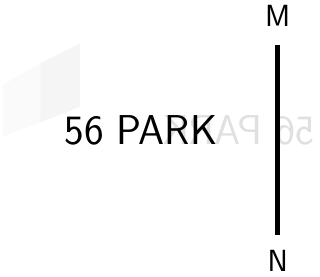
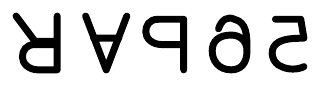
Select the correct mirror image of the given figure when the mirror is placed at MN as shown below.

  1. ((a))

  2. ((b))

  3. ((c))

  4. ((d))

Show Answer
Answer: ((c))

The mirror image will be:

Hence, the correct answer is "Option 3".

31

Read the given statements and conclusions carefully. Assuming that the information given in the statements is true, even if it appears to be at variance with commonly known facts, decide which of the given conclusions logically follow(s) from the statements.

<br>

Statements:

Some herbs are trees.

Some trees are plants.

<br>

Conclusions:

(i) Some herbs are plants.

(ii) At least some trees are herbs.

  1. ((a))

    Both conclusion I and II follow

  2. ((b))

    Only conclusion II follows

  3. ((c))

    Neither conclusion I nor II follows

  4. ((d))

    Only conclusion I follows

Show Answer
Answer: ((b))

Only conclusion II follows

Statements:

Some herbs are trees.

Some trees are plants.

The least possible venn diagram is given:

<br> <br>

Conclusions:

(i) Some herbs are plants - False(because, there is no direct relation between them is given, so, it can be possible only).

(ii) At least some trees are herbs - True(because, some herbs are trees it implies that some trees are herbs as well).

Thus, Only conclusion II follows.

Hence, the correct answer is "Option 2".

32

 In a certain code language, ‘GIRL’ is coded as ‘3618’ and ‘ROAD’ is coded as ‘7462’.What is the code for ‘R’ in the given code language?

  1. ((a))

    6

  2. ((b))

    1

  3. ((c))

    3

  4. ((d))

    8

Show Answer
Answer: ((a))

6

The logic followed here is:

The code for R is "6".

Hence, the correct answer is "Option 1".

33

Select the figure that will come next in the following figure series.

  1. ((a))

  2. ((b))

  3. ((c))

  4. ((d))

Show Answer
Answer: ((c))

Given:- 

The movement of elements in the figure is indicated through arrows. please carefully observe the direction of the arrow.

Let's observe the movement of shapes that change from 1st step to the alternate steps.

Step 1:- From Figure (1) to Figure (3):

  • The trapezium moves one step in an anti-clockwise direction and rotates 180 degrees in the clockwise direction.
  • The circle moves one step diagonally and rotates 90 degrees anti-clockwise.
<br>

Step 2:- From Figure (2) to Figure (4): 

  • The trapezium moves one step in an anti-clockwise direction and rotates 180 degrees in the clockwise direction.
  • The circle moves one step diagonally and rotates 90 degrees clockwise.
<br>

Step 3:- From Figure (3) to Answer Figure (5): 

  • The trapezium moves one step in an anti-clockwise direction and rotates 180 degrees in the clockwise direction.
  • The circle moves one step diagonally and rotates 90 degrees anti-clockwise.
<br>

Hence, the correct answer is "Option (3)".

34

Identify the figure given in the options that when put in place of the question mark (?) will logically complete the series.

  1. ((a))

  2. ((b))

  3. ((c))

  4. ((d))

Show Answer
Answer: ((a))

The series will be completed by:

Hence, the correct answer is "Option 1".

35

SK -1 is related to OO 3 in a certain way. In the same way, IA 2 is related to EE 6. To which of the following is EO 5 related, following the same logic?

  1. ((a))

    AS 9

  2. ((b))

    AS 1

  3. ((c))

    AS −1

  4. ((d))

    AT 9

Show Answer
Answer: ((a))

AS 9

The logic followed here is:

For, SK -1 is related to OO 3

For,  IA 2 is related to EE 6.

Similarly, 

 EO 5 related to ?

Thus, EO 5 related to AS 9.

Hence, the correct answer is "Option 1".

36

Select the set in which the numbers are related in the same way as are the numbers of the given sets.

(NOTE: Operations should be performed on the whole numbers, without breaking down the numbers into their constituent digits. E.g. 13 – Operations on 13 such as adding/subtracting/multiplying to 13 can be performed. Breaking down 13 into 1 and 3 and then performing mathematical operations on 1 and 3 is not allowed.)

(29, 77)

(24, 62)

  1. ((a))

    (26, 88)

  2. ((b))

    (19, 47)

  3. ((c))

    (22, 86)

  4. ((d))

    (31, 93)

Show Answer
Answer: ((b))

(19, 47)

The logic followed here is:

Logic: 1st number × 3 - 10 = 2nd number.

For, (29, 77)

⇒ 29 × 3 = 87 - 10 = 77

For, (24, 62)

⇒ 24 × 3 = 72 - 10 = 62.

Let's check options one by one.

option 1) (26, 88)

⇒ 26 × 3 = 78 + 10 = 88.

option 2) (19, 47)

⇒ 19 × 3 = 57 - 10 = 47.

Here, follow the pattern.

option 3) (22, 86)

⇒ 22 × 3 = 66 + 20 = 86.

option 4) (31, 93)

⇒ 31 × 3 = 93 + 0 = 93

Hence, the correct answer is "Option 2".

37

A, B, C, D, E, F and G are sitting around a circular table facing the centre (but not necessarily in the same order). Only two people sit between F and C when counted from the right of F. Only three people sit between B and G when counted from the right of G. C sits to the immediate right of G. D sits to the immediate right of A.

Who sits fourth to the right of E?

  1. ((a))

    D

  2. ((b))

    G

  3. ((c))

    F

  4. ((d))

    A

Show Answer
Answer: ((a))

D

Given: A, B, C, D, E, F and G are sitting around a circular table facing the centre (but not necessarily in the same order).

Only two people sit between F and C when counted from the right of F.  C sits to the immediate right of G.

Only three people sit between B and G when counted from the right of G. D sits to the immediate right of A.

<br>


Final arrangement,

Thus, D sits fourth to the right of E.

Hence, the correct answer is "Option 1".

38

In a certain code language, 'can you swim' is coded as 'MQ TO LO' and 'He can drive' is coded as 'LO AB PQ'. How is 'can' coded in that code language?

  1. ((a))

    MQ

  2. ((b))

    AB

  3. ((c))

    TO

  4. ((d))

    LO

Show Answer
Answer: ((d))

LO

The logic followed here is:

The code for "Can " is "LO".

Hence, the correct answer is "Option 4".

39

7 is related to 33 following a certain logic. Following the same logic, 9 is related to 41. To which of the following is 14 related following the same logic?

<br>

(NOTE: Operations should be performed on the whole numbers, without breaking down the numbers into its constituent digits. E.g., 13 – Operations on 13 such as adding/subtracting/multiplying etc. to 13 can be performed. Breaking down 13 into 1 and 3 and then performing mathematical operations on 1 and 3 is not allowed.)

  1. ((a))

    65

  2. ((b))

    67

  3. ((c))

    61

  4. ((d))

    56

Show Answer
Answer: ((c))

61

The logic followed here is:

Logic: 1st number × 4 + 5 = 2nd number.

For, 7 is related to 33.

⇒ 7 × 4 = 28 + 5 = 33.

For, 9 is related to 41.

⇒ 9 × 4 = 36 + 5 = 41.

Similarly,

 14 related to ?

⇒ 14 × 4 = 56 + 5 = 61.

Hence, the correct answer is "Option 3".

40

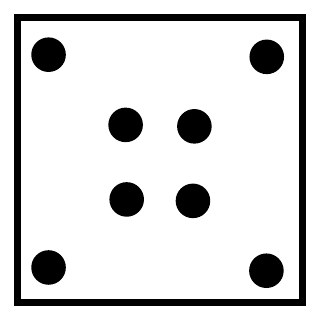
A square sheet of paper is folded along the dotted line successively along the directions shown and is then punched in the last. How would the paper look when unfolded?

  1. ((a))

  2. ((b))

  3. ((c))

  4. ((d))

Show Answer
Answer: ((a))

The unfolding of the cutting of the paper will be:

Hence, the correct answer is "Option 1".

Session 2 (50 questions)

41

Who among the following was the founder of Indian Association in Bengal?

  1. ((a))

    Chittaranjan Das

  2. ((b))

    P Ananda Charlu

  3. ((c))

    Surendra Nath Banerjee

  4. ((d))

    Rash Behari Bose

Show Answer
Answer: ((c))

Surendra Nath Banerjee

The correct answer is Surendra Nath Banerjee.

Key Points

  • Surendra Nath Banerjee:
  • Surendra Nath Banerjee, along with Anand Mohan Bose, founded the Indian Association in 1876.
  • It was one of the earliest nationalist organizations in India, established to promote the political, intellectual, and material advancement of the Indian people.
  • The Indian Association played a crucial role in mobilizing public opinion against discriminatory policies of the British government.
  • It was a precursor to the Indian National Congress, and many of its members were instrumental in the Congress's formation.
  • The association advocated for civil service reforms, the removal of racial discrimination, and the empowerment of Indians in governance.

Additional Information

  • Chittaranjan Das:
  • Chittaranjan Das, popularly known as Deshbandhu, was a prominent Indian freedom fighter, political leader, and lawyer during the Indian independence movement.
  • He was a leading figure in Bengal during the Non-Cooperation Movement and later founded the Swaraj Party with Motilal Nehru.
  • Das was known for his oratory skills and his dedication to the cause of Swaraj (self-rule).
  • He served as the President of the Indian National Congress in 1922.
  • His work focused on legal battles for political prisoners and advocating for greater autonomy for India, but he was not involved in the foundation of the Indian Association.
  • P Ananda Charlu:
  • P. Ananda Charlu was an early leader of the Indian National Congress.
  • He served as the President of the Indian National Congress in 1891.
  • He was a significant contributor to the early development of the Congress and its efforts to represent Indian interests.
  • He was involved in legislative work, and contributed to the discussions of various bills.
  • He was a well known lawyer.
  • He was not involved in the founding of the Indian Association.
  • Rash Behari Bose:
  • Rash Behari Bose was a revolutionary leader in the Indian independence movement.
  • He was instrumental in organizing the Ghadar Conspiracy and later played a significant role in the formation of the Indian National Army (INA).
  • He fled to Japan during World War II, where he continued to work for Indian independence.
  • He handed over the INA to Subhas Chandra Bose.
  • His activities were more focused on revolutionary actions and armed struggle, rather than the earlier constitutional methods of the Indian Association.
42

Usain Bolt shared the journey of his life in which of the following autobiographies?

  1. ((a))

    Let Your Mind Run

  2. ((b))

    Faster Than Lightning

  3. ((c))

    Running for My Life

  4. ((d))

    Race of My Life

Show Answer
Answer: ((b))

Faster Than Lightning

The correct answer is Faster Than Lightning.

Key Points

  • It chronicles Usain Bolt's journey from his humble beginnings in rural Jamaica to becoming a global sports icon.
  • The autobiography delves into his childhood, revealing the influences that shaped his character and athletic abilities.
  • It provides insights into his early experiences with sports, including cricket, before he focused on track and field.
  • The book documents his rise through the ranks of athletics, from his early successes in junior competitions to his record-breaking performances at the Olympic Games and World Championships.
  • It offers a behind-the-scenes look at his training regimen, the challenges he faced, and the dedication required to achieve his goals.
  • Bolt shares his thoughts and feelings about his most memorable races, including his world record-setting performances.
  • The autobiography also explores his personality, his sense of humor, and his approach to life.
  • It gives readers a look into the pressures of being a world famous athlete.
  • It details the work with his coaches that helped him become the fastest man in the world.
  • It tells of his experiences at the olympic games, and the world championships.
  • It shows the readers, the development of his world record times.
  • The book details his life outside of track and field, and his personal life.
  • The book was released in 2013.
  • It was published by HarperSport.
  • The book was co-written with Matt Allen.
  • It has been published in many different languages.
  • The book gives insight into the Jamaican culture, that helped create Usain Bolt.
  • The book shows how his family life, helped to shape his character.
  • The book gives a very personal look into the life of Usain Bolt.
  • The book is very popular among sports fans.
  • It is considered to be a very inspiring book.
43

According to Newland's Law of Octaves, every eighth element has properties similar to those of the first element. Which of the following elements has properties similar to those of N?

  1. ((a))

    P

  2. ((b))

    Al

  3. ((c))

    S

  4. ((d))

    B

Show Answer
Answer: ((a))

P

The correct answer is P.

Key Points

  • Newlands' Law of Octaves:
  • John Newlands, an English chemist, proposed the Law of Octaves in 1865.
  • He arranged the known elements in order of increasing atomic mass.
  • He observed that every eighth element had properties similar to the first, much like the octaves in music.
  • This law was an early attempt to find patterns in the properties of elements.
  • The law was based on the atomic weights of the elements known at that time.
  • The law was only applicable to elements up to calcium.
  • Beyond calcium, the law failed because heavier elements did not follow the pattern.
  • The periodic table was not fully developed at the time of Newlands.
  • The later discovery of noble gases, also disrupted the octaves.

Additional Information

  • Nitrogen (N) and Phosphorus (P):
  • Nitrogen and Phosphorus belong to Group 15 (also known as the Nitrogen group or pnictogens) of the periodic table.
  • They have similar chemical properties due to their similar electron configurations.
  • Both have five valence electrons, which are the electrons in the outermost shell.
  • This similarity in valence electrons leads to similar bonding behavior.
  • Both can form covalent bonds.
  • Both can form compounds with similar formulas.
  • Both can have multiple oxidation states.
  • Both are non-metals.
  • Nitrogen and phosphorus are essential elements for life.
  • They both can form acids.
  • They both can form oxides.
44

________ is mainly celebrated by Maharashtrians as New Year's Day.

  1. ((a))

    Ugadi

  2. ((b))

    Pongal

  3. ((c))

    Gudi Padwa

  4. ((d))

    Bihu

Show Answer
Answer: ((c))

Gudi Padwa

The correct answer is Gudi Padwa.

Key Points

  • Gudi Padwa:
  • Gudi Padwa is the Marathi New Year, celebrated primarily in Maharashtra and by Konkani Hindus.
  • It falls on the first day of the Chaitra month, according to the Hindu lunisolar calendar, typically in March or April.
  • The festival marks the beginning of the new year and the arrival of spring.
  • A "Gudi" (a decorated bamboo stick) is raised outside homes, symbolizing victory and prosperity.
  • It is a time for festive meals, colorful decorations, and celebrating new beginnings.
  • It is considered an extremely auspicious time, for new ventures.

Additional Information

  • Ugadi:
  • Ugadi is the New Year's Day for the people of Andhra Pradesh, Telangana, and Karnataka.
  • It also falls on the first day of the Chaitra month.
  • Like Gudi Padwa, it signifies the start of a new lunar year.
  • It is celebrated with colorful decorations, special dishes, and religious observances.
  • The creation of a special pachadi, which is a dish that contains all six tastes, is a very important part of the celebration.
  • Pongal:
  • Pongal is a harvest festival celebrated in Tamil Nadu.
  • It typically occurs in mid-January.
  • It is a four-day festival dedicated to thanking the Sun God for a bountiful harvest.
  • The festival involves preparing a dish called "Pongal" (sweet rice), decorating homes, and honoring cattle.
  • The festival marks the end of winter, and the beginning of the suns northward journey.
  • Bihu:
  • Bihu is a set of three important Assamese festivals in the Indian state of Assam.
  • Rongali Bihu, also called Bohag Bihu, is the Assamese New Year, celebrated in mid-April.
  • It marks the beginning of the Assamese New Year and the spring season.
  • The festival involves traditional dances, music, and feasting.
  • It is a very colorful festival that brings the entire community together.
45

Who among the following was sent by Akbar to lead the Mughal army in the Battle of Haldighati which was fought in 1576?

  1. ((a))

    Raja Man Singh

  2. ((b))

    Raja Todarmal

  3. ((c))

    Raja Maharana Pratap

  4. ((d))

    Raja Medini Rai

Show Answer
Answer: ((a))

Raja Man Singh

The correct answer is Raja Man Singh.

Key Points

  • Raja Man Singh:
  • Raja Man Singh I of Amber (Jaipur) was the commander-in-chief of the Mughal army during the Battle of Haldighati in 1576.
  • He was a trusted general of Akbar and played a crucial role in expanding the Mughal Empire.
  • He was instrumental in leading the Mughal forces against Maharana Pratap.
  • His strategic military skills were highly valued by Akbar.
  • He was a kachwaha Rajput and held a high mansab in the Mughal court.

Additional Information

  • Raja Todarmal:
  • Raja Todarmal was primarily known for his expertise in revenue and finance within Akbar's court.
  • He implemented the "Zabti" system, a standardized system of revenue collection, which was a significant administrative reform.
  • While he held a prominent position in Akbar's administration and was involved in military campaigns, his primary role was not leading the army in the Battle of Haldighati.
  • He was one of the Navratnas in Akbars court.
  • His work helped to stabalize the Mughal empires economy.
  • Raja Maharana Pratap:
  • Maharana Pratap was the ruler of Mewar and the primary adversary of the Mughal Empire in the Battle of Haldighati.
  • He led the Rajput forces against the Mughal army, demonstrating fierce resistance.
  • His bravery and dedication to defending his territory made him a symbol of Rajput valor.
  • He refused to accept Akbars suzerainty.
  • The battle of Haldighati was fought between his forces and the Mughal forces.
  • Raja Medini Rai:
  • Raja Medini Rai was a ruler of Chanderi and was involved in conflicts with the Mughal Empire before Akbar's reign, specifically with Babur.
  • He was defeated by Babur in the Battle of Chanderi in 1528.
  • He had no involvement in the Battle of Haldighati, which took place during Akbar's reign.
  • He was a Rajput king.
  • His battle with Babur occured long before the battle of Haldighati.
46

Which Fundamental Right guarantees protection of interests of the minorities in the matter of their language, script or culture?

  1. ((a))

    Right to Equality

  2. ((b))

    Cultural and Educational Rights

  3. ((c))

    Right to Freedom

  4. ((d))

    Right against Exploitation

Show Answer
Answer: ((b))

Cultural and Educational Rights

The correct answer is Cultural and Educational Rights.

Key Points

  • Cultural and Educational Rights:
  • This fundamental right, specifically Articles 29 and 30 of the Indian Constitution, guarantees the protection of the interests of minorities.
  • Article 29 ensures that any section of citizens residing in India or any part thereof having a distinct language, script, or culture of its own shall have the right to conserve the same.
  • Article 30 grants all minorities, whether based on religion or language, the right to establish and administer educational institutions of their choice.
  • This right is designed to safeguard the diverse cultural fabric of India and prevent any form of cultural assimilation.
  • These rights enable minorities to preserve their unique identities and promote their educational and cultural development.

Additional Information

  • Right to Equality:
  • This fundamental right, outlined in Articles 14 to 18 of the Indian Constitution, ensures equality before the law and equal protection of the laws.
  • It prohibits discrimination on grounds of religion, race, caste, sex, or place of birth.
  • It guarantees equality of opportunity in matters of public employment and abolishes untouchability.
  • While essential for a just society, it does not specifically address the protection of minority languages, scripts, or cultures.
  • This right focuses on equal treatment under the law, not specific cultural preservation.
  • Right to Freedom:
  • This fundamental right, outlined in Articles 19 to 22 of the Indian Constitution, guarantees various freedoms, including freedom of speech and expression, assembly, association, movement, residence, and profession.
  • It also protects against arbitrary arrest and detention.
  • While these freedoms are vital for individual liberty, they do not directly provide for the protection of minority cultural and educational interests.
  • This right focuses on individual liberties regarding actions and expression.
  • While freedom of expression can be used to promote minority cultures, the right to freedom does not directly protect the culture itself.
  • Right against Exploitation:
  • This fundamental right, outlined in Articles 23 and 24 of the Indian Constitution, prohibits human trafficking, forced labor, and employment of children below the age of 14 in hazardous occupations.
  • It aims to protect vulnerable sections of society from exploitation and abuse.
  • While crucial for social justice, it does not pertain to the protection of minority languages, scripts, or cultures.
  • This right is focused on preventing specific forms of human abuse and forced labour.
  • This right is not related to cultural preservation.
47

Which state finished second in the first edition of the Khelo India Para Games?

  1. ((a))

    Haryana

  2. ((b))

    Madhya Pradesh

  3. ((c))

    Uttar Pradesh

  4. ((d))

    Rajasthan

Show Answer
Answer: ((c))

Uttar Pradesh

The correct answer is Uttar Pradesh.

Key Points

    • The first-ever Khelo India Para Games took place in Delhi in December 2023.
  • This marked a significant milestone in promoting para-sports in India.
  • The event aimed to provide a platform for para-athletes from across the country to showcase their talent.
  • It was a key initiative to foster inclusivity and encourage participation in sports among individuals with disabilities.
  • Medal Tally:
  • Haryana emerged as the overall champion, securing the top position in the medal tally.
  • Uttar Pradesh demonstrated a strong performance, finishing in second place.
  • Tamil Nadu secured the third position in the medal tally.
  • The medal count for Uttar Pradesh was 25 gold medals, 23 silver and 14 bronze medals, totaling 62 medals.
  • The medal count for Haryana was 40 gold medals, 39 silver and 26 bronze medals, totaling 105 medals.
  • Participation:
  • Approximately 1,450 para-athletes from 32 states and Union Territories participated in the games.
  • The games featured events across seven disciplines.
  • Significance:
  • The Khelo India Para Games highlight the government's commitment to supporting para-sports.
  • The event provides valuable exposure and opportunities for para-athletes.
  • It contributes to raising awareness about para-sports and promoting a more inclusive society.
  • The games also gave a platform to athletes who had recently competed in the Asian Para games.
  • The event has been very well received, and is expected to continue in future years.
  • The games help to bring para sports into the main stream of indian sports.
  • The games help to identify talented para athletes.
  • The games help to increase participation in para sports.
  • The games help to increase the general public awareness of para sports.
  • The games are a part of the over all Khelo India initiative.
  • The Khelo India initiative is a national scheme for the development of sports in India.
  • The Khelo India initiative was created to help strengthen sports at the root level.
48

Select the odd one from the following saltwater lakes on the basis of their formation?

  1. ((a))

    Pulicat lake

  2. ((b))

    Kolleru lake

  3. ((c))

    Chilika lake

  4. ((d))

    Sambhar lake

Show Answer
Answer: ((d))

Sambhar lake

The correct answer is Sambhar lake.

Key Points

  • Sambhar Lake:
  • Sambhar Lake is a saltwater lake located in Rajasthan, India.
  • It is India's largest inland salt lake.
  • It is formed by inland drainage from several rivers.
  • It is formed by the depression in the land, and the high evaporation rate of the arid region.
  • It is a significant site for salt production and a habitat for migratory birds.

Additional Information

  • Kolleru Lake:
  • Kolleru Lake is a freshwater lake located in Andhra Pradesh, India.
  • It is one of the largest freshwater lakes in India.
  • It is formed due to the flooding of the Krishna and Godavari river deltas.
  • It acts as a natural flood-balancing reservoir between these two major rivers.
  • It is a significant habitat for migratory birds.
  • Pulicat Lake:
  • Pulicat Lake is a saltwater lagoon located on the border of Andhra Pradesh and Tamil Nadu, India.
  • It is the second-largest brackish water lagoon in India, after Chilika Lake.
  • It is separated from the Bay of Bengal by the barrier island of Sriharikota.
  • It is formed by the action of longshore currents and the deposition of sediments, creating a barrier lagoon.
  • It is an important habitat for various aquatic birds, including flamingos.
  • Chilika Lake:
  • Chilika Lake is a brackish water lagoon located in Odisha, India.
  • It is the largest brackish water lagoon in India and one of the largest coastal lagoons in the world.
  • It is separated from the Bay of Bengal by a narrow strip of land.
  • It is formed by the deposition of sediments by rivers and the action of marine currents, creating a lagoon.
  • It is a rich biodiversity hotspot and a Ramsar wetland of international importance.
49

If the tax rate increases with the taxable base, then this type of taxation is called:

  1. ((a))

    digressive

  2. ((b))

    progressive

  3. ((c))

    regressive

  4. ((d))

    proportional

Show Answer
Answer: ((b))

progressive

The correct answer is progressive.

Key Points

  • Progressive:
  • A progressive tax system is one in which the tax rate increases as the taxable amount increases.
  • This means that higher-income earners pay a larger percentage of their income in taxes compared to lower-income earners.
  • The intent of a progressive tax system is to distribute the tax burden more equitably, with those who have a greater ability to pay contributing a larger share.
  • Income tax systems in many countries, including India and the United States, often use a progressive structure.
  • Progressive taxation is often seen as a tool for reducing income inequality.

Additional Information

  • Regressive:
  • A regressive tax system is one in which the tax rate decreases as the taxable amount increases.
  • This means that lower-income earners pay a larger percentage of their income in taxes compared to higher-income earners.
  • Sales taxes and certain excise taxes can be considered regressive, as they take a larger proportion of income from those with lower incomes.
  • Regressive taxes tend to exacerbate income inequality.
  • These taxes place a higher burden on those who can least afford it.
  • Proportional:
  • A proportional tax system, also known as a flat tax, is one in which the tax rate remains constant regardless of the taxable amount.
  • This means that everyone pays the same percentage of their income in taxes, regardless of their income level.
  • While simple to administer, proportional taxes do not address income inequality.
  • Everyone pays the same percentage of their income.
  • This system is seen as being fair in that everyone is taxed at the same rate.
  • Digressive:
  • A digressive tax system is a tax system where the tax rate increases up to a certain point and then remains constant or decreases.
  • It shares aspects of both progressive and proportional tax systems.
  • It is less common than the other types of tax systems.
  • The tax burden increases with income up to a specific income amount.
  • After that amount the tax rate does not increase, or may decrease.
50

As of February 2024, who among the following is the Deputy Chairman of Rajya Sabha?

  1. ((a))

    Jagat Prakash Nadda

  2. ((b))

    Dharmendra Pradhan

  3. ((c))

    Harivansh Narayan Singh

  4. ((d))

    Prakash Javadekar

Show Answer
Answer: ((c))

Harivansh Narayan Singh

The correct answer is Harivansh Narayan Singh.

Key Points

  • Harivansh Narayan Singh is the Deputy Chairman of Rajya Sabha as of February 2024.
  • Harivansh Narayan Singh has been serving as the Deputy Chairman of Rajya Sabha since 2018.
  • He is a member of the Janata Dal (United) party and has been re-elected to the position multiple times.
  • The Deputy Chairman presides over the Rajya Sabha in the absence of the Vice President of India, who is the ex-officio Chairman.
  • His role is crucial in maintaining order and ensuring the smooth functioning of the House.
  • He is known for his impartiality and deep understanding of parliamentary procedures.

Additional Information

  • Jagat Prakash Nadda :
  • Jagat Prakash Nadda is the National President of the Bharatiya Janata Party (BJP) as of February 2024.
  • He has held various ministerial positions in the past, including Minister of Health and Family Welfare.
  • He is not associated with the Rajya Sabha Deputy Chairmanship.
  • Nadda is primarily involved in organizational and political activities of the BJP.
  • His role is more focused on party leadership rather than parliamentary duties.
  • Dharmendra Pradhan:
  • Dharmendra Pradhan is a senior BJP leader and currently serves as the Minister of Education and Skill Development.
  • He has been a member of both the Lok Sabha and Rajya Sabha in the past.
  • Pradhan is not the Deputy Chairman of Rajya Sabha.
  • He is known for his work in the energy and education sectors.
  • His current responsibilities are centered around policy-making and governance.
  • Prakash Javadekar :
  • Prakash Javadekar is a senior BJP leader and former Union Minister.
  • He has served as the Minister of Information and Broadcasting, Environment, and Heavy Industries.
  • Javadekar is not the Deputy Chairman of Rajya Sabha.
  • He has been a member of the Rajya Sabha but is not currently holding the Deputy Chairmanship.
  • His contributions are primarily in the fields of environment and media policies.
51

In October 2023, Indrasena Reddy Nallu has been appointed the Governor of which of the following states in India?

  1. ((a))

    Goa

  2. ((b))

    Tripura

  3. ((c))

    Assam

  4. ((d))

    Kerala

Show Answer
Answer: ((b))

Tripura

The correct answer is Tripura.

Key Points

  • Indrasena Reddy Nallu is a retired Indian Police Service (IPS) officer from the 1987 batch of the Telangana cadre.
  • He has served in various significant roles during his tenure in the police force, including as the Director General of Police (DGP) in Telangana.
  • His appointment as the Governor of Tripura was announced by the President of India in October 2023.
  • The Governor is the constitutional head of a state in India and acts as the representative of the President at the state level.
  • Nallu succeeded Satyadeo Narain Arya, who had been serving as the Governor of Tripura since 2021.
  • The appointment of Governors is made by the President on the advice of the Central Government.
  • Tripura is a northeastern state in India, known for its rich cultural heritage and diverse population.
  • The role of the Governor includes ensuring the smooth functioning of the state government and upholding the Constitution.
  • Nallu’s experience in law enforcement and administration is expected to bring a disciplined approach to his role as Governor.
  • He is the first IPS officer to be appointed as the Governor of Tripura.
  • His appointment reflects the Central Government’s focus on appointing individuals with strong administrative backgrounds to key constitutional positions.
  • As Governor, Nallu will play a crucial role in maintaining the relationship between the state government and the Central Government.
  • He will also be responsible for addressing issues related to tribal welfare, as Tripura has a significant tribal population.
52

Vinod Mankara's documentary 'Mohinyattathinte Amma' is based on which of the following world renowned Mohiniyattam dancers?

  1. ((a))

    Jayaprabha Menon

  2. ((b))

    P Madhuri

  3. ((c))

    Sunanda Nair

  4. ((d))

    Kalamandalam Kalyanikutty

Show Answer
Answer: ((d))

Kalamandalam Kalyanikutty

The correct answer is Kalamandalam Kalyanikutty.

Key Points

  • Kalamandalam Kalyanikutty:
  • Kalamandalam Kalyanikutty Amma (1910-1999) is widely regarded as the "Mother of Mohiniyattam."
  • She played a pivotal role in reviving and standardizing the classical dance form of Mohiniyattam.
  • Her contributions involved refining the technique, expanding the repertoire, and establishing a structured training system.
  • Vinod Mankara's documentary "Mohinyattathinte Amma" chronicles her life and legacy, highlighting her dedication to Mohiniyattam.
  • She was a teacher at Kalamandalam, and trained many students.
  • She brought structure to the dance form.

Additional Information

  • Jayaprabha Menon:
  • Jayaprabha Menon is a renowned Mohiniyattam dancer known for her graceful performances.
  • She has contributed significantly to the promotion of Mohiniyattam through her performances and teaching.
  • She is known for her abhinaya, or expressive dance.
  • She has performed extensively both in India and abroad.
  • She has received numerous awards for her contributions to Mohiniyattam.
  • P Madhuri:
  • P Madhuri is a respected Mohiniyattam dancer and instructor.
  • She has dedicated her life to the dance form.
  • She has trained many students.
  • She is known for her traditional style.
  • She has performed in various cultural events.
  • Sunanda Nair:
  • Sunanda Nair is a prominent Mohiniyattam exponent.
  • She is known for her technical proficiency and expressive performances.
  • She has performed and taught Mohiniyattam extensively.
  • She has done research on the dance form.
  • She has received many awards.
53

Identify the INCORRECT pair (State and Iron-ore producing region) from the following.

  1. ((a))

    Odisha - Badampahar

  2. ((b))

    Karnataka - Kudremukh

  3. ((c))

    Madhya Pradesh - Ratnagiri

  4. ((d))

    Chhattisgarh - Bailadila

Show Answer
Answer: ((c))

Madhya Pradesh - Ratnagiri

The correct answer is Madhya Pradesh - Ratnagiri.

Key Points

  • Ratnagiri is located in the state of Maharashtra, not Madhya Pradesh, and is primarily known for bauxite deposits rather than iron ore.
  • The major iron-ore producing regions in Madhya Pradesh include deposits in regions like Jabalpur, Katni, and Sidhi.
  • Odisha is home to famous iron-ore regions such as Badampahar, Keonjhar, and Sundergarh.
  • Kudremukh in Karnataka is one of the largest iron-ore mines in India and is renowned for its high-grade magnetite deposits.
  • Chhattisgarh's Bailadila region is among the richest iron-ore reserves in India, particularly known for its steel-grade hematite deposits.

Additional Information

  • Iron Ore Deposits in India:
  • India ranks fourth globally in terms of iron ore production, following Australia, Brazil, and China.
  • Major iron ore belts in India include Odisha-Jharkhand Belt, Durg-Bastar-Chandrapur Belt, Bellary-Chitradurga Belt, and the Goa Belt.
  • Odisha is the largest iron-ore producing state in India, contributing over 50% of the total output.
  • Types of Iron Ore:
  • Hematite: Contains up to 70% iron and is the most commonly mined ore in India.
  • Magnetite: Contains up to 72% iron and is known for its magnetic properties.
  • Limonite and Siderite: Lower grades of iron ore with less iron content.
  • Major Applications of Iron Ore:
  • Primarily used in the production of steel, which is a critical material for construction, automotive, and manufacturing industries.
  • Iron ore is also used to make cast iron, wrought iron, and alloys like ferrochrome and ferromanganese.
  • Environmental Impact of Mining Iron Ore:
  • Mining activities can lead to deforestation, habitat destruction, and soil erosion.
  • Proper implementation of sustainable practices and rehabilitation measures is necessary to minimize adverse effects.
54

The Quwwat-ul-Islam Mosque was constructed in around 1197 AD by the sultan of which of the following dynasties of Delhi Sultanate?

  1. ((a))

    Lodhi

  2. ((b))

    Mamluk

  3. ((c))

    Tughlaq

  4. ((d))

    Khalji

Show Answer
Answer: ((b))

Mamluk

The correct answer is Mamluk.

Key Points

  • Mamluk:
  • The Quwwat-ul-Islam Mosque was commissioned by Qutb-ud-din Aibak, the founder of the Mamluk dynasty (also known as the Slave dynasty).
  • Construction began around 1193 AD and was completed in approximately 1197 AD.
  • The mosque was built using the remains of demolished Hindu and Jain temples, reflecting the early Islamic conquests in India.
  • It is considered one of the earliest existing mosques in India.
  • The Mamluk dynasty was the first dynasty of the Delhi Sultanate.

Additional Information

  • Lodhi:
  • The Lodhi dynasty was the last dynasty of the Delhi Sultanate, ruling from 1451 to 1526 AD.
  • They were known for their architectural contributions, primarily tombs and gardens.
  • They came to power much later than the construction of the Quwwat-ul-Islam Mosque.
  • The Lodhi dynasty was defeated by Babur.
  • Their architecture style was very different from the early sultanate.
  • Tughlaq:
  • The Tughlaq dynasty ruled the Delhi Sultanate from 1320 to 1414 AD.
  • They were known for their ambitious projects, including the construction of forts and irrigation systems.
  • While they were a significant dynasty, their rule came after the initial establishment of the Quwwat-ul-Islam Mosque.
  • They were known for building strong fortifications.
  • They ruled during a time of expansion, and then decline of the Delhi Sultanate.
  • Khalji:
  • The Khalji dynasty ruled the Delhi Sultanate from 1290 to 1320 AD.
  • They were known for their military conquests and administrative reforms.
  • Although they expanded the Delhi Sultanate, they came to power after the Mamluks and the initial construction of the Quwwat-ul-Islam Mosque.
  • Alauddin Khalji was a very powerful ruler of this dynasty.
  • They were known for their agressive military campaigns.
55

The microscopic channels, which traverse the cell walls of plant cells and some algal cells, enabling transport and communication between them is called:

  1. ((a))

    plasmodesmata

  2. ((b))

    ribosomes

  3. ((c))

    lysosomes

  4. ((d))

    desmosomes

Show Answer
Answer: ((a))

plasmodesmata

The correct answer is plasmodesmata.

Key Points

  • plasmodesmata:
  • Plasmodesmata are microscopic channels that traverse the cell walls of plant cells and some algal cells.
  • They facilitate the transport of materials, including water, nutrients, and signaling molecules, between adjacent cells.
  • They are crucial for cell-to-cell communication and coordination within plant tissues.
  • They allow for the symplastic transport of substances, meaning movement within the continuous cytoplasm of interconnected cells.
  • They play vital roles in processes like nutrient distribution, signal transduction, and defense responses.

Additional Information

  • ribosomes:
  • Ribosomes are cellular organelles responsible for protein synthesis.
  • They are found in both prokaryotic and eukaryotic cells.
  • They consist of ribosomal RNA (rRNA) and proteins.
  • They translate genetic information from messenger RNA (mRNA) into polypeptide chains.
  • They are essential for all living cells to produce the proteins necessary for cellular functions.
  • lysosomes:
  • Lysosomes are membrane-bound organelles found in animal cells and some plant cells.
  • They contain hydrolytic enzymes that break down waste materials and cellular debris.
  • They play a crucial role in intracellular digestion and recycling.
  • They are involved in processes like autophagy (self-digestion) and apoptosis (programmed cell death).
  • They help to defend the cell against invading bacteria and viruses.
  • desmosomes:
  • Desmosomes are cell junctions that provide strong adhesion between animal cells.
  • They are particularly abundant in tissues that experience mechanical stress, such as skin and muscle.
  • They consist of proteins that link the cytoskeletons of adjacent cells.
  • They contribute to the structural integrity and stability of tissues.
  • They are not found in plant cells, as plant cell walls fulfill a structural role.
56

Select the INCORRECT statement.

  1. ((a))

    Functional segments of DNA are called genes.

  2. ((b))

    The chromatin material gets organised into rod-shaped chromosomes only when the cell is about to divide.

  3. ((c))

    Chromosomes are composed of DNA and carbohydrates.

  4. ((d))

    DNA molecules contain the information necessary for constructing and organising cells.

Show Answer
Answer: ((c))

Chromosomes are composed of DNA and carbohydrates.

The correct answer is Chromosomes are composed of DNA and carbohydrates.

Key Points

  • Functional segments of DNA are called genes.
  • Genes are specific sequences of nucleotides within DNA molecules.
  • They encode instructions for the synthesis of proteins or RNA molecules.
  • Genes are the basic units of heredity and determine various traits.
  • Each gene occupies a specific location on a chromosome.
  • They are essential for the transmission of genetic information.

Additional Information

  • The chromatin material gets organised into rod-shaped chromosomes only when the cell is about to divide.
  • Chromatin is the complex of DNA and proteins that makes up chromosomes in eukaryotic cells.
  • During interphase (the non-dividing phase), chromatin is dispersed throughout the nucleus.
  • During cell division (mitosis or meiosis), chromatin condenses and organizes into distinct rod-shaped chromosomes.
  • This condensation facilitates the accurate segregation of genetic material to daughter cells.
  • This condensation is a vital part of cell division.
  • Chromosomes are composed of DNA and carbohydrates.
  • Chromosomes are primarily composed of DNA and proteins, specifically histone proteins.
  • Histone proteins help to package and condense the DNA into a compact structure.
  • Chromosomes do not contain significant amounts of carbohydrates.
  • The protein component is vital for the structure and function of the chromosome.
  • The proteins help to regulate gene expression.
  • DNA molecules contain the information necessary for constructing and organising cells.
  • DNA stores the genetic information that determines the characteristics of an organism.
  • This information is encoded in the sequence of nucleotides within DNA molecules.
  • DNA provides the instructions for protein synthesis, which is essential for cell structure and function.
  • DNA is the hereditary material that is passed from parent to offspring.
  • The information in the DNA is used for cell growth, repair and maintenance.
57

According to the Census of India 2011, which states of India have population density more than 1000 persons per sq. km?

  1. ((a))

    Bihar and West Bengal

  2. ((b))

    Madhya Pradesh and Maharashtra

  3. ((c))

    Kerala and Tamil Nadu

  4. ((d))

    Uttar Pradesh and Haryana

Show Answer
Answer: ((a))

Bihar and West Bengal

The correct answer is Bihar and West Bengal.

Key Points

  • Bihar:
  • Bihar had the highest population density among all Indian states in the 2011 Census.
  • Its population density was 1,106 persons per sq. km.
  • This high density is attributed to factors like fertile land, agricultural dependence, and historical settlement patterns.
  • The state has a large population in relation to its land area.
  • Bihar has a high birth rate.
  • Bihar has a high rural population.
  • West Bengal:
  • West Bengal also had a population density exceeding 1,000 persons per sq. km in the 2011 Census.
  • Its population density was 1,028 persons per sq. km.
  • Similar to Bihar, factors like fertile land, industrial areas, and historical urban centers contribute to its high density.
  • The state has a long history of dense populations.
  • The state has a large number of urban centers.
  • The state has a high number of people working in agriculture.
58

Krishnarao Shankar Pandit belonged to which of the following music gharanas?

  1. ((a))

    Gwalior gharana

  2. ((b))

    Atrauli gharana

  3. ((c))

    Mewati gharana

  4. ((d))

    Agra gharana

Show Answer
Answer: ((a))

Gwalior gharana

The correct answer is Gwalior gharana.

Key Points

  • Gwalior gharana:
  • Krishnarao Shankar Pandit (1893-1989) was a prominent Hindustani classical vocalist belonging to the Gwalior gharana.
  • The Gwalior gharana is considered one of the oldest and most influential gharanas of Hindustani classical music.
  • He was known for his clear diction, precise intonation, and traditional style of singing.
  • He was a dedicated teacher and trained numerous disciples, contributing significantly to the preservation and propagation of the Gwalior gharana's legacy.
  • He established the Shankar Gandharva Mahavidyalaya in Gwalior.
  • The Gwalior Gharana is known for its emphasis on khayal singing.  ​​


 Additional Information

  • Atrauli gharana:
  • The Atrauli gharana is known for its complex and intricate rhythmic patterns and melodic variations.
  • It is associated with the vocal styles of Alladiya Khan and his descendants.
  • This gharana is known for its very difficult and complex ragas.
  • It is known for its emphasis on the purity of the raga.
  • The Atrauli gharana is a vocal tradition.
  • Mewati gharana:
  • The Mewati gharana is known for its devotional and lyrical style of singing.
  • It is associated with Pandit Jasraj, a prominent exponent of this gharana.
  • This gharana is known for its emotional depth and spiritual quality.
  • It is known for its emphasis on Bhakti rasa.
  • The Mewati gharana is a vocal tradition.
  • Agra gharana:
  • The Agra gharana is known for its robust and powerful vocal style, emphasizing rhythmic complexity and forceful delivery.
  • It is associated with vocalists like Faiyaz Khan.
  • This gharana is known for its "nom-tom" style of alap.
  • It is known for its bold style.
  • The Agra gharana is a vocal tradition.
59

Which executive system is present in India?

  1. ((a))

    Collegiate System

  2. ((b))

    Parliamentary System

  3. ((c))

    Both Parliamentary and Presidential System

  4. ((d))

    Presidential System

Show Answer
Answer: ((b))

Parliamentary System

The correct answer is Parliamentary System.

Key Points

  • Parliamentary System:
  • India follows a parliamentary system of government, which is derived from the Westminster model.
  • In this system, the executive branch (the government) is responsible to the legislature (Parliament).
  • The head of government is the Prime Minister, who is chosen from the majority party or coalition in the Lok Sabha (lower house of Parliament).
  • The President is the head of state, but their role is largely ceremonial.
  • The principle of collective responsibility is a key feature, meaning the cabinet is jointly responsible to Parliament.
  • The executive derives its power from the legislative body.

Additional Information

  • Collegiate System:
  • A collegiate system involves a group of individuals sharing executive authority.
  • This system is not employed in India's national government.
  • It is more commonly found in organizations or smaller governing bodies.
  • It is not a system of government in the way that the parliamentary and presidential systems are.
  • This type of system is not a common form of national government.
  • Both Parliamentary and Presidential System:
  • India does not have a hybrid system that combines both parliamentary and presidential features.
  • The Indian Constitution clearly establishes a parliamentary form of government.
  • There are no elements of a presidential system incorporated into the structure of the Indian government.
  • The Indian constitution is very clear in its description of a parliamentary system.
  • The separation of powers works in a very different way in a presidential system.
  • Presidential System:
  • In a presidential system, the President is both the head of state and the head of government.
  • The President is elected independently of the legislature and has a fixed term of office.
  • There is a clear separation of powers between the executive and legislative branches.
  • The United States is a prominent example of a presidential system.
  • India's constitution does not allow for a presidential system of government.
60

Which of the following is the National waterway no. 4 in India?

  1. ((a))

    Mahanadi and Brahmani rivers and East Coast Canal

  2. ((b))

    The Brahmaputra river between Sadiya and Dhubri

  3. ((c))

    Godavari and Krishna rivers along with Kakinada Puducherry

  4. ((d))

    The Ganga River between Allahabad-Haldia

Show Answer
Answer: ((c))

Godavari and Krishna rivers along with Kakinada Puducherry

The correct answer is Godavari and Krishna rivers along with Kakinada Puducherry.

Key Points

  • Godavari and Krishna rivers along with Kakinada Puducherry:
  • National Waterway 4 (NW-4) is a network of canals, rivers, and lakes in South India.
  • It connects Kakinada to Puducherry, passing through the Godavari and Krishna rivers.
  • It includes the Kakinada-Puducherry canals, the Godavari River stretches, and the Krishna River stretches.
  • It spans across the states of Andhra Pradesh, Tamil Nadu, and the Union Territory of Puducherry.
  • It is intended to facilitate cargo and passenger transportation.

Additional Information

  • Mahanadi and Brahmani rivers and East Coast Canal:
  • This description relates to a portion of National Waterway 5 (NW-5).
  • NW-5 is located in the states of Odisha and West Bengal.
  • It connects Talcher to Dhamra via the Brahmani River, the Mahanadi delta rivers, and the East Coast Canal.
  • It is important for the transportation of coal and other commodities.
  • It is a vital part of the water transport infrastructure of the eastern coast of India.
  • The Brahmaputra river between Sadiya and Dhubri:
  • This describes National Waterway 2 (NW-2).
  • NW-2 is located in the state of Assam.
  • It runs along the Brahmaputra River between Sadiya and Dhubri.
  • It is crucial for transportation in the northeastern region of India.
  • It is important for both cargo and passenger traffic.
  • The Ganga River between Allahabad-Haldia:
  • This describes National Waterway 1 (NW-1).
  • NW-1 is located in the states of Uttar Pradesh, Bihar, Jharkhand, and West Bengal.
  • It runs along the Ganga River between Allahabad (Prayagraj) and Haldia.
  • It is the longest national waterway in India.
  • It is a very important route for inland water transportation.
61

The Irani Cup is a first-class cricket competition played between the winner of the Ranji Trophy and which other team?

  1. ((a))

    India A

  2. ((b))

    Rest of India

  3. ((c))

    India B

  4. ((d))

    Board President's XI

Show Answer
Answer: ((b))

Rest of India

The correct answer is Rest of India.

Key Points Irani Cup:

  • The Irani Cup is a first-class cricket tournament in India.
  • It is played between the winner of the Ranji Trophy and the Rest of India team.
  • The tournament is named after the late Zal Irani, a prominent figure in Indian cricket.
  • It is organized by the Board of Control for Cricket in India (BCCI).
  • The Irani Cup is considered a prestigious domestic cricket event.
  • It provides a platform for Ranji Trophy champions to test their skills against a selection of top domestic cricketers.
  • The Rest of India team comprises talented players from across the country who have performed well in domestic cricket.
  • The competition offers a chance for players to gain recognition and potentially earn a spot in the national team.
  • The Irani Cup is traditionally played at the end of the Indian domestic cricket season.
  • It is a five day match.
  • The Irani Cup is considered a good indicator of the strength of domestic cricket in India.
  • The competition enhances the competitive spirit of domestic cricket.
  • The first Irani cup was played in the 1959-60 season.
  • The competition was conceived to mark the 25 years of the Ranji Trophy.
  • The Rest of India team is selected by the national selectors.
  • The competition provides a good competitive match for the Ranji trophy winners.
  • The Irani cup is a part of the Indian domestic cricket calendar.
  • The competition is a way to showcase the depth of talent in indian domestic cricket.
  • The competition is a way to keep domestic cricket in the spotlight.
62

A 5% decrease in poverty by 2007 was one of main objectives of the _______ plan.

  1. ((a))

    Seventh Five-Year Plan (1985-90)

  2. ((b))

    Ninth Five-Year Plan (1997-2002)

  3. ((c))

    Fourth Five-Year Plan (1966-1974)

  4. ((d))

    Tenth Year Plan (2002-2007)

Show Answer
Answer: ((d))

Tenth Year Plan (2002-2007)

The correct answer is Tenth Year Plan (2002-2007).

Key Points

  • Tenth Five-Year Plan (2002-2007):
  • The Tenth Five-Year Plan had a primary objective of reducing poverty by 5% by the year 2007.
  • It focused on achieving faster and more inclusive growth.
  • It also aimed to improve the quality of life for all citizens.
  • It emphasized social justice and equality.
  • It also stressed the importance of infrastructure development.

Additional Information

  • Seventh Five-Year Plan (1985-90):
  • The Seventh Five-Year Plan focused on food, work, and productivity.
  • It emphasized the role of the public sector in economic development.
  • It aimed to generate productive employment.
  • It aimed to accelerate the growth of food grain production.
  • It had a focus on social justice and removing inequalities.
  • Ninth Five-Year Plan (1997-2002):
  • The Ninth Five-Year Plan focused on "Growth with Social Justice and Equity."
  • It aimed to prioritize agriculture and rural development.
  • It emphasized empowering weaker sections of society.
  • It aimed to generate quality employment.
  • It also focused on strengthening the efforts of poverty alleviation.
  • Fourth Five-Year Plan (1966-1974):
  • The Fourth Five-Year Plan aimed for growth with stability and progressive achievement of self-reliance.
  • It focused on agricultural growth and industrial development.
  • It aimed to establish a socialist pattern of society.
  • It also focused on correcting regional imbalances.
  • It also focused on controlling inflation.
63

Who among the following launched the Home Rule League in September 1916 at Madras?

  1. ((a))

    Sucheta Kriplani

  2. ((b))

    Lokmanya Tilak

  3. ((c))

    Annie Besant

  4. ((d))

    Rash Behari Bose

Show Answer
Answer: ((c))

Annie Besant

The correct answer is Annie Besant.

Key Points

  • Annie Besant:
  • Annie Besant launched the Home Rule League in Madras (now Chennai) in September 1916.
  • She was a prominent theosophist, social reformer, and advocate for Indian self-rule.
  • Her Home Rule League aimed to achieve self-government for India through constitutional means.
  • She played a crucial role in mobilizing public opinion and raising awareness about the demand for Home Rule.
  • Her work was instrumental in the Indian National Movement.
  • She was a very effective orator.

Additional Information

  • Sucheta Kriplani:
  • Sucheta Kriplani was an Indian freedom fighter and politician.
  • She is best known for being India's first female Chief Minister, serving in Uttar Pradesh.
  • While she was involved in the freedom movement, she was not associated with the launch of the Home Rule League.
  • She was involved in the quit India movement.
  • She worked closely with Gandhi during the partition.
  • Lokmanya Tilak:
  • Lokmanya Tilak also launched a Home Rule League, but his was in April 1916, in Belgaum.
  • He was a prominent nationalist leader known for his advocacy of Swaraj (self-rule).
  • His Home Rule League focused on Maharashtra and the Central Provinces.
  • He was known for his famous slogan, "Swaraj is my birthright, and I shall have it!"
  • He was a strong advocate for indian independence.
  • Rash Behari Bose:
  • Rash Behari Bose was a revolutionary leader involved in various anti-British activities.
  • He was a key figure in the Ghadar Conspiracy and later played a role in the Indian Independence League and the formation of the Indian National Army.
  • He was not directly involved in the Home Rule League movement.
  • He was a key organizer of revolutionary activities.
  • He spent time in Japan during his revolutionary activities.
64

Tax, known as bhaga, was levied on which of the following during Mahajanapada period of Ancient India?

  1. ((a))

    Tax on cultivators

  2. ((b))

    Tax on merchants

  3. ((c))

    Tax on artisans

  4. ((d))

    Tax on cattle breeders

Show Answer
Answer: ((a))

Tax on cultivators

The correct answer is Tax on cultivators.

Key Points

  • Tax on cultivators (Bhaga):
  • Bhaga was a primary tax levied on agricultural produce during the Mahajanapada period.
  • It was typically a share of the agricultural produce, often one-sixth (1/6th) of the yield.
  • This tax was a major source of revenue for the rulers of the Mahajanapadas.
  • The collection of bhaga was essential for maintaining the state's administration and military.
  • This tax was a fundamental part of the agrarian economy.

Additional Information

  • Tax on merchants:
  • While merchants were also taxed, the specific term "bhaga" was primarily associated with agricultural tax.
  • Merchant taxes were generally in the form of customs duties or tolls.
  • They paid taxes on goods that they sold.
  • Trade was also a source of revenue.
  • These taxes varied depending on the goods being traded.
  • Tax on artisans:
  • Artisans were also subject to taxation, but again, "bhaga" was not the term used.
  • Artisans might have paid taxes in the form of labor or goods produced.
  • Taxes on artisans were based on their crafts.
  • They were an important part of the economy.
  • They provided goods and services.
  • Tax on cattle breeders:
  • Cattle breeders were also taxed, but the term "bhaga" was not specifically used for them.
  • Taxes on cattle breeders might have been levied on their livestock or dairy products.
  • They paid taxes based on their livestock.
  • Livestock was important to the economy.
  • Cattle was considered wealth.
65

In 2022, Arjun Singh Dhurve was honoured with the Padma Shri Award for his contribution in which of the following Indian folk-dance forms?

  1. ((a))

    Baiga

  2. ((b))

    Laho

  3. ((c))

    Bihu

  4. ((d))

    Chhau

Show Answer
Answer: ((a))

Baiga

The correct answer is Baiga.

Key Points

  • Baiga:
  • Arjun Singh Dhurve received the Padma Shri in 2022 for his contributions to the Baiga folk dance.
  • He is a prominent exponent of the Baiga tribal dance form, which is native to Madhya Pradesh.
  • He has dedicated his life to preserving and promoting the traditional Baiga culture and performing arts.
  • His work has helped to bring recognition to the unique cultural heritage of the Baiga community.
  • The Baiga dance form is an important part of the tribal traditions of central India.

Additional Information

  • Laho:
  • Laho is a folk dance form from Meghalaya, primarily associated with the Pnar tribe.
  • It is a celebratory dance performed during festivals.
  • It is not the dance form associated with Arjun Singh Dhurve.
  • It is a very colorful dance.
  • It is performed by both men and women.
  • Bihu:
  • Bihu is a popular folk dance form from Assam.
  • It is performed during the Bihu festival, which marks the Assamese New Year.
  • It is a vibrant and energetic dance form.
  • It is not the dance form associated with Arjun Singh Dhurve.
  • It is an important part of Assamese culture.
  • Chhau:
  • Chhau is a classical dance form with martial and folk traditions, originating in eastern India (primarily Odisha, Jharkhand, and West Bengal).
  • It involves masked dancers and elaborate costumes.
  • It is known for its dynamic movements and storytelling.
  • It is not the dance form associated with Arjun Singh Dhurve.
  • There are three main styles of Chhau dance.
66

Select the INCORRECTLY spelt word.

  1. ((a))

    Conscious

  2. ((b))

    Celebrate

  3. ((c))

    Outburst

  4. ((d))

    Entertenment

Show Answer
Answer: ((d))

Entertenment

The correct answer is option 4.

Key Points

The misspelled word is 'Entertenment'.

  • The correct spelling would be 'Entertainment'.
  • The word 'Entertainment' is a noun which means 'the action of providing or being provided with amusement or enjoyment'. (मनोरंजन)
  • For Example -
  • The movie provided great entertainment for the whole family.

Therefore, the correct answer would be 'Entertenment'.

Additional Information

Let's understand the meanings of the other marked words - 

  • Conscious - aware of and responding to one's surroundings (सचेत)
  • Celebrate - (मनाना)
  • Outburst - a sudden release of strong emotion (उच्छृंखलता)
67

Select the most appropriate ANTONYM of the given word.

<br>

jeopardy

  1. ((a))

    mighty

  2. ((b))

    safety

  3. ((c))

    strict

  4. ((d))

    silence

Show Answer
Answer: ((b))

safety

The correct answer is: Option 2.

Key Points

  • The word "jeopardy" means danger of loss, harm, or failure. (खतरा)
  • Example: The decision to climb the mountain without proper equipment put their lives in jeopardy.
  • "Safety" refers to the condition of being protected from or unlikely to cause danger, risk, or injury. (सुरक्षा)
  • Example: Wearing a seatbelt in the car is an important safety measure.
  • Hence, we can infer that the opposite of 'jeopardy' is 'safety'.

Therefore, the correct answer is: Option 2.

Additional Information

Here are the other options explained along with their Hindi meanings and example sentences:

  • Mighty (शक्तिशाली): Possessing great and impressive power or strength.
  • Example: The mighty elephant wandered through the jungle.
  • Strict (कठोर ): Demanding that rules concerning behavior are obeyed and observed.
  • Example: The school has a strict dress code.
  • Silence (मौन): Complete absence of sound.
  • Example: The silence in the library was almost palpable.
68

Select the most appropriate ANTONYM of the given word.

Gracious

  1. ((a))

    Rude

  2. ((b))

    Mythical

  3. ((c))

    Keen

  4. ((d))

    Lonely

Show Answer
Answer: ((a))

Rude

The correct answer is: Rude.

Key Points

  • The word "gracious" means courteous, kind, and pleasant. (अनुग्राही, कृपालु)
  • Example: She was gracious in accepting their apologies.
  • "Rude" refers to being offensively impolite or ill-mannered. (अशिष्ट)
  • Example: He was very rude to the waiter for no reason.
  • Hence, we can infer that the opposite of 'gracious' is 'rude'.

Therefore, the correct answer is: Rude.

Additional Information

Here are the other options explained along with their Hindi meanings and example sentences:

  • Mythical (पौराणिक): Pertaining to or of the nature of a myth; legendary.
  • Example: The unicorn is a mythical creature.
  • Keen (उत्सुक): Having or showing eagerness or enthusiasm.
  • Example: She is very keen to learn new languages.
  • Lonely (अकेला): Sad because one has no friends or company.
  • Example: He felt lonely after moving to a new city.
69

Select the most appropriate option to fill in the blank.

<br>

The manager swiftly overtook him, __________ effortlessly past the skinny Englishman, with a practiced ease.

  1. ((a))

    kindling

  2. ((b))

    dawdling

  3. ((c))

    sliding

  4. ((d))

    rendering

Show Answer
Answer: ((c))

sliding

The correct answer is 'sliding'.


Key Points

  • The word "sliding" means moving smoothly along a surface while maintaining continuous contact with it.
  • In the given context, the manager is moving past the skinny Englishman with practiced ease, which suggests a smooth and effortless motion.
  • The other options: "kindling," "dawdling," and "rendering" do not fit the context as appropriately.

​Therefore, the correct answer is 'Option 3'.

Complete Sentence: The manager swiftly overtook him, sliding effortlessly past the skinny Englishman, with a practiced ease.

Additional Information

  • Kindling (जलाने की लकड़ी): means easily combustible small sticks or twigs.
  • Dawdling (मीन-मेख निकालना): means to waste time or be slow.
  • Rendering (व्याख्या करना): means to provide or give a service, help, etc.
70

Select the most appropriate ANTONYM of the underlined word in the given sentence.

<br>

He is habituated to using words spoken with an unusual amount of venom when it comes to his in-laws.

  1. ((a))

    satire

  2. ((b))

    benevolence

  3. ((c))

    ambiguousness

  4. ((d))

    irony

Show Answer
Answer: ((b))

benevolence

The correct answer is: Option 2 i.e. benevolence.

Key Points

  • The word "venom" means a feeling of extreme bitterness or hatred. It often refers to a harmful or malicious disposition. (जहर)
  • Example: His words were filled with venom as he spoke against his enemies.
  • "Benevolence" refers to a disposition to do good, an act of kindness or charity. It is the opposite of malice or ill-will. (भलाई)
  • Example: Her benevolence was evident when she donated generously to the charity.
  • Hence, we can infer that the opposite of 'venom' is 'benevolence'.

Therefore, the correct answer is: Option 2 i.e. benevolence.

Additional Information

Here are the other options explained along with their Hindi meanings and example sentences:

  • Satire (व्यंग्य): The use of humor, irony, or ridicule to criticize or expose.
  • Example: The play was a satire on the current political situation.
  • Ambiguousness (अस्पष्टता): The quality of being open to more than one interpretation; inexactness.
  • Example: The ambiguousness of his statement left everyone confused.
  • Irony (विडंबना): The expression of one's meaning by using language that normally signifies the opposite, typically for humorous or emphatic effect.
  • Example: It was an irony that the fire station burned down.
71

Select the most appropriate option to fill in the blank.

The success and achievements of a school mostly ________ on its experience and resourcefulness.

  1. ((a))

    credit

  2. ((b))

    achieve

  3. ((c))

    begin

  4. ((d))

    depend

Show Answer
Answer: ((d))

depend

The correct answer is 'depend'.


Key Points

  • The word "depend" means to be contingent on or determined by. (निर्भर होना)
  • The success and achievements of a school are generally contingent on its experience and resourcefulness.
  • The other options: "credit," "achieve," and "begin" do not fit the context as appropriately.

​Therefore, the correct answer is 'Option 4'.

Complete Sentence: The success and achievements of a school mostly depend on its experience and resourcefulness.

Additional Information

  • Credit (श्रेय): means acknowledgment or praise given for some achievement.
  • Achieve (प्राप्त करना): means to successfully reach a desired objective.
  • Begin (शुरू करना): means to start or initiate something.
72

Select the option that rectifies the spelling error in the following sentence.

<br>

The poet was able to compose the long poem in a tranqull atmosphere.

  1. ((a))

    tranquil

  2. ((b))

    trankwil

  3. ((c))

    trancuel

  4. ((d))

    tranquel

Show Answer
Answer: ((a))

tranquil

The correct answer is option 1.

Key Points

The misspelled word is 'tranqull'.

  • The correct spelling would be 'tranquil'.
  • The word 'tranquil' is an adjective which means 'free from disturbance; calm'. (शांत)
  • For Example -
  • The poet was able to compose the long poem in a tranquil atmosphere.

Therefore, the correct answer would be 'tranquil'.

Additional Information

Let's understand the meanings of the other marked options - 

  • Trankwil - Incorrect spelling of 'tranquil'.
  • Trancuel - Incorrect spelling of 'tranquil'.
  • Tranquel - Incorrect spelling of 'tranquil'.
73

The following sentence has been divided into parts. One of them may contain an error. Select the part that contains the error from the given options. If you don't find any error, mark 'No error' as your answer.

<br>

He will be / waiting for me when / I reaches his home.

  1. ((a))

    No error

  2. ((b))

    He will be

  3. ((c))

    I reaches his home.

  4. ((d))

    waiting for me when

Show Answer
Answer: ((c))

I reaches his home.

The correct answer is Option 3.


Key Points

  • The primary issue in the sentence is the incorrect conjugation of the verb after the subject "I".
  • The correct form should be "I reach" instead of "I reaches".
  • Thus, the error is located in part C of the sentence.

Therefore, the correct answer is Option 3.


Correct Sentence: "He will be waiting for me when I reach his home."


Additional Information

  • Option 2: "He will be," – This part of the sentence is grammatically correct and does not require any changes.
  • Option 4: "waiting for me when," – This part of the sentence is grammatically correct and does not require any changes.
  • Option 1: "No error," – This would be the correct option if there were no mistakes in the sentence, but there is an error in part 3.
74

Select the most appropriate meaning of the given idiom.

<br>

All in the same boat

  1. ((a))

    When everyone is dealing with the same situation

  2. ((b))

    When everyone has to start all over again

  3. ((c))

    When a task can be accomplished together

  4. ((d))

    When everybody is travelling in the same vehicle

Show Answer
Answer: ((a))

When everyone is dealing with the same situation

The correct answer is: Option 1.

Key Points

  • The idiom "All in the same boat" means when everyone is dealing with the same situation. (सभी एक ही स्थिति का सामना कर रहे हैं)
  • Example: During the lockdown, we were all in the same boat, trying to adjust to the new normal.
  • "All in the same boat" is used to express solidarity or shared challenges among a group of people. (साझी चुनौतियों का सामना करना)
  • Example: The employees felt that they were all in the same boat when the company announced layoffs.

Therefore, the correct answer is: Option 1.

Additional Information

Here are the other options explained along with their Hindi meanings and example sentences:

  • Option 2: When everyone has to start all over again (जब सभी को फिर से शुरू करना पड़ता है)
  • Example: After the project failed, we realized we were back to square one and had to start all over again.
  • Option 3: When a task can be accomplished together (जब एक कार्य को मिलकर पूरा किया जा सकता है)
  • Example: Cleaning the park will be easier if we all work together to accomplish the task.
  • Option 4: When everybody is travelling in the same vehicle (जब सभी एक ही वाहन में यात्रा कर रहे होते हैं)
  • Example: We decided to carpool to save on fuel costs, so we were all in the same vehicle.
75

Select the most appropriate verb form to fill in the blank in the given sentence.

<br>

She ________ her keys on the kitchen counter.

  1. ((a))

    lays

  2. ((b))

    laid

  3. ((c))

    lying

  4. ((d))

    lain

Show Answer
Answer: ((b))

laid

The correct answer is 'laid'.


Key Points

  • The verb "laid" is the past tense form of the verb "lay."
  • The sentence describes an action that has already occurred, so the past tense "laid" is required.
  • Options 1, 3, and 4 are grammatically incorrect in this context.

Therefore, the correct answer is Option 2.


Complete Sentence: "She laid her keys on the kitchen counter."


Additional Information

  • Option 1: "lays" is incorrect because "lays" is present tense, but the sentence requires past tense.
  • Option 3: "lying" is incorrect; "lying" is a present participle and does not fit grammatically.
  • Option 4: "lain" is incorrect; "lain" is the past participle form and does not fit in this context.
76

The following sentence has been split into four segments. Identify the segment that contains a grammatical error.

The new/ smartphone is/absolutely best than/ the latest model.

  1. ((a))

    The new

  2. ((b))

    smartphone is

  3. ((c))

    absolutely best than

  4. ((d))

    the latest model

Show Answer
Answer: ((c))

absolutely best than

The correct answer is Option 3.


Key Points

  • The primary issue in the sentence is the incorrect use of the adjective "best" instead of the comparative form "better."
  • Comparative adjectives are used to compare differences between the two objects they modify (larger, smaller, faster, higher).
  • The correct phrase should be "absolutely better than," ensuring grammatical correctness and clarity.
  • Thus, the error is located in part 3 of the sentence.

Therefore, the correct answer is 3.


Correct Sentence: "The new smartphone is absolutely better than the latest model."


Additional Information

  • 1: "The new" – This part of the sentence is grammatically correct and does not require any changes.
  • 2: "smartphone is" – This part of the sentence is grammatically correct and does not require any changes.
  • 4: "the latest model." – This part of the sentence is grammatically correct and does not require any changes.
  • No error – This would be the correct option if there were no mistakes in the sentence, but there is an error in part 3.
77

The following sentence has been split into four segments. Identify the segment that contains a grammatical error.

<br>

The brave and courageous soldiers / of our motherland / fell into the enemy / and won the battle.

  1. ((a))

    and won the battle

  2. ((b))

    fell into the enemy

  3. ((c))

    The brave and courageous soldiers

  4. ((d))

    of our motherland

Show Answer
Answer: ((b))

fell into the enemy

The correct answer is Option 2.


Key Points

  • The phrase "fell into the enemy" is incorrect.
  • The correct phrase should be "fell upon the enemy," which means to attack the enemy.
  • The error is located in Option 2 of the sentence.

Therefore, the correct answer is Option 2.


Correct Sentence: "The brave and courageous soldiers of our motherland fell upon the enemy and won the battle."


Additional Information

  • Option 1: "and won the battle," – This part of the sentence is grammatically correct and does not require any changes.
  • Option 3: "The brave and courageous soldiers," – This part of the sentence is grammatically correct and does not require any changes.
  • Option 4: "of our motherland," – This part of the sentence is grammatically correct and does not require any changes.
78

Select the most appropriate option to fill in the blanks.

<br>

Whenever addressed, she comes ____ and performs her ____ in a great way.

  1. ((a))

    forth, role

  2. ((b))

    fourth, roll

  3. ((c))

    fourth, role

  4. ((d))

    forth, roll

Show Answer
Answer: ((a))

forth, role

The correct answer is 'forth, role'.


Key Points

  • The word "forth" means forward in time, place, or order. (आगे की ओर)
  • The word "role" means the function assumed or part played by a person in a particular situation. (भूमिका)
  • Options "fourth" and "roll" are incorrect in this context.

​Therefore, the correct answer is 'Option 1'.

Complete Sentence: Whenever addressed, she comes forth and performs her role in a great way.

Additional Information

  • Fourth (चौथा): means constituting number four in a sequence.
  • Roll (लुढ़कना): means to move or cause to move in a particular direction by turning over and over.
79

Select the option with the correct spelling to replace the underlined word in the given sentence.

Self-esteem is an important aspekt of one's self.

  1. ((a))

    aspet

  2. ((b))

    aspikt

  3. ((c))

    aspect

  4. ((d))

    aaspect

Show Answer
Answer: ((c))

aspect

The correct answer is option 3.

Key Points

The misspelled word is 'aspekt'.

  • The correct spelling would be 'aspect'.
  • The word 'aspect' is a noun which means 'a particular part or feature of something'. (पहलू)
  • For Example -
  • Self-esteem is an important aspect of one's self.

Therefore, the correct answer would be 'aspect'

80

Select the most appropriate option that can substitute the underlined segment in the given sentence. If there is no need to substitute it, select 'No substitution required'.

The keys were lies on the table.

  1. ((a))

    lying on the table

  2. ((b))

    No substitution required

  3. ((c))

    lay on the table

  4. ((d))

    lie on the table

Show Answer
Answer: ((a))

lying on the table

The correct answer is '1' i.e. lying on the table .

Key Points

  • The given sentence uses the verb "were" which is incorrect in this context.
  • The correct form of the verb to use in this sentence is "lying" to indicate the state of the keys being on the table.
  • The structure of the sentence should be "The keys were lying on the table".

Correct sentence: The keys were lying on the table.

Additional Information

  • Common Mistakes:
  • Using "were lies" instead of "were lying".
  • Confusing "lie" (to be in a horizontal position) with "lay" (to put something down).
  • Verb Forms:
  • Lie - lay - lain (to be in a horizontal position).
  • Lay - laid - laid (to put something down).
81

The following sentence has been split into four segments. Identify the segment that contains a grammatical error.

Manish has being applying / for colleges / ever since he passed / his entrance test in March.

  1. ((a))

    for colleges

  2. ((b))

    ever since he passed

  3. ((c))

    manish has being applying

  4. ((d))

    his entrance test in March

Show Answer
Answer: ((c))

manish has being applying

The correct answer is Option 3.


Key Points

  • The primary issue in the sentence is the incorrect use of the verb phrase "has being applying."
  • The correct form should be "has been applying."
  • The verb "being" is incorrect in this context and should be replaced with the verb "been" to form the present perfect continuous tense correctly.
  • Thus, the error is located in part 3 of the sentence.

Therefore, the correct answer is Option 3.


Correct Sentence: "Manish has been applying for colleges ever since he passed his entrance test in March."


Additional Information

  • for colleges – This part of the sentence is grammatically correct and does not require any changes.
  • ever since he passed – This part of the sentence is grammatically correct and does not require any changes.
  • his entrance test in March – This part of the sentence is grammatically correct and does not require any changes.
  • No error – This would be the correct option if there were no mistakes in the sentence, but there is an error in part 3.
82

Based on the situation in the given sentence, select the most appropriate idiom for the underlined segment.

There are several people who find themselves a dominating person in a group.

  1. ((a))

    A bone of contention

  2. ((b))

    A man of his words

  3. ((c))

    Cock of the walk

  4. ((d))

    A white elephant

Show Answer
Answer: ((c))

Cock of the walk

The correct answer is: Option 3 i.e. Cock of the walk.

Key Points

  • The idiom "A bone of contention" means something that is a cause of argument or disagreement. (विवाद का कारण)
  • Example: The boundary line between the two properties has always been a bone of contention.
  • The phrase "A man of his words" refers to someone who keeps promises and is reliable. (अपने शब्दों का पक्का व्यक्ति)
  • Example: John is a man of his words; he always does what he says he will.
  • The idiom "Cock of the walk" means a person who acts as if they are the most important in a group. (गुरूर में रहने वाला व्यक्ति)
  • Example: Ever since his promotion, he's been strutting around the office like the cock of the walk.
  • The phrase "A white elephant" refers to something that has cost a lot of money but has no useful purpose. (बहुत खर्चीली पर अनुपयोगी चीज)
  • Example: The new stadium is a white elephant. It cost a fortune but is rarely used.

Therefore, the correct answer is: Cock of the walk.

Additional Information

Here are the other options explained along with their Hindi meanings and example sentences:

  • A bone of contention (विवाद का कारण): Something that people argue about.
  • Example: The distribution of the property became a bone of contention among the family members.
  • A man of his words (अपने शब्दों का पक्का व्यक्ति): Someone who is reliable and keeps promises.
  • Example: Everyone respects him because he is a man of his words.
  • A white elephant (बहुत खर्चीली पर अनुपयोगी चीज): An expensive item that is difficult to maintain and is more trouble than it is worth.
  • Example: The old mansion turned out to be a white elephant for the new owners.
83

Select the most appropriate option to fill in the blank.

<br>

The pencil has a tip made of ______.

  1. ((a))

    led

  2. ((b))

    lewd

  3. ((c))

    lead

  4. ((d))

    steal

Show Answer
Answer: ((c))

lead

The correct answer is 'lead'.


Key Points

  • The word "lead" refers to the material used in the pencil tip, which is actually a mixture of graphite and clay.
  • Historically, the core of the pencil was mistakenly thought to be made of lead, but it has always been made of graphite.
  • The other options: "led," "lewd," and "steal" do not fit the context appropriately.

​Therefore, the correct answer is 'Option 3'.

Complete Sentence: The pencil has a tip made of lead.

Additional Information

  • Led: is the past tense of lead, meaning to guide or direct.
  • Lewd: means crude and offensive in a sexual way.
  • Steal: means to take something without permission.
84

Select the most appropriate meaning of the underlined phrase.

Jared deliberately set fire to a property and got arrested by the police.

  1. ((a))

    Arson

  2. ((b))

    Dystrophy

  3. ((c))

    Insomnia

  4. ((d))

    Dementia

Show Answer
Answer: ((a))

Arson

The correct answer is: Option 1.

Key Points

  • The word "arson" means the criminal act of deliberately setting fire to property. (आगजनी)
  • Example: The police arrested the man for committing arson at the abandoned warehouse.
  • "Arson" involves the intentional setting of fires to cause damage or destruction, typically to buildings or property. (आगजनी)
  • Example: He was charged with multiple counts of arson after the investigation revealed he had set fire to several buildings.

Therefore, the correct answer is: Option 1.

Additional Information

Here are the other options explained along with their Hindi meanings and example sentences:

  • Dystrophy (दुर्बलता): A disorder in which an organ or tissue of the body wastes away.
  • Example: Muscular dystrophy is a genetic condition that causes progressive muscle weakness.
  • Insomnia (अनिद्रा ): The condition of being unable to sleep.
  • Example: She has been suffering from insomnia for several months and struggles to get a good night's sleep.
  • Dementia (मनोभ्रंश): A chronic or persistent disorder of the mental processes caused by brain disease or injury.
  • Example: Alzheimer's disease is the most common cause of dementia in older adults.

Question: Jared deliberately set fire to a property and got arrested by the police.

The correct answer is: Option 1.

85

Select the most appropriate degree of comparison to fill in the blank.

<br>

The underground railway network, 'The Tube' in London is said to be ________ transport in London.

  1. ((a))

    expensive

  2. ((b))

    the most expensive

  3. ((c))

    the expensive

  4. ((d))

    more expensive

Show Answer
Answer: ((b))

the most expensive

The correct answer is 'the most expensive'.


Key Points

  • The phrase "the most expensive" is the superlative form of the adjective "expensive."
  • The sentence compares the underground railway network (The Tube) to all other forms of transport in London, so the superlative degree is required.
  • Options 1, 3, and 4 are grammatically incorrect in this context.

Therefore, the correct answer is Option 2.


Complete Sentence: "The underground railway network, 'The Tube' in London is said to be the most expensive transport in London."


Additional Information

  • Option 1: "expensive" is incorrect because it is the positive degree and not suitable for comparison among all.
  • Option 3: "the expensive" is incorrect because it is incomplete for a superlative comparison.
  • Option 4: "more expensive" is incorrect because it is the comparative degree and not suitable for comparison among all.

In the following passage, some words have been deleted. Read the passage carefully and select the most appropriate option to fill in each blank. He knew everyone on the island. Whenever his car stopped, half a dozen voices ____ 1 _____ shout out his name. Policemen, agricultural labourers of low social status and priests waved and smiled ____ 2 ____ he passed; everyone greeted him as a brother. They respected his honesty, and belligerence, and above all, they adored his typically Greek scorn and fearlessness when dealing with any _____ 3 ____ of Governmental red tape. On arrival, two of our cases containing linen and other things had been ______ 4 ____ by the Customs on the curious ground that they were merchandise. So, when we moved out to the villa and the problem of bed linen arose, Mother told Spiro ______ 5 _____ our cases in the Customs and asked for his advice.

86

 Select the most appropriate option to fill in blank number 1.

  1. ((a))

    can

  2. ((b))

    should

  3. ((c))

    would

  4. ((d))

    could

Show Answer
Answer: ((c))

would

The correct answer is 'would'.


Key Points

  • The passage discusses routine actions that happened whenever the car stopped.
  • In this context, "would" is used to express habitual actions in the past.
  • "Would" fits well as it denotes actions that happened regularly or usually in the past.
  • Other options ("can", "should", "could") do not fit the context of describing routine or habitual actions that happened in the past.

Therefore, the correct answer is 'Option 3'.


Complete Passage: He knew everyone on the island. Whenever his car stopped, half a dozen voices would shout out his name. Policemen, agricultural labourers of low social status and priests waved and smiled ____ 2 ____ he passed; everyone greeted him as a brother. They respected his honesty, and belligerence, and above all, they adored his typically Greek scorn and fearlessness when dealing with any _____ 3 ____ of Governmental red tape. On arrival, two of our cases containing linen and other things had been ______ 4 ____ by the Customs on the curious ground that they were merchandise. So, when we moved out to the villa and the problem of bed linen arose, Mother told Spiro ______ 5 _____ our cases in the Customs and asked for his advice.


Additional Information

  • Can (सकना): Not suitable as it talks about the capability or possibility rather than routine actions.
  • Should (चाहिए): Implies something is expected or recommended, but not habitual actions.
  • Could (सकता था): Indicates possibility in the past under certain conditions, not habitual actions.
87

Select the most appropriate option to fill in blank number 2.

  1. ((a))

    nor

  2. ((b))

    so

  3. ((c))

    as

  4. ((d))

    thus

Show Answer
Answer: ((c))

as

The correct answer is 'as'.


Key Points

  • The passage describes people waving and smiling "as" he passed by, indicating the action occurring at the same time.
  • "As" is used to indicate a particular point in time during the action described.
  • "Nor", "So", and "Thus" do not fit the context as they do not convey the simultaneous nature of the actions.
  • "As" properly connects the actions of waving and smiling to his passing by.

Therefore, the correct answer is 'Option 3'.


Complete Passage: He knew everyone on the island. Whenever his car stopped, half a dozen voices would shout out his name. Policemen, agricultural labourers of low social status and priests waved and smiled _as he passed; everyone greeted him as a brother. They respected his honesty, and belligerence, and above all, they adored his typically Greek scorn and fearlessness when dealing with any _____ 3 ____ of Governmental red tape. On arrival, two of our cases containing linen and other things had been ______ 4 ____ by the Customs on the curious ground that they were merchandise. So, when we moved out to the villa and the problem of bed linen arose, Mother told Spiro ______ 5 _____ our cases in the Customs and asked for his advice.


Additional Information

  • Nor (और नहीं): Used to indicate a negative addition to a previous statement, not a simultaneous action.
  • So (इसलिए): Used to indicate a result or consequence, not appropriate for simultaneous actions.
  • Thus (इस प्रकार): Used to summarize or conclude, not appropriate for ongoing simultaneous actions.
88

Select the most appropriate option to fill in blank number 3.

  1. ((a))

    form

  2. ((b))

    forum

  3. ((c))

    from

  4. ((d))

    farm

Show Answer
Answer: ((a))

form

The correct answer is 'form'.


Key Points

  • The passage describes dealing with Governmental red tape, which comes in various forms.
  • "Form" refers to the specific manner or type of something, which fits the context.
  • Other options ("forum", "from", "farm") do not fit the context of the sentence discussing types or varieties of red tape.

Therefore, the correct answer is 'Option 1'.


Complete Passage: He knew everyone on the island. Whenever his car stopped, half a dozen voices would shout out his name. Policemen, agricultural labourers of low social status and priests waved and smiled _as he passed; everyone greeted him as a brother. They respected his honesty, and belligerence, and above all, they adored his typically Greek scorn and fearlessness when dealing with any form of Governmental red tape. On arrival, two of our cases containing linen and other things had been ______ 4 ____ by the Customs on the curious ground that they were merchandise. So, when we moved out to the villa and the problem of bed linen arose, Mother told Spiro ______ 5 _____ our cases in the Customs and asked for his advice.


Additional Information

  • Forum (मंच): A place or medium where ideas and views can be exchanged, not suitable in this context.
  • From (से): Indicates a point of origin or separation, not fitting the context of types of red tape.
  • Farm (खेत): A piece of land used for agricultural purposes, irrelevant in this context.
89

Select the most appropriate option to fill in blank number 4

  1. ((a))

    contributed

  2. ((b))

    concealed

  3. ((c))

    confiscated

  4. ((d))

    collected

Show Answer
Answer: ((c))

confiscated

The correct answer is 'confiscated'.


Key Points

  • The passage mentions that the Customs took action because the cases were considered merchandise.
  • "Confiscated" means to seize or take away something, typically by authority, which fits the context of Customs holding the items.
  • Other options ("contributed", "concealed", "collected") do not correctly convey the authoritative seizure of the items.

Therefore, the correct answer is 'Option 3'.


Complete Passage: He knew everyone on the island. Whenever his car stopped, half a dozen voices would shout out his name. Policemen, agricultural labourers of low social status and priests waved and smiled _as he passed; everyone greeted him as a brother. They respected his honesty, and belligerence, and above all, they adored his typically Greek scorn and fearlessness when dealing with any form of Governmental red tape. On arrival, two of our cases containing linen and other things had been confiscated by the Customs on the curious ground that they were merchandise. So, when we moved out to the villa and the problem of bed linen arose, Mother told Spiro ______ 5 _____ our cases in the Customs and asked for his advice.

Additional Information

  • Contributed (योगदान किया): Means to give or supply something, not relevant in context of seizure by Customs.
  • Concealed (छुपाया हुआ): Means hidden, not fitting the context of Customs' action.
  • Collected (एकत्रित किया): Means gathered, but does not imply the authoritative action described.
90

Select the most appropriate option to fill in blank number 5

  1. ((a))

    within

  2. ((b))

    about

  3. ((c))

    from

  4. ((d))

    behind

Show Answer
Answer: ((b))

about

The correct answer is 'about'.


Key Points

  • The passage mentions Mother informing Spiro of the situation with the cases held by the Customs.
  • "About" is used to indicate the subject of the conversation, fitting the context appropriately.
  • Other options ("within", "from", "behind") do not correctly convey informing or discussing the situation of the cases.

Therefore, the correct answer is 'Option 2'.


Complete Passage: He knew everyone on the island. Whenever his car stopped, half a dozen voices would shout out his name. Policemen, agricultural labourers of low social status and priests waved and smiled as he passed; everyone greeted him as a brother. They respected his honesty, and belligerence, and above all, they adored his typically Greek scorn and fearlessness when dealing with any form of Governmental red tape. On arrival, two of our cases containing linen and other things had been confiscated by the Customs on the curious ground that they were merchandise. So, when we moved out to the villa and the problem of bed linen arose, Mother told Spiro about our cases in the Customs and asked for his advice.


Additional Information

  • Within (के अंदर): Indicates a location or time frame, not fitting for discussing a subject.
  • From (से): Indicates a point of origin or source, not appropriate for the context of informing about.
  • Behind (पीछे): Indicates a position, not relevant in this context.

Attempt this paper under real exam conditions

Timed interface, section switching, instant scoring, and question-by-question analytics — free.

Start Timed Attempt