Official Paper

SSC MTS 2024 Official Paper (Held On: 09 Oct, 2024 Shift 2) (Previous Year Paper)

90 questions · 90 minutes · with answers · free

Session 1 (40 questions)

1

Akash, Ajay, Sonia, Anju and Rohit are in a group. The average marks scored by their group is 27. Akash left the group and now the average of the remaining students is 24. How many marks did Akash score?

  1. ((a))

    32

  2. ((b))

    39

  3. ((c))

    15

  4. ((d))

    35

Show Answer
Answer: ((b))

39

Given:

Average marks of the group (5 students) = 27

Average marks of the remaining group (4 students) = 24

Formula Used:

Sum of marks of all students = Average × Number of students

Sum of marks of remaining students = Average × Number of students

Marks scored by Akash = Sum of marks of all students - Sum of marks of remaining students

Calculation:

Sum of marks of all students = 27 × 5 = 135

Sum of marks of remaining students = 24 × 4 = 96

Marks scored by Akash = 135 - 96 = 39

The correct answer is option 2.

2

The average age of a family consisting of parents and a child five years ago was 27 years. Three years ago, the average age of parents was 41. The child was born ______ years ago.

  1. ((a))

    16

  2. ((b))

    4

  3. ((c))

    8

  4. ((d))

    2

Show Answer
Answer: ((c))

8

Given:

Average age of family (parents + child) 5 years ago = 27 years

Average age of parents 3 years ago = 41 years

Formula used:

Sum of ages = Average × Number of people

Calculation:

⇒ Total age of family (parents + child) 5 years ago = 27 × 3 = 81 years

⇒ Total age of parents 3 years ago = 41 × 2 = 82 years

⇒ Present age of parents = 82 + (3 × 2) = 88 years

⇒ Present age of family = 81 + (5 × 3) = 96 years

⇒ Present age of child = 96 - 88 = 8 years

⇒ The child was born = 8 years ago

∴ The correct answer is 8 years.

3

A right circular cone of height h, slant height L, and radius R is cut by a plane parallel to the base at a distance h5\frac{h}{5} from the base. The ratio of the curved surface area of the frustum and the total surface area of the resulting cone is:

  1. ((a))

    16(R + L) : 9L

  2. ((b))

    9(R + L) : 16L

  3. ((c))

    16L : 9(R + L)

  4. ((d))

    9L : 16(R + L)

Show Answer
Answer: ((d))

9L : 16(R + L)

Given:

Height of the original cone = h

Radius of the original cone = R

The section is cut parallel to the base at a height = h/5 from the base

Formula used:

Curved Surface Area (CSA) of a cone = πRL, where L is the slant height.

Curved Surface Area of a frustum = π(R + r)L', where r is the radius of the smaller cone and L' is the slant height of the frustum.

Calculation:

Since the section is parallel to the base, the smaller cone is similar to the original cone.

⇒ Ratio of heights = (h - h/5) / h = 4/5

⇒ Ratio of radii = 4/5

⇒ r = (4/5) R

Slant height of original cone:

⇒ L = √(R2 + h2)

Slant height of the smaller cone:

⇒ L1 = (4/5)L

Slant height of the frustum:

⇒ L' = L - L1 = L - (4/5)L = L/5

Curved Surface Area of the frustum:

⇒ π(R + r)L' = π(R + (4/5)R) × (L/5)

⇒ π(9R/5) × (L/5) = (9/25) πRL

Total Surface Area of the new cone:

CSA of the smaller cone = πrL1

⇒ π × (4/5)R × (4/5)L = (16/25) πRL

Base Area of the smaller cone = πr2 = π(4R/5)2 = (16/25) πR2

⇒ TSA of the new cone = (16/25) πRL + (16/25) πR2

Ratio of CSA of frustum to total surface area of new cone:

Ratio = 925πRL1625πRL + 1625πR2\frac{\frac{9}{25}\pi RL}{\frac{16}{25}\pi RL\ +\ \frac{16}{25}\pi R^2}

Ratio = 925πRL1625πR(L+R)\frac{\frac{9}{25}\pi RL}{\frac{16}{25}\pi R(L+ R)}

Ratio = 9L16(L+R)\frac{9L}{16(L + R)}

Ratio = 9L : 16(R + L)

∴ The required ratio is 9L : 16(R + L).

4

If 40% of A is equal to 64% of B, then what will be A : B?

  1. ((a))

    7 : 5

  2. ((b))

    5 : 6

  3. ((c))

    8 : 5

  4. ((d))

    8 :7

Show Answer
Answer: ((c))

8 : 5

Given:

40% of A = 64% of B

Calculation:

40% of A = 64% of B

⇒ 40/100 × A = 64/100 × B

⇒ 40A = 64B

⇒ A/B = 64/40

⇒ A/B = 8/5

The ratio A : B is 8 : 5.

5

How much sugar at ₹68/kg should be added to 20 kg of tea worth ₹440/kg so that the mixture be worth ₹130/kg?

  1. ((a))

    100 kg

  2. ((b))

    120 kg

  3. ((c))

    80 kg

  4. ((d))

    110 kg

Show Answer
Answer: ((a))

100 kg

Shortcut Trick

Ratio of Sugar to Tea = (Higher Price − Mean Price) : (Mean Price − Lower Price)

Ratio = (440 − 130) : (130 − 68)

Ratio = 310 : 62 = 5 : 1

Since 1 unit of tea = 20 kg

Sugar needed = 5 units = 5 × 20 = 100 kg

∴ The correct answer is 100 kg.

Alternate Method

Given:

Price of Sugar (C1) = ₹68/kg

Price of Tea (C2) = ₹440/kg

Quantity of Tea (Q2) = 20 kg

Mean Price of Mixture (M) = ₹130/kg

Formula Used:

Q1 / Q2 = (C2 − M) / (M − C1)

Sugar (₹68)

Tea (₹440)

₹130

310 (440 − 130) 62 (130 − 68) Ratio Sugar : Tea = 310 : 62 = 5 : 1

Calculations:

⇒ Ratio of Sugar : Tea = (440 − 130) : (130 − 68)

⇒ Ratio = 310 : 62

⇒ Ratio = 5 : 1

⇒ Given quantity of Tea = 20 kg

⇒ Let quantity of Sugar be 'x' kg.

⇒ x / 20 = 5 / 1

⇒ x = 20 × 5

⇒ x = 100 kg

∴ The correct answer is 100 kg.

Additional Information

Rule of Alligation

It is a rule that enables us to find the ratio in which two or more ingredients at their respective prices must be mixed to produce a mixture of a specified price.

Mean Price

The cost price of a unit quantity of the mixture is called the mean price. It always lies between the cost price of the cheaper and the cost price of the dearer ingredient.

Weighted Average Formula

Average Price = (n1×c1 + n2×c2) ÷ (n1 + n2), where n is quantity and c is cost per unit.

6

The radius of the base and height of a right circular cone are in the ratio 8 : 15. Find the slant height of the cone if its volume is 100557\frac{5}7 cm3

  1. ((a))

    12 cm

  2. ((b))

    17 cm

  3. ((c))

    21 cm

  4. ((d))

    15 cm

Show Answer
Answer: ((b))

17 cm

Given:

Radius and height ratio = 8:15

Volume of the cone = 100557\frac{5}7 cm3

Formula Used:

Volume of a cone = (1/3) × π × r2 × h

Slant height (l) = √(r2 + h2)

Calculation:

Let radius be 8k and height be 15k.

Volume = 100557\frac{5}7 = 1005 + 5/7 = 7040/7 cm3

Volume of the cone = (1/3) × π × (8k)2 × (15k)

⇒ 7040/7 = (1/3) × π × 64k2 × 15k

⇒ 7040/7 = (1/3) × π × 960k3

⇒ 7040/7 = 320πk3

⇒ k3 = 1

⇒ k = 1

Therefore, radius r = 8k = 8 × 1 = 8 cm

Height h = 15k = 15 × 1 = 15 cm

Slant height (l) = √(r2 + h2)

⇒ l = √(82 + 152)

⇒ l = √(64 + 225)

⇒ l = √289

⇒ l = 17 cm

The slant height of the cone is 17 cm.

7

Radha walks to her office 5 km away from home. In the morning, she covers the distance in 1 hour whereas, while returning home in the evening, she takes 15 more minutes to cover the same distance. Find her average speed (in km/h) during the two-way journey.

  1. ((a))

    4234\frac{2}3

  2. ((b))

    4494\frac{4}9

  3. ((c))

    3183\frac{1}8

  4. ((d))

    3353\frac{3}5

Show Answer
Answer: ((b))

4494\frac{4}9

Given:

Distance from home to office = 5 km

Time taken in the morning = 1 hour

Time taken in the evening = 1 hour 15 minutes = 1.25 hours

Formula Used:

Average speed = Total distance traveled / Total time

Calculation:

Total distance traveled = 5 km (to office) + 5 km (to home) = 10 km

Total time = 1 hour (to office) + 1.25 hours (to home) = 2.25 hours

Average speed = Total distance traveled / Total time

⇒ Average speed = 10 km / 2.25 hours

⇒ Average speed = 102.25 \frac{10}{2.25}

⇒ Average speed = 409 \frac{40}{9}

⇒ Average speed = 4494\frac{4}9 km/h

The average speed during the two-way journey is 4494\frac{4}9 km/h.

8

A shopkeeper buys two varieties of sugar at ₹120 and ₹80 per kg, respectively, and mixes them in the ratio 2 : 3. He then sets the marked price of each kg of the blended sugar at 50% above the cost he incurred per kg of the same, and then sold it after offering a 25% discount on the marked price. At what price (in ₹) did the shopkeeper sell each kg of the blended sugar?

  1. ((a))

    144

  2. ((b))

    114

  3. ((c))

    108

  4. ((d))

    120

Show Answer
Answer: ((c))

108

Given:

Cost of first variety of sugar = ₹120 per kg

Cost of second variety of sugar = ₹80 per kg

Ratio of first to second variety in the mixture = 2:3

Marked price increase = 50%

Discount on marked price = 25%

Concept Used:

Cost price per kg of mixture = (Cost of first variety × Quantity of first variety + Cost of second variety × Quantity of second variety) / (Quantity of first variety + Quantity of second variety)

Marked price per kg = Cost price per kg × 1.5

Selling price per kg = Marked price per kg × 0.75

Calculation:

Cost price per kg of mixture = (₹120 × 2 + ₹80 × 3) / (2 + 3)

⇒ Cost price per kg of mixture = (240 + 240) / 5

⇒ Cost price per kg of mixture = 480 / 5

⇒ Cost price per kg of mixture = ₹96

Marked price per kg = ₹96 × 1.5

⇒ Marked price per kg = ₹144

Selling price per kg = ₹144 × 0.75

⇒ Selling price per kg = ₹108

The shopkeeper sold each kg of the blended sugar at ₹108.

9

The bar graph given below represents the number of students (in thousands), who opted three different specialization during four consecutive years in a University.

<br>

The total number of students in the university in 2021 was 1,60,000; find the percentage of the students who opted for the given three subjects.

  1. ((a))

    47.35%

  2. ((b))

    73.45%

  3. ((c))

    45.73%

  4. ((d))

    43.75%

Show Answer
Answer: ((d))

43.75%

Given:

Students opting for History in 2021 = 35,000

Students opting for Mathematics in 2021 = 15,000

Students opting for Science in 2021 = 20,000

Total students in the university in 2021 = 1,60,000

Formula used:

Percentage = (Total subject students / Total university students) × 100

Calculation:

Total students opting for given subjects = 35,000 + 15,000 + 20,000 = 70,000

Percentage = (70,000 / 1,60,000) × 100

⇒ Percentage = (70 / 160) × 100

⇒ Percentage = 43.75%

∴ The percentage of students who opted for the given three subjects in 2021 is 43.75%.

10

The diameter of a cylinder is equal to its height. If the height of the cylinder is 14 cm, find the total surface area of the cylinder.(Take π=227)\left(\text{Take } \pi = \frac{22}{7} \right)

  1. ((a))

    616 cm2

  2. ((b))

    1232 cm2

  3. ((c))

    924 cm2

  4. ((d))

    2464 cm2

Show Answer
Answer: ((c))

924 cm2

Given:

Diameter of the cylinder = height = 14 cm.

Height of the cylinder = 14 cm.

Radius (r) = Diameter / 2 = 14 cm / 2 = 7 cm.

Formula Used:

Total Surface Area (TSA) of a cylinder = 2πr(h + r)

Calculation:

Total Surface Area (TSA) = 2πr(h + r)

⇒ TSA = 2 × (22/7) × 7 × (14 + 7)

⇒ TSA = 2 × 22 × (14 + 7)

⇒ TSA = 44 × 21

⇒ TSA = 924 cm2

The correct answer is option 3.

11

The following table shows the marks obtained by six students in four subjects in an examination in the year 2016. (The maximum marks for each subject are 100.)


Student/SubjectEnglishHindiMathematicsScience
A8480100100
B86859290
C757910099
D88839993
E77749575
F728810072

In which subject did the students show the best performance?

  1. ((a))

    English

  2. ((b))

    Mathematics

  3. ((c))

    Science

  4. ((d))

    Hindi

Show Answer
Answer: ((b))

Mathematics

Given:

Marks obtained by students:

English: 84, 86, 75, 88, 77, 72

Hindi: 80, 85, 79, 83, 74, 88

Mathematics: 100, 92, 100, 99, 95, 100

Science: 100, 90, 99, 93, 75, 72

Formula used:

Average Marks = (Total Marks in Subject) / (Number of Students)

Calculation:

Average in English = (84 + 86 + 75 + 88 + 77 + 72) / 6

⇒ Average in English = 482 / 6 = 80.33

Average in Hindi = (80 + 85 + 79 + 83 + 74 + 88) / 6

⇒ Average in Hindi = 489 / 6 = 81.50

Average in Mathematics = (100 + 92 + 100 + 99 + 95 + 100) / 6

⇒ Average in Mathematics = 586 / 6 = 97.67

Average in Science = (100 + 90 + 99 + 93 + 75 + 72) / 6

⇒ Average in Science = 529 / 6 = 88.17

∴ The best performance was in Mathematics.

12

If a boatman can row upstream at 10 km/h and downstream at 12 km/h, then find the ratio of the speed of the boat in still water and the speed of the current.

  1. ((a))

    2 : 11

  2. ((b))

    11 : 1

  3. ((c))

    11 : 2

  4. ((d))

    1 : 11

Show Answer
Answer: ((b))

11 : 1

Given:

Speed of the boat upstream = 10 km/h.

Speed of the boat downstream = 12 km/h.

Formula Used:

Speed of boat in still water = (Speed upstream + Speed downstream) / 2

Speed of the current = (Speed downstream - Speed upstream) / 2

Calculation:

Speed of boat in still water = (10 + 12) / 2

Speed of boat in still water = 22 / 2

Speed of boat in still water = 11 km/h

Speed of the current = (12 - 10) / 2

Speed of the current = 2 / 2

Speed of the current = 1 km/h

Ratio of speed of boat in still water to speed of current = 11 : 1

The ratio of the speed of the boat in still water and the speed of the current is 11 : 1.

13

Find the simple interest on ₹36,000 at an annual rate of 22% over an 8 month period.

  1. ((a))

    ₹5,270

  2. ((b))

    ₹5,290

  3. ((c))

    ₹5,275

  4. ((d))

    ₹5,280

Show Answer
Answer: ((d))

₹5,280

Given:

Principal (P) = ₹36,000

Annual Rate of Interest (R) = 22%

Time (T) = 8 months = 8/12 years = 2/3 years

Formula Used:

Simple Interest (SI) = P×R×T100\frac{P × R × T}{100}

Calculation:

SI = 36,000×22×23100\frac{36,000 × 22 × \frac{2}{3}}{100}

⇒ SI = 36,000×22×23×100\frac{36,000 × 22 × 2}{3 × 100}

⇒ SI = 36,000×44300\frac{36,000 × 44}{300}

⇒ SI = 1,584,000300\frac{1,584,000}{300}

⇒ SI = ₹5,280

The correct answer is option 4.

14

Two numbers are in the ratio 3 : 7. Their L.C.M. is 126. Find the sum of the numbers.

  1. ((a))

    60

  2. ((b))

    90

  3. ((c))

    64

  4. ((d))

    69

Show Answer
Answer: ((a))

60

× Given:

Two numbers are in the ratio 3:7.

Their L.C.M. is 126.

Formula Used:

L.C.M. of two numbers a and b = (a × b) / G.C.D.(a, b)

Calculation:

Let the numbers be 3x and 7x.

LCM of 3x and 7x = 21x

Given LCM = 126

⇒ 21x = 126

⇒ x = 126 / 21

⇒ x = 6

First number = 3x = 3 × 6 = 18

Second number = 7x = 7 × 6 = 42

Sum of the numbers = 18 + 42

Sum of the numbers = 60

The sum of the numbers is 60.

15

Find the simple interest (in ₹) on ₹3000 as a sum borrowed at 9% per year rate of interest for 2 years.

  1. ((a))

    540

  2. ((b))

    580

  3. ((c))

    480

  4. ((d))

    500

Show Answer
Answer: ((a))

540

Given:

Principal (P) = ₹3000

Rate of Interest (R) = 9% per year

Time (T) = 2 years

Formula Used:

Simple Interest (SI) = (P × R × T) / 100

Calculation:

Simple Interest (SI) = (3000 × 9 × 2) / 100

⇒ Simple Interest (SI) = 54000 / 100

⇒ Simple Interest (SI) = 540

The simple interest is ₹540.

16

The average weight of a family of 8 members is 56 kg. The grandfather and the grandmother came to visit the family. Now, the average weight of 10 members of the family is 64 kg. Find the average weight (in kg) of the grandparents.

  1. ((a))

    92

  2. ((b))

    94

  3. ((c))

    96

  4. ((d))

    90

Show Answer
Answer: ((c))

96

Given:

The average weight of a family of 8 members = 56 kg

The total number of family members after the grandparents visit = 10

The new average weight of 10 family members = 64 kg

Formula Used:

Average weight = Total weight / Number of members

Calculation:

Total weight of the original 8 members = 56 × 8

⇒ Total weight of the original 8 members = 448 kg

Total weight of the 10 members after the grandparents visit = 64 × 10

⇒ Total weight of the 10 members = 640 kg

Weight of the grandparents = Total weight of 10 members - Total weight of 8 members

⇒ Weight of the grandparents = 640 - 448

⇒ Weight of the grandparents = 192 kg

The number of grandparents = 2

Average weight of the grandparents = 192 / 2

⇒ Average weight of the grandparents = 96 kg

The average weight of the grandparents is 96 kg.

17

What sum (in ₹) will earn a simple interest of ₹240 in 3 years at 16% per year rate of interest?

  1. ((a))

    750

  2. ((b))

    500

  3. ((c))

    1000

  4. ((d))

    250

Show Answer
Answer: ((b))

500

Given:

Simple Interest (SI) = ₹240

Time (T) = 3 years

Rate of Interest (R) = 16% per year

Formula Used:

Simple Interest (SI) = (P × R × T) / 100

Calculation:

Let the principal amount be P.

SI = (P × 16 × 3) / 100

240 = (48P) / 100

⇒ 240 = 0.48P

⇒ P = 240 / 0.48

⇒ P = 500

The sum that will earn a simple interest of ₹240 in 3 years at 16% per year rate of interest is ₹500.

18

The average weight of a family of five members (in kg) whose weights are 40 kg, 49 kg, 56 kg, 69 kg and 37 kg is:

  1. ((a))

    52.2

  2. ((b))

    51.2

  3. ((c))

    49.2

  4. ((d))

    50.2

Show Answer
Answer: ((d))

50.2

Given:

Weights of the family members: 40 kg, 49 kg, 56 kg, 69 kg, 37 kg

Formula Used:

Average weight = (Sum of all weights) / (Number of family members)

Calculation:

Sum of weights = 40 + 49 + 56 + 69 + 37

Sum of weights = 251 kg

Number of family members = 5

Average weight = 251 / 5

⇒ Average weight = 50.2 kg

The average weight of the family members is 50.2 kg.

19

A dishonest shopkeeper promises to sell his goods at cost price. However, he uses a weight that actually weighs 18% less than what is written on it. Find his profit percentage.

  1. ((a))

    23784123\frac{78}{41}%

  2. ((b))

    22404122\frac{40}{41}%

  3. ((c))

    20394120\frac{39}{41}%

  4. ((d))

    21394121\frac{39}{41}%

Show Answer
Answer: ((d))

21394121\frac{39}{41}%

Shortcut Trick

Profit % = [Error / (True Value − Error)] × 100

Error in weight = 18%

Profit % = [18 / (100 − 18)] × 100

Profit % = (18 / 82) × 100 = 900 / 41

Profit % = 21 39/41%

∴ The correct answer is 21 39/41%.

Alternate Method

Given: Weight used is 18% less than the actual weight.

Formula Used: Profit % = [(Claimed Weight − Actual Weight) / Actual Weight] × 100

Delivered Weight (82 units) Claimed (100 units) Cost Basis for Dealer 18% Profit Gap

Selling Price (Claimed Weight × CP)

⇒ Let the Cost Price (CP) of 1 unit of weight be Rs. 1. ⇒ Claimed weight = 100 units → Selling Price (SP) = Rs. 100 (as he sells at CP). ⇒ Actual weight delivered = 100 − 18% of 100 = 82 units. ⇒ Actual Cost Price for shopkeeper = 82 units × Rs. 1 = Rs. 82. ⇒ Profit = SP − Actual CP = 100 − 82 = Rs. 18. ⇒ Profit % = (Profit / Actual CP) × 100 ⇒ Profit % = (18 / 82) × 100 ⇒ Profit % = 900 / 41 ⇒ Profit % = 21 39/41%

∴ The correct answer is 21 39/41%.

Additional Information

Dishonest Dealer (Profit + Weight Error)

If a dealer marks up price by x% and uses y% less weight, the total Profit % = [(x + y) / (100 − y)] × 100.

Successive Percentage Change

When two successive changes a% and b% are applied, the net change is given by [a + b + (ab/100)]%.

Profit and Loss Relation

Profit % is always calculated on the actual Cost Price (CP), whereas Discount % is calculated on the Marked Price (MP).

20

Find the selling price of an article (in ₹) if the cost price is ₹4,500 and gain is 5%.

  1. ((a))

    4,725

  2. ((b))

    5,527

  3. ((c))

    5,175

  4. ((d))

    4,657

Show Answer
Answer: ((a))

4,725

Given:

Cost Price (CP) = ₹4,500

Gain = 5%

Formula Used:

Selling Price (SP) = CP + (CP × Gain%)

Calculation:

Gain% = 5%

⇒ Gain = (5/100) × 4500

⇒ Gain = 0.05 × 4500

⇒ Gain = 225

SP = CP + Gain

⇒ SP = 4500 + 225

⇒ SP = 4725

The selling price of the article is ₹4725.

21

In a certain code language, 'mother scolds child' is written as 'si hi mi' and 'child loves father' is written as 'vi fi hi'. How is 'child' written in the given language?

  1. ((a))

    hi

  2. ((b))

    fi

  3. ((c))

    vi

  4. ((d))

    mi

Show Answer
Answer: ((a))

hi

Given code:

As, child is common in both code language.

Thus, code 'child' is 'hi'.

Hence, the correct answer is "Option 1".

22

Select the set in which the numbers are related in the same way as are the numbers of the following sets.

<br>

(NOTE: Operations should be performed on the whole numbers, without breaking down the numbers into their constituent digits. E.g. 13 – Operations on 13 such as adding/subtracting/multiplying to 13 can be performed. Breaking down 13 into 1 and 3 and then performing mathematical operations on 1 and 3 is not allowed.)

(6, 17, 41)

(3, 20, 32)

  1. ((a))

    (9, 6, 40)

  2. ((b))

    (23, 4, 96)

  3. ((c))

    (7, 16, 14)

  4. ((d))

    (12, 15, 53)

Show Answer
Answer: ((b))

(23, 4, 96)

The logic followed here is:

Logic: (1st number × 4) + 2nd number = 3rd number.

For (6, 17, 41)

→ 6 × 4 + 17

→ 24 + 17

→ 41 = 3rd number

And,

For (3, 20, 32)

→ 3 × 4 + 20

→ 12 + 20

→ 32 = 3rd number

Similarly,

Option 1) (9, 6, 40)

→ 9 × 4 + 6

→ 36 + 6

→ 42 ≠ 3rd number

Option 2) (23, 4, 96) 

→ 23 × 4 + 4

→ 92 + 4

→ 96 = 3rd number

Option 3) (7, 16, 14)

→ 7 × 4 + 16

→ 28 + 16

→ 44 ≠ 3rd number

Option 4) (12, 15, 53)

→ 12 × 4 + 15

→ 48 + 15

→ 63 ≠ 3rd number

Hence, the correct answer is "Option 2".

23

Seven people A, B, C, D, E, F and G are sitting around a circular table, facing the centre (but not necessarily in the same order). G is sitting second to the right of B. Only two people are sitting between E and C when counted from the left of E. G is an immediate neighbour of E. A is sitting second to the left of C. D is not an immediate neighbour of B.

What is the position of F with respect to G?

  1. ((a))

    Third to the right

  2. ((b))

    Second to the right

  3. ((c))

    Fourth to the left

  4. ((d))

    Third to the left

Show Answer
Answer: ((d))

Third to the left

Given:

Seven people A, B, C, D, E, F and G are sitting around a circular table.

G is sitting second to the right of B. G is an immediate neighbour of E.

Only two people are sitting between E and C when counted from the left of E.

A is sitting second to the left of C.

D is not an immediate neighbour of B.

Thus, 'F' sits third to the left of 'G'.

Hence, the correct answer is "Option 4".

24

425 is related to 85 following a certain logic. Following the same logic, 265 is related to 53. To which of the following is 655 related, following the same logic?

<br>

(NOTE: Operations should be performed on the whole numbers, without breaking down the numbers into its constituent digits. Eg. 13 – Operations on 13 such as adding / subtracting / multiplying, etc., to 13 can be performed. Breaking down 13 into 1 and 3 and then performing mathematical operations on 1 and 3 is not allowed.)

  1. ((a))

    132

  2. ((b))

    131

  3. ((c))

    136

  4. ((d))

    130

Show Answer
Answer: ((b))

131

The logic followed here is:

Logic: 1st number ÷ 5 = 2nd number.

425 is related to 85

→ 425 ÷ 5

→ 85

And 

265 is related to 53

→ 265 ÷ 5

→ 53

Similarly,

655 is related to,

→ 655 ÷ 5

→ 131

Hence, the correct answer is "Option 2".

25

In a certain code language, 'PINK' is coded as 15 and 'PAINT' is coded as 24. How will 'WILDNESS' be coded in the same language?

  1. ((a))

    63

  2. ((b))

    52

  3. ((c))

    48

  4. ((d))

    51

Show Answer
Answer: ((a))

63

The logic followed here is:

Logic: (Total letters)2 - 1 = Number.

'PINK' is coded as 15

Total letters is 4,

→ (4)2 - 1

→ 16 - 1

→ 15 = number.

And,

'PAINT' is coded as 24

Total letters is 5.

→ (5)2 - 1

→ 25 - 1

→ 24 = number.

Similarly,

'WILDNESS' is coded as

Total letter is 8.

→ (8)2 - 1

→ 64 - 1

→ 63.

Hence, the correct answer is "Option 1".

26

What should come in place of the question mark (?) in the given series?

8796, 4392, 1092, 176, ?, -4.4

  1. ((a))

    16

  2. ((b))

    22

  3. ((c))

    38

  4. ((d))

    11.6

Show Answer
Answer: ((a))

16

The logic followed here is:

8796 ÷ 2 = 4398 

4398 - 6 = 4392 (next number)

4392 ÷ 4 = 1098

1098 - 6 = 1092 (next number)

1092 ÷ 6 = 182

182 - 6 = 176 (next number)

176 ÷ 8 = 22 

22 - 6 = 16 (missing number)

16 ÷ 10 = 1.6

1.6 - 6 = -4.4 (next number)

Hence, the correct answer is "Option 1".

27

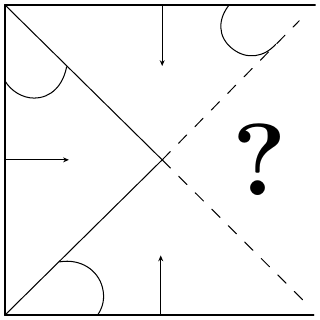
Select the option figure that will replace the question mark (?) in the figure given below to complete the pattern.

  1. ((a))

  2. ((b))

  3. ((c))

  4. ((d))

Show Answer
Answer: ((d))

Given figure:

Hence, the correct answer is "Option 4".

28

This question has two statements followed by two conclusions numbered I and II. You have to take the given statements to be true even if they seem to be at variance from commonly known facts. You have to decide which of the given conclusions logically follow(s) from the given statements.

Statements:

No motor is a yak.

Some yaks are wipes.

Conclusions:

(I) No wipe is a yak.

(II) Some wipes are yaks.

  1. ((a))

    Both conclusions (I) and (II) follow

  2. ((b))

    Only conclusion (II) follows

  3. ((c))

    Neither conclusion (I) nor (II) follows

  4. ((d))

    Only conclusion (I) follows

Show Answer
Answer: ((b))

Only conclusion (II) follows

The least possible venn diagram:

Conclusions:

(I) No wipe is a yak → False (As, Some yaks are wipes. so this conclusion is false).

(II) Some wipes are yaks → True (As, Some yaks are wipes, so Some wipes are yaks is true)

Thus, Only conclusion (II) follows.

Hence, the correct answer is "Option 2".

29

Two statements are given followed by three conclusions numbered I, II and III. Assuming the statements to be true, even if they seem to be at variance with commonly known facts, decide which of the conclusions logically follow(s) from the statements.

Statements:

I. All strawberries are fruits.

II. Some berries are strawberries.

Conclusions:

I. All berries are fruits.

II. Some fruits are strawberries.

III. No berry is a fruit.

  1. ((a))

    Only conclusion III follows.

  2. ((b))

    Only conclusion II follows.

  3. ((c))

    Both conclusions II and III follow.

  4. ((d))

    Either conclusion I or III follows.

Show Answer
Answer: ((b))

Only conclusion II follows.

The least possible venn diagram:

Conclusions:

I. All berries are fruits → False (As, All strawberries are fruits and Some berries are strawberries. so, All berries are fruits is a possibility but not definite)

II. Some fruits are strawberries → True (As, All strawberries are fruits. so Some fruits are strawberries holds true) 

III. No berry is a fruit → False (As, All strawberries are fruits and Some berries are strawberries. so, No berry is a fruit is not true)

Thus, Only conclusion II follows.

Hence, the correct answer is "Option 2".

30

Identify the figure from the given options that when put in place of the question mark (?) will logically complete the series.

  1. ((a))

  2. ((b))

  3. ((c))

  4. ((d))

Show Answer
Answer: ((a))

The pattern followed here is:

Hence, the correct answer is "Option 1".

31

In a certain code language, 'FOAM' is coded as '9618' and 'MUST' is coded as '4536'. What is the code for 'M' in that language?

  1. ((a))

    4

  2. ((b))

    5

  3. ((c))

    3

  4. ((d))

    6

Show Answer
Answer: ((d))

6

Given code:

M is common in both code language.

Thus, code for 'M' is 6.

Hence, the correct answer is "Option 4".

32

What will come in the place of the question mark (?) in the following equation if '+' and '-' are interchanged and '×' and '÷' are interchanged?

60 + 9 ÷ 63 - 72 × 12 = ?

  1. ((a))

    -501

  2. ((b))

    -503

  3. ((c))

    -502

  4. ((d))

    -504

Show Answer
Answer: ((a))

-501

The given equation:

60 + 9 ÷ 63 - 72 × 12 = ?

'+' and '-' are interchanged

'×' and '÷' are interchanged

After sign interchange

60 − 9 × 63 + 72 ÷ 12

→ 60 − 9 × 63 + 72 ÷ 12

→ 60 − 9 × 63 + 6

→ 60 − 567 + 6

→ −507 + 6

→ -501.

Hence, the correct answer is "Option 1".

33

Seven people P, Q, R, S, T, U and V are sitting around a circular table, facing the centre (but not necessarily in the same order). U is sitting second to the right of S. Q is sitting third to the left of U. R is sitting fifth to the right of P. T is sitting third to the left of V. What is the position of S with respect to V?

  1. ((a))

    To the immediate left

  2. ((b))

    Second to the left

  3. ((c))

    Third to the right

  4. ((d))

    To the immediate right

Show Answer
Answer: ((c))

Third to the right

Given:

Seven people P, Q, R, S, T, U and V are sitting around a circular table.

U is sitting second to the right of S.

Q is sitting third to the left of U.

R is sitting fifth to the right of P. 

Now, for P and R we have 2 possibility.

Case 1)

Case 2)

T is sitting third to the left of V.

Now, Case 2) gets eliminated as T and V cannot sit in this case.

Case 1)

Thus, 'S' sits Third to the right of 'V'.

Hence, the correct answer is "Option 3".

34

What should come in place of question mark (?) in the given series based on the English alphabetical order?

ZWT, WUQ, TSN, QQK, ?

  1. ((a))

    MOH

  2. ((b))

    NOH

  3. ((c))

    MOG

  4. ((d))

    NOQ

Show Answer
Answer: ((b))

NOH

Given:

The pattern followed here is:

Thus, 'NOH' is correct answer.

Hence, the correct answer is "Option 2".

35

Select the figure from among the given options that can replace the question mark (?) in the following series.

  1. ((a))

  2. ((b))

  3. ((c))

  4. ((d))

Show Answer
Answer: ((a))

The pattern followed here is:

Hence, the correct answer is "Option 1".

36

EO 19 is related to AK 13 in a certain way. In the same way, UD 17 is related to QZ 11. To which of the following is VH 23 related, following the same logic?

  1. ((a))

    RD 18

  2. ((b))

    RD 17

  3. ((c))

    RC 17

  4. ((d))

    QC 17

Show Answer
Answer: ((b))

RD 17

Given:

The logic followed here is:

EO 19 is related to AK 13

And,

UD 17 is related to QZ 11

Similarly,

VH 23 is related to,

Thus, 'RD 17' is correct answer.

Hence, the correct answer is "Option 2".

37

Which of the following interchanges of signs would make the given equation correct?

<br>

8 - 42 + 104 ÷ 13 × 4 = 18

  1. ((a))
    • and ×
  2. ((b))

    ÷ and −

  3. ((c))

    − and ×

  4. ((d))

    − and +

Show Answer
Answer: ((d))

− and +

The given equation:

8 - 42 + 104 ÷ 13 × 4 = 18

Option 1) + and ×

8 − 42 × 104 ÷ 13 + 4

→ 8 − 42 × 104 ÷ 13 + 4

→ 8 − 42 × 8 + 4

→ 8 − 336 + 4

→ -325 ≠ 18.

Option 2) ÷ and −

8 ÷ 42 + 104 − 13 × 4 = 18

→ 8 ÷ 42 + 104 − 13 × 4

→ 0.1905 + 104 − 13 × 4

→ 0.19 + 104 − 52

→ 52.19 ≠ 18

Option 3) − and ×

8 × 42 + 104 ÷ 13 − 4 = 18

→ 8 × 42 + 104 ÷ 13 − 4

→ 8 × 42 + 8 − 4

→ 336 + 8 − 4

→ 340 ≠ 18

Option 4) − and +

8 + 42 − 104 ÷ 13 × 4 = 18

→ 8 + 42 − 104 ÷ 13 × 4

→ 8 + 42 − 8 × 4

→ 8 + 42 − 32

→ 18 = 18.

Hence, the correct answer is "Option 4".

38

Select the correct mirror image of the given figure when the mirror is placed at MN as shown below.

  1. ((a))

  2. ((b))

  3. ((c))

  4. ((d))

Show Answer
Answer: ((d))

The mirror image of the given figure is:

Hence, the correct answer is "Option  4".

39

In a certain code language, 'RISK' is coded as '2369' and 'CRAP' is coded as '1876'. What is the code for 'R' in the given code language?

  1. ((a))

    7

  2. ((b))

    6

  3. ((c))

    9

  4. ((d))

    8

Show Answer
Answer: ((b))

6

Given code:

R is common in both the code language.

Thus, code for 'R' is '6'.

Hence, the correct answer is "Option 2".

40

KQNT is related to QWTZ in a certain way based on the English alphabetical order. In the same way, IOLR is related to OURX. To which of the following is DJGM related, following the same logic?

  1. ((a))

    PJMS

  2. ((b))

    JPSM

  3. ((c))

    JPMS

  4. ((d))

    PJSM

Show Answer
Answer: ((c))

JPMS

Given:

KQNT is related to QWTZ

And,

IOLR is related to OURX

Similarly,

DJGM is related to

Thus, DJGM is related to 'JPMS'

Hence, the correct answer is "Option 3".

Session 2 (50 questions)

41

Which property of an element is inversely related to its ionisation energy?

  1. ((a))

    Electronegativity

  2. ((b))

    Atomic mass

  3. ((c))

    Atomic radius

  4. ((d))

    Electron affinity

Show Answer
Answer: ((c))

Atomic radius

The correct answer is Atomic radius.

Key Points

  • Ionisation energy is the energy required to remove an electron from an atom in its gaseous state.
  • The atomic radius is the distance from the nucleus of an atom to the outermost electron shell.
  • As the atomic radius increases, the attraction between the nucleus and the electrons decreases.
  • This decreased attraction makes it easier to remove an electron, resulting in lower ionisation energy.
  • Therefore, there is an inverse relationship between the atomic radius and ionisation energy.

 Additional Information

  • Electronegativity
  • Electronegativity is a measure of an atom's ability to attract and hold onto electrons.
  • Elements with high electronegativity have a strong attraction for electrons.
  • Typically, electronegativity increases across a period and decreases down a group in the periodic table.
  • Atomic mass
  • Atomic mass is the mass of an atom, usually expressed in atomic mass units (amu).
  • It is approximately equivalent to the number of protons and neutrons in the atom (mass number).
  • Atomic mass does not have a direct relationship with ionisation energy.
  • Electron affinity
  • Electron affinity is the energy change that occurs when an electron is added to a neutral atom in the gaseous state.
  • It is generally exothermic, meaning energy is released when an electron is added.
  • Elements with high electron affinity values are more likely to gain electrons.
42

According to Census 2011 of India, what was the percentage of Christian communities of the total population in India?

  1. ((a))

    0.4%

  2. ((b))

    1.7%

  3. ((c))

    0.7%

  4. ((d))

    2.3%

Show Answer
Answer: ((d))

2.3%

The Correct answer is 2.3%.

Key Points

  • According to the Census 2011 of India, the percentage of Christian communities in India was 2.3% of the total population.
  • The Census is a significant source of data on the demographic characteristics of the population, including religious affiliations.
  • The Census of India is conducted every 10 years and provides a comprehensive overview of the population structure.
  • Christian communities in India include various denominations such as Roman Catholics, Protestants, and Orthodox Christians.
  • Christianity is one of the major religions in India, with a significant presence in states like Kerala, Tamil Nadu, Goa, and the North-Eastern states.

 Additional Information

  • Census 2011
  • The Census 2011 was the 15th National Census since 1872 and was conducted by the Office of the Registrar General & Census Commissioner, India.
  • The Census collects data on various parameters like population size, growth, density, and distribution, as well as social and economic indicators.
  • Religious Demographics
  • The religious demographics data helps in understanding the cultural diversity of the country and in planning for the needs of different communities.
  • India is home to multiple religions, with Hinduism being the majority, followed by Islam, Christianity, Sikhism, Buddhism, and Jainism.
43

In which year did the Government of India pass the Mahatma Gandhi National Rural Employment Guarantee Act?

  1. ((a))

    2003

  2. ((b))

    1999

  3. ((c))

    2005

  4. ((d))

    2001

Show Answer
Answer: ((c))

2005

The correct answer is 2005.

Key Points

  • The Mahatma Gandhi National Rural Employment Guarantee Act (MGNREGA) was passed by the Government of India in the year 2005.
  • It aims to enhance the livelihood security of people in rural areas by guaranteeing at least 100 days of wage-employment in a financial year to every household whose adult members volunteer to do unskilled manual work.
  • MGNREGA is a social security measure that provides a legal guarantee for employment.
  • The Act was passed under the leadership of the then Prime Minister, Dr. Manmohan Singh, and was a significant step towards poverty alleviation.
  • It is considered one of the largest and most ambitious social welfare programs in the world.

 Additional Information

  • MGNREGA is monitored by the Ministry of Rural Development, Government of India.
  • The Act has provisions for ensuring transparency and accountability in the implementation of the scheme.
  • It involves the Gram Panchayats in planning and implementing the works.
  • Funds for the scheme are shared between the Central and State Governments.
44

Find the odd one out.

Vacuoles, Nucleus, Ribosomes, Lysosomes

  1. ((a))

    Ribosomes

  2. ((b))

    Nucleus

  3. ((c))

    Vacuoles

  4. ((d))

    Lysosomes

Show Answer
Answer: ((a))

Ribosomes

The Correct answer is Ribosomes.

Key Points

  • Ribosomes are the odd one out because they are not membrane-bound organelles, unlike the other options.
  • Ribosomes are involved in protein synthesis and are found either floating freely in the cytoplasm or attached to the endoplasmic reticulum.
  • They are composed of ribosomal RNA (rRNA) and proteins.
  • The primary function of ribosomes is to translate messenger RNA (mRNA) into proteins.

 Additional Information

  • Nucleus
  • The nucleus is a membrane-bound organelle that contains the cell's genetic material (DNA).
  • It controls cellular activities by regulating gene expression.
  • The nucleus is surrounded by the nuclear envelope, which has pores to allow the exchange of materials.
  • Vacuoles
  • Vacuoles are membrane-bound organelles found in plant and fungal cells, and some protist, animal, and bacterial cells.
  • They are responsible for the storage of nutrients, waste products, and maintaining turgor pressure in plant cells.
  • In animal cells, vacuoles are generally smaller and more numerous.
  • Lysosomes
  • Lysosomes are membrane-bound organelles containing digestive enzymes.
  • They break down excess or worn-out cell parts, and can be involved in destroying invading viruses and bacteria.
  • Lysosomes are often called the "stomach" of the cell due to their role in digestion.
45

What is the main objective of zero-based budgeting?

  1. ((a))

    To assess the effectiveness of each programme and activity with the output

  2. ((b))

    Establishing a relationship between inputs and outputs

  3. ((c))

    Examining the objectives for which funds are provided

  4. ((d))

    Re-evaluation of all the activities every year when budget provisions are made

Show Answer
Answer: ((d))

Re-evaluation of all the activities every year when budget provisions are made

The correct answer is Re-evaluation of all the activities every year when budget provisions are made.

Key Points

  • Zero-based budgeting (ZBB) is a budgeting method where all expenses must be justified for each new period.
  • In ZBB, every function within an organization is analyzed for its needs and costs.
  • The primary objective is the re-evaluation of all activities annually, ensuring that funds are allocated efficiently.
  • It starts from a "zero base" and every function is reviewed comprehensively.
  • This method encourages cost management and helps in identifying and eliminating unnecessary expenditures.
  • ZBB is used to allocate resources based on the necessity and efficiency of projects.

 Additional Information

  • To assess the effectiveness of each programme and activity with the output
  • This option pertains to performance budgeting where the focus is on outcomes and outputs of programs.
  • Performance budgeting links funds allocated to measurable results.
  • Establishing a relationship between inputs and outputs
  • This approach is often seen in output budgeting or performance-based budgeting.
  • It focuses on efficiency by examining how inputs (resources) are converted into outputs (services).
  • Examining the objectives for which funds are provided
  • This option is related to program budgeting, which allocates funds according to the objectives of each program.
  • Program budgeting aims to allocate resources based on programs' goals and objectives.
46

What is the maximum amount of home loan the eligible beneficiaries can get under the 'Mo Ghara' scheme launched by the Government of Odisha in May 2023?

  1. ((a))

    Upto ₹2 lakh

  2. ((b))

    Upto ₹5.5 lakh

  3. ((c))

    Upto ₹3 lakh

  4. ((d))

    Upto ₹4 lakh

Show Answer
Answer: ((c))

Upto ₹3 lakh

The Correct answer is Upto ₹3 lakh.

Key Points

  • The 'Mo Ghara' scheme was launched by the Government of Odisha in May 2023.
  • This scheme is aimed at providing financial support to the eligible beneficiaries for the construction and improvement of their houses.
  • Under this scheme, the beneficiaries can avail of a home loan of up to ₹3 lakh.
  • The scheme targets the weaker sections of society, including economically weaker sections (EWS) and low-income groups (LIG).
  • The initiative is part of the state government’s efforts to ensure housing for all and improve the living conditions of its citizens.

 Additional Information

  • Eligible beneficiaries
  • These include families belonging to the economically weaker sections (EWS) and low-income groups (LIG).
  • The scheme aims to support the construction and improvement of houses to ensure better living conditions.
  • Housing for all
  • The scheme aligns with the broader goal of achieving housing for all by providing financial support to the needy sections of society.
  • This initiative is part of the state’s commitment to improving the living standards of its residents.
47

Which of the following features of the Indian Constitution is taken from the USA's constitution?

  1. ((a))

    Removal of Supreme Court Judges

  2. ((b))

    Parliamentary Privileges

  3. ((c))

    Prerogative Writs

  4. ((d))

    Cabinet System

Show Answer
Answer: ((a))

Removal of Supreme Court Judges

The correct answer is Removal of Supreme Court Judges.

Key Points

  • Removal of Supreme Court Judges is a feature of the Indian Constitution adopted from the USA's Constitution.
  • The process involves an impeachment procedure which is quite similar to that in the United States.
  • The President of India can remove a Supreme Court judge only after an address by the Parliament which is supported by a majority of the total membership of each House and by a majority of not less than two-thirds of the members of the House present and voting.
  • This process ensures the independence of the judiciary from the executive and legislative branches of the government.

 Additional Information

  • Parliamentary Privileges
  • Parliamentary Privileges refer to the special rights, immunities, and exemptions enjoyed by the two Houses of Parliament, their committees, and their members.
  • These privileges are based on the British parliamentary system.
  • Prerogative Writs
  • Prerogative Writs, like habeas corpus, mandamus, prohibition, quo warranto, and certiorari, are judicial orders that command the performance of a specific act or duty.
  • This concept is borrowed from the British legal system.
  • Cabinet System
  • The Cabinet System of government, also known as the Westminster system, includes the role of the Prime Minister and a cabinet of ministers.
  • This system is derived from the United Kingdom.
48

The layer made up of unconsolidated rock, dust, soil, etc. that is deposited on a bed rock surface like a blanket is known as

  1. ((a))

    Talus

  2. ((b))

    Regolith

  3. ((c))

    Scree

  4. ((d))

    Protolith

Show Answer
Answer: ((b))

Regolith

The Correct answer is Regolith.

Key Points

  • Regolith is a layer of loose, heterogeneous material covering solid rock.
  • This layer includes dust, soil, broken rock, and other related materials.
  • It is found on Earth, the Moon, Mars, and some other celestial bodies.
  • The term regolith is derived from the Greek words "rhegos" (blanket) and "lithos" (rock).
  • On Earth, regolith plays a significant role in soil formation and can be an essential factor in ecosystem dynamics.
  • It also acts as a medium for plant growth and serves as a repository for groundwater.

 Additional Information

  • Talus
  • Talus refers to a pile of rock debris that accumulates at the base of a cliff, chute, or slope.
  • It is typically formed by the mechanical weathering of rocks, such as through freeze-thaw processes.
  • Scree
  • Scree is a collection of broken rock fragments at the base of crags, mountain cliffs, or valley shoulders.
  • Scree often forms through the action of gravitational forces.
  • Protolith
  • Protolith is the original, unmetamorphosed rock from which a given metamorphic rock is formed.
  • Identifying a protolith is essential in understanding the history and conditions of metamorphism.
49

The famous autobiography 'Lessons life taught me unknowingly' is related to:

  1. ((a))

    Jhulan Goswami

  2. ((b))

    Anupam Kher

  3. ((c))

    Sharad Pawar

  4. ((d))

    LK Advani

Show Answer
Answer: ((b))

Anupam Kher

The correct answer is Anupam Kher.

Key Points

  • Anupam Kher is a renowned Indian actor.
  • He has appeared in over 500 films and many plays.
  • The autobiography "Lessons Life Taught Me Unknowingly" is an inspirational account of his life and career.
  • The book provides insights into his struggles, achievements, and experiences in the Indian film industry.
  • Anupam Kher has won numerous awards, including the Filmfare Award for Best Actor in a Comic Role.
  • He is also a recipient of the Padma Shri and Padma Bhushan, two of India's highest civilian honors.

 Additional Information

  • Jhulan Goswami
  • Jhulan Goswami is a former Indian cricketer known for her fast bowling.
  • She has been one of the leading wicket-takers in women's cricket.
  • Sharad Pawar
  • Sharad Pawar is a prominent Indian politician.
  • He is the founder of the Nationalist Congress Party (NCP).
  • LK Advani
  • Lal Krishna Advani is a veteran Indian politician.
  • He served as the Deputy Prime Minister of India and is a senior leader of the Bharatiya Janata Party (BJP).
50

In December 2022, the Parliament passed the Energy Conservation (Amendment) Bill, 2022. This bill aims to make use of ________.

  1. ((a))

    non-fossil fuels

  2. ((b))

    tungsten filament bulbs in houses

  3. ((c))

    subsidy on petrol vehicles

  4. ((d))

    electric vehicles

Show Answer
Answer: ((a))

non-fossil fuels

The correct answer is non-fossil fuels.

Key Points

  • The Energy Conservation (Amendment) Bill, 2022, aims to promote the use of non-fossil fuels to ensure a sustainable and environmentally friendly energy supply.
  • The bill seeks to encourage the adoption of renewable energy sources such as solar, wind, biomass, and hydrogen.
  • This legislative move is in line with India's commitment to reduce its carbon footprint and tackle climate change.
  • By shifting towards non-fossil fuels, the government aims to reduce dependency on imported fossil fuels and promote energy security.
  • The bill also includes provisions for the establishment of a carbon market and the imposition of energy consumption standards.

 Additional Information

  • Tungsten filament bulbs in houses
  • Tungsten filament bulbs are an older technology and are being phased out in favor of more energy-efficient lighting such as LED bulbs.
  • These bulbs consume more electricity compared to modern lighting solutions and are not aligned with energy conservation goals.
  • Subsidy on petrol vehicles
  • Providing subsidies on petrol vehicles would increase the consumption of fossil fuels and is contrary to the objectives of promoting sustainability and reducing carbon emissions.
  • Electric vehicles
  • While promoting electric vehicles (EVs) is essential for reducing emissions, the bill specifically focuses on the broader category of non-fossil fuels, which includes renewable energy sources.
51

Which of the following places in India receive the highest rainfall?

  1. ((a))

    Patna

  2. ((b))

    Guwahati

  3. ((c))

    Mawsynram

  4. ((d))

    Imphal

Show Answer
Answer: ((c))

Mawsynram

The Correct answer is Mawsynram.

Key Points

  • Mawsynram is a village in the East Khasi Hills district of Meghalaya, India.
  • It holds the record for being the wettest place on Earth with an average annual rainfall of about 11,871 millimeters (467.4 inches).
  • The heavy rainfall is mainly due to the geographical location and the presence of the Bay of Bengal branch of the Indian monsoon.
  • The region's topography and wind patterns contribute to the high precipitation.
  • Rainfall in Mawsynram is caused by the orographic lift, where moist air rises over the hills and cools down to release rain.

 Additional Information

  • Patna
  • Patna is the capital city of Bihar state in India.
  • It is located on the southern bank of the Ganges River.
  • Patna experiences a humid subtropical climate with moderate rainfall.
  • Guwahati
  • Guwahati is a major city in the northeastern state of Assam, India.
  • It lies on the southern bank of the Brahmaputra River.
  • Guwahati has a tropical monsoon climate and receives substantial rainfall but not as much as Mawsynram.
  • Imphal
  • Imphal is the capital city of the northeastern state of Manipur, India.
  • The city is situated in the Imphal Valley.
  • Imphal has a subtropical climate with moderate to high rainfall, especially during the monsoon season.
52

Pandit Shiv Kumar Sharma is credited with single-handedly popularising which musical instrument?

  1. ((a))

    Sarod

  2. ((b))

    Sitar

  3. ((c))

    Santoor

  4. ((d))

    Tabla

Show Answer
Answer: ((c))

Santoor

The Correct answer is Santoor.

Key Points

  • Pandit Shiv Kumar Sharma is credited with single-handedly popularising the Santoor.
  • The Santoor is a traditional Indian musical instrument that originates from Kashmir.
  • The instrument is typically played with a pair of light wooden mallets and has a distinct, melodious sound.
  • Pandit Shiv Kumar Sharma modified the Santoor to suit the requirements of classical Indian music.
  • His innovative playing techniques and compositions brought the Santoor to the forefront of Indian classical music.
  • He is also known for his collaborations with other renowned musicians and his contributions to Indian film music.

 Additional Information

  • Sarod
  • The Sarod is a stringed instrument used mainly in Indian classical music.
  • It is known for its deep, weighty, introspective sound.
  • Prominent Sarod players include Ustad Amjad Ali Khan and Ali Akbar Khan.
  • Sitar
  • The Sitar is another popular stringed instrument in Indian classical music.
  • It has a long neck and a gourd resonating chamber, and it is played with a plectrum.
  • Ravi Shankar and Vilayat Khan are some of the most famous Sitar players.
  • Tabla
  • The Tabla is a pair of twin hand drums from the Indian subcontinent.
  • It is the most important percussion instrument in Hindustani classical music.
  • Notable Tabla players include Zakir Hussain and Alla Rakha.
53

Match the army officers of the Mauryan empire in column A with the respective salaries given to them in column B.

Column A (Army Officer)Column B (Salaries)
a. Senapatii. 12,000 Pana per annum
b. Adhvakshasii. 8,000 Pana per annum
c. Mukhvasiii. 4,000 Pana per annum
d. Naykaiv. 4,800 Pana per annum
  1. ((a))

    a-i, b-ii, c-iv, d-iii

  2. ((b))

    a-i, b-iv, c-iii, d-ii

  3. ((c))

    a-iv, b-iii, c-ii, d-i

  4. ((d))

    a-i, b-ii, c-iii, d-iv

Show Answer
Answer: ((d))

a-i, b-ii, c-iii, d-iv

The correct answer is option 4.

Key Points

  • Senapati was one of the highest-ranking officers in the Mauryan army, and they were paid 12,000 Pana per annum.
  • Adhvakshas were responsible for overseeing various logistical and administrative functions, and they received a salary of 8,000 Pana per annum.
  • Mukhvas were in charge of the communication and intelligence network within the army and were paid 4,000 Pana per annum.
  • Nayka served as subordinate officers, and they earned 4,800 Pana per annum.
  • The salary structure reflects the hierarchy and responsibilities within the Mauryan military system.
  • The term Pana refers to an ancient Indian currency used during the Mauryan empire.

 Additional Information

  • Senapati
  • The Senapati was a high-ranking military officer, often equivalent to a modern-day general.
  • The position involved strategic planning and leadership of military campaigns.
  • Adhvakshas
  • Adhvakshas managed logistical support, such as supplies and transportation, crucial for maintaining the army's efficiency.
  • The role was administrative and required significant organizational skills.
  • Mukhvas
  • Mukhvas were responsible for the army's intelligence and communications, ensuring effective coordination during campaigns.
  • The role was vital for gathering information and relaying orders.
  • Nayka
  • Naykas were subordinate military officers who assisted higher-ranking officials in various capacities.
  • They played a significant role in executing orders and maintaining discipline within the ranks.
54

In a Parliamentary system, who among the following is known as the head of the Government?

  1. ((a))

    Prime Minister

  2. ((b))

    Chief Minister

  3. ((c))

    Chief Justice

  4. ((d))

    President

Show Answer
Answer: ((a))

Prime Minister

The Correct answer is Prime Minister.

Key Points

  • The Prime Minister is the head of the Government in a parliamentary system.
  • He or she is responsible for running the government and implementing its policies and decisions.
  • The Prime Minister is the leader of the executive branch of the government.
  • He or she is appointed by the President but must have the support of the majority in the lower house of Parliament.
  • The Prime Minister selects and leads a team of ministers who are responsible for specific government departments.
  • In countries like India and the United Kingdom, the Prime Minister holds the most powerful political office.
  • The Prime Minister represents the country in various international forums and meetings.

 Additional Information

  • Chief Minister
  • The Chief Minister is the head of the government at the state level in countries like India.
  • He or she functions similarly to the Prime Minister but within a specific state.
  • The Chief Minister is appointed by the Governor of the state.
  • Chief Justice
  • The Chief Justice is the head of the judiciary and the highest-ranking judge in a court system.
  • In India, the Chief Justice of India heads the Supreme Court.
  • President
  • The President is the head of state and represents the country ceremonially.
  • In a parliamentary system, the President's role is more ceremonial and less involved in daily government operations.
55

In the year 1946, a three-tiered confederation for transfer of power to India was proposed by the ________.

  1. ((a))

    Regulating Act

  2. ((b))

    Rowlatt Act

  3. ((c))

    Simon Commission

  4. ((d))

    Cabinet Mission

Show Answer
Answer: ((d))

Cabinet Mission

The Correct answer is Cabinet Mission.

Key Points

  • The Cabinet Mission was a group of high-ranking members from the British government sent to India in 1946.
  • Its primary objective was to discuss and plan for the transfer of power from British rule to Indian leadership.
  • The Mission proposed a three-tiered confederation consisting of provinces grouped into three sections: Group A (Hindus majority provinces), Group B (Muslim majority provinces), and Group C (the princely states).
  • This structure aimed to address the interests of various groups and provide a framework for a united yet flexible governance system.
  • The Cabinet Mission's plan was ultimately rejected by the Muslim League, leading to further negotiations and eventually the partition of India in 1947.

 Additional Information

  • Regulating Act
  • The Regulating Act of 1773 was the first attempt by the British government to regulate the affairs of the East India Company in India.
  • It established a system of dual control, with both the company and the British government involved in administration.
  • This act marked the beginning of British parliamentary control over India.
  • Rowlatt Act
  • The Rowlatt Act, also known as the Black Act, was passed in 1919 by the British Government in India.
  • It allowed the government to imprison any person suspected of terrorism without trial for up to two years.
  • This act led to widespread anger and protests, including the infamous Jallianwala Bagh massacre.
  • Simon Commission
  • The Simon Commission was a group of seven British Members of Parliament that was sent to India in 1927 to study constitutional reform.
  • It was met with strong opposition from Indian leaders because it did not include any Indian members.
  • The slogan "Simon Go Back" was popular during the protests against the commission.
56

In which of the following states is the Alpasi Festival celebrated annually, where a holy bath of the deities in the sea is the primary attraction?

  1. ((a))

    Kerala

  2. ((b))

    Andhra Pradesh

  3. ((c))

    Karnataka

  4. ((d))

    Telangana

Show Answer
Answer: ((a))

Kerala

The correct answer is Kerala.

Key Points

  • The Alpasi Festival is an annual religious festival celebrated in Kerala.
  • It is one of the major festivals at the Sree Padmanabhaswamy Temple in Thiruvananthapuram.
  • The festival features a significant event where the deities are given a holy bath in the sea, which is the primary attraction.
  • This ritual is known as the Arattu and involves a procession from the temple to the beach.
  • The festival showcases the rich cultural and religious heritage of Kerala.
  • It typically occurs during the Malayalam month of Thulam (October-November).
  • The Alpasi Festival is marked by elaborate ceremonies, rituals, and traditional art forms.

 Additional Information

  • Andhra Pradesh
  • Andhra Pradesh is known for its rich cultural heritage and festivals such as Ugadi, Sankranti, and Dussehra.
  • It is famous for the Tirupati Balaji Temple, a significant pilgrimage site.
  • Karnataka
  • Karnataka is known for festivals like Dasara in Mysore, which is celebrated with grandeur.
  • It is famous for its historical sites like Hampi and Mysore Palace.
  • Telangana
  • Telangana celebrates festivals like Bathukamma and Bonalu, which are unique to the region.
  • It is known for the Charminar and Golconda Fort in Hyderabad.
57

India played its first test match cricket against which of the following countries?

  1. ((a))

    England

  2. ((b))

    West Indies

  3. ((c))

    Australia

  4. ((d))

    New Zealand

Show Answer
Answer: ((a))

England

The correct answer is England.

Key Points

  • India played its first Test match against England in 1932.
  • The match took place at the Lord's Cricket Ground in London from June 25 to June 28, 1932.
  • This was a historic event as it marked India's debut in the arena of Test cricket.
  • The Indian team was led by CK Nayudu, who was the captain of the team.
  • Although India lost the match, this event is significant as it laid the foundation for the future of Indian cricket.

 Additional Information

  • West Indies
  • The West Indies cricket team represents a collection of Caribbean countries and territories.
  • India played its first Test series against the West Indies in 1952.
  • Australia
  • Australia is known for its strong cricketing history and has been one of the dominant teams in international cricket.
  • India played its first Test series against Australia in 1947-48.
  • New Zealand
  • New Zealand is also a prominent cricketing nation and has a competitive cricket team.
  • India played its first Test series against New Zealand in 1955-56.
58

Which of the following statements is INCORRECT related to Macaulay?

  1. ((a))

    He considered Indian and Arab literature inferior to the Western literature.

  2. ((b))

    Macaulay was an orientalist scholar.

  3. ((c))

    He believed that India is an uncivilised country which needs to be taught the lessons of civilisation.

  4. ((d))

    He strongly advocated giving English language education to Indians.

Show Answer
Answer: ((b))

Macaulay was an orientalist scholar.

The correct answer is Macaulay was an orientalist scholar.

Key Points

  • Thomas Babington Macaulay was a British historian and politician.
  • He is best known for his role in introducing English education in India.
  • Macaulay is famous for his "Minute on Indian Education" of 1835, which advocated for the promotion of English language education in India.
  • He believed that English education was superior and that it would help civilize and modernize Indian society.
  • Macaulay viewed Indian and Arab literature as inferior to Western literature, reflecting his Eurocentric perspective.
  • He did not support orientalism, which is the appreciation and study of Asian cultures, languages, and histories.
  • Instead, he promoted Western education and ideas as a means to reform and develop India.

 Additional Information

  • Orientalism
  • Orientalism refers to the study and appreciation of Asian cultures, languages, and histories.
  • Orientalists were scholars who advocated for the preservation and study of Eastern traditions and knowledge.
  • Macaulay was not an orientalist; he opposed the idea of promoting traditional Indian education and languages.
  • English Education in India
  • Macaulay's efforts led to the establishment of English as the medium of instruction in Indian schools and colleges.
  • He believed that Western education would help create a class of Indians who could assist in governing the country and spreading Western values.
  • This policy had a lasting impact on the Indian education system and the use of the English language in India.
59

When was the National Digital Communications Policy launched in India?

  1. ((a))

    2015

  2. ((b))

    2020

  3. ((c))

    2016

  4. ((d))

    2018

Show Answer
Answer: ((d))

2018

The Correct answer is 2018.

Key Points

  • The National Digital Communications Policy was launched in 2018 by the Government of India.
  • This policy aimed at providing broadband for all, creating 4 million jobs in the digital communications sector, and enhancing the contribution of the digital communications sector to 8% of India's GDP.
  • The policy envisions ensuring universal broadband connectivity at 50 Mbps to every citizen.
  • It focuses on providing 1 Gbps connectivity to all Gram Panchayats by 2020 and 10 Gbps by 2022.
  • One of its key missions is to propel India to the top 50 nations in the ICT Development Index of the International Telecommunication Union.
  • It also aims to attract investments worth USD 100 billion in the digital communications sector.
  • The policy promotes innovation and startup ecosystems in the digital communication sector.

 Additional Information

  • Key Points Related to the Correct Answer
  • The policy addresses the need for enhancing the coverage of broadband and increasing the speed of internet services across the country.
  • It aims at developing a robust digital infrastructure to support the vision of a digital-first economy.
  • The policy emphasizes the importance of emerging technologies like 5G, IoT (Internet of Things), and AI (Artificial Intelligence) in driving economic growth.
  • It also focuses on ensuring digital sovereignty and security by promoting indigenous manufacturing and establishing a comprehensive data protection regime.
60

Pellagra is a deficiency disease that usually occurs due to lack of which of the following nutrients?

  1. ((a))

    Vitamin E

  2. ((b))

    Niacin

  3. ((c))

    Iodine

  4. ((d))

    Riboflavin

Show Answer
Answer: ((b))

Niacin

The correct answer is Niacin.

Key Points

  • Pellagra is a deficiency disease caused by a lack of Niacin (Vitamin B3) in the diet.
  • Niacin is essential for the body as it helps in the metabolism of carbohydrates, fats, and proteins.
  • Deficiency of Niacin can lead to the "three Ds" - Dermatitis, Diarrhea, and Dementia, and if left untreated, can be fatal.
  • Niacin can be obtained from foods such as meat, fish, poultry, and whole grains.
  • It plays a crucial role in the body's production of energy and in the maintenance of healthy skin and nerves.

 Additional Information

  • Vitamin E
  • Vitamin E is a powerful antioxidant that helps protect cells from damage.
  • It is essential for immune function, skin health, and eye health.
  • Rich sources include nuts, seeds, and green leafy vegetables.
  • Iodine
  • Iodine is crucial for the production of thyroid hormones which regulate metabolism.
  • A deficiency can lead to goiter and hypothyroidism.
  • Sources include iodized salt, seafood, and dairy products.
  • Riboflavin
  • Riboflavin (Vitamin B2) is important for energy production and the metabolism of fats, drugs, and steroids.
  • Deficiency can cause mouth sores, sore throat, and skin disorders.
  • Found in eggs, milk, green vegetables, and fortified cereals.
61

What monumental site in India houses Magan Niwas, Hriday Kunj and Vinoba-Mira Kutir?

  1. ((a))

    Sabarmati Ashram

  2. ((b))

    Ramchandra Mission

  3. ((c))

    Auroville

  4. ((d))

    Vinoba Ashram

Show Answer
Answer: ((a))

Sabarmati Ashram

The correct answer is Sabarmati Ashram.

Key Points

  • Sabarmati Ashram is located in Ahmedabad, Gujarat.
  • It was one of the residences of Mahatma Gandhi, who lived there for about twelve years.
  • The ashram is historically significant as it was from here that Gandhi led the Dandi March in 1930.
  • Magan Niwas, Hriday Kunj, and Vinoba-Mira Kutir are key structures within the Sabarmati Ashram.
  • Hriday Kunj was the personal quarters of Mahatma Gandhi and his wife, Kasturba Gandhi.
  • Magan Niwas was named after Maganlal Gandhi, a close associate of Mahatma Gandhi.
  • Vinoba-Mira Kutir was the residence of Vinoba Bhave and Madeleine Slade (Mira Ben), both ardent followers of Gandhi.

 Additional Information

  • Ramchandra Mission
  • Ramchandra Mission is a spiritual organization founded by Ram Chandra (Lalaji Maharaj) of Shahjahanpur, UP.
  • It focuses on meditation and spiritual training.
  • It is also known as the Shri Ram Chandra Mission (SRCM).
  • Auroville
  • Auroville is an experimental township in Viluppuram district in Tamil Nadu, India.
  • It was founded in 1968 by The Mother (Mirra Alfassa) of the Sri Aurobindo Society.
  • Auroville was designed to be a universal town where people from all countries could live in peace and progressive harmony.
  • Vinoba Ashram
  • Vinoba Ashram is named after Vinoba Bhave, a prominent Indian advocate of nonviolence and human rights.
  • It focuses on rural development and self-sufficiency.
62

The duration of bouts in each round of the International Boxing Association (AIBA Open Boxing) match for Elite and Youth Men's and Women's Competitions should be ________.

  1. ((a))

    5 minutes

  2. ((b))

    2 minutes

  3. ((c))

    3 minutes

  4. ((d))

    4 minutes

Show Answer
Answer: ((c))

3 minutes

The Correct answer is 3 minutes.

Key Points

  • The duration of each bout in an International Boxing Association (AIBA) match for Elite and Youth Men's and Women's Competitions is 3 minutes.
  • Each round consists of three bouts of 3 minutes each, with a 1-minute rest period between rounds.
  • This duration is standardized across all competitions under the AIBA to ensure uniformity and fair play.
  • The 3-minute duration is designed to test the strength, stamina, and skill of the boxers.
  • This format helps in maintaining the intensity and pace of the match, making it more engaging for both the participants and the audience.

 Additional Information

  • International Boxing Association (AIBA)
  • AIBA is the world governing body for the sport of boxing.
  • It is responsible for overseeing the conduct of amateur boxing matches and competitions globally.
  • AIBA was founded in 1946 and has its headquarters in Lausanne, Switzerland.
  • The organization aims to promote and develop boxing as a sport and ensure fairness and integrity in all its activities.
63

Who is a famous Kuchipudi Dancer to receive Padma Shri in 2001?

  1. ((a))

    Sobha Naidu

  2. ((b))

    Rekha Raju

  3. ((c))

    Mukti Mohan

  4. ((d))

    Padmini

Show Answer
Answer: ((a))

Sobha Naidu

The correct answer is Sobha Naidu.

Key Points

  • Sobha Naidu was a renowned Kuchipudi dancer from India.
  • She received the Padma Shri award in 2001 for her contributions to the art of Kuchipudi dance.
  • She was known for her graceful performances and her efforts in popularizing Kuchipudi both in India and abroad.
  • Sobha Naidu trained under the guidance of Vempati Chinna Satyam, a legendary Kuchipudi dancer and guru.
  • She has also trained numerous students and contributed significantly to the field of dance education.

 Additional Information

  • Rekha Raju
  • Rekha Raju is a well-known Bharatanatyam and Mohiniyattam dancer from India.
  • She has received several awards for her contributions to these dance forms.
  • Mukti Mohan
  • Mukti Mohan is an Indian contemporary dancer and actress.
  • She is known for her participation in various dance reality shows.
  • Padmini
  • Padmini was a famous Indian actress and classical dancer, known for her work in Tamil, Telugu, Malayalam, and Hindi films.
  • She was one of the renowned “Travancore Sisters” who were celebrated for their dance skills.
64

Who among the following rulers introduced the 'jharokha darshan' in the Mughal dynasty?

  1. ((a))

    Akbar

  2. ((b))

    Humayun

  3. ((c))

    Shahjahan

  4. ((d))

    Aurangzeb

Show Answer
Answer: ((a))

Akbar

The Correct answer is Akbar.

Key Points

  • Jharokha Darshan was a tradition started by Akbar, the third Mughal emperor.
  • This practice involved the emperor appearing before his subjects from a balcony (jharokha) of his palace every morning.
  • The purpose was to connect with the common people and assure them of his presence and involvement in their lives.
  • The practice also had a political motive to reinforce the divine status of the emperor, reflecting the belief that the king was a representative of God on earth.
  • It was a means of communication without intermediaries, helping to establish a direct bond between the emperor and his subjects.

 Additional Information

  • Humayun
  • Humayun, the second Mughal emperor, is known for his struggles to consolidate the Mughal Empire in India.
  • He faced setbacks and was temporarily ousted from India by Sher Shah Suri.
  • Shahjahan
  • Shahjahan is renowned for his architectural achievements, including the construction of the Taj Mahal.
  • His reign is often considered the golden age of Mughal architecture.
  • Aurangzeb
  • Aurangzeb was the sixth Mughal emperor, known for his expansive military campaigns and austere policies.
  • His reign was marked by the expansion of the empire to its greatest extent, but also by internal strife and resistance.
65

Pakhu Itu dance is performed by the Apatani tribe of which of the following states?

  1. ((a))

    Assam

  2. ((b))

    Himachal Pradesh

  3. ((c))

    Arunachal Pradesh

  4. ((d))

    Chhattisgarh

Show Answer
Answer: ((c))

Arunachal Pradesh

The correct answer is Arunachal Pradesh.

Key Points

  • The Pakhu Itu dance is performed by the Apatani tribe.
  • The Apatani tribe is indigenous to the Ziro Valley in the state of Arunachal Pradesh.
  • This dance is a part of their traditional cultural heritage and is performed during various festivals and celebrations.
  • The Apatani tribe is known for their unique agricultural practices and sustainable living.
  • They are also noted for their distinct facial tattoos and nose plugs which are part of their ancient customs.

 Additional Information

  • Assam
  • Assam is known for its tea gardens and is a major producer of tea in India.
  • The state is home to the one-horned rhinoceros found in Kaziranga National Park.
  • Assam's culture is rich with Bihu dance being a famous traditional dance.
  • Himachal Pradesh
  • Himachal Pradesh is famous for its hill stations such as Shimla and Manali.
  • The state is known for its apple orchards and scenic landscapes.
  • It is also popular for its Kullu Nati dance, a traditional dance of the Kullu region.
  • Chhattisgarh
  • Chhattisgarh is rich in tribal culture and has a significant population of indigenous tribes.
  • The state is known for its Bastar Dussehra, one of the longest festivals in India.
  • It is also famous for its traditional folk dances like Panthi and Raut Nacha.
66

Select the most appropriate option to fill in the blanks.

<br>

____ architect designed ____ modern office building and ____ traditional residential home, showcasing ____ blend of contemporary and classic architectural styles.

  1. ((a))

    An; a; a; a

  2. ((b))

    A; a; an; a

  3. ((c))

    An; a; a; an

  4. ((d))

    An; a; an; a

Show Answer
Answer: ((a))

An; a; a; a

The correct answer is '1' i.e. An; a; a; a .

Key Points

  • The sentence requires the correct usage of articles "a" and "an".
  • "An" is used before words that begin with a vowel sound.
  • "A" is used before words that begin with a consonant sound.
  • In the given sentence, "architect" begins with a vowel sound, so "an" is appropriate.
  • "Modern office building" and "traditional residential home" both begin with a consonant sound, so "a" is appropriate.
  • "Blend" begins with a consonant sound, so "a" is appropriate.

Correct sentence: An architect designed a modern office building and a traditional residential home, showcasing a blend of contemporary and classic architectural styles.

Additional Information

  • When to use "an":
  • Before words that start with a vowel sound (a, e, i, o, u).
  • Example: an apple, an hour.
  • When to use "a":
  • Before words that start with a consonant sound.
  • Example: a cat, a university (note: "university" starts with a "yoo" sound).
67

Select the most appropriate synonym of the given word.

Fast

  1. ((a))

    Barely

  2. ((b))

    Quick

  3. ((c))

    Tardy

  4. ((d))

    Languid

Show Answer
Answer: ((b))

Quick

The correct answer is: Quick.

Key Points

  • The word "fast" means moving or capable of moving at high speed or happening in a short time. (तेज़)
  • Example: He ran so fast that he broke the school record.
  • "Quick" refers to something done with speed or taking a short amount of time. (शीघ्र)
  • Example: She gave a quick response to the question.
  • Hence, we can infer that the synonym of 'fast' is 'quick'.

Therefore, the correct answer is: Quick.

Additional Information

Here are the other options explained along with their Hindi meanings and example sentences:

  • Barely (मुश्किल से): Only just; almost not.
  • Example: He could barely hear the speaker in the noisy room.
  • Tardy (देरी से): Delaying or delayed beyond the right or expected time.
  • Example: The student was marked tardy for arriving late to class.
  • Languid (सुस्त): Displaying or having a disinclination for physical exertion or effort; slow and relaxed.
  • Example: She moved with a languid grace.
68

Select the most appropriate option to fill in the blank.

<br>

The athlete's performance was ________, earning him a standing ovation.

  1. ((a))

    mediocre

  2. ((b))

    exceptional

  3. ((c))

    moderate

  4. ((d))

    average

Show Answer
Answer: ((b))

exceptional

The correct answer is: exceptional.

Key Points

  • "Exceptional" refers to something that is unusually good or outstanding. (असाधारण)
  • Example: His exceptional skills earned him a place on the national team.
  • Hence, we can infer that the athlete's performance was exceptional, earning him a standing ovation.

Therefore, the correct answer is: Option 2 i.e. exceptional.

Additional Information

Here are the other options explained along with their Hindi meanings and example sentences:

  • Moderate (मध्यम): Average in amount, intensity, quality, or degree.
  • Example: The weather was moderate, neither too hot nor too cold.
  • Average (औसत): The typical or normal amount, quality, degree, etc.
  • Example: His performance was average, not standing out in any particular way.
  • "Mediocre" (औसत दर्जे का): Something of only average quality; not very good.
  • Example: Her performance was mediocre, and she did not stand out among the other athletes.
69

Select the most appropriate synonym of the word 'Flash' from the given sentence.

My cousin Zara, who loves to explore outer space in her free time, once noticed or observed a disc-shaped object blinking in the sky.

  1. ((a))

    noticed

  2. ((b))

    observed

  3. ((c))

    explore

  4. ((d))

    blinking

Show Answer
Answer: ((d))

blinking

The correct answer is: Option 4.

Key Points

  • The word "Flash" means a sudden burst of light or to shine brightly and suddenly. (चमकना)
  • Example: The camera's flash was so bright that it temporarily blinded everyone in the room.
  • "Blinking" refers to shining intermittently or to flicker on and off. (टिमटिमाना)
  • Example: The blinking lights of the airplane could be seen from miles away.
  • Hence, we can infer that the synonym of 'Flash' is 'blinking'.

Therefore, the correct answer is: Option 4 i.e. 'blinking'.

Additional Information

Here are the other options explained along with their Hindi meanings and example sentences:

  • Noticed (ध्यान दिया): To become aware of something or someone.
  • Example: She noticed a small detail that everyone else missed.
  • Observed (देखा): To watch carefully, especially with attention to details.
  • Example: The scientist observed the behavior of the animals in their natural habitat.
  • Explore (खोज करना): To travel through an unfamiliar area in order to learn about it.
  • Example: She loves to explore new places during her vacations.
70

Select the most appropriate idiom that can substitute the underlined segment in the given sentence.

I cannot call him directly as I have lost his support.

  1. ((a))

    am out of favour with him

  2. ((b))

    am in my own light

  3. ((c))

    am quite at sea with him

  4. ((d))

    am in character

Show Answer
Answer: ((a))

am out of favour with him

The correct answer is: Option 1.

Key Points

  • The phrase "am out of favour with him" means to have lost someone's support or approval. (उसकी कृपा से बाहर होना)
  • Example: After the argument, I realized I was out of favour with him.
  • Hence, we can infer that the correct idiom to substitute the underlined segment in the given sentence is 'am out of favour with him'.

Additional Information

Here are the other options explained along with their Hindi meanings and example sentences:

  • am in my own light (अपने ही मार्ग में होना): Hindering one's own progress.
  • Example: She is in her own light when she doubts her capabilities.
  • am quite at sea with him (उसके साथ पूरी तरह से भ्रमित होना): To be confused or puzzled about something or someone.
  • Example: I am quite at sea with him whenever he talks about his work.
  • am in character (चरित्र में होना): To act in a way that is typical or expected of someone.
  • Example: He is always in character when he performs on stage.
71

Select the most appropriate option to fill in the blank.

The Indian Government has launched the National Rural Livelihoods Mission, a _______ programme aimed at reducing rural poverty.

  1. ((a))

    controversial

  2. ((b))

    regressive

  3. ((c))

    flagship

  4. ((d))

    designer

Show Answer
Answer: ((c))

flagship

The correct answer is: flagship.

Key Points

  • The word "flagship" means the most important or leading member of a group, often used to describe the principal initiative or product of an organization. (प्रमुख)
  • Example: The company's flagship store is located in New York City.
  • The context tells us that the Indian government initiated the National Rural Livelihood Mission with the aim of reducing poverty in rural areas.
  • Hence, we can infer that the correct answer to the given statement is 'flagship'.

Therefore, the correct answer is: flagship.

Additional Information

Here are the other options explained along with their Hindi meanings and example sentences:

  • Controversial (विवादास्पद): Giving rise or likely to give rise to public disagreement.
  • Example: The new policy has become a controversial topic among the citizens.
  • Regressive (प्रतिगामी): Becoming less advanced; returning to a former or less developed state.
  • Example: The law is considered regressive as it takes away many of the rights that were previously granted.
  • Designer (डिजाइनर): Intended to be fashionable or attractive.
  • Example: She wore a designer dress to the party.
72

Select the most appropriate option that can substitute the underlined segment in the given sentence. If there is no need to substitute it, select 'No substitution'.

<br>

Suman will be fired if she did not complete the delegated target set by her boss.

  1. ((a))

    No substitution

  2. ((b))

    if she do not complete the delegated target

  3. ((c))

    if she had not complete the delegated target

  4. ((d))

    if she does not complete the delegated target

Show Answer
Answer: ((d))

if she does not complete the delegated target

The correct answer is '4' i.e. if she does not complete the delegated target .

Key Points

  • The given sentence is an example of the first conditional, which is used to talk about real or possible situations in the future.
  • The structure of the first conditional is "If + present simple, will + base verb".
  • In a first conditional sentence using "If" with a real future situation, the correct form of the verb to use is "will" for the result clause and present simple for the condition clause.
  • For example: I will fail if I don't study.
  • Similarly, in this question, the verb form is 'will' and hence, present simple tense (does not complete) is grammatically correct.

Correct sentence: Suman will be fired if she does not complete the delegated target set by her boss.

Additional Information

  • 2nd Conditional Sentence:
  • Structure: If + Past Simple, would + base verb.
  • Example: If I were an astronaut, I would look at the stars all the time.
  • Usage: Describes hypothetical situations in the present or future.
  • 3rd Conditional Sentence:
  • Structure: If + Past Perfect, would have + past participle.
  • Example: If she had studied harder, she would have passed the exam.
  • Usage: Refers to unreal past situations and their imagined outcomes.
73

The following sentence has been split into four segments. Identify the segment that contains a grammatical error.

(1) Malini's family (2) doesn't know (3) how she bears out (4) the work pressure.

  1. ((a))

    the work pressure.

  2. ((b))

    doesn't know

  3. ((c))

    how she bears out

  4. ((d))

    Malini's family

Show Answer
Answer: ((c))

how she bears out

The correct answer is Option 3.


Key Points

  • The primary issue in the sentence is the incorrect use of the phrase "bears out."
  • The correct phrase should be "bears with" or "puts up with."
  • The phrase "bear out" means to confirm or support, which doesn't fit the context of enduring work pressure.
  • The correct phrase should be "how she bears with" or "how she puts up with," ensuring grammatical correctness and clarity.

Therefore, the correct answer is Option 3.


Correct Sentence: "Malini's family doesn't know how she bears with the work pressure.

74

The following sentence has been split into four segments. Identify the segment that contains a grammatical error.

His skills in programming / are more superior than / most developers / in the company.

  1. ((a))

    are more superior than

  2. ((b))

    His skills in programming

  3. ((c))

    in the company

  4. ((d))

    most developers

Show Answer
Answer: ((a))

are more superior than

The correct answer is Option 1.


Key Points

  • The primary issue in the sentence is the incorrect use of the phrase "more superior."
  • The word "superior" is already a comparative adjective and does not require "more" before it.
  • The correct phrase should be "are superior to," ensuring grammatical correctness and clarity.

Therefore, the correct answer is Option 1.


Correct Sentence: "His skills in programming are superior to most developers in the company."

75

Select the option that can be used as a one-word substitute for the given group of words.

A short stay at a place.

  1. ((a))

    Xenophobe

  2. ((b))

    Embargo

  3. ((c))

    Topiary

  4. ((d))

    Sojourn

Show Answer
Answer: ((d))

Sojourn

The correct answer is: Option 4.

Key Points

  • The word "Sojourn" means a temporary stay at a place. (अल्पकालिक प्रवास)
  • Example: During his sojourn in Paris, he visited many art galleries and museums.

Therefore, the correct answer is: Option 4.

Additional Information

Here are the other options explained along with their Hindi meanings and example sentences:

  • Xenophobe (विदेशियों से घृणा करने वाला व्यक्ति): A person who has an intense or irrational dislike or fear of people from other countries.
  • Example: The xenophobe refused to accept any foreign cultures or traditions.
  • Embargo (प्रतिबंध): An official ban on trade or other commercial activity with a particular country.
  • Example: The government has imposed an embargo on all imports from that nation.
  • Topiary (झाड़ियों को काट कर सजाना): The art or practice of clipping shrubs or trees into ornamental shapes.
  • Example: The garden featured beautiful topiary of animals and geometric shapes.
76

The following sentence has been split into four segments. Identify the segment that contains a grammatical error.

A famous economist / says that / the government should do more / for create enough jobs.

  1. ((a))

    says that

  2. ((b))

    for create enough jobs

  3. ((c))

    A famous economist

  4. ((d))

    the government should do more

Show Answer
Answer: ((b))

for create enough jobs

The correct answer is Option 2.


Key Points

  • The primary issue in the sentence is the incorrect preposition usage.
  • Instead of "for create enough jobs," the correct phrase should be "to create enough jobs."
  • The preposition "to" is used to indicate purpose or intention, which fits the context of the sentence.

Therefore, the correct answer is Option 2.


Correct Sentence: "A famous economist says that the government should do more to create enough jobs."

77

The following sentence has been split into four segments. Identify the segment that contains a grammatical/spelling error.

<br>

Jack along with / his family visited / his aunt living / at America.

  1. ((a))

    his family visited

  2. ((b))

    Jack along with

  3. ((c))

    at America

  4. ((d))

    his aunt living

Show Answer
Answer: ((c))

at America

The correct answer is Option 3.


Key Points

  • The primary issue in the sentence is the use of the preposition "at" instead of "in" before the term "America."
  • When referring to a country, the correct preposition to use is "in."
  • The correct phrase should be "in America," ensuring grammatical correctness and clarity.

Therefore, the correct answer is Option 3.


Correct Sentence: "Jack along with his family visited his aunt living in America."

78

Select the most appropriate synonym of the given word.

<br>

Sycophant

  1. ((a))

    Arrogant

  2. ((b))

    Uppity

  3. ((c))

    Fawner

  4. ((d))

    Independent

Show Answer
Answer: ((c))

Fawner

The correct answer is: Fawner.

Key Points

  • The word "sycophant" means a person who acts obsequiously toward someone important in order to gain advantage. (चापलूस)
  • Example: He was surrounded by sycophants who were eager to flatter him and gain his favor.
  • "Fawner" refers to a person who shows exaggerated flattery or affection, typically in order to gain favor or advantage. (चापलूस)
  • Example: The fawner at the office never missed an opportunity to compliment the boss.
  • Hence, we can infer that the synonym of 'sycophant' is 'fawner'.

Therefore, the correct answer is: Option 3.

Additional Information

Here are the other options explained along with their Hindi meanings and example sentences:

  • Arrogant (अभिमानी): Having an exaggerated sense of one's own importance or abilities.
  • Example: The arrogant manager refused to listen to his team's suggestions.
  • Uppity (घमंडी): Self-important; arrogant.
  • Example: She became very uppity after she got the promotion.
  • Independent (स्वतंत्र): Free from outside control; not depending on another's authority.
  • Example: She is an independent woman who makes her own decisions.
79

Identify the INCORRECTLY spelt word in the following sentence and select its correct spelling from the given options.

<br>

The teacher assessed the student’s flyer for writing.

  1. ((a))

    flair

  2. ((b))

    flare

  3. ((c))

    fire

  4. ((d))

    friar

Show Answer
Answer: ((a))

flair

The correct answer is: Option 1.

Key Points

  • The word "flyer" means a small handbill advertising an event or product. (पर्चा )
  • Example: She handed out flyers for the upcoming concert in the park.
  • "Flair" refers to a special or instinctive aptitude or ability for doing something well. (प्रतिभा)
  • Example: He has a flair for languages, speaking five fluently.
  • Hence, the correct spelling should be 'flair' instead of 'flyer'.

Therefore, the correct answer is: Option 1.

Additional Information

Here are the other options explained along with their Hindi meanings and example sentences:

  • Flare (उजाला ): To burn with a sudden intensity.
  • Example: The match flared brightly before going out.
  • Fire (आग ): The process of combustion or burning.
  • Example: The fire in the fireplace kept us warm all night.
  • Friar (भिक्षु): A member of a religious order, especially in the Roman Catholic Church.
  • Example: The friar devoted his life to helping the poor and needy.
80

Select the most appropriate option with the correct usage of the preposition to substitute the underlined segment in the given sentence.

<br>

The United Nations Educational, Scientific and Cultural Organization (UNESCO) was born during 16 November 1945.

  1. ((a))

    was born by 16 November 1945

  2. ((b))

    was born on 16 November 1945

  3. ((c))

    was born at 16 November 1945

  4. ((d))

    was born in 16 November 1945

Show Answer
Answer: ((b))

was born on 16 November 1945

The correct answer is '2' i.e. was born on 16 November 1945 .

Key Points

  • The preposition "on" is used to refer to specific dates and days.
  • The correct preposition to use with dates is "on".
  • ​Example: I was born on 8th Nov, 1994.
  • Similarly, in this question, the correct phrase is "was born on 16 November 1945".

Correct sentence: The United Nations Educational, Scientific and Cultural Organization (UNESCO) was born on 16 November 1945.

Additional Information

  • Using "in":
  • Example: She was born in November 1945. (Here, "in" is used because it refers to the month and year, not a specific date.)
  • Using "at":
  • Example: The meeting is at 3 PM. (Here, "at" is used to refer to a specific time.)
  • Using "by":
  • Example: The report must be submitted by 16 November 1945. (Here, "by" is used to indicate a deadline.)
81

Select the INCORRECTLY spelt word in the given sentence.

<br>

The restaurent's atmosphere was pleasant and inviting.

  1. ((a))

    inviting

  2. ((b))

    atmosphere

  3. ((c))

    pleasant

  4. ((d))

    restaurent's

Show Answer
Answer: ((d))

restaurent's

The correct answer is: Option 4.

Key Points

  • The word "restaurent's" is incorrectly spelt. The correct spelling is "restaurant's".
  • The correct word is "restaurant's" which means a place where people pay to sit and eat meals that are cooked and served on the premises. (रेस्तरां का)
  • Example: The restaurant's menu offers a variety of dishes.

Therefore, the correct answer is: Option 4.

Additional Information

Here are the other options explained along with their Hindi meanings and example sentences:

  • Inviting (आकर्षक): Attractive or tempting.
  • Example: The inviting aroma of freshly baked bread filled the air.
  • Atmosphere (वातावरण): The pervading tone or mood of a place, situation, or creative work.
  • Example: The café had a relaxed atmosphere that made it a perfect spot for reading.
  • Pleasant (सुखद): Giving a sense of happy satisfaction or enjoyment.
  • Example: We had a pleasant evening with friends at the park.
82

Select the most appropriate synonym of the given word.

Vacant

  1. ((a))

    Empty

  2. ((b))

    Brutal

  3. ((c))

    Full

  4. ((d))

    Popular

Show Answer
Answer: ((a))

Empty

The correct answer is: Empty.

Key Points

  • The word "Vacant" means not filled or occupied; available to be used or taken. (खाली)
  • Example: The house has been vacant for months, awaiting new tenants.
  • "Empty" refers to containing nothing; not filled or occupied. (खाली)
  • Example: The room was empty, with no furniture or decorations.
  • Hence, we can infer that the synonym of 'Vacant' is 'Empty'.

Therefore, the correct answer is: Option 1 (Empty).

Additional Information

Here are the other options explained along with their Hindi meanings and example sentences:

  • Brutal (निर्दयी): Savagely violent or cruel.
  • Example: The dictator's brutal regime caused immense suffering to the people.
  • Full (पूर्ण): Containing or holding as much or as many as possible; having no empty space.
  • Example: The glass is full of water, so be careful not to spill it.
  • Popular (लोकप्रिय): Liked or admired by many people or by a particular person or group.
  • Example: The singer is very popular among teenagers.
83

Select the most appropriate ANTONYM of the underlined word in the given sentence.

<br>

Mithya's remarkable generosity extended to everyone she knew.

  1. ((a))

    Perfection

  2. ((b))

    Cowardice

  3. ((c))

    Awkwardness

  4. ((d))

    Selfishness

Show Answer
Answer: ((d))

Selfishness

The correct answer is: Option 4.

Key Points

  • The word "generosity" means the quality of being kind and generous. (उदारता)
  • Example: Her generosity towards the underprivileged is truly commendable.
  • "Selfishness" refers to the quality of being concerned excessively or exclusively with oneself, seeking or concentrating on one's own advantage, pleasure, or well-being without regard for others. (स्वार्थ)
  • Example: His selfishness was evident when he refused to help his friends in need.
  • Hence, we can infer that the opposite of 'generosity' is 'selfishness'.

Therefore, the correct answer is: Option 4.

Additional Information

Here are the other options explained along with their Hindi meanings and example sentences:

  • Perfection (पूर्णता): The state of being perfect or free from flaws.
  • Example: She strives for perfection in everything she does.
  • Cowardice (कायरता): Lack of bravery.
  • Example: His cowardice was revealed when he fled from the scene of the accident.
  • Awkwardness (बेढंगापन): The quality of being clumsy or socially uncomfortable.
  • Example: There was an awkwardness in the room after his inappropriate comment.
84

Select the most appropriate meaning of the given idiom.

Burn the midnight oil

  1. ((a))

    To set things on fire

  2. ((b))

    To waste time

  3. ((c))

    To work late into the night

  4. ((d))

    To sleep early

Show Answer
Answer: ((c))

To work late into the night

The correct answer is: To work late into the night.

Key Points

  • The idiom "Burn the midnight oil" means to work late into the night, usually to study or complete some task. (रात देर तक काम करना)
  • Example: She had to burn the midnight oil to finish the project on time.
  • To work late into the night refers to extending one's working hours late into the night, often to complete an urgent task or meet a deadline. (रात देर तक काम करना)
  • Example: He often works late into the night to keep up with his busy schedule.

Therefore, the correct answer is: Option 3.

85

Select the correct spelling from the given options to fill in the blank.

I hope you will excuse me for doing what is only my duty, although it may appear _______.

  1. ((a))

    impertanent

  2. ((b))

    impertiant

  3. ((c))

    impertinent

  4. ((d))

    impertinant

Show Answer
Answer: ((c))

impertinent

The correct answer is: impertinent.

Key Points

  • The word "impertinent" means not showing proper respect; rude. (असभ्य)
  • Example: The student's impertinent remarks to the teacher were not appreciated.
  • The context tells us that the person hopes that someone will forgive him/her for performing what is merely his/her duty, even if it might seem disrespectful.

Therefore, the correct answer is: Option 3.

In the following passage, some words have been deleted. Read the passage carefully and select the most appropriate option to fill in each blank.  

One day we saw Kala Nag. The monsoons had burst with all their fury, and it had rained in the night. The earth, which had lain parched and dry under the withering heat of the summer sun, was teeming 1______ life. In little pools, frogs croaked. The muddy ground was littered with 2______ worms, centipedes and velvety lady-birds. Grass 3______ begun to show and the banana leaves glistened bright and glossy green. The 4______ had flooded Kala Nag's hole. He sat in an open patch on the lawn. His shiny black hood glistened in the sunlight. He was big, almost six feet in 5______ and rounded and fleshy, as my wrist. "Looks like a King Cobra. Let's get him."

86

Select the most appropriate option to fill in blank number 1.

  1. ((a))

    before

  2. ((b))

    in

  3. ((c))

    at

  4. ((d))

    with

Show Answer
Answer: ((d))

with

The correct answer is 'with'.


Key Points

  • The context tells us that life was abundant on the ground, which had been dry and parched by the summer sun's fading heat.
  • "With" fits well as it correctly connects the ideas in the sentence.
  • The phrase "teeming with life" is an idiomatic expression that means an area is full of living organisms, making "with" the correct preposition.
  • Other options ("before", "in", "at") do not fit the context properly and would make the sentence grammatically incorrect.

Therefore, the correct answer is 'Option 4'.


Complete Passage: One day we saw Kala Nag. The monsoons had burst with all their fury, and it had rained in the night. The earth, which had lain parched and dry under the withering heat of the summer sun, was teeming with life. In little pools, frogs croaked. The muddy ground was littered with 2______ worms, centipedes and velvety lady-birds. Grass 3______ begun to show and the banana leaves glistened bright and glossy green. The 4______ had flooded Kala Nag's hole. He sat in an open patch on the lawn. His shiny black hood glistened in the sunlight. He was big, almost six feet in 5______ and rounded and fleshy, as my wrist. "Looks like a King Cobra. Let's get him."


Additional Information

  • Before: "Before" indicates the time preceding a particular event, which does not fit the context of this sentence.
  • In: "In" indicates being enclosed or surrounded by something, which does not fit the sentence structure here.
  • At: "At" indicates a specific point or location, which does not fit the context of the sentence.
87

Select the most appropriate option to fill in blank number 2.

  1. ((a))

    crawling

  2. ((b))

    singing

  3. ((c))

    reading

  4. ((d))

    talking

Show Answer
Answer: ((a))

crawling

The correct answer is 'crawling'.


Key Points

  • The context tells us that velvety ladybirds, centipedes, and wriggling worms were all over the muddy ground.
  • Since worms and centipedes move by crawling, this word appropriately describes their motion on the muddy ground.
  • "Crawling" (घिसटना) fits well as it denotes the movement of worms.

Therefore, the correct answer is 'Option 1'.


Complete Passage: One day we saw Kala Nag. The monsoons had burst with all their fury, and it had rained in the night. The earth, which had lain parched and dry under the withering heat of the summer sun, was teeming with life. In little pools, frogs croaked. The muddy ground was littered with crawling worms, centipedes and velvety lady-birds. Grass 3______ begun to show and the banana leaves glistened bright and glossy green. The 4______ had flooded Kala Nag's hole. He sat in an open patch on the lawn. His shiny black hood glistened in the sunlight. He was big, almost six feet in 5______ and rounded and fleshy, as my wrist. "Looks like a King Cobra. Let's get him."


Additional Information

  • Singing (गाना): "Singing" involves vocalizing musical sounds.
  • Reading (पढ़ना): "Reading" involves interpreting written or printed matter.
  • Talking (बोलना): "Talking" involves articulating words and sentences.
88

Select the most appropriate option to fill in blank number 3.

  1. ((a))

    was

  2. ((b))

    will

  3. ((c))

    had

  4. ((d))

    is

Show Answer
Answer: ((c))

had

The correct answer is 'had'.


Key Points

  • The context tells us that the leaves of the bananas were shiny and bright green, and the grass had started to emerge.
  • The appropriate verb should indicate a past perfect action that was completed before another past event.
  • The past perfect tense "had begun" correctly indicates that the growth of grass started before the present moment in the narrative.
  • Other options ("was", "will", "is") do not fit the context of describing a sequence of past events.

Therefore, the correct answer is 'Option 3'.


Complete Passage: One day we saw Kala Nag. The monsoons had burst with all their fury, and it had rained in the night. The earth, which had lain parched and dry under the withering heat of the summer sun, was teeming with life. In little pools, frogs croaked. The muddy ground was littered with crawling worms, centipedes and velvety lady-birds. Grass had begun to show and the banana leaves glistened bright and glossy green. The 4______ had flooded Kala Nag's hole. He sat in an open patch on the lawn. His shiny black hood glistened in the sunlight. He was big, almost six feet in 5______ and rounded and fleshy, as my wrist. "Looks like a King Cobra. Let's get him."


Additional Information

  • Was: "Was" indicates a past action.
  • Will: "Will" indicates a future action.
  • Is: "Is" indicates a present action.
89

Select the most appropriate option to fill in blank number 4.

  1. ((a))

    rain

  2. ((b))

    clouds

  3. ((c))

    snow

  4. ((d))

    heat

Show Answer
Answer: ((a))

rain

The correct answer is 'rain'.


Key Points

  • The context tells us that Kala Nag's pit was flooded by the rain.
  • The monsoons caused heavy rainfall, which led to flooding, making "rain" (बारिश) the appropriate subject in the sentence.
  • Other options ("clouds", "snow", "heat") do not fit the context as effectively as "rain".

Therefore, the correct answer is 'Option 1'.


Complete Passage: One day we saw Kala Nag. The monsoons had burst with all their fury, and it had rained in the night. The earth, which had lain parched and dry under the withering heat of the summer sun, was teeming with life. In little pools, frogs croaked. The muddy ground was littered with crawling worms, centipedes and velvety lady-birds. Grass had begun to show and the banana leaves glistened bright and glossy green. The rain had flooded Kala Nag's hole. He sat in an open patch on the lawn. His shiny black hood glistened in the sunlight. He was big, almost six feet in 5______ and rounded and fleshy, as my wrist. "Looks like a King Cobra. Let's get him."


Additional Information

  • Clouds (बादल): "Clouds" refer to visible masses of condensed water vapor.
  • Snow (बर्फ़): "Snow" means precipitation in the form of ice crystals.
  • Heat (गर्मी): "Heat" means high temperature.
90

Select the most appropriate option to fill in blank number 5.

  1. ((a))

    length

  2. ((b))

    weight

  3. ((c))

    looks

  4. ((d))

    circles

Show Answer
Answer: ((a))

length

The correct answer is 'length'.


Key Points

  • The context tells us that the creature was large, about six feet long, and as round and meaty as the author's wrist.
  • The measurement of the snake is being described, and "length" (लंबाई) is the correct noun to denote how long Kala Nag is.
  • "Length" fits well as it denotes a physical measurement, which aligns with the context of the passage.
  • Other options ("weight", "looks", "circles") do not fit the context of describing the measurable dimension of the subject.

Therefore, the correct answer is 'Option 1'.


Complete Passage: One day we saw Kala Nag. The monsoons had burst with all their fury, and it had rained in the night. The earth, which had lain parched and dry under the withering heat of the summer sun, was teeming with life. In little pools, frogs croaked. The muddy ground was littered with crawling worms, centipedes and velvety lady-birds. Grass had begun to show and the banana leaves glistened bright and glossy green. The rain had flooded Kala Nag's hole. He sat in an open patch on the lawn. His shiny black hood glistened in the sunlight. He was big, almost six feet in length and rounded and fleshy, as my wrist. "Looks like a King Cobra. Let's get him."


Additional Information

  • Weight (वजन): "Weight" means the force exerted by gravity on an object.
  • Looks (दिखावट): "Looks" refers to the appearance.
  • Circles (वृत्त): "Circles" are shapes, which do not align with describing a measurable dimension.

Attempt this paper under real exam conditions

Timed interface, section switching, instant scoring, and question-by-question analytics — free.

Start Timed Attempt