Official Paper

SSC MTS 2024 Official Paper (Held On: 08 Oct, 2024 Shift 2) (Previous Year Paper)

90 questions · 90 minutes · with answers · free

Session 1 (40 questions)

1

A car travels from Kanpur to Delhi at an average speed of 60 km/h and returns at an average speed of 90 km/h. Find the average speed of the car in the whole journey.

  1. ((a))

    65 km/h

  2. ((b))

    78 km/h

  3. ((c))

    60 km/h

  4. ((d))

    72 km/h

Show Answer
Answer: ((d))

72 km/h

Given:

Speed from Kanpur to Delhi = 60 km/h.

Speed from Delhi to Kanpur = 90 km/h.

Formula Used:

Average speed = Total distance travelled / Total Time

Calculation:

Let the distance between Kanpur and Delhi be d km.

Time taken from Kanpur to Delhi = d / 60

Time taken from Delhi to Kanpur = d / 90

Total Distance = d + d = 2d

Total Time = (d / 60) + (d / 90)

Total Time = d(1/60 + 1/90)

Total Time = d(160+190)d(\frac{1}{60} + \frac{1}{90})

Total Time = d(3+2180)d(\frac{3 + 2}{180})

Total Time = 5d180\frac{5d}{180}

Average Speed = (2d) / (5d180\frac{5d}{180})

Average Speed = (2d × 180) / 5d

Average Speed = 360 / 5 = 72 km/h

The average speed for the whole journey is 72 km/h.

2

A shopkeeper declares the following three schemes of discounts. Which scheme is most beneficial to a customer?

A. Buy 25 items and get 30 of the same items

B. Two successive discounts of 12% and 18%

C. Two successive equal discounts of 15%

  1. ((a))

    A

  2. ((b))

    B and C

  3. ((c))

    Only C

  4. ((d))

    Only B

Show Answer
Answer: ((d))

Only B

Given:

We have three schemes of discounts. We need to determine which scheme is most beneficial to the customer:

A. Buy 25 items and get 30 of the same items

B. Two successive discounts of 12% and 18%

C. Two successive equal discounts of 15%

Concept Used:

To compare these schemes, we will calculate the final price for each scheme, assuming the cost of one item is ₹100.

Scheme A:

If you buy 25 items, you get 30 items. So, the total number of items you get is 30, and you pay for only 25 items.

For 25 items at ₹100 each, the total cost = 25 × ₹100 = ₹2500.

The effective cost per item is = ₹2500 / 30 = ₹83.33.

Scheme B:

For two successive discounts of 12% and 18%, the price is first reduced by 12%, then the new price is reduced by 18%.

The original price of one item is ₹100.

After the first discount of 12%, the price becomes:

₹100 - 12% of ₹100 = ₹100 - ₹12 = ₹88.

After the second discount of 18%, the price becomes:

₹88 - 18% of ₹88 = ₹88 - ₹15.84 = ₹72.16.

Scheme C:

For two successive equal discounts of 15%, the price is first reduced by 15%, then the new price is reduced by 15% again.

The original price of one item is ₹100.

After the first discount of 15%, the price becomes:

₹100 - 15% of ₹100 = ₹100 - ₹15 = ₹85.

After the second discount of 15%, the price becomes:

₹85 - 15% of ₹85 = ₹85 - ₹12.75 = ₹72.25.

Comparison:

Scheme A: Effective price per item = ₹83.33

Scheme B: Final price per item = ₹72.16

Scheme C: Final price per item = ₹72.25

Conclusion:

Scheme B is the most beneficial for the customer, as it offers the lowest final price of ₹72.16 per item.

3

The simple interest on a certain sum of money at the rate of 5% per annum for 9 years is ₹1,260. At what rate of interest can the same amount of interest be received on the same sum after 6 years?

  1. ((a))

    8.0%

  2. ((b))

    7.5%

  3. ((c))

    8.5%

  4. ((d))

    6.5%

Show Answer
Answer: ((b))

7.5%

Shortcut Trick

Since the Principal (P) and Simple Interest (I) are the same in both cases, the product of Rate (R) and Time (T) must be constant.

⇒ R1 × T1 = R2 × T2

⇒ 5 × 9 = R2 × 6

⇒ 45 = 6 × R2

⇒ R2 = 45 ÷ 6 = 7.5%

∴ The correct answer is 7.5%.

Alternate Method

Given:

Case 1: Interest (I) = ₹1,260, Rate (R1) = 5%, Time (T1) = 9 years

Case 2: Interest (I) = ₹1,260, Time (T2) = 6 years, Principal (P) is same as Case 1.

Formula Used:

Simple Interest (I) = (P × R × T) ÷ 100

Calculations:

⇒ 1,260 = (P × 5 × 9) ÷ 100

⇒ 1,260 = (P × 45) ÷ 100

⇒ P = (1,260 × 100) ÷ 45

⇒ P = 28 × 100 = ₹2,800

Now, using this Principal for the second case:

⇒ 1,260 = (2,800 × R2 × 6) ÷ 100

⇒ 1,260 = 28 × R2 × 6

⇒ 1,260 = 168 × R2

⇒ R2 = 1,260 ÷ 168

⇒ R2 = 7.5%

∴ The correct answer is 7.5%.

Additional Information

Simple Interest Property

If the simple interest and principal remain constant, the rate of interest is inversely proportional to the time period (R ∝ 1/T).

Total Amount in SI

The total amount (A) is the sum of Principal and Interest: A = P + (P × R × T)/100 = P(1 + RT/100).

SI vs CI Difference

Simple interest is calculated only on the principal, whereas compound interest is calculated on the principal plus the accumulated interest of previous periods.

4

By selling an article for ₹20, a dealer makes a profit of 10%. By how much should he increase his selling price (in ₹, round off to two decimal place) so as to make a profit of 40%?

  1. ((a))

    5.45

  2. ((b))

    8.45

  3. ((c))

    6.45

  4. ((d))

    7.45

Show Answer
Answer: ((a))

5.45

Given:

Selling price (SP) = ₹20

Profit = 10%

Formula Used:

Cost price (CP) = SP / (1 + Profit%)

New SP for desired profit% = CP × (1 + Desired Profit%)

Increase in selling price = New SP - Original SP

Calculation:

First, find the cost price (CP):

Profit = 10% = 0.1

SP = ₹20

CP = SP / (1 + Profit%)

CP = 20 / (1 + 0.1)

CP = 20 / 1.1

CP = ₹18.18

Next, calculate the new selling price (New SP) to achieve a 40% profit:

Desired Profit = 40% = 0.4

New SP = CP × (1 + Desired Profit%)

New SP = 18.18 × (1 + 0.4)

New SP = 18.18 × 1.4

New SP = ₹25.45

Finally, calculate the increase in selling price:

Increase in selling price = New SP - Original SP

Increase in selling price = 25.45 - 20

Increase in selling price = ₹5.45

The correct answer is option 1.

5

The average weight of a family of five members (in kg) whose weights are 40 kg, 49 kg, 56 kg, 70 kg and 35 kg is:

  1. ((a))

    50

  2. ((b))

    52

  3. ((c))

    51

  4. ((d))

    49

Show Answer
Answer: ((a))

50

Given:

Weights of the family members = 40 kg, 49 kg, 56 kg, 70 kg, 35 kg.

Formula Used:

Average weight = (Sum of all weights) / (Number of members)

Calculation:

Sum of all weights = 40 + 49 + 56 + 70 + 35

Sum of all weights = 250

Number of members = 5

Average weight = 250 / 5

⇒ Average weight = 50 kg

The average weight of the family members is 50 kg.

6

Three red lights on the same road start blinking at the same time and blink repeatedly after every 4, 6 and 8 minutes, respectively. How many times will they blink together in an interval of 3 hours, excluding blinking together at the starting moment?

  1. ((a))

    5

  2. ((b))

    7

  3. ((c))

    6

  4. ((d))

    4

Show Answer
Answer: ((b))

7

Given:

The three red lights blink every 4, 6, and 8 minutes, respectively.

Interval of observation = 3 hours = 180 minutes

Formula Used:

To find how many times the lights blink together, we calculate the Least Common Multiple (LCM) of the blinking intervals and then determine how many times this LCM fits into the total interval.

Calculation:

LCM of 4, 6, and 8

Prime factorization:

4 = 22

6 = 2 × 3

8 = 23

LCM = 23 × 3 = 8 × 3 = 24 minutes

Total interval = 180 minutes

Number of times they blink together = Total interval / LCM

⇒ Number of times they blink together = 180 / 24

⇒ Number of times they blink together = 7.5

Since we are excluding the starting moment we are not going to add 1 for the starting blink.

⇒ 7.5 ≈ 7 (Only consider the integer part)

⇒ 7 times

The correct answer is option 2.

7

In a mixture of 60 litres, milk and water are in the ratio 7 : 3. If 3 litres of water be added, find the ratio of milk and water in the new mixture.

  1. ((a))

    2 : 3 

  2. ((b))

    3 : 2

  3. ((c))

    2 : 1 

  4. ((d))

    1 : 2

Show Answer
Answer: ((c))

2 : 1 

Given:

Initial mixture = 60 litres

Milk and water ratio = 7 : 3

Water added = 3 litres

Formula Used:

New ratio = (Initial quantity of milk) : (Initial quantity of water + Added water)

Calculation:

Initial quantity of milk = (7/10) × 60 = 42 litres

Initial quantity of water = (3/10) × 60 = 18 litres

New quantity of water = 18 + 3 = 21 litres

New ratio of milk to water = 42 : 21 = 2 : 1

New ratio = 2 : 1

The correct answer is option 3.

8

In a 5-km race, A beats B by 750 metres and C by 1260 metres. By how many metres does B beat C in the same race?

  1. ((a))

    700 metres

  2. ((b))

    600 metres

  3. ((c))

    500 metres

  4. ((d))

    400 metres

Show Answer
Answer: ((b))

600 metres

Given:

Distance of the race = 5 km

A beats B by 750 metres

A beats C by 1260 metres

Formula Used:

B's distance when A finishes = Total distance - Distance A beats B

C's distance when A finishes = Total distance - Distance A beats C

Distance B beats C = C's distance when A finishes - B's distance when A finishes

Calculation:

B's distance when A finishes = 5000 - 750 = 4250 metres

C's distance when A finishes = 5000 - 1260 = 3740 metres

Let time taken by A to complete the race = x

Time taken by B to cover 4250 m = x

Speed of B = 4250/x

Time taken by B to cover 5000 m = 5000/(4250/x) = 1.1764x

Distance covered by C in x time = 3740 m

Distance covered by C in 1.1764x time = 3740 m × 1.1764 = 4400

Distance B beats C = 5000 - 4400 = 600m

The correct answer is option 2.

9

A solid cone of base radius 7 cm and height 18 cm is melted and recast into a hollow metal hemisphere of internal and external radii 20 cm and R cm, respectively. What is the value of R (in cm)?

  1. ((a))

    81443\sqrt[3]{8144}

  2. ((b))

    84413\sqrt[3]{8441}

  3. ((c))

    84483\sqrt[3]{8448}

  4. ((d))

    85683\sqrt[3]{8568}

Show Answer
Answer: ((b))

84413\sqrt[3]{8441}

Shortcut Trick

Volume of Cone = Volume of Hollow Hemisphere

1/3 × π × r2 × h = 2/3 × π × (R3 − rint3)

72 × 18 = 2 × (R3 − 203)

49 × 9 = R3 − 8000

441 + 8000 = R3 ⇒ R = 3√8441

∴ The correct answer is 3√8441 cm.

Alternate Method

Given:

Base radius of cone (r) = 7 cm

Height of cone (h) = 18 cm

Internal radius of hemisphere (ri) = 20 cm

External radius of hemisphere = R cm

Formula Used:

Volume of Cone = 1/3 × π × r2 × h

Volume of Hollow Hemisphere = 2/3 × π × (R3 − ri3)

Calculations:

⇒ Volume of Cone = Volume of Hollow Hemisphere

⇒ 1/3 × π × 72 × 18 = 2/3 × π × (R3 − 203)

⇒ 49 × 18 = 2 × (R3 − 8000)

⇒ 49 × 9 = R3 − 8000

⇒ 441 = R3 − 8000

⇒ R3 = 8000 + 441

⇒ R3 = 8441

⇒ R = 3√8441

∴ The correct answer is 3√8441 cm.

Additional Information

Volume of Sphere and Hemisphere

Volume of a solid sphere = 4/3 × π × r3. Volume of a solid hemisphere = 2/3 × π × r3.

Surface Area of Hemisphere

Curved Surface Area (CSA) = 2πr2 and Total Surface Area (TSA) = 3πr2.

Recasting Rule

When one solid is melted and recast into another, the total volume remains constant, provided there is no wastage.

10

The given table shows the number of pages printed by four printers in three days.

DaysPrintersWXYZ
Monday1450152116121206
Tuesday1270122516051531
Wednesday1385198215891260

What is the difference between the total number of pages printed by printer X on Monday and Wednesday together, and the total number of pages printed by printer Z on Tuesday and Wednesday together?

  1. ((a))

    712

  2. ((b))

    826

  3. ((c))

    956

  4. ((d))

    789

Show Answer
Answer: ((a))

712

Calculation:

The total number of pages printed by printer X on Monday and Wednesday:

Pages printed by printer X on Monday = 1521

Pages printed by printer X on Wednesday = 1982

So, the total = 1521 + 1982 = 3503

The total number of pages printed by printer Z on Tuesday and Wednesday:

Pages printed by printer Z on Tuesday = 1531

Pages printed by printer Z on Wednesday = 1260

So, the total = 1531 + 1260 = 2791

Difference between the totals = 3503 - 2791 = 712

∴ The correct answer is option 1.

11

The ratio of income to expenditure of a family is 18:15. Find the savings if the income of the family is ₹81,000.

  1. ((a))

    ₹12,750

  2. ((b))

    ₹15,000

  3. ((c))

    ₹13,500

  4. ((d))

    ₹17,500

Show Answer
Answer: ((c))

₹13,500

Given:

Income to expenditure ratio = 18:15

Income of the family = ₹81,000

Formula Used:

Savings = Income - Expenditure

Calculation:

Let the common ratio factor be x.

Income = 18x

Expenditure = 15x

Given Income = ₹81,000

⇒ 18x = 81,000

⇒ x = 81,000 / 18

⇒ x = 4,500

Expenditure = 15x

⇒ Expenditure = 15 × 4,500

⇒ Expenditure = ₹67,500

Savings = Income - Expenditure

⇒ Savings = ₹81,000 - ₹67,500

⇒ Savings = ₹13,500

The savings of the family is ₹13,500.

12

The curved surface area of a cylinder is three-fifth of its total surface area. Find the ratio between the height and radius of the cylinder.

  1. ((a))

    3 : 2

  2. ((b))

    2 : 5

  3. ((c))

    3 : 5

  4. ((d))

    8 : 3

Show Answer
Answer: ((a))

3 : 2

Given:

The curved surface area of a cylinder is three-fifth of its total surface area.

Formula Used:

Curved Surface Area (CSA) of a cylinder = 2πrh

Total Surface Area (TSA) of a cylinder = 2πrh + 2πr2

CSA = (3/5) TSA

Calculation:

Let the radius of the cylinder be r and the height be h.

Given, CSA = (3/5) TSA

⇒ 2πrh = (3/5)(2πrh + 2πr2)

⇒ 2πrh = (6πrh + 6πr2)/5

⇒ 10πrh = 6πrh + 6πr2

⇒ 10rh = 6rh + 6r2

⇒ 4rh = 6r2

⇒ h/r = 6/4

⇒ h/r = 3/2

The ratio between the height and radius of the cylinder is 3:2.

13

The given bar graph shows the number of bicycles produced by a company from 1996 to 2000. Study the given bar graph and answer the question that follows.

<br>

The combined number of bicycles produced during 1996, 1997 and 2000 is what percentage (rounded off to 1 decimal place) of the combined bicycles produced from 1996 to 2000?

  1. ((a))

    57.8%

  2. ((b))

    60.1%

  3. ((c))

    66.6%

  4. ((d))

    72.3%

Show Answer
Answer: ((b))

60.1%

Given:

The number of bicycles produced in the years 1996, 1997, 1998, 1999, and 2000 are as follows:

1996: 900 bicycles

1997: 750 bicycles

1998: 1050 bicycles

1999: 875 bicycles

2000: 1250 bicycles

Calculation:

The combined number of bicycles produced in 1996, 1997, and 2000 is:

900 + 750 + 1250 = 2900 bicycles

The total number of bicycles produced from 1996 to 2000 is:

900 + 750 + 1050 + 875 + 1250 = 4825 bicycles

Now, the percentage of the combined bicycles produced in 1996, 1997, and 2000 is:

⇒ 29004825×100 \frac{2900}{4825} \times 100  = 60.10

∴ The combined number of bicycles produced during 1996, 1997, and 2000 is approximately 60.1% of the total bicycles produced from 1996 to 2000.

14

A man sold an article for ₹247.50, thereby gaining 12.5%. The cost of the article (in ₹) was:

  1. ((a))

    225

  2. ((b))

    220

  3. ((c))

    224

  4. ((d))

    210

Show Answer
Answer: ((b))

220

Given:

Selling Price (SP) = ₹247.50

Gain Percentage = 12.5%

Formula Used:

Cost Price (CP) = SP × 100 / (100 + Gain%)

Calculation:

Gain% = 12.5%

SP = ₹247.50

CP = 247.50 × 100 / (100 + 12.5)

CP = 247.50 × 100 / 112.5

CP = 24750 / 112.5

CP = 220

The cost of the article is ₹220.

15

Find the simple interest (in ₹) on ₹2000 as a sum borrowed at 7% per year rate of interest for 4 years.

  1. ((a))

    600

  2. ((b))

    500

  3. ((c))

    520

  4. ((d))

    560

Show Answer
Answer: ((d))

560

Given:

Principal (P) = ₹2000

Rate of Interest (R) = 7% per year

Time (T) = 4 years

Formula Used:

Simple Interest (SI) = P×R×T100\frac{P \times R \times T}{100}

Calculation:

SI = ₹2000 × 7% × 4 years

SI = 2000×7×4100\frac{2000 \times 7 \times 4}{100}

SI = 56000100\frac{56000}{100}

SI = ₹560

The simple interest is ₹560.

16

The average of the present ages of P and Q is 56 years and their ages are in the ratio 5:3. What will be the age of Q seven years hence?

  1. ((a))

    54 years

  2. ((b))

    42 years

  3. ((c))

    52 years

  4. ((d))

    49 years

Show Answer
Answer: ((d))

49 years

Given:

The average of the present ages of P and Q is 56 years.

The ratio of their ages is 5:3.

Formula Used:

If the ratio of ages is a:b, then the ages can be represented as ax and bx where x is a common multiplier.

Calculation:

Let the present ages of P and Q be 5x and 3x respectively.

Average age of P and Q = 56 years

5x+3x2=56\frac{5x + 3x}{2} = 56

8x2=56\frac{8x}{2} = 56

⇒ 4x = 56

⇒ x = 14

Present age of Q = 3x = 3 × 14 = 42 years

Age of Q seven years hence = 42 + 7 = 49 years

The correct answer is option 4.

17

A tunnel elevator can carry a maximum of 15 passengers with an average weight of 81 kg. However, four persons beyond the maximum capacity entered the elevator, resulting in an average weight of 82 kg and causing it to be overloaded. Find the average weight (in kg) of the additional four persons.

  1. ((a))

    90.41

  2. ((b))

    100

  3. ((c))

    102.37

  4. ((d))

    85.75

Show Answer
Answer: ((d))

85.75

Given:

Maximum capacity of the elevator = 15 passengers

Average weight of 15 passengers = 81 kg

Number of persons beyond maximum capacity = 4

New average weight with 19 passengers = 82 kg

Formula Used:

Average Weight = Total Weight / Number of Persons

Calculation:

Total weight of 15 passengers = 15 × 81

Total weight of 15 passengers = 1215 kg

New total weight with 19 passengers = 19 × 82

New total weight with 19 passengers = 1558 kg

Weight of additional 4 persons = 1558 - 1215

Weight of additional 4 persons = 343 kg

Average weight of additional 4 persons = 343 / 4

Average weight of additional 4 persons = 85.75 kg

The average weight of the additional four persons is 85.75 kg.

18

The average weight of three friends Ram, Ramesh and Shyam is 76 kg. Somesh joins them and the average weight of the four friends becomes 74 kg. If Mohan, whose weight is 2 kg more than that of Somesh, replaces Ramesh, the average weight of Ram, Shyam, Somesh and Mohan becomes 68 kg. Find the weight of Ramesh.

  1. ((a))

    89 kg

  2. ((b))

    94 kg

  3. ((c))

    75 kg

  4. ((d))

    84 kg

Show Answer
Answer: ((b))

94 kg

Given:

The average weight of Ram, Ramesh, and Shyam = 76 kg

The average weight of Ram, Ramesh, Shyam, and Somesh = 74 kg

Mohan's weight = Somesh's weight + 2 kg

The average weight of Ram, Shyam, Somesh, and Mohan = 68 kg

Formula Used:

Average weight = Total weight / Number of friends

Calculation:

Total weight of Ram, Ramesh, and Shyam = 76 kg × 3 = 228 kg

Total weight of Ram, Ramesh, Shyam, and Somesh = 74 kg × 4 = 296 kg

Somesh's weight = 296 kg - 228 kg = 68 kg

Mohan's weight = 68 kg + 2 kg = 70 kg

Total weight of Ram, Shyam, Somesh, and Mohan = 68 kg × 4 = 272 kg

Total weight of Ram and Shyam = 272 kg - 68 kg - 70 kg = 134 kg

Total weight of Ram, Shyam, and Somesh = 228 kg

Ramesh's weight = 228 kg - 134 kg

Ramesh's weight = 94 kg

The correct answer is option 2.

19

Find the simple interest (in ₹) on ₹3000 as a sum borrowed at 8% per year rate of interest for 5 years."

  1. ((a))

    1240

  2. ((b))

    1140

  3. ((c))

    1200

  4. ((d))

    1160

Show Answer
Answer: ((c))

1200

Given:

Principal (P) = ₹3000

Rate of interest (R) = 8% per year

Time (T) = 5 years

Formula Used:

Simple Interest (SI) = (P × R × T) / 100

Calculation:

Simple Interest (SI) = (₹3000 × 8 × 5) / 100

⇒ SI = ₹120000 / 100

⇒ SI = ₹1200

The simple interest is ₹1200.

20

The curved surface area of a cylindrical pillar is 176 m² and its volume is 352 m³. Find the ratio of its radius to its height.(Use π=227)\text{(Use } \pi = \frac{22}{7} \text{)}

  1. ((a))

    3:5

  2. ((b))

    4:7

  3. ((c))

    3:4

  4. ((d))

    2:3

Show Answer
Answer: ((b))

4:7

Shortcut Trick

Ratio of Volume (V) to Curved Surface Area (CSA): V ÷ CSA = (πr2h) ÷ (2πrh) = r ÷ 2.

352 ÷ 176 = r ÷ 2 ⇒ 2 = r ÷ 2 ⇒ radius (r) = 4 m.

Substitute r in CSA: 2 × (22/7) × 4 × h = 176 ⇒ (176/7) × h = 176 ⇒ height (h) = 7 m.

Ratio of radius to height = 4 : 7.

∴ The correct answer is 4:7.

Alternate Method

Given:

Curved Surface Area (CSA) of the pillar = 176 m2

Volume (V) of the pillar = 352 m3

Value of π = 22/7

Formula Used:

Curved Surface Area (CSA) = 2πrh

Volume (V) = πr2h

Calculations:

⇒ Dividing Volume by CSA: V ÷ CSA = (πr2h) ÷ (2πrh)

⇒ 352 ÷ 176 = r ÷ 2

⇒ 2 = r ÷ 2

radius (r) = 2 × 2 = 4 m

⇒ Now, using CSA formula: 2 × (22/7) × 4 × h = 176

⇒ (176/7) × h = 176

height (h) = 176 × (7/176) = 7 m

Ratio of radius to height (r : h) = 4 : 7

∴ The correct answer is 4:7.

Additional Information

Total Surface Area of a Cylinder

It is the sum of the curved surface area and the areas of the two circular bases: TSA = 2πrh + 2πr2 = 2πr(h + r).

Volume of a Cone

The volume of a cone with the same radius and height as a cylinder is exactly one-third of the cylinder's volume: V = (1/3)πr2h.

Relation between V and CSA

For any cylinder, the ratio of its Volume to its Curved Surface Area is always r ÷ 2.

21

DFIE is related to CGHF in a certain way based on the English alphabetical order. In the same way, MOFC is related to LPED. To which of the following is GRRP related, following the same logic?

  1. ((a))

    DSPQ

  2. ((b))

    ERQQ

  3. ((c))

    FSQQ

  4. ((d))

    FSQR

Show Answer
Answer: ((c))

FSQQ

Logic followed here is,

Given,

DFIE is related to CGHF

For, MOFC is related to LPED

Similarly, for GRRP is related to FSQQ.

Hence the correct answer is "Option 3"

22

8 is related to 93 following a certain logic. Following the same logic, 10 is related to 117. To which of the following is 14 related, following the same logic?

(NOTE: Operations should be performed on the whole numbers, without breaking down the numbers into its constituent digits. E.g., 13 – Operations on 13 such as adding/subtracting/multiplying etc. to 13 can be performed. Breaking down 13 into 1 and 3 and then performing mathematical operations on 1 and 3 is not allowed.)

  1. ((a))

    166

  2. ((b))

    187

  3. ((c))

    165

  4. ((d))

    189

Show Answer
Answer: ((c))

165

Logic followed:

First number × 12 - 3 = Second number.

Given:

8 is related to 93.

8 × 12 - 3 = 96 - 3 = 93.

10 is related to 117.

10 × 12 - 3 = 120 - 3 = 117.

similarly for 14:

14 × 12 - 3 = 168 - 3 = 165.

14 is related to 165.

Hence the correct answer is "Option 3"

23

CA 19 is related to ID 14 in a certain way. In the same way, ML 53 is related to SO 48. To which of the following is GD 8 related, following the same logic?

  1. ((a))

    NF -3

  2. ((b))

    MG 3

  3. ((c))

    MH -3

  4. ((d))

    NH 3

Show Answer
Answer: ((b))

MG 3

Logic followed here is,

Given,

CA 19 is related to ID 14

For ML 53 is related to SO 48

Similarly, for GD 8 is related to MG 3.

Hence the correct answer is "Option 2"

24

What will come in the place of '?' in the following equation, if '÷' and '−' are interchanged and '×' and '+' are interchanged?

12 × 96 − 24 + 8 ÷ 38 = ?

  1. ((a))

    16

  2. ((b))

    6

  3. ((c))

    -4

  4. ((d))

    -14

Show Answer
Answer: ((b))

6

Given:

12 × 96 − 24 + 8 ÷ 38 = ?

Formula used:

Calculations:

After interchanging the operators '÷' and '−' and also '×' and '+.

12 + 96 ÷ 24 × 8 - 38

⇒ 12 + 4 × 8 - 38 

⇒ 12 + 32 - 38  = 6

Hence the correct answer is "Option 2"

25

Read the given statement(s) and conclusions carefully. Assuming that the information given in the statements is true, even if it appears to be at variance with commonly known facts, decide which of the given conclusions logically follow(s) from the statement(s).

<br>

Statements:

Some cups are glasses.

No cup is a plate.

<br>

Conclusions:

(i) No glass is a plate.

(ii) Some glasses are not cups.

  1. ((a))

    Both conclusions I and II follow.

  2. ((b))

    Neither conclusion I nor II follows.

  3. ((c))

    Only conclusion I follows.

  4. ((d))

    Only conclusion II follows.

Show Answer
Answer: ((b))

Neither conclusion I nor II follows.

Statements:

Some cups are glasses.

No cup is a plate.

Possible venn diagram is,

Conclusions:

(i) No glass is a plate. → Not Follow ( As there is no direct link between glass and plate)

(ii) Some glasses are not cups.→ Not Follow ( As some cups are glasses, so we can't say that some glass are not cup).

Hence the correct answer is "Option 2"

Additional Information 

26

Read the given statement(s) and conclusions carefully. Assuming that the information given in the statements is true, even if it appears to be at variance with commonly known facts, decide which of the given conclusions logically follow(s) from the statement(s).

Statements:

No teacher is a male.

No male is an Engineer

Conclusions:

I. No teacher is an Engineer.

II. Some male are teachers.

  1. ((a))

    Neither conclusion I nor II follows.

  2. ((b))

    Both conclusions I and II follow.

  3. ((c))

    Only conclusion II follows.

  4. ((d))

    Only conclusion I follows.

Show Answer
Answer: ((a))

Neither conclusion I nor II follows.

Statements:

No teacher is a male.

No male is an Engineer

Possible venn diagram is,

Conclusions:

I. No teacher is an Engineer. → Not Follow ( As there is no direct link between teacher and Engineer)

II. Some male are teachers.→ Not Follow ( As No teacher is a male, Some male are teachers is not possible.).

Hence the correct answer is "Option 1"

Additional Information 

27

Seven people P, U, L, M, A, G and E are sitting around a circular table, facing the centre (but not necessarily in the same order). P is sitting third to the left of M. G is sitting second to the right of M. Only one person is sitting between M and A when counted from the left of M. L is sitting to the immediate right of G. Only one person is sitting between L and E. Who is sitting to the immediate left of U?

  1. ((a))

    A

  2. ((b))

    M

  3. ((c))

    P

  4. ((d))

    G

Show Answer
Answer: ((a))

A

Given, Seven people P, U, L, M, A, G and E are sitting around a circular table, facing the centre (but not necessarily in the same order).

P is sitting third to the left of M.

G is sitting second to the right of M.

Only one person is sitting between M and A when counted from the left of M.

L is sitting to the immediate right of G.

Only one person is sitting between L and E.

And A sits at the remaining place.

So, A is sitting to the immediate left of U.

Hence the correct answer is "Option 1"

28

In a certain code language, 'toy is new' is coded as 'bz tq gl' and 'give me toy' is coded as 'hx vm tq'. How is 'toy' coded in the given language?

  1. ((a))

    bz

  2. ((b))

    hx

  3. ((c))

    tq

  4. ((d))

    vm

Show Answer
Answer: ((c))

tq

Logic followed here is,

Logic, toy is common in both the language and tq is common in both the codes.

So, the code for toy is tq.

Hence the correct answer is "Option 3"

29

Select the option figure in which the given figure (X) is embedded as its part (rotation is NOT allowed).

  1. ((a))

  2. ((b))

  3. ((c))

  4. ((d))

Show Answer
Answer: ((a))

The option figure which contains the given question figure embedded in it as its part is shown below: 

Hence, figure 1 is the correct answer.

30

In a certain code language, 'did we know' is written as 'kp as th' and 'we solve this' is written as 'nk kp bo'. How is 'we' written in the given language?

  1. ((a))

    nk

  2. ((b))

    kp

  3. ((c))

    bo

  4. ((d))

    as

Show Answer
Answer: ((b))

kp

Logic followed here is,

Logic, we is common in both the language and kp is common in both the codes.

So, the code for we is kp.

Hence the correct answer is "Option 2"

31

What should come in place of the question mark (?) in the given series?

<br>

39, 47, 55, 63, 71, ?

  1. ((a))

    78

  2. ((b))

    79

  3. ((c))

    80

  4. ((d))

    77

Show Answer
Answer: ((b))

79

Logic followed here is,

So, next number is 79.

Hence the correct answer is "Option 2"

32

What will come in the place of '?' in the following equation, if '+' and '−' are interchanged and '×' and '÷' are interchanged ?

56 − 33 × 3 ÷ 4 + 36 = ?

  1. ((a))

    64

  2. ((b))

    68

  3. ((c))

    66

  4. ((d))

    74

Show Answer
Answer: ((a))

64

Given:

56 − 33 × 3 ÷ 4 + 36 = ?

Formula used:

Calculations:

After interchanging the operators '+' and '−' and also '×' and '÷' .

56 + 33 ÷ 3 × 4 - 36 

⇒ 56 + 11 × 4 - 36 

⇒ 56 + 44 - 36 = 64

Hence the correct answer is "Option 1"

33

In a certain code language, 'CHOSEN' is coded as 'YTMIWN' and 'COMMON' is coded as 'YMOOMN'. How will 'CLIENT' be coded in the same language?

  1. ((a))

    YPSVNF

  2. ((b))

    YPSXNG

  3. ((c))

    YPTXNG

  4. ((d))

    YPSWNH

Show Answer
Answer: ((d))

YPSWNH

Logic followed here is that the next number is opposite + 1.

Given,

'CHOSEN' is coded as 'YTMIWN'

For, 'COMMON' is coded as 'YMOOMN'

Similarly, for 'CLIENT' is related to YPSWNH.

Hence the correct answer is "Option 4"

34

What should come in place of the question mark (?) in the given series based on the English alphabetical order?

<br>

EBF, IGG, MLH, QQI, ?

  1. ((a))

    SUI

  2. ((b))

    TUJ

  3. ((c))

    SUJ

  4. ((d))

    UVJ

Show Answer
Answer: ((d))

UVJ

Logic followed here is,

Hence the correct answer is "Option 4"

35

Select the figure from among the given options that can replace the question mark (?) in the following series and complete the pattern

  1. ((a))

  2. ((b))

  3. ((c))

  4. ((d))

Show Answer
Answer: ((c))

Logic followed here is,

Hence the correct answer is "Option 3"

36

In a certain code language, 'EACH' is coded as '6138' and 'CAME' is coded as '1396'. What is the code for 'M' in that language?

  1. ((a))

    6

  2. ((b))

    9

  3. ((c))

    3

  4. ((d))

    1

Show Answer
Answer: ((b))

9

Logic followed here is,

Logic, EAC is common in both the language and 6 1 3 is common in both the codes.

So, the code for M is 9.

Hence the correct answer is "Option 2"

37

The second number in the given number pairs is obtained by performing certain mathematical operation(s) on the first number. Select the pair in which the numbers are related in the same way as are the numbers of the given pairs.

(NOTE: Operations should be performed on the whole numbers, without breaking down the numbers into their constituent digits. E.g. 13 – Operations on 13 such as adding/deleting/multiplying to 13 can be performed. Breaking down 13 into 1 and 3 and then performing mathematical operations on 1 and 3 is not allowed.

6, 42

9, 63

  1. ((a))

    19, 123

  2. ((b))

    13, 91

  3. ((c))

    17, 102

  4. ((d))

    11, 67

Show Answer
Answer: ((b))

13, 91

Logic:

First number × 7 = Second number.

Given:

For 6, 42:

6 × 7 = 42.

For 9, 63:

9 × 7 = 63.

Option 1: 19, 123

19 × 7 = 133, ≠ 123.

Option 2: 13, 91 

13 × 7 = 91**.(Second number.)**

Option 3: 17, 102

17 × 7 = 119 ≠ 102.

Option 4: 11, 67

11 × 7 = 77 ≠ 67.

Hence the correct answer is "Option 2"

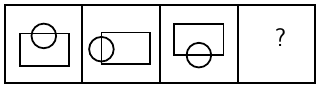
38

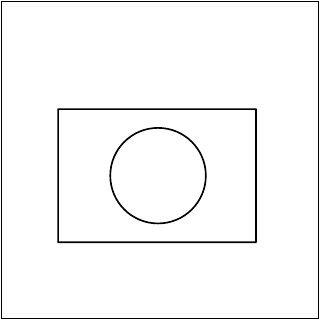
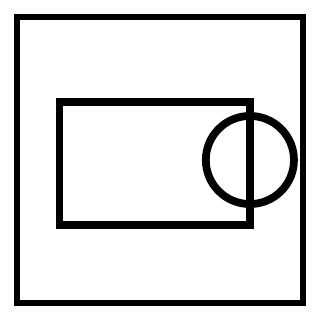
Identify the figure given in the options which when put in place of (?) will logically complete the series.

  1. ((a))

  2. ((b))

  3. ((c))

  4. ((d))

Show Answer
Answer: ((b))

Logic followed here is 

Logic: circle move on the side of the rectangle in anticlockwise direction.

Hence the correct answer is "Option 2"

39

T, U, V, W, X, and Y are sitting around a circular table facing the centre (but not necessarily in the same order). U is sitting third to the right of V, who is sitting second to the left of W. Y is not an immediate neighbour of U. T is sitting to the immediate left of V.

Who is sitting to the immediate left of T?

  1. ((a))

    W

  2. ((b))

    X

  3. ((c))

    U

  4. ((d))

    V

Show Answer
Answer: ((b))

X

Given, T, U, V, W, X, and Y are sitting around a circular table facing the centre (but not necessarily in the same order).

U is sitting third to the right of V, who is sitting second to the left of W.

Y is not an immediate neighbour of U.

T is sitting to the immediate left of V.

And X sits at the remaining place.

X is sitting to the immediate left of T.

Hence the correct answer is "Option 2"

40

Select the correct mirror image of the given figure when the mirror is placed at MN as shown below.

  1. ((a))

  2. ((b))

  3. ((c))

  4. ((d))

Show Answer
Answer: ((b))

Correct mirror image is,

Hence the correct answer is "Option 2"

Session 2 (50 questions)

41

How much money was allotted by the Gujarat government in August 2023 for the One District, One Product (ODOP) Programme to promote its indigenous products at the international level?

  1. ((a))

    ₹58 crore

  2. ((b))

    ₹10 crore

  3. ((c))

    ₹100 crore

  4. ((d))

    ₹25 crore

Show Answer
Answer: ((a))

₹58 crore

The correct answer is ₹58 crore.

Key Points

  • In August 2023, the Gujarat government allocated ₹58 crores for the One District, One Product (ODOP) programme to promote indigenous products at the international level.
  • The ODOP initiative aims to identify and promote unique products from each district, enhancing their market reach and economic potential.
  • Under this scheme, more than 25 handicraft products from 21 districts, including traditional crafts like Gamthi Block Print and Mata-ni-Pachedi, have been selected for promotion.
  • The Gujarat State Handicrafts and Handloom Development Corporation (GSHHDC) is responsible for implementing the ODOP scheme in the state.

Additional Information

  • One District, One Product (ODOP): A government initiative aimed at fostering balanced regional development by identifying and promoting unique products from each district.
  • Gujarat State Handicrafts and Handloom Development Corporation (GSHHDC): An organization dedicated to the development and promotion of handicrafts and handlooms in Gujarat.
  • Gamthi Block Print: A traditional hand-block printing technique from Gujarat, known for its intricate designs and vibrant colors.
  • Mata-ni-Pachedi: A traditional art form from Gujarat involving hand-painted or block-printed cloth used as a backdrop in temples.
  • International Promotion: The ODOP scheme includes strategies to enhance the global visibility and marketability of selected products through branding, exhibitions, and e-commerce platforms.
  • Economic Empowerment: By promoting district-specific products, the ODOP initiative aims to boost local economies, create employment opportunities, and preserve traditional crafts.
42

In the context of microfinance in India, the concept of SHG-BLP is used. What does L stand for in SHG-BLP?

  1. ((a))

    Lend

  2. ((b))

    Linkage

  3. ((c))

    Link

  4. ((d))

    Lending

Show Answer
Answer: ((b))

Linkage

The correct answer is Linkage.

Key Points

  • SHG-BLP stands for Self-Help Group - Bank Linkage Programme.
  • This programme was initiated by the NABARD (National Bank for Agriculture and Rural Development) in 1992.
  • The primary objective of the SHG-BLP is to provide financial services to the rural poor through the linkage of self-help groups with banks.
  • It aims to improve the socio-economic status of the rural poor, particularly women, by providing access to formal banking services.
  • The programme has been instrumental in promoting financial inclusion and empowering women across rural India.

Additional Information

  • NABARD
  • NABARD is the apex development bank in India with a mandate to facilitate credit flow for the promotion and development of agriculture, small-scale industries, cottage and village industries, handicrafts, and other rural crafts.
  • It was established on 12 July 1982 by an act of the Parliament.
  • NABARD's mission is to promote sustainable and equitable agriculture and rural development through participative financial and non-financial interventions, innovations, technology, and institutional development.
  • Self-Help Groups (SHGs)
  • SHGs are small voluntary associations of people, preferably from the same socio-economic background.
  • The primary aim is to promote savings and thrift among members and provide loans to meet their credit needs.
  • SHGs are usually formed around a common activity or purpose, such as farming, handicrafts, or small enterprises.
  • Financial Inclusion
  • Financial inclusion refers to the process of ensuring access to financial services and timely and adequate credit where needed by vulnerable groups such as weaker sections and low-income groups at an affordable cost.
  • It aims to address and offer solutions to the constraints that exclude people from participating in the financial sector.
  • Women Empowerment
  • The SHG-BLP has been particularly successful in empowering women by providing them with financial independence.
  • Women SHGs have contributed significantly to improving household incomes and community development.
43

In which among the following years was Hindu widow remarriage declared legal in India?

  1. ((a))

    1893

  2. ((b))

    1856

  3. ((c))

    1899

  4. ((d))

    1872

Show Answer
Answer: ((b))

1856

The correct answer is 1856.

Key Points

  • The Hindu Widows' Remarriage Act, 1856 was enacted on 26 July 1856.
  • The Act was formulated to legalize the remarriage of Hindu widows in India.
  • This legislation was a significant social reform during British rule in India.
  • It was largely advocated by social reformers such as Ishwar Chandra Vidyasagar.
  • The Act aimed to improve the condition of Hindu widows who were traditionally not allowed to remarry.

Additional Information

  • Ishwar Chandra Vidyasagar:
  • He was a prominent Indian educator and social reformer.
  • He played a crucial role in the enactment of the Hindu Widows' Remarriage Act, 1856.
  • His efforts were pivotal in challenging orthodox Hindu society and promoting widow remarriage.
  • The Hindu Widows' Remarriage Act, 1856:
  • The Act provided legal safeguards and rights to widows who chose to remarry.
  • It also annulled the stigma and social ostracism faced by widows for remarrying.
  • Social Impact:
  • The enactment of the Act marked a progressive step towards the modernization of Indian society.
  • It laid the foundation for further social reforms concerning women's rights in India.
  • British India's Social Reforms:
  • The 19th century saw several social reforms initiated under British rule, addressing various social issues.
  • These reforms included the abolition of Sati and the promotion of education among women.
44

Annapurna Devi is associated with which of the following musical instruments?

  1. ((a))

    Mridangam

  2. ((b))

    Flute

  3. ((c))

    Sarangi

  4. ((d))

    Surbahar

Show Answer
Answer: ((d))

Surbahar

The correct answer is Surbahar.

Key Points

  • Annapurna Devi was a renowned Indian classical musician known for her mastery of the Surbahar, a bass version of the sitar.
  • She was the daughter of Ustad Allauddin Khan, a legendary musician and founder of the Maihar Gharana.
  • Annapurna Devi was married to the famous sitar virtuoso Ravi Shankar.
  • Despite her immense talent, she performed publicly only on rare occasions, dedicating most of her life to teaching music.

Additional Information

  • Surbahar
  • Also known as the bass sitar, it produces a deeper and more resonant sound compared to the sitar.
  • It is primarily used for performing the dhrupad style of Indian classical music.
  • The Surbahar typically has a longer neck and larger gourd than the sitar.
  • Maihar Gharana
  • A prominent school of Indian classical music founded by Ustad Allauddin Khan.
  • It has produced several legendary musicians, including Ravi Shankar and Ali Akbar Khan.
  • Dhrupad
  • One of the oldest forms of North Indian classical music.
  • Characterized by its spiritual and meditative nature, it is often performed with the Surbahar.
  • Ustad Allauddin Khan
  • A legendary musician and founder of the Maihar Gharana.
  • He was a multi-instrumentalist and a highly respected guru.
45

Who regarded Vedas as the source of all knowledge and known for the slogan 'Go back to the Vedas'?

  1. ((a))

    Raja Rammohun Roy

  2. ((b))

    Swami Vivekananda

  3. ((c))

    Keshav Chandra sen

  4. ((d))

    Swami Dayananda Saraswati

Show Answer
Answer: ((d))

Swami Dayananda Saraswati

The correct answer is Swami Dayananda Saraswati.

Key Points

  • Swami Dayananda Saraswati was a social reformer and founder of the Arya Samaj, a Hindu reform movement.
  • He promoted the idea that the Vedas are the ultimate source of knowledge and called for a return to their teachings.
  • His famous slogan, "Go back to the Vedas," emphasized the revival of ancient Hindu wisdom and rejection of idol worship and superstitions.
  • He worked towards religious and social reforms, advocating for women's rights, education, and the abolition of caste-based discrimination.

Additional Information

  • Arya Samaj: Founded by Swami Dayananda in 1875, it aimed at reviving Vedic traditions and opposing rituals that were not found in the Vedas.
  • Rejection of Idol Worship: He strongly opposed idol worship, polytheism, and social evils, advocating monotheism based on the Vedas.
  • Education Reforms: He emphasized the importance of Vedic education and established several gurukuls to promote Sanskrit and Vedic learning.
  • Social Reforms: Swami Dayananda championed causes such as widow remarriage, women's education, and the abolition of untouchability.
  • Satyarth Prakash: His famous book, Satyarth Prakash, contained his interpretation of the Vedas and outlined his vision for religious and social reforms.
  • His teachings greatly influenced the Indian independence movement, inspiring leaders like Lala Lajpat Rai and other nationalists who saw his call for a return to Vedic values as a foundation for self-reliance and social unity.
46

Rigveda is the earliest specimen of:

  1. ((a))

    Indo-African language

  2. ((b))

    Indian language

  3. ((c))

    Russian language

  4. ((d))

    Indo European language

Show Answer
Answer: ((d))

Indo European language

The correct answer is Indo European language.

Key Points

  • The Rigveda is one of the oldest known texts composed in an early form of Sanskrit, an Indo-European language.
  • It dates back to around 1500-1200 BCE, making it one of the earliest specimens of the Indo-European language family.
  • The text was orally transmitted for many centuries before being written down, reflecting the linguistic and cultural practices of the Vedic civilization.
  • Sanskrit, the language of the Rigveda, is a classical language of India and has significantly influenced many modern Indo-European languages in the Indian subcontinent.

Additional Information

  • Indo-European Language Family
  • The Indo-European language family is one of the largest language families in the world, encompassing many languages spoken in Europe and South Asia.
  • This family includes languages such as English, Spanish, Russian, Hindi, and Bengali.
  • Languages in this family are believed to have descended from a common ancestral language known as Proto-Indo-European.
  • The study of Indo-European languages has been crucial in understanding the historical and cultural development of ancient civilizations.
  • Vedic Sanskrit
  • Vedic Sanskrit is an ancient language that predates Classical Sanskrit, and it is the language used in the Vedas, including the Rigveda.
  • It is characterized by its complex grammar and extensive use of inflection.
  • Vedic Sanskrit has significantly influenced the development of later Indian languages and literature.
  • The study of Vedic Sanskrit provides valuable insights into the early Indo-European linguistic and cultural heritage.
  • Rigveda
  • The Rigveda consists of 1,028 hymns and is divided into ten books called Mandalas.
  • It is primarily a collection of hymns dedicated to various deities, such as Agni, Indra, and Soma.
  • The Rigveda also contains philosophical discussions and reflections on the nature of the universe and human existence.
  • Its composition is attributed to ancient seers or rishis who composed the hymns through divine inspiration.
  • Historical Importance of the Rigveda
  • The Rigveda is a crucial source of information about the early Indo-European-speaking people who settled in the Indian subcontinent.
  • It provides insights into the social, religious, and economic life of the Vedic period.
  • Its hymns reflect the early forms of religious worship, rituals, and cosmology.
  • Scholars use the Rigveda to understand the linguistic, cultural, and historical evolution of ancient India.
47

What is the length of the men's kabaddi court?

  1. ((a))

    11 m

  2. ((b))

    15 m

  3. ((c))

    17 m

  4. ((d))

    13 m

Show Answer
Answer: ((d))

13 m

The correct answer is 13 m.

Key Points

  • The length of the men's kabaddi court is 13 meters.
  • The width of the men's kabaddi court is 10 meters.
  • These dimensions are specified by the International Kabaddi Federation (IKF).
  • The court is divided into two equal halves by a midline, each half measuring 6.5 meters by 10 meters.
  • The kabaddi court dimensions are the same for both indoor and outdoor play.

Additional Information

  • Kabaddi
  • It is a contact team sport that originated in ancient India.
  • Kabaddi is popular in South Asia and has gained international recognition.
  • The game involves two teams of seven players each, with the objective of scoring points by raiding the opponent's half and tagging as many defenders as possible without getting caught.
  • The sport requires a combination of strength, strategy, and agility.
  • Pro Kabaddi League (PKL)
  • It is a professional kabaddi league in India, founded in 2014.
  • The league follows a franchise-based model, similar to the Indian Premier League (IPL) in cricket.
  • PKL has significantly increased the popularity and viewership of kabaddi in India and around the world.
  • The league has helped in professionalizing the sport and providing a platform for talented players.
  • International Kabaddi Federation (IKF)
  • It is the global governing body for the sport of kabaddi.
  • IKF organizes international tournaments and works towards promoting and standardizing kabaddi worldwide.
  • The federation ensures that the rules and regulations of the sport are uniformly followed across member countries.
  • IKF also aims to include kabaddi in the Olympic Games in the future.
  • Asian Games
  • Kabaddi has been a part of the Asian Games since 1990.
  • India has been the most successful country in kabaddi at the Asian Games, winning multiple gold medals.
  • The inclusion of kabaddi in the Asian Games has helped in increasing its popularity across Asia.
  • Both men's and women's kabaddi competitions are held at the Asian Games.
48

Which of the given options is rod-shaped, carries genetic information, is visible only at cell division and is present in the nucleus?

  1. ((a))

    Chromosomes

  2. ((b))

    Lysosomes

  3. ((c))

    Ribosomes

  4. ((d))

    Cytoplasm

Show Answer
Answer: ((a))

Chromosomes

The correct answer is Chromosomes.

Key Points

  • Chromosomes are rod-shaped structures that are found in the nucleus of eukaryotic cells.
  • They carry genetic information in the form of genes, which are responsible for heredity and variations in living organisms.
  • Chromosomes are visible only during cell division, particularly in the metaphase stage of mitosis and meiosis.
  • Each chromosome is made up of DNA tightly coiled many times around proteins called histones that support its structure.
  • In humans, there are 23 pairs of chromosomes, totaling 46 chromosomes in each somatic cell.

Additional Information

  • DNA (Deoxyribonucleic Acid)
  • DNA is the hereditary material in humans and almost all other organisms.
  • Most DNA is located in the cell nucleus (nuclear DNA) and a small amount in mitochondria (mitochondrial DNA).
  • DNA is composed of two strands that coil around each other to form a double helix.
  • It carries the genetic instructions used in the growth, development, functioning, and reproduction of all known living organisms.
  • Histones
  • Histones are highly alkaline proteins found in eukaryotic cell nuclei.
  • They package and order the DNA into structural units called nucleosomes.
  • Histones play a role in gene regulation.
  • Cell Division
  • Cell division is the process by which a parent cell divides into two or more daughter cells.
  • Mitosis and meiosis are two types of cell division in eukaryotes.
  • Mitosis results in two identical daughter cells, while meiosis results in four genetically different daughter cells.
  • Genetic Variation
  • Genetic variation refers to the diversity in gene frequencies.
  • It can be caused by mutation, random mating, random fertilization, and recombination between homologous chromosomes during meiosis.
  • Genetic variation is crucial for a population's ability to adapt to changing environments.
49

Prerana Shrimali received the Sangeet Natak Akademi Award in which of the following years for her contribution to the Kathak dance form?

  1. ((a))

    2012

  2. ((b))

    2009

  3. ((c))

    2003

  4. ((d))

    2015

Show Answer
Answer: ((b))

2009

The correct answer is 2009.

Key Points

  • Prerana Shrimali is a renowned Kathak dancer recognized for her contributions to the classical dance form.
  • She received the Sangeet Natak Akademi Award in 2009 for her exceptional work in Kathak.
  • The Sangeet Natak Akademi Award is one of the highest Indian recognition given to practicing artists.
  • Prerana Shrimali has been instrumental in propagating and preserving the Kathak dance form through her performances and teachings.

Additional Information

  • Sangeet Natak Akademi
  • Established in 1952, it is the national academy for music, dance, and drama in India.
  • The Akademi honors artists with awards and fellowships for their outstanding contributions to their respective fields.
  • It plays a crucial role in the preservation, promotion, and development of the performing arts in India.
  • The Akademi also organizes various festivals, seminars, and exhibitions to showcase traditional and contemporary arts.
  • Kathak
  • One of the eight major classical dance forms of India.
  • Originated from the wandering bards of ancient northern India known as Kathakars or storytellers.
  • It is characterized by intricate footwork, spins, and expressive gestures and facial expressions.
  • Kathak has evolved over the centuries and incorporates elements from both Hindu and Muslim cultures.
  • Other notable Kathak dancers
  • Brijmohan Mishra (Birju Maharaj)
  • Shovana Narayan
  • Kumudini Lakhia
  • Maya Rao
  • Importance of Awards in Arts
  • Awards like the Sangeet Natak Akademi Award provide recognition and encouragement to artists.
  • They help in preserving and promoting traditional art forms.
  • Awards contribute to the cultural richness and heritage of a nation.
  • They also inspire the younger generation to pursue and excel in various art forms.
50

Which gas is released when you combine vinegar and baking soda in a balloon, causing it to inflate?

  1. ((a))

    Carbon dioxide

  2. ((b))

    Hydrogen

  3. ((c))

    Oxygen

  4. ((d))

    Nitrogen

Show Answer
Answer: ((a))

Carbon dioxide

The correct answer is Carbon dioxide.

Key Points

  • When vinegar (acetic acid) reacts with baking soda (sodium bicarbonate), it produces carbon dioxide gas.
  • This reaction is an example of an acid-base reaction, which results in the formation of a gas, water, and a salt (sodium acetate).
  • The carbon dioxide gas produced in the reaction gets trapped in the balloon, causing it to inflate.
  • The chemical equation for this reaction is: CH₃COOH + NaHCO₃ → CO₂ + H₂O + CH₃COONa.

Additional Information

  • Vinegar:
  • Vinegar is a dilute solution of acetic acid (CH₃COOH) in water.
  • It is commonly used in cooking, cleaning, and as a preservative.
  • Baking Soda:
  • Baking soda, or sodium bicarbonate (NaHCO₃), is a weak base.
  • It is used in baking as a leavening agent, in cleaning, and for medical purposes.
  • Carbon Dioxide (CO₂):
  • Carbon dioxide is a colorless, odorless gas that is naturally present in the Earth's atmosphere.
  • It is produced by the respiration of animals and the combustion of fossil fuels.
  • CO₂ is also used in carbonated beverages and as a refrigerant.
  • Acid-Base Reactions:
  • These reactions involve the reaction of an acid with a base to produce a salt and water.
  • Acid-base reactions are fundamental chemical reactions with wide applications in chemistry and industry.
51

From 13 September 2023, DMK MP Tiruchi Siva has been appointed the chairperson of the Committee on ____________

  1. ((a))

    Home

  2. ((b))

    Information Technology

  3. ((c))

    Transport

  4. ((d))

    Industry

Show Answer
Answer: ((d))

Industry

The correct answer is Industry.

Key Points

  • From 13 September 2023, DMK MP Tiruchi Siva has been appointed as the chairperson of the Committee on Industry.
  • The Committee on Industry is responsible for examining issues related to various industrial sectors in India.
  • The appointment of Tiruchi Siva aims to provide better oversight and strategic guidance for the industrial sector.
  • This committee plays a crucial role in reviewing industrial policies and making recommendations to the government.
  • It is one of the several parliamentary committees formed to scrutinize and oversee different sectors of governance and public administration.

Additional Information

  • Parliamentary Committees
  • Parliamentary committees are formed to handle the work of Parliament more efficiently and effectively.
  • They examine bills, budgets, and policies in detail and make recommendations.
  • Standing committees are permanent and divided into various categories such as finance, health, and industry.
  • Ad hoc committees are temporary and formed for specific tasks.
  • Role of the Committee on Industry
  • It scrutinizes the functioning of industrial units and suggests improvements.
  • It reviews the performance of public sector enterprises and their impact on the economy.
  • The committee assesses the implementation of industrial policies and their alignment with national goals.
  • It interacts with industry representatives to understand their challenges and opportunities.
  • Significance of Industrial Sector in India
  • The industrial sector is a major contributor to India's GDP.
  • It includes manufacturing, mining, construction, and utilities.
  • Industrial growth is critical for job creation and economic development.
  • Government policies like Make in India aim to boost industrial production and attract investments.
  • Recent Government Initiatives for Industry
  • Production Linked Incentive (PLI) schemes to boost manufacturing.
  • Ease of Doing Business reforms to simplify regulatory processes.
  • Infrastructure development to support industrial growth.
  • Special Economic Zones (SEZs) to promote exports and investment.
52

Which of the following Rights is mentioned in Article 21 of the Indian Constitution?

  1. ((a))

    Right to Freedom: Protection of life and personal liberty

  2. ((b))

    Right against Exploitation: Prohibition of trafficking in human beings and forced labour

  3. ((c))

    Right to Equality: Equality before law

  4. ((d))

    Right to Freedom of Religion: Freedom to manage religious affairs

Show Answer
Answer: ((a))

Right to Freedom: Protection of life and personal liberty

The correct answer is Right to Freedom: Protection of life and personal liberty.

Key Points

  • Article 21 of the Indian Constitution guarantees the Right to Protection of life and personal liberty to all citizens and non-citizens.
  • It states, "No person shall be deprived of his life or personal liberty except according to procedure established by law."
  • This article ensures that the State cannot take away a person's life or liberty arbitrarily without following due process of law.
  • It encompasses a wide range of rights, including the right to live with human dignity, right to privacy, and right to a healthy environment.

Additional Information

  • Right to Privacy
  • In the landmark judgment of Justice K.S. Puttaswamy (Retd.) vs Union of India (2017), the Supreme Court of India declared the right to privacy as a fundamental right under Article 21.
  • This judgment has significant implications for data protection and individual autonomy in India.
  • Right to a Healthy Environment
  • Article 21 has been interpreted by the judiciary to include the right to a pollution-free environment, which is essential for living a quality life.
  • Environmental protection and sustainability have been integrated into the right to life and personal liberty.
  • Right to Legal Aid
  • The right to free legal aid is considered an integral part of Article 21 to ensure that justice is accessible to all, irrespective of economic status.
  • The Legal Services Authorities Act, 1987, implements this right by providing free legal services to the weaker sections of society.
  • Right to Live with Human Dignity
  • The Supreme Court has expanded Article 21 to include the right to live with dignity, which encompasses adequate nutrition, clothing, shelter, and proper healthcare.
  • This broader interpretation aims at ensuring a decent standard of living for every individual.
53

The Sahitya Akademi award winning novel 'Zindaginama' was written by:

  1. ((a))

    Krishna Sobti

  2. ((b))

    Amrita Pritam

  3. ((c))

    Mahadevi Verma

  4. ((d))

    Mannu Bhandari

Show Answer
Answer: ((a))

Krishna Sobti

The correct answer is Krishna Sobti.

Key Points

  • Krishna Sobti was awarded the Sahitya Akademi Award in 1980 for her novel 'Zindaginama.'
  • 'Zindaginama' is considered one of her most significant works and portrays the socio-cultural landscape of rural Punjab.
  • Krishna Sobti is known for her profound impact on contemporary Hindi literature and her distinct narrative style.
  • She was also honored with the prestigious Jnanpith Award in 2017 for her contribution to Indian literature.

Additional Information

  • Sahitya Akademi Award
  • Established in 1954, it is a literary honor in India which recognizes outstanding books of literary merit.
  • The award is presented annually by the Sahitya Akademi, India's National Academy of Letters.
  • It covers works in 24 languages recognized by the Sahitya Akademi, including Hindi, English, and regional languages.
  • The award includes a plaque and a cash prize of Rs. 1,00,000.
  • Krishna Sobti's Literary Contributions
  • She wrote several acclaimed novels including 'Mitro Marjani,' 'Surajmukhi Andhere Ke,' and 'Samay Sargam.'
  • Her writing often explores themes of identity, gender, and the human condition.
  • Sobti's works are known for their rich linguistic texture and deep psychological insight.
  • Jnanpith Award
  • It is the highest literary honor in India, awarded annually by the Bharatiya Jnanpith.
  • Established in 1961, the award recognizes distinguished literary work in any of the languages included in the Eighth Schedule of the Indian Constitution.
  • Winners receive a cash prize, a citation plaque, and a bronze replica of Saraswati, the Hindu goddess of knowledge and arts.
  • Hindi Literature
  • Hindi literature comprises literary works written primarily in Hindi, a major language in India.
  • It includes various forms such as poetry, novels, short stories, and plays.
  • Notable Hindi literary figures include Premchand, Mahadevi Verma, Harivansh Rai Bachchan, and Nirmal Verma.
54

Who among the following is worshipped as Nataraja before many classical dance performances in India?

  1. ((a))

    Indra

  2. ((b))

    Vishnu

  3. ((c))

    Brahma

  4. ((d))

    Shiva

Show Answer
Answer: ((d))

Shiva

The correct answer is Shiva.

Key Points

  • Shiva, known as Nataraja, is worshipped as the divine cosmic dancer before many classical dance performances in India.
  • The term Nataraja translates to "King of Dance" (nata meaning dance, and raja meaning king).
  • The Nataraja form of Shiva is depicted with four arms, dancing within a circle of flames, symbolizing the cosmic cycles of creation and destruction.
  • Shiva's dance represents the dynamic and rhythmic movement of the universe and is an important motif in Indian arts and culture.
  • Classical dance forms like Bharatanatyam and Odissi often begin with an invocation to Nataraja, seeking blessings for a successful performance.

Additional Information

  • Iconography of Nataraja
  • The Nataraja statue typically shows Shiva dancing on the demon Apasmara, symbolizing the triumph over ignorance.
  • His upper right hand holds a drum (damaru), representing the sound of creation.
  • The upper left hand holds fire, symbolizing destruction and transformation.
  • His lower right hand is in the abhaya mudra, meaning protection and assurance.
  • The lower left hand points to his raised left foot, signifying liberation and salvation.
  • Historical Significance
  • The concept of Nataraja dates back to the Chola dynasty (9th to 13th century CE) in South India, where it became a central icon of the Chola art.
  • Bronze sculptures of Nataraja from this period are considered masterpieces of Indian art.
  • The Chidambaram Temple in Tamil Nadu is one of the most famous temples dedicated to Nataraja.
  • Philosophical Interpretations
  • Shiva's dance is seen as a symbol of the cosmic cycles of creation, preservation, and dissolution.
  • It also represents the five activities (panchakritya): creation (srishti), preservation (sthiti), destruction (samhara), concealment (tirodhana), and grace (anugraha).
  • The dance is also a metaphor for the inner dance of the human soul and the divine.
  • Role in Indian Classical Dance
  • Invoking Nataraja is a tradition in many classical dance forms like Bharatanatyam, Kathak, and Odissi.
  • This invocation is meant to seek the deity's blessings for the success and sanctity of the performance.
  • It also highlights the spiritual aspect of dance, viewing it as a divine art form.
55

The famous 'Tripartite struggle' for supremacy occurred between which of the following powers?

  1. ((a))

    Sen, Pala and Rashtrakuta

  2. ((b))

    Chalukya, Sen and Prathars

  3. ((c))

    Chouhan, Pala and Gurjar

  4. ((d))

    Gurjar-Pratihara, Rashtrakuta and Palas

Show Answer
Answer: ((d))

Gurjar-Pratihara, Rashtrakuta and Palas

The correct answer is Gurjar-Pratihara, Rashtrakuta and Palas.

Key Points

  • The Tripartite Struggle was a prolonged conflict during the 8th to 10th centuries.
  • It involved three major dynasties: the Gurjar-Pratiharas, the Rashtrakutas, and the Palas.
  • The main objective of this struggle was to gain control over the fertile region of Kannauj.
  • Kannauj was a significant cultural and political center during this period.
  • The struggle significantly impacted the political landscape of Northern and Central India.

Additional Information

  • Gurjar-Pratihara Dynasty
  • The Gurjar-Pratiharas were known for their strong defense against Arab invasions in Western India.
  • Their capital was initially at Ujjain and later at Kannauj.
  • The dynasty reached its zenith under the rule of Mihira Bhoja.
  • Rashtrakuta Dynasty
  • The Rashtrakutas were a prominent dynasty in the Deccan region with their capital at Manyakheta.
  • They are known for their patronage of art and architecture, including the famous Ellora caves.
  • Their rule extended over large parts of South and Central India.
  • Pala Dynasty
  • The Palas ruled over the Bengal region and were known for their contribution to Buddhism.
  • They established the famous Vikramashila and Nalanda universities.
  • The dynasty was founded by Gopala in the 8th century.
  • Kannauj
  • Kannauj, located in present-day Uttar Pradesh, was a significant city in ancient India.
  • It was strategically important due to its location on the Ganges river and fertile lands.
  • Control over Kannauj was crucial for political supremacy in Northern India.
56

Four resistors of equal resistance R each are connected in various possible ways both in series and/or parallel to get different combined resistances. Which of the following values of resistance cannot be achieved by using all the four resistors?

  1. ((a))

    0.25 R

  2. ((b))

    1.33 R

  3. ((c))

    2 R

  4. ((d))

    2.5 R

Show Answer
Answer: ((c))

2 R

The correct answer is 2 R.

Key Points

  • Four equal resistors (R) can be connected in series or parallel to achieve specific resistance values.
  • In a series connection, the total resistance (R_total) is the sum of individual resistances: R_total = R + R + R + R = 4R.
  • In a parallel connection, the total resistance (R_total) is given by 1/R_total = 1/R + 1/R + 1/R + 1/R = 1/0.25R = 0.25R.
  • Combinations of series and parallel connections can yield intermediate resistance values, but 2R cannot be achieved.

Additional Information

  • Series Circuit:
  • Resistors are connected end-to-end, and the current flows through each resistor sequentially.
  • The total resistance is the sum of all individual resistances.
  • Suitable for applications where the same current needs to pass through each component.
  • Parallel Circuit:
  • Resistors are connected across the same two points, creating multiple paths for the current.
  • The total resistance is lower than the smallest individual resistance in the circuit.
  • Used in electrical wiring to ensure that each component operates independently of others.
  • Combination Circuits:
  • Involves both series and parallel connections within the same circuit.
  • Allows for more complex resistance values and control over current distribution.
  • Used in advanced electronic devices and complex electrical systems.
  • Ohm's Law:
  • States that the current (I) through a conductor between two points is directly proportional to the voltage (V) across the two points and inversely proportional to the resistance (R).
  • Mathematically represented as V = IR.
  • Fundamental to understanding and calculating values in electrical circuits.
57

The remains of Great Bath have been found from the excavation at which of the following Harappan sites?

  1. ((a))

    Kalibangan

  2. ((b))

    Lothal

  3. ((c))

    Harappa

  4. ((d))

    Mohenjodaro

Show Answer
Answer: ((d))

Mohenjodaro

The correct answer is Mohenjodaro.

Key Points

  • The Great Bath was discovered at the archaeological site of Mohenjodaro, one of the most prominent sites of the Indus Valley Civilization.
  • Mohenjodaro is located in the Sindh province of present-day Pakistan.
  • The Great Bath is one of the best-known structures among the ruins of Mohenjodaro and is believed to have been used for ritualistic purposes.
  • This structure measures approximately 12 meters long, 7 meters wide, and 2.4 meters deep and is made of baked bricks.
  • The Great Bath is an early example of public water management and intricate hydraulic engineering.

Additional Information

  • Indus Valley Civilization
  • Also known as the Harappan Civilization, it flourished around 2500 BCE in the northwestern regions of South Asia.
  • It is noted for its advanced urban planning, architecture, and social organization.
  • Key sites include Harappa, Mohenjodaro, Dholavira, and Lothal.
  • Mohenjodaro
  • It was one of the largest cities of the Indus Valley Civilization and a UNESCO World Heritage site.
  • The city featured a well-planned grid layout, advanced drainage system, and standardized brick sizes.
  • Mohenjodaro means "Mound of the Dead" in Sindhi.
  • Great Bath
  • It is considered one of the earliest public water tanks in the ancient world.
  • The structure had a layer of natural bitumen to make it waterproof.
  • Steps at either end of the bath indicate that it was used for ceremonial bathing.
  • Excavation of Mohenjodaro
  • The site was first discovered by R. D. Banerji in 1922.
  • Subsequent excavations were carried out by John Marshall, Ernest Mackay, and others.
  • Excavations revealed a wealth of artifacts including pottery, tools, and seals.
58

As per HDI 2021, which of the following neighbouring countries of India had the highest female life expectancy at birth?

  1. ((a))

    Bangladesh

  2. ((b))

    Maldives

  3. ((c))

    Sri Lanka

  4. ((d))

    Bhutan

Show Answer
Answer: ((b))

Maldives

The correct answer is Maldives.

Key Points

  • As per the Human Development Index (HDI) 2021, Maldives had the highest female life expectancy at birth among India's neighboring countries.
  • Female life expectancy at birth in the Maldives was approximately 80.3 years in 2021.
  • The HDI report is published by the United Nations Development Programme (UNDP).
  • Life expectancy at birth is a key component of the HDI, reflecting the overall health and longevity of a population.

Additional Information

  • Human Development Index (HDI)
  • The HDI is a composite index measuring average achievement in three basic dimensions of human development: a long and healthy life, knowledge, and a decent standard of living.
  • The HDI is published annually by the United Nations Development Programme (UNDP).
  • Life expectancy at birth is used to measure the dimension of a long and healthy life.
  • Education is measured by mean years of schooling and expected years of schooling.
  • Gross National Income (GNI) per capita is used to measure the standard of living dimension.
  • Life Expectancy at Birth
  • Life expectancy at birth indicates the number of years a newborn infant would live if prevailing patterns of mortality at the time of birth were to stay the same throughout its life.
  • It is a crucial indicator of the overall health and longevity of a population.
  • Factors influencing life expectancy include healthcare quality, lifestyle, and socio-economic conditions.
  • Health Indicators in Maldives
  • Maldives has made significant progress in healthcare, resulting in high life expectancy rates.
  • Key health indicators include low maternal and infant mortality rates, and high immunization coverage.
  • The Maldives government has invested substantially in healthcare infrastructure and services.
59

What is the retirement age of Judges serving at the Supreme Court of India?

  1. ((a))

    68 years

  2. ((b))

    60 years

  3. ((c))

    65 years

  4. ((d))

    62 years

Show Answer
Answer: ((c))

65 years

The correct answer is 65 years.

Key Points

  • The retirement age of Judges serving at the Supreme Court of India is 65 years.
  • This age limit is established to ensure a balance between experience and the need for fresh perspectives.
  • Judges of the Supreme Court are appointed until they reach the age of 65, as per the Constitution of India.
  • After retirement, former Supreme Court judges may be appointed to other judicial roles, such as in tribunals or commissions.

Additional Information

  • Constitutional Provisions:
  • Article 124 of the Indian Constitution deals with the establishment and constitution of the Supreme Court.
  • Article 124(2) specifies that every Judge of the Supreme Court shall hold office until they attain the age of 65 years.
  • Appointment of Judges:
  • Supreme Court judges are appointed by the President of India.
  • The Chief Justice of India is appointed based on seniority and consultation with other judges of the Supreme Court and High Courts.
  • Post-Retirement Roles:
  • Retired judges may be appointed to various commissions, tribunals, or as heads of inquiry committees.
  • They may also serve as arbitrators in legal disputes.
  • Comparison with High Court Judges:
  • High Court judges in India retire at the age of 62.
  • This difference in retirement age helps to maintain a pool of experienced judges who may be elevated to the Supreme Court.
60

According to the Ministry of Agriculture and Farmers Welfare 2022-23, which state of India is the largest producer of sugarcane?

  1. ((a))

    Karnataka

  2. ((b))

    Uttar Pradesh

  3. ((c))

    Andhra Pradesh

  4. ((d))

    Bihar

Show Answer
Answer: ((b))

Uttar Pradesh

The correct answer is Uttar Pradesh.

Key Points

  • Uttar Pradesh is the largest producer of sugarcane in India, according to the Ministry of Agriculture and Farmers Welfare 2022-23.
  • It contributes approximately 38% of the total sugarcane production in the country.
  • The state has a favorable climate and fertile soil, which are ideal for sugarcane cultivation.
  • The major sugarcane-producing regions in Uttar Pradesh include Western and Central parts of the state.
  • Uttar Pradesh also has a significant number of sugar mills, aiding in the production and processing of sugarcane.

Additional Information

  • Sugarcane Varieties
  • Different varieties of sugarcane are grown in India, including Co 0238, Co 86032, and Co 0118, which are known for their high yield and sugar content.
  • These varieties are developed by various agricultural research institutes to improve productivity and disease resistance.
  • Sugarcane By-products
  • By-products of sugarcane include molasses, bagasse, and press mud.
  • Molasses is used in the production of ethanol, bagasse is used as a biofuel, and press mud is used as a soil amendment.
  • Sugarcane Processing
  • Sugarcane processing involves crushing the cane to extract juice, which is then boiled to produce sugar crystals.
  • The process also involves clarification, evaporation, crystallization, and centrifugation.
  • Economic Impact
  • Sugarcane farming is a significant source of income for millions of farmers in India.
  • The sugar industry contributes substantially to the rural economy and employment.
  • Government Initiatives
  • The Indian government supports sugarcane farmers through various schemes, including subsidies and minimum support prices.
  • Research and development initiatives are undertaken to improve crop yield and sustainability.
61

Which of the following peaks is NOT located in the Himalayan mountains?

  1. ((a))

    Nanda Devi

  2. ((b))

    Kamet

  3. ((c))

    Annapurna

  4. ((d))

    Kalsubai

Show Answer
Answer: ((d))

Kalsubai

The correct answer is Kalsubai.

Key Points

  • Kalsubai is the highest peak in Maharashtra, located in the Western Ghats.
  • It is not a part of the Himalayan mountain range.
  • The peak stands at an elevation of 1,646 meters (5,400 feet) above sea level.
  • Kalsubai is situated in the Ahmednagar district and is a popular trekking destination.
  • The other peaks listed (Nanda Devi, Kamet, and Annapurna) are all located in the Himalayan mountains.

Additional Information

  • Nanda Devi
  • It is the second highest mountain in India, located in the Garhwal Himalayas in the state of Uttarakhand.
  • It stands at an elevation of 7,816 meters (25,643 feet).
  • Nanda Devi is part of the Nanda Devi National Park, which is a UNESCO World Heritage Site.
  • Kamet
  • Kamet is the second highest mountain in the Garhwal region of Uttarakhand, India.
  • It has an elevation of 7,756 meters (25,446 feet).
  • Kamet is part of the Zanskar Range in the Himalayas.
  • Annapurna
  • Annapurna is a mountain massif in the Himalayas located in north-central Nepal.
  • It includes one peak over 8,000 meters—Annapurna I Main, which stands at 8,091 meters (26,545 feet).
  • The Annapurna Conservation Area is the largest protected area in Nepal.
62

Chithirai festival of Tamil Nadu is dedicated to which of the following Goddesses?

  1. ((a))

    Pidari

  2. ((b))

    Mariamman

  3. ((c))

    Meenakshi

  4. ((d))

    Muneeswaran

Show Answer
Answer: ((c))

Meenakshi

The correct answer is Meenakshi.

Key Points

  • The Chithirai festival, also known as Chithirai Thiruvizha, is one of the biggest and most significant festivals in Tamil Nadu.
  • This festival is dedicated to Goddess Meenakshi, an avatar of Goddess Parvati, and her celestial wedding to Lord Sundareswarar (an incarnation of Lord Shiva).
  • The festival is celebrated annually in the Tamil month of Chithirai (April-May) in the city of Madurai, which is home to the famous Meenakshi Amman Temple.
  • The Chithirai festival spans over a month, with the first 15 days dedicated to Goddess Meenakshi's coronation and wedding, followed by the celebration of Lord Alagar's (Vishnu) journey from Alagar Koyil to Madurai.

Additional Information

  • Meenakshi Amman Temple
  • The Meenakshi Amman Temple is one of the most famous temples in India, known for its remarkable architecture and historical significance.
  • The temple complex is spread over 14 acres and has 14 gopurams (gateway towers), the tallest being 170 feet.
  • The temple is a major pilgrimage destination and attracts millions of devotees and tourists annually.
  • Goddess Meenakshi
  • Goddess Meenakshi is considered an incarnation of Goddess Parvati and is worshipped as the divine queen of Madurai.
  • She is often depicted with a parrot in her right hand and a sword in her left hand, symbolizing wisdom and valor.
  • Chithirai Festival Celebrations
  • The festival includes various rituals, processions, and cultural events, making it a vibrant and colorful celebration.
  • Key events include the coronation of Goddess Meenakshi, her wedding ceremony, and the grand procession of Lord Alagar.
  • Historical Significance
  • The Chithirai festival has been celebrated for centuries and is deeply rooted in the cultural and religious traditions of Tamil Nadu.
  • It promotes the unity and cultural heritage of the region, bringing together people from different backgrounds to participate in the festivities.
63

India won its first Olympic gold in hockey in which of the following years?

  1. ((a))

    1936

  2. ((b))

    1940

  3. ((c))

    1932

  4. ((d))

    1928

Show Answer
Answer: ((d))

1928

The correct answer is 1928.

Key Points

  • India won its first Olympic gold medal in hockey at the 1928 Amsterdam Olympics.
  • The Indian hockey team defeated the Netherlands with a score of 3-0 in the final match.
  • The legendary player Dhyan Chand was a key member of the team, scoring two goals in the final.
  • India remained unbeaten throughout the tournament, showcasing their dominance in the sport.

Additional Information

  • Dhyan Chand
  • Known as the "Wizard" or "Magician" of hockey for his exceptional ball control and goal-scoring ability.
  • Dhyan Chand played a pivotal role in India's three consecutive Olympic gold medals in 1928, 1932, and 1936.
  • His birthday, 29th August, is celebrated as National Sports Day in India.
  • Field Hockey at the Olympics
  • Field hockey has been a part of the Summer Olympic Games since 1908 for men and 1980 for women.
  • India has won a total of 8 gold medals in men's field hockey, the highest by any team in the history of the Olympics.
  • Hockey India
  • Hockey India is the governing body for field hockey in India.
  • It was formed in 2009 and is affiliated with the International Hockey Federation (FIH).
  • Olympic Games
  • The Olympic Games are an international multi-sport event held every four years.
  • The modern Olympics were first held in 1896 in Athens, Greece, inspired by the ancient Olympic Games held in Olympia, Greece.
64

The National Food Security Act (NFSA) was enacted in which year by the Government of India?

  1. ((a))

    2013

  2. ((b))

    2001

  3. ((c))

    2008

  4. ((d))

    2005

Show Answer
Answer: ((a))

2013

The correct answer is 2013.

Key Points

  • The National Food Security Act (NFSA) was enacted on 10 September 2013 by the Government of India.
  • NFSA aims to provide subsidized food grains to approximately two-thirds of India's 1.2 billion people.
  • Under the NFSA, beneficiaries are entitled to 5 kilograms of food grains per person per month at subsidized prices.
  • The Act covers up to 75% of the rural population and 50% of the urban population under the targeted public distribution system (TPDS).
  • The identification of eligible households is done by the state governments, while the central government allocates food grains.

Additional Information

  • Objectives of NFSA
  • To provide food and nutritional security by ensuring access to adequate quantity of quality food at affordable prices.
  • To ensure that the most vulnerable sections of the society receive food security.
  • Key Components
  • Subsidized Food Grains: Rice at ₹3 per kg, wheat at ₹2 per kg, and coarse grains at ₹1 per kg.
  • Antyodaya Anna Yojana (AAY): Provides 35 kg of food grains per month to the poorest of the poor households.
  • Mid-Day Meal Scheme: Provides meals to school children to improve nutritional levels.
  • Implementation Challenges
  • Identification of eligible beneficiaries remains a critical challenge.
  • Leakages and inefficiencies in the public distribution system (PDS) affect the delivery of benefits.
  • State Involvement
  • State governments are responsible for the identification of households, issuing ration cards, and ensuring delivery of food grains.
  • States have the flexibility to implement their own additional food security schemes.
65

Gabbro is an example of which type of rocks?

  1. ((a))

    Igneous rock

  2. ((b))

    Organically formed sedimentary rock

  3. ((c))

    Sedimentary rock

  4. ((d))

    Metamorphic rock

Show Answer
Answer: ((a))

Igneous rock

The correct answer is Igneous rock.

Key Points

  • Gabbro is an example of an intrusive igneous rock.
  • It is formed from the slow cooling of magma beneath the Earth's surface.
  • Gabbro is coarse-grained and primarily composed of minerals such as pyroxene, plagioclase feldspar, and olivine.
  • This type of rock is commonly found in the oceanic crust.
  • Gabbro is often used in the construction industry due to its durability and strength.

Additional Information

  • Igneous Rocks
  • Formed through the cooling and solidification of magma or lava.
  • Classified into two main types: intrusive (plutonic) and extrusive (volcanic).
  • Common examples include basalt (extrusive) and granite (intrusive).
  • Sedimentary Rocks
  • Formed from the accumulation of sediments.
  • Often contain fossils and are typically found in layers.
  • Examples include sandstone, shale, and limestone.
  • Metamorphic Rocks
  • Formed from the transformation of existing rock types due to heat, pressure, and chemical processes.
  • Examples include marble (from limestone) and schist (from shale).
  • Metamorphic rocks can exhibit foliation or banding.
  • Organically Formed Sedimentary Rocks
  • Formed from the accumulation of plant or animal debris.
  • Examples include coal (from plant material) and limestone (from shell fragments).
  • These rocks provide valuable information about Earth's past environments.
66

Parts of the following sentence have been given as options. Select the option that contains an error.

My sister-in-law is the most succeeded for all the industrialists in this country today.

  1. ((a))

    in this country today

  2. ((b))

    My sister-in-law is the most

  3. ((c))

    the industrialists

  4. ((d))

    succeeded for all

Show Answer
Answer: ((d))

succeeded for all

The correct answer is Option 4.


Key Points

  • The primary issue in the sentence is the incorrect use of the word "succeeded".
  • The term "succeeded" should be replaced with "successful" to correctly convey the intended meaning.
  • The correct phrase should be "the most successful of all," ensuring grammatical correctness and clarity.
  • Thus, the error is located in Option 4 of the sentence.

Therefore, the correct answer is Option 4.


Correct Sentence: "My sister-in-law is the most successful of all the industrialists in this country today."


Additional Information

  • Option 1: "in this country today," – This part of the sentence is grammatically correct and does not require any changes.
  • Option 2: "My sister-in-law is the most," – This part of the sentence is grammatically correct and does not require any changes.
  • Option 3: "the industrialists," – This part of the sentence is grammatically correct and does not require any changes.
  • No error – This would be the correct option if there were no mistakes in the sentence, but there is an error in Option 4.
67

Select the most appropriate synonym of the given word.

Panacea

  1. ((a))

    Survey

  2. ((b))

    Remedy

  3. ((c))

    Pressure

  4. ((d))

    Miracle

Show Answer
Answer: ((b))

Remedy

The correct answer is: Option 2.

Key Points

  • The word "panacea" means a solution or remedy for all difficulties or diseases. (सर्वरोगहारी औषधि)
  • Example: Some people believe that technology is a panacea for all problems facing humanity.
  • "Remedy" refers to a medicine or treatment for a disease or injury, or a means of counteracting or eliminating something undesirable. (उपाय)
  • Example: The doctor prescribed a remedy for the patient's chronic headaches.

Therefore, the correct answer is: Option 2.

Additional Information

Here are the other options explained along with their Hindi meanings and example sentences:

  • Survey (सर्वेक्षण): A general view, examination, or description of someone or something.
  • Example: The company conducted a survey to understand customer satisfaction.
  • Pressure (दबाव): Continuous physical force exerted on or against an object by something in contact with it.
  • Example: The pressure of the water against the dam was immense.
  • Miracle (चमत्कार): An extraordinary and welcome event that is not explicable by natural or scientific laws and is therefore attributed to a divine agency.
  • Example: The recovery of the patient was nothing short of a miracle.
68

The following sentence has been split into four segments. Identify the segment that contains a grammatical error.

<br>

I hope that / yesterday's lunch / at Rahul's place / was at your liking.

  1. ((a))

    I hope that

  2. ((b))

    at Rahul's place

  3. ((c))

    was at your liking.

  4. ((d))

    yesterday's lunch

Show Answer
Answer: ((c))

was at your liking.

The correct answer is Option 3.


Key Points

  • The primary issue in the sentence is the incorrect phrase "at your liking."
  • The correct phrase should be "to your liking," ensuring grammatical correctness and clarity.
  • Thus, the error is located in part 3 of the sentence.

Therefore, the correct answer is 3.


Correct Sentence: "I hope that yesterday's lunch at Rahul's place was to your liking."


Additional Information

  • 1: "I hope that" – This part of the sentence is grammatically correct and does not require any changes.
  • 2: "yesterday's lunch" – This part of the sentence is grammatically correct and does not require any changes.
  • 4: "at Rahul's place" – This part of the sentence is grammatically correct and does not require any changes.
  • No error – This would be the correct option if there were no mistakes in the sentence, but there is an error in part 3.
69

Select the most appropriate synonym of the underlined word in the given sentence.

The lenient ways of the manager prompted substandard work from his subordinates.

  1. ((a))

    ignorant

  2. ((b))

    easygoing

  3. ((c))

    irritating

  4. ((d))

    insane

Show Answer
Answer: ((b))

easygoing

The correct answer is: Option 2 i.e. easygoing.

Key Points

  • The word "lenient" means permissive, merciful, or tolerant. (उदार)
  • Example: The teacher was lenient with her students and allowed them extra time to complete their assignments.
  • "Easygoing" refers to a relaxed and tolerant attitude, not strict or demanding. (आसान)
  • Example: He has an easygoing nature, which makes him a favorite among his friends.
  • Hence, we can infer that the synonym of 'lenient' is 'easygoing'.

Therefore, the correct answer is: Option 2 i.e. easygoing.

Additional Information

Here are the other options explained along with their Hindi meanings and example sentences:

  • Ignorant (अज्ञानी): Lacking knowledge, awareness, or information.
  • Example: He remained ignorant of the issues affecting his community.
  • Irritating (परेशान करने वाला): Causing annoyance or discomfort.
  • Example: The constant noise from the construction site was very irritating.
  • Insane (पागल): In a state of mind that prevents normal perception, behavior, or social interaction; seriously mentally ill.
  • Example: The idea seemed insane, but it worked perfectly in the end.
70

Select the INCORRECTLY spelt word.

  1. ((a))

    Addict

  2. ((b))

    Crazy

  3. ((c))

    Medicin

  4. ((d))

    Eighty

Show Answer
Answer: ((c))

Medicin

The correct answer is Option 3.


Key Points

  • The word "Medicin" is incorrectly spelt.
  • The correct spelling should be "Medicine".
  • All other words in the list are spelt correctly.

Therefore, the correct answer is Option 3.


Correct Spelling: "Medicine"


Additional Information

  • Addict: – This word is correctly spelt and means a person who is addicted to a particular substance or activity.
  • Crazy: – This word is correctly spelt and means mentally deranged, especially as manifested in a wild or aggressive way.
  • Eighty: – This word is correctly spelt and is the number equivalent to the product of eight and ten.
71

Select the appropriate option that can substitute the underlined idiom in the given sentence.

<br>

Everyone says that waking up early in the morning is beneficial for our health and overall well-being. But it is easier said than done.

  1. ((a))

    a life filled with excitement

  2. ((b))

    a step towards better health

  3. ((c))

    to start performing better than before

  4. ((d))

    not as easy as it seems to be

Show Answer
Answer: ((d))

not as easy as it seems to be

The correct answer is: Option 4.

Key Points

  • The idiom "easier said than done" means something that is not as easy as it seems to be. (कहना आसान है करना मुश्किल)
  • Example: Quitting smoking is easier said than done; many people struggle to give up the habit.
  • "Not as easy as it seems to be" means something that appears simple but is actually difficult to achieve or accomplish. (जितना आसान लगता है उतना नहीं है)
  • Example: Losing weight might seem straightforward, but it is not as easy as it seems to be.

Therefore, the correct answer is: Option 4.

Additional Information

Here are the other options explained along with their Hindi meanings and example sentences:

  • Option 1: A life filled with excitement (रोमांच से भरी जिंदगी): Refers to a lifestyle that is full of thrilling and adventurous experiences.
  • Example: He dreams of a life filled with excitement, traveling around the world and experiencing new cultures.
  • Option 2: A step towards better health (बेहतर स्वास्थ्य की ओर एक कदम): Refers to an action taken to improve one's health.
  • Example: Incorporating a balanced diet and regular exercise is a step towards better health.
  • Option 3: To start performing better than before (पहले से बेहतर प्रदर्शन करने लगना): Refers to improving one's performance compared to previous attempts.
  • Example: After months of practice, he started performing better than before in his piano recitals.
72

Select the most appropriate synonym of the underlined word.

The management gave kudos to Jithin for his performance.

  1. ((a))

    praise

  2. ((b))

    criticism

  3. ((c))

    punishment

  4. ((d))

    admonishment

Show Answer
Answer: ((a))

praise

The correct answer is: Option 1 i.e. praise.

Key Points

  • The word "kudos" means praise and honor received for an achievement. (प्रशंसा)
  • Example: She received kudos from her colleagues for her outstanding presentation.
  • "Praise" refers to the expression of approval or admiration for someone or something. (प्रशंसा)
  • Example: The teacher gave praise to the student for his hard work and dedication.
  • Hence, the synonym of "kudos" is "praise".

Therefore, the correct answer is: Option 1 i.e. praise.

Additional Information

Here are the other options explained along with their Hindi meanings and example sentences:

  • Criticism (आलोचना): The expression of disapproval of someone or something based on perceived faults or mistakes.
  • Example: The movie received a lot of criticism for its weak plot.
  • Punishment (सजा): The infliction or imposition of a penalty as retribution for an offense.
  • Example: He received punishment for breaking the rules.
  • Admonishment (डांटना): To reprove or scold someone gently.
  • Example: She received an admonishment from her boss for being late.
73

Select the most appropriate option that can substitute the underlined segment in the given sentence. If there is no need to substitute it, select "No substitution required".

<br>

The White man had to swallow his bombast and have completed the journey in mortified.

  1. ((a))

    complete the journey in mortification

  2. ((b))

    No substitution required

  3. ((c))

    completing the mortifying journey

  4. ((d))

    completes the journey mortifying

Show Answer
Answer: ((a))

complete the journey in mortification

The correct answer is '1' i.e. complete the journey in mortification .

Key Points

  • The given sentence describes a past scenario where the White man had to suppress his arrogance ("swallow his bombast").
  • The underlined segment "have completed the journey in mortified" is incorrect and needs to be replaced for proper grammatical and contextual meaning.
  • Option 1, "complete the journey in mortification," corrects the verb form and uses the appropriate noun "mortification" instead of "mortified" (which should be an adjective).
  • Thus, the correct substitutable option is option 1.

Correct sentence: The White man had to swallow his bombast and complete the journey in mortification.

74

Select the most appropriate synonym of the given word.

Hamper

  1. ((a))

    Urge

  2. ((b))

    Hinder

  3. ((c))

    Accuse

  4. ((d))

    Absorb

Show Answer
Answer: ((b))

Hinder

The correct answer is: Hinder.

Key Points

  • The word "hamper" means to obstruct or make it difficult for someone to do something or for something to happen. (बाधा डालना)
  • Example: The heavy snowfall hampered our journey to the mountains.
  • "Hinder" refers to creating difficulties for someone or something that results in delay or obstruction. (रोकना)
  • Example: His injury hindered his ability to play in the match.

Therefore, the correct answer is: Hinder.

Additional Information

Here are the other options explained along with their Hindi meanings and example sentences:

  • Urge (प्रेरित करना): Strongly recommend or encourage someone to do something.
  • Example: The teacher urged the students to participate in the competition.
  • Accuse (आरोप लगाना ): Claim that someone has done something wrong or illegal.
  • Example: She accused him of stealing her bag.
  • Absorb (अवशोषित करना): Take in or soak up a substance or information.
  • Example: Plants absorb carbon dioxide and release oxygen.
75

Select the most appropriate option to fill in the blank.

During the meeting, the employer's ________ was clear as he calmly addressed each team member's concerns and provided insightful solutions.

  1. ((a))

    composes

  2. ((b))

    compose

  3. ((c))

    composure

  4. ((d))

    composed

Show Answer
Answer: ((c))

composure

The correct answer is Option 3.


Key Points

  • The noun "composure" is the most appropriate word to fill in the blank as it refers to the state of being calm and in control, which fits the context of the sentence.
  • The other options (compounds, compose, composed) do not fit grammatically or contextually in this sentence.

Therefore, the correct answer is Option 3.


Additional Information

  • Compounds: This is incorrect as it is a noun referring to a mixture of two or more elements or a verb meaning to make something worse.
  • Compose: This is incorrect as it is a verb meaning to write or create something.
  • Composed: This is incorrect as it is an adjective meaning calm or a verb in past tense form of 'compose'.
76

Select the most appropriate option to fill in the blank.

The new intern was eager to learn the _______ of the corporate world.

  1. ((a))

    rides

  2. ((b))

    tides

  3. ((c))

    flies

  4. ((d))

    ropes

Show Answer
Answer: ((d))

ropes

The correct answer is Option 4.


Key Points

  • The phrase "learn the ropes" means to learn how to do a particular job or activity, which is the most fitting for the context provided.
  • The other options (rides, tides, flies) do not fit idiomatically or contextually in this sentence.

Therefore, the correct answer is Option 4.


Additional Information

  • Rides: This is incorrect as it does not relate to learning about the corporate world.
  • Tides: This is incorrect as it refers to the rise and fall of sea levels or forces at work, which does not fit the context.
  • Flies: This is incorrect as it refers to the act of flying or insects, which does not fit contextually in this sentence.
77

The following sentence has been split into four segments. Identify the segment that contains a grammatical error.

While she / was watched / the movie, / her phone rang.

  1. ((a))

    her phone rang

  2. ((b))

    While she

  3. ((c))

    was watched

  4. ((d))

    the movie,

Show Answer
Answer: ((c))

was watched

The correct answer is '3' i.e. was watched .

Key Points

  • The given sentence is in the past continuous tense, describing an action that was happening when another action occurred.
  • In past continuous tense, the correct structure is "was/were + present participle (verb+ing)".
  • The segment "was watched" is incorrect because "watched" is the past tense form of the verb and does not fit the continuous tense structure.
  • The correct form should be "was watching". Therefore, the segment "was watched" contains the grammatical error.

Correct sentence: While she was watching the movie, her phone rang.

Additional Information

  • Past Continuous Tense:
  • Structure: Subject + was/were + verb (base form + ing)
  • Example: He was playing when it started to rain.
  • Usage: Describes an ongoing action in the past that was interrupted by another action.
  • Present Participle (verb+ing): The form of the verb used to indicate continuous action.
78

Select the correct spelling of the underlined word in the given sentence.

<br>

The flight was about to take off when suddenly the authorities came to ensure the record of the maintanance department.

  1. ((a))

    maintnance

  2. ((b))

    maintainance

  3. ((c))

    maintenance

  4. ((d))

    maintainence

Show Answer
Answer: ((c))

maintenance

The correct answer is: Option 3.

Key Points

  • The word "maintanance" is incorrect. The correct spelling is "maintenance". (रखरखाव)
  • Example: The maintenance of the building is carried out every month.
  • "Maintenance" refers to the process of preserving a condition or situation or the state of being preserved. (रखरखाव)
  • Example: Regular maintenance of machinery is crucial for its long-term functionality.
  • Hence, we can infer that the correct spelling of the word is "maintenance".

Therefore, the correct answer is: Option 3.

Additional Information

Here are the other options explained along with their Hindi meanings and example sentences:

  • Maintnance (गलत वर्तनी): This is an incorrect spelling of "maintenance".
  • Example: The word "maintnance" does not exist in English.
  • Maintainance (गलत वर्तनी): This is an incorrect spelling of "maintenance".
  • Example: The word "maintainance" is incorrect.
  • Maintainence (गलत वर्तनी): This is an incorrect spelling of "maintenance".
  • Example: The word "maintainence" is not spelled correctly.
79

The following sentence has been split into four segments. Identify the segment that contains a grammatical error.

Sarah / will singing / at the concert / on Saturday.

  1. ((a))

    Sarah

  2. ((b))

    will singing

  3. ((c))

    at the concert

  4. ((d))

    on Saturday

Show Answer
Answer: ((b))

will singing

The correct answer is '2' i.e. will singing .

Key Points

  • The given sentence is intended to describe a future action.
  • In the future continuous tense, the correct structure is "will be + present participle (verb+ing)".
  • The segment "will singing" is incorrect because "will" needs to be followed by "be" to form the correct future continuous tense.
  • The correct form should be "will be singing". Therefore, the segment "will singing" contains the grammatical error.

Correct sentence: Sarah will be singing at the concert on Saturday.

Additional Information

  • Future Continuous Tense:
  • Structure: Subject + will be + verb (base form + ing)
  • Example: They will be traveling to Europe next month.
  • Usage: Describes an ongoing action that will happen in the future.
  • Present Participle (verb+ing): The form of the verb used to indicate continuous action.
80

Select the most appropriate verb / verb phrase to fill in the blank.

In 2030, advancements in technology ______________ the way we live, work and interact with each other.

  1. ((a))

    could be reshaped

  2. ((b))

    shall have been reshaped

  3. ((c))

    will be reshaping

  4. ((d))

    have reshaped

Show Answer
Answer: ((c))

will be reshaping

The correct answer is Option 3.


Key Points

  • The verb phrase "will be reshaping" is the most appropriate to fill in the blank as it indicates a future continuous action that will happen in 2030.
  • The other options (could be reshaped, shall have been reshaped, have reshaped) do not accurately convey the intended future ongoing action in the sentence.

Therefore, the correct answer is Option 3.


Additional Information

  • Could be reshaped: This is incorrect as it implies a possibility rather than a definite future action.
  • Shall have been reshaped: This is incorrect as it indicates a completed action by 2030, which does not fit the context of a continuous future action.
  • Have reshaped: This is incorrect as it refers to a past action, while the sentence is about a future scenario.
81

The following sentence has been split into four segments. Identify the segment that contains a grammatical error.

They were / interested / on / learning new languages.

  1. ((a))

    learning new languages

  2. ((b))

    interested

  3. ((c))

    They were

  4. ((d))

    on

Show Answer
Answer: ((d))

on

The correct answer is '4' i.e. on .

Key Points

  • The preposition used with the word “interested” is “in,” not “on”.
  • The segment "on" is incorrect because it should be replaced by "in" to form the correct phrase.
  • The correct form should be "interested in". Therefore, the segment "on" contains the grammatical error.

Correct sentence: They were interested in learning new languages.

Additional Information

  • Prepositions with Adjectives:
  • Interested in: Used to show that someone likes or wants to know more about something.
  • Example: She is interested in art.
  • Incorrect usage: Interested on, interested at, etc.
82

Select the INCORRECTLY spelt word.

  1. ((a))

    Posthumous

  2. ((b))

    Extraneous

  3. ((c))

    Colloquiel

  4. ((d))

    Quiescent

Show Answer
Answer: ((c))

Colloquiel

The correct answer is: Option 3.

Key Points

  • The word "Colloquiel" is incorrectly spelled. The correct spelling is "Colloquial" which means used in ordinary or familiar conversation; not formal or literary. (बोलचाल की भाषा)
  • Example: She used colloquial expressions in her speech that made it relatable to the audience.
  • "Colloquial" refers to language used in informal communication, typically in conversation. (बोलचाल की भाषा)
  • Example: His colloquial style of writing made the book easy to read and engaging.

Therefore, the correct answer is: Option 3.

Additional Information

Here are the other options explained along with their Hindi meanings and example sentences:

  • Posthumous (मरणोपरांत): Occurring, awarded, or appearing after the death of the originator.
  • Example: The author received a posthumous award for his literary work.
  • Extraneous (बाहरी): Irrelevant or unrelated to the subject being dealt with.
  • Example: The report contained a lot of extraneous information that was not needed.
  • Quiescent (शांत): In a state or period of inactivity or dormancy.
  • Example: The volcano has been quiescent for years, showing no signs of eruption.
83

Select the most appropriate option to fill in the blank.

<br>

The way she elaborated on every detail with precision impressed everyone _____ the meeting.

  1. ((a))

    off

  2. ((b))

    above

  3. ((c))

    at

  4. ((d))

    into

Show Answer
Answer: ((c))

at

The correct answer is Option 3.


Key Points

  • The preposition "at" is the correct choice to use in this context, as it indicates the event or location where the action took place.
  • The other options (off, above, into) do not fit in this context and would be grammatically incorrect.

Therefore, the correct answer is Option 3.


Additional Information

  • Off: This is incorrect, as it typically means to be away or separated from.
  • Above: This is incorrect, as it indicates a higher position and does not work in this context.
  • Into: This is incorrect, as it implies movement towards the inside of something, which does not fit the context.
84

Select the most appropriate synonym of the following word.

<br>

Reluctant

  1. ((a))

    Unrelenting

  2. ((b))

    Unwilling

  3. ((c))

    Curious

  4. ((d))

    Pleasant

Show Answer
Answer: ((b))

Unwilling

The correct answer is: Option 2.

Key Points

  • The word "Reluctant" means unwilling or disinclined to do something. (अनिच्छुक)
  • Example: She was reluctant to accept the job offer because it required moving to another city.
  • "Unwilling" refers to being not ready or prepared to do something; showing hesitation or lack of enthusiasm. (अनिच्छुक)
  • Example: He was unwilling to participate in the event due to his prior commitments.

Therefore, the correct answer is: Option 2.

Additional Information

Here are the other options explained along with their Hindi meanings and example sentences:

  • Unrelenting (अटल): Not yielding in strength, severity, or determination.
  • Example: The unrelenting rain caused severe flooding in the area.
  • Curious (जिज्ञासु): Eager to know or learn something.
  • Example: She was curious about the new employee and wanted to know more about him.
  • Pleasant (सुहावना): Giving a sense of happy satisfaction or enjoyment.
  • Example: The weather was pleasant, perfect for a day out in the park.
85

Select the most appropriate option to substitute the underlined segment in the given sentence.

The project fell besides due to lack of funding and support.

  1. ((a))

    fell along due to lack

  2. ((b))

    fell about due to lack

  3. ((c))

    fell until due to lack

  4. ((d))

    fell through due to lack

Show Answer
Answer: ((d))

fell through due to lack

The correct answer is '4' i.e. fell through due to lack.

Key Points

  • The phrase "fell through" is an idiomatic expression meaning that a plan, project, or agreement did not happen or was not completed successfully.
  • Other options such as "fell along," "fell about," and "fell until" do not convey the intended meaning and are not correct idioms or expressions in this context.

Correct sentence: The project fell through due to lack of funding and support.

Additional Information

  • Fell through: An example of an idiom meaning that something failed to be completed or achieved.
  • Example: The deal fell through at the last minute.

In the following passage, some words have been deleted. Read the passage carefully and select the most appropriate option to fill in each blank.

A phobia is an irrational fear of an object, situation or living thing. While fear is (1) ______ natural response to danger, phobias often occur (2) ______ response to something unlikely to cause real harm. In some cases, a person with a (3) ______ will meet the diagnostic criteria for a specific phobia, which is a type of anxiety disorder. Someone with a specific phobia will (4) ______ intense fear and anxiety when confronted with the source of the phobia, which could include blood, heights or specific animals like dogs. Phobias are (5) ______ by significant distress and often cause a person to avoid the source of their fear or suffer from extreme anxiety when faced with it. Someone experiencing a phobia that is interfering with everyday life should consider undergoing treatment for their phobia, as outcomes for professional care are typically favourable.

86

Select the most appropriate option to fill in blank number 1

  1. ((a))

    one

  2. ((b))

    a

  3. ((c))

    those

  4. ((d))

    these

Show Answer
Answer: ((b))

a

The correct answer is 'a' (option 2).


Key Points

  • The passage discusses the concept of phobia and differentiates it from a regular fear.
  • Fear is being described generally here, making the article "a" appropriate to refer to it as a singular, non-specific instance.
  • Other options ("one," "those," and "these") do not fit the context of referring to fear as a general, non-specific notion.

Therefore, the correct answer is 'Option 2'.


Complete Passage: A phobia is an irrational fear of an object, situation or living thing. While fear is (1) a natural response to danger, phobias often occur (2) in response to something unlikely to cause real harm. In some cases, a person with a (3) phobia will meet the diagnostic criteria for a specific phobia, which is a type of anxiety disorder. Someone with a specific phobia will (4) experience intense fear and anxiety when confronted with the source of the phobia, which could include blood, heights or specific animals like dogs. Phobias are (5) marked by significant distress and often cause a person to avoid the source of their fear or suffer from extreme anxiety when faced with it. Someone experiencing a phobia that is interfering with everyday life should consider undergoing treatment for their phobia, as outcomes for professional care are typically favourable.


Additional Information

  • One: "One" is too specific and does not fit the generality of fear as a concept.
  • Those: "Those" indicates plurality, which is not appropriate for the singular reference to "fear."
  • These: "These" also indicates plurality and does not fit the context here.
87

Select the most appropriate option to fill in blank number 2

  1. ((a))

    on

  2. ((b))

    in

  3. ((c))

    of

  4. ((d))

    at

Show Answer
Answer: ((b))

in

The correct answer is 'in' (option 2).


Key Points

  • The phrase "in response to" is commonly used to indicate a reaction to a specific stimulus or situation.
  • The context here indicates that phobias occur as a reaction to something unlikely to cause real harm, making "in response to" the correct choice.
  • Other options ("on," "of," and "at") do not fit the conventional usage of the phrase or the context of the sentence.

Therefore, the correct answer is 'Option 2'.


Complete Passage: A phobia is an irrational fear of an object, situation or living thing. While fear is (1) a natural response to danger, phobias often occur (2) in response to something unlikely to cause real harm. In some cases, a person with a (3) phobia will meet the diagnostic criteria for a specific phobia, which is a type of anxiety disorder. Someone with a specific phobia will (4) experience intense fear and anxiety when confronted with the source of the phobia, which could include blood, heights or specific animals like dogs. Phobias are (5) marked by significant distress and often cause a person to avoid the source of their fear or suffer from extreme anxiety when faced with it. Someone experiencing a phobia that is interfering with everyday life should consider undergoing treatment for their phobia, as outcomes for professional care are typically favorable.


Additional Information

  • On: "On response to" is not a conventional phrase and does not fit the context.
  • Of: "Of response to" does not fit the context or conventional usage.
  • At: "At response to" is not a conventional phrase and does not fit the context.
88

Select the most appropriate option to fill in blank number 3

  1. ((a))

    violence

  2. ((b))

    danger

  3. ((c))

    phobia

  4. ((d))

    trouble

Show Answer
Answer: ((c))

phobia

The correct answer is 'phobia' (option 3).


Key Points

  • The passage is discussing a person's irrational fear, which fits the definition of a "phobia."
  • Phobias are mentioned throughout the passage, and the context in this sentence refers to the condition a person might have that meets diagnostic criteria.
  • Other options ("violence,” "danger,” and "trouble”) are not specific enough to match the context of diagnosing an anxiety disorder.

Therefore, the correct answer is 'Option 3'.


Complete Passage: A phobia is an irrational fear of an object, situation or living thing. While fear is (1) a natural response to danger, phobias often occur (2) in response to something unlikely to cause real harm. In some cases, a person with a (3) phobia will meet the diagnostic criteria for a specific phobia, which is a type of anxiety disorder. Someone with a specific phobia will (4) experience intense fear and anxiety when confronted with the source of the phobia, which could include blood, heights or specific animals like dogs. Phobias are (5) marked by significant distress and often cause a person to avoid the source of their fear or suffer from extreme anxiety when faced with it. Someone experiencing a phobia that is interfering with everyday life should consider undergoing treatment for their phobia, as outcomes for professional care are typically favorable.


Additional Information

  • Violence: This does not fit the context of diagnosing a fear-related condition.
  • Danger: This does not fit the context of diagnosing a fear-related condition.
  • Trouble: This does not fit the context of diagnosing a fear-related condition.
89

Select the most appropriate option to fill in blank number 4

  1. ((a))

    horizon

  2. ((b))

    aspire

  3. ((c))

    dream

  4. ((d))

    experience

Show Answer
Answer: ((d))

experience

The correct answer is 'experience' (option 4).


Key Points

  • The passage discusses the symptoms of phobias, specifically the emotions felt when confronted with the source of the phobia.
  • The word "experience" is the most appropriate choice to indicate what someone undergoes or feels.
  • Other options ("horizon," "aspire," and "dream") do not fit the context of feeling intense fear and anxiety.

Therefore, the correct answer is 'Option 4'.


Complete Passage: A phobia is an irrational fear of an object, situation or living thing. While fear is (1) a natural response to danger, phobias often occur (2) in response to something unlikely to cause real harm. In some cases, a person with a (3) phobia will meet the diagnostic criteria for a specific phobia, which is a type of anxiety disorder. Someone with a specific phobia will (4) experience intense fear and anxiety when confronted with the source of the phobia, which could include blood, heights or specific animals like dogs. Phobias are (5) marked by significant distress and often cause a person to avoid the source of their fear or suffer from extreme anxiety when faced with it. Someone experiencing a phobia that is interfering with everyday life should consider undergoing treatment for their phobia, as outcomes for professional care are typically favorable.


Additional Information

  • Horizon: This does not fit the context of feeling emotions.
  • Aspire: This does not fit the context of feeling emotions.
  • Dream: This does not fit the context of feeling emotions.
90

Select the most appropriate option to fill in blank number 5

  1. ((a))

    classified

  2. ((b))

    qualified

  3. ((c))

    characterised

  4. ((d))

    categorised

Show Answer
Answer: ((c))

characterised

The correct answer is 'characterised' (option 3).


Key Points

  • The sentence describes a defining attribute of phobias, specifically the significant distress they cause.
  • The word "characterised" is appropriate to describe the distinctive features or qualities of phobias.
  • Other options ("classified,” "qualified,” and "categorised”) do not fit the context of describing the distinctive features.

Therefore, the correct answer is 'Option 3'.


Complete Passage: A phobia is an irrational fear of an object, situation or living thing. While fear is (1) a natural response to danger, phobias often occur (2) in response to something unlikely to cause real harm. In some cases, a person with a (3) phobia will meet the diagnostic criteria for a specific phobia, which is a type of anxiety disorder. Someone with a specific phobia will (4) experience intense fear and anxiety when confronted with the source of the phobia, which could include blood, heights or specific animals like dogs. Phobias are (5) characterised by significant distress and often cause a person to avoid the source of their fear or suffer from extreme anxiety when faced with it. Someone experiencing a phobia that is interfering with everyday life should consider undergoing treatment for their phobia, as outcomes for professional care are typically favorable.


Additional Information

  • Classified: This indicates sorting into categories, not suitable for describing features.
  • Qualified: This does not fit the context of describing features or characteristics.
  • Categorised: This indicates sorting into categories, not suitable for describing features.

Attempt this paper under real exam conditions

Timed interface, section switching, instant scoring, and question-by-question analytics — free.

Start Timed Attempt