Official Paper

SSC CPO Tier- I Previous Year Paper (Held On: 25 November 2020 Shift 2)

200 questions · 120 minutes · with answers · free

General Intelligence and Reasoning (50 questions)

1

Study the given pattern carefully and select the number that can replace the question mark (?) in it.

12914
6?8
7104
14187
  1. ((a))

    7

  2. ((b))

    8

  3. ((c))

    5

  4. ((d))

    6

Show Answer
Answer: ((c))

5

The logic followed here is:

1st column x 3rd column = 2nd column x 4th column

I. 12 x 7 = 14 x 6

84 = 84

III. 14 x 4 = 8 x 7

56 = 56

Similarly,

II. 9 x 10 = 18 x ?

90 = 18 x ?

? = 5

Hence, the correct answer is "5".

2

Identify the option in which the following figure is embedded (rotation is NOT allowed).

  1. ((a))

  2. ((b))

  3. ((c))

  4. ((d))

Show Answer
Answer: ((a))

The given figure can be seen in the following figure -

Hence, the correct answer is "Option (1)".

3

Select the Venn diagram that best illustrates the relationship between the following classes.

Teachers, Guitarists, Students

  1. ((a))

  2. ((b))

  3. ((c))

  4. ((d))

Show Answer
Answer: ((d))

According to the given information,

Teachers, Guitarists, Students

So, some teachers are also Guitarists and some students are also Guitarists but there is no relation between teachers and students.

Hence, "option 4" is the correct answer.

4

Hritik went straight eastward from his office and took a right turn after traveling 4 km. From here, he covered a distance of 3 km and again took a right turn. After covering a distance of 4 km, he finally turned left and traveled straight. In which direction was Hritik moving at the end?

  1. ((a))

    South-east

  2. ((b))

    South-west

  3. ((c))

    South

  4. ((d))

    North

Show Answer
Answer: ((c))

South

Drawing the image according to the given conditions -

It is clear from the image, Hritik is moving in South direction.

Hence, the correct answer is "South".

5

Which number will replace the question mark (?) in the following number series?

52, 42, 34, 28, ?

  1. ((a))

    24

  2. ((b))

    26

  3. ((c))

    22

  4. ((d))

    28

Show Answer
Answer: ((a))

24

The pattern follows here is :-

52 - 10 = 42

42 - 8 = 34

34 - 6 = 28

Similarly,

28 - 4 = 24.

Hence, the correct answer is "24".

6

In a certain code language, if CARPENTER is written as ACEENPRRT, then how will BLACKSMITH be written in the same code language?

  1. ((a))

    ABCHIKLMST

  2. ((b))

    CALBIMKSTH

  3. ((c))

    PCCASKIMHT

  4. ((d))

    ALBSKCIMHO

Show Answer
Answer: ((a))

ABCHIKLMST

The logic follows here is:

Alphabets within the words are arranged according to their positions.

The logic is as,

Letters of given words are arranged in alphabetical order from left to right.

WordsCARPENTER
Alphabetical orderACEENPRRT


Therefore, CARPENTER = ACEENPRRT.

Similarly,

WordsBLACKSMITH
Alphabetical orderABCHIKLMST


BLACKSMITH = ABCHIKLMST

Hence, the correct answer is "ABCHIKLMST".

NOTE : In this question place value change or letter shifting method is not applied only letters of the given word are arranged as they are in alphabet from A to Z.

7

C is the mother-in-law of B; A is the elder son of C and the father of D. If B is not the wife of A, then how is B related to D?

  1. ((a))

    Mother

  2. ((b))

    Maternal aunt

  3. ((c))

    Sister

  4. ((d))

    Aunt

Show Answer
Answer: ((d))

Aunt

Members: A, B, C, D

Meaning of symbols used in family tree diagram:

According to the information given in the question:

1. A is the elder son of C and the father of D ⇒ A is elder son of C means C has more than one son and A is father of D. 

2. C is the mother-in-law of B, B is not the wife of A ⇒ From these statements, we can say that B is wife of younger son of C.

Family tree diagram: 

A is the father of D, C is the mother of A and B is the sister-in-law of A.

So, B is the aunt of D.

Hence, "Aunt" is the correct answer.

8

Three different positions of the same dice are shown. Find the number on the face opposite to the one having the number 1.

  1. ((a))

    4

  2. ((b))

    6

  3. ((c))

    3

  4. ((d))

    2

Show Answer
Answer: ((a))

4

The different positions of the dice are:

In the first two images, 1 is the common side.

The adjacent sides are 3 and 2 in the first image.

The adjacent sides are 5 and 6 in the second image.

So, the numbers on the adjacent faces of the side having the number 1 are 3, 2, 5 and 6.

The remaining side is opposite to the face having number 1. It contains the number 4.

Hence, the correct answer is "4".

9

Rohit is ranked 18th from the top in his class. When counted from the bottom, he is ranked 36th. What is the total number of students in the class?

  1. ((a))

    52

  2. ((b))

    55

  3. ((c))

    54

  4. ((d))

    53

Show Answer
Answer: ((d))

53

Given that Rohit is 18th from the top, means 17 students are above Rohit,

Rohit is 36th from the bottom, means 35 students are below Rohit.


So, total students in the class = 17 + Rohit + 35

= 17 + 1 + 35

= 18 + 35

= 53.

Hence, the correct answer is "53".

10

Which number will replace the question mark (?) in the following number series?

5, 17, 53, ? , 485

  1. ((a))

    161

  2. ((b))

    157

  3. ((c))

    163

  4. ((d))

    159

Show Answer
Answer: ((a))

161

The pattern followed here is:

First digit × 3 + 2 = Second digit, Second digit × 3 + 2 = Third digit, and so on.

So, 5 × 3 + 2 = 17

17 × 3 + 2 = 53

53 × 3 + 2 = 161

161 × 3 + 2 = 485

Hence, the correct answer is "161".

11

Select the option that is related to the third letter-cluster in the same way as the second letter-cluster is related to the first letter-cluster.

FEEDBACK : DEABEFKC :: HIGHLAND : ______

  1. ((a))

    IHHGALDN

  2. ((b))

    HGALIHDN

  3. ((c))

    HGIHDNAL

  4. ((d))

    ALHGDNIH

Show Answer
Answer: ((a))

IHHGALDN

12

Select the Venn diagram that best illustrates the relationship between the following classes.

Crops, Farm, Barley

  1. ((a))

  2. ((b))

  3. ((c))

  4. ((d))

Show Answer
Answer: ((b))

The logic here is :-

Barley is a crop and crops are produced in Farms.

The Venn diagram will be :-

Hence, the correct answer is "Option (2)".

13

While going to school, Rohit goes straight for 2 km from his house, then takes a left turn and travels 4 km. From here, he takes a right turn, and after covering 2 km, he again turns right and finally travels 2 km to reach the school. If he was finally travelling towards the West, in which direction is his house from the school?

  1. ((a))

    South-west

  2. ((b))

    West

  3. ((c))

    North-west

  4. ((d))

    North

Show Answer
Answer: ((c))

North-west

Drawing the diagram of Rohit's route,

The school is in North-West direction with respect to Rohit's house.

Hence, the correct answer is "North-West".

14

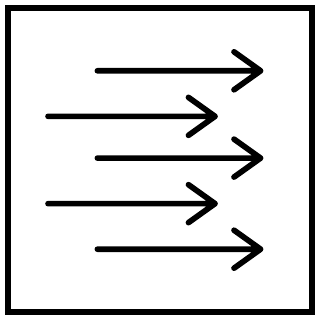
Select the figure that will replace question mark (?) in the following figure series.

  1. ((a))

  2. ((b))

  3. ((c))

  4. ((d))

Show Answer
Answer: ((a))

In question figure 1 and 2, each arrow is moving backward and forward.


Similarly, the same pattern will follow in question figure 3 and 4.

Hence, the correct answer is "option (1)".

15

Which number will replace the question mark (?) in the following number series?

124, 140, 128, 136, 132, ?

  1. ((a))

    130

  2. ((b))

    132

  3. ((c))

    136

  4. ((d))

    128

Show Answer
Answer: ((b))

132

The pattern here follows is:

140 = 124 + 16

128 = 140 - 12

136 = 128 + 8

132 = 136 - 4

Similarly,

132 = 132 + 0

Hence, the correct answer is "132".

16

Study the given pattern carefully and select the number that can replace the question mark (?) in it.

364943
4264?
243630
  1. ((a))

    36

  2. ((b))

    32

  3. ((c))

    38

  4. ((d))

    34

Show Answer
Answer: ((d))

34

The logic follows here is :-

Second number = (First number - Third number)2

 First row :

36, 49, 43

36 - 43 = (-7) ; (-7)2 = 49

Second row :

42, 64, ?

(42 - ?)2 = 64

42 - ? = 8

? = 42 - 8

? = 34

Third row :

24, 36, 30

24 - 30 = (-6) ; (-6)2 = 36

Hence, the correct answer is "34".

If we follow this logic :

Second number = (Third number - First Number)2

42, 64, ?

(? - 42)2 = 64

? - 42 = 8

? = 42 + 8

? = 50.

But 50 is not in the options. So we will follow the above logic.

17

If '×' means 'addition', '÷' means 'multiplication', '+' means 'subtraction', and '-' means 'division', then what is the value of the following expression?

16 - 4 × 12 ÷ 3 + 18

  1. ((a))

    24

  2. ((b))

    30

  3. ((c))

    18

  4. ((d))

    22

Show Answer
Answer: ((d))

22

Decoding the giving information,

×÷+-
Means
+×-÷

Given expression,

16 - 4 × 12 ÷ 3 + 18

After changing sign,

16 ÷ 4 + 12 × 3 - 18, 

Using BODMAS rule,

4 + 12 × 3 - 18 

4 + 36 - 18 

40 - 18 

22 

Hence, the correct answer is "22".

18

Two statements are given, followed by two conclusions numbered I and II. Assuming the statements to be true, even if they seem to be at variance with commonly known facts, decide which of the conclusions logically follow(s) from the statements.

Statements:

All wolfs are dogs.

All dogs are jackals.

Conclusions:

I. All wolfs are jackals.

II. All jackals are wolfs.

  1. ((a))

    Only conclusion I follows.

  2. ((b))

    Both conclusions I and II follow.

  3. ((c))

    Neither conclusion I nor II follows.

  4. ((d))

    Only conclusion II follows.

Show Answer
Answer: ((a))

Only conclusion I follows.

The least possible Venn diagram for the given statements is as follow,

Conclusions:

I. All wolfs are jackals → True (It is clear from the Venn diagram as "All wolfs are dogs and all dogs are jackals" so the all wolfs are jackals)

II. All jackals are wolfs → False (It is not possible from the Venn diagram as "All wolf are dogs and all dogs are jackals" so the all jackals are not wolfs)

Hence, "Only conclusion I follows" is the correct answer.


19

In a certain coding system, 'Watches are beautiful' is coded as '856', 'Beautiful things are expensive' is coded as '3845', and 'Expensive things are preferred' is coded as '3874'. How will 'Watches are preferred' be coded in this coding system?

  1. ((a))

    785

  2. ((b))

    765

  3. ((c))

    476

  4. ((d))

    876

Show Answer
Answer: ((d))

876

Decoding the given information:

The logic is the code for first word is shifted to last and the remaining are as per the order. 

Code for 'Watches' is  '6'.

Code for 'are' is '8'.

Code for 'beautiful' is '5'.

Code for things' is either '3' or '4'.

Code for 'expensive either '3' or '4'.

Code for 'preferred' is '7'.

So, code for 'Watches are preferred' is '876'

Hence, the correct answer is "876".

20

Which two digits and signs can be interchanged to balance the given equation?

25 - 9 + 42 ÷ 6 × 7 = 17

  1. ((a))

    5 and 7; - and ÷

  2. ((b))

    9 and 6; + and ×

  3. ((c))

    4 and 6; + and ÷

  4. ((d))

    2 and 5; ÷ and ×

Show Answer
Answer: ((a))

5 and 7; - and ÷

Mistake Points According to the question, two digits and signs can be interchanged, So you need to change the digits of the given number only, not the number'.

The given expression is as follows,

25 - 9 + 42 ÷ 6 × 7 = 17

Using BODMAS rules,

Option 1 → 5 and 7; - and ÷

27 ÷ 9 + 42 - 6 × 5 = 15

3 + 42 - 6 × 5 = 15 

3 + 42 - 30 = 15

45 - 30 = 15

15 = 15

Option 2 → 9 and 6; + and ×

25 - 6 × 42 ÷ 9 + 7 = 17

25 - 6 × 4.7 + 7 = 17

25 - 28.2 + 7 = 17

25 - 21.2 = 17

3.8 ≠ 17

Option 3 → 4 and 6; + and ÷ 

25 - 9 ÷ 62 + 4 × 7 = 17

25 - 0.145 + 4 × 7 = 17

25 - 0.145 + 28 = 17

25 + 27.85 = 17

52.85 ≠ 17

Option 4 → 2 and 5;  ÷ and × 25 - 9 + 42 ÷ 6 × 7 = 17

52 - 9 + 45 × 6 ÷ 7 = 17

52 - 9 + 45 × 0.85 = 17

52 - 9 + 38.25 = 17

52 + 29.25 = 17

82.25 ≠ 17

Hence, the correct answer is "option (1)".

21

Six people P, Q, R, S, T and U were sitting around a hexagon table facing the centre. U was sitting opposite to P, who was to the immediate left of R. S was sitting to the immediate right of U, and T was exactly between P and S. What was the sitting location of Q?

  1. ((a))

    Opposite to T

  2. ((b))

    Immediate left of P

  3. ((c))

    Opposite to S

  4. ((d))

    Opposite to R

Show Answer
Answer: ((a))

Opposite to T

According to the given information:

I. U was sitting opposite to P, who was to the immediate left of R.

II. S was sitting to the immediate right of U.

III. T was exactly between P and S, so Q was sitting at the remaining place.

Here, Q is sitting exactly opposite of T.

Hence, the correct answer is "Opposite to T".

22

Pointing to a portrait of a lady, Kanika said, "Her daughter-in-law is the wife of my son's grandfather's only son." How is the lady in the portrait related to Kanika?

  1. ((a))

    Mother-in-law

  2. ((b))

    Sister-in-law

  3. ((c))

    Mother

  4. ((d))

    Paternal aunt

Show Answer
Answer: ((a))

Mother-in-law

The family chart is as follows:

Drawing the family tree as per the given information:

As Kanika is the wife of the portrait lady's son, thus the portrait lady related to the mother-in-law of Kanika.

Hence, the correct answer is "Mother-in-Law".

23

Select the correct option that indicates the arrangement of the following terms in a logical and meaningful order.

  1. Myna
  2. Kite
  3. Hummingbird
  4. Koel
  5. Bulbul
  1. ((a))

    3 - 5 - 4 - 1 - 2

  2. ((b))

    3 - 5 - 1 - 4 - 2

  3. ((c))

    3 - 5 - 1 - 2 - 4

  4. ((d))

    5 - 3 - 1 - 4 - 2

Show Answer
Answer: ((b))

3 - 5 - 1 - 4 - 2

The logic follows here is:

The words are arranged according to the Size of bird.(Small to big)

  1. Hummingbird
  2. Bulbul
  3. Myna
  4. Koel
  5. Kite

Hence, the correct answer is "3 - 5 - 1 - 4 - 2".

24

Select the correct sequence of mathematical signs to replace the * sign so as to balance the given equation.

24 * 4 * 16 * 4 * 15 = 85

  1. ((a))

    ÷, -, +, ×

  2. ((b))

    ÷, +, ×, -

  3. ((c))

    -, ÷, +, ×

  4. ((d))

    ×, +, ÷, -

Show Answer
Answer: ((d))

×, +, ÷, -

Given equation,

24 * 4 * 16 * 4 * 15 = 85

  1. ÷, -, +, ×

Replacing the signs and using BODMAS rule,

24 ÷ 4 - 16 + 4 × 15

6 - 16 + 4 × 15

6 - 16 + 60

66 - 16

50 ≠ 85

  1. ÷, +, ×, -

Replacing the signs and using BODMAS rule,

24 ÷ 4 + 16 × 4 - 15

6 + 16 × 4 - 15

6 + 64 - 15

70 - 15

55 ≠ 85

  1. -, ÷, +, ×

Replacing the signs and using BODMAS rule,

24 - 4 ÷ 16 + 4 × 15

24 - 0.25 + 4 × 15

24 - 0.25 + 60

84 - 0.25

83.75 ≠ 85

4) ×, +, ÷, -

Replacing the signs and using BODMAS rule,

24 × 4 + 16 ÷ 4 - 15

24 × 4 + 4 -15

96 + 4 - 15

100 - 15

85 = 85

Hence, the correct answer is Option 4.

25

The cost of four cycle tyres and three tubes is Rs. 720, whereas the cost of the three cycle tyres and four tubes is Rs. 610. What is the cost of a tube?

  1. ((a))

    Rs. 50

  2. ((b))

    Rs. 42

  3. ((c))

    Rs. 45

  4. ((d))

    Rs. 40

Show Answer
Answer: ((d))

Rs. 40

Let the cost of one cycle tyre be x, and the cost of one tube be y.

Here, The cost of four-cycle tyres and Three tubes is Rs. 720, and The cost of three cycle tyres and four tubes is Rs. 610.

So, 4x + 3y = 720      -----(1)

3x + 4y = 610      ----(2)

Multiplying equation (1) by 3 and equation (2) by 4,

12x + 9y = 2160     ----(3)

12x + 16y = 2440     ----(4)

Subtracting equation (3) from equation (4),

7y = 280

⇒ y = 40

Here, y is the cost of one tube.

Hence, the cost of a tube is "Rs. 40".

26

Select the figure that will replace question mark (?) in the following figure series.

  1. ((a))

  2. ((b))

  3. ((c))

  4. ((d))

Show Answer
Answer: ((d))

The pattern followed is:-

  • The shapes are moving anti-clockwise.

The shadings are moving clockwise.

Hence, the correct answer is Option 4.

27

In a certain coding system, 'mango is sweet' is coded as '629', 'mango tree is tall' is coded as '7289', and 'tall tree is healthy' is coded as '5287'. What is the code for 'healthy' in this coding system?

  1. ((a))

    7

  2. ((b))

    2

  3. ((c))

    5

  4. ((d))

    8

Show Answer
Answer: ((c))

5

According to the given information,

WordCode
Mango9
Is2
Sweet6
Tree8
Tall7
Healthy5


So, Code for the "Healthy" is 5.

Hence, "5" is the correct answer.

28

A paper is folded and cut as shown in the following figures. How will it appear when unfolded?

  1. ((a))

  2. ((b))

  3. ((c))

  4. ((d))

Show Answer
Answer: ((d))

When the paper will be unfolded it will look like this:

Hence, the correct answer is "Option 4".

29

Three different positions of the same dice are shown. Find the letter on the face opposite to the one having the letter A.

  1. ((a))

    D

  2. ((b))

    F

  3. ((c))

    C

  4. ((d))

    B

Show Answer
Answer: ((c))

C

In 1st and 3nd Dice, E and A letters are common.

then, D is the opposite face of B as B is the opposite face of D.

Similarly,

In 1st and 2nd Dice, D and E letters are common.

then, A is the opposite face of C as C is the opposite face of A.

Similarly,

In 2nd and 3rd Dice, E letter is common,

So, start clockwise from E.

then, C is the opposite face of A and A is the opposite face of C.

Thus, the opposite face of E will be the face that is not shown.

Hence, "C" is the correct answer.

Hint

  • When an equal digit is on an equal surface, the remaining equal surface are opposite each other.
30

Select the option that is related to the third letter-cluster in the same way as the second letter-cluster is related to the first letter-cluster.

RUBBER : BURREB :: CATTLE : ______

  1. ((a))

    ACTTEL

  2. ((b))

    ELTTAC

  3. ((c))

    TACELT

  4. ((d))

    TACTLE

Show Answer
Answer: ((c))

TACELT

The logic followed here is:

Similarly,

Hence, the correct answer is "TACELT".

31

Three of the following four letter-clusters are alike in a certain way and one is different. Pick the letter-cluster that is different from the rest.

  1. ((a))

    OLIF

  2. ((b))

    SPLI

  3. ((c))

    HEBY

  4. ((d))

    WTQN

Show Answer
Answer: ((b))

SPLI

The pattern that is followed is:

So, SPLI is different from other options.

Hence, the correct answer is "SPLI".

32

Select the figure that will replace question (?) mark in the following figure series.

  1. ((a))

  2. ((b))

  3. ((c))

  4. ((d))

Show Answer
Answer: ((a))

The logic followed here is:

Outer Dots are moving in a 90' Clock-wise direction.

The Star image is rotating 45' Anti-clockwise.

The smaller dot is getting down along the axis as shown in diagrams of inner circles.


Hence, the correct answer is "Option1".

33

Which number will replace the question mark (?) in the following number series?

5, 24, 61, 122, 213, ?

  1. ((a))

    346

  2. ((b))

    340

  3. ((c))

    343

  4. ((d))

    337

Show Answer
Answer: ((b))

340

The pattern followed here is,

Hence, "340" is the correct answer.

Alternate Method2- 3 = 5

33 - 3 = 24

43 - 3 = 61

53 -3 = 122

63 - 3 = 213

73 - 3 = 340

Hence, "340" is the correct answer.

34

Select the option in which the numbers share the same relationship as that shared by the given pair of numbers.

48 : 60

  1. ((a))

    64 : 72

  2. ((b))

    98 : 114

  3. ((c))

    78 : 94

  4. ((d))

    86 : 100

Show Answer
Answer: ((d))

86 : 100

The logic followed here is:

48 : 60

4 + 8 = 12

12 + 48 = 60

So, Option 1

64 : 72

6 + 4 = 10

10 + 64 ≠ 72

Option 2

98 : 114

9 + 8 = 17

17 + 98 ≠ 114

Option 3

78 : 94

7 + 8 = 15

15 + 78 ≠ 94

Option 4

86 : 100

8 + 6 = 14

14 + 86 = 100

Hence, the correct answer is "Option 4".

35

In a certain code language, if TRAILER is written as RPYGJCP, then how will PEACOCK be written in the same code language?

  1. ((a))

    MBXZLZH

  2. ((b))

    NCYAMAI

  3. ((c))

    OCXALAI

  4. ((d))

    NBYZMZI

Show Answer
Answer: ((b))

NCYAMAI

The pattern follows here is:

Hence, the correct answer is "NCYAMAI".

36

Select the correct mirror image of the given figure when the mirror is placed to the right side of the figure.

  1. ((a))

  2. ((b))

  3. ((c))

  4. ((d))

Show Answer
Answer: ((d))

The mirror image of the given diagram, when the mirror is placed at "PQ" is as follows:

Hence, the correct answer is "Option 4".

37

Identify the option figure which is embedded in the figure given below (rotation is NOT allowed).

  1. ((a))

  2. ((b))

  3. ((c))

  4. ((d))

Show Answer
Answer: ((b))

Option (2) is the embedded in the given figure.

The figure embedded in the given figure is shown by dotted.

Hence, "option (2)" is the correct answer.

38

Study the given pattern carefully and select the number that can replace the question mark (?) in it.

12916
9327
14?28
  1. ((a))

    11

  2. ((b))

    7

  3. ((c))

    9

  4. ((d))

    8

Show Answer
Answer: ((b))

7

The logic here follows is:

Square of first number= Second number × Third number

Row1,

(12)2 = (9 × 16)

144 = 144

Row2,

(9)2 = (3 × 27)

81 = 81

Similarly,

Row3,

(14)2 = (A × 28)

196 = 28A

A = 196 / 28

A = 7

Hence, the correct answer is "7".

39

The total of the ages of four persons is 86 years. What was their average age 4 years ago?

  1. ((a))

    20.5 years

  2. ((b))

    19.5 years

  3. ((c))

    17.5 years

  4. ((d))

    20 years

Show Answer
Answer: ((c))

17.5 years

Given:

The total age of four persons is 86 years

Formula Used:

The average age of persons = Sum of ages of Persons/number of persons 

Calculation:

According to question,

We have to find the average age of persons 4 years ago

Sum of ages of person 4 years ago = 86 - 4 × 4

⇒ 86 - 16 

⇒ 70

Now, Average age of four persons = 70/4

⇒ 17.5

Hence, the average age of four persons 4 years ago was 17.5

40

Which letter-cluster will replace the question mark (?) in the following letter series?

TWZ, VYB, XAD, ?

  1. ((a))

    ZBE

  2. ((b))

    YBE

  3. ((c))

    ZCF

  4. ((d))

    ADG

Show Answer
Answer: ((c))

ZCF

The pattern follows here is :-

Hence, the correct answer is "ZCF".

41

Which letter-cluster will replace the question mark (?) in the following series?

KAP, MIN, IUR, OEL, GOT, ?

  1. ((a))

    PAK

  2. ((b))

    QUK

  3. ((c))

    QAJ

  4. ((d))

    PUJ

Show Answer
Answer: ((c))

QAJ

The pattern followed is :-

Middle terms are Vowels with alternate positions

A - I - U - E - O - A

Hence, the correct answer is "QAJ".

Additional Information

There are five vowels in the alphabets

A, E, I, O, U in the same order.

42

A tap can fill up a tank of 1250 litres in 4 hours, whereas another tap can fill the same tank in 8 hours. An outlet tap can empty that tank in 6 hours. If all the three taps are opened simultaneously, then how much time will it take to fill the tank completely?

  1. ((a))

    4.2 hours

  2. ((b))

    4.5 hours

  3. ((c))

    5 hours

  4. ((d))

    4.8 hours

Show Answer
Answer: ((d))

4.8 hours

Given:

Tap A can fill a tank in 4 hours

Tap B can fill the same tank in 8 hours

Tap C can empty the same tank in 6 hours

Concept Used: 

If a tap can fill a tank in n hours then part of the tank filled in 1 hour is 1/n

Calculation:

Time is taken by tap A to fill the tank = 4 hours

Tank filled by tap 1 in one hour = 1/4 part of the tank 

Time is taken by tap B to fill the tank = 8 hours

Tank filled by tap 2 in one hour = 1/8 part of the tank 

Time is taken by tap C to empty the tank = 6 hours

Tank emptied by tap 3 in one hour = 1/6 part of the tank 

So, the part of the tank filled in one hour when all three taps are opened simultaneously 

14+1816;part\frac{1}{4} + \frac{1}{8} - \frac{1}{6};part

;6+3424;part ⇒ ;\frac{{6 + 3 - 4}}{{24}};part

;524;part⇒ ;\frac{5}{{24}};part

⇒ Time taken by 3 taps to fill the tank = 24/5 = 4.8 hours.

∴ time taken by three taps to fill the tank is 4.8 hours.

43

Three of the following four letter-clusters are alike in a certain way and one is different. Pick the letter-cluster that is different from the rest.

  1. ((a))

    MNPK

  2. ((b))

    DWHS

  3. ((c))

    HSLO

  4. ((d))

    RIVE

Show Answer
Answer: ((a))

MNPK

The pattern followed here is: 

Hence, the correct answer is "MNPK".

44

Two statements are given, followed by two conclusions numbered I and II. Assuming the statements to be true, even if they seem to be at variance with commonly known facts, decide which of the conclusions logically follow(s) from the statements.

Statements:

All bats are sticks.

No stick is a ball.

Conclusions:

I. No bat is a ball.

II. No ball is bat.

  1. ((a))

    Neither conclusion I nor II follows.

  2. ((b))

    Only conclusion I follows.

  3. ((c))

    Only conclusion II follows.

  4. ((d))

    Both conclusions I and II follow.

Show Answer
Answer: ((d))

Both conclusions I and II follow.

The possible Venn diagram for the given statements is:

Conclusions:

I. No bat is a ball → True (Since all bats are sticks and no stick is ball, no bat is ball).

II. No ball is bat → True (Since no bat is ball, the inverse is also true, So, no ball is bat).

Thus, Both the Conclusions are true.

Hence, the correct answer is "Both Conclusion I and Conclusion II Follow".

Additional Information

45

A paper is folded and cut as shown in the following figures. How will it appear when unfolded?

  1. ((a))

  2. ((b))

  3. ((c))

  4. ((d))

Show Answer
Answer: ((c))

When the paper is unfolded it will appear like:

Hence, the answer is the figure given below:

Hence, the correct answer is "Option 3".

46

Select the correct option that indicates the arrangement of the following words as they appear in an English dictionary.

  1. Boatyard
  2. Boathouse
  3. Boater
  4. Boatman
  5. Boating
  1. ((a))

    3 - 2 - 5 - 4 - 1

  2. ((b))

    3 - 2 - 5 - 1 - 4

  3. ((c))

    2 - 5 - 3 - 1 - 4

  4. ((d))

    2 - 3 - 5 - 4 - 1

Show Answer
Answer: ((a))

3 - 2 - 5 - 4 - 1

The correct order as they appear in an English dictionary is:

3. Boater 2. Boathouse 5. Boating 4. Boatman 1. Boatyard

So, the correct order is 3 - 2 - 5 - 4 - 1.

Hence, the correct answer is Option 1.

47

If in a coding system, SUBSTANCE is coded as 101 and SUPREME is coded as 94, then how will PORTRAIT be coded in the same coding system?

  1. ((a))

    116

  2. ((b))

    115

  3. ((c))

    114

  4. ((d))

    117

Show Answer
Answer: ((c))

114

The logic followed is:-

Code = Sum of the place values - number of vowels.

SUBSTANCE

Sum of place values:

SUBSTANCE = 19 + 21 + 2 + 19 + 20 + 1 + 14 + 3 + 5

= 104

Number of vowels = 3 (SUBSTANCE)

Code = 104 - 3

=101.

SUPREME

Sum of Place values:

SUPREME = 19 + 21 + 16 + 18 + 5 + 13 + 5

= 97

Number of vowels = 3 (SUPREME)

Code = 97 - 3

= 94.

Similarly, 

PORTRAIT

Sum of place values:

PORTRAIT = 16 + 15 + 18 + 20 + 18 + 1 + 9 + 20

=117

Number of vowels = 3 (PORTRAIT)

Code = 117 - 3

= 114.

Hence, the correct answer is "114".

48

Select the correct mirror image of the given figure when the mirror is placed to the right side of the figure.

  1. ((a))

  2. ((b))

  3. ((c))

  4. ((d))

Show Answer
Answer: ((a))

The Correct mirror image of the given figure when the mirror is placed on the right is:

Hence, the correct answer is "Option1".

Additional Information

In a mirror image Left changes to right and the right changes to left vice-versa.

When placement of mirror not given, By default we will assume it in Vertical direction.

The Letter adjacent to the mirror after the mirror image will adjacent to it just with the left change to right and right change to left vice-versa.

The starting letter of the word will be at last after the mirror image drawn with left changes to right and right changes to left.

49

Study the given pattern carefully and select the number that can replace the question mark (?) in it.

987
678
453
50?53
  1. ((a))

    51

  2. ((b))

    47

  3. ((c))

    61

  4. ((d))

    52

Show Answer
Answer: ((a))

51

The logic follows here is :-

Going column wise,

(1st number) × (2nd number - (3rd number) = 4th number

First column :

9 × 6 - 4 = 54 - 4 = 50

Third column :

7 × 8 - 3 = 56 - 3 = 53

Similarly,

Second column :

8 × 7 - 5 = 51.

Hence, the correct answer is "51".

50

Which letter-cluster will replace the question mark (?) in the following series?

SQO, LJH, ECA, ?

  1. ((a))

    YWU

  2. ((b))

    XUS

  3. ((c))

    XVT

  4. ((d))

    YWV

Show Answer
Answer: ((c))

XVT

The pattern followed is :-


Hence, the correct answer is "XVT".

General Knowledge and General Awareness (50 questions)

51

Dr. Harsh Vardhan, India’s Minister of ______, was elected the Chairman of the World Health Organization’s Executive Board on 22 May 2020.

  1. ((a))

    Housing

  2. ((b))

    Health and Family Welfare 

  3. ((c))

    Foreign Affairs

  4. ((d))

    Arts and Culture

Show Answer
Answer: ((b))

Health and Family Welfare 

The correct answer is Health and Family Welfare. 

Key Points

  • Dr. Harsh Vardhan is currently serving as Minister of Science and Technology, Minister of Health and Family Welfare and Minister of Earth Sciences.
  • He is the Member of Parliament from Chandni Chowk, Delhi constituency.
  • Dr. Harsh Vardhan is an ENT surgeon by profession.
  • Dr Harsh Vardhan has been elected to the office of Chairperson of Executive Board of the World Health Organization from May 22, 2020.

Additional Information

PortfolioMinister
Minister of State of Housing and Urban AffairsHardeep Singh Puri
Minister of External AffairsSubrahmanyam Jaishankar
Minister of State of CulturePrahlad Singh Patel
52

Gandhiji’s first major public appearance was at the opening of the Banaras Hindu University (BHU) in ______.

  1. ((a))

    February 1916

  2. ((b))

    January 1918

  3. ((c))

    December 1917 

  4. ((d))

    September 1915

Show Answer
Answer: ((a))

February 1916

The correct answer is February 1916.

Key Points

  • Gandhiji, the first major public appearance was at the opening of the Banaras Hindu University in February 1916.
  • Banaras Hindu University is an internationally reputed temple of learning, situated in the holy city of Varanasi.
  • This Creative and innovative university was founded by the great nationalist leader, Pandit Madan Mohan Malviya, in 1916 with the cooperation of great personalities like Dr. Annie Besant, who viewed it as the University of India.
  • Banaras Hindu University was created under the Parliamentary legislation - B.H.U. Act 1915.

Important Points

  • Mahatma Gandhi, byname of Mohandas Karamchand Gandhi, born October 2, 1869, in Porbandar, India & died January 30, 1948, in Delhi.
  • Indian lawyer, politician, social activist, and writer who became the leader of the nationalist movement against the British rule of India.
53

The climate of Assam can be described as:

  1. ((a))

    sub-tropical humid climate

  2. ((b))

    mountain climate

  3. ((c))

    tropical monsoon rainforest climate

  4. ((d))

    tropical dry climate

Show Answer
Answer: ((c))

tropical monsoon rainforest climate

The correct answer is tropical monsoon rainforest climate.

Key Points

  • The climate of Assam is tropical monsoon because of high hills of Arunachal, Manipur, and Mizoram prevent the rain-bearing monsoon winds from escaping this region.
  • The Himalayan and the eastern hills ranges cause an orographic rise of the monsoon winds with consequent heavy rainfall in North East India.

Additional Information

ClimateRegion/states
sub-tropical humid climateParts of Uttar Pradesh, Bihar, Jharkhand, Madhya Pradesh, Chattisgarh
mountain climateParts of Jammu and Kashmir, Himachal Pradesh, and Uttarakhand
tropical dry climateParts of Odisha, West Bengal, Madhya Pradesh, Maharashtra, Telangana, Andhra Pradesh
54

Gandhiji hoped that by coupling non-cooperation with ______, India’s two major religious communities, Hindus and Muslims, could collectively bring an end to colonial rule. 

  1. ((a))

    Swadeshi Movement

  2. ((b))

    Khilafat Movement

  3. ((c))

    Sepoy Mutiny

  4. ((d))

    Civil Disobedience Movement

Show Answer
Answer: ((b))

Khilafat Movement

The correct answer is Khilafat Movement.

Key Points

  • In March 1920 Gandhiji launched the non-violent non-cooperation movement.
  • The main aim was to encourage swadeshi principles like hand spinning and weaving and boycott support to the Britishers.
  • To establish unity among Hindus and Muslims, Gandhiji joined Khilafat-Movement with the non-cooperation movement.
  • The Khilafat movement was launched against Britishers in the support of the Ottoman caliphate.
  • It was launched under the leadership of Ali Brothers (Maulana Mohammed Ali and Maulana Shaukat Ali), Maulana Azad, Hakim Ajmal Khan, and Hasrat Mohani.

Additional Information

  • Swadeshi Movement:
  • It was launched on August 7, 1905, in Calcutta.
  • The main aim was to boycott British products and encourage swadeshi(Indian) products.
  • After the Bengal partition by Lord Curzon on 16 Oct 1905, It spread faster throughout the country.
  • Sepoy Mutiny:
  • It is also called the First War of Indian Independence.
  • A rumor spread among the sepoys that the grease used to lubricate the cartridges was a mixture of pigs’ and cows’ lard which lead to the revolt.
  • Civil Disobedience Movement:
  • It was launched by Mahatma Gandhi on 12 March 1930.
  • The main reason behind the movement was the salt tax imposed by the Britishers.
  • Dandi March was on of the biggest movement under it which incorporated huge mass throughout the country.
55

______ is one of the important crafts of Uttar Pradesh which entails delicate traditional hand embroidery on fabrics like chiffon, muslin, organza, organdie and silk.

  1. ((a))

    Knitting

  2. ((b))

    Needle lace

  3. ((c))

    Crochet

  4. ((d))

    Chikankari

Show Answer
Answer: ((d))

Chikankari

The correct answer is Chikankari.

Key Points

  • Chikankari is one of the important crafts of Uttar Pradesh which entails delicate traditional hand embroidery on fabrics like chiffon, muslin, organza, organdie, and silk.
  • Chikankari of Lucknow is a traditional embroidery style of Lucknow, Uttar Pradesh.
  • In this art form, the French naut open work and Herringbone stitch techniques are used.
  • Chikan saris and Kurtas are the perfect summer wear.
  • The most popular origin story credits Noor Jahan, Mughal empress, and wife of Jahangir, with introducing Chikankari to India.
  • Chikan embroidery is mostly done on fabrics like cotton, semi-Georgette, pure Georgette, crepe, chiffon, silk, and any other fabric which is light and which highlights the embroidery.
  • The fabric cannot be too thick or hard, else the embroidery needle won't pierce it.
  • Hence, option 4 is correct.

Additional Information

  • Crochet :
  • Crochet is a process of creating textiles by using a crochet hook to interlock loops of yarn, thread, or strands of other materials.
  • The name is derived from the French term crochet, meaning 'small hook'.
  • Hooks can be made from a variety of materials, such as metal, wood, bamboo, or plastic.
  • Needle lace :
  • It is a type of lace created using a needle and thread to stitch up hundreds of small stitches to form the lace itself.
  • In its purest form, the only equipment and materials used are a needle, thread, and scissors.
56

Muzaffar Hussain Baig who was awarded the Padma Bhushan in 2020 is a member of the ______.

  1. ((a))

    National Panthers Party

  2. ((b))

    National Democratic Party

  3. ((c))

    Jammu Republic Party

  4. ((d))

    Peoples Democratic Party

Show Answer
Answer: ((d))

Peoples Democratic Party

The correct answer is Peoples Democratic Party*.*

Key Points

  • PDP leader Muzaffar Hussain Baig has been honoured with the Padma Bhushan.
  • The politician has been awarded for his contribution to "public affairs" and is amongst the 16 people who have been honoured with the Padma Bhushan.
  • It is the third highest civilian award after Bharat Ratna and Padma Vibhushan.
  • He was among the few politicians from Kashmir who met Members of the European Parliament (MEPs) who had travelled to the valley last year.

Important Points

  • BHARAT RATNA
  • Bharat Ratna is the highest civilian award in the country. It is awarded in recognition of exceptional service/performance of the highest order in any field of human endeavour.
  • It is treated on a different footing from Padma Award. The recommendations for Bharat Ratna are made by the Prime Minister to the President of India.
  • No formal recommendations for Bharat Ratna are necessary. The number of Bharat Ratna Awards is restricted to a maximum of three in a particular year.
  • The government has conferred Bharat Ratna Award on 45 persons to date.
  • PADMA AWARDS
  • Padma Awards, which were instituted in the year 1954, is announced every year on the occasion of Republic Day except for brief interruption(s) during the years 1978 and 1979 and 1993 to 1997.
  • The award is given in three categories, namely-
  • Padma Vibhushan for exceptional and distinguished service.
  • Padma Bhushan for distinguished service of a high order.
  • Padma Shri for distinguished service.
57

Maria Irudayam, who is a two-time world champion and a nine-time national champion, is associated with the game of ______.

  1. ((a))

    badminton

  2. ((b))

    carrom

  3. ((c))

    table tennis

  4. ((d))

    chess

Show Answer
Answer: ((b))

carrom

The correct answer is carrom.

Important Points

  • The carrom game was originated in India.

Key Points

  • All-India Carrom Federation conducts the national level championship in India.
  • International Carrom Federation conducts the world championships.
  • Maria Irudayam hails from Chennai, Tamil Nadu, India.
  • Some of the professional carrom athletes:
  • A. Appa Rao (Andhra Pradesh)
  • Suhas Kambli (Maharastra)
  • S. Dilli (Tamil Nadu)

Additional Information

Some Indian Professional athletes in the following games:

BadmintonPV Sindhu, Saina Nehwal, Srikant Kidambi, Parupalli Kashyap
Table TennisManika Batra, Sharath Kamal Achanta
ChessVishwanathan Anand, Koneru Humpy
58

Which of the following statements is NOT true about the game of Kho Kho ?

  1. ((a))

    Ten players take the field in the beginning to start the match

  2. ((b))

    It is a team game

  3. ((c))

    It is one of the oldest traditional tag games of India

  4. ((d))

    Three defenders of opposite team try to avoid being touched by the chasers

Show Answer
Answer: ((a))

Ten players take the field in the beginning to start the match

Option 1 is incorrect.

Key Points

  • Kho-kho, a traditional Indian sport, a form of tag that is one of the oldest forms of outdoor sport. Hence, it is one of India's oldest traditional tag games.
  • A team consists of 12 players, one coach, one manager, and other supporting staff. 9 players will take the field at the beginning to start the match. Hence Only 9 Players take the field at the beginning to start the match.
  • 3 defenders of the opposite team try to avoid being touched by the chasers. Hence Three defenders of the opposite team try to avoid being touched by the chasers.
  • It is a high energy game that involves running and chasing.
  • The motive of the sitting team is to "tag" the opponents. Hence It is one of the oldest traditional tag games in India.
  • The chasers can run only in one direction and cannot cross the central lane. They have to run around the post to reach another side.
  • The other option is to pass the chasing job to another chaser whose back is facing you as you are running.
  • The attacker touches the chaser he wants (usually nearest to the target) and utters the word “Kho" loudly to signify the change.
59

Solubility of gases in liquids ______ with decrease in temperature.

  1. ((a))

    remains constant 

  2. ((b))

    increases

  3. ((c))

    decreases

  4. ((d))

    first decreases and then increases

Show Answer
Answer: ((b))

increases

The correct answer: increases.

Key Points

  • The solubility of a gas in a liquid depends upon the following factor,
  • The nature of the solute.
  • The nature of the solvent.
  • Pressure:- solubility of a gas in a liquid increase with the increase in pressure.
  • The solubility of a gas in a liquid is directly proportional to the partial pressure of the gas present above the surface of liquid or solution.
  • The temperature of the solution:- solubility of gases in liquids increases with decrease in temperature.
  • It is the reason that aquatic species are more comfortable in cold water rather than in warm water. Because the dissolved oxygen is more in cold water.
60

Which of the following is a situation of the very low rate of interest in the economy where every economic agent expects the interest rate to rise in future and consequently bond prices to fall, causing capital loss?

  1. ((a))

    Revenue deficit 

  2. ((b))

    Parametric shift

  3. ((c))

    Paradox of thrift

  4. ((d))

    Liquidity trap

Show Answer
Answer: ((d))

Liquidity trap

The correct answer is a Liquidity trap.

Confusion Points

  • The paradox of thrift is an economic theory that argues that personal savings can be detrimental to overall economic growth.
  • It is based on a circular flow of the economy in which current spending drives future spending.

Key Points

  • A liquidity trap is a situation of the very low rate of interest in the economy where every economic agent expects the interest rate to rise in the future and consequently bond prices to fall, causing capital loss.
  • A liquidity trap is an economic situation where everyone hoards money instead of investing or spending it.
  • It occurs when interest rates are zero or during a recession.
  • People are too afraid to spend so they just hold onto the cash.
  • As a result, central banks' use of expansionary monetary policy doesn't boost the economy.
  • A liquidity trap is a situation when expansionary monetary policy does not increase the interest rate, income and hence does not stimulate economic growth.
  • Hence, option 4 is correct.

Additional Information

  • Revenue deficit :
  • A revenue deficit occurs when realized net income is less than the projected net income.
  • This happens when the actual amount of revenue and/or the actual amount of expenditures do not correspond with budgeted revenue and expenditures.
  • Revenue deficit = Total revenue expenditure – Total revenue receipts
  • Fiscal deficit = Total expenditure – Total receipts excluding borrowings
  • The paradox of thrift :
  • The paradox of thrift is a paradox of economics.
  • The paradox states that an increase in autonomous saving leads to a decrease in aggregate demand and thus a decrease in gross output which will, in turn, lower total saving.
  • The paradox of thrift refers to contrasting implications of savings to households and to the economy as a whole.
  • Saving is treated as a virtue by households as they provide a protective umbrella against bad spells but the same is treated as a vice by the economy as it retards the process of income generation.
61

With which of the following sports are the teams ‘Bengal Warriors’, ‘Haryana Steelers’ and ‘Bengaluru Bulls’ associated ?

  1. ((a))

    Kabaddi

  2. ((b))

    Football

  3. ((c))

    Cricket

  4. ((d))

    Hockey

Show Answer
Answer: ((a))

Kabaddi

The correct answer is Kabaddi.

Key Points

  • Bengal Warriors, Haryana Steelers and Bengaluru Bulls associated with the Pro Kabaddi League.
  • The Pro Kabaddi League is a professional Kabaddi league in India.
  • It was founded in the year 2014.
  • There is a total of 12 teams in the Pro Kabaddi League as of now.

Additional Information

  • The Hockey India League is a professional field hockey league in India. It was founded in the year 2013.
  • The Indian Super League is a professional football league in India. It was founded in the year 2013.
  • The Indian Premier League is a professional twenty-twenty cricket league in India. 
  • The league was founded by the Board of Control for Cricket in India (BCCI) in 2007.
  • There are a total of 8 teams in the Indian Premier League as of now.
62

The Coinage Act, 2011, allows issue of coins up to the denomination of ₹______ in India.

  1. ((a))

    5,000

  2. ((b))

    500

  3. ((c))

    1,000

  4. ((d))

    100

Show Answer
Answer: ((c))

1,000

The correct answer is 1,000.

Key Points

  • Coins in India are presently being issued in denominations of 50 paise, one rupee, two rupees, five rupees, ten rupees and twenty rupees.
  • Coins up to 50 paise are called 'small coins' and coins of Rupee one and above are called 'Rupee Coins'.
  • Coins can be issued up to the denomination of ₹1000 under the Coinage Act, 2011.

Important Points

  • Twenty five (25) paise coins have been withdrawn from circulation with effect from June 30, 2011 and are, therefore, no more legal tender.
  • The Government of India is responsible for the designing and minting of coins in various denominations.
  • The Government of India decides on the quantity of coins to be minted on the basis of indent received from the Reserve Bank on yearly basis.
63

In order to overturn the British rule through arms, the Kakori train incident was planned by the members of the ______ in 1925.

  1. ((a))

    Gadar Party

  2. ((b))

    Hindustan Republican Association

  3. ((c))

    Indian National Army

  4. ((d))

    Indian National Congress

Show Answer
Answer: ((b))

Hindustan Republican Association

The correct answer is Hindustan Republican Association.

Key Points

  • Kakori train incidient, also called Kakori train robbery or armed robbery on August 9, 1925, of a train in what is now central Uttar Pradesh state, north-central India.
  • The robbery took place at the town of Kakori, about 10 miles (16 km) northwest of Lucknow, the train’s final destination.
  • The raiders were members of the newly established Hindustan Republican Association (HRA), an organization dedicated to freeing India from British rule through revolution, including armed rebellion.
  • Within a month of the attack, more than two dozen HRA members had been arrested for conspiracy and for having perpetrated the act.
  • Of those, three including Chandrasekhar Azad, a leader of the HRA remained at large, and two others became witnesses for the prosecution in return for lighter sentences.
64

In pre-independent India, Dadabhai Naoroji was the first to discuss the concept of a ______.

  1. ((a))

    bread line

  2. ((b))

    living wage

  3. ((c))

    subsistence level

  4. ((d))

    poverty line

Show Answer
Answer: ((d))

poverty line

The correct answer is poverty line.

Key Points

  • In his book "Poverty and the Un-British Rule in India," Dadabhai Naoroji conducted one of the earliest assessments of poverty

He established a poverty threshold ranging from Rs 16 to Rs 35 per capita per year, using prices from 1867-68 as the basis for his calculations.

  • In Poverty and Un-British Rule in India (1901), Naoroji argued that India was too highly taxed and that its wealth was being drained away to England.

Additional Information

  • Dadabhai Naoroji, born Sept. 4, 1825, Bombay, died June 30, 1917, Bombay, Indian nationalist and critic of British economic policy in India.
  • In 1892, however, he was elected liberal member of Parliament for Central Finsbury, London.
  • He became widely known for his unfavorable opinion of the economic consequences of British rule in India and was appointed a member of the royal commission on Indian expenditure in 1895.
  • In 1886, 1893, and 1906 he also presided over the annual sessions of the Indian National Congress, which led the nationalist movement in India.
65

‘The Man-Eater of Malgudi’ is written by:

  1. ((a))

    RK Laxman

  2. ((b))

    KR Narayan

  3. ((c))

    RK Narayan

  4. ((d))

    KR Laxman

Show Answer
Answer: ((c))

RK Narayan

The correct answer is RK Narayan.

Key Points

  • The Man-Eater of Malgudi’ is written by RK Narayan.
  • The Man-Eater of Malgudi is a 1961 Indian novel, written by R. K. Narayan.
  • In this novel, R.K. Narayan uses the historical reference of Bhasmasura.
  • Rasipuram Krishnaswami Iyer Narayanaswami, commonly known as R. K. Narayan.
  • He was an Indian writer known for his work set in the fictional South Indian town of Malgudi.
  • He was a leading author of early Indian literature in English along with Mulk Raj Anand and Raja Rao.
  • Hence, option 3 is correct.

Additional Information

  • K. R. Narayanan :
  • Kocheril Raman Narayanan was an Indian diplomat, academic, and politician.
  • who served as the 10th President of India and 9th Vice President of India.
  • Books:
  • Images and insights, Nehru and his vision, President Speaks: Three Speeches of President K R Narayanan in the 21st Century India, In the Name of the People: Reflections on Democracy, Freedom, and Development
  • RK Laxman :
  • Rasipuram Krishnaswami Iyer Laxman, commonly known as R. K. Laxman, was an Indian cartoonist, illustrator, and humorist.
  • He is best known for his creation The Common Man and his daily cartoon strip.
  • Initially, Laxman started with freelance projects.
  • He was also a writer and published many short stories.
  • Books :
  • The best of Laxman, Laugh with Laxman, Dose of laughter, The Hotel Riviera
66

The Cabinet Minister in NDA - 2 Government as on 30 June 2020 for the Ministry of External Affairs is ______.

  1. ((a))

    Subrahmanyam Jaishankar

  2. ((b))

    Nitin Jairam Gadkari 

  3. ((c))

    Ravi Shankar Prasad

  4. ((d))

    Nirmala Sitharaman

Show Answer
Answer: ((a))

Subrahmanyam Jaishankar

The correct answer is Subrahmanyam Jaishankar.

Key Points

  • The Cabinet Minister in NDA - 2 Government as of 30 June 2020 for the Ministry of External Affairs is Subrahmanyam Jaishankar. 
  • Subrahmanyam Jaishankar is an Indian diplomat and politician.
  • He is the current Minister of External Affairs of the Government of India since 31 May 2019.
  • He succeeded Sushma Swaraj who was the External Affairs Minister in Narendra Modi's Government in his first stint.
  • Sushma Swaraj did not contest the elections citing health reasons.
  • He is a member of the Bharatiya Janata Party and is a Member of Parliament in the Rajya Sabha since 5 July 2019, representing Gujarat.
  • Jaishankar was appointed as Foreign Secretary of India on 29 January 2015.
  • Hence, option 1 is correct.

Additional Information

  • Nitin Jairam Gadkari:
  • Nitin Jairam Gadkari is an Indian politician and businessman from Maharashtra.
  • He is the current Minister for Road Transport & Highways and the Minister of Micro, Small and Medium Enterprises in the Government of India.
  • Gadkari earlier served as the President of the Bharatiya Janata Party from 2009 to 2013.
  • Ravi Shankar Prasad :
  • Ravi Shankar Prasad is an Indian lawyer, politician, and the current Union Minister holding the Law and Justice, Electronics and Information Technology, and Communications portfolios in the Government of India.
  • A member of the Bharatiya Janata Party, Prasad represents the Patna Sahib constituency.
  • Nirmala Sitharaman :
  • Nirmala Sitharaman is an Indian economist and politician serving as the current Minister of Finance and Corporate Affairs of India.
  • She is a member of the Rajya Sabha, the upper house of the Indian Parliament, since 2014.
67

Netaji Subhash Chandra Bose wrote the book:

  1. ((a))

    Unhappy India

  2. ((b))

    Anandamath

  3. ((c))

    Poverty and Un-British Rule in India

  4. ((d))

    The Indian Struggle

Show Answer
Answer: ((d))

The Indian Struggle

The correct answer is The Indian Struggle.

Key Points

  • Netaji Subhash Chandra Bose wrote the book the Indian Struggle.
  • The Indian Struggle, 1920–1942 is a two-part book by the Indian nationalist leader Netaji Subhash Chandra Bose.
  • The first part of The Indian Struggle covering the years 1920–1934 was published in London in 1935 by Lawrence and Wishart.
  • The second part dealing with 1935–1942 was written by Bose during the Second World War.
  • It covers the 1920–1942 history of the Indian independence movement to end British imperial rule over India.
  • The book analyses a period of the Indian independence struggle from the Non-Cooperation and Khilafat Movements of the early 1920s to the Quit India and Azad Hind movements of the early 1940s.
  • Hence, option 4 is correct.

Additional Information

  • Poverty and Un-British Rule in India :
  • Author: Dadabhai Naoroji
  • Dadabhai Naoroji through his book, “Poverty and unBritish Rule in India” made the earliest estimation of the poverty line.
  • Naoroji was a prominent Indian nationalist and critic of the economic policy of the British Raj in India.
  • Through his book 'Poverty and Un-British Rule in India,' he put forward the 'theory of drain of wealth,' which highlighted the exploitation of Indian resources for the benefit of Britain.
  • Anandamath :
  • Anandamath is a Bengali fiction, written by Bankim Chandra Chattopadhyay and published in 1882.
  • It is inspired by and set in the background of the Sannyasi Rebellion in the late 18th century.
  • it is considered one of the most important novels in the history of Bengali and Indian literature.
  • Unhappy India :
  • Author : Lala Lajpat Rai
  • Description: India - Social situation and condition, India - Sociology, India - Politics act
68

Anilkumar Manibhai Naik was awarded the Padma Vibhushan Award, 2019 for his contribution in the field of ______.

  1. ((a))

    Art-Vocals-Folk

  2. ((b))

    Trade and Industry - Infrastructure

  3. ((c))

    Art-Acting-Theatre

  4. ((d))

    Public Affairs

Show Answer
Answer: ((b))

Trade and Industry - Infrastructure

The correct answer is Trade and Industry - Infrastructure.

Key Points

  • Anil Kumar Manibhai Naik was awarded the Padma Vibhushan Award, 2019 for his contribution in the field of Trade and Industry - Infrastructure.
  • Trade and Industry :
  • It provides logistics services that reduce the transaction costs of international trade and trade-supporting infrastructural services.
  • The development of a country's infrastructure is vital to the growth of its sectors and the overall economy.
  • The infrastructure sector primarily comprises electricity, roads, telecommunications, railways, irrigation, water supply and sanitation, ports and airports, storing facilities, and oil and gas pipelines.
  • Hence, option 2 is correct.

Additional Information

  • Anil Manibhai Naik popularly known as A. M. Naik.
  • He is an Indian industrialist, philanthropist, and the Group Chairman of Larsen & Toubro Limited-
  • an Indian engineering conglomerate, and since 2018, the Chairman of the National Skill Development Corporation.
  • He was awarded the Padma Bhushan, India's 3rd highest civilian award, in 2009.
  • In 2019, he was awarded the Padma Vibhushan, India's 2nd highest civilian award.
  • Naik is also the recipient of the 'Economic Times - Business Leader of the Year Award, for the year 2008.
  • In 2018, the Government of India appointed Naik the Chairman of the National Skill Development Corporation –
  • The apex body to promote skilling and part of the Skill India Mission of the Prime Minister.
69

The ______ is a single string musical instrument made using a bamboo and a gourd, mostly used by traditional folk singers in Maharashtra.

  1. ((a))

    Ektara

  2. ((b))

    Esraj

  3. ((c))

    Edakka

  4. ((d))

    Ekkalam

Show Answer
Answer: ((a))

Ektara

The correct answer is Ektara.

Important Points

  • A bamboo is inserted through the center of the gourd, the upper side of the gourd sliced out and covered with skin.
  • The string used is a single steel string.

Key Points

  • The word Ektara is derived from two words, Ek meaning “one” and tara meaning “string”.
  • It is a one-stringed musical instrument that can produce a wide variety of tunes and melodies.
  • Ektara
  • Esraj
  • esraj (india)
  • Edakka
  • Idakka Drum
  • Ekkalam

Additional Information

           Some other musical instruments

EsrajIt is a stringed instrument mostly found in Punjab.
EdakkaIt is an hourglass-shaped drum found in Kerala.
EkkalamIt is a wind instrument made of brass and metal mostly found in Tamil Nadu.
70

An unexpected rise in sales of a product leads to ______.

  1. ((a))

    planned decumulation of inventory

  2. ((b))

    unplanned decumulation of inventory

  3. ((c))

    planned accumulation of inventory

  4. ((d))

    unplanned accumulation of inventory

Show Answer
Answer: ((b))

unplanned decumulation of inventory

The correct answer is unplanned decumulation of inventory.

Key Points

  • Inventories are the unused raw materials or unfinished goods and unsold goods, that a firm carries from a year to the next year.
  • Change in inventories may be planned or unplanned.
  • An unexpected decrease in the stock of goods due to the rise in sales is called unplanned decumulation of inventory.

Additional Information 

  • An unexpected increase in the stock of goods due to a fall in sales is called the unplanned accumulation of inventories.
  • The planned accumulation of inventories based on the anticipated sales for a particular period or year is called planned accumulation of inventories.
  • Similarly, the planned decumulation of inventories based on the anticipated sales for a particular period or year is called planned decumulation of inventories.
  • Final inventory is calculated as:
  • Final Inventory = Opening Inventory + Production - Sale.
71

______ are also known as heat waves.

  1. ((a))

    X-rays

  2. ((b))

    Gamma rays

  3. ((c))

    Light waves

  4. ((d))

    Infra-red waves

Show Answer
Answer: ((d))

Infra-red waves

The correct answer is Infra-red waves.

Key Points

  • The Infra-red waves are waves having a wavelength longer than a visible light wave.
  • The wavelength Infra-red waves are more than 700nm.
  • The Infra-red waves are also known as heat waves.
  • When materials are exposed to the infrared radiation thermal motion of the molecules heats that material.
  • The Infrared radiation is used in industrial, scientific, military, commercial, and medical applications such as target acquisition, surveillance, night vision, homing, and tracking etc.
  • .

Additional Information

  • The Light waves are the electromagnetic waves of the wavelength of range 400nm to 700nm which are visible to the human eye is known as a light wave.
  • Waves having a wavelength below 400nm are Ultraviolet radiations.
  • The Gamma rays are electromagnetic radiation produced during the disintegration of radioactive atomic nuclei and in the decay of certain subatomic particles.
  • The term gamma-ray was coined by Ernest Rutherford in 1903.
  • The X-ray is an electromagnetic radiation of the extremely short wavelength and high frequency.
  • The wavelength of X-ray ranges from about 0.001nm to 10nm.
  • X-rays were discovered by Wilhelm Konrad Rontgen, in 1895.
72

Neeru-Meeru is a watershed management programme in the state of ______.

  1. ((a))

    Rajasthan

  2. ((b))

    Odisha

  3. ((c))

    Maharashtra

  4. ((d))

    Andhra Pradesh

Show Answer
Answer: ((d))

Andhra Pradesh

The correct answer is Andhra Pradesh.

Key Points

  • The Neeru-Meeru (Water and You) programme was launched by the Water Conservation Mission(WCM), on May 1, 2000.
  • It is a Water conservation and poverty alleviation initiative undertaken by the government of Andhra Pradesh.
  • The initiative focuses on overcoming man made-drought and water shortage in the state by the convergence of efforts of various departments at the state, district, and sub-district levels for water conservation.

Additional Information 

  • Features of Neeru-Meeru are:
  • Rainwater harvesting works
  • Mobilization of financial resources
  • Prioritization of areas
  • Quality improvement
  • Water audit
  • Despite a 7% deficit in rainfall, the groundwater levels registered a rise of 0.19 to 6.34 meters in groundwater levels.
  • The process of implementing land-use practices and water management practices to protect and improve the quality of the water is called watershed management.
  • It also helps in improving natural resources within a watershed by managing the use of those land and water resources in a comprehensive manner.
73

As per the ‘India State of Forest Report’, 2019, the total forest and tree cover is ______ % of the total geographical area of India.

  1. ((a))

    14.39

  2. ((b))

    29.39

  3. ((c))

    24.56

  4. ((d))

    20.39

Show Answer
Answer: ((c))

24.56

The correct answer is 24.56%.

Key Points

  • ISFR is a biennial publication of the Forest Survey of India (FSI), which is an organization under the Ministry of Environment Forest & Climate Change.
  • In the 16th biennial assessment of 2019:
  • Total forest and tree cover is 24.56% of the geographical area of the country.
  • The Total forest cover is 7,12,249 sq km which is 21.67%.
  • The Tree cover is 2.89%.

Additional Information 

  • States having maximum Forest Cover (Area-wise):
  • Madhya Pradesh
  • Arunachal Pradesh
  • Chhattisgarh
  • Odisha
  • Maharashtra.
  • States having maximum Forest Cover (Percentage):
  • Mizoram (85.4%)
  • Arunachal Pradesh (79.63%)
  • Meghalaya (76.33%)
74

With which of the following sports are the teams ‘Chennai Superstarz’, ‘Awadhe Warriors’ and ‘Mumbai Rockets’ associated ?

  1. ((a))

    Hockey

  2. ((b))

    Football

  3. ((c))

    Kabaddi

  4. ((d))

    Badminton

Show Answer
Answer: ((d))

Badminton

The correct answer is Badminton.

Key Points

  • Chennai Superstarz, Awadhe Warriors and Mumbai Rockets associated with the Premier Badminton League.
  • The Premier Badminton League is one of the top badminton leagues in the world.
  • It was started in January 2016.
  • The 5th season of the PBL is going to held from 20 January 2020 to 9 February 2020.
  • The league comprises of seven franchises from Mumbai, Lucknow, Bengaluru, Chennai, Hyderabad, Pune and Guwahati.

Additional Information

  • The Hockey India League is a professional field hockey league in India. It was founded in the year 2013.
  • The Indian Super League is a professional football league in India. It was founded in the year 2013.
  • The Pro Kabaddi League is a professional Kabaddi league in India. It was founded in the year 2014.
75

According to a law postulated by ______, the amounts of different substances liberated by the same quantity of electricity passing through the electrolytic solution are proportional to their chemical equivalent weights.

  1. ((a))

    John Dalton

  2. ((b))

    Joseph Fourier

  3. ((c))

    Michael Faraday

  4. ((d))

    Alfred Nobel

Show Answer
Answer: ((c))

Michael Faraday

The correct answer is Michael Faraday.

Key Points

  • According to Faraday’s laws of electrolysis.
  • The amount of chemical change produced by the current at an electrode-electrolyte boundary is proportional to the quantity of electricity used.
  • The amounts of chemical changes produced by the same quantity of electricity in different substances are proportional to their equivalent weights.
  • It was described by Michael Faraday in 1833.

Additional Information

  • John Dalton is known for the Dalton atomic theory.
  • Joseph Fourier is known for the Fourier series, the Analytical Theory of Heat, Fourier heat conduction test.
  • Alfred Nobel is known for the invention of Dynamite.
76

______ waves include visible light waves, X-rays, gamma rays, radio waves, microwaves, ultraviolet and infrared waves.

  1. ((a))

    Electromagnetic

  2. ((b))

    Mechanical

  3. ((c))

    Electric

  4. ((d))

    Magnetic

Show Answer
Answer: ((a))

Electromagnetic

The correct answer is Electromagnetic.

Key Points

  • EM waves are the result of vibrations between an electric field and a magnetic field.
  • Electromagnetic waves are nothing but time-varying electric and magnetic fields that are perpendicular to each other.
  • Both electric and magnetic fields are perpendicular to the direction of propagation.
  • The electromagnetic field is produced by an accelerating charged particle.
  • Few examples of EM waves include visible light waves, X-rays, gamma rays, radio waves, etc.

Additional Information

77

Lal Bahadur Shastri was born on ______.

  1. ((a))

    12 October 1904

  2. ((b))

    2 October 1904

  3. ((c))

    2 October 1869

  4. ((d))

    12 October 1869

Show Answer
Answer: ((b))

2 October 1904

The correct answer is 2 October 1904.

Important Points

  • He was the second Prime Minister of India.
  • He gave the famous slogan "Jai Jawan, Jai Kishan" during the Indo-Pak war 1965.
  • He was awarded Bharat Ratna (posthumous) in 1966.

Key Points

  • Lal Bahadur Shastri was born on October 2, 1904, at Mughalsarai, a small railway town seven miles from Varanasi in Uttar Pradesh.
  • He held the Prime Minister's office from 9 June 1964 to 11 January 1966.
  • He supported and promoted the White Revolution and Green Revolution.
  • He was the key person in setting up the Food Corporation of India.
  • He led India in the India-Pakistan War in 1965.
  • He died in Tashkent, Uzbekistan (then the Soviet Union) on 11 January 1966, one day after signing a peace treaty (Tashkent Agreement) to end the 1965 Indo-Pakistan War.

Additional Information

  • Mahatma Gandhi was born on 2nd October 1869 in Porbandar, Gujarat.
78

Which Indian state is bordered by Bhutan and Arunachal Pradesh to the north; Nagaland and Manipur to the east; Meghalaya, Tripura, Mizoram and Bangladesh to the south; and West Bengal to the west?

  1. ((a))

    Tripura

  2. ((b))

    Assam

  3. ((c))

    Arunachal Pradesh

  4. ((d))

    Sikkim

Show Answer
Answer: ((b))

Assam

The correct answer is Assam.

Key Points

  • Assam is a north-eastern state in India.
  • Assam became a constituent state of India in 1950.
  • Capital of Assam- Dispur.
  • Official language- Assamese.
  • Important festival- Bihu.
  • It is famous for tea plantations, its silk, flora, and fauna.
  • One-Horned Indian Rhino is found only in Assam's Kaziranga National Park which is also a world heritage site.
  • Digboi oil refinery in Assam is the first refinery and oldest in Asia.

Additional Information

                          Northeastern states of India

79

In India, tertiary coals occur in Assam, Arunachal Pradesh, Nagaland and ______.

  1. ((a))

    Mizoram

  2. ((b))

    Meghalaya

  3. ((c))

    Tripura

  4. ((d))

    Gujarat

Show Answer
Answer: ((b))

Meghalaya

The correct answer is Meghalaya.

Key Points

  • In India, tertiary coals occur in Assam, Arunachal Pradesh, Nagaland, and Meghalaya.
  • Tertiary coal is found in the rocks of the Oligocene period of the Tertiary Era.
  • Tertiary coal fields share only 1% of the coal production of India.
  • Tertiary coal is also known as 'brown coal'.
  • Tertiary coal contributes only about two per cent of the total coal production of the country.
  • Hence, option 2 is correct.

Additional Information

  • Coal is a combustible black or brownish-black sedimentary rock, formed as rock strata called coal seams.
  • Coal is the foremost power resources in India and is the most abundantly available fossil fuel.
  • India is highly dependent on coal for meeting its commercial energy requirements.
  • Coal is found in a variety of forms depending on the degrees of compression and the depth and time of burial.
  • Types of Coal :
  • Anthracite (more than 80% carbon content):
  • In India, it is found only in Jammu and Kashmir.
  • Bituminous (60 to 80 % Carbon Content):
  • It is the second-best quality of coal.
  • It is the most popular coal in commercial use.
  • Peat (less than 40% carbon content)
  • Lignite :
  • It is low-grade brown coal, which is soft with high moisture content.
  • The principal lignite reserves are in Neyveli in Tamil Nadu and are used for the generation of electricity.
  • The Damodar Valley Coalfield is the largest coalfield in India that extended to Jharkhand and West Bengal.
  • Jharia in Jharkhand is the largest coal mining field.
80

Which of the following statements is NOT true about C Rajagopalachari ?

  1. ((a))

    He was the first Indian to become the Governor General of India

  2. ((b))

    He was the founder of the Swatantra Party

  3. ((c))

    He was a senior leader of the Congress

  4. ((d))

    He was the first recipient of the Padma Shree Award

Show Answer
Answer: ((d))

He was the first recipient of the Padma Shree Award

The correct answer is He was the first recipient of the Padma Shree Award.

Key Points

  • C Rajagopalachari was an Indian politician, freedom fighter and member of the Constituent Assembly from Madras.
  • He was a senior leader of the Indian National Congress.
  • He was the first and last Indian Governor-General of free India.
  • He was known for the formulation of the proposal to solve the political deadlock between the All India Muslim League and the Indian National Congress in 1944, popularly known as Rajagopalachari's formula.
  • He was one of the first recipients of the Bharat Ratna along with Sarvepalli Radhakrishnan and C. V. Raman, in 1954.
  • He was the recipient of the Sahitya Akademi Award for the Tamil language for his work retelling of the Ramayana – Chakravarti Thirumagan.
  • He founded the Swatantra Party in 1959.
81

Organisms such as bacteria, viruses, fungi, protozoans, helminths, etc., that cause diseases in humans are called ______.

  1. ((a))

    predators

  2. ((b))

    pathogens

  3. ((c))

    antigens

  4. ((d))

    frugivores

Show Answer
Answer: ((b))

pathogens

The correct answer is pathogens.

Key Points

  • A pathogen is an organism that causes disease.
  • Pathogens can be transmitted in a few ways depending on the type.
  • They can be spread through skin contact, bodily fluids, airborne particles, contact with feces, etc.
  • There are different types of pathogens out of which the four most common types are viruses, bacteria, fungi, and parasites.
  • Viruses are made up of a piece of genetic code, such as DNA or RNA, and protected by a coating of a protein called a capsid.
  • Bacteria are microorganisms made of a single cell and those bacteria which cause infection are called pathogenic bacteria.
  • Fungi cells contain a nucleus and other components protected by a membrane and a thick cell wall.

Additional Information

  • Parasites are organisms that behave like tiny animals, living in or on a host and feeding from the host. It includes:
  • Protozoa are single-celled organisms that can live and multiply in the body.
  • Helminths are larger, multi-celled organisms that can live inside or outside the body and are commonly known as worms.
  • Predators are animals that kill and eat other animals.
  • Antigens are substance that enters the body and starts a process that can cause disease.
  • The body then usually produces substances (antibodies) to fight the antigens.
  • Frugivores are animal that feeds on fruit.
82

______ solids are formed by the three-dimensional arrangements of cations and anions bound by strong coulombic (electrostatic) forces.

  1. ((a))

    Covalent

  2. ((b))

    Ionic

  3. ((c))

    Metallic

  4. ((d))

    Molecular

Show Answer
Answer: ((b))

Ionic

The correct answer is Ionic.

Key Points

Type of SolidStructural ParticlesIntermolecular forcesPropertiesExample
Ioniccations and anionsElectrostatichard, brittle, conducts electricity as a liquid but not as a solid, very high melting pointsNaCl, Al2O3
Covalentatoms of electronegative elementsCovalent Bondvery hard, not conductive, very high melting pointsdiamond, graphite, SiC, SiO2
Metallicatoms of electropositive elementsMetallic Bondshiny, malleable, ductile, conducts heat and electricity well, variable hardness and melting temperatureCu, Fe, Ti, Pb
Molecularmolecules (or atoms)Inter Molecular Forcesvariable hardness, variable brittleness, not conductive, low melting pointsH2O, CO2
83

The picture shown here is the symbol of the ______.

  1. ((a))

    Samajwadi Party

  2. ((b))

    Janata Dal (United)

  3. ((c))

    All India Trinamool Congress

  4. ((d))

    Communist Party of India Marxist

Show Answer
Answer: ((b))

Janata Dal (United)

The correct answer is Janta Dal (United).

Key Points

  • Janta Dal (United) is abbreviated as JD(U).
  • JD(U) operates on the ideologies of socialism, secularism, and integral humanism.
  • It was founded on 30 October 2003 by Nitish Kumar and Sharad Yadav.
  • The JD(U) was formed with the merger of the Janata Dal, the Lok Shakti, and the Samata Party.
  • JD(U) is currently heading the Government in Bihar.
  • Ramchandra Prasad Singh is the current president of JD(U).

Additional Information

All India Trinamool Congress.

Samajwadi Party

Communist Party of India Marxist

84

One of the main reasons for the defeat of Nawab Siraj-ud-daulah in the Battle of Plassey was that the forces led by ______, one of his commanders, never fought the battle.

  1. ((a))

    Mahabat Khan

  2. ((b))

    Mir Jafar

  3. ((c))

    Mir Khalifa

  4. ((d))

    Mir Jumla II

Show Answer
Answer: ((b))

Mir Jafar

The correct answer is Mir Jafar.

Important Points

  • The Battle of Plassey was fought in the year 1757.
  • It was fought between Siraj-Ud-Daulah (Nawab of Bengal) and East India Company lead by Robert Clive.

Key Points

  • The Battle of Plassey become famous because it was the first major victory the Company won in India.
  • Another reason for the defeat was that Clive had managed to secure the support of Mir Jafar by promising to make him the Nawab after crushing Siraj-Ud-Daulah.

Additional Information

  • Mir Jafar was made the puppet ruler of the Britishers but he could not prove himself.
  • Then, the Britishers removed Mir Jafar and made Mir Qasim the Nawab of Bengal but he also complained about the policies of Britishers.
  • Another famous battle took place between Mir Qasim and East India Company i.e Battle of Buxar in 1764.
  • And again Mir Jafar was made the Nawab of Bengal by Britishers.
85

 ______ is a naturally occurring phenomenon that is responsible for the heating of the Earth’s surface and atmosphere.

  1. ((a))

    Greenhouse effect

  2. ((b))

    Global heating

  3. ((c))

    Radiation

  4. ((d))

    Global warming

Show Answer
Answer: ((a))

Greenhouse effect

The correct answer is Greenhouse effect.

Key Points

  • The greenhouse effect is a process that occurs when gases in Earth's atmosphere trap the Sun's heat.
  • This process makes Earth much warmer than it would be without an atmosphere.
  • A greenhouse is a building with glass walls and a glass roof and used to grow plants.
  • It leads to an increase in the Earth's temperature because the glass walls of the greenhouse trap the Sun's heat.

Additional Information 

  • Radiation is the energy that comes from a source and travels through space at the speed of light like heat, light, ultraviolet rays, etc.
  • The increase in the Earth's average temperature over the past few decades is called Global warming.
  • Global warming occurs when carbon dioxide (CO2) and other air pollutants and greenhouse gases are collected in the atmosphere and absorb sunlight and solar radiation that have bounced off the earth’s surface.
86

At the 65th Filmfare Awards, the film ‘Gully Boys’ did NOT win the award for which of the following categories ?

  1. ((a))

    Best Director 

  2. ((b))

    Best Playback Singer (Male)

  3. ((c))

    Best Film

  4. ((d))

    Best Actor in a Leading Role

Show Answer
Answer: ((b))

Best Playback Singer (Male)

The correct answer is Best Playback Singer (Male).

Important Points

  • Arijit Singh was awarded the Best Playback Singer (Male) for the song 'Kalank'.
  • Shilpa Rao was awarded the Best Playback Singer (Female) for the song 'Ghungroo'.

Key Points

  • The Filmfare Awards are a set of awards that honour artistic and technical excellence in the Bollywood film industry of India.
  • The 65th Filmfare Awards event was held on the 16th of February 2020 at Sarusajai Stadium in Guwahati, Assam.
  • Gully Boy won a total of 13 awards in the 65th Filmfare Awards.
  • Some of the awards are:
  • Best Film
  • Best Director- Zoya Akhtar
  • Best Actor- Ranveer Singh
  • Best Actress- Alia Bhatt
  • Best Supporting Actor- Siddhant Chaturvedi
  • Best Supporting Actress- Amrutha Subhas
87

Actor Kamal Haasan is the founder President of the political party ______.

  1. ((a))

    Thayaka Marumalarchi Kazhagam

  2. ((b))

    Marumalarchi Thamizhakam

  3. ((c))

    Makkal Needhi Maiam

  4. ((d))

    Dhiravida Thelugar Munnetra Kalagam

Show Answer
Answer: ((c))

Makkal Needhi Maiam

The correct answer is Makkal Needhi Maiam.

Key Points

  • Mr. Kamalhaasan, the founder President of Makkal Needhi Maiam, fondly referred to as Nammavar has dominated the Indian filmdom as an unparalleled epitome of cinema.
  • He formed his political party, Makkal Needhi Maiam, on February 21, 2018, in Madurai.
  • Actor-politician Kamal Haasan’s party Makkal Needhi Maiam (MNM) has approached the Madras high court for the ‘battery-torch’ symbol to be reassigned to them for Tamil Nadu’s assembly election in 2021.
88

______ Law of independent migration of ions states that limiting molar conductivity of an electrolyte can be represented as the sum of the individual contributions of the anion and cation of the electrolyte.

  1. ((a))

    Dirac

  2. ((b))

    Kohlrausch

  3. ((c))

    Schrödinger

  4. ((d))

    Feynman

Show Answer
Answer: ((b))

Kohlrausch

The correct answer is Kohlrausch.

  • Kohlrausch’s law states that the equivalent conductivity of an electrolyte at infinite dilution is equal to the sum of the conductances of the cations and anions.
  • Molar conductivity - It is the conductance of the volume of solution containing one mole of electrolyte kept between two electrodes with the unit area of cross-section and unit distance.
  • With the decrease in concentration, the molar conductivity of a solution increases.
  • This increase in molar conductivity is because of the increase in the total volume containing one mole of the electrolyte.
  • The conductivity of a solution at zero concentration is known as limiting molar conductivity.
<br>

  • Dirac's equation describes how charged particles like electrons behave when they travel close to the speed of light.
  • Schrodinger's wave equation describes the energy and position of the electron in space and time domain and gives an idea about the wave nature of the electron inside an atom.
  • Feynman gave 'The Character of Physical Law'.
89

Bhootada Kola is a spiritual folk dance in which some rituals involve walking on a bed of hot coal and is practised in coastal districts of ______.

  1. ((a))

    Andhra Pradesh

  2. ((b))

    Tamil Nadu

  3. ((c))

    Karnataka

  4. ((d))

    Kerala

Show Answer
Answer: ((c))

Karnataka

The correct answer is Karnataka.

  • Bhootada Kola is performed by a trained person who is believed to have temporarily become a god himself.
  • The performer displays an aggressive outlook, dances fiercely, and performs multiple rituals.
  • This performer is feared and respected in the community and is believed to give answers to people’s problems on behalf of god.
  • Drums and music give company to the dancing and pooja rituals.
  • By praying together during Bhootada Kola, the community seeks God’s blessing, prosperity, and riddance of various problems the community is challenged with.
  • Bhootada Kola is said to have some influence from Yakshagana, a more popular and widely performed folk dance in coastal Karnataka.

  • Bhootha Aradhane or Holy spirit worship is very common in the coastal towns of Karnataka.
  • Bhootada Kola is performed in small local communities in rural parts of Dakshina Kannada and Udupi districts.
  • Bhootada Kola is not a tourist event and is not advertised much in mainstream media.
90

Tumours that normally remain confined to their original location and do not spread to other parts of the body and cause little damage are called ______ tumours.

  1. ((a))

    premalignant

  2. ((b))

    benign

  3. ((c))

    active

  4. ((d))

    malignant

Show Answer
Answer: ((b))

benign

The correct answer is benign.

Key Points

  • Cell growth and differentiation is highly controlled and regulated. In cancer cells, there is breakdown of these regulatory mechanisms.
  • Normal cells show a property called contact inhibition by virtue of which contact with other cells inhibits their uncontrolled growth.
  • Cancer cells appears to have lost this property. As a result of this, cancerous cells just continue to divide giving rise to masses of cells called tumors.
  • Tumors are of two types-
  • Benign- Benign tumors normally remain confined to their original location and do not spread to other parts of the body and cause little damage.
  • Malignant- The malignant tumors, on the other hand are a mass of proliferating cells called neoplastic or tumor cells.
  • These cells grow very rapidly, invading and damaging the surrounding normal tissues.
91

In a galvanic cell, the half-cell in which oxidation takes place is called ______ and it has a negative potential with respect to the solution.

  1. ((a))

    anode

  2. ((b))

    diode

  3. ((c))

    triode

  4. ((d))

    cathode

Show Answer
Answer: ((a))

anode

The correct answer is the anode.

Key Points

  • The galvanic cell is an electrochemical cell in which an electric current is generated from redox reactions.
  • In a galvanic cell, the half-cell in which oxidation takes place is called the anode and it has a negative potential with respect to the solution.
  • The other half-cell in which reduction takes place is called the cathode and it has a positive potential with respect to the solution.
  • The galvanic cell or voltaic cell was named after the scientists Luigi Galvani and Alessandro Volta.

Additional Information

  • A diode is a two-terminal electronic device made of a semiconductor.
  • It is a unilateral device i.e. it conducts current in only one direction.
  • A diode is used as a rectifier, LED,  in charging devices and in many electronic devices where the unidirectional flow of current is required.
  • Triode is an electron tube consisting of three electrodes, cathode filament, anode plate, and control grid which is mounted in an evacuated metal or glass container.
  • It is used as an amplifier for both audio and radio signals, and as an oscillator in electronic circuits.
92

The phenomenon of deviation of light rays from their original path, when they pass from one medium to another, is called ______.

  1. ((a))

    diffraction

  2. ((b))

    obstruction

  3. ((c))

    refraction

  4. ((d))

    reflection

Show Answer
Answer: ((c))

refraction

The correct answer is refraction.

Key Points

  • The phenomenon of refraction occurs because of the difference in the refractive index of the media since the speed changes.
  • This change in speed leads to a change in direction.
  • Laws of refraction:
  • The incident ray, refracted ray, and the normal to the interface of two media at the point of incidence all lie on the same plane.
  • The ratio of the sine of the angle of incidence to the sine of the angle of refraction is a constant. It is called Snell’s law of refraction.
  • When light travels from a denser medium to a rarer medium, it bends away from the normal.
  • When light travels from a rarer medium to a denser medium, it bends towards the normal.

Additional Information 

  • Diffraction - It is the bending of light around the corners where it spread in the form of bright and dark fringes.
  • Obstruction - Something that blocks the ray of light.
  • Reflection - The bouncing back of light from a surface is called reflection.
  • The angle of incidence(i) is equal to the angle of reflection(r).
93

The phenomenon whereby the female gamete undergoes development to form new organisms without fertilisation in some organisms like rotifers, honeybees, some lizards and birds is called:

  1. ((a))

    apomixis

  2. ((b))

    fragmentation

  3. ((c))

    budding

  4. ((d))

    parthenogenesis

Show Answer
Answer: ((d))

parthenogenesis

The correct answer is parthenogenesis.

Key Points

  • Parthenogenesis is a mode of reproduction in which an egg is developed into an embryo without being fertilized by a sperm.

Additional Information

  • A process by which one organism produces offsprings is known as reproduction.
  • There are basically two modes of reproduction,
  • Sexually reproduction
  • Asexually reproduction
  • Sexually reproduction:- Mode of reproduction in which male and female gamete fuse to form a zygote. Humans and mammals undergo sexual reproduction.
  • Asexually reproduction:- Mode of reproduction in which only one organism is involved. Amoeba, Sponges, ants, reptiles undergo asexual reproduction.
  • Different modes of asexual reproduction are 
  • Fragmentation
  • Regeneration
  • Parthenogenesis
  • Gemmules
  • Budding
  • Apomixis is a mode of asexually reproduction in the plant, actually, seed formation is in a plant without fertilization.
94

Former cricketer Gautam Gambhir contested the Lok Sabha elections, 2019, from the ______ constituency on a Bharatiya Janata Party ticket.

  1. ((a))

    New Delhi

  2. ((b))

    East Delhi

  3. ((c))

    South Delhi

  4. ((d))

    West Delhi

Show Answer
Answer: ((b))

East Delhi

The correct answer is East Delhi.

Key Points

  • Gautam Gambhir had won the East Delhi Lok Sabha constituency seat.
  • He had defeated Congress candidate Arvinder Singh Lovely by 3,91,222 votes.
  • BJP alone fetched 302 seats out of 541 Lok Sabha seats and formed the government for the second time.

Additional Information 

  • South Delhi - Ramesh Bidhuri of the Bharatiya Janata Party (BJP) in the 2019 Lok Sabha Elections beat Raghav Chadha of the Aam Aadmi Party (AAP) by receiving 56.58% of the votes.
  • West Delhi - Parvesh Sahib Singh Verma of the Bharatiya Janata Party (BJP) in the 2019 Lok Sabha Elections beat Mahabal Mishra of the Indian National Congress (INC) by receiving 60.05% of the votes.
95

______ is a festival of Zoroastrian origin which marks the day of vernal equinox in March every year and is celebrated by Parsis in India.

  1. ((a))

    Frawardigan

  2. ((b))

    Khordad Sal

  3. ((c))

    Jamshedi Navroz

  4. ((d))

    Pateti

Show Answer
Answer: ((c))

Jamshedi Navroz

The correct answer is Jamshedi Navroz.

Key Points

  • Jamshedi Navroz is a festival of Zoroastrian origin that marks the day of the vernal equinox in March every year and is celebrated by Parsis in India.
  • The Parsi New Year is a regional holiday celebrated on the first day of the Zoroastrian calendar’s first month, Farvardin.
  • It is also known as Navroz, which is derived from ‘Nav’ and ‘Roz’, meaning new and day respectively in Persian.
  • The festival falls every year on Spring Equinox around 21st March.
  • But the Parsi community in India follows the Shahenshahi calendar and thus celebrates their new year later in July or August.
  • In 2021, the Parsi New Year will be observed on 16th August (Monday) in India.
  • Hence, option 3 is correct.

Additional Information

  • Places to Observe Parsi New Year’s Day in India:
  • Gujarat, Maharashtra
  • On this day, Parsis clean the house and decorate with flowers and rangoli to make it look beautiful and welcoming for visitors.
  • Dressed up in traditional attire, they visit the Fire Temple after breakfast and perform a prayer called Jashan to express gratitude to the Lord, pray for prosperity and seek His forgiveness.
  • Milk, water, fruits, flowers, and sandalwood are put into the sacred fire as offerings.
  • Frawardigan :
  • Frawardigan is a ten-day period at the end of the Zoroastrian religious year during which the souls of the dead are commemorated.
  • The name frawardigan is a Zoroastrian Middle Persian allusion to the fravashis, which – among other aspects – also include the souls of the dead.
  • Khordad Sal :
  • Khordad Sal is the birth anniversary of Zoroaster.
  • Zoroastrians all over the world, especially the Parsis of India, celebrate the day in great glamour.
  • Parties and ghambars are held.
  • Special prayers and jashan are also held throughout the entire day.
96

 A policy which involves fixing the maximum size of land which could be owned by an individual is called ______.

  1. ((a))

    land mapping

  2. ((b))

    land ceiling

  3. ((c))

    land jamming

  4. ((d))

    land capping

Show Answer
Answer: ((b))

land ceiling

The correct answer is land ceiling.

Key Points

  • The Urban Land Ceiling Act that was passed in 1976 proposed that there should be an equal distribution of land in urban agglomerations to subserve the common good.
  • Land Ceiling means fixing the maximum size of landholding that an individual/family can own.
  • Land over and above the ceiling limit is called surplus land.
  • Why ceiling on land holdings is needed?
  • Article 38 seeks to minimize the inequalities of income, status, facilities, and opportunities. Land ceilings minimize inequality in land ownership and thus reduces inequality of income.
  • Article 39 seeks to ensure that the operation of the economic system does not result in the concentration of wealth and to give the right to adequate means of livelihood for all citizens.
  • Benefits of Land Ceiling
  • Employment Increased
  • Social justice
  • Naxal reduced
97

The Ashok Chakra Class-III was renamed as the ______ in 1967.

  1. ((a))

    Shaurya Chakra

  2. ((b))

    Mahavir Chakra

  3. ((c))

    Kirti Chakra

  4. ((d))

    Vir Chakra

Show Answer
Answer: ((a))

Shaurya Chakra

The correct answer is Shaurya Chakra.

Key Points

  • The Ashok Chakra Class-III was renamed as the Shaurya Chakra in 1967.
  • The medal was originally established on 4 January 1952 as the "Ashoka Chakra, Class I".
  • As the first step of a three-class sequence of non-combatant bravery decorations.
  • In 1967, these decorations were removed from the "class-based" system and renamed as the Ashoka Chakra, and Shaurya Chakra.
  • The Ashoka Chakra is India's highest peacetime military decoration awarded for valour, courageous action or self-sacrifice away from the battlefield.
  • Flt. Lt. Suhas Biswas was the first Indian Air Force officer to be awarded the Ashoka Chakra.
  • A recipient can be awarded the Kirti Chakra or Shaurya Chakra in addition for separate acts of gallantry.
  • Hence, option 1 is correct.

Additional Information

  • Kirti Chakra :
  • Kirti Chakra was known as Ashok Chakra, Class II before 1967.
  • The Kirti Chakra is an Indian military decoration awarded for valour, courageous action or self-sacrifice away from the field of battle.
  • It may be awarded to civilians as well as military personnel, including posthumous awards.
  • It is the peacetime equivalent of the Maha Vir Chakra.
  • Mahavir Chakra :
  • The Maha Vir Chakra is the second-highest military decoration in India, after the Param Vir Chakra.
  • It is awarded for acts of conspicuous gallantry in the presence of the enemy, whether on land, at sea or in the air.
  • It replaced the British Distinguished Service Order.
  • The medal may be awarded posthumously.
  • Vir Chakra :
  • Vir Chakra is an Indian gallantry award presented for acts of gallantry in the presence of the enemy on the battlefield.
  • It replaced the British Distinguished Service Cross, Military Cross and Distinguished Flying Cross.
  • Award of the decoration carries with it the right to use Vr.C. as a postnominal abbreviation.
98

‘An Enquiry into the Nature and Cause of the Wealth of Nations’ is an influential work by economist ______.

  1. ((a))

    Adam Smith

  2. ((b))

    Millicent Fawcett

  3. ((c))

    Alfred Marshall

  4. ((d))

    John Maynard Keynes

Show Answer
Answer: ((a))

Adam Smith

The correct answer is Adam Smith.

Key Points

  • ‘An Enquiry into the Nature and Cause of the Wealth of Nations’ is an influential work by economist Adam Smith.
  • classical capitalism was expressed in An Inquiry into the Nature and Causes of the Wealth of Nations (1776).
  • By the Scottish economist and philosopher Adam Smith, which recommended leaving economic decisions to the free play of self-regulating market forces.
  • Adam Smith's purpose in writing The Wealth of Nations was to critique and offer an alternative to the mercantilist economic system, which he believed would eventually stifle countries' productivity.
  • Adam Smith was a Scottish economist, philosopher as well as a moral philosopher, a pioneer of political economy.
  • Books :
  • The Theory of Moral Sentiments (1759), An Inquiry into the Nature and Causes of the Wealth of Nations (1776).
  • Hence, option 1 is correct.

Additional Information

  • Millicent Fawcett :
  • Millicent Garrett Fawcett was an English politician, writer, and feminist.
  • She campaigned for women's suffrage through legislative change and led Britain's largest women's rights association, the National Union of Women's Suffrage Societies, from 1897 to 1919.
  • Books :
  • Women's suffrage, What I Remember, Janet Doncaster.
  • Alfred Marshall:
  • Alfred Marshall was an English economist, who was one of the most influential economists of his time.
  • His book, Principles of Economics, was the dominant economic textbook in England for many years.
  • It brings the ideas of supply and demand, marginal utility, and costs of production into a coherent whole.
  • Books :
  • Money, Credit & commerce, Element of Economics, Industry, and Trade.
  • John Maynard Keynes :
  • John Maynard Keynes was an English economist, whose ideas fundamentally changed the theory and practice of macroeconomics and the economic policies of governments.
  • Book :
  • The General Theory of Employment, Interest, and Money, The Collected writings, The Essential Keynes.
99

Name the scheme launched by the Government of India in 2015–16 with an aim to ensure water security through per capita availability of water in the country.

  1. ((a))

    Jal Kranti Abhiyan

  2. ((b))

    Atal Bhujal Yojana 

  3. ((c))

    Polavaram Project 

  4. ((d))

    Namami Gange 

Show Answer
Answer: ((a))

Jal Kranti Abhiyan

The correct answer is Jal Kranti Abhiyan.

Key Points

  • Jal Kranti Abhiyan is being celebrated during the year 2015-16 to consolidate water conservation and management in the country through a holistic and integrated approach involving all stakeholders, making it a mass movement.
  • Jal Kranti Abhiyan was launched on 5th June 2015 across the country.
  • Jal Kranti Abhiyan is used in strengthening grass root involvement of all stakeholders including Panchayati Raj institutions and local bodies in the water security and development schemes e.g. Participatory Irrigation Management (PIM).

Important Points

  • The activities being undertaken by the Abhiyan are:-
  • Jal Gram Yojana
  • Development of Model Command Area
  • Pollution abatement
  • Mass Awareness Programme
  • Other Activities
100

Kadsa is a dance style performed by women in Jharkhand, carrying a ______.

  1. ((a))

    Kapala

  2. ((b))

    Kalasha

  3. ((c))

    Kumbha

  4. ((d))

    Kamandalu

Show Answer
Answer: ((b))

Kalasha

The correct answer is Kalasha.

Key Points

  • Kadsa dance is a dance style performed carrying a ‘Kalasha’
  • In this dance style, women perform carrying a ‘Kalash’ on their shoulders or heads.
  • This dance style match step by step with hopes of life which expresses this sophisticated feeling beautifully.
  • Paika,Jhumair, Mardana Jhumair, Janani, Jhumair, Domkach, santhal are some of the folk dance of Jharkhand.

Additional Information

Classical dancesState
KathakUttar Pradesh
KuchipudiAndhra Pradesh
KathakaliKerala
ManipuriManipur
BharatnatyamTamil Nadu
SattriyaAssam
MohiniyattamKerela

Quantitative Aptitude (50 questions)

101

Study the given histogram that shows the marks obtained by students in an examination and answer the question that follows.

If the total marks obtained by students be represented as a pie chart, then the central angle of the sector representing  marks 200 or more but less than 300, is:

(correct to the nearest degree)

  1. ((a))

    154°

  2. ((b))

    128°

  3. ((c))

    68°

  4. ((d))

    88°

Show Answer
Answer: ((a))

154°

Formula used:

Central angle of pie chart = (given frequency/total frequency) × 360°

Calculation:

Number of students who scored marks between 200 and 300 = 45 + 60 = 105

Total students = 30 + 45 + 60 + 35 + 40 + 35 = 245

Central angle of pie chart = 105/245 × 360° = 154°

∴ The central angle of the sector representing  marks 200 or more but less that 300 is 154°

102

Ramesh spends 40% of his monthly salary on food, 18% on house rent, 12% on entertainment, and 5% on conveyance. But due to a family function, he has to borrow Rs. 16,000 from a money lender to meet the expenses of Rs. 20,000. His monthly salary is:

  1. ((a))

    Rs. 18,000

  2. ((b))

    Rs. 16,500

  3. ((c))

    Rs. 15,000

  4. ((d))

    Rs. 16,000

Show Answer
Answer: ((d))

Rs. 16,000

Given:

Money borrowed = Rs. 16,000

Party expenses = Rs. 20,000

Calculation:

Let the Monthly income be 100%

Money left = 100% -(40% + 18% + 12% + 5%)

Money left = 100% - 75% = 25%

Ramesh party expenses was Rs. 20,000 and he borrowed Rs. 16,000

So, he had Rs. 4,000 in his pocket 

That means 25% = 4000

100% = 4000 × (100/25)

100% = 16000

∴ The monthly income of Ramesh is Rs. 16,000

103

An article was sold at a loss of 13.5%. If it was sold for Rs. 1,104 more, then there would have been a profit of 9.5%. The cost price of the article was:

  1. ((a))

    Rs. 4,200

  2. ((b))

    Rs. 4,400

  3. ((c))

    Rs. 4,800

  4. ((d))

    Rs. 4,600

Show Answer
Answer: ((c))

Rs. 4,800

Given:

Loss of an article = 13.5%

If sold for Rs.1104 more profit will be 9.5%

Calculation:

Let us take the cost price be x

Loss % of x + extra amount = profit % of x

-13.5% of x + 1104 = 9.5% of x

NOTE: Negative sign indicates the loss

⇒ 23% of x = 1104

⇒ x = (1104 × 100)/23

∴ x = Rs.4800

The cost price of the article = Rs.4800

104

Let A and B be two cylinders such that the capacity of A is the same as the capacity of B. The ratio of the diameters of A and B is 1 ∶ 4. What is the ratio of the heights of A and B?

  1. ((a))

    16 : 3

  2. ((b))

    16 : 1

  3. ((c))

    1 : 16

  4. ((d))

    3 : 16

Show Answer
Answer: ((b))

16 : 1

Given:

The capacity of cylinders A and B are equal.

Volume(A) = Volume(B) 

The ratio of diameters = A ∶ B = 1 ∶ 4

Formula Used:

Volume of cylinder = πrh

Diameter = 2 × r

Where,

r → Radius of the cylinder 

h → Height of the cylinder 

Calculation:

r = D/2

The ratio of the radius of A and B

Diamater;of;ADiameter;of;B=1/4\Rightarrow \frac{{Diamater;of;A}}{{Diameter;of;B}} = 1/4

The capacity of cylinders A and B are equal.

Volume(A) = Volume(B) 

⇒ π× r(A)2× h(A) = π× r(B)2× h(B)

⇒ r(A)2× h(A) = r(B)2× h(B)

⇒ r(A)2/r(B)2 =  h(B)/ h(A)

⇒12/42 = h(B)/ h(A)

⇒1/16 = h(B)/ h(A)

⇒  h(A)/h(B) = 16/1

⇒ h(A) : h(B) = 16 : 1

∴ The ratio of the heights of A and B is 16 ∶ 1.

105

The number of students in Class XI in Science, Arts and Commerce streams of a school over a period of 4 years (2011-2014) has been depicted through the bar chart given below.

What is the average number of Arts students in the given class over the given period of 4 years?

  1. ((a))

    32

  2. ((b))

    35

  3. ((c))

    30

  4. ((d))

    25

Show Answer
Answer: ((c))

30

Given:

The number of students in Arts in 2011, 2012, 2013, and 2014 are 30, 50, 20, and 20 respectively.

Formula used:

Average = Sum of observations/Number of observations

Calculation:

Average = (30 + 50 + 20 + 20)/4

⇒ 120/4 = 30

The average  number of Arts students in the given classes is 30.

106

The average age of 40 students of a class is 16 years. After admission of 10 new students to the class, the average becomes 15 years. If the average age of 5 of the new students is 11 years, then the average age (in years) of the remaining 5 new students is:

  1. ((a))

    11

  2. ((b))

    16

  3. ((c))

    15

  4. ((d))

    10

Show Answer
Answer: ((a))

11

Given:

The average age of 40 students = 16 years

On admission of 10 new students average = 15 years

Average of 5 new students = 11

Formula used:

Average=sum;of;all;the;valuesnumber;of;values{\rm{Average}} = \frac{{{\rm{sum;of;all;the;values}}}}{{{\rm{number;of;values}}}}

Calculation:

Sum of all ages of 40 students = 40 × 16

⇒ 640 years

After admission of 10 new students, number of students now = 40 + 10

⇒ 50

Sum of all ages after the admission of 10 new students = 50 × 15

⇒ 750 years

Sum of ages of 5 new students = 5 × 11

⇒ 55 years

Now remaining ages of 5 new students = Sum of all ages after the admission of 10 new students - Sum of all ages of 40 students - Sum of ages of 5 new students

⇒ 750 – 640 – 55

⇒ 750 – 695

⇒ 55 years

Average of 5 new students = 55/5

⇒ 11

Hence, the Average of 5 new students is 11.

107

Five bells ring together at the intervals of 3, 5, 8, 9 and 10 seconds. All the bells ring simultaneously at the same time. They will again ring simultaneously after:

  1. ((a))

    6 minutes

  2. ((b))

    4 minutes

  3. ((c))

    9 minutes

  4. ((d))

    8 minutes

Show Answer
Answer: ((a))

6 minutes

Given:    

Five  bell rings together at the intervals of 3,5,8,9 and 10 second

 Calculation: 

By taking the LCM for 3, 5, 8, 9 and 10 seconds = 360 seconds 

⇒1 minute = 60 second 

So that,1 seconds= 1/60 min

⇒ 360 seconds = 360/60 = 6 minutes

∴ All the bell rings together in 6 minutes.

108

If cotθ=13\cot \theta = \frac{1}{{\sqrt 3 }}, 0° < θ° < 90°, then the value of 2sin2θ1cos2θ+(cosec2θsecθ)\frac{{2 - {{\sin }^2}\theta }}{{1 - {{\cos }^2}\theta }} + (cose{c^2}\theta - {\sec} \theta ) is:

  1. ((a))

    1

  2. ((b))

    5

  3. ((c))

    0

  4. ((d))

    2

Show Answer
Answer: ((a))

1

Given:

cotθ=13\cot \theta = \frac{1}{{\sqrt 3 }}

θ = 60°

Calculation:

 sin 60° =32\frac{{\sqrt 3 }}{2}  

 cos 60° = 12\frac{1}{2}

 cosec 60° =23\frac{2}{\sqrt3}

 sec 60° = 2 

substituting the value in the given expression  

 = 234 114+(43 2)\frac{2-\frac{3}{4}\ }{1-\frac{1}{4}}+(\frac{4}{3}\ -2) ⇒54 3423\frac{\frac{5}{4}\ }{\frac{3}{4}}-\frac{2}{3}

 = 5;323=1\frac{{5;}}{3} - \frac{2}{3} = 1

∴ the value for the 2sin2θ1cos2θ+(cosec2θsecθ)\frac{{2 - {{\sin }^2}\theta }}{{1 - {{\cos }^2}\theta }} + (cose{c^2}\theta - {\sec} \theta ) = 1

109

The simple interest on a sum of money at 10% per annum for 2 years is Rs. 8,100. What would be the compound interest (in Rs.) on the same sum for the same period at 15% p. a., when the interest is compounded yearly? (nearest to Rs. 1)

  1. ((a))

    13,061

  2. ((b))

    8,100

  3. ((c))

    14,671

  4. ((d))

    12,751

Show Answer
Answer: ((a))

13,061

Given:

R = 10%

T = 2 years

SI = Rs.8,100

R2 for CI = 15%

Formula Used:

S.I. = (P × R × T)/100

A = P(1+ R/100)T

C.I. = A – P

Where, 

P → Principle

T → Time

R → Rate

A → Amount 

Calculation:

S.I. = (P × R × T)/100

⇒ 8,100 = (P × 2 × 10)/100

⇒ 8,100 = P/5

⇒ P = 5 × 8,100

⇒ P = 40,500

Now for C.I.

A = P(1+ R/100)T

⇒ A = 40,500(1 + 15/100)2 

⇒ A = 40,500(1 +3/20)2

⇒ A = 40,500(23/20)2 

⇒ A = 40,500 × (23/20) × (23/20)

⇒ A = 53561.25

CI = A – P

⇒ C.I. = 53561.25 – 40500 = Rs. 13,061.25 ≈ Rs. 13,061

∴ The required compound interest is Rs. 13,061

Alternate Method10% for 2 years = 20% of principle = 8100

⇒ 20P/100 = 8100

⇒ P = 40500

Equivalent rate of interest for 2 years = 15 + 15 + (15 × 15)/100 = 32.25%

C.I. = 32.25% of 40500

⇒ 32.25 × 40500 /100 =  Rs. 13061.25 ≈ Rs. 13061

∴ The required CI is Rs. 13061.

110

The sides PQ and PR of ΔPQR are produced to points S and T, respectively. The bisectors of ∠SQR and ∠TRQ meet at U. If ∠QUR = 59°, then the measure of ∠P is:

  1. ((a))

    41°

  2. ((b))

    31°

  3. ((c))

    49°

  4. ((d))

    62°

Show Answer
Answer: ((d))

62°

Given:

**∠**QUR = 59°

Formula used:

External angle bisector theorem

In ΔABC if external angle bisectors of angle ∠B and ∠C meet at point D, then

∠D = 90 – ∠A/2

Calculation:

By theorem,

∠QUR = 90 – ∠P/2

⇒ ∠P/2 = 90 – 59

⇒ ∠P/2 = 31

⇒ ∠P = 62

The measure of ∠P is 62.

111

The internal length, breadth and height of a cuboidal room are 12 m, 8 m and 10 m, respectively. The total cost (in Rs.) of whitewashing only all four walls of the room at the cost of Rs. 25 per m2, is:

  1. ((a))

    Rs. 11,400

  2. ((b))

    Rs. 18,000

  3. ((c))

    Rs. 10,000

  4. ((d))

    Rs. 12,600

Show Answer
Answer: ((c))

Rs. 10,000

Given:

Length = 12 m

Breadth = 8 m

Height = 10 m

Cost of 1 m2  wall painting = Rs. 25 

Formula used:

Area of four walls = 2(l + b) × h

Where,

Length = l 

Breadth = b 

Height = h

Calculation:

Area of four walls = 2(l + b) × h

⇒ 2(12 + 8) × 10

⇒ 2 × 20 × 10

⇒ 400 m2

Cost of 1 m2 wall painting = Rs. 25 

Cost of 400 m2 wall painting = Rs. 25 × 400 = 10000

∴ Total cost (in Rs.) of whitewashing only all four walls of the room is Rs. 10000.

112

On a marked price, the difference of selling prices with a discount of 35% and two successive discounts of 20% and 15%, is Rs. 504. The marked price of the article (in Rs.) is:

  1. ((a))

    16,000

  2. ((b))

    18,000

  3. ((c))

    15,500

  4. ((d))

    16,800

Show Answer
Answer: ((d))

16,800

Given:

Normal Discount on selling price = 35%

Successive discount on selling price = 20% & 15%

Difference in amount of normal and successive discount = Rs.504

Formula Used:

Successive Discount formula = D1 + D2 - (D1 × D2)/100

Selling price formula = {MP × (100-D)}/100

Calculation:

Substituting the values in formula

Successive discount = 20 + 15 - (20 × 15)/100

 ⇒ 32%

Normal discount = 35%

 Difference in discount % = Difference in discount amount

35% - 32% = Rs.504

3% =504

⇒ 1% = 168

100% = Rs.16800

113

A pump can fill a tank with water in 1 hour. Because of a leak, it took 1131\frac{1}{3} hours to fill the tank. In how many hours can the leak alone drain all the water of the tank when it is full?

  1. ((a))

    2

  2. ((b))

    5

  3. ((c))

    4

  4. ((d))

    1

Show Answer
Answer: ((c))

4

Given:

A takes 1  hour to fill tank.

A with leakage takes 4/3 hours

Concept used:

we will use fraction method to find per minute work

A work per minute is 1/1

A and leakage work per minute is {1/(4/3)} = 3/4

Calculation:

we subtract A and leakage form A

⇒ 1 - 3/4 =(4 -3)/4 =1/4

leakage per minute work is 1/4

∴ A full tank will be emptied by leakage in 4 hours.

An alternate method is by LCM 

Let the leakage be L

             Time   Total work(LCM of time)  Efficiency(total work/ time)                       

      A       1                                               4               

                                     4                                                    

    A - L    3/4                                           3

L efficiency = 4 - 3 =1

Times taken by L = Total work/Efficiency

⇒ 4/1 = 4 hours

∴ A full tank will be emptied by leakage in 4 hours.

114

Let A and B be two towers with the same base. From the mid point of the line joining their feet, the angles of elevation of the tops of A and B are 30° and 45°, respectively. The ratio of the heights of A and B is:

  1. ((a))

    3\sqrt 3 : 1

  2. ((b))

    1 : 3

  3. ((c))

    1 : 3\sqrt 3

  4. ((d))

    3 : 1

Show Answer
Answer: ((c))

1 : 3\sqrt 3

Given:

A and B are two towers having the same base

The angle of elevation of tops of A and B from point c = 30 ° and 45 °

According to the question,

Midpoint to the line joining the feet bc = cd

Tan 30° ⇒height;(ab)base(bc);=13\frac{{height;(ab)}}{{base(bc)}}; = \frac{1}{{\sqrt 3 }}         ---------------(i)

Tan 45° ⇒ height(de);base(cd);=1\frac{{height(de);}}{{base(cd)}}; = 1           -----------------(ii)

From the equation (i) & (ii)

Bc = cd = de = 3\sqrt 3

⇒ ab : de = 1:31:\sqrt 3

∴ The ratio of the heights of A : B =1:3{\bf{1}}:\sqrt {\bf{3}}

115

The ratio of the total surface area and volume of a sphere is 2 ∶ 7. Its radius is:

  1. ((a))

    10.5 cm

  2. ((b))

    7 cm

  3. ((c))

    10 cm

  4. ((d))

    7.5 cm

Show Answer
Answer: ((a))

10.5 cm

Given:

Ratio of total surface area and volume of a sphere = 2 ∶ 7

Formula used:

Total surface area of sphere = 4πr2

Volume of a sphere = (4/3)πr3

Calculation:

According to the question,

(4πr2)/(4πr3/3) = 2/7

⇒ 3/r = 2/7

⇒ r = 21/2 = 10.5cm

∴ The radius of sphere is 10.5cm

116

Two pipes A and B can fill a cistern in 121212\frac{1}{2} hours and 25 hours, respectively. The pipes are opened simultaneously and it is found that due to a leakage in the bottom, it took 1 hour 40 minutes more to fill the cistern. When the cistern is full, in how much time will the leak empty the cistern?

  1. ((a))

    48 hours

  2. ((b))

    42 hours

  3. ((c))

    45 hours

  4. ((d))

    50 hours

Show Answer
Answer: ((d))

50 hours

Given:

A can fill the cistern 12.5 hours

B can fill the cistern 25 hours 

Formula Used:

Total Work = Efficiency × Time

Calculation:

Let the capacity of the cistern be 25 units (LCM of 12.5 & 25)

⇒ Efficiency of A = 25/12.5 = 2 units/hr

⇒ Efficiency of B = 25/25 = 1 unit/hr

⇒ Combined efficiency of A and B = 2 + 1 = 3 units/hr

Time taken by A and B to fill the cistern without leakage

⇒ 25/3 = 8(1/3) hours = 8 hours 20 mins

Time taken by A and B to fill the cistern with leakage

⇒ 8 hours 20 mins + 1 hour 40 mins = 10 hours

The combined efficiency of A and B with leakage

⇒ 25/10 = 2.5 units/hr

⇒ Efficiency of leakage = 3 - 2.5 = 0.5 units/hr

Time required by the leak to empty the full cistern

⇒ 25/0.5 = 50 hours

∴ The leak can empty the full cistern in 50 hours.

Alternate Method

Calculation:   

Pipe A work in cistern = 12

⇒ Work is done by pipe A in 1 hour =2/25

Pipe  B can fill a cistern =  25 hours

⇒ work is done by pipe B in 1 hours =1/25

Work done by two pipes in 1 hour together 225+125\frac{2}{{25}} + \frac{1}{{25}}

⇒ By taking LCM 25,and 25 = 25 

⇒ two pipes complete 325\frac{3}{{25}}

⇒ time taking together 25/3 hours

⇒ 1 hours = 60 minute

⇒ 25/3 hours =253×60\frac{{25}}{3} × 60 = 8 hours 20 minutes 

⇒ Due to leak 8 hours 20 minutes + 1 hour 40 minute = 10 hours 

⇒ Due to leak was done by the pipe in 1 hour =325110\frac{3}{{25}} - \frac{1}{{10}}

⇒ By taking LCM 25 and 10 = 250 

 ⇒ 3025250\frac{{30 - 25}}{{250}} = 5250\frac{5}{{250}}

⇒ Time taking 250/5 hours = 50 hours 

∴ The leak can empty the full cistern in 50 hours.

117

The circles of radii 15 cm and 10 cm intersect each other and the length of their common chord is 16 cm. What is the distance (in cm) between their centres?

  1. ((a))

    6+1616 + \sqrt 161

  2. ((b))

    15+216115 + 2\sqrt 161

  3. ((c))

    12+3712 + 3\sqrt 7

  4. ((d))

    10+16110 + \sqrt 161

Show Answer
Answer: ((a))

6+1616 + \sqrt 161

Let O and O' be the centres of the circle of radii 15 cm and 10 cm respectively.

Let PQ be their common chord.

We have,

OP = 15 cm

O'P = 10 cm

PQ = 16 cm

∴ PL = (1/2) × PQ

⇒ 16/2 = 8 cm

In right triangle OLP, we have

⇒ OP2 = OL2 + PL2

OL=OP2;PL2⇒ OL = \sqrt{O{P^2} - ;P{L^2}}

152;82⇒ \sqrt {{{15}^2} - ;{8^2}}

⇒ √161 cm

In right triangle O'LP we have

⇒ (O'P)2 = (PL)2 + (O'L)2

OL=OP2;LP2⇒ O'L = \sqrt{O'{P^2} - ;L{P^2}}

⇒ 102;82\sqrt{{{10}^2} - ;{8^2}}

⇒ √36

⇒ 6cm

OO' = OL + O'L

⇒ 6 + √161 

∴ The distance between the centres is 6 + √161

118

Study the given histogram that shows the marks obtained by students in an examination and answer the question that follows.

The number of students who obtained less than 200 marks is:

  1. ((a))

    45

  2. ((b))

    135

  3. ((c))

    30

  4. ((d))

    75

Show Answer
Answer: ((c))

30

Given:

MarksNo. of student
150 - 20030
200 - 25045
250 - 30060
300 - 35035
350 - 40040
400 - 45035

Calculation:

We can see in this histogram the first rectangle shows that the number of students who have scored between 150 to 200 is 30

Hence, the number of students of students who have scored less than 200 is 30

119

The following pie chart shows percentage expenditure of a country on different heads. The total expenditure is Rs. 1,680 (in billions). Study the chart and answer the question.

The central angle of the sector representing expenditure on Interest payment is:

  1. ((a))

    72°

  2. ((b))

    108°

  3. ((c))

    90°

  4. ((d))

    54°

Show Answer
Answer: ((d))

54°

central angle of the sector representing expenditure on Interest payment is:

15×360100\Rightarrow \frac{{15 \times 360}}{{100}}                          

⇒ 54° 

  ∵ (Where full circle is 360o)

120

If the numerator of a fraction is increased by 0% and the denominator is increased by 40%, then the resultant fraction is 1663\frac{{16}}{{63}}. The original fraction is:

  1. ((a))

    49\frac{{4}}{{9}}

  2. ((b))

    1645\frac{{16}}{{45}}

  3. ((c))

    59\frac{{5}}{{9}}

  4. ((d))

    211\frac{{2}}{{11}}

Show Answer
Answer: ((b))

1645\frac{{16}}{{45}}

Given:

Numerator is increased by 0%

Denominator is increased by 40%

Calculation:

Let numerator be x and denominator be y

According to the question,

100x/140y = 16/63

⇒ 5x/7y = 16/63

⇒ 45x = 16y

 xy=1645\frac{{\rm{x}}}{{\rm{y}}} = \frac{{16}}{{45}}

121

A ladder is resting against a wall, The angle between the foot of the ladder and the ground is 45° and the foot of the ladder is 6.6 m away from the wall. The length of the ladder (in m) is:

  1. ((a))

    6.6×26.6 \times \sqrt 2

  2. ((b))

    3.3×23.3 \times \sqrt 2

  3. ((c))

    2.2×22.2\times \sqrt 2

  4. ((d))

    3.6×23.6 \times \sqrt 2

Show Answer
Answer: ((a))

6.6×26.6 \times \sqrt 2

Given:

distance between foot of the ladder and wall = 6.6 m

and angle between them = 45°

Formula used:

Cosθ =  basehypotenuse\frac{base}{hypotenuse}

Calculation:

let ladder of length be H m

Cos45° = 6.6H\frac{6.6}{H }

12\frac{1}{\sqrt2 } = 6.6H\frac{6.6}{H }        

⇒ H = 6.6 × √2

Hence, ladder of length is 6.6 × √2 m.

122

The HCF of two numbers is 29, and the other two factors of their LCM are 15 and 13. The smaller of the two numbers is:

  1. ((a))

    435

  2. ((b))

    406

  3. ((c))

    377

  4. ((d))

    464

Show Answer
Answer: ((c))

377

Given:

HCF of two numbers = 29

Other two factors of their LCM = 15 and 13

Concept Used:

The HCF of a group of numbers will be always a factor of their LCM.

HCF is the product of all common prime factors using the least power of each common prime factor.

LCM is the product of the highest powers of all prime factors.

Calculation:

HCF of the two numbers = 29

HCF will be always a factor of LCM.

So, 29 is a factor of the LCM. 

The other two factors in the LCM are 13 and 15.

Factors of the LCM are 29, 13, and 15.

So, Numbers can be taken as (29 × 13) and (29 × 15) = 377 and 435

∴ The smallest number is 377.

123

In an entrance examination at different centres, a total of 25, 30, 40, 45, 60 and 100 students appeared. The pass percentages of the different centres are 20%, 30%, 35%, 40%, 50% and 75%, respectively. The pass percentage of the entrance examination is: (correct to the nearest integer)

  1. ((a))

    59%

  2. ((b))

    50%

  3. ((c))

    53%

  4. ((d))

    43%

Show Answer
Answer: ((b))

50%

Given:

The Number of students has given at different centers are 25, 30, 40, 45, 60, and 100

and passing percentages has given on respective centres are 20%, 30%, 35%, 40%, 50% and 75%.

Formula used:

Pass percentages = (total number of pass students/total number of appeared students) × 100

A number of passing students at individual centers = a number of students on centers × given the percentage of that center.

Calculation:

Let the center's names are A, B, C, D, E, and F.

Number of passing students at centres A = 25 × 20%

⇒ 5

Number of passing students at centres B = 30 × 30%

⇒ 9

Number of passing students at centres C = 40 × 35%

⇒ 14

Number of passing students at centres D = 45 × 40%

⇒ 18

Number of passing students at centres E = 60 × 50%

⇒ 30

And Number of passing students at centres F = 100 × 75%

⇒ 75

Now total number of passing students = 5 + 9 + 14 + 18 + 30 + 75

⇒ 151

Total number of students appeared = 25 + 30 + 40 + 45 + 60 + 100

⇒ 300

Pass percentages = (151/300) × 100

⇒ 50.33%

Hence, the passing percentage, nearest to the integer is 50%.

Shortcut Trick

Passing;percentages=summation;of;(number;of;students;appeared;at;centres;×;their;passing;percentages;respectively)total;number;of;students;appeared;at;centres×100{\rm{Passing;percentages}} = \frac{{{\rm{summation;of;}}\left( {{\rm{number;of;students;appeared;at;centres;}} \times {\rm{;their;passing;percentages;respectively}}} \right)}}{{{\rm{total;number;of;students;appeared;at;centres}}}} \times 100

Passing percentages = [(25 × 20% + 30 × 30% + 40 × 35% + 45 × 40% + 60 × 50% + 100 × 75%)/(25 + 30 + 40 + 45 + 60 + 100)] × 100

⇒ [(5 + 9 + 14 + 18 + 30 + 75)/300] × 100

⇒ [151/300] × 100

⇒ 50.33%

Hence, the passing percentage, nearest to the integer is 50%.

124

A's salary is 35% more than B's salary. How much per cent is B's salary less than that of A's?

(correct to the nearest integer)

  1. ((a))

    26%

  2. ((b))

    35%

  3. ((c))

    17.5%

  4. ((d))

    20%

Show Answer
Answer: ((a))

26%

Given:

A's salary is 35% more than B's salary

Formula Used:

% = (A – B)/A × 100

Calculation:

Let the B's salary be 100  

Then, The salary of A = 100 × (135/100) = 135

Now, percent B's salary less than A's salary = ((135 – 100)/135) × 100

⇒ (35/135) × 100 = 25.92 ≈ 26%

By 26% B's salary less than A's salary.

125

On the marked price of Rs. 1,250 of an article, three successive discounts of 5%, 15% and 20% were offered, The amount (in Rs.) of discount received by a customer is:

  1. ((a))

    950.25

  2. ((b))

    807.50

  3. ((c))

    442.50

  4. ((d))

    450

Show Answer
Answer: ((c))

442.50

Given:

M.P = Rs. 1250

Three successive discount = 5%, 15% and 20%

Formula used:

S.P = M.P × {(100% - discount%)/100}

Discount = M.P - S.P

Calculation:

S.P = M.P × {(100% - discount%)/100}

⇒ S.P = 1250 × (95/100) × (85/100) × (80/100)

⇒ S.P = 807.5

Discount = M.P - S.P

⇒ Discount = 1250 - 807.5 = 442.5

∴ The discount amount recived by customer is Rs. 442.5


Let total discount 

S.P  = 100 × (95/100) × (85/100) × (80/100)

⇒ S.P = 64.6%

Total discount% = M.P - S.P

⇒ 100 - 64.6 = 35.4%

Total Discount = 1250 × (35.4/100) = 442.5

 The discount amount recived by customer is Rs. 442.5

126

The following pie chart shows the percentage expenditure of a country on different heads. The total expenditure is Rs. 1,680 (in billions). Study the chart and answer the question.

The expenditure on Education is what percentage less than the expenditure on Defence?

  1. ((a))

    150%

  2. ((b))

    125%

  3. ((c))

    100%

  4. ((d))

    50%

Show Answer
Answer: ((d))

50%

Calculation: 

Difference between defence and education = 12 - 6 = 6 

percentage less = 6/12 × 100 = 50% 

∴ Expenditure on education is 50% less than expenditure on defence.

127

When a number is successively divided by 3, 4 and 7, the remainder obtained is 2, 3 and 5, respectively. What will be the remainder when 42 divides the same number?

  1. ((a))

    41

  2. ((b))

    29

  3. ((c))

    31

  4. ((d))

    30

Show Answer
Answer: ((b))

29

Given:

Remainders corresponding to the divisor

Formula used:

Dividend = (Divisor × Quotient) + Remainder 

Calculation:

Let x be the number

Let y and z be the quotients

Dividend = (Divisor × Quotient) + Remainder

⇒ z = 7 × 1 + 5 = 12

⇒ y = 4 × z + 3 = 51

⇒ x = 3 × y + 2 = 155

On dividing 155 by 42

Remainder = 29.

128

The number of students in Class XI in Science, Arts and Commerce streams of a school over a period of 4 years (2011-2014) has been depicted through the bar chart given below.

What is the difference between the averages of the number of Science and Commerce students in the given class over the given period of 4 years?

  1. ((a))

    10

  2. ((b))

    8

  3. ((c))

    12

  4. ((d))

    5

Show Answer
Answer: ((d))

5

Number of science students in 2011 = 20

Number of science students in 2012 = 30

Number of science students in 2013 = 40

Number of science students in 2014 = 10

Total no. of students in science over the given years:

⇒ 20 + 30 + 40 + 10 = 100

Average no. of science students over the given years = 100/4 = 25

Number of commerce students in 2011 = 40

Number of commerce students in 2012 = 30

Number of commerce students in 2013 = 20

Number of commerce students in 2014 = 30

Total no. of students in commerce over the given years:

⇒ 40 + 30 + 20 + 30 = 120

Average no. of commerce students over the given years = 120/4 = 30

Difference between the average number of Science and Commerce students in the given class over the given period = 30 – 25 = 5

∴ The required difference is 5

129

The fasting blood sugar level (F) and the post prandial blood sugar level (PP) of a patient was monitored for four weeks W1, W2, W3, W4, and the readings (in mg/dl) for the four weeks are as follows:

F/PP: 170/220, 150/180, 120/150, 90/120.

These have been presented through a bar graph. The normal range is considered to be:

F/PP: 70-100/100-130


During which week was the fasting blood sugar level of the patient approximately 115.4% of the upper limit of normal PP blood sugar level?

  1. ((a))

    W2

  2. ((b))

    W1

  3. ((c))

    W3

  4. ((d))

    W4

Show Answer
Answer: ((a))

W2

Given:

Normal range of Fasting blood sugar level (F) = 70 - 100

Normal range of Post prandial blood sugar level (PP) = 100 - 130

Calculation: 

115.4% ≈ 115%

130 × 115% = 149.5

⇒ 149.5 < 150

∴ In W2 the fasting blood sugar level (F) is approximately 115.4% of the upper limit of normal PP blood sugar.

130

A, B, C subscribe a sum of Rs. 75,500 for a business. A subscribes Rs. 3,500 more than B, and B subscribes Rs. 4,500 more than C. Out of a total profit of Rs. 45,300, how much (in Rs.) does A receive?

  1. ((a))

    12,600

  2. ((b))

    14,700

  3. ((c))

    17,400

  4. ((d))

    15,000

Show Answer
Answer: ((c))

17,400

Given:

Total investment = 75500

Profit = 45300

Concept used:

Person’s Profit = Investment × Time period

Calculation:

Let x be the investment of C

C = x      ----(1)

B = (x + 4500)      ----(2)

A = (x + 4500 + 3500)      ----(3)

We know that,

x + (x + 4500) + (x + 4500 + 3500) = 75500

⇒ x + (x + 4500) + (x + 8000) = 75500

⇒ 3x + 12500 = 75500

⇒ 3x = 63000

x = 21000

Put the value of x in equation 1, 2, and 3.

A = 29000

B = 25500

C = 21000

Ratio of Profit = 29000 : 25500 : 21000

⇒ 58 : 51 : 42

A’s share = [58/(58 + 51 + 42)] × 45300

Share of A in the business is Rs. 17400.

131

The base of a triangle is equal to the perimeter of a square whose diagonal is 929\sqrt 2 cm, and its height is equal to the side of a square whose area is 144 cm2. The area of the triangle (in cm2) is:

  1. ((a))

    216

  2. ((b))

    288

  3. ((c))

    72

  4. ((d))

    144

Show Answer
Answer: ((a))

216

Given:

Diagonal of a square = 9√2 cm

Area of a square = 144 cm2

Formula used:

Area of a triangle = 1/2 × base × height

Perimeter of a square = 4a

Area of a square = a2

Here, a = side of a square

Calculation:

We know that diagonal of a square = a√2 

a√2 = 9√2

⇒ a = 9

Perimeter of the square = 4 × 9 = 36 cm = base of the triangle

Area of the square = 144 cm2

⇒ a2 = 144 cm2

⇒ a = 12 cm = height of the triangle 

Area of the triangle = 1/2 × 36 × 12

⇒ 18 × 12 = 216

∴ Area of the triangle is 216

Confusion Points The question is talking about two different squares one with sides of12 cm and the other with diagonal of 9√2 cm .

132

In a school, 5/12 of the number of students are girls and the rest are boys. 4/7 of the number of boys are below 14 years of age, and 2/5 of the number of girls are 14 years or above 14 years of age. If the number of students below 14 years of age is 1120, then the total number of students in the school is:

  1. ((a))

    1820

  2. ((b))

    1290

  3. ((c))

    1920

  4. ((d))

    1900

Show Answer
Answer: ((c))

1920

Given:

The no. of girls is 5/12 of the total no. of students

The no. of boys below 14 years of age is 4/7 of the total no. of boys.

The no. of girls 14 years or above 14 years of age is 2/5 of the total no. of girls.

Total no. of student below 14 years of age is 1120.

Calculation:

Let the total no. of students be x

The total no. of girls = 5x/12 

Then, the no. of boys = x - 5x/12 = 7x/12

The no. of below 14 years of age = 4/7 × 7x/12 = x/3

The no. of girls 14 years or above 14 years of age = 2/5 × 5x/12 = x/6

The no. of girls below 14 years = 5x/12 - x/6 = 3x/12 = x/4

Total no. of students below 14 years = x/3 + x/4 = 7x/12

According to the question

⇒ 7x/12 = 1120

⇒ x = 1920

The total number of students is 1920

133

P and Q together can do a work in 12 days. P alone can do the same work in 36 days. In how many days can Q alone complete two-third part of the same work?

  1. ((a))

    18

  2. ((b))

    15

  3. ((c))

    21

  4. ((d))

    12

Show Answer
Answer: ((d))

12

Given:

P + Q = 12 days

P = 36 days

Calculation:

P + Q do a piece of work in =12 days

Work is done by P + Q in 1 day =1/12

P can do the same work in 36 days

Work is done by P in = 1/36

Work is done by both in 1 day = 1/36 +1/12 

The efficiency of P and Q is 2 and 1 (3 – 1)

Q alone complete two-third part of the same work = 36 × 2/3 = 24

Q complete the work of = 24/2 = 12 days 

Hence Q complete the work in = 12 days

134

A train covers 400 km at a uniform speed. If the speed had been 10 km/h more, it would have taken 2 hours less for the same journey. What is the usual time taken (in hours) by it to complete the journey?

  1. ((a))

    12

  2. ((b))

    15

  3. ((c))

    8

  4. ((d))

    10

Show Answer
Answer: ((d))

10

Given:

A train covers total distance = 400km

Formula Used:

Speed = Distance covered/Time taken

Calculation:

Let the speed of the train be x

Time taken by train = 400/x

Now, the increased speed of train be(x + 10)

Now, Time taken by train = 400/(x + 10)

According to the question;

Difference between time taken = 2 hours

⇒ 400/x - 400/(x + 10) = 2

⇒ 1/x - 1/(x + 10) = 2/400

(x+10x)(x+10)x=1200\Rightarrow \frac{{\left( {x + 10 - x} \right)}}{{\left( {x + 10} \right)x}} = \frac{{1}}{200}

⇒ 10 × 200 = x+ 10x

⇒ x2 + 10x = 2000

⇒ x2 + 10x - 2000 = 0

⇒ x = - 50, 40

The speed of the train = 40 km/hr

Time taken by train = 400/40 = 10 hours

∴ The usual time taken by the train to complete the journey is 10 hours.

135

In a circle with centre O, AD is a diameter and AC is a chord. Point B is on AC such that OB = 7 cm and ∠OBA = 60°, If ∠DOC = 60°, then what is the length of BC?

  1. ((a))

    7 cm

  2. ((b))

    373\sqrt 7 cm

  3. ((c))

    3.5 cm

  4. ((d))

    575\sqrt 7 cm

Show Answer
Answer: ((a))

7 cm

Given:

AD is a diameter

AC is a chord

OB = 7

∠OBA = 60° 

∠DOC = 60° 

Concept used:

1.) Angles on a straight line add up to 180°

2.) In a triangle, opposite angles of two equal sides are always equal

Calculations:

∠DOC = 60°

∠DOC + ∠AOC = 180° (Sum of the angles on a straight line is 180°) 

⇒ 60° + ∠AOC = 180°  

⇒ ∠AOC = 120° 

In ΔAOC,

AO = OC (Radius of the circle)

⇒ ∠OAC = ∠OCA = (180° – 120°)/2 = 30° 

⇒ ∠OBC = 180° – 60° = 120° 

⇒ ∠ BOC = (180° – 120° – 30°) = 30°

∠BOC = ∠OCB = 30°  

In ΔBOC,

OB = BC  (Isosceles triangle)

⇒ OB = 7 cm

⇒ BC = 7 cm

∴ BC is 7 cm

136

If x + y + z = 19, xyz = 216 and xy + yz + zx = 114, then the value of x3+y3+z3+xyz\sqrt {{x^3} + {y^3} + {z^3} + xyz} is:

  1. ((a))

    32

  2. ((b))

    28

  3. ((c))

    30

  4. ((d))

    35

Show Answer
Answer: ((d))

35

Given: 

x + y + z = 19

xyz = 216

xy + yz + xz = 114

Formula Used:

1.) (x + y + z)2 = x2 + y2 + z2 + 2(xy + yz + xz)

2.) x3 + y3 + z3 = 3(xyz) + (x + y +z ){(x2 + y2 + z2 – (xy + yz + xz)}

Calculations:

(x + y + z)= x2 + y2 + z2 + 2(xy + yz + xz)

⇒ (19)2 = x2 + y2 + z2 + 2(114)

⇒ x2 + y2 + z2 = (19)2 – 2(114)

⇒ x2 + y2 + z2 = 361 – 228 

⇒ x2 + y2 + z2 = 133

Now,

x3 + y3 + z3 = 3(xyz) + (x + y +z ){(x2 + y2 + z2 – (xy + yz + xz)}

⇒ x3 + y3 + z3 = 3(216) + (19)(133 – 114)

⇒ x3 + y3 + z3 = 648 + 19(19)

⇒ x3 + y3 + z3 = 648 + 361

⇒ x3 + y3 + z3 = 1,009

x3+y3+z3+xyz\sqrt {{x^3} + {y^3} + {z^3} + xyz}

⇒ √(1,009 + 216)

⇒ √1225 = 35

∴ The correct answer is 35

137

If a2 + b2 = 82 and ab = 9, then a possible value of a3 + b3 is:

  1. ((a))

    750

  2. ((b))

    730

  3. ((c))

    830

  4. ((d))

    720

Show Answer
Answer: ((b))

730

Shortcut Trick

Identify two numbers whose product (ab) is 9 and sum of squares (a2+b2) is 82.

By inspection, let a = 9 and b = 1.

Check: 92 + 12 = 81 + 1 = 82 and 9 × 1 = 9 (Conditions satisfied).

Now, a3 + b3 = 93 + 13 = 729 + 1 = 730.

∴ The correct answer is 730.

Alternate Method

Given: a2 + b2 = 82 and ab = 9

Formula used: (a + b)2 = a2 + b2 + 2ab and a3 + b3 = (a + b)(a2 + b2 − ab)

⇒ (a + b)2 = 82 + 2 × 9

⇒ (a + b)2 = 82 + 18 = 100

a + b = √100 = 10

⇒ a3 + b3 = (10) × (82 − 9)

⇒ a3 + b3 = 10 × 73

a3 + b3 = 730

∴ The correct answer is 730.

Additional Information

Sum of Cubes Identity

The factorized form is a3 + b3 = (a + b)(a2 − ab + b2) or (a + b)3 − 3ab(a + b).

Difference of Cubes Identity

The factorized form is a3 − b3 = (a − b)(a2 + ab + b2).

Square of a Binomial

Standard expansions are (a + b)2 = a2 + 2ab + b2 and (a − b)2 = a2 − 2ab + b2.

138

A sum of Rs. 36,000 is divided into two parts, A and B, such that the simple interest at the rate of 15% p.a. on A and B after two years and four years, respectively, is equal. The total interest (in Rs.) received from A is:

  1. ((a))

    1,800

  2. ((b))

    3,600

  3. ((c))

    5,400

  4. ((d))

    7,200

Show Answer
Answer: ((d))

7,200

Given:

Principal = Rs. 36,000

Rate of interest = 15%

Time for A and B = 2 years and 4 years respectively

Formula used:

Simple interest = (principal × rate × time)/100

Calculation:

Let Principle for A be Rs. X

Then principal for B = 36,000 - X

Simple interest for A = (X × 15 × 2)/100

⇒ 30X/100

⇒ 0.3X

Simple interest for B = [(36,000 – X) × 15 × 4]/100

⇒ 0.6 × (36,000 – X)

⇒ 21600 – 0.6X

Now, simple interest of A in 2 years = simple interest for B in 4 years.

0.3X = 21600 – 0.6X

⇒ 0.3X + 0.6X = 21600

⇒ 0.9X = 21600

⇒ X = 21600/0.9

⇒ X = 24000

Then simple interest of A in two years = 0.3X

⇒ 0.3 × 24000

⇒ 7200

∴ The simple interest of A is Rs. 7200.

139

How many numbers between 300 and 700 are divisible by 5, 6 and 8?

  1. ((a))

    3

  2. ((b))

    2

  3. ((c))

    20

  4. ((d))

    5

Show Answer
Answer: ((a))

3

Calculation:

A least common multiple of 5, 6 and 8

From division method

Least common multiple = 2 × 2 × 5 × 3 × 2

⇒ 120

So our first number will be a multiple of 120

Then number between 300 and 700 are

∴ the first number will be 120 × 3 = 360

And the last number will be just below 700 which will be divisible by 120 is

Last number = 120 × 5

⇒ 600

Now the number between 300 and 700 are 360, 480 and 600

Hence, the total number which is divisible by 5, 6, and 8 are 3

Shortcut Trick

The least common multiple of 5, 6, and 8 is 120

Number = (700 – 300)/120

⇒ 400/120

⇒ 3.33

We choose a value from 3.33 that should be an integer number.

Hence, the numbers are 3.

140

In ΔABC, ∠A = 54°. If I is the incentre of the triangle, then the measure of ∠BIC is:

  1. ((a))

    68°

  2. ((b))

    54°

  3. ((c))

    117°

  4. ((d))

    148°

Show Answer
Answer: ((c))

117°

Given: 

ΔABC, ∠A = 54 

Formula used:

∠BIC = 90 + ∠A/2

Calculation:

∠BIC = 90 + ∠A/2

⇒ ∠BIC = 90 + 54/2

∴ ∠BIC = 117°

141

If the volume of a sphere is 4851 cm3, then its surface area (in cm2) is: (Taken π=227\pi = \frac{{22}}{7})

  1. ((a))

    1268

  2. ((b))

    1386

  3. ((c))

    1399

  4. ((d))

    1427

Show Answer
Answer: ((b))

1386

Given:

Volume of a sphere is 4851 cm3

Formula Used:

Volume of Sphere = 4/3 π r3

Surface area of sphere = 4 π r2

Calculation:

Volume of Sphere = 4/3 π r3

⇒ 4851 = 4/3 × 22/7 × r3

⇒ r3 = (4851 × 7× 3) / (22 × 4)

⇒ r3 = (4851 × 7× 3) / (22 × 4)

⇒ r3 = 9261/8

⇒ r = 21/2

⇒ r = 10.5

Surface area of = 4 π r2

Surface area of = 4 × 22/7 × 10.52 

Surface area of = 1386 cm2

142

Solve for θ: cos2θsin2θ=12{\cos ^2}\theta - {\sin ^2}\theta = \frac{1}{2}, 0 < θ < 90°.

  1. ((a))

    40°

  2. ((b))

    30°

  3. ((c))

    60°

  4. ((d))

    45°

Show Answer
Answer: ((b))

30°

Given:

cos2θsin2θ=12;{\rm{co}}{{\rm{s}}^2}θ - {\rm{si}}{{\rm{n}}^2}θ = \frac{1}{2};

Formula used:

cos2θ+sin2θ=1;{\rm{co}}{{\rm{s}}^2}θ + {\rm{si}}{{\rm{n}}^2}θ = 1;

Calculation:

cos2θ+sin2θ=1;{\rm{co}}{{\rm{s}}^2}θ + {\rm{si}}{{\rm{n}}^2}θ = 1;      ----(i)

cos2θsin2θ=12;{\rm{co}}{{\rm{s}}^2}θ - {\rm{si}}{{\rm{n}}^2}θ = \frac{1}{2};      ----(ii)

By adding (i) and (ii) we get

2cos2θ=322{\rm{co}}{{\rm{s}}^2}θ = \frac{3}{2}

⇒ cos2θ=34{\rm{co}}{{\rm{s}}^2}θ = \frac{3}{4}

⇒ cosθ=;32{\rm{cosθ }} = {\rm{;}}\frac{{\sqrt 3 }}{2}

∴ θ is 30° 


Put value of θ = 30°

cos230=;34{\rm{cos^2}}30^\circ = {\rm{;}}\frac{3}{4}

sin230=;14{\rm{sin^2}}30^\circ = {\rm{;}}\frac{1}{4}

3414=12\frac{3}{4} - \frac{1}{4} = \frac{1}{2} (Satisfied)

∴ θ is 30°

143

A can complete a certain work in 35 days and B can complete the same work in 15 days. They worked together for 7 days, then B left the work. In how many days will A alone complete 60% of the remaining work?

  1. ((a))

    15

  2. ((b))

    8

  3. ((c))

    10

  4. ((d))

    7

Show Answer
Answer: ((d))

7

GIven:

A completes the work in 35 days

B completes the work in 15 days

Concept used:

A's one day work is 1/35

B's one day work is 1/15

Calculation:

A + B = (1/35) + (1/15)

⇒ A + B = (7 + 3)/105 = 2/21

Work completed by A + B in 7 days 

⇒ (2/21) × 7 = 2/3

Remaining work = 1 - (2/3) = 1/3

1/3 work is left 

A will complete it in = 35 × (1/3) = 35/3

Asked in question 60% of the remaining work

⇒ (35/3) × (60/100) =7

∴ A will take 7 days.

By LCM method

              Time      Total work(LCM of time)  Efficiency(total work/time)

A             35                                                         3

                                        105

B             15                                                         7 

A + B = 3 + 7 =10

A + B workes for 7 days = 10 × 7 = 70

Reamning work = 105 - 70 = 35

60% of the remaining work = 35 × (60/100) = 21

A complete it = 21/3 = 7

∴ A will take 7 days.

144

The speed of a boat in still water is 15 km/h, and the speed of the current is 5 km/h. In how much time (in hours) will the boat travel a distance of 60 km upstream and the same distance downstream?

  1. ((a))

    12

  2. ((b))

    10

  3. ((c))

    9

  4. ((d))

    20

Show Answer
Answer: ((c))

9

Given:

The speed of a boat in still water is 15 km/h,

And the speed of the current is 5 km/h.

Distance of upstream or downstream = 60km.

Concept used:

If the speed of boat is X km/hr, and the speed of the stream is y km/hr then,

Speed of boat upstream = (X - Y) km/hr.

Speed of boat downstream = (X + Y) km/hr

formula used:

Time = Distance/Time

Calculation:

According to the question:

D/(X - Y) + D/(X + Y) = T

⇒ 60 km/(15 - 5) km/hr + 60 km/(15 + 5 ) km/hr = T

⇒ T = (60/10 + 60/20) hr.

⇒  (6 + 3) hr. = 9 hr.

∴ The time taken by the boat is 9 hours.

145

Study the given histogram that shows the marks obtained by students in an examination and answer the question that follows.

The number of students who obtained less than 250 marks is what per cent more than the number of students who obtained 400 or more marks?

(correct to one decimal place)

  1. ((a))

    114.3%

  2. ((b))

    100%

  3. ((c))

    150%

  4. ((d))

    175.8%

Show Answer
Answer: ((a))

114.3%

Given:

Number of students who obtained marks less than 250 = 45 + 30 = 75

Number of students who obtained marks more or equal to 400 = 35

Calculation:

Percentage difference = [(75 - 35)/35] × 100

⇒ (40/35) × 100

The required answer is 114.3%

146

The value of 23÷310;of;4945×119÷815+34÷12\frac{2}{3} \div \frac{3}{{10}}; of; \frac{4}{9} - \frac{4}{5} \times 1\frac{1}{9} \div \frac{8}{{15}} + \frac{3}{4} \div \frac{1}{2} is:

  1. ((a))

    4912\frac{49}{12}

  2. ((b))

    116\frac{{11}}{{6}}

  3. ((c))

    296\frac{29}{6}

  4. ((d))

    143\frac{14}{3}

Show Answer
Answer: ((c))

296\frac{29}{6}

Concept used:

We have to follow the BODMAS rule:

Calculations:

Given expression is:

23÷310;of;4945×119÷815+34÷12\frac{2}{3} \div \frac{3}{{10}}; of; \frac{4}{9} - \frac{4}{5} \times 1\frac{1}{9} \div \frac{8}{{15}} + \frac{3}{4} \div \frac{1}{2}

23÷21545×2512+32⇒ \frac{2}{3} \div \frac{2}{{15}} - \frac{4}{5} \times \frac{{25}}{{12}} + \frac{3}{2}

553+32⇒ 5 - \frac{5}{3} + \frac{3}{2}


⇒ (10/3) + (3/2)

⇒ (20 + 9)/6

⇒ 29/6

∴ The correct answer is 29/6.

147

The value of is: (427 ×  427 × 427 + 325× 325 × 325)/(42.7 × 42.7 –  42.7 × 32.5 + 32.5 × 32.5)

  1. ((a))

    7520

  2. ((b))

    7.52

  3. ((c))

    75200

  4. ((d))

    752

Show Answer
Answer: ((c))

75200

Given:

(427 ×  427 × 427 + 325× 325 × 325)/(42.7 × 42.7 –  42.7 × 32.5 + 32.5 × 32.5)

Formula used:

(a3 + b3) = (a + b)(a2 - ab + b2)

(a + b) =(a3+ b3)/(a- ab + b2)

Calculation:

(427 ×  427 × 427 + 325 × 325 × 325)/(42.7 × 42.7 + 42.7 × 32.5 – 32.5 × 32.5)

⇒ (4273 + 3253)/[(427/10)2+ (325/10)– (427/10 × 325/10)]

⇒ (4273 + 3253)/[(427)2 + (325)2 – (427 × 325)]/100

Let 427 and 325 be 'a' and 'b' respectively

⇒ [{(a3 + b3)/(a2 – ab + b2)}/100]

⇒ [(a + b) × (1/100)]

⇒ [(427 + 325) × 100]

⇒ 752 × 100 = 75200

∴ The value of equation is 75200.

148

The value of 7 ÷ [5 + 1 ÷ 2 - {4 + (4 of 2 ÷ 4) + (5 ÷ 5 of 2)}] is:

  1. ((a))

    72\frac{7}{2}

  2. ((b))

    7

  3. ((c))

    72-\frac{7}{2}

  4. ((d))
    • 7
Show Answer
Answer: ((d))
  • 7

Concept used:

We have to follow the BODMAS rule:

Calculations:

The given equation is:

⇒7 ÷ [5 + 1 ÷ 2 - {4 + (4 of 2 ÷ 4) + (5 ÷ 5 of 2)}]

⇒7 ÷ [5 + 1 ÷ 2 - {4 + (4 of 2 ÷ 4) + (5 ÷ 10)}]

⇒ 7 ÷ [5 + 1 ÷ 2 - {4 + (4 × 2 ÷ 4) + 0.5}]

⇒ 7 ÷ [5 + 1 ÷ 2 - {4 + (8 ÷ 4) + 0.5}]

⇒ 7 ÷ [5 + 1 ÷ 2 - {4 + 2 + 0.5}]

⇒ 7 ÷ [5 + 1 ÷ 2 - 6.5]

⇒ 7 ÷ [5 + 0.5 - 6.5]

⇒ 7 ÷ (-1)

⇒ -7

∴ The correct answer is -7

149

If a + b + c = 0, then the value of  a3;+;b3;+;c3abc\frac{{{a^3}; + ; {b^3}; + ;{c^3}}}{{abc}} is:

  1. ((a))

    1

  2. ((b))

    0

  3. ((c))

    -1

  4. ((d))

    3

Show Answer
Answer: ((d))

3

Given:

a + b + c = 0

Formula Used:

If a + b + c = 0 then

a3 +b3 + c3 = 3abc

Calculation:

Substitute the value a3 +b3 + c3 = 3abc in the given expression

a3;+;b3;+;c3abc=3abcabc\Rightarrow \frac{{{a^3}; + ; {b^3}; + ;{c^3}}}{{abc}} = \frac{{3abc}}{abc}

a3+b3+c3abc=3\Rightarrow \frac{{{a^3} + {b^3} + {c^3}}}{{abc}} = 3

∴ The correct answer is 3

150

Diagram: Study the chart and answer the question. The following pie chart shows percentage expenditure of a country on different heads.

The total expenditure is Rs. 1,680 (in billions). 


The expenditure for Proceeds to state (in billions Rs.) is:

  1. ((a))

    684

  2. ((b))

    571.20

  3. ((c))

    586.50

  4. ((d))

    126

Show Answer
Answer: ((b))

571.20

Given:

The total expenditure is Rs 1,680 (in billions)

Calculation:

The expenditure for Proceeds = 34% of 1680 (in billions)

⇒ 34/100 × 1680 = 571.20

∴ The expenditue for proceeds to state is Rs 571.20 (in billions)

English Comprehension (50 questions)

151

Directions: Identify the segment in the sentence which contains a grammatical error.

She will come to work though it doesn’t rain tomorrow.

  1. ((a))

    to work

  2. ((b))

    rain tomorrow

  3. ((c))

    She will come

  4. ((d))

    though it doesn’t

Show Answer
Answer: ((d))

though it doesn’t

The correct answer is 'though it doesn't'.

Key Points

  • In the given sentence, the use of the conjunction 'though' is incorrect.
  • The conjunction 'though' means despite the fact that; although.
  • The conjunction 'if' should be used in place of 'though'.
  • The conjunction 'if' is used for introducing a conditional clause on the condition or supposition that; in the event that.
<br>

Hence, the correct answer is option 4.

Correct Sentence: She will come to work if it doesn’t rain tomorrow.

152

Directions: Fill in the blank with the most appropriate word.

The fan was directly ______ my head.

  1. ((a))

    below

  2. ((b))

    at

  3. ((c))

    on

  4. ((d))

    over

Show Answer
Answer: ((d))

over

The correct answer is 'over'.

Key Points

  • Let us explore the given options:
  • The preposition 'below' means at a lower level or layer than.
  • The preposition 'at' is used for expressing location in a particular place or position.
  • The preposition 'on' means located somewhere in the general surface area of a place.
  • The preposition 'over' means at a higher level or layer than.


Hence, the correct answer is option 4.

Complete Sentence: The fan was directly over my head.

153

Select the most appropriate synonym of the given word.

AUSPICIOUS

  1. ((a))

    Favourable

  2. ((b))

    Suspicious

  3. ((c))

    Playful

  4. ((d))

    Hapless

Show Answer
Answer: ((a))

Favourable

The correct answer is 'Favourable'.

Key Points

  • The word 'Auspicious' means having qualities that inspire hope.
  • The synonyms of the word 'Auspicious' are "favourable, hopeful, optimistic".
  • From the synonym of the given word, we can say that the word 'favourable' is the same in meaning.
  • The word 'favourable' means expressing approval.

Hence, the correct answer is option 1. 

Let's see the meaning of other given options-

WORDSMEANING
suspicioushaving or showing a cautious distrust of someone or something
playfulgiving or expressing pleasure and amusement
hapless(especially of a person) unfortunate

Additional Information

  • The antonyms of the word 'Auspicious' are "cheerless, comfortless, uncertain".
  • Example of 'Auspicious​​​' in a sentence:
  • My sincere congratulations on this auspicious event of yours.
154

Directions: Select the most appropriate meaning of the given idiom.

Make up one’s mind

  1. ((a))

    to achieve

  2. ((b))

    to pretend

  3. ((c))

    to lie

  4. ((d))

    to decide

Show Answer
Answer: ((d))

to decide

The correct answer is 'to decide'.

Key Points

  • Given Idiom: Make up one’s mind means to make a decision; decide.
  • For example, The training was all about how to make up one's mind to attend the psychotherapy sessions.
  • From the given options, the fourth option is the most appropriate meaning of the given idiom.

Hence, the correct answer is option 4.

Mistake Points

  • We may think from the phrase "Make up one’s mind" that it is all about to pretend, but the correct answer is option 4. So be careful while dealing with such questions.
155

Directions: Select the most appropriate meaning of the given idiom.

Sitting on a gold mine

  1. ((a))

    wasting a vast treasure

  2. ((b))

    not availing of an opportunity

  3. ((c))

    secretly hunting for something precious

  4. ((d))

    to own something potentially valuable

Show Answer
Answer: ((d))

to own something potentially valuable

The correct answer is 'to own something potentially valuable'.

Key Points

  • Given Idiom: Sitting on a gold mine means to own something very valuable, especially without realizing it.
  • For example, If your advertisement is attracting millions of new users, then you guys are definitely sitting on a gold mine.
  • From the given options, the fourth option is the most appropriate meaning of the given idiom.

Hence, the correct answer is option 4.

Mistake Points

  • We may think from the phrase "Sitting on a gold mine" that it is all about secretly hunting for something precious, but the correct answer is option 4. So be careful while dealing with such questions.
156

Directions: Select the most appropriate option to substitute the underlined segment in the given sentence. If there is no need to substitute it, select ‘No substitution required’.

Suman performed at the festival well yesterday.

  1. ((a))

    well at the festival yesterday

  2. ((b))

    at the festival yesterday well

  3. ((c))

    No substitution required

  4. ((d))

    yesterday at the festival well

Show Answer
Answer: ((a))

well at the festival yesterday

The correct answer is 'well at the festival yesterday'.

Key Points

  • In the underlined segment, the placement of the words is incorrect.
  • The adverb 'well' is incorrectly placed between two nouns.
  • The adverb 'well' should be placed just after the verb 'performed'.
  • 'Well' is an adverb that modifies the verb 'performed'. It tells us how Suman performed.
<br>

Hence, the correct answer is option 1.

Correct Sentence: Suman performed well at the festival yesterday.

157

Directions: Select the most appropriate one-word substitution for the given group of words.

To separate the husk from the grain

  1. ((a))

    winnow

  2. ((b))

    whisk

  3. ((c))

    willow

  4. ((d))

    whip

Show Answer
Answer: ((a))

winnow

The correct answer is 'winnow'.

Key Points

  • Let us explore the given options:
  • 'Winnow' is to remove or separate the chaff from the grain.
  • 'Whisk' is to beat or stir a substance, especially cream or eggs with a light, rapid movement.
  • 'Willow' is a tree or shrub of temperate climates which typically has narrow leaves, bears catkins and grows near water.
  • 'Whip' is to beat cream, eggs or other food into a froth.

Hence, the correct answer is option 1.

158

Directions: Select the most appropriate ANTONYM of the given word.

FEROCIOUS

  1. ((a))

    brutal

  2. ((b))

    ruthless

  3. ((c))

    fearless

  4. ((d))

    gentle

Show Answer
Answer: ((d))

gentle

The correct answer is 'gentle'.

<br>

Key Points 

  • The word 'Ferocious' means violently unfriendly or aggressive in disposition.
  • The antonyms of the word 'Ferocious' are "gentle, mild, unaggressive".
  • From the antonym of the given word, we can say that the word 'gentle' is the opposite in meaning.
  • The word 'gentle' means not harsh or stern, especially in nature or effect.

Hence, the correct answer is option 4.

Let's see the meaning of other given options-

WORDSMEANING
brutalunpleasant or harsh
ruthlesshaving or showing no pity or compassion for others
fearlessshowing a lack of fear


Additional Information

  • The synonyms of the word 'Ferocious' are "inhuman, relentless, ruthless".
  • Example of 'Ferocious​​' in a sentence:
  • The president came in for some ferocious criticism.
159

Directions: Select the most appropriate option to substitute the underlined segment in the given sentence. If there is no need to substitute it, select ‘No substitution required’.

The exam was not so easy that we had expected.

  1. ((a))

    No substitution required 

  2. ((b))

    such easy as

  3. ((c))

    as easy as

  4. ((d))

    as easy so

Show Answer
Answer: ((c))

as easy as

The correct answer is 'as easy as'.

Key Points

  • In the given sentence, the underlined segment is incorrect. In the given sentence, 'easy' is an adjective.
  • We use "so + adjective/adverb + that" to explain the result or to explain an opinion about something which are mentioned before.
  • Therefore, "as + adjective + as" should be used in place of "so + adjective + that".
  • We use "as + adjective/adverb + as" to make comparisons when the things we are comparing are equal in some way.
<br>

Hence, the correct answer is option 3.

Correct Sentence: The exam was not as easy as we had expected.

160

Directions: Identify the segment in the sentence which contains a grammatical error.

The information you are asking for is quite irrelevance.

  1. ((a))

    is quite irrelevance

  2. ((b))

    asking for

  3. ((c))

    The information

  4. ((d))

    you are

Show Answer
Answer: ((a))

is quite irrelevance

The correct answer is 'is quite irrelevance​'.

Key Points

  • In the given sentence, the use of the noun 'irrelevance' is incorrect.
  • The noun 'irrelevance' means the quality or state of not having anything to do with the matter at hand.
  • The adverb 'quite' indicates that an adjective should be followed.
  • Therefore, the adjective 'irrelevant' should be used in place of the noun 'irrelevance'.
  • The adjective 'irrelevant' means not connected with or relevant to something.
<br>

Hence, the correct answer is option 1.

Correct Sentence: The information you are asking for is quite irrelevant.

161

Directions: Fill in the blank with the most appropriate word.

We cannot delay the project ______ it is urgent.

  1. ((a))

    than

  2. ((b))

    as if

  3. ((c))

    although

  4. ((d))

    because

Show Answer
Answer: ((d))

because

The correct answer is 'because'.

Key Points

  • Let us explore the given options:
  • The conjunction 'than' is used to introduce the second element in a comparison.
  • The phrase 'as if' means as would be the case if.
  • The conjunction 'although' means in spite of the fact that; even though.
  • The conjunction 'because' means for the reason that; since.


Hence, the correct answer is option 4.

Complete Sentence: We cannot delay the project because it is urgent.

162

Directions: Select the most appropriate ANTONYM of the given word.

IGNOBLE

  1. ((a))

    dignified

  2. ((b))

    craven

  3. ((c))

    corrupt

  4. ((d))

    abject

Show Answer
Answer: ((a))

dignified

The correct answer is 'dignified'.

<br>

Key Points 

  • The word 'Ignoble' means not honourable in character or purpose.
  • The antonyms of the word 'Ignoble' are "dignified, eminent, illustrious".
  • From the antonym of the given word, we can say that the word 'dignified' is the opposite in meaning.
  • The word 'dignified' means having or showing a composed or serious manner that is worthy of respect.

Hence, the correct answer is option 1.

Let's see the meaning of other given options-

WORDSMEANING
cravencontemptibly lacking in courage; cowardly
corrupthaving or showing a willingness to act dishonestly in return for money or personal gain
abjectcompletely without pride or dignity; self-abasing


Additional Information

  • The synonyms of the word 'Ignoble' are "common, humble, inferior".
  • Example of 'Ignoble​' in a sentence:
  • Some very great men have come from ignoble families.
163

Directions: Select the most appropriate meaning of the given idiom.

Apple of discord

  1. ((a))

    something that causes friction

  2. ((b))

    a good opportunity

  3. ((c))

    something very special

  4. ((d))

    a tempting offer

Show Answer
Answer: ((a))

something that causes friction

The correct answer is 'something that causes friction'.

Key Points

  • Given Idiom: Apple of discord means something that causes trouble or unhappiness.
  • For example, The use of the car was an apple of discord between Ashish and his wife.
  • From the given options, the first option is the most appropriate meaning of the given idiom.

Hence, the correct answer is option 1.

Mistake Points

  • We may think from the phrase "Apple of discord" that it is all about the disagreement related to apple, but the correct answer is option 1. So be careful while dealing with such questions.

Additional Information

  • The idiom/phrase originates from: The phrase originated from Greek mythology. The "apple of discord" was a golden apple inscribed "for the fairest" thrown by Eris, goddess of discord, into a banquet she was not invited to. Consequently, "apple of discord" is used to imply the foundation, root, or core, of a quarrel, or a small issue that could lead to a bigger argument. The earliest publication of the idiom was first recorded around 1640- the 50s.
164

Select the synonym of the given word.

AUTHENTIC

  1. ((a))

    dubious

  2. ((b))

    genuine

  3. ((c))

    incredible

  4. ((d))

    counterfeit

Show Answer
Answer: ((b))

genuine

The correct answer is 'genuine'.

<br>

Key Points  

  • The word 'Authentic' means being exactly as appears or as claimed. (ठीक वैसा ही होना जैसा प्रतीत होता है या जैसा दावा किया गया है)
  • The synonyms of the word 'Authentic' are "genuine, honest, real".
  • From the synonym of the given word, we can say that the word 'genuine' is the same in meaning.
  • The word 'genuine' means truly what something is said to be; authentic. (वास्तव में कुछ कहा जाता है; प्रामाणिक)

Hence, the correct answer is option 2. 

Let's see the meaning of other given options-

WORDSMEANING
dubioushesitating or doubting (झिझकना या संदेह करना)
incredibleimpossible to believe (विश्वास करना असंभव है)
counterfeita fraudulent imitation of something else (किसी और चीज की कपटपूर्ण नकल)


Additional Information

  • The antonyms of the word 'Authentic' are "fake, deceptive, unreal".
  • Example of 'Authentic' in a sentence:
  • Many tourists cannot tell the difference between authentic Indian craftwork and imported imitations.
165

Directions: Select the misspelt word.

  1. ((a))

    riegn

  2. ((b))

    relieve

  3. ((c))

    pierce

  4. ((d))

    deceive

Show Answer
Answer: ((a))

riegn

The correct answer is 'riegn'.

Key Points    

  • Let us explore the options:
  • 'Riegn': There is no such word in English or we can say that there is some spelling mistake in this word, the correct spelling is 'Reign'.
  • 'Relieve' means to cause pain, distress or difficulty to become less severe or serious.
  • 'Pierce' means to force a way through; penetrate.
  • 'Deceive' means to deliberately cause someone to believe something that is not true.

Hence, the correct answer is option 1.

Additional Information

  • If we interchange the position of the letters 'i' and 'e' in the given word, it will become a meaningful word 'reign' which means be the best or most important in a particular area or domain.
166

Directions: Identify the segment in the sentence which contains a grammatical error.

Either Ramesh or Reema have the keys to the cupboard.

  1. ((a))

    Either Ramesh

  2. ((b))

    to the cupboard

  3. ((c))

    the keys

  4. ((d))

    or Reema have 

Show Answer
Answer: ((d))

or Reema have 

The correct answer is 'or Reema have'.

Key Points

  • In the given sentence, the plural form of the verb 'have' is incorrect.
  • 'Ramesh' and 'Reema' are two singular nouns.
  • Two singular nouns connected by 'or' or 'nor' take a singular verb.
  • Therefore, the singular form of the verb 'has' should be used in place of the plural verb 'have'.
<br>

Hence, the correct answer is option 4.

Correct Sentence: Either Ramesh or Reema has the keys to the cupboard.

167

Directions: Identify the segment in the sentence which contains a grammatical error.

He is over eighty and dare not read without glasses.

  1. ((a))

    dare not read

  2. ((b))

    He is

  3. ((c))

    without glasses

  4. ((d))

    over eighty and

Show Answer
Answer: ((a))

dare not read

The correct answer is 'dare not read'.

Key Points

  • In the given sentence, the use of the modal verb 'dare' is incorrect.
  • The modal verb 'dare' means have the courage to do something.
  • The modal verb 'can' should be used in place of 'dare'.
  • The modal verb 'can' means be able to.
<br>

Hence, the correct answer is option 1.

Correct Sentence: He is over eighty and can not read without glasses.

168

Directions: Select the most appropriate one-word substitution for the given group of words.

To cross streets on foot carelessly

  1. ((a))

    catwalk

  2. ((b))

    jaywalk

  3. ((c))

    stroll

  4. ((d))

    wander

Show Answer
Answer: ((b))

jaywalk

The correct answer is 'jaywalk'.

Key Points

  • Let us explore the given options:
  • 'Catwalk' is a platform along which models walk in a fashion show.
  • 'Jaywalk' is to cross or walk in the street or road unlawfully or without regard for approaching traffic.
  • 'Stroll' is a walk in a leisurely way.
  • 'Wander' is to walk or move in a leisurely or aimless way.

Hence, the correct answer is option 2.

169

Directions: Select the misspelt word.

  1. ((a))

    accommodate

  2. ((b))

    ommission

  3. ((c))

    occurred

  4. ((d))

    oppressed

Show Answer
Answer: ((b))

ommission

The correct answer is 'ommission'.

Key Points    

  • Let us explore the options:
  • 'Accommodate' means (of a building or other area) provide lodging or sufficient space.
  • 'Ommission': There is no such word in English or we can say that there is some spelling mistake in this word, correct spelling is 'Omission'.
  • 'Occurred' means happened; took place.
  • 'Oppressed' means subject to harsh and authoritarian treatment.

Hence, the correct answer is option 2.

Additional Information

  • If we remove the letter 'm' placed between 'o' and 'm' from the given word, it will become a meaningful word 'Omission' which means something left out.
170

Directions: Select the most appropriate ANTONYM of the given word.

INDUSTRIOUS

  1. ((a))

    assiduous

  2. ((b))

    productive

  3. ((c))

    diligent

  4. ((d))

    indolent

Show Answer
Answer: ((d))

indolent

The correct answer is 'indolent'.

<br>

Key Points 

  • The word 'Industrious' means involved in often constant activity.
  • The antonyms of the word 'Industrious' are "indolent, inactive, unoccupied".
  • From the antonym of the given word, we can say that the word 'indolent' is the opposite in meaning.
  • The word 'indolent' means wanting to avoid activity or exertion; lazy.

Hence, the correct answer is option 4.

Let's see the meaning of other given options-

WORDSMEANING
assiduousshowing great care and perseverance
productiveachieving a significant amount or result
diligenthaving or showing care and conscientiousness in one's work or duties


Additional Information

  • The synonyms of the word 'Industrious' are "active, busy, engaged".
  • Example of 'Industrious​' in a sentence:
  • She was an industrious and willing worker.
171

Directions: Select the misspelt word.

  1. ((a))

    carriage

  2. ((b))

    cautious

  3. ((c))

    explotion

  4. ((d))

    descent

Show Answer
Answer: ((c))

explotion

The correct answer is 'explotion'.

Key Points

  • Let us explore the options:
  • 'Carriage' means a four-wheeled passenger vehicle pulled by two or more horses.
  • 'Cautious' means (of a person) careful to avoid potential problems or dangers.
  • 'Explotion': There is no such word in English or we can say that there is some spelling mistake in this word, the correct spelling is 'Explosion'.
  • 'Descent' means the act or process of going to a lower level or altitude.

Hence, the correct answer is option 3.

Additional Information

  • If we replace the letter 't' placed between 'o' and 'i' with 's' in the given word, it will become a meaningful word 'Explosion' which means a violent shattering or blowing apart of something, as is caused by a bomb.
172

Directions: Select the most appropriate ANTONYM of the given word.

FLEXIBLE

  1. ((a))

    Ductile

  2. ((b))

    Rigid

  3. ((c))

    Pliable

  4. ((d))

    Elastic

Show Answer
Answer: ((b))

Rigid

The correct answer is 'rigid'.

<br>

Key Points 

  • The word 'Flexible' means ready and able to change so as to adapt to different circumstances.
  • The antonyms of the word 'Flexible' are "rigid, harsh, strict".
  • From the antonym of the given word, we can say that the word 'rigid' is the opposite in meaning.
  • The word 'rigid' means not able to be changed or adapted.

Hence, the correct answer is option 2.

Let's see the meaning of other given options-

WORDSMEANING
ductileable to be deformed without losing toughness
pliableeasily influenced
elasticflexible and adaptable


Additional Information

  • The synonyms of the word 'Flexible' are "loose, relaxed, unrestricted".
  • Example of 'Flexible​​' in a sentence:
  • We need to make the working day more flexible.

  • शब्द ' flexible ' का मतलब तैयार और विभिन्न परिस्थितियों के अनुकूल होने के कारण इसे बदलने में सक्षम ।
  • शब्द ' flexible ' के विलोम शब्द "rigid, harsh, strict " हैं।
  • दिए गए शब्द की विलोम से, हम कह सकते हैं कि शब्द 'rigid' अर्थ में विपरीत है।
  • 'Rigid' शब्द का अर्थ है  परिवर्तित या अनुकूलित करने में सक्षम नहीं।

इसलिए, सही उत्तर विकल्प 2 है ।

आइए देखते हैं अन्य दिए गए विकल्पों का अर्थ-

शब्दअर्थ
ductileएक नमनीय धातु को आसानी से मुड़ा या फैलाया जा सकता है।
pliableआसानी से प्रभावित
elasticलचीला और अनुकूलनीय
173

Directions: Select the most appropriate option to substitute the underlined segment in the given sentence. If there is no need to substitute it, select ‘No substitution required’.

Have taken permission, Shivam went horse riding.

  1. ((a))

    No substitution required

  2. ((b))

    Have took permission

  3. ((c))

    Having taking permission

  4. ((d))

    Having taken permission

Show Answer
Answer: ((d))

Having taken permission

The correct answer is 'Having taken permission'.

Key Points

  • Having taken is a perfect participle, which is used to indicate a completed action. It is in the form- (present participle Having + past participle of the verb). Here, the concept of participle is brought under consideration. Participle is V3 or V4 form of verb that can be used for joining two sentences. The first sentence is the introductory sentence and the second is the consequent sentence.
  • Let's see an example:
  • Having stopped the car, he came out of it. (As the action of stopping the car is completed i.e. why we have written it in the present participle.)
  • 'Haven taken' is the present perfect tense and we cannot use present perfect and simple past together.
  • 'Have took' is grammatically incorrect. 'Have + V3' is used.

Correct Sentence: Having taken permission, Shivam went horse riding.

174

Directions: Select the misspelt word.

  1. ((a))

    millionaire

  2. ((b))

    magnificient

  3. ((c))

    miraculous

  4. ((d))

    mediocre

Show Answer
Answer: ((b))

magnificient

The correct answer is 'magnificient' i.e. this spelling is incorrect.

Key Points    

  • Let us explore the options:
  • 'Millionaire' means a person whose assets are worth one million pounds or dollars or more.
  • 'Magnificient': There is no such word in English or we can say that there is some spelling mistake in this word, correct spelling is 'Magnificent'.
  • 'Miraculous' means remarkable and bringing very welcome consequences.
  • 'Mediocre' means of only average quality; not very good.

Hence, the correct answer is option 2.

Additional Information

  • In the given spelling in the question, 'MAGNIFICIENT' 'i' before 'e' should be omitted to make the spelling correct., it will become a meaningful word 'Magnificent' which means extremely beautiful, elaborate or impressive.
175

Directions: Fill in the blank with the most appropriate word.

You have memorised your speech, ______ you ?

  1. ((a))

    hasn’t

  2. ((b))

    couldn’t

  3. ((c))

    didn’t

  4. ((d))

    haven’t

Show Answer
Answer: ((d))

haven’t

The correct answer is 'haven't'.

Key Points

  • The given sentence is a tag question. We use tag questions to ask for confirmation.
  • A positive statement takes a negative tag and a negative sentence takes a positive tag.
  • The given sentence is a positive statement and therefore, the auxiliary verb (have) from the positive statement is repeated in the tag and changed to negative (haven't).
  • Therefore, the negative tag 'haven't' should be used in the blank.

Hence, the correct answer is option 4.

Complete Sentence: You have memorised your speech, haven't you?

176

Directions: Select the most appropriate one-word substitution for the given group of words.

Irresistible impulse to steal

  1. ((a))

    plunder

  2. ((b))

    sabotage

  3. ((c))

    kleptomania

  4. ((d))

    megalomania

Show Answer
Answer: ((c))

kleptomania

The correct answer is 'kleptomania'.

Key Points

  • Let us explore the given options:
  • 'Plunder' means to steal goods from (a place or person), typically using force and in a time of war or civil disorder.
  • 'Sabotage' means to deliberately destroy, damage or obstruct (something), especially for political or military advantage.
  • 'Kleptomania' is a recurrent urge to steal, typically without regard for need or profit.
  • 'Megalomania' means an obsession with the exercise of power.

Hence, the correct answer is option 3.

177

Directions: Select the most appropriate ANTONYM of the given word.

HUMILITY

  1. ((a))

    vanity

  2. ((b))

    modesty

  3. ((c))

    servility

  4. ((d))

    timidity

Show Answer
Answer: ((a))

vanity

The correct answer is 'vanity'.

<br>

Key Points 

  • The word 'Humility' means the quality of having a modest or low view of one's importance.
  • The antonyms of the word 'Humility' are "vanity, arrogance, egoism".
  • From the antonym of the given word, we can say that the word 'vanity' is the opposite in meaning.
  • The word 'vanity' means excessive pride in or admiration of one's own appearance or achievements.
  • Hence, the correct answer is option 1.
  • Let's see the meaning of other given options-
WORDSMEANING
modestythe quality or state of being unassuming in the estimation of one's abilities.
servilityan excessive willingness to serve or please others.
timiditylack of courage or confidence.


Additional Information

  • The synonyms of the word 'Humility' are "humbleness, lowliness, modesty".
  • Example of 'Humility​' in a sentence:
  • Humility is the beginning of wisdom.
178

Fill in the blank with the most appropriate word.

It is not easy to distinguish a loyal friend ______ a flatterer.

  1. ((a))

    from

  2. ((b))

    among

  3. ((c))

    between

  4. ((d))

    and

Show Answer
Answer: ((a))

from

The correct answer is 'from'.

Key Points

  • Let us explore the given options:
  • The preposition 'from' is used for indicating a distinction.
  • The preposition 'among' is used for indicating a division, choice or differentiation involving three or more participants.
  • The preposition 'between' is used for indicating a connection or relationship involving two or more parties.
  • The conjunction 'and' is used for connecting two identical comparatives, to emphasize a progressive change.
  • It is distinguish one thing from another or distinguish between two things.
  • Examples: 
  • Could he distinguish right from wrong?
  • Research suggests that babies learn to see by distinguishing between areas of light and dark.


Hence, the correct answer is option 1.

Complete Sentence: It is not easy to distinguish a loyal friend from a flatterer.

179

Directions: Choose the synonym of the given word.

GRADUAL

  1. ((a))

    continuous

  2. ((b))

    hasty

  3. ((c))

    uneven

  4. ((d))

    abrupt

Show Answer
Answer: ((a))

continuous

The correct answer is 'continuous'.

<br>

Key Points  

  • The word 'Gradual' means taking place or progressing slowly or by degrees.
  • The synonyms of the word 'Gradual' are "continuous, progressive, stepped".
  • From the synonym of the given word, we can say that the word 'continuous' is the same in meaning.
  • The word 'continuous' means forming an unbroken whole; without interruption.

Hence, the correct answer is option 1. 

Let's see the meaning of other given options-

WORDSMEANING
hastydone with excessive speed or urgency; hurried
unevennot regular, consistent or equal
abruptsudden and unexpected


Additional Information

  • The antonyms of the word 'Gradual' are "abrupt, discontinuous, changeable".
  • Example of 'Gradual​​​' in a sentence:
  • There has been a gradual change in the climate.

  • Gradual ' शब्द का अर्थ है धीरे-धीरे आगे बढ़ना।
  • Gradual’ शब्द के पर्यायवाची शब्द " continuous, progressive, stepped "हैं।
  • दिए गए शब्द की पर्याय से, हम कह सकते हैं कि शब्द 'continuous' अर्थ में एक ही है।
  • 'continuous' शब्द का अर्थ है: बिना किसी रुकावट के।

इसलिए, सही उत्तर Option 1 है ।

आइए देखते हैं अन्य दिए गए विकल्पों का अर्थ-

शब्दअर्थ
hastyअत्यधिक गति या तात्कालिकता के साथ किया जाता है; जल्दी में हुआ
unevenनियमित, सुसंगत या बराबर नहीं
abruptअचानक और अप्रत्याशित
180

Directions: Select the most appropriate one-word substitution for the given group of words.

Travelling under a name other than one’s own

  1. ((a))

    incognito

  2. ((b))

    incredible

  3. ((c))

    invisible

  4. ((d))

    impromptu

Show Answer
Answer: ((a))

incognito

The correct answer is 'incognito'.

Key Points

  • Let us explore the given options:
  • 'Incognito' is the state or assumed identity of one living or travelling not named or identified by a name.
  • 'Incredible' means impossible to believe.
  • 'Invisible' means unable to be seen.
  • 'Impromptu' means done without being planned, organized or rehearsed.

Hence, the correct answer is option 1.

181

Directions: Select the most appropriate meaning of the given idiom.

To take stock of

  1. ((a))

    to check the accounts

  2. ((b))

    to store goods

  3. ((c))

    to buy stocks

  4. ((d))

    to assess a situation

Show Answer
Answer: ((d))

to assess a situation

The correct answer is 'to assess a situation'.

Key Points

  • Given Idiom: To take stock of means to assess a situation in order to make a decision. (निर्णय लेने के लिए एक स्थिति का आकलन करने के लिए)
  • For example, He took the time to take stock of the situation before making the offer.
  • From the given options, the fourth option is the most appropriate meaning of the given idiom.

Hence, the correct answer is option 4.

Mistake Points

  • We may think from the phrase "To take stock of" that it is all about buying stocks, but the correct answer is option 4. So be careful while dealing with such questions.

Additional Information

  • The idiom/phrase originates from: The origin of the word stock comes from Middle English. It is a noun meaning: stump, stake, post.
182

Directions: Select the most appropriate option to substitute the underlined segment in the given sentence. If there is no need to substitute it, select ‘No substitution required’.

I am certain Ashok has finished his work by tomorrow.

  1. ((a))

    had finished

  2. ((b))

    No substitution required

  3. ((c))

    would have finish

  4. ((d))

    will have finished

Show Answer
Answer: ((d))

will have finished

The correct answer is 'will have finished'.

Key Points

  • In the underlined segment, the use of the tense of the verb "has finished" is incorrect.
  • The phrase 'by tomorrow' in the given sentence suggests that the sentence is in the future perfect tense.
  • The future perfect tense is used for talking about an action that will be completed between now and some point in the future.
  • The formula for the future perfect tense is: will + have + past participle (V3).
<br>

Hence, the correct answer is option 4.

Correct Sentence: I am certain Ashok will have finished his work by tomorrow.

183

Directions: Select the most appropriate meaning of the given idiom.

High time

  1. ((a))

    past the appropriate time

  2. ((b))

    time to celebrate something

  3. ((c))

    well in time for something

  4. ((d))

    time to fly high 

Show Answer
Answer: ((a))

past the appropriate time

The correct answer is 'past the appropriate time'.

Key Points

  • Given Idiom: High time means a long-awaited occasion or past the appropriate time.
  • For example, It's high time this leakage of information was put a stop to.
  • From the given options, the first option is the most appropriate meaning of the given idiom.

Hence, the correct answer is option 1.

Mistake Points

  • We may think from the phrase "High time" that it is all about the time to celebrate something, but the correct answer is option 1. So be careful while dealing with such questions.

Additional Information

  • The idiom/phrase originates from: This phrase originated in the 13th century and it refers to the warmest time in the day. Since people of that era were mostly farmers, this time marked the turning point in the day when you must have either gotten so much work done on the land or you begin doing so immediately. With time, the phrase got to be used to refer to a time when any activity has to be started given that the best time is passed.
184

Directions: Select the most appropriate synonym of the given word.

FLABBERGASTED

  1. ((a))

    disturbed

  2. ((b))

    motivated

  3. ((c))

    terrified

  4. ((d))

    astonished

Show Answer
Answer: ((d))

astonished

The correct answer is 'astonished'.

<br>

Key Points  

  • The word 'Flabbergasted' means affected with sudden and great wonder or surprise.
  • The synonyms of the word 'Flabbergasted' are "astonished, amazed, awestruck".
  • From the synonym of the given word, we can say that the word 'astonished' is the same in meaning.
  • The word 'astonished' means greatly surprised or impressed; amazed.

Hence, the correct answer is option 4. 

Let's see the meaning of other given options-

WORDSMEANING
disturbedhaving or resulting from emotional and mental problems
motivatedprovided (someone) with a reason for doing something
terrifiedcaused to feel extreme fear


Additional Information

  • The synonyms of the word 'Flabbergasted' are "surprised, aghast, horrified".
  • Example of 'Flabbergasted​​​' in a sentence:
  • Everybody was flabbergasted when I announced I was going to emigrate to Australia.
185

Directions: Select the most appropriate one-word substitution for the given group of words.

Downfall that satisfies natural justice

  1. ((a))

    climax

  2. ((b))

    nemesis

  3. ((c))

    catharsis

  4. ((d))

    paradox

Show Answer
Answer: ((b))

nemesis

The correct answer is 'nemesis'.

Key Points

  • Let us explore the given options:
  • 'Climax' is the most intense, exciting or important point of something.
  • 'Nemesis' means the inescapable agent of someone's or something's downfall.
  • 'Catharsis' is the process of releasing and thereby providing relief from, strong or repressed emotions.
  • 'Paradox' means a seemingly absurd or contradictory statement or proposition which when investigated may prove to be well-founded or true.

Hence, the correct answer is option 2.

186

Direction: Select the most appropriate synonym of the given word.

OBLIVIOUS

  1. ((a))

    Obvious

  2. ((b))

    Attentive

  3. ((c))

    Ignorant

  4. ((d))

    Sensitive

Show Answer
Answer: ((c))

Ignorant

The correct answer is 'Ignorant'.

Key Points

  • The word 'Oblivious' means not informed about or aware of something.
  • The synonyms of the word 'Oblivious' are "ignorant,​ clueless, insensible".
  • From the synonym of the given word, we can say that the word 'ignorant' is the same in meaning.
  • The word 'ignorant' means not informed about or aware of something.

Hence, the correct answer is option 3. 

Let's see the meaning of other given options-

WORDSMEANING
obviouseasily perceived or understood
attentivepaying close attention to something
sensitivequick to detect or respond

Additional Information

  • The antonyms of the word 'Oblivious' are "sensitive, mindful, observant".
  • Example of 'Oblivious​​​' in a sentence:
  • She was oblivious to our warnings.
187

Directions: Select the most appropriate option to substitute the underlined segment in the given sentence. If there is no need to substitute it, select ‘No substitution required’.

I looked anywhere for my puppy but could not find it.

  1. ((a))

    No substitution required

  2. ((b))

    somewhere

  3. ((c))

    nowhere

  4. ((d))

    everywhere

Show Answer
Answer: ((d))

everywhere

The correct answer is 'everywhere'.

Key Points

  • Let us explore the given options:
  • The adverb 'anywhere' means in or to any place.
  • The adverb 'somewhere' means in or to someplace.
  • The adverb 'nowhere' means not in or to any place; not anywhere.
  • The adverb 'everywhere' means in or to all places.


Hence, the correct answer is option 4.

Correct Sentence: I looked everywhere for my puppy but could not find it.

188

Directions: Select the misspelt word.

  1. ((a))

    irritible

  2. ((b))

    earnest

  3. ((c))

    enmity

  4. ((d))

    gallery

Show Answer
Answer: ((a))

irritible

The correct answer is 'irritible'.

Key Points    

  • Let us explore the options:
  • 'Irritible': There is no such word in English or we can say that there is some spelling mistake in this word, correct spelling is 'Irritable'.
  • 'Earnest' means showing sincere and intense conviction.
  • 'Enmity' means a state or feeling of active opposition or hostility.
  • 'Gallery' is a balcony or upper floor projecting from an interior back or sidewall of a hall or church.

Hence, the correct answer is option 1.

Additional Information

  • If we replace the letter 'i' placed between 't' and 'b' with 'a' in the given word, it will become a meaningful word 'Irritable' which means having or showing a tendency to be easily annoyed.
189

Directions: Identify the segment in the sentence which contains a grammatical error.

I am suitably dressed for the occasion, am I?

  1. ((a))

    am I?

  2. ((b))

    I am

  3. ((c))

    for the occasion

  4. ((d))

    suitably dressed

Show Answer
Answer: ((a))

am I?

The correct answer is 'am I'.

Key Points

  • The given sentence is a tag question. We use tag questions to ask for confirmation.
  • A positive statement takes a negative tag and a negative sentence takes a positive tag.
  • The given sentence is a positive statement and therefore, the auxiliary verb (am) from the positive statement is repeated in the tag and changed to negative (aren't I).
  • Therefore, the negative tag 'aren't I' should be used in place of 'am'.

Hence, the correct answer is option 1.

Complete Sentence: I am suitably dressed for the occasion, aren't I?

190

Direction: Fill in the blank with the most appropriate word.

The man ______ book you are reading is my father.

  1. ((a))

    who

  2. ((b))

    whose

  3. ((c))

    whom

  4. ((d))

    that

Show Answer
Answer: ((b))

whose

The correct answer is 'whose'.

Key Points

  • Let us explore the given options:
  • The pronoun 'who' is used to introduce a clause giving further information about a person or people previously mentioned.
  • The pronoun 'whose' is used to indicate that the following noun belongs to or is associated with the person or thing mentioned in the previous clause.
  • The pronoun 'whom' is used to refer to the object of a verb or preposition.
  • The pronoun 'that' is used to identify a specific person or thing observed or heard by the speaker.


Hence, the correct answer is option 2.

Complete Sentence: The man whose book you are reading is my father.

Hinglish

  • आइए दिए गए विकल्पों का पता लगाएं:
  • सर्वनाम 'who' का उपयोग किसी व्यक्ति या पहले उल्लिखित लोगों के बारे में अधिक जानकारी देने वाले खंड को पेश करने के लिए किया जाता है।
  • सर्वनाम 'whose' यह इंगित करने के लिए प्रयोग किया जाता है कि निम्नलिखित संज्ञा पिछले खंड में वर्णित व्यक्ति या वस्तु से संबंधित है।
  • क्रिया या पूर्वसर्ग की वस्तु को संदर्भित करने के लिए सर्वनाम 'whom' का उपयोग किया जाता है।
  • सर्वनाम 'that' का प्रय��ग वक्ता द्वारा देखे या सुने गए किसी विशिष्ट व्यक्ति या वस्तु की पहचान करने के लिए किया जाता है।

इसलिए, सही उत्तर विकल्प 2 है।

पुरा वाक्य: The man whose book you are reading is my father.

Comprehension:

Directions: In the following passage, some words have been deleted. Fill in the blanks with the help of the alternatives given. Select the most appropriate option for each number.

Malti had to wait long to see her son, Abhik. She had worked hard to (1)______ her husband’s last wish that Abhik should (2)______ his higher education at Cambridge. Abhik (3)______ to be meritorious and hardworking and had secured a seat. Making ends meet was (4)______ and a trip back home in the vacation, (5)______ for the mother and son.

191

Select the most appropriate option to fill in blank no. 3

  1. ((a))

    prove

  2. ((b))

    will prove

  3. ((c))

    is proving

  4. ((d))

    had proved

Show Answer
Answer: ((d))

had proved

The correct answer is 'had proved'.

Key Points

  • The given sentence is in the past perfect tense. The past perfect is a verb tense used to talk about actions that were completed before some point in the past.
  • The formula for the past perfect tense is had + past participle.
  • Let us explore the given options:
  • 'Prove' is in the simple present tense.
  • 'Will prove' is in the future simple tense.
  • 'Is proving' is in the present continuous tense.
  • 'Had proved' is in the past perfect tense.

Hence, the correct answer is option 4.

192

Select the most appropriate option to fill in blank no. 1

  1. ((a))

    fulfil

  2. ((b))

    finish

  3. ((c))

    produce

  4. ((d))

    perform

Show Answer
Answer: ((a))

fulfil

The correct answer is 'fulfil'.

Key Points

  • Let us explore the given options:
  • 'Fulfil' means to achieve or realize something desired, promised, or predicted.
  • 'Finish' means to bring a task or activity to an end; complete.
  • 'Produce' means to show or provide something for consideration, inspection or use.
  • 'Perform' means to carry out, accomplish or fulfil an action, task, or function.

Hence, the correct answer is option 1.

193

Select the most appropriate option to fill in blank no. 5

  1. ((a))

    uncouth

  2. ((b))

    unaffordable

  3. ((c))

    unbearable

  4. ((d))

    uncomfortable

Show Answer
Answer: ((b))

unaffordable

The correct answer is 'unaffordable'.

Key Points

  • Let us explore the given options:
  • 'Uncouth' means lacking good manners, refinement, or grace.
  • 'Unaffordable' means too expensive to be afforded by the average person.
  • 'Unbearable' means not able to be endured or tolerated.
  • 'Uncomfortable' means causing or feeling unease or awkwardness.

Hence, the correct answer is option 2.

194

Select the most appropriate option to fill in blank no. 2

  1. ((a))

    provide

  2. ((b))

    pursue

  3. ((c))

    delete

  4. ((d))

    approach

Show Answer
Answer: ((b))

pursue

The correct answer is 'pursue'.

Key Points

  • Let us explore the given options:
  • 'Provide' means to make available for use; supply.
  • 'Pursue' means to seek to attain or accomplish a goal over a long period.
  • 'Delete' means to remove or obliterate.
  • 'Approach' means to come near or nearer to someone or something.

Hence, the correct answer is option 2.

195

Select the most appropriate option to fill in blank no. 4

  1. ((a))

    inspiring

  2. ((b))

    worthy

  3. ((c))

    difficult

  4. ((d))

    severe

Show Answer
Answer: ((c))

difficult

The correct answer is 'difficult'.

Key Points

  • Let us explore the given options:
  • 'Inspiring' means to fill someone with the urge or ability to do or feel something.
  • 'Worthy' means deserving effort, attention, or respect.
  • 'Difficult' means needing much effort or skill to accomplish, deal with or understand.
  • 'Severe' means of something bad or undesirable very great; intense.

Hence, the correct answer is option 3.

Comprehension:

Directions: Read the given passage and answer the questions that follow.

Early written symbols were based on pictographs (pictures which resemble what they signify) and ideograms (symbols which represent ideas). Ancient Sumerian, Egyptian, and Chinese civilizations began to adapt such symbols to represent concepts, developing them into logographic writing systems. Pictographs are still in use as the main medium of written communication in some non-literate cultures in Africa, the Americas, and Oceania. Pictographs are often used as simple, pictorial, representational symbols by most contemporary cultures.

Pictographs can be considered an art form or can be considered a written language and are designated as such in Pre-Columbian art, Native American art, Ancient Mesopotamia and Painting in the Americas before Colonization. One example of many is the Rock art of the Chumash people, part of the Native American history of California.

An early modern example of the extensive use of pictographs may be seen in the map in the London suburban timetables of the London and North Eastern Railway, 1936-1947, designed by George Dow, in which a variety of pictographs was used to indicate facilities available near each station. Pictographs remain in common use today, serving as pictorial, representational signs, instructions, or statistical diagrams. Because of their graphical nature and fairly realistic style, they are widely used to indicate public toilets or places such as airports and train stations. Because they are a concise way to communicate a concept to people who speak many different languages, pictograms have also been used extensively at the Olympics since 1964 Summer Olympics, and are redesigned for each set of games. Pictographs can often transcend languages in that they can communicate to speakers of a number of tongues and language families equally effectively, even if the languages and cultures are completely different. This is why road signs and similar pictographic material are often applied as global standards expected to be understood by nearly all. A standard set of pictographs was defined in the international standard ISO 7001: Public Information Symbols. Other common sets of pictographs are the laundry symbols used on clothing tags and the chemical hazard symbols as standardised by the GHS system. Pictograms have been popularized in use on the web and in software, better known as ‘icons’ displayed on a computer screen in order to help users navigate a computer system or mobile device.

196

Which of the following is an early example of use of pictographs in modern times?

  1. ((a))

    London railway timetable

  2. ((b))

    Chemical hazard symbols

  3. ((c))

    Logographic writing system

  4. ((d))

    Icons on a computer screen

Show Answer
Answer: ((a))

London railway timetable

The correct answer is 'London railway timetable'.

Key Points

  • The first sentence of the third paragraph says "An early modern example of the extensive use of pictographs may be seen in the map in the London suburban timetables of the London and North Eastern Railway, 1936-1947, designed by George Dow, in which a variety of pictographs was used to indicate facilities available near each station".
  • From the above sentence, we can say that the London railway timetable is an early example of the use of pictographs in modern times.

Hence, the only possible answer is option 1.

Important Points

  • ​Given below are the points, we should keep in mind while solving questions of reading comprehension-
  • Identify the purpose of reading. Try to go through the question first then the passage so that you can just focus on the things you need to look in the passage.
  • Anticipate what may lie ahead. Look out for specific information in the passage.
  • Read the passage quickly to get a general idea of meaning or to find specific information, e.g. figures or names.
197

What is the passage mainly about ?

  1. ((a))

    Use of pictographs in ancient and modern times

  2. ((b))

    The origin of pictographs

  3. ((c))

    Limitations of pictographs

  4. ((d))

    Pictographs as an art form

Show Answer
Answer: ((a))

Use of pictographs in ancient and modern times

The correct answer is 'Use of pictographs in ancient and modern times'.

Key Points

  • The first paragraph of the passage is mainly about the use of pictographs in ancient times and the last paragraph of the passage is all about the use of pictographs in modern times.
  • Thus, we can say that the passage is mainly about the use of pictographs in ancient and modern times.

Hence, the only possible answer is option 1.

Important Points

  • ​Given below are the points, we should keep in mind while solving questions of reading comprehension-
  • Identify the purpose of reading. Try to go through the question first then the passage so that you can just focus on the things you need to look in the passage.
  • Anticipate what may lie ahead. Look out for specific information in the passage.
  • Read the passage quickly to get a general idea of meaning or to find specific information, e.g. figures or names.
198

Which of the following statements is NOT true ?

  1. ((a))

    Ideograms are symbols which represent ideas.

  2. ((b))

    George Dow used pictographs to represent facilities near each train station.

  3. ((c))

    Rock art of Chumash people is part of Mesopotamian history.

  4. ((d))

    Pictographs are widely used to depict road signs.

Show Answer
Answer: ((c))

Rock art of Chumash people is part of Mesopotamian history.

The correct answer is 'Rock art of Chumash people is part of Mesopotamian history'.

Key Points

  • The second sentence of the second paragraph says "One example of many is the Rock art of the Chumash people, part of the Native American history of California".
  • From the above sentence, we can say that the statement "Rock art of Chumash people is part of Mesopotamian history" is NOT true.

Hence, the only possible answer is option 3.

Important Points

  • ​Given below are the points, we should keep in mind while solving questions of reading comprehension-
  • Identify the purpose of reading. Try to go through the question first then the passage so that you can just focus on the things you need to look in the passage.
  • Anticipate what may lie ahead. Look out for specific information in the passage.
  • Read the passage quickly to get a general idea of meaning or to find specific information, e.g. figures or names.
199

Pictographs are used in Olympic games because:

  1. ((a))

    they can transcend languages and convey information effectively

  2. ((b))

    they can help to navigate computer systems

  3. ((c))

    they are the main medium of written communication

  4. ((d))

    they can be redesigned for each set of games

Show Answer
Answer: ((a))

they can transcend languages and convey information effectively

The correct answer is 'they can transcend languages and convey information effectively'.

Key Points

  • The fifth sentence of the third paragraph says "Pictographs can often transcend languages in that they can communicate to speakers of a number of tongues and language families equally effectively, even if the languages and cultures are completely different".
  • From the above sentence, we can say that pictographs are used in the Olympic games because they can transcend languages and convey information effectively.

Hence, the only possible answer is option 1.

Important Points

  • ​Given below are the points, we should keep in mind while solving questions of reading comprehension-
  • Identify the purpose of reading. Try to go through the question first then the passage so that you can just focus on the things you need to look in the passage.
  • Anticipate what may lie ahead. Look out for specific information in the passage.
  • Read the passage quickly to get a general idea of meaning or to find specific information, e.g. figures or names.
200

Early civilizations used symbols to represent**:**

  1. ((a))

    art

  2. ((b))

    facilities

  3. ((c))

    culture

  4. ((d))

    concepts

Show Answer
Answer: ((d))

concepts

The correct answer is 'concepts'.

Key Points

  • The second sentence of the first paragraph says "Ancient Sumerian, Egyptian, and Chinese civilizations began to adapt such symbols to represent concepts, developing them into logographic writing systems".
  • From the above sentence, we can say that early civilizations used symbols to represent concepts.

Hence, the only possible answer is option 4.

Important Points

  • ​Given below are the points, we should keep in mind while solving questions of reading comprehension-
  • Identify the purpose of reading. Try to go through the question first then the passage so that you can just focus on the things you need to look in the passage.
  • Anticipate what may lie ahead. Look out for specific information in the passage.
  • Read the passage quickly to get a general idea of meaning or to find specific information, e.g. figures or names.

Attempt this paper under real exam conditions

Timed interface, section switching, instant scoring, and question-by-question analytics — free.

Start Timed Attempt