Official Paper

SSC CPO Tier- I Previous Year Paper (Held On: 24 November 2020 Shift 2)

200 questions · 120 minutes · with answers · free

General Intelligence and Reasoning (50 questions)

1

Select the letter-cluster that can replace the question mark (?) in the given letter-cluster series.

PZX, QAY, SCA, VFD, ?

  1. ((a))

    AJG

  2. ((b))

    ZJH

  3. ((c))

    ZKH

  4. ((d))

    YKH

Show Answer
Answer: ((b))

ZJH

The pattern follows here is :-

Hence, the correct answer is "ZJH".

2

A cube is made by folding the given sheet. In the cube so formed, which letter will be on the face opposing to the one showing 'P'?

  1. ((a))

    L

  2. ((b))

    H

  3. ((c))

    A

  4. ((d))

    K

Show Answer
Answer: ((b))

H

LetterOpposite
FL
AK
PH


Hence, the correct answer is "Option 2".

Additional Information

We will take a maximum of 3 faces together at a time.

Then, after dropping the next letter, the first and the last letter will be opposite each other.

As explained below:

F then P is skipped, L will be opposite to F

A then H is skipped, K will be opposite to A

We left with P and H which will be opposite to each other.

3

Study the given pattern carefully and select the number that can replace the question mark (?) in it.

557835504
447753612
502794?
  1. ((a))

    596

  2. ((b))

    552

  3. ((c))

    544

  4. ((d))

    558

Show Answer
Answer: ((d))

558

The pattern followed here is:

557, 447, 502

(557 + 447) ÷ 2

1004 ÷ 2 = 502

835, 753, 794

(835 + 753) ÷ 2

1588 ÷ 2 = 794

So,

504, 612, 558

(504 + 612) ÷ 2

1116 ÷ 2 = 558

Hence, the correct answer is "558".

4

What was the day of the week on 24th October 2011?

  1. ((a))

    Tuesday

  2. ((b))

    Monday

  3. ((c))

    Saturday

  4. ((d))

    Wednesday

Show Answer
Answer: ((b))

Monday

No. of Odd daysSimple YearLeap Year
365 ÷ 7 = 52 weeks + 1 odd day366 ÷ 7 = 52 weeks + 2 odd day


YearsNo. of odd days
100 years5
200 years3
300 years1
400 years0


Note: Multiple of 400 years i.e. 800, 1200, 1600, 2000 have 0 odd days.

Calculating leap year: For Finding number of leap year (1 - 99) years, divide the number of years by 4 and the quotient will be the number of leap years.

Code for weekdays:

No. of odd daysDay
0Sunday
1Monday
2Tuesday
3Wednesday
4Thursday
5Friday
6Saturday


Total odd days = 0 + 4 + 1 + 3 = 8 days = 1 week + 1 odd day.

1 is the code for "Monday".

Hence, the correct answer is "Monday".

5

In a code language, 'EAGER' is written as 'BXJBU' and "MARKS' is written as 'PXUNV'. How will 'LOCUST' be written in that language?

  1. ((a))

    OLFRVW

  2. ((b))

    ILZRPQ

  3. ((c))

    OLGRBW

  4. ((d))

    ORFXVW

Show Answer
Answer: ((a))

OLFRVW

The pattern is as follows:

For Vowel → Vowel - 3 

For Consonant → Consonant + 3

Hence, the correct answer is OLFRVW.

NOTE : Here, We are not directly added or subtracted from alphabet place value, here we are using the Vowel and consonant concept. As 3 subtracted from vowel and 3 added in consonant.

6

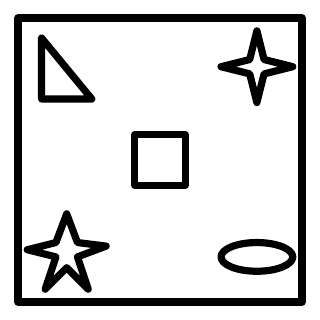
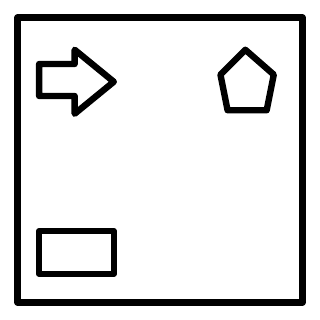
Select the correct mirror image of the given combination when the mirror is placed at 'PQ' as shown below.

  1. ((a))

  2. ((b))

  3. ((c))

  4. ((d))

Show Answer
Answer: ((c))

The correct mirror image of the given figure when the mirror is placed at 'PQ' is

Hence, Option 3 is the correct answer.

Additional Information

In a mirror image Left changes to right and the right changes to left vice-versa.

When placement of mirror not given, By default we will assume it in Vertical direction.

The Letter adjacent to the mirror after the mirror image will adjacent to it just with the left change to right and right change to left vice-versa.

The starting letter of the word will be at last after the mirror image drawn with left changes to right and right changes to left.

7

A paper is folded and cut as shown below. How will it appear when unfolded?

  1. ((a))

  2. ((b))

  3. ((c))

  4. ((d))

Show Answer
Answer: ((a))

The pattern will be as follows:

Hence, the correct answer is Option 1.

8

Eight friends A, B, C, D, E, F, G and H are sitting anticlockwise in the same sequence around a circular table at equal distances from each other. All are facing the centre of the table. If G is sitting in the Southeast, then in which direction is A sitting?

  1. ((a))

    South-west

  2. ((b))

    North-west

  3. ((c))

    North

  4. ((d))

    North-east

Show Answer
Answer: ((d))

North-east

Arranging them according to the given information,

Eight friends A , B, C, D, E, F, G and H are sitting anticlockwise,

  1. G is sitting in the Southeast direction,

  1. In the same sequence around a circular table at equal distances,

So, A is sitting in the North - east direction.

Hence, the correct answer is "North - east".

9

Select the number-pair in which the two numbers are related in the same way as are the two numbers of the following number-pair.

7 : 198

  1. ((a))

    6 : 72

  2. ((b))

    5 : 240

  3. ((c))

    8 : 228

  4. ((d))

    9 : 162

Show Answer
Answer: ((c))

8 : 228

The logic here is,

Second Number = (Square of First number × 2) + 100

7 : 198

(72 × 2) + 100 = (49 × 2) + 100 = 98 + 100 = 198.

Similarly,

(82 × 2) + 100 = (64 × 2) + 100 = 128 + 100 = 228.

8 : 228

Hence, the correct answer is "8 : 228".

10

If 'A' denotes 'addition', 'B' denotes 'multiplication', 'C' denotes 'subtraction', and 'D' denotes 'division', then what will be the value of the following expression?

15 B (14 C 7) A 25 D (18 C 13) C 8 B (2 A 3) = ?

  1. ((a))

    40

  2. ((b))

    105

  3. ((c))

    70

  4. ((d))

    115

Show Answer
Answer: ((c))

70

Given series is

15 B (14 C 7) A 25 D (18 C 13) C 8 B (2 A 3) = ?

Decoding the given information,

LetterDenotes
A+
B×
C-
D÷


Substituting the letters with the operations:

15 × (14 - 7) + 25 ÷ (18 - 13) - 8 × (2 + 3) = ?

BODMAS Rule:

Using BODMAS rule,

15 × 7 + 25 ÷ 5 - 8 × 5

= 15 × 7 + 5 - 8 × 5

= 105 + 5 - 40

= 110 - 40

= 70

Hence, the correct answer is 70.

11

Which number will replace the question mark (?) in the following series?

16, 32, ?, 192, 576, 1152

  1. ((a))

    96

  2. ((b))

    48

  3. ((c))

    80

  4. ((d))

    64

Show Answer
Answer: ((a))

96

Logic: Each term is increased by multiple of 2 and multiple of 3 number successively start from 2,

The pattern followed here is,

Hence, "96" is the correct answer.

12

Select the letter-cluster that can replace the question mark (?) in the given letter-cluster series.

AZA, EVW, ?, OLM, UFG

  1. ((a))

    JQS

  2. ((b))

    JRS

  3. ((c))

    IRS

  4. ((d))

    IRV

Show Answer
Answer: ((c))

IRS

The pattern followed here is:

Hence, the correct answer is IRS.

Alternate Method

Hence, the correct answer is IRS.

13

Select the option in which the given figure (X) is embedded (rotation is NOT allowed).

  1. ((a))

  2. ((b))

  3. ((c))

  4. ((d))

Show Answer
Answer: ((c))

The image (X) can be seen in the following figure

Hence, the correct answer is "Option (3)".

14

Select the option figure which is NOT embedded in the figure (X) given below (rotation is NOT allowed).

  1. ((a))

  2. ((b))

  3. ((c))

  4. ((d))

Show Answer
Answer: ((c))

Important Points

  • Do not get tensed by the complexity of the figures.
  • Carefully understand the structure of the given question figure.
  • The embedded figure may not be of exact size. It may be small or big.
  • Sometimes the rotation or reflection of the figures may be confusing.
  • So think wisely before selecting the answer.


Option 1, 2 and 4 are embedded in the given figure (X) and shown from the color.

Option 2: It is embedded in given figure.

Option 3: It is not embedded in given figure.


Option 4: It is embedded in given figure.

Option 3) is NOT embedded in the figure (X).

Because the lines formed in the middle of this figure are not in the given figure in question.

Hence, "option 3" is the correct answer.

15

Rs. 2,871 is to be divided among A, B and C in the ratio of 9 : 11 : 13, respectively. How much more money (in Rs.) will C get as compared to A?

  1. ((a))

    Rs. 783

  2. ((b))

    Rs. 348

  3. ((c))

    Rs. 402

  4. ((d))

    Rs. 296

Show Answer
Answer: ((b))

Rs. 348

Given,

Total Amount = Rs. 2,871

Ratio of A : B : C = 9 : 11 : 13 (Given),

Then,

9 + 11 + 13 = 33

33 = 2,871

1= 87 

C will get = 87 × 13 = Rs. 1131

A will get = 9 × 87 = Rs. 783

C will get w.r.t A = Rs. (1131 - 783) = Rs. 348

Hence, the correct answer is Rs. 348.

16

Two statements are given, followed by two conclusions numbered I and II. Assuming the statements to be true, even if they seem to be at variance with commonly known facts, decide which of the conclusion logically follow(s) from the statements.

Statements:

Some octopuses are fish.

Some fish are frogs.

Conclusions:

I. Some frogs are fish.

II. Some fish are octopuses.

  1. ((a))

    Only conclusion I follows

  2. ((b))

    Both conclusions follow

  3. ((c))

    Either conclusion I or II follows.

  4. ((d))

    Only conclusion II follows

Show Answer
Answer: ((b))

Both conclusions follow

The possible Venn diagram for the given statements is as below,

Conclusions:

  1. Some frogs are fish → True (It is clear from the given statements that some fish are frogs that means some frogs will also be fish).
  2. Some fish are octopuses → True (It is clear from the given statements that some octopuses are fish that means some fish will also be octopuses).

Thus, Both the Conclusions follow.

StatementConclusion (100% true)Incorrect (100% false)Can't Say
Some A are BSome B are ANo A is B. No B is A.Some A are not B. All B are A. Some B are not A. All A are B.
17

Select the correct mirror image of the given combination when the mirror is placed at 'PQ' as shown below.

  1. ((a))

  2. ((b))

  3. ((c))

  4. ((d))

Show Answer
Answer: ((a))

The correct mirror image of the given figure when the mirror is held at the right side is:

Hence, "Option 1" is the correct answer.

18

Pointing towards a man, a lady said, "His brother is my mother's only daughter's husband's son's father". How is the man related to the lady's husband?

  1. ((a))

    Brother-in-law

  2. ((b))

    Brother

  3. ((c))

    Father

  4. ((d))

    Paternal uncle

Show Answer
Answer: ((b))

Brother

Family Chart :-

Pointing towards a man, a lady said, "His brother (man's brother) is my mother's (lady's mother) only daughter's husband's son's father".

Here "Lady's mother's only daughter here lady herself". 

And lady's husband's son's father will be the lady's husband so that man will be the brother of lady's husband. 

Drawing family tree according to the statement,

Family tree :-


Clearly, Lady's husband is the brother of the man.

Hence, the correct answer is "Brother".

19

Two different positions of the same dice are shown, the six faces of which are numbered from 1 to 6. Select the number that will be on the face opposite to the face showing '3'.

  1. ((a))

    2

  2. ((b))

    5

  3. ((c))

    1

  4. ((d))

    4

Show Answer
Answer: ((d))

4

In 1st and 2nd Dice, 4 number is common,

So, from 4 start clockwise,

then, 6 is the opposite face of 2 and 5 is the opposite face of 1.

Thus, 4 is the opposite face of 3 and 3 is the opposite face of 4.

Hence, "4" is the correct answer.

20

Select the option that represents the correct order of the given words as they would appear in English dictionary.

  1. Lexicon
  2. Lacuna
  3. Lacerate
  4. Lactation
  5. Locust
  1. ((a))

    3, 4, 2, 1, 5

  2. ((b))

    3, 4, 2, 5, 1

  3. ((c))

    4, 3, 2, 1, 5

  4. ((d))

    3, 2, 4, 1, 5

Show Answer
Answer: ((a))

3, 4, 2, 1, 5

According to the sequence in the dictionary: 

The correct order of the given words is:

iii) Lacerate

iv) Lactation

ii) Lacuna 

i) Lexicon

v) Locust

Hence, the correct answer is "3, 4, 2, 1, 5".

Additional Information

  1. First of all, check the common letter in all.
  2. Arrange them according to the alphabet they come first. 
  3. When common letters are arranged, then go for the rest.
21

In a code language, 'SOGGY' is written as '78' and 'PLINTH' is written as '85'. How will 'DEVOTION' be written in that language?

  1. ((a))

    104

  2. ((b))

    112

  3. ((c))

    120

  4. ((d))

    98

Show Answer
Answer: ((b))

112

The logic followed here is:

SOGGY → 19 + 15 + 7 + 7 + 25 = 73

Number of letters in SOGGY is 5

73 +  5 = 78.

PLINTH → 16 + 12 + 9 + 14 + 20 + 8 = 79

Number of letters in PLINTH is 6

79 + 6 = 85.

Similarly,

DEVOTION → 4 + 5 + 22 + 15 + 20 + 9 + 15 + 14 = 104

Number of letters in DEVOTION is 8

104 + 8 = 112.

Hence, the correct answer is "112".

22

Which number will replace the question mark (?) in the following series?

25, 36, 51, 70, 93, 120, ?

  1. ((a))

    163

  2. ((b))

    159

  3. ((c))

    141

  4. ((d))

    151

Show Answer
Answer: ((d))

151

The given series is

25, 36, 51, 70, 93, 120, ?

The logic followed for the series is,

Hence, the correct answer is 151.

23

Select the figure that will replace the question mark (?) in the following figure series.

  1. ((a))

  2. ((b))

  3. ((c))

  4. ((d))

Show Answer
Answer: ((b))

The pattern followed here is:

Symbol at:Moves to:
Top left cornerThe center
The centerBottom right corner
Bottom right cornerTop right corner
Top right cornerBottom left corner


Hence the correct answer is "Option 2".

24

Select the Venn diagram that best illustrates the relationship between the following classes.

Car drivers, Human beings, Men

  1. ((a))

  2. ((b))

  3. ((c))

  4. ((d))

Show Answer
Answer: ((c))

According to the given information,

Car drivers, Human beings, Men

From figure, some men are car drivers such as some car drivers are men but all men and car drivers are human beings.

Hence, "option 3" is the correct answer.

25

Select the letter-cluster that can replace the question mark (?) in the given letter-cluster series.

POUR, MLRO, IHNK, DCIF, ?

  1. ((a))

    XWBY

  2. ((b))

    XWCZ

  3. ((c))

    YWCA

  4. ((d))

    XVBZ

Show Answer
Answer: ((b))

XWCZ

The pattern is as follows: 

Hence, the correct answer is "XWCZ".

26

'A # B' means 'A is the brother of B'.

'A @ B' means 'A is the wife of B'.

'A & B' means 'A is the daughter of B'.

'A % B' means 'A is the sister of B'.

If P % R & Y @ Z # M % N, then how is M related to P?

  1. ((a))

    Maternal aunt

  2. ((b))

    Paternal uncle

  3. ((c))

    Paternal aunt

  4. ((d))

    Mother

Show Answer
Answer: ((c))

Paternal aunt

Family chart :-

Drawing the family tree,

Family Tree :-

M is sister of Z and P is daughter of Z, so, M is paternal aunt of P.

Hence, the correct answer is "Paternal aunt".

27

Which number will replace the question mark (?) in the following series?

57, ?, 62, 71, 87, 112, 148

  1. ((a))

    59

  2. ((b))

    60

  3. ((c))

    61

  4. ((d))

    58

Show Answer
Answer: ((d))

58

The pattern follows here is -

Hence, the correct answer is "58".

28

Select the figure that will replace the question mar (?) in the following figure series.

  1. ((a))

  2. ((b))

  3. ((c))

  4. ((d))

Show Answer
Answer: ((b))

The Logic followed here is:

The Arrow is moving in his same position Clockwise and the circle is changing its position when the new shape is inserted.

The Square which has 4 sides its side increases by +1 and changes to Pentagon of side 5 same as the Triangle which has 3 sides its side increases by +1 and changes to Square of 4 sides.

Hence, the correct answer is Option 2.

29

Three of the following four letter-clusters are alike in a certain way and one is different. Pick the odd one out.

  1. ((a))

    QTWZC

  2. ((b))

    RUXAE

  3. ((c))

    BEHKN

  4. ((d))

    HKNQT

Show Answer
Answer: ((b))

RUXAE

The pattern followed is,

Hence, the correct answer is "RUXAE".

30

In a code language, 'DOUBLE' is written as 'VPEFMC'. How will 'CLIQUE' be written in that language?

  1. ((a))

    KNDFVR

  2. ((b))

    JMDGVQ

  3. ((c))

    JMDFVR

  4. ((d))

    JMDFVS

Show Answer
Answer: ((c))

JMDFVR

The pattern followed is

Similarly,

Hence, the correct answer is JMDFVR.

31

Two statements are given, followed by three conclusions numbered I, II and III. Assuming the statements to be true, even if they seem to be at variance with commonly known facts, decide which of the conclusions logically follow(s) from the statements.

Statements:

Some colleges are schools.

No ground is a college.

Conclusions:

I. No college is a ground.

II. No school is a college.

III. Some schools are colleges.

  1. ((a))

    Only conclusions II and III follow

  2. ((b))

    All of the conclusions follow

  3. ((c))

    Only conclusions I and III follow

  4. ((d))

    Only conclusions I and II follow

Show Answer
Answer: ((c))

Only conclusions I and III follow

The least possible Venn diagram for the given statements is as follow,

Conclusion:

I. No college is a ground → True (It is clear from the Venn diagram that "No college is a ground")

II. No school is a college → False (It is clear from the Venn diagram that definitely "Some schools are colleges")

III. Some schools are colleges → True (It is clear from the Venn diagram that "Some schools are colleges")

Hence, "Only conclusions I and III follow" is the correct answer.


32

Select the figure that will replace the question mark (?) in the following figure series.

  1. ((a))

  2. ((b))

  3. ((c))

  4. ((d))

Show Answer
Answer: ((d))

The pattern is as follows:

Middle symbols : Moving anticlockwise.

Oval shaped symbol : Alternate in each figure.

Hence, the correct answer is "Option 4".

33

Which two numbers should be interchanged to make the given equation correct?

63 ÷ 21 - 42 + 8 × 7 = 135

  1. ((a))

    21 and 42

  2. ((b))

    21 and 8

  3. ((c))

    7 and 63

  4. ((d))

    7 and 21

Show Answer
Answer: ((d))

7 and 21

Given equation is,

63 ÷ 21 - 42 + 8 × 7 = 135

Interchanging numbers and applying BODMAS rule option wise,

(I) 63 ÷ 21 - 42 + 8 × 7 = 135

Interchanging 21 and 42

63 ÷ 42 - 21 + 8 × 7 = 135

1.5 - 21 + 8 × 7 = 135

1.5 - 21 + 56 = 135

1.5 - 35 = 135

-33.5 ≠ 135

(II) 63 ÷ 21 - 42 + 8 × 7 = 135

Interchanging 21 and 8

63 ÷ 8 - 42 + 21 × 7 = 135

7.875 - 42 + 21 × 7 = 135

7.875 - 42 + 147 =135

7.875 + 105 = 135

112.875 ≠ 135

(III) 63 ÷ 21 - 42 + 8 × 7 = 135

Interchanging 7 and 63

7 ÷ 21 - 42 + 8 × 63 = 135

0.33 - 42 + 8 × 63 = 135

0.33 - 42 + 504 = 135

462.33 ≠ 135

(IV) 63 ÷ 21 - 42 + 8 × 7 = 135

Interchanging 7 and 21

63 ÷ 7 - 42 + 8 × 21 = 135

9 - 42 + 8 × 21 = 135

9 - 42 + 168 = 135

9 + 126 = 135

135 = 135.

Hence, "7 and 21" is the correct answer.

Important Points

In this type of questions, where the answer is a whole number,

Look for the option which will have a whole number quotient after the divide.

Like, in this question,

63 is divisible by 21 and 7 only and only one option satisfies this condition.

34

In a code language, if 'my personal use' is written as '521', 'use these things' is written as '169', 'personal things' is written as '29', then which phrase would the code '569' represent in this language?

  1. ((a))

    these personal things

  2. ((b))

    my personal use

  3. ((c))

    my these things

  4. ((d))

    my personal things

Show Answer
Answer: ((c))

my these things

From the given information,

Code for 'my' is '5'.

Code for 'these' is '6'.

So, code '569' stands for 'my these things'.

Hence, the answer is "my these things".

35

Select the correct option that indicates the arrangement of the following words in a logical and meaningful order.

  1. Knee
  2. Navel
  3. Eyebrows
  4. Waist
  5. Chin
  1. ((a))

    4, 1, 2, 5, 3

  2. ((b))

    1, 4, 2, 3, 5

  3. ((c))

    2, 4, 1, 5, 3

  4. ((d))

    1, 4, 2, 5, 3

Show Answer
Answer: ((d))

1, 4, 2, 5, 3

Arranging the given body parts as in the body from bottom to top, we get

  1. Knee
  2. Waist
  3. Navel
  4. Chin
  5. Eyebrows

So, the correct order is 1, 4, 2, 5, 3.

Hence, the correct answer is Option 4.

36

Study the given pattern carefully and select the number that can replace the question mark (?) in it.

14428
21663
458?
  1. ((a))

    195

  2. ((b))

    180

  3. ((c))

    210

  4. ((d))

    150

Show Answer
Answer: ((b))

180

The Logic followed here is:

The third number = The First number × (second number ÷ 2)

In Row 1,

14 × (4 ÷ 2)

= 14 × 2 = 28

In Row 2,

21 × (6 ÷ 2)

= 21 × 3 = 63

Similarly,

In Row 3,

45 × (8 ÷ 2)

= 45 × 4 = 180

Hence, the correct answer is "180".

Additional Information

The most common pattern asked in exams are based on:

  • It could be the sum of two numbers divided by a constant
  • It could be average of numbers.
  • It could be in the form of alphabets, where alphabets are increased by constant or increased by the square of numbers or increased by prime numbers.
  • It could be the difference of product of two diametrically opposite numbers.
  • It could be the difference in the sum of adjacent numbers.
  • The difference of the numbers could be in the pattern 1± 1, 2± 1,  and so on.
  • The difference of the numbers could be in the pattern 1± 1, 2± 1, and so on.
  • Numbers could be 12, 22, 3and so on or 13, 23, 3and so on.
  • The difference could be prime numbers or the difference could be the square of prime numbers.
  • The difference could be in the form of N± N or N± N.
  • The difference could be in the form of ×N + N or ×2 + 1, ×2 + 2, ×2 + 3 and so on.
  • The difference could be in the form of ×2 ± 1 alternatively.
  • Numbers could be ×1, ×2, ×3 and so on.
37

Select the option that is related to the third letter-cluster in the same way as the second letter-cluster is related to the first letter-cluster.

FOREST : TSROFE :: MOVING : ?

  1. ((a))

    VONMIG

  2. ((b))

    GIMNOV

  3. ((c))

    OVINMG

  4. ((d))

    VIMNGI

Show Answer
Answer: ((a))

VONMIG

Logic:

FOREST

After arranging as Alphabet Order,

EFORST

Now, writing this in Reverse order,

TSROFE

Similar,

MOVING

After arranging as Alphabet Order,

GIMNOV

Now, writing this in Reverse Order,

VONMIG

38

Six friends are sitting in two lines, one line behind the other line, and all the friends are facing north. Each line has three friends. Jogi is sitting between Vikrant and Saroj. Shrikant is sitting just behind Vikrant. Vaani is to the immediate right of Tripti. Which three persons are sitting in the same line?

  1. ((a))

    Jogi, Vikrant and Saroj

  2. ((b))

    VIkrant, Vaani and Tripti

  3. ((c))

    Jogi, Tripti and Vaani

  4. ((d))

    Jogi, Vikrant and Tripti

Show Answer
Answer: ((a))

Jogi, Vikrant and Saroj

  1. Each line has three friends.

  2. Jogi is sitting between Vikrant and Saroj.

  3. Shrikanth is sitting just behind Vikrant.

Case I

Case II

  1. Vaani is to the immediate right of Tripthi.

Case I

Case II

Vikrant, Jogi and Saroj are in same line.

Shrikanth, Tripthi and Vaani are in same line.

Hence, the correct answer is "Jogi, Vikrant and Saroj".

39

The sum of Vishal and Aditi's current ages is 105 years. If Aditi is 25 years younger than Vishal, then what is the current age of Pritam who is 7 years older that Aditi?

  1. ((a))

    40 years

  2. ((b))

    32 years

  3. ((c))

    47 years

  4. ((d))

    72 years

Show Answer
Answer: ((c))

47 years

According to the given information,

The sum of the current ages of Vishal and Aditi is 105 years.

Let the Vishal's age be x

And the Aditi's age be y

x + y = 105  ----(1)

If Aditi is 25 years younger than Vishal then,

x = y + 25   ----(2)

Putting value of equation (2) in equation (1),

y + 25 + y = 105

2y = 80

y = 40

y is Aditi's present age, which is 40.

Pritam is 7 years older than Aditi

So Pritam's age = y + 7 = 40 + 7 = 47.

Hence, the correct answer is 47.

40

Study the given pattern carefully and select the number that can replace the question mark (?) in it.

199140
179130
?5120
  1. ((a))

    24

  2. ((b))

    19

  3. ((c))

    28

  4. ((d))

    47

Show Answer
Answer: ((b))

19

Given

199140
179130
?5120


The logic follows here is :-

19 , 9 , 140

(19 + 9) × 5

28 × 5 = 140,

17, 9, 130

(17 + 9) × 5

26 × 5 = 130,

Similarly,

? , 5 , 120

(? + 5) × 5 = 120

(? + 5) = 120 ÷ 5

(? + 5) = 24

? = 24 - 5

? = 19

Hence, the correct answer is 19.

41

A paper is folded and cut as shown below. How will it appear when unfolded?

  1. ((a))

  2. ((b))

  3. ((c))

  4. ((d))

Show Answer
Answer: ((c))

The paper when unfolded step by step:

Hence, the correct answer is Option 4.

42

Select the correct combination of mathematical signs that can sequentially replace the * sign from left to right to balance the following equation.

16 * 35 * 5 * 20 * 4 * 89

  1. ((a))

    ×, - , +, ÷, =

  2. ((b))

    ×, ÷, +, -, =

  3. ((c))

    -, ×, ÷, +, =

  4. ((d))

    -, ÷, +, ×, =

Show Answer
Answer: ((d))

-, ÷, +, ×, =

Given equation is :-

16 * 35 * 5 * 20 * 4 * 89

Placing mathematical signs at the place of * and using BODMAS rule

(1) 16 * 35 * 5 * 20 * 4 * 89

Placing ×, - , +, ÷, =

16 × 35 - 5 + 20 ÷ 4 = 89

16 × 35 - 5 + 5 = 89

560 - 5 + 5 = 89

555 + 5 = 89

560 ≠ 89.

(2) 16 * 35 * 5 * 20 * 4 * 89

Placing ×, ÷, +, -, =

16 × 35 ÷ 5 + 20 - 4 = 89

16 × 7 + 20 - 4 = 89

112 + 20 - 4 = 89

112 + 16 = 89

128 ≠ 89.

(3) 16 * 35 * 5 * 20 * 4 * 89

Placing -, ×, ÷, +, =

16 - 35 × 5 ÷ 20 + 4 = 89

16 - 35 × 0.25 + 4 = 89

16 - 8.75 + 4 = 89

7.25 + 4 = 89

11.25 ≠ 89.

(4) 16 * 35 * 5 * 20 * 4 * 89

Placing -, ÷, +, ×, =

16 - 35 ÷ 5 + 20 × 4 = 89

16 - 7 + 20 × 4 = 89

16 - 7 + 80 = 89

16+ 73 = 89

89 = 89.

Hence, the correct answer is "-, ÷, +, ×, =".

43

Select the option that is related to the third letter-cluster in the same way as the second letter-cluster is related to the first letter-cluster.

PORCH : IDSPQ :: MOIST : ?

  1. ((a))

    OPJTU

  2. ((b))

    UTJPN

  3. ((c))

    OMITS

  4. ((d))

    UTJQO

Show Answer
Answer: ((b))

UTJPN

The pattern follows here is

Similarly,

Hence, the correct answer is "UTJPN".

44

Arjun walks 40 m towards the South from his home, and then he turns left and walks 55 m. Then, he takes another left turn and walks 15 m. Then, he turns left again and walks 55 m. How far is he from his home now?

  1. ((a))

    35 m

  2. ((b))

    15 m

  3. ((c))

    30 m

  4. ((d))

    25 m

Show Answer
Answer: ((d))

25 m

According to the given information, the possible diagram is as below:

As we can see in the diagram, the distance between the final position of Arjun and his home is = 40 - 15 = 25 m.

Hence, the correct answer is "25 m".

45

In a code language, if 'get up now' is written as 'pax max rax', 'he will get' is written as 'max dax zax', and 'will it stop' is written as 'zax kax lax', then for which word is the code 'dax' used in this language?

  1. ((a))

    get

  2. ((b))

    he

  3. ((c))

    will

  4. ((d))

    it

Show Answer
Answer: ((b))

he

According to the given information,

Code for "Max" is get.

Code for "Zax" is will.

Code for "Dax" is he.

Hence, "he" is the correct answer.

46

In the following Venn diagram, the 'Rectangle' stands for 'Judges', the 'Triangle' stands for 'Males' and the 'Hexagon' stands for 'Golf players'. The given numbers represent the number of persons in that particular category. How many male judges are there in total?

  1. ((a))

    22

  2. ((b))

    26

  3. ((c))

    34

  4. ((d))

    17

Show Answer
Answer: ((c))

34

From the given diagram,

The 'Rectangle' represents 'Judges', the 'Triangle' stands for 'Males' and the 'Hexagon' stands for 'Golf players'.

Ask: Total number of Judges who are males.

So, we should find common part of Judges and males.

The shaded part represents the Judges who are Males i.e (26 + 8) = 34

Hence, "34" is the correct answer.

47

Three of the following four letter-clusters are alike in a certain way and one is different. Pick the odd one out.

  1. ((a))

    ZUQO

  2. ((b))

    TOKH

  3. ((c))

    BWSP

  4. ((d))

    KFBY

Show Answer
Answer: ((a))

ZUQO

<br>

The pattern is as follows:

<br>

Thus, option 2, 3 and 4 are following same pattern and 1st option is not follow this pattern.

Note:  B(2) - 5 = (26 + 2) - 5 = 23(W).  As alphabet series end at Z(26).

Hence, "ZUQP" is the correct answer.

48

Study the given pattern carefully and select the number that can replace the question mark (?) in it.

365549
644739
49?61
  1. ((a))

    68

  2. ((b))

    88

  3. ((c))

    72

  4. ((d))

    120

Show Answer
Answer: ((a))

68

The pattern follows here is:

36, 55, 49

62 = 36

49 + 6 = 55

64, 47, 39

82 = 64

39 + 8 = 47

So, 

49, 68, 61

72 = 49

61 + 7 = 68

Hence, the correct answer is 68.

49

Z's house is 45 m South to P's house. J's house is 50 m South to H's house. Q's house is 30 m West to Z's house. M's house is 50 m North to P's house. H's house is 30 m West to M's house. In which direction and at what distance is J's house with reference to Q's house?

  1. ((a))

    South, 50 m

  2. ((b))

    West, 30 m

  3. ((c))

    North, 45 m

  4. ((d))

    South, 45 m

Show Answer
Answer: ((c))

North, 45 m

Drawing the Diagram in the given information,

So, J's house is 45 m North to Q' house.

Hence, "North, 45 m" is the correct answer.

50

Which number will replace the question mark (?) in the following series.

46, 66, 94, 132, 182, ?

  1. ((a))

    292

  2. ((b))

    220

  3. ((c))

    246

  4. ((d))

    232

Show Answer
Answer: ((c))

246

The pattern followed here is:

Hence, the correct answer is 246.

General Knowledge and General Awareness (50 questions)

51

Muhammad Ghori was defeated by a ______ ruler in 1191.

  1. ((a))

    Maurya

  2. ((b))

    Chalukya

  3. ((c))

    Chahamana

  4. ((d))

    Gahadavala

Show Answer
Answer: ((c))

Chahamana

The correct answer is Chahamana.

  • The best-known Chahamana ruler was Prithviraj III (1168- 1192), who defeated an Afghan ruler named Sultan Muhammad Ghori in 1191, but lost to him the very next year, in 1192.

Important Points

  • Shihab al-Din, popularly known as Muhammad Ghori was the Muslim ruler who laid the foundation for the subsequent Islamic ruling dynasties of India which saw its pinnacle later in the Mughal Empire.
  • He was defeated in many battles, notably by Chahamana ruler Prithviraj III (1178-1192 CE) in the First Battle of Tarain in 1191 CE, by Gujrati Chalukya ruler Mularaja II  (1178 CE), and by the rulers of the Khwarazm Empire.
  • The Second Battle of Tarain established the Ghurid rule in India with the chief Rajput ruler Prithviraj being beaten.
52

______ was elected as President of the Indian National Congress in December 1929 at its annual session in the city of Lahore.

  1. ((a))

    Sardar Vallabhbhai Patel

  2. ((b))

    Subhas Chandra Bose

  3. ((c))

    Jawaharlal Nehru

  4. ((d))

    Lal Bahadur Shastri

Show Answer
Answer: ((c))

Jawaharlal Nehru

The correct answer is Jawaharlal Nehru.

  • Jawaharlal Nehru was elected as President of the Indian National Congress in December 1929 at its annual session in the city of Lahore.

Important Points

  • Indian National Congress was formed on December 28, 1885, by British civil servant Allan Octavian Hume.
  • Womesh Chandra Bonnerjee was elected as the first president of the first meeting of the Congress.
  • The Indian National Congress, on 19 December 1929, passed the historic ‘Purna Swaraj’(total independence) resolution – at its Lahore session.
  • A public declaration was made on 26 January 1930 – a day which the Congress Party urged Indians to celebrate as ‘Independence Day’.
  • In 1929, Lord Irwin, the then Viceroy of India, made a vaguely announced – referred to as the Irwin Declaration -  that India would be granted dominion status in the future.

Additional Information

Sardar Vallabhbhai Patel- Vallabhbhai Patel, popularly known as Sardar Patel, Bismarck of India, Iron Man Of India, Strong Man. - He was the first Deputy Prime Minister of India. - Indian National Trade Union Congress was founded in 1947 by Vallabhbhai Patel. - Sardar Vallabhbhai Patel’s statue or known as the Statue of Unity is situated in Gujarat, India. It is the world’s tallest statue standing at a height of 182 meters.
Subhas Chandra Bose- Subhas Chandra Bose (Netaji) (23 January 1897 – 18 August 1945) is known for his role in India's independence movement. - He was born on 23rd January 1897, in Cuttack, Orissa Division, Bengal Province, to Prabhavati Dutt Bose and Janakinath Bose. - He earned the title ‘Netaji’, in Germany by the Indian soldiers of the Azad Hind Fauj in 1942. - His very famous slogan is, “Give me blood, and I shall give you freedom!” as well as “Jai Hind”. - He was elected the President of the All India Youth Congress and also the Secretary of Bengal State Congress. - He formed the All India Forward Block. - He is said to have died in 1945 when his plane crashed in Taiwan. However, there are still many conspiracy theories regarding his death.
Lal Bahadur Shastri- Lal Bahadur Shastri was the second prime minister of India (1964-1966). - His famous slogan of ‘Jai Jawan Jai Kisan’ became popular during the 1965 Indo-Pakistan war. - He died the day following the Tashkent Agreement that formally ended the war.
53

The process of evolution of different species in a given geographical area starting from a point and literally radiating to other areas of geography (habitats) is called ______.

  1. ((a))

    adjustive radiation

  2. ((b))

    adaptive radiation

  3. ((c))

    adaptive evolution

  4. ((d))

    adjustive evolution

Show Answer
Answer: ((b))

adaptive radiation

The correct answer is adaptive radiation.

  • Adaptive radiation (divergent evolution) is the evolution from one species of animals or plants of many different forms.
  • The original population increases in size and it spreads out from its center of origin to exploit new habitats and food sources.
  • This results in many populations each adapted to its particular habitat. Eventually, these populations will differ from each other sufficiently to become new species.

Key Points

  • Adaptive evolution is natural selection that acts to increase the frequency of beneficial alleles and traits while decreasing the frequency of deleterious qualities.
  • Natural selection acts at the level of the individual, selecting for those that have a higher overall fitness compared to the rest of the population.
  • There are several ways evolution can affect population variation: stabilizing selection, directional selection, diversifying selection, frequency-dependent selection, and sexual selection.
  • Genetic drift produces random changes in the frequency of traits in a population. An evolution that arises from genetic drift is called neutral evolution.
54

The first lot of 33 declassified files relating to Netaji Subhas Chandra Bose was handed over by the Prime Minister’s Office (PMO) to the National Archives of India on 4 December ______.

  1. ((a))

    2019

  2. ((b))

    2014

  3. ((c))

    2015

  4. ((d))

    2018

Show Answer
Answer: ((c))

2015

The correct answer is 2015.

  • On 4 December 2015, the first lot of 33 files which were declassified were handed over by the Prime Minister's Office (PMO) to the National Archives of India.
  • The Government of India had decided to declassify the files relating to Netaji Subhas Chandra Bose and make them accessible to the public.
  • This was announced by the Hon’ble Prime Minister of India on 14 October 2015.

Important Points

  • Subhas Chandra Bose (Netaji) (23 January 1897 – 18 August 1945) is known for his role in India's independence movement.
  • He was born on 23rd January 1897, in Cuttack, Orissa Division, Bengal Province, to Prabhavati Dutt Bose and Janakinath Bose.
  • He earned the title ‘Netaji’, in Germany by the Indian soldiers of the Azad Hind Fauj in 1942.
  • His very famous slogan is, “Give me blood, and I shall give you freedom!” as well as “Jai Hind”.
  • He was elected the President of the All India Youth Congress and also the Secretary of Bengal State Congress.
  • He formed the All India Forward Bloc.
  • He is said to have died in 1945 when his plane crashed in Taiwan. However, there are still many conspiracy theories regarding his death.
55

The discovery and understanding of electromagnetic induction is based on a long series of experiments carried out by ______.

  1. ((a))

    Rutherford

  2. ((b))

    Einstein

  3. ((c))

    Faraday and Henry

  4. ((d))

    Planck and Fermi

Show Answer
Answer: ((c))

Faraday and Henry

The correct answer is Faraday and Henry.

  • The Discovery and understanding of electromagnetic induction are based on a long series of experiments carried out by Henry and Faraday.
  • Experiment 1: This shows that the relative motion between the magnet and the coil is responsible for a generation (induction) of electric current in the coil.
  • Experiment 2: The deflection, and consequently current becomes larger if a coil is moved towards or away from the other coil at a quicker rate.
  • Experiment 3: Faraday showed that this relative motion is not an absolute requirement.

It is also observed that the deflection increases dramatically when an iron rod is inserted into the coils along their axis.

Important Points

  • Rutherford's experiment: It proved the existence of a nucleus in the atom.
  • Ernest Rutherford's most famous experiment is the gold foil experiment.
  • A beam of alpha particles was aimed at a piece of gold foil. Most alpha particles passed through the foil, but a few were scattered backward. This showed that most of the atom is in space surrounding a tiny nucleus.
  • Einstein's experiment was chasing after a beam of light and had played a memorable role in his development of special relativity.
  • He is famous for his theory of relativity, which revolutionized our understanding of space, time, gravity, and the universe.
  • One equation from Albert Einstein's theory of relativity is E=mc2.
  • In this formula, "c" is the speed of light (constant). It is assumed to be the fastest speed possible in the universe. This formula explains how energy (E) is related to mass (m).
  • Planck's work in thermodynamics led to the formulations of his quantum theory.
  • To explain the colors of hot glowing matter, he proposed that energy is radiated in a very minute and discrete quantized amount of packets, rather than in a continuous unbroken wave.
  • Enrico Fermi's experiment discovers the neutron and then discover artificial radioactivity.
  • Fermi resolved to experiment in producing artificial radioactivity by substituting neutron bombardment for the alpha particles method.
56

Planned economic development in India began in ______ with the inception of the First Five Year Plan

  1. ((a))

    1958

  2. ((b))

    1948

  3. ((c))

    1951

  4. ((d))

    1956

Show Answer
Answer: ((c))

1951

The correct answer is 1951.

  • The planned economic development in India began in 1951 with the inception of the First Five Year Plan, theoretical efforts had begun much earlier, even before the independence.
  • It focused primarily on the development of the primary sector, specifically agriculture and irrigation.

Important Points

  • First Five-Year Plan was launched from 1951 to 1956, under the leadership of Jawaharlal Nehru.
  • It was based on the Harrod-Domar model with a few modifications.
  • This plan was successful and achieved a growth rate of 3.6% (more than its target of 2.1%).
  • The duration of the "Eleventh Five Year Plan" was from 2007 to 2012, under the leadership of Manmohan Singh.
  • It was prepared by the C. Rangarajan.
  • The theme was towards faster and more inclusive development.
  • It achieved a growth rate of 8% against a target of 9% growth.

Key Points

  • India had a total of 12 Five-Year Plans, the last one being from 2012-2017.
  • In 2015, Prime Minister Narendra Modi dissolved the Planning Commission and replaced it with the NITI Aayog
  • The National Institution for Transforming India (NITI Aayog) facts:
  • Formed: 1 January 2015
  • Chairman - Narendra Modi
  • Vice-Chairman - Dr. Suman Bery
  • CEO - Sh. BVR Subrahmanyam
57

What is the total area of the state of Goa?

  1. ((a))

    1702 km2

  2. ((b))

    2702 km2

  3. ((c))

    3702 km2

  4. ((d))

    4702 km2

Show Answer
Answer: ((c))

3702 km2

The correct answer is 3702 km2.

Key Points

  • Goa is a state in western India with coastlines stretching along the Arabian Sea.
  • It is India's smallest state (1,429 square miles).
  • 30, May 1987 is the Goa formation day.
  • Some facts about Goa:
  • Capital: Panaji
  • Governor: Shri P.S. Sreedharan Pillai
  • CM: Pramod Pandurang Sawant
  • Official language: Konkani
  • Largest city: Vasco da Gama
  • Number of districts: 2 (North Goa and South Goa)

Additional Information

  • The Dudhsagar Waterfalls (603 meters) can be found in the far east of the state.
  • Calangute is the largest beach in Goa. Other beaches are included Baga Beach, Arambol Beach, Morjim Beach, Palolem Beach, Anjuna Beach.
  • UNESCO World Heritage Site Basilica of Bom Jesus was built in the 16th Century.
  • Article 371 in the Indian constitution is a special provision for Goa.
58

Which of the following poems is NOT written by Sarojini Naidu ?

  1. ((a))

    A Love Song from the North

  2. ((b))

    My Dead Dream

  3. ((c))

    The Banyan Tree

  4. ((d))

    In the Forest

Show Answer
Answer: ((c))

The Banyan Tree

The correct answer is The Banyan Tree.

  • "The Banyan Tree" was written by Rabindranath Tagore.
  • "A Love Song from the North", "My Dead Dream", "In the Forest" all are written by Sarojini Naidu.

Additional Information

  • Sarojini Naidu was an Indian political activist, a member of the Indian National Congress, and a poet.
  • She was the first female Indian governor.
  • She was titled as ‘Nightingale of India’ by Mahatma Gandhi.
  • Her first guru was Gopal Krishna Gokhale who encouraged her to fight for the country and ignited the fire of patriotism in her.
  • The British government also awarded her the Kaisar-i-Hind Medal for her work during the plague epidemic in India.
  • Some books written by the Sarojini Naidu are The Golden Threshold, Mohammad Jinnah: An Ambassador of Unity, The Indian Fantasy, The Royal Tombs of Golconda, The Snake Charmer, etc.
  • Rabindranath Tagore was also known as Gurudev, was a Bengali polymath- poet, writer, composer, philosopher, and painter.
  • He was the first non-European and the first Indian to receive the Nobel Prize for Literature (1913).
  • He was the author of ‘Geetanjali’.
  • Tagore was awarded the knighthood by King George V in 1915, but he repudiated it in 1919 as a protest against the Amritsar (Jallianwala Bagh) Massacre. He is sometimes referred to as “the Bard of Bengal”.
  • He was the founder of Visvabharati University.
  • He is the only person who wrote the National anthem for two countries- ‘Jana Gana Mana’ originally written in Bengali for India in 1911 and first sung at the Calcutta Session of Congress and ‘Amar Sonar Bangla’ for Bangladesh in the year 1905.
59

Fondly called the ‘Haryana Hurricane’, ______ made his test debut in the year 1978.

  1. ((a))

    Sunil Gavaskar

  2. ((b))

    Kapil Dev

  3. ((c))

    Ravi Shastri 

  4. ((d))

    Dilip Vengsarkar

Show Answer
Answer: ((b))

Kapil Dev

The correct answer is Kapil Dev.

  • Kapil Dev Ramlal Nikhanj is a former Indian cricketer. He is known as ‘Haryana Hurricane’.
  • He was born on 6 January 1959 in Chandigarh.
  • His test debut (cap 142) on 16 October 1978 with Pakistan Team.
  • Kapil Dev led the Indian cricket team to their maiden World Cup triumph on June 25, 1983.

Important Points

Sunil Gavaskar- He is an Indian cricket commentator and former cricketer representing India. - He is also known as "Sunny", "Little Master". - The Board of Control for Cricket in India (BCCI) named Sunil Gavaskar as the recipient of the Col CK Nayudu Lifetime Achievement Award for Cricket in India in 2012
Ravi Shastri- Ravi Shastri is  former Indian cricket coach, commentator, cricketer, and former head coach of the Indian national cricket team.
Dilip Vengsarkar- Dilip Balwant Vengsarkar is a former Indian cricketer and a cricket administrator. - He was also known by the nickname 'Colonel'. - He has been awarded the Arjuna Award as well as the Wisden Cricket of the Year award for his contribution towards Indian cricket.
60

Which of the following public sector enterprises falls under the status ‘Maharatna’?

  1. ((a))

    Steel Authority of India Limited

  2. ((b))

    Hindustan Aeronautics Limited

  3. ((c))

    Bharat Sanchar Nigam Limited

  4. ((d))

    Mahanagar Telephone Nigam Limited

Show Answer
Answer: ((a))

Steel Authority of India Limited

The correct answer is Steel Authority of India Limited.

  • There are 12 Maharatna CPSEs (Central Public Sector Enterprises), namely:
  • Bharat Heavy Electricals Limited
  • Bharat Petroleum Corporation Limited
  • Coal India Limited
  • GAIL (India) Limited
  • Hindustan Petroleum Corporation Limited
  • Indian Oil Corporation Limited
  • NTPC Limited
  • Power Grid Corporation of India Limited
  • Oil & Natural Gas Corporation Limited
  • Steel Authority of India Limited
  • Power Finance Corporation
  • There are 13 Navratna Companies in India:
  • Bharat Electronics Limited
  • Container Corporation of India Limited
  • Engineers India Limited
  • Hindustan Aeronautics Limited
  • Mahanagar Telephone Nigam Limited
  • National Aluminium Company Limited
  • NBCC (India) Limited
  • NMDC Limited
  • NLC India Limited
  • Oil India Limited
  • Rashtriya Ispat Nigam Limited
  • Rural Electrification Corporation Limited
  • Shipping Corporation of India Limited
  • REC Ltd becomes 12th company to gets 'Maharatna' company

Key Points

  • Maharatna Company Criteria:
  • Having a Navratna status.
  • Listed on Indian stock exchange with minimum prescribed public shareholding under SEBI regulations.
  • Average annual turnover of more than Rs. 25,000 crore, during the last 3 years.
  • The average annual net worth of more than Rs. 15,000 crore, during the last 3 years.
  • Average annual net profit after tax of more than Rs. 5,000 crore, during the last 3 years.
  • Should have a significant global presence/international operations.

Important PointsAs of September 2024, India has 13 Maharatna companies and 25 Navratna companies: List of Maharatna, Navratna and Miniratna.

61

Who is the first Indian to be awarded the Nobel Prize in Physics?

  1. ((a))

    Har Gobind Khorana

  2. ((b))

    Chandrasekhara Venkata Raman

  3. ((c))

    Subramanyan Chandrasekhar

  4. ((d))

    Venkatraman Ramakrishnan

Show Answer
Answer: ((b))

Chandrasekhara Venkata Raman

The correct answer is Chandrasekhara Venkata Raman.

  • India's first physicist to win a Nobel Physics Prize in 1930, for his work on the scattering of light.
  • The discovery of the effect was named after him (Raman Effect).
  • He further established that a small portion of the scattered light acquires other wavelengths than that of the original light because some of the incoming photons' energy can be transferred to a molecule, giving it a higher level of energy.

Important Points

Har Gobind Khorana- His work on electron diffraction got him the 1968 Nobel Prize in Physiology or Medicine. - He shared the award with Robert W Holley and Marshall W Nirenberg for their interpretation of the genetic code and its function in protein synthesis.
Subramanyan Chandrasekhar- In 1983, he bagged the Nobel Prize in Physics for theoretical studies of the physical processes of importance to the structure and evolution of the stars. - He shared the award with another physicist William Alfred Fowler. - His theory suggested that the star further collapses into a compact star known as a white dwarf.
Venkatraman Ramakrishnan- He received the 2009 Nobel Prize in Chemistry for studies of the structure and function of the ribosome. - He shared the award with Thomas A Steitz and Ada E Yonath.
62

Tax reforms are concerned with the reforms in the government’s taxation and public expenditure policies, which are collectively known as its ______.

  1. ((a))

    fiscal policy

  2. ((b))

    financial policy

  3. ((c))

    fiscal reforms

  4. ((d))

    financial reforms

Show Answer
Answer: ((a))

fiscal policy

The correct answer is fiscal policy.

  • Fiscal policy is concerned with the government’s taxation and public expenditure.
  • Fiscal policy is how a government adjusts its spending levels and tax rates to monitor and influence a nation's economy.
  • It is the sister strategy to monetary policy through which a central bank influences a nation's money supply.

Important Points

  • Financial policies, which are adopted by the legislative body, provide written guidance for how local government officials and staff should approach fiscal issues and core financial areas.
  • It is related to the regulation, supervision, and oversight of the financial and payment systems, including markets and institutions.
  • The view of policies is in promoting financial stability, market efficiency, and client-asset and consumer protection.
  • Financial Management takes financial decisions under three main categories namely, investment decisions, financing decisions, and dividend decisions.
  • Fiscal reform refers to a wide range of structural adjustments to a country’s fiscal system, particularly taxation models and fiscal incentives.
  • It can reflect the true values and importance of biodiversity and ecosystem services in national economies.
  • Financial reforms are introduced in the bank to remove the deficiencies of the banking sectors in India.
  • The main intent of reforms is to uphold a diversified, efficient, and competitive financial system with the aim of improving the allocative efficiency of resources through operational flexibility, improved financial viability and institutional solidification.
63

Hallisaka is a group dance native to ______.

  1. ((a))

    Goa

  2. ((b))

    Gujarat

  3. ((c))

    Rajasthan

  4. ((d))

    Maharashtra

Show Answer
Answer: ((b))

Gujarat

The correct answer is Gujarat.

  • The origin of the Hallisaka dance is traced to the Harivamsa Purana.
  • It is a form of group dance, which is performed by both males and females.

Important Points

STATEFOLK DANCES
GoaSamayi nrutya, Jagar, Ranmale, Tarangamel, Koli, Gonph, Tonnya mell.
GujaratGarba, Dandiya Ras, Tippani Juriun, Bhavai.
MaharashtraGafa, Lavani, Nakata, Dahikala Dasavtar or Bohada, Koli, Lezim.
AssamBihu, Naga dance, Khel Gopal, Natpuja, Maharas, Canoe, Jhumura Hobjanai.
Madhya PradeshAada, Khada Nach, Selabhadoni, Maanch, Phulpati, Grida.
BiharBakho-Bakhain, Sama Chakwa, Bidesia, Jata-Jatin, Panwariya.
RajasthanGhumar, Chakri, Ganagor, Ghapal, Kalbeliya.
64

With which of the following sports are Ritwik Bhattacharya, Joshna Chinappa and Saurav Ghosal associated ?

  1. ((a))

    Squash

  2. ((b))

    Tennis

  3. ((c))

    Wrestling

  4. ((d))

    Weight lifting

Show Answer
Answer: ((a))

Squash

The correct answer is Squash.

  • Ritwik Bhattacharya, Joshna Chinappa, and Saurav Ghosal are associated with Squash.
  • Ritwik Bhattacharya led Indian squash to a good growing momentum which was further capitalized by the young crop of Saurav Ghosal and Co.
  • He won the national championship a record 5 times.
  • He also partnered Saurav to the world championship doubles final way back in 2004.
  • Saurav Ghosal is currently ranked 13th in the world (PSA Men's World Rankings).
  • Saurav has won 5 titles, besides one gold and one silver at the 2014 Asian Games and three bronze medals before that.
  • Joshna Chinappa is the current India number 1 in the women's category.

Additional Information

  • According to PSA Men's World Rankings of August 2020:
  • Mohamed El Shorbagy, an Egyptian player ranked top, and Ali Farag, from Egypt, ranked 2nd.
65

Mohandas Karamchand Gandhi returned to India in the year ______ after two decades of residence abroad.

  1. ((a))

    1869

  2. ((b))

    1905

  3. ((c))

    1893

  4. ((d))

    1915

Show Answer
Answer: ((d))

1915

The correct answer is 1915.

Important Points

  • Mohandas Karamchand Gandhi landed on January 9, 1915, at the Apollo Bunder in Bombay after two decades of residence abroad.
  • He received a "Kaiser-i-Hind" gold medal in the King’s birthday honors list of 1915.
  • His political mentor on the Indian scene was Gopal Krishna Gokhale.
  • Lord Hardinge’s open support of the Satyagraha movement had in any case removed the stigma of rebellion from South Africa’s Indian movement.

Key Points

  • As a 19-year-old, Mohandas Karamchand Gandhi had left India for the first time on September 4, 1888, to get enrolled in the centuries-old law institute Inner Temple in London.
  • In 1894 Gandhi tried his first criminal cases in South Africa.
  • From 1893 till 1913 Gandhiji practiced in South Africa.
  • On March 12, 1930, Indian independence leader Mohandas Gandhi begins a defiant march to the sea in protest of the British salt monopoly.
  • Gandhi set out from Sabarmati Ashram, Ahmadabad with 78 followers on a 241-mile march to the coastal town of Dandi on the Arabian Sea.
  • They reached Dandi on April 5, Gandhi was at the head of a crowd of tens of thousands. Gandhi spoke and led prayers and early the next morning walked down to the sea to make salt.
66

Birhor dance is a tribal folk dance from ______.

  1. ((a))

    Karnataka

  2. ((b))

    Punjab

  3. ((c))

    Himachal Pradesh

  4. ((d))

    Jharkhand

Show Answer
Answer: ((d))

Jharkhand

The correct answer is Jharkhand.

Important Points

  • Some Indian States and their folk Dances:
STATEDANCES
KarnatakaKarga, Lambi, Yakshagan, Huttari.
PunjabBhangra, Giddha, Bhand, Daff, Dhaman.
Himachal PradeshJhali, Chharhi, Nati, Dangi, Jhora.
JharkhandMundari Dance, Sarhul, Barao, Karma Munda, Agni, Mardana Jhumar, Paika, Phagua, Jhitka, Danga.
AssamBihu, Naga dance, Khel Gopal, Natpuja, Maharas, Canoe, Jhumura Hobjanai.
Madhya PradeshAada, Khada Nach, Selabhadoni, Maanch, Phulpati, Grida.
BiharBakho-Bakhain, Sama Chakwa, Bidesia, Jata-Jatin, Panwariya.
RajasthanGhumar, Chakri, Ganagor, Ghapal, Kalbeliya.
67

 ______ states that for a solution of volatile liquids, the partial vapour pressure of each component of the solution is directly proportional to its mole fraction present in solution.

  1. ((a))

    Boyle’s law

  2. ((b))

    Dalton’s law

  3. ((c))

    Faraday’s law

  4. ((d))

    Raoult’s law

Show Answer
Answer: ((d))

Raoult’s law

The correct answer is Raoult’s law.

Raoult’s law states that a solvent’s partial vapour pressure in a solution (or mixture) is equal or identical to the vapour pressure of the pure solvent multiplied by its mole fraction in the solution.

Mathematically, Raoult’s law equation is written as;

Psolution = ΧsolventP0solvent

Where,

Psolution = vapour pressure of the solution

Χsolvent  = mole fraction of the solvent

P0solvent = vapour pressure of the pure solvent

Important Points

Boyle’s law- Boyle’s law, also called Mariotte’s law, a relation concerning the compression and expansion of a gas at a constant temperature. - The pressure exerted by a gas (of a given mass, kept at a constant temperature) is inversely proportional to the volume occupied by it. - The pressure (P) of a given quantity of gas varies inversely with its volume (V) at constant temperature; i.e., in equation form, PV = k, a constant.
Dalton’s law- The Law of Partial Pressures, states that the total pressure exerted by a mixture of gases is equal to the sum of the partial pressures of the gases in the mixture.
Faraday’s law- Faraday's law of induction (Faraday's law) is a basic law of electromagnetism predicting how a magnetic field will interact with an electric circuit to produce an electromotive force (EMF) - a phenomenon known as electromagnetic induction. - Faraday's law states that the EMF is also given by the rate of change of the magnetic flux:
{\displaystyle {\mathcal {E}}=-{\frac {\mathrm {d} \Phi _{B}}{\mathrm {d} t}},}
where E is the electromotive force (EMF) and ΦB is the magnetic flux.
68

Baliyatra, literally meaning ‘voyage to Bali’, is a festival celebrated particularly in ______ with great fanfare

  1. ((a))

    Gurgaon

  2. ((b))

    Vellore

  3. ((c))

    Kochi

  4. ((d))

    Cuttack

Show Answer
Answer: ((d))

Cuttack

The correct answer is Cuttack.

Key Points

  • This festival Baliyatra is also celebrated with great fanfare in the entire Odisha.
  • Baliyatra bears testimony to the rich maritime legacy of ancient Odisha (Kalinga).
  • It celebrates the maritime history of Odisha and its ancient trading links in Bali, Indonesia.
  • This festival is known as "Boita Bandhana Utsav" (Boat Festival) which has been celebrated from a very ancient time to till now.
  • The festival is held on Kartik Purnima (Full Moon Day of the Month of Kartika) which is usually varied in October or in November in the English calendar.
69

The ______ water utilisation is very high in the states of Punjab, Haryana, Rajasthan, and Tamil Nadu.

  1. ((a))

    rain

  2. ((b))

    ground

  3. ((c))

    river

  4. ((d))

    sea

Show Answer
Answer: ((b))

ground

The correct answer is ground.

  • The groundwater utilization is very high in the states of Punjab, Haryana, Rajasthan, and Tamil Nadu.
  • Gujarat, Uttar Pradesh, Bihar, Tripura, and Maharashtra are utilizing their groundwater resources at a moderate rate.
  • States like Chhattisgarh, Odisha, Kerala utilize only a small proportion of their groundwater potentials.

Important Points

  • The total replenishable groundwater resources in the country are about 432 cubic km.
  • The Ganga and the Brahmaputra basins have about  46% of the total replenishable groundwater resources.
  • The level of groundwater utilization is relatively high in the river basins lying in the north-western region and parts of south India.
70

Viswanathan Anand, Pentala Harikrishna and Vidit Gujrathi are associated with the game of ______.

  1. ((a))

    chess

  2. ((b))

    cricket

  3. ((c))

    kabaddi

  4. ((d))

    football

Show Answer
Answer: ((a))

chess

The correct answer is Chess.

Key Points

  • Viswanathan Anand is the first Indian chess grandmaster in 1988 and a former world chess champion.
  • At the age of 15, Anand became the youngest Indian to win the title of International Master (IM) 1984.
  • Anand won his first National Chess Championship in 1986.
  • The title of Grandmaster was awarded to ‘Vishy’ in 1988.
  • He won the Chess Oscar six times.
  • He won the Fédération Internationale des Échecs (FIDE; international chess federation) world championship in 2000, 2007, 2008, 2010, and 2012.
  • Pentala Harikrishna is an Indian chess player. He became the youngest grandmaster from India.
  • He was Commonwealth Champion in 2001, World Junior Champion in 2004, and Asian Individual Champion in 2011.
  • Vidit Gujrathi is an Indian chess player. He attained the title of Grandmaster in January 2013.
71

The British annexed Punjab after defeating the Sikhs in the Anglo-Sikh War in the year ______.

  1. ((a))

    1835

  2. ((b))

    1845

  3. ((c))

    1839

  4. ((d))

    1849

Show Answer
Answer: ((d))

1849

The correct answer is 1849.

Key Points

  • The second Anglo-Sikh war was fought between 1848 and 1849.
  • Battles were fought in Ramnagar and Chilianwala.
  • This war led to the complete control of Punjab by the British.
  • Punjab was annexed by the British in March 1849 (under Lord Dalhousie) as per the Treaty of Lahore.
  • The eleven-year-old Maharaja, Duleep Singh was pensioned off to England.
  • Dalhousie was recommended for his role in the annexation of Punjab to the British and was made a Marquis.
  • The famous Koh-i-Noor diamond went into British hands.
72

ONGC ______ is a subsidiary of the Indian public sector enterprise, Oil and Natural Gas Corporation.

  1. ((a))

    Videsh

  2. ((b))

    Vinesh

  3. ((c))

    Vighnesh

  4. ((d))

    Vishesh

Show Answer
Answer: ((a))

Videsh

The correct answer is Videsh.

  • ONGC Videsh Limited, a Miniratna Schedule “A” Central Public Sector Enterprise (CPSE) of the Government of India under the administrative control of the Ministry of Petroleum & Natural Gas.
  • It is the wholly-owned subsidiary and overseas arm of Oil and Natural Gas Corporation Limited (ONGC), the flagship national oil company (NOC) of India.
  • It owns Participating Interests in 37 oil and gas assets in 17 countries.

Additional Information

  • The headquarters of ONGC is Vasant Kunj, Delhi.
  • CEO of ONGC is Shashi Shanker.
  • Oil discovered for the first time in India was Digboi.
  • ONGC operates a refinery in Tatipaka which is located in Andhra Pradesh.
  • Mangalore Refineries and Petrochemicals Ltd is a subsidiary of ONGC.
  • Mumbai high oil field is run by ONGC.
73

When a host is exposed to antigens, which may be in the form of living or dead microbes or other proteins, antibodies are produced in the host body. This type of immunity is called ______ immunity.

  1. ((a))

    strong

  2. ((b))

    passive

  3. ((c))

    active

  4. ((d))

    acquired

Show Answer
Answer: ((c))

active

The correct answer is active.

  • Vaccination is another way to become immune to a disease. These ways of gaining immunity, either from having an illness or from vaccination, are examples of active immunity.
  • Active immunity results when a person’s immune system works to produce antibodies and activate other immune cells to certain pathogens.
  • If the person encounters that pathogen again, long-lasting immune cells specific to it will already be primed to fight it.

Important Points

  • A different type of immunity, called passive immunity, results when a person is given someone else’s antibodies.
  • Passive immunity is "borrowed" from another source and it lasts for a short time.
  • For example, antibodies in a mother's breast milk give a baby temporary immunity to diseases the mother has been exposed to.
  • When these antibodies are introduced into the person’s body, the “loaned” antibodies help prevent or fight certain infectious diseases.
  • The protection offered by passive immunization is short-lived, usually lasting only a few weeks or months.
  • Adaptive (acquired) immunity: This protects from pathogens that develop as we go through life.
  • As we are exposed to diseases or get vaccinated, we build up a library of antibodies to different pathogens. This is sometimes referred to as immunological memory because our immune system remembers previous enemies.

Additional Information

  • White blood cells also called leukocytes (LOO-Kuh-sites), play an important role in the immune system.
  • There are two main types of leukocyte:
  • Phagocytes: These cells surround and absorb pathogens and break them down, effectively eating them.
  • Lymphocytes: Lymphocytes help the body to remember previous invaders and recognize them if they come back to attack again.
74

The Governor of the state of Maharashtra as on 30 June 2020 was ______.

  1. ((a))

    Anandiben Patel

  2. ((b))

    Bhagat Singh Koshyari

  3. ((c))

    Najma Heptulla

  4. ((d))

    Acharya Dev Vrat

Show Answer
Answer: ((b))

Bhagat Singh Koshyari

The correct answer is Bhagat Singh Koshyari.

Important Points

StateGovernorCMCapital
MaharashtraBhagat Singh KoshyariEknath ShindeMumbai
GoaP.S. Sreedharan PillaiPramod SawantPanaji
Madhya PradeshMangubhai Chhaganbhai PatelShivraj Singh ChouhanBhopal
Uttar PradeshAnandiben PatelYogi AdityanathLucknow
ManipurLa. GanesanN. Biren SinghImphal
GujaratAcharya Dev VratBhupendra PatelGandhinagar
75

Languages like Nyishi, Apatani and Bokar are widely spoken in ______.

  1. ((a))

    Mizoram

  2. ((b))

    Nagaland

  3. ((c))

    Assam

  4. ((d))

    Arunachal Pradesh

Show Answer
Answer: ((d))

Arunachal Pradesh

The correct answer is Arunachal Pradesh.

  • Languages like Nyishi, Apatani, Bokar, Galo, Tagin, Adi are widely spoken in Arunachal Pradesh.
  • It falls under the Tani dialect (a type of Tibeto-Burman language).
  • However, in the eastern part of the state, it is the Mishmi language which is widely spoken.
  • In the west and the north, people speak the Bodic language.

Key Points

  • Most of the Mizo are Tibeto-Burman peoples, speaking Mizo or a closely related Tibeto-Burman language or the dialect.
  • Mizo and English are the principal and official languages in Mizoram.
  • Other languages dialects of Mizoram are - Aso, Chho, Halam, Lai, Lusei, Mara, Miu - Khumi, Paite, Thado - Kuki, etc.
  • Konyak is the most spoken language in Nagaland.
  • Angami, Gnamei, Ngami, Tsoghami, Tsugumi, Monr, Tsanglo, Tenyidie is a Naga native language spoken in the Naga Hills in the northeastern part of India.
  • The Assamese language is the official language of the Assam state of India.
76

Electrical conductance through metals is called electronic conductance and it ______.

  1. ((a))

    decreases with increase in temperature

  2. ((b))

    increases with increase in temperature

  3. ((c))

    decreases with decrease in temperature

  4. ((d))

    does not depend on temperature

Show Answer
Answer: ((a))

decreases with increase in temperature

The correct answer is decreases with increase in temperature.

Key Points

  • With metals, there are plenty of mobile carriers, and the motion of the lattice atoms due to thermal energy causes them to interfere with the transport of mobile carriers through the lattice.
  • With semiconductors, there are insufficient mobile carriers at low temperatures and resistance is high.
  • But as one heats the material, more and more of the lightly bound carriers escape and become free to conduct. It should be noted that once all the soon-to-be-mobile carriers in a semiconductor are fully activated, it then behaves like a 'metal' and further temperature increases will cause it to reduce conductivity.

Additional Information

  • The resistivity of metals typically increases as the temperature is increased, while the resistivity of semiconductors typically decreases as the temperature is increased.
77

The Chief Minister of the state of Gujarat as on 30 June 2020 was ______. 

  1. ((a))

    Vijaybhai Rupani

  2. ((b))

    Pramod Sawant

  3. ((c))

    Naveen Patnaik

  4. ((d))

     Nitish Kumar 

Show Answer
Answer: ((a))

Vijaybhai Rupani

The correct answer is Vijaybhai Rupani.

  • He is the 16th Chief Minister of Gujarat from 7 August 2016.

Important Points

STATECAPITALGOVERNERCM
GoaPanajiBhagat Singh KoshyariPramod Sawant
OdishaBhubaneswarGaneshi LalNaveen Patnaik
BiharPatnaPhagu ChauhanNitish Kumar
Himachal PradeshShimla (Summer), Dharamshala (Winter)Bandaru DattatreyaSukhvinder Singh Sukhu
RajasthanJaipurKalraj MishraBhajan Lal Sharma
Uttaranchal (New name Uttarakhand)Dehradun (winter), Gairsain (summer)Baby Rani Maurya
GujratGandhinagarAcharya DevvratVijay Rupani
78

Nuclear membrane is absent in organisms that fall under kingdom ______.

  1. ((a))

    Monera

  2. ((b))

    Plantae

  3. ((c))

    Animalia

  4. ((d))

    Fungi

Show Answer
Answer: ((a))

Monera

The correct answer is Monera.

  • A prokaryote is a relatively simple single-celled organism.
  • Only one kingdom of prokaryotes, known as Monera.

Important Points

  • Whittaker proposed an elaborate five-kingdom classification – Monera, Protista, Fungi, Plantae, and Animalia.
  • Carl Woese proposed six-kingdom classification - Animalia, Plantae, Fungi, Protista, Archaea/Archaebacteria, and Bacteria/Eubacteria.
  • In the six-kingdom classification, Monera was divided into two parts Archaea and Eubacteria.
MONERA (EUBACTERIA & ARCHAEA)- Prokaryotic, unicellular organisms. - No cell nucleus nor any other membrane-bound organelles within their cells.
PROTISTA- Eukaryotic cells with nucleus, enclosed by a membrane. - It includes slime molds, Euglenoids, protozoans, etc.
FUNGI- Multicellular, with a cell wall, organelles including a nucleus, but no chloroplasts. - They have no mechanisms for locomotion.
PLANTAE- Multicellular form with specialized eukaryotic cells. - Do not have their own means of locomotion. - It includes algae, bryophytes, pteridophytes, gymnosperms and angiosperms.
ANIMALIA- Multicellular form with specialized eukaryotic cells. - They have their own means of locomotion.
79

The Chief of the Naval Staff of India as on 30 June 2020 was ______.

  1. ((a))

    Manoj Mukund Naravane

  2. ((b))

    Rakesh Kumar Singh Bhadauria

  3. ((c))

    Bipin Rawat

  4. ((d))

    Karambir Singh

Show Answer
Answer: ((d))

Karambir Singh

The correct answer is Karambir Singh.

  • As of 30 June 2020, the Chief of the Naval Staff of India was Admiral Karambir Singh.

Additional Information

  • General Manoj Pande is the current Chief of Army Staff.
  • Vivek Ram Chaudhari  is the current Chief of Air Staff.
  • General Bipin Rawat was the first Chief of Defence Staff.
  • Current Chief of Defence Staff: Lt General Anil Chauhan (retired)

Key Points

  • Navy Day in India is celebrated on 4 December.
  • The theme of Navy Day 2020 is "Indian Navy Combat Ready, Credible & Cohesive".
  • The Navy has three Commands, each under the control of a Flag officer Commanding-in-Chief:
  • The Western Naval Command (Headquarters at Mumbai)
  • The Eastern Naval Command (Headquarters at Visakhapatnam)
  • The Southern Naval Command (Headquarters at Kochi)
80

Fouaad Mirza is an Indian ______ who was awarded the Arjuna award in 2019.

  1. ((a))

    equestrian rider

  2. ((b))

    golfer

  3. ((c))

    wrestler

  4. ((d))

    weightlifter

Show Answer
Answer: ((a))

equestrian rider

The correct answer is equestrian rider.

  • Fouaad Mirza is an Indian equestrian rider.
  • He is the first Indian equestrian rider to win silver in individual eventing at the Asian Games in 2018.
  • In 2019, Mirza received the Arjuna Award.
  • In 2019, he secured Gold in the CCI3*S, in Strzegom, Poland with his new horse “Dajara”.

Additional Information

  • Some winners of Arjuna Awards 2019: Ravindra Jadeja (cricket), Gurpreet Singh Sandhu (football), Sonia Lather (boxing), Chinglensana Singh Kangujam (hockey), Anjum Moudgil (shooting), Pooja Dhanda (wrestling).
  • Some winners of Arjuna Awards 2020: Atanu Das (Archery), Ishant Sharma (cricket), Deepti Sharma (cricket), Sawant Ajay Anant (Equestrian), Sandesh Jhingan (Football), Akashdeep Singh (Hockey), Manu Bhaker (Shooting), Aditi Ashok (Golf).
81

Teejan Bai was awarded the Padma Vibhushan Award in 2019 for her contribution in the field of ______.

  1. ((a))

    Trade and Industry - Infrastructure

  2. ((b))

    Public Affairs

  3. ((c))

    Art-Vocals-Folk

  4. ((d))

    Art-Acting-Theatre

Show Answer
Answer: ((c))

Art-Vocals-Folk

The correct answer is Art-Vocals-Folk.

  • Teejan Bai is an exponent of Pandvani, a traditional performing art form, from Chhattisgarh.
  • She has been awarded the Padma Shri in 1987, and Padma Vibhushan in 2019, and also Sangeet Natak Academy award in 1995.

Additional Information

  • List of Padma Vibhushan award recipients 2019:
RecipientsField
Teejan BaiArts
Ismaïl Omar GuellehPublic Affairs
Anil Manibhai NaikTrade & Industry
Balwant Moreshwar PurandareArt
  • List of Padma Vibhushan award recipients 2020:
RecipientsField
George FernandesPublic Affairs
Arun JaitleyPublic Affairs
Anerood JugnauthPublic Affairs
Sushma SwarajPublic Affairs
Mary KomSports
Chhannulal MishraArts
Vishwesha TeerthaOthers
82

______ is land which is left fallow (uncultivated) for more than five years and can be brought under cultivation after improving it through reclamation practices.

  1. ((a))

    Permanent pastures

  2. ((b))

    Current fallow

  3. ((c))

    Forest land

  4. ((d))

    Culturable wasteland

Show Answer
Answer: ((d))

Culturable wasteland

The correct answer is Culturable wasteland.

  • Culturable Waste-Land: Any land which is left fallow (uncultivated) for more than five years is included in this category.
  • It can be brought under cultivation after improving it through reclamation practices.
  • If the land is left uncultivated for more than five years, it would be categorized as culturable wasteland.

Additional Information

  • Permanent Pastures and Grazing Lands: Most of this type of land is owned by the village ‘Panchayat’ or the Government. Only a small proportion of this land is privately owned.
  • The land owned by the village panchayat comes under ‘Common Property Resources’.
  • Current Fallow: This is the land that is left without cultivation for one or less than one agricultural year.
  • Fallowing is a cultural practice adopted for giving the land rest. The land recoups lost fertility through natural processes.
83

Of the 552 members of the Lok Sabha, ______ members represent the states.

  1. ((a))

    550

  2. ((b))

    520

  3. ((c))

    540

  4. ((d))

    530

Show Answer
Answer: ((d))

530

The correct answer is 530.

  • The legislature of the Union (Parliament), consists of the President and two Houses, known as Council of States (Rajya Sabha) and House of the People (Lok Sabha).
  • Each House has to meet within 6 months of its previous sitting.
  • The Lok Sabha is composed of representatives of people chosen by direct election based on adult suffrage.
  • The maximum strength of the House envisaged by the Constitution is now 552.
  • 530 members to represent States.
  • 20 to represent Union Territories.
  • The Rajya Sabha shall consist of 250 members.
  • 12 members shall be nominated by the President from amongst persons having special knowledge or practical experience in respect of such matters as literature, science, art, and social service.
  • 238 representatives of the States and the Union Territories.

Additional Information

  • To be chosen a member of Parliament, a person must be a citizen of India and not less than 30 years of age in the case of Rajya Sabha and not less than 25 years of age in the case of Lok Sabha.
84

As on 30 June 2020, Harsimrat Kaur Badal was the Indian Cabinet Minister for the Ministry of ______.

  1. ((a))

    Human Resource Development

  2. ((b))

    Food Processing Industries

  3. ((c))

    Health and Family Welfare

  4. ((d))

    Women and Child Development

Show Answer
Answer: ((b))

Food Processing Industries

The correct answer is Food Processing Industries.

  • As of 30 June 2020, Harsimrat Kaur Badal was the Indian Cabinet Minister for the Ministry of food processing industries.
  • Her tenure was from 26 May 2014 to 17 September 2020.
  • This ministry is currently headed by Narendra Singh Tomar, a Cabinet Minister who is also the Minister of Agriculture & Farmers Welfare and Minister of Rural Development.

Additional Information

  • List of Current Union Council of Ministers:
PortfolioMinister
1. Ministry of Personnel, Public Grievances, and Pensions. 2. Department of Space. 3. Department of Atomic Energy. 4. All important policy issues and all other portfolios not allocated to any Minister.Shri Narendra Modi
Ministry of Home AffairsShri Amit Shah
Ministry of DefenceShri Raj Nath Singh
1. Ministry of Finance. 2. Ministry of Corporate AffairsSmt. Nirmala Sitharaman
1. Ministry of Women and Child Development. 2. Ministry of Textiles.Smt. Smriti Zubin Irani
Ministry of External AffairsDr. Subrahmanyam Jaishankar
Ministry of Education (formerly the Ministry of Human Resource Development)Shri Ramesh Pokhriyal
Ministry of Tribal AffairsShri Arjun Munda
1. Ministry of Health and Family Welfare. 2. Ministry of Science and Technology. 3. Ministry of Earth SciencesDr. Harsh Vardhan
1. Ministry of Railways. 2. Ministry of Commerce and Industry. 3. Ministry of Consumer Affairs, Food, and Public Distribution.Shri Piyush Goyal
Ministry of Youth Affairs and SportsShri Kiren Rijiju
85

The Indian Cabinet Minister – Ministry of Corporate Affairs, as on 30 June 2020 was ______.

  1. ((a))

    Nirmala Sitharaman

  2. ((b))

    Nitin Jairam Gadkari

  3. ((c))

    Ravi Shankar Prasad

  4. ((d))

    Subrahmanyam Jaishankar

Show Answer
Answer: ((a))

Nirmala Sitharaman

The correct answer is Nirmala Sitharaman.

Key Points

  • List of Current Union Council of Ministers:
PortfolioMinister
1. Ministry of Personnel, Public Grievances, and Pensions. 2. Department of Space. 3. Department of Atomic Energy. 4. All important policy issues and all other portfolios not allocated to any Minister.Shri Narendra Modi
Ministry of Home AffairsShri Amit Shah
Ministry of DefenceShri Raj Nath Singh
1. Ministry of Finance. 2. Ministry of Corporate AffairsSmt. Nirmala Sitharaman
1. Minister of Micro, Small and Medium Enterprises. 2. Minister for Road Transport & Highways.Shri Nitin Jairam Gadkari
Minister of Law and JusticeShri Ravi Shankar Prasad
1. Ministry of Women and Child Development. 2. Ministry of Textiles.Smt. Smriti Zubin Irani
Ministry of External AffairsDr. Subrahmanyam Jaishankar
Ministry of Education (formerly the Ministry of Human Resource Development)Shri Ramesh Pokhriyal
Ministry of Tribal AffairsShri Arjun Munda
1. Ministry of Health and Family Welfare. 2. Ministry of Science and Technology. 3. Ministry of Earth SciencesDr. Harsh Vardhan
1. Ministry of Railways. 2. Ministry of Commerce and Industry. 3. Ministry of Consumer Affairs, Food, and Public Distribution.Shri Piyush Goyal
Ministry of Youth Affairs and SportsShri Kiren Rijiju
86

People like small farmers and seasonal workers who regularly move in and out of poverty are categorised as _______.

  1. ((a))

    occasionally poor

  2. ((b))

    churning poor

  3. ((c))

    always poor

  4. ((d))

    usually poor

Show Answer
Answer: ((b))

churning poor

The correct answer is churning poor.

  • The churning poor are the ones who regularly move in and out of poverty (example: small farmers and seasonal workers).

Important Points

  • The occasionally poor are the ones who are rich most of the time but may sometimes have a patch of bad luck.
  • Those who are usually poor but who may sometimes have a little more money (example: casual workers) are grouped together as the chronic poor.
  • Chronically poor people experience deprivation over many years, often over their entire lives, and frequently pass poverty on to their children.
  • When the number of poor is estimated as the proportion of people below the poverty line, it is known as ‘Head Count Ratio’.

Additional Information

  • As per the report of the Ministry of Statistics and Programme Implementation (released on 7 January 2020), the state per capita income of Goa is highest in the country followed by Delhi and Sikkim.
  • Bihar has the lowest NSDP per capita (INR at Current prices) Rs. 43,822 in FY 2018-19.
  • Per capita income of Goa is 3.01 times more than India's average and 7.18 times more than the poorest state Bihar.
87

Sakewa is a religious festival celebrated by the Kirat Khambu Rai community of ______.

  1. ((a))

    Arunachal Pradesh

  2. ((b))

    Sikkim

  3. ((c))

    Nagaland

  4. ((d))

    Meghalaya

Show Answer
Answer: ((b))

Sikkim

The correct answer is Sikkim.

  • Sakewa is a religious festival celebrated by the Kirat Khambu Rai community of Sikkim.
  • It is also known as the Bhoomi puja or Chandi puja (worship of mother earth).
  • The festival begins on the full moon day of the Hindu month of Baisakh, which usually falls in April/May.
  • Other festivals celebrated in Sikkim: Maghe Sankranti, Sonam Lochar, Losar, Ramnawami (Chaite Dasain), Sakewa, Saga Dawa, Pang Lhabsol, Tamu Lochar.

Important Points

  • List of a religious festival in a different state in India:
STATEFESTIVALS
Arunachal PradeshSolang, Mopin, Monpa, Pongtu
NagalandHornbill, Moatsu
MeghalayaNongkrem, Khasis
JharkhandKaram Utsav, Holi
Jammu and KashmirBahu Mela, Chhari, Har Navami
OdishaRath Yatra, Raja Parba
ChhattisgarhMaghi Purnima, Bastar
88

Solids can be classified as ______ on the basis of the nature of order present in the arrangement of their constituent particles.

  1. ((a))

    crystalline or amorphous

  2. ((b))

    metallic or non-metallic

  3. ((c))

    magnetic or non-magnetic

  4. ((d))

    conductor or non-conductor

Show Answer
Answer: ((a))

crystalline or amorphous

The correct answer is crystalline or amorphous.

  • Solids can be classified as crystalline or amorphous based on the nature of order present in the arrangement of their constituent particles.
  • A crystalline solid usually consists of a large number of small crystals, each of them having a definite characteristic geometrical shape.
  • In a crystal, the arrangement of constituent particles (atoms, molecules, or ions) is ordered.
  • It has long-range order which means that there is a regular pattern of arrangement of particles that repeats itself periodically over the entire crystal.
  • Sodium chloride and quartz are typical examples of crystalline solids.
  • An amorphous solid consists of particles of irregular shape.
  • The arrangement of constituent particles (atoms, molecules, or ions) in such a solid has only short-range order.
  • Such portions are scattered and in between the arrangement is disordered.
  • Quartz is a form of SiO2  (silica). It has tetrahedral SiO4  (silicate) units which are orderly arranged in crystalline quartz. When SiO2  is melted and the melt is cooled, it forms amorphous quartz glass.

Important Points

  • The distinction between Crystalline and Amorphous Solids:
PropertyCrystalline SolidAmorphous Solid
ShapeThe definite characteristic geometrical shape.Irregular shape.
Melting pointMelt at a sharp and characteristic temperature.Gradually soften over a range of temperatures.
AnisotropyAnisotropic in nature.Isotropic in nature.
NatureTrue solids.Pseudo solids or supercooled liquids.
89

The longest continuous wall in India, the second longest in the world, is at ______ Fort.

  1. ((a))

    Kumbhalgarh

  2. ((b))

    Chittorgarh

  3. ((c))

    Kangra

  4. ((d))

    Mehrangarh

Show Answer
Answer: ((a))

Kumbhalgarh

The correct answer is Kumbhalgarh.

Key Points

  • The Largest Wall after The Great Wall of China is in India.
  • The Second Largest Wall (Over 38 Kilometers) is in Kumbhalgarh, Rajasthan. It's the Wall around the Kumbhalgarh Fort.
  • Kumbhalgarh Fort (or Kumbhal fort) is a Mewar fortress on the westerly range of Aravalli Hills, near Udaipur of Rajasthan state.
  • It is a UNESCO World Heritage Site included in Hill Forts of Rajasthan, built during the course of the 15th century by Rana Kumbha.
  • There are over 360 temples within the fort, 300 ancient Jain, and the rest are Hindu temples.

Important Points

Chittorgarh Fort- The Chittor Fort or Chittorgarh is the largest in India. - It is a UNESCO World Heritage Site in 2013. - The fort was the capital of Mewar and is located in the present-day town of Chittor in Rajasthan. - The Chittor Fort was named after Chittrangad Maurya. - There are Seven Gates of the Fort: Padan Pol, Bhairon Pol, Hanuman Pol, Jorla Pol, Ganesh Pol, Laxman Pol, Ram Pol.
Kangra Fort- The Kangra Fort is located in Himachal Pradesh. - It was built by the royal Rajput family of Kangra State (the Katoch dynasty), which traces its origins to the ancient Trigarta Kingdom, mentioned in the Mahabharata epic. - It’s the largest fort in the Himalayas. - The Kangra Fort lies on a patch of land between the Manjhi and Banganga rivers.
Mehrangarh Fort- It is located in Jodhpur, Rajasthan. - It was built around 1459 by Rao Jodha. - The fort is spread over an area of 5 km and is built on a 125 m high hill in the outskirts of Jodhpur city.
90

Lord Hastings initiated the ______ where the East India Company claimed that its authority was supreme and hence its power was greater than that of Indian states

  1. ((a))

    Government's Stores Policy

  2. ((b))

    Doctrine of Lapse

  3. ((c))

    Imperial Policy

  4. ((d))

    Policy of ‘Paramountcy’

Show Answer
Answer: ((d))

Policy of ‘Paramountcy’

The correct answer is Policy of ‘Paramountcy’.

Important Points

  • Lord Hastings, who was the Governor-General of India from 1813 to 1823, introduced a new policy of 'paramountcy'.
  • By this policy, the Company claimed that its authority was paramount or supreme, hence its power was greater than that of Indian states.
  • The chief instrument through which Lord Dalhousie implemented his policy of annexation was the ‘Doctrine of Lapse’.
  • Under the Doctrine of Lapse, when the ruler of a protected state died without a natural heir, his/her state was not to pass to an adopted heir as sanctioned by the age-old tradition of the country.
  • Lord Dalhousie came to India as the Governor-General in 1848.
  • During Lord Canning's tenure “Doctrine of Lapse” was withdrawn.
  • British Imperial policies between 1763 and 1776 were focused on using the colonies to raise revenue in ways that the colonists saw as unconstitutional.
  • The majority of the colonists were extremely loyal to the crown and only became “reluctant revolutionists” when there was no other choice.

Thus the correct answer is Policy of ‘Paramountcy’.

91

Jayprakash Narayan was given the title of ‘______’.

  1. ((a))

    Deenbandhu

  2. ((b))

    Loknayak

  3. ((c))

    Jana Nayak

  4. ((d))

    Deshbandhu

Show Answer
Answer: ((b))

Loknayak

The correct answer is Loknayak.

  • Jayaprakash Narayan is popularly known as JP or Lok Nayak.
  • He was an Indian independence activist, theorist, socialist and political leader.
  • He is also known as the "Hero of Quit India Movement".
  • JP Narayan is best known for opposing former Prime Minister Indira Gandhi.
  • It is said that Indira Gandhi's power was snatched away from her after the "JP movement" and gave the famous slogan "Sinhaasan khaali karo ki janta aati hai".

Additional Information

  • Loknayak Jayaprakash Narayan was born on 11 October 1902 in Sitabadiyara, Bihar.
  • In 1948, he led the Socialist Party of the Congress and later formed the Samajwadi Socialist Party in association with the Gandhian Party.
92

In which of the following states are the Sundargarh deposits of Manganese located ?

  1. ((a))

    Maharashtra

  2. ((b))

    Odisha

  3. ((c))

    Kerala

  4. ((d))

    Gujarat

Show Answer
Answer: ((b))

Odisha

The correct answer is Odisha.

Important Points

  • Manganese deposits are available in Sundargarh, Keonjhar, Rayagada, and Balangir districts in Odisha.
  • Dolomite is available in plenty only in the district of Sundargarh in Odisha.
  • There are two major coal-bearing areas in the state which are currently being exploited namely Talcher and the Ib valley in Odisha.
  • Iron ore is abundantly available in the districts of Mayurbhanj, Sundargarh, Keonjhar, and Jajpur in Odisha.

Additional Information

  • South Africa is the world's largest producer of manganese, accounting for 33.5% of global production.
  • The principal mineral-bearing belts in  Maharashtra are the Vidarbha area in the east and the Konkan area in the west.
  • Important mineral occurrences are:
  • Bauxite in Kolhapur, Raigad, Ratnagiri, Satara, Sindhudurg, Thane districts.
  • China clay in Amravati, Bhandara, Chandrapur, Nagpur, Sindhudurg, Thane districts.
  • Chromite in Bhandara, Chandrapur, Nagpur, Sindhudurg districts.
  • Coal in Nagpur, Chandrapur, Yavatmal districts.
  • Dolomite in Chandrapur, Nagpur, Yavatmal districts.
  • Gold in Bhandara, Nagpur districts.
  • Important mines in Kerala:
  • Bauxite in Kannur, Kasaragod, Kollam, Thiruvananthapuram districts.
  • China clay in Alappuzha, Ernakulam, Kannur, Kasaragod, Kollam, Kottayam, Palakkad, Thiruvananthapuram, Thrissur districts.
  • Gold in Malappuram, Palakkad districts.
  • Important mines in Gujarat:
  • Bauxite is found in Kutch as well as Devbhoomi Dwarka District.
  • Manganese deposits are found in Panchmahal, Vadodara, and Dahod District.
93

Detritivores in the soil break down detritus into smaller particles. This process is called ______. 

  1. ((a))

    mineralisation

  2. ((b))

    catabolism

  3. ((c))

    fragmentation

  4. ((d))

    leaching

Show Answer
Answer: ((c))

fragmentation

The correct answer is fragmentation.

Important Points

  • Decomposition of detritus (dead remains of plants and animals) is the process in which decomposers break down complex organic matter into inorganic substances like carbon dioxide, water, and nutrients.
  • The important steps in the process of decomposition are fragmentation, leaching, catabolism, humification, and mineralization.
  • Detritivores (like earthworms) break down detritus into smaller particles. This process is called fragmentation.
  • By the process of leaching, water-soluble inorganic nutrients go down into the soil horizon and get precipitated as unavailable salts.
  • In the catabolism process, Bacterial and fungal enzymes degrade detritus into simpler inorganic substances.
  • Humification leads to the accumulation of a dark-colored amorphous substance called humus that is highly resistant to microbial action and undergoes decomposition at an extremely slow rate.
  • The humus is further degraded by some microbes and the release of inorganic nutrients occurs by the process known as mineralization.
94

Called the farmer’s ‘friend’, the ______ helps in the breakdown of complex organic matter as well as in loosening of the soil.

  1. ((a))

    earthworm

  2. ((b))

    locust

  3. ((c))

    weed

  4. ((d))

    rat

Show Answer
Answer: ((a))

earthworm

The correct answer is earthworm.

Important Points

  • Earthworms are known as farmers’ best friends because of the multitude of services they provide that improve soil health and consequently plant health.
  • The density of earthworms in the soil is considered to be a good indicator of healthy soil because they improve many soil attributes like structure, water holding capacity, moisture content, etc.
  • They can also increase nutrient availability and degrade pesticide residues.
  • Worms feed on plant debris (dead roots, leaves, grasses, manure) and soil.
  • Their digestive system concentrates the organic and mineral constituents in the food they eat, so their casts are richer in available nutrients than the soil around them.
  • Soils with earthworms drain up to 10 times faster than soils without earthworms.
95

Sagol Kangjei, an indigenous game of Manipur is similar to the modern day sports of:

  1. ((a))

    cricket

  2. ((b))

    polo

  3. ((c))

    hockey

  4. ((d))

    boxing

Show Answer
Answer: ((b))

polo

The correct answer is polo.

Important Points

  • The Sagol Kangjei has been adapted and adopted by the international enthusiasts of the game as Polo and now it's being played worldwide.
  • Today, the world has accepted that the game of Polo originated from Manipur.
  • The Manipuri Polo is played with seven players (on each side) who mount and ride ponies, which are usually 4/5 feet in height. Each player is fitted with a Polo-stick made of bamboo root.

Additional Information

  • Yubi Lakpi is Manipuri Rugby.
  • “Yubi” in Manipur means coconut and “Lakpi” means snatching.
  • In Manipur, Hiyang Tannaba is Boat Race.
  • It is generally held in November at Thangapat (Moat). The boats called Hiyang Hiren are regarded to be invested with spiritual powers and the game is associated with religious rites.
  • Mukna is Manipuri Wrestling.
  • The game is the Manipuri style of wrestling played between two male rivals for a trial of strength by sheer physical strength and skill.

Key Points

  • Cricket originated in South England.
  • The modern game of hockey emerged in England in the mid-18th century.
  • Boxing originated in Egypt.
  • This sport was introduced to the ancient Olympic Games by the Greeks in the late 7th century BC.
96

‘The Substance and the Shadow’ is the autobiography of ______.

  1. ((a))

    Dilip Kumar

  2. ((b))

    Dev Anand

  3. ((c))

    Shammi Kapoor

  4. ((d))

    Guru Dutt

Show Answer
Answer: ((a))

Dilip Kumar

The correct answer is Dilip Kumar.

  • The Substance And The Shadow is an autobiography of the veteran actor, Yousuf Khan, popularly known as Dilip Kumar.
  • The book is written by author and former journalist Udaya Tara Nayar which chronicles the thespian’s ups and downs in his much-talked about relationships, marriage, and movies.
  • The actor entered films with the 1944 release Jwar Bhata. In a career spanning six decades, he did over 60 films including Mela, Naya Daur, Aan, Devdas, Madhumati, and Mughal-E-Azam.
  • He got Dadasaheb Phalke Award in 1994.
  • He got Pakistan’s highest civilian award Nishan-e-Imtiaz in 1998.
  • He holds the Guinness World Record for winning the maximum number of awards by an Indian actor.

Important Points

Dev Anand- The Bollywood superstar was born as Devdutta Pishorimal Anand and was called Dharam Dev Anand. - "Romancing with Life" is the autobiography of Dev Anand. - His nickname was Chiru. - His hit films in his initial years include Vidya, Jeet, Shair, Afsar, Nili, Do Sitare, Sanam, Guide, Jewel Thief, Nau Do Gyarah, Awaara.
Shammi Kapoor- He is also known as the Elvis Presley of India. - Some films of him are Andaz, Zameer, Hero, Vidhaata, Hukumat, Batwara, Tahalka, Chamatkar, Namak and Prem Granth.
Guru Dutt- Vasanth Kumar Shivashankar Padukone, better known as Guru Dutt, was an Indian film director, producer, and actor. - His films are Pyaasa, Kaagaz Ke Phool, Sahib Bibi Aur Ghulam, and Chaudhvin Ka Chand.
97

The charge has to be passed ______ to obtain maximum work from a galvanic cell.

  1. ((a))

    uniformly

  2. ((b))

    inversely

  3. ((c))

    proportionately

  4. ((d))

    reversibly

Show Answer
Answer: ((d))

reversibly

The correct answer is reversibly.

  • There are two types of electrochemical cells: galvanic, also called Voltaic, and electrolytic.
  • Galvanic cells derive their energy from spontaneous redox reactions.
  • Electrolytic cells involve non-spontaneous reactions and thus require an external electron source like a DC battery or an AC power source.

Important Points

  • Galvanic cells traditionally are used as sources of DC electrical power.
  • Oxidation occurs at the anode and reduction occurs at the cathode. Since the reaction at the anode is the source of electrons for the current, the anode is the negative terminal for the galvanic cell.
  • The maximum work of a galvanic cell is equal to Gibb's free energy of the cell.
  • Only happen when the cell is used reversibly.
  • The reversible work done by a galvanic cell is equal to a decrease in its Gibbs energy.
98

What is the length of the Indian border with Afghanistan?

  1. ((a))

    601 km

  2. ((b))

    106 km

  3. ((c))

    755 km

  4. ((d))

    575 km

Show Answer
Answer: ((b))

106 km

The correct answer is 106 km.

Important Points

Land borders of India:

CountryLength (Km)Force
Bangladesh4096 (2,545 miles)Border Security Force
China (McMahon Line)3488 (2,167 miles)Indo-Tibetan Border Police
Pakistan (Radcliffe Line)3310 (2,060 miles)Border Security Force
Nepal1752 (1,089 miles)Sashastra Seema Bal
Myanmar1458 (906 miles)Assam Rifles and Indian Army
Bhutan699 kmSashastra Seema Bal
Afghanistan106 (66 miles)Border Security Force
  • India also shares water borders with Sri Lanka, Maldives, Thailand, Indonesia.
  • The India-Bhutan border is 699 km long and adjoins the Indian states of Assam (267 km), Arunachal Pradesh (217 km), West Bengal (183 km), and Sikkim (32 km).
99

Name the high-frequency radiation produced in nuclear reactions and also emitted by radioactive nuclei that are used in medicine to destroy cancer cells.

  1. ((a))

    Gamma rays

  2. ((b))

    Ultraviolet waves

  3. ((c))

    Light waves

  4. ((d))

    X-rays

Show Answer
Answer: ((a))

Gamma rays

The correct answer is Gamma rays.

  • Gamma rays consist of high-energy waves that can travel great distances at the speed of light and generally have a great ability to penetrate other materials.
  • For that reason, gamma rays (such as from cobalt-60) are often used in medical applications to treat cancer and sterilize medical instruments.

Important Points

  • Ultraviolet (UV) light has shorter wavelengths than visible light.
  • The wavelength range is from 100-400 nm.
  • Although UV waves are invisible to the human eye, some insects, such as bumblebees, can see them.
  • This is similar to how a dog can hear the sound of a whistle just outside the hearing range of humans.
  • These invisible rays that are part of the energy that comes from the sun, that can burn the skin and cause skin cancer.
  • It is widely used in industrial processes and in medical and dental practices for a variety of purposes, such as killing bacteria, creating fluorescent effects, curing inks and resins, phototherapy, and suntanning.
  • Light radiates from a source in waves.
  • Each wave has two parts: an electric part, and a magnetic part. That's why light is called Electromagnetic Radiation.
  • Visible light is usually having wavelengths in the range of 400–700 nm (4.00 × 10⁻⁷ to 7.00 × 10⁻⁷ m), between the infrared and the ultraviolet.
  • X-rays have much higher energy and much shorter wavelengths than ultraviolet light.
  • X-rays have very small wavelengths, between 0.01 to 10 nanometers.
  • The use of x-rays is checking for fractures (broken bones), chest x-rays can spot pneumonia. Mammograms use x-rays to look for breast cancer.

Additional Information

  • X-rays were first observed and documented in 1895 by German scientist Wilhelm Conrad Roentgen.
  • Radio waves, television waves, and microwaves are all types of electromagnetic waves.
100

A set of equations involving electric and magnetic fields, and their sources, the charge and current densities are known as ______ equations.

  1. ((a))

    Newton’s

  2. ((b))

    Bhor’s

  3. ((c))

    Einstein’s

  4. ((d))

    Maxwell’s

Show Answer
Answer: ((d))

Maxwell’s

The correct answer is Maxwell’s.

  • Maxwell formulated a set of equations involving electric and magnetic fields, and their sources, the charge and current densities.
  • We have so far established that the total flux of electric field out of a closed surface is just the total enclosed charge multiplied by 1/ε0

∫E⋅dA = q/ε0, It represents completely covering the surface with a large number of tiny patches having areas dA.,ε0 = Vacuum permittivity.

  • The electric field at a point situated at a distance d from a straight charged conductor is inversely proportional to d.
  • A field line and an equipotential surface are always at 90°.

Important Points

Newton’s Equations- 1st law: An object at rest stays at rest and an object in motion stays in motion with the same speed and the same direction unless acted upon by an unbalanced force. - Newton’s first law of motion, which is sometimes called the law of inertia, explains that an object at rest stays at rest, and an object in motion remains in motion with the same velocity unless acted upon by an external force. - 2nd law: the acceleration of an object is dependent upon two variables - the net force acting upon the object and the mass of the object. - The acceleration of an object depends directly upon the net force acting upon the object, and inversely upon the mass of the object. - Newton's 2nd law of motion says the rate change of momentum is called force. - 3rd law: For every action, there is an equal and opposite reaction. - Newton's law of universal gravitation: The attractive force between two objects (F) is equal to G times the product of their masses (m1, m2) divided by the square of the distance between them (r).
F = G(m1m2/r2)
Bohr's equation- The great Danish physicist Niels Bohr made immediate use of Rutherford’s planetary model of the atom. - Bohr’s theory explained the atomic spectrum of hydrogen and established new and broadly applicable principles in quantum mechanics. - The observed hydrogen-spectrum wavelengths can be calculated using the following formula:
1/λ=R(1/nf2−1/ni2), where λ is the wavelength of the emitted EM radiation and R is the Rydberg constant, determined by the experiment to be R = 1.097 × 10⁷ / m (or m−1). The constant nf is a positive integer associated with a specific series.
Einstein’s equation- Einstein's theory of special relativity shows that matter (as mass) and energy can be converted into each other according to the famous equation E = mc2, where E is energy, m is mass, and c is the speed of light.

Quantitative Aptitude (50 questions)

101

A train travelling at the speed of x km/h crossed a 300 m long platform in 30 seconds, and overtook a man walking in the same direction at 6 km/h in 20 seconds. What is the value of x?

  1. ((a))

    102

  2. ((b))

    48

  3. ((c))

    60

  4. ((d))

    96

Show Answer
Answer: ((d))

96

Given:

Length of the platform is 300m = 0.3 km

Speed of the train is x km/hr

Speed of a man is 6 km/hr 

Formula Used:

Time taken = Total distance/Total time

Calculation:

Let the length of train be y

Time taken by train to cross a 300m long platform = (y + 0.3)/x

⇒ (y + 0.3)/x = 30/3600

⇒ (y + 0.3)/x = 1/120

⇒ y +  0.3 = x/120

⇒ y = x/120 - 0.3

Time taken by train to cross a man walking in same direction = y/(x - 6) 

⇒ y/(x - 6) = 20/3600

On putting the value of y in the equation 

⇒ (x/120 - 0.3)/(x - 6) = 1/180

⇒ x/120 - 0.3 = (x- 6)/180

⇒ x/120 - 0.3 = x/180 - 1/30

⇒ x/120 - x/180 = 0.3 - 1/30

⇒ x/360 = 8/30

⇒ x= 96

∴ The value of x is 96 km/hr

Shortcut Trick

Length of the platform is 300m = 0.3 km

Speed of a man is 6 km/hr 

Let the length of train be y m

Speed of the train is x km/hr

According to the question,

x × 5/18 = (y + 300)/30

x × 5/18 = (y/30 + 10)      ----(1)

and

(x - 6) × 5/18 = y/20       ----(2)

on solving both we get 

⇒ x= 96

∴ The value of x is 96 km/hr

102

The given bar graph shows the sales of cars from six branches of a dealer B1, B2, B3, B4, B5, B6, during two consecutive years 2018 and 2019. The 1st bar corresponds to the year 2018 and the 2nd bar corresponds to the year 2019.

In the bar graph, the ratio of the total sales from branches B1, B2 and B3 taken together for the year 2018 to the sales from the branches B6, B4 and B5 for the year 2019, is:

  1. ((a))

    25 : 27

  2. ((b))

    25 : 29

  3. ((c))

    27 : 25

  4. ((d))

    29 : 25

Show Answer
Answer: ((a))

25 : 27

Total sales of (B1 + B2 + B3) in 2018 = 250

Total sales of (B6 + B4 + B5) in 2019 = 270

⇒ 250 : 270

⇒ 25 : 27

∴ Ratio is 25 : 27

103

When a number is successively divided by 3, 4 and 7, the remainders obtained are 2, 3 and 5, respectively. What will be the remainder when 84 divides the same number?

  1. ((a))

    30

  2. ((b))

    71

  3. ((c))

    53

  4. ((d))

    48

Show Answer
Answer: ((b))

71

Given:

Remainders corresponding to the divisor

Formula used:

(Divisor × Quotient) + Remainder = Dividend

Calculation:

Start from last digits

The number gives a remainder of 5 when it is divided by 7

⇒ (7x + 5)

The number gives remainder 3 when it is divided 4

⇒ [4 × (7x + 5) + 3]

Also, the number when divided by 3 gives remainder 2

⇒ [3 × {4 × (7x + 5) + 3} + 2]

⇒ [3 × (28x + 20 + 3) + 2]

⇒ 84x + 71

The number is 71 more than a multiple of 84

Hence, if the number is divided by 84

The remainder will be 71


Let x be the number

⇒ z = 7 × 1 + 5 = 12

⇒ y = 4 × z + 3 = 51

⇒ x = 3 × y + 2 = 155

On dividing 155 by 84

Remainder = 71

Important Points

If the quotient of the dividend is taken and this is used as the dividend in the next division, such as division is called Successive division. A successive division process can continue up to any number of steps until the quotient in a division became zero for the first time, i.e., the quotient in the first division is taken and divided in the second division; the quotient in the second division is taken as the dividend in the third division; the quotient in the third division is taken as the dividend in the fourth division and so on.


We will have to follow the rule of Successive Division (Not Normal Division). Hence, LCM Method is not followed there.

104

If a3 + b3 = 217 and a + b = 7, then the value of ab is:

  1. ((a))

    -1

  2. ((b))

    6

  3. ((c))

    -6

  4. ((d))

    7

Show Answer
Answer: ((b))

6

Given:

a3 + b3 = 217

(a + b) = 7

Formula Used:

(a + b)3 = a3 + b3 + 3ab (a + b)

Calculation:

Substituting the values in the formula

(7)3 = 217 + 3ab (7)

343 – 217 = 21ab

126/21 = ab

∴The value of ab is = 6

105

Three partners shared the profit in a business in the ratio 8 : 7 : 5. They invested their capitals for 7 months, 8 months and 14 months, respectively. What was the ratio of their capitals?

  1. ((a))

    20 : 64 : 49

  2. ((b))

    64 : 49 : 20

  3. ((c))

    20 : 49 : 64

  4. ((d))

    49 : 64 : 20

Show Answer
Answer: ((b))

64 : 49 : 20

Given:

Profit ratio of three partners = 8 : 7 : 5

Period of investment of 1st partner = 7 months

Period of investment of 2nd partner = 8 months

Period of investment of 3rd partner = 14 months

Concept used:

Person’s Profit = Investment × time period

Calculation:

Let the investment and time period be 7x : 8y : 14z

7x/8y = 8/7

⇒ 49x = 64y

⇒ y = 49x/64

7x/14z = 8/5

⇒ 35x = 112z

⇒ z = 35x/112

⇒ z = 5x/16

x : y : z = x : 49x/64 : 5x/16

⇒ Multiply by 64

x : y : z = 64 : 49 : 20

The investment ratio is 64 : 49 : 20

Shortcut Trick We know that, 

⇒ Profit = Invested Capital × Invested Time 

Let the invested capital of all 3 be a, b, and c respectively, 

⇒ 

Now we get,

⇒ a × 7 = 8

⇒ a = 8/7

similarly, we get, b = 7/8 & c = 5/14

Now we have a = 8/7, b = 7/8,  and c = 5/14

Multiplying by 56, we get, 

⇒ 8/7(56), 7/8(56), and 5/14(56)

⇒ 64, 49, and 20

∴ The investment ratio is 64 : 49 : 20.

106

The value of 23÷310of4945×119÷81534+34÷12\frac{2}{3} \div \frac{3}{{10}}of\frac{4}{9} - \frac{4}{5} \times 1\frac{1}{9} \div \frac{8}{{15}} - \frac{3}{4} + \frac{3}{4} \div \frac{1}{2} is:

  1. ((a))

    179\frac{17}{{9}}

  2. ((b))

    256\frac{25}{{6}}

  3. ((c))

    143\frac{14}{{3}}

  4. ((d))

    4912\frac{49}{{12}}

Show Answer
Answer: ((d))

4912\frac{49}{{12}}

We have to follow the BODMAS rule.

Calculation: 

    = [23;÷;310;of;49;;45;×;119;÷;815;;;34;+34;÷12][\frac{2}{3}; \div ;\frac{3}{{10}};of;\frac{4}{9}; - ;\frac{4}{5}; \times ;1\frac{1}{9}; \div ;\frac{8}{{15}};; - ;\frac{3}{4}; + \frac{3}{4}; \div \frac{1}{2}]

    ⇒[23;÷;310;×;49;;45;×;109;×;158;;;34;+34;×2][\frac{2}{3}; \div ;\frac{3}{{10}}; \times ;\frac{4}{9}; - ;\frac{4}{5}; \times ;\frac{{10}}{9}; \times ;\frac{{15}}{8};; - ;\frac{3}{4}; + \frac{3}{4}; \times 2] 

    ⇒[23;÷;215;53;;;34;+32;][\frac{2}{3}; \div ;\frac{2}{{15}} - ;\frac{5}{3};; - ;\frac{3}{4}; + \frac{3}{2};]

    ⇒[23;×;152;53;;+;34;;][\frac{2}{3}; \times ;\frac{{15}}{2} - ;\frac{5}{3};; + ;\frac{3}{4};;]

    ⇒[5;;1112;][5; - ;\frac{{11}}{{12}};] = [4912][\frac{{49}}{{12}}]

∴The value of 23÷310of4945×119÷81534+34÷12\frac{2}{3} \div \frac{3}{{10}}of\frac{4}{9} - \frac{4}{5} \times 1\frac{1}{9} \div \frac{8}{{15}} - \frac{3}{4} + \frac{3}{4} \div \frac{1}{2} is [4912][\frac{{49}}{{12}}]

107

The base of a triangle is equal to the perimeter of a square whose diagonal is 626\sqrt 2 cm, and its height is equal to the side of a square whose area is 144 cm2. The area of the triangle (in cm2) is:

  1. ((a))

    144

  2. ((b))

    216

  3. ((c))

    288

  4. ((d))

    72

Show Answer
Answer: ((a))

144

Given:

Base of triangle is equal to the perimeter of square whose diagonal if 6√2

Formula used:

diagonal of square = a√2

Area of triangle = 1/2 base × height 

Perimeter of square = 4 × side 

Calculation: 

a√2 = 6√2 

a = 6 side of square 

4 × 6 = 24

24 = base of triangle according to question

now height is equal to side of square whose area is 144cm2 

b2 = 144

b = 12

⇒ height of the triangle is equal to side of square

⇒ Area of triangle =1/2× 12× 24

So, Area of triangle = 144 cm2

108

Study the given histogram that shows the marks obtained by students in an examination and answer the question that follows.

The number of students who obtained less than 350 marks is what per cent more than the number of students who obtained 400 or more marks?

(correct to one decimal place)

  1. ((a))

    350%

  2. ((b))

    375.8%

  3. ((c))

    385.7%

  4. ((d))

    100%

Show Answer
Answer: ((c))

385.7%

Calculation:

Number of student obtained less than 350 = (30 + 45 + 60 + 35) = 170

Number of student obtained 400 or more = 35

Difference between number of students obtained less than 350 and number of students obtained 400 or more = (170 - 35) = 135

Percentage = 135/35 × 100 = 385.714% ≈ 385.7%

∴ The required percentage is 385.7%

109

A can complete some work in 35 days and B can complete the same work in 15 days. They worked together for 8 days, then B left the work. In how many days will A alone complete 60% of the remaining work?

  1. ((a))

    5

  2. ((b))

    8

  3. ((c))

    10

  4. ((d))

    15

Show Answer
Answer: ((a))

5

Given :

A can complete a work in = 35 days

B can complete a work in = 15 days

Formula used: Work = Efficiency× Time

Calculation :

Let :

Total work = LCM of 35,15 = 105

Efficiency of A = 105/35 = 3 unit 

Efficiency of B = 105/15 = 7 unit 

According to Question they work together for 8 days, B left then A will complete the work 

⇒ (A+B)8 +AX = 105

⇒ 10 × 8 + 3X= 105×

⇒ 80 +3X = 105

⇒ 3X = 25× 3/5      ( In Question it is mentioned that A alone complete 60% of remaining work )

X = 5 days

So, A alone complete 60% of the remaining work in 5 days.

Alternate Method

TimeTotal workEfficiency
A351053
B157


Efficiency of  work of A and B in one days = 3 + 7

⇒ 10 

Total work done by A and B both in 8 days = 10 × 8

⇒ 80 

According to Question they work together for 8 days and B left then remaining work = 105 - 80 = 25

60% of remaining work = 25 × 60% = 15

A alone complete 60% of remaining work = 15/3 = 5

So, A alone complete 60% of the remaining work in 5 days.

110

In ΔABC, D is the median from A to BC. AB = 6 cm, AC = 8 cm, and BC = 10 cm. The length of median AD (in cm) is:

  1. ((a))

    3

  2. ((b))

    4.5

  3. ((c))

    5

  4. ((d))

    4

Show Answer
Answer: ((c))

5

Given:

AB = 6cm

BC = 10cm

AC = 8cm

AD is the median bisects BC

Concept Used:

Pythagoras theorem

AB2 + AC2 = BC2

Circumcentre theorem

Circumcentre of a right-angled triangle lies on the mid-point of the hypotenuse

AD = BD = DC

Calculation:

AB2 + AC2 = BC

62 + 82 = 10

Since it obeys the Pythagoras theorem

It is a right-angled triangle

Circumcentre of a right-angled triangle lies on the mid-point of the hypotenuse

AD = BD = DC

AD is a median which bisects BC into two equal parts

BD = DC = 5cm

AD = BD = DC = 5cm.

∴ The length of the median AD is 5 cm

111

Let A and B be two towers with same base. From the midpoint of the line joining their feet, the angles of elevation of the tops of A and B are 30° and 60°, respectively. The ratio of the heights of B and A is:

  1. ((a))

    3 : 1

  2. ((b))

    1:31: \sqrt 3

  3. ((c))

    1 : 2

  4. ((d))

    1 : 3

Show Answer
Answer: ((a))

3 : 1

Given:

There are two tower A and B

The angles of elevation of the tops of A and B are 30° and 60°, respectively

⇒ angle AOC = 30° , angle BOD = 60° 

OC = OD

Formula Used:

tanθ=pbtan\theta = \frac{p}{b}

Calculation:

Let AC = h

Then, BD = H

In triangle AOC,

tan30=hOCtan30^\circ = \frac{h}{OC}

⇒ 13=hOC\frac{1}{{\sqrt 3 }} = \frac{h}{{OC}}  ........... (I)

In triangle BOD,

tan60=HODtan60^\circ = \frac{H}{OD}

⇒ 31=HOD\frac{{\sqrt 3 }}{1} = \frac{H}{{OD}}   .......... (II)

By Dividing eq (I) and eq (II)

⇒ 13=hH\frac{1}{3} = \frac{h}{H}

Then the ratio of height of tower B to tower A = 3 : 1

112

The given bar graph shows the sales of cars from six branches of a dealer B1, B2, B3, B4, B5, B6, during two consecutive years 2018 and 2019. Blue colour corresponds to the year 2018 and white shaded line colour corresponds to the year 2019.

The average sales of cars (from all branches) for the year 2018 is:

  1. ((a))

    85

  2. ((b))

    80

  3. ((c))

    90

  4. ((d))

    78

Show Answer
Answer: ((b))

80

Given:

Company name20182019
B180105
B27565
B395110
B48595
B57595
B67080
Total480550


Formula used:

Average = (sum of all observation)/(total number of observation)

Calculation:

Total number of car sold in 2018 = 480

Total number of dealer = 6

Average = (sum of all observation)/(total number of observation)

⇒ Average = 480/6 ⇒ 80

∴ The average sales of cars in 2018 is 80

113

The following pie chart shows percentage expenditure of a country on different heads. The total expenditure is Rs. 1,680 (in billions). Study the chart and answer the question.

The total amount of expenditure for education and Health (in billions Rs.) is:

  1. ((a))

    84

  2. ((b))

    168

  3. ((c))

    126

  4. ((d))

    186

Show Answer
Answer: ((b))

168

Given:

Expenditure = 1680 billions

And this is 100%.

Calculation:

The total amount of expenditure for education and Health = 6% + 4%

⇒ 10%

But 100% expenditure = 1680 billions

⇒ 1% expenditure = (1680/100) billions

⇒ 10% expenditure = 16.80 × 10 billions

⇒ 10% expenditure = 168 billions

∴ The total amount of expenditure for education and Health is 168 billions.

114

The simple interest on a sum of money at 10% per annum for 2 years is Rs. 8,100. Compounded annually, what would be the compound interest (in Rs.) on the same sum for the same period at the same rate of interest?

  1. ((a))

    8,100

  2. ((b))

    8,505

  3. ((c))

    8,715

  4. ((d))

    9,000

Show Answer
Answer: ((b))

8,505

Shortcut Trick

Effective Simple Interest (SI) rate for 2 years = 10% × 2 = 20%

Effective Compound Interest (CI) rate for 2 years = 10% + 10% + (10 × 10) ÷ 100 = 21%

If 20% → Rs. 8,100, then 1% → 8,100 ÷ 20 = 405

⇒ CI (21%) = 405 × 21 = 8,505

∴ The correct answer is Rs. 8,505.

Alternate Method

Given:

Simple Interest (SI) = Rs. 8,100

Rate (R) = 10%

Time (T) = 2 years

Formula Used:

SI = (P × R × T) ÷ 100

CI = P × [(1 + R/100)T − 1]

10% 10% 10%

P = 40,500

Yr 1: 4,050

Yr 2: 4,050

CI on Yr 1: 405

Total CI = 4050 + 4050 + 405 = Rs. 8,505

Calculations:

⇒ P = (SI × 100) ÷ (R × T)

⇒ P = (8100 × 100) ÷ (10 × 2)

⇒ P = 810000 ÷ 20 = 40,500

Now, finding the Compound Interest on the Principal calculated:

⇒ CI = 40500 × [(1 + 10/100)2 − 1]

⇒ CI = 40500 × [(11/10)2 − 1]

⇒ CI = 40500 × [121/100 − 1]

⇒ CI = 40500 × (21/100)

⇒ CI = 405 × 21 = 8,505

∴ The correct answer is Rs. 8,505.

Additional Information

Direct Relation between CI and SI for 2 years

When rate (R) and time (T = 2 years) are the same, CI can be directly found using: CI = SI × (1 + R/200).

Difference between CI and SI for 2 years

The difference between compound and simple interest on a sum P for 2 years is: Difference = P × (R/100)2.

Effective Rate of Compound Interest

The total effective CI rate for 2 years can be calculated using the successive percentage formula: X + Y + (X × Y)/100.

115

A sum of Rs. 27,000 is divided into two parts A and B such that the simple interest at the rate of 15% p.a. on A and B after two years and four years, respectively, is equal. The total interest (in Rs.) received together from A and B is:

  1. ((a))

    18,000

  2. ((b))

    9,600

  3. ((c))

    5,400

  4. ((d))

    10,800

Show Answer
Answer: ((d))

10,800

Given:

A sum divided into A and B = Rs 27,000

Rate of simple interest = 15%

A invests for 2 years and B invests for 4 years

Formula Used:

SI = P × R × T/100

Calculation:

Let the sum of A be x

Then, the sum of B be (27,000 - x)

SI of A for 2 years = x × 2 × 15/100

⇒ 30x/100

SI of B for 4 years = (27,000 - x) × 4 × 15/100

⇒ (27,000 - x) × 60/100

⇒ 27000 × 60/100 - 60x/100

⇒ 16200 - 60x/100

According to the question:

SI of A = SI of B

⇒ 30x/100 = 16200 - 60x/100

⇒ 90x/100 = 16200

⇒ x = 18000

Sum of A = Rs 18,000

Sum of B = Rs (27,000 - 18,000) = Rs 9,000

SI of A = 30x/100 = 30 × 18000/100 = Rs 5400

SI of A = SI of B = Rs 5400

Total interest of A and B = 5400 + 5400 = Rs 10800

∴ Total interest of A and B is Rs 10800.

116

The perimeter of a right triangle is 60 cm and its hypotenuse is 26 cm. What is the area (in cm2) of the triangle?

  1. ((a))

    96 

  2. ((b))

    60 

  3. ((c))

    120 

  4. ((d))

    90 

Show Answer
Answer: ((c))

120 

Given:

Perimeter of a right triangle = 60 cm

And hypotenuse = 26 cm

Formula used:

Area of right angle triangle = (1/2) × base × height

In right angle triangle, hypotenuse length2 = base length2 + perpendicular length2

Concept used:

Triplet of 10 is 10, 24, 26

Calculation:

We can see (10)2 + (24)2 = 100 + 576

⇒ 676 = (26)2 = hypotenuse2

And perimeter = 10 + 24 +26

⇒ 60 = given perimeter

So our assumed triplet is correct.

Hence apart from hypotenuse, remains should be either base length or perpendicular length.

Therefore, base length= 10cm or 24cm

And perpendicular length = 24cm or 10cm

Now area of triangle = (1/2) × 10 × 24

⇒ 120 cm2

∴ The area of a right angle triangle is 120 cm2.

117

If 49% of X = Y, then Y% of 50 is:

  1. ((a))

    24.5% of Y

  2. ((b))

    24.5% of X

  3. ((c))

    40% of Y

  4. ((d))

    50% of X

Show Answer
Answer: ((b))

24.5% of X

Given:

49% of X = Y

Calculation:

49% of X = Y

⇒ Y = (49/100) × X

Now,

Y% of 50

After putting the value of Y in above

⇒ (49/100) × X × (1/100) × 50

⇒ (2450/10000) × X

⇒ 0.245 × X

For percentage, we have to multiply the above number with 100

⇒ 0.245 × X × 100

⇒ 24.5% × X

∴ Y% of 50 is 24.5% of X

118

A number is first increased by 40% and then decreased by 25%, again increased by 15% and then decreased by 20%. What is the net increase/decrease per cent in the number?

  1. ((a))

    7.2% decrease

  2. ((b))

    6.4% increase

  3. ((c))

    3.4% decrease

  4. ((d))

    3.4% increase

Show Answer
Answer: ((c))

3.4% decrease

Given:

Number is first increased by 40% and then decreased by 25%, again increased by 15% and then decreased by 20%. 

Calculation:

Let the number be x

x;×75;×34;×2320;×45{\rm{x;}} \times \frac{{7}}{{5{\rm{;}}}} \times \frac{{3}}{{4{\rm{;}}}} \times \frac{{23}}{{20{\rm{;}}}} \times \frac{{4}}{{5}}

⇒ x;×483500;{\rm{x;}} \times \frac{{483}}{{500{\rm{;}}}}

⇒ 0.966x

⇒ 0.966x is less than x

⇒ Decrease per cent in the number = \(\frac{{{\rm{x}} - 0.996{\rm{x}}}}{{100}} = 3.4{\rm{% ;}}\)

∴ Net decrease per cent in the number is 3.4%

119

The following pie chart shows the percentage expenditure of a country on different heads. The total expenditure is Rs. 1,680 (in billions). Study the chart and answer the question.

The amount of expenditure on Defence is what percentage more than the expenditure on Education?

  1. ((a))

    150%

  2. ((b))

    125%

  3. ((c))

    50%

  4. ((d))

    100%

Show Answer
Answer: ((d))

100%

Given:

Total Expenditure = 1680 (in billions)

Expenditure % on Defence = 12%

Expenditure % on Education = 6%

Expenditure % on Employee = 7%

Expenditure % on Subsidy = 21%

Expenditure % on Health = 4%

Expenditure % on Interest payment  = 15%

Expenditure % on proceeds to states = 34%

Expenditure % on Misc = 1%

Formula Used:

Amount of expenditure % on defence more than = \([\frac{{Defence;% ; - ;Education;% }}{{Education;% }}]\) × 100

Calculation:

Substituting the value in formula

 = [12;;66][\frac{{12; - ;6}}{6}] × 100 ⇒ 100%

∴Amount of expenditure  on defence is 100 % more than Education

120

If the selling price of 50 articles is equal to the cost price of 42 articles, the what is the approximate loss or profit percentage?

  1. ((a))

    16% loss

  2. ((b))

    20% profit

  3. ((c))

    10% loss

  4. ((d))

    8% profit

Show Answer
Answer: ((a))

16% loss

Given:

Article purchased = 42

Article sold = 50

Formula used:

Profit% or Loss% = [(the difference between S.P and CP.)/C.P]/100

If S.P is more than C.P then it is profit 

If C.P is more than S.P then it is Loss

Calculation:

Let the C.P of one article be x 

and the S.P of one article be y

C.P for the 42 articles will be = 42x

S.P for the 50 articles will be = 50y

Now according to the question

⇒ C.P = S.P

⇒ 42x = 50y

⇒ x : y =50 : 42 ⇒ 25 : 21

Here C.P is 25 and S.P is 21. so, C.P is greater than S.P which means loss

Loss = C.P - S.P = 25 - 21 = 4

Loss% = (4/25) × 100 = 4 × 4 = 16%

∴ The loss% is 16%


We can deal in articles also

Formula Used:

Profit% or Loss% = (d/sold article) × 100

where d = difference between the no. article sold and bought

Loss = no. of articles sold is more than bought

Profit = no. of articles brought is more than sold

Calculation:

d = 50 - 42 =8

Loss% = (8/50)× 100 = 16%

∴ The loss% is 16%.

121

If a2 + b2 + c2 + 84 = 4(a - 2b + 4c), then abbc+ca\sqrt {ab - bc + ca} is equal to:

  1. ((a))

    4104\sqrt {10}

  2. ((b))

    5105\sqrt {10}

  3. ((c))

    2102\sqrt {10}

  4. ((d))

    10\sqrt {10}

Show Answer
Answer: ((c))

2102\sqrt {10}

Shortcut Trick

For an equation in the form a2 + b2 + c2 + Constant = 2(ka + lb + mc), the values are directly given by a = k, b = l, c = m.

Rewrite the given equation: a2 + b2 + c2 + 84 = 2(2a − 4b + 8c).

Comparing terms: a = 2, b = −4, and c = 8.

Substitute in the expression: √(ab − bc + ca) = √((2 × −4) − (−4 × 8) + (8 × 2)) = √(−8 + 32 + 16) = √40.

∴ The correct answer is 2√10.

Alternate Method

Given: a2 + b2 + c2 + 84 = 4(a − 2b + 4c)

Formula used: (x ± y)2 = x2 ± 2xy + y2

⇒ a2 + b2 + c2 + 84 = 4a − 8b + 16c

⇒ (a2 − 4a + 4) + (b2 + 8b + 16) + (c2 − 16c + 64) = 0

⇒ (a − 2)2 + (b + 4)2 + (c − 8)2 = 0

Since the sum of squares is zero, each individual term must be zero:

⇒ a − 2 = 0 ⇒ a = 2

⇒ b + 4 = 0 ⇒ b = −4

⇒ c − 8 = 0 ⇒ c = 8

Required value = √(ab − bc + ca)

⇒ √((2 × −4) − (−4 × 8) + (8 × 2))

⇒ √(−8 + 32 + 16) = √40

⇒ 2√10

∴ The correct answer is 2√10.

Additional Information

Sum of Squares Property

If the sum of squares of real numbers is zero (x2 + y2 + z2 = 0), then each individual term must be zero (x = 0, y = 0, z = 0).

Completing the Square

To convert x2 + kx into a perfect square, add and subtract (k/2)2 to get (x + k/2)2.

Square Root Simplification

To simplify √n, factor out the largest perfect square: √40 = √(4 × 10) = 2√10.

122

Study the given histogram that shows the marks obtained by students in an examination and answer the question that follows.

If the total number of students is represented as a pie chart, then the central angle corresponding to students whose marks are more than 250 but less than 300 is?

(correct to the nearest degree)

  1. ((a))

    88°

  2. ((b))

    68°

  3. ((c))

    128°

  4. ((d))

    188°

Show Answer
Answer: ((a))

88°

Calculation:

Total number of students = 30 + 45 + 60 + 35 + 40 +35

⇒ Total number of students = 245

And students whose marks are more than 250 but less than 300 = 60

But 245 students represents 360°

⇒ 1 student = 360° /245

⇒ 60 students = (360° /245) × 60

⇒ 60 students = 88.16°

∴ The nearest value for students corresponding to 250 or more but lesser than 300 is 88° .

123

A pump can fill a tank with water in 3 hours. Because of a leak, it took 3133\frac{1}{3} hours to fill the tank. In how many hours can the leak alone drain all the water of the tank when it is full?

  1. ((a))

    21

  2. ((b))

    10

  3. ((c))

    30

  4. ((d))

    15

Show Answer
Answer: ((c))

30

Given:

Pump can fill the tank in 3 hours.

It took 3133\frac{1}{3} hours for the leakage.

Concept used:

Total time = [Total units/Total efficiency of pipe and leakage]

Calculation:

Let the leakage can empty the tank in y hours

Then, leakage will empty 1/y units in 1 hour

⇒ Pipe can fill 1/3 units in 1 hour

Because of the leak, it took 313=1033\frac{1}{3} = \frac{{10}}{3} hours to fill the tank.

⇒ The tank filled in 1 hour when the leak is there = 3/10 units

⇒ 131y=310\frac{1}{3} - \frac{1}{y} = \frac{3}{{10}}

 ⇒ 1y=;10;930\frac{1}{y} = ;\frac{{10 - ;9}}{{30}}

⇒ y = 30

∴ The tank will be empty in 30 hours

Alternate Method

L.C.M of 3 and 3133\frac{1}{3} = 30

Efficiency of the pipe = 10

Efficiency of (pipe + leakage) = 9

Efficiency of leakage = (10 - 9) = 1

Time takes to empty the tank is 30/1 = 30 hours

∴ Required time to empty the tank is 30 hours

124

A 64 cm wide path is made around a circular garden having a diameter of 10 metres. The area (in m2) of the path is closest to: (Take π=227\pi = \frac{{22}}{7})

  1. ((a))

    21

  2. ((b))

    15

  3. ((c))

    9

  4. ((d))

    10

Show Answer
Answer: ((a))

21

Given:

Length of circular path = 64cm

Diameter of Circular garden = 10m = 1000 cm

Radius of Circular garden = 10/2 m = 500 cm

Quantity I:

Inner radius = 500 cm 

Outer radius =  564 cm

Area of path = Outer area - Inner area

⇒ 22/7 × (5642 - 5002)

⇒ 22/7 × (564 + 500)(564 - 500)

⇒ 22/7 × (1064)(64)

⇒ 21.4016 m2

⇒ 21 m2(approx.)

125

If 25% of 400 + 35% of 1260 + 27% of 1800 = 1020 + x, then the value of x lies between:

  1. ((a))

    11 to 15

  2. ((b))

    0 to 5

  3. ((c))

    16 to 20

  4. ((d))

    6 to 10

Show Answer
Answer: ((d))

6 to 10

Concept:

Follow the BODMAS rule according to the table given below:

Calculation:

The given expression is

25% of 400 + 35% of 1260 + 27% of 1800 = 1020 + x

⇒ (25/100) × 400 + (35/100) × 1260 + (27/100) × 1800= 1020 + x

⇒ 100 + 441 + 486 = 1020 + x

⇒ 1027 = 1020 + x

∴ x = 7

126

The internal measures of a cuboidal room are with length as 12 m, breadth as 8 m and height as 10 m. The total cost (in Rs.) of whitewashing all four walls of the room and also ceiling of the room, if the cost of whitewashing is Rs. 25 per m2, is:

  1. ((a))

    12,400

  2. ((b))

    13,600

  3. ((c))

    18,000

  4. ((d))

    12,000

Show Answer
Answer: ((a))

12,400

Given:

Length of the room = 12 m

Breadth of the room = 8 m

Height of the room = 10 m

Cost of whitewashing = 25 per m2

Formula used:

Lateral surface area = 2 × h × (l + b)

Area = l × b

l = Length

b = Breadth

h = Height

Calculation:

Area of walls = 2 × 10 × (12 + 8)

⇒ 20 × 20 = 400

Area of ceiling = 12 × 8 = 96

Total cost of whitewashing = 25 ×  (400 + 96) = 12400

The total cost of whitewashing all four walls of the room and also the ceiling of the room is Rs. 12400

127

The present ages of A and B are in the ratio 3 : 4. Twelve years ago, their ages were in the ratio 2 : 3. The sum of the present ages of A and B (in years) is:

  1. ((a))

    60

  2. ((b))

    84

  3. ((c))

    48

  4. ((d))

    72

Show Answer
Answer: ((b))

84

Given:

Present age ratio of A and B = 3 : 4

Ratio of age of A and B before 12 years = 2 : 3

Calculation:

Let the present age of A and B be 3x and 4x

⇒ (3x - 12)/(4x - 12) = 2/3

⇒ 3× (3x - 12) = 2× (4x -12)

⇒ 9x - 36 = 8x - 24

⇒ 9x - 8x = 36 - 24

⇒ x = 12

The total present age is 4x + 3x

⇒ 7x =7 × 12 = 84

∴ The total present age is 84years.

128

A ladder is resting against a wall. The angle between the foot of the ladder and wall is 60°, and the foot of the ladder is 3.6 m away from the wall. The length of the ladder (in m) is:

  1. ((a))

    5.4

  2. ((b))

    14.4

  3. ((c))

    3.6

  4. ((d))

    7.2

Show Answer
Answer: ((d))

7.2

Given

Angle of elevation of Ladder = 60º 

Base of trianlge is 3.6 cm

Calculation:

In ∆ BAC

Cos 60º = 1/2

cosθ = B/H

1/2= 3.6/ AC

AC= 7.2 cm.


H = 7.2 m Here hypotenous is equal to length of ladder 

Note: The mentioned answer is accepted in the previous year's answer key of the test conducting agency (SSC CPO). The interpretation of language may be ambiguous but the Answer key has the same answer marked as correct.

129

Chord AB of a circle is produced to a point P, and C is a point on the circle such that PC is a tangent to the circle. If PC = 12 cm, and BP = 10 cm, then the length of AB (in cm) is:

  1. ((a))

    4.4

  2. ((b))

    6

  3. ((c))

    5

  4. ((d))

    5.4

Show Answer
Answer: ((a))

4.4

Given:

PC = 12 cm

PB = 10 cm

Formula used:

PC2 = AP × PB

Calculation:

Let AB be x cm

AP = AB + PB ⇒ x + 10

PC2 = AP × PB

⇒ 122 = 10 × (x + 10)

⇒ 144/10 = x + 10

⇒ x + 10 = 14.4

⇒ x = 14.4 -10 

⇒ x = 4.4

∴ The length of chord AB is 4.4 cm

130

Study the given histogram that shows the marks obtained by student in an examination and answer the question that follows.

The number of students who obtained less than 250 marks is:

  1. ((a))

    135

  2. ((b))

    75

  3. ((c))

    30

  4. ((d))

    45

Show Answer
Answer: ((b))

75

The number of students who obtained 150 to 250 marks is 30

The number of students who obtained 200 to 250 marks is 45

The number of students who obtained 250 to 300 marks is 60

The number of students who obtained 300 to 350 marks is 35

The number of students who obtained 350 to 400 marks is 40

The number of students who obtained 400 to 450 marks is 35.

∴ Number of students who obtained less than 250 marks is 30 + 45 = 75 students.

131

How many numbers between 400 and 700 are divisible by 5, 6 and 7?

  1. ((a))

    20

  2. ((b))

    10

  3. ((c))

    2

  4. ((d))

    5

Show Answer
Answer: ((c))

2

Calculation:

L.C.M of 5,6 and 7 = 210

The first number divisible by 210 between 400 and 700 is 420.

The last number divisible by 210 between 400 and 700 is 630.

Tn = a + (n - 1) d

⇒ 630 = 420 + (n - 1) 210

⇒ 210 = (n - 1) 210

⇒ (n - 1) = 1

⇒ n = 2

Alternate Method:

L.C.M of 5,6 and 7 = 210

Quotient on dividing 400 by 210 = 1

Quotient on dividing 700 by 210 = 3

Hence, 3 - 1 = 2

∴ 2 is the answer.

132

The value of sin252+2+sin2384cos2435+4cos247\frac{{{{\sin }^2}{}52^\circ + 2 + {{\sin }^2}{{ }}38^\circ }}{{4{}{{\cos }^2}43^\circ - 5 + 4{{\cos }^2}{{}}47^\circ }} is:

  1. ((a))

    13\frac{1}{3}

  2. ((b))
    • 3
  3. ((c))

    3

  4. ((d))

    13-\frac{1}{3}

Show Answer
Answer: ((b))
  • 3

Given:

sin252+2+sin2384cos2435+4cos247\frac{{{{\sin }^2}{}52^\circ + 2 + {{\sin }^2}{{ }}38^\circ }}{{4{}{{\cos }^2}43^\circ - 5 + 4{{\cos }^2}{{}}47^\circ }}

Identity used:

Sin θ = cos(90 - θ)

Sinθ + cos2 θ = 1

Calculation:

sin252+2+sin2384cos2435+4cos247\frac{{{{\sin }^2}{}52^\circ + 2 + {{\sin }^2}{{ }}38^\circ }}{{4{}{{\cos }^2}43^\circ - 5 + 4{{\cos }^2}{{}}47^\circ }}

using Sin θ = cos(90 - θ)

⇒ sin252;+;2;+;sin2(9052)4cos2435;+;cos2(90;43)\frac{{si{n^2}52^\circ ; + ;2; + ;si{n^2}\left( {90 - 52} \right)^\circ }}{{4co{s^2}43^\circ - 5; + ;co{s^2}\left( {90; - 43} \right)^\circ }}

⇒ sin252;+;2;+;cos2524cos2435;+;sin243\frac{{si{n^2}52^\circ ; + ;2; + ;co{s^2}52^\circ }}{{4co{s^2}43^\circ - 5; + ;si{n^2}43^\circ }}

Applying Sin2 θ + cos2 θ = 1

⇒ (1 + 2)/(4 - 5) ⇒ -3

∴ The value of sin252+2+sin2384cos2435+4cos247\frac{{{{\sin }^2}{}52^\circ + 2 + {{\sin }^2}{{ }}38^\circ }}{{4{}{{\cos }^2}43^\circ - 5 + 4{{\cos }^2}{{}}47^\circ }} is -3.

133

In the following pie chart shows percentage of a country on different heads. The total expenditure is Rs. 1,680 (in billions). Study the chart and answer the question.

The central angle of the sector representing expenditure on Subsidy is:

  1. ((a))

    75.6°

  2. ((b))

    108.3°

  3. ((c))

    90°

  4. ((d))

    54.9°

Show Answer
Answer: ((a))

75.6°

Given:

Subsidy = 21%

Formula used:

Required angle = (360/100) × given percentage 

Calculation:

Required angle = (360/100) × given percentage 

⇒ subsidy angle = (360/100) × 21

⇒ subsidy angle = 75.6° 

∴ The central angle for subsidy is 75.6°

134

On the marked price of an article, the sum of selling prices with a discount of 35% and two successive discounts of 20% and 15%, is Rs. 1,995. The marked price of the article (in Rs.) is:

  1. ((a))

    1,500

  2. ((b))

    1,550

  3. ((c))

    1,800

  4. ((d))

    1,600

Show Answer
Answer: ((a))

1,500

Given:

Sum of selling price = Rs. 1995

Discount on 1st case = 35 percent

Discount on 2nd case (Successive) = 20 percent & 15 percent

Formula used:

Selling price = [(discount)/marked price] × 100

Or Selling price = [(100 – discount percent)/100] × marked price

Calculation:

Let marked price be 100x

[{(100 - 35)/100} × 100x] + [{(100-20)/100} × {(100-15)/100} × 100x] = 1995

⇒ 65x + [(80 × 85)/100]x = 1995

⇒ 65x + 68x = 1995

⇒ 133x = 1995

⇒ x = 15

⇒ 100x = 1500

The marked price of the article is Rs. 1500

135

What is the least number of soldiers that can be drawn up in troops of 10, 12, 15, 18 and 20 soldiers, and also in the form of a solid square?

  1. ((a))

    625

  2. ((b))

    400

  3. ((c))

    180

  4. ((d))

    900

Show Answer
Answer: ((d))

900

In this type of problem, we find the LCM of five numbers first and then we look for what makes the LCM a perfect square.

1st term = 10 = 5 × 2

2nd term = 12 = 2 × 2 × 3

3rd term = 15 = 3 × 5

4th term = 18 = 2 × 3 × 3

5th term = 20 = 2 × 2 × 5

Hence, LCM ( 12,10,15,18,20)

⇒  180

Since the LCM= 180 is not a perfect square , we make it a perfect square by multiplying 5 ( which is the least value to be multiplied)

Then 180 × 5 = 900 = 302

Therefore, 900 solider can be drawn up in the form of a square.

136

The HCF of two numbers is 29, and the other two factors of their LCM are 15 and 13. The larger of the two number is:

  1. ((a))

    377

  2. ((b))

    464

  3. ((c))

    406

  4. ((d))

    435

Show Answer
Answer: ((d))

435

The HCF of a group of numbers will be always a factor of their LCM.

HCF is the product of all common prime factors using the least power of each common prime factor.

LCM is the product of the highest powers of all prime factors.

HCF of the two numbers = 29

<br>

Since HCF will be always a factor of LCM, 23 is a factor of the LCM.

Given that the other two factors in the LCM are 15 and 13

Calculation

Hence factors of the LCM are 29,13,15

<br>

So, numbers can be taken as (29 × 13) and (29 × 15)

<br>

Hence, largest number = 435

137

If 4θ is an acute angle, and cot 4θ = tan (θ - 5°)  , then what is the value of θ?

  1. ((a))

    24°

  2. ((b))

    45°

  3. ((c))

    21°

  4. ((d))

    19°

Show Answer
Answer: ((d))

19°

Given:

4θ is an acute angle,

And cot 4θ = tan (θ - 5°).

Formula used:

tan (90° - θ) = cot θ 

Calculation:

cot 4θ = tan (θ -5°)

⇒ tan (90° - 4θ) = tan (θ -5°)

⇒ 90° - 4θ = θ -5° 

⇒ 90° + 5° = θ + 4θ 

⇒ 95° = 5θ 

⇒ θ = 19° 

∴ the value of θ is 19°.

138

A class has five sections that have 25, 30, 40, 45 and 60 students, respectively. The pass percentage of these sections are 20%, 30%, 35%, 40% and 100%, respectively. The pass percentage of the entire class is:

  1. ((a))

    87%

  2. ((b))

    79%

  3. ((c))

    63%

  4. ((d))

    53%

Show Answer
Answer: ((d))

53%

Given:

No. of students in the five sections are 25, 30, 40, 45, 60

Percentage of pass students in each section are 20% , 30%, 35%, 40%, 100% respectively

Formula Used:

% of pass student = no. of student pass/ total no. of student × 100

Calculation:

Let the following section be A, B, C, D, E

No. of students pass in section A = 25 × 20 /100 = 5

No. of students pass in section B = 30 ×  30/100 = 9

No. of students pass in section C = 40 × 35/100 = 14

No. of students pass in section D = 45 × 40/100 =18

No. of students pass in section E = 60 × 100/100 = 60

Total no. of students pass in all section = 5 + 9 + 14 + 18 + 60 = 106

Total no. of student = 25 + 30 + 40 + 45 + 60 = 200

Pass % of entire class = 106/200 × 100 = 53%

The pass percentage of the entire class is 53%

139

On the marked price of Rs. 1,250 of an article, three successive discounts of 5%, 15% and 20% are offered. What will be the selling price (in Rs.) after all discounts?

  1. ((a))

    807.50

  2. ((b))

    975.75

  3. ((c))

    1,000

  4. ((d))

    950.25

Show Answer
Answer: ((a))

807.50

Given:

Marked price: Rs. 1,250

Discount offered 5%, 15% and 20%

Formula used:

S.P= M.P × {(100 - d1)/100} × {(100 - d2)/100} × ......× {(100 - dn)/100}

M.P = Marked price

S.P = Selling price

d1,d2....dn = discount%

Calculation:

We need to find S.P

S.P = M.P × {(100 - d1)/100} × {(100 - d2)/100} × ......× {(100 - dn)/100}

⇒ S.P = 1250 × {(100 - 5)/100} × {(100 - 15)/100} × {(100 - 20)/100}

⇒ S.P = 1250 × (95/100) × (85/100) × (80/100) 

⇒ S.P = 807.50

∴ The selling price is Rs. 807.50

140

P and Q together can do a work in 12 days. P alone can do the same work in 18 days. In how many days can Q alone complete two-third part of the same work?

  1. ((a))

    21days

  2. ((b))

    30days

  3. ((c))

    24days

  4. ((d))

    36days

Show Answer
Answer: ((c))

24days

Given:

Time taken by P and Q to do the work = 12 days

P alone can do the work in 18 days

Calculation:

P and Q one day work = 1/12

P's one day work = 1/18

Q's one day work = (P + Q) - P

⇒ 1/12 -1/18

⇒ 1/36

Q can do whole work in 36 days

2/3 work can be done by Q in 36 × (2/3) = 24days.

141

PQRS is a cyclic quadrilateral. If ∠P is 4 times ∠R, and ∠S is 3 times ∠Q, then the average of ∠Q and ∠R is:

  1. ((a))

    45.7°

  2. ((b))

    81°

  3. ((c))

    90°

  4. ((d))

    40.5°

Show Answer
Answer: ((d))

40.5°

Given:

**∠**P = 4 × ∠R

∠S = 3 × ∠Q

Concept Used:

Sum of the opposite angles in a cyclic quadrilateral is 180°

∠P + ∠R = 180° 

∠Q + ∠S = 180° 

Formula Used:

Average = sum of numbers/Total numbers

Calculation:

According to question

⇒ ∠P = 4 × ∠R 

⇒ ∠P : ∠R = 4 : 1

By using the property 

⇒ ∠P + ∠R = 180° 

⇒ 4x + x = 180° 

⇒ 5x = 180° 

⇒ x = 36° 

⇒ ∠R = 36° 

Now,

⇒ ∠S = 3 × ∠Q

⇒ ∠S : ∠Q = 3 : 1

⇒ 3y + y = 180°

⇒ 4y = 180° 

⇒ y = 45° 

⇒ ∠Q = 45° 

Average of ∠R and ∠Q is

⇒ (∠R + ∠Q)/2

⇒ (36° + 45°)/2

⇒ 81°/2 = 40.5° 

∴ The average of ∠R and ∠Q is 40.5°

142

A boy increases his speed to 95\frac{9}{5} times of his original speed. By doing this, he reaches his school 40 minutes before the usual time. How much time (in minutes) does he take usually?

  1. ((a))

    120

  2. ((b))

    30

  3. ((c))

    45

  4. ((d))

    90

Show Answer
Answer: ((d))

90

Given:

TIme difference = 40 min

Formula Used:

Speed(S) = Distance(D)/Time(T)

Calculation:

Let the speed of the boy be x km/h

Distance = d

Intial time = t

New time = t1

Speed = Distance/TIme

⇒ x = d/t

⇒ t = d/x

New speed = x × (9/5) ⇒ 9x/5

⇒ 9x/5 = d/t2

⇒ t2 = 5d/9x

The difference between the time is 40mins

⇒ t - t1 = 40

⇒ (d/x) - (5d/9x) = 40

⇒ (9d-5d)/9x = 40

⇒ 4d/9x = 40

⇒ d/x = 40 × (9/4)

times = distance/speed

⇒ t = 90 

∴ The usual time take by the boy to go school is 90mins

We use ratio method 

Let initial speed be s1 and new speed be s2

and initial time be t and new time be t1

⇒ s1 × (9/5) = s2

⇒ s1 : s2 = 5 : 9

As the distance is constant the reverse of the ratio speed will give as ratio of time

⇒ t : t1 = 9 : 5

⇒ t - t1 = 40

⇒ 9x - 5x = 40 

⇒ 4x = 40 ⇒ x = 10

⇒ initial time = t = 9x = 9 × 10

∴ The usual time take by the boy to go school is 90mins

Alternate Method  

Let the normal time taken by him = X

as he increases his speed by 9/5 times the time taken decreases by 5/9 times

New time taken = 5/9X

⇒ X - 5/9X = 4/9X = 40 min

⇒ X = 90 mins

∴ The usual time taken by the boy to go to school is 90mins

143

The average temperature for Monday, Wednesday and Friday was 41°C.  The average for Wednesday, Friday and Thursday was 42°C. If the temperature on Thursday was 43°C, then the temperature on Monday was:

  1. ((a))

    41°C

  2. ((b))

    42°C

  3. ((c))

    43°C

  4. ((d))

    40°C

Show Answer
Answer: ((d))

40°C

Formula used:

Average = Sum of observations ÷ Number of observations 

Calculation:

Average temperature on Monday, Wednesday, and Friday is 41°C

⇒ M + W + F = 41 × 3 = 123       -----(1)

Average temperature on Wednesday, Friday, and Thursday is 42°C

⇒ W + F + T = 42 × 3 = 126        -----(2)

According to the question,

Temperature on Thursday = 43°C

⇒ W + F = 126 - 43 = 83       [From Equation(2)]

⇒ M + 83 = 123                     [From Equation(1)]

⇒ M = 123 -83 = 40

∴ The temperature on Monday is 40°C.

144

The area of a square and rectangle are equal. The length of the rectangle is greater than the length of a side of a square by 10 cm and the breadth is less than 5 cm. The perimeter (in cm) of the rectangle is:

  1. ((a))

    40

  2. ((b))

    50

  3. ((c))

    80

  4. ((d))

    100

Show Answer
Answer: ((b))

50

Shortcut Trick

Equating areas of square (side a) and rectangle (L = a + 10, B = a − 5):

⇒ a2 = (a + 10) × (a − 5) ⇒ a2 = a2 + 5a − 50

⇒ 5a = 50 ⇒ a = 10 cm

⇒ Perimeter = 2 × (L + B) = 2 × (20 + 5) = 50 cm

∴ The correct answer is 50 cm.

Alternate Method

Given:

Area of square = Area of rectangle

Length of rectangle (L) = Side of square (a) + 10

Breadth of rectangle (B) = Side of square (a) − 5

Area = a² a a

Area = L × B L = a + 10 B = a − 5

=

Perimeter = 2 × (L + B)

Formula Used:

Area of square = a2

Area of rectangle = L × B

Perimeter of rectangle = 2 × (L + B)

Calculations:

⇒ a2 = (a + 10) × (a − 5)

⇒ a2 = a(a − 5) + 10(a − 5)

⇒ a2 = a2 − 5a + 10a − 50

⇒ a2 = a2 + 5a − 50

⇒ 5a = 50

⇒ a = 10 cm

Now, calculate the dimensions of the rectangle:

⇒ Length (L) = 10 + 10 = 20 cm

⇒ Breadth (B) = 10 − 5 = 5 cm

Calculate the perimeter of the rectangle:

⇒ Perimeter = 2 × (20 + 5)

⇒ Perimeter = 2 × 25 = 50 cm

∴ The correct answer is 50 cm.

Additional Information

Rectangle Properties

Area = Length × Breadth | Perimeter = 2 × (Length + Breadth) | Diagonal = √(L2 + B2).

Square Properties

Area = a2 | Perimeter = 4a | Diagonal = a√2, where a is the side length.

Relationship between Area and Perimeter

For a given constant perimeter, a square will always enclose the maximum possible area compared to any other rectangle. For a given constant area, a square has the minimum possible perimeter.

145

In ΔABC, ∠A = 68°. If I is the incentre of the triangle, then the measure of ∠BIC is:

  1. ((a))

    124°

  2. ((b))

    68°

  3. ((c))

    54°

  4. ((d))

    148°

Show Answer
Answer: ((a))

124°

Given:

In ΔABC,

∠A = 68°

Formula Used:

As we know incentre is the meet point of all the angle bisectors

 Incentre of a triangle = 90° + ∠A/2

Calculation:

Substituting the values in the formula 

 ∠BIC= 90°  + 68/2

⇒ ∠BIC = 124°

∴ ∠BIC = 124°

146

The value of -7 ÷ [5 + 1 ÷ 2 - {4 + (4 of 2 ÷ 4) + (4 ÷ 4 of 2)}] is:

  1. ((a))
    • 7
  2. ((b))

    72- \frac{7}{2}

  3. ((c))

    7

  4. ((d))

    72 \frac{7}{2}

Show Answer
Answer: ((c))

7

Concept used:

Calculation:

  • 7 ÷ [5 + 1 ÷ 2 - {4 + (4 of 2 ÷ 4) + (4 ÷ 4 of 2)}]

⇒ - 7 ÷ [5 + 1 ÷ 2 - {4 + (8 ÷ 4) + (4 ÷ 8)}]

⇒ - 7 ÷ [5 + 1 ÷ 2 - {4 + 2 + 1/2)}]

⇒ - 7 ÷ [5 + 1/2 - 6.5]

⇒ - 7 ÷ [5.5 - 6.5]

⇒ -7/-1

∴ Answer is 7

147

The value of 4.35×4.35×4.35+3.25×3.25×3.2543.5×43.5+32.5×32.543.5×32.5\frac{{4.35 \times 4.35 \times 4.35 + 3.25 \times 3.25 \times 3.25}}{{43.5 \times 43.5 + 32.5 \times 32.5 - 43.5 \times 32.5}} is:

  1. ((a))

    0.76

  2. ((b))

    0.0076

  3. ((c))

    7.6

  4. ((d))

    0.076

Show Answer
Answer: ((d))

0.076

Formula used:

a3 + b3 = (a + b) × (a2 + b2 – a × b)

Calculation:

[(4.35)3 + (3.25)3]/[(43.5)2 + (32.5)2 – 43.5 × 32.5]

⇒ [(4.35 + 3.25) × {(4.35)2 +(3.25)2 - (4.35 × 3.25)}]/[100 × {(4.35)2 + (3.25)2 – (4.35 × 3.25)}]

⇒ [4.35 + 3.25]/100

⇒ 7.6/100

⇒ 0.076

∴ The answer is 0.076

148

The given bar graph shows the sales of cars from six branches of a dealer B1, B2, B3, B4, B5, B6, during two consecutive years 2018 and 2019. Blue color corresponds to the year 2018 and the light blue color corresponds to the year 2019.

The total sale of cars from all the branches in the year 2018 is what percentage less than the total sales of cars from all the branches in the year 2019? (correct to one decimal place)

  1. ((a))

    14.3%

  2. ((b))

    13.5%

  3. ((c))

    12.7%

  4. ((d))

    11.9%

Show Answer
Answer: ((c))

12.7%

Total number of cars in 2018 

80 + 75 + 95 + 85 + 75 + 70 = 480

Total number of cars in 2019

110 + 105 + 65 + 95 + 95 + 80 = 550

Different between 2018 and 2019 

550 - 480 = 70 

Percentage less than the total sales cars from all the branches in the 2019 

⇒ 70550×100\frac{{70}}{{550}} \times 100

⇒ 12.7

149

Pipes A, B and C can fill a tank in 15, 30 and 40 hours, respectively. Pipes A, B and C are opened at 6 a.m., 8 a.m. and 10 a.m., respectively, on the same day. When will the tank be full?

  1. ((a))

    11:20 p.m.

  2. ((b))

    3:20 p.m.

  3. ((c))

    7:20 p.m.

  4. ((d))

    5:20 p.m.

Show Answer
Answer: ((b))

3:20 p.m.

Shortcut Trick

Total Capacity (LCM of 15, 30, 40) = 120 units.

Efficiency: A = 8, B = 4, C = 3.

Work done by A (6 am to 10 am = 4 hrs) = 8 × 4 = 32 units.

Work done by B (8 am to 10 am = 2 hrs) = 4 × 2 = 8 units.

Remaining work at 10 am = 120 − (32 + 8) = 80 units.

Time from 10 am = 80 ÷ (8 + 4 + 3) = 80 ÷ 15 = 5 hours 20 minutes → 3:20 p.m.

∴ The correct answer is 3:20 p.m.

Alternate Method

Given: Filling times: A = 15 hrs, B = 30 hrs, C = 40 hrs. Opening times: A = 6 a.m., B = 8 a.m., C = 10 a.m.

Formula Used: Work = Time × Efficiency | Efficiency = Total Work ÷ Individual Time

PersonDaysTotal WorkEfficiency
Pipe A151208
Pipe B304
Pipe C403

⇒ Between 6 a.m. and 8 a.m. (2 hrs), only A is open.

⇒ Work done by A = 8 × 2 = 16 units.

⇒ Between 8 a.m. and 10 a.m. (2 hrs), A and B both are open.

⇒ Work done by A + B = (8 + 4) × 2 = 12 × 2 = 24 units.

⇒ Total work completed by 10 a.m. = 16 + 24 = 40 units.

⇒ Remaining work to be done after 10 a.m. = 120 − 40 = 80 units.

⇒ After 10 a.m., all three pipes A, B and C are open. Combined efficiency = 8 + 4 + 3 = 15 units/hr.

⇒ Additional time taken = 80 ÷ 15 = 5.33 hours = 5 hours (0.33 × 60) mins = 5 hours 20 minutes.

⇒ Final time = 10:00 a.m. + 5 hours 20 minutes = 3:20 p.m.

∴ The correct answer is 3:20 p.m.

Additional Information

Pipes and Cisterns - Negative Work

If an outlet pipe (leak) is present, its efficiency is taken as negative. Total efficiency = ∑(Filling efficiencies) − ∑(Emptying efficiencies).

Alternate Filling

If pipes are opened for 1 hour each in turn, calculate the work done in one full cycle (sum of efficiencies) and then find the number of cycles to reach total work.

Total Capacity Rule

Taking the LCM of individual times as the total capacity of the tank simplifies calculations by converting fractional work into whole number units of efficiency.

Fractional Time Conversion

To convert decimal or fractional hours to minutes, multiply the fractional part by 60. Example: 0.33 hours = 1/3 × 60 = 20 minutes.

150

If x + y + z = 13, x2 + y2 + z2 = 133 and x3 + y3 + z3 = 847, then the value of xyz3\sqrt[3]{{xyz}} is:

  1. ((a))

    -9

  2. ((b))

    -6

  3. ((c))

    7

  4. ((d))

    8

Show Answer
Answer: ((b))

-6

GIven

x + y + z = 13,

x2 + y2 + z2 = 133

x3 + y3 + z3 = 847

Formula used :

 x3 + y3 + z3 - 3xyz = (x + y + z) ( x+ y+ z2 - (xy + yz + zx) )      ----(1)

 (x + y + z)2 = x2 + y2 + z2+ 2(xy + yz + zx)      ----(2)

Calculation:

From Equation (2) 

⇒ 13= 133 + 2(xy + yz + zx)  

⇒ 169 - 133 = 2(xy + yz+ zx)

⇒ (xy + yz + zx) = 36/2

⇒ (xy + yz + zx) = 18

Put all the values in Equation (1); 

 x3 + y3 + z3 - 3xyz = (x + y + z) ( x2 + y2 + z2 - (xy + yz + zx) ) 

⇒ 847 - 3xyz = 13(133 - 18)

⇒ 847 - 115×13 = 3(xyz)

⇒ - 648 = 3(xyz)

⇒ - 216 = xyz 

⇒ - (216)1/3 = (xyz)1/3

⇒ - (216)1/3 = ∛xyz

 So, the value of   ∛xyz = - 6

English Comprehension (50 questions)

151

Select the most appropriate option to substitute the underlined segment in the given sentence. If there is no need to substitute it, select ‘No substitution required’.

The police were accused to tamper with the evidence.

  1. ((a))

    accused of tampering

  2. ((b))

    accusing to tamper

  3. ((c))

    No substitution required

  4. ((d))

    accused to tampered

Show Answer
Answer: ((a))

accused of tampering

The correct answer is - accused of tampering​.

Key Points

  • There are some verbs/nouns/adjectives which are followed by fixed preposition given below:
  • ​Exonerate from, refrain from, accused of, based on, aptitude for, inured to, accused of, predilection for, respite from, vexed at, etc.
  • Example:
  • ​After spending some time on the island, they became inured to the hardships.​
  • ​Hence, according to the phrases given above, 'accused of tampering' will be the correct choice.
  • The given phrase 'accused of' means to be charged with an offense or crime.

Correct Sentence: The police were accused of tampering with the evidence.

Additional Information

  • There are some fixed prepositional phrases given below:
  • ​by the dint of, out of jealousy, in danger, by car/bus/train, owing to, on a trip, for a change, etc.
  • For example:
  • ​I went on a trip to Goa last month.
152

Select the most appropriate meaning of the given idiom.

Kick up a row

  1. ((a))

    arrange in rows

  2. ((b))

    cause a disturbance

  3. ((c))

    hit someone angrily

  4. ((d))

    break a queue

Show Answer
Answer: ((b))

cause a disturbance

The correct answer is- cause a disturbance​.

Key Points

  • Let's look at the meaning of the given idiom:
  • Kick up a row- make a noise or commotion
  • Example: 
  • He kicked up a tremendous row about having to wait.

​ ​​​​

Additional Information  

  • Let's look at the origin of the idiom:
  • This expression all employ 'kick up' in the sense of “raise dust or dirt,” a usage dating from the mid-1700s.
153

Select the most appropriate option to substitute the underlined segment in the given sentence. If there is no need to substitute it, select ‘No substitution required’.

He decided not to take to heart the loss that he had incurred in the business.

  1. ((a))

    be taking heart

  2. ((b))

    No substitution required

  3. ((c))

    take heart of

  4. ((d))

    takes to heart

Show Answer
Answer: ((b))

No substitution required

The correct answer is- No substitution required​.

Key Points

  • Let's look at the meaning of the underlined idiom:
  • take to heart- to be deeply affected or hurt by something
  • Example: 
  • He took their criticism to heart.
  • As per the context of the sentence, the subject decided not to be affected by the loss in his business.
  • Thus the underlined expression will be the correct choice.

​​Correct Sentence: He decided not to take to heart the loss that he had incurred in the business. 

​ ​​​​

Additional Information  

  • Let's look at another identical idiom:
  • Take heart- to feel encouraged
  • Example:
  • Take heart. You'll be done soon, and you won't have to think about this paper ever again.
154

Select the most appropriate ANTONYM of the given word.

DIVERGE

  1. ((a))

    branch

  2. ((b))

    divide

  3. ((c))

    stray

  4. ((d))

    collect

Show Answer
Answer: ((d))

collect

The correct answer is: collect.

Key Points

  • The word "diverge" means to go in different directions or to differ. (अलग होना)
  • Example: The two paths diverge in the woods, leading to different destinations.
  • "Collect" refers to gathering things together into one place or group. (संग्रह करना)
  • Example: She likes to collect stamps from different countries.
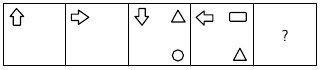
  • Hence, we can infer that the opposite of 'diverge' is 'collect'.

Therefore, the correct answer is: collect.

Additional Information

Here are the other options explained along with their Hindi meanings and example sentences:

  • Branch (शाखा): To divide into one or more subdivisions.
  • Example: The river branches into several smaller streams.
  • Divide (विभाजित करना): To separate into parts or groups.
  • Example: The teacher divided the class into groups for the project.
  • Stray (भटक जाना): To move away from the correct course or path.
  • Example: The dog strayed from its owner during the walk.
155

Select the correctly spelt word.

  1. ((a))

    riteous

  2. ((b))

    righteous

  3. ((c))

    rightious

  4. ((d))

    richeous

Show Answer
Answer: ((b))

righteous

The correct answer is - righteous.

Key Points

  • Let's look at the correct spelling and meaning of the marked option:
  • righteous- (of a person or conduct) morally right or justifiable; virtuous
  • Example: 
  • He was regarded as a righteous and holy man.
156

Select the misspelt word.

  1. ((a))

    Jeopardy

  2. ((b))

    Ingenuity

  3. ((c))

    Committee

  4. ((d))

    Neglegible

Show Answer
Answer: ((d))

Neglegible

The correct answer is - Neglegible.

Key Points

  • Let's look at the correct spelling and meaning of the marked option:
  • negligible- so small or unimportant as to be not worth considering; insignificant
  • Example: 
  • The difference between the two products is negligible.
  • Let's look at the meanings of the other given options:
  • jeopardy- the danger of loss, harm, or failure
  • ingenuity- the quality of being clever, original, and inventive
  • committee- a group of people appointed by a legislature to consider the details of proposed legislation
157

Select the correctly spelt word.

  1. ((a))

    bowquet

  2. ((b))

    bouquet

  3. ((c))

    bouckey

  4. ((d))

    bookay

Show Answer
Answer: ((b))

bouquet

The correct answer is - bouquet.

Key Points

  • Let's look at the correct spelling and meaning of the marked option:
  • bouquet- an attractively arranged bunch of flowers, especially one presented as a gift or carried at a ceremony
  • Example: 
  • Chris sent me a lovely bouquet when I was sick.
158

Select the most appropriate ANTONYM of the given word.

EXPEL

  1. ((a))

    remove

  2. ((b))

    absorb

  3. ((c))

    leave

  4. ((d))

    erupt

Show Answer
Answer: ((b))

absorb

The correct answer is: Option 2.

Key Points

  • The word "expel" means to force someone to leave a place or organization. (निकालना)
  • Example: The student was expelled from school for cheating on the exam.
  • "Absorb" refers to taking in or soaking up a substance, often gradually. (अवशोषित करना)
  • Example: The sponge absorbed all the spilled water on the table.
  • Hence, we can infer that the opposite of 'expel' is 'absorb'.

Therefore, the correct answer is: Option 2.

Additional Information

Here are the other options explained along with their Hindi meanings and example sentences:

  • Remove (हटाना): To take something away or off from the position occupied.
  • Example: Please remove your shoes before entering the house.
  • Leave (छोड़ना): To go away from a place.
  • Example: She decided to leave the company after five years of service.
  • Erupt (फट पड़ना): To burst out suddenly, often violently.
  • Example: The volcano erupted, sending ash and lava into the sky.
159

Select the most appropriate meaning of the given idiom.

The sword of Damocles

  1. ((a))

    a rare artifact

  2. ((b))

    an impending threat

  3. ((c))

    a poignant weapon

  4. ((d))

    an authentic sword

Show Answer
Answer: ((b))

an impending threat

The correct answer is- an impending threat.

Key Points

  • Let's look at the meaning of the given idiom:
  • The sword of Damocles- any situation threatening imminent harm or disaster
  • Example: 
  • The threat of a cut in funding is hanging over the Opera House like a sword of Damocles.

​ ​​​​

Additional Information  

  • Let's look at the origin of the idiom:
  • This expression alludes to the legend of Damocles, a servile courtier to King Dionysius I of Syracuse.
  • The king, weary of Damocles' obsequious flattery, invited him to a banquet and seated him under a sword hung by a single hair, so as to point out to him the precariousness of his position.
160

Select the most appropriate ANTONYM of the given word.

SUAVE

  1. ((a))

    brisk

  2. ((b))

    polite

  3. ((c))

    charming

  4. ((d))

    rude

Show Answer
Answer: ((d))

rude

The correct answer is: Option 4.

Key Points

  • The word "suave" means smoothly agreeable or polite; having a sophisticated charm. (सुविनीत)
  • Example: He was a suave gentleman who impressed everyone at the party with his manners.
  • "Rude" refers to someone who is offensively impolite or ill-mannered. (अशिष्ट)
  • Example: His rude behavior at the dinner table shocked everyone.
  • Hence, we can infer that the opposite of 'suave' is 'rude'.

Therefore, the correct answer is: Option 4.

Additional Information

Here are the other options explained along with their Hindi meanings and example sentences:

  • Brisk (तेज़): Active, fast, and energetic.
  • Example: She took a brisk walk every morning to stay fit.
  • Polite (विनम्र): Having or showing behavior that is respectful and considerate of other people.
  • Example: The polite clerk helped the customers with a smile.
  • Charming (मनोहर): Pleasant or attractive.
  • Example: Her charming personality made her popular among her peers.
161

Identify the segment in the sentence which contains a grammatical error.

Two elderly ladies narrated an rather improbable story to the police.

  1. ((a))

    narrated an rather

  2. ((b))

    Two elderly ladies

  3. ((c))

    improbable story

  4. ((d))

    to the police

Show Answer
Answer: ((a))

narrated an rather

The correct answer is narrated a rather​​.

Key Points​

  • ​Articles are words that define a noun as specific or unspecific.
  • The definite article 'the' is used with the name of things that are unique or already mentioned before.
  • The article 'a' is used with the name of things that are not specific.
  • The article 'an' is used with the words having the first letter as a vowel and having the sound of a vowel.
  • In the part given in the 1st option, the article 'a' will be used before the adverb 'rather' as 'rather' doesn't start with a vowel.
  • Also, we can write this sentence in two ways- Rather an improbable story and A rather improbable story.
  • When 'rather' acts as an adjective use 'a rather' and when 'rather' acts as an adverb use 'rather a' here in the given sentence 'improbable' is an adjective that is used to qualify a noun 'story' hence for the adjective we need an adverb to qualify it which is given i.e. 'rather' 

​Correct Sentence: *Two elderly ladies narrated a rather improbable story to the police. Or Two elderly ladies narrated rather an improbable story to the police.*​​​​

Additional Information

  • Any abbreviation having the sound of a vowel will be preceded by the article 'an'.
  • For example:
  • He is a MLA.

  • He is an MLA.

162

Fill in the blank with the most appropriate word.

He was born in a business family and has a natural aptitude ______ business.

  1. ((a))

    at

  2. ((b))

    for

  3. ((c))

    to

  4. ((d))

    on

Show Answer
Answer: ((b))

for

The correct answer is - for​.

Key Points

  • There are some verbs/nouns/adjectives which are followed by fixed preposition given below:
  • ​Exonerate from, refrain from, suspicious of, based on, aptitude for, inured to, accused of, a predilection for, respite from, vexed at, etc.
  • Example:
  • ​After spending some time on the island, they became inured to the hardships.​
  • ​Hence, according to the phrases given above, 'for' will be the correct choice.
  • The given phrase 'aptitude for' means a natural ability to do something.

Correct Sentence: He was born in a business family and has a natural aptitude for business.

Additional Information

  • There are some fixed prepositional phrases given below:
  • ​by the dint of, out of jealousy, in danger, by car/bus/train, owing to, on a trip, for a change, etc.
  • For example:
  • ​I went on a trip to Goa last month.

  • कुछ verbs/nouns/adjectives हैं जो नीचे दिए गए fixed preposition के बाद हैं:
  • से बाहर निकलना(​Exonerate from), से बचना( refrain from), शक करना( suspicious of), पर आधारित(based on), के लिए उपयुक्तता(aptitude for), के लिए(inured to), पर आरोप लगाया(accused of), के लिए एक पूर्वाभास(a predilection for), से राहत(respite from), पर से (vexed at), आदि
  • उदाहरण:
  • ​After spending some time on the island, they became inured to the hardships.
  • इसलिए, ऊपर दिए गए वाक्यांशों के अनुसार, 'for' सही विकल्प होगा।
  • दिए गए वाक्यांश 'aptitude for' का मतलब कुछ करने की natural ability है
163

Select the most appropriate meaning of the given idiom.

Tide over

  1. ((a))

    to deceive

  2. ((b))

    to overcome

  3. ((c))

    to jump over

  4. ((d))

    to change sides

Show Answer
Answer: ((b))

to overcome

The correct answer is- to overcome​.

Key Points

  • Let's look at the meaning of the given idiom:
  • Tide over- to support or enable to survive temporarily
  • Example: 
  • I need money to tide us over until payday.

​ ​​​​

Additional Information  

  • Let's look at the origin of the idiom:
  • The original 'tiding over' was a seafaring term and derives ultimately from 'tide' being synonymous with 'time'.
  • The literal meaning was 'in the absence of wind to fill the sails, float with the tide'.
  • This usage was recorded by the English seaman Captain John Smith.
164

Select the most appropriate one-word substitution for the given group of words.

To go around an area to keep a watch

  1. ((a))

    patrol

  2. ((b))

    campaign

  3. ((c))

    explore

  4. ((d))

    cruise

Show Answer
Answer: ((a))

patrol

The correct answer is - patrol.

Key Points

  • Let's look at the meaning of the marked option:
  • patrol- an expedition to keep watch over an area, especially by guards or police walking or driving around at regular intervals
  • Let's look at the meanings of the other given options: 
  • campaign- an organized course of action to achieve a goal
  • explore- travel in or through (an unfamiliar country or area) in order to learn about or familiarize oneself with it
  • cruise- sail about in an area without a precise destination, especially for pleasure
  • Hence, from the given meanings, we find that patrol is the correct one-word substitute.
165

Fill in the blank with the most appropriate word.

The wise try to improve themselves ______ the fools keep blaming their luck.

  1. ((a))

    therefore

  2. ((b))

    whereas

  3. ((c))

    whether

  4. ((d))

    still

Show Answer
Answer: ((b))

whereas

The correct answer is- whereas.

Key Points

  • Let's have a look at the meanings of the conjunctions:
  • therefore- for the reason that
  • whereas- in contrast, or comparison with the fact that
  • whether- expressing a doubt or choice between alternatives
  • still- nevertheless; all the same
  • In the given sentence, the wise put efforts to make themselves better in contradiction with the fools who hold destiny responsible for everything.
  • Hence in the given blank, the conjunction 'whereas​' will be the correct choice.

Correct sentence: The wise try to improve themselves whereas the fools keep blaming their luck.

Additional Information

  • We use 'in case' to talk about things we should do in order to be prepared for possible future situations.
  • Example:
  • In case I forget later, here are the keys to the garage.
166

Select the most appropriate synonym of the given word.

TUMULT

  1. ((a))

    uproar

  2. ((b))

    surprise

  3. ((c))

    peace

  4. ((d))

    clarity

Show Answer
Answer: ((a))

uproar

The correct answer is: Option 1.

Key Points

  • The word "tumult" means a loud, confused noise, especially one caused by a large mass of people; confusion or disorder. (कोलाहल)
  • Example: There was a tumult in the stadium when the home team scored the winning goal.
  • "Uproar" refers to a loud and impassioned noise or disturbance, similar to tumult. (हंगामा)
  • Example: The controversial decision by the referee caused an uproar among the fans.
  • Hence, we can infer that the synonym of 'tumult' is 'uproar'.

Therefore, the correct answer is: Option 1.

Additional Information

Here are the other options explained along with their Hindi meanings and example sentences:

  • Surprise (आश्चर्य): A feeling of mild astonishment or shock caused by something unexpected.
  • Example: She couldn’t hide her surprise when she saw the birthday party her friends had organized.
  • Peace (शांति): Freedom from disturbance; tranquility.
  • Example: After the tumult of the city, he enjoyed the peace of the countryside.
  • Clarity (स्पष्टता): The quality of being clear, in particular.
  • Example: The clarity of the instructions made the task easy to complete.
167

Select the most appropriate ANTONYM of the given word.

DEFILE

  1. ((a))

    Evade

  2. ((b))

    Debase

  3. ((c))

    Degrade

  4. ((d))

    Elevate

Show Answer
Answer: ((d))

Elevate

The correct answer is: Option 4.

Key Points

  • The word "defile" means to make something dirty or polluted, especially by damaging its purity. (अपवित्र करना)
  • Example: The vandals defiled the monument with graffiti.
  • "Elevate" means to raise to a higher position or level; to improve morally, intellectually, or culturally. (उन्नत करना)
  • Example: The teacher's inspiring words elevated the students' spirits.
  • Hence, we can infer that the opposite of 'defile' is 'elevate'.

Therefore, the correct answer is: Option 4.

Additional Information

Here are the other options explained along with their Hindi meanings and example sentences:

  • Evade (टालना): To escape or avoid, especially by cleverness or trickery.
  • Example: The suspect tried to evade the police by hiding in the alley.
  • Debase (गिराना): To reduce in quality or value; to degrade.
  • Example: The constant criticism debased his confidence.
  • Degrade (नीचा दिखाना): To lower in dignity or esteem; to bring into contempt.
  • Example: Pollution can degrade the quality of air we breathe.
168

Fill in the blank with the most appropriate word.

______! What a frightening experience it was!

  1. ((a))

    Hurray

  2. ((b))

    Bravo

  3. ((c))

    Oh

  4. ((d))

    Alas

Show Answer
Answer: ((c))

Oh

The correct answer is- Oh.

Key Points

  • Let's look at the points given below:
  • An exclamatory sentence makes a statement that conveys strong emotion or excitement.
  • An exclamatory sentence generally starts with 'what/how' and ends with an exclamation mark (!).
  • ​Let's look at the usage of the given exclamatory words:
  • ​Alas! - when someone is sad or dejected
  • Bravo! - to praise someone
  • Hurrah! - when one is happy or jubilant
  • Oh! - when one is surprised or taken aback
  • Since the given sentence depicts an emotion identical to shock/panic, the 3rd option i.e. Oh will be the correct choice.

Correct Sentence: Oh! What a frightening experience it was!

Direction: In the following passage some words have been deleted. Fill in the blanks with the help of the alternatives given. Select the most appropriate option for each number.

Alfred Hitchcock was a man with vivid imagination, (1)______ skills and a passion for life. With his (2)______ style and God-gifted wit he produced and directed (3)______ of the most thrilling films that had the audience swooning (4)______ fright and falling off their seats with laughter. He was greatly (5)______ by American films and magazines.

169

Select the most appropriate option to fill in blank no. 2

  1. ((a))

    separate

  2. ((b))

    dull

  3. ((c))

    unique

  4. ((d))

    ordinary

Show Answer
Answer: ((c))

unique

The correct answer is - unique.

Key Points

  • Let's look at the meanings of the given words:
  • separate- forming or viewed as a unit apart or by itself
  • dull- lacking interest or excitement
  • unique- being the only one of its kind; unlike anything else
  • ordinary- with no special or distinctive features; normal
  • As per the given sentence of the cloze test, Alfred Hitchcock had his own particular manner of making thrilling films.
  • In the current scenario, the adjective 'unique' is the correct choice in the given blank.
170

Select the most appropriate synonym of the given word.

COVETED

  1. ((a))

    despised

  2. ((b))

    covered

  3. ((c))

    desired

  4. ((d))

    renounced

Show Answer
Answer: ((c))

desired

The correct answer is: Option 3.

Key Points

  • The word "coveted" means something that is greatly desired or envied. (लालसा करना)
  • Example: The coveted trophy was finally within her reach after years of hard work.
  • "Desired" refers to something that is wanted or wished for. (इच्छित)
  • Example: He desired a peaceful life away from the hustle and bustle of the city.

Therefore, the correct answer is: Option 3.

Additional Information

Here are the other options explained along with their Hindi meanings and example sentences:

  • Despised (घृणा करना): To feel contempt or a deep repugnance for something.
  • Example: She despised the way he treated her friends.
  • Covered (ढका हुआ): To be put over or on top of something.
  • Example: The cake was covered in a thick layer of chocolate icing.
  • Renounced (त्याग दिया): To formally declare one's abandonment of a claim, right, or possession.
  • Example: He renounced his claim to the throne in favor of his younger brother.
171

Select the most appropriate option to substitute the underlined segment in the given sentence. If there is no need to substitute it, select ‘No substitution required’.

She is being waited for you for two hours.

  1. ((a))

    have been waited

  2. ((b))

    has been waiting

  3. ((c))

    No substitution required

  4. ((d))

    had wait

Show Answer
Answer: ((b))

has been waiting

The correct answer is- has been waiting​​.

Key Points

  • The present perfect continuous is a verb tense that shows something which started in the past and is continuing at the present time.
  • The structure is given below:
  • Subject + has/have been + V1 + -ing + since/for + object.
  • Since is used for a point of time (1982, last month, etc.) whereas for is used for any duration (4 days, 6 months, etc.).
  • Example:
  • ​He has been walking for two hours.
  • As a duration i.e. two hours has been given in the question, present perfect continuous tense i.e. has been waiting will be used.

Correct Sentence: She has been waiting for you for two hours.

172

Select the most appropriate option to substitute the underlined segment in the given sentence. If there is no need to substitute it, select ‘No substitution required’.

The train was delayed in order to an accident.

  1. ((a))

    because

  2. ((b))

    since

  3. ((c))

    owing to

  4. ((d))

    No substitution required

Show Answer
Answer: ((c))

owing to

The correct answer is- owing to​.

Key Points

  • ​There are some fixed prepositional phrases given below:
  • ​by the dint of, out of jealousy, in danger, by the dozen, owing to, on a trip, for a change, etc.
  • For example:
  • ​I went on a trip to Goa last month.
  • ​The phrase 'in order to' means with the aim or purpose of doing something.
  • The phrase 'owing to' means because of.
  • As per the context of the sentence, the train got delayed due to an accident.
  • Thus the prepositional phrase 'owing to' will be the correct choice.
  • We can't use 'because and Since' because these words are conjunction and we know that after the conjunction we need to write a clause and which is not written in the sentence. 'an accident' is a phrase.

Correct Sentence: The train was delayed owing to an accident.

Additional Information

  • There are some verbs/nouns/adjectives which are followed by fixed preposition given below:
  • ​Exonerate from, refrain from, suspicious of, interested in, inured to, accused of, predilection for, respite from, vexed at, etc.
  • Example:
  • After spending some time on the island they became inured to the hardships.
173

Select the most appropriate one-word substitution for the given group of words.

A deceased holy person’s remains or belongings kept for reverence

  1. ((a))

    Relic

  2. ((b))

    Trophy

  3. ((c))

    Memento

  4. ((d))

    Souvenir

Show Answer
Answer: ((a))

Relic

The correct answer is - Relic.

Key Points

  • Let's look at the meaning of the marked option:
  • Relic- an object surviving from an earlier time, especially one of historical or sentimental interest
  • Let's look at the meanings of the other given options: 
  • Trophy- a cup or other decorative object awarded as a prize for a victory or success
  • Memento- an object kept as a reminder or souvenir of a person or event
  • Souvenir- a thing that is kept as a reminder of a person, place, or event
  • Hence, from the given meanings, we find that relic is the correct one-word substitute.
174

Select the most appropriate one-word substitution for the given group of words.

A person of evil reputation

  1. ((a))

    renowned

  2. ((b))

    famous

  3. ((c))

    notorious

  4. ((d))

    icon

Show Answer
Answer: ((c))

notorious

The correct answer is - notorious.

Key Points

  • Let's look at the meaning of the marked option:
  • notorious- famous or well known, typically for some bad quality or deed
  • Let's look at the meanings of the other given options: 
  • renowned- known or talked about by many people; famous
  • icon- a person or thing regarded as a representative symbol or as worthy of veneration
  • Hence, from the given meanings, we find that notorious is the correct one-word substitute.

Direction: Read the given passage and answer the questions that follow.

Fishing traps, baskets, cradles, bridges, rainproof hats and umbrellas, mats, musical instruments, water pipes—Indians have always used the bamboo in numerous ways. It is used for house construction, fencing and in the making of bullock carts. Low-cost domestic furniture and a vast range of domestic utility items made of bamboo can be easily seen in any of our bazaars. But we do not easily notice the countless little ways this modest material comes to be used by rural people. One can see it being used in the blacksmith’s bellows, or as bamboo pins in carpentry joints or in the fabrication of toys in village markets. But to the British foresters the multidimensional role that “the forest weed” played in the local Indian environment was of no account, as it did not figure in forest revenues. Bamboo also interfered with the growing of teak, an essential part of their colonial forest policy. It was only in the 1920s that the British realised that by mincing bamboo into millimetre shreds, cooking it in chemicals, pulping and flattening it, they could produce sheets of paper. This would bring the British increased forest revenue and ‘development’ (as defined by them) to the so-called backward regions of India. However, they chose to ignore the consequences this activity would have on the health of the forest. So while bamboo was sold at high prices to basket weavers, it was heavily subsidised for the paper industry. Even after Independence, supplying bamboo at extremely low prices to Indian paper mills became a ‘patriotic’ duty of the government, and bamboo supplies were assured for decades at unchanged prices. The disaster that this would cause to the forests, and to the craftsperson, still remained unforeseen. Colonialism affected forests all across India and marginalised their inhabitants and the traditional occupations they practised. As late as the 1970s, the World Bank proposed that 4,600 hectares of natural Sal forest should be replaced by tropical pine to provide pulp for the paper industry. It was only after protests by local environmentalists that the project was stopped. Colonialism was therefore not only about repression, it was also a story of displacement, impoverishment and ecological crisis.

175

What does the ‘forest weed’ refer to ?

  1. ((a))

    Pine

  2. ((b))

    Bamboo

  3. ((c))

    Teak

  4. ((d))

    Sal

Show Answer
Answer: ((b))

Bamboo

The correct answer is Bamboo.

Key Points

  • Let's have a look at the 5th and the 6th sentence from the given paragraph:
  • "One can see it being used in the blacksmith’s bellows, or as bamboo pins in carpentry joints or in the fabrication of toys in village markets. But to the British foresters, the multidimensional role that “the forest weed” played in the local Indian environment was of no account, as it did not figure in forest revenues.”
  • ​Upon perusal of the above statement, it can be concluded that Bamboo is being referred to as forest weed by the British foresters.
176

Bamboo is referred to as ‘modest material’ because:

  1. ((a))

    the British believed it was worthless

  2. ((b))

    it can be easily shredded and reduced to a pulp

  3. ((c))

    it is available in abundance in India

  4. ((d))

    it is inexpensive and not highly acclaimed

Show Answer
Answer: ((d))

it is inexpensive and not highly acclaimed

The correct answer is- it is inexpensive and not highly acclaimed​.

Key Points

  • Let's have a look at the 3rd and the 4th sentence from the given paragraph:
  • "Low-cost domestic furniture and a vast range of domestic utility items made of bamboo can be easily seen in any of our bazaars. But we do not easily notice the countless little ways this modest material comes to be used by rural people.**”
  • ​Upon perusal of the above statement, it can be concluded that Bamboo is referred to as ‘modest material’ because it is inexpensive and not highly acclaimed​.
177

Which of these is NOT a step in the production of paper ?

  1. ((a))

    Mincing

  2. ((b))

    Weaving

  3. ((c))

    Flattening

  4. ((d))

    Pulping

Show Answer
Answer: ((b))

Weaving

The correct answer is- Weaving.

Key Points

  • Let's have a look at the 8th sentence from the given paragraph:
  • "It was only in the 1920s that the British realised that by mincing bamboo into millimetre shreds, cooking it in chemicals, pulping and flattening it, they could produce sheets of paper.”
  • ​Upon perusal of the above statement, it can be concluded that Weaving isn't a step in the production of paper.
178

Select the most appropriate one-word substitution for the given group of words.

A person who believes everything easily

  1. ((a))

    plausible

  2. ((b))

    creditor

  3. ((c))

    reliable

  4. ((d))

    credulous

Show Answer
Answer: ((d))

credulous

The correct answer is - credulous.

Key Points

  • Let's look at the meaning of the marked option:
  • credulous- having or showing too great a readiness to believe things
  • Let's look at the meanings of the other given options: 
  • plausible- (of an argument or statement) seeming reasonable or probable
  • creditor- a person or company to whom money is owed
  • reliable- consistently good in quality or performance; able to be trusted
  • Hence, from the given meanings, we find that credulous is the correct one-word substitute.
179

Fill in the blank with the most appropriate option.

I am allowed to take photographs inside the church, ______?

  1. ((a))

    am I

  2. ((b))

    can’t I

  3. ((c))

    shall I

  4. ((d))

    aren’t I

Show Answer
Answer: ((d))

aren’t I

The correct answer is- aren’t I.

Key Points

  • ​If the statement is negative, the question tag must be positive and vice versa.
  • The sentence and the question tag must be in the same tense.
  • There is no contracted form of 'am not', the question tag 'aren't I' is used.
  • ​Example:
  • ​​I am fine here, were I?

  • I am fine here, aren't I?

  • Thus in the blank part of the given question, 'aren’t I' will be the correct choice.

Correct Sentence: I am allowed to take photographs inside the church, aren't I?

 ​​​​

Additional Information  ​

  • If the sentence starts with 'There', the question tag will have 'there' instead of the pronoun.
  • ​Example:
  • ​​There is no air in space, was there?

  • There is no air in space, is there?

180

Select the most appropriate one-word substitution for the given group of words.

Holding an office without receiving a pay

  1. ((a))

    honorary

  2. ((b))

    charity

  3. ((c))

    startup

  4. ((d))

    freelance

Show Answer
Answer: ((a))

honorary

The correct answer is - honorary.

Key Points

  • Let's look at the meaning of the marked option:
  • honorary- (of an office or its holder) unpaid
  • Let's look at the meanings of the other given options: 
  • charity- an organization set up to provide help and raise money for those in need
  • startup- the action or process of setting something in motion
  • freelance- working for different companies at different times rather than being permanently employed by one company
  • Hence, from the given meanings, we find that honorary is the correct one-word substitute.
181

Select the most appropriate option to substitute the underlined segment in the given sentence. If there is no need to substitute it, select ‘No substitution required’.

The large mansion was over his reaching.

  1. ((a))

    No substitution required

  2. ((b))

    beyond his reach

  3. ((c))

    above his reaching

  4. ((d))

    away from reaching

Show Answer
Answer: ((b))

beyond his reach

The correct answer is- beyond his reach​.

Key Points

  • ​There are some fixed prepositional phrases given below:
  • ​by the dint of, out of jealousy, in danger, by the dozen, owing to, on a trip, for a change, etc.
  • For example:
  • ​I went on a trip to Goa last month.
  • ​The phrase 'beyond/out of one's reach' means that someone is not able to get or buy.
  • Thus the prepositional phrase 'beyond his reach' will be the correct choice.

Correct Sentence: The large mansion was beyond his reach.

Additional Information

  • There are some verbs/nouns/adjectives which are followed by fixed preposition given below:
  • ​Exonerate from, refrain from, suspicious of, interested in, inured to, accused of, predilection for, respite from, vexed at, etc.
  • Example:
  • After spending some time on the island they became inured to the hardships.
182

Select the most appropriate option to fill in blank no. 5

  1. ((a))

    determined

  2. ((b))

    altered

  3. ((c))

    influenced

  4. ((d))

    attached

Show Answer
Answer: ((c))

influenced

The correct answer is - influenced.

Key Points

  • Let's look at the meanings of the given words:
  • determined- cause (something) to occur in a particular way; be the decisive factor in
  • altered- change or cause to change in character or composition, typically in a comparatively small but significant way
  • influenced- have an influence on
  • attached- joined, fastened, or connected to something
  • As per the given sentence of the cloze test, American films and magazines had a considerable impact on Alfred Hitchcock.
  • In the current scenario, the verb 'influenced' is the correct choice in the given blank.
183

Select the most appropriate meaning of the given idiom.

Through thick and thin

  1. ((a))

    under extreme pressure

  2. ((b))

    by unfair means

  3. ((c))

    going through pain

  4. ((d))

    under all circumstances

Show Answer
Answer: ((d))

under all circumstances

The correct answer is- under all circumstances​.

Key Points

  • Let's look at the meaning of the given idiom:
  • Through thick and thin- under all circumstances, no matter how difficult
  • Example: 
  • T**hey stuck together through thick and thin.

​ ​​​​

Additional Information  

  • Let's look at the origin of the idiom:
  • The phrase dates back to the 1300s.
  • It is believed that it relates to entering a dark forest, in some places the trees are thick and overgrown while in other places it is sparse and easy to navigate.
  • During this time the majority of England was covered in wooded areas.

Through thick and thin: सुख दुःख में

184

Select the most appropriate synonym of the given word.

INTRIGUING

  1. ((a))

    investigating

  2. ((b))

    simultaneous

  3. ((c))

    gripping

  4. ((d))

    monotonous

Show Answer
Answer: ((c))

gripping

The correct answer is: gripping.

Key Points

  • The word "intriguing" means something that arouses one's curiosity or interest; fascinating. (रुचिकर)
  • Example: The plot of the movie was so intriguing that I couldn't take my eyes off the screen.
  • "Gripping" refers to something that is very exciting and interesting, holding your attention completely. (रोमांचक)
  • Example: The novel was so gripping that I finished it in one sitting.

Therefore, the correct answer is: gripping.

Additional Information

Here are the other options explained along with their Hindi meanings and example sentences:

  • Investigating (जांच करना): To carry out a systematic or formal inquiry to discover and examine the facts.
  • Example: The detective is investigating the mysterious disappearance of the artifact.
  • Simultaneous (समानांतर): Occurring, operating, or done at the same time.
  • Example: The two events were so simultaneous that it was hard to focus on either.
  • Monotonous (नीरस): Dull, tedious, and repetitious; lacking in variety and interest.
  • Example: The lecture was so monotonous that many students fell asleep.
185

What was considered to be a patriotic duty of the government after independence ?

  1. ((a))

    Supplying bamboo at low prices to paper mills

  2. ((b))

    Replacing Sal forests by tropical pines

  3. ((c))

    Handling the ecological crisis in India

  4. ((d))

    Preventing the displacement of foresters

Show Answer
Answer: ((a))

Supplying bamboo at low prices to paper mills

The correct answer is- Supplying bamboo at low prices to paper mills.

Key Points

  • Let's have a look at the 12th sentence from the given paragraph:
  • "Even after Independence, supplying bamboo at extremely low prices to Indian paper mills became a ‘patriotic’ duty of the government, and bamboo supplies were assured for decades at unchanged prices.**”
  • ​Upon perusal of the above statement, it can be concluded that supplying bamboo at low prices to paper mills was considered to be a patriotic duty of the government after independence
186

Select the most appropriate synonym of the given word.

SHOVE

  1. ((a))

    poke

  2. ((b))

    halt

  3. ((c))

    pull

  4. ((d))

    shout

Show Answer
Answer: ((a))

poke

The correct answer is: Option 1.

Key Points

  • The word "shove" means to push someone or something with force. (धक्का देना)
  • Example: He had to shove the heavy door to get it open.
  • "Poke" refers to a quick, sharp push or prod. (चुभाना)
  • Example: She gave him a poke to get his attention.
  • Hence, we can infer that the synonym of 'shove' is 'poke'.

Therefore, the correct answer is: Option 1.

Additional Information

Here are the other options explained along with their Hindi meanings and example sentences:

  • Halt (रोकना): To bring or come to an abrupt stop.
  • Example: The train came to a sudden halt.
  • Pull (खींचना): To exert force to move something toward oneself.
  • Example: She had to pull the rope to lift the bucket from the well.
  • Shout (चिल्लाना): To utter a loud call or cry, typically as an expression of a strong emotion.
  • Example: He had to shout to be heard over the noise of the crowd.
187

Identify the segment in the sentence which contains a grammatical error.

Sam took a little time to thought before he replied.

  1. ((a))

    a little time

  2. ((b))

    Sam took

  3. ((c))

    before he replied

  4. ((d))

    to thought

Show Answer
Answer: ((d))

to thought

The correct answer is- to thought​.

Key Points

  • A to-infinitive is the 'to + the base form of the verb', e.g., to sing, to dance, etc.
  • There are certain verbs that are used in a particular pattern given below:
  • Subject + verb + noun/pronoun + to-infinitive.
  • Some of the verbs are given below:
  • ask, tell, advise, encourage, urge, wish, intend, invite, help, allow, hate, permit, etc.
  • For example:
  • ​I urge you helping me solve this problem.

  • ​I urge you to help me solve this problem.

  • According to the rule and the example given above, 'to think' will be used in the 4th part of the sentence.

Correct Sentence: Sam took a little time to think before he replied.

Additional Information

  • There are certain verbs that are used in a particular pattern given below:
  • Subject + verb + present participle(-ing form of verb)
  • Some of the verbs are given below:
  • hate, stop, finish, enjoy, prefer, keep, rest, worth, propose, regret, etc.
  • ​Example:
  • He hates working out early in the morning.
188

Select the most appropriate synonym of the given word.

LOFTY

  1. ((a))

    plain

  2. ((b))

    towering

  3. ((c))

    silent

  4. ((d))

    humble

Show Answer
Answer: ((b))

towering

The correct answer is: Option 2.

Key Points

  • The word "lofty" means something that is of imposing height or of a noble or exalted nature. (उच्च)
  • Example: She has lofty ambitions of becoming a world-renowned scientist.
  • "Towering" refers to something that rises to a great height, often impressively so. (ऊँचा)
  • Example: The towering skyscrapers of the city could be seen from miles away.
  • Hence, we can infer that the synonym of 'lofty' is 'towering'.

Therefore, the correct answer is: Option 2.

Additional Information

Here are the other options explained along with their Hindi meanings and example sentences:

  • Plain (सादा): Lacking decoration or ornamentation.
  • Example: She wore a plain dress to the event.
  • Silent (मौन): Making no sound, quiet.
  • Example: The library was completely silent.
  • Humble (विनम्र): Having or showing a modest or low estimate of one's own importance.
  • Example: Despite his success, he remained humble.
189

Select the most appropriate option to fill in blank no. 1

  1. ((a))

    leading

  2. ((b))

    original

  3. ((c))

    creative

  4. ((d))

    clever

Show Answer
Answer: ((c))

creative

The correct answer is - creative.

Key Points

  • Let's look at the meanings of the given words:
  • leading- guidance or leadership, especially in a spiritual context
  • original- present or existing from the beginning; first or earliest
  • creative- relating to or involving the imagination or original ideas, especially in the production of an artistic work
  • clever- quick to understand, learn, and devise or apply ideas; intelligent
  • As per the given sentence of the cloze test, Alfred Hitchcock possessed innovative skills and full of passion for life.
  • In the current scenario, the adjective 'creative' is the correct choice in the given blank.
190

Select the INCORRECTLY spelt word.

  1. ((a))

    Inimical

  2. ((b))

    Etiquette

  3. ((c))

    Afiliate

  4. ((d))

    Adjourn

Show Answer
Answer: ((c))

Afiliate

The correct answer is - Afiliate.

Key Points

  • Let's look at the correct spelling and meaning of the marked option:
  • affiliate- officially attach or connect (a subsidiary group or a person) to an organization. (किसी संगठन से आधिकारिक रूप से संलग्न या कनेक्ट (एक सहायक समूह या एक व्यक्ति))
  • Example: 
  • The school is affiliated with a national association of driving schools.
  • Let's look at the meanings of the other given options:
  • inimical- tending to obstruct or harm. (बाधा डालने या हानि पहुँचाने की प्रवृत्ति)
  • etiquette- the customary code of polite behavior in society or among members of a particular profession or group. (समाज में या किसी विशेष पेशे या समूह के सदस्यों के बीच विनम्र व्यवहार का प्रथागत कोड)
  • adjourn- break off (a meeting, legal case, or game) with the intention of resuming it later. (स्थगित)
191

Select the most appropriate option to fill in blank no. 4

  1. ((a))

    through

  2. ((b))

    with

  3. ((c))

    by

  4. ((d))

    of

Show Answer
Answer: ((b))

with

The correct answer is - with​.

Key Points

  • There are some verbs/nouns/adjectives which are followed by fixed preposition given below:
  • ​Exonerate from, refrain from, suspicious of, based on, aptitude for, inured to, accused of, a predilection for, swoon with, vexed at, etc.
  • Example:
  • The audience swooned with delight.
  • ​Hence, according to the phrases given above, 'with' will be the correct choice.
  • The given phrase 'swoon with' means to feel a lot of pleasure, love, etc. because of something or someone.

Additional Information

  • There are some fixed prepositional phrases given below:
  • ​by the dint of, out of jealousy, in danger, by car/bus/train, owing to, on a trip, for a change, etc.
  • For example:
  • ​I went on a trip to Goa last month.
192

Select the most appropriate ANTONYM of the given word.

DEFICIENCY

  1. ((a))

    glitch

  2. ((b))

    dearth

  3. ((c))

    snag

  4. ((d))

    excess

Show Answer
Answer: ((d))

excess

The correct answer is: Option 4.

Key Points

  • The word "deficiency" means a lack or shortage of something. (कमी)
  • Example: The doctor said she had a vitamin D deficiency.
  • "Excess" refers to an amount of something that is more than necessary, permitted, or desirable. (अधिकता)
  • Example: They were fined for having an excess of luggage.
  • Hence, we can infer that the opposite of 'deficiency' is 'excess'.

Therefore, the correct answer is: Option 4.

Additional Information

Here are the other options explained along with their Hindi meanings and example sentences:

  • Glitch (त्रुटि): A sudden, usually temporary malfunction or irregularity of equipment.
  • Example: The software update caused a glitch in the system.
  • Dearth (अभाव): A scarcity or lack of something.
  • Example: There was a dearth of evidence in the case.
  • Snag (अड़चन): An unexpected or hidden obstacle or drawback.
  • Example: We hit a snag in the project when we ran out of funding.
193

Select the most appropriate option to fill in blank no. 3

  1. ((a))

    more

  2. ((b))

    some

  3. ((c))

    much

  4. ((d))

    any

Show Answer
Answer: ((b))

some

The correct answer is- some.

Key Points

  • ​An adjective is any member of a class of words that modify nouns and pronouns.
  • ​Let's have a look at the meanings of the given adjectives:
  • more- a greater or additional amount or degree of
  • some- an unspecified amount or number of
  • much- a great amount or quantity of
  • any- used to refer to one or some of a thing or number of things, no matter how much or how many
  • The adjective 'some' is used with plural countable nouns.
  • The adjective 'much' is used with uncountable nouns.
  • Since the noun 'films' is a plural countable noun, the adjective 'some' is an appropriate choice as an unspecified number is selected out of many films.

Additional Information  ​

  • ​​Let's look at the difference between the following adjectives:
  • few- hardly any. (used in a negative sense)
  • a few- some but not many.
  • the few- not many but all that is available.
  • All of these adjectives are used with plural countable nouns.
194

Identify the segment in the sentence which contains a grammatical error.

Miss Marple is neither a good singer or a good stage artist.

  1. ((a))

    stage artist

  2. ((b))

    neither a good singer

  3. ((c))

    or a good

  4. ((d))

    Miss Marple is

Show Answer
Answer: ((c))

or a good

The correct answer is**-** or a good.

Key Points

  • ​In a sentence, the verb is used according to person and number.
  • There are some conjunctions which are used in pair. Some of them are given below:
  • Neither-nor, either-or, not only-but also, so-that, etc.​
  • For example:
  • Either Sam nor Eric is coming to the wedding.

  • ​Either Sam or Eric is coming to the wedding.

  • In the 3rd part of the given question, 'nor' will replace 'or' as the sentence contains 'neither' in the former part.

Correct Sentence: Miss Marple is neither a good singer nor a good stage artist.

 ​​​​

Additional Information  ​

  • If an article is placed just before the 1st subject only, it means the person/thing is the same for which two nouns are used. Hence singular verb will be used.
  • Example:
  • Jawaharlal Nehru was a great orator and articulate politician of his time.
195

Select the most appropriate meaning of the given idiom.

Bear the brunt of

  1. ((a))

    assume an identity

  2. ((b))

    bear discrimination

  3. ((c))

    breed jealousy

  4. ((d))

    bear the maximum fury

Show Answer
Answer: ((d))

bear the maximum fury

The correct answer is- bear the maximum fury​.

Key Points

  • Let's look at the meaning of the given idiom:
  • Bear the brunt of- take the main force, often of criticism or unpleasant event
  • Example: 
  • The family has borne the brunt of his misdeed for a very long time. I think they should be excused now.

​ ​​​​

Additional Information  

  • Let's look at the origin of the idiom:
  • The word 'brunt' meant a sharp blow in the 14th century.
196

Identify the segment in the sentence which contains a grammatical error.

The two trains gave the illusion of been stationary.

  1. ((a))

    The two

  2. ((b))

    the illusion

  3. ((c))

    of been stationary

  4. ((d))

    trains gave

Show Answer
Answer: ((c))

of been stationary

The correct answer is- of been stationary​.

Key Points

  • A gerund is a word ending in "-ing" that is made from a verb and used as a noun.
  • Just as nouns sometimes function as objects in a sentence, so can gerund phrases.
  • For example:
  • ​Tim enjoys running with scissors.
  • In the given sentence, we need the gerund form of the verb 'be' i.e. being.
  • The gerund 'being' means having the state, quality, identity, nature, role, etc., specified.
  • Thus in the 3rd option, the gerund 'being' will replace 'been' to make the sentence correct.

Correct Sentence: The two trains gave the illusion of being stationary.

Additional Information

  • There are certain verbs that are used in a particular pattern given below:
  • Subject + verb + present participle(-ing form of verb)
  • Some of the verbs are given below:
  • hate, stop, finish, enjoy, prefer, keep, rest, worth, propose, regret, etc.
  • ​Example:
  • He hates working out early in the morning.
197

The varied uses of bamboo were disregarded by the British till the 1920s because:

  1. ((a))

    they did not use bamboo products at all

  2. ((b))

    it was used in the backward regions only

  3. ((c))

    the bamboo products were cheaply available

  4. ((d))

    it did not increase the forest revenue

Show Answer
Answer: ((d))

it did not increase the forest revenue

The correct answer is- it did not increase the forest revenue.

Key Points

  • Let's have a look at the 6th sentence from the given paragraph:
  • "But to the British foresters, the multidimensional role that “the forest weed” played in the local Indian environment was of no account, as it did not figure in forest revenues.”
  • ​Upon perusal of the above statement, it can be concluded that the varied uses of bamboo were disregarded by the British till the 1920s because it did not increase the forest revenue.
198

Directions: Four words have been given and one of these words is correctly spelt. Identify the word with the correct spelling and mark the answer.

  1. ((a))

    reccommend

  2. ((b))

    recommend

  3. ((c))

    recomend

  4. ((d))

    recommened

Show Answer
Answer: ((b))

recommend

The correct answer is - recommend.

Key Points

  • Let's look at the correct spelling and meaning of the marked option:
  • recommend- put forward (someone or something) with approval as being suitable for a particular purpose or role
  • Example: 
  • She has been recommended for promotion.

आइए चिह्नित विकल्प की सही वर्तनी और अर्थ देखें:

  • Recommend- किसी विशेष उद्देश्य या भूमिका के लिए उपयुक्त होने के साथ अनुमोदन (किसी या कुछ) को आगे रखें
199

Identify the segment in the sentence which contains a grammatical error.

The jury (A) are from different parts (B) of the country. (C) No Error (D)

  1. ((a))

    No Error

  2. ((b))

    The jury

  3. ((c))

    of the country

  4. ((d))

    are from different parts

Show Answer
Answer: ((d))

are from different parts

The correct answer is- Option (D) i.e. "are from different parts"

Key Points

  • In a sentence, the verb is used according to person and number.
  • Collective nouns take a singular verb with them.
  • For example:
  • The herd of cows are grazing in the farms.

  • The herd of cows is grazing in the farms.

  • Since the collective noun 'jury' signifies a body of people selected to judge a competition, the verb will conform to it.
  • Hence 'is' will be used in Option (D).

Correct Sentence: The jury is from different parts of the country. ​​​​

Additional Information

  • If there is a division among the members of the collective noun, a plural verb and plural pronoun are used.
  • Example:
  • The audience have started going out of the theatre.
200

Fill in the blank with the most appropriate word.

More than half the drain ______ been desilted.

  1. ((a))

    have

  2. ((b))

    is

  3. ((c))

    was

  4. ((d))

    has

Show Answer
Answer: ((d))

has

The correct answer is- has.

Key Points

  • The given sentence is in passive form and with phrase ''more than half' singular verb will be used
  • Hence according to the rule given above, 'has' is the most appropriate choice.
  • The structure is given below:
  • Subject + has/have + V3 + object. (active voice)
  • Object + has/have + been + V3 + subject. (passive voice)
  • ​Example:
  • ​He has played some matches for the Indian Cricket team. (active voice)
  • Some matches have been played by him for the Indian Cricket team. (passive voice)

Correct Sentence: More than half the drain has been desilted

Attempt this paper under real exam conditions

Timed interface, section switching, instant scoring, and question-by-question analytics — free.

Start Timed Attempt