Official Paper

MP Patwari Group-2 (Sub Group-4) 2022 Official Paper (Held On: 01 Apr, 2023 Shift 1) (Previous Year Paper)

200 questions · 180 minutes · with answers · free

Test (200 questions)

1

Since which year did the extension of legal education start at the Holkar College and thereafter study of law completely started in Indore?

  1. ((a))

    1924

  2. ((b))

    1927

  3. ((c))

    1931

  4. ((d))

    1942

Show Answer
Answer: ((c))

1931

The correct answer is 1931.

Key Points

  • The extension of legal education started at the Holkar College in the year 1931.
  • Holkar College, located in Indore, was one of the earliest institutions in the region to offer legal education.
  • Before the establishment of separate law colleges, institutions like Holkar College played a crucial role in providing legal studies.
  • Indore became a center for legal education in the early 20th century, marking a significant development in the region's educational landscape.
  • The initiation of legal education at Holkar College in 1931 laid the foundation for the establishment of dedicated law colleges in Indore in subsequent years.

Additional Information

  • Legal Education in India
  • Legal education in India is regulated by the Bar Council of India (BCI).
  • The BCI sets standards for legal education and grants recognition to law schools and colleges.
  • Legal education in India aims to prepare students for the legal profession and to promote justice and the rule of law.
  • Law programs in India include undergraduate (LL.B.), postgraduate (LL.M.), and doctoral (Ph.D.) courses.
  • Admission to law programs is often based on entrance exams like the Common Law Admission Test (CLAT).
  • Historical Evolution of Legal Education
  • The formal legal education system in India began during the British colonial period.
  • The first law college in India was the Government Law College in Mumbai, established in 1855.
  • Legal education initially focused on training professionals to serve the colonial administration.
  • Post-independence, the focus shifted towards creating a robust legal framework for the newly independent nation.
  • Modern legal education emphasizes both theoretical knowledge and practical skills.
  • Bar Council of India (BCI)
  • The Bar Council of India is a statutory body established under the Advocates Act, 1961.
  • It regulates the legal profession and legal education in India.
  • The BCI conducts the All India Bar Examination (AIBE) for law graduates to practice law in India.
  • The council also prescribes standards for legal education and grants recognition to law schools.
  • The BCI plays a crucial role in maintaining the quality and integrity of the legal profession in India.
2

In which year was the Madhya Pradesh State Planning Board constituted?

  1. ((a))

    1994

  2. ((b))

    1972

  3. ((c))

    1981

  4. ((d))

    1963

Show Answer
Answer: ((b))

1972

The correct answer is 1972.

Key Points

  • The Madhya Pradesh State Planning Board was constituted in the year 1972.
  • The board plays a crucial role in formulating and monitoring development plans for the state.
  • It ensures the alignment of state development projects with the national five-year plans.
  • The board is instrumental in reviewing the progress of various schemes and advising the state government on developmental policies.
  • It was established to enhance economic planning and coordination within the state.

Additional Information

  • Five-Year Plans
  • The five-year plans are centralized and integrated national economic programs.
  • They were introduced by the Government of India to ensure balanced and sustainable growth.
  • The first five-year plan was launched in 1951 and focused on agriculture, price stability, power, and transport.
  • These plans are formulated by the Planning Commission (now NITI Aayog).
  • Planning Commission
  • Established in 1950, it was responsible for creating, implementing, and monitoring India's five-year plans.
  • The commission aimed at assessing all resources of the country and formulating plans for the most effective and balanced utilization of resources.
  • It was replaced by the NITI Aayog in 2015 to better serve the present economic needs.
  • NITI Aayog
  • The National Institution for Transforming India (NITI) Aayog was established in 2015, replacing the Planning Commission.
  • It serves as the premier policy 'Think Tank' of the Government of India.
  • NITI Aayog aims to foster cooperative federalism and to design strategic and long-term policy frameworks.
  • Economic Planning
  • Economic planning is a mechanism for the allocation of resources.
  • It involves the formulation of plans by a central authority to achieve specific economic and social outcomes.
  • It is crucial for addressing issues like poverty, unemployment, and regional disparities.
3

In which year was the Directorate of Horticulture and Farm Forestry established under the Department of Agriculture, Government of Madhya Pradesh?

  1. ((a))

    1982

  2. ((b))

    1989

  3. ((c))

    1986

  4. ((d))

    1977

Show Answer
Answer: ((a))

1982

The correct answer is 1982.

Key Points

  • The Directorate of Horticulture and Farm Forestry was established under the Department of Agriculture, Government of Madhya Pradesh, in the year 1982.
  • This establishment aimed to enhance the state's horticulture development and promote farm forestry initiatives.
  • It plays a crucial role in the implementation of various schemes and programs related to horticulture and farm forestry in Madhya Pradesh.
  • The Directorate is also responsible for providing technical guidance and financial assistance to farmers for the cultivation of fruits, vegetables, and other horticultural crops.

Additional Information

  • Horticulture Development in India
  • Horticulture contributes significantly to the Indian agricultural economy by providing diverse products like fruits, vegetables, flowers, and spices.
  • The National Horticulture Mission (NHM) is one of the major initiatives by the Government of India to promote horticulture development.
  • It aims to enhance horticulture production, improve nutritional security, and increase income support to farm households.
  • Horticultural crops are important for providing raw materials for the food processing industry.
  • Farm Forestry
  • Farm forestry involves the practice of growing trees on farmland to meet the needs of wood, fuel, and other forest products while providing environmental benefits.
  • It helps in reducing pressure on natural forests and contributes to the sustainability of agricultural lands.
  • Farm forestry initiatives are supported by various government schemes and subsidies to encourage farmers to adopt tree planting.
  • It also plays a role in carbon sequestration, thereby contributing to climate change mitigation efforts.
  • Agricultural Schemes in Madhya Pradesh
  • The government of Madhya Pradesh has launched several schemes to support agriculture, including the Mukhyamantri Khet-Tirth Yojana and the Samagra Gram Vikas Yojana.
  • These schemes focus on improving irrigation facilities, providing quality seeds, and offering financial assistance to farmers.
  • They aim to enhance agricultural productivity and ensure sustainable development of rural areas.
  • Role of the Directorate of Horticulture
  • The Directorate of Horticulture plays a pivotal role in planning and executing horticulture development programs.
  • It collaborates with various research institutions, universities, and extension agencies to provide updated knowledge and technologies to farmers.
  • The Directorate also focuses on promoting organic farming practices and the use of modern agricultural techniques.
4

Which event brought about a profound change in Ashoka’s administrative policy? 

  1. ((a))

    His sending missionary to Ceylon

  2. ((b))

    His embracing of Buddhism

  3. ((c))

    The Kalinga War

  4. ((d))

    The third Buddhist Council

Show Answer
Answer: ((c))

The Kalinga War

The correct answer is The Kalinga War.

Key Points

  • The Kalinga War was fought between Emperor Ashoka of the Mauryan Empire and the state of Kalinga in 261 B.C.
  • The war resulted in a massive loss of life and property, with thousands of soldiers and civilians perishing in the conflict.
  • The brutality and bloodshed of the Kalinga War had a profound impact on Ashoka, leading him to embrace Buddhism.
  • After the war, Ashoka renounced violence and adopted a policy of Dhamma (righteousness) to govern his empire, focusing on non-violence, compassion, and welfare of his subjects.
  • This change in policy marked a significant transformation in Ashoka's reign, from conquest and expansion to peace and benevolence.

Additional Information

  • Edicts of Ashoka:
  • Ashoka's inscriptions on pillars and rocks across his empire, known as the Edicts of Ashoka, proclaim his policies and principles of Dhamma.
  • These edicts emphasize moral and ethical conduct, non-violence, and respect for all life forms.
  • The edicts also promote social welfare programs, including the establishment of hospitals, rest houses, and educational institutions.
  • Major Rock Edict V: 
  • ​It mentions about the appointment of the officials Dhammamahamatras who were appointed and entrusted with the duty of spreading Dhamma within the kingdom.
  • Major Rock Edict VII:
  • ​It mentions about the tolerance towards religions among all sects and welfare measures for the public in his as well as his neighbouring kingdoms.
  • Major Rock Edict XI:
  • ​It mentions that Dhamma is the best policy to follow, which includes respect for elders and concern for slaves and servants.
  • Buddhism and Ashoka:
  • After the Kalinga War, Ashoka became a devout follower of Buddhism and supported its spread throughout his empire and beyond.
  • He sent missionaries to various parts of Asia, including Sri Lanka, Southeast Asia, and Central Asia, to propagate Buddhist teachings.
  • Ashoka convened the Third Buddhist Council at Pataliputra (modern-day Patna), which played a crucial role in the compilation and preservation of Buddhist scriptures.
  • Legacy of Ashoka:
  • Ashoka is remembered as one of India's greatest emperors for his contributions to the spread of Buddhism and his efforts to govern based on principles of justice and morality.
  • His legacy continues to influence Indian culture and values, and he is revered as a model ruler in Indian history.
  • The symbol of the Ashoka Chakra, featured on the Indian national flag, is derived from the Lion Capital of Ashoka at Sarnath.
5

Which day is observed annually as the International Day for the Right to Truth Regarding Gross Human Rights Violations and for the Dignity of Victims?

  1. ((a))

    24th March

  2. ((b))

    24th ​February

  3. ((c))

    24th ​April

  4. ((d))

    24th ​May

Show Answer
Answer: ((a))

24th March

The correct answer is 24th March.

Key Points

  • The International Day for the Right to Truth Regarding Gross Human Rights Violations and for the Dignity of Victims is observed annually on 24th March.
  • This day was proclaimed by the United Nations General Assembly in December 2010.
  • The day is dedicated to recognizing the importance of the right to truth and justice for victims of gross human rights violations.
  • It also honors the memory of Monsignor Óscar Arnulfo Romero, who was murdered on 24 March 1980 for his efforts in defending human rights in El Salvador.

Additional Information

  • Monsignor Óscar Arnulfo Romero
  • Óscar Romero was the Archbishop of San Salvador and is remembered for his outspoken stance against social injustice, poverty, and violence amid the Salvadoran Civil War.
  • He was assassinated on 24 March 1980 while celebrating Mass.
  • Romero is seen as a symbol of hope and a voice for the voiceless in the struggle for human rights.
  • Right to Truth
  • The right to truth entails the right of victims and their families to know the truth about the circumstances of gross human rights violations.
  • This includes information on the identity of perpetrators, the progress, and results of investigations, and the fate of disappeared persons.
  • Gross Human Rights Violations
  • These refer to severe breaches of human rights such as genocide, war crimes, crimes against humanity, and other acts of violence that cause significant suffering or harm.
  • Addressing these violations is crucial for the restoration of justice and the dignity of victims.
  • United Nations' Role
  • The United Nations supports various mechanisms and initiatives to promote accountability, justice, and the right to truth.
  • This includes supporting truth commissions, international tribunals, and other measures aimed at redressing human rights violations.
6

The temple of Hindola Torana in Madhya Pradesh is dedicated to either Trimurti or ________.

  1. ((a))

    Shakti

  2. ((b))

    Vishnu

  3. ((c))

    Shiva

  4. ((d))

    Brahma

Show Answer
Answer: ((b))

Vishnu

The correct answer is Vishnu.

Key Points

  • The Hindola Torana is an ancient temple arch located in the Dhar district of Madhya Pradesh, India.
  • The temple is dedicated to Lord Vishnu, a principal deity in Hinduism, known for his role in preserving and protecting the universe.
  • This architectural structure is a significant example of the Paramara dynasty’s contribution to temple architecture.
  • The Hindola Torana features intricate carvings and artistic representations typical of the period, reflecting the rich cultural heritage of Madhya Pradesh.

Additional Information

  • Paramara Dynasty
  • A Rajput dynasty that ruled over Malwa region in central India during the 9th to 14th centuries.
  • The Paramara rulers were great patrons of art and architecture, contributing significantly to the cultural development of the region.
  • Their reign is marked by the construction of several temples and other architectural marvels.
  • Lord Vishnu
  • One of the principal deities in Hinduism, part of the holy trinity (Trimurti) alongside Brahma and Shiva.
  • Vishnu is known as the preserver and protector of the universe, often depicted resting on the serpent Ananta.
  • He is believed to have ten avatars (Dashavatara) including Rama and Krishna.
  • Temple Architecture in India
  • Characterized by distinct styles such as Nagara (North India), Dravida (South India), and Vesara (mixed style).
  • Temples serve not just as religious places but also as centers of cultural and social life.
  • Intricate carvings, sculptures, and detailed iconography are common features.
  • Hinduism
  • One of the oldest religions in the world, with a rich tapestry of traditions, philosophies, and rituals.
  • It encompasses a broad spectrum of beliefs ranging from monotheism to polytheism, pantheism, and atheism.
  • Key texts include the Vedas, Upanishads, Bhagavad Gita, and Ramayana.
7

Where was Jadugar Anand born in Madhya Pradesh?

  1. ((a))

    Jabalpur

  2. ((b))

    Katni

  3. ((c))

    Khargone

  4. ((d))

    Sagar

Show Answer
Answer: ((a))

Jabalpur

The correct answer is Jabalpur.

Key Points

  • Jadugar Anand, a renowned Indian magician, was born in Jabalpur, Madhya Pradesh.
  • He is known for his exceptional skills in magic and has performed various shows both nationally and internationally.
  • Anand began his career in magic at a young age and quickly gained popularity for his captivating performances.
  • He holds several records for his magic performances, including the longest magic show.

Additional Information

  • Magic as a Performing Art
  • Magic is a performing art that entertains audiences through seemingly impossible feats conducted by the use of tricks, illusions, sleight of hand, and well-practiced moves.
  • It has a long history, with the earliest recorded performance dating back to ancient Egypt.
  • Modern magic is often categorized into various genres such as stage illusions, close-up magic, and mentalism.
  • Famous Magicians
  • Harry Houdini: Known for his escape acts, Houdini was one of the most famous magicians of the early 20th century.
  • David Copperfield: Renowned for his grand illusions and televised magic specials.
  • David Blaine: Known for his endurance stunts and street magic.
  • Magic Organizations
  • International Brotherhood of Magicians (IBM)
  • Society of American Magicians (SAM)
  • Magic Circle
  • Magic in Popular Culture
  • Magic has been a popular theme in literature, films, and television shows, often depicted with mystical and supernatural elements.
  • Famous examples include the "Harry Potter" series, "The Prestige," and "Now You See Me."
8

In which year did the British establish the Nagar Palika in Harda?

  1. ((a))

    1869

  2. ((b))

    1866

  3. ((c))

    1867

  4. ((d))

    1868

Show Answer
Answer: ((c))

1867

The correct answer is 1867.

Key Points

  • The British established the Nagar Palika in Harda in the year 1867.
  • Harda is a town located in the state of Madhya Pradesh, India.
  • The Nagar Palika, also known as the Municipal Committee, was introduced to manage local governance and civic administration.
  • This establishment marked the beginning of structured urban local governance in Harda.

Additional Information

  • Municipal Administration in India
  • Municipalities in India, also known as Nagar Palikas, are urban local bodies that manage the administration of towns and cities.
  • They are responsible for providing basic services such as water supply, sewage, and infrastructure maintenance.
  • Municipalities are governed by elected representatives, including a mayor and council members.
  • The 74th Constitutional Amendment Act of 1992 gave constitutional recognition to municipalities in India.
  • Harda District
  • Harda is a district in the state of Madhya Pradesh, with its administrative headquarters in the town of Harda.
  • The district is known for its agricultural produce, particularly soybean and wheat.
  • It is situated along the banks of the Narmada River, which is a significant geographical feature in the region.
  • British Colonial Administration
  • The British established local self-governance institutions to facilitate better administration and control over Indian territories.
  • These institutions included municipal committees, district boards, and other local bodies.
  • The introduction of local governance was part of the British strategy to modernize India's administrative framework.
9

Which of the following is/are the adverse effects of Deficit Financing?

  1. ((a))

    Decrease in inflation

  2. ((b))

    Increase in investment level 

  3. ((c))

    Increase in inflation

  4. ((d))

    Increase in exports

Show Answer
Answer: ((c))

Increase in inflation

The correct answer is Increase in inflation.

Key Points

  • Deficit financing leads to an increase in the inflationary rise in prices of goods and services in the country.
  • Inflationary forces created by deficit financing are reinforced by increased credit creation by banks.
  • Excessive deficit financing may result in hyperinflation, destabilizing the economy.
  • Inflation caused by deficit financing can reduce the purchasing power of consumers, leading to decreased overall welfare.
  • Deficit financing, if not managed properly, can lead to a vicious cycle of increasing fiscal deficits and debt burdens.

Additional Information

  • Deficit Financing:
  • Deficit financing refers to the practice of funding government spending by borrowing to make up the difference between expenditure and revenue.
  • This method is often used during economic downturns to stimulate growth, but it can lead to long-term financial instability if overused.
  • Fiscal Deficit:
  • Fiscal deficit is the difference between the government’s total expenditure and its total revenue (excluding borrowing).
  • It indicates the total borrowing requirements of the government.
  • Inflation:
  • Inflation is the rate at which the general level of prices for goods and services is rising, and subsequently, the purchasing power of currency is falling.
  • Central banks attempt to limit inflation, and avoid deflation, in order to keep the economy running smoothly.
  • Credit Creation:
  • Credit creation is the process by which banks provide more loans to businesses and consumers, thereby increasing the money supply in the economy.
  • While credit creation can boost economic activity, excessive credit creation can lead to inflationary pressures.
10

Which of the following award is related to Indian Cinema?

  1. ((a))

    Dhyan Chand Award

  2. ((b))

    Arjuna Award

  3. ((c))

    Kalinga Award

  4. ((d))

    Dada Saheb Falke Award

Show Answer
Answer: ((d))

Dada Saheb Falke Award

The correct answer is Dadasaheb Phalke Award.

Key Points

  • The Dadasaheb Phalke Award is the highest honor in Indian cinema, presented annually by the Government of India.
  • It was first awarded in 1969 to honor Dadasaheb Phalke, who is regarded as the Father of Indian Cinema.
  • The award is given for lifetime contribution to Indian cinema and includes a Swarna Kamal (Golden Lotus) medallion, a shawl, and a cash prize.
  • Recipients of this prestigious award include legendary figures such as Raj Kapoor, Lata Mangeshkar, and Amitabh Bachchan.
  • The award recognizes outstanding contributions to the growth and development of Indian cinema.

Additional Information

  • Dhyan Chand Award:
  • Instituted in 2002, it is awarded for Lifetime Achievement in sports and games.
  • It includes a bronze statue of Dhyan Chand, a certificate, ceremonial dress, and a cash prize of Rs 5 lakhs.
  • The first recipients were Shahuraj Birajdar (Boxing), Ashok Diwan (Hockey), and Aparna Ghosh (Basketball).
  • Arjuna Award:
  • It is the second-highest sporting honor in India, after the Major Dhyan Chand Khel Ratna Award.
  • The award is named after Arjuna, a central character in the ancient Indian epic Mahabharata.
  • It recognizes outstanding achievement in national sports.
  • Kalinga Award:
  • The Kalinga Award is given by UNESCO for the popularization of science.
  • It was established in 1952 and recognizes contributions to the promotion of science.
11

Which of the following countries federation is known as “coming together federalism”?

  1. ((a))

    Australia

  2. ((b))

    India

  3. ((c))

    Russia

  4. ((d))

    USA

Show Answer
Answer: ((d))

USA

The correct answer is USA.

Key Points

  • The USA is known for its "coming together federalism," where independent states come together to form a larger federal union.
  • This type of federalism allows states to retain their sovereignty while pooling resources for mutual benefits such as defense and economic stability.
  • Examples of "coming together federations" include the United States and Switzerland.
  • The balance of power in such federations is often more symmetrical, with states enjoying significant autonomy.
  • This model contrasts with "holding together federations," where a central government retains more power.

Additional Information

  • Federalism
  • Federalism is a system of government where power is divided between a central authority and various constituent units, such as states or provinces.
  • The U.S. Constitution provides the framework for federalism in the United States.
  • Federalism allows for diversity in policies and governance across different regions while maintaining a unified nation.
  • Holding Together Federations
  • In contrast to "coming together federations," "holding together federations" are formed when a country decides to decentralize its power.
  • Examples include India, Belgium, and Spain.
  • In these federations, the central government often retains more power compared to the individual states.
  • Sovereignty
  • Sovereignty refers to the supreme authority within a territory.
  • In "coming together federations," constituent states retain a degree of sovereignty while cooperating under a federal system.
  • Symmetrical Federalism
  • Symmetrical federalism implies that all constituent states within the federation have equal powers and responsibilities.
  • The USA exhibits symmetrical federalism, where each state has equal standing in the union.
12

The core of the great Himalaya is composed of which among the following elements?

  1. ((a))

    Lead

  2. ((b))

    Granite

  3. ((c))

    Graphite

  4. ((d))

    Nickel

Show Answer
Answer: ((b))

Granite

The correct answer is Granite.

Key Points

  • The core of the Great Himalayas, also known as the Inner Himalayas or Himadri, is primarily composed of granite.
  • Granite is an igneous rock that forms from the slow crystallization of magma beneath Earth's surface.
  • The Great Himalayas is the most continuous and loftiest range in the Himalayan mountain system.
  • These mountains have an average height of around 6,000 meters and consist of asymmetrical folds.
  • The formation of granite in the core provides structural strength and stability to the towering peaks of the Great Himalayas.

Additional Information

  • Himalayan Mountain Ranges:
  • The Himalayas are divided into three parallel ranges: the Great Himalayas (Himadri), the Lesser Himalayas (Himachal), and the Outer Himalayas (Shiwaliks).
  • The Himachal range is characterized by rugged terrain and significant peaks like Pir Panjal.
  • The Shiwaliks are composed of unconsolidated sediments and form the outermost range.
  • Formation of Himalayas:
  • The Himalayas formed from the collision between the Indian Plate and the Eurasian Plate around 50 million years ago.
  • This tectonic activity caused the uplift of sedimentary rocks, forming the towering mountain ranges.
  • Geological Composition:
  • Besides granite, the Himalayas also consist of sedimentary rocks like limestone, sandstone, and shale.
  • Metamorphic rocks such as schist and gneiss are also found in certain regions.
  • Himalayan Ecosystem:
  • The diverse topography of the Himalayas supports varied ecosystems, ranging from alpine meadows to dense forests.
  • These ecosystems host unique flora and fauna, including many endemic species.
13

Which of the following is the forest based on which Rudyard Kipling had written “The Jungle Book”?

  1. ((a))

    Kanha National Park

  2. ((b))

    Pench Tiger Reserve

  3. ((c))

    Satpura Tiger Reserve

  4. ((d))

    Panna National Park

Show Answer
Answer: ((b))

Pench Tiger Reserve

The correct answer is Pench Tiger Reserve.

Key Points

  • Pench Tiger Reserve is the forest that inspired Rudyard Kipling's "The Jungle Book".
  • It is located in the Seoni and Chhindwara districts of Madhya Pradesh, India.
  • The park is named after the Pench River, which flows through the reserve.
  • It was established as a wildlife sanctuary in 1977 and declared a national park in 1983.
  • Pench Tiger Reserve is known for its significant population of Royal Bengal tigers, along with other wildlife such as leopards, wild boars, and various species of deer.

Additional Information

  • Kanha National Park
  • Located in Madhya Pradesh, Kanha National Park is known for its tiger population.
  • It was established in 1955 and is part of the Project Tiger initiative since 1974.
  • The park is renowned for its evergreen Sal forests.
  • Panna National Park
  • Declared a National Park in 1981, Panna is part of the Project Tiger initiative since 1995.
  • It is the only national park in Madhya Pradesh with an airstrip.
  • Satpura Tiger Reserve
  • Satpura National Park was formed in 1981 by combining Satpura, Pachmarhi, and Bori sanctuaries.
  • Located in the Hoshangabad district, it covers an area of 1427 sq km.
  • The park features diverse terrain including the Dhoopgarh peak, the highest point in Madhya Pradesh.
14

What was the tenure of the 10th five year plan in India ?

  1. ((a))

    2000 - 2005

  2. ((b))

    1992 - 1997

  3. ((c))

    1997 - 2002

  4. ((d))

    2002 - 2007

Show Answer
Answer: ((d))

2002 - 2007

The correct answer is 2002 - 2007.

Key Points

Tenth Five-Year Plan (2002-2007) - Key Points

  • Headed by: PM Atal Bihari Vajpayee with a target GDP growth of 8%, actual growth achieved was 7.6%.
  • Focus Areas: Poverty reduction, employment generation, education, health, and infrastructure development.
  • Sectoral Growth Targets: Agriculture 4%, Industry 10%, and Services 9%.
  • Key Initiatives: Emphasized Good Governance, Decentralization, and Public-Private Partnership (PPP).
  • Outcomes: Improvement in literacy rate, economic growth, and efforts toward inclusive development.

Additional Information

  • Planning Commission of India
  • Established in March 1950, the Planning Commission was responsible for formulating India's five-year plans.
  • The commission was replaced by the NITI Aayog in January 2015.
  • It played a crucial role in shaping the economic policy and development programs of India.
  • NITI Aayog
  • Formed in January 2015, NITI Aayog stands for National Institution for Transforming India.
  • It serves as the policy think-tank of the Government of India and provides both directional and policy inputs.
  • Inclusive Growth
  • Inclusive growth refers to an economic growth process that is broad-based across sectors and inclusive of a large part of the country's labor force.
  • The 11th five-year plan emphasized inclusive growth to ensure that the benefits of economic growth reach all sections of society.
  • Sectoral Growth Targets
  • The plan set specific growth targets for agriculture, industry, and services sectors to ensure balanced and sustainable development.
15

Name the state where Bandipur National Park is situated?

  1. ((a))

    Karnataka

  2. ((b))

    Kerala

  3. ((c))

    Tamil Nadu

  4. ((d))

    Andhra Pradesh

Show Answer
Answer: ((a))

Karnataka

The correct answer is Karnataka.

Key Points

  • Bandipur National Park is located in the state of Karnataka, India.
  • It was established as a tiger reserve under Project Tiger in 1974.
  • The park is part of the Nilgiri Biosphere Reserve, which includes three other protected areas: Mudumalai Wildlife Sanctuary, Wayanad Wildlife Sanctuary, and Nagarhole National Park.
  • Bandipur National Park covers an area of approximately 874 square kilometers.
  • The park is renowned for its significant population of Bengal tigers and various other wildlife species.

Additional Information

  • Flora and Fauna:
  • The park supports a variety of flora including teak, rosewood, sandalwood, Indian-laurel, and giant clumping bamboo.
  • It is home to diverse fauna such as elephants, leopards, Indian rock pythons, four-horned antelope, and many species of birds.
  • Conservation Efforts:
  • Several conservation programs are active in the park to protect its wildlife and habitat.
  • Anti-poaching measures and awareness campaigns are regularly conducted to curb illegal activities.
  • Tourism:
  • Bandipur National Park is a popular tourist destination, attracting visitors for safari rides and wildlife photography.
  • Strict guidelines are enforced to minimize human impact on the environment and ensure the safety of animals.
  • Connectivity:
  • The park is well-connected by road, with the nearest town being Gundlupet, approximately 20 km away.
  • Mysore, the nearest major city, is about 80 km from the park and provides various transport options.
16

The Mahakaleshwar Temple of Khargone in Madhya Pradesh depicts the architecture of which dynasty?

  1. ((a))

    Mughal

  2. ((b))

    Gupta

  3. ((c))

    Chandela

  4. ((d))

    Paramara

Show Answer
Answer: ((d))

Paramara

The correct answer is Paramara.

Key Points

  • The Mahakaleshwar Temple in Khargone, Madhya Pradesh, is an example of the architecture of the Paramara dynasty.
  • The Paramara dynasty ruled over Malwa and the neighboring regions in west-central India between the 9th and 14th centuries.
  • Raja Udayaditya was a significant ruler during whose time the Paramaras flourished in art, architecture, and learning.
  • The Paramara dynasty is known for its distinctive style of temple architecture, characterized by intricate carvings and elaborate structures.

Additional Information

  • Chandela Dynasty
  • The Chandela dynasty ruled over the region of Jejakabhukti (present-day Bundelkhand) in Madhya Pradesh.
  • Its founder, Nannuka, ruled around c. 831–845 CE.
  • The Chandela dynasty is famous for the construction of the Khajuraho Group of Monuments.
  • Gupta Dynasty
  • The Gupta dynasty was founded by Sri Gupta, and it is known as the Golden Age of India due to its advancements in various fields.
  • Chandragupta I is widely recognized as the founder of the Gupta era starting in 320 CE.
  • Samudragupta, considered the greatest ruler of the Gupta dynasty, expanded the empire significantly.
  • Mauryan Empire
  • Chandragupta Maurya was the founder of the Mauryan Empire, which he established as Alexander the Great's power waned.
  • The Mauryan Empire is known for its significant contributions to Indian culture, economy, and polity.
  • Ashoka the Great, one of the most renowned rulers, is known for spreading Buddhism and his edicts that promoted peace and tolerance.
17

What is unemployment rate?

  1. ((a))

    Percentage of unemployed workers in the total labor force

  2. ((b))

    Percentage of workless people in the total labor force

  3. ((c))

    Percentage of unemployed workers in the total employed force

  4. ((d))

    Percentage of unemployed workers in the total population

Show Answer
Answer: ((a))

Percentage of unemployed workers in the total labor force

The correct answer is Percentage of unemployed workers in the total labor force.

Key Points

  • The unemployment rate is defined as the percentage of unemployed workers in the total labor force.
  • It is a key indicator used to measure the health of a country's economy.
  • An individual is considered unemployed if they are actively seeking work but unable to find any during a given period.
  • The labor force includes all people who are either employed or actively seeking employment.
  • High unemployment rates can indicate economic distress, while low rates may signal economic stability and growth.

Additional Information

  • Types of Unemployment:
  • Cyclical Unemployment: Occurs due to downturns in the business cycle.
  • Frictional Unemployment: Short-term unemployment occurring when people are between jobs.
  • Structural Unemployment: Happens when workers' skills do not match job opportunities.
  • Seasonal Unemployment: Happens during certain seasons of the year, like agricultural jobs.
  • Measurement of Unemployment:
  • Unemployment is typically measured by national statistical agencies through labor force surveys.
  • It can be expressed as a percentage (unemployment rate) or as an absolute number.
  • Impact of Unemployment:
  • High unemployment can lead to increased poverty and social issues.
  • Prolonged unemployment can affect mental health and social well-being.
  • Policy Responses to Unemployment:
  • Governments may implement fiscal policies, such as increased public spending, to stimulate job creation.
  • Monetary policies, like lowering interest rates, can also encourage investment and employment.
  • Job training programs and education initiatives help workers gain skills needed in the labor market.
18

______ is the busiest airport in Madhya Pradesh.

  1. ((a))

    Devi Ahilya Bai Holkar Airport 

  2. ((b))

    Chhatrapati Shivaji Maharaj airport khajuraho

  3. ((c))

    Raja Bhol Airport

  4. ((d))

    Maharaja Roop Singh Airport

Show Answer
Answer: ((a))

Devi Ahilya Bai Holkar Airport 

The correct answer is Devi Ahilya Bai Holkar Airport.

Key Points

  • Devi Ahilya Bai Holkar Airport is located in Indore, the largest city in Madhya Pradesh.
  • It is the busiest airport in Madhya Pradesh in terms of passenger traffic and aircraft movement.
  • The airport is named after Maharani Ahilya Bai Holkar of Indore.
  • It operates both domestic and international flights, connecting Indore to major cities across India and select international destinations.
  • The airport has undergone significant expansion and modernization to handle increasing passenger traffic.

Additional Information

  • Indore:
  • Indore is the largest city in Madhya Pradesh and serves as an important commercial and educational hub.
  • It is known for its historical landmarks, including Rajwada Palace and Lal Bagh Palace.
  • Indore is a major center for trade and commerce in central India.
  • The city has been ranked as the cleanest city in India multiple times in the Swachh Survekshan survey.
  • Expansion of Airports in India:
  • India has been focusing on the expansion and modernization of its airports to handle increasing air traffic.
  • The government has launched the UDAN (Ude Desh ka Aam Naagrik) scheme to enhance regional connectivity.
  • Many airports in India are undergoing infrastructure development to meet international standards.
  • New airports are being developed in various regions to improve accessibility and boost economic growth.
  • Maharani Ahilya Bai Holkar:
  • Ahilya Bai Holkar was the queen of the Maratha Malwa kingdom.
  • She is remembered for her administrative prowess and contributions to infrastructure development.
  • Her reign is noted for the construction of numerous temples, ghats, and wells across India.
  • Ahilya Bai Holkar is revered as a just and benevolent ruler in Indian history.
  • International Flights from Madhya Pradesh:
  • Devi Ahilya Bai Holkar Airport offers international flights to destinations such as Dubai and Sharjah.
  • International connectivity helps in enhancing trade and tourism in the region.
  • The airport has facilities to handle international passengers, including customs and immigration services.
  • Efforts are ongoing to add more international destinations to the airport's network.
19

Which is deducted from Net National Product to get National Income?

  1. ((a))

    Subsidy

  2. ((b))

    Capital consumption allowance

  3. ((c))

    Indirect Tax

  4. ((d))

    Interest

Show Answer
Answer: ((c))

Indirect Tax

The correct answer is Indirect Tax.

Key Points

  • Indirect Taxes are deducted from Net National Product (NNP) to arrive at National Income (NI).
  • NI at Factor Cost = NNP at Market Cost − Indirect Taxes + Subsidies.
  • Factor cost refers to the input cost that producers incur in the production process.
  • Market cost includes the indirect taxes added to the factor cost, representing the cost at which goods reach the market.
  • Subsidies are added while determining NI.

Additional Information

  • Gross Domestic Product (GDP) is the value of all final goods and services produced within a country's borders in one year.
  • Net Domestic Product (NDP) is GDP after adjusting for depreciation (decline in value).
  • NDP = GDP − Depreciation
  • Gross National Product (GNP) is GDP plus income earned from abroad.
  • GNP = GDP + Income from Abroad
  • Net National Product (NNP) is GNP after deducting depreciation.
  • NNP = GNP − Depreciation
  • National Income in India is calculated by the National Statistical Office under the Ministry of Statistics and Programme Implementation.
20

In the below question, a sentence is given with one part bracketed. Select the option that provides the correct replacement for the bracketed part. In case of no improvement needed, choose 'No Improvement' option.

The women of the colony took it (by turns) to watch by his side.

  1. ((a))

    of turns

  2. ((b))

    No Improvement

  3. ((c))

    in turns

  4. ((d))

    in turning

Show Answer
Answer: ((c))

in turns

The correct answer is '3' i.e. in turns .

Key Points

  • The given sentence needs the correct phrase to convey that the women of the colony alternated in watching by his side.
  • Option 1 "of turns" is incorrect because this phrase does not make logical sense or follow proper idiomatic usage in this context.
  • Option 2 "No Improvement" is incorrect because "by turns" is not the most appropriate phrase in this context.
  • Option 3 "in turns" is the correct phrase to use here as it clearly conveys the idea of alternation among the women.
  • Option 4 "in turning" is incorrect because it changes the meaning of the sentence altogether and is not related to the context of taking turns.

Correct sentence: The women of the colony took it in turns to watch by his side.

Additional Information

  • Phrases indicating alternation:
  • In turns: Alternating; one after another.
  • Example: The teachers supervised the students in turns during the field trip.
  • By turns: Taking turns; sequentially.
  • Example: They spoke by turns during the meeting.
21

In the following question, out of the four alternatives, select the alternative which is the best substitute of the phrase.

Someone who is irresponsible or ineffective

  1. ((a))

    Traitor

  2. ((b))

    Hermit

  3. ((c))

    Quadragenarian

  4. ((d))

    Feckless

Show Answer
Answer: ((d))

Feckless

The correct answer is: Option 4.

Key Points

  • The word "feckless" refers to someone who is irresponsible or ineffective. (गैर जिम्मेदार या अक्षम)
  • Example: His feckless behavior at work led to several mistakes and missed deadlines.
  • "Feckless" is used to describe someone lacking initiative or strength of character, typically inefficient or irresponsible. (गैर जिम्मेदार या अक्षम)
  • Example: The feckless student failed to complete any of his assignments on time.

Therefore, the correct answer is: Option 4.

Additional Information

Here are the other options explained along with their Hindi meanings and example sentences:

  • Traitor (देशद्रोही): A person who betrays someone or something, such as a friend, cause, or principle.
  • Example: The traitor was caught and punished for giving away national secrets.
  • Hermit (साधु): A person who lives a solitary life and tends to avoid other people.
  • Example: The hermit lived in a small, remote cabin in the mountains.
  • Quadragenarian (चालीस साल का व्यक्ति): A person who is from 40 to 49 years old.
  • Example: The quadragenarian celebrated his 45th birthday with a grand party.
22

In the below question, a sentence has been given in Direct/Indirect speech. Out of the four alternatives suggested, select the one which best expresses the same sentence in Indirect/Direct speech.

"Let us go for a walk," said John.

  1. ((a))

    John is suggesting that we should go for a walk.

  2. ((b))

    John suggested that we went for a walk.

  3. ((c))

    John suggested that we go for a walk.

  4. ((d))

    John suggested that we should went for a walk.

Show Answer
Answer: ((c))

John suggested that we go for a walk.

The correct answer is Option 3.


Key Points

  • Indirect Speech: John suggested that we go for a walk.
  • Key Conversions:
  • "Let us" becomes "suggested that we"
  • The phrase "Let us" in direct speech is often changed to "suggested that we" in indirect speech.
  • The verb "go" remains in its base form to convey the suggestion accurately.
  • No change in the action "to go for a walk"
  • Since the suggestion remains consistent, the action "to go for a walk" is unchanged.
  • Verb Forms:
  • Use the base form "go" after "suggested that we" instead of past tense or additional modal verbs.
  • Punctuation and Format:
  • Indirect speech does not use quotation marks.
  • The reporting verb "suggested" leads the sentence.

Therefore, the correct answer is Option 3.


Correct Sentence: John suggested that we go for a walk.


Additional Information

  • Option 1: "John is suggesting that we should go for a walk."
  • Incorrect tense, changes original meaning to present continuous.
  • Option 2: "John suggested that we went for a walk."
  • Incorrect verb form, "went" is past tense, which is not appropriate here.
  • Option 4: "John suggested that we should went for a walk."
  • Grammatical error, "should went" is incorrect.
23

Find the most appropriate option for the given blank space which can make the given sentence grammatically and contextually correct.

Anita enjoyed the peace as she walked _________ the forest.

  1. ((a))

    after

  2. ((b))

    through

  3. ((c))

    for

  4. ((d))

    of

Show Answer
Answer: ((b))

through

The correct answer is ‘2’ i.e. through .

Key Points

  • The blank space in the sentence describes Anita’s movement in relation to the forest.
  • The preposition "through" correctly indicates movement from one side to the other side of the forest.
  • Other options such as "after," "for," and "of" do not fit contextually or grammatically in this sentence.

Correct sentence: Anita enjoyed the peace as she walked through the forest.

Additional Information

  • Other Prepositions and Usage:
  • After: Typically used to describe a sequence, e.g., "after dinner".
  • For: Used to indicate the purpose, e.g., "for a walk".
  • Of: Shows possession or relation, e.g., "the leaves of the tree".
24

Select the word which means the same as the group of words given.

Extreme or irrational fear of heights.

  1. ((a))

    Ergophobia

  2. ((b))

    Cynophobia

  3. ((c))

    Acrophobia

  4. ((d))

    Agoraphobia

Show Answer
Answer: ((c))

Acrophobia

The correct answer is: Option 3.

Key Points

  • The word "Acrophobia" means an extreme or irrational fear of heights. (ऊँचाई का भय)
  • Example: His acrophobia prevented him from going to the top floor of the skyscraper.
  • "Acrophobia" refers to an intense fear of being in high places, which can cause significant anxiety and avoidance behavior. (ऊँचाई का भय)
  • Example: She couldn't join her friends on the Ferris wheel due to her acrophobia.
  • Hence, we can infer that the term for an extreme or irrational fear of heights is "Acrophobia".

Therefore, the correct answer is: Option 3.

Additional Information

Here are the other options explained along with their Hindi meanings and example sentences:

  • Ergophobia (कार्य का भय): An abnormal and persistent fear of work or the workplace environment.
  • Example: His ergophobia made it difficult for him to maintain a steady job.
  • Cynophobia (कुत्तों का भय): An extreme or irrational fear of dogs.
  • Example: Her cynophobia kept her from visiting her friend's house, where there were several dogs.
  • Agoraphobia (खुली जगहों का भय): An anxiety disorder characterized by an intense fear of being in situations where escape might be difficult or help unavailable.
  • Example: His agoraphobia prevented him from leaving his home for weeks.
25

In the following question, a sentence is given with a phrase in brackets. Select the option given below that can replace the bracketed phrase and mark that as your answer.

In order to explore the space and the Sun, an important aspect (is understood) how emanated gases behave when they are close to the sun.

  1. ((a))

    Understands

  2. ((b))

    Was understanding

  3. ((c))

    Is to understand 

  4. ((d))

    No improvement

Show Answer
Answer: ((c))

Is to understand 

The correct answer is 3 i.e. is to understand .

Key Points

  • The given sentence is describing an important aspect of exploring space and the Sun.
  • In this context, the infinitive form "is to understand" correctly expresses the intended meaning of the sentence.
  • The other options do not fit the grammatical and contextual requirements: "Understands" is present tense, "Was understanding" is past continuous, and "No improvement" implies the original is correct, which it is not.

Correct sentence: In order to explore the space and the Sun, an important aspect is to understand how emanated gases behave when they are close to the sun.

Additional Information

  • Infinitive form:
  • The infinitive verb form is typically used to express purpose or intention.
  • It is often preceded by "to" (e.g., to understand, to know, to learn).
26

Find the most appropriate option for the given blank space which can make the given sentence grammatically and contextually correct.

The patient was discharged from the hospital _____________ the bed was needed by other people.

  1. ((a))

    though

  2. ((b))

    because

  3. ((c))

    although

  4. ((d))

    whereas

Show Answer
Answer: ((b))

because

The correct answer is ‘2’ i.e. because .

Key Points

  • The blank space in the sentence indicates the reason the patient was discharged from the hospital.
  • The conjunction "because" correctly conveys causation, explaining that the discharge happened due to the need for the bed by other people.
  • Other options such as "though," "although," and "whereas" do not fit contextually as they indicate contrast rather than cause.

Correct sentence: The patient was discharged from the hospital because the bed was needed by other people.

Additional Information

  • Other Conjunctions and Usage:
  • Though: Indicates contrast, e.g., "He went to the party though he was tired."
  • Although: Similar to "though", e.g., "Although it was raining, they played outside."
  • Whereas: Shows contrast between two clauses, e.g., "She likes coffee, whereas he prefers tea."
27

In the below question, a sentence is given with one part bracketed. Select the option that provides the correct replacement for the bracketed part. In case of no improvement needed, choose 'No Improvement' option.

Nobody in Europe at that time knew much about (this matter).

  1. ((a))

    this matters

  2. ((b))

    No Improvement

  3. ((c))

    those matter

  4. ((d))

    these matter

Show Answer
Answer: ((b))

No Improvement

The correct answer is 2 i.e. No Improvement .

Key Points

  • The phrase "this matter" is grammatically correct to refer to a singular, specific topic in the sentence.
  • "This matters," "those matter," and "these matter" are incorrect replacements as they do not fit the context or grammatical structure of the sentence.
  • "No Improvement" is the best option because the original bracketed phrase "this matter" accurately conveys the intended meaning and matches in number (singular) with the subject.

Correct sentence: Nobody in Europe at that time knew much about this matter.

Additional Information

  • Singular and Plural Usage:
  • This matter: Correctly refers to one specific topic or issue.
  • These matters/those matters: Would be used to refer to multiple topics or issues.
28

Arrange the sentences labelled alphabetically to form a coherent paragraph.

P. when the history of mobile phones in the UK is written, 2002 will be remembered as the year when something did not happen.

Q. This was supposed to be the year that third generation (3G) mobile phone services were due to start.

R. By now, many of us were supposed to have signed up for these futuristic services that turn your handset into something that does much more than let you talk while you walk.

S. Instead, 2002 has been a year that had more disappointments than delights for phone makers and mobile networks operators.

  1. ((a))

    PRQS

  2. ((b))

    PQRS

  3. ((c))

    PSQR

  4. ((d))

    SRQP

Show Answer
Answer: ((b))

PQRS

The correct answer is Option 2.


Key Points

  • The paragraph should begin with a sentence that introduces the significance of 2002 in the context of mobile phone history.
  • Sentence P is the first sentence: it sets the context for the year 2002 in mobile phone history.
  • "When the history of mobile phones in the UK is written, 2002 will be remembered as the year when something did not happen."
  • Sentence Q is the second sentence: it specifies what was supposed to happen in 2002.
  • "This was supposed to be the year that third generation (3G) mobile phone services were due to start."
  • Sentence R is the third sentence: it elaborates on the expectations for these services.
  • "By now, many of us were supposed to have signed up for these futuristic services that turn your handset into something that does much more than let you talk while you walk."
  • Sentence S concludes the paragraph: it reflects on the disappointments of 2002.
  • "Instead, 2002 has been a year that had more disappointments than delights for phone makers and mobile networks operators."
  • The correct sequence is PQRS.


Coherent paragraph after rearrangement:

"When the history of mobile phones in the UK is written, 2002 will be remembered as the year when something did not happen. This was supposed to be the year that third generation (3G) mobile phone services were due to start. By now, many of us were supposed to have signed up for these futuristic services that turn your handset into something that does much more than let you talk while you walk. Instead, 2002 has been a year that had more disappointments than delights for phone makers and mobile networks operators."

29

Select the correctly spelt word.

  1. ((a))

    Agression

  2. ((b))

    Assasination

  3. ((c))

    Anarchy

  4. ((d))

    Appearence

Show Answer
Answer: ((c))

Anarchy

The correct answer is: Option 3.

Key Points

  • The word "Anarchy" means a state of disorder due to the absence or non-recognition of authority or other controlling systems. (अराजकता)
  • Example: The country was in a state of anarchy after the government collapsed.
  • "Anarchy" refers to a situation where there is no government or control, leading to chaos and disorder. (अराजकता)
  • Example: The classroom descended into anarchy when the teacher left the room.

Therefore, the correct answer is: Option 3.

Additional Information

Here are the other options explained along with their Hindi meanings and example sentences:

  • Agression (आक्रामकता): The incorrect spelling of the word "Aggression" which means hostile or violent behavior.
  • Example: The player's aggression on the field was evident during the match.
  • Assasination (हत्या): The incorrect spelling of the word "Assassination" which means the act of murdering a prominent person.
  • Example: The assassination of the leader shocked the entire nation.
  • Appearence (दिखावट): The incorrect spelling of the word "Appearance" which means the way that someone or something looks.
  • Example: Her appearance at the event was a pleasant surprise.
30

In the below question, a sentence is given in either direct or indirect speech. Select the option that correctly converts the sentence in direct speech to indirect speech or vice versa.

He said that it was definitely not a good way to market the product.

  1. ((a))

    He said, "It is definitely not a good way to market the product."

  2. ((b))

    He said, "It has not been definitely not a good way to market the product."

  3. ((c))

    He said, "It will not be definitely not a good way to market the product."

  4. ((d))

    He said, "It was definitely not a good way to market the product."

Show Answer
Answer: ((a))

He said, "It is definitely not a good way to market the product."

The correct answer is Option 1.


Key Points

  • Indirect Speech: He said that it was definitely not a good way to market the product.
  • Key Conversions:
  • "It was" becomes "It is" in direct speech
  • The statement in indirect speech uses "was" because of the past tense reporting verb "said". When converting to direct speech, restore the original present tense "is".
  • No change in the rest of the statement
  • The phrase "definitely not a good way to market the product" remains unchanged.
  • Punctuation and Format:
  • Direct speech uses quotation marks to enclose the spoken words.
  • Ensure the reporting verb "said" is followed by a comma, and the quoted speech starts with a capital letter.

Therefore, the correct answer is Option 1.


Correct Sentence: He said, "It is definitely not a good way to market the product."


Additional Information

  • Option 2: "He said, 'It has not been definitely not a good way to market the product.'"
  • Incorrect tense, "has not been" changes the meaning and tense of the original statement.
  • Option 3: "He said, 'It will not be definitely not a good way to market the product.'"
  • Incorrect tense, "will not be" changes the meaning and tense of the original statement.
  • Option 4: "He said, 'It was definitely not a good way to market the product.'"
  • Incorrect direct speech format; it should convert to the original present tense statement.
31

Rearrange the parts of the sentence in the correct order. 1) and 6) are fixed, put the other four sentences (P, Q, R, S) in a proper sequence.

  1. Your physical appearance

P. and personal life

Q. is important enough

R. to make significant changes

S. in your professional

  1. in various ways.
  1. ((a))

    QRSP

  2. ((b))

    QSRP

  3. ((c))

    QPRS

  4. ((d))

    RPSQ

Show Answer
Answer: ((a))

QRSP

The correct answer is Option 1.


Key Points

  • The sentence begins by stating the significance of physical appearance and its role in various aspects.
  • Part Q follows as it stresses the importance of physical appearance:
  • "is important enough"
  • Part R comes next as it logically continues from the importance to the action:
  • "to make significant changes"
  • Part S follows part R because it specifies the areas affected by these changes:
  • "in your professional"
  • Part P comes after S, completing the thought about areas impacted:
  • "and personal life"
  • The sentence appropriately concludes with part 6: "in various ways."
  • The correct sequence is QRSP.


Coherent sentence after rearrangement:

"Your physical appearance is important enough to make significant changes in your professional and personal life in various ways."

32

In the following question, a sentence is given in either direct or indirect speech. Select the option that correctly converts the sentence in direct speech to indirect speech or vice versa.

'Please deliver this letter for me,' Jodie said to Rohan.

  1. ((a))

    Jodie requested Rohan to deliver that letter for her.

  2. ((b))

    Jodie requested Rohan to deliver this letter for her.

  3. ((c))

    Jodie requested Rohan to please deliver that letter for her.

  4. ((d))

    Jodie requested Rohan to deliver that letter for me.

Show Answer
Answer: ((a))

Jodie requested Rohan to deliver that letter for her.

The correct answer is Option 1.


Key Points

  • Direct Speech: 'Please deliver this letter for me,' Jodie said to Rohan.
  • Indirect Speech Conversion:
  • Change of Pronoun:
  • The pronoun "me" changes to "her" when converting from direct to indirect speech.
  • Change of Demonstratives:
  • The word "this" changes to "that" in indirect speech.
  • Use of Request Verbs:
  • Use "requested" to replace the verb "said" when making a request.
  • Punctuation and Format:
  • Direct speech uses quotation marks, whereas indirect speech does not.
  • No need to retain the word "please" in indirect speech since the tone of the request is already conveyed by "requested".

Therefore, the correct answer is Option 1.


Correct Sentence: Jodie requested Rohan to deliver that letter for her.

33

Find the most appropriate option for the given blank space which can make the given sentence grammatically and contextually correct.

Priya was looking very _____________ at the party last night.

  1. ((a))

    glamorous

  2. ((b))

    perfectly

  3. ((c))

    quietly

  4. ((d))

    nicely

Show Answer
Answer: ((a))

glamorous

The correct answer is ‘1’ i.e. glamorous .

Key Points

  • The blank space in the sentence needs an adjective that describes Priya's appearance at the party.
  • The adjective "glamorous" correctly describes someone's appearance in a stylish and attractive manner, which fits the context of a party.
  • Other options such as "perfectly," "quietly," and "nicely" are adverbs that describe actions rather than appearance, so they do not fit this context.

Correct sentence: Priya was looking very glamorous at the party last night.

Additional Information

  • Adjectives vs. Adverbs:
  • Adjective: A word that describes or modifies a noun. E.g., "She looks beautiful." (beautiful = adjective)
  • Adverb: A word that modifies a verb, an adjective, or another adverb. E.g., "She sings beautifully." (beautifully = adverb)
34

In the following question, a sentence is given in either direct or indirect speech. Select the option that correctly converts the sentence in direct speech to indirect speech or vice versa.

I asked him if he knew who the strange woman was.

  1. ((a))

    'Do you know who the strange woman was?' I said to him.

  2. ((b))

    'Do you know who the strange woman is?' I said to him.

  3. ((c))

    'Did you know who the strange woman is?' I said to him.

  4. ((d))

    'Did you know who the strange woman was?' I said to him.

Show Answer
Answer: ((b))

'Do you know who the strange woman is?' I said to him.

The correct answer is Option 2.


Key Points

  • Indirect Speech: I asked him if he knew who the strange woman was.
  • Direct Speech Conversion:
  • Reporting Verb:
  • The reporting verb "asked" changes to "said" in direct speech, and the introductory word "if" is omitted.
  • Tense Conversion:
  • The past simple tense "knew" changes to present simple tense "know" in direct speech as it denotes a state of knowing at the moment.
  • Change of Question Structure:
  • The indirect question "if he knew" changes to a direct question "Do you know".
  • In direct speech, the structure is subject + verb (Do you know) instead of the statement form in indirect speech.
  • Verb Consistency:
  • The phrase "was" remains the same as it refers to the past identity of the woman.
  • Punctuation and Format:
  • Direct speech uses quotation marks to enclose the spoken words.
  • Ensure the reporting verb "said" is followed by a comma, and the quoted speech starts with a capital letter and ends with a question mark.

Therefore, the correct answer is Option 2.


Correct Sentence: 'Do you know who the strange woman is?' I said to him.


Additional Information

  • Option 1: "Do you know who the strange woman was?' I said to him."
  • Incorrect since the verb "was" remains in present form in direct speech for general questions
  • Option 3: "Did you know who the strange woman is?' I said to him."
  • Incorrect structure and mixed tense; "Did you" implies past tense, while "is" is present tense.
  • Option 4: "Did you know who the strange woman was?' I said to him."
  • Incorrect because "Did you know" implies a past action contrary to direct speech which remains present tense for the moment spoken.
35

Select the meaning of the given idiom.

Suit someone to a ‘T’

  1. ((a))

    make you look weird

  2. ((b))

    look very good on your face

  3. ((c))

    are not suitable for your work

  4. ((d))

    need to be worn with a suit

Show Answer
Answer: ((b))

look very good on your face

The correct answer is: Option 2.

Key Points

  • The idiom "Suit someone to a 'T'" means something that fits or suits someone perfectly. (किसी को पूरी तरह से सूट करना)
  • Example: The new job suits John to a T; it's exactly what he was looking for.
  • "Look very good on your face" means that something looks very good when worn or applied to someone's face. (आपके चेहरे पर बहुत अच्छा लगना)
  • Example: This new pair of glasses looks very good on your face.
  • Hence, we can infer that the meaning of the idiom "Suit someone to a 'T'" is "Look very good on your face".

Therefore, the correct answer is: Option 2.

Additional Information

Here are the other options explained along with their Hindi meanings and example sentences:

  • Make you look weird (आपको अजीब दिखाना): To make you appear strange or unusual.
  • Example: This outfit makes you look weird, you should try something else.
  • Are not suitable for your work (आपके काम के लिए उपयुक्त नहीं हैं): Something that does not fit or is not appropriate for your work.
  • Example: These shoes are not suitable for your work in the construction site.
  • Need to be worn with a suit (एक सूट के साथ पहना जाने की जरूरत है): Something that needs to be worn along with a formal suit.
  • Example: This tie needs to be worn with a suit for the formal event.
36

Select the correct active form of the given sentence.

The firm was criticised for its privacy policy by the government.

  1. ((a))

    The government criticise the firm for its privacy policy.

  2. ((b))

    The government was criticising the firm for its privacy policy.

  3. ((c))

    The government criticised the firm for its privacy policy.

  4. ((d))

    The government had criticised the firm for its privacy policy.

Show Answer
Answer: ((c))

The government criticised the firm for its privacy policy.

The correct answer is Option 3.


Key Points

  • Passive voice structure: The object of the active voice sentence becomes the subject of the passive voice sentence.
  • In the passive voice, the sentence is: "The firm was criticised for its privacy policy by the government."
  • To convert to active voice: Place the original subject "the government" at the beginning.
  • Change the passive verb form "was criticised" to "criticised" (simple past active).
  • Add the object "the firm" after the verb.

Therefore, the correct answer is Option 3.


Correct Sentence: "The government criticised the firm for its privacy policy."


Additional Information

  • Option 1: "The government criticise the firm for its privacy policy." – Incorrect tense (simple present).
  • Option 2: "The government was criticising the firm for its privacy policy." – Incorrect tense (past continuous).
  • Option 4: "The government had criticised the firm for its privacy policy." – Incorrect tense (past perfect).
37

Select the most appropriate word for the given group of words.

Theft or misappropriation of funds placed in one's trust or belonging to one's employer.

  1. ((a))

    Patrimony

  2. ((b))

    Complacency

  3. ((c))

    Treasure

  4. ((d))

    Embezzlement

Show Answer
Answer: ((d))

Embezzlement

The correct answer is: Option 4.

Key Points

  • The word "Embezzlement" refers to the theft or misappropriation of funds placed in one's trust or belonging to one's employer. (गबन)
  • Example: The company’s accountant was charged with embezzlement of hundreds of thousands of dollars.

Therefore, the correct answer is: Option 4.

Additional Information

Here are the other options explained along with their Hindi meanings and example sentences:

  • Patrimony (पैतृक संपत्ति): Property inherited from one's father or male ancestor.
  • Example: He used his patrimony to start a new business venture.
  • Complacency (आत्मसंतोष): A feeling of smug or uncritical satisfaction with oneself or one's achievements.
  • Example: His complacency in the face of the competition cost him his job.
  • Treasure (खजाना): A quantity of precious metals, gems, or other valuable objects.
  • Example: The pirates hid their treasure on the deserted island.
38

Find mis-spelt word.

  1. ((a))

    Heritage

  2. ((b))

    Ecstasy

  3. ((c))

    Glimpse

  4. ((d))

    Discription

Show Answer
Answer: ((d))

Discription

The correct answer is: Option 4.

Key Points

  • The word "Discription" is mis-spelt; the correct spelling should be "Description". (विवरण)
  • Example: The description of the event was very detailed in the report.
  • "Description" refers to a spoken or written representation or account of a person, object, or event. (वर्णन)
  • Example: She gave a vivid description of her trip to the mountains.

Therefore, the correct answer is: Option 4.

Additional Information

Here are the other options explained along with their Hindi meanings and example sentences:

  • Heritage (धरोहर): Property that is or may be inherited; an inheritance.
  • Example: The cultural heritage of the country is very rich.
  • Ecstasy (परमानंद): An overwhelming feeling of great happiness or joyful excitement.
  • Example: He was in ecstasy when he heard the news of his promotion.
  • Glimpse (झलक): A momentary or partial view.
  • Example: I caught a glimpse of the actress at the mall.
39

Select the wrongly spelt word.

  1. ((a))

    Diversity

  2. ((b))

    Luxurience

  3. ((c))

    Diplomatic

  4. ((d))

    Jaundice

Show Answer
Answer: ((b))

Luxurience

The correct answer is: Option 2.

Key Points

  • The word "Luxurience" is incorrectly spelled.
  • English meaning: This is not a correct English word. The correct spelling is "Luxuriance".
  • Hindi meaning: यह एक सही अंग्रेजी शब्द नहीं है। सही वर्तनी "Luxuriance" है।
  • Example: N/A
  • "Luxuriance" means rich and profuse in growth; lush.
  • Hindi meaning: समृद्ध और भरपूर विकास में; हरा-भरा।
  • Example: The luxuriance of the tropical forest was breathtaking.

Therefore, the correct answer is: Option 2.

Additional Information

Here are the other options explained along with their Hindi meanings and example sentences:

  • Diversity (विविधता): The state of being diverse; variety.
  • Example: The diversity of cultures in the city makes it a vibrant place to live.
  • Diplomatic (कूटनीतिक): Concerning diplomacy; tactful.
  • Example: Her diplomatic skills helped to resolve the conflict.
  • Jaundice (पीलिया): A medical condition with yellowing of the skin or whites of the eyes, typically caused by liver disease.
  • Example: The patient was diagnosed with jaundice and required immediate treatment.
40

Select the most appropriate meaning of the given idiom.

Out of the woods

  1. ((a))

    no longer in trouble

  2. ((b))

    no longer young

  3. ((c))

    no longer famous

  4. ((d))

    no longer in sight

Show Answer
Answer: ((a))

no longer in trouble

The correct answer is: Option 1.

Key Points

  • The idiom "Out of the woods" means no longer in trouble or difficulty. (मुसीबत से बाहर)
  • Example: After the successful surgery, the patient is finally out of the woods.
  • "No longer in trouble" refers to a situation where someone has overcome or escaped a difficult or dangerous situation. (अब और मुसीबत में नहीं)
  • Example: With the project finally completed, the team is no longer in trouble.

Therefore, the correct answer is: Option 1.

Additional Information

Here are the other options explained along with their Hindi meanings and example sentences:

  • No longer young (अब युवा नहीं): Refers to someone who is no longer in their youth.
  • Example: Though he is no longer young, he remains active and healthy.
  • No longer famous (अब प्रसिद्ध नहीं): Refers to someone who has lost their fame or popularity.
  • Example: The actor is no longer famous and now leads a quiet life.
  • No longer in sight (अब दृष्टि में नहीं): Refers to something or someone that is no longer visible.
  • Example: The ship sailed away and was soon no longer in sight.
41

Find the most appropriate option for the given blank space which can make the given sentence grammatically and contextually correct.

I like the house but I don't imagine I'll live there ___________.

  1. ((a))

    such

  2. ((b))

    late

  3. ((c))

    than

  4. ((d))

    forever

Show Answer
Answer: ((d))

forever

The correct answer is "forever"

Key Points

  • The most appropriate option to fill in the blank is "forever".
  • The sentence is discussing the speaker's hypothetical duration of living in a house.
  • While they like the house, they don't envision it as their permanent residence.
  • Only "forever" conveys this perspective properly, making sense both in itself and in the context of the given sentence.

Therefore, the correct answer is "Option 4".

Complete Sentence: I like the house but I don't imagine I'll live there forever.

42

In the following question, a sentence has been given in Direct/Indirect Speech. Out of the four alternatives suggested, select the one which best expresses the same sentence in Indirect/Direct Speech and select your answer.

M S Dhoni said to Virat Kohli, “Will you do some work for me?”

  1. ((a))

    M S Dhoni asked Virat Kohli whether he would be doing some work for him.

  2. ((b))

    M S Dhoni asked Virat Kohli whether he will be doing some work for me.

  3. ((c))

    M S Dhoni asked to Virat Kohli whether you would do some work for me.

  4. ((d))

    M S Dhoni asked Virat Kohli whether he would do some work for him.

Show Answer
Answer: ((d))

M S Dhoni asked Virat Kohli whether he would do some work for him.

The correct answer is Option 4.


Key Points

  • Direct Speech: M S Dhoni said to Virat Kohli, “Will you do some work for me?”
  • Indirect Speech Conversion:
  • Change of Reporting Verb:
  • In indirect speech, "said to" changes to "asked" when converting a question.
  • Change of Pronouns:
  • "You" changes to "he" as it refers to Virat Kohli in the third person.
  • "Me" changes to "him" as it refers to M S Dhoni in the third person.
  • Use of Whether/If:
  • Introduces the question part with "whether" or "if".
  • Change of Tense:
  • The simple future tense "will" changes to "would" in indirect speech.
  • Punctuation Adjustments:
  • Quotations are removed, and the sentence ends with a full stop instead of a question mark in indirect speech.

Therefore, the correct answer is Option 4.


Correct Sentence: M S Dhoni asked Virat Kohli whether he would do some work for him.


Additional Information

  • Option 1: "M S Dhoni asked Virat Kohli whether he would be doing some work for him."
  • Incorrect, the correct translation of "Will you do" is "would do", not "would be doing".
  • Option 2: "M S Dhoni asked Virat Kohli whether he will be doing some work for me."
  • Incorrect pronouns, "me" should be "him", and the tense should be "would" instead of "will".
  • Option 3: "M S Dhoni asked to Virat Kohli whether you would do some work for me."
  • Incorrect structure, "asked to" should be "asked", and incorrect pronouns and tense.
43

Find the most appropriate option for the given blank space which can make the given sentence grammatically and contextually correct.

Are you getting _________ about your holiday?

  1. ((a))

    famously

  2. ((b))

    excited

  3. ((c))

    stupidity

  4. ((d))

    fairly

Show Answer
Answer: ((b))

excited

The correct answer is "excited".

Key Points

  • In this sentence, the blank occurs between the verb "getting" and the preposition "about."
  • The word that fills the gap needs to connect these two parts in a way that makes sense, that is, a word that can be something one gets or becomes in relation to something else.
  • An adjective is the most appropriate part of speech to connect a status one is becoming (getting) with the thing (the holiday) that is causing this state.
  • "Excited" fits this requirement perfectly.

Therefore, the correct answer is "Option 2".

Complete Sentence: Are you getting excited about your holiday?

44

In the following question, out of the four alternatives, choose the one that is most opposite in meaning to the given word.

Ameliorate

  1. ((a))

    Encroach

  2. ((b))

    Disencumber

  3. ((c))

    Aggravate

  4. ((d))

    Amend

Show Answer
Answer: ((c))

Aggravate

The correct answer is: Aggravate.

Key Points

  • The word "ameliorate" means to make something better or improve a situation. (सुधारना)
  • Example: The government aims to ameliorate living conditions for the poor through various welfare programs.
  • "Aggravate" refers to making a situation worse or more severe. (बिगाड़ना)
  • Example: His constant complaints only served to aggravate the already tense atmosphere in the office.
  • Hence, we can infer that the opposite of 'ameliorate' is 'aggravate'.

Therefore, the correct answer is: Aggravate.

Additional Information

Here are the other options explained along with their Hindi meanings and example sentences:

  • Encroach (अतिक्रमण करना): To intrude on a person’s territory, rights, etc.
  • Example: New housing developments are starting to encroach upon the countryside.
  • Disencumber (मुक्त करना): To free from a burden or impediment.
  • Example: She wished to disencumber herself from the heavy luggage.
  • Amend (संशोधित करना): To make changes to a document, law, agreement, etc., in order to improve it.
  • Example: The committee has amended the proposal to better address the needs of the community.
45

Which of the following minerals regulates weight and growth?

  1. ((a))

    Phosphorus

  2. ((b))

    Silicon

  3. ((c))

    Calcium

  4. ((d))

    Iodine

Show Answer
Answer: ((d))

Iodine

The correct answer is Iodine.

Key Points

  • Iodine is an essential mineral required for the production of thyroid hormones.
  • These hormones are crucial for regulating metabolism, which in turn affects body weight and growth.
  • A deficiency in iodine can lead to thyroid-related conditions such as goiter and hypothyroidism.
  • Proper iodine intake supports normal growth and development, particularly in children.
  • Sources of iodine include iodized salt, seafood, dairy products, and certain vegetables.

Additional Information

  • Thyroid Hormones
  • The two main thyroid hormones are thyroxine (T4) and triiodothyronine (T3).
  • They play a crucial role in regulating metabolic rate, heart function, digestive function, muscle control, brain development, and bone maintenance.
  • Goiter
  • Goiter is an abnormal enlargement of the thyroid gland.
  • It can be caused by iodine deficiency, autoimmune diseases, or other factors affecting thyroid function.
  • Hypothyroidism
  • Hypothyroidism is a condition where the thyroid gland does not produce enough thyroid hormones.
  • Symptoms include weight gain, fatigue, depression, and sensitivity to cold.
  • Dietary Sources
  • Besides iodized salt, significant sources of iodine include seaweed, fish, dairy products, and eggs.
  • Vegetables grown in iodine-rich soil also contribute to dietary iodine intake.
  • Iodine and Pregnancy
  • Iodine is especially important during pregnancy for fetal brain development.
  • Insufficient iodine intake during pregnancy can lead to cretinism, a condition characterized by severe physical and mental retardation in the child.
46

Which gaseous fuel among the following has the lowest calorific value?

  1. ((a))

    Converter gas

  2. ((b))

    Blast furnace gas

  3. ((c))

    Gobar gas

  4. ((d))

    Refinery gas

Show Answer
Answer: ((b))

Blast furnace gas

The correct answer is Blast furnace gas.

Key Points

  • Blast furnace gas is a by-product of the iron-making process in a blast furnace.
  • It has the lowest calorific value among common industrial gases, generally around 700-800 kcal/m³.
  • The gas primarily consists of nitrogen, carbon dioxide, and carbon monoxide, with only a small amount of hydrogen and methane.
  • Due to its low calorific value, it is typically used for heating the blast furnace or for preheating the air entering the furnace.

Additional Information

  • Converter gas:
  • Produced during the steel-making process in a basic oxygen furnace (BOF).
  • Has a higher calorific value compared to blast furnace gas, around 1,800-2,200 kcal/m³.
  • Mainly consists of carbon monoxide and carbon dioxide.
  • Gobar gas (Biogas):
  • Produced through the anaerobic digestion of organic matter like animal dung and plant waste.
  • Calorific value is around 4,500-5,500 kcal/m³.
  • Primarily composed of methane (50-70%) and carbon dioxide.
  • Refinery gas:
  • A by-product of the crude oil refining process.
  • Has a high calorific value, around 11,000-12,000 kcal/m³.
  • Composed of a mix of hydrocarbons, including methane, ethane, propane, and butane.
47

Plastic that can resist fire is:

  1. ((a))

    Duroplast

  2. ((b))

    Melamine

  3. ((c))

    Bakelite

  4. ((d))

    PVC

Show Answer
Answer: ((b))

Melamine

The correct answer is Melamine.

Key Points

  • Melamine is a thermosetting plastic known for its fire-resistant properties.
  • It is used in making kitchenware, laminates, and fire-resistant fabrics.
  • Melamine is capable of withstanding high temperatures without undergoing significant structural changes.
  • This plastic is often used in applications where flame retardancy is a critical requirement.
  • Melamine resins are known for their hardness and durability, making them suitable for various industrial uses.

Additional Information

  • Thermosetting Plastics
  • These plastics become hard and rigid upon heating and cannot be remolded.
  • Examples include bakelite, urea-formaldehyde, and epoxy resins.
  • They are typically used in applications requiring high heat resistance and structural strength.
  • Thermoplastics
  • These plastics can be melted and reshaped multiple times.
  • Common examples include polyethylene, polypropylene, and PVC.
  • They are widely used in packaging, containers, and household products due to their versatility.
  • Fire-Retardant Materials
  • Materials that are designed to resist burning and withstand heat.
  • Fire-retardant materials are used in construction, textiles, and electronics to enhance safety.
  • Regulations often mandate the use of such materials in public buildings and transportation.
48

Which of the following chemicals is released by ants onto the skin of a human-being when they bite?

  1. ((a))

    CH2O2

  2. ((b))

    CH2O4

  3. ((c))

    CH3O2

  4. ((d))

    CH4O2

Show Answer
Answer: ((a))

CH2O2

The correct answer is CH2O2.

Key Points

  • Ants release formic acid (CH2O2) onto the skin when they bite.
  • Formic acid is also known as methanoic acid.
  • It is the simplest carboxylic acid with the chemical formula HCOOH.
  • Formic acid appears as a colorless liquid with a pungent odor.
  • The term "formic" originates from the Latin word 'formica', meaning ant.

Additional Information

  • Formic Acid in Nature
  • Formic acid is present in most ants and stingless bees.
  • It is used by ants as a defense mechanism against predators.
  • Other Acids and Their Sources
  • Lactic Acid – Found in curd and sour milk products.
  • Oxalic Acid – Present in tea, spinach, and tomatoes.
  • Tartaric Acid – Found in grapes, tamarind, and gooseberries.
  • Uses of Formic Acid
  • Used in textile and leather processing.
  • Employed as a preservative and antibacterial agent in livestock feed.
  • Safety Precautions
  • Formic acid can cause skin irritation and should be handled with care.
  • In case of contact, wash the area with water immediately.
49

The colour category used for disposal of waste sharps including metal is?

  1. ((a))

    Black

  2. ((b))

    White

  3. ((c))

    Red

  4. ((d))

    Yellow

Show Answer
Answer: ((b))

White

The correct answer is White.

Key Points

  • The colour white is designated for the disposal of waste sharps including metals such as needles, syringes, and scalpels.
  • Such waste is considered hazardous and must be separated from other types of medical waste to prevent injury and infection.
  • The use of puncture-proof containers marked with the white colour ensures safe handling and disposal of sharp waste.
  • Proper segregation and disposal of sharp waste are crucial for maintaining healthcare facility hygiene and safety.

Additional Information

  • Biomedical Waste Management:
  • Biomedical waste refers to any waste containing infectious materials or potentially infectious substances such as blood.
  • It is crucial to segregate biomedical waste at the point of generation to prevent cross-contamination and ensure effective disposal.
  • Different colour-coded bins are used for different types of waste, such as yellow for infectious waste and red for contaminated waste.
  • Infection Control:
  • Proper disposal of medical waste is part of infection control practices to prevent the spread of healthcare-associated infections (HAIs).
  • Healthcare workers must follow standard precautions, including the use of personal protective equipment (PPE), when handling medical waste.
  • Regulations and Compliance:
  • Biomedical waste management is governed by regulations such as the Biomedical Waste Management Rules, 2016 in India.
  • Healthcare facilities must comply with these regulations to avoid legal penalties and ensure public health safety.
50

Which method is used to separate cream from milk?

  1. ((a))

    Adsorption

  2. ((b))

    Centrifugation

  3. ((c))

    Distillation

  4. ((d))

    Crystallization

Show Answer
Answer: ((b))

Centrifugation

The correct answer is Centrifugation.

Key Points

  • Centrifugation is a method used to separate cream from milk.
  • In dairies, milk is placed in a centrifuge machine, which spins the milk at high speed.
  • The centrifugal force causes the denser skimmed milk to move outward and the lighter cream to collect in the center.
  • This separation process ensures that the cream can be easily removed from the skimmed milk.
  • It is an effective technique for the dairy industry to produce cream and skimmed milk efficiently.

Additional Information

  • Adsorption
  • Adsorption involves the adhesion of atoms, ions, or molecules from a gas, liquid, or dissolved solid to a surface.
  • Materials that adsorb are called adsorbates, and the surface they adhere to is known as an adsorbent.
  • Common adsorbents include charcoal, silica gel, and alumina.
  • Separating funnel
  • Used to separate two immiscible liquids based on their density differences.
  • Immiscible liquids form distinct layers that can be separated using a funnel.
  • Example: Separation of oil from water.
  • Distillation
  • Distillation separates components in a liquid mixture by selective boiling and condensation.
  • It is used to separate liquids with different boiling points.
  • Example: Separation of alcoholic mixtures.
  • Crystallization
  • Crystallization is a solid-liquid separation technique where solute transfers to a solid crystalline phase.
  • It is considered a physical change, as no new substances are formed.
51

Which element has the chemical symbol Ga?

  1. ((a))

    Gold

  2. ((b))

    Gadolinium

  3. ((c))

    Gallium

  4. ((d))

    Germanium

Show Answer
Answer: ((c))

Gallium

The correct answer is Gallium.

Key Points

  • Gallium is represented by the chemical symbol Ga.
  • It is a soft, silvery metal that is unique due to its low melting point, becoming liquid at temperatures slightly above room temperature.
  • Gallium has an atomic number of 31 and belongs to group 13 of the periodic table.
  • It is used in various applications, including semiconductors, thermometers, and in the production of alloys.

Additional Information

  • Periodic Table:
  • The periodic table arranges elements by increasing atomic number, which corresponds to the number of protons in an atom's nucleus.
  • Elements are grouped into columns known as groups or families, which share similar chemical properties, and rows known as periods.
  • Group 13 Elements:
  • Group 13 of the periodic table includes elements like boron (B), aluminum (Al), gallium (Ga), indium (In), and thallium (Tl).
  • These elements are characterized by having three electrons in their outermost shell.
  • Properties of Metals and Non-Metals:
  • Metals, including gallium, typically exhibit properties like malleability, ductility, and good electrical and thermal conductivity.
  • Non-metals, in contrast, are usually poor conductors of heat and electricity and are not malleable or ductile.
  • Applications of Gallium:
  • Gallium arsenide (GaAs) is used in the manufacture of devices such as microwave frequency integrated circuits, infrared light-emitting diodes, laser diodes, and solar cells.
  • Gallium is also used in medical thermometers as a non-toxic alternative to mercury.
52

Cholecystokinin is a hormone in humans secreted by __________.

  1. ((a))

    Thyroid gland

  2. ((b))

    Pancreas

  3. ((c))

    Liver

  4. ((d))

    Duodenum

Show Answer
Answer: ((d))

Duodenum

The correct answer is Duodenum.

Key Points

  • Cholecystokinin (CCK) is a hormone secreted primarily by the duodenum, the first segment of the small intestine.
  • It is released in response to the presence of chyme (partially digested food) entering the duodenum.
  • CCK plays a critical role in digestion by stimulating the gallbladder to release bile and the pancreas to secrete digestive enzymes.
  • It also helps regulate the speed of gastric emptying and induces satiety to prevent overeating.
  • Cholecystokinin is involved in the digestion of fats and proteins by facilitating their breakdown and absorption.

Additional Information

  • Thyroid Gland
  • The thyroid gland is located in the neck and produces hormones like thyroxine (T4) and triiodothyronine (T3).
  • These hormones regulate metabolism, including the metabolic rate and protein synthesis.
  • Pancreas
  • The pancreas has both exocrine and endocrine functions.
  • Its exocrine function involves the secretion of digestive enzymes like amylase, lipase, and proteases.
  • Endocrine functions include the secretion of hormones such as insulin and glucagon for blood sugar regulation.
  • Liver
  • The liver performs various functions including detoxification, protein synthesis, and production of biochemicals necessary for digestion.
  • Bile produced by the liver aids in the digestion and absorption of fats and is stored in the gallbladder.
53

Which of the following is a living fossil? 

  1. ((a))

    Sea anemone

  2. ((b))

    Ginkgo biloba

  3. ((c))

    Duck-billed platypus

  4. ((d))

    Archaeopteryx

Show Answer
Answer: ((b))

Ginkgo biloba

The correct answer is Ginkgo biloba.

Key Points

  • Ginkgo biloba is known as a living fossil because its species have remained unchanged for millions of years.
  • It dates back to the Jurassic period, around 200 million years ago.
  • The species has been identified as having little morphological change for over 100 million years, based on fossil records.
  • Ginkgo biloba trees are incredibly resilient and can live for thousands of years.
  • The current species of Ginkgo is the only surviving member of an ancient group of trees that were once widespread.

Additional Information

  • Sea Anemone
  • Sea anemones are marine, predatory animals belonging to the order Actiniaria.
  • They are named after the anemone flower due to their similar appearance.
  • They belong to the phylum Cnidaria and the class Anthozoa.
  • Sea anemones have a symbiotic relationship with clownfish.
  • Duck-billed Platypus
  • The duck-billed platypus is a unique egg-laying mammal native to Australia.
  • It has distinctive features such as a bill similar to a duck's and webbed feet.
  • Males possess venomous spurs on their hind limbs.
  • The platypus is a bottom feeder, consuming insects, larvae, and small aquatic animals.
  • Archaeopteryx
  • Archaeopteryx is an extinct genus that shows both avian and reptilian characteristics.
  • It had feathers and wings like birds, but also teeth and a long bony tail like reptiles.
  • Archaeopteryx lived during the Late Jurassic period, about 150 million years ago.
  • Its fossils provide key evidence for the evolutionary link between dinosaurs and modern birds.

Archaeopteryx Pictures & Facts - The Dinosaur Database

54

What is first aid?

  1. ((a))

    The first help given to the victim of an accidental

  2. ((b))

    Assessing a victim's vital signs

  3. ((c))

    Completing primary survey

  4. ((d))

    Treating a victim for shock

Show Answer
Answer: ((a))

The first help given to the victim of an accidental

The correct answer is The first help given to the victim of an accidental.

Key Points

  • First aid is the initial care provided to a person suffering from an illness or injury.
  • It is typically administered by someone with basic medical training before professional medical help arrives.
  • The purpose of first aid is to stabilize the patient and prevent the condition from worsening.
  • First aid can involve simple procedures and techniques that can be performed with minimal equipment.
  • Examples of first aid include controlling bleeding, treating burns, and performing CPR.

Additional Information

  • Terminologies in First Aid:
  • CPR (Cardiopulmonary Resuscitation): A life-saving technique used in emergencies when the heart stops beating.
  • Heimlich Maneuver: A first aid procedure for treating choking by clearing the airway.
  • ABC (Airway, Breathing, Circulation): The primary steps in evaluating and assisting a patient.
  • RICE (Rest, Ice, Compression, Elevation): A method used to treat soft tissue injuries.
  • Importance of First Aid:
  • First aid can save lives in emergency situations by providing immediate care.
  • It helps to prevent conditions from worsening before professional medical help is available.
  • Proper first aid can reduce recovery time and may help to avoid long-term disabilities.
  • Basic First Aid Kit Contents:
  • Adhesive bandages and dressings for treating minor cuts and wounds.
  • Antiseptic wipes and ointments to prevent infections.
  • Gauze pads and adhesive tape for dressing larger wounds.
  • Scissors, tweezers, and safety pins for various uses.
  • Disposable gloves to maintain hygiene and prevent contamination.
  • First Aid Training:
  • Many organizations offer first aid courses to the public, including the Red Cross and local health departments.
  • Training typically covers basic life-saving skills, such as CPR, wound care, and how to handle common emergencies.
  • It is important to refresh first aid knowledge periodically to stay updated on best practices.
55

Who discovered magnetic effect of current?

  1. ((a))

    John Ambrose Fleming

  2. ((b))

    Georg Simon Ohm

  3. ((c))

    Michael Faraday

  4. ((d))

    H.C. Oersted

Show Answer
Answer: ((d))

H.C. Oersted

The correct answer is H.C. Oersted.

Key Points

  • The magnetic effect of electric current was discovered by H.C. Oersted in 1820.
  • He observed that the flow of electric current through a conductor produces a magnetic field around it.
  • Oersted's experiment involved a simple electric circuit and a magnetic compass needle to demonstrate the deflection of the compass needle due to the magnetic field created by the electric current.
  • The direction of the magnetic field around the conductor can be determined by the SNOW rule.
  • Oersted's discovery was crucial in the development of electromagnetism and laid the foundation for further research in the field.

Additional Information

  • John Ambrose Fleming
  • He is known for inventing the vacuum tube, which was a critical component in the development of early electronics.
  • Georg Simon Ohm
  • He is famous for formulating Ohm's Law, which defines the relationship between voltage, current, and resistance in an electrical circuit.
  • Michael Faraday
  • He discovered electromagnetic induction, the principle behind the electric transformer and generator.
  • Electromagnetism
  • It is the branch of physics involving the study of the electromagnetic force, a type of physical interaction that occurs between electrically charged particles.
  • Electromagnetism is responsible for practically all the phenomena encountered in daily life, with the exception of gravity.
56

Which of the following approach is based on the idea that organisms which are more distantly related will accumulate a greater number of differences in their DNA?

  1. ((a))

    Isotopic phylogeny

  2. ((b))

    Molecular phylogeny

  3. ((c))

    Atomic phylogeny

  4. ((d))

    Genome sequencing phylogeny

Show Answer
Answer: ((b))

Molecular phylogeny

The correct answer is Molecular phylogeny.

Key Points

  • Molecular phylogeny involves the analysis of genetic sequences to understand the evolutionary relationships among organisms.
  • It is based on the principle that more distantly related organisms will accumulate more differences in their DNA over time.
  • This approach utilizes molecular data, such as DNA, RNA, and protein sequences, to construct phylogenetic trees.
  • Molecular phylogeny can provide more precise and objective insights compared to traditional morphological methods.
  • Techniques such as polymerase chain reaction (PCR) and genome sequencing are often used to gather the genetic data required for this analysis.

Additional Information

  • Phylogenetic Tree:
  • A diagram that represents the evolutionary relationships among various biological species based on similarities and differences in their genetic or physical traits.
  • It helps in understanding the evolutionary history and speciation events.
  • DNA Sequencing:
  • The process of determining the exact order of nucleotides within a DNA molecule.
  • This technique is crucial for identifying genetic variations and understanding evolutionary relationships.
  • Molecular Clock:
  • A method used to estimate the time of evolutionary divergences based on the rate of molecular changes.
  • It assumes a consistent rate of genetic mutations over time.
  • Homologous Genes:
  • Genes that are derived from a common ancestor and retain similar sequences and functions across different species.
  • Comparing homologous genes can provide insights into evolutionary relationships.
57

The maximum displacement of a body from its mean position is called:

  1. ((a))

    frequency

  2. ((b))

    oscillation

  3. ((c))

    amplitude

  4. ((d))

    periodic motion

Show Answer
Answer: ((c))

amplitude

The correct answer is Amplitude.

Key Points

  • Amplitude is defined as the maximum displacement of a vibrating body from its mean or central position.
  • It is a measure of the intensity of sound.
  • The loudness of a sound is proportional to the square of the amplitude of the vibration that produces the sound.
  • The sharpness of sound is called pitch.

Additional Information

  • Frequency
  • The number of cycles per unit of time is called the frequency.
  • It is most often measured in cycles per second (cps) or Hertz (Hz).
  • Oscillation
  • An oscillation is a repetitive variation, typically in time, of some measure about a central value.
  • It is often a periodic motion.
  • Periodic Motion
  • A motion that repeats itself after an equal interval of time is known as periodic motion.
  • Examples include the motion of a minute hand of a clock or the orbiting of planets.

58

Which acid is present in Tamarind?

  1. ((a))

    Tartaric acid

  2. ((b))

    Citric acid

  3. ((c))

    Acetic acid

  4. ((d))

    Oxalic acid

Show Answer
Answer: ((a))

Tartaric acid

The correct answer is Tartaric acid.

Key Points

  • Tamarind is a tropical fruit known for its tangy flavor, which is primarily due to the presence of tartaric acid.
  • Tartaric acid is a naturally occurring organic acid found in many plants, particularly in tamarinds and grapes.
  • This acid contributes to the sour taste of tamarind and is also used in the food industry as an acidulant to add tartness to products.
  • Tartaric acid is also utilized in the pharmaceutical industry, particularly in the formulation of effervescent tablets and powders.

Additional Information

  • Citric Acid
  • Citric acid is found in citrus fruits like lemons and oranges.
  • It is commonly used as a natural preservative and to add a sour taste to foods and beverages.
  • Citric acid is also an important intermediate in the citric acid cycle (Krebs cycle) in biochemistry.
  • Acetic Acid
  • Acetic acid is the main component of vinegar apart from water.
  • It is used in the production of chemical compounds and as a food additive.
  • The chemical formula for acetic acid is CH3COOH.
  • Oxalic Acid
  • Oxalic acid is found in foods like spinach, rhubarb, and beets.
  • It is known for its role in forming kidney stones in susceptible individuals.
  • The chemical formula for oxalic acid is C2H2O4.
  • Lactic Acid
  • Lactic acid is produced in the muscles during intense activity and is found in sour milk products like yogurt and kefir.
  • It is used in the food industry for fermentation and as a preservative.
  • The chemical formula for lactic acid is C3H6O3.
59

Saprophytes are what?

  1. ((a))

    Living things that consume tree bark sap.

  2. ((b))

    Animals that are native to a specific area.

  3. ((c))

    Organisms that consume other organisms for food. 

  4. ((d))

    Organisms that eat organic matter that has either died or rotted. 

Show Answer
Answer: ((d))

Organisms that eat organic matter that has either died or rotted. 

The correct answer is Organisms that eat organic matter that has either died or rotted..

Key Points

  • Saprophytes are organisms, typically fungi or bacteria, that obtain nutrients by decomposing dead or decaying organic matter.
  • They play a crucial role in the ecosystem by breaking down complex organic materials into simpler substances, recycling nutrients back into the soil.
  • Common examples of saprophytes include mushrooms, molds, and certain bacteria.
  • Saprophytes are essential for the process of decomposition, which is vital for nutrient cycling and soil health.

Additional Information

  • Decomposition Process:
  • Decomposition is the process by which organic substances are broken down into simpler organic or inorganic matter.
  • Saprophytes secrete enzymes that break down complex organic compounds into simpler molecules that can be absorbed.
  • Nutrient Cycling:
  • Saprophytes contribute to the nutrient cycle by decomposing dead plants and animals, returning essential nutrients to the soil.
  • This process is crucial for the growth of new plants and maintaining soil fertility.
  • Examples of Saprophytes:
  • Mushrooms: Fungi that decompose organic matter in forests and grasslands.
  • Molds: Fungi that grow on decaying organic material, such as bread or fruit.
  • Bacteria: Certain bacteria decompose dead organic matter in soil and water.
  • Ecological Importance:
  • Saprophytes help in cleaning the environment by decomposing dead organisms and waste materials.
  • They prevent the accumulation of dead matter and contribute to the balance of ecosystems.
60

Which of the following attributes a healthy person does not need?

  1. ((a))

    Vaccination

  2. ((b))

    Personal hygiene

  3. ((c))

    Proper diet

  4. ((d))

    Medications

Show Answer
Answer: ((d))

Medications

The correct answer is Medications.

Key Points

  • A healthy person generally does not require medications unless they are dealing with a specific illness or condition.
  • Maintaining personal hygiene helps prevent infections and illnesses, promoting overall health.
  • A proper diet provides essential nutrients that support bodily functions and boost immunity.
  • Vaccination is crucial for preventing various infectious diseases, contributing to long-term health.

Additional Information

  • Vaccination
  • Vaccines stimulate the immune system to recognize and fight specific pathogens.
  • They are essential for preventing diseases like measles, mumps, and influenza.
  • Vaccination has led to the eradication of smallpox and a significant reduction in polio cases worldwide.
  • Personal Hygiene
  • Practices like regular hand washing, dental care, and bathing reduce the risk of infections.
  • Good hygiene is essential for maintaining a healthy lifestyle and preventing communicable diseases.
  • Proper Diet
  • A balanced diet includes a variety of nutrients such as proteins, carbohydrates, fats, vitamins, and minerals.
  • Good nutrition supports overall health, energy levels, and disease prevention.
  • Role of Medications
  • Medications are used to treat specific health conditions and should be taken as prescribed by healthcare professionals.
  • Overuse or misuse of medications can lead to side effects and antibiotic resistance.
61

Leishmania is a parasitic Protozoa which causes ______ disease. 

  1. ((a))

    Kala- Azar

  2. ((b))

    Dengue

  3. ((c))

    Small pox

  4. ((d))

    Malaria

Show Answer
Answer: ((a))

Kala- Azar

Source Code:

The correct answer is Plasmodium.

Key Points

  • Malaria is caused by the parasitic protozoa called Plasmodium.
  • There are five species of Plasmodium that infect humans: Plasmodium falciparum, Plasmodium vivax, Plasmodium malariae, Plasmodium ovale, and Plasmodium knowlesi.
  • The disease is primarily transmitted through the bites of infected female Anopheles mosquitoes.
  • Plasmodium parasites multiply in the liver and then infect red blood cells, leading to the symptoms of malaria.
  • Symptoms of malaria include fever, chills, headache, nausea, and muscle pain.

Additional Information

  • Dengue
  • Dengue is caused by the Dengue virus.
  • The dengue virus is transmitted by female mosquitoes of the species Aedes aegypti and Aedes albopictus.
  • Symptoms include high fever, severe headache, pain behind the eyes, joint and muscle pain, rash, and mild bleeding.
  • Smallpox
  • Smallpox was caused by the Variola virus.
  • It was declared eradicated in 1980 following a global vaccination campaign led by the World Health Organization (WHO).
  • Edward Jenner discovered the smallpox vaccine in 1796.
  • Kala-Azar
  • Kala-Azar, also known as visceral leishmaniasis, is caused by the Leishmania parasite.
  • The disease is transmitted by the bite of infected female phlebotomine sandflies.
  • Symptoms include fever, weight loss, enlargement of the spleen and liver, and anemia.
  • Leishmania
  • Leishmania is a genus of trypanosome protozoa and is responsible for the disease leishmaniasis.
  • The parasites are transmitted by the bite of infected female sandflies.
  • Leishmaniasis has several forms: visceral (Kala-Azar), cutaneous, and mucocutaneous.
  • The disease can be fatal if left untreated, especially the visceral form.
62

Which of the following statements is/are true?

  1. Industrial use of CFCs have damaged the ozone layer
  2. The thickness of the ozone in a column of air from the ground to the top of the atmosphere is measured in terms of Gridson units (GU).
  1. ((a))

    Both 1 and 2

  2. ((b))

    Neither 1 nor 2

  3. ((c))

    Only 2 

  4. ((d))

    Only 1

Show Answer
Answer: ((d))

Only 1

The correct answer is Only 1.

Key Points

  • The industrial use of Chlorofluorocarbons (CFCs) has significantly damaged the ozone layer.
  • CFCs are man-made chemical compounds used in refrigeration, air conditioning, and aerosol propellants.
  • When CFCs are released into the atmosphere, they eventually rise to the stratosphere, where UV radiation breaks them down, releasing chlorine atoms that destroy ozone molecules.
  • The ozone layer is crucial as it absorbs and scatters the solar ultraviolet radiation, protecting living organisms from harmful UV rays.

Additional Information

  • Dobson Units (DU)
  • The thickness of the ozone layer in a column of air from the ground to the top of the atmosphere is measured in Dobson Units (DU), not Gridson units.
  • One Dobson Unit is equivalent to a layer of ozone that would be 0.01 millimeters thick under standard temperature and pressure conditions.
  • Montreal Protocol
  • The Montreal Protocol, signed in 1987, is an international treaty designed to phase out the production and consumption of ozone-depleting substances including CFCs.
  • It has been successful in reducing the global production of CFCs and other harmful chemicals.
  • Ozone Depletion
  • Ozone depletion refers to the thinning of the Earth's ozone layer, primarily in the stratosphere.
  • This depletion is caused by substances like CFCs, halons, and other ozone-depleting chemicals.
  • The most significant ozone depletion occurs over the polar regions, leading to the formation of the ozone hole.
  • Effects of Ozone Depletion
  • Increased UV radiation reaching the Earth can lead to higher instances of skin cancers, cataracts, and immune system suppression in humans.
  • It also affects marine ecosystems, particularly plankton, which forms the basis of the ocean food web.
  • UV radiation can also impair the growth of terrestrial plants, impacting agriculture and natural vegetation.
63

Which of the following is a step of wastewater treatment?

  1. ((a))

    Aeration

  2. ((b))

    Chlorination

  3. ((c))

    Filtration

  4. ((d))

    All of the given options

Show Answer
Answer: ((d))

All of the given options

The correct answer is All of the given options.

Key Points

  • Aeration is a process in which air is circulated through, mixed with or dissolved in a liquid or substance, commonly used in wastewater treatment to increase oxygen content and help break down pollutants.
  • Chlorination is the process of adding chlorine or chlorine compounds to water, which is used as a disinfectant to kill bacteria, viruses, and other microorganisms in wastewater.
  • Filtration is a mechanical or physical process used to separate solids from liquids by passing the liquid through a filter medium, which is essential in removing suspended solids from wastewater.
  • All these processes are integral steps in wastewater treatment to ensure the removal of contaminants and pathogens, making the water safe for discharge or reuse.

Additional Information

  • Primary Treatment
  • This is the first stage of wastewater treatment where large solids are removed through sedimentation and screening processes.
  • The goal is to reduce the load of pollutants by removing suspended solids and organic matter.
  • Secondary Treatment
  • In this stage, biological processes such as activated sludge, trickling filters, or bio-towers are used to degrade organic matter in the wastewater.
  • It focuses on substantially reducing the biological content of the sewage using aerobic biological processes.
  • Tertiary Treatment
  • This advanced treatment stage involves additional processes like chemical coagulation, filtration, and disinfection to further polish the effluent quality.
  • The aim is to remove remaining inorganic compounds, nutrients like nitrogen and phosphorus, and pathogens.
64

Deforestation has taken place due to –

  1. developmental activities of human beings
  2. making provisions for timber and wood

Choose the correct code-

  1. ((a))

    Both 1 and 2 

  2. ((b))

    Only 2

  3. ((c))

    Only 1

  4. ((d))

    Neither 1 nor 2

Show Answer
Answer: ((a))

Both 1 and 2 

The correct answer is Both 1 and 2.

Key Points

  • Deforestation refers to the large-scale removal of forests, leading to the loss of forest cover and biodiversity.
  • Developmental activities of human beings, such as urbanization, infrastructure development, and agriculture expansion, significantly contribute to deforestation.
  • The demand for timber and wood for construction, furniture, and fuel is another major cause of deforestation.
  • Both these factors lead to the clearing of forests, disrupting ecosystems and contributing to climate change.
  • Conservation efforts are essential to mitigate the impact of deforestation and promote sustainable forest management.

Additional Information

  • Impact of Deforestation:
  • Loss of biodiversity as habitats for numerous species are destroyed.
  • Increase in greenhouse gases due to reduced carbon sequestration by trees.
  • Soil erosion and degradation, leading to decreased agricultural productivity.
  • Alteration of water cycles, affecting rainfall patterns and water availability.
  • Reforestation and Afforestation:
  • Reforestation involves replanting trees in deforested areas to restore ecosystems.
  • Afforestation refers to planting trees in areas that were not previously forested to increase forest cover.
  • Both practices help in carbon sequestration, soil conservation, and biodiversity enhancement.
  • Sustainable Forestry:
  • Sustainable forestry aims to manage forest resources to meet current needs without compromising future generations.
  • It includes practices like selective logging, maintaining forest cover, and protecting endangered species.
  • Certification programs like FSC (Forest Stewardship Council) promote sustainable forest management practices.
  • International Efforts:
  • The United Nations' REDD+ program (Reducing Emissions from Deforestation and Forest Degradation) supports developing countries in forest conservation.
  • Global initiatives like the Bonn Challenge aim to restore degraded and deforested land.
  • International agreements, such as the Paris Agreement, emphasize the importance of forests in mitigating climate change.
65

Which of the following is an example of a non-contact force?

  1. ((a))

    Friction

  2. ((b))

    Normal force

  3. ((c))

    Gravitational force

  4. ((d))

    Tension

Show Answer
Answer: ((c))

Gravitational force

The correct answer is Gravitational force.

Key Points

  • Gravitational force is an attractive force that acts between any two masses.
  • This force is described by Newton's Law of Universal Gravitation, which states that every point mass attracts every other point mass by a force acting along the line intersecting both points.
  • The magnitude of the gravitational force between two objects is directly proportional to the product of their masses and inversely proportional to the square of the distance between their centers.
  • Gravitational force does not require any physical contact between the objects; it acts over a distance.
  • This force is responsible for keeping the planets in orbit around the sun and for the phenomenon of objects falling to the ground when dropped.

Additional Information

  • Friction
  • Friction is a force that opposes the relative motion or tendency of such motion of two surfaces in contact.
  • It acts parallel to the surfaces and opposite to the direction of motion.
  • Frictional forces can be divided into static friction, which prevents motion, and kinetic friction, which opposes ongoing motion.
  • The magnitude of the frictional force depends on the nature of the surfaces and the normal force pressing them together.

  • Normal Force
  • The normal force is the perpendicular force exerted by a surface on an object in contact with it.
  • This force prevents objects from "falling" into whatever they are in contact with.
  • The magnitude of the normal force is equal to the component of the object's weight perpendicular to the contact surface.
  • It acts in a direction perpendicular to the surface of contact.
  • Tension Force
  • Tension is a force that is transmitted through a string, rope, cable or wire when it is pulled tight by forces acting from opposite ends.
  • The tension force is directed along the length of the wire and pulls equally on the objects on the opposite ends of the wire.
  • Tension always pulls and never pushes.
  • The magnitude of tension depends on the forces acting at the ends of the cable and the mass of the cable itself.
  • Electromagnetic Force
  • Electromagnetic force is a type of physical interaction that occurs between electrically charged particles.
  • This force can be attractive or repulsive depending on the charges of the interacting particles.
  • It is responsible for phenomena such as electricity, magnetism, and light.
  • The electromagnetic force is one of the four fundamental forces of nature, along with gravitational, strong nuclear, and weak nuclear forces.
66

A fielder giving a swing while catching a ball is an example of

  1. ((a))

    Newton’s II law of motion

  2. ((b))

    Newton’s I law of motion

  3. ((c))

    Inertia

  4. ((d))

    Newton's IIIrd Law of motion

Show Answer
Answer: ((a))

Newton’s II law of motion

The correct answer is Newton's II law of motion.

Key Points

  • Newton's Second Law of Motion states that the rate of change of momentum of an object is directly proportional to the applied force.
  • In cricket, a fielder lowers his hands while catching a ball to increase the time taken to catch the ball.
  • This action reduces the force exerted on the hands, preventing injury, as force is inversely proportional to time according to the impulse-momentum theorem.
  • The law explains the relationship between the force applied to an object, the mass of the object, and the acceleration produced.

Additional Information

  • Newton's First Law of Motion:
  • Also known as the Law of Inertia, it states that an object at rest will remain at rest, and an object in motion will remain in motion unless acted upon by an external force.
  • This law explains the tendency of objects to keep doing what they're doing unless disturbed.
  • Newton's Third Law of Motion:
  • This law states that for every action, there is an equal and opposite reaction.
  • It explains the interactions between two objects and how forces are always mutual.
  • Impulse-Momentum Theorem:
  • This theorem states that the change in momentum of an object is equal to the impulse applied to it.
  • Impulse is the product of force and the time over which it acts, directly relating force and time.
  • Inertia:
  • Inertia is the resistance of any physical object to a change in its state of motion or rest.
  • It is directly related to mass; the greater the mass, the greater the inertia.
67

Which of the following is a biotic component?

  1. ((a))

    Atmospheric gases

  2. ((b))

    Light

  3. ((c))

    Climate

  4. ((d))

    Protozoa

Show Answer
Answer: ((d))

Protozoa

The correct answer is Protozoa.

Key Points

  • Biotic components include living organisms such as plants, animals, decomposers, and microorganisms.
  • Protozoa are single-celled eukaryotic microorganisms, making them biotic components.
  • Biotic components play a crucial role in ecosystems by participating in various processes like production, consumption, and decomposition.
  • Protozoa can be found in various habitats, including aquatic environments, soil, and as parasites in other organisms.

Additional Information

  • Abiotic components are non-living parts of an ecosystem, such as sunlight, temperature, climate, and soil.
  • The interaction between biotic and abiotic components is essential for the functioning and sustainability of ecosystems.
  • Abiotic factors can vary based on geographical location, altitude, and seasonal changes.
  • Examples of biotic components include plants, which produce food through photosynthesis, and animals, which consume plants or other animals.
  • Understanding the roles of biotic and abiotic components helps in conservation efforts and ecosystem management.
68

Which one of the following tree is abundant in temperate zone of Western Himalayas?

  1. ((a))

    Deodar

  2. ((b))

    Blue pine

  3. ((c))

    Pine

  4. ((d))

    Silver fur

Show Answer
Answer: ((a))

Deodar

The correct answer is Deodar.

Key Points

  • Deodar (Cedrus deodara) is a species of cedar native to the Western Himalayas.
  • It is well adapted to the temperate climate of the Western Himalayas, thriving at altitudes of 1,500 to 3,200 meters.
  • Deodar trees are known for their durability and are often used for timber and construction purposes.
  • The tree is revered and considered sacred in the Indian subcontinent, often planted around temples.

Additional Information

  • Blue Pine (Pinus wallichiana)
  • Also known as Himalayan Pine, it is found at altitudes ranging from 1,800 to 4,000 meters in the Himalayas.
  • It is commonly used for timber, resin, and ornamental purposes.
  • Silver Fir (Abies pindrow)
  • Grows at altitudes of 2,400 to 3,600 meters in the Himalayas.
  • It is used for timber and its softwood is suitable for making paper pulp.
  • Pine (Pinus spp.)
  • Various species of pine are found in the Himalayas, such as Chir Pine (Pinus roxburghii) and Blue Pine (Pinus wallichiana).
  • These trees are valued for their timber, resin, and as a source of fuel.
  • Ecological Importance
  • These trees play a crucial role in maintaining the ecological balance of the Himalayan region.
  • They provide habitat for numerous species of flora and fauna.
  • The forests help in preventing soil erosion and maintaining the water cycle.
69

What is aluminium’s valency?

  1. ((a))

    2

  2. ((b))

    4

  3. ((c))

    3

  4. ((d))

    1

Show Answer
Answer: ((c))

3

The correct answer is 3.

Key Points

  • Aluminium is a chemical element with the symbol Al and atomic number 13.
  • The electronic configuration of aluminium is 2, 8, 3.
  • Aluminium has three valence electrons in its outermost shell.
  • The valency of aluminium is 3 because it can lose three electrons to form a stable octet configuration.
  • Aluminium is a metal and typically exhibits a valency of +3 in its compounds.

Additional Information

  • Valence Electrons: The electrons present in the outermost shell of an atom that participate in chemical bonding.
  • Octet Rule: Atoms tend to gain, lose, or share electrons to achieve a stable configuration of eight electrons in their valence shell.
  • Oxidation State: The degree of oxidation of an atom in a chemical compound; for aluminium, it is commonly +3.
  • Electron Configuration: The distribution of electrons of an atom or molecule in atomic or molecular orbitals; aluminium's configuration is 1s² 2s² 2p⁶ 3s² 3p¹.
  • Aluminium Compounds: Aluminium commonly forms compounds such as aluminium oxide (Al₂O₃) and aluminium chloride (AlCl₃), where it exhibits a +3 valency.
70

Which of the following components is not a part of Entity Relationship Diagrams?

  1. ((a))

    Double lines

  2. ((b))

    Hexagons

  3. ((c))

    Double rectangle

  4. ((d))

    Ellipse

Show Answer
Answer: ((b))

Hexagons

The correct answer is Hexagons.

Key Points

  • Entity Relationship Diagrams (ERDs) are a graphical representation used to model the structure of a database.
  • Common components of ERDs include entities, relationships, and attributes.
  • In ERDs:
  • Double lines are often used to represent the participation constraints in relationships.
  • Double rectangles are used to denote weak entities.
  • Ellipses are used to represent attributes of entities or relationships.
  • However, Hexagons are not a standard component of Entity Relationship Diagrams.

Additional Information

  • Entities are represented by rectangles and are used to model objects or concepts in the domain.
  • Relationships are represented by diamonds and depict the associations between entities.
  • Attributes provide more information about entities and relationships and are represented by ellipses connected to their related entities or relationships.
  • In some extended ERDs, additional symbols and notations might be used, but hexagons are not part of the standard notation.
71

A piece of software code created to perform malicious activities and hamper resources of a computer system is known as a:

  1. ((a))

    Virus

  2. ((b))

    Programme

  3. ((c))

    Hardware

  4. ((d))

    Internet

Show Answer
Answer: ((a))

Virus

The correct answer is Virus.

Key Points Image

Key Points

  • A virus is a piece of software code created to perform malicious activities and hamper resources of a computer system.
  • Viruses can replicate themselves and spread to other computers, often without the user's knowledge.
  • They can cause a variety of damages, including corrupting data, stealing personal information, and causing system crashes.
  • Viruses can be spread through infected email attachments, downloads from the internet, and removable media such as USB drives.
  • Protecting against viruses involves using antivirus software, keeping systems updated, and practicing safe computing habits.

Additional Information Image

Additional Information

  • Some well-known types of malware include worms, Trojans, ransomware, and spyware.
  • Viruses are just one type of malware; malware is a broader term that encompasses any software intended to cause harm.
  • Early viruses were often created as experiments or pranks, but modern viruses are frequently used for financial gain or cyber warfare.
  • Regularly backing up important data can help mitigate the impact of a virus infection.
72

How does the OS function when multiple users are using the same printer simultaneously?

  1. ((a))

    The individual users need to wait for the printing process to be complete.

  2. ((b))

    The operating system allows single data at a time

  3. ((c))

    The operating system temporarily stores the data of every user on the hard disk

  4. ((d))

    The operating system doesn’t stores the data of every user on the hard disk

Show Answer
Answer: ((c))

The operating system temporarily stores the data of every user on the hard disk

The correct answer is Option 3.

Key Point

Key Points

  • The operating system temporarily stores the data of every user on the hard disk when multiple users are using the same printer simultaneously.
  • This storage mechanism is called a print queue.
  • The print queue allows the OS to manage multiple print jobs by storing them in a buffer and processing them sequentially.
  • This ensures that print jobs do not interfere with each other and are processed in the order they were received.

Additional Information

Additional Information

  • Print queues are essential for managing resources efficiently in multi-user environments.
  • They help in avoiding conflicts and ensuring that all print jobs are completed successfully.
  • Some operating systems allow users to prioritize their print jobs or manage the print queue through administrative tools.
  • The operating system can also handle errors in the printing process by notifying users and allowing them to resubmit their print jobs.
73

Which of the following can’t be considered a Cyber Threat?

  1. ((a))

    Ransomware

  2. ((b))

    Advertisement

  3. ((c))

    Spam

  4. ((d))

    Malware

Show Answer
Answer: ((b))

Advertisement

The correct answer is Advertisement.

Key Point

Key Points

  • An advertisement is a promotional message used to market products or services.
  • Advertisements can appear in various formats, including online banners, videos, pop-ups, and print media.
  • While advertisements can sometimes be intrusive or annoying, they are not inherently harmful or designed to cause damage to computer systems.
  • Unlike ransomware, spam, or malware, advertisements do not have malicious intent, such as encrypting files, spreading viruses, or stealing personal information.

Additional Information

Additional Information

  • Advertisements are often used by websites and apps to generate revenue through clicks or views.
  • Some advertisements might lead to malicious sites if clicked, but the ads themselves are not cyber threats.
  • Users can use ad blockers to prevent unwanted advertisements from being displayed.
  • While advertisements are a common part of the internet experience, it is important to be cautious and avoid clicking on suspicious ads.
74

Which combination of keys needs to be pressed to make a percent sign?

  1. ((a))

    Shift + 5

  2. ((b))

    Shift + 8

  3. ((c))

    Shift + 4

  4. ((d))

    Shift + 2

Show Answer
Answer: ((a))

Shift + 5

The correct answer is Shift + 5.

Key Points

Key Points

  • To type a percent sign (%) on most keyboards, you need to press the Shift key and the number 5 key simultaneously.
  • The Shift key is used to access the upper character on a key. In this case, the upper character on the number 5 key is the percent sign.
  • This combination works on most standard US keyboards and many other keyboard layouts.
  • It is important to press both keys at the same time to produce the percent sign.

Additional Information

Additional Information

  • Other special characters can also be typed using the Shift key in combination with number keys or other keys, depending on the keyboard layout.
  • If you are using a different keyboard layout, such as AZERTY or QWERTZ, the combination to type a percent sign may be different.
  • On some keyboards, the percent sign might be located on a different key, so always check your specific keyboard layout.
  • Learning common keyboard shortcuts can greatly improve your typing efficiency and accuracy.
75

When was the first microprocessor released?

  1. ((a))

    1971

  2. ((b))

    1970

  3. ((c))

    1972

  4. ((d))

    1973

Show Answer
Answer: ((a))

1971

The correct answer is 1971.

Key Points Icon

Key Points

  • The first microprocessor was released by Intel in November 1971.
  • It was called the Intel 4004 and was the first commercially available microprocessor.
  • The Intel 4004 was a 4-bit microprocessor and could execute approximately 92,000 instructions per second.
  • This microprocessor marked the beginning of the microprocessor revolution in computing.
  • The development of the 4004 was pivotal for the evolution of modern computing and technology.

Additional Information Icon

Additional Information

  • The Intel 4004 was designed by Federico Faggin, Ted Hoff, and Stanley Mazor.
  • It was initially created for use in calculators, but its versatile design allowed it to be used in other applications as well.
  • The success of the 4004 led to the development of subsequent microprocessors with greater capabilities and more complex architectures.
  • The introduction of the microprocessor revolutionized the electronics industry, leading to the development of personal computers, embedded systems, and more.
76

Which bar contains the current position of the cursor in MS Word?

  1. ((a))

    horizontal ruler

  2. ((b))

    title bar

  3. ((c))

    status bar

  4. ((d))

    layout

Show Answer
Answer: ((c))

status bar

The correct answer is status bar.

Key Points

Key Points

  • The status bar is located at the bottom of the MS Word window.
  • It provides information about the current status of the document, such as the page number, word count, and zoom level.
  • Most importantly, the status bar displays the current position of the cursor in the document, typically indicating the line number and column number.
  • This information is crucial for users who need to navigate and edit their documents with precision.
  • The status bar can be customized to show additional details as needed by the user.

Additional Information

Additional Information

  • The status bar also provides quick access to various document views, such as Print Layout, Web Layout, and Read Mode.
  • It allows users to switch between different zoom levels quickly.
  • Users can also see the language setting of the document and whether any proofing tools are being used.
  • The status bar can be toggled on and off through the "View" menu in MS Word, allowing users to customize their workspace.
77

Which of the following commands can be used to delete a relation schema if it is not needed anymore?

  1. ((a))

    alter

  2. ((b))

    delete

  3. ((c))

    drop

  4. ((d))

    update

Show Answer
Answer: ((c))

drop

The correct answer is drop.

Key Points Icon

Key Points

  • The DROP command is used to delete a table definition and all its data, indexes, triggers, constraints, and permission specifications for that table.
  • When you use the DROP command, the table structure and the data within it are completely removed from the database.
  • This operation is irreversible, meaning that once a table is dropped, it cannot be recovered without restoring from a backup.
  • The syntax for dropping a table is: DROP TABLE table_name;
  • Compared to other commands like DELETE or TRUNCATE, DROP not only deletes the data but also the schema associated with the table.
  • It is important to use the DROP command carefully, especially in production environments, to avoid accidental data loss.

Additional Information Icon

Additional Information

  • Other commands like DELETE and TRUNCATE are used to remove data from a table, but they do not delete the table structure.
  • The ALTER command is used to modify an existing database object, such as a table, by adding, deleting, or modifying columns and constraints.
  • The UPDATE command is used to modify existing records in a table.
  • It is good practice to backup the table before performing a DROP operation to prevent accidental loss of important data.
78

Unwanted repetitious messages, such as unsolicited bulk e-mail is known as?

  1. ((a))

    Courier

  2. ((b))

    Spam

  3. ((c))

    Trash

  4. ((d))

    Caliber

Show Answer
Answer: ((b))

Spam

The correct answer is Spam.

Key Points Icon

Key Points

  • Spam refers to unwanted, unsolicited messages, often sent in bulk via email.
  • Spam emails are usually sent for advertising, phishing, spreading malware, or scams.
  • These messages are typically sent without the recipient's consent.
  • Spam can clutter an email inbox, making it difficult to find important messages.
  • Email service providers use various filters to detect and block spam messages.
  • Common characteristics of spam include suspicious links, generic greetings, and a sense of urgency.

Additional Information Icon

Additional Information

  • The term "spam" originated from a Monty Python skit where the word was used excessively.
  • Spammers use techniques like email harvesting and botnets to send large volumes of spam.
  • Anti-spam laws, such as the CAN-SPAM Act in the US, regulate the sending of commercial emails.
  • Users can report spam to their email provider to help improve spam detection algorithms.
79

Formula in excel Starts with _________.

  1. ((a))

    =

  2. ((b))
  3. ((c))

    /

  4. ((d))

Show Answer
Answer: ((a))

=

The correct answer is: =

Key Points

  • A formula in Excel starts with an equals sign (=).
  • The equals sign indicates that the following text is a formula and not a string of text.
  • For example, to add two numbers in Excel, you would write: =1+1.
  • Without the equals sign, Excel would treat it as a string of text and not perform any calculation.
  • Once you press Enter, Excel calculates the result of the formula.

Additional Information

  • Formulas can perform various calculations such as addition, subtraction, multiplication, and division.
  • Excel also supports complex formulas that include functions like =SUM(A1:A10) to add up a range of cells.
  • Excel provides a vast library of functions for statistical, financial, and logical operations.
  • In addition to mathematical operations, Excel formulas can reference other cells, allowing dynamic updates as data changes.
80

What is the capacity of typical DVD?

  1. ((a))

    4.7 Gb

  2. ((b))

    60 MB

  3. ((c))

    50 MB

  4. ((d))

    40 MB

Show Answer
Answer: ((a))

4.7 Gb

The correct answer is 4.7 Gb.

Key Points Icon

Key Points

  • A typical DVD (Digital Versatile Disc or Digital Video Disc) has a storage capacity of 4.7 gigabytes (GB).
  • This capacity is for a single-layer, single-sided DVD.
  • DVDs are commonly used for storing data, movies, software, and other digital content.
  • They are a popular medium for video and data storage due to their relatively high capacity and portability.
  • DVDs use a laser to read and write data, and the data is stored in the form of tiny pits and lands on the disc surface.

Additional Information Icon

Additional Information

  • There are also dual-layer DVDs which can hold up to 8.5 GB of data.
  • Rewritable DVDs (DVD-RW) allow users to record and erase data multiple times.
  • DVDs have largely been replaced by Blu-ray discs for high-definition video storage, which can hold much more data.
  • The DVD technology was developed and released in the mid-1990s and became widely adopted for various media applications.
81

What is the full form of IPO in computers?

  1. ((a))

    Input Process Output

  2. ((b))

    Inside Processors and Operators

  3. ((c))

    Internal personal operators

  4. ((d))

    Input Per Output

Show Answer
Answer: ((a))

Input Process Output

The correct answer is Input Process Output.

Key Points

  • Input Process Output (IPO) is a framework used to describe the structure of a computing system or process.
  • Input: This refers to the data or instructions that are provided to the computer system for processing. Examples include user commands, data from sensors, or any other form of input.
  • Process: This is the action of manipulating the input data according to a set of instructions or a program. This can include calculations, data transformation, and logical operations.
  • Output: This is the result produced by the computer system after processing the input data. The output can be in various forms such as visual displays on a screen, printed documents, or data stored in a file.
  • The IPO model is fundamental in understanding how computer systems and applications operate, as it encapsulates the basic workflow of data processing.

Additional Information

  • The IPO model is widely used in systems analysis and design, as well as in understanding and documenting business processes.
  • It helps in identifying the inputs required, the processes that need to be performed, and the expected outputs, which is crucial for developing efficient and effective systems.
  • For example, in software development, the IPO model can be used to outline the requirements and functionality of an application.
  • The IPO model is not limited to computer systems and can be applied to various domains including business operations, manufacturing processes, and more.
82

In a relational database a referential integrity constraint can be specified with the help of:

  1. ((a))

    None of the given options

  2. ((b))

    Foreign key

  3. ((c))

    Primary key

  4. ((d))

    Secondary key

Show Answer
Answer: ((b))

Foreign key

The correct answer is Foreign key.

Key Points

  • A foreign key is a field (or collection of fields) in one table that uniquely identifies a row of another table or the same table.
  • It creates a link between the data in the two tables.
  • The table containing the foreign key is called the child table, and the table containing the candidate key is called the referenced or parent table.
  • Referential integrity ensures that the relationship between tables remains consistent.
  • When a foreign key is set, any changes in the parent table are cascaded to the child table to maintain data integrity.
  • Foreign keys help prevent actions that would destroy links between tables, ensuring that references to data remain valid and consistent.

Additional Information

  • Foreign keys can also be used to enforce business rules and data integrity in relational databases.
  • They help in normalizing the database by reducing redundancy and ensuring that data dependencies are logical.
  • Database management systems (DBMS) such as MySQL, PostgreSQL, Oracle, and SQL Server support foreign key constraints.
  • Proper use of foreign keys can significantly improve database performance and integrity.
83

Which of the following is used to write web pages?

  1. ((a))

    HTTP

  2. ((b))

    FTP

  3. ((c))

    HTML

  4. ((d))

    URL

Show Answer
Answer: ((c))

HTML

The correct answer is HTML

Key Points

  • HTML stands for Hyper Text Markup Language and is the standard language used to create and design web pages.
  • HTML allows you to structure your web content by using various elements such as headings, paragraphs, links, images, and more.
  • HTML elements are represented by tags, which are used to markup the content. For example, represents a heading, and represents a paragraph.
  • The HTML code is interpreted by web browsers to display the web page in a visually structured manner.
  • HTML works in conjunction with CSS (Cascading Style Sheets) and JavaScript to create visually appealing and interactive web pages.
  • HTML is essential for web development and is the foundation of web design.

Additional Information

  • HTML5 is the latest version of HTML, offering new features and improvements for modern web development.
  • HTML is platform-independent, meaning it can be used on any operating system and device with a web browser.
  • HTML documents are saved with the .html or .htm file extension.
  • The World Wide Web Consortium (W3C) is responsible for maintaining and developing web standards, including HTML.
84

Which virus gets the same name as the EXE file with a different extension?

  1. ((a))

    Worm virus

  2. ((b))

    Incidental virus

  3. ((c))

    File virus

  4. ((d))

    Boot virus

Show Answer
Answer: ((b))

Incidental virus

The correct answer is Incidental virus.

Key Points

Key Points

  • An Incidental virus gets the same name as the EXE file but with a different extension.
  • Such viruses often disguise themselves by mimicking the names of legitimate files, making it difficult for users to detect them.
  • For example, if the original file is named example.exe, the virus might name itself example.txt or example.doc.
  • This technique is used to trick users into opening the infected file, thereby executing the virus.
  • Incidental viruses can be particularly dangerous because they can spread quickly by exploiting the trust users have in familiar filenames.

Additional Information

Additional Information

  • It is crucial to have an up-to-date antivirus program installed to protect against such threats.
  • Always be cautious when downloading files or clicking on links, especially from unknown sources.
  • Regularly update your operating system and software to patch vulnerabilities that could be exploited by viruses.
  • Be aware of the file extensions and avoid executing files with suspicious or multiple extensions like .txt.exe.
85

Which function is used to count the number of cells that contain numbers, in a range?

  1. ((a))

    Sum()

  2. ((b))

    Count ()

  3. ((c))

    Countif()

  4. ((d))

    Sumif()

Show Answer
Answer: ((b))

Count ()

The correct answer is Count().

Key Points

  • The Count() function is used to count the number of cells that contain numbers within a specified range.
  • It does not count empty cells or cells that contain text or logical values like TRUE or FALSE.
  • For example, if you have a range of cells A1:A10, and some cells contain numbers while others are empty or have text, Count(A1:A10) will only return the count of cells with numbers.
  • This function is particularly useful for quickly determining the number of numeric entries in a dataset.
  • The syntax for the Count() function is straightforward: Count(range).
  • Using this function can help in statistical analysis, data validation, and other functions where numeric counts are necessary.

Additional Information

  • If you need to count cells based on specific criteria, you can use the Countif() function.
  • For summing up numbers, the Sum() function is used, and for conditional summing, the Sumif() function is applicable.
  • The Count() function is available in various spreadsheet software like Microsoft Excel, Google Sheets, and others.
  • The Count() function can also be combined with other functions for more complex data analysis.
86

Before using open-source software user must agree to which terms and agreement?

  1. ((a))

    System

  2. ((b))

    Community

  3. ((c))

    Programmer

  4. ((d))

    Licence

Show Answer
Answer: ((d))

Licence

The correct answer is Licence.

Key Points

  • A licence is a legal document that specifies the terms under which a user is allowed to use a particular open-source software.
  • Before using open-source software, a user must agree to the terms and conditions outlined in the software's licence.
  • Common open-source licences include the GNU General Public License (GPL), the MIT License, and the Apache License.
  • These licences define how the software can be used, modified, and distributed, ensuring that the software remains free and open.
  • Agreeing to the licence is essential to legally use the software and to ensure compliance with the software’s intended usage policies.
  • Open-source licences also help protect the rights of the original authors and contributors of the software.

Additional Information

  • It is important to read and understand the terms of the licence before using the software to avoid any legal issues.
  • Some open-source licences may have specific requirements, such as providing attribution to the original authors or sharing modifications under the same licence.
  • Licences ensure that the software remains open-source and accessible to everyone, promoting collaboration and innovation in the software development community.
  • Users can find the licence information in the software's documentation or on the official website of the software project.
87

The book titled "Mirifici Logarithmorum Canonis Descriptio" which was published in which of the following year?

  1. ((a))

    1609

  2. ((b))

    1605

  3. ((c))

    1610

  4. ((d))

    1614

Show Answer
Answer: ((d))

1614

The correct answer is 1614.

Key Points

  • The book titled "Mirifici Logarithmorum Canonis Descriptio" was published in the year 1614.
  • The author of this book is John Napier, a Scottish mathematician.
  • This book introduced the concept of logarithms, which are fundamental in mathematics for simplifying calculations.
  • Logarithms help to transform multiplicative processes into additive processes, greatly aiding in calculations before the advent of calculators.
  • The publication of this book marked a significant development in the field of mathematics and had a profound impact on scientific computation.

Additional Information

  • John Napier's work on logarithms was later refined and expanded by other mathematicians, including Henry Briggs.
  • Logarithms are used in various fields such as engineering, physics, and computer science for solving exponential and multiplicative equations.
  • The use of logarithms simplifies complex calculations, making them more manageable and less error-prone.
  • Today, logarithms are a fundamental part of mathematical education and are widely used in scientific research and various technological applications.
88

Which of the following is not a function of control unit of CPU?

  1. ((a))

    Arithmetic operations.

  2. ((b))

    Read the code.

  3. ((c))

    Instruct the hardware.

  4. ((d))

    Provide necessary data to Airthmetic Logical Unit.

Show Answer
Answer: ((a))

Arithmetic operations.

The correct answer is Arithmetic operations.

Key Points

Key Points

  • The Control Unit (CU) is a crucial component of the CPU that manages and coordinates the operations of the computer.
  • It reads the code from memory and deciphers the instructions.
  • It then instructs the hardware components of the computer to execute the given instructions.
  • The CU also provides necessary data to the Arithmetic Logical Unit (ALU) for processing.

Additional Information

Additional Information

  • Arithmetic operations are actually performed by the Arithmetic Logic Unit (ALU) of the CPU, not the Control Unit.
  • The Control Unit ensures that the data flows correctly between the CPU and the memory, as well as between the CPU and input/output devices.
  • It does not perform calculations; instead, it directs the ALU to perform these operations.
  • The Control Unit is essential for the execution of instructions and overall operation of the CPU, but arithmetic operations are beyond its specific functions.
89

Which acts as an intermediate between a user and a computer?

  1. ((a))

    MS Office

  2. ((b))

    Antivirus

  3. ((c))

    Macros

  4. ((d))

    Operating system

Show Answer
Answer: ((d))

Operating system

The correct answer is Operating system.

Key Points

  • An operating system (OS) is a software that acts as an intermediary between a user and the computer hardware.
  • It manages the computer's hardware resources and provides common services for computer programs.
  • The OS handles input and output operations, file management, memory management, and process management.
  • Popular operating systems include Microsoft Windows, macOS, Linux, and Unix.
  • An OS allows users to interact with the computer via a user interface, which can be graphical (GUI) or command-line (CLI).
  • It ensures that different programs and users running at the same time do not interfere with each other.

Additional Information

  • Operating systems also provide security features to protect data and resources from unauthorized access.
  • Modern OSs support multitasking, allowing multiple applications to run simultaneously.
  • Examples of mobile operating systems include Android and iOS.
  • The first operating system was created in the 1950s to manage tape storage.
90

Select the number pair in which the two numbers are related in the same way as are the two numbers of the given number pair.

248 ∶ 128

  1. ((a))

    93 ∶ 48

  2. ((b))

    110 ∶ 64

  3. ((c))

    178 ∶ 104

  4. ((d))

    255 ∶ 67

Show Answer
Answer: ((a))

93 ∶ 48

The logic follow here is:

248 ∶ 128  

→ (24 - 8) × 8

→ 16 × 8

→ 128 (equal to 2nd number)

Check each option,

Option 1) 93 ∶ 48

→ (9 - 3) × 8

→ 6 × 8

→ 48 (equal to 2nd number)

Option 2) 110 ∶ 64

→ (11 - 0) × 8

→ 11 × 8

→ 88 (not equal to 2nd number)

Option 3) 178 ∶ 104

→ (17 - 8) × 8

→ 9 × 8

→ 72 (not equal to 2nd number)

Option 4) 255 ∶ 67

→ (25 - 5) × 8

→ 20 × 8

→ 160 (not equal to 2nd number)

Thus, Only Option 1 follow the same logic.

Hence, the correct answer is "Option 1".

91

From his office, Saurabh went to 30 m to the south. Then he turned east and covered 40 m. Then he turned north and covered 30 m. Finally turning to the west, he covered 20 m.

How far was he from the starting point?

  1. ((a))

    30 m

  2. ((b))

    20 m

  3. ((c))

    15 m

  4. ((d))

    10 m

Show Answer
Answer: ((b))

20 m

Given:

From his office, Saurabh went to 30 m to the south.

Then he turned east and covered 40 m. Then he turned north and covered 30m

Finally turning to the west, he covered 20 m.

Thus, distance between Saurabh office and end point is 20m.

Hence, the correct answer is "Option 2".

92

A paper is folded and cut as shown below. How will it appear when unfolded?

  1. ((a))

  2. ((b))

  3. ((c))

  4. ((d))

Show Answer
Answer: ((b))

Hence, the correct figure is Option 2.

93

Hemang is 16th from the top and twelfth from the bottom in merit in the class. How many students are there in the class?

  1. ((a))

    28

  2. ((b))

    30

  3. ((c))

    27

  4. ((d))

    29

Show Answer
Answer: ((c))

27

Given:

Hemang is 16th from the top and 12th from bottom in the class

Now, for total students in the class.

Total students = Hemang Rank from top + Hemang rank from bottom - 1

Total students = 16 + 12 - 1

= 27.

Hence, the correct answer is "Option 3".

94

A paper is folded and cut, as shown below. How will it appear when unfolded?

  1. ((a))

  2. ((b))

  3. ((c))

  4. ((d))

Show Answer
Answer: ((b))

Hence, the correct figure is Option 2.

95

Choose the missing term out of the given alternatives.

A, Z, X, B, V, T, C, R, ?, ?

  1. ((a))

    E, O

  2. ((b))

    O, Q

  3. ((c))

    P, D

  4. ((d))

    Q, E

Show Answer
Answer: ((c))

P, D

The pattern follow here is:

Thus, P and D will come in missing place in the given series.

Hence, the correct answer "Option 3".

96

Ajay, who is facing exactly in south-east direction, turns 45 degree in anti clock-wise direction, then 135 degree clockwise direction and then 90 degree in anti clock wise direction. In which direction Ajay is facing now? 

  1. ((a))

    West

  2. ((b))

    East

  3. ((c))

    South-East

  4. ((d))

    North-West

Show Answer
Answer: ((c))

South-East

Given:

Ajay, who is facing exactly in south-east direction, turns 45 degree in anti clock-

wise direction, then 135 degree clockwise direction and then 90 degree in anti

clock wise direction.

After all the operations, Ajay is facing the same direction as his initial direction,

South-East.

Hence, the correct answer is "Option 3".

97

Find the next term in the following series.

45, 49, 40, 56, 31, ?

  1. ((a))

    67

  2. ((b))

    62

  3. ((c))

    66

  4. ((d))

    65

Show Answer
Answer: ((a))

67

The logic follow here is:

Thus, 67 will come next in the given series.

Hence, the correct answer is "Option 1".

98

Which is the WRONG term in the following series?

AZYX, VTRP, MJHD, ZVRN, IDYT

  1. ((a))

    MJHD

  2. ((b))

    IDYT

  3. ((c))

    VTRP

  4. ((d))

    ZVRN

Show Answer
Answer: ((a))

MJHD

The logic follow here is:

Thus, MJHD is wrong term here, in place of H it has to be G then it follow

the same logic.

Hence, the correct answer is "Option 1".


NOTE:

In official previous paper this question was wrong and we have updated this.

99

Find out the odd word/letters/number/number pair from the given alternatives.

  1. ((a))

    34

  2. ((b))

    38

  3. ((c))

    22

  4. ((d))

    24

Show Answer
Answer: ((d))

24

The logic follow here is:

Logic: Number ÷ 2 = Prime number.

Option 1) 34

→ 34 ÷ 2

→ 17 ( prime number)

Option 2) 38

→ 38 ÷ 2

→ 19 ( prime number)

Option 3) 22

→ 22 ÷ 2

→ 11 ( prime number)

Option 4) 24

→ 24 ÷ 2

→ 12 ( Not a prime number)

Hence, the correct answer is "Option 4".

100

There are five books A, B, C, D and E. Book C lies above book D, book E is below A, D is above A, B is below E. Which is at the bottom?

  1. ((a))

    C

  2. ((b))

    A

  3. ((c))

    D

  4. ((d))

    B

Show Answer
Answer: ((d))

B

Given:

There are five books A, B, C, D and E.

Book C lies above book D, D is above A,

C
D
A

book E is below A, B is below E.

C
D
A
E
B


Thus, Book 'B' is in bottom.

Hence, the correct answer is "Option 4".

101

Find the missing number in the given analogy:

22 ∶ 333 ∶∶ 4444 ∶ ?

  1. ((a))

    555

  2. ((b))

    55

  3. ((c))

    55555

  4. ((d))

    5555

Show Answer
Answer: ((c))

55555

The logic follow here is:

Logic: Each number repeating itself as many times as its numerical value.

'22' (2 repeated 2 times) 

'333' (3 repeated 3 times),

'4444' (4 repeated 4 times)

'55555' (5 repeated 5 times)

22 ∶ 333 ∶∶ 4444 ∶ 55555

Hence, the correct answer is "Option 3".

102

A word is represented by only one set of numbers as given in any one of the alternatives. The sets of numbers given in the alternatives are represented by two classes of alphabets as shown in the given two matrices. The columns and rows of Matrix I are numbered from 0 to 4 and that of Matrix II are numbered from 5 to 9. A letter from these matrices can be represented first by its row and next by its column, for example, 'T' can be represented by 31, etc., and 'K’ can be represented by 30, etc. Similarly you have to identify the set for the word 'AVENUE'.

Matrix I

01234
0CGOUD
1MVISY
2ERAWN
3KTFZH
4BLPJX
<br>

Matrix II

56789
5FMHNB
6PTASJ
7LWYXE
8ZRVIK
9DUGOC
  1. ((a))

    22, 17, 20, 24, 04, 20

  2. ((b))

    67, 87, 79, 06, 96, 79

  3. ((c))

    22, 11, 02, 24, 03, 21

  4. ((d))

    67, 11, 79, 24, 96, 79

Show Answer
Answer: ((d))

67, 11, 79, 24, 96, 79

Logic:

A letter from these matrices can be represented first by its row and next by its

column, for example, 'T' can be represented by 31 and 66.

Now, check for 'AVENUE'

Option 1)

22, 17, 20, 24, 04, 20 → AHENDE

Option 2)

67, 87, 79, 06, 96, 79 → AVEMUE

Option 3)

22, 11, 02, 24, 03, 21 → AVONUR

Option 4)

67, 11, 79, 24, 96, 79 → 'AVENUE'

Hence, the correct answer is "Option 4".

103

Select the related word/letters/number from the given alternatives.

China : Beijing :: Iraq : ?

  1. ((a))

    Dubai

  2. ((b))

    Baghdad

  3. ((c))

    Kuwait

  4. ((d))

    Kathmandu

Show Answer
Answer: ((b))

Baghdad

The logic here is:

China : Beijing

Beijing is the capital of China.

Similarly,

Iraq : ?

Baghdad is the capital of Iraq.

Hence, the correct answer is "Option 2".

104

Find the next term out of given option

PMT, OOS, NQR, MSQ, ?

  1. ((a))

    LUP

  2. ((b))

    LWP

  3. ((c))

    LVR

  4. ((d))

    LVP

Show Answer
Answer: ((a))

LUP

The logic follow here is:

Thus, 'LUP' will be the next in the series.

Hence, the correct answer is "Option 1".

105

Select the related letters from the given alternatives.

fhOp : 225 :: srUw : ?

  1. ((a))

    441

  2. ((b))

    234

  3. ((c))

    400

  4. ((d))

    625

Show Answer
Answer: ((a))

441

The logic follow here is:

Logic: Square of the place value of big letter = Number.

fhOp : 225

Big letter is O and it's place value is 15

→ 152 

→ 225 

Similarly,

srUw : ?

Big letter is U and it's place value is 21

→ 212 

→ 441

Hence, the correct answer is "Option 1".

106

What comes in place of (?) in the figures given below

  1. ((a))

    25

  2. ((b))

    15

  3. ((c))

    23

  4. ((d))

    26

Show Answer
Answer: ((a))

25

The logic follow here is:

Logic: Applying pythagoras theorem in each figure.

Figure 1 

→ 152 + 82 = 172  

→ 225 + 64 = 289 

→ 289 = 289.

Similarly, for figure 2

→ 242 + 72  = ?2 

→ 576 + 49 = ?2

→ 625 = ?2

→ √625 = ?

→ 25 

Hence, the missing number in the diagram is "25".

107

Find the next term in the following series.

9, 16, 28, 50, 87, ?

  1. ((a))

    143

  2. ((b))

    144

  3. ((c))

    142

  4. ((d))

    141

Show Answer
Answer: ((b))

144

The logic follow here is:

Thus, '144' will come next in the given series.

Hence, the correct answer is "Option2".

108

Certain pairs of words are given, out of which the words in all pairs except one, bear a certain common relationship. Choose the pair in which the words are differently related.

  1. ((a))

    Twigs : Nest

  2. ((b))

    Wood : Furniture

  3. ((c))

    Pitcher : Pottery

  4. ((d))

    Gold : Ornaments

Show Answer
Answer: ((c))

Pitcher : Pottery

The logic followed here is:

RawFinished product
TwigsNest
WoodFurniture
GoldOrnaments


Twigs, Wood, Gold all are raw materials used to create 2nd product,

Whereas,

Pitcher is a finished product, not a raw material.

Hence, the correct answer is "Pitcher : Pottery".

109

Choose the odd one from the given alternatives.

  1. ((a))

    UFA

  2. ((b))

    IVO

  3. ((c))

    ACE

  4. ((d))

    KRA

Show Answer
Answer: ((d))

KRA

The logic followed here is:

Logic: In every option we have 2 vowels.

Option 1) UFA

Two vowels U and A.

Option 2) IVO

Two vowels I and O.

Option 3) ACE

Two vowels A and E.

Option 4) KRA

Only one vowel A .

Thus, Option 4 does not follow the same logic.

Hence, the correct answer is "Option 4".

110

The probability that A hit the target is 0.4 and B hit the target is 0.45. Find the probability that either of them hit the target.

  1. ((a))

    0.18

  2. ((b))

    0.27

  3. ((c))

    0.55

  4. ((d))

    0.67

Show Answer
Answer: ((d))

0.67

Given:

Probability that A hits the target, P(A) = 0.4

Probability that B hits the target, P(B) = 0.45

Formula used:

Probability that either of them hits the target, P(A ∪ B) = P(A) + P(B) - P(A ∩ B)

Calculations:

P(A ∩ B) = P(A) × P(B)

⇒ P(A ∩ B) = 0.4 × 0.45

⇒ P(A ∩ B) = 0.18

P(A ∪ B) = P(A) + P(B) - P(A ∩ B)

⇒ P(A ∪ B) = 0.4 + 0.45 - 0.18

⇒ P(A ∪ B) = 0.85 - 0.18

⇒ P(A ∪ B) = 0.67

∴ The correct answer is option (4).

111

In question, a few statements have been given followed by some conclusions. Consider the statements to be true and answer which of the given conclusions are correct with respect to the statements.

Statements:

No tea is sugar.

No milk is tea.

Conclusions:

I. No sugar is milk.

II. All milk is sugar

  1. ((a))

    only conclusion I follows

  2. ((b))

    only conclusion II follows

  3. ((c))

    either conclusion I or conclusion II follows 

  4. ((d))

    neither conclusion I nor conclusion II follows

Show Answer
Answer: ((d))

neither conclusion I nor conclusion II follows

The least possible venn diagram:

Conclusions:

I. No sugar is milk → False (As there is no direct relation between Sugar and milk)

II. All milk is sugar → False (As there is no direct relation between Milk and Sugar)

Thus, Neither conclusion I or conclusion II follows.

Hence, the correct answer is "Option 3".

112

In the given bar graph, what is the average number of girls from all schools?

  1. ((a))

    595

  2. ((b))

    580

  3. ((c))

    590

  4. ((d))

    575

Show Answer
Answer: ((c))

590

Calculation:

Total number of girls in all school = 500 + 550 + 650 + 600 + 650 = 2950

Total Schools = 5 

Average number of girls from all schools = 29505\dfrac{2950} {5} =  590

113

In the following question, select the odd word from the given alternatives.

  1. ((a))

    Ampere

  2. ((b))

    Faraday

  3. ((c))

    Resistance

  4. ((d))

    Volt

Show Answer
Answer: ((c))

Resistance

The logic followed here is:

AmpereUnit of electric current
FaradayUnit of electrical charge
ResistanceProperty of a material
VoltUnit of electric potential


Ampere, Faraday, Volt all are related to electrical measurements.

Resistance is a property of a material and not a unit of measurement or a scientist.

Hence, the correct answer is "Option 3".

114

A, B and C can alone paint a room in 40 hours, 60 hours and 80 hours respectively. If A, B and C together painted the wall for 10 hours, then A left and B and C together painted for 4 hours, then B left but A returned and A and C together painted for 8 hours, then what part of the wall is still left to be painted?

  1. ((a))

    1/32

  2. ((b))

    1/24

  3. ((c))

    1/16

  4. ((d))

    1/12

Show Answer
Answer: ((b))

1/24

Given:

A, B and C can alone paint a room in 40 hours, 60 hours and 80 hours respectively.

A, B and C together painted the wall for 10 hours.

B and C together painted for 4 hours.

A and C together painted for 8 hours.

Calculation:

Work done by A in 1 hr. = 140\dfrac{ 1} {40}

Work done by B in 1 hr. = 160\dfrac{ 1} {60}

Work done by C in 1 hr. =180\dfrac{ 1} {80}

∵ A, B and C together painted for 10 hours,

⇒ Part of wall painted by A, B and C together in 10 hours = 10 × 140+160+180\dfrac{ 1} {40}+ \dfrac{1}{60} + \dfrac{1}{80} =  1324\dfrac{ 13} {24}

Then, B and C painted together for 4 hours,

⇒ Part of wall painted by B and C together in 4 hours = 4 × 160+180\dfrac{ 1} {60}+ \dfrac{1}{80} =760\dfrac{ 7} {60}

Then, A and C painted together for 8 hours,

⇒ Part of wall painted by A and C together in 8 hours = 8 × 140+180\dfrac{ 1} {40}+ \dfrac{1}{80} = 310\dfrac{ 3} {10}

⇒ Part of wall painted =  1324+760+310\dfrac{ 13} {24}+ \dfrac{7}{60} + \dfrac{3}{10} = 2324\dfrac{ 23} {24}

∴ Part of wall still left to be painted = 1 – 2324\dfrac{ 23} {24}= 124\dfrac{ 1} {24}

The correct answer is option 2 i.e. 124\dfrac{ 1} {24}

115

In a certain code, if

(i) A + B means A is the brother of B.

(ii) A ÷ B means B is the sister of A.

(iii) A & B means B is the father of A.

(iv) A @ B means B is the mother of A.

H + D @ F ÷ G & K

How is F related to H in the given expression?

  1. ((a))

    Mother

  2. ((b))

    Father

  3. ((c))

    Daughter

  4. ((d))

    Son

Show Answer
Answer: ((a))

Mother

Statement: H + D @ F ÷ G & K

H + D means H is brother of D

D @ F means F is mother of D

F ÷ G means G is sister of F

G & K means K is father of G

Thus, F is the Mother of H.

Hence, the correct answer is "Option 1".

116

There are a set of words, Choose the option which can be put before the set of words to make them meaningful words.

CLOSE, MISS, ABLE, COUNT

  1. ((a))

    RE

  2. ((b))

    DIS

  3. ((c))

    FORE

  4. ((d))

    EN

Show Answer
Answer: ((b))

DIS

Given words:

CLOSE, MISS, ABLE, COUNT 

A meaningful word is formed by adding a word before each word.

CLOSE → DIS + CLOSE = DISCLOSE (meaningful word).

MISS → DIS + MISS = DISMISS (meaningful word).

ABLE → DIS + ABLE = DISABLE (meaningful word).

COUNT → DIS + COUNT = DISCOUNT (meaningful word).

Hence, the correct answer is "Option 2".

117

Evaluate [7 + 9 - 2 × (2 + 79) - 45 ÷ 9 + (27 ÷ 9 + 5 × 3 - 19)] × (-3 ÷ 2)

  1. ((a))

    128

  2. ((b))

    245

  3. ((c))

    228

  4. ((d))

    122

Show Answer
Answer: ((c))

228

Given:

 [7 + 9 - 2 × (2 + 79) - 45 ÷ 9 + (27 ÷ 9 + 5 × 3 - 19)] × (-3 ÷ 2)

Concept Used:

Follow BODMAS rule to solve this question, as per the order given below,

Calculations:

 [7 + 9 - 2 × (2 + 79) - 45 ÷ 9 + (27 ÷ 9 + 5 × 3 - 19)] × (-3 ÷ 2)

⇒ [ 16 - 2 × (81) - 5 + (3 + 15 - 19)] × 32\dfrac{ -3} {2}

⇒ [ 16 - 162 - 5 +( -1)] × 32\dfrac{ -3} {2}

⇒  -152 × 32\dfrac{ -3} {2}

⇒  228

The correct answer is option 3 i.e.228

118

In the given pie-chart, what is the total expenditure on rent?

  1. ((a))

    Rs. 8,800

  2. ((b))

    Rs. 8,400

  3. ((c))

    Rs. 8,900

  4. ((d))

    Rs. 8,600

Show Answer
Answer: ((b))

Rs. 8,400

Calculation:

The total expenditure on rent = 700

⇒ 70360×43200\dfrac{ 70} {360} \times 43200 = Rs. 8400

119

Which of the following expressions is valid in order to make the expressions 'M > R' and 'B < L' definitely true?

  1. ((a))

    M ≥ B > U < R ≤ L < E

  2. ((b))

    R > B ≥ E > L = M > U

  3. ((c))

    U ≥ M > B ≥ R = E < L

  4. ((d))

    L ≥ E > B < R ≤ U < M

Show Answer
Answer: ((d))

L ≥ E > B < R ≤ U < M

Given:

We have to check 'M > R' and 'B < L' definitely true.

Option 1) 

M ≥ B > U < R ≤ L < E → False (M ≥ B > U < R ≤ L, relation between M and R, B and L can't be determined)

Option 2) 

R > B ≥ E > L = M > U → False (R > B ≥ E > L = M, here R > M, and B > L)

Option 3) 

U ≥ M > B ≥ R = E < L → False (M > B ≥ R = E < L, here M > L is true but relation between B and L can't be determined)

Option 4) 

L ≥ E > B < R ≤ U < M → True (R ≤ U < M, M > R is true and L ≥ E > B, L > B is true)

Hence, the correct answer is "Option 4".

120

Three of the following four are alike in a particular pattern and hence form a group, Find the odd one which does not belong to that group. 

  1. ((a))

    BCEH

  2. ((b))

    STVZ

  3. ((c))

    HIKN

  4. ((d))

    PQSV

Show Answer
Answer: ((b))

STVZ

The logic follow here is:

Option 1) BCEH

Option 2) STVZ

Option 3) HIKN

Option 4) PQSV

Thus, Option 2 not follow the same logic.

Hence, the correct answer is "Option 2".

121

The difference between length and breadth of some different rectangles are given below. Calculate the sum of their mean and mean deviation.

3, 9, 6, 14, 2, 5, 7, 4, 12, 8

  1. ((a))

    8

  2. ((b))

    7

  3. ((c))

    9

  4. ((d))

    10

Show Answer
Answer: ((d))

10

Given:

3, 9, 6, 14, 2, 5, 7, 4, 12, 8 

Concept Used:

The Mean=  All numbers and then/ The quantity of numbers.

Mean Deviation = Total sum of deviations / number of data points 

Calculate:

Mean = (3 + 9 + 6 + 14 + 2 + 5 + 7 + 4 + 12 + 8) / 10 = 70 / 10 = 7

First, let us find the deviation of each data point from the mean:

|3-7| = 4

|9-7| = 2

6-7| = 1

|14-7| = 7

|2-7| = 5

,5-7| = 2

|7-7| = 0

|4-7| = 3

|12-7| = 5

|8-7| = 1

The sum of these deviations is: 4+2+1+7+5+2+0+3+5+1 = 30

Mean Deviation = 30 / 10 = 3

Sum = Mean + Mean Deviation = 7 + 3 = 10

122

The following table shows the number of persons with different salary intervals in five different companies A, B, C, D and E.

26 – 30 (in thousand rupees)31 – 35 (in thousand rupees)36 – 40 (in thousand rupees)41 – 45 (in thousand rupees)45 – 50 (in thousand rupees)
MenWomenMenWomenMenWomenMenWomenMenWomen
A251423243215109810
B218169422011669
C38121812163514477
D47241914201216753
E3216116301618835
<br>

Find the difference between the total number of women from company B and the total number of women from company D whose maximum salaries are 40 thousand.

  1. ((a))

    9

  2. ((b))

    11

  3. ((c))

    17

  4. ((d))

    13

Show Answer
Answer: ((d))

13

Calculation:

The total number of women from company B :

⇒ 8 + 9 + 20 = 37 

The total number of women from company D :

⇒ 24 + 14 + 12 = 50 

∴ Required Difference = 50 - 37 = 13

123

In how many ways can 5 prizes be distributed among four students when every student can take one or more prizes:

  1. ((a))

    120

  2. ((b))

    625

  3. ((c))

    600

  4. ((d))

    1024

Show Answer
Answer: ((d))

1024

Given:

Number of prizes (n) = 5

Number of students (k) = 4

Formula used:

Total ways = kn

Calculation:

Total ways = 45

⇒ Total ways = 4 × 4 × 4 × 4 × 4

⇒ Total ways = 1024

∴ The correct answer is option (4).

124

Three positions of a dice are given. Based on them find out which letter is found opposite the letter H in the given dice.

  1. ((a))

    G

  2. ((b))

    L

  3. ((c))

    A

  4. ((d))

    B

Show Answer
Answer: ((d))

B

From dice 1 and 3:

C is the common letter in both the dice, so by rotating from C in clockwise direction we will get.

Opposite pairs

L ⇔ A

H ⇔ B

C ⇔ G(from dice 1 and 2)

Thus, B will be opposite to letter H.

Hence, the correct answer is "Option 4".

125

If one card is drawn at random from 52 cards, then find the probability of getting a number card.

  1. ((a))

    1113\frac{11}{13}

  2. ((b))

    813\frac{8}{13}

  3. ((c))

    1013\frac{10}{13}

  4. ((d))

    913\frac{9}{13}

Show Answer
Answer: ((d))

913\frac{9}{13}

Given:

Total Cards = 52 

Calculation:

In a standard deck of 52 cards, there are 4 suits (hearts, diamonds, clubs, spades), each consisting of 13 cards.

The number cards are those from 2 to 10.

Therefore, there are 9 number cards in each suit, and hence 4 ×9  = 36 number cards

So, the probability of drawing a number card (from 2 to 10) from a standard deck of 52 cards = 36/52.

To simplify the fraction, divide the numerator and the denominator by their largest common divisor, which is 4, to get the simplified fraction = 9/13.

Therefore, the probability of getting a number card is 9/13.

126

A, B, and C start together from the same place to walk round a circular path of length 12 km. A walks at the rate of 4 km/hr, B walks at the rate of 3 km/hr and C walks at the rate of 3/2 km/hr. They will meet together at the starting place at the end of:

  1. ((a))

    10 hours

  2. ((b))

    15 hours

  3. ((c))

    24 hours

  4. ((d))

    12 hours

Show Answer
Answer: ((c))

24 hours

Given:

Circular path length = 12 km

A's speed = 4 km/hr

B's speed = 3 km/hr

C's speed = 3/2 = 1.5 km/hr

Formula used:

Time = Distance / Speed

Calculations:

Time taken by A to complete one round = 12/4 = 3 hours

Time taken by B to complete one round = 12/3 = 4 hours

Time taken by C to complete one round = 12/1.5 = 8 hours

They will meet together at the starting point at a time which is the LCM of 3, 4, and 8.

LCM of 3, 4, and 8 = 24

They will meet together at the starting place at the end of 24 hours.

127

Arrange the given words in the sequence in which they occur in the dictionary and locate the last word.

  1. ((a))

    Frankalmoign

  2. ((b))

    Frauendienst

  3. ((c))

    Frankincense

  4. ((d))

    Frankenstein

Show Answer
Answer: ((b))

Frauendienst

Arranging given words in the sequence in which they occur in the dictionary.

1 - Frankalmoign

4 - Frankenstein

3 - Frankincense

2 - Frauendienst

Thus, Frauendienst will come in last after arranging words.

Hence, the correct answer is "Option 2".

128

A sum of Rs 8000 is divided into two parts. The simple interest on first part at the rate of 21% per annum is equal to the simple interest on second part at the rate of 35% per annum. What is the interest (in Rs) of each part?

  1. ((a))

    1050

  2. ((b))

    840

  3. ((c))

    1400

  4. ((d))

    1220

Show Answer
Answer: ((a))

1050

Given:

Principal = Rs 8000.

The simple interest on the first part = 21% per annum.

Simple interest on the second part = 35% per annum

Calculation:

Let the two parts be ‘x’ and ‘(8000 – x)’

∵ Simple interest = Principal×Rate×Time100\dfrac{Principal × Rate × Time}{100}

⇒ Simple interest on first part = x×21×1100\dfrac{ x × 21 × 1 }{100}

21x100\dfrac{21x}{100}

⇒ Simple interest on second part = [(8000x)×35×1]100\dfrac{ [(8000 – x) × 35 × 1]}{100}

[(280035x]100\dfrac{ [(2800 – 35x]}{100}

But, the interest is equal in both cases,

21x100\dfrac{ 21x }{100} = 2800 – 35x100\dfrac{ 35x }{100}

21x100\dfrac{ 21x }{100} 35x100\dfrac{ 35x }{100}  = 2800

⇒ 56x100\dfrac{ 56x }{100} = 2800

⇒ x = 10056×2800\dfrac{ 100}{56} \times 2800 = Rs. 5000

∴ Interest on each part =  21100×5000\dfrac{ 21}{100} \times 500021/100 × 5000 ⇒ Rs.1050.

The correct answer is option 1 i.e.  Rs.1050.

129

If 3x2 + y+ z2 + 4 = 2(2x + xy + xz), then the value of (x3 + y3 + z3 - 3xyz).

  1. ((a))

    (-15)

  2. ((b))

    (-12)

  3. ((c))

    (0)

  4. ((d))

    (-8)

Show Answer
Answer: ((c))

(0)

Given:

3x2 + y2 + z2 + 4 = 2(2x + xy + xz).

Calculation:

⇒ 3x2 + y2 + z2 + 4 – 4x – 2xy – 2xz = 0

⇒ (x2 – 2 × x × 2 + 22) + (x2 – 2 × x × y + y2) + (x2 – 2 × x × z + z2) = 0

⇒ (x – 2)2 + (x – y)2 + (x – z)2 = 0

⇒ (x – 2)2 = 0

⇒ x = 2

⇒ (x – y)2 = 0

⇒ x = y

⇒ (x – z)2 = 0

⇒ x = z

⇒ x = y = z = 2

⇒ x3 + y3 + z3 = 3xyz

⇒ 23 + 23 + 23 – 3 × 2 × 2 × 2

⇒ 8 + 8 + 8 – 24

⇒ 0

The correct answer is option 3 i.e. 0.

130

Total Approach and Incremental Approach are related evaluation of

  1. ((a))

    Credit

  2. ((b))

    Sales

  3. ((c))

    Profit

  4. ((d))

    Discount

Show Answer
Answer: ((a))

Credit

The correct answer is - Credit

Key Points

  • Total Approach and Incremental Approach
  • These are two methodologies used in the evaluation and management of credit.
  • The Total Approach considers the overall creditworthiness of an individual or organization.
  • The Incremental Approach evaluates the additional credit risk associated with incremental borrowing or lending.
  • Both methods are essential for understanding the financial stability and risk associated with extending credit.

Additional Information

  • Sales
  • Sales refer to the exchange of goods or services for money. It is a measure of the total revenue generated by a company.
  • Sales evaluation typically involves analyzing sales volume, sales growth, and sales targets.
  • Profit
  • Profit is the financial gain obtained when the revenue from business activities exceeds the expenses, costs, and taxes.
  • Profit evaluation involves analyzing net profit, operating profit, and profit margins.
  • Discount
  • A discount is a reduction in the original price of goods or services, often used as a sales promotion tool.
  • Discount evaluation involves understanding the impact of discounts on sales volume and profit margins.
131

All are desired traits in a brand name except?

  1. ((a))

    Should be easy to pronounce.

  2. ((b))

    Protectable, adaptable and distinguishable

  3. ((c))

    It need not be a copy of competitor’s brand.

  4. ((d))

    It should reflect a message.

Show Answer
Answer: ((c))

It need not be a copy of competitor’s brand.

The correct answer is - It need not be a copy of competitor’s brand.

Key Points

  • It need not be a copy of competitor’s brand
  • A brand name should be original and unique to ensure that it stands out in the market.
  • Copying a competitor's brand name can lead to confusion among consumers and potential legal issues.
  • Originality in a brand name helps in building a distinct identity and brand loyalty.
  • It is important to create a brand name that is memorable and can be easily associated with your products or services.

Additional Information

  • Should be easy to pronounce
  • A brand name that is easy to pronounce is more likely to be remembered by customers.
  • It enhances word-of-mouth marketing as people find it easier to talk about the brand.
  • Protectable, adaptable and distinguishable
  • A good brand name should be legally protectable to prevent others from using it.
  • It should be adaptable so it can grow and evolve with the business.
  • The name should be distinguishable to set it apart from other brands in the market.
  • It should reflect a message
  • The brand name should convey a clear message about the brand’s values, mission, or the type of products it offers.
  • This helps in creating an immediate connection with the target audience.
132

What is the key to managerial posts?

  1. ((a))

    Authority

  2. ((b))

    Responsibility

  3. ((c))

    Superiority

  4. ((d))

    Accountability

Show Answer
Answer: ((a))

Authority

The correct answer is - Authority

Key Points

  • Authority
  • Authority is the legitimate power and right to make decisions, command resources, and direct others within an organization.
  • It enables managers to achieve organizational goals by coordinating and controlling activities and resources.
  • Without authority, managerial positions cannot effectively fulfill their roles, as decision-making and enforcing tasks would be challenging.
  • Authority is essential for maintaining order, delegating tasks, and ensuring accountability within the team or organization.

Additional Information

  • Responsibility
  • Responsibility refers to the obligation to perform assigned tasks and duties.
  • It is crucial for ensuring tasks are completed, but it does not inherently provide the power to enforce actions or decisions.
  • Superiority
  • Superiority indicates a higher rank or status within an organizational hierarchy.
  • While it might imply a higher position, it does not necessarily confer the formal power to make decisions or command actions.
  • Accountability
  • Accountability is the requirement to report and justify outcomes to superiors or stakeholders.
  • It ensures that individuals are answerable for their actions but does not provide the authority needed for managerial control.
133

Delegation of authority merely means the granting of authority to subordinates to operate:

  1. ((a))

    within prescribed limits

  2. ((b))

    only when required

  3. ((c))

    beyond prescribed limits

  4. ((d))

    if commensurate with responsibility

Show Answer
Answer: ((a))

within prescribed limits

The correct answer is - within prescribed limits

Key Points

  • Delegation of authority within prescribed limits
  • Delegation of authority involves assigning responsibility and authority to subordinates to perform tasks and make decisions within defined boundaries.
  • This concept ensures that subordinates operate within the framework and guidelines set by their superiors.
  • It allows for efficient management and control while empowering employees to take action within their designated scope.
  • Helps maintain a balance between control and autonomy, preventing overreach and ensuring alignment with organizational goals.

Additional Information

  • Only when required
  • This implies that authority is granted only in specific situations, which is not the essence of regular delegation where ongoing tasks are managed by subordinates.
  • Beyond prescribed limits
  • This would lead to a lack of control and potential chaos as subordinates could act beyond their intended scope, which is contrary to the principle of delegation.
  • If commensurate with responsibility
  • This is a general principle of delegation, ensuring that authority matches the level of responsibility, but it does not specifically define the operational limits.
134

Through environmental scanning, a business firm can enjoy the

  1. ((a))

    First Mover Advantage

  2. ((b))

    Competition

  3. ((c))

    Last Mover Advantage 

  4. ((d))

    Benefit of taxes

Show Answer
Answer: ((a))

First Mover Advantage

The correct answer is - First Mover Advantage

Key Points

  • First Mover Advantage
  • First Mover Advantage refers to the benefits a company gains by being the first to enter a specific market or industry.
  • This advantage allows the company to establish a strong brand recognition and customer loyalty before competitors enter the market.
  • Through environmental scanning, a business can identify emerging trends and opportunities early, enabling it to act quickly and capitalize on these insights.
  • Companies with first mover advantage can set standards and create barriers to entry for other companies, making it difficult for them to compete.

Additional Information

  • Competition
  • Competition refers to the rivalry between companies in the same industry aiming to achieve higher sales, greater market share, and better customer loyalty.
  • While environmental scanning helps in understanding the competition, it does not directly result in competitive advantage.
  • Last Mover Advantage
  • Last Mover Advantage refers to benefits gained by companies that enter the market later, learning from the mistakes and successes of the first movers.
  • These companies can adopt proven strategies and avoid the risks and costs associated with being a first mover.
  • Benefit of Taxes
  • Tax benefits refer to reductions in tax liabilities provided by the government to encourage certain activities or investments.
  • These benefits are not directly related to environmental scanning, which focuses on external market conditions and trends.
135

The proportion of debt in the overall capital is also called

  1. ((a))

    financial leverage

  2. ((b))

    return on investment

  3. ((c))

    Trading

  4. ((d))

    Degree of combined leverage

Show Answer
Answer: ((a))

financial leverage

The correct answer is - Financial leverage

Key Points

  • Financial leverage
  • The proportion of debt in the overall capital structure of a company is referred to as financial leverage.
  • It indicates the degree to which a company uses borrowed funds to finance its operations and growth.
  • High financial leverage means a higher degree of debt relative to equity, which can lead to higher returns on equity but also increases the risk.
  • Financial leverage is crucial for firms looking to amplify their earnings but can also lead to increased financial risk if not managed properly.

Additional Information

  • Return on Investment (ROI)
  • ROI measures the gain or loss generated on an investment relative to the amount of money invested.
  • It is typically expressed as a percentage and is used to evaluate the efficiency of an investment.
  • Trading
  • Trading refers to the buying and selling of financial instruments like stocks, bonds, commodities, etc.
  • It involves market participants actively engaging in the market to make profits based on price movements.
  • Degree of Combined Leverage
  • It measures the sensitivity of a company's earnings per share (EPS) to changes in sales.
  • It combines the effects of both financial leverage (use of debt) and operating leverage (use of fixed costs).
136

The main objective of financial planning is to ensure that:

  1. ((a))

    Purchase of fixed assets

  2. ((b))

    Enough funds are available at the right time

  3. ((c))

    Dividend is paid to shareholders on the right time

  4. ((d))

    Purchase of raw material

Show Answer
Answer: ((b))

Enough funds are available at the right time

The correct answer is - Enough funds are available at the right time

Key Points

  • Enough funds are available at the right time
  • Financial planning is crucial to ensure liquidity, which means having adequate funds available when needed.
  • It involves forecasting both short-term and long-term financial needs, ensuring the organization can meet its obligations without delays.
  • Effective financial planning helps in avoiding financial shortages and ensures smooth business operations.
  • It also plays a role in capital budgeting, ensuring investments are made in line with the strategic goals of the organization.

Additional Information

  • Purchase of fixed assets
  • While purchasing fixed assets is important, it is just one aspect of financial planning and not its main objective.
  • It falls under capital budgeting, which is a component of financial planning.
  • Dividend is paid to shareholders on the right time
  • Paying dividends is a part of financial management, but the main objective of financial planning is broader and encompasses ensuring overall financial stability and liquidity.
  • Purchase of raw material
  • The purchase of raw materials is related to the operational aspect of a business and is a subset of financial planning.
  • Ensuring funds for purchasing raw materials is part of maintaining liquidity, but not the sole objective of financial planning.
137

“Float”is associated with

  1. ((a))

    Market securities

  2. ((b))

    Receivable Management

  3. ((c))

    Inventory Management

  4. ((d))

    Cash Management

Show Answer
Answer: ((d))

Cash Management

The correct answer is - Cash Management

Key Points

  • Float is associated with Cash Management
  • Float refers to the amount of money that is set aside to be in transit between the time a payment is initiated and the time it is cleared and settled in the recipient's account.
  • It is a crucial aspect of cash management as it affects the liquidity of an organization.
  • Proper management of float can optimize the available cash and improve financial efficiency.
  • There are different types of float, including mail float, processing float, and clearing float.

Additional Information

  • Market Securities
  • Market securities refer to financial instruments that can be bought and sold in financial markets, such as stocks and bonds.
  • They are used for investment purposes, not directly related to float or cash management.
  • Receivable Management
  • Receivable management involves managing the money owed to a company by its customers for goods or services delivered.
  • It focuses on ensuring timely collection of receivables to maintain cash flow.
  • Inventory Management
  • Inventory management deals with the control and oversight of the ordering, storage, and use of a company's inventory.
  • It aims to ensure that the right amount of inventory is available at the right time, reducing costs and meeting customer demand.
138

Under Industrial Policy the role of has been decided.

  1. ((a))

    government

  2. ((b))

    public and private sector

  3. ((c))

    private sector

  4. ((d))

    public sector

Show Answer
Answer: ((b))

public and private sector

The correct answer is: public and private sector

Key Points

  • Public and Private Sector
  • The Industrial Policy in many countries, including India, often defines the roles and responsibilities of both the public and private sectors.
  • In the context of industrial development, both sectors play crucial roles in economic growth, job creation, and technological advancements.
  • The public sector typically handles essential services and industries crucial for national security and large-scale employment, while the private sector is often geared towards innovation, efficiency, and competitiveness.
  • This balanced involvement ensures a diversified and resilient industrial base.

Additional Information

  • Government
  • The government is responsible for formulating industrial policies, regulations, and providing the necessary infrastructure and support for industrial development.
  • While it plays a critical role, the direct involvement in industrial operations is often limited to key areas such as defense, railways, and power.
  • Private Sector
  • The private sector is driven by profit motives and is essential for introducing innovation, efficiency, and competition in the market.
  • However, relying solely on the private sector can lead to market imbalances and neglect of essential services.
  • Public Sector
  • The public sector includes government-owned corporations and industries that focus on providing essential services and employment.
  • It is crucial for national security, infrastructure development, and ensuring equitable distribution of resources.
139

A card is drawn from a pack of playing cards. what is the probability of drawing a king or red card

  1. ((a))

    2652\frac{26}{52}

  2. ((b))

    252\frac{2}{52}

  3. ((c))

    452\frac{4}{52}

  4. ((d))

    713\frac{7}{13}

Show Answer
Answer: ((d))

713\frac{7}{13}

Calculation:

A standard deck of 52 playing cards consists of:

4 Kings (of which 2 are red - hearts and diamonds - and 2 are black - clubs and spades)

26 red cards in total (not including the King of hearts and the King of diamonds since we already counted these)

Drawing a king: The probability is

⇒4/52 = 1/13.

Drawing a red card: The probability is

⇒26/52 = 1/2.

So, to find the probability of drawing either a king OR a red card, we need to add the probability of each event individually and then subtract the probability of drawing a red King, which is 2/52 or 1/26:

P(King or Red) = P(King) + P(Red) - P(Red King)

= 1/13 + 1/2 - 1/26.

= 2/26 + 13/26 - 1/26 = 14/26 = 7/13

So, the probability of drawing a king or a red card from a standard deck is 7/13.

140

Bulls and Bears are associated with

  1. ((a))

    Enterpreneurship

  2. ((b))

    Stock market

  3. ((c))

    Business Cycle

  4. ((d))

    Accounting standards

Show Answer
Answer: ((b))

Stock market

The correct answer is - Stock market

Key Points

  • Bulls and Bears
  • Bulls and Bears are terms used to describe market trends in the stock market.
  • A "Bull Market" refers to a market condition where prices are rising or are expected to rise.
  • A "Bear Market" refers to a market condition where prices are falling or are expected to fall.
  • Investors’ perceptions and actions are influenced by these market trends, impacting their investment decisions.

Additional Information

  • Entrepreneurship
  • Entrepreneurship refers to the process of starting and running a new business.
  • It involves identifying business opportunities, mobilizing resources, and managing risks to create and grow enterprises.
  • Business Cycle
  • The business cycle describes the fluctuations in economic activity over time.
  • It consists of periods of economic expansion and contraction, such as recessions and recoveries.
  • Accounting Standards
  • Accounting standards are guidelines and rules for financial reporting and accounting practices.
  • They ensure consistency, reliability, and comparability of financial statements across different entities.
141

With the help of financial planning, capital can be made available at ___________ cost.

  1. ((a))

    opportunity

  2. ((b))

    marginal

  3. ((c))

    minimum

  4. ((d))

    maximum

Show Answer
Answer: ((c))

minimum

The correct answer is - minimum

Key Points

  • Financial Planning and Minimum Cost
  • Financial planning involves creating a strategy to manage finances efficiently, ensuring that capital is available when needed at the lowest possible cost.
  • By planning finances effectively, businesses can reduce expenses related to borrowing, investing, and operational costs.
  • Achieving minimum cost in financial planning means utilizing resources in the most cost-effective manner, maximizing returns while minimizing expenditures.

Additional Information

  • Opportunity Cost
  • Opportunity cost refers to the potential benefit lost when choosing one alternative over another. It's a crucial concept in decision-making, but not directly related to achieving minimum cost in financial planning.
  • Marginal Cost
  • Marginal cost is the cost of producing one additional unit of a good or service. It is significant in production decisions but not the primary focus in financial planning for cost minimization.
  • Maximum Cost
  • Maximum cost represents the highest possible expense, which is contrary to the goal of financial planning aimed at cost reduction and efficiency.
142

The apex body of regulation which oversees the governance of LLP is

  1. ((a))

    Ministry of Commerce and Industry

  2. ((b))

    RBI

  3. ((c))

    Ministry of Corporate Affairs

  4. ((d))

    Ministry of HRD

Show Answer
Answer: ((c))

Ministry of Corporate Affairs

The correct answer is - Ministry of Corporate Affairs

Key Points

  • Ministry of Corporate Affairs (MCA)
  • The Ministry of Corporate Affairs is the key regulatory body in India overseeing the governance of Limited Liability Partnerships (LLPs).
  • MCA is responsible for the administration of the Companies Act, 2013, the LLP Act, 2008, and other related legislation in India.
  • It ensures that all LLPs comply with the statutory requirements and regulations, including registration, reporting, and compliance norms.
  • The MCA also maintains records and provides public access to corporate information concerning LLPs.

Additional Information

  • Ministry of Commerce and Industry
  • This ministry is responsible for formulating and implementing policies related to trade, commerce, and industry in India.
  • It does not oversee the governance of LLPs, but it focuses on enhancing trade and industrial growth.
  • Reserve Bank of India (RBI)
  • The RBI is the central banking institution of India, which regulates the monetary policy and ensures financial stability.
  • It does not have a role in the governance of LLPs but focuses on banking and financial regulations.
  • Ministry of Human Resource Development (HRD)
  • This ministry is responsible for the development and regulation of education and human resources in India.
  • It focuses on education policies, institutions, and skill development rather than corporate governance.
143

Forward looking is associated with which management function

  1. ((a))

    Organizing

  2. ((b))

    Controlling

  3. ((c))

    Directing

  4. ((d))

    Planning

Show Answer
Answer: ((d))

Planning

The correct answer is - Planning

Key Points

  • Planning
  • Planning is the process of setting objectives and determining the best course of action to achieve those objectives.
  • It involves forecasting future conditions, analyzing various courses of action, and deciding on the best path forward.
  • As a forward-looking function, planning is essential for anticipating potential challenges and opportunities.
  • It helps in aligning organizational resources and efforts towards achieving long-term goals.

Additional Information

  • Organizing
  • Organizing involves arranging resources and activities in a structured way to achieve the organization's goals.
  • This function focuses on the internal structure of the organization, defining roles, responsibilities, and authority.
  • Controlling
  • Controlling is the process of monitoring performance, comparing it with goals, and taking corrective action as needed.
  • This function ensures that organizational activities are in alignment with the planned objectives.
  • Directing
  • Directing involves leading and motivating employees to achieve organizational objectives.
  • This function includes communication, leadership, and supervision to ensure effective teamwork.
144

income which has been earned but not received during the current accounting period is known as

  1. ((a))

    outstanding expenses 

  2. ((b))

    prepaid expenses

  3. ((c))

    accrued income

  4. ((d))

    unearned income

Show Answer
Answer: ((c))

accrued income

The correct answer is - Accrued Income

Key Points

  • Accrued Income
  • Accrued income refers to earnings that have been recognized in the accounting period but have not yet been received in cash.
  • Such income is recorded in the financial statements when it is earned, regardless of when the payment is received.
  • Examples include interest earned but not yet received, rent receivable, or services rendered but not yet paid for.
  • This concept is based on the accrual basis of accounting, which recognizes income when it is earned rather than when it is received.

Additional Information

  • Outstanding Expenses
  • Outstanding expenses are those expenses that have been incurred but not yet paid during the accounting period.
  • They are recognized as liabilities on the balance sheet.
  • Prepaid Expenses
  • Prepaid expenses are payments made in advance for goods or services to be received in the future.
  • They are recorded as assets because they represent future economic benefits.
  • Unearned Income
  • Unearned income, also known as deferred revenue, is money received by an entity for goods or services not yet provided.
  • It is recorded as a liability because it represents an obligation to deliver goods or services in the future.
145

What is the meaning of latent demand?

  1. ((a))

    There is very hight demand of some products. 

  2. ((b))

    No demand at all.

  3. ((c))

    Customers are not satisfied with existing products.

  4. ((d))

    It is impossible to meet demand with the supplies. 

Show Answer
Answer: ((c))

Customers are not satisfied with existing products.

The correct answer is - Customers are not satisfied with existing products.

Key Points

  • Latent Demand
  • Latent demand refers to a situation where potential customers have a need or desire for a product, but the current market offerings do not satisfy these needs adequately.
  • It indicates that there is a gap in the market that businesses can exploit by developing new or improved products that better meet customer expectations.
  • This type of demand is not immediately apparent because customers may not explicitly express dissatisfaction, but it can be identified through market research and consumer feedback.

Additional Information

  • Other Options
  • There is very high demand for some products.
  • This statement refers to a situation where existing products are highly sought after, which is not related to latent demand.
  • No demand at all.
  • This describes a situation where there is no interest in a product, which is the opposite of latent demand.
  • It is impossible to meet demand with the supplies.
  • This situation describes a supply chain issue or a mismatch between supply and existing demand, which is different from latent demand.
146

which section of Information Technology Act deals with legal recognition of electronic records

  1. ((a))

    Section 4

  2. ((b))

    section 6

  3. ((c))

    section 7

  4. ((d))

    section 5

Show Answer
Answer: ((a))

Section 4

The correct answer is Section 4.

Key Points Icon

Key Points

  • Section 4 of the Information Technology Act, 2000, deals with the legal recognition of electronic records.
  • This section states that where any law provides that information or any other matter shall be in writing or in the typewritten or printed form, then, notwithstanding anything contained in such law, such requirement shall be deemed to have been satisfied if such information or matter is:
  • rendered or made available in an electronic form; and
  • accessible so as to be usable for a subsequent reference.
  • Essentially, this means that electronic records are legally recognized just like traditional paper records, provided they meet certain conditions.

Additional Information Icon

Additional Information

  • The legal recognition of electronic records facilitates the use of digital documents in place of paper documents, aiding in the modernization and efficiency of administrative processes.
  • This provision is crucial for e-commerce, online banking, and other digital transactions, ensuring that electronic documents are considered valid and enforceable by law.
  • Section 4 is part of the broader framework established by the Information Technology Act to support electronic governance and promote digital transformation in India.
147

Short term investment decisions affect the:

  1. ((a))

    Day to Day working of business

  2. ((b))

    Large amount of funds for future

  3. ((c))

    Long term profitability

  4. ((d))

    Purchase of fixed assets

Show Answer
Answer: ((a))

Day to Day working of business

The correct answer is - Day to Day working of business

Key Points

  • Short term investment decisions affect the day to day working of business
  • Short term investments typically involve the allocation of funds for periods of one year or less.
  • These decisions are crucial for managing the liquidity of the business, ensuring that it can meet its immediate obligations and operational expenses.
  • Examples include investing in short-term securities, inventory management, and managing accounts receivable and payable.
  • Effective short-term investment decisions help maintain smooth business operations without interruptions due to cash flow issues.

Additional Information

  • Large amount of funds for future
  • Typically involves long-term investment decisions rather than short-term.
  • Focuses on strategic planning for the future, such as capital budgeting for expansion projects or new product development.
  • Long term profitability
  • More associated with long-term investments, as they are designed to yield returns over an extended period.
  • Long-term profitability often hinges on the effective management of fixed assets and strategic investments.
  • Purchase of fixed assets
  • Falls under long-term investment decisions, as fixed assets like property, plant, and equipment are held for long periods.
  • These investments are capital-intensive and impact the business's financial structure over many years.
148

Using a less offensive expression instead of one that might cause distress is

  1. ((a))

    rumour and gossip

  2. ((b))

    ambiguity

  3. ((c))

    euphemisms

  4. ((d))

    lying

Show Answer
Answer: ((c))

euphemisms

The correct answer is - Euphemisms

Key Points

  • Euphemisms
  • A euphemism is a mild or indirect word or expression substituted for one considered to be too harsh or blunt when referring to something unpleasant or embarrassing.
  • For example, saying "passed away" instead of "died" is a euphemism.
  • Euphemisms are often used to soften the impact of what is being discussed, making it less distressing or offensive.
  • This linguistic tool is commonly used in various contexts, including social interactions, politics, and media.

Additional Information

  • Rumour and Gossip
  • Rumour refers to a currently circulating story or report of uncertain or doubtful truth.
  • Gossip involves casual or unconstrained conversation or reports about other people, typically involving details that are not confirmed as true.
  • Ambiguity
  • Ambiguity occurs when a word, phrase, or statement has multiple meanings, leading to uncertainty or confusion.
  • It is often unintentional and can create misunderstandings.
  • Lying
  • Lying involves making a false statement with deliberate intent to deceive.
  • It is an intentional act of providing false information.
149

Which of the following is not concerned with Long-term Investment decision?

  1. ((a))

    Launching a new product line

  2. ((b))

    Advertisement campaign

  3. ((c))

    Purchase of fixed asset

  4. ((d))

    Day to day working

Show Answer
Answer: ((d))

Day to day working

The correct answer is - Day to day working

Key Points

  • Day to day working
  • This involves routine operations and activities that are necessary for the daily functioning of a business.
  • Examples include managing cash flow, ensuring timely payment of bills, and handling customer service issues.
  • It is primarily focused on short-term objectives and does not involve long-term strategic planning.

Additional Information

  • Launching a new product line
  • This involves substantial investment in research and development, marketing, and distribution.
  • It is a strategic decision aimed at long-term growth and market expansion.
  • Advertisement campaign
  • While it may seem like a short-term activity, advertising campaigns can be part of a long-term strategic plan to build brand recognition and customer loyalty.
  • Purchase of fixed asset
  • This involves significant capital expenditure on assets like machinery, buildings, or land that will be used for a long period.
  • It is crucial for long-term operational capability and growth.
150

A goods train takes 18 seconds to pass through a platform 186 m long and 14 seconds to pass through another platform 130 m long. The length of the goods train (in m) is:

  1. ((a))

    66

  2. ((b))

    90

  3. ((c))

    75

  4. ((d))

    60

Show Answer
Answer: ((a))

66

Given:

The length of the first platform = 186 m

The length of the second platform = 130 m

Formula used:

Speed=DistanceTimeSpeed= \dfrac{ Distance} {Time}

Calculation:

Let us assume the length of the train be X and the speed of the train be S m/s

 According to the question

S = X + 18618{S\ =\ {X\ +\ 186\over 18}}   ----(1)

S = X + 13014{S\ =\ {X\ +\ 130\over 14}}  ----(2)

By solving equations (1) and (2)

⇒ X + 18618 = X + 13014{X\ +\ 186\over 18}\ =\ {X\ +\ 130\over 14}

⇒ 7x + 1302 m = 9x + 1170 m

⇒ 2x = 132 m

⇒ x = 66 m

The length of the train X = 66 m

151

HCF of 23,57,911\frac{2}{3}, \frac{5}{7}, \frac{9}{11}-

  1. ((a))

    90231\frac{90}{231}

  2. ((b))

    23190 \frac{231}{90}

  3. ((c))

    1

  4. ((d))

    1231\frac{1}{231}

Show Answer
Answer: ((d))

1231\frac{1}{231}

Given: 

23,57,911\dfrac{2}{3}, \dfrac{5}{7}, \dfrac{9}{11}

Concept:

HCF: The highest common factor (HCF) is found by finding all common factors of two numbers and selecting the largest one.

Calculation:

HCF of fractions = HCF of numerator/LCM of denominators

HCF of 2, 5 and 9 = 1

LCM of 3, 7 and 11 = 231

HCF = 1231\dfrac{1}{231}

The correct answer is option 4 i.e. 1231\dfrac{1}{231}

152

What should come in place of the question mark (?) in the following question?

? = 25% of 1300 - (30 × 78 ÷ 13)

  1. ((a))

    175

  2. ((b))

    145

  3. ((c))

    110

  4. ((d))

    235

Show Answer
Answer: ((b))

145

Given:

? = 25% of 1300 - (30 × 78 ÷ 13)

Concept Used:

Follow BODMAS rule to solve this question, as per the order given below,

Calculations:

Let Value to ve found is x.

x = 25% of 1300 - (30 × 78 ÷ 13)

⇒ x = 25 × 13 - (30 × 6)

⇒ x = 325  - 180 

⇒ 145

The correct answer  is option 2 i.e.145

153

7 m 84 cm in length and 6 m 72 cm in width define a rectangular courtyard. Square tiles of the same size have to be used to pave it. Determine the least number of such tiles.

  1. ((a))

    40

  2. ((b))

    42

  3. ((c))

    45

  4. ((d))

    38

Show Answer
Answer: ((b))

42

Given:

Length = 7 m 84 cm = 784 cm

Width = 6 m 72 cm = 672 cm

Concept used:

Area of rectangle = l × b

Area of square = a2

Calculations:

The edge of the square tile must be the common divisor of the dimensions of the courtyard.

The maximum edge of square tile = HCF of 784 and 672  = 112 cm

According to the question,

The required number of tiles = Area of courtyard/ Area of square tile

⇒ 784×672112×112\dfrac{ 784 \times 672} {112 \times 112}  = 42 

∴ The least number of tiles required to cover the courtyard is 42.

154

A sports car going at an average speed of 108 km/hr takes 15 minutes to complete a lap on a racing track. By how much should it increase its speed (in km/hr) to complete the lap in 9 minutes?

  1. ((a))

    100

  2. ((b))

    72

  3. ((c))

    80

  4. ((d))

    75

Show Answer
Answer: ((b))

72

Given:

The average speed of a sports car =108 km/hr.

Time = 15 minutes.

Concept Used:

Distance = Speed × Time.

Calculation:

Distance travelled by racing car in 15 minutes or (1560\dfrac{15}{60} ) hours can be given as :

⇒ Distance = 108 × 1560\dfrac{15}{60}   =  27 km

To complete the lap in 9 minutes or (960\dfrac{9}{60} ) hours can be given as

⇒ Speed = 27 × 960\dfrac{9}{60}  = 180 km/hr

∴ It should increase its speed by (180 – 108) = 72  km/hr

155

If 16x+ 9y+ 4z= 24 (x - y + z) - 61, then the value of (xy + 2z) is:

  1. ((a))

    2

  2. ((b))

    1

  3. ((c))

    3

  4. ((d))

    5

Show Answer
Answer: ((d))

5

Given:

16x2 + 9y2 + 4z2 = 24 (x - y + z) - 61.

Calculation:

⇒ 16x2 + 9y2 + 4z2 = 24(x – y + z) – 61

⇒ 16x2 + 9y2 + 4z2 – 24x + 24y – 24z + 61 = 0

⇒ (4x)2 – 2 × 4x × 3 + 32 + (3y)2 + 2 × 3y × 4 + 42 + (2z)2 – 2 × 2z × 6 + 62 = 0

⇒ (4x – 3)2 + (3y + 4)2 + (2z – 6)2 = 0

⇒ (4x – 3)2 = 0

⇒ 4x – 3 = 0

⇒ x = 3/4

Similarly,

⇒ y = -4/3 and z = 3

⇒ (xy + 2z) = (3/4) × (-4/3) + 2 × 3 = 5

The correct answer is option 4 i.e. 5.

156

Which of the following numbers can always divide the sum if a two-digit number is added to the result of flipping the provided number's digits?

  1. ((a))

    92

  2. ((b))

    11

  3. ((c))

    55

  4. ((d))

    22

Show Answer
Answer: ((b))

11

Calculation:

Let  any two-digit number XY

where X is the tens place and Y is the units place, the number can be expressed as:

⇒ XY = 10X + Y

When you flip the digits, you get:

⇒ YX = 10Y + X

Adding the original number AB to the flipped number BA yields:

⇒ XY + YX = (10X + Y) + (10Y + X)

⇒ 11X + 11Y 

⇒ 11(X + Y)

So, the resulting sum is always divisible by the number 11.

157

The length of a rectangular plot "X" is decreased by 33.33%. By how much % the breadth of the plot will be increased so that the area remains constant?

  1. ((a))

    3313%33\frac{1}{3}\%

  2. ((b))

    66.67%

  3. ((c))

    25%

  4. ((d))

    50%

Show Answer
Answer: ((d))

50%

Given:

The length of a Rectangular plot is decreased by 33.33%.

The area remains constant.

Concept used:

Area of a rectangle = Length × Breadth

Calculation:

Let initially the length of the rectangular plot be 3L and the breadth is B.

Area = 3L × B = 3LB

Final length of the rectangular plot = 3L - 3L/3 = 2L

When the length is 2L and the area is fixed at 3LB, the final measure of the breadth :

⇒ 3LB ÷ 2L = 1.5B

Now, % decrease = 1.5BBB×100%{{1.5B - B} \over B} × 100\%

⇒ 50%

∴ By 50% the breadth of the plot will be increased so that the area remains constant.

158

The areas of the three adjacent faces of a cuboid are 32 cm2, 24 cm2 and 48 cm2. What is the volume of the cuboid?

  1. ((a))

    128 cm3

  2. ((b))

    192 cm3

  3. ((c))

    256 cm3

  4. ((d))

    288 cm3

Show Answer
Answer: ((b))

192 cm3

Given:

The areas of the three adjacent faces of a cuboid are 32 cm2, 24 cm2 and 48 cm2.

Concept Used:

Volume = Side1Side2×Side2Side3×Side1Side3\sqrt{Side1Side2\times Side2Side3\times Side1Side3}

Calculation:

Let's denote the edges as a, b, and c.

Hence, we have ab = 32 cm²  bc = 24 cm² and ac = 48 cm².

We could multiply all three given areas and then take the square root since multiplying all three areas gives us (abc)².

Therefore, the volume V of the cuboid is:

Volume = (32cm2×24cm2×48cm2\sqrt{(32cm² \times 24cm² \times 48cm²}  

(368646\sqrt{( 36864^{6} }

⇒ 192 cm³  

The correct answer is option 2 i.e. 92 cm³

159

Solve: 

{789 ÷ 3 - 26 of 7 + 24 of 3 + [52 ÷ 2 - 526 + 23 × 3 + (56 ÷ 7 + 78 - 232 of 6)]}

  1. ((a))

    -1684

  2. ((b))

    -1584

  3. ((c))

    -1520

  4. ((d))

    -1484

Show Answer
Answer: ((b))

-1584

Given:

{789 ÷ 3 - 26 of 7 + 24 of 3 + [52 ÷ 2 - 526 + 23 × 3 + (56 ÷ 7 + 78 - 232 of 6)]}

Concept Used:

Follow the BODMAS rule to solve this question, as per the order given below, 

Calculation:

{789 ÷ 3 - 26 of 7 + 24 of 3 + [52 ÷ 2 - 526 + 23 × 3 + (56 ÷ 7 + 78 - 232 of 6)]}

Now, let's apply these results into the equation:

⇒ 263 - 182 + 72 + [26 - 526 + 69 + (8 + 78 - 1392)]

Finish calculating in the brackets:

⇒ 263 - 182 + 72 + [26 - 526 + 69 - 1306]

⇒ 263 - 182 + 72 + [-1737]

⇒ 81 + 72 - 1737

⇒ -1584

The correct answer is option 2 i.e. -1584

160

Identify u and v's values.

\(\rm \left{\frac{40}{(u+v)}\right}+\left{\frac{2}{(u-v)}\right}=5\) .... (i)

\(\rm \left{\frac{25}{(u+v)}\right}-\left(\frac{3}{(u-v)}\right}=1 \) .... (ii)

  1. ((a))

    6, 4

  2. ((b))

    4, 4

  3. ((c))

    10, 2

  4. ((d))

    12, 10

Show Answer
Answer: ((a))

6, 4

Given:

Equation (i): 40u+v+2uv=5\frac{40}{u+v} + \frac{2}{u-v} = 5

Equation (ii): 25u+v3uv=1\frac{25}{u+v} - \frac{3}{u-v} = 1

Calculations:

Let 1u+v=x\frac{1}{u+v} = x and 1uv=y\frac{1}{u-v} = y

Then, the equations become:

40x + 2y = 5 --- (iii)

25x - 3y = 1 --- (iv)

Multiply equation (iii) by 3 and equation (iv) by 2:

120x + 6y = 15

50x - 6y = 2

Adding the above two equations:

170x = 17

⇒ x = 1/10

Substituting x = 1/10 in equation (iii):

40(1/10) + 2y = 5

4 + 2y = 5

2y = 1

⇒ y = 1/2

Now, we have:

1u+v=110\frac{1}{u+v} = \frac{1}{10} ⇒ u + v = 10

1uv=12\frac{1}{u-v} = \frac{1}{2} ⇒ u - v = 2

Adding the above two equations:

2u = 12

⇒ u = 6

Substituting u = 6 in u + v = 10:

6 + v = 10

⇒ v = 4

 u = 6 and v = 4

161

In a school, 390 boys and 495 girls have been sorted into the most equal classes feasible, ensuring that the number of boys in each class is equal to that of the girls. How many classes are there?

  1. ((a))

    15

  2. ((b))

    5

  3. ((c))

    25

  4. ((d))

    30

Show Answer
Answer: ((a))

15

Given:

Boys = 390 and Girls = 495. 

The number of boys in each class is equal to that of the girls.

Calculation:

Since the number of boys and girls in each team is equal,

The number of boys or girls in each team is the H.C.F. of the total number of boys and girls

Now,

390 =  2 × 3 × 5 × 13 

495 =  3 × 3 × 5 × 11

H.C.F. = 3 × 5 = 15

No. of boys or girls in each team = 15

The correct is option 1 i.e.15

162

Simplify: 20 × (10 - 6) ÷ 5

  1. ((a))

    66

  2. ((b))

    54

  3. ((c))

    43

  4. ((d))

    16

Show Answer
Answer: ((d))

16

Given:

 20 × (10 - 6) ÷ 5

Concept Used:

Follow the BODMAS rule to solve this question, as per the order given below, 

Calculation:

 20 × (10 - 6) ÷ 5

⇒ 20 × 4  ÷ 5

⇒ 4 × 4 

⇒ 16 

The correct is option 4 i.e.16.

163

Two express trains 280 meters and 220 meters in length are running towards each other in parallel tracks one at the rate 65 km/hour and another at 55 km/hour. In how many second will they be clear of each other from the moment they meet?

  1. ((a))

    12

  2. ((b))

    9

  3. ((c))

    15

  4. ((d))

    6

Show Answer
Answer: ((c))

15

GIven:

Length of two trains = 280 meters and 220 meters.

Speed of two trains =  65 km/hour and at 55 km/hour.

Concept Used: 

Speed=DistanceTimeSpeed = \dfrac{ Distance} {Time}

Calculation:

Total length of both trains,= , 280 meters + 220 meters = 500 meters.

We need to convert the speeds from km/hr to m/s:

The speed of the first train in m/s is 65 × 518 \dfrac{ 5} {18} = 18.06 m/s 

The second train is 55 × 518 \dfrac{ 5} {18}  = 15.28 m/s.

The relative speed of the trains= 18.06 m/s + 15.28 m/s = 33.34 m/s.

The time it takes for the trains to be clear of each other = 50033.34 \dfrac{ 500} {33.34}

⇒15.0 seconds.

So, they will be clear of each other in 15.0 seconds from the moment they meet.

164

By selling a apple for Rs. 37.44, there is a profit of 56%. If it is sold for Rs. 43.2, the profit percent will be:

  1. ((a))

    75

  2. ((b))

    80

  3. ((c))

    60

  4. ((d))

    25

Show Answer
Answer: ((b))

80

Given:

SP1 = Rs 37.44 , SP2 = Rs 45.2,Profit = 56%.

Concept Used:

Profit = SPCPCP×100\dfrac{ SP -CP} {CP} × 100

Calculation:

Let the cost price of the pencil be 100x,

By selling a pencil for Rs. 37.44, there is a profit of 52%,

⇒ 156x = 37.44

⇒ x = 0.24

⇒ Cost Price = 100× 0.24 = 24

Now it is sold for Rs. 43.2

∴ Profit percentage =43.22424×100\dfrac{ 43.2-24} {24} \times 100

⇒ 80%

The correct answer is option 2 i.e.80%

165

The cost price of 30 mobiles is equal to selling price of 25 mobiles. The Gain percent is: 

  1. ((a))

    22.5%

  2. ((b))

    20%

  3. ((c))

    15%

  4. ((d))

    25%

Show Answer
Answer: ((b))

20%

Given:

CP of 30 mobiles =  SP of 25 mobiles. 

Concept Used:

Profit % = SPCPCP×100\dfrac{SP-CP}{CP} \times 100

Calculation:

According to Question, 

⇒ 30 CP = 25 SP

⇒ SPCP=302525\dfrac{SP}{CP}= \dfrac{30-25}{25}  = 15\dfrac{1}{5}

⇒ Profit % =15×100\dfrac{1}{5} \times 100 = 20%

166

If P and Q together can do a piece of work in 'm' days and P alone can do it in 'n' days, then Q will complete the same work alone in how many days?

  1. ((a))

    mn(n+m)\rm \frac{m n}{(n+m)}

  2. ((b))

    n(nm)\rm \frac{n}{(n-m)}

  3. ((c))

    mn(nm)\rm \frac{m n}{(n-m)}

  4. ((d))

    mn(mn)\rm \frac{\mathrm{mn}}{(\mathrm{m}-\mathrm{n})}

Show Answer
Answer: ((c))

mn(nm)\rm \frac{m n}{(n-m)}

Given:

P and Q together can do a piece of work in 'm' days

P alone can do it in 'n' days

Concept used:

Total Work  =  Efficiency × Time 

Calculation:

For total Work take LCM of m and n i.e.mn.

P + Q's  Efficiency = mnn\dfrac{ mn} {n} = n 

Q's Efficiency = n-m 

Q will complete the work in = mnnm\dfrac{ mn} {n-m}

167

The product of Sumit’ s age five years ago with his age 9 years later is 15. Then the Sumit’s age is:

  1. ((a))

    8 years

  2. ((b))

    10 years

  3. ((c))

    5 years

  4. ((d))

    6 years

Show Answer
Answer: ((d))

6 years

Given:

The product of Sumit’s age five years ago with his age 9 years later is 15.

Calculation:

Let Sumit present age = ‘x’ Years,

∴ His age 5 years ago = (x – 5) years,

∴ His age 9 years later = (x + 9) years.

Then, according to the question,

⇒ (x – 5) × (x + 9) = 15

⇒ x2 + 4x – 60 = 0

⇒ (x + 10) (x – 6) = 0

⇒ x = 6 years

The correct answer is option 4 i.e. 6 years.

168

Simplify the value 46+84×24\frac{4}{6}+\frac{8}{4} \times \frac{2}{4} + (46+87+8216)\left(\frac{4}{6}+\frac{8}{7}+ \overline{ \frac{8}{2}-\frac{1}{6}}\right)

  1. ((a))

    7

  2. ((b))

    7.80

  3. ((c))

    7.30

  4. ((d))

    7.90

Show Answer
Answer: ((c))

7.30

Given:

46+84×24\frac{4}{6}+\frac{8}{4} \times \frac{2}{4} + (46+87+8216)\left(\frac{4}{6}+\frac{8}{7}+ \overline{ \frac{8}{2}-\frac{1}{6}}\right)

Concept used: 

Follow the BODMAS rule according to the table given below:

Calculation:

⇒ 46+84×24+(46+87+8216)\frac{4}{6}+\frac{8}{4} \times \frac{2}{4}+\left(\frac{4}{6}+\frac{8}{7}+ \overline{ \frac{8}{2}-\frac{1}{6}}\right)

⇒ 23+1+(46+87+4612)\frac{2}{3}+1+\left(\frac{4}{6}+\frac{8}{7}+ { \frac{46}{12}}\right)

⇒ 23+1+(7642+4612)\dfrac{2}{3}+1+\left(\dfrac{76}{42}+{ \dfrac{46}{12}}\right)

⇒ 23+1+(3821+236)\dfrac{2}{3}+1+\left(\dfrac{38}{21}+{ \dfrac{23}{6}}\right)

⇒ 53+(3821+236)\dfrac{5}{3}+\left(\dfrac{38}{21}+{ \dfrac{23}{6}}\right)

⇒ 7.307.30

169

If A = 4√7, B = 5√5 and C = 3113\sqrt {11}, then which of the following statement(s) is/are true?

  1. ((a))

    B < C > A

  2. ((b))

    A > C > B

  3. ((c))

    A > B < C

  4. ((d))

    B > A > C

Show Answer
Answer: ((d))

B > A > C

Given:

A = 4√7

B = 5√5

C = 3√11

Calculations:

To compare A, B, and C, we can square each value:

A2 = (4√7)2 = 16 × 7 = 112

B2 = (5√5)2 = 25 × 5 = 125

C2 = (3√11)2 = 9 × 11 = 99

Comparing the squares:

125>112>99 

⇒ B> A2 > C2

Since A, B, and C are all positive, we can take the square root of the inequality:

⇒ B > A > C

∴ The correct statement is C < A < B.

170

Rohit bought an article at a discount of 32%. He sold the article for Rs. 17000 at a profit of 25%. What would be the profit percentage gained by him if he bought the article at a discount of 22% and there is no change in the selling price?

  1. ((a))

    91439%9 \frac{14}{39} \%

  2. ((b))

    1037%10 \frac{3}{7} \%

  3. ((c))

    83141%8 \frac{31}{41} \%

  4. ((d))

    83839%8 \frac{38}{39} \%

Show Answer
Answer: ((d))

83839%8 \frac{38}{39} \%

Given:

SP = Rs. 17000 , Profit = 25%, Discount = 32%

Calculation:

Let CP = 100

∴ CP1 = 17000 × 100125 \dfrac{ 100} {125} = Rs. 13600

If Rohit truly bought the item at a 32% discount, then the original price (P) of the article before the discount would be:

⇒ 100% - 32% = 13600 

⇒  13600 × 10068 \dfrac{ 100} {68} = Rs. 20000

Now, if Rohit bought the same article at a discount of 22%, his cost price (C2) would be:

⇒  20000 -  20000×2210020000 \times \dfrac{22} {100}  =  Rs. 15600

Since the selling price (SP) remained the same at Rs. 17000, his new profit would be:

Profit = SP - CP2 = 17000 - 15600 = Rs. 1400

The new profit percentage would therefore be

Profit% = ProfitCP2×100 \dfrac{Profit} { CP_{2} } \times 100

⇒ 140015600×100 \dfrac{1400} {15600 } \times 100 = 83839%8 \dfrac{38}{39} \%

The correct answer is option 4 i.e.83839%8 \dfrac{38}{39} \%

171

An Express train covers a distance of 3712 km in 2 days 10 hours. If it covers 1540 km on the first day and 1612 km on the second day, by how much does the average speed of the train on the remaining part of the journey differ from that for the entire journey? 

  1. ((a))

    10 km/h

  2. ((b))

    12 km/h

  3. ((c))

    8 km/h

  4. ((d))

    4 km/h

Show Answer
Answer: ((c))

8 km/h

Given:

Total distance = 3712 kms

Time = 2days, 10hours= 56 hours

1st day = 24hours covers 1540 km

2nd day = 24hours covers 1612 km

Remaining 8 hours distance covered = 3712 – (1540 + 1612) = 560 km

Formula used:

Average speed = total distance / total time taken

Calculation:

The average speed of the entire journey

Total distance = 3712 km

Total time = 24 + 24 + 10 = 58 hrs

Average speed of the entire journey = 3712/58 = 64km/hr

Average speed of the remaining journey = 560/10= 56km/hr

Difference in average speed of the remaining journey and average speed of the entire journey = 64 – 56 = 8 km/hr

∴ The required difference = 8 km/hr

172

In a certain school, 20% of students are below 8 years of age. The number of students above 8 years of age is 2/3 of the number of students of 8 years age which is 48. What is the 50 percent of total number of students in the school?

  1. ((a))

    50

  2. ((b))

    20

  3. ((c))

    40

  4. ((d))

    60

Show Answer
Answer: ((a))

50

GIven:

20% of students are below 8 years of age 

The number of students above 8 years of age is 2/3 of the number of students of 8 years age which = 48.

Calculation:

The number of students of 8 years of age = 48.

The number of students above 8 years of age= 8 is 23×48\dfrac{ 2} {3} \times 48  = 32 students

Thus, the total number of students aged 8 or above =  48 + 32  = 80 students

If 80 is the total number of students aged 8 or more, and these represent 80% 

∴  total number of students in the school 10080×80\dfrac{ 100} {80} \times 80 = 100 students.

⇒ 50% of the total number of students = 50100×100\dfrac{ 50} {100} \times 100= 50 students

The correct answer is option 1 i.e. 50 students

173

Without leaving any extra length of pipe, divide two pipes, measuring 3.6 m and 4.5 m, into equal parts. The longest identical-size pipe pieces that can be separated from these two lengths will have a maximum length of-

  1. ((a))

    9

  2. ((b))

    9  

  3. ((c))

    0.9

  4. ((d))

    0.6

Show Answer
Answer: ((c))

0.9

Given:

Length of Two Pipes = 3.6 m and 4.5 m

Concept Used:

HCF if given Numbers.

Calculation:

We need to cut the pieces in such a way that the length of each piece is equal for both the pipes.

∴ We have to find the H.C.F (Highest Common Factor)  of 3.6 and 4.5

H.C.F of 3.6 (3.6 =0.9 × 4) and 4.5 (4.5 = 0.9 × 5) = 0.9

∴ The greatest length of the pipe pieces will be 0.9

174

Rahul takes 6 hours to do a job. Amrit takes 8 hours to do the same job. How long should it take both Rahul and Amrit working together to complete the same job?

  1. ((a))

    4474 \frac{4}{7} hours

  2. ((b))

    449 4 \frac{4}{9}  hours

  3. ((c))

    8258 \frac{2}{5}  hours

  4. ((d))

    3373 \frac{3}{7} hours

Show Answer
Answer: ((d))

3373 \frac{3}{7} hours

Given:

Worker Rahul completes the job in 6 hours. Amrit completes the same job in 8 hours.

Calculation:

First, we need to determine the work rates of Rahul and Amrit.

The work rate is the reciprocal of the time it takes to complete the job.

So, Worker Rahul's rate is  16 \dfrac{1} {6} jobs per hour, and Worker Amrit's rate is  18 \dfrac{1} {8}  jobs per hour.

Next, we add the rates together to get the combined work rate.

The combined work rate is

16 \dfrac{1} {6}  + 18 \dfrac{1} {8}  = 724 \dfrac{7} {24} jobs per hour.

To find out how long they would take to complete the job together, we find the reciprocal of the combined work rate.

So, the time taken is 1724 \dfrac{1} { \dfrac{7}{24} }247 \dfrac{24} {7} hours.

So, it should take both Worker Rahul and Worker Amrit about  247 \dfrac{24} {7}

∴ The correct answer is 3373 \dfrac{3}{7} hours.

175

वाक्य "शायद प्रधानमंत्री जी आएँ।" निम्न में से किस काल का उदाहरण है? 

  1. ((a))

    आसन्न भूतकाल

  2. ((b))

    संभाव्य भविष्य काल

  3. ((c))

    हेतुहेतुमद् भूतकाल

  4. ((d))

    हेतुहेतुमद् भविष्यकाल

Show Answer
Answer: ((b))

संभाव्य भविष्य काल

"शायद प्रधानमंत्री जी आएँ।" संभाव्य भविष्य काल का उदाहरण है। अन्‍य व‍िकल्‍प असंगत हैं।  

Key Points

  • वाक्य- "शायद प्रधानमंत्री जी आएँ।"
  • यह वाक्‍य संभाव्‍य भव‍िष्‍य काल का है।
कालपर‍िभाषाउदाहरण
संभाव्य भविष्य कालक्रिया के जिस रूप से उसके भविष्य में होने की संभावना का पता चलता है, उसे संभाव्य भविष्यत काल कहते हैं।शायद वह पास हो जाए।

Important Points अन्य विकल्प-

कालपरिभाषाउदाहरण
आसन्न भूतकालक्रिया के जिस रूप से यह पता चले कि क्रिया अभी कुछ समय पहले ही पूर्ण हुई है या खत्म हुई है उस क्रिया को आसन्न भूतकाल कहते हैं।अध्यापिका पढ़ाकर आई है।
हेतुहेतुमद् भविष्यकालक्रिया के जिस रूप से एक कार्य का पूरा होना दूसरी आने वाले समय की क्रिया पर निर्भर हो, उसे हेतुहेतुमद् भविष्‍य काल कहते हैं।संभव है कि अगले माह छात्रवृति मिले, तो छात्र पढ़े।
हेतु -हेतुमद भूतकालक्योंकि क्रिया के जिस  रूप से यह पता चलता कि क्रिया भूतकाल में होती, पर किसी कारण के न हो न सकी ,वहाँ हेतु -हेतुमद भूतकाल होता हैं lयदि पढ़ा होता तो पास हो जाते l
176

"उस असीम नीले अंचल में, देख किसी की मृदु मुसकान।

मानो हँसी हिमालय की है, फूट चली करती कल गान।”

उपर्युक्त पंक्तियों में निम्नलिखित में से कौन-सा अलंकार है?

  1. ((a))

    श्लेष अलंकार

  2. ((b))

    रूपक अलंकार

  3. ((c))

    उपमा अलंकार

  4. ((d))

    उत्प्रेक्षा अलंकार

Show Answer
Answer: ((d))

उत्प्रेक्षा अलंकार

उपर्युक्त पंक्तियों में "उत्प्रेक्षा अलंकार" है। अन्‍य व‍िकल्‍प असंगत हैं। 

Key Points

  • "उस असीम नीले अंचल में, देख किसी की मृदु मुसकान। मानो हँसी हिमालय की है, फूट चली करती कल गान।”
  • इन पंक्तियों में मानो शब्‍द का प्रयोग भी हुआ है। ज‍िससे पता चल रहा है, क‍ि यहॉं "उत्प्रेक्षा अलंकार" है।
  • इस पंक्ति में कवि बहुत विस्तृत और असीम नीले आसमान को देख रहे हैं, जिसमें वे किसी की मृदु (कोमल या सूक्ष्म) मुस्कान अनुभव कर रहे हैं।
  • यहाँ "किसी की" संदर्भ व्यक्त नहीं किया गया है, इसलिए इसे व्यापक रूप से समझा जा सकता है - यह प्रकृति, ईश्वर, या किसी अन्य उच्च ऊर्जा की व्यक्त की जा सकती है।
अलंकारपरिभाषाउदारहण
उत्प्रेक्षा अलंकारजहाँ उपमेय में उपमान होने की संभावना या कल्पना की जाती है, वहाँ उत्प्रेक्षा अलंकार होता है। पहचान - जनु, मनु, इव, मानो, मनो, मनहुँ, आदि।सोहत ओढ़े पीत पर, स्याम सलोने गात। मनहु नील मनि सैण पर, आतप परयौ प्रभात।।

Additional Informationअन्‍य व‍िकल्‍प- 

अलंकारपरिभाषाउदाहरण
उपमाजब किन्ही दो वस्तुओं के गुण, आकृति, स्वभाव आदि में समानता दिखाई जाए या दो भिन्न वस्तुओं कि तुलना कि जाए, तब वहां उपमा अलंकर होता है।हरि पद कोमल कमल से।
श्‍लेषश्लेष का अर्थ होता है चिपका हुआ या मिला हुआ। जब किसी शब्द का प्रयोग एक बार ही किया जाता है पर उसके एक से अधिक अर्थ निकलते हैं, तब श्लेष अलंकार होता है।रहिमन पानी राखिये,बिन पानी सब सून।
पानी गये न ऊबरै, मोती मानुष चून।।
रूपकजहॉं उपमेय पर उपमान का आरोप हो या उपमान और उपमेय का अभेद हो, वहॉं रूपक अलंकार होता है।'बन्‍द नहीं, अब भी चलते हैं, नियति-नटी के कार्य कलाप।'
177

निम्नलिखित में से कर्तृवाच्य का वाक्य बताइए-  

  1. ((a))

    मैं पुस्तक नहीं पढ़ सका।

  2. ((b))

    उनसे यह दृश्य नहीं देखा गया।

  3. ((c))

    मुझसे बोझ उठाया नहीं जा सका।

  4. ((d))

    वर्षा से हँसा नहीं जाता।

Show Answer
Answer: ((a))

मैं पुस्तक नहीं पढ़ सका।

"मैं पुस्तक नहीं पढ़ सका।" यह वाक्‍य कर्तृवाच्‍य का है। अन्‍य व‍िकल्‍प असंगत हैं। 

Key Points

  • कर्तृवाच्‍य वाक्‍य- मैं पुस्तक नहीं पढ़ सका।
वाच्‍यपरिभाषाउदाहरण
कर्तृवाच्यक्रिया के जिस रूप से वाक्य में कर्ता की प्रधानता का बोध हो उसे कर्तृवाच्य कहते हैं।आप खाना खाएं।

Important Pointsअन्‍य व‍िकल्‍प- 

वाक्‍यप्रकार
उनसे यह दृश्य नहीं देखा गया।भाववाच्य
मुझसे बोझ उठाया नहीं जा सका।भाववाच्य
वर्षा से हँसा नहीं जाता।भाववाच्य

Additional Informationवाच्य- जिससे वाक्य के अंतर्गत क्रिया के द्वारा परिवर्तन से कर्ता, कर्म या भाव की प्रधानता का बोध हो उसे वाच्य कहते हैं।

ये तीन प्रकार के होते हैं- 1. कर्तृवाच्य, 2. कर्मवाच्य और 3. भाववाच्य।

वाच्यपरिभाषाउदाहरण
कर्मवाच्यक्रिया के जिस रूप से वाक्य में कर्म की प्रधानता का बोध हो उसे कर्मवाच्य कहते हैं।बीमार आदमी से खाना नहीं खाया जाता।
भाववाच्यक्रिया के जिस रूप से क्रिया या भाव की प्रधानता का बोध हो उसे भाववाच्य कहते हैं।मोहन से टहला भी नहीं जाता।
कर्तृवाच्यक्रिया के जिस रूप से वाक्य में कर्ता की प्रधानता का बोध हो उसे कर्तृवाच्य कहते हैं।आप खाना खाएं।
178

निम्नलिखित में से अशुद्ध वर्तनी वाले शब्द का चयन कीजिए - 

  1. ((a))

    जात्यभिमान

  2. ((b))

    आच्छादन

  3. ((c))

    उज्वल

  4. ((d))

    अत्युक्ति

Show Answer
Answer: ((c))

उज्वल

"उज्वल" शब्‍द वर्तनी की दृष्टि से अशुद्ध है। अन्‍य व‍िकल्‍प असंगत हैं। 

Key Points 

  • उज्वल शब्‍द की शुद्ध वर्तनी- उज्ज्वल
  • उज्ज्वल का अर्थ- भव्य, शानदार, आकर्षक।
  • अन्‍य व‍िकल्‍पों में द‍िए गए सभी शब्‍दों की वर्तनी शुद्ध हैं।

Important Points 

अशुध्‍द शब्‍दशुध्‍द शब्‍द
महत्‍वमहत्त्व
स्मृद्धिसमृद्धि
कवियित्रीक‍वयित्री
रसायणरसायन
179

छन्द के संबंध में, वर्णों के उच्चारण में जो समय लगता है, उसे ________ कहते हैं। 

  1. ((a))

    क्रम

  2. ((b))

    मात्रा

  3. ((c))

    वर्ण

  4. ((d))

    पाद

Show Answer
Answer: ((b))

मात्रा

सही उत्तर व‍िकल्‍प (2) "मात्रा" है। अन्‍य व‍िकल्‍प असंगत हैं। 

Key Points

  • छन्द के संबंध में, वर्णों के उच्चारण में जो समय लगता है, उसे मात्रा कहते हैं।
  • मात्रा- मात्रा केवल स्‍वर की होती है। लघु मात्रा का च‍िन्‍ह (।) तथा दीर्घ मात्रा का च‍िन्‍ह (ऽ)
  • मात्र‍िक छन्‍दों में मात्रा ग‍िनकर ही छन्‍दों की पहचान की जाती है।

Important Pointsअन्‍य व‍िकल्‍प- 

प्रकारपर‍िभाषा
क्रम या संख्‍यामात्राओं और वर्णों की गणना को संख्‍या कहते हैं तथा लघु-गुरु के स्‍थान न‍िर्धारण को क्रम कहते हैं।
वर्णवर्ण दो प्रकार के होते हैं- ह्रस्‍व वर्ण (अ, इ, उ, चन्‍द्र ब‍िन्‍दु) और दीर्घ वर्ण (आ, ई, ऊ, ए, ऐ, ओ, औ, अनुस्‍वर और व‍िसर्ग ह्रस्‍व को लघु और दीर्घ को गुरु कहा जाता है। लघु वर्ण की एक मात्रा ग‍िनी जाती है और गुरु वर्ण की दो मात्राऍं।
पाद या चरणप्रत्‍येक छन्‍द में कम से कम चार चरण होते हैं। इनमें प्रत्‍येक पंक्ति अर्थात् छन्‍द के चतुर्थांश को चरण कहते हैं। चरण को पद या पाद भी कहते हैं।
180

निम्नलिखित में से वाक्य के पूर्णतः शुद्ध रूप (त्रुटि रहित वाक्य) का चयन कीजिए- 

  1. ((a))

    आपकी अवज्ञा के अनुकूल कार्य होगा।

  2. ((b))

    आपकी अवज्ञा के अनुकूल कार्य रहेगा।

  3. ((c))

    आपकी आज्ञा के अनुसार कार्य होगा।

  4. ((d))

    आपकी आज्ञा के अनुकूल कार्य होगा।

Show Answer
Answer: ((c))

आपकी आज्ञा के अनुसार कार्य होगा।

"आपकी आज्ञा के अनुसार कार्य होगा।" यह वाक्‍य शुद्ध है। अन्‍य व‍िकल्‍प असंगत हैं। 

Key Points 

  • शुद्ध वाक्‍य- आपकी आज्ञा के अनुसार कार्य होगा।
  • यह वाक्‍य व्‍याकरण की दृष्टि से शुद्ध है।
  • अन्‍य सभी व‍िकल्‍पों में द‍िए गए वाक्‍�� अशुद्ध हैं।

Important Points 

अशुद्ध वाक्यशुद्ध वाक्य
वह लगभग दौड़ रहा है।वह दौड़ रहा है।
हम सब परस्पर आपस में बराबर हैं।हम सब आपस में बराबर हैं।
उसके बाद फिर क्या हुआउसके बाद क्या हुआ।

Additional Information  वाक्‍य में अशुद्धियाँ- ​

  • वाक्‍य सम्‍प्रेषण की सबसे महत्‍वपूर्ण और सार्थक इकाई है अत: वाक्‍यगत अशुद्धियों को शुद्ध रूप में लिखना वाक्‍य को अधिक सरल बनाता है।
  • वाक्‍य में पदक्रम, पुनरावृत्ति, वर्तनी, शब्‍द-अर्थ, संज्ञा, सर्वनाम, लिंग, वचन, क्रिया, विशेषण, क्रिया-विशेषण आदि अशुद्धियॉं हो सकती हैं।
181

निम्नलिखित में से कौन-सी रचना, "धर्मवीर भारती” की नहीं है? 

  1. ((a))

    कनुप्रिया

  2. ((b))

    ठंडा लोहा

  3. ((c))

    सात गीत वर्ष

  4. ((d))

    एकांत संगीत

Show Answer
Answer: ((d))

एकांत संगीत

"एकांत संगीत" यह रचना धर्मवीर भारती की नहीं है। अन्‍य व‍िकल्‍प असंगत हैं। 

Key Points

  • एकांत संगीत हरिवंशराय बच्चन की कव‍िता है।
रचनाकाररचनाऍं
हरिवंशराय बच्चन- तेरा हार (1929) - मधुशाला (1935) - मधुबाला (1936) - मधुकलश (1937) - आत्म परिचय (1937) - निशा निमंत्रण (1938) - एकांत संगीत (1939)

Important Points

रचनाकाररचनाऍं
धर्मवीर भारतीकहानी संग्रह- मुर्दों का गाँव (1946), स्वर्ग और पृथ्वी (1949), चाँद और टूटे हुए लोग (1955) काव्य रचनाएं- ठंडा लोहा (1952), सात गीत वर्ष (1959), कनुप्रिया (1959) सपना अभी भी (1993) उपन्यास- गुनाहों का देवता (1949), सूरज का सातवां घोड़ा (1952)
182

निम्नलिखित में से "झुकाव" का पर्यायवाची शब्द क्या है? 

  1. ((a))

    रूझान

  2. ((b))

    मात्सर्य

  3. ((c))

    सैरन्ध्री

  4. ((d))

    आश्वासन

Show Answer
Answer: ((a))

रूझान

रूझान 'झुकाव' का पर्यायवाची है। अन्‍य व‍िकल्‍प असंगत हैं। 

Key Points 

  • रूझान झुकाव का पर्यायवाची है।
  • झुकाव के अन्‍य पर्यायवाची शब्‍द-  प्रवृत्ति, रुझान, रुख आद‍ि।

अन्‍य व‍िकल्‍प- 

शब्‍दपर्यायवाची
मात्सर्यबैर, शत्रुता, दुश्मनी, खार, ईर्ष्या, जलन आद‍ि।
सैरन्ध्रीसहेली, सखी, सहचरी, सजनी, आली आद‍ि।
आश्वासनढाढ़स, धीरज, तसल्ली, दिलासा आद‍ि।

Important Points कुछ महत्‍वपूर्ण पर्यायवाची शब्‍द-

शब्‍दपर्यायवाची
अतिथिमेहमान, अभ्यागत, आगन्तुक, पाहुना
अलंकारआभूषण, भूषण, विभूषण, गहना, जेवर
अश्वहय, तुरंग, वाजि, घोडा, घोटक
अरण्यजंगल, वन, कानन, अटवी, कान्तार
अंतरिक्षखगोल, नभमंडल, गगनमंडल, आकाशमंडल
अंबुजकमल, पंकज, नीरज, वारिज, जलज
183

निम्नलिखित में से कौन-सी रचना, रचनाकार सुमित्रानंदन पंत द्वारा लिखी गई है? 

  1. ((a))

    यामा

  2. ((b))

    उर्वशी

  3. ((c))

    चिदम्बरा

  4. ((d))

    कितनी नावों में कितनी बार

Show Answer
Answer: ((c))

चिदम्बरा

"चिदम्बरा" सुमित्रानंदन पंत द्वारा लिखी गई कव‍िता है। अन्‍य व‍िकल्‍प असंगत हैं। 

Key Points

  • चिदम्बरा वह कविता संग्रह है जिसके लिए 1968 ई. में सुमित्रानंदन पंत को ज्ञानपीठ से सम्मानित किया गया।
  • वर्ष 1960 ई. में सुमित्रा नंदन पन्‍त को कला और बूढ़ा चाँद(काव्‍य) रचना के लिए साहित्‍य अकादमी पुरस्‍कार से सम्‍मानित किया गया।
कविरचनाऍं
सुमित्रा नंदन पन्‍तकविताऍं- वीणा (1919), ग्रंथि (1920), पल्‍लव(1926), गुंजन (1932), युगपथ(1949), चिदंबरा (1958)। उपन्‍यास- हार (1960) आदि।

Important Pointsअन्‍य व‍िकल्‍प- 

रचनाऍंरचनाकार
यामामहादेवी वर्मा
उर्वशीरामधारी स‍िंंह द‍िनकर
कितनी नावों में कितनी बारसच्चिदानन्‍द हीरानन्‍द वात्‍स्‍यायन 'अज्ञेय'
184

वाक्य "उनसे यह दुर्दशा नहीं देखी जा सकती।" से संबंधित वाच्य कौन-सा है ?

  1. ((a))

    कर्मवाच्य

  2. ((b))

    भाववाच्य

  3. ((c))

    कर्तृवाच्य

  4. ((d))

    क्रियावाच्य

Show Answer
Answer: ((a))

कर्मवाच्य

उनसे यह दुर्दशा नहीं देखी जा सकती। इस वाक्‍य में ''कर्मवाच्‍य'' है। अन्‍य व‍िकल्‍प असंगत हैं। 

Key Points

  • वाक्य- "उनसे यह दुर्दशा नहीं देखी जा सकती।"
  • इस वाक्‍य में कर्मवाच्‍य है।
  • क्रियावाच्य वाच्‍य का कोई प्रकार नहीं होता है।

Additional Information

  • वाच्य- जिससे वाक्य के अंतर्गत क्रिया के द्वारा परिवर्तन से कर्ता, कर्म या भाव की प्रधानता का बोध हो उसे वाच्य कहते हैं।
  • ये तीन प्रकार के होते हैं- 1. कर्तृवाच्य, 2. कर्मवाच्य और 3. भाववाच्य।
वाच्यपरिभाषाउदाहरण
कर्मवाच्यक्रिया के जिस रूप से वाक्य में कर्म की प्रधानता का बोध हो उसे कर्मवाच्य कहते हैं।बीमार आदमी से खाना नहीं खाया जाता।
भाववाच्यक्रिया के जिस रूप से क्रिया या भाव की प्रधानता का बोध हो उसे भाववाच्य कहते हैं।मोहन से टहला भी नहीं जाता।
कर्तृवाच्यक्रिया के जिस रूप से वाक्य में कर्ता की प्रधानता का बोध हो उसे कर्तृवाच्य कहते हैं।आप खाना खाएं।
185

निम्नलिखित में से रचना "दीपशिखा” के रचनाकार कौन है? 

  1. ((a))

    भवानीप्रसाद मिश्र

  2. ((b))

    मीराबाई

  3. ((c))

    महादेवी वर्मा

  4. ((d))

    सुभद्राकुमारी चौहान

Show Answer
Answer: ((c))

महादेवी वर्मा

"दीपशिखा" महादेवी वर्मा का कव‍िता-संग्रह है। अन्‍य व‍िकल्‍प असंगत हैं। 

Key Points

  • दीपशिखा महादेवी वर्मा का पाचवॉं कविता-संग्रह है।
  • इसका प्रकाशन 1942 में हुआ।
  • 'यामा' नामक काव्य संकलन के लिये महादेवी वर्मा को वर्ष 1982 ई. में भारत का सर्वोच्च साहित्यिक सम्मान ‘ज्ञानपीठ पुरस्कार’ से सम्‍मानित किया गया।
क‍वयित्रीरचनाऍं (कविता संग्रह)
महादेवी वर्मानीहार(1930), रश्मि(1932), नीरजा(1935), सान्‍ध्‍यगीत(1936), दीपशिखा(1942), सप्‍तपर्णा(1959), आदि।

Important Pointsअन्‍य व‍िकल्‍प- 

रचनाऍंरचनाकार
(कविता संग्रह)- गीत फरोश, चकित है दुख, गान्धी पंचशती, बुनी हुई रस्सी, खुशबू के शिलालेख। (संस्मरण)- जिन्होंने मुझे रचा। (निबन्ध संग्रह) (- कुछ नीति कुछ राजनीति।भवानीप्रसाद मिश्र
(काव्‍य संग्रह)- नरसीजी का मायरा, राग गोविन्द, राग सोरठ के पद, गीतगोविन्द की टीका आदि।मीराबाई
(कहानी संग्रह)- बिखरे मोती(1932), उन्मादिनी(1934), सीधे-साधे चित्र(1947) आदि।सुभद्राकुमारी चौहान
186

निम्नलिखित में से वाक्य के पूर्णतः शुद्ध रूप (त्रुटि रहित वाक्य) का चयन कीजिए- 

  1. ((a))

    सिवाय आपके अलाबा सभी आए थे।

  2. ((b))

    आपको छोड़कर तो सभी आए थे ना।

  3. ((c))

    आपको छोड़कर सभी आए थे।

  4. ((d))

    सिवाय आपको छोड़कर सभी आए थे।

Show Answer
Answer: ((c))

आपको छोड़कर सभी आए थे।

'आपको छोड़कर सभी आए थे।' शुद्ध वाक्‍य है। अन्‍य सभी विकल्‍प असंगत हैं। 

Key Points 

  • शुद्ध वाक्‍य- **आपको छोड़कर सभी आए थे।**​​
  • अन्‍य व‍िकल्‍पों में द‍िए गए सभी वाक्‍य अशुद्ध हैं।

Important Points 

अशुद्ध वाक्यशुद्ध वाक्य
वह लगभग दौड़ रहा है।वह दौड़ रहा है।
हम सब परस्पर आपस में बराबर हैं।हम सब आपस में बराबर हैं।
उसके बाद फिर क्या हुआउसके बाद क्या हुआ।

Additional Information वाक्‍य में अशुद्धियाँ- ​

  • वाक्‍य सम्‍प्रेषण की सबसे महत्‍वपूर्ण और सार्थक इकाई है अत: वाक्‍यगत अशुद्धियों को शुद्ध रूप में लिखना वाक्‍य को अधिक सरल बनाता है।
  • वाक्‍य में पदक्रम, पुनरावृत्ति, वर्तनी, शब्‍द-अर्थ, संज्ञा, सर्वनाम, लिंग, वचन, क्रिया, विशेषण, क्रिया-विशेषण आदि अशुद्धियॉं हो सकती हैं।
187

निम्नलिखित में से कौन-सा शब्द वृद्धि स्वर संधि का सही उदाहरण है? 

  1. ((a))

    अधीश्वर 

  2. ((b))

    आनन्दोत्सव

  3. ((c))

    अनाथाश्रम

  4. ((d))

    सदैव

Show Answer
Answer: ((d))

सदैव

"सदैव" शब्द वृद्धि स्वर संधि का सही उदाहरण है। अन्‍य व‍िकल्‍प असंगत हैं। 

Key Points 

  • सदैव शब्‍द में वृद्धि स्वर संधि है।
  • सदैव- सदा + एव
संधिपरिभाषाउदाहरण
वृद्धि स्वर संधिजब संधि करते समय जब (अ , आ) के साथ (ए , ऐ) हो तो ' ऐ ' बनता है और जब (अ , आ) के साथ (ओ , औ) हो तो ' औ ' बनता है। उसे वृद्धि संधि कहते हैं।सदैव- सदा + एव

Important Points  अन्‍य व‍िकल्‍प- 

शब्‍दसंधि-विच्‍छेदसंधि का नाम
अधीश्वरअधि + ईश्वरदीर्घ संधि
अनाथाश्रमअनाथ + आश्रमदीर्घ संधि
आनन्दोत्सवआनंद + उत्सवगुण संधि

Additional Information  

संधि- दो शब्‍दों के मेल से जो विकार (परिवर्तन) होता है उसे संधि कहते है। संधि के तीन प्रकार हैं-
स्‍वर संधिस्‍वर वर्ण के साथ स्‍वर वर्ण के मेल से विकार   उत्‍पन्‍न होता है। जैसे- विद्या +अर्थी   = विद्यार्थी, महा + ईश = महेश।
व्‍यंजन संधिएक व्‍यंजन से दूसरे व्‍यंजन या स्‍वर के मेल से   विकार उत्‍पन्‍न होता है। जैसे- अहम् + कार =   अहंकार, उत् + लास = उल्‍लास।
विसर्ग संधिविसर्ग के साथ स्‍वर या व्‍यंजन के मेल से विकार   उत्‍पन्‍न होता है। जैसे - दु: + आत्‍मा = दुरात्‍मा,   नि: + कपट = निष्‍कपट।
188

निम्नलिखित में से किस विकल्प में सभी शब्द पुल्लिंग है? 

  1. ((a))

    बिच्छु, रीछ, जुगनू

  2. ((b))

    भीड़, पुलिस, नगरपालिका

  3. ((c))

    कमिटी, टोली, जाति

  4. ((d))

    विधानसभा, पाठशाला, राज्यसभा

Show Answer
Answer: ((a))

बिच्छु, रीछ, जुगनू

"बिच्छु, रीछ, जुगनू" शब्‍द पुल्लिंग है। अन्‍य व‍िकल्‍प असंगत हैं। 

Key Points 

  • पुल्लिंग शब्‍द- बिच्छु, रीछ, जुगनू

अन्‍य व‍िकल्‍प- 

नामलिंग
भीड़स्‍त्रीलिंग
पुलिसस्‍त्रीलिंग
नगरपालिकास्‍त्रीलिंग
कमिटीस्‍त्रीलिंग
टोलीस्‍त्रीलिंग
जातिस्‍त्रीलिंग
विधानसभास्‍त्रीलिंग
पाठशालास्‍त्रीलिंग
राज्यसभास्‍त्रीलिंग

Additional Information 

लिंग- शब्‍द के जिस रूप से यह जाना जाय कि वह पुरूष जाति के लिए आया है या स्‍त्री जाति के लिए, उसे व्‍याकरण में लिंग कहते हैं। जैसे- माता, पिता, शेर, शेरनी आदि।

हिंदी में दो प्रकार के लिंग है। 

लिंगपरिभाषाउदाहरण
पुल्लिंगऐसे शब्‍द जिनसे पुरूष जाति का बोध होता है, उसे पुल्लिंंग कहते हैं।लड़का, बूढ़ा, शेर, युवक, गधा आदि।
स्‍त्रीलिंगऐसे शब्‍द जिनसे स्‍त्री जाति का बोध हो, उसे स्‍त्रीलिंग कहते हैं।लड़की, शेरनी, युवती, बुढ़‍िया आदि।
189

निम्नलिखित में से लोकोक्ति "अच्छी मति जो चाहो बूढ़े पूछन जाओ" का क्या अर्थ है? 

  1. ((a))

    पराधीनता सदैव दुःखदायी होती है

  2. ((b))

    जितना खर्च करोगे वस्तु उतनी ही अच्छी मिलेगी

  3. ((c))

    बड़े बूढ़ों की सलाह से कार्य सिद्ध हो सकते हैं

  4. ((d))

    जो कुछ हो चुका है उसे भूलकर भविष्य के लिए सँभल जाना चाहिए

Show Answer
Answer: ((c))

बड़े बूढ़ों की सलाह से कार्य सिद्ध हो सकते हैं

लोकोक्ति "अच्छी मति जो चाहो बूढ़े पूछन जाओ" "बड़े बूढ़ों की सलाह से कार्य सिद्ध हो सकते हैं" है।

Key Points 

लोकोक्तिअर्थवाक्‍य प्रयोग
अच्छी मति जो चाहो बूढ़े पूछन जाओबड़े बूढ़ों की सलाह से कार्य सिद्ध हो सकते हैंमैं सदैव अपने बाबा से किसी भी महत्त्वपूर्ण कार्य को करने से पहले सलाह लेता हूँ और कार्य सफल होता है। सच है "अच्छी मति जो चाहो, बूढ़े पूछन जाओ"।

Important Points कुछ महत्त्वपूर्ण लोकोक्ति- 

लोकोक्तिअर्थवाक्य प्रयोग
आठ कनौजिये नौ चूल्हे।अलगाव की स्थिति।पूँजीवादी व्यवस्था में समाज इतना स्वार्थी हो गया है कि आठ कनौजिये नौ चूल्हे वाली स्थिति दिखाई देती है।
उद्योगिन्न पुरुषसिंहनुपैति लक्ष्मी।उद्योगी को ही धन मिलता है।सच कहा है किसी ने उद्योगिन्न पुरुषसिंहनुपैति लक्ष्मी अर्थात कर्मयोगी को ही सफलता मिलती है।
ऊधो का लेना न माधो का देना।केवल अपने काम से काम रखना।प्रोफेसर साहब तो बस अध्ययन और अध्यापन में लगे रहते हैं। गुटबन्दी से उन्हें कोई लेना-देना नहीं- ऊधो का लेना न माधो का देना।
एकै साधे सब सधे, सब साधे सब जाय।किसी कार्य को संपन्न कराने के लिए किसी एक समर्थ व्यक्ति का सहारा लेना अच्छा है बजाए अनेक लोगों के पीछे भागने के।अगर प्रमोशन चाहिए तो मंत्रीजी को पकड़ लो, इन अधिकारियों के पीछे भागने से कोई लाभ नहीं। किसी ने ठीक कहा है एकै साधे सब सधे, सब साधे सब जाय'।
190

छन्दशास्त्र में __________ दो प्रकार के होते हैं-'लघु' और 'गुरु'।  

  1. ((a))

    यति

  2. ((b))

    पाद

  3. ((c))

    वर्ण

  4. ((d))

    क्रम

Show Answer
Answer: ((c))

वर्ण

सही उत्तर व‍िकल्‍प (3) "वर्ण" है। अन्‍य व‍िकल्‍प असंगत हैं। 

Key Points

  • छन्दशास्त्र में वर्ण दो प्रकार के होते हैं-'लघु' और 'गुरु'।
  • वर्ण- वर्ण दो प्रकार के होते हैं- ह्रस्‍व वर्ण (अ, इ, उ, चन्‍द्र ब‍िन्‍दु) और दीर्घ वर्ण (आ, ई, ऊ, ए, ऐ, ओ, औ, अनुस्‍वर और व‍िसर्ग ह्रस्‍व को लघु और दीर्घ को गुरु कहा जाता है।
  • लघु वर्ण की एक मात्रा ग‍िनी जाती है और गुरु वर्ण की दो मात्राऍं।

Important Points अन्‍य व‍िकल्‍प- 

प्रकारपर‍िभाषा
क्रम या संख्‍यामात्राओं और वर्णों की गणना को संख्‍या कहते हैं तथा लघु-गुरु के स्‍थान न‍िर्धारण को क्रम कहते हैं।
यति/व‍िरामछन्‍द को पढ़ते समय प्रत्‍येक चरण के अंत में जो व‍िराम या व‍िश्राम होता है उसे य‍ति कहते हैं।
पाद या चरणप्रत्‍येक छन्‍द में कम से कम चार चरण होते हैं। इनमें प्रत्‍येक पंक्ति अर्थात् छन्‍द के चतुर्थांश को चरण कहते हैं। चरण को पद या पाद भी कहते हैं।
191

मूल धातु "उठ" का द्वितीय प्रेरणार्थक क्रिया शब्द निम्न में से कौन-सा है ? 

  1. ((a))

    उठाना

  2. ((b))

    उठा

  3. ((c))

    उठवाना

  4. ((d))

    उठना

Show Answer
Answer: ((c))

उठवाना

मूल धातु "उठ" का द्वितीय प्रेरणार्थक क्रिया शब्द "उठवाना" है। अन्‍य व‍िकल्‍प असंगत हैं। 

Key Points

  • मूल धातु "उठ" का द्वितीय प्रेरणार्थक क्रिया शब्द उठवाना है।
  • प्रेरणार्थक क्रिया- मूल धातु का वह विकृत रूप जिससे क्रिया के व्यापार में कर्ता (प्रेरित कर्ता) पर किसी (प्रेरक कर्ता) की प्रेरणा का बोध हो तो उसे प्रेरणार्थक क्रिया कहते हैं।
मूल धातुप्रथम प्रेरणार्थक रूपद्व‍ितीय प्रेरणार्थक रूप
उठउठानाउठवाना
192

व्यंजनो के उच्चारण स्थान की दृष्टि से, जिन व्यंजनों के उच्चारण में निचला ओष्ठ दाँतों को स्पर्श करता है, _________ कहलाते है। 

  1. ((a))

    मूर्धन्य व्यंजन

  2. ((b))

    दन्त्योष्ठ्य व्यंजन

  3. ((c))

    तालव्य व्यंजन

  4. ((d))

    कण्ठ्य व्यंजन

Show Answer
Answer: ((b))

दन्त्योष्ठ्य व्यंजन

सही उत्तर व‍िकल्‍प (2) "दन्त्योष्ठ्य व्यंजन" है। अन्‍य व‍िकल्‍प असंगत हैं। 

Key Points

  • व्यंजनो के उच्चारण स्थान की दृष्टि से, जिन व्यंजनों के उच्चारण में निचला ओष्ठ दाँतों को स्पर्श करता है, दन्त्योष्ठ्य व्यंजन कहलाते है।
  • जैसे – फ, व

Important Points अन्‍य व‍िकल्‍प- 

ध्‍वनिपरिभाषाउदाहरण
कण्ठ्यजिन ध्वनियों के उच्चारण में कंठ और तालु दोनों का प्रयोग होता है, उन्हें कंठतालव्य ध्वनियाँ कहते हैं।अ, आ (स्वर), क, व, ग, घ, ङ (व्यंजन)।
तालूतालव्य व्यंजन वो व्यंजन होते हैं जिनके उच्चारण में जीभ के पिछले भाग को तालू से संघर्ष करना पड़ता है।च, ज, झ, ञ
मूर्धन्यमूर्धन्य व्यंजन ऐसे किरीट व्यंजन (यानि जिह्वा के लचीले के सामने के हिस्से से उच्चारित) होते हैं जो जिह्वा द्वारा वर्त्स्य कटक और कठोर तालू के बीच उच्चारित होते हैं।ट, ठ, ड, ढ, र, ड़, ण
193

वाक्य "वह रोज इतनी रात को आए तो लोग उसे कुलटा कहने लगेंगे।" निम्न में से किस काल का उदाहरण है? 

  1. ((a))

    हेतुहेतुमद् भविष्यकाल

  2. ((b))

    हेतुहेतुमद् भूतकाल

  3. ((c))

    आसन्न भूतकाल

  4. ((d))

    संभाव्य भविष्यकाल

Show Answer
Answer: ((a))

हेतुहेतुमद् भविष्यकाल

सही उत्तर ''हेतुहेतुमद् भविष्यकाल'' है। अन्‍य व‍िकल्‍प असंगत हैं। 

Key Points

  • वाक्य- "वह रोज इतनी रात को आए तो लोग उसे कुलटा की कहने लगें।"
  • यह वाक्‍य हेतुहेतुमद् भविष्यकाल का है।
कालपर‍िभाषाउदाहरण
हेतुहेतुमद् भविष्यकालक्रिया के जिस रूप से एक कार्य का पूरा होना दूसरी आने वाले समय की क्रिया पर निर्भर हो, उसे हेतुहेतुमद भविष्यतकाल कहते हैं।वह रोज इतनी रात को आए तो लोग उसे कुलटा की कहने लगें।

Important Pointsअन्‍य व‍िकल्‍प- 

कालपर‍िभाषाउदाहरण
हेतुहेतुमद् भूतकालयदि भूतकाल में एक क्रिया के होने या न होने पर दूसरी क्रिया का होना या न होना निर्भर करता है, तो वह हेतुहेतुमद् भूतकाल क्रिया कहलाती है।यदि महमूद ने निमंत्रण दिया होता तो मैं उसकी शादी में अवश्य चलता
आसन्न भूतकालक्रिया के जिस रूप से यह पता चले कि क्रिया अभी कुछ समय पहले ही पूर्ण हुई है या खत्म हुई है उस क्रिया को आसन्न भूतकाल कहते हैं।मैंने आम खाया है।
संभाव्य भविष्यकालइस काल की क्रिया से भविष्यत् काल में कार्य के होने की संभावना का बोध होता है।शायद आज रात वर्षा होगी।
194

निम्नलिखित में से शुद्ध वर्तनी वाले शब्द का चयन कीजिए- 

  1. ((a))

    जात्याभिमान

  2. ((b))

    अत्योक्ति

  3. ((c))

    उज्वल

  4. ((d))

    अनधिकार

Show Answer
Answer: ((d))

अनधिकार

"अनधिकार" शब्‍द की वर्तनी शुद्ध है। अन्‍य व‍िकल्‍प असंगत हैं। 

Key Points 

  • अनधिकार शब्‍द वर्तनी के अनुसार सही है।
  • अनधिकार का अर्थ- अधिकार या योग्यता एवं पात्रता का अभाव।
  • अन्‍य व‍िकल्‍पों में द‍िए गए शब्‍दों की वर्तनी अशुद्ध हैं।

अन्‍य व‍िकल्‍प- 

अशुद्धशुद्ध
जात्याभिमानजात्यभिमान
अत्योक्तिअत्युक्ति
उज्वलउज्ज्वल
195

निम्नलिखित में से "पत्थर" का तत्सम शब्द क्या होगा? 

  1. ((a))

    प्रस्तर

  2. ((b))

    पथराव

  3. ((c))

    प्लास्टर

  4. ((d))

    शय्या

Show Answer
Answer: ((a))

प्रस्तर

पत्थर का तत्‍सम रूप "प्रस्तर" है। अन्‍य व‍िकल्‍प असंगत हैं। 

Key Points 

  • पत्थर तद्भव शब्‍द है और इसका तत्‍सम शब्‍द प्रस्तर है।
  • अन्‍य व‍िकल्‍पों में द‍िए गए शब्‍दों की वर्तनी अशुद्ध हैं।

Important Points कुछ अन्‍य महत्‍वपूर्ण तत्‍सम-तद्भव शब्‍द-  

तत्‍समतद्भव
एकलअकेला
अक्षोटअखरोट
अमृतअमिय
अक्षोभअछोह
कर्पूरकपूर
गृद्धगिद्ध
क्षुद्रछोटा
ज्‍येष्‍ठजेठ

Additional Information 

शब्दपरिभाषाउदाहरण
तत्समऐसे शब्द जो संस्कृत से ज्यों के त्यों लिए गए, तत्सम होते हैं।कूप, उष्ट्र, पंचम आदि
तद्भवसंस्कृत से हिंदी में आने पर जिन शब्दों का रूप बदल गया हो, तद्भव कहलाते हैं।आग, काम, पाँच आदि
196

निम्नलिखित में से कौन-सा शब्द उपसर्ग का प्रयोग कर नहीं बनाया गया है? 

  1. ((a))

    अधिवक्ता

  2. ((b))

    योग्यता

  3. ((c))

    अनुभूति

  4. ((d))

    अनंत

Show Answer
Answer: ((b))

योग्यता

''योग्यता'' शब्‍द में उपसर्ग का प्रयोग नहीं हुआ है। अन्‍य व‍िकल्‍प असंगत हैं। 

Key Points 

  • शब्‍द योग्यता में उपसर्ग का प्रयोग नहीं हुआ है।
  • अन्‍य सभी व‍िकल्‍पों में द‍िए गए शब्‍दों में उपसर्ग का प्रयोग क‍िया गया है।

अन्‍य व‍िकल्‍प- 

  • अधिवक्ता- अधि‍ उपसर्ग और वक्ता मूल शब्‍द का प्रयोग।
  • अनुभूति- अनु: उपसर्ग और भूति मूल शब्‍द का प्रयोग।
  • अनंत- अन उपसर्ग और अंत मूल शब्‍द का प्रयोग। ​

Additional Information 

शब्‍दपरिभाषाउदाहरण
उपसर्गवे शब्दांश, जो किसी शब्द के आरंभ में लगकर उनके अर्थ में विशेषता ला देते हैं या तो उनके अर्थ को बदल देते हैं, उपसर्ग कहलाते हैं।प्र + वीर = प्रवीर
197

निम्नलिखित में से विदेशज शब्द का चयन कीजिए - 

  1. ((a))

    पगड़ी

  2. ((b))

    गन्ना

  3. ((c))

    खुरपा

  4. ((d))

    पेन्शन

Show Answer
Answer: ((d))

पेन्शन

'पेन्शन' शब्द विदेशज शब्‍द है। अन्‍य व‍िकल्‍प असंगत हैं। 

Key Points 

  • ​'पेन्शन' शब्द विदेशज शब्‍द है।
  • पगड़ी, गन्ना और खुरपा देशज शब्‍द हैं।

Additional Information 

शब्‍दपर‍िभाषाउदाहरण
विदेशीअरबी, फारसी, अंग्रजी या अन्य किसी भी दुसरे देश की भाषा के शब्द जिनका हिन्दी भाषा में प्रयोग कर लिया जाता है उन्हें विदेशी शब्द कहते हैं।इरादा, इशारा, हलवाई, दीदार, चश्मा आद‍ि।
देशजअपने देश की बोलचाल की भाषा में बोले जाने वाले शब्दों को देशज शब्द कहते हैं।लोटा, कटोरा, डोंगा, डिबिया, खिचड़ी, खिड़की, पगड़ी आद‍ि।
198

निम्नलिखित में से शब्द-युग्म "सकल - शकल " के सही अर्थ भेद का चयन कीजिए - 

  1. ((a))

    सम्पूर्ण- टुकड़ा 

  2. ((b))

    एकाग्र - चंचल

  3. ((c))

    कुबुद्धि - सुबुद्धि 

  4. ((d))

    एकत्र - विकीर्ण

Show Answer
Answer: ((a))

सम्पूर्ण- टुकड़ा 

सही अर्थ भेद "सम्पूर्ण- टुकड़ा" है। अन्‍य व‍िकल्‍प असंगत हैं। 

Key Points 

  • सकल का अर्थ- सम्पूर्ण
  • शकल का अर्थ- टुकड़ा

अन्‍य व‍िकल्‍प 

शब्‍दअर्थ
एकाग्रस्थिरचित्त
चंचलअस्थिर
कुबुद्धिनासमझ
सुबुद्धिबुद्धिमान्
एकत्रइकट्ठा
विकीर्णचारों ओर फैला या छितराया हुआ।

Important Points कुछ अन्य महत्वपूर्ण शब्द और उसके अर्थ:-

  • शब्द - अर्थ
  • अलि - भौंरा
  • जलद - बादल
  • प्रस्तार - फैलाव
  • शबलि - बलिदान
  • परिमित - मर्यादा
  • निर्वाद - निन्दा
  • विस्मृत - भूला हुआ
  • अभिज्ञ - जाननेवाला
  • उद्धत - उद्दण्ड
  • कृपण - कंजूस
199

निम्न में से अकर्मक क्रिया वाक्य का चयन कीजिए- 

  1. ((a))

    वह पानी गिराता है।

  2. ((b))

    वह चालक से गाड़ी चलवाता है।

  3. ((c))

    पानी गिरता है।

  4. ((d))

    वह रधिया से पानी गिरवाता है।

Show Answer
Answer: ((c))

पानी गिरता है।

''पानी गिरता है।'' यह वाक्‍य अकर्मक क्रिया का है। अन्‍य व‍िकल्‍प असंगत हैं। 

Key Points

  • पानी गिरता है। यह अकर्मक क्रिया का उदाहरण है।
  • अन्य सभी विकल्प सकर्मक क्रिया के उदाहरण हैं।
  • जिन शब्दों में किसी कार्य का करना या होना था, किसी घटना में घटित होने का संज्ञान होता है, उसे क्रिया कहते हैं।
  • क्रिया के दो भेद माने गए हैं - अकर्मक और सकर्मक।

Additional Information 

प्रकारपरिभाषाउदाहरण
सकर्मक क्रियाउस प्रकार की क्रिया होती है जिसमें कर्ता द्वारा किया गया कार्य किसी अन्य चीज को प्रभावित करता है, तो वहां पर सकर्मक क्रिया होती है।सीता खाना बनाती है।
अकर्मक क्रियाअकर्मक क्रिया वहां पर होती है जहां कर्ता द्वारा किया गया कार्य किसी अन्य चीज को प्रभावित नहीं करता है।हनसा रोती है।
200

___________was an agreement between Hindu leaders in India granting new rights to untouchables (low-caste Hindu groups).

  1. ((a))

    Wardha Resolution

  2. ((b))

    Nehru Report

  3. ((c))

    Poona Pact

  4. ((d))

    Lucknow Pact

Show Answer
Answer: ((c))

Poona Pact

The correct answer is Poona Pact.

Key Points

  • The Poona Pact was an agreement between Dr. B.R. Ambedkar and Mahatma Gandhi reached on 24 September 1932.
  • It was signed to provide new rights to untouchables (Depressed Classes) and to secure their fair representation in the legislative councils of British India.
  • The agreement led to the reservation of seats for the Depressed Classes within the general electorate, rather than separate electorates as previously proposed by the British.
  • It marked a significant step towards the upliftment and integration of untouchables into mainstream Indian society.
  • The Poona Pact was crucial in shaping the future policies regarding the rights and representation of lower-caste groups in India.
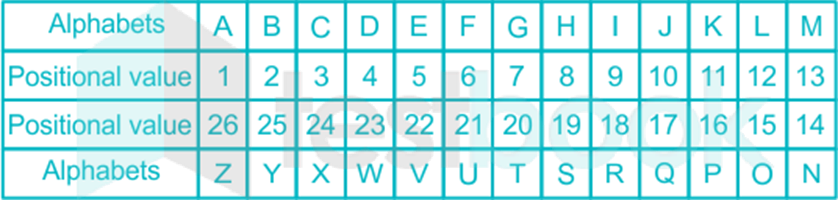
Additional Information

  • Background of the Poona Pact:
  • In 1932, the British government proposed the Communal Award, which provided separate electorates for different religious and social communities.
  • Dr. B.R. Ambedkar initially supported the idea as it ensured separate representation for the Depressed Classes.
  • However, Mahatma Gandhi opposed it, fearing it would further divide Indian society.
  • Key Provisions of the Poona Pact:
  • Reserved seats for the Depressed Classes in provincial legislatures, to be elected by a joint electorate.
  • Increased representation of the Depressed Classes in the central legislature.
  • Specific measures to ensure educational and economic development of the Depressed Classes.
  • Impact on Indian Politics:
  • The Poona Pact was instrumental in the inclusion of affirmative action policies for the Depressed Classes in India’s post-independence constitution.
  • It laid the foundation for the reservation system currently in place in India.
  • The Pact highlighted the importance of unity and collective action for social justice and equality.
  • Dr. B.R. Ambedkar:
  • Leader of the Depressed Classes and principal architect of the Indian Constitution.
  • Advocate for the rights of the untouchables and a key figure in the Indian independence movement.
  • His efforts were crucial in the enactment of various laws for the social and economic upliftment of the lower castes.

Attempt this paper under real exam conditions

Timed interface, section switching, instant scoring, and question-by-question analytics — free.

Start Timed Attempt