Previous Year Paper

LIC AAO Prelims 28 Aug 2021 Shift 1 Memory Based Paper (Previous Year Paper)

100 questions · 60 minutes · with answers · free

Reasoning Ability (35 questions)

Read the given information carefully and answer the questions:

Point P is 10m north of point Q. Point Q is 15m west of point R. Point S is 10m north of point R. Point S is 25m north of point T. Point W is 8m east of S. Point U is 8m east of point T. Point U is 20m south of point V.

1

What is the direction of point S with respect to point Q?

  1. ((a))

    South-West

  2. ((b))

    North-West

  3. ((c))

    South

  4. ((d))

    North-East

  5. ((e))

    None of these

Show Answer
Answer: ((d))

North-East

Given points: P, Q, R, S, T, U, V, and W.

1)Point P is 10m north of point Q. Point Q is 15m west of point R.

  1. Point S is 10m north of point R. Point S is 25m north of point T.

  2. Point W is 8m east of S. Point U is 8m east of point T.

  3.  Point U is 20m south of point V.

Therefore, the diagram is,  


Hence, S is in the northeast with respect to point Q.

2

What is the shortest distance between point R and point V?

  1. ((a))

    10m

  2. ((b))

    15m

  3. ((c))

    √89m

  4. ((d))

    2√3m

  5. ((e))

    None of these

Show Answer
Answer: ((c))

√89m

Given points: P, Q, R, S, T, U, V, and W.

1)Point P is 10m north of point Q. Point Q is 15m west of point R.

  1. Point S is 10m north of point R. Point S is 25m north of point T.

  2. Point W is 8m east of S. Point U is 8m east of point T.

  3.  Point U is 20m south of point V.

Therefore, the diagram is,  


On applying the Pythagoras theorem, we get the shortest distance between point R and V.

RV2=64+25〖RV〗^2=64+25

=89=√89

=89m=√89 m

Hence**, 89√89 m is the shortest distance between points R and V.**

3

What is the direction of point P with respect to point U?

  1. ((a))

    South-West

  2. ((b))

    North-West

  3. ((c))

    South

  4. ((d))

    North-East

  5. ((e))

    None of these

Show Answer
Answer: ((b))

North-West

Given points: P, Q, R, S, T, U, V, and W.

1)Point P is 10m north of point Q. Point Q is 15m west of point R.

  1. Point S is 10m north of point R. Point S is 25m north of point T.

  2. Point W is 8m east of S. Point U is 8m east of point T.

  3.  Point U is 20m south of point V.

Therefore, the diagram is,  


Hence, the direction of point P is north – west with respect to point U.

4

What is the shortest distance between point W and Point V?

  1. ((a))

    3m

  2. ((b))

    5m

  3. ((c))

    8m

  4. ((d))

    12m

  5. ((e))

    None of these

Show Answer
Answer: ((b))

5m

Given points: P, Q, R, S, T, U, V, and W.

1)Point P is 10m north of point Q. Point Q is 15m west of point R.

  1. Point S is 10m north of point R. Point S is 25m north of point T.

  2. Point W is 8m east of S. Point U is 8m east of point T.

  3.  Point U is 20m south of point V.

Therefore, the diagram is,  

Hence, the shortest distance between point W and Point V is 5m.

5

Find the odd one out.

  1. ((a))

    PQ

  2. ((b))

    SR

  3. ((c))

    ST

  4. ((d))

    VU

  5. ((e))

    RV

Show Answer
Answer: ((e))

RV

Given points: P, Q, R, S, T, U, V, and W.

1)Point P is 10m north of point Q. Point Q is 15m west of point R.

  1. Point S is 10m north of point R. Point S is 25m north of point T.

  2. Point W is 8m east of S. Point U is 8m east of point T.

  3.  Point U is 20m south of point V.

Therefore, the diagram is,  


PQ: P is to the north of Q

SR: S is to the north of R

ST: S is to the north of T

VU: V is to the north U

RV: R is to the south west of V

Hence, RV is the odd one.

6

Direction: In the following question assuming the given statements to be True, find which of the conclusion among given conclusions is/are definitely true and then give your answers accordingly.

Statements: P < Q ≥ G; G ≥ I ≥ E; C ≤ P; C > U

Conclusions:

I. U > I

II. P ≤ E

  1. ((a))

    Both I and II are True

  2. ((b))

    Only II is True

  3. ((c))

    Either I or II is True

  4. ((d))

    Only I is True

  5. ((e))

    Neither I nor II is true

Show Answer
Answer: ((e))

Neither I nor II is true

Given statements: P < Q ≥ G; G ≥ I ≥ E; C ≤ P; C > U

On combining: U < C ≤ P < Q ≥ G ≥ I ≥ E

Conclusions:

I. U > I → False (as U < C ≤ P < Q ≥ G ≥ I → thus clear relation between U and I cannot be determined)

II. P ≤ E → False (as P < Q ≥ G ≥ I ≥ E → thus clear relation between P and E cannot be determined)

Hence, neither I nor II is True.

7

Direction: In the following question assuming the given statements to be True, find which conclusion among the given conclusions is/are definitely true and then give your answers accordingly.

Statements: H = G > F; A < B ≥ X; B ≤ F

Conclusions:

I. H ≥ A

II. X < F

  1. ((a))

    Both I and II are True

  2. ((b))

    Only II is True

  3. ((c))

    Either I or II is True

  4. ((d))

    Only I is True

  5. ((e))

    Neither I nor II is true

Show Answer
Answer: ((e))

Neither I nor II is true

Given statements: H = G > F; A < B ≥ X; B ≤ F

On combining: H = G > F ≥ B > A; H = G > F ≥ B ≥ X

Conclusions:

I. H ≥ A → False (as H = G > F ≥ B > A → H > A)

II. X < F → False (as F ≥ B ≥ X → F ≥ X)

Hence, neither I nor II is True.

8

Which of the following expression in such a manner that “G > D & U > D” definitely holds True?

  1. ((a))

    G > R > A = D < E ≤ U

  2. ((b))

    G ≥ R = A > D ≤ E < U

  3. ((c))

    G = R > A ≥ D < E < U

  4. ((d))

    All of the above

  5. ((e))

    None of the above

Show Answer
Answer: ((d))

All of the above

Let us check each option:

  1. G > R > A = D < E ≤ U → True

  2. G ≥ R = A > D ≤ E < U → True

  3. G = R > A ≥ D < E < U → True

Hence, option 4 is correct.

9

Directions: In the following question assuming the given statements to be True, find which of the conclusion among given conclusions is/are definitely true and then give your answers accordingly

Statements: P = Q ≤ R; T = P; T > S

Conclusions:

I. Q < S

II. R < S

  1. ((a))

    Only I is True

  2. ((b))

    Only II is True

  3. ((c))

    Both I and II are True

  4. ((d))

    Either I or II is True

  5. ((e))

    None is True

Show Answer
Answer: ((e))

None is True

Given statements: P = Q ≤ R; T = P; T > S

On combining: S < P = Q = T ≤ R

I. Q < S → False (as S < P = Q)

II. R < S → False (as S < T ≤ R)

Therefore none follows.

10

Which of the following symbols should be placed in the blank spaces respectively (in the same order from left to right) in order to complete the given expression in such a manner that "P > S" definitely holds false?

P__Q__R__S

  1. ((a))

    , ≥, =

  2. ((b))

    ≥, =, >

  3. ((c))

    ≤, <, <

  4. ((d))

    , ≥, >

  5. ((e))

    None of these

Show Answer
Answer: ((c))

≤, <, <

Let's check each option:

1) P > Q ≥ R = S → P > S → True (It definitely follows)

2) P ≥ Q = R > S → P > S → True (It definitely follows)

3) P ≤ Q < R < S → P < S  → False (It does not follows)

4) P > Q ≥ R > S → P > S → True (It definitely follows)

Hence, the wrong sequence of symbols to satisfy the given condition is "≤, <, <".

11

Direction: In the question below are given some statements followed by some conclusions. You have to take given statements to be true even if they seem to be at variance with commonly known facts. Read all the conclusions and then decide which of the given conclusions logically follows from the given statements disregarding commonly known facts.

Statements

Only few mobile are Smart.

Only a few mobile are small

No TV is Small.

Conclusions:

I. All TV is Smart

II. Only a few Smart is Small.

  1. ((a))

    Conclusion only I follows

  2. ((b))

    Conclusion only II follows

  3. ((c))

    Either conclusion I or II follows

  4. ((d))

    Neither conclusion I nor II follows

  5. ((e))

    Both conclusions I and II follows

Show Answer
Answer: ((d))

Neither conclusion I nor II follows

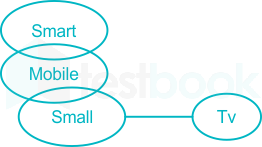
The least possible Venn diagram is shown below:

I. All TV is Smart → False (It is possible but not definite, as no direct relationship between the two is given).

II. Only a few Smart is Small → False (It is possible but not definite).

Hence. Neither I nor II follows.

12

Directions: In the following question below some statements are given followed by some conclusions. Taking the given statements to be true even if they seem to be at variance from commonly known facts, read all the conclusions and then decide which of the given conclusions logically follows the given statements.

Statements:

I. Few Pens are Pencils.

II. No Pencil is Eraser.

III. All Erasers are Books.

Conclusions:

I. Some books are erasers.

II. Some pens are erasers.

  1. ((a))

    Only conclusion I follows

  2. ((b))

    Only conclusion II follows

  3. ((c))

    either conclusion I or II follows

  4. ((d))

    Neither I nor II follows

  5. ((e))

    Both conclusions follow

Show Answer
Answer: ((a))

Only conclusion I follows

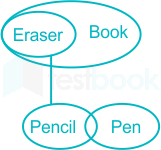
The least possible Venn diagram is: 

I. Some books are erasers → True (All Erasers are Books)

II. Some pens are erasers. → False (It is possible but not definite)

Hence, Only Conclusion I follows.

13

Directions: In the following question below some statements are given followed by some conclusions. Taking the given statements to be true even if they seem to be at variance from commonly known facts, read all the conclusions and then decide which of the given conclusions logically follows the given statements.

Statements:

Some bananas are mangoes.

All apples are bananas.

Some grapes are apples.

Conclusions:

I. Some apples are mangoes.

II. Some grapes are bananas

  1. ((a))

    Only conclusion I follows

  2. ((b))

    Only conclusion II follows

  3. ((c))

    either conclusion I or II follows

  4. ((d))

    Neither I nor II follows

  5. ((e))

    Both conclusions follow

Show Answer
Answer: ((b))

Only conclusion II follows

The least possible Venn diagram is:

Diagram:

I. Some apples are mangoes → False (it is possible but not definite)

II. Some grapes are bananas → True (Some grapes are apples and all apples are bananas)

Hence only conclusion II follows.

Direction: Read the following information carefully and answer the questions that follow:

There are ten persons namely P, Q, R, S, T, U, V, W, X and Y attending the meeting on either 18th or 27th of January, March, April, September and November.

P attends the meeting on the 18th of a month having 31 days. There are three persons attending the meeting between P and T. R attends the meeting on 27th March. X attends the meeting before W but after T. Neither Q nor Y attends the meeting in January. Q attends the meeting before Y but not in the same month. S attends the meeting two months before R. There are two persons attending the meeting between W and T. W does not attend the meeting in the month of September. V attends the meeting in the month of April. Neither V nor Y attends the meeting on the 18th of any month.

14

Who attends the meeting just after P?

  1. ((a))

    Q

  2. ((b))

    R

  3. ((c))

    S

  4. ((d))

    T

  5. ((e))

    W

Show Answer
Answer: ((b))

R

Given:

Ten persons: P, Q, R, S, T, U, V, W, X and Y 

Date: 18th and 27th

Months: January, March, April, September and November.

  1. P attends the meeting on 18th of a month having 31 days.

  2. There are three persons attending the meeting between P and T.

  3. S attends the meeting two months before R.

4) R attends the meeting on 27th March. 

Case I:

MonthDatePersons
January (31)18thP
27thS
March (31)18th
27thR
April (30)18thT
27th
September(30)18th
27th
November (30)18th
27th
<br>

Case II:

MonthDatePersons
January (31)18th
27thS
March (31)18thP
27thR
April (30)18th
27th
September(30)18thT
27th
November (30)18th
27th
<br>

4) There are two persons attending the meeting between W and T. 

  1. W does not attend the meeting in the month of September. (this eliminates case I)
MonthDatePersons
January (31)18th
27thS
March (31)18thP
27thR
April (30)18th
27th
September(30)18thT
27th
November (30)18th
27thW
<br>
  1. Neither Q nor Y attends the meeting in January. 

  2. Q attends the meeting before Y but not in the same month.

8) X attends the meeting before W but after T. 

9) V attends the meeting in the month of April.

  1. Neither V nor Y attends the meeting on the 18th of any month.

The final table is as follows:

MonthDatePersons
January (31)18thU
27thS
March (31)18thP
27thR
April (30)18thQ
27thV
September(30)18thT
27thY
November (30)18thX
27thW


Hence, R attends the meeting just after P.

15

How many persons attend the meeting between T and W?

  1. ((a))

    1

  2. ((b))

    2

  3. ((c))

    3

  4. ((d))

    4

  5. ((e))

    5

Show Answer
Answer: ((b))

2

Given:

Ten persons: P, Q, R, S, T, U, V, W, X and Y 

Date: 18th and 27th

Months: January, March, April, September and November.

  1. P attends the meeting on 18th of a month having 31 days.

  2. There are three persons attending the meeting between P and T.

  3. S attends the meeting two months before R.

4) R attends the meeting on 27th March. 

Case I:

MonthDatePersons
January (31)18thP
27thS
March (31)18th
27thR
April (30)18thT
27th
September(30)18th
27th
November (30)18th
27th
<br>

Case II:

MonthDatePersons
January (31)18th
27thS
March (31)18thP
27thR
April (30)18th
27th
September(30)18thT
27th
November (30)18th
27th
<br>

4) There are two persons attending the meeting between W and T. 

  1. W does not attend the meeting in the month of September. (this eliminates case I)
MonthDatePersons
January (31)18th
27thS
March (31)18thP
27thR
April (30)18th
27th
September(30)18thT
27th
November (30)18th
27thW
<br>
  1. Neither Q nor Y attends the meeting in January. 

  2. Q attends the meeting before Y but not in the same month.

8) X attends the meeting before W but after T. 

9) V attends the meeting in the month of April.

  1. Neither V nor Y attends the meeting on the 18th of any month.

The final table is as follows:

MonthDatePersons
January (31)18thU
27thS
March (31)18thP
27thR
April (30)18thQ
27thV
September(30)18thT
27thY
November (30)18thX
27thW


Hence, 2 persons attends meeting between T and W.

16

Who attends the meeting on the 18th April?

  1. ((a))

    S

  2. ((b))

    Q

  3. ((c))

    V

  4. ((d))

    R

  5. ((e))

    W

Show Answer
Answer: ((b))

Q

Given:

Ten persons: P, Q, R, S, T, U, V, W, X and Y 

Date: 18th and 27th

Months: January, March, April, September and November.

  1. P attends the meeting on 18th of a month having 31 days.

  2. There are three persons attending the meeting between P and T.

  3. S attends the meeting two months before R.

4) R attends the meeting on 27th March. 

Case I:

MonthDatePersons
January (31)18thP
27thS
March (31)18th
27thR
April (30)18thT
27th
September(30)18th
27th
November (30)18th
27th
<br>

Case II:

MonthDatePersons
January (31)18th
27thS
March (31)18thP
27thR
April (30)18th
27th
September(30)18thT
27th
November (30)18th
27th
<br>

4) There are two persons attending the meeting between W and T. 

  1. W does not attend the meeting in the month of September. (this eliminates case I)
MonthDatePersons
January (31)18th
27thS
March (31)18thP
27thR
April (30)18th
27th
September(30)18thT
27th
November (30)18th
27thW
<br>
  1. Neither Q nor Y attends the meeting in January. 

  2. Q attends the meeting before Y but not in the same month.

8) X attends the meeting before W but after T. 

9) V attends the meeting in the month of April.

  1. Neither V nor Y attends the meeting on the 18th of any month.

The final table is as follows:

MonthDatePersons
January (31)18thU
27thS
March (31)18thP
27thR
April (30)18thQ
27thV
September(30)18thT
27thY
November (30)18thX
27thW


Hence, Q attended the meeting on 18th April.

17

Who attended the meeting in the last?

  1. ((a))

    P

  2. ((b))

    W

  3. ((c))

    X

  4. ((d))

    U

  5. ((e))

    V

Show Answer
Answer: ((b))

W

Given:

Ten persons: P, Q, R, S, T, U, V, W, X and Y 

Date: 18th and 27th

Months: January, March, April, September and November.

  1. P attends the meeting on 18th of a month having 31 days.

  2. There are three persons attending the meeting between P and T.

  3. S attends the meeting two months before R.

4) R attends the meeting on 27th March. 

Case I:

MonthDatePersons
January (31)18thP
27thS
March (31)18th
27thR
April (30)18thT
27th
September(30)18th
27th
November (30)18th
27th
<br>

Case II:

MonthDatePersons
January (31)18th
27thS
March (31)18thP
27thR
April (30)18th
27th
September(30)18thT
27th
November (30)18th
27th
<br>

4) There are two persons attending the meeting between W and T. 

  1. W does not attend the meeting in the month of September. (this eliminates case I)
MonthDatePersons
January (31)18th
27thS
March (31)18thP
27thR
April (30)18th
27th
September(30)18thT
27th
November (30)18th
27thW
<br>
  1. Neither Q nor Y attends the meeting in January. 

  2. Q attends the meeting before Y but not in the same month.

8) X attends the meeting before W but after T. 

9) V attends the meeting in the month of April.

  1. Neither V nor Y attends the meeting on the 18th of any month.

The final table is as follows:

MonthDatePersons
January (31)18thU
27thS
March (31)18thP
27thR
April (30)18thQ
27thV
September(30)18thT
27thY
November (30)18thX
27thW


Hence, W attended the meeting in the last.

18

How many persons attended the meeting between U and X?

  1. ((a))

    2

  2. ((b))

    3

  3. ((c))

    4

  4. ((d))

    5

  5. ((e))

    More than 5

Show Answer
Answer: ((e))

More than 5

Given:

Ten persons: P, Q, R, S, T, U, V, W, X and Y 

Date: 18th and 27th

Months: January, March, April, September and November.

  1. P attends the meeting on 18th of a month having 31 days.

  2. There are three persons attending the meeting between P and T.

  3. S attends the meeting two months before R.

4) R attends the meeting on 27th March. 

Case I:

MonthDatePersons
January (31)18thP
27thS
March (31)18th
27thR
April (30)18thT
27th
September(30)18th
27th
November (30)18th
27th
<br>

Case II:

MonthDatePersons
January (31)18th
27thS
March (31)18thP
27thR
April (30)18th
27th
September(30)18thT
27th
November (30)18th
27th
<br>

4) There are two persons attending the meeting between W and T. 

  1. W does not attend the meeting in the month of September. (this eliminates case I)
MonthDatePersons
January (31)18th
27thS
March (31)18thP
27thR
April (30)18th
27th
September(30)18thT
27th
November (30)18th
27thW
<br>
  1. Neither Q nor Y attends the meeting in January. 

  2. Q attends the meeting before Y but not in the same month.

8) X attends the meeting before W but after T. 

9) V attends the meeting in the month of April.

  1. Neither V nor Y attends the meeting on the 18th of any month.

The final table is as follows:

MonthDatePersons
January (31)18thU
27thS
March (31)18thP
27thR
April (30)18thQ
27thV
September(30)18thT
27thY
November (30)18thX
27thW
<br>

Hence, more than 5 persons attended the meeting between U and X.

Eight persons A, B, C, D, E, F, G and H are sitting in a line and equal number of persons are facing north and south direction. Not more than two consecutive adjacent persons face in same direction. Persons at extreme end face in same direction.

A sits third to the right of D, who sits immediate right of H. H faces north direction. Two persons sit between A and E. D does not sit at extreme end. B sits immediate right of C and both face south direction. B and A are not adjacent to each other. G does not face south.

19

Who sits immediate left of D?

  1. ((a))

    G

  2. ((b))

    A

  3. ((c))

    B

  4. ((d))

    E

  5. ((e))

    F

Show Answer
Answer: ((a))

G

Eight persons: A, B, C, D, E, F, G and H.

  1. A sits third to the right of D, who sits immediate right of H.

  2. H faces north direction.

  3. Two persons sit between A and E.

  4. D does not sit at extreme end.

  1. B sits immediate right of C and both face south direction.

  2. B and A are not adjacent to each other.

  1. G does not face south. So, case 1 is rejected.

G sits immediate left of D.

Hence, G is the correct answer.

20

Who sits third to the left of A?

  1. ((a))

    B

  2. ((b))

    C

  3. ((c))

    E

  4. ((d))

    F

  5. ((e))

    D

Show Answer
Answer: ((c))

E

Eight persons: A, B, C, D, E, F, G and H.

  1. A sits third to the right of D, who sits immediate right of H.

  2. H faces north direction.

  3. Two persons sit between A and E.

  4. D does not sit at extreme end.

  1. B sits immediate right of C and both face south direction.

  2. B and A are not adjacent to each other.

  1. G does not face south. So, case 1 is rejected.

E sits third to the left of A.

Hence, E is the correct answer.

21

How many persons sit between A and H?

  1. ((a))

    Three

  2. ((b))

    Two

  3. ((c))

    Four

  4. ((d))

    One

  5. ((e))

    Five

Show Answer
Answer: ((d))

One

Eight persons: A, B, C, D, E, F, G and H.

  1. A sits third to the right of D, who sits immediate right of H.

  2. H faces north direction.

  3. Two persons sit between A and E.

  4. D does not sit at extreme end.

  1. B sits immediate right of C and both face south direction.

  2. B and A are not adjacent to each other.

  1. G does not face south. So, case 1 is rejected.

One person sits between A and H.

Hence, One is the correct answer.

22

Find the odd one out.

  1. ((a))

    E

  2. ((b))

    A

  3. ((c))

    H

  4. ((d))

    G

  5. ((e))

    D

Show Answer
Answer: ((e))

D

Eight persons: A, B, C, D, E, F, G and H.

  1. A sits third to the right of D, who sits immediate right of H.

  2. H faces north direction.

  3. Two persons sit between A and E.

  4. D does not sit at extreme end.

  1. B sits immediate right of C and both face south direction.

  2. B and A are not adjacent to each other.

  1. G does not face south. So, case 1 is rejected.

All face north except D.

Hence, D is the correct answer.

23

How many persons sit to the left of H?

  1. ((a))

    Five

  2. ((b))

    Four

  3. ((c))

    One

  4. ((d))

    Six

  5. ((e))

    None of the above

Show Answer
Answer: ((a))

Five

Eight persons: A, B, C, D, E, F, G and H.

  1. A sits third to the right of D, who sits immediate right of H.

  2. H faces north direction.

  3. Two persons sit between A and E.

  4. D does not sit at extreme end.

  1. B sits immediate right of C and both face south direction.

  2. B and A are not adjacent to each other.

  1. G does not face south. So, case 1 is rejected.

Five persons sit to the left of H.

Hence, Five is the correct answer.

Directions: Read the following information carefully and answer the given questions:

There are eight persons: E, F, G, H, I, J, K, and L in a bank at different designations: MD, GM, AGM, DGM, Manager, AM, PO, and Clerk from higher to lower positions. Three designations are there between I and L. Four designations are there between E and K, who is junior to E. Two designations are there between J and H. G is two posts senior to H who is senior to K. J is not the clerk in the bank. F is senior to at least four persons in the bank. Neither L nor I are clerks.

24

Who is the GM in the bank?

  1. ((a))

    L

  2. ((b))

    I

  3. ((c))

    F

  4. ((d))

    G

  5. ((e))

    Cannot be determined

Show Answer
Answer: ((e))

Cannot be determined

Eight Persons: E, F, G, H, I, J, K, and L

Designations: MD, GM, AGM, DGM, Manager, AM, PO, and Clerk

1) Four designations are there between E and K, who is junior to E.

Case 1Case 2Case 3
DesignationPersonDesignationPersonDesignationPerson
MDEMDMD
GMGMEGM
AGMAGMAGME
DGMDGMDGM
ManagerManagerManager
AMKAMAM
POPOKPO
ClerkClerkClerkK
<br>

2) Two designations are there between J and H.

  1. G is two posts senior to H who is senior to K.

  2. J is not the clerk in the bank.

5) Three designations are there between I and L.

Case 1Case 2Case 3
DesignationPersonDesignationPersonDesignationPerson
MDEMDI/LMDF
GMJGMEGMI/L
AGMGAGMJAGME
DGMI/LDGMGDGMJ
ManagerHManagerL/IManagerG
AMKAMHAML/I
POFPOKPOH
ClerkL/IClerkFClerkK
<br>

6) F is senior to at least four persons in the bank.

  1. Neither L nor I are clerks.

As the above condition is not satisfied in case 1 and case 2, it will get canceled.

Final Arrangement:

DesignationPerson
MDF
GMI/L
AGME
DGMJ
ManagerG
AML/I
POH
ClerkK
<br>

As either I or L can be the GM in the bank, it cannot be detrmined.

Hence, cannot be determined will be the correct answer.

25

Who is the Clerk in the bank?

  1. ((a))

    G

  2. ((b))

    H

  3. ((c))

    K

  4. ((d))

    L

  5. ((e))

    I

Show Answer
Answer: ((c))

K

Eight Persons: E, F, G, H, I, J, K, and L

Designations: MD, GM, AGM, DGM, Manager, AM, PO, and Clerk

1) Four designations are there between E and K, who is junior to E.

Case 1Case 2Case 3
DesignationPersonDesignationPersonDesignationPerson
MDEMDMD
GMGMEGM
AGMAGMAGME
DGMDGMDGM
ManagerManagerManager
AMKAMAM
POPOKPO
ClerkClerkClerkK
<br>

2) Two designations are there between J and H.

  1. G is two posts senior to H who is senior to K.

  2. J is not the clerk in the bank.

5) Three designations are there between I and L.

Case 1Case 2Case 3
DesignationPersonDesignationPersonDesignationPerson
MDEMDI/LMDF
GMJGMEGMI/L
AGMGAGMJAGME
DGMI/LDGMGDGMJ
ManagerHManagerL/IManagerG
AMKAMHAML/I
POFPOKPOH
ClerkL/IClerkFClerkK
<br>

6) F is senior to at least four persons in the bank.

7) Neither L nor I are clerks.

As the above condition is not satisfied in case 1 and case 2, it will get canceled.

Final Arrangement:

DesignationPerson
MDF
GMI/L
AGME
DGMJ
ManagerG
AML/I
POH
ClerkK
<br>

Hence, K is the Clerk in the bank.

26

What is the designation of E in the bank?

  1. ((a))

    AGM

  2. ((b))

    DGM

  3. ((c))

    MD

  4. ((d))

    GM

  5. ((e))

    Manager

Show Answer
Answer: ((a))

AGM

Eight Persons: E, F, G, H, I, J, K, and L

Designations: MD, GM, AGM, DGM, Manager, AM, PO, and Clerk

1) Four designations are there between E and K, who is junior to E.

Case 1Case 2Case 3
DesignationPersonDesignationPersonDesignationPerson
MDEMDMD
GMGMEGM
AGMAGMAGME
DGMDGMDGM
ManagerManagerManager
AMKAMAM
POPOKPO
ClerkClerkClerkK
<br>

2) Two designations are there between J and H.

  1. G is two posts senior to H who is senior to K.

  2. J is not the clerk in the bank.

5) Three designations are there between I and L.

Case 1Case 2Case 3
DesignationPersonDesignationPersonDesignationPerson
MDEMDI/LMDF
GMJGMEGMI/L
AGMGAGMJAGME
DGMI/LDGMGDGMJ
ManagerHManagerL/IManagerG
AMKAMHAML/I
POFPOKPOH
ClerkL/IClerkFClerkK
<br>

6) F is senior to at least four persons in the bank.

7) Neither L nor I are clerks.

As the above condition is not satisfied in case 1 and case 2, it will get canceled.

Final Arrangement:

DesignationPerson
MDF
GMI/L
AGME
DGMJ
ManagerG
AML/I
POH
ClerkK
<br>

Hence, E is the AGM in the bank.

27

How many persons are senior to G in the bank?

  1. ((a))

    Two

  2. ((b))

    Three

  3. ((c))

    One

  4. ((d))

    Four

  5. ((e))

    Five

Show Answer
Answer: ((d))

Four

Eight Persons: E, F, G, H, I, J, K, and L

Designations: MD, GM, AGM, DGM, Manager, AM, PO, and Clerk

1) Four designations are there between E and K, who is junior to E.

Case 1Case 2Case 3
DesignationPersonDesignationPersonDesignationPerson
MDEMDMD
GMGMEGM
AGMAGMAGME
DGMDGMDGM
ManagerManagerManager
AMKAMAM
POPOKPO
ClerkClerkClerkK
<br>

2) Two designations are there between J and H.

  1. G is two posts senior to H who is senior to K.

  2. J is not the clerk in the bank.

5) Three designations are there between I and L.

Case 1Case 2Case 3
DesignationPersonDesignationPersonDesignationPerson
MDEMDI/LMDF
GMJGMEGMI/L
AGMGAGMJAGME
DGMI/LDGMGDGMJ
ManagerHManagerL/IManagerG
AMKAMHAML/I
POFPOKPOH
ClerkL/IClerkFClerkK
<br>

6) F is senior to at least four persons in the bank.

  1. Neither L nor I are clerks.

As the above condition is not satisfied in case 1 and case 2, it will get cancelled.

Final Arrangement:

DesignationPerson
MDF
GMI/L
AGME
DGMJ
ManagerG
AML/I
POH
ClerkK
<br>

Hence, Four persons are senior to G in the bank.

28

Who is the PO in the bank?

  1. ((a))

    H

  2. ((b))

    K

  3. ((c))

    L

  4. ((d))

    F

  5. ((e))

    J

Show Answer
Answer: ((a))

H

Eight Persons: E, F, G, H, I, J, K, and L

Designations: MD, GM, AGM, DGM, Manager, AM, PO, and Clerk

1) Four designations are there between E and K, who is junior to E.

Case 1Case 2Case 3
DesignationPersonDesignationPersonDesignationPerson
MDEMDMD
GMGMEGM
AGMAGMAGME
DGMDGMDGM
ManagerManagerManager
AMKAMAM
POPOKPO
ClerkClerkClerkK
<br>

2) Two designations are there between J and H.

  1. G is two posts senior to H who is senior to K.

  2. J is not the clerk in the bank.

5) Three designations are there between I and L.

Case 1Case 2Case 3
DesignationPersonDesignationPersonDesignationPerson
MDEMDI/LMDF
GMJGMEGMI/L
AGMGAGMJAGME
DGMI/LDGMGDGMJ
ManagerHManagerL/IManagerG
AMKAMHAML/I
POFPOKPOH
ClerkL/IClerkFClerkK
<br>

6) F is senior to at least four persons in the bank.

7) Neither L nor I are clerks.

As the above condition is not satisfied in case 1 and case 2, it will get cancelled.

Final Arrangement:

DesignationPerson
MDF
GMI/L
AGME
DGMJ
ManagerG
AML/I
POH
ClerkK
<br>

Hence, H is the PO in the bank.

Directions: Study the following information carefully and answer the questions given below it.

Seven friends A, B, C, D, E, F and G like colours yellow, black, blue, red, green, white and purple and buy dresses of respective colours from different stores P, Q, R, S, T, U and V.

B does not buy dress from store Q or R and likes white colour. D buys dress from store V and is not blue or red in colour. F buys dress from store P and is green in colour. C and E buy dress from stores T and U respectively and are black and yellow in colour respectively. G does not like the blue colour. The red dress is not brought from store Q.

29

Which of the following statement is true?

  1. ((a))

    A buys dress from store S.

  2. ((b))

    F likes Black colour.

  3. ((c))

    E does not buys dress from store P.

  4. ((d))

    Store R sold dress to F.

  5. ((e))

    All are true.

Show Answer
Answer: ((c))

E does not buys dress from store P.

Seven friends: A, B, C, D, E, F and G

Colours: Yellow, Black, Blue, Red, Green, White and Purple.

Stores: P, Q, R, S, T, U and V.

  1. B does not buy dress from store Q or R and likes whitecolour.

  2. D buys dress from store V and is not blue or red in colour.

NameColourStore
A
BWhiteQ×, R×
C
DBlue×, Red×V
E
F
G
  1. F buys dress from store P and is green in colour.

  2. C and E buy dress from stores T and U respectively and are black and yellow in colour respectively.

NameColourStore
A
BWhiteQ×, R×
CBlackT
DBlue×, Red×V
EYellowU
FGreenP
G
  1. G does not like blue colour. Thus A likes blue colour.

Now as D does not like red colour, G likes red colour.

Therefore D likespurplecolour.

NameColourStore
ABlue
BWhiteQ×, R×
CBlackT
DPurpleV
EYellowU
FGreenP
GRed
  1. Red dress is not brought from store Q.

Therefore A buys from store Q as neither B nor G buy from store Q.

As B does not buy dress from store R, he buys it from store S.

Thus G buy dress from store R.

NameColourStore
ABlueQ
BWhiteS
CBlackT
DPurpleV
EYellowU
FGreenP
GRedR

Thus the only correct statement is ‘E does not buys dress from store P’.

30

Which of the following combination of name-store-colour is correct?

  1. ((a))

    A-Q-Red

  2. ((b))

    A-R-Blue

  3. ((c))

    F-P-Black

  4. ((d))

    G-R-Red

  5. ((e))

    None of these

Show Answer
Answer: ((d))

G-R-Red

Seven friends: A, B, C, D, E, F and G

Colours: Yellow, Black, Blue, Red, Green, White and Purple.

Stores: P, Q, R, S, T, U and V.

  1. B does not buy dress from store Q or R and likes whitecolour.

  2. D buys dress from store V and is not blue or red in colour.

NameColourStore
A
BWhiteQ×, R×
C
DBlue×, Red×V
E
F
G
  1. F buys dress from store P and is green in colour.

  2. C and E buy dress from stores T and U respectively and are black and yellow in colour respectively.

NameColourStore
A
BWhiteQ×, R×
CBlackT
DBlue×, Red×V
EYellowU
FGreenP
G
  1. G does not like blue colour. Thus A likes blue colour.

Now as D does not like red colour, G likes red colour.

Therefore D likespurplecolour.

NameColourStore
ABlue
BWhiteQ×, R×
CBlackT
DPurpleV
EYellowU
FGreenP
GRed
  1. Red dress is not brought from store Q.

Therefore A buys from store Q as neither B nor G buy from store Q.

As B does not buy dress from store R, he buys it from store S.

Thus G buy dress from store R.

NameColourStore
ABlueQ
BWhiteS
CBlackT
DPurpleV
EYellowU
FGreenP
GRedR

Thus the only correct combination is G-R-Red.

31

Dress of blue colour is brought from which store?

  1. ((a))

    P

  2. ((b))

    R

  3. ((c))

    S

  4. ((d))

    T

  5. ((e))

    None of these

Show Answer
Answer: ((e))

None of these

Seven friends: A, B, C, D, E, F and G

Colours: Yellow, Black, Blue, Red, Green, White and Purple.

Stores: P, Q, R, S, T, U and V.

  1. B does not buy dress from store Q or R and likes whitecolour.

  2. D buys dress from store V and is not blue or red in colour.

NameColourStore
A
BWhiteQ×, R×
C
DBlue×, Red×V
E
F
G
  1. F buys dress from store P and is green in colour.

  2. C and E buy dress from stores T and U respectively and are black and yellow in colour respectively.

NameColourStore
A
BWhiteQ×, R×
CBlackT
DBlue×, Red×V
EYellowU
FGreenP
G
  1. G does not like blue colour. Thus A likes blue colour.

Now as D does not like red colour, G likes red colour.

Therefore D likespurplecolour.

NameColourStore
ABlue
BWhiteQ×, R×
CBlackT
DPurpleV
EYellowU
FGreenP
GRed
  1. Red dress is not brought from store Q.

Therefore A buys from store Q as neither B nor G buy from store Q.

As B does not buy dress from store R, he buys it from store S.

Thus G buy dress from store R.

NameColourStore
ABlueQ
BWhiteS
CBlackT
DPurpleV
EYellowU
FGreenP
GRedR

Thus dress of blue colour is brought from store Q.

This option is not given thus answer is none of these.

32

B buys dress from which store?

  1. ((a))

    R

  2. ((b))

    S

  3. ((c))

    Q or S

  4. ((d))

    Q

  5. ((e))

    None of these

Show Answer
Answer: ((b))

S

Seven friends: A, B, C, D, E, F and G

Colours: Yellow, Black, Blue, Red, Green, White and Purple.

Stores: P, Q, R, S, T, U and V.

  1. B does not buy dress from store Q or R and likes whitecolour.

  2. D buys dress from store V and is not blue or red in colour.

NameColourStore
A
BWhiteQ×, R×
C
DBlue×, Red×V
E
F
G
  1. F buys dress from store P and is green in colour.

  2. C and E buy dress from stores T and U respectively and are black and yellow in colour respectively.

NameColourStore
A
BWhiteQ×, R×
CBlackT
DBlue×, Red×V
EYellowU
FGreenP
G
  1. G does not like blue colour. Thus A likes blue colour.

Now as D does not like red colour, G likes red colour.

Therefore D likespurplecolour.

NameColourStore
ABlue
BWhiteQ×, R×
CBlackT
DPurpleV
EYellowU
FGreenP
GRed
  1. Red dress is not brought from store Q.

Therefore A buys from store Q as neither B nor G buy from store Q.

As B does not buy dress from store R, he buys it from store S.

Thus G buy dress from store R.

NameColourStore
ABlueQ
BWhiteS
CBlackT
DPurpleV
EYellowU
FGreenP
GRedR

Thus B buys dress from store S.

33

Which of the following likes purple colour?

  1. ((a))

    A

  2. ((b))

    C

  3. ((c))

    D

  4. ((d))

    G

  5. ((e))

    None of these

Show Answer
Answer: ((c))

D

Seven friends: A, B, C, D, E, F and G

Colours: Yellow, Black, Blue, Red, Green, White and Purple.

Stores: P, Q, R, S, T, U and V.

  1. B does not buy dress from store Q or R and likes white colour.

  2. D buys dress from store V and is not blue or red in colour.

NameColourStore
A
BWhiteQ×, R×
C
DBlue×, Red×V
E
F
G
  1. F buys dress from store P and is green in colour.

  2. C and E buy dress from stores T and U respectively and are black and yellow in colour respectively.

NameColourStore
A
BWhiteQ×, R×
CBlackT
DBlue×, Red×V
EYellowU
FGreenP
G
  1. G does not like blue colour. Thus A likes blue colour.

Now as D does not like red colour, G likes red colour.

Therefore D likes purple colour.

NameColourStore
ABlue
BWhiteQ×, R×
CBlackT
DPurpleV
EYellowU
FGreenP
GRed
  1. Red dress is not brought from store Q.

Therefore A buys from store Q as neither B nor G buy from store Q.

As B does not buy dress from store R, he buys it from store S.

Thus G buy dress from store R.

NameColourStore
ABlueQ
BWhiteS
CBlackT
DPurpleV
EYellowU
FGreenP
GRedR

Thus D likes purple colour.

34

If the letters of the word HORIZONTAL are arranged in alphabetical order then how many letters position will be unchanged?

  1. ((a))

    One

  2. ((b))

    Zero

  3. ((c))

    Three

  4. ((d))

    Two

  5. ((e))

    Four

Show Answer
Answer: ((a))

One

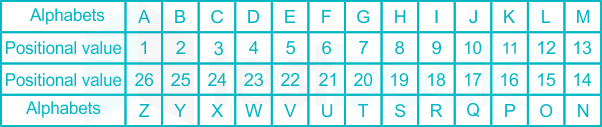
The position will be as follow:

Original PositionHORIZONTAL
Alphabetic OrderAHILNOORTZ


Thus, ‘1’ letter will be in same position.

35

Find the odd one.

  1. ((a))

    DFE

  2. ((b))

    ADB

  3. ((c))

    MPN

  4. ((d))

    HKI

  5. ((e))

    SVT

Show Answer
Answer: ((a))

DFE

Hence, DFE is the odd on.

Quantitative Aptitude (35 questions)

36

In each of the following number series, the wrong number is given, find out that number.

1/2, 1/4, 1/5, 1/16, 1/32, 1/64

  1. ((a))

    1/5

  2. ((b))

    1/16

  3. ((c))

    1/64

  4. ((d))

    1/32

  5. ((e))

    None of the above

Show Answer
Answer: ((a))

1/5

Calculation∶

The series follows following pattern

1/(21) = 1/2

1/(22) = 1/4

1/(23) = 1/8

1/(24) = 1/16

1/(25) = 1/32

1/(26) = 1/64

The wrong number in the series is 1/5

37

In each of the following number series, the wrong number is given, find out that number.

2, 3, 6, 15, 45, 156.5, 630

  1. ((a))

    6

  2. ((b))

    3

  3. ((c))

    45

  4. ((d))

    156.5

  5. ((e))

    15

Show Answer
Answer: ((d))

156.5

Calculation:

The logic of the given series can be explained as:

2 × 1.5 = 3

3 × 2 = 6

6 × 2.5 = 15 

15 × 3 = 45

45 × 3.5 = 157.5

157.5 × 4 = 630

Wrong term in given number series is 156.5.

38

In each of the following number series, the wrong number is given, find out that number.

2, 6, 12, 17, 24, 32, 41

  1. ((a))

    12

  2. ((b))

    17

  3. ((c))

    41

  4. ((d))

    32

  5. ((e))

    6

Show Answer
Answer: ((a))

12

Calculation:

The given number series follows this pattern:

2 + 4 = 6

6 + 5 = 11

11 + 6 = 17

17 + 7 = 24

24 + 8 = 32

32 + 9 = 41

∴ The wrong number in the given number series is 12

39

In each of the following number series, the wrong number is given, find out that number.

20, 20, 40, 120, 480, 2400, 16800

  1. ((a))

    16800

  2. ((b))

    2400

  3. ((c))

    480

  4. ((d))

    40

  5. ((e))

    20

Show Answer
Answer: ((a))

16800

Calculation:

20

20 × 1 = 20

20 × 2 = 40

40 × 3 = 120

120 × 4 = 480

480 × 5 = 2400

2400 × 6 = 14400

∴ Wrong answer is 16800

40

In each of the following number number series, the wrong number is given, find out that number.

20, 29, 47, 83, 154, 299

  1. ((a))

    29

  2. ((b))

    47

  3. ((c))

    83

  4. ((d))

    154

  5. ((e))

    None of these

Show Answer
Answer: ((d))

154

Calculation:

20

20 + 9 = 29

29 + 18 = 47

47 + 36 = 83

83 + 72 = 155

155 + 144 = 299

∴ Wrong answer is 154

Directions: Study the following information carefully from the table given below.

There are number of people returned to their home states from their working states due to coronavirus, they are quarantined for 14 days. The cost of expenditure for a man is 3 times the cost of a child and cost of expenditure for a woman is 2 times the cost of a child. If the cost of child is Rs. 20/day, then answer the following questions.

StatesMenWomenChildTotal
A805030160
B10015040290
C706050180
D17070100340
E603040130
F1109070270
Total5904503301370
41

Find the total cost of expenditure of one day for all men, women and children.

  1. ((a))

    Rs. 50000

  2. ((b))

    Rs. 60000

  3. ((c))

    Rs. 40000

  4. ((d))

    Rs. 70000

  5. ((e))

    Rs. 65000

Show Answer
Answer: ((b))

Rs. 60000

Given:

Cost of expenditure for a child = Rs. 20/day

Cost of expenditure for a woman = Rs. 40/day

Cost of expenditure for a man = Rs. 60/day

For other data refer to the table.

Concept:

Use simple addition and multiplication to calculate the value.

Calculation:

Total cost for children = 330 × 20

⇒ Total cost for children = Rs. 6600

Total cost for women = 450 × 40

⇒ Total cost for women = Rs. 18000

Total cost for men = 590 × 60

⇒ Total cost for men = Rs. 35400

Now, total cost for all = Total cost for children + Total cost for women + Total cost for men

⇒ Total cost of all for one day = Rs. 6600 + Rs. 18000 + Rs. 35400

⇒ Total cost of all for one day = Rs. 60000

42

Find the ratio of the number of men of states A and B together to the number of children of states E and F together.

  1. ((a))

    17 : 11

  2. ((b))

    18 : 16

  3. ((c))

    11 : 19

  4. ((d))

    18 : 11

  5. ((e))

    19 : 21 

Show Answer
Answer: ((d))

18 : 11

Given:

Refer to the table.

Concept:

Simple addition and ratio concept

Calculation:

Number of men in states A and B = 180

Number of children in states E and F = 110

Now, the ratio = 180/110 = 18 : 11

∴ Required Ratio is 18 : 11

43

The cost of expenditure of one day on men is (approx.) how much percent more than the total expenditure of one day on child?

  1. ((a))

    400%

  2. ((b))

    226%

  3. ((c))

    320%

  4. ((d))

    436%

  5. ((e))

    450%

Show Answer
Answer: ((d))

436%

Given:

Refer to the table.

Concept:

Simple use of multiplication and percentage

Calculation:

Total cost of one day for men = 590 × 60

⇒ Total cost for men = Rs. 35400

Total cost of one days for children = 330 × 20

⇒ Total cost for children = Rs. 6600

Difference in their cost of expenditure on one day = Rs. 35400 – Rs. 6600

⇒ Difference in their cost of expenditure on one day = Rs. 28800

Percentage more by = (28800/6600) × 100 = 436.36%

∴ Required percentage = 436.36%

44

Find the ratio of the cost of total expenditure on women to the total expenditure on child.

  1. ((a))

    30/11

  2. ((b))

    32/9

  3. ((c))

    28/11

  4. ((d))

    30/13

  5. ((e))

    31/14

Show Answer
Answer: ((a))

30/11

Given:

Refer to the table

Concept:

Simple use of multiplication and ratio            

Calculation:

Cost of total expenditure on women = 450 × 40 × 14

Cost of total expenditure on children = 330 × 20 × 14

⇒ Required ratio = (cost of total expenditure on women) / (cost of total expenditure on children

⇒ Required Ratio = (450 × 40 × 14) / (330 × 20 × 14)

⇒ Ratio = 30/11

45

Find the ratio of total cost of expenditure of women of states A, B and C together to the total cost of expenditure of women for all states.

  1. ((a))

    26 :43

  2. ((b))

    26 : 45

  3. ((c))

    23 : 45

  4. ((d))

    27 : 43

  5. ((e))

    30:41

Show Answer
Answer: ((b))

26 : 45

Given:

Refer to the table.

Concept:

Simple use of multiplication and ratio

Calculation:

Number of women of states A, B and C together = 260

⇒ Total cost of expenditure of women of states A, B and C together = 14 × 260 × 40

Number of women of all states = 450

⇒ Total cost of expenditure of women of all states = 450 × 40 × 14

⇒ Required ratio = (14 × 260 × 40) / (450 × 40 × 14)

 ∴ Required ratio = 26 : 45

46

A goldsmith makes a necklace in 15 days, if he wants to complete it in 5 days, then how much percent he will have to increase its efficiency?

  1. ((a))

    100%

  2. ((b))

    150%

  3. ((c))

    200%

  4. ((d))

    300%

  5. ((e))

    None of the above/More than one of the above.

Show Answer
Answer: ((c))

200%

Given:

Time is taken by a goldsmith = 15 days

Formula used:

Efficiency = (Total work)/(Total time)

Calculation:

Let the efficiency (work is done per day) of a goldsmith be 'A'.

Let total work be 1 unit and work done in 15 days, the efficiency of a goldsmith:

(A × 15) = 1

⇒ A = 1/15

Work done in 5 days, the efficiency of a goldsmith:

(A × 5) = 1

⇒ A = 1/5

Increased efficiency will be as follows = 1/15 to 1/5

⇒ [{(1/5) - (1/15)}/1/15] × 100

⇒ 2 × 100

⇒ 200%

∴ 200% will have to increase its efficiency by the goldsmith to the neckless in 5 days.

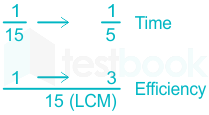
Alternate Method


Old efficiency = 1 unit

New efficiency = 3 unit

Increment percent = (3 - 1)/1 × 100

⇒ 200%

∴ 200% will have to increase its efficiency by the goldsmith to the neckless in 5 days.

47

A train crosses a platform and a tunnel in 18 and 32 seconds respectively. The speed of the train and length of the train are 45 km/hr and 140 metres respectively. Find that the length of the platform is approximately what percent less than the length of tunnel?

  1. ((a))

    72%

  2. ((b))

    67%

  3. ((c))

    82%

  4. ((d))

    61%

  5. ((e))

    51%

Show Answer
Answer: ((b))

67%

Given:

The speed of the train = 45 km/hr.

The length of the train = 140 meters.

Formula used:

Distance = Speed × Time

Concept used:

To convert km/hr. to m/s, multiply by 5/18.

Calculation:

Speed of train = 45 × (5/18)

⇒ 25/2 m/s

According to the question:

Length of platform = [18 × (25/2) – 140]

⇒ 225 – 140

⇒ 85 m

Length of tunnel = [32 × (25/2) – 140]

⇒ 400 – 140

⇒ 260 m

Now, Required percentage = [{(260 – 85)/260} × 100]

⇒ (175/260) × 100

⇒ 67.30% 

⇒ 67% (approximately)

∴ The answer is 67%.

48

The perimeter of a rectangle is 200 m and its length is 80 m. Find the area of the rectangle.

  1. ((a))

    1200 m2

  2. ((b))

    1600 m2

  3. ((c))

    2000 m2

  4. ((d))

    1000 m2

  5. ((e))

    None of these

Show Answer
Answer: ((b))

1600 m2

Given:

The perimeter of the rectangle = 200 m

Length = 80 m

Formula used:

Perimeter of a rectangle = 2(Length + Breadth)

Area of a rectangle = (Length × Breadth)

Calculation:

Here, length = 80 m, Perimeter = 200 m

Let, the breadth of the rectangle be x

According to the question, we can say,

2(80 + x) = 200

⇒ (80 + x) = 100

⇒ x = 20

Now, the area of the rectangle = (80 × 20) m2 = 1600 m2

∴ The area of the rectangle is 1600 m2.

49

E and F are partners in a steel business. E contributes  2/5  of the capital for 15 months and F received  1/3  of the profit. Find for how long F’s money was used?

  1. ((a))

    6 months

  2. ((b))

    5 months

  3. ((c))

    4 months

  4. ((d))

    2 months

  5. ((e))

    3 months

Show Answer
Answer: ((b))

5 months

Given:

E contributes  of the capital for 15 months and F received  of the profit.

Concept :

Ratio of profit = share in the capital of one partner × time period of investment ⦂ share in the capital of other partner × time period of investment

Calculation:

 ⇒ Total share of capital = 1

 ⇒ E contributed  of the capital

 ⇒ Capital contributed by F = {1 – (2/5)}

 ⇒ 3/5

Capital ratio = E : F

 ⇒ 2 : 3

Let amount invested by F for t months

Ratio of share of profit = E : F

 ⇒ 2 × 15 : 3 × t

 ⇒ 10 : t

F share is 1/3 (given)

 ⇒ t/(t + 10) = 1/3 ⇒ 3t = t + 10

 ⇒ 2t = 10

 ⇒ t = 5 months

50

The average runs scored by a batsman in the first four matches of a five-match series is 50. How many runs should he score so that his average in the series increases by 20% of the present value?

  1. ((a))

    80

  2. ((b))

    90

  3. ((c))

    100

  4. ((d))

    110

  5. ((e))

    120

Show Answer
Answer: ((c))

100

Given:

Average runs scored by the batsman = 50

Number of matches = 4

Formula Used:

Average Runs scored by a batsman = Total number of runs scored / Total number of matches played

New Average = [(100 + percentage increase in average) / 100] × present average

Calculation:

Total number of runs scored by the batsman in the first four matches is given by:

50 × 4 = 200

The increase of 20% in the present average results in the new average as:

[(100 + 20) / 100] × 50 = 60

Now, the total number of matches = 4 + 1 = 5

The new total number of runs scored in the five-match series is given by:

60 × 5 = 300

The number of runs required to be scored by the batsman in the fifth match is obtained as:

300 - 200 = 100

∴ The number of runs required to be scored by the batsman in the fifth match is 100

Shortcut Trick

The number of runs needed to be scored in the fifth match is obtained as:

(5 × 1.2 × 50) - (4 × 50) = 100

A Company has 800 workers- Man and women, who are in the ratio of 2 : 6. The workers speak Hindi, English, or both languages. 15% of the Men speak only Hindi, 25% of the women speak only English, 26% of the total workers speak only Hindi and the number of men speaking both languages is five times the number of Man speaking only Hindi.

51

How Many Men speak Hindi?

  1. ((a))

    150

  2. ((b))

    180

  3. ((c))

    190

  4. ((d))

    200

  5. ((e))

    None of these 

Show Answer
Answer: ((b))

180

Information analysis –

The total number of worker = 800

The Ratio of Man and Women = 2 : 6

Number of Man = 2/8 x 800 = 200

Number of women = 6/8 x 800 = 600

Only Hindi number Man = 15% of 200 = 30

Both language Hind and English = 30 × 5 = 150

Then only English number of Man = 200 – 150 – 30 = 20

Total number of worker = 26% of 800

= 26/100 × 800 = 208

Only Hindi number Women = 208 - 30 =178

And only English number of women = 600 × 25/100 = 150

Number of women speaking both languages Hindi and English = 600 - 178 – 150 = 272

Number of Man speak Hindi = 30

 And the number of Man speak Hindi and English = 150

Then total number Man Speak Hindi = 150 + 30 = 180

52

How Many Women Speak only English?

  1. ((a))

    180

  2. ((b))

    200

  3. ((c))

    150

  4. ((d))

    190

  5. ((e))

    None of these 

Show Answer
Answer: ((c))

150

Information analysis –

The total number of worker = 800

The Ratio of Man and Women = 2 : 6

Number of Man = 2/8 x 800 = 200

Number of women = 6/8 x 800 = 600

Only Hindi number Man = 15% of 200 = 30

Both language Hind and English = 30 × 5 = 150

Then only English number of Man = 200 – 150 – 30 = 20

Total number of worker = 26% of 800

= 26/100 × 800 = 208

Only Hindi number Women = 208 - 30 = 178

And only English number of women = 600 × 25/100 = 150

Both language Hindi and English = 600 - 178 – 150 = 272 

From the above,

Only English number of Women = 150

53

The number of Women speaking only Hindi is what percent of the total number of Workers speaking only Hindi?

  1. ((a))

    98.75%

  2. ((b))

    65.78%

  3. ((c))

    45.89%

  4. ((d))

    85.57%

  5. ((e))

    None of these

Show Answer
Answer: ((d))

85.57%

Only Hindi number Women = 208 - 30 = 178

Total number of worker = 26% of 800

= 26/100 × 800 = 208

Then the percentage = 178/208 × 100

Percentage = 85.57%

54

What is the ratio of the number of Man to the number of Women speaking both Languages?

  1. ((a))

    75 : 189

  2. ((b))

    65 : 156

  3. ((c))

    75 : 136

  4. ((d))

    85 : 148

  5. ((e))

    None of these 

Show Answer
Answer: ((c))

75 : 136

The number of Men speaking both language = 150

The number of Women Speaking both language = 272

Then the ratio = 150 : 272

 The ratio = 75 : 136

Hence, the ratio = 75 : 136

55

What is the difference between Women speaking both languages and Man Speaking only Hindi?

  1. ((a))

    153

  2. ((b))

    148

  3. ((c))

    242

  4. ((d))

    456

  5. ((e))

    None of these 

Show Answer
Answer: ((c))

242

The number of Women Speaking both language = 272

The Man Speaking Only Hindi = 30

Then the Difference = 272 – 30 = 242

Hence, the difference = 242

56

The average age of Ashu and Amit 3 years ago was 20 years. If the age of Ashu five years hence will be 29 years, and Amit is 11 years younger than Ravi, then find the sum of ages of Ashu and Ravi.   

  1. ((a))

    57 yrs

  2. ((b))

    54 yrs

  3. ((c))

    48 yrs

  4. ((d))

    63 yrs

  5. ((e))

    60 yrs

Show Answer
Answer: ((a))

57 yrs

GIVEN:

Average age of Ashu and Amit 3 yrs ago = 20 yrs

Ashu age 5 years hence = 29 yrs

Amit's age = Ravi's age - 11

FORMULA USED:

Average = sum of observations/Total number of observations

CALCULATION:

Let present ages of Ashu and Amit be x and y respectively.

A.T.Q

[(x - 3) + (y - 3)]/2 = 20

x + y = 46 yrs

Present value of x = 29 - 5 = 24 yrs

y = 46 - 24 = 22 yrs

Ravi's age = 22 + 11 = 33 yrs

required sum = 33 + 24 = 57 yrs

∴ The answer will be 57 years.

57

Find the rate of interest, if a sum of money becomes 7 times in 8 years at simple interest.

  1. ((a))

    75 %

  2. ((b))

    25 %

  3. ((c))

    40 %

  4. ((d))

    20 %

  5. ((e))

    15 %

Show Answer
Answer: ((a))

75 %

Given:

Time = 8 years

Formula used:

If a sum of money becomes n times in t years at simple interest, then formula for calculating rate of interest is:

R = [100 (n -1) / t] %

Where n  and t represents the number of times amount becomes of principal and time.

Calculation:

= [100 (7-1) / 8] %

= 75%

∴ Rate is 75 %

58

Copper and Zinc are in the ratio 1 : 4 in 300 gms of an alloy. The quantity ( in grams) of copper to be added to it to make the ratio 4 : 3 is:

  1. ((a))

    225 gm

  2. ((b))

    250 gm

  3. ((c))

    200 gm

  4. ((d))

    260 gm

  5. ((e))

    None of these

Show Answer
Answer: ((d))

260 gm

Given:

In 300 gms alloy ratio of copper and zinc = 1 : 4

Calculation:

Let the quantity of copper to be added be X

The quantity of Copper in 300 gms alloy = (1/5) × 300 = 60 gm

and the quantity of Zinc in 300 gms alloy = (4/5) × 300 = 240 gm

According to question,

(60 + x)/240 = 4/3

⇒ 60 + x = 320

⇒ x = 320 - 60 = 260 gm

∴ The quantity of Copper to be added is 260 gm.

59

A boat covers 96 km downstream in 8 hours. Find the speed of the boat in still water, if speed of the boat in still water is 1.5 times of speed of water stream.

  1. ((a))

    7.4 km/hr

  2. ((b))

    4.8 km/hr

  3. ((c))

    6.8 km/hr

  4. ((d))

    6.4 km/hr

  5. ((e))

    7.2 km/hr

Show Answer
Answer: ((e))

7.2 km/hr

Given:

Distance covered = 96 km

Time taken to cover the distance = 8 hour

Speed of the boat in still water = 1.5 × speed of stream

Concept:

Let x be the speed of boat in still water and y be the speed stream

Upstream speed = x – y

Downstream speed = x + y

Speed = distance/time

Calculation:

Downstream speed = 96/8 = 12 km/hr

Downstream speed = speed of the boat in still water + speed of stream

⇒ Downstream speed = 1.5 × speed of stream + speed of stream = 2.5 × speed of stream

⇒ 12 = 2.5 × speed of stream

⇒ Speed of stream = 12/2.5 = 4.8 km/hr

⇒ Speed of the boat in still water = 1.5 × speed of stream           

⇒ Speed of the boat in still water = 1.5 × 4.8 = 7.2 km/hr

Speed of the boat in still water is 7.2 km/hr

60

The cost price of a beer is Rs. 340 per litre but a trader is labelling it as Rs. 408 per litre. But he mixes (2/3) litre water in one litre of pure beer and gives a 30% discount. Find the Profit Percentage of the trader.

  1. ((a))

    25%

  2. ((b))

    45%

  3. ((c))

    40%

  4. ((d))

    50%

  5. ((e))

    None of the above

Show Answer
Answer: ((c))

40%

GIVEN:

Cost Price = Rs. 340 per litre

Label price = Rs. 408 per litre

Water as Impurity = 2/3 litre

Discount = 30%

FORMULA USED:

Profit percentage(%) = [(selling price – cost price)/cost price] × 100

CONCEPT:

When we have to calculate the profit percentage only and not the selling price, we can ignore the Cost Price

CALCULATIONS:

⇒ The trader is labelling Rs.408 on a beer whose price is Rs. 340. i.e. 68(20% of 340) rupees increasing.

⇒ Cost Price × Profit earned by labeling × profit earned by adding impurities × discount = Selling Price

⇒ 340 × (120/100) × (5/3) × (70/100) = Selling Price

⇒ 340 × 120 × 5 × 70/(100 × 3 × 100)

= 476

⇒ Profit percentage = [(476 – 340)/340] × 100 = 40%

A trader will earn a 40% profit.


ALTERNATE METHOD:

Let, the COST PRICE of a beer be x.

The following operations are being made on x.

(a) labelling (b) impurities adding  (iii) discount

⇒ x × ((100 + 20)/100) × ((2 + 3)/3) × ((100 - 30)/100)

⇒ x × (120/100) × (5/3) × (70/100)

⇒ x × (6/5) × (5/3) × (7/10)

⇒ x × (7/5)

= 1.40 x

⇒ Profit percentage = (1.40 – 1) × 100 = 40%

A trader will earn a 40% profit.

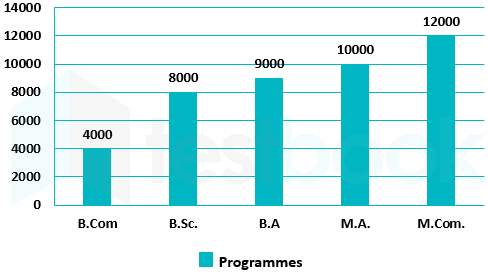
Direction: Study the graph and table carefully to answer the following question.

The graph represents the number of lecturers(Male + Female) in a college in different courses.

The Y-axis represents the number of lecturers in a college under different courses. The X-axis represents the courses available in a college.

The table represents the percentage of female lecturers in each course in a college.

CoursesPercentage of female lecturers
B.Com10%
B.SC25%
B.A20%
M.A30%
M.COM40%
61

What is the total percentage of female lecturers working in B.COM & B.SC course together out of the total number of females?

  1. ((a))

    20%

  2. ((b))

    30%

  3. ((c))

    25%

  4. ((d))

    15%

  5. ((e))

    10%

Show Answer
Answer: ((a))

20%

Given:

Number of male and female lecturer in each course

CoursesTotal lecturesNumber of female lecturersNumber of males
B.com40004003600
B.SC800020006000
B.A900018007200
M.A1000030007000
M.COM1200048007200
Total430001200031000


Formula used:

Percentage = (Part value/Original value) × 100

Calculation:

Number of female lecturers in B.Com course = 400

Number of female lecturers in B.SC course = 2000

Required percentage = [(400 + 2000 )/12000] × 100

⇒ (2400/12000) × 100

⇒ 20%

The percentage of female lecturers working in B.COM & B.SC is 20%.

62

What is the total number of male lectures in B.SC and B.A course together?

  1. ((a))

    36000

  2. ((b))

    30000

  3. ((c))

    13200

  4. ((d))

    68000

  5. ((e))

    55000

Show Answer
Answer: ((c))

13200

Given:

Number of male and female lecturer in each course

CoursesTotal lecturesNumber of female lecturersNumber of males
B.com40004003600
B.SC800020006000
B.A900018007200
M.A1000030007000
M.COM1200048007200
Total430001200031000


Calculation:

The Number of male lecturers in B.SC = 6000

The number of male lecturers in B.A course = 7200

The total number of male lecturers in B.Sc and B.A course

⇒ 6000 + 7200

⇒ 13200

The number of male lecturers in B.sc and B.A course is 13200.

63

The total number of male lecturers in the M.Com course is what percent of female lecturers in the same course?

  1. ((a))

    100%

  2. ((b))

    115%

  3. ((c))

    125%

  4. ((d))

    150%

  5. ((e))

    120%

Show Answer
Answer: ((d))

150%

Given:

Number of male and female lecturer in each course

CoursesTotal lecturersNumber of female lecturersNumber of male lecturers
B.com40004003600
B.SC800020006000
B.A900018007200
M.A1000030007000
M.COM1200048007200
Total430001200031000


Formula used:

Percentage = (Part value/Original value) × 100

Calculation:

Number of male lecturers in M.Com course = 7200

Number of female lecturers in M.COM course = 4800

Required percentage

⇒ (7200/4800) × 100

⇒ 150%

The male lecturers in the M.Com course are 150% of female lecturers.

64

The number of male lecturers in the B.Sc course is how much more/less than the number of female lecturers in the M.A and M.Com course together?

  1. ((a))

    1000

  2. ((b))

    2000

  3. ((c))

    1800

  4. ((d))

    3000

  5. ((e))

    5000

Show Answer
Answer: ((c))

1800

Given:

Number of male and female lecturer in each course

CoursesTotal lecturesNumber of female lecturersNumber of male lecturers
B.com40004003600
B.SC800020006000
B.A900018007200
M.A1000030007000
M.COM1200048007200
Total430001200031000


Calculation:

Number of male lecturers in B.SC course = 6000

Total number of female lecturers in M.A and M.Com course

⇒ (3000 + 4800)

⇒ 7800

Required number = 7800 – 6000

⇒ 1800

1800 male lectures are less.

65

What is the average of female lecturers in B.Com, B.Sc and M.A course together?

  1. ((a))

    2000

  2. ((b))

    1800

  3. ((c))

    3000

  4. ((d))

    4000

  5. ((e))

    5000

Show Answer
Answer: ((b))

1800

Given:

Number of male and female lecturer in each course

CoursesTotal lecturesNumber of female lecturersNumber of males
B.com40004003600
B.SC800020006000
B.A900018007200
M.A1000030007000
M.COM1200048007200
Total430001200031000
<br>

Formula used:

Average = (Sum of values/number of values)

Calculation:

Required average

⇒ (400 + 2000 + 3000)/3

⇒ 1800

The average is 1800.

66

What approximate value should come in place of the question mark (?) in the following question?

1256.06 + 1031.09 + 1087.98 = (?)3

  1. ((a))

    15

  2. ((b))

    25

  3. ((c))

    35

  4. ((d))

    45

  5. ((e))

    55

Show Answer
Answer: ((a))

15

Given:

1256.06 + 1031.09 + 1087.98 = (?)3

Rules of Approximation:

  1. If a number has digits to the right of the decimal less than 5, then just drop the digits to the right of the decimal. The number so obtained will be the approximated value.
  2. If a number has digits to the right of the decimal more than 5, then just drop the digits to the right of the decimal and raise the remaining number by '1'.The number so obtained will be the approximated value.

Concept used:

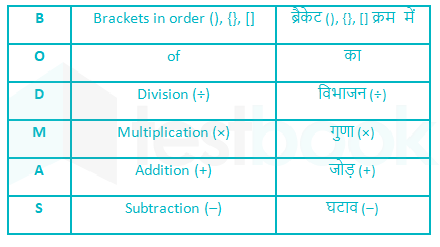
Follow the BODMAS rule according to the table given below:

Calculation:

1256.06 + 1031.09 + 1087.98 = (?)3

⇒ (?)3 = 1256 + 1031 + 1088

⇒ (?)3 = 3375

⇒ (?)3 = (15)3

⇒ ? = 15

∴ 15 should come in place of the question mark (?)

67

What approximate value should come in place of the question mark (?) in the following question?

28.97 × 12.03 + 96.11 ÷ 5.97 - 2.99 = ?2

  1. ((a))

    361

  2. ((b))

    17

  3. ((c))

    18

  4. ((d))

    19

  5. ((e))

    20

Show Answer
Answer: ((d))

19

Given:

28.97 × 12.03 + 96.11 ÷ 5.97 - 2.99 = ?2

Rules of Approximation:

  1. If a number has digits to the right of the decimal less than 5, then just drop the digits to the right of the decimal. The number so obtained will be the approximated value.
  2. If a number has digits to the right of the decimal more than 5, then just drop the digits to the right of the decimal and raise the remaining number by '1'.The number so obtained will be the approximated value.

Concept used:

Follow the BODMAS rule according to the table given below:

Calculation:

28.97 × 12.03 + 96.11 ÷ 5.97 - 2.99 = ?2

⇒ 29 × 12 + 96 ÷ 6 - 3 = ?2

⇒ 348 + 16 - 3 = ?2

⇒ ?2 = 361

⇒ ?2 = (19)2

⇒ ? = 19

∴ 19 should come in place of the question mark (?).

68

What approximate value will come in the place of the question mark ‘?’ in the following question?

99.99 × 3.98 + (5.02)3 = ?2 - 100.11

  1. ((a))

    20

  2. ((b))

    25

  3. ((c))

    30

  4. ((d))

    35

  5. ((e))

    40

Show Answer
Answer: ((b))

25

Given:

99.99 × 3.98 + (5.02)3 = ?2 - 100.11

Concept used:

Follow the BODMAS rule according to the table given below:

Calculation:

99.99 × 3.98 + (5.02)3 = ?2 - 100.11

⇒ 100 × 4 + 53 = ?2 - 100

⇒ 400 + 125 = ?2 - 100

⇒ ?2 = 625

⇒ ?2 = (25)2

⇒ ? = 25

∴ 25 should come in place of the question mark (?).

69

What approx value should come in place of the question mark (?) in the following question?

349.97 – ? = (15.04)2 + 89.97

  1. ((a))

    25

  2. ((b))

    30

  3. ((c))

    35

  4. ((d))

    40

  5. ((e))

    45

Show Answer
Answer: ((c))

35

Given:

349.97 – ? = (15.04)2 + 89.97

Rules of Approximation:

  1. If a number has digits to the right of the decimal less than 5, then just drop the digits to the right of the decimal. The number so obtained will be the approximated value.
  2. If a number has digits to the right of the decimal more than 5, then just drop the digits to the right of the decimal and raise the remaining number by '1'.The number so obtained will be the approximated value.

Concept used:

Follow the BODMAS rule according to the table given below:

Calculation:

349.97 – ? = (15.04)2 + 89.97

⇒ 350 – ? = (15)2 + 90

⇒ 350 – ? = 225 + 90

⇒ ? = 350 – 315

⇒ ? = 35

∴ 35 should come in place of the question mark (?).

70

What approximate value should come in place of the question mark (?) in the following question?

(3.98)3 + 25.97% of 350 - 10.99 × ? = 99.99

  1. ((a))

    4

  2. ((b))

    5

  3. ((c))

    6

  4. ((d))

    7

  5. ((e))

    8

Show Answer
Answer: ((b))

5

Given:

(3.98)3 + 25.97% of 350 - 10.99 × ? = 99.99

Rules of Approximation:

  1. If a number has digits to the right of the decimal less than 5, then just drop the digits to the right of the decimal. The number so obtained will be the approximated value.
  2. If a number has digits to the right of the decimal more than 5, then just drop the digits to the right of the decimal and raise the remaining number by '1'. The number so obtained will be the approximated value.

Concept used:

Follow the BODMAS rule according to the table given below:

Calculation:

(3.98)3 + 25.97% of 350 - 10.99 × ? = 99.99

⇒ 43 + (26/100) × 350 - 11 × ? = 100

⇒ 64 + 91 - 11 × ? = 100

⇒ 155 - 11 × ? = 100

⇒ 11 × ? = 55

⇒ ? = 5

∴ 5 should come in place of the question mark (?).

English Language (30 questions)

71

Directions: The given question has one blank indicating that something has been omitted. Choose the word for the given options that could fit in the blank correctly.

The interviewers described these chats as essential in building up rapport and trust with the participant, and for ________ their concerns.

  1. ((a))

    exacerbating

  2. ((b))

    hoodwink

  3. ((c))

    alleviating

  4. ((d))

    deferred

  5. ((e))

    squandering

Show Answer
Answer: ((c))

alleviating

The correct answer is 'alleviating'.

Key Points

  • The meaning of the word 'alleviating' is 'make (suffering, deficiency, or a problem) less severe; relieving.'
  • For example, The medicines did nothing to alleviate her pain/suffering.
  • The sentence means that the interviewers described some discussions as essential for developing a trustworthy relationship with the participant, as well as relieving their concerns/issues.
  • So, the word 'alleviating' fits correctly in the given blank.
  • Therefore, option 3 is the correct answer.

Additional Information

  • Let's learn the meanings of the other words given in the options: 
  • exacerbating: make (a problem, bad situation, or negative feeling) worse.
  • hoodwink: deceive or trick.
  • deferred: put off (an action or event) to a later time; postpone.
  • squandering: waste (something, especially money or time) in a reckless and foolish manner.
72

Directions: The given question has one blank indicating that something has been omitted. Choose the word for the given options that could fit in the blank correctly.

This is a partial picture though and tends to ________ the proportion of rural migrants who settled in urban areas.

  1. ((a))

    sulky

  2. ((b))

    exaggerate

  3. ((c))

    gloomy

  4. ((d))

    indomitable

  5. ((e))

    compliment

Show Answer
Answer: ((b))

exaggerate

The correct answer is 'exaggerate'.

Key Points

  • The meaning of the word 'exaggerate' is 'represent (something) as being larger, better, or worse than it really is.'
  • For example, The threat of attack has been greatly exaggerated.
  • In the given sentence, 'to' should be followed by a verb.
  • Except options 2 and 5, all other options are adjectives. Thus, they get eliminated.
  • According to the context of the sentence, the word 'exaggerate' fits correctly in the given blank as it is talking about overestimating the percentage of rural migrants who settled in cities.
  • Therefore, option 2 is the correct answer.

Additional Information

  • Let's learn the meanings of the other words given in the options:
  • sulky: morose, bad-tempered, and resentful; refusing to be cooperative or cheerful.
  • gloomy: dark or poorly lit, especially so as to appear depressing or frightening.
  • indomitable: impossible to subdue or defeat.
  • compliment: a polite expression of praise or admiration.
73

Directions: The given question has one blank indicating that something has been omitted. Choose the word for the given options that could fit in the blank correctly.

He ________ to mention the fact that we could lose money on the deal.

  1. ((a))

    saw

  2. ((b))

    see

  3. ((c))

    think

  4. ((d))

    agree

  5. ((e))

    neglected

Show Answer
Answer: ((e))

neglected

The correct answer is 'neglected'.

Key Points

  • The meaning of the word 'neglected' is 'not pay proper attention to; disregard.'
  • For example, the old churchyard has been sadly neglected.
  • The given sentence is talking about something that the person forgot to mention as he didn't pay much attention to it.
  • So, the word 'neglected' fits correctly in the given blank.
  • Therefore, option 5 is the correct answer.

Additional Information

  • saw: past tense of the verb 'see'.
  • see: perceive with the eyes.
  • think: have a particular opinion, belief, or idea about someone or something.
  • agree: have the same opinion about something; concur.
74

Directions: The given question has one blank indicating that something has been omitted. Choose the word for the given options that could fit in the blank correctly.

The hostages had been confined for so long that they couldn't ________ with the outside world.

  1. ((a))

    react

  2. ((b))

    frame

  3. ((c))

    cope

  4. ((d))

    settle

  5. ((e))

    None of the above

Show Answer
Answer: ((c))

cope

The correct answer is 'cope'. 

Key Points

  • The meaning of the word 'cope' is '(of a person) deal effectively with something difficult.'
  • For example - The roads are barely adequate to cope with the present traffic.
  • The given sentence means that the hostages had been imprisoned for so long that they were unable to deal with the outside world.
  • So, the word 'cope' fits correctly in the given blank.
  • Therefore, option 3 is the correct answer.

Additional Information

  • Let's learn the meanings of the other words given in the options:
  • react: act in response to something.
  • frame: formulate (a concept, plan, or system).
  • settle: resolve or reach an agreement about (an argument or problem).
  • release: allow or enable to escape from confinement; set free.
75

Directions: The given question has one blank indicating that something has been omitted. Choose the word for the given options that could fit in the blank correctly.

Her biography ________ that she was not as rich as everyone thought.

  1. ((a))

    secret

  2. ((b))

    revealed

  3. ((c))

    hide

  4. ((d))

    conceal

  5. ((e))

    cover

Show Answer
Answer: ((b))

revealed

The correct answer is 'revealed'.

Key Points

  • The meaning of the word 'revealed' is 'make (previously unknown or secret information) known to others.'
  • For example, Kavya was forced to reveal Monu's whereabouts.
  • The given sentence is talking about letting out some information about a person that was not known to everyone earlier.
  • Therefore, the word 'revealed' fits correctly in the given blank.

Additional Information

  • Let's learn the meanings of the other words given in the options: 
  • secret: not known or seen or not meant to be known or seen by others.
  • hide: put or keep out of sight.
  • conceal: not allow to be seen; hide.
  • cover: put something on top of or in front of (something).
76

Directions: In the following sentence, 4 words are given in bold. Two or more of these words are incorrectly placed and need to be interchanged. If there is no need for interchanging then ‘No Error’ can be selected.

Louisiana communities faced(A) by Hurricane Ida battered(B) a new danger as they began the repairing(C) task of clearing debris and massive(D) damage from the storm.

  1. ((a))

    CDBA

  2. ((b))

    ABDC

  3. ((c))

    BADC

  4. ((d))

    BACD

  5. ((e))

    No error

Show Answer
Answer: ((c))

BADC

The correct answer is 'BADC'.

Key Points

  • While arranging the highlighted words, look for some grammatical or contextual connections:
  • B will be the first word as the sentence is talking about Louisiana communities that have been damaged by a Hurricane.
  • A will be the second word as it means that after the hurricane, Louisiana communities have again faced a new danger.
  • D and C will be the third and fourth word respectively as they are talking about the danger that Louisiana communities faced i.e. the huge task of clearing wreckage and repairing the damage after the storm.
  • Therefore, option 3 is the correct answer.
  • Let's learn the meanings of some highlighted words:
  • battered: (of a thing) damaged by something.
  • massive: exceptionally large.
<br>

Correct Sentence:  Louisiana communities battered(B) by Hurricane Ida faced(A) a new danger as they began the massive(D) task of clearing debris and repairing(C) damage from the storm.

77

Directions: In the following sentence, 4 words are given in bold. Two or more of these words are incorrectly placed and need to be interchanged. If there is no need for interchanging then ‘No Error’ can be selected.

Passengers test(A) on tourist mandatory(B) must take a visas(C) PCR arriving(D) at the airport.

  1. ((a))

    CDBA

  2. ((b))

    DCBA

  3. ((c))

    ABDC

  4. ((d))

    DABC

  5. ((e))

    No error

Show Answer
Answer: ((b))

DCBA

The correct answer is 'DCBA'.

Key Points

  • While arranging the highlighted words, look for some grammatical or contextual connections:
  • D will be the first word as the sentence is talking about the arrival of the passengers.
  • C will be the second word as it is talking about the passengers who are arriving on tourist visas.
  • B and A will be the third and fourth word respectively as the sentence is talking about taking compulsory PCR tests at the airport.
  • Therefore, option 2 is the correct answer.
  • Let's learn the meanings of some highlighted words:
  • mandatory: required by law or mandate; compulsory.
  • visas: an endorsement on a passport indicating that the holder is allowed to enter, leave, or stay for a specified period of time in a country.
<br>

Correct Sentence: Passengers arriving(D) on tourist visas(C) must take a mandatory(B) PCR test(A) at the airport.

78

Directions: In the following sentence, 4 words are given in bold. Two or more of these words are incorrectly placed and need to be interchanged. If there is no need for interchanging then ‘No Error’ can be selected.

The Finance Ministry has taken devastating(A) measures to help revive(B) the economy after two various(C) waves of coronavirus infections that have led to a record economic contraction(D).

  1. ((a))

    CBAD

  2. ((b))

    ABDC

  3. ((c))

    CABD

  4. ((d))

    DABC

  5. ((e))

    No error

Show Answer
Answer: ((a))

CBAD

The correct answer is 'CBAD'.

Key Points

  • While arranging the highlighted words, look for some grammatical or contextual connections:
  • C will be the first word as the sentence is talking about the Finance Ministry who has taken several measures.
  • B will be the second word as the verb 'help' is followed by the bare infinitive. (base form of the verb without 'to')
  • A will be the third word as it is talking about the two waves of coronavirus that were very destructive.
  • D will be the last word as it is talking about a decline in the economy.
  • Therefore, option 1 is the correct answer.
  • Let's learn the meanings of the highlighted words:
  • devastating: highly destructive or damaging.
  • revive: restore to life or consciousness.
  • various: more than one; several.
  • contraction: a situation in which less money is being earned, spent, or invested in a market or economy.
<br>

Correct Sentence: The Finance Ministry has taken various(C) measures to help revive(B) the economy after two devastating(A) waves of coronavirus infections that have led to a record economic contraction(D).

79

Directions: In the following sentence, 4 words are given in bold/underlined. Two or more of these words are incorrectly placed and need to be interchanged. If there is no need for interchanging then ‘No Error’ can be selected.

Rare Planet, a start-up that representing(A) and helps the artisan communities across India, has collaborated(B) with Tata Tea Premium to create(C) a collection of 26 distinct kulhad designs, each promotes(D) different regions of India.

  1. ((a))

    ACBD

  2. ((b))

    DBCA

  3. ((c))

    CABD

  4. ((d))

    DACB

  5. ((e))

    No error

Show Answer
Answer: ((b))

DBCA

The correct answer is 'DBCA'.

Key Points

  • While arranging the highlighted words, look for some grammatical or contextual connections:
  • D will be the first word as the sentence is talking about a start-up business that promotes and helps the artisan communities across India.
  • B will be the second word as it means that the Rare Planet is partnering with Tata Tea Premium.
  • C will be the third word as 'to' is followed by the base form of the verb (create).
  • A will be the last word as it is talking about creating a collection of 26 distinct kulhad designs, each indicating different regions of India.
  • Therefore, option 2 is the correct answer.
  • Let's learn the meanings of the highlighted words:
  • representing: state or point out clearly.
  • collaborated: work jointly on an activity or project.
  • create: bring (something) into existence.
  • promotes: support or actively encourage (a cause, venture, etc.); further the progress of.
<br>

Correct Sentence:  Rare Planet, a start-up that promotes(D) and helps the artisan communities across India, has collaborated(B) with Tata Tea Premium to create(C) a collection of 26 distinct kulhad designs, each representing(A) different regions of India.

80

Directions: In the following sentence, 4 words are given in bold. Two or more of these words are incorrectly placed and need to be interchanged. If there is no need for interchanging then ‘No Error’ can be selected.  

China's Tianwen-1 Mars mission will be disruption (A) for about 50 days from mid-September due to an expected inactivated(B) of its communication(C) with Earth caused(D) by the solar electromagnetic radiation.

  1. ((a))

    BACD

  2. ((b))

    ABDC

  3. ((c))

    ACBD

  4. ((d))

    BCDA

  5. ((e))

    No error

Show Answer
Answer: ((a))

BACD

The correct answer is 'BACD'.

Key Points

  • While arranging the highlighted words, look for some grammatical or contextual connections:
  • B will be the first word. 'will be' is followed by the V3 form of the verb. As the sentence is talking about stopping the mission, 'inactivated' is most suitable.
  • A will be the second word as the sentence is talking about an expected interruption during the mission.
  • C and D will be the third and fourth word respectively as it says that the disruption was due to the communication that occurred by the solar electromagnetic radiation.
  • Therefore, option 1 is the correct answer.
  • Let's learn the meanings of the highlighted words:
  • disruption: disturbance or problems which interrupt an event, activity, or process.
  • inactivated: having been made inactive or inoperative.
  • communication: exchanging of information by speaking, writing, or using some other medium.
  • caused: make (something, especially something bad) happen.​
<br>

Correct Sentence: China's Tianwen-1 Mars mission will be inactivated(B) for about 50 days from mid-September due to an expected disruption (A) of its communication(C) with Earth caused(D) by the solar electromagnetic radiation.

81

Directions: In the following question, the word at the top is used in five different ways. Choose the option in which the usage of the word is incorrect or inappropriate.

WAVE

  1. ((a))

    I was waving my hand like mad but he never once looked in my direction.

  2. ((b))

    You'll have to wait till the policeman waves the car on.

  3. ((c))

    You can't just wave me away as if I were a child!

  4. ((d))

    They waved at us as we drove by.

  5. ((e))

    Will you help me wave this table to the back room?

Show Answer
Answer: ((e))

Will you help me wave this table to the back room?

The correct answer is 'Will you help me wave this table to the back room?'

Key Points

  • The meaning of the word 'wave' is 'move one's hand to and fro in greeting or as a signal'. 
  • For example, "He waved to me from the train".
  • In sentence 5, the given word is incorrectly used as the table cannot be waved.
  • The table can be moved from one place to another place.
  • Therefore, option 5 is the correct answer.
82

Directions: In the following question, the word at the top is used in five different ways. Choose the option in which the usage of the word is incorrect or inappropriate.

LIEU

  1. ((a))

    He was offered a cash bonus, or stock options in lieu.

  2. ((b))

    He worked on Sunday and took Monday off in lieu.

  3. ((c))

    They gave some books in lieu of payment for the work I did.

  4. ((d))

    You can take a lump sum in lieu of any unused vacation entitlement.

  5. ((e))

    She wasn't able to be present, so I signed the letter in her lieu.

Show Answer
Answer: ((e))

She wasn't able to be present, so I signed the letter in her lieu.

The correct answer is 'She wasn't able to be present, so I signed the letter in her lieu.'

Key Points

  • The meaning of the word 'lieu' is 'instead (of)'. 
  • ​For example, They gave me some books in lieu of payment for the work I did.
  • ​In sentence 5, the given word doesn't fit correctly as it is talking about doing something on behalf of someone.
  • Also, the word 'lieu' is always preceded by 'in' and followed by 'of'.
  • From the given explanation, we can understand that the given word is incorrectly used in sentence 5.
  • Therefore, option 5 is the correct answer.
83

Directions: Given below are 3 sentences, one or more of them is incorrect. Identify the one(s) that are incorrect. 

(A) Less profitable business operations will have difficulty in finding financial support.

(B) Did you get any sense of how they might react?

(C) It's important to distinguished between business and pleasure.

  1. ((a))

    Only A

  2. ((b))

    Only B

  3. ((c))

    Only C

  4. ((d))

    A and B

  5. ((e))

    A and C

Show Answer
Answer: ((c))

Only C

The correct answer is 'Only C'.

Key Points

  • 'to' is usually followed by the infinitive (the base form of a verb).
  • Examples, 
  • The Ministry plans to construct more universities.
  • I managed to reach the top of the hill.
  • This law empowers the government to charge higher taxes.
  • From the given rule and examples, we can understand that sentence 3 is wrong.
  • Therefore, option 3 is the correct answer.
<br>

Correct Sentence: (C) It's important to distinguish between business and pleasure.

84

Directions: Given below are 3 sentences, one or more of them is incorrect. Identify the one(s) that are incorrect. 

(A) She has been a stalwart supporter of the party for many years.

(B) He often extol the virtues of his students.

(C) Would all those in favour please raise their hands?

  1. ((a))

    Only A

  2. ((b))

    Only B

  3. ((c))

    Only C

  4. ((d))

    A and B

  5. ((e))

    B and C

Show Answer
Answer: ((b))

Only B

The correct answer is 'Only B'.

Key Points

  • Sentence B is wrong as there is the wrong usage of the Subject-Verb agreement.
  • The subject-verb agreement simply means that the subject and verb in a sentence must agree in number. If the subject is singular, then the verb must be in singular form and the subject is plural then the verb must be in plural form.
  • Examples, 
  • The light in the lamppost flickers each night.
  • The lights in the lampposts flicker each night.
  • In sentence B, the subject 'he' is singular. So, it should be followed by the singular verb 'extols'.
  • Therefore, option 2 is the correct answer.
<br>

Correct Sentence: (B) He often extols the virtues of his students.

85

Directions: Given below are 3 sentences, one or more of them is incorrect. Identify the one(s) that are incorrect. 

(A) The council is encouraging the development of the property for both employment as well as recreation.

(B) Instead of simply punishing them, the system encourages offenders to modify their behaviour.

(C) The new teaching methods encourage children to think for themselves.

  1. ((a))

    Only A

  2. ((b))

    Only B

  3. ((c))

    Only C

  4. ((d))

    A and B

  5. ((e))

    B and C

Show Answer
Answer: ((a))

Only A

The correct answer is 'Only A'.

Key Points

  • We use 'both' to refer to two things or people together.
  • We use 'both … and' to emphasise the link between two things.
  • Examples
  • Both Britain and France agree on the treaty.
  • She played both hockey and basketball when she was a student.
  • From the given explanation, we can understand that sentence A is wrong.
  • Therefore, option 1 is the correct answer.
<br>

Correct Sentence: (A) The council is encouraging the development of the property for both employment and recreation.

Important Points

  • The preposition 'between' which is used to indicate a connection or relationship involving two or more parties, is used with the conjunction 'and'.
  • For example, The Ministry plans to construct between 50 and 60 cyclone shelters.
  • The preposition 'from', which is used to indicate the point in time at which a particular process, event, or activity starts, is followed by 'to'.
  • For example, The show will run from 10 a.m. to 2 p.m.
86

Directions: Which of the phrases given below the sentence should replace the word/phrase given below in bold in the sentence to make it grammatically correct? If the sentence is correct as it is given and no correction is required, mark 'No correction required as the answer.

The number of women judges in the Supreme Court have gone up to four from one also, this is the highest number of women judges ever in the Supreme Court.

  1. ((a))

    The number of women judges in the Supreme Court has gone up

  2. ((b))

    A number of women judges in the Supreme Court has gone up

  3. ((c))

    The number of women judge in the Supreme Court have gone up

  4. ((d))

    The number of women judges in the Supreme Court has went up

  5. ((e))

    No correction required

Show Answer
Answer: ((a))

The number of women judges in the Supreme Court has gone up

The correct answer is 'The number of women judges in the Supreme Court has gone up'.

Key Points

  • If the expression is ‘The + number + of’, a singular verb is used.
  • For example, The number of people we need to hire is thirteen.
  • If the expression ‘A + number + of, a plural verb is used.  
  • For example,  A number of suggestions were made.
  • Thus, options 2 and 5 get eliminated.
  • Option 3 gets eliminated as 'women' should be followed by the plural noun 'judges'.
  • Option 4 gets eliminated as has/have forms are always followed by the V3 form of the verb (gone).
  • From the given explanation, we can understand that option 1 is the correct answer.
87

Which of the phrases given below the sentence should replace the word/phrase given below in bold in the sentence to make it grammatically correct? If the sentence is correct as it is given and no correction is required, mark 'No correction required as the answer.

On the eastern horizon, a huge cloud of smoke from burning oil tanks stretched below the sky.

  1. ((a))

    oil tanks stretched on the sky

  2. ((b))

    oil tanks stretched in the sky

  3. ((c))

    oil tanks stretched for the sky

  4. ((d))

    oil tanks stretched across the sky

  5. ((e))

    No correction required

Show Answer
Answer: ((d))

oil tanks stretched across the sky

The correct answer is 'oil tanks stretched across the sky'.

Key Points

  • The preposition 'across' is used to express 'in every part of a place, group of people, etc.'
  • Examples, 
  • Her family is scattered across the country.
  • This view is common across all sections of the community.
  • The given sentence means that the smoke was spread everywhere in the sky.
  • So, 'across' is the most suitable preposition to be used in the given sentence.
  • Therefore, option 4 is the correct answer.
88

Which of the phrases given below the sentence should replace the word/phrase given below in bold in the sentence to make it grammatically correct? If the sentence is correct as it is given and no correction is required, mark 'No correction required as the answer.

Despite of being the world’s biggest consumer of silk and its second-largest producer, India does not fare too well on the sericulture scene.

  1. ((a))

    Despite be the world's largest consumer of silk

  2. ((b))

    In spite being the world's biggest consumer of silk

  3. ((c))

    Despite being the world's largest consumer of silk

  4. ((d))

    Despite being world largest consumer of silk

  5. ((e))

    No correction required

Show Answer
Answer: ((c))

Despite being the world's largest consumer of silk

The correct answer is 'Despite being the world's largest consumer of silk'.

Key Points

  • Despite is not followed by the preposition 'of' and 'in spite' is always followed by the preposition 'of'.
  • After 'in spite of' and 'despite', we use a noun, gerund (-ing form of a verb), or a pronoun.
  • Thus, options 1, 2, and 5 get eliminated.
  • Option 4 gets eliminated as the apostrophe is not used with 'world' to show possession and also the definite article 'the' is missing before 'world'.
  • Therefore, option 3 is the correct answer.
89

Which of the phrases given below the sentence should replace the word/phrase given below in bold in the sentence to make it grammatically correct? If the sentence is correct as it is given and no correction is required, mark 'No correction required as the answer.

The transport corporation have been issuing monthly and daily passes with revised fares since August 2019 that have not further been revised.

  1. ((a))

    has been issuing monthly and daily passes

  2. ((b))

    has being issuing monthly and daily pass

  3. ((c))

    have been issued monthly and daily passes

  4. ((d))

    has been issued monthly and daily pass

  5. ((e))

    No correction required

Show Answer
Answer: ((a))

has been issuing monthly and daily passes

The correct answer is 'has been issuing monthly and daily passes'. 

Key Points

  • According to the subject-verb agreement rule, If the subject is singular, then the verb must be in singular form and the subject is plural then the verb must be in plural form.
  • Examples, 
  • The light in the lamppost flickers each night.
  • The lights in the lampposts flicker each night.
  • In the given sentence, the subject 'corporation' is singular, so it should be followed by the singular verb 'has'.
  • 'has been' should be followed by the 'ing' form of the verb (issuing).
  • From the given explanation, we can understand that option 1 is the correct answer.

Directions: Read the following passage carefully and answer the questions that follow. Certain words are printed in bold to help you locate them while answering some of these.

A lunar eclipse is a phenomenon that occurs when the moon moves into the earth's shadow. This occurs when the sun, earth, and moon get closely aligned. But have you ever wondered what impact this eclipse that falls on the night of a full moon, has on your health? Well, science has not been able to find any solid evidence connecting health issues with a lunar eclipse, but people across the world do feel that the eclipse poses certain risks to people's general well-being. Let's try and figure out the various assumptions related to the effects of Chandra Grahan on health.

Traditional beliefs indicate that the strong ultraviolet rays emitted during a lunar eclipse, make precooked food unsafe to consume. In fact, it is also believed that the eclipse also contaminates drinking water. It is also said that one should not look at the eclipse without protective gear as the radiation emitted could harm the eyes. But science doesn't back this theory since the moon doesn't emit strong light during a lunar eclipse hence it’s safe to look at it without any protective glass.

As per a study published in PubMed.gov, lunar eclipse does impact human sleep and is said to trigger sleep deprivation. As per the research, which was conducted on 33 people, it was found that an indicator of deep sleep was decreased by 30 percent and even the time to fall asleep was reduced by 5 minutes during a full moon. However, further research is underway to support the claim. Yet another study published in PubMed.gov titled ‘The Lunar Cycle: Effects on Human and Animal Behavior and Physiology’, claims that the lunar cycle may have an impact on human reproduction, including fertility, menstruation, and birth rate. The research indicates that the lunar cycle may also impact hormonal changes in insects and even the daily variations “in melatonin and corticosterone disappear during full-moon days in birds”. Another impact of the lunar cycle may be noted on laboratory rats when it comes to their taste sensitivity and even the ultrastructure of pineal gland cells which regulates melatonin. Several studies have shown that oysters have also fine-tuned their clock to the lunar rhythm.

90

By how much the time to fall asleep was reduced by during a full moon?

  1. ((a))

    10 minutes

  2. ((b))

    8 minutes

  3. ((c))

    6 minutes

  4. ((d))

    4 minutes

  5. ((e))

    5 minutes

Show Answer
Answer: ((e))

5 minutes

The correct answer is '5 minutes'.

Key Points

  • The given passage is talking about the lunar eclipse and its impacts on human health.
  • Let's refer to the given passage, "As per the research, which was conducted on 33 people, it was found that an indicator of deep sleep was decreased by 30 percent and even the time to fall asleep was reduced by 5 minutes during a full moon."
  • Therefore, option 5 is the correct answer.
91

What is an antonym of the word 'aligned'?

  1. ((a))

    combine

  2. ((b))

    unite

  3. ((c))

    cooperate

  4. ((d))

    collaborate

  5. ((e))

    discrete

Show Answer
Answer: ((e))

discrete

The correct answer is 'discrete'.

Key Points

  • The meaning of the word 'aligned' is 'the same as or similar to something else'.
  • किसी और चीज़ के समान होना
  • For example, Our business model will become more aligned with the needs of our customers.
  • The meaning of the word 'discrete' is 'individually separate and distinct'.
  • For example, These small companies now have their own discrete identity.
  • From the given meanings and examples, we can understand that 'discrete' is the antonym of the word 'aligned'.
  • Therefore, option 5 is the correct answer.

Additional Information

  • Let us learn the meanings of the other words given in the options:
  • combine: join or merge to form a single unit or substance.
  • unite: come or bring together for a common purpose or action.
  • cooperate: work jointly towards the same end.
  • collaborate: work jointly on an activity or project.
92

What is a lunar eclipse?

  1. ((a))

    a phenomenon that occurs when the sun moves into the earth's shadow.

  2. ((b))

    a phenomenon that occurs when the moon moves into the sun's shadow.

  3. ((c))

    a phenomenon that occurs when the moon moves into the earth's shadow.

  4. ((d))

    a phenomenon that occurs when the sun moves into the moon's shadow.

  5. ((e))

    a phenomenon that occurs when the earth moves into the sun's shadow.

Show Answer
Answer: ((c))

a phenomenon that occurs when the moon moves into the earth's shadow.

The correct answer is 'a phenomenon that occurs when the moon moves into the earth's shadow.'

Key Points

  • The given passage is talking about the lunar eclipse and its impacts on human health.
  • Let's refer to the given passage "A lunar eclipse is a phenomenon that occurs when the moon moves into the earth's shadow."
  • Therefore, option 3 is the correct answer.
93

Lunar Cycle does not impact_______.

  1. ((a))

    human reproduction

  2. ((b))

    menstruation

  3. ((c))

    birth rate

  4. ((d))

    eyes

  5. ((e))

    hormonal changes in insects

Show Answer
Answer: ((d))

eyes

The correct answer is 'eyes'.

Key Points

  • The given passage is talking about the lunar eclipse and its impacts on human health.
  • Let's refer to the given passage, "'The Lunar Cycle: Effects on Human and Animal Behavior and Physiology’, claims that the lunar cycle may have an impact on human reproduction, including fertility, menstruation, and birth rate."
  • From the above lines, we can understand that Lunar Cycle does not impact 'eyes'.
  • Therefore, option 4 is the correct answer.
94

Which of the following statement/s is/are correct?

A. Traditional beliefs indicate that the strong ultraviolet rays emitted during a lunar eclipse, make precooked food unsafe to consume.

B. One should not look at the eclipse without protective gear.

C. lunar eclipse does not impact human sleep

  1. ((a))

    Only A

  2. ((b))

    Only B

  3. ((c))

    Both A and B

  4. ((d))

    Both A and C

  5. ((e))

    Only C

Show Answer
Answer: ((a))

Only A

The correct answer is 'only A'.

Key Points

  • The given passage is talking about the lunar eclipse and its impacts on human health.
  • Let's refer to the given passage "As per a study published in PubMed.gov, lunar eclipse does impact human sleep and is said to trigger sleep deprivation."
  • Thus, statement C gets eliminated.
  • Let's refer to the given passage "Traditional beliefs indicate that the strong ultraviolet rays emitted during a lunar eclipse, make precooked food unsafe to consume. In fact, it is also believed that the eclipse also contaminates drinking water. It is also said that one should not look at the eclipse without protective gear as the radiation emitted could harm the eyes." but in the next line it is written that "But science doesn't back this theory since the moon doesn't emit strong light during a lunar eclipse hence it’s safe to look at it without any protective glass." Hence, statement B is incorrect.
  • Thus, from the above lines, we can understand that 'only A' is correct.
  • Therefore, option 3 is the correct answer.
95

What is the synonym for the word 'deprivation'?

  1. ((a))

    penury

  2. ((b))

    wealth

  3. ((c))

    possession

  4. ((d))

    availability

  5. ((e))

    profit

Show Answer
Answer: ((a))

penury

The correct answer is 'penury'.

Key Points

  • The meaning of the word 'deprivation' is 'a situation in which you do not have things or conditions that are usually considered necessary for a pleasant life'. 
  • ऐसी स्थिति जिसमें आपके पास सुखद जीवन के लिए आवश्यक चीजें या शर्तें न हो
  • Examples, 
  • There were food shortages and other deprivations during the Civil War.
  • Low wages mean that 3.75 million people suffer serious deprivation.
  • The meaning of the word 'penury' is 'the state of being extremely poor'.
  • For example, "He couldn't face another year of penury".
  • From the given meanings and examples, we can understand that 'penury' is the synonym for the word 'deprivation'.
  • Therefore, option 1 is the correct answer.

Additional Information

  • Let us learn the meanings of the other words given in the options:
  • wealth: an abundance of valuable possessions or money.
  • possession: the state of having, owning, or controlling something.
  • availability: the quality of being able to be used or obtained.
  • profit: a financial gain.

Below are given some sentences out of which the sentence numbered 4 has been correctly placed. The rest of the sentences A, B, C, D, E, F need to be arranged correctly in order to form a logical order. 

A. Born on the island of Corsica, Napoleon rapidly rose through the ranks of the military during the French Revolution (1789-1799).

B. However, after a disastrous French invasion of Russia in 1812, Napoleon abdicated the throne two years later and was exiled to the island of Elba.

C. In 1815, he briefly returned to power in his Hundred Days campaign.

  1. Shrewd, ambitious and a skilled military strategist, Napoleon successfully waged war against various coalitions of European nations and expanded his empire.

D. Napoleon Bonaparte was a French military leader and emperor who conquered much of Europe in the early 19th century.

E. After seizing political power in France in a 1799 coup d’état, he crowned himself emperor in 1804.

F. After a crushing defeat at the Battle of Waterloo, he abdicated once again and was exiled to the remote island of Saint Helena, where he died at 51.

96

Which of the following is the FIRST statement?

  1. ((a))

    A

  2. ((b))

    D

  3. ((c))

    E

  4. ((d))

    C

  5. ((e))

    B

Show Answer
Answer: ((b))

D

Correct Option - 2.

The paragraph is about one person – Napoleon Bonaparte. Therefore, D is the introductory sentence. AE is a pair and will follow D directly. A talks about his birth and his rapid rise in rank in the military while E mentions what happened after this rise – he seized political power in France. 4B is a pair. While 4 talks about his military expansions, B with ‘however’ states his first downfall after the loss to Russia. CF is clearly a pair as C mentions his brief resurrection and F mentions his final defeat, exile, and death.

The correct order is DAE4BCF.

The FIRST statement is D.

97

Which of the following is the SECOND statement?

  1. ((a))

    A

  2. ((b))

    D

  3. ((c))

    E

  4. ((d))

    C

  5. ((e))

    B

Show Answer
Answer: ((a))

A

Correct Option - 1.

The paragraph is about one person – Napoleon Bonaparte. Therefore, D is the introductory sentence. AE is a pair and will follow D directly. A talks about his birth and his rapid rise in rank in the military while E mentions what happened after this rise – he seized political power in France. 4B is a pair. While 4 talks about his military expansions, B with ‘however’ states his first downfall after the loss to Russia. CF is clearly a pair as C mentions his brief resurrection and F mentions his final defeat, exile and death.

The correct order is DAE4BCF.

The SECOND statement is A.

98

Which of the following is the THIRD statement?

  1. ((a))

    A

  2. ((b))

    D

  3. ((c))

    E

  4. ((d))

    C

  5. ((e))

    B

Show Answer
Answer: ((c))

E

Correct Option - 3.

The paragraph is about one person – Napoleon Bonaparte. Therefore, D is the introductory sentence. AE is a pair and will follow D directly. A talks about his birth and his rapid rise in rank in the military while E mentions what happened after this rise – he seized political power in France. 4B is a pair. While 4 talks about his military expansions, B with ‘however’ states his first downfall after the loss to Russia. CF is clearly a pair as C mentions his brief resurrection and F mentions his final defeat, exile and death.

The correct order is DAE4BCF.

The THIRD statement is E.

99

Which of the following is the SIXTH statement?

  1. ((a))

    A

  2. ((b))

    D

  3. ((c))

    E

  4. ((d))

    C

  5. ((e))

    B

Show Answer
Answer: ((d))

C

Correct Option - 4.

The paragraph is about one person – Napoleon Bonaparte. Therefore, D is the introductory sentence. AE is a pair and will follow D directly. A talks about his birth and his rapid rise in rank in the military while E mentions what happened after this rise – he seized political power in France. 4B is a pair. While 4 talks about his military expansions, B with ‘however’ states his first downfall after the loss to Russia. CF is clearly a pair as C mentions his brief resurrection and F mentions his final defeat, exile and death.

The correct order is DAE4BCF.

The SIXTH statement is C.

100

Which of the following is the SEVENTH statement?

  1. ((a))

    A

  2. ((b))

    E

  3. ((c))

    F

  4. ((d))

    B

  5. ((e))

    C

Show Answer
Answer: ((c))

F

Correct Option - 3.

The paragraph is about one person – Napoleon Bonaparte. Therefore, D is the introductory sentence. AE is a pair and will follow D directly. A talks about his birth and his rapid rise in rank in the military while E mentions what happened after this rise – he seized political power in France. 4B is a pair. While 4 talks about his military expansions, B with ‘however’ states his first downfall after the loss to Russia. CF is clearly a pair as C mentions his brief resurrection and F mentions his final defeat, exile and death.

The correct order is DAE4BCF.

The SEVENTH statement is F.

Attempt this paper under real exam conditions

Timed interface, section switching, instant scoring, and question-by-question analytics — free.

Start Timed Attempt