Official Paper

NVS TGT Science 2019 Shift 2 Official Paper (Previous Year Paper)

180 questions · 180 minutes · with answers · free

Reasoning Ability (10 questions)

1

Find the missing term from the following:

6, 9, 14, 21, 30, 41, 54, 69, 86, ______

  1. ((a))

    106

  2. ((b))

    103

  3. ((c))

    105

  4. ((d))

    101

Show Answer
Answer: ((c))

105

The pattern followed here is as below-:

It is addition of consecutive odd numbers in the series.

Hence, the correct answer is 105.

2

Two train tickets from City P to City Q and three tickets from City P to City R cost Rs. 95 but three tickets from City P to City Q and two tickets from City P to City R cost Rs. 90. What are the fares for Cities Q and R from P respectively?

  1. ((a))

    Rs. 15, Rs. 23

  2. ((b))

    Rs. 14, Rs. 24

  3. ((c))

    Rs. 16, Rs. 21

  4. ((d))

    Rs. 15, Rs. 21

Show Answer
Answer: ((c))

Rs. 16, Rs. 21

Let Rs. "x" be the fare of city Q from city P and Rs. "y" be the fare of city R from city P.

Then, 2x + 3y = 95 (equation 1)

3x + 2y= 90 (equation 2)

multiplying equation-1 by 3, and equation-2 by 2 and substracting, we get

9y - 4y = 285 - 180

or 5y = 105

or y = 21

putting y = 21 in equation-1 we get,

x = 16

Hence, we get fare for city Q from P as x=16, and fare for city Q from R as y= 21.

So, correct option is 3.

3

Choose the correct alternatives from the following options for the Assertion (A) and Reason (R) given below:

Assertion (A):

Beri-beri is a viral infection.

Reason (R):

Vitamin deficiency causes diseases.

  1. ((a))

    (A) is true but (R) is false

  2. ((b))

    Both (A) and (R) are true and (R) is the correct explanation of (A)

  3. ((c))

    Both (A) and (R) are true but (R) is not the correct explanation of (A)

  4. ((d))

    (A) is false but (R) is true

Show Answer
Answer: ((d))

(A) is false but (R) is true

Assertion-: Beri-Beri is a viral infection.

It is false. Beri-Beri is a disease caused by a vitamin B-1 deficiency, so it is not viral infection.

Reason-: Vitamin deficiency causes diseases.

It is true that Beri-Beri caused by vitamin deficiency. Vitamin B-1 deficiency is the reason for Beri- Beri.

Hence, Assertion is false but reason is true.

So, correct option is 4.

4

‘Knife’ is related to ‘Cut’, in the same way as ‘Pen’ is related to ___________.

  1. ((a))

    Pencil

  2. ((b))

    Ink

  3. ((c))

    Write

  4. ((d))

    Read

Show Answer
Answer: ((c))

Write

‘Knife’ is related to ‘Cut’, means we use knife for cutting.

Similarly,

We use pen for writing.

Hence, Write is the correct answer.

5

You are given 2 statements and four conclusions. Choose the comment about conclusions from the given options below:

Statements:

All doctors are honest.

All honest are fair.

Conclusions:

I. Some honest are doctors.

II. No honest is doctor.

III. Some fair are doctors.

IV. All fair are doctors.

  1. ((a))

    Only conclusion IV follows

  2. ((b))

    Only conclusion I follows

  3. ((c))

    Only conclusions I and II follow

  4. ((d))

    Only conclusions I and III follow

Show Answer
Answer: ((d))

Only conclusions I and III follow

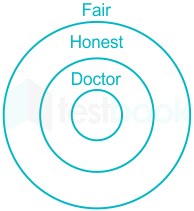
The least possible Venn diagram is as follows-:

  1. Some honest are doctors:- True (As, Doctor share some common part with honest. So we can say some honest are doctors).

  2. No honest is doctor:- False (As, There is no any no relation between honest and doctor as per Venn diagram).

3) Some fair are doctors:- True (As, From the Venn diagram there is some relation between fair and doctor).

  1. All fair are doctors:- False (As, From the Venn diagram we can't say all fairs are doctor, only we can say that there is some relation between doctor and fair).

Hence, only conclusion 1 and 3 follows.

6

Choose the following pair which is different from others:

  1. ((a))

    Cat : Kitten

  2. ((b))

    Sheep : Flock

  3. ((c))

    Cow : Calf

  4. ((d))

    Frog : Tadpole

Show Answer
Answer: ((b))

Sheep : Flock

A Kitten is a juvenile cat, means it is a young form of a cat.

A group of sheep in fairly small numbers sized is referred to as a flock.

Calf is the young domestic cow, means it is young form of cow.

Tadpole is a young form of a frog.

Hence, different pair is Sheep : flock.

So, the correct option is 2.

7

You have to select one figure from the options which will continue the same series as given problem figures:

  1. ((a))

  2. ((b))

  3. ((c))

  4. ((d))

Show Answer
Answer: ((d))

Pattern followed here is:

Hence, the correct answer is 4.

8

Out of the four given alternatives, choose the most appropriate description about the given three words:

Volt : Watt : Ohm

  1. ((a))

    These are terms related to machines

  2. ((b))

    These are terms related to measuring units of electricity

  3. ((c))

    These are terms related to precious stones

  4. ((d))

    These are terms related to currency

Show Answer
Answer: ((b))

These are terms related to measuring units of electricity

Volt is SI unit of voltage.

Watt is SI unit of power.

Ohm is SI unit of resistance.

All three terms are measuring units of electricity.

Hence, correct answer is option 2.

9

If a man reduces the selling price of a cooker from Rs. 620 to Rs. 580, his loss percent  increases by 4%. What is the cost price of the cooker?

  1. ((a))

    Rs. 750

  2. ((b))

    Rs. 1250

  3. ((c))

    Rs. 1000

  4. ((d))

    Rs. 1100

Show Answer
Answer: ((c))

Rs. 1000

Given: 

The initial selling price of cooker = Rs.620

The final selling price of cooker = Rs.580

His loss increased by = 4%

Formula used:

Loss = cost price (CP) – selling price (SP)

Loss % = (loss/CP) × 100

Calculation:

Let the CP of the cooker be Rs.x

The initial selling price of cooker = Rs.620

So, his initial loss = Rs. (x – 620)

Loss % = [(x – 620)/x] × 100

The final selling price of cooker = Rs.580

Then his final loss = Rs. (x – 580)

Loss % = [(x – 580)/x] × 100

Now by the question, his loss percent increases by 4%

⇒ [(x – 580)/x] × 100 = [{(x – 620)/x} × 100] + 4

⇒ 100x – 58,000 = 100x – 62000 + 4x

⇒ 104x – 100x = 62000 – 58000

⇒ 4x = 4000

⇒ x = 1000

∴ The cost price of the cooker is Rs. 1000

Alternate Method

4% → 620 - 580 = 40

1% → 10

100% → 1000

∴ The cost price of the cooker is Rs. 1000

10

P, Q, R, S and T are five students. P is shorter than Q but taller than T. R is the tallest. S is shorter than Q and taller than P. Which student has two students taller and two students shorter than him/her?

  1. ((a))

    T

  2. ((b))

    Q

  3. ((c))

    S

  4. ((d))

    P

Show Answer
Answer: ((c))

S

  1. P is shorter than Q but taller than T. R is the tallest.

So there are three cases possible-:

Case 1-: R > _  > Q > P > T

Case 2-: R > Q > P > T > _

Case 3-: R > Q > _ > P > T

  1. S is shorter than Q and taller than P.

So only Case 3 will remain, rest will be eliminated.

R > Q > S > P > T

So according to case 3, student who has two students taller and two students shorter than him is S.

Hence, the correct answer is "S".

General Awareness (10 questions)

11

The Panchayati Raj system was first introduced in __________.

  1. ((a))

    Hyderabad

  2. ((b))

    Jaipur

  3. ((c))

    Shadnagar

  4. ((d))

    Nagaur

Show Answer
Answer: ((d))

Nagaur

The correct answer is Nagaur.

Key Points

  • The Panchayati Raj system was first introduced in the Nagaur district of Rajasthan on 2nd October 1959.
  • After Rajasthan, it was implemented in  Andhra Pradesh the same year.
  • The Panchayati Raj system was inaugurated by then prime minister Jawaharlal Nehru.
  • The first elections under the Rajasthan Panchayat Samitis and Zilla Parishads Act, 1959 were held in September-October 1959.
  • It was a 3 tier governing system.

Additional Information

  • The first committee to suggest the introduction of the three-tier Panchayati Raj system was the Balwant Rai Mehta committee formed in 1957
  • The three levels were.
  • Gram Pachayat
  • Panchayat Samiti
  • Zila Parishad
  • The modern Panchayati Raj system was introduced in India by the 73rd constitutional amendment in 1992 and implemented on 24 April 1993.
  • 24 April is celebrated as Panchayati Raj divas in India.
12

Who among the following was not a member of the Drafting Committee of the Constituent Assembly?

  1. ((a))

    B D Jatti

  2. ((b))

    K M Munshi

  3. ((c))

    Syed Mohammad Saadullah

  4. ((d))

    Alladi Krishnaswamy Ayyar

Show Answer
Answer: ((a))

B D Jatti

The correct answer is B D Jatti.

Key Points

  • B D Jatti was not a member of the Drafting Committee of the Constituent Assembly.
  • Basappa Danappa Jatti was the fifth vice president of India,  from 1974 to 1979.
  • He also served as the acting president of India from 11 Feb to 24 July 1977.
  • The Drafting Committee had seven members named:
  • Alladi Krishnaswami Ayyar
  • N. Gopalaswami
  • B.R. Ambedkar
  • K.M Munshi
  • Mohammad Saadulla
  • B.L. Mitter
  • **D.P. Khaitan.**​

Additional Information

  • The Drafting committee was formed on 29th August 1947,  through a resolution in Constituent Assembly.
  • Dr B R Ambedkar was elected the president of the Drafting Committee in its first meeting on 30 August 1947.
  • There was a total of 166 sittings of the constituent Assembly.
  • The Constituent Assembly approved the draft constitution on 26 November 1949.
  • There were total 389 members in the Constituent Assembly.
13

In May 2019, The Indian Space Research Organization (ISRO) announced that India’s second lunar mission Chandrayaan-2 is scheduled to be launched in ______.

  1. ((a))

    September 2019

  2. ((b))

    July 2019

  3. ((c))

    August 2019

  4. ((d))

    June 2019

Show Answer
Answer: ((b))

July 2019

The correct answer is July 2019.

Key Points

  • Chandrayaan-2 was launched on 22 July 2019 by ISRO from the Satish Dhawan Space Centre in Andhra Pradesh.
  • The mission of Chandrayaan-2 was lunar exploration.
  • The launch vehicle used was GSLV Mark III-M1.
  • It had:
  • Orbiter
  • Lander: Vikram
  • Rover: Pragyan

Additional Information 

  • Chandrayaan-1 was launched in October 2008.
  • It was India's first lunar mission.
  • It was launched from the Satish Dhawan Space Centre in Andhra Pradesh.
  • Satellite launching station, Sriharikota:
  • It is a Satellite launching station of the Indian Space Research Organisation.
  • It was renamed the Satish Dhawan Space Centre in the year 2002.
  • Satish Dhawan was the former Chairman of the ISRO.
  • The first satellite launched from the Satish Dhawan Space Centre was the Rohini 1A  in 1979.
  • Arumugam Rajarajan is the current chairman of Satish Dhawan Space Centre.
14

Between whom was the First Anglo-Mysore War (1767-1769) fought?

  1. ((a))

    Hyder Ali and the British

  2. ((b))

    Hyder Ali and the Portuguese

  3. ((c))

    Tipu Sultan and the Marathas

  4. ((d))

    Tipu Sultan and the French

Show Answer
Answer: ((a))

Hyder Ali and the British

The correct answer is Hyder Ali and the British.​

Key Points

  • The series of four wars fought between the British and the Kingdom of Mysore in South India during the 18th century was known as the Anglo-Mysore War.
  • First Anglo-Mysore War: 
  • It was fought between 1767-1769 AD.
  • Governor: Lord Verelst was the governor during this period.
  • In the first Anglo-Mysore, the British, the Nizam and the Marathas fought together against Hyder Ali.
  • Treaty of Madras: Hyder Ali wins against the British.
  • A defence treaty was concluded in 1769.

Additional Information

  • Second Anglo-Mysore War: 
  • It was fought between 1780-1784 AD.
  • Governor: Lord Warren Hastings was the governor during this period.
  • In the second Anglo-Mysore, Hyder Ali, the Nizam and the Marathas fought together against the British.
  • Hyder Ali defeated Colonel Bailey.
  • Hyder Ali died in 1782 during the Second Anglo-Mysore War and was succeeded by his son Tipu Sultan.
  • Treaty of Mangalore: The Second Anglo-Mysore War ended with the signing of the Treaty of Mangalore by Tipu Sultan in 1784.
  • Third Anglo-Mysore War:
  • It was fought between 1790-1792 AD.
  • Governor: Lord Cornwallis was the governor during this period.
  • In the third Anglo-Mysore, the British, the Nizam and the Marathas fought together against Tipu Sultan.
  • Treaty of Srirangapatna: It was signed by Tipu Sultan in 1792.
  • Fourth Anglo-Mysore War: It was fought between AD 1799.
  • Governor: Lord Wellesley was the governor during this period.
  • Tipu died in 1799 while defending the Mysore capital, Srirangapatna.
  • The threat of the French to the British ended by the year 1799.
15

What is the maximum number of candidates which EVMs can cater to?

  1. ((a))

    24

  2. ((b))

    72

  3. ((c))

    36

  4. ((d))

    64

Show Answer
Answer: ((d))

64

The correct answer is 64

Key Points

  • The maximum number of candidates for which an EVM can cater is 64.
  • The Balloting unit of the EVM has the provision for 16 candidates only.
  • An EVM being used by ECI can record a maximum of 2,000 votes.
  • EVMs were firs**t introduced in  General Elections held in November 1998.**​​

Additional Information

  • The Indian electronic voting machine (EVM) was developed in 1989 by the Election Commission of India.
  • EVMs are manufactured and supplied by Bharat Electronics Ltd., Bangalore and Electronic Corporation of India, Hyderabad.
  • EVMs do not require a power source.
  • Voter Verifiable Paper Audit Trail (VVPAT) is an independent system attached with the Electronic Voting Machines that allows the voters to verify that their votes are cast as intended.
16

______ is the first Indian wrestler who will fight at the Madison Square Garden in New York.

  1. ((a))

    Bajrang Punia

  2. ((b))

    Yogeshwar Dutt

  3. ((c))

    Vinesh Phogat

  4. ((d))

    Sushil Kumar

Show Answer
Answer: ((a))

Bajrang Punia

The correct answer is Bajrang Punia.

Key Point

  • Bajrang Punia is the first Indian wrestler who will fight at Madison Square Garden in New York.
  • He was called by the American Boxing body for a special fight.
  • He fought at Madison Square Newyork on 6 May 2019 in Grapple at the Garden - Beat the Streets fight night.
  • He fought against two-time US national champion Yianni Diakomahlis
  • Yianni Diakomahlis won the fight by (10-08).​

Additional Information

  • Bajrang Puniya born in Khudan, Haryana is an Indian freestyle wrestler of the 65 kg category.
  • He had won a number of medals for India some of them are
  • Gold Medal in 2018 Commonwealth Games in Gold Coast, Australia
  • World No. 1 title in 2018 World Wrestling Championships
  • Silver Medal in 2021 Asian Wrestling Championships
  • Bronze medal in Tokyo Olympics 2020.
  • Bajrang Punia also clinched the gold medal in the 2022 Commonwealth Games, Birmingham U.K.
  • Star Indian wrestler Vinesh Phogat bagged a gold medal at the ongoing Commonwealth Games 2022 in the women's 53kg category.
  • Yogeshwar Dutt (born 2 November 1982) is an Indian freestyle wrestler.
  • At the 2012 Summer Olympics, he won the bronze medal in the 60 kg category.
  • He was awarded the Padma Shri by the Government of India in 2013.
  • He won a gold medal at the 2014 Commonwealth Games.
  • Sushil Kumar Solanki is a former Indian wrestler. 
  • He carried the Indian flag at the opening ceremony of the 2012 London Olympics.
  • He was placed seventh in the 2007 World Championships and won a bronze medal at the 2008 Olympic Games in Beijing.
  • He won a silver medal at the 2012 Summer Olympics, becoming the first person to win two Olympic medals for independent India.
  • Sushil won the gold medal in the 74 kg division at the 2014 Commonwealth Games.
17

Integrated over the year, incoming energy from the Sun is greatest, near which one of the following?

  1. ((a))

    The equator

  2. ((b))

    The tropic of Capricorn

  3. ((c))

    The tropic of Cancer

  4. ((d))

    The poles

Show Answer
Answer: ((a))

The equator

The correct answer is The Equator.

Key Points

  • The Equatorial regions receive the maximum energy from the sun over the year.
  • As the equator lies at 0° latitude it receives maximum sunlight all over the year.
  • Other regions on earth which are away from the equator receive tangential rays of the sun due earth's spherical shape.
  • The polar regions of the earth near **Artic and the Antarctic circle receive the least sunlight.**​

Additional Information

  • The Tropic of Capricorn lies at 23d 26' 22" latitude to the south of the Equator.
  • The tropic of Cancer lies at 23d 26' 22" latitude to the north of the Equator.
  • The area between The tropic of Capricorn and Cancer is called Torrid Zone.
  • Poles are places on Earth's surface on which Earth's imaginary spin axis passes through.
18

The United Nations Educational, Scientific and Cultural Organization (UNESCO) is a specialized agency of the United Nations with its headquartered in ______.

  1. ((a))

    France

  2. ((b))

    Turkey

  3. ((c))

    United States of America

  4. ((d))

    India

Show Answer
Answer: ((a))

France

The correct answer is Paris (France).

Key Points 

  • UNESCO’s Headquarters are located in Paris, France.
  • United Nations Educational, Scientific and Cultural Organization (UNESCO) is a specialized agency of the United Nations (UN).
  • It seeks to build peace through international cooperation in Education, the Sciences, and Culture.
  • It has 193 Members and 11 Associate Members (As of April 2020).
  • Three UNESCO member states are not UN members: Cook Islands, Niue, and Palestine.
  • UNESCO was founded on 16 November 1945.
  • The first session of the General Conference of UNESCO was held in Paris in November-December of 1946.

Additional Information 

  • Few important bodies and their headquarters:
BodyHeadquarters
International Labor Organization (ILO)Geneva, Switzerland
Food and Agriculture Organization (FAO)Rome, Italy
World Health Organization (WHO)Geneva, Switzerland
Bretton Woods Twins (World Bank Group and International Monetary Fund)Washington DC, United States
United Nations Children’s Fund (UNICEF)New York, USA
World Tourism Organization (WTO)Madrid, Spain
United Nations Industrial Development Organization (UNIDO)Vienna, Austria
19

Identify the ITC group chairman for more than 2 decades who passed away in May 2019?

  1. ((a))

    Rahul Puri

  2. ((b))

    Jagmohan Dalmiya

  3. ((c))

    Y C Deveshwar

  4. ((d))

    B L Munjal

Show Answer
Answer: ((c))

Y C Deveshwar

The correct answer is Y C Deveshwar.

Key Points

  • YC Deveshwar, ITC’s longest-serving corporate chief.
  • He passed away at a private hospital in May 2019.
  • He stepped down from the executive role in 2017 but remained as a chairman in a non-executive capacity.
  • Sanjiv Puri is the current CEO and MD of the company. (As of August 2022)
20

The International Criminal Police Organization, more commonly known as Interpol, has its headquarters in ______.

  1. ((a))

    France

  2. ((b))

    The United States of America

  3. ((c))

    The United Kingdom

  4. ((d))

    Switzerland

Show Answer
Answer: ((a))

France

The correct answer is France.

Key Points 

  • International Criminal Police Organization (Interpol)
  • It is an international organization that facilitates worldwide police cooperation and crime control.
  • Headquarters: Lyon, France.
  • President: Ahmed Naser Al-Raisi
  • It is formed in 1923 as the International Criminal Police Commission and started calling INTERPOL in 1956.
  • India joined the organization in 1949.
  • INTERPOL enables police in their 194 member countries to work together to fight international crime.

Additional Information 

International OrganisationHeadquarters
United Nations Organisation (UNO) United Nations Children's Emergency Fund (UNICEF) United Nations Population Fund (UNFPA) United Nations Security Council (UNSC)New York, USA
International Monetary Fund (IMF) World Bank (WB)Washington DC, USA
World Food Programme (WFP) Food and Agricultural Organisation (FAO)Rome, Italy
United Nations Habitat (UNH)Nairobi, Kenya
United Nations Conference on Trade and Development (UNCTAD) World Health Organisation (WHO) International Labour Organisation (ILO) International Committee of the Red Cross World Trade Organisation (WTO) World Meteorological Organisation (WMO) World Intellectual Property Organisation (WIPO) International Organisation for Standardization United Nations Acquired Immuno Deficiency Syndrome (UNAIDS)Geneva, Switzerland
International Court of Justice (ICJ) Organization for the Prohibition of Chemical WeaponsThe Hague, Netherlands
United Nations University (UNU)Tokyo, Japan
United Nations Educational Scientific and Cultural Organisation (UNESCO) Organization for Economic Cooperation and Development (OECD) International Council on Monuments and Sites (ICOMOS)Paris, France
United Nations Industrial Development Organisation (UNIDO) International Atomic Energy Agency (IAEA) Organization of Petroleum Exporting Countries (OPEC)Vienna, Austria
International Maritime Organisation (IMO) Commonwealth of Nations Amnesty InternationalLondon, United Kingdom

Teaching Aptitude (15 questions)

21

What is the purpose of the "National Literacy Mission Authority (NLMA)" set up on 5th May 1988?

  1. ((a))

    To restructure the educational organisations for better implementation of educational policies.

  2. ((b))

    To implement the policy of education for all in a new spirit.

  3. ((c))

    To sensitive people about equity and equality issues.

  4. ((d))

    To impart a new sense of urgency and seriousness to adult education.

Show Answer
Answer: ((d))

To impart a new sense of urgency and seriousness to adult education.

The National Literacy Mission (NLM) is a nationwide program started by Government of India in 5th May 1988 with an aim to eradicate illiteracy in the country by imparting functional literacy to non - literates.

Key Points

  • The National Literacy Mission Authority (NLMA) was established specifically to address adult literacy in India.
  • Its primary objective was to eradicate illiteracy by imparting functional literacy to non-literates, particularly focusing on disadvantaged groups like women, scheduled castes and tribes, and backward classes.
  • The operations of the Mission were extended in 1999, with emphasis on lifelong learning and decentralization, with devolution of authority to the state and the district level institutions.

Therefore, it can be concluded that the main purpose of NLMA is to impart a new sense of urgency and seriousness to adult education.

22

Which pedagogical approach does National Curriculum Framework (NCF) 2005 suggest for teaching science in schools?

  1. ((a))

    Multiple intelligence approach

  2. ((b))

    Field trips

  3. ((c))

    Laboratory work

  4. ((d))

    Inquiry-based approach

Show Answer
Answer: ((d))

Inquiry-based approach

National Curriculum Framework (NCF), 2005 provides a guideline with which teachers and schools can choose and plan experiences that they think children should have.

  • It seeks to reform the curriculum and to bring learning experiences in and outside the classroom.
  • It should be noted that the inquiry-based approach is suggested for teaching science in schools.

Important Points

An inquiry-based approach emphasizes to connect the child with their own experiences by posing questions and making decisions in the search of new understanding.

The following are the skills required in inquiry and decision-making:

  • Skill in recognizing a problem
  • Skill in developing hypotheses
  • Skill in exploring
  • Skill in validating hypotheses
  • Skill in drawing conclusion

Hence, we conclude that the above statement is about inquiry approach.

23

Following the standard procedure, how many days of minimum training is required for teachers when children with ‘mild to moderate’ disabilities are included in their classrooms?

  1. ((a))

    Continuous training

  2. ((b))

    1 week

  3. ((c))

    1 – 2 weeks

  4. ((d))

    1 year

Show Answer
Answer: ((c))

1 – 2 weeks

Educating children with special needs who may not benefit from regular school education calls for changes in curricula, classroom arrangements, provision of aids and appliances, additional finances, and appropriate teacher preparation. The preparation of special teachers in India has many problems which need to be addressed.

Key PointsVarious training programs are organized to train teachers for special education. Periodic short-term programs varying from 2 weeks to 3 months, based on the need, should be made mandatory for all trained professionals.

  • In-service training programs of one to two weeks' duration for general educators and special educators in all the disabilities and in specific areas of disability, are essential to effectively teach children with disabilities.
  • Pre-service programs at degree and post-graduate levels are necessary to improve the quality of teacher training and to promote research and development activities in the field of special education.
  • All universities should have a department of special education to promote the education of children with disabilities. Periodic evaluation of the training programs and constant updating to meet the challenges of changing trends in special education should be part of the planning of teacher preparation.

From the above points, we can conclude that 1 - 2 weeks of minimum training is required for teachers when children with ‘mild to moderate’ disabilities are included in their classrooms.

24

Children become capable of engaging in activities that involve mental representation, such as pretending, by the end of the_______ period.

  1. ((a))

    Concrete operational

  2. ((b))

    Sensorimotor

  3. ((c))

    Formal operational

  4. ((d))

    Pre-operational

Show Answer
Answer: ((d))

Pre-operational

Piaget’s stage theory describes the cognitive development in children. Cognitive development involves changes in cognitive processes and abilities. In Piaget’s view, early cognitive development involves processes based upon actions and later progresses into changes in mental operations.

Key Points

Jean Piaget has given various stages for each type of activity, the two stages which are responsible for the mental representation and functioning are the later sensorimotor stage and early pre-operational stage.

Stage I: Sensory-motor stage:

  • This stage lasts from birth to about two years old. The infant uses his or her senses and motor abilities to understand the world, beginning with reflexes and ending with complex combinations of sensorimotor skills. Children begin to develop symbols to represent events or objects in the world in the final sensory motor sub-stage.

Stage II- Preoperational stage:

  • The preoperational stage lasts from about two to about seven years old. Now that the child has mental representations and is able to pretend, it is a short step to the use of symbols. Language development is one of the hallmarks of this period.

From the above points, we can conclude that children become capable of engaging in activities that involve mental representation, such as pretending, by the end of the pre-operational period.

Additional Information

  • Concrete Operational Stage: The concrete operational stage starts from seven years of age and continues till 11 years. Children develop logical thinking but they still find difficulty in applying logic to hypothetical situations.
  • Formal Operational Stage: The formal operational stage begins around 11 years of age and continues till 15 years. Here, children are able to perform higher-order mental operations. Their thought is flexible and they can deal effectively with complex problems involving reasoning.
25

According to Right of Children to Free and Compulsory Education (RTE) Act 2009, the teacher in present day classrooms should design activities/learning tasks that will both, engage and _________ all learners in a heterogeneous setting.

  1. ((a))

    excite

  2. ((b))

    create interest for

  3. ((c))

    motivate

  4. ((d))

    challenge

Show Answer
Answer: ((d))

challenge

Key Points 

Right to Education Act

The Act is completely titled “the Right of Children to Free and Compulsory Education Act”. It was passed by the Parliament in August 2009. When the Act came into force in 2010, India became one among 135 countries where education is a fundamental right of every child.

The 86th Constitutional Amendment (2002) inserted Article 21A in the Indian Constitution which states:

  • “The State shall provide free and compulsory education to all children of 6 to 14 years in such manner as the State, may by law determine.”
  • As per this, the right to education was made a fundamental right and removed from the list of Directive Principles of State Policy.
  • The RTE is the consequential legislation envisaged under the 86th Amendment.

This act emphasizes learning by doing, curricular and co-curricular activities, and continuous and comprehensive evaluation.

Important Points

  • According to the Right of Children to Free and Compulsory Education (RTE) Act 2009, the teacher in present-day classrooms should design activities/learning tasks that will both, engage and challenge.
  • When a student engages in any activity he feels excited, creates interest in it, and feels motivated.
  • Activity should be challenging that will develop good skills in a student.

The Act prohibits:

  • Mental harassment and physical punishment.
  • Screening procedures for the admission of children.
  • Capitation fees.
  • Private tuition by the teachers.
  • Running schools with no recognition.

Hence, we can conclude that the teacher in present-day classrooms should design activities/learning tasks that will both, engage and challenge.

26

A teacher instructs the students in his class to construct paper planes. This is an example of integrating __________ in crafts.

  1. ((a))

    language learning

  2. ((b))

    social science learning

  3. ((c))

    games

  4. ((d))

    mathematics learning

Show Answer
Answer: ((d))

mathematics learning

Most people are familiar with only the computational aspects of mathematics and so are likely to argue for its place in the school curriculum and for traditional methods of instructing children in computation. In contrast, mathematicians see computation as merely a tool in the real stuff of mathematics, which includes problem-solving, and characterizing and understanding structure and patterns.

  • Teachers’ ideas about mathematics, mathematics teaching, and mathematics learning directly influence their notions about what to teach and how to teach it—an interdependence of beliefs and knowledge about pedagogy and subject matter.
  • Here, we examine if a teacher instructs the students in his class to construct paper planes. This is an example of integrating mathematics in crafts. As, mathematics instruction that are viewed as being close to the current vision of exemplary instruction. In this way, this activity is facilitating the concept of geometry to the learners.

​Hence, it can be concluded that if a teacher instructs the students in his class to construct paper planes, it is an example of integrating mathematics in crafts.

27

Who said the following?

“Literature, music, and arts, all are necessary for the development and flowering of a student to form an integrated total personality.”

  1. ((a))

    Maria Montessori

  2. ((b))

    Mahatma Gandhi

  3. ((c))

    Rabindranath Tagore

  4. ((d))

    Sri Aurobindo

Show Answer
Answer: ((c))

Rabindranath Tagore

Rabindranath Tagore, recipient of the Nobel Prize for Literature in 1913, is internationally known as a great poet. He was born in the year 1861, in Calcutta, Bengal. From his earliest days, Rabindranath grew up in a house where all the changes emerging in Indian society of that time were being felt in his day-to-day life. In Bengal, this change more often known as Renaissance, found expression in three great movements, religious, literary and national and all these three movements found their votaries in the Tagore family. In an atmosphere like this Tagore himself started writing poems at the age of eight and at the age of thirteen his poems were published in a Bengali monthly magazine, Bharati, under the name of Bhanusimh. Tagore's Philosophy of Education:

  • Tagore laid great stress and emphasis on the aesthetic development of the senses in his philosophy of education.
  • He argued that the development of the senses was as important as intellectual development.
  • He, therefore, gave prominence to music, literature, art, dance, and drama in the daily life of the school. Hence, he quoted "Literature, music, and arts, all are necessary for the development and flowering of a student to form an integrated total personality."
  • Tagore believed in an all-round development of personality and in his institution education continues to address the all-round development of the students.
  • Education can develop a new pattern of life which culminates in the realisation of Universal man.
  • Tagore's system of education emphasises the intellectual, physical, social, moral economic and spiritual aspects of human life by which a man can develop an integrated personality.
  • Tagore believed that along with education, economic upliftment is also necessary.
  • Since economic life covers the whole width of the fundamental basis of society because its necessities are the simplest and the most universal, he suggested that educational institutions, in order to obtain their fullness of truth, must have close associations with this economic life. “Our university must not only instruct, but live; not only think, but produce".

Hence, we conclude that the above statement is given by Tagore.

28

During which period did education start acquiring a formal nature by being imparted at centers of learning called gurukuls, ashrams and parishads?

  1. ((a))

    Vedic period

  2. ((b))

    Mughal period

  3. ((c))

    Medieval period

  4. ((d))

    Buddhist period

Show Answer
Answer: ((a))

Vedic period

Education occurs in many forms for many purposes through many institutions since the emergence of society. There are three forms of education - formal, non-formal, and informal.

  • Informal education can be acquired or imparted anywhere, anytime, and by anyone. Non-formal education is imparted in a semi-rigid environment and can be acquired by anyone.

Key Points

  • India has had a rich tradition of learning and education from the beginning of civilization. Education policy in ancient India in its traditional form was closely related to religion.
  • Over a period of time, two systems of education have developed- the Vedic, which is further subdivided into post-Vedic and/ or Brahminic, and the Buddhist.
  • During the Vedic period, India had a Gurukul system of education in which anyone who wished to study went to a teacher’s (Guru) house (Ashram) and requested to be taught.
  • If accepted as a student (disciple) by the Guru, s/he would then stay at his place and help in all activities at home.
  • This system not only created a strong tie between the teacher and the taught (like family members), but also taught the learner everything about running a house.
  • The Guru taught everything the child wanted to learn, from Sanskrit to the Holy Scriptures and from Mathematics to Metaphysics.
  • The student stayed as long as s/he wished or until the guru felt he had taught everything he could teach. All learning was closely linked to nature and life and not confined to memorizing information

From the above points, we can conclude that the formal nature of imparting education started during the Vedic Period through the gurukuls, ashrams, and parishads.

Additional Information

  • Mughal Period:  Muslim rulers promoted urban education by establishing libraries and literary societies. They founded primary schools (maktabs) in which students learned reading, writing, and basic Islamic prayers and Secondary Schools (madrasas) to teach advanced language skills (mainly Arabic and Persian) in India.
  • Buddhist Period:  Buddhist education was also imparted in Mathas. Entry to higher education was very selective and competitive and only the best managed to enter the citadel of higher learning.
29

What is the role of a teacher while implementing constructivist method of teaching in mathematics?

  1. ((a))

    To ensure that students are involved in gleaning knowledge on their own

  2. ((b))

    To ensure that all students have calculators with them

  3. ((c))

    To ensure that students get a sports period before mathematics period

  4. ((d))

    To ensure that the relevant books are available in the school library

Show Answer
Answer: ((a))

To ensure that students are involved in gleaning knowledge on their own

The role of a teacher while implementing the constructivist method of teaching in mathematics is to ensure that students are involved in gleaning knowledge on their own.

Key Points

  • Constructivist Methods of teaching mathematics aim at connecting mathematics to daily life instead of just cramming the formulas.
  • It allows students to use creative methods to understand mathematics and solve it in a creative manner.

Additional Information

  • Teachers can follow various constructivist approaches, like, reciprocal learning, inquiry-based learning, cooperative learning, problem-solving learning.
  • Reciprocal learning allows the grouping of children and allows interaction and exchange of knowledge.
  • In an Inquiry-based learning method, learners frame their own questions and try to answer them.

Hence, we can conclude that to ensure that students are involved in gleaning knowledge on their own is the role of a teacher while implementing constructivist method of teaching in mathematics.

30

According to the draft of the National Educational Policy (NEP) 2020, what is the reason for lowered credibility of the higher education system?

  1. ((a))

    Lack of academic monitoring to ensure good quality of education in the classrooms

  2. ((b))

    Lack of good quality teachers to ensure successful outcomes for all students

  3. ((c))

    Lack of employable skills of a large proportion of the products of the education system

  4. ((d))

    Lack of academic infrastructure to impart quality education

Show Answer
Answer: ((a))

Lack of academic monitoring to ensure good quality of education in the classrooms

The draft of the National Education Policy (NEP) 2020 was released by the MHRD.

  • The focus of the policy is to address gender discrimination, the creation of educational tribunals, and a common curriculum for Science, Mathematics and English.
  • The motto of the new policy is “Educate, Encourage, Enlighten”.
  • The reason for lowered credibility of the higher education system is the lack of academic monitoring to ensure good quality of education in the classrooms. So, its vision is to create a credible education system capable of ensuring inclusive quality education and lifelong learning opportunities for all.
  • Among others, the mission includes: Ensuring an equitable, inclusive and quality education for all; fostering quality education with a strong focus on education reforms; promoting acquisition by all learners of relevant skills, including technical and vocational skills, for work and entrepreneurship.

Hence, the reason for lowered credibility of the higher education system is the lack of academic monitoring to ensure good quality of education in the classrooms.

31

What is the adverse effect of insisting on the same answers from all children?

  1. ((a))

    It will discourage children from listening to the teacher.

  2. ((b))

    It will stop children from speaking in the classroom.

  3. ((c))

    It will hinder the growth of the child’s own understanding and imagination.

  4. ((d))

    It will encourage children to copy from others.

Show Answer
Answer: ((c))

It will hinder the growth of the child’s own understanding and imagination.

Teachers play the most crucial role in the life of a child, especially in the understanding of complex concepts in children through planning and dedication.

Cognitive powers of a child, like imagination power, intelligence, ability to make a decision, etc. are related to the child's 'mental development' as mental development:

  • refers to the development of the ability to understand, learn, reason, think, perceive, and solve a problem.
  • refers to the development of the ability to explore and process information to learn and understand the things around him.
  • includes the acquisition of those abilities which help the individual to make sense i.e. perceiving, organizing, storing, retrieving, utilizing, and transacting.

Note that:

  • Children should be asked creative questions to promote their imagination and make their understanding better.
  • Insisting on the same answers from all children will hinder the growth of the child’s own understanding and imagination.
32

A teacher gave the following activities as a home assignment to the students learning science. Which of the given activities will require the students to use local material?

  1. ((a))

    Gather information about countries facing shortage of food, its causes and effects through newspapers, magazines and internet.

  2. ((b))

    Adjust your diet according to the concepts of balanced diet for your level of activity and growth requirements.

  3. ((c))

    Observe the materials that their mothers discard while cleaning rice/wheat by handpicking. Identify the impurities and try to find out their possible harmful effects if eaten.

  4. ((d))

    Make a resolution for your food habits and exercise for good health.

Show Answer
Answer: ((c))

Observe the materials that their mothers discard while cleaning rice/wheat by handpicking. Identify the impurities and try to find out their possible harmful effects if eaten.

 Important Points

  • Science is a very practical subject that has direct relevance to our lives.
  • To understand the practical relevance of the subject, learners must be able to make connections between the science they learn at school and their everyday lives.
  • It will keep the students motivated and interested in learning.
  • Doing practical work and encouraging students for activities is an important step to motivate students.
  • To become a resourceful educator one can –
  • Make maximum use of the local environment as a teaching aid. It can be then carried for investigations, discussions, and sources of classroom data.
  • Make maximum use of the local community as a teaching aid. For example, students can reach out to parents for helping them locate stories, opinions on everyday issues or just observe their parents on how they interact with the environment.
  • Make maximum use of communication systems like radio, television, etc.
  • Connect with other schools and get inspired by each other’s initiatives.

Key Points

  • A home assignment where the learners make full use of local materials is an interesting and important method to make learners understand the environment around them.
  • Among all the activities stated, identifying the parents as a teaching aid and a local resource is done when the learners are asked to observe the materials that their mothers discard and finding out their possible harmful effects if eaten.

Hence we can conclude that out of the given activities, the activity which will require the students to use local material would be -  observing the materials that their mothers discard while cleaning rice/wheat by handpicking. Identify the impurities and try to find out their possible harmful effects if eaten. 

Confusion Points 

  • ​Although gathering information about countries facing a shortage of food, its causes and effects through newspapers, magazines, and the internet, is an example of encouraging learners to move beyond the textbooks but it is not making use of locally available resources and making a contextual understanding.
33

The basis of learning in a child’s early years is _________, as per the research and philosophy of Jean Piaget.

  1. ((a))

    enjoyment

  2. ((b))

    art

  3. ((c))

    drama

  4. ((d))

    expression

Show Answer
Answer: ((c))

drama

Piaget’s theory of cognitive development is a comprehensive theory about the nature and development of human intelligence first developed by Jean Piaget.

  • It is primarily known as a developmental stage theory, but in fact, it deals with the nature of knowledge itself and how humans come gradually to acquire it, construct it, and use it.

Key Points

  • According to Piaget, the basis of learning in a child’s early years is drama. Creative drama is particularly an enabling experience that sharpens children's gaze and observation.
  • Drama can be introduced as a classroom resource in many different ways, such as having a doll's house where children get familiar sets to explore and the opportunity to pretend to be the people with whom they live.
  • Children can also have access to baskets of pops (such as sandals and shoes, old pairs of spectacles, purses, bags, and dupattas) to play with and impersonate adults inhabiting their environments for the sheer joy of being 'the other'. Such opportunities lead to acts that foster curiosity, confidence, and conviviality.

Hence, it is clear that the basis of learning in a child’s early years is drama, as per the research and philosophy of Jean Piaget.

34

Which of the following is a false patriarchal view of society?

  1. ((a))

    Elders and other family members are not available to care for the child in the absence of the mother.

  2. ((b))

    Women are primarily housewives and mothers, and only an insignificant few are in the workforce.

  3. ((c))

    Mothers from poor households leave their young, growing children in the care of older siblings.

  4. ((d))

    In poorer classes, older people continue to work for as long as they can.

Show Answer
Answer: ((d))

In poorer classes, older people continue to work for as long as they can.

Patriarchy is a system of society or government in which the father or the eldest male is the head of the family and descent is reckoned through the male line.

Key Points

  • Patriarchy is the term used to describe the society in which we live today, characterized by current and historic unequal power relations between women and men whereby women are systematically disadvantaged and oppressed.
  • This takes place across almost every sphere of life in the form of under-representation in the workforce, in decision-making positions, and in government institutions. Male violence against women is also a key feature of patriarchy.
  • In the patriarchal view of society, elders and other family members are not available to care for the child in the absence of the mother. Sometimes, she has to leave their young, growing children in the care of older siblings.
  • The patriarchal view of society focuses on women being subject to oppression. Women are primarily housewives and mothers, and only an insignificant few are in the workforce.

From the above points, we can conclude that 'in poorer classes, older people continue to work for as long as they can' is the correct answer as it is not related to the patriarchal view of society.

35

Which among the following is an example of child-centered pedagogy?

  1. ((a))

    Children sharing and integrating school knowledge with their experiences in and out of the school

  2. ((b))

    Children repeating what was told by the teacher and peers

  3. ((c))

    Children working in groups and pairs for learning a topic

  4. ((d))

    Children sharing their experiences in the classroom with peers and the teacher

Show Answer
Answer: ((a))

Children sharing and integrating school knowledge with their experiences in and out of the school

Important PointsChild-centered pedagogy: Child or student-centered pedagogy can be broadly applied to many levels of education. Teachers who champion this approach are those who wish to promote in their students a love of learning, provide a safe and caring environment, and work towards perfecting their craft in an active way. In this approach, we connect school knowledge to outside knowledge.

  • The constructivist approach relies on continuous evaluation and growth monitoring to help students think about themselves as agents of their own learning.
  • Children sharing and integrating school knowledge with their experiences in and out of the school. This makes learning easy and natural.
  • Developing a tendency for the all-around development of the child.
  • Develop learning by doing.
  • In child-centered education, curriculum, teaching method, classroom environment, evaluation, teaching material, activities will be made keeping in mind all the students.

Additional Information Children working in groups and pairs for learning a topic and Children sharing their experiences in the classroom with peers and the teacher is an example of progressive education.

  • Progressive education: Progressive education is a pedagogical movement that began in the late nineteenth century and has persisted in various forms to the present. The Father of Progressive education is John Dewey. 
  • Group work and development of social skills
  • Collaborative and cooperative learning projects
  • De-emphasis on textbooks in favor of varied learning resources
  • Emphasis on learning by doing – hands-on projects, expeditionary learning, experiential learning.

Hence, we can conclude the right answer to this question is children sharing and integrating school knowledge with their experiences in and out of the school.

Subject Knowledge (100 questions)

36

In a mixture of a weak acid and its salt, the ratio of the concentration of acid to salt is increased tenfold. The pH the solution:

  1. ((a))

    Decreases by one tenth

  2. ((b))

    Increases by ten-fold

  3. ((c))

    Increases by one

  4. ((d))

    Decreases by one

Show Answer
Answer: ((d))

Decreases by one

Concept:

  • pH (Power of Hydrogen): The degree of acidity or alkalinity of a substance is expressed in pH value.
  • pH is a scale (0 to 14) used to specify the acidity or basicity of an aqueous solution.
  • Lower pH values of solutions represent more acidic in nature,
  • While higher pH values of solutions represent more basic or alkaline.


pH = - log [H+] For acid

pOH = - log [OH-] For base

pH=pKa+log[saltacid]=pKa{\rm{pH}} = {\rm{pKa}} + \log \left[ {\frac{{{\rm{salt}}}}{{{\rm{acid}}}}} \right] = {\rm{pKa}} For buffer solution

Buffer solution: A buffer solution contains either a weak acid and its salt with a strong base or a weak base and its salt with strong acid.

Calculation:

Let us assume in the original mixture,

[salt] = [acid]

pH=pKa+log[saltacid]=pKa{\rm{pH}} = {\rm{pKa}} + \log \left[ {\frac{{{\rm{salt}}}}{{{\rm{acid}}}}} \right] = {\rm{pKa}} For buffer solution

Now, the ratio of the concentration of acid to salt is increased tenfold.

[Acid][Salt]=101\frac{{\left[ {{\rm{Acid}}} \right]}}{{\left[ {{\rm{Salt}}} \right]}} = \frac{{10}}{1}

So, [Salt][Acid]=110\frac{{\left[ {{\rm{Salt}}} \right]}}{{\left[ {{\rm{Acid}}} \right]}} = \frac{1}{{10}}

pH=pKa+log[110]=pKa1{\rm{pH}} = {\rm{pKa}} + \log \left[ {\frac{1}{{10}}} \right] = {\rm{pKa}} - 1

Thus pH of the solution decreases by 1.

Important Points

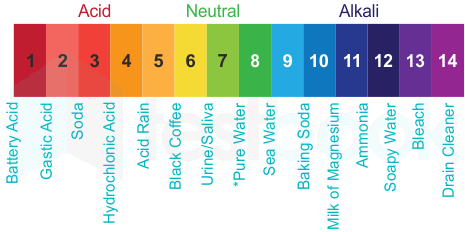
  • The scale runs from 0 to 14, with acids having a pH less than 7, 7 being neutral, and bases having a pH higher than 7.
  • Acids and bases react with each other in what is called a neutralization reaction.


37

Graphite is a soft solid lubricant that is extremely difficult to melt. The reason for this anomalous behaviour is that graphite:

  1. ((a))

    has carbon atoms arranged in large plates of rings of strongly bound carbon atoms with weak inter plate bonds

  2. ((b))

    is a non-crystalline substance

  3. ((c))

    has molecules of variable molecular masses like polymers

  4. ((d))

    is an allotropic form of diamond

Show Answer
Answer: ((a))

has carbon atoms arranged in large plates of rings of strongly bound carbon atoms with weak inter plate bonds

Explanation:

  • Allotropy: The presence of one element in various structures, having distinctive physical properties, however, comparable chemical properties are known as Allotropy.
  • Diverse types of an element are called “allotropes" or Allotropic Structures.
  • Carbon, sulfur, phosphorous, etc. demonstrates allotropy.

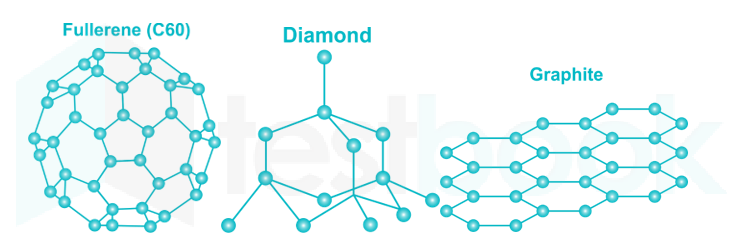
Carbon has different types of allotropes diamond, graphite, fullerene, etc.

  • Diamond:
  • It is a well-known allotrope of carbon.
  • It exhibits high hardness, high melting point, thermal conductivity, and high dispersion of light.
  • It is the hardest known natural mineral.
  • It is widely used in cutting, jewellery, and as a potential semiconductor material.
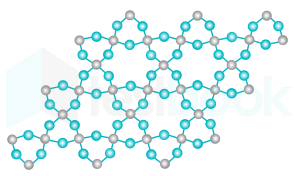
  • Graphene:
  • It is also an allotrope of carbon
  • It is a sheet of a single layer of carbon atoms
  • Layers of graphene make up graphite.
  • The strong covalent bonds between the carbon atoms of graphene.
  • Graphite is soft because it has weak intermolecular forces between its layers.
  • It is widely used in electronics.
  • Fullerene:
  • It is also an allotrope of carbon.
  • Fullerenes are used in several biomedical applications like carriers of genes etc.

38

Consider a minor parking-plot accident. Car a backs out at 30 cm/s towards the west, and car B looks for a place to park, driving north at 40 cm/s. Both cars mass is 1,000 kg. What is the total system momentum before the collision?

  1. ((a))

    There is not enough information to answer this

  2. ((b))

    100 kg m/s, generally northwest

  3. ((c))

    500 kg m/s, generally northwest

  4. ((d))

    700 kg m/s, generally northwest

Show Answer
Answer: ((c))

500 kg m/s, generally northwest

Concept:

  • The type of collision in which the total kinetic energy of the system remains constant before and after the collision is called elastic collision or perfectly elastic collision.
  • As there is no net external force on the system, so momentum before the collision and after the collision will remain the same.


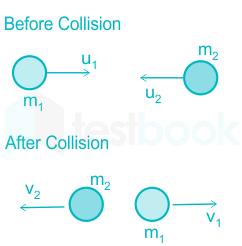
Linear Momentum before the collision (P1) = Linear Momentum after the collision (P2)

P1 = m1u1 + m2u2

P2 = m1v1 + m2v2

m1u1 + m2u2 = m1v1 + m2v2


Explanation:

Given that: uA = 30 cm/s = 0.3 m/s towards west, uB = 40 cm/s = 0.4 m/s towards north, mass of A & B = 1000 kg.

From the figure, we can find the resultant velocity of A & B,

R=0.32+0.42=0.25=0.5{\rm{R}} = \sqrt {{{0.3}^2} + {{0.4}^2}} = \sqrt {0.25} = 0.5

R = 0.5 m/s

Total system momentum = net mass × net velocity

= 1000 × 0.5

Total system momentum = 500 kg m/s, NW.

39

If you applied a fungicide to a cornfield, what would you expect to happen to the rate of decomposition and net ecosystem production (NEP)?

  1. ((a))

    Decomposition rate would decrease and NEP would increase

  2. ((b))

    Neither would change

  3. ((c))

    Decomposition rate would increase and NEP would decrease

  4. ((d))

    Both decomposition rate and NEP would increase

Show Answer
Answer: ((a))

Decomposition rate would decrease and NEP would increase

The correct answer is Decomposition rate would decrease and NEP would increase.

Concept:

  • Decomposition:
  • Breakdown of the organic material to recycle it back into the environment.
  • Net ecosystem production:
  • The total accumulation of new biomass minus the costs of respiration by all of the organisms of the ecosystem.
  • Fungicide:
  • Fungi are decomposers, while fungicide is used to kill the fungus.

Explanation:

  • As we apply the fungicide to the cornfield the decomposers as fungi die.
  • So the rate of decomposition decreases.
  • If no decomposition takes place so no biomass is disappearing.
  • And only new biomass is adding that will increase the NEP.

Notes:

  • Some names of compounds:
  • Insecticides – insects
  • Herbicides – plants
  • Rodenticides – rodents (rats & mice)
  • Bactericides – bacteria
  • Fungicides – fungi
  • Larvicides – larvae
40

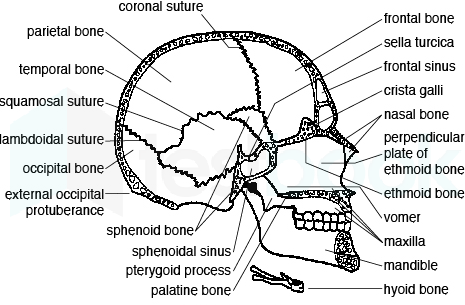
Which of the following is a part of the skull bone?

  1. ((a))

    Femur

  2. ((b))

    Nasal

  3. ((c))

    Atlas

  4. ((d))

    Tibia

Show Answer
Answer: ((b))

Nasal

The correct answer is Nasal.

Key Points

  • The bones of the skull and three thin membranes called meninges are there to protect the brain.
  • The brain is also cushioned and protected by cerebrospinal fluid.
  • The skull is made up of 29 bones.
  • The only bone that can move is Mandible.
  • The nasal bone is part of the Skullbone.

  • The atlas bone is the first of seven cervical vertebrae that supports the weight of the skull.
  • The tibia is the bone that forms the shin part of the leg.
  • The femur bone is the largest bone of the body, it is the thigh bone.

Notes:

  • Some important names of bones:
  • Knee- Patella
  • Thigh- Femur (largest bone)
  • Ankle- Tarsal
  • Fingers- Phalanges
  • Wrist- Carpals
  • Upper arms- Humerus
  • Palm- Metacarpal
  • Bones in ear- Malleus, Incus, Stapes (smallest bone)
41

The phenomenon of removing layers of basic oxides from metals before electroplating is called:

  1. ((a))

    anodising

  2. ((b))

    pickling

  3. ((c))

    galvanising

  4. ((d))

    poling

Show Answer
Answer: ((b))

pickling

The correct answer is pickling.

Explanation:

MethodInformation
1. GalvanizingA thin layer of zinc is applied to prevent corrosion of iron or steel.
2. TinningA layer of molten tin is deposited on metals.
3. AnodizationMetals like copper, aluminium are coated with a thin and strong layer of their oxides using electrolysis.
4. Electroplatingless reactive metal is coated on a more reactive metal by electrolysis.
5. AlloyingThe homogenous mixture formed by mixing metal with other metals or non-metals in a certain proportion is called an alloy.
6. PicklingRemoving layers of basic oxides from metals before electroplating.
7. PolingPoling is a method used to purify metals that have oxidized impurities.


So the phenomenon of removing layers of basic oxides from metals before electroplating is called pickling.

42

Which wave phenomenon makes it possible for a player to hear the sound from a referee’s whistle in an open field even when standing behind the referee?

  1. ((a))

    Doppler effect

  2. ((b))

    Reflection

  3. ((c))

    Refraction

  4. ((d))

    Diffraction

Show Answer
Answer: ((d))

Diffraction

Concept:

  • Doppler Effect: If the source or the observer or both, move with respect to the medium, the frequency observed may be different from the frequency of the source. This apparent change in frequency of the wave due to the motion of the source or the observer is called the Doppler Effect.
  • Reflection: The phenomena in which light ray is sent back into the same medium from which it is coming, on interaction with boundary, is called reflection.
  • Refraction: When a ray of light passes from one medium to another it suffers a change in direction at the boundary of two media is called refraction.
  • Diffraction of sound: Diffraction is the bending of a sound wave as it moves past an obstacle or through a narrow opening.
  • i.e., if we have greater the wavelength, more distinct is the diffraction effect. It is due to this reason that the diffraction effect is very commonly observed in sound.


Explanation:

  • By the diffraction of sound transform acoustical energy into acoustical shadows.
  • These are areas that are prevented from the direct incidence of sound as by an obstacle.
  • Due to diffraction possible to hear the noise of a road even in the backyard of a building, or the sound of the referee's whistle when standing behind him.
43

Which of the following is NOT generally observed in a geomagnetic storm?

  1. ((a))

    Fluctuations in the Earth’s magnetic field

  2. ((b))

    Disruption of microwave propagation

  3. ((c))

    Disruption of electrical power transmission

  4. ((d))

    Charged particles streaming out from the sun

Show Answer
Answer: ((b))

Disruption of microwave propagation

Concept:

Geomagnetic Strom: When solar matter (solar winds) collides with the planet at high speed, then the surrounding magnetic field of the planet deflected towards their pole.

  • This disturbance in the atmosphere of the planet with the burst of radiation and charged particles termed as a geomagnetic storm.


Microwaves:

  • It is an electromagnetic wave that comes in the range of 1 mm to 1 meter and of the frequency range between 300 MHz to 300 GHz.
  • Microwaves are generally used in Radars, Transmission towers, Microwave Ovens, etc.
  • These waves are micro not in terms of wavelength but micro from radio waves with greater frequency.
  • Microwave links are used space wave propagation mode of transmission i.e. LOS (line of sight)


Explanation:

The solar winds created by the charged particles coming out from the sun that causes the geomagnetic storm on earth.

The effects of the geomagnetic storm are:-

  • It fluctuates the magnetic field of the earth.
  • The aurora seen at poles are because of geomagnetic storms.
  • Sometimes, it disrupts the electrical power transmission lines.


Microwave, on the other hand, do not much affected by it because it is an electromagnetic wave and it is used in LOS (line of sight) propagation transmission.

Hence, the correct option here is microwave propagation.

44

The content of the anterior cavity of an eye ball is:

  1. ((a))

    vitreous humour

  2. ((b))

    dense jelly

  3. ((c))

    water 

  4. ((d))

    aqueous humour

Show Answer
Answer: ((d))

aqueous humour

Concept:

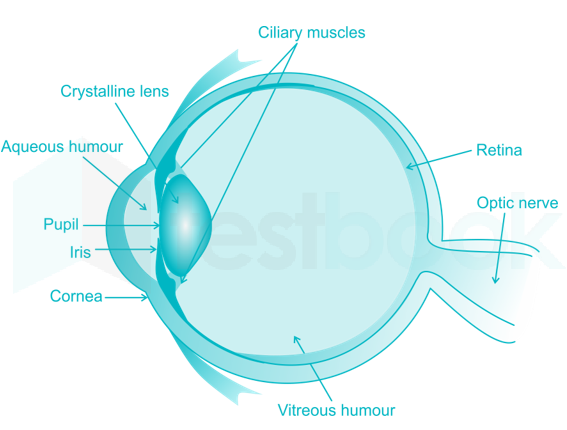
This is an anatomical detailed diagram of a human eye.

  • In this Eye lens is a transparent, biconvex structure in the eye which provides finer adjustment required to focus objects on the retina
  • And iris is a Dark muscular diaphragm between the cornea and the lens controls the size of the pupil
  • The retina is the light-sensitive surface of an eye on which the image is formed it generates signals which are transmitted to the brain through optical nerves
  • Hence eye lens is just like an ordinary bifocal convex lens which will act as a converging lens and


Explanation:

The anterior part (front part) of the eye is having a transparent liquid called Aqueous humour. It helps to maintain the shape of the eye.

  • Also, the aqueous humour helps to bend maximum light towards the pupil.
  • Thus, the correct option is Aqueous Humour.
45

The increase in temperature of the aqueous solution will result in:

  1. ((a))

    molarity to increase

  2. ((b))

    mole fraction to increase

  3. ((c))

    molarity to decrease

  4. ((d))

    mass % to increase

Show Answer
Answer: ((c))

molarity to decrease

Concept:

  • Molarity (M) is defined as the number of moles of solute (n) divided by the volume (V) of the solution in litres.


Molarity;(M)=No.;of;moles;of;solute;(n)Volume;of;the;solution;(V)Molarity;\left( M \right) = \frac{{No.;of;moles;of;solute;\left( n \right)}}{{Volume;of;the;solution;\left( V \right)}}

Explanation:

We know that,

Volume is directly proportional to Temperature i.e. V T

So, if the temperature increases means the volume also increases.

Also,

Molarity;(M)=No.;of;moles;of;solute;(n)Volume;of;the;solution;(V)Molarity;\left( M \right) = \frac{{No.;of;moles;of;solute;\left( n \right)}}{{Volume;of;the;solution;\left( V \right)}}

M1V \Rightarrow M \propto \frac{1}{V}

Hence, if volume increases then Molarity (M) decreases.

⇒ If Temperature increases molarity (M) decreases.

46

Which of the following is an example of the RNA virus?

  1. ((a))

    Tobacco mosaic virus

  2. ((b))

    SV 40

  3. ((c))

    Adeno virus

  4. ((d))

    T4 phage

Show Answer
Answer: ((a))

Tobacco mosaic virus

The correct answer is RNA virus.

Concept:

  • The term Virus in Latin means Poison.
  • Viruses are small submicroscopic pathogenic agents that infect all the different life forms, from animals and plants to microbes and archaea.
  • TMV was the first discovered virus.
  • The study of Virus is called Virology
  • The virus can be divided into two types based on the genetic material present
  • DNA virus:
  • It is a virus that has DNA as its genetic material.
  • It replicates using DNA.
  • RNA virus:
  • It is a virus that has RNA as its genetic material.
  • It replicates using RNA.

Explanation:

  • Tobacco mosaic is an example of an RNA virus.
  • Here is the list of DNA and RNA virus:
DNA VirusesRNA Viruses
AdenovirusAvian leukaemia virus
Bacteriophage f X 174Bacterial virus F2
Bacteriophage M13Bacteriophage MS - 2
Coliphage lambda (l)Coliphage R17
Coliphage T2, T4, T6Influenza virus
Coliphage T3, T7Poliomyelitis virus
PoxvirusTobacco mosaic virus (TMV)
Herpes virusHIV
PapillomavirusRice dwarf virus
Polyomavirus SV 40Wound Tumour virus

Additional Information 

  • RNA - 
  • Ribonucleic acid.
  • RNA contains four different bases: Adenine, Guanine,  Uracil, and Cytosine.
  • DNA - 
  • Deoxyribonucleic acid
  • It contains four different bases: Adenine (A), Guanine, Cytosine, and Thymine (T).
  • DNA and RNA were discovered in 1869 by Swiss researcher Friedrich Miescher.
  • Virology is the study of viruses.
  • HIV - Human immunodeficiency virus
  • AIDS - Acquired immune deficiency syndrome
47

Suppose that a sample of gas has 5.55 × 10¹⁸ atoms in 1 cubic centimeter. What is the particle density?

  1. ((a))

    33.4 mol/m3

  2. ((b))

    922  mol/m3

  3. ((c))

    9.22 mol/m3

  4. ((d))

    1.08 mol/m3

Show Answer
Answer: ((c))

9.22 mol/m3

The correct answer is  9.22 mol/m3.

  • Particle density:
  • It is defined as the number of moles per unit volume(in m3).
  • SI unit is mol/m3.
  • Formula used
  • Particle density =  (No. of moles x 106) / volume(in cm3)
  • No. of moles = Total no. of atoms / 6.022 x 1023
  • Calculations:

Total number of atoms in cubic centimeter =  5.55 × 10¹⁸

No of moles = 5.55 × 10¹⁸ / 6.022 x 1023

​                    = 0.9216 x 10-5

Now Particle density  = 0.9216 x 10-5 x 10⁶ 

    Particle density  = 9.22 mol/m3

48

The drug cytochalasin B blocks the function of actin. Which of the following aspects of the animal cell cycle would be most disrupted by cytochalasin B?

  1. ((a))

    Spindle attachment to kinetochores

  2. ((b))

    Cell elongation during anaphase

  3. ((c))

    DNA synthesis

  4. ((d))

    Cleavage furrow formation and cytokinesis

Show Answer
Answer: ((d))

Cleavage furrow formation and cytokinesis

Concept:

  • Cytochalasin B is a cell-permeable mycotoxin, it shortens actin filaments by blocking monomer addition at the fast-growing end of polymers.

Explanation:

  • The drug cytochalasin B blocks the function of actin by disrupting the cleavage furrow formation and cytokinesis.
  • Cytochalasin B works by inhibits the actin filament polymerization through binding to the fast-growing end of F actin filament thereby inhibits the cleave furrow formation and cytokinesis

Additional Information

  • The cytokinesis is the process of division of cytoplasm. In animals, cell cytokinesis is achieved by means of a constricting belt of actin filaments. During telophase, the last stage in mitosis, a contractile ring forms on the cytoplasmic membrane surface at the cleavage furrow. This contractile ring contracts, forming a cleft between two cells that are separating. Just before telophase, actin filaments begin to form at the site that will become the cleavage furrow.
  • Actin filaments (F-actin) are linear polymers of globular actin (G-actin) subunits and occur as microfilaments in the cytoskeleton and as thin filaments, which are part of the contractile apparatus.
49

Coal-tar is a main source of:

  1. ((a))

    Aromatic compounds

  2. ((b))

    Aliphatic compounds

  3. ((c))

    Heterocyclic compounds

  4. ((d))

    Cycloalkanes

Show Answer
Answer: ((a))

Aromatic compounds

Concept:

Aromatic compound:

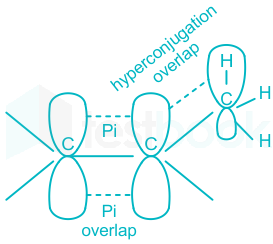
  • Hydrocarbons containing sigma bonds and delocalized pi electrons between carbon atoms in a ring.
  • For example, benzene. They are known as aromatic due to their pleasant smell.

Properties of Aromatic compound:

  • The aromatic compound must be Cyclic.
  • The aromatic compound produces the sooty yellow flame on the burning due presence of high density of hydrogen and carbon present in the compound.
  • the aromatic compound must have (4n + 2) pi Electrons (n = 1,2,3,4,...)
  • The aromatic compound doesn't prefer the  Addition reaction but Prefer Substitution substitution
  • The compound must Possess Resonance Energy

Explanation:

Coal tar:

  • It is obtained by cooling the gas that is formed during the destructive distillation of coal to approximately ambient temperature.
  • It is a black, viscous liquid composed primarily of a complex mixture of condensed-ring aromatic hydrocarbons.
  • Coal tar is an aromatic compound with stable carbon rings.

Hence, Coal tar is the main source of aromatic compounds.

Additional InformationAliphatic compounds​ - 

  • The Aliphatic compound is the chemical compound belonging to carbon in which the atoms are connected by single, double, or triple bonds to form nonaromatic structures.

Heterocyclic compounds-

  • These are cyclic compounds with the ring containing carbon and another element, the component being oxygen, nitrogen and sulfur.
  • The simplest of the five-membered heterocyclic compounds are pyrrole, furan and thiophene, each of which contains single heteroatoms

Cycloalkanes

  • These are alkanes joined in a closed loop to form a ring-shaped molecule, they are named by using the alkane names above, with cyclo-as a prefix.
  • These start with propane, or rather cyclopropane, which has the minimum number of carbon atoms to form a closed shape: three atoms, forming a triangle
50

One tennis ball hit into the atmosphere has an initial speed of 60 meters per second. Which of the following vectors best represents the angle above the horizontal that the ball should be hit to remain in the atmosphere for the highest amount of time?

  1. ((a))

  2. ((b))

  3. ((c))

  4. ((d))

Show Answer
Answer: ((a))

CONCEPT:

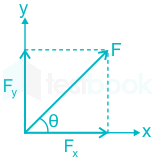
  • Resolution of vectors into components: We have a vector (F) where the magnitude of the vector is F and the angle with horizontal is θ.


The vector has two components:

  1. Vertical component
  2. Horizontal component


Vertical component (Fy) = F Sinθ

Horizontal component (Fx) = F Cosθ 

F=Fx2+Fx2F = \sqrt {F_x^2 + F_x^2}

Explanation:

Here, the component of Y makes the ball to fly high or remain most of the time in the sky

Vertical component is the function of sin θ

Other than 90° all the angles give less height to the ball.

⇒ for maximum height, θ must be 90°

Hence, at 90° the ball will have the highest time in the atmosphere.

51

Which of the following is NOT a part of blood coagulation process?

  1. ((a))

    Formation of prothrombin

  2. ((b))

    Formation of fibrin

  3. ((c))

    Formation of thrombin

  4. ((d))

    Formation of thromboplastin

Show Answer
Answer: ((a))

Formation of prothrombin

The correct answer is Formation of prothrombin.

Concept:

  • Blood coagulation Process:
  • It is the process of clot blood using platelets and fibrin in the blood.
  • It is required to reduce the loss of blood from the body.
  • This process is called Hemostasis.
  • Some steps are there in this process:
  • The primary step is vasoconstriction, in this vascular wall react to reduce the loss of blood.
  • Then platelets start covering the injured area.
  • It activates fibrin clot know as secondary hemostasis.
  • It follows the formation of fibrinogen, which is a soluble plasma protein.
  • Platelet clots are termed as a white thrombus and if the red blood cells are present, it is known as red thrombus.

platelets help in clotting of blood at injured side draw a flow ...

Explanation:

  • There are different processes in the coagulation process.
  • Formation of Thromboplastin, thrombin, fibrin from prothromboplastin, prothrombin, and fibrogen respectively.
  • Prothrombin is not formed as part of the blood coagulation process; rather, it is a precursor to thrombin and is present in the blood plasma.

Notes:

  • There is a series of steps leading to the formation of fibrin protein fibre, it involves different clotting factors.
  • There are about thirteen known clotting factors:
  • Fibrinogen (Factor 1)
  • Prothrombin (Factor 2)
  • Thromboplastin (Factor 3)
  • Calcium (Factor 4)
  • Proaccelerin or Labile Factor (Factor 5)
  • Stable Factor (Factor 6)
  • Antihemophilic Factor (Factor 8)
  • Christmas Factor (Factor 9)
  • Stuart - Power Factor (Factor 10)
  • Plasma Thrombin antecedent (Factor 11)
  • Hegman Factor (Factor 12)
  • Fibrin Stabilising Factor (Factor 13)
52

The total number of bones in an adult human are:

  1. ((a))

    208

  2. ((b))

    206

  3. ((c))

    350

  4. ((d))

    260

Show Answer
Answer: ((b))

206

The correct answer is 206.

Explanation:

The body's internal structure is the Human skeleton.

  • This is made up of 300 bones at birth-this number falls by adulthood to 206 bones as certain bones have fused. In the skeleton, the bone mass reaches maximum density around age 30.
  • Bones are connected to other bones by long fibrous straps called ligaments.
  • Tendons connect muscle to bone.
  • Ligaments and Tendons both are made of collagen.
  • Many factors work together to ensure the strength and health of bones. Bone density relies on:
  • A steady supply of dietary calcium
  • Adequate vitamin D from sunshine and food
  • A healthy diet with plenty of vitamins and minerals
  • Various hormones including parathyroid hormone, growth hormone, calcitonin, oestrogen, and testosterone
  • Regular weight-bearing exercise.

Additional Information

The human skeleton is made up of 206 bones, including bones of the:

  • The femur (the thigh bone) is the largest bone in the human body whereas the stapes (bone of ear) is the smallest bone of the body.
  • Skull: including the jaw bone
  • Spine: cervical, thoracic and lumbar vertebrae, sacrum, and tailbone (coccyx)
  • Chest: ribs and breastbone (sternum)
  • Arms: the shoulder blade (scapula), collar bone (clavicle), humerus, radius, and ulna
  • Hands: wrist bones (carpals), metacarpals, and phalanges
  • Pelvis: hip bones
  • Legs: the thigh bone (femur), the kneecap (patella), shin bone (tibia) and fibula
  • Feet: tarsals, metatarsals, and phalanges.
53

10 ml of 1 M NaOH solution is neutralised by ______ ml of 1 M H2SO4 solution.

  1. ((a))

    10.0

  2. ((b))

    2.0

  3. ((c))

    5.0

  4. ((d))

    2.5

Show Answer
Answer: ((c))

5.0

The correct answer is 5.0.

Concept:

  • Neutralization: It is a chemical reaction in which an acid and base quantitatively react together to form a salt and water as products.
  • acid + base → salt + water

Formula used:

  • Mx Vx (equivalents) = Mx Vx (equivalents)

Given 

  • Reaction:
  • H2SO4 + 2NaOH → Na2SO4+ 2H2O
  • V1 = 10 ml
  • M1 = 1 M
  • equivalents of NaOH = 1
  • V2 =?
  • M2 = 1M
  • equivalents of H2SO4 = 2

Calculations:

  • M1 x V1 x (equivalents) = M**2** x Vx (equivalents)
  • 1x10x1 = 1xV2x2
  • V= 5 ml
  • So volume of H2SOrequired to neutralise the NaOH is 5 ml.
54

Who was the father of DNA fingerprinting?

  1. ((a))

    James Watson

  2. ((b))

    Hargobind Khurana

  3. ((c))

    Alec Jeffreys

  4. ((d))

    Nirenberg

Show Answer
Answer: ((c))

Alec Jeffreys

The correct answer is Alec Jeffreys.

  • DNA fingerprinting is a technique that shows the genetic makeup of living things.
  • Father of DNA fingerprinting in the world is Sir Alec John Jeffreys.
  • Father of DNA fingerprinting in India is Dr Lalji Singh.

Additional Information

Some other important names:

ScientistsStudy
Carlous LinnaeusFather of Taxonomy
Francis GaltonFather of Eugenics
HippocratesFather of Medicine
Hugo de VriesFather of Mutation Theory
George CuvierFather of Palaeontology
William HarveyFather of blood circulation
Rudolph VirchowFather of Pathology
Karl LandsteinerFather of Blood Groups
Gregor MendelFather of Modern Genetics
Robert HookeFather of Cytology
W. M. StanleyFather of virology
Edward JennerFather of Immunology
LeeuwenhoekFather of Microbiology
Eugene OdumFather of Ecology
Louis PasteurFather of Bacteriology
Paul BergFather of Genetic Engineering
Ivan PavlovFather of Conditioned Reflex
EmpedoclesFather of Evolutionary Ideas
Marcello MalpighiFather of Microscopy
Anton de BaryFather of Mycology
Christopher HalesFather of Plant Physiology
CharakaFather of Indian Medicine
SusrutaFather of Indian surgery
Birbal SahniFather of Indian Palaeobotany
R. MishraFather of Indian Ecology
55

Match each term on the left with a statement on the right.

A.Trait1.The genetic makeup of an individual
B.Genotype2.A cross between an individual with an unknown genotype and a homozygous recessive individual
C.Allele3.A variant for a character
D.Testcross4.An alternative version of a gene
E.Monohybrid cross5.A cross between individuals heterozygous for a single character
  1. ((a))

    A – 3; B – 1; C – 4; D – 2; E - 5

  2. ((b))

    A – 2; B – 3; C – 1; D – 5; E - 5

  3. ((c))

    A – 5; B – 3; C – 4; D – 2; E - 1

  4. ((d))

    A – 2; B – 1; C – 3; D – 4; E - 5

Show Answer
Answer: ((a))

A – 3; B – 1; C – 4; D – 2; E - 5

The correct answer is A – 3; B – 1; C – 4; D – 2; E - 5.

  • Trait:
  • It is a specific characteristic of any organism.
  • It refers to any genetically determined characteristic of an organism.
  • It is variant for a definite character.
  • Genotype:
  • It is the total sum of genes transferred to offspring by parents.
  • It is a set of heritable genes which are transferred between generations.
  • It is the unique genetic constitution of an organism or genetic makeup of an individual.
  • Allele:
  • It is an alternative version of a gene.
  • Any organism inherits two alleles for each gene, one from each parent.
  • If both the alleles are the same, the individual is homozygous.
  • If both the alleles are different, the individual is heterozygous.
  • Testcross:
  • It is the breeding of specie with a recessive specie.
  • It was introduced by Gregor Mendel.
  • A cross between an individual with an unknown genotype and a homozygous recessive individual.
  • Monohybrid cross:
  • A cross between individuals heterozygous for a single character.
  • It is a genetic mix between two individuals with homozygous genotypes which result in an opposite phenotype.

Notes:

  • Dihybrid cross:
  • It is a cross between two different genes that differ in their observed traits.
  • It is a cross between two individuals that are heterozygous for two different traits.
  • Difference between genotype and phenotype:
GenotypePhenotype
It is the genetic makeup of an individual.Visible characters are known as phenotypes.
The same genotype produces the same phenotype.The same phenotype may or may not belong to the same genotype.
Inheritance from parents to the child.Not inherited from the parent.
Determined by scientific methods likeEasily determined by observing the organism.
E.g  Blood group, eye colour, height, genetic diseases.E.g Weight, physique
  • Backcross:
  • It is a hybrid cross with one of its parents, or an adult genetically identical to the parent, to achieve offspring with a genetic identity closer to the parents.
  • It is used mainly in horticulture, animal breeding.
56

Which name is associated with the relation ΔG = ΔH – TΔS?  

  1. ((a))

    Maxwell

  2. ((b))

    Gibb’s Hemholtz

  3. ((c))

    Boltzmann

  4. ((d))

    Tronton

Show Answer
Answer: ((b))

Gibb’s Hemholtz

The correct answer is Gibb’s Helmholtz.

  • Given ΔG = ΔH – TΔS equation is Gibbs Helmholtz equation.
  • G = Gibbs free energy
  • H = enthalpy
  • T = temperature
  • S = entropy
  • ΔG>0; the reaction is non-spontaneous and endergonic
  • ΔG<0; the reaction is spontaneous and exergonic
  • ΔG=0; reaction is at equilibrium
  • Maxwell equation:

Maxwell equations

Notes:

  • Laws of Thermodynamics:
  • There are four laws of thermodynamics:
  • Zeroth law of thermodynamics
  • If two thermodynamic systems are in thermal equilibrium with a third system then they separately are in thermal equilibrium with each other.
  • First law of thermodynamics
  • Energy can neither be created nor destroyed, but it can be changed from one form to another.
  • Second law of thermodynamics
  • The energy in the form of heat only flows from a higher temperature to that of lower temperature.
  • Third law of thermodynamics
  • The entropy of a system approaches a constant value as its temperature approaches absolute zero (i.e 0 K).
57

Which of the following arise, directly or indirectly, from meristematic activity?

  1. ((a))

    Phloem

  2. ((b))

    Secondary xylem

  3. ((c))

    Flower

  4. ((d))

    Root

Show Answer
Answer: ((b))

Secondary xylem

The correct answer is Secondary xylem.

  • Xylem
  • It is a type of vascular tissue which transports water and nutrients from roots to stem and leaves.
  • And they also provide mechanical strength to the plants.
  • They are of two types:
  • Primary xylem:
  • They originate from procambium that further divided into protoxylem and metaxylem.
  • Secondary xylem:
  • They originate from the vascular cambium.
  • It is responsible for the increase in the girth of the plant.
  • They arise, directly or indirectly, from the meristematic activity.
  • Phloem:
  • It is a living tissue in vascular plants.
  • It conducts the soluble organic compounds downwards from the leaves that are synthesized during photosynthesis.
  • They are constituents of phloem:
  • Companion cells
  • Sieve tubes
  • Phloem fibres
  • Phloem parenchyma.

Notes:

  • Meristematic tissue:
  • Apical Meristem
  • It is present at the tips of the roots and shoots
  • It helps in the increase of the height of the plants.​
  • Intercalary Meristem
  • It is present in the leaves and internodes at the intercalary position.
  • It helps to increase the length of the internode.
  • Lateral Meristem
  • It is present in the stems and roots on the lateral side.
  • It helps to increase the thickness of the plant.
  • Two lateral meristems are Vascular cambium and cork cambium.
58

Which component is reabsorbed in the nephron tubules in a healthy person?

  1. ((a))

    Salt

  2. ((b))

    Glucose

  3. ((c))

    Uric acid

  4. ((d))

    Urea

Show Answer
Answer: ((b))

Glucose

The correct answer is Glucose.

Concept:

  • Reabsorption is the process that moves water and solutes out of the filtrate and back into your bloodstream.
  • The first absorption is done when they are absorbed into the bloodstream from the digestive tract after a meal.
  • The functional unit of the kidney is the Nephron.
  • Each kidney contains about 1 million or so Nephrons.
  • The Parts of the Nephron
  • Glomerulus
  • Bowman’s Capsule
  • Proximal Tubule
  • Loop of Henle
  • Distal Tubule
  • Collecting Duct

Explanation:

  • The proximal tubule is the tube between the Bowman’s capsule and the loop of Henle.
  • Reabsorption of important nutrients like water, glucose, and amino acids begins here.
  • Glucose is completely reabsorbed in the Proximal convoluted tubule. Around 65% of salts are reabsorbed in PCT.
  • Water and Salts are reabsorbed in distal convoluted tubules and collecting ducts with the help of hormones like vasopressin and aldosterone.

Note:

  • Different excretory parts of different animals:
  • Unicellular Animals / Ameoba – Diffusion through the surface of the body.
  • Platyhelminthes/ Flatworms – Flame cells.
  • Roundworms/Earthworms – Nephridia.
  • Arthropods/ Cockroaches – Malpighian tubules.
  • Crustaceans / Prawns – Antennal glands / Green Glands.
  • Vertebrates – Kidney.

Additional Information

  • Nitrogenous waste can be divided into three groups based on its toxicity.
AmmoniaUreaUric Acid
Highly toxicModerate toxicNot very toxic
Highly solubleModerately solubleVery less soluble
Excreted mainly by aquatic invertebrates, Osteichthyes(bony fishes and tadpole)Excreted by Chondrichthyes (Sharks and rays), terrestrial amphibians and mammalsExcreted by insects, reptiles and all birds
59

Toluene has:

  1. ((a))

    9 σ – and 3 π-bonds

  2. ((b))

    9 σ – and 6 π - bonds

  3. ((c))

    6 σ – and 3 π - bonds

  4. ((d))

    15 σ – and 3 π - bonds

Show Answer
Answer: ((d))

15 σ – and 3 π - bonds

The correct answer is 15 σ – and 3 π - bonds.

Concept:

  • Sigma Bonds:
  • All single bonds are sigma bonds.
  • They are formed by head-on overlapping between s-s, s-p, p-p orbitals.
  • Pi Bonds:
  • The overlapping orbitals must be unhybridized.
  • It is formed by the sidewise overlap of atomic orbitals.
  • It is weaker than sigma bonds.
  • Double bonds have pie bond and sigma bond.

Explanation:

  • To calculate the sigma bonds, count the number of single bonds and double bonds.
  • To calculate the pi bonds count the number of double bonds.
  • So in Toulene - 15 sigma and 3 pi bonds.
  • Naphthalene - 19 sigma and 5pi bonds.

How many sigma and pi bonds are present in the molecules of toluen

60

Mushrooms are:

  1. ((a))

    phycomycetes

  2. ((b))

    basidiomycetes

  3. ((c))

    deuteromycetes

  4. ((d))

    ascomycetes

Show Answer
Answer: ((b))

basidiomycetes

The correct answer is basidiomycetes.

Concept:

  • Fungi constitute a unique kingdom of heterotrophic organisms.
  • Fungi show a great diversity in morphology and habitat.
  • Fungi are cosmopolitan and occur in air, water, soil, animals, and plants.
  • The study of fungi is Mycology.
  • Fungi are categorized into 4  classes: Phycomyctes, Ascomycetes, Basidiomycetes & Deuteromyctes

Explanation:

  • Mushrooms belong to the class basidiomycetes as they contain puffball type structure.
  • Their scientific name is Agaricus
  • They are terrestrial and lead a saprophytic and parasitic mode of life.

Additional Information 

  • Phycomycetes
  • ‘Phycomycetes’ include fungal species of Oomycetes, Chytridiomycetes, and Zygomycetes.
  • They are considered as lower fungi.
  • Ascomycetes
  • Ascomycetes include a wide range of fungi such as yeasts, powdery mildews, cup fungi, morels.
  • e.g Morchella, Peziza
  • Basidiomycetes
  • Basidiomycetes include puffballs, toadstools, bird’s nest fungi, bracket fungi, stinkhorns, rusts, and smuts.
  • e.g Agaricus, Geaster
  • Deuteromycetes
  • The fungi belonging to this group lack sexual reproduction and are called imperfect fungi.
  • e.g  Pycnidium - Phoma, Acervulus - Colletotrichum
61

Vitamins are:

  1. ((a))

    organic molecules that are used for transfer of energy and information within the cell

  2. ((b))

    Small organic molecules that make up a part of an enzyme cofactor

  3. ((c))

    Organic compounds that are the building blocks of proteins

  4. ((d))

    major energy sources for bacteria when they are metabolised

Show Answer
Answer: ((b))

Small organic molecules that make up a part of an enzyme cofactor

The correct answer is Small organic molecules that make up a part of an enzyme cofactor.

  • Vitamins are small organic molecules that make up a part of an enzyme cofactor.
  • For the protein's biological activity, a non-protein chemical compound that is required are cofactors of enzymes.
  • Vitamins are made up of carbon, hydrogen and oxygen.
  • Vitamins are called micronutrients because they are needed in only very small quantities.
  • Vitamins are of two types:
  • Water-soluble vitamins - B, C
  • Fat-soluble vitamins - A, D, E, K

Notes:

VitaminChemical NameDeficiency Diseases
ARetinolNight blindness, Skin dryness
B1ThiamineBeri-beri
B2RiboflavinInflammation of tongue, sores in the corners of the mouth
B3Niacin or Nicotinic acidskin disease, diarrhoea, dementia
B5Pantothenic acidFatigue, muscle cramp.
B6PyridoxineAnaemia, kidney stones, nausea, depression.
B12CyanocobalaminPale skin, constipation
CAscorbic acidScurvy, anaemia
DCalciferolRickets, osteomalacia.
ETocopherolReproduction issues
KPhylloquinone or  NaphthoquinoneBlood clotting
62

For a perfectly elastic substance:

  1. ((a))

    the amount of force necessary to break the object in half is inversely proportional to the length of the object

  2. ((b))

    the extent of stretching is directly proportional to the applied force

  3. ((c))

    the extent of stretching is inversely proportional to the applied force

  4. ((d))

    the extent of stretching is independent of the applied force

Show Answer
Answer: ((b))

the extent of stretching is directly proportional to the applied force

Concept:

  • Elasticity: The property of a body to regain its original configuration (i.e., shape and size) when the deforming force is removed is called elasticity.
  • Perfectly elastic body: A body, which regains its original configuration immediately and completely after the removal of the deforming force, is called a perfectly elastic body.


For elongation of wire this relation is used,

δ=FLAE{\rm{\delta }} = \frac{{{\rm{FL}}}}{{{\rm{AE}}}}

Where, δ = elongation in wire, F = applied force, L = length of wire, A = cross-sectional area, E = modulus of elasticity of wire.

Explanation:

From elongation in wire relation

δ=FLAE{\rm{\delta }} = \frac{{{\rm{FL}}}}{{{\rm{AE}}}}

Where, δ = elongation in wire, F = applied force, L = length of wire, A = cross-sectional area, E = modulus of elasticity of wire.

∴ For breaking a wire,

Fδ{\rm{F}} \propto \delta

therefore the extent of stretching is directly proportional to the applied force.

63

Which cell evokes allergic reactions and inflammation?

  1. ((a))

    Stem cell

  2. ((b))

    Mast cell

  3. ((c))

    Blast cell

  4. ((d))

    Past cell

Show Answer
Answer: ((b))

Mast cell

Concept:

  • A mast cell is a migrant cell of connective tissue that contains many granules rich in histamine and heparin. Specifically, it is a type of granulocyte derived from the myeloid stem cell that mast cells are responsible for allergic reactions and inflammation.

Explanation:

  • When mast cells are activated by an allergen that binds to serum IgE attached to their FcɛRI receptors, they release cytokines, histamine, heparin and growth factors and causes allergic reactions and inflammation.
  • An allergy is an exaggerated reaction by the immune system in response to exposure to certain foreign substances.
  • Inflammation is the response of the immune system to the affected tissue by recruiting many cells to kill the disease-causing microbes, it causes redness, warmth, swelling.
  • Blast Cells refer to myeloblasts or myeloid blasts. These are the very earliest and most immature cells of the myeloid cell line.
  • Stem cells are undifferentiated or partially differentiated cells that can differentiate into various types of cells and that have the capacity to self-renew and to generate multiple mature cell types.

So,  Mast cells are responsible for allergic reactions and inflammation.

Additional Information

  • Mast cells were discovered by Paul Ehrlich.
  • Mast cells derive from the bone marrow and are released into the blood as mast cell progenitors and do not fully mature until they are recruited into the tissue where they undergo their terminal differentiation.

Important cells of the Immune System

B-CellsThese lymphocytes arise in the bone marrow and differentiate into plasma cells which in turn produce immunoglobulin (antibodies).
Cytotoxic T-cellsThese lymphocytes mature in the thymus and are responsible for killing infected cells.
Helper T-cellsThese specialized lymphocytes “help” other T-cells and B-cells to perform their functions.
ImmunoglobulinsThese highly specialized protein molecules, also known as antibodies, combat with foreign antigens.
NeutrophilsA type of cell found in the bloodstream that rapidly ingests microorganisms and kills them.
MonocytesA type of phagocytic cell found in the bloodstream which develops into a macrophage when it migrates to tissues.
Dendritic CellsImportant cells in presenting antigen to immune system cells.
64

Which of the following is the buffer solution of strong acidic nature?

  1. ((a))

    H2C2O4+C2O42{\rm{H}}_2{{\rm{C}}_2}{\rm{O}}_4^ + {{\rm{C}}_2}{\rm{O}}_4^{2 - }

  2. ((b))

    CH3COOH+CH3COO-

  3. ((c))

    HCOOH+HCOO-

  4. ((d))

    H3BO3+BO33{{\rm{H}}_3}{\rm{BO}}_3^ + {\rm{BO}}_3^{3 - }

Show Answer
Answer: ((a))

H2C2O4+C2O42{\rm{H}}_2{{\rm{C}}_2}{\rm{O}}_4^ + {{\rm{C}}_2}{\rm{O}}_4^{2 - }

Concept:

  • pH (Power of Hydrogen): The degree of acidity or alkalinity of a substance is expressed in pH value.
  • pH is a scale (0 to 14) used to specify the acidity or basicity of an aqueous solution.
  • Lower pH values of solutions represent more acidic in nature,
  • While higher pH values of solutions represent more basic or alkaline.
<br>

pH = - log [H+] For acid

pOH = - log [OH-] For base

  • For buffer solution,

pH=pKa+log[saltacid]=pKa{\rm{pH}} = {\rm{pKa}} + \log \left[ {\frac{{{\rm{salt}}}}{{{\rm{acid}}}}} \right] = {\rm{pKa}}

  • Buffer solution: A buffer solution contains either a weak acid and its salt with a strong base or a weak base and its salt with strong acid. Buffers resist a change in pH when acids or bases are added to it.
  • Buffer can be classified into two types;
  • Acidic Buffer: The buffer is formed from the solution of a weak acid and its salt of a strong base. acid. Acidic buffers generally have pH less than 7. Example of acidic buffer is CH3COOH and CH3COONa.
  • Basic Buffer: The buffer which is formed from the solution of a weak base and its salt with a strong acid. basic buffers have pH more than 7. Example of basic buffer is NH4OH and NH4Cl.

Explanation:

  • CH3COOH and CH3COO-, HCOOH, HCOO- are all examples of an acidic buffer prepared by a combination of a weak acid and its conjugate base.
  • H2C2O4+C2O42{\rm{H}}_2{{\rm{C}}_2}{\rm{O}}_4^ + {{\rm{C}}_2}{\rm{O}}_4^{2 - } an acid buffer formed by oxalic acid and its conjugate base oxalate. Hence, this is also an acidic buffer.
  • H3BO3 and BO3- is an acid buffer formed by boric acid and its conjugate base borate. Hence, this is also an acidic buffer.
  • The strongest acid out of the following is HCOOH.


FormulaAcidPka value
HCOOHFormic acid3.5
CH3COOHAcetic acid4.76
H2C2O4Oxalic acid1.25
H3BO3Boric acid9.14


  • The stronger the acid, the stronger will be the buffer solution.
  • From the table above, we see that oxalic acid which is a dibasic acid has the lowest Pka value and is the strongest acid among them.
<br>

Hence, the buffer solution of strong acidic nature is H2C2O4+C2O42{\rm{H}}_2{{\rm{C}}_2}{\rm{O}}_4^ + {{\rm{C}}_2}{\rm{O}}_4^{2 - }.

65

What is the IUPAC name of the below compound?

\(\begin{array}{{20}{c}} {{\rm{C}}{{\rm{H}}_3}}\ {}\ {} \end{array}\begin{array}{{20}{c}} { - {\rm{CH}}}\ |\ {{\rm{;;C}}{{\rm{H}}_3}} \end{array}\begin{array}{*{20}{c}} { - {\rm{C}}{{\rm{H}}_2} - {\rm{C}}{{\rm{H}}_2} - {\rm{Cl}}}\ {}\ {} \end{array}\)

  1. ((a))

    2-methyl-3-chlorobutane

  2. ((b))

    1-chloro-3-methylbutane

  3. ((c))

    1-chloropentane

  4. ((d))

    2-methyl-4-chlorobutane

Show Answer
Answer: ((b))

1-chloro-3-methylbutane

Concept:

IUPAC nomenclature:

  • A systematic method of naming organic compounds.
  • Naming is based on their structures.
  • It is devised by the International Union of Pure and Applied chemistry.
  • Many rules are followed while naming the compounds and it is different for different functional groups.
  • The rules are known as IUPAC rules.

Explanation:

  • The priority of the functional groups is decided first.
  • The sequence is given as follows:

  • So, in the given compound

\(\begin{array}{{20}{c}} {{\rm{C}}{{\rm{H}}_3}}\ {}\ {} \end{array}\begin{array}{{20}{c}} { - {\rm{CH}}}\ |\ {{\rm{;;C}}{{\rm{H}}_3}} \end{array}\begin{array}{*{20}{c}} { - {\rm{C}}{{\rm{H}}_2} - {\rm{C}}{{\rm{H}}_2} - {\rm{Cl}}}\ {}\ {} \end{array}\)

  • The numbering of the longest carbon chain in the compound is done starting from the carbon attached to the Chlorine atom.
  • The longest chain has four carbon atoms and a methyl substituent at the 3rd carbon atom so the parent alkane chain will be 3-methyl butane.
  • There is a chlorine substituent at 1 position so the prefix will be 1- Chloro.

Hence, the IUPAC name of the compound thus becomes 1-chloro-3-methylbutane.

66

A certain appliance consumes energy at a rate of 1,200 joules per minute. This is the same as saying that the appliance consumes-

  1. ((a))

    20 meters per second squared

  2. ((b))

    20 newtons

  3. ((c))

    20 kilograms per second squared

  4. ((d))

    20 watts

Show Answer
Answer: ((d))

20 watts

CONCEPT:

  • Power: Power is the amount of energy transferred or converted per unit time.
  • The SI unit of power is the watt (W), equal to one joule per second.
  • Power is a scalar quantity.
  • Dimensional formula of power: [M L2 T-3]

​1 Joule (J)/second (Sec) = 1 Watt (W)

Power (P) = Work done (W)/time (t)

Where P = power in watt, W = work in joule, t = time in second.

CALCULATION:

Given that:

Energy consume = 1200 joules/min = 1200 J/min

1 min = 60 sec.

P = 1200 J/min = 1200/60 J/sec = 20 J/sec

P = 20 watt.

67

Natural killer cells are:

  1. ((a))

    increased by immunisation

  2. ((b))

    cytotoxic T cells

  3. ((c))

    B cells that can kill without complement

  4. ((d))

    able to kill virus-infected cells without prior sensitisation

Show Answer
Answer: ((d))

able to kill virus-infected cells without prior sensitisation

Concept:

  • Natural killer cells are known for their “natural” ability to lyse tumour cells and virus-infected cells without prior sensitization.
  • Natural killer cells are an important component of the innate immune system that comprises 10% to 20% of circulating lymphocytes.

Explanation:

  • Natural killer cells do not resemble from T and B lymphocytes as they lack expression and rearrangement of the T cell receptor and surface immunoglobulin.
  • Natural killer cells can lyse target cells through 2 mechanisms, either by perforin-granzyme mediated cytolysis or by induction of target cell apoptosis by Fas ligand. Natural killer cells can also mediate antibody-dependent cellular cytotoxicity (ADCC) through interaction with surface receptor.

Additional Information

  • The immune system may be of two types innate and acquired. Innate immunity (immunity by birth) and acquired immunity (adaptive immunity which uses T-cells and B-cells).
  • T cells and B cells are the cellular components of the adaptive immune response. T cells are involved in cell-mediated immunity, whereas B cells are primarily responsible for humoral immunity (relating to antibodies).
68

A man is standing on a weighing scale in an elevator car. If the scale reads a lower than the weight of the man at rest, the elevator car could be moving:

  1. ((a))

    downward at increasing speed

  2. ((b))

    upward at increasing speed

  3. ((c))

    downward at constant speed

  4. ((d))

    upward at constant speed

Show Answer
Answer: ((a))

downward at increasing speed

Concept:

Apparent weight of a person inside a lift

(i) When the lift moves upward with acceleration a. Then the net upward force on the person is-

R - mg = ma

∴ Apparent weight, R = mg + ma = m (g + a)

So, when a lift accelerates upwards, the apparent weight of the person inside it increases.

(ii) When the lift moves downwards with acceleration a. Then the net downward force on the person is-

Mg - R = ma

∴ Apparent weight, R = mg - ma = m (g - a)

So, when a lift accelerates downwards, the apparent weight of the person inside it decreases.

(iii) When the lift is at rest or moving with uniform velocity v downward/upward. The acceleration a = 0, then the net force on the person is-

R - mg = m x 0 = 0

R = mg

∴ Apparent weight = Actual weight

(iv) When the lift falls freely. If the supporting cable of the lift breaks, the lift falls freely under gravity. Then a = g. The net downward force on the person is -

R = m(g - g) = 0.

Thus, the apparent weight of the man becomes zero. This is because both the man and the lift are moving downwards with same acceleration ‘g’ and so there are no forces of action and reaction between the person and the lift. Hence a person develops a feeling of weightlessness when he falls freely under gravity.

Explanation -

When the lift moves downward with acceleration a -

Then the net upward force on the person is-

Mg - R = ma

∴ Apparent weight, R = mg - ma = m (g - a)

This is a reason why one feels lighter in a lift when the lift just begins to go down because our body starts moving in same direction as gravitational force hence there is less opposition on our body hence net force exerted on our body is less as compared to when lift was going up.

Thus, when a lift accelerates downward at constant acceleration, the apparent weight of the person inside it decreases at constant rate also.

69

The lysogenic cycle of a phage allows:

  1. ((a))

    integration of the phage genome with destroying the host

  2. ((b))

    replication of the phage genome with destroying the host

  3. ((c))

    integration of the phage genome without destroying the host

  4. ((d))

    replication of the phage genome without destroying the host

Show Answer
Answer: ((d))

replication of the phage genome without destroying the host

Concept:

  • Bacteriophages were discovered by Frederick W. Twort in 1915. D Herelle coined the term bacteriophage, meaning bacteria eater.
  • The bacteriophage is called phage; a group of viruses that infect bacteria.
  • Phages are simple organisms that consist of a core of genetic material (nucleic acid) surrounded by a protein capsid. The nucleic acid may be either DNA or RNA and may be double-stranded or single-stranded.
  • In QB - bacteriophage - ss RNA is present.
  • In ϕ X 174 - bacteriophage - ss DNA is present.

Diagram of bacteriophage/well labelled diagram bacteriophage/bacteriophage/how to draw bacteriophage - YouTube

Explanation:

  • During infection, a phage attaches to a bacterium and inserts its genetic material into the cell. After that, a phage usually follows one of two life cycles, lytic (virulent) or lysogenic (temperate).
Lytic CycleLysogenic Cycle
It results in the lysis of the infected cell.In this viral DNA is integrated into the host genome.
The viral or phage DNA does not integrate with the host cell DNA.The viral of phage DNA is integrated into the host cell DNA.
The cycle does not have a prophage stage.The cycle has a prophage stage.
The DNA replication takes place independently from the host’s DNA replication mechanism.The viral DNA replication occurs along with the host’s DNA replication.
The host cell is lysed as the viral particles are released.The host cell is not lysed.
Does not follow genetic recombination in the host bacterium.It allows genetic recombination of the host bacterium
<br>

So, the lysogenic cycle of a phage allows replication of the phage genome without destroying the host.

70

How many cyclic isomers of C5H10 are possible?

  1. ((a))

    2

  2. ((b))

    3

  3. ((c))

    5

  4. ((d))

    4

Show Answer
Answer: ((c))

5

Concept:

Isomers:

  • These are compounds that have the same molecular formula but different structures or stereochemistries.
  • There is a wide range of classification of organic molecules based on their structures.

Basic principles in organic chemistry: Structural isomerism – Open Teaching  Project

Ring -Chain isomers:

  • Ring chain isomerism is a type of structural isomerism.
  • It is shown by compounds that are capable of forming stable ring compounds. The minimum number of carbons that must be present in order to show ring chain isomerism is three.
  • The phenomenon of a compound existing in open-chain as well as ring form is called ring chain isomerism.
  • Cyclic compounds formed by rings of 3,4,5,6 carbon atoms are called propane, butane, pentane hexane respectively.

Explanation:

  • Pentene has the formula C5H10 and it can form three, four, and five-membered ring compounds.
  • The cyclic isomers of pentene with their names are given as follows:

Additional Information

  • The open-chain isomers of pentane are:

Image result for isomers of pentane

The number of isomers and the carbon atoms are given below:

Acyclic AlkaneNumber of CarbonsNumber of Isomers
methane11
ethane21
propane31
butane42
pentane53
hexane65
heptane79
octane818
nonane935
decane1075
71

In sickle cell anaemia:

  1. ((a))

    valine is replaced by glutamic acid

  2. ((b))

    glutamic acid is replaced by valine

  3. ((c))

    tryptophan is replaced by glutamic acid

  4. ((d))

    alanine is replaced by glutamic acid

Show Answer
Answer: ((b))

glutamic acid is replaced by valine

Explanation:

  • Sickle cell anaemia is an inherited red blood cell disorders in which there are not enough healthy red blood cells to carry oxygen throughout your body.

  • Haemoglobin (Hb) is the iron-containing oxygen-transport metalloprotein in the red blood cells of the blood in vertebrates and other animals.
  • Normal haemoglobin is called haemoglobin A, but people with sickle cell disease have only haemoglobin S, which turns normal, round red blood cells into abnormally curved (sickle) shapes.
  • Disease is caused by a point mutation in the ß-globin chain of haemoglobin, replacing the amino acid glutamic acid with the less polar amino acid valine at the sixth position of the ß chain.

So Sickle-cell anaemia glutamic acid is replaced by valine amino Acid.

Additional Information

  • Normally RBCs are discs like shapes, which give them the flexibility to travel through even the smallest blood vessels. However, in sickle cell anaemia, the RBCs have an abnormal crescent shape resembling a sickle.
  • Red blood cells usually live for about 120 days but sickle cells usually die in 10 to 20 days, and chronic anaemia caused by excessive destruction of the abnormal red blood cells.
72

Which of the following gives a positive iodoform test?

  1. ((a))

    (CH3)3COH

  2. ((b))

    n-C3H7OH

  3. ((c))

    (CH3)2CHOH

  4. ((d))

    CH3OH

Show Answer
Answer: ((c))

(CH3)2CHOH

Concept:

Haloform Reaction: 

  • Acetaldehyde and all methyl ketones can be oxidized by hypohalite solutions to yield a haloform (chloroform, bromoform, or iodoform) and the reaction is called haloform reaction.
  • A yellow ppt. of iodoform is seen.

The general reaction scheme is given as follows 

R-COCH+ X2/OH(hydroxide) = RCOO- + CHX3 (halo form)

\(\begin{array}{{20}{c}} {\rm ,,,,,,O}\ {,,,,,,||}\ {\rm C{H_3} - C - R } \end{array} \begin{matrix} {} \\ {} \\ \xrightarrow{\rm 3NaOH} \end{matrix} \ \ \begin{array}{{20}{c}} {\rm ,,,,,,O}\ {,,,,,,||}\ {\rm C{H_3} - C - R } \end{array} \begin{matrix} {} \\ {} \\ + \ \ \rm 3NaOH \end{matrix} \)​

\(\begin{array}{*{20}{c}} {\rm ,,,,,,O}\ {,,,,,,||}\ {\rm C{X_3} - C - R } \end{array} \begin{matrix} {} \\ {} \\ \rm \xrightarrow{NaOH} \underset{haloform}{CHX_3} + RCOONa \end{matrix} \)

Explanation:

Criteria for giving positive haloform test:

  • All compounds containing CH3 –C=O and CH3CH-(OH) groups are positive to the Haloform test.
  • Also, the compounds which on oxidation with halogen and alkali yield CH3 -C=O groups will respond positively to Haloform Test.
  • Common compounds that respond to this test are
  • CH3CH2OH
  • CH3CHO
  • CH3COCH3
  • CH3COC2H5
  • CH3CHOHCH3.

​Step I (oxidation step)

\(\begin{array}{{20}{c}} {\rm C{H_3} - CH - R + {I_2}}\ {|,,,,,,,,,,}\ {\rm OH,,,,,,} \end{array} \begin{matrix} \begin{array}{{20}{c}} {\rm \ \ \ \ \ O,,,,,,,}\ { \ \ \ \ \ ||,,,,,,,}\ {\longrightarrow \rm C{H_3} - C - R + 2HI} \end{array} \\ {} \\ {} \\ {} \\ {} \end{matrix}\)

2.Halogenation.

\(\begin{array}{{20}{c}} {\rm O,,,,,,,}\ {||,,,,,,,}\ {\rm C{H_3} - C - R + 3{I_2}} \end{array} \begin{array}{{20}{c}} {\rm \ \ \ \ O,,,,,,,}\ { \ \ \ \ ||,,,,,,,}\ {\longrightarrow \rm C{I_3} - C - R + 3{HI}} \end{array} \)

  1. Hydrolysis

\(\begin{array}{{20}{c}} {\rm C{I_3} - C - R + {NaOH}}\ {||, \ \ \ \ \ \ \ \ \ \ ,,,}\ {\rm O,,,,,, \ \ \ \ \ \ \ \ } \end{array} \begin{matrix} \begin{array}{{20}{c}} {\rm \ \ \ \ \ \ \ \ \ \ \ \ \ \ \ \ \ \ \ \ \ \ \ O,,,,,,,}\ { \ \ \ \ \ \ \ \ \ \ \ \ \ \ \ \ \ \ \ \ \ \ \ ||,,,,,,,}\ {\longrightarrow \rm \underset{Iodoform}{C{HI_3}} + R - C - ONa } \end{array} \\ {} \\ {} \\ {} \\ {} \end{matrix}\)

  • 2-degree alcohols on oxidation produce CH3C=O-- group as shown above and thus reacts positively to haloform test.

Thus, both the groups \(\begin{array}{{20}{c}} {\rm O,, \ \ ,,,,,,,}\ {|| \ \ ,,,,,,,,,,}\ { - \rm C - C{H_3}} \end{array}\) and \(\begin{array}{{20}{c}} {\rm OH,,,,,, \ \ \ ,,}\ {|,,,,,,,,, \ \ \ \ ,,,,}\ { - \rm{CH - CH}_3} \end{array}\)will give the haloform test.

Hence, (CH3)2CHOH will give a positive iodoform test.

73

The tips of the Y chromosome are also called as:

  1. ((a))

    non recombining portion

  2. ((b))

    the pseudoautosomal repeats

  3. ((c))

    mini-satellites

  4. ((d))

    the pseudoautosomal regions

Show Answer
Answer: ((d))

the pseudoautosomal regions

Concept:

  • Chromosomes are long thread-like structures that have DNA organized and packed & secured in the nucleus.
  • Through chromosomes, genetic information is carried from one generation (parents) to another generation (offsprings). Chromosomes are necessary for all life processes like  Replication, Protein synthesis, Cell division, etc.

Chromosome

  • The diagram shows the structure of chromosomes.

Explanation:

  • Chromosomes are structures present in the nucleus of a cell composed of genetic material (DNA) wrapped around some proteins ( histones & non Histones).
  • Every species has a specific number and pattern of the chromosome. it is called the genotype of that species.
  • The human genotype has 23 pairs of chromosomes. out of which 22 pairs are autosomes and 1 pair is called as Allosomes or Sex chromosomes.
  • Two types of sex chromosomes are present in Humans, X & Y.
  • ​The human male carries XY pair as sex chromosomes.
  • The human Y chromosome is shorter than X chromosome. It can recombine with X chromosomes excluding some parts of its structure which are known as the Non-Recombining region of the Y chromosome [ NRY] at the telomer.

Since the tips of the Y chromosome do not combine with the X chromosome, thus these tips of the Y chromosome are known as pseudoautosomal regions (pseudo- False, autosomal- like autosomes).

Question #8dd39 | Socratic

74

The second permanent molars appear about the age of:

  1. ((a))

    6 years

  2. ((b))

    16 years

  3. ((c))

    12 years

  4. ((d))

    8 years

Show Answer
Answer: ((c))

12 years

Concept:

  • Digestion is defined as, the process by which the complex, non-diffusible, and non-absorbable food substances are converted into simple, diffusible, nd assimilable substances.
  • The human digestive system begins at the mouth. Teeth are part of the digestive system.
  • 32 teeth are present in the buccal cavity of an adult human being.
  • Human dentition is described as thecodont, diphyodont and heterodont.
  • It is called thecodont type because each tooth is fixed in a separate socket present in jawbones by gomphosis type of joint.
  • In our lifetime, we get only two sets of teeth, milk teeth and permanent teeth.
  • This is called diphyodont dentition.
  • We have four different types of teeth hence we are Heterodont.
  • Types of teeth are incisors (I) canines (C) premolars (PM) and molar (M). Each half of each jaw has two incisors, one canine, two premolars,and three molars.
  • Thus, the al formula of the adult human can be represented as,

Dentition

Explanation:

  • Molars are the teeth present at the rearmost part of our mouth ( buccal cavity ). the main function of molars is the grinding of food.
  • There is a total of 12 molars present in the human buccal cavity.
  • These molars are present in 3 sets each set comprising of 4 teeth.
  • The first permanent molar erupts approximately at the age of 9-11 years and the second set of molar teeth erupt at the age of 12- 14 years.
  • The third set of molar teeth are also called wisdom teeth that usually erupt in adulthood causing discomfort.

DENTAL FORMULA IN MAMMALS

75

Suppose that a microscope has an objective whose focal length is 1.00 mm and an eyepiece whose focal length is 25.0 mm. What is the magnification?

  1. ((a))

    20X

  2. ((b))

    25X

  3. ((c))

    We need more information to calculate the magnification

  4. ((d))

    40X

Show Answer
Answer: ((c))

We need more information to calculate the magnification

Concept:

Optical Microscope:

  • It is also referred to as a light microscope that uses visible light and a system of lenses to generate magnified images of small objects.
  • There are two types of Optical Microscopes:
  • Simple Microscope: Uses the optical power of a single lens or group of lenses for magnification
  • Compound Microscope: Uses a system of lenses (one set enlarging the image produced by another) to achieve a much higher magnification of an object
  • In an optical microscope, both eyepiece and objective lenses are convex in nature.
  • The magnification of the microscope depends on the length of the tube, not on the focal length.

Explanation:

  • There are two lenses, eyepiece, and objective.
  • We observe through the eyepiece and the object is captured by the objective lens. 

The magnification of the microscope is given as 

m=LDf0fe m = \frac{LD}{f_0f_e}      ---(1)

  • where L = length of the tube , D = minimum distance of distinct vision, which is 25 cm for the human eye
  • f0 = focal length of the objective = 1 mm ,  fe = focal length of the eyepiece = 25 mm

→ But we don't have the value of L which is the length of the tube hence we can not find the magnification of the microscope due to insufficient information we have.

→ That's why option 3 is correct because we need more information to calculate the magnification.

76

According to Kirchhoff’s voltage law:

  1. ((a))

    The voltage in any dc circuit is equal to the power divided by the resistance

  2. ((b))

    the current in a series dc circuit is equal to the voltage divided by the power

  3. ((c))

    the voltage in any dc circuit is equal to the resistance squared divided by the power.

  4. ((d))

    the sum of the voltages going around any loop in a dc circuit is equal to zero.

Show Answer
Answer: ((d))

the sum of the voltages going around any loop in a dc circuit is equal to zero.

Concept:

  • Kirchhoff’s Voltage Law: The algebraic sum of voltage (or voltage drops) in any closed path of the network that is traversed in a single direction is zero.


Here, the assumed current I causes a + ve drop of voltage when flowing from +ve to – ve potential while – ve drop of voltage when a current flowing from – ve to + ve for the above circuit,

 If we apply KVL,

−V + I R1 + I R2 = 0

Power delivered by source (P) = V I

Explanation:

From above discussion

We can say that in KVL, the sum of voltage drop in any closed path in DC circuit is equal to zero.

77

Which of the following is paramagnetic?

  1. ((a))

    CN

  2. ((b))

    CO

  3. ((c))

    O2{\rm{O}}_2^ -

  4. ((d))

    NO+

Show Answer
Answer: ((c))

O2{\rm{O}}_2^ -

Concept:

Paramagnetic materials:

  • Small, positive susceptibility to magnetic fields
  • These materials are slightly attracted by a magnetic field
  • Paramagnetic properties are due to the presence of some unpaired electrons, and from the realignment of the electron paths caused by the external magnetic field
  • Paramagnetic materials include magnesium, molybdenum, lithium, and tantalum.

Bond order:

  • It is the number of bonds between two atoms.
  • The bonding electrons being stable contributes to increasing the bond order.
  • The antibonding electrons being unstable contributes to decreasing the bond order.

Bond order is given by

 \(\raise.5ex\hbox{$\scriptstyle 1$}\kern-.1em/ \kern-.15em\lower.25ex\hbox{$\scriptstyle 2$} {\rm{ }}\left( {{\rm{ }}{\bf{No}}.{\rm{ }}{\bf{of}}{\rm{ }}{\bf{bonding}}{\rm{ }} - {\rm{ }}{\bf{no}}.{\rm{ }}{\bf{of}}{\rm{ }}{\bf{antibonding}}{\rm{ }}{\bf{electrons}}} \right)\)

  • For filling up of electrons, we need to follow the series: σ 1sσ1sσ2sσ 2sσ 2pzπ 2py = π 2px π 2py* = π 2pxσ 2pz.
  • For molecules till nitrogen, there is a slight change in the M.O energy order: 
  • σ 1sσ1sσ2sσ 2sπ 2py = π 2pxσ 2pz π 2py = π 2pxσ 2pz*​

Explanation:

  • ​The M.O diagram of CO is

What is the bond order of CO? - Quora

  • From the M.O diagram of CO, we see that there are no unpaired electrons and the molecule is thus diamagnetic.


O2- molecule, the electronic configuration is:

 σ 1s2σ1s2σ2s2σ 2s2σ 2pz2π 2py2π 2px2 π 2py2π 2px1.

  • There are 10 bonding and 7 antibonding electrons out of which one electron in antibonding orbital is unpaired.
  • The unpaired electron makes it paramagnetic in nature.

The M.O of NO+ is as follows:

What is the bond order of NO+ class 12 chemistry CBSE


  • From the M.O diagram of NO+, we see that there are no unpaired electrons and the molecule is thus diamagnetic.

If we construct the M.O diagram of CN, we will see that there are no unpaired electrons.

Hence, O2is paramagnetic.

Additional Information

Diamagnetic materials

  • Weak, negative susceptibility to magnetic fields
  • Diamagnetic materials are slightly repelled by a magnetic field
  • All the electrons are paired so there is no permanent net magnetic moment per atom
  • Most elements in the periodic table, including copper, silver, and gold, are diamagnetic.
78

The impurities associated with minerals used in metallurgy are collectively called:

  1. ((a))

    Slag

  2. ((b))

    Flux

  3. ((c))

    Gangue

  4. ((d))

    Ore

Show Answer
Answer: ((c))

Gangue

Concept:

  • An ore is a body of rock that contains a high enough concentration of a metallic or non-metallic resource.
  • Ores are extracted from the earth via mining and then treated to extract valuable minerals from them.

Explanation:

Slag:

  • Slag is a product of Flux and impurity.
  • Slag is a waste matter separated from metal during smelting and other metallurgical and combustion processes from impurities in the metals.
  • The iron and silica is an example of slag that is removed during copper and lead smelting.
  • In steel-making furnaces, during the separation of the molten steel from impurities produced steel slag.
  • Slags are divided into two parts blast furnace slag and metallurgical slag.
  • The slag consists mostly of mixed oxides of elements such as silicon, sulfur, phosphorus, and aluminum.​​

Flux:

  • These are the substances used to remove impurities such as slag in metallurgical processes.
  • Common examples of flux are silica, dolomite, lime, borax, fluorite, etc.

Gangue:

  • Gangue can be described as the unwanted or worthless material impurities that surround an ore.
  • Gangue is mixed with minerals in ores and needs to be separated.
  • The separation of gangue from minerals is achieved via mineral processing.
  • Mineral processing is a complicated process and often depends on the nature of minerals.
  • For example, Froth Floatation Method is used for removing gangue from sulfide ores. This method employs a mixture of water and pine oil which is made to froth in a tank to separate sulfide ores.

Hence, the impurities associated with minerals used in metallurgy are collectively called gangue.

79

If all the tRNAs within a cell were suddenly destroyed, ______ would be directly and immediately affected.

  1. ((a))

    simple diffusion

  2. ((b))

    translation

  3. ((c))

    intracellular transport

  4. ((d))

    transcription

Show Answer
Answer: ((b))

translation

Explanation:

  • RNA (Ribo Nucleic Acid) in a nucleic acid present in cells of living organisms.
  • There are three types of RNA, as follows

Types of RNA

TYPEFUNCTIONS
1. mRNA- This type of RNA is also called messenger RNA. - The main function of mRNA is the transfer of genetic information from DNA to some.
2. rRNA- It is called ribosomal RNA. it is present in ribosomes it forms 50-60% part of ribosomes. - Most cellular RNA is r RNA. It accounts for 80-90%total cellular RNA. - rRNA contributes to the formation of some which is the main factory of cells.
3. tRNA- It is called Transfer RNA. it is also known as soluble RNA. - The main function of this type of RNA is an interpretation of genetic information received through mRNA. - due to complementary base pairing, it forms its characteristic cloverleaf shape that helps in the translation of genetic information.

So, If all the tRNAs within a cell were suddenly destroyed, the translation would be directly and immediately affected.

RNA structure

80

Benzaldehyde and acetone can be distinguished by:

  1. ((a))

    Fehling solution test

  2. ((b))

    iodoform test

  3. ((c))

    NaHSO3 test

  4. ((d))

    nitroprusside test

Show Answer
Answer: ((b))

iodoform test

Concept:

Fehling's test:

  • It is an alkaline solution of CuSO4 and sodium-potassium tartrate.
  • The aldehydes reduce Cu2+ to red cuprous oxide.

Halo form Reaction: 


  • Acetaldehyde and all methyl ketones can be oxidized by hypohalite solutions to yield a haloform (chloroform, bromoform, or iodoform) and the reaction is called haloform reaction.
  • A yellow ppt. of iodoform is seen.

The general reaction scheme is given as follows 

  • R-COCH3+X2/OH(hydroxide)= RCOO^- +CHX3 (halo form)

​Nitroprusside test:

  • This test can be used to distinguish between aldehydes and ketones.
  • Ketones react with sodium nitroprusside to form a red-coloured complex whereas aldehydes do not.
  • Sodium nitroprusside is Sodium pentacyano nitrosyl ferrate(III):

Image result for sodium nitroprusside test reaction byjus

NaHSO3 test:

  • Both aldehydes and ketones respond to this test.
  • With sodium bisulphite, aldehydes and ketones form crystalline substances called aldehyde bisulphite and ketone bisulphite respectively.
  • The reaction is given as follows:

Image result for sodium nitroprusside test reaction byjus

Explanation:​

​Criteria for giving positive haloform test:

  • All compounds containing CH3 –C=O and CH3CH-(OH) groups are positive to the Haloform test.
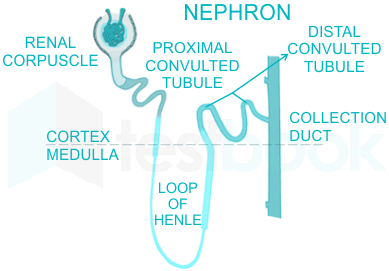
  • Also, the compounds which on oxidation with halogen and alkali yield CH3 -C=O groups will respond positively to Haloform Test.
  • Common compounds that respond to this test are
  • CH3CH2OH
  • CH3CHO
  • CH3COCH3
  • CH3COC2H5
  • CH3CHOHCH3.​
  • Formaldehyde and Propanal do not undergo haloform reaction.
  • In Acetaldehyde, the CH3CO: keto methyl group is present so it will give a positive haloform test.
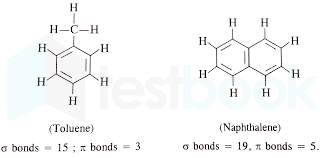
Haloform reaction - Wikipedia

  • Whereas in  C6H5CH2CHO, no keto methyl group is present. So, this will not yield haloform.

Hence, iodoform test is a suitable test for the distinction between CH3CHO and C6H5CH2CHO.

Important Points

  • Fehling, Tollen's and Benedicts test are used to distinguish between aldehydes and ketones.

Tollens' Test- Definition, Principle, Procedure, Result, Uses

81

The gravitational acceleration of the Earth, near the surface, is 9.81 m/s2. If a pizza of mass 3.00 kg is dropped from a great height, how far will the pizza fall in 2.00 s?

  1. ((a))

    19.6 m

  2. ((b))

    58.8 m

  3. ((c))

    29.4 m

  4. ((d))

    6.0 m

Show Answer
Answer: ((a))

19.6 m

Concept:

  • Motion under gravity: An object is falling freely with no forces acting upon it except gravity. Then the distance covered by the object is given by


s=ut+12gt2{\rm{s}} = {\rm{ut}} + \frac{1}{2}{\rm{g}}{{\rm{t}}^2}

Where s = distance travelled under gravity, u = initial speed, g = gravitational acceleration, t = time.

Calculation:

Given mass of pizza = 3 kg, t = 2 s, g = 9.81 m/s2

s=ut+12gt2{\rm{s}} = {\rm{ut}} + \frac{1}{2}{\rm{g}}{{\rm{t}}^2}

u = 0, because pizza is falling from rest.

s=0×2+129.81×22{\rm{s}} = 0 \times 2 + \frac{1}{2}9.81 \times {2^2}

s = 9.81 × 2 = 19.62 m

s = 19.62 m

82

When electrons flow along the electron transport chains of mitochondria, which of the following changes occurs?

  1. ((a))

    NAD+ is oxidised

  2. ((b))

    The pH of the matrix increases

  3. ((c))

    The electrons gain free energy

  4. ((d))

    ATP synthase pumps protons by active transport

Show Answer
Answer: ((b))

The pH of the matrix increases

Key Points

  • In Electron Transport Chain (ETC), the electrons are transferred through a series of carriers located in the inner mitochondrial membrane.
  • The ETC in mitochondria comprises of different protein complexes that act as electron carriers:
  • Complex I - is NADH dehydrogenase that transfers electrons from NADH to Coenzyme Q (Ubiquinone).
  • Complex II - is succinate dehydrogenase that transfers electrons from succinate (TCA cycle intermediate) to coenzyme Q via FADH2.
  • Complex III - receives the electrons from coenzyme Q, passes it from cytochrome b to cytochrome c and ultimately to complex IV.
  • Complex IV - is cytochrome oxidase that carries electrons from cytochrome c to molecular oxygen, reducing it to H2O.
  • Complex V - is ATP synthase that has the F0 and F1 components that are responsible for driving the phosphorylation reaction of ADP to form ATP.

Explanation:

  • The electron transfers are coupled with proton transport from the matrix outwards through the complexes I, III and IV.
  • This creates a proton gradient across the inner mitochondrial membrane.
  • As the proton concentration becomes lower in the matrix, the pH of the matrix increases.
  • The proton gradient forms a pH gradient as well as electric potential, which forms an electrochemical gradient together and drives the protons back into the matrix from cytosol.
  • The ATP synthase complex acts as a protein channel for the protons to move through as the membrane itself is impermeable to ions.
  • As the protons move through the F0 component, the F1 component undergoes rotation that drives ATP synthesis.

Additional Information

  • NAD+ is oxidised - INCORRECT
  • ​NAD+ is an oxidising agent that accepts electrons.
  • Therefore, it gets reduced and NOT oxidised.
  • ATP synthase pumps protons by active transport - INCORRECT
  • ​It is not active transport as the proton transfer takes place from higher to lower proton concentration.
  • Here, ATP synthase acts as a proton pump to produce ATP.
83

Which bone is NOT helpful in determining the sex of a human?

  1. ((a))

    Skull

  2. ((b))

    Vertebra

  3. ((c))

    Femur bone

  4. ((d))

    Pelvic bone

Show Answer
Answer: ((b))

Vertebra

Concept:

  • The human skeleton is the internal framework of the human body.
  • The skeletal system is composed of the bones and joints in the body.
  • The adult human skeletal system includes 206 bones.

Explanation:

  • Male skulls are heavier, the bone is thicker and the areas of muscle attachment are more defined than in females, whereas women had smaller skulls than men.
  • The length of the femur is an important and reliable skeletal element for sex determination.
  • Women have greater hip-width, which influences the position of the femurs, which are found more angled and of a slight X shape than men.
  • The human pelvic bone is the most reliable means for determining the sex of skeletal remains.
  • The female pelvis is designed to offer optimal space for the birth canal, so females have wider pelvises, which are necessary for childbirth.
  • So Vertebra bone is not helpful in determining the sex of a human.

Additional Information

Difference Between male and female Skeleton:

FemaleMale
Skull is smaller and lighterSkull is larger and heavier
Rounded forehead (frontal bone)Sloping, less rounded forehead (frontal bone)
Smooth supraorbital ridge (brow)Prominent supraorbital ridge (brow)
Round eye sockets (orbits)Squarer eye sockets (orbits)
Sharp upper eye marginsBlunt upper eye margins
Pointed chinSquare chin
84

Which of the following does NOT occur during mitosis?

  1. ((a))

    Crossing over of the DNA

  2. ((b))

    Condensation of the chromosomes

  3. ((c))

    Spindle formation

  4. ((d))

    Separation of sister chromatids

Show Answer
Answer: ((a))

Crossing over of the DNA

Concept:

Mitosis is a process where a single cell divides into two identical daughter cells (cell division).

Mitosis is divided into five phases.

| Phase | Changes Occuring | | --- | --- | | Prophase | Chromatin condenses into chromosomes, and the nuclear envelope breaks down and the centrioles near the nucleus begin to separate and move to opposite poles of the cell. As the centrioles move apart, a spindle starts to form between them. | | Metaphase | Spindle fibers attach to the centromere of each pair of sister chromatids. The sister chromatids line up at the equator of the cell. The spindle fibers ensure that sister chromatids will separate and go to different daughter cells when the cell divides. | | Anaphase | Sister chromatids separate and the centromeres divide. The sister chromatids are pulled apart by the shortening of the spindle fibers, which pulls one chromatid to one pole and the other chromatid to the opposite pole. | | Telophase | The chromosome reaches the opposite poles and begins to decondense and relaxes into chromatin configuration. The mitotic spindles are depolymerized into tubulin monomers and nuclear envelopes form around the chromosomes. |PhaseChanges OccuringProphaseChromatin condenses into chromosomes, and the nuclear envelope breaks down and the centrioles near the nucleus begin to separate and move to opposite poles of the cell. As the centrioles move apart, a spindle starts to form between them.MetaphaseSpindle fibers attach to the centromere of each pair of sister chromatids. The sister chromatids line up at the equator of the cell. The spindle fibers ensure that sister chromatids will separate and go to different daughter cells when the cell divides.AnaphaseSister chromatids separate and the centromeres divide. The sister chromatids are pulled apart by the shortening of the spindle fibers, which pulls one chromatid to one pole and the other chromatid to the opposite pole.TelophaseThe chromosome reaches the opposite poles and begins to decondense and relaxes into chromatin configuration. The mitotic spindles are depolymerized into tubulin monomers and nuclear envelopes form around the chromosomes.
PhaseChanges Occuring
ProphaseChromatin condenses into chromosomes, and the nuclear envelope breaks down and the centrioles near the nucleus begin to separate and move to opposite poles of the cell. As the centrioles move apart, a spindle starts to form between them.
MetaphaseSpindle fibers attach to the centromere of each pair of sister chromatids. The sister chromatids line up at the equator of the cell. The spindle fibers ensure that sister chromatids will separate and go to different daughter cells when the cell divides.
AnaphaseSister chromatids separate and the centromeres divide. The sister chromatids are pulled apart by the shortening of the spindle fibers, which pulls one chromatid to one pole and the other chromatid to the opposite pole.
TelophaseThe chromosome reaches the opposite poles and begins to decondense and relaxes into chromatin configuration. The mitotic spindles are depolymerized into tubulin monomers and nuclear envelopes form around the chromosomes.
  • Crossing over occurs during meiosis I, in which homologous chromosomes often exchange chromosome part in a process called recombination. Crossing over re-arranges the combination of alleles within a chromosome, thus adding to the potential genetic variation found between individuals

Explanation:

ProcessStage
Crossing over of the DNAMeiosis I
Condensation of the chromosomesProphase
Spindle formationProphase
Separation of sister chromatidsAnaphase

Additional Information

Interphase is the preparatory stage, when the cell grows, replicates its DNA and prepares for mitosis.

85

Fill in the blank in the following sentence:

As the focal length of the objective lens in a compound microscope is reduced, and if all other factors remain constant, _____

  1. ((a))

    the magnification decreases

  2. ((b))

    the magnification increases

  3. ((c))

    the field of view increases

  4. ((d))

    the resolution decreases

Show Answer
Answer: ((b))

the magnification increases

Concept:

Microscope:

  • The instrument having a double convex lens with a short focal length that produces an enlarged image of a small object is called a microscope.
  • The microscope has two convex lenses- one of them is called an objective lens and another one is known as the eyepiece.


The magnification (M) of a microscope is given by:

\({\rm{M}} = \frac{{\rm{L}}}{{{{\rm{f}}0}}}\left( {\frac{{\rm{D}}}{{{{\rm{f}}{\rm{e}}}}}} \right)\)

Where, L = length of the microscope, D = least distance of clear vision, f0 = focal length of objective and fe is the focal length of the eyepiece

Explanation:

  • Magnifying power of a microscope

\({\rm{M}} = \frac{{\rm{L}}}{{{{\rm{f}}0}}}\left( {\frac{{\rm{D}}}{{{{\rm{f}}{\rm{e}}}}}} \right)\)

Where f0 = focal length of objective and fe is the focal length of the eyepiece

M;1f0{\rm{M;}}\frac{1}{{{{\rm{f}}_0}}}

Thus if f0 increases, then magnification of microscope will decrease.

Magnifying power of telescope 

\({{\bf{m}}{\bf{t}}} = - \frac{{{{\bf{f}}{\bf{o}}}}}{{{{\bf{f}}_{\bf{e}}}}}\)

⟹ mt µ fo

Thus if fo is increased, then mt will increase.

86

Which of the following metals evolves hydrogen on reaction with cold dilute HNO3?

  1. ((a))

    Al

  2. ((b))

    Cu

  3. ((c))

    Mg

  4. ((d))

    Fe

Show Answer
Answer: ((c))

Mg

Concept:

Metal activity series:

  • The metals are arranged in an activity order that is known as the metal activity series.
  • The more active metals are present at the top of the series whereas the less active metals are put at the end of the series.
  • The metal activity series is as follows-

How does the metal reactivity series work? + Example

Importance of the series-

  • The metal activity series is used to predict displacement reactions.
  • Metals that are above hydrogen in the series can displace hydrogen from acids.
  • Metals that are below hydrogen in the series cannot displace hydrogen from the acids
  • Metals that are higher in the activity series can displace metals that are lower to them from their salts.
  • For example, zinc can displace copper from a solution of copper sulfate because zinc is above copper in the activity series.

Explanation: 

  • Some metals have the characteristic reaction that they can liberate hydrogen from acids.
  • Metals that are above hydrogen in the series of activity are able to displace hydrogen from the acids.
  • However, metals below hydrogen are not able to do so because they are less reactive.
  • Some acids such as nitric acid, are strong oxidizing agents, and some metals instead of undergoing displacement reactions, undergo oxidation.
  • Al, Fe, and Cu all react with Cold dilute HNO3 to undergo oxidation.

The reactions thus follow:

8Al + 30HNO3 → 8Al(NO3)3 + 3N2O + 15H2O

Fe + 4HNO3 → Fe(NO3)3 + NO

Mg + 2HNO3 → Mg(NO3)2 + H2

Cu + HNO3 → Cu(NO3)2 + NO + H2O

  • Thus, only Mg is liberating hydrogen with cold dilute nitric acid.

Hence, metal Mg evolves hydrogen on reaction with cold dilute HNO3.

87

Which of the following metals will exhibit a photoelectric effect most easily?

  1. ((a))

    Sodium

  2. ((b))

    Lithium

  3. ((c))

    Magnesium

  4. ((d))

    Caesium

Show Answer
Answer: ((d))

Caesium

Concept:

  • Photoelectric effect: When the light of a sufficiently small wavelength is incident on the metal surface, electrons are ejected from the metal instantly. This phenomenon is called the photoelectric effect.


Explanation

In the given options

  • Sodium, lithium, and magnesium are electropositive and they also lose electrons easily but their reactivity is much less than Caesium.
  • Cesium is the most electropositive element of all so it has the minimum ionization energy and so contains the maximum capacity to lose electrons.
88

With the increase in atomic weights, the melting points of the alkali metals:

  1. ((a))

    do not show a definite trend

  2. ((b))

    increase

  3. ((c))

    remain constant

  4. ((d))

    decrease

Show Answer
Answer: ((d))

decrease

The correct answer is option 4.

Key Points

Alkali metals

  • Alkali metals belong to the s-block elements occupying the leftmost side of the periodic table.
  • Alkali metals readily lose electrons, making them the most reactive elements on earth.
  • In general ‘alkali’ refers to the basic or alkaline nature of their metal hydroxides.
  • The compounds are called alkali metals because when they react with water they usually form alkalies which are strong bases that can easily neutralize the strong acids.
  • Alkali metals have a Noble gas electronic configuration (ns1).
  • They occupy the first column of the periodic table.
  • Alkali elements are Lithium(Li), Sodium(Na), Potassium (K), Rubidium (Ru), Cesium (Cs) and Francium (Fr).

Explanation:

  • The electronegativities decrease from Lithium to Caesium.
  • Alkali metals are all highly reactive and are never found in elemental forms in nature.
  • They are usually stored immersed in mineral oil or kerosene (paraffin oil) because of their highly reactive nature.
  • They have generally low melting points and densities.
  • This is because the bonds which are present in the alkali metals are weak metallic bonds.
  • The strength of the metallic interaction is much weaker than van der Waals's forces.
  • Thus, the heat required to separate them is not high and they melt easily at low temperatures.
  • As we move down the group, the atomic weights of the alkali metals increase, and with the increase of atomic weight, the metallic bonding also decreases.
  • The decrease in the extent of metallic bonding leads to a decrease in melting point.
  • The trend of melting point is: Li > Na > K > Rb > Cs.

Hence, with the increase in atomic weights, the melting points of the alkali metals decrease.

Additional Information

  • Different groups have different trends in boiling points, in some, it increases whereas in others it decreases.
  • For example, generally melting and boiling points of halogens and Noble gases increase down a group.
  • While moving along a period from left to right, the boiling point first increases and then decreases.
89

Quartz is an example of:

  1. ((a))

    infinite sheet silicate

  2. ((b))

    cyclic silicate

  3. ((c))

    framework silicate

  4. ((d))

    chain silicate

Show Answer
Answer: ((c))

framework silicate

Concept:

  • Quartz is a crystalline compound that contains mainly SiO2 (Silicon dioxide).
  • It can be found in igneous, sedimentary as well as metamorphic rocks.
  • Quartz can be further of many types depending on the trace elements present in it.
  • Quartz melts at approximately 1600°C and forms a tacky liquid.
  • Many silicon-oxygen bonds are broken in the course of melting.
  • Quartz glass is also known as silica glass since it is obtained by melting silica.
  • Quartz is piezoelectric material because it contains silicon.

Explanation:

Sheet silicate:

  • The major components of silicates are SiO44- tetrahedrons. The center has silicon and four oxygen atoms are placed at the four corners of the tetrahedron.
  • Sheet silicates are formed by sharing of three bridging oxygen atoms per silicon atom resulting in a 2-D framework.
  • Mica, Chlorites, talcs, serpentines are examples of sheet silicates.

​Cyclic silicate:

  • Cyclic silicates contain  SiO44- units joined in a cyclic manner.
  • Two oxygen atoms are shared between each of the units.
  • Example of cyclic silicate is Bentonite.

Framework silicate:

  • In framework silicates, all the four oxygen atoms are shared, forming SiO2 units in between.
  • The SiO44- and SiO2 units are present in the ratio 1:2.
  • Framework silicates are generally aluminosilicates with the exception of quartz.
  • Quartz is a framework silicate having no aluminium.
  • The framework silicates have the given structure:


Chain silicate:

  • They are formed by linking n units of SiO44-  tetrahedron linearly.
  • They can be single chain as well as double chain.

​Hence**, quartz** is an example of framework silicate.

Additional Information

Piezoelectric materials:

  • These materials produce an electric spark when mechanical stress is applied to them.
  • The piezoelectric effect was demonstrated in 1880 for the first time by Pierre Curie and Jacques Curie
90

A nucleic acid was analysed and found to contain 32 percent A, 18 percent G, 18 percent C, and 32 percent T. The nucleic acid must be:

  1. ((a))

    double-stranded RNA

  2. ((b))

    single-stranded DNA

  3. ((c))

    double-stranded DNA

  4. ((d))

    single-stranded RNA

Show Answer
Answer: ((c))

double-stranded DNA

Concept:

  • DNA is made of nucleotides monomer which is joined together by covalent bonds between the phosphate group of one nucleotide and the third carbon atom of the pentose sugar in the next nucleotide.
  • These nucleotides are made of three parts: a phosphate group, a pentose sugar, and one of four types of nitrogen bases.
  • Nitrogen bases are of two types. The purines in DNA are adenine and guanine, which is the same in RNA. The pyrimidines in DNA are cytosine and thymine, whereas in RNA, they are cytosine and uracil (in place of thymine).

Explanation:

  • As the double DNA strand is complementary to each other, so in double-stranded DNA there is always.

G = C, and A = T.

(G-Guanine, C-Cytosine, A-Adenine, T-Thymine)

  • Here in Question given percentage of G and C is equal and the percentage of A and T is equal so this nucleic acid must be double-stranded DNA.
  • Thymine is only found in DNA.
  • Thus the given percentage of nitrogen base, indicates that it is double stranded DNA.

Additional Information 

  • Purines and pyrimidines nitrogen bases hold DNA strands together through hydrogen bonds.

  • Thymine is only found in DNA, not in RNA. in RNA in place of thymine, Uracil is found.
91

Suppose that you have a sealed, rigid container filled with air. The speed with which the molecules in the container move around depends directly on the:

  1. ((a))

    number of atoms inside the container

  2. ((b))

    mass of the air inside the container

  3. ((c))

    temperature of the air inside the container

  4. ((d))

    volume of the container

Show Answer
Answer: ((c))

temperature of the air inside the container

Concept:

  • The KEavg of a collection of gas molecules is directly proportional to the temperature of the gas.
  • Described by the equation:


KEavg=32;RT{\rm{K}}{{\rm{E}}_{{\rm{avg}}}} = \frac{3}{2}{\rm{;RT}}

Where R is the gas constant and T is the kelvin temperature

And

vrms=3RTm{{\rm{v}}_{{\rm{rms}}}} = \sqrt {\frac{{3{\rm{RT}}}}{{\rm{m}}}}

So, vrms µ T

Explanation:

vrms=3RTm{{\rm{v}}_{{\rm{rms}}}} = \sqrt {\frac{{3{\rm{RT}}}}{{\rm{m}}}}

In the closed rigid container, the speed of the air molecules is directly proportional to the temperature of the system.

92

Enzyme required for removing RNA primer during DNA replication is:

  1. ((a))

    DNA primase

  2. ((b))

    DNA polymerase I

  3. ((c))

    DNA polymerase III

  4. ((d))

    DNA ligase

Show Answer
Answer: ((b))

DNA polymerase I

Concept:

  • DNA replication is the biological process of producing two identical replicas of DNA from one original DNA molecule. DNA replication process uses DNA polymerase III to catalyzes the joining of deoxyribonucleoside 5′-triphosphates (dNTPs) at a growing chain of DNA.
  • DNA is read by DNA polymerase in the 3′ to 5′ direction, meaning the new strand is synthesized in the 5' to 3' direction.

Explanation:

  • In the DNA replication process, one new strand (leading strand) is made as a continuous piece. The other (lagging strand) is made in small pieces.
  • At the leading strand, DNA polymerase III synthesizes the new strand in the 5′ to 3′ direction.
  • The lagging strand is elongated in an antiparallel direction, by the addition of short RNA primers (Okazaki fragment) which are filled with other joining fragments.
  • As explained above during DNA replication RNA Primer is removed by DNA polymerase I.

Additional Information

  • DNA replication is semiconservative, meaning that each strand in the DNA double helix acts as a template for the synthesis of a new, complementary strand.
  • DNA Polymerase I possess a 3´→ 5´ exonuclease activity or "proofreading" function, which lowers the error rate during DNA replication.

Other Important Enzyme in DNA Replication

EnzymeRole in DNA Replication
DNA Helicase enzymeThis enzyme is involved in unwinding the double-helical structure of DNA allowing DNA replication to commence. It uses energy that is released during ATP hydrolysis, to break the hydrogen bond between the DNA bases.
TopoisomeraseThis enzyme solves the problem of the topological stress caused during unwinding. They cut one or both strands of the DNA allowing the strand to move around each other to release tension before it rejoins the ends.
DNA primase enzymeThis is a type of RNA polymerase enzyme that is used to synthesize short RNA molecules that act as templates for the initiation of DNA replication.
DNA ligase enzymeThis enzyme joins DNA fragments together by forming phosphodiester bonds between nucleotides.

Confusion Points

  • DNA polymerase III extends the primers, adding on to the 3' end, to make the bulk of the new DNA.
  • DNA polymerase I remove RNA primers and replaced them with DNA.

93

Which types of proteins are important in the control of viral infections?

  1. ((a))

    none of them

  2. ((b))

    Lypo proteins

  3. ((c))

    Ribo proteins

  4. ((d))

    Glyco proteins

Show Answer
Answer: ((d))

Glyco proteins

Concept:

  • A virus is a small parasite that cannot reproduce by itself. Viruses contain a nucleic acid core, enclosed with a protein capsid. After infection of a susceptible cell, a virus can direct the cell machinery to produce more viruses.

Explanation:

  • A virus attaches to a specific receptor site on the host cell membrane through attachment proteins glycoproteins, which is found embedded in the viral envelope. The specificity of this interaction determines the host and the cells within the host that can be infected by a particular virus. Some of these glycoproteins are Hemagglutinin, neuraminidase in the influenza virus. Thus Glycoprotein play important role in the control of viral infections.
  • Riboprotein is basically a complex of ribonucleic acid and RNA-binding protein. These complexes play an integral part in a number of important biological functions that include transcription, translation and regulating gene expression and regulating the metabolism of RNA.
  • Lipoprotein are the constituents of viral envelopes, which surrounds the viruses helical core and forms the membranes of two lipid layers interspersed with protein molecules (lipoprotein bilayer).

Additional Information

  • The viral envelope is made up of a lipid bilayer (lipoprotein) embedded with viral glycoproteins.
  • This receptor-binding Glycoprotein protein has an α-helical transmembrane domain that spans the viral envelope, and a short internal domain. The internal domain interacts with the viral matrix protein, which functions as a bridge between the transmembrane glycoprotein and nucleocapsid protein. Fusion of viral and cell membranes is driven by specialized viral glycoproteins, called fusogens.
94

When wine is put in air, it becomes sour due to?

  1. ((a))

    formic acid formation

  2. ((b))

    virus

  3. ((c))

    bacteria

  4. ((d))

    oxidation of C2H5OH to CH3COOH

Show Answer
Answer: ((d))

oxidation of C2H5OH to CH3COOH

Concept:

Oxidation reaction:

  • Oxidation Reaction refers to a reaction in which either the addition of Oxygen takes place or the removal of Hydrogen takes place.
  • It can also be said as the process of loss of one or more electrons by atoms or ions.
  • Example is:

Mg + O2 = Mg2O

  • Acids come from the word 'Acidus' which means sour.
  • Acids have a sour taste.
  • Acids are substances that can furnish proton H+ in solution.
  • They are good conductors of electricity.

Explanation:

Wine:

  • Wine is a type of alcoholic drink.
  • Wine is prepared by the fermentation of sugar present in grapes with the help of yeast.
  • Grapes are the most important raw material for the preparation of wine.
  • The yeast converts the sugar via fermentation into ethanol and carbon dioxide.

Glucose + Yeast → Ethyl alcohol + CO2

  • The alcohol when left under air, is oxidized by aerobic bacteria to the corresponding acid.
  • So, ethanol when left open gets converted to ethanoic acid or acetic acid.
  • The taste of acids is sour and thus the wine also turns sour.
  • The following reaction takes place:

C2H5OH + O2 →  CH3COOH

Hence, when wine is put in the air, it becomes sour due to the oxidation of C2H5OH to CH3COOH.

Additional Information

  • The production of alcohol in these beverages is mainly focused on the fermentation of yeast.
  • Yeasts are eukaryotic microorganisms that ferment a variety of sugars from different sources into the final products of carbon dioxide and alcohol.
  • Yeasts are the primary fermenter and alcohol producer in the manufacture of wine, beer, and other alcoholic beverages.

Saccharomyces cerevisiae is the key yeast species used.

  • It ferments sugars from various sources, e.g. grapes for wine, barley for beer, alcohol and carbon dioxide.
95

Symbiosis in general involves:

  1. ((a))

    replacement of one organism by another more adapted to its environment

  2. ((b))

    one organism being a host to a parasite that causes it to become ill

  3. ((c))

    cell division, resulting in tissue specialised for certain body functions

  4. ((d))

    a condition wherein two different organisms live together, and they both benefit

Show Answer
Answer: ((d))

a condition wherein two different organisms live together, and they both benefit

Concept:

  • Symbios is is the interaction between two different organisms living in a close physical association. Members of the different population (species) often interact with each other, in various ways in their environment. Their interactions are based on three factors:-
  1. Nature of food and mode of obtaining it.
  2. Kind of space needed as a shelter.
  3. Habits such as aggregation, breeding etc.
  • These interactions may be positive, Negative or Neutral.
  • Positive interaction: Both the species are benefited. For example- Mutualism, Protocooperation.
  • Negative interaction: One species is harmed. For example- Ammensalism, Parasitism, predation.
  • Neutral interaction: Neither species benefits nor suffers. For example- Lactobacillus and Streptococcus.


InteractionSpecies XSpecies Y
Mutualism++
Commensalism+0
Predation+-
Herbivory+-
Parasitism+-
Amensalism0-
Competition--
Neutralism00
Classic categories of direct effects in ecological communities
The sign (+, - , 0) represents the net effect of one species on the other species, either positive, negative, or neutral
<br>

Explanation:

  • The term symbiosis means "living together'' (G. syn = together, bios = life).
  • Symbiosis includes all interactions in which two species actually live together without regard to benefit or harm to the participants (de Bary, 1879).
  • It thus includes commensalism, protocooperation, mutualism, ammensalism and parasitism.
  • Hence, symbiosis may be defined as short or life - long intimate association of two different species as a means of obtaining food by one or both the partners but may also provide protection to one member from enemies, thus in general both the species gets benefited. The species participating in symbiosis are termed as symbionts.

Additional Information

  • Replacement of one organism by another more adapted to its environment is called Natural Selection.
  • In this phenomena, nature selects the individual with high reproductive fitness i.e. survival of the fittest.
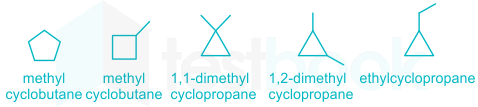
  • For example - Excessive use of herbicides and pesticides results in resistant varieties of microbes in a much lesser time scale.
  • When one organism being host to a parasite that causes it to become ill. This state is called parasitism in which the parasite is benefited while the host is harmed.
  • Example - Louse (pediculus) living on the human scalp. It sucks blood, cause irritation and spread diseases like typhus, replasing fever.
96

Which of the following is a consequence of biological magnification?

  1. ((a))

    Toxic chemicals in the environment pose greater risk to top-level predators than to primary consumers.

  2. ((b))

    Populations of top-level predators are generally smaller than populations of primary consumers.

  3. ((c))

    Only a small portion of the energy captured by producers is transferred to consumers.

  4. ((d))

    The biomass of producers in an ecosystem is generally higher than the biomass of primary consumers.

Show Answer
Answer: ((a))

Toxic chemicals in the environment pose greater risk to top-level predators than to primary consumers.

The correct answer is Toxic chemicals in the environment pose a greater risk to top-level predators than to primary consumers.

Explanation:

  • As these chemicals are not degradable, these get accumulated progressively at each trophic level.
  • As human beings occupy the top level in any food chain, the maximum concentrations of these chemicals get accumulated in human's bodies.
  • This phenomenon is known as biological magnification.
  • For example, the concentration of harmful chemical order is given in increasing order below
  • Green plants → Fish → Man.
  • Green Plants → Birds → Man.
97

The term heat of vaporisation refers to:

  1. ((a))

    the heat produced when a substance vaporises

  2. ((b))

    a device used for vaporising water

  3. ((c))

    the amount of heat necessary to convert a certain amount of liquid matter to the gaseous state

  4. ((d))

    the amount of heat necessary to convert a certain amount of solid matter to the liquid state

Show Answer
Answer: ((c))

the amount of heat necessary to convert a certain amount of liquid matter to the gaseous state

Explanation:

  • Latent heat of vaporization: It is the heat energy required to change 1 kg of the material in its liquid state at its boiling point to 1 kg of the material in its gaseous state.

Q = mL​

Where Q = amount of heat and m = mass of the substance 

  • It is also the amount of heat energy released when 1 kg of vapor changes into 1 kg of liquid.
  • For water at its normal boiling point or condensation temperature (100° C ), the latent heat of vaporization (the latent heat of steam)

Hence, the term heat of vaporization refers to the amount of heat necessary to convert a certain amount of liquid matter to the gaseous state.

Additional Information​

  • Heat is a form of energy that flows from a relatively warmer object to a relatively cooler object.
  • Specific Latent Heat: The amount of heat required to convert a unit mass of the solid into liquid without a change in temperature is called the latent heat of the material.
98

The most commonly encountered bacteria are roughly spherical. The microbiological term describing this shape is:

  1. ((a))

    Coccus

  2. ((b))

    Bacillus

  3. ((c))

    Licheniformis

  4. ((d))

    Pleomorphic

Show Answer
Answer: ((a))

Coccus

Concept:

Bacteria are microscopic prokaryotes (single-celled organisms). They are the sole members of Kingdom Monera. Bacteria have variations in their shape, on the basis of their shape bacteria are of different types like : 

  1. Coccus
  2. Bacillus
  3. Spirillum
  4. Vibrio


Explanation:

1.Coccus/cocci

  • These bacteria are spherical or oval in shape.​
  • These are the smallest bacteria.
  • They are the most resistant bacteria (so, they are the most common)
  • Eg - Diplococcus pneumoniae.

2.Bacillus/bacilli : 

  • This group includes most of the bacteria.
  • They are Rod-shaped.
  • Eg - E.coli, Bacillus anthracis

3.Spirillum :

  • These are spiral-shaped bacteria.
  • Eg - Spirillium volutans.

4.Vibrio : 

  • They are comma-shaped bacteria.
  • Eg - Vibrio cholerae.

  • Pleomorphism bacteria: Pleomorphismis the ability of microbes to alter their morphology i.e. their shape and size in response to the environmental condition, so Pleomorphism bacteria can change their shape and size according to the external conditions. Eg - Deinococcus, Mycoplasma.
  • Bacillus licheniformis: It is a rod-shaped bacteria, commonly found in soil, feathers of birds. These bacteria are commonly known to cause food poisoning and food spoilage.
99

Stored blood becomes brown due to the formation of:

  1. ((a))

    hemoerythrin

  2. ((b))

    methemoglobin

  3. ((c))

    haemoglobin

  4. ((d))

    oxy-haemoglobin

Show Answer
Answer: ((b))

methemoglobin

Concept:

  • Blood is a connective tissue, that has an iron-containing pigment called Haemoglobin.
  • The haemoglobin gives a red colour to the blood and is responsible for the transport of O2 molecules throughout the body.
  • One heme group can carry 4 O2 molecules at a time. Heme group remains in the ferrous state (Fe2+) in normal conditions.
  • Any change in the state of the heme group may result in the change of blood colour and it may also affect the transport of oxygen.

Explanation:

  • When the blood is stored for a long time period, the heme group of haemoglobin (Fe2+) gets oxidised to ferric state (Fe3+), and the haemoglobin gets converted into methemoglobin which is a brown colour pigment (this gives blood the brown colour). Methemoglobin is also incapable to transport O2 molecules.

Additional Information

Hemoerythrin: 

  • It is a non - heme protein (no porphyrin ring) which can carry oxygen.
  • This pigment is violet in colour.
  • It is mainly found in the blood of marine invertebrates.

Oxy-haemoglobin:

  • It is a form of haemoglobin that is formed when haemoglobin combines oxygen from the lungs.
  • Oxyhaemoglobin transports oxygen to the cells of the body.
100

According to the law of conservation of momentum, in an ideal closed system, when two objects collide:

  1. ((a))

    the magnitudes of their momentum vectors add.

  2. ((b))

    neither objects loses or gains any momentum.

  3. ((c))

    the magnitudes of their momentum vectors multiply.

  4. ((d))

    the system neither loses nor gains any total momentum.

Show Answer
Answer: ((d))

the system neither loses nor gains any total momentum.

Explanation:

  • Perfectly elastic collision: The type of collision in which the total kinetic energy of the system remains constant before and after the collision is called elastic collision or perfectly elastic collision.
  • Conservation of linear momentum: As there is no net external force on the system, so momentum before the collision and after the collision will remain same.


Linear Momentum before the collision (P1) = Linear Momentum after the collision (P2)

P1 = m1u1 + m2u2

P2 = m1v1 + m2v2

m1u1 + m2u2 = m1v1 + m2v2

So according to conservation of linear momentum, after collision neither objects (considering both objects as system) loses nor gain any momentum.

101

Which of the following tools of recombinant DNA technology is INCORRECTLY paired with its use?

  1. ((a))

    DNA ligase – cutting DNA, creating sticky ends of restriction fragments

  2. ((b))

    Reverse transcriptase – production of cDNA from mRNA

  3. ((c))

    Restriction enzyme – analysis of RFLPs

  4. ((d))

    DNA polymerase – polymerase chain reaction to amplify sections of DNA

Show Answer
Answer: ((a))

DNA ligase – cutting DNA, creating sticky ends of restriction fragments

Key Points

  • DNA Recombinant technology can be defined as the joining together of DNA molecules from different organisms and inserting it into a host organism to produce a new genetic combination that is of value to science, medicine, agriculture, and industry.
  • The key tools of Recombinant DNA technology are:
  • Restriction enzymes
  • Polymerase enzymes
  • Ligases
  • Vectors
  • Host organism

DNA Ligase

  • DNA Ligase represents a fundamental class of enzymes required by all organisms to maintain the structural integrity of the genome.
  • They are used to join the DNA fragments such as Okazaki fragments thus they are called the joining enzymes. Hence, option 1 is incorrectly matched.
  • They are also called molecular glues.
  • They play a role in repairing single-strand breaks in duplex DNA in living organisms, but some forms (such as DNA ligase IV) may specifically repair double-strand breaks (i.e. a break in both complementary strands of DNA).
  • Example - Tu Ligase


Additional InformationRestriction Enzymes:

  • These are called molecular scissors and are responsible for cutting DNA.
  • First restriction enzyme was Hind II.
  • These are of two types endonuclease and exonuclease.
  • Restriction endonuclease enzymes can recognize a specific base pair sequence in DNA and thus can analyze RFLP.

Polymerase enzymes:

  • The primary role of DNA polymerases is to accurately and efficiently replicate the genome in order to ensure the maintenance of the genetic information and its faithful transmission through generations.
  • They initiate the process of replication from 5' to 3' end.

DNA Transcriptase: 

  • DNA transcription is a process of conversion of m-RNA to c-DNA, and the enzyme required is called DNA transcriptase.
  • It was first discovered in Rous - sarcoma virus (retro virus)  by Temin and Baltimore so this process is also known as teminism.
102

The Mohs scale is based on a solid’s ability or tendency to:

  1. ((a))

    scratch or be scratched

  2. ((b))

    fracture under stress

  3. ((c))

    boil when heated

  4. ((d))

    be stretched or compressed

Show Answer
Answer: ((a))

scratch or be scratched

Explanation:

  • Mohs scale: A scale of hardness used in classifying minerals.
  • It runs from 1 to 10 using a series of reference minerals, and position on the scale depends on ability to scratch minerals rated lower.


Mohs hardnessMineralChemical formula
1TalcMg3Si4O10(OH)2
2GypsumCaSO4·2H2O
3CalciteCaCO3
4FluoriteCaF2
5ApatiteCa5(PO4)3(OH−,Cl−,F−)
6Orthoclase feldsparKAlSi3O8
7QuartzSiO2
8TopazAl2SiO4(OH−,F−)2
9CorundumAl2O3
10DiamondC


So Mohs scale is based on a solid’s ability to scratch or to be scratched.

δ=FLAE{\rm{\delta }} = \frac{{{\rm{FL}}}}{{{\rm{AE}}}}

Where, δ = elongation in wire, F = applied force, L = length of wire, A = cross-sectional area, E = modulus of elasticity of wire.

103

Apoptosis involves all but which of the following?

  1. ((a))

    Activation of cellular enzymes

  2. ((b))

    Cell-signalling pathways

  3. ((c))

    Lysis of the cell

  4. ((d))

    Fragmentation of the DNA

Show Answer
Answer: ((c))

Lysis of the cell

Concept:

  • Cells undergo different pathways to regulate the cellular activities like division of the cells, replication of DNA, lysis or degeneration of the damaged organelles. These processes are governed by a different set of enzymes like polymerases for replication, hydrolases for lysis etc.

Explanation

  • Apoptosis (from the Greek words apo = from and ptosis = falling) is an energy-dependent biochemical mechanism of programmed cell death.
  • It is a genetically programmed process that occurs normally during embryogenesis, metamorphosis and ageing.
  • For example, the differentiation of human fingers in a developing embryo requires the cells between the fingers to initiate apoptosis so that the fingers can separate.
  • Apoptosis also occurs as a defence mechanism such as in immune reactions or when cells are damaged by disease or noxious agents.
  • Apoptosis is the most common form of programmed cell death (PCD).

Additional Information

Activation of cellular enzymes:

  • An enzyme is a biocatalyst that increases the rate of a chemical reaction without itself being changed in the overall process.
  • Activation of enzymes can be best explained by Lock and Key model, given by Fischer according to this model if the right key fits inside the right lock, the lock will be opened otherwise it will not. Likewise, if the right enzyme fits into the right substrate, the drug will form, otherwise, it won’t.
  • All the enzymes require an optimum temperature and environment to work efficiently.


Cell-signalling pathway:

  • In order to respond to changes in their immediate environment, cells must be able to receive and process signals that originate outside their borders.
  • Individual cells often receive many signals simultaneously, and they then integrate the information they receive into a unified action plan. But cells aren't just targets. They also send out messages to other cells both near and far. This process of cell to cell interaction is the cell signalling pathway.
  • Cell sends and receives signals via neurotransmitters, these neurotransmitters are released from the end of one neuron and then received by the receptors present in the second neuron.


  • Fragmentation of DNA occurs by a specific set of enzymes called restriction enzymes, these are of two types restriction - endonuclease and restriction - exonuclease.

NOTE- Cell lysis or cellular disruption is a method in which the outer boundary or cell membrane is broken down or destroyed in order to release inter-cellular materials such as DNA, RNA, protein or organelles from a cell.

104

The aurora (‘northern lights’ or ‘southern lights’) are caused indirectly by:

  1. ((a))

    human-made electromagnetic fields

  2. ((b))

    the motions of the planets around the Sun

  3. ((c))

    the geomagnetic wind

  4. ((d))

    solar flares

Show Answer
Answer: ((d))

solar flares

Explanation:

The collisions between gaseous particles in the Earth's atmosphere with charged particles released from the solar flares.

  • Aurora Borealis is also known as 'Northern Lights' or 'Polar lights'.
  • It is a phenomenon that is seen in the sky in the northern hemisphere, generally in the higher altitudes.
  • The places where this phenomenon can be observed are - most of Alaska, northern parts of Canada, southern-half of Greenland, Iceland, Norway, Sweden, etc.


PhenomenonCalled/Known as
It occurs when sunlight hits ice crystals in cirrus clouds that are very high in the skyFire Rainbows
It is formed when there's a reflection of light from the sun and the moon form various small ice crystals suspended in the airLight Pillars
It is formed when a concentrated bright spot is seen on one or both sides of the sunSundog or Mock Sun
105

Zinc salts used in deodorants act as:

  1. ((a))

    anti-bacterials as well as antiperspirants

  2. ((b))

    antiperspirants and astringents

  3. ((c))

    antiperspirants and antiseptics

  4. ((d))

    antringents as well as antiseptics

Show Answer
Answer: ((a))

anti-bacterials as well as antiperspirants

Concept: 

  • Antiperspirants are products used to prevent sweating or perspiration on the skin.
  • These compounds temporarily block the sweat glands and thus prevent sweating from the skin.

Explanation:

  • Deodrants are chemicals mostly water-based silicon emulsions used to apply topically to prevent odours.
  • Deodrants have the quality to absorb odour as well as kill bacteria.
  • The most common Zinc Salts used in deodorants are Zinc oxide(ZnO).
  • Zinc oxide is used to absorb the odour because it is water-soluble and gets absorbs the sweat thus preventing odour.
  • Zinc oxide kills the two types of bacteria that cause underarm odour the bacteria are -Corynebacterium spp. and  Staphylococcus spp
  • Zinc oxide also has anti-microbial properties.

Hence, Zinc salts used in deodorants act as anti-bacterial as well as antiperspirants.

Additional Information Antringents-  An astringent is a substance that draws water out of tissues, causing them to shrink.

Antiseptics- An antiseptic is a substance that stops or slows down the growth of microorganisms. commonly used for medical purposes.

106

Which ecological pyramid is always upright?

  1. ((a))

    Pyramid of biomass

  2. ((b))

    Pyramid of number

  3. ((c))

    Pyramid of energy

  4. ((d))

    Pyramid of carbon

Show Answer
Answer: ((c))

Pyramid of energy

Explanation:

The correct option is Energy.

An ecological pyramid is a pictorial representation of the relationship between different organisms in an ecosystem.

Pyramid of numbers:

  • It depicts the numbers of individual organisms at different trophic levels of the food chain.
  • It is helpful to calculate the changes observed in the number of organisms in each trophic level.
  • We can identify which level is in the endangered zone and need to be saved. But its limitation is we cannot count a number of all organisms accurately.
<br>

Pyramid of Biomass:

  • Biomass is the dry weight of the organism.
  • Pyramid of biomass indicates a decrease of biomass in each tropical level from base to apex.
  • With higher tropical level biomass decreases for ecosystem on land and its inverse for an aquatic ecosystem where biomass increases with higher trophic level.
<br>

Pyramid of Energy:

An energy pyramid shows how much energy is needed as it flows upwards to support the next trophic level. Here the pyramid is always upward.

Hence, Pyramid of energy is the correct option.

107

Which of the following is used as a source of oxygen in space capsules, submarines and breathing masks?

  1. ((a))

    Na2O2

  2. ((b))

    K2O2

  3. ((c))

    KO2

  4. ((d))

    Li2O

Show Answer
Answer: ((c))

KO2

Explanation:

  • When we are in space or underground, we need a continuous supply of oxygen.
  • Humans intake oxygen and exhale carbon dioxide during respiration.
  • The oxygen cylinders are filled with KO2 which is potassium superoxide.
  • KO2 is used because it produces oxygen by utilizing CO2 exhaled by humans and thus we get a continuous supply of oxygen.
  • The reaction that takes place is as follows:

4KO2 + 2CO2 → 2K2CO3 + 3O2

Hence, KO2 is used as a source of oxygen in space capsules, submarines and breathing masks.

108

What is the lifespan of human RBCs?

  1. ((a))

    200 Days

  2. ((b))

    120 Days

  3. ((c))

    210 Days

  4. ((d))

    220 Days

Show Answer
Answer: ((b))

120 Days

Explanation:

  • RBC stands for Red blood cells. These are also called erythrocytes.
  • RBC is formed in the bone marrow and its destruction takes place in the liver and the spleen.
  • Spleen is called the graveyard of RBC.
  • RBCs are devoid of the nucleus in most mammals and are biconcave in shape
  • The main function of RBC is to carry oxygen from the lungs to all the other parts of the body and bring back the carbon-di-oxide from all such parts.
  • Human RBCs have an average life span of 120 days
  • A healthy adult man has, on average, 5 million to 5.5 million to RBCs mm–3 of blood.

Important Points

  • Sickled RBC has an average lifespan of 10-20 days only

Additional Information

  • WBC also called leucocytes have a life span of 2-4 days.
  • The life span of the blood platelets or thrombocytes is 3-5 days.
109

Which of the following animals is INCORRECTLY paired with its feeding mechanism?

  1. ((a))

    Aphid - fluid feeder

  2. ((b))

    Clam - suspension feeder

  3. ((c))

    Lion - substrate feeder

  4. ((d))

    Baleen whale - suspension feeder

Show Answer
Answer: ((c))

Lion - substrate feeder

The correct answer is option 3.

Concept:

  • Organisms adopt various strategies for procuring nutrition, that forms their feeding behaviour.
  • The feeding behaviour is adapted by the organisms based on various influences like their habitat, level of body tissue organization, complexity of body organs, the timing, and availability of prey.
  • Thus, different feeding mechanisms are formed.

Important Points

  • Aphid - fluid feeder: CORRECT​
  • An aphid is an insect that infests plants.
  • It is a fluid feeder as it feeds on plant sap.
  • Aphids destroy plants by forming galls and obstructing their vascular tissue.
  • Clam - suspension feeder: CORRECT
  • ​Clams are molluscs belonging to the Bivalvia subclass.
  • They are suspension feeders and are often called filter feeders.
  • Clams draw in water through their siphon. This water contains the planktons and other nutrients suspended in the water.
  • The water is passed through the gills of the clam and the nutritious matter is filtered and consumed while the waste water is excreted.
  • Lion - substrate feeder: INCORRECT
  • ​Lions are carnivores and hunt their prey.
  • They derive all their nutrition via bulk feeding, i.e., consuming an entire prey.
  • Hence, lions are bulk feeders.
  • Worms and larvae are substrate feeders as they consume fallen leaves and microbes present on the soil substrate.
  • Baleen whale - suspension feeder: CORRECT
  • ​Baleen whales have specialized baleen keratinized boneplates in their mouth to filter the planktons, organic matter, and other inorganic nutrients present in the pelagic and benthic zones of the marine waterbody.
  • Thus, they are suspension feeders.
  • They play an important role in preventing the overgrowth of planktons and allows sunlight to penetrate the deeper layers of the marine waterbody.
110

During human gestation, rudiments of all organs develop:

  1. ((a))

    while the embryo is in the oviduct

  2. ((b))

    in the first trimester

  3. ((c))

    in the third trimester

  4. ((d))

    in the second trimester

Show Answer
Answer: ((b))

in the first trimester

Explanation:

  • The human gestation period is about 40 weeks from the last menstrual cycle.
  • During this period step-wise development of embryo start taking place.
  • The total period of pregnancy or gestation is divided into 3 trimesters
  • In 1st trimester, placenta is formed that provides developing fetus nutrients & forms a connection between baby and mother.
  • In this stage, only all primitive parts(rudiments) of our organs like face, heart, nervous system are formed.
111

Which of the pairs of quantities can be expressed using the same unit?

  1. ((a))

    Power and momentum

  2. ((b))

    Impulse and potential energy

  3. ((c))

    Acceleration and weight

  4. ((d))

    Work and kinetic energy

Show Answer
Answer: ((d))

Work and kinetic energy

Concept:

Power is defined as the time rate at which work is done or energy is transferred. Power, like work and energy, is a scalar quantity.

  • Its dimensions are [ML2T-3].
  • In the SI, its unit is called a watt (W). The watt is Js-1.

Momentum (p): The product of mass and velocity is called momentum.

  • Momentum (p) = mass (m) × velocity (v)
  • The SI unit of momentum is kg m/s

Impulse: When a large force works on a body for a very small time interval, it is called impulsive force.

  • An impulsive force does not remain constant, but changes first from zero to maximum and then from maximum to zero. In such a case, we measure the total effect of force.

\(\vec I = \mathop \smallint \limits_{{t_1}}^{{t_2}} \vec F \cdot dt\)

Where, I = impulse, F = force and dt = very small time interval

  • SI unit of impulse is Newton-second or kg-m-s-1.

Potential energy is defined as the energy stored due to change in position relative to others, stresses within itself, or many factors.

  • The potential energy (U) = m g h [where m= mass of body, g= acceleration due to gravity, h = distance from the ground].
  • The Dimension of energy is - ML2T-2
  • The SI unit of energy is Joule (J)

Acceleration: The rate of change of velocity is called acceleration.

  • It is denoted by a.
  • The SI unit of acceleration m/s2.

Weight: The weight (w) of an object is the force of gravity on the object and may be defined as the mass (m) times the acceleration of gravity (g).

  • Weight is a force, the SI unit of weight is Newton.
  • Weight (W) = m g

Work done: Work is said to be done when a force applied on the body displaces the body through a certain distance in the direction of a force.

  • Work;done;(W)=Fscosθ=Fs;cosθWork;done;\left( W \right) = \vec F \cdot \vec s\cos \theta = Fs;cos\theta
  • Where F = force, s = distance, and cos θ = angle between F and s.
  • The SI unit of work done is N-m or Joule (J).

Kinetic energy (K.E): The energy possessed by a body by the virtue of its motion is called kinetic energy.

  • The expression for kinetic energy is given by:
  • K.E=12mv2K.E = \frac{1}{2}m{v^2}
  • Where m = mass of the body and v = velocity of the body
  • The SI unit of energy is Joule (J).

Explanation:

As explained above,

  • Power (Joule -sec) which is not equal to SI unit of Momentum (kg ⋅ m/s)
  • Impulse (kg ⋅ m/s) which is not equal to SI unit of Potential energy (Joule)
  • Acceleration (m/s2) which is not equal to SI unit of Weight (Newton)
  • Work (Joule) which has equal SI unit as Kinetic Energy (Joule)

Some Basic Dimensions are-

Sl. No.QuantityCommon SymbolSI UnitDimension
1Velocityv, ums-1LT-1
2Accelerationams-2LT-2
3ForceFNewton (N)M L T-2
4MomentumpKg-ms-1M L T-1
5Gravitational constantGN-m2Kg-2LM-1 T-2
6TorqueτN-mM LT-2
7Bulk ModulusBN/m2M L-1 T-2
8EnergyE, U, Kjoule (J)M LT-2
9HeatQjoule (J)M LT-2
10PressurePNm-2 (Pa)M L-1 T-2
11Electric FieldEVm-1, NC-1M L I-1 T-3
12Potential (voltage)VV, JC-1M LI-1 T-3
13Magnetic FieldBTesla (T), Wb m-1M I-1T-2
14Magnetic FluxΦBWbM LI-1 T-2
15ResistanceROhm (Ω)M LI-2 T-3
16Electromotive ForceEVolt (V)M LI-1 T-3
112

The innermost layer of the root cortex is the:

  1. ((a))

    pericycle

  2. ((b))

    endodermis

  3. ((c))

    vascular cambium

  4. ((d))

    core

Show Answer
Answer: ((b))

endodermis

Explanation:

  • Roots are an organ of plants that is responsible for uptake of water and nutrients from the soil.
  • The diagram shows the presence of all parts of the root. Root cortex is a part of the root that is responsible for the passage of water absorbed or imbibed by root hair to other parts of the plant. The innermost part of the root cortex is endodermis.
  • Cells of endodermis have a thin woody band called a Caspian strip.
  • Cells of endodermis help to regulate the flow of water inside the root.

Rearrange the following in a proper logical sequence. Epidermis, Cortex,  Root Hair, Xylem, Endodermis.

113

Which of the following is NOT true for cathode rays?

  1. ((a))

    A stream of electrons

  2. ((b))

    Move with speed the same as that of light

  3. ((c))

    Charged particles

  4. ((d))

    Can be deflected by a magnetic field

Show Answer
Answer: ((b))

Move with speed the same as that of light

CONCEPT:

  • Cathode rays: Cathode rays are the stream of high-speed negatively charged particles moving from cathode to anode in a discharge tube.

Properties of Cathode Rays:

  1. Cathode rays travel in a straight line.
  2. They are streams off fast-moving electrons.
  3. Cathode rays heat up the material on which they fall.
  4. The cathode rays in the discharge tube are the electrons produced due to the ionization of gas and that emitted by the cathode due to the collision of positive ions.
  5. Cathode rays are emitted normally from the cathode surface. Their direction is independent of the position of the anode.
  6. Cathode rays are deflected by an electric field and also by a magnetic field.
  7. Cathode rays ionize the gases through which they are passed.
  8. Cathode rays can penetrate through thin foils of metal.
  • As an electron beam accelerated from cathode to anode its loss in potential energy appears as gain in the K.E. at the anode.
  • Its velocity is dependent on the applied voltage

v=2eVm\Rightarrow v = \sqrt {\frac{{2eV}}{m}}

Where, v = velocity of cathode ray, e = charge on electron (1.6 × 10⁻⁹ Coulomb), m = mass of electron (9.1 × 10⁻³¹ kg), V = applied voltage.

EXPLANATION:

  • Cathode rays are the stream of electrons so, this is correct.
  • Cathode rays move the same as a speed of light which is incorrect as it is a dependent function of an applied voltage.
  • Cathode rays are charged particles (charge on electrons) so, this is correct.
  • Cathode rays can be deflected by electric and magnetic fields so, it is correct.
  • Hence, ​the option that says cathode rays have the same speed as of light is incorrect.
114

The number of neutrons in an element’s nucleus determines:

  1. ((a))

    the isotope of the element

  2. ((b))

    the ion of the element

  3. ((c))

    the atomic number of the element

  4. ((d))

    nothing, neutrons never exist in atomic nuclei

Show Answer
Answer: ((a))

the isotope of the element

The correct answer is the isotope of the element.


  • The total number of electrons (or protons) in a neutral atom is called its atomic number, denoted by Z.
  • The total number of protons and neutrons in the nucleus of an atom is known as its Mass Number and is denoted by A.


IsotonesIsotopesIsobars
Any of two or more species of atoms or nuclei that have the same number of neutrons.Species of the same element are found which differ in mass but have the same atomic number (no. of electrons).These are the chemical species that have the same mass number, i.e. the same number of nucleons but different atomic numbers.
For example- Cl-37 and K-39 are isotones.For example-
C-12 and C-13.
For example-
18Ar4019K4020Ca4
<br>

Explanation:

  • The number of neutrons is calculated by the difference in M-A.
  • The isotopes of an element have the same atomic number and different mass numbers.
  • The atomic number is equal to the number of protons or electrons, so the same atomic number will signify that there is same number of protons in isotopes.
  • As the mass numbers are different, yet the proton number is the same, it corresponds that the difference in mass number in isotopes is solely due to the difference in neutron number.
  • For example, isotopes 6C12 and 6C14 have 6 and 8 neutrons respectively.
<br>

Hence, the number of neutrons in an element’s nucleus determines the neutron number.


  • ISOMERS are generally nuclides that have the same number of neutrons and protons but differ in energy and radioactive decay.
  • The half-life of the more energetic isomer may be as short as about 10-11 seconds but, in some extreme cases, as long as several years.
  • Two nuclear isomers of cobalt-58, for example, are known: the lower energy isomer, 58Co, of 71-day half-life and the high-energy isomer, 58mCo (m for metastable), of 9-hour half-life.
115

In an egg cell is treated with EDTA, a chemical that binds calcium and magnesium ions:

  1. ((a))

    the acrosomal reaction would be blocked

  2. ((b))

    the fertilisation envelope would not form

  3. ((c))

    the fusion of sperm and egg nuclei would be blocked

  4. ((d))

    the fast block to polyspermy would not occur

Show Answer
Answer: ((b))

the fertilisation envelope would not form

Explanation:

  • EDTA, EthyleDiamineTetraacetic Acid, is used widely in biological experiments as a chelating agent as well as a detergent.
  • EDTA has Four carboxylate and Two amino groups which binds to free metal radicals. thus making it suitable to be used as a chelating agent.
  • EDTA binds with calcium & magnesium ions which are much needed for the formation of the fertilization envelope.
  • EthyleDiamineTetraacetic Acid was first described in 1935 by Ferdinand Munz. This compound is widely used in different industries from medicine to cosmetic industries.

Characterization of EDTA-cross-linked β-cyclodextrin grafted onto Fe-Al  hydroxides as an efficient adsorbent for methylene blue - ScienceDirect

The Start: Fertilization, Activation of the Egg and a First Series of Cell  Divisions (Cleavage) | Veterian Key

Important Points 

  • A chelating agent is a chemical substance that reacts with metal ions and gives stability to the complex. various chelating agents are used commercially to avoid the formation of unwanted by-products. EDTA is the most commonly used chelating agent.

Disodium EDTA, Packaging Type: Drum, Rs 25 /kilogram Shreeji Pharma  International | ID: 8729470848

The above image shows the structure of EDTA.

116

What is the correct decreasing order of the ionisation potential of the following elements?

Al, Cl, Mg, Ne, P, S

  1. ((a))

    Ne > Cl > P > S > Mg > Al

  2. ((b))

    Ne > Cl > P > S > Al > Mg

  3. ((c))

    Ne > Cl > S > P > Mg > Al

  4. ((d))

    Ne > Cl > S > P > Al > Mg

Show Answer
Answer: ((a))

Ne > Cl > P > S > Mg > Al

Concept :

Ionization potential (I.P)

  • It is the energy required to take out the outermost electron from an isolated gaseous atom.
  • The ionization energy of a chemical element is expressed in kiloJoules or electron volts.
  • The energy required to remove the first electron is called the 1st ionization potential.
  • The more stable the atom, the higher is its I.P.

The ionization potential depends on -

  • The position of the element in the periodic table.
  • The size of the atoms- Smaller the size of the atoms, the higher is the I.P value.
  • The penetration power- It is easier to remove an electron from the more diffused shell electron than a less diffused one.
  • The ease of removal follows the order- f > d > p > s.
  • The charge of the species- the greater the positive charge, the higher is the I.P value.
  • I.P. value is directly proportional to the positive charge and inversely proportional to the negative charge.
  • Electronic configuration- it is harder to remove an electron from a stable electronic configuration- fulfilled and half-filled.

Explanation-

Trends in the periodic table:

  • Along the period (horizontally):
  • Along the group, electrons keep adding in the same shell. Increased nuclear charge and number of electrons lead to a greater force of attraction between the nucleus and outermost electrons. Hence it requires more energy to remove the electrons from the outermost shell.
  • Therefore ionization energy increases along the period.
  • Down the group (vertically):
  • Down the group, the electrons start getting placed in the higher energy shells. The distance between the outermost electrons and the nucleus increases and the force of attraction between them decreases.
  • Owing to the easier removal of electrons from the outermost shell, the ionization energy decreases down the group.
  • From above it is clear that elements having lower period number and the higher group number will have higher ionization energy.

  • Out of the elements Al, Cl, Mg, Ne, P, S, Ne; Neon will have the highest ionization energy because it has a stable octet electronic configuration and will not lose electrons to lose it.
  • Also, Ne is in period 2 whereas the other elements are in period 3 and the I.P value decreases as we go down the group.
  • Al(13), Cl(17), Mg(12), P(15), S(16), all belong to the same period 3.
  • The atomic size follows the order Mg > Al > P > S > Cl.
  • Hence, the I.P values should follow the order  Cl > P > S > Al > Mg.
  • However, it is seen that Mg has higher Ionisation potential than Al because:
  • Mg has electronic configuration 1s22s23p63s2  that has fulfilled 3s orbital and it's difficult to remove electron from fulfilled orbital.
  • Al has  electronic configuration 1s22s23p63s23p1 and its easier to remove the 3p electron.

Hence,the correct order therefore is: Ne > Cl > P > S > Mg > Al.​

117

All the elements of a group in the periodic table have the same:

  1. ((a))

    number of protons

  2. ((b))

    atomic weight

  3. ((c))

    mass number

  4. ((d))

    number of electrons for bonding

Show Answer
Answer: ((d))

number of electrons for bonding

Concept:

  • A periodic table is an arrangement of elements based on their atomic numbers and chemical properties.
  • It is divided into 18 groups and 7 periods running vertically and horizontally respectively.
  • The periodic table accommodates a discrete combination of metal, non-metals, and metalloids.
  • The elements in the periodic table are arranged horizontally in ascending order of their atomic numbers known as periods.
  • Vertically the elements having identical chemical properties are clubbed together known as groups.
  • The 18 groups are also known as columns and the 7 periods are also known as the rows.

Explanation:

Periods:

  • Elements are arranged in increasing atomic number of the elements in a period.
  • One extra electron gets added to the outermost shell as we move along the periods from left to right.
  • The electron gets added to the same shell or orbit and thus the electrons present for bonding increase by one unit.
  • Thus, the shell number remains the same but the number of electrons present for bonding increases along a period.

Groups:

  • Elements having the same number of outer electrons are put in the same group of the periodic table.
  • When we move down a group, one extra shell gets added to the elements.
  • The outermost shell has electrons present for bonding.
  • Though the number of shells increases as we go down in a group, yet the number of electrons in the outermost shell remains the same.
  • For example, the Halogens F, Cl, Br, I, At all belong to group 17 and have 7 electrons in the outermost shell.
  • Similarly, Group 16 elements have 6 electrons in the outermost shell, group 15 has 5 electrons in the outermost shell, and so on.
Group numberCommon nameNumber of electrons for bonding
1Alkali metals1
2Alkaline earth metals2
14Crystallogens4
15Pnictogens5
16Chalcogens6
17Halogens7
18Noble gases8
<br>

Hence, all the elements of a group in the periodic table have the same number of electrons for bonding.

118

The greenhouse effect in the Earth’s environment takes place because:

  1. ((a))

    the polar ice caps are melting.

  2. ((b))

    the atmosphere is transparent to IR at some wavelengths and opaque to IR at other wavelengths.

  3. ((c))

    the atmosphere does not contain enough oxygen to block IR from the Sun.

  4. ((d))

    the ozone hole is growing, letting in more and more IR.

Show Answer
Answer: ((b))

the atmosphere is transparent to IR at some wavelengths and opaque to IR at other wavelengths.

Concept:

Greenhouse effect:

  • The greenhouse effect is a natural process that warms the Earth's surface.
  • When the Sun's energy reaches the Earth's atmosphere, some of it is reflected to space and the rest is absorbed and re-radiated by greenhouse gases.
  • That trapping of heat is known as the greenhouse effect.
  • This insulates the surface of the earth and prevents it from freezing.


Explanation:

Mostly three gases are responsible for absorbing enough heat for the greenhouse effect.

Water vapour (H2O): The water vapour in the atmosphere absorbs some of the electromagnetic waves coming from the sun and reflects some. The wavelengths from (5μm to 7μm) mostly absorbed by water vapour. But its absorption depends on various factors like day, location etc.

Carbon dioxide (CO2): Primarily absorbs radiation in the mid and far (thermal infrared) infrared portions of the spectrum.

Ozone (O3): Absorbs strongly in the UV portion of the spectrum (very short wavelengths) and is responsible for protecting us from damaging radiation that causes skin cancer.

Thus, Greenhouse effect of earth’s atmosphere protects it by absorbing and reflecting some radiations.

119

Types of fungi that get much of their nutrition from rotting plants and leaves are called:

  1. ((a))

    pathogenic

  2. ((b))

    parasitic

  3. ((c))

    gram-positive

  4. ((d))

    saprophytic

Show Answer
Answer: ((d))

saprophytic

Explanation:

  • Fungi are primitive Eukaryotic organisms belonging to Kingdom Fungi showing extracellular digestion.
  • These are found in humid & warm places.
  • Fungi can be unicellular or multicellular organisms having a simple body( Example - Mucor)
  • Fungi reproduce sexually as well as asexually. Asexual reproduction takes place by Fragmentation, fission & budding.
  • Some fungi are symbiotic; they live in association either with Lichens or as Mycorrhiza in root cells of plants.
  • They show the saprophytic mode of nutrition that is, Fungi grow on dead & decaying substances.
  • During the saprophytic mode of nutrition, fungi use enzymes present in the body of dead & decaying substances and convert them to their simpler forms outside their body. These simple nutrients are then taken up by Fungal cells for their life processes.
  • Saprophytic fungi are also called as natural cleaners because they degrade and decompose all the biological waste formed ( dead animals and plants) making our planet healthier, more beautiful and a better place to live.

SAPROPHYTIC NUTRITION BY FUNGI

MACROMOLECULES IN DEAD CELLSENZYMES USED FOR THEIR DEGRADATION BY FUGAL CELLS
1.Starch & other complex carbohydrates.Broken down to glucose by enzyme Amylase
2.ProteinsConverted to amino acids using enzyme Proteases
3.LipidsConverted to fatty acids by enzyme Lipases.
4.cellulosebroken down to glucose by cellulolytic enzymes.

Black Bread Mold - Biology Wise

The image shows a saprophytic fungi bread mold growing on a slice of bread.

120

A cordless telephone is advertised as operating at a frequency of 900 MHz. This is the same as a frequency of:

  1. ((a))

    9.00 × 10⁵ Hz

  2. ((b))

    0.900 GHz

  3. ((c))

    0.900 THz

  4. ((d))

    9.00 × 10⁴ GHz

Show Answer
Answer: ((b))

0.900 GHz

Concept:

  • Frequency (f): It is defined as the number of oscillations executed by the body per second.
  • S.I unit of frequency is hertz (Hz).


Calculation:

This is the chart of some quantities in SI metric system

Some Prefix and Multiplier
NameSymbolFactor
YottaY1024
ZettaZ1021
ExaE1018
PetaP1015
TeraT1012
GigaG109
MegaM106
kilok103
hectoh102
dekada101


Given,

Frequency = 900 MHz

It can be converted into –

  • In Hertz,
  • 900 MHz = 900 × 106 Hz = 9 × 10⁸ Hz.
  • In Giga Hz,
  • 900 MHz = 9 × 10⁸ Hz = 0.9 × 10⁹ GHz
  • In Tera Hz,
  • 900 MHz = 9 × 10⁸ Hz = 0.0009 × 10¹² THz

Therefore, 0.9 GHz is correct.

121

What are maggots?

  1. ((a))

    Larvae of a fly

  2. ((b))

    Eggs of a fly

  3. ((c))

    Pupae of a fly

  4. ((d))

    Matured fly

Show Answer
Answer: ((a))

Larvae of a fly

Explanation:

  • Maggots are larvae of a common housefly.
  • They look like worms as they have soft bodies & don't have legs.
  • Maggots grow on dead tissue debris & the rotting flesh of animals.
  • If maggots are ingested into the human body, it may cause diseases like **Bacterial poisoning, Myiasis (difficulty in maintaining good oral hygiene).**​

Maggots: The livestock feed no-one saw coming

Additional Information

Transformation of an egg to an adult. A fly life cycle.

Medical Maggots™ (maggot therapy, maggot debridement therapy, MDT,  biotherapy, biosurgery, biodebridement, larval therapy) | Monarch Labs -  Advanced Wound BioSurgery

122

Which of the following is used to make non-stick cookware?

  1. ((a))

    Polystyrene

  2. ((b))

    PVC

  3. ((c))

    Polytetrafluoroethylene

  4. ((d))

    Poly (ethylene terephthalate)

Show Answer
Answer: ((c))

Polytetrafluoroethylene

The correct answer is Polytetrafluoroethylene.

Important Points

  • Polystyrene (PS): It is a synthetic aromatic polymer made from the monomer styrene, which is a liquid petrochemical.
  • Polystyrene polymer is used in the Manufacture of toys, radio and television cabinets, wrapping material, etc.
  • Polyvinyl chloride ((C2H3Cl)n):
  • PVC stands for Polyvinyl chloride.
  • It is widely used as a thermoplastic.
  • It is a synthetic polymer made from the polymerization of vinyl chloride.
  • It comes in two basic forms i.e rigid and flexible.
  • Because of its hardness, it is used in a variety of applications in building and construction, health care, automobiles, etc.
  • Polytetrafluoroethylene: (PTFE) is a hydrophobic fluorocarbon that is neither water nor water-containing substances wet PTFE.
  • It is used as a non-stick coating for pans and other cookware because of this property.
  • It is the monomer of Teflon
  • Polyethene terephthalate (sometimes written poly (ethylene terephthalate)), commonly abbreviated PETPETE, or the obsolete PETP or PET-P, is the most common thermoplastic polymer resin of the polyester family.
  • It is used in fibers for clothing, containers for liquids and foods, thermoforming for manufacturing, and in combination with glass fibre for engineering resins.
  • Therefore, in the above options, Polytetrafluoroethylene is used in non-stick cookware.
123

Which of the following statements is FALSE?

  1. ((a))

    A concave mirror can collimate light rays from a point source.

  2. ((b))

    A convex lens can bring parallel light rays to a focus.

  3. ((c))

    A concave lens makes close-up objects appear smaller.

  4. ((d))

    A convex mirror can be used as the main objective in a reflecting telescope.

Show Answer
Answer: ((d))

A convex mirror can be used as the main objective in a reflecting telescope.

Concept:

There are two types of spherical mirrors:

Convex mirror:

  • The spherical mirror whose reflecting surface is away from the centre of curvature is called a convex mirror.
  • It is always from a virtual image of any object.

Concave mirror:

  • The mirror whose reflecting surface is inward is called a concave mirror.
  • It can form both real as well as virtual image of any object.

  • If the light from the point source is headed over the concave mirror, then it is collimated (made parallel) to infinite.

Similarly two types of spherical lenses –

Convex lens –

  • A convex lens is thick in middle and thin at the edges.
  • A convex lens is a spherical lens whose two surfaces are bent outwards.
  • A convex lens is also know known as a converging lens.

Concave lens –

  • A concave lens is thin in middle and thick at the edges.
  • A concave lens is a spherical lens whose two surfaces are concave or bent inward.
  • A concave lens is also know known as a diverging lens.
  • A concave lens make close-up objects smaller.

Telescope:

  • Reflecting telescopes are also called reflectors.
  • Most telescopes used by astronomers today are reflectors.
  • Most common reflecting telescopes are a variation of the Newtonian telescope.
  • It consists of a large concave mirror as the objective and a convex mirror as an eyepiece.

Explanation:

  • A concave mirror can collimate light (make parallel) rays from a point source. So, this is correct.
  • A convex lens can bring parallel light rays to focus. So, this is correct.
  • A convex lens makes close-ups appear smaller. So, this is also correct.
  • A convex mirror is used as the main objective in a reflecting telescope. In a reflecting telescope, a concave mirror is used as an objective. So, this is incorrect.
124

Antichlor is a compound which:

  1. ((a))

    removes Cl2 from a material

  2. ((b))

    acts as a catalyst in the manufacture of Cl2

  3. ((c))

    absorbs chlorine

  4. ((d))

    liberates Cl2 from bleaching powder

Show Answer
Answer: ((a))

removes Cl2 from a material

Concept:

  • The process of removal of color from a compound is called bleaching.
  • Bleaching is obtained via use of bleaching powder.
  • The bleaching agent present in bleaching powder is Chlorine.
  • Bleaching powder is calcium oxychloride (CaOCl2) which is a yellowish-white powder with a strong smell of chlorine.
  • When it reacts with carbon dioxide in the atmosphere, it gives off chlorine and calcium carbonate.
  • Bleaching powder (CaOCl2) is manufactured through a reaction between slaked lime Ca(OH)2 and chlorine (Cl2).
  • It is used in the laundry. Being a very strong oxidizing agent, it is also used as an oxidizer.

Ca(OH)2 + Cl→ CaOCl2 + H2O

Explanation:

  • Chlorine, a bleaching agent, is used to disinfect water.
  • Chlorine after being used to bleach clothes or disinfect water needs to be removed to prevent further reactions.
  • To remove the residual chlorine or hypochlorite, we use agents known as Antichlors.
  • One of the most common antichlors is Sodium thiosulfate Na2S2O3. It neutralizes the excess chlorine present in textiles or pulps.
  • Other examples of antichlors are NaHSO3,  KHSO3, H2O2, etc.
  • Bleaching powder dissociates as:

CaOCl2 + H2O → Ca(OH)2 + Cl2 

Hence, antichlor is a compound which removes Cl2 from a material.

125

The shortest C – C bond distance is found in:

  1. ((a))

    ethane

  2. ((b))

    benzene

  3. ((c))

    diamond

  4. ((d))

    acetylene

Show Answer
Answer: ((d))

acetylene

Concept:

Bond type and bond length:

  • When there exists a single bond between two atoms, there is only a sigma bond.
  • When there exist multiple bonds between atoms, there is only one sigma bond and others are pi bond.
  • Bond length is simply the distance between the nucleus of two atoms in a bond.
  • When there exist multiple bonds between two atoms, the nuclei come closer and closer due to the greater number of overlap.
  • Due to this, the distance between them shortens, and bond length decreases.
  • The C-C bond length follows the order

Bond Order, Lengths, and Strengths

Explanation:

  • In ethane, there exist only single bonds between the carbon atoms, and hence bond length is 153 pm.

What's the H-C-H bond angle in ethene? - Chemistry Stack Exchange

  • In ethene and benzene, there exist two bonds between two adjacent carbon atoms.
  • The bond length is in the range of 134 pm in both the molecules.

15.3: Structure and Stability of Benzene - Chemistry LibreTexts

  • Acetylene has a triple bond between two adjacent carbon atoms and the bond length is even shorter.
  • It is closer to 120 pm.

1.9: sp Hybrid Orbitals and the Structure of Acetylene - Chemistry  LibreTexts

  • Each carbon atom in a diamond is surrounded by four other carbon atoms and connected to them by strong single covalent bonds - the strongest type of chemical bond.
  • The bond length is 154pm.

Image result for Bond length in diamond

Hence, the shortest C – C bond distance is found in acetylene which is 120pm.

Important Points

  • Note that as C-C bond length is shortening, the bond length of C-H is also decreasing.
  • This is due to the presence of hyperconjugation in alkene and alkynes where each of the bonds attains a partial double bond character.

हाइपरकॉन्जुगेशन क्या हैं ? उदहारण सहित-Hyperconjugation kya hain?Udaharan  Sahit - carbanicrasayan

126

Which of the following vaccine is used for tuberculosis?

  1. ((a))

    OPV

  2. ((b))

    ATS

  3. ((c))

    BCG

  4. ((d))

    DPT

Show Answer
Answer: ((c))

BCG

Explanation:

  • Vaccines are introduced in animals including humans to build passively acquired immunity against many microbial diseases.
  • Tuberculosis is a bacterial disease caused by the bacteria Mycobacterium tuberculosis.
  • Symptoms of  Tuberculosis include blood-stained cough, Fever, loss of appetite, sweating, Fatigue or weakness, severe loss of weight, chest pain, shortness of breath, etc.
  • Usually, this bacterium infects the upper respiratory tract but the infection can spread to any organ like the kidney, spine & even in severe cases the brain also.
  • Tuberculosis is a communicable disease, it spreads from one person to another through contact. Thus people who are in contact with any TB patient and Healthcare workers are at higher risk of getting infected by this severe disease
  • Tuberculosis is one of the top causes of death of people worldwide. according to an official estimate by WHO.
  • To protect people from getting infected by Tuberculosis, BCG (Bacillus Calmette Guerin) vaccine was developed.
  • BCG vaccine is administered to infants & children.
  • This vaccine does not completely prevent the disease but prevents infection to a larger extent.

Additional Information

  • BCG vaccine was developed by Albert Calmette & Camille Gurine after continuous efforts of 11 years (1902-1913). It is an excellent example of the patience and perseverance needed in scientists.

Natural history of Mycobacterium tuberculosis infection. M.... | Download  Scientific Diagram

127

If an enzyme in a solution is saturated with a substrate, the most effective way to obtain a faster yield of products is to:

  1. ((a))

    add more substrate

  2. ((b))

    add an allosteric inhibitor

  3. ((c))

    heat the solution to 90 °C

  4. ((d))

    add more of the enzyme

Show Answer
Answer: ((d))

add more of the enzyme

Explanation:

  • Enzymes are those substances that accelerate the rate of biochemical reactions occurring inside the body of any living organism.
  • Enzymes act as a biocatalyst. most of the biochemical processes occurring in our body are slow processes. thus, to enhance the rate of a reaction these biocatalysts play a very crucial role.
  • substances upon which these enzymatic activities are carried out are known as substrate. Enzymes are substrate-specific. Every enzyme has a specific substrate.
  • Enzymes after completing the reaction & releasing the product, they remain active in their original form.
  • For catalysis of reactions, enzymes are needed in very small quantities. For example, enzyme sucrase (that hydrolyses) sucrose can break down 1,00,000 times more sucrose than its own weight.
  • various factors are affecting enzymatic activity. the concentration of enzyme is one of those factors.
  • As the concentration of enzyme increases, the rate of reaction is also increased.
  • This phenomenon can be used commercially to manipulate the rate of reaction, the rate of reaction can be increased by increasing the amount of enzyme while the rate of reaction can be decreased by decreasing the amount of enzyme.

Thus, if we want to increases the activity of an enzyme, adding more enzymes is a suitable option.

FACTORSEFFECT ON ENZYME ACTIVITY
Concentration of substrateAs the concentration of substrate increases, the velocity of enzyme activity also increases.
Enzyme concentrationThe rate of enzymatic activity is directly proportional to the square root of the concentration of enzyme. In simple words, as the concentration of enzyme increases, the rate of enzyme activity also increases.
TemperatureThe enzymatic activities are highly affected by changes in temperature. Optimal activities of most enzymes occur at 37°C which is the normal body temperature of human beings. The enzymes rapidly denature if the temperature increases above 40°C.
pHThere is a specific pH requirement for every enzyme. This pH is called an optimum pH value for that enzyme. The enzyme cannot perform its function beyond its optimum pH range.

Effect of Enzyme Concentration on Enzymatic Reaction - Creative Enzymes

The above graph explains the effect of enzyme concentration on enzymatic activity. it clearly proves that the more concentrated the enzyme is, the more is rate of reaction.

Additional Information

  • Enzymes were discovered by a German scientist Edward Buchner by an accident in a yeast cell. Thus he coined the term enzyme (Gk. En= in, Zyma= Yeast).
  • All enzymes are protein in nature. some Enzymes are purely proteinic in nature these are called as pure proteinaceous enzymes like enzyme protease.
  • some enzymes contain an additional group along with protein group such enzymes are called as Conjugated enzymes. The non-protein group attached is called a prosthetic group. For example, Enzyme Peptidase has manganese group attached with it.
  • If the prosthetic group is removed from the enzyme, it looses its catalytic properties.
  • Earlier many enzymes were obtained from animal bodies like Insuline was obtained from the pancreas of horses and rennet enzyme needed for conversion of milk to cheese was obtained from the stomach of a calf. Now due to advancement in biotechnology, we can obtain these enzymes using micro-organisms without killing or harming animals.
128

Which of the following process is NOT spontaneous?

  1. ((a))

    Dissolution of copper sulphate in water

  2. ((b))

    Reaction between hydrogen and oxygen to form water

  3. ((c))

    Water flowing downhill

  4. ((d))

    Flow of current from high potential to low potential

Show Answer
Answer: ((b))

Reaction between hydrogen and oxygen to form water

Concept:

  • A spontaneous reaction is a reaction that favours the formation of products at the conditions under which the reaction is occurring.
  • When the result of the reaction is a decrease in enthalpy and an increase in entropy, then the reaction is said to be spontaneous at all temperatures.
  • A spontaneous reaction does not require external agent like forces, catalysts, heat to make the reaction happen, it occurs on its own when the reactants are mixed together. For example, heat flow from a hotter body to a colder body, water flow from the upside of a hill to downside requires no external agents.
  • The reverse of a spontaneous reaction is generally non-spontaneous in nature. For example, we have to exert force if we want to carry water uphill.
  • There are few thermodynamic factors that decide the spontaneity of a reaction.
  • When the Gibbs free energy  ∆G is negative, the reaction is spontaneous.
  • Gibbs free energy relates to enthalpy, entropy, and temperature. A spontaneous reaction will always occur when ∆H is negative and ∆S is positive, and a reaction will always be non-spontaneous when ∆H is positive and ∆S is negative.
  • A reaction is spontaneous if ∆G is negative.

∆G = ∆H – T∆S

Explanation:

  • Dissolution of copper sulphate in water:
  • When we dissolve crystals of CuSO4 in water, it dissociates into Cu2+ and SO42- ions, and thus the number of particles increases.
  • As the number of particles increases, entropy also increases so  ∆S is positive.
  • During the dissolution of compounds, the Gibb's free energy thus is negative ang the reaction becomes spontaneous.
  • Reaction between hydrogen and oxygen to form water:
  • Reaction of hydrogen and oxygen to form water is a non-spontaneous reaction.
  • It does not occur at room temperatures at normal conditions.
  • The reactants had to be supplied with some amount of heat in order to start the process.
  • Once the reaction is ignited, it releases heat and carries forward the reaction by itself.
  • When there is a potential difference of energy, the flow of energy occurs from high potential to low potential whatever the case may be.
  • Water when is present uphill, it is at higher potential, and it can flow spontaneously from uphill to downhill.

Hence, the process which is NON- spontaneous is the reaction between hydrogen and oxygen to form water.

129

A speed boat initially travelling at a speed of 16 meters per second accelerates uniformly to a speed of 20 meters per second over a distance of 36 meters. What is the magnitude of the boat’s acceleration?

  1. ((a))

    0.22 m / s2

  2. ((b))

    0.11 m / s2

  3. ((c))

    9.0 m / s2

  4. ((d))

    2.00 m / s2

Show Answer
Answer: ((d))

2.00 m / s2

Concept:

  • Force: The interaction which after applying on a body changes or try to change the state of rest or state of motion of the body is called force.
  • It is denoted by F and SI unit of force is Newton (N).


Force (F) = mass (m) × acceleration (a)

The equations of motion are:

v=u+atv = u + at

s=ut+12;at2s = ut + \frac{1}{2};a{t^2}

v2=u2+2as{v^2} = {u^2} + 2as

Where, v = final velocity, u= initial velocity, s = distance travelled by a body under motion,

a = acceleration of the body under motion and t = time taken by a body under motion.

Calculation:

Given,

Initial Speed of boat (u) = 16 m/s

Final Speed of boat (v) = 20 m/s

Distance covered in between (s) = 36 m

Applying thing equation of motion.

v2=u2+2as (20)2=(16)2+2×a×36 400256=72×a 144=72a;a=2;m/s2\begin{array}{l} {v^2} = {u^2} + 2as\ \Rightarrow {\left( {20} \right)^2} = {\left( {16} \right)^2} + 2 \times a \times 36\ \Rightarrow 400 - 256 = 72 \times a\ \Rightarrow 144 = 72a; \Rightarrow a = 2;m/{s^2} \end{array}

Therefore, the acceleration of the boat is 2 m/s2.

130

An ampere also can be regarded as:

  1. ((a))

    a volt-ohm

  2. ((b))

    an ohm per watt

  3. ((c))

    an ohm per volt

  4. ((d))

    a volt per ohm

Show Answer
Answer: ((d))

a volt per ohm

Concept:

Electric current:

  • The flow of electric charges through a conductor constitutes an electric current.
  • Quantitatively, electric current in a conductor across an area held perpendicular to the direction of flow of charge is defined as the amount of charge flowing across that area per unit time i.e.,


Electric;current;(i)=Electric;charge;(Q)Time;(t)Electric;current;\left( i \right) = \frac{{Electric;charge;\left( Q \right)}}{{Time;\left( t \right)}}

SI unit of current is ampere and it is denoted by the letter A.

Ohm's law:

  • A basic law regarding the flow of currents was discovered by G.S. Ohm in 1828.
  • It is defined as the amount of steady current through a material is directly proportional to the potential difference, or voltage, across the material.


Let V be the potential difference between the ends of the conductor.

Then Ohm’s law states that

V ∝ I

Or, V = R I 

Where the constant of proportionality R is called the resistance of the conductor.

Explanation:

According to ohm’s law,

V = I × R

⇒ I = V/R

Where, V = volt, I = current and R = resistance (ohm or Ω)

Therefore, the current can be represented as volt per ohm.

131

Three living species X, Y and Z share a common ancestor T, as do extinct species U and V. A grouping that consists of species T, X, Y, and Z (but not U or V) makes up:

  1. ((a))

    a paraphyletic group

  2. ((b))

    a valid taxon

  3. ((c))

    a monophyletic clade

  4. ((d))

    a polyphyletic group

Show Answer
Answer: ((a))

a paraphyletic group

Concept:

  • Phylogeny is the study of ancestral relationship, lineages and evolutionary history of groups of organisms.
  • Phylogenetic analysis is also known as cladistic analysis.
  • A dendogram or branching diagram constructed by cladistic method is called as phylogenetic tree or cladogram.
  • A cladogram serves the basis of phylogenetic classification.

Important Points

  • Monophyletic group
  • It includes a common ancestor and all the descendants of that ancestor.
  • Paraphyletic group
  • It includes a common ancestor and only some of the descendants.
  • It does not include all the known descendants.
  • Polyphyletic group
  • It consists of two or more ancestors.
  • Thus, it includes two or more separate groups, each having a separate common ancestor.

Explanation:

The given data suggests a paraphyletic group because:

  • It has one common ancestor - species T.
  • Species X, Y, Z, U and V are all descendants of the common ancestor T.
  • The grouping does not include all the descendants as species U and V are excluded.
132

The Einstein equation ‘E = mc2’ might be applied directly to calculate the:

  1. ((a))

    energy produced when oxygen and iron react to form rust

  2. ((b))

    mass produced when two atoms of hydrogen and one atom of oxygen combine to form a molecule of water

  3. ((c))

    energy produced by a matter-antimatter reaction

  4. ((d))

    energy produced by the electrolysis of water

Show Answer
Answer: ((c))

energy produced by a matter-antimatter reaction

Concept:

Albert Einstein, one of the most famous scientist of the 20th century discovered the link between mass and energy

  • He proposed the famous equation that relates the mass and energy.
  • According to this equation, mass can be converted into equivalent energy and vice versa i.e. E = mc2
  • Here ‘E’ is the kinetic energy of the body, ‘m’ is relativistic mass and ‘c’ is the speed of light
  • This equation is the basis of the theory of special relativity which says as an object approaches the speed of light, its mass becomes infinite and it is unable to go any faster than light travels


Explanation:

  • Here, the energy produced between oxygen and iron is a chemical reaction where mass is conserved so, it doesn’t follow Einstein mass-energy equation. This is incorrect.
  • Also, when two atoms of Hydrogen combines with oxygen is a chemical equation and mass is conserved. This is incorrect.


When matter reacts with anti-matter then –

Antimatter particles are almost identical to their matter counterparts except that they carry the opposite charge and spin.

  • When antimatter meets matter, they immediately annihilate into energy.
  • Here, Einstein mass-energy equation take part and effective. This is correct
  • In electrolysis, also a chemical reaction and mass is conserved. This is also incorrect.


Hence, Option for the combination of matter and antimatter follows Einstein equation of E = mc2

133

Species belonging to different time periods are:

  1. ((a))

    parapatric species

  2. ((b))

    allochronic species

  3. ((c))

    synchronic species

  4. ((d))

    allopatric species

Show Answer
Answer: ((b))

allochronic species

Explanation:

  • Speciation can be defined as a mode of creating new species.
  • This is a very important evolutionary process which prevents interbreeding & helps to exhibit unique phenotype in species.
  • Allochronic speciation is a mode of speciation which follows reproductive isolation among species.
  • These allochronic species reproduce at a different time period. thus their interbreeding is prevented.
  • Allochronic species are at different stages of development at different period of time.
  • Many species of birds, Bamboo plants (Bambusoideae spps.) show this type of speciation.
134

Which of the following sequences correctly represents the flow of electrons during photosynthesis?

  1. ((a))

    NADPH → chlorophyll → Calvin cycle

  2. ((b))

    NADPH → O2 → CO2

  3. ((c))

    H2O → NADPH → Calvin cycle

  4. ((d))

    H2O → photosystem I → photosystem II

Show Answer
Answer: ((c))

H2O → NADPH → Calvin cycle

Explanation:

Photosynthesis is the process through which plants utilize sunlight to make food and it takes place inside the green part (chloroplasts) of the plant.

  • The correct equation to represent the overall process of photosynthesis is given as:

6CO2 + 12H2O Light\mathop \to \limits^{Light} C6 H12 O6 + 6H2O + 6O2

Where C6 H12 O6 represents glucose.H2O represents water.O2represents Oxygen.

  • Photosynthesis takes place in the green leaves of plants, and it is the process through which green leafy plants synthesize their food.
  • Photosynthesis is a complicated process taking place in several steps. steps during photosynthesis are listed in the diagram below.


Figure 1 from Cyclic electron transport through photosystem I | Semantic  Scholar

135

Osteoblasts are found in:

  1. ((a))

    Cartilage

  2. ((b))

    Muscle

  3. ((c))

    Blood

  4. ((d))

    Bone

Show Answer
Answer: ((d))

Bone

Explanation:

  • The cell is the basic structural and functional unit of life. Every living body arises from pre-existing parental cells ( Single-cell in asexual reproduction & two cells in sexual reproduction).
  • Different types of cells unite to form tissues. Many tissues work together to form organs and many organs coordinate with each other to form an organ system.
  • The body of all multicellular organisms is made up of such groups and arrangements of cells working together. Each cell is specialized to play a specific function.
  • Some tissues are protective in function like epithelial tissues, some are connective tissues while some others are muscular tissues.
  • A calcified cartilage issue is one of such connective tissues. The basic unit of calcified cartilage tissue is Osteocytes and osteoblast.
  • Osteocytes are cells of bones, osteoblasts are tissues made up of osteocytes. These tissues form the bones of our body.
  • Bones have a characteristic hard matrix called Ossein. Ossein is made up of characteristic mineral salt Hydroxy-apatite [ Ca10(PO4)6(OH)2].
  • Osteoblasts are a type of cells that are responsible for the formation & strengthening of bones.
  • Osteoblasts form osteocytes which commonly are called the cell of bones.
  • These cells have an outer tough matrix called Periosteum. Many blood vessels and neurons pass through the periosteum.  Periosteum protects the inner matrix. The matrix is arranged in concentric layers called Lamellae. Each lamella has cavities filled with a fluid called Lacunae. From these Lacunae, fine canals radiate. These canals are called canaliculi.
  • Osteocytes communicate with each other through a cytoplasmic channel known as canaliculi. Canaliculi transverse through the matrix. Thus these cells are very much important for the proper coordination & functioning of bone & cartilage system in our body.

Structure and Function of the Haversian System Explained With Diagrams |  Human skeletal system, Biology, Structure and function

So, Osteoblasts are found in bone.

Important Points

  • The mammalian bone system is a peculiar example of the Harvesion system.
  • The Harvesion system is composed of the Harvesion canal. This harvesion canal encloses an artery, vein & nerves.
  • According to the types of Matrix present, the Human body has 2 types of bones-

       1. Spongy bones: This type of bone contains Red bone marrow. The Harvesion system is absent.

        2.Compact Bones: These bones show the presence of the Harvesion system. These cells do not have any space between lamellae.

Learn Examples On Haversian System meaning, concepts, formulas through  Study Material, Notes – Embibe.com

General English (15 questions)

136

Fill in the blank space with the correct word from the four choices given below.

He refrained __________ scolding his child until the company left.

  1. ((a))

    from

  2. ((b))

    at

  3. ((c))

    to

  4. ((d))

    of

Show Answer
Answer: ((a))

from

The correct answer is 'from'.

Key Points

  • The meaning of the word 'refrain' is 'to stop oneself from'.
  • Example: I have said Rahul that he should refrain from smoking.
  • So, 'from' is the correct preposition for the sentence.
  • Hence, option 1) is the answer.

Additional Information

  • 'at' is used before a place or to express the position of something.
  • Example: She will stay at my house.
  • 'to' is used to express the motion in the direction of something.
  • Example: I am going to my office.
  • 'of' is used to express the relationship between two people or objects.
  • Example: She is the friend of my sister.
137

Choose the word whose meaning is closest to the underlined word.

All the applications were quashed by the company CEO.

  1. ((a))

    accepted

  2. ((b))

    rejected

  3. ((c))

    neglected

  4. ((d))

    questioned

Show Answer
Answer: ((b))

rejected

The correct answer is 'rejected'.

Key Points

  • The meaning of the word 'quashed' is 'to cancel'.
  • The meaning of the given words:
  • accepted: to agree to receive
  • rejected: to decline
  • neglected: fail to look after
  • questioned: to ask questions
  • Clearly, the word 'rejected' is closest to the underlined word.
  • Hence, option 2) is the answer.
138

Out of the four alternatives suggested, select the one which best expresses the given sentence in reported speech.

Ramya said, “I shall be 21 tomorrow.”

  1. ((a))

    Ramya said that I should be 21 tomorrow.

  2. ((b))

    Ramya told that she should be 21 the following day.

  3. ((c))

    Ramya told that she would be 21 tomorrow.

  4. ((d))

    Ramya said that she would be 21 the following day.

Show Answer
Answer: ((d))

Ramya said that she would be 21 the following day.

The correct answer is 'Ramya said that she would be 21 the following day.'

Key Points

 The given is a direct speech and the construction of the given sentence:

Ramyasaid,“I shall be 21 tomorrow.”
subjectreporting verbreported speech(simple future tense)


The sentence will get converted to:

Ramyasaidthatshe would be 21 the following day.
subjectreporting verbthatreported speech


  • Hence, option 4) is the answer.

Additional Information

  When a sentence is converted from direct speech into indirect speech:

  • If the reporting verb is in 'Past tense', the reported speech would undergo a backshift of tense.
  • Modal verbs (will, may, can) would take their past forms (would, might, could).
  • Pronouns would change according to the subject of the reporting verb.
  • "said to" will get converted to "told", "asked" , "commanded" , "requested" etc. depending on the tone of the narrator.
139

Three of the words are related in some way, the remaining word is not related to the rest. You have to pick the word which does not fit in the relation and mark that as your answer.
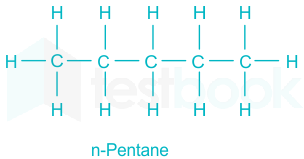
  1. ((a))

    Taciturn

  2. ((b))

    Silent

  3. ((c))

    Reserved

  4. ((d))

    Clamorous

Show Answer
Answer: ((d))

Clamorous

The correct answer is 'Clamorous'.

Key Points

  • The meaning of the given words:
  • Taciturn: quiet
  • Silent: soundless
  • Reserved: quiet
  • Clamorous: noisy
  • So, the word 'clamorous' is opposite in meaning to the other words.
  • Hence, option 4) is the answer.
140

Choose the correct option from the given options based on the definition of the one-word substitute.

A person who is new to a trade or profession.

  1. ((a))

    Cynic

  2. ((b))

    Veteran

  3. ((c))

    Maniac

  4. ((d))

    Novice

Show Answer
Answer: ((d))

Novice

The correct answer is 'Novice'.

Key Points

  • The meaning of the given words:
  • Cynic: a person who believes that everyone is selfish
  • Veteran: a person who had long service or experience in a particular occupation or field.
  • Maniac: a person who is violent
  • Novice: a person new to a job
141

Fill in the blank of the sentence using one from the words, idioms or phrases provided in the four alternatives.

Nordisk has recently ___________ a product called Glucometer.

  1. ((a))

    Begun

  2. ((b))

    Started

  3. ((c))

    Launched

  4. ((d))

    Commissioned

Show Answer
Answer: ((c))

Launched

The correct answer is 'Launched'.

Key Points

  • The meaning of the given words:
  • Begun: started
  • Started: to begin
  • Launched: to lay the foundation of something
  • Commissioned: to order

  • A company cannot 'begun' or 'start' a product but can launch it.
  • Hence, option 3) is the correct answer.
142

Fill in the blank with the right form of the word.

The village was situated at a distance of about ten miles from Punjab. I ___________ by a cycle and reached my friend’s house at noon.

  1. ((a))

    was travelling

  2. ((b))

    travel

  3. ((c))

    travelled

  4. ((d))

    has travelled

Show Answer
Answer: ((c))

travelled

The correct answer is 'travelled'.

Key Points

  • The given sentence is about a finished action and it is a past event.
  • Hence, simple past tense should be used here.
  • So, 'travelled' is the correct form. Therefore, option 3) is the answer.

Additional Information

The construction of a sentence in simple past tense:

Shewrotea letter.
subjectverb2object
143

Choose the word whose meaning is closest to the bold lettered word.

Many villages were swept away by the DELUGE

  1. ((a))

    torrent

  2. ((b))

    weapon

  3. ((c))

    terrorist attacks

  4. ((d))

    famine

Show Answer
Answer: ((a))

torrent

The correct answer is 'torrent'.

Key Points

  • The meaning of the word 'Deluge' is 'flood'.
  • The meaning of the given words:
  • torrent: flood
  • weapon: an object which is used to cause physical damage
  • terrorist attacks: a sudden or an unexpected attack by terrorists which involves violence
  • famine: food shortage
  • The word 'torrent' is closest in meaning to the word 'Deluge'.
  • So, option 1) is the answer.
144

Select the correct sentence structure from the given four choices.

  1. ((a))

    There will not be enough time.

  2. ((b))

    Will not be enough time there.

  3. ((c))

    There not will be enough time.

  4. ((d))

    Enough time will there not be.

Show Answer
Answer: ((a))

There will not be enough time.

The correct answer is 'There will not be enough time.'

Key Points

  • Option 2) is an incorrect sentence. The modal verb 'will' should not be written at the beginning of a declarative sentence.
  • Option 3) is an incorrect sentence. The modal verb 'will' should be written before the word 'not'.
  • Option 4) is an incorrect sentence. The word 'there' should be written after the word 'be'.
  • Option 1) is the correct sentence structure.
  • Hence, option 1) is the answer.
145

Replace the underlined part in the given sentence with the correct option.

The Chief Minister has no correspondence along with his China delegates for a long time.

  1. ((a))

    correspondence with

  2. ((b))

    correspondence for

  3. ((c))

    correspondence to

  4. ((d))

    correspondence between

Show Answer
Answer: ((a))

correspondence with

The correct answer is 'correspondence with'.

Key Points

  • The phrase 'along with' means 'together with or accompanied by'.
  • The meaning of the word 'correspondence' is 'written communication'.
  • The phrase 'along with' should not be used here.


  • The preposition 'for' and 'to' cannot be used here with the word 'correspondence'.
  • Hence, option 2) and option 3) should be eliminated.
  • The preposition 'between' is used when the word correspondence means 'similarity' or 'connection'.
  • Example: I could not find any correspondence between these two places.
  • Hence, 'with' should be used here.
  • So, option 1) is the answer.
146

Choose the word whose meaning is closest to the underlined word.

Students are always diligent in performing their duties.

  1. ((a))

    lazy

  2. ((b))

    reliable

  3. ((c))

    hard working

  4. ((d))

    eminent

Show Answer
Answer: ((c))

hard working

The correct answer is 'hard working'.

Key Points

  • The meaning of the underlined word 'diligent' is 'hard working'.
  • The meaning of the given words:
  • lazy: inactive
  • reliable: dependable
  • hard working: (of a person) tending to work with energy and commitment; diligent.
  • eminent: famous
  • So, the word 'hard working' is closest to the underlined word.
  • Hence, option 3) is the answer.
147

Select the word that is furthest (opposite) in meaning to the underlined word.

The principal berated his students

  1. ((a))

    lectured

  2. ((b))

    praised

  3. ((c))

    ranked

  4. ((d))

    disciplined

Show Answer
Answer: ((b))

praised

The correct answer is 'praised'.

Key Points

  • The meaning of the word 'berated' is 'to scold'. (डाँटने)
  • The meaning of the given words:
  • lectured: to give a speech (एक भाषण देने के लिए)
  • praised: to express approval of (की स्वीकृति व्यक्त करने के लिए)
  • ranked: to classify (वर्गीकृत करने के लिए)
  • disciplined: trained to obey rules (नियमों का पालन करने के लिए प्रशिक्षित)
  • Hence, the word 'praised' is the word that is 'furthest' in meaning to the underlined word.
  • So, option 2) is the answer.
148

In the following sentence, there is an error either in the form or in the placement of either adjective or adverb. Choose the one which is correct out of the four alternatives given.

Raju holds a more superior position than Mohan.

  1. ((a))

    Raju holds a position more superior than Mohan.

  2. ((b))

    Raju’s position is not as superior as Mohan’s.

  3. ((c))

    Raju holds a superior position than Mohan.

  4. ((d))

    Raju’s position is more superior than Mohan’s.

Show Answer
Answer: ((c))

Raju holds a superior position than Mohan.

The correct answer is 'Raju holds a superior position than Mohan.'

Key Points

  • The word 'superior' is used as the adjectives of comparative degree.
  • So, 'more' should be removed from the sentence.
  • The correct sentence is option 3).
  • Hence, option 3) is the answer.

Additional Information

  • An adjective modifies a noun or a pronoun.
  • Example: Testbook is an amazing online learning platform.
  • Adjectives have three different forms of degrees to show comparison: positive degreecomparative degreesuperlative degree.
  • Positive degree: Positive degree is used to describe a noun and when there is no comparison. 
  • Example: Lily is a good girl.
  • Comparative degree:  Comparative degree is used when two things or persons or objects are compared with each other.
  • Example: Lily is taller than Rahul.
  • Superlative degree: Superlative degree is used when more than two persons or things or objects are compared.
  • Example: Lily is the tallest girl in the class.
149

Select the most appropriate ANTONYM of the given word.

BEWILDER

  1. ((a))

    Gladden

  2. ((b))

    Bemuse

  3. ((c))

    Mystify

  4. ((d))

    Enlighten

Show Answer
Answer: ((d))

Enlighten

The correct answer is 'Enlighten'.

Key Points:-

  • Let's look at the meaning of the given word:-
  • Bewilder*(adjective)* - deeply or utterly confused or perplexed. (गहराई से या पूरी तरह से भ्रमित या हैरान)
  • For Example - I was appalled and was too bewildered to do or say anything.
  • Let's look at the meaning of the correct answer:-
  • Enlighten*(verb)* - give (someone) greater knowledge and understanding about a subject or situation. ((किसी को) किसी विषय या स्थिति के बारे में अधिक ज्ञान और समझ देना)
  • For Example - Christopher had not enlightened Francis as to their relationship.
  • Let's look at the meaning of the other options:-
WORDMEANING
Gladden*(verb)*to make happy. (खुश रखना)
Bemuse*(verb)*to puzzle or confuse. (पहेली या भ्रमित करने के लिए)
Mystify*(verb)*to confuse someone. (किसी को भ्रमित करने के लिए)
  • ​Clearly, the word 'Enlighten' is furthest in meaning to the given word.
<br>

​Therefore, the correct antonym of the given word is Enlighten.

150

Choose the part of the sentence which has an error.

Reshma told me (a) / that she wrote a letter (b) / to her superior(c) / for a certain reason (d).

  1. ((a))

    b

  2. ((b))

    d

  3. ((c))

    c

  4. ((d))

    a

Show Answer
Answer: ((a))

b

The correct answer is 'b'.

Key Points

The past perfect is a verb tense which is used to show that an action took place once or many times before another point in the past. We will replace 'wrote' with 'had written'. ( here the two actions which are in past are 'told' and 'written')
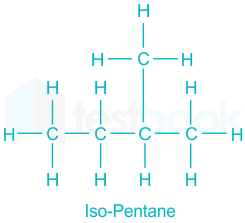
The past perfect is formed using had + past participle. Questions are indicated by inverting the subject and had. Negatives are made with not.

  • Statement: You had studied English before you moved to New York.
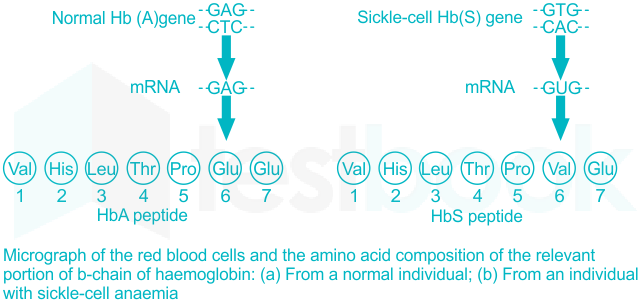
  • Question: Had you studied English before you moved to New York?
  • Negative: You had not studied English before you moved to New York.

Correct SentenceReshma told me that she had written a letter to her superior for a certain reason.

General Hindi (15 questions)

151

'वपु' का पर्यायवाची है:

  1. ((a))

    द्रव्य

  2. ((b))

    मन

  3. ((c))

    तन

  4. ((d))

    धन

Show Answer
Answer: ((c))

तन

दिए गए विकल्पों में तन शब्द 'वपु' का पर्यायवाची हैं। अतः विकल्प 3 इसका सही विकल्प  है, अन्य विकल्प असंगत हैं।  

Key Points

  • वपु​ के अन्य पर्यायवाची शब्द हैं - शरीर, देह, काया, बदन।

अन्य विकल्प -  

शब्दपर्यायवाची शब्द
द्रव्यधन, वित्त, सम्पदा, विभूति, दौलत, सम्पत्ति
मनचित्त, ह्रदय, अंतःकरण, दिल, अंतर
धनदौलत, संपत्ति, सम्पदा, वित्त

Important Points

शब्दपरिभाषाउदाहरण
पर्यायवाचीएक ही अर्थ में प्रयुक्त होने वाले शब्द जो बनावट में भले ही अलग हों, पर्यायवाची या समानार्थी शब्द कहलाते हैं।आग-अनल, पावक, दहन। हवा-समीर, अनिल, वायु।
152

'दीर्घकाय' किसका विलोम है?

  1. ((a))

    मोटा

  2. ((b))

    कृशकाय

  3. ((c))

    दुर्जन

  4. ((d))

    उत्थान

Show Answer
Answer: ((b))

कृशकाय

'दीर्घकाय' का विलोम शब्द है- कृशकाय

  • 'दीर्घकाय' का अर्थ है- लंबा-तगड़ा, डील-डौलवाला।
  • विशेषण शब्द
  • मोटा -  विशाल, पीवर, माँसल, स्थूल, भारी
  • विलोम शब्द - 'पतला'
  • दुर्जन - दुष्ट, खल, शठ, असाधु, पतित, असज्जन।
  • विलोम शब्द - 'सज्जन'
  • उत्थान - उत्कर्ष, प्रगति, उत्क्रमण, आरोह, आरोहण
  • विलोम शब्द - 'पतन'

Key Points

  • किसी शब्द का विलोम शब्द उस शब्द के अर्थ से उल्टा या विपरीत अर्थ वाला होता है।

Additional Informationकुछ महत्वपूर्ण विलोम शब्द:- 

  • शब्द - विलोम
  • यश - अपयश
  • सगुण - निर्गुण
  • मूक - वाचाल
  • रुग्ण - स्वस्थ
  • रक्षक - भक्षक
  • कृतज्ञ - कृतघ्न
  • तुच्छ - महान्
  • गुण - अवगुण
  • अन्तरंग - बहिरंग
  • अनभिज्ञ - भिज्ञ
153

'विभव' का विलोम है:

  1. ((a))

    पराभव

  2. ((b))

    छुराचार

  3. ((c))

    वैभव

  4. ((d))

    उत्कर्ष

Show Answer
Answer: ((a))

पराभव

'विभव' का विलोम है- 'पराभव'

  • विभव का अर्थ - ऐश्वर्य, शक्ति, धन-दौलत, संपत्ति, वैभव।

Key Points

  • एक-दूसरे के विपरीत या उल्टा अर्थ देने वाले शब्दों को, विलोम शब्द कहते है।

जैसे -

  • उत्कर्ष- प्रगति, उत्थान, अभ्युदय, वृद्धि, उन्नति, विकास।
  • विलोम शब्द - 'अपकर्ष'

Additional Informationकुछ महत्वपूर्ण विलोम शब्द:-

  • शब्द - विलोम
  • स्वाधीन - पराधीन
  • आहार - निराहार
  • दाता - याचक
  • खेद - प्रसन्नता
  • गुप्त - प्रकट
  • प्रत्यक्ष - परोक्ष
  • सुगंध - दुर्गन्ध
  • मौखिक - लिखित
  • संक्षेप - विस्तार
  • घात - प्रतिघात
  • क्षणिक - शाश्वत
154

"शुक" का पर्यायवाची है।

  1. ((a))

    केकी

  2. ((b))

    शिखावल

  3. ((c))

    कलापी

  4. ((d))

    कीर

Show Answer
Answer: ((d))

कीर

कीर शब्द 'शुक' का पर्यायवाची हैं। अतः विकल्प 4 इसका सही विकल्प है, अन्य विकल्प असंगत हैं।  

Key Points

  • शुक​ के अन्य पर्यायवाची शब्द हैं - तोता, सुग्गा, सुआ।

अन्य विकल्प -  

शब्दपर्यायवाची शब्द
केकीसुंदर पंखों वाली लंबी पूँछ का एक प्रसिद्ध पक्षी, नर मयूर या मोर
शिखावलनुकीला, नोकवाला, चोटीवाला
कलापीअर्जुन, मेघानंद, राजसारस, बर्हिण, मेघसुहृद, चित्रपिच्छक, चित्रमेखल, नागवारिक, बर्ही

Important Points

शब्दपरिभाषाउदाहरण
पर्यायवाचीएक ही अर्थ में प्रयुक्त होने वाले शब्द जो बनावट में भले ही अलग हों, पर्यायवाची या समानार्थी शब्द कहलाते हैं।आग-अनल, पावक, दहन। हवा-समीर, अनिल, वायु।
155

'पल्लव, पर्ण, द्रुमदल' किसके पर्याय है?

  1. ((a))

    पति

  2. ((b))

    वृक्ष

  3. ((c))

    पत्ता

  4. ((d))

    श्राह

Show Answer
Answer: ((c))

पत्ता

दिए गए विकल्पों  में पल्लव, पर्ण, द्रुमदल 'पत्ता' शब्द के पर्यायवाची हैं। अतः विकल्प 3 इसका सही विकल्प  है, अन्य विकल्प असंगत हैं।  

Key Points

  • पत्ता के अन्य पर्यायवाची शब्द हैं - पत्ती, पात, पाती।

अन्य विकल्प -  

शब्दपर्यायवाची शब्द
पतिभर्ता, वल्लभ, स्वामी, प्राणाधार, प्राणप्रिय, प्राणेश, आर्यपुत्र
वृक्षपेड़, तरु, रूक्ष, पादप, विटप, द्रुम, रूख, गाछ, पुष्पद, बूटा, पर्णी, शाखी और अगम
श्राहसजा हुआ सोने का कमरा, विलासभवन, रंगमहल

Important Points

शब्दपरिभाषाउदाहरण
पर्यायवाचीएक ही अर्थ में प्रयुक्त होने वाले शब्द जो बनावट में भले ही अलग हों, पर्यायवाची या समानार्थी शब्द कहलाते हैं।आग-अनल, पावक, दहन। हवा-समीर, अनिल, वायु।
156

'अंग' का अर्थ नहीं है:

  1. ((a))

    भाग्य

  2. ((b))

    शरीर

  3. ((c))

    अवयव

  4. ((d))

    अंश

Show Answer
Answer: ((a))

भाग्य

'अंग' का अर्थ नहीं है- 'भाग्य'

  • अंग का अनेकार्थी शब्द - शरीर, अवयव, अंश, शाखा, भेद, पक्ष, सहायक, भाग, हिस्सा।
  • भाग्य का अनेकार्थी शब्द - किस्मत, तक़दीर, नसीब।

Key Points

  • अनेकार्थक शब्द का अर्थ है– अनेक अर्थ वाला, अर्थात् जिन शब्दों से एक से अधिक अर्थ–बोध होता है, उन्हें अनेकार्थक कहते हैं।

Additional Informationकुछ महत्वपूर्ण अनेकार्थक शब्द:-

  • खग - पक्षी, वाण, गन्धर्व, सूर्य, ग्रह, चन्द्रमा, देवता, वायु।
  • विहंग - पक्षी, वाण, बादल, विमान, सूर्य, चन्द्रमा, देवता।
  • रक्त - खून, केशर, लाल, कुंकुम, ताँबा, कमल, सिन्दूर, रुधिर।
  • रंग - सातों रंग, आनन्द, विलास, नाटक का प्रदर्शन, शोभा, सौंदर्य, प्रेम, राग।
  • ताल - संगीत का ताल, झील, तालाब, ताड़ का वृक्षा।
  • घट - शरीर, घड़ा, कम, कलश, जलपात्र, पिण्ड, मन, हृदय, न्यून।
  • आतुर - उत्सुक, उतावला, रोगी, कमज़ोर, दुःखी, आहत, पीड़ित, व्यग्र, व्याकुल।
  • अहि - दुष्ट, सूर्य, साँप, राहु, पृथ्वी, जल, बादल।
  • अक्षर - वर्ण, ईश्वर, आत्मा, स्थिर, शिव, विष्णु, अविनाशी।
157

निम्नलिखित में से शुद्ध है:

  1. ((a))

    स्वातन्त्र

  2. ((b))

    उपलक्ष

  3. ((c))

    उच्छृंखल

  4. ((d))

    द्विधा

Show Answer
Answer: ((c))

उच्छृंखल

उपरोक्त में से शुद्ध है- उच्छृंखल

  • अशुद्ध - उश्रृंखल
  • शुद्ध - उच्छृंखल
  • अर्थ: मनमानी करने वाला, स्वेच्छाचारी
  • अशुद्ध - उपलक्ष
  • शुद्ध - उपलक्ष्य
  • अर्थ: लक्ष्य करने योग्य।​
  • अशुद्ध - द्विधा
  • शुद्ध - द्विविधा
  • अर्थ: अंदेशा, असमंजस।

Key Points

  • किसी शब्द में आये हुए अक्षरों को मात्राओ सहित कहने या लिखने की रीति को वर्तनी कहते हैं ।
  • वर्तनी का सम्बन्ध का सीधा सम्बन्ध उच्चारण से होता है। यदि उच्चारण शुद्ध होगा तो वर्तनी शुद्ध होगी और यदि उच्चारण अशुद्ध होगा तो वर्तनी भी अशुद्ध होगी।

Additional Informationकुछ अशुद्ध से शुद्ध शब्द:-

  • अशुद्ध   -   शुद्ध
  • कनिष्ट - कनिष्ठ
  • आधीन - अधीन
  • कलस -  कलश
  • अवत्रति  - अवनति
  • अन्तध्र्यान - अन्तर्धान
  • अन्ताक्षरी - अन्त्याभरी
  • अहिल्या - अहल्या
  • कवियित्री - कवयित्री
  • अगामी  - आगामी
  • कालीदास - कालिदास
  • अनुग्रहीत - अनुगृहीत
  • अनाधिकार - अनधिकार
  • अमावश्या - अमावस्या
158

'अ' प्रत्यय से बना हुआ शब्द है:

  1. ((a))

    माननीय

  2. ((b))

    दानव

  3. ((c))

    पवन

  4. ((d))

    कडुआ

Show Answer
Answer: ((b))

दानव

'अ' प्रत्यय से बना हुआ शब्द है- 'दानव'

  • दानव = दानव +  
  • 'दानव' मूलशब्द और **'**अ' प्रत्यय
  • अर्थ: राक्षस, असुर, दैत्य।

Key Points

- माननीय = मान + अनीय - 'मान' मूलशब्द और 'अनीय' प्रत्यय ​ - अर्थ: मानने योग्य, सम्माननीय, आदरणीय। - विलोम शब्द - '​अमाननीय' - विशेषण शब्द - पवन = पो + अन (ओ + अ = अव) अयादि संधि - पो मूलशब्द और 'अनीय' प्रत्यय - अर्थ: हवा, वायु, वात, तान, अनिल, बयार। - कडुआ =  कडुआ + आ - कडुआ मूलशब्द और **'**आ' प्रत्यय - अर्थ: जिसका तीक्ष्ण स्वाद जीभ को असह्य हो।

Additional Information

  • प्रत्यय शब्द के अंत में जुड़ता है।

कुछ महत्वपूर्ण प्रत्यय शब्द:-

  • अ - शैव, वैष्णव, तैल, पार्थिव, मानव।
  • अन- पालन, सहन, नयन, चरण।
  • अनीय- माननीय, रमणीय, दर्शनीय, पूजनीय।
  • इया- छलिया, जड़िया, बढ़िया, घटिया।
  • अक-  लेखक, पाठक, कारक, गायक।
  • आई - लड़ाई, सिलाई, पढ़ाई, चढ़ाई।
  • इल- फेनिल, कुटिल, तन्द्रिल, जटिल, पंकिल, स्वप्निल।
159

'तरंग' का अर्थ नहीं है:

  1. ((a))

    उमंग

  2. ((b))

    स्वर लहरी

  3. ((c))

    लहर

  4. ((d))

    सागर

Show Answer
Answer: ((d))

सागर

'तरंग' का अर्थ नहीं है- 'सागर'

  • 'सागर' के सभी पर्यायवाची शब्द- समुद्र, जलधि, उदधि, समुद्र, रत्नाकर, अंबुधि, पयोधि।
  • 'तरंग' के सभी पर्यायवाची शब्द- लहर, उमंग, स्वर लहरी, ऊर्मि, उल्लोल, हिलोर, कंपन, मौज।

Key Points

  • जो शब्द समान अर्थ के कारण किसी दूसरे शब्द की जगह ले लेते हैं उन्हें पर्यायवाची शब्द कहते हैं।

Additional Informationकुछ महत्वपूर्ण पर्यायवाची शब्द:-  

  • अंतरिक्ष - खगोल, नभमंडल, गगनमंडल, आकाशमंडल।
  • इंद्र - पुरंदर, शक्र,  शचिपति, सुरपति, देवराज, मघवा, देवेश
  • कर्ण - सूर्यपुत्र, राधेय, कौन्तेय, पार्थ, अंगराज, सूतपुत्र।
  • चंद्रमा - सुधाकर, शशांक, रजनीपति ,निशानाथ ,सुधांशु।
  • कान्ति - प्रकाश, आलोक, उजाला, दीप्ति, छवि, सुषमा,आभा, प्रभा, छटा, द्युति।
  • चाँदनी - चंद्रिका, कौमुदी, हिमकर, अमृतद्रव, उजियारी, ज्योत्स्न्ना, चन्द्रमरीचि, कलानिधि।
  • जगत - विश्व, दुनिया, जगती, संसार, भव, जग, जहान्, लोक।
  • तारा - तारक, नक्षत्र, तारिका नखत उडुगन सितारा।
  • दीपक - प्रदीप, दीप, दीया, ज्योति, चिराग।
160

'इन्दा' प्रत्यय से बनने वाला शब्द नहीं हैं।

  1. ((a))

    शर्मिन्दा

  2. ((b))

    चुनिन्दा

  3. ((c))

    बाशिन्दा

  4. ((d))

    गोविन्दा

Show Answer
Answer: ((d))

गोविन्दा

'इन्दा' प्रत्यय से बनने वाला शब्द नहीं हैं- 'गोविन्दा'

  • गोविन्दा- भगवान कृष्ण का नाम 
  • 'गोविन्दा' शब्द से इन्दा अलग करने पर सार्थक अर्थ का बोध नही हो रहा है।
  • शर्म + इन्दा = शर्मिन्दा
  • 'शर्म' मूलशब्द और 'इन्दा' प्रत्यय
  • अर्थ: ​जिसे लज्जा हुई हो।
  • चुन + इन्दा  = चुनिन्दा
  • 'चुन' मूलशब्द और 'इन्दा' प्रत्यय
  • अर्थ: छाँटा हुआ, चयनित।​
  • बाश + इन्दा  = बाशिन्दा​
  • 'बाश' मूलशब्द और 'इन्दा' प्रत्यय
  • अर्थ: निवासी, रहने वाला।

Key Points

  • प्रत्यय शब्द के अंत में जुड़ता है।

Additional Informationकुछ महत्वपूर्ण प्रत्यय शब्द:-

  • इन्दा- परिन्दा, कारिन्दा।
  • इक- साप्ताहिक, साहित्यिक, वैयक्तिक, राजनैतिक, समाजिक।
  • ता- उदारता, सफलता, मनुष्यता, लिखता, लघुता,समता।
  • ईय- दर्शनीय, स्वर्गीय, भारतीय, जातीय, मृगीय।
  • अनीय- माननीय, रमणीय, दर्शनीय, पूजनीय, श्रवणीय।
  • आई- लड़ाई, सिलाई, पढ़ाई, चढ़ाई, ठकुराई, चतुराई, चौड़ाई।
  • आहट- चिकनाहट, घबराहट, चिल्लाहट, कड़वाहट।
161

निम्नलिखित में से संयुक्त वाक्य है:

  1. ((a))

    माँ ने बहू को साड़ी दी।

  2. ((b))

    गुरु जी ने कहा कि पृथ्वी गोल है।

  3. ((c))

    माँ बेटे को नहलाकर विद्यालय भेजती है।

  4. ((d))

    प्रशान्त अथवा वर्षा गाना गायेगी।

Show Answer
Answer: ((d))

प्रशान्त अथवा वर्षा गाना गायेगी।

उपरोक्त में से संयुक्त वाक्य है- प्रशान्त अथवा वर्षा गाना गायेगी।

  • (यहाँ एक वाक्य में दो सरल वाक्य हैं। इन दो सरल वाक्यों को **'**अथवा' अव्यय संयोजक से जोड़ा गया है।)
  • ऐसा वाक्य जिसमे दो या दो से अधिक उपवाक्य हो एवं सभी उपवाक्य प्रधान हों, ऐसे वाक्य को सयुंक्त वाक्य कहते हैं।
  • पहचान शब्द - और, एवं, तथा, या, अथवा, इसलिए, अतः, फिर भी, तो, नहीं तो, किन्तु, परन्तु, लेकिन, पर आदि का प्रयोग करके जोड़ा जाता है।
  • उदाहरण-
  • मैं आया और वह गया।
  • उसने बहुत परिश्रम किया किन्तु सफल नहीं हो सका।
  • मैंने बहुत परिश्रम किया इसलिए सफल हो गया।
  • मैं बहुत तेज़ दौड़ा फिर भी ट्रेन नहीं पकड़ सका।

Key Points

  • माँ ने बहू को साड़ी दी।  (सरल वाक्य)
  • गुरु जी ने कहा कि पृथ्वी गोल है। (मिश्र वाक्य)
  • माँ बेटे को नहलाकर विद्यालय भेजती है। (सरल वाक्य)

Additional Information

सरल वाक्य:- - ऐसा वाक्य जिसमे एक ही क्रिया एवं एक ही कर्ता होता है या जिस वाक्य में एक ही उद्देश्य एवं एक ही विधेय होता है, वे वाक्य सरल वाक्य कहलाते हैं। उदाहरण- - उसने अपने भाई का खाना खाया। - ईमानदार आदमी का सभी सम्मान करते हैं। मिश्र वाक्य:- - ऐसे वाक्य जिनमें सरल वाक्य के साथ-साथ कोई दूसरा उपवाक्य भी हो, वे वाक्य मिश्र वाक्य कहलाते हैं। - पहचान शब्द - ‘कि’; ‘जो’; ‘क्योंकि’; ‘जितना’; ‘उतना’; ‘जैसा’; ‘वैसा’; ‘जब’; ‘तब’; ‘जहाँ’; ‘वहाँ’; ‘जिधर’; ‘उधर’; ‘अगर/यदि’; ‘तो’; ‘यद्यपि’; ‘तथापि’; आदि का प्रयोग करके जोड़ा जाता है। उदाहरण- - मैं जानता हूँ कि तुम्हारे अक्षर अच्छे नहीं बनते। - अमित ने वह घर खरीदा जो उसके चाचा का था।
162

द्विगु समास का उदाहरण नहीं है:

  1. ((a))

    शतक

  2. ((b))

    पंचानन

  3. ((c))

    पच्चीस

  4. ((d))

    नवरत्न

Show Answer
Answer: ((c))

पच्चीस

द्विगु समास का उदाहरण नहीं है- पच्चीस

  • पच्चीस का समास विग्रह - पाँच और बीस
  • पच्चीस में द्वंद्व समास है।
  • ​जिस समास में समस्तपद के दोनों पद प्रधान हों या दोनों पद सामान हों एवं दोंनों पदों को मिलाते समय ‘और’, ‘अथवा’, ‘या’, ‘एवं’ आदि योजक लुप्त हो जाएँ, वह समास द्वंद्व समास कहलाता है।
  • जैसे- 
  • सुख-दुख = सुख या दुःख
  • गौरीशंकर = गौरी और शंकर

Key Points

  • शतक = सौ का समाहार  - द्विगु समास
  • पंचानन = पांच मुख का समाहार - द्विगु समास
  • नवरत्न = नौ रत्नों का समूह - द्विगु समास

Additional Informationद्विगु समास:-

  • वह समास जिसका पहला पद संख्यावाचक विशेषण होता है तथा समस्तपद किसी समूह या फिर किसी समाहार का बोध करता है तो वह द्विगु समास कहलाता है।

जैसे-

  • चारपाई = चार पैरों का समूह
  • तिमाही = तीन माहों का समाहार
  • तिरंगा = तीन रंगों का समूह
  • पंचतंत्र = पांच तंत्रों का समाहार
163

'आभा, छवि, दीप्ती' किसके पर्याय है?

  1. ((a))

    चन्द्रमा

  2. ((b))

    दीपक

  3. ((c))

    ज्योति

  4. ((d))

    ज्योत्सना

Show Answer
Answer: ((c))

ज्योति

दिए गए विकल्पों  में आभा, छवि, दीप्ती 'ज्योति' शब्द के पर्यायवाची हैं। अतः विकल्प 3 इसका सही विकल्प  है, अन्य विकल्प असंगत हैं।  

Key Points

  • ज्योति के अन्य पर्यायवाची शब्द हैं - द्युति, प्रभा, भा, रुचि, रोचि।

अन्य विकल्प -  

शब्दपर्यायवाची शब्द
चन्द्रमाचाँद, चंद्र, हिमांशु, सुधांशु, सुधाकर, सुधाधर, राकेश, राकापति, शशि, सारंग
दीपकदीप, दीया, प्रदीप
ज्योत्सनाचाँदनी, चंद्रप्रभा, कौमुदी, जुन्हाई

Important Points

शब्दपरिभाषाउदाहरण
पर्यायवाचीएक ही अर्थ में प्रयुक्त होने वाले शब्द जो बनावट में भले ही अलग हों, पर्यायवाची या समानार्थी शब्द कहलाते हैं।आग-अनल, पावक, दहन। हवा-समीर, अनिल, वायु।
164

'शोषण' का अर्थ बताने वाला अंग्रेजी शब्द है:

  1. ((a))

    Explanation

  2. ((b))

    Expenditure

  3. ((c))

    Exploitation

  4. ((d))

    External

Show Answer
Answer: ((c))

Exploitation

'शोषण' का अर्थ बताने वाला अंग्रेजी शब्द है- Exploitation

  • शोषण का अर्थ- श्रमिकों पर होने वाला शारीरिक और मानसिक अत्याचार।
  • शोषण का विलोम शब्द पोषण है। 
  • पोषण - Nutrition

Key Points

  • स्पष्टीकरण, व्याख्या - Explanation
  • व्यय, खर्च - Expenditure
  • बाहरी - External

Additional Informationकुछ अन्य महत्वपूर्ण शब्द:-

  • मंजूरी - Approval
  • गुलामी- Bondage
  • नियमित युद्ध- Campaign
  • भूकंप - Earthquake
  • आश्चर्यजनक- Fabulous
  • सिद्धान्त - Ideology
165

'अवर' का विलोम है:

  1. ((a))

    प्रवर

  2. ((b))

    आवर

  3. ((c))

    प्रावर

  4. ((d))

    आगे

Show Answer
Answer: ((a))

प्रवर

'अवर' का विलोम है- 'प्रवर'

  • 'अवर' का अर्थ- जो श्रेष्ठ न हो, कनिष्ठ, छोटा।
  • 'प्रवर' का अर्थ - श्रेष्ठ और अवस्था में बड़ा।
  • आवर तथा प्रावर अशुद्ध शब्द है जिनका शुद्ध रूप अवर तथा प्रवर है |
  • आगे का विलोम है- पीछे

Key Points

  • एक-दूसरे के विपरीत या उल्टा अर्थ देने वाले शब्दों को, विलोम शब्द कहते है।

Additional Informationकुछ महत्वपूर्ण विलोम शब्द:-

  • शब्द - विलोम
  • अजल - निर्जल
  • वृष्टि - अनावृष्टि
  • उत्साह - अनुत्साह
  • सोत्साह - निरुत्साह
  • अनुरक्ति -विरक्ति
  • अर्वाचीन - प्राचीन
  • प्रत्यक्ष - परोक्ष
  • दुर्लभ - सुलभ
  • निरक्षर - साक्षर
  • नूतन - पुरातन

Regional Language Hindi (15 questions)

166

"यदि रमेश परिश्रम करता तो अवश्य उत्तीर्ण हो जाता" यह किस प्रकार का वाक्य है?

  1. ((a))

    मिश्र वाक्य

  2. ((b))

    संयुक्त वाक्य

  3. ((c))

    आज्ञार्थक वाक्य

  4. ((d))

    साधारण वाक्य

Show Answer
Answer: ((a))

मिश्र वाक्य

"यदि रमेश परिश्रम करता तो अवश्य उत्तीर्ण हो जाता" यह प्रकार का वाक्य है- मिश्र वाक्य

  • (यहां एक उपवाक्य प्रधान है एवं दूसरा उपवाक्य आश्रित है। इसमें प्रधान उपवाक्य 'यदि रमेश परिश्रम करता' तथा आश्रित उपवाक्य 'अवश्य उत्तीर्ण हो जाता')  
  • ऐसे वाक्य जिनमें सरल वाक्य के साथ-साथ कोई दूसरा उपवाक्य भी हो, वे वाक्य मिश्र वाक्य कहलाते हैं।
  • पहचान शब्द - ‘कि’; ‘जो’; ‘क्योंकि’; ‘जितना’; ‘उतना’; ‘जैसा’; ‘वैसा’; ‘जब’; ‘तब’; ‘जहाँ’; ‘वहाँ’; ‘जिधर’; ‘उधर’; ‘अगर/यदि’; ‘तो’; ‘यद्यपि’; ‘तथापि’ आदि का प्रयोग किया जाता है।
  • उदाहरण-
  • यह वही राम है, जो बहुत ज्यादा बीमार रहता है।

Key Pointsकुछ महत्वपूर्ण मिश्र वाक्य के उदाहरण:-

  • जो औरत बाहर बैठी है, वह मेरी दादी है।
  • अमित ने वह घर खरीदा जो उसके चाचा का था।
  • यदि परिश्रम करोगे तो उत्तीर्ण हो जाओगे।
  • मैं जानता हूँ कि तुम्हारे अक्षर अच्छे नहीं बनते।
  • जब दुर्घटना की खबर सुनी, तब मन दुखी हो गया।
  • विकास ने घर खरीदा हुआ उसके चाचा का था।

Additional Information

संयुक्त वाक्य:- - ऐसा वाक्य जिसमे दो या दो से अधिक उपवाक्य हो एवं सभी उपवाक्य प्रधान हों, ऐसे वाक्य को सयुंक्त वाक्य कहते हैं। - पहचान शब्द - और, एवं, तथा, या, अथवा, इसलिए, अतः, फिर भी, तो, नहीं तो, किन्तु, परन्तु, लेकिन, पर आदि का प्रयोग करके जोड़ा जाता है। उदाहरण- - प्रिय बोलो पर असत्य नहीं। - वह सुबह गया और शाम को लौट आया। आज्ञार्थक वाक्य:- - ऐसे वाक्य जिनमें आदेश, आज्ञा या अनुमति का पता चले या बोध हो, वे वाक्य आज्ञावाचक वाक्य कहलाते हैं। उदाहरण- - कृपया बैठ जाइये। - सभी अपना-अपना काम करो। साधारण वाक्य:- - ऐसा वाक्य जिसमे एक ही क्रिया एवं एक ही कर्ता होता है या जिस वाक्य में एक ही उद्देश्य एवं एक ही विधेय होता है, वे वाक्य सरल वाक्य या साधारण वाक्य कहलाते हैं। उदाहरण- - संगीता चलती है। - अमित खाना खाता है।
167

'चपला, चंचला, तड़ित' निम्नलिखित में से किस शब्द के पर्यायवाची हैं?

  1. ((a))

    लक्ष्मी

  2. ((b))

    धन

  3. ((c))

    बुद्धि

  4. ((d))

    विद्युत

Show Answer
Answer: ((d))

विद्युत

दिए गए विकल्पों  में चपला, चंचला, तड़ित 'विद्युत' शब्द के पर्यायवाची हैं। अतः विकल्प 3 इसका सही विकल्प  है, अन्य विकल्प असंगत हैं।  

Key Points

  • विद्युत के अन्य पर्यायवाची शब्द हैं - दामिनी, सौदामिनी, बीजुरी, घनवल्ली, क्षणप्रभा, करका।

अन्य विकल्प -  

शब्दपर्यायवाची शब्द
लक्ष्मीकमला, पद्मा, रमा, हरिप्रिया, श्री, इंदिरा
धनदौलत, संपत्ति, सम्पदा, वित्त
बुद्धिअक्ल, प्रज्ञा, मति, विवेक, मेधा

Important Points

शब्दपरिभाषाउदाहरण
पर्यायवाचीएक ही अर्थ में प्रयुक्त होने वाले शब्द जो बनावट में भले ही अलग हों, पर्यायवाची या समानार्थी शब्द कहलाते हैं।आग-अनल, पावक, दहन। हवा-समीर, अनिल, वायु।
168

निम्नलिखित में से कौन-सा शब्द हिंदी के "केतु" शब्द के अर्थ का द्योतक नहीं है?

  1. ((a))

    पुच्छल तारा

  2. ((b))

    ध्वजा

  3. ((c))

    घड़ा

  4. ((d))

    ग्रह

Show Answer
Answer: ((c))

घड़ा

उपरोक्त में से शब्द हिंदी के "केतु" शब्द के अर्थ का द्योतक नहीं है- 'घड़ा'

  • "केतु" शब्द के अर्थ - पुच्छल तारा, ध्वजा, ग्रह
  • "घड़ा" शब्द के अर्थ - कलश, घट, कुम्भ, गागर, निप, गगरी, कुट।

Key Points

  • केतु का मतलब भगवान शिव, नोड, फार्म, बैनर, नेता, चमक, प्रकाश की एक किरण, पताका (ध्वजा),
  • किसी भी प्रख्यात व्यक्ति, बुद्धि, ज्ञान, खगोल विज्ञान में एक उतरते नोड माना 9 ग्रह, शिव की उपाधि होता है।

Additional Informationध्वजा:-

  • झंडा, गर्व, पताका, निशान, फ़्लैग, सितारा, तारा, अख़्तर।

तारा:-

  • नक्षत्र, सितारा, तारक, किस्मत, भाग्य, ग्रह।
169

"जिसका कथन न किया जा सके" वाक्यांश के लिए एक शब्द क्या है?

  1. ((a))

    अशोभनीय

  2. ((b))

    अपठनीय

  3. ((c))

    अभाष्य

  4. ((d))

    अकथनीय

Show Answer
Answer: ((d))

अकथनीय

"जिसका कथन न किया जा सके" वाक्यांश के लिए एक शब्द अकथनीय है। अन्य विकल्प असंगत है। अतः सही उत्तर विकल्प 4) अकथनीय होगा ।

Key Points

  • "जिसका कथन न किया जा सके" वाक्यांश के लिए एक शब्द अकथनीय है।
  • वाक्य प्रयोग : उनका बोला हुआ हर शब्द अकथनीय रूप से मनोरंजक था। ​

अन्य विकल्प:

शब्दअर्थ
अशोभनीयजो शोभनीय न हो
अपठनीयजिसे पढ़ा न जा सके
अभाष्यन बोलने योग्य बात

Additional Information 

कम से कम शब्दो मे अधिकाधिक अर्थ को प्रकट करना एक कला है जोकि एक अच्छी रचना के लिए आवश्यक है। ऐसे शब्दो के प्रयोग से वाक्य–रचना मेँ संक्षिप्तता, सुन्दरता व गंभीरता आती है।
किसी सम्प्रदाय का समर्थन करने वालाअनुयायी
पीछे–पीछे चलने वाला/अनुसरण करने वालाअनुगामी
अपनी प्रशंसा स्वयं करने वालाआत्मश्लाघी
जो आँखों के सामने होप्रत्यक्ष
चलने योग्यचलनीय
170

"अज्ञ" का विलोम शब्द क्या है?

  1. ((a))

    विज्ञ

  2. ((b))

    अनज्ञ

  3. ((c))

    नासमझ

  4. ((d))

    मूर्ख

Show Answer
Answer: ((a))

विज्ञ

"अज्ञ" का विलोम शब्द है- 'विज्ञ'

  • 'अज्ञ' का अर्थ है - मूर्ख, अज्ञानी, बेवकूफ, नासमझ, अनभिज्ञ, मूढ़, पागल, बेसमझ, अनाड़ी।

Key Points

  • एक-दूसरे के विपरीत या उल्टा अर्थ देने वाले शब्दों को, विलोम शब्द कहते है।

Additional Informationकुछ महत्वपूर्ण विलोम शब्द:- 

  • शब्द - विलोम
  • नश्वर - अनश्वर
  • मान - अपमान
  • आजाद - गुलाम
  • क्षणिक - शाश्वत
  • विधि - निषेध
  • शयन - जागरण
  • सक्रिय - निष्क्रिय
  • उत्थान - पतन
  • आग्रह - दुराग्रह
  • एकता - अनेकता
171

"हाथ पांव फूलना" मुहावरे का क्या अर्थ है?

  1. ((a))

    बहुत तेज 

  2. ((b))

    चल नहीं 

  3. ((c))

    घबरा जाना

  4. ((d))

    बीमार हो 

Show Answer
Answer: ((c))

घबरा जाना

"हाथ पांव फूलना" मुहावरे का अर्थ है- घबरा जाना

  • वाक्य प्रयोग - अचानक पुलिस को दरवाज़े पर देखकर मेरे "हाथ-पाँव फूल गए"।

Key Points

  • “मुहावरा” अरबी भाषा का शब्द है जिसका अर्थ होता है “आदि होना” या “अभ्यास होना” कुछ विद्वान इसे वाग्धारा भी कहते है।
  • मुहावरा शब्द सामान्य अर्थ से अलग विशेष अर्थ को प्रकट करता है।
  • मुहावरे पूर्ण रूप से स्वतंत्र नहीं होते इनका प्रयोग वाक्य सौंदर्य को बढ़ाने में किया जाता है।
  • इसके प्रयोग मात्र से भाषा, आकर्षक, प्रभावपूर्ण और रोचक बन जाती है।​

Additional Informationकुछ महत्वपूर्ण मुहावरा, अर्थ और उनके वाक्य प्रयोग- ​

  • अपना उल्लू सीधा करना- स्वार्थ सिद्ध करना।

           वाक्य प्रयोग- अर्चना ने हमेशा अपने काम को लेकर "अपना उल्लू सीधा करने" का प्रयास किया लेकिन उसे सफलता नहीं मिली।

  • ईंट से ईंट बजाना- पूरी तरह से समाप्त कर देना

          वाक्य प्रयोग- यदि पकिस्तान भारत पर आक्रमण करने की कोशिश भी करेगा तो भारत की बहादुर सेना उनकी "ट से ईंट बजा देगी"।

  • कान पर जूँ न रेंगना- किसी भी बात का असर न होना

           वाक्य प्रयोग- सीमा को कितना भी समझा लो पर उसकी "कान पर जूं तक नहीं रेंगती"।

  • अंधे के हाथ बटेर लगना- अयोग्य को कोई महत्त्वपूर्ण वस्तु मिलना।

           वाक्य प्रयोग- अनपढ़ व्यक्ति की इस प्रकार अच्छे विभाग में बड़े पद पर नौकरी का लग जाना "अंधे के हाथ बटेर लगने" जैसा है।

  • आँखों में धूल झोंकना- धोखा देना।

वाक्य प्रयोग- अपने माता-पिता से दूर शहर में आवारागर्दी करके वह अपने माँ-बाप की "आँखों में धूल झोंक" रहा है।

172

निम्नलिखित में से कौन-सा शब्द युग्म सही नहीं है?

  1. ((a))

    अक्षत-विक्षत

  2. ((b))

    अकंटक-कंटकित

  3. ((c))

    अकेला-अनजान

  4. ((d))

    अगम-सुगम

Show Answer
Answer: ((c))

अकेला-अनजान

उपरोक्त में से शब्द युग्म सही नहीं है- 'अकेला-अनजान'

  • 'अकेला' का उचित विलोम शब्द 'दुकेला' होता है।
  • अकेला- एकाकी, जो किसी के साथ न हो
  • विशेषण शब्द
  • 'अनजान' का उचित विलोम शब्द 'जानकर' होता है।
  • अनजान- अपरिचित, अजनबी, पहले से न देखा हुआ​
  • विशेषण शब्द

Key Points

- 'अकंटक' का उचित विलोम शब्द 'कंटकित' होता है। - अकंटक - बिना काँटे का, निर्विघ्न, व्यवधान से दूर। - विशेषण शब्द - 'अक्षत' का उचित विलोम शब्द 'विक्षत' होता है। - अक्षत - समूचा, बिना टूटा हुआ/ज़ख्म का। - विशेषण शब्द - 'अगम' का उचित विलोम शब्द 'सुगम' होता है। - अगम - जिसके साथ गमन करना वर्जित हो, दुर्गम। - विशेषण शब्द

Additional Information

  • एक-दूसरे के विपरीत या उल्टा अर्थ देने वाले शब्दों को, विलोम शब्द कहते है।

कुछ महत्वपूर्ण विलोम शब्द:-

  • शब्द - विलोम
  • अनित्य - नित्य
  • अनभिज्ञ - भिज्ञ
  • अधम- उत्तम
  • अवनत- उन्नत
  • अनाहूत - आहुत
  • अनुरक्ति -विरक्ति
  • अन्तरंग- बहिरंग
  • अधुनातन - पुरातन
  • अतुकान्त - तुकान्त
  • अतिवृष्टि - अनावृष्टि
  • अनुकूल - प्रतिकूल
173

'सारंग, कुरंग, कस्तूरी' निम्नलिखित में से किस शब्द के पर्यायवाची हैं?

  1. ((a))

    दीमक

  2. ((b))

    लोमड़ी

  3. ((c))

    मृग

  4. ((d))

    सिंह

Show Answer
Answer: ((c))

मृग

'सारंग, कुरंग, कस्तूरी' आदि पर्यायवाची शब्द हैं- 'मृग'

  • 'मृग' का पर्यायवाची शब्द हैं- सारंग,  कुरंग, कस्तूरी, हिरण, कुरंगम, कृष्णसार, चारुलोचन।

Key Points

  • जो शब्द समान अर्थ के कारण किसी दूसरे शब्द की जगह ले लेते हैं उन्हें पर्यायवाची शब्द कहते हैं।
  • उदाहरण-
  • दीमक- सफ़ेद चींटी
  • लोमड़ी- कुत्ते की जाति का एक जंगली हिंसक पशु।
  • सिंह - वनराज, शार्दूल, नाहर, सारंग, मृगराज, केसरी, शेर, महावीर, व्याघ्र, पंचमुख, मृगेन्द्र।

Additional Informationकुछ महत्वपूर्ण पर्यायवाची शब्द:-

  • अश्व- घोड़ा,आशुविमानक, तुरंग, घोटक, हय, तुरंगम, वाजि, सैंधव, रविपुत्र।
  • कपोत- कबूतर, हारीत, पारावत, परेवा, रक्तलोचन।
  • कुत्ता- सारमेय, सोनहा, शुनक, गंडक, कुकर, श्वान,कुक्कुर।
  • कौआ- काक, वायस, काण, काग, बलिपुष्ट, करकट,पिशुन।
  • गरुड़- खगेश, खगपति, नागांतक, सुपर्ण, वैनतेय।
  • गाय- भद्रा, गौरी, सुरभी, धेनु, गऊ, गौ,गैया, पयसि्वनी,दोग्धी।
  • गधा- खर, वैशाखनन्दन, गर्दभ, रासभ, लम्बकर्ण, धूसर।
  • गीदड़- नचक, शिवां, सियार, जंबुक, श्रृंगाल।
  • चूहा- खंजक, इन्दुर, मूषक, आखु, गणेशवाहन, मूसा।
  • तोता- शुक, सुआ, सुग्गा, कोर, सुअरा, दाडिमप्रिय, रक्ततुंड।
  • बंदर- कपि, मर्कट ,वानर, कपीस ,शाखामृग।
  • मुर्गा- कुक्कुट, ताम्रचूड़, तमचुर, अरुणशिक, अरुणचूड़।
  • मेंढक- दादुर, दर्दुर, वर्षाभू, मंडूक, भेक, शालूर।
  • मोर- शिखी, शिव-सुत-वाहन, कलाजी, सारंग, नीलकंठ, केकी, मयूर।
174

"अनघा तुम गाना गाओ!" यह किस प्रकार का वाक्य है?

  1. ((a))

    निषेधात्मक वाक्य

  2. ((b))

    आज्ञार्थक वाक्य

  3. ((c))

    इच्छासूचक वाक्य

  4. ((d))

    विधानार्थक वाक्य

Show Answer
Answer: ((b))

आज्ञार्थक वाक्य

"अनघा तुम गाना गाओ!" यह वाक्य है- आज्ञार्थक वाक्य

  • (इस वाक्य में अनघा को गाना गाने का आदेश दिया गया है।)  
  • ऐसे वाक्य जिनमें आदेश, आज्ञा या अनुमति का पता चले या बोध हो, वे वाक्य आज्ञार्थक वाक्य कहलाते हैं।
  • उदाहरण-
  • सभी अपना-अपना काम करो।

Key Pointsआज्ञार्थक वाक्य के अन्य उदाहरण:-

  • वहां जाकर बैठिये।
  • कृपया अपनी मदद स्वयं करिये।
  • तुम वहाँ जा सकते हो।
  • कृपया शान्ति बनाये रखें।
  • यह पाठ तुम्हे पढ़ना होगा।

Additional Information

निषेधात्मक वाक्य:- - जिन वाक्यों से काम के ना होने या ना करने का बोध होता है, वह वाक्य निषेधात्मक वाक्य कहलाते हैं। उदाहरण- - मैं आज खाना नहीं खाऊंगा। - राम आज स्कूल नहीं जाएगा। इच्छासूचक वाक्य:- - ऐसे वाक्य जिनसे हमें वक्ता की कोई इच्छा, कामना, आकांशा, आशीर्वाद आदि का बोध हो, वह वाक्य इच्छावाचक वाक्य कहलाते हैं। उदाहरण- - ईश्वर करे सब कुशल लौटें। - आज तो मैं केवल फल खाऊँगा। विधानार्थक वाक्य:- - ऐसे वाक्य जिनसे किसी काम के होने या किसी के अस्तित्व का बोध हो, वह वाक्य विधानार्थक वाक्य कहलाता है। उदाहरण- - भारत हमारा देश है। - राम ने खाना खा लिया।
175

“लाल-पीला होना” मुहावरे का अर्थ है?

  1. ((a))

    क्रोधित होना

  2. ((b))

    लालची होना

  3. ((c))

    प्रसन्न होना

  4. ((d))

    भाग 

Show Answer
Answer: ((a))

क्रोधित होना

“लाल-पीला होना” मुहावरे का अर्थ है- क्रोधित होना

  • वाक्य प्रयोग - बोर्ड परीक्षा में फेल होने पर केशव के पिता "लाल-पीले हो गए"।

Key Points

  • “मुहावरा” अरबी भाषा का शब्द है जिसका अर्थ होता है “आदि होना” या “अभ्यास होना” कुछ विद्वान इसे वाग्धारा भी कहते है।
  • मुहावरा शब्द सामान्य अर्थ से अलग विशेष अर्थ को प्रकट करता है।
  • मुहावरे पूर्ण रूप से स्वतंत्र नहीं होते इनका प्रयोग वाक्य सौंदर्य को बढ़ाने में किया जाता है।
  • इसके प्रयोग मात्र से भाषा, आकर्षक, प्रभावपूर्ण और रोचक बन जाती है।​

Additional Informationकुछ महत्वपूर्ण मुहावरा, अर्थ और उनके वाक्य प्रयोग:- 

  • मुँह से लार टपकना - बहुत लालची होना

           वाक्य प्रयोग - मेले में मिठाइयाँ देख कर मोहन के "मुंह से लार टपकने लगी"

  • अंग-अंग मुस्काना - बहुत प्रसन्न होना

           वाक्य प्रयोग - विवाह की बात पक्की होने की खबर को सुनते ही करीना का "अंग-अंग मुसकाने लगा"।

  • चेहरे पर हवाइयाँ उड़ना - अचानक डर जाना या घबरा जाना।

          वाक्य प्रयोग - मोहन का आज रिजल्ट आने वाला है यह सुनकर मोहन के "चेहरे की हवाई उड़ गई"।

  • आँखों में धूल झोंकना - धोखा देना

           वाक्य प्रयोग - राम ने चोरी करके अपने ही मकानमालिक की "आँखों में धूल झोंक दी"।

  • ईद का चाँद होना - बहुत दिनों बाद दिखाई देना

          वाक्य प्रयोग - तुम्हारे विदेश जाने के बाद से तुम तो मानो "ईद का चाँद हो गए हो"।

  • छक्के छुड़ाना - बुरी तरह हराना

          वाक्य प्रयोग - कुरुक्षेत्र के युद्ध में पांडवों ने कौरवों की सेना के "छक्के छुड़ा दिए थे"।

176

"शाखामृग" निम्नलिखित में से किस शब्द का पर्यायवाची है?

  1. ((a))

    बंदर

  2. ((b))

    शाखा

  3. ((c))

    हाथी

  4. ((d))

    मृग

Show Answer
Answer: ((a))

बंदर

"शाखामृग" शब्द का पर्यायवाची है- 'बंदर'

  • "शाखामृग" शब्द का अन्य पर्यायवाची है- कपि, मर्कट ,वानर, कपीस। 
  • अर्थ : वृक्षों पर रहने वाला एक चंचल स्तनपायी चौपाया।

Key Points

  • ऐसे शब्द जिनके अर्थ समान हों, पर्यायवाची शब्द कहलाते हैं।
  • जैसे -
  • ​शाखा - अंश, अवयव, भाग, हिस्सा, भंग, खंड, टुकड़ा, अंग।
  • हाथी - गज, हस्ती, मतंग, कुम्भी, मदकल, गजेन्द्र, कुंजर, द्विप।
  • मृग - सारंग, हरिन, मृग, कुरंगम, कुरंग, कृष्णसार, चारुलोचन, सारंग।

Additional Informationकुछ महत्वपूर्ण पर्यायवाची शब्द:-

  • सर्प - साँप, अहि, भुजंग, विषधर, व्याल, फणी, उरग, पन्नग, नाग।
  • सिंह - शेर, वनराज, शार्दूल, मृगराज, व्याघ्र, पंचमुख, मृगेंद्र, केशरी, केहरी, केशी, महावीर।
  • पक्षी - विहंग, विहग, खग, पखेरू, परिंदा, चिड़िया, शकुंत, अंडज, पतंग, द्विज।
  • गदहा - खर, गर्दभ, धूसर, रासभ, बेशर, चक्रीवान्, वैशाखनंदन।
  • मछली - मत्स्य, झख, मीन, जलजीवन, सफरी, झष, जलीय जीव।
  • अश्व - घोड़ा, हय, तुरंग, वाजी, घोटक, सैंधव, तुरंग।
  • मेघ - बादल, जलधर, पयोद, पयोधर, घन।
177

"अपनी करनी पार उतरनी" लोकोक्ति का क्या अर्थ है?

  1. ((a))

    अपना माल बचाकर दूसरों का माल 

  2. ((b))

    स्वयं का परिश्रम ही काम आता 

  3. ((c))

    अयोग्य व्यक्ति को अच्छी वस्तु 

  4. ((d))

    ओछा आदमी अधिक इतराता 

Show Answer
Answer: ((b))

स्वयं का परिश्रम ही काम आता 

"अपनी करनी पार उतरनी" लोकोक्ति का अर्थ है- स्वयं का परिश्रम ही काम आता 

  • वाक्य प्रयोग- बुढ़ापे में रमेश की स्थिति बहुत खराब हो गई है आखिर उसने भी तो अपनी बूढ़ी मां को घर से बाहर निकाल दिया था, मोहल्ले वालों ने उसे ताना दिया "अपनी करनी पार उतरनी"।

Key Points

  • लोकोक्ति शब्द दो शब्दों के मेल से बना है - लोक + उक्ति।
  • लोक में चिरकाल से प्रचलित कथन लोकोक्ति कहलाता है। लोकोक्ति का संबंध किसी घटित घटना से होता है।
  • लोकोक्तियों एवं मुहावरों के प्रयोग से भाषा प्रभावोत्पादक बनती है। यह पूर्ण रुप से स्वतंत्र वाक्य होता हैं।
  • लोकोक्ति को ‘कहावत’ नाम से भी जाना जाता है।

Important Points

कुछ महत्वपूर्ण लोकोक्ति, अर्थ और उनके वाक्य प्रयोग:- - अपना रख, पराया चख - अपना बचाकर दूसरों का माल हड़प करना। - वाक्य प्रयोग- प्रयोग रमेश और राहुल साथ ही सफर पर निकले परंतु राहुल अपने खाद्य पदार्थों को छोड़ रमेश के खानो पर हाथ साफ करता रहा तभी राहुल ने कहा "अपना रख पर���या चख"। - अंधे के हाथ बटेर लगना - स्वयं का परिश्रम ही काम आता - वाक्य प्रयोग- सुजल के पास पैसा तो बहुत है पर अक्ल रत्ती भर भी नहीं है। वो कहते हैं ना आँख का अन्धा गाँठ का पूरा, वही बात हो गई। - अधजल गगरी छलकत जाय - ओछा आदमी अधिक इतराता - वाक्य प्रयोग- रामु के पुत्र का अभी थानेदार में चयन ही हुआ है नियुक्ति नहीं, किन्तु वह बंगला, कार आदि खरीदने की बातें करने लगा है। सच है "अधजल गगरी छलकत जाय" हो जाता है।

Additional Informationकुछ अन्य महत्वपूर्ण लोकोक्ति, अर्थ और उनके वाक्य प्रयोग:-  

  • अब पछताए होत क्या जब चिड़ियाँ चुग गई खेत- समय निकल जाने के पश्चात् पछताना व्यर्थ होता है

           वाक्य प्रयोग- सारे साल तुम मस्ती मारते रहे, अध्यापकों और अभिभावक की एक न सुनी। अब बैठकर रो रहे हो। ठीक ही कहा गया है- "अब पछताए होत क्या जब चिड़ियाँ चुग                गई खेत"।

  • कंगाली में आटा गीला- परेशानी पर परेशानी आना

           वाक्य प्रयोग- पिता जी की बीमारी की वजह से घर में वैसे ही आर्थिक तंगी चल रही है, ऊपर से बच्चों की पढ़ाई का खर्च भी बढ़ गया। इसे कहते हैं- "कंगाली में आटा गीला"।

  • खिसियानी बिल्ली खंभा नोचे- किसी बात पर लज्जित होकर क्रोध करना

           वाक्य प्रयोग- दस लोगों के सामने जब मोहन की बात किसी ने नहीं सुनी, तो उसकी हालत उसी तरह हो गई, जैसे "खिसियानी बिल्ली खंभा नोचे"।

  • घर का भेदी लंका ढाए- आपस की फूट से हानि होती है।

           वाक्य प्रयोग- तस्करी के सोने पर तीनों दोस्तों में झगड़ा हो गया। एक ने पुलिस को खबर दे दी और पुलिस सारे सोने समेत तीनों को पकड़ कर ले गई। सच है, "घर का भेदी लंका                ढाए"।

  • चमड़ी जाय, पर दमड़ी न जाय- अत्यधिक कंजूसी करना

वाक्य प्रयोग- जेबकतरे ने सौ रुपए उड़ा लिए तो कुछ नहीं, पर मुन्ना ने मुझे पाँच रुपए उधार नहीं दिए। ये तो वही बात हुई कि "चमड़ी जाय पर दमड़ी न जाय"।

178

"वह जिसे क्षमा न किया जा सके" वाक्यांश के लिए एक शब्द क्या है?

  1. ((a))

    अवैध

  2. ((b))

    अक्षमा

  3. ((c))

    असभ्य

  4. ((d))

    अक्षम्य

Show Answer
Answer: ((d))

अक्षम्य

"वह जिसे क्षमा न किया जा सके" वाक्यांश के लिए एक शब्द अक्षम्य है। अन्य विकल्प असंगत है। अतः सही उत्तर विकल्प 4) अक्षम्य होगा ।

Key Points

  • "वह जिसे क्षमा न किया जा सके" वाक्यांश के लिए एक शब्द अक्षम्य है।
  • वाक्य प्रयोग : आपने अक्षम्य अपराध किया है

​अन्य विकल्प :

शब्दअर्थ
अवैधगैरकानूनी
असभ्यजिसमें सभ्यता न हो

Additional Information 

कम से कम शब्दो मे अधिकाधिक अर्थ को प्रकट करना एक कला है जोकि एक अच्छी रचना के लिए आवश्यक है। ऐसे शब्दो के प्रयोग से वाक्य–रचना मेँ संक्षिप्तता, सुन्दरता व गंभीरता आती है।
किसी सम्प्रदाय का समर्थन करने वालाअनुयायी
पीछे–पीछे चलने वाला/अनुसरण करने वालाअनुगामी
अपनी प्रशंसा स्वयं करने वालाआत्मश्लाघी
जो आँखों के सामने होप्रत्यक्ष
चलने योग्यचलनीय
179

"सुशील ने कहा कि मैं गाँव नहीं जाऊँगा" में 'सुशील' क्या है?

  1. ((a))

    कर्ता

  2. ((b))

    क्रिया

  3. ((c))

    वाच्य

  4. ((d))

    कर्म

Show Answer
Answer: ((a))

कर्ता

"सुशील ने कहा कि मैं गाँव नहीं जाऊँगा" में 'सुशील' है- कर्ता

  • (इस वाक्य में 'सुशील**'** कर्ता**, 'जाना'** क्रिया और 'गाँव' कर्म होगा)
  • कोई भी वाक्य जिसमे कार्य करने वाला या पूरा वाक्य जिसके बारे में हो, वही कर्ता होता है।
  • उदाहरण-
  • रामू ने आज गाड़ी चलाई थी।

Key Pointsकर्ता के कुछ उदाहरण:-

  • टीचर ने आज मुझे पीटा था।
  • सुरेश ने आज केला खाया था।
  • दीपक ने सुबह आज बादाम खाए थे।
  • राम स्कूल जा रहा है।
  • कल भारत का मैच होगा।
  • मोहन किताब पढ़ रहा है।

Additional Information

क्रिया:- - किसी वाक्य में प्रयुक्त वह शब्द जिसके द्वारा किसी काम का करना या होना पाया जाता है उसे क्रिया कहते हैं। - कुछ क्रिया शब्द - - खेलना, आना, जाना, कूदना, नाचना, पीना, चलना, नहाना उदाहरण- - गीता चाय बना रही है। - महेश पत्र लिखता है। वाच्य:- - क्रिया के जिस रूप से यह जाना जाए कि वाक्य में क्रिया का मुख्य सम्बन्ध कर्ता, कर्म या भाव से है, वह वाच्य कहलाता है। - वाच्य के भेद:- - कर्तृवाच्य - कर्मवाच्य - भाववाच्य कर्तृवाच्य:- - जिस वाक्य में कर्ता मुख्य हो और क्रिया कर्ता के लिंग, वचन एवं पुरूष के अनुसार हो, उसे कर्तृवाच्य कहते है। उदाहरण- - मै रामायण पढ़ रही है। - कुमकुम खाना खाकर सो गई। कर्मवाच्य:- - जिस वाक्य में कर्म मुख्य हो तथा इसकी सकर्मक क्रिया के लिंग, वचनपुरूष कर्म के अनुसार हो, उसे कर्मवाच्य कहते हैं। उदाहरण- - मेरे द्वारा रामायण पढ़ी जा रही है। - वर्षा से पुस्तक पढ़ी गई भाववाच्य:- - क्रिया के जिस रूप में न तो कर्ता की प्रधानता हो न कर्म की, बल्कि क्रिया का भाव ही प्रधान हो, वहाँ भाववाच्य होता है। उदाहरण- - उससे आगे क्यों नहीं पढ़ा जाता। - मुझसे शोर में नहीं सोया जाता।
180

"सिर उठाना" मुहावरे का क्या अर्थ है?

  1. ((a))

    नींद से जग जाना

  2. ((b))

    कठिन परिश्रम करना

  3. ((c))

    बहुत चतुर होना

  4. ((d))

    विद्रोह करना

Show Answer
Answer: ((d))

विद्रोह करना

"सिर उठाना" मुहावरे का अर्थ है- विद्रोह करना

  • वाक्य प्रयोग - भारतीय सैनिकों के समक्ष आंतकवादियों का "सिर उठाना" कठिन है।

Key Points

  • “मुहावरा” अरबी भाषा का शब्द है जिसका अर्थ होता है “आदि होना” या “अभ्यास होना” कुछ विद्वान इसे वाग्धारा भी कहते है।
  • मुहावरा शब्द सामान्य अर्थ से अलग विशेष अर्थ को प्रकट करता है।
  • मुहावरे पूर्ण रूप से स्वतंत्र नहीं होते इनका प्रयोग वाक्य सौंदर्य को बढ़ाने में किया जाता है।
  • इसके प्रयोग मात्र से भाषा, आकर्षक, प्रभावपूर्ण और रोचक बन जाती है।​

Important Points

कुछ महत्वपूर्ण मुहावरा, अर्थ और उनके वाक्य प्रयोग- - आँख खुलना - भ्रम का दूर होना, नींद टूटना - वाक्य प्रयोग - ‌‌‌राम ने श्याम से कहा की अब मै तुम्हारी बातों में  नही आऊंगा अब मेरी "आँखें खुल गई है"। - घर घाट एक करना - कठिन परिश्रम करना - वाक्य प्रयोग - नौकरी के लिए संजय ने "घर घाट एक कर दिया"। - कान कतरना - बहुत चतुर होना - वाक्य प्रयोग - वह तो अभी से बड़े-बड़ों के "कान कतरता" है।

Additional Informationकुछ अन्य महत्वपूर्ण मुहावरा, अर्थ और उनके वाक्य प्रयोग:-  

  • अंगारों पर लोटना - ईर्ष्या और जलन से कुढ़ना।

           वाक्य प्रयोग - सीमा के प्रमोशन की बात सुनकर उसका दोस्त राहुल "अंगारों पर लोटने लगा"।

  • घोड़े बेचकर सोना - बेफिक्र होना, चिंता न होना

           वाक्य प्रयोग - बेटी की शादी के बाद "घोड़े बेचकर सोना है"।

  • आग बबूला होना - अत्यधिक क्रोधित होना,बहुत गुस्सा आना

           वाक्य प्रयोग - कई बार मना करने पर भी जब दूकानदार नहीं माना, तो जनता उसपर "आग बबूला हो उठी"।

  • ईद का चाँद होना - बहुत दिनों बाद दिखाई देना

           वाक्य प्रयोग - तुम्हारे विदेश जाने के बाद से तुम तो मानो "ईद का चाँद हो गए हो"।

  • कान पर जूँ न रेंगना - किसी भी बात का असर न होना

वाक्य प्रयोग - सीमा को कितना भी समझा लो पर उसकी "कान पर जूं तक नहीं रेंगती"।

Attempt this paper under real exam conditions

Timed interface, section switching, instant scoring, and question-by-question analytics — free.

Start Timed Attempt