Official Paper

KVS PGT Biology Official Paper (Held On: 20 Feb, 2023 Shift 1) (Previous Year Paper)

180 questions · 180 minutes · with answers · free

Language Proficiency (20 questions)

1

FLIMSY

The word which is similar in meaning to the one given above is:

  1. ((a))

    Thin

  2. ((b))

    Lasting

  3. ((c))

    Liable

  4. ((d))

    Likely

Show Answer
Answer: ((a))

Thin

The correct answer is: Thin.

Key Points

  • The word "Flimsy" means something that is weak, light, or easily broken; it can also refer to something that is insubstantial or not convincing. (कमजोर, पतला)
  • Example: The evidence presented was flimsy and did not convince the jury.
  • "Thin" refers to something that is slim or narrow in dimension, or lacking thickness. (पतला)
  • Example: The paper was so thin that it tore easily.
  • Hence, "Thin" is the word most similar in meaning to "Flimsy."

Therefore, the correct answer is: Thin.

Additional Information

Here are the other options explained along with their Hindi meanings and example sentences:

  • Lasting (स्थायी): Something that endures for a long period of time.
  • Example: Their friendship had a lasting impact on both of them.
  • Liable (उत्तरदायी): Being legally responsible for something or likely to experience a situation.
  • Example: You are liable for any damage caused to the rented property.
  • Likely (संभावित): Something that is probable or expected to happen.
  • Example: It is likely to rain tomorrow, so carry an umbrella.

2

THRIFTY

The word opposite in meaning to the one given above is:

  1. ((a))

    Provident

  2. ((b))

    Wasteful

  3. ((c))

    Penurious

  4. ((d))

    Stingy

Show Answer
Answer: ((b))

Wasteful

The correct answer is: Option 2 (Wasteful).

Key Points

  • The word "Thrifty" refers to someone who uses money and other resources carefully and not wastefully. (मितव्ययी)
  • Example: She is very thrifty and always looks for discounts when shopping.
  • "Wasteful" is the opposite of thrifty. It refers to someone who uses resources extravagantly or inefficiently, often leading to waste. (फिजूलखर्ची)
  • Example: He is wasteful and spends money on things he doesn't even need.
  • Hence, the word opposite in meaning to "Thrifty" is "Wasteful."

Therefore, the correct answer is: Option 2 (Wasteful).

Additional Information

Here are the other options explained along with their Hindi meanings and example sentences:

  • Provident (सावधान): Refers to being careful in planning for the future, especially regarding saving money.
  • Example: He is a provident man who invests wisely for his retirement.
  • Penurious (कंजूस/दरिद्र): Refers to being extremely poor or unwilling to spend money.
  • Example: The penurious old man refused to give any money to charity.
  • Stingy (मक्खीचूस): Refers to being unwilling to spend money or share resources.
  • Example: He is so stingy that he never tips the waiter.
3

Identify the Part of Speech of the underlined word in the following sentence.

The miser hated spending money.

  1. ((a))

    Noun

  2. ((b))

    Verb

  3. ((c))

    Adjective

  4. ((d))

    Adverb

Show Answer
Answer: ((a))

Noun

The correct answer is Option 1 i.e 'Noun'.

Key Points

  • The underlined word "spending" is the -ing form of the verb "spend" but here it functions as a gerund, which is a noun form.
  • It acts as the object of the verb "hated" in the sentence: The miser hated [what?] → spending money.
  • Gerunds are verbs ending in -ing that function as nouns, representing an activity or action as a thing.
  • Therefore, in this context, "spending" is correctly identified as a Noun.

Therefore, the correct answer is- Option 1.

Additional Information

  • Verb: A verb expresses an action or state. "Spending" is not functioning as an action here, but as a thing being hated.
  • Adjective: An adjective modifies a noun. "Spending" is not describing any noun in this sentence.
  • Adverb: An adverb modifies a verb, adjective, or another adverb. "Spending" does not modify anything here; it is the object.
4

She ruined her wealth in gambling.

Choose the option in which VOICE in the above sentence has been changed into Passive Voice.

  1. ((a))

    Gambling has ruined her wealth

  2. ((b))

    Her wealth was ruined in gambling

  3. ((c))

    Gambling has been ruined by her wealth

  4. ((d))

    Her wealth has been ruined

Show Answer
Answer: ((b))

Her wealth was ruined in gambling

The correct answer is Option 2.


Key Points

  • Passive voice structure: The object of the active voice sentence becomes the subject of the passive voice sentence.
  • In the active voice, the sentence is: "She ruined her wealth in gambling."
  • To convert to passive voice: Place the object "her wealth" at the beginning.
  • Change the active verb form "ruined" to "was ruined" (past simple passive).
  • Ensure the phrase "in gambling" remains at the end of the sentence for clarity.

Therefore, the correct answer is Option 2.


Correct Sentence: "Her wealth was ruined in gambling."


Additional Information

  • Option 1: "Gambling has ruined her wealth." – This is an active voice sentence.
  • Option 3: "Gambling has been ruined by her wealth." – Incorrect subject-object relationship.
  • Option 4: "Her wealth has been ruined." – Lacks the complete phrase "in gambling."
5

Sita said "Why don't you help me now, Lata ?"

Choose the option in which the above sentence has been changed into Indirect Speech.

  1. ((a))

    Sita requested Lata why she did not help her.

  2. ((b))

    Sita asked Lata why she did not help her then.

  3. ((c))

    Sita asked Lata why she did not help her then?

  4. ((d))

    Sita asked Lata why did not she help her then.

Show Answer
Answer: ((b))

Sita asked Lata why she did not help her then.

The correct answer is Option 2.


Key Points

  • Indirect Speech: Sita asked Lata why she did not help her then.
  • Key Conversions:
  • The reporting verb "said" becomes "asked" for a question.
  • The present tense "don't" changes to the past tense "did not."
  • "Now" changes to "then" to reflect reported speech.
  • The pronouns "you" and "me" change to "she" and "her," respectively, to match the indirect form.
  • Question format in reported speech uses the statement order (subject before verb) without a question mark.
  • Punctuation and Format:
  • No quotation marks in indirect speech.
  • No question mark at the end of the indirect speech sentence.

Therefore, the correct answer is Option 2.


Correct Sentence: "Sita asked Lata why she did not help her then."


Additional Information

  • Option 1: Uses "requested" which is incorrect for a question; it should be "asked."
  • Option 3: Incorrectly uses a question mark in indirect speech.
  • Option 4: Incorrect word order for indirect questions ("why did not she" instead of "why she did not").
6

Rearrange the following words/phrases to form a meaningful and grammatically correct sentence.

(A) retires from business

(B) with him

(C) it will go

(D) if his partner

(E) hard

  1. ((a))

    (D)(B)(E)(A)(C)

  2. ((b))

    (C)(E)(B)(D)(A)

  3. ((c))

    (A)(B)(D)(C)(E)

  4. ((d))

    (B)(A)(C)(D)(E)

Show Answer
Answer: ((b))

(C)(E)(B)(D)(A)

The correct answer is Option (2) i.e. (C)(E)(B)(D)(A)


Key Points

  • The sentence must begin with the main clause, which states the consequence. This starts with part (C): "it will go".
  • The phrase "to go hard with someone" is an idiom meaning to have a difficult time. This is formed by adding part (E): "hard" and part (B): "with him" after the verb, creating the complete consequence: "It will go hard with him".
  • Next, the conditional clause must be introduced to state the condition that leads to this consequence. This starts with part (D): "if his partner".
  • The conditional clause is completed with the action of the partner, which is part (A): "retires from business".

Therefore, the correct sequence is (C)(E)(B)(D)(A).


Additional Information

  • Option 1 (D)(B)(E)(A)(C): Starts with the condition "if his partner with him hard retires from business it will go," which is grammatically incorrect and illogical.
  • Option 3 (A)(B)(D)(C)(E): Starts with the verb "retires from business with him if his partner it will go hard," which creates a fragmented and nonsensical sentence.
  • Option 4 (B)(A)(C)(D)(E): Starts with the preposition "with him retires from business it will go if his partner hard," which is also grammatically incorrect.

Coherent sentence after rearrangement: "It will go hard with him if his partner retires from business."

7

Identify the part of the following sentence that has an error in it.

Beware of that fellow - he will stick for nothing.

      (a)             (b)               (c)               (d)

  1. ((a))

    (a)

  2. ((b))

    (b)

  3. ((c))

    (c)

  4. ((d))

    (d)

Show Answer
Answer: ((d))

(d)

The correct answer is Option 4.


Key Points

  • The primary issue in the sentence is the use of the incorrect preposition "for".
  • The correct idiom is "stick at nothing," which means to be unscrupulous and willing to do anything, regardless of morality, to achieve a goal.
  • The correct phrase should be "he will stick at nothing" to convey the intended meaning that the "fellow" is dangerous and has no moral limits.
  • Thus, the error is located in part (d) of the sentence.

Therefore, the correct answer is (d).


Correct Sentence: "Beware of that fellow - he will stick at nothing."


Additional Information

  • (a): "Beware of" – This part of the sentence is grammatically correct and correctly used to issue a warning.
  • (b): "that fellow" – This part of the sentence is grammatically correct, identifying the subject of the warning.
  • (c): "he will stick" – This part of the sentence is grammatically correct. The error is the preposition that follows this part.
8

Fill in the blank in the sentence given below by choosing the correct option out of the ones that follow.

Latika was_______ by a severe headache

  1. ((a))

    kept out

  2. ((b))

    knocked in

  3. ((c))

    laid out

  4. ((d))

    kept in

Show Answer
Answer: ((c))

laid out

The correct answer is 'laid out'.


Key Points

  • The phrase "laid out" means incapacitated or rendered unable to function, often due to illness or exhaustion.
  • In the sentence, Latika is affected by a severe headache, which makes the use of "laid out" appropriate.
  • Options 1, 2, and 4 do not fit the context of being incapacitated by a headache.

Therefore, the correct answer is Option 3.


Complete Sentence: "Latika was laid out by a severe headache."


Additional Information

  • Option 1: "kept out" is incorrect as it means to prevent entry, which does not fit the context.
  • Option 2: "knocked in" is not a standard phrase for being affected by illness.
  • Option 4: "kept in" means to confine or retain, which is unrelated to being incapacitated by a headache.
9

Fill in the blank in the sentence given below by choosing the correct option out of the ones that follow.

It is quite warm. Let me_________ with your coat

  1. ((a))

    help you out

  2. ((b))

    put you off

  3. ((c))

    help you off

  4. ((d))

    put you up

Show Answer
Answer: ((a))

help you out

The correct answer is 'help you out'.


Key Points

  • The phrase "help you out" is correct in this context as it conveys the idea of assisting someone with their coat.
  • Option 2: "put you off" is incorrect as it implies discouraging someone, which does not fit the context.
  • Option 3: "help you off" is incorrect because it is not commonly used in this context.
  • Option 4: "put you up" is incorrect as it refers to accommodating someone, which is irrelevant here.

Therefore, the correct answer is Option 1.


Complete Sentence: "It is quite warm. Let me help you out with your coat."


Additional Information

  • Option 2: "put you off" implies discouraging someone and is not suitable in this context.
  • Option 3: "help you off" is grammatically incorrect for this situation.
  • Option 4: "put you up" refers to providing accommodation and is irrelevant here.
10

Fill in the blank in the sentence given below by choosing the correct option out of the ones that follow.

He was______ when I refused his request

  1. ((a))

    put off

  2. ((b))

    put away

  3. ((c))

    put up

  4. ((d))

    put out

Show Answer
Answer: ((a))

put off

The correct answer is ' put off' .


Key Points

  • The phrasal verb "put off" means to make someone feel upset, disappointed, or annoyed.
  • In the given sentence, "He was ______ when I refused his request," it fits appropriately as the correct choice.
  • Options 2, 3, and 4 do not convey the correct meaning in this context.

Therefore, the correct answer is Option 1.


Complete Sentence: "He was put off when I refused his request."


Additional Information

  • Option 2: "put away" is incorrect as it means to store or tidy something, which does not fit here.
  • Option 3: "put up" is incorrect as it means to accommodate or tolerate, which is not relevant in this context.
  • Option 4: "put out" is incorrect as it means to extinguish something or inconvenience someone, which does not apply here.
11

नीचे दिए गए गद्यांश को पढ़कर उसपर आधारित प्रश्नों के सर्वाधिक उचित उत्तर दीजिए।

मन के संयम से प्राप्त होने व��ले छोटे-छोटे लाभ तो बहुत-से हैं। नियंत्रित मन को सहज ही एकाग्र किया जा सकता है। मन की एकाग्रता से ज्ञान उपलब्ध होता है और ज्ञान ही शक्ति है।


गद्यांश में मन के __________से मिलने वाले लाभों की चर्चा की गई है।

  1. ((a))

    दमन

  2. ((b))

    संयम

  3. ((c))

    विचलन

  4. ((d))

    विराग

Show Answer
Answer: ((b))

संयम

इसका सही उत्तर "संयम" है।

Key Points

गद्यांश के अनुसार,

  • मन का संयम व्यक्ति को मानसिक शांति और एकाग्रता प्रदान करता है,
  • जिससे ज्ञान की प्राप्ति होती है और ज्ञान ही शक्ति है।
  • इसलिए, सही उत्तर संयम है।

Additional Information अन्य विकल्प:

दमन -

  • यह मन के जबरदस्ती दबाव डालने की प्रक्रिया है, जो गद्यांश में नहीं बताया गया है।

विचलन -

  • मन का विचलन एकाग्रता में बाधा डालता है, जो गद्यांश के उद्देश्य के विपरीत है।

विराग -

  • यह त्याग या अलगाव को संदर्भित करता है, जो संयम से भिन्न है।
12

नीचे दिए गए गद्यांश को पढ़कर उसपर आधारित प्रश्नों के सर्वाधिक उचित उत्तर दीजिए।

। मन की मन के संयम से प्राप्त होने वाले छोटे-छोटे लाभ तो बहुत-से हैं। नियंत्रित मन को सहज ही एकाग्र किया जा सकता है। एकाग्रता से ज्ञान उपलब्ध होता है और ज्ञान ही शक्ति है। मन को

शक्ति किसे कहा गया है ?

  1. ((a))

    मन

  2. ((b))

    ज्ञान

  3. ((c))

    एकाग्रता

  4. ((d))

    संयम

Show Answer
Answer: ((b))

ज्ञान

इसका सही उत्तर "ज्ञान" है।

Key Points

गद्यांश के अनुसार,

  • मन की एकाग्रता से प्राप्त ज्ञान को शक्ति कहा गया है।
  • ज्ञान ही वह साधन है जो व्यक्ति को शक्ति प्रदान करता है।
  • इसलिए, सही उत्तर ज्ञान है।

Additional Information अन्य विकल्प:

मन -

  • हालांकि मन महत्वपूर्ण है, लेकिन गद्यांश में शक्ति ज्ञान को कहा गया है।

एकाग्रता -

  • एकाग्रता से ज्ञान प्राप्त होता है, लेकिन गद्यांश में शक्ति को ज्ञान कहा गया है।

संयम -

  • संयम से एकाग्रता प्राप्त होती है, लेकिन गद्यांश में शक्ति को ज्ञान कहा गया है।
13

नीचे दिए गए गद्यांश को पढ़कर उसपर आधारित प्रश्नों के सर्वाधिक उचित उत्तर दीजिए।

मन के संयम से प्राप्त होने वाले छोटे-छोटे लाभ तो बहुत-से हैं। नियंत्रित मन को सहज ही एकाग्र किया जा सकता है। मन की एकाग्रता से ज्ञान उपलब्ध होता है और ज्ञान ही शक्ति है।


एकाग्रता का परिणाम है :

  1. ((a))

    मन का संयम

  2. ((b))

    मन की नियंत्रण

  3. ((c))

    ज्ञान की प्राप्ति

  4. ((d))

    शारीरिक शक्ति

Show Answer
Answer: ((c))

ज्ञान की प्राप्ति

इसका सही उत्तर "ज्ञान की प्राप्ति" है।

Key Points

गद्यांश के अनुसार,

  • मन की एकाग्रता से ज्ञान की प्राप्ति होती है।
  • ज्ञानी व्यक्ति को शक्ति मिलती है।
  • इसलिए, सही उत्तर ज्ञान की प्राप्ति है।

Additional Information अन्य विकल्प:

मन का संयम -

  • यह एकाग्रता के लिए आवश्यक है, लेकिन इसका परिणाम नहीं है।

मन की नियंत्रण -

  • यह एकाग्रता प्राप्त करने का एक तरीका है, लेकिन इसका परिणाम नहीं है।

शारीरिक शक्ति -

  • यह गद्यांश का संदर्भ नहीं है।
14

नीचे दिए गए गद्यांश को पढ़कर उसपर आधारित प्रश्नों के सर्वाधिक उचित उत्तर दीजिए।

मन के संयम से प्राप्त होने वाले छोटे-छोटे लाभ तो बहुत-से हैं। नियंत्रित मन को सहज ही एकाग्र किया जा सकता है। । मन की एकाग्रता से ज्ञान उपलब्ध होता है और ज्ञान ही शक्ति है।


'सम्' उपसर्ग से बनने वाला शब्द नहीं है :

  1. ((a))

    संयम

  2. ((b))

    संयोग

  3. ((c))

    सुगम

  4. ((d))

    संविधान

Show Answer
Answer: ((c))

सुगम

इसका सही उत्तर "सुगम" है।

Key Points

सम् उपसर्ग से बनने वाले शब्द नहीं है :

  • सुगम - इसमें "सम्" उपसर्ग नहीं है; "सु" उपसर्ग है।
  • संयम - "सम्" उपसर्ग से बना है।
  • संयोग - "सम्" उपसर्ग से बना है।
  • संविधान - "सम्" उपसर्ग से बना है।
15

नीचे दिए गए गद्यांश को पढ़कर उसपर आधारित प्रश्नों के सर्वाधिक उचित उत्तर दीजिए।

मन के संयम से प्राप्त होने वाले छोटे-छोटे लाभ तो बहुत-से हैं। नियंत्रित मन को सहज ही एकाग्र किया जा सकता है। मन की एकाग्रता से ज्ञान उपलब्ध होता है और ज्ञान ही शक्ति है।


गद्यांश के अनुसार सहज एकाग्रता ________का गुण है।

  1. ((a))

    नियंत्रित मन

  2. ((b))

    वैरागी मन

  3. ((c))

    दमित मन

  4. ((d))

    शांत मन

Show Answer
Answer: ((a))

नियंत्रित मन

इसका सही उत्तर "नियंत्रित मन" है।

Key Points

गद्यांश के अनुसार,

  • नियंत्रित मन को सहज ही एकाग्र किया जा सकता है।
  • यह एकाग्रता ज्ञान प्राप्ति और शक्ति देने में सहायक है।
  • इसलिए, सही उत्तर नियंत्रित मन है।

Additional Information अन्य विकल्प:

वैरागी मन -

  • यह गद्यांश का संदर्भ नहीं है।

दमित मन -

  • दमित मन का उल्लेख गद्यांश में नहीं है।

शांत मन -

  • शांत मन का उल्लेख विशेष रूप से गद्यांश में नहीं किया गया है।
16

'प्र' उपसर्ग से बनने वाला शब्द नहीं है।

  1. ((a))

    प्रबल

  2. ((b))

    प्रकोप

  3. ((c))

    प्रदूषण

  4. ((d))

    प्रतिकूल

Show Answer
Answer: ((d))

प्रतिकूल

सही उत्तर है- प्रतिकूल

Key Points

शब्दउपसर्गमूल शब्दसही है?
प्रबलप्रबल✓ हाँ
प्रकोपप्रकोप✓ हाँ
प्रदूषणप्रदूषण✓ हाँ
प्रतिकूलप्रतिकूल✗ नहीं

Important Points

शब्दपरिभाषाउदाहरण
उपसर्गउपसर्ग उस अक्षर या अक्षर समूह को कहते हैं जो किसी शब्द के पहले जुड़कर उसके अर्थ में परिवर्तन लाता है।जैसे - प्र, सु, अति, अधि, अनु, नि प्र + हार = प्रहार
17

कृषक का पर्यायवाची शब्द नहीं है :

  1. ((a))

    हलधर

  2. ((b))

    जोतकार

  3. ((c))

    किसान

  4. ((d))

    अकिंचन

Show Answer
Answer: ((d))

अकिंचन

सही उत्तर है- अकिंचन

Key Points

“कृषक” या “किसान” के प्रमुख पर्यायवाची शब्द हैं-

  • हलधर (हल चलाने वाला)
  • जोतकार (जोतने वाला)
  • किसान (सर्वमान्य)
  • काश्तकार, क्षेत्री, खेतिहर, कर्षक आदि

Additional Information

  • अकिंचन का अर्थ है “गरीब, निर्धन, जिसके पास कुछ नहीं”
  • यह किसी भी स्थिति का व्यक्ति हो सकता है, लेकिन विशेष रूप से कृषक/किसान का पर्यायवाची नहीं है।
18

तत्सम तद्भव का असंगत युग्म है :

  1. ((a))

    प्रस्वेद-पसीना

  2. ((b))

    मृत्यु-मौत

  3. ((c))

    नासिका नाक

  4. ((d))

    नम्र-विनम्र

Show Answer
Answer: ((d))

नम्र-विनम्र

तत्सम-तद्भव का असंगत युग्म है- नम्र-विनम्र

Key Points

  • तत्सम - जिन शब्दों को संस्कृत से बिना किसी परिवर्तन के ले लिया जाता है, उन्हें तत्सम शब्द कहते हैं। 
  • जैसे - आम्र, गृह, मार्ग आदि।
  • तद्भव - जिन शब्दों में समय और परिस्थितियों के कारण कुछ परिवर्तन होने से जो शब्द बने हैं, उन्हें तद्भव कहते हैं। 
  • जैसे- आम्र, घर, पग आदि।​

Additional Informationकुछ महत्वपूर्ण ​तत्सम और तद्भव शब्द -

तत्समतद्भव
चटिकाचिड़िया
हरिद्राहल्दी
प्रस्तरपत्थर
इष्टिकाईंट
उज्ज्वलउजला
कुंभकारकुम्हार
सूचिकासुई
मौक्तिकमोती
कृषककिसान
अक्षोटअखरोट
19

संधि का कौन-सा उदाहरण असंगत है ?

  1. ((a))

    अति + अधिक = अत्यधिक

  2. ((b))

    पर + उपकार = परोपकार

  3. ((c))

    शिव + आलय = शिवालय

  4. ((d))

    दिक् + गज = दिकगज

Show Answer
Answer: ((d))

दिक् + गज = दिकगज

संधि का उदाहरण असंगत है- दिक् + गज = दिकगज

Important Points

  • दो वर्णों के मेल से होने वाले विकार को संधि कहते हैं।
  • दो शब्दों के मेल से बने शब्द को पुनः अलग अलग करने को संधि विच्छेद कहते हैं।

उदाहरण -

संधिपरिभाषाउदाहरण
स्वर संधिजब स्वर के साथ स्वर का मेल होता है तब जो परिवर्तन होता है वह स्वर संधि कहलाता है।विद्या+आलय -विद्यालय
व्यंजन संधिव्यंजन वर्ण के साथ स्वर वर्ण या व्यंजन वर्ण अथवा स्वर वर्ण के साथ व्यंजन वर्ण के मेल से जो विकार उत्पन हो, उसे ‘व्यंजन संधि’ कहते हैं।दिक+अंबर-दिगंबर
अभी+सेक- अभिषेक
विसर्ग संधिजब विसर्ग के साथ स्वर या व्यंजन आ जाए तब जो परिवर्तन होता है ,वह विसर्ग संधि कहलाता है।मन: + अनुकूल = मनोनुकूल
नि: + पाप =निष्पाप
20

विलोम शब्द का कौन-सा युग्म संगत है?

  1. ((a))

    सात्विक-तामसिक

  2. ((b))

    आकर्षण-वैराग्य

  3. ((c))

    पात्र-सुपात्र

  4. ((d))

    नूतन- प्राचीनतम

Show Answer
Answer: ((a))

सात्विक-तामसिक

सही उत्तर है- सात्विक-तामसिक

Key Points

युग्मविलोम है या नहीं?कारण
सात्विक-तामसिक✓ हाँसात्विक (शुद्ध, शांत गुण) और तामसिक (अंधकारमय, जड़ गुण) गीता में तीन गुणों के विपरीत हैं। राजसिक बीच का है। यह मानक विलोम युग्म है।
आकर्षण-वैराग्य✗ नहींआकर्षण (लगाव) का विलोम वैराग्य (विरक्ति) सही लगता है, पर पूर्ण विलोम नहीं – वैराग्य एक अवस्था है।
पात्र-सुपात्र✗ नहींदोनों ही “योग्य” के अर्थ में निकट हैं। सुपात्र = अधिक योग्य, अपात्र विलोम होता।
नूतन-प्राचीनतम✗ नहींनूतन (नया) का विलोम पुराना या प्राचीन है, “प्राचीनतम” (सबसे प्राचीन) डिग्री में अंतर है, विलोम नहीं।

GK, LR & Computer (20 questions)

21

Which of the following statement/s is/are correct about Assembly language?

(A) In this, mnemonics are used to represent operation codes

(B) Writing Assembly language programs is easy and time-saving.

(C) It is machine independent

Choose the correct answer from the codes given below:

  1. ((a))

    (A) and (B) are correct

  2. ((b))

    (A) and (C) are correct

  3. ((c))

    (B) and (C) are correct

  4. ((d))

    Only (A) is correct

Show Answer
Answer: ((a))

(A) and (B) are correct

The correct answer is (A) and (B) are correct.

Key Points

  • Assembly language uses mnemonics: In assembly language, mnemonics are symbolic representations used to denote operation codes (opcodes). These are easier to remember than binary codes, enhancing human readability.
  • Programming in assembly is simpler than machine code: Writing assembly programs is faster and more intuitive compared to coding directly in machine language. It serves as a bridge between high-level languages and machine code.
  • Assembly language provides better control: This language is closer to hardware, enabling developers to write programs with precise control over the system’s functionality.
  • Ideal for performance-critical applications: Assembly language is often used for systems requiring high efficiency, such as embedded systems or real-time applications.
  • Machine dependency: Assembly language is machine-dependent, meaning it is tailored to specific processors or hardware architectures.

Additional Information

  • Assembly Language :
  • Assembly language is a low-level programming language that is one step above machine code.
  • It is specific to a computer architecture and converts human-readable mnemonics into binary instructions via an assembler.
  • Assembly language is used in applications requiring direct hardware manipulation, performance optimization, and real-time operations.
22

What is the name of the permanent tissue due to which flexibility in plants is possible?

  1. ((a))

    Collenchyma

  2. ((b))

    Aerenchyma

  3. ((c))

    Epidermis

  4. ((d))

    Cuticle

Show Answer
Answer: ((a))

Collenchyma

The correct answer is Collenchyma.

Key Points

  • Collenchyma is a type of permanent tissue in plants that provides mechanical support and flexibility.
  • The cells of collenchyma are elongated and have irregularly thickened walls, primarily made of cellulose and pectin.
  • This tissue allows plants to bend without breaking, making it essential for flexibility in young stems, petioles, and leaves.
  • Collenchyma is typically found beneath the epidermis in dicot stems and petioles, where it reinforces structural stability while maintaining pliability.
  • This tissue also plays a role in providing resistance against mechanical stress and wind.

Additional Information

  • Aerenchyma
  • Aerenchyma is a specialized type of parenchyma tissue with large air spaces between cells.
  • It is commonly found in aquatic plants and facilitates gas exchange and buoyancy.
  • This tissue allows submerged parts of plants to access oxygen and remain afloat.
  • Epidermis
  • The epidermis is the outermost protective layer of plant organs, including stems, leaves, and roots.
  • It is composed of tightly packed cells that are usually covered by a waxy layer called the cuticle to reduce water loss.
  • The epidermis serves as a barrier against mechanical injury, pathogens, and excessive water loss.
  • Cuticle
  • The cuticle is a waxy, hydrophobic layer present on the epidermis of aerial plant parts, such as leaves and young stems.
  • It helps in reducing water loss by evaporation and acts as a protective covering against environmental factors.
  • The cuticle is absent in roots, where water absorption is the primary function.

Important Points

  • Plant tissues are broadly classified into meristematic tissues (responsible for growth) and permanent tissues (specialized for specific functions).
  • Permanent tissues can be further divided into simple tissues (like parenchyma, collenchyma, and sclerenchyma) and complex tissues (like xylem and phloem).
23

Consider the following statements regarding GRIHA (Green Rating for Integrated Habitat Assessment):

(A) The Unique Identification Authority of India (UIDAI) Headquarter in New Delhi won the

GRIHA award in 2022.

(B) In 2021, the Unique Identification Authority of India, (UIDAI) Headquarter in New Delhi won the GRIHA award.

(C) UIDAI Headquarter in New Delhi won the GRIHA award as it promoted the idea of recycle and reuse to reduce carbon footprint.

Which of the statements given above is/are correct?

  1. ((a))

    Only (A) and (B)

  2. ((b))

    Only (B) and (C)

  3. ((c))

    Only (A) and (C)

  4. ((d))

    Only (B)

Show Answer
Answer: ((a))

Only (A) and (B)

The correct answer is Only (A) and (B).

Key Points

  • The Unique Identification Authority of India (UIDAI) Headquarter in New Delhi was awarded the prestigious GRIHA (Green Rating for Integrated Habitat Assessment) award in 2022.
  • The UIDAI Headquarter had also won the GRIHA award in 2021 for its exemplary green building practices.
  • The award recognizes the headquarters as an energy-efficient building that promotes sustainable development principles.
  • The GRIHA rating system is India’s own green building certification system, aimed at promoting resource-efficient buildings that reduce environmental impact.
  • UIDAI's headquarter promotes sustainability by integrating green strategies, including water conservation, reduced energy consumption, and enhanced indoor environmental quality.

Additional Information

  • Statement (C) - Incorrect:
  • While the UIDAI Headquarter does focus on sustainable practices such as recycling and reducing carbon footprints, this specific statement is not officially documented as the reason for the GRIHA award.
  • The GRIHA award primarily honors overall energy-efficient green building initiatives, not just recycling and reuse strategies.
  • About GRIHA (Green Rating for Integrated Habitat Assessment):
  • GRIHA is a national rating system developed by The Energy and Resources Institute (TERI) in India, endorsed by the Ministry of New and Renewable Energy (MNRE).
  • It evaluates buildings based on their resource efficiency, environmental impact, and sustainability.
  • The rating system focuses on various parameters, including energy efficiency, water management, waste management, and indoor air quality.
  • GRIHA is aligned with India’s commitment to reducing carbon emissions and achieving sustainability goals.
  • UIDAI Headquarters as a Green Building:
  • The UIDAI Headquarters incorporates multiple green building features, such as energy-efficient lighting, water conservation systems, and renewable energy use.
  • These practices align with the GRIHA certification requirements, contributing to their recognition as a model for sustainable development in India.
24

Match the List (I) with List (II) and select the correct answer using the codes given below :

List (I)
(Dronacharya Awards, 2022)
List (II)
(Sports/Games)
(A) Bimal Prafulla Ghosh(i) Boxing
(B) Suma Siddharth Shirur(ii) Para Shooting
(C) Mahammad Ali Qumar(iii) Football
(D) Sujeet Maan(iv) Wrestling
  1. ((a))

    A-(iii), B-(ii), C-(i), D-(iv)

  2. ((b))

    A-(iv), B-(iii), C-(ii), D-(i)

  3. ((c))

    A-(i), B-(ii), C-(iv), D-(iii)

  4. ((d))

    A-(ii), B-(iv), C-(iii), D-(i)

Show Answer
Answer: ((a))

A-(iii), B-(ii), C-(i), D-(iv)

The correct answer is A-(iii), B-(ii), C-(i), D-(iv).

Key Points

  • Bimal Prafulla Ghosh (A) - Football: He was recognized for his exemplary contribution to football coaching, nurturing young talent, and promoting the sport in India.
  • Suma Siddharth Shirur (B) - Para Shooting: She has been a key figure in coaching para shooters, helping them excel in national and international events.
  • Mahammad Ali Qumar (C) - Boxing: He is a renowned coach in boxing who has trained several successful athletes representing India in major competitions.
  • Sujeet Maan (D) - Wrestling: He has played a pivotal role in coaching wrestlers, contributing significantly to India's achievements in wrestling on the global stage.
  • The Dronacharya Awards are given annually by the Ministry of Youth Affairs and Sports to coaches for their outstanding contribution to sports coaching.

Additional Information

  • The Dronacharya Award was instituted in 1985 and is named after Dronacharya, the legendary teacher from the Mahabharata.
  • The award recognizes coaches who have consistently trained athletes to excel in international sports competitions.
  • Coaches are selected based on their achievements and contributions to the development of sports and athletes.
  • Other prominent sports awards in India include:
  • Rajiv Gandhi Khel Ratna Award: India's highest sporting honor, awarded for exceptional performance in sports.
  • Arjuna Award: Given for outstanding achievements in sports and games.
  • Dhyan Chand Award: Recognizes lifetime achievements and contributions to sports.
  • Sports coaching plays a crucial role in athlete development, providing technical guidance, mental preparation, and strategy planning to achieve success.
25

Which title/book has been selected for the Sahitya Akademi Award 2022 in Tamil language?

  1. ((a))

    Noam Chomsky

  2. ((b))

    1801

  3. ((c))

    Neervalari

  4. ((d))

    Kaala paani

Show Answer
Answer: ((c))

Neervalari

The correct answer is Neervalari.

Key Points

  • The Sahitya Akademi Award 2022 in the Tamil language was conferred upon the book Neervalari.
  • The Sahitya Akademi Award is one of the most prestigious literary honors in India and is presented annually to writers of outstanding works in 24 Indian languages.
  • Neervalari is recognized for its significant contribution to Tamil literature, showcasing unique storytelling and cultural insights.
  • This award is a testament to the book’s literary merit and its impact on Tamil readers and the literary community.
  • The Sahitya Akademi promotes Indian literature by recognizing exceptional works and fostering the cultural heritage of the country.

Additional Information

  • Noam Chomsky
  • Noam Chomsky is a renowned linguist, philosopher, cognitive scientist, historian, and social critic.
  • He is best known for his groundbreaking work in linguistics, particularly his theory of transformational-generative grammar.
  • Chomsky is not associated with Tamil literature or the Sahitya Akademi Award, as his works primarily focus on linguistics and political philosophy.
  • 1801
  • The number 1801 does not correspond to a Tamil book or any literary work related to the Sahitya Akademi Award 2022.
  • This might be a placeholder or irrelevant option in the context of the question.
  • Kaala Paani
  • Kaala Paani refers to the term used for the Cellular Jail in Port Blair, Andaman and Nicobar Islands, where many Indian freedom fighters were imprisoned during British rule.
  • It is also the title of some works in Indian literature and cinema but is unrelated to the Sahitya Akademi Award 2022 in Tamil literature.
26

Who founded the Organization 'Dravidar Kazhagam' in India?

  1. ((a))

    Jyotiba Phule

  2. ((b))

    E.V Ramasami Naicker

  3. ((c))

    M. Karunanidhi

  4. ((d))

    C.N. Annadurai

Show Answer
Answer: ((b))

E.V Ramasami Naicker

The correct answer is E.V. Ramasami Naicker.

Key Points

  • E.V. Ramasami Naicker, commonly known as Periyar, founded the Dravidar Kazhagam in 1944.
  • The organization was initially called the Justice Party, but Periyar renamed it Dravidar Kazhagam to focus on social reform and fight against caste discrimination.
  • The main objectives of Dravidar Kazhagam were to advocate for rationalism, self-respect, women’s rights, and social equality.
  • Periyar’s movement rejected Brahminical dominance, the caste system, and superstitions prevalent in Indian society.
  • The Dravidar Kazhagam also laid the ideological foundation for the formation of regional political parties like DMK (Dravida Munnetra Kazhagam) in Tamil Nadu.

Additional Information

  • Jyotiba Phule:
  • Jyotirao Phule was a prominent social reformer and thinker from Maharashtra who worked for the upliftment of oppressed communities, especially Dalits and women.
  • He founded the Satyashodhak Samaj (Society of Truth Seekers) in 1873 to promote equality, education, and social reform.
  • Phule and his wife, Savitribai Phule, were pioneers in promoting women’s education in India.
  • M. Karunanidhi:
  • M. Karunanidhi was a prominent politician, writer, and five-time Chief Minister of Tamil Nadu.
  • He was a key leader of the Dravida Munnetra Kazhagam (DMK), a political party that emerged from the Dravidar Kazhagam movement.
  • Karunanidhi’s contributions to Tamil literature and cinema include numerous plays, screenplays, and poems.
  • C.N. Annadurai:
  • C.N. Annadurai, popularly known as Anna, was the founder of the Dravida Munnetra Kazhagam (DMK) in 1949.
  • He was the first Chief Minister of Tamil Nadu from the DMK and promoted the idea of the Dravidian identity.
  • Annadurai is remembered for his simplicity, oratory skills, and efforts to eradicate social inequalities.
27

Which kind of forests are at their best in areas having more than 200 cm of rainfall with short dry seasons?

  1. ((a))

    Tropical evergreen forests

  2. ((b))

    Mangrove forests

  3. ((c))

    Moist deciduous forests

  4. ((d))

    Tropical dry deciduous forests

Show Answer
Answer: ((a))

Tropical evergreen forests

The correct answer is Tropical evergreen forests.

Key Points

  • Tropical evergreen forests thrive in regions receiving more than 200 cm of annual rainfall with short dry seasons.
  • These forests are characterized by dense vegetation, comprising a wide variety of trees, shrubs, and climbers, which form a continuous canopy.
  • The trees in tropical evergreen forests are typically tall, reaching up to 60 meters or more, and have broad leaves that remain green throughout the year.
  • Such forests are found in regions near the equator, including the Western Ghats, Andaman and Nicobar Islands, and parts of northeastern India in the Indian context.
  • These forests are home to a diverse range of flora and fauna, including valuable hardwood trees like mahogany, rosewood, and ebony, and a variety of wildlife species such as elephants, monkeys, and birds.

Additional Information

  • Mangrove forests:
  • These are salt-tolerant forests found in coastal regions, particularly in tidal zones and estuaries.
  • Mangroves have unique adaptations like stilt roots and pneumatophores to survive in saline and waterlogged conditions.
  • They are primarily found in areas like the Sundarbans in West Bengal, Pichavaram in Tamil Nadu, and the coastal regions of Odisha and Andhra Pradesh.
  • These forests play a critical role in preventing coastal erosion and supporting marine biodiversity.
  • Moist deciduous forests:
  • These forests are found in regions with moderate rainfall ranging from 100 to 200 cm annually.
  • Trees in moist deciduous forests shed their leaves during the dry season to conserve water.
  • Common trees include teak, sal, and shisham, and these forests are distributed across the foothills of the Himalayas, the Eastern Ghats, and parts of the Deccan Plateau.
  • The forests are important for timber production and support a variety of wildlife like deer, tigers, and elephants.
  • Tropical dry deciduous forests:
  • These forests exist in areas receiving 50 to 100 cm of annual rainfall.
  • The vegetation is less dense compared to moist deciduous forests, with trees often widely spaced and stunted in growth.
  • Common tree species include acacia, neem, and palash, and these forests are mainly found in central India, parts of the Deccan plateau, and Rajasthan.
  • These forests are adapted to dry conditions and are crucial for grazing and firewood collection.
28

Who acquired the American social media company Twitter in 2022 ?

  1. ((a))

    Robber Barons

  2. ((b))

    Elon Musk

  3. ((c))

    Campbell Wilson

  4. ((d))

    Bill Gates

Show Answer
Answer: ((b))

Elon Musk

The correct answer is Elon Musk.

Key Points

  • Elon Musk officially acquired Twitter on October 27, 2022, after months of legal and financial negotiations.
  • The acquisition deal was valued at approximately 44 billion USD, making it one of the most high-profile tech acquisitions in history.
  • Musk's primary motivations for acquiring Twitter were to promote free speech, reduce spam bots, and introduce new features like subscription services.
  • Post-acquisition, Musk implemented significant changes, including leadership restructuring, workforce reductions, and the introduction of a subscription-based verification system called Twitter Blue.
  • The deal was financed through a combination of Musk's personal funds, loans from banks, and investments from equity partners.

Additional Information

  • Robber Barons
  • This term refers to 19th-century American businessmen who were accused of using exploitative practices to amass their wealth.
  • They were involved in industries like railroads, oil, and steel. Prominent figures include John D. Rockefeller and Andrew Carnegie.
  • The term does not relate to Elon Musk or his acquisition of Twitter.
  • Campbell Wilson
  • Campbell Wilson is the CEO of Air India, appointed in 2022 after the airline was acquired by the Tata Group.
  • He has no connection to social media or Twitter.
  • Bill Gates
  • Bill Gates is the co-founder of Microsoft, a technology giant known for its software and hardware products.
  • While Gates is a prominent tech entrepreneur, he is not involved in Twitter or its acquisition.
29

Which of the following amendments were not made to the Constitution of India through the 42nd Amendment passed in 1976?

  1. ((a))

    Added the words 'Secular' and 'Socialist to the Preamble of the Constitution.

  2. ((b))

    Increased the tenure of Lok Sabha from 5 to 6 years

  3. ((c))

    Added a new article to the Directive Principle of State Policy with the provision for 'free legal aid',

  4. ((d))

     Reduced the voting age in India from 21 to 18 years

Show Answer
Answer: ((d))

 Reduced the voting age in India from 21 to 18 years

The correct answer is Reduced the voting age in India from 21 to 18 years.

Key Points

  • The reduction of the voting age in India from 21 to 18 years was not a part of the 42nd Amendment Act of 1976.
  • This change was made through the 61st Constitutional Amendment Act of 1988, which came into effect on 28 March 1989.
  • The primary objective of reducing the voting age was to increase political participation by including younger citizens in the electoral process.
  • The amendment modified Article 326 of the Indian Constitution, which governs elections to the House of the People (Lok Sabha) and the Legislative Assemblies of States.
  • This landmark change empowered millions of young citizens, enabling them to actively participate in shaping the democratic process of the country.

Additional Information

  • Added the words 'Secular' and 'Socialist' to the Preamble of the Constitution:
  • This change was made through the 42nd Constitutional Amendment Act of 1976.
  • The words 'Socialist' and 'Secular' were inserted to emphasize the principles of social and economic justice and the secular character of the state.
  • Additionally, the phrase "Unity of the Nation" in the Preamble was replaced with "Unity and Integrity of the Nation."
  • Increased the tenure of Lok Sabha from 5 to 6 years:
  • The 42nd Amendment Act increased the term of the Lok Sabha and the State Legislative Assemblies from 5 to 6 years.
  • This was enacted under Article 83(2) and Article 172(1) of the Constitution.
  • However, this change was reversed by the 44th Constitutional Amendment Act of 1978, restoring the original tenure of 5 years.
  • Added a new article to the Directive Principles of State Policy with the provision for 'free legal aid':
  • The 42nd Amendment Act added Article 39A to the Directive Principles of State Policy (DPSP).
  • This article directs the State to promote justice on the basis of equal opportunity and provide free legal aid to ensure that justice is not denied to any citizen due to economic or other disabilities.
  • This provision underscores the commitment of the Constitution to social justice and equality.
30

The return of M.K Gandhi from South Africa on 9 January 1915 is celebrated each year in India as________.

  1. ((a))

    The Khadi Divas

  2. ((b))

    The International Peace Day

  3. ((c))

    The Non-Resident Indian Day

  4. ((d))

    The Foreign Policy Day

Show Answer
Answer: ((c))

The Non-Resident Indian Day

The correct answer is The Non-Resident Indian Day.

Key Points

  • The return of Mahatma Gandhi from South Africa on January 9, 1915, is celebrated as Pravasi Bharatiya Divas, also known as the Non-Resident Indian Day.
  • Pravasi Bharatiya Divas was first celebrated in 2003 and is observed annually to recognize the contributions of the Indian diaspora towards India’s development.
  • The date, January 9, was chosen because it marks Gandhi’s return to India, symbolizing the significance of Indian expatriates in shaping the nation’s destiny.
  • It is organized by the Ministry of External Affairs in partnership with various state governments and other stakeholders.
  • The event includes cultural programs, discussions, and awards for members of the Indian diaspora who have made exceptional contributions to their fields.

Additional Information

  • The Khadi Divas
  • The term "Khadi" refers to hand-spun and hand-woven cloth, which was popularized by Mahatma Gandhi during India's independence struggle.
  • Although Khadi is often celebrated for its role in the Swadeshi movement, there is no specific day called "Khadi Divas" associated with Gandhi’s return to India.
  • However, Khadi continues to be a symbol of self-reliance and sustainability in India.
  • The International Peace Day
  • International Peace Day, also known as the World Peace Day, is celebrated on September 21 each year as designated by the United Nations.
  • The day is dedicated to strengthening the ideals of peace both within and among nations.
  • It does not have any direct connection to Gandhi’s return to India but aligns with his philosophy of non-violence and peace.
  • The Foreign Policy Day
  • There is no officially recognized "Foreign Policy Day" in India.
  • However, foreign policy remains a crucial aspect of India’s governance, reflecting its relations with other nations.
  • Events like Pravasi Bharatiya Divas indirectly highlight India’s foreign policy by engaging with the Indian diaspora worldwide.
31

The given question is based on the following information:

'M@N' means 'M is the mother of N';

'M⊕N' means 'M is the brother of N';

'M*N' means 'M is the father of N';

'M#N' means 'M is the sister of N';

If Q⊕N@ P# R; then how 'Q' related to 'R'?

  1. ((a))

    Nephew

  2. ((b))

    Brother

  3. ((c))

    Maternal uncle

  4. ((d))

    Paternal uncle

Show Answer
Answer: ((c))

Maternal uncle

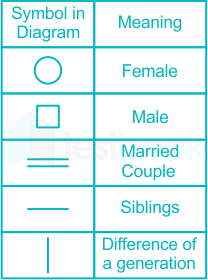
A family tree diagram illustrating coded relationships.

Code Language (M is of N)
Symbol@*#
MeaningMotherBrotherFatherSister

Given Expression: Q ⊕ N @ P # R

Q ⊕ N: Q is the brother of N. (Q is Male)

N @ P: N is the mother of P. (N is Female)

P # R: P is the sister of R. (P is Female)

Family Tree Representation (Relevant Part):

Q is the Maternal Uncle of R.

Hence, the correct answer is "Option 3".

32

Three statements showing relationships have been given, which are followed by two conclusions I and II. Assuming that the given statements are true, find out which of the conclusions is/are definitely true?

Statements:

  1. M < R
  2. L > S
  3. L = M ≥ N ≤ P

Conclusions:

(I) P > S

(II) N < R

  1. ((a))

    Only conclusion (I) is true

  2. ((b))

    Only conclusion (II) is true

  3. ((c))

    Both conclusions (I) and (II) are true

  4. ((d))

    Neither conclusion (1) nor (II) is true

Show Answer
Answer: ((b))

Only conclusion (II) is true

The given statement is:

M < R, L > S, and L = M ≥ N ≤ P

Conclusions:

I. P > S → False (We have L > S and L=M ≥ N ≤ P. The combined relationship for P and S is P ≥ N and S < L. No definite relation can be established between P and S because the direction of inequality changes (N ≤ P). Since the relationship cannot be definitely true, the conclusion is false).

II. N < R → True (We have M < R from statement 1, and M ≥ N from statement 3. Combining these, we get N ≤ M < R. Since the path has a consistent direction leading from N to R, the definite relationship N < R is established. Therefore, this is true).

So, “Only conclusion (II) is true”.

Hence, the correct answer is "Option 2".

33

Seven friends A, B, C, D, E, F and G are sitting in a row facing South. 'B' and 'F' are not sitting together. 'C' is sitting second to the left of 'D'. 'A' is not sitting with 'C'. 'D' is sitting fourth to the right of 'E'. 'A' and 'B' are not sitting together. Only 'E' is sitting between 'F' and 'G'. 'G' is sitting second to the left of one who is sitting second to the left of 'A'. Name two persons who are sitting at the extreme ends?

  1. ((a))

    'E' and 'G'

  2. ((b))

    'C' and 'D'

  3. ((c))

    'A' and 'B'

  4. ((d))

    'A' and 'F'

Show Answer
Answer: ((d))

'A' and 'F'

Given: Seven friends A, B, C, D, E, F and G are sitting in a row facing South.

'B' and 'F' are not sitting together.

'C' is sitting second to the left of 'D'.

'D' is sitting fourth to the right of 'E'.

'A' and 'B' are not sitting together.

'G' is sitting second to the left of one who is sitting second to the left of 'A'.

Only 'E' is sitting between 'F' and 'G'.

'A' is not sitting with 'C'.

And B sits at the remaining place.

Two persons who are sitting at the extreme ends are A and F.

Hence, the correct answer is "Option 4".

34

Three statements are given, followed by three conclusions I, II and III. You have to consider these statements to be true, even if they seem to be at variance from commonly known facts. You are to decide which of the given conclusions logically follow(s) from the given statements?

Statements:

  1. Some rats are cats.
  2. No cat is crow.
  3. All crows are parrots.

Conclusions:

(I) Some parrots are cats.

(II) No parrot is cat.

(III) Some rats are crows.

  1. ((a))

    Only Conclusion (I) follows

  2. ((b))

    Only Conclusion (III) follows

  3. ((c))

    Only Conclusions (I) and (III) follows

  4. ((d))

    Only either Conclusion (I) or (II) follows

Show Answer
Answer: ((d))

Only either Conclusion (I) or (II) follows

Given Statements:

  1. Some rats are cats.
  2. No cat is crow.
  3. All crows are parrots.

The least possible Venn diagram for the given statements is:

Conclusions:

I. Some parrots are cats - Cannot be definitely true (From 'No cat is crow' and 'All crows are parrots,' we know that no cat is in the Crow part of Parrots, but a Cat might be related to the rest of the Parrot circle. This is possible but not definite, so it's uncertain/false.)

II. No parrot is cat - Cannot be definitely true (This is the complement to Conclusion I. It's possible for some parrots to be cats, so this conclusion is uncertain/false.)

III. Some rats are crows - False (We have 'Some rats are cats' and 'No cat is crow'. Since the 'cat' part of 'rat' is separate from 'crow', there is no definite direct link between 'rat' and 'crow'.)

Checking Complementary Pair (Either/Or Case):

Conclusions I and II form a "Complementary Pair" (Some Parrots are Cats + No Parrot is Cat). Both are individually uncertain/false, and together they cover all possibilities for the relationship between Parrots and Cats. Therefore, "Either Conclusion I or Conclusion II follows."

Hence, the correct answer is "Option 4".

Additional Information

35

Choose the Venn diagram from the options which represents the correct relationship amongst the given classes:

Men, Singers, Women

  1. ((a))

  2. ((b))

  3. ((c))

  4. ((d))

Show Answer
Answer: ((b))

The correct Venn diagram representing the relationship among the classes: Men, Singers, Women is Option 1.

The relationship between the three classes is as follows:

  • Men and Women are two entirely separate groups (no man is a woman, and no woman is a man). They should be represented by two separate circles.
  • Singers is a profession that can be taken up by both Men and Women.
  • Therefore, the circle representing Singers must partially overlap with the circle for Men and partially overlap with the circle for Women.


Option 2: ​ 

Hence, the correct answer is "Option 2".

36

Which shortcut key combination prints a documents in MS-Word?

  1. ((a))

    Shift + P

  2. ((b))

    Ctrl + P

  3. ((c))

    Alt + P

  4. ((d))

    Space + P

Show Answer
Answer: ((b))

Ctrl + P

The correct answer is Ctrl + P

Key Points

  • Ctrl + P is the standard shortcut for printing documents in MS Word.
  • It opens the Print dialog box where users can select printing options.
  • It is widely used across multiple applications for quick access to printing functionality.
  • Ensure the printer is properly connected and configured before using this shortcut.

Additional Information

  • Shortcut keys: Ctrl + P is part of a set of universal shortcuts used in Windows applications.
  • Print options: The Print dialog box allows users to adjust settings such as page range, copies, and printer selection.
  • Cross-platform use: Ctrl + P is also functional in other applications like Excel and PowerPoint.
  • Efficiency: Using shortcuts like Ctrl + P saves time and enhances productivity.
37

Which one of the following errors will be handled by an operating system ?

(a) lack of papers in printer

(b) power failure

(c) virus protection

  1. ((a))

    (a), (b) and (c)

  2. ((b))

    only (a) and (c)

  3. ((c))

    only (a) and (b)

  4. ((d))

    only (b) and (c)

Show Answer
Answer: ((a))

(a), (b) and (c)

The correct answer is option 1

Key Points

  • An operating system can handle errors such as lack of paper in a printer (a).
  • It has mechanisms to detect and respond to hardware issues like printer errors.
  • Power failure (b) is also managed by the operating system using measures like proper shutdown or recovery mechanisms.
  • Similarly, virus protection (c) can be integrated with the operating system to safeguard against malicious threats.

Additional Information

  • Error handling: The operating system detects and addresses hardware or software issues to ensure smooth operation.
  • Power failure management: The operating system may include features like auto-save or recovery to manage unexpected power outages.
  • Printer management: The OS monitors hardware like printers and provides error notifications when issues like lack of paper occur.
  • Security integration: Modern operating systems often include built-in tools or support for external antivirus programs to handle threats.
38

A MS-PowerPoint presentation is generally saved with an extension (Choose the most appropriate one from the following options):

  1. ((a))

    .ppx

  2. ((b))

    .ppc

  3. ((c))

    .ppt

  4. ((d))

    .ppm

Show Answer
Answer: ((c))

.ppt

The correct answer is .ppt

Key Points

  • .ppt is the file extension used for saving Microsoft PowerPoint presentations in older versions (prior to 2007).
  • In newer versions (2007 and later), the default file extension is .pptx.
  • Microsoft PowerPoint is part of the Microsoft Office Suite and is widely used for creating presentations.
  • It supports various multimedia elements, such as text, images, videos, and animations.

Additional Information

  • File Format Evolution: Microsoft introduced the .pptx format with PowerPoint 2007, which is based on the XML standard.
  • Compatibility: Files with the .ppt extension can still be opened in newer PowerPoint versions, but users may need to enable compatibility mode.
  • Other Formats: PowerPoint also supports other formats such as .pdf, .odp (OpenDocument Presentation), and .potx (template files).
  • Use Cases: PowerPoint presentations are used in business meetings, educational lectures, and public speaking events to visually convey information.
39

What is the full form of VDU ?

  1. ((a))

    Visual Display Unit

  2. ((b))

    Versatile Display Unit

  3. ((c))

    Visual Depth Unit

  4. ((d))

    Visual Detail Unit

Show Answer
Answer: ((a))

Visual Display Unit

The correct answer is Visual Display Unit

Key Points

  • A Visual Display Unit (VDU) is an output device.
  • It is commonly used to display images, text, and videos.
  • VDUs include devices such as monitors and screens.
  • They play a crucial role in computer systems for user interaction.

Additional Information

  • Output Device: Devices that display or project information from a computer system.
  • Monitors: A common type of VDU used for displaying graphical information.
  • Resolution: Determines the clarity and sharpness of the display on VDUs.
  • Display Technologies: Includes CRT, LCD, LED, and OLED used in VDUs.
40

Which of the following statements is false ? 

  1. ((a))

    Windows offers various text-editing software like Wordpad and Notepad

  2. ((b))

    Notepad files have the extension .rtf

  3. ((c))

    Wordpad can be used to create letters, notes which use basic formatting

  4. ((d))

    Word has the maximum formatting feature as compared to Notepad and Wordpad

Show Answer
Answer: ((b))

Notepad files have the extension .rtf

The correct answer is 2) Notepad files have the extension .rtf

Key Points

  • Notepad files have the extension .txt, not .rtf.
  • Wordpad files can have the extension .rtf, .docx, or .txt depending on the format chosen.
  • Windows provides basic text-editing tools like Notepad and Wordpad.
  • Microsoft Word offers advanced formatting options compared to Notepad and Wordpad.

Additional Information

  • Notepad: A basic text editor that is used for creating and editing plain text files (.txt).
  • Wordpad: A text-editing tool with basic formatting features like font styles, alignment, and paragraph spacing. It supports .rtf, .docx, and .txt file formats.
  • Microsoft Word: A comprehensive word processor with extensive formatting options such as tables, styles, templates, and advanced editing tools.
  • File Formats: .txt is for plain text, whereas .rtf allows rich text formatting with basic styles and features.

Education and Leadership (40 questions)

41

Which one of the following would ensure School - Home continuity ?

  1. ((a))

    Empowering the teacher

  2. ((b))

    Regular supervision

  3. ((c))

    Effective cultural activities

  4. ((d))

    Regular participation of parents and social workes in school programmes

Show Answer
Answer: ((d))

Regular participation of parents and social workes in school programmes

School–home continuity refers to a strong and meaningful connection between what happens at school and the child’s life at home and in the community.  

Key Points

  • Regular participation of parents and social workers in school programmes ensures school–home continuity because it creates a shared responsibility for the child’s education.
  • Parents become aware of teaching methods, learning goals, and school expectations, which helps them support learning at home.
  • Social workers help bridge gaps between school and community, especially for disadvantaged learners.
  • Such participation promotes mutual trust and understanding between teachers and families. It also allows schools to address students’ social, emotional, and cultural needs more effectively.
  • As a result, the child experiences harmony between home environment and school practices.

 Hint

  • Empowering the teacher mainly strengthens classroom practices and professional competence but does not directly connect school learning with the home environment.
  • Regular supervision focuses on monitoring and control within the school system and has little role in building family involvement.
  • Effective cultural activities enrich school life and student engagement, yet they do not automatically ensure active collaboration with parents at home.

Hence, the correct answer is regular participation of parents and social workers in school programmes.

42

The socio-emotional learning in the process of

  1. ((a))

    Development of self control

  2. ((b))

    Enhancement of linguistic ability

  3. ((c))

    Self Development

  4. ((d))

    Self Discipline

Show Answer
Answer: ((a))

Development of self control

Socio-emotional learning (SEL) is the process through which children develop the ability to understand and manage their emotions, build healthy relationships, and make responsible decisions. 

Key Points

  • Socio-emotional learning is particularly important in the development of self-control because it equips students with the skills to recognize their emotions, resist impulsive behaviors, and respond appropriately to challenges.
  • Through activities like collaborative tasks, role plays, and reflective exercises, students learn to manage frustration, delay gratification, and make thoughtful choices, which strengthens their ability to exercise self-control in daily life.
  • Teachers can guide students to set personal goals, monitor their own behavior, and evaluate the consequences of their actions, all of which are central to self-regulation.
  • Developing self-control through SEL also enhances focus, persistence, and responsible decision-making, creating a foundation for long-term emotional and social well-being.

Hint

  • Enhancement of linguistic ability focuses on communication skills and language development, which is largely cognitive and not directly tied to socio-emotional learning.
  • Self development is a broad concept encompassing physical, intellectual, and emotional growth, but it does not specifically target self-regulation.
  • Self-discipline refers to sustained control over behavior and habits, which can be an outcome of socio-emotional learning but is not the primary process through which SEL functions.

Hence, the correct answer is development of self control.

43

Which of the following would ensure socio-emotional learning?

  1. ((a))

    Discipline

  2. ((b))

    Punctuality

  3. ((c))

    Relationship

  4. ((d))

    Positive attitude

Show Answer
Answer: ((c))

Relationship

Socio-emotional learning (SEL) is the process through which children acquire skills to understand and manage their emotions, establish healthy relationships, and make responsible decisions. 

Key Points

  • Socio-emotional learning is best ensured through relationships because meaningful interactions with peers, teachers, and family provide children with opportunities to practice empathy, cooperation, communication, and conflict resolution.
  • Through positive relationships, learners learn to understand others’ perspectives, regulate their own emotions, and develop social skills essential for teamwork and collaboration.
  • Supportive relationships also build trust and a sense of belonging, which enhances motivation and emotional resilience.

Hint

  • Discipline focuses on behavior control and adherence to rules, which supports classroom management but does not directly develop socio-emotional skills.
  • Punctuality is an aspect of self-management and responsibility, but it is only a small part of socio-emotional learning.
  • Positive attitude contributes to personal growth but does not encompass the social and emotional interaction aspects that SEL emphasizes.

Hence, the correct answer is relationship.

44

'NCPFECCE' of NEP-2020, covers:

  1. ((a))

    Pedagogical framework for 0 - 3 years

  2. ((b))

    Pedagogical framework for 0 - 8 years

  3. ((c))

    Pedagogical framework for 3 - 14 years

  4. ((d))

    Pedagogical framework for 1 - 15 years

Show Answer
Answer: ((b))

Pedagogical framework for 0 - 8 years

The National Curriculum and Pedagogical Framework for Early Childhood Care and Education (NCPFECCE) under NEP-2020 provides guidelines for holistic development and learning of young children.

 Key Points

  • It specifically covers the pedagogical framework for children from birth to 8 years, recognizing the importance of the early years (0–3) for foundational development and the early primary years (4–8) for developing literacy, numeracy, and socio-emotional skills.
  • The framework guides teachers and caregivers on creating stimulating environments, designing age-appropriate activities, and supporting development across multiple domains.
  • It also aligns with NEP-2020’s vision of a continuum of learning from early childhood to higher education, ensuring smooth transition and continuity.

 Hint

  • Pedagogical frameworks for 0–3 years focus only on infancy and toddlerhood, which is narrower than NCPFECCE’s scope.
  • Frameworks for 3–14 years or 1–15 years extend beyond early childhood and elementary stages, covering middle and secondary education, which is outside the remit of this document.

Hence, the correct answer is pedagogical framework for 0 - 8 years.

45

NCF-2005 mainly recommended:

  1. ((a))

    Reducing Teacher-Pupil ratio

  2. ((b))

    Connecting knowledge to life outside the school

  3. ((c))

    25% reservation for EWS

  4. ((d))

    Development of school Infrastructure

Show Answer
Answer: ((b))

Connecting knowledge to life outside the school

The National Curriculum Framework (NCF) 2005 is a guiding document for curriculum development and pedagogical practices in India. 

Key Points

  • One of the main recommendations of NCF-2005 is connecting knowledge to life outside the school.
  • This means that what students learn in the classroom should be linked to their everyday experiences, environment, and society, making learning meaningful and practical.
  • It encourages project-based learning, community interaction, and use of local contexts to help children understand concepts better and develop skills applicable in real-life situations.

 Hint

  • Reducing teacher-pupil ratio is important for effective teaching but is more of a policy or administrative measure, not a central curriculum recommendation.
  • Reservation for EWS and development of infrastructure are socio-economic and infrastructural interventions, which are outside the main focus of NCF-2005.

Hence**, the correct answer is connecting knowledge to life outside the school.**

46

According to Education Psychology the 'perception' is

  1. ((a))

    Hearing + Understanding

  2. ((b))

    Sensation + Understanding

  3. ((c))

    Reasoning + Hearing

  4. ((d))

    Listening + Reasoning

Show Answer
Answer: ((b))

Sensation + Understanding

Perception in educational psychology is the process through which a learner organizes and interprets sensory information to make sense of the environment.

Key Points

  • Perception is best understood as sensation plus understanding.
  • Sensation provides the raw data through the senses (sight, hearing, touch, etc.), while understanding involves interpreting and making meaning of these sensations.
  • This combination allows learners to recognize objects, events, and concepts, forming the basis for further learning and knowledge construction.
  • Teachers can enhance perception by providing hands-on experiences, visual aids, and interactive activities that link sensory input to meaningful understanding.

 Hint

  • Hearing + understanding or listening + reasoning are partial processes and do not capture the complete sensory and interpretative aspect of perception. Reasoning + hearing emphasizes cognitive processing but ignores the sensory input that is fundamental for perception.

Hence, the correct answer is sensation + understanding.

47

What could be the reason for under achievement of the child? 

  1. ((a))

    Lack of parent support

  2. ((b))

    Undesirable environment

  3. ((c))

    Lack of proper guidance

  4. ((d))

    Poverty

Show Answer
Answer: ((c))

Lack of proper guidance

Underachievement in a child occurs when a student performs below their potential, despite having the ability to achieve more. Multiple factors can contribute to this, including personal, familial, and environmental influences.  

Key Points

  • Lack of proper guidance is a primary reason for underachievement because children often require direction, feedback, and motivation to focus their abilities effectively.
  • Without guidance from teachers, parents, or mentors, children may not develop effective study habits, set goals, or understand how to apply their skills, leading to performance below their potential.
  • Proper guidance helps in identifying strengths, overcoming weaknesses, and fostering self-confidence, all of which are critical for achievement.

 Hint

  • Lack of parent support, undesirable environment, and poverty can also affect learning, but these are external or situational factors. While they contribute indirectly, underachievement is more directly linked to the absence of structured guidance and encouragement in learning processes.

Hence, the correct answer is lack of proper guidance.

48

Who Propounded Two-fold personality of extravert and Intravert?

  1. ((a))

    Adler

  2. ((b))

    Jung

  3. ((c))

    Freud

  4. ((d))

    Rogers

Show Answer
Answer: ((b))

Jung

Personality refers to the unique and relatively stable patterns of thoughts, feelings, behaviors, and traits that characterize an individual. It is what makes a person distinctive and influences how they perceive the world, interact with others, and respond to different situations.

 Key Points

  • The concept of two-fold personality extravert and introvert was propounded by Carl Jung.
  • Jung described extraverts as individuals who are oriented toward the external world, social interactions, and action, while introverts are oriented toward the inner world, reflection, and personal thoughts.
  • This distinction is fundamental in understanding personality types and individual differences in behavior, learning, and social interactions.

 Hint

  • Adler focused on individual psychology and inferiority complex, Freud is known for psychoanalysis and the id, ego, superego, and Rogers developed person-centered theory emphasizing self-actualization and unconditional positive regard.

Hence, the correct answer is Jung.

49

Who conducted experiments to eradicate the emotional fear among the children?

  1. ((a))

    Watson

  2. ((b))

    Skinner

  3. ((c))

    Freud

  4. ((d))

    James

Show Answer
Answer: ((a))

Watson

The experiments to eradicate emotional fear in children were conducted by John B. Watson.

 Key Points

  • Watson, a behaviorist, demonstrated through the famous “Little Albert” experiment that fears could be conditioned and deconditioned using classical conditioning techniques.
  • His work showed that emotional responses like fear are learned behaviors and can be modified through controlled environmental stimuli.

 Hint

  • Skinner focused on operant conditioning and reinforcement, Freud emphasized psychoanalytic theory, and William James contributed to functional psychology, but none specifically conducted experiments on eliminating emotional fear in children.

Hence, the correct answer is Watson.

50

Name the technique to study interpersonel relationship among the children.

  1. ((a))

    Barometry

  2. ((b))

    Sociometry

  3. ((c))

    Psychometry

  4. ((d))

    Sociogram

Show Answer
Answer: ((b))

Sociometry

Key Points 

  • Sociometry is a scientific method used to study interpersonal relationships and social dynamics within a group, especially among children in a classroom or peer setting.
  • Developed by Jacob L. Moreno, this technique helps educators and psychologists understand patterns of friendship, social acceptance, rejection, and group cohesion.
  • By analyzing these relationships, teachers can design strategies to improve social skills, reduce conflicts, and foster positive interactions among students.

 Hint

  • Barometry measures emotional or mental pressure and is not used for social relationships.
  • Psychometry involves psychological testing of abilities and traits rather than social connections.
  • Sociogram is a graphical representation of sociometric data, but it is the outcome of sociometry, not the method itself.

Hence, the correct answer is Sociometry.

51

Which of the psychological defence mechanism invents excuses to explain his/her own failure ?

  1. ((a))

    Rationalisation

  2. ((b))

    Regression

  3. ((c))

    Identification

  4. ((d))

    Fantasy

Show Answer
Answer: ((a))

Rationalisation

Psychological defence mechanisms are unconscious strategies used by individuals to protect themselves from anxiety, stress, or unacceptable feelings. They help a person cope with reality and maintain self-esteem, though sometimes in a distorted way.

 Key Points

  • Rationalisation is the mechanism in which a person invented excuses or logical explanations to justify their own failures or shortcomings, instead of accepting responsibility.
  • It allows the individual to reduce feelings of guilt or anxiety by making their actions seem reasonable or acceptable.
  • For example, a student who fails an exam might claim, “The questions were unfair,” instead of acknowledging inadequate preparation.

 Hint

  • Regression involves reverting to earlier, more childlike behaviors when faced with stress.
  • Identification is adopting traits or behaviors of someone else, often as a coping strategy.
  • Fantasy is escaping reality through imagination rather than facing real-life problems.

Hence, the correct answer is Rationalisation.

52

The term 'Gestalt refers to:

  1. ((a))

    Integrated whole

  2. ((b))

    Stimulus-response

  3. ((c))

    Programmed learning

  4. ((d))

    Canditional learning

Show Answer
Answer: ((a))

Integrated whole

Gestalt psychology is a school of thought in psychology that focuses on how humans perceive, think, and learn by organizing sensory experiences into meaningful patterns.

Key Points

  • The term Gestalt specifically refers to an integrated whole. In the context of learning, it means that students perceive patterns, concepts, or problems as complete structures rather than isolated pieces.
  • For example, when reading a paragraph, learners grasp the overall meaning instead of focusing on individual words alone.
  • This holistic approach helps in developing critical thinking, comprehension, and problem-solving skills, as learners are encouraged to see relationships and structures in knowledge rather than memorizing disconnected facts.
  • Teachers can apply Gestalt principles by designing activities that promote pattern recognition, concept mapping, and contextual understanding.

 Hint

  • Stimulus-response is a concept rooted in behaviorism, focusing on the connection between external stimuli and observable reactions, without consideration of internal perception or holistic understanding.
  • Programmed learning is an instructional method that delivers content in small, sequenced steps with immediate feedback, emphasizing linear progression rather than integrated perception.
  • Conditional learning, or classical/operant conditioning, deals with forming associations between stimuli and responses, which again does not address the holistic organization emphasized by Gestalt psychology.

Hence, the correct answer is integrated whole.

53

Which one of the following is 'non-invasive'?

  1. ((a))

    Biological therapy

  2. ((b))

    Psychotherapy

  3. ((c))

    Radiotherapy

  4. ((d))

    Chemotherapy

Show Answer
Answer: ((b))

Psychotherapy

Non-invasive treatments are those that do not require entering the body or causing physical trauma. They typically involve talking, counseling, or external interventions rather than surgery or medication that physically alters the body. 

Key Points

  • Psychotherapy is non-invasive because it involves talking therapies, counseling, and behavioral techniques to help individuals manage emotional or psychological difficulties.
  • It does not involve drugs, radiation, or surgical procedures and works through understanding, insight, and skill development.

 Hint

  • Biological therapy involves medications or biochemical interventions; radiotherapy uses radiation to treat conditions like cancer; chemotherapy involves drug treatment that affects the body internally.
  • All these are invasive or partially invasive as they physically affect the body.

Hence**, the correct answer is psychotherapy.**

54

Which one of these lead to indiscipline among students?

  1. ((a))

    Poor Home environment

  2. ((b))

    Biased attitude of teachers towards students

  3. ((c))

    Lack of support from school

  4. ((d))

    Communal Tension

Show Answer
Answer: ((b))

Biased attitude of teachers towards students

Indiscipline in students refers to behaviors that violate school rules, social norms, or expected conduct, affecting learning and the classroom environment. It is influenced by multiple factors, including family, school, teacher behavior, and societal conditions. 

Key Points

  • A biased attitude of teachers towards students can lead to indiscipline because students may feel unfairly treated, neglected, or undervalued, which can result in frustration, rebellion, or disruptive behavior in class.
  • Favoritism, harsh criticism, or unequal attention undermines trust and respect for authority, directly affecting students’ behavior and willingness to follow rules.
  • By maintaining fairness and impartiality, teachers can foster a positive classroom climate that encourages discipline and cooperation.

 Hint

  • Poor home environment can contribute to behavioral issues but may not always manifest as classroom indiscipline.
  • Lack of support from school affects learning opportunities but is an indirect factor.
  • Communal tension is a societal issue that may impact students’ attitudes but does not directly cause day-to-day classroom indiscipline.

Hence, the correct answer is biased attitude of teachers towards students.

55

Which one of the following would form emotional support to school?

  1. ((a))

    Quality of feedback

  2. ((b))

    Good learning strategies

  3. ((c))

    Positive connection among teachers students and parents

  4. ((d))

    Achievement of students in exams

Show Answer
Answer: ((c))

Positive connection among teachers students and parents

Emotional support in a school refers to creating an environment where students, teachers, and parents feel valued, connected, and encouraged. It focuses on fostering positive relationships, empathy, and a sense of belonging, which are essential for mental well-being and effective learning. 

Key Points

  • Positive connection among teachers, students, and parents forms emotional support because it builds trust, understanding, and collaboration.
  • When all stakeholders communicate openly, care for each other, and work together, students feel secure and motivated.
  • Teachers can provide encouragement, parents can reinforce learning at home, and students feel recognized and supported, which enhances both academic and social development.

 Hint

  • Quality of feedback is important for learning but mainly affects academic growth rather than emotional well-being.
  • Good learning strategies improve learning outcomes but do not directly create emotional support.
  • Achievement in exams reflects performance and success but does not necessarily foster supportive relationships or emotional security.

Hence, the correct answer is positive connection among teachers, students, and parents.

56

'Environment is an element of

  1. ((a))

    Behaviourism

  2. ((b))

    Constructivism

  3. ((c))

    Realism

  4. ((d))

    Connectivism

Show Answer
Answer: ((a))

Behaviourism

In educational philosophy, environment plays a central role in shaping learning and behavior. Different learning theories emphasize the environment in varying ways, but behaviorism particularly highlights the environment as a key factor in stimulus-response learning.

 Key Points

  • According to behaviorist principles, learners’ behaviors are shaped, reinforced, or modified by external stimuli and consequences present in their surroundings.
  • Teachers can manipulate the environment to encourage desired behaviors and reduce undesirable ones through rewards, punishments, and structured experiences.
  • In behaviorism, the environment provides opportunities for practice, reinforcement, and conditioning, making it a primary element in learning.

 Hint

  • Constructivism focuses more on the learner’s active construction of knowledge rather than solely on environmental influence.
  • Realism emphasizes understanding the world as it exists objectively, not specifically the role of environment in shaping behavior.
  • Connectivism stresses networks and digital connections for learning, rather than the immediate physical or social environment.

Hence, the correct answer is Behaviorism.

57

Which one of the following would enhance learning in classroom?

  1. ((a))

    Lecture method

  2. ((b))

    Questioning technique

  3. ((c))

    Use of A.V aids

  4. ((d))

    Use of black board

Show Answer
Answer: ((b))

Questioning technique

Effective learning in the classroom is enhanced when students are actively engaged, encouraged to think, and able to interact with the content. Teaching strategies that promote participation, critical thinking, and clarification of doubts lead to better understanding and retention of knowledge. 

Key Points

  • Questioning technique enhances learning because it actively involves students in the learning process, prompts critical thinking, encourages discussion, and allows the teacher to assess understanding in real time.
  • Through well-structured questions, students are motivated to analyze, reflect, and articulate their ideas, which deepens comprehension and supports long-term retention.
  • It also helps teachers identify misconceptions and guide learning more effectively.

 Hint

  • Lecture method delivers information passively and may not engage all students.
  • Use of audio-visual aids and blackboard supports teaching but mainly complements the instruction rather than actively involving learners in thinking and responding.

Hence**, the correct answer is questioning technique.**

58

'The learners are involved in reflecting of their own experiences'. Which theory of learning would you think in this case?

  1. ((a))

    Perspective learning

  2. ((b))

    Constructive learning

  3. ((c))

    Behavioural learning

  4. ((d))

    Congnitive learning

Show Answer
Answer: ((b))

Constructive learning

Learning theories explain how learners acquire knowledge and develop skills. One approach emphasizes that learners build understanding by actively reflecting on their own experiences rather than passively receiving information. 

Key Points

  • Constructive learning aligns with this scenario because it encourages learners to actively engage with experiences, reflect, and construct their own understanding.
  • Students are not mere recipients of knowledge; they interpret, organize, and relate information to their personal context.
  • Teachers act as facilitators, guiding learners to explore, question, and connect ideas, which strengthens problem-solving and critical thinking skills. This approach also supports collaborative learning and real-world application of knowledge.

 Hint

  • Perspective learning focuses on viewpoints or interpretations, behavioral learning emphasizes stimulus-response associations, and cognitive learning deals with internal mental processes like memory and reasoning, but not necessarily reflection on personal experiences.

Hence, the correct answer is constructive learning.

59

What type of relationship between teacher and student would enhance learning?

  1. ((a))

    Cordial relation

  2. ((b))

    Emotional relation

  3. ((c))

    Official relation

  4. ((d))

    Social relation

Show Answer
Answer: ((a))

Cordial relation

The nature of the teacher-student relationship plays a vital role in shaping the classroom environment and influencing the learning outcomes. A healthy and supportive relationship creates trust, motivation, and openness, which are essential for effective learning. 

Key Points 

  • A cordial relation between teacher and student is most effective in enhancing learning. This kind of relationship is characterized by mutual respect, open communication, trust, and approachability.
  • When students feel comfortable with their teacher, they are more likely to ask questions, express doubts, and actively participate in the learning process.
  • A cordial environment reduces fear and anxiety, boosts confidence, and helps in building a collaborative classroom atmosphere where learning becomes enjoyable and effective.

Hint 

  • An emotional relation may lead to bias or over-dependence, which can interfere with objectivity in teaching and evaluation.
  • An official relation maintains formality and authority but often lacks the warmth needed for open interaction and personal support.
  • A social relation may involve friendly interactions but can blur professional boundaries and distract from academic focus.

Hence, the correct answer is cordial relation.

60

Which one of the following would form better classroom environment ? 

  1. ((a))

    Give a student voice and choice

  2. ((b))

    Smooth talking

  3. ((c))

    Well ventilated

  4. ((d))

    Comfortable furniture

Show Answer
Answer: ((a))

Give a student voice and choice

A better classroom environment is one that supports learning, engagement, and student well-being, not just physical comfort. It includes psychological, social, and participatory aspects that make students feel valued, motivated, and involved in their learning process. 

Key Points

  • Giving a student voice and choice forms a better classroom environment because it empowers learners to express opinions, make decisions, and take ownership of their learning.
  • When students are involved in setting goals, selecting activities, or contributing to class rules, they feel respected and responsible.
  • This approach fosters engagement, motivation, and a sense of belonging, which enhances both academic performance and socio-emotional development.
  • Teachers acting as facilitators further strengthen a participatory and inclusive classroom culture.

 Hint

  • Smooth talking may create temporary rapport but does not ensure meaningful participation.
  • Well-ventilated rooms and comfortable furniture improve physical comfort but do not directly influence engagement or learning involvement.

Hence, the correct answer is give a student voice and choice.

61

Which one of the following would affect learning in classroom ?

  1. ((a))

    Well designed curriculum

  2. ((b))

    Good time table

  3. ((c))

    Good Principal

  4. ((d))

    Air conditioned classroom

Show Answer
Answer: ((a))

Well designed curriculum

Learning in the classroom is influenced by academic and instructional factors that directly shape what and how students learn. Elements that guide content, pedagogy, sequencing, and assessment have a stronger impact on learning than administrative comfort-related factors.

Key Points

  • A well designed curriculum affects learning in the classroom because it clearly defines learning objectives, content organization, teaching strategies, and assessment methods.
  • It ensures continuity, relevance, and progression of concepts according to the learners’ developmental level.
  • When the curriculum is thoughtfully planned, teachers can select appropriate methods and activities, and students can meaningfully engage with the subject matter. This directly shapes the quality and effectiveness of classroom learning.

 Hint

  • A good timetable helps in managing time but does not directly influence learning processes.
  • A good principal plays an important leadership role, yet their influence on learning is indirect.
  • An air-conditioned classroom improves physical comfort but does not determine how learning takes place.

Hence, the correct answer is well designed curriculum.

62

An educational tour to a zoo in local area would ensure:

  1. ((a))

    better understanding of nature

  2. ((b))

    better insight on living condition of animals

  3. ((c))

    appreciation of the learner towards nature

  4. ((d))

    good enjoyment

Show Answer
Answer: ((c))

appreciation of the learner towards nature

An educational tour is a form of experiential learning that helps students learn through direct observation and interaction with real-life situations. Such learning goes beyond textbooks and contributes to cognitive, affective, and experiential development.

 Key Points

  • An educational tour to a zoo in the local area mainly ensures appreciation of the learner towards nature because students get firsthand exposure to animals, biodiversity, and natural habitats.
  • This experience helps develop empathy, respect, and concern for living beings, which are key goals of environmental education.
  • Observing animals closely encourages learners to value nature and understand the need for conservation. The emotional connection formed during such visits strengthens attitudes and values related to the environment.

 Hint

  • Better understanding of nature and insight into living conditions of animals are learning outcomes, but they are more factual and informational.
  • Good enjoyment is a by-product of the tour, not its educational objective.

Hence, the correct answer is appreciation of the learner towards nature.

63

On visiting forest, the child will be able to develop________.

  1. ((a))

    imagination power

  2. ((b))

    thinking ability

  3. ((c))

    expression power

  4. ((d))

    self-exploring capacity

Show Answer
Answer: ((d))

self-exploring capacity

Visiting a forest provides experiential and exploratory learning, where the child directly interacts with nature, observes surroundings, and learns through firsthand experience. 

Key Points

  • A forest visit helps the child develop self-exploring capacity because the learner gets opportunities to observe, inquire, explore, and reflect independently.
  • Children navigate natural elements, ask questions, connect experiences with prior knowledge, and construct meaning on their own.
  • This kind of learning strengthens autonomy, curiosity, and environmental awareness, which are core aims of experiential and child-centred education.

 HintImagination power, thinking ability, and expression power may also develop incidentally, but they are not the primary outcome emphasized in real-life exploratory experiences like a forest visit.

Hence, the correct answer is self-exploring capacity.

64

What do you mean by 'learning space' in school?

  1. ((a))

    Well ventilated classroom

  2. ((b))

    Comfortable desks

  3. ((c))

    Well set classroom with non-threatening environment

  4. ((d))

    ICT tools in classroom

Show Answer
Answer: ((c))

Well set classroom with non-threatening environment

The concept of learning space goes beyond just the physical arrangement of a classroom. It includes the emotional, psychological, and social atmosphere that supports effective learning.

Key Points

  • A well set classroom with a non-threatening environment best defines a learning space in school.
  • It refers not only to the physical layout like lighting, seating, and organization but also to the emotional climate that encourages students to take risks, ask questions, and express ideas without fear of judgment.
  • A supportive, inclusive, and well-managed environment enhances focus, collaboration, and student confidence, all of which are critical to deep and meaningful learning.

Hint 

  • A well-ventilated classroom contributes to physical comfort but does not ensure psychological or emotional safety.
  • Comfortable desks are part of the physical setup, but alone do not create an engaging or inclusive learning space.
  • ICT tools enhance learning resources, but without a positive environment and structured space, they may not be used effectively.

Hence, the correct answer is well set classroom with non-threatening environment.

65

What is the purpose of curriculum in school?

  1. ((a))

    To standardize learning goals

  2. ((b))

    To complete syllabus in time

  3. ((c))

    To achieve instructional objectives

  4. ((d))

    To conduct exam in time

Show Answer
Answer: ((c))

To achieve instructional objectives

The curriculum in a school provides a planned framework that guides teaching–learning processes toward desired educational outcomes. It defines what learners should know, understand, and be able to do, ensuring systematic and purposeful learning experiences.

 Key Points

  • The main purpose of curriculum is to achieve instructional objectives because it translates educational aims into specific learning outcomes. It helps teachers select appropriate content, methods, and assessment strategies aligned with these objectives.
  • Through a well-designed curriculum, learning becomes goal-oriented, meaningful, and developmentally appropriate. It ensures balanced development of knowledge, skills, values, and attitudes rather than mere content coverage.

 Hint

  • Standardizing learning goals supports uniformity but is not the core purpose.
  • Completing the syllabus in time is an administrative concern, not an educational aim.
  • Conducting exams on time relates to evaluation management rather than curriculum purpose.

Hence, the correct answer is to achieve instructional objectives.

66

What is an essential feature of curriculum ?

  1. ((a))

    Gaining knowledge

  2. ((b))

    Skills in application of knowledge

  3. ((c))

    Getting good marks

  4. ((d))

    Understanding the subject

Show Answer
Answer: ((b))

Skills in application of knowledge

An effective curriculum is designed to support the overall development of learners, going beyond the mere acquisition of information. It integrates knowledge with skills, values, and attitudes so that learning can be meaningfully applied in real-life situations.

 Key Points

  • An essential feature of curriculum is skills in application of knowledge because curriculum aims not only to help students know facts but also to use, apply, and transfer what they learn to solve problems and make decisions.
  • This focus ensures learning is functional, practical, and relevant to real-world contexts.
  • Modern curricula emphasize competency-based learning, where understanding is demonstrated through application rather than memorization.

 Hint

  • Gaining knowledge and understanding the subject are important components, but they are means rather than defining features of curriculum.
  • Getting good marks is an outcome of assessment and not a feature of curriculum design.

Hence, the correct answer is skills in application of knowledge.

67

When the children are directly exposed to the situation, the learning would be :

  1. ((a))

    Natural learning

  2. ((b))

    Connectivistic learning

  3. ((c))

    Experiential learning

  4. ((d))

    Realistic learning

Show Answer
Answer: ((c))

Experiential learning

When children are directly exposed to real situations, learning becomes meaningful through firsthand experience and active involvement. Such learning allows learners to observe, interact, reflect, and construct knowledge based on what they actually experience, rather than only listening or reading about it.

 Key Points

  • This type of learning is known as experiential learning because it is based on the principle of learning by doing.
  • Direct exposure helps children relate concepts to real life, improves retention, and develops skills like observation, problem-solving, and reflection.
  • Activities such as field visits, experiments, projects, and hands-on tasks are typical examples where experiential learning takes place.

 Hint

  • Natural learning occurs incidentally without planned instruction.
  • Connectivistic learning focuses on learning through digital networks and connections.
  • Realistic learning relates to real-life contexts but does not necessarily emphasize direct personal experience.

Hence, the correct answer is experiential learning.

68

The following would empower the child in classroom:

  1. ((a))

    Constructivism

  2. ((b))

    Behaviourism

  3. ((c))

    Realism

  4. ((d))

    Connectivism

Show Answer
Answer: ((a))

Constructivism

Empowering a child in the classroom means giving the learner an active role in learning, encouraging autonomy, participation, critical thinking, and ownership of knowledge. Approaches that are learner-centred and promote active engagement are considered empowering.

 Key Points

  • Constructivism empowers the child because it views learners as active constructors of knowledge rather than passive recipients.
  • Students learn by exploring, questioning, collaborating, and reflecting on their experiences.
  • The teacher acts as a facilitator, allowing children to make choices, express ideas, and build understanding based on prior knowledge. This develops confidence, independence, and higher-order thinking skills.

 Hint

  • Behaviourism focuses on stimulus–response and external reinforcement, giving little autonomy to learners.
  • Realism emphasizes objective knowledge of the external world, not learner empowerment.
  • Connectivism mainly relates to learning through digital networks and information connections, rather than classroom empowerment.

Hence, the correct answer is Constructivism.

69

What do you think of major demerit of ICT tools in classroom ?

  1. ((a))

    Reduces creativity

  2. ((b))

    Straining of eyes

  3. ((c))

    Less socialisation

  4. ((d))

    Addiction to technology

Show Answer
Answer: ((c))

Less socialisation

ICT tools play an important role in enhancing teaching–learning by providing access to rich resources and interactive experiences. However, their use in classrooms also has certain limitations, especially when overused or used without proper guidance.

 Key Points

  • A major demerit of ICT tools in the classroom is less socialisation because excessive reliance on screens and individual digital activities can reduce face-to-face interaction, collaboration, and peer communication.
  • Students may become more focused on devices than on group discussions, cooperative learning, or interpersonal relationships, which are essential for socio-emotional development.

 Hint

  • Reducing creativity is not inherent to ICT, as digital tools can also support creative expression.
  • Straining of eyes is a physical health concern but is comparatively minor and manageable.
  • Addiction to technology is a broader societal issue and depends on usage patterns rather than classroom learning alone.

Hence, the correct answer is less socialisation.

70

Why feedback system is necessary in classroom?

  1. ((a))

    To understand potential of teacher

  2. ((b))

    To measure learning level of students

  3. ((c))

    For self improvement of teacher and student

  4. ((d))

    Administrative requirement

Show Answer
Answer: ((c))

For self improvement of teacher and student

A feedback system in the classroom is an essential part of the teaching–learning process, as it helps improve the quality of instruction and learning. Feedback provides information about what is working well and what needs improvement, benefiting both teachers and students.

 Key Points

  • The feedback system is necessary for self improvement of teacher and student because it allows teachers to reflect on their teaching methods and make necessary adjustments, while students understand their strengths and areas for improvement.
  • Constructive feedback helps learners correct mistakes, build confidence, and enhance performance. At the same time, teachers can refine strategies to better meet learners’ needs.

 Hint

  • Understanding the potential of the teacher and measuring learning levels are partial outcomes but not the primary purpose of feedback.
  • Administrative requirement is unrelated to the instructional value of feedback.

Hence, the correct answer is for self improvement of teacher and student.

71

What is 'Manodarpan' recently launched by MOE?

  1. ((a))

    To support students for academic learning

  2. ((b))

    Counseling given to students for Board Exams

  3. ((c))

    Guidance to the students for competitive exam

  4. ((d))

    To support the students suffering from mental disorder

Show Answer
Answer: ((d))

To support the students suffering from mental disorder

Educational initiatives by the Ministry focus on enhancing students’ holistic development academically, emotionally, and socially. Such programs are crafted to support learners in various dimensions, not just textbook learning but also their overall well-being and life skills.

Key Points

  • The Manodarpan initiative was launched by the Ministry of Education to provide psychosocial support for students’ mental health and well-being, especially in response to stressors intensified by the COVID‑19 pandemic.
  • It offers services such as a national toll‑free helpline, tele-counseling, interactive webinars, and curated resources aimed at easing anxiety, promoting emotional resilience, and supporting students during exams and remote learning challenges.

​Hence, the correct answer is to support the students suffering from mental disorder.

72

Lack of professional counselors in schools leads to_______.

  1. ((a))

    Increasing mental illness among children

  2. ((b))

    Decreasing interest on studies

  3. ((c))

    Low level of motivation

  4. ((d))

    Less participation in games & sports

Show Answer
Answer: ((a))

Increasing mental illness among children

Professional counsellors in schools play a vital role in supporting students’ mental health, emotional well-being, career guidance, and adjustment issues. They help children cope with stress, anxiety, behavioural problems, and academic or personal challenges in a healthy way.

 Key Points

  • Lack of professional counsellors in schools leads to increasing mental illness among children because students do not get timely guidance, emotional support, or early identification of psychological problems.
  • Unaddressed stress, anxiety, peer pressure, and family issues may worsen over time, affecting children’s overall development and well-being.
  • Counsellors act as a preventive and supportive resource, which is missing in their absence.

 Hint

  • Decreasing interest in studies, low motivation, and less participation in games may occur as secondary effects, but they are outcomes of deeper emotional and mental health issues, not the primary impact.

Hence, the correct answer is increasing mental illness among children.

73

How can you make community as a learning resource?

  1. ((a))

    Through cinema hall

  2. ((b))

    Taking children to wedding function

  3. ((c))

    By taking children to local community centres like Post Office and Bank

  4. ((d))

    Taking children to a public meeting

Show Answer
Answer: ((c))

By taking children to local community centres like Post Office and Bank

Community can be used as a learning resource when children are exposed to real-life institutions, services, and social practices that connect classroom learning with everyday life. Such exposure helps learners understand how society functions and makes learning meaningful and experiential.

 Key Points

  • By taking children to local community centres like the Post Office and Bank, teachers help students learn through direct observation and interaction.
  • Children understand concepts such as money, communication, public services, and civic responsibility in a practical way.
  • This strengthens experiential learning, social awareness, and application of knowledge to real-life situations.

 Hint

  • A cinema hall and wedding function are mainly for entertainment or social occasions and do not have clear educational objectives.
  • A public meeting may expose children to social interaction but is not age-appropriate or structured for learning.

Hence, the correct answer is by taking children to local community centres like Post Office and Bank.

74

What is the important character of school leader?

  1. ((a))

    Aggression

  2. ((b))

    Qualification

  3. ((c))

    Co-operation

  4. ((d))

    Conviction

Show Answer
Answer: ((c))

Co-operation

A school leader plays a crucial role in creating a positive, inclusive, and effective learning environment. Leadership in schools is not only about authority or credentials but about guiding teachers and students through shared goals, mutual respect, and teamwork.

 Key Points

  • Co-operation is an important character of a school leader because effective leadership involves working collaboratively with teachers, students, parents, and the community.
  • A cooperative leader encourages participation, builds trust, resolves conflicts constructively, and promotes a culture of shared responsibility.
  • This approach enhances morale, improves teaching–learning processes, and supports holistic school development.

 Hint

  • Aggression creates fear and resistance rather than growth.
  • Qualification is necessary but alone does not ensure good leadership.
  • Conviction is important but without cooperation it cannot be effectively translated into collective action.

Hence, the correct answer is co-operation.

75

The following key phrase could be attributed to_________ peace setter leadership.

  1. ((a))

    'I can do it better'

  2. ((b))

    'Let us dream big and set standard'

  3. ((c))

    'Let me teach you how it is done'

  4. ((d))

    'I direct you follow'

Show Answer
Answer: ((a))

'I can do it better'

Leadership styles are often identified by the key phrases leaders use, as these reflect their attitude, approach, and expectations from others. Pace-setter leadership focuses on setting high standards through personal example, where the leader expects others to follow by observing their own performance.

 Key Points

  • The phrase “I can do it better” is attributed to pace-setter leadership because such leaders believe in leading from the front.
  • They demonstrate excellence through their own work, set very high performance standards, and expect others to match their pace.
  • This style emphasizes achievement, speed, and competence, often motivating high performers to push their limits by following the leader’s example.

 Hint

  • “Let us dream big and set standards” reflects visionary leadership.
  • “Let me teach you how it is done” is linked with coaching leadership.
  • “I direct you follow” represents autocratic leadership.

Hence, the correct answer is “I can do it better.”

76

What should be the essential quality of leader?

  1. ((a))

    Accountability

  2. ((b))

    Flexibility

  3. ((c))

    Rigidity

  4. ((d))

    Inspiring others

Show Answer
Answer: ((d))

Inspiring others

A leader plays a vital role in guiding, motivating, and influencing others toward shared goals. Effective leadership goes beyond authority or control and focuses on encouraging people to perform at their best while fostering trust, commitment, and collaboration.

 Key Points

  • Inspiring others is an essential quality of a leader because a true leader motivates people through vision, enthusiasm, and positive influence.
  • When leaders inspire, they build confidence, encourage innovation, and help individuals see purpose in their work.
  • Inspiration drives commitment and sustained effort, which are crucial for achieving collective goals.

 Hint

  • Accountability and flexibility are important supportive qualities, but they function effectively when people are already motivated.
  • Rigidity limits growth and adaptability, making it unsuitable for effective leadership.

Hence, the correct answer is inspiring others.

77

What is the role of PTA in school? 

  1. ((a))

    To give constructive suggestions for school development

  2. ((b))

    To find fault with school programs

  3. ((c))

    To attend school programs

  4. ((d))

    To discuss the student problems with the management

Show Answer
Answer: ((a))

To give constructive suggestions for school development

The Parent–Teacher Association (PTA) plays an important role in strengthening collaboration between parents and the school. It acts as a platform for dialogue, cooperation, and shared responsibility in promoting the academic, social, and overall development of students.

 Key Points

  • The role of the PTA is to give constructive suggestions for school development because it helps schools improve policies, programs, and learning environments through collective feedback and cooperation.
  • Parents and teachers together can identify needs, suggest improvements, and support initiatives that enhance students’ learning and well-being. This positive and collaborative approach strengthens school–home partnership.

 Hint

  • Finding faults creates negativity rather than improvement.
  • Attending school programs is participation, not a core role.
  • Discussing individual student problems with management is important but limited in scope compared to the broader developmental role of the PTA.

Hence, the correct answer is to give constructive suggestions for school development.

78

Who prepared National Curriculum Frame-work 2005 ?

  1. ((a))

    UGC

  2. ((b))

    CBSE

  3. ((c))

    NCTE

  4. ((d))

    NCERT

Show Answer
Answer: ((d))

NCERT

The National Curriculum Framework (NCF) 2005 was prepared to guide curriculum development and pedagogical practices in schools across India. It emphasizes child-centred education, connecting knowledge with life outside school, reducing rote learning, and promoting holistic development.

 Key Points

  • The framework was developed by NCERT, which is the apex national body responsible for advising on school curriculum, textbooks, and teacher support. NCERT coordinated expert groups, consultations, and research to design NCF 2005 in alignment with national educational goals.
  • UGC deals with higher education, CBSE is an examining body, and NCTE focuses on teacher education, not national school curriculum design.

Hence, the correct answer is NCERT.

79

What is 'ECCE' according to ΝΕΡ 2020?

  1. ((a))

    Elementary Childhood Centre and Education

  2. ((b))

    Early Childhood Care and Education

  3. ((c))

    Essential Childhood Care and Education

  4. ((d))

    Emotional Childhood Care and Education

Show Answer
Answer: ((b))

Early Childhood Care and Education

Early Childhood Care and Education (ECCE) refers to the comprehensive care, education, and developmental support provided to children from birth to eight years. It focuses on cognitive, emotional, social, and physical development through play-based, activity-oriented, and experiential learning. 

Key Points

  • According to NEP 2020, ECCE emphasizes integration of care and education, promoting a joyful and inclusive learning environment, with attention to foundational literacy, numeracy, socio-emotional skills, and values.
  • It recognizes the critical importance of the early years in shaping long-term learning, behaviour, and well-being.

Hence, the correct answer is Early Childhood Care and Education.

80

RTE Act 2009 came into effect from:

  1. ((a))

    1st April 2009

  2. ((b))

    1st June 2009

  3. ((c))

    1st April 2010

  4. ((d))

    1st July 2010

Show Answer
Answer: ((c))

1st April 2010

The Right of Children to Free and Compulsory Education (RTE) Act, 2009 was enacted to provide free and compulsory education to all children aged 6 to 14 years in India.

 Key Points

  • It lays down norms for school infrastructure, teacher qualifications, student–teacher ratios, and monitoring mechanisms to ensure every child has access to quality education.
  • The Act came into effect from 1st April 2010, marking the beginning of its implementation across all states and union territories.
  • This date signifies when the provisions of free and compulsory education became legally enforceable.

Hence, the correct answer is 1st April 2010.

Subject Specific (100 questions)

81

Read the Assertion (A) and Reason (R) carefully and choose the correct option.

Assertion (A): Multicellular epidermal hairs are present in primary roots.

Reason (R): The root hairs help in water and mineral absorption from soil.

  1. ((a))

    Both Assertion (A) and Reason (R) are true and Reason (R) is correct explanation of Assertion (A).

  2. ((b))

    Both Assertion (A) and Reason (R) are true but Reason (R) is not correct explanation of Assertion (A).

  3. ((c))

    Assertion (A) is true but Reason (R) is false.

  4. ((d))

    Assertion (A) is false but Reason (R) is true.

Show Answer
Answer: ((d))

Assertion (A) is false but Reason (R) is true.

The correct answer is Assertion (A) is false but Reason (R) is true.

Explanation:

  • The root system of plants, especially primary roots, plays a crucial role in water and mineral absorption from the soil.
  • Root hairs are unicellular extensions of the epidermal cells that greatly increase the surface area for absorption.
  • These root hairs are in direct contact with the soil particles, helping the plant efficiently absorb water and minerals required for growth and metabolism.
  • Assertion (A): "Multicellular epidermal hairs are present in primary roots." This statement is false. Root hairs are unicellular elongations of the epidermal cells of the primary roots, not multicellular.
  • Reason (R): "The root hairs help in water and mineral absorption from soil." This statement is true. The root hairs increase the surface area of the root for absorption, making it easier for water and dissolved minerals to enter the plant's vascular system.
82

Observe the V.S. of a dicotyledonous leaf given below and correctly identify the part labelled as A, B and C.

  1. ((a))

    A = Bundle Sheath, B = Palisade Mesophyll, C = Spongy Mesophyll.

  2. ((b))

    A = Bulliform cell, B = Guard cell, C = Stoma.

  3. ((c))

    A = Bundle Sheath, B = Bulliform cell, C = Stoma.

  4. ((d))

    A = Bulliform cell, B = Bundle Sheath, C = Stoma.

Show Answer
Answer: ((a))

A = Bundle Sheath, B = Palisade Mesophyll, C = Spongy Mesophyll.

The correct answer is A = Bundle Sheath, B = Palisade Mesophyll, C = Spongy Mesophyll. 

Explanation:

Dicot leaves and monocot leaves have different anatomical structures, one of which includes the distribution of stomata.

FeatureDicot leafMonocot leaf
StomataMore on abaxial epidermis, occasionally absent on adaxialPresent on both surfaces
MesophyllDifferentiated into palisade and spongy parenchymaNot differentiated
VenationReticulate (network-like)Parallel
Bulliform cellsAbsentPresent

83

In the question given below two statements are marked as Assertion (A) and Reason (R). Select the correct answer from the codes given below:

Assertion (A): Endosperm, a product of triple fusion during sexual reproduction, is not observed in the mature seeds of some plants, such as legumes.

Reason (R): Such plants are not angiosperms because presence of endosperm following triple fusion during double-fertilization is an essential characteristics of a flowering plant.

Analyse the Reason (R) provided to the Assertion (A) and choose the correct alternative from the following:

  1. ((a))

    Assertion (A) is correct but the Reason (R) is incorrect.

  2. ((b))

    Both Assertion (A) and Reason (R) are correct.

  3. ((c))

    Assertion (A) is incorrect but Reason (R) is correct.

  4. ((d))

    Both Assertion (A) and Reason (R) are incorrect.

Show Answer
Answer: ((a))

Assertion (A) is correct but the Reason (R) is incorrect.

The correct answer is Assertion (A) is correct but the Reason (R) is incorrect.

Concept:

  • The endosperm is a tissue formed during the process of double fertilization in flowering plants (angiosperms). It serves as a source of nourishment for the developing embryo, providing nutrients such as carbohydrates, proteins, and lipids.
  • Triple Fusion is a unique feature of angiosperms where one of the male gametes fuses with two polar nuclei to form the triploid endosperm nucleus.
  • In legumes (like beans, peas, etc.), the endosperm is consumed during seed development, and mature seeds primarily store nutrients in the cotyledons. Thus, the mature seeds appear to lack endosperm.
  • Angiosperms (flowering plants) are characterized by double fertilization, which results in the formation of both the zygote and the endosperm. However, the presence of endosperm in mature seeds is not mandatory for a plant to be classified as an angiosperm.

Explanation:

  • Assertion (A): The statement that endosperm is not observed in the mature seeds of some plants, such as legumes, is correct. This is because, in legumes, the endosperm is absorbed during seed development, and nutrients are stored in the cotyledons instead.
  • Reason (R): The statement that such plants are not angiosperms is incorrect. The absence of endosperm in mature seeds does not mean that the plant is not an angiosperm. The formation of endosperm during double fertilization is the defining characteristic of angiosperms, but its presence in mature seeds is not essential.
  • Thus, the Reason (R) does not correctly explain the Assertion (A).
84

Which of the following is/are not a feature of chordates ?

(A) Presence of notochord.

(B) Presence of ventral nerve chord.

(C) Presence of pharyngeal gill clefts.

(D) Animals are diploblastic.

(E) Animals are coeleomates.

Select the correct answer from the options given below :

  1. ((a))

    (A), (B) and (D) only

  2. ((b))

    (B), (C) and (E) only

  3. ((c))

    (B) and (D) only

  4. ((d))

    (D) and (E) only

Show Answer
Answer: ((c))

(B) and (D) only

The correct answer is (B) and (D) only

Concept:

Characteristics of Chordates Are:

  • Presence of Notochord: 
  • In the embryonic stage of chordate animals, there is a solid stick-like structure (Just below the central nervous system and above the alimentary canal), this is called the notochord.
  • Presence of dorsal tubular nerve cord: 
  • In chordates, the nervous system is present at the dorsal surface of the body. The nerve cord is the hollow, tubular structure present just below the body wall and above the notochord.
  • Presence of pharyngeal gill clefts: 
  • In every chordate, there is a presence of a pair of lateral gill clefts in the wall of the pharynx for respiration.
  • These may be present in any stage of its life span like in higher chordates gill clefts are present only in the embryonic stage not in adults.
  • Post anal tail:
  • It is the post-anal part of the body.
  • The tail is reduced or absent in many adult chordates.

Fig: Chordata Characteristics

Explanation:

  • A) Presence of notochord. - This is a feature of chordates.
  • (B) Presence of ventral nerve chord. - This is NOT a feature of chordates. Chordates have a dorsal nerve cord.
  • (C) Presence of pharyngeal gill clefts. - This is a feature of chordates.
  • (D) Animals are diploblastic. - This is NOT a feature of chordates. Chordates are triploblastic, not diploblastic.
  • (E) Animals are coelomates. - This is a feature of chordates.
85

Match the plant movements mentioned in Column A with the stimulus that guides them in Column - B.

Column-AColumn-B
(A) Absence of light(i) Hygronasty
(B) Heat(ii) Thigmotropism
(C) Touch(iii) Skototropism
(D) Water Stress(iv) Thermotropism

Choose the correct Code.

  1. ((a))

    (A)-(i), (B)-(ii), (C)-(iii), (D)-(iv)

  2. ((b))

    (A)-(iii), (B)-(iv), (C)-(ii), (D)-(i)

  3. ((c))

    (A)-(ii), (B)-(i), (C)-(iv), (D)-(iii)

  4. ((d))

    (A)-(iv), (B)-(iii), (C)-(i), (D)-(ii)

Show Answer
Answer: ((b))

(A)-(iii), (B)-(iv), (C)-(ii), (D)-(i)

The correct answer is (A)-(iii), (B)-(iv), (C)-(ii), (D)-(i)

Explanation:

  • Plant movements are classified as tropic or nastic movements based on the external stimulus influencing the plant's reaction.
  • Tropic movements are directional and occur towards or away from the stimulus, while nastic movements are non-directional and occur regardless of the direction of the stimulus. Different types of stimuli such as light, heat, touch, water stress, and others guide these movements in plants.
  • (A) Absence of light - (iii) Skototropism:
  • Skototropism refers to the movement of plants or plant parts in response to the absence of light. This is commonly observed in certain climbers or vines that grow towards darker areas to find support structures.
  • (B) Heat - (iv) Thermotropism:
  • Thermotropism is the movement of plants in response to heat. For instance, certain flowers or leaves change their orientation depending on temperature variations to optimize heat absorption or minimize damage.
  • (C) Touch - (ii) Thigmotropism:
  • Thigmotropism is the directional growth of plants in response to touch. This is commonly seen in climbing plants like tendrils, which wrap around nearby structures for support.
  • (D) Water Stress - (i) Hygronasty:
  • Hygronasty refers to the non-directional movement of plant parts (like flowers) in response to changes in humidity or water availability. For instance, certain plants close their flowers during periods of low humidity to prevent water loss.
86

In striated muscle fibre the composition of thick and thin filament is mentioned below:

(A) Thin filament is made up of F-actin, tropomyosin and troponin.

(B) Tropomyosin remains wrapped around myosin molecule in thick filament.

(C) Myosin head of the thick filament forms a cross bridge at the active site present on thin filament.

Select the correct answer from the above choices from options given below:

  1. ((a))

    (A) and (B) of the above

  2. ((b))

    (A) and (C) of the above

  3. ((c))

    (B) and (C) of the above

  4. ((d))

    All of the above

Show Answer
Answer: ((b))

(A) and (C) of the above

The correct answer is (A) and (C) of the above.

Key Points

  • Statement (A) is Correct: The thin filament of striated muscle is composed of F-actin, tropomyosin, and troponin. Troponin and tropomyosin are regulatory proteins that control muscle contraction.
  • Statement (B) is Incorrect: Tropomyosin is wrapped around the actin (thin) filament, not the myosin (thick) filament. It blocks the active sites on actin in a relaxed muscle.
  • Statement (C) is Correct: During muscle contraction, the myosin heads of the thick filament bind to the active sites on actin, forming cross-bridges. This interaction is responsible for muscle contraction.
  • Hence, the correct answer is Option 2 – (A) and (C) of the above.

Additional Information

  • The thick filament is composed primarily of the protein myosin, while the thin filament consists of actin, tropomyosin, and troponin.
  • In a resting muscle, tropomyosin covers the active binding sites on actin, preventing the attachment of myosin heads.
  • When calcium ions (Ca2+) are released from the sarcoplasmic reticulum, they bind to troponin, causing tropomyosin to shift away from the active sites on actin.
  • This exposes the binding sites, allowing the myosin heads to attach to actin and form cross-bridges, initiating muscle contraction according to the Sliding Filament Theory.

Important Points

  • Thin Filament: Composed of F-actin, tropomyosin, and troponin.
  • Thick Filament: Composed of myosin.
  • Role of Tropomyosin: Covers the active sites on actin in a relaxed muscle.
  • Role of Troponin: Binds with Ca2+ ions, causing tropomyosin to move away from the active sites.
  • Cross-Bridge Formation: Occurs when the myosin head binds to the exposed active site on the actin filament.
  • Sliding Filament Theory: Proposed by Hugh Huxley and Jean Hanson (1954), it explains that muscle contraction occurs due to the sliding of thin filaments over thick filaments without any change in their lengths.
  • Exam Tip: Remember that tropomyosin is associated with actin (thin filament), whereas myosin forms the thick filament. This is a commonly tested concept in NEET and other competitive examinations.
87

Which of the following feature is incorrect for chordates ?

(A) Solid and dorsal nerve cord.

(B) Presence of post anal tail.

(C) Gill slits are present only in embryonic stage.

(D) Notochord is present between dorsal nerve cord and alimentary canal.

Select the correct answer from the options given below:

  1. ((a))

    (A) and (B) of the above.

  2. ((b))

    (B) and (C) of the above.

  3. ((c))

    (A) and (C) of the above.

  4. ((d))

    (C) and (D) of the above.

Show Answer
Answer: ((c))

(A) and (C) of the above.

The correct answer is (A) and (C) of the above.

Explanation:

  • Statement A is incorrect because The nerve cord in chordates is not solid; it is a hollow, dorsal nerve cord.
  • Statement C is incorrect because for some chordates, such as fish, gill slits are present throughout their life and not just in the embryonic stage.

Comparison of Chordates and Non-chordates:- 

ChordatesNon- chordates
Notochord is presentNotochord absent
Central nervous system is dorsal,
hollow and single.
Central nervous system is ventral, solid
and double.
Pharynx perforated by gill slits.Gill slits are absent.
Heart is ventral.Heart is dorsal (if present).
A post-anal part (tail) is present.A post-anal part (tail) is absent
88

Type of nutrition observed among Monerans are:

(A) Chemosynthetic

(B) Saprophytic

(C) Parasitic

(D) Autotrophic

Select the correct answer from the following options:

  1. ((a))

    Only (A) and (B) of the above

  2. ((b))

    Only (B) and (C) of the above

  3. ((c))

    Only (A), (B) and (D) of the above

  4. ((d))

    All of the above (A), (B), (C), (D)

Show Answer
Answer: ((d))

All of the above (A), (B), (C), (D)

The correct answer is All of the above (A), (B), (C), (D)​.

Explanation:

  • Monerans are unicellular organisms belonging to the kingdom Monera, primarily composed of bacteria and cyanobacteria (blue-green algae).
  • They exhibit a wide variety of nutritional modes, which allow them to survive in diverse environments.
  • The primary types of nutrition observed in Monerans include:
  • Chemoautotrophic (Chemisynthetic): These organisms derive energy from chemical reactions involving inorganic molecules such as ammonia, nitrites, and sulfur compounds. For example, nitrifying bacteria.
  • Saprophytic: These organisms obtain nutrients by decomposing dead and decaying organic matter, releasing enzymes to break down complex molecules. For example, many soil bacteria.
  • Other modes of nutrition, such as parasitism and autotrophy (photosynthetic), are observed but not as predominant or universal as the above types in Monerans.

Characteristics of 5 Kingdom classification:-

CharactersMoneraProtistaFungiPlantaeAnimalia
Type of CellProkaryoticEukaryoticEukaryoticEukaryoticEukaryotic
Cell wallPresent (polysaccharide)Found in somePresent (chitin)Present (cellulose)Absent
Nuclear MembraneAbsentPresentPresentPresentPresent
Body OrganisationUnicellularUnicellularMulticellularMulticellularMulticellular
Mode of NutritionAutotrophic (chemosyn- thetic and photosynthetic) and Hetero- trophic (sapro- phytic/para- sitic)Autotrophic and HeterotrophicHeterotrophicAutotrophicHeter
  • (A) Chemisynthetic: This is correct because many Monerans (e.g., nitrifying bacteria) use inorganic molecules for energy production via chemisynthesis. They are chemoautotrophic, meaning they synthesize organic molecules using energy from chemical reactions.
  • (B) Saprophytic: This is correct because many Monerans, such as certain soil bacteria, feed on dead and decaying organic matter, making this a common mode of nutrition in Monerans.
  • (C) Parasitic: While some Monerans exhibit parasitic nutrition (e.g., certain pathogenic bacteria)
  • (D) Autotrophic: Autotrophic nutrition is seen in cyanobacteria (photosynthetic Monerans) and certain chemotrophic bacteria.
89

Identify the diploblastic animal(s) from the following:

(A) Obelia

(B) Ophiura

(C) Adamsia

Select the correct answer from the options given below:

  1. ((a))

    (A) and (B) only

  2. ((b))

    (B) and (C) only

  3. ((c))

    (A) and (C) only

  4. ((d))

    (A), (B) and (C)

Show Answer
Answer: ((c))

(A) and (C) only

The correct answer is (A) and (C) only

Explanation:

  • Animals can be classified based on their embryonic germ layers into diploblastic and triploblastic organisms.
  • Diploblastic animals are those that develop from two germ layers – the ectoderm and the endoderm. These animals lack a mesoderm.
  • Diploblastic animals include members of the phylum Cnidaria (e.g., Hydra, Obelia, Adamsia) and Ctenophora.
  • Triploblastic animals, on the other hand, develop from three germ layers – the ectoderm, mesoderm, and endoderm. They include all animals from phylum Platyhelminthes to Chordata.
  • (A) Obelia: Obelia is a cnidarian, which belongs to the phylum Cnidaria. All cnidarians are diploblastic, as they develop from two germ layers (ectoderm and endoderm). Hence, Obelia is a diploblastic animal.
  • (B) Ophiura: Ophiura, commonly known as brittle stars, belongs to the phylum Echinodermata. Echinoderms are triploblastic animals because they develop from three germ layers (ectoderm, mesoderm, and endoderm). Therefore, Ophiura is not a diploblastic animal.
  • (C) Adamsia: Adamsia, also known as sea anemone, is a cnidarian. Like Obelia, it belongs to the phylum Cnidaria and is diploblastic. Hence, Adamsia is a diploblastic animal.
90

Which of the following is commonly called 'Club-Moss'?

  1. ((a))

    Lycopodium

  2. ((b))

    Marsilea

  3. ((c))

    Equisetum

  4. ((d))

    Adiantum

Show Answer
Answer: ((a))

Lycopodium

The correct answer is Lycopodium

Explanation

  • Lycopodium is commonly referred to as "Club-Moss" due to its appearance and structure resembling moss, though it is not a true moss.
  • It belongs to the division Lycophyta, which includes vascular plants that reproduce via spores and lack seeds and flowers.
  • Lycopodium species are small, creeping or trailing plants that have scale-like leaves arranged spirally or in whorls.
  • Club-Mosses were among the earliest vascular plants that evolved on Earth and are considered primitive plants.
  • They thrive in moist environments such as forests and are often used in medicinal practices and decorations.
  • The name "Club-Moss" comes from the club-shaped sporangia (structures where spores are produced) found at the tips of the plant's stems.
91

Choose the chlorophyllous, heterosporous, strobilus bearing pteridophyte from the following:

  1. ((a))

    Lycopodium

  2. ((b))

    Selaginella

  3. ((c))

    Equisetum

  4. ((d))

    Salvinia

Show Answer
Answer: ((b))

Selaginella

The correct answer is Selaginella.

Concept:

  • Pteridophytes are a group of vascular plants that reproduce via spores and do not produce seeds or flowers.
  • They are divided into various genera based on their characteristics like chlorophyll presence, spore type, and reproductive structures.
  • Some pteridophytes exhibit heterospory (production of two distinct types of spores: microspores and megaspores) and produce strobili (cone-like structures containing sporangia).

Explanation:

Selaginella:

  • It is a chlorophyllous (green, photosynthetic) pteridophyte.
  • Selaginella is heterosporous, meaning it produces two types of spores: microspores (male) and megaspores (female).
  • It bears strobili, which are cone-like structures containing sporangia where spores are formed
92

To which of the following term 'Coenobium' represents ? 

  1. ((a))

    A colony of unspecified number of cells.

  2. ((b))

    A colony of specified number of cells.

  3. ((c))

    An aggregate of cells.

  4. ((d))

    A highly branched filamentous structure.

Show Answer
Answer: ((b))

A colony of specified number of cells.

The correct answer is A colony of specified number of cells.

Explanation:

  • A coenobium is a term used in microbiology and botany to describe a colony of algal or bacterial cells that is composed of a specific, often genetically determined, number of cells.
  • The cells within a coenobium are typically arranged in a regular manner and function as a unit. They often remain connected by their cell walls or extracellular matrix.
  • Coenobia display a certain level of cellular differentiation and some degree of cooperative interaction between cells in the colony.
93

Select the option about the storage form of polysaccharide in animals:

  1. ((a))

    Cellulose

  2. ((b))

    Glycogen

  3. ((c))

    Amylose

  4. ((d))

    Murein

Show Answer
Answer: ((b))

Glycogen

The correct answer is Glycogen

Explanation:

  • Polysaccharides are long chains of monosaccharides linked together by glycosidic bonds and serve as essential storage forms of energy or structural components in living organisms.
  • In animals, the primary storage form of polysaccharides is glycogen, which is stored predominantly in the liver and muscles.
  • Glycogen acts as an energy reservoir, breaking down into glucose when the body requires energy.
  • Glycogen is a highly branched polysaccharide composed of glucose units connected by α-1,4-glycosidic bonds and branching at α-1,6-glycosidic bonds.
  • It is the main storage form of glucose in animals and is stored in the liver and skeletal muscles.
  • When energy is needed, glycogen is broken down into glucose-1-phosphate by glycogen phosphorylase through a process called glycogenolysis, which then enters metabolic pathways like glycolysis for energy production.
  • The liver glycogen helps maintain blood glucose levels, whereas muscle glycogen provides glucose for muscle contractions during physical activity.
94

Match the floral formulae given in Column - I with the families listed under Column - II.

Column - IColumn - II
A(i) Liliaceae
B(ii) Solanaceae
C(iii) Brassicaceae
D(iv) Fabaceae
  1. ((a))

    (A)-(iii), (B)-(ii), (C)-(iv), (D)-(i)

  2. ((b))

    (A)-(iii), (B)-(iv), (C)-(ii), (D)-(i)

  3. ((c))

    (A)-(ii), (B)-(iii), (C)-(iv), (D)-(i)

  4. ((d))

    (A)-(iii), (B)-(i), (C)-(iv), (D)-(ii)

Show Answer
Answer: ((b))

(A)-(iii), (B)-(iv), (C)-(ii), (D)-(i)

The correct answer is (A)-(iii), (B)-(iv), (C)-(ii), (D)-(i)

Explanation:

  • (A) Brassicaceae: The floral formula for this family is typically represented as + ⚥ K2+2 C4 A2+4 G(2), indicating a bisexual flower with four sepals (two inner and two outer), four petals, six stamens (four long and two short), and a superior ovary with two fused carpels.
  • (B) Solanaceae: The floral formula is + ⚥ K(5) C(5) A5 G(2), describing a bisexual flower with five fused sepals, five fused petals, five stamens, and a superior ovary with two fused carpels.
  • (C) Fabaceae: The floral formula is + ⚥ K(5) C1+2+(2) A(9)+1 G1, indicating a zygomorphic, bisexual flower with five sepals, five petals (a standard, wings, and keel), ten stamens (nine fused and one free), and a superior ovary with one carpel.
  • (D) Liliaceae: The floral formula is ** ⚥ P3+3 A3+3 G(3)*, signifying an actinomorphic, bisexual flower with six tepals (arranged in two whorls of three), six stamens, and a superior ovary with three fused carpels.
95

'Floc' is: 

  1. ((a))

    A mesh like structure formed by the association of bacteria and fungal filaments in sewage treatment.

  2. ((b))

    The primary sludge produced in sewage treatment.

  3. ((c))

    The effluent in primary treatment tank obtained during sewage treatment.

  4. ((d))

    Domestic sewage after filteration and sedimentation.

Show Answer
Answer: ((a))

A mesh like structure formed by the association of bacteria and fungal filaments in sewage treatment.

The correct answer is A mesh-like structure formed by the association of bacteria and fungal filaments in sewage treatment.

Explanation:

  • Floc is an essential component in the process of sewage treatment, particularly during secondary treatment (biological treatment).
  • It is formed by the aggregation of microorganisms such as bacteria and fungal filaments. These microorganisms cluster together, forming a mesh-like structure called floc, which helps in the breakdown of organic matter in the wastewater.
  • During sewage treatment, microorganisms (mainly bacteria and fungi) grow in the presence of organic matter and oxygen. These microorganisms form aggregates, resulting in floc, which looks like a mesh or clump.
  • Floc is suspended in the aeration tank during secondary treatment, where it actively digests organic pollutants and helps purify the sewage water.
  • The formation of floc is crucial for the efficient treatment of sewage, as the microorganisms in the floc convert complex organic compounds into simpler, harmless substances.
  • After treatment, floc settles at the bottom of the tank as activated sludge, which can be further processed or reused in sewage treatment plants.
96

In a particular climatic condition, decomposition rate is slower if:

  1. ((a))

    Detritus is rich in nitrogen

  2. ((b))

    Detritus is rich in humus

  3. ((c))

    Detritus is rich in sugars

  4. ((d))

    Detritus is rich in lignin and chitin

Show Answer
Answer: ((d))

Detritus is rich in lignin and chitin

The correct answer is Detritus is rich in lignin and chitin.

Explanation:

  • Decomposition is the biological process of breaking down complex organic matter (detritus) into simpler inorganic compounds, facilitated by decomposers such as bacteria, fungi, and other microorganisms.
  • The rate of decomposition is influenced by several factors, including the composition of the detritus, climatic conditions (temperature, moisture), and the activity of decomposers.
  • Among these, the chemical composition of detritus plays a critical role in determining the speed of decomposition. Some substances decompose quickly, while others resist breakdown.
  • Lignin and chitin are complex, recalcitrant polymers that are highly resistant to enzymatic breakdown.
  • Lignin, found in plant cell walls, and chitin, found in fungal and insect exoskeletons, require specialized enzymes for decomposition. Their complex structure slows down the decomposition process significantly, especially in conditions where microbial activity is limited.
  • Decomposition rate is slower if detritus is rich in lignin and chitin, and quicker, if detritus is rich in nitrogen and water-soluble substances like sugars.
97

Diabetes insipidus is caused by:

  1. ((a))

    Deficiency of Insulin

  2. ((b))

    Deficiency of ADH

  3. ((c))

    Excessive secretion of TSH

  4. ((d))

    Excessive secretion of GnRH

Show Answer
Answer: ((b))

Deficiency of ADH

The correct answer is Deficiency of ADH

Explanation:

  • Diabetes insipidus is a rare disorder that occurs when the body fails to properly regulate the balance of fluids due to issues with antidiuretic hormone (ADH).
  • ADH, also known as vasopressin, is responsible for controlling the amount of water reabsorbed by the kidneys and maintaining proper hydration levels in the body.
  • A deficiency in ADH or an inability of the kidneys to respond to ADH leads to excessive urine production (polyuria) and extreme thirst (polydipsia).
  • When the body does not produce enough ADH or when the kidneys do not respond to ADH, it results in diabetes insipidus. This leads to excessive water loss through urine, causing dehydration and an increased desire to drink fluids. ADH deficiency can be caused by damage to the hypothalamus or pituitary gland or due to genetic or acquired conditions.

Deficiency of Insulin: A deficiency of insulin causes diabetes mellitus, not diabetes insipidus. Diabetes mellitus involves high blood sugar levels due to inadequate insulin production or resistance to insulin, which is unrelated to ADH or water balance.

98

Myasthenia gravis involves weakness of skeletal muscles. Which of the following can act as its primary treatment ?

  1. ((a))

    Injection of neurotransmitter acetylcholine.

  2. ((b))

    Injection of neurotransmitter adrenaline.

  3. ((c))

    Injection of acetylcholinestiase inhibitor.

  4. ((d))

    Taking protein rich diet.

Show Answer
Answer: ((c))

Injection of acetylcholinestiase inhibitor.

The correct answer is Injection of acetylcholinesterase inhibitor.

Explanation:

  • Myasthenia gravis is a chronic autoimmune neuromuscular disease characterized by weakness in skeletal muscles, which are responsible for activities such as breathing and moving parts of the body.
  • It occurs when the body's immune system produces antibodies that block or destroy the receptors for the neurotransmitter acetylcholine at the neuromuscular junction. This prevents effective communication between nerves and muscles, leading to muscle weakness.
  • Acetylcholine is a critical neurotransmitter that helps transmit signals from nerve cells to muscles, enabling muscle contraction.
  • Acetylcholinesterase inhibitors are medications that block the enzyme acetylcholinesterase, which breaks down acetylcholine. By inhibiting this enzyme, these drugs increase the availability of acetylcholine at the neuromuscular junction, improving muscle strength in patients with myasthenia gravis.
99

Which of the following does not favour the formation of large quantities of dilute urine ?

  1. ((a))

    Renin

  2. ((b))

    Atrial-natriuretic factor

  3. ((c))

    Alcohol

  4. ((d))

    Caffeine

Show Answer
Answer: ((a))

Renin

The correct answer is Renin

Explanation:

Renin:

  • Renin is an enzyme secreted by the juxtaglomerular cells of the kidneys in response to low blood pressure, low sodium levels, or sympathetic nervous system activation.
  • Renin activates the renin-angiotensin-aldosterone system (RAAS), leading to the production of angiotensin II, a potent vasoconstrictor.
  • Angiotensin II stimulates the release of aldosterone, which promotes sodium and water reabsorption in the kidneys, reducing urine output and concentrating the urine.
  • Thus, renin does not favor the production of large quantities of dilute urine but instead promotes water retention and urine concentration.

Other Options:

  • Atrial-natriuretic factor (ANF):
  • ANF is a hormone secreted by the atria of the heart in response to increased blood volume and pressure.
  • It promotes the excretion of sodium and water by the kidneys, leading to an increase in urine output and the formation of dilute urine.
  • Thus, ANF favors the formation of large quantities of dilute urine, making this option incorrect.
  • Alcohol:
  • Alcohol inhibits the secretion of antidiuretic hormone (ADH), also known as vasopressin, which normally promotes water reabsorption in the kidneys.
  • By inhibiting ADH, alcohol increases urine output and results in the formation of dilute urine.
  • Thus, alcohol favors the production of dilute urine, making this option incorrect.
  • Caffeine:
  • Caffeine acts as a diuretic by increasing renal blood flow and inhibiting sodium reabsorption, leading to increased urine production.
  • As a result, caffeine promotes the formation of dilute urine.
  • Thus, caffeine favors the production of dilute urine, making this option incorrect.
100

Though the partial pressures (in mm of Hg) of oxygen and CO₂ in alveoli is 104/40, by the time it reaches the tissues by diffusion partial pressure of O₂ and CO₂ becomes 40/45.

Select a correct reason from options provided :

  1. ((a))

    The solubility of CO2 is 20-25 times higher than O2.

  2. ((b))

    The diffusion membrane is made up of 3 layers.

  3. ((c))

    The factors in the body are more favorable for CO2 than O2.

  4. ((d))

    O₂ that can diffuse through the diffusion membrane per unit difference in partial pressure is much higher compared to that of CO2.

Show Answer
Answer: ((a))

The solubility of CO2 is 20-25 times higher than O2.

The correct answer is The solubility of CO₂ is 20-25 times higher than O₂.

Explanation

  • Partial pressure refers to the pressure exerted by an individual gas in a mixture. In the human body, gases like oxygen (O₂) and carbon dioxide (CO₂) diffuse across the alveoli and tissues based on their respective partial pressures.
  • In alveoli, the partial pressure of O₂ is around 104 mm Hg while CO₂ is 40 mm Hg. By the time blood reaches tissues, due to diffusion and physiological factors, the partial pressure of O₂ drops to 40 mm Hg, and CO₂ rises to 45 mm Hg.
  • The solubility and diffusion capacity of gases through the diffusion membrane play a crucial role in this change.
  • The solubility of CO₂ in blood is significantly higher than that of O₂ (around 20-25 times more). This high solubility allows CO₂ to diffuse more effectively through the diffusion membrane, even with a relatively smaller gradient in its partial pressure.
  • Due to this enhanced solubility, CO₂ is able to accumulate in tissues, leading to an increase in its partial pressure to 45 mm Hg, while O₂ diffuses out more rapidly, causing its partial pressure to drop to 40 mm Hg in tissues.
101

By which one of the following method accumulation of urea in blood, known as uremia, can be controlled?

  1. ((a))

    Filtration

  2. ((b))

    Absorption

  3. ((c))

    Hemodialysis

  4. ((d))

    Adsorption

Show Answer
Answer: ((c))

Hemodialysis

The correct answer is Hemodialysis

Explanation:

  • Uremia is a condition where there is an accumulation of urea and other waste products in the blood due to kidney dysfunction or failure.
  • The kidneys are responsible for filtering waste products from the blood, but when they fail to function properly, these waste products build up in the bloodstream, leading to toxicity.
  • One of the most effective treatments for uremia is hemodialysis, which involves the removal of waste products, excess fluids, and toxins from the blood using a dialysis machine.
  • Hemodialysis is a medical procedure used to filter waste, toxins, and extra fluid from the blood when the kidneys are not functioning properly.
  • In hemodialysis, a dialysis machine and a special filter called a dialyzer or artificial kidney are used to clean the blood.
  • The process involves diverting blood from the body, cleaning it through the dialyzer, and returning it to the body.
  • Hemodialysis is typically performed at a hospital or dialysis center, but in some cases, patients can perform it at home with proper training and equipment.
102

Emergency hormones like adrenaline and noradrenaline are secreted from:

  1. ((a))

    Hypothalamus

  2. ((b))

    Thyroid

  3. ((c))

    Adrenal cortex

  4. ((d))

    Adrenal Medulla

Show Answer
Answer: ((d))

Adrenal Medulla

The correct answer is Adrenal Medulla

Explanation:

  • Our body has one pair of adrenal glands, one at the anterior part of each kidney.
  • The gland is composed of two types of tissues.
  • The centrally located tissue is called the adrenal medulla, and outside this lies the adrenal cortex
  • The adrenal medulla secretes two hormones called adrenaline or epinephrine and noradrenaline or norepinephrine
  • These hormones are released in response to stress and are responsible for initiating the "fight or flight" response, which prepares the body to deal with emergencies.
  • The adrenal cortex secretes many hormones, commonly called corticoids.
  • The corticoids, which are involved in carbohydrate metabolism are called glucocorticoids.
103

In order to perform a trihybrid cross in which traits selected for the plant of emasculated flower are tall pea plant having inflated pod and yellow colour seed. Which of the following combination would be selected for the other plant to transfer pollen grains on the emasculated flower to ensure cross pollination?

  1. ((a))

    Tall plant having constricted pod and green colour seed.

  2. ((b))

    Dwarf plant having wrinkled seed with green colour seed.

  3. ((c))

    Dwarf plant having constricted pod and green colour seed.

  4. ((d))

    Dwarf plant having inflated pod and green colour seed.

Show Answer
Answer: ((c))

Dwarf plant having constricted pod and green colour seed.

The correct answer is Dwarf plant having constricted pod and green colour seed.

Explanation:

  • A trihybrid cross involves studying the inheritance of three different traits simultaneously.
  • In this case, the traits are plant height (tall or dwarf), pod shape (inflated or constricted), and seed color (yellow or green).
  • When performing a cross, we ensure that the traits of the plant used for pollination differ from those of the emasculated flower. This is done to facilitate cross-pollination and observe the inheritance patterns of the traits.
  • The emasculated flower belongs to a tall plant with inflated pods and yellow seeds. Hence, the plant chosen for cross-pollination should have contrasting traits
  • Dwarf plant having constricted pod and green color seed – This plant contrasts with the emasculated flower in all three traits: height (dwarf vs. tall), pod shape (constricted vs. inflated), and seed color (green vs. yellow). This ensures maximum variation and is the correct choice for conducting a trihybrid cross.
104

In Drosophila white eye colour is a X-linked mutant trait whereas red eye colour is a dominant wild type trait. In a cross of Drosophila white eyed females were crossed with red eyed males what kind of ratio would one expect among offspring ?

  1. ((a))

    All would be red eyed.

  2. ((b))

    There will be 1:1 ratio of red eye and white eye Drosophila.

  3. ((c))

    All male offspring would be white eyed and all female offspring would be red eyed.

  4. ((d))

    There will be 1:1 ratio of red and white eyed female Drosophila and all males would be white eyed.

Show Answer
Answer: ((c))

All male offspring would be white eyed and all female offspring would be red eyed.

The correct answer is All male offspring would be white-eyed and all female offspring would be red-eyed.

Concept:

  • In Drosophila, the white-eye trait is an X-linked recessive mutation, while the red-eye trait is the dominant wild-type.
  • The genes for eye color are located on the X chromosome, meaning that males (XY) have only one copy of the X chromosome, while females (XX) have two.
  • In a cross between a white-eyed female (homozygous recessive) and a red-eyed male (dominant wild-type), the inheritance of the X chromosome determines the phenotypes of the offspring.

Explanation:

  • The parental cross:
  • White-eyed female: XwXw (homozygous recessive for the white-eye trait).
  • Red-eyed male: XRY (dominant wild-type red-eye trait).
  • Gametes produced:
  • Female produces Xw gametes only (one X chromosome with white-eye mutation).
  • Male produces XR and Y gametes.
  • Offspring resulting from the cross:
  • Female offspring inherit one Xw chromosome from the mother and one XR chromosome from the father (XwXR), resulting in heterozygous females with red eyes (dominant trait).
  • Male offspring inherit one Xw chromosome from the mother and the Y chromosome from the father (XwY), resulting in males with white eyes (recessive trait).
  • Phenotypic ratio:
  • All female offspring will have red eyes.
  • All male offspring will have white eyes.

Other Options:

  • Option 1: "All would be red-eyed." This is incorrect because male offspring inherit the X chromosome carrying the white-eye mutation from the mother, making them white-eyed.
  • Option 2: "There will be a 1:1 ratio of red eye and white eye Drosophila." This is incorrect because the offspring show a sex-linked inheritance pattern, not a 1:1 ratio of phenotypes.
  • Option 4: "There will be a 1:1 ratio of red and white-eyed female Drosophila and all males would be white-eyed." This is incorrect because the female offspring are heterozygous and all have red eyes due to the dominant trait.
105

In the question given below two statements are marked as Assertion (A) and Reason (R). Select the correct answer as per code given below the statement.

Assertion (A): In Meselson and Stahl experiment completely radioactive labelled DNA isolated from bacteria gave band in the higher density region in comparison to unlabelled DNA.

Reason (R):

Radioactive nitrogen 15N contains extra electron and hence it is heavier than normal nitrogen.

  1. ((a))

    Both (A) and (R) are true and (R) is the correct explanation of (A).

  2. ((b))

    Both (A) and (R) are true but (R) is not the correct explantion of (A).

  3. ((c))

    (A) is true but (R) is false.

  4. ((d))

    (A) is false but (R) is true.

Show Answer
Answer: ((c))

(A) is true but (R) is false.

The correct answer is (A) is true but (R) is false.

Concept:

  • Matthew Meselson and Franklin Stahl designed an experiment in 1958 to demonstrate the semi-conservative mechanism of DNA replication. Semi-conservative replication means that each daughter DNA molecule consists of one strand from the original parent DNA and one newly synthesized strand.
  • They used E. coli bacteria grown in a medium containing heavy nitrogen isotope (15N) followed by transfer to a medium containing light nitrogen isotope (14N).
  • By separating DNA using density gradient centrifugation after different periods of bacterial growth, they observed distinct band patterns that confirmed the semi-conservative replication of DNA.

  • Assertion (A): In the experiment, DNA labeled with heavier 15N was observed to form a band in the higher density region compared to DNA labeled with normal 14N. This is because 15N is heavier than 14N, resulting in denser DNA molecules.
  • Reason (R): The statement that "Radioactive nitrogen 15N contains an extra electron and hence is heavier than normal nitrogen" is incorrect. The isotope 15N is heavier than 14N because it has an extra neutron, not an extra electron. Isotopes differ in their number of neutrons, not electrons.
106

Which of the following statements does not hold true for a genetic code?

  1. ((a))

    Sequence of genetic code on a mRNA is overlapping.

  2. ((b))

    One specific genetic code never codes for more than one amino acid.

  3. ((c))

    There are many amino acids which are coded by more than one codon.

  4. ((d))

    There are few codons which do not code for any of the amino acid.

Show Answer
Answer: ((a))

Sequence of genetic code on a mRNA is overlapping.

The correct answer is Sequence of genetic code on a mRNA is overlapping.

Concept:

  • The genetic code refers to the set of rules by which information encoded in genetic material (DNA or RNA sequences) is translated into proteins by living cells.
  • The genetic code is written in triplets of nucleotides called codons, each of which specifies a particular amino acid or a stop signal during protein synthesis.
  • There are 64 codons in total (4 nucleotides taken 3 at a time: 43 = 64), of which 61 code for amino acids and 3 are stop codons.

Explanation:

  • Non-Overlapping Genetic Code:
  • The genetic code is non-overlapping, meaning that each nucleotide in the sequence is part of only one codon.
  • For example, if the mRNA sequence is AUGGCU, the codons are AUG and GCU. The nucleotide "G" belongs only to the second codon (GCU), not both AUG and GCU.
  • Thus, Option 1 ("Sequence of genetic code on a mRNA is overlapping") is incorrect and does not hold true for the genetic code.
  • One specific genetic code never codes for more than one amino acid.
  • This is correct. The genetic code is unambiguous, meaning that each codon codes for only one specific amino acid. For example, the codon AUG codes exclusively for methionine.
  • There are many amino acids which are coded by more than one codon.
  • This is correct. The genetic code is degenerate, meaning that most amino acids are encoded by more than one codon. For instance, leucine is coded by six different codons (UUA, UUG, CUU, CUC, CUA, and CUG).
  • There are few codons which do not code for any of the amino acid.
  • This is correct. Three codons (UAA, UAG, and UGA) are stop codons, which do not code for any amino acid but instead signal the termination of protein synthesis.
107

In which of the following situations of blood group of parents, AB- blood group is not possible among offspring?

(A) Father with B and Mother with AB blood group.

(B) Father with O and Mother with AB blood group.

(C) Father with A and Mother with B blood group.

Select the correct answer from the options given below:

  1. ((a))

    (A) and (B) of the above

  2. ((b))

    Only (B) of the above

  3. ((c))

    Only (C) of the above

  4. ((d))

    (B) and (C) of the above

Show Answer
Answer: ((b))

Only (B) of the above

The correct answer is Only (B) of the above

Concept:

  • The inheritance of blood groups is based on the ABO blood group system and follows Mendelian genetics.
  • The ABO blood group system is determined by the presence or absence of antigens (A and B) on the surface of red blood cells.
  • The ABO blood group has three alleles: A, B, and O. A and B are codominant, while O is recessive.
  • The genotype of an individual determines their blood group. For example:
  • AA or AO → Blood group A
  • BB or BO → Blood group B
  • AB → Blood group AB
  • OO → Blood group O
  • To produce offspring with an AB blood group, one parent must contribute an A allele and the other parent must contribute a B allele.

Explanation:

(B) Father with O and Mother with AB blood group:

  • The father has blood group O, meaning his genotype is ii.
  • The mother has blood group AB, meaning her genotype is IAIB.
  • Possible combinations of alleles from the parents:
  • Father can only contribute i alleles (as he is ii (O).
  • Mother can contribute either A or B alleles.
  • Offspring will inherit O from the father and A or B from the mother → Blood groups A or B are possible, but not AB.

 Therefore, AB blood group is not possible in this case. This option is correct.​

108

Which of the following statements is/are incorrect about the process of polypeptide chain synthesis or translation?

(A) tRNA charged with amino acids are first attached with the mRNA.

(B) Direction of the synthesis of polypeptide chain on mRNA is 5'→3' direction.

(C) Initiation of translation involves interaction of mRNA and smaller as well as larger subunit of ribosome simultaneously.

Select the correct answer from the options given below:

  1. ((a))

    (A) and (B) of the above

  2. ((b))

    (A) and (C) of the above

  3. ((c))

    (B) and (C) of the above

  4. ((d))

    Only (A) of the above

Show Answer
Answer: ((b))

(A) and (C) of the above

The correct answer is (A) and (C) of the above

Concept:

  • The process of polypeptide chain synthesis, also known as translation, occurs in the ribosomes and involves decoding the mRNA sequence to form a protein.
  • It is a fundamental step in gene expression where the genetic code carried by mRNA is translated into a specific sequence of amino acids to form a polypeptide chain.
  • Translation has three main stages: initiation, elongation, and termination.

Explanation:

  • Statement (A): Incorrect.
  • tRNAs charged with amino acids do not directly attach to the mRNA. Instead, during translation, the charged tRNA molecules bind to the ribosome at the appropriate codon on the mRNA through complementary base pairing between the tRNA anticodon and the mRNA codon.
  • Statement (B): Correct.
  • The direction of polypeptide synthesis is from the 5' end to the 3' end of the mRNA strand. The ribosome reads the mRNA in this direction to ensure proper decoding and synthesis.
  • Statement (C): Incorrect.
  • In the initiation phase of translation, the smaller ribosomal subunit first binds to the mRNA. This is followed by the interaction of the initiator tRNA carrying methionine (in eukaryotes) or formyl-methionine (in prokaryotes) with the start codon (usually AUG). Only after this step does the larger ribosomal subunit join to form the complete ribosome. Thus, the smaller and larger subunits do not bind simultaneously during initiation.
109

Which of the following organisms expresses female heterogamety for sex-determination ?

(A) Birds

(B) Grasshoppers

(C) Drosophila

(D) Moths

Select the correct answer from the options given below:

  1. ((a))

    (A) and (B) of the above

  2. ((b))

    (A) and (D) of the above

  3. ((c))

    (B) and (D) of the above

  4. ((d))

    (C) and (D) of the above

Show Answer
Answer: ((b))

(A) and (D) of the above

The correct answer is (A) Birds and (D) Moth

Concept:

  • Sex-determination mechanisms vary among different organisms. One of the mechanisms is female heterogamety.
  • In female heterogamety, females have two different types of sex chromosomes (e.g., ZW), while males have two of the same type (e.g., ZZ).

Explanation:

  • Birds:
  • Birds exhibit female heterogamety.
  • Female birds have ZW sex chromosomes, and males have ZZ sex chromosomes.
  • Grasshoppers:
  • Grasshoppers are examples of XO type of sex determination
  • Males have only one X-chromosome besides the autosomes, whereas females have a pair of X-chromosomes.
  • Drosophila:
  • Drosophila (fruit flies) do not exhibit female heterogamety. Instead, they exhibit male heterogamety, where males have XY chromosomes and females have XX chromosomes.
  • Moths:
  • Moths do exhibit female heterogamety.
  • Female birds have ZW sex chromosomes, and males have ZZ sex chromosomes.
110

Which of the following is incorrect statement(s) about phylogenetic system of classification?

(A) This is based on relationship of organisms from the perspectives of their evolution

(B) This is based on mere morphological similarities and differences among organisms.

(C) Study and analysis of fossils and its features are very important considerations for plylogenetic system of classification.

Select the option of correct answer from below mentioned code:

  1. ((a))

    Only (A) of above

  2. ((b))

    Only (B) of above

  3. ((c))

    Only (A) and (C) of above

  4. ((d))

    Only (A) and (B) of above

Show Answer
Answer: ((b))

Only (B) of above

The correct answer is Only (B) of above

Explanation:

  • The phylogenetic system of classification is an evolutionary-based system of grouping organisms. It takes into account evolutionary relationships and the genetic heritage of organisms rather than just their physical appearance.
  • This system is based on Charles Darwin's theory of evolution and has advanced through modern techniques like genetic sequencing and fossil analysis.
  • (A) This is based on the relationship of organisms from the perspectives of their evolution: This statement is correct. The phylogenetic system is fundamentally rooted in the evolutionary history of organisms, analyzing their lineage to classify them into groups. It emphasizes the evolutionary pathways and common ancestry shared between species.
  • (B) This is based on mere morphological similarities and differences among organisms: This statement is incorrect. The phylogenetic system does not rely on just morphological features (external appearances) to classify organisms. Instead, it incorporates evolutionary data, genetic information, and fossil evidence to establish relationships. Morphological classification, on the other hand, is a characteristic of older systems like the artificial or Linnaean classification system.
  • (C) Study and analysis of fossils and its features are very important considerations for the phylogenetic system of classification: This statement is correct. Fossils provide critical evidence of evolutionary changes over time, helping scientists trace the lineage of organisms. They serve as a vital source of data for constructing phylogenetic trees and understanding the evolutionary relationships among species.
111

Which of the following statement about evolution and natural selection cannot be considered to be correct?

  1. ((a))

    Evolution brings changes at population level.

  2. ((b))

    Variation and adaptation occur in organisms as per need.

  3. ((c))

    The process of natural selection sorts variation present in population.

  4. ((d))

    Mutation is a source of new variation.

Show Answer
Answer: ((b))

Variation and adaptation occur in organisms as per need.

The correct answer is Variation and adaptation occur in organisms as per need.

Concept:

  • Evolution refers to the gradual development of organisms over generations, driven by changes in their genetic makeup and influenced by environmental factors. It is a population-level phenomenon, not an individual-level process.
  • Natural selection is a mechanism of evolution where individuals with favorable traits are more likely to survive and reproduce, passing these traits to the next generation.
  • Variation in traits arises due to genetic mutations, recombination during reproduction, and other factors. These variations provide the raw material for natural selection to act upon.

Explanation:

  • Evolution brings changes at the population level.
  • This statement is correct. Evolution occurs at the population level as changes in allele frequencies over generations lead to adaptation and speciation.
  • Individual organisms do not evolve; rather, populations evolve as a whole over time.
  • Variation and adaptation occur in organisms as per need.
  • This statement is incorrect. Variations do not occur in organisms according to their needs. Variations arise randomly due to mutations, gene flow, and genetic recombination.
  • Natural selection acts on these variations, favoring traits that enhance survival and reproduction in a specific environment.
  • Adaptation is the result of natural selection acting over generations, and it does not occur in response to an immediate need.
  • The process of natural selection sorts variation present in a population.
  • This statement is correct. Natural selection operates on existing variations within a population, favoring traits that confer a survival or reproductive advantage.
  • Individuals with advantageous traits are more likely to survive and reproduce, increasing the frequency of those traits in subsequent generations.
  • Mutation is a source of new variation.
  • This statement is correct. Mutations are changes in the DNA sequence and serve as a primary source of genetic variation.
  • These variations can introduce new traits into a population, some of which may be beneficial, neutral, or harmful, depending on the environment.
112

Which of the following organism is not a fish ?

  1. ((a))

    Ichthyophis

  2. ((b))

    Hippocampus

  3. ((c))

    Latimaria

  4. ((d))

    Anguilla (Eel)

Show Answer
Answer: ((a))

Ichthyophis

The correct answer is Ichthyophis

Explanation:

  • Ichthyophis is not a fish. It is an amphibian belonging to the order Gymnophiona or Apoda, commonly known as caecilians.
  • It is often mistaken for a fish due to its elongated and smooth body resembling an eel. However, Ichthyophis has characteristics of amphibians such as moist skin (used for respiration) and a lifecycle that involves metamorphosis. It does not have scales or fins, which are defining traits of fish.

Other Options:

  • Hippocampus: Commonly known as seahorses, Hippocampus is a genus of fish. Despite their unusual appearance, seahorses have fins and gills, qualifying them as true fish.
  • Latimeria: Known as coelacanths, Latimeria is a genus of lobe-finned fish. They are considered "living fossils" because they belong to a lineage thought to have gone extinct millions of years ago. These fish have gills, fins, and other typical fish characteristics.
  • Anguilla (Eel): Anguilla, commonly called eel, is a fish. Eels are elongated fish with fins and gills. They are true members of the superclass Pisces.
113

Read the Assertion (A) and Reason (R) carefully and Select correct answer from the options.

Assertion (A): Mercury and DDT undergo biomagnification in food chain.

Reason (R):

DDT biomagnification has resulted in premature breaking of egg shells of birds and mercury biomagnification is responsible for Minamata disease in Japan.

  1. ((a))

    Both Assertion (A) and Reason (R) are true and Reason (R) is correct explantion of Assertion (A).

  2. ((b))

    Both Assertion (A) and Reason (R) are true but Reason (R) is not correct explanation of Assertion (A).

  3. ((c))

    Assertion (A) is true but Reason (R) is false.

  4. ((d))

    Assertion (A) is false but Reason (R) is true.

Show Answer
Answer: ((a))

Both Assertion (A) and Reason (R) are true and Reason (R) is correct explantion of Assertion (A).

The correct answer is Both Assertion (A) and Reason (R) are true and Reason (R) is the correct explanation of Assertion (A).

Concept:

  • Biomagnification refers to the increase in concentration of toxic substances such as pesticides, heavy metals, or chemicals as they move up the food chain. These substances are not easily biodegradable, leading to their accumulation in organisms at higher trophic levels.
  • Mercury and DDT (Dichlorodiphenyltrichloroethane) are two well-known substances that undergo biomagnification. Mercury is a heavy metal, while DDT is a synthetic pesticide.
  • Mercury biomagnification was responsible for causing Minamata disease in Japan. This disease, first identified in the 1950s, is a neurological syndrome caused by severe mercury poisoning. Mercury entered the food chain through contaminated fish, which were consumed by humans.
  • DDT biomagnification has severely affected bird populations. The accumulation of DDT in birds caused thinning and premature breaking of eggshells, leading to a decline in bird species such as eagles and falcons.

Explanation:

  • The assertion (A), "Mercury and DDT undergo biomagnification in the food chain," is true because both substances are known to accumulate and magnify through trophic levels in the ecosystem.
  • The reason (R), "DDT biomagnification has resulted in premature breaking of eggshells of birds, and mercury biomagnification is responsible for Minamata disease in Japan," is also true and provides a correct explanation for the assertion.
114

Which of the following features is/are essentially observed in all chordates?

(A) Triploblastic

(B) Hollow and tubular nerve cords

(C) Either open or closed blood vascular system

(D) Cold or warm blooded

Select the correct answer from the following:

  1. ((a))

    (A) and (B)  of the above

  2. ((b))

    (A), (B) and (D) of the above

  3. ((c))

    Only (A) and (D) of the above

  4. ((d))

    All of the above (A), (B), (C) and (D)

Show Answer
Answer: ((a))

(A) and (B)  of the above

The correct answer is (A) and (B)  of the above

Concept:

  • Chordates are a group of animals that include vertebrates, and they share several key characteristics at some point during their development.
  • One of the defining features of all chordates is the presence of a dorsal, hollow nerve cord.
  • Other features may include a notochord, pharyngeal slits, and a post-anal tail, but the nerve cord is a consistent characteristic across the group
  • Other essential characteristics include being triploblastic, having bilateral symmetry, and possessing a closed circulatory system in most cases.

Explanation:

  • (A) Triploblastic: All chordates are triploblastic, meaning their bodies develop from three germ layers – ectoderm, mesoderm, and endoderm. These germ layers give rise to complex tissue structures and organ systems.
  • (B) Hollow and tubular nerve cords: This is a defining feature of chordates. The nerve cord is dorsal, hollow, and tubular, unlike other animals where the nerve cord may be ventral and solid. This nerve cord ultimately develops into the central nervous system (brain and spinal cord) in vertebrates.
  • (C) Either open or closed blood vascular system: Chordates predominantly have a closed circulatory system, where blood flows within vessels. However, in certain primitive chordates, such as urochordates, the circulatory system may show features resembling an open system. Thus, this feature is broadly applicable to chordates.

Incorrect Options:

  • (D) Cold or warm blooded: Being cold-blooded (ectothermic) or warm-blooded (endothermic) depends on the specific class of chordates. For instance, reptiles and amphibians are cold-blooded, whereas birds and mammals are warm-blooded. Hence, this feature is not applicable to all chordates.
115

Commensalism can be represented as:

  1. ((a))

    Species A (-) : Species B (+)

  2. ((b))

    Species A (0) : Species B (+)

  3. ((c))

    Species A (+) : Species B (+)

  4. ((d))

    Species A (-) : Species B (-)

Show Answer
Answer: ((b))

Species A (0) : Species B (+)

The correct answer is Option 2: Species A (0) : Species B (+)

Explanation:​

Commensalism: An interaction where one species benefits, and the other is neither harmed nor benefited. (e.g., barnacles growing on a whale; the barnacles get a place to live and access to food, while the whale is unaffected)

Table: Population Interactions

InteractionSpecies XSpecies Y
Mutualism++
Commensalism+0
Predation+-
Parasitism+-
Amensalism0-
Competition--
116

Following are some kinds of water present in soils. Which one of them is most easily available and essential to the plants?

  1. ((a))

    Chemically combined water

  2. ((b))

    Hygroscopic water

  3. ((c))

    Capillary water

  4. ((d))

    Gravitational water

Show Answer
Answer: ((c))

Capillary water

The correct answer is Capillary water

Explanation:

  • Soil water is classified based on its availability to plants and its behavior in the soil. There are different types of water present in soils that vary in their accessibility and importance to plants.

Capillary Water:

  • Capillary water is the most easily available and essential for plants.
  • This water is held in the micropores of the soil, and its adhesion and cohesion properties ensure it remains accessible to plant roots.
  • It is the primary source of water absorbed by plants through their roots.
  • Capillary water is present in sufficient quantities and does not drain away rapidly, ensuring plants can access it for a longer duration.

Other Options:

  • Chemically Combined Water: This type of water is bound chemically to soil particles and minerals. It is not available to plants because it cannot be extracted or utilized by their roots. It plays a role in the mineral structure of the soil but does not contribute to plant hydration.
  • Hygroscopic Water: Hygroscopic water forms a thin film around soil particles due to adhesion forces. This water is tightly bound and unavailable to plants because the roots cannot extract it.
  • Gravitational Water: Gravitational water is the excess water that drains through the soil due to gravity. This water is temporary and not held in the soil pores for long, making it largely unavailable to plants.
117

Identify the feature(s) of coelenterates from the following option:

(A) Asymmetrical body

(B) Presence of cnidoblasts

(C) Polymorphic organisms

(D) Presence of collar cells

Select the correct answer from the codes given below:

  1. ((a))

    (A), (B) and (C) of above

  2. ((b))

    Only (C) and (D) of above

  3. ((c))

    Only (B) and (C) of the above

  4. ((d))

    (B), (C) and (D) of above

Show Answer
Answer: ((c))

Only (B) and (C) of the above

The correct answer is Only (B) and (C) of the above

Explanation:

  • Coelenterates are a group of aquatic animals belonging to the phylum Cnidaria.
  • They are primarily marine organisms and are characterized by their simple body structure and unique features.
  • They exhibit both polyp and medusa forms, which are often referred to as polymorphism.
  • One of their defining characteristics is the presence of specialized cells called cnidoblasts (or cnidocytes) which are used for defense and capturing prey.
  • (A) Asymmetrical body: This is incorrect because coelenterates are radially symmetrical, not asymmetrical. Radial symmetry means their body parts are arranged around a central axis, which is a key feature of this group.
  • (B) Presence of cnidoblasts: This is correct. Cnidoblasts are stinging cells unique to coelenterates. These cells contain nematocysts, which are used for capturing prey and for defense.
  • (C) Polymorphic organisms: This is correct. Coelenterates exhibit polymorphism, meaning they show different forms in their life cycle, such as the polyp (sessile form) and medusa (motile form).
  • (D) Presence of collar cells: This is incorrect. Collar cells, or choanocytes, are a characteristic feature of sponges (phylum Porifera), not coelenterates.
118

Recently 26th UN Climate Change Conference of Parties (COP26) was held in Glasgow, UK. In the COP26. India has targeted to achieve 'net zero emission' by the year: mission

  1. ((a))

    2050

  2. ((b))

    2070

  3. ((c))

    2040

  4. ((d))

    2035

Show Answer
Answer: ((b))

2070

The correct answer is 2070

Concept:

  • The 26th UN Climate Change Conference of Parties (COP26) was held in Glasgow, UK, in November 2021. It brought together world leaders, scientists, and environmentalists to discuss and plan actions to combat climate change.
  • A major focus of COP26 was for nations to present their updated commitments to reducing greenhouse gas emissions, achieving sustainability goals, and addressing the global climate crisis.
  • India, as a developing country and a key global player, announced its commitment to achieving "net zero emissions" by the year 2070.
  • "Net zero emissions" means that the amount of greenhouse gases emitted into the atmosphere is balanced by the amount removed from it, ensuring no net increase in atmospheric emissions.
  • This target is in line with India's developmental needs and its ambition to transition to a sustainable, green economy.
119

Standing state refers to:

  1. ((a))

    The amount of nutrient present in the soil at any given time.

  2. ((b))

    The mass of living organism in a unit area.

  3. ((c))

    The number of organisms in a unit area.

  4. ((d))

    The amount of nutrient present in plants in an unit area.

Show Answer
Answer: ((b))

The mass of living organism in a unit area.

The correct answer is The mass of living organism in a unit area.

Concept:

  • In an ecosystem, the flow of energy and materials occurs through different trophic levels, which represent the feeding positions of organisms in the food chain.
  • The "standing crop" refers to the total mass of living material present in organisms at a particular trophic level at a specific time.
120

The above diagram represents types of organismic responses. Which type of response is shown by overwhelming majority of animals and nearly all plants?

  1. ((a))

    A response

  2. ((b))

    B response

  3. ((c))

    Both B and C response

  4. ((d))

    C response

Show Answer
Answer: ((a))

A response

The correct answer is A response

Explanation:

  • Conform: 99 percent of animals and nearly all plants cannot maintain a constant internal environment. Their body temperature changes with the ambient temperature. In aquatic animals/the osmotic concentration of the body fluids changes with that of the ambient air, water osmotic concentration. These animals and plants are simply conformers.

Fig: Diagrammatic representation of organism response

  • Regulate:  Some organisms are able to maintain homeostasis by physiological (sometimes behavioural also) means which ensures constant body temperature, constant
121

Which one of the following structures is not seen in the section through the human testis?

  1. ((a))

    Sertoli cell

  2. ((b))

    Leydig cells

  3. ((c))

    Antrum

  4. ((d))

    Spermatids

Show Answer
Answer: ((c))

Antrum

The correct answer is Antrum

Explanation:

  • A histological section of the testis reveals key structures such as seminiferous tubules, Sertoli cells, Leydig cells, and developing germ cells like spermatogonia, spermatocytes, and spermatids.
  • The antrum is a structure associated with the ovarian follicle in females, not the testis, making it the correct answer to this question.

Explanation:

Antrum:

  • The antrum is a fluid-filled cavity found in a mature ovarian follicle (Graafian follicle) in females.
  • It is involved in the maturation of the oocyte (egg cell) and is a key feature of female reproductive anatomy.

Other Options:

Sertoli cells:

  • Sertoli cells, also known as "nurse cells," are located within the seminiferous tubules of the testis. They provide structural and nutritional support to developing sperm cells during spermatogenesis. These cells also create the blood-testis barrier, which protects germ cells from the immune system.

  • Leydig cells: Leydig cells are interstitial cells found in the spaces between seminiferous tubules in the testis. They are responsible for producing the male hormone testosterone, which is essential for spermatogenesis and the development of male secondary sexual characteristics.
  • Spermatids: They are found within the seminiferous tubules of the testis and eventually mature into spermatozoa. Spermatids are immature sperm cells that are formed during the later stages of spermatogenesis.
122

Choose the correct option which shows similarity about the egg and the sperm :

  1. ((a))

    Both are always motile.

  2. ((b))

    Both have stored food.

  3. ((c))

    Both are produced in the embryonic stages.

  4. ((d))

    Both have a haploid nucleus.

Show Answer
Answer: ((d))

Both have a haploid nucleus.

The correct answer is Both have a haploid nucleus

Explanation:

  • Egg (ovum) and sperm are gametes, which are specialized cells involved in sexual reproduction.
  • Gametes are haploid, meaning they contain half the number of chromosomes (n) of a typical somatic cell, allowing them to combine during fertilization to form a diploid zygote (2n).
  • The egg is the female gamete, while the sperm is the male gamete. Together, they are essential for the process of fertilization and the formation of a new organism.

Both have a haploid nucleus:

  • A haploid nucleus contains one set of chromosomes (n), which is essential for sexual reproduction.
  • In humans, this means both the egg and the sperm have 23 chromosomes.
  • During fertilization, the haploid nuclei of the egg and sperm fuse, restoring the diploid number (46 chromosomes) in the zygote.
  • This ensures genetic variation and proper chromosomal balance in the offspring
123

Which one of the following hormones parturition or child birth in humans?

  1. ((a))

    Relaxin

  2. ((b))

    Human placental lactogen

  3. ((c))

    Oxytocin

  4. ((d))

    Progesterone

Show Answer
Answer: ((c))

Oxytocin

The correct answer is Oxytocin

Explanation:

  • Oxytocin is often referred to as the "birth hormone" because of its crucial role in childbirth (labor and delivery) and lactation (milk ejection).
  • During childbirth, oxytocin stimulates uterine contractions, helping to facilitate labor and the expulsion of the baby from the uterus.
  • Vigorous contraction of the uterus at the end of pregnancy causes expulsion/delivery of the foetus. This process of delivery of the foetus (childbirth) is called parturition.
124

To which of the following group the fossilized organism Trilobites belong?

  1. ((a))

    Annelida

  2. ((b))

    Arthropoda

  3. ((c))

    Mollusca

  4. ((d))

    Echinodermata

Show Answer
Answer: ((b))

Arthropoda

The correct answer is Arthropoda

Explanation:

  • Trilobites are a group of extinct marine arthropods that are among the earliest known groups of arthropods.
  • They thrived in the Paleozoic Era, approximately 521 to 252 million years ago, before going extinct during the Permian-Triassic extinction event.
  • Trilobites are named for their three-lobed body structure, which includes a central axial lobe and two pleural lobes.
  • They were characterized by their segmented exoskeleton, which was made of chitin and minerals, and their complex compound eyes.
  • They are considered a key group for studying the evolution of early life and marine ecosystems.
125

Oral - Contraceptive Pills essentially have:

  1. ((a))

    Oxytocin

  2. ((b))

    Gonadotropin

  3. ((c))

    Progestrone-Estrogen

  4. ((d))

    Luteinising Hormone

Show Answer
Answer: ((c))

Progestrone-Estrogen

The correct answer is Progesterone-Estrogen

Explanation:

  • Oral contraceptive pills (commonly referred to as birth control pills) are medications used to prevent pregnancy. They typically contain hormones that regulate the menstrual cycle and inhibit ovulation.
  • The primary hormones present in most oral contraceptive pills are synthetic forms of progesterone and estrogen, which are naturally occurring hormones in the female body.
  • These pills are highly effective in preventing pregnancy when taken as prescribed.
126

Relaxin Hormone facilitates the process of:

  1. ((a))

    Making pubic symphysis flexible

  2. ((b))

    Release of milk after parturition

  3. ((c))

    Contraction of uterine muscle during parturition

  4. ((d))

    Maintenance of pregnancy

Show Answer
Answer: ((a))

Making pubic symphysis flexible

The correct answer is Making pubic symphysis flexible

Explanation:

  • Relaxin is a hormone secreted primarily by the corpus luteum of the ovaries during pregnancy, and in smaller amounts by the placenta, uterine lining, and other tissues.
  • It plays a crucial role in preparing the body for childbirth by facilitating changes in the female reproductive system.
  • Relaxin's primary function during pregnancy is to increase the flexibility of the pubic symphysis, the joint located between the two pubic bones in the pelvis. This process is essential for accommodating the passage of the baby through the birth canal during delivery. Relaxin achieves this by altering collagen synthesis and promoting the relaxation of ligaments and connective tissues.
127

Hysterectomy is:

  1. ((a))

    Removal of the vagina.

  2. ((b))

    Routine process of female contraception.

  3. ((c))

    Removal of the uterus.

  4. ((d))

    Removal of the fallopian tube.

Show Answer
Answer: ((c))

Removal of the uterus.

The correct answer is Removal of the uterus.

Explanation:

  • A hysterectomy is a surgical procedure to remove the uterus (womb), which is the organ where a baby grows during pregnancy.
  • This procedure may be performed for various reasons, including uterine fibroids, abnormal bleeding, chronic pelvic pain, endometriosis, or cancer of the uterus, cervix, or ovaries.
  • After a hysterectomy, a woman will no longer menstruate, and pregnancy will no longer be possible.
  • There are different types of hysterectomies, such as total hysterectomy (removal of the uterus and cervix), partial hysterectomy (removal of the upper part of the uterus, leaving the cervix intact), and radical hysterectomy (removal of the uterus, cervix, and surrounding tissues).
128

The largest ovule of Plant World is reported in:

  1. ((a))

    Colocasia

  2. ((b))

    Rose

  3. ((c))

    Cycas

  4. ((d))

    Mango

Show Answer
Answer: ((c))

Cycas

The correct answer is Cycas

Explanation:

  • The ovule is the structure in seed plants that develops into a seed after fertilization. It contains the female gametophyte, which produces the egg cell necessary for reproduction.
  • Ovules vary greatly in size and structure among different plant species. The largest ovules can be found in gymnosperms, particularly in Cycas.
  • Cycas, a genus of gymnosperms, is known for having the largest ovules in the plant kingdom. This is due to its primitive and large reproductive structures, characteristic of gymnosperms.
129

A Multicarpellary Syncarpous Pistil with in:

  1. ((a))

    Hibiscus

  2. ((b))

    Mustard

  3. ((c))

    Papaver

  4. ((d))

    Citrus

Show Answer
Answer: ((c))

Papaver

The correct answer is Papaver 

Explanation:

  • The gynoecium represents the female reproductive part of the flower.
  • The gynoecium may consist of a single pistil (monocarpellary) or may have more than one pistil (multicarpellary).
  • When there are more than one, the pistils may be fused together (syncarpous) or maybe free (apocarpous)
  • A multicarpellary syncarpous pistil is found in Papaver
  • A multicarpellary, apocarpous gynoecium is found in Michelia

Fig: Multicarpellary, syncarpous pistil of Papaver

130

Which of the following is a precursor for pollen kit synthesis ?

  1. ((a))

    Glucose

  2. ((b))

    Carotenoid

  3. ((c))

    Amino acid

  4. ((d))

    Steroids

Show Answer
Answer: ((b))

Carotenoid

The correct answer is Carotenoid

Explanation:

  • Pollen kitt is an oily coating found on the surface of pollen grains in many insect-pollinated plants. It is important for interactions with pollinators and also protects the pollen grain from environmental stresses such as UV radiation, desiccation, and pathogens.
  • Carotenoids are a class of pigments commonly found in plants, algae, and photosynthetic bacteria. They are responsible for the yellow, orange, and red colors in many plants and are precursors for various biochemicals, including pollen kitt.
  • Carotenoids play a crucial role in the synthesis of pollen kitt. They are metabolized to form compounds that give the pollen kitt its characteristic appearance and functionality.
131

Molecular cloning is:

  1. ((a))

    Replication of recombinant DNA molecule.

  2. ((b))

    Transduction of recombinant DNA.

  3. ((c))

    Transformation of recombinant DNA.

  4. ((d))

    Mutation of recombinant DNA molecule.

Show Answer
Answer: ((a))

Replication of recombinant DNA molecule.

The correct answer is Replication of recombinant DNA molecule.

Explanation:

  • Molecular cloning is a fundamental technique in molecular biology used to create multiple copies of a specific DNA sequence. It is widely used in genetic engineering, biotechnology, and research to study genes, produce proteins, or develop genetically modified organisms.
  • It involves the insertion of a DNA fragment (often a gene of interest) into a vector, such as a plasmid, which is then introduced into a host organism (commonly bacteria) to replicate and produce multiple copies of the recombinant DNA.
  • Recombinant DNA refers to DNA molecules created by combining DNA sequences from different sources, which can then be replicated within a host cell.

Replication of recombinant DNA molecule:

  • The main goal of molecular cloning is to produce multiple identical copies of a recombinant DNA molecule. This is achieved by inserting the recombinant DNA into a host organism (e.g., bacteria) where it replicates along with the host's DNA.
  • For example, a plasmid (a circular DNA molecule commonly used as a vector) is introduced into a bacterial cell through a process called transformation.
  • The plasmid carries the recombinant DNA and replicates within the bacterial cell, producing numerous copies of the target DNA sequence.
132

Which of the following characteristics is undesirable in cloning vectors used in genetic engineering?

  1. ((a))

    Vulnerable at several sites to a restriction enzyme.

  2. ((b))

    High copy number.

  3. ((c))

    Small in size.

  4. ((d))

    Control their own replication.

Show Answer
Answer: ((a))

Vulnerable at several sites to a restriction enzyme.

The correct answer is Vulnerable at several sites to a restriction enzyme.

Explanation:

  • Restriction enzymes are used to cut DNA at specific sequences, and they are essential tools in genetic engineering.
  • If a cloning vector is vulnerable to a restriction enzyme at several sites, it means that the enzyme cuts the vector DNA at multiple locations.
  • This is undesirable because:
  • It can lead to fragmentation of the vector, making it unusable for the cloning process.
  • It complicates the isolation and ligation of the desired DNA fragment into the vector.
  • A good cloning vector should have only one restriction site for each enzyme within the multiple cloning site (MCS) to ensure precise DNA insertion.

Other Options:

  • High copy number
  • High copy number is a desirable trait in a cloning vector because it ensures the production of a large number of copies of the inserted DNA in the host organism.
  • This increases the yield of the cloned DNA and facilitates downstream applications such as sequencing or protein expression.
  • Small in size
  • Small size is another desirable characteristic because it makes the vector easier to manipulate and reduces the chances of unwanted recombination events.
  • Smaller vectors are also more efficiently taken up by host cells during transformation.
  • Control their own replication
  • This is a desirable feature because vectors with an origin of replication can replicate independently of the host's chromosomal DNA.
  • It allows the vector and the inserted DNA to be copied within the host cell, ensuring stable maintenance of the cloned DNA.
133

Complete the given equation and choose the correct option accordingly:

  1. ((a))

    A-Casein, B-Ca2+, C-Peptones

  2. ((b))

    A-Ca2+, B-Peptones, C-Casein

  3. ((c))

    A-Paracasein B-Ca2+, C-Peptones

  4. ((d))

    A-Ca2+, B-Paracasein, C-Peptones

Show Answer
Answer: ((c))

A-Paracasein B-Ca2+, C-Peptones

The correct answer is 3) A-Paracasein, B-Ca2+, C-Peptones

Explanation:

  • Casein is a protein found in milk, and it plays a major role in coagulation, which is the process of curd formation. This process is essential in the production of dairy products like cheese and yogurt.
  • The process of curd formation involves the enzymatic action of rennin (also known as chymosin), which breaks down casein into paracasein in the presence of calcium ions (Ca2+).
  • Paracasein then interacts with calcium ions, leading to the formation of a gel-like structure, which is the curd. The remaining liquid portion contains soluble proteins like peptones.
  • The correct sequence in the equation is: Casein → Paracasein (A) → Interaction with Ca2+ (B) → Formation of peptones (C).
134

The class of immunoglobulin present in highest concentration in the blood of a human newborn entration ​is:

  1. ((a))

    IgM

  2. ((b))

    IgA

  3. ((c))

    IgG

  4. ((d))

    IgE

Show Answer
Answer: ((c))

IgG

The correct answer is IgG

Explanation:

  • Immunoglobulins (antibodies) are glycoproteins produced by plasma cells in response to antigens. They play a crucial role in the immune defense mechanism of the body.
  • There are five main classes of immunoglobulins in humans: IgG, IgA, IgM, IgE, and IgD. Each class has unique properties and functions.
  • In newborns, the immune system is not fully developed, and a significant portion of their immunity is derived from maternal antibodies, primarily IgG.
  • IgG: This is the most abundant immunoglobulin in human blood and the only one that can cross the placenta from the mother to the fetus during pregnancy. As a result, IgG provides passive immunity to the newborn, protecting the baby from infections until its immune system matures. This transfer ensures that IgG is present in the highest concentration in the blood of a human newborn.
135

A doctor while operating on an HIV (+)ve patient accidentally cuts himself with a scalpel. suspecting himself to have contracted the virus, Which test will he take to rule out/confirm his suspicion?

  1. ((a))

    Routine urine examination

  2. ((b))

    Total leucocyte count

  3. ((c))

    Differential leucocyte count

  4. ((d))

    Polymerase Chain Reaction

Show Answer
Answer: ((d))

Polymerase Chain Reaction

The correct answer is Polymerase Chain Reaction (PCR).

Explanation:

  • HIV (Human Immunodeficiency Virus) is a retrovirus that attacks the immune system, specifically the CD4 cells (T cells), which are crucial for the immune response.
  • When an individual suspects exposure to HIV, detecting the virus early is critical for initiating treatment and preventing further transmission.
  • Conventional tests may not detect the virus immediately after exposure due to the "window period."
  • The Polymerase Chain Reaction (PCR) test is a molecular diagnostic test that can detect the presence of HIV's genetic material (RNA or DNA) in the blood. This allows for early and accurate detection of the virus, even before antibodies are produced by the immune system.
  • PCR is a highly sensitive and specific test used to detect the genetic material of HIV.
  • It is particularly useful during the acute phase of infection, as it can identify the virus before antibodies are formed (the "window period").
  • There are two types of PCR tests for HIV:
  • HIV RNA PCR: Detects the RNA of the virus. This test is often used to measure viral load.
  • HIV DNA PCR: Detects the DNA of the virus integrated into host cells. Often used for early diagnosis in newborns born to HIV-positive mothers.
  • The PCR test is the most effective for confirming or ruling out HIV infection in cases of recent exposure.
136

In RNAi, genes are silenced using:

  1. ((a))

    ssDNA

  2. ((b))

    dsDNA

  3. ((c))

    dsRNA

  4. ((d))

    ssRNA

Show Answer
Answer: ((c))

dsRNA

The correct answer is ds RNA

Concept:

  • Several nematodes parasitize a wide variety of plants and animals including human beings. A nematode Meloidegyne incognitia infects the roots of tobacco plants and causes a great reduction in yield.
  • A novel strategy was adopted to prevent this infestation which was based on the process of RNA interference (RNAi).
  • RNAi takes place in all eukaryotic organisms as a method of cellular defense.
  • This method involves the silencing of a specific mRNA due to a complementary dsRNA molecule that binds to and prevents translation of the mRNA (silencing).
  • The source of this complementary RNA could be from an infection by viruses having RNA genomes or mobile genetic elements (transposons) that replicate via an RNA intermediate.

Explanation:

  • ss DNA (single-stranded DNA): This is not used in RNAi. RNAi specifically uses RNA molecules, not DNA, to silence genes.
  • ds DNA (double-stranded DNA): This is also not used in RNAi. While DNA is the genetic material, RNAi involves RNA molecules, not DNA.
  • ds RNA (double-stranded RNA): This is the correct answer. dsRNA is used in RNAi to silence genes by being processed into siRNAs, which then guide the RNA-induced silencing complex to the target mRNA for degradation.
  • ss RNA (single-stranded RNA): Although RNAi involves RNA, it specifically requires double-stranded RNA (dsRNA) to initiate the gene-silencing process, not single-stranded RNA.
137

The Bt toxin is not toxic to human beings because:

  1. ((a))

    The proBt toxin activation requires temperature above human body temperature.

  2. ((b))

    The Bt toxin recognizes only insect specific targets.

  3. ((c))

    The Bt toxin formation from pre Bt toxin requires pH lower than that present in human stomach.

  4. ((d))

    Conversion of pro Bt toxin to Bt toxin takes place only in highly alkaline conditions.

Show Answer
Answer: ((d))

Conversion of pro Bt toxin to Bt toxin takes place only in highly alkaline conditions.

The correct answer is Conversion of pro Bt toxin to Bt toxin takes place only in highly alkaline conditions

Explanation:

  • Bt toxin, derived from the bacterium Bacillus thuringiensis, is a proteinaceous toxin widely used in genetic engineering to develop pest-resistant crops.
  • The Bt toxin is initially produced as an inactive precursor called the "pro Bt toxin."
  • To become active and toxic, the pro Bt toxin needs to be converted to its active form (Bt toxin) in highly alkaline environments, which are characteristic of insect guts.
  • Bt toxin specifically targets certain insects by binding to unique receptors in their gut lining, causing cell lysis and eventual death of the insect.
138

Which of the following combinations is generally recommended for composite fish farming in India ?

  1. ((a))

    Catla, Labeo and Cirrhinus

  2. ((b))

    Catla, Cyprinus and Clarias

  3. ((c))

    Clarias, Channa and Cyprinus

  4. ((d))

    Cirrhinus, Cyprinus and Channa

Show Answer
Answer: ((a))

Catla, Labeo and Cirrhinus

The correct answer is Catla, Labeo and Cirrhinus

Explanation:

  • Composite fish farming, also known as polyculture, is a method of fish farming that involves cultivating multiple compatible fish species in the same pond. This technique ensures efficient utilization of resources like food and space while reducing competition among species.
  • In India, composite fish farming is widely practiced due to its economic viability and ability to produce higher yields.
  • Catla, Labeo and Cirrhinus: This combination is recommended because:
  • Catla: It is a surface feeder that primarily feeds on plankton. It occupies the upper layer of the pond and grows rapidly.
  • Labeo (Rohu): It is a column feeder, consuming algae and organic matter present in the middle layer of the pond.
  • Cirrhinus (Mrigal): It is a bottom feeder that feeds on detritus and other organic matter from the pond bed.

 These species occupy different ecological niches and feeding zones, ensuring efficient utilization of resources without competition. This combination is commonly used in Indian composite fish farming for better productivity and profitability

139

In the following question a statement of Assertion (A) is given and a corresponding statement of Reason (R) is given just below it.

Assertion (A): In the first ten days of a new born, a large number of red blood corpuscles are destroyed.

Reason (R): This is one of the causes of jaundice in new born babies.

Mark the correct answer as:

  1. ((a))

    Both (A) and (R) are true and (R) is the correct explanation of (A).

  2. ((b))

    Both (A) and (R) are true but (R) is not the correct explanation of (A).

  3. ((c))

    (A) is true but (R) is false.

  4. ((d))

    Both (A) and (R) are false.

Show Answer
Answer: ((a))

Both (A) and (R) are true and (R) is the correct explanation of (A).

The correct answer is Both (A) and (R) are true and (R) is the correct explanation of (A).

Explanation:

  • When a baby is born, their body undergoes several physiological changes as they adapt to life outside the womb. One of these changes involves the breakdown of red blood cells (RBCs).
  • Newborns are born with a high number of RBCs, which are necessary during fetal development to ensure sufficient oxygen is carried through their blood while in the womb.
  • After birth, the newborn's body starts breaking down the excess RBCs as they are no longer needed in such large numbers.
  • During this process, the breakdown of hemoglobin in the RBCs produces a substance called bilirubin, which is processed by the liver and excreted from the body.
  • However, in newborns, the liver is often immature and may not process bilirubin efficiently, leading to an accumulation of bilirubin in the blood. This condition is called neonatal jaundice, which is common in the first few days after birth.
140

A breed of cow is mated with closely related breed for five generations. It was found that production of milk has reduced subsequently and the animals are not keeping good health. Which of the following methods of animals breeding can be used to overcome this problem?

  1. ((a))

    Hybridisation

  2. ((b))

    Outcrossing

  3. ((c))

    Controlled breeding

  4. ((d))

    Cross breeding

Show Answer
Answer: ((b))

Outcrossing

The correct answer is Outcrossing

Explanation:

  • Animal breeding refers to the application of genetics and reproductive techniques to improve the productivity and quality of animals. It involves mating animals to achieve desirable traits such as increased milk production, disease resistance, or better growth rates.
  • When animals are bred within closely related breeds for successive generations (inbreeding), it can lead to reduced genetic diversity, resulting in inbreeding depression.

Outcrossing:

  • Outcrossing is the practice of mating animals of the same breed but unrelated individuals. This method helps restore genetic diversity and mitigate the negative effects of inbreeding depression.
  • By introducing new genetic material into the breeding population, outcrossing enhances traits such as productivity, health, and disease resistance.
  • Outcrossing is particularly effective in improving milk production and overall health of animals that have been subjected to prolonged inbreeding.
  • It is a widely used technique in livestock breeding to boost the vigor and performance of animals.
141

Select the correct option representing the excretory organs present in (a) earthworm, (b) centipede, (c) prawn and (d) flatworm:

  1. ((a))

    (a)-Malpighian tubules, (b)-Flame cell, (c)-Nephridia, (d)-Green Gland.

  2. ((b))

    (a)-Flame cell, (b)-Green gland, (c)-Malpighian tubules, (d)-Nephridia.

  3. ((c))

    (a)-Nephridia, (b)-Malpighian tubules, (c)-Green gland, (d)-Flame cell.

  4. ((d))

    (a)-Green gland (b)-Nephridia (c)-Flame cell (d)-Malpighian tubules.

Show Answer
Answer: ((c))

(a)-Nephridia, (b)-Malpighian tubules, (c)-Green gland, (d)-Flame cell.

The correct answer is (a)-Nephridia, (b)-Malpighian tubules, (c)-Green gland, (d)-Flame cell.

Explanation:

Excretory organs are specialized structures in animals that help in the removal of metabolic waste products from the body. Different organisms have evolved specific excretory systems based on their habitat, mode of life, and metabolic requirements.

  • (a) Nephridia in Earthworm:
  • Nephridia are tubular excretory structures found in annelids like earthworms.
  • They help in the removal of nitrogenous wastes and maintain the water balance in the body.
  • There are three types of nephridia in earthworms: septal, integumentary, and pharyngeal nephridia.
  • (b) Malpighian Tubules in Centipede:
  • Malpighian tubules are the excretory organs of centipedes and other arthropods like insects.
  • These tubules are involved in the removal of nitrogenous waste products and help in osmoregulation.
  • They are located at the junction of the midgut and hindgut.
  • (c) Green Glands in Prawn:
  • Green glands, also called antennal glands, are the excretory organs in crustaceans like prawns.
  • These glands are located near the base of the antennae and help in the removal of waste products from the hemolymph (blood-like fluid in arthropods).
  • (d) Flame Cells in Flatworm:
  • Flame cells are the excretory structures found in flatworms like planarians (Platyhelminthes).
  • They are specialized cells with cilia that help in the removal of metabolic waste and excess water.
  • Flame cells are part of the protonephridial system, which is the simplest excretory system.
142

Which of the following enzyme produced from genes of the lac operon is responsible for catabolism of lactose into glucose and galactose ?

(A) ß-galactosidase

(B) ß-galactosidase transacetylase

(C) ß-galactosidase permease

Select the correct answer from the options given below:

  1. ((a))

    Only (A) of the above

  2. ((b))

    (A) and (B) together of the above

  3. ((c))

    (A) and (C) together of the above

  4. ((d))

    Only (B) of the above

Show Answer
Answer: ((a))

Only (A) of the above

The correct answer is Only (A) of the above

Explanation:

  • The lac operon consists of one regulatory gene (the i gene and three structural genes (z, y, and a).
  • The i gene codes for the repressor of the lac operon.
  • The z gene codes for beta-galactosidase (β-gal), which is primarily responsible for the hydrolysis of the disaccharide, lactose into its monomeric units, galactose and glucose.
  • The y gene codes for permease, which increases the permeability of the cell to β-galactosides.
  • The a gene encodes a transacetylase.

Hence, all the three gene products in lac operon are required for metabolism of lactose.

143

Which of the following enzymes play crucial role in the process of DNA replication but does not add any new nucleotide during the process?

(A) DNA Polymerase I

(B) Ligase

(C) Topoisomerase

Select the correct answer from the following options:

  1. ((a))

    (B) and (C) only

  2. ((b))

    (B) only

  3. ((c))

    (C) only

  4. ((d))

    (A), (B) and (C) all

Show Answer
Answer: ((a))

(B) and (C) only

The correct answer is (B) and (C) only.

Explanation:

  • DNA replication is the process of producing two identical replicas of DNA from one original DNA molecule. This process is critical for cell division and is carried out by a set of enzymes and proteins.
  • The key enzymes involved in DNA replication include DNA polymerase, ligase, helicase, primase, and topoisomerase. Each enzyme plays a specific role in the replication process.

DNA Polymerase I (A):

  • DNA polymerase I plays a direct role in adding nucleotides during DNA replication.
  • It also has exonuclease activity, which allows it to remove RNA primers and replace them with DNA nucleotides.

Ligase (B):

  • DNA ligase is responsible for joining Okazaki fragments on the lagging strand during DNA replication.
  • It seals the nicks in the sugar-phosphate backbone of the DNA, creating a continuous DNA strand.
  • Ligase does not add nucleotides but rather ensures the integrity of the DNA strand by forming phosphodiester bonds between adjacent nucleotides.

Topoisomerase (C):

  • Topoisomerase prevents the overwinding or supercoiling of DNA ahead of the replication fork.
  • It works by cutting one or both strands of the DNA, allowing it to unwind, and then resealing the DNA strands.
144

Which one of the following statement is False ?

  1. ((a))

    Tubular secretion takes place by active transport and increases the volume of glomerular filtrate.

  2. ((b))

    Kidney functions are controlled by negative feedback circuits involving ADH, RAAS and ANF.

  3. ((c))

    Urine is hypertonic and nearly four times more concentrated than blood plasma.

  4. ((d))

    Creatinine has high molecular weight and is the breakdown product of adenosine triphosphate.

Show Answer
Answer: ((d))

Creatinine has high molecular weight and is the breakdown product of adenosine triphosphate.

The correct answer is Creatinine has high molecular weight and is the breakdown product of adenosine triphosphate.

Explanation:

The process of urine formation in the nephron of kidneys involves three main steps: glomerular filtration, tubular reabsorption, and tubular secretion.

Creatinine has high molecular weight and is the breakdown product of adenosine triphosphate.

  • Creatinine is a low molecular weight compound produced as a breakdown product of creatine phosphate in muscle metabolism, not adenosine triphosphate (ATP).

Other Options:

  • Tubular secretion takes place by active transport and increases the volume of glomerular filtrate.
  • Tubular secretion: This process involves the active transport of substances such as hydrogen ions (H+), potassium ions (K+), ammonia (NH3), and certain drugs from the blood into the tubular fluid.

Tubular secretion helps in maintaining the acid-base balance of the blood and removing waste products that were not filtered during glomerular filtration.

  • Kidney functions are controlled by negative feedback circuits involving ADH, RAAS, and ANF.
  • This statement is correct. The kidneys are regulated by multiple feedback mechanisms to maintain fluid and electrolyte balance in the body.
  • ADH (Antidiuretic Hormone): Increases water reabsorption in the collecting ducts of the nephron, reducing urine output.
  • RAAS (Renin-Angiotensin-Aldosterone System): Helps regulate blood pressure and fluid balance by promoting sodium reabsorption and water retention.
  • ANF (Atrial Natriuretic Factor): Opposes the action of ADH and RAAS, promoting the excretion of sodium and water to reduce blood pressure.
  • Urine is hypertonic and nearly four times more concentrated than blood plasma.
  • This statement is correct. The kidneys can produce hypertonic urine (i.e., urine that has a higher solute concentration than blood plasma) due to the countercurrent mechanism in the loop of Henle and the action of ADH.
  • Hypertonic urine is essential for conserving water in the body, especially in conditions of dehydration.
145

To which of the following estrogen and testosterone most likely bind for their action?

  1. ((a))

    Membrane ion channels

  2. ((b))

    Enzyme-linked membrane receptors

  3. ((c))

    G Protein coupled membrane receptors

  4. ((d))

    Cytoplasmic receptors

Show Answer
Answer: ((d))

Cytoplasmic receptors

The correct answer is Cytoplasmic receptors

Explanation:

  • Estrogen and testosterone are steroid hormones that belong to the class of lipid-soluble hormones. They play critical roles in regulating a variety of physiological processes, including reproduction, secondary sexual characteristics, and other metabolic functions.
  • Unlike peptide or protein hormones, which bind to membrane receptors, steroid hormones like estrogen and testosterone can cross the lipid bilayer of the cell membrane because they are lipophilic in nature.
  • Once inside the cell, these hormones bind to specific intracellular receptors, usually located in the cytoplasm or sometimes in the nucleus.

146

Select the incorrect statement(s) from the following regarding transpiration in plants:

(A) Creates transpiration pull for absorption and transport of organic metabolites from the soil.

(B) Transports minerals from soil to aerial parts of the plant.

(C) Phloem is conduit for transport of water that gets transpired by leaves.

(D) Cohesion and adhesion properties of water are essential for transpiration pull.

Code:

  1. ((a))

    (A) and (D) only

  2. ((b))

    (B) and (C) only

  3. ((c))

    (A) and (C) only

  4. ((d))

    (C) and (D) only

Show Answer
Answer: ((c))

(A) and (C) only

The correct answer is (A) and (C) only

Explanation:

  • Transpiration is the process by which plants lose water in the form of vapor from their aerial parts, primarily through stomata in the leaves.
  • It creates a suction force or "transpiration pull," which aids in the upward movement of water and dissolved minerals from the roots to the aerial parts of the plant through the xylem.
  • (A) Creates transpiration pull for absorption and transport of organic metabolites from the soil: This statement is incorrect. Transpiration pull is responsible for the upward movement of water and dissolved minerals, not organic metabolites. Organic metabolites like sugars are transported via phloem, not through the transpiration process.
  • (B) Transports minerals from soil to aerial parts of the plant: This statement is correct. Transpiration pull helps in transporting water along with dissolved minerals from the soil to the aerial parts of the plant through the xylem. This is an essential function of transpiration.
  • (C) Phloem is the conduit for transport of water that gets transpired by leaves: This statement is incorrect. Xylem, not phloem, is responsible for the transport of water and minerals from the roots to the leaves. Phloem, on the other hand, transports organic substances like sugars produced during photosynthesis.
  • (D) Cohesion and adhesion properties of water are essential for transpiration pull: This statement is correct. Cohesion (the attraction between water molecules) and adhesion (the attraction between water molecules and the walls of xylem vessels) are critical for maintaining the continuous column of water necessary for transpiration pull.
147

International code of Botanical Nomenclature recognises a holotype as:

  1. ((a))

    A specimen or illustration selected to serve as long as nomenclature type as all of the material on which name of the taxon was based is missing.

  2. ((b))

    A name given to a specimen collected from the same locality from which the first specimen was originally collected.

  3. ((c))

    A particular specimen or illustration designated by the author of the species to represent the species.

  4. ((d))

    A specimen which is a duplicate of the original specimen collected by the author.

Show Answer
Answer: ((c))

A particular specimen or illustration designated by the author of the species to represent the species.

The correct answer is A particular specimen or illustration designated by the author of the species to represent the species.

Concept:

  • The International Code of Botanical Nomenclature (ICBN) provides rules and recommendations for the formal naming of plants, fungi, and algae. It ensures consistency and clarity in the naming of taxa.
  • A type specimen is a reference point for the application of a scientific name to a particular plant species. It serves as the objective standard for the identity of the species.
  • A "holotype" is the single specimen or illustration designated by the author of a new species at the time of its publication to serve as the definitive reference for that species.
148

International code of Botanical Nomenclature describes a paratype as:

  1. ((a))

    The specimen cited in the protologue that is neither the holotype nor an isotype, nor the syntype.

  2. ((b))

    The name given to a specimen collected from the same locality from which the holotype was orginally collected.

  3. ((c))

    A specimen or illustration selected to serve as nomenclature type as long as all the material on which the name of the taxon was based is missing.

  4. ((d))

    A particular specimen designated by the author of the species to represent type of a species.

Show Answer
Answer: ((a))

The specimen cited in the protologue that is neither the holotype nor an isotype, nor the syntype.

The correct answer is The specimen cited in the protologue that is neither the holotype nor an isotype, nor the syntype.

Explanation:

  • International Code of Botanical Nomenclature (ICBN) is a set of rules and recommendations dealing with the formal naming of plants.
  • A paratype is a term defined under the ICBN, and it refers to additional specimens cited in the protologue (the original publication where a new taxon is described) that are neither the holotype, isotype, nor syntype.
  • Paratypes provide supplementary information about a new taxon, such as its variation, range, or morphology, but they do not hold the same formal status as the holotype in nomenclature.
149

In the homeostatic control of blood sugar level, which organs function respectively as modular and effector ?

  1. ((a))

    Liver and islets of Langerhans

  2. ((b))

    Hypothalamus and liver

  3. ((c))

    Hypothalamus and islets of Langerhans

  4. ((d))

    Islets of Langerhans and hypothalamus

Show Answer
Answer: ((c))

Hypothalamus and islets of Langerhans

The correct answer is Hypothalamus and islets of Langerhans

Explanation:

  • Homeostasis refers to the process by which the body maintains a stable internal environment despite external changes.
  • In the context of blood sugar regulation, the body uses a homeostatic control mechanism involving specific organs acting as the modulator (control center) and the effector (the organ that enacts the change).
  • The hypothalamus plays a critical role as the modulator by detecting changes in blood glucose levels through signals from the nervous system and hormones.
  • Islets of Langerhans
  • They are the cells of the pancreas which secrete the hormones insulin and glucagon that maintains the blood glucose level.
  • Insulin decreases blood glucose levels and glucagon increases the blood glucose level. So, the islets of Langerhans act as an effector.
  • Secretion of these hormones is under the control of the hypothalamus.
  • The insulin hormone is responsible for the process known as glycogenesis, which turns blood sugar into glycogen.
  • Blood sugar levels drop as a result. The glucagon hormone is responsible for converting glycogen into blood sugar, a process known as glycogenolysis.
  • The amount of blood sugar rises.
  • Liver
  • The liver is the largest gland in the human body.
  • It also secretes bile necessary for the digestion of fats (emulsification of fats).
  • The liver is where both glycogenolysis and glycogenesis take place.
150

Which of the following parasites require mosquito to complete their life cycle?

  1. ((a))

    Ascaris lumbricoides and Wuchereria bancrofti

  2. ((b))

    Leishmania donovani and Plasmodium ovale

  3. ((c))

    Ascaris lumbricoides and Leishmania donovani

  4. ((d))

    Wuchereria bancrofti and Plasmodium ovale

Show Answer
Answer: ((d))

Wuchereria bancrofti and Plasmodium ovale

The correct answer is Wuchereria bancrofti and Plasmodium ovale

Explanation:

  • Parasites are organisms that live on or inside a host organism and derive nutrients at the host's expense.
  • Some parasites require specific vectors, such as mosquitoes, to complete their life cycle.
  • Wuchereria bancrofti and Plasmodium ovale are two such parasites that depend on mosquitoes as vectors to facilitate their development and transmission between hosts.

Wuchereria bancrofti:

  • This is a parasitic nematode (roundworm) that causes lymphatic filariasis, commonly known as elephantiasis.
  • Its life cycle involves humans as definitive hosts and mosquitoes (mainly Culex, Aedes, or Anopheles species) as intermediate hosts and vectors.
  • Inside the mosquito, the microfilariae mature into infective larvae, which are then transmitted to humans during the mosquito's blood meal.

Plasmodium ovale:

  • This is one of the species of Plasmodium that causes malaria in humans.
  • It requires female Anopheles mosquitoes to complete its life cycle. The mosquito serves as both a vector and a site for sexual reproduction of the parasite.
  • In the human host, it causes symptoms of malaria, including fever, chills, and anemia.
151

Read the following statements and then choose the most appropriate code that represent the combination of correct/ true statements:

(A) The fungi present in Vesicular Arbuscular Mycorrhizae (VAM) are members of Endogonaceae.

(B) The plants that are grown in shade and are deficient in sugars have poor mycorrhizae development.

(C) The VAM fungi are very uncommon in roots of tree plants.

(D) The VAM fungi rarely penetrate the root surface.

Code:

  1. ((a))

    (A) and (D) only

  2. ((b))

    (B) and (C) only

  3. ((c))

    (A) and (B) only

  4. ((d))

    (C) and (D) only

Show Answer
Answer: ((c))

(A) and (B) only

The correct answer is (A) and (B) only

Concept:

  • Vesicular Arbuscular Mycorrhizae (VAM) are symbiotic associations between fungi and plant roots. This relationship helps plants absorb nutrients, especially phosphorus, from the soil.
  • The fungi involved in VAM primarily belong to the family Endogonaceae, particularly within the Glomeromycota division.
  • Plants grown in shaded conditions often experience sugar deficiency due to lower photosynthetic activity. This leads to poor development of mycorrhizae, as the symbiotic fungi depend on sugars provided by the plant roots.
  • VAM fungi are extremely common in plant roots, especially in tree plants, aiding in nutrient exchange and enhancing the plant's ability to thrive in challenging soil environments.
  • These fungi actively penetrate the root surface to establish a symbiotic relationship, forming structures called arbuscules and vesicles within the root cells.

Explanation:

  • Statement A: Correct. The fungi present in Vesicular Arbuscular Mycorrhizae (VAM) are indeed members of the family Endogonaceae (under Glomeromycota). These fungi are obligate symbionts and are vital for nutrient exchange between the plant and fungi.
  • Statement B: Correct. Plants grown in shade have reduced photosynthesis and consequently lower sugar production, which negatively impacts the development of mycorrhizae. Mycorrhizal fungi rely on sugars provided by the plant for their energy and growth.
  • Statement C: Incorrect. VAM fungi are highly common in the roots of tree plants and play a critical role in nutrient uptake and soil health. They form symbiotic associations with nearly 80% of terrestrial plant species.
  • Statement D: Incorrect. VAM fungi actively penetrate the root surface, forming intricate structures like arbuscules (for nutrient exchange) and vesicles (for storage) inside the root cells. This penetration is a hallmark of their symbiotic relationship with plants.
152

Which of the following ions play a role in blood clotting?

  1. ((a))

    Magnesium

  2. ((b))

    Zinc

  3. ((c))

    Calcium

  4. ((d))

    Ferrous (Iron)

Show Answer
Answer: ((c))

Calcium

The correct answer is Calcium

Concept:

  • Blood clotting, also known as coagulation, is a vital process that helps prevent excessive bleeding when blood vessels are injured.
  • It involves a complex cascade of biochemical reactions in which platelets, clotting factors, and other substances work together to form a clot.
  • Calcium ions (Ca2+) play a critical role in this process by aiding the activation of several clotting factors and stabilizing the blood clot.
  • They act as a cofactor for several enzymes in the clotting cascade, including factors II (prothrombin), VII, IX, and X.
  • Without calcium, the clotting process would be severely impaired, and the blood would not be able to clot effectively.
  • Calcium also helps in stabilizing the fibrin network that forms the blood clot.
153

Na+ (Sodium) is probably regarded as an essential element for the plants such as:

(A) Atriplex vesicaria

(B) Solanum tuberosum

(C) Capsicum see

(D) Amaranthus tricolor

  1. ((a))

    (B) and (C) only

  2. ((b))

    (A) and (D) only

  3. ((c))

    (A) and (B) only

  4. ((d))

    (B) and (D) only

Show Answer
Answer: ((b))

(A) and (D) only

The correct answer is (A) and (D) only

Explanation:

  • Essential elements are nutrients that are required for the growth and development of plants. While most plants use macronutrients like nitrogen, phosphorus, and potassium, some plants require sodium (Na+) as an essential element for their metabolic processes.
  • Sodium is particularly important for certain halophytic (salt-tolerant) plants and C4 plants, where it plays a role in osmotic balance, photosynthesis, and ion homeostasis.
  • It has been shown to be beneficial for plants like Atriplex vesicaria (a halophyte) and Amaranthus tricolor (a C4 plant).
  • (A) Atriplex vesicaria: This is a halophytic plant adapted to saline environments. Sodium is essential for its osmotic balance and regulation of water uptake. Sodium also contributes to the stabilization of cell membranes in saline conditions, ensuring the plant's survival.
  • (D) Amaranthus tricolor: A C4 plant, which utilizes an efficient photosynthetic pathway. Sodium is involved in the functioning of the C4 photosynthetic pathway, particularly in the regeneration of phosphoenolpyruvate (PEP) and the efficient functioning of enzymes like pyruvate kinase.
154

Sterols in the membranes help in:

(A) Decreasing the fluidity of membrane

(B) Cold-Tolerance

(C) Adapting temperature fluctuations, especially when plants are exposed to high temperatures.

(D) Osmoregulation

Choose the correct code:

  1. ((a))

    (A) and (B) only

  2. ((b))

    (A) and (C) only

  3. ((c))

    (C) and (D) only

  4. ((d))

    (B) and (C) only

Show Answer
Answer: ((d))

(B) and (C) only

The correct answer is (B) and (C) only

Explanation:

  • Sterols are essential components of cell membranes in plants, animals, and fungi. These compounds, such as cholesterol in animal cells and phytosterols in plant cells, play a critical role in maintaining the structural integrity and functionality of the membrane.
  • Sterols modulate membrane fluidity, especially under varying environmental conditions, such as temperature fluctuations.
  • The presence of sterols allows organisms to adapt and survive in challenging environments by maintaining the physical properties of their cellular membranes.
  • (B) Cold-Tolerance: Sterols help plants and organisms adapt to cold temperatures by preventing the solidification of membrane lipids. Cold conditions can cause membranes to become rigid, reducing their functionality. Sterols enhance membrane fluidity in colder environments, maintaining cellular processes and preventing damage.
  • (C) Adapting Temperature Fluctuations, Especially When Plants Are Exposed to High Temperatures: Sterols stabilize membranes under high temperatures by decreasing excessive fluidity. When exposed to heat, membranes tend to become too fluid, which can disrupt cellular functions. Sterols act to counter this by maintaining an optimal balance in membrane fluidity, ensuring proper physiological functioning under heat stress.
155

Consider the following statements marked as Assertion (A) and Reason (R) given below and choose the correct answer from the codes given below the statements:

Assertion (A): Pyruvate, the final product of glycolysis is completely oxidized to CO₂ in mitochondria in a cyclic cycle called citric acid cycle.

Reason (R): All the enzymes involved in the citric acid cycle are located within the matrix of a mitochondrion.

Choose the correct alternative:

  1. ((a))

    Assertion (A) is correct but Reason (R) is incorrect.

  2. ((b))

    Assertion (A) as well as Reason (R) are correct.

  3. ((c))

    Assertion (A) is incorrect but Reason (R) is correct.

  4. ((d))

    More than one of the above

  5. ((e))

    None of the above

Show Answer
Answer: ((a))

Assertion (A) is correct but Reason (R) is incorrect.

The correct answer is Assertion (A) as well as Reason (R) is incorrect.

Concept:

  • Glycolysis is a metabolic pathway where glucose is converted into pyruvate in the cytoplasm of the cell. Pyruvate then enters the mitochondria where it undergoes further oxidation.
  • Citric Acid Cycle also known as the Krebs cycle or TCA cycle, it occurs in the matrix of the mitochondria. It is a cyclic process where pyruvate is completely oxidized into carbon dioxide (CO₂), releasing energy in the form of ATP, NADH, and FADH₂.
  • All enzymes involved in the citric acid cycle are located in the mitochondrial matrix, except for one enzyme, succinate dehydrogenase, which is embedded in the inner mitochondrial membrane.

Explanation:

  • Assertion (A) is correct: Pyruvate, the final product of glycolysis, is transported into the mitochondria where it undergoes complete oxidation in the citric acid cycle. This cycle is crucial for cellular respiration as it generates high-energy molecules like NADH and FADH₂ that are further utilized in oxidative phosphorylation.
  • Reason (R) is incorrect: Most of the enzymes involved in the citric acid cycle are indeed located in the mitochondrial matrix, facilitating the reactions required for the oxidation of pyruvate. However, succinate dehydrogenase is an exception as it is part of both the citric acid cycle and the electron transport chain and is embedded in the inner mitochondrial membrane.
156

Maize generates resistance against stem borers by having:

  1. ((a))

    Low aspartic acid, high nitrogen and sugar content.

  2. ((b))

    Low aspartic acid and sugar but high nitrogen content.

  3. ((c))

    High aspartic acid and nitrogen but low sugar content.

  4. ((d))

    High aspartic acid, low nitrogen and sugar content.

Show Answer
Answer: ((d))

High aspartic acid, low nitrogen and sugar content.

The correct answer is High aspartic acid, low nitrogen and sugar content.

Explanation:

  • Maize plants have developed certain biochemical traits that help them resist stem borers, which are common pests attacking maize crops.
  • Stem borers cause significant damage to maize by boring into the stem, disrupting nutrient flow, and reducing crop yield.
  • Various factors, such as the composition of amino acids, nitrogen, and sugar in maize contribute to its ability to resist stem borers.
  • High aspartic acid, low nitrogen and sugar content in maize leads to resistance to maize stem borers
157

Which one of the following events/ reactions occur in Bundle Sheath (BS) cells of a leaf in a C4 plant?

Select the correct code:

(A) CO₂ enters the BS cells to initiate the events of CO2-assimilation.

(B) Malate is converted to Pyruvate accompanied by release of a CO₂ molecule.

(C) Phosphoenol pyruvate accepts a CO2 molecule to produce oxaloacetate.

(D) CO₂ molecule produced during Malate to pyruvate conversion is accepted by RUBISCO.

Code:

  1. ((a))

    (A) and (B) only

  2. ((b))

    (B) and (D) only

  3. ((c))

    (C) and (D) only

  4. ((d))

    (B) and (C) only

Show Answer
Answer: ((b))

(B) and (D) only

The correct answer is (B) and (D) only

Concept:

  • C4 plants have a specialized photosynthetic mechanism that enables them to efficiently fix carbon dioxide in high-temperature and low-CO₂ conditions. This is achieved by spatial separation of initial CO₂ fixation and the Calvin cycle between two types of cells: mesophyll cells and bundle sheath (BS) cells.
  • In C4 plants, the initial fixation of CO₂ occurs in mesophyll cells, where it is incorporated into a 4-carbon compound (e.g., malate or aspartate). This 4-carbon compound is then transported to BS cells, where further steps of photosynthesis occur.
  • In BS cells, malate is decarboxylated to release CO₂, which enters the Calvin cycle, catalyzed by the enzyme RuBisCO. This spatial separation minimizes photorespiration and increases efficiency in hot and dry environments.

Explanation:

  • (B) Malate is converted to pyruvate accompanied by release of a CO₂ molecule: This reaction occurs in the BS cells of C4 plants. Malate, which is transported from the mesophyll cells, is decarboxylated in the BS cells to release CO₂. The CO₂ is then used in the Calvin cycle. This step is a hallmark of C4 photosynthesis in BS cells.
  • (D) CO₂ molecule produced during malate to pyruvate conversion is accepted by RuBisCO: This is also correct. The CO₂ released during the decarboxylation of malate in BS cells is fixed by RuBisCO in the Calvin cycle, which takes place in BS cells.

4 C4 Cycle Stock Vectors and Vector Art | Shutterstock

Incorrect Options:

  • (A) CO₂ enters the BS cells to initiate the events of CO₂-assimilation: This is incorrect because the initial fixation of CO₂ occurs in the mesophyll cells of C4 plants, not the BS cells. CO₂ is converted into a 4-carbon compound (e.g., malate) in the mesophyll cells before being transported to BS cells.
  • (C) Phosphoenolpyruvate (PEP) accepts a CO₂ molecule to produce oxaloacetate: This reaction occurs in the mesophyll cells, not in the BS cells. PEP carboxylase catalyzes the fixation of CO₂ to form oxaloacetate in the mesophyll cells during the first step of C4 photosynthesis.
158

Methanogenic bacteria are not found in:

  1. ((a))

    Rumen of cattle

  2. ((b))

    Gobar gas plant

  3. ((c))

    Bottom of water logged paddy fields

  4. ((d))

    Activated Sludge

Show Answer
Answer: ((d))

Activated Sludge

The correct answer is Activated Sludge

Explanation:

  • Methanogenic bacteria (methanogens) are a group of archaea that produce methane as a metabolic byproduct under anaerobic conditions.
  • They play a crucial role in anaerobic digestion, commonly found in environments devoid of oxygen, such as the digestive tracts of ruminants, waterlogged soils, and biogas plants.
  • Methanogens are involved in the decomposition of organic material and are essential for the production of biogas in anaerobic digesters.
  • However, methanogenic bacteria are not typically found in environments where oxygen is present, such as activated sludge used in aerobic wastewater treatment processes.
159

Match the items in Column I with those in Column II and Choose the correct answer:

Column - IColumn-II
(A) Blue green algae as biofertilisers(i) Ectomycorrhiza
(B) Fungi as biofertilisers(ii) Thiobacillus sp
(C) Free living nitrogen fixing bacteria(iii) Anabaena sp
(D) Phosphate Solubilising bacteria(iv) Clostridium sp
  1. ((a))

    (A)-(iii), (B)-(i), (C)-(iv), (D)-(ii)

  2. ((b))

    (A)-(iv), (B)-(i), (C)-(ii), (D)-(iii)

  3. ((c))

    (A)-(iv), (B)-(iii), (C)-(ii), (D)-(i)

  4. ((d))

    (A)-(iv), (B)-(i), (C)-(iii), (D)-(ii)

Show Answer
Answer: ((a))

(A)-(iii), (B)-(i), (C)-(iv), (D)-(ii)

The correct answer is (A)-(iii), (B)-(i), (C)-(iv), (D)-(ii)

Explanation:

Biofertilisers are substances containing living microorganisms that promote plant growth by increasing the availability of nutrients, particularly nitrogen, phosphorus, and other essential elements. These microorganisms are either free-living or symbiotic.

  • (A) Blue-green algae as biofertilisers - (iii) Anabaena sp:
  • Blue-green algae, also known as cyanobacteria, are photosynthetic microorganisms that fix atmospheric nitrogen into usable forms for plants.
  • They are commonly used as biofertilisers in rice paddies and other waterlogged soils.
  • Anabaena sp. is a nitrogen-fixing cyanobacterium that forms symbiotic relationships with certain plants, providing them with nitrogen.
  • (B) Fungi as biofertilisers - (i) Ectomycorrhiza:
  • Mycorrhizae are symbiotic associations between fungi and plant roots.
  • Ectomycorrhizae grow on the surface of plant roots and help in nutrient absorption, especially phosphorus, from the soil.
  • These fungi also improve water uptake and provide resistance against root pathogens.
  • (C) Free-living nitrogen-fixing bacteria - (iv) Clostridium sp:
  • Free-living nitrogen-fixing bacteria fix atmospheric nitrogen independently without forming symbiotic associations.
  • Clostridium sp. is an anaerobic bacterium capable of fixing nitrogen in the soil, contributing to its fertility.
  • (D) Phosphate-solubilising bacteria - (ii) Thiobacillus sp:
  • Phosphate-solubilising bacteria convert insoluble forms of phosphate in the soil into soluble forms that plants can absorb.
  • Thiobacillus sp. is a well-known phosphate-solubilising bacterium that enhances phosphorus availability in the soil.
160

Which of the following statement is true for Activated sludge?

  1. ((a))

    A part is pumped back from settling tank to aeration tank.

  2. ((b))

    Absorbs pathogenic bacteria present in waste water while sinking to the bottom of the settling tank.

  3. ((c))

    Can be discarded and aerobically digested.

  4. ((d))

    Absorbs colloidal organic matter.

Show Answer
Answer: ((a))

A part is pumped back from settling tank to aeration tank.

The correct answer is A part is pumped back from settling tank to aeration tank.

Explanation:

  • Activated sludge is a biological wastewater treatment method that uses microorganisms to break down organic matter present in wastewater.
  • It involves aeration of wastewater in the presence of microorganisms, followed by settling to separate the sludge (microbial biomass) from the treated water.
  • Activated sludge plays a vital role in the secondary treatment phase of wastewater treatment plants.
  • A small part of the activated sludge is pumped back into the aeration tank to serve as the inoculum. The remaining major part of the sludge is pumped into large tanks called anaerobic sludge digesters.
161

Given below are few statements regarding somatic hybridisation. Choose the correct statements:

(A) Protoplasts of different cells of the same plant are fused.

(B) Protoplasts from cells of different species can be fused.

(C) Treatment of cells with cellulase and pectinase is mandatory.

(D) The hybrid protoplant contains characters of only one parental protoplast.

Code:

  1. ((a))

    (A) and (C) only

  2. ((b))

    (A) and (B) only

  3. ((c))

    (A) and (D) only

  4. ((d))

    (B) and (C) only

Show Answer
Answer: ((d))

(B) and (C) only

The correct answer is (B) and (C) only

Concept:

  • Somatic hybridisation is a method of plant breeding where the protoplasts (cells without their cell walls) of two different species or varieties are fused to combine their genetic material. This technique bypasses the normal process of sexual reproduction and is used for creating hybrid plants with desirable traits.
  • The process involves the isolation of protoplasts, their fusion, and the regeneration of hybrid plants from the fused protoplasts.
  • This technique helps in transferring useful traits such as disease resistance, stress tolerance, and improved yield between species that cannot be crossed sexually.

Key Points:

  • Statement (B): "Protoplasts from cells of different species can be fused" is correct. Somatic hybridisation involves the fusion of protoplasts from two different species or varieties. For instance, fusion between tomato and potato protoplasts has been achieved to combine desirable traits.
  • Statement (C): "Treatment of cells with cellulase and pectinase is mandatory" is correct. Enzymes like cellulase and pectinase are used to digest the cell wall and release protoplasts. Cellulase breaks down cellulose, while pectinase digests pectin, which is a major component of the middle lamella in plant cell walls.
162

Match the following Columns and Choose the correct answer from the Codes given below:

Column - IColumn II
(A) Hyaluronidase(i) Acrosomal reaction
(B) Corpus luteum(ii) Morphogenetic movements
(C) Gastrulation(iii) Progestrone
(D) Capacitation(iv) Mammary gland
(E) Colostrum(v) Sperm activation
  1. ((a))

    (A)-(v), (B)-(ii), (C)-(iv), (D)-(i), (E)-(iii)

  2. ((b))

    (A)-(i), (B)-(iii), (C)-(ii), (D)-(v), (E)-(iv)

  3. ((c))

    (A)-(iii), (B)-(ii), (C)-(v), (D)-(iv), (E)-(i)

  4. ((d))

    (A)-(i), (B)-(ii), (C)-(iii), (D)-(iv), (E)-(v)

Show Answer
Answer: ((b))

(A)-(i), (B)-(iii), (C)-(ii), (D)-(v), (E)-(iv)

The correct answer is (A) - (i), (B) - (iii), (C) - (ii), (D) - (v), (E) - (iv)

Explanation:

  • (A) Hyaluronidase - (i) Acrosomal reaction:
  • Hyaluronidase is an enzyme found in the acrosome of sperm cells.
  • It facilitates the acrosomal reaction, which allows the sperm to penetrate the protective layers around the egg, such as the corona radiata and zona pellucida, enabling fertilization.
  • (B) Corpus luteum - (iii) Progesterone:
  • The corpus luteum is a temporary endocrine structure formed in the ovary after ovulation.
  • It secretes progesterone, a hormone essential for maintaining the uterine lining and supporting early pregnancy.
  • Progesterone prepares the uterus for implantation of the fertilized egg and prevents the shedding of the uterine lining during pregnancy.
  • (C) Gastrulation - (ii) Morphogenetic movements:
  • Gastrulation is a developmental process during embryogenesis where the single-layered blastula reorganizes into a multilayered structure called the gastrula.
  • It involves morphogenetic movements, such as invagination, epiboly, and involution, which lead to the formation of the three germ layers: ectoderm, mesoderm, and endoderm.
  • (D) Capacitation - (v) Sperm activation:
  • Capacitation is a physiological process that sperm undergo in the female reproductive tract before they can fertilize an egg.
  • It involves the removal of certain proteins and cholesterol from the sperm membrane, enhancing its motility and ability to bind to the egg.
  • (E) Colostrum - (iv) Mammary gland:
  • Colostrum is the first milk produced by the mammary glands shortly after childbirth.
  • It is rich in antibodies, nutrients, and immune-boosting factors essential for the newborn's health and immunity.
  • Colostrum provides passive immunity to the baby, protecting against infections and aiding in early development.
163

A human female is born with a million of eggs (primary oocytes) at the time of birth, only some 500 eggs get a chance of maturity. What is the destiny of the rest of the eggs?

  1. ((a))

    Rest of the eggs differentiate back to thecal and granulosa cells.

  2. ((b))

    Rest of the eggs nurture the dominant follicular cell.

  3. ((c))

    Rest of the eggs move out of the ovary and are destroyed by leucocytes.

  4. ((d))

    Rest of the eggs break down and are absorbed (i.e. degenerative follicular atresia).

Show Answer
Answer: ((d))

Rest of the eggs break down and are absorbed (i.e. degenerative follicular atresia).

The correct answer is Rest of the eggs break down and are absorbed (i.e. degenerative follicular atresia)

Explanation:

  • A human female is born with a fixed number of eggs (primary oocytes) within her ovaries. This number is approximately 1-2 million at birth.
  • During a female's reproductive lifespan, only about 400-500 of these oocytes mature and are released during ovulation.
  • The rest of the oocytes undergo a natural process of degeneration known as follicular atresia.
  • Follicular atresia is a normal physiological process where follicles in the ovary (along with the immature oocytes inside them) break down and are absorbed by the body.
164

Progestin-estradiol combined contraceptive pills inhibit ovulation by:

  1. ((a))

    Negative feedback on the release of estrogen from ovary required follicular development in folllicular phase.

  2. ((b))

    Preventing the uterine physiological and morphological changes required for implantation.

  3. ((c))

    Inhibiting the secretion of FSH and LH that are necessary for ovulation.

  4. ((d))

    Both (1) and (3) of the above.

Show Answer
Answer: ((c))

Inhibiting the secretion of FSH and LH that are necessary for ovulation.

The correct answer is Inhibiting the secretion of FSH and LH that are necessary for ovulation

Explanation:

  • Progestin-estradiol combined contraceptive pills are a type of hormonal contraception designed to prevent pregnancy. These pills contain synthetic versions of the female hormones estrogen and progestin.
  • The primary mechanism of action of these pills is to prevent ovulation, which is the release of an egg from the ovary.
  • They achieve this by altering the hormonal feedback loop in the body, specifically targeting the hypothalamus and pituitary gland to reduce the release of follicle-stimulating hormone (FSH) and luteinizing hormone (LH).
  • FSH is necessary for follicular development in the ovaries, and LH is critical for triggering ovulation. By suppressing these hormones, the pills prevent the maturation and release of an egg, effectively stopping ovulation.
  • This suppression occurs through negative feedback mechanisms. The synthetic estrogen and progestin in the pills mimic natural hormones, signaling the hypothalamus and pituitary gland to reduce FSH and LH secretion.
165

In the following question, a statement of Assertion (A) is given and a corresponding statement of Reason (R) is given just below it.

Assertion (A): Cryptorchidism is a condition in which testes are unable to descend into scrotal sacs.

Reason (R): This results in oligospermia.

  1. ((a))

    Both (A) and (R) are true and (R) is the correct explanation of (A).

  2. ((b))

    Both (A) and (R) are true but (R) is not the correct explanation of (A).

  3. ((c))

    (A) is true (R) is false.

  4. ((d))

    Both (A) and (R) are false.

Show Answer
Answer: ((a))

Both (A) and (R) are true and (R) is the correct explanation of (A).

The correct answer is Both (A) and (R) are true and (R) is the correct explanation of (A).

Explanation:

  • Cryptorchidism is a condition where one or both testes fail to descend from the abdominal cavity into the scrotal sacs during fetal development or shortly after birth.
  • The descent of the testes into the scrotum is important because the scrotum provides an environment approximately 2-3°C cooler than the body temperature. This lower temperature is essential for normal spermatogenesis (sperm production).
  • Oligospermia refers to a condition characterized by a low sperm count, which can negatively affect male fertility.
  • When the testes fail to descend into the scrotum (as seen in cryptorchidism), they remain in the abdominal cavity where the temperature is too high for normal sperm production. This often results in oligospermia or even azoospermia (complete absence of sperm).
166

Nucleated RBCs during early embryonic life are formed in:

  1. ((a))

    Liver

  2. ((b))

    Spleen

  3. ((c))

    Bone marrow

  4. ((d))

    Yolk sac

Show Answer
Answer: ((a))

Liver

The correct answer is Liver

Concept:

  • During embryonic development, the formation of blood cells (a process known as haematopoiesis) occurs in different organs at different stages of development.
  • In the early stages of embryonic life, nucleated red blood cells (RBCs) are formed in specific organs, which act as the primary sites of haematopoiesis during this period.
  • These nucleated RBCs are precursors to mature erythrocytes (non-nucleated RBCs) and play a crucial role in oxygen transport during early embryonic life.

Explanation:

  • Liver:
  • The liver is one of the primary sites of haematopoiesis during the early embryonic stages.
  • During the second trimester of fetal development, the liver takes over as the major site for the formation of nucleated RBCs and other blood cells.
  • The liver remains a key organ for blood cell production until the bone marrow becomes fully functional later in development.
  • Spleen:
  • The spleen does contribute to haematopoiesis during fetal development, but its role is secondary compared to the liver.
  • It mainly supports the formation of lymphoid cells and plays a role in filtering blood and immune system functions.
  • Bone marrow:
  • Bone marrow is the primary site of haematopoiesis in adults and late fetal development. However, in the early embryonic stages, the bone marrow is not yet fully developed to perform this function.
167

In earthworm, which of the following is present in segment 4, 5 and 6?

  1. ((a))

    Septal nephridia

  2. ((b))

    Gizzard

  3. ((c))

    Typhlosole

  4. ((d))

    Pharyngeal nephridia

Show Answer
Answer: ((d))

Pharyngeal nephridia

The correct answer is Pharyngeal nephridia

Explanation:

  • Earthworms are segmented organisms belonging to the phylum Annelida. Their body is organized into a series of segments, each containing specialized structures for various functions.
  • Excretion in earthworms is primarily carried out by nephridia, which are small tubular structures functioning as excretory organs.
  • Pharyngeal nephridia are a type of nephridia present in specific segments of the earthworm's body.
  • These nephridia are present in segments 4, 5, and 6 of the earthworm. They are responsible for osmoregulation and excretion of nitrogenous waste products. They open into the pharynx and help in maintaining the ionic balance of the body.
168

Blood cells having antihistamine properties are:

  1. ((a))

    Basophils

  2. ((b))

    Neutrophils

  3. ((c))

    Monocytes

  4. ((d))

    Eosinophils

Show Answer
Answer: ((d))

Eosinophils

The correct answer is Eosinophils

Explanation:

  • Eosinophils are a type of white blood cell (leukocyte) that play a significant role in the immune system, particularly in combating parasitic infections and allergic reactions.
  • They have granules that contain antihistamines, which help counteract the effects of histamines released during allergic responses.
  • Eosinophils also help regulate inflammation and are involved in immune responses to certain pathogens.
  • These cells are specialized for responding to allergens and parasites.
  • They contain granules filled with enzymes, including antihistamines, which help neutralize the inflammatory effects of histamines during allergic reactions.
  • Eosinophils are particularly important in conditions such as asthma and other allergic diseases.
169

Match Column - I with Column II and select the correct options from the codes given below :

Column - IColumn-II
(A) Ladybird beetles feeding on insects(i) Mutualism
(B) Barnacles growing on the back of whale(ii) Predation
(C) Wasp pollinating the fig inflorescence(iii) Competition
(D) Lice living on skin of humans(iv) Commensalism
(v) Parasitism
  1. ((a))

    (A)-(ii), (B)-(iv), (C)-(i), (D)-(v)

  2. ((b))

    (A)-(iv), (B)-(ii), (C)-(v), (D)-(i)

  3. ((c))

    (A)-(ii), (B)-(i), (C)-(v), (D)-(iv)

  4. ((d))

    (A)-(iii), (B)-(ii), (C)-(i), (D)-(iv)

Show Answer
Answer: ((a))

(A)-(ii), (B)-(iv), (C)-(i), (D)-(v)

The correct answer is (A) - (ii), (B) - (iv), (C) - (i), (D) - (v)

Explanation:

  • (A) Ladybird beetles feeding on insects - Predation (ii): Ladybird beetles (also known as ladybugs) are predators that feed on harmful insects like aphids. In predation, one organism (the predator) kills and consumes another organism (the prey). This interaction benefits the predator but harms the prey.
  • (B) Barnacles growing on the back of a whale - Commensalism (iv): Barnacles benefit from attaching to whales by gaining access to food particles in the water as whales move. The whale is not harmed or benefited by this interaction, which is characteristic of commensalism.
  • (C) Wasp pollinating the fig inflorescence - Mutualism (i): Wasps and fig plants exhibit mutualism, where both organisms benefit. The wasp gets a place to lay its eggs (inside the fig), and the fig benefits from pollination, essential for reproduction.
  • (D) Lice living on the skin of humans - Parasitism (v): Lice feed on human blood and harm their host by causing itching and irritation. Parasitism is an interaction where one organism (the parasite) benefits at the expense of another (the host).
170

An organism contains carbon molecules that have passed through three levels of ecosystem. The organism is a :

  1. ((a))

    Primary consumer

  2. ((b))

    Tertiary consumer

  3. ((c))

    Secondary consumer

  4. ((d))

    Producer

Show Answer
Answer: ((b))

Tertiary consumer

The correct answer is tertiary consumer

Explanation:

  • Primary Producers (Trophic Level 1): These are organisms such as plants, algae, and certain bacteria that convert carbon dioxide into organic matter through photosynthesis. They form the base of the food chain.
  • Primary Consumers (Trophic Level 2): These are herbivores that directly consume the primary producers. For example, a rabbit eating grass.
  • Secondary Consumers (Trophic Level 3): These are carnivores or omnivores that eat primary consumers. For example, a snake eating a rabbit.
  • Tertiary Consumers (Trophic Level 4): These are carnivores that eat secondary consumers. For example, an eagle eating a snake.
171

Match the items of Column - I with Column II and select the correct option:

Column - IColumn - II
(A) Electrostatic precipitator(i) Removes gases like SO2
(B) Scrubber(ii) Reduces automobile emissions
(C) Catalytic converter(iii) Removes particulate matter
  1. ((a))

    (A)-(ii), (B)-(iii), (C)-(i)

  2. ((b))

    (A)-(iii), (B)-(ii), (C)-(i)

  3. ((c))

    (A)-(i), (B)-(ii), (C)-(iii)

  4. ((d))

    (A)-(iii), (B)-(i), (C)-(ii)

Show Answer
Answer: ((d))

(A)-(iii), (B)-(i), (C)-(ii)

The correct answer is (A)-(iii), (B)-(i), (C)-(ii)

Explanation:

Air pollution control devices are employed to reduce harmful emissions released into the atmosphere from industrial processes and automobiles. There are various devices designed for specific pollutants, such as electrostatic precipitators, scrubbers, and catalytic converters.

  • (A) Electrostatic precipitator:
  • It is used to remove particulate matter from industrial emissions.
  • Fine particles are charged using an electric field, and these charged particles are then attracted to oppositely charged plates, effectively removing them from the exhaust stream.
  • (B) Scrubber:
  • Scrubbers are devices used to remove gaseous pollutants like sulfur dioxide (SO2) from exhaust gases.
  • The gases are typically passed through a liquid solution (often water or a chemical solution) that reacts with or absorbs the pollutants.
  • (C) Catalytic converter:
  • Catalytic converters are used in automobiles to reduce harmful emissions such as carbon monoxide (CO), nitrogen oxides (NOx), and hydrocarbons.
  • They achieve this by converting these pollutants into less harmful substances like carbon dioxide (CO2), nitrogen gas (N2), and water (H2O) using catalysts like platinum, palladium, or rhodium.
172

Genetic diversity in agricultural crops is threatened by:

  1. ((a))

    Introduction of high yielding varieties

  2. ((b))

    Intensive use of bio fertilisers

  3. ((c))

    Extensive intercropping

  4. ((d))

    Intensive use of bio pesticides

Show Answer
Answer: ((a))

Introduction of high yielding varieties

The correct answer is Introduction of high-yielding varieties.

Explanation:

  • Genetic diversity refers to the variety of genes present within a species, which is essential for its adaptability and survival under varying environmental conditions.
  • In agriculture, genetic diversity in crops is crucial for ensuring resistance against pests, diseases, and environmental stresses such as drought, floods, and extreme temperatures.
  • The introduction of high-yielding varieties (HYVs) often involves the widespread cultivation of uniform crop strains, which can lead to a reduction in genetic diversity.
  • The widespread adoption of these varieties reduces the cultivation of traditional, diverse crop strains, leading to genetic erosion.
  • This lack of genetic diversity makes crops more vulnerable to diseases, pests, and environmental changes, as they lack the varied genetic traits necessary to adapt to such stresses.
  • For example, the Irish Potato Famine in the 19th century was partly caused by the reliance on genetically uniform potato crops that were susceptible to disease.

Other Options:

  • Intensive use of bio-fertilizers:
  • Bio-fertilizers are natural substances that enhance soil fertility by promoting the growth of beneficial microorganisms. They do not directly affect genetic diversity in crops.
  • While intensive use of bio-fertilizers may improve soil health, it does not lead to genetic erosion in crops.
  • Extensive intercropping:
  • Intercropping is the practice of growing two or more crops together in the same field. This practice often promotes biodiversity in agriculture.
  • It can help maintain genetic diversity by encouraging the growth of multiple crop varieties, reducing the risk of genetic erosion.
  • Intensive use of bio-pesticides:
  • Bio-pesticides are derived from natural materials like plants, bacteria, and minerals. They are used to manage pests without harming the environment.
  • While intensive use of bio-pesticides may impact pest populations, it does not directly influence the genetic diversity of agricultural crops.
173

Territoriality occurs as a result of:

  1. ((a))

    Parasitism

  2. ((b))

    Co-operation

  3. ((c))

    Predation

  4. ((d))

    Competition

Show Answer
Answer: ((d))

Competition

The correct answer is Competition

Explanation

  • Territoriality refers to the defense of a specific area by an organism or a group of organisms against intrusion by others of the same species (or sometimes other species).
  • This behavior is often observed in animals, where individuals or groups establish and defend territories to secure resources like food, mates, or shelter.
  • Territoriality typically arises as a result of competition, as organisms compete for limited resources.

Key Points:

  • Territorial behavior helps organisms ensure access to resources in a competitive environment.
  • By defending a territory, an individual reduces direct competition with others for food or breeding space within that area.
  • This behavior is common in many species, such as birds, mammals, reptiles, and even some fish.
  • For example, male birds often establish and defend territories during the breeding season to attract mates and ensure a safe area for nesting.
  • Competition for resources like food, water, shelter, or mates is a driving force behind territoriality.
174

The relation between species richness and area is described on a logarithmic scale by the equation (where S = species richness, A = area, Z = slope of the line, C = Y intercept).

  1. ((a))

    log S = log C - Z log A

  2. ((b))

    log S = Z log A

  3. ((c))

    log S = log C + Z log A

  4. ((d))

    log S = log C

Show Answer
Answer: ((c))

log S = log C + Z log A

The correct answer is log S = log C + Z log A

Explanation:

  • Species-area relationship was shown by Alexander von Humboldt.
  • He was a German naturalist and geographer who explored the South American jungles extensively.
  • Species-area relationship - Species richness within a region increased with increasing explored area, but only up to a certain limit.It can be mathematically expressed as the following equation:

S = CAZ

or, log S = log C + Z log A

  • where, S = Species richness,
  • A = Area,
  • Z = Regression coefficient or slope of the line,
  • C = Y-intercept

  • When species richness is plotted against time, it gives a rectangular hyperbola for several taxa like angiosperms, birds, bats and freshwater fishes.
  • On a logarithmic scale, the relationship is a straight line.
  • The value of Z has been found to lie between 0.1 and 0.2.
  • If the species-area relationship is for a large area like an entire continent, the slope of the line becomes steeper and the value of Z ranges from 0.6 to 1.2.
  • Example - For frugivorous birds and mammals in tropical forests of different continents, Z = 1.15.
175

Which one of the following is not an invasive species?

  1. ((a))

    Parthenium hysterophorus

  2. ((b))

    Ocimum sanctum

  3. ((c))

    Lantana camara

  4. ((d))

    Eichhornia crassipes

Show Answer
Answer: ((b))

Ocimum sanctum

The correct answer is Ocimum sanctum

Concept:

  • Invasive species are organisms that are not native to a particular area and tend to spread, which causes damage to the environment, human economy, or health.
  • These species often have characteristics such as rapid growth, high reproductive rates, and the ability to spread across large areas.

Explanation:

  • Parthenium hysterophorus: Also known as congress grass or carrot weed, this is a highly invasive species that originated in the Americas but has spread to many parts of the world, including India. It can cause significant agricultural damage and health issues like skin allergies.
  • Ocimum sanctum: Commonly known as holy basil or Tulsi, this plant is native to the Indian subcontinent. It is widely cultivated for its medicinal properties and is not considered invasive.
  • Lantana camara: This is a flowering plant native to the tropical regions of the Americas but has become an invasive species in many countries. It spreads rapidly, outcompeting native species and disrupting ecosystems.
  • Eichhornia crassipes: Known as water hyacinth, this aquatic plant is native to the Amazon Basin but is considered one of the world's worst invasive species. It forms dense mats on water bodies, affecting aquatic life and human activities.
176

Select the incorrect statement:

  1. ((a))

    In obligatory mutualistic relationship, extinction of one organism will cause extinction of the other.

  2. ((b))

    Lanatana and Eichhornia are invasive weed species in India.

  3. ((c))

    Species diversity increases as we move away from equator towards the poles.

  4. ((d))

    Species diversity is calculated by Shannon-Wiener's index.

Show Answer
Answer: ((c))

Species diversity increases as we move away from equator towards the poles.

The correct answer is Species diversity increases as we move away from the equator towards the poles.

Explanation:

  • Species diversity refers to the variety and abundance of different types of organisms that inhabit a particular area.
  • Species diversity decreases as we move away from the equator towards the poles.
  • With very few exceptions, tropics (latitudinal range of 23.5° N to 23.5° S) harbour more species than temperate or polar areas.

Other Options:

  • Obligatory mutualistic relationship: In such relationships, both organisms depend on each other for survival. If one organism becomes extinct, the other will also likely face extinction because they are interdependent. For example, certain pollinators and the plants they pollinate have obligatory mutualistic relationships.
  • Invasive weed species: Lantana and Eichhornia water hyacinth are invasive weed species in India. They spread rapidly and disrupt local ecosystems by outcompeting native species.
  • Shannon Wiener's index, often referred to as Shannon's entropy, is a commonly used mathematical formula for quantifying species diversity in a community
177

The principal tail piece of human sperm shows the microtubular arrangement of:

  1. ((a))

     7+2

  2. ((b))

    9+2

  3. ((c))

    11+2

  4. ((d))

    13+2

Show Answer
Answer: ((b))

9+2

The correct answer is 9+2

Explanation:

  • The principal tail piece of human sperm is a critical part of the sperm structure responsible for its movement. It facilitates motility, which is essential for the sperm to reach and fertilize the egg in the female reproductive tract.
  • The sperm tail is primarily composed of microtubules arranged in a characteristic "9+2" pattern, which is a common structural feature of cilia and flagella in eukaryotic cells.
  • This pattern consists of nine doublet microtubules arranged in a circular fashion around two central singlet microtubules.
178

Cyclosporin A, Which is used as an immunosuppressive agent, is produced by:

  1. ((a))

    Aspergillus

  2. ((b))

    Clostridium

  3. ((c))

    Saccharomyces

  4. ((d))

    Trichoderma

Show Answer
Answer: ((d))

Trichoderma

The correct answer is Trichoderma

Explanation:

  • Cyclosporin A, that is used as an immunosuppressive agent in organ-transplant patients, is produced by the fungus Trichoderma polysporum.
  • It works by inhibiting the activity of T-cells, which are crucial for the immune response.

Other Options

  • Aspergillus: This is a genus of fungi known for producing various metabolites, including aflatoxins, which are toxic and carcinogenic.
  • Clostridium: This genus includes bacteria that are anaerobic and can produce toxins causing diseases like botulism and tetanus. Examples of acid producers are Aspergillus niger (a fungus) of citric acid, Acetobacter aceti (a bacterium) of acetic acid; Clostridium butylicum (a bacterium) of butyric acid and Lactobacillus (a bacterium) of lactic acid.
  • Saccharomyces: This genus of fungi includes yeast species like Saccharomyces cerevisiae, commonly used in baking and brewing.
179

In the question given below two statements are marked as Assertion (A) and Reason (R). Select the correct answer as per the codes given below the statements.

Assertion (A): Cyclic menstruation is an indicator of the normal reproductive phase in adult human females.

Reason (R): During pregnancy all events of the menstrual cycle stop and there is no menstruation.

  1. ((a))

    Both (A) and (R) are true and (R) is the correct explanation of (A).

  2. ((b))

    Both (A) and (R) are true and (R) is not the correct explanation of (A).

  3. ((c))

    (A) is true but (R) is false.

  4. ((d))

    Both (A) and (R) are false.

Show Answer
Answer: ((a))

Both (A) and (R) are true and (R) is the correct explanation of (A).

The correct answer is Both (A) and (R) are true and (R) is the correct explanation of (A).

Concept:

  • The menstrual cycle is a regular natural change that occurs in the female reproductive system that makes pregnancy possible. The cycle is required for the production of oocytes, and for the preparation of the uterus for pregnancy.
  • In adult human females, the reproductive phase is characterized by the cyclical occurrence of menstruation, which is an indicator of the normal functioning of the reproductive system.
  • During pregnancy, the menstrual cycle ceases to occur. This is because the hormonal changes that support the pregnancy also inhibit the processes involved in the menstrual cycle.

Explanation:

  • Assertion (A): Cyclic menstruation is an indicator of the normal reproductive phase in adult human females. This is true because regular menstruation is a sign that the reproductive system is functioning normally.
  • Reason (R): During pregnancy, all events of the menstrual cycle stop and there is no menstruation. This is true because the hormonal environment needed to maintain pregnancy suppresses the cyclical hormonal changes that drive the menstrual cycle.
180

Which of the following statements is correct about RNA transcription process?

(A) Promoter of transcription unit is present upstream to the initiation site.

(B) RNA polymerase enzyme joins the transcription unit at the initiation site.

(C) There are some highly conserved sequences present in the promoter region of the transcription unit.

Select the correct answer from the following options:

  1. ((a))

    (A) and (B) only

  2. ((b))

    (B) and (C) only

  3. ((c))

    (A) and (C) only

  4. ((d))

    (C) only

Show Answer
Answer: ((c))

(A) and (C) only

The correct answer is (A) and (C) only

Concept:

  • RNA transcription is the process by which the genetic information in DNA is transcribed into RNA.
  • Transcription occurs in three main stages: initiation, elongation, and termination.
  • The transcription unit consists of a promoter, the coding sequence, and a terminator. The promoter is the region of DNA where transcription begins, and it is located upstream (toward the 5' end) of the initiation site.
  • RNA polymerase is the enzyme responsible for synthesizing RNA. It binds to the promoter region to initiate transcription and proceeds along the DNA template strand to produce RNA.
  • Promoters often contain conserved sequences that are recognized by transcription factors and RNA polymerase, ensuring accurate initiation of transcription. Examples of conserved sequences include the TATA box in eukaryotic promoters.

Explanation:

  • (A) Promoter of transcription unit is present upstream to the initiation site: This statement is correct. The promoter is located upstream (toward the 5' end) of the initiation site of the gene. It is the region where RNA polymerase and other transcription factors bind to start transcription.
  • (B) RNA polymerase enzyme joins the transcription unit at the initiation site: This statement is incorrect. RNA polymerase binds to the promoter region, not directly at the initiation site. The initiation site is where transcription begins, but RNA polymerase attaches to the promoter before moving to the initiation site.
  • (C) There are some highly conserved sequences present in the promoter region of the transcription unit: This statement is correct. Promoters contain specific conserved sequences, such as the TATA box in eukaryotes, which are recognized by transcription factors and RNA polymerase to facilitate accurate transcription initiation.

Attempt this paper under real exam conditions

Timed interface, section switching, instant scoring, and question-by-question analytics — free.

Start Timed Attempt