Official Paper

RRB Clerk Prelims Memory Based Paper (Held On: 12 August 2023 Shift 3) (Previous Year Paper)

80 questions · 45 minutes · with answers · free

Reasoning (40 questions)

Direction: Read the following information carefully and answer the given question

Seven persons S, N, P, V, H, M and J were born on different month viz March, April, May, June, July, August and September of the same year but not necessarily in the same order.

Only three persons were born before M. Two persons born between M and V. P was born in the month having 30 days. Two persons born between P and H .J was born immediately after N.

1

N was born in which of the following month?

  1. ((a))

    March

  2. ((b))

    May

  3. ((c))

    June

  4. ((d))

    August

  5. ((e))

    September

Show Answer
Answer: ((d))

August

  1. Only three persons were born before M .

  2. Two persons born between M and V.

  3. P was born in the month having 30 days.

CASE 1CASE 2CASE 3
MonthDaysNameMonthDaysNameMonthDaysName
March31March31VMarch31V
April30PApril30April30P
May31May31May31
June30MJune30MJune30M
July31July31July31
August31August31August31
September30VSeptember30PSeptember30


  1. Two persons born between P and H. (This eliminates case 2)
CASE 1CASE 3
MonthDaysNameMonthDaysName
March31March31V
April30PApril30P
May31May31
June30MJune30M
July31HJuly31H
August31August31
September30VSeptember30


  1. J was born immediately after N. (This eliminates case 1)
CASE 3
MonthDaysName
March31V
April30P
May31S
June30M
July31H
August31N
September30J


Hence, N was born in August.

2

How many persons are born between V and H?

  1. ((a))

    One

  2. ((b))

    Two

  3. ((c))

    Three

  4. ((d))

    Four

  5. ((e))

    None

Show Answer
Answer: ((c))

Three

  1. Only three persons were born before M .

  2. Two persons born between M and V.

  3. P was born in the month having 30 days.

CASE 1CASE 2CASE 3
MonthDaysNameMonthDaysNameMonthDaysName
March31March31VMarch31V
April30PApril30April30P
May31May31May31
June30MJune30MJune30M
July31July31July31
August31August31August31
September30VSeptember30PSeptember30


  1. Two persons born between P and H. (This eliminates case 2)
CASE 1CASE 3
MonthDaysNameMonthDaysName
March31March31V
April30PApril30P
May31May31
June30MJune30M
July31HJuly31H
August31August31
September30VSeptember30


  1. Juhi was born immediately after N. (This eliminates case 1)
CASE 3
MonthDaysName
March31V
April30P
May31S
June30M
July31H
August31N
September30J


Hence, three persons born between V and H .

3

The number of people born before S is same as that of after _________?

  1. ((a))

    N

  2. ((b))

    H

  3. ((c))

    M

  4. ((d))

    P

  5. ((e))

    V

Show Answer
Answer: ((b))

H

  1. Only three persons were born before M .

  2. Two persons born between M and V.

  3. P was born in the month having 30 days.

CASE 1CASE 2CASE 3
MonthDaysNameMonthDaysNameMonthDaysName
March31March31VMarch31V
April30PApril30April30P
May31May31May31
June30MJune30MJune30M
July31July31July31
August31August31August31
September30VSeptember30PSeptember30


  1. Two persons born between P and H. (This eliminates case 2)
CASE 1CASE 3
MonthDaysNameMonthDaysName
March31March31V
April30PApril30P
May31May31
June30MJune30M
July31HJuly31H
August31August31
September30VSeptember30


  1. Juhi was born immediately after N. (This eliminates case 1)
CASE 3
MonthDaysName
March31V
April30P
May31S
June30M
July31H
August31N
September30J


Hence, the number of people born before S is the same as that of after H.

4

Four among the five are the same in some way and thus form a group. Who among the following does not belong to the group?

  1. ((a))

    P

  2. ((b))

    V

  3. ((c))

    S

  4. ((d))

    H

  5. ((e))

    N

Show Answer
Answer: ((a))

P

  1. Only three persons were born before M .

  2. Two persons born between M and V.

  3. P was born in the month having 30 days.

CASE 1CASE 2CASE 3
MonthDaysNameMonthDaysNameMonthDaysName
March31March31VMarch31V
April30PApril30April30P
May31May31May31
June30MJune30MJune30M
July31July31July31
August31August31August31
September30VSeptember30PSeptember30


  1. Two persons born between P and H. (This eliminates case 2)
CASE 1CASE 3
MonthDaysNameMonthDaysName
March31March31V
April30PApril30P
May31May31
June30MJune30M
July31HJuly31H
August31August31
September30VSeptember30


  1. Juhi was born immediately after N. (This eliminates case 1)
CASE 3
MonthDaysName
March31V
April30P
May31S
June30M
July31H
August31N
September30J


All of them born in the month which has 31 days except P.

Hence, P does not belong to the group.

5

What is true regarding V?

  1. ((a))

    No one born before V

  2. ((b))

    There is only one person born between V and S

  3. ((c))

    V was born after P

  4. ((d))

    Both 2) and 3)

  5. ((e))

    Both 1) and 2)

Show Answer
Answer: ((e))

Both 1) and 2)

  1. Only three persons were born before M .

  2. Two persons born between M and V.

  3. P was born in the month having 30 days.

CASE 1CASE 2CASE 3
MonthDaysNameMonthDaysNameMonthDaysName
March31March31VMarch31V
April30PApril30April30P
May31May31May31
June30MJune30MJune30M
July31July31July31
August31August31August31
September30VSeptember30PSeptember30


  1. Two persons born between P and H. (This eliminates case 2)
CASE 1CASE 3
MonthDaysNameMonthDaysName
March31March31V
April30PApril30P
May31May31
June30MJune30M
July31HJuly31H
August31August31
September30VSeptember30


  1. Juhi was born immediately after N. (This eliminates case 1)
CASE 3
MonthDaysName
March31V
April30P
May31S
June30M
July31H
August31N
September30J


Hence, Both 1) and 2) are true.

Direction: Study the information given below carefully and answer the question that follow.

Certain number of persons sits in a straight row facing north direction.

P sits 3rd to the right of A.  K sits to the immediate left of A. S sits 3rd to the left of K. S sits exactly in the middle of the row. M sits 2nd from one of the extreme ends. B sits exactly between M and K. A sits 5th from one of the extreme ends.

6

How many persons sit in the row?

  1. ((a))

    15

  2. ((b))

    16

  3. ((c))

    17

  4. ((d))

    18

  5. ((e))

    None of these

Show Answer
Answer: ((c))

17

  1. P sits 3rd to the right of A.
  2. A sits 5th from one of the extreme ends.
  3. K sits immediate left of A. 

By combining these three sentences, we get two possible cases:

Case I: When A sit fifth from the left end of the line and P will sit third to the right of A and K will sit to the immediate left of A, i.e. fourth from the left end of the line.

Case II: When A sit fifth from the right end of the line and P will sit third to the right of A and K will sit to the immediate left of A, i.e. sixth from the right end of the line.

  1. S sits 3rd to the left of K.
  2. S sits exactly in the middle of the row.

On combining these two statement we have,

Case 1: When Total 15 people will sit on the line and 7 people will sit to the right and 7 people sit to the left of S.

Case 2: When Total 17 people will sit on the line and 8 people will sit to the right and 8 people sit to the left of S.

<br>
  1. B sits exactly between M and K.
  2. M sits 2nd from one of the extreme ends.

On combining these two sentences, our Case 1 got eliminated, as even (8) number of people are sitting between M and K so B can't be placed there. In this case M is seated Second from the left end.

And if we place M second from the right end then also B can't be placed between M and K as even (2) number of people are sitting between K and M.

So we have only Case 2 from which our final arrangement can be determined.

From this case we know that 17 people will sit in the line and M will sit second from the left end.

The final seating arrangement is given below:

Hence, 17 persons sit in the row.

7

What is the position of S with respect to B?

  1. ((a))

    2nd to the right

  2. ((b))

    Immediate right

  3. ((c))

    2nd to the left

  4. ((d))

    Immediate left

  5. ((e))

    None of these

Show Answer
Answer: ((a))

2nd to the right

  1. P sits 3rd to the right of A.
  2. A sits 5th from one of the extreme ends.
  3. K sits immediate left of A. 

By combining these three sentences, we get two possible cases:

Case I: When A sit fifth from the left end of the line and P will sit third to the right of A and K will sit to the immediate left of A, i.e. fourth from the left end of the line.

Case II: When A sit fifth from the right end of the line and P will sit third to the right of A and K will sit to the immediate left of A, i.e. sixth from the right end of the line.

  1. S sits 3rd to the left of K.
  2. S sits exactly in the middle of the row.

On combining these two statement we have,

Case 1: When Total 15 people will sit on the line and 7 people will sit to the right and 7 people sit to the left of S.

Case 2: When Total 17 people will sit on the line and 8 people will sit to the right and 8 people sit to the left of S.

<br>
  1. B sits exactly between M and K.
  2. M sits 2nd from one of the extreme ends.

On combining these two sentences, our Case 1 got eliminated, as even (8) number of people are sitting between M and K so B can't be placed there. In this case M is seated Second from the left end.

And if we place M second from the right end then also B can't be placed between M and K as even (2) number of people are sitting between K and M.

So we have only Case 2 from which our final arrangement can be determined.

From this case we know that 17 people will sit in the line and M will sit second from the left end.

The final seating arrangement is given below:

Hence, S sits 2nd to the right of B.

8

How many persons sit to the right of P?

  1. ((a))

    Nine 

  2. ((b))

    One

  3. ((c))

    Eight

  4. ((d))

    Two

  5. ((e))

    None of these

Show Answer
Answer: ((b))

One

  1. P sits 3rd to the right of A.
  2. A sits 5th from one of the extreme ends.
  3. K sits immediate left of A. 

By combining these three sentences, we get two possible cases:

Case I: When A sit fifth from the left end of the line and P will sit third to the right of A and K will sit to the immediate left of A, i.e. fourth from the left end of the line.

Case II: When A sit fifth from the right end of the line and P will sit third to the right of A and K will sit to the immediate left of A, i.e. sixth from the right end of the line.

  1. S sits 3rd to the left of K.
  2. S sits exactly in the middle of the row.

On combining these two statement we have,

Case 1: When Total 15 people will sit on the line and 7 people will sit to the right and 7 people sit to the left of S.

Case 2: When Total 17 people will sit on the line and 8 people will sit to the right and 8 people sit to the left of S.

<br>
  1. B sits exactly between M and K.
  2. M sits 2nd from one of the extreme ends.

On combining these two sentences, our Case 1 got eliminated, as even (8) number of people are sitting between M and K so B can't be placed there. In this case M is seated Second from the left end.

And if we place M second from the right end then also B can't be placed between M and K as even (2) number of people are sitting between K and M.

So we have only Case 2 from which our final arrangement can be determined.

From this case we know that 17 people will sit in the line and M will sit second from the left end.

The final seating arrangement is given below:

Hence, one person sits to the right of P.

9

Directions: In the question below are given two statements followed by two conclusions. You have to take the given statements to be true even if they seem to be at variance with commonly known facts. Read all the conclusions and then decide which of the given conclusions logically follows from the given statements disregarding commonly known facts.

Statements:

I. Some novels are biographies

II. Only a few biographies are lamps

Conclusions:

I.  Some novels are lamps

II. No novels are lamps

  1. ((a))

    Only conclusion I follows.

  2. ((b))

    Only conclusion II follows

  3. ((c))

    Either conclusion I or II follows

  4. ((d))

    Neither conclusion I nor II follows

  5. ((e))

    Both conclusion I and II follows

Show Answer
Answer: ((c))

Either conclusion I or II follows

The least possible Venn diagram for the given statements is

Conclusions:

I.  Some novels are lamps → False (No definite positive or negative relation is given between the elements, so it is possible but not definite, therefore it is false)

II. No novels are lamps → False (No definite positive or negative relation is given between the elements, so it is possible but not definite, therefore it is false)

Conclusion I and II thus form a complementary pair.

Hence, Either conclusion I or II follows.

10

Directions: In the question given below are given two statements followed by two conclusions numbered I and II. You have to take the given statements to be true even if they seem to be at variance with commonly known facts. read all the conclusions and then decide which of the given conclusions logically follows from the given statements disregarding commonly known facts.

Statements:

Only a few cards are ships.

All ships are boats.

Conclusions:

I. All boats are cards.

II. Some cards are boats.

  1. ((a))

    Only conclusion I follows.

  2. ((b))

    Only conclusion II follows.

  3. ((c))

    Either conclusion I or II follows.

  4. ((d))

    Neither conclusion I nor II follows.

  5. ((e))

    Both conclusions follow.

Show Answer
Answer: ((b))

Only conclusion II follows.

The least possible Venn diagram for the given data:

Conclusions:

I. All boats are cards → False (it is possible but not definite)

II. Some cards are boats → True (as some cards are ships and all ships are boats, implies, some cards are boats.)

Hence, "only conclusion II follows".

11

DIRECTIONS: In the question below are given two statements followed by two conclusions. You have to take the given statements to be true even if they seem to be at variance with commonly known facts. Read all the conclusions and the decide which of the given conclusions logically follows from the given statements disregarding the commonly known facts.

Statements:

Some chain are tires.

 All tires are clutch.

Conclusions :

I. No chain is clutch

II. At least some chain are clutch.

  1. ((a))

    Only conclusion I follows.

  2. ((b))

    Only conclusion II follows.

  3. ((c))

    Both conclusion I and II follow.

  4. ((d))

    Either Conclusion I or Conclusion II follows.

  5. ((e))

    Neither Conclusion I not II follow.

Show Answer
Answer: ((b))

Only conclusion II follows.

The least possible Venn diagram,

<br>

Conclusions :

I. No chain is clutch → False (As some chain are tires and all tires are clutch, some chain will be clutch, Hence, No chain is clutch is false).

II. At least some chain are clutch → True (As it is seen in the Venn diagram some part of chain is clutch, Hence at least some chain are clutch is true).

Hence only II follows.

Direction: The following questions are based on five words given below.

SUB DMU BAR APL DNA

12

If the positions of first and last alphabets of each word are interchanged, which among the following would form meaningful words with the new arrangement?

  1. ((a))

    SUB

  2. ((b))

    APL

  3. ((c))

    DNA

  4. ((d))

    Both 1) and 3)

  5. ((e))

    Both 1) and 2)

Show Answer
Answer: ((d))

Both 1) and 3)

Given words: SUB DMU BAR APL DNA

  1. If the position of first and last alphabets of each word are interchanged

Actual words: SUB DMU BAR APL DNA

Corresponding change: BUS UMD RAB LPA AND

Hence, SUB and DNA both would form meaningful words with the new arrangement.

13

How many letters are there in the alphabetical series between the third letter of the word which is first from the left and the first letter of the word which is first from the right of the given word?

  1. ((a))

    One

  2. ((b))

    Two

  3. ((c))

    Three

  4. ((d))

    Four

  5. ((e))

    Five

Show Answer
Answer: ((a))

One

Given words: SUB DMU BAR APL DNA

The third letter of the word which is first from the left → SUB → B

The first letter of the word which is first from the right → DNA → D

Letters are there in the alphabetical series between B and D = B C D

Hence, only one letter is there between the third letter of the word which is first from the left and the first letter of the word which is first from the right of the given word.

14

If the first alphabet in each of the word is changed to the next alphabet in the English alphabetical order, how many words having two vowels (same or different vowels) will be formed?

  1. ((a))

    One

  2. ((b))

    Two

  3. ((c))

    Three

  4. ((d))

    More than three

  5. ((e))

    None

Show Answer
Answer: ((b))

Two

Given words: SUB DMU BAR APL DNA

  1. If the first alphabet in each of the word is changed to the next alphabet in the English alphabetical order

Actual words: SUB DMU BAR APL DNA

Corresponding change: TUB EMU CAR BPL ENA

Hence, ‘two’ words having two vowels will be formed.

15

If the given words are arranged in order as they would appear in a dictionary from left to right, which of the following will be in the middle?

  1. ((a))

    BAR

  2. ((b))

    DNA

  3. ((c))

    DMU

  4. ((d))

    ALP

  5. ((e))

    SUB

Show Answer
Answer: ((c))

DMU

Given words: SUB DMU BAR APL DNA

  1. If the given words are arranged in order as they would appear in a dictionary from left to right

Corresponding change: APL BAR DMU DNA SUB

Hence, ‘DMU’ is in the middle after the new arrangement.

16

If the second alphabet is changed to the next alphabet in the English alphabetical order and the last alphabet is changed to the previous alphabet in the English alphabetical order how many words thus formed having no vowel?

  1. ((a))

    One

  2. ((b))

    Two

  3. ((c))

    None

  4. ((d))

    More than three

  5. ((e))

    Three

Show Answer
Answer: ((b))

Two

Given words: SUB DMU BAR APL DNA

  1. If the second alphabet is changed to the next alphabet in the English alphabetical order and the last alphabet is changed to the previous alphabet in the English alphabetical order

Actual words: SUB DMU BAR APL DNA

Corresponding change: SVA DNT BBQ AQK DOZ

Hence, ‘two’ words thus formed having no vowel.

Six girls got different marks in a test such that no two girls got the same marks. F got fewer marks than only two girls. D got more marks than E but fewer marks than A, who did not get the highest marks. B got fewer marks than C. F got more marks than B. B got more marks than E. D got more marks than B. C got more marks than F. The second-highest scorer got 24 marks and the third-lowest scorer got 18 marks.

17

Who got the fourth highest marks?

  1. ((a))

    A

  2. ((b))

    B

  3. ((c))

    E

  4. ((d))

    D

  5. ((e))

    None of these.

Show Answer
Answer: ((d))

D

From the given instructions:

  1. F got fewer marks than only two girls.

__ > __ > F > __ > __ > __


  1. F got more marks than B. B got fewer marks than C. D got more marks than E but fewer marks than A, who does not get the highest marks. B got more marks than E. D got more marks than B. C got more marks than F. So, directly we can say,

C > A > F > D > B > E


  1. The second highest scorer got 24 marks and the third lowest scorer got 18 marks. So, Final Arrangement,

C > A (24) > F > D ( 18 ) > B > E

D got the fourth highest marks.

18

What would be the possible marks of F?

  1. ((a))

    25

  2. ((b))

    17

  3. ((c))

    23

  4. ((d))

    16

  5. ((e))

    None of these

Show Answer
Answer: ((c))

23

From the given instructions:

  1. F got fewer marks than only two girls.

__ > __ > F > __ > __ > __


  1. F got more marks than B. B got fewer marks than C. D got more marks than E but fewer marks than A, who does not get the highest marks. B got more marks than E. D got more marks than B. C got more marks than F. So, directly we can say,

C > A > F > D > B > E


  1. The second highest scorer got 24 marks and the third lowest scorer got 18 marks. So, Final Arrangement,

C > A (24) > F > D ( 18 ) > B > E


23 would be the possible marks of F.

19

How many girls got marks between A and B?

  1. ((a))

    One

  2. ((b))

    None

  3. ((c))

    Three

  4. ((d))

    Two

  5. ((e))

    None of these

Show Answer
Answer: ((d))

Two

From the given instructions:

  1. F got fewer marks than only two girls.

__ > __ > F > __ > __ > __


  1. F got more marks than B. B got fewer marks than C. D got more marks than E but fewer marks than A, who does not get the highest marks. B got more marks than E. D got more marks than B. C got more marks than F. So, directly we can say,

C > A > F > D > B > E


  1. The second highest scorer got 24 marks and the third lowest scorer got 18 marks. So, Final Arrangement,

C > A (24) > F > D ( 18 ) > B > E

F and D girls are between A and B.

20

If it is possible to make only one meaningful 4-letter English word with the 2nd, 3rd, 4th and 6th letters of the word 'DIRECTLY', which of the following will be the first letter from the left end of that word? If no such word can be made give 'Y' as the answer and if more than one such word can be made give 'X' as the answer.

  1. ((a))

    N

  2. ((b))

    X

  3. ((c))

    Y

  4. ((d))

    T

  5. ((e))

    I

Show Answer
Answer: ((b))

X

Given word: DIRECTLY

2nd, 3rd, 4th and 6th letters of the word 'DIRECTLY' is : I, R, E and T

Combining and un-jumbling the letters we get: iter, rite, tier, tire, rite

Since 4  words are possible from the letters.

Hence, the answer is X.

Direction: Study the following information and answer the question.

There are six persons namely A, B, C, D, E, and  F living on three different floors but not necessarily in the same order. The lowermost floor is numbered as 1 and the top floor is numbered as 3. There are 2 flats on each floor Flat1  and  Flat2 in such a way that Flat1  of the third floor is exactly above Flat1 of the second floor and  Flat1 of the second floor is exactly above Flat1 of the first floor.Flat1 is west of  Flat2

E lives on floor number 2 and lives above C but not in the same flat. A lives above B and both lives in the same flat. F lives one of the floors above C and in different flat as C. D lives one of the floors below A but not in the same flat as C. F lives west of A.

21

Which of the following pair is correct for D?

  1. ((a))

    Floor2 - Flat2

  2. ((b))

    Floor3 - Flat2

  3. ((c))

    Floor1 - Flat1

  4. ((d))

    Floor3 - Flat1

  5. ((e))

    Floor2 - Flat1

Show Answer
Answer: ((c))

Floor1 - Flat1

E lives on floor number 2 and lives above C but not in the same flat. A lives above B and both lives in the same flat. 

Case 1

FloorFlat1Flat2
3A
2E
1BC

Case 2

FloorFlat1Flat2
3A
2EB
1C


F lives one of the floors above C and in different flat as C. Remaining flat is occupied by D. 

Case2 

FloorFlat1Flat2
3FA
2EB
1DC

D lives one of the floor below A but not in the same flat as C. F lives west of A. 

Final arrangement will be 

FloorFlat1Flat2
3FA
2EB
1DC

D lives in Floor1 - Flat1 hence it is the correct answer.

22

Which of the following statements is Correct?

  1. ((a))

    E lives in Flat2 on the 2nd floor.

  2. ((b))

    C lives in Flat1 on the 2nd floor.

  3. ((c))

    D lives above F in the same flat.

  4. ((d))

    B lives on the top floor.

  5. ((e))

    A lives in Flat2 on the 3rd floor.

Show Answer
Answer: ((e))

A lives in Flat2 on the 3rd floor.

E lives on floor number 2 and lives above C but not in the same flat. A lives above B and both lives in the same flat. 

Case 1

FloorFlat1Flat2
3A
2E
1BC

Case 2

FloorFlat1Flat2
3A
2EB
1C


F lives one of the floors above C and in different flat as C. Remaining flat is occupied by D. 

Case2 

FloorFlat1Flat2
3FA
2EB
1DC

D lives one of the floor below A but not in the same flat as C. F lives west of A. 

Final arrangement will be 

FloorFlat1Flat2
3FA
2EB
1DC

A lives in Flat2 on the 3rd floor is the correct statement.

23

If position of F and C changed then who will be living immediately above F's floor

  1. ((a))

    A

  2. ((b))

    D

  3. ((c))

    E

  4. ((d))

    B

  5. ((e))

    F

Show Answer
Answer: ((d))

B

E lives on floor number 2 and lives above C but not in the same flat. A lives above B and both lives in the same flat. 

Case 1

FloorFlat1Flat2
3A
2E
1BC

Case 2

FloorFlat1Flat2
3A
2EB
1C


F lives one of the floors above C and in different flat as C. Remaining flat is occupied by D. 

Case2 

FloorFlat1Flat2
3FA
2EB
1DC

D lives one of the floor below A but not in the same flat as C. F lives west of A. 

Final arrangement will be 

FloorFlat1Flat2
3FA
2EB
1DC

After interchanging the position of F and C we get. 

FloorFlat1Flat2
3CA
2EB
1DF

Hence B is the correct answer.

24

Who among the following lives in the top floor? 

  1. ((a))

    F

  2. ((b))

    A

  3. ((c))

    D

  4. ((d))

    Both (1) and (2)

  5. ((e))

    Both (1) and (3)

Show Answer
Answer: ((d))

Both (1) and (2)

E lives on floor number 2 and lives above C but not in the same flat. A lives above B and both lives in the same flat. 

Case 1

FloorFlat1Flat2
3A
2E
1BC

Case 2

FloorFlat1Flat2
3A
2EB
1C


F lives one of the floors above C and in different flat as C. Remaining flat is occupied by D. 

Case2 

FloorFlat1Flat2
3FA
2EB
1DC

D lives one of the floor below A but not in the same flat as C. F lives west of A. 

Final arrangement will be 

FloorFlat1Flat2
3FA
2EB
1DC

Both A and F lives in top floor.

25

Who lives in Flat2 of the 2nd floor?

  1. ((a))

    A

  2. ((b))

    B

  3. ((c))

    D

  4. ((d))

    E

  5. ((e))

    F

Show Answer
Answer: ((b))

B

E lives on floor number 2 and lives above C but not in the same flat. A lives above B and both lives in the same flat. 

Case 1

FloorFlat1Flat2
3A
2E
1BC

Case 2

FloorFlat1Flat2
3A
2EB
1C


F lives one of the floors above C and in different flat as C. Remaining flat is occupied by D. 

Case2 

FloorFlat1Flat2
3FA
2EB
1DC

D lives one of the floor below A but not in the same flat as C. F lives west of A. 

Final arrangement will be 

FloorFlat1Flat2
3FA
2EB
1DC

B lives in flat 2 of 2nd floor.

Direction: Study the following information carefully and answer the questions follows:

Eight people – G, H, I, J, Q, R, S and T are sitting in two rows with four persons in each row namely row-1 and row-2. Each person in row-1 is facing south and each person in a row- 2 is facing north. Each person in row 1 faces a person of another row. Q, R, S and T are facing towards the north while G, H, I and J are facing towards the south but not necessarily in the same order.

Only one person is sitting between J and I, who is sitting to the left of J. S is facing the immediate neighbours of both J and I. T is not the immediate neighbour of S. Only one person is sitting between Q and R, who is not facing I. H is not sitting to the right of G. One of the immediate neighbours of J is facing T.

26

Who is sitting to the immediate left of S?

  1. ((a))

    T

  2. ((b))

    R

  3. ((c))

    Q

  4. ((d))

    J

  5. ((e))

    None

Show Answer
Answer: ((b))

R

According to the given information,

Names given: G, H, I, J, Q, R, S and T

Facing direction: G,H, I and J are sitting in row 1 facing South. Q, R, S and T are sitting in row 2 facing North.

1. Only one person is sitting between J and I, who is sitting to the left of J.

(Here two cases exists, Case - 1: J is sitting at the extreme left end of the row and one person is sitting between J and I. Case - 2: J is sitting second from the left end of the row and one person is sitting between J and I.) 

2. S is facing the immediate neighbours of both J and I.

3. T is not the immediate neighbour of S.

4. Only one person is sitting between Q and R, who is not facing I.

5. H is not sitting to the right of G.

6. One of the immediate neighbour of J is facing T.

(Here case 1 gets eliminated. As one of the immediate neighbour of J, i.e G is not facing T.)

Hence, R is sitting to the immediate left of S.

27

Who is sitting at the extreme ends in row - 1?

  1. ((a))

    H and G

  2. ((b))

    H and I

  3. ((c))

    J and I

  4. ((d))

    J and H

  5. ((e))

    G and I

Show Answer
Answer: ((e))

G and I

According to the given information,

Names given: G, H, I, J, Q, R, S and T

Facing direction: G,H, I and J are sitting in row 1 facing South. Q, R, S and T are sitting in row 2 facing North.

1. Only one person is sitting between J and I, who is sitting to the left of J.

(Here two cases exists, Case - 1: J is sitting at the extreme left end of the row and one person is sitting between J and I. Case - 2: J is sitting second from the left end of the row and one person is sitting between J and I.) 

2. S is facing the immediate neighbours of both J and I.

3. T is not the immediate neighbour of S.

4. Only one person is sitting between Q and R, who is not facing I.

5. H is not sitting to the right of G.

6. One of the immediate neighbour of J is facing T.

(Here case 1 gets eliminated. As one of the immediate neighbour of J, i.e G is not facing T.)

Hence, G and I sits at the extreme ends of row 1.

28

Who is sitting to the immediate left of the person facing S?

  1. ((a))

    J

  2. ((b))

    G

  3. ((c))

    I

  4. ((d))

    R

  5. ((e))

    None

Show Answer
Answer: ((c))

I

According to the given information,

Names given: G, H, I, J, Q, R, S and T

Facing direction: G,H, I and J are sitting in row 1 facing South. Q, R, S and T are sitting in row 2 facing North.

1. Only one person is sitting between J and I, who is sitting to the left of J.

(Here two cases exists, Case - 1: J is sitting at the extreme left end of the row and one person is sitting between J and I. Case - 2: J is sitting second from the left end of the row and one person is sitting between J and I.) 

2. S is facing the immediate neighbours of both J and I.

3. T is not the immediate neighbour of S.

4. Only one person is sitting between Q and R, who is not facing I.

5. H is not sitting to the right of G.

6. One of the immediate neighbour of J is facing T.

(Here case 1 gets eliminated. As one of the immediate neighbour of J, i.e G is not facing T.)

Hence, I sits to the immediate left of the person facing S.

29

Who is sitting at the extreme ends of row - 2?

  1. ((a))

    R and Q

  2. ((b))

    R and S

  3. ((c))

    T and S

  4. ((d))

    S and Q

  5. ((e))

    T and Q

Show Answer
Answer: ((e))

T and Q

According to the given information,

Names given: G, H, I, J, Q, R, S and T

Facing direction: G,H, I and J are sitting in row 1 facing South. Q, R, S and T are sitting in row 2 facing North.

1. Only one person is sitting between J and I, who is sitting to the left of J.

(Here two cases exists, Case - 1: J is sitting at the extreme left end of the row and one person is sitting between J and I. Case - 2: J is sitting second from the left end of the row and one person is sitting between J and I.) 

2. S is facing the immediate neighbours of both J and I.

3. T is not the immediate neighbour of S.

4. Only one person is sitting between Q and R, who is not facing I.

5. H is not sitting to the right of G.

6. One of the immediate neighbour of J is facing T.

(Here case 1 gets eliminated. As one of the immediate neighbour of J, i.e G is not facing T.)

Hence, T and Q sits at the extreme ends of row 2.

30

If all the people are made to sit in alphabetical order from the left end of both the rows, then how many people will remain in the same position?

  1. ((a))

    One

  2. ((b))

    Three

  3. ((c))

    Two

  4. ((d))

    Four

  5. ((e))

    None

Show Answer
Answer: ((b))

Three

According to the given information,

Names given: G, H, I, J, Q, R, S and T

Facing direction: G,H, I and J are sitting in row 1 facing South. Q, R, S and T are sitting in row 2 facing North.

1. Only one person is sitting between J and I, who is sitting to the left of J.

(Here two cases exists, Case - 1: J is sitting at the extreme left end of the row and one person is sitting between J and I. Case - 2: J is sitting second from the left end of the row and one person is sitting between J and I.) 

2. S is facing the immediate neighbours of both J and I.

3. T is not the immediate neighbour of S.

4. Only one person is sitting between Q and R, who is not facing I.

5. H is not sitting to the right of G.

6. One of the immediate neighbour of J is facing T.

(Here case 1 gets eliminated. As one of the immediate neighbours of J, i.e G is not facing T.)

Final Arrangement:

If all the people are made to sit in alphabetical order from the left of the rows, then the arrangement will be.

As we can see H**, R** and S will remain in the same position.

Hence, Three persons H, R, and S remain in the same position after all the people are made to sit in alphabetical order from the left of both rows.


Here we have two types of arrangement:

Second last arrangement is according to the given condition and the Last arrangement is according to the question given.

31

Four of the following four letter-clusters are alike in a certain way and one is different. Pick the odd one out.

  1. ((a))

    LKMJ

  2. ((b))

    FEGD

  3. ((c))

    SRTQ

  4. ((d))

    ONPM

  5. ((e))

    RQTR

Show Answer
Answer: ((e))

RQTR

LKMJ → L – 1 = K, K + 2 = M, M – 3 = J.

FEGD → F – 1 = E, E + 2 = G, G – 3 = D.

SRTQ → S – 1 = R, R + 2 = T, T – 3 = Q.

ONPM → O – 1 = N, N + 2 = P, P – 3 = M.

RQTR → R – 1 = Q, Q + 3 = T, T – 2 = R.

Hence, RQTR is the odd one out.

32

In a certain code language, CHAPTER is written as AGYQZLW and SUFFICIENT is written as NBXXJAJLDZ. How will CURRENTS be written in that language?

  1. ((a))

    ABWLWDZX

  2. ((b))

    ABWWLDXX

  3. ((c))

    ABWWLDZN

  4. ((d))

    ABWBLDZM

  5. ((e))

    None of these

Show Answer
Answer: ((c))

ABWWLDZN

The pattern for the code is as follows:

 There are different code for each alphabet

Hence, CURRENT will be written as 'ABWWLDZN'

Directions: Study the following information carefully to answer the given questions.

G % 4 F L # 2 1 V & W 5 4 @ $ X + 4 € 6 3 Q © 7 5

33

How many such symbols are there which are immediately preceded by an even number or followed by an odd number?

  1. ((a))

    One

  2. ((b))

    Five

  3. ((c))

    Three

  4. ((d))

    More than five

  5. ((e))

    None of these

Show Answer
Answer: ((c))

Three

Given series:

Left Side G % 4 F L # 2 1 V & W 5 4 @ $ X + 4 € 6 3 Q © 7 5 Right Side

Symbols which are immediately preceded by an even number or followed by an odd number:

Possible combination can be either (Even number - Symbol) or (Symbol - Odd number)


G % 4 F L # 2 1 V & W 5 4 @ $ X + 4 6 3 Q © 7 5

Hence, there are three symbols which are preceded by an even number or followed by an odd number i.e. 4 @, 4 € and © 7.

NOTE: Consider ‘or’ and ‘and’ in the question.

34

Find the next set of elements based on the series given above.

L24, VW2, 4W,+W, +€, ?

  1. ((a))

    6Q+

  2. ((b))

    3۩

  3. ((c))

    Q76

  4. ((d))

    3©€

  5. ((e))

    6Q4

Show Answer
Answer: ((d))

3©€

Given series:

Left Side G % 4 F L # 2 1 V & W 5 4 @ $ X + 4 € 6 3 Q © 7 5 Right Side

Pattern: The second and the third element is second to the right and second to the left of the first element respectively. The next set of elements is taken at a gap of three elements to the right of the first set of elements.

Next set of elements: 3©€

Hence, 3©€ is the next set of elements in the series.

35

When the given series is reversed then what will be the fourth element to the right of the tenth element from the left end?

  1. ((a))

    5

  2. ((b))

    $

  3. ((c))

    &

  4. ((d))

    @

  5. ((e))

    None of these

Show Answer
Answer: ((a))

5

Given series:

Left Side G % 4 F L # 2 1 V & W 5 4 @ $ X + 4 € 6 3 Q © 7 5 Right Side

Reversed series:

Left Side 5 7 © Q 3 6 € 4 + X $ @ 4 5 W & V 1 2 # L F 4 % G Right Side

The fourth element to the right of the tenth element from the left end:

Tenth element from the left end: X

Now, the Fourth element to the right of &: 5

Hence, 5 is the fourth element to the right of the tenth element from the left end.

TRICK:

If the question is asked in such a manner that the element asked in a particular position with respect to the position of the elements in the different directions (i.e. right and left or left and right) then we can get it by simply adding the respective positions from the later direction.

For Example: Fourth to the right of the tenth element from the left end.

There are different directions given (i.e. right and left).

So, we will simply add the positions and get the answer from the later direction.

Fourth + Tenth = the Fourteenth element from the left end.

36

How many such letters are there in the above arrangement each of which is immediately preceded and followed by symbol and prime number respectively?

  1. ((a))

    Two

  2. ((b))

    None

  3. ((c))

    One

  4. ((d))

    Three

  5. ((e))

    None of these

Show Answer
Answer: ((c))

One

Given series:

Left Side G % 4 F L # 2 1 V & W 5 4 @ $ X + 4 € 6 3 Q © 7 5 Right Side

Letters which are immediately preceded and followed by symbol and prime number respectively:

G % 4 F L # 2 1 V & W 5 4 @ $ X + 4 € 6 3 Q © 7 5

Hence, there is only one letter which is immediately preceded and followed by symbol and prime number respectively.

37

What is the absolute difference between the sum of even numbers and odd numbers?

  1. ((a))

    -3

  2. ((b))

    2

  3. ((c))

    -1

  4. ((d))

    4

  5. ((e))

    1

Show Answer
Answer: ((e))

1

Given series:

Left Side G % 4 F L # 2 1 V & W 5 4 @ $ X + 4 € 6 3 Q © 7 5 Right Side

Sum of even numbers: 4 + 2 + 4 + 4 + 6 = 20

Sum of odd numbers: 1 + 5 + 3 + 7 + 5 = 21

Difference between the sum of even numbers and odd numbers are 20 - 21 = -1 

But the absolute difference between the sum of even numbers and odd numbers is |20 - 21| = | -1 | = 1

Hence, 1 is the absolute difference between the sum of even numbers and odd numbers.

Directions: Study the information given below carefully and answer the questions that follow.

Mohit starts cycling from point P and cycles 7 km towards south to reach point Q and then turns left and travels 4 km to reach point R. After reaching point R he turns left and goes 3 km to reach point S and then again turns left and cycles 8 km to reach point T. From T, Mohit takes a right turn and goes for 2 km to reach point U and then again, he turns right and cycles 8 km to reach point V.

38

In which direction is point V with respect to point P?

  1. ((a))

    South

  2. ((b))

    West

  3. ((c))

    North

  4. ((d))

    South-East

  5. ((e))

    North-East

Show Answer
Answer: ((d))

South-East

The least possible diagram based on the given information,

Clearly, point V is south-east to point P.

39

What is the position of point V with respect to the position of point R?

  1. ((a))

    4 km West

  2. ((b))

    √41 km South-West

  3. ((c))

    5 km North

  4. ((d))

    10 km North-West

  5. ((e))

    √89 km North-East

Show Answer
Answer: ((c))

5 km North

The least possible diagram based on the given information,

Clearly, point V is 5 km to the north of point R.

40

In which direction is point Q with respect to point T?

  1. ((a))

    South-East

  2. ((b))

    South

  3. ((c))

    North-West

  4. ((d))

    North-East

  5. ((e))

    North

Show Answer
Answer: ((a))

South-East

The least possible diagram based on the given information,

Clearly, point Q is to the south-east of point T.

Numerical Ability (40 questions)

Directions: Answer the questions based on the information given below.

Five distinct shops sold varying quantities of umbrellas and raincoats in a specific month. The table given below provides the sales figures for each shop.

ShopNumber of umbrellas soldNumber of raincoats sold
A250100
B120140
C200260
D350320
E250300
41

Number of umbrellas sold by shop 'B' is what percent more/less than the number of umbrellas sold by shop 'A'?

  1. ((a))

    42%

  2. ((b))

    48%

  3. ((c))

    50%

  4. ((d))

    52%

  5. ((e))

    56%

Show Answer
Answer: ((d))

52%

ShopNumber of umbrellas soldNumber of raincoats sold
A250100
B120140
C200260
D350320
E250300


Required percentage = [(250 - 120)/250] × 100 = 52% less

Hence, the correct answer is 52%.

42

What is the difference between the average number of umbrellas sold by shop 'B' and shop 'C' together and the average number of raincoats sold by shop 'C' and shop 'D' together?

  1. ((a))

    130

  2. ((b))

    140

  3. ((c))

    150

  4. ((d))

    160

  5. ((e))

    170

Show Answer
Answer: ((a))

130

ShopNumber of umbrellas soldNumber of raincoats sold
A250100
B120140
C200260
D350320
E250300


The average number of umbrellas sold by shop 'B' and shop 'C' together = (120 + 200)/2 = 160

The average number of raincoats sold by shop 'C' and shop 'D' together = (260 + 320)/2 = 290

Required difference = 290 - 160 = 130

Hence, the correct answer is 130.

43

If both the number of umbrellas and the number of raincoats sold by shop 'F' is 40% more than that by shop 'E' then what is the difference between the number of umbrellas and the number of raincoats sold by shop 'F'?

  1. ((a))

    50

  2. ((b))

    60

  3. ((c))

    70

  4. ((d))

    80

  5. ((e))

    90

Show Answer
Answer: ((c))

70

ShopNumber of umbrellas soldNumber of raincoats sold
A250100
B120140
C200260
D350320
E250300


The number of umbrellas sold by shop 'F' = 140% × 250 = 350

The number of raincoats sold by shop 'F' = 140% × 300 = 420

Required difference = 420 - 350 = 70

Hence, the correct answer is 70.

44

What is the respective ratio between the total number of raincoats sold by shop 'B' and shop 'D' together and the total number of umbrellas sold by shop 'A' and shop 'E' together?

  1. ((a))

    25 : 23

  2. ((b))

    23 : 25

  3. ((c))

    25 : 24

  4. ((d))

    24 : 25

  5. ((e))

    23 : 50

Show Answer
Answer: ((b))

23 : 25

ShopNumber of umbrellas soldNumber of raincoats sold
A250100
B120140
C200260
D350320
E250300


The total number of raincoats sold by shop 'B' and shop 'D' together = 140 + 320 = 460

The total number of umbrellas sold by shop 'A' and shop 'E' together = 250 + 250 = 500

Required ratio = 460 : 500 = 23 : 25

Hence, the correct answer is 23 : 25.

45

If each raincoat sold by shop 'D' is priced at 200 Rs. and each umbrella sold by shop 'D' is priced at 150 Rs. then what is the total revenue generated by shop 'D' in a month?

  1. ((a))

    112500 Rs.

  2. ((b))

    113500 Rs.

  3. ((c))

    114500 Rs.

  4. ((d))

    115500 Rs.

  5. ((e))

    116500 Rs.

Show Answer
Answer: ((e))

116500 Rs.

ShopNumber of umbrellas soldNumber of raincoats sold
A250100
B120140
C200260
D350320
E250300


Each raincoat sold by shop 'D' is priced at 200 Rs. and each umbrella sold by shop 'D' is priced at 150 Rs.

Required total revenue = 350 × 150 + 320 × 200 = 116500 Rs.

Hence, the correct answer is 116500 Rs.

46

What value should come in place of question mark (?) in the question?

172 + 18 – 21 = ?2 × 4

  1. ((a))

    6.5

  2. ((b))

    7

  3. ((c))

    6

  4. ((d))

    9

  5. ((e))

    None of these

Show Answer
Answer: ((a))

6.5

Concept used:

Follow BODMAS rule to solve this question as per the order given below,

Calculation:

172 + 18 – 21 = ?2 × 4

⇒ 190 – 21 = ?2 × 4

⇒ 169/4 = ?2

⇒ 13/2 = ?

⇒ ? = 6.5

The value of ? is 6.5.

47

What will come in the place of the question mark ‘?’ in the following question?

13 × 14 ÷ 7 + 12 = 20 + ?

  1. ((a))

    9

  2. ((b))

    13

  3. ((c))

    18

  4. ((d))

    11

  5. ((e))

    16

Show Answer
Answer: ((c))

18

Concept Used:

Calculation:

⇒ 13 × 14 ÷ 7 + 12 = 20 + ?

⇒ 13 × 2 + 12 = 20 + ?

⇒ 26 + 12 = 20 + ?

⇒ 38 = 20 + ?

⇒ ? = 38 - 20 = 18

∴ ? = 18

48

What will come in the place of the question mark ‘?’ in the following question?

√529 ÷ ?% of 270 = 115 × √81 ÷ ?2

  1. ((a))

    141.9

  2. ((b))

    131.6

  3. ((c))

    131.5

  4. ((d))

    142.7

  5. ((e))

    121.5

Show Answer
Answer: ((e))

121.5

Concept:

Follow BODMAS rule to solve this question, as per the order given below, 

The given expression is:

√529 ÷ ?% of 270 = 115 × √81 ÷ ?2

⇒ 23 ÷  (2.7 × ?) = 115 × 9 ÷ ?2

⇒ 23 ÷ 2.7 = 115 × 9 ÷ ?

⇒ ? = 115 × 9 ÷ 23 × 2.7

⇒ ? = 121.5

Hence, the correct answer is 121.5.

49

What will come in the place of the question mark ‘?’ in the following question:

50% of ? = 20% of 40 + 60% of 80

  1. ((a))

    100

  2. ((b))

    42

  3. ((c))

    96

  4. ((d))

    148

  5. ((e))

    112

Show Answer
Answer: ((e))

112

Concept used:

Follow the BODMAS rule according to the table given below:

50% of ? = 20% of 40 + 60% of 80

⇒ 50% × ? = 8 + 48

⇒ 50% × ? = 56

⇒ ? = 56 × (100/50)

⇒ ? = 112

∴ The correct answer is option 5.

50

What will come in the place of the question mark '?' in the following question?

456 ÷ 24 × 38 – 958 + 364 = ?

  1. ((a))

    167

  2. ((b))

    146

  3. ((c))

    136

  4. ((d))

    128

  5. ((e))

    None of these

Show Answer
Answer: ((d))

128

Concept used:

Follow BODMAS rule to solve this question, as per the order given below,

Calculation:

456 ÷ 24 × 38 – 958 + 364 = ?

⇒ 19 × 38 – 958 + 364

⇒ 128

∴ The value of ? is 128

51

What will come in the place of the question mark ‘?’ in the following question?

123 ÷ (16 × 9) + 36 × 4 = ?

  1. ((a))

    152

  2. ((b))

    256

  3. ((c))

    156

  4. ((d))

    260

  5. ((e))

    304

Show Answer
Answer: ((c))

156

Concept used: 

Follow BODMAS rule to solve this question, as per the order given below,

Calculation:

123 ÷ (16 × 9) + 36 × 4 = ?

⇒ 1728 ÷ 144 + 144 = ?

⇒ 12 + 144 = ?

⇒ 156 = ?

∴ The value of ? is 156

52

What will come in the place of the question mark ‘?’ in the following question?

1203 × 4 ÷ 3 + 396 – 200 = ?

  1. ((a))

    1700

  2. ((b))

    1800

  3. ((c))

    2100

  4. ((d))

    1900

  5. ((e))

    2000

Show Answer
Answer: ((b))

1800

Concept used:

Follow BODMAS rule to solve this question, as per the order given below,

Calculation:

1203 × 4 ÷ 3 + 396 – 200 = ?

⇒ 4812 ÷ 3 + 396 – 200 = ?

⇒ 1604 + 396 – 200 = ?

⇒ 2000 – 200 = ?

⇒ 1800 = ?

∴ The value of ? is 1800

53

What will come in the place of the question mark ‘?’ in the following question?

132 + 112 – 144 × 0.5 + 625 = ?

  1. ((a))

    843

  2. ((b))

    786

  3. ((c))

    733

  4. ((d))

    696

  5. ((e))

    953

Show Answer
Answer: ((a))

843

Concept used:

Follow BODMAS rule to solve this question, as per the order given below,

Calculation:

132 + 112 – 144 × 0.5 + 625 = ?

⇒ 169 + 121 – 72 + 625 = ?

⇒ 290 – 72 + 625 = ?

⇒ 915 – 72 = ?

⇒ 843 = ?

∴ The value of ? is 843

54

What will come in the place of ‘?’ in the following question? 

490 ÷ 7 × 0.5 + 5 ÷ 0.5 × 10 = ?

  1. ((a))

    115

  2. ((b))

    140

  3. ((c))

    155

  4. ((d))

    135

  5. ((e))

    120

Show Answer
Answer: ((d))

135

Concept used:

Follow BODMAS rule to solve this question, as per the order given below,

Calculation:

490 ÷ 7 × 0.5 + 5 ÷ 0.5 × 10 = ?

(490/7) × (1/2) + (5/0.5) × 10 = ?

35 + 100 = 135 = ?

∴ The value of '?' is 135.

55

What will come in the place of ‘?’ in the following question?

√225 ÷ 3 × 5 – √25 × √16 + 5 = ?

  1. ((a))

    10

  2. ((b))

    15

  3. ((c))

    20

  4. ((d))

    25

  5. ((e))

    5

Show Answer
Answer: ((a))

10

Concept used:

Follow the BODMAS rule according to the table given below:

Calculation:

√225 ÷ 3 × 5 – √25 × √16 + 5 = ?

15 ÷ 3 × 5 – 5 × 4 + 5 = ?

15 × 1/3 × 5 – 5 × 4 + 5 = ?

5 × 5 – 5 × 4 + 5 = ?

25 – 20 + 5 = ?

? = 10

∴ The value of '?' is 10.

56

What will come in the place of ‘?’ in the following question? 

6400 ÷ 4% of 800 – 15 × 6 = ?

  1. ((a))

    100

  2. ((b))

    110

  3. ((c))

    120

  4. ((d))

    160

  5. ((e))

    150

Show Answer
Answer: ((b))

110

Concept used:

Calculation:

6400 ÷ 4% of 800 – 15 × 6 = ?

6400 ÷ (4/100 × 800) – 15 × 6 = ?

6400/(32) – 15 × 6 = ?

200 – 90 = ?

? = 110

∴ The value of '?' is 110.

57

What will come in the place of ‘?’ in the following question? 

1250 ÷ 25 of 50 × 2 + 300 ÷ 15 × 3 = ?

  1. ((a))

    70

  2. ((b))

    62

  3. ((c))

    73

  4. ((d))

    54

  5. ((e))

    None of the above

Show Answer
Answer: ((b))

62

Concept used:

Calculation:

1250 ÷ 25 of 50 × 2 + 300 ÷ 15 × 3 = ?

1250 ÷ 1250 × 2  + 300 ÷ 15 × 3 = ?

1250/1250 × 2 + 300/15 × 3 = ?

2 + 60 = 62 = ?

∴ The value of '?' is 62.

58

What will come in the place of ‘?’ in the following question?

(520 × 8) ÷ 13 × 0.5 + 9 = ?2

  1. ((a))

    12

  2. ((b))

    13

  3. ((c))

    14

  4. ((d))

    15

  5. ((e))

    16

Show Answer
Answer: ((b))

13

Concept used:

Calculation:

(520 × 8) ÷ 13 × 0.5 + 9 = ?2

⇒ (520 × 8)/13 × 0.5 + 9 = ?2

⇒ 320 × 0.5 + 9 = ?2

⇒ 160 + 9  = ?2

⇒ 169 = ?2

⇒ 132 = ?2

⇒ ? = 13

∴ The value of '?' is 13.

59

What will come in the place of the question mark '?' in the following question?  

(121 + 7% of 300 - 8 × 4) ÷ 10 = ?

  1. ((a))

    10

  2. ((b))

    9

  3. ((c))

    8

  4. ((d))

    6

  5. ((e))

    none of the above

Show Answer
Answer: ((e))

none of the above

Concept used:

Calculation:

(121 + 7% of 300 - 8 × 4) ÷ 10 = ?

⇒ (121 + 7/100 × 300 - 8 × 4) ÷ 10 = ?

⇒ (121 + 21 - 32) ÷ 10 = ? 

⇒ 110/10  = ?

⇒ 11 = ?

∴ The value of '?' is 11, so none of these.

60

What will come in the place of the question mark ‘?’ in the following question?

250 ÷ 53 of 2 – 20 + 40 × 20% = ?

  1. ((a))

    11

  2. ((b))

    -11

  3. ((c))

    8

  4. ((d))

    -8

  5. ((e))

    9

Show Answer
Answer: ((b))

-11

Given:

250 ÷ 53 of 2 – 20 + 40 × 20% = ?

Concept:

Follow the BODMAS rule according to the table given below:

Calculation:

250 ÷ 53 of 2 – 20 + 40 × 20% = ?

⇒ 250 ÷ (125 × 2) – 20 + 40 × (1/5) = ?

⇒ 250 ÷ 250 – 20 + 8 = ?

⇒ 1 – 20 + 8 = ?

⇒ -11 = ?

The value of ? is -11.

Here in the question "Of" has been done before division, not Multiplication. There is a difference between "of" and "Multiplication". Of > Division > Multiplication. This should be the order to solve the Question.

Directions: Answer the questions based on the information given below.

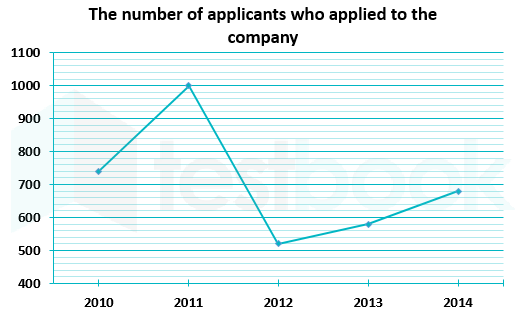
The presented line graph illustrates the number of applicants who applied to a company over a span of five distinct years.

61

Out of the total applicants (male + female) who applied to the company in 2010, the number of female applicants is 260 less than the number of male applicants then number of female applicants is what percentage of that of male applicants who applied to the company in 2010?

  1. ((a))

    44%

  2. ((b))

    45%

  3. ((c))

    46%

  4. ((d))

    47%

  5. ((e))

    48%

Show Answer
Answer: ((e))

48%

YearTotal number of applicants who applied to the company
2010740
20111000
2012520
2013580
2014680


Let the number of male applicants in 2010 = m

And the number of female applicants in 2010 = f

By table m + f = 740 ...(i)

And, m - f = 260 ...(ii)

Adding (i) and (ii) 

⇒ m = (740 + 260)/2 = 500

⇒ f = 740 - 500 = 240

Required% = (240/500) × 100 = 48%

Hence, the correct answer is 48%.

62

If 60% of the total applicants (PO + Clerk) in 2011 applied for 'PO' vacancies and 100 applicants applied for 'PO' vacancies in 2013 then what is the respective ratio between the number of applicants who applied for 'Clerk' vacancies in both the given years?

  1. ((a))

    2 : 5

  2. ((b))

    4 : 5

  3. ((c))

    5 : 6

  4. ((d))

    8 : 15

  5. ((e))

    10 : 11

Show Answer
Answer: ((c))

5 : 6

YearTotal number of applicants who applied to the company
2010740
20111000
2012520
2013580
2014680


Number of applicants who applied for 'Clerk' vacancies in 2011 = 40% × 1000 = 400

Number of applicants who applied for 'Clerk' vacancies in 2013 = 580 - 100 = 480

Required ratio = 400 : 480 = 5 : 6

Hence, the correct answer is 5 : 6.

63

If 100 applicants who applied to the company in 2013 were 'selected', and 40 applicants who applied in 2014 were 'rejected' then what is the average number of 'rejected' applicants among those who applied in both years?

  1. ((a))

    220

  2. ((b))

    230

  3. ((c))

    240

  4. ((d))

    250

  5. ((e))

    260

Show Answer
Answer: ((e))

260

YearTotal number of applicants who applied to the company
2010740
20111000
2012520
2013580
2014680


Number of applicants who were 'rejected' in 2013 = 580 - 100 = 480

Required average = (480 + 40)/2 = 260

Hence, the correct answer is 260.

64

If 320 applicants who applied to the company in 2012 were selected through the 'online' recruitment process and 40% of the total applicants (online + offline) who applied to the company in 2011 were selected through the 'offline' recruitment process then find the total number of applicants who selected through the 'offline' recruitment process in both the given years together?

  1. ((a))

    540

  2. ((b))

    600

  3. ((c))

    640

  4. ((d))

    700

  5. ((e))

    740

Show Answer
Answer: ((b))

600

YearTotal number of applicants who applied to the company
2010740
20111000
2012520
2013580
2014680


Number of applicants who were selected through the 'offline' recruitment process in 2012 = 520 - 320 = 200

Number of applicants who were selected through the 'offline' recruitment process in 2011 = 40% × 1000 = 400

Required sum = 200 + 400 = 600

Hence, the correct answer is 600.

65

If the number of applicants who applied to the company in 2015 accounts for 80% of that in 2011 then what is the average total number of applicants who applied to the company from 2010 to 2015?

  1. ((a))

    720

  2. ((b))

    736

  3. ((c))

    750

  4. ((d))

    780

  5. ((e))

    798

Show Answer
Answer: ((a))

720

YearTotal number of applicants who applied to the company
2010740
20111000
2012520
2013580
2014680


The number of applicants who applied to the company in 2015 = 80% × 1000 = 800

Required average = (740 + 1000 + 520 + 580 + 680 + 800)/6 = 720

Hence, the correct answer is 720.

66

The salaries of Charan and Rajat are in the ratio of 5: 4. If the salary of each increases by Rs. 3,000, then the new ratio becomes 6: 5. What is Charan’s initial salary?

  1. ((a))

    Rs. 18,000

  2. ((b))

    Rs. 15,000

  3. ((c))

    Rs. 20,000

  4. ((d))

    Rs. 12,000

  5. ((e))

    Rs. 28,000

Show Answer
Answer: ((b))

Rs. 15,000

Given:

Ratio of salary of charan and rajat = 5: 4

Each salary is increased by Rs. 3000

New ratio = 6 : 5

Calculation:

Let the salary of charan and rajat = 5x and 4x

Each salary is increased by Rs. 3000

According to question:

⇒ (5x + 3000)/(4x + 3000) = 6: 5

⇒ 25x + 15000 = 24x + 18000

⇒ x = 3000

∴ Charan initial salary = 5 × 3000 = Rs. 15000

Shortcut Trick 

C : R = 5 : 4 initial salary 

and  C : R = 6 : 5 after increment

Here the ratio change is the same for both C and R, i.e.,

for C → 5 to 6 and for R →  4 to 5 

 i.e., change of 1 unit which is equal to 3000.

Charan initial unit = 5

therefore 5 unit = 5 × 3000 =  Rs. 15000.

67

The ratio of present age of Raghu and Vibhu is 3 : 4 and the ratio of present age of Raghu and Sidhu is 7 : 6. If age difference of Raghu and Sidhu is 9 years, then what will be the sum of the ages of all three?

  1. ((a))

    191 years 

  2. ((b))

    221 years 

  3. ((c))

    171 years 

  4. ((d))

    201 years 

  5. ((e))

    None of these

Show Answer
Answer: ((d))

201 years 

Given

The ratio of present age of Raghu and Vibhu = 3 : 4

The ratio of present age of Raghu and Sidhu = 7 : 6

Age difference of Raghu and Sidhu = 9 years

Formula used

Ratio formula, a : b = a/b

Calculation

Raghu : Vibhu = 3 : 4

Raghu : Sidhu = 7 : 6

Then Raghu : Vibhu : Sidhu = 21 : 28 : 18

Let the age of Raghu, Vibhu and Sidhu respectively = 21x, 28x, and18x

According to question

⇒ 21x – 18x = 9

⇒ 3x = 9

⇒ x = 3 years

Then the sum of the ages of Raghu, Vibhu and Sidhu

⇒ (21 × 3) + (28 × 3) + (18 × 3)

⇒ 63 + 84 + 54

⇒ 201 years

∴ The sum of ages of all three is 201 years.

68

Rs. 840 is divided into A, B and C in the ratio of 12 : 13 : 17 respectively. C spent the 10% of his share. Find the amount left with C.

  1. ((a))

    Rs. 240

  2. ((b))

    Rs. 260

  3. ((c))

    Rs. 340

  4. ((d))

    Rs. 316

  5. ((e))

    Rs. 306

Show Answer
Answer: ((e))

Rs. 306

Given:

Total amount = Rs. 840

Ratio of share of A, B and C = 12 : 13 : 17

C spent 10% of his share

Calculation:

Let share of A, B and C be 12x, 13x and 17x respectively

Total share of A, b and C = (12x + 13x + 17x)

⇒ 42x

Total amount = Rs. 840

So, 42x = Rs. 840

⇒ 17x = Rs. (840/42) × 17

⇒ Rs. 340

Share of C = Rs. 340

C spent 10% of his share

Share left = (100 – 10)% = 90%

So, Amount left with C = 90% of 340

⇒ (90/100) × 340

⇒ Rs. 306

∴ The amount left with C is Rs. 306

69

P is twice as fast as Q as a work man. If P can complete the work in 15 days, then in how many days can P and Q together complete the work?

  1. ((a))

    8 days

  2. ((b))

    9 days

  3. ((c))

    10 days

  4. ((d))

    12 days

  5. ((e))

    None of these

Show Answer
Answer: ((c))

10 days

Given:

P is twice as fast as Q.

P can complete the work in 15 days.

Calculations:

From the given information,

Ratio of working capacities of P and Q = 2 : 1,

then time ratio = 1 : 2

If P = 15 days,

then Q = 30 days                                 

P’s 1 day’s work = 1/15,

Q’s 1 day’s work = 1/30                 

(P + Q)’s 1 day’s work = (1/15) + (1/30) = 1/10

∴ P and Q together can complete the work in 10 days.

70

Rahul sold television set for  Rs. 22,500 with a discount of 20% and loss 10%. If no discount is offer, what is the profit for Rahul?

  1. ((a))

    11.11%

  2. ((b))

    12.5%

  3. ((c))

    10%

  4. ((d))

    15%

  5. ((e))

    None of these

Show Answer
Answer: ((b))

12.5%

Given:

Discounted price = Rs 22,500

Discount percent = 20%

Loss percent = 10%

Formula used 

Discount% = (discount/MP) × 100 

Loss% = (loss/CP) × 100 

Calculation: 

80% of MP = 22500

⇒ MP = 22500 × 100 / 80 = 28125

For cost price (CP) ,

Loss = CP – SP

⇒ 10% of CP  = CP – 22500

⇒ 9 CP = 225000

⇒ CP = 25000

Profit = MP – CP = 28125 – 25000 = 3125 Rs

So, profit percent = 3125 × (100/25000) = 12.5%

∴ The required answer is 12.5%

71

What should come in place of the question mark '?' in the following number series?

30, 33, 39, 48, 60, ?

  1. ((a))

    80

  2. ((b))

    70

  3. ((c))

    75

  4. ((d))

    60

  5. ((e))

    None of these

Show Answer
Answer: ((c))

75

Given:

30, 33, 39, 48, 60, ?

Calculation:

Considering the above series, the logic can be explained as follows

∴ The required value of "?" is 75.

72

What should come in place of the question mark '?' in the following number series?

22, 42, 66, 94, 126, ?

  1. ((a))

    152

  2. ((b))

    162

  3. ((c))

    180

  4. ((d))

    166

  5. ((e))

    172

Show Answer
Answer: ((b))

162

Given:

22, 42, 66, 94, 126, ?

Calculation:

The series follows the following pattern:

∴ 162 will come in place of the question mark (?).

73

What should come in place of the question mark '?' in the following number series?

3, 5, 9 ,? , 33, 65

  1. ((a))

    13

  2. ((b))

    15

  3. ((c))

    17

  4. ((d))

    19

  5. ((e))

    11

Show Answer
Answer: ((c))

17

The series given above is related to following pattern

3 × 2 – 1 = 5

5 × 2 – 1= 9

9 × 2 – 1 = 17

17 × 2 – 1 = 33

33 × 2 – 1 = 65

∴ The missing term in the series is 17.

74

What should come in place of the question mark '?' in the following number series?

29, 60, 32, 66, ?, 72

  1. ((a))

    50

  2. ((b))

    42

  3. ((c))

    38

  4. ((d))

    48

  5. ((e))

    35

Show Answer
Answer: ((e))

35

Solution:

The series follows following pattern:

⇒ 29 × 2 + 2 = 60

⇒ 60 ÷ 2 + 2 = 32

⇒ 32 × 2 + 2 = 66

⇒ 66 ÷ 2 + 2 = 35

⇒ 35 × 2 + 2 = 72

∴ The missing number is 35

75

What should come in place of the question mark (?) in the following number series?

5, 8, 14, 26, ?, 98

  1. ((a))

    36

  2. ((b))

    40

  3. ((c))

    50

  4. ((d))

    56

  5. ((e))

    60

Show Answer
Answer: ((c))

50

Calculation:

The pattern of the number series is:

⇒ 5 + 3 = 8

⇒ 8 + 6 = 14 

⇒ 14 + 12 = 26 

⇒ 26 + 24 = 50 

⇒ 50 + 48 = 98 

The value of ? is 50

76

Radha bought a box full of candies. The box contained 22 orange candies and 12 blue candies. If 4 candies are picked at random, then what is the probability that 1 orange and 3 blue candies are picked?

  1. ((a))

    31/527

  2. ((b))

    28/531

  3. ((c))

    27/527

  4. ((d))

    31/531

  5. ((e))

    55/527

Show Answer
Answer: ((e))

55/527

Given:

There are 22 orange and 12 blue candies in the box.

Formula used:

Probability = number of favorable outcomes / total number of outcomes

ncr = n! / r! (n-r)! 

Calculation:

Total no. of candies in the box =  22 + 12 = 34 candies

Total no. of ways of picking 4 candies from 34 candies = 34c4

No. of ways of picking 1 orange candy from 22 orange candies = 22c1

No. of ways of picking 3 blue candies from 12 blue candies = 12c3

∴ Required probability = ( 22c1 × 12c3 ) / 34c4

⇒ 22 × 220 / 46376

⇒ 4840 / 46376

⇒ 55 / 527

The probability of 1 orange and 3 blue candies being picked is 55/527

77

A bus when moves at an average speed of 45 km/h reaches on time, when speed reduces to 30 km/h reaches 20 minutes late. Find the distance of journey.

  1. ((a))

    30 km

  2. ((b))

    25 km

  3. ((c))

    40 km

  4. ((d))

    33 km

  5. ((e))

    35 km

Show Answer
Answer: ((a))

30 km

 Ratio of speed = 45 : 30

⇒ 3 : 2

Time taken ratio = 2 : 3

Difference of time = 20 minutes

⇒ (20/60) h

⇒ (1/3) h

Actual time taken = (Actual time) × (Difference of time)

⇒ 2 × (1/3)

⇒ (2/3) h

Actual distance = 45 × (2/3)

⇒ 15 × 2

⇒ 30 km

∴ The distance of the journey will be 30 km.

Traditional method:

Given:

The actual speed of the bus = 45 km/h

Reduced speed of the bus = 30 km/h

Late in reaching the place = 20 minutes

Formula Used:

Speed = (Distance)/(Time)

Calculation:

Let the distance of the journey be x km.

Time taken by the bus with the speed of 45 km/h = x/45

Time taken by the bus with the speed of 30 km/h = x/30

Late in reaching the place = 20 minutes

⇒ (20/60) h

⇒ (1/3) h

According to the question,

x/45 = (x/30) - (1/3)

⇒ (x/30) - (x/45) = 1/3

⇒ (3x - 2x)/90 = 1/3

⇒ x/90 = 1/3

⇒ x = 30

∴ The distance of the journey will be 30 km.

78

Kunal goes downstream with a boat from point P to Q at a speed of 8 km/h and Aaditya goes upstream with a boat at a speed of 6 km/h. The distance between P and Q is 280 km. Speed of the stream is 1 km/h. Find in how many hours Kunal and Aaditya meet for the first time?

  1. ((a))

    15 hours

  2. ((b))

    12 hours

  3. ((c))

    11 hours

  4. ((d))

    20 hours

  5. ((e))

    16 hours

Show Answer
Answer: ((d))

20 hours

Given:

Distance between P and Q = 280 km

Speed of stream = 1 km/h

Speed of Kunal = 8 km/h

Speed of adiyta = 6 km/h

Formula used:

Time = distance/speed

Relative speed = sum of the speed of the objects moving in the opposite direction

Calculation:

Speed of Kunal = 8 + 1 = 9 km/h

Speed of Aaditya = 6 – 1 = 5 km/h

Relative speed = 9 + 5 = 14 km/h

Time = 280/14

= 20 hours

∴ Kunal and Aaditya meet for the first time in 20 hours.

79

The difference between the radii of a bigger circle and a smaller circle is 14 cm and the difference between their areas is 1100 cm2. The radius of the smaller circle is

  1. ((a))

    5.5 cm

  2. ((b))

    4.4 cm

  3. ((c))

    5.7 cm

  4. ((d))

    4.6 cm

  5. ((e))

    6.6 cm

Show Answer
Answer: ((a))

5.5 cm

Solution:

Calculations:

Radius of the larger circle = R cm

Radius of the smaller circle = r cm

∴ R – r = 14 cm

and π (R2 – r2) = 1100

⇒ R2 – r2 = 1100/ π

⇒ R2 – r2 = 1100 × 7/22

⇒ R2 – r2 = 350

⇒ (R – r)(R + r) = 350

⇒ (R + r) × 14 = 350

⇒ (R + r) = 350/14

⇒ (R + r) = 25

∴ (R + r) – (R – r) = 25 – 14

⇒ 2r = 11

⇒ r = 5.5 cm

Radius of the smaller circle is 5.5 cm.

80

Two equal sums were borrowed at 20% simple interest per annum for 2 years and 3 years respectively. The difference in the interest was Rs. 5000. Find the principal amount. 

  1. ((a))

    20000

  2. ((b))

    30000

  3. ((c))

    25000

  4. ((d))

    45000

  5. ((e))

    55000

Show Answer
Answer: ((c))

25000

Given:

R = 20%

T = 2 years, 3 years

Difference = Rs. 5000

Formula used:

S.I. = P × R × T/100

Calculation:

Case1 :

⇒ S.I. = P × 20 × 2/100

Case2 :

⇒ S.I. = P × 20 × 3/100

Now,

⇒ (P × 20 × 3/100) - (P × 20 × 2/100) = 5000

⇒ 20 × P/100 = 5000

⇒ P = 25000

∴ Principal amount is Rs. 25000

Attempt this paper under real exam conditions

Timed interface, section switching, instant scoring, and question-by-question analytics — free.

Start Timed Attempt