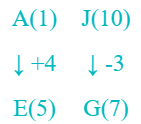
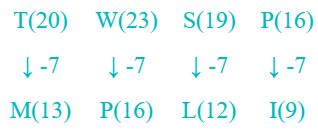
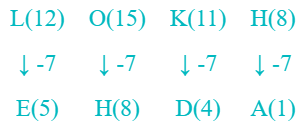
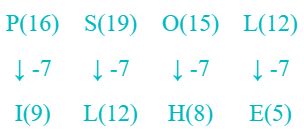
Previous Year Paper

RRB NTPC Under Graduate Level CBT-II Official Paper (Held On: 20 Dec, 2025) (Previous Year Paper)

120 questions · 90 minutes · with answers · free

Full Test (120 questions)

1

Which organisation, established by the Indian government, serves as the regulatory and promotional body to facilitate increased private sector participation in India's space activities as of March 2025?

  1. ((a))

    Department of Space (DoS)

  2. ((b))

    Indian Space Research Organisation (ISRO)

  3. ((c))

    Space Applications Centre (SAC)

  4. ((d))

    Indian National Space Promotion and Authorization Centre (IN-SPACe)

Show Answer
Answer: ((d))

Indian National Space Promotion and Authorization Centre (IN-SPACe)

The correct answer is Indian National Space Promotion and Authorization Centre (IN-SPACe).

Key Points

  • IN-SPACe was established by the Government of India to act as a regulatory and promotional body for private sector participation in India's space activities.
  • It was announced by the Indian government in June 2020 as part of reforms to open up the space sector to private players.
  • IN-SPACe operates under the aegis of the Department of Space (DoS) and facilitates non-governmental entities in their engagement with space activities.
  • The organization ensures the level playing field for private industries, universities, and startups to conduct space-related operations alongside the Indian Space Research Organisation (ISRO).
  • Its primary role includes authorization, promotion, and hand-holding of private sector entities in space exploration, satellite development, and launch vehicle creation.

Additional Information

  • Indian Space Research Organisation (ISRO):
  • ISRO is India's national space agency headquartered in Bengaluru and operates under the Department of Space.
  • It was established in 1969 and is responsible for space exploration, satellite deployment, and development of launch vehicles.
  • Key achievements include the Mangalyaan (Mars Orbiter Mission), Chandrayaan missions, and the PSLV (Polar Satellite Launch Vehicle).
  • Department of Space (DoS):
  • The DoS oversees the space program in India and formulates policies related to space activities.
  • It manages the coordination between various space organizations, including ISRO and IN-SPACe.
  • Space Applications Centre (SAC):
  • SAC is a major center of ISRO located in Ahmedabad, Gujarat.
  • It specializes in the development of payloads for satellites and conducts research in areas such as communication, remote sensing, and space sciences.
  • Role of IN-SPACe:
  • IN-SPACe acts as a single-window mechanism to allow private entities to use ISRO’s facilities and technical expertise.
  • It provides technical guidance and facilitates the sharing of infrastructure for satellite launches and manufacturing.
  • It also ensures compliance with national security and international obligations while promoting private sector growth.

Important Points

  • Space Sector Reforms in India:
  • In 2020, the Government of India introduced reforms to encourage private sector participation in space activities.
  • These reforms aim to develop a robust ecosystem for space technologies and innovation.
  • Key Features of IN-SPACe:
  • IN-SPACe functions as a bridge between ISRO and private companies, ensuring equitable access to space resources.
  • It plays a crucial role in advancing India’s space exploration goals and developing indigenous capabilities for global competitiveness.
2

The mandap of the temple is referred to as the 'Jagamohan' in which school of temple architecture?

  1. ((a))

    Solanki school

  2. ((b))

    Odisha school

  3. ((c))

    Pala school

  4. ((d))

    Khajuraho school

Show Answer
Answer: ((b))

Odisha school

The correct answer is Odisha School.

Key Points

  • The Jagamohan refers to the assembly hall or porch of a temple in the Kalinga or Odisha School of temple architecture. It serves as the area where devotees congregate before proceeding to the sanctum sanctorum (garbhagriha).
  • The Kalinga School, which flourished in the region of modern-day Odisha, is renowned for its unique style, and the temples constructed in this tradition are characterized by their distinct architectural components.
  • In Odisha temples, the Jagamohan is often rectangular or square in shape and is distinguished by its pyramidal roof structure, which is an essential feature of this architectural school.
  • The Jagamohan is positioned in front of the sanctum and complements the main tower (shikhara or deul). These two structures together form the essential components of Odisha temples, such as the Sun Temple in Konark and the Lingaraja Temple in Bhubaneswar.
  • The Odisha School of temple architecture is particularly noted for its intricate carvings and detailed ornamentation, which extend to the Jagamohan, making it a significant architectural and cultural element.

Additional Information

  • Features of Odisha School of Architecture:
  • The temples typically consist of three major components: the Deul (sanctum sanctorum), the Jagamohan (assembly hall), and the Natmandir (dance hall). The Bhogmandir (offering hall) is also an additional component in many cases.
  • The Deul has a curvilinear spire (rekha deul) that rises vertically and tapers at the top. The Jagamohan is rectangular or square with a pyramidal roof, as mentioned earlier.
  • The walls of the temples are adorned with highly intricate carvings, which include depictions of deities, mythical creatures, floral motifs, and scenes from epics like the Ramayana and Mahabharata.
  • Prominent examples of this architectural style include the Konark Sun Temple, Jagannath Temple in Puri, and the Lingaraja Temple in Bhubaneswar.
  • Other Schools of Temple Architecture (Options Provided):
  • Solanki School: This school is associated with Gujarat and includes temples like the Modhera Sun Temple. It is characterized by its intricately carved toranas (arched gateways) and elaborate stepwells (vavs).
  • Pala School: Flourishing in Bengal and Bihar under the Pala dynasty, this school emphasized Buddhist architecture. Monasteries like Vikramashila and Somapura Mahavihara are notable examples.
  • Khajuraho School: Associated with the Chandela dynasty in Madhya Pradesh, it is renowned for its exquisite sculptures and erotic carvings. Temples like the Kandariya Mahadev and Lakshmana Temple are prominent examples.
  • Important Points:
  • The Kalinga temples are unique in their layout, consisting of a single axis with the sanctum, Jagamohan, and other components aligned in a linear pattern.
  • The Kalinga architecture emphasizes verticality, with the Deul rising prominently above the rest of the structure.
  • The Jagamohan serves both a functional and aesthetic purpose, providing space for rituals and enhancing the temple's grandeur.
3

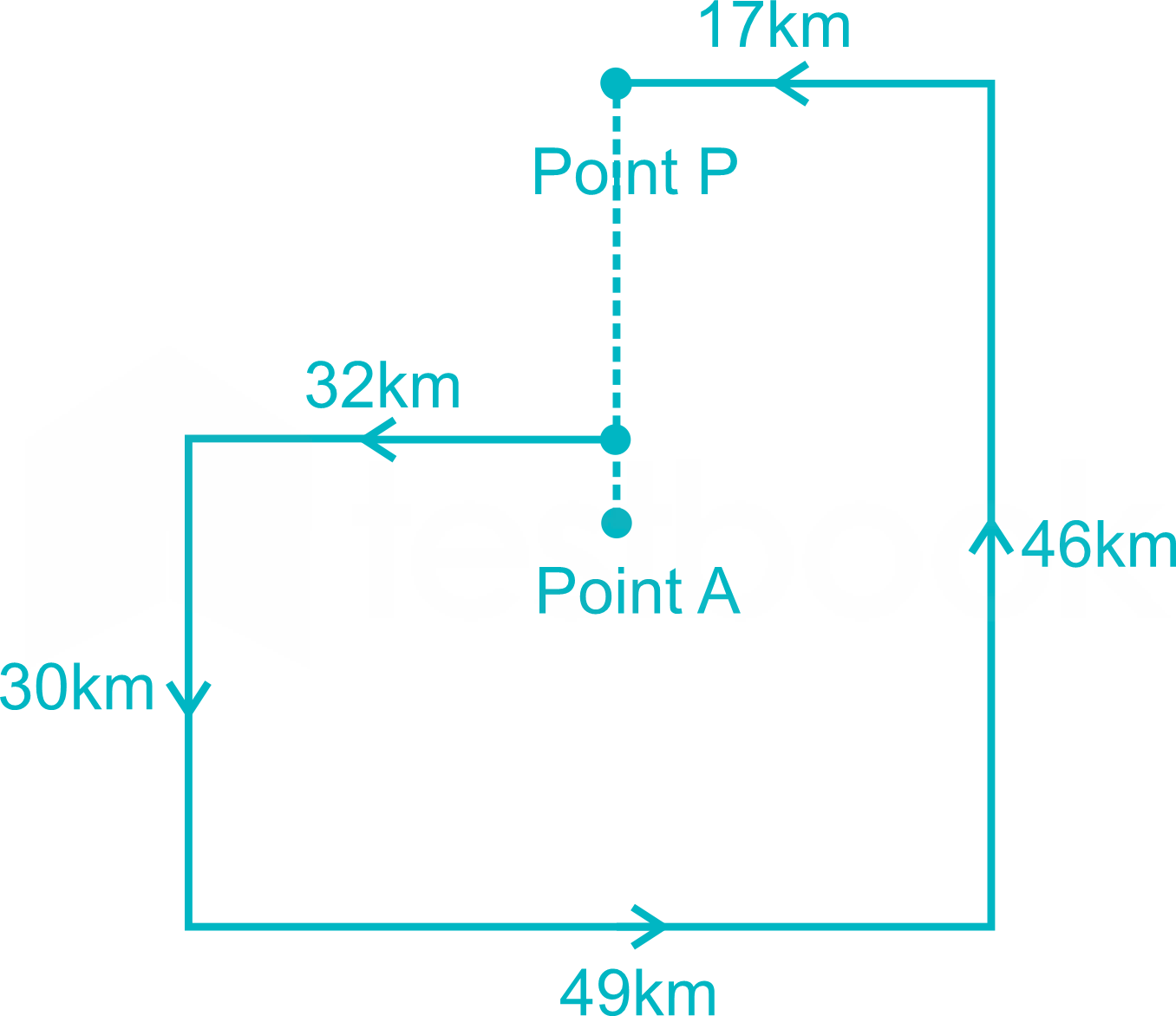
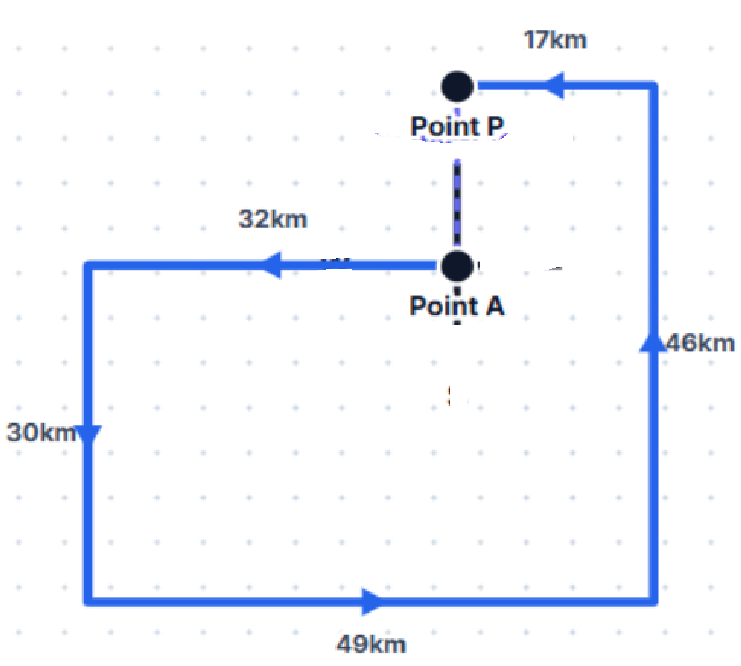
Radhe starts from Point A and drives 32 km towards west. He then takes a left turn, drives 30 km, turns left and drives 49 km. He then takes a left turn and drives 46 km. He takes a final left turn, drives 17 km and stops at Point P. How far (shortest distance) and towards which direction should he drive in order to reach Point A again? (All turns are 90 degrees turns unless specified)

  1. ((a))

    16 km to the south

  2. ((b))

    12 km to the nouth

  3. ((c))

    15 km to the west

  4. ((d))

    13 km to the south

Show Answer
Answer: ((a))

16 km to the south

Given:

Radhe starts from Point A and drives 32 km towards west.

Then, he takes a left turn and drives 30 km.

Next, he turns left and drives 49 km, then takes a left turn and drives 46 km.

Finally, he takes a final left turn and drives 17 km and stops at Point P.

So, Point P is 16 km North from his starting point A. To reach Point A again, he must drive 16 km to the South.

Hence, the correct answer is Option 1.

4

The larger of two supplementary angles is 16° more than the smaller angle. The smaller angle (in degrees) is:

  1. ((a))

    72

  2. ((b))

    87

  3. ((c))

    79

  4. ((d))

    82

Show Answer
Answer: ((d))

82

Shortcut Trick

For two supplementary angles, their total sum is always 180°.

Smaller angle = (Sum − Difference) ÷ 2

Smaller angle = (180° − 16°) ÷ 2

Smaller angle = 164° ÷ 2 = 82°

∴ The correct answer is 82°.

Alternate Method

Code
  x x + 16° A B C O Straight Angle = 180°

Given:

The two angles are supplementary.

The larger angle is 16° more than the smaller angle.

Concept Used:

The sum of adjacent angles on a straight line (supplementary angles) is exactly 180°.

Calculation:

⇒ Let the smaller angle be x.

⇒ Then, the larger angle = x + 16°

⇒ Sum of supplementary angles = 180°

⇒ x + (x + 16°) = 180°

⇒ 2x + 16° = 180°

⇒ 2x = 180° − 16°

⇒ 2x = 164°

⇒ x = 164° ÷ 2

⇒ x = 82°

∴ The correct answer is 82°.

Additional Information

Supplementary Angles

Two angles are supplementary if their sum is exactly 180°. When placed adjacent to each other, they form a straight line or linear pair.

Complementary Angles

Two angles are complementary if their sum is exactly 90°, forming a right angle when combined.

Vertically Opposite Angles

When two straight lines intersect, the angles directly opposite to each other are equal. These pairs are independent of the supplementary linear pairs formed along each line.

5

The H.C.F. and the L.C.M. of two numbers are 49 and 490, respectively. If one of the numbers is 245, find the other one.

  1. ((a))

    49

  2. ((b))

    98

  3. ((c))

    147

  4. ((d))

    196

Show Answer
Answer: ((b))

98

Shortcut Trick

We know that, Product of two numbers = H.C.F. × L.C.M.

⇒ 245 × Second Number = 49 × 490

⇒ Second Number = (49 × 490) ÷ 245

⇒ Second Number = 490 ÷ 5 = 98

∴ The correct answer is 98.

Alternate Method

Given:

H.C.F. of two numbers = 49

L.C.M. of two numbers = 490

First number = 245

H.C.F. = 49 L.C.M. = 490 First Number = 245 Second Number = ? × × =

Formula Used:

First Number × Second Number = H.C.F. × L.C.M.

Calculations:

Let the second number be x.

⇒ 245 × x = 49 × 490

⇒ x = (49 × 490) ÷ 245

⇒ x = 490 ÷ (245 ÷ 49)

⇒ x = 490 ÷ 5

⇒ x = 98

∴ The correct answer is 98.

Additional Information

Product of Numbers Rule

For any two numbers a and b, the product of their H.C.F. and L.C.M. is always equal to the product of the numbers. Formula: a × b = H.C.F. × L.C.M.

Co-prime Numbers

Two numbers are said to be co-prime if their H.C.F. is 1. The L.C.M. of two co-prime numbers is always equal to their product.

Fractions H.C.F. & L.C.M.

H.C.F. of fractions = (H.C.F. of Numerators) ÷ (L.C.M. of Denominators). L.C.M. of fractions = (L.C.M. of Numerators) ÷ (H.C.F. of Denominators).

6

What should come in place of the question mark (?) in the given series?

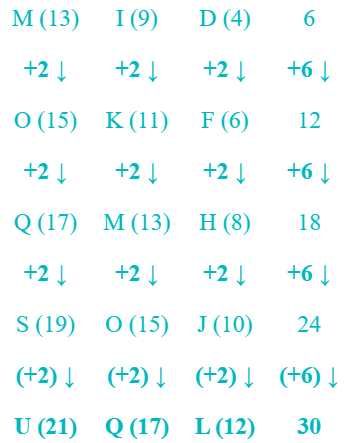
16, 26, 39, 55, 74, ?

  1. ((a))

    100

  2. ((b))

    103

  3. ((c))

    90

  4. ((d))

    96

Show Answer
Answer: ((d))

96

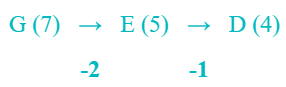
The logic followed here is:

Thus, the missing term in the series is 96.

Hence, the correct answer is "Option 4";

7

D, E, F, G, O, P and Q are sitting in a straight line, facing north. Only three people sit to the left of E. Only O sits to the right of G. Only three people sit between G and F. Q sits at some place to the left of P but at some place to the right of D. How many people sit between D and P?

  1. ((a))

    Four

  2. ((b))

    Three

  3. ((c))

    Two

  4. ((d))

    One

Show Answer
Answer: ((b))

Three

Given:


  1. There are 7 people. Only three people sit to the left of E. 
  2. Only O sits to the right of G. 
  3. Only three people sit between G and F.
  4. Q sits left of P but right of D (D < Q < P). 


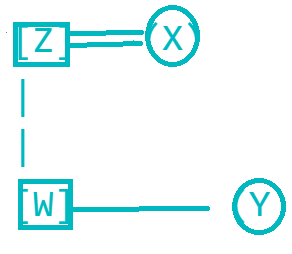
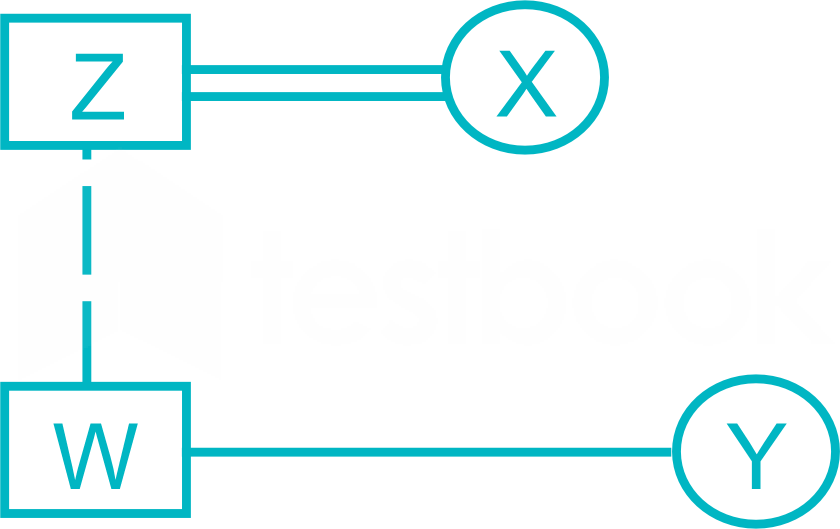
Thus, there are three people (F, Q, E) sitting between D and P.

Hence, the correct answer is "Option 2".

8

Two pipes can fill a cistern, individually, in 99 min and 90 min, respectively. There is a pipe located at the bottom of the cistern to empty it. If all the three pipes are opened simultaneously, then the empty cistern gets filled in 50 min. How long will the pipe at the bottom of the tank take to empty the completely filled cistern if no other pipe is then open?

  1. ((a))

    841 min

  2. ((b))

    822 min

  3. ((c))

    815 min

  4. ((d))

    825 min

Show Answer
Answer: ((d))

825 min

Shortcut Trick

Total capacity = LCM(99, 90, 50) = 4950 units.

Efficiency of A = 4950 ÷ 99 = 50 units/min.

Efficiency of B = 4950 ÷ 90 = 55 units/min.

Net efficiency of (A + B + C) = 4950 ÷ 50 = 99 units/min.

Efficiency of C = 99 − (50 + 55) = −6 units/min.

Time taken by C = 4950 ÷ 6 = 825 min.

∴ The correct answer is 825 min.

Alternate Method

Given:

Time taken by Pipe A to fill the cistern = 99 min

Time taken by Pipe B to fill the cistern = 90 min

Time taken by all three pipes (A + B + C) to fill the cistern = 50 min

Concept Used:

Total capacity = LCM of individual time taken

Efficiency = Total capacity ÷ Time taken

PipeTime (min)Total WorkEfficiency
A99495050
B9055
A + B + C5099

Calculation:

⇒ Let the efficiency of emptying Pipe C be Ec.

⇒ Total Efficiency = Efficiency of A + Efficiency of B + Efficiency of C

⇒ 99 = 50 + 55 + Ec

⇒ 99 = 105 + Ec

⇒ Ec = 99 − 105

⇒ Ec = −6 units/min

⇒ The negative sign indicates that Pipe C is an emptying pipe.

⇒ Time taken by Pipe C to empty the completely filled cistern = Total Work ÷ Efficiency of C

⇒ Time = 4950 ÷ 6

⇒ Time = 825 min

∴ The correct answer is 825 min.

Additional Information

Pipes & Cisterns Concept

If a pipe can fill a tank in x hours and another can empty it in y hours (where y > x), then the net part of the tank filled in 1 hour is (1/x) − (1/y).

Work & Wages

Wages are distributed in proportion to the total work done. If multiple people work for the exact same number of days, their wages are divided in the direct ratio of their efficiencies.

Alternate Working

When workers or pipes operate on alternate days or hours, calculate the combined work done in one complete cycle before multiplying it to approach the total required work without exceeding it.

9

The Citizenship (Amendment) Act, 2019 applies specifically to migrants belonging to the notified communities from which set of neighbouring countries?

  1. ((a))

    Nepal, Bhutan and Bangladesh

  2. ((b))

    Maldives, Afghanistan and Bhutan

  3. ((c))

    Afghanistan, Bangladesh and Pakistan

  4. ((d))

    Sri Lanka, Myanmar and Pakistan

Show Answer
Answer: ((c))

Afghanistan, Bangladesh and Pakistan

The correct answer is Afghanistan, Bangladesh, and Pakistan.

Key Points

  • The Citizenship (Amendment) Act, 2019 (CAA) was passed by the Parliament of India in December 2019. It amends the Citizenship Act of 1955.
  • The Act specifically provides citizenship to migrants belonging to Hindu, Sikh, Buddhist, Jain, Parsi, and Christian communities from Afghanistan, Bangladesh, and Pakistan who entered India on or before December 31, 2014.
  • These migrants are eligible for citizenship if they faced religious persecution or fear of persecution in their home countries. Hence, option 3 is correct.
  • The Act excludes Muslim migrants from the eligibility criteria, making it controversial and widely debated.
  • The CAA does not apply to tribal areas covered under the Sixth Schedule of the Constitution and the areas under the Inner Line Permit regime in states like Arunachal Pradesh, Mizoram, Nagaland, and Manipur.

Additional Information

  • Afghanistan, Bangladesh, and Pakistan:
  • Afghanistan: Afghanistan has a history of religious persecution, especially of minorities like Hindus and Sikhs, due to prolonged conflict and Taliban rule.
  • Bangladesh: Religious minorities in Bangladesh, particularly Hindus, have faced persecution post-partition and during the 1971 Bangladesh Liberation War.
  • Pakistan: Religious minorities such as Hindus, Sikhs, and Christians have faced systemic discrimination and violence in Pakistan.
  • Controversy around CAA:
  • The exclusion of Muslim migrants has been criticized as discriminatory and against the secular ethos of the Indian Constitution.
  • Opponents argue that the Act contradicts Article 14, which guarantees equality before the law to all persons.
  • Supporters claim the Act provides a safe haven for persecuted minorities from neighboring countries.
  • Inner Line Permit and Tribal Areas:
  • The Act does not apply to areas under the Inner Line Permit, which regulates entry into certain northeastern states to protect indigenous communities.
  • Similarly, tribal areas governed under the Sixth Schedule are exempt from the Act, ensuring protection of tribal rights.
  • Historical Context:
  • The partition of India in 1947 and subsequent wars led to large-scale migration and religious persecution in the region.
  • The CAA aims to address the plight of refugees who have been living in India for decades without legal status.

Important Points

  • Eligibility for Citizenship: Migrants must have entered India on or before December 31, 2014, and must not be residing in restricted areas.
  • Exemptions: The Act excludes Muslims and applies only to specific religious minorities from Afghanistan, Bangladesh, and Pakistan.
  • Criticism: The Act has sparked protests across India, with critics citing concerns about secularism and equality under the Constitution.
  • Legal Challenges: The Act has been challenged in the Supreme Court of India, and its constitutionality remains a topic of debate.
10

Which memory type is both non-volatile and commonly used for firmware storage in embedded controllers?

  1. ((a))

    DRAM

  2. ((b))

    Flash ROM

  3. ((c))

    L3 cache

  4. ((d))

    SRAM

Show Answer
Answer: ((b))

Flash ROM

The correct answer is Flash ROM.

Key Points

  • Flash ROM (Read-Only Memory) is a type of non-volatile memory, meaning it retains data even when the power is turned off.
  • It is commonly used for storing firmware, which is the low-level software that directly controls hardware in embedded systems like microcontrollers, routers, and IoT devices.
  • Flash memory allows for electrical erasing and reprogramming, making it ideal for systems that require periodic updates or changes to the firmware.
  • Unlike volatile memory such as DRAM and SRAM, Flash ROM does not lose its content when the device is powered down.
  • Flash ROM is more cost-effective and has a higher storage density compared to other types of non-volatile memory like EEPROM, making it a popular choice for embedded applications.

Additional Information

  • DRAM (Dynamic Random-Access Memory):
  • DRAM is a type of volatile memory, meaning it loses its data when the power is turned off.
  • It is mainly used as main memory in computers and other high-speed devices due to its fast read/write capabilities.
  • DRAM is not suitable for firmware storage as it requires constant power to retain data.
  • L3 Cache:
  • L3 (Level cache is a type of volatile memory that is used as a high-speed buffer between a computer’s processor and its main memory (DRAM).
  • It is designed to improve the performance of CPUs by reducing data access times but is not used for firmware storage.
  • SRAM (Static Random-Access Memory):
  • SRAM is another type of volatile memory that is faster but more expensive than DRAM.
  • It is typically used in cache memory or small embedded systems but is not suitable for firmware storage due to its volatility.
  • Flash Memory Characteristics:
  • Flash ROM comes in two primary types: NAND and NOR Flash.
  • NAND Flash is widely used in storage devices like SSDs and USB drives due to its high capacity and speed.
  • NOR Flash is preferred for firmware storage as it allows random access and is highly reliable for executing code directly from the memory.
  • Applications of Flash ROM:
  • Used in embedded systems like microcontrollers, IoT devices, and automotive electronics for firmware storage.
  • Commonly found in devices like smartphones, digital cameras, and gaming consoles for data storage.
  • Provides a balance between cost, speed, and reliability for non-volatile storage needs.

Important Points

  • Firmware:
  • Firmware is a type of software that provides low-level control for a device's specific hardware.
  • It is typically stored in non-volatile memory like Flash ROM to ensure it persists even when the device is powered off.
  • Firmware updates are critical for fixing bugs, adding new features, or improving device performance.
  • Embedded Controllers:
  • Embedded controllers are specialized microcontrollers used to manage specific tasks within a larger electronic system.
  • Examples include ECUs in automobiles, industrial automation systems, and smart appliances.
  • Flash ROM is crucial for storing the firmware that controls these embedded systems.
Code
11

Based on the English alphabetical order, three of the following four letter-cluster pairs are alike in a certain way and thus form a group. Which letter-cluster pair DOES NOT belong to that group? (Note: The odd one out is not based on the number of consonants/vowels or their position in the letter-cluster.)

  1. ((a))

    HN - TV

  2. ((b))

    YH - CE

  3. ((c))

    CL - GI

  4. ((d))

    AJ - EG

Show Answer
Answer: ((a))

HN - TV

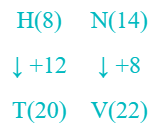
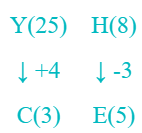
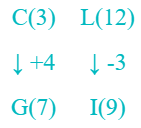
The logic followed here is:

Option 1) HN - TV

The letters are shifted by +12 and +8 respectively.

Option 2) YH - CE


Option 3) CL - GI


Option 4) AJ - EG


Thus, HN - TV is the odd one out.

Hence, the correct answer is "Option 1".

12

The marked price of an iPad is ₹960. It is sold with two successive discounts of 25% each, followed by an additional 15% discount for cash payment. What is the final selling price (in ₹) after the cash discount?

  1. ((a))

    461

  2. ((b))

    456

  3. ((c))

    459

  4. ((d))

    460

Show Answer
Answer: ((c))

459

Shortcut Trick

The final Selling Price (SP) after successive discounts can be found directly using multiplying factors.

A 25% discount means the item is sold at 75% or 3/4 of its price.

A 15% discount means the item is sold at 85% or 17/20 of its price.

Final SP = 960 × (3/4) × (3/4) × (17/20)

Final SP = 960 × (153/320) = 3 × 153 = 459

∴ The correct answer is ₹459.

Alternate Method

Given:

Marked Price (MP) of the iPad = ₹960

Successive discounts: D1 = 25%, D2 = 25%, D3 = 15%

Formula Used:

Final Selling Price (SP) = MP × (1 − D1/100) × (1 − D2/100) × (1 − D3/100)

Code
  Successive Discount Flow  -25%  -25%  -15%  ₹960 MP  ₹720 Price 1  ₹540 Price 2  ₹459 Final SP

Calculations:

⇒ SP = 960 × (1 − 25/100) × (1 − 25/100) × (1 − 15/100)

⇒ SP = 960 × (75/100) × (75/100) × (85/100)

⇒ SP = 960 × (3/4) × (3/4) × (17/20)

⇒ SP = 960 × (153/320)

⇒ SP = 3 × 153 = 459

∴ The correct answer is ₹459.

Additional Information

Effective Equivalent Discount

For two successive discounts of a% and b%, the single equivalent discount is calculated using the formula: Equivalent Discount = (a + b − ab/100)%.

Marked Price vs Cost Price

Discounts are always calculated on the Marked Price (MP) of the article. Meanwhile, Profit or Loss percentages are calculated on the Cost Price (CP).

Successive Percentage Change

Applying successive discounts of x%, y%, and z% is the same as finding the successive decrease of a value, meaning the order of discounts does not change the final selling price.

13

Seven boxes H, I, J, K, Q, R and S are kept one over the other but not necessarily in the same order. H is kept second from the bottom. Only three boxes are kept between H and S. J is kept at one of the positions below H. Only Q is kept between S and R. K is kept at one of the positions above S.

How many boxes are kept between I and J?

  1. ((a))

    Four

  2. ((b))

    One

  3. ((c))

    Three

  4. ((d))

    Two

Show Answer
Answer: ((b))

One

Given:

Seven boxes (H, I, J, K, Q, R, S) are kept in a vertical stack from 1 (bottom) to 7 (top).

1) H is kept second from the bottom.

2) Only three boxes are kept between H and S.

3) J is kept at one of the positions below H.

FloorBox
7
6S
5
4
3
2H
1J


4) Only Q is kept between S and R.

5) K is kept at one of the positions above S.

S is on Floor 6. The only floor above it is Floor 7. K = Floor 7.

6) Placing the remaining box.

The only floor left is Floor 3, and the only box left is I. I = Floor 3.

Final Arrangement:

7K
6S
5Q
4R
3I
2H
1J


I is on Floor 3 and J is on Floor 1. The only box between them is H (Floor 2).

Hence, the correct answer is "Option 2".

14

TWSP is related to MPLI in a certain way based on the English alphabetical order. In the same way, LOKH is related to EHDA. To which of the given options is PSOL related, following the same logic?

  1. ((a))

    ILHE

  2. ((b))

    ILGE

  3. ((c))

    IMGM

  4. ((d))

    IKGE

Show Answer
Answer: ((a))

ILHE

The logic followed here is:

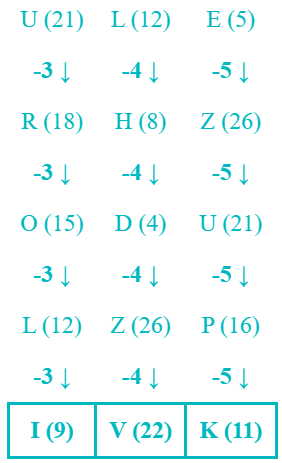
For TWSP to MPLI

For LOKH to EHDA


Applying the same logic to PSOL:


Thus, PSOL is related to ILHE.

Hence, the correct answer is "ILHE".

15

Evaluate: 

(31+((15+(97+(7+(4))))\sqrt{(31+\sqrt{((15+\sqrt{(97+\sqrt{(7+\sqrt{(4)})))}}}}  = ?

  1. ((a))

    5

  2. ((b))

    6

  3. ((c))

    4

  4. ((d))

    9

Show Answer
Answer: ((b))

6

Shortcut Trick

Solve nested square roots systematically from the inside out:

√4 = 2 → 7 + 2 = 9

√9 = 3 → 97 + 3 = 100

√100 = 10 → 15 + 10 = 25

√25 = 5 → 31 + 5 = 36 → √36 = 6

∴ The correct answer is 6.

Alternate Method

Given:

√(31 + √(15 + √(97 + √(7 + √4))))

Calculation:

⇒ √(31 + √(15 + √(97 + √(7 + 2))))

⇒ √(31 + √(15 + √(97 + √9)))

⇒ √(31 + √(15 + √(97 + 3)))

⇒ √(31 + √(15 + √100))

⇒ √(31 + √(15 + 10))

⇒ √(31 + √25)

⇒ √(31 + 5)

⇒ √36

⇒ 6

∴ The correct answer is 6.

Additional Information

BODMAS Rule

Always follow the order of Brackets, Orders (powers and roots), Division, Multiplication, Addition, and Subtraction.

Nested Radicals

When evaluating nested square roots, begin from the innermost radical and work outwards step by step.

Perfect Squares

Knowing perfect squares up to 30 helps in quickly solving square root simplification questions without writing down intermediate steps.

16

As per Energy Statistics India 2025, which renewable energy source contributes the largest share to India's total estimated potential of renewable power, as of March 2025?

  1. ((a))

    Hydro power

  2. ((b))

    Wind energy

  3. ((c))

    Biomass energy

  4. ((d))

    Solar energy

Show Answer
Answer: ((b))

Wind energy

The correct answer is Wind Energy.

Key Points

  • According to Energy Statistics India 2025, India's total estimated renewable power potential is approximately 2,109.66 GW.
  • Among all renewable energy sources, Wind Energy has the highest estimated potential of about 1,163.86 GW, contributing nearly 55% of the total estimated renewable power potential.
  • Solar Energy has an estimated potential of about 748.99 GW, accounting for nearly 36% of the total renewable power potential.
  • Hence, the correct answer is Option 2 – Wind Energy.

Additional Information

  • Estimated Renewable Power Potential in India:
  • Wind Energy: ~1,163.86 GW (Largest share)
  • Solar Energy: ~748.99 GW
  • Large Hydro Power: ~133.41 GW
  • Biomass Power: ~28.45 GW
  • Small Hydro Power: ~21.13 GW
  • Cogeneration (Bagasse): ~13.82 GW
  • Rajasthan has the highest estimated renewable energy potential among Indian states, followed by Maharashtra, Gujarat, and Karnataka.

Important Points

  • Largest estimated renewable power potential: Wind Energy (about 55%).
  • Second-largest estimated potential: Solar Energy (about 36%).
17

In a certain code language,

A + B means 'A is the son of B',

A # B means 'A is the sister of B',

A x B means 'A is the wife of B' and

A & B means 'A is the father of B'.

Based on the above, how is S related to T if 'S + G & J # K x T'?

  1. ((a))

    Father

  2. ((b))

    Wife's father

  3. ((c))

    Brother

  4. ((d))

    Wife's brother

Show Answer
Answer: ((d))

Wife's brother

Given:

Let us first decode the given symbols and then draw a family tree.

A is
Symbol+#×&
MeaningSonSisterWifeFather
of B


On checking: S + G & J # K × T

  1. S + G - 'S + G' means 'S is the son of G'.

  2. G & J - 'G & J' means 'G is the father of J'.

  3. J # K- 'J # K' means 'J is the sister of K'.

  4. K × T- 'K × T' means 'K is the wife of T'.

G S J K T

​Therefore, S is the brother of K, who is the wife of T → S is the Wife's brother of T.

Hence, the correct answer is "Option 4".

18

Select the set in which the numbers are related in the same way as are the numbers of the following sets.

(NOTE: Operations should be performed on the whole numbers, without breaking down the numbers into their constituent digits. E.g. 13 - Operations on 13 such as adding to/subtracting from/multiplying with 13 can be performed. Breaking down 13 into 1 and 3 and then performing mathematical operations on 1 and 3 is not allowed.)

<br>

(5, 14, 24)

(3, 10, 16)

  1. ((a))

    (7, 18, 32)

  2. ((b))

    (6, 8, 12)

  3. ((c))

    (9 , 14, 24)

  4. ((d))

    (4, 12, 28)

Show Answer
Answer: ((a))

(7, 18, 32)

The logic follows here is:

Logic: (First Number × 2) + 4 = Second Number;

(First Number × 4) + 4 = Third Number

For (5, 14, 24):

(5 × 2) + 4 = 14

(5 × 4) + 4 = 24

For (3, 10, 16):

(3 × 2) + 4 = 10

(3 × 4) + 4 = 16

Option 1: (7, 18, 32)

(7 × 2) + 4 = 18

(7 × 4) + 4 = 32

Thus, (7, 18, 32) is related in the same way as the given sets.

Hence, the correct answer is "Option 1".

19

A shopkeeper fixes the marked price of an item 90% above its cost price. What percentage of discount on marked price should be allowed to gain 71%?

  1. ((a))

    10%

  2. ((b))

    11%

  3. ((c))

    8%

  4. ((d))

    13%

Show Answer
Answer: ((a))

10%

Shortcut Trick

Let the Cost Price (CP) be 100.

Marked Price (MP) = 100 + 90% = 190

Selling Price (SP) for 71% profit = 100 + 71% = 171

Discount = MP − SP = 190 − 171 = 19

Discount % = (Discount ÷ MP) × 100 = (19 ÷ 190) × 100 = 10%

∴ The correct answer is 10%.

Alternate Method

Given:

Mark-up Percentage = 90% above CP

Profit Percentage = 71%

Formula Used:

Ratio of CP to MP = (100 − Discount%) ÷ (100 + Profit%)

Code
            CP = 100  SP = 171  MP = 190   +90% Markup   +71% Profit   −d% Discount

Calculations:

⇒ Let CP be 100

⇒ MP = 100 + 90 = 190

⇒ Using the formula: CP ÷ MP = (100 − D) ÷ (100 + P)

⇒ 100 ÷ 190 = (100 − D) ÷ (100 + 71)

⇒ 10 ÷ 19 = (100 − D) ÷ 171

⇒ 100 − D = (171 × 10) ÷ 19

⇒ 100 − D = 9 × 10

⇒ 100 − D = 90

⇒ D = 100 − 90 = 10%

∴ The correct answer is 10%.

Additional Information

Direct Relation Between CP and MP

The most efficient way to link Cost Price and Marked Price is using the ratio formula: CP/MP = (100 − Discount%) / (100 + Profit%).

Successive Discounts

When two consecutive discounts x% and y% are given on MP, the single equivalent discount = [x + y − (xy ÷ 100)]%.

Mark-up Percentage

It indicates how much more the Marked Price is compared to the Cost Price. Formula: Mark-up % = [(MP − CP) ÷ CP] × 100.

20

Find the mean for the following data: 12, 3, 18, 17, 4, 9, 17, 19, 20, 15, 8, 17, 2, 3, 16, 11, 3, 1, 0, and 5.

  1. ((a))

    11

  2. ((b))

    8

  3. ((c))

    10

  4. ((d))

    9

Show Answer
Answer: ((c))

10

Shortcut Trick

Use the Assumed Mean Deviation method to solve it mentally.

Let the Assumed Mean be 10.

Sum of deviations = (+2) + (−7) + (+8) + (+7) + (−6) + (−1) + (+7) + (+9) + (+10) + (+5) + (−2) + (+7) + (−8) + (−7) + (+6) + (+1) + (−7) + (−9) + (−10) + (−5) = 0

Since the net deviation is 0, the Actual Mean is exactly equal to the Assumed Mean.

∴ The correct answer is 10.

Alternate Method

Given:

Data = 12, 3, 18, 17, 4, 9, 17, 19, 20, 15, 8, 17, 2, 3, 16, 11, 3, 1, 0, 5

Number of observations (n) = 20

Formula Used:

Mean = Sum of all observations ÷ Total number of observations

Total Sum of 20 observations = 200 Total Count (n) = 20 Mean = 200 ÷ 20 = 10

Calculations:

⇒ Sum = 12 + 3 + 18 + 17 + 4 + 9 + 17 + 19 + 20 + 15 + 8 + 17 + 2 + 3 + 16 + 11 + 3 + 1 + 0 + 5

⇒ Sum = 200

⇒ Mean = 200 ÷ 20

⇒ Mean = 10

∴ The correct answer is 10.

Additional Information

Assumed Mean Method

A shortcut to find the mean using an arbitrary value: Mean = A + (Σd ÷ n), where A is the assumed mean and d is the deviation of each value from A.

Median

The middle value when a data set is ordered from least to greatest. If the number of values is even, the median is the average of the two middle values.

Mode

The number that occurs most frequently in a data set. A set of data may have one mode, more than one mode, or no mode at all.

Range

The difference between the highest and lowest values in a set of numbers. Range = Maximum Value − Minimum Value.

21

Which of the following is NOT among the six fundamental rights provided in Part III of the Indian Constitution?

  1. ((a))

    Right to Religious Education

  2. ((b))

    Right to Equality

  3. ((c))

    Right against Exploitation

  4. ((d))

    Right to Freedom

Show Answer
Answer: ((a))

Right to Religious Education

The correct answer is Right to Religious Education.

Key Points

  • The Indian Constitution guarantees six fundamental rights under Part III, which are essential for individual liberty and social equality. However, the Right to Religious Education is not explicitly mentioned as a fundamental right.
  • The six fundamental rights include:
  • Right to Equality (Articles 14–18): Ensures equality before the law and prohibits discrimination on various grounds.
  • Right to Freedom (Articles 19–2: Includes freedom of speech and expression, assembly, association, movement, residence, and profession.
  • Right against Exploitation (Articles 23–2: Prohibits human trafficking, forced labor, and child labor in hazardous employment.
  • Right to Freedom of Religion (Articles 25–28): Ensures religious freedom, including the right to profess, practice, and propagate religion.
  • Cultural and Educational Rights (Articles 29–30): Protects the rights of minorities to preserve their culture and establish educational institutions.
  • Right to Constitutional Remedies (Article 3: Empowers individuals to approach the Supreme Court for enforcement of fundamental rights.
  • The Right to Religious Education is not explicitly recognized as a standalone fundamental right. However, Article 28 under the Right to Freedom of Religion addresses religious instruction, stating that no religious instruction shall be provided in educational institutions wholly funded by the state.
  • The Right to Equality, Right against Exploitation, and Right to Freedom are well-defined and form an integral part of the six fundamental rights.
  • Hence, the correct answer is Right to Religious Education.

Additional Information

  • Articles Related to Fundamental Rights:
  • Article 14: Ensures equality before the law and equal protection of laws.
  • Article 19: Provides six freedoms, including speech, assembly, and movement.
  • Article 23: Prohibits human trafficking and forced labor.
  • Article 25: Guarantees the freedom of conscience and free profession, practice, and propagation of religion.
  • Article 32: Empowers individuals to move the Supreme Court for enforcement of rights.
  • Explanation of Article 28:
  • No religious instruction is allowed in educational institutions wholly maintained out of state funds.
  • Religious instruction is permitted in institutions administered by religious bodies but not funded by the state.
  • Students cannot be compelled to attend religious instruction in institutions recognized by the state or receiving state aid.
  • Important Features of Fundamental Rights:
  • They are justiciable, meaning individuals can move courts to enforce them.
  • They aim to promote political democracy and prevent authoritarian rule.
  • They are not absolute and are subject to reasonable restrictions in the interest of public order, morality, and national security.
  • Key Differences:
  • The Right to Religious Education is not a separate fundamental right but is implicitly covered under the Right to Freedom of Religion.
  • Educational rights for minorities under Article 30 allow them to establish and administer their educational institutions.

Important Points

  • Amendments to Fundamental Rights: Fundamental rights can be amended by the Parliament, but the basic structure of the Constitution cannot be altered (as per the Keshavananda Bharati case, 1973).
  • Directive Principles vs Fundamental Rights: While fundamental rights are enforceable, directive principles are non-justiciable but aim to achieve social and economic democracy.
  • Suspension During Emergency: Fundamental rights under Articles 19 can be suspended during a national emergency (Article 35, except for rights under Articles 20 and 21.
22

Refer to the following number series and answer the question that follows (all numbers are single digit numbers only).

(Left) 8 8 4 7 5 5 3 2 9 8 6 4 5 3 8 4 5 8 9 1 5 7 4 9 7 5 1 (Right)

How many such even numbers are there, each of which is immediately preceded by an odd number and also immediately followed by an odd number?

  1. ((a))

    4

  2. ((b))

    0

  3. ((c))

    3

  4. ((d))

    2

Show Answer
Answer: ((c))

3

Given series:

8 8 4 7 5 5 3 2 9 8 6 4 5 3 8 4 5 8 9 1 5 7 4 9 7 5 1

Condition to be checked:

Odd number → Even number → Odd number

8 8 4 7 5 5 3 2 9 8 6 4 5 3 8 4 5 8 9 1 5 7 4 9 7 5 1

The identified patterns are (3 2 9), (5 8 9), and (7 4 9).

Hence, the correct answer is "Option 3".

23

Seven boxes U, V, W, X, E, F and G are kept one over the other but not necessarily in the same order. Only two boxes are kept below G. Only one box is kept above V. Only one box is kept between V and U. X is kept immediately above F. W is kept at some place below E. How many boxes are kept between E and X?

  1. ((a))

    Four

  2. ((b))

    Two

  3. ((c))

    One

  4. ((d))

    Three

Show Answer
Answer: ((a))

Four

Given:

Seven boxes (U, V, W, X, E, F, G) are stacked from 1 (bottom) to 7 (top).

1) Only one box is kept above V.

2) Only two boxes are kept below G.

3) Only one box is kept between V and U.

FloorBox
7
6V
5
4U
3G
2
1


4) X is kept immediately above F.

We need two adjacent empty spots. The current empty spots are 7, 5, 2, and 1. The only adjacent spots left are 2 and 1.

  • X = Position 2.
  • F = Position 1.


5) W is kept at some place below E.

Final Arrangement:

7E
6V
5W
4U
3G
2X
1F


Thus, there are 4 boxes between E and X

Hence, the correct answer is "Option 1".

24

Who among the following is the editor of 'Indian Renaissance: The Modi Decade'?

  1. ((a))

    Dr. Aishwarya Pandit

  2. ((b))

    Arun Shourie

  3. ((c))

    Soumitra Chatterjee

  4. ((d))

    Dr. KS Chauhan

Show Answer
Answer: ((a))

Dr. Aishwarya Pandit

The correct answer is Dr. Aishwarya Pandit.

Key Points

  • 'Indian Renaissance: The Modi Decade' is edited by Dr. Aishwarya Pandit, a noted scholar and academician known for her research and contributions in the field of political and social studies.
  • The book is a comprehensive analysis of India's progress and transformation during the tenure of Prime Minister Narendra Modi, covering various aspects like governance, economic reforms, and policy-making.
  • It compiles essays and research by experts and scholars, providing a multidimensional view of the achievements and challenges of the Modi government.
  • The book delves into the themes of nationalism, development, and cultural revival, which have been key aspects of the Modi era.
  • Published by Rupa Publications, this book has been widely regarded as a significant contribution to understanding the socio-political landscape of contemporary India.

Additional Information

  • Dr. Aishwarya Pandit:
  • Dr. Pandit is a renowned academic and writer with expertise in political science, history, and social studies.
  • Her work often focuses on the intersection of politics, society, and culture, providing unique insights into contemporary issues.
  • She has contributed to various scholarly articles, books, and journals, making her a respected voice in the field.
  • Rupa Publications:
  • One of India’s leading publishing houses, known for publishing books on politics, history, literature, and culture.
  • It has a reputation for working with prominent authors and producing best-selling books.
  • Some of its notable publications include works by APJ Abdul Kalam, Shashi Tharoor, and Chetan Bhagat.
  • Key Themes of the Book:
  • Focuses on the economic and social reforms introduced during the Modi decade, such as Digital India, GST implementation, and Jan Dhan Yojana.
  • Explores the impact of the Make in India and Swachh Bharat Mission initiatives.
  • Highlights the role of cultural revival and nationalism in shaping India's political discourse.
  • Other Contributors:
  • The book features contributions from various scholars, journalists, and experts, providing diverse perspectives on the subject matter.
  • The essays analyze both the achievements and criticisms of the Modi government, ensuring a balanced view.

Important Points

  • Indian Renaissance: The Modi Decade is often regarded as a critical resource for understanding the socio-political and economic transformations in India during 2014-2024.
  • It provides an in-depth examination of flagship schemes like Ayushman Bharat, Ujjwala Yojana, and Startup India.
  • The book also addresses India's evolving foreign policy strategies under Modi's leadership, including relations with neighboring countries and global powers.
  • It is particularly useful for students, researchers, and anyone interested in India's political and economic journey in recent years.
25

Select the triad which follows the same pattern as that followed by the two triads given below. Both triads follow the same pattern.

<br>

BATH - HBAT - THBA

TOYS - STOY - YSTO

  1. ((a))

    CART - ACTR - CTAR

  2. ((b))

    LOVE - OVEL - VELO

  3. ((c))

    TOMB - OMTB - MTOB

  4. ((d))

    ABLE - EABL - LEAB

Show Answer
Answer: ((d))

ABLE - EABL - LEAB

The logic followed here is:

BATH - HBAT - THBA

Code
  B A T H     H B A T     T H B A

And,

TOYS - STOY - YSTO

Code
  T O Y S     S T O Y     Y S T O

Similarly,

ABLE - EABL - LEAB

Code
  A B L E     E A B L     L E A B

Hence, the correct answer is "Option 4".

26

In this question, a question is followed by two statements numbered (I) and (II). You have to decide whether the data provided in the statements are sufficient to answer the question. Read both the statements and decide the appropriate answer.

<br>

Question: Among 5 Sticks, M,A,N,C and G each having a different length, which stick is the longest?

<br>

Statements:

(I) M is shorter than A but longer than N.

(II) N is longer than C but shorter than G.

  1. ((a))

    Data in statement I alone is sufficient to answer the question while data in statement II is not.

  2. ((b))

    Data in statement II alone is sufficient to answer the question while data in statement I is not.

  3. ((c))

    Both statements I and II together (and not statement I alone or statement II alone) are sufficient to answer the question.

  4. ((d))

    Both statements I and II together are not sufficient to answer the question.

Show Answer
Answer: ((d))

Both statements I and II together are not sufficient to answer the question.

Given:

Five sticks: M, A, N, C, and G.

From Statement (I):

M is shorter than A but longer than N.

= A > M > N

(This tells us A is longer than M and N, but we don't know about C and G.)

From Statement (II):

N is longer than C but shorter than G.

= G > N > C

(This tells us G is longer than N and C, but we don't know about A and M.)

Combining Statement (I) and (II):

From (I): A > M > N

From (II): G > N > C

Combining them through the common stick N, we get: (A, M, G) > N > C.

While we know A is longer than M, there is no data to compare the lengths of A and G. Therefore, we cannot determine which one is the longest.

Thus, Both statements I and II together are not sufficient to answer the question.

Hence, the correct answer is "Option 4".

27

With regard to their occupation, the early Vedic Aryans were _____.

  1. ((a))

    Fishermen and hunters

  2. ((b))

    Merchants and traders

  3. ((c))

    Priests

  4. ((d))

    Pastoralists

Show Answer
Answer: ((d))

Pastoralists

The correct answer is Pastoralists.

Key Points

  • The early Vedic Aryans were primarily pastoralists. Their economy was centered around cattle rearing, which was a symbol of wealth and status in their society.
  • Cattle, especially cows, were considered sacred and vital for their livelihood. Products like milk, butter, and ghee were essential parts of their diet and rituals.
  • The early Aryans were semi-nomadic, moving from one place to another in search of pastures and water for their cattle. This lifestyle shaped their culture, beliefs, and daily practices.
  • Agriculture, though present, was not the primary occupation during the early Vedic period. It became more prominent later during the later Vedic age.
  • Hunting and fishing were supplementary activities but did not constitute their main economic activities. The focus was on maintaining large herds of cattle.

Additional Information

  • Features of Early Vedic Society:
  • The early Vedic society was tribal and organized into clans or janas. Leadership was provided by chiefs, known as rajas, who protected the tribe and its cattle.
  • Their lifestyle revolved around cattle rearing, which was central to their economy and culture. Cows were often used as a medium of exchange, highlighting their economic significance.
  • The Rigveda, the oldest Vedic text, provides evidence of their pastoral lifestyle, with numerous hymns dedicated to cattle and their protection.
  • Religion and Rituals:
  • Religious practices were closely tied to nature. They worshipped deities like Indra (god of rain and war), Agni (fire god), and Surya (sun god), who were believed to protect their cattle and ensure prosperity.
  • Animal sacrifices were common in rituals, and these practices were often intended to seek blessings for good pastures and the well-being of their herds.
  • Importance of Cattle:
  • Cattle were used for plowing, transportation, and as a source of milk and other dairy products.
  • The term “Gomat”, meaning rich in cattle, was used as a compliment. Wealth was often measured in terms of the number of cattle owned.
  • Conflicts between tribes often revolved around the ownership of grazing lands and cattle.
  • Transition to Agriculture:
  • While the early Vedic Aryans were primarily pastoralists, they gradually began practicing agriculture as they settled in the fertile plains of the Ganges and Yamuna.
  • This transition marked the beginning of the later Vedic period, where agriculture became a more significant aspect of the economy.

Important Points

  • Option 1: Fishermen and hunters - While hunting was a supplementary activity, it was not their primary occupation during the early Vedic period.
  • Option 2: Merchants and traders - Trade and commerce were minimal during this period as the society was largely self-sufficient and semi-nomadic.
  • Option 3: Priests - Priests were important in performing rituals and sacrifices, but they were not the primary economic contributors.
  • Option 4: Pastoralists - This is the correct answer as cattle rearing formed the backbone of their economy and lifestyle.
28

On which of the following dates did the United Nations observe the first World Clean Energy Day?

  1. ((a))

    Wed Jun 06 2018 00:00:00 GMT+0530 (India Standard Time)

  2. ((b))

    Wed Jan 26 2022 00:00:00 GMT+0530 (India Standard Time)

  3. ((c))

    Sat Jun 06 2020 00:00:00 GMT+0530 (India Standard Time)

  4. ((d))

    Fri Jan 26 2024 00:00:00 GMT+0530 (India Standard Time)

Show Answer
Answer: ((d))

Fri Jan 26 2024 00:00:00 GMT+0530 (India Standard Time)

The correct answer is Fri Jan 26 2024 00:00:00 GMT+0530 (India Standard Time).

Key Points

  • World Clean Energy Day is a globally recognized observance dedicated to promoting sustainable and clean energy practices. It aims to raise awareness about the importance of transitioning from fossil fuels to renewable energy sources.
  • The United Nations declared the first observation of World Clean Energy Day to be on Fri Jan 26, 2024. This date was chosen to highlight the urgency of addressing climate change and adopting cleaner energy solutions.
  • The day emphasizes the global commitment to the United Nations Sustainable Development Goal (SDG) 7, which focuses on ensuring access to affordable, reliable, sustainable, and modern energy for all.
  • The adoption of clean energy is critical for reducing greenhouse gas emissions and mitigating the adverse effects of global warming.
  • The observance on January 26, 2024, includes numerous global initiatives such as conferences, clean energy showcases, and policy discussions to foster international cooperation in the energy sector.

Additional Information

  • Importance of Clean Energy:
  • Clean energy refers to energy derived from renewable sources such as solar, wind, hydropower, and geothermal. These sources produce minimal or no greenhouse gas emissions.
  • Transitioning to clean energy is essential to combat climate change, reduce air pollution, and achieve global energy security.
  • Clean energy technologies are becoming more affordable and accessible due to advancements in technology and increased investments in the sector.
  • Sustainable Development Goal (SDG) 7:
  • SDG 7 is one of the 17 goals established by the United Nations in 2015 as part of the 2030 Agenda for Sustainable Development.
  • This goal aims to ensure universal access to affordable, reliable, and modern energy services by 2030.
  • It also seeks to increase the share of renewable energy in the global energy mix and improve energy efficiency.
  • Global Clean Energy Initiatives:
  • The International Renewable Energy Agency (IRENA) works to promote the widespread adoption of renewable energy globally.
  • Key agreements such as the Paris Agreement emphasize the role of clean energy in reducing global carbon emissions.
  • Several countries have launched national clean energy programs, such as India's National Solar Mission and the EU's Green Deal.
  • Challenges to Clean Energy Transition:
  • High initial investment costs for clean energy infrastructure remain a barrier for many developing nations.
  • Energy storage and grid integration are technical challenges that need to be addressed to ensure the reliability of renewable energy systems.
  • Global cooperation and policy alignment are crucial to overcoming these challenges and achieving a sustainable energy future.

Important Points

  • Notable Observations:
  • The International Energy Agency (IEA) estimates that renewable energy sources will account for approximately 90% of the global power capacity additions in the coming years.
  • The global shift towards clean energy is expected to generate millions of jobs in the renewable energy sector, contributing to economic growth.
  • Key Dates and Events:
  • January 26, 2024, marks the first official observance of World Clean Energy Day, reinforcing the global commitment to sustainable energy practices.
  • Countries around the world are organizing events such as clean energy expos, policy discussions, and educational programs to celebrate this day.
  • Environmental Benefits:
  • Switching to clean energy reduces dependence on fossil fuels, leading to a significant reduction in carbon emissions.
  • It also helps in preserving natural ecosystems and improving air and water quality.
29

If 'I' stands for '+', 'J' stands for 'x', 'K' stands for '/' and 'L' stands for '-', then what will come in place of the question mark (?) in the following equation?

<br>

174 K 6 J 12 I 63 L 15 K 5 I 29 J 4 K 2 L 11 = ?

  1. ((a))

    513

  2. ((b))

    574

  3. ((c))

    491

  4. ((d))

    455

Show Answer
Answer: ((d))

455

Given:

174 K 6 J 12 I 63 L 15 K 5 I 29 J 4 K 2 L 11 = ?

By using the BODMAS rule:

By decoding the given symbols, we get:

SYMBOLSMEANING
I+
J×
K÷
L-

Substituting the given operator in the given expression:

⇒ 174 K 6 J 12 I 63 L 15 K 5 I 29 J 4 K 2 L 11

(174 ÷ 6) × 12 + 63 - (15 ÷ 5) + 29 × (4 ÷ 2) - 11

(29 × 12) + 63 - 3 + (29 × 2) - 11

348 + 63 + 58 - 3 - 11

469 - 14

455

Hence, the correct answer is 'Option 4'.

30

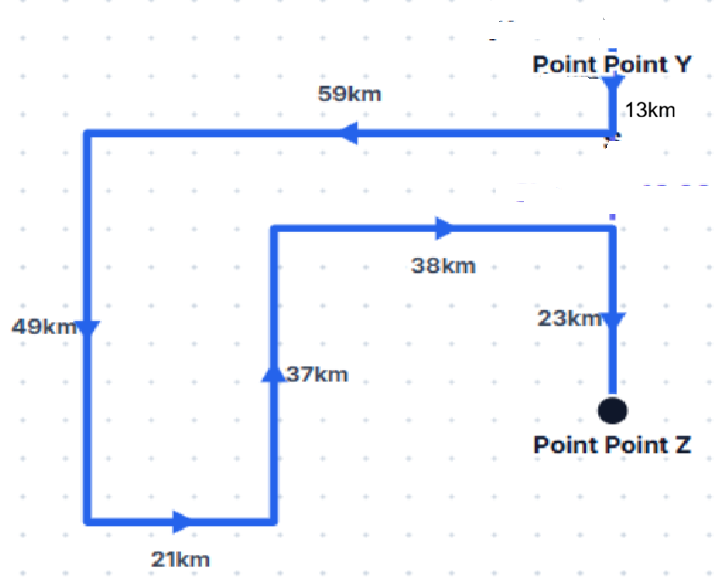
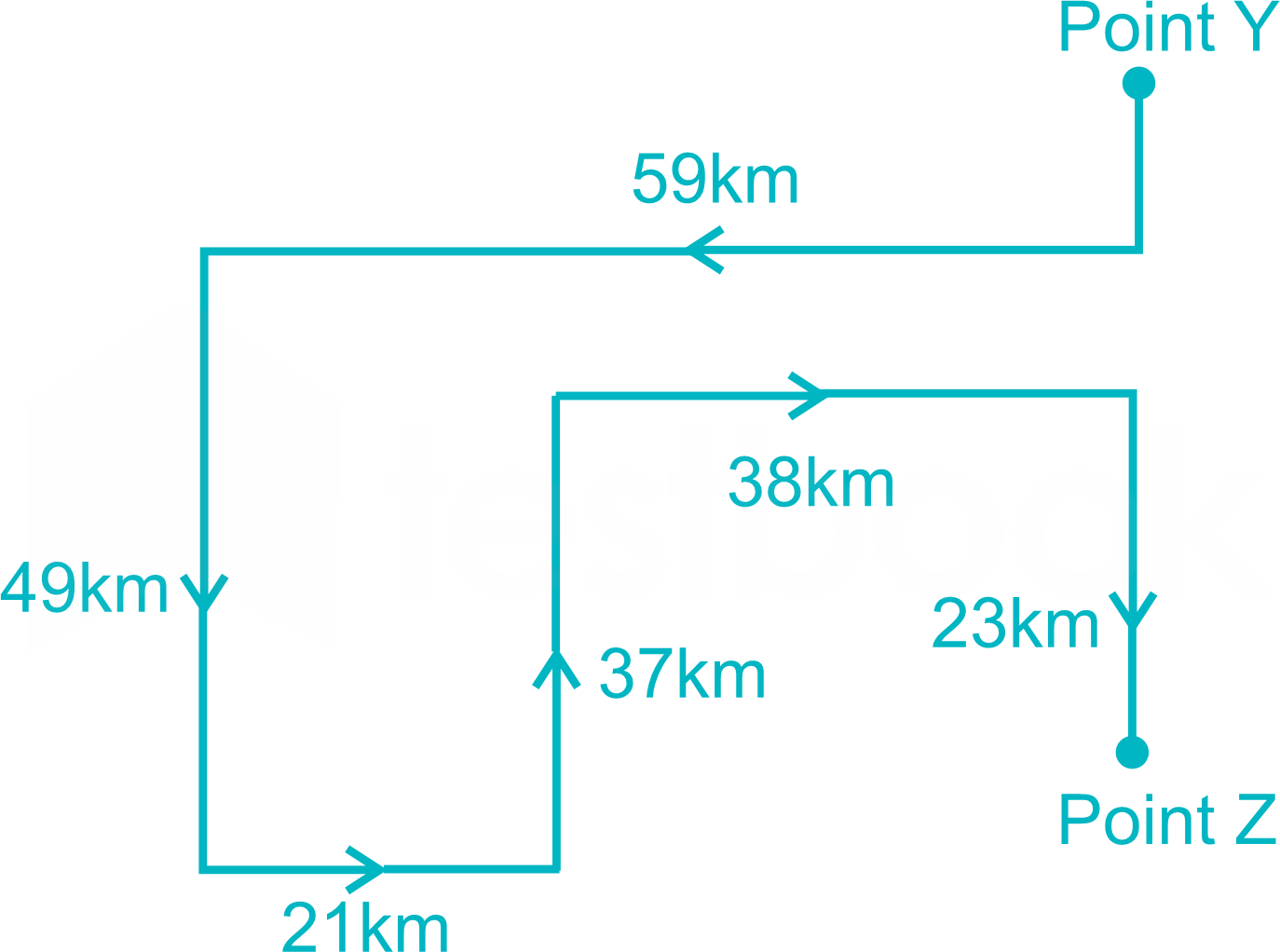
Nitin starts from Point Y and drives 13 km towards south. He then takes a right turn, drives 59 km, turns left and drives 49 km. He then takes a left turn and drives 21 km. He takes a left turn, drives 37 km. He then turns right, drives 38 km, turns right and drives 23 km to stop at Point Z. How far (shortest distance) and towards which direction should he drive in order to reach Point Y again? (All turns are 90° turns only unless specified.)

  1. ((a))

    48 km towards north

  2. ((b))

    49 km towards south

  3. ((c))

    51 km towards south

  4. ((d))

    43 km towards north

Show Answer
Answer: ((a))

48 km towards north

Given:

Nitin starts from Point Y and drives 13 km towards south.

Then, he takes a right turn and drives 59 km.

Next, he turns left and drives 49 km, then takes a left turn and drives 21 km.

He takes a left turn and drives 37 km, then turns right and drives 38 km.

Finally, he turns right and drives 23 km to stop at Point Z.

So, Point Z is 48 km South from his starting point Y. To reach Point Y again, he must drive 48 km towards North.

Hence, the correct answer is Option 1.

31

A shopkeeper offers a trade discount of 15% on the marked price of an item. If the marked price of this product is ₹6500, what is its selling price (in ₹)?

  1. ((a))

    5200

  2. ((b))

    5525

  3. ((c))

    5255

  4. ((d))

    5552

Show Answer
Answer: ((b))

5525

Shortcut Trick

Since the discount is 15%, the Selling Price (SP) will be (100 − 15)% = 85% of the Marked Price.

SP = 85% of &inr;6500

SP = (85 ÷ 100) × 6500

SP = 85 × 65 = &inr;5525

∴ The correct answer is &inr;5525.

Alternate Method

Given:

Marked Price (MP) = &inr;6500

Trade Discount = 15%

Formula Used:

Discount = (Discount % ÷ 100) × MP

Selling Price (SP) = MP − Discount

MP: &inr;6500 Discount: 15% −&inr;975 SP: &inr;5525 Selling Price = MP − Discount

Calculations:

⇒ Discount = (15 ÷ 100) × 6500

⇒ Discount = 15 × 65 = &inr;975

⇒ Selling Price (SP) = 6500 − 975

⇒ SP = &inr;5525

∴ The correct answer is &inr;5525.

Additional Information

Marked Price (MP)

It is the price printed on the label of an article. Any trade discount or promotional discount is always calculated strictly on the Marked Price.

Successive Discounts

If two successive discounts of a% and b% are offered, the equivalent single discount can be calculated directly using the formula: (a + b − ab ÷ 100)%.

Profit and Loss Baseline

While discounts are calculated on Marked Price, the Profit or Loss percentage is always calculated on the Cost Price (CP) unless specifically mentioned otherwise.

32

Amravati, Bhavani, Hemavati, and Kabini are the main tributaries of which of the following rivers?

  1. ((a))

    Indus

  2. ((b))

    Kaveri

  3. ((c))

    Tapi

  4. ((d))

    Brahmatputra

Show Answer
Answer: ((b))

Kaveri

The correct answer is Kaveri.

Key Points

  • Amravati, Bhavani, Hemavati, and Kabini are the main tributaries of the Kaveri River, which is one of the major rivers of southern India.
  • The Kaveri River originates from the Brahmagiri Hills of the Western Ghats in Kodagu (Coorg), Karnataka.
  • It flows through the states of Karnataka and Tamil Nadu, covering a total length of approximately 800 kilometers before emptying into the Bay of Bengal.
  • The Kaveri River is significant for agriculture and is often referred to as the "Ganga of the South" due to its importance in irrigation and water supply in southern India.
  • The river's basin is shared by Karnataka, Tamil Nadu, Kerala, and Puducherry, and its waters are the subject of disputes regarding allocation among these states.
  • The main tributaries like Amravati and Bhavani are located in Tamil Nadu, while Hemavati and Kabini are situated in Karnataka, making these tributaries vital for agriculture and water resources in their respective regions.

Additional Information

  • About Kaveri River:
  • The Kaveri River originates at Talakaveri in the Brahmagiri range of the Western Ghats, located in the Coorg district of Karnataka.
  • It has a basin area of approximately 81,155 square kilometers, spread across Karnataka, Tamil Nadu, Kerala, and Puducherry.
  • The river is known for its series of waterfalls, including the famous Shivanasamudra Falls, which is also a site for one of the first hydroelectric power plants in Asia.
  • The river has several dams and reservoirs, including Krishna Raja Sagara (KRS) in Karnataka and Mettur Dam in Tamil Nadu, which are crucial for irrigation and drinking water supply.
  • The delta of the Kaveri River is one of the most fertile regions in India and is often referred to as the Granary of South India.
  • Tributaries of Kaveri River:
  • Amravati River: Originates from the Anamalai Hills in Tamil Nadu and is an important tributary for agriculture in the state.
  • Bhavani River: Flows through Tamil Nadu and Kerala; originates from the Silent Valley National Park in Kerala.
  • Hemavati River: Originates from the Western Ghats in Karnataka and joins the Kaveri near Krishnarajasagara.
  • Kabini River: Originates from the Wayanad district in Kerala and flows into Karnataka before joining the Kaveri.
  • Other Rivers for Comparison:
  • Indus River: Originates in Tibet and flows through India and Pakistan; its tributaries include Jhelum, Chenab, Ravi, Beas, and Sutlej.
  • Tapi River: Originates in Madhya Pradesh and flows westward through Maharashtra and Gujarat into the Arabian Sea; its tributaries include Purna, Girna, and Panjhra.
  • Brahmaputra River: Originates in Tibet, where it is called the Tsangpo, and flows through Arunachal Pradesh, Assam, and Bangladesh; its tributaries include Dibang, Lohit, and Subansiri.
  • Importance of Kaveri:
  • The Kaveri River is a lifeline for millions of farmers in Karnataka and Tamil Nadu, as its water is extensively used for irrigation.
  • It supports numerous ecosystems and is home to a variety of flora and fauna, including the endangered Mahseer fish.
  • The river is also a source of cultural and religious significance, with several temples and pilgrimage sites located along its course.
33

Based on the English alphabetical order, three of the following four letter-cluster pairs are alike in a certain way and thus form a group. Which letter-cluster pair DOES NOT belong to that group? (Note: The odd one out is not based on the number of consonants/vowels or their position in the letter-cluster.)

  1. ((a))

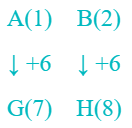
    AB - GH

  2. ((b))

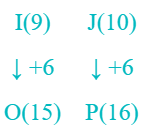
    IJ - OP

  3. ((c))

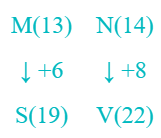
    MN - SV

  4. ((d))

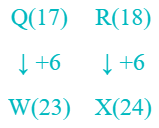
    QR - WX

Show Answer
Answer: ((c))

MN - SV

The logic followed here is:

Option 1) AB - GH


Option 2) IJ - OP


Option 3) MN - SV

The logic is not followed here as the shifts are +6 and +8.

Option 4) QR - WX


Thus, MN - SV is the odd one out as it does not follow the logic.

Hence, the correct answer is "Option 3".

34

A trader lost 5% by selling a shirt for ₹850. He will gain x% by selling it for ₹1,530. The value of x is:

  1. ((a))

    71

  2. ((b))

    61

  3. ((c))

    86

  4. ((d))

    81

Show Answer
Answer: ((a))

71

Shortcut Trick

Ratio of Selling Prices = Ratio of corresponding Percentages based on CP

SP1 ÷ (100 − L%) = SP2 ÷ (100 + P%)

850 ÷ 95 = 1530 ÷ (100 + x)

170 ÷ 19 = 1530 ÷ (100 + x)

100 + x = (1530 × 19) ÷ 170 = 9 × 19 = 171

∴ The correct answer is x = 71.

Alternate Method

Given:

Selling Price 1 (SP1) = ₹850, Loss = 5%

Selling Price 2 (SP2) = ₹1530, Gain = x%

Formula Used:

Cost Price (CP) = (SP × 100) ÷ (100 − Loss%)

Gain% = [(SP − CP) ÷ CP] × 100

Code
   SP1 = ₹850 -5% (Loss)  CP  SP2 = ₹1530 +x% (Gain)   95% (100+x)% CP = 850 × (100 ÷ 95)

Calculation:

⇒ CP = (850 × 100) ÷ (100 − 5)

⇒ CP = 85000 ÷ 95 = ₹17000/19

⇒ Gain = SP2 − CP = 1530 − 17000/19

⇒ Gain = (29070 − 17000) ÷ 19 = ₹12070/19

⇒ x% = (Gain ÷ CP) × 100

⇒ x% = [(12070/19) ÷ (17000/19)] × 100

⇒ x% = (12070 ÷ 17000) × 100 = (1207 ÷ 17)% = 71%

⇒ x = 71

∴ The correct answer is x = 71.

Additional Information

Marked Price and Cost Price Relation

The direct ratio between Marked Price (MP) and Cost Price (CP) when profit and discount percentages are given is: MP ÷ CP = (100 + Profit%) ÷ (100 − Discount%).

Successive Profit/Loss Formula

When two successive percentage changes of a% and b% occur, the net effective percentage change is given by: Effective Change = a + b + (a × b) ÷ 100.

Dishonest Dealer Problem

If a trader claims to sell goods at cost price but uses false weights, the profit percentage is always calculated based on the actual weight given: Gain% = [Error ÷ (True Weight − Error)] × 100.

35

Who among the following was the leader of 1857 Revolt at Delhi?

  1. ((a))

    Mangal Pandey

  2. ((b))

    Begum Hazrat Mahal

  3. ((c))

    Bahadur Shah II

  4. ((d))

    Nana Sahib

Show Answer
Answer: ((c))

Bahadur Shah II

The correct answer is Bahadur Shah II.

Key Points

  • Bahadur Shah II, also known as Bahadur Shah Zafar, was the last Mughal emperor of India and served as the symbolic leader of the 1857 Revolt at Delhi.
  • He was proclaimed the emperor of Hindustan by the sepoys (Indian soldiers) who led the revolt, although his power was largely ceremonial.
  • The revolt in Delhi was initiated by Indian soldiers of the British East India Company, and they sought Bahadur Shah II's leadership to legitimize their rebellion against British rule.
  • Bahadur Shah Zafar provided a unifying figure for the rebels, but he did not have the political or military control to direct the revolt effectively.
  • After the suppression of the revolt, Bahadur Shah II was captured by the British, exiled to Rangoon (modern-day Yangon in Myanmar), and the Mughal Empire was officially abolished in 1858.

Additional Information

  • Role of Bahadur Shah II:
  • Bahadur Shah II was initially hesitant to join the revolt but eventually accepted the role of the symbolic leader due to pressure from the sepoys.
  • Although he was a figurehead, his involvement gave the rebellion a sense of unity and legitimacy as it was fought in the name of the Mughal Empire.
  • 1857 Revolt:
  • The Revolt of 1857, also known as the First War of Independence, was a widespread but ultimately unsuccessful uprising against the British East India Company's rule.
  • It began in Meerut on May 10, 1857, and quickly spread to other parts of North and Central India, including Delhi, Kanpur, Lucknow, and Jhansi.
  • End of the Mughal Empire:
  • Following the defeat of the rebels, the British captured Bahadur Shah Zafar and conducted a trial in Delhi, accusing him of treason.
  • He was exiled to Rangoon, where he died in 1862, marking the end of the Mughal dynasty.
  • Other Key Leaders of the 1857 Revolt:
  • Mangal Pandey: A sepoy in the British East India Company army, he is remembered for initiating the rebellion by attacking British officers.
  • Begum Hazrat Mahal: She played a prominent role in the revolt in Lucknow, leading the resistance against British forces.
  • Nana Sahib: He led the revolt in Kanpur and is known for his leadership and strategic planning during the rebellion.

Important Points

  • Reasons for the Revolt:
  • The revolt was triggered by the introduction of the Enfield rifle, which required soldiers to bite cartridges greased with cow and pig fat, offending both Hindu and Muslim sentiments.
  • It was also fueled by grievances related to unfair economic policies, land annexations (like the Doctrine of Lapse), and social reforms imposed by the British.
  • Outcome of the Revolt:
  • The revolt was suppressed by the British, leading to the end of the East India Company's rule and the establishment of direct British Crown rule in India through the Government of India Act 1858.
  • It also led to significant changes in British military, administrative, and economic policies in India.
36

What should come in place of the question mark (?) in the given series based on the English alphabetical order?

<br>

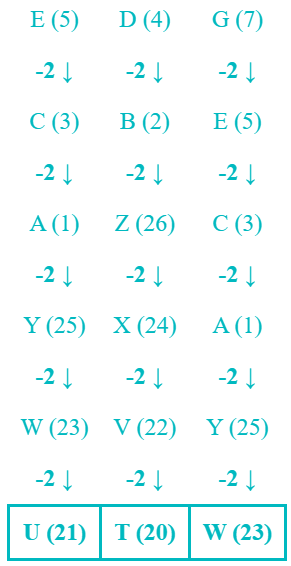
EDG, CBE, AZC, YXA, WVY, ?

  1. ((a))

    UTW

  2. ((b))

    VSW

  3. ((c))

    VTU

  4. ((d))

    USW

Show Answer
Answer: ((a))

UTW

The logic followed here is:

Thus, the missing letter cluster in the series is UTW.

Hence, the correct answer is Option 1.

37

Which of the following Articles of the Indian Constitution deals with the Directive Principles of State Policies?

  1. ((a))

    Articles 66 to 51

  2. ((b))

    Articles 56 to 51

  3. ((c))

    Articles 36 to 51

  4. ((d))

    Articles 46 to 51

Show Answer
Answer: ((c))

Articles 36 to 51

The correct answer is Articles 36 to 51.

Key Points

  • The Directive Principles of State Policy are enshrined in Part IV of the Indian Constitution and encompass Articles 36 to 51.
  • They serve as guidelines to the central and state governments of India to frame laws and policies aimed at establishing a just society.
  • Article 36 defines the term "State" for the purposes of Part IV, the same as it is defined in Article 12 under Part III (Fundamental Rights).
  • Article 37 clarifies that the Directive Principles are fundamental in the governance of the country, but they are not enforceable by any court. However, it is the duty of the State to apply these principles while making laws.
  • The Directive Principles are broadly classified into three categories: Socialistic principles (e.g., Article 38), Gandhian principles (e.g., Article 40), and Liberal-intellectual principles (e.g., Article 50).
  • The aim of these principles is to ensure socio-economic justice and to establish India as a welfare state.

Additional Information

  • Key Articles under Directive Principles:
  • Article 38: Directs the state to secure a social order for the promotion of welfare of the people.
  • Article 39: Advocates for equal rights to adequate means of livelihood, equal pay for equal work, and protection of children and youth from exploitation.
  • Article 40: Directs the state to organize village panchayats and endow them with powers and authority to function as units of self-government.
  • Article 44: Promotes the establishment of a Uniform Civil Code throughout the territory of India.
  • Article 50: Directs the state to separate the judiciary from the executive in the public services of the state.
  • Importance of Directive Principles:
  • They reflect the ideals and aspirations of the framers of the Constitution.
  • They aim to provide a framework for achieving economic and social democracy.
  • While not enforceable in courts, they act as a moral obligation for governments to implement them.
  • Enforceability: Unlike Fundamental Rights, the Directive Principles are non-justiciable, meaning they cannot be enforced through legal action. However, they are fundamental in the governance of the country.
  • Amendments and Implementation: Several amendments and laws have been passed to implement the Directive Principles, such as the Right to Education Act, the Minimum Wages Act, and the establishment of Panchayati Raj Institutions.
  • Comparison with Fundamental Rights:
  • Fundamental Rights are enforceable by law, whereas Directive Principles are not.
  • While Fundamental Rights provide political freedom, Directive Principles aim at socio-economic welfare.

Important Points

  • Historical Context: The Directive Principles were borrowed from the Irish Constitution, which in turn was influenced by the Directive Principles of Social Policy in Ireland.
  • Judicial Interpretation: Over the years, the judiciary has played a significant role in harmonizing the conflict between Fundamental Rights and Directive Principles, emphasizing their complementary nature.
  • Examples of Implementation:
  • The National Rural Employment Guarantee Act (NREGA) was enacted to implement the principle of providing adequate means of livelihood (Article 39).
  • The Mid-Day Meal Scheme was launched to promote the welfare of children and ensure their right to nutrition (Article 47).
  • 42nd Amendment (1976): This amendment added new Directive Principles, such as promoting the participation of workers in industrial management and protecting the environment.
Code
38

The Constitutional provisions enabling the establishment of tribunals in India were introduced through which Amendment Act?

  1. ((a))

    Forty-first Amendment Act, 1975

  2. ((b))

    Forty-second Amendment Act, 1976

  3. ((c))

    Fifty-second Amendment Act, 1985

  4. ((d))

    Forty-fourth Amendment Act, 1978

Show Answer
Answer: ((b))

Forty-second Amendment Act, 1976

The correct answer is Forty-second Amendment Act, 1976.

Key Points

  • The Forty-second Amendment Act, 1976, also known as the "Mini Constitution," introduced a range of changes to the Indian Constitution, including provisions for the establishment of tribunals.
  • It added Part XIV-A to the Constitution, which specifically deals with Tribunals under Articles 323-A and 323-B.
  • Article 323-A empowers the Parliament to establish tribunals for administrative matters, particularly addressing disputes related to public services.
  • Article 323-B allows for the establishment of tribunals for other matters such as taxation, industrial disputes, land reforms, foreign exchange, labor, and tenancy.
  • The aim of introducing tribunals was to reduce the burden on regular courts by creating specialized bodies for quicker resolution of disputes.

Additional Information

  • Tribunals:
  • Tribunals are quasi-judicial bodies created to handle specific disputes and cases in a faster and more specialized manner compared to traditional courts.
  • They operate under specific statutes and have powers similar to civil courts but are limited to the domain defined in their establishing legislation.
  • Their decisions can often be challenged in the High Court or Supreme Court unless specified otherwise by the statute.
  • Forty-second Amendment:
  • Enacted during the period of Emergency (1975-77), it made extensive changes to the Constitution, earning the title "Mini Constitution."
  • Some of its key features include the addition of words "Socialist," "Secular," and "Integrity" to the Preamble, changes to the powers of the judiciary, and curtailment of Fundamental Rights.
  • Administrative Tribunals Act, 1985:
  • Following the Forty-second Amendment, the Administrative Tribunals Act, 1985, was enacted to provide for the establishment of tribunals for service matters of public employees.
  • The Act established the Central Administrative Tribunal (CAT), which deals with disputes related to recruitment, conditions of service, and disciplinary matters of central government employees.
  • Key Features of Tribunals:
  • They are designed to reduce the workload of courts by addressing specialized legal issues.
  • Tribunals emphasize procedural simplicity and faster resolution of disputes.
  • Examples include the Income Tax Appellate Tribunal, National Green Tribunal, and Securities Appellate Tribunal.

Important Points

  • Article 323-A:
  • Deals exclusively with tribunals for public service-related disputes.
  • Only Parliament has the power to establish tribunals under this Article.
  • Article 323-B:
  • Allows for the establishment of tribunals for various other matters, such as taxation, industrial disputes, and land reforms.
  • Both Parliament and State Legislatures can establish tribunals under this Article.
  • Judicial Review:
  • The Supreme Court in the L. Chandra Kumar case (1997) ruled that tribunals are subject to judicial review by the High Courts and Supreme Court under Articles 226 and 32, respectively.
39

Divide ₹9,900 among three persons A, B and C. If the shares of A and C are in the ratio of 4 : 18 and B's share is 50% of the total shares of A and C, what is the share (in ₹) of B? 5120

  1. ((a))

    3300

  2. ((b))

    3302

  3. ((c))

    3298

  4. ((d))

    3301

Show Answer
Answer: ((a))

3300

Shortcut Trick

Given the ratio of shares of A and C is 4 : 18, sum of their parts = 4 + 18 = 22 units.

B's share is 50% of the sum of A and C = 50% of 22 = 11 units.

Total units for A, B, and C combined = 4 + 11 + 18 = 33 units.

33 units correspond to ₹9,900 ⇒ 1 unit = 9900 ÷ 33 = 300.

B's share = 11 units × 300 = ₹3,300.

∴ The correct answer is ₹3300.

Alternate Method

Given:

Total amount to be divided = ₹9,900

Ratio of shares of A and C = 4 : 18

B's share = 50% of the total shares of A and C

Concept Used:

Total parts in a ratio represents the total sum divided among the respective entities.

Code
  A B C  4x 11x 18x   Total = 33x = ₹9,900   B's Share = ?

Calculations:

⇒ Let the share of A be 4x and the share of C be 18x.

⇒ Total share of A and C = 4x + 18x = 22x

⇒ Share of B = 50% of (share of A + share of C)

⇒ Share of B = (50 ÷ 100) × 22x = 11x

⇒ Total amount distributed among A, B, and C = 4x + 11x + 18x = 33x

⇒ We are given that the total amount is ₹9,900.

⇒ 33x = 9900

⇒ x = 9900 ÷ 33 = 300

⇒ Share of B = 11x = 11 × 300 = ₹3300

∴ The correct answer is ₹3300.

Additional Information

Compound Ratio

When two or more ratios are multiplied term-wise, it forms a compound ratio. For a:b and c:d, the compound ratio is ac:bd.

Continued Proportion

Three non-zero quantities a, b, and c are in continued proportion if a:b = b:c. Here, b is the mean proportional, where b2 = ac.

Componendo and Dividendo

It is a theorem on proportions. If a/b = c/d, then (a+b)/(a−b) = (c+d)/(c−d), provided a is not equal to b and c is not equal to d.

40

What is the term used for alternative forms of a gene?

  1. ((a))

    Genome

  2. ((b))

    Chromosome

  3. ((c))

    Allele

  4. ((d))

    Locus

Show Answer
Answer: ((c))

Allele

The correct answer is Allele.

Key Points

  • Allele refers to alternative forms of a gene that occur at the same locus on homologous chromosomes. These variations arise due to mutations and result in genetic diversity.
  • An individual inherits two alleles for each gene—one from each parent. These alleles can be identical (homozygous) or different (heterozygous).
  • Alleles can be classified as dominant or recessive, determining the expression of traits. A dominant allele masks the effect of a recessive allele when paired together.
  • The concept of alleles was first described by Gregor Mendel during his experiments on pea plants, forming the basis of modern genetics.
  • Examples of alleles include the genes responsible for eye color, where variations like blue, brown, or green result from different alleles.

Additional Information

  • Genome:
  • The genome represents the complete set of genetic material present in an organism, including all its genes and non-coding regions.
  • It is organized into chromosomes and varies widely between organisms in terms of size and number of genes.
  • The Human Genome Project, completed in 2003, mapped the entire human genome, consisting of approximately 3 billion base pairs.
  • Chromosome:
  • Chromosomes are thread-like structures made up of DNA and proteins (histones), found in the nucleus of eukaryotic cells.
  • Humans have 23 pairs of chromosomes, including one pair of sex chromosomes (XX or XY).
  • They carry genetic material that is crucial for inheritance, cellular functions, and development.
  • Locus:
  • A locus refers to the specific physical location of a gene or genetic marker on a chromosome.
  • It is a fixed position, and alleles of a gene are found at the same locus on homologous chromosomes.
  • Loci are often used in genetic mapping and studies to identify traits and diseases associated with particular genes.
  • Importance of Alleles in Genetics:
  • Alleles are fundamental to understanding heredity and genetic variation, as they determine traits such as height, color, and susceptibility to diseases.
  • Genetic disorders like Sickle Cell Anemia and Cystic Fibrosis result from mutations in alleles.
  • Research on alleles contributes to advancements in personalized medicine and genetic engineering.

Important Points

  • Gregor Mendel's Laws:
  • Law of Segregation: States that each individual has two alleles for a trait, and these alleles separate during gamete formation.
  • Law of Independent Assortment: States that alleles of different genes assort independently during gamete formation, contributing to genetic diversity.
  • Applications of Allele Research:
  • Allele study aids in identifying genetic predispositions to diseases such as diabetes and cancer.
  • Allele-specific techniques are used in CRISPR gene editing for correcting genetic mutations.
  • Population genetics studies use allele frequencies to understand evolutionary processes and migration patterns.
41

Each vowel in the word COURAGE is changed to the letter immediately following it in the English alphabetical order, and each consonant is changed to the letter immediately preceding it in the English alphabetical order. Which of the following letters will be fifth from the right in the new group of letters thus formed?

  1. ((a))

    T

  2. ((b))

    A

  3. ((c))

    U

  4. ((d))

    V

Show Answer
Answer: ((d))

V

The given word is COURAGE.

The operations are:

  • Each vowel is changed to the letter immediately following it (+1).
  • Each consonant is changed to the letter immediately preceding it (-1).
Original LetterC(3)O(15)U(21)R(18)A(1)G(7)E(5)
TypeConsonantVowelVowelConsonantVowelConsonantVowel
Operation-1+1+1-1+1-1+1
New LetterBPVQBFF


Now, let's identify the positions from the right:​ 5th from right: V

Hence, the correct answer is "Option 4".

42

Given the data set {x + 4, 2x - 3, 5x, x + 1, 3x + 2}, for x > 1, where x is a natural number, if the median is 7, what is the value of x?

  1. ((a))

    3

  2. ((b))

    4

  3. ((c))

    6

  4. ((d))

    2

Show Answer
Answer: ((a))

3

Shortcut Trick

For questions involving the median of algebraic terms, the fastest approach is to test the given options directly.

Test Option 1 (x = 3):

Substitute x = 3 into the set {x + 4, 2x − 3, 5x, x + 1, 3x + 2}.

The values become {7, 3, 15, 4, 11}.

Arranging in ascending order gives: 3, 4, 7, 11, 15.

The middle term (median) is 7, which perfectly matches the question's given condition.

∴ The correct answer is 3.

Alternate Method

Given:

Data set = {x + 4, 2x − 3, 5x, x + 1, 3x + 2}

Condition: x > 1, where x is a natural number.

Median = 7

Formula Used:

The median of an odd number of terms is the middle value when arranged in ascending order: ((n + 1) ÷ 2)th term.

Code
   1st 2nd Median 4th 5th 2x − 3 x + 1 x + 4 = 7 3x + 2 5x Ascending Order of Terms (For x = 3)

Calculations:

⇒ Total number of terms (n) = 5.

⇒ The median will be the 3rd term when sorted in ascending order.

⇒ Let's analyze the relative values of the given expressions for x > 1.

⇒ Clearly, 5x and 3x + 2 will be the largest terms in the set.

⇒ The three smallest terms are x + 1, 2x − 3, and x + 4.

⇒ If 2x − 3 were the median, 2x − 3 = 7 ⇒ x = 5. However, substituting x = 5 gives {9, 7, 25, 6, 17}, which has a median of 9, not 7.

⇒ Thus, x + 4 naturally takes the 3rd position and acts as the true median.

⇒ Equating the 3rd term to the given median: x + 4 = 7.

⇒ x = 7 − 4 = 3.

∴ The correct answer is 3.

Additional Information

Median of Ungrouped Data

To find the median, arrange the data in ascending or descending order. If n is odd, the median is the ((n + 1) ÷ 2)th term. If n is even, it is the average of the (n ÷ 2)th and (n ÷ 2 + 1)th terms.

Mean vs Median

The mean is sensitive to extreme values (outliers), whereas the median provides a more robust and stable measure of central tendency for skewed distributions.

Mode of Data

The mode is the value that appears most frequently in a given data set. A dataset can have a single mode, multiple modes, or no mode at all if all values are unique.

43

According to the United Nations Office on Drugs and Crime (UNODC) and UN Women data released in 2025, how often was a woman or girl killed by the intimate partners or family members worldwide in 2024?

  1. ((a))

    Every hour

  2. ((b))

    Every 10 minutes

  3. ((c))

    Every 5 minutes

  4. ((d))

    Every 30 minutes

Show Answer
Answer: ((b))

Every 10 minutes

The correct answer is Every 10 minutes.

Key Points

  • According to data released by the United Nations Office on Drugs and Crime (UNODC) and UN Women in 2025, a woman or girl was killed by their intimate partners or family members worldwide every 10 minutes in 2024.
  • This statistic highlights the pervasive issue of gender-based violence, particularly within households, emphasizing the need for stronger global measures for women’s safety.
  • Intimate partner violence is one of the most common forms of violence faced by women globally, as reported by multiple international agencies like the UN Women and World Health Organization (WHO).
  • Such killings often occur in the context of domestic abuse, reflecting systemic issues such as inequality, lack of legal protection, and societal norms that perpetuate violence against women.
  • The data serves as a call to action for policymakers and governments to strengthen laws, provide support to victims, and implement awareness campaigns to combat this critical issue.

Additional Information

  • Gender-Based Violence:
  • Gender-based violence refers to harmful acts directed at individuals based on their gender. It includes physical, sexual, psychological, and economic abuse.
  • According to the UNODC, women and girls are disproportionately affected by intimate partner violence compared to men.
  • The WHO estimates that nearly 1 in 3 women worldwide have experienced physical or sexual violence, mostly by their intimate partners.
  • Role of International Organizations:
  • UN Women works globally to promote gender equality and empower women, while addressing issues like violence and discrimination.
  • The United Nations Office on Drugs and Crime (UNODC) collects and disseminates data on crime and justice, including gender-based violence statistics.
  • Legislation and Policies:
  • Many countries have implemented laws to protect women from domestic violence. For instance, India’s Protection of Women from Domestic Violence Act (2005) offers legal remedies to victims.
  • International treaties like the Convention on the Elimination of All Forms of Discrimination Against Women (CEDAW) urge nations to address gender-based violence and discrimination.
  • Awareness Campaigns:
  • Global campaigns like the UN’s “16 Days of Activism Against Gender-Based Violence” aim to raise awareness about violence against women and promote actionable solutions.
  • Programs like HeForShe encourage men and boys to advocate for gender equality.

Important Points

  • Global Statistics:
  • In 2024, approximately 87,000 women were intentionally killed worldwide, and over 50% were killed by intimate partners or family members.
  • Regions such as Asia and Africa report higher rates of gender-based killings due to cultural and systemic factors.
  • Impact on Society:
  • Violence against women has wide-reaching consequences, including psychological trauma, economic loss, and intergenerational impacts on children.
  • It also hampers societal development and equality, creating barriers to achieving Sustainable Development Goals (SDGs), particularly SDG 5 (Gender Equality).
  • Need for Stronger Measures:
  • Countries must prioritize education, legal reforms, and support systems for victims to address the root causes of violence.
  • Collaborative efforts between governments, NGOs, and international organizations are essential to curb gender-based violence effectively.
44

Simplify 17642025×625441(34)2\sqrt{\frac{1764}{2025}}\times\sqrt{\frac{625}{441}}-(\frac{3}{4})^{-2}

  1. ((a))

    13-\frac{1}{3}

  2. ((b))

    23-\frac{2}{3}​​

  3. ((c))

    269\frac{26}{9}

  4. ((d))

    2263-\frac{22}{63}

Show Answer
Answer: ((b))

23-\frac{2}{3}​​

Shortcut Trick

Expression: √(1764/2025) × √(625/441) − (3/4)−2

We know that 422 = 1764, 452 = 2025, 252 = 625, and 212 = 441.

⇒ (42/45) × (25/21) − (4/3)2

⇒ 2 × (5/9) − 16/9

⇒ 10/9 − 16/9 = −6/9 = −2/3

∴ The correct answer is −2/3.

Alternate Method

Given:

Expression = √(1764/2025) × √(625/441) − (3/4)−2

Calculation:

⇒ √1764 = 42

⇒ √2025 = 45

⇒ √625 = 25

⇒ √441 = 21

⇒ (3/4)−2 = (4/3)2 = 16/9

Substituting the values in the expression:

⇒ (42/45) × (25/21) − 16/9

Simplifying the fractions before multiplying:

⇒ (42/21) × (25/45) − 16/9

⇒ 2 × (5/9) − 16/9

⇒ 10/9 − 16/9

⇒ (10 − 16) / 9

⇒ −6/9

⇒ −2/3

∴ The correct answer is −2/3.

Additional Information

BODMAS Rule

Always follow the sequence of Brackets, Orders (powers/roots), Division, Multiplication, Addition, and Subtraction while simplifying expressions.

Laws of Exponents

Negative exponent rule: (a/b)−n = (b/a)n. This helps in converting fractions with negative powers to positive powers easily.

Square Root of Fractions

The square root of a fraction is the square root of the numerator divided by the square root of the denominator: √(a/b) = √a ÷ √b.

45

What is the generally accepted maximum size for email attachments across major email providers?

  1. ((a))

    25MB

  2. ((b))

    50MB

  3. ((c))

    10MB

  4. ((d))

    100MB

Show Answer
Answer: ((a))

25MB

The correct answer is 25MB.

Key Points

  • Maximum Attachment Size: Major email providers such as Gmail, Yahoo Mail, and Outlook typically set the maximum size for email attachments at 25MB.
  • Standard Limit: The 25MB limit is widely accepted across most email services to ensure compatibility and performance.
  • Compression or Splitting: If the attachment exceeds the 25MB limit, users often compress files into ZIP formats or split them into multiple emails to circumvent the restriction.
  • Cloud Sharing: For larger files, email providers recommend using cloud services such as Google Drive, OneDrive, or Dropbox to share links instead of direct attachments.
  • Technical Reason: The limit helps prevent server overload, ensures faster delivery, and avoids issues related to bandwidth consumption.

Additional Information

  • Gmail:
  • Gmail allows attachments up to 25MB in size. For files larger than this, users can share via Google Drive.
  • Attachments are scanned for security risks, ensuring email safety.
  • Yahoo Mail:
  • Yahoo Mail also supports a maximum attachment size of 25MB.
  • For larger files, users are encouraged to use Dropbox integration to share files.
  • Microsoft Outlook:
  • Outlook limits attachments to 25MB but integrates with OneDrive for larger file sharing.
  • This is part of Microsoft’s initiative to streamline file sharing and storage.
  • Alternative Methods:
  • Cloud services like Google Drive, Dropbox, and OneDrive allow users to share files exceeding email attachment limits.
  • These services often provide enhanced security, access control, and version management.
  • Importance of File Size Limitation:
  • Restricting file sizes helps maintain server efficiency and prevents email systems from being overloaded.
  • It ensures seamless transmission and avoids delays caused by large file attachments.

Important Points

  • Email Protocols:
  • Most email providers use MIME (Multipurpose Internet Mail Extensions) to encode files, which can increase the actual size of attachments by around 33%.
  • This is why the effective limit for attachments is slightly lower than the stated limit.
  • Security Measures:
  • Email services often scan attachments for viruses, malware, and phishing threats before delivery.
  • Blocked file types include executable files (.exe) and certain scripts for safety reasons.
  • Enterprise Solutions:
  • For businesses requiring larger attachment limits, enterprise email solutions often provide higher limits or dedicated file-sharing platforms.
  • Examples include Microsoft Teams, Slack, and proprietary cloud storage solutions.
  • Historical Context:
  • The attachment size limits have evolved alongside internet infrastructure improvements and increasing bandwidth availability.
  • Earlier email systems had much lower limits, such as 5MB or less, due to limited server capabilities.
46

The Union Minister of the Government of India, Rajiv Ranjan Singh, launched the Organic Fisheries Cluster in the ______ district of Sikkim in January 2025.

  1. ((a))

    Soreng

  2. ((b))

    Gangtok

  3. ((c))

    Pakyong

  4. ((d))

    Mangan

Show Answer
Answer: ((a))

Soreng

The correct answer is Soreng.

Key Points

  • Union Minister Rajiv Ranjan Singh launched the Organic Fisheries Cluster in the Soreng district of Sikkim in January 2025.
  • Soreng is one of the newly created districts of Sikkim, formed in 2021, known for its scenic beauty and focus on sustainable development initiatives.
  • The Organic Fisheries Cluster is aimed at boosting sustainable aquaculture practices in the region, aligning with Sikkim’s status as a 100% organic state.
  • Sikkim, recognized as the first organic state in India, has been actively promoting organic farming and sustainable practices across various sectors, including fisheries.
  • The initiative is expected to promote self-reliance among local farmers and fishery workers, enhancing livelihoods and contributing to the region's economy.

Additional Information

  • Sikkim as an Organic State:
  • Sikkim was declared India’s first organic state in 2016 under the state government's vision to promote sustainable agriculture.
  • The state has banned the use of chemical fertilizers and pesticides, focusing on natural farming methods.
  • Sikkim’s organic initiatives have won global recognition, including the Future Policy Award by the United Nations Food and Agriculture Organization (FAO).
  • Organic Fisheries Cluster:
  • The Organic Fisheries Cluster aims to promote sustainable aquaculture practices, ensuring environmental conservation and economic benefits.
  • It focuses on utilizing organic feed and reducing dependency on harmful chemicals in fish farming.
  • This cluster serves as a model for eco-friendly fisheries, supporting India's broader sustainable development goals.
  • Role of Union Ministers:
  • Union ministers often spearhead initiatives to promote regional development and align them with national policies.
  • Rajiv Ranjan Singh, as a Union Minister, has been actively involved in promoting agricultural and fisheries-related projects that emphasize sustainability.
  • District Formation in Sikkim:
  • Soreng was officially declared a district in 2021, carved out from other regions to enhance administrative efficiency.
  • The district is strategically positioned to focus on tourism, organic farming, and fisheries, given its natural resources and organic practices.

Important Points

  • Sikkim’s Organic Practices:
  • India's first organic state, Sikkim, has set benchmarks for other states, promoting eco-friendly agriculture and sustainable practices.
  • The Organic Fisheries Cluster adds to Sikkim’s initiatives, further strengthening its position in organic and sustainable development.
  • Economic Impact:
  • The Organic Fisheries Cluster is expected to boost economic opportunities for local farmers and fishery workers.
  • It aligns with India’s vision of promoting self-reliance, particularly in rural and semi-urban regions.
  • Environmental Benefits:
  • By eliminating harmful chemicals in fisheries, the cluster contributes to environmental sustainability and preservation of biodiversity.
  • Sikkim’s organic model serves as a case study for global sustainable development practices.
47

How can gender equality contribute to human development?

  1. ((a))

    By eliminating barriers to women's participation in education and workforce

  2. ((b))

    By focussing solely on male-dominated industries

  3. ((c))

    By limiting opportunities for women

  4. ((d))

    By reducing workforce diversity

Show Answer
Answer: ((a))

By eliminating barriers to women's participation in education and workforce

The correct answer is By eliminating barriers to women's participation in education and workforce.

Key Points

  • Gender equality in education: Eliminating barriers to women's participation in education ensures that women have access to the same opportunities as men. This fosters personal growth, enhances their skills, and enables them to contribute to society and the economy effectively. (Correct statement)
  • Workforce inclusion: Removing obstacles to women's workforce participation increases labor force diversity, productivity, and innovation, which are critical for a country's economic growth and human development. (Correct statement)
  • Breaking stereotypes: Empowering women in traditionally male-dominated sectors and leadership roles challenges societal stereotypes, promoting a more inclusive environment and equitable opportunities. (Correct statement)
  • Health and social benefits: When women are educated and employed, they tend to invest more in their families' health, nutrition, and education, leading to overall better human development outcomes. (Correct statement)
  • Global human development: Achieving gender equality aligns with the United Nations' Sustainable Development Goals (SDGs), particularly Goal 5, which aims to empower all women and girls, thereby contributing to global human development. (Correct statement)

Additional Information

  • Barriers to women's participation: Key barriers include cultural biases, lack of access to quality education, inadequate workplace policies for women, and limited representation in leadership roles.
  • Impact of gender equality on GDP: According to a 2020 McKinsey Global Institute report, advancing gender equality could add $12 trillion to global GDP by 2025, demonstrating its economic significance.
  • Examples of successful gender equality initiatives: Countries like Sweden and Norway have implemented policies to promote gender equality in education and employment, resulting in higher human development indices.
  • Legislation and policies in India: India has introduced several policies like the Beti Bachao Beti Padhao Scheme, Maternity Benefit (Amendment) Act, 2017, and Women's Reservation Bill to encourage women's participation in education and governance.
  • Sustainable Development Goals (SDGs): Goal 5 of the SDGs explicitly focuses on achieving gender equality and empowering all women and girls, emphasizing its critical role in sustainable human development.

Important Points

  • Incorrect options explained:
  • Option 2: Focusing solely on male-dominated industries ignores the need for inclusive growth and fails to address gender disparities. (Incorrect)
  • Option 3: Limiting opportunities for women perpetuates inequality and hinders societal progress. (Incorrect)
  • Option 4: Reducing workforce diversity undermines innovation and economic performance. (Incorrect)
  • UNDP Human Development Index (HDI): The HDI emphasizes education, health, and income as key dimensions of human development, all of which are positively impacted by gender equality.
  • Case study: Countries with high gender equality, such as Finland, consistently rank higher on indices like the Global Gender Gap Index and HDI, showcasing the correlation between equality and development.
48

The substances that are used for making food products unsafe for human consumption are known as:

  1. ((a))

    food additives

  2. ((b))

    chemical hazards

  3. ((c))

    adulterants

  4. ((d))

    flavouring agents

Show Answer
Answer: ((c))

adulterants

The correct answer is adulterants.

Key Points

  • Adulterants are substances that are intentionally added to food products to reduce their quality, increase quantity, or make them unsafe for consumption. This is often done for economic benefits.
  • Adulterants can be harmful to human health and may cause short-term illnesses (like food poisoning) or long-term diseases (such as cancer, organ damage, etc.).
  • Common examples of adulterants include chalk powder in flour, washing powder in milk, artificial dyes in spices, and others.
  • Adulteration is considered a violation of food safety standards and is strictly regulated under food safety laws such as the Food Safety and Standards Act, 2006 in India.
  • Unlike food additives, which are approved substances used to enhance food properties, adulterants are illegal and harmful.

Additional Information

  • Food Additives:
  • Food additives are substances added to food to preserve flavor, enhance taste, or improve shelf life.
  • Examples include preservatives (like sodium benzoate), emulsifiers, colorants, and flavor enhancers (like monosodium glutamate - MSG).
  • They are regulated by food safety authorities and are safe for consumption when used within prescribed limits.
  • Chemical Hazards:
  • These refer to the harmful chemicals present in food due to contamination or improper handling, such as pesticides, heavy metals, or industrial chemicals.
  • Unlike adulterants, chemical hazards are usually unintentional.
  • For example, arsenic in water or pesticide residues on vegetables can pose serious health risks.
  • Flavouring Agents:
  • Flavouring agents are substances added to food to enhance or modify its taste and aroma.
  • They are widely used in processed foods and beverages, such as vanilla extract, citric acid, or artificial fruit flavors.
  • Approved flavoring agents are generally safe and regulated by food safety authorities.
  • Food Adulteration Laws:
  • In India, food adulteration is regulated by the Food Safety and Standards Authority of India (FSSAI) under the Food Safety and Standards Act, 2006.
  • Severe penalties, including fines and imprisonment, are imposed on individuals or entities found guilty of adulteration.
  • Awareness campaigns like "Jaago Grahak Jaago" educate consumers about food safety and adulteration.

Important Points

  • Health Risks of Adulteration:
  • Adulterants like metanil yellow in turmeric can cause liver damage and cancer.
  • Contaminated milk with detergents can lead to gastrointestinal disorders.
  • Chalk powder or starch in flour can impair digestion.
  • Detection of Adulterants:
  • Simple home tests, such as the "water test" for milk adulteration or iodine test for starch in sugar, can help detect common adulterants.
  • Advanced lab techniques, like chromatography and spectroscopy, are used for precise detection of adulterants.
  • Preventive Measures:
  • Consumers should purchase food products from trusted sources and check for FSSAI certification.
  • Awareness campaigns and stricter enforcement of food safety regulations can curb adulteration practices.
49

EFHE is related to IJLI in a certain way based on the English alphabetical order. In the same way, IJLI is related to MNPM. To which of the given options is PQSP related, following the same logic?

  1. ((a))

    TUVT

  2. ((b))

    TUWT

  3. ((c))

    TTVT

  4. ((d))

    TVVY

Show Answer
Answer: ((b))

TUWT

The logic followed here is:

Each letter of the word is moved +4 positions forward in the English alphabet.

EFHE is related to IJLI :

Code
   E(5)  +4 I(9)  F(6)  +4 J(10)  H(8)  +4 L(12)  E(5)  +4 I(9)

And,

IJLI is related to MNPM :

Code
   I(9)  +4 M(13)  J(10)  +4 N(14)  L(12)  +4 P(16)  I(9)  +4 M(13)

Similarly, PQSP is related to :

Code
   P(16)  +4 T(20)  Q(17)  +4 U(21)  S(19)  +4 W(23)  P(16)  +4 T(20)

Hence, the correct answer is "Option 2".

50

Which team won the 3 rd edition of the Women's Premier League in 2025?

  1. ((a))

    Royal Challengers Bengaluru

  2. ((b))

    Mumbai Indians

  3. ((c))

    Gujarat Giants

  4. ((d))

    Delhi Capitals

Show Answer
Answer: ((b))

Mumbai Indians

The correct answer is Mumbai Indians.

Key Points

  • Mumbai Indians emerged as the champions of the 3rd edition of the Women's Premier League (WPL) in 2025.
  • The team, owned by Reliance Industries, has been one of the most consistent franchises in both the men's and women's formats of the game.
  • Mumbai Indians displayed exceptional performance throughout the tournament with a blend of experienced players and young talents.
  • The team was led by Harmanpreet Kaur, one of India’s finest cricketers, who played a pivotal role in guiding the team to victory.
  • The final match was a thrilling encounter, and the team showcased outstanding skills in all departments – batting, bowling, and fielding – to secure the title.

Additional Information

  • Women's Premier League (WPL):
  • The Women's Premier League (WPL) is a franchise-based cricket league in India, modeled after the Indian Premier League (IPL).
  • It was officially launched by the Board of Control for Cricket in India (BCCI) in 2023 as a platform to promote women's cricket.
  • The league consists of five teams representing different regions of India, namely Mumbai Indians, Royal Challengers Bengaluru, Gujarat Giants, Delhi Capitals, and UP Warriorz.
  • Mumbai Indians in WPL:
  • The Mumbai Indians women's team is known for its strong squad, comprising both international superstars and domestic talents.
  • In the inaugural edition of WPL in 2023, they also performed remarkably well, laying the foundation for future success.
  • Under the leadership of Harmanpreet Kaur, the team has become a dominant force in women's cricket.
  • Harmanpreet Kaur:
  • Harmanpreet Kaur is a renowned Indian cricketer and the captain of the Mumbai Indians women's team.
  • She is known for her aggressive batting style and excellent leadership qualities.
  • Her contributions to Indian cricket include several match-winning performances in both domestic and international formats.
  • Significance of WPL:
  • The WPL has played a crucial role in promoting and developing women's cricket in India.
  • It provides a platform for young women cricketers to showcase their talent and gain exposure by playing alongside international stars.
  • The league has also helped in increasing viewership and sponsorship for women’s cricket, making it more mainstream.

Important Points

  • Royal Challengers Bengaluru:
  • Despite having a strong team on paper, they have struggled to convert their performances into consistent victories in the WPL so far.
  • Their squad includes several international stars, but they are yet to win a WPL title.
  • Gujarat Giants:
  • The Gujarat Giants have been competitive in the league but have not yet managed to claim a title.
  • They are known for their strong bowling lineup and strategic gameplay.
  • Delhi Capitals:
  • Delhi Capitals have consistently been one of the top-performing teams in the WPL.
  • They have a balanced squad, with a mix of experienced players and emerging talents.
51

Mukund deposited ₹57,000 in a bank. With annual compounding, how much compound interest (in ₹) will he earn in 2 years if the interest rate is 10% per annum in the first year and increases by 3% per annum in the second year?

  1. ((a))

    13651

  2. ((b))

    13851

  3. ((c))

    13501

  4. ((d))

    14101

Show Answer
Answer: ((b))

13851

Shortcut Trick

Using the Effective Rate Method for successive years:

Effective Rate = R1 + R2 + (R1 × R2) ÷ 100

Effective Rate = 10 + 13 + (10 × 13) ÷ 100 = 24.3%

Compound Interest (CI) = 24.3% of ₹57,000

CI = (24.3 ÷ 100) × 57000 = 243 × 57 = 13851

∴ The correct answer is ₹13851.

Alternate Method

Given:

Principal (P) = ₹57,000

Rate for 1st year (R1) = 10% per annum

Rate for 2nd year (R2) = 10% + 3% = 13% per annum

Formula Used:

Amount (A) = P × (1 + R1÷100) × (1 + R2÷100)

Compound Interest (CI) = A − P

Code
  Principal End of Year 1 End of Year 2    ₹57,000 ₹62,700 ₹70,851   +10% +13%  Total CI = ₹70,851 − ₹57,000 = ₹13,851

Calculations:

⇒ A = 57000 × (1 + 10÷100) × (1 + 13÷100)

⇒ A = 57000 × (110÷100) × (113÷100)

⇒ A = 57000 × (11÷10) × (113÷100)

⇒ A = 57 × 11 × 113

⇒ A = 627 × 113

⇒ A = ₹70,851

⇒ CI = A − P

⇒ CI = 70851 − 57000 = ₹13,851

∴ The correct answer is ₹13851.

Additional Information

Effective Rate Method for Successive Years

When the interest rates are different for two years (R1 and R2), the combined effective interest rate is given by the formula: Effective Rate = R1 + R2 + (R1 × R2)÷100.

Successive Percentage Change

Compound interest is essentially successive percentage increases applied one after the other. For principal P, the total amount after 2 years simplifies to P × (100+R1)÷100 × (100+R2)÷100.

Simple Interest vs Compound Interest

Simple Interest (SI) is calculated strictly on the initial principal. Compound Interest (CI) is calculated on both the principal and the accumulated interest from the previous periods, resulting in exponential growth over time.

52

Evaluate: 30 + [{-9 x (26 - 14 + 6)}]

  1. ((a))

    -134

  2. ((b))

    -132

  3. ((c))

    -133

  4. ((d))

    -135

Show Answer
Answer: ((b))

-132

Shortcut Trick

Apply BODMAS rule directly to evaluate the innermost brackets first, followed by multiplication and addition.

⇒ 30 + [{−9 × (26 − 14 + 6)}]

⇒ 30 + [{−9 × 18}]

⇒ 30 − 162 = −132

∴ The correct answer is −132.

Alternate Method

Given:

30 + [{−9 × (26 − 14 + 6)}]

Concept Used:

BODMAS Rule: First solve Brackets (innermost to outermost), then Orders, Division, Multiplication, Addition, and Subtraction.

Calculation:

⇒ 30 + [{−9 × (26 − 14 + 6)}]

⇒ 30 + [{−9 × (12 + 6)}]

⇒ 30 + [{−9 × 18}]

⇒ 30 + [−162]

⇒ 30 − 162 = −132

∴ The correct answer is −132.

Additional Information

BODMAS Rule

BODMAS stands for Brackets, Orders (powers/roots), Division, Multiplication, Addition, and Subtraction. It sets the standard order of operations to accurately solve mathematical expressions.

Types of Brackets

Always solve brackets starting from the innermost sequence to the outermost sequence: Round brackets ( ), followed by Curly brackets { }, and finally Square brackets [ ].

Sign Rules for Multiplication

When multiplying a negative number by a positive number, the result is always negative (e.g., −a × b = −ab). Conversely, multiplying two negative numbers yields a positive result.

53

Which of the following states is one of those with high population density due to flat plains, fertile soils and abundant rainfall, according to the 2011 Census?

  1. ((a))

    Gujarat

  2. ((b))

    Rajasthan

  3. ((c))

    Kerala

  4. ((d))

    Himachal Pradesh

Show Answer
Answer: ((c))

Kerala

The correct answer is Kerala.

Key Points

  • Kerala has one of the highest population densities in India, as per the 2011 Census, due to its geographical and climatic advantages.
  • The state is known for its flat plains and fertile soils, which support agriculture and ensure food security for its population.
  • Kerala experiences abundant rainfall due to its location along the southwest coast of India, benefiting from both the Southwest Monsoon and the Northeast Monsoon.
  • The combination of favorable climatic conditions, rich biodiversity, and advanced irrigation systems has supported a high population density in the state.
  • Compared to states like Gujarat, Rajasthan, and Himachal Pradesh, which have diverse geographical challenges (arid regions, deserts, and mountainous terrains), Kerala's terrain is much more conducive to human habitation and agriculture.

Additional Information

  • Population Density in Kerala:
  • As per the 2011 Census, Kerala's population density was 860 persons per square kilometer, significantly higher than the national average of 382 persons per square kilometer.
  • Urbanization and high literacy rates also contribute to the state’s population dynamics.
  • Geographical Features of Kerala:
  • Kerala is situated between the Western Ghats on the east and the Arabian Sea on the west, providing a unique topographical advantage.
  • The state has a network of rivers, backwaters, and lakes, enabling effective irrigation and transportation.
  • The soil types, such as alluvial soil and laterite soil, are highly suitable for agriculture, particularly for crops like rice, coconut, and spices.
  • Climatic Conditions:
  • Kerala enjoys a tropical monsoon climate, receiving an annual average rainfall of around 3,000 mm.
  • The state benefits from both the Southwest Monsoon (June-September) and the Northeast Monsoon (October-November).
  • These climatic factors ensure a consistent water supply for agriculture and human consumption.
  • Comparison with Other States:
  • Gujarat: While Gujarat has fertile regions like the Sabarmati River basin, the presence of arid areas (e.g., Kutch Desert) limits its population density.
  • Rajasthan: Known for the Thar Desert, Rajasthan has a low population density due to its arid climate and lack of consistent water sources.
  • Himachal Pradesh: The hilly terrain and cold climatic conditions of Himachal Pradesh restrict large-scale human settlements and agricultural activities.
  • Important Points:
  • Kerala's high population density is supported by its advanced health care system, high literacy rate, and social development indicators, which are among the best in India.
  • Despite its high population density, Kerala has managed to achieve significant progress in areas like life expectancy and infant mortality rate, showcasing its model of sustainable development.
54

A conical cap has the base diameter 40 cm and height 21 cm. What is the cost (rounded off to one decimal place) of painting the surface of the cap at the rate of 112 paise per sq. cm? (Use π=227\pi=\frac{22}{7})

  1. ((a))

    ₹ 2,041.6

  2. ((b))

    ₹ 2,131.3

  3. ((c))

    ₹ 2,087.4

  4. ((d))

    ₹ 2,051.7

Show Answer
Answer: ((a))

₹ 2,041.6

Shortcut Trick

The radius (r = 20) and height (h = 21) form a standard Pythagorean triplet (20, 21, 29) with the slant height (l), so l = 29 cm.

A cap is open at the base, meaning we only need to calculate and paint the Curved Surface Area (CSA).

CSA = πrl = (22/7) × 20 × 29 cm2

Cost = CSA × Rate = (22/7) × 20 × 29 × 1.12 (since 112 paise = ₹1.12)

Cost = 22 × 20 × 29 × 0.16 = ₹ 2,041.6

∴ The correct answer is ₹ 2,041.6.

Alternate Method

Code
  h = 21 cm r = 20 cm l = 29 cm

Given:

Base diameter = 40 cm ⇒ Radius (r) = 20 cm

Height (h) = 21 cm

Rate of painting = 112 paise/cm2 = ₹1.12/cm2

Formula Used:

Slant height (l) = √(r2 + h2)

Curved Surface Area (CSA) = πrl

Total Cost = CSA × Rate

Calculation:

⇒ l = √(202 + 212)

⇒ l = √(400 + 441) = √841 = 29 cm

⇒ CSA = (22/7) × 20 × 29

⇒ CSA = 12760/7 cm2

⇒ Total Cost = (12760/7) × 1.12

⇒ Total Cost = 12760 × (1.12/7)

⇒ Total Cost = 12760 × 0.16

⇒ Total Cost = 2041.6

∴ The correct answer is ₹ 2,041.6.

Additional Information

Volume of a Cone

The volume represents the 3D space enclosed by a cone. Formula: V = (1/3)πr2h

Total Surface Area (TSA) of a Cone

This includes the curved surface and the solid circular base. Formula: TSA = πr(r + l)

Pythagorean Triplets in Geometry

Common sets of integers that satisfy a2 + b2 = c2 help speed up calculations heavily. Examples include (3, 4, 5), (5, 12, 13), (8, 15, 17), and (20, 21, 29).

55

Who are the authors of the book 'The Law and Spirituality: Reconnecting the Bond', released in April 2024?

  1. ((a))

    RK Pachnanda and Uttam Kumar Sinha

  2. ((b))

    Ashok Kumar and OP Manocha

  3. ((c))

    Geeta Singh and Arif Khan Bharti

  4. ((d))

    Raman Mittal and Seema Singh

Show Answer
Answer: ((d))

Raman Mittal and Seema Singh

The correct answer is Raman Mittal and Seema Singh.

Key Points

  • The book "The Law and Spirituality: Reconnecting the Bond" has been authored by Raman Mittal and Seema Singh. It was released in April 2024.
  • The book aims to explore the intricate connection between law and spirituality, emphasizing how these two domains interact and influence each other.
  • It delves into the historical, philosophical, and practical aspects of law and spirituality and how they can coexist to benefit society.
  • Raman Mittal is a prominent academician and an expert in the field of legal studies, while Seema Singh has significant contributions in the area of spiritual studies.
  • The book has been recognized as a significant contribution to understanding the intersection of jurisprudence and spiritual practices.

Additional Information

  • Raman Mittal:
  • He is known for his expertise in intellectual property law and his contributions to the academic and legal community.
  • He has written several research papers and books that focus on legal frameworks and their societal impacts.
  • His collaboration with Seema Singh for this book bridges the gap between legal philosophy and spiritual understanding.
  • Seema Singh:
  • She is a scholar in the field of spiritual studies and has worked extensively on how spirituality influences human behavior and decision-making.
  • Her work often highlights the role of spirituality in creating ethical frameworks for individuals and communities.
  • In this book, she has brought her insights on spirituality to complement the legal perspectives offered by Raman Mittal.
  • Theme of the Book:
  • The book focuses on the interrelationship between law and spirituality, proposing that both are essential for maintaining societal order and harmony.
  • It explores how spirituality can inform legal systems to make them more humane and equitable.
  • It also addresses contemporary issues where a lack of spiritual grounding can lead to legal and moral dilemmas.
  • Significance:
  • The book is a valuable resource for students, academicians, and professionals in the fields of law, philosophy, and spirituality.
  • It encourages readers to think about how spiritual principles can guide the creation and application of laws.

Important Points

  • Law and Spirituality:
  • Law is often seen as the codified norms that govern societal behavior, while spirituality deals with individual and collective consciousness.
  • The intersection of these fields can lead to a more balanced and ethical society.
  • Historical Context:
  • Throughout history, many legal systems have been influenced by spiritual and religious principles, such as the concept of natural law and divine justice.
  • Examples include the Dharma in ancient Indian law and the influence of Christian ethics on Western legal traditions.
  • Modern Relevance:
  • In a globalized world, the integration of spirituality into law can address issues like climate justice, human rights, and ethical governance.
  • This book emphasizes the need for a holistic approach to lawmaking and enforcement, considering both material and spiritual dimensions.
56

The Main Worker is a person who works for:

  1. ((a))

    at least 183 days (or six months) in a year

  2. ((b))

    at least 153 days (or five months) in a year

  3. ((c))

    at least 120 days (or four months) in a year

  4. ((d))

    at least 90 days (or three months) in a year

Show Answer
Answer: ((a))

at least 183 days (or six months) in a year

The correct answer is at least 183 days (or six months) in a year.

Key Points

  • A Main Worker in the Indian context is defined as a person who works for at least 183 days, which is approximately six months, in a year.
  • This classification is significant as it is used during the national census and surveys to differentiate individuals who contribute significantly to the workforce from marginal or non-workers.
  • The 183-day criterion ensures that only those individuals who are primarily engaged in economic activities are categorized as Main Workers, avoiding the inclusion of occasional or marginal workers.
  • Main Workers can be engaged in various sectors, such as agriculture, industry, or services, and may include both salaried employees and self-employed individuals.
  • Those who work for less than 183 days in a year are categorized as Marginal Workers, indicating their limited participation in the workforce.

Additional Information

  • Worker Classification in India:
  • The Census of India classifies workers into two categories: Main Workers and Marginal Workers.
  • Main Workers: Those who have worked for the majority of the reference year (183 days or more).
  • Marginal Workers: Those who have worked for less than 183 days in a year.
  • Importance of Worker Classification:
  • Helps in understanding the economic participation of the population.
  • Used for formulating employment policies and labor welfare schemes.
  • Provides insights into the sectoral distribution of workers across agriculture, industry, and services.
  • Marginal Worker Characteristics:
  • These individuals often engage in seasonal or occasional work.
  • Many marginal workers are involved in agriculture, where employment is seasonal.
  • Their contribution to the workforce, while significant, is often irregular and less stable compared to Main Workers.
  • Key Facts:
  • The classification of workers is essential for economic planning and understanding labor market trends.
  • India's workforce distribution is highly skewed towards the informal sector, which includes a large number of Main and Marginal Workers.

Important Points

  • 183-Day Rule: This rule is a standard for identifying Main Workers in India and reflects their consistent participation in economic activities.
  • Economic Contributions: Main Workers are critical to sustaining sectors like agriculture, manufacturing, and services, contributing significantly to GDP growth.
  • Government Policies: Worker classifications help in tailoring schemes like MGNREGA (Mahatma Gandhi National Rural Employment Guarantee Act) to enhance employment opportunities.
  • Workforce Distribution: As per the latest data, a significant portion of India's Main Workers is employed in the agriculture sector, followed by industries and services.
57

The Karnataka Khadi and Gramodyoga Samyukta Sangha (KKGSS), the only unit legally permitted to manufacture the tricolour flag out of pure khadi, is located in which place?

  1. ((a))

    Belur

  2. ((b))

    Bengeri

  3. ((c))

    Gokarna

  4. ((d))

    Badami

Show Answer
Answer: ((b))

Bengeri

The correct answer is Bengeri.

Key Points

  • The Karnataka Khadi and Gramodyoga Samyukta Sangha (KKGSS) is the only organization in India that is legally authorized to manufacture the tricolour national flag out of pure khadi cloth.
  • KKGSS is located in Bengeri, Hubli, in the state of Karnataka, India.
  • The Bureau of Indian Standards (BIS) has laid strict guidelines for the production of the national flag, and KKGSS adheres to these standards meticulously.
  • The flags are made from two types of khadi fabric: khadi cotton for the flag and khadi silk for the emblem, ensuring the highest quality and authenticity.
  • The unit in Bengeri is responsible for the entire production process, from spinning and weaving khadi to dyeing and stitching the flags, ensuring compliance with the Flag Code of India.

Additional Information

  • History of KKGSS:
  • KKGSS was founded in the early 1950s to promote the ideals of Mahatma Gandhi, including self-reliance and the use of khadi.
  • It has since become a symbol of India's freedom struggle and is integral to preserving the legacy of khadi production in the country.
  • Significance of Khadi in the National Flag:
  • Khadi is a hand-spun and hand-woven fabric that holds historical and cultural importance in India.
  • The use of khadi in the national flag represents self-reliance, simplicity, and patriotism, values that were championed during India's freedom movement.
  • Flag Code of India:
  • The Flag Code of India, 2002, provides guidelines for the manufacture, display, and use of the national flag.
  • It mandates that the flag should only be made of hand-spun and hand-woven khadi and ensures that the flag's dimensions, colors, and stitching adhere to strict specifications.
  • Bureau of Indian Standards (BIS) Certification:
  • KKGSS is certified by the BIS to produce the national flag, ensuring that each flag meets quality and authenticity standards.
  • Each flag undergoes rigorous testing to ensure durability, color accuracy, and adherence to dimensions before it is approved for distribution.
  • Other Locations (Incorrect Options):
  • Belur: Known for its exquisite temples and Hoysala architecture, but it does not have any connection to khadi flag production.
  • Gokarna: A coastal town famous for its beaches and temples, not associated with khadi or the national flag.
  • Badami: Renowned for its rock-cut temples and historical significance, but not linked to khadi flag manufacturing.

Important Points

  • KKGSS produces flags in multiple sizes, ranging from the smallest (150 x 100 mm) to the largest (21 x 14 feet), catering to various requirements.
  • The tricolour consists of saffron, white, and green bands with the Ashoka Chakra in the center, which is meticulously hand-printed using khadi silk.
  • Any unauthorized production or use of the national flag is considered a violation of the Prevention of Insults to National Honour Act, 1971.
  • KKGSS employs local artisans, supporting rural livelihoods and promoting the khadi industry in alignment with Gandhian principles.
58

What should come in place of the question mark (?) in the given series?

<br>

30, 40, 50, 60, 70, ?

  1. ((a))

    80

  2. ((b))

    77

  3. ((c))

    78

  4. ((d))

    79

Show Answer
Answer: ((a))

80

Shortcut Trick

The given number series follows a constant difference pattern.

Observe the difference between consecutive terms: 40 − 30 = 10, 50 − 40 = 10.

The common difference is +10.

Add 10 to the last known term to directly find the missing term: 70 + 10 = 80.

∴ The correct answer is 80.

Alternate Method

Given Series: 30, 40, 50, 60, 70, ?

Pattern Logic: Each term is formed by adding 10 to the preceding term, making it an Arithmetic Progression.

30 +10 → 40 +10 → 50 +10 → 60 +10 → 70 +10 → 80

Calculations:

⇒ 1st term = 30

⇒ 2nd term = 30 + 10 = 40

⇒ 3rd term = 40 + 10 = 50

⇒ 4th term = 50 + 10 = 60

⇒ 5th term = 60 + 10 = 70

⇒ 6th term (?) = 70 + 10 = 80

∴ The correct answer is 80.

Additional Information

Arithmetic Progression (A.P.)

A sequence of numbers where the difference between any two consecutive terms remains constant. The nth term is calculated as Tn = a + (n − 1)d, where 'a' is the first term and 'd' is the common difference.

Double Difference Series

When the primary differences between terms are not identical, calculating the differences of the primary differences will frequently uncover the underlying pattern in complex number series.

Common Series Patterns

Standard logic sequences found in exams encompass constant multipliers (Geometric Progressions), squares or cubes of natural numbers, series based on prime numbers, and mixed algebraic operations such as (×2 + 1).

59

Three years ago from now, Aman was four times Chaman's age. Three years from now, he will be twice as old as Chaman. What is Aman's current age (in years)?

  1. ((a))

    15

  2. ((b))

    10

  3. ((c))

    18

  4. ((d))

    20

Show Answer
Answer: ((a))

15

Shortcut Trick

Ratio of Aman to Chaman 3 years ago = 4 : 1 (Difference = 3 parts)

Ratio 3 years from now = 2 : 1 (Difference = 1 part) → Multiply by 3 to equate difference → 6 : 3

Increase in ratio for Aman = 6 − 4 = 2 parts, corresponding to a total gap of 6 years.

2 parts = 6 years → 1 part = 3 years.

Aman's age 3 years ago = 4 parts = 12 years → Present age = 12 + 3 = 15 years.

∴ The correct answer is 15 years.

Alternate Method

Given:

Aman's age 3 years ago = 4 × Chaman's age

Aman's age 3 years from now = 2 × Chaman's age

Formula Used:

Past Age = Present Age − Time Gap

Future Age = Present Age + Time Gap

3 Years Ago A : C = 4 : 1 3 Years Hence A : C = 6 : 3 +6 Years Ratio Method Aman parts: 6 − 4 = 2 2 parts = 6 years 1 part = 3 years Past Age = 4 × 3 = 12 Present Age = 15 yrs

Calculations:

Let Aman's present age be A and Chaman's present age be C.

According to the first condition (3 years ago):

⇒ A − 3 = 4(C − 3)

⇒ A − 4C = −12 + 3

⇒ A − 4C = −9   ... (Equation 1)

According to the second condition (3 years from now):

⇒ A + 3 = 2(C + 3)

⇒ A − 2C = 6 − 3

⇒ A − 2C = 3   ... (Equation 2)

Subtracting Equation 1 from Equation 2:

⇒ (A − 2C) − (A − 4C) = 3 − (−9)

⇒ 2C = 12

⇒ C = 6

Substitute C = 6 in Equation 2:

⇒ A − 2(6) = 3

⇒ A − 12 = 3

⇒ A = 15

∴ The correct answer is 15 years.

Additional Information

Constant Age Difference

The difference in ages between any two individuals always remains constant over time. This vital property is used to balance the ratios of their ages in different time periods.

Cross-Multiplication Method for Ages

If an initial age ratio a : b changes to c : d after a gap of T years, the exact value of 1 ratio part can be calculated directly as [T(c − d)] ÷ (ad − bc).

Ratio Equalization Method

To equate the ratio gaps horizontally, calculate the numerical difference between the terms of each ratio. Multiply the first ratio by the difference of the second, and vice versa.

60

Mohammad Qasim Nanotavi and Rashid Ahmed Gangohi founded which of the following movements?

  1. ((a))

    Wahabi Movement

  2. ((b))

    Pagal Panti Movement

  3. ((c))

    Deoband Movement

  4. ((d))

    Shariya Movement

Show Answer
Answer: ((c))

Deoband Movement

The correct answer is Deoband Movement.

Key Points

  • The Deoband Movement was founded by Mohammad Qasim Nanotavi and Rashid Ahmed Gangohi in 1866 at Deoband, Uttar Pradesh, India.
  • It was established with the aim of reviving Islamic teachings and promoting Islamic education in India.
  • The movement primarily focused on the establishment of the Darul Uloom Deoband, an Islamic seminary that became a key center for the dissemination of Islamic knowledge and ideology.
  • The founders opposed the influence of British colonial rule and sought to preserve Islamic culture and traditions in India.
  • The movement emphasized Quranic education and the teachings of the Hadith while rejecting Western influences and modernist interpretations of Islam.

Additional Information

  • Key Features of the Deoband Movement:
  • The Deoband Movement was rooted in Islamic orthodoxy and aimed at countering the spread of Western education and Christian missionary activities.
  • The movement was based on the principles of Wahhabi ideology, although it adapted certain elements to suit the Indian context.
  • Its primary goal was to train Islamic scholars (ulama) who could spread and uphold Islamic teachings in society.
  • The teachings at Darul Uloom Deoband emphasized a strict adherence to Islamic law (Sharia) and the rejection of innovations (bid'ah) in religious practices.
  • Darul Uloom Deoband:
  • Established in 1866, Darul Uloom Deoband became one of the most influential Islamic seminaries in the world.
  • The curriculum combined traditional Islamic sciences with modern pedagogical methods to produce well-rounded Islamic scholars.
  • The institution played a significant role in the freedom struggle against British colonial rule, as many of its scholars actively participated in India's independence movement.
  • Other Options Explained:
  • Wahabi Movement: This was a revivalist movement inspired by the teachings of Muhammad ibn Abd al-Wahhab in Arabia, emphasizing a return to the pure form of Islam. It was spearheaded in India by Syed Ahmed Barelvi.
  • Pagal Panthi Movement: This was a socio-religious movement in Bengal led by Karam Shah and later his son Tipu Shah, focusing on the rights of peasants and the poor.
  • Shariya Movement: This is a general term referring to efforts to implement or promote Islamic law (Sharia) in various contexts, but it is not specifically linked to the Deoband founders.
  • Legacy of the Deoband Movement:
  • The movement significantly influenced Islamic education and scholarship across South Asia and other parts of the world.
  • It inspired the establishment of numerous Islamic seminaries and institutions globally that follow the Deobandi ideology.
  • The movement continues to have a strong impact on Islamic jurisprudence and education in many Muslim-majority and minority countries.

Important Points

  • The Deoband Movement was instrumental in preserving Islamic identity during a period of significant socio-political changes under British colonial rule.
  • Its teachings emphasized the importance of adhering to the Hanafi school of Islamic jurisprudence.
  • Many Islamic political and religious movements in South Asia, such as the Tablighi Jamaat, have their roots in the Deobandi tradition.
  • The movement's scholars actively opposed British policies and were key participants in movements such as the Khilafat Movement and the Indian National Congress.
61

Which of the following observations indicates that a chemical reaction has taken place?

  1. ((a))

    No change in texture

  2. ((b))

    Change in size

  3. ((c))

    Change in shape

  4. ((d))

    Change in temperature

Show Answer
Answer: ((d))

Change in temperature

The correct answer is Change in temperature.

Key Points

  • A change in temperature is one of the most common indications that a chemical reaction has occurred. It signifies that energy has either been released (exothermic reaction) or absorbed (endothermic reaction).
  • In chemical reactions, the formation of new substances involves breaking and forming chemical bonds, which often involves an exchange of energy in the form of heat. This is observed as a change in temperature.
  • For example, when quicklime (calcium oxide) reacts with water, it produces calcium hydroxide and releases heat, causing the mixture to become hot. This is an exothermic reaction.
  • Similarly, in endothermic reactions, such as the decomposition of calcium carbonate into calcium oxide and carbon dioxide, heat is absorbed, and the surroundings may feel cooler.
  • Other changes such as a change in texture, size, or shape are generally physical changes and do not confirm the occurrence of a chemical reaction. Hence, option 4 is correct.

Additional Information

  • Indicators of a chemical reaction:
  • Change in color: Some chemical reactions result in a noticeable change in color. For example, when iron rusts, it changes from a metallic gray to a reddish-brown color due to the formation of iron oxide.
  • Evolution of gas: The formation of gas bubbles during a reaction, such as in the reaction between vinegar (acetic acid) and baking soda (sodium bicarbonate), indicates a chemical reaction.
  • Precipitate formation: A precipitate is a solid that forms from a solution during a chemical reaction. For instance, when solutions of silver nitrate and sodium chloride are mixed, silver chloride precipitates out.
  • Change in smell: A new odor may be produced during a chemical reaction, such as when food spoils or burns.
  • Emission of light: Some reactions release energy in the form of light, such as the combustion of magnesium ribbon, which produces a bright white flame.
  • Physical changes vs. chemical changes:
  • Physical changes involve changes in the physical state or appearance of a substance without altering its chemical composition. Examples include melting, freezing, and breaking.
  • Chemical changes result in the formation of new substances with different chemical properties. Examples include rusting, combustion, and digestion.
  • Examples of exothermic and endothermic reactions:
  • Exothermic reactions: Combustion of fuels, neutralization reactions between acids and bases, and the condensation of water vapor.
  • Endothermic reactions: Photosynthesis, melting of ice, and evaporation of water.
  • Applications of temperature change in chemical reactions:
  • In industries, exothermic reactions are used for heat generation, such as in combustion engines.
  • Endothermic reactions are exploited in cooling applications, such as instant cold packs used in sports injuries.
  • Monitoring temperature changes in reactions can help chemists understand reaction kinetics and optimize processes.

Important Points

  • Exothermic reactions: Reactions where heat is released into the surroundings, often causing a rise in temperature.
  • Endothermic reactions: Reactions that absorb heat from the surroundings, causing a drop in temperature.
  • Chemical energy: The energy stored in the chemical bonds of substances, which is either released or absorbed during a reaction.
  • Examples in daily life: Cooking food involves endothermic reactions, while burning wood in a fireplace is an example of an exothermic reaction.
62

Speakers of which of the following languages in India are mostly confined to the Himalayan belt contiguous with the international boundaries?

  1. ((a))

    Austric

  2. ((b))

    Indo-Aryan

  3. ((c))

    Dravidian

  4. ((d))

    Tibeto-Burman

Show Answer
Answer: ((d))

Tibeto-Burman

The correct answer is Tibeto-Burman.

Key Points

  • The Tibeto-Burman languages are predominantly spoken by communities residing in the Himalayan belt of India, which is contiguous with international boundaries like China, Bhutan, Nepal, and Myanmar.
  • These languages are primarily spoken in regions such as Arunachal Pradesh, Sikkim, Ladakh, Himachal Pradesh, Uttarakhand, Meghalaya, Nagaland, and Manipur.
  • The Tibeto-Burman languages belong to the larger Sino-Tibetan language family, which is one of the world's major language families.
  • Communities speaking these languages are often ethnic minorities with distinct cultural and linguistic identities, many of which are influenced by their proximity to neighboring Himalayan countries.
  • Some prominent examples of Tibeto-Burman languages include Bodo, Lepcha, Meitei (Manipuri), Garo, and Naga languages.

Additional Information

  • Indo-Aryan Languages:
  • The Indo-Aryan languages are a branch of the Indo-European language family and are the most widely spoken language group in India.
  • They include major languages such as Hindi, Bengali, Punjabi, Marathi, Gujarati, and Odia, primarily spoken in the northern, central, and western parts of India.
  • Unlike Tibeto-Burman languages, Indo-Aryan languages are not confined to the Himalayan belt.
  • Dravidian Languages:
  • Dravidian languages are primarily spoken in southern India and include prominent languages such as Telugu, Tamil, Kannada, and Malayalam.
  • They are not geographically connected to the Himalayan region, as they are mainly centered in the Deccan Plateau.
  • Austric Languages:
  • Austric or Austroasiatic languages are spoken by tribal communities in eastern and central India, such as the Santhals, Mundas, and Khasis.
  • These languages are primarily found in regions like Jharkhand, Chhattisgarh, Odisha, and the Northeastern states, but they are not concentrated in the Himalayan belt.
  • Key Features of Tibeto-Burman Languages:
  • The Tibeto-Burman languages are tonal, meaning the meaning of a word can change based on the pitch or tone used while pronouncing it.
  • They have rich oral traditions, and many languages lack a written script, relying on oral storytelling and folklore.
  • These languages are often influenced by the cultural and political interactions with Tibetan, Chinese, and Southeast Asian cultures.

Important Points

  • Historical Context:
  • The Tibeto-Burman language family has ancient roots and has been present in the Himalayan region for thousands of years.
  • Migration patterns from Tibet and Southeast Asia significantly shaped the linguistic landscape of the region.
  • Preservation Efforts:
  • Many Tibeto-Burman languages are endangered due to the dominance of larger languages like Hindi and English, leading to a decline in native speakers.
  • Efforts by government and cultural organizations are underway to document and preserve these languages.
63

The Balimela Power Plant is located in which of the following states of India?

  1. ((a))

    Andhra Pradesh

  2. ((b))

    Jharkhand

  3. ((c))

    Odisha

  4. ((d))

    Chhattisgarh

Show Answer
Answer: ((c))

Odisha

The correct answer is Odisha.

Key Points

  • The Balimela Power Plant is located in the state of Odisha, India. It is a hydroelectric power plant that significantly contributes to the power supply in the region.
  • The project is built on the Sileru River, which is a tributary of the Godavari River, and is situated in the Malkangiri district of Odisha.
  • This hydroelectric project was developed jointly by the states of Odisha and Andhra Pradesh, showcasing interstate collaboration in power generation.
  • The Balimela Dam, which is an integral part of this project, is a multipurpose dam designed for both irrigation and power generation purposes. It has helped in improving agricultural productivity in the region.
  • The hydroelectric power station has an installed capacity of 510 MW, consisting of multiple turbine units to generate electricity efficiently.

Additional Information

  • Location and Geography:
  • The Balimela Power Plant is located in the Malkangiri district of Odisha, which is known for its rich natural resources and hilly terrain.
  • The Sileru River, where the dam is constructed, flows through picturesque landscapes and provides the necessary water resources for the power plant.
  • Hydroelectric Power in India:
  • India has several hydroelectric power plants, which play a crucial role in the country's energy mix. Hydropower is a renewable and eco-friendly source of energy.
  • Odisha is home to several hydroelectric projects, including the Hirakud Dam, Indravati Power Plant, and Upper Kolab Project.
  • Interstate Collaboration:
  • The Balimela project is an example of interstate collaboration between Odisha and Andhra Pradesh for efficient resource utilization and power generation.
  • This collaboration highlights the importance of cooperative federalism in India’s infrastructure development.
  • Energy Contribution:
  • The Balimela Power Plant contributes significantly to the energy needs of both Odisha and Andhra Pradesh, ensuring reliable electricity supply to various sectors.
  • It supports industrial development and rural electrification in the region.
  • Environmental and Socioeconomic Impact:
  • The project has had a positive impact on agriculture through improved irrigation facilities.
  • It has also created employment opportunities during its construction and operational phases.

Important Points

  • Hydropower Potential in India:
  • India is the 7th largest producer of hydropower in the world, with an estimated potential of about 145,320 MW.
  • Major river systems such as the Ganga, Brahmaputra, and Godavari provide significant hydropower opportunities.
  • Significance of Balimela Power Plant:
  • It has played a vital role in stabilizing the power grid in eastern India and supporting regional energy demands.
  • The project is a part of Odisha's broader strategy to harness its water resources for sustainable development.
  • Challenges in Hydropower Projects:
  • Environmental concerns, such as deforestation and displacement of local communities, often pose challenges to hydropower projects.
  • Proper planning and implementation are necessary to balance development and conservation.
64

Simplify the expression given below.

35(13)5+2712+913276+9143^5-(\frac{1}{3})^{-5}+\sqrt{\frac{27^{12}+9^{13}}{27^6+9^{14}}}

  1. ((a))

    27

  2. ((b))

    243

  3. ((c))

    69

  4. ((d))

    81

Show Answer
Answer: ((d))

81

Shortcut Trick

Convert all bases directly to 3 to simplify.

⇒ 35 − 35 + √[(336 + 326) ÷ (318 + 328)]

⇒ 0 + √[{326(310 + 1)} ÷ {318(1 + 310)}]

⇒ √(38) = 34 = 81

∴ The correct answer is 81.

Alternate Method

Given:

35 − (1/3)−5 + √[(2712 + 913) ÷ (276 + 914)]

Formulas Used:

⇒ (am)n = amn

⇒ am ÷ an = am−n

⇒ a−m = 1 ÷ am

Calculations:

⇒ First, evaluate the first two terms:

⇒ (1/3)−5 = (3−1)−5 = 35

⇒ 35 − 35 = 0

⇒ Second, evaluate the fraction inside the square root by converting bases to 3:

⇒ Numerator: 2712 + 913 = (33)12 + (32)13 = 336 + 326

⇒ Denominator: 276 + 914 = (33)6 + (32)14 = 318 + 328

⇒ Take out the common minimum powers from numerator and denominator:

⇒ Fraction = [326(310 + 1)] ÷ [318(1 + 310)]

⇒ Cancel out the common term (310 + 1):

⇒ Fraction = 326 ÷ 318

⇒ Fraction = 326−18 = 38

⇒ Finally, substitute back into the full expression:

⇒ 0 + √(38)

⇒ 34 = 81

∴ The correct answer is 81.

Additional Information

Laws of Exponents (Multiplication & Division)

When multiplying terms with the same base, add their powers: am × an = am+n. When dividing, subtract the powers: am ÷ an = am−n.

Negative Exponents

A negative exponent indicates the reciprocal of the base raised to the positive power: a−m = 1 ÷ am or (a/b)−m = (b/a)m.

Power of a Power Rule

When raising a power to another power, multiply the exponents: (am)n = amn. This is especially useful for converting composite bases to prime bases.

Fractional Exponents and Roots

The square root of a term can be written as a fractional exponent: √a = a1/2. Therefore, √(am) = am/2.

65

If A and B together can finish a job in 10 days, and B alone can finish it in 15 days, how many days will A alone take to finish the job?

  1. ((a))

    20 days

  2. ((b))

    25 days

  3. ((c))

    30 days

  4. ((d))

    15 days

Show Answer
Answer: ((c))

30 days

Shortcut Trick

If A and B together take 'x' days and B alone takes 'y' days, A alone will take (x × y) ÷ (y − x) days.

Here, x = 10 days and y = 15 days.

Time taken by A = (10 × 15) ÷ (15 − 10)

Time taken by A = 150 ÷ 5 = 30 days.

∴ The correct answer is 30 days.

Alternate Method

Given:

Time taken by A and B together = 10 days

Time taken by B alone = 15 days

PersonDaysTotal WorkEfficiency
A + B103030 ÷ 10 = 3
B1530 ÷ 15 = 2

Calculations:

⇒ Efficiency of A = Efficiency of (A + B) − Efficiency of B

⇒ Efficiency of A = 3 − 2 = 1 unit/day

⇒ Time taken by A alone = Total Work ÷ Efficiency of A

⇒ Time taken by A alone = 30 ÷ 1 = 30 days

∴ The correct answer is 30 days.

Additional Information

Pipes and Cisterns

This topic follows the exact same LCM efficiency method. An inlet pipe has positive efficiency (+), while a leak or outlet pipe has negative efficiency (−).

Work and Wages

Total wages are distributed strictly in proportion to the total work done by each individual. If they work for the same number of days, wages are divided directly in the ratio of their efficiencies.

Alternate Days Work

Group the work into 2-day cycles (if two people are working alternately) and find the cycle's combined efficiency. Then divide the total work by this to find the number of complete cycles.

66

Simplify: x(5x - 5) + 7(x2 - 2) + 15 = ?

  1. ((a))

    12 x2  - 5x + 1

  2. ((b))

    12x2  - 5x - 1

  3. ((c))

    -12x2  - 5x + 1

  4. ((d))

    -12x2  - 5x - 1

Show Answer
Answer: ((a))

12 x2  - 5x + 1

Shortcut Trick

Expand the expression directly using the distributive property:

⇒ 5x2 − 5x + 7x2 − 14 + 15

Combine the like terms:

⇒ 12x2 − 5x + 1

∴ The correct answer is 12x2 − 5x + 1.

Alternate Method

Given:

Expression: x(5x − 5) + 7(x2 − 2) + 15

Calculations:

Multiply the terms outside the brackets with the terms inside:

⇒ (x × 5x) − (x × 5) + (7 × x2) − (7 × 2) + 15

⇒ 5x2 − 5x + 7x2 − 14 + 15

Group the x2 terms, x terms, and constant values together:

⇒ (5x2 + 7x2) − 5x + (15 − 14)

Add the coefficients of the like terms:

⇒ 12x2 − 5x + 1

∴ The correct answer is 12x2 − 5x + 1.

Additional Information

Distributive Property

The distributive property states that multiplying a sum by a number gives the same result as multiplying each addend by the number. Rule: a(b + c) = ab + ac.

Combining Like Terms

Like terms are terms that contain the same variables raised to the exact same powers. They can be simplified by adding or subtracting their numerical coefficients.

BODMAS Rule

BODMAS stands for Brackets, Orders, Division / Multiplication, and Addition / Subtraction. It sets the strict order of operations for solving any mathematical expression.

67

In a test with a maximum of 100 marks, B scored 54 and A scored 75. Approximately what percentage of B's score is A's score?

  1. ((a))

    0.75

  2. ((b))

    1.0107

  3. ((c))

    0.72

  4. ((d))

    1.3889

Show Answer
Answer: ((d))

1.3889

Shortcut Trick

The options are provided in decimal form (ratio) instead of standard percentage format.

Required decimal = A's score ÷ B's score

Required decimal = 75 ÷ 54

Required decimal = 25 ÷ 18 ≈ 1.3889

∴ The correct answer is 1.3889.

Alternate Method

Given:

Maximum marks = 100

B's score = 54

A's score = 75

Formula Used:

Percentage as a ratio = Target Value ÷ Base Value

B A Score = 54 Score = 75 Ratio (A/B) = 75 ÷ 54 = 1.3889

Calculations:

⇒ The problem asks what percentage of B's score is A's score.

⇒ Target value = A = 75

⇒ Base value = B = 54

⇒ Decimal value = 75 ÷ 54

⇒ Simplifying by dividing both numerator and denominator by 3:

⇒ Decimal value = 25 ÷ 18

⇒ Decimal value = 1.3888...

⇒ Rounding off to 4 decimal places, we get 1.3889

∴ The correct answer is 1.3889.

Additional Information

Percentage Base Identification

When a question asks "what percentage of X is Y", the quantity following the word "of" (which is X) is the base. The format is (Y ÷ X) × 100.

Decimal to Percentage Conversion

To convert a decimal to a typical percentage format, you multiply it by 100. In certain exam questions, percentages are presented in their raw decimal ratio form without the percent sign.

Simplifying Fractions

It is always beneficial to simplify fractions to their lowest terms before performing long division to make calculations faster and more error-free.

68

Which of the given letter-number clusters will replace the question mark (?) in the following series to make it logically complete?

<br> <br>

MID 6; OKF 12; QMH 18; SOJ 24; ?

  1. ((a))

    UQL 30

  2. ((b))

    URL 30

  3. ((c))

    SRL 28

  4. ((d))

    UPL 32

Show Answer
Answer: ((a))

UQL 30

The pattern followed here is:

Thus, the missing term in the sequence is UQL 30.

Hence, the correct answer is Option 1.

69

What should come in place of the question mark (?) in the given series based on the English alphabetical order?

<br>

ULE RHZ ODU LZP ?

  1. ((a))

    HUL

  2. ((b))

    IVK

  3. ((c))

    HWJ

  4. ((d))

    JWK

Show Answer
Answer: ((b))

IVK

The logic followed here is:

Thus, the missing term in the series is IVK.

Hence, the correct answer is Option 2.

70

Which of the following days is observed on 1 January every year?

  1. ((a))

    World Health Day

  2. ((b))

    Earth Day

  3. ((c))

    International Yoga Day

  4. ((d))

    Global Family Day

Show Answer
Answer: ((d))

Global Family Day

The correct answer is Global Family Day.

Key Points

  • Global Family Day is celebrated every year on 1 January to promote the concept of global unity and peace.
  • The day emphasizes the importance of family and encourages people around the world to come together as one global family.
  • The concept of Global Family Day originated from the book titled "One Day in Peace" by Linda Grover, which inspired the celebration of unity and harmony.
  • It was officially recognized in the United Nations Millennium celebrations in the year 2000.
  • Global Family Day is observed by sharing meals, spreading messages of peace, and participating in activities that promote love, respect, and understanding among people worldwide.

Additional Information

  • Origins of Global Family Day:
  • The idea of Global Family Day was inspired by the book "One Day in Peace" written by Linda Grover, which encouraged people to envision a peaceful world.
  • It was first observed in the year 2000 during the UN Millennium celebrations as a day dedicated to peace and unity.
  • Since then, it has been celebrated annually on 1 January across the globe.
  • Significance of Global Family Day:
  • The day serves as a reminder of the importance of family values and the interconnectedness of humanity.
  • It promotes messages of global unity, peace, and tolerance among different cultures, religions, and nations.
  • People engage in activities like sharing meals, participating in community events, and spreading love and positivity.
  • Other Observances on 1 January:
  • New Year's Day: Celebrated worldwide as the beginning of the new year.
  • Various religious and cultural celebrations also take place on this day, marking the start of the year according to specific traditions.
  • Comparison with other days:
  • World Health Day: Observed on 7 April every year to promote global health awareness.
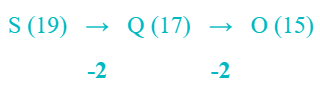
  • Earth Day: Celebrated on 22 April to demonstrate support for environmental protection.
  • International Yoga Day: Observed on 21 June to promote the benefits of yoga for physical and mental well-being.

Important Points

  • Peace and Unity: Global Family Day promotes the idea of peace and unity in a world often divided by conflicts.
  • Participation: People from all walks of life are encouraged to participate in activities that foster love, respect, and understanding.
  • Global Impact: The day highlights the importance of addressing global challenges such as poverty, inequality, and violence through shared efforts.
  • Symbolic Start: Celebrating Global Family Day on 1 January symbolizes the beginning of a year filled with hope, cooperation, and harmony.
71

Lok Adalats aim to settle disputes amicably by promoting which type of resolution?

  1. ((a))

    Criminal

  2. ((b))

    Adversarial

  3. ((c))

    Mandatory Orders

  4. ((d))

    Amicable/compromise

Show Answer
Answer: ((d))

Amicable/compromise

The correct answer is Amicable/compromise.

Key Points

  • Lok Adalats are alternative dispute resolution forums in India established under the Legal Services Authorities Act, 1987. They focus on resolving disputes outside formal judicial proceedings.
  • The primary aim of Lok Adalats is to promote amicable settlement of disputes through mutual understanding and compromise between the parties involved.
  • Disputes resolved through Lok Adalats include cases related to civil matters, family disputes, bank recovery cases, motor vehicle accident claims, and other compoundable criminal offences.
  • Lok Adalats ensure that justice is delivered quickly, without incurring significant expenses, and with minimal procedural complexities.
  • The awards passed by Lok Adalats are legally binding and hold the status of a civil court decree, ensuring compliance by both parties. Appeals cannot be filed against the decisions of Lok Adalats.
  • The concept of Lok Adalats is rooted in the philosophy of Gandhian principles of resolving disputes through peaceful negotiations.

Additional Information

  • Legal Services Authorities Act, 1987:
  • This act provides statutory backing to Lok Adalats and ensures free legal aid to economically weaker sections of society.
  • Under Section 19 of the Act, Lok Adalats are organized at different levels—state, district, taluk, or village.
  • The Act promotes access to justice for all, especially marginalized sections of society.
  • Features of Lok Adalats:
  • Lok Adalats operate with minimal procedural formalities, enabling swift resolution of disputes.
  • It ensures a win-win situation, as settlements are made with the consent of both parties.
  • There is no court fee involved, making it cost-effective for litigants.
  • Matters resolved in Lok Adalats cannot be reopened in any court, ensuring finality of decisions.
  • Advantages of Lok Adalats:
  • Encourages peaceful coexistence by promoting compromise rather than confrontation.
  • Reduces the burden on formal courts and contributes to faster disposal of cases.
  • Ensures access to justice for rural and economically weaker sections.
  • Examples of Cases Resolved:
  • Motor vehicle accident compensation cases settled amicably between the claimant and insurance companies.
  • Family disputes resolved through mutual agreement, avoiding lengthy legal battles.
  • Bank recovery cases where borrowers and banks negotiate repayment terms.
  • Compoundable criminal cases resolved through compromise between parties.

Important Points

  • Historical Background: Lok Adalats derive their concept from ancient Indian traditions of panchayats, where disputes were resolved within the community through mediation and compromise.
  • Role of National Legal Services Authority (NALSA): NALSA coordinates Lok Adalats across India and provides guidelines for their functioning.
  • Recent Developments: Lok Adalats have increasingly adopted technology to conduct virtual hearings, ensuring accessibility even during times like the COVID-19 pandemic.
  • Global Perspective: Alternative dispute resolution mechanisms like Lok Adalats align with international practices promoting out-of-court settlements, such as arbitration and mediation.
72

In a certain code language, 'bell poet visit' is coded as 'js vx gu' and 'yard visit queen' is coded as 'aw ks js'. How is 'visit' coded in the given language?

  1. ((a))

    vx

  2. ((b))

    aw

  3. ((c))

    js

  4. ((d))

    gu

Show Answer
Answer: ((c))

js

According to the given information:

bell poet visit→js vx gu

yard visit queen→aw ks js

By comparing both the statements, we can see that the word 'visit' is common in both sentences.

Similarly, the code 'js' is common in both the coded sentences.

Thus, the code for the word 'visit' is 'js'.

Hence, the correct answer is Option 3;

73

Which of the following sports terms is NOT associated with cricket?

  1. ((a))

    Raider

  2. ((b))

    Cover drive

  3. ((c))

    Powerplay

  4. ((d))

    LBW

Show Answer
Answer: ((a))

Raider

The correct answer is Raider.

Key Points

  • Raider is a term associated with the sport of Kabaddi. It refers to a player who enters the opposing team's half to tag opponents and return safely to their side while chanting "Kabaddi" continuously. This term is not related to cricket.
  • Cover drive is a popular cricketing shot. It is a beautifully executed front-foot stroke where the batsman drives the ball through the covers region of the field.
  • Powerplay is a key term in cricket, particularly in limited-overs formats like ODIs and T20s. It refers to the initial overs of an innings where fielding restrictions are imposed, allowing only a certain number of fielders outside the 30-yard circle.
  • LBW stands for "Leg Before Wicket" and is a dismissal method in cricket. It occurs when the ball strikes the batsman’s leg in line with the stumps, and the umpire decides it would have hit the stumps.
  • Among the given options, Raider is the only term that is not associated with cricket but with Kabaddi.

Additional Information

  • Kabaddi and the Role of a Raider:
  • Kabaddi is a team sport that originated in ancient India and is now popular globally.
  • The primary role of a Raider is to score points by tagging players from the opposing team and returning to their side without being caught.
  • The Raider must also maintain their chant of "Kabaddi" during the raid. Failing to do so results in disqualification for that raid.
  • It is a fast-paced and strategic role requiring agility, strength, and quick decision-making.
  • Cricket Terms Explained:
  • Cover Drive: A technique-driven shot in cricket where the batsman uses footwork and timing to send the ball through the cover region.
  • Powerplay: A strategic phase in limited-overs cricket. For instance, in ODIs, the first 10 overs are typically designated as the Powerplay, allowing only two fielders outside the 30-yard circle.
  • LBW: One of the ten modes of dismissal in cricket. The umpire considers factors like the ball's trajectory, whether it pitched in line, and if it would have gone on to hit the stumps.
  • Comparison of Cricket and Kabaddi:
  • While cricket is a bat-and-ball game with global recognition, Kabaddi is a contact sport rooted in Indian traditions.
  • Cricket involves strategies related to batting, bowling, and fielding, whereas Kabaddi emphasizes physicality, agility, and teamwork.
  • The terms used in these sports distinctly reflect their nature, such as "Raider" in Kabaddi and "Cover Drive" in cricket.

Important Points

  • Key Distinction: Understanding the terminology associated with specific sports is crucial for clarity and comprehension. Terms like "Raider" in Kabaddi and "LBW" in cricket highlight the unique aspects of these games.
  • Global Popularity: Cricket, played in all continents, is governed by the International Cricket Council (ICC). Kabaddi, while originating in India, is governed by the International Kabaddi Federation (IKF) and has gained recognition in countries like Iran, South Korea, and Japan.
  • Historical Context: Kabaddi dates back over 4,000 years to Indian mythology and folklore, while cricket's origins trace back to 16th-century England.
74

How does diversification of agricultural activities contribute to rural prosperity?

  1. ((a))

    By providing alternative income sources and improving resilience

  2. ((b))

    By increasing reliance on traditional cropping patterns

  3. ((c))

    By reducing agricultural productivity

  4. ((d))

    By focussing only on staple crops

Show Answer
Answer: ((a))

By providing alternative income sources and improving resilience

The correct answer is By providing alternative income sources and improving resilience.

Key Points

  • Diversification of agricultural activities involves incorporating various farming practices, such as horticulture, animal husbandry, fisheries, and agroforestry, alongside traditional crop cultivation. This ensures multiple income streams for rural households.
  • By introducing diverse agricultural activities, farmers can improve their economic resilience against risks like crop failure due to climatic changes, pests, or market fluctuations.
  • It helps optimize the use of available resources, such as land, labor, and water, thereby improving productivity and sustainability in rural areas.
  • Diversification allows rural communities to move beyond dependency on a single crop or activity, leading to a better standard of living and poverty reduction.
  • It creates employment opportunities and integrates various sectors like agro-processing, marketing, and local industries, contributing to comprehensive rural development.

Additional Information

  • Characteristics of Diversification:
  • It involves the integration of different agricultural practices such as livestock rearing, horticulture, forestry, and aquaculture.
  • Encourages the adoption of modern technologies and practices, such as drip irrigation, high-yield crop varieties, and organic farming.
  • Benefits of Diversification:
  • Risk Reduction: Reduces dependency on a single crop, thereby minimizing the risks of loss due to unforeseen circumstances.
  • Environmental Sustainability: Promotes biodiversity and reduces soil degradation through crop rotation and mixed farming.
  • Market Adaptation: Allows farmers to respond to market demands by growing high-value crops like fruits, vegetables, and spices.
  • Government Initiatives Supporting Agricultural Diversification:
  • National Horticulture Mission (NHM): Focuses on the development of horticulture to increase rural income.
  • Rashtriya Krishi Vikas Yojana (RKVY): Promotes agricultural diversification through financial assistance for innovative projects.
  • National Fisheries Development Board (NFDB): Aims to enhance fish production and create livelihood opportunities in rural areas.
  • Examples of Diversification:
  • Farmers in Punjab and Haryana integrating dairy farming with wheat and paddy cultivation.
  • Adoption of sericulture (silk farming) in regions like Karnataka and Andhra Pradesh.
  • Practices like agroforestry in central and southern India, combining timber production with farming.

Important Points

  • Challenges in Agricultural Diversification:
  • Lack of awareness: Farmers may not be aware of the benefits of diversification or how to implement it effectively.
  • Resource constraints: Limited access to credit, water, or quality inputs can hinder diversification.
  • Market accessibility: Inadequate market linkages make it difficult for farmers to sell diversified produce.
  • Solutions to Promote Diversification:
  • Providing subsidies and financial assistance for adopting modern practices.
  • Enhancing market access through e-market platforms and agricultural cooperatives.
  • Conducting training and awareness programs to educate farmers about the benefits and methods of diversification.
75

Refer to the following letter series and answer the question that follows. (Counting to be done from left to right only.)

<br>

(Left) K O P Q W S E D G U J I O P K M N V Y I P O (Right)

<br>

How many such consonants are there, each of which is immediately preceded by a vowel and also immediately followed by a vowel?

  1. ((a))

    One

  2. ((b))

    More than two

  3. ((c))

    None

  4. ((d))

    Two

Show Answer
Answer: ((d))

Two

Given series:

K O P Q W S E D G U J I O P K M N V Y I P O

Condition to be checked:

Vowel → Consonant → Vowel

K O P Q W S E D G U J I O P K M N V Y I P O

Thus, there are two such patterns (U J I and I P O) that follow the given conditions.

Hence, the correct answer is "Option 4".

76

If α:β=15:22\mathrm{\alpha : \beta = 15: 22} and β:γ=12:13\mathrm{\beta : \gamma =12: 13}, then what is the value of α:β:γ\alpha:\beta:\gamma?

  1. ((a))

    90 : 132 : 143

  2. ((b))

    90 : 66 : 143

  3. ((c))

    45 : 66 : 143

  4. ((d))

    90 : 143 : 132

Show Answer
Answer: ((a))

90 : 132 : 143

Shortcut Trick

To find the combined ratio α : β : γ, use the inverse 'N' multiplication method directly.

α = 15 × 12 = 180

β = 22 × 12 = 264

γ = 22 × 13 = 286

α : β : γ = 180 : 264 : 286 = 90 : 132 : 143

∴ The correct answer is 90 : 132 : 143.

Alternate Method

Given:

⇒ α : β = 15 : 22

⇒ β : γ = 12 : 13

α : β = β : γ = 15 22 : 12 13 : α : β : γ = 15 × 12 22 × 12 22 × 13 : : = 180 264 286 : : ÷ 2 = 90 132 143 : :

Method Used:

To combine two ratios perfectly, equalize the common term (β) in both ratios by taking their LCM.

Calculations:

⇒ LCM of 22 and 12 = 132

⇒ Multiply the first ratio by 6 (since 132 ÷ 22 = 6):

⇒ α : β = (15 × 6) : (22 × 6) = 90 : 132

⇒ Multiply the second ratio by 11 (since 132 ÷ 12 = 11):

⇒ β : γ = (12 × 11) : (13 × 11) = 132 : 143

⇒ Since β is now equal (132) in both ratios, we can combine them directly.

⇒ α : β : γ = 90 : 132 : 143

∴ The correct answer is 90 : 132 : 143.

Additional Information

Compound Ratio

When two or more ratios are multiplied together, it is called a compound ratio. For a : b and c : d, the compound ratio is ac : bd.

Duplicate & Sub-duplicate Ratio

The duplicate ratio of a : b is a2 : b2. The sub-duplicate ratio is √a : √b.

Invertendo & Alternendo

If a : b = c : d, then by invertendo it becomes b : a = d : c. By alternendo it becomes a : c = b : d.

77

Water flows through a cylindrical pipe of internal diameter 21 cm at the rate of 8 m/s. What time, in minutes, would the pipe take to fill an empty rectangular tank of dimensions 12m×9m×4.41m\mathrm{12 m × 9 m \times 4.41 m}?

(Rounded up to one decimal place) (Use π=227\pi=\frac{22}7)

  1. ((a))

    36.8 minutes

  2. ((b))

    28.6 minutes

  3. ((c))

    30 minutes

  4. ((d))

    27.5 minutes

Show Answer
Answer: ((b))

28.6 minutes

Shortcut Trick

Time to fill tank = Volume of Tank ÷ Volume Flow Rate per minute

Time = (L × B × H) ÷ (π × r2 × v × 60)

Time = (12 × 9 × 4.41) ÷ [ (22/7) × (0.105)2 × 8 × 60 ]

Time = 476.28 ÷ 16.632 = 315 / 11 ≈ 28.63 minutes

∴ The correct answer is 28.6 minutes.

Alternate Method

Given:

Tank Dimensions: Length (L) = 12 m, Breadth (B) = 9 m, Height (H) = 4.41 m

Pipe Diameter = 21 cm ⇒ Radius (r) = 21 / 200 m

Flow Speed (v) = 8 m/s

Formula Used:

Volume of a Cuboid = L × B × H

Volume of water discharged per second = Area of cross-section × Flow Speed = πr2v

Code
        v = 8 m/s d = 21 cm      12 m 4.41 m 9 m  Empty Tank Flow

Calculations:

⇒ Volume of the tank = 12 × 9 × 4.41 = 476.28 m3

⇒ Area of pipe cross-section = πr2 = (22/7) × (21/200) × (21/200) m2

⇒ Volume of water flowing per second = (22/7) × (441/40000) × 8 m3/s

⇒ Volume of water flowing per minute = [(22 × 63 × 8) / 40000] × 60

⇒ Volume of water flowing per minute = 665280 / 40000 = 16.632 m3/min

⇒ Time taken = Volume of tank ÷ Volume per minute

⇒ Time taken = 476.28 ÷ 16.632 = 315 / 11 minutes

⇒ Time taken = 28.636... minutes

⇒ Rounded to one decimal place, Time = 28.6 minutes

∴ The correct answer is 28.6 minutes.

Additional Information

Volume of Cylinder & Cuboid

Volume of a cylindrical pipe is evaluated as πr2h, and Volume of a cuboidal tank is evaluated as L × B × H.

Flow Rate Concept

When fluid flows through a pipe, the length of the liquid column passing in a given time equals its speed (v × t). The total volume discharged is A × v × t.

Unit Conversion Standard

Always ensure uniform units before calculation. Here, diameter in cm is converted to meters (21 cm = 0.21 m) to match the tank's dimensions and the fluid's flow speed in m/s.

78

A train travels three equal distances of 180 km each at speeds of 45 km/hr, 60 km/hr and 90 km/hr, respectively. What is the total time taken to cover all three distances?

  1. ((a))

    3.5 hours

  2. ((b))

    9 hours

  3. ((c))

    4.5 hours

  4. ((d))

    7 hours

Show Answer
Answer: ((b))

9 hours

Shortcut Trick

The total time is simply the sum of the individual times taken for each segment.

Total Time = (Distance1 ÷ Speed1) + (Distance2 ÷ Speed2) + (Distance3 ÷ Speed3)

Total Time = (180 ÷ 45) + (180 ÷ 60) + (180 ÷ 90)

Total Time = 4 + 3 + 2 = 9 hours

∴ The correct answer is 9 hours.

Alternate Method

Given:

Distance of each segment = 180 km

Speeds for each segment = 45 km/hr, 60 km/hr, and 90 km/hr

Formula Used:

Time = Distance ÷ Speed

Total Time = t1 + t2 + t3

Code
180 km 180 km 180 km 45 km/hr 60 km/hr 90 km/hr Time = 4 hrs Time = 3 hrs Time = 2 hrs Total Time = 4 + 3 + 2 = 9 hours

Calculations:

⇒ Time for first segment (t1) = 180 ÷ 45 = 4 hours

⇒ Time for second segment (t2) = 180 ÷ 60 = 3 hours

⇒ Time for third segment (t3) = 180 ÷ 90 = 2 hours

⇒ Total Time = 4 + 3 + 2

⇒ Total Time = 9 hours

∴ The correct answer is 9 hours.

Additional Information

Average Speed

Average Speed is the ratio of Total Distance to Total Time. For 3 equal distances covered at speeds x, y, and z, the Average Speed = 3xyz ÷ (xy + yz + zx).

Relative Speed

When two bodies move in the same direction, their relative speed is the difference (S1 − S2). When moving in opposite directions, it is the sum (S1 + S2).

Proportionality in Time, Speed and Distance

If distance is constant, Speed and Time are inversely proportional (S ∝ 1/T). If time is constant, Distance and Speed are directly proportional (D ∝ S).

79

In the conduct of elections in India, which authority is responsible for supervising all polling stations within a constituency and officially declaring the final election result?

  1. ((a))

    Returning Officer

  2. ((b))

    Chief Electoral Observer

  3. ((c))

    Presiding Officer

  4. ((d))

    Polling Officer

Show Answer
Answer: ((a))

Returning Officer

The correct answer is Returning Officer.

Key Points

  • The Returning Officer is the authority designated by the Election Commission of India to oversee the conduct of elections in a specific constituency. They are responsible for ensuring a free and fair election process.
  • The Returning Officer supervises all polling stations within their constituency and ensures that the election is conducted in accordance with the guidelines laid out by the Election Commission of India.
  • After the polling process is completed, the Returning Officer is entrusted with the responsibility of counting votes and declaring the final election result.
  • The Returning Officer is usually a government officer or a senior official appointed from state or central administrative services.
  • The appointment of a Returning Officer for each constituency is made under Section 13A of the Representation of the People Act, 1951, ensuring accountability and transparency in the election process.

Additional Information

  • Role of Chief Electoral Observer:
  • The Chief Electoral Observer is appointed by the Election Commission of India to oversee the overall election process in a broader region, not specific to a single constituency.
  • They ensure that the Returning Officer and other election officials adhere to the prescribed guidelines for fair elections.
  • They act as a liaison between the Election Commission and local election officials.
  • Role of Presiding Officer:
  • The Presiding Officer is responsible for managing the polling station during the election process.
  • They ensure proper setup of the polling station, handle the voting machines, and maintain order during voting.
  • Presiding Officers are appointed for each polling station and do not oversee the entire constituency.
  • Role of Polling Officer:
  • Polling Officers assist the Presiding Officer at polling stations and help in managing the flow of voters.
  • They verify voter identity, issue voter slips, and guide voters through the voting process.
  • They are not responsible for supervising multiple polling stations or declaring election results.
  • Representation of the People Act, 1951:
  • This Act lays out the procedures for conducting elections to the Parliament and State Legislatures in India.
  • It provides provisions for the appointment of election officials, including Returning Officers, Presiding Officers, and Polling Officers.
  • It also outlines the roles and responsibilities of these officials to ensure smooth conduct of elections.
  • Election Commission of India:
  • The Election Commission of India is a constitutional authority responsible for administering elections to the Parliament, State Legislatures, and the offices of President and Vice-President of India.
  • It ensures free, fair, and transparent elections across the country.
  • The Commission appoints Returning Officers and other officials to execute the election process efficiently.

Important Points

  • Returning Officer’s authority: They have the final say in the constituency they are assigned to and are the official responsible for declaring results.
  • Appointment process: Returning Officers are appointed by the Election Commission, ensuring impartiality and adherence to democratic processes.
  • Legal framework: Their role and duties are defined under the Representation of the People Act, 1951.
  • Accountability: They are accountable to the Election Commission and must ensure a neutral and fair election environment.
  • Historical relevance: The role of Returning Officers has been pivotal in maintaining India's democratic integrity since its independence.
80

Who among the following led the Dandi March in March 1930?

  1. ((a))

    Jawahar Lal Nehru

  2. ((b))

    Subhas Chandra Bose

  3. ((c))

    Lala Lajpat Rai

  4. ((d))

    Mahatma Gandhi

Show Answer
Answer: ((d))

Mahatma Gandhi

The correct answer is Mahatma Gandhi.

Key Points

  • Mahatma Gandhi led the Dandi March, also known as the Salt March, on 12 March 1930, starting from the Sabarmati Ashram in Ahmedabad.
  • The march was a 24-day nonviolent protest against the British salt monopoly, covering a distance of approximately 240 miles (384 kilometers) to the coastal village of Dandi in Gujarat.
  • The primary objective was to protest the British-imposed Salt Tax, which deprived Indians of the ability to produce or sell salt independently.
  • On 6 April 1930, Gandhi reached Dandi and symbolically broke the salt laws by producing salt from seawater, marking the beginning of the Civil Disobedience Movement.
  • The march included thousands of supporters and inspired a nationwide movement against British rule, emphasizing Gandhi's philosophy of nonviolent resistance (Satyagraha).

Additional Information

  • Background of the Dandi March:
  • The British Salt Act of 1882 prohibited Indians from collecting or selling salt, forcing them to purchase it from the government at high prices.
  • The act symbolized British exploitation and became a rallying point for Indian independence.
  • Gandhi chose salt as a simple yet powerful symbol of resistance, as it was essential for daily life and affected every individual.
  • Impact of the Dandi March:
  • The march galvanized the Indian population, including peasants, workers, and women, into active participation in the independence movement.
  • It drew international attention to India's struggle for freedom and highlighted Gandhi's leadership and commitment to nonviolence.
  • The Civil Disobedience Movement that followed saw mass defiance of British laws, including boycotts of foreign goods, refusal to pay taxes, and protests.
  • Over 60,000 people, including Gandhi himself, were arrested during the movement, showcasing the widespread impact of the march.
  • Other Leaders and Movements:
  • Jawaharlal Nehru: Nehru was a prominent leader in the Indian National Congress but did not lead the Dandi March.
  • Subhas Chandra Bose: Bose advocated for more militant resistance against British rule, differing from Gandhi's nonviolent approach.
  • Lala Lajpat Rai: Rai was known for his role in the Punjab protests and the Simon Commission boycott, but he passed away before the Dandi March.
  • Significance of Satyagraha:
  • Gandhi's philosophy of Satyagraha emphasized nonviolent resistance as a moral and political strategy against oppression.
  • The Dandi March became a global symbol of peaceful protest and inspired similar movements worldwide.

Important Points

  • Salt as a symbol: Salt was chosen by Gandhi because it was a universally used commodity, making the protest relatable to all Indians.
  • British Reaction: The British authorities initially dismissed the march but later responded with mass arrests and crackdowns, showing the effectiveness of civil disobedience.
  • Legacy: The Dandi March is remembered as a turning point in India's freedom struggle and a demonstration of the power of peaceful resistance.
  • UN Recognition: In 2005, the Dandi March route was declared a heritage path by the Indian government, highlighting its historical significance.
81

A and B complete a work in 14 days. If A alone can do it in 42 days, then B alone can do one-third of the same work in _________ (days). 

  1. ((a))

    14

  2. ((b))

    7

  3. ((c))

    28

  4. ((d))

    21

Show Answer
Answer: ((b))

7

Shortcut Trick

Let total work be the LCM of 14 and 42 = 42 units.

Combined efficiency of A and B = 42 ÷ 14 = 3 units/day.

Efficiency of A alone = 42 ÷ 42 = 1 unit/day.

Efficiency of B alone = 3 − 1 = 2 units/day.

Time taken by B for one-third work = (42 ÷ 3) ÷ 2 = 14 ÷ 2 = 7 days.

∴ The correct answer is 7 days.

Alternate Method

Given:

Time taken by A and B to complete the work = 14 days

Time taken by A alone to complete the work = 42 days

Calculations:

PersonDaysTotal WorkEfficiency
A + B14423
A421

⇒ Efficiency of B = Efficiency of (A + B) − Efficiency of A

⇒ Efficiency of B = 3 − 1 = 2 units/day

⇒ Target work for B = 1/3 of Total Work

⇒ Target work = (1 ÷ 3) × 42 = 14 units

⇒ Time taken by B = Target work ÷ Efficiency of B

⇒ Time taken by B = 14 ÷ 2 = 7 days

∴ The correct answer is 7 days.

Additional Information

Pipes & Cisterns

Works exactly like Time & Work problems. An inlet pipe has a positive efficiency (filling), while an outlet pipe or a leak has a negative efficiency (emptying).

Work & Wages

Wages are always distributed in the ratio of the total work done by each person. If they work for the same number of days, the wages are shared directly in the ratio of their efficiencies.

Alternate Days Work

Find the total work done in a complete cycle (e.g., 2 days for 2 people). Multiply the cycle to get as close to the total work as possible, then calculate the time for the remaining work done by the person whose turn is next.

82

Find the L.C.M. of. 47,521\frac{4}{7}, \frac{5}{21} and863\frac{8}{63}.

  1. ((a))

    163\frac{1}{63}

  2. ((b))

    407\frac{40}{7}

  3. ((c))

    17\frac{1}{7}

  4. ((d))

    4063\frac{40}{63}

Show Answer
Answer: ((b))

407\frac{40}{7}

Shortcut Trick

L.C.M. of fractions = L.C.M. of Numerators ÷ H.C.F. of Denominators

Numerators are 4, 5, and 8 ⇒ L.C.M.(4, 5, 8) = 40

Denominators are 7, 21, and 63 ⇒ H.C.F.(7, 21, 63) = 7

Required L.C.M. = 40/7

∴ The correct answer is 40/7.

Alternate Method

Given:

The fractions are 4/7, 5/21, and 8/63.

Formula Used:

L.C.M. of fractions = L.C.M. of Numerators ÷ H.C.F. of Denominators

Calculations:

⇒ First, we find the L.C.M. of the numerators (4, 5, and 8).

⇒ Prime factorization of 4 = 22

⇒ Prime factorization of 5 = 51

⇒ Prime factorization of 8 = 23

⇒ L.C.M.(4, 5, 8) = 23 × 5 = 8 × 5 = 40

⇒ Next, we find the H.C.F. of the denominators (7, 21, and 63).

⇒ Prime factorization of 7 = 71

⇒ Prime factorization of 21 = 31 × 71

⇒ Prime factorization of 63 = 32 × 71

⇒ H.C.F.(7, 21, 63) = 7

⇒ Now, applying the formula: L.C.M. of fractions = 40 ÷ 7 = 40/7

∴ The correct answer is 40/7.

Additional Information

H.C.F. of Fractions

To find the Highest Common Factor of fractions, use the formula: H.C.F. of fractions = H.C.F. of Numerators ÷ L.C.M. of Denominators.

Product of Two Numbers

For any two numbers a and b, the product of their L.C.M. and H.C.F. is equal to the product of the numbers themselves: L.C.M.(a, b) × H.C.F.(a, b) = a × b.

Co-prime Numbers

If two numbers do not have any common prime factors, they are called co-prime numbers. Their H.C.F. is always 1, and their L.C.M. is simply their product.

83

The sum of 10 numbers is 612. Find their average. 

  1. ((a))

    61.2

  2. ((b))

    62.2

  3. ((c))

    59.2

  4. ((d))

    60.2

Show Answer
Answer: ((a))

61.2

Shortcut Trick

The average is computed directly by dividing the sum of all the observations by the total count.

Average = Total Sum ÷ Total Count

Average = 612 ÷ 10 = 61.2

∴ The correct answer is 61.2.

Alternate Method

Total Sum = 612 A A A . . . . A Total Numbers (N) = 10 Average (A) = 612 ÷ 10 = 61.2

Given:

⇒ Sum of 10 numbers = 612

⇒ Total numbers (N) = 10

Formula Used:

⇒ Average = Total Sum of Observations ÷ Total Number of Observations

Calculation:

⇒ Average = 612 ÷ 10

⇒ Average = 61.2

∴ The correct answer is 61.2.

Additional Information

Weighted Average

If a group has n1 items with average A1 and another group has n2 items with average A2, then the combined average = (n1 × A1 + n2 × A2) ÷ (n1 + n2).

Average of Consecutive Numbers

For a series of consecutive numbers or any arithmetic progression, the Average = (First Term + Last Term) ÷ 2.

Effect of Arithmetic Operations

If every observation in a dataset is increased, decreased, multiplied, or divided by a constant value 'k', the new average for that dataset will also increase, decrease, multiply, or divide by 'k' respectively.

84

What will come in the place of the question mark (?) in the following equation, if '+' and '-' are interchanged and 'x' and '/' are interchanged?

<br>

3 / 2 + 15 x 3 - 5 = ? + 10

  1. ((a))

    16

  2. ((b))

    17

  3. ((c))

    15

  4. ((d))

    13

Show Answer
Answer: ((a))

16

Given:

3 / 2 + 15 x 3 - 5 = ? + 10

By using the BODMAS rule:

By, decoding the given symbols (interchanging '+' with '-' and 'x' with '/') we get.

SYMBOLSMEANING
+-
-+
x÷
/×

Substituting the signs in the given equation (Let the question mark be 'x'):

⇒ 3 × 2 - 15 ÷ 3 + 5 = x - 10

⇒ 3 × 2 - (15 ÷ 3) + 5 = x - 10

(3 × 2) - 5 + 5 = x - 10

(6 + 5) - 5 = x - 10

11 - 5 = x - 10

⇒ 6 = x - 10

⇒ x = 6 + 10

16

Hence, the correct answer is 'Option 1'.

85

In what ratio must Rohit, a grocer, mix two varieties of gram flour costing ₹130 and ₹150 per kg, respectively, so as to get a mixture worth ₹145.50 per kg?

  1. ((a))

    9 : 31

  2. ((b))

    31 : 7

  3. ((c))

    31 : 9

  4. ((d))

    7 : 31

Show Answer
Answer: ((a))

9 : 31

Shortcut Trick

Using the direct rule of alligation method for mixing two varieties:

Quantity Ratio = (Cost of Variety 2 − Mean Price) : (Mean Price − Cost of Variety 1)

Quantity Ratio = (150 − 145.50) : (145.50 − 130)

Quantity Ratio = 4.50 : 15.50

Quantity Ratio = 45 : 155 = 9 : 31

∴ The correct answer is 9 : 31.

Alternate Method

Given:

Cost of variety 1 (C1) = ₹130 per kg

Cost of variety 2 (C2) = ₹150 per kg

Mean price of the mixture (M) = ₹145.50 per kg

Code
      130 150 145.50 4.50 15.50 Variety 1 Variety 2 Mean Price Ratio = 4.50 : 15.50

Formula Used:

Let the quantities of variety 1 and variety 2 be x and y respectively.

Weighted Average Price = (C1 × x + C2 × y) ÷ (x + y)

Calculations:

⇒ (130 × x + 150 × y) ÷ (x + y) = 145.50

⇒ 130x + 150y = 145.50(x + y)

⇒ 130x + 150y = 145.50x + 145.50y

⇒ 150y − 145.50y = 145.50x − 130x

⇒ 4.50y = 15.50x

⇒ x ÷ y = 4.50 ÷ 15.50

⇒ x ÷ y = 450 ÷ 1550

⇒ x ÷ y = 45 ÷ 155 = 9 ÷ 31

⇒ x : y = 9 : 31

∴ The correct answer is 9 : 31.

Additional Information

Rule of Alligation

When two ingredients of different prices are mixed, the ratio of their quantities is inversely proportional to the differences in their prices from the mean price. Ratio = (C2 − M) : (M − C1).

Weighted Average

It is used to find the average of two or more groups when their quantities and individual averages are known. Formula: Aw = (n1A1 + n2A2) ÷ (n1 + n2).

Replacement Method in Mixtures

If a container initially holds x units of pure liquid, and y units are drawn out and replaced with water n times, the final quantity of pure liquid remaining is: Final = x × (1 − y ÷ x)n.

86

Read the given statements and conclusions carefully. Assuming that the information given in the statements is true, even if it appears to be at variance with commonly known facts, decide which of the given conclusions logically follow(s) from the statements.

<br>

Statements: Some bulbs are lights. All bulbs are magnets.

<br>

Conclusions:

(I) At least some magnets are lights.

(II) Some magnets are bulbs. 2981

  1. ((a))

    Only conclusion (I) follows.

  2. ((b))

    Only conclusion (II) follows.

  3. ((c))

    Neither conclusion (I) nor (II) follows.

  4. ((d))

    Both conclusions (I) and (II) follow.

Show Answer
Answer: ((d))

Both conclusions (I) and (II) follow.

The least possible Venn diagram for the given statement is:

Conclusions:

I. At least some magnets are lights - True (Because, some bulbs are lights and all bulbs are magnets, so the part of bulbs which is lights will also be magnets).

II. Some magnets are bulbs - True (Because, all bulbs are magnets, so some magnets will definitely be bulbs).

So, Both conclusions (I) and (II) follow.

Hence, the correct answer is "Option 4".

87

The period of southwest monsoon from _______ is known as the rainy season for most parts of the country.

  1. ((a))

    June to August

  2. ((b))

    May to August

  3. ((c))

    June to October

  4. ((d))

    June to September

Show Answer
Answer: ((d))

June to September

The correct answer is June to September.

Key Points

  • Southwest monsoon is a significant climatic phenomenon in India, marking the rainy season for most parts of the country. It occurs between June and September.
  • This period accounts for approximately 75-90% of India's annual rainfall, making it crucial for agriculture and water resources.
  • The monsoon is driven by the seasonal reversal of wind systems and the difference in temperature between land and sea, causing moist winds from the Indian Ocean to sweep across the subcontinent.
  • Regions such as the Western Ghats, northeastern states, and the Indo-Gangetic plains receive heavy rainfall during this period, benefiting agriculture and replenishing water bodies.
  • The Indian Meteorological Department (IMD) monitors the onset, progression, and retreat of the monsoon season to aid in disaster preparedness and agricultural planning.

Additional Information

  • Southwest Monsoon Mechanism:
  • The monsoon originates due to the differential heating of land and sea. The intense heat over the Indian subcontinent creates low-pressure areas, attracting moist winds from the Indian Ocean.
  • The winds are deflected due to the Coriolis effect, resulting in their southwest direction.
  • Regional Impacts of the Monsoon:
  • Regions such as Kerala experience the onset of the monsoon in early June, followed by other parts of the country.
  • Northeastern states, including Meghalaya, receive some of the highest rainfall globally during this period.
  • Agricultural Importance:
  • India's agriculture is predominantly monsoon-dependent, with crops like rice, sugarcane, and cotton relying heavily on monsoon rains.
  • A delayed or weak monsoon can lead to drought conditions, affecting crop yields and the economy.
  • Retreat of the Monsoon:
  • The withdrawal of the monsoon begins in September, starting from the northwest region and gradually retreating southward.
  • Post-monsoon showers, also known as retreating monsoon, are common in Tamil Nadu and Andhra Pradesh.

Important Points

  • Monsoon Forecasting:
  • The Indian Meteorological Department (IMD) provides monsoon forecasts based on various models, including dynamical and statistical ones.
  • Accurate forecasting helps in planning agricultural activities, managing water resources, and preparing for potential disasters like floods.
  • Climate Change Impacts:
  • Studies indicate that climate change is affecting the monsoon patterns, leading to uneven distribution of rainfall.
  • Extreme events such as floods and droughts are becoming more frequent due to changing monsoon dynamics.
  • Global Connections:
  • The Indian monsoon is part of a larger atmospheric circulation system and is influenced by phenomena like El Niño and La Niña.
  • El Niño events generally weaken the monsoon, while La Niña enhances it.
88

Which team was the winner of the Vijay Hazare Trophy 2024-25?

  1. ((a))

    Haryana

  2. ((b))

    Karnataka

  3. ((c))

    Gujarat

  4. ((d))

    Vidarbha

Show Answer
Answer: ((b))

Karnataka

The correct answer is Karnataka.

Key Points

  • Karnataka emerged as the winner of the Vijay Hazare Trophy 2024-25, showcasing an exceptional performance throughout the tournament.
  • The Vijay Hazare Trophy is India’s premier domestic one-day cricket tournament, named after the legendary cricketer Vijay Hazare.
  • Karnataka has a rich history in domestic cricket, and their consistent performances have made them one of the most successful teams in the tournament’s history.
  • The team demonstrated a blend of strong batting, disciplined bowling, and excellent fielding to secure the championship.
  • The tournament featured top domestic teams from across India, and Karnataka stood out due to their strategic gameplay and teamwork.

Additional Information

  • About the Vijay Hazare Trophy:
  • The tournament was started in 2002–03 and is organized by the Board of Control for Cricket in India (BCCI).
  • It is a 50-over format tournament that serves as a platform for domestic players to showcase their talent and potentially get selected for the Indian national team.
  • Teams represent different Indian states, cricket associations, and zones.
  • Karnataka’s Dominance in Domestic Cricket:
  • Karnataka has consistently been a strong contender in Indian domestic cricket, having won multiple Vijay Hazare Trophies in the past.
  • The team boasts notable players, some of whom have represented India at the international level, including KL Rahul, Manish Pandey, and Mayank Agarwal.
  • Significance of the Vijay Hazare Trophy:
  • The tournament plays a crucial role in identifying and nurturing talent for the Indian cricket team, especially for the limited-overs format.
  • It provides players with the opportunity to gain experience in high-pressure situations, similar to international cricket.
  • Other Notable Teams in the 2024-25 Edition:
  • Haryana: Known for producing legendary players like Kapil Dev, Haryana has a strong cricketing culture but fell short in this edition.
  • Gujarat: A balanced team with a history of strong performances in the domestic circuit.
  • Vidarbha: Emerging as a strong contender in recent years, especially in red-ball cricket, but couldn’t replicate the same success in the 2024-25 Vijay Hazare Trophy.

Important Points

  • Historical Success: Karnataka’s victory in 2024-25 adds to their impressive track record, making them one of the most successful teams in the history of the Vijay Hazare Trophy.
  • Emerging Talents: The tournament highlighted several young talents, some of whom are expected to represent India in the near future.
  • Preparation for International Cricket: The Vijay Hazare Trophy acts as a breeding ground for players aiming to excel in international one-day cricket.
  • Impact on Domestic Cricket: The competition enhances the overall quality of Indian domestic cricket by fostering healthy competition among teams.
89

What should come in place of the question mark (?) in the given series?

<br>

57 58 62 71 87 112 ?

  1. ((a))

    76

  2. ((b))

    144

  3. ((c))

    148

  4. ((d))

    137

Show Answer
Answer: ((c))

148

The logic followed here is:

The given number series is: 57, 58, 62, 71, 87, 112, ?

Thus, the missing term in the series is 148.

Hence, the correct answer is "Option 3";

90

I, J, K, L, R, S and T are sitting around a circular table facing the centre of the table.

Only two people sit between K and T when counted from the right of K. Only three people sit between S and L when counted from the right of L. T sits to the immediate right of L. J sits to the immediate right of R.

Who sits fourth to the right of I?

  1. ((a))

    J

  2. ((b))

    S

  3. ((c))

    L

  4. ((d))

    T

Show Answer
Answer: ((a))

J

Given:


  1. Only two people sit between K and T when counted from the right of K.
  2. T sits to the immediate right of L.
  3. Only three people sit between S and L when counted from the right of L.
  4. J sits to the immediate right of R. 


Thus, J sits to the 4th to the right of I.

Hence, the correct answer is "Option 1".

91

Based on the English alphabetical order, three of the following four letter-clusters are alike in a certain way and thus form a group. Which letter-cluster DOES NOT belong to that group? (Note: The odd one out is not based on the number of consonants/vowels or their position in the letter-cluster.)

  1. ((a))

    KIH

  2. ((b))

    SQO

  3. ((c))

    ZXW

  4. ((d))

    GED

Show Answer
Answer: ((b))

SQO

The logic followed in this pattern is:

For 'KIH':

For 'SQO':

For 'ZXW':

For 'GED':

Thus, the letter-cluster that DOES NOT belong to that group is SQO.

Hence, the correct answer is "Option 2".

92

Under the Citizenship (Amendment) Act, 2019, the Overseas Citizen of India (OCI) registration may be cancelled if _______.

  1. ((a))

    The Overseas Citizen of India formally seeks dual citizenship status

  2. ((b))

    The Overseas Citizen of India permanently relocates to another country

  3. ((c))

    The Overseas Citizen of India violates the Citizenship Act or any notified law

  4. ((d))

    The Overseas Citizen of India refuses to comply with tax obligations

Show Answer
Answer: ((c))

The Overseas Citizen of India violates the Citizenship Act or any notified law

The correct answer is The Overseas Citizen of India violates the Citizenship Act or any notified law.

Key Points

  • The Citizenship (Amendment) Act, 2019 stipulates that the registration of an Overseas Citizen of India (OCI) can be cancelled if the individual violates any provisions of the Citizenship Act, 1955 or any other notified law.
  • Section 7D of the Citizenship Act, 1955 provides the legal grounds for cancellation of OCI registration, including cases where the person has acted against the sovereignty, integrity, security, or interests of India.
  • The cancellation of OCI registration is typically reserved for serious violations of laws, which may include acts that jeopardize national security, public order, or the rule of law in India.
  • Such cancellation is conducted through a due process and is subject to an opportunity for the individual to present their case before the authorities.
  • It is essential for OCI holders to comply with Indian laws and regulations, as the OCI status does not grant immunity from legal consequences in case of violations.

Additional Information

  • Overseas Citizen of India (OCI) Scheme:
  • OCI is a long-term visa scheme introduced by the Government of India under the Citizenship Act, 1955.
  • It allows persons of Indian origin residing abroad to enjoy certain rights in India, such as visa-free travel and exemption from registration with police authorities for stays longer than 180 days.
  • OCI cardholders can engage in activities such as buying property and pursuing education in India but are restricted from voting, holding public office, and working in government jobs.
  • Citizenship (Amendment) Act, 2019:
  • The act amended the Citizenship Act, 1955 to provide Indian citizenship to persecuted minorities (Hindus, Sikhs, Buddhists, Jains, Parsis, and Christians) from Afghanistan, Pakistan, and Bangladesh who entered India before December 31, 2014.
  • It excludes certain categories such as Muslims and has been a subject of political and social debates.
  • Key Restrictions for OCI Cardholders:
  • OCI holders are prohibited from voting in Indian elections, holding constitutional posts, or acquiring agricultural properties.
  • They cannot participate in political activities or work in government sectors.
  • Any violation of Indian laws, especially those affecting sovereignty or security, could lead to the cancellation of OCI registration.
  • Section 7D of Citizenship Act, 1955:
  • It defines the circumstances under which the registration of an OCI can be cancelled, including:
  • If the registration was obtained through fraud or misrepresentation.
  • If the individual violates any provisions of the Citizenship Act or other laws notified by the central government.
  • If the individual has shown disloyalty or hostility towards India.
  • Cancellation under Section 7D is subject to legal procedures, ensuring that the individual has a chance to defend themselves.

Important Points

  • Cancellation Process:
  • OCI registration can only be cancelled after following a due process, including providing the individual with an opportunity to explain their actions.
  • The decision is taken by the central government, and the reasons for cancellation must be clearly documented.
  • Safeguards for OCI Holders:
  • The cancellation of OCI registration is a serious action and is not undertaken for minor infractions or violations.
  • It is reserved for cases involving fraud, severe legal violations, or actions against national interests.
  • Legal Framework:
  • The Citizenship Act, 1955, along with its amendments, provides the legal basis for managing citizenship and OCI registrations.
  • Section 7D of the act is pivotal in defining the grounds and procedures for cancellation.
93

The 7-digit number 40A861B is divisible by 3. What is the minimum value of (A + B)? 

  1. ((a))

    1

  2. ((b))

    5

  3. ((c))

    3

  4. ((d))

    2

Show Answer
Answer: ((d))

2

Shortcut Trick

Sum of the known digits = 4 + 0 + 8 + 6 + 1 = 19.

To be divisible by 3, the total sum of all digits must be a multiple of 3.

The smallest multiple of 3 greater than 19 is 21.

∴ Minimum sum of (A + B) = 21 − 19 = 2.

∴ The correct answer is 2.

Alternate Method

Given:

A 7-digit number 40A861B is divisible by 3.

Concept Used:

A number is divisible by 3 if the sum of all its digits is perfectly divisible by 3.

Calculation:

⇒ Sum of the digits = 4 + 0 + A + 8 + 6 + 1 + B

⇒ Sum of the digits = 19 + A + B

⇒ For the number to be perfectly divisible by 3, the expression (19 + A + B) must be divisible by 3.

⇒ The possible multiples of 3 greater than or equal to 19 are 21, 24, 27, 30, etc.

⇒ To find the minimum value of (A + B), we equate the sum to the smallest possible multiple of 3, which is 21.

⇒ 19 + A + B = 21

⇒ A + B = 21 − 19

⇒ A + B = 2

∴ The correct answer is 2.

Additional Information

Divisibility Rule of 9

A number is divisible by 9 if the sum of all its individual digits is a multiple of 9.

Divisibility Rule of 4

A number is divisible by 4 if the number formed by its last two digits is divisible by 4.

Divisibility Rule of 11

A number is divisible by 11 if the difference between the sum of digits at odd places and even places is 0 or a multiple of 11.

94

Which of the following is the longest river in the desert region of India?

  1. ((a))

    Yamuna

  2. ((b))

    Ganga

  3. ((c))

    Luni

  4. ((d))

    Brahmaputra

Show Answer
Answer: ((c))

Luni

The correct answer is Luni.

Key Points

  • Luni is the longest river in the desert region of India, flowing through the arid areas of Rajasthan and Gujarat. It is approximately 495 km in length.
  • The Luni River originates from the Naga Hills in the Aravalli range, near Ajmer in Rajasthan, and flows southwest towards the Rann of Kutch in Gujarat.
  • It is an ephemeral river, meaning it carries water only during the monsoon season, making it a crucial water source for the region.
  • The river is saline in nature due to the high salt content in the desert soil, and its name "Luni" is derived from the Sanskrit word "Lavanavari," meaning "salt river."
  • Unlike perennial rivers such as the Yamuna, Ganga, and Brahmaputra, which have year-round water flow, Luni is specifically significant for the desert ecosystem, supporting agriculture and livelihoods in the region.
  • The other options provided in the question—Yamuna, Ganga, and Brahmaputra—are perennial rivers and are not located in the desert regions of India. Hence, they are incorrect.

Additional Information

  • Luni River – Characteristics:
  • The Luni River basin covers an area of approximately 37,363 square kilometers.
  • Its major tributaries include the Jojari, Sukri, Jawai, and Bandi rivers, which contribute to its flow.
  • The river does not drain into any sea or ocean; instead, it ends in the marshy lands of the Rann of Kutch.
  • Comparison of Other Rivers:
  • Yamuna: A major tributary of the Ganga, it flows through northern Indian states and is not located in the desert region.
  • Ganga: One of India’s holiest rivers, originating from the Himalayas, flows through the Indo-Gangetic plains and is perennial.
  • Brahmaputra: Originates in Tibet, flows through Assam and Bangladesh, and is known for its vast size and perennial nature.
  • Importance of Desert Rivers:
  • Desert rivers like Luni provide critical water resources for irrigation, drinking water, and livestock in arid regions.
  • They support the sparse vegetation and unique ecosystems of the desert areas.
  • Salinity in Luni River:
  • The high salinity of the river water is due to the evaporation of water and the accumulation of salts from the desert soil.
  • This makes the water unsuitable for drinking but usable for certain types of salt-tolerant crops.

Important Points

  • Ephemeral Nature: The Luni River flows only during the monsoon, highlighting the importance of water conservation and storage in desert regions.
  • Salt Production: The salinity of Luni supports the small-scale salt production industry in the region.
  • Desert Ecosystem: Desert rivers like Luni play a vital role in supporting the fragile ecosystems of arid zones by maintaining biodiversity and providing water for flora and fauna.
95

Atul earns ₹16,000 per month. He spends ₹5,500 on rent, ₹2,500 on bills, and saves the remaining amount each month. If he uses his entire monthly savings for his birthday celebration in one month, find his total savings for the year (in ₹).

  1. ((a))

    80000

  2. ((b))

    88000

  3. ((c))

    96000

  4. ((d))

    72000

Show Answer
Answer: ((b))

88000

Shortcut Trick

Monthly expenses = 5500 + 2500 = ₹8000

Monthly savings = Income − Expenses = 16000 − 8000 = ₹8000

He spends 1 month's savings, so he effectively saves for 11 months.

Total yearly savings = 8000 × 11 = ₹88000

∴ The correct answer is ₹88000.

Alternate Method

Given:

Monthly salary of Atul = ₹16,000

Monthly rent spent = ₹5,500

Monthly bills paid = ₹2,500

Formula Used:

Total Income = Total Expenditure + Savings

Annual Savings = Monthly Savings × Number of Saving Months

Monthly Income: ₹16,000 Expenses: ₹8,000 Savings: ₹8,000 Annual Savings = ₹8,000 × 11 Months

Calculations:

⇒ Total monthly expenditure = Rent + Bills

⇒ Total monthly expenditure = 5500 + 2500 = ₹8,000

⇒ Monthly savings = Total Income − Total Expenditure

⇒ Monthly savings = 16000 − 8000 = ₹8,000

⇒ Number of months in a full year = 12

⇒ Since he spent his entire savings in one month for his birthday celebration, the number of months he successfully saved is: 12 − 1 = 11 months

⇒ Total savings for the year = Monthly savings × 11

⇒ Total savings = 8000 × 11 = ₹88,000

∴ The correct answer is ₹88000.

Additional Information

Income and Expenditure Principle

Income is the aggregate of all expenses and savings. Any change in income or expenditure directly reflects on the savings proportionally. The core relationship is always Income = Expenditure + Savings.

Effective Annual Evaluation

To convert monthly attributes to an annual scale, we generally multiply by 12. However, missing or zero-saving periods (due to special expenses or emergencies) must be explicitly subtracted from the total periods before multiplication.

Successive Percentage Adjustments

If expenditures are given as successive percentages (e.g., 10% on rent, 20% of the remaining on food), the final savings is calculated using a successive multiplier formula: Net Savings = Income × (1 − E1/100) × (1 − E2/100).

96

In a row of 48 people facing the north, Mohit sits 14 th from the right end. If Harini sits 15 th from the left end of the row, how many people sit between Mohit and Harini?

  1. ((a))

    21

  2. ((b))

    18

  3. ((c))

    16

  4. ((d))

    19

Show Answer
Answer: ((d))

19

Given:

Total people = 48

Mohit's position from the right = 14th

Harini's position from the left = 15th

Position from Left = (Total People - Position from Right) + 1

= (48 - 14) + 1

= 34 + 1

Mohit's position from Left = 35th

The number of people between Mohit and Harini

Since Harini is 15th from the left and Mohit is 35th from the left:

People Between = (Higher Rank - Lower Rank) - 1

= (35 - 15) - 1

= 20 - 1

= 19

Hence, the correct answer is "Option 4".

97

Which of the following male athletes was crowned the 'World Athlete of the Year' in 2025?

  1. ((a))

    Jakob Ingebrigtsen

  2. ((b))

    Noah Lyles

  3. ((c))

    Mondo Duplantis

  4. ((d))

    Neeraj Chopra

Show Answer
Answer: ((c))

Mondo Duplantis

The correct answer is Mondo Duplantis.

Key Points

  • Mondo Duplantis is a Swedish-American pole vaulter known for his exceptional achievements in athletics. He has consistently dominated the sport, breaking numerous world records in pole vaulting.
  • In 2025, Mondo Duplantis was crowned the 'World Athlete of the Year' by World Athletics, recognizing his outstanding performances and contribution to the sport.
  • Duplantis holds the world record in pole vaulting, achieving a height of 6.22 meters during the indoor season in 2023. This record solidifies his status as one of the greatest pole vaulters in history.
  • His consistent performance in major competitions, including the Olympics, World Championships, and Diamond League events, has made him a fan favorite and an icon in athletics.
  • Duplantis represents Sweden but has dual citizenship with the United States. He started pole vaulting at a young age and quickly rose to prominence in the field.

Additional Information

  • Mondo Duplantis:
  • Full Name: Armand Duplantis, nicknamed "Mondo."
  • Age: Born on November 10, 1999, Duplantis is recognized as one of the youngest world record holders in athletics.
  • Country: Represents Sweden in international athletics, though he was born in Lafayette, Louisiana, USA.
  • Achievements: Duplantis has won Olympic gold (2021, Tokyo) and multiple World Championship titles in pole vaulting.
  • Training: He has been coached by his father, Greg Duplantis, a former pole vaulter, and his mother, Helena, a former heptathlete.
  • World Athlete of the Year:
  • This prestigious award is presented annually by World Athletics to recognize the best male and female athletes globally.
  • It is based on performances in major competitions such as the Olympics, World Championships, and Diamond League, along with world records and overall contribution to the sport.
  • Past winners include legends like Usain Bolt, Eliud Kipchoge, and Karsten Warholm.
  • Other Notable Athletes (Options):
  • Jakob Ingebrigtsen: A Norwegian middle-distance runner, known for his dominance in the 1500m and 5000m events, winning gold at the Olympics and World Championships.
  • Noah Lyles: An American sprinter specializing in the 100m and 200m events, with multiple World Championship victories and exceptional speed.
  • Neeraj Chopra: An Indian javelin thrower who won the gold medal at the Tokyo Olympics 2021, becoming the first Indian athlete to achieve this in track and field.
  • Pole Vaulting:
  • Pole vaulting is a track and field event where athletes use a pole to jump over a bar set at a specific height.
  • Duplantis has revolutionized the sport with his technique, consistency, and ability to break records under pressure.
  • The world record progression in pole vaulting has seen significant advancements due to athletes like Duplantis and former legends like Sergey Bubka.
98

In a certain code language, 'pull bush map' is coded as 'hn ha lv' and 'kite input pull' is coded as 'ha of bq'. How is 'pull' coded in the given language?

  1. ((a))

    ha

  2. ((b))

    lv

  3. ((c))

    of

  4. ((d))

    hn

Show Answer
Answer: ((a))

ha

According to the given information:

pull bush map→hn ha lv

kite input pull→ha of bq

By comparing both the statements, we can see that the word 'pull' is common in both sentences.

Similarly, the code 'ha' is common in both the coded sentences.

Thus, the code for the word 'pull' is 'ha'.

Hence, the correct answer is Option 1;

99

Read the given statements and conclusions carefully. Assuming that the information given in the statements is true, even if it appears to be at variance with commonly known facts, decide which of the given conclusion(s) logically follow(s) from the statements.

<br>

Statements:

Some kings are drills.

All clamps are drills.

<br>

Conclusions:

(I) Some kings are clamps.

(II) All drills are clamps.

  1. ((a))

    Both conclusions (I) and (II) follow.

  2. ((b))

    Neither conclusion (I) nor (II) follows.

  3. ((c))

    Only conclusion (I) follows.

  4. ((d))

    Only conclusion (II) follows.

Show Answer
Answer: ((b))

Neither conclusion (I) nor (II) follows.

The least possible Venn diagram for the given statement is:

Conclusions:

(I) Some kings are clamps - False (Because there is no definite relation given between kings and clamps, so it is only a possibility).

(II) All drills are clamps - False (Because all clamps are drills, but the reverse is not necessarily true).

So, Neither conclusion (I) nor (II) follows.

Hence, the correct answer is Option 2.

100

Train A leaves station M at 7:20 a.m. and reaches station N at 3:20 p.m. on the same day. Train B leaves station N at 9:20 a.m. and reaches station M at 4:20 p.m. on the same day. Find the time when Trains A and B meet.

  1. ((a))

    12:08 p.m.

  2. ((b))

    1:38 a.m.

  3. ((c))

    4:10 p.m.

  4. ((d))

    10:57 a.m.

Show Answer
Answer: ((a))

12:08 p.m.

Shortcut Trick

Time taken by Train A = 8 hrs and Train B = 7 hrs. Let distance = 56 km (LCM of 8, 7).

Speed of Train A = 7 km/h, Speed of Train B = 8 km/h. Relative speed = 7 + 8 = 15 km/h.

Train A travels for 2 hrs (7:20 a.m. to 9:20 a.m.) covering 14 km.

Remaining distance = 56 − 14 = 42 km.

Time to meet = 42 ÷ 15 = 2.8 hrs = 2 hrs 48 mins.

Meeting time = 9:20 a.m. + 2 hrs 48 mins = 12:08 p.m.

∴ The correct answer is 12:08 p.m.

Alternate Method

Given:

Train A starts at 7:20 a.m. and arrives at 3:20 p.m.

Train B starts at 9:20 a.m. and arrives at 4:20 p.m.

Formula Used:

Speed = Distance ÷ Time

Time to meet = Distance between them ÷ Relative Speed

Total Distance = 56 km (LCM) Station M Train A 7:20 a.m. Train A at 9:20 a.m. Meeting Point 12:08 p.m. Station N Train B 9:20 a.m. 14 km 42 km remaining

Calculations:

⇒ Time taken by Train A = 7:20 a.m. to 3:20 p.m. = 8 hours

⇒ Time taken by Train B = 9:20 a.m. to 4:20 p.m. = 7 hours

⇒ Let the total distance be the LCM of 8 and 7 = 56 km

⇒ Speed of Train A = 56 ÷ 8 = 7 km/h

⇒ Speed of Train B = 56 ÷ 7 = 8 km/h

⇒ Train A travels alone from 7:20 a.m. to 9:20 a.m. (2 hours)

⇒ Distance covered by Train A in 2 hours = 7 × 2 = 14 km

⇒ Remaining distance at 9:20 a.m. = 56 − 14 = 42 km

⇒ Relative speed (moving towards each other) = 7 + 8 = 15 km/h

⇒ Time taken to meet = Remaining distance ÷ Relative speed = 42 ÷ 15 = 2.8 hours

⇒ 2.8 hours = 2 hours + (0.8 × 60) minutes = 2 hours 48 minutes

⇒ Meeting time = 9:20 a.m. + 2 hours 48 minutes = 12:08 p.m.

∴ The correct answer is 12:08 p.m.

Additional Information

Relative Speed

When two objects move in opposite directions towards each other, their relative speed is the sum of their individual speeds (S1 + S2).

LCM Method in Speed and Time

Assuming the distance to be the LCM of the times taken by the objects makes the speed calculation an integer value, which speeds up finding the solution.

Conversion of Time

When time is in decimal format, multiply the decimal fraction by 60 to convert it into exact minutes. E.g., 0.8 hours = 0.8 × 60 = 48 minutes.

101

Which among the following dynasties was founded by Dantidurga?

  1. ((a))

    Chola

  2. ((b))

    Gurjara Pratihara

  3. ((c))

    Rashtrakuta

  4. ((d))

    Pala

Show Answer
Answer: ((c))

Rashtrakuta

The correct answer is Rashtrakuta.

Key Points

  • Dantidurga, also known as Dantivarman, was the founder of the Rashtrakuta dynasty in the mid-8th century CE.
  • The Rashtrakutas initially ruled as subordinates of the Chalukyas of Badami. However, Dantidurga successfully overthrew the Chalukyan rule and established the Rashtrakuta dynasty as an independent power in the Deccan region.
  • He was a powerful ruler who consolidated his authority by defeating several contemporary rulers, including the Gurjara Pratiharas, the Pala dynasty rulers, and others in the Indian subcontinent.
  • The Rashtrakuta dynasty is renowned for its contributions to art, culture, and architecture, including the famous Ellora Caves, particularly the rock-cut Kailasa temple commissioned by later Rashtrakuta kings.
  • Dantidurga's rule marked the beginning of a significant era in Indian history, wherein the Rashtrakutas became a dominant power in the Deccan and played a crucial role in shaping medieval Indian politics and culture.

Additional Information

  • Characteristics of the Rashtrakuta Dynasty:
  • The Rashtrakutas ruled over a vast territory that included parts of modern-day Karnataka, Maharashtra, and Andhra Pradesh.
  • They were known for their military prowess and maintained a strong cavalry and infantry, enabling them to engage in successful campaigns against other contemporary empires like the Pratiharas and Palas.
  • They were patrons of art and literature and supported both Sanskrit and regional languages like Kannada and Telugu.
  • Famous literary works like the Kavirajamarga were produced during the Rashtrakuta period, highlighting their contributions to literature.
  • Their architectural achievements include the magnificent Kailasa temple at Ellora, which is a UNESCO World Heritage Site and an enduring example of Rashtrakuta engineering and artistry.
  • Other Dynasties Mentioned in the Options:
  • Chola Dynasty:
  • The Chola dynasty ruled primarily in Tamil Nadu and parts of South India, with notable rulers like Rajaraja Chola I and Rajendra Chola I.
  • They were famous for their naval expeditions, temple architecture (e.g., Brihadeeswara Temple), and efficient administrative system.
  • Gurjara Pratihara Dynasty:
  • This dynasty ruled parts of northern India during the early medieval period.
  • They were known for resisting Arab invasions and maintaining Hindu cultural and religious traditions.
  • Their most famous ruler, Mihira Bhoja, expanded the empire and strengthened its military and cultural influence.
  • Pala Dynasty:
  • The Palas ruled over the Bengal and Bihar regions and were significant patrons of Buddhism.
  • They established famous universities like Nalanda and Vikramashila, which became centers of Buddhist learning.
  • Notable rulers include Dharmapala and Devapala, who expanded the empire and contributed to its cultural and religious influence.
  • Important Points:
  • The Rashtrakutas were one of the three dominant empires of early medieval India, along with the Palas and Gurjara Pratiharas, forming the "Tripartite Struggle" for control over Kannauj.
  • The Rashtrakuta dynasty's contributions to art, architecture, and literature had a lasting impact on Indian culture and heritage.
  • Dantidurga's establishment of the Rashtrakuta empire marked a turning point in Deccan history, leading to a period of political stability and cultural flourishing.
102

Which Schedule of the Indian Constitution contains the list of powers, authority and responsibilities of the Panchayats?

  1. ((a))

    Eleventh Schedule

  2. ((b))

    Twelfth Schedule

  3. ((c))

    Tenth Schedule

  4. ((d))

    Ninth Schedule

Show Answer
Answer: ((a))

Eleventh Schedule

The correct answer is Eleventh Schedule.

Key Points

  • Eleventh Schedule of the Indian Constitution was introduced by the 73rd Amendment Act in 1992. It deals with the powers, authority, and responsibilities of Panchayats.
  • The Eleventh Schedule contains a list of 29 functional items that are to be devolved to the Panchayats. These items include areas like agriculture, irrigation, education, health, sanitation, and rural development.
  • The inclusion of the Eleventh Schedule aims to strengthen decentralized governance and ensure that local self-government operates efficiently.
  • The 73rd Constitutional Amendment Act institutionalized Panchayati Raj in India, empowering rural local bodies to manage economic development and social justice.
  • Under this schedule, state legislatures are tasked with determining the powers and functions of Panchayats concerning the items listed.

Additional Information

  • Twelfth Schedule:
  • The Twelfth Schedule was introduced by the 74th Amendment Act of 1992 and deals with the functions of Urban Local Bodies (Municipalities).
  • It lists 18 functional items such as urban planning, regulation of land use, water supply, sanitation, and public health.
  • Tenth Schedule:
  • The Tenth Schedule was added to the Constitution by the 52nd Amendment Act of 1985 and is commonly referred to as the Anti-Defection Law.
  • It provides provisions to disqualify members of Parliament and State Legislatures on the grounds of defection.
  • Ninth Schedule:
  • The Ninth Schedule was introduced by the First Amendment Act of 1951. It contains laws that are exempt from judicial review to protect land reform and other socio-economic measures.
  • It primarily aimed at safeguarding laws that were in conflict with the Fundamental Rights.
  • 73rd and 74th Amendments:
  • The 73rd Amendment Act institutionalized Panchayati Raj, while the 74th Amendment Act focused on Municipalities.
  • These amendments aimed to promote grassroots-level governance and decentralized administration across rural and urban areas.

Important Points

  • Significance of the Eleventh Schedule:
  • It ensures devolution of powers to Panchayats, enabling them to address local issues effectively.
  • Promotes participatory democracy at the grassroots level.
  • Facilitates accountability and transparency in rural governance.
  • Key Features of Panchayati Raj:
  • Three-tier system comprising Gram Panchayat, Panchayat Samiti, and Zilla Parishad.
  • Election of members through universal adult suffrage.
  • Reservation of seats for Scheduled Castes, Scheduled Tribes, and women.
103

The area of a square field is 1369 m2 . Its perimeter (in m) is:

  1. ((a))

    148

  2. ((b))

    146

  3. ((c))

    152

  4. ((d))

    139

Show Answer
Answer: ((a))

148

Shortcut Trick

Side of the square = √Area = √1369 = 37 m

Perimeter = 4 × Side

⇒ 4 × 37 = 148 m

∴ The correct answer is 148 m.

Alternate Method

Given:

Area of the square field = 1369 m2

Formula Used:

Area of a square = a2

Perimeter of a square = 4a

Side = a Area = 1369 sq. m a = 37 m Perimeter = 4 × 37 = 148 m

Calculations:

⇒ a2 = 1369

⇒ a = √1369

⇒ a = 37 m

⇒ Perimeter = 4 × 37

⇒ Perimeter = 148 m

∴ The correct answer is 148 m.

Additional Information

Diagonal of a Square

The diagonal of a square with side length 'a' is given by the formula d = a√2.

Area using Diagonal

If the diagonal of a square is 'd', its area can be calculated directly as Area = (1 ÷ 2) × d2.

Rectangle Properties

For a rectangle with length 'l' and breadth 'b', Area = l × b, and Perimeter = 2(l + b).

104

Who is known as the 'Father of Modern Indian Art' and is famous for works like Shakuntala, Rang Rasiya?

  1. ((a))

    Abhanindranath Tagore

  2. ((b))

    Raja Ravi Verma

  3. ((c))

    Nandlal Bose

  4. ((d))

    Rabindranath Tagore

Show Answer
Answer: ((b))

Raja Ravi Verma

The correct answer is Raja Ravi Verma.

Key Points

  • Raja Ravi Verma is widely recognized as the 'Father of Modern Indian Art' for his groundbreaking contributions to Indian painting.
  • He was a celebrated 19th-century artist, renowned for his exceptional ability to blend Indian traditions with European techniques in his artwork.
  • His most famous works include ‘Shakuntala’, which depicts the protagonist from Kalidasa’s play, and ‘Rang Rasiya’, which beautifully portrays mythological and historical themes.
  • Ravi Verma is acclaimed for his realistic portrayal of Indian women, especially from mythological epics like the Ramayana and the Mahabharata.
  • He was one of the first Indian artists to use oil painting as a medium and successfully brought mythological stories to life with his vivid and detailed depictions.

Additional Information

  • Abanindranath Tagore:
  • He was a prominent Indian artist and founder of the Bengal School of Art.
  • His works are known for their emphasis on Indian heritage and tradition, rejecting Western artistic styles.
  • Famous paintings by him include 'Bharat Mata' and works inspired by Indian mythology.
  • Raja Ravi Verma:
  • Born in 1848 in Kilimanoor, Kerala, he is considered a pioneer in modern Indian art.
  • He successfully popularized Indian mythology by printing his paintings, making them accessible to common people.
  • His famous paintings include 'Hamsa Damayanti', 'Shakuntala Patralekhan', and 'Jatayu Vadha'.
  • Nandalal Bose:
  • A key figure in modern Indian art, he was known for his association with the Indian Independence Movement.
  • He illustrated the original manuscript of the Constitution of India and was inspired by the Ajanta cave paintings.
  • Rabindranath Tagore:
  • Primarily known as a Nobel Laureate in Literature, Tagore was also a painter.
  • His paintings exhibited abstract and symbolic forms, with a unique style that did not conform to traditional norms.

Important Points

  • Artistic Contributions of Raja Ravi Verma:
  • He was a pioneer in the fusion of Indian and European art styles, setting a benchmark in Indian art.
  • His works have inspired generations of artists and filmmakers, as seen in the movie 'Rang Rasiya', based on his life.
  • His use of oil paints and attention to detail brought Indian stories to life on canvas.
  • Legacy:
  • Raja Ravi Verma’s printed lithographs made Indian mythology accessible to the masses and helped preserve cultural stories.
  • He was awarded the Kaiser-i-Hind Gold Medal in 1904 by the British Government for his contributions to art.
105

Refer to the following number series and answer the question that follows (all numbers are single digit numbers only). Counting to be done from left to right only.

<br>

(Left) 9 8 7 4 5 3 2 4 5 6 8 1 2 3 5 6 7 6 5 3 9 (Right)

<br>

How many such even digits are there, each of the which is immediately preceded by a perfect square and immediately followed by an odd digit? (NOTE: 1 is also a perfect square) 7588

  1. ((a))

    None

  2. ((b))

    One

  3. ((c))

    Three

  4. ((d))

    Two

Show Answer
Answer: ((d))

Two

Given series:

9 8 7 4 5 3 2 4 5 6 8 1 2 3 5 6 7 6 5 3 9

Condition to be checked:

Perfect Square → Even digit → Odd digit

9 8 7 4 5 3 2 4 5 6 8 1 2 3 5 6 7 6 5 3 9 

The identified patterns are (9 8 7) and (1 2 3).

Hence, the correct answer is "Option 4".

106

What sum (in ₹) will earn a simple interest of ₹1,560 in 4 years at 20% per year rate of interest? 

  1. ((a))

    1248

  2. ((b))

    975

  3. ((c))

    3900

  4. ((d))

    1950

Show Answer
Answer: ((d))

1950

Shortcut Trick

Total simple interest in percentage over 4 years = 20% × 4 = 80%

This means 80% of Principal = ₹1560

⇒ Principal = (1560 ÷ 80) × 100

⇒ Principal = 19.5 × 100 = 1950

∴ The correct answer is ₹1950.

Alternate Method

Code
     Year 0 Year 4 P = ? Rate = 20% p.a. Simple Interest = ₹1560 Time = 4 Years

Given:

Simple Interest (SI) = ₹1560

Rate (R) = 20% per year

Time (T) = 4 years

Formula Used:

SI = (P × R × T) ÷ 100

Calculations:

⇒ 1560 = (P × 20 × 4) ÷ 100

⇒ 1560 = (P × 80) ÷ 100

⇒ 1560 = P × 0.8

⇒ P = 1560 ÷ 0.8

⇒ P = 1950

∴ The correct answer is ₹1950.

Additional Information

Simple Interest vs Compound Interest

Simple Interest (SI) is calculated solely on the initial principal, whereas Compound Interest (CI) is calculated on both the principal and the accumulated interest from previous periods.

Amount Formula

Total amount accrued under Simple Interest = P + SI = P + (P × R × T) ÷ 100.

Compound Interest Formula

The amount under Compound Interest is calculated as A = P × (1 + R÷100)T and the Compound Interest is CI = A − P.

107

Which of the following laws states that 'Every object will remain at rest or in uniform motion unless acted upon by an external force'?

  1. ((a))

    Law of Conservation of Momentum

  2. ((b))

    Newton's Third Law of Motion

  3. ((c))

    Kepler's Laws of Planetary Motion

  4. ((d))

    Newton's First Law of Motion

Show Answer
Answer: ((d))

Newton's First Law of Motion

The correct answer is Newton's First Law of Motion.

Key Points

  • Newton's First Law of Motion states that an object will remain at rest or in uniform motion in a straight line unless acted upon by an external force. This is also known as the Law of Inertia.
  • This law implies that objects have a natural tendency to maintain their current state of motion unless influenced by an unbalanced force.
  • The principle is fundamental to understanding the concept of inertia, which is the resistance of an object to change its state of motion or rest.
  • For example, a book lying on a table will remain stationary unless a force, like a push, is applied to it, or a moving car will continue in motion unless brakes or friction are applied to stop it.
  • This law is the foundation for analyzing motion and forces in classical mechanics, making it essential in physics.

Additional Information

  • Law of Conservation of Momentum:
  • This law states that the total momentum of a closed system of objects (with no external forces acting) remains constant over time.
  • It is mathematically expressed as: m₁v₁ + m₂v₂ = constant, where m and v represent mass and velocity of objects, respectively.
  • This principle is critical in collision and explosion analyses.
  • Newton's Third Law of Motion:
  • This law states that for every action, there is an equal and opposite reaction.
  • It explains phenomena like the recoil of a gun when fired or the propulsion of a rocket.
  • Example: If you push against a wall, the wall pushes back with an equal and opposite force.
  • Kepler's Laws of Planetary Motion:
  • These laws describe the motion of planets around the Sun.
  • They include:
  • The Law of Ellipses (planets move in elliptical orbits).
  • The Law of Equal Areas (a line joining a planet and the Sun sweeps out equal areas during equal intervals of time).
  • The Harmonic Law (the square of the orbital period of a planet is proportional to the cube of the semi-major axis of its orbit).
  • Inertia:
  • Inertia is the property of an object to resist changes in its state of motion or rest.
  • It depends on the object's mass; higher mass means greater inertia.
  • Example: A heavy truck requires more force to accelerate or decelerate compared to a small car.

Important Points

  • Historical Background:
  • Newton's First Law builds on Galileo's concept of inertia, which was formulated during his experiments with inclined planes.
  • Galileo proposed that in the absence of friction, a moving object would continue moving indefinitely.
  • Applications:
  • Understanding why seat belts are necessary in cars to protect passengers during sudden stops or collisions.
  • Explains why objects in space continue moving without any propulsion due to the lack of external forces like friction.
  • Practical Observations:
  • When a bus suddenly stops, passengers tend to lurch forward due to inertia.
  • Objects on a conveyor belt in factories remain stationary until external forces act upon them.
108

If 'A' stands for '/', 'B' stands for 'x', 'C' stands for '+' and 'D' stands for '-', then what will come in place of question mark (?) in the following equation?

<br>

138 B 2 C 24 A 4 D 8 = ?

  1. ((a))

    272

  2. ((b))

    271

  3. ((c))

    274

  4. ((d))

    273

Show Answer
Answer: ((c))

274

Given:

138 B 2 C 24 A 4 D 8 = ?

By using the BODMAS rule:

By, decoding the given symbols we get.

SYMBOLSMEANING
A÷
B×
C+
D-

Substituting the given operator in the given expression:

⇒ 138 B 2 C 24 A 4 D 8

⇒ 138 × 2 + (24 ÷ 4) - 8

(138 × 2) + 6 - 8

(276 + 6) - 8

282 - 8

274

Hence, the correct answer is 'Option 3'.

109

Which of the following is NOT a dimension of the Human Development Index (HDI)?

  1. ((a))

    The acquisition of education and knowledge

  2. ((b))

    The standard of living and command over resources

  3. ((c))

    Military strength and defence expenditure

  4. ((d))

    A long and healthy life

Show Answer
Answer: ((c))

Military strength and defence expenditure

The correct answer is Military strength and defence expenditure.

Key Points

  • Human Development Index (HDI) is a composite statistical measure used to rank countries based on human development levels. It considers three major dimensions: Health, Education, and Standard of Living.
  • A long and healthy life: This dimension is measured using indicators such as life expectancy at birth. It highlights the overall health and longevity of the population. Hence, this is part of HDI.
  • The acquisition of education and knowledge: This dimension is assessed by indicators like mean years of schooling and expected years of schooling, reflecting the educational achievements of the population. Hence, this is part of HDI.
  • The standard of living and command over resources: This dimension is measured using Gross National Income (GNI) per capita, which indicates the economic prosperity and living conditions of the people. Hence, this is part of HDI.
  • Military strength and defence expenditure is not a dimension of HDI. HDI focuses on factors that directly contribute to human development and quality of life rather than a nation's military capabilities or defence spending. Hence, this is NOT part of HDI.
  • HDI was introduced by the United Nations Development Programme (UNDP) in its Human Development Report (HDR) in 1990, aiming to shift focus from economic statistics to people-centric development metrics.

Additional Information

  • Dimensions of HDI:
  • Health: Measured by life expectancy at birth, indicating the ability to lead a long and healthy life.
  • Education: Assessed through mean years of schooling (average education received by the population) and expected years of schooling (anticipated education for children entering school).
  • Standard of Living: Measured by Gross National Income (GNI) per capita, reflecting economic well-being and access to resources.
  • Calculation of HDI:
  • HDI is calculated using a geometric mean of normalized indices for each of the three dimensions: Health, Education, and Standard of Living.
  • The UNDP publishes HDI rankings annually for countries worldwide.
  • Global HDI Rankings:
  • Countries with high HDI scores, such as Norway, Switzerland, and Ireland, typically have excellent healthcare systems, high educational attainment, and strong economies.
  • Countries with lower HDI scores often face challenges in areas like health infrastructure, access to education, and poverty.
  • Other Indices Related to Development:
  • Gender Inequality Index (GII): Measures inequality in achievements between men and women in reproductive health, empowerment, and economic activity.
  • Multidimensional Poverty Index (MPI): Assesses poverty beyond income-based measures, considering factors like health, education, and living standards.

Important Points

  • Origin: The HDI was developed by Pakistani economist Mahbub ul Haq and Indian economist Amartya Sen to emphasize people-centric development.
  • HDI Categories: Countries are categorized into Very High, High, Medium, and Low Human Development based on their HDI scores.
  • Limitations: HDI does not consider inequalities, gender disparities, or ecological sustainability, which are increasingly significant for evaluating development.
  • India’s HDI Rank: As of the latest report, India ranks in the medium human development category, with significant improvements in life expectancy and education indicators.
110

What does the acronym 'ASCII' stand for in computer terminology?

  1. ((a))

    American Standard Code for Information Interchange

  2. ((b))

    American Scientific Code for Information Interchange

  3. ((c))

    Advanced Standard Code for Information Interchange

  4. ((d))

    American Standard Code for International Interchange

Show Answer
Answer: ((a))

American Standard Code for Information Interchange

The correct answer is American Standard Code for Information Interchange.

Key Points

  • ASCII stands for American Standard Code for Information Interchange, which is a character encoding standard used in computers and other electronic devices for representing text.
  • It was first developed in the 1960s by the American National Standards Institute (ANSI) to standardize text representation across different platforms and devices.
  • ASCII uses a 7-bit binary code to represent 128 unique characters, including uppercase and lowercase letters, digits, punctuation marks, and special control characters like newline or tab.
  • The standard is widely used in programming, data communication, and text files, as it ensures compatibility between systems.
  • Extended ASCII variants expand the character set to 256 characters by using 8 bits, enabling support for additional symbols and language-specific characters.

Additional Information

  • Development of ASCII:
  • ASCII was developed by a committee led by Robert W. Bemer in the early 1960s to create a standard for encoding text in digital systems.
  • It was approved in 1963 and revised in 1967 to include the lowercase alphabet and additional symbols.
  • Applications of ASCII:
  • Widely used in programming languages like C and Python for text processing.
  • Essential in internet protocols like HTTP, SMTP, and FTP for communication between systems.
  • Used in plain text files (.txt) and in encoding data for transfer between different platforms.
  • Key Features of ASCII:
  • Uses a 7-bit binary representation, allowing 128 unique character codes.
  • Includes printable characters like letters, digits, and symbols, as well as control characters like line feed and carriage return.
  • It is platform-independent, making it ideal for cross-platform compatibility.
  • Extended ASCII and Unicode:
  • Extended ASCII uses 8 bits to represent 256 characters, adding support for language-specific characters and symbols.
  • Unicode is a modern standard that builds upon ASCII, supporting over 143,000 characters from various scripts and symbols worldwide.

Important Points

  • Control Characters:
  • ASCII includes control characters like NULL (0), Start of Header (SOH), and End of Transmission (EOT), which are used in data communication.
  • These characters are non-printable and are used for signaling and formatting.
  • ASCII Table:
  • The ASCII table maps characters to their corresponding decimal, hexadecimal, and binary codes.
  • For example, the letter 'A' corresponds to 65 (decimal) or 01000001 (binary).
  • Legacy and Compatibility:
  • Despite the rise of Unicode, ASCII remains widely used in legacy systems and for basic text processing.
  • Its simplicity and universal adoption make it a foundational standard in computing.
111

As per the Ministry of Culture, which of the following represents an impact of a language being declared classical?

  1. ((a))

    Increased literacy rate

  2. ((b))

    Employment opportunities

  3. ((c))

    Global collaborations

  4. ((d))

    National integration

Show Answer
Answer: ((b))

Employment opportunities

The correct answer is Employment opportunities.

Key Points

  • When a language is declared as a classical language by the Ministry of Culture in India, it brings significant recognition, leading to economic and cultural opportunities. One such impact is the creation of employment opportunities.
  • Being declared classical often leads to more funding and grants for research, translation, teaching, and preservation of the language, which directly results in new jobs in academia, publishing, and cultural organizations.
  • It promotes the creation of dedicated language institutions, research centers, and universities, which require faculty, researchers, and administrative staff, thereby generating employment.
  • Further, the recognition boosts the tourism industry, as classical languages are often tied to ancient heritage sites, monuments, and literature. This indirectly creates jobs in tourism, hospitality, and local businesses.
  • The status also encourages the development of language-based industries such as film, media, and publishing, creating opportunities for writers, translators, editors, and performers.

Additional Information

  • What is a Classical Language?
  • A language is granted the status of a classical language in India based on specific criteria such as its antiquity (over 1500-2000 years old), rich literary tradition, and distinctiveness from modern forms of the language.
  • The first languages to be declared classical were Tamil (200, followed by Sanskrit, Kannada, Telugu, Malayalam, and Odia.
  • It highlights the language’s cultural and historical importance in shaping civilization and heritage.
  • Benefits of Classical Language Status
  • Once declared classical, the language receives financial assistance for its promotion, including funds for universities to establish departments for its study.
  • Scholars and researchers working on the language are eligible for awards and fellowships.
  • Efforts are made to preserve ancient texts and manuscripts written in the language, ensuring its survival for future generations.
  • It enhances the language’s global visibility, encouraging collaborations between international institutions and scholars.
  • Significance of Employment Generation
  • As the demand for linguistic experts grows, there is a surge in opportunities in academia, cultural preservation, and tourism.
  • It also leads to increased job opportunities in the media, entertainment, and publishing industries, which often rely on classical languages for content and inspiration.
  • Initiatives to promote the language, such as conferences, seminars, and cultural events, further contribute to local and national economies by generating temporary and permanent employment.
  • Examples
  • The recognition of Tamil as a classical language led to the establishment of the Central Institute of Classical Tamil (CICT), which employs scholars and experts in Tamil studies.
  • The preservation of Sanskrit manuscripts has opened up avenues for jobs in digital archiving and cultural tourism related to ancient Indian traditions.

Important Points

  • The decision to declare a language classical is based on objective criteria such as its antiquity and contribution to literature.
  • The benefits of classical language status extend beyond cultural pride to include tangible economic benefits such as employment generation.
  • While the primary impact is on academic and cultural institutions, the ripple effect is also seen in tourism and media industries.
  • Languages such as Tamil, Sanskrit, and Kannada have seen significant financial and infrastructural investments after being declared classical.
112

Tsarap Chu Conservation Reserve, India's largest conservation reserve as of May 2025, is located in which of the following states?

  1. ((a))

    Arunachal Pradesh

  2. ((b))

    Andhra Pradesh

  3. ((c))

    Assam

  4. ((d))

    Himachal Pradesh

Show Answer
Answer: ((d))

Himachal Pradesh

The correct answer is Himachal Pradesh.

Key Points

  • The Tsarap Chu Conservation Reserve is located in the state of Himachal Pradesh, India, and as of May 2025, it has been recognized as India's largest conservation reserve.
  • The conservation reserve is situated in the Lahaul-Spiti district, known for its unique cold desert ecosystem and fragile environment.
  • The reserve spans over 4,700 square kilometers, making it the largest of its kind in the country and a significant step in protecting biodiversity in the Himalayan region.
  • The area is home to several endangered and rare species, including the snow leopard, Tibetan wolf, and other high-altitude wildlife.
  • It was declared a conservation reserve under the provisions of the Wildlife Protection Act, 1972, aiming to conserve and manage the flora and fauna of the region effectively.

Additional Information

  • Flora and Fauna:
  • The Tsarap Chu Conservation Reserve is rich in biodiversity, featuring alpine meadows, scrublands, and high-altitude flora. Key species include medicinal plants like Saussurea costus and Nardostachys jatamansi.
  • Faunal species include the Himalayan ibex, blue sheep, red fox, and various bird species like Himalayan griffon and snow partridge.
  • Significance:
  • The conservation reserve plays a vital role in preserving the fragile Himalayan ecosystem, which is critical for ecological balance and combating climate change.
  • It serves as a buffer zone for wildlife corridors, aiding in the movement and survival of migratory species.
  • Wildlife Protection Act, 1972:
  • This landmark legislation provides a framework for the protection of wildlife and their habitats in India, including the establishment of national parks, sanctuaries, and conservation reserves.
  • Under this act, activities like hunting, poaching, and habitat destruction are strictly prohibited in designated protected areas.
  • Other Conservation Reserves in India:
  • Examples include the Changthang Wildlife Sanctuary in Ladakh and the Nanda Devi Biosphere Reserve in Uttarakhand, both known for their diverse ecosystems and strategic importance.
  • Such reserves contribute to global biodiversity conservation initiatives and are part of India's commitment to the Convention on Biological Diversity (CBD).

Important Points

  • Himachal Pradesh:
  • Known as the “Land of Gods,” the state is renowned for its Himalayan landscapes, trekking routes, and diverse ecosystems.
  • It has several protected areas, including the Pin Valley National Park and Great Himalayan National Park, a UNESCO World Heritage Site.
  • Snow Leopard Conservation:
  • The Tsarap Chu Conservation Reserve is a critical habitat for the snow leopard, an apex predator and an indicator species for the health of the ecosystem.
  • India is part of the global Snow Leopard Conservation Program, an initiative to protect this elusive species and its habitat.
  • Tourism and Community Engagement:
  • The reserve has the potential for eco-tourism, benefiting local communities while ensuring the sustainable use of natural resources.
  • Awareness programs and community involvement are key to the success of conservation efforts in such regions.
113

In a certain code language,

A + B means 'A is the father of B',

A - B means 'A is the wife of B',

A x B means 'A is the son of B',

and A / B means 'A is the daughter of B'.

<br>

How is X related to W if 'W x Z + Y / X - Z'?

  1. ((a))

    Wife's mother

  2. ((b))

    Mother

  3. ((c))

    Daughter's husband

  4. ((d))

    Son's wife

Show Answer
Answer: ((b))

Mother

Code Language (A is of B)
Symbol+-x/
MeaningFatherWifeSonDaughter


Decoding the Expression: W x Z + Y / X - Z

X - Z: X is the wife of Z.

Y / X: Y is the daughter of X. 

Z + Y: Z is the father of Y. 

W x Z: W is the son of Z. 

Family Tree:

Thus, the relation of X to W is Mother.

Hence, the correct answer is "Option 2".

114

In which of the following states is the Bokaro Steel Plant located?

  1. ((a))

    Bihar

  2. ((b))

    Jharkhand

  3. ((c))

    Chhattisgarh

  4. ((d))

    West Bengal

Show Answer
Answer: ((b))

Jharkhand

The correct answer is Jharkhand.

Key Points

  • The Bokaro Steel Plant is located in the state of Jharkhand, India. It is one of the largest steel plants in the country and is managed by the Steel Authority of India Limited (SAIL).
  • The plant was established with the assistance of the former Soviet Union. It commenced operations in 1972 and has since played a significant role in India's steel production capacity.
  • Bokaro is known as the “Steel City of India” due to the presence of this significant plant and its contribution to India's industrial growth.
  • The plant produces various types of steel products, including hot-rolled, cold-rolled, galvanized sheets, and plates, which are utilized in construction, automotive, and other industrial sectors.
  • Initially part of Bihar, Bokaro became part of Jharkhand when the state was carved out of Bihar on 15 November 2000. This reorganization aimed to address regional demands for better governance and economic development.

Additional Information

  • Steel Authority of India Limited (SAIL):
  • SAIL is one of the largest state-owned steel-making companies in India.
  • It operates and manages five integrated steel plants, including the Bokaro Steel Plant, and three special steel plants across India.
  • SAIL was established in 1954 and has played a key role in India's industrial development.
  • Other Major Steel Plants in India:
  • Bhilai Steel Plant: Located in Chhattisgarh, it is another major steel plant under SAIL and specializes in producing rails and plates.
  • Rourkela Steel Plant: Situated in Odisha, it is the first integrated steel plant in the public sector in India.
  • Durgapur Steel Plant: Located in West Bengal, this plant primarily produces structural steel for the construction and infrastructure sectors.
  • Jamshedpur Steel Plant: Operated by Tata Steel, it is located in Jharkhand and is one of the oldest steel plants in India.
  • Economic Importance of Bokaro Steel Plant:
  • The Bokaro Steel Plant contributes significantly to the economy of Jharkhand and India.
  • It provides employment to thousands of workers and generates revenue for the state government through taxes and export earnings.
  • The plant has also spurred the development of ancillary industries and infrastructure in the region.
  • History of Jharkhand:
  • Jharkhand was formed on 15 November 2000 as the 28th state of India.
  • It was created from the southern part of Bihar to address socio-economic disparities and better cater to the tribal population.
  • The state is rich in mineral resources like coal, iron ore, mica, and bauxite, which contribute to its industrial growth.

Important Points

  • Bokaro Steel Plant Location: The plant is located in the city of Bokaro, which is part of the Bokaro district in Jharkhand. It is strategically positioned near coal and iron ore mines, ensuring a steady supply of raw materials.
  • Industrial Development: The establishment of the Bokaro Steel Plant has transformed the city into an industrial hub, attracting investments and fostering economic growth.
  • Global Collaboration: Bokaro Steel Plant was established with the technical and financial assistance of the former Soviet Union, showcasing India's post-independence efforts to build industrial infrastructure with international collaboration.
  • Tourism and Education: The city of Bokaro has also developed into an educational and cultural hub, with institutions like the Chinmaya Vidyalaya and Delhi Public School, and attracts visitors for its natural and man-made attractions like Jawaharlal Nehru Biological Park.
115

Which of the following is NOT one of the three approaches of the Government of India for poverty reduction?

  1. ((a))

    Growth-oriented approach with the expectation that economic growth would trickle down to the poor.

  2. ((b))

    Raise incomes and employment for the poor by creating additional assets and by means of work generation.

  3. ((c))

    Ensure the bare minimum level of remuneration or wage for labour with different levels of skills.

  4. ((d))

    Provide minimum basic amenities to people through public expenditure on social consumption needs.

Show Answer
Answer: ((c))

Ensure the bare minimum level of remuneration or wage for labour with different levels of skills.

The correct answer is Ensure the bare minimum level of remuneration or wage for labour with different levels of skills..

Key Points

  • The Government of India has adopted three primary approaches for poverty reduction:
  • Growth-oriented approach: Focuses on economic growth with the belief that the benefits of growth will trickle down to the poor. Hence, this approach is correct.
  • Asset creation and employment generation: Aims to raise incomes and employment for the poor by creating additional assets and generating work opportunities. Hence, this approach is correct.
  • Provision of basic amenities: Ensures access to minimum basic amenities such as healthcare, education, and housing through public expenditure on social consumption needs. Hence, this approach is correct.
  • The statement about ensuring the bare minimum remuneration for labour is not a comprehensive poverty reduction strategy but rather a labour policy initiative under minimum wage laws. Therefore, it does not qualify as one of the three approaches. Hence, this is the correct answer.

Additional Information

  • Growth-Oriented Approach:
  • This approach emphasizes economic growth as a means to reduce poverty.
  • The idea is to generate wealth and increase income levels, which will eventually benefit the poor.
  • For example, liberalization policies initiated in 1991 focused on economic growth, indirectly reducing poverty.
  • Asset Creation and Employment Generation:
  • Programs like the Mahatma Gandhi National Rural Employment Guarantee Act (MGNREGA), 2005, aim to provide rural employment and create durable assets.
  • Such schemes are targeted at improving the livelihood of the poorest sections of society by generating work opportunities.
  • Provision of Basic Amenities:
  • Programs such as Pradhan Mantri Awas Yojana (PMAY), Swachh Bharat Abhiyan, and National Health Mission (NHM) ensure access to housing, sanitation, and healthcare for the poor.
  • These initiatives aim to improve the living standards of people below the poverty line by addressing their basic needs.
  • Minimum Wage Laws:
  • The statement about ensuring a bare minimum remuneration for labour is a reference to labour laws like the Minimum Wages Act, 1948.
  • This act ensures that workers are paid at least the minimum wage for their work based on skill levels, preventing exploitation.
  • While important, it is not classified as a poverty reduction strategy but as a measure for ensuring fair labour practices.

Important Points

  • MGNREGA: Provides at least 100 days of guaranteed wage employment in a financial year to every rural household whose adult members volunteer to do unskilled manual work.
  • National Social Assistance Programme (NSAP): Aims to provide support to aged, widowed, disabled, and families in extreme poverty through financial assistance.
  • Public Distribution System (PDS): Ensures food security by distributing essential commodities like rice, wheat, and kerosene at subsidized prices.
  • Minimum Wages Act, 1948: Protects workers from being underpaid by fixing minimum wages for different categories of work.
116

At a health club, 55% of the members are women and 45% of the members are men. If the average age of the men is 95 years and the average age of the women is 85 years, what is the average age (in years) of all the members?

  1. ((a))

    83.9

  2. ((b))

    89.5

  3. ((c))

    87.8

  4. ((d))

    79.3

Show Answer
Answer: ((b))

89.5

Shortcut Trick

Ratio of women to men = 55% : 45% = 11 : 9.

Assume the base average is 85 years (women's average).

Deviation of men's average from base = 95 − 85 = +10 years.

Total extra deviation = 9 parts × 10 = +90.

Increase in overall average = 90 ÷ (11 + 9) = 90 ÷ 20 = 4.5 years.

Overall average = 85 + 4.5 = 89.5 years.

∴ The correct answer is 89.5 years.

Alternate Method

Given:

Percentage of women in the club = 55%

Percentage of men in the club = 45%

Average age of men = 95 years

Average age of women = 85 years

Formula Used:

Weighted Average = (n1x1 + n2x2) ÷ (n1 + n2)

Women (55%) Avg: 85 Ratio: 11 Men (45%) Avg: 95 Ratio: 9 Total Average 9 parts gap 11 parts gap Total Gap = 10 years (20 parts)

Calculations:

⇒ Let the total number of members in the health club be 100.

⇒ Number of women (n1) = 55

⇒ Number of men (n2) = 45

⇒ Ratio of women to men (n1 : n2) = 55 : 45 = 11 : 9

⇒ Total age of women = 11 × 85 = 935

⇒ Total age of men = 9 × 95 = 855

⇒ Total age of all members = 935 + 855 = 1790

⇒ Average age of all members = Total age ÷ Total ratio parts

⇒ Average age = 1790 ÷ (11 + 9) = 1790 ÷ 20 = 89.5 years

∴ The correct answer is 89.5 years.

Additional Information

Weighted Average

Used when different groups have different sizes and distinct averages. Formula: Aw = (w1x1 + w2x2) ÷ (w1 + w2), where w represents the weight or count of the items.

Deviation Method

A calculation shortcut where an assumed mean is chosen, and the net deviation from this assumed mean is distributed equally among all elements. True Mean = Assumed Mean + (Sum of Deviations ÷ Total Count).

Alligation Method

An efficient cross-multiplication technique used to find the ratio in which two components are mixed. The gap between the component values and the average value creates inverse ratio proportions.

117

What will come in the place of the question mark (?) in the following equation, if '+' and '-' are interchanged and 'x' and '/' are interchanged?

<br>

692 - 438 / 1488 x 372 + 257 / 621 x 69 = ?

  1. ((a))

    131

  2. ((b))

    313

  3. ((c))

    311

  4. ((d))

    113

Show Answer
Answer: ((a))

131

Given:

692 - 438 / 1488 x 372 + 257 / 621 x 69 = ?

By using the BODMAS rule:

By, decoding the given symbols (interchanging '+' with '-' and 'x' with '/') we get.

SYMBOLSMEANING
+-
-+
x÷
/×

Substituting the given operator in the given expression:

⇒ 692 + 438 × 1488 ÷ 372 - 257 × 621 ÷ 69

⇒ 692 + 438 × (1488 ÷ 372) - 257 × (621 ÷ 69)

⇒ 692 + 438 × 4 - 257 × 9

692 + 1752 - 2313

2444 - 2313

131

Hence, the correct answer is 'Option 1'.

118

The downstream speed is 115 km/hr and the upstream speed is 23 km/hr. It takes a total of 25 hours to go to a place and come back. What is the total distance travelled by boat?

  1. ((a))

    95813 km\mathrm{958\frac{1}{3}~km}

  2. ((b))

    47956 km\mathrm{479\frac{5}{6}~km}

  3. ((c))

    95823 km\mathrm{958\frac{2}{3}~km}

  4. ((d))

    47916 km\mathrm{479\frac{1}{6}~km}

Show Answer
Answer: ((a))

95813 km\mathrm{958\frac{1}{3}~km}

Shortcut Trick

Total distance travelled in a round trip = Average speed × Total time.

Average speed = (2 × SD × SU) ÷ (SD + SU)

⇒ Average speed = (2 × 115 × 23) ÷ (115 + 23) = 5290 ÷ 138 = 115 ÷ 3 km/hr

⇒ Total distance = (115 ÷ 3) × 25 = 2875 ÷ 3 km

⇒ Total distance = 958 1/3 km

∴ The correct answer is 958 1/3 km.

Alternate Method

Given:

Downstream speed (SD) = 115 km/hr

Upstream speed (SU) = 23 km/hr

Total time (T) = 25 hours

One-way Distance = D Start Destination Downstream: 115 km/hr Upstream: 23 km/hr Total Time = 25 hours | Total Distance = 2D

Formula Used:

Time = Distance ÷ Speed

Calculations:

Let the one-way distance be D km.

⇒ Time taken downstream + Time taken upstream = Total time

⇒ D ÷ 115 + D ÷ 23 = 25

⇒ (D + 5D) ÷ 115 = 25

⇒ 6D = 25 × 115

⇒ D = 2875 ÷ 6 km

We need to find the total distance travelled (to and fro), which is 2D.

⇒ Total Distance = 2 × (2875 ÷ 6)

⇒ Total Distance = 2875 ÷ 3 km

⇒ Total Distance = 958 1/3 km

∴ The correct answer is 958 1/3 km.

Additional Information

Average Speed

If a boat covers a certain distance at a speed of x km/hr and the same distance at y km/hr, then the average speed during the whole journey is (2xy) ÷ (x + y) km/hr.

Speed of Boat in Still Water

If downstream speed is SD and upstream speed is SU, then the speed of the boat in still water is (SD + SU) ÷ 2.

Speed of Stream

If downstream speed is SD and upstream speed is SU, then the speed of the stream or current is (SD − SU) ÷ 2.

119

Who was the compiler of the book 'I AM?', which was launched in February 2025 by Shri Jagdeep Dhankhar, the Honourable Vice President of India?

  1. ((a))

    PS Raman

  2. ((b))

    Arun Shourie

  3. ((c))

    Namita Gokhale

  4. ((d))

    Gopichand P Hinduja

Show Answer
Answer: ((d))

Gopichand P Hinduja

The correct answer is Gopichand P Hinduja.

Key Points

  • Gopichand P Hinduja is a prominent industrialist and co-chairman of the Hinduja Group, one of the largest diversified groups in the world.
  • The book 'I AM?' was compiled by Gopichand P Hinduja and launched in February 2025 by Shri Jagdeep Dhankhar, the Honourable Vice President of India.
  • The book captures the philosophical insights and spiritual reflections of Gopichand P Hinduja, offering a blend of personal experiences and wisdom for self-discovery.
  • The launch of the book signifies its importance in the domain of spiritual and philosophical literature, aimed at inspiring readers to introspect and explore their inner selves.
  • The event was graced by several dignitaries, emphasizing the significance of the book in contributing to the intellectual and spiritual discourse in modern society.

Additional Information

  • Gopichand P Hinduja:
  • He is one of the four brothers leading the Hinduja Group, which operates in over 30 countries with businesses spanning sectors like automotive, healthcare, energy, and finance.
  • Gopichand P Hinduja is known for his commitment to philanthropy and his interest in spiritual and philosophical studies.
  • He has played a vital role in expanding the Hinduja Group's global footprint, making it one of the most influential business conglomerates in the world.
  • The Book 'I AM?':
  • The book explores themes of self-awareness, spirituality, and the quest for meaning in life.
  • It is a reflection of Gopichand P Hinduja’s personal journey, offering insights into his spiritual beliefs and life experiences.
  • The title 'I AM?' signifies the profound question of identity and existence, encouraging readers to delve deeper into their inner consciousness.
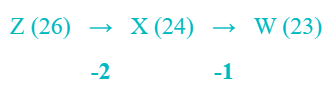
  • Shri Jagdeep Dhankhar:
  • He is the Honourable Vice President of India, serving as the second-highest constitutional authority in the country.
  • Shri Jagdeep Dhankhar has a distinguished career in politics and law, and his presence at the book launch highlights the significance of the event.
  • Hinduja Group:
  • Founded in 1914, the Hinduja Group is one of the world's largest diversified business groups with interests in sectors such as banking, automotive, IT, energy, and healthcare.
  • The group is headquartered in London, UK, and operates globally, employing thousands of people across various industries.
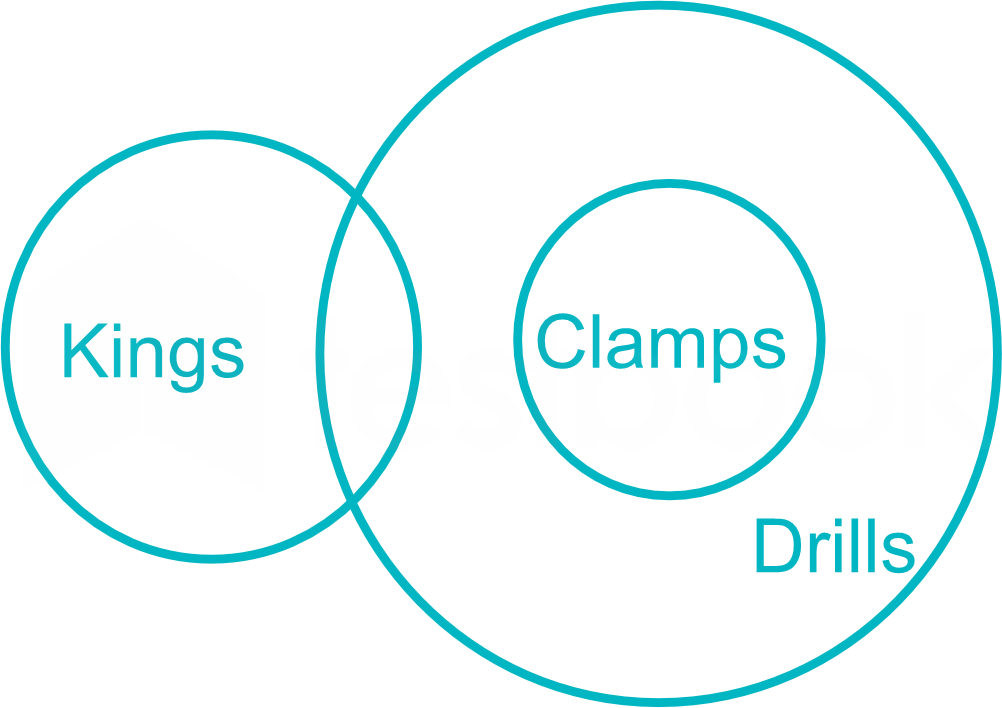
  • It is renowned for its commitment to corporate social responsibility and philanthropic initiatives.

Important Points

  • Philosophical Literature:
  • Books like 'I AM?' contribute significantly to the genre of philosophical and spiritual literature, offering insights into the deeper aspects of human existence.
  • Such works often blend personal experiences with universal truths, making them relevant to a wide audience.
  • Global Influence of Indian Authors:
  • Authors like Gopichand P Hinduja highlight the growing influence of Indian thought and philosophy on the global stage.
  • These works resonate with readers worldwide, reflecting India's rich heritage of spirituality and introspection.
  • Role of Dignitaries in Promoting Literature:
  • The presence of prominent figures like Shri Jagdeep Dhankhar at book launches underscores the importance of literature in shaping society.
  • It also encourages readers to engage with works that offer intellectual and spiritual enrichment.
120

A pole is standing on the top of a house. The height of the house is 25 metres. The angle of elevation of the top of the house from point P is 45° and the angle of elevation of the top of pole from P is 60°. Point P is on the ground level. What is the height of the pole (in metres)?

  1. ((a))

    20(3+1)20(\sqrt3+1)

  2. ((b))

    25(21)25(\sqrt2-1)

  3. ((c))

    20(31)20(\sqrt3-1)

  4. ((d))

    25(31)25(\sqrt3-1)

Show Answer
Answer: ((d))

25(31)25(\sqrt3-1)

Shortcut Trick

From the house triangle (45°): Base = Height ÷ tan(45°) = 25 ÷ 1 = 25 m.

From the total height triangle (60°): Total Height = Base × tan(60°) = 25√3 m.

Height of pole = Total Height − Height of House.

Height of pole = 25√3 − 25 = 25(√3 − 1) m.

∴ The correct answer is 25(√3−1) m.

Alternate Method

Given:

Height of the house = 25 m

Angle of elevation to top of house = 45°

Angle of elevation to top of pole = 60°

Formula Used:

tan(θ) = Perpendicular ÷ Base

Code
  House  Pole (h)  P Base (x)  45°  60°    25 m   h m

Calculations:

⇒ Let the base distance be x and height of the pole be h.

⇒ For the lower right-angled triangle formed by the house:

⇒ tan(45°) = 25 ÷ x

⇒ 1 = 25 ÷ x

⇒ x = 25 m

⇒ For the larger right-angled triangle formed by the pole and house:

⇒ tan(60°) = (25 + h) ÷ x

⇒ √3 = (25 + h) ÷ 25

⇒ 25√3 = 25 + h

⇒ h = 25√3 − 25

⇒ h = 25(√3 − 1) m

∴ The correct answer is 25(√3−1) m.

Additional Information

Angle of Elevation

The angle formed by the line of sight with the horizontal when viewing an object located above the horizontal level.

Key Trigonometric Ratios

For height and distance problems, the tangent ratios are most commonly used: tan(30°) = 1/√3, tan(45°) = 1, tan(60°) = √3.

Complementary Angles Trick

If the angles of elevation of the top of a tower from two points at distances a and b from its base are complementary, the height of the tower is √(a × b).

Attempt this paper under real exam conditions

Timed interface, section switching, instant scoring, and question-by-question analytics — free.

Start Timed Attempt