Official Paper

FCI AG III Memory Based Question Paper (Held on: 1st January 2023 Shift 3) (Previous Year Paper)

100 questions · 60 minutes · with answers · free

English Language (25 questions)

Read the following passage carefully and answer the questions given below it. Certain words have been highlighted for your attention.

Bhivji Harle is a name that won’t be remembered. A poor, 55-year-old farmer and a resident of Vadala Vardhpur village in Maharashtra’s Wardha district, Harle will become another statistic, a collateral in the man-animal conflict, a forgotten footnote in the grand narrative of tiger conservation. In the evening of September 19, a tigress known as T27C1 attacked and killed Harle on a field in his village. He was the third person she had killed in five months. Harle’s real killer, however, was not the tigress but the astonishing apathy of self-proclaimed wildlife activists and conservationists, forest officers and politicians, who should have known better than to release a conflict tiger into Bor Tiger Reserve, around which are scattered dozens of villages. T27C1, more commonly known as the ‘Bramhapuri problem tigress’ began life in the Bramhapuri forest division of Chandrapur district — home to the Tadoba Tiger Reserve and the ‘tiger capital’ of Maharashtra. Densely populated, humans and big cats live cheek-by-jowl in Brahmapuri. Despite such proximity, though, the conflict has been remarkably low. The division is home to 608 villages, 47 tigers and more than 80 leopards (2016 camera-trapping estimate by Wildlife Conservation Trust), and yet in the past four years, only 13 people have been killed, 205 injured and 2,549 heads of cattle grabbed by wild cats. Moreover, the conflict is restricted to a few pockets. A 2014 study offered some clues to the reason for the comparatively low level of conflict here. A radio-collared tigress named Kala, for instance, was found to move only at night, avoiding humans even if they were just 100 metres away and rarely venturing near villages. But T27C1 was no Kala. She had killed her first human at an age of 18 months and has been drawing blood ever since.

1

Fill in the blank, choosing the most appropriate word from the given options.

The laws against killing creatures on the endangered species list are a huge part of the animal ________ plan.

  1. ((a))

    Venture

  2. ((b))

    Conservation

  3. ((c))

    Activist

  4. ((d))

    Right

  5. ((e))

    Conflict

Show Answer
Answer: ((b))

Conservation

'To conserve' is to 'protect from harm or destruction'.

The word conservation is mostly used in the context of the environment or things that are culturally important.

The sentence here means that the animals listed as endangered species need to be protected from harm because they are less in number and may face the danger of being extinct.


2

Who according to the writer is the real killer of Bhijvi Harle?

  1. ((a))

    The apathetic, self-proclaimed conservation activists and forest officials

  2. ((b))

    Harle's own stupidity of venturing into the forest

  3. ((c))

    T27C1

  4. ((d))

    Kala, the tigress

  5. ((e))

    The uncultured villagers of Wardha district where Harle lived.

Show Answer
Answer: ((a))

The apathetic, self-proclaimed conservation activists and forest officials

The correct answer is option 1.

The writer believes that even though the tigress T27C1 killed Bhijvi Harle, the real fault is not of the tigress.

The ones responsible for Harle's death are the so-called conservation activists who released the tigress in Bor Tiger reserve.

Moreover, the statement 'Harle’s real killer, however, was not the tigress but the astonishing apathy of self-proclaimed wildlife activists and conservationists, forest officers and politicians, who should have known better than to release a conflict tiger into Bor Tiger Reserve, around which are scattered dozens of villages' is enough to state that the apathetic, self-proclaimed conservation activists and forest officials are the real killers of Bhijvi Harle.

3

From the given options, choose the word most similar in meaning to the given word.

PROXIMITY

  1. ((a))

    Distance

  2. ((b))

    Closeness

  3. ((c))

    Remoteness

  4. ((d))

    Elite

  5. ((e))

    Apathy

Show Answer
Answer: ((b))

Closeness

The word 'proximity' means 'nearness to something'.

Therefore, the closest synonym is 'closeness'.

4

Which of the following is known as the 'Tiger Capital of Maharashtra'?

  1. ((a))

    Chandrapur district

  2. ((b))

    Mumbai

  3. ((c))

    Tadoba Tiger reserve

  4. ((d))

    Vadala Vardhpur village

  5. ((e))

    Wardha district

Show Answer
Answer: ((a))

Chandrapur district

The passage clearly calls Chandrapur district the 'Tiger Capital of Maharashtra'.

5

Which of the following is an antonym of APATHY?

  1. ((a))

    Indifference

  2. ((b))

    Lethargy

  3. ((c))

    Passion

  4. ((d))

    Dullness

  5. ((e))

    Coolness

Show Answer
Answer: ((c))

Passion

The word 'Apathy' means 'uncaring attitude' or 'lack of interest'.

All options except passion are similar in meaning to 'Apathy'.

The word 'passion' is an antonym as it means 'strong emotion' or 'strong interest'.

6

What can be stated as a reason for Kala never having hurt a human?

  1. ((a))

    Because she was a radio-collared tigress

  2. ((b))

    Because she would usually avoid humans and thus mostly roam around at night

  3. ((c))

    Because she was herbivorous

  4. ((d))

    Because she was sedated most of the time

  5. ((e))

    None of the above

Show Answer
Answer: ((b))

Because she would usually avoid humans and thus mostly roam around at night

The correct answer is option 2.

Kala was known to have never hurt a human. This can be attributed to her own nature. She would cautiously avoid humans by staying 100 meters away from them, not venturing into villages and mostly roaming about at night.

This can be best stated by the statement: A radio-collared tigress named Kala, for instance, was found to move only at night, avoiding humans even if they were just 100 metres away and rarely venturing near villages.

7

Which of the following could possibly be the writer's opinion about conservation activists?

  1. ((a))

    They are apathetic and elitists

  2. ((b))

    They are hardworking

  3. ((c))

    They are knowledgeable but not more than the forest officials

  4. ((d))

    They always oppose the government and forest officials

  5. ((e))

    They care about the tigers as well as the humans inhabiting villages near tiger reserves.

Show Answer
Answer: ((a))

They are apathetic and elitists

The writer clearly thinks of the conversation activists as elitist and apathetic.

He believes that they are indifferent to the death threat faced by poor villagers residing near tiger reserves.

8

Which of the following is a synonym of CONFLICT?

  1. ((a))

    Harmony

  2. ((b))

    Stability

  3. ((c))

    Collide

  4. ((d))

    Concord

  5. ((e))

    Accord

Show Answer
Answer: ((c))

Collide

The word 'conflict' means 'fight'.

To 'collide' is also 'to come into conflict or opposition'.

Therefore, collide is the synonym of conflict.

Meaning of other words is as follows:

Harmony ⇒ The state of being in agreement

Stability ⇒ The state of being stable.

Concord ⇒ Agreement or harmony between people or groups.

9

In the following question, four words are given in bold, of which one word is misspelled. Find the misspelled word.

Meanwhile, cases of Omicron climbed to 33 after a fully vacinated person who travelled to Zimbabwe and South Africa before coming to Delhi tested positive for the new strain in the national capital on Saturday.

  1. ((a))

    climbed 

  2. ((b))

    vacinated 

  3. ((c))

    positive 

  4. ((d))

    national 

  5. ((e))

    All are correct

Show Answer
Answer: ((b))

vacinated 

The misspelled word is 'vacinated'.

Key Points

  • Vaccinated is the correct spelling.
  • It means to protect a person or an animal against a disease by giving him/her/it a mild form of the disease with a needle which is put under the skin (an injection)

टीका लगाकर किसी व्यक्ति या पशु को रोग से सुरक्षित करना; टीकाकरण करना

  • Climbed- to move up towards the top of something (पेड़, पहाड़ आदि पर) चढ़ना
  • Positive- thinking or talking mainly about the good things in a situation, in a way that makes you or somebody else feel hopeful and confident (किसी स्थिति के अच्‍छे पक्ष के विषय में ऐसे सोचना या बातें करना कि अपना और दूसरे का विश्‍वास बढ़े; रचनात्‍मक, सकारात्‍मक)
  • National-  connected with all of a country; typical of a particular country (राष्‍ट्रीय; राष्‍ट्र विशेष का प्रतिनिधिक)
  • Hence, the given answer is correct.
10

In the following sentence, four words are given in bold out of which one word is misspelled. Find the misspelled word.

Use a calander (A) to drain (B) the water and thoroughly (C) rinse (D) the seeds.

  1. ((a))

    A

  2. ((b))

    B

  3. ((c))

    C

  4. ((d))

    D

  5. ((e))

    No error

Show Answer
Answer: ((a))

A

The correct answer is 'calander'.

Key Points

  • The word 'calander' has been incorrectly spelled in the given sentence.
  • The correct spelling and its meaning has been listed below - 
  • colander -  a perforated bowl used to strain off liquid from food after washing or cooking.
  • Example - Shruti said as he strained the spaghetti into a colander.

Additional Information

The following are the meanings of the other highlighted words in the given sentence - 

  • drain - cause or allow (liquid) to run off or out of something.
  • thoroughly - in a thorough manner.
  • rinse -  wash (something) with clean water to remove soap, detergent, dirt, or impurities.
11

In the following question, four words are given in bold, of which one word is misspelled. Find the misspelled word.

The main reason for hapiness is that the farmers have won.

  1. ((a))

    reason 

  2. ((b))

    hapiness

  3. ((c))

    farmers

  4. ((d))

    won

  5. ((e))

    No error

Show Answer
Answer: ((b))

hapiness

The misspelled word is 'hapiness'.

Key Points

  • The correct spelling is happiness and not hapiness.
  • Happiness is an emotional state characterized by feelings of joy, satisfaction, contentment, and fulfillment.
  • Reason-  a cause or an explanation for something that has happened or for something that somebody has done (कारण, व्‍याख्‍या या औचित्‍य-वर्णन (किसी घटना या कार्य का))
  • farmers-(plural)- farmer- a person who owns or manages a farm (किसी कृषि क्षेत्र का मालिक या प्रबंधक)
  • won- to be the best, first or strongest in a race, game, competition, etc. (जीतना, विजय प्राप्‍त करना (दौड़, खेल, प्रतियोगिता आदि में))
  • Hence, the given answer is correct.
12

In the following sentence, four words are given in bold out of which one word is misspelled. Find the misspelled word.

This is significant(A) because in the government(B) system, alocating(C) budgets is the first step towards getting(D) any piece of work done.

  1. ((a))

    B

  2. ((b))

    D

  3. ((c))

    A

  4. ((d))

    C

  5. ((e))

    All are correct

Show Answer
Answer: ((d))

C

The correct answer is 'C'.

Key Points

  • The correct spelling is 'Allocating'.
  • Let's explore the meaning and context of it.
  • Allocating- distribute (resources or duties) for a particular purpose.
  • Example: I**n past years we didn't allocate enough funds to infrastructure maintenance.
  • Thus, the correct answer is option '4'.

Additional Information

  • Let's explore the meaning of other options as well.
  • Significant: sufficiently great or important to be worthy of attention or noteworthy.
  • Government: the governing body of a nation, state, or community.
  • Getting: come to have or hold (something) or receive.
13

The given question has one blank indicating that something has been omitted. Choose the word for the given options that could fit in the blank correctly.

He only ___________ what is already there in the public domain.

  1. ((a))

    through

  2. ((b))

    detailed

  3. ((c))

    failed

  4. ((d))

    eaten

  5. ((e))

    cried

Show Answer
Answer: ((b))

detailed

The correct answer is detailed.

Key Points

Let's look at the meaning of the correct answer:

  • He only explained what is already given in the public domain.
  • Detailed - give full information about something.
  • Example - More detailed information was needed.
  • From the given meaning we can conclude that the correct answer is detailed.
<br>

Thus the correct sentence is: "*He only detailed what is already there in the public domain".*​

Additional Information

 Let's discuss the meaning of other options:

  • through - moving in one side and out of the other side of (an opening, channel, or location).
  • failed - not achieving its end or not lasting; unsuccessful.
  • eaten - put (food) into the mouth and chew and swallow it.
  • cried - shed tears, typically as an expression of distress, pain, or sorrow.
14

The given question has one blank indicating that something has been omitted. Choose the word for the given options that could fit in the blank correctly.

I write this as a professional with 50 years of ______ in the chemical industry.

  1. ((a))

    experience 

  2. ((b))

    renew

  3. ((c))

    ignorance

  4. ((d))

    peace

  5. ((e))

    immature

Show Answer
Answer: ((a))

experience 

The correct answer is experience.

Key Points

Let's look at the meaning of the correct answer:

  • The person is writing something with the backing of having 50 years of practical contact with matters relating to the chemical industry.
  • experience - practical contact with and observation of facts or events.
  • Example - *he had learned his lesson by painful experience in life.*
  • From the given meaning we can conclude that the correct answer is experience.
<br>

Thus the correct sentence is: "I write this as a professional with 50 years of experience *in the chemical industry".*​

Additional Information

 Let's discuss the meaning of other options:

  • renew - resume or return to (an activity) after an interruption.
  • ignorance - lack of knowledge or information.
  • peace - freedom from disturbance; tranquillity.
  • immature - not fully developed.
15

The given question has one blank indicating that something has been omitted. Choose the word for the given options that could fit in the blank correctly.

If the _______ of investing in the stock market scares you, you are not alone.

  1. ((a))

    song

  2. ((b))

    view

  3. ((c))

    source

  4. ((d))

    thought

  5. ((e))

    key

Show Answer
Answer: ((d))

thought

The correct answer is thought.

Key Points

Let's look at the meaning of the correct answer:

  • thought - an idea or opinion produced by thinking, or occurring suddenly in the mind.
  • Example - *Riha sat deep in the thought.*
  • From the given meaning we can conclude that the correct answer is thought

Thus the correct sentence is: "If the thought of investing in the stock market scares you, you are not alone"

Additional Information

Let's discuss the meaning of other options:

  • song - a short poem or set of words set to music or meant to be sung.
  • view - the ability to see something or to be seen from a particular place.
  • source - a place, person, or thing from which something originates or can be obtained.
  • button - a small disc or knob sewed onto a garment, either to fasten it by being pushed through a slit made for the purpose or for decoration.
16

The given question has one blank indicating that something has been omitted. Choose the word for the given options that could fit in the blank correctly.

China's computing machine is 20000 times faster than its international counterparts and may _______ the processing power of supercomputers.

  1. ((a))

    hinder

  2. ((b))

    boost

  3. ((c))

    decrease

  4. ((d))

    diminish

  5. ((e))

    destroy

Show Answer
Answer: ((b))

boost

The correct answer is boost.

Key Points

Let's look at the meaning of the correct answer:

  • A computing machine 20000 times faster can increase the processing power of supercomputers.
  • boost - help or encourage (something) to increase or improve.
  • ​Example - *We have to adopt a range of measures to boost tourism.*​
  • From the given meaning we can conclude that the correct answer is boost.

Thus the correct sentence is: *"*China's computing machine is 20000 times faster than its international counterparts and may boost the processing power of supercomputers".

Additional Information

Let's discuss the meaning of other options:

  • hinder - make it difficult for (someone) to do something or for (something) to happen
  • decrease - make or become smaller or fewer in size, amount, intensity, or degree.
  • diminish - make or become less.
  • destroy - end the existence of (something) by damaging or attacking it.
17

Select the most appropriate sentence with respect to grammar and usage.

  1. ((a))

    During a total solar eclipse, parts of the Sun's surrounding atmosphere can seen.

  2. ((b))

    The coolest layer of the Sun is cool enough allow the existence of simple molecules.

  3. ((c))

    The Sun has a magnetic field that varies across the surface of the Sun.

  4. ((d))

    Solar activity is thought to have played large role in the formation of the solar system.

  5. ((e))

    None of these

Show Answer
Answer: ((c))

The Sun has a magnetic field that varies across the surface of the Sun.

The correct answer is The Sun has a magnetic field that varies across the surface of the Sun.

Key Points

  • The sentence 'The Sun has a magnetic field that varies across the surface of the Sun' is grammatically correct.
  • The word 'Sun' is a singular noun hence, singular verb 'has' is used.
  • The word 'magnetic' is an 'adjective' which is used before the noun 'field'. Hence, these words are appropriate.
  • The definite article 'the' is also appropriately used before the nouns 'Sun' and 'surface'.
  • Hence, the sentence is grammatically correct.
  • The corrected form of the other sentences are:
  • | Option | Grammatical mistake | Corrected sentence | | --- | --- | --- | | 1. | The word 'be' is missing before the word 'seen' | During a total solar eclipse, parts of the Sun's surrounding atmosphere can be seen. | | 2. | The preposition 'to' is missing before the word 'allow'. | The coolest layer of the Sun is cool enough to allow the existence of simple molecules. | | 3. | The article 'a' is missing before the word 'large'. | Solar activity is thought to have played a large role in the formation of the solar system. |


  • Hence, option 3) is the answer.

Additional Information

  • Eclipse: blocking or hiding
18

Select the most appropriate sentence with respect to grammar and usage.

  1. ((a))

    The pandemic policy was an inflection point not only for organisations but also for government agencies.

  2. ((b))

    The vaccination policy is based of scientific principles and is intended to secure vulnerable population.

  3. ((c))

    The RBI is expected to unveiling guidelines that will facilitate some of the measures announced in the budget.

  4. ((d))

    Households across the country are faced the onslaught of rising prices.

  5. ((e))

    None of these

Show Answer
Answer: ((a))

The pandemic policy was an inflection point not only for organisations but also for government agencies.

The correct answer is The pandemic policy was an inflection point not only for organisations but also for government agencies.

Key Points

  • The sentence 'The pandemic policy was an inflection point not only for organisations but also for government agencies.' is grammatically correct.
  • The usage of the correlative conjunction 'not only ... but also' is appropriate for the sentence.
  • A past event is mentioned hence simple past tense is used here.
  • Hence, the sentence is grammatically correct.
  • The corrected form of the other sentences are:
  • | Option | Grammatical mistake | Corrected sentence | | --- | --- | --- | | 2. | The preposition 'on' should be used instead of the word 'of'. | The vaccination policy is based on scientific principles and is intended to secure vulnerable population. | | 3. | The word 'unveiling' should be replaced with 'unveil'. | The RBI is expected to unveil guidelines that will facilitate some of the measures announced in the budget. | | 4. | The word 'faced' should be replaced with 'facing' because present continuous tense is used here. | Households across the country are facing the onslaught of rising prices. |


  • Therefore, option 1) is the correct sentence.

Additional Information

  • Inflection point: turning point
  • Onslaught: a destructive attack
19

Select the most appropriate sentence with respect to grammar and usage.

  1. ((a))

    Around 64 per cent of land used for agriculture so food crops is at risk of pesticide pollution.

  2. ((b))

    An erratic monsoon season can damage the economy and affect agricultural practices.

  3. ((c))

    The intensity of cyclones and hurricanes might increased in the next century due to global warming.

  4. ((d))

    Robotics develop machines that can substitute for humans and replicate human actions.

  5. ((e))

    None of these

Show Answer
Answer: ((b))

An erratic monsoon season can damage the economy and affect agricultural practices.

The correct answer is An erratic monsoon season can damage the economy and affect agricultural practices.

Key Points

  • The sentence 'An erratic monsoon season can damage the economy and affect agricultural practices.' is grammatically correct.
  • The article 'an' is used before the word 'erratic' because it begins with a vowel sound.
  • The base form of the verb 'damage' and 'affect' is used after the modal verb 'can'.
  • The conjunction 'and' is also appropriate.
  • Hence, the sentence is grammatically correct.
  • The corrected form of the other sentences are:
  • | Option | Grammatical mistake | Corrected sentence | | --- | --- | --- | | 1. | The conjunction 'so' should be replaced with 'and' | Around 64 per cent of land used for agriculture and food crops is at risk of pesticide pollution. | | 3. | The base form of the verb 'increased', i.e. 'increase' should be used here. | The intensity of cyclones and hurricanes might increase in the next century due to global warming. | | 4. | The word 'develop' should be replaced with the word 'develops'. | Robotics develops machines that can substitute for humans and replicate human actions. |


  • Therefore, option 2) is the answer.

Additional Information

  • Erratic: unpredictable or inconstant
20

Select the most appropriate sentence with respect to grammar and usage.

  1. ((a))

    Infiltration is the process by which water enters the soil.

  2. ((b))

    Evaporation was an important part of the water cycle.

  3. ((c))

    The upper phase of the river Ganges begun at the confluence of the Bhagirathi and Alkananda rivers.

  4. ((d))

    First European traveller to mention the Ganges was the Greek envoy Megasthenes.

  5. ((e))

    None of these

Show Answer
Answer: ((a))

Infiltration is the process by which water enters the soil.

The correct answer is Infiltration is the process by which water enters the soil.

Key Points

The sentence 'Infiltration is the process by which water enters the soil.' is grammatically correct.

  • The word 'Infiltration' is a singular noun that is why the singular verb (is) is used here.
  • The definite article 'the' is appropriate before the noun 'process' and the word 'soil'.
  • The word 'water' is an uncountable noun and it is treated as a singular noun that is why 's' is used at the end of the verb 'enter'.
  • Hence, this sentence is grammatically correct.

The corrected form of the other sentences are:

OptionGrammatical mistakeCorrected sentence
2.The auxiliary verb 'was' should be replaced with 'is'.Evaporation is an important part of the water cycle.
3.The verb 'begun' should be replaced with 'begins'.The upper phase of the river Ganges begins at the confluence of the Bhagirathi and Alkananda rivers.
4.The definite article 'the' should be used before the word 'first'.The first European traveller to mention the Ganges was the Greek envoy Megasthenes.


Therefore, option 1) is the answer.

Additional Information

  • Confluence: joining or meeting
  • Envoy: a messenger or representative
21

The question below contains five scattered segments of a sentence. Indicate the sequence which correctly assembles the segments and completes the sentence.

A. high absolute numbers would

B. be considered a

C. the pandemic is deemed to

D. good sign because

E. have come to an end

  1. ((a))

    CDABE

  2. ((b))

    AEDBC

  3. ((c))

    ABDCE

  4. ((d))

    ACBDE

  5. ((e))

    CDBAE

Show Answer
Answer: ((c))

ABDCE

The correct answer is option 3 i.e. ABDCE.


  Explanation   

  • First is A as it establishes the subject i.e. high absolute numbers. A is the only opener that can form a meaningful sentence.
  • Next is B as it logically follows A.
  • D follows B as it tells what the absolute high numbers would be considered as.
  • Next is C as D ends with 'because' and C gives the reason for the previously mentioned phrase.
  • Last is E as it tells the pandemic has seemed to come to an end.
<br>

Correct sentence- High absolute numbers would be considered a good sign because the pandemic is deemed to have come to an end.

22

The question below contains five scattered segments of a sentence. Indicate the sequence which correctly assembles the segments and completes the sentence.

A. presents a

B. the growth in

C. the number of 

D. new infections every day 

E. mixed picture

  1. ((a))

    BACDE

  2. ((b))

    BCDAE

  3. ((c))

    CDAEB

  4. ((d))

    DAECB

  5. ((e))

    DAEBC

Show Answer
Answer: ((b))

BCDAE

The correct answer is option 2 i.e. BCDAE.


  Explanation

  • First is B as it establishes the subject i.e. the growth of a particular thing. B is the only opener that can form a meaningful sentence.
  • Next is C as it further elaborates B.
  • D follows C as it tells in which particular area the growth is detected i.e. new infections.
  • Next is A as it contextually follows C by saying that this growth presents something.
  • Last is E as it tells what it presents i.e. a mixed picture.
<br>

Correct sentence- The growth in the number of new infections every day presents a mixed picture.

23

The question below contains five scattered segments of a sentence. Indicate the sequence which correctly assembles the segments and completes the sentence.

A. suffered domestic violence and

B. the lockdown and job losses

C. women, many of whom

D. took a toll on

E. no external support

  1. ((a))

    BDCAE

  2. ((b))

    BEDCA

  3. ((c))

    CDEAB

  4. ((d))

    CABDE

  5. ((e))

    EDABC

Show Answer
Answer: ((a))

BDCAE

The correct answer is option 1 i.e. BDCAE.

  Explanation 

  • First is B as it establishes the subject i.e. the lockdown and job losses. B is the only opener that can form a meaningful sentence.
  • Next is D as it mentions the effect of 'the lockdown and job losses'.
  • C follows D as it tells who was affected.
  • Next is A as it tells what they suffered.
  • Last is E as A ends with 'and' and E further describes what all they suffered.
<br>

Correct sentence- The lockdown and job losses took a toll on women, many of whom suffered domestic violence and no external support.

24

In the following question, a word has been given. Choose the sentence(s) in which it is used correctly and if all the sentences are correct then choose Option 5.

ASSURE

A. Ravi assured the customer that the company would refund his money within 24 hours

B. Access controls at each entry point helped assure the safety and security of all on-site staff and workers.

C. He offered Fishcopfed as an ideal body to act as the nodal agency for assuring boats.

  1. ((a))

    Only A

  2. ((b))

    Only B

  3. ((c))

    Both B and C

  4. ((d))

    Only C

  5. ((e))

    All of the above

Show Answer
Answer: ((a))

Only A

Option 1 is the correct answer.

  • Assure means to remove someone's doubts and tell someone that something will definitely happen or is definitely true, hence, A is the correct answer.
  • In B, 'assure' makes no sense. It must be replaced with 'ensure' to make the sentence correct. Ensure means to guarantee or make sure of something
  • In C, the use of 'assure is wrong' . 'assuring boats' makes no sense. 'Insure' must be used instead.
  • Insure means to arrange for compensation in the event of damage to or loss by paying a firm or the state in return.
  • Thus, the correct sentence is only A.
25

In the following question, a word has been given. Choose the sentence(s) in which it is used correctly and if all the sentences are correct then choose Option 5.

SENSIBLE

A. That's the first sensible thing you've said in a long time.

B. In rural communities the attendance is usually good, the debates are sensible and practical, and a satisfactory administration is generally secured.

C. Some sensible observations by the editor were added to the original biography.

  1. ((a))

    A and B

  2. ((b))

    B and C

  3. ((c))

    C

  4. ((d))

    Only A

  5. ((e))

    All A, B and C

Show Answer
Answer: ((e))

All A, B and C

The correct answer is option 5- All A, B and C

Key Points

  • The word sensible means 'done or chosen in accordance with wisdom or prudence; likely to be of benefit.'
  • All A, B and C use the correct form of the given word.

Reasoning Ability (25 questions)

Directions: Study the following arrangement carefully and answer the questions given below.

B 2 3 G U ^ * F T L 5 9 1 6 Q # M N J D C H & S W X R @ I A 4 7 Z $ V E Y 8

26

Which of the following element is tenth to the right of the ninth element from the left end if all elements of the above arrangement are reversed?

  1. ((a))

    5

  2. ((b))

    9

  3. ((c))

    J

  4. ((d))

    D

  5. ((e))

    None of these

Show Answer
Answer: ((d))

D

LEFT SIDE B 2 3 G U ^ * F T L 5 9 1 6 Q # M N J D C H & S W X R @ I A 4 7 Z $ V E Y 8 RIGHT SIDE

Reversed arrangement: 

LEFT SIDE 8 Y E V $ Z 7 4 A I @ R X W S & H C D J N M # Q 61 9 5 L T F * ^ U G 3 2 B RIGHT SIDE

The 9th element from the left end is A and the 10th element to the right of A is D.

Hence, D is the correct answer.

27

What should come in place of the question mark (?) in the series given below based on the above arrangement?

23U, *FL, 91Q, MND,?

  1. ((a))

    H&W

  2. ((b))

    23G

  3. ((c))

    *FT

  4. ((d))

    916

  5. ((e))

    None of these

Show Answer
Answer: ((a))

H&W

LEFT SIDE B 2 3 G U ^ * F T L 5 9 1 6 Q # M N J D C H & S W X R @ I A 4 7 Z $ V E Y 8 RIGHT SIDE

23U → 3 is at the immediate right of 2 and U is the second right of 3.

*FL → F is at the immediate right of * and L is the second right of F.

91Q → 1 is at the immediate right of 9 and Q is the second right of 1.

MND → N is at the immediate right of M and D is the second right of N.

On continuing the sequence:

H&W → & is at the immediate right of H and W is the second right of &.

Hence, H&W will come in place of the question mark (?) in the series

28

How many such consonants are there in the above arrangement each of which is immediately preceded by a number but not immediately followed by a symbol?

  1. ((a))

    One 

  2. ((b))

    Two

  3. ((c))

    Three

  4. ((d))

    Four

  5. ((e))

    None of these

Show Answer
Answer: ((a))

One 

Here, consonants immediately preceded by a number but not immediately followed by a symbol ⇒ Number - Consonants - Non-symbols

LEFT SIDE B 2 3 G U ^ * F T L 5 9 1 6 Q # M N J D C H & S W X R @ I A 4 7 Z $ V E Y 8 RIGHT SIDE

Only G is such a consonant that is immediately preceded by a number but not immediately followed by a symbol.

Hence, One such consonant is there in the above arrangement which is immediately preceded by a number but not immediately followed by a symbol.

29

What is the product of numbers between A and Z?

  1. ((a))

    35

  2. ((b))

    20

  3. ((c))

    24

  4. ((d))

    28

  5. ((e))

    16

Show Answer
Answer: ((d))

28

LEFT SIDE B 2 3 G U ^ * F T L 5 9 1 6 Q # M N J D C H & S W X R @ I A 4 7 Z $ V E Y 8 RIGHT SIDE

4 and 7 numbers are between A and Z.

The product of 4 and 7 is 28.

Hence, 28 is the correct answer.

30

Four of the following five are alike in a certain way and so form a group. Which is the one that does not belong to that group?

  1. ((a))

    #NDH

  2. ((b))

    SX@A

  3. ((c))

    7$E8

  4. ((d))

    G^FL

  5. ((e))

    #69L

Show Answer
Answer: ((e))

#69L

LEFT SIDE B 2 3 G U ^ * F T L 5 9 1 6 Q # M N J D C H & S W X R @ I A 4 7 Z $ V E Y 8 RIGHT SIDE

#NDH, SX@A, 7$E8, G^FL are similar pattern which is one element difference in each word but #69L has not followed a similar pattern.

Hence, #69L is the correct answer.

Direction: Study the following information carefully and answer the questions following it.

An uncertain number of persons are sitting in a straight line facing North. Three persons sit between P and Q. R sits second to the right of P. Only three person sits between Q and S.T is an immediate left of P. R sits fifth from the right extreme end of the line. X sits on the extreme end of the line. As many persons sit between R and U is the same as many persons between U and S. Y sits second to the left of V, who is an immediate neighbor of Q. As many persons sit between S and W is same as many between W and X. Five person sits between S and X.

31

How many persons are sitting in a line?

  1. ((a))

    16

  2. ((b))

    15

  3. ((c))

    21

  4. ((d))

    19

  5. ((e))

    None of these

Show Answer
Answer: ((c))

21

1). Three persons sit between P and Q.

2). R sits second to the right of P.

3). R sits fifth from the right extreme end of the line.

4). Only three persons sit between Q and S. ( From here Case 1 gets eliminated).

5). T is immediate left of P.

6). Y sits second to the left of V, who is an immediate neighbour of Q.

7). Five persons sit between S and X.

8). X sits extreme end of the line.

9). As many persons sit between R and U is same as many persons between U and S. ( From here Case 2A get eliminated).

10). As many persons sit between S and W is same as many persons sit between W and X.

The final arrangement

Hence, 21 persons are sitting in the line.

32

Who is sitting immediate left of Y?

  1. ((a))

    S

  2. ((b))

    Q

  3. ((c))

    V

  4. ((d))

    U

  5. ((e))

    None of these

Show Answer
Answer: ((a))

S

1). Three persons sit between P and Q.


2). R sits second to the right of P.

3). R sits fifth from the right extreme end of the line.

4). Only three persons sit between Q and S. ( From here Case 1 gets eliminated).

5). T is immediate left of P.

6). Y sits second to the left of V, who is an immediate neighbor of Q.

7). Five persons sit between S and X.

8). X sits extreme end of the line.

9). As many persons sit between R and U is same as many persons between U and S. ( From here Case 2A get eliminated).

10). As many persons sit between S and W is the same as many persons sit between W and X.

The final arrangement

Hence, S is sitting immediate left of Y.

33

What is position of U from the right end of the line?

  1. ((a))

    9

  2. ((b))

    10

  3. ((c))

    12

  4. ((d))

    11

  5. ((e))

    None of these

Show Answer
Answer: ((b))

10

1). Three persons sit between P and Q.

2). R sits second to the right of P.

3). R sits fifth from the right extreme end of the line.

4). Only three persons sit between Q and S. ( From here Case 1 gets eliminated).

5). T is immediate left of P.

6). Y sits second to the left of V, who is an immediate neighbor of Q.

7). Five persons sit between S and X.

8). X sits extreme end of the line.

9). As many persons sit between R and U is same as many persons between U and S. ( From here Case 2A get eliminated).

10). As many persons sit between S and W is the same as many persons sit between W and X.

The final arrangement

Hence, U is sitting 10th from the right end.

34

Who among the following sits at the middle of the line?

  1. ((a))

    S

  2. ((b))

    Q

  3. ((c))

    W

  4. ((d))

    R

  5. ((e))

    None of these

Show Answer
Answer: ((b))

Q

1). Three persons sit between P and Q.

2). R sits second to the right of P.

3). R sits fifth from the right extreme end of the line.

4). Only three persons sit between Q and S. ( From here Case 1 gets eliminated).

5). T is immediate left of P.

6). Y sits second to the left of V, who is an immediate neighbor of Q.

7). Five persons sit between S and X.

8). X sits extreme end of the line.

9). As many persons sit between R and U is same as many persons between U and S. ( From here Case 2A get eliminated).

10). As many persons sit between S and W is the same as many persons sit between W and X.

The final arrangement

Hence, Q sits at the middle of the line.

35

How many such pairs of letters are there in the word RESPONSE each of which has as many letters between them in word (in both forward and backward directions) as they have between them in the English alphabetical series?

  1. ((a))

    None

  2. ((b))

    One 

  3. ((c))

    Two

  4. ((d))

    Three

  5. ((e))

    More than three

Show Answer
Answer: ((e))

More than three

Clearly, More than three such pairs are there.

Hence, More than three is the answer.

36

If it is possible to make only one meaningful English word with the third, the fifth, the seventh, eighth and the tenth letters of the word CALCULATIVE, which of the following will be the second last letter of that word? If no such word can be made, give ‘X’ as the answer and if one or more than one such word can be made, give ‘Y’ as the answer.

  1. ((a))

    V

  2. ((b))

    L

  3. ((c))

    X

  4. ((d))

    T

  5. ((e))

    Y

Show Answer
Answer: ((b))

L

Given Word: CALCULATIVE

Third, the fifth, the seventh, eighth and the tenth letter : L, U, A, T, V

The word that can be formed is: VAULT

The second last letter of the word: L

Hence, ‘L’ is the correct answrer.

37

In the question given below find the odd one from the given responses.

  1. ((a))

    AEI

  2. ((b))

    OSW

  3. ((c))

    FJM

  4. ((d))

    QUY

  5. ((e))

    PTX

Show Answer
Answer: ((c))

FJM

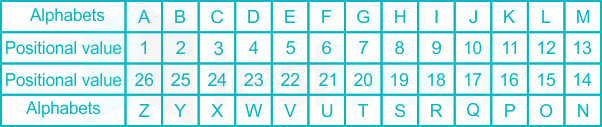
A close up of a keyboardDescription automatically generated

According to the positional values of the alphabets,

  1. AEI → A + 4 = E, E + 4 = I

  2. OSW → O + 4 = S, S + 4 = W

  3. FJM → F + 4 = J, J + 4 = N and not M

  4. QUY → Q + 4 = U, U + 4 = Y

  5. PTX → P + 4 = 20, T + 4 = X

Hence, the odd one among the given options is FJM.

Directions: Study the following information to answer the given questions.

8 people live in an 8 storey building, the floors of which are numbered in such a way that the bottommost floor is numbered 1, the one above it is numbered 2 and so on. Here is what is known about the people who live there:

3 people live between S and B, who likes Purple. D, who likes Grey, lives on the 5th floor, 2 floors above the one who likes Orange. C lives immediately above Q, who lives above B. A, who likes Yellow, lives below the one who likes Blue, but above the one who likes Violet. R lives below P.

The one who likes Purple lives immediately above the one who likes Red. S, who likes Pink, lives above D.

38

Who lives on the 3rd floor?

  1. ((a))

    R

  2. ((b))

    The one who likes Red

  3. ((c))

    S

  4. ((d))

    The one who likes Purple

  5. ((e))

    Q

Show Answer
Answer: ((e))

Q

Given:

8 people – A, B, C, D, P, Q, R, and S

8 colors – Blue, Yellow, Pink, Orange, Red, Violet, Purple, and Grey

  1. D, who likes Grey, lives on the 5th floor, 2 floors above the one who likes Orange.
  2. S, who likes Pink, lives above D.


Case 1 (a)Case 1 (b)Case 1 (c)
FloorPersonColorFloorPersonColorFloorPersonColor
888SPink
77SPink7
6SPink66
5DGrey5DGrey5DGrey
444
3Orange3Orange3Orange
222
111


  1. 3 people live between S and B, who likes Purple.
  2. The one who likes Purple lives immediately above the one who likes Red.


Case 1 (a)
FloorPersonColor
8
7
6SPink
5DGrey
4
3Orange
2BPurple
1Red


  1. A, who likes Yellow, lives below the one who likes Blue but above the one who likes Violet.
  2. C lives immediately above Q, who lives above B.
  3. R lives below P.


Case 1 (a)
FloorPersonColor
8PBlue
7AYellow
6SPink
5DGrey
4CViolet
3QOrange
2BPurple
1RRed


Final Arrangement:

FloorPersonColor
8PBlue
7AYellow
6SPink
5DGrey
4CViolet
3QOrange
2BPurple
1RRed


Hence, Q lives on the third floor.

39

Who likes the color Violet?

  1. ((a))

    A

  2. ((b))

    Q

  3. ((c))

    S

  4. ((d))

    C

  5. ((e))

    R

Show Answer
Answer: ((d))

C

Given:

8 people – A, B, C, D, P, Q, R, and S

8 colors – Blue, Yellow, Pink, Orange, Red, Violet, Purple, and Grey


  1. D, who likes Grey, lives on the 5th floor, 2 floors above the one who likes Orange.
  2. S, who likes Pink, lives above D.


Case 1 (a)Case 1 (b)Case 1 (c)
FloorPersonColorFloorPersonColorFloorPersonColor
888SPink
77SPink7
6SPink66
5DGrey5DGrey5DGrey
444
3Orange3Orange3Orange
222
111


  1. 3 people live between S and B, who likes Purple.
  2. The one who likes Purple lives immediately above the one who likes Red.


Case 1 (a)
FloorPersonColor
8
7
6SPink
5DGrey
4
3Orange
2BPurple
1Red


  1. A, who likes Yellow, lives below the one who likes Blue, but above the one who likes Violet.
  2. C lives immediately above Q, who lives above B.
  3. R lives below P.


Case 1 (a)
FloorPersonColor
8PBlue
7AYellow
6SPink
5DGrey
4CViolet
3QOrange
2BPurple
1RRed


Final Arrangement:

FloorPersonColor
8PBlue
7AYellow
6SPink
5DGrey
4CViolet
3QOrange
2BPurple
1RRed


Hence, C likes Violet.

40

Who lives 2 floors away from the one who lives immediately below the one who likes Purple?

  1. ((a))

    P

  2. ((b))

    The one who likes Orange

  3. ((c))

    A

  4. ((d))

    The one who likes Grey

  5. ((e))

    S

Show Answer
Answer: ((b))

The one who likes Orange

Given:

8 people – A, B, C, D, P, Q, R, and S

8 colors – Blue, Yellow, Pink, Orange, Red, Violet, Purple, and Grey


  1. D, who likes Grey, lives on the 5th floor, 2 floors above the one who likes Orange.
  2. S, who likes Pink, lives above D.


Case 1 (a)Case 1 (b)Case 1 (c)
FloorPersonColorFloorPersonColorFloorPersonColor
888SPink
77SPink7
6SPink66
5DGrey5DGrey5DGrey
444
3Orange3Orange3Orange
222
111


  1. 3 people live between S and B, who likes Purple.
  2. The one who likes Purple lives immediately above the one who likes Red.


Case 1 (a)
FloorPersonColor
8
7
6SPink
5DGrey
4
3Orange
2BPurple
1Red


  1. A, who likes Yellow, lives below the one who likes Blue, but above the one who likes Violet.
  2. C lives immediately above Q, who lives above B.
  3. R lives below P.


Case 1 (a)
FloorPersonColor
8PBlue
7AYellow
6SPink
5DGrey
4CViolet
3QOrange
2BPurple
1RRed


Final Arrangement:

FloorPersonColor
8PBlue
7AYellow
6SPink
5DGrey
4CViolet
3QOrange
2BPurple
1RRed


B likes Purple.

R lives immediately below B.

Hence, Q, who likes Orange, lives 2 floors away from R.

41

Which floor does the one who lives 3 floors above C?

  1. ((a))

    The one who likes Red

  2. ((b))

    D

  3. ((c))

    The one who likes Yellow

  4. ((d))

    Q

  5. ((e))

    The one who likes Blue

Show Answer
Answer: ((c))

The one who likes Yellow

Given:

8 people – A, B, C, D, P, Q, R, and S

8 colors – Blue, Yellow, Pink, Orange, Red, Violet, Purple, and Grey


  1. D, who likes Grey, lives on the 5th floor, 2 floors above the one who likes Orange.
  2. S, who likes Pink, lives above D.


Case 1 (a)Case 1 (b)Case 1 (c)
FloorPersonColorFloorPersonColorFloorPersonColor
888SPink
77SPink7
6SPink66
5DGrey5DGrey5DGrey
444
3Orange3Orange3Orange
222
111


  1. 3 people live between S and B, who likes Purple.
  2. The one who likes Purple lives immediately above the one who likes Red.
Case 1 (a)
FloorPersonColor
8
7
6SPink
5DGrey
4
3Orange
2BPurple
1Red


  1. A, who likes Yellow, lives below the one who likes Blue, but above the one who likes Violet.
  2. C lives immediately above Q, who lives above B.
  3. R lives below P.


Case 1 (a)
FloorPersonColor
8PBlue
7AYellow
6SPink
5DGrey
4CViolet
3QOrange
2BPurple
1RRed


Final Arrangement:

FloorPersonColor
8PBlue
7AYellow
6SPink
5DGrey
4CViolet
3QOrange
2BPurple
1RRed


C lives on the 4th floor.

<br>

Hence, A, who likes Yellow, lives 3 floors above C.

42

On which floor does the one who like Pink live?

  1. ((a))

    Floor 6

  2. ((b))

    Floor 5

  3. ((c))

    Floor 4

  4. ((d))

    Floor 3

  5. ((e))

    Floor 2

Show Answer
Answer: ((a))

Floor 6

Given:

8 people – A, B, C, D, P, Q, R, and S

8 colors – Blue, Yellow, Pink, Orange, Red, Violet, Purple, and Grey


  1. D, who likes Grey, lives on the 5th floor, 2 floors above the one who likes Orange.
  2. S, who likes Pink, lives above D.


Case 1 (a)Case 1 (b)Case 1 (c)
FloorPersonColorFloorPersonColorFloorPersonColor
888SPink
77SPink7
6SPink66
5DGrey5DGrey5DGrey
444
3Orange3Orange3Orange
222
111


  1. 3 people live between S and B, who likes Purple.
  2. The one who likes Purple lives immediately above the one who likes Red.


Case 1 (a)
FloorPersonColor
8
7
6SPink
5DGrey
4
3Orange
2BPurple
1Red


  1. A, who likes Yellow, lives below the one who likes Blue, but above the one who likes Violet.
  2. C lives immediately above Q, who lives above B.
  3. R lives below P.


Case 1 (a)
FloorPersonColor
8PBlue
7AYellow
6SPink
5DGrey
4CViolet
3QOrange
2BPurple
1RRed


Final Arrangement:

FloorPersonColor
8PBlue
7AYellow
6SPink
5DGrey
4CViolet
3QOrange
2BPurple
1RRed


Hence, P, who likes Pink, lives on Floor 6.

Direction: Six persons A, B, C, D, E and F have different heights. Each person likes different colours - Red, Blue, White, Pink, Yellow and Grey. The one who likes Pink is not the tallest. The one who likes Blue is taller than C but shorter than the one who likes Pink. F is shorter than the one who likes Pink but taller than the one who likes Blue. F likes Red. B is taller than the one who likes Yellow but shorter than F. The one who likes Yellow is taller than E. A likes neither Pink nor Grey. The height of the second tallest is 150 cm and the height of the third lowest is 60 cm.

43

If sum of the height of D and F is 290 the what would be the possible height of F?

  1. ((a))

    160

  2. ((b))

    140

  3. ((c))

    130

  4. ((d))

    100

  5. ((e))

    90

Show Answer
Answer: ((b))

140

Six persons: A, B, C, D, E and F

Six Colours: Red, Blue, White, Pink, Yellow and Grey.

1) F likes Red.

2) F is shorter than the one who likes Pink but taller than the one who likes Blue.

Pink > F (Red) > Blue

3) The one who likes Blue is taller than C but shorter than the one who likes Pink.

Pink > F (Red) > Blue > C

4) B is taller than the one who likes Yellow but shorter than F.

  1. The one who likes Yellow is taller than E.

Pink > F (Red) > B (Blue) > C (Yellow) > E

  1. A likes neither Pink nor Grey.

7) The one who likes Pink is not the tallest.

A (White) > Pink > F (Red) > B (Blue)  > C (Yellow) > E (Grey)

8) The height of the second tallest is 150 cm and the height of the third lowest is 60 cm.

A (White) > D (Pink) (150)  > F (Red) > B (Blue) (60) > C (Yellow) > E (Grey)

Given:

D + F = 290

150 + F = 290

F = 290 - 150

F = 140

Hence, height of F is 140 cm.

44

E likes which of the following colour?

  1. ((a))

    Grey

  2. ((b))

    Pink

  3. ((c))

    Yellow

  4. ((d))

    White

  5. ((e))

    Blue

Show Answer
Answer: ((a))

Grey

Six persons: A, B, C, D, E and F

Six Colours: Red, Blue, White, Pink, Yellow and Grey.

1) F likes Red.

2) F is shorter than the one who likes Pink but taller than the one who likes Blue.

Pink > F (Red) > Blue

3) The one who likes Blue is taller than C but shorter than the one who likes Pink.

Pink > F (Red) > Blue > C

4) B is taller than the one who likes Yellow but shorter than F.

  1. The one who likes Yellow is taller than E.

Pink > F (Red) > B (Blue) > C (Yellow) > E

  1. A likes neither Pink nor Grey.

7) The one who likes Pink is not the tallest.

A (White) > Pink > F (Red) > B (Blue)  > C (Yellow) > E (Grey)

8) The height of the second tallest is 150 cm and the height of the third lowest is 60 cm.

A (White) > D (Pink) (150)  > F (Red) > B (Blue) (60) > C (Yellow) > E (Grey)

Hence, E likes the Grey colour.

45

Which of the following statement is true regarding A?

  1. ((a))

    A likes Grey colour.

  2. ((b))

    A is taller than only B.

  3. ((c))

    A is not the tallest

  4. ((d))

    A likes White colour.

  5. ((e))

    A is shorter than D.

Show Answer
Answer: ((d))

A likes White colour.

Six persons: A, B, C, D, E and F

Six Colours: Red, Blue, White, Pink, Yellow and Grey.

1) F likes Red.

2) F is shorter than the one who likes Pink but taller than the one who likes Blue.

Pink > F (Red) > Blue

3) The one who likes Blue is taller than C but shorter than the one who likes Pink.

Pink > F (Red) > Blue > C

4) B is taller than the one who likes Yellow but shorter than F.

  1. The one who likes Yellow is taller than E.

Pink > F (Red) > B (Blue) > C (Yellow) > E

  1. A likes neither Pink nor Grey.

7) The one who likes Pink is not the tallest.

A (White) > Pink > F (Red) > B (Blue)  > C (Yellow) > E (Grey)

8) The height of the second tallest is 150 cm and the height of the third lowest is 60 cm.

A (White) > D (Pink) (150)  > F (Red) > B (Blue) (60) > C (Yellow) > E (Grey)

Hence, A likes White colour is the correct answer.

Directions: Read the following information carefully and answer the questions given below.

Eight persons – R, S, T, U, W, X, Y and Z – gave the exam in four different months among – April, May, June and July – on different dates among – 7th and 28th – of the same year. No two persons gave on the same date of the same month.

Only two persons gave after U. Only one person gave between U and S. S and R gave exams on different dates. R gave an exam after S. Five persons gave exam between W and T. T gave before R and both gave on different dates. Y gave after Z, who gave in the month which has odd number of days. Y and W did not give in the same month.

46

In which month does Y gave the exam?

  1. ((a))

    April

  2. ((b))

    May

  3. ((c))

    June

  4. ((d))

    July

  5. ((e))

    Cannot be determined

Show Answer
Answer: ((c))

June

Persons – 8; R, S, T, U, W, X, Y and Z;

Months – April, May, June and July;

Dates – 7th and 28th;

  1. Only two persons gave after U.
  2. Only one person gave between U and S.

From this we get the possible arrangements:

Months (Days)DateCase ICase II
April (30)7th
28th
May (31)7th
28thS
June (30)7th
28thUU
July (31)7th
28thS
  1. S and R gave on different dates.
  2. R gave after S.

    From this case II is eliminated as we cannot determine the month in which R gave the exam.

Months (Days)DateCase ICase I (a)
April (30)7th
28th
May (31)7th
28thSS
June (30)7thR
28thUU
July (31)7thR
28th
  1. Five persons gave between W and T.
  2. T gave before R and both gave on different dates.
Months (Days)DateCase ICase I (a)
April (30)7th
28thTT
May (31)7th
28thSS
June (30)7thR
28thUU
July (31)7thR
28thWW
  1. Y gave after Z, who gave in the month which has odd number of days.
Months (Days)DateCase ICase I (a)
April (30)7thXX
28thTT
May (31)7thZZ
28thSS
June (30)7thRY
28thUU
July (31)7thYR
28thWW
  1. Y and W did not give in the same month.

From this case I is eliminated, as Y and W attended in the same month which is not possible. From this we get the final arrangement as follows.

Months (Days)DateCase I (a)
April (30)7thX
28thT
May (31)7thZ
28thS
June (30)7thY
28thU
July (31)7thR
28thW

Y gave the exam in the month of June.

47

Four of the following five are alike in a certain way and hence form a group. Find the one who does not belong to that group?

  1. ((a))

    Z

  2. ((b))

    R

  3. ((c))

    Y

  4. ((d))

    X

  5. ((e))

    W

Show Answer
Answer: ((e))

W

Persons – 8; R, S, T, U, W, X, Y and Z;

Months – April, May, June and July;

Dates – 7th and 28th;

  1. Only two persons gave after U.
  2. Only one person gave between U and S.

From this we get the possible arrangements:

Months (Days)DateCase ICase II
April (30)7th
28th
May (31)7th
28thS
June (30)7th
28thUU
July (31)7th
28thS
  1. S and R gave on different dates.
  2. R gave after S.

    From this case II is eliminated as we cannot determine the month in which R gave the exam.

Months (Days)DateCase ICase I (a)
April (30)7th
28th
May (31)7th
28thSS
June (30)7thR
28thUU
July (31)7thR
28th
  1. Five persons gave between W and T.
  2. T gave before R and both gave on different dates.
Months (Days)DateCase ICase I (a)
April (30)7th
28thTT
May (31)7th
28thSS
June (30)7thR
28thUU
July (31)7thR
28thWW
  1. Y gave after Z, who gave in the month which has odd number of days.
Months (Days)DateCase ICase I (a)
April (30)7thXX
28thTT
May (31)7thZZ
28thSS
June (30)7thRY
28thUU
July (31)7thYR
28thWW
  1. Y and W did not give in the same month.

From this case I is eliminated, as Y and W attended in the same month which is not possible. From this we get the final arrangement as follows.

Months (Days)DateCase I (a)
April (30)7thX
28thT
May (31)7thZ
28thS
June (30)7thY
28thU
July (31)7thR
28thW

Except W, all other persons gave the exam in odd numbered date.

W is the odd one out.

48

How many persons gave the exam between X and Z?

  1. ((a))

    One

  2. ((b))

    Two

  3. ((c))

    Three

  4. ((d))

    Four

  5. ((e))

    More than four

Show Answer
Answer: ((a))

One

Persons – 8; R, S, T, U, W, X, Y and Z;

Months – April, May, June and July;

Dates – 7th and 28th;

  1. Only two persons gave after U.
  2. Only one person gave between U and S.

From this we get the possible arrangements:

Months (Days)DateCase ICase II
April (30)7th
28th
May (31)7th
28thS
June (30)7th
28thUU
July (31)7th
28thS
  1. S and R gave on different dates.
  2. R gave after S.

    From this case II is eliminated as we cannot determine the month in which R gave the exam.

Months (Days)DateCase ICase I (a)
April (30)7th
28th
May (31)7th
28thSS
June (30)7thR
28thUU
July (31)7thR
28th
  1. Five persons gave between W and T.
  2. T gave before R and both gave on different dates.
Months (Days)DateCase ICase I (a)
April (30)7th
28thTT
May (31)7th
28thSS
June (30)7thR
28thUU
July (31)7thR
28thWW
  1. Y gave after Z, who gave in the month which has odd number of days.
Months (Days)DateCase ICase I (a)
April (30)7thXX
28thTT
May (31)7thZZ
28thSS
June (30)7thRY
28thUU
July (31)7thYR
28thWW
  1. Y and W did not give in the same month.

From this case I is eliminated, as Y and W attended in the same month which is not possible. From this we get the final arrangement as follows.

Months (Days)DateCase I (a)
April (30)7thX
28thT
May (31)7thZ
28thS
June (30)7thY
28thU
July (31)7thR
28thW

Only one person gave the exam between X and Z.

49

Number of persons who gave the exam before R is the same as the number of persons who gave the exam after ___.

  1. ((a))

    T

  2. ((b))

    W

  3. ((c))

    U

  4. ((d))

    S

  5. ((e))

    Z

Show Answer
Answer: ((a))

T

Persons – 8; R, S, T, U, W, X, Y and Z;

Months – April, May, June and July;

Dates – 7th and 28th;

  1. Only two persons gave after U.
  2. Only one person gave between U and S.

From this we get the possible arrangements:

Months (Days)DateCase ICase II
April (30)7th
28th
May (31)7th
28thS
June (30)7th
28thUU
July (31)7th
28thS
  1. S and R gave on different dates.
  2. R gave after S.

    From this case II is eliminated as we cannot determine the month in which R gave the exam.

Months (Days)DateCase ICase I (a)
April (30)7th
28th
May (31)7th
28thSS
June (30)7thR
28thUU
July (31)7thR
28th
  1. Five persons gave between W and T.
  2. T gave before R and both gave on different dates.
Months (Days)DateCase ICase I (a)
April (30)7th
28thTT
May (31)7th
28thSS
June (30)7thR
28thUU
July (31)7thR
28thWW
  1. Y gave after Z, who gave in the month which has odd number of days.
Months (Days)DateCase ICase I (a)
April (30)7thXX
28thTT
May (31)7thZZ
28thSS
June (30)7thRY
28thUU
July (31)7thYR
28thWW
  1. Y and W did not give in the same month.

From this case I is eliminated, as Y and W attended in the same month which is not possible. From this we get the final arrangement as follows.

Months (Days)DateCase I (a)
April (30)7thX
28thT
May (31)7thZ
28thS
June (30)7thY
28thU
July (31)7thR
28thW

Here, the number of persons who gave the exam before R is six similarly the number of persons gave the exam after T is also six.

T is the correct answer.

50

On which date and in which month does X gave the exam?

  1. ((a))

    28th  May

  2. ((b))

    7th April

  3. ((c))

    28th April

  4. ((d))

    7th July

  5. ((e))

    7th May

Show Answer
Answer: ((b))

7th April

Persons – 8; R, S, T, U, W, X, Y and Z;

Months – April, May, June and July;

Dates – 7th and 28th;

  1. Only two persons gave after U.
  2. Only one person gave between U and S.

From this we get the possible arrangements:

Months (Days)DateCase ICase II
April (30)7th
28th
May (31)7th
28thS
June (30)7th
28thUU
July (31)7th
28thS
  1. S and R gave on different dates.
  2. R gave after S.

    From this case II is eliminated as we cannot determine the month in which R gave the exam.

Months (Days)DateCase ICase I (a)
April (30)7th
28th
May (31)7th
28thSS
June (30)7thR
28thUU
July (31)7thR
28th
  1. Five persons gave between W and T.
  2. T gave before R and both gave on different dates.
Months (Days)DateCase ICase I (a)
April (30)7th
28thTT
May (31)7th
28thSS
June (30)7thR
28thUU
July (31)7thR
28thWW
  1. Y gave after Z, who gave in the month which has odd number of days.
Months (Days)DateCase ICase I (a)
April (30)7thXX
28thTT
May (31)7thZZ
28thSS
June (30)7thRY
28thUU
July (31)7thYR
28thWW
  1. Y and W did not give in the same month.

From this case I is eliminated, as Y and W attended in the same month which is not possible. From this we get the final arrangement as follows.

Months (Days)DateCase I (a)
April (30)7thX
28thT
May (31)7thZ
28thS
June (30)7thY
28thU
July (31)7thR
28thW

X gave the exam on 7th in April.

Numerical Aptitude (25 questions)

51

What should come in place of the question mark '?' in the following number series?

5, ?, 104, 655, 4314

  1. ((a))

    18

  2. ((b))

    44

  3. ((c))

    24

  4. ((d))

    16

  5. ((e))

    20

Show Answer
Answer: ((a))

18

The correct answer is: 1

Given:

5, ?, 104, 655, 4314

Calculation:

The series follows the following pattern:

(5 + 13) x 3 = 18

(18 + 23) x 4 = 104

(104 + 33) x 5 = 655

(655 + 43) x 6 = 4314


∴ 18 will come in place of ?

52

What should come in place of the question mark '?' in the following number series?

510, ?, 210, 160, 135, 122.5

  1. ((a))

    315

  2. ((b))

    310

  3. ((c))

    290

  4. ((d))

    350

  5. ((e))

    None of these

Show Answer
Answer: ((b))

310

Calculation:

The series follows following pattern:

⇒ 510 – 200 = 310

⇒ 310 – 100 = 210   

⇒ 210 – 50 = 160

⇒ 160 – 25 = 135

⇒ 135 – 12.5 = 122.5

∴ The value of ? is 310

Note: Difference is divided by 2

53

What should come in place of the question mark '?' in the following number series?

22, 23, ?, 147, 592, 2965

  1. ((a))

    46

  2. ((b))

    47

  3. ((c))

    48

  4. ((d))

    50

  5. ((e))

    None of these

Show Answer
Answer: ((c))

48

Given:

22, 23, ?, 147, 592, 2965

Calculation:

The series follows the following pattern

22 × 1 + 1 = 23

23 × 2 + 2 = 48

48 × 3 + 3 = 147

147 × 4 + 4 = 592

592 × 5 + 5 = 2965

∴ The value of "?" is 48.

54

What should come in place of the question mark '?' in the following number series?

24, 12, 18, 45, ?, 708.75

  1. ((a))

    180

  2. ((b))

    207

  3. ((c))

    157.5

  4. ((d))

    150

  5. ((e))

    200

Show Answer
Answer: ((c))

157.5

Given:

24, 12, 18, 45, ?, 708.75

Calculation:

The logic follows here is:

24 × (1/2) = 12

12 × (3/2) = 18

18 × (5/2) = 45

45 × (7/2) = 157.5 

157.5 × (9/2) = 708.75

∴ ? = 157.5

55

What should come in place of the question mark '?' in the following number series?

22, 30, 41, 56, ?, 102

  1. ((a))

    66

  2. ((b))

    74

  3. ((c))

    76

  4. ((d))

    68

  5. ((e))

    69

Show Answer
Answer: ((c))

76

Calculation:

22 + 8 = 30

30 + 8 + 3 = 41

41 + 8 + 3 + 4 = 56

56 + 8 + 3 + 4 + 5 = 76

76 + 8 + 3 + 4 + 5 + 6 = 102

∴ The value of (?) is 76.

56

What approximate value should come in place of the question mark (?) in the following question?

(?)% of 79.87 = √{(12.01)2 + (4.99)2} + (70% of 209.98)

  1. ((a))

    100

  2. ((b))

    300

  3. ((c))

    200

  4. ((d))

    400

  5. ((e))

    700

Show Answer
Answer: ((c))

200

Given:

(?)% of 79.87 = √{(12.01)2 + (4.99)2} + (70% of 209.98)

Concept used:

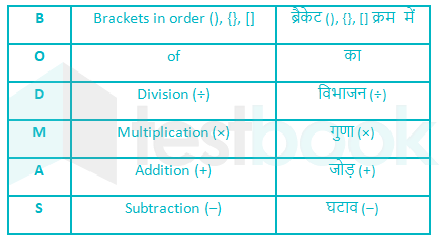
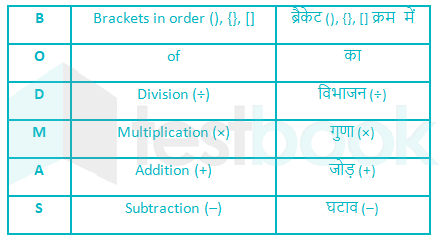
Follow the BODMAS rule according to the table given below:

Calculation:

(?)% of 79.87 = √{(12.01)2 + (4.99)2} + (70% of 209.98)

⇒ (?)% of 80 = √{(12)2 + (5)2} + (70% of 210)

⇒ (?)% of 80 = √{144 + 25} + 147

⇒ (?)% of 80 = √169 + 147

⇒ (?)% of 80 = 13 + 147

⇒ (?)% of 80 = 160

⇒ (? × 80)/100 = 160

⇒ ? = (160 × 100)/80

⇒ ? = 200

∴ The value of '?' will be 200.

57

What approximate value should come in place of the question mark ‘?’ in the following question?

√143.83 + √255.89 ÷ (3.98)2 × 24.93 = ?2 - ∛1727.66

  1. ((a))

    49

  2. ((b))

    7

  3. ((c))

    2401

  4. ((d))

    71/2

  5. ((e))

    9

Show Answer
Answer: ((b))

7

Given:

√143.83 + √255.89 ÷ (3.98)2 × 24.93 = ?2 - ∛1727.66

Concept Used:

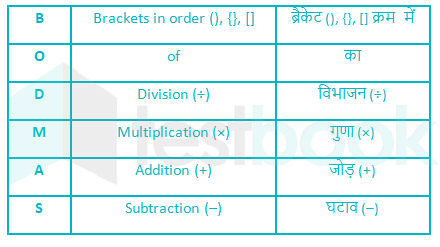
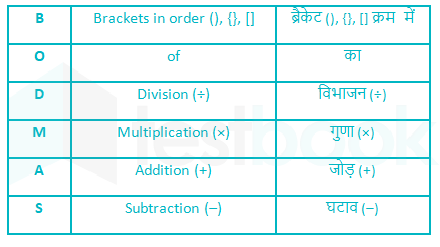
Follow the BODMAS rule according to the table given below:

Calculation:

Since, we need to find out the approximate value, we can write these values to their nearest integers.

√143.83 + √255.89 ÷ (3.98)2 × 24.93 = ?2 - ∛1727.66

⇒ √144 + √256 ÷ 42 × 25 = ? - ∛1728

⇒ 12 + 16 ÷ 16 × 25 = ?2 - 12

⇒ 12 + 25 + 12 = ?2

⇒ ?2 = 49

⇒? = √49

⇒ ? = 7

The value of ‘?’ is 7.

58

What approximate value should come in the place of the question mark ‘?’ in the following question?

(1/2) of (675.99)1/2 × 168.69 × (2196.99)1/3 ÷ {13 × (10 + 3)} = 13?

  1. ((a))

    0

  2. ((b))

    1

  3. ((c))

    2

  4. ((d))

    3

  5. ((e))

    4

Show Answer
Answer: ((c))

2

Given: 

(1/2) of (675.99)1/2 × 168.69 × (2196.99)1/3 ÷ {13 × (10 + 3)} = 13?

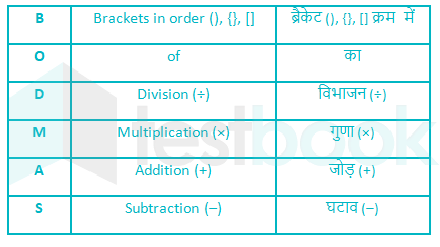
Concept Used:

Follow the BODMAS rule according to the table given below:

Calculation:

Since we need to find out the approximate value, we can write these values to their nearest integers.

(1/2) of (675.99)1/2 × 168.69 × (2196.99)1/3 ÷ {13 × (10 + 3)} = 13?

⇒ (1/2) × (676)1/2 × 169 × (2197)1/3  ÷ {13 × (10 + 3)} = 13?

⇒ (1/2) × √676 × (13)2 × ∛2197  ÷ (13 × 13) = 13?

⇒ (1/2) × 26 × (13)2 × 13  ÷ (13)2 = 13?

⇒ 13 × (13)2 × 13  ÷ (13)2 = 13?

⇒ 13 × 13 = 13?

⇒ (13)2 = 13?

After comparing the power,

? = 2

The value of ‘?’ Is 2.

59

What approximate value will come in the place of the question mark ‘?’ in the following question?

19.99% of 1224.98 - √(1295.93) × 3.99 - 87.69 = ?

  1. ((a))

    12

  2. ((b))

    13

  3. ((c))

    15

  4. ((d))

    23

  5. ((e))

    33

Show Answer
Answer: ((b))

13

Given: 

19.99% of 1224.98 - √(1295.93) × 3.99 - 87.69 = ?

Concept Used:

Follow the BODMAS rule according to the table given below:

Calculation:

19.99% of 1224.98 - √(1295.93) × 3.99 - 87.69 = ?

⇒ 20% of 1225 - √1296 × 4 - 88 = ?

⇒ (20/100) × 1225 - 36 × 4 - 88 = ?

⇒ (1225/5) - 144 - 88 = ?

⇒ 245 - 232 = ?

⇒ ? = 13

∴ 13 will come in place of the question mark ('?').

60

What approximate value should come in place of the question mark (?) in the following question?

70.98 × 35.02 + 1235.99 – 48.03 × 24.96 – ? ÷ 2.96 = 99.98 × 24.97

  1. ((a))

    63

  2. ((b))

    61

  3. ((c))

    66

  4. ((d))

    69

  5. ((e))

    73

Show Answer
Answer: ((a))

63

Given:

70.98 × 35.02 + 1235.99 – 48.03 × 24.96 – ? ÷ 2.96 = 99.98 × 24.97

Concept used:

Rules of Approximation:

  1. If a number has digits to the right of the decimal less than 5, then just drop the digits to the right of the decimal. The number so obtained will be the approximated value.
  2. If a number has digits to the right of the decimal more than 5, then just drop the digits to the right of the decimal and raise the remaining number by '1'.The number so obtained will be the approximated value.

Follow the BODMAS rule according to the table given below:

Calculation:

70.98 × 35.02 + 1235.99 – 48.03 × 24.96 – ? ÷ 2.96 = 99.98 × 24.97

⇒ 71 × 35 + 1236 – 48 × 25 – ? ÷ 3= 100 × 25

⇒ 2485 + 1236 – 1200 – ? ÷ 3 = 2500

⇒ 2521 – ? ÷ 3 = 2500

⇒ ? ÷ 3 = 2521 – 2500

⇒ ? = 21 × 3

⇒ ? = 63

∴ 63 should come in place of the question mark (?).

Direction - Study the given information carefully to answer the questions.

Three friends Priya, Reet and Gagan spends 10%, 14% and 16% of their monthly salary on rent respectively and each of them save half of the remaining amount. The monthly salary of Priya, and Gagan is same and monthly saving of Priya is 360 Rs. More than that of Gagan. The total expenditure of Priya and Reet together on rent is Rs. 1240 more than that of Gagan.

61

What is the monthly expenditure of Priya and Reet together on rent?

  1. ((a))

    Rs 2500

  2. ((b))

    Rs 2170

  3. ((c))

    Rs 3160

  4. ((d))

    Rs 1100

  5. ((e))

    Rs 2000

Show Answer
Answer: ((c))

Rs 3160

PriyaReetGagan
Monthly Salary120001400012000
Expenditure on rent120019601920
Remaining amount108001204010080
Saving540060205040


Common explanation:

Let the monthly salary of Priya = 100x Rs.

Then, monthly expenditure on rent of Priya = 10% of 100x = 10x Rs

Remaining amount of Priya = 100x - 10x = 90 x

Saving of Priya = 90x/2 = 45x

Now, the monthly salary of Reet = 100y Rs

Then, monthly expenditure on rent = 14% of 100y = 14y

Remaining amount of Reet = 100y – 14y = 86y

Saving of Reet = 86y/2 = 43y

The monthly salary of Gagan = monthly salary of Priya = 100x Rs

The monthly expenditure of Gagan on rent = 16% of 100x = 16x

Remaining amount of Gagan = 100x – 16x = 84x

Saving of Gagan = 84x/2 = 42x

Now, the monthly salary of Priya and Gagan are same and the monthly saving of Priya is 360 Rs more than that of Gagan

⇒ 45x – 42x = 360

⇒ 3x = 360

⇒ x = 120

Now, the total expenditure of Priya and Reet together on rent is Rs. 1240 more than that of Gagan.

⇒ 10x + 14y = 16x + 1240

⇒ 14y = 6x + 1240

⇒ 14y = 6 × 120 + 1240 = 1960 Rs

⇒ y = 1960/14 = 140

Formula:

Expenditure of Priya and Reet = Expenditure of Priya + Expenditure of Reet

Calculation:

 The monthly expenditure of Priya  = 10x = 10 × 120 = 1200 Rs

The monthly expenditure of Reet = 14y = 14 × 140 = 1960

⇒ The expenditure of Priya and Reet together = 1200 + 1960 = 3160 Rs

∴ Expenditure of both Priya and Reet is 3160 Rs.

62

The monthly salary of Reet is how much more than or less than that of Priya?

  1. ((a))

    Rs 2000

  2. ((b))

    Rs 1000

  3. ((c))

    Rs 3000

  4. ((d))

    Rs 4500

  5. ((e))

    None of these 

Show Answer
Answer: ((a))

Rs 2000

Common explanation:


PriyaReetGagan
Monthly Salary120001400012000
Expenditure on rent120019601920
Remaining amount108001204010080
Saving540060205040


Let the monthly salary of Priya = 100x Rs.

Then, monthly expenditure on rent of Priya = 10% of 100x = 10x Rs

Remaining amount of Priya = 100x - 10x = 90 x

Saving of Priya = 90x/2 = 45x

Now, the monthly salary of Reet = 100y Rs

Then, monthly expenditure on rent = 14% of 100y = 14y

Remaining amount of Reet = 100y – 14y = 86y

Saving of Reet = 86y/2 = 43y

The monthly salary of Gagan = monthly salary of Priya = 100x Rs

The monthly expenditure of Gagan on rent = 16% of 100x = 16x

Remaining amount of Gagan = 100x – 16x = 84x

Saving of Gagan = 84x/2 = 42x

Now, the monthly salary of Priya and Gagan are same and the monthly saving of Priya is 360 Rs more than that of Gagan

⇒ 45x – 42x = 360

⇒ 3x = 360

⇒ x = 120

Now, the total expenditure of Priya and Reet together on rent is Rs. 1240 more than that of Gagan.

⇒ 10x + 14y = 16x + 1240

⇒ 14y = 6x + 1240

⇒ 14y = 6 × 120 + 1240 = 1960 Rs

⇒ y = 1960/14 = 140

Formula:

Difference of salary of Reet and Priya = salary of Reet – salary of Priya

Calculation:

Salary of Priya = 100x = 100 × 120 = 12000 Rs

Salary of Reet = 100y = 100 × 140 = 14000 Rs

⇒ Difference of their salary = 14000 – 12000 = 2000 Rs

∴ Monthly salary of Reet is 2000 Rs more than that of Priya.

63

The total monthly saving of three friends together is what percentage of their total monthly salary?

  1. ((a))

    43.31%

  2. ((b))

    50%

  3. ((c))

    60%

  4. ((d))

    55%

  5. ((e))

    None of these

Show Answer
Answer: ((a))

43.31%

Common explanation:


PriyaReetGagan
Monthly Salary120001400012000
Expenditure on rent120019601920
Remaining amount108001204010080
Saving540060205040


Let the monthly salary of Priya = 100x Rs.

Then, monthly expenditure on rent of Priya = 10% of 100x = 10x Rs

Remaining amount of Priya = 100x - 10x = 90 x

Saving of Priya = 90x/2 = 45x

Now, the monthly salary of Reet = 100y Rs

Then, monthly expenditure on rent = 14% of 100y = 14y

Remaining amount of Reet = 100y – 14y = 86y

Saving of Reet = 86y/2 = 43y

The monthly salary of Gagan = monthly salary of Priya = 100x Rs

The monthly expenditure of Gagan on rent = 16% of 100x = 16x

Remaining amount of Gagan = 100x – 16x = 84x

Saving of Gagan = 84x/2 = 42x

Now, the monthly salary of Priya and Gagan are same and the monthly saving of Priya is 360 Rs more than that of Gagan

⇒ 45x – 42x = 360

⇒ 3x = 360

⇒ x = 120

Now, the total expenditure of Priya and Reet together on rent is Rs. 1240 more than that of Gagan.

⇒ 10x + 14y = 16x + 1240

⇒ 14y = 6x + 1240

⇒ 14y = 6 × 120 + 1240 = 1960 Rs

⇒ y = 1960/14 = 140

Formula:

Required percent = (total saving of all/total salary of all ) × 100

Calculation:

Their total monthly salary = (100x + 100y + 100x ) Rs. = 200x + 100y

⇒ Rs ( 200 × 120 + 100 × 140 ) = 24000 + 14000 = 38000 Rs

Now, total saving  of all = ( 45x + 43y + 42x )

⇒ 87x + 43y = 87 × 120 + 43 × 140 = 10440 + 6020

⇒ 16460 Rs

Required % = 16460 × 100/38000

⇒ 43.31%

∴ Monthly saving of all three together is 43.31% of their total salary.

64

Two pipes A and C together can fill a tank in 12 hours. Ratio of efficiency C and A is 3 : 4. They together filled the tank for the first 7 hours. Then A and C  are closed and another pipe B is opened. Now if tank is filled in another 17.5 hours then B alone can fill the tank in how many hours ?

  1. ((a))

    28 hours

  2. ((b))

    21 hours

  3. ((c))

    42 hours

  4. ((d))

    35 hours

  5. ((e))

    32 hours

Show Answer
Answer: ((c))

42 hours

Shortcut Trick

Total Efficiency of A + C = 4 + 3 = 7 units/hr.

Total Capacity of tank = 7 × 12 = 84 units.

Work done in 7 hours = 7 × 7 = 49 units. Remaining work = 84 − 49 = 35 units.

Efficiency of B = 35 ÷ 17.5 = 2 units/hr.

Time for B alone = 84 ÷ 2 = 42 hours.

∴ The correct answer is 42 hr.

Alternate Method

Pipe/GroupEfficiency RatioCombined RatioTime (hr)
Pipe A4712
Pipe C3

Given: Efficiency of C : A = 3 : 4. Total time for A + C = 12 hours.

Formula: Total Work = Combined Efficiency × Total Time

⇒ Total Capacity = (4 + 3) × 12 = 84 units

⇒ Tank filled by A and C in 7 hours = 7 × 7 = 49 units

⇒ Remaining tank capacity = 84 − 49 = 35 units

⇒ Efficiency of Pipe B = Remaining Work ÷ Time taken by B

⇒ Efficiency of B = 35 ÷ 17.5 = 2 units/hr

⇒ Time taken by B alone = Total Capacity ÷ Efficiency of B

⇒ Time = 84 ÷ 2 = 42 hours

∴ The correct answer is 42 hr.

Additional Information

Efficiency and Time Relationship

Efficiency is inversely proportional to the time taken to complete a work. If the ratio of efficiencies is x:y, the ratio of time taken is y:x.

Work and Wages

Wages are distributed based on the ratio of work done by each person or pipe. If time is constant, wages are shared in the ratio of their efficiencies.

Pipes and Cisterns Negative Work

Inlet pipes do positive work while outlet or leakage pipes do negative work. Net efficiency = ∑(Inlet Efficiency) − ∑(Outlet Efficiency).

65

60 gram Copper is mixed in a container, which contain 100 gm Silver. 32 gm of mixture from container is taken out and some quantity of Copper and silver is mixed in the ratio of 4 : 3 with the remaining mixture. If in the resulting mixture ratio of silver to Copper is 49 : 36, then find what quantity of copper was added?

  1. ((a))

    24 gm

  2. ((b))

    25 gm

  3. ((c))

    28 gm

  4. ((d))

    30 gm

  5. ((e))

    32 gm

Show Answer
Answer: ((a))

24 gm

Given:

Container with 100 gm of silver is mixed with 60 gm of Copper

32 gm of the mixture from the container is taken out and a certain quantity of copper and silver is mixed in the ratio of 4 : 3

The ratio of silver to Copper in the resulting mixture is 49 : 36

Calculation:

According to question,

Container with 100 gm of silver is mixed with 60 gm of Copper

Ratio of silver and copper initially = 100 : 60 = 5 : 3

32 gm of mixture from container is taken out

⇒ Quantity of silver taken out = (5/8) × 32 = 20 gm

⇒ Quantity of copper taken out = (3/8) × 32 = 12 gm

Let the quantity of copper and silver mixed be 4x and 3x

Now,

10020;+;3x60;12;+;4x=4936\Rightarrow \frac{{100 - 20; + ;3x}}{{60 - ;12; + ;4x}} = \frac{{49}}{{36}}

80;+;3x48;+;4x=4936\Rightarrow \frac{{80; + ;3x}}{{48; + ;4x}} = \frac{{49}}{{36}}

⇒ (100 – 20 + 3x) × 36 = (60 – 12 + 4x) × 49

⇒ 2880 + 108x = 2352 + 196x

⇒ 88x = 528

⇒ x = 6

∴ Quantity of copper added = 4x = 4 × 6 = 24 gm

66

A 30 m long train crosses a person who is walking at a speed of 8 km/hr in the opposite direction and passes him in 8 seconds. Subsequently, it crosses a second person, walking in the same direction as that of the first person, and passes him in 3 seconds. What is the speed of the second person?

  1. ((a))

    27.5 km/hr

  2. ((b))

    30.5 km/hr

  3. ((c))

    28.5 km/hr

  4. ((d))

    25.5 km/hr

  5. ((e))

    22.5 km/hr

Show Answer
Answer: ((b))

30.5 km/hr

Shortcut Trick

Relative speed (Opposite) = Length ÷ Time = 30 ÷ 8 = 3.75 m/s = 13.5 km/hr.

Speed of Train = 13.5 − 8 = 5.5 km/hr.

Relative speed (Same Direction) = 30 ÷ 3 = 10 m/s = 36 km/hr.

Speed of Person 2 = 36 − 5.5 = 30.5 km/hr.

∴ The correct answer is 30.5 km/hr.

Alternate Method

Given: Length of train = 30 m, Time 1 = 8 s, Speed of Person 1 = 8 km/hr, Time 2 = 3 s.

Formula: Speed = Distance ÷ Time; 1 m/s = 18/5 km/hr.

⇒ Case 1 (Opposite direction): Relative Speed = (Vt + 8) km/hr.

⇒ (Vt + 8) × (5/18) = 30 ÷ 8

⇒ Vt + 8 = (30 ÷ 8) × (18 ÷ 5) = 3.75 × 3.6 = 13.5

⇒ Speed of Train (Vt) = 13.5 − 8 = 5.5 km/hr.

⇒ Case 2 (Same direction as Person 1, so opposite to train): Relative Speed = (Vp2 + Vt).

⇒ (Vp2 + 5.5) × (5/18) = 30 ÷ 3

⇒ Vp2 + 5.5 = 10 × (18 ÷ 5) = 36

⇒ Vp2 = 36 − 5.5 = 30.5 km/hr.

∴ The correct answer is 30.5 km/hr.

Additional Information

Relative Speed

In the opposite direction, relative speed is the sum of speeds (u + v). In the same direction, it is the difference (u − v).

Unit Conversion

To convert km/hr to m/s, multiply by 5/18. To convert m/s to km/hr, multiply by 18/5.

Train Crossing a Point Object

When a train crosses a person, pole, or tree, the distance covered is equal to the length of the train.

67

In a school seats for class 9th, 10th and 11th were in the ratio of 8 : 10 : 12. But the management decided to increase the number of seats from next academic year by 30%, 40%, and 50% respectively. Find the ratio of increased seats?

  1. ((a))

    26 : 45 : 35 

  2. ((b))

    26 : 35 : 45

  3. ((c))

    35 : 26 : 45

  4. ((d))

    45 : 35 : 26

  5. ((e))

    None of these 

Show Answer
Answer: ((b))

26 : 35 : 45

Given:

Ratio of Seats for class 9th, 10th, and 11th is 8 : 10 : 12

Increase percentage for the class 9th, 10th, and 11th is 30%, 40% and 50% respectively

Calculation:

Let the number of seats for class 9th, 10th and 11th respectively = 8x, 10x, 12x

Number of increase seats for class 9th, 10th and 11th respectively,

⇒ (130% of 8x), (140% of 10x) and (150% of 12x)

⇒ (130/100 × 8x), (140/100 × 10x) and (150/100 × 12x)

⇒ (52x/5), (14x) and (18x)

Required ratio,

⇒ 52x/5 : 14x : 18x

⇒ 52x : 70x : 90x 

⇒ 26 : 35 : 45

The ratio of increased seats is 26 : 35 : 45.

Note: 

Instead of multiplying and simplifying in the end we can go with

8 : 10 : 12

(130/100 × 8):(140/100 × 10):(150/100 × 12)

(13× 8):(14× 10):(15× 12)

26:35:45

68

The ratio of cost price of two articles is 4 ∶ 9. The articles are marked up by 40% and and 15% respectively and the ratio of their Marked price is 112 ∶ 207.If the discount of 12.5% and 11.11% is given respectively the profit earned on first article is Rs.270. What is the profit earned on second article?

  1. ((a))

    Rs.40

  2. ((b))

    Rs.150

  3. ((c))

    Rs.60

  4. ((d))

    Rs.80

  5. ((e))

    Rs.200

Show Answer
Answer: ((c))

Rs.60

The ratio of cost price of two articles is 4 ∶ 9

⇒ Let the cost price of first article = 4x

The cost price of second article = 9x

The articles are marked up by 40% and 15% respectively

⇒ Marked price of first article = 4x × (140/100) = 5.6x

Marked price of second article = 9x × (115/100) = 10.35x

The ratio of their Marked price is 112 ∶ 207

⇒ Marked price of first article = 112y

Marked price of second article = 207y

∴ 5.6x = 112y

⇒ x = 20y

According to question,

Selling price of first article = 112y × (7/8) = 98y      ----(12.5% = 1/8)

Profit = 98y – 4x = 270

⇒ 98y – 80y = 270

⇒ 18y = 270

⇒ y = 15

∴ x = 20 × 15 = 300

⇒ Cost price of second article = 300 × 9 = 2700

Marked price of second article = 2700 × (115/100) = 3105

Selling price of second article = 3105 × (8/9) = 2760

∴ Profit earned = 2760 – 2700 = 60

∴ The profit earned on second article is Rs.60

69

Ram invested some amount at the rate of 15% simple interest and a certain amount at the rate of 20% simple interest. He received yearly interest of Rs. 1900. But if he had interchanged the amounts invested, he would have received Rs. 550 more as interest. How much did he invest at 20% simple interest?

  1. ((a))

    Rs. 710.63

  2. ((b))

    Rs. 714.28

  3. ((c))

    Rs. 711.62

  4. ((d))

    Rs. 765.41

  5. ((e))

    None of these

Show Answer
Answer: ((b))

Rs. 714.28

Let us take the two cases before and after interchanging the amounts, to know the principal for the latter case.

Let the amount invested at 15% be x and the amount invested at 20% be y

For case 1(before interchanging the amounts),

We know, Simple interest = (P × R × T)/100

1900 = (15x + 20y)/100

38000 = 3x + 4y

Multiplying whole equation with 4, we get

152000 = 12x + 16y ----(1)

For case 2(after interchanging the amounts),

1900 + 550 = (15y + 20x)/100

49000 = 3y + 4x

Multiplying whole equation with 3, we get

147000 = 12x + 9y ----(2)

Subtracting equation 2 from 1, we get,

152000 - 147000 = 16y - 9y

y = Rs. 714.28

∴ The amount invested at 20% was Rs. 714.2

70

If length of a rectangle is decreased by 5m and the breadth is increased by 3m, then its area is reduced by 9 sq m. if the length and breadth of this rectangle are increased by 3m and 2m respectively, then its area is increased by 67 sq m. What is the length of the rectangle?

  1. ((a))

    17m

  2. ((b))

    21m

  3. ((c))

    14m

  4. ((d))

    18m

  5. ((e))

    None of these

Show Answer
Answer: ((a))

17m

Let the length and breadth of the rectangle be ‘x’ and ‘y’ respectively. Then, according to the question:

(x – 5) × (y + 3) = xy – 9

⇒ xy + 3x – 5y – 15 = xy – 9

⇒ 3x – 5y = 6 ………………………(1)

And,

(x + 3) × (y + 2) = xy + 67

⇒ xy + 3y + 2x + 6 = xy + 67

⇒ 2x + 3y = 61 ……………………….(2)

On multiplying equation (1) by 3 and equation (2) by 5, then adding we get,

X = 17m

Hence, the required length of the rectangle is 17m.

Directions: Study the following graph carefully and answer the questions given below it.

71

The number of Males who visited Theatre C is what percent of Females visited Theatre E.

  1. ((a))

    30%

  2. ((b))

    130%

  3. ((c))

    13%

  4. ((d))

    77%

  5. ((e))

    None of these

Show Answer
Answer: ((b))

130%

Given: The number of Males who visited Theatre C = 520

Number of Females who visited Theatre E = 400

Formula used: Required percentage = (Number of Males visited in Theatre C / Number of Females visited in Theatre E) × 100

Calculation: (520 / 400) × 100

⇒ (13 / 10) × 100

⇒ 13 × 10

∴ 130 %

72

What is the ratio of the number of persons who visited Theatre B to the number of persons visited in Theatre D?

  1. ((a))

    7 : 6

  2. ((b))

    9 : 10

  3. ((c))

    6 : 7

  4. ((d))

    10 : 9

  5. ((e))

    None of these

Show Answer
Answer: ((c))

6 : 7

Given: Number of Males who visited Theatre B = 570

Number of Females who visited Theatre B = 330

Number of Males who visited Theatre D = 600

Number of Females who visited Theatre D = 450

Concept used:

(Number of Males who visited Theatre B + Number of Females who visited Theatre B) : (Number of Males who visited Theatre D + Number of Females who visited Theatre D)

Calculation: (570 + 330) : (600 + 450)

⇒ 900 : 1050

∴ 6 : 7

73

The number of Males who visited Theatre F is 20 % more than the number of Males who visited Theatre E and the number of Females who visited Theatre F is 420. Find the number of persons who visited Theatre F.

  1. ((a))

    1200

  2. ((b))

    1100

  3. ((c))

    780

  4. ((d))

    970

  5. ((e))

    None of these

Show Answer
Answer: ((a))

1200

Given: Number of Males visited in Theatre E = 650

Number of Females visited in Theatre F = 420

Formula used: Number of Males visited in Theatre F = Number of Males visited in Theatre E × {(100 + 20) / 100}

Calculation: Number of Males visited in Theatre F = 650 × {(100 + 20) / 100}

⇒ 650 × {120 / 100}

⇒ 650 × {6 / 5}

⇒ 130 × 6

⇒ 780

Number of persons visited in Theatre F = Number of Males visited in Theatre F + Number of Females visited in Theatre F

Number of persons visited in Theatre F = 780 + 420

∴ 1200

74

The number of persons who visited Theatre A is what percent more than the number of persons who visited Theatre B?

  1. ((a))

    11.11%

  2. ((b))

    9.09%

  3. ((c))

    90%

  4. ((d))

    10%

  5. ((e))

    None of these

Show Answer
Answer: ((d))

10%

Given:

Number of Males who visited Theatre A = 530

Number of Females who visited Theatre A = 460

Number of Males who visited Theatre B = 570

Number of Females who visited Theatre B = 330

Formula used:

Required percentage = {(Number of persons visited in Theatre A – Number of persons visited in Theatre B) / Number of persons visited I Theatre B} × 100

Calculation:

Number of persons visited in Theatre A = Number of Males visited in Theatre A + Number of Females visited in Theatre A

⇒ 530 + 460

⇒ 990

Number of persons visited in Theatre B = Number of Males visited in Theatre B + Number of Females visited in Theatre B

⇒ 570 + 330

⇒ 900

Required percentage = {(990 – 900) / 900} × 100

⇒ {90/900} × 100

⇒ 100/10

⇒ 10%

∴ The required percentage is 10%

75

What is the ratio of the number of Males who visited Theatre A, B, and D to the number of Females who Visited Theatre C and E?

  1. ((a))

    1 : 2

  2. ((b))

    2 : 1

  3. ((c))

    17 : 8

  4. ((d))

    8 : 17

  5. ((e))

    None of these

Show Answer
Answer: ((b))

2 : 1

Given:

Number of Males who visited Theatre A = 530

Number of Males who visited Theatre B = 570

Number of Males who visited Theatre D = 600

Number of Females who visited Theatre C = 450

Number of Females who visited Theatre E = 400

Concept used:

(Number of Males visited in Theatre A + Number of Males visited in Theatre B + Number of Males visited in Theatre D) : (Number of Females visited in Theatre C + Number of Females visited in Theatre E)

Calculation:

(530 + 570 + 600) : (450 + 400)

⇒ 1700 : 850

⇒ 2 : 1

∴ The required ratio is 2 : 1

General Studies (25 questions)

76

What are the colors in the rainbow?

  1. ((a))

    IBGYORL 

  2. ((b))

    BGYVIMZ 

  3. ((c))

    VIBGYOR 

  4. ((d))

    MRVYLA 

  5. ((e))

    KYBlVOW

Show Answer
Answer: ((c))

VIBGYOR 

The correct answer is VIBGYOR.

Key Points 

  • The order of colours of the rainbow is Violet, Indigo, Blue, Green, Yellow, Orange, Red.
  • We can remember it as VIBGYOR.
  • VIBGYOR stands for Violet, Indigo, Blue, Green, Yellow, Orange, and Red.
  • VIBGYOR is the representation of colours after the splitting of white light.

Trick to remember colours of the Spectrum of White Light - VIBGYOR |  GK-Tricks.com

Additional Information 

Formation of Rainbow:

  • In rainbow formation both refraction and internal reflection takes place.
  • It is caused by the dispersion of sunlight by tiny water droplets, present in the atmosphere.
  • These droplets act like a small prism.
  • They refract and disperse the incident sunlight, then reflect it internally, and finally refract it again when it comes out of the water droplet.
  • A rainbow is always formed in the direction opposite to that of the Sun.
  • The formation of a rainbow is shown below:

77

Which of the following gases is a noble gas?

  1. ((a))

    Nitrogen

  2. ((b))

    Argon

  3. ((c))

    Fluorine

  4. ((d))

    Oxygen

  5. ((e))

    Hydrogen

Show Answer
Answer: ((b))

Argon

The correct answer is Argon.

Key Points

  • Argon is a noble gas.
  • Argon is used as the inert atmosphere in many light bulbs – an electric current is passed through a wire to heat it up so that it gets so hot it emits light.
  • At these temperatures, the metal would react with any oxygen present which is why an inert gas is needed.
  • The noble gases are the chemical elements in group 18 of the periodic table.
  • They are odourless and colourless.
  • They are the most stable due to having the maximum number of valence electrons their outer shell can hold.
  • Therefore, they rarely react with other elements since they are already stable.
  • The noble gases are present in the atmosphere in small amounts, Argon being 0.934%.
  • Most of the noble gases are extracted from the air, except for helium. Helium is a product of radioactive decay (the alpha particle) and is found naturally in rocks.
78

What is the SI unit of mass?

  1. ((a))

    Gram

  2. ((b))

    Milligram

  3. ((c))

    Kilogram

  4. ((d))

    Centigram

  5. ((e))

    Coulomb

Show Answer
Answer: ((c))

Kilogram

The correct answer is Kilogram.

  • The kilogram is the SI unit of mass.

Key Points

  • It is one of the fundamental quantities in Physics and the most basic property of matter.
  • We can define mass as the measure of the amount of matter in a body.
  • The mass of a body does not change at any time.
  • Only for certain extreme cases when a huge amount of energy is given or taken from a body.
  • For example: in a nuclear reaction, a tiny amount of matter is converted into a huge amount of energy, this reduces the mass of the substance.
  • Mass is a scalar quantity, It has magnitude.
  • Mass can never be zero.
  • Relation Between Weight and Mass
  • If an object with a mass of 1kg falls with an acceleration of 9.8 m.s-2, then the magnitude of the force is given as
  • F = ma

= (1 kg)(9.8 m.s-2)

= (9.8 kg.m.s-2)

= 9.8N

Additional Information

QuantitiesSI Units
Luminous intensity (J)Candela
Amount of substance (N)Mole
Thermodynamic temperature (Θ)Kelvin
RadioactivityBecquerel
Electric chargeCoulomb
Magnetic flux densityTesla
79

Which of the following chemical is known as Vitamin C?

  1. ((a))

    Citric acid

  2. ((b))

    Lactic acid

  3. ((c))

    Folic acid

  4. ((d))

    Ascorbic acid

  5. ((e))

    None of the above

Show Answer
Answer: ((d))

Ascorbic acid

The correct answer is Ascorbic acid.

  • Vitamin C is a water-soluble vitamin.
  • Ascorbic acid is the chemical name of vitamin C.
  • Vitamin C acts as an antioxidant.
  • Vitamin C is essential for the production of blood vessels, tendons, ligaments, and basic protein in bones.
  • It is essential for the healing of wounds.
  • It is the first artificially synthesized vitamin.
  • It will deteriorate through cooking and canning of food.
  • Scurvy is a vitamin C deficiency disease.
  • Vitamin which excreted through urine.
  • Citric acid is a weak organic acid found in lemons and limes.
  • Folic acid is the chemical name of vitamin B9.
  • Lactic acid is the acid present in milk and milk products.
80

The Monetary Policy Committee (MPC) consists of how many members?

  1. ((a))

    5

  2. ((b))

    8

  3. ((c))

    9

  4. ((d))

    7

  5. ((e))

    6

Show Answer
Answer: ((e))

6

The correct answer is 6.

Key Points

  • The Monetary Policy Committee (MPC) has 6 members- 3 officials of RBI and 3 external members nominated by central government.
  • It fixes the benchmark interest rate in India, by holding meetings for at least 4 times a year.
  • Under the RBI Act,1934 , it is entrusted with the responsibility of conducting monetary policy in India with the primary objective of maintaining price stability while keeping in mind the objective of growth.
  • Under Section 45ZA, the Central Government, in consultation with the RBI, determines the inflation target in terms of the Consumer Price Index (CPI), once in five years and notifies it in the Official Gazette.
  • It uses the following instruments to determine the monetary policy:
  • Repo Rate
  • Standing Deposit Facility (SDF) Rate
  • Marginal Standing Facility (MSF) Rate
  • Liquidity Adjustment Facility (LAF)
  • LAF Corridor
  • Main Liquidity Management Tool
  • Fine Tuning Operations
  • Reverse Repo Rate
  • Bank Rate
  • Cash Reserve Ratio (CRR)
  • Statutory Liquidity Ratio (SLR)
  • Open Market Operations (OMOs)​​​​
81

Headquarters of NABARD is at _________

  1. ((a))

    Delhi

  2. ((b))

    Kolkata

  3. ((c))

    Chennai

  4. ((d))

    Mumbai

  5. ((e))

    Bengaluru

Show Answer
Answer: ((d))

Mumbai

The correct answer is Mumbai.

Key Points

NABARD (National Bank for Agriculture and Rural Development)

  • It was established on 12 July 1982 (6* FYP)
  • Headquarters- Mumbai.
  • NABARD is set up as an apex development bank.
  • It also has the mandate to support all other allied economic activities to promote integrated and sustainable rural development and secure the prosperity of rural areas.

Important Points

Functions of NABARD

Credit FunctionsRegulatory Functions
- Refinance to Banks - Co-finance in association with banks - Direct Loan to State Government from Rural Infrastructure Development Fund - Grant cum credit program - Venture Capital Assistance to Dairy and Poultry- Regional Rural Banks - Cooperative Banks

82

Which one of the following is an east flowing river?

  1. ((a))

    Narmada

  2. ((b))

    Periyar

  3. ((c))

    Sabarmati

  4. ((d))

    Krishna

  5. ((e))

    None of the above

Show Answer
Answer: ((d))

Krishna

The correct answer is Krishna.

Key Points

  • Krishna River
  • The Krishna is the second-largest east-flowing river of the Peninsula.
  • The Krishna Basin extends over Andhra Pradesh, Maharashtra, and Karnataka with a total area of ~2.6 lakh Sq.km.
  • The Krishna River rises from the Western Ghats near Jor village of Satara district of Maharashtra at an altitude of 1,337 m just north of Mahabaleshwar.
  • Tributaries of Krishna River
  • ​Right bank: the Ghatprabha, the Malprabha, and the Tungabhadra.
  • Left Bank: the Bhima, the Musi, and the Munneru.


Additional Information

  • Narmada is the largest west-flowing river of peninsular India.
  • Narmada flows westwards through a rift valley between the Vindhyan Range on the north and the Satpura Range on the south.
  • It rises from the Maikala range near Amarkantak in Madhya Pradesh, at an elevation of about 1057 m.
  • Narmada basin extends over states of Madhya Pradesh, Gujarat, Maharashtra, and Chhattisgarh.
  • ​Periyar river is the longest river in Kerala. 
  • It is popularly known as the lifeline of Kerala.
  • The length of the Periyar river is 244 km.
  • It originates from Sivagiri Hills in the Western Ghats and empties into Kodungallur lake.
  • It passes through two states: Kerala and Tamil Nadu.
  • The major Tributaries are:
  • Muthirapuzha River
  • Mullayar River
  • Cheruthoni River
  • Perinjankutti River
  • Edamala River
  • Sabarmati originates from Aravalli hills at an elevation of 762 m near village Tepur, in the Udaipur district of Rajasthan.
  • Sabarmati River is one of the major West flowing rivers of India.
  • It originates from the Aravali hill ranges in Rajasthan and after traveling 371 Km. meets the Gulf of Cambay (Khambhat) in the Arabian Sea.
  • 48 km of the river length is in Rajasthan, while the rest 323 km is in Gujarat.
83

Which of the following countries was the host country of the 22nd FIFA World Cup Football in 2022?

  1. ((a))

    Oman

  2. ((b))

    South Africa

  3. ((c))

    Qatar

  4. ((d))

    Brazil

  5. ((e))

    France

Show Answer
Answer: ((c))

Qatar

The correct answer is Qatar.

Key Points

  • FIFA World Cup
  • The FIFA world cup started in 1930 and is held every four years except in 1942 and 1946 when it was not held due to the Second World War.
  • The 2022 FIFA World Cup is the 22nd edition of the FIFA World Cup and was held in Qatar.
  • 32 teams participated in this tournament.

Important Points

  • Argentina defeated France 4-2 on penalties to win their third World Cup, after 36 years on 19 December 2022.
  • Golden Ball was awarded to Lionel Messi.
  • He also got this award in 2014.
  • With eight goals, Kylian Mbappe was awarded the Golden boot.
  • Enzo Fernandez is awarded the Young Player of the Tournament award.
  • While the goalkeeper of the tournament was given to Emiliano Martinez.
84

Who was the last Governor-General of free India ?

  1. ((a))

    Lord Canning

  2. ((b))

    Lord Mountbatten

  3. ((c))

    Chakravarti Rajagopalachari

  4. ((d))

    Lord Warren Hastings

  5. ((e))

    None of the above

Show Answer
Answer: ((c))

Chakravarti Rajagopalachari

The correct answer is Chakravarti Rajagopalachari.

Key Points

  • He was the first and last Indian Governor-General of India after Independence( free India). Chakravarti Rajagopalachari was popularly known as Rajaji.
  • Rajaji was a member of the Indian National Congress during the pre-independence era and a loyal supporter of Mahatma Gandhi.
  • He was born on 10th December 1878 in Madras state of Tamil Nadu. He was the author of the book "Environmentalism: A Global History".
  • Rajaji was an active participant in the Non-Cooperation Movement in 1920. He became the editor of Gandhi's newspaper name "Young India".
  • He incumbent the Governor-General position till 26th January 1950. He also holds the Chief Minister position during his political career he became the Chief Minister of Madras in April 1952.

Additional Information

  • Lord Mountbatten was the last British  Governor-General of India.
  • Lord Warren Hastings was the first Governor-General of Bengal.
  • Lord Curzon, was the main protagonist of the partition of Bengal in 1905.
85

Who among the following was the Chief Guest at Republic Day celebrations on 26 January 2023?

  1. ((a))

    Abdel Fattah Al Sisi

  2. ((b))

    Norodom Sihamoni

  3. ((c))

    Sergio Mattarella

  4. ((d))

    Abdul Hamid

Show Answer
Answer: ((a))

Abdel Fattah Al Sisi

The correct answer is 'Abdel Fattah Al Sisi'.

Key Points

  • President of Egypt, Abdel Fattah Al Sisi will be the Chief Guest at Republic Day celebrations on 26 January 2023.
  • He has been serving as the sixth president of Egypt since 2014.
  • Both India and Egypt are celebrating the 75th anniversary of the establishment of diplomatic relations this year.
  • Egypt has been invited as a ‘Guest Country’ during India’s Presidency of G-20 in 2022-23.

Additional Information

  • Egypt, officially the Arab Republic of Egypt, is a transcontinental country spanning the northeast corner of Africa and southwest corner of Asia via a land bridge formed by the Sinai Peninsula.
  • Cairo is the capital and largest city of Egypt.
  • Prime Minister of Egypt: Moustafa Madbouly
  • Current of Egypt: Egyptian Pound (EGP)
86

What is the full form of PMJJBY?

  1. ((a))

    Pradhan Mantri Jeevan Jyoti Bima Yojana

  2. ((b))

    Pradhan Mantri Jeevan Jyoti Baalika Yojana

  3. ((c))

    Pradhan Mantri Jeevan Jayanti Bima Yojana

  4. ((d))

    Pradhan Mantri Jeevan Jayanti Baalika Yojana

  5. ((e))

    Pradhan Mantri Jal Jeevan Bharat Yojana

Show Answer
Answer: ((a))

Pradhan Mantri Jeevan Jyoti Bima Yojana

The correct answer is Pradhan Mantri Jeevan Jyoti Bima Yojana

  • It was launched by Prime Minister Narendra Modi in Kolkata on 9th May, 2015.
  • PMJJBY is available to people between 18 and 50 years of age with bank accounts.
  • Individuals must have a savings account from which they can grant permission to auto-debit the premium sum.
  • The policy is released for a period of one year, beginning from 1 June to 31 May of the following year. Annual renewal can be done.
  • The scheme provides coverage of INR 1 lakh for partial disability and INR 2 lakhs for complete disability or death.
  • It has an annual premium of ₹436 (US$5.50) in which the GST is exempted.
  • The premium for the policy in the scheme is a minimal amount just INR 12 per annum and the contribution has to be made for a minimum of 20 years

Important Points 

  • ​Pradhan Mantri Jeevan Jyoti Bima Yojana has completed seven years.
  • It is a one-year life insurance scheme offering coverage for death for any reason.
  • It provides 2 Lakh life cover against a premium of Rs 330 per year.
  • The age group between 18-50 years is covered under this scheme.
87

Who among the following has been appointed as a full-time member of NITI Aayog in November 2022?

  1. ((a))

    Arvind Pangadiya

  2. ((b))

    Raghuram Rajan

  3. ((c))

    Arvind Virmani

  4. ((d))

    Urjit Patel

  5. ((e))

    None of the above

Show Answer
Answer: ((c))

Arvind Virmani

The correct answer is Arvind Virmani.

Key Points

  • Former Chief Economic Advisor Arvind Virmani has been appointed as a full-time member of NITI Aayog.
  • Mr Virmani served as the chief economic adviser in the finance ministry (2007-2009).
  • He is also the founder-chairman of the non-profit public policy organisation Foundation for Economic Growth and Welfare.

Additional Information

  • The NITI Aayog serves as the apex public policy think tank of the Government of India.
  • It is tasked with catalyzing economic development and fostering cooperative federalism through the involvement of the State Governments of India in the economic policy-making process.
  • The NITI Aayog:
  • CEO: Parameswaran Iyer
  • Formed: 1 January 2015
  • Headquarters: New Delhi
  • Chairperson: Narendra Modi
88

India rose two spots to rank ____________ out of 63 countries in the Climate Change Performance Index 2023 (CCPI).

  1. ((a))

    tenth

  2. ((b))

    fifth

  3. ((c))

    fourth

  4. ((d))

    eighth

  5. ((e))

    seventh

Show Answer
Answer: ((d))

eighth

The correct answer is 'eighth'.

Key Points

  • India rose two spots to rank eighth out of 63 countries in the Climate Change Performance Index 2023 (CCPI).
  • In the Greenhouse Gas Emissions and Energy Use categories, the country was rated "high".
  • In the Climate Policy and Renewable Energy categories, it earned a "medium" rating.
  • In 2022 and 2021, India stood in the 10th spot. In 2020, it ranked ninth on the list.
  • Under the category of Renewable Energy and Energy Use, it stood at the 24th and ninth stop, respectively. And on Climate Policy, India ranked eighth.
  • In the overall standings, no country ranked first, second or third on the index. Denmark, with a score of 79.61, ranked fourth, followed by Sweden with 73.28 points. India scored 67.35 points.

Additional Information

  • The Climate Change Performance Index (CCPI) evaluates 59 countries and the European Union, which together generate over 90 per cent of global greenhouse gas emissions.
  • Using standardised criteria, the CCPI looks at four categories, with 14 indicators: Greenhouse Gas Emissions, Renewable Energy, Energy Use, and Climate Policy.
  • It tracks the implementation of the Paris Agreement by various countries.
89

The Artemis 1 mission of which of the following was launched on 16 November 2022?

  1. ((a))

    Roscosmos

  2. ((b))

    NASA

  3. ((c))

    JAXA

  4. ((d))

    ESA

  5. ((e))

    ISRO

Show Answer
Answer: ((b))

NASA

The correct answer is NASA.

Key Points

  • NASA’s Artemis 1 mission was launched on 16 November 2022.
  • The spacecraft is scheduled to travel to the Moon, deploy some small satellites and then settle into orbit.
  • Artemis 1 is the first flight of the new Space Launch System.
  • It is most powerful rocket engine ever flown to space, even more powerful than Apollo’s Saturn V system.

Additional Information

  • Artemis 1 is most powerful rocket engine ever flown to space, even more powerful than Apollo’s Saturn V system that took astronauts to the Moon in the 1960s and ‘70s.
  • It’s a new type of rocket system, because it has both a combination of liquid oxygen and hydrogen main engines and two strap-on solid rocket boosters derived from the space shuttle.
  • It’s really a hybrid between the space shuttle and Apollo’s Saturn V rocket.
90

How many Public Sector Bank are there in India?

  1. ((a))

    12

  2. ((b))

    13

  3. ((c))

    19

  4. ((d))

    20

  5. ((e))

    24

Show Answer
Answer: ((a))

12

The correct answer is option 1 i.e 12.

Public Sector Banks:

  • In these banks, the government holds the major share.
  • Public Sector Banks are classified as Nationalized Banks and SBI (Nationalized by SBI Act 1955).
  • There are 12 Public Sector Banks.
  • In August 2019, Finance Minister announced the mega bank merger after which the number of PSB reduces to 12.
  • After the merger, PNB became the second-largest bank.
  • SBI is the largest bank of India.
  • List of all the Public Sector Banks and their HQ
  1. Bank of Baroda - Vadodara.
  2. Bank of India - Mumbai
  3. Bank of Maharashtra - Pune
  4. Canara Bank - Bangalore
  5. Central Bank of India - Mumbai
  6. Indian Bank - Chennai
  7. Indian Overseas Bank - Chennai
  8. Punjab National Bank - New Delhi
  9. Punjab & Sind Bank - New Delhi
  10. Union Bank of India - Mumbai
  11. UCO Bank - Calcutta
  12. State Bank of India - Mumbai
91

The founder of Vijaynagar Kingdom were

  1. ((a))

    Harihar and Dev Rai

  2. ((b))

    Harihar and Bukka

  3. ((c))

    Bukka and Achutdeva

  4. ((d))

    Harihar and Sadashiv

  5. ((e))

    Achutdeva and Harihar

Show Answer
Answer: ((b))

Harihar and Bukka

The correct answer is Harihar and Bukka.

Key Points

  • The Vijaynagar empire was established in the year 1336 AD.
  • It was established by the Sangama Dynasty brothers Harihara I and Bukka Raya I, members of a cowherd pastoralist group claiming Yadava lineage.
  • The evidence of the Vijayanagara empire is found in Hampi. The Vijaynagar empire belonged to the Sangama dynasty which exercised control till the year 1485 AD.
  • They were supplanted by the Saluvas, military commanders, who remained in power till 1503 AD.
  • The founders of the Vijaynagar kingdom, the Sangama brothers (Harihara I and Bukka Raya I) came from a pastoral history of cowherds (people of the Kuruba) claiming descent of Yadava.
  • The people of the Vijaynagar empire were dedicated to Shaivas (worshippers of Lord Shiva) but made grants to Sringeri's Vaishnava order with Vidyaranya as their patron saint, and named Varaha (the boar, a Vishnu Avatar) as their symbol.
  • The later Saluva and Tuluva kings were Vaishnava by faith but worshipped at the feet of Lord Virupaksha (Shiva) at Hampi as well as Lord Venkateshwara (Vishnu) at Tirupati.
92

Which continent is the largest producer of gold and diamond?

  1. ((a))

    Asia

  2. ((b))

    North America

  3. ((c))

    South America

  4. ((d))

    Europe

  5. ((e))

    Africa

Show Answer
Answer: ((e))

Africa

The correct answer is Africa.

Key Points

  • Africa is rich in mineral resources and is the world’s largest producer of diamonds, gold and platinum.
  • According to the United Nations, Africa is home to about 30 percent of the world’s mineral reserves, 12 percent of the world’s oil and 8 percent of the world’s natural gas reserves.
  • The continent also holds 40 percent of the world’s gold and up to 90 percent of its chromium and platinum.
93

Who was the first President of Indian National Congress?

  1. ((a))

    A. O. Hume

  2. ((b))

    Womesh Chandra Banerjee

  3. ((c))

    Surendra Nath Banerjee

  4. ((d))

    Gopal Krishna Gokhale

  5. ((e))

    Dadabhai Naoroji

Show Answer
Answer: ((b))

Womesh Chandra Banerjee

Womesh Chandra Banerjee was the first President of Indian National Congress.

Key Points

  • The Indian National Congress was founded by Allan Octavian Hume in 1885.
  • A.O. Hume was a retired Civil Service Officer.
  • He saw a growing political consciousness among the Indians and wanted to give it a safe, constitutional outlet so that their resentment would not develop into popular agitation against the British rule in India.
  • He was supported in this scheme by the Viceroy, Lord Dufferin, and by a group of eminent Indians.
  • Womesh Chandra Banerjee of Calcutta was elected as the first President.
  • The Indian National Congress represented an urge of the politically conscious Indians to set up a national organization to work for their betterment.
  • Its leaders had complete faith in the British Government and in its sense of justice.
  • They believed that if they would place their grievances before the government reasonably, the British would certainly try to rectify them.
  • Among the liberal leaders, the most prominent were Firoz Shah Mehta, Gopal Krishna Gokhale, Dada Bhai Naoroji, Ras Behari Bose, Badruddin Tayabji, etc.

Hence, we can conclude that Womesh Chandra Banerjee was the first President of Indian National Congress.

94

The state emblem of India, the Lion Capital of Ashoka, was found in which Buddhist site?

  1. ((a))

    Rajgir

  2. ((b))

    Lumbini

  3. ((c))

    Sarnath

  4. ((d))

    Bodh Gaya

  5. ((e))

    Tawang

Show Answer
Answer: ((c))

Sarnath

The correct answer is 'Sarnath'.

Key Points

  • The State Emblem of India is an adaptation of the Lion Capital of Asoka at Sarnath.
  • The Lion Capital of Ashoka is the capital, or head, of a column, erected by the Mauryan emperor Ashoka in 250 BCE in Sarnath, a Buddhist site in India.
  • Erected after Ashoka's conversion to Buddhism, it commemorated the site of Gautama Buddha's first sermon some two centuries before.
  • The profile of the Lion Capital shows three lions mounted on the abacus with a Dharma Chakra in the centre, a bull on the right and a galloping horse on the left.
  • The outlines of Dharma Chakras on the extreme right and left were adopted as the State Emblem of India on January 26, 1950.
  • The bell-shaped lotus was omitted.
  • The motto Satyameva Jayate, which means 'Truth Alone Triumphs', written in Devanagari script below the profile of the Lion Capital is part of the State Emblem of India.

Additional InformationLet's have a look at other options:

  • Rajgir
  • ​Rajgir was the first capital of the ancient kingdom of Magadha, a state that would eventually evolve into the Mauryan Empire.
  • Lumbini
  • ​It is the birthplace of Siddhartha Gautama who eventually became Gautama Buddha.
  • Bodh Gaya
  • ​It is the place where Gautama Buddha is said to have attained Enlightenment under the Bodhi Tree.
95

When was the second battle of Panipat fought?

  1. ((a))

    1761

  2. ((b))

    1556

  3. ((c))

    1628

  4. ((d))

    1527

  5. ((e))

    1726

Show Answer
Answer: ((b))

1556

The Correct Answer is 1556.

Key Points 

  • On 5 November 1556, between the Hindu emperor of North India, Hemu, and the armies of the Mughal Emperor Akbar, the Second Battle of Panipat was fought.
  • By defeating the Mughals led by Tardi Beg Khan at the Battle of Delhi and declaring himself Raja Vikramaditya at a coronation in Purana Quila in Delhi, Hemu had captured the states of Delhi and Agra a few weeks earlier.

At Panipat, not far from the site of the First Battle of Panipat in 1526, the two armies clashed. 

Important Points 

  • The First Battle of Panipat was fought between Babur's invading forces and the Lodi dynasty on 21 April 1526.
  • The Battle of Chausa was fought between the Mughal emperor, Humayun, and the Afghan, Sher Shah Suri.
  • The Battle of Ghaghra, fought in 1529, was the Mughal Empire's major battle for the conquest of India. The First Battle of Panipat in 1526 and the Battle of Khanwa in 1527 followed suit. In the war against the Eastern Afghan Confederates under Sultan Mahmud Lodi and the Sultanate of Bengal under Sultan Nusrat Shah, the armies of now Emperor Zahir ud-Din Muhammad Babur of the emerging Mughal Empire were joined by Indian allies.
96

Who was the father of 'Operation Flood'?

  1. ((a))

    Dr. Norman Borlaug

  2. ((b))

    Dr. M. S. Swaminathan

  3. ((c))

    Dr. Verghese Kurien

  4. ((d))

    Dr. William Gande

  5. ((e))

    None of the above

Show Answer
Answer: ((c))

Dr. Verghese Kurien

The correct answer is Dr. Verghese Kurien​.

Key Points

  • " Operation Flood" is a mission to increase the performance of the dairy sector.
  • Operation Flood is called the White Revolution in India.
  • Operation Flood was launched in 1970 by National Dairy Development Board during the time of the Fourth Five Year Plan.
  • Operation flood was the world's biggest dairy development program which gave a major thrust to the milk production of the nation.
  • It aimed at helping the dairy industry sustain itself economically while providing employment to poor farmers.
  • The result was that India became the largest producer of Milk and Milk Products.
  • White Revolution contributed to a large extent to alleviate poverty in India.
  • Gujarat-based co-operation “Anand Milk Union Limited” (Amul) was the engine behind the success of the program.
  • The program to increase the production of milk is called White Revolution.
  • Indian Dairy Association decided to observe the birthday of Verghese Kurien as National Milk Day.
  • 'Unfinished Dream' is a book written by Verghese Kurien.

Important Points 

  • Father of White Revolution in India - Verghese Kurien.
  • Milkman of India - Verghese Kurien.
  • National Milk Day - November 26.
  • National Dairy Development Board - Anand (Gujarat).
  • National Dairy Research Institute - Karnal (Haryana).
  • The largest producer of Milk and Milk Products in the World - India.

Additional Information

PersonDetails
Dr. Verghese KurienDr. Verghese Kurien was born on November 26, 1921, in Calicut (now Kozhikode), Kerala. Dr. Kurien’s billion-liter idea gave birth to the world’s largest agricultural dairy development program, which made dairy farming India's largest self-sustaining industry. Fondly known as the Milkman of India, Dr. Kurien is the man behind the flourishing state of Indian milk and the dairy industry.
Dr. Norman BorlaugNorman Ernest Borlaug was an American agronomist who led initiatives worldwide that contributed to the extensive increases in agricultural production termed the Green Revolution. In 1970 Norman E. Borlaug was awarded the Nobel Peace Prize for a lifetime of work to feed a hungry world.
Dr. M.S. SwaminathanSwaminathan Indian geneticist and international administrator, renowned for his leading role in India’s Green Revolution. Program under which high-yield varieties of wheat and rice seedlings were planted in the fields of poor farmers.
97

Where is the highest post office situated in Himachal?

  1. ((a))

    Hidimba (Manali)

  2. ((b))

    Hikkim (Spiti)

  3. ((c))

    Hatsar (Bharmaur)

  4. ((d))

    Karsog (Mandi)

  5. ((e))

    None of the above

Show Answer
Answer: ((b))

Hikkim (Spiti)

The correct answer is Hikkim (Spiti).

Key Points

  • Hikkim post office in Spiti Valley, Himachal Pradesh, at 14,567 ft, is one of the world’s highest post offices.
  • This still receives a good number of postcards that tourists and trekkers want to send home.
  • The monks from the local Komic monastery depend on the post office to receive passports for overseas pilgrimage.
  • Farmers in Hikkim and the neighboring villages operate their savings accounts here.
  • The post office, established in November 1983.
  • It is a bridge between Hikkim and the outside world, given the village has poor mobile and internet connectivity.

Additional Information

  • About India Post
  • Headquarters: New Delhi
  • Founder: Government of India
  • Founded: 1 October 1854
  • India's first postal stamp was issued on November 21, 1947.
98

Plaster of Paris is a product of:

  1. ((a))

    Magnesium

  2. ((b))

    aluminium

  3. ((c))

    calcium

  4. ((d))

    sodium

  5. ((e))

    iron

Show Answer
Answer: ((c))

calcium

The correct answer is calcium.

Key Points

  • Plaster of Paris is a chemical substance that is used for sculpting materials and in gauze bandages.
  • Plaster of Paris is a product of calcium.
  • The chemical formula of plaster of Paris is CaSO4·H2O.
  • It is prepared by heating calcium sulfate dihydrate or gypsum to 120–180 °C.
  • It is usually a white dry plaster powder.
  • It is mainly applied in the form of a quick-setting paste with water.

Additional Information

  • Calcium is a chemical element with the atomic number 20.
  • Calcium was isolated in 1808 by Humphry Davy,
  • Magnesium is a chemical element with the atomic number 12.
  • Magnesium was discovered by Joseph Black in 1755.
  • Aluminium is a chemical element with the atomic number 13.
  • Aluminium was discovered by Hans Christian Ørsted in 1824.
  • Sodium is a chemical element with the atomic number 11.
  • Sodium was discovered by Humphry Davy in 1807.
99

Which fiber is known as the Golden Fiber?

  1. ((a))

    Cotton

  2. ((b))

    Silk

  3. ((c))

    Jute

  4. ((d))

    Nylon

  5. ((e))

    None of the above

Show Answer
Answer: ((c))

Jute

The correct answer is Jute.

Key Points

  • Jute is known as the Golden Fibre. That's an appropriate name for the yellowish-brown, shiny, natural vegetable fibre produced from plants of the Corchorus.
  • Geographical conditions for its cultivation
  • Jute grows well in well-drained fertile soils of the flood plains where the soil is renewed per annum.
  • High temperature is required during the time of growth.
  • It grows well on well-drained fertile soils in the flood plains.
  • Therefore,it is grown in West Bengal, Bihar, Assam, Odisha, and Meghalaya.
  • Uses
  • It is often used to manufacture gunny bags, mats, ropes, yams, carpets, and other artifacts.

Additional Information

  • Cotton is a natural fiber derived from cotton plants whose use dates back to the fifth millennium B.C.
  • Silk is a natural protein fiber, some forms of which can be woven into textiles.
  • The protein fiber of silk is composed mainly of fibroin and is produced by certain insect larvae to form cocoons. The best-known silk is obtained from the cocoons of the larvae of the mulberry silkworm Bombyx mori reared in captivity.
  • Nylon is a generic designation for a family of synthetic polymers composed of polyamides.
  • Nylon is a thermoplastic silky material, generally made from petroleum, that can be melt-processed into fibers, films, or shapes.
100

Where is the Kudankulam Nuclear Power Plant located?

  1. ((a))

    Kerala

  2. ((b))

    Tamil Nadu

  3. ((c))

    Karnataka

  4. ((d))

    Maharashtra

  5. ((e))

    Telangana

Show Answer
Answer: ((b))

Tamil Nadu

The correct answer is Tamil Nadu.

Important Points

  • The Kudankulam Nuclear Power Plant is situated in Koodankulam in Tamil Nadu.
  • It is the single largest nuclear power station in India.
  • The power plan is scheduled to have six VVER-1000 reactors built in collaboration with the Nuclear Power Corporation of India Limited (NPCIL) and the Russian state company Atomstroyexport, with an insulating capacity of 6,000 MW of electricity.

Additional Information

Nuclear power plantStateCapacity
Tarapur Nuclear power plantMaharashtra1400 MW
Rawatbhata Nuclear power plantRajasthan1180 MW
Kudankulam Nuclear power plantTamil Nadu2000 MW
Kaiga Nuclear power plantKarnataka880 MW

Attempt this paper under real exam conditions

Timed interface, section switching, instant scoring, and question-by-question analytics — free.

Start Timed Attempt