Official Paper

DSSSB NMDC PRT 30 March 2022 shift 2 (Previous Year Paper)

200 questions · 120 minutes · with answers · free

Mental Ability (20 questions)

1

Find the number common to all three figures.

  1. ((a))

    6

  2. ((b))

    12

  3. ((c))

    9

  4. ((d))

    5

Show Answer
Answer: ((d))

5

The figure which is common in all three figures is shown by coloured portion,

Here, 5 is common among all three figures.

Hence, the correct answer is 5.

2

Out of the given options, three are similar in a certain manner. However, one option is NOT like the other three. Select the option which is different from the rest.

  1. ((a))

    41

  2. ((b))

    35

  3. ((c))

    29

  4. ((d))

    23

Show Answer
Answer: ((b))

35

41, 29 and 23 all are prime number whereas 35 is a composite number.

So, the option which is different from the rest is 35.

Hence, the correct answer is 35.

Additional InformationA prime number is a number which has exactly two factors i.e. '1' and the number itself. 

A composite number has more than two factors, which means apart from getting divided by 1 and the number itself, it can also be divided by at least one positive integer.

1 is not a prime or composite number.

3

Select the option that is related to the third term on the same basis as the second term is related to the first term.

PAPER : SDSHU :: MOTHER : ?

  1. ((a))

    PUVQKH

  2. ((b))

    PRQUKW

  3. ((c))

    PQVHUK

  4. ((d))

    PRWKHU

Show Answer
Answer: ((d))

PRWKHU

The positional value of given alphabets are:-

Alphabet Series MCQ [Free PDF] - Objective Question Answer for Alphabet  Series Quiz - Download Now!

Logic - Add 3 to get alphabets of other side.

In PAPER : SDSHU

Similarly, in MOTHER -

Hence, the correct answer is PRWKHU.

4

Rashmi, Sunita, Mona and Sakshi are sitting around a square table. Rashmi is to the right of Sunita. Mona is to the left of Sakshi. Which of the persons mentioned in the options is sitting opposite to each other?

  1. ((a))

    Rashmi - Sunita

  2. ((b))

    Mona - Rashmi

  3. ((c))

    Rashmi - Sakshi

  4. ((d))

    Sunita - Sakshi

Show Answer
Answer: ((c))

Rashmi - Sakshi

**Step 1:-**Rashmi is to the right of Sunita.

Step 2:-  Mona is to the left of Sakshi.

Mona - Sunita and Rashmi - Sakshi are sitting opposite to each other.

Hence, the correct answer is Rashmi - Sakshi.

5

Select the option that is related to the third term on the same basis as the second term is related to the first term.

Milk : Cow :: ? : Sheep

  1. ((a))

    Wool

  2. ((b))

    Cotton

  3. ((c))

    Rubber

  4. ((d))

    Leather

Show Answer
Answer: ((a))

Wool

Cow give us milk. Similarly, we got wool from sheep.

Hence, the correct answer is wool.

6

In the question, one statement is given, followed by two assumptions, I and II. You have to consider the statement to be true even if it seems to be at variance from commonly known facts. You have to decide which of the given assumptions, if any, is implicit.

Statement: To buy any A.C of company MNO, contact 'X'- the sole agent of AC's of company MNO for Jaipur city."-An advertisement

Assumption I: People generally prefer to buy products from sole agents.

Assumption II: Company MNO has given monopoly agency rights to X to sell A.Cs in Jaipur city.

  1. ((a))

    Only II is implicit

  2. ((b))

    Neither I nor II is implicit

  3. ((c))

    Only I is implicit

  4. ((d))

    Both I and II are implicit

Show Answer
Answer: ((a))

Only II is implicit

Assumption I: People generally prefer to buy products from sole agents.❌

According to the advertisement persuades the people have to meet the sole agent Y to buy AC's. This does not mean that the people prefer to buy AC's through the sole agent or that the AC companies only sell their products through the sole agents.

Hence, the given assumption does not implicit.

Assumption II: Company MNO has given monopoly agency rights to X to sell A.Cs in Jaipur city.✅

As per statement X is the sole agent of AC's of company MNO for Jaipur city.

Hence, the given assumption implicit.

Hence, the correct answer is only II is implicit

7

If a mirror is placed on the line XY, then which of the answer figures is the right image of the given figure?

  1. ((a))

    Image B

  2. ((b))

    Image D

  3. ((c))

    Image C

  4. ((d))

    Image A

Show Answer
Answer: ((c))

Image C

If a mirror is placed on the line XY, then the answer figures of the given figure is -

Hence, the correct answer is option 3.

8

A person is walking towards a clock tower in the morning. When he reaches the tower, he finds that the shadow of the tower falls towards his left. In which direction is the person facing?

  1. ((a))

    West

  2. ((b))

    East

  3. ((c))

    South

  4. ((d))

    North

Show Answer
Answer: ((d))

North

In the morning, the Sunrise is in the east so the shadow will fall towards west.

When the person faces towards north the shadow fall exactly towards his left side.

Hence, the correct answer is North.

9

Arrange the given words in the sequence in which they occur in the dictionary.

  1. Talent
  2. Tales
  3. Tall
  4. Tangle
  5. Tangent
  1. ((a))

    1, 3, 2, 4, 5

  2. ((b))

    5, 2, 3, 4, 1

  3. ((c))

    1, 2, 3, 4, 5

  4. ((d))

    1, 2, 3, 5, 4

Show Answer
Answer: ((d))

1, 2, 3, 5, 4

Order in which they appear in the dictionary are;

1.Talent

2.Tales

3.Tall

4.Tangent

5.Tangle

Hence, the correct answer is 1, 2, 3, 5, 4.

Additional Information1. First of all, check the common letter in all.

  1. Arrange them according to the alphabet which come first.
  2. When common letters are arranged, then go for the rest.
10

200 people are sitting in a row. Asha is in the 20th place from the left and Anna is in the 31st position from the right. How many people are sitting between them?

  1. ((a))

    159

  2. ((b))

    151

  3. ((c))

    150

  4. ((d))

    149

Show Answer
Answer: ((d))

149

Total number of people sitting in a row is 200.

Asha is in the 20th place from the left.

Asha place from the right side -

Total number of person = Position of Asha from left side + Position of  Asha from right side - 1

200 = 20 + Position of  Asha from right side - 1

Position of  Asha from right side = 181

And the position of Anna from right side is 31st.

Number of people sitting between them are -

Number of person = Position of  Asha from right side - Position of Anna from right side - 1

Number of person = 181 - 31 - 1

Number of person = 149

Hence, the correct answer is 149.

11

Aman is facing a tree in his garden during sunset. He observes that the shadow of the tree falls towards his right. In which direction is Aman facing?

  1. ((a))

    East

  2. ((b))

    West

  3. ((c))

    North

  4. ((d))

    South

Show Answer
Answer: ((c))

North

At Sunset the Sun is in west and the shadow will fall in east.

The shadow of the tree falls towards his right.

Here, Aman facing in North.

Hence, the correct answer is North.

12

Out of the given options, three are similar in a certain manner. However, one option is NOT like the other three. Select the option which is different from the rest.

  1. ((a))

    RAT : QZS

  2. ((b))

    SJC : RIB

  3. ((c))

    RIA : QHZ

  4. ((d))

    WFC : VGB

Show Answer
Answer: ((d))

WFC : VGB

The positional value of alphabets are given below :-

Alphabet Series MCQ [Free PDF] - Objective Question Answer for Alphabet  Series Quiz - Download Now!

Logic - The positional value of letter - 1.

Option 1:- RAT : QZS

Option 2:- SJC : RIB

Option 3:-RIA : QHZ

Option 4:-WFC : VGB

In option 4 we have to add 1 instead of - 1 in F to get G.

Hence, one option is NOT like the other three are WFC : VGB.

Hence, the correct answer is WFC : VGB.

13

Find the missing term in the following series.

QJ, SH, UF, WD, ______

  1. ((a))

    AZ

  2. ((b))

    YB

  3. ((c))

    ZA

  4. ((d))

    BY

Show Answer
Answer: ((b))

YB

The positional value of alphabets are given below :-

Alphabet Series MCQ [Free PDF] - Objective Question Answer for Alphabet  Series Quiz - Download Now!

The pattern follow here is :-

Hence, the correct answer is YB.

14

In a certain code if '859' means 'cab de tas', '684' means 'tor tas rot', and '471' means 'tor be for', then what will be the code of 'rot'?

  1. ((a))

    4

  2. ((b))

    6

  3. ((c))

    7

  4. ((d))

    8

Show Answer
Answer: ((b))

6

The diagrammatic representation of the coded statements is as follows:

Therefore, the word and code combination is -

WordCode
tor4
tas8
rot6

Hence, the correct answer is 6.

15

Find the water image of the following figure.

  1. ((a))

    Image D

  2. ((b))

    Image B

  3. ((c))

    Image A

  4. ((d))

    Image C

Show Answer
Answer: ((d))

Image C

The water image of the given figure is -

Hence, the correct answer is option 4.

16

Find the missing number from the series.

0, 1, 9, 36, 100, ____, 441

  1. ((a))

    361

  2. ((b))

    289

  3. ((c))

    235

  4. ((d))

    225

Show Answer
Answer: ((d))

225

The pattern follow in this question is -

Hence, the correct answer is 225.

17

In the given question, find the option which satisfies the same condition of placement of dots as in the question figure.

  1. ((a))

    Image C

  2. ((b))

    Image D

  3. ((c))

    Image B

  4. ((d))

    Image A

Show Answer
Answer: ((d))

Image A

The option which satisfies the same condition of placement of dots as in the question figure is :

1- One dot lie between rectangle and circle.

2- Other dot lie between triangle and circle.

In the figure given below the coloured portion show the position of dots.

Hence, the correct answer is option 4.

18

In this question, three statements have been given followed by two conclusions numbered I and II. Assuming that all information in the statements are true, analyse the two conclusions together and determine whether any of them logically and definitely follow(s) from the information given in the statements.

Statement I: All watches are bracelets.

Statement II: All bracelets are perfumes.

Statement III: All perfumes are bangles.

Conclusion I: All bracelets are bangles.

Conclusion II: Some perfumes are watches.

  1. ((a))

    Only II follows

  2. ((b))

    Both I and II follows

  3. ((c))

    Only I follows

  4. ((d))

    Neither I nor II follows

Show Answer
Answer: ((b))

Both I and II follows

The venn diagram representation of the given statements are-

Conclusion I: All bracelets are bangles.✅

All bracelets are perfumes and all perfumes are bangles.

Hence, the above conclusion follows the statements.

Conclusion II: Some perfumes are watches.✅

All watches are bracelets and all bracelets are perfumes.

So, some perfumes are watches.

Hence, the given conclusion follows the statements.

Hence, the correct answer is both I and II follows.

19

Which of the following answer figure completes the question figure?

  1. ((a))

    Image A

  2. ((b))

    Image C

  3. ((c))

    Image D

  4. ((d))

    Image B

Show Answer
Answer: ((c))

Image D

The answer figure that completes the question figure is -

Hence, the correct answer is option 3.

20

Seven players Manoj, Nitin, Osama, Pratik , Qazi, Rahul and Sam are sitting on a bench. Sam is to the immediate right of Pratik and immediate left of Nitin. Manoj is on the immediate right of Osama. Manoj and Pratik have one player between them. Nitin and Qazi have two players between them. Pratik and Rahul have two players between them.

Who is exactly in the middle?

  1. ((a))

    Pratik

  2. ((b))

    Sam

  3. ((c))

    Rahul

  4. ((d))

    Qazi

Show Answer
Answer: ((a))

Pratik

Step I:-  Sam is to the immediate right of Pratik and immediate left of Nitin.

Step II:- Manoj and Pratik have one player between them. 

Step III:- Manoj is on the immediate right of Osama.

Step IV:-  Nitin and Qazi have two players between them.

Step V:-  Pratik and Rahul have two players between them.

Here, Pratik is in middle.

Hence, the correct answer is Pratik.

General Awareness (20 questions)

21

In which year was the Pitt’s India Act passed?

  1. ((a))

    1819

  2. ((b))

    1901

  3. ((c))

    1784

  4. ((d))

    1857

Show Answer
Answer: ((c))

1784

The correct answer is 1784.

Key Points

  • Pitt's India Act of 1784:​​
  • It was named after the British prime minister William Pitt the Younger.
  • The Pitt’s India Act, 1784 also called the East India Company Act, 1784.
  • Pitt’s India Act, 1784 was passed to rectify the defects of the Regulating Act of 1773.
  • It distinguished between the commercial and political functions of the company.
  • It allowed the Court of Directors to manage the commercial affairs but created a new body called the Board of Control to manage the political affairs.
  • It empowered the Board of Control to supervise and direct all operations of the civil and military government or revenues of the British possessions in India.
  • The company's territories in India were for the first time called the 'British possessions in India'.
  • The British Government was given supreme control over Company's affairs and its administration in India.
22

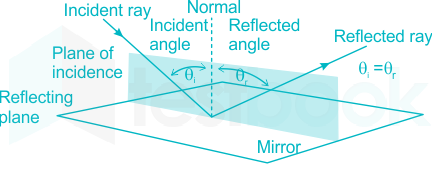
The ______ of a ray is the angle measured from the reflected ray to the normal surface.

  1. ((a))

    angle of reflection

  2. ((b))

    angle of refraction

  3. ((c))

    angle of incidence

  4. ((d))

    angle of diffusion

Show Answer
Answer: ((a))

angle of reflection

The correct answer is angle of reflection

  • Reflection: The phenomena in which light ray is sent back into the same medium from which it is coming, on interaction with boundary, is called reflection.
  • Laws of reflection:
  1. it states that, if a light ray is reflected from a plane flat polished surface its angle of the incident will always be equal the angle of reflection  i.e., The angle of incidence (θ i ) = Angle of reflection (θ r )
  2. Incident ray, reflected ray, normal all lies on the same plane.


Explanation:

  • The angle of incidence is the angle between incident ray and the normal.
  • So, if the ray of light is falling on the normal, it is making 0 ° with normal.
  • We know that, the angle of incidence is equal to the angle of reflection, So we can say that the angle of reflection is also 0 °

So, the correct option is 0 °

Important Points

This means, when a ray of light is falling perpendicular to the surface, it reflects back in same direction.

23

Which of the following is an apparatus used for the detection of ultrasonic waves which is produced in a medium?

  1. ((a))

    Sonometer

  2. ((b))

    Kundt’s tube

  3. ((c))

    Resonance tube

  4. ((d))

    Tuning fork

Show Answer
Answer: ((b))

Kundt’s tube

The correct answer is Kundt’s tube

Key Points

  • Using a Kundt'd tube which is an apparatus consisting of a glass tube supported on a metal base, longitudinal sound waves can be produced. Using the properties of wave motion, the frequency of the sound and the speed of sound in the rod can be determined.
24

Which citizen of the Republic of India was awarded the Nobel Peace Prize?

  1. ((a))

    Rabindranath Tagore

  2. ((b))

    Amartya Sen

  3. ((c))

    Kailash Satyarthi

  4. ((d))

    C. V. Raman

Show Answer
Answer: ((c))

Kailash Satyarthi

The correct answer is Kailash Satyarthi

Key Points

  • Kailash Satyarthi along with Malala Yusuf-Zai received the Nobel Peace Prize in 2014 for their struggle against the suppression of children.
  • Born as Kailash Sharma in Vidisha district of Madhya Pradesh.
  • He gave up his surname after being stricken by the deep-rooted casteism in our society.
  • And took the surname of 'Satyarthi-the seeker of the truth'.
  • Satyarthi founded the organization Bachpan Bachao Andolan, in 1980 which has freed thousands of children from slave-like conditions.
  • He conceived and led the Global March Against Child Labor and its international advocacy body, the ICCLE.
  • He has also contributed to the development of international conventions on the children's rights.
  • He started a magazine, Sangharsh Jaari Rahega where he doubled up as owner cum a photo-journalist.
  • ICCLE: International Center on Child Labor and Education.
25

Who was the longest-serving Indian Prime Minister till 2021?

  1. ((a))

    Jawaharlal Nehru

  2. ((b))

    Manmohan Singh

  3. ((c))

    Indira Gandhi

  4. ((d))

    Narendra Modi

Show Answer
Answer: ((a))

Jawaharlal Nehru

The correct answer is Jawaharlal Nehru.

Key Points

  • Jawaharlal Nehru was India’s longest-serving prime minister.
  • He was independent India’s first Prime Minister, he assumed office in 1947.
  • His birth anniversary is celebrated as 'Children's Day' in India because of his advocacy for the cause of children's education.
  • He was popularly called Chacha Nehru by children.

Additional Information

  • Facts About Indian Prime Minister:
Second Longest-Serving Indian Prime MinisterIndira Gandhi
Acting Prime Minister TwiceGulzari Lal Nanda
The first woman Prime Minister to receive the Bharat RatnaIndira Gandhi
First Non-Congress Prime Minister of IndiaMorarji Desai
Indian Prime Minister received Pakistan’s highest civilian awardMorarji Desai
Youngest Indian Prime MinisterRajiv Gandhi
First Prime Minister from South IndiaP.V. Narasimha Rao
First Prime Minister of India who was a member of the Rajya SabhaIndira Gandhi
26

India and Sri Lanka are joined by a group of islets forming ______.

  1. ((a))

    Adam’s Bridge

  2. ((b))

    Bhupen Hazarika Bridge

  3. ((c))

    Sisseri River Bridge

  4. ((d))

    Sharavathi Bridge

Show Answer
Answer: ((a))

Adam’s Bridge

The correct answer is Adam’s Bridge

  • Adam's Bridge is also known as Ram Setu in India.
  • It starts as a chain of shoals from Dhanushkodi which is located at the tip of Pamban Island.
  • This bridge ends at Mannar Island of Sri Lanka.
  • It separates the Gulf of Mannar from Palk Strait.
  • It is mainly made up of limestone.

Additional Information

  • Other important Bridges of India-
  • Bhupen Hazarika Bridge on Lohit River
  • Bandra Worli Sea Link on Mahim Bay
  • Bogibeel on Brahmaputra River
  • Mahatma Gandhi Setu on Ganga River
  • Vembanad Rail Bridge on Vembanad Lake
27

Which among the following is not a Capital Receipt with respect to fiscal policy of India?

  1. ((a))

    Borrowing

  2. ((b))

    License and Permits

  3. ((c))

    Loans Recovery

  4. ((d))

    Disinvestments

Show Answer
Answer: ((b))

License and Permits

The correct answer is License and Permits

Key Points

Capital receipt:

  • These receipts create liabilities.
  • It reduces financial assets.
  • It can be both debt and non-debt receipts.
  • Non-debt capital receipts are such as the recovery of loans and advances, disinvestment, and issue of bonus shares.
  • It refers to the incoming cash flows.
  • Examples of capital receipts are loans from the public, foreign governments, and central banks.

Hence, borrowings of the government from the public is a capital receipt in the Government budget.

Additional Information Revenue Receipts:

  • Revenue receipts are those that neither increase a government's liabilities nor decrease its assets.
  • They are routine and ongoing in nature, and the government receives them as part of daily operations.

Examples:

  • Interest receipts on loans given by the Government to other parties.
  • Dividend and profit of public enterprises.
  • Property tax receipts
28

Where is the Sun Temple attributed to King Narasimhadeva I situated in India?

  1. ((a))

    Durgapur

  2. ((b))

    Bharatpur

  3. ((c))

    Ajmer

  4. ((d))

    Konark

Show Answer
Answer: ((d))

Konark

The correct answer is Konark Sun Temple.

Key Points 

  • Konark Sun temple is a 13th-century CE (the year 1250) Sun temple at Konark about 35 kilometers (22 mi) northeast from Puri on the coastline of Odisha, India.
  • The temple is attributed to king Narasimhadeva I of the Eastern Ganga dynasty about 1250 CE.
  • Also called the Surya Devalaya, it is a classic illustration of the Odisha style of Architecture or Kalinga architecture.

Important Points 

  • Konark temple was called the "Black Pagoda" in European sailor accounts as early as 1676 because it looked like a great tiered tower that appeared black.
  • Similarly, the Jagannath Temple in Puri was called the "White Pagoda".
  • Both temples served as important landmarks for sailors in the Bay of Bengal.
  • Declared a UNESCO world heritage site in 1984, it remains a major pilgrimage site for Hindus, who gather here every year for the Chandrabhaga Mela around the month of February.
29

Which athlete won India’s first gold medal in Javelin Throw at Tokyo Olympics 2020?

  1. ((a))

    Leander Paes

  2. ((b))

    Deepika Kumari

  3. ((c))

    M. C. Mary Kom

  4. ((d))

    Neeraj Chopra

Show Answer
Answer: ((d))

Neeraj Chopra

The correct answer is Neeraj Chopra

Key Points

  • Olympic Gold medalist Neeraj Chopra has gifted his historic Tokyo Olympics gold medal winning javelin to the Olympic Museum in Lausanne.
  • The museum has a rich collection of 120 years, which includes the rifle of Abhinav Bindra, who became the first Indian to win an individual Olympic gold at Beijing 2008.
  • The museum is managed by the International Olympic Committee’s Heritage team.

Additional Information

  • The International Olympic Committee is a non-governmental sports organisation based in Lausanne, Switzerland.
  • It is constituted in the form of an association under the Swiss Civil Code (articles 60–79).
  • It was founded by Pierre de Coubertin and Demetrios Vikelas in 1894.
  • It is the authority responsible for organising the modern (Summer, Winter, and Youth) Olympic Games.
30

Who was the first female Muslim ruler of the Indian subcontinent?

  1. ((a))

    Jahanara

  2. ((b))

    Chand Bibi

  3. ((c))

    Razia Sultana

  4. ((d))

    Zeb-un-Nissa

Show Answer
Answer: ((c))

Razia Sultana

The correct answer is Razia Sultana.

Key Points

  • Radhiyah bint Itutmish or popularly known as Razia Sultana was the ruler of Delhi from 1236 to 1240.
  • She was the first Muslim female ruler and succeeded her father Itutmish and became the Sultanate of Delhi in 1236.
  • She refused to be addressed as a Sultana but claimed herself the title "Sultan".
  • Born to - Sultan Iltutmish and Qutub Begum.
  • Dynasty - Slave dynasty.
  • Kingdom - Delhi Sultanate.

Additional Information

  • There were 5 dynasties in the Delhi Sultanate.
  • The Mamluk dynasty was the first dynasty of the Delhi Sultanate.
  • It reigned from 1206-1290.
  • The Khilji dynasty was the second dynasty of the Delhi Sultanate.
  • It reigned from 1290-1320.
  • The Tughlaq dynasty was the third dynasty of the Delhi Sultanate.
  • It reigned from 1320-1414.
  • The Sayyid dynasty was the fourth dynasty of the Delhi Sultanate.
  • It reigned from 1414-1451.
  • The Lodhi dynasty was the fifth dynasty of the Delhi Sultanate.
  • It reigned from 1451-1526.
31

Which of the following disease is not caused by a mosquito bite?

  1. ((a))

    Hepatitis

  2. ((b))

    Dengue

  3. ((c))

    Malaria

  4. ((d))

    Elephantiasis

Show Answer
Answer: ((a))

Hepatitis

The correct answer is Hepatitis

Key Points

  • Hepatitis
  • It is a disease caused by viruses hepatitis A, B, C, D, and E.
  • Hepatitis A and E - spread by contaminated food and water.
  • Hepatitis B - it is passed from mother to child during pregnancy or during childbirth, transmitted through infected blood, and sexually transmitted.
  • Hepatitis C - transmitted by infected blood.
  • Hepatitis D - occurs in people already infected with Hepatitis B.
  • It is inflammation of the liver tissue and is of two types - acute (resolves within six months) and chronic (lasts longer than six months).
  • Viral disease​ - Important viral diseases include - Mumps, Pox, Herpes, AIDS, Rabies, Common cold, Burkitt's lymphoma, Influenza, Polio
  • Fungal disease - Important fungal diseases include - Athlete's foot, Ringworm, Aspergillosis, Jock itch
  • Bacterial disease - Important bacterial diseases include - Pneumonia, Tetanus (lockjaw), Typhoid, Diphtheria, Tuberculosis, Gonorrhea, Whooping, cough, Cholera, Plague, Syphilis, Leprosy, Rheumatic fever.
32

Which is the only active volcanic island in India?

  1. ((a))

    Barren Island

  2. ((b))

    Laccadive Island

  3. ((c))

    Minicoy Island

  4. ((d))

    Amendivi Island

Show Answer
Answer: ((a))

Barren Island

The correct answer is Barren Island

Key Points

  • Barren Island is located in the Andaman Sea.
  • It is the only active volcano in the Indian subcontinent.
  • After lying dormant for 150 years, Barren Island volcano had erupted in 1991 and since then it is showing sporadic activity. Now it is erupting in small episodes of five to ten minutes.
  • This volcanic island stands in the midst of a volcanic belt on the edge of the Indian and Burmese tectonic plates.
  • The volcanic island is part of Andaman Islands. Its northern part is barren and is uninhabited. It is also devoid of vegetation

Important Points

Other Important Island of the world.

IslandLocation
Sumatra and JavaIndonesia
Honshu and HokkaidoJapan
LuzonPhilippines
NewfoundlandCanada
SulawesiIndonesia
VictoriaCanada
BaffinCanada
EllesmereCanada
TasmaniaAustralia
33

Who built the Pathar Ki Masjid in Patna, Bihar?

  1. ((a))

    Parvez Shah

  2. ((b))

    Alauddin Khilji

  3. ((c))

    Feroz Shah Tughlaq

  4. ((d))

    Aurangzeb

Show Answer
Answer: ((a))

Parvez Shah

The correct answer is Parwez Shah.

Key Points

  • Pathar Ki Masjid, also known as Saif Khan's Mosque, Chimni Ghat mosque, and Sangi Masjid, is a mosque in Patna, Bihar, India.
  • It was built in 1621 by Parvez Shah, the son of Mughal emperor Jahangir.
  • The mosque is built of stone, hence the name "Pathar ki Masjid".
  • It is located on Ashok Rajpath between Sultanganj and Alamganj.
  • The mosque is a single-domed structure with four minarets.
  • The central dome is supported by four arches.
  • The mosque is a fine example of Mughal architecture.
  • Pathar Ki Masjid is a beautiful and historic mosque that is an important part of the cultural heritage of Patna.
  • It is a popular tourist destination and a place of worship for the Muslim community.
34

Which is a major tributary of the Bhagirathi River?

  1. ((a))

    Dhauliganga

  2. ((b))

    Bhilangna

  3. ((c))

    Pindar

  4. ((d))

    Bishenganga

Show Answer
Answer: ((b))

Bhilangna

The correct answer is Bhilangna

Key Points

  • Bhilangna River is in the Garhwal region. The length of the river is 80 Km.
  • Khatling glacier is located in district Tehri Garhwal of Uttarakhand.
  • Bhilangana is a tributary of river Bhagirathi.
  • Around the glacier, there is a thick snow-capped of Himalayan peaks which are known as the Jogin group (Altitude:6466m), Sphetic Pristwar (6905m), Barte Kauter (6579m) Kirti Stambh (6902m) and Meru.
  • The trek for Khatling glacier starts from Ghuttu, a place about 62 km from Tehri.  The total distance of this route is about 45 Km.
35

Which of the following cities was part of the Indus Valley civilization?

  1. ((a))

    Muziris

  2. ((b))

    Harappa

  3. ((c))

    Sanchi

  4. ((d))

    Dwarka

Show Answer
Answer: ((b))

Harappa

The correct answer is Harappa

Key Point

  • The Indus Valley Civilization extended from present-day north-east Afghanistan to Pakistan and north-west India.
  • The Indus Valley Civilization is an ancient civilization that flourished in the Indian subcontinent between 3,000 BC and 1,500 BC.
  • Mohenjodaro (Pakistan) is situated on the banks of the river Indus. Discovered in 1922 by R. D. Banerjee in the Larkana district of Sindh. Mohenjodaro means "Mound of the Dead". The most important structure is the huge bathhouse and the huge granary.
  • Daya Ram Sahni discovered the Harappan Civilization in 1921. It is situated on the banks of the Ravi river in the Montgomery district of Punjab (Pakistan). Important findings are sandstone sculptures of human anatomy, granary, and bullock cart.
36

Which among the following is an indirect tax in India?

  1. ((a))

    Corporation Tax

  2. ((b))

    Service tax

  3. ((c))

    Income Tax

  4. ((d))

    Wealth Tax

Show Answer
Answer: ((b))

Service tax

The correct answer is Service tax

Key Points 

The Service Tax:

  • Service tax is a tax levied by the government on service providers on certain service transactions, but is actually borne by the customers.
  • It is categorized under Indirect Tax and came into existence under the Finance Act, 1994

Hence, service tax in India is an indirect tax.

Important Points

Direct TaxesIndirect Taxes
It is levied on income and activities conducted.It is levied on products or services.
The burden of tax cannot be shifted in the case of direct tax.The burden of tax shifted for indirect taxes.
It is paid directly by the person concerned.It is paid by one person but he recovers the same from another person i.e. person who actually bears the tax ultimate consumer.
It is paid after the income reaches the hands of the taxpayerIt is paid before goods/service reaches the taxpayer.
Tax collection is difficult.Tax collection is relatively easier.
Example Income tax, wealth tax, etc.Example GST, excise duty custom duty, sales tax, service tax etc
37

Who is famously known as the Wizard of hockey in India?

  1. ((a))

    Roop Singh

  2. ((b))

    Balbir Singh Senior

  3. ((c))

    Kunwar Digvijay Singh

  4. ((d))

    Dhyan Chand

Show Answer
Answer: ((d))

Dhyan Chand

The correct answer is Dhyan Chand

  • Dhyan Chand (29 August 1905 – 3 December 1979) was an Indian field hockey player.
  • He is considered one of the greatest field hockey players of all time.
  • He is known for his extraordinary goal-scoring feats, in addition to earning three Olympic gold medals (1928, 1932, and 1936) in field hockey, during an era when India was the most dominant team in Hockey.
38

In which year was the Citizenship Act passed in India?

  1. ((a))

    1951

  2. ((b))

    1964

  3. ((c))

    1955

  4. ((d))

    1959

Show Answer
Answer: ((c))

1955

The correct answer is 1955

Key Points

  • The Citizenship Act was passed in the year 1955.
  • According to it, the President of India is the first citizen of India.
  • The Act was amended several times by the amendment acts in the years 1986, 1992, 2003, 2005, 2015, and 2019.
  • Part II of the Indian Constitution deals with citizenship.
  • It is covered under articles 5-11.
39

Which among the following is not a type of Right to freedom in the Indian Constitution?

  1. ((a))

    Freedom of speech

  2. ((b))

    Freedom of association

  3. ((c))

    Freedom of armed assembly

  4. ((d))

    Freedom of Religious

Show Answer
Answer: ((c))

Freedom of armed assembly

The correct answer is Freedom of armed assembly

Key Points

  • Right to Freedom
  • The objective of the Indian Constitution is to ensure freedom of thought, expression, belief, religion, and worship. Therefore, the Right to Freedom has been mentioned in the Indian Constitution from Articles 19 to 22.
  • In these, provisions have been given keeping in mind all the sections of the people of the country, so that any person can do any work of his mind, but that work should not be illegal and unconstitutional, nor should that work be done by any other person such that the fundamental rights should be violated.
  • Article 19 of the Indian Constitution is most important in this regard. Article 19 of the Indian Constitution at present describes only 6 freedoms for the citizens of the country, which are as follows
  • Freedom of thought and expression
  • Freedom of arms and peaceful assembly.
  • Community and freedom of association
  • Freedom of travel
  • Freedom of residence
  • Freedom of trade (Hence option 1 is correct)
  • Article 20 offers protection in respect of conviction for offences. (Hence option 4 is correct)
  • Article 21 offers protection of life and personal liberty. (Hence option 2 is correct)
  • Article 22 offers protection against arrest and detention in certain cases.
40

Which World Cup-winning U19 India captain announced his retirement from cricket in India in August 2021?

  1. ((a))

    Rishabh Pant

  2. ((b))

    Virat Kohli

  3. ((c))

    Shubman Gill

  4. ((d))

    Unmukt Chand

Show Answer
Answer: ((d))

Unmukt Chand

The correct answer is Unmukt Chand.

Key Points

  • Delhi batsman Unmukt Chand, who shot to prominence by being the 2012 U-19 World Cup-winning captain, has announced his retirement from cricket in India.
  • Chand had made an unbeaten 111, leading a victory over Australia in the 2012 U-19 World Cup final in Townsville, Australia.
  • He had represented Mumbai Indians, Delhi Capitals and Rajasthan Royals in the IPL.

Arithmetic Ability (20 questions)

41

Simple Interest for the sum of Rs. 2460 for two years is Rs. 68 more than the SI for Rs. 2290 for the same duration. Find the Rate of Interest.

  1. ((a))

    15%

  2. ((b))

    25%

  3. ((c))

    18%

  4. ((d))

    20%

Show Answer
Answer: ((d))

20%

Given:

Simple interest for sum of Rs. 2460 for two years = 68 + Simple interest for Rs. 2290 for two years

Concept used:

Simple interest = P × R  ×  T/100

Where:- 

P :- Principal

R :- Rate

T :- Time 

Calculation:

Here,

P1 = Rs. 2460

P= Rs. 2290

R = Rate of interest

Time = 2 years

According to question,

⇒ 2460  ×  R  × 2/100 = (2290  ×  R  ×  2/100) + 68

⇒ R  ×  2/100  × [2460 - 2290] = 68

⇒ 2R = 68  ×  100/170

⇒ 20%

∴ Option 4 is correct.

42

Suresh present age is 2/5th of his fathers present age. After some years, Suresh age will become 75% of his father's age at that time. By what percent will father's age increase during this period?

  1. ((a))

    125%

  2. ((b))

    150%

  3. ((c))

    140%

  4. ((d))

    120%

Show Answer
Answer: ((c))

140%

Given:

Suresh present age = 2/5th of His father's present age

After some years, 

Suresh age = 75% of his father's age

Calculation:

Suresh's present age is 2/5 of his father's present age.

S = 2/5F

After x years, Suresh's age will become 75% of his father's age at that time.

S + x = 0.75 (F + x)

We need to find by what percent the father's age will increase during this period.

Express x in terms of F

We already know S= (2/5)F

Substituting this in the second equation:

⇒ (2/5)F + x = 0.75 (F + x)

⇒ (2/5)F + x = 0.75F + 0.75x

⇒ (x − 0.75x) = 0.75F − (2/5)F

⇒ 0.25x = (15F - 8F)/20

⇒ 0.25x = (7/20)F

⇒ x = [(7/20)F] / 0.25

⇒ x = (7/5)F

The father's age increases from F to (F+x), so:

Father's age increased by = F + x = F + (7/5)F = (12/5)F

The percentage increase in the father's age is:

Percentage Increase = {[(12/5)F - F] / F} * 100

Percentage Increase = {[(7/5)F] / F} * 100 = (7/5) * 100 = 140%

∴ The correct answer is Option 3).

43

The product of two numbers is 3645. If the H.C.F. of these numbers is 27, then the greater number is:

  1. ((a))

    135

  2. ((b))

    145

  3. ((c))

    115

  4. ((d))

    125

Show Answer
Answer: ((a))

135

Given:

Product of two numbers = 3645

H.C.F = 27

Concept used:

Product of two numbers = LCM  ×  HCF

Calculation:

Let greatest number = y

Product of two numbers = 3645

H.C.F = 27

⇒ 3645 = 27 × y

⇒ y = 135

∴ Option 1 is correct.

44

A rectangular box has dimensions 3.2 m × 2 m × 1.2 m. How many cubical boxes each of side 40 cm can be fit inside the rectangular box?

  1. ((a))

    120

  2. ((b))

    160

  3. ((c))

    60

  4. ((d))

    240

Show Answer
Answer: ((a))

120

Given:

Length of rectangular box = 3.2 m

Breadth of rectangular box = 2 m

Height of rectangular box = 1.2 m

Side of cube = 40 cm 

Concept used:

Volume of cube = a3

Volume of cuboid = LBH

Calculation:

Let the number of cubes fit inside the rectangular box = n

Length of rectangular box = 3.2 m

Breadth of rectangular box = 2 m

Height of rectangular box = 1.2 m

Side of cube = 40 cm = 0.4 m

According to question,

⇒ 3.2 × 2 × 1.2 = n × (0.4)3

⇒ n = 120

∴ Option 1 is correct.

45

A man goes from A to B and then from B to A. From A to B, his speed was 8 km/h and from B to A, his speed was 20 km/h. The total time taken by the man to cover the whole journey is (63/8) hour then find the distance from A to B.

  1. ((a))

    45 km

  2. ((b))

    36 km

  3. ((c))

    78.5 km

  4. ((d))

    90 km

Show Answer
Answer: ((a))

45 km

Given:

Speed of man from A to B = 8 km/h

Speed of man from B to A = 20 km/h

Time taken to cover the whole journey = 63/8 hour

Concept used:

Average speed = 2xy/(x + y)

Speed = distance/time

Calculation:

Speed of man from A to B = 8 km/h

Speed of man from B to A = 20 km/h

Time taken to cover the whole journey = 63/8 hour

Let total distance covered in whole journey (A to B and B to A) = D

Average speed = 2 × 8 × 20/(20 + 8)

Average speed = 320/28

Speed = Distance/time 

320/28 = D × 8/63

D = 90 km

Thus, Distance between A to B = 90/2 = 45 km.

∴ Option 1 is correct.

46

What will come in the place of question mark(?) in the following question?

14(3/5) + 17(5/6) + 7(1/3) = ?/6 + 20

  1. ((a))

    29.4

  2. ((b))

    14.1

  3. ((c))

    16.1

  4. ((d))

    17.1

Show Answer
Answer: ((a))

29.4

Given:

14(3/5) + 17(5/6) + 7(1/3) = ?/6 + 20

Calculation:

⇒ 14(3/5) + 17(5/6) + 7(1/3) = ?/6 + 20

⇒ 42/5 + 85/6 + 7/3 = ?/6 + 20

⇒ (252 + 425 + 70)/30 =?/6 + 20

⇒ 747/30 - 20 = ?/6

⇒ 4.9 = ?/6

⇒ ? = 29.4

∴ Option 1 is correct.

47

80 litres of water is mixed with a certain quantity of milk so that the mixture costs Rs. 40 per litres. If the cost of pure milk is Rs. 60 per litres, then the quantity of milk in the mixture is:

  1. ((a))

    120 litre

  2. ((b))

    100 litres

  3. ((c))

    180 litres

  4. ((d))

    160 litres

Show Answer
Answer: ((d))

160 litres

Given:

Pure milk = Rs.60 per litre

Mixture with 80 litre of water = Rs.40 per litre

Calculation:

According to the rule,

Water       Milk

(0 litre)       Rs.60


       Mean price

         Rs.40


(60 - 40)        (40 - 0)

  20                    40

   1          :           2

∴ Water : milk = : 20 : 40 = 1 : 2

∴ Quantity of milk in mixture = 2 × 80 = 160 litre

∴ Option 4 is correct.

48

Three number are in the ratio of 3 ∶ 4 ∶ 5 and their L.C.M. is 1800. Find the greatest number.

  1. ((a))

    150

  2. ((b))

    550

  3. ((c))

    200

  4. ((d))

    450

Show Answer
Answer: ((a))

150

Given:

Three numbers ratio = 3 : 4 : 5

LCM = 1800

Calculation:

Let the three numbers are = 3x, 4x, 5x

⇒ 60x  = 1800

x = 30

The greatest number = 30 × 5 = 150

∴ Option 1 is correct.

49

A man drive car first 160 km at the speed of 120 km/hr, next 70 km at the speed of 56 km/hr, next 240 km at the speed of 180 km/hr. Find his average speed during total journey.

  1. ((a))

    90 km/hr

  2. ((b))

    60 km/hr

  3. ((c))

    150 km/hr

  4. ((d))

    120 km/hr

Show Answer
Answer: ((d))

120 km/hr

Given:

A man drive a car first 160 km at the speed 120 km/hr.

Next 70 km at the speed of 56 km/hr.

Next 240 km at the speed of 180 km/hr.

Concept used:

Total time taken = Distance/speed

Calculation:

Total distance = 160km + 70 km + 240 km = 470 km

Total time taken = (160/120 + 70/56 + 240/180) = 47/12 hrs

Average speed = 470 × 12/47 = 120 km/hr

∴ Option 4 is correct.

50

Ram's income is successively increased by 30% and 20%. Find the effective percentage change in his income.

  1. ((a))

    46%

  2. ((b))

    50%

  3. ((c))

    66%

  4. ((d))

    56%

Show Answer
Answer: ((d))

56%

Given:

Ram's income is successively increased = 30%, 20%

Concept used:

Successive rate = x + y + xy/100

Calculation:

Ram's  income is successively increased = 30%, 20%

∴ Successive rate = 30 + 20 + 30 × 20/100

⇒ 56%

∴ Option 4 is correct.

51

The pie-chart given shows the percentage distribution of the total number of visitors who visited six different states in 2021.

If the number of visitors visited Rajasthan in 2020 is 4500 that is 25% more than the number of visitors visited Punjab in 2021, what is the total number of visitors visited all six states in 2021?

  1. ((a))

    17200

  2. ((b))

    16500

  3. ((c))

    18000

  4. ((d))

    15000

Show Answer
Answer: ((d))

15000

Given:

Total number of visitors visited Rajasthan in 2020 is 4500 = 25% more than the number of visitors visited Punjab in 2021

Calculation:

Let the total number of visitors = x

Number of visitor in Punjab = n

According to question,

the number of visitors visited Rajasthan in 2020 is 4500 that is 25% more than the number of visitors visited Punjab in 2021.

⇒ 125% of n = 4500

n = 4500 × 100/125 = 3600

Number of visitors in Punjab = 24%

⇒ 24% x = 3600

x =  3600 × 100/24 = 15000

∴ Option 4 is correct.

52

Present ages of Sukhe and Diljit are in the ratio of 6 ∶ 7 respectively. After two years, ages of Diljit and Guru will be in the ratio of 11 ∶ 8, respectively. Find the present age of Guru, if the present average age of Sukhe, Diljit and Guru is 36 years.

  1. ((a))

    28 years

  2. ((b))

    33 years

  3. ((c))

    30 years

  4. ((d))

    26 years

Show Answer
Answer: ((c))

30 years

Given:

Present age of Sukhe and Diljit are ratio = 6 : 7

After 2 years, 

Ratio of Diljit and guru = 11 : 8

Present age average age of Sukhe and Diljit = 36

Calculation:

Sum of their ages = 36 × 3= 108

Present age of Sukhe = 6x

Let present age of Diljit = 7x

Guru present age = 108 - (6x + 7x) = 108 - 13x

After two years Diljit age = 7x + 2 

After two years Guru age = (108 - 13x) + 2 = 110 - 13x

Ratio of Diljit and Guru age = 11 : 8

⇒ 7x + 2/110 - 13x = 11/8

⇒ 56x + 16 = 1210 - 143x

⇒ 199x = 1194

x = 6

Guru present age = 108 - 13x = 108 - 13 × 6 = 108 - 78 = 30

∴ Option 3 is correct.

53

The height, length and width of a cuboidal box are 18 cm, 12 cm and 16 cm, respectively. Find its area.

  1. ((a))

    696 sq. cm

  2. ((b))

    1392 sq. cm

  3. ((c))

    596 sq. cm

  4. ((d))

    1192 sq. cm

Show Answer
Answer: ((b))

1392 sq. cm

Shortcut Trick

Total Surface Area of a cuboid = 2 × (lb + bh + hl)

Given: l = 12 cm, w = 16 cm, h = 18 cm

Area = 2 × (12 × 16 + 16 × 18 + 18 × 12)

Area = 2 × (192 + 288 + 216) = 2 × 696

Area = 1392 sq. cm

∴ The correct answer is 1392 sq. cm.

Alternate Method

Given:

Length (l) = 12 cm

Width (w) = 16 cm

Height (h) = 18 cm

Formula Used:

Total Surface Area (TSA) = 2(lw + wh + hl)

Calculations:

⇒ TSA = 2 × (12 × 16 + 16 × 18 + 18 × 12)

⇒ TSA = 2 × (192 + 288 + 216)

⇒ TSA = 2 × 696

⇒ TSA = 1392 sq. cm

∴ The correct answer is 1392 sq. cm.

Additional Information

Volume of Cuboid

The space occupied by the cuboid is calculated as Volume = Length × Width × Height (l × w × h).

Lateral Surface Area

The area of the four vertical faces (excluding top and bottom) is LSA = 2h(l + w).

Diagonal of Cuboid

The longest rod that can be placed inside a cuboid has length d = √(l2 + w2 + h2).

54

Ravindra and Nusrat together started a business with investments of Rs. 8400 and Rs. 6500 respectively. After 6 months, Ravindra and Nusrat increased their investments by 10% and 20% respectively. If at the end of a year, total profits in the business was Rs. 6388, then the share of profit of Ravindra is:

  1. ((a))

    Rs. 2860

  2. ((b))

    Rs. 3528

  3. ((c))

    Rs. 5720

  4. ((d))

    Rs. 7056

Show Answer
Answer: ((b))

Rs. 3528

Calculation:

Total profit = Rs. 6388

Ravindra's investment = Rs. 8400

Nusrat's investment = Rs. 6500

After 6 months,

Investment of Ravindra = 8400 + 110% of 8400 = 17640

Investment of Nusrat = 6500 + 120% 0f 6500 = 14300 

Ratio of their investment = 882 : 715

⇒ 1597 unit = 6388

1 unit = 4

Ravindra's profit = 4 × 882 = Rs. 3528 

∴ Option 2 is correct.

55

Pipe A filled at the rate of 20 litres per minutes and pipe B alone filled a tank in 10 hours. If both pipes are opened together then tank is filled in 6 hours. Find the capacity of the tank.

  1. ((a))

    18000 litres

  2. ((b))

    6000 litres

  3. ((c))

    7500 litres

  4. ((d))

    9000 litres

Show Answer
Answer: ((a))

18000 litres

Given:

Pipe A filled at the rate of 20 litres per minutes.

Pipe B alone filled a tank in 10 hours.

Both pipes are opened together then tank is filled in 6 hours. 

Calculation:

Pipe B alone filled the tank = 10 hours

Both pipe can filled the tank = 6 hours

Here,

B              A + B

10              6

         30

3                 5

Efficiency of A = 5 - 3 = 2 unit

A alone can filled the tank = 30/2 = 15 hours = 15 × 60 = 900 min

But A filled in 1 min = 20 litre

In 900 min. filled by A = 900 × 20 = 18000 litre

∴ The capacity of tank is 18000 litre.

∴ Option 1 is correct.

56

The line graph given below shows number of boys and number of girls visiting a place from January to May.

If in June, the number of boys and number of girls increased by 21.5% and 16(2/3)% respectively as compared to that in April then find the total number of boys and girls together visited the place in June.

  1. ((a))

    593

  2. ((b))

    457

  3. ((c))

    573

  4. ((d))

    569

Show Answer
Answer: ((a))

593

Here,

If in June, the number of boys and number of girls increased by 21.5% and 16(2/3)% respectively as compared to that in April.

Number of boys in April = 200

Number of girls in April = 300

Number of boys in June = 200 × 21.5/100 + 200 = 243

Number of girls in June = 300 × 50/300 + 300 = 350

Total number of boys and girls in June = 243 + 350 = 593

∴ Option 1 is correct.

57

There are three friends Mina, Sheena and Rita and their ages are (a + 4), (a - 4) and (a - 8) years respectively. The average age of Mina and Sheena together is 24 years. What is the present age of Rita?

  1. ((a))

    12 years

  2. ((b))

    24 years

  3. ((c))

    18 years

  4. ((d))

    16 years

Show Answer
Answer: ((d))

16 years

Given:

There are three friends Mina, Sheena and Rita and their ages are (a + 4), (a - 4) and (a - 8) years respectively.

The average age of Mina and Sheena together is 24 years.

Calculation:

 The average age of Mina and Sheena together is 24 years.

Sum of age of Mina and Sheena = 24 × 2 = 48 years

⇒ (a + 4 ) + (a - 4) = 48 years

2a = 48 years 

a = 24 years

Present age of Rita = (a - 8) = (24 - 8) = 16 years

∴ Option 4 is correct.

58

The H.C.F. of 0.42, 0.14 and 0.35 is:

  1. ((a))

    0.7

  2. ((b))

    0.14

  3. ((c))

    0.07

  4. ((d))

    1.4

Show Answer
Answer: ((c))

0.07

Given:

The H.C.F. of 0.42, 0.14 and 0.35.

Concept used:

HCF of a/b, c/d = HCF of (a,b)/LCM of (c,d)

Calculation:

Here, The numbers are 0.42, 0.14 and 0.35.

⇒ 42/100, 14/100, 35/100

⇒ 7/100 = 0.07

∴ Option 3 is correct.

59

The given below bar graph shows the production of different items (in hundreds) by a manufacturing firm on 5 different days.

What is the ratio between the production of the items A on Wednesday to the production of items C on Monday?

  1. ((a))

    12 ∶ 13

  2. ((b))

    14 ∶ 15

  3. ((c))

    13 ∶ 12

  4. ((d))

    15 ∶ 14

Show Answer
Answer: ((b))

14 ∶ 15

Here, 

The production of the items A on Wednesday = 70

The production of items C on Monday = 75

The ratio between the production of the items A on Wednesday to the production of items C on Monday = 70 : 75 = 14 :15

∴ Option 2 is correct.

60

What approximate value will come in place of the question mark (?) in the following question?

3599.98 ÷ 8.92 + 74.98% of 799.92 = ?

  1. ((a))

    1000

  2. ((b))

    1400

  3. ((c))

    950

  4. ((d))

    1250

Show Answer
Answer: ((a))

1000

Given: 

 3599.98 ÷ 8.92 + 74.98% of 799.92 = ?

Concept used:

Follow VBODMAS rule to solve this question, as per the order given below.

Step - 1: Parts of an equation enclosed in 'Vinculum Bar' must be solved first.

Step - 2: Parts of an equation enclosed in 'Brackets' must be solved second, and following BODMAS rule in the bracket

Step - 3: Any mathematical 'Of' or 'Exponent' must be solved next.

Step - 4: Next, the parts of the equation that contain 'Division' and 'Multiplication' are calculated.

Step - 5: Last but not the least, the parts of the equation that contain 'Addition' and 'Subtraction' should be calculated.

Calculation: 

3599.98 ÷ 8.92 + 74.98/100 × 799.92 = ?

3599.98 ÷ 8.92 + 74.98% of 799.92 = ?

⇒ 3599.98 ÷ 8.92 + 599.78 = ?

⇒ 403.56 + 599.78 = 1003. 34 ≈ 1000

∴ Option 1 is correct.

General Hindi (20 questions)

61

निम्न विकल्पों में से उस विकल्प का चयन कीजिए जो शुद्ध वाक्य का सही विकल्प है |

  1. ((a))

    मेरे को यह अच्छा नहीं लगता कि आहिस्ता बोलू जाए।

  2. ((b))

    मुझे यह अच्छा नहीं लगता कि आहिस्ता बोला जाए।

  3. ((c))

    मेको यह अच्छा नहीं लगता कि आहिस्ता बोला जाए।

  4. ((d))

    मुझे यह अच्छा नहीं लगता की आहिस्ता बोला जाए।

Show Answer
Answer: ((b))

मुझे यह अच्छा नहीं लगता कि आहिस्ता बोला जाए।

मुझे यह अच्छा नहीं लगता कि आहिस्ता बोला जाए वाक्य शुद्ध वाक्य का सही विकल्प है। 

Key Pointsअन्य विकल्पों का विश्लेषण -

  • मेरे को यह अच्छा नहीं लगता कि आहिस्ता बोलू जाए - वाक्य मे मेरे को का प्रयोग अनुचित है।
  • मेको यह अच्छा नहीं लगता कि आहिस्ता बोला जाए - वाक्य मे मेको का प्रयोग अनुचित है।
  • मुझे यह अच्छा नहीं लगता की आहिस्ता बोला जाए - वाक्य मे की का प्रयोग अनुचित है।

Additional Information अशुद्ध वाक्यों के प्रकार -

अशुद्धि का प्रकारपरिभाषाउदाहरण
वाक्य मे सर्वनाम सम्बन्धी अशुद्धिगलत सर्वनाम शब्द प्रयोग करने से सर्वनाम सम्बन्धी अशुद्धि आ जाती है।मेरे को यह अच्छा नहीं लगता कि आहिस्ता बोलू जाए।
क्रिया सम्बन्धी अशुद्धिगलत क्रिया का प्रयोग करने से वाक्य मे यह अशुद्धि आ जाती है।राम खेलती है।
संयोजक सम्बन्धी अशुद्धिवाक्य मे गलत संयोजक शब्दों का प्रयोग करने से यह अशुद्धि आ जाती है।मुझे यह अच्छा नहीं लगता की आहिस्ता बोला जाए
62

निम्नलिखित प्रश्न में, चार विकल्पों में से, उस सही विकल्प का चयन करें जो दिए गए शब्द के सही अर्थ का उचित विकल्प हो ।

सेना

  1. ((a))

    तारा

  2. ((b))

    हेम

  3. ((c))

    संत

  4. ((d))

    वाहिनी

Show Answer
Answer: ((d))

वाहिनी

सेना शब्द के अर्थ का सही विकल्प वाहिनी होगा।

सेना के अन्य अर्थ - ऊनी, कटक, दल, चमू, अनीक, अनीकिनी आदि है।  

Key Pointsअन्य विकल्पों का विश्लेषण -

शब्दअर्थ
ताराउडु, तारक, तारिका, नक्षत्र, नखत आदि।
हेमकुंदन, तपनीय, महारजत, सोना आदि।
संतयोगी, तपस्वी, महात्मा आदि।
63

निम्नलिखित प्रश्न में, चार विकल्पों में से, उस विकल्प का चयन करें जो कोष्ठक में दिए गए शब्द के अनुसार विशेषण के भेद वाला विकल्प हो ।

सोहम तुमसे (चौगुना) काम करता है।

  1. ((a))

    संख्यावाचक विशेषण

  2. ((b))

    सार्वनामिक विशेषण

  3. ((c))

    गुणवाचक विशेषण

  4. ((d))

    परिमाणवाचक विशेषण

Show Answer
Answer: ((a))

संख्यावाचक विशेषण

सोहम तुमसे (चौगुना) काम करता है वाक्य के कोष्ठक में दिए गए शब्द के अनुसार विशेषण के भेद वाला विकल्प संख्यावाचक विशेषण होगा ।

  • संख्यावाचक विशेषण - ऐसे शब्द जो संज्ञा या सर्वनाम की संख्या के बारे में बोध कराते हैं वे शब्द संख्यावाचक विशेषण कहलाते है।

Key Pointsअन्य विकल्पों का विश्लेषण -

विशेषणपरिभाषाउदाहरण
सार्वनामिक विशेषणजो सर्वनाम शब्द संज्ञा से पहले आएं एवं विशेषण की तरह उस संज्ञा शब्द की विशेषता बताएं तो वे शब्द सार्वनामिक विशेषण कहलाते हैं।वह आदमी अच्छे से काम करना जानता है।
गुणवाचक विशेषणजो विशेषण हमें संज्ञा या सर्वनाम के रूप, रंग आदि का बोध कराते हैं वे गुणवाचक विशेषण कहलाते है।ताज महल एक सुन्दर इमारत है।
परिमाणवाचक विशेषणजो शब्द संज्ञा या सर्वनाम की मात्रा के बारे में बताते हैं वे शब्द परिमाणवाचक विशेषण कहलाते है।मुझे एक किलो टमाटर लाकर दो।

Additional Informationविशेषण - वे शब्द होते हैं जो संज्ञा या सर्वनाम की विशेषता बताते है। ये शब्द वाक्य में संज्ञा के साथ लगकर संज्ञा की विशेषता बताते है।

बड़ा, काला, लम्बा, दयालु, भारी, सुंदर, कायर, टेढ़ा–मेढ़ा, एक, दो, वीर पुरुष, गोरा, अच्छा, बुरा, मीठा, खट्टा आदि विशेषण शब्दों के कुछ उदाहरण है।

विशेषण के मुख्यतः आठ भेद होते हैं -

  1. गुणवाचक विशेषण।
  2. संख्यावाचक विशेषण।
  3. परिमाणवाचक विशेषण।
  4. सार्वनामिक विशेषण।
  5. व्यक्तिवाचक विशेषण।
  6. प्रश्नवाचक विशेषण।
  7. तुलनबोधक विशेषण।
  8. सम्बन्धवाचक विशेषण।
64

निम्नलिखित प्रश्न में, चार विकल्पों में से, उस विकल्प का चयन करें जो दी गई मुहावरे का सही अर्थ वाला विकल्प है।

उलटी गंगा बहाना

  1. ((a))

    प्रचलन के विपरीत काम करना

  2. ((b))

    वश में करना

  3. ((c))

    बहुत अनुभवी होना 

  4. ((d))

    मूर्ख बनाना

Show Answer
Answer: ((a))

प्रचलन के विपरीत काम करना

उलटी गंगा बहाना मुहावरे का सही अर्थ वाला विकल्प प्रचलन के विपरीत काम करना है।

  • वाक्य प्रयोग - जब पिताजी ने आलसी रमेश को पढ़ाई करते हुए देखा तब वह बोले अरे आज उल्टी गंगा कैसे बह रही है।

Key Pointsअन्य विकल्पों का विश्लेषण -

मुहावराअर्थवाक्य प्रयोग
अंगुली पर नचानावश में करनानए घर मे पहुचते ही उसने सबको अपनी अंगुली पर नचाना शुरू कर दिया।
घाट घाट का पानी पीनाबहुत अनुभवी होनाहमारे गुरूजी घाट घाट का पानी पिए हुए है आप उनसे नहीं जीत सकते हो।
उल्लू बनानामूर्ख बनानाराहुल लोगों को उल्लू बनाने मे माहिर है।

Additional Information

  • मुहावरा - मुहावरा मूलत: अरबी भाषा का शब्द है, जिसका अर्थ है बातचीत करना या ‘अभ्यास होना।
  • कोई भी ऐसा वाक्यांश जिस का शब्दार्थ ग्रहण करके विलक्षण अर्थ ग्रहण किया जाता है उसे मुहावरा कहा जाता है।
65

निम्नलिखित प्रश्न में, चार विकल्पों में से, उस विकल्प का चयन करें जो सही वाक्य भेद का विकल्प हो । उसके मौन से प्रमाणित होता है कि वह अपराधी है।

  1. ((a))

    मिश्र वाक्य

  2. ((b))

    संयुक्त वाक्य

  3. ((c))

    विधानवाचक वाक्य

  4. ((d))

    सरल वाक्य

Show Answer
Answer: ((a))

मिश्र वाक्य

उसके मौन से प्रमाणित होता है कि वह अपराधी है वाक्य मे सही वाक्य भेद का विकल्प मिश्र वाक्य होगा। 

  • मिश्र वाक्य - जिन वाक्यों में एक मुख्य उपवाक्य हो और अन्य गौण उपवाक्य हों तथा जो आपस में कि, जो, क्योंकि, जितना, उतना, जैसा, वैसा, जब, तब, जहाँ, वहाँ, जिधर, उधर, अगर/यदि, तो, यद्यपि, तथापि, आदि से मिश्रित (मिले-जुले) हों उन्हें मिश्रित वाक्य कहते है।

Key Pointsअन्य विकल्पों का विश्लेषण -

रचना के आधार पर वाक्य तीन प्रकार के होते है -

वाक्यपरिभाषाउदाहरंण
सरल वाक्यऐसे वाक्य जिसमे एक क्रिया और एक ही कर्ता होता है उसे सरल वाक्य या साधारण वाक्य कहते है।बिजली चमक रही है।
संयुक्त वाक्यऐसा वाक्य जिसमे दो वाक्य किसी सयोजक शब्द द्वारा जुड़े हुए हो ऐसे वाक्य को संयुक्त वाक्य कहते है।श्रीवल्ली मंदिर जाती है और जी भर के भजन करती है।
मिश्रित वाक्यजिन वाक्यों में एक मुख्य उपवाक्य हो और अन्य गौण उपवाक्य हों, मिश्रित वाक्य कहलाते हैउसके मौन से प्रमाणित होता है कि वह अपराधी है।

Additional Informationअर्थ के आधार पर 8 प्रकार के वाक्य होते हैं –

  1. विधान वाचक वाक्य।
  2. निषेधवाचक वाक्य।
  3. प्रश्नवाचक वाक्य।
  4. विस्म्यादिवाचक वाक्य।
  5. आज्ञावाचक वाक्य।
  6. इच्छावाचक वाक्य।
  7. संकेतवाचक वाक्य।
  8. संदेहवाचक वाक्य।

विधान वाचक वाक्य - वह वाक्य जिससे किसी प्रकार की जानकारी प्राप्त होती है, वह वि‌‌धानवाचक वाक्य कहलाता है।

उदाहरण - भारत एक देश है।

66

निम्नलिखित प्रश्न में, चार विकल्पों में से, उस विकल्प का चयन करें जो दिए गए लोकोक्ति का सही अर्थ वाला विकल्प है।

घर बैठे गंगा आना

  1. ((a))

    झूठा दिखावा करना

  2. ((b))

    अपना काम होते रहना

  3. ((c))

    बिना प्रयत्न के लाभ मिलना

  4. ((d))

    बहुत कंजूस होना

Show Answer
Answer: ((c))

बिना प्रयत्न के लाभ मिलना

घर बैठे गंगा आना लोकोक्ति का सही अर्थ वाला विकल्प बिना प्रयत्न के लाभ मिलना है।

  • वाक्य प्रयोग - सूरज को लाटरी के रूपए मिल जाने से घर बैठे ही गंगा आ गयी।

Key Pointsअन्य विकल्पों का विश्लेषण -

लोकोक्तिअर्थवाक्य प्रयो
तन पर नहीं लत्ता पान खाय  अलबत्ता।झूठा दिखावा करनाघर में पहनने को दो अच्छे कपड़े भी नहीं है और बात करते हैं अरमानी और गुच्ची की, ये तो वही बात हुई कि तन पर नहीं लत्ता पान खाय  अलबत्ता।
अपने काम से मतलब।अपना काम होते रहनाराद्धिमा बस अपने काम के समय दिखाई देती है उसके बाद वह नजर नहीं आती सच मे उसे बस अपने काम से मतलब है।
चमड़ी जाय पर दमड़ी न जाए।बहुत कंजूस होनातुम इतना लालच मत करो। अरे ठंड के दिन हैं। गरम कपड़ों का प्रबंध करो, अन्यथा बीमार पड़ोगे। तुम्हारा तो वही हाल है, चमड़ी जाए पर दमड़ी न जाए।

Additional Informationलोकोक्ति - लोक व्यवहार में प्रचलित वह उक्ति, जो वर्षों के अनुभव के द्वारा एक वाक्य में प्रयोग की जाती है, लोकोक्ति या कहावत कहलाती है।

67

निम्नलिखित प्रश्न में, चार विकल्पों में से, उस विकल्प का चयन करें जो विराम चिह्न युक्त वाक्य का सही विकल्प हो।

  1. ((a))

    संत ने कहा- विद्या पूर्ण करने के बाद, तुमने गुरुदक्षिणा देनी चाही थी, तब मैंने कहा था, फिर कभी ले लूँगा।

  2. ((b))

    संत ने कहा विद्या पूर्ण करने के बाद तुमने गुरुदक्षिणा देनी चाही थी | तब मैंने कहा था, फिर कभी ले लूँगा।

  3. ((c))

    संत ने कहा, "विद्या पूर्ण करने के बाद तुमने गुरुदक्षिणा देनी चाही थी, तब मैंने कहा था, फिर कभी ले लूँगा।"

  4. ((d))

    संत ने कहा विद्या पूर्ण करने के बाद तुमने गुरुदक्षिणा देनी चाही थी तब मैंने कहा था फिर कभी ले लूँगा।

Show Answer
Answer: ((c))

संत ने कहा, "विद्या पूर्ण करने के बाद तुमने गुरुदक्षिणा देनी चाही थी, तब मैंने कहा था, फिर कभी ले लूँगा।"

संत ने कहा, "विद्या पूर्ण करने के बाद तुमने गुरुदक्षिणा देनी चाही थी, तब मैंने कहा था, फिर कभी ले लूँगा।" सही विराम चिह्न युक्त वाक्य का विकल्प होगा। 

  • विराम चिह्न - विराम शब्द का शाब्दिक अर्थ होता है ठहराव।
  • अपनी बात कहने के लिए उसे समझाने के लिए, किसी कथन पर बल देने के लिए आश्चर्य आदि भावों की अभिव्यक्ति के लिए, कहीं कम समय के लिए तो कहीं अधिक समय के लिए ठहरना पड़ता है।
  • भाषा के लिखित रूप मे उक्त ठहरने के स्थान पर जो निश्चित संकेत चिह्न लगाए जाते हैं उन्हें विराम चिह्न कहते है।

Key Pointsअन्य सभी विकल्पों मे उचित विराम चिह्न का प्रयोग नहीं हुआ है।  

कुछ महत्व पूर्ण विराम चिह्न -

विराम चिह्नपरिभाषाउदाहरण
अल्पविराम  (,)वाक्य मे अल्प समय के ठहराव के लिए इसका प्रयोग किया जाता है।रुको, मत जाओ।
अर्द्ध विराम (;)जब एक ही प्रधान उपवाक्य पर अनेक आश्रित उपवाक्य हों तब इसका प्रयोग किया जात है।सूर्योदय हुआ; अन्धकार दूर हुआ
अपूर्ण विराम (: )समानाधिकरण उपवाक्यों के बीच जब कोई संयोजक चिह्न न हो तबव इसका प्रयोग किया जाता है।छोटा सवाल : बड़ा सवाल
पूर्ण विराम (।)साधारण, मिश्र या संयुक्त वाक्य की समाप्ति पर इसका प्रयोग किया जाता है।राम पढ़ता, तो अवश्य उत्तीर्ण होता।
प्रश्न सूचक चिह्न (?)प्रश्न सूचक वाक्यों के अन्त में इसका प्रयोग किया जाता है।उसकी पुस्तक किसने ली ?
विस्मय सूचक चिह्न (!)हर्ष, शोक, घृणा, भय, विस्मय आदि भावों के सूचक शब्दों या वाक्यों के अंत में इसका प्रयोग किया जाता है।वाह, क्या ही सुन्दर दृश्य है!
अवतरण चिह्न (‘‘ ")जब किसी के कथन को ज्यों का त्यों उद्धृत किया जाता है तो उस कथन के दोनों ओर इसका प्रयोग किया जाता है।महावीर ने कहा, ‘‘अहिंसा परमोधर्मः।’’
योजक चिह्न (-)दो शब्दों को जोड़ने के लिए तथा द्वन्द्व एवं तत्पुरुष समास मे इसका प्रयोग किया जाता है।सुख-दुख, माता-पिता, प्रेम-सागर
विवरण चिह्न (:-)जब किसी कही हुई बात को स्पष्ट करने या उसका विवरण प्रस्तुत करने के लिए वाक्यके अन्त में इसका प्रयोग होता है।पुरुषार्थ चार हैं:- धर्म, अर्थ, काम और मोक्ष।
तुल्यता या समता सूचक चिह्न (=)
किसी शब्द के समान अर्थ बतलाने, समान मूल्य या मान का बोध कराने हेतु इस चिह्न का प्रयोग किया जाता है।
भानु = सूर्य
68

निम्नलिखित प्रश्न में, चार विकल्पों में से, उस विकल्प का चयन करें जो दी गई मुहावरे का सही अर्थ वाला विकल्प है।

एक आँख से देखना

  1. ((a))

    ज़िम्मेदारी लेना

  2. ((b))

    भेदभाव न करना

  3. ((c))

    बदल जाना

  4. ((d))

    सही रास्ते पर न चलना

Show Answer
Answer: ((b))

भेदभाव न करना

एक आँख से देखना मुहावरे का सही अर्थ वाला विकल्प भेदभाव न करना है।

  • वाक्य प्रयोग - एक अच्छे अध्यापक की विशेषता होती है कि वह कक्षा मे सभी छात्रों को एक आँख से देखता है।

Key Points

मुहावराअर्थवाक्य प्रयोग
भार उठानाज़िम्मेदारी लेना।ठाकुर साहब के पूरे परिवार का भार अकेला छोटा बेटा  ही उठाये हुए है।
आँखे फेरनाबदल जाना।सीना का स्वाभाव अब पहले जैसा नहीं रहा वह अब  आंखे फेरने लगी है।
भटक जानासही रास्ते पर न चलना।शर्मा जी के गुजर जाने के बाद उनका बड़ा बेटा भटक गया है।

Additional Informationमुहावरा - मुहावरा’ ‘अरबी भाषा का शब्द है, जिसका अर्थ- ‘अभ्यास /बातचीत होता है।

जो वाक्यांश अपने मूल अर्थ को छोड़कर किसी विशिष्ट अर्थ में प्रयुक्त हो जाते हैं, मुहावरे कहलाते है।

69

निम्नलिखित प्रश्न में, चार विकल्पों में से, उस सही विकल्प का चयन करें जो दिए गए शब्द-युग्म के सही अर्थ का उचित विकल्प हो ।

प्रवाल-प्रवार

  1. ((a))

    फैलाव-मूंगा

  2. ((b))

    यथार्थ-वस्त्र

  3. ((c))

    मूँगा-वस्त्र

  4. ((d))

    पत्थर-फैलाव

Show Answer
Answer: ((c))

मूँगा-वस्त्र

प्रवाल-प्रवार के शब्द-युग्म के सही अर्थ का उचित विकल्प मूँगा-वस्त्र होगा।

  • प्रवाल का अन्य अर्थ मोती भी है।
  • प्रवार का अन्य अर्थ पट भी है।

Key Pointsअन्य विकल्पों का विश्लेषण - 

शब्द युग्मअर्थ युग्म
फैलाव-मूंगाविस्तार-प्रवाल
यथार्थ-वस्त्रउचित-प्रवार
पत्थर-फैलावपाषाण-विस्तार
70

निम्नलिखित प्रश्न में, चार विकल्पों में से, उस विकल्प का चयन करें जो दिए गए वाक्य के लिए वृत्ति के भेद का सबसे अच्छा विकल्प है।

कृपया पुस्तकालय जाने का रास्ता बताइए |

  1. ((a))

    संकेतार्थ

  2. ((b))

    विध्यर्थ

  3. ((c))

    सम्भावनार्थ

  4. ((d))

    संदेहार्थ

Show Answer
Answer: ((b))

विध्यर्थ

कृपया पुस्तकालय जाने का रास्ता बताइए वाक्य के लिए वृत्ति के भेद का सबसे अच्छा विकल्प विध्यर्थ है।

  • विध्यर्थ का अर्थ है – विधि सम्बन्धी तात्पर्य अथवा क्रिया करने की  देने का भाव।
  • बताइए क्रिया रूप से विध्यर्थ का बोध होता है।

Key Pointsअन्य विकल्पों का विश्लेषण -

वृत्तिपरिभाषाउदाहरण
संकेतार्थजहाँ एक कार्य का होना दूसरे कार्य के होने पर निर्भर करता है वहां संकेतार्थ क्रिया होती है।अगर वह लड़ता तो जीत जाता।
सम्भावनार्थक्रिया के जिस रूप से संभावना का बोध होता है उसे संभावनार्थ कहते है।संभव है आज वर्षा हो।
संदेहार्थजिस क्रिया से क्रिया के होने में संदेह का भाव हो उसे संदेहार्थ कहते है।वह गाँव से चल पड़ा होगा।

Additional Information

  • वृत्ति - वृत्ति का अर्थ है मन:स्थिति।
  • इसे क्रियार्थ भी कहते है। वक्ता जो कुछ भी कहता है, वह मन:स्थिति अर्थात मन में उत्पन्न भाव-विचार के अनुसार कहता है।
  • अत: क्रिया के जिस रूप से वक्ता की वृत्ति अथवा मन:स्थिति का बोध होता है उसे वृत्ति या क्रियार्थ कहते है।
71

निम्नलिखित प्रश्न में, चार विकल्पों में से, उस विकल्प का चयन करें जो कोष्ठक में दिए गए शब्द के अनुसार अव्यय के भेद का सही विकल्प हो ।

धन (के बिना) व्यवसाय चलाना कठिन है।

  1. ((a))

    क्रिया विशेषण अव्यय

  2. ((b))

    विस्मयादिबोधक अव्यय

  3. ((c))

    समुच्चयबोधक अव्यय

  4. ((d))

    संबंधबोधक अव्यय

Show Answer
Answer: ((d))

संबंधबोधक अव्यय

धन (के बिना) व्यवसाय चलाना कठिन है वाक्य मे कोष्ठक में दिए गए शब्द के अनुसार अव्यय के भेद का सही विकल्प संबंधबोधक अव्यय होगा।

  • संबंधबोधक अव्यय - वे अव्यय शब्द जो किसी संज्ञा या सर्वनाम के साथ मिलकर उसका सम्बन्ध वाक्य के दूसरे शब्दों से बताते हैं, उन्हें सम्बन्ध बोधक अव्यय कहते है।

Key Pointsअन्य विकल्पों का विश्लेषण -

अव्ययपरिभाषाउदाहरण
क्रिया विशेषण अव्ययवे अविकारी शब्द जो क्रिया की विशेषता बतलाते हैं। उन्हें क्रिया विशेषण अव्यय कहते है।धीरे-धीरे, जल्दी-जल्दी, वहाँ, वहाँ, कम, ज्यादा, आज, कल, इत्यादि।
विस्मयादिबोधक अव्ययजिन शब्दों से शोक, विस्मय , घृणा, आश्चर्य आदि भाव व्यक् हों, उन्हें विस्मयादि बोधक अव्यय कहा जाता है।ओहो, क्या, बाप रे, अरे आदि।
समुच्चयबोधक अव्ययवे अविकारी शब्द जो दो शब्दों, वाक्यांशों या वाक्यों को परस्पर जोड़ते हैं, समुच्चयबोधक कहलाते है।और, क्योंकि, इसलिए आदि।

Additional Informationअव्यय -  अविकारी या अव्यय शब्द वे शब्द होते हैं, जिनके रूप में लिंग, वचन, कारक, काल के अनुसार कोई विकार उत्पन्न नहीं होता।  

अव्यय के प्रकार -

  • क्रियाविशेषण।
  • संबंधबोधक।
  • समुच्चयबोधक।
  • विस्मयादिबोधक।
72

निम्नलिखित प्रश्न में, चार विकल्पों में से, उस विकल्प का चयन करें जो शुद्ध शब्द का सही विकल्प है।

  1. ((a))

    अभीष्ठ

  2. ((b))

    अभिष्ठ

  3. ((c))

    आभीष्ट

  4. ((d))

    अभीष्ट

Show Answer
Answer: ((d))

अभीष्ट

अभीष्ट शब्द शुद्ध शब्द का सही विकल्प है।

  • अभीष्ट का अर्थ है वांछित।
  • जिस वस्तु की हमें जरूरत है अथवा हम जिस चीज की इच्छा या कामना रखते हैं उसे अभीष्ट कहते है।

Key Pointsअन्य सभी विकल्प शुद्ध शब्द के लिए अनुचित होंगे।

शब्द - दो या दो से अधिक वर्णों के सार्थक मेल को शब्द कहते है।

शब्द के दो भेद है-

  • सार्थक शब्द - जिन शब्दों के अर्थ ग्रहण किए जाते हैं, उन्हें सार्थक शब्द कहते है।
  • जैसे - सब्जी, दूध, रोटी, पानी, सामने, पता इत्यादि।
  • निरर्थक शब्द - जिन शब्दों के अर्थ ग्रहण नहीं किए जाते, उन्हें निरर्थक शब्द कहते है।
  • जैसे - अभीष्ठ,आभीष्ट, अभिष्ठ आदि।
73

निम्नलिखित प्रश्न में, चार विकल्पों में से, उस विकल्प का चयन करें जो भाववाचक संज्ञा का सही विकल्प नहीं है।

  1. ((a))

    मिठास

  2. ((b))

    सरलता

  3. ((c))

    चालाक

  4. ((d))

    प्रेम 

Show Answer
Answer: ((c))

चालाक

भाववाचक संज्ञा का सही विकल्प 'चालाक' नहीं है।

  • चालाक का सही भाववाचक चालाकी होगा।
  • भाववाचक संज्ञा - किसी भाव, गुण, दशा या अवस्था का बोध करवाने वाले संज्ञा शब्दों को भाववाचक संज्ञा कहते है।
  • भाववाचक संज्ञा शब्द सदैव एक वचन में ही प्रयुक्त होते है।

Key Points

  • अन्य सभी विकल्प मिठास, सरलता तथा प्रेम भाववाचक संज्ञा के उदाहरण है।
  • संज्ञा - जिससे किसी विशेष वस्तु, भाव और जीव के नाम का बोध हो, उसे संज्ञा कहते है।

संज्ञा के पाँच भेद होते है-

संज्ञापरिभाषाउदाहरण
व्यक्तिवाचक संज्ञाजिस शब्द से किसी विशेष व्यक्ति, वस्तु या स्थान के नाम का बोध हो उसे व्यक्तिवाचक संज्ञा कहते है।

व्यक्ति का नाम-रवीना, सोनिया गाँधी, श्याम आदि।
जातिवाचक संज्ञाजिस शब्द से एक जाति के सभी प्राणियों अथवा वस्तुओं का बोध हो, उसे जातिवाचक संज्ञा कहते है।बच्चा, जानवर, नदी, अध्यापक, बाजार आदि।
भाववाचक संज्ञाजिन शब्दों से किसी प्राणी या पदार्थ के गुण, भाव, स्वभाव या अवस्था का बोध होता है, उन्हें भाववाचक संज्ञा कहते है।उत्साह, ईमानदारी, बचपन, आदि।
समूहवाचक या समुदायवाचक संज्ञाजिन संज्ञा शब्दों से किसी भी व्यक्ति या वस्तु के समूह का बोध होता है, उन शब्दों को समूहवाचक या समुदायवाचक संज्ञा कहते है।भीड़, मेला, सभा, कक्षा, परिवार आदि।
द्रव्यवाचक संज्ञाजो शब्द किसी ठोस, तरल, पदार्थ, धातु, अधातु या द्रव्य का बोध करते हैं उन शब्दों को द्रव्यवाचक संज्ञा कहलाते हैं। द्रव्यवाचक संख्याओं को ढेर के रूप में नापा या तोला जाता है।तेल, पानी,दूध आदि।
74

निम्नलिखित प्रश्न में, चार विकल्पों में से, उस विकल्प का चयन करें जो देशज शब्द का सही विकल्प हो ।

  1. ((a))

    चेहरा

  2. ((b))

    पैदावार

  3. ((c))

    फैसला

  4. ((d))

    झंझट

Show Answer
Answer: ((d))

झंझट

झंझट शब्द देशज शब्द का सही विकल्प का उत्तर होगा। 

  • ‘देशज’ (देश + ज) शब्द का अर्थ है – ‘देश में जन्मा’।
  • अतः ऐसे शब्द जो क्षेत्रीय प्रभाव के कारण परिस्थिति व आवश्यकतानुसार बनकर प्रचलित हो गए हैं देशज या देशी शब्द कहलाते है।

Key Pointsअन्य सभी विकल्प विदेशज शब्दों के उदाहरण है।

विदेशज शब्द - विदेशज’ (विदेश + ज) शब्द का अर्थ है- ‘विदेश में जन्मा’।

हिन्दी में अनेक शब्द ऐसे हैं जो हैं तो विदेशी मूल के, पर परस्पर संपर्क के कारण यहाँ प्रचलित हो गए है। अतः अन्य देश की भाषा से आए हुए शब्द विदेशज शब्द कहलाते है।

शब्दविदेशी भाषा
चेहराफारसी
पैदावारफारसी
फैसलाअरबी

Additional Informationउत्पत्ति के आधार पर शब्द के निम्न भेद है - 

  • तत���सम शब्द।
  • तद्भव शब्द।
  • देशज/देशी शब्द।
  • विदेशज/विदेशी/आगत शब्द।
  • संकर शब्द।
75

निम्नलिखित प्रश्न में, चार विकल्पों में से, उस विकल्प का चयन करें जो दिए गए वाक्य के काल का सही विकल्प हो ।

पवन गेंद से खेल रहा है।

  1. ((a))

    अपूर्ण वर्तमान काल

  2. ((b))

    आसन्न भूतकाल

  3. ((c))

    संदिग्ध भूतकाल

  4. ((d))

    संदिग्ध वर्तमान काल

Show Answer
Answer: ((a))

अपूर्ण वर्तमान काल

पवन गेंद से खेल रहा है।वाक्य के काल का सही विकल्प अपूर्ण वर्तमान काल होगा।

  • अपूर्ण वर्तमान काल - जिन शब्दों से यह पता चले कि काम भूतकाल में शुरू हो चुका था और अभी समाप्त नहीं हुआ है, उसे अपूर्ण भूतकाल कहते है।

Key Pointsअन्य विकल्पों का विश्लेषण -

कालपरिभाषाउदाहरण
आसन्न भूतकालक्रिया के जिस रूप से हमें यह पता चले की क्रिया अभी कुछ समय पहले ही पूर्ण हुई है उसे आसन्न भूतकाल कहते है।मैं अभी खाना खाकर उठा हूँ।
संदिग्ध भूतकालभूतकाल की क्रिया के जिस रूप से उसके भूतकाल में पूरा होने में संदेह हो, उसे संदिग्ध भूतकाल कहते है।दुकानें बंद हो चुकी होगी।
संदिग्ध वर्तमान कालक्रिया के जिस रूप से वर्तमान काल क्रिया के होन��� या करने पर शक हो, उसे संदिग्ध वर्तमान काल कहते है।वह लेख लिख रहा होगा।

Additional Informationकाल - समय, क्रिया के जिस रूप से कार्य करने या होने के समय का ज्ञान होता है उसे ‘काल’ कहते है।

  1. वर्तमानकाल।
  2. भूतकाल।
  3. भविष्यतकाल।

नीचे दिए गये गद्यांश को ध्यानपूर्वक पढ़ें और चार विकल्पों में से प्रत्येक प्रश्न का सर्वोत्तम उत्तर चुनें।

कार्य का महत्त्व और उसकी सुंदरता उसके समय पर संपादित किए जाने पर ही है। अत्यंत सुघड़ता से किया हुआ कार्य भी यदि आवश्यकता के पूर्व न पूरा हो सके तो उसका किया जाना निष्फल ही होगा । चिड़ियों द्वारा खेत चुग लिए जाने पर यदि रखवाला उसकी सुरक्षा की व्यवस्था करे तो सर्वत्र उपहास का पात्र ही बनेगा । उसके देर से किए गए उद्यम का कोई मूल्य नहीं होगा । श्रम का गौरव तभी है जब उसका लाभ किसी को मिल सके। इसी कारण यदि बादलों द्वारा बरसाया गया जल कृषक की फ़सल को फलने-फूलने में मदद नहीं कर सकता तो उसका बरसना व्यर्थ ही है। अवसर का सदुपयोग न करने वाले व्यक्ति को इसी कारण पश्चाताप करना पड़ता है।

76

अनुच्छेद के अनुसार जीवन में समय का महत्त्व क्यों है?

  1. ((a))

    समय का जीवन में महत्त्व कम है

  2. ((b))

    समय पर किया गया काम सफल होता है

  3. ((c))

    समय पर किया गया काम सफल नहीं होता है

  4. ((d))

    लोग समय की परवाह नहीं करते

Show Answer
Answer: ((b))

समय पर किया गया काम सफल होता है

सही उत्तर: 'समय पर किया गया काम सफल होता है।'

Key Points

  • अनुच्छेद के अनुसार, समय का महत्त्व यह है कि उस पर किया गए काम का असली मूल्य होता है।
  • यदि काम समय पर नहीं किया जाता, तो उसका परिणाम निष्फल हो सकता है, चाहे वह कितना ही अच्छा क्यों न हो। इस तरह, जब काम समय पर किया जाता है, वह सफलता और असरदार परिणाम लाता है।

Additional Information

अन्य विकल्पों की व्याख्या:

  • समय का जीवन में महत्त्व कम है: यह विकल्प अनुच्छेद के विचारों के विरुद्ध है क्योंकि वह समय के महत्त्व को महसूस कराता है।
  • समय पर किया गया काम सफल नहीं होता है : यह विकल्प भी गलत है क्योंकि अनुच्छेद समय पर किया गया काम की प्रशंसा करता है।
  • लोग समय की परवाह नहीं करते : यह विकल्प अनुच्छेद के विषय में कुछ भी नहीं कहता है, इसलिए इसे नकारा जा सकता है।

नीचे दिए गये गद्यांश को ध्यानपूर्वक पढ़ें और चार विकल्पों में से प्रत्येक प्रश्न का सर्वोत्तम उत्तर चुनें।

कार्य का महत्त्व और उसकी सुंदरता उसके समय पर संपादित किए जाने पर ही है। अत्यंत सुघड़ता से किया हुआ कार्य भी यदि आवश्यकता के पूर्व न पूरा हो सके तो उसका किया जाना निष्फल ही होगा । चिड़ियों द्वारा खेत चुग लिए जाने पर यदि रखवाला उसकी सुरक्षा की व्यवस्था करे तो सर्वत्र उपहास का पात्र ही बनेगा । उसके देर से किए गए उद्यम का कोई मूल्य नहीं होगा । श्रम का गौरव तभी है जब उसका लाभ किसी को मिल सके। इसी कारण यदि बादलों द्वारा बरसाया गया जल कृषक की फ़सल को फलने-फूलने में मदद नहीं कर सकता तो उसका बरसना व्यर्थ ही है। अवसर का सदुपयोग न करने वाले व्य��्ति को इसी कारण पश्चाताप करना पड़ता है।

77

खेत का रखवाला उपहास का पात्र क्यों बनता है?

  1. ((a))

    सदैव अपना काम दूसरों को सौंप देता है

  2. ((b))

    चिड़ियों के आने का इंतज़ार करता है

  3. ((c))

    समय पर खेत की रखवाली नहीं करता

  4. ((d))

    खेत में पानी नहीं देता

Show Answer
Answer: ((c))

समय पर खेत की रखवाली नहीं करता

सही उत्तर: 'समय पर खेत की रखवाली नहीं करता'

Key Points

  • अनुच्छेद के अनुसार, खेत का रखवाला इसलिए उपहास का पात्र बनता है क्योंकि वह समय पर खेत की रखवाली नहीं करता।
  • जब काम समय पर नहीं किया जाता, तो उसका परिणाम निष्फल हो सकता है, उसकी सुरक्षा की व्यवस्था कितनी ही अच्छी क्यों न हो।

Additional Informationअन्य विकल्पों की व्याख्या:

  • सदैव अपना काम दूसरों को सौंप देता है: यह विकल्प अनुच्छेद में कहीं भी स्पष्ट तौर पर वर्णित नहीं है।
  • चिड़ियों का इंतजार करता है: अनुच्छेद में तो चिड़ियों की चर्चा होती है, लेकिन वहां यह नहीं कहा जाता है कि रखवाला उनका इंतजार करता है।
  • खेत में पानी नहीं देता: खेत में पानी देने के बारे में अनुच्छेद में कहीं भी उल्लेख नहीं है।
78

बादल का बरसना व्यर्थ है ऐसा क्यों कहा गया है?

  1. ((a))

    गरमी शांत हो जाए

  2. ((b))

    नदी-तालाब भर जाए

  3. ((c))

    फ़सल को लाभ न पहुँचे

  4. ((d))

    चिड़ियों को पानी मिल जाए

Show Answer
Answer: ((c))

फ़सल को लाभ न पहुँचे

सही उत्तर: 'फ़सल को लाभ न पहुँचे'

Key Points

  • अनुच्छेद के अनुसार, बादलों द्वारा बरसाया गया जल यदि फ़सल को फलने-फूलने में मदद नहीं कर सकता, तो उसका बरसना व्यर्थ माना जाता है।
  • इसका अर्थ है कि यदि किसी कार्य का परिणाम नहीं मिलता, तो उसका करना व्यर्थ होता है, चाहे वह कितना भी अच्छा हो।

Additional Informationबाकी विकल्पों की व्याख्या:

  • गरमी शांत हो जाए: यह विकल्प अनुच्छेद के विचारों से संबंधित नहीं है।
  • नदी-तालाब भर जाए: अनुच्छेद में नदी या तालाब के बारे में कहीं भी बात नहीं हुई है।
  • चिड़ियों को पानी मिल जाए: अनुच्छेद चिड़ियों के पानी पाने के बारे में कहीं नहीं बताता है।
79

इस अनुच्छेद का कोई उपयुक्त शीर्षक-

  1. ((a))

    समय का सदुपयोग

  2. ((b))

    किसान का पछतावा

  3. ((c))

    चिड़ियों का खेत खाना

  4. ((d))

    बादल का बरसना

Show Answer
Answer: ((a))

समय का सदुपयोग

सही उत्तर: 'समय का सदुपयोग'

Key Points

  • इस अनुच्छेद में समय के सदुपयोग पर बल दिया गया है। यदि कार्य सही समय पर किया जाता है, तो वह सफल और उपयुक्त होता है।
  • अतः, "समय का सदुपयोग" इसे उपयुक्त शीर्षक देने की अवधारणा को स्पष्टता से प्रकट करता है।

Additional Informationअन्य विकल्पों की व्याख्या:

  • किसान का पछतावा: अनुच्छेद में किसान के पछतावे के बारे में स्पष्ट उल्लेख नहीं है।
  • चिड़ियों का खेत खाना: खेत की चिड़ियों द्वारा बर्बादी एक उदाहरण के रूप में दी गई है, लेकिन यह अनुच्छेद का मुख्य विषय नहीं है।
  • बादल का बरसना: बादलों का बरसना भी एक उदाहरण है जो समय के सही उपयोग के महत्त्व को बताने के लिए दिया गया है। इसलिए, यह शीर्षक पूरे अनुच्छेद को कवर नहीं करता है।
80

इनमें से कौन-सा अवसर का समानार्थी शब्द नहीं है?

  1. ((a))

    स्थिति

  2. ((b))

    अनवसर

  3. ((c))

    मौका

  4. ((d))

    संभावना

Show Answer
Answer: ((b))

अनवसर

सही उत्तर: 'अनवसर'

Key Points

  • अवसर का समानार्थी शब्द "अनवसर" नहीं है। "अनवसर" अवसर का विलोम शब्द है और इसका मतलब होता है "अनुपयुक्त समय"।

Additional Information

बाकी विकल्पों की व्याख्या:

  • स्थिति: हालांकि यह शब्द व्यापक है, लेकिन किसी खास स्थिति में, यदि उसे एक अवसर के रूप में देखा जाए, तो यह अवसर का समानार्थी हो सकता है।
  • मौका: "मौका" अवसर का समानार्थी शब्द है, जिसका अर्थ होता है किसी विशेष समयावधि या स्थिति।
  • संभावना: "संभावना" भी अवसर का समानार्थी हो सकता है, यदि इसे एक मौके या सुविधा की संभावना के रूप में देखा जाए।

General English (20 questions)

81

Select the most appropriate meaning of the given idiom

A blessing in disguise

  1. ((a))

    Something good that isn’t recognized at first

  2. ((b))

    To share a secret that wasn’t suppose to be shared

  3. ((c))

    To act in a frenzied manner

  4. ((d))

    To politely ask for someone’s full attention

Show Answer
Answer: ((a))

Something good that isn’t recognized at first

The correct answer is "Something good that isn’t recognized at first".

Key Points 

  • Let's look at the meaning of the given word.
  • A blessing in disguise means "something that seems bad or unlucky at first, but results in something good happening later (ऐसा कुछ जो पहले बुरा या अशुभ लगता है, लेकिन बाद में कुछ अच्छा होता है)".
  • ​Example: Being laid off was a blessing in disguise but within a month I got a much better job.
  • From the above lines, we can say that "Something good that isn’t recognized at first" is the correct idiom/phrase for the given word.
  • All the options are eliminated because of this reason.

Hence, option 1 is the correct answer.

82

Select the most appropriate idiom of the given meaning

To keep quiet, To say nothing

  1. ((a))

    Hush money

  2. ((b))

    Hit the sack

  3. ((c))

    Mum’s the word

  4. ((d))

    Hit below the belt

Show Answer
Answer: ((c))

Mum’s the word

The correct answer is "Mum’s the word".

Key Points 

  • Let's look at the meaning of the given word.
  • To keep quiet, To say nothing means "keep something secret; say nothing about something (कुछ गुप्त रखना; किसी चीज के बारे में कुछ नहीं कहना)".
  • ​Example: Sheena managed to keep the school’s problems quiet to say nothing for a while.
  • Mum’s the word means "when one tells someone or agrees with someone, to keep something a secret (जब कोई किसी को कुछ गुप्त रखने के लिए कहता है या किसी के साथ सहमत होता है)".
  • ​Example: We want her birthday party to be a surprise, so please mum's the word.
  • From the above lines, we can say that "Mum’s the word" is the correct idiom/phrase for the given word.
  • All the options are eliminated because of this reason.

Hence, ​option 3 is the correct answer.

83

The sentence below has been divided into three parts. Select the part of the sentence that has an error. If the sentence has no error, select the option 'No Error'.

Neither of them have/ any idea how long the/ body has been entombed.

  1. ((a))

    Neither of them have

  2. ((b))

    any idea how long the

  3. ((c))

    No Error

  4. ((d))

    body has been entombed.

Show Answer
Answer: ((a))

Neither of them have

The correct option is "option 1".

Key Points 

  • The error lies in option 1 of the sentence.
  • Here, we can use "has" in place of "have" to make the sentence grammatically correct.
  • If two or more subjects are joined with pronouns each, every, either, neither + of the + Noun then the noun will be plural, and the verb will be singular.
  • Example: Either of the students is expected to come to the school.
  • In the given sentence, "neither of" is given so we need a plural noun with a singular verb which is in not in option 1.
  • All the options are eliminated because they all are correct.

Hence, option 1 is the correct answer.

Complete Sentence: Neither of them has/ any idea how long the/ body has been entombed.

Additional Information

  • If two subjects joined with Not only...... but also, Neither...... nor, Either...... or then the verb will be according to the second subject.
  • Example: Neither Dinesh nor his friends are doing well in the examination.
  • Two or more Singular Subjects connected by or, nor, either ….. or, neither …. nor take a verb and noun both are the singular.
  • Example: I don't like either Steve or Andre.
84

Select the word segment that substitutes (replaces) the bracketed word segment correctly and completes the sentence meaningfully. Select the option 'no correction required' if the sentence is correct as given.

Grandma (asked us, "Where were all of you last night.")

  1. ((a))

    No correction required

  2. ((b))

    asked us, "Where were all of you last night?"

  3. ((c))

    told us, "Where were all of you last night."

  4. ((d))

    asked us that, "Where were all of you last night?"

Show Answer
Answer: ((b))

asked us, "Where were all of you last night?"

The correct answer is "asked us, "Where were all of you last night?"

Key Points 

  • If the reported speech is in the form of an interrogative sentence, it can be constructed in two ways according to the structure of the Interrogative sentence it may begin with -Wh words (where, who, what, etc.) or using an auxiliary verb (is, am, are, was, were) and inverted comma is to enclose the exact words used by a speaker just after the question mark.
  • Direct Speech: It is the speech in which the actual words of the speaker are reported within inverted commas.
  • Example: Anusha said, "I am going."
  • Indirect Speech: It is speech in which the substance or idea of the speaker's words is reported without using his actual words without inverted commas.
  • ​Example: Sushil said that he was going.
  • Here, the sentence should be in an inverted comma as the actual words of the speaker are reported, and also there is a need for a question mark with the verb "asked". As per the given thing, two options show such a thing but the one which has "that" is also eliminated as we can't use "that" with direct speech.
  • All the options are eliminated because of this reason.

Hence, option 2 is the correct answer.

Complete Sentence: Grandma asked us, "Where were all of you last night?"

Additional Information 

  • Punctuation mark: A mark, such as a full stop, comma, or question mark, is used in writing to separate sentences and their elements and to clarify meaning.
  • Question mark:  It is used to indicate a direct question when placed at the end of a sentence. Normally starts with -Wh words like (When, who, which, etc).
  • Example: When did Graeme leave for the market?
  • Inverted comma: It is used to enclose the exact words used by a speaker.
  • Example: He said, "The scheme will be announced tomorrow."
  • Comma: The comma (,) is a punctuation mark that indicates a pause in a sentence, sets off words, phrases, or clauses, separates items in a list, and performs many other functions. The comma is one of the most versatile and commonly misused punctuation marks in English.
  • Full stop: The full stop (.) also called period is used to mark the end of a declarative sentence or an imperative sentence.
  • Example: Shweta speaks slowly.
85

Select the most appropriate 'one word ' for the expressions given below

Impressive display or range of a particular type of thing

  1. ((a))

    Flotilla

  2. ((b))

    Heretic

  3. ((c))

    Frivolous

  4. ((d))

    Array

Show Answer
Answer: ((d))

Array

The correct answer is "Array".

Key Points 

Let's look at the meanings of the given words:

  • Array means "a large collection of things, especially one that is impressive and is seen by other people (वस्‍तुओं का बड़ा संग्रह, विशेषतः प्रभावशाली प्रदर्शन लिए लिए)".
  • ​Example: The organization owns a diverse array of companies.
  • From the above explanation, it can be concluded that 'Array' is the correct word to substitute for the given description.

Hence, option 4 is the correct answer.

Additional Information 

  • Flotilla means a small fleet of ships or boats (जहाजों या नावों का एक छोटा बेड़ा).
  • Heretic means a person whose religious beliefs are believed to be wrong or evil (ऐसा व्‍यक्ति जिसके धार्मिक विश्‍वास अस्‍वीकार्य या सदोष माने गए हों; विधर्मी, अधर्मी).
  • Frivolous means not serious; silly (अगंभीर; मूर्खतापूर्ण).
86

Four words are given, out of which only one word is spelt incorrectly. Choose the incorrectly spelt word.

  1. ((a))

    partisan

  2. ((b))

    expatia

  3. ((c))

    notoriety

  4. ((d))

    paucity

Show Answer
Answer: ((b))

expatia

The correct answer is "expatia".

Key Points 

  • Let's explore the options:
  • ​​​​​'Partisan' means showing too much support for one person, group or idea, especially without considering it carefully (किसी व्‍यक्ति, समूह या विचार अत् अत्‍यधिक कट्टर रूप से समर्थन देते हुए, विशेषतः बिना ध्यानपूर्वक के; अंधभक्त).
  • Example: The audience was very partisan, and refused to listen to the points Sheela was making in her speech.
  • ​​​​​'Notoriety' means the state of being well known for something bad (बदनाम, कुख्‍याति).
  • Example: Suresh achieved instant fame and notoriety with the release of his film.
  • ​​​​​'Paucity' means less than enough of something; too little (संख्या या गुणवत्ता पर्याप्त से कम; थोड़ा, कुछ, कम).
  • Example: The authorities had to cope with the paucity of information about the effects of the storm.
  • 'Expatia': ​There is no such word in English or we can say that there is some spelling mistake in this word.
  • The correct spelling is 'Expatiate' which means to speak or write about something in great detail or for a long time (किसी वस्तु के बारे में विस्तार से लंबे समय तक बोलना लिखना लिखना).

​Hence, the correct answer is option 2.

Additional Information 

  • The synonyms of the word 'Expatiate' are expound, amplify, and dilate.
  • Example of 'Expatiate' in a sentence.
  • ​Example: *Shweta expatiated on her work for the duration of the meal.*​
87

Four words are given, out of which only one word is spelt correctly. Choose the correctly spelt word.

  1. ((a))

    simultenaous

  2. ((b))

    simultaneous

  3. ((c))

    simulteneous

  4. ((d))

    simultanous

Show Answer
Answer: ((b))

simultaneous

The correct answer is "Simultaneous".

Key Points 

  • Simultaneous is the correctly spelt word.
  • Simultaneous means 'happening or done at exactly the same time as something else (दो या अधिक वस्‍तुओं का ठीक एक ही समय घटित होने या किया वाला वाला; सहकालिक, समक्षणिक)'.
  • ​Example: *A simultaneous translation was available through these headphones.*​
  • The spelling of other options is incorrect.

Hence, option 2 is the correct answer.

Additional Information 

  • The synonyms of the word 'Simultaneous' are together, concurrent, and coexist.
  • The antonyms of the word 'Simultaneous' are asynchronous, different, and separate.
88

Select the word that is opposite in meaning (ANTONYM) to the word given below

voracious

  1. ((a))

    avid

  2. ((b))

    prodigious

  3. ((c))

    insatiable

  4. ((d))

    satisfied

Show Answer
Answer: ((d))

satisfied

The correct answer is "Satisfied".

Key Points 

  • Voracious means ​'very eager for something, especially a lot of food (किसी वस्तु के लिए बहुत उत्सुक, विशेषकर बहुत खाने के इच्‍छुक)'.
  • ​Example: Himesh is a voracious reader of historical novels.
  • Marked option 'Satisfied' means ​**'pleased because one has had or done what one wanted (अभीष्‍ट काम को संपन्‍न करने या वस्‍तु को प्राप्‍त करने पर प्रसन्‍न; संतुष्‍ट)'.**​
  • ​Example: The judge was satisfied that Dinesh was telling the truth.
  • The word 'Satisfied' best expresses the opposite meaning as the given word 'Voracious'.

Therefore, the correct answer is option 4.

Additional Information 

  • Avid means wanting to get something very much (कुछ पाने को अति-उत्‍सुक, अत्‍युत्साही).
  • Prodigious means very large or powerful and surprising (बहुत बड़ा या शक्तिशाली और आश्‍चर्यजनक).
  • Insatiable means something that cannot be satisfied; very great (जिसे तृप्‍त न किया जा सके, अतृप्‍त; अपरितोष्‍य, अत्‍यधिक).
89

Some parts of a sentence have been jumbled up, and labelled P, Q, R and S. Select the option that gives the correct sequence in which these parts can be rearranged to form a meaningful and grammatically correct sentence.

Novelists have proved

P. impressionable, quick studies,

Q. recalibrating their aesthetic

R. objectives to reflect those of

S. the critical theorists they emulate.

  1. ((a))

    SPQR

  2. ((b))

    SRQP

  3. ((c))

    PQRS

  4. ((d))

    RQPS

Show Answer
Answer: ((c))

PQRS

The correct answer is "PQRS".

Key Points 

  • P will be the first sentence to start as it is contextually and meaningfully correct for the sentence after "Novelists have proved**"** which means that novelists have proved easy to influence quick studies.
  • Q will be after P as it continues the further information about novelists through the pronoun "their" which says that novelists change something.
  • R will be after Q as it continues the information about changes that novelists change their principle objectives to reflect those people.
  • S will be after R and is the last one as it concludes the sentence and says that those people i.e. novelists change their principle objectives to reflect those critical theorists they think or admire should be better than them.


Hence, the correct arrangement is "PQRS".

Correct Order

Novelists have proved

P. impressionable, quick studies,

Q. recalibrating their aesthetic

R. objectives to reflect those of

S. the critical theorists they emulate.

Complete Sentence: Novelists have proved impressionable, quick studies, recalibrating their aesthetic objectives to reflect those of the critical theorists they emulate.

90

Fill in the blank with the most appropriate choice

Outside the court they both said they would consider mounting a case against the police for _____________ prosecution.

  1. ((a))

    modest

  2. ((b))

    munificent

  3. ((c))

    malicious

  4. ((d))

    mundane

Show Answer
Answer: ((c))

malicious

The correct answer is "malicious".

Key Points 

  • Malicious means ​'characterized by malice; intending or intended to do harm (द्वेष द्वारा विशेषता; नुकसान करने का इरादा)'.
  • ​Example: Ritesh was charged with malicious wounding.
  • All the other options are contextually and meaningfully incorrect and are positive words but we need a negative word that is only shown as malicious.
  • So, all the other options are eliminated because of this reason.

​​​​​​Hence, option 3 is the correct answer. 

Complete Sentence: Outside the court, they both said they would consider mounting a case against the police for malicious prosecution.

Additional Information 

  • Modest means not talking too much about one's own abilities, good qualities, etc. (विनम्र, विनीत अपनी क्षमताओं आदि का बखान न करने वाला).
  • Munificent means extremely generous (अत्यधिक उदार).
  • Mundane means normal; not interesting or exciting (साधारण, मामूली; रोचक या उत्तेजक नहीं).
91

Fill in the blank with the most appropriate choice

In his hand he produced a worn scroll depicting several pictograms and ___________ passages.

  1. ((a))

    amenable

  2. ((b))

    ambiguous

  3. ((c))

    archaic

  4. ((d))

    ambivalent

Show Answer
Answer: ((c))

archaic

The correct answer is "archaic".

Key Points 

  • Archaic means ​'very old-fashioned; no longer used (पुरातनपंथी; वर्तमान में अप्रचलित)'.
  • ​Example: The system is archaic and unfair and needs changing.
  • All the other options are contextually and meaningfully incorrect.
  • So, all the other options are eliminated because of this reason.

​​​​​​Hence, option 3 is the correct answer. 

Complete Sentence: In his hand, he produced a worn scroll depicting several pictograms and archaic passages.

Additional Information 

  • Amenable means happy to accept something; willing to be influenced by somebody/something (खुशी से स्‍वीकार करने वाला; स्‍वेच्‍छा से प्रभावित होने वाला).
  • Ambiguous means having more than one possible meaning (जिसके एक से अधिक अर्थ निकाले जा सकें; अनेकार्थता).
  • Ambivalent means having or showing a mixture of feelings or opinions about something or somebody (मिश्रित या मिली-जुली भावनाओं से युक्त; उभयमुख).
92

The sentence below has been divided into three parts. Select the part of the sentence that has an error. If the sentence has no error, select the option 'No Error'.

The Indian expedition/ to the Mount Everest is/ leaving next month.

  1. ((a))

    No Error

  2. ((b))

    leaving next month.

  3. ((c))

    to the Mount Everest is

  4. ((d))

    The Indian expedition

Show Answer
Answer: ((c))

to the Mount Everest is

The correct option is "option 3".

Key Points 

  • The error lies in option 3 of the sentence.
  • Here, we remove "the" article to make the sentence grammatically correct.
  • Article: An article is used to modify a noun, which is a person, place, object, or idea.
  • Example: A man, a car, a girl.
  • Definite articles (The): The definite article "the" is used before the singular and plural nouns when the noun is specific or particular.
  • Example: Gurmeet gets on the bus.
  • According to article usage, articles before proper nouns such as person names, individual continent names, individual country names, individual city names, individual mountain names, island names, a single specified hill or peak, etc are omitted.
  • In the given sentence, "Mount Everest" is a single specified peak and a proper noun and we can't use any article with a single specified peak.
  • We have to omit "the" to make the sentence grammatically correct.
  • All the options are eliminated because they all are correct.

Hence, option 3 is the correct answer.

Complete Sentence: The Indian expedition/ to Mount Everest is/ leaving next month.

Additional Information 

  • Indefinite articles (A and An):
  • A article: When the indefinite article comes before a word beginning with a consonant sound.
  • Example: A book, a car.
  • An article: When the indefinite article comes before a word beginning with a vowel sound.
  • ​Example: An idea, an apple.
93

Select the word segment that substitutes (replaces) the bracketed word segment correctly and completes the sentence meaningfully. Select the option 'no correction required' if the sentence is correct as given.

Incineration has been used for decades (as the magic-bullet solution to disposing otherwise) persistent waste materials.

  1. ((a))

    as the magic-bullet solution of disposing otherwise

  2. ((b))

    No correction required

  3. ((c))

    as the magic-bullet solution to disposing of otherwise

  4. ((d))

    as the magic-bullet solution to disposing off otherwise

Show Answer
Answer: ((c))

as the magic-bullet solution to disposing of otherwise

The correct answer is "as the magic-bullet solution to disposing of otherwise".

Key Points 

  • The correct option lies in option 3 of the sentence.
  • Here, we can use the preposition "of" with "disposing".
  • "Dispose of" is a phrasal verb so we have to use it in this sentence.
  • Dispose of somebody/something means 'to get rid of somebody/something that one do es not want or cannot keep (किसी से छुटकारा पाने के लिए/ कुछ ऐसा जो कोई नहीं चाहता या नहीं रखना चाहता)'.
  • Example: Radioactive waste must be disposed of safely.
  • Here, the only preposition used with "disposing" is "of" and without a preposition and with a bracket is also wrong as "disposing of" is a phrasal verb.
  • All the options are eliminated because of this reason.

Hence, option 3 is the correct answer.

Complete Sentence: Incineration has been used for decades as the magic-bullet solution to disposing of otherwise persistent waste materials.

94

The question below consist of a set of labelled (P, Q, R, S) sentences. Out of four options given, select the most logical order of the sentences which form a paragraph.

The first ruler of the gods was Uranus, the personification of the sky.

P. He was married to Gaia, the goddess of the earth.

Q. After a prophecy that his children would overthrow him, the original ruler of the world hid his children inside their mother (earth).

R. Gaia hated him for this.

S. Uranus had twelve children with Gaia.

The children of the sky and the earth were known in the ancient sources as the Titans.

  1. ((a))

    PSQR

  2. ((b))

    RPSQ

  3. ((c))

    RQSP

  4. ((d))

    PRSQ

Show Answer
Answer: ((a))

PSQR

The correct answer is "PSQR".

Key Points 

  • P will be the first sentence to start as it is contextually and meaningfully correct for the sentence after "The first ruler of the gods was Uranus, the personification of the sky" which adds more about the ruler through the pronoun "he" that he was married to Gaia.

  • S will be after P as it continues the further information about the ruler whose name is Uranus and his wife Gaia that they have twelve children.

  • Q will be after S as it continues the information about the children as described in S that the ruler's children will overthrow him as per future prediction so the ruler hid his children inside the earth to protect himself from being overthrown by his children.

  • R will be after Q and is the last point as it adds more by saying that Gaia hated the ruler because of this reason and by adding "The children of the sky and the earth were known in the ancient sources as the Titans" makes the concluding statement of the paragraph.

Hence, the correct arrangement is "PSQR".

Correct Order

The first ruler of the gods was Uranus, the personification of the sky.

P. He was married to Gaia, the goddess of the earth.

S. Uranus had twelve children with Gaia.

Q. After a prophecy that his children would overthrow him, the original ruler of the world hid his children inside their mother (earth).

R. Gaia hated him for this.

The children of the sky and the earth were known in ancient sources as the Titans.

Complete Paragraph: The first ruler of the gods was Uranus, the personification of the sky. He was married to Gaia, the goddess of the earth. Uranus had twelve children with Gaia. After a prophecy that his children would overthrow him, the original ruler of the world hid his children inside their mother (earth). Gaia hated him for this. The children of the sky and the earth were known in ancient sources as the Titans.

95

Select the word that is similar in meaning (SYNONYM) to the word given below

debased

  1. ((a))

    unamenable

  2. ((b))

    aggrandize

  3. ((c))

    corrupted

  4. ((d))

    amenable

Show Answer
Answer: ((c))

corrupted

The correct answer is "corrupted".

Key Points 

  • Debased means ​'lower the moral character of someone (किसी के नैतिक चरित्र को कमजोर करना)'.
  • ​Example: Ritesh would not debase himself by entering such a popularity contest.
  • Corrupted means ​'to cause somebody/something to start behaving in a dishonest or immoral way (अनुचित  अथवा अनैतिक व्यवहार के लिए प्रेरित करना; भ्रष्‍ट करना)'.
  • ​Example: The whole system was corrupt. Every official Zeesha approached wanted money before helping her.
  • The word 'Corrupted' best expresses the same meaning as the given word 'Debased'.

Therefore, the correct answer is option 3.

Additional Information 

  • Unamenable means not responsive to something; not capable of being treated or dealt with in a particular way (किसी वस्तु के प्रति उत्तरदायी नहीं; नाही किसी विशेष तरीके से इलाज या व्यवहार करने के प्रति उत्तरदायी).
  • Aggrandize means to increase the power, rank or wealth of a person or country (व्यक्ति अथवा देश की स्थिति, सम्पत्ति, सत्ता या पद में वृद्धि करना; ख्याति बढ़ाना).
  • Amenable means happy to accept something; willing to be influenced by somebody/something (खुशी से स्‍वीकार करने वाला; स्‍वेच्‍छा से प्रभावित होने वाला).

Read the passage carefully and choose the best answer to each question out of the four alternatives

A group of researchers has demonstrated that pleasure and positive states of mind are better for our health. This new intellectual approach to health is not only more powerful, but also has no side effects. Central to this claim are recent findings that even getting an education may add as much as 10 years to your health. That is why National Geographic featured John de Rosen in its book The Incredible Machine, which discussed old age. De Rosen, an artist, continued to paint until the week he died at age 91. The book notes: "Some scientists believe that retirement to a sedentary lifestyle initiates or aggravates medical problems, thus shortening life. According to a study of retired people, adults over 65 can learn a creative skill, like oil painting, as readily as younger students." So retiring from a job in a sense means retiring from life unless supplemented by some other, preferably new activity.

96

What is considered as a "new intellectual approach to health"?

  1. ((a))

    Health benefits of a clean diet.

  2. ((b))

    Positive state of mind.

  3. ((c))

    Mentally challenging activities.

  4. ((d))

    Engaging in Physical activities everyday.

Show Answer
Answer: ((b))

Positive state of mind.

The correct answer is "Positive state of mind".

Key Points 

  • Let's refer to the following lines from the passage:
  • ​'A group of researchers has demonstrated that pleasure and positive states of mind are better for our health. This new intellectual approach to health is not only more powerful but also has no side effects.'
  • Upon the perusal of the above lines, it is clear that a group of researchers has demonstrated that pleasure and positive states of mind are better for our health. These two are considered a new intellectual approach to health.
  • All other options are eliminated because they are not mentioned in the passage and also are not considered as a new intellectual approach.

Hence, option 2 is the correct answer.

97

It is stated in the passage that retired people ________________.

  1. ((a))

    can learn creative skills just quick a young adult.

  2. ((b))

    are an incredible machine that can pick up any skills as quick as any young adult.

  3. ((c))

    can add as much as 10 years to their life by getting education.

  4. ((d))

    essentially retire from their life.

Show Answer
Answer: ((a))

can learn creative skills just quick a young adult.

The correct answer is "can learn creative skills just quick a young adult".

Key Points 

  • Let's refer to the following line from the passage:
  • **​'According to a study of retired people, adults over 65 can learn a creative skill, like oil painting, **as readily as younger students.'
  • Upon the perusal of the above line, it is clear that retired people aged more than 65 can learn creative skills, as quickly as younger adults. Retiring from a job means retiring from life unless it is not completed by some other new activities.
  • All other options are eliminated because they are wrong as said for "retired people".

Hence, option 1 is the correct answer.

Complete Sentence: It is stated in the passage that retired people can learn creative skills just quick as young adults.

Additional Information 

  • Option 2 is false as the incredible machine is a book and is not meant for retired people. Hence, it is wrong.
  • Option 3 is false as it is related to health and not related to retired people. Hence, it is wrong.
  • Option 4 is false as it is not shown like this in the passage. The correct sentence is retiring from a job means retiring from life unless it is not completed by some other new activities. Hence, it is wrong.
98

What/who was the primary subject of the National Geographic premiered book "The Incredible Machine"?

  1. ((a))

    Old Age

  2. ((b))

    John de Rosen

  3. ((c))

    Positive effects of a healthy state of mind.

  4. ((d))

    Education

Show Answer
Answer: ((a))

Old Age

The correct answer is "Old Age".

Key Points

  • Let's refer to the following line from the passage:
  • **​'That is why National Geographic featured John de Rosen in its **book The Incredible Machine, which discussed old age.'
  • Upon the perusal of the above line, it is clear that National Geographic featured by John de Rosen in his book "The Incredible Machine" mentioned or has the primary subject as old age.
  • All other options are eliminated because of this reason.

Hence, option 1 is the correct answer.

99

According to the passage, which of the following statement is incorrect? Choose one option.

  1. ((a))

    According to the book Incredible Machine retiring from a job in a sense means retiring from life unless supplemented by some other, preferably new activity.

  2. ((b))

    John De Rosen died at the age of 91.

  3. ((c))

    Positive state of mind is a powerful tool to improve health of an individual drastically but also has some side effects.

  4. ((d))

    According to recent findings getting an education may add as much as 10 years to your health.

Show Answer
Answer: ((c))

Positive state of mind is a powerful tool to improve health of an individual drastically but also has some side effects.

The correct option is "Option 3".

Key Points 

  • Let's refer to the following lines from the passage:
  • 'The book notes: "Some scientists believe that retirement to a sedentary lifestyle initiates or aggravates medical problems, thus shortening life. According to a study of retired people, adults over 65 can learn a creative skill, like oil painting, as readily as younger students." So retiring from a job in a sense means retiring from life unless supplemented by some other, preferably new activity.'
  • ​'De Rosen, an artist, continued to paint until the week he **died at age 91.'**
  • **'Central to this claim are **recent findings that even getting an education may add as much as 10 years to your health.'
  • **'A group of researchers has demonstrated that pleasure and **positive states of mind are better for our health. This new intellectual approach to health is not only more powerful but also has no side effects.'
  • Upon the perusal of the above line, it is clear that in the passage it is written that a positive state of mind is better for our health and is not only a powerful tool but also has no side effects in option it is shown it has side effects so it is incorrect according to passage.
  • All other options are eliminated because of this reason.

Hence, option 3 is the correct answer.

100

What was John de Rosen profession?

  1. ((a))

    Antique collector

  2. ((b))

    Painter

  3. ((c))

    Artist

  4. ((d))

    Librarian

Show Answer
Answer: ((c))

Artist

The correct option is "Artist".

Key Points 

  • Let's refer to the following lines from the passage:
  • ​'De Rosen, an artist, continued to paint until the week he died at age 91.'
  • Upon the perusal of the above line, it is clear that in the passage it is clearly written that John de Rosen is an artist by profession who continued to paint until the week he died at age of 91.
  • All other options are eliminated because of this reason.

Hence, option 3 is the correct answer.

Discipline 1 (20 questions)

101

Psychosexual analysis theory was presented by___

  1. ((a))

    Jean Piaget

  2. ((b))

    Albert Bandura

  3. ((c))

    Eric Erikson

  4. ((d))

    Sigmund Freud

Show Answer
Answer: ((d))

Sigmund Freud

Psychosexual Theory of Development:

  • Freud believed that personality gets well established during childhood, largely before the age of five years.
  • He proposed five stages of psychosexual development which include oral stage, anal stage, phallic stage, latency stage, and genital stage.

Key Points

Psychosexual Stages of DevelopmentCharacteristics
Oral stage (Birth to 18 months)Over-gratification or under-gratification may lead to the fixation that results in the development of overeating behavior, drinking, or smoking in adulthood.
Anal stage (18 months to three years)Too harsh or too lenient toilet training may cause fixation that results in the development of either being messy, lesser self-control but generous, or being tidy, orderly but mean.
Phallic stage (Three to five years)The successful resolution of these two complexes develops a mature sexual identity. - Oedipus complex: Boy's sense of affection for his mother. - Electra complex: Girl's sense of affection for his father.
Latency stage (Six to twelve years)The sexual energy during this stage is channelized towards educational, sports, and social activities. This leads to no or little interest in the opposite gender.
Genital stage (Thirteen years to adulthood)Successful completion of previous stages will help in developing a mature intimate relationship with the opposite sex.


Hence, it could be concluded that the Psychosexual analysis theory was presented by Sigmund Freud.

102

According to the range of abilities, the individual can perform with the guidance of an expert, but cannot yet perform on their own is known as

  1. ((a))

    Cephalocaudal

  2. ((b))

    Gross motor skill

  3. ((c))

    Zone of proximal development

  4. ((d))

    Proximodistal development

Show Answer
Answer: ((c))

Zone of proximal development

'Lev Vygotsky', a Soviet psychologist, has propounded the "Socio-cultural Theory". This theory implies the idea that social interaction plays a crucial role in the development of learner's cognitive ability. 

Key Points 

Vygotsky has proposed the concept of 'Zone of Proximal Development (ZPD)' in his theory which refers to the:

  • difference between what a learner can do on his/her own and what he/she can do with someone's help.
  • distance between the learner's actual development level and his/her level of development under someone's guidance.
  • range of task too difficult for the child to do alone, but possible with the help of adults and more skilled peers.

Hence it could be concluded that according to the range of abilities, the individual can perform with the guidance of an expert, but cannot yet perform on their own is known as 'zone of Proximal Development'.

Additional Information 

  • The Cephalocaudal Development: It exhibits that the development proceeds in the longitudinal direction i.e. from head to toe. That is the reason why a child first gains control over the head before s/he starts walking.
  • The Proximodistal Development: It proceeds from near to the distant and from parts of the body near the center develop first then the extremities. Therefore, the child in the earlier stages of development starts developing the fundamental muscles rather than the smaller muscles or fine motor skills.
  • Gross motor skills are involved in the movement and coordination of the arms, legs, and other large body parts. They involve actions such as running, jumping, crawling, and swimming.
103

3 aspects of Bloom's taxonomy do not include__

  1. ((a))

    Psychomotor aspect

  2. ((b))

    Cognitive aspect

  3. ((c))

    Proximodistal aspect

  4. ((d))

    Affective aspect

Show Answer
Answer: ((c))

Proximodistal aspect

Benjamin Bloom's taxonomy is a set of three hierarchical models that refers to the classification of educational learning objectives. In the taxonomy, Bloom identified three aspects/domains of learning which include cognitive, affective, and psychomotor.

Key Points

These three aspects/domains have been divided in a way that proceeds from the simplest process to the complex.

  • Cognitive domains: In this domain, a child deals with knowledge and hence, learns to create, evaluate, analyze, etc.
  • Psychomotor domains: It is concerned with acquiring skills that require the integration of mental and physical movements.
  • Affective domains: It includes how we deal with things emotionally, such as feelings, values, appreciation, enthusiasm, motivations, and attitudes.

Hence, it is clear that 3 aspects of Bloom's taxonomy do not include the Proximodistal aspect.

104

In revised bloom's taxonomy 2001, to present and defend opinions for making judgments about information, validating of ideas or quality of work based on a set of criteria, and looking at the problems in a critical way comes under the category of___

  1. ((a))

    Applying

  2. ((b))

    Remembering

  3. ((c))

    Evaluating

  4. ((d))

    Creating

Show Answer
Answer: ((c))

Evaluating

B.S. Bloom has proposed a taxonomy which is a set of three hierarchical models that refers to the classification of educational learning objectives.

Bloom's Taxonomy identified three domains of learning:

  1. Cognitive Domain: It involves knowledge and the development of intellectual skills.
  2. Affective Domain: It includes how we deal with things emotionally, such as feelings, values, appreciation, etc.
  3. Psychomotor Domain:  It includes physical movement, coordination, and use of the motor-skill areas.

Key Points The cognitive domain involves mental skills which are categorized into six levels of learning that serve in the development of intellectual skills and acquisition of power. 

The correct order of the revised Bloom Taxonomy of the cognitive process:-

  • Remembering: Retrieving, recognizing, and recalling relevant knowledge from long-term memory.
  • Understanding: Constructing meaning from oral, written, and graphic messages through interpreting, exemplifying, classifying, summarizing, inferring, comparing, and explaining.
  • Applying: Carrying out or using a procedure through executing, or implementing.
  • Analyzing: Breaking material into constituent parts, and determining how these parts relate to one another and to an overall structure, or purpose through differentiating, organizing, and attributing.
  • Evaluating: Presenting and defending opinions for making judgments about information*, validating ideas or quality of work based on a set of criteria, and looking at the problems in a critical way.*
  • Creating: Putting elements together to form a coherent or functional whole; recognizing elements into a new pattern of structure through generating, planning, or producing.

Thus, it is concluded that in revised bloom's taxonomy 2001, to present and defend opinions for making judgments about information, validating of ideas or quality of work based on a set of criteria, and looking at the problems in a critical way comes under the category of evaluating.

105

The ____notion of social learning stands in contrast to more popular Piaget's idea of cognitive development.

  1. ((a))

    Kohlberg's

  2. ((b))

    Freudian

  3. ((c))

    Eriksons

  4. ((d))

    Vygotskian

Show Answer
Answer: ((d))

Vygotskian

Lev Vygotsky, a Russian psychologist and a contemporary of Jean Piaget proposed a theory of cognitive development known as the ‘Socio-Cultural Theory’.

Key Points

  • Piaget emphasized that a child constructs his/her knowledge by his/her own actions. Piaget was criticized for ignoring the significance of sociocultural factors in cognitive development.
  • Lev Vygotsky gave an alternative view to Piaget's approach to the construction of knowledge. He proposed that the stages of development as described by Piaget may not be true for all children. Vygotsky argued that learning is rooted in the sociocultural setup of the child where the child is not alone.
  • According to the "Social-cultural theory" of Lev Vygotsky-
  • Society and culture of the children play a vital role in the development of their cognition.
  • Sign system or the language of society works as a tool in gaining knowledge.
  • Inputs from others and especially from more knowledgeable people and adults have the capacity to affect the development of cognition.
  • This Vygotskian notion of social learning contrasts with some of Piaget's well-known theories of cognitive development**,** which contend that the progression through specific stages is biologically determined, begins in the individual, and occurs before cognitive complexity.

Hence, we conclude that the Vygotskian notion of social learning stands in contrast to the more popular Piaget's idea of cognitive development.

Additional Information

  • Lawrence Kohlberg- Theory of moral development
  • Sigmund Freud- Psychoanalytic theory
  • Erik Erikson- Psychosocial theory
106

_____ occurs when a behavior is punished .i.e. the inclination to do something maybe there but it is overlaid by the anticipation of punishment.

  1. ((a))

    Assimilation

  2. ((b))

    Inhibition

  3. ((c))

    Facilitation

  4. ((d))

    Assistance

Show Answer
Answer: ((b))

Inhibition

Inhibition refers to a feeling of embarrassment or worry that prevents you from saying or doing what you want. 

Key Points

  • Inhibition prevents someone from doing something by making them feel nervous or embarrassed.
  • It occurs when a behavior is punished, i.e. the inclination to do something may be there but it is overlaid by the anticipation of punishment.
  • An inhibition is a force that prevents something from happening and often comes from you yourself. Shy people are often said to suffer from inhibitions.

Hence, it is clear that inhibition occurs when a behavior is punished, i.e. the inclination to do something may be there but it is overlaid by the anticipation of punishment.

Additional Information

  • Assimilation is one of the factors that influence how children learn and grow as assimilation means the process of taking in information into our previously existing schemas.
107

A group is formed in a class where children from different levels and different abilities were encouraged to work together for group assignments, this type of group is known as ____.

  1. ((a))

    Homogenous

  2. ((b))

    Heterogenous

  3. ((c))

    Higher order thinking management.

  4. ((d))

    Cooperative learning

Show Answer
Answer: ((b))

Heterogenous

A group is defined as a number of persons or things regarded as forming a unit, on account of any kind of mutual or common relation, or classified together on account of a common degree of similarity.

Key Points

  • Heterogeneous groups consist of members of varying ages, academic levels, interests, needs, etc.
  • Heterogeneous groups are formed to promote interaction among students. Students help one another and rectify their errors without embarrassment.
  • It can prevent students from labeling other students as slow or advanced. It can be accomplished by having students count off, pair up, or any other method of class division.
  • The disadvantage is that sometimes the brighter students might affect the progress of slower ones. The more able students will tend to speed up, leaving the weaker ones far behind.

Hence, we conclude that "heterogeneous group" is the correct answer in the context of the question.

Additional Information

  • Homogenous groups have members who have similar academic, social, and emotional levels.
108

At what stage do senses work as the teacher for a child to perceive knowledge about surroundings?

  1. ((a))

    Sensorimotor

  2. ((b))

    Formal operational

  3. ((c))

    Concrete operational

  4. ((d))

    Preoperational

Show Answer
Answer: ((a))

Sensorimotor

Jean Piaget, a Swiss psychologist, has made a systematic study of cognitive development in his theory that is categorized into four stages. 

  • He observed his children and their process of making sense of the world around them and developed a model of how the mind processes new information encountered.

Key Points 

Sensorimotor Stage:

  • In this stage, infants progressively construct an understanding of the world by using their senses (vision and hearing) along with physical interactions with objects (grasping, sucking, and stepping).
  • Infants explore the world through sensory and motor activity. They experience, perceive, recognize, feel, and understand the environment through their senses.
  • The development of object permanence is one of the most important accomplishments of this stage. Object permanence is the concept that things do not vanish from existence if they are no longer in plain sight.

Additional Information

The Four Stages of Cognitive Development:

StageDevelopment
Pre-operational (2 to 7 years)- Children develop memory, curiosity, and imagination. - They are also able to understand things symbolically. - Thinking is egocentric and doesn’t consider others’ viewpoints.
Concrete Operational (7 to 12 years)- Ability to distinguish between their own thoughts and the thoughts of others - children can classify objects by their number, mass, etc - Ability to think logically about objects and events
Formal Operational (12 years to older)- Abstract and scientific thinking - It is the most crucial stage where mental capabilities can be developed to the maximum level. - Capable of hypothetical and deductive reasoning - Ability to think abstractly, metacognition and problem-solving


Hence, it could be concluded that at the sensorimotor stage, the senses work as the teacher for a child to perceive knowledge about surroundings.

109

What are the primary agents that influence the social development of a child?

  1. ((a))

    Neighbors and peers

  2. ((b))

    Family and neighbors

  3. ((c))

    Peers and media

  4. ((d))

    Family and media

Show Answer
Answer: ((b))

Family and neighbors

Socialization is the process by which a new individual is accepted as a member of the family, community, and society at large. It is a continuous and comprehensive process.

Key Points

  • Primary socialization occurs in infancy and childhood during which a child acquires the most intense form of cultural learning.
  • This stage marks the acquisition of basic knowledge of language and behavior patterns laying the foundation for all the learning which happens later. Primary socializing agents include family and neighborhood.
  • The family is an institution most closely associated with the process of socialization. Obviously, one of its primary functions is the care and rearing of children. Family inculcates attitudes relating to proper behavior, decision-making and obedience to authority, etc.
  • Neighborhood can be said to be a local social unit where there is constant interaction among people living near one another or people of the same locality. In such spatial units, face-to-face interactions frequently take place. In this sense, they are local social units where children grow up.

Hence, we conclude that the correct answer is family and neighbors.

<br>

Hint

  • Secondary socialization maps the period in later childhood and adolescence when the child receives training in institutional or formal settings such as school. This level runs parallel to primary socialization. Secondary socializing agents include schools, peer groups, and mass media.
110

Abhinav tends to act aggressively when it comes to cooperating with his peer group in games and other activities, this goes against the norms of the school. So Abhinav needs help in _____

  1. ((a))

    Higher order thinking skills

  2. ((b))

    Psychomotor domain

  3. ((c))

    Affective domain

  4. ((d))

    Cognitive domain

Show Answer
Answer: ((c))

Affective domain

Benjamin Bloom's taxonomy is a set of three hierarchical models that refers to the classification of educational learning objectives. In the taxonomy, Bloom identified three domains of learning which include cognitive, affective, and psychomotor.

Key Points 

Affective domains:

  • In the above situation, Abhinav needs help in the affective domain which comes into play when we grow in emotional areas such as feelings, attitudes, etc.
  • It includes how we deal with things emotionally, such as aggression, feelings, values, appreciation, enthusiasm, motivation, and attitudes.

Important Points

Let's Understand the Levels of Affective Domain Sequentially in Brief:

  • Receiving: When a learner shows sensitivity to certain stimuli.
  • Responding:  It is defined as the tendency to respond to an object or stimuli.
  • Valuing: It refers to the acceptance of behavior and commitment to it. One values certain behaviors not by desires but by commitment.
  • Organizing: It refers to organizing the value system which is attained when one develops one’s code of conduct or standard of public life.
  • Characterizing: It deals with behavior as per values or attitudes a child has imbibed; children show teamwork.

Hence, it is clear that in the above situation, Abhinav needs help in the affective domain.

111

The psychomotor domain is characterized by progressive levels of behaviour from observation to mastery of physical skill. Simpson built this taxonomy on the work of Bloom and others. Choose the wrong option.

  1. ((a))

    Guided response

  2. ((b))

    Perception

  3. ((c))

    Complex overt response

  4. ((d))

    Attention

Show Answer
Answer: ((d))

Attention

Benjamin Bloom identified three domains of learning depending on the way individuals act, think or feel as a result of participating in some instructional activities. 

  • These domains are cognitive, affective, and psychomotor domains and instructional objectives should be formulated for each of these three domains.

Key Points

  • The psychomotor domain - Simpson is mainly responsible for the development of this domain. Training of physical activities is the main purpose of these objectives. It is associated with manipulative skills such as bodily movements and physical activities.
  • It is subdivided into seven levels by Simpson. They include: 
  • Perception is the process of becoming aware of objects, qualities, or relations by way of a sense of organs.
  • Set is a preparatory adjustment of readiness for a particular kind of action.
  • Guided response is the early step in the development of skills. It is the overt behavioral act of a learner under the guidance of a teacher. Readiness is a prerequisite for this kind of response.
  • Mechanism means that learned response has become habitual. At this level, the learner has achieved certain confidence and the degree of skill to perform an act which is part of his repertoire of possible responses to stimuli.
  • Complex overt response will show that the learner can perform a complex motor act, as he has attained a higher skill.
  • Adaptation - Movements can be modified for special situations.
  • Origination - New movements can be created for special situations.

Hence, we conclude that attention is incorrect in the context of the question.

112

Heinz's dilemma which discusses the idea of obeying the law vs saving a life was given by-

  1. ((a))

    Noam Chomsky

  2. ((b))

    John Bowlby

  3. ((c))

    Sigmund Freud

  4. ((d))

    Kohlberg

Show Answer
Answer: ((d))

Kohlberg

Lawrence Kohlberg, an American psychologist, has propounded the 'Theory of Moral Development'. He has made a systematic study of moral development in his theory that is categorized in 3 levels and 6 stages.  

  • He created moral development theory by posing moral dilemmas to groups of children as well as adolescents and adults.
  • According to Kohlberg, we face a specific psychological dilemma at each stage of life. The moral dilemma is the thinking process involved in judgments about questions of right & wrong.
  • Kohlberg's dilemmas revolve around a person named Heinz. He is in a dilemma to choose between stealing medicine or letting his wife die.

Key Points 

Let's Understand the Dilemma in Brief: 

  • The sick woman’s husband, Heinz, went to everyone he knew to borrow the money, but he could only get together about $1,000 which is half of what it cost.
  • He told the druggist that his wife was dying and asked him to sell it cheaper or let him pay later. But the druggist said: “No, I discovered the drug and I’m going to make money from it.”
  • So Heinz got desperate and broke into the man’s store to steal the drug for his wife. Should the husband have done that?
  • Kohlberg is not really interested in whether the subject says “yes” or “no” to this dilemma but in the reasoning behind the answer.
  • Kohlberg’s point of view, what the participant thinks Heinz should do is not important. The important thing is the justification of the action.

Hence, it becomes clear that Heinz's dilemma which discusses the idea of obeying the law vs saving a life was given by Kohlberg

113

Bloom's Taxonomy includes the manner in which we deal with things emotionally, such as feelings, values, appreciation, enthusiasm, and motivation is-

  1. ((a))

    Affective domain

  2. ((b))

    Cognitive domain

  3. ((c))

    Cephalocaudal

  4. ((d))

    Conative domain

Show Answer
Answer: ((a))

Affective domain

Benjamin Bloom's taxonomy is a set of three hierarchical models that refers to the classification of educational learning objectives. In the taxonomy, Bloom identified three domains of learning which include cognitive, affective, and psychomotor.

Key Points

These three domains have been divided in a way that proceeds from the simplest process to the complex.​

  • Affective domains: This domain comes into play when we grow in emotional areas such as feelings, attitudes, etc. It includes how we deal with things emotionally, such as feelings, values, appreciation, enthusiasm, motivations, and attitudes.
  • Cognitive domains: In this domain, a child deals with knowledge and hence, learns to create, evaluate, analyze, etc.
  • Psychomotor domains: It is concerned with acquiring skills that require the integration of mental and physical movements.

Additional Information 

Let's Understand the Levels of Affective Domain Sequentially in Brief:

  • Receiving: When a learner shows sensitivity to certain stimuli.
  • Responding:  It is defined as the tendency to respond to an object or stimuli.
  • Valuing: It refers to the acceptance of behavior and commitment to it. One values certain behaviors not by desires but by commitment.
  • Organizing: It refers to organizing the value system which is attained when one develops one’s code of conduct or standard of public life.
  • Characterizing: It deals with behavior as per values or attitudes a child has imbibed; children show teamwork.
114

The understanding typically develops during early infancy that an object still exists even when it disappears from the sight or other senses is known as-

  1. ((a))

    Object permanence

  2. ((b))

    Intuition

  3. ((c))

    Inhibition

  4. ((d))

    Attachment

Show Answer
Answer: ((a))

Object permanence

Jean Piaget, a Swiss psychologist, has made a systematic study of cognitive development in his theory that is categorized into four stages. 

  • He observed his children and their process of making sense of the world around them and developed a model of how the mind processes new information encountered.

Key Points

  • Object permanence developed in the sensorimotor stage of Piaget's theory.
  • Object permanence is the concept that things do not vanish from existence if they are no longer in plain sight.
  • By understanding the concept of object permanence, children develop the understanding that objects continue to exist even when they can't be seen and touched.
  • In the sensorimotor stage, infants explore the world through sensory and motor activity. They experience, perceive, recognize, feel, and understand the environment through their senses.

Additional Information 

  • Intuition enhances an individual's ability to perceive and understand something or someone instinctively.
  • Attachment means an affectional bond or tie between an individual child and an attachment figure (usually a caregiver).

Hence, it could be concluded that the understanding typically develops during early infancy that an object still exists even when it disappears from sight or other senses is known as object permanence.

115

According to Vygotsky,_and are initially separate(runs parallel) from the origin of life, becoming interdependent at the age of 3.

  1. ((a))

    Thoughts and language

  2. ((b))

    Heredity and thought

  3. ((c))

    Family and environment

  4. ((d))

    Language and genes

Show Answer
Answer: ((a))

Thoughts and language

Lev Vygotsky was a Russian psychologist and a social constructivist. He has propounded 'Socio-cultural Theory' which emphasizes the role of social interaction in cognitive development.

Key Points 

Vygotsky's view on 'Language and Thought':

  • Private speech gives direction to children.
  • Language is essential for cognitive development.
  • Language plays a powerful role in shaping individuals' thoughts.
  • By acquiring language, the child modifies his higher mental functions.
  • In the initial stage, thought & language are independent but merge at around three years of age.

Hence, it could be concluded that according to Vygotsky, thoughts and language are initially separate(runs parallel) from the origin of life, becoming interdependent at the age of 3.

116

When hints, cues, or any sort of temporary help provided by the more knowledgeable others in children is called____

  1. ((a))

    Zone of proximal development

  2. ((b))

    Scaffolding

  3. ((c))

    Inhibition

  4. ((d))

    Cephalocaudal

Show Answer
Answer: ((b))

Scaffolding

'Lev Vygotsky', a Soviet psychologist, has propounded the "Socio-cultural Theory". This theory implies the idea that social interaction plays a crucial role in the development of learners' cognitive abilities. 

Key Points 

  • Scaffolding is a technique to provide the right kind of support in the right amount at the right time to increase a child’s competence.
  • When a teacher starts supporting the learner initially for learning, and gradually reduces the support till the learner reaches a situation, where she/he can develop his/ her own meaning and understanding independently. The teacher is scaffolding the learner.
  • For examples:
  • The teacher explicitly describes how the new lesson builds on the knowledge and skills students were taught in a previous lesson.
  • A teacher gives a half-done example to a child while teaching a particular concept so that they can understand the concept well.

​Thus, it is concluded that when hints, cues, or any sort of temporary help provided by the more knowledgeable others in children is called Scaffolding.

117

Pavlov developed a theory which dictated that if a bell was rung just before food was presented to a dog, the ringing would become the conditioning stimulus, causing the dog to salivate to the sound of the bell. This theory is known as:

  1. ((a))

    Observational learning

  2. ((b))

    Classical conditioning

  3. ((c))

    Operant conditioning

  4. ((d))

    Motivational conditioning

Show Answer
Answer: ((b))

Classical conditioning

The learning theories help us to know how emotional, social, and cognitive aspects of a child affect his learning and the influence of his environment on his knowledge, understanding, and learning.​​

Key Points 

Classical conditioning:

  • This theory of learning is given by Ivan Pavlov, a Russian psychologist. His theory is also known as S-type conditioning as it gives importance to the stimuli.
  • The behavioristic approach states that all behaviors are learned through the interaction with the environment through a process named “conditioning”.
  • Pavlov did an experiment on a dog. He kept a dog hungry and tied him to the experimental table which can be mechanically controlled.
  • The arrangements was made to give food to the dog through automatic devices. With this act of offering food to the dog, a bell was rung simultaneously. 
  • It was natural for the dog to salivate while seeing food in front of him. The saliva went into the tube and it was measured.
  • The experiment went on for some more days and one day, the bell was rung but no food was given. But the dog secreted saliva even then.
  • It was found that the saliva secreted was of the same quantity even when no food was given and just the bell was rung for some days.
  • Here, food was a "natural stimulus" as it motivated the dog to respond. The ringing of the bell was an artificial stimulus also called a "conditioned stimulus".
  • The response of the dog when the bell was rung or salivation that occurred in response to the bell, even in the absence of food, is called a "conditioned response".

Hence, it could be concluded that Pavlov developed a Classical Conditioning Theory which dictated that the bell used to rung just before the food was presented to the dog, the ringing becomes the conditioning stimulus since the dog salivated to the sound of the bell.

118

What is the cognitive verb is used to understand the given information?

  1. ((a))

    Criticize

  2. ((b))

    Describe

  3. ((c))

    Apply

  4. ((d))

    Comprehend

Show Answer
Answer: ((d))

Comprehend

B.S. Bloom has proposed a taxonomy which is a set of three hierarchical models that refers to the classification of educational learning objectives.

Bloom's Taxonomy Identified Three Domains of Learning:

  1. Cognitive Domain: It involves knowledge and the development of intellectual skills.
  2. Affective Domain: It includes how we deal with things emotionally, such as feelings, values, appreciation, etc.
  3. Psychomotor Domain:  It includes physical movement, coordination, and use of the motor-skill areas.

Key Points 

The cognitive domain involves mental skills which are categorized into six levels of learning that serve in the development of intellectual skills and acquisition power. 

Subdomains of Cognitive Domain:

  • Knowledge: It refers to the process of recognizing and recalling information.
  • Understanding: It refers to the process of interpreting, comprehending, and assimilating information.
  • Application: It refers to the process of utilizing information in new and different situations.
  • Analysis: It refers to the process of identifying the pattern and connection among the given information
  • Synthesis: It refers to the process of combining information and making connections among them to generate a new idea.
  • Evaluation: It refers to the process of making judgments and Justifying decisions about the value of information and materials

Hence, it could be concluded that the 'Comprehend' cognitive verb is used to understand the given information.

119

At what stage, the child starts developing the attitude that his opinion conflicts with the family, friends are family, sibling rivalry, and various mood swings start developing?

  1. ((a))

    School age(6yrs-12yrs)

  2. ((b))

    Adolescence(13yrs-19yrs)

  3. ((c))

    Early adulthood (13yrs-15yrs)

  4. ((d))

    Pre-school(3yrs-6yrs)

Show Answer
Answer: ((b))

Adolescence(13yrs-19yrs)

Adolescence marks an important time in the process of human development, the passage between childhood and adulthood. It is a time of tremendous opportunity and promises when adolescents begin to explore their growing individuality and independence and begin to think critically about themselves and the world around them.

Key Points 

  • 'Adolescence' comes from the Latin word 'Adolescere' which means 'to grow to become mature'. It is a stage that lies between the age of '12/13 to 19 years'.
  • Adolescence is characterized by rapid physical, social, mental, and emotional changes. It is also a time of opportunity and risk. In the view of Stanley Hall (the father of adolescent psychology), it’s a time of “storm and stress.”
  • Adolescence is a period of rapid growth when young people acquire new abilities and face new challenges, in this stage, children are in conflict with their families, are moody, and tend to spend more time with their friends.
  • They develop the attitude of sibling rivalry and treat friends as their family.
  • It is the transitional stage of childhood and adulthood when a child develops physically and psychologically into an adult.
  • It is also known as the problem age because the rapid physical growth leaves teenagers often feel awkward, self-conscious, uncoordinated, embarrassed, and even confused.

Thus, it is concluded that at the Adolescence stage, the child starts developing the attitude that his opinion conflicts with the family, friends are family, sibling rivalry, and various mood swings start developing.

120

After 9 months when the baby is thrust into the environment from the mother's womb, the stage is known as-

  1. ((a))

    Concrete operational period

  2. ((b))

    Pre-natal period

  3. ((c))

    Infancy

  4. ((d))

    Formal-operational period

Show Answer
Answer: ((c))

Infancy

Development can be defined as a broad term that includes a series of qualitative and progressive changes.

  • The development of human beings is divided into different stages such as Infancy, Childhood (Early & Late Childhood), Adolescence, and Adulthood.

Key Points

  • Infancy refers to the first year or the early period of a child's development in which the child grows rapidly after birth.
  • This is the time when the fetus comes into the world from the mother’s womb where he lives for almost nine critical months.
  • It is a crucial period of development in which the child learns to sit, crawl, stand, etc.

Characteristics of Infancy Period:

  • Bilateral to unilateral trends: ​According to this trend, bilateral movements give way to unilateral ones in the progressive growth of motor development.
  • General to Specific trend in motor organs: Initially, infants can grossly hold a toy with both hands at about four months of age but after practice and time, twelve-month-old infants can hold smaller toys or food in each hand using a pincher grasp.
  • Mental Development: The newborn child is ready for the basic sensations of our species. They are sensitive to pain, touch, and changes in bodily position.

Hence, it could be concluded that after 9 months when the baby is thrust into the environment from the mother's womb, the stage is known as infancy.

Additional Information

  • Pre-natal Period(before birth): The period from conception to birth is known as the prenatal period. Typically, it lasts for about 40 weeks. Prenatal development is affected by maternal characteristics, which include the mother’s age, nutrition, and emotional state.
  • Concrete Operational Perod: The concrete operational stage starts from seven years of age and continues till 11 years. Children develop logical thinking but they still find difficulty in applying logic to hypothetical situations.
  • Formal Operational Period: The formal operational stage begins around 11 years of age and continues till 15 years. Here, children are able to perform higher-order mental operations. Their thought is flexible and they can deal effectively with complex problems involving reasoning.

Discipline 2 (20 questions)

121

"Like the sound of sonata, like Mozart, Einstein and Whitman you too will be gone someday. But like the abstract structure of musical composition the space time coordinates is_______________

  1. ((a))

    Atom and self.

  2. ((b))

    Experiment with truth.

  3. ((c))

    The untouchables.

  4. ((d))

    The discovery of India.

Show Answer
Answer: ((a))

Atom and self.

One can only wonder how Albert Einstein might have wrestled with the still-open question of how inanimate atoms produce life. He freely acknowledged the limitations of human understanding, including his own, and in July 1945, he wrote, "We have to admire in humility the beautiful harmony of the structure of this world -- as far as we can grasp it. And that is all.

  • " Science alone can take us only so far in our efforts to grasp the world, but sometimes teaming it with the arts can carry us the rest of the way forward on that journey. As a musician, Einstein understood this, and perhaps his love of music offered him insights into how life arises from atoms in ways that are now described in terms of "emergence."

Key Points

  • Like the sound of a  sonata , like Mozart, Einstein, and Whitman, you too will be gone someday. But like the abstract structure of a musical composition, the space-time coordinates and emergent patterns of your life are immortal, and your atomic and subatomic components will continue to exist in many and varied forms for trillions of years until even they must melt into the silence of a dying universe. As Whitman concluded:
  • I depart as air, I shake my white locks at the runaway sun,
  • I effuse my flesh in eddies, and drift it in lacy jags.
  • I bequeath myself to the dirt to grow from the grass I love,
  • If you want me again look for me under your boot-soles.
  • In the meantime, welcome to your atomic self. Hydrogen has become you after billions of years of stellar fusion and countless dances of atoms in air, water, earth, and fire on this planetary vessel of ours. As you finish the rest of the story of your life, may you share your matter and energy ever more wisely and well with the universe.

Hence, it is clear that "Like the sound of sonata, like Mozart, Einstein and Whitman you too will be gone someday. But like the abstract structure of musical composition the space time coordinates is Atom and self.

122

On 29th June 1966, the D.S. Kothari Report was handed to the education minister who was __________

  1. ((a))

    Kapil Sibbal

  2. ((b))

    M. C. Chagla

  3. ((c))

    J. P. Naik

  4. ((d))

    B. R. Ambedkar

Show Answer
Answer: ((b))

M. C. Chagla

The Education Commission, 1964-66, popularly known as Kothari Commission, was appointed by the Government of India by a resolution, dated 14 July 1964, with the aim to advise the Government on the national pattern of education and on the general principles and policies for the development of education at all stages and in all aspects. There were 17 members in the commission. Chairman of the Commission was Prof. D. S. Kothari, the then Chairman, of the University Grant Commission.

Key Points

  • The Commission was most comprehensive in nature, it reviewed almost all aspects of the education system without limiting itself to any one particular aspect, unlike the Commissions that came before and after it.
  • According to the Commission, education was intended to increase productivity, develop social and national unity, consolidate democracy, modernize the country and develop social, moral, and spiritual values.
  • The crucial role of education in national development appears in all its vividness throughout in the report, appropriately titled “Education and National Development”.
  • On June 29, 1966, the Kothari Commission submitted its Report to M.C. Chagla, the then-minister of education.
  • The report of the Education Commission has focused on:
  • i) internal transformation of the education system with the objective to relate education to the need and aspirations of the nation;
  • ii) qualitative improvement of education; and
  • iii) expansion of educational facilities to ensure equality of educational opportunity for all.

Hence, we conclude that on June 29, 1966, the D.S. Kothari report was handed to the education minister who was MC Chagla.

123

Wood's commission does not include____

  1. ((a))

    to pursue a University education passing out of intermediate became mandatory.

  2. ((b))

    to impart western knowledge, information about the western culture to Indians.

  3. ((c))

    to educate the natives of India so that a class of public servants could be created.

  4. ((d))

    much emphasis was given to primary, middle, and high schools.

Show Answer
Answer: ((a))

to pursue a University education passing out of intermediate became mandatory.

The Despatch of 1854, popularly known as the Wood’s Despatch, observed the situation and gave a directive for the promotion of mass education. Wood’s Despatch derives its name from Sir Charles Wood who was the President of the Board of Control for India.

Key Points 

  • The aim of education was stated as the diffusion of Western KnowledgeEuropean Arts, Science, Philosophy, and Literature through English.
  • Creation of a class of public servants”, was the important objective. For this purpose, the expansion of mass education was given priority.
  • The Dispatch made important recommendations on most of the aspects of education like-
  • Establishing a network of graded schools all over the country such as elementary schools, high schools, intermediate, colleges, universities, etc.
  • Grant-in aid system for financial support to schools, provision for women's education, training and professional development of teachers, the establishment of medical, engineering law, and other institutes of professional education to develop vocational efficiency of people.
  • For higher education, a scheme to establish universities was formulated along with a total organizational setup. They were to conduct examinations and offer degrees in various subjects and languages.

Hence, we conclude that Wood's commission does not include to pursue a University education passing out of intermediate became mandatory.

124

Renzulli 3 ring model of giftedness does not include________

  1. ((a))

    task commitment

  2. ((b))

    above average ability

  3. ((c))

    credibility

  4. ((d))

    creativity (divergent thinking)

Show Answer
Answer: ((c))

credibility

The term “giftedness” is the broadest and most comprehensive in nature. Generally, gifted students are defined as those students who are having an intelligence score above 130 or the top 2.5%.

  • There is no one agreed definition of giftedness. Most of the definitions have been derived from a psychological and educational background. During the early twentieth century, the criterion of being gifted was high intellectual ability.

Key Points

Renzulli’s Three-Ring Model of Giftedness:

  • According to Renzulli (1986), Giftedness is an interaction among three basic clusters of human traits: above-average ability, high level of task commitment, and high level of creativity.
  • Renzulli (1978) introduced the three-ring conception of Giftedness. In this Renzulli explains that a gifted person can be recognized by three interlocking clusters of psychological traits such as:
  • above-average ability,
  • Creativity, and
  • Task commitment.
  • Above-average ability: Renzulli(1986) further defined the clusters of above-average ability as a general ability that refers to “Capacity to process information, to integrate experiences that result in appropriate and adaptive responses in new situations, and the capacity to engage in abstract thinking”.
  • Task Commitment: The other cluster of task commitment refers to the ability to motivate oneself to determine what is necessary for task completion, using “ preserve, endurance, hard work, dedicated practices, self-confidence and a belief in one’s ability to carry out important work”.
  • Creativity: The last cluster is creativity which is identified as an important factor for being gifted.

Hence, we can conclude that the Renzulli 3-ring model of giftedness does not include credibility.

125

The integrated education of 1995 did not thrive for long. Choose the correct option which is not part of the integrated education.

  1. ((a))

    catering to diverse students learning side by side in same classroom.

  2. ((b))

    admission of special children in a regular school without modifying the existing system.

  3. ((c))

    for additional support, the child was placed in the resource room.

  4. ((d))

    promoted setting up of schools government or private for those in need where special children can have access.

Show Answer
Answer: ((a))

catering to diverse students learning side by side in same classroom.

Integration is the process of accommodating children and young people with disabilities into mainstream schools. The emphasis within integration is to ‘fit’ the child into the system.

  • Integrated education refers to a set-up where children with mental retardation study along with non-disabled children in regular schools.

 Key PointsCharacteristics of integrated education-

  • It provides an equal opportunity for education. The children with disabilities get an opportunity to interact with non-disabled children. They acquire many skills and behaviors just by observing other children.
  • The responsibility of participation was on the child*. Classrooms and schools were not prepared to adjust to the needs* and requirements of the child with regard to material or method of teaching-learning.
  • It promoted admission of special children in a regular school without modifying the existing system. Students are expected to suit the existing education system.
  • The emphasis was on preparing the child to adjust to the expectations of the classroom. For additional support the child is placed in a resource room.
  • It promoted the setting up of schools government or private for those in need where special children can have access. The placement was more spatial (being in the same classroom) and temporal (at the same time).

Hence, we conclude that catering to diverse students learning side by side in the same classroom is not a part of integrated education.

126

Identify the wrong match.

  1. ((a))

    Multiple intelligence- Howard gardener.

  2. ((b))

    Cognitive development stages- Piaget.

  3. ((c))

    Emotional intelligence- Felder and Silverman.

  4. ((d))

    Social constructivism- Vygotsky.

Show Answer
Answer: ((c))

Emotional intelligence- Felder and Silverman.

There are many theories in psychology that are related to intelligence and different schools of psychology. These theories are propounded by eminent psychologists to provide a framework to understand different aspects of human behavior.

Key PointsMultiple intelligence- Howard gardener:

  • Howard Gardner, an American psychologist, proposed the Theory of Multiple Intelligences. In his book ‘Frames of Mind’, he pointed out that he did not believe there was "one form of cognition which cuts across all human thinking." There are multiple intelligences with autonomous intelligence capacities. " So, intelligence cannot be viewed as a single entity.

Social constructivism- Vygotsky:

  • 'Lev Vygotsky', a Soviet psychologist, gave more stress to the philosophy of social constructivism and derived sociocultural theory which emphasizes that children learn when they collaborate with others. Vygotsky is known as the father of social constructivism. He advocated that the social situations and the cultures in which people find themselves, influence thinking and knowledge construction.

Cognitive development stages- Piaget:

  • 'Jean Piaget', a swiss psychologist, is famous for his work on child development. He made a systematic study of cognitive development in his theory that is categorized in four stages. According to Piaget's Theory of Cognitive Development, assimilation, accommodation, and equilibrium are the ways through which children integrate new experiences into already existing cognition structures (schema).

Hint

  • Peter Salovey and John D. Mayer coined the term 'Emotional Intelligence' in 1990  describing it as “a form of social intelligence that involves the ability to monitor one's own and other's feelings and emotions, to discriminate among them, and to use this information to guide one's thinking and action”. In the early 1990s, Daniel Goleman became aware of Salovey and Mayer’s work and eventually led into the study in his book “Emotional Intelligence”.

Hence, it is clear that 'Emotional intelligence- Felder and Silverman' is a wrong match.

127

Education in India on _____ has thus largely been focused on the collection of data, and the creation of gender units and coordinators both of which are strategies to promote greater visibility to the issue of gender equality.

  1. ((a))

    Patriarchy

  2. ((b))

    Gender mainstreaming

  3. ((c))

    Gender hierarchy

  4. ((d))

    Gender inequality

Show Answer
Answer: ((b))

Gender mainstreaming

Gender Mainstreaming is a concept that crystallized in the mid-1990s as a strategy to achieve gender equality. It followed the preceding concepts of equal treatment and later women‘s empowerment.

Key Points

  • Mainstreaming a gender perspective is the process of assessing the implications for women and men of any planned action, including legislation, policies, or programs, in any area, and at all levels.
  • It is a strategy for making the concerns and experiences of women as well as of men an integral part of the design, implementation, monitoring, and evaluation of policies and programs in all political, economic, and societal spheres so that women and men benefit equally, and inequality is not perpetuated.
  • The ultimate goal of mainstreaming is to achieve gender equality.
  • Mainstreaming involves taking up gender equality perspectives as relevant in analysis, data collection, and other activities to ensure that all processes take into account the contributions, priorities, and needs of all the stakeholders, women as well as men.

Hence, we conclude that the correct answer is gender mainstreaming.

Additional Information

  • Patriarchy is a social structure is one in which men predominately hold authority and privileged positions.
  • Gender inequality refers to sex or gender discrimination that regularly favors or prioritizes one sex or gender over the other.
128

The major step towards the spread of tribal education in India was the enactment of recommendation from the NPE 1986 is ___________

  1. ((a))

    priorities will be accorded to the opening of primary schools in tribal areas.

  2. ((b))

    asking the SC, ST to leave their homes and settle in the city so their child could go to school.

  3. ((c))

    focused on integrated learning without making any changes.

  4. ((d))

    The urbanization of areas where SC, ST are located in the majority.

Show Answer
Answer: ((a))

priorities will be accorded to the opening of primary schools in tribal areas.

The National Policy on Education (NPE) was adopted by the parliament in May 1986. The policy considered that “education is a unique investment in the present and future". 

Key PointsThe main features of NPE 1986:

  • Early childhood care and Education.
  • Child-Centered Approach & Equal opportunity for all.
  • National System of Education: 10 + 2 + 3 structure of Education.
  • Universal enrolment and universal retention of children up to 14 years of age.
  • National curriculum framework which contains a common core along with other components.
  • Education of Scheduled Castes and Scheduled Tribes, and backward Sections: Regarding the education of scheduled castes and Scheduled tribes and backward Sections NPE recommended opening primary schools in tribal areas, scheduled caste areas, and backward areas on a priority basis and setting a goal for cent percent enrolment of SC/ST children in the age group of 6-11 by 1990.
  • Technical and Management Education: Criticized separate functioning of technical and management functions and emphasized the need for integration of these two.

Hence, we conclude that the major step towards the spread of tribal education in India was the enactment of recommendation from the NPE 1986 is priorities will be accorded to the opening of primary schools in tribal areas.

129

Which of the following gave the concept of 10+2+3?

  1. ((a))

    Hunter commission

  2. ((b))

    N.C.F 2000

  3. ((c))

    Bhore committee

  4. ((d))

    Kothari commission

Show Answer
Answer: ((d))

Kothari commission

Kothari Commission (1964-66) is also known as National Education Commission.

  • It was set up under the chairmanship of 'Daulat Singh Kothari' to examine all aspects of educational sectors in India and to produce appropriate strategies and guidelines for the upliftment of education.

Key Points

Major recommendations of Kothari Commission(1964-66)

  • 10+2+3 structure of education: (10years of General Education + 2years of Higher Education + 3 years of degree).
  • Common schools system to ensure the equalization of educational opportunities for all children.
  • Neighborhood school (Every school has to admit each and every child within its prescribed locality irrespective of their caste, religion, and community)

Hence, it could be concluded that Kothari Commission gave the concept of 10+2+3.

Additional Information

  • Hunter Commission has an important place in the field of education in India. This commission offered important suggestions in the context of primary education.
  • NCF-2000 had recommended that Environmental Studies be taught as an integrated course for the entire primary stage, instead of in two distinct parts devoted to science and social studies from classes II to V.
  • The concept of primary health care was recommended by the ''Bhore committee''. This committee was set up in 1943 with Sir Joseph Bhore as its Chairman. It is also known by the name Health Survey & Development Committee.
130

The concept of kindergarten basing that children should be taken care of and nourished in "children's garden" like plants in the garden was given by ___

  1. ((a))

    Froebel

  2. ((b))

    Piaget

  3. ((c))

    Rousseau

  4. ((d))

    Eric Erikson

Show Answer
Answer: ((a))

Froebel

The teaching method is a way to put theory in practice with the help of principles, pedagogy, and management strategies. 

Key Points

  • There are various kinds of teaching methods in fashion to facilitate learning and the 'Kindergarten​ Method' is one of them. The Kindergarten system of teaching is propounded by ‘Friedrich Frobel’, a German pedagogue.
  • The word kindergarten is originated in Germany. Kindergarten means children's garden because Kinder and Garten are synonymous with the words children and garden respectively in the German language.
  • In this method, Frobel characterized children as 'plants' and the teachers as the 'gardeners' because they are the optimistic ones who could foster the potential of young seedlings to grow and bloom.
  • The purpose of this method is to provide children with rich, meaningful, and balanced learning through appropriate activities at their own pace in a collaborative environment.
  • It is based on the physiological principle of development and growth to keep the child fit and enables the overall development of the child and understanding of the subject to make learning more effective.

Hence, it could be concluded that the concept of kindergarten basing that children should be taken care of and nourished in "children's garden" like plants in the garden was given by Froebel.

Hint 

  • Rousseau: A French philosopher who has proposed 'Theory of Education' in which he emphasized that if children are allowed to develop naturally they will develop towards their fullest potential.
131

Who recommended removing the secondary level of education from the university in order to improve the standards of University Education?

  1. ((a))

    Sadler commission

  2. ((b))

    Mudaliar Commission

  3. ((c))

    Hunter commission

  4. ((d))

    D.S.Kothari commission

Show Answer
Answer: ((a))

Sadler commission

In 1917, the Government of India appointed the Calcutta University Commission/ Sadler commission for enquiring into the working and needs of that university. Dr. Michael Sadler, Vice-Chancellor of the University of Leeds was appointed its Chairman. The Commission included two Indian members, namely Sir Ashutosh Mukherjee and Dr. Zia-ud-din Ahmad. The Commission took into consideration the working of other Universities and submitted a comprehensive report in 1919.

Key Points

  • Sadler Commission suggested bifurcation of higher education at the intermediate examination rather than at the matriculation examination, and suggested the creation of Intermediate colleges which would provide instruction in Arts, Science, Medicine, Engineering, Teaching, etc; to be run as an independent institution or to be attached to selected high schools.
  • The commission held that reform at the stage of secondary education was essential for the improvement of university education. In this regards it made the following recommendations:
  • Separations of intermediate classes from the universities
  • Establishment of intermediate colleges
  • Formation of separate high school and intermediate Boards
  • Use of mother tongue as a medium of instruction
  • Implementation of the Recommendations: There were important political developments in the country in the wake of the Montagu-Chelmsford Reforms (1919) under which universities were transferred to the provincial government. Besides several problems arising out of the consequences of the First World War had to be given priority. Hence, the recommendations could not be put to immediate implementation. However, after the policy resolution of 1920, recommendations received attention. Several universities came into being.

Hence, it is clear that Sadler commission recommended removing the secondary level of education from the university in order to improve the standards of University Education.

Additional Information

  • Mudaliar Commission is known as the Secondary Education Commission. It recommended introducing a three-year secondary and a four-year higher education system.
  • Education Commission, 1964-66, popularly known as Kothari Commission, was appointed by the Government of India by a Resolution, dated 14 July 1964, to advise the Government on the national pattern of education. The Kothari Commission was set up under the Chairmanship of Dr D. S. Kothari to formulate a coherent education policy for India.
  • Hunter commission-  In 1882, the Government appointed this commission under the Chairmanship of W.W. Hunter to review the progress of education in the country and to review the policy laid by the Wood's Despatch in 1854.
132

The concept of Inclusive Education excludes_________

  1. ((a))

    The sun has no restriction on giving its heat and light, the wind never says no to anybody on this earth.

  2. ((b))

    celebrate unity in diversity.

  3. ((c))

    segregation of children on the basis of their background.

  4. ((d))

    segregation is against law of nature.

Show Answer
Answer: ((c))

segregation of children on the basis of their background.

Inclusive Education is an approach to educating all children who are at risk for neglect in the education system. It expects that all learners learn together through access to common educational provisions.

Key PointsFeatures of inclusive education-

  • The emphasis here is on providing support to every child to participate in the ongoing classroom activities.
  • It celebrates unity in diversity rather than segregating children on the basis of their social, economic, and linguistic backgrounds.
  • The education system will make suitable modifications to suit the needs of children.
  • All the required support will be made available to the students in the regular classroom.
  • It follows the principle that 'Segregation is against the law of nature'. The Sun has no restriction on giving its heat and light, the wind never says no to anybody on this earth. Nature provides equal opportunities for its members to develop to their fullest abilities without any discrimination.

Hence, we conclude that the concept of inclusive education excludes the segregation of children on the basis of their background.

133

What is the method in which the help needs to be given in close proximity in time to when it is needed?

  1. ((a))

    learning

  2. ((b))

    motivation

  3. ((c))

    scaffolding

  4. ((d))

    zone of proximal development

Show Answer
Answer: ((c))

scaffolding

There are many theories in psychology that are related to different schools of psychology such as cognitive, humanistic, behavioristic, etc. These theories are propounded by eminent psychologists to provide a framework to understand different aspects of human behavior.

  • 'Lev Vygotsky', a Soviet psychologist, has propounded the "Socio-cultural Theory". This theory implies the idea that social interaction plays a crucial role in the learner's development.
  • According to Vygotsky, social interaction is the primary cause of learners' development as his theory emphasizes that children learn through interaction and collaboration with skilled and knowledgeable people.

Key Points 

  • In his theory, Vygotsky proposed the term 'scaffolding' which refers to providing prompts and cues to children according to their individual needs.
  • A teacher can scaffold the child by adjusting the support offered to a child to fit the child's current level of performance and to help her to reach her zone of proximal development.
  • Through scaffolding, required assistance and temporary support are imparted to the children to enhance their learning skills.

Hence, it could be concluded that in scaffolding, help needs to be given in close proximity in time to when it is needed.

Hint 

  • Zone of Proximal Development (ZPD) refers to the difference between what a learner can do on his/her own and what he/she can do with someone's help.
134

Which curriculum consists of learning experiences, both negative and positive, that are not part of the explicit curriculum, but that result in changes in the attitudes, beliefs, and values of students?

  1. ((a))

    Null curriculum

  2. ((b))

    Supported curriculum

  3. ((c))

    Activity based curriculum

  4. ((d))

    Hidden curriculum

Show Answer
Answer: ((d))

Hidden curriculum

A school curriculum is a complete set of organized experiences in the school. It includes aims, objectives, teaching content, teaching strategies, and all teaching-learning aids to cater totality of students' experiences that occur in the educational process.

Key Points

  • The hidden curriculum is all the things that student pick up throughout their academic career that is not explicitly taught as part of the formal curriculum.
  • The hidden curriculum is not primarily for Cognitive development. They can include social lessons, work habits, attitudes, beliefs, values, and perceptions.
  • The concept of a hidden curriculum refers to the unspoken or implicit values, behaviors, and norms that exist in the educational setting.
  • The knowledge of the hidden curriculum is of advantage to move towards a more enlightened future.

Therefore, we can conclude that hidden curriculum consists of learning experiences, both negative and positive, that are not part of the explicit curriculum, but that result in changes in the attitudes, beliefs, and values of students.

Additional Information 

  • Null curriculum is also known as an excluded curriculum which focuses on what not to teach in schools.
  • Activity-based curriculum is strictly based on the students learning by doing and their interest areas.
135

Montessori Education does not include_____________

  1. ((a))

    enjoyment of freedom within limits

  2. ((b))

    self correction and self assessment

  3. ((c))

    supports to become active seekers of knowledge

  4. ((d))

    came into existence in 19th century

Show Answer
Answer: ((d))

came into existence in 19th century

A child-centered alternative educational system developed by Maria Montessori is the Montessori system. It is specially designed to facilitate the development of intelligence and independence in children. 

Key Points

  • Maria Montessori, an Italian physician, created the approach by conducting scientific experiments with her students at the beginning of the 20th century.
  • This system provides a child-oriented environment where children are stimulated to explore, touch and learn without fear.
  • It is mainly meant for children between the ages of three to six, as it is the most sensitive period for a child as he is capable of absorbing information easily from an enriched environment.
  • It helps to foster discipline at a very young age because the child has the freedom to choose activities for himself.
  • It supports children to become active seekers of knowledge and emphasizes that children should develop through individual activity and should be free to find out things for themselves.
  • In this method, learning is activity based. The child assessed themselves through activity and learns by trial and error with specially designed materials that are self-corrective.

Hence, we conclude that Montessori education does not come into existence in the 19th century.

136

Which factor in the socio-cultural background of a child is less effective in second learning Language?

  1. ((a))

    The financial background of the family.

  2. ((b))

    Coercion to pursue.

  3. ((c))

    school environment.

  4. ((d))

    If parents have a good educational background.

Show Answer
Answer: ((b))

Coercion to pursue.

The term "second language learning" describes the process of learning or studying a second language, sometimes known as the "target language" or "L2," as opposed to the "L1" (the native language).

Key PointsFactors affecting second language learning-

  • Financial background of the family- The family the child belongs to has a considerable influence on learning. A child who comes from a very poor family and never had any intellectual stimulation at home remains dull and unresponsive in class.
  • School environment- The condition of the setting where the learning process takes place, can also enhance or interfere with the intake of information. If the rooms are not well-ventilated, the lighting is poor, the space is cramped, the environment is excessively noisy or the surroundings are polluted (e.g., due to smoke from a nearby factory), then there will be interference in the child's learning, for the body will be more concerned with protecting itself then procuring more knowledge.
  • Educational background of parents- Children of highly educated parents had greater goals for their own education and obtained greater levels of education.

Hence, we conclude that coercion to pursue is the least effective factor in second language learning.

Hint

  • Coercion refers to using force to get someone to do something they don't want to. Children should not be forced to learn as they learn effectively when they are motivated to do it.
137

The recommendations given by Kothari commission to revamp the education system in India did not include ___.

  1. ((a))

    Promoting Sanskrit as regional language .

  2. ((b))

    University autonomy

  3. ((c))

    Educational structures and standards.

  4. ((d))

    Three language formula

Show Answer
Answer: ((a))

Promoting Sanskrit as regional language .

Kothari Commission (1964-66) was set up under the Chairmanship of Dr. D. S. Kothari to formulate a coherent education policy for India. The Commission was most comprehensive in nature, it reviewed almost all aspects of the education system without limiting itself to any one particular aspect.

Key PointsMajor recommendations of the Commission-

  • Emphasis on Science and Mathematics
  • Introduction of work experience as an integral part of the school curriculum.
  • Introduction of the common school system, and educational structure with 12 years of schooling.
  • Free textbooks at the primary stage, provision of mid-day meals, promotion of education of handicapped and special measures for ensuring equality of educational opportunities (regional, tribal, and gender imbalances to be addressed), university autonomy, the establishment of school complexes, neighborhood schools, three language formula, etc.
  • Language Policy: Mother tongue has a pre-eminent claim as the medium of education at the School and College stages.

Hence, we conclude that the recommendations of the Kothari Commission did not include promoting Sanskrit as a regional language.

138

The teacher based curriculum least focus upon__

  1. ((a))

    where teachers put all their focus on learners, children talk and the teacher exclusively listen.

  2. ((b))

    no place for personal interest.

  3. ((c))

    how essential knowledge is developed in various subject areas.

  4. ((d))

    memorization is mostly encouraged.

Show Answer
Answer: ((a))

where teachers put all their focus on learners, children talk and the teacher exclusively listen.

The Latin meaning of the term 'curriculum' is a racecourse used by chariots. Hence, it is any path or course of study to be undertaken by an educational institution, to be covered in a specified timeframe. The course of events can take place inside the school and also outside it.

Key PointsTeacher-centered curriculum-

  • The teacher is the center of the teacher-centered curriculum. The focus of this kind of curriculum is the teacher.
  • It emphasizes the importance of the teacher's input in the creation of the curriculum and leaves no space for the personal interest of students.
  • The development of the learner is significantly influenced by the teacher. The teacher decides on instructional methods, teaching materials, the usage of audio-visual aids, and other things.
  • Students in a teacher-centered curriculum, concentrate solely on the teacher. Students only listen to the teacher when they speak.
  • In this curriculum, teacher focuses on developing essential knowledge in various subject areas, teamwork is discouraged, and memorization is encouraged.

Hence, we conclude that the teacher based curriculum least focus upon learners where teachers put all their focus on, children talk and the teacher exclusively listen.

139

The PWD Act 1995 and RTE Act 2009 jointly made the provision to give free education to special children till _____ and to normal children till ______.

  1. ((a))

    18 years and 14 years.

  2. ((b))

    18 years and 16 years.

  3. ((c))

    12 years and 16 years.

  4. ((d))

    14 years and 11 years.

Show Answer
Answer: ((a))

18 years and 14 years.

“The Persons with Disabilities (Equal Opportunities, Protection of Rights and Full Participation) Act, 1995” has come into enforcement on February 7, 1996, while the RTE Act of the Parliament of India was enacted on 4 August 2009 and came into effect from 1st April 2010. 

Key Points

  • The PWD Act 1995 is an important landmark and is a significant step in the direction to ensure equal opportunities for people with disabilities and their full participation in nation-building.
  • The Act provides for both preventive and promotional aspects of rehabilitation like education, employment, and vocational training, reservation, research and manpower development, creation of barrier-free environment, rehabilitation of persons with disability, unemployment, and establishment of homes for persons with severe disabilities, etc.
  • PWD Act 1995 emphasizes that every child with disability shall have the right to free education till the age of 18 years in integrated schools or special schools.
  • The Right to Education Act commonly known as RTE Act 2009 is an act that aims to provide free and compulsory education to all children between the age of 6 to 14 years and to special children between 6 to 18 years in India under Article 21A of the Indian Constitution.
  • RTE ensures the prohibition of private tuition by teachers to equalize educational opportunities to all and the reservation of  25% seats for children belonging to economically weaker sections in private schools.
  • It emphasizes not to deploy teachers in non-academic work except elections, population census, and disaster relief duties and emphasizes to establish primary and upper primary schools within a distance of 1km and 3kms respectively from the child's house.

Hence, it could be concluded that the PWD Act 1995 and RTE Act 2009 jointly made the provision to give free education to special children till 18 years and to normal children till 14 years.

140

Which of the following curriculum emphasizes on the maximum autonomy to learners?

  1. ((a))

    Subject based curriculum.

  2. ((b))

    Activity centered approach.

  3. ((c))

    Teacher centered approach.

  4. ((d))

    Experience centered approach.

Show Answer
Answer: ((b))

Activity centered approach.

The Latin meaning of the term 'curriculum' is a racecourse used by chariots. Hence, it is any path or course of study to be undertaken by an educational institution, to be covered in a specified timeframe. The course of events can take place inside the school and also outside it.

Key Points 

An activity-based curriculum helps students in learning and information retention by encouraging them to participate both physically and mentally in the learning process. Through this learning process, children are able to recall and comprehend lessons based on their own experiences.

  • The entire activity-based curriculum is based on these principles-  
  • It focuses on the maximum autonomy of learners.
  • It fulfills the immediate needs of pupils.
  • It provides an acquaintance with both work and leisure.

Hence, we conclude that an activity-centered approach to curriculum emphasizes the maximum autonomy of learners.

Additional Information

  • Experience-centered approach- It is an experiential learning-focused curriculum "gives broad and varied exposure of information, skills, attitudes, and enjoyment."
  • Teachers-centered approach- Students in a teacher-centered approach concentrate solely on the teacher. Students only listen to the teacher when they speak or give lecture.
  • Subject-centered curriculum- In the subject-centered curriculum, the subject's knowledge occupies the central position. The purpose of a subject-centered curriculum is to transmit to the younger generation the knowledge which is most ‘important’ to all humankind.

Discipline 3 (20 questions)

141

For language learning acquisition -poor environment is one where -____________

  1. ((a))

    access to language learning material is available.

  2. ((b))

    the language is used in the classroom and outside class.

  3. ((c))

    when L1 is given importance while learning L2.

  4. ((d))

    a target language is not spoken at home.

Show Answer
Answer: ((d))

a target language is not spoken at home.

Language teaching refers to a process whereby a child gains communicative comprehension or fluency over a language. It involves practice by learners where facilitation is provided by a teacher.

  • Language learning refers to the result of deliberate and conscious effort in a formal environment, for a better understanding of foundational skills of language learning.

Key Points

Despite the heterogeneity of English language learning situations, the English learning environment may be classified into two categories: Acquisition-rich environment and Acquisition-poor environment.

Acquisition-poor environments:

  • This is the language learning environment where exposure of the target language (here English) is limited to the classroom and the language is absent in the speech community of the learner’s home or his immediate neighborhood, especially peer group.
  • In such an environment, opportunities for learning the language are severely limited and occur only in the formal educational setting.
  • For example, for a child from a lower-middle-class background in our country, exposure to English is restricted to the English textbook and the English teacher.
  • This makes the learning of the language far more difficult. The majority of English learning situations in India are of this kind.
  • In these situations, the teacher needs to be especially sensitive to the motivation/needs of the learners for learning the language so that he/she may adopt the materials and organize the learning environment to fulfill the learners’ needs.

Hence, it is clear that for language learning acquisition, a poor environment is one where a target language is not spoken at home.

Hint

Acquisition-rich environment:

  • This is the language learning environment where besides the formal language learning in the classroom, the learner has access to English in the speech community of his/her home and immediate neighborhood especially peer group.
  • For example, for a young child in an urban, educated upper-middle-class home, the preferred language of communication at home with parents and siblings maybe English.
142

Objectives of maths does not include-

  1. ((a))

    to develop logical thinking among the children.

  2. ((b))

    developing higher-order thinking skills by developing the tendency of competition among children.

  3. ((c))

    children understanding the basic order of mathematics- i.e. arithmetic, algebra, geometry, and trigonometry.

  4. ((d))

    making maths a part of children's life experience.

Show Answer
Answer: ((b))

developing higher-order thinking skills by developing the tendency of competition among children.

Mathematics is a science that involves dealing with numbers, different kinds of calculations, measurement of shapes and structures, organization and interpretation of data and establishing relationships among variables, etc.

Key PointsObjectives of mathematics-

  • To mathematize children's thought processes. Basically, it means that children should learn to think about any situation using the language of Mathematics.
  • To develop useful capabilities, particularly those relating to numeracy- numbers, number operations, measurements, decimals, and percentages.
  • To develop mastery of algebraic skills, drawing skills, deducing interpretations, finding patterns, making connections, analyzing, organizing data, reasoning, logical thinking, etc.
  • To make mathematics a part of children's life experience and to able them to apply mathematical knowledge to solve real-life problems.
  • To develop an understanding of the basic order of mathematics- i.e. arithmetic, algebra, geometry, and trigonometry.
  • To develop the child to think and reason mathematically, to pursue assumptions to their logical conclusions, and to handle abstractions.

Hence, we conclude that developing higher-order thinking skills by developing the tendency of competition among children is not an objective of mathematics.

Hint

  • Competition shouldn't be encouraged in classrooms because it can easily cause anxiety and stress among students which ultimately affects their learning.
143

What is the most fundamental in learning the second language?

  1. ((a))

    cramming words and their meaning

  2. ((b))

    reading stories

  3. ((c))

    analysing pictures

  4. ((d))

    motivation

Show Answer
Answer: ((d))

motivation

A second language is a language other than one’s first language that is learned for utilitarian reasons because of its direct value to the speaker as a citizen of his own country. 

  • Motivation is simply the reason for an action and that gives purpose and direction to behavior. It is a general term applied to the entire class of drives, desires, needs, wishes, and similar forces

Key Points 

  • Motivation is most fundamental in learning a second language as it plays a pivotal role in guiding an individual to achieve a goal.
  • Motivation can be considered the state of having encouragement to do something.  In fact, it serves to activate, guide, and maintain learning.
  • In a sense, motivation is an index of the eagerness of an individual to learn. Adequate motivation not only sets the activities in motion which results in learning but also sustains and directs these activities.

Hence, it could be concluded that motivation is most fundamental in learning a second language.

144

____ schematic drawing which shows the relationship between the concepts and can be build either by the teacher or learner.

  1. ((a))

    Formulaes

  2. ((b))

    Abstract

  3. ((c))

    Concept mapping

  4. ((d))

    Semantic mapping

Show Answer
Answer: ((c))

Concept mapping

Language teaching refers to a process whereby a child gains communicative comprehension or fluency over a language. It involves practice by learners where facilitation is provided by a teacher.

  • A teacher uses various methods and techniques to make the learning of students meaningful and purposeful and a concept map is one such method.

Key Points 

Concept map:

  • Concepts maps include graphical and diagrammatical representations, i.e., it uses diagrams and graphs to show the relationship between the concepts or to illustrate the meaningful relationships of various sub-topics of a concept.
  • It is built either by the teacher or the learner to summarize the learned concepts by representing the relations between ideas, images, concepts, or words.
  • The arrangement of concepts is done in a hierarchical order from top to bottom, placing the most general concept at the top and moving downward.
  • It shows the inter-relationships and cross-links among concepts under a subject matter. For example, the concept map on the topic "agriculture" can be cross-linked to the subject of the environment, science, and social studies.

Hint 

  • When learners study, they can make a chart like a graphic representation of the material they are studying or have studied. This chart is the 'semantic map' representing what they have studied. Preparing a good semantic map requires that learners be good critical thinkers because they must make insightful judgments on what format, words, and phrases best represent the information that they have gone through and what will help them to recall the information whenever they need it.

So, it is concluded that concept mapping shows the relationship between the concepts and can be built either by the teacher or the learner.

145

What is language acquisition?

  1. ((a))

    children need pen and paper to acquire it.

  2. ((b))

    It's a target language, need to learn vocab, and grammar in order to learn.

  3. ((c))

    it can be acquired through the subconscious process during which they are unaware of grammatical rules.

  4. ((d))

    it is the result of direct instruction in the rule of language.

Show Answer
Answer: ((c))

it can be acquired through the subconscious process during which they are unaware of grammatical rules.

Language is a symbolic, rule-governed system, shared by a group of people to express their thoughts and feelings. In a child, language development takes place through language acquisition and language learning.

Key Points 

Language acquisition:

  • It refers to the subconscious process of learning a language because of the innate capacity of the human brain.
  • It is a natural process whereby children acquire language unconsciously by observing and repeating what they hear in the natural/informal setting.
  • Language acquisition does not require awareness of grammatical rules and any formal instruction, children acquire the language without being taught. It is a natural process so, one does not forget one's native language.

Hence, it could be concluded that language acquisition can be acquired through the subconscious process during which they are unaware of grammatical rules.

Additional Information

  • Language learning refers to the result of deliberate and conscious effort for a better understanding of foundational skills of language learning. It takes place in a formal setting.
146

Given options are the backdrop of ICT except one. Choose-

  1. ((a))

    ICT is sometimes not accessible everywhere.

  2. ((b))

    prone to data security and hacking.

  3. ((c))

    not very helpful to children with special needs as technology is not very developed.

  4. ((d))

    students are prone to pornography and online child abuse.

Show Answer
Answer: ((c))

not very helpful to children with special needs as technology is not very developed.

Information and Communication Technology (ICT) is defined as a diverse set of technological tools and resources used to communicate, create, disseminate, store, and manage information.

Key Points

Disadvantages of ICT:

  • Not accessible everywhere- The majority of people may not be able to afford the handsets, mobile time, or data packages required to utilize mobile internet, even if they live in an area with service. And even when people can afford technology and connections, it can not be accessible due to language barriers, a lack of digital literacy, or other issues.
  • Impact on children- Social media have good and bad information. Children may tempt to open bad information. It may open up doors for the exploitation and abuse of children through the usage of ICTs. Since parental supervision and monitoring are limited, children can readily interact with strangers and exchange enormous data files.
  • Risk of privacy- Information technology may have accelerated, sped up, and enhanced communication, but it has also raised privacy issues. Individuals are becoming more anxious that e-mail hacking and mobile phone signal surveillance could cause their formerly private information to become public knowledge. Aside from these problems, a few other hazards that could affect our daily lives include computer worms, trojan horses, malware, spam, and phishing.

Hence, we conclude that all the options are the backdrop of ICT except that "it is not very useful to children with special needs as technology is not very developed".

Hint

  • Information and communication technologies (ICT), when made accessible and available, enable children with special needs to fully and effectively engage, on an equal basis, in all facets of society and development.
147

Morpheme is-

  1. ((a))

    study of sound patterns and their meanings both with and across language.

  2. ((b))

    a short segment of language

  3. ((c))

    when all the words in a sentence have a meaning.

  4. ((d))

    the smallest unit of words- a,b,c,d.

Show Answer
Answer: ((b))

a short segment of language

The five main components of language are phonemes, morphemes, lexemes, syntax, and context. Along with grammar, semantics, and pragmatics, these components work together to create meaningful communication among individuals.​

Key Points

  • A morpheme is a short segment of language or the smallest unit of meaning that can't be broken up. Eg- 'un' in the word unable.
  • It is a meaningful linguistic unit of a word that can't be divided into smaller meaningful parts.
  • Morphemes can be mainly of two types: Free morphemes and Bound morphemes.
  • Free morpheme: They can occur freely and by themselves in a word. For example, brother in brothers, teach in teacher, etc.
  • Bound morpheme: They can not occur freely in a word but they must be bound with another morpheme. For example, -er in teacher, -ly in friendly, etc.

From the above, we can conclude that a morpheme is a short segment of language.

148

The study of rules that govern the ways in which words combine to form phrases, clauses, and sentences is__________

  1. ((a))

    syntax

  2. ((b))

    phoneme

  3. ((c))

    morpheme

  4. ((d))

    ellipses

Show Answer
Answer: ((a))

syntax

Language is a symbolic, rule-governed system, shared by a group of people to express their thoughts and feelings. These rules are the set of conventions that organize their proper use and dictate how words relate to one another. Some of these rules that govern a language include phonology, syntax, morphology, semantic, etc. 

Key Points

Syntax:

  • Syntax is the system of rules or a form of grammar that governs how words can be meaningfully arranged to form phrases and sentences.
  • It states the format for arranging words, phrases, clauses, and punctuation to form a meaningful sentence. It is a system of principles and rules by which sentences are produced and interpreted.
  • Syntax includes those rules and laws of a language that shows us how the words are used to form sentences and paragraphs. It helps to learn any language effectively as it ensures the systematic and meaningful arrangement of words.

Hence, it is clear that the study of rules that govern the ways in which words combine to form phrases, clauses, and sentences is syntax.

Additional Information

  • Morpheme is the smallest unit of meaning that can't be broken up. Eg- 'un' in the word unable.
  • Phoneme is the smallest unit of sound that makes a difference in pronunciation and meaning. Eg- thin: /th/, chin: /ch/.
149

The most reliable technique to introduce reading to the primary children is ____

  1. ((a))

    Alphabets only

  2. ((b))

    Phonetic sounds

  3. ((c))

    Picture books

  4. ((d))

    Stories

Show Answer
Answer: ((c))

Picture books

Teaching materials/aids are tools that are used by teachers to help learners to learn concepts with ease and efficiency. The role of teaching aids in the classroom is to make learning real, practical, and fun for children.

Key Points

  • Picture book is the most reliable technique to introduce reading to primary children as it contains pictures and diagrams to clarify the concepts and enhance the learning process.
  • Picture books include illustrations and are meant for young learners who either cannot read yet or have basic reading skills. These visuals or illustrations play a critical role in teaching kids how to make references and develop self-awareness.
  • Reading Picture Books means to develop interest among the learners. They look at the pictures almost as if they would watch a movie. It helps learners to understand and analyze a scene and without knowing how to read, they can tell how the story plays out.

Hence, it is clear that the most reliable technique to introduce reading to primary children is Picture Book.

150

How has the intense use of ICT during the pandemic-related lockdown affected the teaching community?

  1. ((a))

    It has encouraged the teaching community to become more familiar with various online tools to conduct classes, practicals, and appraisals.

  2. ((b))

    It has allowed students to use more tools like videos and simulations to make study fun.

  3. ((c))

    It has made jobs of teaching community redundant.

  4. ((d))

    The teaching community has failed to adapt to the new methods as expected.

Show Answer
Answer: ((a))

It has encouraged the teaching community to become more familiar with various online tools to conduct classes, practicals, and appraisals.

Information and Communication Technology (ICT) is defined as a diverse set of technological tools and resources used to communicate, create, disseminate, store, and manage information.

  • COVID-19 brought an unprecedented situation to shift the traditional mode of instruction online overnight. Online, digital education turned out to be a solution for mandatory social distancing during the COVID-19 lockdown.

Key Points

Effect of using ICT during the lockdown on teachers-

  • Teachers started preparation for the new format lectures. They took responsibility in spite of low resources because of the lockdown.
  • They adopted a variety of software and trained themselves to give better and quality knowledge to students.
  • It encouraged the teachers to become more familiar with various online tools to conduct classes, practicals, and appraisals.
  • A teacher’s role has changed from a controller to a facilitator who ensures that online learners do not feel isolated but instead feel that teachers are always there to guide them and they are accessible.

hence, we conclude that during the pandemic-related lockdown**, ICT** has encouraged the teaching community to become more familiar with various online tools to conduct classes, practicals, and appraisals.

151

Listening is an_____input.

  1. ((a))

    aural

  2. ((b))

    expressive

  3. ((c))

    oral

  4. ((d))

    productive

Show Answer
Answer: ((a))

aural

Learning a language involves the four basic foundational skills of language which are listening-speaking-reading-writing. These four processes are integrated with each other.

Key Points 

  • Listening is the most important skill to promote active communication. It is the ability to accurately Identify the sounds of speech to interpret messages for meaningful communication.
  • Listening is an aural input and experience as listening depends upon sounds and is related to ear and hearing. Under listening activity, sounds are recognized and meanings are deduced from them.
  • It is a prerequisite to learning all the other skills in the language. It is a process of deriving the meaning out of what is spoken. It is a process of decoding the sounds that one hears in a linear fashion, starting from the smallest meaningful units to complete texts.

Hence, it could be concluded that Listening is an aural input.

Additional Information

  • Speaking: This is the second step (oral input) which we acquire usually by observing and imitating. It is productive in nature and requires action in nature.
  • Writing: It is the last and the most challenging step since it requires a lot of effort like reviewing, editing, etc. It is also productive in nature and requires action in nature.
152

The role of ICT as a support and learning school management does not include

  1. ((a))

    the traditional approach through the medium of ICT.

  2. ((b))

    the learner-centric curriculum approach.

  3. ((c))

    fulfilling the gaps between teaching and learning use of ICT is necessary.

  4. ((d))

    enhancing the teaching learning experience.

Show Answer
Answer: ((a))

the traditional approach through the medium of ICT.

Information and Communication Technology(ICT) is defined as a diverse set of technological tools and resources used to communicate, create, disseminate, store, and manage information.

Key Points

Role of ICT in Learning:

  • ICT promotes the learner-centric curriculum approach by supporting the learners' needs and capabilities while promoting creative and critical thinking.
  • It fulfills the gaps between teaching and learning by promoting modern approaches such as multi-sensory learning that engages more than one sense at a time.
  • The lessons can be presented to the students in a variety of methods that will best engage them in the material and excite their brains and ultimately enhances their teaching-learning experience.
  • Information and communication technologies (ICT), when made accessible and available, enable children with disabilities to fully and effectively engage, on an equal basis, in all facets of society and development.
  • It allows students and teachers to access information (books, articles, blogs, etc.). Students can learn about their subjects by watching videos, pictures, and listening to audio content.

Hence, it is clear that the role of ICT as a support and learning school management does not include the traditional approach through the medium of ICT.

153

As per the national policy on ICT which of the following in school will search, collate and categorize digital resources and make them available to the teachers and students.

  1. ((a))

    classroom

  2. ((b))

    A.V.room

  3. ((c))

    library

  4. ((d))

    science lab

Show Answer
Answer: ((c))

library

The National Policy on ICT in school education of India defines ICTs as “all devices, tools, content, resources, forums, and services, digital and those that can be converted into or delivered through digital forms, which can be deployed for realizing the goals of teaching-learning, enhancing access and reach of resources, building of capacities, as well as management of the educational system”.

Key Points

National Policy on Information and Communication Technology was brought out by the Government of India in 2012. The ICT policy in school education aims at preparing youth to participate creatively in the establishment, sustenance, and growth of a knowledgeable society leading to the all-around socio-economic development of the nation and global competitiveness.

  • Role of school library-
  • The library in the school will search, collate and categorize digital resources and make them available to the teachers and students.
  • For example, the school library will develop a list of web resources or advisories for ICT usage or teaching-learning of different subjects.
  • The school library will be automated for facilitating access to a variety of digital resources. An automated library with Internet access will catalyze the use of digital resources in the classrooms.

Hence, we conclude that as per the national policy on ICT, libraries in schools will search, collate and categorize digital resources and make them available to the teachers and students.

Additional Information

  • The Science lab refers to the place where students can experiment and explore patterns and ideas. The activities create interest among students or in anybody who wants to explore and test some of their ideas, and beliefs about Science.
154

Among language skills which of the following are known as reinforcement skills and should be equally given importance?

  1. ((a))

    Speaking and writing.

  2. ((b))

    Writing and reading.

  3. ((c))

    Speaking and reading.

  4. ((d))

    Writing and speaking.

Show Answer
Answer: ((b))

Writing and reading.

Language skills are necessary for effective communication in any environment and to interact with others. It allows an individual to comprehend and produce language for proper and effective interpersonal communication.

Key Points 

  • Listening (with understanding), speaking, reading, and writing are the four fundamental skills.
  • Listening and speaking are primary skills, while reading and writing are secondary skills. Reading and writing are also called reinforcement skills.
  • They reinforce what has been learned through understanding and speaking. In fact, understanding and speaking speed up the reading process. Writing should be introduced after reading.

Hence, it is clear that writing and reading are known as reinforcement skills and should be equally given importance.

155

The Narrow Aims in maths help generating-

  1. ((a))

    understand abstractness.

  2. ((b))

    emphasizing on turning out employable adults contributing to socio-economic development.

  3. ((c))

    think mathematically.

  4. ((d))

    Finding logical conclusion to benefits.

Show Answer
Answer: ((b))

emphasizing on turning out employable adults contributing to socio-economic development.

Mathematics is a science that involves dealing with numbers, different kinds of calculations, measurement of shapes and structures, organization and interpretation of data and establishing relationships among variables, etc.

Key PointsAims of mathematics-

  • The main goal of Mathematics education in schools is the mathematization of the child’s thought processes. Basically, it means that children should learn to think about any situation using the language of Mathematics.
  • According to George Polya, we can think of two kinds of aims for school education:
  • A good and narrow aim, that of turning out employable adults who (eventually) contribute to social and economic development. It specifically relates to numeracy. Primary schools teach numbers and operations on them, measurement of quantities, fractions, percentages, and ratios: all these are important for numeracy.
  • A higher aim, that of developing the inner resources of the growing child. It deals with clarity of thought and pursuing assumptions to logical conclusions is central to the mathematical enterprise. There are many ways of thinking, and the kind of thinking one learns in mathematics is the ability to handle abstractions.
  • To develop useful capabilities, particularly those relating to numeracy- numbers, number operations, measurements, decimals, and percentages.
  • To develop mastery of algebraic skills, drawing skills, deducing interpretations, finding patterns, making connections, analyzing, organizing data, reasoning, logical thinking, etc.

Hence, we conclude that the narrow aim of mathematics is turning out employable adults who contribute to social and economic development.

156

The method can be useful when writing a learning objective or outcome is the A. B. C. D. method (Heinich, et al., 1996). This method considers 4 things. Which of the following is not one of these 4 things?

  1. ((a))

    Audience

  2. ((b))

    Database

  3. ((c))

    Condition

  4. ((d))

    Behaviour

Show Answer
Answer: ((b))

Database

The ASSURE model, introduced by Heinich, Molenda, Russell, and Smaldino (1999), does not have a visual representation or diagram. It is a very logical and simple design model which incorporates Gagné’s events of instruction to assure the effective use of media in the teaching-learning process.

  • This model is helpful for designing learning/training materials using different kinds of technology and media. It provides a procedural guide for planning, developing, and delivering instruction that integrates media into the teaching-learning process.

Key Points

  • According to the model, a well-stated objective meets four criteria, called ABCD, where
  • A is the Audience for whom the objective is intended,
  • B is the Behaviour to be demonstrated,
  • C is the Condition under which the behavior will be observed, and
  • D is the Degree to which the new skill must be mastered (Heinich, et al., 1999).

​​Hence, we conclude that the database is not among the four criteria.

157

Where ICT can be less useful and has its own drawback when it comes to communication -

  1. ((a))

    enhance multisensory teaching.

  2. ((b))

    useful for differently abled children and individuals.

  3. ((c))

    increasing communication gap between child and parent.

  4. ((d))

    can access numerous books digitally.

Show Answer
Answer: ((c))

increasing communication gap between child and parent.

Information and Communication Technology (ICT) is defined as a diverse set of technological tools and resources used to communicate, create, disseminate, store, and manage information.

Key PointsAdvantages of ICT-

  • It promotes multi-sensory learning that engages more than one sense at a time. The lessons can be presented to the students in a variety of methods that will best engage them in the material and excite their brains.
  • Information and communication technologies (ICT), when made accessible and available, enable children with disabilities to fully and effectively engage, on an equal basis, in all facets of society and development.
  • It allows students and teachers to access information (books, articles, blogs, etc.). Students can learn about their subjects by watching videos, pictures, and listening to audio content.

Hence, it is clear that ICT increases the communication gap between children and parents.

Hint

  • ICT has increased the communication gap between child and parent as they become engrossed in various forms of technology, there may be less time for face-to-face interaction and developing close bonds among family members.
158

Given are the function of educational objectives except-

  1. ((a))

    provide the desired direction to educational activities.

  2. ((b))

    give unity and coherence to an educational program.

  3. ((c))

    sometimes creates burden and chaos in the curriculum.

  4. ((d))

    help to make learning functional.

Show Answer
Answer: ((c))

sometimes creates burden and chaos in the curriculum.

The concept of education is used in a variety of contexts with different meanings and viewpoints. Different educationists have different beliefs and opinions with reference to the origin of the word 'education'.

  • Education is a lifelong process that modifies the behavior and personality of individuals thus develops them as a whole by providing nourishing and burden-free environments.

Key Points

  • Educational Objectives are general goals or targets to be achieved to form the base of a subject. An objective in teaching may better be defined as "the desired change in behavior in a person that we try to bring about through education".

Functions of educational objectives:

  • help to make learning functional.
  • help to achieve the learning outcome.
  • provide the desired direction to educational activities.
  • give unity and coherence to an educational program.
  • help to structure the content of educational activities.
  • help to organize specific topics or individual learning activities.


Hence, it is clear that 'sometimes creates burden and chaos in the curriculum' is not a function of educational objectives.

159

_____ does not come in the category of ICT network.

  1. ((a))

    PAN(Personal area network)

  2. ((b))

    LAN(Local area network)

  3. ((c))

    WAN(Wide area network)

  4. ((d))

    MAN(Manpower area network)

Show Answer
Answer: ((d))

MAN(Manpower area network)

A computer network consists of two or more computers that are linked (connected) together to share resources, applications, allow communication. A Computer network includes the network operating system in the client and server machines, the cables, which connect different computers and all supporting hardware in between such as bridges, routers and switches. 

Key Points 

Network Classification: We see different types of networks available like mobile networks, computer networks and TV networks around us. According to size networks are classified as LAN (Local Area Network), MAN (Metropolitan Area Network), WAN (Wide Area Network) and Personal Area Network (PAN). 

  • Local area network ​(LAN): It is a collection of devices connected together in one physical location, such as a building, office, or home. A LAN can be small or large, ranging from a home network with one user to an enterprise network with thousands of users. A LAN single defining characteristic is that it connects devices that are in a single, limited area.
  • Personal area network ​(PAN): It interconnects technology devices, typically within the range of a single user, which is approximately 10 meters or 33 feet. This type of network is designed to enable devices in a small office or home office (SOHO) environment to communicate and share resources, data and applications either wired or wirelessly.
  • Metropolitan area network ​(MAN): It consists of a computer network across an entire city, college campus, or small region. A MAN is larger than a LAN, which is typically limited to a single building or site. Depending on the configuration, this type of network can cover an area from several miles to tens of miles. A MAN is often used to connect several LANs together to form a bigger network.
  • Wide area network ​(WAN): It is a large network of information that is not tied to a single location. WANs can facilitate communication and the sharing of information. Wide area networks are a form of a telecommunication network that can connect devices from multiple locations. A Wide-area network (WAN) is a collection of local-area networks (LANs) or other networks that communicate with one another. The range of WAN is from 100 km to 1000 km.

Hence, it is clear that MAN(Manpower area network) does not come in the category of an ICT network.

160

At the primary level introducing children to family stories, related interests, and experiences, making use of gestures is a sub-skill of ____.

  1. ((a))

    listening

  2. ((b))

    reading

  3. ((c))

    speaking

  4. ((d))

    writing

Show Answer
Answer: ((c))

speaking

Speaking skills are defined as the skills which allow us to communicate effectively. They give us the ability to convey information verbally and in a way that the listener can understand.

Key Points

For the development of speaking skills** at the primary level**, the teacher should-

  • give time to children for talking and listening to build their thoughts.
  • provide opportunities to make a connection between everyday life and speaking in class with peers and teachers.
  • Share stories with appropriate gestures to intrigue learners, build a context and make learners confident in expressing various thoughts.
  • develop an awareness of the social nature of speaking and provide opportunities to express their interests and experiences other than academic contexts.

Hence, we conclude that at the primary level, introducing children to family stories, related interests, and experiences, making use of gestures is a subskill of speaking.

Additional Information

  • Subskill of listening: Listening for information, listening in detail, listening for attitude.
  • Subskills of reading: Skimming and extensive reading.
  • Subskills of writing: Collection and organization of ideas, sequencing, cohesion, and use of vocabulary.

Discipline 4 (20 questions)

161

What option can be less considerable regarding role play?

  1. ((a))

    helps students to immerse in the scene and to understand its essence.

  2. ((b))

    help them become better thinkers, storytellers in the future and develops confidence in them to engage in healthy interactions.

  3. ((c))

    it enables students to learn the mentality of characters based on which they make critical judgments.

  4. ((d))

    it gives opportunity to only those students who are better in acting and expressive.

Show Answer
Answer: ((d))

it gives opportunity to only those students who are better in acting and expressive.

A Role-play is an enactment or dramatization in which people act out a suggested situation. In the teaching-learning process, role plays are extremely useful to provide practice for real-life communicative situations. 

Key Points

  • As a teaching method, role play enables students to learn the mentality of characters based on which they make critical judgments. It also helps to immerse in the scene and to understand its essence.
  • It is very helpful in sensitizing the students to certain issues and making them understand the difficulties involved by placing them in the given roles.
  • It develops their confidence, thinking power, communication skills, storytelling ability, etc. which are also part of life skills.
  • It gives ample opportunity for creativity, expressing emotions, voice modulation, language development, and scope to know the environment in a better way.

Hence, we conclude that 'it gives opportunity to only those students who are better in acting and expressive' is less considerable regarding role play. 

Hint

  • Role plays not only provide opportunities for students who are better at acting and are expressive but to all the students and increases their awareness of themselves, their surroundings, and other people.
162

N.C.F. recommendation of EVS exclude_________

  1. ((a))

    to nurture the curiosity and creativity of the child.

  2. ((b))

    to develop an understanding based on observation and illustration drawn from live experiences.

  3. ((c))

    to train children to locate and comprehend relationships between the natural, social and cultural environment.

  4. ((d))

    developing proudness among children regarding their race, caste, religion, etc.

Show Answer
Answer: ((d))

developing proudness among children regarding their race, caste, religion, etc.

The National curriculum framework (NCF) 2005, is India's 4th national curriculum framework, which was released in 2005 by the National Council of Educational Research and Training (NCERT). Its predecessors were released in 1975, 1988, and 2000, respectively.

Key PointsThe NCF 2005 indicates the following as some of the objectives of teaching EVS:

  • To train children to locate and comprehend relationships between the natural, social, and cultural environment.
  • To develop an understanding based on observation and illustration, drawn from lived experiences and physical, biological, social, and cultural aspects of life rather than abstractions
  • To nurture the curiosity and creativity of the child, particularly in relation to the natural environment (including artifacts and people).
  • To develop an awareness of environmental issues.
  • To be able to critically address gender concerns and issues of marginalization and oppression with values of equality and justice, and respect for human dignity and rights.

Hence, we conclude that NCF recommendations of EVS exclude developing pride among children regarding their race, caste, religion, etc.

163

Given are the aspect of healthy mentality except_____________.

  1. ((a))

    effective communication.

  2. ((b))

    emotional hyperactive.

  3. ((c))

    regular exercise and adequate amount of sleep.

  4. ((d))

    positive self-esteem.

Show Answer
Answer: ((b))

emotional hyperactive.

Mental health is defined as a state of balance between the individual and the surrounding world, a state of harmony between oneself and others, coexistence between the realities of self and that of other people, and that of the environment.

  • Good mental health is the ability to respond to many varied experiences of life with flexibility and a sense of purpose.

Key PointsCharacteristics of a Mentally Healthy Person-

  • A mentally healthy person is free from internal conflicts.
  • S/he is well-adjusted and communicates effectively.
  • S/he faces problems and solves them intelligently.
  • S/he does regular exercise and takes an adequate amount of sleep.
  • The individual knows his strength and weaknesses and accepts them.
  • S/he has self-confidence and positive self-esteem.
  • S/he has good control over his/her emotions.
  • S/he accepts others, gets along with them, and establishes a harmonious relationship with people and the environment.

Hence, we conclude that being emotionally hyperactive is not an aspect of a healthy mentality.

164

Important teaching skills in social science are except

  1. ((a))

    stimulus variation.

  2. ((b))

    fluency in questioning.

  3. ((c))

    writing instructional objectives.

  4. ((d))

    brainstorming each and every sensitive topic.

Show Answer
Answer: ((d))

brainstorming each and every sensitive topic.

The teaching skill is a set of strictly overt behaviors of the teacher (verbal and non-verbal) that can be observed, measured and modified.

 Key PointsImportant teaching skills in social science:

  • Fluency in Questioning: Questioning is a powerful teacher-centered technique for teaching social sciences. Through this technique, the teacher transacts a lot of learning experiences. The teacher asks questions and the responses given by the students are strengthened and elaborated. A question must be clear and precise and there should be fluency in questioning. There should not be any ambiguity in the question.
  • Skill of stimulus variation: Children perceive the objects in their environment or in a situation (known as stimulus) and select the relevant information depending on the intensity, contrast, and movement of the objects. The children's attention is drawn through attractive objects, the contrast between the two objects tends to attract their attention. Again, a variety of audio-visual aids are used to attract and hold their attention. In other words, for optimum learning in the students, the teacher uses a variety of stimuli in the chosen instructional tasks.
  • Writing instructional objectives: Instructional objectives help in planning instructions. Planning lessons with instructional objectives is helpful. What the pupils will be able to know or be able to do at the end of teaching is described in the objectives, which show us where we are going. A clear set of objectives will assist the teacher in organizing the stages or processes needed to achieve the desired results or behaviors.

Hence, we conclude that brainstorming each and every sensitive topic is not an important skill in social science.

Additional Information

  • Brainstorming: This group-centered technique is useful in developing the creative abilities of students. Problems that demand creative or innovative solutions can be presented by the teacher to the students for brainstorming. Brainstorming cannot be used for each and every question as it is time taking method.
165

Given our objectives of art and drama in education, identify the wrong one-

  1. ((a))

    understanding the role of arts in history and the multiple cultures that constitute Indian civilization.

  2. ((b))

    being over-competitive in academics by asserting the superiority of belonging to art in society.

  3. ((c))

    learning the language of arts to express ideas and emotions in words, images, sound, and movement.

  4. ((d))

    acquiring the sequential skills and thinking process to create a personal vision through the arts.

Show Answer
Answer: ((b))

being over-competitive in academics by asserting the superiority of belonging to art in society.

Art Integrated Learning (AIL) is a framework of experiential learning which provides an equitable learning environment for all learners through their own access points. Students engaged in art activities construct personal meaning through their learning in an art-integrated environment. 

Key Points

  • Art and Drama provide opportunities to express creativity and imagination during the transaction of the curriculum.
  • Integrating drama and art into the school curriculum means making connections between the school subjects and forms of artistic expression. It helps in understanding the role of Arts in history and the multiple cultures that constitute Indian civilization.
  • Art can play an effective role in strengthening the child’s curiosity, imagination, and sense of wonder. It aims at learning the language of arts to express ideas and emotions in words, images, sound, and movement.
  • It helps in acquiring the sequential skills and thinking process to create a personal vision through the arts. In such learning situations, children are able to use their imagination to transform knowledge and understanding.

Hence, we conclude that all of the above are objectives of art and drama in education except being over-competitive in academics by asserting the superiority of belonging to art in society.

Hint

  • Arts enhance learning in subjects like math and physics as well as the literary world, helping to increase academic achievement beyond just creativity. Also, it facilitates collaboration and group learning.
166

____is created when a shape is repeated over and over again covering a plane without any gaps or overlaps.

  1. ((a))

    Data handling

  2. ((b))

    Circle

  3. ((c))

    Asymmetric

  4. ((d))

    Tessellation

Show Answer
Answer: ((d))

Tessellation

A tessellation is formed when a geometric object (or tile) continuously repeats itself, completely covering a 2D or 3D surface.

Key Points

  • It is created when a shape is repeated over and over again covering a plane surface without any gaps or overlaps.

It uses either a single shape which may or may not be regular or at most a few shapes, to cover the plane.

  • Depending on the shapes used, there are several types of tessellations. They can be used in math classes to engage students while also promoting joyful learning.
  • Artists often use shapes that look natural, like birds, fish, horses, people, etc., rather than pure geometric forms.

Hence, we conclude that a tessellation is created when a shape is repeated over and over again covering a plane without any gaps or overlaps.

Additional Information

  • A circle is a figure with a round shape that lacks any corners or edges.
  • Data handling involves gathering, arranging, and presenting data in a way that makes it easy to analyze and draw conclusions.
  • Asymmetry is the absence of or a violation of symmetry.
167

As a teacher how to build healthy habits in children affecting them emotionally and socially?

  1. ((a))

    By always talking about mental illness, pointing out children affected by it.

  2. ((b))

    By teaching the importance of positive self-esteem, effective communication, and writing their thoughts in journal.

  3. ((c))

    By dividing children on the basis of their mental health.

  4. ((d))

    By openly addressing about the personal problem of the child.

Show Answer
Answer: ((b))

By teaching the importance of positive self-esteem, effective communication, and writing their thoughts in journal.

Teachers are individuals who have elaborate systems of knowledge for understanding problems in teaching and learning. They are experts who have control over various knowledge bases of teaching and learning and they use this knowledge to guide the science and art of their classroom instruction.

Key PointsWhile developing the emotional and social health of children:

  • the teachers should be democratic.
  • they should teach the importance of positive self-esteem, effective communication, and develop self-confidence in the children.
  • they should never divide children on the basis of their mental health. Over criticism, comparison of children, severe punishments, and excessive praise of any child should be avoided.
  • the teacher should discuss mental illness but should not point out children affected by it. The children should be made to feel that their ideas and opinions are valued.
  • the teacher's expectations should match the student's ability to try out something new. Guidance should be provided wherever necessary.
  • the teacher should never discuss the personal problems of children openly and should become a confidante to each student so that the student him/herself would seek the teacher's advice in solving his/her problems.

Hence, we conclude that the teacher can build healthy habits in children affecting them emotionally and socially by teaching the importance of positive self-esteem, effective communication, and writing their thoughts in journals.

168

Due to less participation in physical activities, children are leading inactive life, as a teacher you would refrain from______. Choose the less effective option.

  1. ((a))

    taking them to the gaming zone and let the children play their own.

  2. ((b))

    organizing camp.

  3. ((c))

    organizing the class and explain to students the importance of recreational and outdoor activities

  4. ((d))

    promoting healthy competition among students during the playing activity.

Show Answer
Answer: ((a))

taking them to the gaming zone and let the children play their own.

Regular physical activity promotes growth and development and has multiple benefits for physical, mental, and psychosocial health that undoubtedly contribute to learning.

  • Physical activity can improve mental health by decreasing and preventing conditions such as anxiety and depression, as well as improving mood and other aspects of well-being.

Key Points

  • Due to less participation in physical activities, children are leading inactive life. To involve children in physical activities, a teacher should:
  • organize camp as one of the main purposes of camp is, it provides a lot of health benefits. Some of the health benefits of camping are Physical wellness, Healthy metabolism, and establishment of healthy habits, etc.
  • organize the class and explain to students the importance of recreational and outdoor activities as these activities are mainly to improve a person's abilities as well as his personality. Recreational activities help a person to develop his fitness abilities. Getting into any sports or fitness regime helps an individual to enhance his personality and stays healthy for a longer period of time.
  • promote healthy competition among students during the playing activity as physical activities in the form of sports, games and athletics develop qualities of sportsmanship, self-confidence, perseverance, judgment, foresight, judiciousness, fair play, etc. Through team games and competitive games, sociability, co-operation, team spirit, the spirit of self-sacrifice and an attitude of healthy competition develop. In short, it can be said that these activities ensure the all-round development of the personality of students.

Hint

  • Gaming Zone is a closed space that fills you with excitement and joy as soon as you enter it. Hence, it is essential to make the interior of the room a bit edgy to keep the vibe intact. Online gaming is associated with sleep deprivation, insomnia and circadian rhythm disorders, depression, aggression, and anxiety, though more studies are needed to establish the validity and strength of these connections.

Hence, it is clear that due to less participation in physical activities, children are leading inactive life, as a teacher one should refrain from taking them to the gaming zone and let the children play their own.

169

The resource material developed by NCERT as a form of teachers guide on Health and physical education for the upper primary stage doesn't ____

  1. ((a))

    contain experiential learning activities for acquiring skills for healthy living have been integrated.

  2. ((b))

    focus on a holistic understanding of health, physical education, yoga, fitness activity including the impact of the environment on health.

  3. ((c))

    give least insight to teachers as to how to encourage students and make learning an enjoyable process.

  4. ((d))

    instill desire among students to participate in games, sports, yoga as an integral part of their daily lives.

Show Answer
Answer: ((c))

give least insight to teachers as to how to encourage students and make learning an enjoyable process.

As a follow-up to NCF-2005, the National Council of Educational Research and Training (NCERT) has created syllabi and a variety of instructional resources for various classes to enable and encourage successful Health and Physical Education in the classroom.

 Key Points

  • The Teachers’ Guide focuses on the holistic understanding of health, physical education, yoga, and fitness activities, including the impact of the environment on health.
  • Experiential learning activities for acquiring skills for healthy living have been integrated to make it child-friendly in terms of pedagogy.
  • The guide is expected to assist teachers with skills to impart techniques with a child-centered approach. It will give them an insight into how to encourage students and make learning an enjoyable process.
  • The teacher will be able to instill a desire among the students to participate in games, sports, and yoga as an integral part of their daily lives.

Hence, we conclude that the resource material developed by NCERT as a form of teachers' guide on health and physical education for the upper primary stage does not give the least insight to teachers on how to encourage students and make learning an enjoyable process.

170

In E.V.S class of Tamil Nadu, what will be the less effective way to introduce to the habitat of Rajasthan-

  1. ((a))

    organizing a lecture on Rajasthan.

  2. ((b))

    The description must be rich & detailed so that they can get a feel of the natural world there.

  3. ((c))

    planning a trip to Rajasthan.

  4. ((d))

    making a comparison between the life there and around them in their local community.

Show Answer
Answer: ((a))

organizing a lecture on Rajasthan.

EVS is a subject that is concerned with the development of learners' awareness about environmental issues. It is concerned with nurturing children's curiosity about the natural environment.

Key Points

In E.V.S class of Tamilnadu, ways to introduce the habitat of Rajasthan include:

  • Planning a trip: A trip or excursion is a journey to a place away from the classroom. Trips are helpful in linking the real world to the classroom, and visits to places of environmental concern provide opportunities to the learners as a means of observing and experiencing the real environment. It has enough scope for building environmental awareness, stimulating participation, and developing investigative skills in learners.
  • Rich & detailed description: The description must be rich & detailed so that they can get a feel of the natural world there. The description should contain all minute details to give a clear understanding to the students.
  • Comparison between Tamilnadu & Rajasthan: The teacher should present a clear comparison between the food, culture, language, and life of the local community of Tamilnadu and Rajasthan.

Hence, it is clear that in E.V.S class of Tamilnadu, organizing a lecture on Rajasthan will be the least effective way to introduce the habitat of Rajasthan as it will make the learning monotonous.

171

The five types of yama(restraint) are ____, brahmacharya(celibacy), asteya(non-stealing), apagriha(non-possessiveness), satya(truth)

  1. ((a))

    Niyama(rules)

  2. ((b))

    Ahimsa(non-violence)

  3. ((c))

    Asana(position)

  4. ((d))

    Niyama(observance)

Show Answer
Answer: ((b))

Ahimsa(non-violence)

Yama is the first step of Ashtanga Yoga. Yama means social code. Social code means yogic self-control. The five yamas are – Satya, Ahimsa, Asteya, Aparigraha and Brahmacharya.

Key PointsThe five Yamas-

  1. AHIMSA: The word Ahimsa literally means not to injure or show cruelty to any creature or any person in any way whatsoever. Ahimsa is, however, more than just a lack of violence as adapted in Yoga. It means kindness, friendliness, and thoughtful consideration of other people and things.
  2. SATYA: Satya means "to speak the truth," yet it is not always desirable to speak the truth on all occasions, for it could harm someone unnecessarily. We have to consider what we say, how we say it, and in what way it could affect others. If speaking the truth has negative consequences for another, then it is better to say nothing.
  3. ASTEYA:  Asteya means "to steal"; Asteya is the opposite-to take nothing that does not belong to us. This also means that if we are in a situation where someone trusts or tells something to us, we do not take advantage of him or her.
  4. APARIGRAHA:  Aparigraha means to take only what is necessary, and not to take advantage of a situation or act greedy. We should only take what we have earned; if we take more, we are exploiting someone else.
  5. BRAMACHARYA:  Brahmacharya is used mostly in the sense of abstinence, particularly in relationship to sexual activity. Brahmacharya suggests that we should form relationships that foster our understanding of the highest truths.

Hence, we conclude that the correct answer is Ahimsa (nonviolence).

Additional Information

  • Niyama- It literally means positive duties or observances. According to the yoga sutra, these are fixed disciplines necessary for the practice of meditation and Samadhi.
  • Asana- A steady and comfortable posture is known as Asan.
172

Choose the correct option that comes in the sub-theme category of environmental study?

  1. ((a))

    food' with cooking, eating, in the family.

  2. ((b))

    Plants and animals

  3. ((c))

    Travel

  4. ((d))

    the child's understanding of her world beginning from the 'self' to include her family, the neighbour, friends.

Show Answer
Answer: ((b))

Plants and animals

EVS, at the primary stage, is an integrated subject area that draws upon insights from sciences (physical, chemical, and biological), social studies (history, geography, political science, sociology, etc.), and environmental education (protection and conservation).

  • EVS curriculum has been created using a child-centered approach to themes that provide a common interface of issues in social studies, science, and environmental education.

Key Points

  • Themes in EVS syllabus- The syllabus for classes III to V is organized around 6 main themes as listed below, the main theme of "Family and Friends" is divided into 4 sub-themes:
  1. Family and Friends
  2. Relationships
  3. Work and play
  4. Animals
  5. Plants
  6. Food
  7. Shelter
  8. Water
  9. Travel
  10. Things we make and do.
  • "Plants" and "animals" have been included under the theme "Family and friends" to emphasize how humans have a strong relationship with them and to provide a holistic and integrated scientific and social perspective on studying them. Traditionally, plants and animals have been presented as separate categories but here it is attempted to place them in a social and cultural context.

Hence, we conclude that "plants and animals" come under the subtheme category of the EVS syllabus, whereas all the others are the main themes of the EVS syllabus.

173

To enable children to appreciate India's rich culture the option that would be less effective.

  1. ((a))

    developing the sense of patriotism by organizing seminars on defense where army officials would be invited.

  2. ((b))

    to give a sense of belonging.

  3. ((c))

    to inspire the pupils reading about their cultural heritage and freedom struggle.

  4. ((d))

    not holding a discussion over contemporary social & individual problems as it would be too sensitive to discuss.

Show Answer
Answer: ((d))

not holding a discussion over contemporary social & individual problems as it would be too sensitive to discuss.

The quality of assimilation is a very strong element in Indian culture. This is evident not only in the adoption of new cultural forms and symbols through history, but also in food habits, particularly in North India, and dresses, building styles, marriage customs, gods and goddesses, rituals, etc.

  • Potato, chilies, pineapple, tobacco and many other agricultural products have come from foreign lands and become part of Indian food. Salvar-kameez, pants, and shirts are now Indian dresses. New melodies which came from Persia with the Muslims became part of the repertoire of Hindustani classical music.
  • There are countless other examples, apart from the assimilation of techniques and inventions. Older customs, rituals, and cults were also not altogether destroyed. In fact, many of them were taken over, adapted or transformed during later periods of the country's history.

Key Points

To enable children to appreciate India's rich culture, the teacher should:

  • give a sense of belongingness to children.
  • inspire the children to read about their cultural heritage and freedom struggle.
  • hold a discussion over contemporary social & individual problems to make them aware of those issues.
  • ​develop a sense of patriotism by organizing seminars on defense where army officials would be invited.
  • make children understand the social, cultural, and economic forces and dynamics that affect society from time to time.
  • make children learn and respect the multiple cultures and traditions which are found and practiced in society.
  • enable them to understand the values enshrined in the constitution in the context of making the nation secular, socialist, democratic, and republic.
  • help them to understand the importance of his/her own cultural and social values to make them appreciate their own culture, tradition and value system.

Hence, it is clear that to enable children to appreciate India's rich culture, 'not holding a discussion over contemporary social & individual problems as it would be too sensitive to discuss' would be less effective.

174

Team games can make a substantial contribution to the objectives of physical education as a teacher you would refrain from

  1. ((a))

    identify and nurture the talent of the student in games, sports, etc.

  2. ((b))

    develop the qualities of followership, leadership, team spirit, and cooperation.

  3. ((c))

    develop competitive tendencies among students.

  4. ((d))

    understand and acquire various fundamental techniques of games.

Show Answer
Answer: ((c))

develop competitive tendencies among students.

Regular physical activity promotes growth and development and has multiple benefits for physical, mental, and psychosocial health that undoubtedly contribute to learning.

  • Physical activity can improve mental health by decreasing and preventing conditions such as anxiety and depression, as well as improving mood and other aspects of well-being.

Key Points 

  • A team game is an activity in which individuals are organized in a team to compete with the opposing team, in accordance with a set of laws/rules to win.
  • Any game which provides opportunities for two or more players to work together towards a shared objective is called a team game.
  • Team games can make a substantial contribution to the objectives of physical education. To involve children in physical activities, a teacher should:
  • identify and nurture the talent of the student in games, sports, etc.
  • develop the qualities of followership, leadership, team spirit, and cooperation.
  • ​understand and acquire various fundamental techniques of games.
  • organize the class and should explain the importance of recreational and outdoor activities.
  • develop qualities of sportsmanship, self-confidence, perseverance, foresight, judiciousness, fair play, etc.
  • develop sociability, cooperation, team spirit, the spirit of self-sacrifice and an attitude of healthy competition.

Hence, it is clear that as a teacher one should refrain from developing competitive tendencies among students.

175

According to Van Hiele's theory which geometric thinking can assess the analysis of deductive systems?

  1. ((a))

    Deduction

  2. ((b))

    Comprehending

  3. ((c))

    Analysis

  4. ((d))

    Rigor

Show Answer
Answer: ((d))

Rigor

The Van Hiele theory explains how children learn geometry. It proposes 5 different levels of geometric thinking. Each level has its symbols and language. Students progress "step by step" through each level.

Key PointsAccording to Van Hiele's theory, there are 5 levels of thinking or understanding in geometry-

  • Visualization level- In this level student recognizes, compares, and arranges shapes based on their appearance as a whole.
  • Analytic level- At this level, children will recognize and analyze figures based on their properties. For example- students will label figures as squares if they have 4 sides, 4 right angles, and equal and opposite sides.
  • Abstract level- At this level, children can define a figure using a minimum set of properties, make informal arguments, and deduce new properties.
  • Formal deduction level- At this level, children can distinguish between undefined concepts, definitions axioms, and theorems. They can create original proofs.
  • Mathematical rigor level- Now, children can comprehend the link between diverse geometric systems. They can explain how adding or removing an axiom affects a given geometric system. Under multiple geometric systems, they can compare, analyze, and develop proofs.

Hence, we conclude that according to Van Hiele's theory, rigor geometric thinking can assess the analysis of deductive systems.

176

Rituraj who is in class 10th has some anger issues, he is often found to be engaged in an oral and physical argument with his peers, how would a teacher cope with it?

  1. ((a))

    By punishing him in front of the whole school.

  2. ((b))

    Asking his peers not to talk to him and leave him alone.

  3. ((c))

    Giving him to write 1000 times not to repeat his mistake.

  4. ((d))

    By making him aware of his emotions and feelings. Try to gain insight into how and why does he feel so.

Show Answer
Answer: ((d))

By making him aware of his emotions and feelings. Try to gain insight into how and why does he feel so.

Behavioral difficulties in a child are a cause of concern to the parents as well as to the educator. A child with behavioral difficulty may find it difficult to be accepted and liked by other children. 

Key PointsAn aggressive child is an unhappy child. Like a child with tantrums, s/he seeks attention through acts like biting, pinching or abusing. She needs to be understood and helped to realize other ways of communicating his/her needs.

  • Avoid punishing the child for aggressive acts, as she is already used to punishment and that has not proved to be helpful.
  • Do not wait to give her attention till she shows the usual aggressive behavior by saying: 'Don't do it, or I will punish you'. Do something she likes during her non-aggressive period. For example, tell her a story or sing a song to her.
  • If she shows aggression during this period, ignore it. As soon as she shows 'good' behavior, pat her on the back or give her something she likes to play with.
  • When his/her anger subsides, reason with her or instruct her firmly, depending upon what she might respond to. Make him/her aware of his emotions and feelings, and try to gain insight into how and why he/she feels so.
  • Use concrete rewards to reinforce non-aggressive behavior. For example, an educator gave red and golden stars made of paper, for every fifteen minutes or half an hour of non-aggressive behavior.

Hence, we conclude that the teachers can cope with Rituraj's anger issues by making him aware of his emotions and feelings and by trying to gain insight into how and why he feels so.

Hint

  • While managing aggressive behavior, a teacher should not use physical punishment to discipline the child and s/he should not shame the child in front of other children, as it will make the child angry.
177

How does arts motivate student ?

  1. ((a))

    increases the dropout rate of students of arts than those who don't participate.

  2. ((b))

    distract students from the academics.

  3. ((c))

    developing skills like resilience, grit, and a growth mindset to help them master their craft, do well academically, and succeed in later life.

  4. ((d))

    making the difference less comprehendible between education and experience.

Show Answer
Answer: ((c))

developing skills like resilience, grit, and a growth mindset to help them master their craft, do well academically, and succeed in later life.

Art is an expression of ideas created by human imagination, skill, and invention. ​Art Education is a primary pathway to learning, a journey of discovery of the meaning of teaching for aesthetic experience. 

Key Points

  • Art allows children to develop their own free expression of what they are and how they feel. It allows them to learn in a more creative way than structured lessons.
  • Students pick up important life skills from their education in the arts, such as better memory, enhanced understanding, and an ability to communicate symbolically.
  • Through Arts, students develop skills like resilience, grit, and a growth mindset to help them master their craft, do well academically, and succeed in later life.
  • It enhances the level of self-analysis, self-esteem, and also self-discipline. Such children stay more motivated and cooperate more readily than others. It develops practical aptitude and facilitates thinking.
  • People of all abilities, colors, and gender relate to the artwork. Art is blind to the caste, creed, religion, and even the boundaries of states, nations, and languages.
  • Not only does it cultivate rich taste and appreciation of beauty, but it also directs the inner energies into creative abilities.

Hence, it is clear that arts motivate students by developing skills like resilience, grit, and a growth mindset to help them master their craft, do well academically, and succeed in later life.

Additional Information

  • Students involved in art classes perform better in school. It has been found that students who take art classes perform better in academics and have a higher thinking potential.
178

In E.V.S before starting the theme water what will be the most efficient way to introduce it.

  1. ((a))

    Asking them to consume less water by not wasting it.

  2. ((b))

    showing picture books only.

  3. ((c))

    organizing a trip to factory, pond and near water dam.

  4. ((d))

    Criticizing the water related hazards.

Show Answer
Answer: ((c))

organizing a trip to factory, pond and near water dam.

EVS, at the primary stage, is an integrated subject area that draws upon insights from sciences (physical, chemical, and biological), social studies (history, geography, political science, sociology, etc.), and environmental education (protection and conservation). It is aimed at developing in children a holistic or integrated perspective of the environment where he/she lives in.

Key Points

Field trip:

  • It refers to a visit to a location outside the classroom where students can try new things, have new experiences, and obtain first-hand observation.
  • It helps in providing hands-on experience and develops observation and perception skills in students.
  • It promotes personal and social development and increases interest and motivation toward the subject.
  • It allows students to put the concepts and ideas discussed in class in a real-world context. Field trips are followed by classroom discussions.
  • For example- When you take your students on a field trip to a new place like a dam or a factory, the students learn a great deal from observation and interaction with technical experts and workers, you also learn several aspects of construction, operation, and utility of the organization which you can further use in developing your understanding and that of your students through mutual discussion.

Hence, we conclude that the most efficient way to introduce the theme "water" is by organizing a trip to the factory, pond, and nearby water dam.

Confusion Points

  • Asking children to consume less water, showing picture books, and criticizing the water-related hazards are not effective ways as they do not actively involve children in the learning process
179

Jwala lives in a small hamlet in Sahyadri hills, where she helps her parents in their seasonal work of rice and tuar farming, maintaining intimate links with environment, as a bio teacher-

  1. ((a))

    she will ask her not to bring her personal experience in class rather focus on bookish language only.

  2. ((b))

    she will convince her that she should stay home and help her parents.

  3. ((c))

    she will help Jwala translate her rich understanding of nature into formal concepts of biology.

  4. ((d))

    she will convince her that school science is about some abstract world coded in long text and difficult language.

Show Answer
Answer: ((c))

she will help Jwala translate her rich understanding of nature into formal concepts of biology.

Learning is a comprehensive process that refers to a change in behavior, knowledge, and skills as a result of practice and experience.

Key Points

  • Learning in children occurs through doing the activity because the activity is undertaken by the students themselves.
  • In the above-mentioned situation, the bio teacher should help Jwala translate her rich understanding of nature into formal concepts of biology as it will help her in retaining information and concepts for a longer period.
  • When Jwala will relate her knowledge of farming with formal learning, it will nurture her curiosity and interest in the learning process and will enhance her skills and understanding of the concept.

Hence, it is clear that in the above-mentioned situation, the bio teacher should help Jwala translate her rich understanding of nature into formal concepts of biology.

180

The objective to teach social sciences are to develop among the learner analytical and conceptual skill to enable him/her -

  1. ((a))

    to develop an understanding about the earth as the habitat of and other life.

  2. ((b))

    understand roles and responsibilities of the state for the absence of constitutional oblogations.

  3. ((c))

    lessen the rights of local communities in relation to their environment.

  4. ((d))

    critically examine social and economic issues and challenges like poverty, child labour, etc

Show Answer
Answer: ((d))

critically examine social and economic issues and challenges like poverty, child labour, etc

 Key PointsThe objectives of teaching the social sciences at the secondary stage are to develop the learner's analytical and conceptual skills to enable him/her to:

  • Understand the processes of economic and social change and development with examples from modern and contemporary India and other parts of the world.
  • Critically examine social and economic issues and challenges like poverty, child labor, destitution, illiteracy, and various other dimensions of inequality.
  • Understand the rights and responsibilities of citizens in a democratic and secular society.
  • Understand the processes of change and development in India in relation to the world economy and polity.
  • Appreciate the rights of local communities in relation to their environment, the judicious utilization of resources, as well as the need for the conservation of the natural environment.

Hence, we conclude that the objective to teach social science is to develop the learner's analytical and conceptual skills to enable him/her critically examine social and economic issues and challenges like poverty, child labor, etc.

Discipline 5 (20 questions)

181

Physical activities enhances ____ performance by enabling children to stay alert in class, boosting their concentration and decision making ability.

  1. ((a))

    analytic

  2. ((b))

    creativity

  3. ((c))

    cognitive

  4. ((d))

    psychomotor

Show Answer
Answer: ((c))

cognitive

Regular physical activity promotes growth and development and has multiple benefits for physical, mental, and psychosocial health that undoubtedly contribute to learning.

Key Points

  • Physical activity enhances cognitive performance by enabling children to stay alert in class, boosting their self-esteem and self-perception.
  • It can improve mental health by decreasing and preventing conditions such as anxiety and depression, as well as improving mood and other aspects of well-being.
  • Frequent bouts of physical activity throughout the day yield short-term benefits for mental and cognitive health while also providing opportunities to practice skills and build confidence that promotes ongoing engagement in physical activity.
  • Distinct types of physical activity address unique health concerns and contribute in distinct ways to children's health, suggesting that a varied regimen including aerobic and resistance exercise, structured and unstructured opportunities, and both longer sessions and shorter bouts will likely confer the greatest benefit.

Hence, it is clear that Physical activity enhances cognitive performance by enabling children to stay alert in class, boosting their self-esteem and self-perception.

182

Methods involving participation & observation in work education involves the follwoing, except____________

  1. ((a))

    posters

  2. ((b))

    poems

  3. ((c))

    debates

  4. ((d))

    brainstorming

Show Answer
Answer: ((a))

posters

Work education is viewed as purposive and meaningful manual work organized as an integral part of the learning process and resulting into either goods or services useful to the community.

  • It should be an essential component at all stages of education and must be provided through a well-structured and graded program. The focus of the program should be on the development of knowledge, understanding, skills and values through need-based life activities.

Key PointsMethods involving participation & observation in work education:

  • Brainstorming method: It is about generating a large amount of alternative fruitful ideas on a specific problem without any criticism and then evaluating each idea with pros and cons. And later on, they eliminate the ideas that are clearly unworkable but retain all that is worth for further consideration.
  • Debate: Debate has the capability to deeply engage students in relevant learning and to inspire students to be deep thinkers. Using debates in the classroom can help students understand essential critical thinking and presentation skills.
  • Poem: A poem "should not mean" but "be understood" that is there is no single or definite meaning in a poem. The poem makes the work education more interesting and entertaining as they are always a source of keen pleasure for the learners to develop a genuine feeling and real enjoyment.

Hence, it is clear that methods involving participation & observation in work education except posters as it is not a method that involve participation and observation in work education.

183

RTE Act 2005 has given the right to SMC to improve elementary education in the country except-

  1. ((a))

    arranging and maintaining basic infrastructural amenities.

  2. ((b))

    preparing school development plan.

  3. ((c))

    prioritizing normal students.

  4. ((d))

    bringing out of school children to the school.

Show Answer
Answer: ((c))

prioritizing normal students.

School Management Committee (SMC) is a form of community Interaction and involvement in school functioning. The purpose of the SMC is to actively engage local communities in the development, execution, and evaluation of school improvement initiatives.

Key PointsKey Functions of SMC:

  • Making a School Development Plan (SDP) as per the RTE guidelines/norms.
  • Supervising and supporting the implementation of SDP.
  • Supervising/monitoring finance, management, and academic progress.
  • Ensuring regular attendance and punctuality of teachers.
  • Sanctioning restricted and casual leave to primary, and upper primary headmasters.
  • Arranging and maintaining basic infrastructural amenities.
  • Prioritizing children who are disadvantaged, to obtain an equal opportunity for education.
  • Regular auctioning of crops grown in the school lands and giving the money to the School Education Fund.
  • Organizing programs for mobilizing enrollment and bridge courses for bringing children back to school.

​Hence, we conclude that prioritizing normal students is not a right Provided by RTE Act 2005 to SMCs.

184

Factors that affect mental health of some children and teenagers except-

  1. ((a))

    experiencing severe bullying and sexual abuse.

  2. ((b))

    parents who separate or divorce.

  3. ((c))

    experiencing discrimination.

  4. ((d))

    academics.

Show Answer
Answer: ((d))

academics.

Mental health can be defined as “a state of emotional and psychological well-being in which an individual is able to use her or his cognitive and emotional capabilities to function in society and to meet the ordinary demands of everyday life”.

  • It can also be defined as a state of successful performance of mental functions, in terms of thought, mood, and behavior. This state, in turn, results in productive activities, fulfilling relationships with others, and the ability to adapt, change, and cope with adversity.

Key Points

Factors that affect the mental health of some children and teenagers:

  • Experiencing discrimination
  • Experiencing severe bullying and sexual abuse
  • Poverty in the family and lack of adequate resources
  • Lack of proper affection and belongingness
  • Parents who separate or divorce and domestic quarrel

Hence, it could be concluded that factors that affect the mental health of some children and teenagers except academics.

185

"Our work education has got to be revolutionized. The brain must be educated through the hand. If I were a poet I would write poetry on the possibilities of 5 fingers. Those who do not brain their hands, who go through the ordinary rut of education, lack MUSIC in their life." is said by____

  1. ((a))

    Pandita Ramabai

  2. ((b))

    Rousseau

  3. ((c))

    C.V.Raman

  4. ((d))

    Mahatma Gandhi

Show Answer
Answer: ((d))

Mahatma Gandhi

Gandhiji advocated for the scheme of education known as Basic education or Wardha scheme of education or Nai Talim or new education or Buniyandi Shiksha. He used the term to describe the close relation with the basic needs and interests of children. It constitutes an education scheme for a common man who forms the backbone of our country and its goal is to enable every student to acquire the desired fruit from his/her actions.

Key Points 

  • The above-mentioned statement is made by Mahatma Gandhi. His views on education have inspired and strengthened the discussions and decisions around educational policy and practice.
  • He advocated for the essential role of vocational aspects of learning by doing and inculcating the values like the dignity of labor at an early age. He emphasizes on holistic development of the children- head (mind), heart (human values and ethics), and hand (skills).

Important Points 

There are many essential points related to Gandhi’s philosophy of education as listed below: 

  • From seven to fourteen years of age, the education of each child should be free, compulsory, and universal.
  • Learning by doing with a focus on productive craft is the basis of all education, focuses on education drawn from Indian culture and heritage.
  • Mother tongue to be the medium of instruction, to achieve mental development, training of senses and parts of the body should be given.
  • Focuses on craft-centric education with knowledge of production like such as spinning, weaving, leather-work, pottery, metal-work, basket-making, and bookbinding.

Therefore, it can be concluded that the above-mentioned statement is made by Mahatma Gandhi as Gandhiji’s philosophy was very different as he wished to revolutionize education by focusing on learning by doing via craft-centered education done by hands.

186

The working competency helps pupils for the development of _____ which develops a deeper concern for the environment and a sense of belonging, responsibility, and commitment to the society.

  1. ((a))

    psychomotor domain

  2. ((b))

    cognitive domain

  3. ((c))

    schema

  4. ((d))

    affective domain

Show Answer
Answer: ((d))

affective domain

Benjamin Bloom's taxonomy is a set of three hierarchical models that refers to the classification of educational learning objectives. In the taxonomy, Bloom identified three domains of learning which include cognitive, affective, and psychomotor.

Key Points

The Affective Domain addresses interests, attitudes, opinions, appreciations, values, and emotional sets. If the teaching purpose is to change attitudes/behaviors rather than to transmit/process information, then the instruction should be structured to progress through the levels of the Affective Domain:

  • Receiving: The student passively attends to particular phenomena or stimuli. The teacher's concern is that the student's attention is "focused. Intended outcomes include the pupil's awareness that a thing exists. Objectives: listens attentively, shows sensitivity to social problems.
  • Responding: The student actively participates. The pupil not only attends to the stimulus but reacts in some way. Objectives: completes homework, obeys rules, participates in class discussion, shows interest in subject, enjoys helping others, etc.
  • Valuing: The worth a student attaches to a particular object, phenomenon,or behavior. It ranges from acceptance to commitment (e.g., assumes responsibility for the functioning of a group). It includes attitudes and appreciation. Objectives: appreciates the role of science in daily life, shows concern for others' welfare.
  • Organization: Bringing together different values, resolving conflicts among them, and starting to build an internally consistent value system - comparing, relating and synthesizing values and developing a philosophy of life are parts of organization. Objectives: understands the role of systematic planning in solving problems, accepts responsibility for own behavior, etc.
  • Characterization: At this level, the person holds a value system that controls his/her behavior for a-sufficiently long time. Behavior is pervasive, consistent and predictable. Objectives are concerned with personal, social, and emotional adjustment, display of self reliance in working independently, cooperation in group activities, maintenance of good health habits, etc.

Hence, it is clear that working competency helps pupils for the development of affective domain which develops a deeper concern for the environment and a sense of belonging, responsibility, and commitment to society.

187

Given are the guiding principles of school Health Instruction except____________

  1. ((a))

    school should be the place for health centre where the only focus will be on sports, practical learning, yoga.

  2. ((b))

    instruction must be based on the child's interests, needs, abilities, and backgrounds.

  3. ((c))

    throughout school life, health promotion should be one of the objectives of the whole school program.

  4. ((d))

    emphasis on the positive side of health and not on the negative aspects.

Show Answer
Answer: ((a))

school should be the place for health centre where the only focus will be on sports, practical learning, yoga.

WHO and UNESCO are launching a new initiative “Making Every School a Health Promoting School” through the development and promotion of Global Standards for Health Promoting Schools.

  • The initiative will serve over 2.3 billion school-age children and will contribute to the WHO's 13th General Programme of Work’ target of achieving “1 billion lives made healthier” by 2023.

Key Points

  • Health Promoting Schools have been recognized as a strategic vehicle to promote positive development and healthy behaviors such as physical activity, physical fitness, recreation and play, balanced nutrition, prevent tobacco use, and preventing being bullied.

Guiding principles of school Health Instruction:

  • Focus on creating conditions that are conducive to health.
  • Emphasis on the positive side of health and not on the negative aspects.
  • Instruction must be based on the child's interests, needs, abilities, and backgrounds.
  • Influence on health-related behaviors such as knowledge, beliefs, skills, attitudes, values, and support.
  • Throughout school life, health promotion should be one of the objectives of the whole school program.

Hence, it is clear that given are the guiding principles of school Health Instruction except school should be the place for health centres where the only focus will be on sports, practical learning, and yoga.

188

Work education has come to be an important link between____&____as an important instrument for the preparation of a child as a self-supporting & productive citizen.

  1. ((a))

    education and productivity

  2. ((b))

    productivity and knowledge

  3. ((c))

    education and knowledge

  4. ((d))

    health and education

Show Answer
Answer: ((a))

education and productivity

In the National Curriculum Framework (2005), Work Experience has been termed as Work Education and thus makes it an integral component of education. As such it would provide both knowledge and skills through well-structured and graded programs, which would help them in their entry into the world of work.

Key Points 

  • Work Education is an essential and significant factor in learning processes for providing children with opportunities for participation in social and economic activities inside and outside the classroom, which would enable them to understand scientific principles and procedures involved in different types of work.
  • It establishes coordination in hand and brain. The productive manual work situations were to be drawn from the area of health and hygiene, food, shelter, clothing, recreation, and community service.
  • The competencies to be developed in this field should include knowledge, understanding, practical skills, and values through need-based life activities. Pre-vocational courses should get a prominent place at this stage.
  • Work education has come to be an important link between education and productivity as an important instrument for the preparation of a child as a self-supporting & productive citizen.
  • It is based on the principle of learning by doing as it increases productivity through the development of proper work skills and values and promotes commitment to the welfare of society through a suitable program of social work or community service.
  • Work Education aims at restoring dignity and respect to all types of manual work, promoting self-reliance in meeting one’s daily needs and those of one’s family and community.

Hence, it is concluded that work education has come to be an important link between education and productivity as an important instrument for the preparation of a child as a self-supporting & productive citizen.

189

Factor that is less important in mood swings among adolescence is _________

  1. ((a))

    distance from family and forming new relationship.

  2. ((b))

    academics.

  3. ((c))

    conflict with family members.

  4. ((d))

    sibling rivalry.

Show Answer
Answer: ((b))

academics.

The stage of adolescence is one of the significant stages of development in human beings which helps in the transition from childhood to adulthood. It starts from about twelve years of age and continues through eighteen years. 

 Key Points​

  • A mood swing is a sudden shift in emotion that occurs suddenly. During a mood swing, a person may abruptly go from being enthusiastic and pleased to be depressed, agitated, or angry.
  • During adolescence mood swings also occur quite frequently. Sometimes they are happy, sometimes sad. Sometimes they have a high degree of patriotic zeal, but a few minutes later they become disillusioned or angry. It makes their behavior somewhat unpredictable.

Factors responsible for mood swings-

  • Conflicts with family-The early years of adolescence are associated with transformations in family relationships and with the emergence of conflict between young adolescents and their parents. The parent-adolescent conflict increases during the middle school years and involves the everyday events of family life.
  • Distance from family and forming new relationships- As adolescents start distancing themselves from their families, they start valuing their peers more than before. They often look to their peer group for approval and may even change their behavior to win their approval. Adolescents start seeking privacy and like to spend lesser time with their families. They dislike any restrictions imposed upon them.
  • Sibling rivalry: It refers to arguments and conflicts between brothers and sisters. Obsessively competitive siblings are more likely to have depressive symptoms, such as low mood or a drop in self-esteem.

Hence, we conclude that academics is a less important factor in mood swings among adolescents.

190

What was the basic perspective behind making midday meals compulsory at the primary level?

  1. ((a))

    midday meal program was set up so that poor child would come to school and receive basic education.

  2. ((b))

    the poor nutritional status of children up to 6 years of age that continues into adolescence as well caused 55% of adolescents in India anemic, the highest in the world.

  3. ((c))

    cases of child labour were on the peak so to tackle with the program was set up.

  4. ((d))

    NCF 2005, recommended compulsory primary education to poor children.

Show Answer
Answer: ((b))

the poor nutritional status of children up to 6 years of age that continues into adolescence as well caused 55% of adolescents in India anemic, the highest in the world.

Mid-day Meal Programme (MDM) is also called the school lunch or school meal programme. As the name indicates, the children attending elementary sections of schools are the chief beneficiaries.

Key Points

  • This is also called the 'Noon Meal Programme' which means meals are served around mid-day or noon.
  • The target group is 6-11 years of children who are attending the school.
  • This was also launched in 1962 and aimed at increasing school attendance in addition to taking care of their health.
  • Mid-day meal programme was launched mainly in primary schools with the objective of Improving school attendance, Reducing dropout, and Child nutrition.
  • Mid-day meals are made compulsory at the primary level because of the poor nutritional status of children up to six years of age that continues into adolescence as well as causing 55% of adolescence in India, anaemic.

​Hence, we conclude that option 2 is the correct answer.

191

______health committee was set up to assess the health condition of India.

  1. ((a))

    Kothari commission 1964

  2. ((b))

    Bhore committee 1943

  3. ((c))

    Yashpal committee 2009

  4. ((d))

    Mudaliar committee

Show Answer
Answer: ((b))

Bhore committee 1943

Bhore Committee (Health Survey and Development Committee): The Govt. of India, in 1943 appointed the Bhore Committee with the Chairmanship of Sr. Joseph Bhore, to survey the existing health conditions and recommendations for future development in the country. The committee members met regularly for two years and submitted their reports in 1946.

 Key PointsSome of the important recommendations of the Bhore Committee were:

  • Integration of preventive and curative services at all administrative levels.
  • The committee visualized the development of primary health centers in two stages:
  • As a shorter-term measure, it was proposed that each primary health center in the rural areas should cater to a population of 40, 000 with a secondary health center to serve as a supervisory, coordinating, and referral institution.
  • A long-term program of setting up primary health units with 75 bedded hospitals for each 10,000 to 20,000 population and secondary units with 650 bedded, hospitals, again regionalized around district hospitals with 2500 beds.
  • Major changes in medical education include 3 months of training in preventive and social medicine to prepare "social physicians".
  • The Committee's report even today continues to be a major national document and has provided guidelines for National Health Planning.

Hence, we conclude that the Bhore committee 1943 was set up to assess the health condition of India.

Additional Information

  • Mudaliar committee was appointed to survey the progress made in the field of health since the submission of the Bhore Committee's report and to make recommendations for future development and expansion of health services.
  • Yashpal committee: The Ministry of Human Resource Development (MHRD) established the Yashpal Committee, a higher education committee, in 2009. The chairman of the committee was Dr. Yash Pal, and it was created for assessing improvements to be brought about in higher education in India.
  • Kothari Commission: The Government of India established the Kothari Commission as an ad hoc commission to investigate all facets of the Indian educational system, create a general framework for education, and make recommendations for regulations and programs to further education in India.
192

Given are the ways to improve online teaching except-

  1. ((a))

    consider new learning approach.

  2. ((b))

    connect to student individually.

  3. ((c))

    utilize a variety of technology.

  4. ((d))

    focusing on traditional approach.

Show Answer
Answer: ((d))

focusing on traditional approach.

“The term **e-learning (**online teaching) covers a wide set of applications and processes including computer-based learning, web-based learning, virtual classrooms, and digital collaboration”.

Key PointsWays to improve online teaching-

  • Utilize a variety of technology options- Utilizing a variety of technology options is essential for success when it comes to online learning. Teachers need to be ready to use technology in their classrooms in a variety of ways, especially if they primarily interact with their students online. For example- using video conferencing, videos, screen capture, assisting tools, etc.
  • Connect to students individually-Teachers must develop effective techniques to engage all of their students, but it is crucial for them to connect with each student individually when doing so in an online setting.
  • Consider new learning approaches- Students have a wide range of learning styles, and teachers can use a wide range of teaching strategies in the classroom to support their students' learning. It might be a good idea for teachers to assess their lesson plans and teaching strategies to determine if this is the best strategy for their students.
  • Providing collaboration and socialization opportunities- Even in an online classroom, teachers can promote social interaction and collaboration. Online students can collaborate on group projects that teachers design using Google Hangouts or Zoom.

hence, we conclude that focusing on the traditional approach is not a way to improve online teaching.

Hint

  • Students in the traditional method act as passive listeners. They don't pay attention to the lectures and don't actively participate in activities. Traditional education has a strict schedule that makes it difficult to learn. The students find it difficult to cope with it.
193

Given are the adolescent behavioural disorders except_______

  1. ((a))

    Risk taking behaviour

  2. ((b))

    eating disorders

  3. ((c))

    insomnia

  4. ((d))

    ADHD

Show Answer
Answer: ((c))

insomnia

According to WHO (World Health Organization), adolescence is a phase of life between 10 to 19 years of age characterized by physical growth, emotional, psychological and behavioral changes, thus bringing about a transformation from childhood to adulthood.

Key PointsAdolescent behavioral disorders include:

  • Eating disorders: Adolescent suffers from eating disorders such as Anorexia Nervosa. It is a form of food deprivation. Adolescents with this ill health have a distorted body image. They think they weigh too much.
  • ​Risk-taking: Adolescents engage in risky behaviors because they are not good at evaluating risks and they cannot think rationally about any other activities.
  • Attention Deficit Hyperactivity Disorder(ADHD): Adolescents with ADHD are characterized by inattention, impulsivity, and overactivity. Most children with this disorder have great difficulty remaining still, taking turns, and keeping quiet.

Hence, it is clear that given are the adolescent behavioral disorders except insomnia.

Hint

  • Insomnia is a common sleep disorder that can make it hard to fall asleep, hard to stay asleep or cause to wake up too early and not be able to get back to sleep.
  • Common causes of insomnia include stress, an irregular sleep schedule, poor sleeping habits, mental health disorders like anxiety and depression, physical illnesses and pain, and specific sleep disorders.
194

The_____advancements have made the knowledge upgrade among the teacher community a must and need.

  1. ((a))

    gender

  2. ((b))

    physical

  3. ((c))

    psychological

  4. ((d))

    technological

Show Answer
Answer: ((d))

technological

Educational technology refers to 'the application of modern skills and techniques to the requirements of education and training'.

Key PointsEffects of technology advancement on teachers:

  • With the advancement of Information Communication Technologies (ICTs) and their uses in the teaching-learning process and in teacher training, the nature, scope, and opportunities for the professional development of teachers have changed.
  • As a teacher, you require a certain amount of teaching competencies such as the capacity to plan instructional sessions, prepare appropriate instructional material, conduct group, and individual instruction, and assess student progress.
  • Technological advancements have made the knowledge upgrade among the teacher community a must and need. With the increasing use of technology in the classroom, teachers learn new technical skills to cater to the needs of learners and improve their teaching effectiveness.

​Hence, we conclude that technological advancements have made knowledge of great among the teacher community a must and need.

195

As a teacher/educator below are the ways to challenge oneself/the teaching except

  1. ((a))

    take risks.

  2. ((b))

    evaluate your teaching.

  3. ((c))

    try blended learning.

  4. ((d))

    relying on book methods.

Show Answer
Answer: ((d))

relying on book methods.

Self-evaluation is a collaborative, reflective process of internal school review. It provides teachers with a means of systematically looking at how they teach and how pupils learn and helps schools and teachers to improve outcomes for learners.

  • Teachers are the implementer of education. Their patience and perseverance significantly impact a student's success in the classroom. Teachers carry a huge responsibility to shape and mold future generations and contribute to their student's successes.

Key Points 

As a teacher/educator below are the ways through which teacher can challenge oneself/ teaching:

  • Taking risks for improvement.
  • Developing own teaching strategies and techniques.
  • Understanding the teaching-learning situations and challenges.
  • Looking back at their works and considering about required advancement.
  • Locating teaching in broader institutional, social, and political contexts.
  • Becoming aware of their underlying beliefs and assumptions about teaching.
  • Evaluating teaching and analyzing overall performance and set goals for self-improvement.
  • Trying blended learning as it involves the integration of face-to-face and online instructions.

Hence, it could be concluded that as a teacher/educator below are the ways to challenge oneself/the teaching except relying on book methods.

196

Which committee has conceived work education as purposive and meaningful manual work that results in goods or services which are useful to society?

  1. ((a))

    Bhore committee

  2. ((b))

    Kothari commission

  3. ((c))

    National curriculum framework 2005

  4. ((d))

    National policy on education

Show Answer
Answer: ((d))

National policy on education

Work Education is a type of education that includes manual labor as a means of imparting knowledge and skills to students.

  • In India, the concept of work education was introduced in the education system after independence.

Key Points 

  • The National Policy on Education was first formulated in 1968 and revised in 1986 and 1992. The policy aims to provide quality education to all sections of society and improve the educational system in India.
  • National Policy on Education conceived work education as purposive and meaningful manual work that results in goods or services which are useful to society.
  • Work education is an integral part of the policy as it is believed that it helps in the overall development of the students.
  • The policy states that work education should be introduced at the secondary stage of education and should be made compulsory for all students.
  • The aim of work education is not just to impart knowledge and skills but also to develop a sense of responsibility, self-reliance, and self-confidence among students.
  • It is believed that work education helps in the holistic development of students and prepares them for the challenges of the real world.

Hence, National Policy on Education conceived work education as purposive and meaningful manual work that results in goods or services which are useful to society.

Additional Information 

  • The Bhore Committee was a health survey and development committee established by the Government of India in 1943.
  • The Kothari Commission, also known as the Education Commission, was established by the Government of India in 1964 to evaluate the state of education in the country and make recommendations for its improvement.
  • The National Curriculum Framework (NCF) 2005 was formulated by NCERT to provide guidelines for school education in India.
197

Role of SMC to ensure participation of minorities in school except________

  1. ((a))

    enrolment and attendance of all the children, especially children belonging to disadvantaged groups and weaker sections in school.

  2. ((b))

    using terms like a good family, good houses, linked to economic status of children.

  3. ((c))

    the classroom interaction at the primary level should necessarily be in the local language.

  4. ((d))

    to challenge the stereotype and misconceptions related to castes, tribes, and minorities in school.

Show Answer
Answer: ((b))

using terms like a good family, good houses, linked to economic status of children.

SMC stands for School Management Committee. A School Management Committee is a body typically formed at the school level with the involvement of various stakeholders, including parents, teachers, community members, and sometimes students. 

Key Points 

  • Using terms like a good family, good houses, linked to the economic status of children seems to be inappropriate because linking terms like "good family" or "good houses" to the economic status of children can perpetuate stereotypes and biases.
  • It may lead to discrimination and hinder the inclusive participation of children, including those belonging to minorities or disadvantaged groups.
  • The other options are generally aligned with the goals of promoting inclusivity, addressing disadvantages, and challenging stereotypes, so they are more likely to be part of the role of SMC in ensuring the participation of minorities in school.

Hence, role of SMC to ensure participation of minorities in school except using terms like a good family, good houses, linked to economic status of children.

198

The health program objectives should reflect 4 major themes except

  1. ((a))

    personal health, physical and psycho-social development.

  2. ((b))

    competitive tendency among individuals.

  3. ((c))

    movement concept and motor skills.

  4. ((d))

    healthy communities and environments

Show Answer
Answer: ((b))

competitive tendency among individuals.

The School Health Program is defined as “the school measures that contribute to the preservation and enhancement of the health of children and school personnel, as well as health services healthful living, and health education”.

  • All the health aspects of the school program together are usually referred as “school health programs”. It consists of everything organized or carried out by the school that affects the health of the school children

Key PointsHealth program objectives should reflect 4 major themes:

  • movement concept and motor skills.
  • healthy communities and environments.
  • the early diagnosis, treatment, and follow-up of defects.
  • personal health, physical and psycho-social development.

hence, it is clear that the health program objectives should reflect 4 major themes except competitive tendency among individuals.

199

According to WHO: a health promoting school is not one of the following-

  1. ((a))

    strives to provide a healthy environment, school health service along with community projects, food supply programs, and mental health promotion.

  2. ((b))

    fosters health and learning with all the measures at its disposal.

  3. ((c))

    is good at promoting fitness only rather than academics.

  4. ((d))

    engage health and education officials, teachers, students, parents in efforts to promote health.

Show Answer
Answer: ((c))

is good at promoting fitness only rather than academics.

A health-promoting school is one that constantly strengthens its capacity as a healthy setting for living, learning, and working.

Key Points According to WHO, a health-promoting school:

  • Fosters health and learning with all the measures at its disposal.
  • Engages health and education officials, teachers, teachers' unions, students, parents, health providers, and community leaders in efforts to make the school a healthy place.
  • Strives to provide a healthy environment, school health education, and school health services along with school/community projects and outreach, health promotion programs for staff, nutrition, and food safety programs, and programs for counseling, social support, and mental health promotion.
  • Implements policies and practices that respect an individual's well-being and dignity, provide multiple opportunities for success, and acknowledge good efforts and intentions as well as personal achievements.
  • Strives to improve the health of school personnel, families, and community members as well as pupils; and works with community leaders to help them understand how the community contributes to or undermines, health and education.

Hence, we conclude that according to WHO: a health-promoting school is not one who is good at promoting fitness only rather than academics.

200

Given are the characteristics of a psychologically healthy person except-

  1. ((a))

    the individual is capable of getting along with people and form healthy and close relationships with peers.

  2. ((b))

    such an individual is independent in thoughts and actions, based on one's personal values.

  3. ((c))

    the individual takes initiative to do things and complete the assignment.

  4. ((d))

    the individual is always an all-rounder and has a strong competitive tendency.

Show Answer
Answer: ((d))

the individual is always an all-rounder and has a strong competitive tendency.

Mental health is a state of mental well-being that enables people to cope with the stresses of life, realize their abilities, learn and work well, and contribute to their community. It is an integral component of health and well-being that underpins our individual and collective abilities to make decisions, build relationships and shape the world we live in.

Key PointsMental health implies mastery in areas of life involving love, work, and play. The characteristics of a psychologically healthy individual are as below:

  • They have a positive self-concept and they feel good about themselves.
  • They are capable of getting along with people and forming healthy and close relationships with peers.
  • They feel secure and comfortable in a group, they are not overwhelmed by emotions.
  • They take initiative to do things and complete the assignment.
  • They are independent in their thoughts and actions, based on one's personal values
  • They have respect for others even if there are differences.
  • They have lasting and satisfying personal relationships.
  • They approach and handle their problems with equanimity.
  • They can think independently and solve their problems largely by themselves.
  • They make their own decisions. and don’t blame others when things go wrong in their life.
  • They have a sense of responsibility towards themselves and others.
  • They can shape their environment and make adjustments when necessary.

Hence, we conclude that always being an all-rounder and having a strong competitive tendency is not a characteristic of a psychologically healthy person.

Hint

  • Psychologically healthy individuals are not overwhelmed by success or failure in life. They are cooperative rather than competitive.

Attempt this paper under real exam conditions

Timed interface, section switching, instant scoring, and question-by-question analytics — free.

Start Timed Attempt