Official Paper

DSSSB NDMC PRT 26 March 2022 shift 2 (Previous Year Paper)

200 questions · 120 minutes · with answers · free

Mental Ability (20 questions)

1

Three of the given options are alike in a certain way. However, one option is not like the other three. Select the option which is different from the others.

  1. ((a))

    121 

  2. ((b))

    88 

  3. ((c))

    97 

  4. ((d))

    132 

Show Answer
Answer: ((c))

97 

All the number except 97 are composite number having more than two factors whereas 97 is a prime number having factor 1 and itself only.

Hence, the correct answer is 97.

2

Which of the following answer figures, when placed in the blank space, will complete the pattern in the question figure?

  1. ((a))

  2. ((b))

  3. ((c))

  4. ((d))

Show Answer
Answer: ((a))

The answer figures which when placed in the blank space, will complete the pattern in the question figure is-

Hence, the correct answer is option 1.

3

Select the option that is related to the third term in the same way as the second term is related to the first term.

DE ∶ 10 ∶∶ HI ∶ ?

  1. ((a))

    17 

  2. ((b))

    46 

  3. ((c))

    36 

  4. ((d))

    20 

Show Answer
Answer: ((c))

36 

The positional value of alphabets are-

Alphabet Series MCQ [Free PDF] - Objective Question Answer for Alphabet  Series Quiz - Download Now!

Logic - (Multiply the positional value of given letters)/2

In DE : 10

The positional value of D is 4.

The positional value of E is 5.

As per logic (4 x 5)/2 = 20/2 = 10

Similarly in HI 

The positional value of H is 8.

The positional value of I is 9.

As per logic (8 x 9)/2 = 72/2 = 36.

Hence, the correct answer is 36.

4

Select the option that is related to the third term in the same way as the second term is related to the first term.

Jaipur ∶ Rajasthan ∶∶ ? ∶ Bihar

  1. ((a))

    Madhubani

  2. ((b))

    Darbhanga

  3. ((c))

    Patna

  4. ((d))

    Muzaffarpur

Show Answer
Answer: ((c))

Patna

The capital of Rajasthan is Jaipur. Similarly the capital of Bihar is Patna.

Hence, the correct answer is Patna.

5

Which of the following answer figures completes the series of question figures?

  1. ((a))

  2. ((b))

  3. ((c))

  4. ((d))

Show Answer
Answer: ((a))

The rotation figure take place as shown in figure-

Now, if we change the position of figure as shown in above diagram, we get-

Hence, the correct answer is option 1.

6

Which answer figure is the correct water image of the given figure?

  1. ((a))

  2. ((b))

  3. ((c))

  4. ((d))

Show Answer
Answer: ((d))

The correct water image of the given figure is -

Hence, the correct answer is Option4.

7

In the question, a statement is given followed by three assumptions numbered I, II and III. You have to take the statements to be true even if they seem to be at variance from commonly known facts. You have to decide which of the given assumptions, if any, follow from the given statements.

Statement: "In our report published last week, the author's name was misspelled. We regret the error. - A magazine editor.

Assumption I : The name of the account was not easy to pronounce.

Assumption II: Publishing the correct names of authors is not as important as the quality of the article.

Assumption III: It is desirable to publish the correct names of the authors.

  1. ((a))

    Only assumption II is implicit

  2. ((b))

    Only assumption I is implicit

  3. ((c))

    All are implicit

  4. ((d))

    Only assumption III is implicit

Show Answer
Answer: ((d))

Only assumption III is implicit

Assumption I : The name of the account was not easy to pronounce.❌

When a report is published then name of author is printed and the name got misspelled during printing. So, it is not the matter of pronunciation.

Hence, this assumption does not implicit.

Assumption II: Publishing the correct names of authors is not as important as the quality of the article.❌

Here, the magazine editor regret for misspelled not for the quality of the article as well as quality and author's name of the article both are important.

Hence, this assumption does not implicit.

Assumption III: It is desirable to publish the correct names of the authors.✅

Definitely, the name of author is important to mention and it is desirable to publish the correct names of the authors.

Hence, this assumption implicit.

Hence, the correct answer is only assumption III is implicit.

8

Three of the given options are alike in a certain way. However, one option is not like the other three. Select the option which is different from the others.

  1. ((a))

    White

  2. ((b))

    Green

  3. ((c))

    Blue

  4. ((d))

    Purple

Show Answer
Answer: ((a))

White

If we mix all the colour then we got white colour. Whereas blue, green and purple are primary and secondary colour.

Hence, the correct answer is White.

9

Three of the given options are alike in a certain way. However, one option is not like the other three. Select the option which is different from the others.

  1. ((a))

  2. ((b))

  3. ((c))

  4. ((d))

Show Answer
Answer: ((b))

Logic - In all of the given option (except 2) the face of two C is toward the figure while two C are faces outside. But in option 2 three C are faces towards the figure while one faces outwards.

Hence, the correct answer is option2.

10

In the question, two statements are given followed by two conclusions numbered I and II. You have to take the statements to be true even if they seem to be at variance from commonly known facts. You have to decide which of the given conclusions, if any, follow from the given statements.

Statement 1 : Some books are sticks.

Statement 2 : No stick is blue.

Conclusion I : No book is blue.

Conclusion II : Some books are not blue.

  1. ((a))

    Either conclusion I or II follows

  2. ((b))

    Both conclusion I and II follow

  3. ((c))

    Only conclusion II follows

  4. ((d))

    Only conclusion I follows

Show Answer
Answer: ((c))

Only conclusion II follows

The venn diagram represent is -

Conclusion I : No book is blue.❌

There is no direct relation is given between book and blue. So, we cannot say 100% about the relation between book and blue.

Hence, the given conclusion does not follow.

Conclusion II : Some books are not blue.✅

The part of book which is covered by stick is definitely not be a part of blue.

Hence, the given conclusion follows the statement.

Hence, the correct answer is only conclusion II follows.

11

Three positions of the same dice are shown below, find the number of dots facing the 6-dotted face.

  1. ((a))

  2. ((b))

  3. ((c))

  4. ((d))

Show Answer
Answer: ((a))

In figure i and ii 2-dotted face is common. By taking 2-dotted face as a common and move in either clockwise or anticlockwise direction we get,

5-dotted face is opposite to 1-dotted face.

3-dotted face is opposite to 6-dotted face.

Hence, the correct answer is 3.

12

Select the option that is related to the third term in the same way as the second term is related to the first term.

5 ∶ 35 ∶∶ 8 ∶ ?

  1. ((a))

    80 

  2. ((b))

    69

  3. ((c))

    50

  4. ((d))

    14 

Show Answer
Answer: ((a))

80 

Logic - Number : Number x (Number + 2)

In 5 : 35

5 : 5 x (5+2)

5 : 35

Similarly,

8 : 8 x (8 + 2)

8 : 80

Hence, the correct answer is 80.

13

If all the symbols are dropped from the following arrangement, then which of the following option will be tenth from the right end?

K 2 8 % P # B 3 H $ G T I A Y E & £ 4 9 L U @ C N

  1. ((a))

    I

  2. ((b))

    Y

  3. ((c))

    A

  4. ((d))

Show Answer
Answer: ((a))

I

Given:

K 2 8 % P # B 3 H $ G T I A Y E & £ 4 9 L U @ C N

If we drop all the symbols from the given arrangement, we get-

K 2 8 P B 3 H G T I A Y E 4 9 L U C N

Now, the tenth from the right end is -

K 2 8 P B 3 H G T I A Y E 4 9 L U C N  right

I will be the tenth from the right end.

Hence, the correct answer is I.

14

If darkness is called night, night is called morning, morning is called light, light is called sunlight and sunlight is called evening, then when does the sun rise?

  1. ((a))

    Evening

  2. ((b))

    Sunlight

  3. ((c))

    Morning

  4. ((d))

    Light

Show Answer
Answer: ((d))

Light

As we know, the sun rises in the morning but according to the given question morning is called light.

Hence, the correct answer is light.

15

Complete the following letter series:

a_aab_a_a_d_

  1. ((a))

    baaca 

  2. ((b))

    abcab

  3. ((c))

    cabcb

  4. ((d))

    aacaa

Show Answer
Answer: ((d))

aacaa

Option1:- baaca ❌

After filling the blanks by the letter given in the option, we get-

aba aba aaa cda 

Here, we see that no particular pattern formed.

Hence, the given option is incorrect.

Option2:- abcab

aaa abb aca adb 

Here, we see that no particular pattern formed.

Hence, the given option is incorrect.

Option3:- cabcb ❌

aca aba aba cdb

Here, we see that no particular pattern formed.

Hence, the given option is incorrect.

Option4:- aacaa ✅

After filling the blanks by the letter given in the option, we get-

aaa aba aca ada 

Here, we see that a particular pattern formed.

Hence, the given option is correct.

Hence, the correct answer is aacaa.

16

Select the Venn diagram that best illustrates the relationship between the following classes.

Sparrow, Birds, Crow

  1. ((a))

  2. ((b))

  3. ((c))

  4. ((d))

Show Answer
Answer: ((c))

Sparrow and Crow are birds.

Hence, the correct answer is option 3.

17

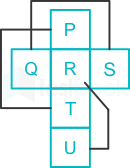
By folding the given paper, which of the following box cannot be made?

  1. ((a))

  2. ((b))

  3. ((c))

  4. ((d))

Show Answer
Answer: ((c))

From the given open Dice:

P and T is the opposite sides.

Q and S is the opposite sides.

R and U is the opposite sides.

And, two opposite sides can not be the adjacent surfaces, so it can't be shows in a dice.

Now,

Option 1) 

→ Can be made, because no opposite sides in the given Dice.

Option 2) 

→ Can be made, because no opposite sides in the given Dice.

Option 3) 

→ Can not be made, because Q and S are the opposite sides.

Option 4) 

→ Can be made, because no opposite sides in the given Dice.

Hence, the correct answer is "Option 3".

18

Pointing to Sujata, Sahil said, "She is the sister of my wife's husband." How is Sujata related to Sahil  ?

  1. ((a))

    Wife

  2. ((b))

    Daughter

  3. ((c))

    Sister

  4. ((d))

    Niece

Show Answer
Answer: ((c))

Sister

The symbol used to draw family tree is given below-

The family tree is-

Here we see that Sujata is sister of Sahil.

Hence, the correct answer is sister.

19

Rani is taller than Neena but not as tall as Bina. Lata is shorter than Rani but taller than Geeta. Who is the tallest among them?

  1. ((a))

    Rani

  2. ((b))

    Bina

  3. ((c))

    Neena

  4. ((d))

    Geeta

Show Answer
Answer: ((b))

Bina

Step1:- Rani is taller than Neena but not as tall as Bina.

Bina > Rani > Neena

Step2:-  Lata is shorter than Rani but taller than Geeta

Bina > Rani > Lata > Geeta

Here, the tallest among them is Bina.

Hence, the correct answer is Bina.

20

Three of the given options are alike in a certain way. However, one option is not like the other three. Select the option which is different from the others.

  1. ((a))

  2. ((b))

  3. ((c))

  4. ((d))

Show Answer
Answer: ((d))

Logic - All of the given letter is consonant except I.

So, the one option is not like the other three is I.

Hence, the correct answer is I.

General Awareness (20 questions)

21

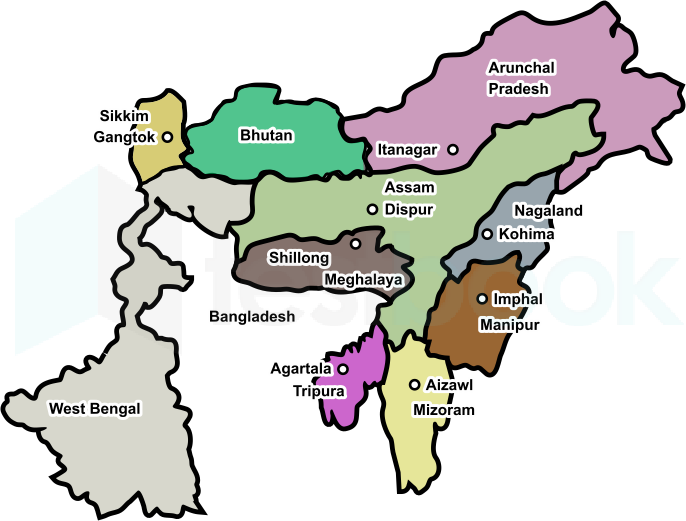
Which is the capital of Meghalaya?

  1. ((a))

    Shillong

  2. ((b))

    Aizawl 

  3. ((c))

    Imphal

  4. ((d))

    Agartala

Show Answer
Answer: ((a))

Shillong

The correct answer is Shillong.

Key Points

  • Capital of Meghalaya is Shillong and during British-era Britishers nicknamed Shillong as Scotland of the East.
  • Before 21st January 1972, Meghalaya was a part of Assam and then the districts of Khasi, Garo and Jaintia hills became the new state Meghalaya.
  • Mawsynram, in Meghalaya, receives the highest rainfall in the world.
  • The Chief Minister of the state is Conrad Sangma and the governor is Tathagata Roy. (May 2020).

Additional Information Aizawl 

  • Aizawl is the capital of Mizoram.
  • Mizoram was granted statehood on 20 February 1987.
  • Aizawl lies just north of Tropic of cancer and is a religious and cultural center of the Mizos.
  • It is situated at an elevation of about 2,950 feet (900m).
  • Mizoram Governor: Dr. Hari Babu Kambhampati.
  • Mizoram Chief minister: Zoramthanga.

Imphal

  • Imphal is the capital of Manipur.
  • It is situated 786 m above sea level.
  • Imphal is known for its scenic landscapes and greenery.

Agartala

  • The capital of Tripura is Agartala.
  • The state of Tripura was formed in the year 1972 as the 9th state.
  • It was a union territory before 1972.
  • It is surrounded by Bangladesh on 3 sides.

F1 Sriram Deepak 06.02.2020 D1

22

Who won the women's singles tennis title in 2021 Australian Open?

  1. ((a))

    Sofia Kenin

  2. ((b))

    Jennifer Brady

  3. ((c))

    Naomi Osaka

  4. ((d))

    Garbine Muguruza

Show Answer
Answer: ((c))

Naomi Osaka

The correct answer is Naomi Osaka.

Key Points

  • Naomi Osaka defeated Jennifer Brady in the final, 6–4, 6–3 to win the women's singles tennis title at the 2021 Australian Open.
  • It was her second Australian Open title and fourth major title overall.
  • Osaka became the first woman since Monica Seles – and first player since Roger Federer – to win her first four Grand Slam finals, and the seventh player in the Open era to save a match point en route to the Australian Open women’s singles title after battling back from the brink against Garbine Muguruza in the fourth round.
23

Recently IOA submitted 'Letter of Intent' to host 2036 Olympics in India. Where is the headquarter of Indian Olympic Association located?

  1. ((a))

    Mumbai

  2. ((b))

    Gujarat

  3. ((c))

    Chennai

  4. ((d))

    New Delhi

Show Answer
Answer: ((d))

New Delhi

The correct answer is New Delhi.

Key Points

  • The headquarter of Indian Olympic Association located in New Delhi.
  • The Indian Olympic Association (IOA) or Indian Olympic Committee (IOC) is the body responsible for selecting athletes to represent India at the Olympic Games, Asian Games and other international athletic meets and for managing the Indian teams at these events.
  • It plays with the name of Team India.
  • It also acts as the Indian Commonwealth Games Association, responsible for selecting athletes to represent India at the Commonwealth Games.
  • The current President of IOA is P. T. Usha.
24

Who among the following is not the son of King Ashoka?

  1. ((a))

    Kunal

  2. ((b))

    Tiwala

  3. ((c))

    Mahinda

  4. ((d))

    Kaivalya

Show Answer
Answer: ((d))

Kaivalya

The correct answer is Kaivalya.

Key Points

  • Kaivalya is not the son of King Ashoka.
  • Ashoka sent missionaries to neighbouring states and even to foreign lands to carry out duties of Buddhism missionaries.
  • He is a Buddhist monk and he is regarded as the one who brought Buddhism to Sri Lanka.
  • Kunala: He was the son of Emperor Ashoka and Queen Padmavat. During the reign of Emperor Ashoka, he also served as Viceroy of Taxila.
  • Tivala: He was the son of Emperor Ashoka and Karuvaki. He is the only son of Ashoka whose name is mentioned in the Queen's edict, along with his mother, Karuvaki.
  • Jalauka: He was one of Emperor Ashoka 's sons. He was mentioned in the Rajtarangini of Kalhana.

Additional Information 

  • Ashoka, the great 
  • The empire that Ashoka ruled was founded by his grandfather, Chandragupta Maurya, more than 2300 years ago.
  • Chandragupta was supported by a wise man named Chanakya or Kautilya. Many of Chanakya’s ideas were written down in a book called the Arthashastra.
  • He was the first ruler who tried to take his message to the people through inscriptions.
  • Most of Ashoka’s inscriptions were in Prakrit and were written in the Brahmi script.
  • Kalinga is the ancient name of coastal Orissa.
  • Ashoka fought a war to conquer Kalinga. However, he was so horrified when he saw the violence and bloodshed that he decided not to fight any more wars.
  • He is the only king in the history of the world who gave up conquest after winning a war.
  • Ashoka’s dhamma did not involve the worship of a god or the performance of a sacrifice.
  • He felt that just as a father tries to teach his children, he had a duty to instruct his subjects.
  • He was also inspired by the teachings of the Buddha.
  • He appointed officials, known as the dhamma mahamatta who went from place to place teaching people about dhamma.
  • Ashoka got his messages inscribed on rocks and pillars, instructing his officials to read his message to those who could not read it themselves.
  • Ashoka also sent messengers to spread ideas about dhamma to other lands, such as Syria, Egypt, Greece and Sri Lanka.
  • He built roads, dug wells, and built rest houses. Besides, he arranged for medical treatment for both human beings and animals.
25

In April 2021, RBI announced that the current repo rate has been kept at 4% what is the reverse repo rate:

  1. ((a))

    3.05%

  2. ((b))

    3.45%

  3. ((c))

    3.55%

  4. ((d))

    3.35%

Show Answer
Answer: ((d))

3.35%

The correct answer is 3.35%.

Key Points

  • Repo rate is the rate at which the central bank of a country (Reserve Bank of I India**) lends money to commercial banks in the event of any shortfall of funds.**
  • Repo rate is used by monetary authorities to control inflation.
  • The RBI has kept the repo rate, the rate at which the RBI lends funds to banks that is unchanged at four percent, and the reverse repo rate - the rate at which RBI borrows from banks – at 3.35 percent.
  • Repo rate is the rate at which the central bank gives loans to commercial banks against government securities.

Additional Information

  • Bank Rate:
  • It is also called the rediscount rate. It is the rate, at which the RBI gives finance to commercial banks.
  • Cash Reserve Ratio (CRR):
  • The RBI (Amendment) Bill, 2006, empowers RBI to prescribe CRR–Cash that banks deposit with the RBI without any floor rate or ceiling rate.
  • Statutory Liquidity Ratio (SLR):
  • It is the ratio of a liquid asset, which all commercial banks have to keep in the form of cash, gold, and unencumbered approved securities equal to not more than 40% of their total demand and time deposit liabilities (ranges is 25‑40%).
  • Repo Rate:
  • It is the rate, at which RBI lends short-term money to the bank against securities.
  • Reverse Repo Rate:
  • It is the rate, at which banks park short-term excess liquidity with the RBI.
  • Open Market Operations (OMOs):
  • Under OMOs, the RBI sells G-securities in the market.
26

MPC is the statutory and institutional framework under the Reserve Bank of India Act, 1934 to maintain price stability. The full form of MPC is:

  1. ((a))

    Money Policy Committee

  2. ((b))

    Monetary Policy Committee

  3. ((c))

    Monetary Private Committee

  4. ((d))

    Major Policy Commission

Show Answer
Answer: ((b))

Monetary Policy Committee

The correct answer is Monetary Policy Committee.

Key Points

  • MPC is the statutory and institutional framework under the Reserve Bank of India Act, 1934 to maintain price stability. The full form of MPC is Monetary Policy Committee.
  • The Monetary Policy Committee (MPC) is constituted by the Central Government under Section 45ZB of the Reserve Bank of India Act, 1934.
  • It determines the policy interest rate with regard to the use of monetary instruments under its control to achieve the goals specified in the RBI Act, 1934.
  • The Monetary Policy rates are fixed by a 6 member committee called The Monetary Policy Committee. Out of the 6 members, 3 are from RBI and the other 3 are appointed by GOI.
  • The MPC is required to meet at least four times a year. Each member of the MPC has one vote, and in the event of an equality of votes, the Governor has a second or casting vote.
  • Instruments of  RBI monetary policy are Repo Rate, Reverse Repo Rate, Liquidity Adjustment Facility (LAF), Marginal Standing Facility (MSF), Bank Rate, Cash Reserve Ratio (CRR), Statutory Liquidity Ratio (SLR), Open Market Operations (OMOs), and Market Stabilisation Scheme (MSS).​

Additional Information

  • Basic Information about other important sections of the RBI Act:
  • ​Section 22: It deals with the right of RBI to issue banknotes.
  • Section 24: It deals with the Denominations of notes issued by RBI.
  • Section 40: It deals with the Transactions in foreign exchange (ForEx)
  • Section 45B: It deals with the power of RBI to collect credit information.
  • Basic Information about Reserve Bank of India (RBI):
  • It is the regulator of the entire banking system in India.
  • Governor: Shaktikanta Das (25th governor).
  • Founded: 1 April 1935 in Kolkata.
  • Headquarter: Mumbai.
27

National Medicinal Plants Board has prepared the e-book ________.

  1. ((a))

    30 Medicinal Plants for 2022 for COVID-19 Care

  2. ((b))

    20 Medicinal Plants for 2021 for COVID-19 Care

  3. ((c))

    15 Medicinal Plants for 2021 for COVID-19 Care

  4. ((d))

    10 Medicinal Plants for 2021 for COVID-19 Care

Show Answer
Answer: ((b))

20 Medicinal Plants for 2021 for COVID-19 Care

The correct answer is 20 Medicinal Plants for 2021 for COVID-19 Care.

Key Points

  • National Medicinal Plants Board has prepared the e-book 20 Medicinal Plants for 2021 for COVID-19 Care.
  • National Medicinal Plants Board (NMPB), has prepared an e-book “20 Medicinal Plants for 2021 for Covid-19 care” to highlight important medicinal plants and their therapeutic properties.
  • These medicinal plants are useful in the prevention & management of Covid-19 along with standard of care. The herbs described in e-book can be used in conditions leading to fever, cough, cold, weakness, pain etc.
  • The botanical names, vernacular names, chemical constituents, therapeutic values, pharmacological principles and important formulations are also recorded in this e-book.
  • This will provide awareness and knowledge to the public on the importance and diversity of medicinal plants that are useful in the prevention & management of Covid-19 along with standard of care.

Additional Information

  • About NMPB:
  • NMPB was established in the year 2000 under the Ministry of AYUSH (Ayurveda, Yoga & Naturopathy, Unani, Siddha & Homoeopathy).
  • NMPB has been established to coordinate with all matters relating to Medicinal Plants and Support Policies and Programs for the growth of trade, export, conservation, and cultivation.
28

A Money Bill can be introduced in the:

  1. ((a))

    Lok Sabha and Rajya Sabha both

  2. ((b))

    Neither Lok Sabha nor Rajya Sabha

  3. ((c))

    Rajya Sabha only

  4. ((d))

    Lok Sabha only

Show Answer
Answer: ((d))

Lok Sabha only

The correct answer is Lok Sabha only.

Key Points

  • Article 110 of the Indian constitution deals with the money bill.
  • A bill dealing with the imposition, abolition remission alteration, or regulation of any tax, regulating the borrowing power of the state or matters related to the consolidated fund and contingency fund is a money bill
  • A money bill can be introduced only in Lok Sabha.
  • The speaker has the power to certify a money bill.
  • Lok Sabha has the all exclusive authority over a money bill.
  • President can not return the money bill for the reconsideration of the parliament.
  • To introduce a money bill in Lok Sabha prior recommendation of the president is required.

Additional Information

  • Lok Sabha is constituted under Article 81 of the Indian constitution.
  • Lok Sabha was constituted on 17th April 1952.
  • Also called the house of people.
  • Rajya Sabha is constituted under article 80 of the Indian constitution.
  • Rajya Sabha was constituted on 3rd April 1952.
  • Also called the house elders.
29

Which is the largest producer of Uranium in India?

  1. ((a))

    Madhya Pradesh

  2. ((b))

    Gujarat

  3. ((c))

    Tamil Nadu

  4. ((d))

    Andhra Pradesh

Show Answer
Answer: ((d))

Andhra Pradesh

The correct answer is Andhra Pradesh.

Key Points

  • The state of Andhra Pradesh is the largest producer of uranium in India.
  • Tummalapalle village located in the Kadapa district of Andhra Pradesh is considered one of the largest uranium reserves in the world.
  • These reserves were officially commissioned in 2012 as they were equipped in catering to 25 percent of the requirement of uranium in the nuclear power plants in India.

Additional Information

  • About Andhra Pradesh:
  • State Animal - Blackbuck.
  • State Bird - Indian roller.
  • Districts - 12.
  • Largest District - Anantapur.
30

Neem plant is very useful for which disease?

  1. ((a))

    Leprosy

  2. ((b))

    Seizure

  3. ((c))

    Vomiting

  4. ((d))

    Soothing and sore throat

Show Answer
Answer: ((a))

Leprosy

The correct answer is Leprosy.

Key Points

  • Neem plant is very useful for Leprosy.
  • The scientific name of Neem is Azadirachta Indica.
  • Neem tree leaves are used for leprosy, diabetes, fever, eye disorders.
  • Some part of the tree is used in making cosmetics and Medicines.

Additional Information Properties of Neem Trees

  • Azadirachta indica is commonly known as neem tree.
  • It is a tree in the mahogany family Meliaceae.
  • Neem Tree can grow up to 30 m tall and 2.5 m in girth.
  • The roots penetrate the soil deeply, at least where the site permits, and, particularly when injured, they produce suckers.
  • The tree is easily propagated - both sexually and vegetatively. It can be planted using seeds, seedlings, saplings, root suckers, or tissue culture.
  • Neem leaf has various properties such as antibacterial, antiviral, antiparasitic, anti-inflammatory, anticarcinogenic, antioxidant, and immune upregulation. It is used in the pharmaceutical industry.
  • Neem oil can be used as a pesticide to control the proliferation of some species of insects and mites.
  • It is also used for skin diseases and digestive system disorders.
  • Neem Oil can also be obtained from solvent extraction of the neem seed and this solvent-extracted oil is mostly used for soap manufacturing.
31

The Indus Valley Civilization was a ______ Age civilization.

  1. ((a))

    Copper

  2. ((b))

    Iron

  3. ((c))

    Bronze

  4. ((d))

    Stone

Show Answer
Answer: ((c))

Bronze

The correct answer is Bronze.

Key Points

  • The Indus Valley Civilisation was a Bronze Age civilization that existed in the northwestern part of South Asia from 2500–1700 BCE.
  • The Bronze Age is characterized by the use of tools made from bronze, an alloy of copper and tin.
  • The civilization is known for its development of techniques in metallurgy and the use of bronze, copper, lead and tin for utensils, sculptures, vessels, and jewellery.

Additional Information 

  • The Indus Valley Civilization was spread from present-day North-East Afghanistan to Pakistan and North-West India. This civilization flourished in the river basins of the Ghaggar-Hakra river and the Indus. Indus valley civilization is one of the four oldest civilizations in the world. It is also known as Harappan Civilization and is well-known for its organized planning based on the grid system. Important facts to be remembered
  • John Marshall was the first researcher to use the term, ‘Indus Valley Civilization’.
  • Indus Valley Civilization spread from the year 2500 – 1750 BC according to radio-carbon dating.
  • The most distinctive feature of the Harappan Civilization was its urbanization.
  • Moreover, sheep and goats, dogs, humped cattle buffalo, and elephants were domesticated in the Indus Valley Civilization.
  • The capital cities are Mohenjodaro and Harappa.
  • The port cities are Sutkagendor, Balakot, Lothal, Allahdino, and Kuntasi.
  • The Indus valley people were well-acquainted with the use of both cotton and wool.
  • Name of the major cities are given below:
  • Mohenjodaro (Sind)-It is located on the right bank of the Indus.
  • Kalibangan (Rajasthan)-It was on the banks of the river Ghaggar river
  • Chanhudaro-It lies on the left bank of the Indus in the south of Mohenjodaro.
  • Lothal- It is located at the head of the Gulf of Cambay.
  • Surkotada (Gujarat)-It is at the head of the Rann of Kutch.
  • Banawali (Haryana)-It was situated on the banks of the now-extinct Sarasvati
  • Dholavira (Gujarat)-It excavated is in the Kutch district
32

Which plant is called the queen of medicine?

  1. ((a))

    Aloe vera

  2. ((b))

    Neem 

  3. ((c))

    Holy basil

  4. ((d))

    Mint

Show Answer
Answer: ((c))

Holy basil

The correct answer is Holy basil.

Key Points

  • Holy basil is called the queen of medicine.
  • Ocimum tenuiflorum, also known as Ocimum sanctum, Tulsi, or Holy Basil from the family Lamiaceae has been described as the “Queen of plants” and the “mother medicine of nature” due to its perceived medicinal qualities.
  • Tulsi is well known for its myriad medicinal properties antibacterial, antifungal, antipyretic, antioxidant, antiseptic and anticancer.
  • Tulsi plant has medicinal values due to the presence of Phenols and Flavonoids.

Confusion Points

  • Penicillin is an antibiotic widely used in the treatment of bacterial infections.
  • Penicillin is called the ''Queen of medicines''.

Additional Information

  • Tulsi leaves are rich in vitamins A, C and K and minerals like calcium, magnesium, phosphorus, iron and potassium.
  • It also has a good amount of protein and fibre.
  • Benefits of Tulsi are 
  • Natural Immunity Booster
  • Reduces Fever (antipyretic) & Pain(analgesic)
  • Reduces Cold, Cough & Other Respiratory Disorders
  • Reduces Stress & Blood Pressure
  • Anti-cancer properties
  • Good for Heart Health
  • Good for Diabetes Patients
  • Useful in Kidney stones & Gouty Arthritis
  • Good for Skin & Hair
33

Bacteria in food grow most rapidly in a temperature range between ______.

  1. ((a))

    20° F and 140° F,

  2. ((b))

    0° F and 140° F,

  3. ((c))

    10° F and 140° F,

  4. ((d))

    30° F and 140° F,

Show Answer
Answer: ((a))

20° F and 140° F,

The correct answer is 20° F and 140° F.

Key Points

  • The “Danger Zone” for food is 40°F – 140°F (≈ 4°C – 60°C).
  • Within this range, bacteria like Salmonella, E. coli, Staphylococcus multiply fastest.
  • Below 40°F (refrigeration) = bacterial growth slows.
  • At 0°F (freezing) = growth stops (but bacteria are not killed).
  • Above 140°F = most bacteria are destroyed.
  • Because 20°F is within the unsafe zone; 0°F and 10°F are too cold for growth; 30°F is also in the zone, but official food-safety danger zone starts at ~40°F, so the closest correct option is 20°F–140°F.

Additional Information

  • There are 2 kinds of bacteria i.e., aerobic and anaerobic.
  • Aerobic bacteria need oxygen to grow, therefore won't multiply in an oxygen-free environment like a vacuum-packaged container.
  • Anaerobic bacteria can solely grow in oxygen-free environments.
  • Food that has been improperly processed then kept at room temperature will be in danger from anaerobic bacteria.
  • An example may be a product containing harmful Clostridium bacteria that has been improperly processed throughout canning, then is consumed with no more preparation or reheating.
34

Ellora is a UNESCO World Heritage Site located in which district of Maharashtra?

  1. ((a))

    Aurangabad

  2. ((b))

    Ahmednagar

  3. ((c))

    Amaravati

  4. ((d))

    Buldhana

Show Answer
Answer: ((a))

Aurangabad

The correct answer is Aurangabad.

Key Points

  • Ellora Caves, a UNESCO World Heritage Site, are located in Charanadri Hills, Aurangabad district of Maharastra.
  • There are over 100 caves at the site, all excavated from the basalt cliffs in the Charanandri Hills, 34 of which are open to the public.
  • It is one of the largest rock-cut Hindu temple cave complexes in the world, with artwork dating from the period 600–1000 CE.
  • Cave 16 features the largest single monolithic rock excavation in the world, the Kailash temple, a chariot-shaped monument dedicated to the god Shiva.
  • All of the Ellora monuments were built during the Rashtrakuta dynasty.
  • These consist of 17 Hindu, 12 Buddhist, and 5 Jain caves.

Additional Information 

  • UNESCO World Heritage Sites in India:
Name of SitesLocation
Ajanta CavesMaharashtra
Ellora CavesMaharashtra
Agra FortAgra
Taj MahalAgra
Sun TempleOrissa
Mahabalipuram MonumentsTamil Nadu
Kaziranga National ParkAssam
Keoladeo
National Park
Rajasthan
Manas
Wildlife Sanctuary
Assam
Churches and
Convents of Goa
Goa
Monuments
of Khajuraho
Madhya
Pradesh
Monuments
of Hampi
Karnataka
Fatehpur SikriAgra
Elephanta CavesMaharashtra
Great Living
Chola Temples
Tamil Nadu
Pattadakal
Monuments
Karnataka
Sundarbans
National Park
West Bengal
Nanda Devi &
Valley of Flowers
National Park
Uttarakhand
Monuments of
Buddha
Sanchi,
Madhya
Pradesh
Humayun’s TombDelhi
Qutub Minar and
its Monuments
Delhi
Mountain
Railways
of Darjeeling,
Kalka
Shimla & Nilgiri
Darjeeling
Mahabodhi
Temple
Bihar
Bhimbetka Rock SheltersMadhya Pradesh
Chhatrapati
Shivaji Terminus
Maharashtra
ChampanerPavagadh
Archaeological
Park
Gujarat
Red FortDelhi
Jantar MantarDelhi
Western GhatsKarnataka,
Kerala,
Tamil Nadu,
Maharashtra
Hill FortsRajasthan
Rani Ki Vav
(The Queen’s
Stepwell)
Gujarat
Great Himalayan
National Park
Himachal
Pradesh
NalandaBihar
Khangchendzonga
National Park
Sikkim
Architectural Work
of Le Corbusier
(Capitol Complex)
Chandigarh
The Historic CityAhmedabad
Victorian Gothic
and Art Deco
Ensembles
Mumbai
The Pink CityJaipur
Kakatiya
Rudreshwara
(Ramappa)
Temple
Telangana
DholaviraGujarat
35

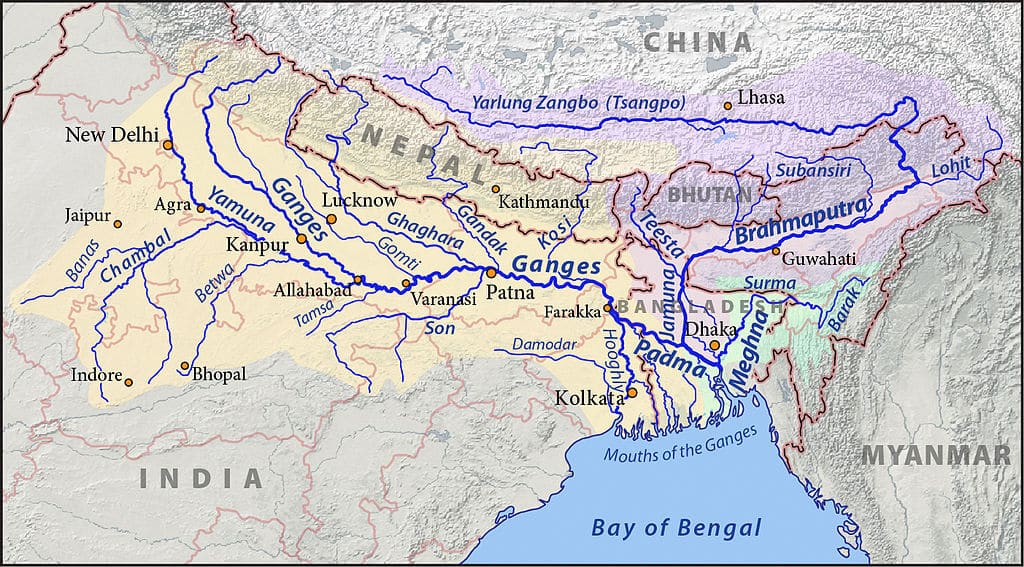
Which river is also known as the Red River?

  1. ((a))

    Narmada

  2. ((b))

    Tapi

  3. ((c))

    Krishna

  4. ((d))

    Brahmaputra

Show Answer
Answer: ((d))

Brahmaputra

The correct answer is Brahmaputra.

Key Points

  • The Brahmaputra is known as the Red River in India.
  • Brahmaputra river turns blood-red for 3 days in June every year and this event is followed by a grand Ambubachi Mela celebration for the goddess Shakti.

Additional Information 

  • The Brahmaputra is one of the major rivers in the Himalayan river system.
  • It originates from the Chemayundung glacier near Manasarover lake in Tibet.
  • The Brahmaputra is the Indian river that occupies the maximum volume of water.
  • In Bangladesh, Brahmaputra is known by the name Jamuna.
  • The Yarlung Tsangpo is the Tibetan name for the upper course of Brahmaputra.
  • In Arunachal Pradesh, Brahmaputra is known by the name Dihang.

brahmaputra-river-system

36

Which article of the Indian Constitution deals with the process of impeachment of the President?

  1. ((a))

    Article 71 

  2. ((b))

    Article 51

  3. ((c))

    Article 55

  4. ((d))

    Article 61

Show Answer
Answer: ((d))

Article 61

The correct answer is Article 61.

Key Points

  • Article 61 of the Indian Constitution provides the Procedure for impeachment of the President Of India.
  • The President may be removed from office before the completion of this term through impeachment for violating the Constitution of India by the Parliament of India.
  • The process of impeachment of the President of India can be initiated in either house of the parliament and such resolution has to be passed by a majority of not less than two-thirds of the total membership of the House.
  • President is elected for a term of five years.

Additional Information

  • President of India:
  • The Indian President is the head of the state and he is also called the first citizen of India.
  • He is a part of the Union Executive, provisions of which are dealt with Article 52-78 including articles related to President (Article 52-62).
  • He is the first citizen of India and is a symbol of solidarity, unity, and integrity of the nation.
  • He is a part of the Union Executive along with the Vice-President, Prime Minister, Council of Ministers, and Attorney-General of India.
  • Qualifications of the President:
  • He should be an Indian Citizen.
  • His age should be a minimum of 35 years.
  • He should qualify the conditions to be elected as a member of the Lok Sabha.
  • He should not hold any office of profit under the central government, state government, or any public authority.
37

Who is the most recent Jnanpith Award recipient in 2021 who was awarded for the year 2020?

  1. ((a))

    Akkitham Achuthan Namboothiri Somy Suryavanshi

  2. ((b))

    Nilmani Phookan

  3. ((c))

    Dr Rajakumar Samagra Charitre

  4. ((d))

    Sanjana Sachdeva

Show Answer
Answer: ((b))

Nilmani Phookan

The correct answer is Nilmani Phookan.

Key Points

  • Nilmani Phookan Jr. was awarded the 56th Jnanpith Award for 2020.
  • Nilmani Phookan Jr’s contribution to Indian literature:
  • Phookan is based out of Guwahati.
  • He was awarded the Padma Shri in 1990 and received the Sahitya Akademi Fellowship in 2002.
  • Written poems such as Surya Henu Nami Ahe Ei Nodiyedi, Gulapi Jamur Lagna, and Kobita.

623aec2628ad5f960d2aca61 16496863908671

Additional Information 

  • Damodar Mauzo has won the 57th Jnanpith Award for 2021.
  • He is notable for his novels, such as Karmelin, and Tsunami Simon, and short stories, such as Teresa’s Man and Other Stories from Goa.
38

In which Veda is Shvetashvatara Upanishad embedded?

  1. ((a))

    Atharvaveda

  2. ((b))

    Rigveda

  3. ((c))

    Samveda

  4. ((d))

    Yajurveda

Show Answer
Answer: ((d))

Yajurveda

The correct answer is Yajurveda.

Key Points

  • The Shvetashvatara Upanishad is an ancient Sanskrit text embedded in the Yajurveda.
  • It is listed as number 14 in the Muktika canon of 108 Upanishads. The Upanishad contains 113 mantras or verses in six chapters.

Additional Information

  • Rigveda:
  • The oldest Veda is the Rigveda. It has 1028 hymns called ‘Suktas’ and is a collection of 10 books called ‘Mandalas.’
  • It is the oldest form of Veda and the oldest known Vedic Sanskrit text(1800 – 1100 BCE)
  • The meaning of the word ‘Rigveda’ is Praise Knowledge
  • It has 10600 verses
  • Samaveda:
  • Known as the Veda of melodies and chants, Samaveda dates back to 1200-800 BCE. This Veda is related to public worship.
  • There are 1549 verses (except 75 verses, all have been taken from Rigveda)
  • There are two Upanishads embedded in Samaveda – Chandogya Upanishad and Kena Upanishad
  • The Samaveda is considered the root of Indian classical music and dance
  • It is considered as the storehouse of the melodious chants.
  • Atharvaveda:
  • Stands to mean a tatpurusha compound of Atharvan, an ancient sage, and knowledge (atharvan+knowledge), it dates back to 1000-800 BCE.
  • The daily procedures of life are very well enumerated in this Veda
  • It has 730 hymns/suktas, 6000 mantras, and 20 books
  • Paippalada and the Saunakiya are two surviving recensions of Atharvaveda
  • Called a Veda of magical formulas, it includes three primary Upanishads – Mundaka Upanishad, the Mandukya Upanishad, and the Prashna Upanishad.
  • Yajurveda:
  • Stands to mean ‘Worship Knowledge’, Yajurveda dates back to 1100-800 BCE; corresponding with Samaveda.
  • It compiles ritual-offering mantras/chants. These chants were offered by the priest alongside a person who used to perform a ritual (in most cases yajna fire.)
  • It has two types – Krishna (Black/Dark) & Shukla (White/Bright)
  • Krishna Yajurveda has an un-arranged, unclear, motley collection of verses
  • Shukla Yajurveda has arranged and clear verses.
39

Which is the largest temple in Bharmour that is a post-Gupta era Hindu temple in Himachal Pradesh?

  1. ((a))

    Sankat Mochan Temple

  2. ((b))

    Vashishtha Temple

  3. ((c))

    Lakshana Devi Temple

  4. ((d))

    Baba Balak Nath Temple

Show Answer
Answer: ((c))

Lakshana Devi Temple

The correct answer is Lakshana Devi Temple.

Key Points

  • Lakshana Devi Temple is the largest temple in Bharmour that is a post-Gupta era Hindu temple in Himachal Pradesh.
  • It is dedicated to Durga in her Mahishasura-mardini form.
  • It is dated to the second half of the 7th-century, and is in part one of the oldest surviving wooden temples in India.

Additional Information

  • Sankat Mochan Hanuman Temple is a Hindu temple in Varanasi, Uttar Pradesh, India.
  • Vashisht Temple, located in Vashisht village near Manali, is famous for sulphurous hot water springs, whose water is believed to have great healing powers.
  • The Baba Balak Nath Temple is situated at the village of "Chakmoh" in the district of Hamirpur on the hilltop.
40

The Nutmeg's Curse: Parables for a Planet in Crisis By which author wrote this?

  1. ((a))

    Amitabh Ghosh

  2. ((b))

    Ajay Goyal

  3. ((c))

    Amit Gupta

  4. ((d))

    Amrita Rao

Show Answer
Answer: ((a))

Amitabh Ghosh

The correct answer is Amitabh Ghosh.

Key Points

  • The author of The Nutmeg's Curse: Parables for a Planet in Crisis is Amitabh Ghosh.
  • Amitav Ghosh is a famous Indian writer who has won the Jnanpith Award for his contribution in the field of literature.
  • Sea of Poppies, The Hungry Tide and River of Smoke are all written by Amitav Ghosh.

Additional Information

  • Ajay Goyal is a global entrepreneur, investor, philanthropist and writer.
  • Amit Gupta is an Indian playback singer and Bollywood performer.
  • He is known for the song "Radhe Radhe" from the 2019 film Dream Girl.
  • Amrita Rao, is an Indian actress who is known primarily for her work in Hindi films.

Arithmetic Ability (20 questions)

41

3x+2y3x2y {3x + 2y\over3x - 2y } = 1713 {17 \over 13} then (x2 + y2) : (x2 - y2) = ?

  1. ((a))

    12 ∶ 13 

  2. ((b))

    13 ∶ 5

  3. ((c))

    12 ∶ 5

  4. ((d))

    13 ∶ 12

Show Answer
Answer: ((d))

13 ∶ 12

Explanation:

13(3x + 2y) = 17(3x - 2y)

⇒ 39x + 26y = 51x - 34y

⇒ 34y + 26y = 51x - 39x

⇒ 60y = 12x

⇒ x = 5y

Now, (x2 + y2) : (x2 - y2) = ?

(25y2 + y2) : (25y2 - y2) = 26y2 : 24y2 = 13 : 12

Hence, The Correct Option is 4.

42

A watch is sold at a loss of 10%. Had it been sold for Rs.140 more, there would have been a profit of 4%. What is cost price?

  1. ((a))

    Rs 960 

  2. ((b))

    Rs 1160

  3. ((c))

    Rs 1060

  4. ((d))

    Rs 1000

Show Answer
Answer: ((d))

Rs 1000

Given:

A watch is sold at a loss of 10%. Had it been sold for Rs.140 more, there would have been a profit of 4%.

Formula Used:

Profit% = Profit/Cost Price × 100%

Loss% = Loss/Cost Price × 100%

Selling Price = CP × (100 + Profit%)/100 or CP × (100 - loss%)/100

Calculation:

Let cost price of watch = Rs. x

Selling Price = CP × (100 + Profit%)/100 or CP × (100 - loss%)/100

⇒ 104x/100 - 90x/100 = 140

⇒ 104x - 90x = 140 × 100

⇒ 14x = 1400 

x = Rs 1000

∴ Cost Price is Rs. 1000

43

A person traveling in a train counts 31 electric poles in one minute. If the distance between the poles is 50 m, then at what speed is the train traveling?​

  1. ((a))

    90kmph 

  2. ((b))

    60kmph

  3. ((c))

    70kmph

  4. ((d))

    80kmph

Show Answer
Answer: ((a))

90kmph 

Given:

Number of electric poles = 31

Distance between the poles = 50 m

Time = 1 minute

Formula Used:

Speed = Distance/time

m/sec = 18/5 kmph

Calculation:

Distance covered in passing 31 poles = (31 - 1) ×  50 = 1500

Time = 1 min = 60 sec

Speed = distance/time = 1500/60 = 25m/sec 

⇒ 25 ×  18/5 kmph = 5 ×  18 kmph = 90kmph

∴ The speed of train is 90 kmph

44

A and B can do a piece of work in 36 days, B and C in 45 days and C and A in 60 days. How much time will B alone take to complete the work?

  1. ((a))

    140 days 

  2. ((b))

    120 days

  3. ((c))

    60 days

  4. ((d))

    130 days

Show Answer
Answer: ((c))

60 days

Given:

A + B can do a piece of work in 36 days,

B + C can do in 45 days

C + A can do in 60 days.

Formula Used:

If A complete a work in D days than per day work of A = 1/D

Calculation:

Per day work of ( A + B) = 1/36

Per day work of (B + C) = 1/45

Per day work of (C + A) = 1/60

Add all equation,

⇒ 2(A + B + C) = 1/36 + 1/45 + 1/60 = (15 + 12 + 9)/540 = 36/540

A + B + C = 36 /540 × 2 = 1/30

Per day work of A + B + C = 1/30

Per day work of B = Per day work of (A + B + C) - Per day work of (C + A) = 1/30 - 1/60 = (2 -1)/60 = 1/60

∴ B alone can complete work in 60 days.

45

5% of 3 ÷ 5 = ______.​

  1. ((a))

    0.2 

  2. ((b))

    0.02 

  3. ((c))

    0.03 

  4. ((d))

    0.3 

Show Answer
Answer: ((c))

0.03 

Given:

⇒ 5% of 3 ÷ 5

Concept Used:

We have to follow the BODMAS rule→

C:\Users\Testbook\Desktop\dasdsasfdertet5342423.PNG


Calculation:

 5% of 3 ÷ 5 = 5/100 × 3 ÷ 5

⇒ 5 × 3/100 × 1/5 = 3/100 = 0.03

∴ 5% of 3 ÷ 5 is equal to 0.03.

46

Which of the following number is divisible by 9?

  1. ((a))

    389207  

  2. ((b))

    873423 

  3. ((c))

    120458

  4. ((d))

    450453 

Show Answer
Answer: ((b))

873423 

Given:

Given numbers are5872Y.

Concept Used:

Divisibility rule of 9:-

A number is divisible by 9 only when sum of all its digits is also divisible by 9.

Calculation: 

 389207, Sum of digits = 3 + 8 + 9 + 2 + 0 + 7 = 29, which is not divisible by 9.

⇒ 873423, Sum of digits = 8 + 7 + 3 + 4 + 2 + 3 = 27, which is divisible by 9.

⇒ 120458 , Sum of digits = 1 + 2 = 0 + 4 + 5 + 8 = 20, which is nor divisible by 9.

⇒ 450453, Sum of digits = 4 + 5 + 0 + 4 + 5 + 3 = 29, which is not divisible by 9

∴ The number 873423 is divisible by 9.

47

Two successive discounts of 40% and 20% are equivalent to a single discount of ______.​

  1. ((a))

    48%

  2. ((b))

    52%

  3. ((c))

    60%

  4. ((d))

    56%

Show Answer
Answer: ((b))

52%

Given:

Discount1 (D1) = 40%

Discount1 (D2) = 20%

Formula Used:

If two successive discounts are given as D1 and D2,

their equivalent single discount = D1 + D2 - D1D2/100%

Calculation:

If two successive discounts are given as D1 and D2,

their equivalent single discount = D1 + D2 - D1D2/100%

⇒ 40% + 20% = 40 × 20/100% = 60% - 800/100% = 60% - 8% = 52%

∴ Two successive discounts of 40% and 20% are equivalent to a single discount of 52%.

48

A man covered a distance of 45 km in 7 hours. He traveled partly on foot at 5 km/hr and partly on cycle at 12 km/hr. What is the distance covered on foot?

  1. ((a))

    approx.28km 

  2. ((b))

    approx.32km 

  3. ((c))

    approx.30km 

  4. ((d))

    approx.25km 

Show Answer
Answer: ((a))

approx.28km 

Shortcut Trick

Apply Alligation on Speeds to find the Time Ratio: Foot (5) vs Cycle (12) with average (45/7).

Time ratio = (12 − 45/7) : (45/7 − 5) ⇒ (84 − 45)/7 : (45 − 35)/7 = 39 : 10.

Total time units = 39 + 10 = 49 units, which corresponds to 7 hours.

Time on foot = (39 ÷ 49) × 7 = 39/7 hours.

Distance on foot = Speed × Time = 5 × (39/7) = 195/7 ≈ 27.86 km.

∴ The correct answer is approx.28km.

Alternate Method

Given:

Total Distance = 45 km

Total Time = 7 hours

Speed on Foot (v1) = 5 km/hr

Speed on Cycle (v2) = 12 km/hr

Calculations:

Let the time spent traveling on foot be 't' hours.

Then, the time spent traveling on cycle = (7 − t) hours.

⇒ Total Distance = (Speedfoot × Timefoot) + (Speedcycle × Timecycle)

⇒ 45 = 5 × t + 12 × (7 − t)

⇒ 45 = 5t + 84 − 12t

⇒ 45 − 84 = −7t

⇒ −39 = −7t

⇒ t = 39/7 hours

⇒ Distance covered on foot = Speedfoot × t

⇒ Distance = 5 × (39/7) = 195/7

⇒ Distance ≈ 27.857 km

∴ The correct answer is approx.28km.

Additional Information

Average Speed

Average speed is defined as the total distance traveled divided by the total time taken: Average Speed = Total Distance ÷ Total Time.

Alligation Method for Time and Distance

When alligation is applied to speeds, the resulting ratio is the ratio of time taken for each part of the journey.

Relationship between Speed and Time

For a constant distance, speed is inversely proportional to time (S ∝ 1/T). For constant time, distance is directly proportional to speed (D ∝ S).

49

Find the compound interest on Rs 24000 at 10% per annum for 2 years, compounded annually.

  1. ((a))

    Rs 4040 

  2. ((b))

    Rs 7040

  3. ((c))

    Rs 6040

  4. ((d))

    5040 रुपए

Show Answer
Answer: ((d))

5040 रुपए

Given:

Principal= 24000 Rs.

Rate of interest = 10% per annum

Time = 2 years

Formula Used:

Compound Interest = P[(1 + r/100)n - 1]

Calculation:

Compound Interest = P[(1 + r/100)n - 1]

⇒ 24000[(1 + 10/100)2 - 1]

⇒ 24000[(1 + 1/10)- 1]

⇒ 24000[(11/10)2 - 1]

⇒ 24000[(121/100) - 1]

⇒ 24000 × 21/100 = 240 × 21 = Rs 5040

∴ Compound Interest is Rs. 5040.

50

If 51is divided by 17, then remainder will be _?

  1. ((a))

  2. ((b))

    12 

  3. ((c))

  4. ((d))

Show Answer
Answer: ((c))

Explanation:

 51 is a multiple of 17, namely 51 = 17 × 3. 

(51)3 = (17 × 3)3 = 173 × 33 = 4913 × 27 = 132651.

When you divide 132651 by 17,

since the original number (51) is a multiple of 17,

the entire cube will also be a multiple of 17,

hence, the remainder will be 0.

Hence, The Correct Option is 3.

51

On a religious day 150 men took a dip in a pond 60 m long and 48 m wide. If the displacement of water by each person is 4 m3, then the rise in the water level of the pond is ______.

  1. ((a))

    0.8 m (approx)

  2. ((b))

    0.4 m (approx)

  3. ((c))

    0.6 m (approx)

  4. ((d))

    0.2 m (approx)

Show Answer
Answer: ((d))

0.2 m (approx)

Given:

Number of men = 150

Displacement of water by each person = 4 m3

Length of Pond = 60 m

Width of Pond = 48 m

Formula Used:

Volume of water in pond = Total volume of water displaced

Volume of pond = lbh

Calculation:

Volume of water in pond = Total volume of water displaced

lbh = number of men × water displaced by 1 man

⇒ 60 × 48 × h = 150 × 4

⇒ (5 × 4)/(2 × 48) = 5/24 = 0.2083m ≈ 0.2 m

∴ Rise in the water level of the pond is 0.2 m

52

If x% of 9 = y% of 21, then (x + y) ∶ y = ______.

  1. ((a))

    5 ∶ 3

  2. ((b))

    10 ∶ 3

  3. ((c))

    2 ∶ 3

  4. ((d))

    7 ∶ 3

Show Answer
Answer: ((b))

10 ∶ 3

Given:

x% of 9 = y% of 21

Formula Used:

Componendo-Dividendo Rule :-

If:ab=cd;;a+bab=c+dcdIf: \frac{a}{b}=\frac{c}{d};\Rightarrow ;\frac{a+b}{a-b}=\frac{c+d}{c-d}

Calculation:

x% of 9 = y% of 21

⇒ x%/y% = 21/9

⇒ x/y = 7/3

(x + y)/y = (7 + 3)/3 = 10/3

∴ (x + y) : y = 10 : 3

53

The length of the longest stick that we can keep in a room whose dimensions are 10 m × 10 m × 10 m is ______.

  1. ((a))

    30 m 

  2. ((b))

    17 m 

  3. ((c))

    17.32 m 

  4. ((d))

    30.32 m 

Show Answer
Answer: ((c))

17.32 m 

Given:

Dimensions of room = 10 m × 10 m × 10 m

Formula Used:

The length of the longest stick = Diagonal of room

Diagonal of Cube =  a√3

Calculation:

As all sides of room are equal, so it forms a cube.

Diagonal of Cube = a√3

⇒ 10√3 

⇒ 10 × 1.732

⇒ 17.32 m

\therefore  The length of the longest stick that we can keep in a room whose dimensions are 10 m × 10 m × 10 m is 17.32 .

54

11449 - 8649 + 449 = x2, then x is ______.

  1. ((a))

    47 

  2. ((b))

    87 

  3. ((c))

    57 

  4. ((d))

    67 

Show Answer
Answer: ((c))

57 

Given:

11449 - 8649 + 449 = x2

Calculation:

11449 - 8649 + 449 = x2

⇒ x2 = 11,898 - 8649 = 3249 

x2 = 57 × 57 

x = 57

∴ x = 57 is correct answer.

55

[(3/5)(1 - 2x)]1/3 = 243/3125, then x is _

  1. ((a))

    -3 

  2. ((b))

    -4.5 

  3. ((c))

    -7 

  4. ((d))

    -5 

Show Answer
Answer: ((c))

-7 

Explanation:

[(3/5)(1 - 2x)]1/3 = 243/3125

⇒  (3/5)(1 - 2x)/3 = (3/5)5

Comparing the Powers 

⇒ (1 - 2x)/3 = 5 

⇒ 1 - 2x = 15

⇒ 1 - 15 = 2x 

⇒ -14 = 2x, x = -7

Hence, The Correct option is 3.

56

The table shows the sales of four companies P, Q, R, and S (in Crore Rupees) in the year 2019-20. If the sales of P and Q increase by 20% in the next year, then the ratio of their sales next year is ____.

Company NameSales In Rs.
P800 Crores
Q650 Crores
R900 Crores
S750 Crores
  1. ((a))

    13 ∶ 17 

  2. ((b))

    15 ∶ 13

  3. ((c))

    16 ∶ 13

  4. ((d))

    13 ∶ 15

Show Answer
Answer: ((c))

16 ∶ 13

Given:

Company NameSales In Rs.
P800 Crores
Q650 Crores
R900 Crores
S750 Crores


Formula Used:

If R% is increased in a number, then

Increased number = N × (100 + R)/100

Calculation:

Increased sale of P = 800  × 120/100 = 8 × 120 = 960

Increased sale of Q = 650 × 120/100 = 780

Ratio of increased sales of P and Q,

P : Q = 960 : 780 = 16 : 13

The ratio of P & Q 's sales next year is 16 : 13 .

57

The bar graph given below shows the production of tea by two states in different years.

J1 = Average production of tea per year by S2 

J2 = Sum of production of tea by S1 in all the years

What is the value of (J2 − J1)?

  1. ((a))

    185

  2. ((b))

    175

  3. ((c))

    165

  4. ((d))

    195

Show Answer
Answer: ((b))

175

Given:

Formula Used:

Average = sum of all observations/total number of observations

Calculation:

YearS1S2
Y17080
Y23060
Y35050
Y44020
Y51025
Y6155
TOTAL215240


J1 = Average production of tea per year by S2 = 240/6 = 40

J2 = Sum of production of tea by S1 in all the years = 215

J2 - J1 = 215 - 40 = 175

∴ The value of J2 - J1 = 175

58

In an exam, 44% of the students failed in quant and 38% of the students failed in oral while 32% of the students failed in both subjects. If 350 students passed in both the subjects, how many students appeared to appear for the exam? ​

  1. ((a))

    700 

  2. ((b))

    900 

  3. ((c))

    800 

  4. ((d))

    600 

Show Answer
Answer: ((a))

700 

Given:

Student failed in quant = 44%

Student failed in oral = 38%

Student failed in both subjects = 32%

Number of students that passed in both = 350

Formula Used:

Students failed in either in quant or in oral or in both = 

(% of Students failed in quant)+(% of Students failed in oral) - (% of Students failed in both)

Calculation:

Student failed in either in quant or in oral or in both 

⇒ 44% + 38% - 32% = 50%

Passed students = 100% - 50% = 50%

⇒ 50% = 350

⇒ 100% = 350 × 2 = 700

∴ Total number of students appeared in exam = 700

59

293173123 36 {29^3 - 17^3 - 12^3 \ \over 36 }  + 7 = _?

  1. ((a))

    493 

  2. ((b))

    400 

  3. ((c))

    593 

  4. ((d))

    500 

Show Answer
Answer: ((d))

500 

Calculations:

{(293 - 173 - 123) / 36} + 7 

This can be simplified in the following way:

293 = 24389

173 = 4913

123 = 1728

⇒ (24389 - 4913 - 1728) / 36 + 7

⇒ 17748 / 36 + 7

⇒ 493.5555... + 7

⇒ 493 + 7 = 500

Hence, The Correct Answer is 4.

60

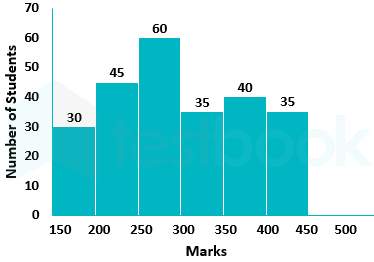
Study the histogram that shows the marks obtained by students in an examination and answer the question that follows.

By what percentage is the number of students who obtained marks between 200 and 300 more than the number of students who obtained 350 or more marks?

  1. ((a))

    55%

  2. ((b))

    25%

  3. ((c))

    30%

  4. ((d))

    40%

Show Answer
Answer: ((d))

40%

Given:

No of the students who obtained marks between 200 and 300

⇒ 45 + 60 = 105 

No of students who obtained marks between 350 or more marks

⇒ 40 + 35 = 75

Calculation:

⇒ The required percent = (105 - 75)/75 × 100

⇒ 30/75 × 100 

⇒ 40%

∴ The answer is 40%.

General Hindi (20 questions)

61

निम्नलिखित प्रश्न में, चार विकल्पों में से, उस सही विकल्प का चयन करें जो वाक्यांशों के लिए शब्द का विकल्प हो।

फल-फूल और मांस सब कुछ खाने वाला

  1. ((a))

    वनचर 

  2. ((b))

    सर्वाहारी 

  3. ((c))

    मांसाहारी 

  4. ((d))

    शाकाहारी 

Show Answer
Answer: ((b))

सर्वाहारी 

सही उत्तर सर्वाहारी है।

Key Points

  • दिए गए विकल्पों में से ‘फल-फूल और मांस सब कुछ खाने वाले’ के लिए एक शब्द सर्वाहारी है। अन्य विकल्प असंगत है। अतः सही विकल्प सर्वाहारी है।
  • अन्य विकल्प
विकल्पअनेक शब्द
मांसाहारीजो जीव मांस का भी सेवन करते है।
अल्पहारीजिसका आहार सिमित हो।
शाकाहारीफल-फूल खाने वाला।
62

निम्नलिखित प्रश्न में, चार विकल्पों में से, उस विकल्प का चयन करें जो विलोम शब्द का सबसे अच्छा विकल्प है।

दाता

  1. ((a))

    व्यय 

  2. ((b))

    प्रकट 

  3. ((c))

    याचक 

  4. ((d))

    प्रेम 

Show Answer
Answer: ((c))

याचक 

'दाता' का विलोम 'याचक' है। 

Key Points 

  • 'दाता' का अर्थ 'देने वाला' है।
  • 'याचक' का अर्थ 'माँगने वाला' है।

Additional Information 

शब्दपरिभाषाउदाहरण
विलोम/विपरीतार्थकविपरीत (उल्टा) अर्थ बताने वाले शब्दों को विलोम शब्द कहते हैं।1. आय - व्यय 2. प्रकट - अप्रकट 3. प्रेम - घृणा
63

निम्नलिखित प्रश्न में, चार विकल्पों में से, उस विकल्प का चयन करें जो शुद्ध वाक्य का सबसे अच्छा विकल्प है।

  1. ((a))

    भारत भूमि हमका माता है और हम उसका पुत्र हैं।

  2. ((b))

    भारत भूमि हमारी माता है और हम उसके पुत्र हैं।

  3. ((c))

    भारत भूमि हमारा माता है और हम उसके पुत्र हैं।

  4. ((d))

    भारत भूमि हम सबका माता है और हम उसका पुत्र हैं।

Show Answer
Answer: ((b))

भारत भूमि हमारी माता है और हम उसके पुत्र हैं।

दिए गए विकल्पों में से विकल्प 2 'भारत भूमि हमारी माता है और हम उसके पुत्र हैं।' सही है। अन्य विकल्प इसके लिए उचित नही हैं।

Key Points 

  • दिए गए विकल्पों में से शुद्ध वाक्य का सबसे अच्छा विकल्प है  'भारत भूमि हमारी माता है और हम उसके पुत्र हैं।'
  • अन्य विकल्पों में शब्द क्रम एवं व्याकरणिक दोष है।

Additional Information 

वाक्य सम्प्रेषण की सबसे महत्वपूर्ण और सार्थक इकाई होती है। अतः वाक्यगत अशुद्धियाँ को शुद्ध रूप में लिखना सम्प्रेषण को अधिक सरल बनाता है। वाक्य में, संज्ञा, सर्वनाम, लिंग, वचन, क्रिया-विशेषण, क्रिया, विशेषण आदि संबंधी अशुद्धियाँ  हो सकती हैं।

64

निम्नलिखित प्रश्न में, चार विकल्पों में से, उस विकल्प का चयन करें जो क्रिया के भेद वाला सही विकल्प हो।

मालिक नौकर से सफाई करवाता है।

  1. ((a))

    संयुक्त क्रिया 

  2. ((b))

    प्रेरणार्थक क्रिया 

  3. ((c))

    पूर्वकालिक क्रिया 

  4. ((d))

    सामान्य क्रिया 

Show Answer
Answer: ((b))

प्रेरणार्थक क्रिया 

'मालिक नौकर से सफाई करवाता है। ’ वाक्य में प्रेरणार्थक क्रिया है। अतः विकल्प 2 इसका सही उत्तर है।

Key Points 

  • उपर्युक्त वाक्य में दो कर्ता हैं। पहला कर्ता 'मालिक’ है तो दूसरा कर्ता उसका ‘नौकर’
  • देखा जाए तो काम नौकर ही कर रहा है लेकिन फिर भी मालिक को कर्ता माना जा रहा है क्योंकि वह नौकर को काम करने के लिए प्रेरित कर रहा है।
  • जैसा कि हम जानते हैं कि जब एक ही वाक्य में दो कर्ता होते हैं एवं एक कर्ता दूसरे कर्ता को कोई काम करने के लिए प्रेरित करता है तब यह प्रेरणार्थक क्रिया के उदाहरण के अंतर्गत आता है।
प्रेरणार्थक  क्रियाजिस क्रिया से ज्ञान हो कि कर्ता स्वयं कार्य को न करके किसी अन्य को कार्य करने की प्रेरणा देता है वह प्रेरणार्थक क्रिया कहलाती है। जैसे - माता  पिता अपने बच्चो के कार्य करवाते है।

अन्य विकल्प -

क्रियापरिभाषा
पूर्वकालिक क्रियाजो क्रिया एक क्रिया को समाप्त कर तत्काल किसी दूसरी क्रिया को आरम्भ करता है तब पहली क्रिया पूर्णकालिक क्रिया कहलाती है, जैसे- कृष्णा नहाकर स्कूल जाएगा।
सामान्य क्रियाजिस क्रिया में सामान्य रूप से कार्य हो रहा हो वह सामान्य क्रिया कहलाती है। जैसे- राधा नाच रही है;बच्चा दूध पी रहा है।
अपूर्ण क्रियाजिस क्रिया में कार्य पूर्ण नहीं होता है वह अपूर्ण क्रिया कहलाती है। जैसे- वह खाना बना रही है।
65

निम्नलिखित प्रश्न में, चार विकल्पों में, से, उस विकल्प का चयन करें जो दी गई मुहावरे का सही अर्थ वाला विकल्प है। 

दो-दो हाथ करना -

  1. ((a))

    आश्चर्यचकित होना 

  2. ((b))

    निराश होना 

  3. ((c))

    अनुभवहीन होना 

  4. ((d))

    अंतिम निर्णय के लिए तैयार होना 

Show Answer
Answer: ((d))

अंतिम निर्णय के लिए तैयार होना 

दिए गए विकल्पों में सही उत्तर विकल्प 4 ‘अंतिम निर्णय के लिए तैयार होना’ होगा। अन्य विकल्प इसके अनुचित उत्तर हैं।

मुहावरा-  ‘दो-दो हाथ करना’ अर्थ – अंतिम निर्णय के लिए तैयार होना।

वाक्य- कक्षा में दो विद्यार्थियों ने अध्यापक के ज���ते ही दो-दो हाथ कर लिए जिसके कारण आज उन्हें दण्ड मिला।

नोट- शाब्दिक रूप से मुहावरा शब्द का अर्थ अभ्यास होता है।

अन्य विकल्प:

अर्थमुहावरा
दिल टुकड़े-टुकड़े होनानिराश होना।
दांतों तले उंगली दबानाआश्चर्यचकित होना।
अंडे का शहजादाअनुभवहीन होना।
66

निम्नलिखित प्रश्न में, चार विकल्पों में से, उस विकल्प का चयन करें जो दिए गए वाक्य के लिए पक्ष के भेद का सबसे अच्छा विकल्प है।

वह दिन भर मेहनत करता था तब जाकर घर खरीद सका!

  1. ((a))

    नित्यताद्योतक पक्ष 

  2. ((b))

    पूर्णताद्योतक पक्ष 

  3. ((c))

    अभ्यासद्योतक पक्ष 

  4. ((d))

    प्रगतिद्योतक पक्ष 

Show Answer
Answer: ((c))

अभ्यासद्योतक पक्ष 

दिए गए विकल्पों के अनुसार विकल्प 3 ‘अभ्यासद्योतक पक्ष’ वाक्य का सही उत्तर है अन्य विकल्प असंगत है l 

Key Points 

  • इस क्रिया पक्ष में क्रिया के स्वभाववश होने का बोध होता है। अभ्यासद्योतक पक्ष कहलाता हैं।

Additional Information 

जिस रूप से क्रिया प्रक्रिया अर्थात क्रिया व्यापार का पता चलता है,उसे क्रिया का पक्ष कहते हैं।

आरंभद्योतकक्रिया के आरंभ होने की स्थिति का बोध होता है।रवि गाने लगा।
गतिद्योतकक्रिया की प्रक्रिया चालू रहने का बोध होता है।गाड़ी चल रही है।
प्रगतिद्योतकक्रिया की निरंतर प्रगति का बोध होता है।गेंद गड्ढे में गिरेगी ही।
पूर्णताद्योतकक्रिया की पूर्ण समाप्ति का बोध होता है।वह आ गया है।
नित्यताद्योतकक्रिया के सदा बने रहने का बोध होता है।धूप रोज होती है।
अभ्यासद्योतकक्रिया के स्वभाववश होने का बोध होता है।अभ्यास करते-करते रोहन को तैरना आ गया।
67

निम्नलिखित प्रश्न में, चार विकल्पों में से, उस विकल्प का चयन करें जो भाववाचक संज्ञा का सही विकल्प नहीं है।

  1. ((a))

    कड़वाहट 

  2. ((b))

    आनंद 

  3. ((c))

    अंकित 

  4. ((d))

    आवश्यकता 

Show Answer
Answer: ((c))

अंकित 

उपर्युक्त विकल्पों में से विकल्प "अंकित" सही है तथा अन्य विकल्प असंगत हैं।

Key Points 

  • अंकित शब्द विशेषण शब्द है।
  • अंकित 
  • लिखा हुआ।
  • चिह्नित।
  • अंकित की भाववाचक संज्ञा अंकन होती है।

Important Points 

  • भाववाचक संज्ञा
  • जो शब्द पदार्थों की अवस्था , गुण , दोष , धर्म , दशा , स्वभाव आदि का बोध कराते हैं उन्हें भाववाचक संज्ञा कहते हैं।
  • जैसे :- बुढ़ापा, मिठास, कड़वाहट, बचपन, चढाई, थकावट, मोटापा, मानवता, चतुराई, जवानी, लम्बाई, मित्रता, मुस्कुराहट, आनंद, अपनापन, परायापन, भूख, प्यास, चोरी, क्रोध, सुन्दरता, आवश्यकता आदि।
68

निम्नलिखित प्रश्न में, चार विकल्पों में से, उस विकल्प का चयन करें जो अव्यय के भेद का सही विकल्प हो। 

बच्चे घर के बाहर पौधे लगा रहे थे।

  1. ((a))

    निपात अव्यय 

  2. ((b))

    समुच्चयबोधक अव्यय 

  3. ((c))

    विस्मयादिबोधक अव्यय 

  4. ((d))

    संबंधबोधक अव्यय 

Show Answer
Answer: ((d))

संबंधबोधक अव्यय 

बच्चे घर के बाहर पौधे लगा रहे थे। वाक्य में ‘संबंधबोधक अव्यय’ है। अतः विकल्प 4 सही होगा।

Key Points 

संबंधबोधक अव्यय:- वे अव्यय जो संख्या के बाद आकर संज्ञा का संबंध अन्य शब्दों से करते हैं। संबंध बोधक अव्यय कहलाते हैं।

जहाँ पर बाद, भर, के ऊपर, की और, कारण, ऊपर, नीचे, बाहर, भीतर, बिना, सहित, पीछे, से पहले, से लेकर, तक, के अनुसार, की खातिर, के लिए आते हैं वहाँ पर संबंधबोधक अव्यय होता है।

Additional Information 

अव्ययपरिभाषाउदाहरण
क्रिया-विशेषण अव्ययजिन शब्दों से क्रिया की विशेषता का पता चले।वह धीरे-धीरे खाता है।
सम्बन्धबोधक अव्ययवे शब्द जो संज्ञा, सर्वनाम शब्दों को अन्य संज्ञा, सर्वनाम शब्दों के साथ सम्बन्ध का बोध कराते हैं।मंदिर के पास नदी है।
विस्मयादिबोधक अव्ययजिन वाक्यों में घृणा, हर्ष, शोक, आश्चर्य के भाव प्रकट और विस्मयादि बोधक (!) चिह्न का प्रयोग हो।वाह! तुमने तो कमाल कर दिया।
समुच्चयबोधक अव्ययदो शब्दों या वाक्यों को जोड़ने वाले संयोजक शब्द को समुच्चयबोधक अव्यय कहते हैं।राधा और मीरा खेल रही हैं।
69

निम्नलिखित प्रश्न में, चार विकल्पों में से, उस विकल्प का चयन करें जो दिए गए शब्द के समानार्थी शब्द का विकल्प नहीं है।

कोमल -

  1. ((a))

    सुकुमार 

  2. ((b))

    श्याम 

  3. ((c))

    मुलायम 

  4. ((d))

    मृदु 

Show Answer
Answer: ((b))

श्याम 

दिए गए विकल्पों में से ‘कोमल’, ‘श्याम’ का समानार्थी शब्द नहीं है। ‘कोमल’ शब्द मुलायम का समानार्थी शब्द है। अत: विकल्प 2 ‘श्याम’ इस प्रश्न का सही उत्तर है।

  • कोमल का सही अर्थ मुलायम होता है। जो श्याम का समानार्थी नही है।
  • कोमल के पर्यायवाची शब्द: नाजुक, नरम, मुलायम, नरम, मृदु, सुकुमार।

Hint 

  • श्याम का अर्थ : काला, साँवला होता है।
  • श्याम के पर्यायवाची शब्द:  काला, कृष्ण, कलूटा, साँवला, स्याह।
70

निम्नलिखित प्रश्न में, चार विकल्पों में से, उस विकल्प का चयन करें जो दिए गए लोलोक्ति का सही अर्थ वाला विकल्प है। 

गुरु कीजै जान, पानी पीवै छान -

  1. ((a))

    पास की वस्तु को दूर खोजना 

  2. ((b))

    अच्छी तरह समझ बूझकर काम करना 

  3. ((c))

    अवसरवादी होना 

  4. ((d))

    ढोंग रचना 

Show Answer
Answer: ((b))

अच्छी तरह समझ बूझकर काम करना 

'गुरू कीजै जान, पानी पीवै छान' कहावत का अर्थ हैः कोई भी चीज़ अच्छी तरह जाँच कर लेनी चाहिए।

Key Points

  • कहावत - 'गुरू कीजै जान, पानी पीवै छान'
  • अर्थ - कोई भी चीज़ अच्छी तरह जाँच कर लेनी चाहिए।
  • वाक्य - देखो, जल्दबाजी में कोई काम न कर बैठना, बुजुर्गों ने ठीक ही कहा है– गुरु कीजै जान, पानी पीवै छान।

Additional Information 

  • जिस पद समूह में अनुभव की कोई बात सुंदर, प्रभावशाली और चमत्कारिक ढंग से कही जाती है, उसे कहावत कहते हैं।
71

निम्नलिखित प्रश्न में, चार विकल्पों में, से, उस विकल्प का चयन करें जो दी गई मुहावरे का सही अर्थ वाला विकल्प है। 

तोते उड़ जाना -

  1. ((a))

    अलग-अलग होना 

  2. ((b))

    बहुत प्रभाव होना 

  3. ((c))

    घबरा जाना 

  4. ((d))

    प्रभावहीन व्यक्ति 

Show Answer
Answer: ((c))

घबरा जाना 

‘तोते उड़ना’ मुहावरे का सही अर्थ है – घबरा जाना। अन्य विकल्प असंगत हैं। अतः सही विकल्प ‘घबरा जाना’ है।

स्पष्टीकरण:-

मुहावरेअर्थवाक्य प्रयोग
तोते उड़नाघबरा जानापुलिस को सामने देखकर चोर के तोते उड़ गए।


अन्य विकल्प:-

मुहावरेअर्थवाक्य प्रयोग
थाह लेनाबात की गहराई जाननासत्य की जांच के लिए बात थाह लेनी पड़ती है।
थूक कर चाटनाबात कह कर मुकर जानाकिसी को भी थूक कर चाटना नहीं चाहिए।
हुक्का पानी बंद करनाबिरादरी से अलग करनागांवों में अन्तरजातीय विवाह करने वालों का हुक्का पानी बंद हो जाता है।
72

निम्नलिखित प्रश्न में, चार विकल्पों में से, उस विकल्प का चयन करें जो विराम चिन्ह युक्त वाक्य का सही विकल्प हो।

  1. ((a))

    राम ऑफिस से सीधे घर पहुँचा-हाथ धोकर खाना खाया-फिर खेल खेलकर सो गया।

  2. ((b))

    राम ऑफिस से सीधे घर पहुँचा; हाथ धोकर खाना खाया; फिर खेल खेलकर सो गया।

  3. ((c))

    राम ऑफिस से सीधे घर पहुँचा हाथ धोकर खाना खाया फिर खेल खेलकर सो गया।

  4. ((d))

    राम ऑफिस से सीधे घर पहुँचा; हाथ धोकर खाना खाया; फिर खेल खेलकर सो गया; 

Show Answer
Answer: ((b))

राम ऑफिस से सीधे घर पहुँचा; हाथ धोकर खाना खाया; फिर खेल खेलकर सो गया।

'राम ऑफिस से सीधे घर पहुँचा; हाथ धोकर खाना खाया; फिर खेल खेलकर सो गया।' - इस वाक्य में शुद्ध और सही रूप में विराम चिन्हों का प्रयोग हुआ है।

Key Points 

अन्य विकल्प:

राम ऑफिस से सीधे घर पहुँचा-हाथ धोकर खाना खाया-फिर खेल खेलकर सो गया। - इस वाक्य में योजक चिन्ह का सही रूप में प्रयोग नही हुआ है।

राम ऑफिस से सीधे घर पहुँचा हाथ धोकर खाना खाया फिर खेल खेलकर सो गया। - इस वाक्य में पदों को विराम चिन्हों से अलग नहीं किया गया है। 

राम ऑफिस से सीधे घर पहुँचा; हाथ धोकर खाना खाया; फिर खेल खेलकर सो गया;  - इस वाक्य में अर्द्ध विराम चिन्ह का सही रूप में प्रयोग नही हुआ है।

Additional Information

विराम चिन्ह – भाषा के लिखित रूप में विशेष स्थानों पर रुकने का संकेत करने वाले चिन्हों को विराम चिन्ह कहते हैं।

विराम चिन्ह का नामपरिभाषाउदाहरण
पूर्ण विराम चिन्ह (।)जहाँ एक बात पूरी हो जाये या वाक्य समाप्त हो जाये वहाँ पूर्ण विराम ( । ) चिन्ह लगाया जाता है।बाजार खुल गया।
अर्द्ध विराम चिन्ह (;)जहाँ अल्प विराम से कुछ अधिक ठहरते हैं तथा पूर्ण विराम से कम ठहरते हैं, वहाँ अर्द्ध विराम का चिन्ह ( ; ) लगाया जाता है।मुख्य अतिथि आ गए हैं; वह शीघ्र चले जाएंगे।
अल्प विराम चिन्ह (,)वाक्य में जहाँ थोड़ा रुकना हो या अधिक वस्तुओं, व्यक्तियों आदि को अलग करना हो वहाँ अल्प विराम (,) चिन्ह का प्रयोग किया जाता है।राकेश, मोहन, शीतल और पंकज ने यह चित्र बनाया है।
प्रश्नवाचक चिन्ह (?)बातचीत के दौरान जब किसी से कोई बात पूछी जाती है अथवा कोई प्रश्न पूछा जाता है, तब वाक्य के अंत में प्रश्नसूचक-चिन्ह का प्रयोग किया जाता है।तुम्हारी माताजी का नाम क्या है ?
विस्मयादिबोधक चिन्ह (!)इसका प्रयोग हर्ष, विवाद, विस्मय, घृणा, आश्रर्य, करुणा, भय, संबोधन इत्यादि का बोध कराने के लिए इस चिन्ह का प्रयोग किया जाता है।वाह! कितना सुंदर दृश्य है।
लाघव चिन्ह (०)किसी बड़े तथा प्रसिद्ध शब्द को संक्षेप में लिखने के लिए उस शब्द का पहला अक्षर लिखकर उसके आगे शून्य (०) लगा देते हैं। यह शून्य ही लाघव-चिन्ह कहलाता है।डॉक्टर – डॉ०, प्रोफेसर – प्रो०
73

निम्नलिखित प्रश्न में, चार विकल्पों में से, उस विकल्प का चयन करें जो दिए गए वाक्य के लिए वृत्ति के भेद का सबसे अच्छा विकल्प है।

संभव है आज मौसा जी घर पर आए।

  1. ((a))

    सम्भावनार्थ 

  2. ((b))

    संदेहार्थ 

  3. ((c))

    निश्चयार्थ 

  4. ((d))

    विध्यर्थ 

Show Answer
Answer: ((a))

सम्भावनार्थ 

दिए गए विकल्पों में से 'संभव है आज मौसा जी घर पर आए। ' यह सम्भावनार्थ वृत्ति का उदाहरण है। 

क्रिया का वह रूप जिससे कार्य के संभव होने का बोध हो वहाँ सम्भावनार्थ वृत्ति होती है  

अन्य विकल्प इसके अनुचित उत्तर हैं। ​

Key Points 

अन्य विकल्प: 

  • संकेतार्थ - जिस क्रिया रुप में एक काम का होना दूसरे कार्य पर निर्भर हो, उसे ‘संकेतार्थ’ कहते है । यहाँ कार्य-कारण एक-दूसरे की ओर संकेत करते है।
  • संदेहार्थ - क्रिया के जिस रुप से कार्य के होने में संदेह हो, वहाँ संदेहार्थ वृत्ति होती है।
  • निश्चयार्थ से तात्पर्य है 'वह कथन जिसका होना निश्चय है, जिसके न होने की कोई सम्भावना ही नहीं हैI

Additional Information 

  • वृत्ति को ‘क्रियार्थ’ भी कहते है, क्रियार्थ का अर्थ है – क्रिया का अर्थ या प्रयोजन।
  • इसका अर्थ यह है कि ‘क्रिया रुप’ कहने वाले अथवा करने वाले के किस प्रयोजन या वृत्ति की और संकेत करता है ।
74

निम्नलिखित प्रश्न में, चार विकल्पों में से, उस विकल्प का चयन करें जो सही वाक्य भेद का विकल्प हो। 

उसे पूरा विश्वास है कि वह अपने काम में सफल होगा।

  1. ((a))

    मिश्र वाक्य 

  2. ((b))

    संयुक्त वाक्य 

  3. ((c))

    सरल वाक्य 

  4. ((d))

    इच्छावाचक वाक्य 

Show Answer
Answer: ((a))

मिश्र वाक्य 

उसे पूरा विश्वास है कि वह अपने काम में सफल होगा। - यह वाक्य मिश्र वाक्य का उदाहरण है, अन्य तीनो विकल्प असंगत है। 

  • वाक्य में आने  कि शब्द मिश्र वाक्य होने की पुष्टि करता है।

Important Points

वाक्यपरिभाषाउदाहरण
सरलऐसे वाक्य जिनमें एक ही क्रिया एवं एक ही कर्ता होता है या जिस वाक्य में एक ही उद्देश्य एवं एक ही विधेय होता है, वे वाक्य सरल वाक्य कहलाते हैं। इसमें कर्ता एक से अधिक हो सकते हैं लेकिन मुख्य क्रिया एक ही होगी।राकेश पढ़ता है। कमला और विमला मंदिर जाती हैं।
संयुक्तजिस वाक्य में दो या दो से अधिक उपवाक्य मिले हों, परन्तु सभी वाक्य प्रधान हो तो ऐसे वाक्य को संयुक्त वाक्य कहते है।वह सुबह आगरा गया और शाम को लौट आया।
मिश्रजिस वाक्य में एक से अधिक वाक्य मिले हों, किन्तु एक प्रधान उपवाक्य तथा शेष आश्रित उपवाक्य हों, मिश्रित वाक्य कहलाता है।वह औरत जो पार्क में बैठी हैं मेरी मौसी हैं।
75

निम्नलिखित प्रश्न मने, चार विकल्पों में से, उस विकल्प का चयन करें जो शुद्ध शब्द का सही विकल्प है।

  1. ((a))

    ऐतीहासिक 

  2. ((b))

    ऐतिहासिक 

  3. ((c))

    आइतिहसिक 

  4. ((d))

    एतिहासिक 

Show Answer
Answer: ((b))

ऐतिहासिक 

ऐतिहासिक’ सही उत्तर है।

Key Points 

  • शुद्ध शब्द ‘ऐतिहासिक’ है जिसका अर्थ है इतिहास से संबंध रखनेवाला।

नीचे दिए गये गद्यांश को ध्यानपूर्वक पढ़ें और चार विकल्पों में से प्रत्येक प्रश्न का सर्वोत्तम उत्तर चुनें।

कई लोग समझते हैं कि अनुशासन और स्वतंत्रता में विरोध है, किन्तु वास्तव में यह भ्रम है। अनुशासन के द्वारा स्वतंत्रता छीन नहीं जाती, बल्कि दूसरों की स्वतंत्रता की रक्षा होती है। सड़क पर चले के लिए हम लोग स्वंतंत्र हैं, हमें बायीं तरफ से चलना चाहिए किन्तु चाहें तो हम बीच में भी चल सकते हैं। इससे हम अपने ही प्राण संकट में डालते हैं, दूसरों की स्वतंत्रता भी छींनते हैं। विद्यार्थी भारत के भावी निर्माता हैं। उन्हें अनुशासन के गुणों का अभ्यास अभी से करना चाहिए, जिससे वे भारत के सच्चे सपूत कहला सकें।

76

इनमें से कौन-सा 'भ्रम' का विलोम शब्द है? 

  1. ((a))

    शक 

  2. ((b))

    भूल 

  3. ((c))

    संदेह 

  4. ((d))

    अभ्रम 

Show Answer
Answer: ((d))

अभ्रम 

'भ्रम' का विलोम शब्द है - 'अभ्रम'

  • भ्रम का अर्थ - संदेह, शक, भूल, धोखा, गलतफ़हमी।
  • अभ्रम का अर्थ - जिसमें कोई भ्रम या संदेह न हो।

Key Points

  • जो शब्द किसी दूसरे शब्द का उल्टा अर्थ बताते हैं, उन्हें विलोम शब्द कहते है।

Additional Informationकुछ महत्वपूर्ण विलोम शब्द:-

  • शब्द - विलोम
  • स्वाधीन - पराधीन
  • खेद - प्रसन्नता
  • प्रत्यक्ष - परोक्ष
  • सजीव - निर्जीव
  • सुगंध - दुर्गन्ध
  • घात - प्रतिघात
  • सरस - नीरस
  • सौभाग्य - दुर्भाग्य
  • कृतज्ञ - कृतघ्न
  • दुर्लभ - सुलभ
77

अनुशासन का दूसरों पर क्या प्रभाव होता है? 

  1. ((a))

    उनकी स्वतंत्रता ख़त्म हो जाती है 

  2. ((b))

    उनके स्वतंत्रता की रक्षा होती है 

  3. ((c))

    उनकी स्वतंत्रता दूसरों को मिल जाती है 

  4. ((d))

    उनकी स्वतंत्रता छीन जाती है

Show Answer
Answer: ((b))

उनके स्वतंत्रता की रक्षा होती है 

अनुशासन का दूसरों पर प्रभाव होता है - उनके स्वतंत्रता की रक्षा होती है 

  • गद्यांश के अनुसार:-
  • अनुशासन के द्वारा स्वतंत्रता छीन नहीं जाती, बल्कि दूसरों की स्वतंत्रता की रक्षा होती है।

Key Points

  • स्वतंत्रता - स्वतंत्र होने का भाव, आज़ादी स्वाधीनता।
  • विलोम शब्द - 'परतंत्रता'

Additional Informationछीन:-

  • अर्थ: दूसरे से कोई वस्तु ज़बरदस्ती ले लेना।

ख़त्म:-

  • अर्थ: समाप्त, पूर्ण, ��स्तित्वहीन, नष्ट, मृत।
78

अनुच्छेद के अनुसार लोगों को किस बात का भ्रम है? 

  1. ((a))

    कि अनुशासन और स्वतंत्रता बढती जाती है 

  2. ((b))

    कि अनुशासन और स्वतंत्रता समान है 

  3. ((c))

    कि अनुशासन और स्वतंत्रता भिन्न है 

  4. ((d))

    कि अनुशासन और स्वतंत्रता ज़रूरी नहीं है 

Show Answer
Answer: ((c))

कि अनुशासन और स्वतंत्रता भिन्न है 

अनुच्छेद के अनुसार लोगों को बात का भ्रम है - कि अनुशासन और स्वतंत्रता भिन्न है 

  • गद्यांश के अनुसार:-
  • कई लोग समझते हैं कि अनुशासन और स्वतंत्रता में विरोध है, किन्तु वास्तव में यह भ्रम है। ​

Key Pointsअनुशासन:-

  • अर्थ: स्वयं को समाज के मान्य तरीकों के अनुकूल ढालना।

स्वतंत्रता:-

  • अर्थ: स्वतंत्र होने का भाव, आज़ादी स्वाधीनता।
  • विलोम शब्द - 'परतंत्रता'

विरोध:-

  • अर्थ: अवरोध, रुकावट, बाधा, प्रतिकूलता, विपरीतता।

समान:-

  • अर्थ: सभी प्रकार या दृष्टि से किसी के तुल्य या बराबर। 
  • विलोम शब्द - 'असमान'
79

इस अनुच्छेद का कोई उपयुक्त शीर्षक- 

  1. ((a))

    भ्रम का असर 

  2. ((b))

    अनुशासन और स्वतंत्रता 

  3. ((c))

    गुणों का अभ्यास 

  4. ((d))

    भावी निर्मात��� 

Show Answer
Answer: ((b))

अनुशासन और स्वतंत्रता 

इस अनुच्छेद का कोई उपयुक्त शीर्षक- 'अनुशासन और स्वतंत्रता'

  • गद्यांश के अनुसार:-
  • अनुशासन और स्वतंत्रता के बीच के सम्बन्ध का उल्लेख किया गया है।

Key Points

  • अनुशासन - स्वयं को समाज के मान्य तरीकों के अनुकूल ढालना।
  • स्वतंत्रता- स्वतंत्र होने का भाव, आज़ादी स्वाधीनता।
  • विलोम शब्द - 'परतंत्रता'

Additional Informationभ्रम:-

  • अर्थ: संदेह, शक, भूल, धोखा, गलतफ़हमी।

भावी:-

  • अर्थ: भविष्य में होने वाली बात।

निर्माता:-

  • अर्थ: निर्माण करने वाला, उत्पन्न करने वाला, सृजक, स्रष्टा।

अभ्यास:-

  • अर्थ: किसी काम को बार-बार करना, आदत।
80

भारत के सच्चे सपूत बनने के लिए विद्यार्थियों को किसका अभ्यास करना चाहिए? 

  1. ((a))

    बायीं तरफ से चलने का 

  2. ((b))

    भावी निर्माता बनने का 

  3. ((c))

    सच्चे सपूत बनने का 

  4. ((d))

    अनुशासन के गुणों 

Show Answer
Answer: ((d))

अनुशासन के गुणों 

भारत के सच्चे सपूत बनने के लिए विद्यार्थियों को अभ्यास करना चाहिए - अनुशासन के गुणों 

  • गद्यांश के अनुसार:-
  • ​विद्यार्थी भारत के भावी निर्माता हैं। उन्हें अनुशासन के गुणों का अभ्यास अभी से करना चाहिए, जिससे वे भारत के सच्चे सपूत कहला सकें।

Key Points

  • अनुशासन - स्वयं को समाज के मान्य तरीकों के अनुकूल ढालना।

Additional Informationभावी:-

  • अर्थ: भविष्य में होने वाली बात।

निर्माता:-

  • अर्थ: निर्माण करने वाला, उत्पन्न करने वाला, सृजक, स्रष्टा।

सपूत:-

  • अर्थ: गुणवान और योग्य पुत्र, अच्छा पुत्र, लायक बेटा, होनहार बेटा।

General English (20 questions)

81

Fill in the blank with the most appropriate choice 

We must _______ that god does not know of the existence of our sublunary world.

  1. ((a))

    refer 

  2. ((b))

    spoofer 

  3. ((c))

    infer 

  4. ((d))

    chauffer 

Show Answer
Answer: ((c))

infer 

The correct solution is 'infer'.

Key Points

  • In the given sentence above, we must fill in the blank with the most appropriate word from the options given.
  • The most appropriate word would be Option 3 'infer' as it means 'deduce or conclude (something) from evidence and reasoning rather than from explicit statements'.
  • The sentence would then mean, 'We must conclude from evidence and reasoning that god does not know of the existence of our sublunary world.
  • Looking at the other options :
  • Option 1*, 'refer'* ,means 'pass a matter to (a higher body) for a decision' and it cannot fit into the sentence.
  • Option 2, 'spoofer' is taken from the word spoof which means ' A deception or ruse' and since the word spoofer indicates that there is a person participating in spoofing, it cannot fit in to bthe sentence given in the question.
  • Option 4, 'chauffer' is also an incorrect option as it means 'a portable stove usually with a grate at the bottom and an open top'.
  • Hence, the correct answer is Option 3.
82

Select the most appropriate 'one word' for the expressions given below 

End or failure of an institution, an idea, a company, etc.; death of a person

  1. ((a))

    Demagogue 

  2. ((b))

    Demise 

  3. ((c))

    Dawdle 

  4. ((d))

    Destitute 

Show Answer
Answer: ((b))

Demise 

The correct solution is 'demise'. 

Key Points

  • The most appropriate one word expression for the expression 'End or failure of an institution, an idea, a company, etc.; death of a person' would be demise.
  • Demise can be used in a sentence such as:
  • We were shocked by the sudden demise of our neighbor.
  • There was no one who could stop the demise of the draconian Dictatorship.
  • The other options means:
  • Option 1, 'demagogue' means 'a political leader who seeks support by appealing to the desires and prejudices of ordinary people rather than by using rational argument'.
  • Option 3, 'Dwadle' means 'waste time; be slow.'
  • Option 4, 'destitute' means 'extremely poor and lacking the means to provide for oneself.'.
  • Hence, the correct answer is Option 2.
83

Select the most appropriate meaning of the given idiom 

Foam at the mouth

  1. ((a))

    To be enraged and show it 

  2. ((b))

    With all enthusiasm 

  3. ((c))

    To get someone drunk 

  4. ((d))

    Not willing to accept the ideas of others 

Show Answer
Answer: ((a))

To be enraged and show it 

The correct answer is: Option 1 i.e. To be enraged and show it.

Key Points

  • The idiom "Foam at the mouth" means to be extremely angry, often to the point of showing physical signs of anger. (गुस्से में बुरी तरह बौखलाना)
  • Example: He was foaming at the mouth when he found out that someone had scratched his car.

Therefore, the correct answer is: To be enraged and show it.

Additional Information

Here are the other options with their meanings:

  • With all enthusiasm (पूरा जोश के साथ): To do something with great excitement and energy.
  • Example: They started the project with all enthusiasm.
  • To get someone drunk (किसी को नशे में करना): To provide someone with enough alcohol to make them intoxicated.
  • Example: They tried to get him drunk at the party.
  • Not willing to accept the ideas of others (दूसरों के विचार नहीं मानना): Unwilling to consider or accept other people's opinions or suggestions.
  • Example: He's so stubborn; he's not willing to accept the ideas of others.
84

Fill in the blank with the most appropriate choice

What he doesn't mention is the mood swing from the honey-sweet to the _______.

  1. ((a))

    irascible 

  2. ((b))

    immiscible 

  3. ((c))

    miscible 

  4. ((d))

    concupiscible 

Show Answer
Answer: ((a))

irascible 

The correct solution is 'irascible'. 

Key Points

  • In the given sentence above, it tries to show the contrast of the subject's personality.
  • So, the contrasting personality from honey-sweet would be 'irascible' which means 'having or showing a tendency to be easily angered'.
  • Option 2, 'immiscible' means 'not forming a homogeneous mixture when mixed.' and does not define a personality.
  • Option 3, 'miscible' means 'forming a homogeneous mixture when added together' and also does not define a personality. 
  • Option 4, 'concupiscible' means 'Greatly to be desired or lusted after' and does not highlight the opposite word for 'honey sweet'.
  • Hence, the correct answer is Option 1.
85

Some part of a sentence have been jumbled up, and labelled P, Q, R and S. Select the option that gives the correct sequence in which these parts can be rearranged to form a meaningful and grammatically correct sentence. 

He spent 

P. the night in 

Q. to decide what 

R. was the best 

S. torment, trying 

thing to do.

  1. ((a))

    PSRQ

  2. ((b))

    QPRS

  3. ((c))

    RPQS 

  4. ((d))

    PSQR 

Show Answer
Answer: ((d))

PSQR 

The correct solution is 'PSQR'. 

Key Points

  • While arranging a jumbled sentence, we must analyze all our options and arrange them in a way it makes the most sense.
  • In the given question, the sentence begins with the static phrase 'He spent'.
  • This is followed by Option P, 'the night in' as it describes what time the subject was taking action.
  • Next comes Option S, 'torment, trying' as this phrase describes the state of emotion the subject is in.
  • This is followed by Option Q, 'to decide what' as it further explains why the subject was in that emotional state.
  • Then comes Option R, 'was the best' which finally concludes why the subject wanted to do.
  • The sentence ends with another static phrase given in the question 'thing to do'.
  • The sentence would thus become 'He spent the night in torment, trying to decide what was the best thing to do'.
  • Hence, the correct answer is Option 4.
86

The sentence below has been divided into three parts. Select the part of the sentence that has an error. If the sentence has no error, select the option 'No Error'. 

Many an evening/ was spoilt by/ their intrusion.

  1. ((a))

    No Error 

  2. ((b))

    was spoilt by 

  3. ((c))

    Many an evening 

  4. ((d))

    their intrusion. 

Show Answer
Answer: ((a))

No Error 

The correct solution is 'no error'. 

Key Points

  • The sentence given in the question is in the form of a past tense and contains no error.
  • The first section 'Many an evening' is a literary expression for 'many evening' and is the object of the sentence.
  • The second section 'was spoilt' is a description of the action done by the subject.
  • The third part of the sentence, 'their intrusion' shows us who the object of the sentence is.
  • Hence the correct answer is Option 1.
87

Select the word segment that substitutes (replaces) the bracketed word segment correctly and completes the sentence meaningfully. Select the option 'no correction required' if the sentence is correct as given. 

(We don't grow neither better or worse as) we grow old but more like ourselves.

  1. ((a))

    We don't grow neither better nor worse as 

  2. ((b))

    We grow neither better or worse as 

  3. ((c))

    We don't grow either better or worse as 

  4. ((d))

    No correct required 

Show Answer
Answer: ((c))

We don't grow either better or worse as 

The correct solution is 'We don't grow either better or worse'. 

Key Points

  • In the sentence given above, the bracketed part 'We don't grow neither better or worse as' is incorrect as we cannot use neither with the word 'don't'.
  • The word  neither means "not one or the other of two people or things" or "not either." So using two negative within the same sentence would be wrong.
  • The word  either means "the one or the other.". So in the given question above, we have to use 'either' in place of neither'.
  • By doing so, the sentence would become 'We don't grow either better or worse as we grow old but more like ourselves.
  • Hence, the correct answer is Option 3.
88

The question below consist of a set of labelled (P, Q, R, S) sentences. Out of four options given, select the most logical order of the sentences which form a paragraph. 

Before Richard Owen introduced the term Dinosauria in 1842, there was no concept of anything even like a dinosaur. 

P. Large fossilized bones quite probably had been observed long before that time, but there is little record-and no existing specimens-of such findings much before 1818. 

Q. Fossil bones of what were undoubtedly dinosaurs were discovered in New Jersey in the late 1700s and were probably discussed at the meetings of the American Philosophical Society in Philadelphia. 

R. In 1676 Robert Plot of the University of Oxford included, in a work of natural history, a drawing of what was apparently the knee-end of the thighbone of a dinosaur, which he thought might have come from an elephant taken to Britain in Roman times. 

S. In any case, people could not have been expected to understand what dinosaurs were even if they found their remains.

Soon thereafter, Lewis and Clark of Philadelphia began their expedition to encounter dinosaur fossils in the western United States.

  1. ((a))

    QPRS 

  2. ((b))

    RPQS 

  3. ((c))

    PSRQ

  4. ((d))

    SQPR 

Show Answer
Answer: ((c))

PSRQ

The correct solution is 'PSRQ'. 

Key Points

  • While rearranging sentences, we need to find a common theme and arrange the sentence in such a way that it conveys that theme.
  • In the given question above, we have the static sentence to begin the passage , 'Before Richard Owen introduced the term Dinosauria in 1842, there was no concept of anything even like a dinosaur. '
  • This is followed by Option P, 'Large fossilized bones quite probably had been observed long before that time, but there is little record-and no existing specimens-of such findings much before 1818.' as this sentence explained the non existence of specimens of dinosaur as mentioned in the first sentence.
  • Next comes Option S, 'In any case, people could not have been expected to understand what dinosaurs were even if they found their remains' which is also a continued  explanation of the little man knows about dinosaur.
  • Option R, 'In 1676 Robert Plot of the University of Oxford included, in a work of natural history, a drawing of what was apparently the knee-end of the thighbone of a dinosaur, which he thought might have come from an elephant taken to Britain in Roman times.' comes next as it shows the efforts made by men  before the actual discovery of dinosaur fossil.
  • The Next sentence would be Option Q, ' Fossil bones of what were undoubtedly dinosaurs were discovered in New Jersey in the late 1700s and were probably discussed at the meetings of the American Philosophical Society in Philadelphia. ' as it mentions the first discoveries made.
  • The passage end with the another static sentence given, 'Soon thereafter, Lewis and Clark of Philadelphia began their expedition to encounter dinosaur fossils in the western United States.'
  • Hence the Correct answer is Option 3.
89

Four words are given, out of which only three words are spelt correct. Choose the one spelt incorrectly. 

  1. ((a))

    properiety 

  2. ((b))

    synthesize 

  3. ((c))

    timorous 

  4. ((d))

    supplant 

Show Answer
Answer: ((a))

properiety 

The correct solution is 'properiety'. 

Key Points

  • From the given options above, the incorrectly spelt word is 'properiety'.
  • The correct spelling would be 'propriety' which means 'conformity to conventionally accepted standards of behaviour or moral'.
  • All the other options are correctly spelt word which meant the following:
  • Option 2, 'synthesize' means 'made by synthesis, especially chemically'.
  • Option 3, 'timorous' means 'showing or suffering from nervousness or a lack of confidence'
  • Option 4, 'supplant' means 'supersede and replace'
  • Hence, the correct answer is Option 1.
90

Select the most appropriate idiom of the given meaning 

A hopeless case, a person or situation having no hope of positive change.

  1. ((a))

    Flash in the pan 

  2. ((b))

    Flesh and blood 

  3. ((c))

    Barking up the wrong tree 

  4. ((d))

    A lost cause 

Show Answer
Answer: ((d))

A lost cause 

The correct solution is 'a lost cause'. 

Key Points

  • An idiom is a group of words established by usage as having a meaning not deducible from those of the individual word.
  • The given expression ' A hopeless case, a person or situation having no hope of positive change' is for the idiom 'a lost cause'. 
  • Option 1, 'Flash in the pan' is an idiom for 'a situation that is unlikely to be repeated or to last.'
  • Option 2, 'Flesh and blood' is an idiom to express 'someone from your family:'
  • Option 3, 'Barking up the wrong tree' is an idiom for 'pursuing a mistaken or misguided line of thought or course of action.'
  • Hence, the correct answer is Option 4.
91

Four words are given, out of which only one word is spelt correctly. Choose the correctly spelt word. 

  1. ((a))

    cosmopolition 

  2. ((b))
    • cosmopolitan
  3. ((c))

    cosmopoliton 

  4. ((d))

    cosmopolitian 

Show Answer
Answer: ((b))
  • cosmopolitan

The correct solution is 'Cosmopolitan'

Key Points

  • From the given options, the correctly spelt word is Option 2, 'cosmopolitan' which means 'having wide international sophistication' 
  • Option 1, 'cosomopolition', Option 3, 'cosomopoliton' and Option 4, 'cosmopolitian' are incorrect spellings of the word cosmopolitan.
  • The word cosmopolitan can be used in a sentence in the following way:
  • Delhi is a cosmopolitan city.
  • Hence the correct answer is Option 2.
92

Select the word that is opposite in meaning (ANTONYM) to the word given below 

infelicity

  1. ((a))

    burden 

  2. ((b))

    fortune 

  3. ((c))

    calamity 

  4. ((d))

    affliction 

Show Answer
Answer: ((b))

fortune 

The correct solution is 'fortune'

Key Points

  • The word given in the question 'infelicity' means 'the quality or state of being unhappy; unhappiness, misfortune; bad luck. '
  • So the word which is opposite to 'infelicity' would be Option 2, 'fortune' which means 'prosperity attained partly through luck or success'. 
  • Option 1, 'burden' means 'a duty or responsibility that is hard to bear' and is a synonym of the word infelicity.
  • Option 3, 'calamity' means 'an event causing great and often sudden damage or distress; a disaster.' and is also a synonym rather than an antonym.
  • Option 4, 'affliction ' means 'a cause of pain or harm' and is not an antonym of the word infelicity.
  • Hence, the correct answer is option 2.
93

The sentence below has been divided into three parts. Select the part of the sentence that has an error. If the sentence has no error, select the option 'No Error'. 

Besides the Mount Rainier, there / are also views of Osborne / Mountain and the Sawtooth Ridge Peaks.

  1. ((a))

    are also views of Osborne

  2. ((b))

    Mountain and the Sawtooth Ridge Peaks.

  3. ((c))

    Besides the Mount Rainier, there

  4. ((d))

    No Error

Show Answer
Answer: ((c))

Besides the Mount Rainier, there

The correct solution is 'No Error'

Key Points

  • The provided sentence follows the correct grammar rules.
  • The sentence correctly uses the preposition "besides" to suggest other sightseeing options in addition to Mount Rainier.
  • It maintains the correct subject-verb agreement with "there are."
  • The sentence correctly uses the conjunction "and" to connect 'Osborne Mountain' and 'the Sawtooth Ridge Peaks.'
  • Therefore, the sentence does not contain any grammatical errors.

So, the correct answer is Option 4 i.e. No Error.

94

Select the word segment that substitutes (replaces) the bracketed word segment correctly and completes the sentence meaningfully. Select the option 'no correct required' if the sentence is correct as given. 

(It shows that the disposing sand wick can avoid the) liquefactive effect, but attention must be paid to the time effect.

  1. ((a))

    No correct required 

  2. ((b))

    It shows that the disposing of sand wick can avoid the 

  3. ((c))

    It shows that the disposing sand wick can avoid 

  4. ((d))

    It shows that disposing of sand wick can avoid 

Show Answer
Answer: ((b))

It shows that the disposing of sand wick can avoid the 

The correct solution is 'it shows that the disposing of sand wick can avoid the'. 

Key Points

  • In the given sentence in the question, the bracketed portion 'It shows that the disposing sand wick can avoid the' is incorrect.
  • In this section, the words 'disposing' and 'sand wick' are used after one another which is incorrect as it is not clear what the relationship between the two is.
  • The correct phrase would be 'It show that the disposing of sand wick can avoid the' . Here the relationship between 'disposing' and 'sand wick' is defined by the word 'of'.
  • 'Of' is a preposition which is used for expressing the relationship between a part and a whole.
  • By, adding the word 'of', the grammatical arrangement of the sentence becomes correct.
  • Hence, the correct answer is Option 2.
95

Select the word that is similar in meaning (SYNONYM) to the word given below 

gourmand

  1. ((a))

    quotidian 

  2. ((b))

    connoisseur 

  3. ((c))

    propagate 

  4. ((d))

    temperance 

Show Answer
Answer: ((b))

connoisseur 

The correct solution is 'connoisseur'. 

Key Points

  • The given word in the question, 'gourmand' means 'one who is heartily interested in good food and drink'.
  • The word which is similar in meaning from the given options would be 'connoisseur' which means 'one who understands the details, technique, or principles of an art and is competent to act as a critical judge'
  • Option 1, 'quotidian' cannot be the correct answer as it means 'of or occurring every day; daily.'.
  • Option 3. 'propagate' is a wrong option as it means, 'spread and promote (an idea, theory, etc.) widely.'
  • Option 4, 'temperance' is also an incorrect option as it means 'the quality of moderation or self-restraint'
  • Hence, the correct answer is Option 2.

Hinglish

  • Here are the Hindi translations of the words you have mentioned:
  • Gourmand: भोजन प्रेमी (literally means a lover of food)
  • Quotidian: प्रतिदिन का (pertaining to every day)
  • Connoisseur: विशेषज्ञ or पारखी (an expert judge in matters of taste)
  • Propagate: प्रसारित करना (spread, distribute)
  • Temperance: संयम (self-control, moderation)

Read the passage carefully and choose the best answer to each question out of the four alternatives. 

The use of work animals began long before humankind started to practice agriculture. The use of animal power is now considered by many people to be archaic and inefficient. Yet, despite the more than 50 years spent promoting tractorization in developing countries, the development gap between industrialized-countries and those with weak, highly dependent economies has increased. Moreover, the use of current production models, which are more critically dependent on fossil fuel, cannot be considered universally feasible. Alternative energy sources such as the effective use of work animals must urgently be established. Animals not only provide the means by which millions of families make a living, but they also contribute to ecologically and socially acceptable production systems. Moreover, the efficiency of their energy inputs into crop production is higher than that of machines. The rational use of work animals has the potential to contribute, specifically, to the living conditions and security of small-scale subsistence farmers.

96

What kind of economies still makes use of working animals?

  1. ((a))

    Industrailised economies 

  2. ((b))

    Developed economies 

  3. ((c))

    Developing economies 

  4. ((d))

    Super economies 

Show Answer
Answer: ((c))

Developing economies 

The correct solution is 'developing economies'. 

Key Points

  • The answer to this question can be inferred from the third sentence of the passage, 'Yet, despite the more than 50 years spent promoting tractorization in developing countries, the development gap between industrialized-countries and those with weak, highly dependent economies has increased'.
  • In this sentence, although it is not explicitly mentioned that developing countries still make use of working animals, we can know from the sentence that although tractorization is promoted on developing countries, they are not yet fully industrialized which means that they still makes use of working animals.
  • Hence, the correct answer is Option 3.
97

According to the passage, which of the following option is incorrect? Choose one option. 

  1. ((a))

    The rational use of work animals has the potential to contribute, specifically, to the living conditions and security of small-scale subsistence farmers. 

  2. ((b))

    Usage of work animals contribute to ecologically and socially acceptable production systems. 

  3. ((c))

    Usage of current in-production models of tractors are not feasible due to their reliance on fossil fuels. 

  4. ((d))

    The efficiency of work animal's energy inputs into crop production is lower than that of machines. 

Show Answer
Answer: ((d))

The efficiency of work animal's energy inputs into crop production is lower than that of machines. 

The correct solution is 'The efficiency of work animal's energy inputs into crop production is lower than that of machines'.

Key Points

  • The answer to this question can be found from the second last sentence of the passage, 'Moreover, the efficiency of their energy inputs into crop production is higher than that of machines'.
  • This sentence talks about the efficiency of animal's energy into crop production and that it is higher than that of machines.
  • So the sentence, 'The efficiency of work animal's energy inputs into crop production is lower than that of machines' is incorrect
  • Hence, the correct answer is Option 4.
98

What does the author feel about the usage of machines replacing work animals? 

  1. ((a))

    The author portrays a neutral view but only lists out merits of using work animals. 

  2. ((b))

    The author portrays an opinion which strongly supports the argument for usage of work animals over machines. 

  3. ((c))

    The author portrays a neutral view and lists merits and demerits for both the options. 

  4. ((d))

    The author portrays an opinion which is strongly against the argument for usage of work animals over machines. 

Show Answer
Answer: ((b))

The author portrays an opinion which strongly supports the argument for usage of work animals over machines. 

The correct solution is, 'The author portrays an opinion which strongly supports the argument for usage of work animals over machines'. 

Key Points

  • The answer to this question can be found from the last sentence of the passage, ' The rational use of work animals has the potential to contribute, specifically, to the living conditions and security of small-scale subsistence farmers'.
  • This passage shows that machines are dependent on fossils which are causing pollution. ,
  • So the author portrays an opinion which strongly supports the use of animals over machines as they are more ecological and socially sustainable.
  • Hence, the correct answer is Option 2.
99

What does the passage mean, when it says the usage of work animals is archaic? 

  1. ((a))

    The usage of work animals is immoral. 

  2. ((b))

    The usage of work animals is irrelevant 

  3. ((c))

    The usage of work animals is inefficient. 

  4. ((d))

    The usage of work animals is old-fashioned. 

Show Answer
Answer: ((d))

The usage of work animals is old-fashioned. 

The correct solution is' The usage of work animals is old fashioned'. 

Key Points

  • The answer to this question can be inferred from the second sentence of the passage, 'The use of animal power is now considered by many people to be archaic and inefficient'.
  • Here, the word archaic means 'very old or old-fashioned'.
  • The sentence thus means 'the usage of work animals is old fashioned.
  • Hence, the correct answer is Option 4.
100

It is stated in the passage that the use of work animals _______. 

  1. ((a))

    cannot be considered a universally feasible option 

  2. ((b))

    is immoral and inefficient 

  3. ((c))

    began before human kind started to practice agriculture 

  4. ((d))

    promotes tractorization in developing countries 

Show Answer
Answer: ((c))

began before human kind started to practice agriculture 

The correct solution is 'began before human kind started to practice agriculture'

Key Points

  • The answer to this question can be directly found from the first sentence of the paragraph*, 'The use of work animals began long before humankind started to practice agriculture.'*
  • From this sentence, we can directly derive the phrase to fill in the blanks.
  • Hence, the correct solution is Option 3.

Discipline 1 (20 questions)

101

What are Language Domains?

  1. ((a))

    listening, speaking, writing, analyzing

  2. ((b))

    reading, writing, interpreting, describing

  3. ((c))

    listening, speaking, reading and writing

  4. ((d))

    talking, watching, reading, writing

Show Answer
Answer: ((c))

listening, speaking, reading and writing

Learning new language skills, gaining information about the language, and developing language abilities in all areas are called language domain

Key Points

There are four language domains:

  • ​Listening: Students learn many things from listening. They learn how to respond to a question, and how to respond to a command or request. Some listening activities that can be conducted in the classroom are listening to a poem and listening to a story. This is the first and most important domain in language development.
  • Speaking: This is the second step in language learning. Speaking is the ability to speak effectively and fluently. The speaking domain develops the ability to pronounce the sounds of language correctly.
  • Reading: This is the third step of language learning. It develops reading comprehension. Reading skills develop sentence construction.
  • Writing: This is the final step of the language domain. Writing is also a medium of communication and it develops the ability of neat and legible handwriting, correct formation of letters, and good communicational skills through pen and paper.

​Hence, we can conclude that listening, speaking, reading and writing are language domains.

102

What are the two main effects on child development?

  1. ((a))

    Culture and Society

  2. ((b))

    Psychology & Sociology

  3. ((c))

    Nature & Nurture

  4. ((d))

    Drama & Art

Show Answer
Answer: ((c))

Nature & Nurture

The field of child development is concerned with the changes in the behavior of children over time and explains why and how it occurs. Growth refers to organic changes and is usually quantitative in nature. Development refers to functional or non-organic changes and usually qualitative in nature.

Key Points

  • The development of the child is primarily determined by two factors: Nature and Nurture.
  • Nature and nurture play an important role in the development of the child.
  • Nature refers to what people inherit-biological groundwork that prepares a person to develop in certain ways but nurture refers to environmental factors- what a person is exposed to in life.
  • The development of fetus depends upon the availability of a nutritious diet to the mother.
  • After birth, the family particularly the socialization practices and parent-child-relationship has great impact on cognitive, language, social and personality development.

Hence, we can conclude that Nature & Nurture are the two main effects on child development.

103

What is the stage of the child's thought development and the beginning of principles?

  1. ((a))

    pre-operational stage 

  2. ((b))

    sensory motor stage 

  3. ((c))

    Formal operational stage 

  4. ((d))

    concrete operational stage 

Show Answer
Answer: ((c))

Formal operational stage 

Piaget's theory of cognitive development is a comprehensive theory about the nature and development of human intelligence. It is primarily known as a developmental stage theory. Piaget claims the idea that cognitive development is at the center of the human organism and language is contingent on cognitive development.

Key Points

In the theory of cognitive development, Piaget discusses the four distinct, universal stages, each characterized by an increasingly sophisticated and abstract level of thoughts. These stages always occur in the same order, and each builds on what has been learned in the previous stage. The stages are:

  • Sensorimotor stage (Infancy): In this stage, Knowledge of the word is limited, but developing because it is based on physical interactions and experiences. Children acquire object permanence at about seven months of age. Some symbolic abilities are developed at the end of this stage.
  • Pre-operational stage (Toddlerhood and Early childhood): In this stage, intelligence is demonstrated through the use of symbols, language use matures, memory and imagination are developed, but thinking is done in a non-logical, non-reversible manner. Egocentric thinking predominates.
  • Concrete operational stage (Elementary and early adolescence): This stage is characterized by seven types of conservation (number, length, liquid, mass, weight, area, and volume), intelligence is demonstrated through logical and systematic manipulations of symbols related to concrete objects. Operational thinking develops. Egocentric thought diminishes.
  • Formal operational stage (Adolescence and adulthood): This stage is also known as the abstract operational stage. In this stage, intelligence is demonstrated through the logical use of symbols related to abstract concepts. This stage is the child's thought development and beginning of principles.

Hence, we can conclude that the abstract operational stage is the stage of the child's thought development and the beginning of principles.

104

Two characteristics of efficient movement are ______.

  1. ((a))

    Inquisitive nature and coordination of sensory motor information

  2. ((b))

    Supportive nature and coordination of sensory motor information

  3. ((c))

    Objective nature and coordination of sensory motor information 

  4. ((d))

    automatic behavior and coordination of sensory motor information

Show Answer
Answer: ((c))

Objective nature and coordination of sensory motor information 

Physical activity is related to the bodily movements that are produced by skeletal muscles resulting in energy expenditure whereas physical fitness is a set of attributes that someone has or achieves.

Key Points

Characteristics of efficient movement:

  • The nature of the efficient movement is objective.
  • Efficient movement is the ability to understand and manipulate body position.
  • Efficient movement is the coordination of sensory-motor information.
  • Efficient movement is the ability to maintain balance, and execute the intentional movement.
  • Efficient is the ability to maintain the coordination between mind and body.
  • Efficient movement helps in achieving collective goals.
  • Efficient movement is an ongoing dynamic process.

Hence, we can conclude that two characteristics of efficient movement are Objective nature and coordination of sensory-motor information.

105

At what age can most children begin to pronounce some common words that are not spoken in the way they sound (often called sight words)?

  1. ((a))

    Bagha (Toddlers) (1-2 Years old)

  2. ((b))

    Children of higher secondary

  3. ((c))

    Younger grade-school students (5-7 years old)

  4. ((d))

    Middle school children

Show Answer
Answer: ((c))

Younger grade-school students (5-7 years old)

Linguistics has determined the sequence of language development by recording children's speech in natural settings and analyzing their verbal output.

Key Points

All children pass through stages of language development no matter in what culture they live. Brown identified the following stages: cooing, babbling, one-word speech, telegraphic stage, and whole sentences. Language development can be understood through four sections- Infancy, Early childhood, Middle and late childhood, and adolescence.

Early childhood: In this period, most children start using sentences with more than 2 or 3 words**. At this stage, children begin to pronounce some common words that are not spoken in the way they sound (often called sight words).**

  • Middle and late childhood: In this stage, children start reading and writing.
  • Adolescence: Adolescents start sounding more like adults. Their sentences are longer than earlier and the grammar usage also becomes more sophisticated.

Hence, we can conclude that at younger grade-school students (5-7 years old) most children begin to pronounce some common words that are not spoken in the way they sound (often called sight words).

106

What are the factors that influence moral development?

  1. ((a))

    Schools & Colleges 

  2. ((b))

    Institutional Infrastructure

  3. ((c))

    Officers and Companies

  4. ((d))

    Family, peers and culture.

Show Answer
Answer: ((d))

Family, peers and culture.

The word moral has been taken from the word mores which means manners and customs. Moral development is a sense of right and wrong. It includes moral behavior, moral reasoning, and judgment.

Key Points

  • Factors that influence moral development:
  • Family
  • Community
  • Culture
  • Neighbourhood
  • Peers
  • School
  • Religious Institute
  • Playmates
  • Religion
  • Obedience
  • Selfishness
  • Gender
  • Age

Hence, we can conclude that family, peers, and culture are the factors that influence moral development

107

The ______ refers to free association, dreams or reverence.

  1. ((a))

    multidimensional cognition

  2. ((b))

    similarity cognition

  3. ((c))

    directed cognition

  4. ((d))

    indirect cognition 

Show Answer
Answer: ((d))

indirect cognition 

Cognition is the activity of knowing: the acquisition, organization and use of knowledge.

Key Points

  • Indirect cognition: Indirect cognition refers to the knowledge which is not in front of the student's eyes, students learn it through inference or reasoning. For example, Knowledge gained through the story, free association, dreams, or reverence.

Additional Information

  • ​Directed cognition: Directed cognition refers to the knowledge which is learned by students through seeing. For example, knowledge learned in the laboratory.
  • Multidimensional cognition: Multidimensional means having many dimensions or having many aspects. This type of knowledge is gained from many levels through many aspects.
  • Similarity cognition: Similarity cognition underlies our ability to interact with unknown entities by predicting how they will behave based on similarity to entities we are familiar with.

​Hence, we can conclude that indirect cognition refers to free association, dreams, or reverence.

108

By the age of 3 years, the child has mastered which of the following qualities?

  1. ((a))

    Gross and Fine Motivational Skills

  2. ((b))

    Vocabulary and speaking sentences

  3. ((c))

    Sitting up, walking and adequate hand-eye coordination

  4. ((d))

    Life's work, personality and relationships

Show Answer
Answer: ((c))

Sitting up, walking and adequate hand-eye coordination

The field of child development is concerned with the changes in the behavior of children over time and explains why and how it occurs. Growth refers to organic changes and is usually quantitative. Development refers to the functional or non-organic changes and is usually qualitative.

Key Points

  • Beginning from the third year of life, the period of early childhood extends till the child is of 5-6 years of age.
  • This period is also known as the pre-school stage.
  • By the age of three years, the child has mastered sitting up, walking, and adequate hand-eye coordination.
  • The brain continues to grow rapidly, achieving 90% of its full weight by the time the child reaches age 5.
  • Hand preference (whether left or right-handed) is established by the age of 4.
  • Children 2 to 6 years need about 12 hours of sleep a day to function efficiently.

Hence, we can conclude that by the age of three years, the child has mastered sitting up, walking, and adequate hand-eye coordination.

109

Which is not included in an affective domain?

  1. ((a))

    motivational skills

  2. ((b))

    Impulse

  3. ((c))

    Emotion

  4. ((d))

    Attitude

Show Answer
Answer: ((a))

motivational skills

Human behavior has a dynamic quality, it keeps changing in response to various stimuli it receives from the environment. From infancy, we are continually learning new skills, gaining information about the environment around us, and developing certain beliefs and attitudes. These are the area or  domain of learning.

Key Points

Affective domain: Affective domains deal with attitudes, interests, and values, it is very difficult to work on these principles. The main organizing principle in the affective domain is the degree of internalization, i.e., the extent to which the feelings or emotions are incorporated by the student as a part of his personality. The main organizing principles in the affective domain are:

  • Receiving: This means the sensitivity of a student to certain stimulus patterns stimuli and his willingness to receive or attend to them.
  • Responding: This level of learning goes beyond the receiving level. After giving attention to or perceiving the stimulus or object, the students actively respond to the object.
  • Valuing: This level of the affective domain implies perceiving a concept having worth and consequently revealing a consistent preference or commitment in behavior towards it.
  • Organization: For situations where more than one value is relevant, the student organizes the values into a system and also determines the inter-relationships among them.
  • Characteristics: After the values have been organized in the individual's mind, they control his behavior to some extent. This stage of internalization depends upon the consistency of the internal organization of the student.

Hence, we can conclude that motivational skills are not included in an affective domain.

110

The baby teeth are marked between _____ and _____ months.

  1. ((a))

    5 and 7 

  2. ((b))

    6 and 8 

  3. ((c))

    10 and 12 

  4. ((d))

    9 and 11 

Show Answer
Answer: ((b))

6 and 8 

Growth is physical change and increase in size. It can be measured quantitatively. Teeth,, muscles, bones and fat also the part of growth and development.

Key Points

  • The baby teeth are marked between 6 and 8 months.
  • At the age of 3 years, the child has 20 teeth and these are the milk teeth.
  • By the time, the child is in middle childhood , he has 28 teeth and these teeth are permanent teeth.
  • Permanent teeth are also known as secondary teeth.
  • An adult has 32 teeth.
  • The development of permanent teeth:
  • First molars: between 6 and 7 years.
  • Central incisors: between 6 and 8 years.
  • Lateral incisors: between 7 and 8 years.
  • Canine teeth: between 9 and 13 years.
  • Premolars: between 9 and 13 years.
  • Second molars: between 11 and 13 years.
  • Wisdom teeth: Between 17 and 21 years.

Hence, we can conclude that the baby teeth are marked between 6 and 8 months.

111

Good family values are expressed through ____________?

  1. ((a))

    teamwork, integrity, compassion

  2. ((b))

    personal work

  3. ((c))

    education

  4. ((d))

    Lesson Plan

Show Answer
Answer: ((a))

teamwork, integrity, compassion

Value may be defined as the criteria and moral judgment or certain subjective standards through which an individual or group distinguish between good or bad, true or false and between ought to be or not to be.

Key Points

Good family values are expressed through:

  • Honesty
  • Teamwork
  • Empathy and kindness
  • Integrity
  • Perseverance
  • Compassion
  • Forgive and forget
  • Respect each other
  • Laugh together
  • Freedom
  • Reliability
  • Pride
  • Responsibility

Hence, we can conclude that good family values are expressed through teamwork, integrity, and compassion.

Additional Information

  • Lesson plan:  lesson plan outlines in detail the various steps which the teacher proposes to undertake in his class. A lesson plan concerns itself with the teaching of one period. Planning for a lesson means identification of the sequence and style of presentation and evaluation procedure to be adopted for classroom teaching of a lesson.
112

In which of the following areas the child development does not take place?

  1. ((a))

    financial

  2. ((b))

    physical

  3. ((c))

    emotional skills

  4. ((d))

    Mental

Show Answer
Answer: ((a))

financial

The field of child development is concerned with the changes in the behavior of children over time and explains why and how it occurs.

Key Points

There are mainly four areas of child development:

  • Physical development: Physical development refers to the changes in size, structure, and proportion of the body that take place from the time of conception. Bodily growth occurs through approximately the first 20 years of life in humans. Growth is more rapid and more likely to show a spurt during infancy, early childhood, and adolescence than during middle childhood.
  • Mental development: Mental development refers to the growth and change in mental capacity. It involves many abilities such as attention, perception, memory, thinking, problem-solving,, and intelligence.
  • Social development: Social development refers to the ability of the child to establish relationships with persons in his environment.
  • Emotional development: Emotional development means a state of being "moved" from one stage to another. It involves feelings such as love, anger, depression, fear, etc.

Hence, we can conclude that financial development is not part of child development.

113

Triple antigen vaccine is administered to the child to prevent which of the following prevalent disease?

  1. ((a))

    Dengue, Malaria, Polio and Tetanus

  2. ((b))

    Whooping Cough, Jaundice, Cholera and Polio

  3. ((c))

    Diarrhea, Cholera, Typhoid and Polio

  4. ((d))

    diphtheria, polio, whooping cough and tetanus

Show Answer
Answer: ((d))

diphtheria, polio, whooping cough and tetanus

Triple antigen vaccine is also known as DPT. DPT vaccine is a combine vaccine which protects against three disease: Diphtheria, pertussis and tetanus.

Key Points

  • DPT vaccine usually comes in a 5ml vial, with 10 doses of 0.5ml each.
  • The protective efficacy for diphtheria,, and tetanus is more than 95% and for pertussis is almost 80%.
  • DPT three doses are given at: At 6 weeks, 10 weeks and 14 weeks.
  • All the children immunised with DPT should be observed for minimum 30 minutes for any immediate adverse reaction.
  • DPT 1st booster is given at 16-24 months.
  • DPT 2nd booster is given at 5 years.

Hence, we can conclude that triple antigen vaccine is administered to the child to prevent from diphtheria, polio, whooping cough and tetanus.

114

What are the most important effects on the development of the child's brain?

  1. ((a))

    Knowledge

  2. ((b))

    Assessment & Learning

  3. ((c))

    Caring, responsive relationships

  4. ((d))

    Caste and gender

Show Answer
Answer: ((c))

Caring, responsive relationships

Development refers to functional or non-organic changes and is usually qualitative. The development of the brain plays the most important role in human life. The brain of a child is almost completely developed by the first five years.

Key Points

  • The early years of a child's life are a foundation for their development.
  • The early development of a child's brain determines how a child thinks, learns, and behaves.
  • The environment around the child shapes the development of his brain.
  • Caring and responsive relationships have a huge impact on the development of the child's brain.
  • Children who get good care and responsive relationships have better brain development as well as cognitive, affective, and social skills development.

Hence, we can conclude that caring, responsive relationships are the most important effects on the development of the child's brain.

115

What is the prenatal period?

  1. ((a))

    The period from birth to the age of 2 years.

  2. ((b))

    The period from the day of conception to 1 year.

  3. ((c))

    The period from the day of conception to the birth of the baby.

  4. ((d))

    The period from birth to the age of 5 years.

Show Answer
Answer: ((c))

The period from the day of conception to the birth of the baby.

The development of child takes place through various place. Although each stage has an encompassing relationship to other stages, yet its has own unique characteristic needs and demands.

Key Points

Prenatal Period:

  • The period from the day of conception to the birth of the baby.
  • Life begins with the formation of zygote.
  • The fertilized egg begins to divide within an hour or two after conception, into two cells.
  • Ten hours later these two cells divide to make four cells, then four to make eight cells, then sixteen cells and so on.
  • The cells continue to divide till eight weeks after conception ad this period is called Embryonic period.
  • This is followed by fetal period of development which is from about 8 weeks when the embryo becomes a recognizable human beings, to the time of birth.
  • The proper development of fetus depends upon many factors, such as health of mother, use of drugs and alcohol, smoking, nutritional status of mother, stress and emotional factors.

Hence, we can conclude that the period from the day of conception to the birth of the baby.

Additional Information

  • Stages of Child Development:
  • Prenatal Period
  • Embryonic period: Conception to eight weeks
  • Period of fetus: 8 weeks to birth
  • Infancy period
  • Neonatal period: Birth to 15 days
  • Infancy period: 15 days to 2 years
  • Early Childhood (Preschool years): 2 to 5-6 years
  • Middle Childhood (School age): 5-6 to 12 years
  • Adolescence
  • Puberty: 12 to 14 years
  • Adolescence: 14 to 18 years
  • Adulthood:
  • Early adulthood: 18 to 35/40 years
  • Middle adulthood: 40 to 60 years
  • Late adulthood: Early 60 and above
116

How do socio-cultural factors affect development?

  1. ((a))

    By providing a family context

  2. ((b))

    By providing a social context.

  3. ((c))

    By providing a physical reference.

  4. ((d))

    By providing cultural context.

Show Answer
Answer: ((b))

By providing a social context.

Socio-cultural factors affect development by providing a social context in which individuals learn and grow. This includes the family, the community, the school, and the media. The values, beliefs, and norms of these social groups shape how individuals think, feel, and behave.

Key PointsHere are some examples of how sociocultural factors can affect development:

  • Children who grow up in a family that values education are more likely to do well in school.
  • Children who live in a community with a strong sense of community are more likely to be involved in positive activities.
  • Children who attend a school that has high expectations for its students are more likely to achieve their goals.
  • Children who are exposed to the media's portrayal of different cultures are more likely to be tolerant of people from different backgrounds.
  • Socio-cultural factors play a significant role in development. By understanding these factors, we can better understand how individuals learn and grow.

Hint

  • Option 1 is incorrect because family is a specific type of social group.
  • Option 3 is incorrect because the physical reference is not a socio-cultural factor.
  • Option 4 is incorrect because the cultural context is a subset of the social context.

Hence, we can conclude that by providing social context the socio-cultural factors affect the development.

117

In which period the child is still a child but can walk more confidently and looks more chubby?

  1. ((a))

    Pre-school childhood

  2. ((b))

    Childhood

  3. ((c))

    Infancy Period

  4. ((d))

    Toddlerhood 

Show Answer
Answer: ((d))

Toddlerhood 

Toddlers are typically between the ages of 1 and 3 years old. During this period, they are still developing their motor skills, but they are starting to walk more confidently. They may also start to look more chubby, as they are still growing and developing.

Key Points

Here are some of the developmental milestones that toddlers typically reach: 

  • Walking independently
  • Talking in simple sentences
  • Understanding simple instructions
  • Playing with toys
  • Exploring their environment
  • Developing their social skills
  • Toddlerhood is a fun and exciting time for children. They are learning and growing at a rapid pace, and they are starting to develop their own personalities.

Hint

  • Option 1 is incorrect because pre-school childhood is a broader term that encompasses all children from the age of 3 to 5 years old.
  • Option 2 is incorrect because childhood is a broader term that encompasses all children from the age of 6 to 12 years old.
  • Option 3 is incorrect because the infancy period is typically from birth to 1 year old.

Hence, we can conclude that the answer is toddlerhood.

118

What are the evidences of high level of coordination development?

  1. ((a))

    Social Awareness and creativity

  2. ((b))

    Soft skills and creativity

  3. ((c))

    Problem solving and creativity

  4. ((d))

    Intellectual and creativity

Show Answer
Answer: ((c))

Problem solving and creativity

The correct option would be 3) Problem solving and creativity.

Key Points

  • The development of a high level of coordination typically involves the ability to effectively solve problems and think creatively.
  • This includes the capacity to analyze complex situations, identify patterns, generate innovative ideas, and find solutions to challenging problems.
  • Problem solving and creativity are closely linked, as creative thinking often plays a significant role in finding unique and effective solutions.
  • While social awareness, soft skills, intellectual abilities, and creativity can contribute to overall coordination development, problem solving is a key aspect that specifically addresses the ability to handle complex situations and challenges.

Hence, we can conclude that option 3 is correct.

119

The rate of growth and development from infancy to the age of six years is _____.

  1. ((a))

    noticeably slow

  2. ((b))

    remarkably moderate

  3. ((c))

    remarkably fast

  4. ((d))

    depends from child to child

Show Answer
Answer: ((c))

remarkably fast

Development describes the growth of humans throughout the lifespan, from conception to death. It refers to development as patterns of change over time. It does not just involve the biological and physical aspects of growth, but also the cognitive and social aspects related to the development.

Key PointsInfancy:

  • The infancy period is a plateau in development.
  • The rate of growth and development from infancy to the age of six years is remarkably fast.
  • Babies use their senses to learn to interact with the environment around them and their bodies grow stronger and mature.
  • Lifting of the head and pushing up on his arms develop during months 2 to 3 of a baby’s life.
  • Rolling over occurs around month 4, and by month 6, most babies can sit up unassisted.
  • Crawling occurs between months 7 and 10, and sometime after 10 months, a baby will learn to stand and take his first steps.
  • By 24 months, they can jump in place and balance they can jump in place and balance on one foot for a short period and may begin peddling their first tricycle.

Hence, we can conclude that the rate of growth and development from infancy to the age of six years is remarkably fast.

120

How much sleep does the average 2-year-old need?

  1. ((a))

    12-14 hours nap at night and 1 hour nap during the day

  2. ((b))

    5-6 hours nap at night and 2-3 hours nap during the day

  3. ((c))

    8-9 hours nap at night and 6-7 hours nap during the day  

  4. ((d))

    10-12 hours nap at night and 1-2 hours nap during the day

Show Answer
Answer: ((d))

10-12 hours nap at night and 1-2 hours nap during the day

Growth and development are active dynamic process involving ceaseless change. The present experience, which children have, determines the nature and course of subsequent experiences.

Key Points

  • The average sleep duration 1 month old baby is 8-9 hours nap at night and 6-7 hours nap during the day.
  • The average sleep duration 3 month old baby is 11-12 hours nap at night and 4-5 hours nap during the day.
  • The average sleep duration 6 month old baby is 10-11 hours nap at night and 3-4 hours nap during the day.
  • The average sleep duration 9 month old baby is 11 hour nap at night and 2-3 hours nap during the day.
  • The average sleep duration 2 year old baby is 10-12 hours nap at night and 1-2 hours nap during the day.

Hence, we can conclude that the average sleep duration 2 year old baby is 10-12 hours nap at night and 1-2 hours nap during the day.

Discipline 2 (20 questions)

121

Under which of the following social stratification the society is divided into affluent and disadvantaged, but vertical mobility is least unrestricted?

  1. ((a))

    Stratification on the basis of caste.

  2. ((b))

    Stratification on the basis of economic class.

  3. ((c))

    Stratification on the basis of breed.

  4. ((d))

    Stratification on the basis of gender.

Show Answer
Answer: ((b))

Stratification on the basis of economic class.

Social stratification is a process through which groups and social categories in societies are ranked as higher or lower to one another in terms of their relative position on the - scales of prestige, privileges, wealth and power.

Key Point

  • Stratification on the basis of economic class: Stratification on the basis of economic class is divided into affluent and disadvantaged, but vertical mobility is least unrestricted.

Additional Information

  • ​Stratification on the basis of caste: According to Williams 'Caste Stratification is a system in which an individual's rank and its accompanying rights and obligations is ascribed on the basis of birth into a particular group'.
  • Stratification on the basis of gender: Gender is one of the fundamental forms of social stratification in all societies. Stratification on the basis of gender refers to unequal distribution of wealth, privilege, and power between men and women.
  • Stratification on the basis of breed: Breed refers to a group of humans having similar character like general appearance, size, features and configurations etc. Stratification on the basis of breed refers to unequal distribution of wealth, privilege, and power to a specific breed.

​Hence, we can conclude that Stratification on the basis of economic class. is divided into affluent and disadvantaged, but vertical mobility is least unrestricted.

122

A collectivist culture prioritizes and rewards all of the following except _____, which is valued by individualistic cultures.

  1. ((a))

    assertiveness and independent action

  2. ((b))

    generous, kind behavior

  3. ((c))

    cooperative behavior

  4. ((d))

    prioritizing the needs of the community

Show Answer
Answer: ((a))

assertiveness and independent action

The word culture is often used in common everyday language interchangeably with race, nationality, ethnicity, etc. The word culture is also used to indicate music, dance, art, food, clothing, rituals, traditions, and larger heritage of a particular geographical area.

Key Points

A collectivist culture prioritizes and rewards all generous, kind behavior, cooperative behavior, and prioritizing the needs of the community, which is valued by individualistic cultures.

Outcomes for collectivist culture:

  • ​Perceive selves in context of their social relations.
  • Achievement orientation related to affiliation orientation, having social goals - others’ expectations and obligations.
  • Socially engaged emotions: positive affection and respect, negative-indebtedness and culture.
  • Certain unique, indigenous emotions related social and public facets of emotions are observed.
  • Happiness is associated majorly with socially engaged emotion.

Outcomes for individualistic cultures:

  • ​Perceive selves in terms of internal characteristics: skills and personality traits.
  • Assume the individualism of others and attribute behaviors to dispositional factors, largely ignoring situational control.
  • The desire to achieve is connected to personal goals of striving for success. Achievement orientation is unrelated to affiliation orientation.

Hence, we can conclude that a collectivist culture prioritizes and rewards all of the following except assertiveness and independent action, which are valued by individualistic cultures.

123

Private schools will have to take ____% of their class strength from weaker section and disadvantaged group of the society through random selection process. The government will give money for the education of these children.

  1. ((a))

    15% 

  2. ((b))

    10% 

  3. ((c))

    25%

  4. ((d))

    20% 

Show Answer
Answer: ((c))

25%

Education is the most important means of human resource development in a country. Investment in education helps a country in realizing its long-term goals. hence, a welfare state naturally has the responsibility to provide education to citizens, especially children who are the future citizens of the country.

Key Points

  • The government gives a proportion, say one-half or one-third, of the approved expenditure of the school, and the institution arranges the rest from different sources of income for the school.
  • Providing grants is based upon grading institutions in terms of their excellence.
  • Private schools will have to take 25% of their class strength from the weaker sections and disadvantaged groups of society through the random selection process. The government will give money for the education of these children.
  • Capital Grants are given to meet the expenses that are to be incurred for a particular purpose. It is not meant for general purposes. For example for organizing a teachers' training program or camps for students, grants may be given to the schools.
  • The private schools are not under the administration of the government but of private bodies. The condition for providing such schools with grants is that they fulfill social obligations as well as ensure that proper standards of education are maintained.

Hence, we can conclude that Private schools will have to take 25% of their class strength from the weaker section and disadvantaged group of the society through the random selection process. The government will give money for the education of these children.

124

What are the consequences of linguistics?

  1. ((a))

    Negative political exploitation on the basis of language

  2. ((b))

    Linguistics do not divide within the country

  3. ((c))

    Adequate representation of linguistic minorities

  4. ((d))

    No threat to national unity

Show Answer
Answer: ((a))

Negative political exploitation on the basis of language

A language is a system of arbitrary vocal symbols by means of which the members of a society interact in terms of their local culture.

Key Points

Consequences of linguistics:

  • Negative political exploitation based on language.
  • Responsible for tensions and conflicts between different regions
  • Linguistics is divided within the country.
  • The emergence of self-centered leadership and organizations.
  • The challenge to national unity
  • Deformation of Centre and State Relations

​Hence, we can conclude that negative political exploitation based on language is the consequence of linguistics.

125

Which of the following is a right to equality?

  1. ((a))

    Elimination of discrimination on the basis of caste, race, sex or religion

  2. ((b))

    Freedom of speech and expression,

  3. ((c))

    Similarity of profession or occupation.

  4. ((d))

    Equality of assembly without arm of association,

Show Answer
Answer: ((a))

Elimination of discrimination on the basis of caste, race, sex or religion

Fundamental rights are the political and civil rights meant for all the citizens. Kept in Part III of the constitution, Fundamental Rights are borrowed mainly from the UDHR (Universal Declaration of Human Rights, 1948).

Key Points

Right to Equality: 

  • Articles 14 to 18 deal with different aspects of right to equality.
  • Article 14 states that the state shall not deny to any person equality before the law and equal protection of law within the territory of India.
  • Article 14 provides equality before the law to every person without discriminating on grounds of religion, race, caste, sex, or place of birth.
  • Article 15 prohibits the state from discriminating against any person on grounds of religion, race, caste, sex, place of birth, or any of them.
  • Article 16 guarantees equality of opportunity for all citizens in public employment and prohibits ineligibility of or discrimination against, a citizen in respect of employment or office under the state on grounds of religion, race, caste, descent, place of birth, residence, or any of them.
  • Article 17 abolishes untouchability and prohibits its practice in any form.
  • According to Article 18, no title other than military and academic distinction shall be conferred by the state. No citizen of India shall accept any title from a foreign state.

Hence, we can conclude that the Elimination of discrimination based on caste, race, sex, or religion is a right to equality.

126

What are the main factors for formulating the objectives of education?

  1. ((a))

    society, knowledge, learner, learning process

  2. ((b))

    society, school, learner, teacher

  3. ((c))

    school, learner, teacher, knowledge

  4. ((d))

    teacher, learner, knowledge, classes

Show Answer
Answer: ((a))

society, knowledge, learner, learning process

The formulation of educational objectives is needed to provide the desired direction to educational activities and give unity and coherence to an educational programme.

Key PointsThe main factors for formulating the objectives of education:

  • Society: Society is an important factorinr formulating the objectives of education. It helps in the inculcation of principles, values, and symbols of a social system. It enables a person to enact certain roles.
  • Knowledge: Knowledge is a fluid mix of framed experience, values, contextual information, and expert insight that provides an environment and framework for evaluating and incorporating new experiences and information. Knowledge is also the main factor in formulating the objectives of education. It helps to formulate the objectives according to the student's level.
  • Learner: Learners are the most important factor for formulating the objectives of education. All the objectives of education are made keeping the learner in mind.
  • Learning process: Learning' means a relatively permanent change in behavior that occurs as a result of experience with the environment. The learning process makes learning easy. A teacher should use the learning process according to the need of students.

Hence, we can conclude that the main factors for formulating the objectives of education are society, knowledge, learner, and the learning process.

127

______ is a dynamic process used to make decisions about the value and effectiveness of the curriculum.

  1. ((a))

    Teaching strategies

  2. ((b))

    Choice of theme

  3. ((c))

    Evaluation

  4. ((d))

    Situational analysis

Show Answer
Answer: ((c))

Evaluation

Evaluation is a systematic process of collecting and analyzing to determine whether, and to what degree, objectives have been, or are being, achieved.

Key Points

  • Evaluation is used to determine the relative effectiveness of the program in terms of students’ behavioral output.
  • Evaluation is a dynamic process used to make decisions about the value and effectiveness of the curriculum.
  • Evaluation helps teachers to determine the effectiveness of their teaching techniques and learning materials.
  • Evaluation motivates students to learn more as they discover their progress or lack of progress in given tasks.
  • Evaluation encourages students to develop a sense of discipline and systematic study habits.
  • Evaluation provides educational administrators with adequate information about teachers’ effectiveness and school need.
  • Evaluation is used to predict the general trend in the development of the teaching-learning process.
  • Evaluation is used to identify problems that might hinder or prevent the achievement of set goals.

Hence, we can conclude that evaluation is a dynamic process used to make decisions about the value and effectiveness of the curriculum.

128

Right to free and compulsory education to all children of India belongs to the age group of ______

  1. ((a))

    6 to 15 

  2. ((b))

    6 to 14 

  3. ((c))

    3 to 12 

  4. ((d))

    5 to 14 

Show Answer
Answer: ((b))

6 to 14 

The passing of the Right of Children to Free and Compulsory Education (RTE) Act 2009 marks a historic moment for the children of India. For the first time in India’s history, children have been guaranteed their right to quality elementary education by the State with the help of families and communities.

Key Points

  • RTE came into force on 1st April 2010.
  • The Constitution (Eighty-sixth) Amendment Act, 2002 has inserted Article 21 A.
  • Article 21(A) provides “The State shall provide free and compulsory education to all children of the age of six to fourteen years”.
  • Through a subsequent Amendment (Aug-2009), the Indian Constitution recognized it as a fundamental right of children.
  • According to RTE Act ', Every child between the age of six to fourteen years shall have a right to free and compulsory education in a neighborhood school till the completion of elementary education.

Hence, we can conclude that the Right to free and compulsory education for all children of India belongs to the age group of 6 to 14.

129

_______ is the process of measuring and identifying the extent to which the planned courses, programmes, learning activities and opportunities expressed in the formal curriculum actually deliver the expected results.

  1. ((a))

    Curriculum goals and objectives

  2. ((b))

    Curriculum curriculum

  3. ((c))

    Curriculum content

  4. ((d))

    Curriculum evaluation

Show Answer
Answer: ((d))

Curriculum evaluation

A curriculum is a system of learning experiences deliberately designed and transacted for realizing certain goals. As for evaluation, it is a systematic process of determining and appraising the proficiency level of a system or practice.

Key Points

  • Curriculum evaluation is the process of measuring and identifying the extent to which the planned courses, programmes, learning activities and opportunities expressed in the formal curriculum actually deliver the expected results.
  • There are four types of curriculum evaluation with reference to processes, products and programmes. They are student evaluation, institutional evaluation, programme evaluation and personnel evaluation.
  • Student evaluation: The process of obtaining and providing information for making decisions and judgments about a pupil’s performance.
  • Institutional evaluation: The process of delineating and obtaining information useful for making decisions about the instructional programmes of an institution
  • Programme evaluation: The process of the collection and use of information to make decisions about an educational programme.
  • Evaluation of personnel: Evaluation of all persons responsible, either directly or indirectly, for educational administration (counsellors, teachers and so on).

Hence, we can conclude that Curriculum evaluation is the process of measuring and identifying the extent to which the planned courses, programmes, learning activities and opportunities expressed in the formal curriculum actually deliver the expected results.

130

Communal dispute takes place between two _______.

  1. ((a))

    State

  2. ((b))

    Countries

  3. ((c))

    Community

  4. ((d))

    Religion

Show Answer
Answer: ((c))

Community

Communal dispute signifies inter-communal rivalries and social tension, and economic, political, or cultural differences between the rulers and the ruled.

Key Points

  • The communal dispute takes place between two communities.
  • The term community and commune stand for two different concepts and should not be used in common parlance as the same.
  • Community is used to express the fellowship of relations or feelings, common character, agreement, and sharing of a common culture and space.
  • Communal dispute means an expression of a heightened sense of community feeling.
  • The communal dispute is a collective manifestation of religious feelings and sentiments against others.
  • Communal dispute refers to a collective violent manifestation of one’s identity, ideas, beliefs, etc. about other religious communities for the realization of certain interests.

Hence, we can conclude that communal dispute takes place between two communities.

131

In which assessment the final effects of the curriculum are assessed on the basis of its stated objectives?

  1. ((a))

    Formative evaluation

  2. ((b))

    Cognitive appraisal

  3. ((c))

    Summative assessment

  4. ((d))

    Diagnostic evaluation

Show Answer
Answer: ((c))

Summative assessment

Assessment is a process by which information is obtained relative to some known objective or goal.

Key PointsSummative assessment:

  • Summative assessment refers to the assessment of the learning that ‘sums’ or ‘summarizes’ the development of students at a particular time.
  • In Summative assessment, the final effects of the curriculum are assessed on the basis of its stated objectives.
  • It is a process of assessing (and grading or ranking) the learning of students at a point in time.
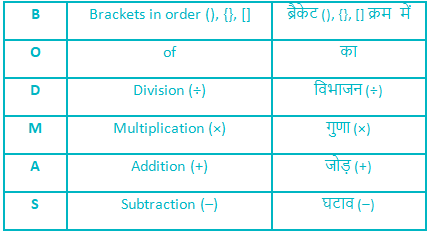
  • It is used to determine a student’s overall performance in a certain prescribed course.
  • It allows teachers to change their teaching methods for the next school year if students did not perform well.

Hence, we can conclude that in Summative assessment the final effects of the curriculum are assessed on the basis of its stated objectives.

Additional Information

  • Formative evaluation: Formative assessment is a range of formal and informal assessment procedures employed by teachers during the learning process in order to modify teaching and learning activities to improve student attainment.
  • Diagnostic evaluation: The diagnostic evaluation takes place at the end of a unit/term as a test. The causes of poor performance and the areas of poor performance are diagnosed using diagnostic tests.
  • Cognitive appraisal: The cognitive appraisal model states that as the individual faces a stressful situation, they carry out an appraisal of the situation in terms of primary appraisal and secondary appraisal.
132

How many domains does a language have?

  1. ((a))

    Five language domains

  2. ((b))

    Eight language domains 

  3. ((c))

    Six language domains 

  4. ((d))

    Three language domains 

Show Answer
Answer: ((a))

Five language domains

According to Trager 'A language is a system of arbitrary vocal symbols using which the members of a society interact in terms of their total culture'.

Key PointsDomains of Language:

  • Phonology: Phonology is concerned with how a particular language organizes its sounds into distinctive units (called phonemes), how the phonemes are combined into syllables, and how the prosodic features of length, stress, and pitch are organized into patterns.
  • Morphology: Morphology is the study of the internal structure of the word. The morphology of a language consists largely of rules of this kind, which tell us how the morphemes of the language are combined to produce complex words.
  • Syntax: Syntax is the branch of linguistics that is concerned with the study of units larger than the word: it is the study of the structure of phrases, clauses, and sentences.
  • Semantics: Semantics focuses on the meaning of words and sentences.
  • Pragmatics: Pragmatics refers to the rules that occur within social situations.

Hence, we can conclude that a language has five language domains.

133

______ is a book prescribed for students of a particular age group and is called Teacher in Print.

  1. ((a))

    Project book

  2. ((b))

    Notebook

  3. ((c))

    Work book

  4. ((d))

    Textbook

Show Answer
Answer: ((d))

Textbook

Textbooks, course books, and teaching/ instructional materials are the most tangible materials for use by the teacher and the student. These give direction to the teacher, help in the completion of the course, and are a strong guideline for examination preparation.

 Key Points

  • The textbook is a book prescribed for students of a particular age group and is called Teacher in Print.
  • Textbooks are inflexible to be used directly as instructional material.
  • Textbooks control the content, methods, and procedures of learning and teaching.
  • Textbooks help the learning and teaching process.
  • Textbooks can and should allow for adaptation and improvisation.
  • Textbooks provide a route map for the teacher and learner to remain in touch with what has been taught and what will be taught.
  • Textbooks provide structure and predictability.

Hence, we can conclude that a Textbook is a book prescribed for students of a particular age group and is called Teacher in Print.

134

_______ is a feeling of affection and attachment to the people of one's own area rather than to the people of any other region.

  1. ((a))

    Linguism

  2. ((b))

    Regionalism

  3. ((c))

    Communalism

  4. ((d))

    Nationalism

Show Answer
Answer: ((b))

Regionalism

The category of the region is interpreted on different grounds. It may be primarily a geographical location or a historically determined spatial construction. On the other hand, regionalism means to situate the approach and sentiments towards a particular region.

Key Points

  • Regionalism is a feeling of affection and attachment to the people of one's area rather than to the people of any other region.
  • Regionalism can be a form of resistance against the imposition of a particular cultural ideology that is linked to the integration of a nation.
  • Regionalism is found to have connections with the cultural patterns that exist as a part of the dominant culture.
  • Sometimes, Regionalism becomes a threat to the nation-state by regional groups who struggle for their particular sectional interests.

Hence, we can conclude that regionalism is a feeling of affection and attachment to the people of one's area rather than to the people of any other region.

Additional Information

  • Communalism: Communalism is a political doctrine that makes use of religious-cultural differences to achieve political ends.
  • Nationalism: Nationalism is a political principle that holds that national and political units should be congruent.
  • Linguism: In a society or state, the tendency of individuals to consider other languages ​​as secondary, giving priority to their language, is called linguism.
135

Which of the following is not a major factor at the root of linguism in our country?

  1. ((a))

    Psychological reasons

  2. ((b))

    Philosophical reason

  3. ((c))

    Historical reasons

  4. ((d))

    Commercial purpose

Show Answer
Answer: ((b))

Philosophical reason

In a society or state, the tendency of individuals to consider other languages ​​as secondary, giving priority to their language, is called linguistics.

Key PointsMajor factors at the root of linguism in our country:

  • Psychological reasons
  • Geographical reasons
  • Historical reasons
  • Social reasons
  • Commercial purpose
  • Political reasons

Hence, we can conclude that philosophical reason is not a major factor at the root of linguism in our country.

136

The title of the RTE Act consists of the words _______.

  1. ((a))

    Paid education

  2. ((b))

    Free education

  3. ((c))

    Compulsory education

  4. ((d))

    Free and compulsory education

Show Answer
Answer: ((d))

Free and compulsory education

Education is “both a human right in itself and an indispensable means of realizing other human rights”.

Key Points

  • The title of the RTE Act consists of the words 'Free and compulsory education'.
  • The Constitution (Eighty-sixth) Amendment Act, 2002 has inserted Article 21 A which provides: “The State shall provide free and compulsory education to all children of the age of six to fourteen years”.
  • The Right of Children to Free and Compulsory Education (RTE) Act, 2009 became operative throughout the country by 2010.
  • The Right to Education Act, 2009 can be enforced in all the schools defined under the Act, except unaided minority and non-minority schools.
  • The Act defines ‘free’ (education) as the removal of any financial barrier by the state that prevents a child from completing eight years of schooling.

Hence, we can conclude that the title of the RTE Act consists of the words 'Free and compulsory education.

137

Which theory of curriculum suggests that curriculum should be formed on the basis of individual differences as each child is different from the other?

  1. ((a))

    Principle of flexibility

  2. ((b))

    Theory of correlation

  3. ((c))

    Forward-looking principle

  4. ((d))

    Principle of protection

Show Answer
Answer: ((a))

Principle of flexibility

Curriculum planning is a process, in which participants at different levels take decisions about the goals of learning, decide about the teaching-learning process by which these may be achieved, and determine whether the methods and means adopted are effective.

Key PointsPrinciple of flexibility:

  • It suggests that curriculum should be formed on the basis of individual differences as each child is different from the other.
  • It must also be responsive to social and technological changes and meet learner’s needs arising from that change process.
  • It must encourage the effective use of new technologies as tools of learning.
  • According to NEP 2020, While students must have a large amount of flexibility in choosing their curricula, certain subjects, skills, and capacities should be learned by all students to become good, successful, innovative, adaptable, and productive human beings in today’s rapidly changing world.

Hence, we can conclude that the Principle of flexibility suggests that a curriculum should be formed based on individual differences as each child is different from the other.

 Additional Information

Some important theories of curriculum:

  • Principle of Inclusivity: Inclusivity means providing all groups of learners, irrespective of educational settings, with access to a wide range of knowledge, skills, and values. It is necessary to provide learners with opportunities to evaluate how concepts such as culture, gender, disability, race, and class are constructed.
  • Principle of Coherence: A curriculum can be stated as coherent when learning is built on the previous knowledge of learners. Students learn at their own pace and in different ways, constructing new knowledge and understandings in ways that link their learning to their prior knowledge.
138

Who envisioned the need for Nai Talim (New Education also known as Basic Education) for a new social order, 10 years before independence in 1937?

  1. ((a))

    Sardar Patel

  2. ((b))

    Mahatma Gandhi

  3. ((c))

    Dr. Ambedkar

  4. ((d))

    Jawaharlal Nehru

Show Answer
Answer: ((b))

Mahatma Gandhi

Gandhi was a firm believer in the essential unity of man and all lives. His faith in God's truth and non-violence enabled him to lead a much-disciplined life and attain a spirit of moral superiority in all his actions.

Key Points

  • Mahatma Gandhi envisioned the need for Nai Talim (New Education also known as Basic Education) for a new social order, 10 years before independence in 1937.
  • Gandhi displayed a keen sense for change in the education pattern and discussed at length the genesis and implementation schemes.
  • He referred to it as the synthesis between vocation and education as he had viewed it.
  • Gandhi’s scheme of basic education consisted of taking up 'takli' to produce yarn, and proceeding to spin.

Hence, we can conclude that Mahatma Gandhi envisioned the need for Nai Talim (New Education also known as Basic Education) for a new social order, 10 years before independence in 1937.

139

Which scheme was launched in March, 2009 with the objective of increasing access to secondary education and improving its quality?

  1. ((a))

    Education for all campaign

  2. ((b))

    National Primary Education Campaign

  3. ((c))

    Nai Talim

  4. ((d))

    National Campaign for Secondary Education

Show Answer
Answer: ((d))

National Campaign for Secondary Education

Education is the birth right of every child (Dash, 2004). In India, lots of efforts had been made to provide free and compulsory elementary education to every child without any discrimination.

Key PointsNational Campaign for Secondary Education:

  • National Campaign for Secondary Education is a centrally sponsored scheme of the Ministry of Human Resource Development, Government of India, for universal access and improvement of secondary education.
  • It was launched in March 2009.
  • National Campaign for Secondary Education was launched with the objective of increasing access to secondary education and improving its quality.
  • The implementation of the scheme started in 2009-2010 to provide conditions for efficient growth, development, and equity for all.
  • The principal objectives are to enhance the quality of secondary education and increase the total enrolment rate from 52% (as of 2005–2006) to 75% in five years, i.e. from 2009–2014 (MHRD, 2014).
  • It aims to provide universal education for all children between 15–16 years of age.

So, we can conclude that Rashtriya Madhyamik Shiksha Abhiyan Yojana was launched in March, 2009 with the objective of increasing access to secondary education and improving its quality.

Additional Information

  • Education for all campaign: Education for all campaign (Movement for Education of All) was launched with the aim of providing eight years of quality education to all children in the age group 6- 14 by 2010.
  • Nai Talim: Gandhi’s scheme of Nai Talim consisted of taking up 'takli' to produce yarn, and proceeding to spin.
140

Ministry of Tribal Affairs has launched Model Residential School Scheme for ST students to provide quality middle and higher level education to ST students in remote areas.

  1. ((a))

    Dronacharya

  2. ((b))

    Eklavya

  3. ((c))

    Parashuram

  4. ((d))

    Valmiki

Show Answer
Answer: ((b))

Eklavya

Education is the basic requirement for the success of democracy and the progress of the country. Since independence, many steps have been taken and different commissions and committees have given suggestions to achieve the universalization of education.

Key PointsEklavya Model Residential School:

  • Eklavya Model Residential School are residential schools that impart free and quality middle and high-level education to scheduled tribe students in remote areas.
  • Eklavya Model Residential Schools are affiliated with the state or CBSE.
  • Eklavya Model Residential School is an intervention of the Ministry of Tribal Affairs, Government of India, and was introduced in 1997-98.
  • State Government and Union Territory are responsible for the management and functioning of Eklavya Model Residential School.

Hence, we can conclude that the Ministry of Tribal Affairs has launched Eklavya Model Residential School Scheme for ST students to provide quality middle and higher-level education to ST students in remote areas.

Discipline 3 (20 questions)

141

Which of the following methods is not useful in learning mathematical skills at Primary level for a child?

  1. ((a))

    Count and Sort

  2. ((b))

    Pattern play

  3. ((c))

    Shape up

  4. ((d))

    Trigonometry

Show Answer
Answer: ((d))

Trigonometry

Mathematics is one of the few subjects that have practical, cultural and disciplinary value. Mathematics has the potential to range across all three values.

Key PointsMethods is useful in learning mathematical skills for a child:

Development of Number Concepts: For effective learning of number concepts, the children need to acquire some preliminary concepts called the pre-number concepts.

  • Pre-number concepts: These concepts can be developed in children during the pre-school years. i.e. before attaining 7 years of age. Examples of pre-number concepts: Matching, Pattern play, Sorting, Comparing, Shape up, Ordering etc.
  • Number Concepts: Counting, recognizing, and using numerals correctly, comparing numbers, and operations on numbers are considered important milestones in the development of number concepts. Example: Counting, Operations on numbers

​​Hence, we can conclude that Trigonometry is not useful in learning mathematical skills for a child.

Important Points

  • Trigonometry: Trigonometry is useful in learning mathematical skills at the secondary level.
142

Which is the primary medium of communication?

  1. ((a))

    Language

  2. ((b))

    Action

  3. ((c))

    Gesture

  4. ((d))

    Art

Show Answer
Answer: ((a))

Language

Theodore Newcomb defines communication as that process by which people influence each other or leave an impression on others.

Key PointsLanguage is a system of symbols - oral and written - used by members of a social community in a fairly standardized way to call forth meaning. Language is a strikingly distinct attribute of the human person.

  • Language is the primary vehicle for communication.
  • Language plays a vital role in the growth and transmission of culture, continuity of society, and values.
  • It is a message system used for encoding and decoding.
  • Communication through linguistic interaction is a powerful key to analyzing the worldview and psychological processes of societies and individuals.
  • Language reflects both personalities of the individual and the culture of his/her society. In turn, it helps shape both personality and culture.
  • Language makes possible the growth and transmission of culture, the continuity of societies, and the effective functioning and control of social groups.

Hence, we can conclude that language is the primary medium of communication.

143

ICTs are more _______ as designed lessons.

  1. ((a))

    practical and distasteful

  2. ((b))

    charming and interesting

  3. ((c))

    interesting and practical

  4. ((d))

    hard and difficult

Show Answer
Answer: ((c))

interesting and practical

According to UNESCO, “Educational technology is a communication resulting from the application of the scientific methods to the behavioral science of teaching and learning. This communication may or may not require the use of media such as television broadcasts, radio, cassettes, etc.”

Key Points

  • Interesting and practical best describes ICT-based lessons because they capture students’ attention while providing real-world applications of concepts.
  • Multimedia elements like videos, simulations, and interactive exercises make abstract ideas easier to understand. ICT lessons allow learners to experiment, explore, and apply knowledge practically.
  • This combination of engagement and hands-on experience promotes active learning and long-term retention. Students are motivated to participate and explore beyond the textbook, making lessons both enjoyable and meaningful.

Hint

  • Practical and distasteful is incorrect as ICT lessons are designed to be appealing, not unpleasant.Hard and difficult is inaccurate since ICT aims to simplify learning, not make it more challenging unnecessarily.
  • Charming and interesting captures engagement but ignores the practical application aspect.

Hence, we can conclude that ICTs are more charming and interesting than designed lessons.

144

When does a child inevitably master the phonetic system and grammar of their language and acquire a vocabulary of thousands of words?

  1. ((a))

    up to 3 years of age

  2. ((b))

    up to 10 years of age

  3. ((c))

    up to 5 years of age

  4. ((d))

    up to 6years of age

Show Answer
Answer: ((c))

up to 5 years of age

Growth may be referred to to describe the changes which take place in particular aspects of the body and behavior, while the term development may be used concerning the child as a whole.

Key Points

  • When infants are first born, they do most of their communication through crying.
  • Around age 2 to 3 months, infants begin cooing and making soft, exaggerated vowel sounds to show pleasure or excitement.
  • Around 3 to 4 months, babies will add more verbal sounds and start to make the consonant sounds of b, k, m, g, and p.
  • By 4 months, babies will begin to put vowel sounds and consonant sounds together to form nonsense words such as “gaga” and “ahpoo” as they start to experiment with how sounds can be linked together.
  • By 7 months, babies begin taking turns “speaking” with others instead of talking at the same time as others do.
  • By age 12 months, some babies may have as few as 2-3 words in their expressive vocabulary, while others may have a dozen.
  • Between ages 18 to 24 months, toddlers begin putting 2 to 3 words together to form simple phrases, called telegraphic speech.
  • By the age of 3 Years, the child develops 896 words of vocabulary.
  • By the age of 4 years, a child develops 1560 words of vocabulary.
  • Up to 5 years of age,  a child inevitably masters the phonetic system and grammar of their language and acquires a vocabulary of thousands of words.

​Hence, we can conclude that up to 5 years of age,  a child inevitably masters the phonetic system and grammar of their language and acquire a vocabulary of thousands of words.

145

Where does a child learn their first language?

  1. ((a))

    House

  2. ((b))

    School

  3. ((c))

    Hostel

  4. ((d))

    locality

Show Answer
Answer: ((a))

House

A child who enters school is already an efficient language user of language for she can successfully communicate in her mother tongue or the language of home. She/he learns her/his mother tongue at home by listening and interacting with elders, parents etc.

Key Points

  • Child gets complete understanding at home because house acts a s a primary resource to provide vast vocabulary of mother tongue.
  • This will help the child to speak, understand his first language without going to school or even without the guidance of teacher.
  • It is important to note that since the child can successfully use difficult structures in L1(mother tongue) it is fruitful not to restrict learners to very simple language or very simple topics.
  • In fact, discussions can throw up a lot of new words and expressions that can be caught by the child as s/he tries to understand the meaning.

Hence, we can conclude that it can be concluded that a child learns their first language at home.

146

The approach adopted to the methods used to teach and learn languages is called

  1. ((a))

    Language pedagogy

  2. ((b))

    Liberal pedagogy

  3. ((c))

    Literature Pedagogy

  4. ((d))

    English Pedagogy

Show Answer
Answer: ((a))

Language pedagogy

The approach adopted to the methods used to teach and learn languages is called language pedagogyEach technique belongs to a specific language teaching method that has a specific set of principles.

Key Points

  • It is always suggested that teachers should adopt to the language pedagogy which means the methods used to teach and learn which suits children and their learning abilities.
  • In some classes, teaching learning process becomes very prescriptive in nature in which teachers teach the students in certain ways and expect the students to follow their ways, whereas in some other classes, a variety of innovative techniques are used to make the teaching learning process a memorable one with the expectation that the learning will be lasting and add experiential value to the knowledge base of the students.
  • It is also true that children learn a lot outside of the tutored set up. They learn a lot from the social environment as well as family environment.

Hence it can be concluded that the approach adopted to the methods used to teach and learn languages is called language pedagogy.

147

Which method is appropriate for teaching language at a young age where children prefer to learn an activity directly related to physical activity and movement?

  1. ((a))

    teaching using the game method

  2. ((b))

    teaching using the song method

  3. ((c))

    long-term memory method

  4. ((d))

    total physical response method

Show Answer
Answer: ((d))

total physical response method

Teaching English, especially for children, should be enjoyable, interesting, repetitive, and understandable. In doing so, there should be appropriate methods for teaching English to them. One of the alternative methods that can be applied in the classroom is the so-called Total Physical Response.

Key Points

Total Physical Response (TPR) is a type of ‘listen and do’activity related to physical activity and movement. In early classes (especially in class I) the teacher can develop a second language through these TPRs. Here the children can do these activities in response to the teacher’s action combined with the verbal command. 

  • Usually, children not well versed in a particular

language can respond to some commands that instruct the student to give some very common physical responses.

  • These are common in the following forms:

‘Stand up', ‘Sit down, ‘Touch your head’, ‘Turn around, ‘Hold your pen’, ‘Touch your nose' and are called ‘Total Physical Response (TPR).

  • Experience says that if a non-MT teacher uses about 200 TPRs in class I, he/she can manage a multilingual class well.

​Hence, it can be concluded that Total Physical Response (TPR) is appropriate for teaching language at a young age when children prefer to learn an activity directly related to physical activity and movement.

148

What is an objective type exam in education?

  1. ((a))

    test requiring short answers

  2. ((b))

    test requiring short answer

  3. ((c))

    test requiring extremely short answers

  4. ((d))

    test requiring very long answers

Show Answer
Answer: ((c))

test requiring extremely short answers

Objective-type tests are not appropriate for all occasions. Whereas they are excellent for sampling knowledge, it is much more difficult.to construct items to test higher-order skills.

 Key Points

  • They can never test written expression or the ability to argue in one's own words. If well written, however, they can test higher-order skills.
  • This test requires extremely short answers which test the higher order thinking skills of the students and their understanding ability regarding the topic.
  • Another characteristic of an objective-type test item is that it is completely structured. Complete structuring of tasks limits students to the type of response called for.
  • These tests can be created and also evaluated in very less time and yet they prove to be effective in the teaching and learning process.

​Hence, it can be concluded that an objective type exam in education is a test requiring extremely short answers.

149

Which of the following is not the main target of ICT implementation in education?

  1. ((a))

    Making students future techno-addicts

  2. ((b))

    Enabling the students to acquire comprehensive knowledge

  3. ((c))

    Nurturing students with the ability to process information

  4. ((d))

    Creating a dynamic and innovative learning environment in school

Show Answer
Answer: ((a))

Making students future techno-addicts

ICT helps in making things concrete through visuals, which may be animated, and through virtual realities with simulated environments. Within virtual worlds, people act, confront problems, interact, make decisions and try to solve problems. ICT use in education can thus take the learner closer to the authentic context. 

Key Points

  • Students can acquire comprehensive knowledge through the implementation of ICT because they can search for more topics using the tools of ICT which they can't find in the textbooks and in which they have the interest to study and improve knowledge.
  • Processing information is one of the important skills in the teaching-learning process, by implementing ICT and ICT tools in education students get nurtured with the ability to process information and also make the best use of information to construct knowledge.
  • An innovative learning environment is one of the factors that support students to become young learners and scientists, implementing the ICT and ICT tools in education surrounds the school with a dynamic and innovative learning environment where there will be a shift from teachers centered to learner-centered environment and learner can be considered as a young explorer without being a passive recipient of knowledge from the teacher.
  • On the other hand, making students future techno addicts is not at all the main target of ICT implementation in education because making students techno addicts will be the biggest drawback of ICT because if they become technology addicts, they cannot concentrate on any other work and their physical and mental health will also get impacted.

​Hence, it can be concluded that making students future techno-addicts is not the main target of ICT implementation in education.

150

Which of these is not an objective test?

  1. ((a))

    Resemblance

  2. ((b))

    Multiple Choice

  3. ((c))

    True-False

  4. ((d))

    Understanding

Show Answer
Answer: ((d))

Understanding

Objective-type tests are not appropriate for all occasions. Whereas they are excellent for sampling knowledge, it is much more difficult.to construct items to test higher-order skills. They can never test written expression or the ability to argue in one's own words. If well written, however, they can test higher-order

skills. 

Key Points

Types of objective tests

  • True false or alternate response type: In this type, a statement is provided to the students and they are required to indicate their choice as to whether the given statement is true or false, correct or incorrect, right or wrong, according to the given instructions.
  • Multiple choice type: A multiple choice item consists of three parts - a stem, a key, and several distracters. The key and distracters together are often called options or choices. The stem can either be a direct question or an incomplete statement. The key is the correct answer and the distracters are plausible but incorrect answers.
  • Resemblance or Matching type: The matching type item consists of two lists and students are required to correlate correctly one or more entries from one list with one or more entries from the other.

Hence, it can be concluded that understanding is not an objective test.

151

ICT stands for _____. 

  1. ((a))

    Informative Course and Technology 

  2. ((b))

    Informative and Creative Teaching 

  3. ((c))

    Information and Curriculum Teaching 

  4. ((d))

    Information and Communication Technology 

Show Answer
Answer: ((d))

Information and Communication Technology 

Information and Communication Technology (ICT) is often associated with devices, such as computers and software, but it also encompasses more conventional technologies like radio, television, and telephone technology. 

Key Points

  • ICTs if used appropriately benefit educational activities, especially teaching and learning. Therefore, educational systems including those in India are shifting towards ICT use in teaching.
  • The National Policy on ICT in School Education (2012) of India defines ICTs as devices, tools, content, resources, forums, and services, digital and those that can be converted into or delivered through digital forms, useful for realizing educational goals.
  • These will not only include hardware devices and software applications, but also interactive digital content, the internet, and other devices like radio and television, etc.
  • The context of ICT use in education is also important.

Hence, it can be concluded that ICT stands for Information and Communication Technology.

152

In order to stay ahead and be a competitive person in the increasing demand for ICT, a leader must keep pace with _____.

  1. ((a))

    Creation

  2. ((b))

    Update Technology

  3. ((c))

    Skill

  4. ((d))

    Knowledge

Show Answer
Answer: ((b))

Update Technology

Information & Communication Technology (ICT) has become an often used word in the present day society and its presence is felt in all spheres of life. Technology is all pervasive in the society in which we live today. 

Key Points

  • Leaders are trying to keep pace and update with the rapid and fast-changing developments in ICT which have changed our lives and are further expected to transform the way we live, communicate with each other, and access information.
  • Access to ICT is considered important for an individual to fully achieve educational and economic development goals. ICT access has become so important that the lack of it has been termed the digital divide.
  • New technologies in the knowledge society are bringing economic and social transformation. This is highly dependent on the increased ability of people to obtain and process information using ICT.
  • With the increasing use of ICT, knowledge creation as well as its usage has been radically changed. So the new generation of leaders has to be prepared for the fast-changing knowledge society.

​Hence it can be concluded that to stay ahead and be competitive person in the increasing demand for ICT, a leader must keep pace with updated technology.

153

Who plays the most important role in learning the English language?

  1. ((a))

    Grammer

  2. ((b))

    Ornament

  3. ((c))

    Meaning

  4. ((d))

    Vocabulary

Show Answer
Answer: ((a))

Grammer

The ultimate aim of every language learner is to acquire the ability to speak and write the language correctly. To do this, she requires knowledge of grammar in some form or the other. 

Key Points

  • Grammar is defined as a theory of language. We consider language as rule-governed behavior, relating to sounds, word formation, and structure.
  • Here grammar constitutes a subset of rules relating to morphology and syntax. According to Palmer the rules of grammar enable us to link sounds to meaning.
  • According to modem linguistics, grammar is a device

that specifies the infinite set of well-formed sentences and assigns to each of them one or more structural descriptions.

  • In other words, grammar tells us what the possible sentences of a language are and describes them.

Hence, we can conclude that grammar plays the most important role in learning the English language.

154

______, technically, is to find the length, height, and weight of an object in mathematics using units such as inches, feet or pounds.

  1. ((a))

    Measurements

  2. ((b))

    Pattern

  3. ((c))

    Representation

  4. ((d))

    Estimation

Show Answer
Answer: ((a))

Measurements

Measurement of any physical quantity involves comparison with a certain basic, arbitrarily chosen, internationally accepted reference standard called unit. The result of a measurement of a physical quantity is expressed by a number (or numerical measure) accompanied by a unit. 

Key Points

  • Measurement technically is to find the length, height, and weight of an object in mathematics using units such as inches, feet, or pounds.
  • Although the number of physical quantities appears to be very large, we need only a limited number of units for expressing all the physical quantities, since they are interrelated with one another.
  • The units for the fundamental or base quantities are called fundamental or base units. The units of all other physical quantities can be expressed as combinations of the base units.
  • Such units obtained for the derived quantities are called derived units. A complete set of these units, both the base units and derived units, is known as the system of units.

Hence, it can be concluded that measurement technically, is to find the length, height, and weight of an object in mathematics using units such as inches, feet, or pounds.

155

Which one of the following tools of learning does not provide ICT?

  1. ((a))

    Calculation

  2. ((b))

    Slideshow

  3. ((c))

    Video

  4. ((d))

    Laboratories

Show Answer
Answer: ((d))

Laboratories

ICT can be understood as the integration of information technology with different kinds of communication technology with the help of appropriate infrastructure. It can be said that there is a major role of information technology in the enhancement of communication. 

Key Points

  • The tools of ICT may be in the form of audio, visual, and audio-visual. There is a diverse set of technological tools and resources used to communicate and create, disseminate, store and manage information.
  • Today, ICT in education encompasses a great range of rapidly evolving technologies such as desktops, Notebook, Handheld Computers, Tablets, Digital Cameras, Local Area Networking, Bluetooth, the

Internet, Cloud Computing, the World Wide Web.

  • DVDs and applications such as word processors, spreadsheets, tutorials, slideshows, calculations, simulations, email, digital libraries, computer-mediated conferencing, videoconferencing, virtual environment, simulator, emulator, etc.
  • These tools of ICT can be used for creating

learning situations in the classroom as well as in engaging the students in higher-order thinking.

Hence, it can be concluded that laboratories do not provide ICT.

156

A small child acquires language through _______.

  1. ((a))

    Self

  2. ((b))

    Study

  3. ((c))

    Interaction

  4. ((d))

    Discrepancy

Show Answer
Answer: ((c))

Interaction

Language plays an important role in the life of human beings because it is the means or medium through which humans interact and understand the opinions of each other. When a child comes to school he is already comfortable and knowledgeable with his mother tongue which he had already learned in his house. 

Key Points

  • When a child is born in a house he keeps on listening to all the sounds of parents and relatives interacting with each other.
  • This leads to the basic idea of language in the child even if he doesn't know the proper sentence formation and grammatical aspects of it.
  • And when the child becomes able to talk he starts interacting with all his relatives, parents, and friends and improves his ability in a language.
  • Social interaction plays an important role in developing the ability and acquisition of language for a child without going to school or studying books.
  • The Mother tongue of a student rather than being taken as a drawback should be taken as an advantage of by a teacher to improve the language abilities of students in L2.

Hence, it can be concluded that a small child acquires language through interaction.

157

What is the basic math that a normal 5 year old child must know?

  1. ((a))

    Multiplication of 3-digit numbers

  2. ((b))

    Number up to 10

  3. ((c))

    Division of 2-digit numbers

  4. ((d))

    Number up to 1000

Show Answer
Answer: ((b))

Number up to 10

Laying down of standards of learning ( quality) that must be achieved by all children (equity) completing different stages of education has led to the formulation of Minimum Levels of Learning (MLLs). 

Key Points

  • These minimum levels of learning (MLL) have been defined in the form of competencies for classes I- V in the areas of language, mathematics, and environmental studies.
  • Since a normal 5-year-old child will be only in the pre-primary stage very normal minimum levels of learning will be placed before him.
  • Regarding maths, he should achieve the objective of knowing numbers minimum of up to 10 which would help him to catch up quickly in the primary stage.
  • The minimum levels go on increasing as the age, abilities, and capacity of the child increase as he progresses from one stage to another.

Hence, we can conclude that number up to 10 is the basic math that a normal 5-year-old child must know.

158

One of the most important contribution of ICT in the field of education is_____.

  1. ((a))

    easy access to teaching

  2. ((b))

    easy access to workloads

  3. ((c))

    easy access to books

  4. ((d))

    easy access to learning

Show Answer
Answer: ((d))

easy access to learning

ICTs if used appropriately benefit educational activities, especially easy access to learning. Therefore, educational systems including those in India are shifting towards ICT use in teaching. The National Policy on ICT in School Education (2012) of India defines ICTs as devices, tools, content, resources, forums, and services, digital and those that can be converted into or delivered through digital forms, useful for realizing educational goals. 

Key Points

  • These will not only include hardware devices and software applications, but also interactive digital content, the internet, and other devices like radio and television, etc.
  • The context of ICT use in education is also important. The UNESCO frameworks (2002 & 2011) and India’s

National Policy on ICT in School Education (2012) is fundamentally similar.

  • Both require ICT use in the context of the contemporary theories on learning that underscore cooperation and collaboration over traditional forms of teaching and individualized learning for knowledge acquisition and also the socio-cultural demands of a knowledge society that requires manpower capable of using ICT for knowledge sharing and creation.

Hence, one of the most important contributions of ICT in the field of education is easy access to learning.

159

Which of the following is not a principle for teaching English as a second language?

  1. ((a))

    Monitoring and assessing student language development.

  2. ((b))

    Designing high quality lessons for language development.

  3. ((c))

    Getting to know your learners.

  4. ((d))

    Creating barriers to language learning.

Show Answer
Answer: ((d))

Creating barriers to language learning.

Teaching English in a classroom where the child is new to the language is r challenging situation for a teacher so some of the methods and principles should be followed to make the teaching effective and interesting.

K ey Points

  • Monitoring and assessing student language development is one of the important principles for teaching English as a second language because if the students are allowed to just learn and construct knowledge and no one is there to check their progress and point out their misconceptions then there will be no meaning for authentic learning so a teacher must monitor and assist the students whenever required.
  • Designing high-quality lessons for language development is also equally important because the quality of lessons taught by the teacher gets registered in the minds of students and rote memorization will be avoided and the child will be acquired able to acquire the language naturally.
  • Getting to know the learners is very important because the learning abilities, cognitive abilities, and thinking of students should be analyzed by the teacher to teach them according to their abilities and create an interesting and curiosity-filled environment in the classroom.
  • On the other hand, creating barriers to language learning is not a principle for teaching English as a second language because these barriers affect or reduce the ability of students to acquire the language and increase difficulties in language learning.

Hence, it can be concluded that creating barriers to language learning is not a principle for teaching English as a second language.

160

______ is a method of learning to read through letters spelled one by one.

  1. ((a))

    Complete language approach

  2. ((b))

    Abacus

  3. ((c))

    Acoustic

  4. ((d))

    Vedic

Show Answer
Answer: ((c))

Acoustic

Language is a system of symbols and rules that is used for meaningful communication. A language uses symbols, which are sounds, gestures, or written characters that represent objects, actions, events, and ideas.

Key Points

  • Acoustic method: Acoustics refers to the science of sound. Acoustic is a method of learning to read through letters spelled one by one. Acoustic method focuses on the physical properties of speech.

Additional Information

  • Complete language approach: Complete language approach emphasis on meaning construction rather than grammatical structure.​
  • Abacus: This is a pocket size calculating device in which beads are moved to do basic arithmetic operations, as well as more advanced processes of calculations.
  • Vedic: Vedic method is related to Mathematics. It was discovered by an Indian mathematician, Jagadguru Shri Bharathi Krishna Tirthaji.

Hence, we can conclude that acoustic is a method of learning to read through letters spelled one by one.

Discipline 4 (20 questions)

161

Which of the following is not a major objective of EVS teaching?

  1. ((a))

    Learning about the environment

  2. ((b))

    Developing an Appreciation for Diversity

  3. ((c))

    Learning about paleontology

  4. ((d))

    Develop sensitivity

Show Answer
Answer: ((c))

Learning about paleontology

The environment is the aggregate of conditions that surround and affect the life of a person at any point time on earth. ​Education for the environment encourages children to explore their environment and to form an idea about their relationship with the environment and environmental issues.

Key PointsMajor objective of EVS teaching:

  • Learning about the environment.​
  • Enhance the natural curiosity of the child.
  • Developing an Appreciation for Diversity.
  • Help the child in developing attitudes and qualities such as self-confidence, the spirit of inquiry, initiative, and courage to ask questions.
  • Develop sensitivity.
  • Encourage the child to think of solutions to problems in his/her day-to-day life.
  • Help a child to develop logical thinking.
  • Help a child to take an active interest and participate in solving some simple problems in a limited way.
  • Help a child in developing open-mindedness and perseverance.
  • Enable the child to adopt an environment-friendly lifestyle.

Hence, we can conclude that learning about paleontology is not a major objective of EVS teaching.

162

Which of these is not a major area of environmental science?

  1. ((a))

    Ecological

  2. ((b))

    Social Sciences

  3. ((c))

    Geology

  4. ((d))

    Numerology

Show Answer
Answer: ((d))

Numerology

Environmental science is the systematic study of the natural and man-made world. It has emerged as a major discipline in recent years, reflecting our growing concern about the impact of human activity on the natural world.

Key PointsMajor area of Environmental science:

  • Ecological: The term ecology has been derived from two Greek words namely, 'Oikos' meaning home or estate, and 'logos' meaning study. Literally, it means the study of the home or household of nature. Ecology is defined 'as the scientific study of the relationship of the living organisms with each other and with their environment.' Ecological studies are aimed to understand the relationships of organisms with their environment.
  • Social Sciences: Social Sciences constitute a broad field of knowledge and deal with human beings in relation to their social environment. Social Sciences study the concepts or issues like culture, tradition, lifestyles, places, environment, power and authority, governance, economy, civic sense, etc. which have social implications.
  • Geology:  The term Geology has been derived from two Greek words namely, 'Geo' meaning earth and 'logos' meaning study. Geology is defined 'as the scientific study of the earth and environment.'

​Hence, we can conclude that Numerology is not a major area of environmental science.

Hint

  • Numerology: Numerology is the study of the numerical value of the letters in words, names, and ideas.
163

What can children learn from outdoor activities?

  1. ((a))

    Outdoor incidents

  2. ((b))

    Punctuality

  3. ((c))

    self-independence

  4. ((d))

    Introvert

Show Answer
Answer: ((c))

self-independence

Outdoor activities encompass all sports and physical activity that takes place in the natural environment.

Key PointsChildren learn from outdoor activities:

  • Enhance the health and mental performance
  • Self-independence
  • Hands-on learning experiences.
  • Reduced stress level.
  • Improve concentration
  • Learn social skills
  • Learn co-operative skills

Hence, we can conclude that children can learn self-independence from outdoor activities.

164

What is the full form of EVS?

  1. ((a))

    Environmental Sciences

  2. ((b))

    Evolutionary Science

  3. ((c))

    Environmental Strategy

  4. ((d))

    Evolution Strategy

Show Answer
Answer: ((a))

Environmental Sciences

EVS refers to Environmental Sciences. Environmental Sciences is of importance, not only because it informs us about the world in which we live but also because it enables us to address more effectively many of the pressing issues that confront the modern world.

Key Points

  • The full form of EVS is Environmental Sciences.
  • Environmental Science is the systematic study of the natural and man-made world. It has emerged as a major discipline in recent years, reflecting our growing concern about the impact of human activity on the natural world.
  • Environmental Science involves the identification, measurement, and classification of these processes and phenomena.
  • Education about the environment has the purpose of developing knowledge and understating values and attitudes.

Hence, we can conclude that the full form of EVS is Environmental Sciences.

165

What happens in early adolescence?

  1. ((a))

    Adolescents behave like adults, and have created a separate identity and have their own opinions and views.

  2. ((b))

    Growth and development of secondary sexual characteristics are accelerated.

  3. ((c))

    Physical changes lead to the development of secondary sexual characteristics.

  4. ((d))

    New relationships are formed with the opposite gender and peer groups and a distinct identity from the parent is developed.

Show Answer
Answer: ((b))

Growth and development of secondary sexual characteristics are accelerated.

Early  adolescence is a phase of life of a person when he is no more a child and not yet an adult. It is a period of transition between childhood and adulthood that involves several changes in body and mind.

Key PointsCharacteristics of Early adolescence:​

Category of ChangeEarly adolescence (10-14 years)
GrowthSecondary sexual characters appear Growth accelerates and reaches peak
CognitionConcrete thinking Long-term implications of actions not perceived
PsychosocialRapid physical growth Body image Seeks affiliation to counter instability Defining boundaries of dependence/independence
SexualitySelf-exploration and evaluation

Hence, we can conclude that the growth and development of secondary sexual characteristics are accelerated in the characteristics of early adolescence.

166

______ is a way of working with children and creating the setting for care and education that encompasses nature.

  1. ((a))

    Nutrition Pedagogy

  2. ((b))

    Science Pedagogy

  3. ((c))

    Caring Pedagogy

  4. ((d))

    Nature Pedagogy

Show Answer
Answer: ((d))

Nature Pedagogy

Pedagogy is the art of teaching. Pedagogy involves being able to convey knowledge and skills in ways that students can understand, remember, and apply.

Key Points

  • Nature Pedagogy: Nature Pedagogy is a way of working with children and creating the setting for care and education that encompasses nature. Nature Pedagogy includes assessment, planning process, and the learning journeys.

Additional Information

  • Caring Pedagogy: According to Duffy, caring pedagogy is the art of teaching which integrates caring factors through a student-centered learning environments and genuine relationships.
  • Science Pedagogy: Pedagogy of science concerns the principles and processes of scientific explanation, including both processes of confirmation and of discovery.
  • Nutrition Pedagogy: Nutrition Pedagogy is a way of teaching students to recognize how healthy diet influences emotional well-being.

​Hence, we can conclude that nature pedagogy is a way of working with children and creating the setting for care and education that encompasses nature.

167

Mathematics is an essential part of ______.

  1. ((a))

    psychology education

  2. ((b))

    philosophical education

  3. ((c))

    sociology education

  4. ((d))

    science education

Show Answer
Answer: ((d))

science education

Mathematics is a science that involves dealing with numbers, different kinds of calculations, measurement of shapes and structures, organization and interpretation of data and establishing relationships among variables, etc.

Key Points

  • Mathematics is an essential part of science education.
  • Science is related to Mathematics to a great extent.
  • All the measurements in Science need Mathematics.
  • The laws of motion, friction, expansion of solid, liquid, and pressure are explained using Mathematics.
  • Each rule and principle in science takes Mathematical forms and Mathematics gives them their final shape.
  • Mathematics is used to show the relationship between different functions and properties.

Hence, we can conclude that Mathematics is an essential part of science education.

168

Which of the following is not an aspect of music teaching?

  1. ((a))

    emotional

  2. ((b))

    Face

  3. ((c))

    physical

  4. ((d))

    artistical

Show Answer
Answer: ((b))

Face

Music is as old in the history of civilization as human speech. It is a spontaneous outburst of the basic human emotions in a melodious manner. Music plays a significant role in the religious, social, and artistic lives of human beings. 

Key Points

  • Emotional: Emotional is an important aspect of music teaching. Music helps people to regulate their emotions. Music helps reduce stress.
  • Physical: According to researchers, music can also be effective in keeping our physical health good. Music also enhances your ability to remember. By listening an individual can feel fresh.
  • Artistical: Music teaching enhances the creative skills of an individual. Music teaching develops fine motor skills.

​Hence, we can conclude that face is not an aspect of music teaching.

169

The use of drama and art in education causes ______

I. Physical development

II. Personality development

  1. ((a))

    Only II

  2. ((b))

    None of the above

  3. ((c))

    Only I

  4. ((d))

    Both I and II

Show Answer
Answer: ((d))

Both I and II

The use of drama and art in education can lead to both physical and personality development. Through drama and art activities, students can develop physical coordination, motor skills, and body awareness. 

Key PointsHow drama and art can contribute to physical and personality development in education:

I. Physical Development:

  • Motor Skills Development: Drama and art activities involve physical movements such as dancing, acting, and painting, which can help students develop their fine and gross motor skills.
  • Coordination: Drama and art activities require coordination between the body and mind, leading to the development of body awareness, balance, and coordination.
  • Fitness: Engaging in physical activities such as dance or drama performances can also contribute to physical fitness.

II. Personality Development:

  • Self-Expression: Drama and art allow students to express themselves creatively and confidently. This helps in developing a positive self-image and self-esteem.
  • Teamwork: Many drama and art activities require students to work together in groups, which helps in developing social skills, communication skills, and teamwork.
  • Problem-Solving: Drama and art activities often involve problem-solving skills such as improvisation, critical thinking, and creativity, which help students develop their problem-solving skills.
  • Empathy: Drama and art activities also help students develop empathy, as they learn to understand and connect with different characters and situations presented in the activities.

Overall, incorporating drama and art activities in education can lead to a holistic development of students, both physically and mentally. Hence, Option 4 is correct.

170

Which social science is called the mother of all social sciences?

  1. ((a))

    History 

  2. ((b))

    Sociology

  3. ((c))

    Economics 

  4. ((d))

    Geology 

Show Answer
Answer: ((b))

Sociology

Sociology can be defined as a study of society or social life, of group interaction and of Social behavior.

Key Points

  • Sociology is called the mother of all social sciences.
  • Sociology is used in the discipline of social work to analyze and understand social problems.
  • Sociology involves history, economics, geology, civics, archaeology, anthropology, citizenship, etc.
  • Sociology has been using a systematic approach in the study of social life.
  • Sociology provides an understanding of the social order in which we live and about the forces that shape and mold it.

Hence, we can conclude that sociology is called the mother of all social sciences.

171

The ability to count accurately - first forward is called?

  1. ((a))

    Letter expression

  2. ((b))

    Digit comprehension

  3. ((c))

    Number comprehension

  4. ((d))

    Understanding of size

Show Answer
Answer: ((c))

Number comprehension

Comprehension is the ability to understand. Comprehension is an exercise that tests how well an individual understands a concept.

Key Points

  • The ability to count accurately - first forward is called number comprehension.
  • Number comprehension gives meaning to numbers.
  • Number comprehension means knowing how numbers are related to each other and what are their relative magnitudes.
  • It is also based on the effect of mathematical operations on numbers,
  • Number comprehension is very important to understand numerical aspects.

Hence, we can conclude that the ability to count accurately - first forward is called number comprehension.

172

Which of the following is not a type of drama?

  1. ((a))

    Cholia 

  2. ((b))

    Tragedy 

  3. ((c))

    Comedy 

  4. ((d))

    Sentimentality 

Show Answer
Answer: ((a))

Cholia 

Drama is a literary composition involving conflict, action, crisis, and atmosphere meant to be acted by players on a stage before an audience. Abram's drama is, "the form of composition designed for performance in the theatre, in which actors take the roles of the characters, perform the indicated action and utter the written dialogue."

Key PointsTypes of Drama:

  • Tragedy: Aristotle first defined tragedy in his poems around 330 BC. He defined tragedy as "the imitation of an action that is serious and also as having magnitude, complete in itself," in the medium of poetic language and in the manner of dramatic rather than narrative presentation, involving "incidents arousing pity and fear wherewith to accomplish the catharsis of such emotion."
  • Comedy: At the most fundamental level, the comedy focuses on pleasure and amusement. The spectators are made to feel confident that no great disaster will occur and usually the action turns out to be happy for all. Allardyce Nicoll describes three techniques of comedy that create a comic detachment (i.e. we laugh at the hardships of comic characters because the author sets them at a psychological distance): derision, incongruity, and automatism.
  • Sentimentality: Sentimental drama is based on the principle that humans are essentially good but can be led astray by bad examples.

Hence, we can conclude that Cholia is not a type of drama.

Additional Information

  • Cholia: Cholia is a famous folk dance of the Kumaon region of Uttarakhand.
173

What life lesson can children learn from gardening?

  1. ((a))

    Plants are green.

  2. ((b))

    There are varieties of plants and flowers.

  3. ((c))

    Nature is beautiful.

  4. ((d))

    Growth takes time.

Show Answer
Answer: ((d))

Growth takes time.

Gardening is the practice of growing and cultivating plants as part of horticulture. In gardens, ornamental plants are often grown for their flowers, foliage, or overall appearance; useful plants, such as vegetables, fruits, and herbs, are grown for consumption. 

Key Points

  • Gardening is considered by many people to be a relaxing activity. It is the art and vocation of keeping a landscape healthy, clean, safe, and attractive.
  • Every plant planted in the garden doesn't grow very fast with time, every plant has its own cycle of growth.
  • Some plants may grow very fast and also bear fruits and flowers within no time but, it takes time for some plants they should strong in heavy sunlight, heavy rains, and difficult situations to grow.
  • Gardening teaches children many life lessons one is "growth takes time", we also can learn a lesson that growth may take time but they should keep doing our work so that one day their growth can be seen.

​Hence it can be concluded that the life lesson "Growth takes time" can be learnt by gardening.

174

______ is considered as evidence of reaching adolescence.

  1. ((a))

    Adult 

  2. ((b))

    Puberty 

  3. ((c))

    Childhood 

  4. ((d))

    Maturity 

Show Answer
Answer: ((b))

Puberty 

Adolescence can be understood as a phase of transition from a child to an adult. This period generally extends from 12 to 19 years of age. Teenagers experience some physical milestones as they move from childhood to adolescence. 

Key Points

  • Normal growth during adolescence includes both an increase in body size and sexual maturation which is called puberty which is considered proof that children have reached adolescence.
  • During adolescence, boys and girls reach adult height and weight. Adolescence is the time for growth spurts and puberty changes.
  • An adolescent may grow several inches in several months followed by a period of very slow growth and then have another growth spurt.
  • Puberty happens to all individuals, whether boys or girls. In girls, it may start at the age of 9 or 10 and in boys, it may begin around 12 or 13 years, although there is variation in the age from one person to the other.
  • Girls experience puberty as a sequence of events, but their pubertal changes usually begin before boys of the same age.

Hence, it can be concluded that puberty is considered evidence of reaching adolescence.

175

Which of the following involves the study of people and their interactions with each other?

  1. ((a))

    Social science

  2. ((b))

    Mathematics

  3. ((c))

    EVS 

  4. ((d))

    Science 

Show Answer
Answer: ((a))

Social science

The word social itself relates to society and its organization and its other meanings come as needing companionship and therefore best suited to living in a community.

 Key Points

  • Social science also deals with all these aspects which are related to the social life of people.
  • Social science describes and defines all the factors through which people interact with one another in the social environment.
  • Different social issues and social problems people face or also discussed in social science along with their solutions.
  • When a human does not adjust to his social life or cannot becomes social he feels difficult to interact with others to share his opinion with them.
  • Social interactions play an important role in the life of humans because every need is satisfied by interacting with others which is discussed in social science.

Hence, it can be concluded that social science involves the study of people and their interactions with each other.

176

Which of the following is not a major aspect of health?

  1. ((a))

    Mental health

  2. ((b))

    Physical health

  3. ((c))

    Economic well-being

  4. ((d))

    Emotional health

Show Answer
Answer: ((c))

Economic well-being

Health is a complex entity that tells us about the efficiency of a living being. The World Health Organization (WHO) defined health as “a state of complete physical, mental, and social well-being and not merely the absence of disease or infirmity.” 

Key Points

Main aspects of Health

  • PHYSICAL HEALTH: Physical health can be defined as an essential part of the overall health of an individual,

which includes everything from physical fitness to overall wellness. Good physical health means every external part of our body functions properly as it is commonly supposed to function. It also indicates the wellness of our internal body organs and systems.

  • EMOTIONAL HEALTH: People are not just physical entities; an optimal state of emotional well-being is essential to achieving overall wellness. Emotional health in this context includes one’s ability to appropriately express their emotions, ability to learn, and ability to have meaningful social interactions and connections.
  • MENTAL HEALTH: Mental health is a state of well-being in which the individual realizes his or her own abilities; can cope with the normal stresses of life; can work productively and fruitfully and is able to make a contribution to his or her community.
  • SOCIAL HEALTH: Social well-being is a very important part in creating and maintaining a balanced and healthy lifestyle. Students may become so overwhelmed with the school that they might neglect this part of their well-being.
  • SPIRITUAL HEALTH: Spiritual wellness may not be something that you think much of, yet its impact on your life is unavoidable. The basis of spirituality is discovering a sense of meaningfulness in your life and coming to know that you have a purpose to fulfill.

Hence, it can be concluded that Economic well-being is not a major aspect of health.

177

Which of the following is not the path of yoga?

  1. ((a))

    Bhakti Yoga

  2. ((b))

    Karma yoga

  3. ((c))

    Gyaan Yoga

  4. ((d))

    Rani yoga

Show Answer
Answer: ((d))

Rani yoga

Yoga has become very popular not only in our country but also in many other parts of the world. Yogic practices lead to the development of holistic health. As said in the introduction, Yoga

specifically means a connection of body and mind. It contributes to the promotion and maintenance of a healthy body and sound mind. 

Key Points

In order to attain the above goals, various thoughts, ideas and opinions were given by seers which are known as the schools of yoga. These are

  • Karma Yoga (Path of Action)

Karma Yoga is one of the main streams of yoga. Karma

literally means action. The aim of Karma Yoga is attaining union with the higher self by harmonizing the actions.

  • Gynana Yoga (Path of Knowledge)

Gynana Yoga is related to the knowledge of the ‘self’, the world, and the realization of ultimate reality or truth. Jnana Yoga, thus is a path of philosophy that uses intellect and helps to gain knowledge and keeps the person away from avidya.

  • Raja Yoga (Path of Psychic Control)

The science of Raja Yoga proposes a practical and

the scientific method of reaching the truth. Raja Yoga,

the path of psychic control is a systematic process of

culturing the mind.

  • Bhakti yoga (Path of Devotion)

Bhakti Yoga (path of devotion) is a systematic method

of engaging the mind in the practice of divine love. Bhakti means selfless and unconditional love to god. This mode of worship consists of unending and loving remembrance of God. The person merges himself/

herself with God.

Hence, it can be concluded that Rani yoga is not the path of yoga.

178

Which teaching method allows learners to explore different parts of play as a form of learning?

  1. ((a))

    Art based learning

  2. ((b))

    Game based learning

  3. ((c))

    Skill based learning

  4. ((d))

    Activity based learning

Show Answer
Answer: ((b))

Game based learning

Game-based learning is the favorite method of learning for children because this involves a lot of activities and fun. Children enjoy learning and actively participate in this method. 

Key Points

  • This method involves a lot of play. Fun and enjoyment are essential characteristics of play. Play is an activity done for the enjoyment that it gives. Learning, therefore, becomes play when the child starts enjoying it.
  • This method allows learners to explore different parts of the play as a form of learning where they will not be restricted but given the full scope and freedom to explore.
  • A child who solves a puzzle because the teacher has asked to, will not be indulging in play. Whereas, a child who solves a puzzle out of choice will be engaging in play.
  • This method also involves activities that increase cognitive functioning. Playing also helps to develop memory, and the ability to analyze, reason, and think of alternatives.

Hence, it can be concluded that game-based learning allows learners to explore different parts of play as a form of learning.

179

Which of the following is a component of social studies?

  1. ((a))

    Law

  2. ((b))

    Accounting

  3. ((c))

    Citizens and government

  4. ((d))

    Audit trail

Show Answer
Answer: ((c))

Citizens and government

Social studies is a vast subject that contains many branches like geography, history, and civics. It also deals with many topics like democracy, citizens, and their rights.

Key Points

  • As a part of civics and political science, the topic of citizens and government is included in social studies.
  • Social studies also include the rights of citizens and the exploitation of rights and the responsibility of citizens towards a country.
  • Social studies also discuss a government and various levels of Government and functions of government that should be done in order to ensure the welfare of the people.
  • Various people who are elected as a government by the people, their responsibilities and schemes that are designed for the welfare of the country are clearly discussed in social studies.

Hence, it can be concluded that citizens and government is component of social studies.

180

Which environmental education is not a teaching method?

  1. ((a))

    Theoretical Method

  2. ((b))

    Discussion Method

  3. ((c))

    Project Method

  4. ((d))

    Display Method

Show Answer
Answer: ((a))

Theoretical Method

Environmental education is taught to students in various methods and approaches. Each method or approach is picked by the teacher according to the topic he is going to teach and the learning abilities of the students. 

Key Points

Some methods of teaching environmental education

  • Discussion Method: In this method, a topic or lesson is chosen and a special discussion is arranged on it. Here not only a teacher but each and every student gets a chance to express or share his views in the discussion.
  • Display Method: In this method some materials or models which make the comprehension process easy are displayed and with the help of that display material the teaching progresses forward, sometimes students may also be asked to make these and display them.
  • Project Method:The project method of teaching is one of the modern methods of teaching in which the curriculum content is considered from the child's point of view and is related to his needs and interest in the context of real-life situations.

Hence, it can be concluded that the theoretical method is not a teaching method regarding environmental education.

Discipline 5 (20 questions)

181

How can a teacher be an effective leader?

  1. ((a))

    Learning new things

  2. ((b))

    Build meaningful relationships by listening to peers

  3. ((c))

    Good lesson planning

  4. ((d))

    Creating new teaching aids

Show Answer
Answer: ((b))

Build meaningful relationships by listening to peers

The purpose of a teacher is not only to transact the content in the curriculum into the minds of students but also teacher has to play many roles like a guide, philosopher, facilitator, and leader whenever the situation demands.

Key Points

  • A teacher can prove to be an effective leader if he leads his class or his team in an effective manner and directs them through an authentic path where they can find a true destination.
  • Builds meaningful relationships by listening to his peers and also giving importance to their opinions, without taking decisions individually.
  • A teacher proves to be an effective leader with the relation and the mutual respect he has with his peers and the environment he creates when he is around his team.
  • A teacher as a leader should not only command his team and order his team to do various things but also contribute to the welfare of the team by serving to peers and students also.

Hence, it can be concluded that a teacher can prove to be an effective leader by building meaningful relationships by listening to peers.

182

What do you understand by in-service training of teachers?

  1. ((a))

    Setting up a new school

  2. ((b))

    Advertise or promote the school

  3. ((c))

    Enhancing the quality of outside school teaching

  4. ((d))

    Enhancing the teaching quality of the Indian school

Show Answer
Answer: ((d))

Enhancing the teaching quality of the Indian school

In-service teacher training is the type of training that is given to the teachers in regular intervals even after they get job. In-service training is beneficial to check the teaching standards of the teachers and make them learn more skills and methods which can enhance the teaching.

Key Points

  • In-service teacher training is very helpful in enhancing the teaching quality of Indian schools because this training provides a lot of knowledge and methods for the teachers in service.
  • As a part of today's growing world teachers also need to be updated in each and every aspect of teaching which is fulfilled by in-service teacher training.
  • The traditional and old approaches of some teachers can be transformed into student-centered approaches as a result of in-service teacher training.
  • In-service teacher training should be planned in regular intervals so that the quality of teaching never goes down and teachers keep designing the best strategies for the teaching-learning process.

Hence, it can be concluded that in-service teacher training enhances the teaching quality of Indian schools.

183

What type of health covers a person's overall health?

  1. ((a))

    Mental health

  2. ((b))

    Physical health

  3. ((c))

    Spiritual health

  4. ((d))

    Emotional health

Show Answer
Answer: ((b))

Physical health

Physical health implies the perfect functioning of the body. Biologically it is a state in which every cell and every organ is functioning at optimum capacity and in harmony with the rest of the body.

Key PointsPhysical health covers a person's overall health. Physical health covers mental health, social health, spiritual health, emotional health, etc.

  • Mental health: Mental health is defined as a state of balance between an individual and the surrounding world, a state of harmony between oneself and others, coexistence between the realities of self and that of other people, and that of the environment.
  • Social health: Social health is defined as the quantity and quality of an individual's interpersonal ties and the extent of involvement with the community.
  • Spiritual health: Spiritual health refers to that part of the individual which reaches out and strives for meaning and purpose in life.
  • Emotional health: Emotional dimension is related to the feelings of an individual. Even though closely associated with mental health, it is a separate entity from cognition.

Hence, we can conclude that Physical health covers a person's overall health.

184

What is emotional health in physical education?

  1. ((a))

    Able to control anger and fitness

  2. ((b))

    Not able to express emotions

  3. ((c))

    Being able to control one's emotions and behavior

  4. ((d))

    Being unable to control one's emotions and behavior

Show Answer
Answer: ((c))

Being able to control one's emotions and behavior

According to Delbert Eufer – “Physical education is the collective effect of those experiences which a person acquires through physical activities.”

Key Points

  • Emotional health is being able to control one's emotions and behavior.
  • Emotional health means to prepare the students as a supporting element of society by which they can adjust to society in the future.
  • Emotional health is a complex mental state that includes both physical and mental aspects.
  • Emotional health means to able to express emotions.

Hence, we can conclude that emotional health is being able to control one's emotions and behavior.

185

Teachers are stressed and exhausted because of ______.

  1. ((a))

    Lack of experience

  2. ((b))

    Lack of knowledge

  3. ((c))

    Lack of strong leadership and negative environment

  4. ((d))

    Lack of students

Show Answer
Answer: ((c))

Lack of strong leadership and negative environment

A teacher is a person who provides education to people. The role of a teacher is often a formal one, performed at a school or other place of formal education.

Key Points

  • Teachers feel stressed due to a lack of strong leadership because when teachers face any problem there is no one to give proper advice.
  • Nowadays the negative environment of our environment also affects the teacher, the negativity spread all around puts the teacher under stress.
  • If the teacher gets strong leadership, the teacher will be able to take decisions easily and if the environment will positive, it will reduce the stress of the teacher.

Hence, we can conclude that teachers are stressed and exhausted because of a lack of strong leadership and a negative environment.

186

Which helps your baby build strong muscles and bones that act as an incentive for the body to adapt?

  1. ((a))

    Meal

  2. ((b))

    Education

  3. ((c))

    Water

  4. ((d))

    Exercise

Show Answer
Answer: ((d))

Exercise

Exercise is a physical activity that enhances health and fitness. Exercise can mean any type of physical activity, such as walking, running, swimming or going to the gym, etc.

Key Points

  • Exercise helps your baby build strong muscles and bones that act as an incentive for the body to adapt.
  • Exercise makes muscles flexible and strong.
  • Exercise helps in keeping the body healthy and clean.
  • Exercise delivers oxygen and nutrients to tissues and helps the cardiovascular system work more efficiently.
  • Exercise is that activity which keeps the body healthy and also enhances the overall health of the person.

Hence, we can conclude that exercise helps your baby build strong muscles and bones that act as an incentive for the body to adapt.

187

Adolescence begins and ends between _______.

  1. ((a))

    15 and 18 years of age.

  2. ((b))

    12 and 16 years of age.

  3. ((c))

    13 and 18 years of age.

  4. ((d))

    11 and 18 years of age.

Show Answer
Answer: ((d))

11 and 18 years of age.

Adolescence is a phase of life of a person when he is no more a child and not yet an adult.

Key Points

  • The word adolescence is derived from the Latin word “adolescere” meaning “to grow up” or “to mature.”
  • It is a period of transition between childhood and adulthood that involves a number of changes in body and mind.
  • Adolescence begins and ends between 11 and 18 years of age.
  • Adolescence can be categorized into three stages:
  • ​Early Adolescence (11-13 Years)
  • Middle Adolescence (13-16 Years)
  • Late Adolescence (16-18 Years)

Hence, we can conclude that Adolescence begins and ends between 11 and 18 years of age.

188

Which of these physiological needs is important for the child?

  1. ((a))

    Regular speed

  2. ((b))

    Sit in one place

  3. ((c))

    Controlling emotions

  4. ((d))

    Regular study

Show Answer
Answer: ((a))

Regular speed

Health is the quality of life that enables a person to live more happily and serve the best. Physiological needs are themost basic human survival needs including food and water, sufficient rest, clothing and shelter, overall health, and reproduction. 

Key Points

  • Regular speed is important for the child.
  • Regular speed keeps the child's muscles healthy.
  • Regular speed improves blood circulation in the baby.
  • Regular speed regulates baby's B.P.
  • Regular speed reduces stress in babies.
  • Regular speed is very beneficial in maintaining the energy level in the child's body.

Hence, we can conclude that regular speed is important for the child.

189

Emotional health helps in the ability to express appropriately _____.

  1. ((a))

    Their ability to have meaningful social interactions and relationships

  2. ((b))

    Their healthy eating and sleeping habits

  3. ((c))

    Their ability to stretch the body

  4. ((d))

    Their ability to adapt to change.

Show Answer
Answer: ((a))

Their ability to have meaningful social interactions and relationships

Emotional health is that in which you are in control of your mental state, thoughts, feelings, and behaviors.

Key Points

  • Emotional health helps in the ability to express their ability to have meaningful social interactions and relationships.
  • With the help of emotional health, we can convey our thoughts to people well.
  • Emotional health improves social interaction, it is easier for us to understand the feelings of people, as well as we are able to communicate our thoughts to others in a better way.
  • It not only removes stress but also makes the mind happy, it also increases self-confidence.

Hence, we can conclude that emotional health helps in the ability to express their ability to have meaningful social interactions and relationships.

190

What are the objectives of Physical Education?

  1. ((a))

    develop emotions 

  2. ((b))

    to develop learning skills 

  3. ((c))

    to develop motor skills 

  4. ((d))

    to develop gross skills 

Show Answer
Answer: ((c))

to develop motor skills 

Physical education comprises holistic education for the development of the personality of the child to its fullest and perfection in body, mind, and spirit through engaging in regular physical activities.

Key PointsThe main objectives of physical education are to:

  • develop motor skills like strength, speed, endurance, coordination, flexibility, agility, and balance, as they are important aspects of good performance in different games and sports.
  • develop techniques and tactics involved in organized physical activities, games, and sports.  acquire knowledge about the human body as its functioning is influenced by physical activities.
  • understand the process of growth and development as participation in physical activities has a positive relationship with it.
  • develop socio-psychological aspects like control of emotions, balanced behavior, development of leadership and followership qualities, and team spirit through participation in games and sports.

Thus, it is concuded that developing motor skills are the objective of Physical Education.

191

We need physical education in school because _____.

  1. ((a))

    Provides good learning

  2. ((b))

    Gives good marks

  3. ((c))

    Provides cognitive content

  4. ((d))

    Provides good exercise

Show Answer
Answer: ((c))

Provides cognitive content

According to JB Nash, – “Physical education is the field of general education which is concerned with powerful muscular functions and their related reactions.”

Key PointsWe need physical education in school because: 

  • It is important for us to know that one of the most important requirements for growing into healthy adulthood is physical growth which supports cognitive development. It is, therefore, necessary that all children get adequate opportunities to participate in free play, informal and formal games, sports, and yoga activities.
  • To develop the personality of the students, and to develop a sense of sociality in them.
  • For all-around development of a child.
  • The purpose of physical education is basically to make the body healthy, energetic, and strong so that the body can become capable of struggle even in difficult worldly situations and can make life meaningful by becoming a means of attainment of virtuousness.
  • Physical education contributes to the formation of a balanced personality by developing the physical, mental, social, and emotional aspects of a person.

Hence, we can conclude that we need physical education in school because it provides cognitive content.

192

Not getting enough physical activity can lead to _____.

  1. ((a))

    Abdominal pain

  2. ((b))

    Eye disorder

  3. ((c))

    Heart disease 

  4. ((d))

    Fracture

Show Answer
Answer: ((c))

Heart disease 

Physical education is the summation of experiences that a person receives from physical movement.

Key Points

  • Not getting enough physical activity can lead to Heart disease.
  • Your heart is always active with exercise. Aerobic and cardio exercises done regularly lead to a good heart rate and reduce the risk of heart diseases.
  • Not exercising can disrupt the heart rate, and you can face shortness of breath. Also, apart from heart diseases, your cholesterol level also increases.
  • Our immunity weakens due to a lack of exercise.
  • Muscles get weak due to a lack of exercise.

Hence, we can conclude that not getting enough physical activity can lead to Heart disease.

193

The main role of physical education in the life of a child is _____.

  1. ((a))

    Jump boost

  2. ((b))

    To promote healthy growth and development.

  3. ((c))

    To encourage running

  4. ((d))

    To promote eating habits

Show Answer
Answer: ((b))

To promote healthy growth and development.

Physical education means providing education related to the body. This education is generally imparted through exercise, yoga, cleanliness, gymnastics, co-curricular activities, etc.

Key PointsThe main role of physical education in the life of a child:

  • All round development of personality
  • To promote healthy growth and development.
  • To promote Optimum development
  • To promote Intellectual development
  • To promote Emotional development
  • To promote Social adjustment
  • To promote Mental development

Hence, we can conclude that the main role of physical education in the life of a child is to promote healthy growth and development.

194

The objectives of the project in the school are _______.

  1. ((a))

    To increase the entanglement

  2. ((b))

    To increase the amount of tetling

  3. ((c))

    To improve targeted social skills

  4. ((d))

    To increase the amount of aggressive behavior

Show Answer
Answer: ((c))

To improve targeted social skills

In projects, children learn on the basis of their experience. They get the opportunity to think independently and their physical and mental development takes place.

Key PointsThe objectives of the project in the school are:

  • Students get knowledge of various social principles and psychological laws.
  • Students get knowledge of different rules of learning, different moods, curiosities, and desires.
  • It helps in developing work experience, thoughtfulness in various fields, social skills, etc.
  • Objective knowledge of real problems related to life is obtained.

Hence, we can conclude that the objectives of the project in the school are to improve targeted social skills.

195

Why is it important for children to use social skills?

  1. ((a))

    Because it gives kids a feeling of overconfidence.

  2. ((b))

    Because it has a negative effect on life experiences.

  3. ((c))

    Because they are the way to build and develop relationships.

  4. ((d))

    Because they reduce the likelihood of positive interactions.

Show Answer
Answer: ((c))

Because they are the way to build and develop relationships.

Social skills are a set of behaviors that allow us to interact and relate to others effectively and satisfactorily.

Key Points

  • It is important for children to use social skills because they are the way to build and develop relationships.
  • Social skills are the tools we use to communicate, interact and build healthy relationships.
  • These are interdependent with emotional skills, and together, they form socio-emotional skills.
  • They can help students set goals for themselves and build positive relationships with peers.
  • Having well-developed social skills improves mental ability and cognitive abilities

Hence, we can conclude that it is important for children to use social skills because they are the way to build and develop relationships.

196

What type of player is broadcast in the service broadcast program?

  1. ((a))

    Lack of language

  2. ((b))

    Lack of experience

  3. ((c))

    Lack of access to education

  4. ((d))

    Lack of quality

Show Answer
Answer: ((c))

Lack of access to education

In-service training courses to refine the knowledge and behavior of teachers as well as update their teaching skills. Introduces them to new techniques and makes teaching more effective.

Key Points

  • Lack of access to education is broadcast in the service broadcast program.
  • The biggest problem of teachers in in-service training programs is lack of access to education,
  • due to which teachers are not able to effectively use the required strategy.
  • Teachers face problems in finding solutions to problems in school
  • Problems are faced in providing adequate vocational training for effective teaching

Hence, we can conclude that lack of access to education is broadcast in the service broadcast program.

197

How does a teacher contribute to the community?

  1. ((a))

    By imparting knowledge and values to the learners

  2. ((b))

    By donating

  3. ((c))

    By providing charity

  4. ((d))

    Doing social service

Show Answer
Answer: ((a))

By imparting knowledge and values to the learners

According to John Dewey, an ideal teacher is one who develops social skills, adapts to the environment, develops dynamic and flexible, democratic life, religious and moral education, and vocational education.

Key Points

  • The role of the teacher is very paramount not only in India but in the whole world for nation-building.
  • After the parents, there is only a teacher who molds the life of a student properly and gives it a shape according to his own.
  • By imparting knowledge and values to the learners a teacher contributes to the community.
  • Teachers play a very important role in shaping the future of their students
  • They also teach us about moral values ​​and imbibe our moral values.
  • It is the teacher who makes us worthy to live in society. That is why the teacher is called the architect of society.

Hence, we can conclude that by imparting knowledge and values to the learners a teacher contributes to the community.

198

The emotional needs of a child are _______.

  1. ((a))

    they want healthy food

  2. ((b))

    they need a good education

  3. ((c))

    they need physical exercise

  4. ((d))

    they need to feel loved and need to have positive self-esteem

Show Answer
Answer: ((d))

they need to feel loved and need to have positive self-esteem

Emotions have an important role in life and emotions contribute to the personal and social development of an individual. It helps form neural connections in the brain and encourages the development of language and motor skills.

Key PointsThe emotional needs of a child are:

  • They need to feel loved and need to have positive self-esteem.
  • When the child feels loved, he feels safe and develops a positive attitude towards society.
  • Positive self-esteem develops the ability to make appropriate decisions in children.
  • Children's emotions are unstable. Children's emotions change quickly so they need to feel loved and need to have positive self-esteem.
  • Habits are formed in the students through emotions. Happiness is born out of emotion, then the child gets happiness from it and the child always tries to get this happiness.

Hence, we can conclude that the emotional needs of a child are they need to feel loved and need to have positive self-esteem.

199

An example of physical illness is _______.

  1. ((a))

    anxiety

  2. ((b))

    depression

  3. ((c))

    stress

  4. ((d))

    crohn's disease

Show Answer
Answer: ((d))

crohn's disease

According to the Oxford Dictionary- “physical illness is a condition of the body or any part of the body in which its functions are obstructed or disturbed."

Key Points

  • An example of physical illness is Crohn's disease.
  • Crohn's disease is a long-lasting disease that causes inflammation of the lining of the digestive tract.
  • Inflammation can affect any part of the digestive tract (from the mouth to the anus), but most commonly it affects the small intestine (ileum) or large intestine (colon).
  • There are 5 types of Crohn's disease:
  • Ileocolitis
  • Ileitis
  • Gastroduodenal Crohn's Disease
  • Jejunoileitis
  • Crohn's (Granulomatous) Colitis

Hence, we can conclude that an example of physical illness is Crohn's disease.

200

By reducing the chances of obesity, physical education also helps in reducing the risk of which disease?

  1. ((a))

    Pneumonia

  2. ((b))

    Typhoid

  3. ((c))

    Fever

  4. ((d))

    Diabetes

Show Answer
Answer: ((d))

Diabetes

Obesity refers to being fat or having excess fat tissue i.e. more than that required for optimal functioning.

Key Points

  • By reducing the chances of obesity, physical education also helps in reducing the risk of Diabetes.
  • When the blood glucose or blood sugar becomes too high, then type 2 diabetes occurs.
  • About 8 out of 10 people suffer from diabetes due to being overweight or obese.
  • Therefore, people are advised to lose weight to reduce the risk of diabetes, the risk of diabetes is less in people who are underweight.
  • Physical education helps regulate weight and lowers the risk of diabetes

Hence, we can conclude that by reducing the chances of obesity, physical education also helps in reducing the risk of Diabetes.

Attempt this paper under real exam conditions

Timed interface, section switching, instant scoring, and question-by-question analytics — free.

Start Timed Attempt