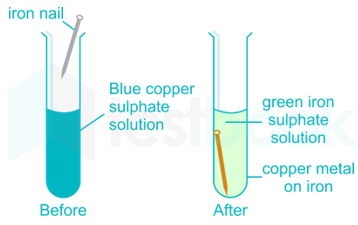
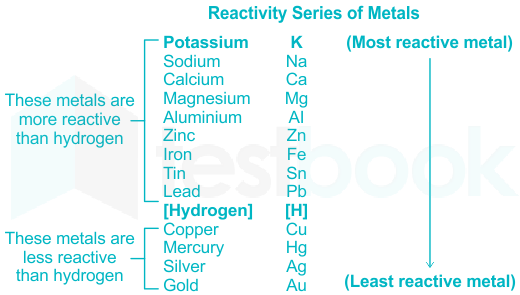
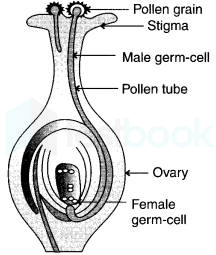
Official Paper

CTET Paper 2 Maths & Science 29th Jan 2023 (English-Hindi-Sanskrit) (Previous Year Paper)

150 questions · 150 minutes · with answers · free

Child Development and Pedagogy (30 questions)

1

Physical development of a child is directly concerned with

(i) growth rate

(ii) sensory functioning

(iii) fine and gross motor skills

(iv) interpersonal relationships

  1. ((a))

    (i), (iii) 

  2. ((b))

    (i), (iv) 

  3. ((c))

    (i), (ii), (iii) 

  4. ((d))

    (i), (ii), (iii), (iv)

Show Answer
Answer: ((c))

(i), (ii), (iii) 

Physical development refers to the changes and advancements in a child's body and physical abilities. It involves both quantitative aspects like growth rate (i.e., increase in height and weight) and qualitative aspects like the development of sensory functioning (sight, hearing, taste, smell, touch) and fine and gross motor skills.

Key Points

  • Growth rate: This aspect involves the measurable increase in a child's height, weight, and overall size as they age. It is an essential indicator of a child's physical development.
  • Sensory functioning: The development of sensory functioning is crucial for a child's ability to perceive and interact with the environment. This includes the development of the five senses - sight, hearing, taste, smell, and touch.
  • Fine and gross motor skills: Fine motor skills involve the coordination and control of small muscles, such as those used in handwriting, using scissors, or buttoning clothes. Gross motor skills, on the other hand, involve the coordination and control of large muscles, such as those used in walking, running, jumping, and other physical activities.

Thus, it is concluded that (i), (ii), (iii)  is the correct answer.

 HintWhile interpersonal relationships are essential for a child's overall development, they are not directly concerned with physical development. Interpersonal relationships primarily fall under the domain of social and emotional development, which is a distinct aspect of a child's overall growth.

2

Assertion (A) - A child cannot learn to hold a pencil and write before she attains some neuromotor maturation. 

Reason (R) - Learning is dependent upon development. 

Choose the correct option.

  1. ((a))

    Both (A) and (R) are true and (R) is the correct explanation of (A)

  2. ((b))

    Both (A) and (R) are true but (R) is not the correct explanation of (A)

  3. ((c))

    (A) is true but (R) is false

  4. ((d))

    Both (A) and (R) are false

Show Answer
Answer: ((a))

Both (A) and (R) are true and (R) is the correct explanation of (A)

 Key Points

  • The assertion (A) that a child cannot learn to hold a pencil and write before she attains some neuromotor maturation is true because holding a pencil and writing require certain physical abilities and coordination that develop as a child grows.
  • The reason (R) that learning is dependent upon development is also true. Cognitive, physical, and emotional development all contribute to a child's ability to learn new skills.
  • In this case, (R) is indeed the correct explanation of (A). Development, specifically neuromotor maturation, is necessary for a child to be able to learn the physical skills of holding a pencil and writing.

Hence, it is concluded that Both (A) and (R) are true and (R) is the correct explanation of (A).

3

Teachers should recognize that _________ is the foremost primary agency of socialization that continues to play a role in middle childhood.

  1. ((a))

    family

  2. ((b))

    media

  3. ((c))

    school

  4. ((d))

    neighbourhood

Show Answer
Answer: ((a))

family

Socialization refers to the process through which individuals, typically starting from a young age, learn and internalize the norms, values, behaviors, and customs of their society or culture.

Key Points

  • The family is usually the first source of socialization for a child because it is the primary context in which early development occurs.
  • Parents, siblings, and other family members provide the initial social environment that shapes a child's attitudes, behaviors, self-concept, and worldview.
  • From the earliest stages of life, children start learning norms, values, and roles within the context of their family.
  • This includes understanding their role within the family unit (such as being a son, daughter, sibling), their cultural and societal expectations, and other behavioral norms
  • The family is a predominant agent of socialization, other factors like media, school, and neighborhood also significantly contribute to a child's socialization, especially as the child grows older and expands their social circles.

Thus, it is concluded that Teachers should recognize that family is the foremost primary agency of socialization that continues to play a role in middle childhood.

4

As per Jean Piaget's theory, At which stage do children become more skilled at symbolic play, yet continue to think in a concrete manner but not is abstraction?

  1. ((a))

    Sensorimotor stage

  2. ((b))

    Post-conventional state

  3. ((c))

    Concrete operational state

  4. ((d))

    Formal operational state

Show Answer
Answer: ((c))

Concrete operational state

According to Jean Piaget's theory of cognitive development, the Concrete Operational stage is when children start to think more logically about concrete (rather than abstract) events. This stage typically occurs between the ages of 7 and 11.

Key Points

  • During this period, children become more skilled at using logic and reasoning, but their thinking is still very concrete; they struggle with abstract and hypothetical concepts.
  • They also begin to understand the concept of conservation (that quantity does not change with alterations in shape or arrangement), and they can classify items into different sets.
  • Symbolic play is more common in the Preoperational stage (from about 2 to 7 years of age), which precedes the Concrete Operational stage.
  • During the Preoperational stage, children begin to engage in make-believe and understand the use of symbols (like words or pictures to represent objects). They still struggle with logical thinking and understanding the perspective of others.However, their ability to engage in more sophisticated forms of symbolic play and logical reasoning develops and improves as they transition into the Concrete Operational stage.

Thus, it is concluded that Concrete operational state is the correct answer.

5

According to Jean Piaget, how is children's thinking different from adults?

  1. ((a))

    It is not different from adults

  2. ((b))

    Children's thinking differs qualitatively from adults

  3. ((c))

    Children's thinking differs quantitively from adults

  4. ((d))

    Children's thinking is inferior to adults

Show Answer
Answer: ((b))

Children's thinking differs qualitatively from adults

Jean Piaget, a Swiss developmental psychologist, was particularly interested in how children's thinking differs from adults'. According to his theory of cognitive development, children do not just know less than adults do; their thinking is qualitatively different.

Key Points Piaget proposed that children go through four distinct stages of cognitive development, each characterized by different abilities and ways of understanding the world:

  • Sensorimotor Stage (birth to about age 2): Infants and toddlers understand the world through sensory experience and physical interaction with objects.
  • Preoperational Stage (about age 2 to 7): Children begin to represent the world symbolically, such as through language, but they lack the ability to perform mental operations and see things from others' perspectives.
  • Concrete Operational Stage (about age 7 to 11): Children start to use logic and reasoning about concrete events, but they struggle with abstract or hypothetical concepts.
  • Formal Operational Stage (about age 11 and over): Adolescents and adults can use logic and r easoning even about abstract or hypothetical concepts.

According to Piaget, these changes are not just about acquiring more information or skills but involve fundamentally different ways of thinking about and understanding the world. Therefore, his theory suggests that children's thinking differs qualitatively, not just quantitatively, from adults'.

Thus, it is concluded that Children's thinking differs qualitatively from adults is the correct answer.

6

According to Jean Piaget, which of the following are the part of adaptation?

(i) Assimilation

(ii) Accommodation

(iii) Scaffolding

(iv) Conditioning

  1. ((a))

    (i), (ii)

  2. ((b))

    (ii), (iii)

  3. ((c))

    (i), (iv) 

  4. ((d))

    (iii), (iv)

Show Answer
Answer: ((a))

(i), (ii)

 Key PointsAccording to Jean Piaget's theory of cognitive development, the process of adaptation involves two complementary processes:

  • Assimilation: This is the process of taking in new information and fitting it into and making it part of an existing cognitive schema. For instance, if a child already has a mental category (or schema) for dogs and they encounter a cat for the first time, they might initially assimilate this information and label the cat as a "dog".
  • Accommodation: This is the process of altering one's existing schemas or ideas as a result of new information or new experiences. Using the previous example, when the child learns more about cats and realizes that cats and dogs are different, they will accommodate this new information by adjusting their schema for dogs and creating a new schema for cats.

Thus, it is concluded that (i), (ii) is the correct answer.

Hint

  • Scaffolding and Conditioning, are not part of Piaget's theory of adaptation.
  • Scaffolding is a concept from Vygotsky's theory of learning, where an experienced guide helps a learner to accomplish tasks they could not do alone.
  • Conditioning refers to a type of learning, such as classical or operant conditioning, where behaviors are learned through associations or consequences, and is not part of Piaget's model.
7

In Kohlberg's___________ of moral development the individual strives to maintain the expectations of others rather than focus on the consequences of one's actions?

  1. ((a))

    Pre-operational level

  2. ((b))

    Pre-conventional level

  3. ((c))

    Conventional level

  4. ((d))

    Post-conventional level

Show Answer
Answer: ((c))

Conventional level

 Key PointsAccording to Lawrence Kohlberg's theory of moral development, the Conventional level is the stage in which an individual's moral reasoning is based primarily on the societal rules and expectations of others. It includes two stages:

  • Stage 3 (Good Interpersonal Relationships): At this stage, the individual is responsive to approval or disapproval from others and tries to be a "good boy" or "good girl", having learned that there is inherent value in doing so.
  • Stage 4 (Maintaining the Social Order): The individual becomes more concerned with society as a whole. Moral decisions are made based on what will maintain social order and uphold the law.

At this level, individuals are not yet thinking in terms of abstract principles or values (as in the Post-conventional level), and their morality is no longer solely dictated by punishment or reward (as in the Pre-conventional level). Instead, their focus is on maintaining social norms and the expectations of others.

Thus, it is concluded that Conventional level is the correct answer.

8

Lev Vygotsky proposed that learning - 

  1. ((a))

    is a social activity.

  2. ((b))

    happens through repeated drill and recall.

  3. ((c))

    occurs through the processes of conditioning.

  4. ((d))

    occurs independent of development

Show Answer
Answer: ((a))

is a social activity.

Lev Vygotsky, a Soviet psychologist, proposed the Sociocultural Theory of Cognitive Development, which emphasizes the importance of social interactions and culture in learning. He argued that social interaction, especially involvement with knowledgeable members of society, can greatly enhance a child's learning and cognitive development.

Key Points

  • According to Vygotsky's sociocultural theory, the social environment plays a fundamental role in shaping a child's cognitive development.
  • He emphasized the importance of social interactions, cultural context, and language in the process of learning and development.
  • Vygotsky also introduced the concept of the Zone of Proximal Development (ZPD), which refers to the difference between what a learner can do without help and what they can do with guidance from a more knowledgeable individual.

This underscores the idea that learning is, indeed, a social activity.

9

According to Lev Vygotsky, how should the experts enable the children to perform at a higher level of zone of proximal development ?

  1. ((a))

    By strengthening conditioning

  2. ((b))

    By giving punishment

  3. ((c))

    By offering positive reinforcement

  4. ((d))

    By providing scaffolding

Show Answer
Answer: ((d))

By providing scaffolding

According to Vygotsky's theory, experts (like teachers, parents, or more knowledgeable peers) can enable children to perform at a higher level within their Zone of Proximal Development (ZPD) by providing scaffolding.

Key Points

  • Scaffolding is a metaphorical concept that refers to the guidance, support, or structure provided by an expert to help a learner successfully complete a task that they would not be able to accomplish on their own.
  • This might include hints, prompts, demonstrations, or breaking a complex task into smaller, more manageable parts.
  • The goal of scaffolding is to gradually withdraw the support as the learner becomes more proficient and capable of completing the task independently, thereby promoting their learning and development.

Thus, Scaffolding is an integral part of Vygotsky's sociocultural theory and his concept of the ZPD.

10

In a progressive classroom –

  1. ((a))

    Children are provided with appropriate learning activities and the freedom to enhance their innate capabilities.

  2. ((b))

    Only summative assessment is followed.

  3. ((c))

    Teachers are the only sources of knowledge.

  4. ((d))

    Teacher-centric pedagogy is followed.

Show Answer
Answer: ((a))

Children are provided with appropriate learning activities and the freedom to enhance their innate capabilities.

A progressive classroom is a concept born out of progressive education, a pedagogical movement that emphasizes experiential learning, critical thinking, problem-solving, and the cultivation of students' innate capabilities.

Key Points

  • In a progressive classroom, children are viewed as active participants in their own learning, rather than passive recipients of information.
  • Education is child-centered, with a focus on individual needs and experiences.
  • Teachers serve as guides and facilitators, providing students with learning opportunities that stimulate their curiosity, encourage exploration, and allow them to engage with the material in meaningful ways.
  • The goal is to help students become independent thinkers and lifelong learners.

Thus, it is concluded that In a progressive classroom children are provided appropriate learning activities and the freedom to enhance their innate capabilities.

11

A poet, a writer and a story teller are likely to possess high

  1. ((a))

    Spatial intelligence

  2. ((b))

    Linguistic intelligence

  3. ((c))

    Musical intelligence

  4. ((d))

    Intrapersonal intelligence

Show Answer
Answer: ((b))

Linguistic intelligence

Gardner's theory of multiple intelligences challenges the traditional view of intelligence, which primarily focuses on IQ and standardized tests.

 Key Points

  • According to Howard Gardner's theory of multiple intelligences, linguistic intelligence is the ability to use language effectively, both orally and in writing, for functions such as informing, persuading, entertaining, or conveying ideas.
  • People with high linguistic intelligence, such as poets, writers, and storytellers, typically enjoy activities such as reading, writing, and discussion. They have a well-developed ability to express themselves, both orally and in writing, and often have a strong appreciation for the nuances of language.
  • While these individuals may also have strengths in other areas of intelligence (such as intrapersonal intelligence, which relates to self-awareness and understanding one's own feelings and motivations), linguistic intelligence would be particularly relevant to their roles as poets, writers, and storytellers.

Thus, it is concluded that Linguistic intelligence is the correct answer.

12

Lev Vygotsky proposed that language –

  1. ((a))

    plays a central role in cognitive development.

  2. ((b))

    hinders cognitive development of children.

  3. ((c))

    does not impact learning and development

  4. ((d))

    doesn't get influenced by social context.

Show Answer
Answer: ((a))

plays a central role in cognitive development.

Vygotsky's sociocultural theory of cognitive development puts significant emphasis on the role of language in cognition. He saw language as a set of cultural tools that shape cognitive development.

 Key Points

  • According to Vygotsky, cognitive development and understanding emerge out of social interactions, and language plays a crucial role in this process.
  • Children learn to think and understand the world around them through their language interactions with others.
  • Vygotsky also highlighted that thought and language become increasingly intertwined as a child matures, suggesting that complex cognitive activities are essentially social and linguistic in nature.

Thus, it is concluded that Lev Vygotsky proposed that language plays a central role in cognitive development.

13

To cater to diversity in a classroom the teachers should focus on

  1. ((a))

    uniformity

  2. ((b))

    equality

  3. ((c))

    equity

  4. ((d))

    standardization

Show Answer
Answer: ((c))

equity

Diversity in the classroom refers to the presence of students from various backgrounds, cultures, ethnicities, races, genders, socioeconomic statuses, abilities, and other diverse characteristics within the same learning environment.

Key Points

  • Equity is the principle of ensuring that all students have access to the resources, opportunities, and support they need to succeed, considering their unique needs and circumstances.
  • It acknowledges that different students may require different levels of assistance to reach their full potential and achieve academic success.

Thus, it is concluded that To cater to diversity in a classroom the teachers should focus on equity.

Hint In contrast, the other options are not suitable approaches for addressing diversity in a classroom:

  • Uniformity: Focusing on uniformity means treating all students in the same way, without considering their individual differences. This approach can overlook the diverse needs and abilities of students, leading to unequal opportunities for learning and growth.
  • Equality: Equality involves treating all students equally, providing the same resources and support to everyone. While equality is a valuable principle, it may not address the varying needs and challenges that diverse students face.
  • Standardization: Standardization involves applying the same standardized measures and assessments to all students. This approach may not consider the individual strengths and weaknesses of students, and it can limit their ability to showcase their true potential.
14

Assessment for learning should focus on -

  1. ((a))

    Learning for exams

  2. ((b))

    Conceptual understanding

  3. ((c))

    Mechanical practise

  4. ((d))

    Recall and reproduction

Show Answer
Answer: ((b))

Conceptual understanding

Assessment for learning, also known as formative assessment, is an ongoing and interactive process that takes place during the learning process to gather information about students' progress and understanding. The primary focus of assessment for learning is to gauge students' conceptual understanding of the subject matter rather than merely measuring their ability to recall and reproduce information.

Key Points Here's why assessment for learning should prioritize conceptual understanding:

  • Feedback and Support: Assessment for learning provides timely feedback to students about their understanding of concepts. It helps identify areas where students may be struggling and enables teachers to offer targeted support and interventions to address their learning needs.
  • Learning Progression: By focusing on conceptual understanding, assessment for learning allows teachers to track students' progress in grasping fundamental concepts and building on their knowledge incrementally.
  • Active Learning: Assessment for learning promotes active engagement in the learning process. Students are encouraged to think critically, apply their knowledge, and make connections between concepts, fostering deeper learning.

Thus, it is concluded that Assessment for learning should focus on  conceptual understanding.

15

Use of open-ended questions in the class and encouraging children to think of multiple perspectives promotes –

  1. ((a))

    Problem solving skills and divergent thinking

  2. ((b))

    Reproduction of knowledge and convergent thinking

  3. ((c))

    Competition among students

  4. ((d))

    Stress and anixiety among students

Show Answer
Answer: ((a))

Problem solving skills and divergent thinking

The use of open-ended questions in the class and encouraging children to think of multiple perspectives promotes Problem-solving skills and divergent thinking.

Key Points

  • Open-ended questions are questions that do not have a single correct answer but rather allow for a variety of responses and interpretations.
  • Encouraging students to think of multiple perspectives involves exploring different viewpoints, ideas, and possibilities.
  • By using open-ended questions and promoting multiple perspectives, teachers create an inclusive and intellectually stimulating learning environment.
  • Students feel encouraged to share their thoughts, engage in critical thinking, and explore diverse viewpoints.
  • This approach not only enhances problem-solving skills and divergent thinking but also nurtures creativity and a deeper understanding of complex concepts.

Thus, it is concluded that option 1 is the correct answer.

16

Principle of inclusion proposes

  1. ((a))

    'Special schools' for 'special children'

  2. ((b))

    An attitude of pity and sympathy for children

  3. ((c))

    Uniform and standard curriculum for all children

  4. ((d))

    Creation of an ethos for overall development of each child regardless of her background or abilities

Show Answer
Answer: ((d))

Creation of an ethos for overall development of each child regardless of her background or abilities

Inclusion is an educational philosophy that advocates for providing equal opportunities and support to all children, regardless of their diverse backgrounds, abilities, or disabilities. It emphasizes creating a learning environment where every child feels valued, respected, and included, and where their unique strengths and challenges are recognized and addressed.

 Key PointsKey features of the principle of inclusion are:

  • Emphasis on Diversity: Inclusion values and celebrates the diversity of learners, considering individual differences in terms of abilities, learning styles, cultural backgrounds, and experiences.
  • Equal Opportunities: Inclusive education aims to ensure that all children have access to quality education and learning opportunities without discrimination or exclusion.
  • Supportive Environment: In an inclusive setting, teachers and staff are committed to providing appropriate support and accommodations to meet the diverse needs of students.
  • Collaboration: Inclusion involves collaboration among teachers, parents, and other stakeholders to work together in supporting each child's learning and development.


Thus, it is concluded that Principle of inclusion proposes creation of an ethos for overall development of each child regardless of her background or abilities.

17

____________is and example of accomodation strategy to help students with hearing impairment,

  1. ((a))

    Large print books

  2. ((b))

    Crutches

  3. ((c))

    Sign language

  4. ((d))

    Audio tapes

Show Answer
Answer: ((c))

Sign language

Sign language is an example of an accommodation strategy to help students with hearing impairment.

 Key Points

  • Sign language is a visual-gestural language that uses hand movements, facial expressions, and body postures to convey information and communicate. It is a specialized form of communication used by individuals who are deaf or have hearing difficulties.
  • Using sign language as an accommodation allows students with hearing impairments to access information and participate in classroom discussions and activities. Sign language interpreters or teachers trained in sign language can interpret spoken language into sign language, enabling students with hearing impairments to understand lectures, discussions, and instructions.
  • Accommodation strategies like sign language are part of an inclusive approach to education, where students with disabilities are provided with the necessary support and adaptations to fully participate in the learning environment and reach their academic potential.

Thus, it is concluded that sign language is the correct answer.

18

Universal Design for Learning to cater to diverse needs to children do not propose multiple ways of –

  1. ((a))

    Engagement

  2. ((b))

    Representation

  3. ((c))

    Labelling

  4. ((d))

    Action

Show Answer
Answer: ((c))

Labelling

Universal Design for Learning (UDL) is an educational framework that aims to cater to diverse needs by providing multiple means of engagement, representation, and action.

Key Points

  • Universal Design for Learning focuses on creating flexible and inclusive learning environments that address the diverse learning needs of all students.
  • It recognizes that learners vary in their abilities, preferences, and backgrounds, and hence, the curriculum and instructional approaches should be designed in a way that accommodates these differences.
  • UDL encourages providing various ways to engage students and enhance their motivation and interest in learning. This could involve presenting content in different formats, offering choices in activities, incorporating relevant and culturally responsive materials, and creating a positive and supportive learning environment.
  • UDL advocates for presenting information and content in diverse ways to ensure that students can access and understand the material. This might include providing information through visual, auditory, or tactile modalities, using multimedia, graphics, and real-world examples, and considering the individual preferences of students in how they receive information.

Thus, it is concluded that Universal Design for Learning to cater to diverse needs to children do not propose multiple ways of labeling.

19

Which of the following are typical characteristics of a student with learning disability?

(i) Omits words or lines in readings

(ii) Makes mistakes in spelling

(iii) Does not read well

(iv) Performs the same motor action repeatedly

  1. ((a))

    (i), (ii), (iii) 

  2. ((b))

    (i), (ii) 

  3. ((c))

    (i), (iii)

  4. ((d))

    (i), (ii), (iii), (iv) 

Show Answer
Answer: ((a))

(i), (ii), (iii) 

A learning disability (LD) is a neurological disorder that affects a person's ability to process and retain information effectively.

 Key PointsThe typical characteristics of a student with a learning disability include:

  • Omits words or lines in readings: Students with learning disabilities may struggle with reading fluency and accuracy, leading to skipping words or lines while reading.
  • Makes mistakes in spelling: Difficulty with spelling is a common characteristic of learning disabilities, particularly in dyslexia, where students may have trouble understanding and applying phonics rules.
  • Does not read well: Learning disabilities often affect reading comprehension, leading to difficulties in understanding and making sense of the text.

Thus, it is concluded that (i), (ii), (iii)  is the correct answer.

Hint Performs the same motor action repeatedly does not typically align with the characteristics of a student with a learning disability. Repeatedly performing the same motor action is more associated with repetitive behaviors, which can be observed in certain conditions like Autism Spectrum Disorder (ASD), but it is not a specific characteristic of learning disabilities.

20

Assertion (A) : It is important to focus on the learning needs of gifted children in a classroom by giving them tasks that help them achieve their potential.

Reason (R) : Gifted children have specific learning needs and these often get ignored in a classroom. 

Choose the correct opiton.

  1. ((a))

    Both (A) and (R) are true and (R) is the correct explanation of (A)

  2. ((b))

    Both (A) and (R) are true but (R) is not the correct explanation of (A)

  3. ((c))

    (A) is true but (R) is false

  4. ((d))

    Both (A) and (R) are false

Show Answer
Answer: ((a))

Both (A) and (R) are true and (R) is the correct explanation of (A)

 Key Points

  • Assertion (A) states that it is essential to focus on the learning needs of gifted children in a classroom by giving them tasks that help them achieve their potential. This means that educators should provide appropriate challenges and opportunities to nurture the talents and abilities of gifted students.
  • Reason (R) supports the assertion and states that gifted children have specific learning needs, which often go unnoticed or unaddressed in a regular classroom setting. This is indeed true as gifted students may have unique learning styles, interests, and capabilities that require differentiated instruction to keep them engaged and intellectually stimulated.
  • The explanation (R) provides the correct reasoning behind why it is important to focus on the learning needs of gifted children in the classroom. Gifted students may have advanced cognitive abilities and may quickly grasp concepts meant for older students or need more in-depth and challenging tasks to meet their academic potential. Ignoring their specific learning needs can lead to disengagement, underachievement, or frustration in the classroom.

Thus, it is concluded that Both (A) and (R) are true and (R) is the correct explanation of (A).

21

In a middle school classroom learning is to be understood as :

  1. ((a))

    Being constructed by the children with support from more knowledgeable persons

  2. ((b))

    As passive and individualisti

  3. ((c))

    As conditioning of stimulus and response

  4. ((d))

    As a measurable change in behaviour

Show Answer
Answer: ((a))

Being constructed by the children with support from more knowledgeable persons

This perspective aligns with the constructivist view of learning, which suggests that students actively build their understanding and knowledge through interactions with the environment, peers, and more knowledgeable individuals, such as teachers or mentors.

 Key Points Learning is seen as an active and dynamic process where students construct their understanding based on prior knowledge and experiences.

  • Active Engagement: Students are actively engaged in the learning process, exploring concepts, and making sense of new information through their own experiences and interactions.
  • Social Interaction: Learning is enhanced through social interactions and collaboration with peers and more knowledgeable others who provide guidance, feedback, and support.
  • Prior Knowledge: Students bring their existing knowledge and schema to the learning process, and they actively connect new information to what they already know.
  • Authentic Contexts: Learning is situated in authentic contexts and meaningful activities that allow students to apply their knowledge and skills to real-world situations.

Thus, it is concluded that In a middle school classroom learning is to be understood as being constructed by the children with support from more knowledgeable persons.

22

Problem solving is hindered by -

  1. ((a))

    Metacognitive abilities

  2. ((b))

    Response set

  3. ((c))

    Studying worked examples

  4. ((d))

    Brainstorming and discussion with peers

Show Answer
Answer: ((b))

Response set

Problem-solving refers to the process of finding solutions to challenges or issues encountered in various situations. It involves identifying a problem, analyzing its components, and devising effective strategies to reach a desired outcome or goal.

Key Points

  • Response set refers to a cognitive bias or tendency in problem solving where an individual relies on a particular strategy or response that has worked in the past, even if it is not the most appropriate or effective approach to the current problem.
  • Metacognitive abilities: Metacognitive abilities actually aid problem solving. Metacognition refers to the ability to think about one's own thinking processes and monitor and regulate cognitive activities.
  • Studying worked examples: Studying worked examples can be beneficial for problem solving as it allows individuals to understand and learn problem-solving strategies by observing how experts approach and solve problems.
  • Brainstorming and discussion with peers: Brainstorming and discussing with peers can enhance problem-solving abilities by promoting the exploration of different perspectives, creative ideas, and possible solutions to a given problem.

Thus, response set is the option that hinders problem solving. It limits individuals' ability to consider alternative strategies and can lead to suboptimal problem-solving outcomes by relying on past approaches that may not be suitable for the current situation.

23

Which of the following statements is NOT correct about children's learning in a socio-constructivist classroom?

  1. ((a))

    Children's interaction with their peers facilitates cognitive development

  2. ((b))

    Formative and diverse forms of assessment shuould be carried out in classrooms.

  3. ((c))

    Children construct knowledge rather than receive it passively.

  4. ((d))

    Norm-referenced testing is the only way to standardise assessment.

Show Answer
Answer: ((d))

Norm-referenced testing is the only way to standardise assessment.

In a socio-constructivist classroom, learning is viewed as a social process where knowledge is constructed rather than passively received.

 Key Points

  • Peer interactions are highly valued and seen as important for facilitating cognitive development.
  • Assessments are often formative, which means they occur continuously throughout the learning process to provide feedback and guide students' understanding, and they embrace diverse forms reflecting the multifaceted nature of learning.
  • The statement that "Norm-referenced testing is the only way to standardise assessment" is not correct in this context.
  • While norm-referenced tests, which compare a student's performance against a group norm, can be a part of the assessment process, they are not the only way to assess student learning.
  • In a socioconstructivist classroom, a range of assessment methods are typically used, including formative assessments, performance-based assessments, self-assessments, and more.

Thus, it is concluded that Norm-referenced testing is the only way to standardise assessment is NOT correct.

24

The socio-cultural context of the students -

  1. ((a))

    Does not impact their learning process.

  2. ((b))

    Should be ignored to facilitate effective learning.

  3. ((c))

    Is an important factor that influences learning.

  4. ((d))

    Provides an excellent opportunity to categories children from same caste in one group. 

Show Answer
Answer: ((c))

Is an important factor that influences learning.

The socio-cultural context of students significantly influences their learning process. This is a fundamental aspect of Lev Vygotsky's socio-cultural theory of cognitive development, which suggests that learning and development are embedded within social events and occur as a child interacts with people, objects, and symbols in their cultural environment.

Key Points

  • Socio-cultural factors can impact what a student knows or how they see the world, which, in turn, affects how they approach and understand new information.
  • Understanding students' socio-cultural backgrounds can help teachers tailor instruction to connect with students' prior knowledge and experiences, making learning more meaningful and effective.

Thus, it is concluded that option 3 is the correct answer.

25

Teachers should encourage students to become ___________ motivated learners and set ___________ goals. 

  1. ((a))

    Intrinsically; mastery-oriented

  2. ((b))

    Intrinsically; performance-oriented

  3. ((c))

    Extrinsically; mastery-oriented

  4. ((d))

    Extrinsically; performance-oriented

Show Answer
Answer: ((a))

Intrinsically; mastery-oriented

 Key Points

  • Intrinsic motivation comes from within the learner. Intrinsically motivated learners engage in learning for its own sake, out of curiosity, interest, or enjoyment. They are more likely to take on challenging tasks, persist in the face of difficulty, and exhibit high levels of achievement. As a result, teachers should encourage students to be intrinsically motivated.
  • Mastery-oriented goals focus on the development of competence and understanding. Learners with mastery-oriented goals strive to learn, understand, or master the material or skill at hand. They value the process of learning and are not as concerned with comparisons to others' performance. This approach promotes a deep understanding and long-term retention of knowledge.

Thus, it is concluded that Teachers should encourage students to become intrinsically motivated learners and set mastery-oriented goals.

26

Assertion (A) - In middle school classrooms only the teachers should ask questions and not the students.

Reason (R) - Passive listening is the best method to learn meaningfully.

Choose the correct option.

  1. ((a))

    Both (A) and (R) are true and (R) is the correct explanation of (A)

  2. ((b))

    Both (A) and (R) are true but (R) is not the correct explanation of (A)

  3. ((c))

    (A) is true but (R) is false

  4. ((d))

    Both (A) and (R) are false

Show Answer
Answer: ((d))

Both (A) and (R) are false

 Key Points

  1. In an effective learning environment, it's important to encourage student participation, including questioning. Allowing students to ask questions not only promotes engagement, but it also fosters a deeper understanding of the subject matter. Furthermore, it encourages critical thinking skills and an active learning environment, which are essential for meaningful learning.
  2. Passive listening, mentioned in reason (R), is not the best method for meaningful learning. Passive listening refers to a learning approach where students simply receive information without actively engaging with it. While this method may work for memorizing facts, it does not promote a deep understanding of the material or encourage critical thinking. Active learning, where students are engaged, asking questions, and actively processing information, is generally more effective for meaningful learning.

Thus, it is concluded that Both (A) and (R) are false.

27

_________ and __________ promote active engagement of students in a classroom.

  1. ((a))

    Drill and repeated practise

  2. ((b))

    Competition and friendly rivalry

  3. ((c))

    Passive listening and imitation.

  4. ((d))

    Enquiry and questioning

Show Answer
Answer: ((d))

Enquiry and questioning

 Key Points

  • Enquiry-based learning is a form of active learning that starts by posing questions, problems or scenarios, and encourages students to investigate and seek solutions. It fosters curiosity, active learning, and self-directed investigation.
  • Questioning is an essential part of the learning process that helps to stimulate thinking and learning. When students ask questions, they are engaged in their learning process, they think more deeply about the content, and they understand it more thoroughly.

Thus, it is concluded that Enquiry and questioning promote active engagement of students in a classroom.

28

A teacher can foster critical thinking in her students by

  1. ((a))

    Encouraging multiple ideas and intuitive guesses

  2. ((b))

    Promoting mere reproduction of information

  3. ((c))

    Repeated drill and practice

  4. ((d))

    Ensuring that the teacher has absolute control over the children's learning

Show Answer
Answer: ((a))

Encouraging multiple ideas and intuitive guesses

Critical thinking involves the ability to analyze, evaluate, and synthesize information objectively and logically. It goes beyond memorization and simple reproduction of information.

 Key Points

  • By encouraging students to generate multiple ideas and intuitive guesses, the teacher is promoting creative and independent thinking.
  • Encouraging Multiple Ideas: When students are encouraged to come up with various ideas or solutions to a problem, it enhances their ability to think critically and consider different perspectives.
  • Intuitive Guesses: Allowing students to make intuitive guesses encourages them to use their instincts, reasoning, and prior knowledge to arrive at possible solutions. This can lead to deeper thinking and insight.
  • Divergent Thinking: By promoting multiple ideas, the teacher fosters divergent thinking—the ability to generate a wide range of possible answers or approaches.

Thus, it is concluded that A teacher can foster critical thinking in her students by encouraging multiple ideas and intuitive guesses.

29

How should a middle school teacher deal with naive theories held by students about various phenomenon?

  1. ((a))

    Giving strict punishment to the students to change their conceptions

  2. ((b))

    Offering physical rewards to change these theories

  3. ((c))

    Totally ignore them and carry on with one's lectures

  4. ((d))

    Analyse them and address them in the teaching-learning process

Show Answer
Answer: ((d))

Analyse them and address them in the teaching-learning process

Naive theories or preconceptions that students have about various phenomena are an important aspect of their existing knowledge base.

 Key Points

  • Instead of ignoring or attempting to eradicate these conceptions through punishment or rewards, a more effective approach is to acknowledge them and integrate them into the teaching-learning process.
  • When teachers understand these naive theories, they can design instruction to build upon or challenge these conceptions, helping students to refine their understanding and move towards more scientifically accurate ideas.
  • This approach is consistent with constructivist learning theory, which emphasizes the importance of prior knowledge and active learning in the construction of new knowledge.
  • Moreover, by addressing these naive theories directly, teachers can also help students develop their critical thinking skills and understand the process of scientific reasoning and evidence-based decision making.

Thus, it is concluded that option 4 is the correct answer.

30

Assertion (A) : Students should be given reasonable autonomy in the classroom to self-regulate their own learning. 

Reason (R) : Learning is effective when the learners take ownership. 

Choose the correct option.

  1. ((a))

    Both (A) and (R) are true and (R) is the correct explanation of (A)

  2. ((b))

    Both (A) and (R) are true but (R) is not the correct explanation of (A)

  3. ((c))

    (A) is true but (R) is false

  4. ((d))

    Both (A) and (R) are false

Show Answer
Answer: ((a))

Both (A) and (R) are true and (R) is the correct explanation of (A)

 Key Points

  • Assertion (A) states that students should be given reasonable autonomy in the classroom to self-regulate their own learning. This means that students should have opportunities to take ownership of their learning process, make decisions about their learning goals, and engage in self-directed learning.
  • Reason (R) supports the assertion and states that learning is effective when the learners take ownership. This means that when students are actively involved in setting their learning objectives, making choices about learning strategies, and monitoring their progress, they are more engaged and invested in the learning process, leading to more effective and meaningful learning outcomes.
  • The explanation (R) provides the correct reasoning behind why students should be given reasonable autonomy in the classroom. When students have a sense of ownership and agency over their learning, they are more motivated, responsible, and self-regulated, which can lead to a deeper understanding and retention of the material.

Thus, both (A) and (R) are true, and the reason (R) correctly explains why providing reasonable autonomy to students in the classroom is beneficial for their learning and overall academic growth.

Mathematics and Science (60 questions)

31

Which of the following is equal to 1243\frac{-1}{243} ?

  1. ((a))

    (13)5\left(\frac{-1}{3}\right)^5

  2. ((b))

    (13)5\left(\frac{1}{3}\right)^5

  3. ((c))

    (13)5\left(\frac{1}{3}\right)^{-5}

  4. ((d))

    (3)5

Show Answer
Answer: ((a))

(13)5\left(\frac{-1}{3}\right)^5

Calculation :

By going through options :

(13)5\left(\frac{-1}{3}\right)^5 = -1/243

(13)5\left(\frac{1}{3}\right)^5 = 1/243

(13)5\left(\frac{1}{3}\right)^{-5} = 243

(3)5  = 243

∴ The correct answer is 243.

32

Value of (13)4\left(\frac{-1}{3}\right)^4 + (16)3\left(\frac{-1}{6}\right)^3 lies between:

  1. ((a))

    -1 and 0

  2. ((b))

    -1 and -0.5

  3. ((c))

    0.5 and 1

  4. ((d))

    0 and 0.5

Show Answer
Answer: ((d))

0 and 0.5

Calculation :

 (13)4\left(\frac{-1}{3}\right)^4 + (16)3\left(\frac{-1}{6}\right)^3 

⇒ 1/81 - 1/216

⇒ (8 - 3)/648

⇒ 5/ 648

⇒ 0.00771

∴ The correct answer is 0 and 0.5.

33

Which of the following numbers lies between π and 3373 \frac{3}{7} ?

  1. ((a))

    3.2857

  2. ((b))

    3.1213

  3. ((c))

    3.4385

  4. ((d))

    3.0012

Show Answer
Answer: ((a))

3.2857

Calculation :

Accoridng to question,

⇒ π = 3.14, 3373 \frac{3}{7} = 3.42

So, only 3.2857 is the only number between π and 3373 \frac{3}{7}.

∴ The correct answer is option 1,

34

(27)4(125)2\frac{(27)^4}{(125)^2} ÷ \(\left{\left(\frac{5}{9}\right)^{-2}\left(\frac{3}{5}\right)^6\right} \) is equal to :

  1. ((a))

    125

  2. ((b))

    225

  3. ((c))

    289

  4. ((d))

    300

Show Answer
Answer: ((b))

225

Calculations:

(27)4/ (125)2 = 312/56

(5/9)-2 = (9/5)2

(27)4(125)2\frac{(27)^4}{(125)^2}   / \(\left{\left(\frac{5}{9}\right)^{-2}\left(\frac{3}{5}\right)^6\right} \) = (312/56) / (9/5)2 × (3/5)6

= 312  × 52 × 56 / 34 × 36 = 32 × 52 = 225

Hence, The Correct Answer is option 2.

35

If x = (-5)-11(15)11\left(\frac{1}{5}\right)^{11} + 511(15)11\left(\frac{-1}{5}\right)^{11} , then x is equal to :

  1. ((a))

    (522+1522)-\left(\frac{5^{22}+1}{5^{22}}\right)

  2. ((b))

    522+1522\frac{5^{22}+1}{5^{22}}

  3. ((c))

    522+1522\frac{-5^{22}+1}{5^{22}}

  4. ((d))

    5221522\frac{5^{22}-1}{5^{22}}

Show Answer
Answer: ((a))

(522+1522)-\left(\frac{5^{22}+1}{5^{22}}\right)

Calculation:

x = (-5)-11. (15)11\left(\frac{1}{5}\right)^{11} + 511. (15)11\left(\frac{-1}{5}\right)^{11}

⇒ 1/-511 × 1/511 - 511/511

⇒ -1/522 - 1

⇒ -[(1 + 522)/522]

∴ The correct answer is option 1.

36

A chalk stick contains 12% calcium and 3% carbon. Then, the amount of the rest of the substances in 1.5kg of the chalk stick is :

  1. ((a))

    125 g

  2. ((b))

    225 g

  3. ((c))

    1250 g

  4. ((d))

    1275 g

Show Answer
Answer: ((d))

1275 g

Calculation :

1.5 kg of chalk

Calcium = 12%, Crabon = 3%

Calculation :

According to question,

Calcium = 12% , Carbon = 3%, Rest = 85%

We know, 100% = 1.5 kg

⇒ 1% = 15 gm

Amount of rest = 85 × 15 = 1275 g

∴ The correct answer is 1275 g.

37

If x6\frac{x}{6} = 36x2\frac{36}{x^2} then the value of x is:

  1. ((a))

    2

  2. ((b))

    3

  3. ((c))

    6

  4. ((d))

    36

Show Answer
Answer: ((c))

6

Calculation :

 x6\frac{x}{6} = 36x2\frac{36}{x^2} 

⇒ x3 = 36 × 6 = 216

⇒ x3 = 63

∴ The correct answer is 6.

38

If x = (1.75)2(1.62)20.13\frac{(1.75)^2-(1.62)^2}{0.13} , then x is equal to

  1. ((a))

    3.37

  2. ((b))

    3.38

  3. ((c))

    7.33 

  4. ((d))

    7.03

Show Answer
Answer: ((a))

3.37

Calculation :

⇒ x = (1.75)2(1.62)20.13\frac{(1.75)^2-(1.62)^2}{0.13}

⇒ x = [(1.75 - 1.62)(1.75 + 1.62)]/0.13

⇒ x = (0.13 × 3.37)/0.13

⇒ x = 3.37

∴ The correct answer is 3.37.

39

10 persons can complete a work in 8 days. If there are 16 persons, then the work will be completed in : 

  1. ((a))

    3 days

  2. ((b))

    4 days

  3. ((c))

    5 days

  4. ((d))

    6 days

Show Answer
Answer: ((c))

5 days

Formula used :

M1H1D1/W1 = M2H2D2/W2

Calculation :

According to question,

⇒ 10 × 8 = 16 × h

⇒ 16 h = 80

⇒ h = 5

∴ The correct answer is 5.

40

Which of the following statements can be expressed using the equation x + 10 = 100 ? 

  1. ((a))

    x is a natural number less than 100.

  2. ((b))

    x is a natural number less than 100 by 10.

  3. ((c))

    x is a natural number greater than 100 by 10.

  4. ((d))

    10 is a natural number less than 100.

Show Answer
Answer: ((b))

x is a natural number less than 100 by 10.

Given: 

x + 10 = 100 

Calculations:

option 1)

x is a natural number less than 100.

suppose x = 99 

so we can't write 99 in the form x + 10 = 100 

because from the above equation x = 90 which contradicts the statement of option 1.

Hence, Option 1 is incorrect.

option 2)

x = 100 - 10 = 90

Hence, x is a  natural number less than 100 by 10

Hence, Option 2 is Correct.

option 3)

x is a natural number greater than 100 by 10.

suppose x = 110 then we can't write it as x + 10 = 100 

because if x = 110 then from above equation 110 + 10 ≠ 100 

Hence, Option 3 is incorrect.

option 4)

10 is a natural number less than 100.

we can't write 10 as x + 10 = 100 

Hence, option 4 is incorrect.

41

ABCD is a quadrilateral with A\angle A = 135°, AB and BC are perpendicular to each other, and D\angle D = 60°. Then, the angle between the sides BC and CD is:

  1. ((a))

    75°

  2. ((b))

    65°

  3. ((c))

    60°

  4. ((d))

    70°

Show Answer
Answer: ((a))

75°

Concept used :

Sum of all the angles of quadrilateral = 360° 

Calculation :

⇒ ∠DAB + ∠ADC + ∠DCB + ∠DCB = 360° 

⇒ 135° + 90° + 60° + ∠DCB = 360° 

⇒ ∠DCB = 360° - 285° = 75° 


∴ The correct answer is 75°.

42

A square can  be:

  1. ((a))

    a rectangle

  2. ((b))

    a parallelogram

  3. ((c))

    a rhombus

  4. ((d))

    All of these

Show Answer
Answer: ((d))

All of these

Explanations:

A rectangle is a quadrilateral with four right angles. A square meets this definition as it has four right angles.

A rhombus is a quadrilateral with all sides of equal length. A square meets this definition as it has four equal length sides.

A parallelogram is a quadrilateral in which both pairs of opposite sides are parallel. A square meets this definition as its opposite sides are paralleL.

Hence, The Correct option is 4.

43

Two line-segments AB and PQ intersect each other at O. Points B and Q are joined. If the AOP\angle AOP = 60°, then the value of OBQ\angle OBQ + BQO\angle BQO is :

  1. ((a))

    60°

  2. ((b))

    90°

  3. ((c))

    100°

  4. ((d))

    120°

Show Answer
Answer: ((d))

120°

Calculation :

∠AOP = ∠BOP = 60° [Vertically Opposite Angle]

Now, ∠BOQ + ∠OQB + ∠OBQ = 180° 

∠OQB + ∠OBQ = 180° - 60° = 120° 

∴ The correct answer is 120°.

44

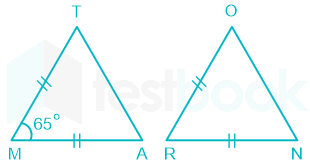
Δ MAT and Δ NOR are two triangles such that they are congruent. Also, TM = RO and MA = RN. If ∠TMA = 65°, then the value of ∠RNO + ∠NOR is:

  1. ((a))

    125°

  2. ((b))

    115°

  3. ((c))

    65°

  4. ((d))

    135°

Show Answer
Answer: ((b))

115°

Given :

Δ MAT and Δ NOR are congruent.

TM = RO

MA = RN 

∠TMA = 65° 

Calculation: 

Since both triangles are congruent 

So, ∠TMA = ∠ORN

By angle sum property,

∠RON + ∠RNO + ∠ORN = 180° 

Now, ∠RNO + ∠NOR = 180° - 65° = 115° 

∴ The correct answer is 115°.

45

LIFE is a quadrilateral in which L\angle L = F\angle F and I\angle I = E\angle E. Then, LIFE is a :

  1. ((a))

    only parallelogram

  2. ((b))

    only square

  3. ((c))

    only rectangle

  4. ((d))

    ​only trapezium

Show Answer
Answer: ((a))

only parallelogram

Calculation :

We know that opposite angle of parallelogram becomes equal.

Here, ∠L = ∠F and ∠I = ∠E 

∴ The correct answer is only parallelogram.

46

Sides of a rectangle are x and y units, where x and y are integers. If perimeter of the rectangle is 24 units, then what is the possible maximum area of the rectangle?

  1. ((a))

    36 sq.units

  2. ((b))

    35 sq.units

  3. ((c))

    32 sq.units

  4. ((d))

    27 sq.units

Show Answer
Answer: ((a))

36 sq.units

Given:

Sides of rectangle are x and y units.

Perimeter of rectangle = 24 units.

Formula used:

Area of rectangle = length × breadth

Perimeter of rectangle = 2 × (length + breadth)

Calculation:

According to question,

⇒ 2 × (L + B) = 24

⇒ (L + B) = 12

Now, for area to be maximum length must be equal to breadth,

So, Area of rectangle = 6 × 6 = 36 sq. unit.

∴ The correct answer is 36 sq. unit.

47

People in a village decided to build a cuboidal water tank of capacity 900 cubic metres. If the length of the tank is 14.5 m and breadth is 9.5 m, then the height of the tank will be :

  1. ((a))

    Less than 6 m

  2. ((b))

    Between 6 m and 6.5 m

  3. ((c))

    Between 6.5 m and 6.75 m

  4. ((d))

    Between 6.75 m and 7 m

Show Answer
Answer: ((c))

Between 6.5 m and 6.75 m

Given:

Volume of cuboid = 900 m3

Length = 14.5 m, Breadth = 9.5 m

Formula used:

Voulme of cuboid = l × b × h

Calculation:

According to question,

⇒ 14.5 × 9.5 × h = 900

⇒ h = 900/137.5 = 6.54

∴ The correct answer is 6.54 m.

48

Let V1 be the volume of the cuboid with sides 3.5, 3.1 and 2.1 units. A cube is formed such that its side is the average of the sides of the cuboid. If V2 is the volume of the cube, then V2 is equal to :

  1. ((a))

    V+ 1.604 cubic units

  2. ((b))

    V1 - 1.604 cubic units

  3. ((c))

    V1

  4. ((d))

    3V1

Show Answer
Answer: ((a))

V+ 1.604 cubic units

Given:

Sides of cuboid 3.5, 3.1, 2.1 units.

Side of cube = average of sides of cuboid/

Formula used:

Average = Sum of all observations/ Number of observations

Volume of cuboid = l × b × h

Volume of cube = a3

Calculation:

According to question,

Volume of cuboid = 3.5 × 3.1 × 2.1 = 22.785 unit

Average of side of cuboid = (3.5 + 3.1 + 2.1)/3 = 2.9

Volume of cube = 24.389

Difference in volume = 24.389 - 22.785 = + 1.604 unit

∴ The correct answer is +1.604 unit.

49

Average age (in years) of boys in a party is 12 and the average age (in years) of all boys and girls in the party is 13. If the number of boys in the party is 10 and number of girls is 5, then what is the average age (in years) of girls ?

  1. ((a))

    10

  2. ((b))

    15

  3. ((c))

    13

  4. ((d))

    14

Show Answer
Answer: ((b))

15

Given:

Average of boys = 12

Average of boys and girls = 13

Number of boys = 10, Number of girls = 5

Formula used :

Average = Sum of all observations/Total number of observations

Calculation:

According to question,

Sum of ages of all boys = 10 × 12 = 120

Sum of ages of all boys and girls = 13 × 15 = 195

Sum of ages of girls = 195 - 120 = 75

Average = 75/5 = 15

∴ The correct answer is 15.

50

A card is drawn from a well shuffled deck of 52 playing cards. What is the probability that the drawn card is an ace ?

  1. ((a))

    152\frac{1}{52}

  2. ((b))

    139\frac{1}{39}

  3. ((c))

    126\frac{1}{26}

  4. ((d))

    113\frac{1}{13}

Show Answer
Answer: ((d))

113\frac{1}{13}

Formula used :

Probability = Num of favourable outcome/Total number of outcome

Calculation :

According to question,

Probabilty = 4/52 = 1/13

∴ The correct answer is 1/13.

51

According to National Curriculum Framework, 2005 which among the following is the most appropriate statement by a mathematics learner ?

(a) I can rote learn the formulae

(b) I get good marks in geometry as I can learn the proofs of theorems easily

(c) When real life situations are given, I could connect them with mathematical concepts

Choose the correct option.

  1. ((a))

    Only (a)

  2. ((b))

    (a) and (b)

  3. ((c))

    Only (c)

  4. ((d))

    (b) and (c)

Show Answer
Answer: ((c))

Only (c)

National Curriculum Framework, 2005 advocates for a learning process without stress or undue burden on the students. It emphasizes understanding and learning over rote memorization.

Key Points

  • According to the National Curriculum Framework (NCF) 2005, the primary goal of math education is to develop children's abilities to think and reason mathematically, to pursue assumptions to their logical conclusions, and to handle abstraction.
  • It also emphasizes the need to relate classroom learning to the child’s physical and social environment.
  • Statement (c) - "When real-life situations are given, I could connect them with mathematical concepts" - is aligned with these objectives.
  • It shows the learner's ability to apply mathematical concepts to real-life situations, which is one of the main goals of the NCF.
  • On the other hand, statements (a) and (b) mainly focus on rote learning, memorizing formulae, and learning proofs, which are not the primary focus of the NCF's approach to mathematics education.

Hence, we can conclude that the statement (c) is the most appropriate by a mathematics learner.

52

Which of the following is an example of a context based question on square roots? 

  1. ((a))

    Calculate the square root of 25600

  2. ((b))

    Find the smallest number that may be subtracted from 25607 to get a perfect square

  3. ((c))

    144 plants are to be planted in a garden in such a way that each row contains as many plants as the number of rows. Find the number of rows and number of plants in each row

  4. ((d))

    Find the smallest square number that is divisible by each of the number 4, 9, and 10

Show Answer
Answer: ((c))

144 plants are to be planted in a garden in such a way that each row contains as many plants as the number of rows. Find the number of rows and number of plants in each row

A context-based question is a question that cannot be answered without considering the context in which it is asked.

Key Points

  • 144 plants are to be planted in a garden in such a way that each row contains as many plants as the number of rows. Find the number of rows and the number of plants in each row.
  • This question is a context-based question because it involves a real-life situation that requires the concept of square roots to solve.
  • The question asks for the number of rows and plants in each row, and because the number of plants is equal to the number of rows, we are essentially taking the square root of the total number of plants (144) to find the answer.
  • The other options are more straightforward, calculation-based questions.

Hence, we can conclude that option 3 is the correct answer.

53

Giving open ended questions in mathematics :

  1. ((a))

    Create confusion in the classroom

  2. ((b))

    Create burden for teachers in checking notebooks

  3. ((c))

    Is a useful activity after the syllabus has been completed 

  4. ((d))

    Provide scope for mathematical communication

Show Answer
Answer: ((d))

Provide scope for mathematical communication

Open-ended questions in mathematics are questions that do not have a single correct answer, or that require more than simply performing a calculation to answer.

Key Points

  • These types of questions promote deep thinking, problem-solving, creativity, and mathematical communication.
  • They allow students to explore different approaches, discuss their thinking process, and justify their solutions, all of which are essential skills in mathematics.
  • Open-ended questions can also be used throughout the learning process, not just after the syllabus has been completed.
  • While open-ended questions might require more effort from teachers in terms of assessment, and might initially be challenging for students who are accustomed to straightforward calculation-based tasks, they don't necessarily create confusion or burden if used and managed appropriately.

Hence, we can conclude that giving open-ended questions in mathematics provides scope for mathematical communication.

54

Which of the following is true for Euclid's algorithm?

  1. ((a))

    It is a way to find the greatest common divisor of any two positive integers

  2. ((b))

    It states that things which are equal to the same thing are equal to one another

  3. ((c))

    It is a way to find out the least common multiple of positive integers

  4. ((d))

    It states that a straight line may be drawn from any one point to any other point

Show Answer
Answer: ((a))

It is a way to find the greatest common divisor of any two positive integers

Euclid's algorithm, named after the ancient Greek mathematician Euclid, is an efficient method used to find the greatest common divisor (GCD) of two numbers. 

Key Points

  • The greatest common divisor of two integers is the largest number that divides both of them without leaving a remainder.
  • The algorithm is based on the principle that the greatest common divisor of two numbers does not change if the larger number is replaced by its difference with the smaller number.
  • The process is repeated until the numbers become equal, that is until we find the greatest common divisor.

Hence, we can conclude that 'It is a way to find the greatest common divisor of any two positive integers' is true for Euclid's algorithm.

55

Which among the following is an appropriate activity to introduce the area of a rectangle?

  1. ((a))

    Organise a group activity in which students are asked to find out the length and breadth of different rectangles

  2. ((b))

    Use blackboard to explain the derivation of formula for area of rectangle

  3. ((c))

    Give the formula of area of rectangle followed by 10 questions based on the application of formula

  4. ((d))

    Ask the students to measure the top of their tables using notebooks, books, duster etc. and then compare the results.

Show Answer
Answer: ((d))

Ask the students to measure the top of their tables using notebooks, books, duster etc. and then compare the results.

Ask the students to measure the top of their tables using notebooks, books, dusters, etc., and then compare the results.

Key Points

  • This activity involves students actively engaging with the concept of area in a hands-on, tangible way.
  • It connects mathematical concepts to real-world objects that students are familiar with, which can help them to understand and remember the concept better.
  • After students have some intuitive understanding of what "area" means through these practical measurements, the formula for the area of a rectangle can be introduced as a more efficient way to calculate it.
  • The other options focus more on procedural knowledge and the formula, without giving students the chance to first develop their conceptual understanding of what area is.

Hence, we can conclude that option 4 is the correct answer.

56

Who among the following promoted the idea of heuristics in mathematical problem solving and mathematics education?

  1. ((a))

    George Cantor

  2. ((b))

    George Polya

  3. ((c))

    Freidrich Gauss

  4. ((d))

    Leonard Euler

Show Answer
Answer: ((b))

George Polya

The problem-solving method of teaching is an instructional strategy where significant problems are used as the basis for the development and implementation of learning activities. 

Key PointsGeorge Polya promoted the idea of heuristics in mathematical problem-solving and mathematics education. 

The problem-solving method follows a general sequence of steps, which are:

  • Identify the problem: This is where the problem is understood and defined. The problem may be presented by the teacher or derived from the students’ experiences.
  • Analyze the problem: This involves breaking down the problem into simpler parts or elements.
  • Develop possible solutions: This step involves brainstorming and developing as many solutions as possible, without evaluating them at first.
  • Implement a solution: Select the most promising solution from those that were developed, and then apply it to the problem.
  • Evaluate the solution: This is where students analyze the results to see if the problem has been solved or needs further investigation.

Hence, we can conclude that George Polya promoted the idea of heuristics in mathematical problem-solving and mathematics education.

57

Which of the following is least appropriate for mathematical communication in a classroom? 

  1. ((a))

    All children have mathematical ideas worth listening to

  2. ((b))

    Mistakes provide opportunities to discuss ideas that might not otherwise be considered 

  3. ((c))

    A teacher must help students to develop and express mathematical ideas clearly

  4. ((d))

    A teacher should emphasize students to explain mathematical ideas using standard algorithm only

Show Answer
Answer: ((d))

A teacher should emphasize students to explain mathematical ideas using standard algorithm only

Mathematical communication is the process of expressing, discussing, interpreting, and clarifying mathematical ideas.

Key Points

  • The least appropriate for mathematical communication in a classroom among the provided options is a teacher should emphasize students explain mathematical ideas using standard algorithms only.
  • Mathematics can be understood and explained in a variety of ways, not just through standard algorithms. Some students might find other methods more intuitive or easier to understand.
  • A strong mathematical education encourages students to explain their thinking in different ways, including through diagrams, words, and alternative methods or algorithms.
  • This not only helps them understand the subject more deeply but also builds their problem-solving skills as they find multiple ways to approach a problem.

Hence, we can conclude that 'A teacher should emphasize students to explain mathematical ideas using standard algorithm only' is least appropriate for mathematical communication in a classroom.

58

Mathematical proofs are least likely to involve :

  1. ((a))

    Deductive reasoning

  2. ((b))

    Inductive generalisations

  3. ((c))

    Axiomatic approach

  4. ((d))

    Observations

Show Answer
Answer: ((d))

Observations

A mathematical proof is a logical argument demonstrating that a specific mathematical statement or theorem is universally true, assuming certain premises or axioms. 

Key Points

  • Observations can help in formulating hypotheses or discovering patterns, but they are not typically involved in formal mathematical proofs.
  • In mathematics, a proof is a deductive argument for a mathematical statement, often built upon axioms and previously proven statements through deductive reasoning, not just mere observation.
  • In the context of formal mathematics, proofs rely on precise logical reasoning, not on observational or empirical evidence as in the natural sciences.

Hence, we can conclude that Mathematical proofs are least likely to involve Observations.

59

In class VI, a mathematics teacher asked the students to draw a polygon with match sticks. The most appropriate aim for doing this activity is:

  1. ((a))

    To break the monotony of the class

  2. ((b))

    To check how many students copy from others while making a polygon

  3. ((c))

    To help students learn the various names of a polygon

  4. ((d))

    To let students discover the various attributes of polygons

Show Answer
Answer: ((d))

To let students discover the various attributes of polygons

The most appropriate educational aim for having students create polygons with matchsticks is to let students discover the various attributes of polygons.

Key Points

  • Hands-on activities like creating polygons with matchsticks allow students to explore and understand mathematical concepts in a tactile and visual way.
  • This can help them internalize the attributes of polygons, such as the number of sides, vertices, and angles, and how these change as they manipulate the matchsticks to form different polygons.
  • Through such activities, students can make observations, test their hypotheses, and draw conclusions, promoting a deeper understanding of the concepts at hand.
  • Breaking the monotony is a positive effect of varied teaching methods, but should not be the primary aim.
  • Checking if students copy from others isn't a productive learning goal.
  • Learning the names of polygons is important, but the activity can serve to facilitate a much deeper understanding than just terminology.

Hence, we can conclude that 'To let students discover the various attributes of polygons' is the most appropriate aim for doing this activity.

60

The National Curriculum Framework, 2005 talks about posing and solving meaningful problems. The meaningful problems are the :

  1. ((a))

    problems which are based on developing only computational skills in learners

  2. ((b))

    word problems in which the meaning of the problem is to be understood

  3. ((c))

    problems which use mathematical skills of problem solving in daily life situations

  4. ((d))

    problems which are asked in competitive examinations

Show Answer
Answer: ((c))

problems which use mathematical skills of problem solving in daily life situations

The National Curriculum Framework, 2005 emphasizes problem-solving as a key aspect of learning.

Key Points

  • The aim of posing meaningful problems is to help students see the relevance of what they're learning, understand the application of mathematical concepts in real-world situations, and enhance their problem-solving skills.
  • By tackling problems that reflect real-life situations, students can see the practical uses of math, which can boost their interest and motivation, as well as deepen their understanding.
  • While other options might be components of a well-rounded mathematical education, they don't necessarily align with the idea of "meaningful problems".

Hence, we can conclude that meaningful problems are problems that use mathematical skills of problem-solving in daily life situations.

61

Plants like cuscutta (amarbel) do not have chlorophyll. It takes readymade food from the plants on which it is climbing. What is cuscutta called?

  1. ((a))

    Host

  2. ((b))

    Algae 

  3. ((c))

    Parasite

  4. ((d))

    Lichens

Show Answer
Answer: ((c))

Parasite

The Correct answer is Parasite.

Explanation:

  • Cuscuta, commonly known as dodder or amarbel, is a parasitic plant that does not have chlorophyll. Unlike typical plants that can photosynthesize and produce their own food using sunlight, cuscuta lacks this ability. Instead, it relies on other host plants for its nutrition.
  • No chlorophyll: Chlorophyll is a green pigment found in plants that is essential for photosynthesis, the process of converting sunlight into energy (food) for the plant. Since cuscuta lacks chlorophyll, it cannot perform photosynthesis.
  • Obtains ready-made food: Cuscuta has specialized structures called haustoria that penetrate the host plant's tissue. Through these haustoria, cuscuta extracts water, minerals, and nutrients directly from the host plant. It essentially "steals" the food that the host plant has produced through photosynthesis.
  • Dependence on host plants: Cuscuta cannot survive on its own and depends entirely on the host plant for its nutrition. It wraps itself around the host plant, twining and climbing as it grows, to access more nutrients from different parts of the host.
  • Impact on host plant: The parasitic nature of cuscuta can harm the host plant. As cuscuta extracts nutrients from the host, it weakens the host's growth and may cause reduced vigor, stunting, or even death of the host plant if the infestation is severe.
  • Reproductive strategy: Cuscuta produces seeds that are dispersed to nearby vegetation. When these seeds land on a suitable host plant, they germinate, and the young cuscuta starts to grow and establish its parasitic connection to the host.
  • cuscuta is classified as a parasitic plant due to its inability to photosynthesize and its dependence on other plants for nutrition. This parasitic relationship can be detrimental to the host plant, making cuscuta an interesting but potentially harmful species in ecological contexts.
62

Which of the following statements is / are incorrect about our stomach ?

(A) It is a thick wall bag

(B) It's shape is like a flattend 'S'

(C) It lies between food pipe and small intestine

(D) It is the narrowest part of the alimentary canal

  1. ((a))

    (A) and (B)

  2. ((b))

    (B) and (D)

  3. ((c))

    (C) and (D)

  4. ((d))

    (A) and (C)

Show Answer
Answer: ((b))

(B) and (D)

The Correct answer is  (B) and (D)

Explanation:

  • It is a thick wall bag: This statement is correct. The stomach is a muscular organ located in the upper abdomen. It has a thick, muscular wall that helps it contract and mix the food with gastric juices during digestion. The stomach can expand and accommodate varying amounts of food, and its muscularity aids in the churning and breakdown of food.
  • Its shape is like a flattened 'S': This statement is incorrect. The shape of the stomach is more accurately described as a J-shaped pouch. It is not a flattened 'S' but rather resembles the letter "J." The stomach has two main parts: the cardiac (or upper) part and the pyloric (or lower) part. The cardiac part receives food from the esophagus, while the pyloric part connects to the small intestine.
  • It lies between the food pipe and the small intestine: This statement is correct. The stomach is located between the food pipe (esophagus) and the small intestine. Food travels from the mouth through the esophagus and into the stomach for further digestion before being released into the small intestine for the absorption of nutrients.
  • It is the narrowest part of the alimentary canal: This statement is incorrect. The narrowest part of the alimentary canal is not the stomach; it is the small intestine. The small intestine is a long, narrow tube that follows the stomach in the digestive tract and is the site where most of the nutrient absorption occurs.

so the incorrect statements are (B) "Its shape is like a flattened 'S'" and (D) "It is the narrowest part of the alimentary canal."

Additional Information Stomach: it is a muscular pouch-like sac that lies slightly to the left of the abdomen to store food temporarily.

The stomach is divided into four regions:

  1. The cardia, which surrounds the openings of the esophagus into the stomach.
  2. The fundus of the stomach, which is the area above the level of the cardiac orifice.
  3. The body of the stomach, which is the largest region of the stomach.
  4. The pyloric part, which is divided into the pyloric canal and is the distal end of the stomach.

Functions of the stomach:

  • Digestion of food
  • Secretion of gastric juices, digestive enzymes, and hydrochloric acid.
  • Secretion of gastric hormones and intrinsic factors.
  • Regulation of the rate and delivery of partially digested food to the small intestine.
  • Absorption of small quantities of water and dissolved substances.

63

Which of the following is generally a property of non - metals?

  1. ((a))

    Sonorous and hard

  2. ((b))

    Lustrous and malleable

  3. ((c))

    Breaking down into a powdery mass on tapping with a hammer

  4. ((d))

    Good conductor of heat and electricity

Show Answer
Answer: ((c))

Breaking down into a powdery mass on tapping with a hammer

The Correct answer is Breaking down into a powdery mass on tapping with a hammer.

Concept:

  • Non-metals generally have certain properties that distinguish them from metals. One of the key properties of non-metals is that they are brittle. When subjected to mechanical force, such as tapping with a hammer, non-metals tend to break down into a powdery mass or may shatter into pieces.

Explanation:

  • Sonorous and hard: This property is more characteristic of metals, not non-metals. Metals are known for being sonorous (producing a ringing sound when struck) and hard, whereas non-metals are generally not sonorous and are often less hard than metals.
  • Lustrous and malleable: Lustrousness refers to the property of being shiny or reflective. Metals are typically lustrous, whereas non-metals are not. Malleability, which means the ability to be hammered into thin sheets without breaking, is another property of metals, not non-metals. Non-metals are usually not lustrous and are not malleable.
  • Good conductor of heat and electricity: This property is also primarily associated with metals. Metals are excellent conductors of heat and electricity due to the mobility of their free electrons, while non-metals are generally poor conductors of heat and electricity.
  • The property of "breaking down into a powdery mass on tapping with a hammer" is more characteristic of non-metals.

Additional Information Physical Properties of Metals and Non-metals

Physical PropertiesMetalsNon - Metals
Electrical conductivityConducts electricityDo not conduct electricity.
Thermal conductivityConducts heatDo not conduct heat
HardnessHardSoft
LustrousMetals are lustrous and have a shiny appearance.Non-metals have a dull appearance.
DuctilityDuctile (Can be drawn into wires)Non - Ductile cannot be drawn into wires.
MalleabilityMalleable (Can be drawn into thin sheets)Non - Malleable
SonoritySonorous (produces ringing sound on getting hit)Non - Sonorous
64
Column IColumn II
(i)Acid(A)Window cleaner
(ii)Base(B)Tamarind
(iii)Neutral(C)Turmeric
(iv)Indicator(D)Water


Which one of the following option is a correct match of Column I with that of Column II?

  1. ((a))

    (i) - (A), (ii) - (B), (iii) - (C), (iv) - (D)

  2. ((b))

    (i) - (B), (ii) - (A), (iii) - (D), (iv) - (C)

  3. ((c))

    (i) - (C), (ii) - (A), (iii) - (D), (iv) - (B)

  4. ((d))

    (i) - (A), (ii) - (C), (iii) - (D), (iv) - (B)

Show Answer
Answer: ((b))

(i) - (B), (ii) - (A), (iii) - (D), (iv) - (C)

The Correct answer is (i) - (B), (ii) - (A), (iii) - (D), (iv) - (C).

Explanation:

  • An acid is a substance that typically has a sour taste, turns blue litmus paper red, and can react with metals to produce hydrogen gas. One of the common household acids is found in window cleaner, which is used to clean glass surfaces.
  • A base is a substance that typically has a bitter taste, turns red litmus paper blue, and can feel slippery or soapy to the touch. Tamarind is a natural source of tartaric acid, which is a weak organic acid and is commonly used in cooking as a base or souring agent.
  • Neutral substances are neither acidic nor basic. They do not show any significant color change with litmus paper. Water is a neutral substance with a pH of 7.
  • Indicators are the substances that are used to identify whether the given substance is an acid or a base.
  • An indicator is a substance that changes its color in response to changes in the acidity or basicity of a solution. Turmeric is a natural indicator that turns reddish-brown in acidic solutions and yellow in basic solutions.
Column IColumn II
AcidTamarind
BaseWindow cleaner
NaturalWater
IndicatorTurmeric

Additional Information

  • An indicator does not change the nature of the substance or the solution but only helps to indicate the acidic or basic nature of the solution by showing a color change.
  • For example, litmus paper turns red in acidic conditions and blue in basic conditions. Similarly, phenolphthalein turns colorless in acidic solution and pink in basic/alkaline solution.


IndicatorDescription
China RoseIt turns acidic solutions to dark pink or magenta color and basic solutions to green color.
PhenolphthaleinIt is an organic compound of the phthalein family that is widely used as an acid-base indicator. As an indicator phenolphthalein is colorless below pH 8.5 and attains a pink to deep red hue above pH 9.0.
TurmericTurmeric is yellow in acid & neutral substance but turns bright red with bases.
65

Which one of the following observations is incorrect about reaction of copper sulphate and iron ?

  1. ((a))

    The colour of solution changes from green to blue

  2. ((b))

    Iron sulphate is the product formed in the reaction

  3. ((c))

    Iron is more reactive than copper

  4. ((d))

    It is a chemical change

Show Answer
Answer: ((a))

The colour of solution changes from green to blue

The correct answer is The colour of solution changes from green to blue.


Concept:

  • In the experiment where an iron nail is dipped into a blue color solution of copper sulfate (CuSO4)

Theory of the chemical reaction 

  • Iron displaces copper ions from an aqueous solution of copper sulfate as it is a single displacement reaction of one metal by another metal.
  • Iron is placed above copper in the activity series & elements placed above in this series are more reactive than those placed below them. Thus iron is more reactive than copper.
  • In this reaction, metallic iron is converted into a ferrous ion (Fe2+), and a cupric ion (Cu2+) is converted into metallic copper.
  • Fe (s) + Cu2+ (aq) → Fe2+ (aq) + Cu (s)

Observations:

  • The color of the solution changes from blue to green color.
  • The green color is due to the formation of ferrous sulfate (FeSO4).
  • A reddish-brown layer of copper is deposited on the nail.

Explanation:

  • When copper sulfate reacts with iron, the color of the solution does not change from green to blue. In fact, the copper sulfate solution is already blue in color. The blue color of copper sulfate is due to the presence of copper ions (Cu2+) in the solution.
  • The reaction between copper sulfate (CuSO4) and iron (Fe) proceeds as follows:
  • CuSO4 (aq) + Fe (s) → FeSO4 (aq) + Cu (s)
  • In this reaction, iron displaces copper from copper sulfate, forming iron sulfate (FeSO4) and solid copper (Cu). The iron sulfate formed is also in solution and can appear colorless or light green, depending on the concentration.

Additional Information

How does the metal reactivity series work? + Example

66

One of the following metal is mixed with iron to convert it into stainless steel. Which is that metal ?

  1. ((a))

    Copper

  2. ((b))

    Zinc

  3. ((c))

    Chromium

  4. ((d))

    Silver

Show Answer
Answer: ((c))

Chromium

The Correct answer is Chromium.

Explanation:

  • Stainless steel is an alloy that contains iron, carbon, and other elements, primarily chromium. The addition of chromium is what makes stainless steel "stainless" or resistant to corrosion and rust. The primary reason for the addition of chromium is to form a protective oxide layer on the surface of the steel, which prevents further oxidation or rusting.
  • When chromium is added to iron to form stainless steel, it combines with oxygen from the air to form a thin, invisible, and protective layer of chromium oxide (Cr2O3) on the surface of the steel. This layer acts as a barrier, protecting the underlying steel from corrosion and giving stainless steel its unique property of being resistant to stains, rust, and corrosion.
  • The proportion of chromium in stainless steel can vary, but it is typically present in significant amounts, usually ranging from 10% to 25% of the alloy's composition. Other elements like nickel, molybdenum, and sometimes manganese are also added to enhance specific properties of stainless steel.

Additional Information

  • Iron (Fe): Iron is the primary component of stainless steel. It provides strength and structural integrity to the alloy.
  • Carbon (C): Carbon is another essential element in stainless steel, although it is generally present in low amounts. It enhances the hardness and strength of the alloy.
  • Chromium (Cr): Chromium is the critical component that distinguishes stainless steel from other types of steel. It forms a thin and invisible layer of chromium oxide on the surface of the steel, known as the passive layer. This passive layer provides excellent corrosion resistance and prevents the steel from rusting.
  • Nickel (Ni): Improves ductility, toughness, and resistance to corrosion.
  • Molybdenum (Mo): Enhances resistance to corrosion in specific environments.
  • Titanium (Ti): Provides improved welding and fabrication characteristics.
  • Copper (Cu): Improves resistance to certain corrosive environments.
  • The precise composition of stainless steel can vary based on the specific grade or type of stainless steel being produced. There are numerous grades of stainless steel, each with its own unique combination of elements and properties to suit various applications, such as kitchenware, cutlery, medical instruments, construction materials, industrial equipment, and more.
67

One of the following options is incorrect about loamy soil. Which is that?

  1. ((a))

    Loamy soil is a mixture of sand, clay and silt

  2. ((b))

    It has humus in it

  3. ((c))

    It has water holding capacity

  4. ((d))

    It does not hold air

Show Answer
Answer: ((d))

It does not hold air

The Correct answer is It does not hold air.

Explanation:

  • Loamy soil does hold air in addition to its other properties. Loamy soil is considered the best type of soil for plant growth because it has a balanced mixture of sand, clay, and silt.
  • The air spaces within the soil are crucial for plant roots to access oxygen, which is necessary for their respiration.
  • A mixture of sand, clay, and silt: Loamy soil is a well-balanced combination of sand, clay, and silt. This composition provides good drainage while retaining enough moisture for plant roots.
  • Presence of humus: Loamy soil contains organic matter, including humus, which is the decomposed remains of plants and animals. Humus enhances soil fertility and improves its water-holding capacity.
  • Water-holding capacity: Loamy soil has good water-holding capacity due to the presence of silt and clay particles. It can retain moisture for plant roots without becoming waterlogged.
  • Air-holding capacity: Loamy soil also has adequate air spaces between its particles. These air spaces allow oxygen to reach plant roots, promoting healthy root growth and respiration.
68

The Column I lists some living beings and Column II lists respiratory organs. Which one of the following options correctly matches Column I to that of II? 

Column IColumn II
(i)Cockroach(A)Gills
(ii)Earthworm(B)Skin
(iii)Fish(C)Trachea
(iv)Lizards(D)Lungs
  1. ((a))

    (i) - (C), (ii) - (B), (iii) - (A), (iv) - (D)

  2. ((b))

    (i) - (A), (ii) - (B), (iii) - (D), (iv) - (C)

  3. ((c))

    (i) - (B), (ii) - (D), (iii) - (A), (iv) - (C)

  4. ((d))

    (i) - (C), (ii) - (D), (iii) - (A), (iv) - (B)

Show Answer
Answer: ((a))

(i) - (C), (ii) - (B), (iii) - (A), (iv) - (D)

The Correct answer is (i) - (C), (ii) - (B), (iii) - (A), (iv) - (D).

Explanation;

  • Cockroaches have a system of tubes called tracheae that extend throughout their body. These tracheae allow the direct exchange of gases (oxygen and carbon dioxide) with the tissues without the need for specialized respiratory organs like the lungs.
  • Earthworms breathe through their skin. Their skin is thin and moist, which allows oxygen and carbon dioxide to pass through and exchange gases with the environment.
  • Fish have gills as their respiratory organs. Gills are feathery structures located on both sides of the fish's head, and they are responsible for extracting oxygen from the water and expelling carbon dioxide.
  • Lizards have lungs as their respiratory organs. They breathe air through their nostrils, and the air enters their lungs for gas exchange, similar to how mammals breathe.
69

Which of the following are correct about human circulatory system ?

(A) Arteries carry oxygen-rich blood from heart to all parts of the body

(B) Veins carry carbon dioxide rich blood from all parts of the body back to the heart

(C) Blood flow is rapid and at high pressure thus, veins have thick elastic walls

(D) The valves present in arteries allow blood to flow in one direction only

  1. ((a))

    (A) and (B) only

  2. ((b))

    (A), (B) and (C)

  3. ((c))

    (C) and (D) only

  4. ((d))

    (B), (C) and (D)

Show Answer
Answer: ((a))

(A) and (B) only

The Correct answer is (A) and (B) only

Concept:

  • Blood circulates throughout your body through the blood vessels.
  • The three major kinds of blood vessels are -
  • arteries
  • veins
  • capillaries
  • They majorly help in delivering oxygen to vital organs and tissues, and also help in the removal of waste products.
  • Arteries and veins are tubes of muscle that our blood flows through.
  • Arteries are the ones that carry blood away from the heart.
  • Veins are the ones that carry blood toward the heart
  • Except for the pulmonary blood vessels, arteries carry oxygenated blood and veins carry deoxygenated blood.
  • Capillaries are the smallest blood vessels that connect arteries and veins.

Explanation:

  • (A) Arteries carry oxygen-rich blood from the heart to all parts of the body: Arteries are blood vessels that carry oxygenated blood away from the heart to various organs and tissues in the body. The blood in arteries is rich in oxygen, which is essential for providing oxygen and nutrients to body tissues for their proper functioning.
  • (B) Veins carry carbon dioxide-rich blood from all parts of the body back to the heart:  Veins are blood vessels that carry deoxygenated or carbon dioxide-rich blood from various parts of the body back to the heart. After tissues and organs have used the oxygen from the blood, the blood becomes deoxygenated and carries carbon dioxide, waste products, and other metabolic byproducts back to the heart for eventual elimination from the body.
  • (C) Blood flow is rapid and at high pressure, thus, veins have thick elastic walls: This statement is incorrect. Blood flow in the circulatory system is rapid and at high pressure in arteries, not in veins. Arteries have thick, elastic walls that can withstand the pressure generated by the heart's pumping action, helping to propel blood throughout the body. In contrast, veins have thinner walls and contain valves to prevent the backward flow of blood (backflow) and assist in the return of blood to the heart, but they do not have thick elastic walls.
  • (D) The valves present in arteries allow blood to flow in one direction only: This statement is incorrect. While the circulatory system does have valves, these valves are primarily present in veins, not arteries. Veins have one-way valves that help maintain blood flow in one direction, preventing the backflow of blood and aiding in the return of blood to the heart. Arteries, on the other hand, do not have valves.

Additional Information Arteries

  • Arteries are blood vessels that distribute oxygen-rich blood to the whole body.
  • It carries blood from the heart to all other parts of the body.
  • Except the pulmonary artery which carries deoxygenated blood from the heart to the lungs.
  • Arteries have thicker walls with muscle tissue when compared to veins.
  • They don’t have valves.
  • The force of the blood coming from the heart helps the blood to flow in one direction.

Veins

  • Veins bring back the oxygen-poor blood or deoxygenated blood from the body’s cells and tissues to the heart.
  • Veins have thinner walls.
  • They have valves to keep the blood flowing and prevent the blood to move in the wrong direction.
  • Types of Veins - 
  • Pulmonary veins carry oxygenated blood from the lungs to the left atrium of the heart.
  • Systemic veins return oxygen-depleted blood from the rest of the body to the right atrium of the heart.
70

Which of the following is/are true about transport of water and minerals in plants?

(A) Plants have pipe like vessels to transport water and nutrients from the soil

(B) Phloem transport water in plants

(C) Food is transported by Xylem in all parts of plants

(D) Photosynthesis generates energy which helps in pulling water from roots to different parts of plants

  1. ((a))

    (A), (B) and (C)

  2. ((b))

    (B), (C) and (D)

  3. ((c))

    Only (D)

  4. ((d))

    Only (A)

Show Answer
Answer: ((d))

Only (A)

The Correct answer is Only (A).

Concept:

  • Vascular tissue is an arrangement of multiple cell types in vascular plants that allows for the transport of water, minerals, and products of photosynthesis to be transported throughout the plant.
  • Types of vascular tissue are :
  • Xylem: It is a specialized type of vascular tissue created in vascular plants to transport water and nutrients from the roots of a plant to the tips of the leaves.
  • Phloem: Through the channel of the phloem cells sugar is transported throughout the plant. The phloem requires inputs of water from the xylem and specialized proteins to help quickly pass the sugars through the plant.
PartFunction
EpidermisThe epidermis is a single layer of cells that covers the leaves, flowers, roots, and stems of plants.
Meristematic tissueThese are the tissues in which the cells remain forever young and divide actively throughout the life of the plant.
CollenchymaIt supports the tissue of living elongated cells with irregular cell walls.

Explanation:

  • (A) Plants have pipe-like vessels to transport water and nutrients from the soil: This statement is true. Plants have specialized tissues called xylem and phloem that function as pipe-like vessels to transport water, minerals, and nutrients throughout the plant. Xylem is responsible for upward water movement from the roots to the aerial parts of the plant, while the phloem is responsible for the bidirectional transport of sugars, nutrients, and other organic compounds.
  • (B) Phloem transports water in plants: This statement is incorrect. Phloem primarily transports sugars (carbohydrates) and other organic compounds, not water. The movement of water in plants is primarily facilitated by the xylem.
  • (C) Food is transported by xylem in all parts of plants: This statement is incorrect. Food, which includes sugars and other organic compounds produced during photosynthesis, is primarily transported by the phloem, not the xylem. The phloem is responsible for translocating food from the leaves, where it is synthesized, to other parts of the plant for growth, storage, and energy utilization.
  • (D) Photosynthesis generates energy, which helps in pulling water from roots to different parts of plants: This statement is incorrect. Photosynthesis is the process by which plants convert light energy into chemical energy in the form of glucose (a sugar). However, photosynthesis itself does not directly pull water from the roots to different parts of the plant. Instead, water is transported through the xylem by a process called transpiration. Transpiration is the evaporation of water from the aerial parts of the plant, primarily from the leaves, which creates a "pull" or negative pressure, known as tension, that draws water up from the roots to replace the water lost.
71

Which one of the following is an example of bisexual flower ?

  1. ((a))

    Corn

  2. ((b))

    Cucumber

  3. ((c))

    Papaya

  4. ((d))

    Rose

Show Answer
Answer: ((d))

Rose

The Correct answer is Rose.

Explanation:

Unisexual flowers

  • A flower is unisexual if it possesses either stamen (the male reproductive part) or carpels (the female reproductive part) but not both.
  • Bisexual flowers contain both these parts.
  • Flowers contain only the male or female reproductive organs.
  • They reproduce by undergoing cross-pollination.
  • Examples: Papaya, White mulberry, and Watermelon. Hence, Option 3 is correct.
  • They reproduce by undergoing self-pollination.
  • Hibiscus, Rose, and Datura have bisexual flowers because it consists of both stamens and carpel.
  • Papaya has unisexual flowers, male flowers, and female flowers are on separate plants.
  • A unisexual flower has only one sex organ which is either the stamen or carpel whereas a bisexual flower has both sex organs i.e. stamen as well as carpel.
  • The diagram showing the process of germination of pollen grains on the stigma is as follows:

Additional Information

  • Corn: Corn (maize) has separate male and female flowers on different parts of the plant. The male flowers produce pollen on tassels, while the female flowers form ears that contain the developing kernels. Since corn has separate male and female flowers, it is an example of a unisexual flower.
  • Cucumber: Cucumber plants also have separate male and female flowers. The male flowers produce pollen on long, slender stalks, while the female flowers have a swollen ovary that develops into the fruit. Thus, cucumber is another example of a unisexual flower.
  • Papaya: Papaya trees are another example of plants with separate male and female flowers. The male flowers have stamens that produce pollen, while the female flowers have a single ovary and a stigma to receive pollen. Therefore, papaya flowers are also unisexual.
  • Rose: Roses are an example of bisexual flowers because they contain both male and female reproductive structures within the same flower. The stamen consists of the anther, which produces pollen, and the pistil consists of the stigma, style, and ovary, where fertilization takes place. Roses are perfect flowers**, making them bisexual.**
72

A simple pendulum completes 40 oscillations in 64 sec. What is the time period of the pendulum?

  1. ((a))

    0.6 sec

  2. ((b))

    6 sec

  3. ((c))

    1.6 sec

  4. ((d))

    16 sec

Show Answer
Answer: ((c))

1.6 sec

The Correct answer is 1.6 sec.

Concept:

  • The time taken to complete one oscillation is known as the time period of the pendulum.
  • Mathematically, Time Period = Total time taken / Number of Oscillations

Calculation:

Given,

Total time is taken simple pendulum = 64 sec

Number of oscillations = 40

We know that,

Time Period = Total time taken / Number of Oscillations

⇒ Time taken = 64 / 40 = 1.6 sec.

73

When an electric current flows through a wire, the wire gets heated. Which one of the following appliances uses this property?

  1. ((a))

    Refrigerator

  2. ((b))

    Toaster

  3. ((c))

    Vaccum cleaner

  4. ((d))

    Water pump

Show Answer
Answer: ((b))

Toaster

The Correct answer is Toaster.

Explanation:

  • Toasters use the property of heating a wire when an electric current flows through it to toast bread slices. Inside a toaster, there are thin, high-resistance wires made of nichrome (an alloy of nickel and chromium). These wires have high electrical resistance, which means they hinder the flow of electricity and convert electrical energy into heat. When you plug in the toaster and turn it on, an electric current flows through these nichrome wires.
  • As the current passes through the wires, they heat up rapidly due to their high resistance. The heat generated by the wires is then transferred to the metal grids or slots where you place the bread slices. The heat from the wires toasts the bread by removing moisture and browning the outer layer.
  • The toaster usually has a thermostat or timer that controls the heating process, allowing you to adjust the toasting level according to your preference.

Additional Information

Refrigerator:

  • A refrigerator is a household appliance used to cool and preserve food and beverages by maintaining a low temperature inside its insulated compartments. The working principle of a refrigerator involves the use of a refrigerant (such as Freon or other environmentally friendly alternatives) that undergoes a continuous cycle of evaporation and condensation.

Vacuum Cleaner:

  • A vacuum cleaner is a cleaning device that uses suction to remove dirt, dust, and debris from various surfaces, such as floors, carpets, and upholstery. The basic components of a vacuum cleaner include a motor, a fan, a dust collection bag or container, and various filters.

Water Pump:

  • A water pump is a mechanical device used to transport or move water from one location to another. Water pumps are essential for various applications, including supplying water to homes, agricultural irrigation, industrial processes, and maintaining water circulation in cooling systems.
74
Column IColumn II
(i)Convex Mirror(A)Flash light
(ii)Concave mirror(B)Magnifying glass
(iii)Convex lens(C)Dentists' mirror
(iv)Concave lens(D)Side mirror in vehicles


Column I lists different types of lenses and mirrors and the Column II lists their uses. Which one of the following option correctly matches Column I to II.

  1. ((a))

    (i) - (C), (ii) - (D), (iii) - (A), (iv) - (B)

  2. ((b))

    (i) - (D), (ii) - (C), (iii) - (B), (iv) - (A)

  3. ((c))

    (i) - (D), (ii) - (C), (iii) - (A), (iv) - (B)

  4. ((d))

    (i) - (A), (ii) - (B), (iii) - (C), (iv) - (D)

Show Answer
Answer: ((b))

(i) - (D), (ii) - (C), (iii) - (B), (iv) - (A)

The Correct answer is (i) - (D), (ii) - (C), (iii) - (B), (iv) - (A).

Concept:

Mirror

  • A mirror is a polished surface that reflects the light incident on it.
  • The mirror can be a plane mirror or a spherical mirror.
  • The spherical mirror is further classified into a concave and convex mirror
  • Concave mirror: The reflecting surface is curved inward.
  • Convex mirror: The reflecting surface is curved outward.

Explanation:

Concave mirrors:

  • Concave mirrors have a reflective surface that curves inward, towards the center. They are commonly used in dentistry as dentists' mirrors because they produce magnified and virtual images of the patient's teeth. This allows the dentist to view areas that are not directly visible from their line of sight.

Uses of Concave Mirror:

  • The concave mirror is used for magnification.
  • As a shaving glass.
  • As a reflector for the headlights of the vehicle, searchlight.
  • An ophthalmoscope examines the eye, ear, and nose by doctors.
  • In solar cookers.

Convex mirrors:

  • Convex mirrors have a reflective surface that curves outward, away from the center. They are used as side mirrors in vehicles because they provide a wider field of view, allowing the driver to see objects and vehicles behind and beside them. The image formed in a convex mirror is smaller than the actual object but provides a broader perspective**, making it suitable for use in side mirrors.**

Use of Convex Mirrors:

  • The convex mirror gives virtual, erect, and diminished images of the objects.
  • The mirror gives a wider view of the image formed in it.
  • That's why, it is used in cars, and bikes to see any object behind, or any vehicles coming.
  • Also, it is used in CCTV Cameras for a wider view.

Convex lens:

  • ​Convex lenses are thick in the middle and thinner at the edges.
  • A convex lens is also known as a converging lens as the light rays bend inwards and converge at a point which is known as focal length.
  • The image formed in a convex lens could be enlarged and erect.

Concave lens:

  • Concave lenses have a thinner center and are thicker at the edges, curving inward.
  • They are commonly used in flashlights to spread out the light beam and make it broader and less focused.
  • The use of a concave lens in a flashlight helps in creating a more uniform and wider illumination.

Conclusion:

Convex MirrorSide mirror in vehicles
Convex mirrorsDentists' mirror
Convex lensMagnifying glass
Concave lensFlashlight
75

Which one of the following is classified as a contact force ?

  1. ((a))

    Electrostatic Force

  2. ((b))

    Gravitational Force

  3. ((c))

    Magnetic Force

  4. ((d))

    Muscular Force

Show Answer
Answer: ((d))

Muscular Force

The Correct answer is Muscular Force.

Concept:

Force

  • A push or a pull on an object is called a force.
  • The SI unit of force is the newton which is represented by N.
  • The forces in nature can be classified according to whether they act on the body by coming into physical contact with it or not.
  • On the basis of this, the forces are of two types -contact forces and non-contact forces.

Contact force: 

The force exerted by one object on another by physical contact.

  • There is no field required for contact force.
  • Examples: friction, air resistance, etc.

Non-contact force:  

Force exerted by one object on another from a distance or without any physical contact.

  • There is always a field required for non-contact force.
  • ​Examples: Gravitational, magnetic, electrostatic, etc.

Explanation:

  • There are many types of force divided into two groups contact force and Non-contact (distance) force.
Contact forceNon-contact (Distance) force
Frictional forceGravitation Force
Tension forceElectrostatic Force
Normal forceMagnetic Force
Air resistance force
Muscular force
Spring force

From the above table, we know that the force of friction is the contact force.

The force of friction:

  • Friction is the force that resists motion when the surface of one object comes into contact with the surface of another.
  • The frictional force also depends on the shape of the object and the nature of the fluid.

Additional Information 

The force of gravitational:

  • The gravitational force is the force of attraction that exists between all objects in the universe that have mass.
  • The force of gravity decreases with altitude.
  • It also varies on the surface of the earth, decreasing from the poles to the equator.

Magnetic force:

  • ​The magnetic force between two moving charges can be described as the effect exerted on either charge by a magnetic field created by the other.
  • Magnetic force is another type of attractive or repulsive force that exists between two objects.
  • Due to the magnetic force, the attraction or repulsion depends upon the polarity of the objects.

Electrostatic force: 

  • The electrostatic force between particles is an attracting or repulsive force caused by the electric charges on their surfaces.
  • The electrostatic force is the electric force that exists between two stationary charged bodies.
76

In which one of the following cases friction force is undesirable?

  1. ((a))

    Writing with a pen or pencil

  2. ((b))

     Holding an earthen pot (Kulhar)

  3. ((c))

    Walking on a rod

  4. ((d))

    Operation of moving parts of a machine

Show Answer
Answer: ((d))

Operation of moving parts of a machine

The Correct answer is Operation of moving parts of a machine.

concept:

Force

  • A push or a pull on an object is called a force.
  • The SI unit of force is the newton which is represented by N.
  • The forces in nature can be classified according to whether they act on the body by coming into physical contact with it or not.
  • On the basis of this, the forces are of two types -contact forces and non-contact forces.
  • Contact force: 
  • The force exerted by one object on another by physical contact.
  • There is no field required for contact force.
  • Examples: friction, air resistance, etc.

Explanation:

  • Friction is a force that opposes the relative motion or tendency of such motion between two surfaces in contact. While friction has several beneficial applications, such as providing traction for walking, writing, or holding objects, there are cases where friction can be undesirable, particularly during the operation of moving parts in a machine.
  • In machines, moving parts often rub against each other due to friction. This friction generates heat and causes wear and tear on the machine's components. Over time, excessive friction can lead to mechanical failures, increased energy consumption, and a decrease in the efficiency of the machine.

Additional Information Undesirable friction in machines can result in:

  • Energy Loss: Friction between moving parts converts some of the mechanical energy into heat energy. This energy loss can reduce the overall efficiency of the machine, making it less economical to operate.
  • Increased Wear and Tear: Friction between components causes abrasion and wear on the machine's surfaces. This can lead to the need for frequent maintenance and replacement of parts, increasing operating costs.
  • Reduced Lifespan: Excessive friction can accelerate the deterioration of moving parts, shortening the machine's overall lifespan.
  • To mitigate the undesirable effects of friction in machines, various techniques are employed, such as:
  • a) Lubrication: Using lubricants like oils, greases, or solid lubricants between moving parts reduces direct surface-to-surface contact, minimizing friction and wear.
  • b) Bearings: Properly designed bearings reduce friction by providing smooth rolling or sliding surfaces between moving parts.
  • c) Surface Coatings: Coating surfaces with low-friction materials or reducing surface roughness can reduce friction and increase the lifespan of the components.
77

Which one of the following options is incorrect about pressure?

  1. ((a))

    The smaller the area, larger the pressure on a surface for the same force

  2. ((b))

     Liquids exert pressure on the walls of the container

  3. ((c))

    Air exerts atmospheric pressure on us

  4. ((d))

    We don't feel atmospheric pressure as it is negligible in quantity

Show Answer
Answer: ((d))

We don't feel atmospheric pressure as it is negligible in quantity

The Correct answer is We don't feel atmospheric pressure as it is negligible in quantity.

Concept:

Pressure: 

  • The pressure is the physical quantity which is defined as the force acting per unit of area. 
  • P=FAP = \frac{F}{A}
  • P is pressure, F is force, and A is an area.
  • The SI unit of Pressure is Pascal.

Pressure by Liquid

  • The liquid exerts pressure on the walls of its container.
  • Equal pressure is applied at equal height in all directions by the liquid.

Pascal's Law:

  • Pascal's principle states that pressure applied to fluids is equally transmitted in all directions, to all parts of the fluid, and to all parts of a container.
  • The increase in pressure at one point of the enclosed liquid in an equilibrium of rest is transmitted equally to all other points of the liquid and also to the walls of the container, provided the effect of gravity is neglected.

Pascal's Law - Hydraulic press | Fluids

Explanation:

  • The smaller the area, the larger the pressure on a surface for the same force: This statement is correct. Pressure is defined as force per unit area. If the same force is applied to a smaller area, the pressure on that surface will be larger because the force is distributed over a smaller area.
  • Liquids exert pressure on the walls of the container: This statement is correct. Liquids are fluid substances, and they exert pressure on the walls of the container that contains them. This pressure is due to the weight of the liquid pressing down on the bottom and sides of the container.
  • In a static situation, the pressure at any point in a liquid is the same in all directions and is proportional to the depth of the liquid. This phenomenon is the basis for hydraulic systems and the functioning of liquid-filled manometers.
  • Air exerts atmospheric pressure on us: This statement is correct. The Earth's atmosphere exerts pressure on all objects and surfaces at or near the Earth's surface. This pressure is known as atmospheric pressure. The atmospheric pressure is caused by the weight of the air above us, and it decreases with increasing altitude.
  • We don't feel atmospheric pressure as it is negligible in quantity: This statement is incorrect. We do feel atmospheric pressure. Atmospheric pressure is not negligible; it is significant and has observable effects on our environment and our bodies. Our bodies are in equilibrium with the atmospheric pressure because we live in an environment where the air pressure is significant.
  • Changes in atmospheric pressure, such as during weather changes or when ascending or descending in an airplane, can be felt, especially in the ears. These changes in pressure are relatively small compared to the overall atmospheric pressure but can still cause noticeable effects on our bodies.
78

Which of the following is/are correct about sound?

(A) Sound is produced by vibrating objects

(B) Sounds does not require medium to travel

(C) In humans, the vibration of the vocal cords produces sound

(D) Plantation on the road side can reduce noise pollution

  1. ((a))

    (A), (B), (C)

  2. ((b))

    (A), (C), (D)

  3. ((c))

    (B), (C), (D)

  4. ((d))

    (B), (D), (A)

Show Answer
Answer: ((b))

(A), (C), (D)

The Correct answer is  (A), (C), (D).

Concept:

Sound:

  • ​A sound wave is a pattern of disturbance caused by the movement of energy traveling through a medium (such as air, water, or any other liquid or solid matter) as it propagates away from the source of the sound.
  • Sound waves are created by object vibrations and produce pressure waves, for example, a ringing cellphone.
  • Sound propagates through the air or other mediums as a longitudinal wave, in which the mechanical vibration constituting the wave occurs along the direction of propagation of the wave.

​The loudness of the sound:

  • The loudness of a sound relates the intensity of any given sound to the intensity at the threshold of hearing.
  • It is measured in decibels (dB).

Explanation:

  • (A) Sound is produced by vibrating objects: Sound is a form of energy that travels in the form of waves. It is produced when an object vibrates, causing the surrounding air molecules to vibrate as well. These vibrations create changes in air pressure, which propagate as sound waves through the air. When these sound waves reach our ears, they are detected by the ear's sensory organs, and we perceive them as sound.
  • (B) "Sound does not require a medium to travel:  This statement is incorrect. Sound does require a medium to travel. Sound waves are mechanical waves that need a material medium (such as air, water, or solids) to propagate. When an object vibrates, it displaces the particles of the surrounding medium, and these particles then transfer the vibration to adjacent particles, causing the sound waves to propagate. In the absence of a medium, like in a vacuum, sound cannot travel.
  • (C) In humans, the vibration of the vocal cords produces sound: In humans and many other animals, sound production occurs through the vibration of specialized structures, such as the vocal cords in the larynx (voice box). When we speak or sing, air from the lungs is forced past the vocal cords, causing them to vibrate.
  • The vibration of the vocal cords produces sound waves, which then resonate in the cavities of the throat, mouth, and nasal passages, shaping the sound into specific tones and pitches. This is how we produce speech and communicate with each other.
  • (D) Plantation on the roadside can reduce noise pollution: Planting trees and creating greenery along the roadside can indeed help reduce noise pollution. Trees and vegetation act as natural sound barriers that absorb and scatter sound waves, reducing their intensity and reflection. When sound waves encounter vegetation, they get dispersed and absorbed by the leaves, branches, and other plant parts, preventing them from bouncing off hard surfaces and causing echoes or amplification of noise.
79

Which of the following is incorrect about charges ?

  1. ((a))

    Static charges are produced by rubbing

  2. ((b))

    An electroscope can detect whether a body is charged or not

  3. ((c))

    Like charges repel each other

  4. ((d))

    A glass rod becomes negative charged when it is rubbed with silk

Show Answer
Answer: ((d))

A glass rod becomes negative charged when it is rubbed with silk

The Correct answer is A glass rod becomes negative charged when it is rubbed with silk.

Concept:

  • Charging: Charging means gaining or losing an electron. Matters can be charged in three ways, charging by friction, charging by contact, and charging by induction.
  • Charging by friction: When you rub one material against another, they are charged by friction. Material losing electrons is positively charged and material gaining electrons is negatively charged. The amount of gained and the lost electron is equal to each other.

  • Charging by contact: There are equal numbers of electrons and protons in a neutral matter. If something changes this balance we can say it is charged.
  • ‘A’ charged body (e.g.; positively charged metal can) is brought in contact with uncharged body ‘B’. When in contact, negative charges from the uncharged body are attracted by the positive charges of the metal can. Finally, body B will remain with a net positive charge. Therefore, body B has been charged with positive charges.

Explanation:

  • When two objects are rubbed together, they can transfer electrons between them. Electrons are negatively charged particles. If one object gains electrons, it becomes negatively charged, and the other object loses electrons, becoming positively charged.
  • In the case of rubbing a glass rod with silk, the glass rod has a higher affinity for electrons than silk. So, during the rubbing process, electrons are transferred from the silk to the glass rod. As a result, the glass rod gains electrons and becomes positively charged, while the silk loses electrons and becomes negatively charged.
80

Which one of the following correctly represents metals in decreasing order of reactivity? 

  1. ((a))

    Al > Zn > Fe > Cu

  2. ((b))

    Cu> Fe> Zn > Al

  3. ((c))

    Zn > Al > Cu > Fe

  4. ((d))

    Fe > Zn > Cu > Al

Show Answer
Answer: ((a))

Al > Zn > Fe > Cu

The Correct answer is Al > Zn > Fe > Cu.

Explanation:

  • The Reactivity series of metals refers to the arrangement of metals in the descending order of their reactivities.
  • ​Features of the Reactivity series:
  • The metals at the top of the reactivity series are powerful reducing agents since they are easily oxidized and get corroded very easily.
  • The reducing ability of the metals grows weaker while traversing down the series.
  • The electro-positivity of the elements also reduces while moving down the reactivity series of metals.
  • All metals that are found above hydrogen in the activity series liberate H2 gas upon reacting with dilute HCl or dilute H2SO4.
  • Metals that are placed higher on the reactivity series have the ability to displace metals that are placed lower from their salt solutions.

So, the correct representation of metals in decreasing order of reactivity is Al > Zn > Fe > Cu.

81

Which one of the following options is incorrect about scientists and scientific knowledge? 

  1. ((a))

    Scientists use the one scientific method to discover new knowledge

  2. ((b))

    Scientific knowledge is tentative

  3. ((c))

    Scientific knowledge is objective

  4. ((d))

    Scientific knowledge is influenced by the society

Show Answer
Answer: ((a))

Scientists use the one scientific method to discover new knowledge

Scientific knowledge is based on empirical evidence and is produced through the systematic application of the scientific method.

Key Points

  • Scientific knowledge is tentative: It's subject to change in light of new evidence or reinterpretation of existing evidence.
  • Scientific knowledge is objective: It aims to describe and understand the natural world independently of individual biases or beliefs.
  • Scientific knowledge is influenced by society: The questions scientists ask and how they approach their investigations can be influenced by societal factors, including values, needs, and interests.
  • The process of scientific investigation is not strictly linear and does not follow just one method. Different fields and different investigations may require different methods, techniques, and approaches.

Hence, we can conclude that 'Scientists use the one scientific method to discover new knowledge' is incorrect about scientists and scientific knowledge.

82

What should be the purpose of science education at elementary school level?

  1. ((a))

    To become a scientifically literate citizen of the society

  2. ((b))

    To acquire skill set so that all children become technologists in their later life

  3. ((c))

    To know facts and principles so that all children become scientists in their later life

  4. ((d))

    To know, memorise and learn about facts, principles and theories in science

Show Answer
Answer: ((a))

To become a scientifically literate citizen of the society

The "purpose of science education" refers to the intended outcomes or goals of teaching science in schools. These are the reasons why we teach science to students, and what we hope they will gain from their science education.

Key Points

  • Developing Scientific Literacy: This refers to the ability to understand and interpret scientific information, to distinguish between sound science and pseudoscience, and to make informed decisions about scientific issues.
  • Promoting Understanding of the Natural World: Science education helps students understand natural phenomena, from biological processes to physical laws to chemical reactions.
  • Fostering Critical Thinking and Problem-Solving Skills: Science, with its emphasis on evidence-based reasoning and systematic investigation, is a powerful tool for developing these skills.
  • Encouraging Curiosity and Inquiry: Science is fundamentally about asking questions and seeking answers. Good science education encourages this spirit of inquiry.

Hence, we can conclude that 'To become a scientifically literate citizen of society' should be the purpose of science education at the elementary school level.

83

While performing a demonstration in science classroom, a science teacher keeps on asking that 'what will happen next? What is the main purpose of asking such questions during demonstration? 

  1. ((a))

    To understand students' knowledge about the concept

  2. ((b))

    To assess students' understanding of the concept

  3. ((c))

    To maintain silence in the class

  4. ((d))

    To sustain interest of students in the class

Show Answer
Answer: ((d))

To sustain interest of students in the class

The main purpose of asking "what will happen next?" during a science demonstration is to sustain the interest of students in the class.

Key Points

  • It engages students in the demonstration and encourages them to think about what is happening.
  • It also helps to keep students' attention focused on the demonstration.
  • The teacher might ask "What will happen next?" during a demonstration:
  • To check students' prior knowledge of the concept being demonstrated.
  • To help students to make predictions about what will happen.
  • To encourage students to think critically about the demonstration.
  • To make the demonstration more engaging and interactive.

Hence, we can conclude that 'To sustain the interest of students in the class' is the main purpose of asking such questions during the demonstration.

84

Which one of the following is an important feature of science curriculum ? 

  1. ((a))

    De - contextulized content in science textbooks

  2. ((b))

    Activity based teaching

  3. ((c))

    Content loaded text books of science

  4. ((d))

    Term end summative examination only for assessment

Show Answer
Answer: ((b))

Activity based teaching

A science curriculum is a set of learning goals, content, and assessments that are designed to help students learn about science. The important feature of the science curriculum is Activity-based teaching.

Key Points

  • Activity-based teaching is a student-centered approach to learning that engages students in hands-on activities.
  • This type of teaching allows students to learn by doing, which helps them to understand concepts more deeply.
  • Activity-based teaching is also more engaging and motivating for students than traditional lecture-based teaching.
  • Here are some of the benefits of activity-based teaching:
  • Students learn by doing. This helps them to understand concepts more deeply and to develop problem-solving skills.
  • Students are more engaged and motivated. This leads to better learning outcomes.
  • Students develop critical thinking skills. This is because they have to think about how to apply the concepts they are learning to real-world situations.
  • Students develop teamwork skills. This is because they often have to work together to complete activities.

Hence, we can conclude that Activity based teaching is an important feature of science curriculum.

85

Statement (A) : Scientists use a variety of methods to approach any investigation.

Statement (B) : Development of scientific knowledge is linear and hierarchial from observations to laws

Which one of the following is correct?

  1. ((a))

    (A) and (B) both are true

  2. ((b))

    (A) and (B) both are false

  3. ((c))

    (A) is true and (B) is false

  4. ((d))

    (A) is false and (B) is true

Show Answer
Answer: ((c))

(A) is true and (B) is false

Scientific knowledge is based on empirical evidence and is produced through the systematic application of the scientific method.

Key Points

Statement (A) is true because scientists use a variety of methods to approach any investigation. These methods include:

  • Observation: Scientists observe the natural world and make careful records of what they see.
  • Experimentation: Scientists design experiments to test their observations and to gather new evidence.
  • Modeling: Scientists use models to represent the natural world and to make predictions about how it works.
  • These methods are not mutually exclusive, and scientists often use a combination of methods to approach an investigation.

Statement (B) is false because the development of scientific knowledge is not linear and hierarchical from observations to laws.

  • Scientific knowledge is often developed through a process of trial and error, and it can be revised or even discarded as new evidence is gathered.

Hence, we can conclude that the statement (A) is true and (B) is false.

86

Which one of the following is incorrect about scientific literacy?

  1. ((a))

    The knowledge and understanding of scientific concepts and processes is required for personal decision making

  2. ((b))

    Understanding of scientific concepts improves participation in civic and cultural affairs of society

  3. ((c))

    Use of scientific knowledge helps in building economic productivity of the society

  4. ((d))

    More scientifically literate society decreases the need of scientists and technologists in the society

Show Answer
Answer: ((d))

More scientifically literate society decreases the need of scientists and technologists in the society

Scientific literacy is the ability to understand and use scientific concepts and information to make informed decisions about the world around us.

Key Points

  • A more scientifically literate society would actually increase the need for scientists and technologists, as these individuals would be responsible for generating and disseminating scientific knowledge.
  • Scientists and technologists are also essential for developing new technologies that can improve our lives.
  • The knowledge and understanding of scientific concepts and processes is required for personal decision-making.
  • Understanding scientific concepts improves participation in civic and cultural affairs of society.
  • The use of scientific knowledge helps in building the economic productivity of the society.

Hence, we can conclude that "More scientifically literate society decreases the need for scientists and technologists in society" is incorrect about scientific literacy.

87

Can you figure out a way to measure the height of a tree?

Which one of the following options correctly indicates the nature of this question.

  1. ((a))

    Attention focussing question

  2. ((b))

    Problem posing question

  3. ((c))

    Measuring and computing question

  4. ((d))

    Comparing and contrasting question

Show Answer
Answer: ((b))

Problem posing question

Problem-posing questions are questions that ask students to come up with their own solutions to a problem. 

Key Points

  • The question "Can you figure out a way to measure the height of a tree?" is a problem-posing question.
  • These questions can be used to assess students' critical thinking skills and their ability to apply their knowledge to new situations.
  • Problem-posing questions can be used in a variety of settings, including the classroom, the workplace, and the community.
  • They can be used to stimulate creativity, to encourage critical thinking, and to solve problems.

Hence, we can conclude that it is a type of problem-posing question.

88

Which of the following is least desirable to assess learner's experiences of a field trip in science? 

  1. ((a))

    Presentations

  2. ((b))

    Portfolio

  3. ((c))

    Multiple choice questions

  4. ((d))

    Journal writing

Show Answer
Answer: ((c))

Multiple choice questions

The least desirable assessment tool to assess learners' experiences of a field trip in science is multiple choice questions.

Key Points

Here are some of the reasons why:

  • Multiple-choice questions do not allow for much creativity or critical thinking.
  • Multiple-choice questions can be easily memorized, which does not assess the learner's true understanding of the concepts.
  • Multiple-choice questions do not allow for the learner to explain their reasoning, which can be important for assessing their understanding.

Hence, we can conclude that Multiple-choice questions are least desirable to assessing learners' experiences of a field trip in science.

89

The following statements emerged in a group discussion in class on assessment.

(A) - Assessment is an ongoing and continuous process

(B) - Purpose of assessment is assessment of learning

(C) - Another purpose of assessment is assessment for learning

(D) - Assessment is done at the term end to evaluate objectives achieved.

Which of the following set of groupings is correct?

  1. ((a))

    Formative Assessment - (A) and (C), Summative Assessment - (B) and (D) 

  2. ((b))

    Formative Assessment - (A) and (B); Summative Assessment - (C) and (D)

  3. ((c))

    Formative Assessment - (A) and (D); Summative Assessment - (B) and (C) 

  4. ((d))

    Formative Assessment - (B) and (D); Summative Assessment - (A) and (C)

Show Answer
Answer: ((a))

Formative Assessment - (A) and (C), Summative Assessment - (B) and (D) 

Formative assessment is an ongoing process that helps students learn and improve their understanding of the material. Summative assessment is a more formal assessment that is used to measure student learning at the end of a unit or course.

Key Points

  • Statement (A) states that assessment is an ongoing and continuous process, which is a key characteristic of both formative and summative assessment.
  • Statement (B) states that the purpose of assessment is the assessment of learning, which means that the goal of assessment is to measure student learning. This is a characteristic of summative assessment.
  • Statement (C) states that another purpose of assessment is assessment for learning, which means that the goal of assessment is to help students learn. This is a characteristic of formative assessment.
  • Statement (D) states that assessment is done at the term end to evaluate objectives achieved. This is a characteristic of summative assessment.

Hence, we can conclude that the correct grouping of statements is Formative Assessment - (A) and (C) and Summative Assessment - (B) and (D).

90

Any well written instructional objective of a lesson plan should have performance, condition and criterion component in it. Read the following instructional objective:

"Given a set of pictures depicting types of energy transfer, the students will be able to label them as convection, conduction and radiation". Which option is the correct match for Column I to that of II about the instructional objective?

Column IColumn II
(i)Performance(A)Label as conduction, convection and radiation
(ii)Condition(B)Label key types of energy transfer
(iii)Criterion(C)Given a set of picture
  1. ((a))

    (i) - (B), (ii) - (A), (iii) - (C)

  2. ((b))

    (i) - (B), (ii) - (C), (iii) - (A)

  3. ((c))

    (i) - (A), (ii) - (B), (iii) - (C)

  4. ((d))

    (i) - (C), (ii) - (B), (iii) - (A)

Show Answer
Answer: ((b))

(i) - (B), (ii) - (C), (iii) - (A)

An instructional objective is a statement that describes what a student will be able to do after completing a learning activity. It should be clear, concise, and measurable.

Key PointsThe instructional objective is well-written and has all three components: performance, condition, and criterion.

  • Performance: The performance component of the instructional objective is what the students will be able to do. In this case, the students will be able to label key types of energy transfer.
  • Condition: The condition component of the instructional objective is the context in which the performance will occur. In this case, the students will be able to label the key types of energy transfer given a set of pictures.
  • Criterion: The criterion component of the instructional objective is the standard that will be used to judge the performance. In this case, the students will be able to label the key types of energy transfer as conduction, convection, and radiation.

Hence, we can conclude that the correct match is (i) - (B), (ii) - (C), (iii) - (A).

English - I (30 questions)

Read the following passage and answer the question that follows:

  1. In these trying times, when buying ordinary foodstuff can burn a hole in our pockets, comes the news that can actually help us save money. According to a Stanford University study, there is no evidence to suggest that there are more nutritional benefits from expensive organic food than those grown by conventional methods.
  2. The researchers claimed that there is no difference in protein and fat content between organic and conventional milk and the vitamin count is also the same in both types of milk. Though organic foods are not contaminated with pesticides, yet they are not 100% pesticides free either.
  3. The study is not good news for people who are big in organic food. In India eating organic food is more of a style statement that is due to health worries. People who can, do indulge in organic eggs laid by 'happy hens' who are allowed to roam around freely in a carefully controlled environment, unlike unhappy hens who are kept in coops. Then some companies have installed music channels in their cowsheds and it is believed that milk from these sheds have more nutritional value. 
  4. Why such pickiness about food? These days, the huge number of TV shows and articles provide bread and butter for food specialists. But instead of decoding food, it's source and what has gone into growing it, isn't it much better to enjoy what's on the plate? Although organic food production began as a superior alternative farming method outside the mainstream it eventually became clear that the regulations surrounding organic food do not address more complex social concerns about family farms, farm worker wages, or farm size and at some places do little to address animal welfare. The initial approach of small family farms and the humane treatment of animals is fast receding into the background.
91

The above study will not be appreciated by :

  1. ((a))

    farmers growing conventional food 

  2. ((b))

    makers of pesticides  

  3. ((c))

    exporters of organic food

  4. ((d))

    style conscious people

Show Answer
Answer: ((c))

exporters of organic food

The correct answer is: exporters of organic food

Key Points

  • The passage states that the study does not provide good news for people who are big on organic food.
  • In India, eating organic food is often more of a style statement due to health concerns.
  • Exporters of organic food would not appreciate the study's findings as it questions the nutritional benefits of expensive organic food compared to conventionally grown food.
  • The study suggests that there is no evidence to suggest that organic food has more nutritional benefits, which might affect the demand and value of organic food products in the market.
  • So, The above study will not be appreciated by: exporters of organic food.

Therefore, the correct answer is option 3.

92

According to a Stanford University study, organic foods is ___________ as compared to conventional food.

  1. ((a))

    more nutritious

  2. ((b))

    less nutritious

  3. ((c))

    full of protein and vitamins

  4. ((d))

    equally nutritious

Show Answer
Answer: ((d))

equally nutritious

The correct answer is: Equally nutritious.

Key Points

  • The passage mentions that the researchers from Stanford University found no difference in protein and fat content between organic and conventional milk, and the vitamin count is also the same in both types of milk.
  • Additionally, the study does not provide evidence to suggest that there are more nutritional benefits from expensive organic food than those grown by conventional methods.
  • Therefore, the study concludes that organic foods are equally nutritious as conventional foods.

Hence, the correct answer is option 4.

93

We can save some hard cash by :

  1. ((a))

    purchasing organic food

  2. ((b))

    purchasing conventional food 

  3. ((c))

    shopping in wholesale market

  4. ((d))

    online purchasing

Show Answer
Answer: ((b))

purchasing conventional food 

The correct answer is: purchasing conventional food.

Key Points

  • The passage states that there is no evidence to suggest that there are more nutritional benefits from expensive organic food than those grown by conventional methods.
  • So, opting for conventional food, which is typically less expensive than organic food, would help save money on grocery expenses.
  • According to the passage, we can save some hard cash by purchasing conventional food.

Therefore, the correct answer is option 2.

94

Music channels are installed in cowsheds so that :

  1. ((a))

    milk obtained is of better nutritional value

  2. ((b))

    cows give more milk

  3. ((c))

    milk can be sold at higher prices

  4. ((d))

    cowshed workers can be happy

Show Answer
Answer: ((a))

milk obtained is of better nutritional value

The correct answer is: milk obtained is of better nutritional value

Key Points

  • The passage mentions that some companies have installed music channels in their cowsheds, and it is believed that milk from these sheds has more nutritional value.
  • The belief is that playing music for cows might have a positive impact on their well-being, leading to better milk quality.
  • Therefore, the installation of music channels is linked to the belief in obtaining milk with improved nutritional value.

Hence, the correct answer is option 1.

95

One benefit of organic foods is that :

  1. ((a))

    it can satisfy needs of style conscious people.

  2. ((b))

    it is easily available everywhere. 

  3. ((c))

    it is not contaminated with pesticides.

  4. ((d))

    it burns a hole in out pockets.

Show Answer
Answer: ((a))

it can satisfy needs of style conscious people.

The correct answer is: it can satisfy needs of style conscious people.

Key Points

  • In the passage, it is mentioned: "The study is not good news for people who are big on organic food. In India eating organic food is more of a style statement than due to health worries."
  • The passage suggests that in India, some people choose organic food as more of a fashion or style statement rather than solely due to health concerns.
  • Therefore, one of the benefits of organic foods mentioned in the passage is that it can satisfy the needs of style-conscious people.
  • Based on this information, the correct option is "it can satisfy the needs of style-conscious people."

Hence, the correct answer is option 1.

96

Read the following statements :

(A) Hens lay 'organic eggs' when they can move around wherever they want without any restriction.

(B) In India, only health conscious people eat organic foods.

  1. ((a))

    Both (A) and (B) are true. 

  2. ((b))

    Both (A) and (B) are false. 

  3. ((c))

    (A) is true but (B) is false.

  4. ((d))

    (A) is false but (B) is true. 

Show Answer
Answer: ((b))

Both (A) and (B) are false. 

The correct answer is: Both (A) and (B) are false. 

Key Points

  • Hens laying "organic eggs" does not depend solely on their ability to move around without any restriction.
  • Organic eggs are typically produced when hens are raised under specific organic farming practices that prioritize factors like access to outdoor areas, organic feed, and avoiding certain chemicals.
  • It's not just about their freedom to move around, but rather about adhering to organic farming standards.
  • From here, it is clear that statement A is false.
  • Similarly, the passage mentions that in India, eating organic food is more of a style statement than solely due to health worries.
  • This implies that some people may choose organic food for reasons other than health consciousness, such as fashion or style.
  • Therefore, not only health-conscious people but also style-conscious people eat organic foods in India.
  • Hence, statement B is also false.

Therefore, the correct answer is option 2, i.e. "Both (A) and (B) are false."

97

Contaminated means the same as :

  1. ((a))

    adulterated

  2. ((b))

    sterilized

  3. ((c))

    strengthened

  4. ((d))

    healthy

Show Answer
Answer: ((a))

adulterated

The correct answer is: adulterated

Key Points

  • Contaminated means to make something less pure or make it poisonous. ( दूषित)
  • For example- Much of the coast has been contaminated by nuclear waste.
  • Marked option adulterated means to make food or drink less pure or of lower quality by adding something to it. ( मिलावटी)
  • For example- There is a regulation against adulterated cosmetics.
  • Therefore, it is clear that 'Contaminated' and 'Adulterated' are similar in meaning.

​Hence, the correct answer is option 1.

Additional Information

  • Let us look at the meaning of other words.
  • Sterilized: To make something completely clean and free from bacteria. (किसी वस्‍तु का पूर्णतया स्‍वच्‍छ और जीवाणु-रहित कर देना)
  • Strengthened: To become stronger or to make something stronger. (सशक्त या ताक़तवर होना)
  • Healthy: Showing good health of body or mind. (सशक्त और स्‍वस्‍थ)
98

The phrase 'can burn a hole in our pocket' means :

  1. ((a))

    it refers to the fashion of wearing torn clothes. 

  2. ((b))

    it can be afforded even by poor people.

  3. ((c))

    proves to be very expensive.

  4. ((d))

    forces poor people to wear clothes withh holes in it.

Show Answer
Answer: ((c))

proves to be very expensive.

The correct answer is: proves to be very expensive.

Key Points

  • The expression "burn a hole in our pocket" is an idiom used to describe something that is costly or expensive.
  • For example- As soon as she gets paid she goes shopping; money burns a hole in her pocket.
  • When an item or expense "burns a hole in our pocket," it implies that it puts a significant financial burden on us or affects our budget negatively.
  • So, option 3 is the correct interpretation of the phrase.

Therefore, the correct answer is option 3.

99

The word 'humane' in the last paragraph is used as a/an :

  1. ((a))

    verb

  2. ((b))

    adjective

  3. ((c))

    adverb

  4. ((d))

    noun

Show Answer
Answer: ((b))

adjective

The correct answer is: adjective

Key Points

  • An adjective is a word that describes or modifies a noun.
  • In the last paragraph, "humane" is used to describe the treatment of animals, specifically in the context of "humane treatment of animals."
  • It refers to the practice of showing compassion, kindness, and consideration for the well-being of animals.
  • Therefore, "humane" is an adjective in this sentence.

Hence, the correct answer is option 2.

Read the following poem and answer the question that follow : 

Whose woods are these I think I know

His house is in the village though

He will not see me stopping here 

To watch his woods fill up with snow. 4

My little horse must think queer

To stop without a farmhouse near 

Between the woods and the frozen lake

The darkest evening of the year. 8

He gives his harness bells a shake 

To ask if there is some mistake

The only other sound is the sweep 

Of easy wood and downy flake. 12

100

The poet stands for a long time because :

  1. ((a))

    he was waiting for his friends. 

  2. ((b))

    he was admiring the surroundings

  3. ((c))

    he could not decide his future action.

  4. ((d))

    he was tired and was looking for a place to rest. 

Show Answer
Answer: ((b))

he was admiring the surroundings

The correct answer is: he was admiring the surroundings

Key Points

  • In the poem, the poet stops in the woods to watch them fill up with snow on the darkest evening of the year.
  • The lines "He will not see me stopping here, To watch his woods fill up with snow" suggest that the poet is taking his time to appreciate the beauty of the snow-filled woods.
  • The imagery of the snow and the peaceful surroundings indicates that the poet is admiring the natural beauty and scenery around him, which is why he stands there for a long time.
  • So, it is clear that the poet stands for a long time because he was admiring the surroundings.

Therefore, the correct answer is option 2.

101

The theme of the poem is :

  1. ((a))

    return to nature

  2. ((b))

    beauty and isolation

  3. ((c))

    conflict between duty and desire

  4. ((d))

    both (1) and (3)

Show Answer
Answer: ((d))

both (1) and (3)

The correct answer is: Both (1) and (3)

Key Points

  • The poem presents a scene in which the speaker is drawn to the beauty of nature, particularly the snowy woods.
  • It conveys a sense of appreciation for the natural world and the desire to immerse oneself in its tranquil and serene environment.
  • The speaker's stopping in the woods can be seen as a temporary return to nature, stepping away from the busyness of daily life.
  • Therefore, "Return to nature" is correct.
  • Although the poem primarily emphasizes the allure of nature, there is an underlying conflict between the speaker's desire to stay and enjoy the beauty of the woods and his sense of duty to continue on his journey.
  • The poem suggests that the speaker has responsibilities and obligations that prevent him from lingering in the woods.
  • Therefore, "Conflict between duty and desire" is also correct.

Hence, the correct answer is option 4, i.e. Both (1) and (3).

102

'Woods' here stand for :

  1. ((a))

    farmland

  2. ((b))

    forest

  3. ((c))

    wooden house

  4. ((d))

    frozen lake 

Show Answer
Answer: ((b))

forest

The correct answer is: Forest

Key Points

  • A forest is a large area of land covered predominantly with trees and undergrowth.
  • In the poem, the speaker stops by a wooded area on a snowy evening.
  • The term "woods" is used to describe a specific part of the landscape, characterized by a dense growth of trees.
  • By using the word "woods," the poet conveys a sense of natural beauty and isolation, as the wooded area is likely located away from human habitation.
  • So, it is clear that 'Woods' here stand for 'forest.'

Hence, the correct answer is option 2.

103

The figure of speech used in 'dark and deep' is :

  1. ((a))

    metaphor

  2. ((b))

    alliteration

  3. ((c))

    simile

  4. ((d))

    personification

Show Answer
Answer: ((b))

alliteration

The correct answer is: alliteration

Key Points

  • Alliteration is a literary device in which the same consonant sound is repeated at the beginning of adjacent or closely connected words.
  • In the phrase 'dark and deep,' the initial 'd' sound is repeated in both words, making it an example of alliteration.
  • Alliteration is often used to create a musical or rhythmic effect in poetry, and in this poem, it contributes to the flow and melodic quality of the verse.
  • It also helps in creating a vivid and memorable description of the scene.

Therefore, the correct answer is option 2.

Additional Information

  • Metaphor: A metaphor is a figure of speech that involves making a direct comparison between two unrelated things, suggesting a similarity between them. It helps to create vivid imagery and can convey abstract concepts in a more engaging and relatable way.
  • Simile: A simile is a figure of speech that involves comparing two different things using the words "like" or "as." Similes help to create vivid and imaginative comparisons, often enhancing the reader's understanding by providing a familiar reference point.
  • Personification: Personification is a figure of speech in which non-human objects, abstract concepts, or animals are given human-like qualities, attributes, or actions. This technique helps to make descriptions more engaging and relatable, ascribing human emotions or behaviors to things that do not actually possess them.
104

The poem is a __________ poem.

  1. ((a))

    symbolic

  2. ((b))

    conversational

  3. ((c))

    lyrical

  4. ((d))

    anti-social

Show Answer
Answer: ((c))

lyrical

The correct answer is: lyrical

Key Points

  • A lyrical poem is a type of poem that expresses the personal emotions, feelings, and thoughts of the poet.
  • It often has a musical quality and uses descriptive language to create an emotional response in the reader.
  • In the poem "Stopping by Woods on a Snowy Evening" by Robert Frost, the poet describes his experience of stopping in the woods and reflects on the beauty and tranquillity of the snowy scene.
  • The poem has a reflective and introspective tone, typical of lyrical poetry.
  • The poet's admiration for nature and the contemplative mood contribute to its lyrical qualities.

Therefore, the correct answer is option 3.

105

The rhyme scheme in lines 9-12 is :

  1. ((a))

    aaba

  2. ((b))

    abba

  3. ((c))

    aaab

  4. ((d))

    abbb

Show Answer
Answer: ((a))

aaba

The correct answer is: aaba

Key Points

  • The rhyme scheme in poetry refers to the pattern of rhyming words at the end of each line.
  • Let's examine lines 9 to 12 from the poem:
  • My little horse must think it queer (a)
  • To stop without a farmhouse near (a)
  • Between the woods and frozen lake (b)
  • The darkest evening of the year. (a)
  • As we can see, the first and second lines rhyme with each other (a), while the third line does not rhyme with any of the previous lines.
  • However, the fourth line rhymes with the first and second lines (a).
  • Therefore, the rhyme scheme in lines 9-12 is aaba.

Hence, option 1 is the correct answer.

106

Rama is teaching her class Parts of the speech. She first explains different parts in a sentence and then she teaches them how different words combine to form a whole sentence. Which principle is Rama using ? 

  1. ((a))

    Abstract to Concrete

  2. ((b))

    Known to Unknown 

  3. ((c))

    Analysis to Synthesis 

  4. ((d))

    Gradation to Selection 

Show Answer
Answer: ((c))

Analysis to Synthesis 

A teaching principle is a fundamental guideline or belief that serves as a foundation for effective educational practices. It reflects a core philosophy about how teaching and learning should take place.

Key Points

  • Rama's teaching method involves breaking down the complex concept of sentence structure into its individual parts (analysis).
  • She then guides students in understanding how these parts come together to create a complete sentence (synthesis).
  • This approach helps students grasp the intricate details before comprehending the broader context, aligning with the Analysis to Synthesis principle in education.

Hint

  • Abstract to Concrete: Progressing from theoretical concepts to practical, real-world examples.
  • Known to Unknown: Relating new information to familiar concepts, easing understanding.
  • Gradation to Selection: Gradually refining ideas to select the most relevant or appropriate ones.

Hence, Rama is using Analysis to Synthesis principle.

107

Sudha teaches in Grade 7. Her syllabus focuses on getting her student to use the language to express themselves. Her syllabus activities on sentences focuses on creating dialogues for informing, agreeing, apologizing, requesting, promising etc __________. Sudha is following a : 

  1. ((a))

    functional syllabus 

  2. ((b))

    skill based syllabus

  3. ((c))

    structural syllabus 

  4. ((d))

    task based syllabus

Show Answer
Answer: ((a))

functional syllabus 

A syllabus is a structured outline or document that provides a comprehensive overview of the topics, content, goals, objectives, assessments, and schedule for a course or educational program. 

Key Points

  • A functional syllabus centers on teaching language based on its functions or communicative purposes.
  • Sudha's approach of focusing on creating dialogues for specific functions like informing, agreeing, apologizing, requesting, and promising aligns with the principles of a functional syllabus.
  • This method emphasizes practical language use and enables students to develop language skills for real-life communication.

Hint

  • Skill-based syllabus: Concentrating on the development of specific language skills (e.g., reading, writing, speaking, listening).
  • Structural syllabus: Prioritizing the teaching of grammatical structures and language forms.
  • Task-based syllabus: Organizing learning around completing meaningful tasks or activities, promoting active engagement.

Hence, Sudha is following a functional syllabus.

108

Which of the following is NOT a feature of the Grammar Translation Method ? 

  1. ((a))

    Grammar is taught prescriptively 

  2. ((b))

    Grammar is taught through presentation of rules. 

  3. ((c))

    Translation of sentences is not encouraged.

  4. ((d))

    Vocabulary is taught trough bilanguage word lists. 

Show Answer
Answer: ((c))

Translation of sentences is not encouraged.

Grammar translation is a traditional method through which language is taught with a detailed study of grammar. Thus, learners apply the rule of grammar in translating sentences from their mother tongue to the target language. 

Key Points

  • The Grammar Translation Method was first introduced in Germany and it was widely used in Europe for teaching English. It is also known as the Classical method in English language teaching.
  • In this method, grammar is taught prescriptively as rules and structures are presented and memorized. Grammar is taught through presentation of rules as explicit grammar rules are explained and practiced.
  • Vocabulary is often presented bilingually for translation exercises. In this method, the unit of teaching is the word and the teacher translates each and every word, phrase, and sentence of the target language into the native language of the students.

Hint

  • The Grammar Translation Method is characterized by a focus on explicit grammar instruction and translation between the target language and the native language.
  • It emphasizes the reading and analysis of texts rather than oral communication. Translation is a central element of this method, used for comprehension and vocabulary development.

Hence, 'translation of sentences is not encouraged' is NOT a feature of the Grammar Translation Method.

109

Which of the following is a characteristic of communicational teaching ? 

  1. ((a))

    There is not systematicity in terms of structures of teaching items or situations.

  2. ((b))

    Problem solving activities are not the main thrust of this method.

  3. ((c))

    The teacher talks to children like children

  4. ((d))

    The method does not focus on grammatical competency. 

Show Answer
Answer: ((a))

There is not systematicity in terms of structures of teaching items or situations.

Communicational teaching, also known as communicative language teaching (CLT), focuses on interaction as both the means and the end goal of learning a language.

Key Points

  • CLT is geared towards fostering real-life communication skills**, rather than presenting language structures in a systematic or linear way**, as is often seen with more traditional, grammar-focused teaching methods.
  • It puts emphasis on context, meaning, and usage rather than drilled repetition of isolated grammar rules.
  • Therefore, while structural aspects of language are certainly addressed within CLT, they're typically integrated in a less regimented, more authentic communicational context.

Hint

  • That being said, all approaches have their own strengths and weaknesses and the effectiveness can depend largely on the specific teaching context and learner needs.
  • Rest options can be true or false depending on specific implementations of the communicative approach. For instance, problem-solving tasks could be central to some communicative classrooms, while others might prioritize role-plays or discussion activities.
  • Similarly, the level of formality between teacher and learner, and the degree to which grammar instruction is incorporated can vary widely.

Hence, 'there is not systematicity in terms of structures of teaching items or situations' is the correct answer.

110

Which is NOT a feature of the Audio lingual Method ? 

  1. ((a))

    Each component of the language is taught separately.

  2. ((b))

    It primarily focuses on reading and speaking. 

  3. ((c))

    It primarily focuses on listening and speaking.

  4. ((d))

    It uses a lot of pattern drills.

Show Answer
Answer: ((b))

It primarily focuses on reading and speaking. 

The audiolingual method is also known as the oral/aural approach. It is based on the structural view of language and the behaviourist theory of language learning. It rejects the use of the mother tongue and stresses on speaking and listening competencies.

Key Points

  • This method focuses on oral/aural work taught through drills as well as dialogue practice in small groups of motivated learners and native language teachers.
  • Dialogues are the main aspect of this method and it encourages imitation and memorization of set phrases. The Audio-Lingual Method primarily focuses on listening and speaking skills.
  • Structures are taught one at a time using drills. Vocabulary is limited and taught in context. Each component of the language is taught separately.
  • The lessons in the classroom focus on the correct imitation of the teacher by the pupil. Though correct grammar is expected in usage, no explicit grammatical instruction is given.

​Hence, we conclude that the 'it primarily focuses on reading and speaking' is NOT a feature of the Audio lingual Method.

111

Language games with homonyms, homophones, heteronyms etc help develop : 

  1. ((a))

    Vocabulary

  2. ((b))

    Tone while speaking

  3. ((c))

    Intonation while speaking

  4. ((d))

    Punctuation while speaking

Show Answer
Answer: ((a))

Vocabulary

A language game is a system of manipulating spoken words to render them incomprehensible to the untrained ear. It ensures the growth of learners' knowledge and assesses their level of understanding.

Key Points

  • Language games that involve words with similar sounds but different meanings (homonyms), words that sound the same but have different meanings and spellings (homophones), and words that have the same spelling but different meanings when pronounced differently (heteronyms) require a deep understanding of word meanings and contexts.
  • Engaging with such games enhances a learner's vocabulary by exposing them to multiple meanings and nuances of words, promoting word usage precision and expanding language skills.
  • A language game is a warm-up activity that can be used for revising previously taught language. It encourages students to interact and communicate in a meaningful context by providing a stress-free and natural environment.

Hence, language games with homonyms, homophones, heteronyms etc. help develop vocabulary.

112

What does sight word NOT help students in ?

  1. ((a))

    sight words help build confidence in young readers.

  2. ((b))

    Children don't have to put in too much effort into understanding more difficult words.

  3. ((c))

    Sight words provide clues to read well.

  4. ((d))

    Sight words provide clues in word meaning

Show Answer
Answer: ((d))

Sight words provide clues in word meaning

Sight words are commonly used words that readers are encouraged to recognize instantly, without needing to decode them. 

Key Points

  • Sight words build confidence in learners as recognizing frequently encountered words boosts readers' confidence.
  • It provides clues to read well as sight words aid in smooth reading as they are readily recognized.
  • Sight Words are high-frequency words that often do not follow regular phonetic patterns.
  • Due to sight words, children don't have to put in too much effort into understanding more difficult words.
  • They are recognized by sight, as readers have encountered them repeatedly in texts. Sight words are important for developing fluent reading skills.

Hence, sight words doesn't provide clues in word meaning.

113

Sudha wants to teach her students the skill of scanning. Which activity would be most suited?

  1. ((a))

    Search for a poem with same themes

  2. ((b))

    Search for a word in the dictionary

  3. ((c))

    Search for an address in the magazine

  4. ((d))

    Search for a story with the same theme

Show Answer
Answer: ((c))

Search for an address in the magazine

Scanning is the process of rapidly glancing over a text to identify specific keywords, phrases, or information without reading every word. It is used to find particular details quickly.

Key Points

  • Scanning involves running your eyes quickly over the text, looking for keywords, phrases, or information that match the specific criteria you're searching for.
  • In the context of teaching scanning, the activity of searching for an address in a magazine is the most suited.
  • This is because scanning requires students to quickly identify and locate a particular piece of information (the address) amidst the text.
  • They will need to skim through the text, focusing on key details and ignoring unrelated information, until they find the relevant address.

Hint

  • Search for a poem with the same themes and search for a story with the same them involve searching for content related to themes, which is more aligned with skimming (quickly reading for the main ideas) rather than scanning.
  • Search for a word in the dictionary might involve scanning or even more specific skills like alphabetic searching, but it does not necessarily provide practice in scanning within a continuous text.

Hence, search for an address in the magazine is the correct answer.

114

Knowledge of Idioms, Proverbs, Phrasal verbs cannot help students develop their : 

  1. ((a))

    Vocabulary

  2. ((b))

    Reading Skill 

  3. ((c))

    Handwriting

  4. ((d))

    Writing skill 

Show Answer
Answer: ((c))

Handwriting

Idioms, Proverbs, Phrasal Verbs are linguistic elements that enhance a student's vocabulary and language comprehension. Learning their meanings and usage contributes to a deeper understanding of language nuances.

Key Points

  • Idioms, proverbs, and phrasal verbs directly contribute to vocabulary expansion.
  • Knowledge of these elements aids reading comprehension by deciphering figurative language and context.
  • Using idioms, proverbs, and phrasal verbs in writing demonstrates a higher level of language proficiency and writing skill.

Hint

  • While idioms, proverbs, and phrasal verbs enhance language proficiency, they do not directly impact handwriting.
  • Learning idioms, proverbs, and phrasal verbs is valuable for vocabulary enrichment, reading comprehension, and writing skill development, but they do not play a role in improving handwriting.

Hence, knowledge of Idioms, Proverbs, Phrasal verbs cannot help students develop their handwriting.

115

Which of the following is NOT true about using drama in the class ? 

  1. ((a))

    Dramas are for older students only

  2. ((b))

    Using dramas can help students develop their reading, writing, listening and speaking at various levels.

  3. ((c))

    Dramas help develop many language competencies simultaneously.

  4. ((d))

    Dramas are never boring for students. 

Show Answer
Answer: ((a))

Dramas are for older students only

Drama refers to the participation of students to play the role of the character that has come in the story to dramatize the story. It develops observational, social, and imagination skills by involving the learners in communication and role play.

Key Points

  • Dramas can be effectively used with students of various age groups, not just older students.
  • Drama-based activities can be adapted to suit the developmental level, interests, and abilities of students across different age ranges.
  • Younger students can benefit from simplified and interactive drama activities that promote creativity, imagination, and language skills, while older students can engage in more complex dramatic exercises that enhance critical thinking, communication, and empathy.

Hence, 'dramas are for older students only' is NOT true about using drama in the class.

116

ICT in the language classroom, can help : 

  1. ((a))

    Widen the gap amongst learners

  2. ((b))

    Provide greater access to authentic material 

  3. ((c))

    Widen the competition among students

  4. ((d))

    Provide employment to students 

Show Answer
Answer: ((b))

Provide greater access to authentic material 

ICT (Information and Communication Technology) has transformed the way education is delivered and received. It has provided students and teachers with access to various digital tools and resources, making the learning process more efficient and effective. 

Key Points

  • The use of Information and Communication Technology (ICT) in a language classroom can definitely "provide greater access to authentic material".
  • With the internet and other digital technologies, students can access a wide range of authentic materials in the target language, such as newspapers, broadcasts, blogs, podcasts, videos, or social media posts.
  • These real-life resources can motivate students, enhance their understanding of the language in context, and help them get acquainted with different cultural nuances.

Hence, ICT in the language classroom, can provide greater access to authentic material.

117

Rhymes are excellent tools to teach phonemic awareness :

  1. ((a))

    Because kids love them

  2. ((b))

    Because they provide repetition, rhythm and rhyme

  3. ((c))

    Because they keep the kids engaged

  4. ((d))

    Because they provide for rhythm and movement.

Show Answer
Answer: ((b))

Because they provide repetition, rhythm and rhyme

Phonemic awareness refers to the grasp of the sound structure. This means that child is able to manipulate sounds and words or 'play' with sounds and words.

Key Points

  • Rhymes naturally incorporate repetition and musical patterns.
  • Rhymes are excellent tools to teach phonemic awareness because they provide repetition, rhythm, and rhyme.
  • This helps children to hear the phonetic connections between words that sound similar, improves their phonemic awareness, and helps them understand how words can be divided into sounds or syllables.

Hence, rhymes are excellent tools to teach phonemic awareness because they provide repetition, rhythm and rhyme.

118

Cloze tests are very useful to measure : 

  1. ((a))

    Listening comprehension

  2. ((b))

    Reading comprehension

  3. ((c))

    Speaking Skills

  4. ((d))

    Analytical Skills

Show Answer
Answer: ((b))

Reading comprehension

Language tests are tests that play a significant role in the teaching-learning process of language. Language tests measure the language skills learned by learners and also help in finding mistakes and weak areas of the learner in language.

Key Points

  • A cloze test involves a passage of text with certain words removed. The student's task is to fill in the blanks with appropriate words based on the context.
  • This allows to assess a student's reading comprehension skill, understanding of the text, their lexical knowledge, and their ability to use context clues to determine the meaning of unfamiliar words or phrases.

Hint

  • Listening comprehension, Speaking Skills, and Analytical Skills are important aspects of language learning, but they are not directly measured by cloze tests.

Hence, cloze tests are very useful to measure reading comprehension.

119

Which statement do you agree with ?

  1. ((a))

    While the teaching the mechanics of writing, teachers should ignore spelling mistakes. 

  2. ((b))

    While the teaching the mechanics of writing, teachers should not ignore spelling mistakes. 

  3. ((c))

    While the teaching the mechanics of writing, teachers should ignore if students have not left enough margin in their notebook.

  4. ((d))

    While the teaching the mechanics of writing, teachers should ignore handwriting. 

Show Answer
Answer: ((b))

While the teaching the mechanics of writing, teachers should not ignore spelling mistakes. 

The process of writing is generally a way to put abstract thoughts, ideas, and concepts into words, and to bring imagination into reality with the help of proper words of a particular language.

Key Points

  • The statement that makes the most sense in terms of guidance when teaching the mechanics of writing is "while teaching the mechanics of writing, teachers should not ignore spelling mistakes."
  • Spelling is a fundamental element in writing mechanics. An understanding of accurate spelling is essential for readers to understand written work and for students to develop into effective communicators.

Hint

  • Rest options refer to ignoring spelling, margins, and handwriting respectively, which can detract from the standard teaching process.
  • They might be appropriate strategies in certain specific contexts (such as focusing on content over mechanics in early draft stages) but generally, all these elements play a role in effective written communication.

Hence, 'while the teaching the mechanics of writing, teachers should not ignore spelling mistakes' is the correct answer.

120

A map in the language class can be used to :

  1. ((a))

    Teach students on how to give directions

  2. ((b))

    Teach students how speak politely 

  3. ((c))

    Teach students how to write correctly

  4. ((d))

    Teach students how to listen carefully

Show Answer
Answer: ((a))

Teach students on how to give directions

Maps can be used in a language class to give an engaging, visual context for students to practice their descriptive, prepositional, and directional language skills. For instance, a teacher might use a map when teaching vocabulary related to places such as landmarks or cities.

Key Points

  • In the context of teaching how to give directions, a teacher could use a map and ask students to instruct a peer on how to get from one location to another, using phrases like "turn left at the corner", "keep going straight", or "it's opposite the park".
  • This not only tests their understanding of the terms used in giving directions, but also promotes active learning, develops spatial awareness, and improves oral communication skills as they use the target language in a meaningful, real-world context.
  • Activities using maps can be designed for various age and proficiency levels, allowing both beginning and more advanced students to develop their language skills in an interactive way.

Hence, a map in the language class can be used to teach students on how to give directions.

English - II (30 questions)

Read the following passage and answer the question that follow:

1. Can plants eat people? Probably not, but there are many plants that eat meat. Some of them are big. And they can eat small animals. One such famous meat-eating plant is the Venus Flytrap. It grows in dry parts of the United States. It's leaves are like the pages of a book. They can open and close very quickly. Inside the leaves, there are three small hairs. If a fly touches one of the hairs, the leaf closes quickly. The fly cannot go out. In about half an hour, the leaf presses the fly until it is dead. Then, the plant covers the fly and slowly eats it.  2. Why do plants do it? Most plants get what they need from the sun, the air and the ground. In some places, the ground is very poor. It doesn't have all the important elements, especially nitrogen, so some plants eat meat to get what they need. Let's hope that some of the bigger plants do not get the same idea. 3. This carnivorous plant of the Sundew family is notable for its unusual habit of catching and digesting insects and other small animals. It grows in damp mossy areas. As photosynthetic plants, Venus Flytraps do not rely on carnivory for energy. The only member of its genus, is commonly found in damp mossy areas. More than 600 known species of carnivorous plants constitute a very diverse group, in some cases having little more in common than their carnivorous habit.

121

The Venus Flytrap is a kind of a :

  1. ((a))

    plant

  2. ((b))

    animal

  3. ((c))

    machine

  4. ((d))

    food

Show Answer
Answer: ((a))

plant

The correct answer is: plant

Key Points

  • In the first paragraph of the given passage, it states "One such famous meat-eating plant is the Venus Flytrap. It grows in dry parts of the United States. It's leaves are like the pages of a book."
  • From the above-mentioned sentence, it is clear that the Venus Flytrap is a kind of a plant.

Therefore, the correct answer is option 1, i.e. 'plant.'

122

The Venus Flytrap grows in:

  1. ((a))

    most parts of the world

  2. ((b))

    some parts of Asia

  3. ((c))

    dry parts of the United States

  4. ((d))

    wet parts of Australia

Show Answer
Answer: ((c))

dry parts of the United States

The correct answer is: dry parts of the United States

Key Points

  • In the first paragraph of the given passage, it states "One such famous meat-eating plant is the Venus Flytrap. It grows in dry parts of the United States. It's leaves are like the pages of a book."
  • From the above-mentioned sentence, it is clear that the Venus Flytrap grows in the dry parts of the United States.

Hence, the correct answer is option 3, i.e. 'dry parts of the United States.'

123

Which of the following statements is true?

  1. ((a))

    All plants are dangerous to animals.

  2. ((b))

    All animals are dangerous to plants.

  3. ((c))

    Plants want to protect themselves against all animals.

  4. ((d))

    Some plants want to get what they need from animal meat.

Show Answer
Answer: ((d))

Some plants want to get what they need from animal meat.

The correct answer is: Some plants want to get what they need from animal meat.

Key Points

  • In the passage, it is mentioned that some plants, especially in places where the ground is poor and lacking essential elements like nitrogen, resort to eating meat (insects and other small animals) to obtain the nutrients they require.
  • This is known as carnivory, and examples of such plants are the Venus Flytrap and other carnivorous plants.
  • So, the statement mentioned in option 4 is true according to the passage.
  • We also learned from the passage that not all plants are dangerous to animals, but some have adapted to capture and digest animals as a means of obtaining nutrients.
  • Therefore, statement 1 is not true.
  • Statement 2 is not true. While it is true that some animals may pose a threat to certain plants, not all animals are dangerous to plants.
  • Statement 3 is also not true. While it is accurate that some plants have developed defence mechanisms to protect themselves from herbivores and other animals.

Hence, the correct answer is option 4, i.e. "Some plants want to get what they need from animal meat."

124

Read the following statements:

(A) The hairs in the Venus Flytrap protect it from danger.

(B) The fly gets trapped in the leaf of the Venus Flytrap and dies instantaneously.

  1. ((a))

    Both (A) and (B) are true

  2. ((b))

    Both (A) and (B) are false

  3. ((c))

    (A) is true and (B) is false 

  4. ((d))

    (A) is false and (B) is true

Show Answer
Answer: ((b))

Both (A) and (B) are false

The correct answer is: Both (A) and (B) are false

Key Points

  • The passage mentions that the Venus Flytrap has three small hairs inside its leaves. When an insect, like a fly, touches one of these hairs, the leaf quickly closes to trap the prey.
  • Therefore, The hairs in the Venus Flytrap catch insects to fulfil the nutrient requirements.
  • Hence, statement A is false.
  • The passage also mentions that when the fly gets trapped, it cannot escape, and the leaf slowly presses the fly until it is dead. It takes about half an hour for the fly to die, not instantaneously.
  • So, statement B is also false.

Thus, the correct answer is option 2, i.e. Both (A) and (B) are false.

125

Plants get an adequate supply of _______ from meat.

  1. ((a))

    oxygen

  2. ((b))

    carbohydrate

  3. ((c))

    nitrogen

  4. ((d))

    chlorine

Show Answer
Answer: ((c))

nitrogen

The correct answer is: Nitrogen

Key Points

  • The passage states: "...In some places, the ground is very poor. It doesn't have all the important elements, especially nitrogen, so some plants eat meat to get what they need."
  • This implies that nitrogen is an essential nutrient that some plants may lack in certain environments, and they have adapted to obtain it from animal meat.
  • From here it is clear that 'nitrogen' is the correct choice.

Thus, option 3 is the correct answer, i.e. 'nitrogen.'

Complete sentence: Plants get an adequate supply of nitrogen from meat.

126

Let's hope that some of the ....

The underlined in the above sentence is a/an :

  1. ((a))

    adverb clause

  2. ((b))

    adjective clause

  3. ((c))

    coordinate clause 

  4. ((d))

    noun clause

Show Answer
Answer: ((d))

noun clause

The correct answer is: Noun clause

Key Points

  • A noun clause is a type of dependent clause that functions as a noun in a sentence.
  • Noun clauses typically begin with words like "that," "whether," "if," "what," etc. and allow us to express ideas, thoughts, beliefs, and questions in a more nuanced way.
  • In the above sentence, the clause "that some of the" is a noun clause.
  • It functions as the direct object of the verb "hope."
  • The noun clause "that some of the..." provides more information about what the speaker is hoping.
  • Therefore, the underlined clause in the above sentence is a noun clause.

Hence, option 4, i.e. 'Noun clause' is the correct answer.

Additional Information

  • Adverb clause: An adverb clause, also known as an adverbial clause, is a group of words that functions as an adverb within a sentence. It contains a subject and a verb but cannot stand alone as a complete sentence. Adverb clauses provide additional information about when, where, why, how, or to what extent an action or event in the main clause occurred.
  • Adjective clause: An adjective clause, also known as a relative clause, is a group of words that functions as an adjective within a sentence. It contains a subject and a verb and provides extra information about a noun in the main clause.
  • Coordinate clause: A coordinate clause, also referred to as an independent clause, is a complete sentence that can stand alone. It expresses a complete thought and contains both a subject and a verb. Coordinate clauses are often connected to other clauses or sentences using coordinating conjunctions like "and," "but," "or," "so," "for," and "yet."
127

'Carnivorous' in para 3 is used as a/an :

  1. ((a))

    adjective

  2. ((b))

    adverb

  3. ((c))

    noun 

  4. ((d))

    verb

Show Answer
Answer: ((a))

adjective

The correct answer is: Adjective

Key Points

  • An adjective is a word that describes or modifies a noun or pronoun.
  • In this passage, "carnivorous" is describing the type of plants that Venus flytraps are, indicating that they are plants that eat insects, which is a characteristic of the Venus flytrap.
  • Adjectives help provide more information about the noun they modify, allowing readers to understand the specific attributes or qualities of the noun.
  • Therefore, in the context of paragraph 3, the word "carnivorous" is used as an adjective.

Thus, option 1, i.e. 'adjective' is the correct answer.

Additional Information

  • Adverb: An adverb is a part of speech that modifies or describes a verb, an adjective, or another adverb in a sentence.
  • Noun: A noun is a fundamental part of speech that represents a person, place, thing, or idea. Nouns are used to name and identify entities in sentences.
  • Verb: A verb is a key part of speech in English and many other languages. It is a word or a group of words that expresses an action, occurrence, or state of being.
128

The opposite of 'Carnivorous' is:

  1. ((a))

    climbers

  2. ((b))

    creepers 

  3. ((c))

    herbivorous

  4. ((d))

    mammals

Show Answer
Answer: ((c))

herbivorous

The correct answer is: herbivorous

Key Points 

  • Carnivorous refers to animals or plants that primarily eat or consume meat or other animal-based substances.
  • Herbivorous, on the other hand, refers to animals or plants that primarily eat or consume plants or plant-based substances.
  • Therefore, the opposite of "carnivorous" is "herbivorous."

Hence, option 3, i.e. "herbivorous" is the correct answer.

Additional Information

  • Climbers: Individuals or organisms that are capable of climbing or ascending objects, such as trees, mountains, walls, or other vertical surfaces.
  • Creepers: A type of climbing plant that grows along the ground or other surfaces and does not have the ability to stand upright without support.
  • Mammals: An animal of the type that gives birth to live babies, not eggs, and feeds its young on milk from its own body

Read the following passage and answer the question that follows:

After dinner, my friends in the neighbourhood rooms in the hostel dropped in as usual for light talk. They were my colleagues. One was Rangappa, who taught boys Philosophy, and Gopal of the Mathematical section. Tonight the talk was all about English spellings. I was incensed when Rangappa said. "But my dear fellow, what do you think they pay you for unless it is for dotting the i's and crossing the t's"?

Gopal, who had been listening without putting in any word said, "I don't follow you". His precise literal brain refused to move where it had no concrete facts or figures to grip. Symbols entered his brain only as mathematical symbols.

Rangappa said, "Look here, Gopal have you come across the expression 'Raining cats and dogs"?

"Yes", Gopal said.

"Have you actually seen cats and dogs falling down from the sky"?

"No, No", he answered.

129

What would the author and his friends usually do after dinner?

  1. ((a))

    go for a walk.

  2. ((b))

    do light talk.

  3. ((c))

    have healthy discussions on social problems.

  4. ((d))

    play 'quiz'.

Show Answer
Answer: ((b))

do light talk.

The correct answer is: do light talk

Key Points

  • The first sentence of the passage states "After dinner, my friends in the neighbourhood rooms in the hostel dropped in as usual for light talk."
  • Therefore, it is clear that the author and his friends usually do light talks after dinner.

Hence, the correct answer is option 2.

130

The author and his friends were :

  1. ((a))

    school students

  2. ((b))

    college students staying in a hostel

  3. ((c))

    research workers

  4. ((d))

    teachers

Show Answer
Answer: ((d))

teachers

The correct option is: teachers

Key Points

  • The author and his friends were teachers working in the education sector.
  • The passage mentions that one of them, Rangappa, taught boys Philosophy, and another friend, Gopal, was from the Mathematical section.
  • It is likely that the author also worked in the education field, as he refers to his colleagues.
  • Which suggests they are working together in a similar profession.
  • From here we can conclude that the author and his friends were teachers.

​Hence, option 4, i.e. 'teachers' is the correct answer.

131

'Dotting i's and crossing the t's' means:

  1. ((a))

    being meticulous

  2. ((b))

    exploring all options

  3. ((c))

    a structure surmounted by across

  4. ((d))

    learning punctuation marks

Show Answer
Answer: ((a))

being meticulous

The correct answer is: being meticulous

Key Points

  • The last sentence of the first para states *"*I was incensed when Rangappa said. "But my dear fellow, what do you think they pay you for unless it is for dotting the i's and crossing the t's"?
  • That means Rangappa mentions this expression to emphasize that the author is paid for being meticulous and paying attention to detail as if ensuring that all the i's and t's in a written text are properly dotted and crossed.
  • According to the text, the phrase 'Dotting i's and crossing the t's' means: being meticulous.

Therefore, the correct answer is option 1.

132

Read the following sentences:

(A) Gopal was interested in all branches of knowledge.

(B) Gopal was not very intelligent because his literal brain refused to move.

  1. ((a))

    (A) is true and (B) is false

  2. ((b))

    (A) is false and (B) is true

  3. ((c))

    Both (A) and (B) are true

  4. ((d))

    Both (A) and (B) are false

Show Answer
Answer: ((d))

Both (A) and (B) are false

The correct answer is: Both (A) and (B) are false

Key Points

  • The passage does not mention that Gopal was interested in all branches of knowledge.
  • It only states that Gopal was from the Mathematical section and had a precise literal brain that dealt with concrete facts and figures.
  • So, we can say Gopal was not interested in all branches of knowledge.
  • Hence, statement A is false according to the given passage.
  • Similarly, the passage does not imply that Gopal was not very intelligent.
  • It describes Gopal's way of processing information as having a precise literal brain that focused on mathematical symbols.
  • Intelligence can manifest in various ways, and the passage doesn't provide enough information to make a judgment about Gopal's overall intelligence.
  • Hence, statement B is also false according to the given passage.

Thus, option 4, i.e. "Both (A) and (B) are false" is the correct answer.

133

Gopal could not follow the expression 'dotting the i's and crossing the t's'. It was difficult for him to understand because he could understand only :

  1. ((a))

    flower language

  2. ((b))

    simple language

  3. ((c))

    factual language

  4. ((d))

    figurative speech

Show Answer
Answer: ((c))

factual language

The correct answer is: factual language

Key Points

  • In the passage, it is mentioned that Gopal's precise literal brain refused to move where there were no concrete facts or figures to grip.
  • He processed information in a factual and concrete manner, which made it difficult for him to understand figurative speech or expressions like 'dotting the i's and crossing the t's'.
  • Therefore, Gopal could not follow the expression 'dotting the i's and crossing the t's' because he could understand only: factual language.

Thus, option 3 is the correct answer.

134

"Incensed' in the sentence, 'I was incensed _______' does not mean the same as:

  1. ((a))

    furious 

  2. ((b))

    motivated

  3. ((c))

    outraged 

  4. ((d))

    livid

Show Answer
Answer: ((b))

motivated

The correct answer is: motivated

Key Points

  • Incensed means inflamed with anger; enraged. (क्रोध से जले हुए)
  • For example- "I will not tolerate discrimination of any kind within my administration!" said the incensed Mayor.
  • Marked option motivated means very enthusiastic or determined. (अभिप्रेरित)
  • For example- Our staff members are hard-working and highly motivated.
  • Therefore, it is clear that the meaning of 'Incensed' and 'motivated' does not match each other.
  • So, "Incensed' in the sentence, 'I was incensed _______' does not mean the same as 'motivated.'

Hence, the correct answer is option 2, i.e. 'motivated.'

Additional Information

  • Let us look at the meaning of the other words.
  • Furious: Extremely angry or annoyed. (आगबबूला)
  • Outraged: To cause someone to feel very angry, shocked, or upset. (उपद्रव करना, अत्याचार करना)
  • Livid: Very angry. (क्रोधित)
135

The underlined in the given sentence is a / an  ______  clause:

'refused to move where it had ...'

  1. ((a))

    adverb clause

  2. ((b))

    adjective clause

  3. ((c))

    noun clause

  4. ((d))

    coordinate clause

Show Answer
Answer: ((b))

adjective clause

The correct answer is: adjective clause

Key Points

  • An adjective clause is a type of subordinate clause that modifies a noun or pronoun in the main clause, providing additional information about that noun or pronoun.
  • Adjective clauses are introduced by relative pronouns like "who," "whom," "where," "which," or "that."
  • In this sentence "refused to move where it had," "where it had" modifies the noun "brain" in the main clause "Gopal's precise literal brain refused to move."
  • The adjective clause provides additional information about Gopal's brain, specifying the location or context of its refusal to move. It tells us the condition under which Gopal's brain refused to move.
  • In this case, it functions as an adjective clause modifying the noun "brain."

So, the correct answer is option 2, i.e. 'adjective clause.'

Additional Information

  • Adverb clause: An adverb clause, also known as an adverbial clause, is a group of words that functions as an adverb within a sentence. It contains a subject and a verb but cannot stand alone as a complete sentence. Adverb clauses provide additional information about when, where, why, how, or to what extent an action or event in the main clause occurred.
  • Noun clause: A noun clause is a type of dependent clause that functions as a noun within a sentence. It can serve as the subject, object, complement, or appositive of the main clause. Noun clauses play a similar role to regular nouns in that they can act as the main focus or receiver of an action in a sentence.
  • Coordinate clause: A coordinate clause, also referred to as an independent clause, is a complete sentence that can stand alone. It expresses a complete thought and contains both a subject and a verb. Coordinate clauses are often connected to other clauses or sentences using coordinating conjunctions like "and," "but," "or," "so," "for," and "yet."
136

Reema just finished telling her students a story about a snake. After finishing the story, she asked her students to "imagine being a snake, what do you think happened to you?" By doing this Reema is helping her students:

  1. ((a))

    understand grammar better

  2. ((b))

    become imaginative and creative

  3. ((c))

    understand the language better 

  4. ((d))

    become prolific readers

Show Answer
Answer: ((b))

become imaginative and creative

Story telling refers to the art of narrating a story. It is used as a strategy in language teaching which broadens learners' reading choices.

Key Points

  • By asking her students to imagine being a snake and speculate about what might have happened, Reema is encouraging them to use their imagination and creativity.
  • This activity goes beyond the literal comprehension of the story and prompts students to think creatively, putting themselves in the shoes of a snake and exploring different scenarios.
  • This exercise helps foster their imaginative thinking, allowing them to generate unique ideas and perspectives.

Hint 

  • Understand grammar better: Imagining being a snake is not directly related to understanding grammar. While creative activities can indirectly support language development, the primary focus of this activity is on creativity rather than grammar.
  • Understand the language better: While creative activities can contribute to language understanding, the main intention of this exercise is to promote imaginative and creative thinking, not necessarily to enhance language comprehension.
  • Become prolific readers: While engaging in creative activities can contribute to a love for reading and language, the specific activity described is centered around imaginative thinking rather than reading itself.

Hence, by doing this Reema is helping her students to become imaginative and creative.

137

In Shristi's class, a student asks her friend questions about her dreams and her friend replies to the questions. Strategy used by Shristi is:

  1. ((a))

    probing questioning

  2. ((b))

    interviewing

  3. ((c))

    role play

  4. ((d))

    discussion

Show Answer
Answer: ((d))

discussion

Language teaching refers to the process of imparting knowledge and skills related to a specific language to individuals who are learning it.

Key Points

  • In the given scenario where a student asks her friend questions about her dreams and her friend replies, the strategy being used by Shristi is a discussion.
  • A discussion involves a structured conversation where participants share their ideas, opinions, and experiences on a particular topic.
  • It allows for interactive communication and encourages active engagement and exchange of information.

Hint

  • Probing questioning: While probing questions may be used within a discussion, the primary focus in the scenario is on the overall discussion between the two students.
  • Interviewing: Interviewing typically involves one person asking questions to gather information from another person, whereas the scenario involves a back-and-forth exchange between peers.
  • Role play: Role play involves students taking on different roles and acting out scenarios, which is not the main characteristic of the situation described.

Hence, strategy used by Shristi is discussion.

138

Which of the following is NOT a principle of Total Physical Response?

  1. ((a))

    Meaning of the target language can be conveyed through actions 

  2. ((b))

    Learners learn best by doing

  3. ((c))

    Reading comprehension is very important

  4. ((d))

    Listening comprehension should precede other skills.

Show Answer
Answer: ((c))

Reading comprehension is very important

Total Physical Response is a language teaching method that emphasizes the use of physical actions and movement to facilitate language learning. It was developed by Dr. James Asher. 

Key Points

The core principles of TPR include: 

  • Meaning of the target language can be conveyed through actions: TPR highlights that understanding and meaning can be effectively conveyed through physical actions, allowing learners to associate words with corresponding actions.
  • Learners learn best by doing: TPR advocates for active, experiential learning where learners participate physically in the language learning process, promoting engagement and retention.
  • Listening comprehension should precede other skills: TPR emphasizes the importance of listening comprehension as a foundation for language development. Learners first understand spoken language before actively producing it.

Hint

  • Reading comprehension is very important: Reading comprehension is not a core principle of TPR. TPR focuses primarily on listening and speaking skills through physical actions and responses, while reading is not a central component of this method.

Hence, 'reading comprehension is very important' is the correct answer.

139

Examples of Authentic Learning Material in language does NOT include:

  1. ((a))

    restaurant menus

  2. ((b))

    song Lyrics

  3. ((c))

    job advertisements

  4. ((d))

    english textbook

Show Answer
Answer: ((d))

english textbook

The teachers use different materials such as charts, models, film strips, video clips, etc. to arouse the interest of students in learning and to keep them indulging actively in the teaching-learning process. These materials are known as  "TLM" or "teaching-learning materials".

Key Point

  • Authentic materials are items that were originally intended for native speakers of the language in a natural context, not specifically created for language learning purposes.
  • Restaurant menus: These provide authentic examples of how language is used for ordering food, describing dishes, and interacting in a restaurant setting.
  • Song lyrics: Songs represent real language use with artistic and cultural elements, helping learners understand colloquial language, expressions, and emotions.
  • Job advertisements: Job ads use language to convey specific requirements, skills, and responsibilities, exposing learners to language relevant for job-seeking scenarios.

Hint

  • English textbook: English textbooks are designed for instructional purposes and may present language in structured and simplified ways. While valuable for teaching, they are not considered authentic materials as they are specifically created for educational contexts rather than real-world communication.

Hence, examples of Authentic Learning Material in language does NOT include English textbook.

140

Manu is a new language teacher. As a language teacher, she should NOT focus on:

  1. ((a))

    giving practice worksheets

  2. ((b))

    giving students opportunities to express themselves

  3. ((c))

    giving students opportunities to read everyday

  4. ((d))

    giving students vocabulary to memorize

Show Answer
Answer: ((d))

giving students vocabulary to memorize

Language teachers play a crucial role in facilitating language acquisition, communication skills, and cultural understanding. They design and deliver lessons, create learning materials, and guide students in developing speaking, listening, reading, and writing abilities in the target language. 

Key Points

  • Giving practice worksheets: Providing practice worksheets can be a valuable component of language teaching, offering various benefits to students' language development.
  • Giving students opportunities to express themselves: Encouraging students to express themselves is crucial for language development. It enhances their communication skills, fluency, and confidence in using the language.
  • Giving students opportunities to read every day: Reading is a fundamental language skill that exposes students to diverse vocabulary, grammar structures, and cultural contexts. Regular reading contributes to improved language comprehension and overall language proficiency.

Hint

  • While teaching vocabulary is an essential aspect of language instruction, focusing solely on providing students with vocabulary words to memorize might not be the most effective approach for language learning.
  • Language acquisition involves more than rote memorization of isolated words. It's important for students to understand the context in which these words are used, how they fit into sentences and conversations, and how to apply them in real-life communication.

Hence, as a language teacher, she should NOT focus on giving students vocabulary to memorize.

141

The direct method relies on students:

  1. ((a))

    teaching grammar explicitly 

  2. ((b))

    teaching grammar deductively

  3. ((c))

    teaching grammar inductively 

  4. ((d))

    not teaching grammar

Show Answer
Answer: ((c))

teaching grammar inductively 

The Direct Method is an approach to teaching second language that emphasizes teaching language as a means of communication from the beginning of the course. 

Key Points

  • In this method, grammar is taught inductively rather than deductively, and there is a strong emphasis on listening and speaking skills
  • This method emphasizes direct interaction in the target language, focusing on oral communication and immersion in the language.
  • It aims to enable learners to think and communicate directly in the target language without relying on translation or their native language.
  • This method focuses on oral practice for everyone and it emphasizes functional grammar (that is taught inductively) not theoretical grammar.

Hence, it is clear that the direct method relies on students teaching grammar inductively.

142

A Critical period in language learning is:

  1. ((a))

    A special time when the child learns the language with intensive training.

  2. ((b))

    A period in a child's life where languages can be acquired with greater ease than at any other time

  3. ((c))

    Length of tests in the class

  4. ((d))

    A special period for language practice.

Show Answer
Answer: ((b))

A period in a child's life where languages can be acquired with greater ease than at any other time

There are some periods in the life of a child that are crucial for development and learning. During these periods if the child has favourable experiences, her development will be fostered. If in these periods experiences are unfavourable, development suffers.

  • At times, the damage done because of unfavourable experiences may be irreversible. These periods when a child is particularly sensitive to the conditions in her environment are referred to as critical periods or sensitive periods.

Key Points 

  • Early childhood covers the period from 2 to 6 years. It is a critical period when the foundation are laid for life-long development. During this period, brains develops at its full potential.
  • It is that time period in life when an environmental influence has its greatest impact on the development of the child. It refers to a period in a child's life where languages can be acquired with greater ease than at any other time.
  • The 'critical period' in child development represents the optimal period for particular capacities to emerge in an individual. It is the time when the brain of a child is most receptive to a certain type of stimuli.

Hence, it is clear that a critical period in language learning is period in a child's life where languages can be acquired with greater ease than at any other time.

143

Which of the following is NOT an objective to teach vocabulary?

  1. ((a))

    To be able to use words in different context

  2. ((b))

    To gauge the word meanings from context

  3. ((c))

    To use the dictionary

  4. ((d))

    To develop active and passive vocabulary

Show Answer
Answer: ((c))

To use the dictionary

Vocabulary refers to the set of words an individual uses as a tool for communication. It is a collection of familiar words used or understood by an individual or group of people.

Key Points 

Objectives of teaching vocabulary include:

  • To gauge the word meanings from context.
  • To develop active and passive vocabulary.
  • To make learners understand the meaning of words.
  • To enable learners to use words in different contexts.
  • To enable children to articulate individual responses effectively.
  • To help them to organize and structure their thoughts in writing/speech.
  • To develop their production skills (fluency and accuracy in speaking and writing).

Hint

  • To use the dictionary: The objective is not solely about using the dictionary but about developing vocabulary skills, including understanding word meanings and using words effectively in different contexts.

Hence, it could be concluded that 'to use dictionary' is not an objective of teaching vocabulary.

Additional Information

There are mainly two types of vocabulary which include:

  • Active vocabulary: It refers to a set of words which are regularly used by the learners while speaking and writing.
  • Passive vocabulary refers to the set of words which can't be recalled and used easily and confidently.
144

Reema just finished telling her students a story. After finishing the story, she asked her students to change the end of the story. By doing this Reema is helping her students:

  1. ((a))

    understand grammar better

  2. ((b))

    become imaginative and creative

  3. ((c))

    understand the language better for writing purpose

  4. ((d))

    become prolific readers

Show Answer
Answer: ((b))

become imaginative and creative

Story telling refers to the art of narrating a story. It is used as a strategy in language teaching which broadens learners' reading choices.

Key Points

  • Asking students to change the end of a story encourages them to think beyond the given narrative, apply their creative thinking, and come up with alternative scenarios.
  • This process nurtures their imagination and creativity, as they explore different possibilities and develop original ideas.
  • It also enhances their storytelling skills and overall language proficiency.

 Hint

  • Understanding grammar can improve through various activities, but changing story endings mainly fosters imagination.
  • Modifying stories promotes creativity more than focusing solely on language for writing.
  • Changing story endings nurtures creativity; prolific reading is separate and relates to exposure.

Hence, by doing this Reema is helping her students to become imaginative and creative.

145

Sujata wants her students to spell the words correctly. She should help her students

  1. ((a))

    pronounce the words correctly

  2. ((b))

    read the words correctly

  3. ((c))

    write neatly

  4. ((d))

    write correctly

Show Answer
Answer: ((d))

write correctly

Spelling refers to the act of forming words by arranging letters in the correct sequence according to established language conventions. It involves accurately reproducing the sequence of letters that represent the sounds and meaning of a word.

Key Points

  • The act of writing words correctly reinforces their spelling. When students write words, they engage in visual and kinesthetic learning, associating the correct sequence of letters with the word's meaning.
  • Repetition through writing helps internalize spelling patterns. Focusing on writing correctly has a direct impact on spelling improvement.
  • Sujata can guide her students to practice writing words correctly, paying attention to letter order and patterns. This practice will aid in building spelling skills over time.

Hence, Sujata should help her students to write correctly.

146

Anshu teaches in Class 8 and she wants to increase the vocabulary of her students. The best way to develop vocabulary would be to get her students to:

  1. ((a))

    read

  2. ((b))

    write

  3. ((c))

    speak

  4. ((d))

    listen

Show Answer
Answer: ((a))

read

Reading exposes students to a wide range of words and their contextual usage.

Key Points

  • By reading different types of texts such as books, articles, stories, and more, students encounter new words, phrases, and expressions.
  • They learn about word meanings, synonyms, antonyms, and how words are used in sentences. Regular reading enhances vocabulary, comprehension, and language skills.
  • Anshu can encourage her Class 8 students to read a variety of texts appropriate to their level and interests. This exposure to diverse vocabulary in context will lead to significant vocabulary growth over time.

Hence, the best way to develop vocabulary would be to get her students to read.

147

In Geeta's class most children are immigrants, learning English for the first time. Geeta teaches using their native language, but gradually adds English words and instructions. Geeta is promoting ______ in her class.

  1. ((a))

    Bilingualism

  2. ((b))

    Nationalism

  3. ((c))

    Patriotism 

  4. ((d))

    Regionalism

Show Answer
Answer: ((a))

Bilingualism

Bilingualism refers to the ability to speak and understand two different languages fluently.

Key Points

  • In Geeta's class, where most children are immigrants learning English for the first time, Geeta's approach of initially using the students' native language and gradually incorporating English words and instructions promotes bilingualism.
  • This approach supports students' language development by allowing them to build on their existing language skills while gradually introducing and integrating the new language, in this case, English.

Hint

  • Nationalism and Patriotism are not applicable in this context. These terms relate to feelings of loyalty and love for one's nation, which are not directly relevant to Geeta's teaching approach.
  • Regionalism is also not applicable here. Regionalism refers to a strong attachment to a particular region or area, which is not the focus of Geeta's approach.

Hence, Geeta is promoting bilingualism in her class.

148

Which of the following is NOT a feature of the Communicative Approach to Language Learning?

  1. ((a))

    They are all based on a semantically organized syllabus

  2. ((b))

    They teach the language needed in different situations to understand different functions.

  3. ((c))

    They don't emphasise appropriacy of language use.

  4. ((d))

    They emphasise the correct use of language.

Show Answer
Answer: ((c))

They don't emphasise appropriacy of language use.

The Communicative Approach is an approach to language teaching that focuses on the development of communicative competence, which encompasses both fluency and accuracy in using the language in real-life contexts.

Key Points

  • They are all based on a semantically organized syllabus: This means that language teaching is organized around meaningful communication rather than just isolated grammatical structures. Language is presented and practiced in contexts that reflect real-life situations, helping learners understand how language is used in different settings.
  • They teach the language needed in different situations to understand different functions: It focuses on teaching learners the language necessary to communicate effectively in various real-life situations. Language is taught in functional contexts, enabling learners to understand and use language for different purposes such as making requests, giving opinions, asking for information, etc.
  • They emphasize the correct use of language: While the Communicative Approach does value the correct use of language, it also recognizes the importance of fluency and effective communication. It strikes a balance between accuracy and fluency, understanding that learners should not be afraid to communicate due to fear of making mistakes.

Hint

  • They don't emphasize appropriacy of language use: This statement is incorrect. The Communicative Approach does indeed emphasize the appropriacy of language use.
  • In addition to teaching learners to communicate effectively, it also emphasizes using language appropriately in different social and cultural contexts.
  • Learners are encouraged to understand not only the grammatical aspects of language but also the nuances of using language in different situations.

Hence, 'they don't emphasise appropriacy of language use' is NOT a feature of the Communicative Approach to Language Learning.

149

Which of the following is not a characteristic of Grammar Translation method?

  1. ((a))

    Vocabulary is taught through bilingual lists

  2. ((b))

    Accuracy of language is given great importance

  3. ((c))

    Language learning is about learning words

  4. ((d))

    The texts consist of long extracts from the works of great authors.

Show Answer
Answer: ((c))

Language learning is about learning words

Grammar translation is a traditional method through which language is taught with a detailed study of grammar. Thus, learners apply the rule of grammar in translating sentences from their mother tongue to the target language. 

Key Point

  • In this method, vocabulary is often presented in bilingual lists for translation practice.
  • Accuracy of language emphasized is a characteristic as this method places significant importance on precise language use.
  • Texts consist of long extracts from great authors is a characteristic of this method as texts from literature are used for translation and comprehension exercises.

Hint

  • Grammar Translation Method does not prioritize learning words in isolation. Instead, it emphasizes learning grammar rules, translating texts, and developing reading skills.

Hence, language learning is about learning words is not a characteristic of Grammar Translation method.

150

Mini wants to teach students get the gist of the material they are reading. What reading material she should NOT use.

  1. ((a))

    Newspaper articles

  2. ((b))

    Magazine articles

  3. ((c))

    Research articles

  4. ((d))

    Dictionary

Show Answer
Answer: ((d))

Dictionary

Getting the Gist: This reading strategy involves understanding the main idea or the essence of a text without getting into every detail. It's about grasping the overall meaning.

Key Points

  • Newspaper articles, Magazine articles, and Research articles can all provide suitable material for practicing the "getting the gist" strategy.
  • These types of texts often present a central message or idea that readers can quickly identify.
  • They offer complete textual content with discernible main ideas.

Hint

  • Dictionary is not a reading material that provides a coherent text with a central message. Dictionaries are reference tools containing individual word definitions, meanings, and uses. They are not designed for getting the overall meaning of a longer passage.

Hence, dictionary is the correct answer.

Attempt this paper under real exam conditions

Timed interface, section switching, instant scoring, and question-by-question analytics — free.

Start Timed Attempt