Official Paper

CRPF Head Constable Ministerial Official Paper (Held On: 11 Mar 2023 Shift 1) (Previous Year Paper)

100 questions · 90 minutes · with answers · free

English (25 questions)

1

Select the appropriate option to fill in the blanks.

Twice a week, two team members ______an entire day ______to 100 restaurants and three hospitals around Singapore picking up our trash-hundreds of thousands of used chopsticks.

  1. ((a))

    spending; were travelling

  2. ((b))

    spend; travelling

  3. ((c))

    spent; travelled

  4. ((d))

    spended; travel

Show Answer
Answer: ((b))

spend; travelling

The correct answer is 'spend; travelling'.

 

Key Points

  • The verb "spend" in the present tense is appropriate as the sentence describes a habitual action (Twice a week).
  • The verb "travelling" is the present participle form, which is used correctly to describe the ongoing action of travelling.
  • Options 1, 3, and 4 are grammatically incorrect in this context.

Therefore, the correct answer is Option 2.


Complete Sentence: "Twice a week, two team members spend an entire day travelling to 100 restaurants and three hospitals around Singapore picking up our trash-hundreds of thousands of used chopsticks."

 

Additional Information

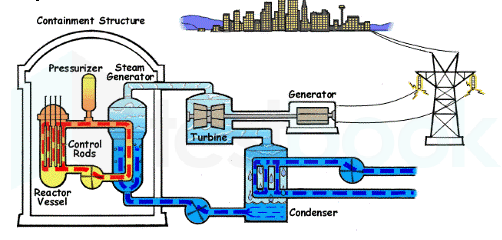
  • Option 1: "spending; were travelling" is incorrect because it mixes present participle with past continuous tense, which does not fit the context of a habitual action.
  • Option 3: "spent; travelled" is incorrect because the past tense does not fit the context of a habitual action.
  • Option 4: "spended; travel" is incorrect because "spended" is not a valid verb form and "travel" should be in the present participle form.
2

Select the most appropriate articles to fill in the blanks. In case no article is needed, select 'No article required'.

______Monday is going to be ______busy day for us.

  1. ((a))

    The; a

  2. ((b))

    No article required; no article required 

  3. ((c))

    The; the

  4. ((d))

     No article required; a

Show Answer
Answer: ((d))

 No article required; a

The correct answer is 'No article required; a'.


Key Points

  • When referring to days of the week (like "Monday"), no article is required.
  • When describing the kind of day (like "a busy day"), the indefinite article "a" is used to refer to a non-specific instance.

Therefore, the correct answer is Option 4.


Complete Sentence: "Monday is going to be a busy day for us."


Additional Information

  • Option 1: "The; a" is incorrect because "The Monday" is not the correct way to refer to a day of the week.
  • Option 2: "No article required; no article required" is incorrect because "a busy day" requires the indefinite article "a".
  • Option 3: "The; the" is incorrect because both articles are unnecessary or incorrect in this context.
3

Select the most appropriate option that can substitute the underlined segment in the given sentence to make the sentence grammatically correct.

The early decades of the fourth century BCE saw the emergence of an ambitious Macedonian who dreamed of conquering not just the Achaemenid country and whatever lied further east.

  1. ((a))

    but whatever also lay

  2. ((b))

    but also whatever laid to

  3. ((c))

    but whatever laid also

  4. ((d))

    but also whatever lay

Show Answer
Answer: ((d))

but also whatever lay

The correct answer is Option 4.


Key Points

  • The phrase "whatever laid" is grammatically incorrect. The correct past tense form should be "lay".
  • The word "also" is necessary to properly connect the two parts of the sentence.
  • The correct phrase should be "but also whatever lay," ensuring grammatical correctness and clarity.

Therefore, the correct answer is Option 4.


Correct Sentence: "The early decades of the fourth century BCE saw the emergence of an ambitious Macedonian who dreamed of conquering not just the Achaemenid country but also whatever lay further east."


Additional Information

  • Option 1: "but whatever also lay" is incorrect because the placement of "also" is awkward and disrupts the flow of the sentence.
  • Option 2: "but also whatever laid to" is incorrect because "laid" is the wrong verb form and "to" is unnecessary.
  • Option 3: "but whatever laid also" is incorrect because "laid" is the wrong verb form and the placement of "also" is awkward.
4

Sentences of a paragraph are given below in jumbled order. Arrange the sentences in the correct order to form a meaningful and coherent paragraph.

(A) Today that dream is over.

(B) If spending money like water was the answer to our country’s problems, we would have no problem now.

(C) If ever a nation has spent, spent, spent and spent again, ours has.

(D) All of that money has got us nowhere, but it still has to come from somewhere.

  1. ((a))

    BCAD

  2. ((b))

    BADC

  3. ((c))

    DCBA

  4. ((d))

    ABCD

Show Answer
Answer: ((a))

BCAD

The correct answer is Option 1.


Key Points

  • The paragraph begins by discussing the issue of spending money and its ineffectiveness in solving the country's problems.
  • Sentence B is the first sentence as it introduces the idea:
  • "If spending money like water was the answer to our country’s problems, we would have no problem now."
  • Sentence C follows as it elaborates on the spending issue:
  • "If ever a nation has spent, spent, spent and spent again, ours has."
  • Sentence A is the third sentence because it concludes the idea introduced in the first two sentences:
  • "Today that dream is over."
  • Sentence D is the fourth as it provides the final insight on the outcome of the spending:
  • "All of that money has got us nowhere, but it still has to come from somewhere."
  • The correct sequence is BCAD.


Coherent paragraph after rearrangement:

"If spending money like water was the answer to our country’s problems, we would have no problem now. If ever a nation has spent, spent, spent and spent again, ours has. Today that dream is over. All of that money has got us nowhere, but it still has to come from somewhere."

5

Select the most appropriate ANTONYM of the given word.

Figurative

  1. ((a))

    Poetic

  2. ((b))

    Symbolic

  3. ((c))

    Literal

  4. ((d))

    Colloquial

Show Answer
Answer: ((c))

Literal

The correct answer is: Option 3 i.e. Literal.

Key Points

  • The word "Figurative" means using figures of speech; symbolic or metaphorical rather than literal. (रूपकात्मक)
  • Example: She used figurative language to describe the beauty of the sunset.
  • "Literal" refers to taking words in their usual or most basic sense without metaphor or allegory; exact and factual. (शाब्दिक)
  • Example: He took her comment in a literal sense, which led to a misunderstanding.
  • Hence, we can infer that the opposite of 'figurative' is 'literal'.

Therefore, the correct answer is: Option 3 i.e. Literal.

Additional Information

Here are the other options explained along with their Hindi meanings and example sentences:

  • Poetic (काव्यात्मक): Having an imaginative or sensitively emotional style of expression.
  • Example: Her poetic description of the landscape captivated everyone.
  • Symbolic (प्रतीकात्मक): Serving as a symbol; representative.
  • Example: The dove is symbolic of peace.
  • Colloquial (बोलचाल की भाषा): Used in ordinary or familiar conversation; not formal or literary.
  • Example: His speech was full of colloquial expressions that resonated with the audience.
6

Select the most appropriate option that can substitute the underlined segment in the given sentence.

Your members of a family, national or religious group who lived in the past decided that they must have representation for taxation, many, many years ago.

  1. ((a))

    forefathers

  2. ((b))

    friends

  3. ((c))

    companions

  4. ((d))

    neighbours 

Show Answer
Answer: ((a))

forefathers

The correct answer is: Option 1 i.e. forefathers.

Key Points

  • The word "forefathers" refers to ancestors, especially those who lived many generations ago. (पूर्वज)
  • Example: Our forefathers fought for the independence of our nation.
  • "Forefathers" are the people from earlier generations within a family or community who have had a significant influence on its culture or traditions. (पूर्वज)
  • Example: The traditions we follow today were established by our forefathers many years ago.
  • Hence, the term 'forefathers' fits best in the context of the sentence, referring to members of a family, national, or religious group from the past.

Therefore, the correct answer is: Option 1 i.e. forefathers.

Additional Information

Here are the other options explained along with their Hindi meanings and example sentences:

  • Friends (मित्र): People with whom one has a bond of mutual affection.
  • Example: She has many friends who support her in times of need.
  • Companions (साथी): People who spend a lot of time with someone else.
  • Example: During his travels, he had many companions who shared his adventures.
  • Neighbours (पड़ोसी): People living next door or very near to another.
  • Example: Our neighbours are very friendly and often invite us over for dinner.
7

Select the most appropriate synonym of the given word.

Epicure

  1. ((a))

     Gourmand

  2. ((b))

    Panacea

  3. ((c))

    Treatment

  4. ((d))

    Wisdom

Show Answer
Answer: ((a))

 Gourmand

The correct answer is: Option 1 i.e. Gourmand.

Key Points

  • The word "Epicure" refers to a person who takes particular pleasure in fine food and drink. (भोजन-रसिक)
  • Example: As an epicure, she always seeks out the finest dining experiences in the city.
  • "Gourmand" refers to someone who is excessively fond of eating and drinking. (पेटू)
  • Example: He is a gourmand who enjoys trying out new restaurants every weekend.
  • Hence, we can infer that the synonym of 'Epicure' is 'Gourmand'.

Therefore, the correct answer is: Option 1 i.e. Gourmand.

Additional Information

Here are the other options explained along with their Hindi meanings and example sentences:

  • Panacea (रामबाण): A solution or remedy for all difficulties or diseases.
  • Example: Some people mistakenly believe that technology is a panacea for all our problems.
  • Treatment (उपचार): Medical care given to a patient for an illness or injury.
  • Example: The treatment for his condition involves regular medication and exercise.
  • Wisdom (बुद्धिमत्ता): The quality of having experience, knowledge, and good judgment.
  • Example: Her wisdom and experience make her an excellent mentor.
8

Parts of a sentence are given below in jumbled order. Arrange the parts in the correct order to form a meaningful sentence.

A. to yourself exactly what it is

B. until you are ready to admit

C. that you want

D. you will experience confusion

  1. ((a))

    BDCA

  2. ((b))

    DCBA

  3. ((c))

    BACD

  4. ((d))

    DBCA

Show Answer
Answer: ((c))

BACD

The correct answer is Option (3) i.e. BACD

Key Points

  • The sentence begins with the phrase "until you are ready to admit," which is correctly indicated by part (B).
  • Following the introductory clause, "to yourself exactly what it is" (BA) continues the logical sequence, making it clear what you need to admit.
  • The next part, "that you want," follows smoothly, completing the thought initiated in the previous clause, indicated by (C).
  • Ending with "you will experience confusion" (D) completes the sentence by stating the outcome of not admitting to yourself what you want.

Therefore, the correct answer is BACD.

Additional Information

  • Option 1 (BDCA): This option starts with "until you are ready to admit you will experience confusion," which makes the sentence incorrect as it disrupts the logical flow.
  • Option 2 (DCBA): This option starts with "you will experience confusion until you are ready to admit," which does not make sense as it puts the outcome before the condition.
  • Option 4 (DBCA): This option starts with "you will experience confusion to yourself exactly what it is," which creates a fragmented and confusing sentence structure.
9

Select the most appropriate option that conveys the meaning of the words in the brackets to fill in the blanks.

But can a ______ (a formal talk given usually to a large number of people on a special occasion), however ______ (likely to be remembered or worth remembering), change history?

  1. ((a))

    speech; memorable 

  2. ((b))

    inspiration; great 

  3. ((c))

    poem; musical 

  4. ((d))

    song; sweet

Show Answer
Answer: ((a))

speech; memorable 

The correct answer is 'Option 1'.

Key Points

  • The word "speech" fits the first blank perfectly as it refers to a formal talk given to a large audience, matching the context.
  • The word "memorable" fits the second blank as it denotes something worth remembering or significant, aligning with the sentence's meaning.
  • Other options such as "inspiration", "poem", or "song" do not accurately convey the intended context of the sentence.

Hence, the correct answer is 'Option 1'.

Correct Sentence: But can a speech, however memorable, change history?

Additional Information

  • Option 2: "Inspiration" is not a formal talk, and "great" is too vague to fit the second blank.
  • Option 3: "Poem" and "musical" do not align with the context of changing history through a formal talk.
  • Option 4: "Song" and "sweet" are inappropriate for the context of the sentence.
10

Select the most appropriate adjective to fill in the blank.

Her ______books were written about indigenous people.

  1. ((a))

    early

  2. ((b))

    then

  3. ((c))

    ancient

  4. ((d))

    sooner

Show Answer
Answer: ((a))

early

The correct answer is 'early'.


Key Points

  • The adjective "early" is used to describe something that happens near the beginning of a period of time.
  • The sentence implies that the books written by her were among the first or initial ones she wrote, making "early" the appropriate choice.
  • Options 2, 3, and 4 are not suitable adjectives in this context.

Therefore, the correct answer is Option 1.


Complete Sentence: "Her early books were written about indigenous people."


Additional Information

  • Option 2: "then" is incorrect because "then" is an adverb, not an adjective, and does not fit the context.
  • Option 3: "ancient" is incorrect; "ancient" typically refers to something from a very distant past, which is not implied here.
  • Option 4: "sooner" is incorrect because "sooner" is a comparative adverb, not an adjective, and does not fit the context.
11

Select the correct spelling of the word underlined in the given sentence.

You will be embarassed by their hospitality even though they have nothing.

  1. ((a))

    Embearased

  2. ((b))

    Embarrassed

  3. ((c))

    Embarased 

  4. ((d))

    Embarrased 

Show Answer
Answer: ((b))

Embarrassed

The correct answer is option 2.

Key Points

The misspelled word is 'embarrassed'.

  • The correct spelling would be 'embarrassed'.
  • The word 'embarrassed' is an adjective which means 'feeling or showing a state of self-conscious confusion and distress'. (शर्मिंदा)
  • For Example -
  • She felt embarrassed when she realized her mistake in front of everyone.


Additional Information

Let's understand the meanings of the other marked words - 

  • Embearased - a misspelling of 'embarrassed'.
  • Embarased -  another misspelling of 'embarrassed'.
  • Embarrased - yet another misspelling of 'embarrassed'.
12

Select the most appropriate article to fill in the blank. In case no article is needed, select ‘No article needed’.

An hour passes, and not ______ single person is called from the waiting room.

  1. ((a))

    a

  2. ((b))

    No article needed

  3. ((c))

    an

  4. ((d))

    the

Show Answer
Answer: ((a))

a

The correct answer is 'a'.


Key Points

  • The article "a" is used before words that begin with a consonant sound.
  • In this sentence, "single person" begins with a consonant sound, so "a" is the appropriate article.

Therefore, the correct answer is Option 1.


Complete Sentence: "An hour passes, and not a single person is called from the waiting room."


Additional Information

  • Option 3: "an" is incorrect because "an" is used before words that start with a vowel sound.
  • Option 4: "the" is incorrect because "the" is used for specific references.
  • Option 2: "No article needed" is incorrect because the sentence requires an article for grammatical correctness.
13

Choose the option that completes the proverb used in the following sentence.

A chain can only be as strong as its ______, so we must look at the least committed country to see if the alliance will hold.

  1. ((a))

    final catch

  2. ((b))

    last link 

  3. ((c))

    weakest link

  4. ((d))

    smallest loop

Show Answer
Answer: ((c))

weakest link

The correct answer is 'weakest link'.


Key Points

  • The phrase "weakest link" refers to the most vulnerable or least effective part of a chain or system.
  • In the context of the sentence, it implies that the overall strength of the alliance depends on its most vulnerable member.
  • Options 1, 2, and 4 do not convey the intended meaning in this context.

Therefore, the correct answer is Option 3.


Complete Sentence: "A chain can only be as strong as its weakest link, so we must look at the least committed country to see if the alliance will hold."


Additional Information

  • Option 1: "final catch" is incorrect because it does not relate to the concept of weakness or vulnerability.
  • Option 2: "last link" is incorrect because it implies the final part of a sequence, not the weakest part.
  • Option 4: "smallest loop" is incorrect because it does not convey the idea of weakness or vulnerability.
14

Select the correctly spelt word. 

  1. ((a))

    Riegn

  2. ((b))

    Hieght

  3. ((c))

    Receive

  4. ((d))

    Seive

Show Answer
Answer: ((c))

Receive

The correct answer is option 3.

Key Points

  • The correct spelling is 'Receive'.
  • The word 'receive' is a verb, which means to be given or presented with something. (प्राप्त करना)
  • For Example -
  • I will receive the package tomorrow morning.

Additional Information

  • Riegn is misspelled. The correct word is 'Reign' which means to hold royal office or rule. (राज करने का कार्य)
  • Height is spelled correctly but it is not the answer here.
  • Seive is misspelled. The correct word is 'Sieve', meaning a utensil with a mesh bottom used for straining liquids. (छानने का यंत्र)
15

Select the most appropriate option to fill in the blanks.

In its ______revision to a disease classification manual, the World Health Organization said on Monday that compulsively playing video games now ______as a new mental health condition. The statement confirmed the ______of many parents but led some critics to warn that it may risk stigmatising young video players.

  1. ((a))

    latest; qualifies; fears

  2. ((b))

    newest; defines; tears

  3. ((c))

    earliest; introduces; apprehensions

  4. ((d))

    fastest; labels; dreams

Show Answer
Answer: ((a))

latest; qualifies; fears

The correct answer is 'latest; qualifies; fears'.


Key Points

  • The word "latest" means most recent or up-to-date.
  • The word "qualifies" means to describe or identify in a specific way.
  • The word "fears" means concerns or anxieties.
  • The other options do not fit the context as appropriately.

​Therefore, the correct answer is 'Option 1'.

Complete Sentence: In its latest revision to a disease classification manual, the World Health Organization said on Monday that compulsively playing video games now qualifies as a new mental health condition. The statement confirmed the fears of many parents but led some critics to warn that it may risk stigmatising young video players.

Additional Information

  • Newest: means most recent but less commonly used in official or formal contexts.
  • Defines: means to describe the meaning of something.
  • Tears: means to rip or cause to come apart but does not fit the context here.
  • Earliest: means first or oldest in time.
  • Introduces: means to bring something into use for the first time.
  • Apprehensions: means anxieties or fears but less commonly used in this context.
  • Fastest: means moving or capable of moving at high speed.
  • Labels: means to identify or describe something.
  • Dreams: means visions or aspirations but does not fit the context here.
16

Select the most appropriate verbs to fill in the blanks.

They ______their destination, but they did not want to ______the man that awaited them.

  1. ((a))

    approached; encountered

  2. ((b))

    approach; be encountering

  3. ((c))

    were approaching; encounter

  4. ((d))

    had approached; be encounter

Show Answer
Answer: ((c))

were approaching; encounter

The correct answer is 'were approaching; encounter'.


Key Points

  • The verb "were approaching" is the past continuous tense form of the verb "approach."
  • The verb "encounter" is the base form of the verb.
  • The sentence describes an action that was ongoing in the past and an event they did not want to happen, so the past continuous "were approaching" and the base form "encounter" are required.
  • Options 1, 2, and 4 are grammatically incorrect in this context.

Therefore, the correct answer is Option 3.


Complete Sentence: "They were approaching their destination, but they did not want to encounter the man that awaited them."


Additional Information

  • Option 1: "approached; encountered" is incorrect because it uses past simple tense, which does not convey the ongoing action.
  • Option 2: "approach; be encountering" is incorrect because it mixes the base form with the continuous form inappropriately.
  • Option 4: "had approached; be encounter" is incorrect because it uses the past perfect tense with an incorrect verb form.
17

Select the most appropriate present tense of the verb in the brackets to fill in the blank in the sentence below.

Ruth ______ (look) into my eyes, and for a moment, I can see right down into the heart of her.

  1. ((a))

    looking

  2. ((b))

    was looking

  3. ((c))

    looks

  4. ((d))

    look

Show Answer
Answer: ((c))

looks

The correct answer is 'looks'.


Key Points

  • The verb "looks" is the simple present tense form of the verb "look."
  • The sentence describes an action happening in the present, so the present tense "looks" is required.
  • Options 1, 2, and 4 are grammatically incorrect in this context.

Therefore, the correct answer is Option 3.


Complete Sentence: "Ruth looks into my eyes, and for a moment, I can see right down into the heart of her."


Additional Information

  • Option 1: "looking" is incorrect because it is the present participle form and does not fit the context of the sentence.
  • Option 2: "was looking" is incorrect because it is in the past continuous tense.
  • Option 4: "look" is incorrect because it does not agree with the subject "Ruth" in the present tense.
18

Select the option that expresses the given sentence in active voice.

My most expensive Gucci watch has been stolen.

  1. ((a))

    He stole my Gucci watch which was the most expensive.

  2. ((b))

    Thieves stole my most expensive Gucci watch.

  3. ((c))

    Someone has stolen my most expensive Gucci watch. 

  4. ((d))

    My Gucci watch, which was the most expensive, was stolen.

Show Answer
Answer: ((c))

Someone has stolen my most expensive Gucci watch. 

The correct answer is Option 3.


Key Points

  • Passive voice structure: The object of the active voice sentence becomes the subject of the passive voice sentence.
  • In the active voice, the sentence is: "My most expensive Gucci watch has been stolen."
  • To convert to active voice: Place the subject "someone" at the beginning.
  • Change the passive verb form "has been stolen" to "has stolen" (present perfect active).
  • Ensure the object "my most expensive Gucci watch" remains at the end of the sentence for clarity.

Therefore, the correct answer is Option 3.


Correct Sentence: "Someone has stolen my most expensive Gucci watch."


Additional Information

  • Option 1: "He stole my Gucci watch which was the most expensive." – This changes the subject and the structure of the original sentence.
  • Option 2: "Thieves stole my most expensive Gucci watch." – This changes the subject from someone to thieves.
  • Option 4: "My Gucci watch, which was the most expensive, was stolen." – This is another passive voice sentence.
19

Select the most appropriate idiom that can substitute the underlined segment given below.

Nirmala stole her mentor’s work and published it as her own. This is such a classic case of acting ungratefully.

  1. ((a))

    biting the hand that feeds you

  2. ((b))

    kettle calling the pot black

  3. ((c))

    stealing the silver

  4. ((d))

    turn coat 

Show Answer
Answer: ((a))

biting the hand that feeds you

The correct answer is: Option 1 i.e. biting the hand that feeds you.

Key Points

  • The word "acting ungratefully" means to show a lack of gratitude or thankfulness towards someone who has helped or supported you. (अकृतज्ञता दिखाना)
  • Example: Ignoring the guidance and support of your mentor is a way of acting ungratefully.
  • "Biting the hand that feeds you" refers to acting ungratefully towards someone who has helped or supported you. (जिसने मदद की उसके प्रति अकृतज्ञता दिखाना)
  • Example: By spreading rumors about his boss, he was biting the hand that feeds him.
  • Hence, we can infer that the phrase 'biting the hand that feeds you' appropriately substitutes the segment 'acting ungratefully'.

Therefore, the correct answer is: Option 1 i.e. biting the hand that feeds you.

Additional Information

Here are the other options explained along with their Hindi meanings and example sentences:

  • Kettle calling the pot black (ऊँट बोले तो बोले पर ऊँट की भी खाल): Criticizing others for faults that one possesses themselves.
  • Example: It’s a case of kettle calling the pot black when she accuses others of being dishonest.
  • Stealing the silver (चोरी करना): Taking something valuable without permission.
  • Example: The maid was caught stealing the silverware from the house.
  • Turn coat (दलबदलू): Someone who changes their allegiance or loyalty.
  • Example: He was labeled a turn coat when he switched political parties.
20

Select the most appropriate option that conveys the meaning of the words in the brackets to fill in the blanks.

The kingdom of the Greeks is now ______ (to divide a country or an empire into different parts) by them and ______ (to take something away from) of territory

  1. ((a))

    dismembered; deprived

  2. ((b))

    small; full

  3. ((c))

    scattered; short 

  4. ((d))

    gone; away

Show Answer
Answer: ((a))

dismembered; deprived

The correct answer is: Option 1 i.e. dismembered; deprived.

Key Points

  • The word "dismembered" means to divide a country or an empire into different parts. (विभाजित करना)
  • Example: After the war, the conquered nation was dismembered into several smaller states.
  • "Deprived" refers to taking something away from someone or something; to deny a possession or use of something. (वंचित)
  • Example: The harsh regime deprived the citizens of their basic rights and freedoms.
  • Hence, we can infer that the correct answer to complete the sentence is 'dismembered; deprived'.

Therefore, the correct answer is: dismembered; deprived.

Additional Information

Here are the other options explained along with their Hindi meanings and example sentences:

  • Small (छोटा): Of a size that is less than normal or usual.
  • Example: The small village was nestled in the mountains.
  • Full (भरा हुआ): Containing or holding as much or as many as possible; having no empty space.
  • Example: The glass was full to the brim with water.
  • Scattered (बिखरा हुआ): Thrown in various random directions.
  • Example: The papers were scattered all over the floor.
  • Short (कम): Measuring a small distance from end to end.
  • Example: The lecture was quite short, lasting only 15 minutes.
  • Gone (चला गया): No longer present; departed.
  • Example: By the time we arrived, everyone had gone.
  • Away (दूर): At a distance from a particular place, person, or thing.
  • Example: She moved away to a different city.

Read the given passage and answer the questions that follow.

A man brought from town five of the finest peaches that were to be had. His children had never seen this fruit; therefore, they were highly delighted to see the beautiful peaches with their red cheeks and delicate bloom.

The father gave one to each of his four boys, and one to their mother. In the evening, just before the children went to bed, he asked them, "Well, how did you like the nice peaches?" "Very much, indeed," said the oldest boy. "It is a delicious fruit, delicate, with a luscious flavor. I have taken care of the stone so as to grow a tree." "Well done," answered the father. "It is the duty of a good person to be economical and to think of the future."

"I ate mine up," exclaimed the young twins in unison, "Well," said the father, "you still have time in life to become prudent." Then another son began: "I sold my own peach and received so much money for it that I may buy a dozen when I go to town."

The father asked Shirish, who answered: "I took my peach to the son of our neighbor, sick Gaurav, who has the fever. He would not take it, so I put it down on his bed and went away." "Well," said the father, "who has made the best use of his peach?". Then all the boys exclaimed: "Brother!" Shirish was silent, and his mother embraced him with tears in her eyes

21

Which of the following summarises the passage in one sentence?

  1. ((a))

    A family ate a new fruit, so they used its seed in different ways, showing different ideas, and all agreed that Shirish put it to the best use and they should have thought that too. 

  2. ((b))

    The father brought peaches for the family, who enjoyed the fruit, but Shirish did not eat it as he gave it away to the sick neighbour.

  3. ((c))

    Four boys who had never had peaches were given the fruit by their father, and they all used the fruits in different ways, although Shirish did not eat his as he gave it to Gaurav, which all thought to be the best use of the fruit. 

  4. ((d))

    The father of 4 boys got peaches from the town to test his sons, and Shirish was the winner as everyone voted for him. 

Show Answer
Answer: ((c))

Four boys who had never had peaches were given the fruit by their father, and they all used the fruits in different ways, although Shirish did not eat his as he gave it to Gaurav, which all thought to be the best use of the fruit. 

The correct answer is: Option 3 i.e., "Four boys who had never had peaches were given the fruit by their father, and they all used the fruits in different ways, although Shirish did not eat his as he gave it to Gaurav, which all thought to be the best use of the fruit."

Key Points

  • The word "summarises" means to present the main points of something in a concise form. (सारांश प्रस्तुत करना)
  • Example: The teacher summarises the entire chapter at the end of the lecture for better understanding.
  • The correct choice highlights all key aspects of the passage while maintaining brevity. It specifies the action of all boys, especially focusing on Shirish’s thoughtful act. (सटीक)
  • Example: A good summary includes only the most critical elements of a story, leaving out minor details.
  • Hence, the sentence clearly conveys the message of the passage with precision and relevance.

Therefore, the correct answer is: Option 3.

Additional Information

Here are the other options explained along with their Hindi meanings and example sentences:

  • Option 1 (एक परिवार ने फल खाया और बीज का उपयोग अलग-अलग तरीकों से किया, लेकिन अंत में वे शिरीष के तरीके को सर्वश्रेष्ठ मानते हैं।)
  • Reason: While it captures the essence, it inaccurately emphasizes that everyone should have thought similarly from the start.
  • Example: If all members agree on the best use, the story's progression loses its natural flow.
  • Option 2 (पिता ने फल लाया, परिवार ने आनंद लिया, लेकिन शिरीष ने इसे बीमार पड़ोसी को दे दिया।)
  • Reason: This lacks depth and does not highlight the actions of other boys.
  • Example: Summaries should provide an overview, not just focus on one character.
  • Option 4 (पिता ने फल लाकर पुत्रों की परीक्षा ली, और शिरीष विजयी हुआ।)
  • Reason: Misleading as it suggests the father intended to test his sons, which was not explicitly stated in the passage.
  • Example: Assuming intentions not mentioned can lead to incorrect interpretations of texts.
22

Which of the following words can replace the word ‘prudent’ in the passage?

  1. ((a))

    Respectful

  2. ((b))

    Organised

  3. ((c))

    Practical 

  4. ((d))

    Judicious

Show Answer
Answer: ((d))

Judicious

The correct answer is: Option 4 i.e. Judicious.

Key Points

  • The word "prudent" means acting with or showing care and thought for the future. (सावधान, विवेकी)
  • Example: A prudent investor always studies the market before making any investments.
  • "Judicious" refers to having, showing, or done with good judgment or sense. (सही निर्णय लेने वाला, विवेकपूर्ण)
  • Example: He made a judicious decision to save part of his earnings for emergencies.
  • Since "prudent" and "judicious" share similar meanings related to careful planning and wise decision-making, they can replace each other in the given context.

Therefore, the correct answer is: Judicious.

Additional Information

Here are the other options explained along with their Hindi meanings and example sentences:

  • Respectful (सम्मानजनक): Feeling or showing deference and respect.
  • Example: The students were respectful towards their teacher during the ceremony.
  • Organised (संगठित): Arranged or structured in a systematic way.
  • Example: She kept her workspace organised to enhance productivity.
  • Practical (व्यावहारिक): Concerned with the actual doing or use of something rather than with theory.
  • Example: He provided practical solutions to the complex problem.
23

What is the central theme of this passage?

  1. ((a))

    There are different ways in which one thing can be used.

  2. ((b))

    The best way to live life and all that it offers is by helping others.

  3. ((c))

    Different people have different ideas of happiness.

  4. ((d))

    A loving neighbour is the best gift to anyone.

Show Answer
Answer: ((b))

The best way to live life and all that it offers is by helping others.

The correct answer is Option 2.


Key Points

  • The central theme of the passage emphasizes the importance of selflessness and helping others over personal gains or material benefits.
  • Among the boys, Shirish's act of kindness towards the sick neighbor, Gaurav, highlights the value of compassion and altruism.
  • The other children used their peaches for personal purposes, but Shirish's gesture stands out as an example of using what life offers for the benefit of others.

Therefore, the correct answer is Option 2.


Additional Explanation: The father's question, "Who has made the best use of his peach?" and the unanimous agreement among the boys, underscores that the highest use of our possessions is helping those in need.

24

Which of the following cannot be inferred from the passage?

  1. ((a))

    The oldest boy was mindful about the future

  2. ((b))

    The family in this story was a poor family.

  3. ((c))

    The boy’s mother also got to eat a peach

  4. ((d))

    The father wanted to bring joy to the boys, so he got them peaches.

Show Answer
Answer: ((b))

The family in this story was a poor family.

The correct answer is Option 2.


Key Points

  • The story does not provide explicit information about the family's financial condition. It is inferred that the family had access to peaches, which may not necessarily mean they were poor.
  • All other options can be directly inferred from the passage:
  • The oldest boy was mindful of the future by saving the stone to grow a tree.
  • The mother was given a peach, as mentioned in the text.
  • The father wanted to bring joy to the boys, evident from his effort to buy the finest peaches for them.

Therefore, the correct answer is Option 2.


Additional Information

  • The context of the passage emphasizes moral lessons and the different ways individuals utilize resources, not the socioeconomic status of the family.
  • The story showcases virtues like prudence, charity, and joy rather than poverty or financial struggle.
25

Who planted the peach using its seed/stone? 

  1. ((a))

    The oldest son

  2. ((b))

    Shirish

  3. ((c))

    The twins

  4. ((d))

    The father 

Show Answer
Answer: ((a))

The oldest son

The correct answer is Option 1.


Key Points

  • The oldest son planted the peach seed to grow a tree for the future.
  • He demonstrated prudence and planning, aligning with his father’s values.
  • The other children used their peaches differently: Shirish gave his to a sick neighbor, while the twins ate theirs, and one child sold his peach for money.

Therefore, the correct answer is Option 1.


Correct Explanation: "The oldest son displayed foresight and responsibility by preserving the peach stone and planning to grow a tree, which the father appreciated."


Additional Information

  • Shirish: He gave his peach to a sick neighbor, showcasing kindness and empathy.
  • The twins: They ate their peaches immediately, reflecting youthful indulgence.
  • Another son: He sold his peach for money, showing a sense of practicality and business acumen.

General Aptitude (25 questions)

26

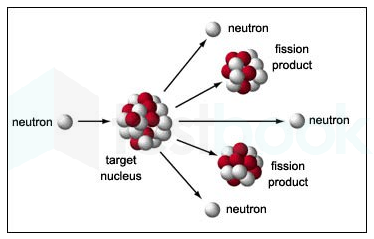
Who discovered the phenomenon of neutron-induced fission of uranium, which would serve as the basis of nuclear power reactors and nuclear weapons?

  1. ((a))

    Einstein

  2. ((b))

    Hahn and Meitner 

  3. ((c))

    J J Thomson

  4. ((d))

    Neil Bohr

Show Answer
Answer: ((b))

Hahn and Meitner 

The correct answer is Hahn and Meitner

Key Points

  • Otto Hahn and Fritz Strassmann discovered the phenomenon of neutron-induced fission of uranium in December 1938
  • Fission, in biology, is the division of a single entity into two or more parts and the regeneration of those parts to separate entities resembling the original. The object experiencing fission is usually a cell,
  • Fission, in physics, is defined as the splitting of a nucleus into two daughter nuclei.
  • The amount of energy produced is huge.
  • Uranium is the primary fuel that is used in power plants.
  • When the nucleus of an atom splits into lighter nuclei through a nuclear reaction the process is termed nuclear fission.
  • The discovery of nuclear fission began with the discovery of the neutron in 1932 by James Chadwick in England

Additional Information

  • Nuclear reactor: 
  • ​A nuclear reactor is a system that contains and controls sustained nuclear chain reactions.
  • Nuclear reactors come in different sizes and shapes, and can be powered by a variety of fuels.
  • About 9% of the world's electricity is produced from nuclear energy
  • Nuclear plants use a "defense-in-depth" approach with multiple safety systems, including redundant systems, comprehensive monitoring, and regular testing
  • The components of nuclear reactor are Fuel rods, moderator, coolant, and emergency core-cooling system

27

Urgently required winter rainfall received over the plains and snowfall in the mountains in North India is locally known as ______.

  1. ((a))

    Ashirwaad

  2. ((b))

    Saugaat

  3. ((c))

    Parsaad

  4. ((d))

    Mahawat

Show Answer
Answer: ((d))

Mahawat

The correct answer is Mahawat

Key Points

  • The winter rainfall that occurs in the plains of northern India and snowfall in the mountains is locally known as mahawat.
  • Mahawat is caused by western and northwestern cyclonic disturbances, which are low-pressure systems that originate in the Mediterranean Sea and West Asia.
  • These systems travel east across the globe and bring moisture with them.
  • When they reach the Indian subcontinent, they are blocked by the Himalayas, which causes the moisture to precipitate as rain and snow.
  • Mahawat is beneficial for Rabi crops, which are grown in the winter season.
  • Some examples of Rabi crops include wheat, barley, mustard, sesame, and peas.

Additional Information 

TypeScientific NameKey ProcessExample Regions
AshirwadOrographic RainfallMoist air forced to rise over mountainsWestern Ghats, Himalayas
SaugatCyclonic RainfallInteraction of warm and cold air massesBay of Bengal, Coastal India
PrasadConvectional RainfallRising warm air due to intense surface heatingEquatorial & Tropical regions
28

How much solar power installed capacity has reached India as of November 2022, according to the report of the Government of India? 

  1. ((a))

    65.97 GW

  2. ((b))

    76.97 GW

  3. ((c))

    61.97 GW

  4. ((d))

    55.97 GW

Show Answer
Answer: ((c))

61.97 GW

The correct answer is 61.97 GW

Key Points

  • According to the Ministry of New and Renewable Energy (MNRE), India had an installed solar power capacity of 61.97 GW (Gigawatts) by November 2022.
  • Solar energy is a crucial part of India's plan to achieve 500 GW of renewable energy capacity by 2030.
  • It helps reduce dependence on fossil fuels and lowers greenhouse gas emissions.
  • India ranks among the top 5 countries globally in solar power installation.
  • Key solar parks, like the Bhadla Solar Park in Rajasthan, contribute significantly to this capacity.

Additional Information

  • Solar technologies convert sunlight into electrical energy either through photovoltaic (PV) panels or through mirrors that concentrate solar radiation. This energy can be used to generate electricity or be stored in batteries or thermal storage.
  • Wind power or wind energy describes the process by which the wind is used to generate mechanical power or electricity. Wind turbines convert the kinetic energy in the wind into mechanical power.
  • Wind turbines use blades to collect the wind's kinetic energy. Wind flows over the blades creating lift (similar to the effect on airplane wings), which causes the blades to turn. The blades are connected to a drive shaft that turns an electric generator, which produces (generates) electricity.
  • Hydropower is using water to power machinery or makes electricity. Turbines and generators convert the energy into electricity, which is then fed into the electrical grid to be used in homes, businesses, and by industry.
  • Hydropower is one of the oldest power sources on the planet, generating power when flowing water spins a wheel or turbine. It was used by farmers as far back as ancient Greece for mechanical tasks like grinding grain. Hydropower is also a renewable energy source and produces no air pollution or toxic byproducts
  • Biomass power is carbon neutral electricity generated from renewable organic waste that would otherwise be dumped in landfills, openly burned, or left as fodder for forest fires. When burned, the energy in biomass is released as heat.
29

Which sport does Nikhat Zareen play?

  1. ((a))

    Badminton 

  2. ((b))

    Athletics

  3. ((c))

    Wrestling

  4. ((d))

    Boxing

Show Answer
Answer: ((d))

Boxing

The correct answer is Boxing.

Key Points

  • Ms. Nikhat Zareen is related to boxing.

 Nikhat Zareen:

  • She (born 14 June 1996) is an Indian amateur woman boxer.
  • She won a gold medal at the AIBA Women's Youth & Junior World Championships Antalya 2011.
  • She won the bronze medal at the 2nd India Open International Boxing Tournament held in Guwahati.
  • She also won the silver medal at the 2019 Thailand Open International Boxing Tournament held in Bangkok.

Important Points

  • Awards:
  • Nikhat was appointed the official ambassador of her home town Nizamabad, Telangana.
  • 'Best Boxer' in the All India Inter-University Boxing Championship, Jalandhar, India February 2015.
  • JFW award for Excellence in Sports 2019.

Additional Information

  • Important Boxing Players:
  • Men
  • Vijendra Singh
  • Akhil Kumar
  • Jitender Kumar
  • Shiva Thapa
  • Mohommad Ali Qamar
  • Shiva Thapa
  • Devendro Singh
  • Vikas Krishnan Yadav
  • Women
  • Mary Kom
  • Kavita Chahal
  • Sarita Devi
  • Aruna Mishra
  • Pinki Rani
  • Kavita Goyat
  • Sarjubala Devi
  • Pooja Rani
30

Charter Act of 1813 does NOT mention which of the following provisions?

  1. ((a))

    It empowered the Local Governments in India to impose taxes on persons and to punish those who did not pay them. 

  2. ((b))

    The act granted permission to the persons who wished to go to India for promoting moral and religious improvements

  3. ((c))

    There was also a provision that the Company should invest ₹5 lakh every year on the education of Indians. 

  4. ((d))

    The Charter act of 1813 ended the monopoly of the East India Company in India, the company’s monopoly in trade with China and trade in tea with India was kept intact.

Show Answer
Answer: ((c))

There was also a provision that the Company should invest ₹5 lakh every year on the education of Indians. 

The correct answer is There was also a provision that the Company should invest ₹5 lakh every year on the education of Indians..

Key Points

  • The Charter Act of 1813 allowed the local governments in India to impose taxes on persons and to punish those who did not pay them.
  • The act granted permission to persons who wished to go to India for promoting moral and religious improvements.
  • The Charter Act of 1813 ended the monopoly of the East India Company in India, but the company's monopoly in trade with China and trade in tea with India was kept intact.
  • However, the act did not have a provision for the Company to invest ₹5 lakh every year on the education of Indians. This provision was actually included in the Charter Act of 1833.

Additional Information

  • Charter Act of 1813
  • The Charter Act of 1813 was an act of the British Parliament that renewed the East India Company's charter for another twenty years but ended its monopoly in India, except for trade in tea and with China.
  • The act also permitted Christian missionaries to propagate their religion in British India.
  • The act allowed the British government to exert greater control over the Company's affairs in India.
  • The act also provided for the education of Indians but did not stipulate any specific financial investment by the Company for this purpose.
  • Charter Act of 1833
  • The Charter Act of 1833, also known as the Saint Helena Act, was another significant legislation for the governance of British India.
  • It ended the East India Company's commercial activities and transformed it into an administrative body for British Indian territories.
  • The act also centralized administration in India by creating the post of Governor-General of India.
  • Importantly, it stipulated that the Company should invest ₹5 lakh every year for the promotion of education in India.
31

Which of the following institutions won the Digital India Award 2022–Gold?

  1. ((a))

    Central Advisory Board on Education

  2. ((b))

    University Grants Commission

  3. ((c))

    National Council for Educational Research and Training

  4. ((d))

    Central Board of Secondary Education

Show Answer
Answer: ((d))

Central Board of Secondary Education

The correct answer is Central Board of Secondary Education

Key Points

  • The institution that won the Digital India Award 2022 – Gold was the Central Board of Secondary Education (CBSE).
  • CBSE received this award under the category of "Data Sharing and Use for Socio-Economic Development" for its innovative digital initiatives
  • It includs the development of a digital academic repository known as Parinam Manjusha.
  • This initiative helped facilitate the seamless sharing of academic data.

Additional Information

  • The Central Board of Secondary Education (CBSE) is India's national secondary school board, which oversees both public and private institutions.
  • Established in 1929, The Board was a government-sponsored experiment in interstate integration and cooperation in secondary education.
  • More than 27,000 schools in India and 240 institutions in 28 other countries are affiliated with the CBSE.
  • All CBSE-affiliated institutions use the NCERT curriculum, especially in grades 9 through 12.
  • Currently serving as chair of the CBSE is IAS Nidhi Chibber.
32

Bryophytes are plants which are dependent on ______ for sexual reproduction. 

  1. ((a))

    air

  2. ((b))

    water

  3. ((c))

    insects

  4. ((d))

    soil

Show Answer
Answer: ((b))

water

The correct answer is water

Key Points

  • Bryophytes, a group of non-vascular land plants, are dependent on water for sexual reproduction
  • Bryophytes are small, non-vascular plants, such as mosses, liverworts, and hornworts.
  • They are amphibious in nature and are also called ''amphibians of the plant kingdom'' because these plants can live in soil but are dependent on water for sexual reproduction.
  • In bryophytes, the gametophyte stage is dominant, while the sporophyte is dependent on the gametophyte for survival

Additional Information

  • They usually occur in damp, humid, and shaded localities. They play an important role in plant succession on bare rocks/soil. The plant body of bryophytes is more differentiated than that of algae.
  • It is thallus-like and prostrate or erect and attached to the substratum by unicellular or multicellular rhizoids. They lack true roots, stems, or leaves. They may possess root-like, leaf-like, or stem-like structures.
  • The main plant body of the bryophyte is haploid. It produces gametes, hence is called a gametophyte. The sex organs in bryophytes are multicellular.
  • The male sex organ is called antheridium. They produce biflagellate antherozoids. The female sex organ called archegonium is flask-shaped and produces a single egg.
  • The antherozoids are released into the water where they come in contact with archegonium. An antherozoid fuses with the egg to produce the zygote. Zygotes do not undergo reduction division immediately. They produce a multicellular body called a sporophyte.
  • The sporophyte is not free-living but attached to the photosynthetic gametophyte and derives nourishment from it. Some cells of the sporophyte undergo reduction division (meiosis) to produce haploid spores. These spores germinate to produce gametophyte.
33

Which of the following Harappan cities had massive reservoirs that were used for storing fresh water brought by rains or to store water diverted from two nearby rivulets?

  1. ((a))

    Dholavira

  2. ((b))

    Ganeriwala

  3. ((c))

    Lothal

  4. ((d))

    Kalibangan

Show Answer
Answer: ((a))

Dholavira

The correct answer is Dholavira

Key Points

  • Dholavira is one of the two largest Harappan sites in India and 5th largest in the subcontinent.
  • The site was unearthed by the Archeological Survey of India (ASI) in 1967.
  • Dholavira has one of the world’s earliest water conservation systems ever excavated.
  • UNESCO has included Dholavira of Kutch, Gujarat, in the list of World Heritage Sites in 2021.

Additional Information

  • Lothal​
  • Lothal is a coastal site in the state of Gujarat and was an important trading center during the Harappan period.
  • The artificial dockyard (the most striking feature) in Lothal signifies its importance as a trading center.
  • The site was discovered by SR Rao in 1964.
  • It is situated on the banks of the Bhogava river, a tributary of the Sabarmati River.
  • It is the only site belonging to Harappan culture where evidence of rice has been found.
  • From here a doubtful terracotta figurine representing a horse has been found.
  • Kalibangan
  • Kalibangan is located in Pilibangan, between Suratgarh and Hanumangarh in the Hanumangarh district of Rajasthan.
  • The site contains both pre-Harappan and Harappan remains, and therein can be seen the transition between the two cultures.
  • Kalibangan site was discovered by Luigi Pio Tessitori, an Italian Indologist in 1953.
  • It is famous for pottery and black bangles.
  • Inscriptions, sculptures, earthenware pottery, coins, and seals have been found there during excavation.
  • Ganeriwala​
  • Ganweriwala is an Indus Valley Civilization site in the Cholistan Desert of southern Punjab, Pakistan.
  • Ganweriwala has not been excavated, only identified.
  • It may turn out to be among the top five largest towns of the Indus Valley Civilisation.
  • It is equidistant from Mohenjo-Daro and Harappa, situated in between these two ancient cities.
34

Which state in India has registered 917 females per 1000 males in 2022? 

  1. ((a))

    Haryana

  2. ((b))

    Uttar Pradesh

  3. ((c))

    Rajasthan

  4. ((d))

    Punjab

Show Answer
Answer: ((a))

Haryana

The correct answer is Haryana

Key Points

  • This is part of an improvement in the sex ratio in the state, where initiatives to improve the status and well-being of girls, such as the Beti Bachao Beti Padhao scheme, have contributed to a positive shift in gender ratios.
  • In the 2011 Census, Haryana's sex ratio was around 877 females per 1000 males, one of the lowest in India.
  • According to the latest reports for 2022, the state has made remarkable progress with 917 females per 1000 males, showing a positive shift in the ratio.
  • Beti Bachao Beti Padhao (BBBP) Scheme:
  • Launched by the Government of India, this scheme focuses on empowering girls and addressing the declining child sex ratio.
  • It has been implemented in Haryana with specific targets to increase female education, improve healthcare for girls, and prevent female foeticide.

Additional Information

  • The number of women and men in a country is an important demographic characteristic.
  • The ratio between the number of women and men in the population is called the Sex Ratio.
  • In some countries it is calculated by using the formula:
  • Male Population/ Female Population X 1000 or
  • the number of males per thousand females.
  • In India, the sex ratio is worked out using the formula:
  • Female Population / Male Population × 1000
  • or the number of females per thousand males.
  • The sex ratio is important information about the status of women in a country.
35

Who of the following is NOT related to the ghazal singing?

  1. ((a))

    Jagjit Singh

  2. ((b))

    Ghulam Ali

  3. ((c))

    Mehndi Hasan

  4. ((d))

    Haribhai Varadkari 

Show Answer
Answer: ((d))

Haribhai Varadkari 

The correct answer is Haribhai Varadkari

Key Points

  • The person not related to ghazal singing among the options is Haribhai Varadkari.
  • Haribhai Varadkari, also known as Master Vinayak,
  • He was an Indian actor, producer, and director primarily associated with Marathi cinema, and not known for ghazal singing.
  • He directed films like Brahmachari and Amrit.

Additional Information 

NameFieldKey Contributions
Jagjit SinghGhazal SingingPopularized ghazals in India and globally; known for albums like The Unforgettables.
Ghulam AliGhazal SingingRenowned Pakistani ghazal singer; famous for hits like Chupke Chupke Raat Din.
Mehdi HassanGhazal SingingKnown as the "King of Ghazal"; introduced classical music to ghazals with songs like Ranjish Hi Sahi.
36

Which of the following is NOT included in the Union List?

  1. ((a))

    Foreign affairs

  2. ((b))

    Prisons

  3. ((c))

    Atomic energy

  4. ((d))

    Defence

Show Answer
Answer: ((b))

Prisons

The correct answer is Prisons

Key Points

  • Prisons are not included in the Union List of the Indian Constitution.
  • The seventh schedule of the Indian constitution deals with the division of powers between the central government and the state governments through three lists: the Union List, the State List, and the Concurrent List.
  • The Union List consists of subjects on which the central government has exclusive legislative authority.
  • This means that only the Parliament of India can make laws regarding the items mentioned in the Union List.
  • The Union List includes subjects of national importance or those that require uniform laws throughout the country.
  • It encompasses areas such as defense, foreign affairs, atomic energy, railways, communication, and more.

Additional Information 

  • Union List:
  • The Union List consists of around 100 items over which the central government has exclusive legislative authority, including defence, foreign affairs, atomic energy, banking, and telecommunications.
  • The central government has the power to make laws, regulate, and govern the subjects mentioned in the Union List uniformly across all states and union territories in India.
  • Items in the Union List ensure the central government's authority in critical areas such as national security, inter-state trade and commerce, currency, copyright, air and water pollution, and more.
  • Any amendment to the Union List requires the approval of the Parliament through a prescribed legislative process, ensuring that changes to these subjects are made at the national level.
  • State List:
  • The State List consists of subjects over which state governments have exclusive legislative authority, including public order, police, public health, local government, agriculture, state taxation, and more.
  • State governments exercise their legislative and executive powers to make laws, regulate, and govern the subjects mentioned in the State List within their respective states.
  • Subjects in the State List allow state governments to address regional and local concerns, implement policies specific to their states, and ensure effective governance at the state level.
  • Any amendment to the State List requires the approval of the state legislature concerned and does not require the consent of the Parliament, providing states with autonomy in making changes to these subjects.
  • Concurrent List:
  • The Concurrent List consists of subjects on which both the central government and state governments have the power to legislate, such as criminal law, marriage and divorce, bankruptcy and insolvency, education, forests, and more.
  • Both the central and state governments can make laws, regulate, and govern the subjects mentioned in the Concurrent List simultaneously, subject to certain limitations and guidelines.
  • In case of a conflict between central and state laws on Concurrent List subjects, the law made by the central government prevails, provided it receives the President's assent.
  • Any amendment to the Concurrent List requires the approval of the Parliament, and state legislatures can also make laws on these subjects unless they conflict with existing central laws.
37

Which of the following is correct/incorrect with regards to the Hindustani music?

i. Hindustani music is based on the raga system.

ii.The form of the raga is determined by the particular pattern of ascent and descent of the notes, which needs to be strictly linear.

  1. ((a))

    Both Option i and Option ii are correct.

  2. ((b))

    Only Option ii is correct.

  3. ((c))

    Both Option i and Option ii are incorrect.

  4. ((d))

    Only Option i is correct.

Show Answer
Answer: ((d))

Only Option i is correct.

The correct answer is Only Option i is correct.

Key Points

  • Statement i: Hindustani music is based on the raga system.
  • Hindustani music, which is one of the two main traditions of Indian classical music (the other being Carnatic music), revolves around the concept of raga.
  • A raga is not just a scale but a melodic framework that provides rules about how specific notes (called swaras) are used to create a mood or emotion.
  • For example, Raag Yaman evokes a feeling of calm and devotion, whereas Raag Bhairavi can evoke a sense of melancholy or tenderness.
  • The raga system is fundamental to Hindustani music, as it forms the basis for compositions, improvisation, and performance.
  • Hence This statement is correct
  • Statement ii: The form of the raga is determined by the particular pattern of ascent and descent of the notes, which needs to be strictly linear.
  • It is true that each raga has a defined pattern of ascent (Arohana) and descent (Avarohana) of notes.
  • However, the idea that these patterns need to be strictly linear is incorrect.
  • Hindustani music often includes non-linear progressions and ornamentations to give each raga its unique character.
  • Linear Progression: Notes follow an orderly sequence like Sa-Re-Ga-Ma-Pa-Dha-Ni.
  • Non-Linear Progression: Notes may skip or include zigzag movements (Vakra Prayogas) like Sa-Ga-Re-Ma or Ma-Ga-Pa.
  • Additionally, gamakas (oscillations), meends (glides), and other embellishments are integral to raga performance, further breaking the notion of linearity.
  • For instance, in Raag Darbari Kanada, the descent uses vakra phrases like Ni-Sa-Dha-Ma-Pa instead of a straightforward Ni-Dha-Pa-Ma.
  • The statement is incorrect because ragas are not limited to strictly linear patterns.

Additional Information

  • Major Forms of Hindustani Music
  • Dhrupad:
  • This is the oldest form of Hindustani Music.
  • It is known for its adherence to traditional compositions and its focus on exploring the nuances of ragas.
  • Khayal:
  • A popular form characterized by its free-flowing and expressive nature.
  • It incorporates elaborate improvisation and intricate compositions.
  • Thumri:
  • A semi-classical form known for its romantic and devotional themes.
  • It is usually performed with emotive gestures and expressions.
  • Bhajan:
  • A devotional form of Hindustani Music, often performed in praise of deities.
  • It expresses deep devotion and spirituality.
38

Which of the following statements is correct/incorrect with respect to the Kuchipudi dance form?

i. Kuchipudi, one of the major dance forms of India was originated from Andhra Pradesh.

ii. Kuchipudi grew largely as a product of Bhakti movement beginning in the 9th Century AD.

  1. ((a))

    Both Option i and Option ii are correct.

  2. ((b))

    Only Option ii is correct.

  3. ((c))

    Only Option i is correct. 

  4. ((d))

    Both Option i and Option ii are incorrect.

Show Answer
Answer: ((c))

Only Option i is correct. 

The correct answer is Only option i is correct.

Key Points

  • Kuchipudi, one of the major dance forms of India, originated in Andhra Pradesh.
  • This classical dance form is named after the village of Kuchipudi in the Krishna district.
  • It primarily focuses on devotional themes and incorporates stories of Hindu deities like Krishna and Vishnu.
  • Kuchipudi combines dance, music, and acting, making it a unique performance art form that requires the dancer to excel in all three disciplines.
  • Traditionally, Kuchipudi performances were given by male Brahmin artists who were part of a group called Bhagavathalu.

Additional Information

  • Kuchipudi: This dance form is known for its graceful movements, intricate footwork, and expressive gestures (mudras).
  • Bhakti Movement: A socio-religious movement in medieval India that emphasized devotion (bhakti) to a personal god, often expressed through art forms like dance and music.
  • Kuchipudi is distinct from other Indian classical dances as it often includes narrative performances where dancers enact characters from Hindu epics such as the Ramayana and Mahabharata.
  • The Natya Shastra, an ancient Sanskrit text on performing arts, serves as the foundation for Kuchipudi’s technique and performance structure.
  • Modern Kuchipudi performances have evolved to include solo female dancers, expanding its traditional male-dominated origins.
  • Prominent exponents of Kuchipudi include Yamini Krishnamurthy, Raja and Radha Reddy, and Vempati Chinna Satyam, who have popularized the art form globally.
39

Which is the poorest state of India as of 2022?

  1. ((a))

    Assam

  2. ((b))

    Chhattisgarh

  3. ((c))

    Uttar Pradesh

  4. ((d))

    Bihar

Show Answer
Answer: ((d))

Bihar

The correct answer is Bihar

Key Points

  • According to the United Nations Development Programme (UNDP) and Oxford Poverty and Human Development Initiative (OPHI),
  • Bihar is the poorest state in India as of 2022.
  • Bihar has the highest poverty rate in India, at 52.9%, which is higher than the national average of 27.9%.
  • Bihar also has the lowest per capita income in India, at 39.2% of the national average.
  • Per capita poverty is calculated by taking general conditions prevailing in the state.
  • Health parameter comprises child-adolescence mortality, healthcare for pregnant women and access to nourishing food.
  • School attendance and years of schooling constitutes education parameter.
  • Cooking fuel, sanitation, drinking water, electricity, housing, assets and bank account forms parameter constitutes the standard of living.

Additional Information

  • Jharkhand
  • It Has the second highest proportion of people living in multidimensional poverty
  • Uttar Pradesh
  • It Has seen a reduction in poverty, but still has a high poverty rate
  • Bihar has also been affected by other socio-economic challenges, including: low literacy rates, lack of access to basic amenities, and limited job opportunities.
40

What was the original name of Swami Vivekananda, who combined the simple teachings of Sri Ramakrishna with his well-founded modern outlook and spread them all over the world?

  1. ((a))

    Vishwanath Das

  2. ((b))

    Vishwanath Dutta

  3. ((c))

    Narendra Kumar

  4. ((d))

    Narendra Nath Dutta

Show Answer
Answer: ((d))

Narendra Nath Dutta

The correct answer is Narendranath Dutt.

Key Points

  • Swami Vivekananda
  • Swami Vivekananda was born on 12th January 1863.
  • His birthday is celebrated as national youth day in India.
  • Narendranath Datta is the original name of Swami Vivekananda.
  • He is considered the patriotic saint of India.
  • "Go back to Gita" is a famous slogan raised by Swami Vivekananda.
  • He attended the parliament of religions held in Chicago on 11th September 1893.
  • He died on 4th July 1902 at the age of 39.

Additional Information

  • Ramakrishna Mission was founded by Swami Vivekananda in 1897.
  • The headquarters of Ramakrishna Mission is located at Belur Math in West Bengal.
  • The mission is named after and inspired by the Indian saint Ramakrishna Paramahamsa.
  • Ramakrishna Paramahamsa was the guru (teacher) of Swami Vivekananda.
  • "Atmano mokshartham Jagat Hitaya cha" is the motto of Ramakrishna Mission.
  • Ramakrishna Mission helps with the installation of photovoltaic (PV) lighting systems in the Sundarbans region of West Bengal.
41

Goa has ______ deposits.

  1. ((a))

    aluminium

  2. ((b))

    coal

  3. ((c))

    iron ore

  4. ((d))

    lime-stone

Show Answer
Answer: ((c))

iron ore

The correct answer is iron ore

Key Points

  • Goa is well-known for its iron ore deposits, which are a significant part of its economy and a major export commodity.
  • The state's terrain and geology are conducive to the presence of these minerals.
  • The mining of iron ore began in the early 20th century and continues to be a significant industry.
  • Iron ore is exported to countries like Japan and China, making it a key component of Goa's export economy.

Additional Information

  • India is rich in mineral resources, and its geological diversity has led to the presence of a wide variety of minerals across the country. Here's some information on the distribution of minerals in India:
  • Coal: India has one of the world's largest coal reserves. Coal deposits are primarily found in eastern and central parts of the country, with major coal-producing states including Jharkhand, Odisha, Chhattisgarh, and West Bengal. The Jharia and Raniganj coalfields are significant coal-producing regions.
  • Iron Ore: India is one of the largest producers and exporters of iron ore globally. Major iron ore deposits are found in states like Odisha, Jharkhand, Chhattisgarh, Karnataka, and Goa. The Bailadila mines in Chhattisgarh and the Daitari and Barbil regions in Odisha are prominent iron ore mining areas.
  • Bauxite: India has substantial bauxite reserves and is among the top producers of this ore used for aluminum production. Bauxite deposits are primarily found in states like Odisha, Gujarat, Jharkhand, and Maharashtra. The Panchpatmali and Niyamgiri mines in Odisha are significant bauxite mining areas.
  • Manganese: Manganese ore is abundant in India, and the country is a major global producer. Significant manganese ore deposits are found in states like Odisha, Madhya Pradesh, Maharashtra, Karnataka, and Andhra Pradesh. The Balaghat and Nagpur regions in Madhya Pradesh are notable for manganese mining.
  • Copper: Copper deposits are found in several states, with major reserves in Rajasthan, Jharkhand, Madhya Pradesh, and Maharashtra. The Khetri and Singhbhum regions are known for copper mining activities in India.
  • Gold: India has limited gold reserves, but it has a long history of gold mining and consumption. The Kolar Gold Fields in Karnataka were once one of the world's deepest gold mines. Gold deposits are also found in states like Jharkhand, Andhra Pradesh, and Rajasthan.
  • Limestone: Limestone is a vital raw material for industries like cement, steel, and chemicals. Limestone deposits are widespread in India, with significant reserves in states like Rajasthan, Andhra Pradesh, Madhya Pradesh, and Gujarat.
42

Which of the following is/are correct/incorrect with respect to writings on Akbar?

i.Abul Fazal wrote a three-volume history of Akbar’s reign, titled Akbar Nama.

ii.The third volume is the Ain-i-Akbari, which deals with Akbar’s ancestors.

  1. ((a))

    Only option i is correct.

  2. ((b))

    Only option ii is correct.

  3. ((c))

    Both option i and Option ii are incorrect.

  4. ((d))

    Both option i and Option ii are correct.

Show Answer
Answer: ((a))

Only option i is correct.

The correct answer is Only option i is correct

Key Points

  • Abul Fazl wrote a three-volume history of Akbar’s reign, titled Akbar Nama.
  • This statement is correct.
  • Abul Fazl, one of Akbar's Navratnas (nine jewels of his court), authored the Akbar Nama, a monumental three-volume historical work that serves as the official chronicle of Akbar’s reign.
  • The three volumes cover:
  • Volume 1: The history of Akbar’s ancestors, tracing the lineage of the Mughal dynasty, including Babur, Humayun, and others, up to Akbar’s ascension.
  • Volume 2: A detailed account of Akbar's reign, his conquests, policies, and governance, highlighting his achievements.
  • Volume 3: Known as the Ain-i-Akbari, this volume is not a narrative but an administrative manual.
  • It provides a systematic description of Akbar’s empire, including its laws, governance, revenue system, military organization, and cultural and societal norms.
  • The third volume is the Ain-i-Akbari, which deals with Akbar’s ancestors.
  • This statement is incorrect for the following reasons:
  • The third volume, Ain-i-Akbari, is not about Akbar’s ancestors.
  • It is a comprehensive administrative record and a gazetteer of the Mughal Empire during Akbar’s reign.

Additional Information

  • About Mughal Emperor Akbar (1556-1605) and Bairam Khan:
  • Akbar's Regency under Bairam Khan (1556-1560):
  • Akbar began his rule at the age of 13 after Humayun's death.
  • Bairam Khan served as Akbar’s regent, effectively managing the empire and military campaigns.
  • He earned the title Khan-i-Khanan for his loyalty and competence.
  • After Babur and Humayun, Jalaluddin Muhammad Akbar, also called Akbar the Great, ruled the Mughal Empire.
  • At the young age of just 13, King Akbar succeeded his father, Nasiruddin Humayun as emperor in 1556.
  • He took over from his father Humayun at a crucial juncture and slowly expanded the Mughal Empire to encompass practically the whole Indian subcontinent.

About Mughal Emperor Akbar (1556-1605)

43

Which of the following statements is correct/incorrect with respect to bonds?

i.Bonds are papers bearing the promise of a future stream of monetary returns over a certain period of time.

ii.These papers are issued by governments or firms for borrowing money from the public and they are tradable in the market.

  1. ((a))

    Only Option ii is correct. 

  2. ((b))

    Both Option i and Option ii are incorrect. 

  3. ((c))

    Only Option i is correct. 

  4. ((d))

    Both Option i and Option ii are correct.

Show Answer
Answer: ((d))

Both Option i and Option ii are correct.

The correct answer is Both option I and option II are correct

Key Points

  • Statement i: "Bonds are papers bearing the promise of a future stream of monetary returns over a certain period of time."
  • This statement is correct.
  • Bonds are essentially a type of debt instrument.
  • When you buy a bond, you're lending money to the issuer (a government, corporation, or other entities) in exchange for regular interest payments and the return of the principal (face value) at the end of the bond's term, known as the maturity date.
  • The "promise of a future stream of monetary returns" refers to the interest payments (also called coupon payments) that the bondholder receives periodically (e.g., annually or semi-annually). These payments are typically a fixed percentage of the bond's face value (the principal).
  • So, the bondholder is promised these regular returns (interest payments) over the life of the bond, and the return of the principal when the bond matures.
  • Statement ii: "These papers are issued by governments or firms for borrowing money from the public and they are tradable in the market."
  • This statement is also correct.
  • Bonds are used by governments or corporations to raise funds.
  • When a government or company needs money for a project or to finance its operations, it can issue bonds instead of taking out loans from banks.
  • By issuing bonds, the entity can borrow money from the public, who purchase the bonds.
  • After bonds are issued, they can be bought and sold in the financial markets.
  • This is what makes them tradable.
  • The price of the bond in the secondary market can fluctuate based on factors like interest rates, the creditworthiness of the issuer, and economic conditions.
  • When bonds are traded, their market price may be higher or lower than the original purchase price, but the buyer is still entitled to receive the promised interest payments (if held to maturity) and the principal at maturity.

Additional Information

Type of BondDescriptionIssuerKey Features
Government BondsDebt securities issued by a national government.Government (Central or National)Low risk; generally offer lower interest rates. Examples: U.S. Treasury Bonds, Indian Government Bonds.
Corporate BondsIssued by companies to raise capital for business operations.CorporationsHigher risk and higher interest rates than government bonds. Can be investment-grade or high-yield.
Municipal Bonds (Muni)Issued by local governments or their agencies to fund public projects (e.g., schools, hospitals).Local or state governmentsMay offer tax advantages (e.g., tax-free interest). Generally lower yield, less risky than corporate bonds.
Zero-Coupon BondsBonds that do not pay interest periodically but are issued at a discount and redeemed for face value.Government, CorporationsSold at a lower price than face value. The interest is earned by the difference between purchase price and face value at maturity.
Convertible BondsCorporate bonds that can be converted into a predetermined number of shares of the issuing company.CorporationsLower interest rates than regular corporate bonds, but offer the potential for conversion into equity.
Treasury BondsA type of government bond issued by the U.S. Treasury with a long-term maturity of 10 years or more.U.S. GovernmentLow risk; pays interest semi-annually, and principal is repaid at maturity.
Foreign BondsIssued by foreign governments or corporations in a domestic market.Foreign governments or corporationsRisks include currency fluctuations and political risk. Examples: Euro-denominated or Yen-denominated bonds.
High-Yield BondsAlso called "junk bonds," these bonds offer higher interest rates but come with a higher risk of default.Corporations or GovernmentsHigher yield due to the higher risk associated with lower credit ratings.
Inflation-Linked BondsBonds whose interest payments and principal repayment are adjusted for inflation (e.g., TIPS).GovernmentHelps protect against inflation by adjusting interest and principal payments.
Callable BondsBonds that can be redeemed by the issuer before the maturity date.Government or CorporationsAllows the issuer to pay off the bond earlier than the maturity date, often when interest rates fall.
44

 Which is NOT correct about provisions under Article 15 of the Constitution of India?

  1. ((a))

    The State shall not discriminate against any citizen on grounds only of religion, race, caste, sex, place of birth or any of them.

  2. ((b))

    No citizen shall, on grounds only of religion, race, caste, sex, place of birth or any of them, be subject to any disability, liability, restriction or condition with regard to-(a) access to shops, public restaurants, hotels and places of public entertainment.

  3. ((c))

    There is no special provision for women and children under this article. 

  4. ((d))

    No restriction to the use of wells, tanks, bathing ghats, roads and places of public resort maintained wholly or partly out of State funds or dedicated to the use of the general public. 

Show Answer
Answer: ((c))

There is no special provision for women and children under this article. 

The correct answer is There is no special provision for women and children under this article

Key Points

  • The statement that is NOT correct under Article 15 of the Constitution of India is:
  • There is no special provision for women and children under this article.
  • Article 15 of the Indian Constitution prohibits discrimination on the basis of religion, race, caste, sex, place of birth, or any of them.
  • However, Article 15(3) explicitly allows the state to make special provisions for women and children.
  • This is a clear exception to the general prohibition of discrimination, allowing for affirmative action for their welfare.

Additional Information

  • Article 15 of the Indian Constitution
  • Article 15, originally Draft Article 9, was debated on 29 November 1948.
  • It aimed to prohibit discrimination on the grounds of religion, race, caste, sex, or place of birth.
  • During the debates, some members raised concerns that the Draft Article did not address discrimination based on family or descent, and others called for a specific mention of gardens, roads, and tramways as public spaces where discrimination should be prohibited.
  • It was clarified that the general language of the Draft Article was broad enough to encompass various public spaces, even those not explicitly mentioned.
  • A proposal to extend special provisions to include Scheduled Castes and Scheduled Tribes, alongside women and children, was dismissed by the Chairman of the Drafting Committee, who argued that such a clause could lead to lawful segregation.
  • Consequently, the amendment was rejected.
  • The Draft Article was adopted with some modifications on the same day
45

In which year did NABARD come into existence by transferring the agricultural credit functions of RBI and refinance functions of the then Agricultural Refinance and Development Corporation (ARDC)?

  1. ((a))

    12 July 1982

  2. ((b))

    12 July 1980

  3. ((c))

    12 July 1978 

  4. ((d))

    12 July 1976

Show Answer
Answer: ((a))

12 July 1982

The correct answer is 12 July 1982

Key Points

  • NABARD came into existence on 12 July 1982 by transferring the agricultural credit functions of RBI and refinance functions of the then Agricultural Refinance and Development Corporation (ARDC).
  • It was dedicated to the service of the nation by the late Prime Minister Smt. Indira Gandhi on 05 November 1982.
  • The main objectives of NABARD are as follows:
  • NABARD is an apex body which provides refinance assistance for agriculture, promoting rural development activities. It also provides all necessary finance and assistance to small scale industries.
  • NABARD in coordination with the State Governments provides agriculture.
  • It improves small and minor irrigation by way of promoting agricultural activities.
  • It undertakes R&D in agriculture, rural industries.
  • NABARD promotes various organizations involved in agricultural production by contributing to their capital.

Additional Information

  • In discharging its role as a facilitator for rural prosperity, NABARD is entrusted with:
  • Providing refinance to lending institutions in rural areas
  • Bringing about or promoting institutional development and
  • Evaluating, monitoring and inspecting the client banks
46

‘JAGA Mission', which received the UN-Habitat World Habitat Award 2023’ for the second time, is related to which state?

  1. ((a))

    Odisha

  2. ((b))

    Tamil Nadu

  3. ((c))

    Rajasthan

  4. ((d))

    Bihar

Show Answer
Answer: ((a))

Odisha

The correct answer is Odisha

Key Points

  • The Odisha government's initiative, JAGA (Odisha Liveable Habitat Mission), won the World Habitat Awards 2023.
  • They were honoured with the bronze medal for their impressive work in slum redevelopment and land titling.
  • This award, given by the UK-based organization World Habitat in partnership with UN-Habitat, marks the second win for the JAGA Mission.
  • Already won in 2019 for its significant achievement in providing secure land tenure to slum dwellers.

Additional Information

  • The World Habitat Awards annually recognize exemplary, innovative, and transformative plans, projects, and initiatives worldwide, underscoring the global recognition of JAGA Mission's work.
  • Launched in May 2018 by the Odisha state government, the JAGA Mission, in tandem with the Odisha Land Rights to Slum Dwellers Act, 2017.
  • It is the world's largest slum titling and upgrading project, aiming to make Odisha the first slum-free state in India by the end of 2023.
47

Under the Jurisdiction of the Supreme court of India, if a Dispute occurs between Union and States, it will solve under which type of the following Jurisdictions? 

  1. ((a))

    Writ

  2. ((b))

    Advisory

  3. ((c))

    Original

  4. ((d))

    Appellate

Show Answer
Answer: ((c))

Original

The correct answer is Original Jurisdiction.

Key Points

  • The power of the Supreme Court of India to decide disputes between the center and the states falls under its original jurisdiction.
  • Original jurisdiction means the power to hear and determine a dispute in the first instance.
  • It is under Article 131 of the Indian Constitution.
  • The Supreme Court has been given exclusive original jurisdiction which extends to disputes:
  • between the Government of India and one or more States
  • between the Government of India and one or more States on one side and one or more States on the other
  • between two or more States.
  • However, this jurisdiction shall not extend to a dispute arising out of the treaty, agreement, etc. which is in operation and excludes such jurisdiction. The jurisdiction is extremely wide, provided the dispute is a justiciable one.

Additional Information

  • Advisory Jurisdiction:
  • It is under Article 143 of the Constitution.
  • The Supreme Court has special advisory jurisdiction in matters which may specifically be referred to it by the President of India under Article 143 of the Constitution.
  • Appellate Jurisdiction:
  • The Supreme Court has also a very wide appellate jurisdiction over all Courts and Tribunals in India in as much as it may, in its discretion, grant special leave to appeal under Article 136 of the Constitution from any judgment, decree, determination, sentence, or order in any cause or matter passed or made by any Court.
  • Writ Jurisdiction:
  • A person whose right is infringed by an arbitrary administrative action may approach the Court for an appropriate remedy.
  • The Constitution of India, under Articles 32 and 226 confers writ jurisdiction on Supreme Court and High Courts, respectively for enforcement/protection of fundamental rights of an Individual.
48

Which of the following statements is NOT correct?

  1. ((a))

    There is a constitutional requirement in India to present before the Parliament a statement of estimated receipts and expenditures of the government in respect of every financial year. 

  2. ((b))

    The financial year runs from 1 April to 31 March.

  3. ((c))

    Article 114 mentions the constitutional requirement of the presentation of the budget every financial year.

  4. ((d))

    The budget comprises of the Revenue Budget and the Capital Budget. 

Show Answer
Answer: ((c))

Article 114 mentions the constitutional requirement of the presentation of the budget every financial year.

The correct answer is Article 114 mentions the constitutional requirement of the presentation of the budget every financial year.

Key Points

  • Article 114 of the Indian Constitution deals with the "Appropriation Bill" and not the requirement of presenting the budget itself.
  • The purpose of the Appropriation Bill is to seek Parliament’s approval for the expenditure of money from the Consolidated Fund of India (CFI), as detailed in the annual budget.
  • The requirement for presenting the budget is actually outlined in Article 112, which states that the President shall lay before Parliament a statement of estimated receipts and expenditures (the annual financial statement) for the government every year.
49

Thermal energy is the energy of a body arising from the motion of its atoms or molecules. It is directly proportional to the ______ of the substance.

  1. ((a))

    speed

  2. ((b))

    temperature

  3. ((c))

    mass

  4. ((d))

    weight

Show Answer
Answer: ((b))

temperature

The correct answer is temperature

Key Points

  • Thermal energy: 
  • Thermal energy is the energy of a body that comes from the random motion of its atoms or molecules.
  • The greater the motion of the molecules, the greater the thermal energy and the temperature.
  • It is directly proportional to the temperature within a given system.
  • Thermal energy comes from a substance whose molecules and atoms are vibrating faster due to a rise in temperature

Additional Information

  • Thermal energy is also known as heat energy.
  • When two objects with different temperatures are brought together, thermal energy flows from the hotter object to the colder object until both objects are the same temperature.
  • This flow of thermal energy is called heat.
  • Heat can be transferred through conduction, convection, or radiation: 
  • Conduction: Thermal energy is transferred through the interaction of solid particles.
  • Convection: Thermal energy is transferred through the bulk movement of molecules in fluids.
  • Radiation: Thermal energy is emitted by a heated surface in all directions and travels at the speed of light.
50

According to the Global Multidimensional Poverty Index 2022, around ______ people in India climbed out of poverty between 2005-06 and 2019-21. 

  1. ((a))

    315 million

  2. ((b))

    415 million 

  3. ((c))

    515 million

  4. ((d))

    215 million

Show Answer
Answer: ((b))

415 million 

The correct answer is 415 million

Key Points

  • According to the Global Multidimensional Poverty Index (MPI) 2022, around 415 million people in India climbed out of poverty between 2005-06 and 2019-21:
  • The poverty incidence in India fell from 55% in 2005-06 to just over 16% in 2019-21.
  • The pace of decline in the poverty headcount ratio was faster between 2015-16 and 2019-21 than between 2005-06 and 2015-16.
  • The proportion of people living in multidimensional poverty fell from 55.34% in 2005-06 to 14.96% in 2019-21.

Additional Information

  • The MPI uses ten indicators to measure poverty in three dimensions: education, health, and living standards.
  • Poverty is defined as deprivation in at least one-third of these weighted indicators.
  • India has made significant progress in reducing poverty, but challenges remain, particularly in rural areas and among disadvantaged communities.
  • Efforts to address multidimensional poverty involve improving access to quality education, healthcare, and basic services.
  • Policymakers use MPI data to target interventions more effectively and monitor progress over time.

General Intelligence (25 questions)

51

Identify the number that does NOT belong to the following series. 

1, 1, 2, 8, 3, 27 ,4 ,65 ,5, 125

  1. ((a))

    27

  2. ((b))

    8

  3. ((c))

    125

  4. ((d))

    65

Show Answer
Answer: ((d))

65

The logic followed here is:

Thus, it should be 64 instead of 65.

Hence, "Option 4" is the correct answer.

52

Study the given diagram carefully and answer the question that follows. The numbers in different sections indicate the number of persons with different means of transport 

How many such persons are there who have either only car or only jeep as their means of transport?

  1. ((a))

    45

  2. ((b))

    112

  3. ((c))

    96

  4. ((d))

    51

Show Answer
Answer: ((b))

112

According to the given Venn diagram:

The shaded region represents the number of such persons who have either only car or only jeep as their means of transport.

So, the number of such persons who have either only car or only jeep as their means of transport = (45 + 67) → 112

Hence, the correct answer is "Option 2".

53

Select the figure from among the given options that can replace the question mark (?) in the following series. 

  1. ((a))

  2. ((b))

  3. ((c))

  4. ((d))

Show Answer
Answer: ((a))

The logic followed here is:

  1. The whole element is rotated 90º anticlockwise.

Thus, the final series is:

Hence, "Option 1" is the correct answer.

54

Select the letter from among the given options that can replace the question mark (?) in the following series.

R, B, U, C, X, D, ?

  1. ((a))

    B

  2. ((b))

    E

  3. ((c))

    Z

  4. ((d))

    A

Show Answer
Answer: ((d))

A

The logic followed here is:

Hence, "Option 4" is the correct answer.

55

Pointing to an old woman Akshay said. “Her son is my son’s uncle”. How is the old woman related to Akshay? 

  1. ((a))

    Father

  2. ((b))

    Brother

  3. ((c))

    Uncle

  4. ((d))

    Sister

Show Answer
Answer: ((b))

Brother

Given: Pointing to an old woman Akshay said. “Her son is my son’s uncle”

Thus, the old woman son's is Akshay's brother.

Hence, the correct answer is "Option 2".

56

A group of numbers and symbols is coded using letter codes as per the table given below and the conditions that follow. Study the given codes and conditions and answer the question that follows. 

Numbers/symbols*2@9^+7#%8
Letter codesJPAFDNRKMZ
<br>

Conditions (i) If the first and last elements are symbols, the codes for these two (the first and the last elements) are to be interchanged.

(ii) If the first element is an odd number and the last an even number, the first and last elements are to be coded as 'B'.

What will be the code for the following group?

% 2 @ 9 @?

  1. ((a))

    APMFM

  2. ((b))

    MPAFA

  3. ((c))

    APAFM

  4. ((d))

    APADA

Show Answer
Answer: ((c))

APAFM

Given Table:

Numbers/symbols*2@9^+7#%8
Letter codesJPAFDNRKMZ

According to the given condition:

Rule no.ConditionResult
(i)First and last elements are symbolsThe codes for these two are to be interchanged
(ii)First element is an odd number and the last an even numberBoth are to be coded as 'B'

Given: % 2 @ 9 @

Here, 1st rule applies i.e. first and last elements are symbols.

% → coded as A (to be interchanged by the code of the last digit)

2 → coded as P

@ → coded as A 

9 → coded as F

@ → coded as M (to be interchanged by the code of the first digit)

So, % 2 @ 9 @ → Coded as APAFM

Hence, "Option 3" is the correct answer.

57

Ridhi starts walking towards the west. After walking 30 m he turns left and walks 40 m. He takes another left turn and walks 50 m. Finally, he turns left once again and walks further 40 m to reach a cybercafe. How far is the cybercafe from his starting point, and in which direction is it with respect to the starting point? 

  1. ((a))

    20 m due east

  2. ((b))

    100 m due west

  3. ((c))

    20 m due west

  4. ((d))

    50 m due east

Show Answer
Answer: ((a))

20 m due east

Given:

Ridhi starts walking towards the west.

After walking 30 m he turns left and walks 40 m.

He takes another left turn and walks 50 m.

Finally, he turns left once again and walks further 40 m to reach a cybercafe.

Thus, the cybercafe is (50 m - 30 m) = 20 m far from from Rishi's starting point in the east direction.

Hence, "Option 1" is the correct answer.

58

The sequence of folding a piece of paper and the manner in which the folded paper is cut is shown in the following figures. How would this paper look when unfolded? 

  1. ((a))

  2. ((b))

  3. ((c))

  4. ((d))

Show Answer
Answer: ((c))

The figure which will look like the paper when unfolded is shown below:

Thus, option Figure 3 will look like the paper when unfolded.

Hence, "Option 3" is the correct answer.

59

Select the option that is related to the third term in the same way as the second term is related to the first term.

(The words must be considered as meaningful English words and must not be related to each other based on the number of letters/number of consonants/vowels in the word.)

ALLIGATORS : REPTILE :: TOADS : ?

  1. ((a))

    FROG

  2. ((b))

    AMPHIBIAN

  3. ((c))

    MAMMAL

  4. ((d))

    RODENT

Show Answer
Answer: ((b))

AMPHIBIAN

The logic followed here is:

ALLIGATORS : REPTILE

Alligators belongs to the reptile category.

Similarly,

TOADS : ?

Toads belongs to the amphibians category.

Hence, "Option 2" is the correct answer.

Additional InformationFROG → Toads and frogs are closely related, both being amphibians. 

MAMMAL → Mammals are warm-blooded animals that have hair or fur and typically give live birth.

RODENT → Rodents (like rats, mice, squirrels, beavers, guinea pigs, hamsters, etc.) fall under the category of Mammals.

60

Four letter-clusters have been given. out of which three are alike In some manner and one is different. Select the one that is different. 

  1. ((a))

    EGCD

  2. ((b))

    RTQR

  3. ((c))

    VXTU

  4. ((d))

    SUQR

Show Answer
Answer: ((b))

RTQR

The logic followed here is:

Option 1) EGCD

Option 2) RTQR


Option 3) VXTU

Option 4) SUQR

Thus, out of all the options, 'RTQR' is the odd one out.

Hence, "Option 2" is the correct answer.

61

Select the figure from among the given options that can replace the question mark (?) in the following series 

  1. ((a))

  2. ((b))

  3. ((c))

  4. ((d))

Show Answer
Answer: ((b))

The logic followed here is:

  1. The whole element inside the square element is rotated 90º clockwise.

  2. The number of squares outside is increasing subsequently.

Thus, the final series is:

Hence, "Option 2" is the correct answer.

62

If in a certain code language, ‘LAWYER’ is written as 'ALYWRE', and ‘LEGACY Is written as 'ELAGYC’. How will ‘LEAGUE' be written in that language? 

  1. ((a))

    ELAGEU

  2. ((b))

    ELGAEU

  3. ((c))

    ELAUGE

  4. ((d))

    EUGAEL

Show Answer
Answer: ((b))

ELGAEU

The logic followed here is:

‘LAWYER’ is written as 'ALYWRE'

And,

‘LEGACY Is written as 'ELAGYC’

Similarly,

‘LEAGUE' is written as

Hence, "Option 2" is the correct answer.

63

The sequence of folding a piece of paper and the manner in which the folded paper is cut is shown in the following figures. How would this paper look when unfolded? 

  1. ((a))

  2. ((b))

  3. ((c))

  4. ((d))

Show Answer
Answer: ((c))

The figure which will look like the paper when unfolded is shown below:

Thus, option Figure 3 will look like the paper when unfolded.

Hence, "Option 3" is the correct answer.

64

What approximate value should come in place of the question mark (?) in the following equation? 

34.89 ÷ 7.12 × 4.02 + 9.92 - 15.11 = ?

  1. ((a))

    18

  2. ((b))

    15

  3. ((c))

    30

  4. ((d))

    10

Show Answer
Answer: ((b))

15

Given: 34.89 ÷ 7.12 × 4.02 + 9.92 - 15.11 = ?480÷0.3×5+500190+9×27÷1.6=2480÷0.3×5+500190+9×27÷1.6=2

34.89 ÷ 7.12 × 4.02 + 9.92 - 15.11 = ? ⇒ 35 ÷ 7 × 4 + 10 - 15 = ?

⇒ 35 ÷ 7 × 4 + 10 - 15 = ?

⇒ 5 × 4 + 10 - 15 = ?

⇒ 20 + 10 - 15 = ?

⇒ 30 - 15 = ?

⇒ 15 = ?

Hence, "Option 2" is the correct answer.

65

Read the given data and answer the question that follows. 

Sunil is older than Saman and Renu.

Renu is younger than Radha and Gauri.  

Bina is older than Radha but younger than Sunil. 

Sunil is not the oldest and Renu is not the youngest. 

who is the oldest among them?

  1. ((a))

    Bina

  2. ((b))

    Saman

  3. ((c))

    Gauri

  4. ((d))

    Radha

Show Answer
Answer: ((c))

Gauri

Given:

1) Bina is older than Radha but younger than Sunil.  

Sunil > Bina > Radha

  1. Renu is younger than Radha and Gauri.  

Radha/Gauri > Renu

  1. Sunil is older than Saman and Renu.

Sunil > Saman/Renu

4) Sunil is not the oldest and Renu is not the youngest. 

Gauri > Sunil > Bina > Radha > Renu > Saman

Thus, according to final arrangement, Gauri is the oldest among them.

Hence, "Option 3" is the correct answer.

66

Select the number from among the given options that can replace the question mark (?) in the following series  

4096, 1024, 512, 128, 64, ?

  1. ((a))

    32

  2. ((b))

    16

  3. ((c))

    8

  4. ((d))

    12

Show Answer
Answer: ((b))

16

The logic followed here is:

Hence, "Option 2" is the correct answer.

67

In a queue of 50 passengers, waiting before the ticket counter. A is 20th from the back end and B is 22th from the front end. How many passengers are there between A and B?

  1. ((a))

    6

  2. ((b))

    8

  3. ((c))

    7

  4. ((d))

    9

Show Answer
Answer: ((b))

8

Given: A queue of 50 passengers, waiting before the ticket counter. 

1) A is 20th from the back end and B is 22th from the front end.

Thus, Number of passengers between A and B = (50 - 20 - 22) → 8

Hence, "Option 2" is the correct answer.

68

Six presidents with the initials H, G, J, K, L and M, not necessarily in the same order. are sitting around a circular table, facing the centre and at equal distance from each other.

G is sitting exactly between K and J. L is sitting exactly between M and H. K is sitting to the immediate right of M. H is sitting to the immediate right of J. Who is sitting second to the left of H?

  1. ((a))

    K

  2. ((b))

    J

  3. ((c))

    L

  4. ((d))

    G

Show Answer
Answer: ((d))

G

Given: Six presidents with the initials H, G, J, K, L and M are sitting around a circular table, facing the centre and at equal distance from each other.

1) K is sitting to the immediate right of M.

2) G is sitting exactly between K and J. 

3) H is sitting to the immediate right of J. 

4) L is sitting exactly between M and H.

Thus, according to the final arrangement, G is sitting second to the left of H.

Hence, "Option 4" is the correct answer.

69

Four letter triads have been given. out of which three are alike in some manner and one is different. Select the one that is different. 

  1. ((a))

    I-O-U

  2. ((b))

    A-E-I

  3. ((c))

    E-I-O

  4. ((d))

    E-O-U

Show Answer
Answer: ((d))

E-O-U

The logic followed here is:

Option 1) I-O-U → Consecutive vowels in the order of the English alphabetic series.​

Option 2) A-E-I → Consecutive vowels in the order of the English alphabetic series.

Option 3) E-I-O → Consecutive vowels in the order of the English alphabetic series.

Option 4) E-O-U → Vowels but not in the order of the English alphabetic series as after 'E' it should be 'I' instead of O.

Thus, out of all the options, 'E-O-U' is the odd one out.

Hence, "Option 4" is the correct answer.

70

Which two signs should be interchanged to make the following equation correct? 

[{(65 - 25) + (2 ÷ 4))} × (2 ÷ 8)] ÷ 2 = 6

  1. ((a))
    • and -
  2. ((b))
    • and ÷ 
  3. ((c))

    × and +

  4. ((d))

    × and ÷ 

Show Answer
Answer: ((d))

× and ÷ 

Given : [{(65 - 25) + (2 ÷ 4))} × (2 ÷ 8)] ÷ 2 = 6

According to the question, after replacing the signs :

Option 1): + and -

[{(65 - 25) + (2 ÷ 4))} × (2 ÷ 8)] ÷ 2 = 6 ⇒ [{(65 + 25) - (2 ÷ 4))} × (2 ÷ 8)] ÷ 2 = 6

⇒ [{(65 + 25) - (2 ÷ 4))} × (2 ÷ 8)] ÷ 2 = 6

⇒ [{90 - 0.5} × 0.25] ÷ 2 = 6

⇒ [89.5 × 0.25] ÷ 2 = 6

⇒ 22.375 ÷ 2 = 6

⇒ 11.1875 ≠ 6 (LHS ≠ RHS)

Option  2): + and ÷ 

[{(65 - 25) + (2 ÷ 4))} × (2 ÷ 8)] ÷ 2 = 6 ⇒ [{(65 - 25) ÷ (2 + 4))} × (2 + 8)] + 2 = 6

⇒ [{(65 - 25) ÷ (2 + 4))} × (2 + 8)] + 2 = 6

⇒ [{40 ÷ 6} × 10] + 2 = 6

⇒ [6.67 × 10] + 2 = 6

66.7 + 2 = 6

⇒ 68.7 ≠ 6 (LHS ≠ RHS)

Option  3): × and +

[{(65 - 25) + (2 ÷ 4))} × (2 ÷ 8)] ÷ 2 = 6 ⇒ [{(65 - 25) × (2 ÷ 4))} + (2 ÷ 8)] ÷ 2 = 6

⇒ [{(65 - 25) × (2 ÷ 4))} + (2 ÷ 8)] ÷ 2 = 6

⇒ [{40 × 0.5} + 0.25] ÷ 2 = 6

⇒ [20 + 0.25] ÷ 2 = 6

20.25 ÷ 2 = 6

⇒ 10.125 ≠ 6 (LHS ≠ RHS)

Option  4): × and ÷ 

[{(65 - 25) + (2 ÷ 4))} × (2 ÷ 8)] ÷ 2 = 6 ⇒ [{(65 - 25) + (2 × 4))} ÷ (2 × 8)] × 2 = 6

⇒ [{(65 - 25) + (2 × 4))} ÷ (2 × 8)] × 2 = 6

⇒ [{40 + 8} ÷ 16] × 2 = 6

⇒ [48 ÷ 16] × 2 = 6

3 × 2 = 6

⇒ 6 = 6 (LHS = RHS)

Hence, "Option 4" is the correct answer.

71

5 girls K, O, V, T, and S are sitting around a circle facing the centre. T sits exactly between O and K. V sits exactly between K and S. Who is sitting in between V and O? 

  1. ((a))

    S

  2. ((b))

    T

  3. ((c))

    K

  4. ((d))

    U

Show Answer
Answer: ((a))

S

Given: 5 girls K, O, V, T, and S are sitting around a circle facing the centre.

1) T sits exactly between O and K.

2) V sits exactly between K and S.

As position of V with respect to either K or S is not known yet, therefore there are two possible Cases.

Case 1) 

Case 2)

Thus, in both cases S is sitting in between V and O.

Hence, "Option 1" is the correct answer.

72

If 

'Z Φ K' means 'Z is the father of K', 

'Z * K' means ‘Z is the mother of K', 

'Z & K' means 'Z is the brother of K's mother’, 

'Z + K' means 'Z is the wife of K’ and 

'Z % K' means 'Z is the husband of K’, 

then how is P related to C in the following expression? 

C + J Φ L % M * P

  1. ((a))

    Daughter’s husband 

  2. ((b))

    Son's child 

  3. ((c))

    Son 

  4. ((d))

    Brother's child 

Show Answer
Answer: ((b))

Son's child 

Decoding symbols:

Z is
SymbolΦ*&+%
MeaningFatherMotherZ is the brother of K's mother or Maternal uncleWifeHusband
to K

Given: C + J Φ L % M * P

C + J → C is the wife of J.

J Φ L → J is the father of L.

L % M → L is the husband of M.

M * P → M is the mother of P.

Thus, P is C's grandchild or son's child.

Hence, the correct answer is "Option 2".

73

Seven patients have an appointment with an eye doctor on a different day of the week. U has an appointment on Thursday. Two patients are between Z and U. A has an appointment on Tuesday. A is between K and M. W is having an appointment the next day of U. 5 people have an appointment between K and Z. Who has an appointment on Monday? 

  1. ((a))

    K

  2. ((b))

    A

  3. ((c))

    M

  4. ((d))

    U

Show Answer
Answer: ((a))

K

Given: Seven patients have an appointment with an eye doctor on a different day of the week.

1) U has an appointment on Thursday.

2) A has an appointment on Tuesday. 

3) W is having an appointment the next day of U.

Week dayPatient
Monday
TuesdayA
Wednesday
ThursdayU
FridayW
Saturday
Sunday

4) Two patients are between Z and U.

5) 5 people have an appointment between K and Z.

Week dayPatient
MondayK / Z
TuesdayA
Wednesday
ThursdayU
FridayW
Saturday
SundayK / Z

6) A is between K and M. 

Week dayPatient
MondayK
TuesdayA
WednesdayM
ThursdayU
FridayW
Saturday-
SundayZ

Thus, according to the final arrangement, K has an appointment on Monday.

Hence, "Option 1" is the correct answer.

74

Refer to the given number-symbol series and answer the question that follows.  

(Left) @ 4 3 4 % f 5 ¥ 2 @ 1 # 2 % 5 @ 1 & 5 1 # 5 # 2 7 5 £ (Right)

How many such numbers are there that are immediately followed by a number and also immediately preceded by a symbol?

  1. ((a))

    1

  2. ((b))

    4

  3. ((c))

    3

  4. ((d))

    2

Show Answer
Answer: ((c))

3

Given series: (Left) @ 4 3 4 % f 5 ¥ 2 @ 1 # 2 % 5 @ 1 & 5 1 # 5 # 2 7 5 £ (Right)

According to the question, such numbers which is/are immediately followed by a number and immediately preceded by a symbol:

Condition: Symbol - Number - Number

(Left) @ 4 3 4 % f 5 ¥ 2 @ 1 # 2 % 5 @ 1 & 5 1 # 5 # 2 7 5 £ (Right)

Thus, there are three such numbers which are immediately followed by a number and immediately preceded by a symbol.

Hence, "Option 3" is the correct answer.

75

Each vowel in the word ASSERTIVE is changed to the letter following it in the English alphabetical order, and each consonant is changed to the letter preceding it in the English alphabetical order. If each letter thus formed is arranged in the alphabetical order, which letter will be second from the right?  

  1. ((a))

    S

  2. ((b))

    R

  3. ((c))

    F

  4. ((d))

    U

Show Answer
Answer: ((a))

S

Given word: ASSERTIVE

According to the question,

Given wordASSERTIVE
Vowel → (+1) Consonant → (-1)(+1)(-1)(-1)(+1)(-1)(-1)(+1)(-1)(+1)
Resultant Letter clusterBRRFQSJUF
Arranged in the alphabetical orderBFFJQRRSU

Now, after arranging each letter in the alphabetical order, second letter from the right will be:

(Left) B F F J Q R R S U (Right) → S

Hence, "Option 1" is the correct answer.

Quantitative Aptitude (25 questions)

76

On selling a book for Rs. 144 a seller loses 17\frac{1}{7} of the cost. If he sold the book for Rs. 193.20, his gain/loss percentage is:

  1. ((a))

    13% gain

  2. ((b))

    14% loss

  3. ((c))

    15% gain

  4. ((d))

    12% loss

Show Answer
Answer: ((c))

15% gain

Given:

The selling price for a book = Rs. 144,

The seller loses 1/7 of the Cost price.

Formula used:

Profit % = (SP - CP) / CP × 100 

Loss = CP - SP

SP = Selling price & CP = Cost price

Calculation:

According to the question,

SP1 of a book = Rs. 144

Loss = 1/7 of CP (Given)

Loss = CP - SP

C.P = S.P/(1 - Loss)

C.P = 144/(1 - 1/7)

⇒ C.P = 144/(6/7)

⇒ C.P = 168

Now, if the book is sold for Rs. 193.20

SP2 = Rs.193.20

Profit % = (193.20 - 168) / 168 × 100

⇒ Profit % = 25.20 / 168 × 100 

⇒ Profit % = 15%

∴ The gain percentage is 15%.

77

study the following graph carefully and answer the questions given bellow

Total number of students appeared and qualified from various schools at a scholarship exam. 

what is the ratio of the number of students appeared to the number of students qualified at the scholarship exam from school B and D?

  1. ((a))

    17 ∶ 26

  2. ((b))

    11 ∶ 18

  3. ((c))

    26 ∶ 17

  4. ((d))

    18 ∶ 11

Show Answer
Answer: ((c))

26 ∶ 17

Given:

Students appeared from School B = 4500

Students appeared from School D = 2000

Students qualified from School B = 2750

Students qualified from School D = 1500

Formula Used:

Ratio = (Appeared from B + Appeared from D) : (Qualified from B + Qualified from D)

Calculations:

Appeared from B and D = 4500 + 2000

⇒ Appeared = 6500

Qualified from B and D = 2750 + 1500

⇒ Qualified = 4250

Ratio = Appeared : Qualified

⇒ Ratio = 6500 : 4250

⇒ Ratio = 26 : 17

∴ The ratio of students appeared to students qualified from School B and D is 26:17.

78

A runner is running around a circular path of radius 3.5 m. If he runs two full rounds and one reverse full round in 120 seconds, find the average speed (in km/h). 

  1. ((a))

    1.98

  2. ((b))

    2.36

  3. ((c))

    1.24

  4. ((d))

    2.82

Show Answer
Answer: ((a))

1.98

Given:

Radius of the circular path = 3.5 m

Total time = 120 seconds

Formula Used:

Circumference of a circle = 2 × π × radius

Average speed = Total distance / Total time

Calculation:

  1. Circumference of the path:

⇒ Circumference = 2 × 3.14 × 3.5

⇒ Circumference = 22 m

  1. Total distance covered:

The runner completes two full rounds in the forward direction and one full round in reverse.

Total distance = 2 × Circumference + Circumference

Total distance = 3 × 22

Total distance = 66 m

  1. Average speed:

Convert total time to hours:

Total time = 120 seconds = 120 / 3600 hours = 1/30 hours

Average speed = Total distance / Total time

Average speed = 66 / (1/30)

Average speed = 66 × 30

Average speed = 1980 m/h

Convert to km/h:

Average speed = 1980 / 1000

Average speed = 1.98 km/h

The average speed is 1.98 km/h.

79

A certain sum becomes 3 times itself in 10 years at a certain SI p.a. In how many years will it become 10 times itself at the same simple interest rate p.a?  

  1. ((a))

    45

  2. ((b))

    42

  3. ((c))

    35

  4. ((d))

    40

Show Answer
Answer: ((a))

45

Given:

A certain sum becomes 3 times itself in 10 years at a certain SI p.a.

Concept Used:

Simple Interest (SI) = Principal (P) × Rate (R) × Time (T) / 100

Amount (A) = Principal (P) + Simple Interest (SI)

Calculation:

Let the Principal be P and Rate be R%.

According to the question,

3P = P + (P × R × 10) / 100

⇒ 3P = P + (P × R × 10) / 100

⇒ 3P - P = (P × R × 10) / 100

⇒ 2P = (P × R × 10) / 100

⇒ 2 = (R × 10) / 100

⇒ R = 20%

Now, to find the time (T) for the amount to become 10 times itself:

10P = P + (P × 20 × T) / 100

⇒ 10P = P + (P × 20 × T) / 100

⇒ 10P - P = (P × 20 × T) / 100

⇒ 9P = (P × 20 × T) / 100

⇒ 9 = (20 × T) / 100

⇒ 9 = 0.2T

⇒ T = 9 / 0.2

⇒ T = 45

∴ The time period is 45 years.

80

P can do 35\frac{3}{5} work in 123512\frac{3}{5} days and Q can complete the work in 42 days. If P and Q work alternately, how many days will it take for them to finish the work?

  1. ((a))

    24

  2. ((b))

    28

  3. ((c))

    35

  4. ((d))

    21

Show Answer
Answer: ((b))

28

Given:

P can do 3/5 of the work in 123512\frac{3}{5} = 63/5 days.

Q can complete the entire work in 42 days.

P and Q work alternately.

Formula Used:

Work done per day = Work completed / Total days taken

Total work = 1

Calculations:

Work done by P in 1 day = (3/5) ÷ (63/5)

⇒ Work done by P in 1 day = (3/5) × (5/63)

⇒ Work done by P in 1 day = 3/63

⇒ Work done by P in 1 day = 1/21

Work done by Q in 1 day = 1 ÷ 42

⇒ Work done by Q in 1 day = 1/42

Work done in 2 days when P and Q work alternately:

⇒ (1/21) + (1/42)

⇒ Work in 2 days = (2 + 1) / 42

⇒ Work in 2 days = 3/42

⇒ Work in 2 days = 1/14

Total work = 1

Number of complete 2-day cycles = Total work ÷ Work in 2 days

⇒ Number of complete 2-day cycles = 1 ÷ (1/14)

⇒ Number of complete 2-day cycles = 14

Since 14 cycles complete exactly in 28 days (as 2 days per cycle),

∴ P and Q will complete the work in 28 days working alternately.

81

shiva buys an article for Rs. 2,850 in cash and sells it for Rs. 3,600 at a credit of one year. If the rate of interest is 15% per annum, how much does he gain (in Rs.)? (correct up to one decimal place) 

  1. ((a))

    268.2

  2. ((b))

    276.8

  3. ((c))

    280.4

  4. ((d))

    270.6

Show Answer
Answer: ((c))

280.4

Given:

Cost Price (CP) = Rs. 2,850

Selling Price (SP) = Rs. 3,600 at a credit of one year

Rate of Interest (R) = 15% per annum

Concept:

To find the gain, we need to first determine the present value (PV) of the selling price (SP) since it is given on credit for one year.

Formula Used:

Present Value (PV) = SP / (1 + R/100)

Gain = PV - CP

Calculation:

⇒ PV = 3,600 / (1 + 15/100)

⇒ PV = 3,600 / 1.15

⇒ PV = 3,130.4

⇒ Gain = PV - CP

⇒ Gain = 3,130.4 - 2,850

⇒ Gain = 280.4

∴ Shiva gains Rs. 280.4.

82

Geetha's office is 4124\frac{1}{2} km away from her home. She takes 25 minutes to cycle to her office and 29 minutes to cycle back. Find her average speed (in km/h).

  1. ((a))

    15

  2. ((b))

    20

  3. ((c))

    12

  4. ((d))

    10

Show Answer
Answer: ((d))

10

Given:

Distance from home to office = 4124\frac{1}{2} = 9/2 km

Time taken to cycle to office = 25 minutes = 25/60 hours

Time taken to cycle back = 29 minutes = 29/60 hours

Formula Used:

Average Speed = Total Distance / Total Time

Calculations:

Total distance = 9/2 (to office) + 9/2 (back)

⇒ Total distance = 9/2 + 9/2

⇒ Total distance = 9 km

Total time = (25/60) + (29/60) hours

⇒ Total time = 54/60 hours

⇒ Total time = 9/10 hours

Average Speed = Total Distance / Total Time

⇒ Average Speed = 9 / (9/10)

⇒ Average Speed = 9 × (10/9)

⇒ Average Speed = 10 km/h

∴ Geetha's average speed is 10 km/h.

83

The salaries of Ram and Raghu are in the ratio 2 ∶ 3. If Ram's salary is 4,000 less than Raghu's salary, then Raghu's salary is: 

  1. ((a))

    12,000

  2. ((b))

    12,500

  3. ((c))

    10,500

  4. ((d))

    11,500

Show Answer
Answer: ((a))

12,000

Given:

The salaries of Ram and Raghu are in the ratio 2 ∶ 3.

Ram's salary is Rs. 4,000 less than Raghu's salary.

Concept Used:

Let Ram's salary be 2x and Raghu's salary be 3x.

Formula Used:

3x - 2x = 4,000

Calculation:

3x - 2x = 4,000

⇒ x = 4,000

⇒ Raghu's salary = 3x

⇒ Raghu's salary = 3 × 4,000

⇒ Raghu's salary = 12,000

∴ Raghu's salary is Rs. 12,000.

84

For the graph given below, select the system of equations whose graph it is from the options given below  

  1. ((a))

    x + 3y - 6 = 0, 2x - 3y - 12 = 0, x = 3

  2. ((b))

    x + 3y + 6 = 0, 2x - 3y - 12 = 0, x = 3

  3. ((c))

    x + 3y - 6 = 0, 2x + 3y - 12 = 0, x = -3

  4. ((d))

    x + 3y + 6 = 0, 2x - 3y + 12 = 0, x = -3

Show Answer
Answer: ((a))

x + 3y - 6 = 0, 2x - 3y - 12 = 0, x = 3

Given:

The graph shows three lines passing through specific points:

Blue line passes through (0, 2), (3, 1), and (6, 0).

Red line passes through (0, -4), (3, -2), and (6, 0).

Orange line is vertical at x = 3.

Formula Used:

Equation of a straight line: y = mx + c

Slope (m) is given by m = (y₂ - y₁) / (x₂ - x₁).

Calculations:

  1. Equation of the blue line:

Calculate slope using points (0, 2) and (6, 0):

m = (0 - 2) / (6 - 0)

m = -1/3

Using y = mx + c and point (0, 2):

2 = -1/3(0) + c

c = 2

Equation: y = -1/3x + 2 = x + 3y - 6 = 0

  1. Equation of the red line:

Calculate slope using points (0, -4) and (6, 0):

m = (0 - (-4)) / (6 - 0)

m = 4/6 = 2/3

Using y = mx + c and point (0, -4):

-4 = 2/3(0) + c

c = -4

Equation: y = 2/3x - 4 = 2x - 3y - 12 = 0

  1. Equation of the orange line:

This line is vertical at x = 3.

Equation: x = 3

Therefore, the system of equations is:

x + 3y - 6 = 0, 2x - 3y - 12 = 0, x = 3

85

Two trains of equal length, running at speeds of 120 km/h and 100 km/h, respectively, are running on parallel tracks in the same direction. The faster train crosses the slower train in 45 seconds. the length of each train (in metres) is: 

  1. ((a))

    125

  2. ((b))

    150

  3. ((c))

    160

  4. ((d))

    140

Show Answer
Answer: ((a))

125

Given:

Speed of faster train = 120 km/h

Speed of slower train = 100 km/h

Time taken to cross each other = 45 seconds

Concept Used:

Relative speed when two objects move in the same direction.

Formula Used:

Relative Speed = Speed of faster train - Speed of slower train

Distance = Relative Speed × Time

Calculation:

Convert speed from km/h to m/s:

⇒ 120 km/h = 120 × (1000/3600) = 33.33 m/s

⇒ 100 km/h = 100 × (1000/3600) = 27.78 m/s

Relative Speed:

⇒ 33.33 m/s - 27.78 m/s = 5.55 m/s

Time taken to cross each other:

⇒ Time = 45 seconds

Distance covered in 45 seconds at relative speed:

⇒ Distance = Relative Speed × Time

⇒ Distance = 5.55 m/s × 45 s = 249.75 meters

Since the distance covered is the length of both trains combined:

⇒ Length of each train = 249.75 / 2 = 124.875 meters

∴ The length of each train is approximately 125 meters.

86

The length of a rectangle is increased by 25%. whereas the breadth is reduced by 10%. What will be the percentage change in the area? 

  1. ((a))

    Decreased by 15%

  2. ((b))

    Increase by 12.5%

  3. ((c))

    Decrease by 12.5%

  4. ((d))

    Increased by 15%

Show Answer
Answer: ((b))

Increase by 12.5%

Given:

Initial Length = L

Initial Breadth = B

New Length = L + 25% of L = 1.25L

New Breadth = B - 10% of B = 0.9B

Formula Used:

Initial Area = Length × Breadth = L × B

New Area = New Length × New Breadth = 1.25L × 0.9B

Percentage Change in Area = [(New Area - Initial Area) / Initial Area] × 100

Calculation:

Initial Area = L × B

New Area = 1.25L × 0.9B

⇒ New Area = 1.125LB

Percentage Change in Area = [(1.125LB - LB) / LB] × 100

⇒ Percentage Change = [(1.125 - 1)LB / LB] × 100

⇒ Percentage Change = [0.125 / 1] × 100

⇒ Percentage Change = 12.5%

∴ The percentage change in the area is an increase of 12.5%.

87

A train overtakes two persons walking along the tracks in 9.3 seconds and 9.4 seconds, respectively. The speeds of the persons walking in the same direction as the main is 4.5 km/h and 5.4 km/h, respectively, What is the speed of the train (in km/h)? 

  1. ((a))

    95.4

  2. ((b))

    91.7

  3. ((c))

    93.2

  4. ((d))

    89.1

Show Answer
Answer: ((d))

89.1

Given:

Time taken to overtake first person = 9.3 seconds

Time taken to overtake second person = 9.4 seconds

Speed of first person = 4.5 km/h

Speed of second person = 5.4 km/h

Concept Used:

Relative speed of the train with respect to the walking persons.

Formula Used:

Relative Speed = Speed of Train - Speed of Person

Distance = Relative Speed × Time

Calculation:

Let the speed of the train be v km/h.

For the first person:

⇒ Distance = (v - 4.5) km/h × (9.3/3600) hours

For the second person:

⇒ Distance = (v - 5.4) km/h × (9.4/3600) hours

Since the train covers the same distance while overtaking both persons:

⇒ (v - 4.5) × (9.3/3600) = (v - 5.4) × (9.4/3600)

Removing the common factor (1/3600) from both sides:

⇒ (v - 4.5) × 9.3 = (v - 5.4) × 9.4

Expanding both sides:

⇒ 9.3v - 41.85 = 9.4v - 50.76

Rearranging terms to isolate v:

⇒ 50.76 - 41.85 = 9.4v - 9.3v

⇒ 8.91 = 0.1v

Solving for v:

⇒ v = 8.91 / 0.1

⇒ v = 89.1 km/h

∴ The speed of the train is 89.1 km/h.

88

The following table shows the sales of five products in thousand units during two years 2019 and 2020.

Find the difference in sales of soaps branded Kiril, Tux and Hama in 2020 to Nexona and Antoor in 2019 

Soap20192020
Tux12387
Hama98109
Kiril9572
Nexoma105132
Antoor9965
  1. ((a))

    87,000 units

  2. ((b))

    51,000 units

  3. ((c))

    1,19,000 units

  4. ((d))

    64,000 units

Show Answer
Answer: ((d))

64,000 units

Formula Used:

Difference = (Sales of Tux, Hama, and Kiril in 2020) - (Sales of Nexona and Antoor in 2019)

Calculations:

Sales of Tux, Hama, and Kiril in 2020:

⇒ 87 (Tux) + 109 (Hama) + 72 (Kiril)

⇒ Total = 87 + 109 + 72 = 268

Sales of Nexona and Antoor in 2019:

⇒ 105 (Nexona) + 99 (Antoor)

⇒ Total = 105 + 99 = 204

Difference:

⇒ 268 - 204 = 64

∴ The difference in sales is 64 thousand units.

89

A can finish a work in 9 days. while B can finish the same work in 18 days. They set to complete the work together, but after 2 days, B quits and A completes the work alone, The wages for completion of the work Rs. 13,500, find A's share (in Rs.).  

  1. ((a))

    12,000

  2. ((b))

    9,000

  3. ((c))

    10,000

  4. ((d))

    11,500

Show Answer
Answer: ((a))

12,000

Calculation:

Combined work in 1 day = 1/9 + 1/18  = 3/18 = 1/6

Work done in 2 days = 2 × (1/6) = 1/3

Remaining work = 1 - 1/3 = 2/3

Work done by A alone = 2/3

⇒ A's 1 day work = 1/9

⇒ Days taken by A to finish remaining work = (2/3) ÷ (1/9) = 6

⇒ Total days worked by A = 2 + 6 = 8

⇒ Total days worked by B = 2

⇒ Total work done by A = 8/9

⇒ Total work done by B = 2/18 = 1/9

⇒ Total wages = Rs. 13,500

⇒ A's share = (8/9) × 13,500

⇒ A's share = 8 × 1,500

⇒ A's share = Rs. 12,000

∴ A's share is Rs. 12,000

90

2.53+1.046+0.492.\overline{53}+1.0\overline{46}+0.4\overline{9} is equal to:

  1. ((a))

    3.0813.0\overline{81}

  2. ((b))

    5.0515.0\overline{51}

  3. ((c))

    4.0514.0\overline{51}

  4. ((d))

    4.0814.0\overline{81}

Show Answer
Answer: ((d))

4.0814.0\overline{81}

Given:

2.53+1.046+0.492.\overline{{53}}+1.0\overline{46}+0.4\overline{9}

Concept used:

Recurring digit

Calculation:

2.53+1.046+0.492.\overline{{53}}+1.0\overline{46}+0.4\overline{9}

⇒ [2 + (53/99)] + [1 + {(46 - 0)/990}] + (49 - 4)/90

⇒ 3 + 53/99 + 46/990 + 45/90

⇒ 3 + 0.5 + (53 × 10 + 46)/990

⇒ 3 + 495/990 + 576/990

⇒ 3 + 1071/990

⇒ 3 + 1 + 81/990

⇒ 4 + 81/990

⇒  4.0814.0\overline{81}

∴ The value of 2.53+1.046+0.492.\overline{53}+1.0\overline{46}+0.4\overline{9} is 4.0814.0\overline{81}.

91

There are 2800 students in a school, out of which 75% participate in a sports competition. Out of those who participate, 60% are boys. 35% of the boys and 25% of the girls qualify for the final round of the competition. What percentage of the school will participate in the final round? 

  1. ((a))

    2212%22\frac{1}{2}\%

  2. ((b))

    2134%21\frac{3}{4}\%

  3. ((c))

    2013%20\frac{1}{3}\%

  4. ((d))

    2314%23\frac{1}{4}\%

Show Answer
Answer: ((d))

2314%23\frac{1}{4}\%

Given:

Total students in the school = 2800

Percentage of students participating in sports = 75%

Percentage of boys among participants = 60%

Percentage of boys qualifying for the final round = 35%

Percentage of girls qualifying for the final round = 25%

Concept Used:

Percentage calculations and basic arithmetic operations.

Calculation:

⇒ Number of students participating in sports = 75% of 2800

⇒ Number of participants = (75/100) × 2800 = 2100

⇒ Number of boys participating = 60% of 2100

⇒ Number of boys = (60/100) × 2100 = 1260

⇒ Number of girls participating = 2100 - 1260 = 840

⇒ Number of boys qualifying for the final round = 35% of 1260

⇒ Boys qualifying = (35/100) × 1260 = 441

⇒ Number of girls qualifying for the final round = 25% of 840

⇒ Girls qualifying = (25/100) × 840 = 210

⇒ Total number of students qualifying for the final round = 441 + 210 = 651

⇒ Percentage of the school participating in the final round = (651/2800) × 100

⇒ Percentage = (651/2800) × 100 ≈ 23.25%

∴ The percentage of the school participating in the final round is 2314%23\frac{1}{4}\%

92

The perimeter of a right-angle triangle is 120 cm and its two perpendicular sides are in the ratio 5 ∶ 12. Find the area of the triangle (in cm2).

  1. ((a))

    448

  2. ((b))

    424

  3. ((c))

    464

  4. ((d))

    480

Show Answer
Answer: ((d))

480

Given:

Perimeter of the right-angle triangle = 120 cm

Ratio of two perpendicular sides = 5 ∶ 12

Concept Used:

For a right-angle triangle with perpendicular sides a and b, and hypotenuse c:

Perimeter = a + b + c

Area = 1/2 × a × b

Formula Used:

Pythagorean Theorem: c = √(a² + b²)

Calculation:

Let the sides be 5k and 12k where k is a constant:

⇒ a = 5k

⇒ b = 12k

⇒ c = √(a² + b²)

⇒ c = √((5k)² + (12k)²)

⇒ c = √(25k² + 144k²)

⇒ c = √169k²

⇒ c = 13k

Given perimeter:

⇒ a + b + c = 120

⇒ 5k + 12k + 13k = 120

⇒ 30k = 120

⇒ k = 120/30

⇒ k = 4

Substituting k back into the sides:

⇒ a = 5k = 5 × 4 = 20 cm

⇒ b = 12k = 12 × 4 = 48 cm

⇒ c = 13k = 13 × 4 = 52 cm

Finding the area:

⇒ Area = 1/2 × a × b

⇒ Area = 1/2 × 20 × 48

⇒ Area = 1/2 × 960

⇒ Area = 480 cm²

∴ The area of the triangle is 480 cm².

93

The sides of a triangle are in the ratio 3 ∶ 5 ∶ 6. If the area is 8148\sqrt{14} cm2 find the sum of the sides(in cm).

  1. ((a))

    28

  2. ((b))

    36

  3. ((c))

    32

  4. ((d))

    24

Show Answer
Answer: ((a))

28

Given:

The sides of a triangle are in the ratio 3:5:6.

Area of the triangle = 8148\sqrt{14} cm2

Formula Used:

  1. Let the sides of the triangle be 3x, 5x, and 6x.
  2. Semi-perimeter (s) = sum of all sides2\frac{\text{sum of all sides}}{2}
  3. Area of a triangle using Heron's formula:

Area = s(sa)(sb)(sc)\sqrt{s(s - a)(s - b)(s - c)}, where a, b, c are the sides.

Calculations:

Sum of sides = 3x + 5x + 6x = 14x

⇒ Semi-perimeter s = 14x/2 = 7x.

Using Heron's formula:

814=7x(7x3x)(7x5x)(7x6x)8\sqrt{14} = \sqrt{7x(7x - 3x)(7x - 5x)(7x - 6x)}

814=7x(4x)(2x)(x)8\sqrt{14} = \sqrt{7x(4x)(2x)(x)}

814=56x48\sqrt{14} = \sqrt{56x^4}

814=x2568\sqrt{14} = x^2\sqrt{56}

814=x24×148\sqrt{14} = x^2\sqrt{4 \times 14}

814=2x2148\sqrt{14} = 2x^2\sqrt{14}

⇒ x2 = 8/2 = 4

⇒ x = 4\sqrt{4} = 2

Sum of sides = 14x = 14 × 2 = 28 cm

∴ The sum of the sides is 28 cm.

94

If z varies as px - 2y and z = 5 when x = 3 and y = 2, and z = 6 when x = 4 and y = 3, find p.

  1. ((a))

    1

  2. ((b))

    2

  3. ((c))

    3

  4. ((d))

    4

Show Answer
Answer: ((c))

3

Given:

z varies as px - 2y

When z = 5, x = 3, and y = 2

When z = 6, x = 4, and y = 3

Concept and Formula Used:

To find the constant of variation (p), we use the given relation:

z = px - 2y

Calculation:

From the first set of values:

z = 5, x = 3, y = 2

⇒ 5 = p(3) - 2(2)

⇒ 5 = 3p - 4

⇒ 5 + 4 = 3p

⇒ 9 = 3p

⇒ p = 9/3

⇒ p = 3

From the second set of values (for verification):

z = 6, x = 4, y = 3

⇒ 6 = p(4) - 2(3)

⇒ 6 = 4p - 6

⇒ 6 + 6 = 4p

⇒ 12 = 4p

⇒ p = 12/4

⇒ p = 3

∴ The value of p is 3.

95

If (1, 3, -3), (2, 0, 5), (-6, 3, 7) are the midpoints of the sides of a triangle, find the centroid. 

  1. ((a))

    (0, 2, 3)

  2. ((b))

    (-1, 3, 1)

  3. ((c))

    (1, 0, 2)

  4. ((d))

    (-1, 2, 3)

Show Answer
Answer: ((d))

(-1, 2, 3)

Given:

Midpoints of the sides of the triangle:

(1, 3, -3), (2, 0, 5), and (-6, 3, 7)

Formula Used:

Centroid of a triangle is the arithmetic mean of the vertices:

If the vertices are (x₁, y₁, z₁), (x₂, y₂, z₂), and (x₃, y₃, z₃), the centroid is given by:

G=(x1+x2+x33,y1+y2+y33,z1+z2+z33)G = \left( \frac{x₁ + x₂ + x₃}{3}, \frac{y₁ + y₂ + y₃}{3}, \frac{z₁ + z₂ + z₃}{3} \right)

Calculation:

Midpoints are averages of the vertices:

Let the vertices of the triangle be A(x₁, y₁, z₁), B(x₂, y₂, z₂), and C(x₃, y₃, z₃).

Using the midpoint formula:

Midpoint of AB = (1, 3, -3) ⇒ (x1+x22,y1+y22,z1+z22)=(1,3,3)\left( \frac{x₁ + x₂}{2}, \frac{y₁ + y₂}{2}, \frac{z₁ + z₂}{2} \right) = (1, 3, -3)

⇒ x₁ + x₂ = 2, y₁ + y₂ = 6, z₁ + z₂ = -6

Midpoint of BC = (2, 0, 5) ⇒ (x2+x32,y2+y32,z2+z32)=(2,0,5)\left( \frac{x₂ + x₃}{2}, \frac{y₂ + y₃}{2}, \frac{z₂ + z₃}{2} \right) = (2, 0, 5)

⇒ x₂ + x₃ = 4, y₂ + y₃ = 0, z₂ + z₃ = 10

Midpoint of AC = (-6, 3, 7) ⇒ (x1+x32,y1+y32,z1+z32)=(6,3,7)\left( \frac{x₁ + x₃}{2}, \frac{y₁ + y₃}{2}, \frac{z₁ + z₃}{2} \right) = (-6, 3, 7)

⇒ x₁ + x₃ = -12, y₁ + y₃ = 6, z₁ + z₃ = 14

Solving for x₁, x₂, x₃:

x₁ + x₂ = 2, x₂ + x₃ = 4, x₁ + x₃ = -12

Adding all three equations:

2(x₁ + x₂ + x₃) = 2 + 4 - 12

2(x₁ + x₂ + x₃) = -6

x₁ + x₂ + x₃ = -3

Similarly, for y₁, y₂, y₃:

y₁ + y₂ = 6, y₂ + y₃ = 0, y₁ + y₃ = 6

Adding all three equations:

2(y₁ + y₂ + y₃) = 6 + 0 + 6

2(y₁ + y₂ + y₃) = 12

y₁ + y₂ + y₃ = 6

For z₁, z₂, z₃:

z₁ + z₂ = -6, z₂ + z₃ = 10, z₁ + z₃ = 14

Adding all three equations:

2(z₁ + z₂ + z₃) = -6 + 10 + 14

2(z₁ + z₂ + z₃) = 18

z₁ + z₂ + z₃ = 9

Centroid:

G=(x1+x2+x33,y1+y2+y33,z1+z2+z33)G = \left( \frac{x₁ + x₂ + x₃}{3}, \frac{y₁ + y₂ + y₃}{3}, \frac{z₁ + z₂ + z₃}{3} \right)

G=(33,63,93)G = \left( \frac{-3}{3}, \frac{6}{3}, \frac{9}{3} \right)

G = (-1, 2, 3)

∴ The centroid of the triangle is (-1, 2, 3).

96

By which smallest number should 588 be multiplied to get a perfect square? 

  1. ((a))

    7

  2. ((b))

    3

  3. ((c))

    2

  4. ((d))

    6

Show Answer
Answer: ((b))

3

Given:

Number = 588

Concept:

To determine the smallest number to multiply to get a perfect square, factorize 588 into prime factors and ensure all powers are even.

Calculation:

⇒ Prime factorization of 588:

⇒ 588 = 2 × 2 × 3 × 7 × 7

⇒ 588 = 22 × 31 × 72

⇒ For a perfect square, all powers must be even.

⇒ Power of 3 is 1 (odd), making it non-perfect square.

⇒ Multiply by 3 to make power of 3 even.

⇒ Smallest number to multiply = 3

⇒ 588 × 3 = 1764

⇒ 1764 = (2 × 3 × 7)2 = 422

∴ Smallest number to multiply 588 to get a perfect square is 3.

97

If the length of the arc of a circle is 7 units, find the area of the sector where the radius of the circle is 15 units.  

  1. ((a))

    52.5

  2. ((b))

    55.4

  3. ((c))

    50.0

  4. ((d))

    57.2

Show Answer
Answer: ((a))

52.5

Given:

Length of the arc (l) = 7 units

Radius of the circle (r) = 15 units

Concept:

The area of a sector of a circle can be found using the relationship between the arc length and the radius.

Formula Used:

Area of Sector (A) = (1/2) × r × l

Calculation:

⇒ A = (1/2) × 15 × 7

⇒ A = (1/2) × 105

⇒ A = 52.5

∴ The area of the sector is 52.5 square units.

98

Factorise 8(a + b)2 + 10(a + b) - 7.

  1. ((a))

    (3a - 3b + 2) (2a + 2b + 3)

  2. ((b))

    (3a + 3b - 4) (a + b + 3)

  3. ((c))

    (2a - 2b + 1) (2a - 2b + 4)

  4. ((d))

    (4a + 4b + 7) (2a + 2b - 1)

Show Answer
Answer: ((d))

(4a + 4b + 7) (2a + 2b - 1)

Given:

Expression: 8(a + b)2 + 10(a + b) - 7

Concept Used:

Factorization of quadratic expressions involves finding two binomials whose product is the given quadratic expression.

Calculation:

Let x = (a + b)

Expression becomes: 8x2 + 10x - 7

To factorize 8x2 + 10x - 7, we need to find two numbers whose product is (8 × -7 = -56) and sum is 10.

These numbers are 14 and -4.

Rewrite the expression using these numbers:

⇒ 8x2 + 14x - 4x - 7

Group the terms:

⇒ (8x2 + 14x) + (-4x - 7)

Factor out the common factors:

⇒ 2x(4x + 7) - 1(4x + 7)

Factor out the common binomial:

⇒ (4x + 7)(2x - 1)

Replace x with (a + b):

⇒ (4(a + b) + 7)(2(a + b) - 1)

⇒ (4a + 4b + 7)(2a + 2b - 1)

∴ The factorized form is (4a + 4b + 7)(2a + 2b - 1).

99

The compound interest on Rs. 4,500 for two years at the rate of 30% for the first year and 40% for the second year will be: 

  1. ((a))

    Rs. 8,190

  2. ((b))

    Rs. 4,690

  3. ((c))

    Rs. 3,690

  4. ((d))

    Rs. 9,000

Show Answer
Answer: ((c))

Rs. 3,690

Given:

Principal (P) = Rs. 4,500

Rate for the 1st year (R1) = 30%

Rate for the 2nd year (R2) = 40%

Time (T) = 2 years

Concept:

Compound Interest is calculated year by year, adding the interest of the previous year to the principal for the next year's calculation.

Formula Used:

Amount after 1st year = P(1 + R1/100)

Amount after 2nd year = Amount after 1st year × (1 + R2/100)

Compound Interest = Amount after 2nd year - Principal

Calculation:

Amount after 1st year:

⇒ A1 = 4,500 × (1 + 30/100)

⇒ A1 = 4,500 × 1.30

⇒ A1 = 5,850

Amount after 2nd year:

⇒ A2 = 5,850 × (1 + 40/100)

⇒ A2 = 5,850 × 1.40

⇒ A2 = 8,190

Compound Interest:

⇒ CI = A2 - P

⇒ CI = 8,190 - 4,500

⇒ CI = 3,690

∴ The compound interest on Rs. 4,500 for two years at the given rates is Rs. 3,690.

100

A gardener had some plants for planting. He tried planting them in rows of 7, 8, 9 and 12. Bur he always had one plant left. When he tried to plant 11 in a row. he had none left. Find the minimum number of plants with the gardener. 

  1. ((a))

    4631

  2. ((b))

    1804

  3. ((c))

    506

  4. ((d))

    3025

Show Answer
Answer: ((d))

3025

Given:

A gardener had some plants for planting. He tried planting them in rows of 7, 8, 9, and 12 but always had one plant left. When he tried to plant 11 in a row, he had none left.

Concept Used:

We need to find the smallest number that leaves a remainder of 1 when divided by 7, 8, 9, and 12, and is divisible by 11.

Formula Used:

Let the number of plants be N.

N1(mod7)N \equiv 1 \pmod{7}

N1(mod8)N \equiv 1 \pmod{8}

N1(mod9)N \equiv 1 \pmod{9}

N1(mod12)N \equiv 1 \pmod{12}

N0(mod11)N \equiv 0 \pmod{11}

Calculation:

Since N1(mod7),N1(mod8),N1(mod9),andN1(mod12),N \equiv 1 \pmod{7} , N \equiv 1 \pmod{8} , N \equiv 1 \pmod{9} , and N \equiv 1 \pmod{12} ,

we can write N as:

N=k×LCM(7,8,9,12)+1N = k \times \text{LCM}(7, 8, 9, 12) + 1

First, we find the LCM of 7, 8, 9, and 12:

⇒ LCM(7, 8, 9, 12) = 504

So, N = 504k + 1 .

We are also given that N is divisible by 11:

504k+10(mod11)504k + 1 \equiv 0 \pmod{11}

504k1(mod11)504k \equiv -1 \pmod{11}

We find the remainder when 504 is divided by 11:

⇒ 504 ÷ 11 = 45 remainder 9

⇒ 504 ≡ 9(mod11)9 \pmod{11}

So, we have:

9k1(mod11)9k \equiv -1 \pmod{11}

9k10(mod11)9k \equiv 10 \pmod{11}

We need to find the multiplicative inverse of 9 modulo 11:

9 × 5 ≡ 45 ≡ 1(mod11)1 \pmod{11}

⇒ The multiplicative inverse of 9 modulo 11 is 5.

So:

⇒ k ≡ 10×5(mod11)10 × 5 \pmod{11}

⇒ k ≡ 50(mod11)50 \pmod{11}

⇒ k ≡ 6(mod11)6 \pmod{11}

Therefore, the smallest positive k is 6.

Thus, the number of plants N is:

⇒ N = 504 × 6 + 1

⇒ N = 3024 + 1

⇒ N = 3025

∴ The minimum number of plants with the gardener is 3025.

Attempt this paper under real exam conditions

Timed interface, section switching, instant scoring, and question-by-question analytics — free.

Start Timed Attempt