Official Paper

BSSC Inter Level Pre PYP (5th Feb 2017) (Previous Year Paper)

150 questions · 135 minutes · with answers · free

General Studies (50 questions)

1

Who was the first Indian Governor of Reserve Bank of India ?

  1. ((a))

    C. D. Deshmukh

  2. ((b))

    Raghuram Rajan

  3. ((c))

    Suresh Mathur

  4. ((d))

    Krishnamachari

Show Answer
Answer: ((a))

C. D. Deshmukh

The correct answer is C. D. Deshmukh.

Key Points

  • The first Indian governor of the Reserve Bank of India (RBI) appointed by the British in 1943 was C D Deshmukh.
  • The executive board of RBI consists of 1 governor, 4 deputy governors, and other executive officers.
  • Shaktikanta Das is the 25th and current Governor of RBI.
  • Rabi Shankar, Swaminathan Janakiraman, Michael Patra, and Rajeshwar Rao are the deputy governors of the central bank.

Additional Information

  • RBI was established in April 1935 with a share capital of Rs. 5 crores on the basis of the recommendations of the Hilton Young Commission
  • The central office of RBI was initially established in Calcutta but was permanently moved to Mumbai in 1937.
  • It is fully owned by the Government of India.

2

The student who designed the Rs. sign was studying at :

  1. ((a))

    JNU

  2. ((b))

    IIT Bombay

  3. ((c))

    Hyderabad University

  4. ((d))

    IIT Madras

Show Answer
Answer: ((b))

IIT Bombay

The correct answer is IIT Bombay.

Key Points

  • ​The Indian sign of the rupee ‘₹’ is the currency symbol for the Indian rupee, India's official currency.
  • Designed by Udaya Kumar, it was unveiled to the public on 15 July 2010 by the Government of India, following its selection through an "open" competition between Indian citizens.
  • The symbol ‘₹’ is an amalgamation of Devnagari and Roman languages.
  • It has been designed by Udaya Kumar, a post-graduate from IIT Bombay.
3

The bank note press is at :

  1. ((a))

    Nashik

  2. ((b))

    Dewas

  3. ((c))

    Salbani

  4. ((d))

    all of the above

Show Answer
Answer: ((d))

all of the above

The correct answer is all of the above.

Key Points

  • The Department of Currency Management has the responsibility of administering the functions of currency management.
  • This is a major function of the Reserve Bank as per the Reserve Bank of India Act, 1934.
  • Two of the currency note printing presses are owned by the Government of India and two are owned by the Reserve Bank through its wholly-owned subsidiary, Reserve Bank of India Note Mudran Limited (BRBNML).
  • Currency Note Press, Nashik
  • Bank Note Press, Dewas.
  • In India, four printing presses are for printing and supply of Banknotes.
  • Dewas in Madhya Pradesh,
  • Nasik in Maharashtra (owned by Security Printing & Minting Corporation of India Limited (SPMCIL)),
  • Mysore in Karnataka, and
  • Salboni in West Bengal (owned by Bharatiya Reserve Bank Note Mudran Private Limited (BRBNMPL)).
4

It is not among the four largest states in terms of population :

  1. ((a))

    Bihar

  2. ((b))

    Uttar Pradesh

  3. ((c))

    Maharashtra

  4. ((d))

    Tamil Nadu

Show Answer
Answer: ((d))

Tamil Nadu

The correct answer is Tamil Nadu.

Key Points

  • Tamil Nadu -
  • It is the sixth-largest populated state in the country.
  • It covers 5.96% of the total population of the country.
  • Tamil Nadu is spread over 130058 km²(As per the 2011 census).

Additional Information

  • ​Uttar Pradesh -
  • It is the most populous state in India.
  • It covers 16.51% of the total population of the country.
  • It is spread over an area of ​​240928 km².
  • Maharashtra -
  • Maharashtra is the second most populous state in the country.
  • It covers 9.28% of the total population of the country.
  • The total area of ​​Maharashtra is 307713 km².
  • Bihar -
  • It is the third-largest populous state in the country.
  • It covers 8.6% of the total population of the country.
  • West Bengal -
  • It is the fourth largest populous state in the country, which covers 7.54% of the total population of the country.
  • The total area of ​​West Bengal is 88752 km².
5

Its population density per square kilometer is highest :

  1. ((a))

    Bihar

  2. ((b))

    West Bengal

  3. ((c))

    Kerala

  4. ((d))

    Uttar Pradesh

Show Answer
Answer: ((a))

Bihar

The correct answer is Bihar.

Key Points

  • State with the highest population density: Bihar
  • Union Territory with Highest Population Density: Delhi
  • State with the lowest population density: Arunachal Pradesh
  • Union Territory with Lowest Population Density: Andaman and Nicobar Islands
  • Highest Density District: Mumbai City
  • Lowest density district: Lahaul and Spiti

Important Points

  • The ratio of people to units of the land area is generally referred to as population density.
  • It is calculated by dividing the total population of a country by the total area of the country.
  • India's Population Density in 2011 increased to 382 per square kilometer.
6

The name of the first supercomputer developed in India was :

  1. ((a))

    Param 8000

  2. ((b))

    Aditya

  3. ((c))

    Anupam-Adhyay

  4. ((d))

    Saga-220

Show Answer
Answer: ((a))

Param 8000

The correct answer is Param 8000.

Key Points

  • India's first supercomputer is PARAM 8000.
  • Developed in 1991, it is a series of gigaflop supercomputers developed by Vijay P Bhaktar, who is known as the "architect of India's initiative in supercomputing".
  • PARAM stands for 'PARAllel Machine' and was developed by the Center for Development of Advanced Computing (CDAC).

Important Points

  • Aditya is an IBM iDataPlex supercomputer. The Indian Institute of Tropical Meteorology uses it for research and development.
  • SAGA-220 is a supercomputer manufactured by the Indian Space Research Organization. It was unveiled on 2 May 2011 by Dr. K. Radhakrishnan, Chairman, ISRO.
7

When did 4G service start in India ?

  1. ((a))

    2000

  2. ((b))

    2012

  3. ((c))

    2016

  4. ((d))

    Not started yet

Show Answer
Answer: ((b))

2012

The correct answer is 2012.

Key Points

  • 4G was introduced in the year 2012.

Additional Information

  • Establishment of Telecom Regulatory Authority of India (TRAI) -
  • It was established in 1997 with the aim of protecting the rights of the customers and looking after the companies and the government.
  • It improves telecom service, uniformity of tariffs, and DTH, and controls the portability of mobile numbers, etc.
  • Mobile service -
  • It was started in India for the first time on 1st July 1995.
8

The share price index of UK is

  1. ((a))

    STOXX

  2. ((b))

    FTSE 100

  3. ((c))

    SET

  4. ((d))

    JCI

Show Answer
Answer: ((b))

FTSE 100

The correct answer is FTSE 100.

Key Points

  • **FTSE -**​
  • It is an acronym for the "Financial Times Stock Exchange".
  • It is a stock index of the 100 companies with the highest market capitalization listed on the London Stock Exchange.

Additional Information

  • World Famous Share Price Index -
  • | Share Price Index | Stock Exchanges | | --- | --- | | SET | Thailand | | STOXX | Europe | | JCI | Indonesia | | Nikkei | Japan | | Dow Jones | Newyork |
9

He is called Mahamana

  1. ((a))

    Gandhiji

  2. ((b))

    Nehru

  3. ((c))

    Malviya

  4. ((d))

    Rajiv Gandhi

Show Answer
Answer: ((c))

Malviya

The correct answer is Malviya.

Key Points

  • Madan Mohan Malaviya served as the President of the Indian National Congress on four separate occasions, with his first term beginning in 1909. As a moderate leader, he opposed the concept of separate electorates for Muslims, which was a cornerstone of the Lucknow Pact of 1916.
  • He was conferred the title of "Mahamana" by Gandhi.
  • Malviya's consciousness of the masses led to the launch of his Hindi-language weekly,
  • The Abhyudaya
  • The Leader of Allahabad,
  • An English-language daily
  • The Hindi monthly The Maryada

Additional Information

LeadersNicknames
M K GandhiMahatma, Bapu, Father of the nation
Jawaharlal NehruChacha Nehru
Subhash Chandra BoseNetaji, Prince of Patriots
Rabindranath TagoreGurudev, Kaviguru
Lala Lajpat RaiPunjab Kesari
Dadabhai NaorojiGrand old man of India
Chittaranjan DasDeshbandhu
10

Who was the first Indian actress?

  1. ((a))

    Devika Rani

  2. ((b))

    Madhubala

  3. ((c))

    Meena Kumari

  4. ((d))

    Nargis

Show Answer
Answer: ((a))

Devika Rani

The correct answer is Devika Rani.

Key Points

  • Devika Rani is also called the first lady of Indian cinema.
  • Devika was one of the most popular names in the 1930s when Bollywood was born.

Important Points

  • The first talkies film Alam Ara was produced by Ardeshir Irani in 1931.
  • Dadasaheb Phalke, the producer of India's first indigenous feature film Raja Harichandra (1913), is considered the father of Indian cinema.
  • Indians who won Oscars - Bhanu Athaiya, Satyajit Ray, Resul Pookutty, A.R. Rahman, and Gulzar.
  • The Film Division was constituted in January 1948.
  • Its HQ is located in Mumbai.
  • Central Board of Film certification was set up under the Cinematograph Act 1952.
11

It was the first country to introduced a CO2 tax

  1. ((a))

    Finland

  2. ((b))

    Germany

  3. ((c))

    New Zealand

  4. ((d))

    America

Show Answer
Answer: ((a))

Finland

The correct answer is Sweden.

Key Points

  • In 1990, Finland became the first country in the world to introduce a CO2 tax.
  • Subsequently, Sweden and Britain implemented this process on their lands in 1991.

Additional Information

  • Carbon tax -
  • This tax is a form of tax on pollution.
  • In this, tariffs are levied on the production, distribution, and use of fossil fuels based on the number of carbon emissions.
  • It is an indirect tax.
  • This tax will increase the price of fossil fuels.
  • In this, high-emission fuels like coal will be taxed more.
  • This tax will reduce the demand for high-carbon emission fuels and increase the demand for lower-emission fuels such as natural gas.
12

Kiwi bird is found at :

  1. ((a))

    Norway

  2. ((b))

    England

  3. ((c))

    New Zealand

  4. ((d))

    Spain

Show Answer
Answer: ((c))

New Zealand

The correct answer is New Zealand.

Key Points

  • Kiwi is species of flightless bird belonging to the genus Apteryx and found in New Zealand.
  • The name is a Māori word referring to the shrill call of the male.

Important PointsList of National Birds of Neighboring Countries:

CountryNational Bird
ChinaRed-crowned Crane
AfghanistanGolden Eagle
PakistanChukar Partridge
MyanmarGrey peacock-pheasant
NepalHimalayan Monal
BangladeshMagpie robin
SrilankaJunglefowl
BhutanRaven
13

The currency of Brazil is

  1. ((a))

    Ruble

  2. ((b))

    Real

  3. ((c))

    Bar

  4. ((d))

    Riyal

Show Answer
Answer: ((b))

Real

The correct answer is Real.

Key Points

  • The currency in Brazil is called the Real (BRL).
  • This money started being used in Rio in 1994 and it was a good move as it greatly reduced inflation.

Additional Information

  • The Ruble is the official currency of the Russian Federation.
  • The ruble is divided into 100 kopecks.
  • The first Russian ruble replaced the Soviet ruble in September 1993.
  • The Saudi Riyal is the currency of Saudi Arabia.
  • It is abbreviated as SAR.
14

Which is called the city of palaces ?

  1. ((a))

    Patna

  2. ((b))

    Kolkata

  3. ((c))

    Chandigarh

  4. ((d))

    Lucknow

Show Answer
Answer: ((b))

Kolkata

The correct answer is Kolkata.

Key Points

  • The nickname of Kolkata is "City of Palaces".
  • There are many amazingly beautiful Havelis and palaces in the city.
  • The buildings were designed and inspired by the tastes of the surrounding English gentleman and aspiring Bengali babu.
  • Several palatial mansions were built throughout the main city called the city the City of Palaces.

Important Points

Indian Cities NameStateNicknames of Indian Cities
JaipurRajasthanPink City
SuratGujaratSilk City of India, Diamond City of India
JodhpurRajasthanBlue City, Sun City
AkolaMaharashtraCotton City of India
BhagalpurBiharSilk City
15

Who is known as the "King of Good Times"?

  1. ((a))

    Shahrukh khan

  2. ((b))

    Salman Khan

  3. ((c))

    Vijay Malaya

  4. ((d))

    Kejriwal

Show Answer
Answer: ((c))

Vijay Malaya

The correct answer is Vijay Malaya.

Key Points

  • Vijay Mallya is known as the "King of the Good Times"
  • Due to his extravagant lifestyle, once his airline was in trouble, Mallya sold most of the United Spirits to Diageo and about 40% of the brewing empire to Heineken.
16

This was Mumbai's first test tube baby and in 2016 she gave birth to a baby boy :

  1. ((a))

    Durga

  2. ((b))

    Harsha

  3. ((c))

    Simi

  4. ((d))

    Radha

Show Answer
Answer: ((b))

Harsha

The correct answer is Harsha.

Key Points

  • Mumbai's first and India's second test tube baby is Harsha Chavda.
  • Harsha was born on August 6, 1986, through in vitro fertilization.

Additional Information

  • India's first test tube baby was born on 3 October 1978 to a baby girl named "Durga".
  • This was the second test tube baby in the world.
  • It was born on the day of Durga Puja, hence people named it Durga.
  • Her real name is "Kanupriya Agarwal".
  • The name of the world's first baby to be born with IVF (Test Tube Baby) technology was "Louis Jay Brown".
17

Who was the first woman pilot of Indian Airlines ?

  1. ((a))

    Durba Banerjee

  2. ((b))

    Diana Edulji

  3. ((c))

    Neerja

  4. ((d))

    Aarti Saha

Show Answer
Answer: ((a))

Durba Banerjee

The correct answer is Durga Banerjee.

Key Points

  • After joining the Air Survey of India, Captain Durba Banerjee joined Indian Airlines in 1956 in Calcutta, where she became India's first woman commercial pilot.

Important Points

  • Some important women in India:
  • Sarojini Naidu was the first woman governor of an Indian state.
  • The first woman Chief Minister of an Indian state was Mrs. Sucheta Kriplani.
  • Justice Leela Seth was the first woman to be appointed as the Chief Justice of a High Court.
  • The first woman to be appointed as a judge of the Supreme Court was Justice M Fatima Biwi.
18

This bank has allowed its employees to access the bank's servers from home :

  1. ((a))

    SBI

  2. ((b))

    HDFC

  3. ((c))

    Yes Bank

  4. ((d))

    ICICI

Show Answer
Answer: ((a))

SBI

The correct answer is SBI.

Key Points

  • State Bank of India (SBI) has announced a free doorstep banking service for its differently-abled customers.
  • Customers can avail of this service for free thrice a month.

Additional Information

  • ​Through SBI's Doorstep Banking facility, you can order a minimum of Rs 1,000 and a maximum of Rs 20,000 sitting at home.
  • ICICI Bank -
  • It is India's premier banking and financial services institution.
  • It is the third largest bank in India and its headquarter is in Vadodara.
  • Yes, Bank -
  • It is an Indian private-sector bank and its headquarter is in Mumbai.
  • It was founded in 2004 by Rana Kapoor and Ashok Kapoor.
  • ​HDFC -
  • Its headquartered in Mumbai.
  • It is India's largest private sector bank by assets.
  • The world's 10th largest bank by market capitalization as of April 2021.
19

Which of the following writer was born in Bihar?

  1. ((a))

    Phanishwarnath 'Renu'

  2. ((b))

    Premchand

  3. ((c))

    Mahadevi Verma

  4. ((d))

    Ramkumar Verma

Show Answer
Answer: ((a))

Phanishwarnath 'Renu'

The correct answer is Phanishwarnath 'Renu'.

Key Points

  • Phanishwar Nath Renu was born on 4 March 1921 at village Aurahi Hingna near Forbesganj, in Araria district Bihar.
  • He was educated in India and Nepal.
  • Phanishwar Nath Renu ushered in the Anchalik-katha of Hindi. writing.

Literary Works-

  • Novels- 
  • Maila Anchal
  • Parti Parikatha
  • Juloos
  • Story collection-
  • Thumri, 1959
  • Ek Aadim Ratri ki Mahak, 1967
  • Agnikhor, 1973

Additional Information

WriterIntroductionLiterary Work
Premchand (31 July 1880 – 8 Oct 1936)Premchand was a pioneer of Hindi and Urdu social fiction.Godaan, Karmabhoomi, Gaban, Mansarovar, Idgah.
Mahadevi Verma (26 March 1907 – 11 Sep 1987)Mahadevi was an Indian Hindi-language poet, essayist, sketch story writer and an eminent personality of Hindi literature. She is considered one of the four major pillars of the Chhayawadi era in Hindi literature.Nihar, Rashmi, Neerja, Ateet ke Chalchitr
Ramkumar Verma (15 Sept 1905-1990)Known as a well-known Hindi litterateur, satirist and comic poet. He is considered to be the father of Hindi Ekanki. He was awarded the Padma Bhushan in 1963 in the field of literature and education.Sapt Kiran, Vijayparv
20

He was a famous critic of Hindi literature :

  1. ((a))

    Namwar Singh

  2. ((b))

    Hari Shankar Parsai

  3. ((c))

    Jai Shankar Prasad

  4. ((d))

    Nirala

Show Answer
Answer: ((a))

Namwar Singh

The correct answer is Namwar Singh.

Key Points

  • Namvar Singh was a famous critic of Hindi literature.
  • Namvar Singh (28 July 1926 – 19 February 2019) was an Indian literary critic, linguist, academician and theoretician.
  • He received his doctorate degree from Banaras Hindu University where he also taught for some time.
  • He served as a professor of Hindi literature in several other universities.
  • He was the founder and first chairman of Jawaharlal Nehru University's Centre of Indian Languages.

Literary Work-

  • Kavita Ke Naye Pratiman
  • Chhayavaad
  • Dusari Parampara Ki khoj
  • Itihaas Aur Alochana

Additional Information

  • Hari Shankar Parsai (August 22, 1924 – August 10, 1995)- 
  • Harishankar Parsai was a famous Hindi writer and satirist.
  • He was born in Jamani, Hoshangabad, Madhya Pradesh.
  • He is the first Hindi writer who gave satire the status of a genre.
  • Major Works- Hanste hain Rote Hain, Rani Nagphani ki Kahani, Premchand ke Fate Joote
  • Jai Shankar Prasad (30 January 1889 – 15 November 1937)-
  • He was a Hindi poet, playwright, story writer, novelist and essay-writer.
  • He is one of the four major pillars of the Chhayavadi era of Hindi.
  • Major Works- Kamayni, Jharna, Aansoo, Lahar
  • Nirala (February 21, 1899 – October 15, 1961)- 
  • 'Nirala' is considered one of the four major pillars of the Chhayavadi era of Hindi poetry.
  • He has also written many stories, novels and essays, but his fame is mainly due to poetry.
  • Major Work- Anamika, Parimal, Geetika, Anamika (Dwiteey), Tulsidas
21

The writer of 'Padmaavat' was

  1. ((a))

    Kabir

  2. ((b))

    Tulsidas

  3. ((c))

    Jayasi

  4. ((d))

    Nirala 

Show Answer
Answer: ((c))

Jayasi

The correct answer is Jayasi.

Key Points

  • Padmavat is an epic poem written in 1540 by the Sufi poet Malik Muhammad Jayasi, who wrote it in the Hindustani language of Awadhi, and originally in the Persian nastic script.
  • It is the oldest extant text among the important works in Awadhi.
  • He wrote it in the Hindustani language of Awadhi and originally in the Persian script.
  • The oldest manuscript of Padmavat is written in several different scripts including Kaithi, Nagari, and Nastik.
  • The Kaithi manuscripts contain a large number of additional verses and are often incomplete or poorly written.
22

The author of "Game of Thrones" is

  1. ((a))

    George Martin

  2. ((b))

    R. Andrade

  3. ((c))

    Sue Grafton

  4. ((d))

    David Baldasi

Show Answer
Answer: ((a))

George Martin

The correct answer is George Martin.

Key Points

  • Game of Thrones -
  • David Benioff and D.B. is an American fantasy drama television series produced by Weiss.
  • The play is based on George R. R. Martin's series of fantasy novels "A Song of Ice and Fire".
  • Its first episode was shown on HBO on April 17, 2011.

Additional Information

  • ​ R. Andrade -
  • She is a Brazilian artistic gymnast.
  • She is the 2020 Olympic and 2021 World champion on the vault.
  • Andrade is the first Brazilian female gymnast to medal at an Olympic Games.
  • She is only the second Brazilian woman to win a gold medal at the World Artistic Gymnastics Championships.
  • Sue Grafton -
  • She was an American author of detective novels.
  • She is best known as the author of the "alphabet series".
  • David Baldacci is an American novelist.
23

The author of "India After Gandhi" is

  1. ((a))

    Chetan Bhagat

  2. ((b))

    Suresh Menon

  3. ((c))

    Ramachandra Guha

  4. ((d))

    Naveen Chawla

Show Answer
Answer: ((c))

Ramachandra Guha

The correct answer is Ramachandra Guha.

Key Points

  • The book 'India After Gandhi: The History of the World's Largest Democracy' by Indian historian Ramachandra Guha.
  • This book explains the history of post-independence India.
  • Ramachandra Guha's important books: - Gandhi Before India, Gandhi: The Years That Changed the World, Democrats, and Dissenters.
24

His prison room is a tourist spot :

  1. ((a))

    Veer Savarkar

  2. ((b))

    Kanhaiya

  3. ((c))

    Jai Prakash Narayan

  4. ((d))

    Anna Hazare

Show Answer
Answer: ((a))

Veer Savarkar

The correct answer is Veer Savarkar.

Key Points

  • Vinayak Damodar Savarkar -
  • He was a great revolutionary, freedom fighter, nationalist leader, and thinker of India.
  • A great deal of credit for developing the political ideology of Hindu nationalism ('Hindutva') goes to Savarkar.
  • In 1904, he founded a revolutionary organization called Abhinav Bharat.
  • Under the Nashik Conspiracy Case, he was sent to the Cellular Jail on 7 April 1911 on the punishment of black water.
  • He remained in the Port Blair jail from July 4, 1911, to May 21, 1921.

Additional Information

  • ​Jai Prakash Narayan -
  • He was an Indian freedom fighter and politician.
  • He is best known for leading the opposition against Indira Gandhi in 1970.
  • To remove Indira Gandhi, he started a movement called 'Sampoorna Kranti'.
  • ​Anna Hazare -
  • ​His full name is "Kisan Baburao Hazare".
  • He is an Indian social worker.
  • Most people know him as "Anna Hazare".
  • Anna started a fast unto death on 16 August 2011 to get the Jan Lokpal Bill passed.
25

Who chose the @ sign for e-mail?

  1. ((a))

    Ray Tomlinson

  2. ((b))

    Shiva Ayyadurai

  3. ((c))

    Bill Gate

  4. ((d))

    Steve Job

Show Answer
Answer: ((a))

Ray Tomlinson

The correct answer is Ray Tomlinson.

Key Points

  • It was the first time Ray Tomlinson chose to use it (@) in his new e-mail system.
  • The symbol chosen by him @ is being used for e-mail addresses all over the world today.

Additional Information

  • ​Shiva Ayyadurai -
  • He is an Indian-American scientist, engineer, and entrepreneur.
  • He is notable for his controversial claim to be the inventor of "email",
  • Bill Gates -
  • Bill Gates co-founded Microsoft, the world's largest software company, in 1975 with Paul Allen.
  • ​Steve Job (Steven Paul) -
  • He was an American business tycoon and inventor.
  • He was the co-founder and CEO of Apple Inc.
26

Amartya Sen was awarded Nobel Prize for:

  1. ((a))

    Chemistry

  2. ((b))

    Economics

  3. ((c))

    Social Sciences

  4. ((d))

    Peace

Show Answer
Answer: ((b))

Economics

The correct answer is Economics.

Key Points

  • Amartya Sen was awarded the Nobel Prize in the year 1998 "for his contribution to welfare economics".
  • Amartya Sen, the eminent Indian economist, and philosopher from Dhaka was born in a Bengali family in 1933.
  • It was the great Rabindranath Tagore who gave him the name "Omorto" which means immortal.
  • Amartya Sen released TM Krishna's book A Southern Music in Chennai.
  • He also worked with the United Nations Development Program to develop the Human Development Index.
27

Apart from Bihar, Chhau is also a folk dance of-

  1. ((a))

    West Bengal

  2. ((b))

    Mizoram

  3. ((c))

    Madhya Pradesh

  4. ((d))

    Uttar Pradesh

Show Answer
Answer: ((a))

West Bengal

The correct answer is West Bengal.

Key Points

  • Chhau dance in three distinct styles is practiced in the Beli, a contiguous tribe of Orissa (Mayurbhanj), Bihar (Seraikela), and West Bengal (Purulia).

Important Points

  • Dance forms & their States:
  • Bharatanatyam- Tamil Nadu.
  • Kathak- Uttar Pradesh.
  • Kathakali- Kerala.
  • Kuchipudi- Andhra Pradesh.
  • Odissi- Odisha.
  • Sattriya- Assam.
  • Manipuri- Manipur.
  • Mohiniyattam- Kerala.
28

Bismillah Khan was famous for playing this instrument-

  1. ((a))

    Violin

  2. ((b))

    Veena

  3. ((c))

    Sitar

  4. ((d))

    Shehnai

Show Answer
Answer: ((d))

Shehnai

The correct answer is Shehnai.

Key Points

  • Bismillah Khan, original name Kamaruddin Khan is an Indian musician who played the shehnai.
  • Shehnai is a musical instrument that is similar to the oboe (common in India, Pakistan, and Bangladesh.)
  • He was felicitated with several awards including:
  • Padma Shri in 1961
  • Padma Bhushan in 1968
  • Padma Vibhushan in 1980
  • Bharat Ratna in 2001
29

This singing style originated in the court of Nawab Wajid Ali Shah:

  1. ((a))

    Qawwali

  2. ((b))

    Dadra

  3. ((c))

    Thumri

  4. ((d))

    Ghazal

Show Answer
Answer: ((c))

Thumri

The correct answer is Thumri.

Key Points

  • Thumri - 
  • It is a singing style of Indian classical music.
  • Its origin is believed to be from the court of Nawab Wajid Ali Shah of Lucknow.
  • The famous Thumri singer of Banaras is Pt. Channu Lal Mishra.
<br>

Additional Information

  • ​​Qawwali -
  • It emerged as a stream of devotional music within the Sufism and Sufi tradition in the Indian subcontinent.
  • Its history is more than 700 years old.
  • It is a popular form of music in many other countries including India, Pakistan, and Bangladesh.
  • Its international character came to the fore with the singing of Nusrat Fateh Ali Khan and others.
  • Ghazal -
  • It is a famous poetic form of Arabic literature.
  • It later became extremely popular in Persian, Urdu, Nepali, and Hindi literature as well.
  • In the field of music, a different style was created for singing this genre by mixing Iranian and Indian music.
  • Dadra -
  • It is associated with Hindustani classical music.
30

Who founded the "Swaraj Party"?

  1. ((a))

    Motilal Nehru

  2. ((b))

    Vallabh Bhai Patel

  3. ((c))

    Rabindranath Tagore

  4. ((d))

    Veer Savarkar

Show Answer
Answer: ((a))

Motilal Nehru

The correct answer is Motilal Nehru.

Key Points

  • On 1 January 1923, CR Das formed the "Swaraj Party" with Motilal Nehru and became its leader in the Bengal Legislative Assembly.
  • Swaraj Party demanded the making of a constitution for India.
  • The first session of the Swaraj Party was held in Allahabad.
  • The Swaraj Party won an absolute majority in the 1923 Central Legislative Assembly election with over 40 seats.
  • CR Das was the first President of the Swaraj Party.
  • Motilal Nehru was the first secretary of the Swaraj Party.
  • The Swaraj Party lost its influence after the death of C R Das in 1925.
31

This author/writer now writes in Italian instead of English?

  1. ((a))

    Jhumpa Lahiri

  2. ((b))

    Vikram Seth

  3. ((c))

    Kiran Desai

  4. ((d))

    Arundhati Roy

Show Answer
Answer: ((a))

Jhumpa Lahiri

The correct answer is Jhumpa Lahiri.

Key Points

  • Jhumpa Lahiri now writes in Italian instead of English.
  • In the mid-2000s, the Jhumpa Lahiri moved from America to Rome and began writing only in Italian.
  • In 2016, she released a short book called In Altre Parole, explaining the attractions of writing in a new language.​

Important Points

  • ​Jhumpa Lahiri:
  • ​Born July 11, 1967, she is an American author best known for her short stories, essays, and novels in English and more recently, in Italian.
  • She won the Pulitzer Prize for Fiction for her debut collection of short stories Interpreter of Maladies (1999).
  • Her first novel, The Namesake (2003), was adapted into the popular film of the same name.
  • Her novels include:
  • The Namesake (2003)
  • The Lowland (2013)
  • Dove mi trovo (in Italian), (2018)
  • Whereabouts (2021)

Additional Information

  • Vikram Seth is an Indian novelist and poet, who received several awards such as Padma Shri, Sahitya Academy Award, Pravasi Bharatiya Samman, WH Smith Literary Award, and Crossword Book Award.
  • Kiran Desai is an Indian-born American author whose novel, The Inheritance of Loss (2006), became an international bestseller and won the 2006 Booker Prize.
  • Arundhati Roy is an Indian author, best known for her novel The God of Small Things, which won the Man Booker Prize for Fiction in 1997.
32

The autobiography "The Test of My Life" is of:

  1. ((a))

    Yuvraj

  2. ((b))

    Dravid

  3. ((c))

    Sachin

  4. ((d))

    Dhoni

Show Answer
Answer: ((a))

Yuvraj

The correct answer is Yuvraj.

  • The Test of My Life is written by Yuvraj Singh.

Important Points

BookAuthor
Golden hat-trickBalveer Singh
IdolsSunil Gavaskar
How I Play GolfTiger Woods
Sunny daysSunil Gavaskar
Cricket my styleKapil Dev
Playing it my waySachin Tendulkar
33

Tropic of Cancer does not pass through the middle of this state:

  1. ((a))

    Bihar

  2. ((b))

    Chhattisgarh

  3. ((c))

    Jharkhand

  4. ((d))

    Tripura

Show Answer
Answer: ((a))

Bihar

The correct answer is Bihar.

Key Points

  • Tropic of Cancer in India passes through eight states Rajasthan, Gujarat, Madhya Pradesh, Chhattisgarh, Jharkhand, West Bengal, Tripura, and Mizoram.
  • It does not pass through the state of Bihar.
  • The Tropic of Cancer is an imaginary line that is at an angle of 23.50 degrees.
  • It is north of the equator, which passes through the middle of India.
  • The Tropic of Cancer passes through 17 countries and India is one of them.
34

What is the Brahmaputra river called in Bangladesh?

  1. ((a))

    Padma

  2. ((b))

    Jamuna

  3. ((c))

    Dihang

  4. ((d))

    Bhima

Show Answer
Answer: ((b))

Jamuna

The correct answer is Jamuna.

Key Points

  • The Brahmaputra River enters India through Tibet via Arunachal Pradesh and flows through Assam and Bangladesh before joining the Bay of Bengal.
  • At an altitude of 5300 m, the river originates from the Kailash ranges of the Himalayas.
  • The catchment area of ​​the Brahmaputra in Tibet is 2,93,000 square kilometers.
  • In Arunachal Pradesh, Brahmaputra is known by the name Dihang.
  • The Brahmaputra enters India through the west of Sadiya town in Arunachal Pradesh.
  • It is called Jamuna in Bengal and Bangladesh and Tsangpo in China and Tibet.

Additional Information

  • The Padma River, the main channel of the Big Ganges (Ganges) River in Bangladesh
35

Which part of the Indian constitution deals with the policy-directing elements for the state?

  1. ((a))

    I

  2. ((b))

    II

  3. ((c))

    III

  4. ((d))

    IV

Show Answer
Answer: ((d))

IV

The correct answer is IV.

Key Points

  • The Directive Principles of State Policy of India are the guidelines or principles given to the institutions to govern India and provided for in Part IV (Articles 36-51) of the Constitution of India.
  • The source of the concept of Directive Principles of State Policy (DPSP) is the Spanish Constitution which is derived from the Irish Constitution.
  • The concept of DPSP emerged from Article 45 of the Irish Constitution.

Additional Information

  • Article 40: The State shall take steps to organize village panchayats as units of Self Government
  • Article 49: The State shall protect every monument or place of artistic or historic interest.
  • Article 50: The State shall take steps to separate the judiciary from the executive in the public services of the State.
36

Which schedule of the Indian Constitution deals with languages?

  1. ((a))

    4

  2. ((b))

    8

  3. ((c))

    10

  4. ((d))

    12

Show Answer
Answer: ((b))

8

The correct answer is 8.

  • Languages Included in the 8th Schedule of the Indian Constitution.
  • Initially, there were 14 official languages.
  • Now, there are 22 official languages in the 8th schedule of the Indian constitution.
  • Bodo, Dongri, Maithili, and Santhali were added to it by the 92nd Amendment Act of 2003.

Additional Information

SchedulesProvisions
FirstThe list of states and union territories and their territories.
SecondThe provisions about allowances, privileges, emoluments
ThirdThe Forms of Oaths or Affirmations.
FourthProvisions as to the allocation of seats in the Council of States.
FifthProvisions as to the Administration and Control of Scheduled Areas and Scheduled Tribes.
SixthProvisions as to the Administration of Tribal Areas in the States of Assam, Meghalaya, Tripura, and Mizoram.
SeventhThe Union list, the State list, and the concurrent list.
EighthThe list of recognized languages.
NinthProvisions as to the validation of certain Acts and Regulations.
TenthProvisions as to disqualification on the ground of defection.
EleventhThe powers, authority, and responsibilities of Panchayats.
TwelvethThe powers, authority, and responsibilities of Municipalities.
37

For how many years was Dr. Rajendra Prasad the President?

  1. ((a))

    6

  2. ((b))

    8

  3. ((c))

    12

  4. ((d))

    5

Show Answer
Answer: ((c))

12

The correct answer is 12.

Key Points

  • Rajendra Prasad was the first President of the Republic of India (1950–62).
  • He was also a companion of Mahatma Gandhi at the beginning of the non-cooperation movement for independence and was the President of the Indian National Congress (1934, 1939, and 1947).
  • In 1957, Prasad was re-elected to the presidency, becoming the only president to serve two full terms. Prasad held the position for the longest period of about 12 years.
38

The source of the presidential election system in the Indian Constitution is the Constitution of country ______.

  1. ((a))

    Germany

  2. ((b))

    England

  3. ((c))

    Ireland

  4. ((d))

    Japan

Show Answer
Answer: ((c))

Ireland

The correct answer is Ireland.

Key Points

  • The source of the presidential election system in the Indian Constitution is the Constitution of Ireland.
  • However, the removal process of the President was borrowed from the US constitution.
  • Indian Constitution is a unique document drafted after the hard work of  2 years, 11 months and 18 days of the constituent assembly.​

Important Points

SourceFeatures Borrowed
Australia- Joint-sitting of the two Houses of Parliament - Concurrent list - Freedom of trade, commerce, and intercourse
Ireland- Directive Principles of State Policy - Method of election of the president - Nomination of members to Rajya Sabha
Britain- Single Citizenship - Cabinet system - Prerogative writs - Parliamentary government - Rule of Law - Bicameralism
US- Impeachment of the president - Removal of Supreme Court and High Court judges - Independence of judiciary - Judicial review - Fundamental rights - Post of vice-president
Canada- Appointment of state governors by the Centre - Advisory jurisdiction of the Supreme Court - Federation with a strong Centre - Vesting of residuary powers in the Centre
Japan- Procedure Established by law
Soviet Union (now, Russia)- Fundamental duties - Ideals of justice in the Preamble
Germany- Suspension of Fundamental Rights during emergency
France- Ideals of liberty, equality, and fraternity in the Preamble
South Africa- Election of members of Rajya Sabha - Procedure for amendment in the Indian Constitution
39

How many members of Lok Sabha was nominated by the President?

  1. ((a))

    2

  2. ((b))

    3

  3. ((c))

    10

  4. ((d))

    0

Show Answer
Answer: ((a))

2

The correct answer is 2.

Key Points

  • The maximum strength of the House is 552 members - 530 members to represent the states, 20 members to represent the union territories.

Additional Information

  • Between 1952 and 2020, two seats were reserved for members of the Anglo-Indian community in the Lok Sabha, the lower house of the Parliament of India.
  • Both these members were nominated by the President of India on the advice of the Government of India.
  • In January 2020, the Anglo-Indian reserved seats in the Parliament and State Assemblies of India were closed by the 126th Constitutional Amendment Bill of 2019, when it was enacted as the 104th Constitutional Amendment Act, 2019.
  • Hence, we conclude that a maximum of 0 members in Lok Sabha are nominated and not elected.

Note - This is Official BSSC Inter Level PYPs - 2017. At that time, 2 members of the Lok Sabha are nominated by the President.

40

Who presented the Sarvodaya scheme to the government in 1950?

  1. ((a))

    Vinoba Bhave

  2. ((b))

    Anna Hazare

  3. ((c))

    Jai Prakash Narayan

  4. ((d))

    Lal Bahadur Shastri

Show Answer
Answer: ((c))

Jai Prakash Narayan

The correct answer is Jai Prakash Narayan.

Key Points

  • Jai Prakash Narayan presented the Sarvodaya scheme to the government in 1950.
  • The Sarvodaya scheme was inspired by the Gandhian Plan and the Sarvodaya Idea of Vinoba Bhave.
  • This plan emphasized agriculture and small & cottage industries and also self-reliance and little reliance on foreign capital and technology.
  • Some of the plan's approved ideas gained popularity when the Indian government promoted five-year plans.

Additional Information

  • The Gandhian Plan was formulated by Shriman Narayan Agarwal in 1944.
  • The Bombay Plan was formulated by J.R.D. Tata, Purshotamdas Thakurdas and G.D. Birla in 1944-45.
  • The People's Plan was formulated by M.N. Roy in 1945.
41

​Which of the following shares the shortest land border with India?

  1. ((a))

    Bangladesh

  2. ((b))

    China

  3. ((c))

    Pakistan

  4. ((d))

    Myanmar

Show Answer
Answer: ((d))

Myanmar

The correct answer is Myanmar.​

Key Points

  • India shares its land boundary with China, Pakistan, Myanmar, Bangladesh, and Nepal.
  • Bangladesh is the country with which India shares its largest land border.

Important PointsIndia has a land border of 15,106.7 km and a coastline of 7,516.6 km. The length of its land border with neighbouring countries is as follows:

Neighboring CountryBorder Length
Bangladesh4,096.7 km
China3,488 km
Pakistan3,323 km
Nepal1,751 km
Myanmar1,643 km
Bhutan699 km
Afghanistan106 km
42

At present the foreign direct investment limit for railway infrastructure is _______.

  1. ((a))

    50%

  2. ((b))

    75%

  3. ((c))

    100%

  4. ((d))

    0%

Show Answer
Answer: ((c))

100%

The correct answer is 100%.

Key Points

  • At present 100% foreign direct investment is allowed in railway infrastructure.
  • The 100% FDI in railway infrastructure will be cleared through an automatic route without approval from the Foreign Investment Promotion Board.
  • A foreign investor can invest up to 100% in most segments of rail infrastructure such as locomotive and rolling stock and dedicated freight lines, suburban rail, metro rail, Passenger terminals, Railway electrification, etc.

Additional Information

SectorsFDI limits
Broadcasting Content Services49%
Banking & Public sector20%
Insurance Company49%
Thermal Power100%
Defence Manufacturing100%
Private Sector Banks74%
Public Sector Banks20%
Asset Reconstruction Companies100%
Airport – Green field projects100%
43

_____ determines the income inequality of the people of a country.

  1. ((a))

    Lorenz Curve

  2. ((b))

    Minhas Curve

  3. ((c))

    Jaitley Curve

  4. ((d))

    Chidambaram Curve

Show Answer
Answer: ((a))

Lorenz Curve

The correct answer is Lorenz Curve.

Key Points

  • Lorenz Curve determines the income inequality of the people of a country.
  • It is a graphical representation of the distribution of income or wealth within a population.
  • The graph plots the percentiles of the population on the horizontal axis according to income or wealth.
  • Lorenz in 1905 for representing inequality of the wealth distribution.
  • The Gini coefficient is a statistical measure of inequality that describes how equal or unequal income or wealth is distributed in a country.

Additional Information

Kuznets CurveIt is a graphical representation of market forces and income as and when an economy develops.
Environmental Kuznets CurveIt is a hypothesized relationship between environmental quality and economic development
Laffer CurveIt tells about the theoretical relationship between rates of taxation and the resulting levels of the government's tax revenue.
Phillips curveIt states that inflation and unemployment have a stable and inverse relationship.
44

When was the National Highway Scheme started?

  1. ((a))

    1948

  2. ((b))

    1975

  3. ((c))

    1995

  4. ((d))

    2001

Show Answer
Answer: ((c))

1995

The correct answer is 1995.

Key PointsThe National Highways Authority of India (NHAI):

  • It was constituted by an Act of Parliament in 1988 under the administrative control of the Ministry of Road Transport and Highways.
  • It is a central authority for the development, maintenance, and management of National Highways entrusted to it by NHAI.
  • However, the authority became operational in February 1995.
45

What is the Yellow Revolution related to?

  1. ((a))

    Pulses

  2. ((b))

    Oilseeds

  3. ((c))

    Sunflower

  4. ((d))

    Fish

Show Answer
Answer: ((b))

Oilseeds

The correct answer is Oilseeds.

Key Points

  • Yellow revolution is related to oilseeds like mustard, groundnut, sesame, etc.
  • Sam Pitroda is credited with the Yellow Revolution.
  • This also resulted in a sudden increase in the production of edible oil due to the production of hybrid oilseeds.
  • The Yellow Revolution started in 1986-87.

Important Points

ColourRevolution
BlackPetroleum
BlueFish
BrownLeather/Cocoa
GoldenHorticulture/Honey
46

What percentage of coffee produced in India is exported?

  1. ((a))

    ∼ 20

  2. ((b))

    ∼ 70

  3. ((c))

    ∼ 10

  4. ((d))

    ∼ 50

Show Answer
Answer: ((b))

∼ 70

The correct answer is ∼ 70.

Key Points

  • India exports over 70% of its coffee production and 30% are consumed domestically.
  • According to The Food and Agriculture Organization (FAO), India is the eighth largest exporter of coffee by volume.
  • Italy and Germany are the main export destinations for Indian coffee.
  • Italy and Germany together have purchased over 40% of Indian coffee.​

Important Points

  • The climate in Southern India is very suitable for high yielding of coffee seeds with good quality soil.
  • Karnataka, Kerala, and Tamil Nadu are the biggest coffee-producing states in India.
  • Karnataka accounted for 60% of the total production of coffee in the country.
  • Robusta is the mainly produced coffee bean in Karnataka.
  • Brazil, Vietnam, and Colombia are the top three coffee-producing countries in the world.
47

Durgapur Steel Plant was established with the help of _____.

  1. ((a))

    Germany

  2. ((b))

    America

  3. ((c))

    England

  4. ((d))

    Norway

Show Answer
Answer: ((c))

England

The correct answer is England.

Key Points

  • Durgapur Steel Plant is one of the integrated steel plants of Steel Authority of India Limited located at Durgapur in the eastern Indian state of West Bengal.
  • It was established with the help of the United Kingdom.

Important Points

  • Rourkela Steel Plant was established in collaboration with a German firm.
  • It started in 1961.
  • The Bhilai Steel Plant was established in September 1955 with technical assistance from the Soviet Union.
48

In which year budget was GST first mentioned?

  1. ((a))

    2006-07

  2. ((b))

    2013-14

  3. ((c))

    1998-99

  4. ((d))

    2015-16

Show Answer
Answer: ((a))

2006-07

The correct answer is 2006-07.

Key Points

  • GST was first mentioned in the 2006-07 budget.
  • Union Finance Minister, in the 2006-07 Budget Speech, announced the introduction of GST from April 1, 2010.
  • The introduction of the Goods and Services Tax (GST) is a very significant step in the field of indirect tax reforms in India.
  • Currently, the types of GST in India are CGST (Central Goods and Services Tax), SGST (State Goods and Services Tax), and IGST (Integrated Goods and Services Tax).​

Important Points

2000PM conceptualized GST and set up a committee to design the GST model.
2003-04FRBM Committee was formed which recommended the introduction of GST.
2006Union Finance Minister, in the 2006-07 Budget Speech, announced the introduction of GST from April 1, 2010.
2009The first discussion paper on GST was released.
2011Constitution (115th Amendment) Bill 2011 for incorporating relevant provisions of GST introduced in Parliament.
2011-13GST Bill referred to Standing Committee.
2014The constitution (115th Amendment) Bill lapsed with the dissolution of the 15th Lok Sabha, necessitating a fresh Constitutional Amendment Bill.
2014-15The Constitution (122nd Amendment) (GST) Bill, 2014 was introduced and passed in May 2015.
August 2016The Constitution (101st Amendment) Act was enacted.
September 2016Constitutional changes made vide 101st Amendment comes into force. GST Council created, 1st GST Council Meeting held.
May 2017GST Council recommended all the rules.
1st July 2017GST Launched.
49

What was the name of the State Bank of India before nationalisation?

  1. ((a))

    Imperial Bank Of India

  2. ((b))

    Company Bank Of India

  3. ((c))

    Bank Of Madras

  4. ((d))

    Bank of Bombay

Show Answer
Answer: ((a))

Imperial Bank Of India

The correct answer is Imperial Bank Of India.

Key Points

  • Imperial Bank of India was one of the oldest and largest commercial banks in the Indian subcontinent and was later changed to the State Bank of India in 1955.
  • Initially, by its royal charter, it served as the central bank for India.
  • The headquarter of the bank is in Mumbai.

Additional Information

  • Bank of India (BOI) is an Indian nationalized bank.
  • It is owned by the Ministry of Finance, Government of India, headquartered at Bandra Kurla Complex, Mumbai.
  • Established in 1906, it has been owned by the government since its nationalization in 1969.
  • The Bank of Madras was one of the three Presidency banks in British India, along with the Bank of Bengal and the Bank of Bombay.
  • It was established on 1 July 1843 through the amalgamation of several existing regional banks and is headquartered in Madras.
  • The Bank of Bombay was the second of the three Presidency banks of the Raj period.
  • It was established on 15 April 1840 according to a charter of the British East India Company.
50

We are in the middle (2016) of this five year plan:

  1. ((a))

    9th

  2. ((b))

    12th

  3. ((c))

    13th

  4. ((d))

    7th

Show Answer
Answer: ((b))

12th

The correct answer is 12th.

Key Points

  • Twelfth Five-Year Plan:
  • Its duration is from 2012 to 2017, under the leadership of Manmohan Singh.
  • Its main theme is “Faster, More Inclusive and Sustainable Growth”.
  • Its growth rate target was 8%.

Important Points

  • The NDA government has dissolved the Planning Commission, which has been replaced by the NITI Aayog.
  • Thus, there was no Thirteenth Five-Year Plan, however, a Five-Year Defense Plan was created.
  • It is important to note that NITI Aayog documents have no financial role.
  • They are only policy guide maps for the government.

General Science and Maths (50 questions)

51

What are enzymes basically?

  1. ((a))

    Fat

  2. ((b))

    Sugar

  3. ((c))

    Protein

  4. ((d))

    Vitamins

Show Answer
Answer: ((c))

Protein

The correct answer is protein.

Key Points

  • Enzymes are basically proteins.
  • Enzymes
  • These are proteins comprised of amino acids linked together in one or more polypeptide chains.
  • This sequence of amino acids in a polypeptide chain is called the primary structure.
  • It is also called a biological catalyst as it speeds up the rate of a specific chemical reaction in the cell.
  • Each cell in the human body contains thousands of enzymes.
  • They are not destroyed during the process and a cell can reuse each enzyme repeatedly.

Additional Information

  • Some of the functions of an enzyme-
  • Digestive system: Enzymes help the body break down larger complex molecules into smaller molecules, such as glucose so that the body can use them as fuel.
  • DNA replication: Each cell in the body contains DNA. Each time a cell divides, the cell needs to copy its DNA. Enzymes help in this process by unwinding the DNA coils.
  • Liver enzymes: The liver breaks down toxins in the body. To do this, it uses a range of enzymes that facilitate the process of destroying the toxins.
  • Some of the digestive enzymes-
  • Amylase breaks down starches and carbohydrates into sugars.
  • Protease breaks down proteins into amino acids.
  • Lipase breaks down lipids, which are fats and oils, into glycerol and fatty acids.
52

What does a patient of myopia need to get rid of it?

  1. ((a))

    Concave lens

  2. ((b))

    Convex lens

  3. ((c))

    Biconvex lens

  4. ((d))

    Lens transplant

Show Answer
Answer: ((a))

Concave lens

The correct answer is Concave lens.

Key Points

  • Myopia is a disease in which the patient cannot see distant objects clearly
  • In myopia, the eyeball is too long for the normal focusing power of the eye. As a result, images of distant objects appear blurred.
  • The nearsighted (myopic) eye converges rays from a distant object in front of the retina; thus, they are diverging when they strike the retina, producing a blurry image.
  • A concave lens (minus powered) is placed in front of a myopic eye, moving the image back to the retina and clarifying the image.

Additional Information

  • Far-sightedness:
  • ​Hypermetropia is a condition in which the individual can focus only on faraway objects which is why it is called long-sightedness or Far-sightedness.
  • It can be corrected by a convex lens (converging lens).
  • Presbyopia:​
  • The power of accommodation of the eye decreases with ageing.
  • People with the defect can't see nearby as well as distant objects distinctly.
  • Thus, we can say that myopia and hypermetropia both occur simultaneously.
  • Astigmatism:​
  • This is an eye defect in which a blurred image is formed on the retina.
  • It can be corrected by using spectacles, contact lenses, or by undergoing surgery.
53

Relative humidity is measured by?

  1. ((a))

    Hydrometer

  2. ((b))

    Hygrometer

  3. ((c))

    Lactometer

  4. ((d))

    Potentiometer

Show Answer
Answer: ((b))

Hygrometer

The correct answer is Hygrometer.

Key Points

  • The instrument used to measure relative humidity is the hygrometer.
  • A hygrometer is an instrument used to measure the amount of water vapor in the air, in soil, or in confined spaces.
  • Humidity measurement instruments usually rely on measurement of some other quantity such as temperature, pressure, mass, and mechanical or electrical changes in a substance as moisture is absorbed.​

Additional Information

InstrumentsQuantity Measured
AmmeterElectric Current
VoltmeterElectric potential, voltage
GalvanometerElectricity
AltimeterAltitudes
BolometerElectromagnetic Radiation
BarometerAir Pressure
54

Which light has the shortest wavelength?

  1. ((a))

    Red 

  2. ((b))

    Yellow

  3. ((c))

    Blue 

  4. ((d))

    Violet

Show Answer
Answer: ((d))

Violet

The correct answer is Violet.

Key Points

  • Violet light has the shortest wavelength.
  • White light is a combination of all the colors in the color spectrum.
  • It has all the colors of the rainbow.
  • The sequence of colors in light arranged from the shortest wavelength to the longest is called the visible spectrum of light.

Important Points

  • Wavelength is the distance between similar points (adjacent vertices) in space or in adjacent cycles of a wave signal transmitted along a wire.
  • In wireless systems, this length is usually specified in meters (m), centimeters (cm), or millimeters (mm).
55

What is the unit of work?

  1. ((a))

    Joule

  2. ((b))

    Newton

  3. ((c))

    Watt 

  4. ((d))

    Dyne

Show Answer
Answer: ((a))

Joule

The correct answer is Joule.

Key Points

  • Work is defined as the measure of the displacement of an object or point.
  • Some common examples of force include biking uphill or moving something in the presence of Earth's gravity.
  • It is denoted as W.
  • The SI unit of work is the Joule (J).
  • The joule is defined as the work done by the force of one newton to cause a displacement of one meter.
  • Sometimes the Newton meter (N-m) is also used to measure work.

Additional Information

QuantitiesSI Units
Lengthmeter
masskilogram
timesecond
electric currentampere
temperaturekelvin
intensitycandela
amount of substancemole
56

Whose unit is light year?

  1. ((a))

    Distance 

  2. ((b))

    Time

  3. ((c))

    Age

  4. ((d))

    Light intensity

Show Answer
Answer: ((a))

Distance 

The correct answer is Distance.

Key Points

  • Light year:
  • The distance traveled by light in one year is called one light-year.
  • It is the unit of astronomical distance.
  • 1 light-year = 9.461 trillion kilometers which is a very large distance.
  • The unit of length which is equal to 10−10 meters is called 1 Angstrom.
  • It is denoted by Å.

Additional Information

Base quantitySI UnitsSymbol
LengthmeterM
MasskilogramKg
TimesecondS
Electric currentampereA
TemperaturekelvinK
Amount of substancemolemol
Luminous intensitycandelacd
57

Which is not an electromagnetic wave?

  1. ((a))

    Radio 

  2. ((b))

    Infrared

  3. ((c))

    Sound

  4. ((d))

    Ultraviolet

Show Answer
Answer: ((c))

Sound

The correct answer is Sound.

Key Points

  • Electromagnetic waves or EM waves are waves that are produced as a result of vibration between an electric field and a magnetic field.
  • In other words, EM waves are composed of oscillating magnetic and electric fields.
  • It includes radio waves, microwaves, infrared, light, ultraviolet, X-rays, and gamma rays.
  • All of these waves form part of the electromagnetic spectrum.
  • Electromagnetic radiation consists of electromagnetic waves, which are synchronous oscillations of electric and magnetic fields.
  • Electromagnetic radiation or electromagnetic waves are generated due to the periodic change of electric or magnetic field​

Additional Information Gamma Rays: 

  • The radioactive decay of atomic nuclei produces gamma radiation, a penetrating electromagnetic field.
  • These electromagnetic waves have the shortest wavelengths.
  • The wavelength range is < 10-3 nanometres.

X-ray:

  • It is a quick, painless test that produces images of your bones and other body structures.
  • The density of the material through which X-ray beams pass affects the amount of absorption of the beams.
  • The wavelength range is 1 nanometre - 10-3 nanometres.

Infrared ray:

  • It is used in heat-sensitive thermal imaging cameras and also in the study of human and animal body heat patterns.
  • Night vision cameras which are used in warfare and security also use Infrared rays.
  • The wavelength range is 25 micrometers - 2.5 micrometers.

Ultraviolet rays:

  • It is emitted by the sun and forms non-ionizing radiation. it can also cause health problems if we get exposed to it directly.
  • Use in industries and medical processes for different purposes like killing bacteria, creating fluorescent effects, etc.
  • The wavelength range is 400 nanometres - 1 nanometre
58

What will be the value of Planck's constant in joules second?

  1. ((a))

    6.63 × 1034

  2. ((b))

    16.63 × 10-34

  3. ((c))

    6.36 × 10-34

  4. ((d))

    6.63 × 10-34

Show Answer
Answer: ((d))

6.63 × 10-34

The correct answer is 6.63 × 10-34.

Key Points

  • Planck's constant, denoted as h, is a fundamental universal constant that defines the quantum nature of energy and links the energy of a photon to its frequency.
  • In the International System of Units (SI), the constant value is 6.63 × 10-34 joule-hertz−1 (or joule-second).
  • The Planck constant, or Planck constant, is a fundamental physical constant of fundamental importance in quantum mechanics.
  • The constant gives the relationship between a photon's energy and its frequency, and from the mass-energy equivalence, the relationship between mass and frequency.​

Additional Information

Planck’s constant

  • It is a fundamental physical constant in quantum mechanics which is denoted by h.
  • It relates the energy of a photon and its frequency by the equation,

E = hv

h=Evh = \frac{E}{v}

Where,

E - Energy

v - Frequency

h - Planck’s constant (h=6.626×1034Jsh=6.626 \times {10^{-34}} Js)

  • Dimensional formula for

Energy (E) - [ML2T2][ML^{2}T^{-2}]

Frequency (v) - [T1][T^{-1}]

  • The dimensional formula for Planck’s constant is given as

h=ML2T2T1h = \frac{ML^{2}T^{-2}}{T^{-1}}

h=[ML2T1]h = [ML^{2}T^{-1}]

59

From which part of the turmeric plant is it obtained?

  1. ((a))

    Stem

  2. ((b))

    Root

  3. ((c))

    Fruit

  4. ((d))

    Flower

Show Answer
Answer: ((a))

Stem

The correct answer is Stem.

Key Points

  • Turmeric is obtained from the stem part of the plant.
  • Turmeric is the rhizome or underground stem of a plant such as ginger.
  • The plant is a perennial, rhizomatous, herbaceous plant native to the Indian subcontinent and Southeast Asia.
  • Turmeric powder has a hot, bitter, pepper
  • Roots - Carrot, turnip, radish, sweet potato
  • Stems - Potato, ginger, garlic, onion
  • Leaves - Spinach, cabbage, lettuce
60

What is the Curie temperature related to?

  1. ((a))

    Sound

  2. ((b))

    Magnetism

  3. ((c))

    Radioactivity

  4. ((d))

    Lens

Show Answer
Answer: ((b))

Magnetism

The correct answer is Magnetism.

Key Points

  • The Curie point, also called the Curie temperature, is the temperature at which certain magnetic materials undergo a sharp change in their magnetic properties.
  • The temperature at which magnetic materials lose their ferromagnetic characteristics is known as the Curie temperature.
  • Simply saying, it is the temperature at which certain materials lose their permanent magnetic characteristics(ferromagnetism) and are replaced by induced magnetism(paramagnetism).
  • Curie temperature is named after Pierre Curie, who discovered that magnetism vanishes at a certain temperature.
  • At the curie temperature, hence, the ferromagnetic material loses its magnetism and becomes paramagnetic.
  • In the case of rocks and minerals, the rest of the magnetism is visible below the Curie point – about 570 °C (1,060 °F) for the common magnetic mineral magnetite.

Important Points

  • Low Temperature: If the magnet is at a lower temperature then the magnetization of the magnet will increase.
  • When the material is in a low-temperature environment, the magnetic atoms automatically rearrange themselves to achieve ferromagnetism, antiferromagnetism, or revival of ferromagnetism.
  • In the case of minerals, the ability to maintain magnetism is below the Curie point.
  • High Temperature: If the magnet is at a high temperature then the magnetism of the magnet will be affected by the strength it possesses.
  • This increase in temperature leads to conversion from ferromagnetism to paramagnetism, leading to an increase in temperature, known as the Curie temperature.
61

If a person walks towards a plane mirror with a speed v, then with what speed will he see his image in the mirror coming towards him?

  1. ((a))

    2 v

  2. ((b))

    1v1 \over v

  3. ((c))

    v2

  4. ((d))

    v

Show Answer
Answer: ((a))

2 v

The correct answer is 2v.

Key Points

  • When the object moves towards (or away from) the plane mirror with speed V, the image also moves towards (or away) with speed V.
  • But the relative speed of the image w.r.t. the object is 2V.

Additional Information

  • The image formed by a plane mirror is virtual and erect i.e. the image cannot be projected or focused on the screen.
  • The distance of the image 'behind' the mirror is the same as the distance of the object in front of the mirror.
  • The size of the image formed is the same as the size of the object.
  • The image is laterally inverted, i.e. the left hand appears to be the right hand when viewed through a plane mirror.
  • If the object moves towards (or away from) the mirror at a certain rate, the image also moves towards (or away from) the mirror at the same rate.
62

Which planet has abundant H2 in its atmosphere?

  1. ((a))

    Saturn

  2. ((b))

    Venus

  3. ((c))

    Mars

  4. ((d))

    Neptun

Show Answer
Answer: ((a))

Saturn

The correct answer is Saturn.

Key Points

  • The air on Jupiter and Saturn is composed of about 100 percent diatomic hydrogen (H2) and helium (He), with small contributions from methane (CH4) and other chemical compounds.
  • Little is known about the atmospheres of some of the minor Jovian planets Uranus and Neptune, although both are thought to be similar to those of Jupiter and Saturn.

Important Points

  • The inner, rocky planets are Mercury, Venus, Earth, and Mars.
  • The outer planets are the gas giants Jupiter and Saturn and the ice giants Uranus and Neptune.
  • Beyond Neptune, a new class of small worlds called dwarf planets, including the longtime favorite Pluto.
  • Thousands more planets have been discovered beyond our solar system. Scientists call them exoplanets (Exo means "from outside").
63

What percentage of the Earth's surface is covered by oceans?

  1. ((a))

    20

  2. ((b))

    40

  3. ((c))

    70

  4. ((d))

    55

Show Answer
Answer: ((c))

70

The correct answer is 70.

Key Points

  • About 70 percent of the Earth's surface is occupied by water.
  • This is in various forms such as oceans, rivers, lakes, glaciers, and ice sheets.
  • About 70% of the Earth's surface is covered by water, and the oceans hold about 96.5% of all Earth's water.
  • Water exists in the form of water vapor in the air, in rivers and lakes, in glaciers and glaciers, as soil moisture in the land, and in aquifers.

Important Points

  • The Earth's interior can be divided into 3 distinct layers – the crust, mantle, and core.
  • The crust is the outermost layer of the Earth, and the core is the innermost layer of the Earth, located at a depth of 2900 km.
64

Which is the driest place in the world?

  1. ((a))

    Wastack

  2. ((b))

    Erica

  3. ((c))

    McMurdo 

  4. ((d))

    Ethiopia

Show Answer
Answer: ((c))

McMurdo 

The correct answer is McMurdo.

Key Points

  • McMurdo Dry Valleys is considered to be the driest place in the world.
  • These are a row of largely snow-free valleys in Antarctica.
  • The region is one of the world's most extreme deserts.
  • It has not seen rain for nearly 2 million years.
  • The Atacama Desert is considered the second driest place in the world.
  • It is located in Arica, Chile.
  • The annual rainfall is only 0.03 inches.
  • The desert plateau is 990 miles long and is the only true desert to receive less rain than the polar deserts.
  • In Ethiopia, annual rainfall ranges from 1,000 to 2,200 millimeters (40 to 87 inches). 
  • It is considered largely arid but exhibits a high variability of precipitation.
  • There are no such places as Wastack, Erica, and Dellal.
65

Which of the following is a hot current?

  1. ((a))

    Oyashio

  2. ((b))

    Humboldt

  3. ((c))

    Canaries

  4. ((d))

    Gulf Stream

Show Answer
Answer: ((d))

Gulf Stream

The correct answer is Gulf Stream.

Key Points

  • Ocean currents are the continuous, predictable, directional movement of seawater.
  • Cold currents:
  • It brings cold water into warm water areas.
  • These currents are usually found on the west coast of the continents in the low and middle latitudes (true in both hemispheres) and on the east coast in the higher latitudes in the Northern Hemisphere.
  • The Canary Current in the North Atlantic, the California Current in the North Pacific, and the Benguela Current in the South Atlantic, Canaries, and Humboldt are all examples of cold ocean currents.
  • Warm currents:
  • It brings warm water into cold water areas and is usually observed on the east coast of continents in the low and middle latitudes (true in both hemispheres).
  • Some of the large warm currents are the Gulf Stream, the Somali Current, and the Kuroshio.
66

How many countries are surrounded by land?

  1. ((a))

    22

  2. ((b))

    44

  3. ((c))

    66

  4. ((d))

    88

Show Answer
Answer: ((b))

44

The correct answer is 44.

Key Points

  • A landlocked country is a country whose territory is not connected to an ocean or whose coastline lies on the Andorheic Basin.
  • There are currently 44 landlocked countries and 5 partially recognized landlocked states.
  • Kazakhstan is the largest landlocked country in the world.

Important Points

  • India shares land borders with seven neighboring countries viz. Pakistan, Bangladesh, China, Nepal, Myanmar, Bhutan, and Afghanistan.
67

The two stars are 3.6 ×10⁻⁷ m and 4.8 ×10⁻⁷ m respectively. If they emit maximum energy at wavelengths what will be the ratio of their temperatures  T/T1?

  1. ((a))

    232 \over 3

  2. ((b))

    434 \over 3

  3. ((c))

    343 \over 4

  4. ((d))

    323 \over 2

Show Answer
Answer: ((b))

434 \over 3

The correct answer is 4/3.

CONCEPT:

  • To understand this, we ought to know Wein's displacement law.
  • Wein's displacement law
  • It states that the black-body radiation curve for different temperatures will peak at different wavelengths that are inversely proportional to the temperature.
  • It means that the spectral radiance of black-body radiation per unit wavelength, peaks at the wavelength λpeak.
  • So λm;T=b{\lambda _m};T = b ⇒ λm=bTλm=bTλm=bTλm=bTλm=bTλm=bTλm=bT
  • T is the absolute temperature and b is a constant of proportionality called Wien's displacement constant, equal to 2898 μm⋅K (approximately).

CALCULATION:

Given:

λ = 3.6 ×10⁻⁷ m,  and λ1 =  4.8 ×10⁻⁷ m respectively.

We know according to Wein's displacement law,

λm;T=b{\lambda _m};T = b

So, λ;T=λ1;T1{\lambda };T ={\lambda _1};T_1

λλ1=T1T \frac{ \lambda}{{{ \lambda _1}}} = \frac{T_1}{{{T}}}

T1T=3.6×1074.8×107=34 \frac{T_1}{{{T}}} = \frac{ 3.6 \times 10^{-7}}{{{4.8 \times 10^{-7} }}} =\frac{3}{4}

TT1=43 \frac{T}{{{T_1}}} = \frac{4}{3}

68

Which country has the most time zones?

  1. ((a))

    France 

  2. ((b))

    Australia 

  3. ((c))

    Denmark 

  4. ((d))

    Spain 

Show Answer
Answer: ((a))

France 

The correct answer is France.

Key Points

  • Countries are sorted by the total time zones in their region.
  • The time zones of a country include dependent territories (except for Antarctic claims).
  • France, including its overseas territories, has the most time zones with 12 (13 including its claim in Antarctica).
  • Many countries have daylight saving time, an hour added during the local summer, but this list does not include that information.
  • The UTC offset in the list is not valid in practice during daylight saving time.

Important Points

  • List of time zones by country:
  • Russia - 11
  • United States - 11
  • Antarctica - 9
  • Australia - 9
69

How many districts are there in Bihar?

  1. ((a))

    22

  2. ((b))

    38

  3. ((c))

    15

  4. ((d))

    49

Show Answer
Answer: ((b))

38

The correct answer is 38.

  • Biharis a state in India, currently has 38 administrative districts.

Additional Information

DivisionHeadquartersDistricts
PatnaPatnaBhojpur, Buxar, Kaimur, Patna, Rohtas, Nalanda
SaranChapraSaran, Siwan , Gopalganj
TirhutMuzaffarpurEast Champaran, Muzaffarpur, Sheohar, Sitamarhi, Vaishali, West Champaran
PurniaPurniaAraria, Katihar, Kishanganj, Purnia
BhagalpurBhagalpurBanka, Bhagalpur
DarbhangaDarbhangaDarbhanga, Madhubani, Samastipur
KosiSaharsaMadhepura, Saharsa, Supaul
MagadhGayaArwal, Aurangabad, Gaya, Jehanabad, Nawada
MungerMungerBegusarai,Jamui, Khagaria, Munger, Lakhisarai, Sheikhpura
70

Which side of Bihar has the highest population in the state?

  1. ((a))

    East

  2. ((b))

    West

  3. ((c))

    North

  4. ((d))

    South

Show Answer
Answer: ((a))

East

The correct answer is East.

Key Points

  • Bihar is a state in eastern India.
  • According to the 2011 census, the total area (area) of Bihar is 94,163 km.
  • The Eastern side of Bihar has the highest population in the state.
  • The density of the state is 1,106 per sq km.
  • This is relatively higher than the national average, which is 382 per sq km.

Important Points

  • Patna district is one of the thirty-eight districts of Bihar state in eastern India.
  • Patna the capital of Bihar, is the district headquarters.
  • Patna district is a part of the Patna division.
  • As of 2011, it is the most populous district of Bihar and the fifteenth-most populous district in India.
71

Where is Chilka Lake?

  1. ((a))

    Odisha

  2. ((b))

    West Bengal

  3. ((c))

    Manipur

  4. ((d))

     Bihar

Show Answer
Answer: ((a))

Odisha

The correct answer is Odisha.

Key Points

  • Chilka Lake is in Odisha.
  • Chilika Lake
  • It is Asia's largest and the world's second-largest lagoon.
  • The lake lies on the east coast of Odisha and is separated from the Bay of Bengal by a small strip of sand.
  • It spreads over the Puri, Khurda, and Ganjam districts of Odisha at the mouth of the Daya River.

Important Points

  • In 1981, Chilika Lake was designated as the first Indian wetland of international importance under the Ramsar Convention.
  • This lake was once a bay of the ocean until it was silted up by monsoon tides.
  • The major attraction at Chilika is Irrawaddy dolphins which are often spotted off Satpada Island.
  • The large Nalabana Island (Forest of Reeds) covering about 16 sq km in the lagoon area was declared a bird sanctuary in 1987.
  • Kalijai Temple is also located on an island in Chilika Lake.
72

What will be the Least Common Multiple of 12, 27, and 40?

  1. ((a))

    120

  2. ((b))

    1080

  3. ((c))

    540

  4. ((d))

    2160

Show Answer
Answer: ((b))

1080

Given:

Numbers = 12, 27 and 40

LCM = ?

Calculation:

⇒ 12 = 2 × 2 × 3

⇒ 27 = 3 × 3 × 3

⇒ 40 = 2 × 2 × 2 × 5

LCM = 2 × 2 × 2 × 3 × 3 × 3 × 5 = 1080

Hence, the correct answer is "1080".

73

What is the highest common factor of 12,34,56,78{1 \over 2}, {3 \over 4},{5 \over 6},{7 \over 8} and 910{9 \over 10}?

  1. ((a))

    1210{1 \over 210}

  2. ((b))

    121{1 \over 21}

  3. ((c))

    112{1 \over 12}

  4. ((d))

    1120{1 \over 120}

Show Answer
Answer: ((d))

1120{1 \over 120}

Given:

Fractions = 12,34,56,78{1 \over 2}, {3 \over 4},{5 \over 6},{7 \over 8} and 910{9 \over 10}

Formula:

HCF: Product of the smallest power of each common prime factor in the numbers.

LCM: Product of the greatest power of each prime factor, involved in the numbers.

HCF of fractions = HCF of numerators/LCM of Denominator

Calculation: 

HCF of numerators = HCF of 1, 3, 5, 7 and 9 = 1

LCM of denominators = LCM of 2, 4, 6, 8 and 10 = 120

So, HCF of fractions = 1/120

Hence, the correct answer is "1120\frac{1}{120}".

74

Which is the most significant digit among 13,25,34{1 \over 3},{2 \over 5},{3 \over 4} and 16{1 \over 6}?

  1. ((a))

    13{1 \over 3}

  2. ((b))

    25{2 \over 5}

  3. ((c))

    34{3 \over 4}

  4. ((d))

    16{1 \over 6}

Show Answer
Answer: ((c))

34{3 \over 4}

Fractions:

13{1 \over 3} = 0.33

25{2 \over 5} = 0.4

34{3 \over 4} = 0.75

16{1 \over 6} = 0.16

So, the most significant digit is 34{3 \over 4}.

Hence, the correct answer is "34{3 \over 4}".

Note: Most Significant means the digit with the highest exponent value

75

Where is Sumatra Island?

  1. ((a))

    Indian Ocean

  2. ((b))

    Arctic Ocean

  3. ((c))

    Atlantic Ocean

  4. ((d))

    Pacific Ocean

Show Answer
Answer: ((a))

Indian Ocean

The correct answer is Indian Ocean.

Key Points

  • Sumatra Island is in Indian Ocean.
  • Sumatra Island
  • It is one of the Sunda Islands of western Indonesia.

  • The Indian Ocean borders the west, northwest, and southwest coasts of Sumatra.

  • In the northeast, the narrow Strait of Malacca separates the island from the Malay Peninsula.
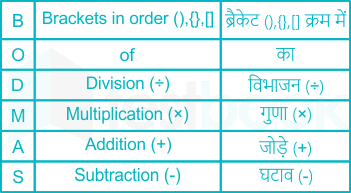
  • The northern tip of Sumatra is near the Andaman Islands.
  • It has a wide range of plant and animal species.
  • Many species are now critically endangered, such as the Sumatran ground cuckoo, the Sumatran tiger, the Sumatran elephant, the Sumatran rhinoceros, and the Sumatran orangutan.

Additional Information

  • Indian Ocean
  • It is enclosed on three sides by landmasses of Africa, Asia, and Australia.
  • The Indian Ocean’s shape is roughly triangular with its apex in the north at the Bering Strait.
  • Arctic Ocean is the smallest and shallowest ocean. 
  • It is known as the coldest of all the oceans.
  • It is almost completely encircled by the landmasses of North America, Eurasia, and Greenland.
  • Atlantic Ocean is the second-largest ocean.
  • It affects our weather patterns, including hurricanes.
  • A man-made connection between the Atlantic and Pacific is provided by the Panama Canal.
  • Pacific Ocean is the largest and deepest ocean.
76

A shopkeeper buys 6 balloons for one rupee. How many balloons should he sell for one rupee so that he makes a profit of 20%?

  1. ((a))

    3

  2. ((b))

    4

  3. ((c))

    5

  4. ((d))

    6

Show Answer
Answer: ((c))

5

CP of 6 balloons = Rs. 1

SP of 6 balloons = 120% of Rs. 1 = 120/100 × 1 = Rs. 6/5

For Rs. 6/5, Balloons sold = 6

For Rs. 1, Balloons sold = 6 × 5/6 = 5

Hence, the correct answer is "5".

77

Simplify: 810\sqrt{810}

  1. ((a))

    9109\sqrt{10}

  2. ((b))

    10910\sqrt{9}

  3. ((c))

    910\sqrt{9\over10}

  4. ((d))

    109\sqrt{10\over9}

Show Answer
Answer: ((a))

9109\sqrt{10}

⇒ 810\sqrt{810} = 9×9×10\sqrt {9 \times 9 \times 10}

⇒ 810\sqrt{810} = 9109\sqrt{10}

Hence, the correct answer is "9109\sqrt{10}".

78

Simplify: b - [b - (a + b) - {b - (b - a + b)} + 2a ]

  1. ((a))

    a

  2. ((b))

    2a

  3. ((c))

    4a

  4. ((d))

    0

Show Answer
Answer: ((d))

0

Given:

b - [b - (a + b) - {b - (b - a + b)} + 2a]

Concept:

Calculation:

⇒ b - [b - (a + b) - {b - b + a - b} + 2a]

⇒ b - [b - a - b - a + b + 2a]

⇒ b - b = 0

Hence, the correct answer is "0".

79

The difference between a digit and its 353 \over 5th value is 50. That digit is

  1. ((a))

    120

  2. ((b))

    123

  3. ((c))

    124

  4. ((d))

    125

Show Answer
Answer: ((d))

125

Let the digit be 5x. Then, according to question,

⇒ 5x - 3/5 of 5x = 50

⇒ 5x - 35×5x\frac{3}{5}\times 5x = 50

⇒ 2x = 50

⇒ x = 25

So, the digit is = 5x = 5 × 25 = 125

Hence, the correct answer is "125".

80

Shyam is 7 years younger than Ram. The ratio of their ages is 7 : 9.  What is Shyam's age (in years)?

  1. ((a))

    23.5

  2. ((b))

    24.5

  3. ((c))

    12.5

  4. ((d))

    14.5

Show Answer
Answer: ((b))

24.5

Let the ages of Shyam and Ram is 7x and 9x respectively. Then, According to question,

⇒ 9x - 7x = 7

⇒ 2x = 7

⇒ x = 3.5

So, Shyam's age = 7x = 7 × 3.5 = 24.5 years

Hence, the correct answer is "24.5 years".

81

A can complete a work in 10 days and B in 15 days. If both of them work together, then in how many days will the work be completed?

  1. ((a))

    5

  2. ((b))

    6

  3. ((c))

    7

  4. ((d))

    8

Show Answer
Answer: ((b))

6

Given:

A can do a work in = 10 days

B can do a work in = 15 days

Calculation:

LCM of 10 and 15 days is 30.

So,

Efficiency of A = 30/10 = 3 units

Efficiency of B = 30/15 = 2 units

Then, according to question,

If they work together, their efficiencies are = 3 + 2 = 5 units

Days = 30/5 = 6 days

So, the work will be completed in 6 days.

Hence, the correct answer is "6 days".

82

If the profit triples on doubling the selling price, then the % profit is

  1. ((a))

    662366{2\over3}

  2. ((b))

    100

  3. ((c))

    10513105{1\over3}

  4. ((d))

    120

Show Answer
Answer: ((b))

100

Let CP = Rs. x

SP = Rs. y

Profit = Rs. (y - x)

⇒ If the profit triples on doubling the selling price.

SP = Rs. 2y, CP = Rs. x

Profit = 2y - x = 3(y - x)

⇒ 2y - x = 3y - 3x

⇒ y = 2x

i.e. Profit = y - x = 2x - x = Rs. x

Profit % = x/x × 100 = 100%

Hence, the correct answer is "100%".

83

NaCl has ______ bond.

  1. ((a))

    Ionic

  2. ((b))

    Covalent

  3. ((c))

    Co-ordinate

  4. ((d))

    H-Bond

Show Answer
Answer: ((a))

Ionic

The correct answer is Ionic.

Key Points

  • NaCl has an ionic bond.
  • Ionic bond
  • It is also called the electrovalent bond.
  • It is the complete transfer of valence electron(s) between atoms.
  • It is a type of chemical bond that generates two oppositely charged ions.
  • The metal loses electrons to become a positively charged cation, whereas the nonmetal accepts those electrons to become a negatively charged anion.
  • The formation of ionic bonds involves the loss of an electron from an element which makes them highly exothermic.

Important Points

  • In NaCl, the sodium molecule donates the lone electron in its valence orbital in order to achieve an octet configuration.
  • This creates a positively charged cation due to the loss of electrons.
  • The chlorine atom receives one electron to achieve its octet configuration, which creates a negatively charged anion.
  • This creates a sodium cation and a chlorine anion.

Additional Information

  • Covalent bond
  • It consists of the mutual sharing of one or more pairs of electrons between two atoms.
  • These electrons are simultaneously attracted by the two atomic nuclei.
  • Co-ordinate bond
  • It is a type of alternate covalent bond that is formed by sharing of electron pair from a single atom.
  • Both shared electrons are donated by the same atom. It is also called a dative bond or dipolar bond.
  • H- bond
  • It is a weak bond.
  • It is an intermolecular force (IMF) that forms a special type of dipole-dipole attraction when a hydrogen atom bonded to a strongly electronegative atom exists in the vicinity of another electronegative atom with a lone pair of electrons.
84

How many types of quantum numbers are there?

  1. ((a))

    5

  2. ((b))

    2

  3. ((c))

    3

  4. ((d))

    4

Show Answer
Answer: ((d))

4

The correct answer is 4.

Key Points

  • The set of numbers used to describe the position and energy of the electron in an atom is called quantum numbers.
  • There are four quantum numbers-
  • Principal
  • Azimuthal
  • Magnetic
  • Electron Spin

Important Points

  • Principal quantum number
  • It is denoted by the symbol ‘n’.
  • It has values n= 1,2,3,4....
  • It determines the size and to a large extent the energy of the orbital.
  • Azimuthal quantum number
  • ​It determines the three-dimensional shape of the orbital quantum number.
  • It is denoted by the symbol ‘l’ and it is also known as orbital angular momentum or subsidiary quantum number.
  • It has values 0 to n-1.
  • The orbitals we get are l = 0 for s, l = 1 for p , l = 2 for d, l = 3 for f etc.
  • Magnetic quantum number
  • It is denoted by the symbol ‘ml’.
  • It gives information about the spatial orientation of the orbital concerning a standard set of the coordinate axis.
  • The number of 'ml' values gives us the number of orbitals for a particular subshell.
  • It has values - l to + l including zero.
  • ​Electron Spin quantum number
  • ​It is denoted by the symbol-'ms'.
  • It refers to the orientation of the spin of the electron.
  • It has values = 1/2, - 1/2.
  • It denotes an upward and a downward spin.
85

Which of the following is used to determine the age of archaeological wood?

  1. ((a))

    92U235

  2. ((b))

    6C14

  3. ((c))

    92U238

  4. ((d))

    6C12

Show Answer
Answer: ((b))

6C14

The correct answer is 6C14.

Key Points

  • Radiocarbon dating
  • It is a method that provides objective age estimates for carbon-based materials that originated from living organisms.
  • It is a technique used to ascertain the age of the Fossil.
  • It determines the age of an object containing organic material by using the properties of radiocarbon, a radioactive isotope of carbon.
  • 6C14 is used to determine the age of archaeological wood.
  • It is also referred to as carbon dating or carbon-14 dating.
  • The samples that have been radiocarbon dated since the inception of the method include - charcoal, wood, twigs, seeds, bones, shells, leather, peat, lake mud, soil, hair, pottery, pollen, wall paintings, corals, blood residues, fabrics, paper or parchment, resins, and water, etc.
86

Which of the following equation represents Charles's law?

  1. ((a))

    VCTV\propto {C\over T}

  2. ((b))

    V1PV\propto {1\over P}

  3. ((c))

    VTV\propto T

  4. ((d))

    T1VT\propto {1\over V}

Show Answer
Answer: ((c))

VTV\propto T

The correct answer is  V ∝ T.

Key Points

  • In 1787, Jacques Charles formulated Charles' Law or the Law of Volume.
  • According to this law, at constant pressure, the volume of a given mass of gas is directly proportional to its temperature.
  • It means V ∝ T or VT\frac{V}{T} = constant.

Important Points

  • It is pertinent to note that Charle's law is valid only when the pressure of the system is kept constant.
  • Provided the pressure is kept constant, the gases when heated will achieve higher kinetic energy.
  • The high kinetic energy of the molecules will help them to overcome the intermolecular forces in them and undergo expansion.
  • Thus, increasing the temperature, the gases will undergo expansion, provided the pressure is kept constant.
  • Similarly, decreasing the temperature, gases will undergo compression, and P kept constant.
  • Hence, the volume becomes directly proportional to temperature.
  • As volume is dependent on the pressure, altering it will thus cause a change in volume and the effect of temperature could not be understood.
87

It does not contain 6 × 10²³ atoms:

  1. ((a))

    6 g of Carbon

  2. ((b))

    1 g of Hydrogen

  3. ((c))

    14 g of Nitrogen

  4. ((d))

    35.5 g of Chlorine

Show Answer
Answer: ((a))

6 g of Carbon

The correct answer is 6 g of Carbon.

Key Points

  • Avogadro's number
  • The number of units present in one mole of a given substance is called Avogadro's number.
  • Avogadro's number (NA) is equal to 6.022140857 × 10²³.
  • Avogadro's constant is equal to the number of atoms present in 12 grams of Carbon-12.
  • 6 g of Carbon does not contain 6 × 10²³ atoms.

Important Points

  • A mole is a fundamental unit of measure of the amount of a substance.
  • For atoms, the mass of Avogadro's number of particles is equal to their atomic mass in grams.
  • For molecules, the mass of Avogadro's number of particles is equal to their molecular mass in grams.
  • Now, to find the answer, pay attention to the molecular formula of elements in the options.
88

Epsom salt is a compound of ________.

  1. ((a))

    Ca

  2. ((b))

    Mg

  3. ((c))

    Ba

  4. ((d))

    Pb

Show Answer
Answer: ((b))

Mg

The correct answer is Mg.

Key Points

  • Epsom salt
  • It is known as magnesium sulfate.
  • Epsom salt is a compound of Mg.
  • It's a chemical compound made up of magnesium, sulfur, and oxygen.
  • It gets its name from the town of Epsom in Surrey, England, where it was originally discovered.
  • It has a chemical formula MgSO4(H2O)x where x varies from 0 to 7.
  • It is used in a soak to treat minor aches and pains.
  • It is used to relax muscles and relieve pain in the shoulders, neck, back, and skull.
  • It is used as a component of bath salts, and beauty products, to improve crops and remove splinters.
89

_____ is present in german silver.

  1. ((a))

    Cu

  2. ((b))

    Ag

  3. ((c))

    Sn

  4. ((d))

    Al

Show Answer
Answer: ((a))

Cu

The correct answer is Cu.

Key Points

  • German Silver contains Copper (60%), Zinc (20%), and Nickel (20%). It sometimes contains lead and tin too.
  • The options have both copper and nickel, but since the percentage of copper is maximum, Cu is marked correct.
  • Some properties of German Silver-
  • It is hard.
  • It is light in weight.
  • It is highly resistant to electricity.
  • It is malleable and ductile.
  • German Silver is extensively used in tableware (commonly silver plated), marine fittings, and plumbing fixtures.
  • It is also used to make decorative articles, coinage metal, ornaments, etc.
90

The contact method is used in the manufacture of _________.

  1. ((a))

    HNO3

  2. ((b))

    HCl

  3. ((c))

    H3PO4

  4. ((d))

    H2SO4

Show Answer
Answer: ((d))

H2SO4

The correct answer is H2SO4.

Key Points

  • Contact method/Contact process
  • It is a chemical procedure that creates sulfuric acid for industrial purposes such as in paints, detergents, fertilizers, and plastic products.
  • British trader named Peregrine Phillips patented the process in the year 1831.
  • Sulphur trioxide and oleum are also obtained from this process.
  • The contact method is used in the manufacture of H2SO4.
  • The manufacture of sulphuric acid using the contact process primarily involves four steps-
  1. Extraction of sulphur
  2. Preparation of sulphur dioxide
  3. Conversion of sulphur dioxide to sulphur trioxide
  4. Conversion of sulphur trioxide to sulphuric acid

Additional Information

  • Some properties of Sulphuric acid
  • It is strong dehydrating and oxidizing in nature.
  • It is colourless with a pungent smell.
  • It is soluble in water and releases heat on contact.
  • It is corrosive to metals and most other organic matter like tissue, wood, etc.
  • On contact with such organic substances, sulphuric acid instantly dehydrates them causing char to form.
91

The chemical name of heavy water is

  1. ((a))

    Deuterium monoxide

  2. ((b))

    Deuterium Oxide

  3. ((c))

    Tritium oxide

  4. ((d))

    Tritium monoxide

Show Answer
Answer: ((b))

Deuterium Oxide

The correct answer is Deuterium Oxide.

Key Points

  • The chemical name of heavy water is Deuterium Oxide.
  • ​A molecule of heavy water has two deuterium atoms in place of the two protium atoms of ordinary "light" water.
  • It is made up of deuterium (1H2) and oxygen.
  • Heavy water is made by burning deuterium in oxygen.

Important Points

  • Uses of Heavy Water
  • It is used as a tracer to study the mechanism of respiration, and photosynthesis.
  • It is used in NMR (nuclear magnetic resonance) spectroscopy, which is further used to observe the magnetic fields around the nuclei of atoms.
  • Isotopologues of many organic compounds are prepared with the help of deuterium oxide.
  • It is used as a moderator in the nuclear reactor to slow down the neutrons.
92

How many types of white blood cells are there in human body?

  1. ((a))

    3

  2. ((b))

    4

  3. ((c))

    5

  4. ((d))

    6

Show Answer
Answer: ((c))

5

The correct answer is 5.

Key Points

  • There are 5 types of white blood cells are there in the human body.
  • Types of white blood cells are-
  • Granulocytes (Eosinophils, Neutrophils, Basophils)
  • Agranulocytes (Monocytes, Lymphocytes)
  • WBC (White Blood Cells)
  • These are also called leukocytes or leucocytes.
  • They are cells of the immune system, which is mainly responsible for protecting and fighting against invading pathogens.
  • These cells stimulate the production of the progesterone hormone.
  • They also play a vital role in the human reproductive system by producing a network of blood vessels within the ovary.
  • On average, the total count of white blood cells in every microliter of blood ranges between 4 and 11 thousand, and a healthy person will produce around 80 to 100 billion white blood cells every day.
  • The lifespan of white blood cells ranges between 13 and 20 days.

Important Points

  • Brief information on types of WBCs-
  • Eosinophils are responsible for combating multicellular parasites and certain infections in vertebrates.
  • Neutrophils form an essential part of the innate immune system, with their functions varying in different animals.
  • Basophils release enzymes to improve blood flow and prevent blood clots.
  • Monocytes play a role in both the inflammatory and anti-inflammatory processes that take place during an immune response.
  • Lymphocytes help our body's immune system fight cancer and foreign viruses and bacteria.
93

Lymph is present in:

  1. ((a))

    vascular tissue

  2. ((b))

    cartilage

  3. ((c))

    squamous tissue

  4. ((d))

    nerve fibers

Show Answer
Answer: ((a))

vascular tissue

The correct answer is vascular tissue.

Key Points

  • Lymph is present in vascular tissue.
  • It is pertinent to note that the correct terminology should have been vascular system instead of vascular tissues as vascular tissue term is used for the plants.
  • Vascular tissue is comprised of the xylem and the phloem, the main transport systems of plants.
  • Lymph
  • ​It is the fluid that flows through the lymphatic system.
  • It contains a high concentration of white blood cells and plays an important role in the immune response.
  • The lymphatic system acts as a filter against microbes, organic wastes, toxins, and other debris.
  • Vascular system
  • It is made up of the vessels that carry blood and lymph throughout the body.
  • The arteries and veins carry blood throughout the body, delivering oxygen and nutrients to the body tissues and taking away tissue waste matter.

Additional Information

  • Nerve fibre
  • It is a long process of nerve cells (neurons) called the axon.
  • They enable neurons to connect with one another.
  • They are classed into three types – group A nerve fibers, group B nerve fibers, and group C nerve fibers. Groups A and B are myelinated, and group C is unmyelinated.
  • Cartilage
  • ​It is a strong, flexible connective tissue that protects joints and bones.
  • It acts as a shock absorber throughout the body.
  • Cartilage at the end of the bones reduces friction and prevents them from rubbing together when joints are used.
  • Squamous tissue
  • ​It is an epithelial tissue that is composed of a single layer of epithelial cells.
  • This type of epithelium usually has protective functions, including protection against microorganisms from invading underlying tissue and/or protection against water loss.
94

In jaundice, the amount of the ______ increases in the blood. 

  1. ((a))

    Bilirubin

  2. ((b))

    Hemoglobin

  3. ((c))

    Bile acid

  4. ((d))

    Pyruvic acid

Show Answer
Answer: ((a))

Bilirubin

The correct answer is Bilirubin.

Key Points

  • In jaundice, the amount of the Bilirubin increases in the blood.
  • Bilirubin
  • ​It is a yellowish pigment that is made during the normal breakdown of red blood cells.
  • It passes through the liver and is eventually excreted out of the body.
  • Higher than normal levels of bilirubin may indicate different types of liver or bile duct problems.
  • Higher bilirubin levels may be caused by an increased rate of destruction of red blood cells (hemolysis).
  • Jaundice
  • It is caused by too much bilirubin.
  • This makes the skin and the whites of our eyes look strikingly yellowish.

Additional Information

  • Types of jaundice are categorized by where they happen within the liver’s process of taking in and filtering out bilirubin-
  • pre-hepatic: before the liver
  • hepatic: in the liver
  • post-hepatic: after the liver
  • Hemoglobin
  • ​It is a protein in our red blood cells that carries oxygen to our body's organs and tissues.
  • It transports carbon dioxide from our organs and tissues back to our lungs.
  • Bile acid
  • ​These are steroid acids found predominantly in the bile of mammals and other vertebrates.
  • These are produced by liver and stored in gallbladder.
  • Pyruvic acid
  • It is the end-product of glycolysis.
  • ​It supplies energy to cells through the citric acid cycle (also known as the Krebs cycle) when oxygen is present.
95

Which of the following is the largest gland?

  1. ((a))

    Pancreas

  2. ((b))

    Liver

  3. ((c))

    lung

  4. ((d))

    Kidney

Show Answer
Answer: ((b))

Liver

The correct answer is Liver.

Key Points

  • Liver
  • It is in the upper right section of the abdomen and sits below the diaphragm.
  • It is the largest solid organ and the largest gland in the human body.
  • It carries out over 500 essential tasks.
  • The roles of the liver include detoxification, protein synthesis, and the production of chemicals that help digest food.
  • It is part of the digestive system.
  • Liver is the largest gland.

Liver Abscess | Liver, Gallbladder, Gastrointestinal

Additional Information

  • Pancreas
  • ​It is an organ and a gland.
  • he pancreas performs two main functions-
  • Exocrine function: Produces substances (enzymes) that help with digestion.
  • Endocrine function: Sends out hormones that control the amount of sugar in your bloodstream.

  • Lungs
  • These are a pair of spongy, air-filled organs located on either side of the chest (thorax).
  • The main function of the lungs is respiration (or breathing).
  • In respiration, oxygen from incoming air enters the blood, and carbon dioxide, a waste gas from the metabolism, leaves the blood.

  • Kidney
  • It is made up of about a million filtering units called nephrons. Each nephron includes a filter, called the glomerulus, and a tubule.
  • Kidney remove wastes and extra fluid from human body.

Kidney Structure | Biology for Majors II

96

Which of the following is Sanguivorous? 

  1. ((a))

    snake

  2. ((b))

    earthworm

  3. ((c))

    cockroach

  4. ((d))

    mosquito

Show Answer
Answer: ((d))

mosquito

The correct answer is mosquito.

Key Points

  • Sanguivorous
  • ​These are animals that nourish on or consume other animals' blood.
  • These include leeches, female mosquitoes, and vampire bats.
  • Mosquito is Sanguivorous.
  • Sanguivory is a dietary habit that involves feeding on blood.
  • Many sanguivorous animals will substitute their diets with food from other sources.
  • However, some are obligate sanguivores and can survive on a diet of blood only.
97

Which of the following is known as master gland?

  1. ((a))

    Thyroid

  2. ((b))

    Pituitary 

  3. ((c))

    Adrenal

  4. ((d))

    Pancreas

Show Answer
Answer: ((b))

Pituitary 

The correct answer is Pituitary.

Key Points

  • Pituitary is known as master gland.
  • It is no larger than a pea, and is located at the base of the brain.
  • It is controlled by Hypothalamus. The hypothalamus sends signals to the pituitary to release or inhibit pituitary hormone production.
  • It controls several other hormone glands in the body, including the thyroid and adrenals, the ovaries and testicles.
  • It secretes hormones from both the front part (anterior) and the back part (posterior) of the gland.

Additional Information

  • Thyroid
  • It is an endocrine gland in the neck.
  • It makes two hormones that are secreted into the blood: thyroxine (T4) and triiodothyronine (T3).
  • It plays a major role in the metabolism, growth and development of the human body.
  • Adrenal
  • ​These are endocrine glands that produce a variety of hormones including adrenaline and the steroids aldosterone and cortisol.
  • They produce hormones that help regulate  metabolism, immune system, blood pressure, response to stress and other essential functions.
  • Pancreas
  • ​It is an organ and a gland.
  • The pancreas performs two main functions-
  • Exocrine function: Produces substances (enzymes) that help with digestion.
  • Endocrine function: Sends out hormones that control the amount of sugar in your bloodstream.
98

Which of the following vitamin is tocopherol?

  1. ((a))

    A

  2. ((b))

    B

  3. ((c))

    D

  4. ((d))

    E

Show Answer
Answer: ((d))

E

The correct answer is E.

Key Points

  • Vitamin E is tocopherol.
  • Vitamin E represents a group of compounds that contain both tocopherol and tocotrienol.
  • It is good for the immune system and it fights toxins.
  • It is a fat-soluble vitamin.
  • It is a very powerful antioxidant.
  • Weak muscles and fertility problems are signs of deficiency of vitamin E.
  • Its deficiency also causes hair damage and skin problems.

Important Points

Name of VitaminChemical Name
ARetinol
B1Thiamine
B2Riboflavin
B12Cyanocobalamin
CAscorbic acid
DErgocalciferol, Cholecalciferol
KPhylloquinone
99

_______ is famous for its social system.

  1. ((a))

    Cow

  2. ((b))

    Pig

  3. ((c))

    honey-bee

  4. ((d))

    fish

Show Answer
Answer: ((c))

honey-bee

The correct answer is honey-bee.

Key Points

  • Honey-bee is famous for its social system.
  • ​Honey bees are social insects, which means that they live together in large, well-organized family groups.
  • Social insects are highly evolved insects that engage in a variety of complex tasks not practiced by the solitary insects.
  • Primary characteristics observed in social insect like honey-bee-
  • Reproductive division of labor- Each honey bee colony consists of a queen (reproductive female), workers (non-reproductive females), and drones (males). Each caste has a clearly defined role that is not performed by any other caste.
  • Cooperative brood care-Workers care for the queen's offspring. In most cases the queen's offspring are sisters to the workers who are rearing them.
  • Overlapping generations-Honey bee queens can live several years and coexist in the colony with their offspring (workers and drones).
100

In nylon, the bond between its monomers is ________.

  1. ((a))

    ionic

  2. ((b))

    amide

  3. ((c))

    H-bond

  4. ((d))

    ester

Show Answer
Answer: ((b))

amide

The correct answer is an amide.

  • In nylon, the bond between its monomers is an amide.

Key Points

  • Amide bond
  • It is a peptide bond.
  • It is formed when the amine group of one amino acid forms a bond with the carboxyl group of another amino acid, resulting in the loss of a single water molecule.
  • ​Nylons are also called polyamides due to their characteristic amide groups in the backbone chain.
  • Amide groups in nylon molecules are very polar and form hydrogen bonding with each other.

Important Points

  • An ionic bond is formed by the complete transfer of some electrons from one atom to another.
  • A hydrogen bond is a primarily electrostatic force of attraction between a hydrogen atom which is covalently bound to a more electronegative "donor" atom or group, and another electronegative atom bearing a lone pair of electrons—the hydrogen bond acceptor.
  • Esters are formed by the condensation reaction between an alcohol and a carboxylic acid.
  • This is known as esterification. In a condensation reaction, two molecules join and produce a larger molecule while eliminating a small molecule.
  • During esterification this small molecule is water.

Mental Ability (50 questions)

101

Three travelers reach a city which has 4 hotels. In how many different ways can they stay in each of the different hotels?

  1. ((a))

    12

  2. ((b))

    24

  3. ((c))

    8

  4. ((d))

    16

Show Answer
Answer: ((b))

24

Given:

Number of Hotels = 4

Number of travelers = 3

Concept:

nPrn!(nr)!\rm \dfrac {n!}{(n-r)!}n!r!(n−r)!n!r!(n−r)!.

n! = 1 × 2 × 3 × ... × n.

0! = 1.

Calculation:

Total number of ways = nP= 4!(43)!\rm \dfrac {4!}{(4-3)!} = 4 × 3 × 2 × 1 = 24

Hence, the correct answer is "24".

102

4 men board a bus which has 6 vacant seats. In how many ways can they sit?

  1. ((a))

    30

  2. ((b))

    120

  3. ((c))

    320

  4. ((d))

    360

Show Answer
Answer: ((d))

360

Given:

Number of men = 4 men

Number of seats = 6 seats

Formula:

nPr = n!(nr)!\rm \dfrac {n!}{(n-r)!}

Calculation:

Total ways = 6P4 = 6!(64)!\rm \dfrac {6!}{(6-4)!}

Total ways = (6 × 5 × 4 × 3 × 2!)/2! = 360

Hence, the correct answer is "360".

103

In how many ways can 5 motors be selected from 12 motors if one of the mentioned motors is not selected forever?

  1. ((a))

    462

  2. ((b))

    4620

  3. ((c))

    7920

  4. ((d))

    2970

Show Answer
Answer: ((a))

462

Given:

Total motors = 12

Motors to be selected = 5

Formula used:

nCr = n!/(r!)(n-r)!

⇒ If one of the mentioned motors is not selected forever i.e. Total motors = 11 

So, Number of ways = 11C5 = 11!/(5! × 6!)

Number of ways = (11 × 10 × 9 × 8 × 7)/(5 × 4 × 3 × 2 × 1)

⇒ Number of ways = 462

Hence, the correct answer is "462".

104

In how many ways can 9 be found by throwing two dice?

  1. ((a))

    1

  2. ((b))

    2

  3. ((c))

    3

  4. ((d))

    4

Show Answer
Answer: ((d))

4

Numbers on dice = 1, 2, 3, 4, 5, and 6

Total ways to got 9 on two dice = (3, 6), (4, 5), (5, 4) and (6, 3) i.e. 4 ways

Hence, the correct answer is "4".

105

Probability of 3 students solving a question are 12,13,{1\over 2}, {1\over 3},  and 14{1\over 4}. Probability to solve the question is:

  1. ((a))

    14{1\over 4}

  2. ((b))

    12{1\over 2}

  3. ((c))

    712{7\over 12}

  4. ((d))

    34{3\over 4}

Show Answer
Answer: ((d))

34{3\over 4}

Probability of 3 students,

P(A) = 1/2, P(A̅) = 1/2

P(B) = 1/3, P(B̅) = 2/3

P(C) = 1/4, P(C̅) = 3/4

So, Probability of no one solve the question is = 12×23×34\frac 1 2 \times \frac 2 3 \times \frac 3 4 = 1/4

⇒ P(None) = 1/4

Then, The probability to solve the question is = 1 - 1/4 = 3/4

Hence, the correct answer is "3/4".

106

Select the figure that continues the series below.

  1. ((a))

  2. ((b))

  3. ((c))

  4. ((d))

Show Answer
Answer: ((c))

The logic followed here is,

  • The arrow moves 90° in anti-clockwise direction and pin moves 90° in clockwise direction.

So, the next image is,

Hence, the correct answer is "Option 3".

107

Select the figure that continues the series below.

  1. ((a))

  2. ((b))

  3. ((c))

  4. ((d))

Show Answer
Answer: ((b))

The logic followed here is,

  • Lines are first increasing vertically and then in second figure increases horizontally from the previous figure.

So, the next figure will be,

Hence, the correct answer is "Option 2".

108

In a code SYSTEM is written as SYSMET and NEARER is written as AENRER, FRACTION will be written as :

  1. ((a))

    CARFTINO

  2. ((b))

    CARFTION

  3. ((c))

    ARFCNOIT

  4. ((d))

    CARFNOIT

Show Answer
Answer: ((d))

CARFNOIT

The logic followed here is,

Similarly,

So, FRACTION will be written as CARFNOIT.

Hence, the correct answer is "CARFNOIT".

109

Which pair of figures have the same relationship as the figures given below?

  1. ((a))

  2. ((b))

  3. ((c))

  4. ((d))

Show Answer
Answer: ((d))

The logic followed here is,

  • In the figure, Arrows in the left figure shows the number of lines in the right figure.

 → 3 Arrows i.e. Triangle

Similarly, in Option 4, arrows given 5, then the diagram should be pentagon.

 → 5 Arrows i.e. Pentagon

So, Option 4 follows the logic.

Hence, the correct answer is "Option 4".

Mistake PointsIf you are only seeing the number of sides of the figure and the number of arrows, this condition is satisfied by both option 1 and 4. But we also need to check the arrangement of the two figures, arrow should come earlier, and figure should come later.

110

A man walks 40 miles on the last day of his vacation. This increases his daily average by 32 to 33 miles. How many days was his leave?

  1. ((a))

    7

  2. ((b))

    8

  3. ((c))

    9

  4. ((d))

    10

Show Answer
Answer: ((b))

8

Given:

A man walks 40 miles on the last day of his vacation. i.e. let days before last day = x

Average = 32 miles

New average = 33 miles

Calculation:

Total days of vacation = x + 1

So, 

⇒ 32x + 40 = 33(x + 1)

⇒ 32x + 40 = 33x + 33

⇒ x = 7

So, Total days of leave = x + 1 = 8 days

Hence, the correct answer is "8 days".

111

What is the value of x in the following?

38192496
64321768
48x56
  1. ((a))

    2414

  2. ((b))

    1424

  3. ((c))

    4214

  4. ((d))

    4412

Show Answer
Answer: ((a))

2414

The logic followed here is,

⇒ First two digits of II column = First Column Number/2

⇒ Last two digits of II column = Third Column Number/4

⇒ 38/2 = 19 and 96/4 = 24 → 1924

⇒ 64/2 = 32 and 68/4 = 17 → 3217

Similarly,

⇒ 48/2 = 24 and 56/4 = 14 → 2414

Hence, the correct answer is "2414".

112

473982 is related to 1419 in the same way as 329684 is related to 1418. 751694 is related to which of the following?

  1. ((a))

    1931

  2. ((b))

    1193

  3. ((c))

    1319

  4. ((d))

    1139

Show Answer
Answer: ((c))

1319

The logic followed here is,

First two digits of the code is sum of the first three digits of number and last two digits of the code is sum of the last three digits of the number. 

So, 

⇒ 473982 → (4 + 7 + 3) (9 + 8 + 2) = 1419

⇒ 329684 → (3 + 2 + 9) (6 + 8 + 4) = 1418

Similarly,

751694 → (7 + 5 + 1) (6 + 9 + 4) = 1319

Hence, the correct answer is "1319".

113

Which of the following is not correctly matched?

  1. ((a))

  2. ((b))

  3. ((c))

  4. ((d))

Show Answer
Answer: ((b))

The logic followed here is,

  • In all the figures, one of the two figures is shaded. Whether, both figures given in the option (2) are not shaded.

So, Option 2 is the odd.

Hence, the correct answer is "Option 2".

114

Which figure has the same relation to the third figure as the second figure is to the first?

  1. ((a))

  2. ((b))

  3. ((c))

  4. ((d))

Show Answer
Answer: ((c))

The logic followed here is,

  • First rotate first figure 90° clockwise and the horizontal image of it  attach with it and upper half is shaded.


Similarly,


Hence, the correct answer is "Option 3".

115

Sally has one-third more than David has. David has one-third more than Francis has. There are a total of 111. How many does Francis have?

  1. ((a))

    27

  2. ((b))

    36

  3. ((c))

    48

  4. ((d))

    68

Show Answer
Answer: ((a))

27

Let Francis has = x

⇒ David has one-third more than Francis has.

David = x + 1/3 × x = 4x/3

⇒ Sally has one-third more than David has.

Sally = 4x/3 + 1/3 × 4x/3 

Sally = 16x/9

So, x + 4x/3 + 16x/9 = 111

⇒ 9x + 12x + 16x = 111 × 9

⇒ 37x = 111 × 9

⇒ x = 3 × 9 = 27

So, Francis has 27.

Hence, the correct answer is "27".

116

Which of the following is rearranged to form an English word?

  1. ((a))

    TCAPU

  2. ((b))

    LEABO

  3. ((c))

    TCINO

  4. ((d))

    LIUDT

Show Answer
Answer: ((c))

TCINO

Option (1):

TCAPU → Not meaningful word

Option (2):

LEABO → Not meaningful word

Option (3):

TCINO → TONIC → meaningful word

Option (4)::

LIUDT → Not meaningful word

Hence, the correct answer is "TCINO".

117

If the values of A, B, C, D, E, F etc. are 4, 3, 2, 4, 3, 2, ..., then the sum of the values of the letters of SICK will be

  1. ((a))

    11

  2. ((b))

    12

  3. ((c))

    13

  4. ((d))

    9

Show Answer
Answer: ((a))

11

Given:

If the values of A, B, C, D, E, F etc. are 4, 3, 2, 4, 3, 2, ...and so on.

Calculation:

AlphabetsABCDEFGHIJKLM
Codes4324324324324
Codes3423423423423
AlphabetsZYXWVUTSRQPON

So, Sum of SICK code is = 4 + 2 + 2 + 3 = 11

Hence, the correct answer is "11".

118

In (1515) = 152.5 × 15X the value of X is:

  1. ((a))

    6

  2. ((b))

    15

  3. ((c))

    7.5

  4. ((d))

    12.5

Show Answer
Answer: ((d))

12.5

Given:

(1515) = 152.5 × 15X

Calculation:

⇒ 1515 = 152.5 + X

Equating the powers,

⇒ 15 = 2.5 + X

⇒ x = 15 - 2.5 = 12.5

So, the value of x is 12.5.

Hence, the correct answer is "12.5".

119

in 5555 × 555 × 55 = x × 555 × 5, what is the value of x?

  1. ((a))

    30525

  2. ((b))

    152625

  3. ((c))

    61105

  4. ((d))

    6105

Show Answer
Answer: ((c))

61105

5555 × 555 × 55 = x × 555 × 5

⇒ x = (5555 × 555 × 55)/(555 × 5)

⇒ x = 5555 × 11 = 61105

So, the value of x is 61105.

Hence, the correct answer is "61105".

120

If a=(2)×(3)a=(-2) \times(-3) and  b=36b = \sqrt{36} , which of the following is true?

  1. ((a))

    a = b

  2. ((b))

    a=1ba = -{1\over b}

  3. ((c))

    a=ba = \sqrt b

  4. ((d))

    a=1ba = {1\over b}

Show Answer
Answer: ((a))

a = b

a=(2)×(3)a=(-2) \times(-3)

⇒ a = 6

and b=36b = \sqrt{36}

⇒ b = 6

So, a = b is true.

Hence, the correct answer is "a = b".

121

The value of (1 + 15 + 151) × 2 + 36 = x. x is:

  1. ((a))

    12024

  2. ((b))

    370

  3. ((c))

    720

  4. ((d))

    205

Show Answer
Answer: ((b))

370

BODMAS RULE:

Calculation:

⇒ (1 + 15 + 151) × 2 + 36 = x

167 × 2 + 36 = x

334 + 36 = x

⇒ 370 = x

Hence, '370' is the correct answer.

122

By what minimum digit should 4320 be multiplied to make it a perfect cube?

  1. ((a))

    10

  2. ((b))

    20

  3. ((c))

    30

  4. ((d))

    50

Show Answer
Answer: ((d))

50

L.C.M of 4320 = 25 × 33 × 51

The number 4320 must be multiplied with 2 × 5 × 5 which equals to 50.

Hence, '50' is the correct answer.

Alternate Method Prime factorization of 4320 = 2 × 2 × 2 × 2 × 2 × 3 × 3 × 3 × 5 

So, to make it a perfect cube we need 2 × 5 × 5 = 50 

∴  4320 × 50 = 2 × 2 × 2 × 2 × 2 × 2 × 3 × 3 × 3 × 5 × 5 × 5

Hence , The correct answer is 50.

Mistake Points

  • The number when multiplied with the given number should convert it into Perfect CUBE and not square.
123

A man cuts a log which is 140 kg. In first week he throws away 1101\over10. In second week he throws away 232\over3 of the remaining. In third week he throws away 20% of the remaining. What is the weight (in kg) of log left with him?

  1. ((a))

    36.3

  2. ((b))

    42.0

  3. ((c))

    63.3

  4. ((d))

    33.6

Show Answer
Answer: ((d))

33.6

Given:

A man cuts a log which is 140 kg.

In first week he throws away 1101\over10

In second week he throws away 232\over3 of the remaining.

In third week he throws away 20% of the remaining. 

Calculations:

Weight of the log thrown in first week = 1/10 × 140 = 14 kg

Remaining log = 140 - 14 = 126 kg

Weight of the log thrown in second week = 2/3 × 126 = 84 kg

Remaining log = 126 - 84 = 42 kg

Weight of the log thrown in third week = 20% of 42 = 20/100 × 42 = 1/5 × 42 = 8.4 kg

Remaining log = 42 - 8.4 = 33.6 kg

The weight (in kg) of log left with him is 33.6 kg.

Hence, '33.6' is the correct answer.

124

A committee of 3 persons in which at least one is woman, is to be formed by choosing from three men and 3 women. In how many different ways this can be done?

  1. ((a))

    20

  2. ((b))

    19

  3. ((c))

    120

  4. ((d))

    420

Show Answer
Answer: ((b))

19

The committee of 3 persons of which at least one is a woman

∴ No. of ways of choosing 1 woman and 2 men = 3C1 × 3C2

= 3 × 3 = 9

∴ No. of ways of choosing 2 women and 1 man = 3C2 × 3C1

= 3 × 3 = 9

∴ No. of ways of choosing 3 women = 3C3

= 1

The total number of ways of forming the committee:

= 9 + 9 + 1 = 19

Hence, "19" is the correct answer.

125

The following words are based on the word 'PRESCRIBE'. 

Which one is not matched?

  1. ((a))

    PRESS

  2. ((b))

    PIECE

  3. ((c))

    SPREE

  4. ((d))

    PRICE

Show Answer
Answer: ((a))

PRESS

The word that cannot be formed using the letters in the word PRESCRIBE is:

  1. PRESS → PRESCRIBE
  2. PIECE → PRESCRIBE
  3. SPREE → PRESCRIBE
  4. PRICE → PRESCRIBE

Clearly, PRESS cannot be formed using the letters in the word PRESCRIBE as one more S is needed to form the word PRESS.

Hence, 'PRESS' is the correct answer.

126

Choose the correct mirror reflection of the following :

  1. ((a))

  2. ((b))

  3. ((c))

  4. ((d))

Show Answer
Answer: ((c))

The correct mirror image of the given figure when the mirror is held at the right side is:

Hence, "option (3)" is the correct answer.

127

In a standard cube, 1 and 3 are written on the visible faces. What will be the sum of the digits on the opposite faces?

  1. ((a))

    10

  2. ((b))

    11

  3. ((c))

    15

  4. ((d))

    6

Show Answer
Answer: ((a))

10

The standard dice = A "standard dice" is a dice, where the sum of the opposite faces is always 7.

So, “6 is the opposite surface of 1"

“4 is the opposite surface of 3"

So, the sum of these two surfaces is 6 + 4 = 10

Hence, the correct answer is "10".

128

In the class of 49, the rank of X is 18th. What is his rank from the end?

  1. ((a))

    18

  2. ((b))

    19

  3. ((c))

    31

  4. ((d))

    32

Show Answer
Answer: ((d))

32

Given:

In the class of 49, the rank of X is 18th.

X rank from the end:

=> Total students = X rank from start + X rank from the end - 1

=> 49 = 18 + X rank from the end - 1

=> X rank from end = 49 - 18 + 1 = 50 - 18 = 32

Hence, "32" Students ranked between Teena and Rishabh.

129

How many digits in the number 7346285 will not change their position if the digits are written in their ascending order?

  1. ((a))

    0

  2. ((b))

    1

  3. ((c))

    2

  4. ((d))

    4

Show Answer
Answer: ((c))

2

The digits in the number 7346285 that will not change their position if the digits are written in their ascending order is shown below:

Clearly, 3 and 4 are the digits that will not change their position if the digits are written in their ascending order.

Hence, '2' is the correct answer.

130

The number of digits in the number 5109238674 are interchanged in such a way that 1st and 6th digits, 2nd and 7th digits are interchanged. Rest of the digits also change their places in the same way. What will be the 3rd digit from the right in the rearranged number ?

  1. ((a))

    9

  2. ((b))

    0

  3. ((c))

    6

  4. ((d))

    3

Show Answer
Answer: ((b))

0

The number of digits in the number 5109238674 are interchanged in such a way that 1st and 6th digits, 2nd and 7th digits are interchanged. Rest of the digits also change their places in the same way.

After interchanging the digits, we get:

3867451092

Clearly, 0 will be the 3rd digit from the right in the rearranged number.

Hence, '0' is the correct answer.

131

454 \over5th of 70 is less than 575 \over7th of 112 by what %?

  1. ((a))

    42

  2. ((b))

    30

  3. ((c))

    24

  4. ((d))

    36

Show Answer
Answer: ((b))

30

Calculation:

4/5 × 70 = 56

5/7 × 112 = 80

Required percentage = (80 - 56) / 80 × 100 

⇒ 24 / 80 × 100

⇒ 30 %

Hence, "30%" is the correct answer.

132

Raja left home and went 10 feet east, turned right and went 3 feet. Then turned right and walked 14 feet. How many feet away from his home is he now?

  1. ((a))

    4

  2. ((b))

    5

  3. ((c))

    24

  4. ((d))

    42

Show Answer
Answer: ((b))

5

According to given conditions, 

Distance of Raja from his house = (32+42)√(3^2+4^2 ) feet

(9+16)√(9+16)  feet

25√25feet

= 5 feet

Hence, ‘5 feet’ is the correct answer.

133

In a code COMPUTER is written as RFUVQNPC. How will MEDICINE be written?

  1. ((a))

    MFEDJJOE

  2. ((b))

    EOJDEJFM

  3. ((c))

    MFEJDIOE

  4. ((d))

    EOJDJEFM

Show Answer
Answer: ((d))

EOJDJEFM

The logic follows here is:-

The first and last letters are the same.

Similarly,

Hence, the correct answer is "EOJDJEFM".

134

In the code 7c, 9a, 8b, 3a means "Enemy is not external" 3a, 2b, 7c means "Truth is external" 9a, 4d, 2b, 5c means "Truth does not perish". What is the code of "Enemy"?

  1. ((a))

    3a

  2. ((b))

    7c

  3. ((c))

    8b

  4. ((d))

    9a

Show Answer
Answer: ((c))

8b

According to the given information

Enemy’ is coded as "8b".

Hence, '8b' is the correct answer.

135

If MADRAS is written in the code as NBESBT then BOMBAY will be written?

  1. ((a))

    CPNCBX

  2. ((b))

    CPNCBZ

  3. ((c))

    CPOCBZ

  4. ((d))

    CQOCBZ

Show Answer
Answer: ((b))

CPNCBZ

Given: MADRAS is coded as NBESBT.

Logic: Adding 1 to the positional values of the letter, as shown below:

Similarly,

Hence, CPNCBZ is the correct answer.

136

In the code FRIEND is written HUMJTK then CANDLE will be written:

  1. ((a))

    EDRIRL

  2. ((b))

    DCQHQK

  3. ((c))

    ESJFME

  4. ((d))

    DEQJQM

Show Answer
Answer: ((a))

EDRIRL

The logic followed for FRIEND is:

Similarly, for CANDLE:

So, the code for CANDLE is EDRIRL.

Hence, the correct answer is "EDRIRL".

137

K is 40 m south-west of L. M is 40 m south-east of L. M is in which direction with respect to K?

  1. ((a))

    East

  2. ((b))

    West

  3. ((c))

    North-east

  4. ((d))

    South

Show Answer
Answer: ((a))

East

Given:

  1. K is 40 m south-west of L.
  2. M is 40 m south-east of L.

SO, M is in 'East' direction with respect to K

Hence, The correct answer is "East".

138

A boy walks 25 m west from home, turns right and goes 10 m, Turns right and goes 15 m. Then turns right and moves 135° clockwise. Which direction is he walking in the end?

  1. ((a))

    West

  2. ((b))

    South

  3. ((c))

    North-west

  4. ((d))

    South-east

Show Answer
Answer: ((c))

North-west

Given:

  1. A boy walks 25 m west from home.
  2. Turns right and goes 10 m.
  3. Turns right and goes 15 m.
  4. Then turns right and moves 135 clockwise°.

'North**-west**' direction is he walking in the end

Hence, The correct answer is "North-west".

139

X and Y are looking at each other at the time of sunrise. The shadow of Y is falling on the right side of X. Which way is Y looking?

  1. ((a))

    East

  2. ((b))

    South

  3. ((c))

    North

  4. ((d))

    West

Show Answer
Answer: ((c))

North

Given:

  1. X and Y are looking at each other at the time of sunrise.
  2. The shadow of Y is falling on the right side of X.

'North' direction is he walking in the end

Hence, The correct answer is "North".

140

4th number in sequence 2,212,313,.....2, 2{1\over2}, 3{1\over3}, ..... is:

  1. ((a))

    52{5\over2}

  2. ((b))

    5145{1\over4}

  3. ((c))

    5

  4. ((d))

    5185{1\over8}

Show Answer
Answer: ((c))

5

Formula used: 

nth term of the Arithmetic sequence

Tn = a + (N - 1) × d

Where,  a = First Term,  d = common difference and

n is the number of terms.

Calculation:

Given sequence  2,212,313,.....2, 2{1\over2}, 3{1\over3}, ..... 

Simplifying the sequence: 2,52,103,....2, {5\over2}, {10\over3}, ....

Taking the reciprocal of the given numbers, we get

 12,25,310,....{1\over2}, {2\over5}, {3\over10}, ....

Since, 2/5 - 1/2 = -1/10, 10/3 - 2/5 = -1/10

Therefore, 12,25,310,....{1\over2}, {2\over5}, {3\over10}, .... is an Arithmetic progression and

 2,212,313,.....2, 2{1\over2}, 3{1\over3}, ..... is a Harmonic Progression.

a = 1/2, d = 2/5 - 1/2 =  -1/10 and n = 4

We know that the nth term of AP is given by

T= a + (n-1)d

T4 = 1/2 + (4 - 1) × (-1/10) = 1/5

This is the 4th term of an arithmetic sequence

Now, the 4th term of the given Harmonic Sequence is 5.

∴ The 4th term of the Harmonic sequence is 5.

141

The next number in the sequence 71, 81, 74, 77, 77, 73, 80, 69 will be:

  1. ((a))

    80

  2. ((b))

    83

  3. ((c))

    77

  4. ((d))

    71

Show Answer
Answer: ((b))

83

The logic followed here is:

Hence, '83' is the correct answer.

142

If 3182596 means 65283 and 6742835 means 53476, then what is the meaning of 7496258:

  1. ((a))

    85647

  2. ((b))

    58467

  3. ((c))

    74658

  4. ((d))

    79284

Show Answer
Answer: ((a))

85647

The logic is here:

  • First, arrange the numbers in reverse order.
  • Then the two numbers, the highest value and the lowest value, are removed.
  • Don't change the order.

Given:

3182596 means 65283.

And,

6742835 means 53476.

Similarly, in option (1)

7496258 means,

Hence, "Option (1)" is the correct answer.

143

The value of x in the sequence 0, 27, 54, x, 108, 135 is:

  1. ((a))

    73

  2. ((b))

    81

  3. ((c))

    69

  4. ((d))

    85

Show Answer
Answer: ((b))

81

The logic followed here is:

0 + 27 = 27

27 + 27 = 54

54 + 27 = 81

81 + 27 = 108

108 + 27 = 135

Hence, '81' is the correct answer.

144

The next letter in the sequence A, C, F, J, O, ... will be:

  1. ((a))

    T

  2. ((b))

    U

  3. ((c))

    R

  4. ((d))

    V

Show Answer
Answer: ((b))

U

The position values of the letters, according to the English alphabet series,

The logic followed here is:

A + 2 = C

C + 3 = F

F + 4 = J

J + 5 = O

O + 6 = U

Hence, 'U' is the correct answer.

145

In which of the following, rearranging the letters will make a meaningful English word?

  1. ((a))

    LEVUR

  2. ((b))

    TNIEC

  3. ((c))

    IRNAL

  4. ((d))

    ANOIP

Show Answer
Answer: ((d))

ANOIP

Here, the only meaningful word after rearranging the letters is,

ANOIP → PIANO

Piano is a large keyboard musical instrument with a wooden case enclosing a soundboard and metal strings, which are struck by hammers when the keys are depressed. The strings' vibration is stopped by dampers when the keys are released and can be regulated for length and volume by two or three pedals.

Hence, 'ANOIP' is the correct answer.

146

What will be the next digit in the sequence 0, 1, 3, 6, 7, 9, 12, 13, 15, 18, ...?

  1. ((a))

    19

  2. ((b))

    21

  3. ((c))

    24

  4. ((d))

    20

Show Answer
Answer: ((a))

19

The logic followed here is:

Hence, '19' is the correct answer.

147

In a clock, the hour hand is facing north at 6 pm. In which direction will the minute hand point at 9.15 at night?

  1. ((a))

    south-east

  2. ((b))

    south

  3. ((c))

    north

  4. ((d))

    west

Show Answer
Answer: ((d))

west

In a clock, the hour hand is facing north at 6 pm. 

The minute hand will point at West direction 9.15 at night as shown below:

Hence, 'WEST' is the correct answer.

148

34 is related to 12 in the same way as 59 is related to:

  1. ((a))

    45

  2. ((b))

    38

  3. ((c))

    26

  4. ((d))

    14

Show Answer
Answer: ((a))

45

The logic followed here is:

Multiplication of digits of first number = Second number 

34 is related to 12

3 × 4 = 12

Similarly,

59 is related to

5 × 9 = 45

Hence, '45' is the correct answer.

149

Horse : Horseman :: Motor : ?

  1. ((a))

    chauffeur

  2. ((b))

    steering

  3. ((c))

    mechanic

  4. ((d))

    brake

Show Answer
Answer: ((a))

chauffeur

The logic followed here is:

  • Horse : Horseman → Horseman is a rider on horseback, especially a skilled one.

Similarly,

  • Motor : ? → Chauffeur is a person employed to drive a private or hired car.

Hence, 'chauffeur' is the correct answer.

150

Melt : Liquid :: Solidify : ?

  1. ((a))

    to condense

  2. ((b))

    solid

  3. ((c))

    ice

  4. ((d))

    crystal

Show Answer
Answer: ((b))

solid

The logic followed here is:

  • Melt: Liquid → When we melt matter, it turns into a liquid state.

Similarly,

  • Solidify: ? → When we solidify matter, it turns into a solid state.

Hence, 'solid' is the correct answer.

Attempt this paper under real exam conditions

Timed interface, section switching, instant scoring, and question-by-question analytics — free.

Start Timed Attempt