Official Paper

Bihar Vidhan Parishad (DEO) Official Paper (Held On: 24 Sept, 2023) (Previous Year Paper)

100 questions · 120 minutes · with answers · free

Test (100 questions)

1

If 25\frac{2}{5} of three-fourths of a number is 174, then what is that number?

  1. ((a))

    232

  2. ((b))

    ​326

  3. ((c))

    ​435

  4. ((d))

    580

Show Answer
Answer: ((d))

580

Given:

 25\dfrac{ 2}{5} of  three-fourths of a number is 174

Calculation:

Let the number be X

⇒ 25×34×X\dfrac{ 2}{5} × \dfrac{3}{4} × X = 174 

⇒ 2 × 3 × X = 174 × 5 × 4 

⇒ X = 174×4×52×3\dfrac{174 × 4 × 5}{2 × 3}

⇒ X = 580 

∴ That number is 580.

2

If 34\frac{3}{4} of 23\frac{2}{3} of a number is 782, then what is 35\frac{3}{5} of 14\frac{1}{4} of that number?

  1. ((a))

    231

  2. ((b))

    236.6

  3. ((c))

    246.5

  4. ((d))

    234.6

Show Answer
Answer: ((d))

234.6

Given:

34\dfrac{3}{4} of 23\dfrac{2}{3} of a number is 782

Calculation:

Let, the unknown number be x.

⇒  34\dfrac{3}{4}  × 23\dfrac{2}{3}  × x  = 782 

⇒ x = 3 × 2 = 782 × 4 × 3

⇒ x = 782×4×33×2\dfrac{782 × 4 × 3}{3 × 2}  

⇒ x = 1564

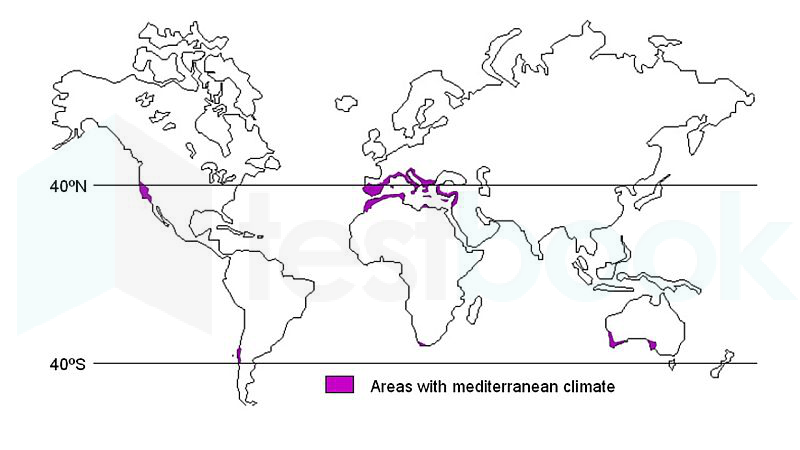
Now, 35\dfrac{3}{5}  of 14\dfrac{1}{4}  of 1564

⇒ 35\dfrac{3}{5}  × 14\dfrac{1}{4}  × 1564 = 234.6

∴ Option (4) is the correct answer.

3

A student was asked to find out 32\frac{3}{2} of a number. He divided that number by 32\frac{3}{2}. Due to this his result was 10 less than the correct answer. What is that number?

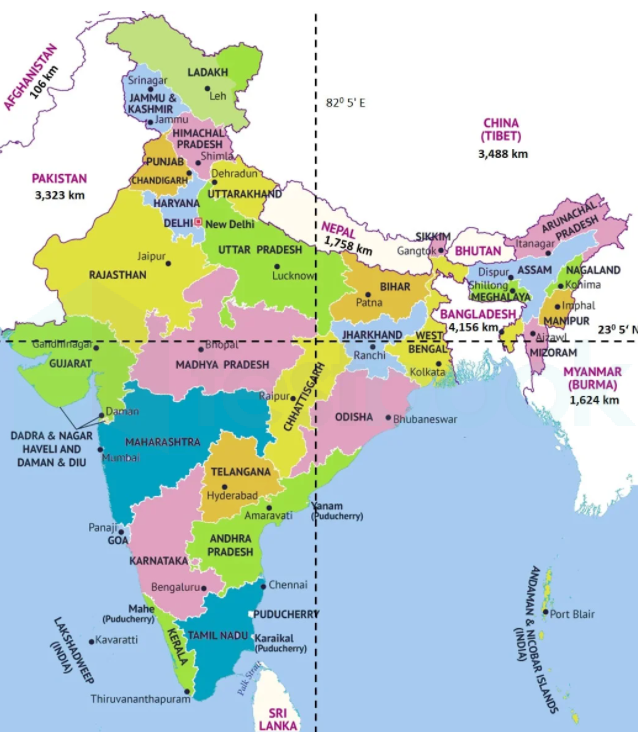
  1. ((a))

    10

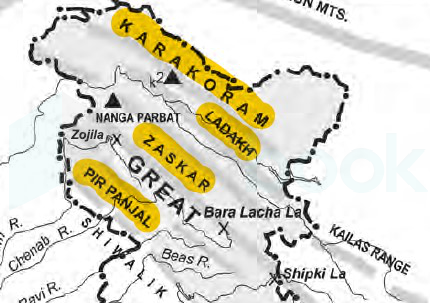
  2. ((b))

    12

  3. ((c))

    15

  4. ((d))

    18

Show Answer
Answer: ((b))

12

Given:

The student was asked to multiply by a number = 32\dfrac{3}{2}

But he divides the number = 32\dfrac{3}{2}

Calculation:

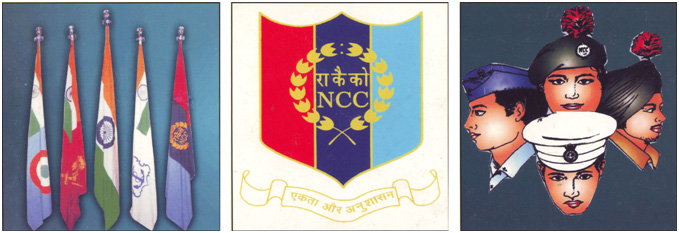
Let the number be 'x'.

Number when multiply by 32\dfrac{3}{2} = 3x2\dfrac{3x}{2}

Number when divide by 32\dfrac{3}{2} = x32\dfrac{x}{ \dfrac{3}{2} } = 2x3\dfrac{2x}{3}

According to the question,

3x2\dfrac{3x}{ 2}  –2x3\dfrac{2x}{ 3} = 10

9x4x6\dfrac{9x-4x}{6} = 10

⇒ 5x = 60

⇒ x = 12

∴ The number was 12.

4

If x * y = 3x + 2y then 2 * 3 + 3 * 4 = ? 

  1. ((a))

    18

  2. ((b))

    29

  3. ((c))

    32

  4. ((d))

    38

Show Answer
Answer: ((b))

29

Given:

x * y = 3x + 2y then 2 * 3 + 3 * 4 = ? 

Calculation:

x * y = 3x + 2y

2 * 3 = 3 × 2 + 2 × 3 = 6 + 6 = 12

3 * 4 = 3 × 3 + 2 × 4 = 9 + 8 = 17 

Now, 2 * 3 + 3 * 4 = 12 + 17 = 29

∴ 2 * 3 + 3 * 4 = 29

5

The cost of 24 bats and 32 hockey sticks is Rs. 8400. What is the cost of 3 bats and 4 hockey sticks ?

  1. ((a))

    Rs. 2100

  2. ((b))

    Rs. 4200

  3. ((c))

    Rs. 1050

  4. ((d))

    Cannot be determined

Show Answer
Answer: ((c))

Rs. 1050

Given:

The cost of 24 bats and 32 hockey sticks is Rs. 8400.

Calculation:

According to the question,

⇒ 24 b + 32 h = 8400 →(1)

Divide the equation by 8

⇒ 24b8\dfrac{24\text{b}}{8}  + 32h8\dfrac{ 32\text{h}}{8}  = 84008\dfrac{ 8400}{8}

⇒ 3b +4h = 1050

∴ The cost of 3 bats and 4 hockey sticks is Rs. 1050.

6

The average age of 80 children in a class is 15 years. Out of these, the average age of a group of 15 children is 16 years and the average age of another 25 children of the class is 14 years. What is the average age of the remaining children of the class? 

  1. ((a))

    15.25 years

  2. ((b))

    14 years

  3. ((c))

    14.75 years

  4. ((d))

    Cannot be determined 

Show Answer
Answer: ((a))

15.25 years

Given:

The average age of 80 children in a class is 15 years.

The average age of a group of 15 children is 16 years.

The average age of the other 25 children in the class is 14 years.

Formula used:

Average = Sum of Observations/Number of Observations

Calculation:

Total age of 80 children = 80 × 15 = 1200 years.

Total age of 15 children = 15 × 16 = 240 years

Total age of 25 children = 25 × 14 = 350 years

Remaining children = 80 - 15 - 25 = 40

∴ The average age of the remaining 40 children = 120024035040\dfrac{ 1200 - 240 - 350 }{40}  

⇒ 61040\dfrac{ 610}{40}  = 15.25 years

∴ The average age of the remaining children in the class is 15.25 years.

7

The ratio between the speeds of a car, a jeep and a tractor is 3 ∶ 5 ∶ 2 respectively. The speed of the Jeep is 250% of the speed of the tractor. The tractor covers a distance of 360 km in 12 hours. What is the average of speed of the car and the Jeep?

  1. ((a))

    60 km/h

  2. ((b))

    86 km/h

  3. ((c))

    40 km/h

  4. ((d))

    Cannot be determined

Show Answer
Answer: ((a))

60 km/h

Given:

The ratio between the speeds of car, jeep, and tractor is 3 ∶ 5 ∶ 2 respectively.

The speed of the Jeep is 250% of the speed of the tractor.

The tractor covers a distance of 360 km in 12 hours.

Formula used:

Distance = Speed × Time

Calculation:

The tractor covers a distance of 360 kilometers in 12 hours.

The speed of the tractor  = 36012\dfrac{ 360}{12} = 30 km/hour.

The speed of the Jeep = 250100\dfrac{250}{100} ×  speed of tractor = 250100\dfrac{250}{100}  × 30 = 75 km/hour.

We know that if the speed of the tractor is 2 units, the speed of the Jeep is 5 units.

According to Question,

1 unit of speed = 302\dfrac{30}{2} = 15 km/hour

The speed of the car = 3 × 15 = 45 km/hour.

The average of speed of the car and the Jeep = 75+452\dfrac{75+45}{2} = 60 km/hr

∴ The average speed of the car and the Jeep is 60 km/hr.

8

3 litres of sugar solution contains 40% sugar. If one litre of water is added to this solution, what will be the percentage of sugar in the new solution? 

  1. ((a))

    1313%13\frac{1}{3}\%

  2. ((b))

    15%

  3. ((c))

    30%

  4. ((d))

    33%

Show Answer
Answer: ((c))

30%

Given:

The initial volume of solution = 3 litres.

Percentage of sugar in the solution = 40%.

The volume of water added = 1 litre.

Calculation:

Amount of sugar = 40% of 3L = 40100×3\dfrac{40}{100} \times 3  = 1.2 litres.

New total volume = Initial volume + Added volume

⇒ 3L + 1L = 4 litres

New percentage of sugar = (Sugar Volume/Total Volume) × 100

⇒ 1.24×100\dfrac{1.2}{4} \times 100 = 30%

∴ When 1 litre of water is added to this solution then the percentage of sugar will be 30%.

9

On increasing the length of a rectangle by 10% and decreasing the breadth by 10%, the area of the new rectangle : 

  1. ((a))

    will increase by 1%

  2. ((b))

    will decrease by 1%

  3. ((c))

    there will be a decrease of 10%

  4. ((d))

    there will be neither decrease nor increase

Show Answer
Answer: ((b))

will decrease by 1%

Given:

Increment in length = 10% and Decrement in breadth = 10%

Formula used:

Use Successive Percentage:

Percentage change = (A + B + AB/100)%

Calculation:

According to the question,

A = 10% and B = - 10%

Percentage change = [10 - 10 + (10 × -10)/100]% = - 1%

∴ The area of the new rectangle is decreased by 1%.

10

A person sold two articles - article A at 40% profit and article B at 20% loss. He made a profit of Rs. 18 in the whole transaction. If the cost price of article A is Rs. 140 less than that of article B, then what is the cost price of article B?

  1. ((a))

    Rs. 380

  2. ((b))

    Rs. 280

  3. ((c))

    Rs. 340

  4. ((d))

    Rs. 370

Show Answer
Answer: ((d))

Rs. 370

Given:

Profit on article A = 40%

Loss on article B = 20%

Total Profit = Rs. 18

Cost Price of A = Cost Price of B - Rs. 140

Formula used:

Selling Price for profit = CP × (1 + Profit%)

Selling Price for loss = CP × (1 - Loss%)

Calculation:

Let CP of B = x So, CP of A = x - 140

SP of A with 40% profit = (x - 140) × 1.4

SP of B with 20% loss = x × 0.8

Total profit = (SP of A + SP of B) - (CP of A + CP of B)

⇒ 18 = ((x - 140) × 1.4 + x × 0.8) - (x - 140 + x)

⇒ 18 = 1.4x - 196 + 0.8x - 2x + 140

⇒ 18 = 0.2x - 56

⇒ 0.2x = 18 + 56

⇒ 0.2x = 74

⇒ x = 74/0.2 = 370

∴ The cost price of article B is Rs. 370.

11

Seema bought some articles at a certain price, sold 25\frac{2}{5} part at a profit of 20% and suffered a loss of 10% while selling the remaining articles. If she got an overall profit of Rs. 490, at what price did she buy the articles ?

  1. ((a))

    Rs. 22450

  2. ((b))

    Rs. 21500

  3. ((c))

    Rs. 26650

  4. ((d))

    Rs. 24500

Show Answer
Answer: ((d))

Rs. 24500

Given:

Total profit = Rs. 490, Profit from 2/5th part = 20%, and Loss from remaining part = 10%

Formula used:

Overall Profit = (Profit from part of the articles + Loss/Gain from the remaining part)

Calculation:

Let the total cost price be C.

The cost price of 2/5th part = 2/5 × C

The cost price of remaining part = 3/5 × C

Profit from 2/5th part = 20% of (2/5 × C) = 0.20 × 2/5 × C = 2/25 × C

Loss from remaining = 10% of (3/5 × C) = 0.10 × 3/5 × C = 3/50 × C

Net profit = 2/25 × C - 3/50 × C

⇒ 2/25C - 3/50C = 490 (Given net profit is Rs. 490)

⇒ (4 - 3)/50 × C = 490

⇒ 1/50 × C = 490

⇒ C = 490 × 50 = Rs. 24,500

∴ Seema bought the articles for Rs. 24,500.

12

Two alloys contain tin and iron in the ratio 1 ∶ 2 and 2 ∶ 3. If both the alloys are mixed in the ratio (by weight) of 3 ∶ 4 respectively, then the ratio of tin and iron in the newly formed alloy is; 

  1. ((a))

    13 ∶ 12

  2. ((b))

    14 ∶ 15  

  3. ((c))

    16 ∶ 11

  4. ((d))

    13 ∶ 22

Show Answer
Answer: ((d))

13 ∶ 22

Given:

Two alloys contain tin and iron in the ratio 1 ∶ 2 and 2 ∶ 3

Both the alloys are mixed in the ratio (by weight) of 3 ∶ 4 

Calculation:

Let ‘k’ kg of both the alloys are taken initially

Then, weight (in kg) of tin in first alloy = k/3 kg

Weight (in kg) of iron in first alloy = 2k/3 kg

Weight (in kg) of tin in second alloy = 2k/5 kg

Weight (in kg) of iron in second alloy = 3k/5 kg

If the two alloys are mixed in the proportion of 3 : 4 respectively (by weight)

Total weight of tin in newly formed alloy = 3(weight of tin in first alloy) + 4(weight of tin in second alloy)

Total weight of tin in newly formed alloy = 3×k3+4×2k53 \times \dfrac{k}{3} + 4 \times \dfrac{{2k}}{5} = k + 8k/5 = 13k/5 kg

Total weight of iron in newly formed alloy = 3(Weight of iron in first alloy) + 4(Weight of iron in second alloy)

Total weight of iron in newly formed alloy = 3×2k3+4×3k53 \times \dfrac{{2k}}{3} + 4 \times \dfrac{{3k}}{5} = (2k + 12k/5) = (22k/5) kg

The ratio of tin and iron in the newly formed alloy = 13k5:22k5\dfrac{{13k}}{5}:\dfrac{{22k}}{5} = 13 : 22

∴ Option (4) is the correct answer.

13

The ratio of the present ages of Manthan and his mother is 3 ∶ 7 respectively and the ratio of the present ages of Manthan and his father is 5 ∶ 14 respectively. What is the respective ratio between the present ages of Manthan's mother and his father ? 

  1. ((a))

    5 ∶ 7

  2. ((b))

    7 ∶ 9

  3. ((c))

    3 ∶ 5

  4. ((d))

    5 ∶ 6

Show Answer
Answer: ((d))

5 ∶ 6

Given:

The ratio of the present ages of Manthan and his mother is 3 ∶ 7 respectively

The ratio of the present ages of Manthan and his father is 5 ∶ and 14 respectively.

Calculation:

Let's denote Manthan's age as Ma, his mother's age as Mo, and his father's age as F.

According to the question,

Manthan's age to his mother's age forms a ratio of 3 : 7.

⇒ MaMo=37\dfrac{Ma}{Mo} = \dfrac{3}{7}

Manthan's age to his father's age forms a ratio of 5 : 14.

⇒ MaF=514\dfrac{Ma}{F} = \dfrac{5}{14}

From these two equations, we can express the Mother's age and the Father's age in terms of Manthan's age:

⇒ Mo = 73 \dfrac{7}{3}  × Ma

⇒ F = 145 \dfrac{14}{5} × Ma

Now we need to find the ratio of the Mother's age to the Father's age:

⇒ MoF\dfrac{Mo}{F} = (73 \dfrac{7}{3} ×  Ma)/(145\dfrac{14}{5}   × Ma)

⇒ MoF\dfrac{Mo}{F} = (73 \dfrac{7}{3} )/(145\dfrac{14}{5} ) = (7 × 5)/(14 × 3) = 3542\dfrac{35}{42}  = 56\dfrac{5}{6}

∴ The ratio between the present ages of Manthan's mother and his father is 5:6.

14

A sum of money doubles itself in 20 years at a certain rate of simple interest. How long will it take for this money to triple?

  1. ((a))

    30 years

  2. ((b))

    38 years

  3. ((c))

    41 years

  4. ((d))

    40 years

Show Answer
Answer: ((d))

40 years

Given:

A sum of money doubles itself in 20 years.

Formula used:

Simple Interest = P×R×T100 \dfrac{\text{P}\times\text{R}\times\text{T}}{100}

Calculation:

According to the question, the sum of money doubles itself in 20 years.

⇒ 2P = P + P × r × 20 (For the Amount to double)

⇒ P = P × r × 20

⇒ 1 = 20r 

⇒ r = 0.05

Now, 3P = P + P × r × t.

⇒ 3 = 1 + 0.05 × t

⇒ t =310.05 \dfrac{ 3-1 }{0.05}  = 40 years

∴ It will take 40 years for the money to triple at the same rate as simple interest.

15

At a certain rate of compound interest, a sum of money amounts to Rs. 2420 in 2 years and Rs. 2662 in 3 years, while the interest is compounded annually. What is the annual rate of interest? 

  1. ((a))

    6%

  2. ((b))

    8%

  3. ((c))

    9%

  4. ((d))

    10%

Show Answer
Answer: ((d))

10%

Given:

A sum of money amounts to Rs. 2420 in 2 years and Rs. 2662 in 3 years.

Formula used:

Amount =  P(1 + rate)n

Calculation: 

According to Question:

A1 = P(1 + R/100)2 = 2420 

A2 =  P(1 + R/100)3 = 2662

The ratio of these two should give us (1 + r), the growth for one year:

⇒ (1 + R/100) = A1A2=26622420\dfrac{\text{A}_1}{\text{A}_2} = \dfrac{2662}{2420}

⇒ 1 + R/100 = 1.1

⇒ R/100 = 1.1 - 1 = 0.1

⇒ R = 0.1 × 100 = 10%

∴ The annual interest rate is 10%.

Directions : In each of these questions, there is a relationship between the word on the left hand side and the nonsense syllable on the right hand side. The same relationship obtains in all the three rows. Of the four alternatives given in each question, find the one that fits into the blank place in the third row.

16
WONDERPES
CLUSTERMTF
MUSCLE(?)
  1. ((a))

    LRK

  2. ((b))

    NSM

  3. ((c))

    TBD

  4. ((d))

    VDF

Show Answer
Answer: ((d))

VDF

The positional values of the letters are as follows:

The logic followed here is:

Similarly,

So, MUSCLE will be coded as "VDF".

Hence, the correct answer is "Option 4".

17
RESPONSIBLEKHMOD
SENSITIVEUSRD
CLARIFICATION(?)
  1. ((a))

    MHZHHZ

  2. ((b))

    KSEBSN

  3. ((c))

    NSBEQK

  4. ((d))

    PUDGSM

Show Answer
Answer: ((c))

NSBEQK

The positional values of the alphabet are as follows:

The logic followed here is as follows:

Similarly,

So, CLARIFICATION will be coded as "NSBEQK".

Hence, the correct answer is "Option 3".

18
RHINOCEROSSKQGWY
MOMENTOUSNOHXZ
HARASSMENT(?)
  1. ((a))

    GPDOZN

  2. ((b))

    ITDWJZ

  3. ((c))

    BCVIYL

  4. ((d))

    ISTNOM

Show Answer
Answer: ((b))

ITDWJZ

The positional values of the letters are as follows:

The logic followed here is:

Similarly,

So, HARASSMENT will be coded as "ITDWJZ".

Hence, the correct answer is "Option 2".

19
SERPENTINERNQA
PROSPEROUSOQOO
REPORTER(?)
  1. ((a))

    ETU

  2. ((b))

    DPO

  3. ((c))

    ​SQH

  4. ((d))

    QMB

Show Answer
Answer: ((d))

QMB

The positional values of the letters are as follows:

The logic followed here is:

Similarly,

So, REPORTER will be coded as "QMB".

Hence, the correct answer is "Optionn 4".

20
EXTRAORDINARYDWQZQCMZX
TRANSCRIPTIONSQMRQHSHM
PROPOSITION(?)
  1. ((a))

    OQONHSNM 

  2. ((b))

    QSQPJUPO

  3. ((c))

    ONNHHM

  4. ((d))

    OPPJJO

Show Answer
Answer: ((a))

OQONHSNM 

The positional values of the letters are as follows:

The logic followed here is:

Similarly,

So, the correct answer is "OQONHSNM".

21

Direction: In the following question, four groups of letters are given, out of which three are alike in a certain way while one is different. Choose the odd one.

  1. ((a))

    BCDE

  2. ((b))

    PQRS

  3. ((c))

    WXYZ

  4. ((d))

    STUW

Show Answer
Answer: ((d))

STUW

The positional values of the letters are as follows:

The logic followed here is as follows:

(1) 

(2) 

(3) 

(4) 

So, "STUW" is the odd one here.

Hence, the correct answer is "Option 4".

22

Direction: In the following question, four groups of letters are given, out of which three are alike in a certain way while one is different. Choose the odd one.

  1. ((a))

    UTSR

  2. ((b))

    IHGE

  3. ((c))

    NMLK

  4. ((d))

    ZYXW

Show Answer
Answer: ((b))

IHGE

The positional values of the letters are as follows:

The logic followed here is as follows:

(1) 

(2) 

(3) 

(4) 

So, "IHGE" is the odd one here.

Hence, the correct answer is "Option 2".

23

Direction: In the following question, four groups of letters are given, out of which three are alike in a certain way while one is different. Choose the odd one.

  1. ((a))

    ABBC

  2. ((b))

    PQQR

  3. ((c))

    HIIJ

  4. ((d))

    WYYZ

Show Answer
Answer: ((d))

WYYZ

The positional values of the letters are as follows:

The logic followed here is as follows:

(1) 

(2) 

(3) 

(4) 

So, WYYZ is the odd one here.

Hence, the correct answer is "Option 4".

Directions : In the questions given below, the relationships and represented by certain specific codes symbols such as +, -, ×, ÷, etc. The candidate are then required to analyse some given code to determine the relationship between a set persons, or to express a given relationship the coded form.

Now, Read the following information carefully and answer the questions given below it :

'A + B' means 'A is the father of B'; 'A - B' means 'A is the wife of B'; 'A × B' means is the brother of B'; 'A ÷ B' means 'A is the daughter of B',

24

If P ÷ R + S + Q, which of the following true?

  1. ((a))

    P is the daughter of Q.

  2. ((b))

    Q is the aunt of P.

  3. ((c))

    P is the aunt of Q.

  4. ((d))

    P is the mother of Q.

Show Answer
Answer: ((c))

P is the aunt of Q.

Let us first decode the given symbols and then draw a amily tree.

A is
Symbol+-×÷
MeaningFatherWifeBrotherDaughter
of B


Preparing the family tree using the following symbols:

The final family tree will be as follows:

From the above family tree, it is clear that "P is the aunt of Q".

Hence, the correct answer is "Option 3".

25

If P - R + Q. which of the following statements is true? 

  1. ((a))

    P is the mother of Q.

  2. ((b))

    Q is the daughter of P.

  3. ((c))

    P is the aunt of Q.

  4. ((d))

    P is the sister of Q.

Show Answer
Answer: ((a))

P is the mother of Q.

Let us first decode the given symbols and then draw a family tree.

A is
Symbol+-×÷
MeaningFatherWifeBrotherDaughter
of B


Preparing the family tree using the following symbols:

The final family tree will be as follows:

From the above family tree, it is clear that "P is the mother of Q".

Hence, the correct answer is "Option 1".

26

If P × R ÷ Q, which of the following statements is true?

  1. ((a))

    P is the uncle of Q.

  2. ((b))

    P is the father of Q.

  3. ((c))

    P is the brother of Q.

  4. ((d))

    P is the son of Q.

Show Answer
Answer: ((d))

P is the son of Q.

Let us first decode the given symbols and then draw a family tree.

A is
Symbol+-×÷
MeaningFatherWifeBrotherDaughter
of B


Preparing the family tree using the following symbols:

The final family tree will be as follows:

From the above family tree, it is clear that "P is the son of Q".

Hence, the correct answer is "Option 4".

27

If P × R - Q, which of the following is true? 

  1. ((a))

    P is the brother-in-law of Q.

  2. ((b))

    P is the brother of Q.

  3. ((c))

    P is the uncle of Q.

  4. ((d))

    P is the father of Q.

Show Answer
Answer: ((a))

P is the brother-in-law of Q.

Let us first decode the given symbols and then draw a family tree.

A is
Symbol+-×÷
MeaningFatherWifeBrotherDaughter
of B


Preparing the family tree using the following symbols:

The final family tree will be as follows:

So, from the above family tree, it is clear that "P is the brother-in-law of Q".

Hence, the correct answer is "Option 1".

28

If P + R ÷ Q, which of the following is true? 

  1. ((a))

    P is the brother of Q.

  2. ((b))

    P is the son of Q.

  3. ((c))

    P is the husband of Q.

  4. ((d))

    P is the father of Q.

Show Answer
Answer: ((c))

P is the husband of Q.

Let us first decode the given symbols and then draw a family tree.

A is
Symbol+-×÷
MeaningFatherWifeBrotherDaughter
of B


Preparing the family tree using the following symbols:

The final family tree will be as follows:

From the above family tree, it is clear that "P is the husband of Q".

Hence, the correct answer is "Option 3".

29

If P ÷ R + Q, which of the following is true? 

  1. ((a))

    P is the father of Q.

  2. ((b))

    P is the brother of Q.

  3. ((c))

    P is the mother of Q.

  4. ((d))

    P is the sister of Q.

Show Answer
Answer: ((d))

P is the sister of Q.

Let us first decode the given symbols and then draw a family tree.

A is
Symbol+-×÷
MeaningFatherWifeBrotherDaughter
of B


Preparing the family tree using the following symbols:

The final family tree will be as follows:

So, from the above family tree, it is clear that "P is the sister of Q".

Hence, the correct answer is "Option 4".

30

If P × R + Q, which of the following is true?

  1. ((a))

    P is the uncle of Q.

  2. ((b))

    P is the father of Q.

  3. ((c))

    P is the brother-in-law of Q.

  4. ((d))

    P is the grandfather of Q.

Show Answer
Answer: ((a))

P is the uncle of Q.

Let us first decode the given symbols and then draw a family tree.

A is
Symbol+-×÷
MeaningFatherWifeBrotherDaughter
of B


Preparing the family tree using the following symbols:

The final family tree will be as follows:

So, from the above family tree, it is clear that "P is the uncle of Q".

Hence, the correct answer is "Option 1".

31

If P - R × Q, which of the following is true? 

  1. ((a))

    P is the sister of Q. 

  2. ((b))

    Q is the husband of P.

  3. ((c))

    P is the sister-in-law of Q.

  4. ((d))

    Q is the son of P.

Show Answer
Answer: ((c))

P is the sister-in-law of Q.

Let us first decode the given symbols and then draw a family tree.

A is
Symbol+-×÷
MeaningFatherWifeBrotherDaughter
of B


Preparing the family tree using the following symbols:

The final family tree will be as follows:

From the above family tree, it is clear that "P is the sister-in-law of Q".

Hence, the correct answer is "Option 3".

32

Direction : In the following question, a word has been given, followed by four other words, one of which cannot be formed by using the letters of the given word. Find that word.

CONSTRUCTION

  1. ((a))

    SUCTION

  2. ((b))

    COINS

  3. ((c))

    CAUTION

  4. ((d))

    NOTION

Show Answer
Answer: ((c))

CAUTION

The logic followed here is:

CONSTRUCTION  words have the letters C, O, N, S, T, R, U, I.

(1) SUCTION→ CONSTRUCTION → Can be formed.

(2) COINS → CONSTRUCTION  → Can be formed.

(3) CAUTION → CONSTRUCTION → Can not  be formed (A is missing.)

(4) NOTION → CONSTRUCTION → Can be formed.

So, the word that can not be formed by using the letters of the word CONSTRUCTION is "CAUTION".

Hence, the correct answer is "Option 3".

33

Direction : In the following question, a word has been given, followed by four other words, one of which cannot be formed by using the letters of the given word. Find that word.

OBSTETRICIAN

  1. ((a))

    SOBER

  2. ((b))

    TERMITE

  3. ((c))

    RETAIN

  4. ((d))

    SIREN

Show Answer
Answer: ((b))

TERMITE

The logic followed here is:

The word OBSTETRICIAN has the letters O, B, S, T, E, R, I, C, A, N.

(1) SOBER → OBSTETRICIAN → Can be formed.

(2) TERMITE → OBSTETRICIAN → Can not be formed (M is missing).

(3) RETAIN → OBSTETRICIAN → Can be formed 

(4) SIREN → OBSTETRICIAN → Can be formed.

So, the word that can not be formed by using the letters of the given word OBSTETRICIAN is "TERMITE".

Hence, the correct answer is "Option 2".

34

Direction : In the following question, a word has been given, followed by four other words, one of which cannot be formed by using the letters of the given word. Find that word.

INTELLIGENCE

  1. ((a))

    TILLAGE

  2. ((b))

    INCITE

  3. ((c))

    GENTLE

  4. ((d))

    NEGLECT

Show Answer
Answer: ((a))

TILLAGE

The logic followed here is:

INTELLIGENCE words have the letters I, N, T, E, L, G, C.

(1) TILLAGE → INTELLIGENCE → Can not be formed (A is not present in the word INTELLIGENCE)

(2) INCITE → INTELLIGENCE → Can be formed.

(3) GENTLE → INTELLIGENCE → Can be formed.

(4) NEGLECT → INTELLIGENCE → Can be formed.

So, the word that can not be formed by using the letters of the word INTELLIGENCE is "TILLAGE".

Hence, the correct answer is "Option 1".

Directions : Study the following information carefully and answer the questions given below:

In a certain code language:

"Never talk between others" is coded as "sm nt ro fi"

"Others should be helpful" is coded as "ro el ac jq"

"Never be time specific" is coded as "fi dg el pa"

"Focus between specific hours" is coded as "hy dg nt ks"

35

What is the code for "Never together" in the given code language? 

  1. ((a))

    nt ro

  2. ((b))

    ro fi

  3. ((c))

    fi uy

  4. ((d))

    jq nt

Show Answer
Answer: ((c))

fi uy

The logic followed here is as follows:

Now, from the first and third statements, we can see that NEVER is coded as "fi" and together is not present in the given statements.

So, the code for  "Never together" in the given code language will be "fi uy".

Hence, the correct option is "Option 3".

36

What is the code for "specific" in the given code language? 

  1. ((a))

    dg

  2. ((b))

    ac

  3. ((c))

    jq

  4. ((d))

    fi

Show Answer
Answer: ((a))

dg

The logic followed here is as follows:

From the third and fourth statement in the above diagram, it is clear that the code for "specific" is "dg".

Hence, the correct option is "Option 1".

37

What is the code for "Others" in the given code language?

  1. ((a))

    sm

  2. ((b))

    ro

  3. ((c))

    el

  4. ((d))

    pa

Show Answer
Answer: ((b))

ro

The logic followed here is as follows:

From the first and second statement in the above diagram, it is clear that the code for "Others" in the given language is "ro".

Hence, the correct answer is "ro".

38

The code "el" is coded as which of the following word ? 

  1. ((a))

    never

  2. ((b))

    time

  3. ((c))

    focus

  4. ((d))

    ​be

Show Answer
Answer: ((d))

​be

The logic followed here is as follows:

From the second and third statement in the above diagram, it is clear that ''el'' is coded for the word "be".

Hence, the correct option is ''Option 4".

39

What is the code for "time" in the given code language ? 

  1. ((a))

    ks

  2. ((b))

    sm

  3. ((c))

    hy

  4. ((d))

    pa

Show Answer
Answer: ((d))

pa

The logic followed here is as follows:

From the third statement in the above figure, it is clear that the code for "time" in the given code language is "pa".

Hence, the correct option is "Option 4".

Directions : Read the following information carefully and answer the questions given below:

(i) There is a group of five persons - A, B, C, D and E.

(ii) One of them is a horticulturist, one is a physicist, one is a journalist, one is an industrialist and one is an advocate.

(iii) Three of them - A, C and advocate prefer tea to coffee and two of them - B and the journalist - prefer coffee to tea. 

(iv) The industrialist and D and A are friends to one another but two of them prefer coffee to tea.

(v) The horticulturist is C's brother.

40

Who is the horticulturist ?

  1. ((a))

    A

  2. ((b))

    B

  3. ((c))

    C

  4. ((d))

    D

Show Answer
Answer: ((a))

A

Given:

(i) There is a group of five persons - A, B, C, D and E.

(ii) One of them is a horticulturist, one is a physicist, one is a journalist, one is an industrialist and one is an advocate.

(iii) Three of them - A, C and the advocate prefer tea to coffee and two of them - B and the journalist - prefer coffee to tea. 

PersonsDrinksProfessions
ATea
CTea
TeaAdvocate
BCoffee
CoffeeJournalist


(iv) The industrialist and D and A are friends to one another but two of them prefer coffee to tea.

Because A is already like Tea means D and industrialist like coffee.

PersonsDrinksProfessions
ATea
CTea
ETeaAdvocate
BCoffeeIndustrialist
DCoffeeJournalist


(v) The horticulturist is C's brother.

So, the final table will be as follows:

PersonsDrinksProfessions
ATeaHorticulturist
CTeaPhysicist
ETeaAdvocate
BCoffeeIndustrialist
DCoffeeJournalist


So, from the above table, it is clear that "A" is Industrialist.

Hence, the correct option is "Option 1".

41

Who is the industrialist?

  1. ((a))

    E

  2. ((b))

    C

  3. ((c))

    B

  4. ((d))

    A

Show Answer
Answer: ((c))

B

Given:

(i) There is a group of five persons - A, B, C, D and E.

(ii) One of them is a horticulturist, one is a physicist, one is a journalist, one is an industrialist and one is an advocate.

(iii) Three of them - A, C and the advocate prefer tea to coffee and two of them - B and the journalist - prefer coffee to tea. 

PersonsDrinksProfessions
ATea
CTea
TeaAdvocate
BCoffee
CoffeeJournalist


(iv) The industrialist and D and A are friends to one another but two of them prefer coffee to tea.

Because A is already like Tea means D and industrialist like coffee.

PersonsDrinksProfessions
ATea
CTea
ETeaAdvocate
BCoffeeIndustrialist
DCoffeeJournalist


(v) The horticulturist is C's brother.

So, the final table will be as follows:

PersonsDrinksProfessions
ATeaHorticulturist
CTeaPhysicst
ETeaAdvocate
BCoffeeIndustrialist
DCoffeeJournalist


So, from the above table, it is clear that "B" is Industrialist.

Hence, the correct option is "Option 3".

42

Which of the following groups includes a person who likes tea but is not an advocate ? 

  1. ((a))

    ACE

  2. ((b))

    DE

  3. ((c))

    BCE

  4. ((d))

    None of these

Show Answer
Answer: ((d))

None of these

Given:

(i) There is a group of five persons - A, B, C, D and E.

(ii) One of them is a horticulturist, one is a physicist, one is a journalist, one is an industrialist and one is an advocate.

(iii) Three of them - A, C and the advocate prefer tea to coffee and two of them - B and the journalist - prefer coffee to tea. 

PersonsDrinksProfessions
ATea
CTea
TeaAdvocate
BCoffee
CoffeeJournalist


(iv) The industrialist and D and A are friends to one another but two of them prefer coffee to tea.

Because A is already like Tea means D and industrialists like coffee.

PersonsDrinksProfessions
ATea
CTea
ETeaAdvocate
BCoffeeIndustrialist
DCoffeeJournalist


(v) The horticulturist is C's brother.

So, the final table will be as follows:

PersonsDrinksProfessions
ATeaHorticulturist
CTeaPhysicist
ETeaAdvocate
BCoffeeIndustrialist
DCoffeeJournalist


Now, let's check all the options one by one:

(1) ACE → Incorrect (Since E is Adovcate and E is present in the group).

(2) DE → Incorrect (Since E is Adovcate and E is present in the group).

(3) BCE → Incorrect (Since E is Adovcate and E is present in the group).

So, the correct answer is "None of these".

43

Who is a physicist ?

  1. ((a))

    A

  2. ((b))

    E

  3. ((c))

    D

  4. ((d))

    C

Show Answer
Answer: ((d))

C

Given:

(i) There is a group of five persons - A, B, C, D and E.

(ii) One of them is a horticulturist, one is a physicist, one is a journalist, one is an industrialist and one is an advocate.

(iii) Three of them - A, C and the advocate prefer tea to coffee and two of them - B and the journalist - prefer coffee to tea. 

PersonsDrinksProfessions
ATea
CTea
TeaAdvocate
BCoffee
CoffeeJournalist


(iv) The industrialist and D and A are friends to one another but two of them prefer coffee to tea.

Because A is already like Tea means D and industrialists like coffee.

PersonsDrinksProfessions
ATea
CTea
ETeaAdvocate
BCoffeeIndustrialist
DCoffeeJournalist


(v) The horticulturist is C's brother.

So, the final table will be as follows:

PersonsDrinksProfessions
ATeaHorticulturist
CTeaPhysicist
ETeaAdvocate
BCoffeeIndustrialist
DCoffeeJournalist


So, from the above table, it is clear that "C" is Physicst

Hence, the correct option is "Option 4".

44

Which of the statements given above is superfluous ?

  1. ((a))

    (iii)

  2. ((b))

    (iv)

  3. ((c))

    (ii)

  4. ((d))

    None of these

Show Answer
Answer: ((d))

None of these

Given:

(i) There is a group of five persons - A, B, C, D and E.

(ii) One of them is a horticulturist, one is a physicist, one is a journalist, one is an industrialist and one is an advocate.

(iii) Three of them - A, C and the advocate prefer tea to coffee and two of them - B and the journalist - prefer coffee to tea. 

PersonsDrinksProfessions
ATea
CTea
TeaAdvocate
BCoffee
CoffeeJournalist


(iv) The industrialist and D and A are friends to one another but two of them prefer coffee to tea.

Because A is already like Tea means D and industrialist like coffee.

PersonsDrinksProfessions
ATea
CTea
ETeaAdvocate
BCoffeeIndustrialist
DCoffeeJournalist


(v) The horticulturist is C's brother.

So, the final table will be as follows:

PersonsDrinksProfessions
ATeaHorticulturist
CTeaPhysicst
ETeaAdvocate
BCoffeeIndustrialist
DCoffeeJournalist


Statement (v) is superfluous because It doesn't provide any additional information relevant to solving the problem or determining the preferences of the individuals. The relationship between the horticulturist and C being siblings does not affect the preferences for tea or coffee or their respective professions.

Hence, the correct option is "Option 4".

45

Direction: Select a figure from the Answer Set (figures a, b, c, d) which would continue the series indicated by the four figures of the Problem Set (1, 2, 3, 4).

Problem Figures :

Answer Figures :

  1. ((a))

    a

  2. ((b))

    b

  3. ((c))

    c

  4. ((d))

    d

Show Answer
Answer: ((d))

d

The logic followed here is as follows:

So, the figure that will continue the series is "Figure d".

Hence, the correct option is "Option 4".

46

Which one of the following is not a lagoon? 

  1. ((a))

    Ashtamudi lake

  2. ((b))

    Chilka lake

  3. ((c))

    Periyar lake

  4. ((d))

    Pulicat lake

Show Answer
Answer: ((c))

Periyar lake

The correct answer is Periyar lake.

Key Points

  • A lagoon is a shallow body of water separated from a larger body of water by a narrow land form, such as reefs, barrier islands, barrier peninsulas, or isthmuses.
  • Lagoons are commonly divided into coastal lagoons and atoll lagoons.
  • Periyar lake
  • Periyar lake is not a Lagoon.
  • It is surrounded by mountain ridges of Candaman hills.
  • Periyar is a longest river and the river with the largest discharge potential in the Indian state of Kerala.
  • It is one of the few river in the region and provides drinking water for several major town.
  • The Periyar is of utmost significance to the economy of Kerala.

Additional Information some famous lagoon of India 

  • Chilika Lake-Odisha, Chilika Lake is the largest coastal lagoon in India and the second-largest in the world. It is a designated Ramsar site
  • Pulicat Lake - Tamil Nadu. The Satish Dhawan Space Centre is located at sriharikota near pulicat lake .
  • Vembanad Lake In Kerala.
  • Nizampatnam Lagoon In Andhra Pradesh.
  • Kaliveli Lake In Tamil Nadu.
  • Ashtamudi lagoon.
  • Pennar lagoon.
  • Paravur lagoon.
  • Bendi lagoon.
  • Ettikulam lagoon.
47

A geographic region has the following distinct characteristics:

  1. Warm and dry climate
  2. Mild and wet winter
  3. Evergreen Oak trees

The above features are distinct characteristics of which one of the following regions ?

  1. ((a))

    Mediterranean

  2. ((b))

    Eastern China

  3. ((c))

    Central Asia

  4. ((d))

    Atlantic coast of North America

Show Answer
Answer: ((a))

Mediterranean

The Correct Answer is Mediterranean.

Key Points

  • Mediterranean Climate​
  • The Mediterranean climate is characterized by hot, dry summers and mild, wet winters.
  • The winter rainfall in the Mediterranean region is primarily due to the shifting of pressure belts.
  • During the winter, the subtropical high-pressure belt shifts away from the Mediterranean region.
  • This allows the westerly winds from the Atlantic Ocean to dominate, bringing moist air into the region.
  • As the moist air moves over the Mediterranean Sea, it picks up additional moisture.
  • When this air reaches the land, it rises and cools, leading to condensation and precipitation.
  • This is why the Mediterranean region receives most of its rainfall in the winter months.
  • While orographic rainfall can occur in the region, especially in mountainous areas, it is not the primary cause of winter rainfall in the Mediterranean region as a whole.
  • Similarly, while winds do blow from the Mediterranean Sea towards the land, this is not the primary cause of the winter rainfall pattern.
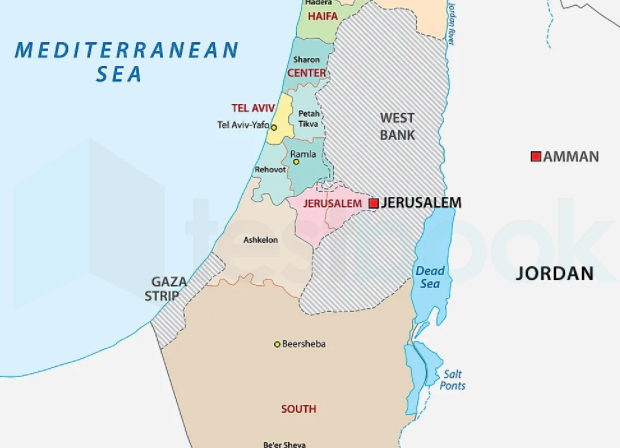
  • The key factor is the shifting of pressure belts, which changes the dominant wind patterns and bring moist air into the region.


Additional Information

  • Mediterranean climate occurs around the Mediterranean sea, along the west coast of continents in subtropical latitudes between 30° - 40° latitudes e.g. - Central California, Central Chile, along the coast in south eastern and south-western Australia.
  • These areas come under the influence of sub-tropical high in summer and westerly wind in winter.
  • Hence, the climate is characterised by hot, dry summer and mild, rainy winter.
  • The monthly average temperature in summer is around 25°C and in winter below 10°C.
  • The annual precipitation ranges between 35 - 90 cm.
48

Where did Netaji Subhas Chandra Bose announce the formation of the Government of Free India in 1943? 

  1. ((a))

    Singapore 

  2. ((b))

    Shanghal

  3. ((c))

    Berlin

  4. ((d))

    Mandalay

Show Answer
Answer: ((a))

Singapore 

The correct answer is Singapore.

Key Points

  • Subhash Chandra Bose  established the Azad Hind Fauj, also known as the Indian National Army (INA), on October 21, 1943
  • On this day, India’s first independent provisional government named Azad Hind Government was announced.
  • Every year on 21 October, the anniversary of the formation of Azad Hind Government is celebrated across the country.

Additional Information

  • Subhas Chandra Bose born on January 23, 1897, in Cuttack, British India.
  • Bose was deeply influenced by the teachings of Swami Vivekananda and Mahatma Gandhi.
  • He joined the Indian National Congress (INC) in the early 1920s and became a prominent leader.
  • He was known for his militant approach towards achieving independence.
  • Subhas Chandra Bose served as the President of the Indian National Congress for two terms, in 1938 and 1939.
  • Bose founded the Forward Bloc in 1939, advocating for complete independence for India and opposing British rule.
  • He gave the slogan "Jai Hind" ("Victory to India")
49

The Andaman group of islands and the Nicobar group of islands are separated by which one of the following latitudes ? 

  1. ((a))

    8° N latitude

  2. ((b))

    10° N latitude

  3. ((c))

    12° N latitude 

  4. ((d))

    13° N latitude

Show Answer
Answer: ((b))

10° N latitude

correct answer is 10ºN latitude

Key Points

  • It is Located between 6° and 14° North Latitude and 92° and 94° East Longitude lie the Andaman and Nicobar Islands, a union territory in India.
  • It consists of two groups of islands. The islands located north of 10° north latitude are known as Andaman while islands located south of 10° north latitude are called Nicobar.

Additional Information

  • ​​​More than 300 islands make up the Andamans. North, Middle, and South Andaman, known collectively as Great Andaman, are the main islands; others include Landfall Island, Interview Island, the Sentinel Islands (where the Sentinelese tribes live), Ritchie’s Archipelago, and Rutland Island.
  • The 10-degree channel which is about 145 km long separates Little Andaman in the south from the Nicobar Islands.
  • The Nicobars consists of 19 islands. Among the most prominent is Car Nicobar in the north; Camorta, Katchall, and Nancowry in the centre of the chain; and Great Nicobarin the south. About 90 miles to the southwest of Great Nicobar lies the northwestern tip of Sumatra, Indonesia.
50

Afro-Asian solidarity as a central element of India's foreign policy was initiated by which of the following Prime Ministers ? 

  1. ((a))

    Narendra Modi

  2. ((b))

    I. K. Gujral

  3. ((c))

    J. L. Nehru

  4. ((d))

    Manmohan Singh

Show Answer
Answer: ((c))

J. L. Nehru

The Correct Answer is J.L. Nehru.

Key Points

  • Afro-Asian Solidarity​
  • The Afro-Asian conference was held in New Delhi from 18 to 24 April 1955.
  • The conference was attended by representatives from 29 countries from Asia and Africa.
  • The conference was aimed at promoting cooperation and solidarity among the countries of Asia and Africa.
  • It also discussed a range of issues, including colonialism, racism, and economic development.
  • The conference was a major milestone in the history of the Non-Aligned Movement.
  • It helped to raise the profile of the movement and to promote its goals of peace, cooperation, and development.

​​ 

Additional Information

  • ​Jawaharlal Nehru is the architect of India’s foreign policy.
  • He initiated the Solidarity of the developing countries of the South.
  • He was one of the founding members of the Non-Align movement.
  • NAM members choose not to align with any superpower countries and to create an alliance of their own.
51

The Prime Minister's National Relief Fund is operated by which one of the following bodies? 

  1. ((a))

    The Prime Minister's Office (PMO)

  2. ((b))

    The National Disaster Management Authority

  3. ((c))

    The Ministry of Finance

  4. ((d))

    The National Development Council (NDC)

Show Answer
Answer: ((a))

The Prime Minister's Office (PMO)

correct answer is The Prime Minister's Office (PMO)

Key Points

  • PMNRF has not been constituted by the Parliament. The fund is recognized as a Trust under the Income Tax Act and the same is managed by Prime Minister or multiple delegates for national causes.
  • PMNRF operates from the Prime Minister’s Office, South Block, New Delhi-110011 and does not pays any license fee.

Additional Information

  • In pursuance of an appeal by the then Prime Minister, Pt. Jawaharlal Nehru in January, 1948, the Prime Minister’s National Relief Fund (PMNRF) was established.
  • The resources of the PMNRF are now utilized primarily to render immediate relief to families of those killed in natural calamities like floods, cyclones and earthquakes, etc. and to the victims of the major accidents and riots. Assistance from PMNRF is also rendered, to partially defray the expenses for medical treatment like heart surgeries, kidney transplantation, cancer treatment and acid attack etc
  • . The fund consists entirely of public contributions and does not get any budgetary support. The corpus of the fund is invested in various forms with scheduled commercial banks and other agencies.
  • PMNRF is exempt under Income Tax Act, 1961 under Section 10 and 139 for return purposes. Contributions towards PMNRF are notified for 100% deduction from taxable income under section 80(G) of the Income Tax Act, 1961. Prime Minister is the Chairman of PMNRF and is assisted by Officers/ Staff on honorary basis.
52

Which one of the following countries shares the longest land frontier with India ? 

  1. ((a))

    Myanmar

  2. ((b))

    Nepal

  3. ((c))

    Pakistan

  4. ((d))

    Bangladesh

Show Answer
Answer: ((d))

Bangladesh

The Correct is Bangladesh.

Key Points

  • India has 15,106.7 Km of land border and a coastline of 7,516.6 Km including island territories.
  • ​Border Line share between India and Bangladesh is 4096.7 Km. It is the fifth-longest land border in the world. India and Bangladesh share one of the longest borders in the world and it covers an area of 1,43,998 sq km along with a coastline of 580 km.
  • The India-Bangladesh border covers 4096 km, The boundary passes through West Bengal, Assam, Meghalaya, Tripura, and Mizoram.​

Additional Information 

Neighbouring CountryBoder Name And LengthThe Indian State/UTs which share Border
AfghanistanDurand Line (106 Km)Ladakh (PoK)
Bhutan699 KmWest Bengal, Sikkim, Arunachal Pradesh & Assam
ChinaMcMahon Line(3488 Km)Ladakh, Himachal Pradesh, Uttarakhand, Sikkim and Arunachal Pradesh
Myanmar1643 KmArunachal Pradesh, Nagaland, Mizoram and Manipur
Nepal1751 KmBihar, Uttarakhand, UP, Sikkim and West Bengal
PakistanRadcliffe Line(3323 Km)Jammu and Kashmir, Ladakh, Punjab, Rajasthan and Gujarat
Sri Lanka388 KmIt is separated from India by the Gulf of Mannar
MaldivesIt lies in the southwest part of the Indian Ocean below the Lakshadweep Island.
53

Which of the following is the highest peak of South India ?

  1. ((a))

    Anamudi

  2. ((b))

    Doda Betta

  3. ((c))

    Guru Shikhar 

  4. ((d))

    Mahendragiri

Show Answer
Answer: ((a))

Anamudi

The correct answer is Anamudi.

Key Points

  • Anamudi, situated in the Western Ghats, stands as the tallest peak in South India, boasting an elevation of 8,842 feet (2,695 meters).
  • It is the highest point in India outside the Himalayan Mountain Ranges.
  • Anamudi is a tall mountain found in Kerala's Eravikulam National Park.
  • Anamudi, together with the Eravikulam Park, is home to one of the largest surviving populations of Asian elephants, Gaurs and the Nilgiri Tahrs.

Additional Information

  • Doda Betta
  • Doddabetta is the highest mountain in the Nilgiri Mountains at 2,637 meters (8,652 feet).
  • There is a reserved forest area around the peak. It is 9 km from Ooty, on the Ooty-Kotagiri Road in the Nilgiris District of Tamil Nadu, and form part of Western Ghats.
  • Guru Shikhar
  • Guru Shikhar, located in the Aravalli Range of Rajasthan.
  • It stands as the highest point in the Aravalli Range, reaching an elevation of 1,722 meters (5,650 feet).
  • Mahendragiri
  • Mahendragiri, situated in the Gajapati district of Odisha, India.
  • Mahendragiri stands tall at an impressive 1,501 meters (4,925 feet).
54

Between which two mountain ranges is the Valley of Kashmir situated? 

  1. ((a))

    Ladakh and Zaskar

  2. ((b))

    Great Himalayas and Pir Panjal

  3. ((c))

    Great Himalayas and Zanskar

  4. ((d))

    Karakoram and Ladakh

Show Answer
Answer: ((b))

Great Himalayas and Pir Panjal

The Correct Answer is Great Himalayas and Pir Panjal.

Key Points

  • Valley of Kashmir​
  • The valley of Kashmir lies between the Pir Panjal range and the Western end of the Great Himalayan ranges.
  • This region comprises of Anantnag, Budgam, Bandipora, Kulgam, Shopian, Pulwama, Srinagar, Ganderbal, Baramulla and Kupwara districts of the UT.
  • Kashmir has a continental type of climate.
  • In summers, the climate is sub-tropical but in winters, it is Arctic type with long extreme winters and short summers.

Additional Information

  • Himalayas​
  • The Himalayas are one of the most complex mountain systems in the world. It forms a barrier between the Tibetan plateau and the Indian subcontinent.
  • The mountain Himalayas includes the highest mountain peaks in the world. The ranges of the Himalayas are separated by deep valleys. Thus they create a highly dissected topography.
  • These mountain ranges run in a west-east direction from the Indus to the Brahmaputra.
  • The altitudinal variations are greater in the eastern half than those in the western half.
  • Spreading over Kashmir and northern Pakistan, the western Himalayan system splits into three distinct ranges, which are, from south to north, the Pir Panjal Range, the Zaskar Range, and the Ladakh Range. Further north is the Karakoram Range, which is a separate system adjoining the Himalayas.
  • The Himalayas consist of three parallel ranges in their longitudinal extent. A number of valleys lie between these ranges. The northernmost range is known as the Great or Inner Himalayas or the ‘Himadri’. It is the most continuous range consisting of the loftiest peaks with an average height of 6,000 metres.
  • The range lying to the south of the Himadri forms the most rugged mountain system and is known as Himachal or lesser Himalaya. The ranges are mainly composed of highly compressed and altered rocks. The altitude varies between 3,700 and 4,500 metres and the average width is of 50 Km.
  • While the Pir Panjal range forms the longest and the most important range, the Dhaula Dhar and the Mahabharat ranges are also prominent ones.

This range consists of the famous valley of Kashmir, the Kangra and the Kullu Valley in Himachal Pradesh. This region is well known for its hill stations.


55

Arrange the following Indian States in descending order of their geographical areas :

I. Rajasthan

II. Tamil Nadu

III. Maharashtra

IV. Karnataka

  1. ((a))

    I, II, III, IV

  2. ((b))

    III, I, IV, II

  3. ((c))

    I, III, IV, II

  4. ((d))

    III, IV, I, II

Show Answer
Answer: ((c))

I, III, IV, II

The Correct Answer is I, III, IV, II.

Key Points

  • Indian States
  • Areawise, Rajasthan is the largest state of India while population-wise Uttar Pradesh is the largest state of India.
  • Rajasthan is followed by Madhya Pradesh and Maharashtra at second and third positions respectively.
  • The list of states in accordance to their area is as follows​
StateArea (sq km)
Rajasthan342.239
Madhya Pradesh308.252
Maharashtra307.713
UP240.928
Gujarat196,024
Karnataka191.791
Andra Pradesh162.968
Odisha155.707
Chattishgarh135.912
Tamil Nadu130.060
Telangana112.077
Bihar94.136
56

Which of the following islands of India has volcanic origin?

  1. ((a))

    Barren

  2. ((b))

    Car Nicobar

  3. ((c))

    Little Nicobar

  4. ((d))

    North Andaman 

Show Answer
Answer: ((a))

Barren

The correct answer is Barren.

Key Points

  • Barren Island, one of the most easterly of the Andaman Islands, is the only confirmed active volcano in India.
  • The island along with the rest of the Andamans is the A&N Islands and lies some 135 km northeast of the territory's Capital, Port Blair.
  • This Volcano erupted First time in 1787 AD. Since then, the volcano has erupted more than ten times, with the most recent one being in 2022.
  • Famous Scuba diving destination Havelock IslandNarcondam, India's easternmost island, is a small volcanic island located in the northern Andaman Sea is located near it.
  • The island is a Protected area under Barren Island Wild Life Sanctuary.
  • Barren Island belongs to the North and Middle Andaman administrative district, part of the Indian union territory of Andaman and Nicobar Islands.

Additional Information

  • Narcondam, India's easternmost island, is a small other volcanic island located in the northern Andaman Sea.
  • It was classified as a Dormant volcano by the Geological Survey of India.
  • Narcondam Island's volcanic mountain, at 710 meters is the Second tallest point in the Andaman and Nicobar Islands.
  • The Andaman and Nicobar Islands is a union territory of India.
  • It consists of 572 islands grouped into two island groups, the Northern Andaman Islands and the southern Nicobar Islands.
  • Andaman Territory is divided into North Andaman Island, Little Andaman, Middle Andaman Island, and South Andaman Island.
  • Nicobar Island divided into Car Nicobar, Great Nicobar, Little Nicobar.
  • The Ten Degree Channel is a channel that separates the Andaman Islands and Nicobar Islands from each other in the Bay of Bengal.
  • ]There are about 9 national parks, 96 wildlife sanctuaries, and one Biosphere Reserve in the islands.
  • The Aborigines of A&N Island consist of the following Four tribes: Great Andamanese, Onges, Jarwas, Sentinalese Shompens, and Nicobarese.
57

The Decentralization System was recommended by:

  1. ((a))

    C. Rajagopalachari

  2. ((b))

    J. B. Kripalani

  3. ((c))

    Balwant Rai Mehta

  4. ((d))

    Ashok Mehta

Show Answer
Answer: ((c))

Balwant Rai Mehta

The Correct Answer is Balwant Rai Mehta.

Key Points

  • Decentralization System
  • Democratic decentralization is the process of devolving the functions and resources of the state from the center to the elected representatives at the lower levels to facilitate greater direct participation of citizens in governance.
  • 73rd (1992)and 74th (1992)Constitutional Amendments, by constitutionally establishing Panchayati Raj Institutions (PRIs) in India, mandated the establishment of panchayats and municipalities as elected local governments.
  • Local bodies need to be seen as institutions of self-governance as ‘delivery mechanisms’ to fulfill Gandhi’s vision of Gram Swaraj.
  • The Decentralization System was recommended by the Balwant Rai Mehta Committee in India.
  • The committee recommended a Three-tier Panchayati Raj system consisting of **Gram Panchayat, Panchayat Samiti, and Zila Parishad.**​

Additional Information

CommitteeSpecial Work
B.L.Mehat(1956-57)Three- Tier (Gram, Panchayat, Zila).
Ashok Mehta(1977)Two- Tier(Zila, Mnadal Panchayat).
G.V.K. Rao(1985)Rural Development & Poverty Redressal Program.
L.M. Singhvi(1986)Empowerment of Panchayati Raj Institution.
P.K. Thungan(1988)Constitutional Recognition of Local Bodies.
58

Mahalanobis Plan Model adopted in India in the mid-fifties aimed at : 

  1. ((a))

    building a strong defence industry base

  2. ((b))

    setting up heavy industries which were capital intensive

  3. ((c))

    curbing inflation in the economy 

  4. ((d))

    removing unemployment within a short period

Show Answer
Answer: ((b))

setting up heavy industries which were capital intensive

The correct answer is Setting up heavy industries which were capital intensive

Key Points

  • The Mahalanobis Plan Model was adopted in India in the mid-fifties (1956-61) to establish capital-intensive heavy industries.
  • This strategy laid the blueprint for India's Second Five Year Plan, which paved the way for industrialization.
  • The Industrial Policy Resolution of 1956 aimed to promote industries in the underdeveloped regions of the country**.**​​​

Additional Information

  • First 5 Year Plan:
  • It was initiated during the period from 1951 to 1956, under the guidance of Jawaharlal Nehru.
  • It was derived from the Harrod-Domar model but with several adjustments tailored to specific circumstances.
  • Its primary emphasis lay in the advancement of agricultural sectors within the nation.
  • Third Five-Year Plan:
  • It was implemented during the period spanning 1961 to 1966, under the guidance of Jawaharlal Nehru.
  • This plan is also called ‘Gadgil Yojna’, after the Deputy Chairman of Planning Commission D.R. Gadgil.
  • While implementing this plan, India found itself embroiled in two conflicts:
  • The 1962 Sino-Indian War
  • The 1965 Indo-Pakistani War
59

Dockyard has been unearthed from which archaeological site ? 

  1. ((a))

    Mohenjo-daro

  2. ((b))

    Harappa

  3. ((c))

    Lothal

  4. ((d))

    Daimabad

Show Answer
Answer: ((c))

Lothal

The Correct Answer is Lothal.

In News Recently, the Prime Minister has reviewed the construction of the National Maritime Heritage Complex site at Gujarat's Lothal.

National Maritime Heritage Complex 

  • Project began in March 2022, the cost of the project is Rs 35,000 crore.
  • It is a Centre for learning and understanding India's maritime history.
  • Several innovative features such as Lothal mini-recreation, which will recreate Harappan architecture and lifesyles through immersive technology.
  • Theme parks - Memorial theme park, Meritime and Navy theme park, Climate theme park, and Adventure and Amusement theme park.
  • Aimed to display India's diverse maritime heritage and create Lothal a world class international tourist destination.

 Additional Information Important Sites of Indus Valley Civilization - 

Important SitesState/country
AlamgirpurUttarpradesh
BanawaliHaryana
Balathal and KalibanganRajasthan
DholaviraGujrat
Mohenjo-daroPakistan
RoparPunja
60

Which metal played an important role in second urbanization? 

  1. ((a))

    Gold

  2. ((b))

    Silver

  3. ((c))

    Copper

  4. ((d))

    Iron

Show Answer
Answer: ((d))

Iron

The correct answer is Iron

Key Points

  • Iron was crucial in the Second Urbanization, beginning in the 6th century BC.
  • During this period (6th to 3rd century BC), significant towns emerged in the Gangetic basin.
  • The widespread adoption of iron resulted in an increased agricultural surplus.
  • Utilization of iron tools and weapons contributed to the formation of expansive territorial states.
  • This era saw a significant rise in urbanisation facilitated by the advancements in iron technology.

Additional Information

  • Silver was first extracted and used during the Indus Valley Civilization.
  • Copper was extensively used during the Integration Era of the Indus Civilization, particularly in the Harappan Phase (ca. 2600-1600 BC).
  • The Harappan civilization sourced gold from Karnataka in South India.
61

In India, a cultivable land which is left uncultivated for more than a year but less than five years is labeled as 

  1. ((a))

    cultivable wasteland

  2. ((b))

    current fallow

  3. ((c))

    fallow other than current fallow

  4. ((d))

    barren and wasteland

Show Answer
Answer: ((c))

fallow other than current fallow

The Correct Answer is fallow other than current fallow.

Key Points

  • Fallow other than Current Fallow: This is also a cultivable land that is left uncultivated for more than a year but less than five years.
  • If the land is left uncultivated for more than five years, it would be categorized as a culturable wasteland.


Additional Information

Land-use categories in India as maintained in the Land Revenue Records:

  1. Culturable Waste-Land: Land which is left fallow (uncultivated) for more than five years is included in this category.
  2. Current Fallow: This is the land that is left without cultivation for one or less than one agricultural year.
  • Fallowing is a cultural practice adopted for giving land rest. The land recoups the lost fertility through natural processes.
  1. Cultivable Wasteland
  • Land which is left fallow (uncultivated) for more than five years is included in this category.
  • It can be brought under cultivation after improving it through reclamation practices.
  1. Barren and Wastelands: The land which may be classified as a wasteland such as barren hilly terrains, desert lands, ravines, etc. normally cannot be brought under cultivation with the available technology
  2. Land put to Non-agricultural Uses:
  • ​Land under settlements (rural and urban), infrastructure (roads, canals, etc.), industries, shops, etc. are included in this category.
  • An expansion in secondary and tertiary activities would lead to an increase in this category of land use.
  1. Area under Permanent Pastures and Grazing Lands:
  • Most of this type of land is owned by the village ‘Panchayat’ or the Government.
  • Only a small proportion of this land is privately owned.
  • The land owned by the village panchayat comes under Common Property Resources.
  1. Area under Miscellaneous Tree Crops and Groves(Not included is Net sown Area):
  • The land under orchards and fruit trees are included in this category.
  • Much of this land is privately owned.
  1. Net Area Sown:
  • The physical extent of land on which crops are sown and harvested is known as the net sown area.
62

Consider the following statements in respect of Fundamental Rights and Directive Principles:

  1. The constitution gives the Fundamental Rights to the people, but Directive Principles are meant for the Government.
  2. The fundamental rights are justiciable, but Directive Principles are not because they cannot be enforced by the court.

Which of the statements given above is/are correct ?

  1. ((a))

    1 only

  2. ((b))

    2 only

  3. ((c))

    Both 1 and 2

  4. ((d))

    Neither 1 nor 2

Show Answer
Answer: ((c))

Both 1 and 2

The Correct Answer is Both 1 and 2.

Key Points

  • The Constitution of India has 6 Fundamental Rights and 11 Fundamental Duties
  • ​Fundamental Rights
  • Fundamental rights are the basic human rights enshrined in the Constitution of India which are guaranteed to all citizens.
  • They are applied without discrimination on the basis of race, religion, gender, etc.
  • Significantly, fundamental rights are enforceable by the courts, subject to certain conditions.
  • There are six fundamental rights of Indian Constitution along with the constitutional articles related to them are mentioned below:
  • Right to Equality (Article 14-18)
  • Right to Freedom (Article 19-22)
  • Right against Exploitation (Article 23-24)
  • Right to Freedom of Religion (Article 25-28)
  • Cultural and Educational Rights (Article 29-30)
  • Right to Constitutional Remedies (Article 32)
  • Fundamental Duties​
  • 42nd Amendment Act of 1976 added 10 Fundamental Duties to the Indian Constitution.
  • 86th Amendment Act 2002 later added 11th Fundamental Duty to the list.
  • Swaran Singh Committee in 1976 recommended Fundamental Duties, the necessity of which was felt during the internal emergency of 1975-77.
  • The Fundamental Duties are dealt with Article 51A under Part-IV A of the Indian Constitution.
63

How many Zonal Councils were set up vide Part-III of the States Re-organization Act, 1956 ?

  1. ((a))

    Eight

  2. ((b))

    Seven

  3. ((c))

    Six

  4. ((d))

    Five

Show Answer
Answer: ((d))

Five

The Correct Answer is Five.

Key Points

  • Zonal Councils are advisory councils and are made up of the states of India that have been grouped into five zones to foster cooperation among them. These were set up vide Part-III of the States Re-organisation Act, 1956.

Additional Information

  • Zonal councils are Statuary bodies, not constitutional ones.
  • The Union Home Minister is the common chairman of five zonal councils. Each chief minister acts as a vice chairman of the council by rotation, holding office for a period of one year at a time.
  • While forming these zones, several factors have been taken into account which include: 
  • Natural division
  • River systems
  • Means of communications
  • Cultural and linguistic affinity.
  • Economic development, security and law and order.

At present India has six zonal councils, they a

Zonal CouncilsHeadquarters
Northern Zonal CouncilNew Delhi
Southern Zonal CouncilChennai
Central Zonal CouncilPrayagraj
Eastern Zonal CouncilKolkata
Western Zonal CouncilMumbai
North Eastern Zonal CouncilShilong
64

The total number of members in the Union Council of Ministers in India shall not exceed 

  1. ((a))

    10% of the total number of members of the Parliament

  2. ((b))

    15% of the total number of members of the Parliament

  3. ((c))

    10% of the total number of members of the Lok Sabha

  4. ((d))

    15% of the total number of members of the Lok Sabha

Show Answer
Answer: ((d))

15% of the total number of members of the Lok Sabha

The correct answer is 15% of the total number of members of the Lok Sabha.

Key Points

  • ​The Union Council of  Ministers is composed of senior members of the Union Cabinet of Ministers.
  • The Prime Minister serves as its Chairman.
  • The Council of Ministers is formed from the members of the political party or coalition having a majority in the Lok Sabha.
  • Article 75 (1) states that the Prime Minister shall be appointed by the President and the other Minister shall be appointed by President on the advice of the Prime Minister.
  • The 91st Constitutional Amendment Act 2003 added the provision that the total number of the council of ministers, including the Prime Minister, cannot exceed 15% of the total strength of the Lok Sabha.
  • Under Article 75 (3) the Council Of Ministers is collectively responsible to the Lok Sabha. It means that once a collective decision is taken by the cabinet it becomes a collective decision of the whole Council and for which the entire Council Of Ministers shall be held responsible.

Additional Information

  • The current strength of the 17th Lok Sabha is 543 members and hence the Council of Ministers cannot be more than 81 i.e 15 % of the total strength of Lok Sabha.
  • In 2024 as on 28-02-24 in the Council of Ministers, there are 27 Cabinet Ministers, 3 Ministers of State (Independent Charge), and 42 Ministers of State.
65

Which one of the following is the most noticeable characteristic of the Mediterranean climate ? 

  1. ((a))

    Limited geographical extent

  2. ((b))

    Dry summer

  3. ((c))

    Dry winter

  4. ((d))

    Moderate temperature

Show Answer
Answer: ((b))

Dry summer

The Correct Answer is Dry summer.

Key Points

  • Mediterranean Climate​
  • Mediterranean climate occurs around the Mediterranean sea, along the west coast of continents in subtropical latitudes between 30° - 40° latitudes
  • Example-Central California, Central Chile, along the coast in southeastern and south-western Australia.
  • Mediterranean climate- characterized by hot, dry summers and cool, wet winters.
  • It is located between about 30° and 45° latitude north and south of the Equator and on the western sides of the continents.

​​                

Additional Information

  • Monsoon climate-
  • Monsoon climate- is characterized by a dramatic seasonal change in direction of the prevailing winds of a region which brings a marked change in rainfall.
  • Tropical Wet or Tropical rainy -
  • Tropical Wet or Tropical rainy climate is only found along the equator, usually within 25 degrees of the equator.
  • Large areas of Tropical Wet are found in Brazil, the Democratic Republic of the Congo, Indonesia, and the Philippines.
  • Most of Western Europe has an Oceanic climate, in the Köppen climate classification, featuring cool to warm summers and cool winters with frequent overcast skies.
  • Southern Europe has a distinctively Mediterranean climate, which features warm to hot, dry summers and cool to mild winters, and frequent sunny skies
66

Jimmy Wales is the founder of 

  1. ((a))

    Wikipedia

  2. ((b))

    Google translate

  3. ((c))

    Machine translators

  4. ((d))

    None of the above

Show Answer
Answer: ((a))

Wikipedia

The correct answer is Wikipedia.

Key Points

  • Wikipedia is a free, online encyclopedia that allows virtually anyone to edit and contribute to articles.
  • It was launched in 2001 by Jimmy Wales and Larry Sanger.
  • Wikipedia is written collaboratively by volunteers around the world. Articles are edited and updated by a community of editors. As of 2024, it has over 6 million registered contributors.
  • Wikipedia is ranked among the top 10 most visited websites worldwide. It is maintained by the Wikimedia Foundation, a non-profit organization funded primarily through donations.
  • Articles are written from a neutral point of view and cite verifiable sources. However, there have been some criticisms regarding accuracy, bias, and vandalism due to its open-editing model.

 About Jimmy Wales-

  • Jimmy Wales is an American-British internet entrepreneur best known as the co-founder of Wikipedia and the Wikimedia Foundation.
  • He was born in 1966 in Huntsville, Alabama, and studied finance at Auburn University and later obtained a Master's in finance from the University of Alabama.
  • In 1996, Wales co-founded Bomis, an internet portal focusing on entertainment and adult content. The company would provide the initial funding for Wikipedia.
  • In 2001  Jimmy Wales and Larry Sanger founded Wikipedia as an offshoot of Nupedia, an earlier encyclopedia project. It was launched on January 15, 2001.
  • Wales served as Wikipedia's CEO and became the Wikimedia Foundation's board of trustees chairman when it was established in 2003.

Additional Information Google Translate-

  • Google Translate is a free machine translation service developed by Google to translate text, websites, speech, and images between over 100 languages
  • It was launched in  April 2006 and uses state-of-the-art neural machine translation technology to provide fast and accurate translations.
  • As of 2024, Google Translate supports over 5000 language pairs covering 109 languages.
  • The most translated languages are English, Spanish, French, Indonesian and German.

Machine Translators-

  • Machine translators refer to computer programs that can automatically translate text or speech from one language to another.
  • The first machine translators appeared in the 1950s and used dictionaries for word-by-word translation. This resulted in poor-quality output.

67

Which one of the following is the motto of NCC ? 

  1. ((a))

    Unity and Discipline

  2. ((b))

    Unity and Integrity

  3. ((c))

    Unity and Command 

  4. ((d))

    Unity and Service

Show Answer
Answer: ((a))

Unity and Discipline

The Correct Answer is Unity and Discipline.

Key Points

  • National Cadet Cops​
  • The NCC was formed in 1948 (on the recommendation of H. N. Kunzru Committee-1946) and has its roots in British-era uniformed youth entities like University Corps or University Officer Training Corps.
  • The need for having a motto for the Corps was discussed in the 11th Central Advisory Committee (CAC) meeting held on 11 Aug 1978. The mottos suggested were “Duty and Discipline”; “Duty, Unity and Discipline”; “Duty and Unity”; “Unity and Discipline”.
  • The final decision for the selection of “Unity and Discipline” as the motto for the NCC was taken in the 12th CAC meeting held on 12 Oct 1980. Hence, Option 1 is correct.
  • Currently, it has a strength of around 14 lakh cadets from Army, Navy, and Air Force wings.
  • The NCC falls under the purview of the Ministry of Defence and is headed by a Director-General of three-star military rank.
  • It enrolls cadets at the high school and college level and also awards certificates on completion of various phases.
  • The NCC cadets receive basic military training at various levels and also have academic curriculum basics related to the Armed forces and their functioning.
  • Various training camps, adventure activities, and military training camps are important aspects of NCC training.
  • Significance: NCC cadets have played an important role over the years in relief efforts during various emergencies.
  • During the ongoing pandemic, over 60,000 NCC cadets have been deployed for voluntary relief work in coordination with district and state authorities across the country

Welcome to National Service Scheme (NSS) From ANITS

68

In India, May 21 is observed as : 

  1. ((a))

    NRI Day

  2. ((b))

    National Youth Day 

  3. ((c))

    National Technology Day

  4. ((d))

    National Anti-Terrorism Day

Show Answer
Answer: ((d))

National Anti-Terrorism Day

The correct answer is National Anti-Terrorism Day  

Key PointsNational Youth Day (12Jan) - Birth anniversary of Swami Vivekananda. National Youth Day 2024 theme is “Arise, Awake, and Realise the Power You Hold.”

National Technology Day(11May) -  2024 theme  “From Schools to Startups: Igniting Young Minds to Innovate."

NRI Day (9Jan) - Theme "Diaspora: Reliable Partners for India's Progress in Amrit Kaal”

69

The World Economic Outlook Report' is released by :

  1. ((a))

    World Bank

  2. ((b))

    International Monetary Fund

  3. ((c))

    Asian Development Bank

  4. ((d))

    International Labour Organization

Show Answer
Answer: ((b))

International Monetary Fund

The correct answer is - International Monetary Fund

  • Created after Bretton Woods Conference(july 1944)
  • H.Q-Washington D.C USA
  • Current M.D-Kristalina Georgieva
  • India  join -27Dec1945 

Additional Information

World Bank 

Release Report 

  • Ease of doing business
  • Human capital Index
  • World Development Report


    Asian Development Bank  (1966)

**H.Q-**Manilla ,Philippines

  - 68 members (49 regional members + 19 non-regional member)

International Labour Organization

Established as a result of the Treaty of Versailles (1919)

70

In which year Regulating Act was passed? 

  1. ((a))

    1753

  2. ((b))

    1757

  3. ((c))

    1764

  4. ((d))

    1773

Show Answer
Answer: ((d))

1773

The correct answer is 1773

<br>

Key Points

In 1773, the Regulating Act was passed.

  • The Regulating Act of 1773 was a significant piece of legislation that marked the beginning of British parliamentary intervention in the administration of British India.
  • The primary objective of the Regulating Act was to address the administrative and financial issues that had arisen in the East India Company's rule over India.
  • The Act established the office of the Governor-General of Bengal.
  • The Governor-General appointed under the Regulating Act had significant powers, including the authority to override decisions made by the Council. However, this structure of governance led to conflicts and challenges.
  • The act aimed to bring transparency to the financial transactions of the East Indian Company.
  • The Governor-General and the council were required to submit detailed accounts of their revenues and expenses.

Additional Information

  • ​First Governor of Bengal- Lord Clive
  • First Governor General of Bengal- Warren Hastings
  • First Viceroy of India- Lord Canning
  • First Governor General of Independent India- Lord Mountbatten
71

Whom had Guru Nanak appointed his successor? 

  1. ((a))

    Guru Ramdas

  2. ((b))

    Guru Amardas

  3. ((c))

    Guru Har Ral

  4. ((d))

    Guru Angad

Show Answer
Answer: ((d))

Guru Angad

The Correct Answer is Guru Angad

Key Points

  • Guru Nanak appointed Guru Angad( Also Called Bhai Lehna) as his successor.
  • He was the founder of Sikhism and the first of the ten Sikh Gurus.
  • He lived during the 15th and 16th centuries and played a crucial role in spreading the teachings of Sikhism.
  • Before Guru Nanak passed away in 1539, he appointed Guru Angad as his successor.
  • Guru Angad Dev Ji became the Second Guru of the Sikhs and he is credited for formalising the Gurmukhi Script, which became the writing system for the Punjabi language.
  • He also wrote the Guru Granth script(The  Punjabi Holy Scripture)

Additional Information Guru Amardas

  • Guru Amardas was the third Guru of the Sikhs.
  • He was born on May 5, 1479, and became the Guru in 1552 after the passing of Guru Angad.

Guru Ramdas

  • Guru Ramdas was the fourth of the ten Sikh Gurus.
  • He was born on September 24, 1534, and became the Guru in 1574 after the passing of Guru Amar Das.
72

World Earth Day is celebrated on: 

  1. ((a))

    22 April

  2. ((b))

    22 March

  3. ((c))

    07 April

  4. ((d))

    07 March

Show Answer
Answer: ((a))

22 April

The Correct Answer is April 22.

Key Points​Earth Day is an annual celebration that honors the achievements of the environmental movement and raises awareness of the need to protect Earth's natural resources for future generations.

The first Earth Day was held April 22, 1970.

Theme (2024): "Planet vs. Plastics"

  • Earth Day aims
  • ​To build the world’s largest environmental movement to drive transformative change for people and the planet.
  • The movement’s mission is “to diversify, educate and activate the environmental movement worldwide.”

Additional Information

  • International Women's Day- March 8
  • world Sparrow Day- 20 March
  • World Tuberculosis Day - 24 March
  • World Health Day: 7 April
  • B.R. Ambedkar Remembrance Day: 14 April
  • National Panchayati Raj Day - 24 April
  • World Environment Day (WED): 5th June
  • National Mathematics Day - 22nd  December
  • World Hindi Day - 10th January
73

'Alfalfa' is : 

  1. ((a))

    a kind of grass 

  2. ((b))

    a tribe

  3. ((c))

    an animal

  4. ((d))

    a town

Show Answer
Answer: ((a))

a kind of grass 

The Correct Answer is A kind of grass.

Key Points

  • Alfalfa​
  • leguminous plant of the pea family (Fabaceae) widely grown primarily for hay, pasturage, and silage.
  • Alfalfa is known for its tolerance to drought, heat, and cold and for the remarkable productivity and quality of its herbage.
  • The plant is also valued in soil improvement and is grown as a cover crop and as green manure.
  • Alfalfa has a remarkable capacity to rapidly regenerate new stems and leaves following cutting.
  • As many as 13 crops of hay can be harvested in a single growing season because of this abundant regrowth.
  • Alfalfa is beset by the hazards of climate, diseases, and insects.
  • Among the more serious of these are winterkill, bacterial wilt disease, alfalfa weevil, lugus bugs, grasshoppers, spotted aphids, and leafhoppers.
  • In humid areas and in irrigated areas, alfalfa stands of three or more years of age have often become badly thinned by infestations of the soil-borne bacterial wilt organism Phytomonas insidiosum.

​​                          

Alfalfa - Medicago Sativa Properties ...

74

Which State of India has borders with three countries namely Nepal, Bhutan and China? 

  1. ((a))

    Arunachal Pradesh

  2. ((b))

    Meghalaya

  3. ((c))

    West Bengal

  4. ((d))

    Sikkim

Show Answer
Answer: ((d))

Sikkim

The correct answer is Sikkim.

Key Points

  • The border of Sikkim state of India meets Nepal, Bhutan, and China.
  • Indian states that share borders with Nepal are Uttarakhand, Uttar Pradesh, Sikkim, West Bengal, and Bihar.
  • Sikkim is located in the northeastern part of the country and is one of the smallest states of India.
  • To the north and northeast, it is bounded by the Tibet Autonomous Region of China.
  • To the southeast, it is bounded by Bhutan and To the west, it is bounded by Nepal.

75

Which Amendment of the constitution relates to anti-defection Law ?

  1. ((a))

    51st

  2. ((b))

    52nd

  3. ((c))

    53rd

  4. ((d))

    54th

Show Answer
Answer: ((b))

52nd

The Correct Answer is 52nd.

Key Points

  • Anti-defection Law​
  • The anti-defection law deals with situations of defection in Parliament or state legislatures by:
  • (a) members of a political party,
  • (b) independent members,
  • (c) nominated members.
  • The term defection indicates revolt, dissent, and rebellion by a person or a party.
  • Generally defection refers to leaving an association to join another.
  • In political scenario it is a situation when a member of a political party leaves his party and joins hands with other parties.
  • The main aim of this schedule was to prevent the political defections and to strengthen democracy by bringing stability in politics and make members of parliament more responsible and loyal to their parties.
  • Political defection means a member of a political party changes his party voluntarily or on other grounds.
  • It also provides procedure by which a legislator may be disqualified on the ground of defection by the presiding officer of the legislature.
  • This Schedule is applicable on both Central and State legislature.​​​​

Additional Informatio

  • ​Amendment in the Constitution of India:​
  • Article 368 in Part XX deals with the powers of Parliament to amend the Constitution and its procedure.
  • Parliament cannot amend those provisions which form the 'basic structure of the Constitution'. (Kesavananda Bharti Case)
  • The amendment of the Constitution can be initiated by the introduction of a bill in either house of the Parliament. (does not in the legislature)
  • The bill can be introduced either by a minister or by a private member. (does not require prior permission of the President)
  • It must be passed in each house by a special majority. (the majority of the total membership of the house and a majority of 2/3rd of the members of the house present and voting)
  • Each house must pass the bill separately. (no provision for joint sittings)
  • If the bill is for amending the federal structure of the Constitution, then it must be ratified by the legislature of half of the states by a simple majority. (the majority of the members of the house present and voting)
  • President must give his assent to the bill. (neither withhold his assent nor return the bill)
  • After the assent of the President, the bill becomes an Act.
76

In which sea maximum salanity is obtained?

  1. ((a))

    Dead Sea

  2. ((b))

    Red Sea

  3. ((c))

    Indian Ocean 

  4. ((d))

    Arab Sea

Show Answer
Answer: ((a))

Dead Sea

The Correct Answer is Dead Sea.

Key Points

  • Dead Sea
  • The dead sea is located in Israel.
  • It is known as the most saline water body on the earth.
  • Because of the large amount of salt present in the water, its density is very high.
  • It is said that humans don't sink in the dead sea, they will keep floating.
  • It is called the dead sea as no living organism can live in its highly saline water.
  • Dead Sea, also called Salt Sea, is a landlocked salt lake located between Israel and Jordan in southwestern Asia.
  • The Dead Sea receives nearly all its water from the Jordan River.
  • The main tributary of Dead sea is Jordan River.
  • It is situated between the hills of Judaea to the west and the Transjordanian plateaus to the east.
  • The southwestern side of the lake is a tall Halite mineral formation called Mount Sodom.

​​                     

Important Points

  • Salinity is the amount of salt in grams present in 1000 grams of water.

  • The average salinity of the oceans is 35 parts per thousand.

  • The salinity of the dead sea is around 340 grams per litre of water

77

Who is called the 'Father of Indian Archaeology' ?

  1. ((a))

    Alexander Cunningham

  2. ((b))

    John Marshall

  3. ((c))

    Mortimer Wheeler

  4. ((d))

    James Prinsep

Show Answer
Answer: ((a))

Alexander Cunningham

The Correct Answer is Alexander Cunningham.

Key Points

  • ​​Sir Alexander Cunningham ( 1814 - 1893) British army officer and archaeologist who excavated many sites in India, including Sarnath(1837) and Sanchi(1850), and served as the first director of the Indian Archaeological Survey

Additional Information

  • Sir John Hubert Marshall
  • Sir John Hubert Marshall (1876-1958) was the Director-General of the Archaeological Survey of India from 1902 to 1928.
  • He was responsible for the excavations that led to the discovery of Harappa and Mohenjo-Daro.
  • Mortimer Wheeler:-
  • In 1944 he was appointed Director-General of the Archaeological Survey of India, through which he oversaw excavations of sites at Harappa, Arikamedu, and Brahmagiri, and implemented reforms to the subcontinent's archaeological establishment.
  • His main contribution involves the use of scientific methods in archaeology and the cartesian coordinate system.
  • James Prinsep
  • James Prinsep is known as the father of Indian epigraphy.
  • James Prinsep deciphered the Brahmi and Kharosthi scripts. Brahmi Script - It is the oldest writing style in ancient India.
78

Which dynasty of Delhi Sultanate ruled for the shortest period? 

  1. ((a))

    Khilji

  2. ((b))

    Tughlaq

  3. ((c))

    Sayyid

  4. ((d))

    Lodi

Show Answer
Answer: ((a))

Khilji

The correct answer is Khilji.

Key Points

DynastyRuledYear
Slave Dynasty1206-129084
Khilji Dynasty1290-132030
Tughlaq Dynasty1320-141494
Sayyid Dynasty1414-145036
Lodhi dynasty1451 to 152675
  • Hence the Khilji Dynasty ruled for the shortest.

Additional Information 

  • Lodhi dynasty from 1451 to 1526 AD (75 Year).
  • Longest duration-Tughlaq Dynasty.
  • Shortest duration-Khilji Dynasty.
79

A 'closed economy' is an economy in which : 

  1. ((a))

    the money supply is fully controlled

  2. ((b))

    deficit financing takes place

  3. ((c))

    only exports take place

  4. ((d))

    neither exports nor imports take place

Show Answer
Answer: ((d))

neither exports nor imports take place

The correct answer is neither exports nor imports take place.

Key Points

  • A closed economy is one that has no trading activity with outside economies.
  • The closed economy is entirely self-sufficient.
  • It means no imports come into the country and no exports leave the country.
  • In other words, A closed economy is one that does not swap their trading with outside.

Additional Information

  • Open Economy
  • An economy in which participants are permitted to buy and sell goods and services with other countries.
  • The GDP of open economies includes exports and imports.
  • Some very open economies try to have few or no trade restrictions. ​
80

Who was the founder of Nalanda University ?

  1. ((a))

    Chandragupta Vikramaditya

  2. ((b))

    Kumargupta

  3. ((c))

    Dharmapal

  4. ((d))

    Pushyagupta

Show Answer
Answer: ((b))

Kumargupta

The correct answer is Kumargupta

Key Points

  • Kumargupta was the founder of Nalanda University in the 5th Century AD.
  • Nalanda University was established in 427 AD in (Bihar) northeastern India, close to Nepal’s southern border it survived until 1197.
  • Nalanda is an ancient centre of higher learning.
  • It was devoted to Buddhist studies and trained students in fine arts, medicine, mathematics, astronomy, politics and the art of war.
  • A great fire wiped out the library of over 9 million manuscripts and at the beginning of the 12th Century, the Muslim invader Bakhtiyar Khalji sacked the university.

Additional Information

  • Chandragupta II, also known as Vikramaditya, is regarded as one of the greatest rulers of the Gupta dynasty. He ruled the Gupta Empire from 380 to 412 C.E.
  • Dharmapala (770–810 CE) was the second emperor of the Pala Empire of Bengal and Bihar.
  • Pushyagupta Vaishya built the Sudarshan Lake and he is Governor of Chandragupta Maurya.
81

The Headquarters of the Southern Naval Command of the Indian Navy is located at which one of the following places?

  1. ((a))

    Karwar

  2. ((b))

    Kochi

  3. ((c))

    Thiruvananthapuram

  4. ((d))

    Chennai

Show Answer
Answer: ((b))

Kochi

The correct answer is Kochi

Key Points 

  • The Headquarters of the Southern Naval Command of the Indian Navy is located at Kochi.
  • The Southern Naval Command is one of the three main formations of the Indian Navy and  its headquarters in Kochi, Kerala.
  • It is commanded by the Flag Officer Commanding-in-Chief. 
  • Vice Admiral V. Srinivas has assumed command as the Flag Officer Commanding-in-Chief of Southern Naval Command.
  • He is 30th Flag Officer Commanding- in-Chief of the Southern Naval Command.

Additional Information

  • The Indian Navy is administered from Naval Headquarters, located at New Delhi.
  • Indian Navy is organised into three Commands, which are:-
  1. Western Naval Command, Mumbai
  2. Southern Naval Command, Kochi
  3. Eastern Naval Command, Visakhapatnam
82

Who formed Bihar Provincial Kisan Sabha ? 

  1. ((a))

    Swami Sahajanand Saraswati 

  2. ((b))

    Ram Sundar Singh

  3. ((c))

    Ganga Sharan Sinha

  4. ((d))

    Ramanand Mishra

Show Answer
Answer: ((a))

Swami Sahajanand Saraswati 

The Correct Answer is Swami Sahajanand Saraswati.

Key Points 

  • Bihar Provincial Kisan Sabha
  • The Kisan Sabha movement was begun in Bihar. In 1929, Sahajanand Saraswati formed Bihar Provincial Kisan Sabha (BPKS).
  • All India Kisan Sabha is a peasant front working for the rights of the farmers and the anti-feudal movement in India.
  • It was established in 1936 at Indian National Congress (INC) Lucknow Session as All India Kisan Congress.
  • Sahajanand Saraswati who was the pioneer of Bihar Kisan Sabha Movement and patron of Bihar Provincial Kisan Sabha (BPKS) was the first President of the All India Kisan Sabha. The secretary of this union was NG Ranga.
  • Aim of BPKS:
  • To abolish the Zamindari system.
  • To reduce land revenue.
  • To institutionalise credit.
  • Most of the congressmen were Zamindar themselves, so even after the success of the 1937 elections, Congress was not as vocal against the Zamindari System. Thus, the All India Kisan Sabha felt betrayed by the INC.
  • Thus, when in 1942 Gandhiji call for Quit India Movement the peasant leaders such as Swami Sahajanand Saraswati appealed to the peasants not to support Gandhi or the INC.
  • In May 1942, CPI took over AIl India Kisan Sabha all across the country.
  • After the division of Communist Party of India in 1964, the front was also divided into two - All India Kisan Sabha (CPI) and All India Kisan Sabha (CPI-M; Akhil Bhartiya Kisan Sabha).

Important Points

Objectives of All Indi a Kisan Sabha

  • All India Kisan Sabha works as the forum representing peasants and agricultural and other rural labourers. The following are the objectives of the All India Kisan Sabha:
  • To abolish landlordism and to distribute the land free of cost to agricultural and other rural labourers.
  • To improve the standard of living of rural masses and to develop agriculture and industry.
  • To end exploitation meted out to the agricultural and other rural labourers.

Additional Information

  • History of Various State Kisan Sabhas​
  • Bihar Provincial Kisan Sabha – 1929 by Sahajanand Saraswati
  • UP Kisan Sabha – 1918 by Gauri Shankar Mishra and Indra Narayan Dwivedi and was supported by Madan Mohan Malaviya.
  • Awadh Kisan Sabha – 1920 by Baba Ramachandra
83

Which one of the following ranges forms the water divide between the Narmada and Tapti rivers?

  1. ((a))

    Satpura

  2. ((b))

    Aravalli

  3. ((c))

    Vindhyas

  4. ((d))

    Kaimur

Show Answer
Answer: ((a))

Satpura

The correct answer is Satpura.

Key Points 

  • The Narmada and the Tapti are major rivers that drain into the Arabian Sea.
  • The Narmada originates in eastern Madhya Pradesh (India) and flows west across the state, through a narrow valley between the Vindhya Range and spurs of the Satpura Range.
  • Satpura ranges form the water divide between the Narmada and Tapti rivers.
  • It flows into the Gulf of Khambhat.

Additional Information 

  • Vindhya Range
  • The Vindhya Range is a complex, discontinuous chain of mountain ridges, hill ranges, highlands, and plateau escarpments in west-central India.
  • Technically, the Vindhyas do not form a single mountain range in the geological sense.
  • Aravalli Range
  • ​The Aravalli Range is a mountain range in Northwestern India, running approximately 692 km in a southwest direction, starting near Delhi, passing through southern Haryana and Rajasthan, and ending in Gujarat.
  • The highest peak is Guru Shikhar at 1,722 meters.
  • Kaimur Range
  • The Kaimur Range has an elevation of 1480 feet.
  • It covers the Huzur, Sirmaur, and Mauganj tehsils.
  • Alluvial plains known as Uprihar are located to the north.
84

Who was the first woman to receive the Jnanpith Award ? 

  1. ((a))

    Amrita Pritam

  2. ((b))

    Ashapurna Devi 

  3. ((c))

    Mahadevi Varma

  4. ((d))

    Mahasweta Devi

Show Answer
Answer: ((b))

Ashapurna Devi 

The Correct answer is Ashapurna Devi.

In News

  • The 58th Janapith Award recipients are Sanskrit ]scholar Rambhadracharya and Urdu writer and Bollywood lyricist Gulzar jointly awarded for 2023.

Key Points

  • Ashapurna Devi receives the 12th (1976) Jnanpith Award for her Bengali Novel Prothom Protishruti.
  • For her contribution as a novelist and short story writer, the Sahitya Akademi conferred its highest honor the Sahitya Akademi Fellowship in 1994.

Additional Information

  • The Jnanpith Award is the oldest and the highest Indian literary award presented annually by the Bharatiya Jnanpith to an author for their "outstanding contribution towards literature". Instituted on 22 May 1961, the award is bestowed only on Indian writers writing in Indian languages included in the Eighth Schedule to the Constitution of India and English, with no posthumous conferral.
  • Amrita Pritam receives the 17th (1981) Jnanpith Award for her Punjabi Novel Kagaz Te Canvas.
  • Mahadevi Verma receives the 18th (1982) Jnanpith Award for her Hindi Novel YAMA.
  • Mahasweta Devi receives the 32th (1996) Jnanpith Award for her Bengali Literature.
  • After 1984 This Award was Given For their Entire Literature instead of a particular Creation.
85

Who has been awarded Nobel Prize for literature in the year 2022 ? 

  1. ((a))

    Alain Aspect 

  2. ((b))

    John F. Clauser

  3. ((c))

    Anton Zeilinger 

  4. ((d))

    Annie Ernaux

Show Answer
Answer: ((d))

Annie Ernaux

The Correct Answer is Annie Ernaux.

Key Points

  • The 2022 Nobel Prize in Literature was awarded to the French author Annie Ernaux "for the courage and clinical acuity with which she uncovers the roots, estrangements and collective restraints of personal memory".
  • Annie Ernaux: A well-known French author famous for her works of autobiographical fiction. Her unique style blurs the line between fiction and autobiography, and her work often explores themes of memory, time, and the self.
  • Alain Aspect: French physicist who pioneered experiments in quantum entanglement, awarded the 2022 Nobel Prize in Physics.
  • John F. Clauser: An American physicist known for his groundbreaking experiments on Bell's inequalities and quantum entanglement, shared the 2022 Nobel Prize in Physics.
  • Anton Zeilinger: Austrian physicist who conducted innovative experiments in quantum teleportation and entanglement, receiving the 2022 Nobel Prize in Physics.
86

Rate of evaporation increases with  

  1. ((a))

    an increase of surface area

  2. ((b))

    an increase in humidity

  3. ((c))

    a decrease in wind speed

  4. ((d))

    a decrease in temperature

Show Answer
Answer: ((a))

an increase of surface area

The correct answer is an increase in surface area.

Key Points

  • The rate of evaporation increases with an increase in surface area.
  • The rate of evaporation increases with an increase in surface area.
  • This is because the evaporation occurs in the molecules that are at the surface, and not the interior.
  • An increase in humidity would actually decrease the rate of evaporation while vice-versa would increase the rate of evaporation.
  • Similarly, an increase in wind speed and temperature would increase the rate of evaporation.

Additional Information 

  • Evaporation
  • The process of vapourisation which takes place only from the exposed surface of the liquid and that at all temperatures is called evaporation.
  • Evaporation causes cooling.
  • Vaporisation
  • The process by which a substance is changed from liquid state to vapour state is called vaporisation.
87

Which one of the following monatomic? 

  1. ((a))

    Hydrogen 

  2. ((b))

    Sulphur

  3. ((c))

    Phosphorus 

  4. ((d))

    Helium 

Show Answer
Answer: ((d))

Helium 

The correct answer is Helium.

Key PointsMonatomic or monoatomic elements are elements that are stable as single atoms.

For an element to be stable, it needs to have a stable octet of valence electrons.

  • List of Monatomic Elements
  • Helium (He)
  • neon (Ne)
  • argon (Ar)
  • krypton (Kr)
  • xenon (Xe)
  • radon (Rn)
  • List of Diatomic Elements
  • Hydrogen (H2)

Nitrogen (N2)

Oxygen (O2)

Fluorine (F2)

Chlorine (Cl2)

Iodine (I2)

Bromine (Br2)

88

Soap solution used for cleaning purpose appears cloudy. This is due to the fact that soap micelles can

  1. ((a))

    refract light 

  2. ((b))

    scatter light

  3. ((c))

    diffract light 

  4. ((d))

    polarize light

Show Answer
Answer: ((b))

scatter light

The correct answer is scatter light.

Key Points

  • This is because the soap solution is a colloidal solution.
  • This is because soap micelles are large enough to scatter light.
  • Soap is not suitable for washing clothes with hard water.
  • The hydrophilic end gets attracted to water while the non-polar tails attract each other.
  • Then the ions are attracted to each other and form the special clusters sometimes in the form of emulsions which gives a cloudy look.​
89

Which one of the following is not found in animal cells ?

  1. ((a))

    Free ribosomes

  2. ((b))

    Mitochondria

  3. ((c))

    Nucleolus

  4. ((d))

    Cell wall

Show Answer
Answer: ((d))

Cell wall

The correct answer is Cell wall.

Key PointsAnimal Cells don't have a Cell wall.

  • In plants, the cell wall surrounds the cell membrane. This gives the plant cell its unique rectangular shape.
  • Animal cells simply have a cell membrane, but no cell wall.
  • Both animal and plant cells have mitochondria.
  • Only Plant Cells have Chloroplasts. This is because, unlike animals, plants cannot get sugar from eating food. Instead, they produce it using sunlight.
  • Vacuoles are present in both plant and animal cells.
  • Plants have large vacuoles, while animals have smaller vacuoles.
  • Ribosomes comprise a complex macromolecular machine, found within all living cells, that serves as the site of biological protein synthesis. They are present in both plants and animals.
90

In which form the mammals excrete nitrogen ? 

  1. ((a))

    Ammonia

  2. ((b))

    Urea

  3. ((c))

    Uric Acid

  4. ((d))

    All of these

Show Answer
Answer: ((b))

Urea

The correct answer is Urea.

Key Points 

  • Nitrogenous wastes in the body tend to form toxic ammonia, which must be excreted.
  • Uric acid is the chief nitrogenous waste present in the urine especially of birds, reptiles, and insects,
  • Whereas humans (mammals) & frogs excrete urea. Hence, the Option 2 is correct.
  • And fishes, excrete ammonia.
  • Formula: Uric Acid (C5H4N4O3), Urea (CH4N2O), and  Ammonia (NH3).

Additional Information 

  • The Human Excretory system is responsible for removing waste and maintaining salt-water balance in the body.
  • During the normal metabolism of the body especially breaking down of protein nitrogenous waste is produced such as urea.
  • Here kidney plays an important role in the purification of blood by removing the wastes. It removes the urea which is excreted out and blood goes back to the heart again.
  • Excess water is flushed out in the form of urine but the kidney helps the body to retain the necessary amount of water.
  • When normal kidney functioning is abrupt then the patient has to go through an external dialysis process to maintain blood purification and flush out toxic wastes.
  • Lungs are the primary organ helping in the respiration process while the pancreas secretes insulin which helps to control body sugar.
91

The tendency of a liquid drop to contract and occupy minimum area is due to: 

  1. ((a))

    surface tension

  2. ((b))

    viscosity

  3. ((c))

    density

  4. ((d))

    vapour pressure

Show Answer
Answer: ((a))

surface tension

The correct answer is Surface Tension.

Key Points

  • The property of a liquid is it always occupies minimum surface area, this phenomenon of liquid is known as Surface Tension.
  • A force which is known as the “Van der Waals” force, draws the liquid particles together.
  • Mathematically surface tension is defined as the ratio of Forces and the ratio of the surface force F to the length d along which the force acts.
  • Example of Surface Tension –
  • In a dropper, the water does not flow in a continuous stream, but rather in a series of drops.
  • Several insects can walk on water.
  • Bubbles are round.
  • Needle floating on water.
92

Which one of the following is a vector quantity?

  1. ((a))

    Momentum

  2. ((b))

    Pressure

  3. ((c))

    Energy

  4. ((d))

    Work

Show Answer
Answer: ((a))

Momentum

The correct answer is Momentum.

Key Points

  • Vector: The quantity that contains both a magnitude and direction.
  • Scalar quantity: A scalar quantity contains only a magnitude and no direction.
  • Momentum is the vector quantity of motion of a moving body, measured as a product of its mass and velocity.
  • Where mass is a scalar quantity (mass doesn't need  any direction!) whereas velocity is a vector quantity
  • Thus the greater an object's mass or the greater its velocity, the greater its momentum.

Additional Information

  • Work
  • Work is a scalar quantity which is the product of force and distance.
  • Work = F x S ( F is force and S is called displacement )
93

A girl is swinging on a swing in sitting position. When the girl stands up, the period of swing will: 

  1. ((a))

    be shorter

  2. ((b))

    be longer

  3. ((c))

    depend on the height of the girl

  4. ((d))

    not change

Show Answer
Answer: ((a))

be shorter

The correct answer is be shorter.

CONCEPT:

  • The time period is defined as the time taken to complete one oscillation. It is related to frequency f as follows:

f=1Tf = \frac{1}{T}

Where T is the time period of the pendulum.

  • The time period of oscillation of a pendulum is also given by the equation:

T=2πLgT = 2π\sqrt{\frac {L}{g}}

Where L is the length of the string of the pendulum, and g is the acceleration due to gravity.

EXPLANATION:

  • The motion of the girl on the swing is an example of oscillation as the swing moves back and forth.
  • Here, the girl is analogous to the bob of a pendulum and the length of the string corresponds to the length of the rope used to hang the swing.
  • Let L be the length of the rope when the girl is seated and L' be the length of the rope when she stands.

  • When the girl stands up, the center of gravity of the body is displaced upwards.

Hence, the effective length of the rope decreases.

⇒ L' < L

Time period, T ∝ √L

  • Therefore, the time period decreases when the length of the rope is decreased as the girl stands on the swing.
94

The working principle of a washing machine is : 

  1. ((a))

    centrifugation

  2. ((b))

    dialysis

  3. ((c))

    reverse osmosis

  4. ((d))

    diffusion

Show Answer
Answer: ((a))

centrifugation

The correct answer is centrifugation.

Key Points

  • Centrifugation is a separation process that uses the action of centrifugal force to promote accelerated settling of particles in a solid-liquid mixture.
  • The washing machine consists of a centrifuge for this purpose.
  • A washing machine by spinning at 800-1600 rpm helps soap and dirt it to leave the surface of the cloth via centrifugal force and into outlet pipes.
  • Hence utilizing centrifugation to both clean and partially dry the clothes loaded in it.

Additional Information

  • Dialysis
  • In medicine, dialysis is the process of removing excess water, solutes, and toxins from the blood in people whose kidneys can no longer perform these functions naturally.
  • This is referred to as renal replacement therapy.
  • The first successful dialysis was performed in 1943.​
  • Reverse Osmosis
  • Reverse osmosis (RO) is a water purification process that uses a partially permeable membrane to remove ions, unwanted molecules, and larger particles from drinking water.
  • Diffusion
  • Diffusion is the process of particles moving from a highly concentrated region to a low concentrated region.
  • The rate of diffusion of gases does not depend upon their volume.
  • Rate of diffusion of gases is higher when compared to liquids and solids as gases can move freely from one region to another.
  • Diffusion is only possible if the matter moves continuously as diffusion means the moving of particles from a high concentration to a low concentration region.​
95

Which one of the following is the correct sequence of the given substances in the decreasing order of their densities? 

  1. ((a))

    Steel > Mercury > Gold

  2. ((b))

    Gold > Mercury > Steel

  3. ((c))

    Steel > Gold > Mercury

  4. ((d))

    Gold > Steel > Mercury

Show Answer
Answer: ((b))

Gold > Mercury > Steel

The correct answer is Gold > Mercury > Steel.

Key Points

  • Gold (Au) has a density of approximately 19.32 g/cm³.
  • Mercury (Hg), in its liquid form at room temperature, has a density of about 13.53 g/cm³.
  • Steel is an alloy and its density can vary slightly depending on the exact composition, but it generally has a density in the vicinity of 7.85 g/cm³.
  • The substances arranged in decreasing order of their densities are: Gold > Mercury > Steel
96

Which one of the following does not contain silver?

  1. ((a))

    Horn silver

  2. ((b))

    German silver

  3. ((c))

    Ruby silver

  4. ((d))

    Lunar caustic

Show Answer
Answer: ((b))

German silver

The correct answer is German silver.

Key Points

  • German Silver
  • German silver is also known as Nickel silver.
  • ​It is a copper alloy with nickel and often zinc.
  • The general composition of German Silver is 60% copper, 20% nickel, and 20% zinc.
  • German silver does not contain silver metal, although it is silver-white.

Additional Information

  • Horn silver:
  • The formula of horn silver is AgCl.
  • ​It is an ore of silver.
  • Also known as cerargyrite.
  • It is a gray, very heavy halide mineral composed of silver chloride.
  • ​Ruby silver:
  • The chemical formula for ruby silver is Ag2S.Sb2S3.
  • ​Also known as pyrargyrite.
  • It is a sulfosalt mineral, a silver antimony sulfide that contains silver.
  • ​Lunar caustic:
  • ​​Also known as Silver nitrate.
  • Lunar caustic is the least expensive salt of silver.
  • It is known for its antiseptic properties.
97

Which one of the following is also called Stranger Gas ?

  1. ((a))

    Argon

  2. ((b))

    Neon

  3. ((c))

    Xenon

  4. ((d))

    Nitrous oxide

Show Answer
Answer: ((c))

Xenon

The correct answer is Xenon.

Key Points

  • Xenon(Xe) gas is also known as stranger gas.
  • It is called 'STRANGER GAS' because the word 'XENON' means 'STRANGE' in Greek.
  • It was discovered by William Ramsay and Morris Travers in 1898.
  • It is more than 4.5 times heavier than air.
  • xenon is colorless, odorless, and tasteless.
  • It is used in instruments for radiation detection.

Additional Information

  • Noble Gases:
  • Noble gases are a group of chemical elements that do not interact with other elements in a manner.
  • Generally, because their electron orbits are complete and filled with electrons.
  • ​Helium, Neon, Argon, Krypton, Xenon, and Radon are Noble gases.
  • These elements are in the eighteenth groups of the periodic table.
  • Noble gases contain 0.93% of the atmospheric volume and 1.29% of its mass.​
  • Properties of Noble Gases:
  • ​​Show as gases in room conditions.
  • No color and no smell.
  • Have 8 electrons equivalent.
  • Produce vehicles only in special circumstances.
  • It is drawn from the air in liquefaction and distillation.
  • Found in the form of single-atom gases.
  • The very weak internal attraction between their atoms.
  • It has very low melting and boiling grades.
  • Nitrous Oxide:
  • Nitrous oxide, also known as laughing gas, is a colorless gas with a slightly sweet odor that has various applications.
98

Which one of the following polymers is widely used for making bullet proof material ? 

  1. ((a))

    Polyvinyl chloride

  2. ((b))

    Polyamides

  3. ((c))

    Polyethylene

  4. ((d))

    Polycarbonates

Show Answer
Answer: ((d))

Polycarbonates

The correct answer is Polycarbonates.

Key Points

  • The polymer widely used for making bulletproof material is polycarbonate.
  • It's a strong and transparent material that can stop bullets.
  • Polycarbonate is used in bulletproof glass, bulletproof vests, and other protective gear.

Additional Information

  • Polyvinyl chloride (PVC): A widely used plastic known for its rigidity and affordability.
  • Polyamides (Nylon): A strong and versatile synthetic fiber often used in textiles and carpets.
  • Polyethylene: A lightweight and flexible plastic commonly used for bags, films, and containers.
99

The offending substance in the liquor tragedies leading to blindness etc. is

  1. ((a))

    ethyl alcohol

  2. ((b))

    amyl alcohol

  3. ((c))

    benzyl alcohol

  4. ((d))

    methyl alcohol

Show Answer
Answer: ((d))

methyl alcohol

The correct answer is Methyl alcohol.

Key Points

  • In tragedies caused by drinking spurious liquor, the active agent causing such tragedies is Methyl alcohol.
  • Methyl alcohol, which is commonly used for antifreeze, can also be added to illicit liquor to increase its alcohol content.
  • Methanol is highly toxic to humans, and ingestion of just 10ml can result in blindness, and 30ml or more is usually fatal.
  • Drinking just 25-90 mL of methanol can be fatal without proper medical treatment.
  • Since methanol is an industrial chemical, it should not be consumed in any quantity, just as people would normally not mix gasoline or other industrial chemicals into legitimate alcoholic beverages.

Additional Information

  • Amyl alcohol :
  • Amyl alcohol is used as a solvent and in esterification, by which is produced amyl acetate and other important products.
  • Commercial amyl alcohols are colourless liquids, slightly soluble in water, and having a characteristic penetrating odour.
  • Ethyl alcohol :
  • Ethyl Alcohol is a clear, colourless liquid with a wine-like odor.
  • It is used in alcoholic beverages, as a solvent, and in making other chemicals.
  • The only type of alcohol that humans can safely drink is ethanol.
  • We use the other two types of alcohol for cleaning and manufacturing, not for making drinks.
  • Benzyl alcohol :
  • Benzyl Alcohol is an aromatic alcohol used in a wide variety of cosmetic formulations as a fragrance component, preservative, solvent, and viscosity-decreasing agent.
  • Benzyl alcohol is used as a general solvent for inks, waxes, shellacs, paints, lacquers, and epoxy resin coatings.
  • Thus it can be used in paint strippers, especially when combined with compatible viscosity enhancers to encourage the mixture to cling to painted surfaces.
100

Which one of the following was used as a chemical weapon in the first world war? 

  1. ((a))

    Carbon monoxide

  2. ((b))

    Hydrogen cyanide

  3. ((c))

    Mustard gas

  4. ((d))

    Water gas

Show Answer
Answer: ((c))

Mustard gas

The Correct Answer is Mustard Gas.

Key Points

  • Sulfur mustard is commonly known as Mustard gas used in World War I(1914-18).
  • It caused severe injuries and fatalities. In the Battle of Ypres, British soldiers faced mustard gas attacks without protective gear.
  • Panicked victims, seeking relief from the burning sensation, drank water, inadvertently worsening the chemical reaction as it flooded their throats and lungs with hydrochloric acid.

Additional Information 

  • Hydrogen Cyanide(HCN), Water Gas, and Carbon Monoxide(CO) are used as Chemical Weapons in World War II(1939-45).
  • WATER GAS is a kind of Fuel Gas, a mixture of Carbon Monoxide(CO) and Hydrogen(H2).
  • Chemical Weapons Convention (CWC): The 1993 Chemical Weapons Convention prohibits the acquisition, stockpiling, development, and use of chemical weapons except for specific purposes like research, medical, pharmaceutical, or protective measures. This international humanitarian law aims to prevent the use of chemical weapons in armed conflicts.

Attempt this paper under real exam conditions

Timed interface, section switching, instant scoring, and question-by-question analytics — free.

Start Timed Attempt