Official Paper

Army Soldier GD BEG Centre Roorkee (Amb) 28 March 2021 Official Paper. (Previous Year Paper)

50 questions · 60 minutes · with answers · free

General Knowledge (15 questions)

1

The range of Agni - VI missile is ________.

  1. ((a))

    8000 km - 10000 km

  2. ((b))

    11000 km - 12000 km

  3. ((c))

    3000km - 4500 km

  4. ((d))

    5000 km - 7000 km

Show Answer
Answer: ((b))

11000 km - 12000 km

The correct answer is  11000 km - 12000 Km.

Key Points

  • Agni-VI is an intercontinental ballistic missile reported to be in the early stages of development by India and is being developed by the Defence Research and Development Organisation.
  • It is to be the latest and most advanced version among the Agni missile program. It will be capable of being launched from submarines as well as from land and will have a strike range of 11000 km - 12000 km with MIRVed warheads.

Additional Information

Name of the missileTypeDescription
Prithvi-IIShort-range ballistic missile- It is a surface-to-surface short>-range ballistic; missile. - It is the first missile developed by DRDO under the Integrated Guided Missile Development Program (IGMDP).
ShauryaMedium range Ballistic missile- It is a hypersonic surface-to-surface ballistic missile, developed by Defence Research & Development Organization (DRDO) - It is the land variant of the Indian K-15 submarine-launched missile. - Its range is 700 km and is capable of carrying a payload of one ton.
Intercontinental Ballistic missile- ​It is developed by DRDO. Agni missiles are long-range surface to surface missiles. - The first missile of this series is Agni 1 Its range is 8000-10,000 km
Intermediate-range ballistic missile- It is a medium to intermediate>-range ballistic missile developed by DRDO. - It is a solid-fueled missile Its range is 3,500 km
2

In which of the following regions Mahalwari system of Revenue Settlement was introduced?

  1. ((a))

    Bengal

  2. ((b))

    Bombay

  3. ((c))

    Madras

  4. ((d))

    North Western Provinces

Show Answer
Answer: ((d))

North Western Provinces

The correct answer is North-Western Provinces.

Key Points

  • Mahalwari System
  • In the North-Western Provinces of the Bengal Presidency (most of this area is now in Uttar Pradesh), an Englishman called Holt Mackenzie devised the new system which came into effect in 1822.
  • Under his directions, collectors went from village to village, inspecting the land, measuring the fields, and recording the customs and rights of different groups.
  • The estimated revenue of each plot within a village was added up to calculate the revenue that each village (mahal) had to pay. This demand was to be revised periodically, not permanently fixed.
  • The charge of collecting the revenue and paying it to the Company was given to the village headman, rather than the zamindar.
  • This system came to be known as the mahalwari settlement.

Additional Information

  • Ryotwari System
  • In the British territories in the south, there was a similar move away from the idea of Permanent Settlement.
  • The new system that was devised came to be known as the ryotwar (or ryotwari).
  • It was tried on a small scale by Captain Alexander Read in some of the areas that were taken over by the Company after the wars with Tipu Sultan.
  • Subsequently developed by Thomas Munro, this system was gradually extended all over south India.
  • Permanent settlement
  • ​It was introduced in 1793 by Lord Cornwallis and covered around one-fifth of British territory in India, including Bengal, Bihar, Orissa, parts of Northern Karnataka, Varanasi and some other areas.
  • With the permanent settlement, the auctioning of land (Izaredar system in Bengal) came to at an end.
3

In which year did the first train start in India?

  1. ((a))

    1954

  2. ((b))

    1853

  3. ((c))

    1794

  4. ((d))

    1894

Show Answer
Answer: ((b))

1853

The correct answer is 1853.

Key Points

First passenger train:

  • First passenger train in India started from Mumbai (Bori Bunder) to Thane.
  • It operated on 16 April 1853.
  • It consisted of fourteen carriages and was operated by three steam locomotives.
  • The three steam locomotives were namely Sahib, Sultan, and Sindh.
  • The train ran for 34 km with 400 people.
  • India's first passenger train was operated by Great Indian Peninsula Railway.
  • The Great Indian Peninsula Railway was founded on 1st August 1849.

​Thus, the first passenger train started in India in the year 1853.

Other important facts related to Indian railways:

  • India's fastest train: New Delhi Bhopal Shatabdi.
  • Longest railway platform: Hubli, Karnataka
  • Longest route: Vivek Express covers 4286 km in 82 hours 30 min
  • First electric train in India: started on 3rd Feb 1925.
  • The first electric train ran in India between Bombay VT and Kurla Harbour.
  • The first bullet train in India will be launched in 2022 between Mumbai to Ahmadabad.
  • India's longest train: Sheshnaag 2.8 km long.
  • Slowest train in India: Mettupalayam Ooty Nilgiri passenger train.
4

A contemporary rival dynasty of the Cholas in South India was ______.

  1. ((a))

    Pandyas of Madurai

  2. ((b))

    Cheras

  3. ((c))

    Chalukyas of Kalyani

  4. ((d))

    Chalukyas of Vengi

Show Answer
Answer: ((c))

Chalukyas of Kalyani

The correct answer is Chalukyas of Kalyani.

Key Points

  • The Chalukyas of Kalyani were the main rivals of the Cholas dynasty in Southern India.
  • The conflict between these two dynasties remained for over 200 years. One of the rulers of this dynasty who is considered the most notable ruler is Vikramaditya VI who was a very skillful and ambitious military leader.

Additional Information

  • Vijayalaya: 
  • Vijayalaya was the founder of the Chola dynasty. His reign was from 850-870 CE.
  • Vijayalaya established the dynasty by taking advantage of the war between the Pandyas and Pallavas.
  • He conquered Thanjavur from Elango Mutharaiyar who was the final ruler of the Mutharaiyar dynasty.
  • With help of Muttaraiyar king, Sattan Paliyilli he established the dynasty in Tanjavur.
  • He was succeeded by his son Aditya I.
  • The Tiruvalangadu plates or the Tamil copper-plate inscriptions mention Vijayalaya's capture of Tanjavur city.
  • Rajaraja Chola I (985 - 1014 AD):
  • He was one of the greatest emperors of the Chola empire.
  • In his reign, the Cholas expanded beyond South India stretching from Kalinga in the north to Sri Lanka in the south.
  • He fought many battles with the Chalukyas in the north and the Pandyas in the south.
  • He built the Brihadishwara temple in Thanjavur dedicated to Lord Shiva.
  • He also helped in the construction of a Buddhist monastery at Nagapattinam.
  • He was succeeded by his son Rajendra Chola I in 1014 AD.
  • Rajendra Chola I (1014-44 AD):
  • He is considered one of the greatest rulers and military generals of south India.
  • He continued his father's policy of aggressive conquests and expansion.
  • Apart from reaching northwards to river Ganga and moving overseas to the Maldives and Sri Lanka, he also invaded the Southeast Asian territories.
  • He conquered the whole of Ceylon or Sri Lanka.
  • He defeated the kings of Sumatra in a naval campaign and annexed a part of Sumatra's kingdom to his kingdom.
  • He defeated Jayasimha II of the western Chalukyas and consequently, the river Tungabhadra was recognized as the boundary between the Cholas and Chalukyas.
  • He conquered several trans-Ganga Kingdoms and assumed the title of Gangaikonda Chola.
  • He founded the city Gangaikondacholapuram and constructed the famous Rameshwaram temple in the city.
  • He also excavated a large irrigation tank called Cholagangam on the western side of the city.
  • He assumed many titles, the most important ones being Mudikondan, Gangaikondan, Kadaram Kondan and Pandita Cholan.
  • He built a shiva temple at Gangaikondacholapuram.

The Chola dynasty reached its zenith during his reign.

  • Sundara Chola (857-970 AD):
  • He was also known as Parantaka Chola II.
  • He was crowned as the Chola King despite the presence of Uttama Chola, the son of Gandaraditya.
  • He also encouraged Tamil and Sanskrit literature.​
5

In the best Hindi film category which film won the 66th national award in 2020?

  1. ((a))

    Padman

  2. ((b))

    Andhadhun

  3. ((c))

    Padmaavat

  4. ((d))

    Uri

Show Answer
Answer: ((b))

Andhadhun

The correct answer is Andhadhun.

Key Points

  • The 66th National Films Awards were announced in New Delhi.
  • Multiple honors were given to AndhaDhun and Uri: The Surgical Strikes.
  • AndhaDhun was named the best Hindi film of the year at the National Film Awards
  • Ayushmann Khurrana and Vicky Kaushal (Uri) sharing the best actor award.

Additional Information

  • National Film Awards 2020 winners:
  • Best Feature Film: Marakkar: Arabikadalinte Simham.
  • Best Hindi Film: Chhichhore.
  • Best Actor (Male): Manoj Bajpayee (Bhosle) and Dhanush (Asuran)
  • Best Actor (Female): Kangana Ranaut (Manikarnika and Panga)
6

Amarkantak plateau in the Maikal marks in the origin of the river.

  1. ((a))

    Narmada

  2. ((b))

    Gandak

  3. ((c))

    Ghaggar

  4. ((d))

    Chambal

Show Answer
Answer: ((a))

Narmada

The correct answer is Narmada.

Key Points

  • Narmada River 
  • Is the longest river of Madhya Pradesh, followed by the Tapti.
  • The Source of the Narmada is Narmada Kund which is located at Amarkantak in Anuppur District, Madhya Pradesh.
  • The Narmada is also known as the Rewa.
  • People from Madhya Pradesh depend fully on the Narmada River, they consider Narmada as the Life Line of Madhya Pradesh.
  • It is one of the major rivers in India that run from east to west along with Tapti and the Mahi.
  • It flows through the states of Madhya Pradesh (1,077 km ), Maharashtra (74 km), and in Gujarat (161 km).


Additional Information

  • The historical importance of Amarkantak has emerged as the place of origin of two rivers the Narmada River and Sone River.
  • Johila River (Tributary of Son)) also emerges from Amarkantak.
  • The Amarkantak region is a unique natural heritage area and is the meeting point of the Vindhya and the Satpura Ranges, with the Maikal Hills being the fulcrum.
  • The Achanakmar-Amarkantak Biosphere Reserve is the most dramatic and ecologically diverse landscape in the Chhattisgarh and Madhya Pradesh states of India.
  • It was declared as a Biosphere reserve in 2005.


  • Chambal River originates from the Singar Chouri peak on the northern slopes of the Vindhyan escarpment near Mandav, 67.5 kilometers South-West of Mhow.
  • Mandav is a town and a Nagar panchayat in Dhar district in the Indian state of Madhya Pradesh.
  • Mhow (The military headquarters of war) is commonly known as Dr. Ambedkar Nagar in the Indore District of Madhya Pradesh.
  • The town of Mhow was renamed in the year 2003 by the Government of Madhya Pradesh.
  • The Ghaggar-Hakra River flows through India and Pakistan only during the monsoon season.
  • Originated from Shivalik Hills, Himachal Pradesh.
  • Mouth: Ottu, Haryana.
  • Kaushalya river is a left bank tributary of Ghaggar River.
  • The Kaushalya Dam is an earth-fill embankment dam on the Kaushalya river.
  • The main tributaries of the Ghaggar are the Kaushalya river, Markanda, Sarsuti, Tangri and Chautang.
  • Important right bank tributaries:
  • Markanda river.
  • Sarsuti.
  • Tangri river.
  • Chautang.
  • Gandak originates from the north of Dhaulagiri in Tibet near Nepal and enters into the Indian Territory near Triveni town in Nepal.
  • It flows in a southern direction and forms a boundary between Uttar Pradesh and Bihar.
  • Triveni Canal gets water from the Gandak River.
  • Gandak drains its water in West Champaran, East Champaran, Muzaffarpur, Gopalgunj, Siwan, Saran, and Vaishali district of Bihar.

Map of all the rivers :

7

Santosh Cup and Subroto Trophy are associated with ______.

  1. ((a))

    cricket

  2. ((b))

    basket ball

  3. ((c))

    football

  4. ((d))

    hockey

Show Answer
Answer: ((c))

football

The correct answer is Football.

Key Points

  • Subroto Cup and Santosh Trophy are related to Football.
  • The Santosh Trophy is an association football knock-out competition contested by the regional state associations and government institutions under the All India Football Federation (AIFF), the sport's governing body in India.
  • Subroto Cup Football Tournament is a prestigious international inter-school football tournament that is held annually in New Delhi, India.
  • Named after the Indian Air Force Air Marshal Subroto Mukerjee, it is an annual event that began in 1960.
  • Subroto Cup is conducted by the I A F, with the help of the Ministry of Youth Affairs & Sports.
  • For years, it was organized by the Durand football tournament committee.
  • In 1994, the Air Force Sports Control took over the Subroto Cup tournament and has been conducting it since then.
8

Which of the following rivers makes an estuary?

  1. ((a))

    Godavari

  2. ((b))

    Krishna

  3. ((c))

    Narmada

  4. ((d))

    Mahanadi

Show Answer
Answer: ((c))

Narmada

The correct answer is Narmada.

Key Points

  • Narmada River
  • Is the longest river of Madhya Pradesh, followed by the Tapti.
  • The Source of the Narmada is Narmada Kund which is located at Amarkantak in Anuppur District, Madhya Pradesh.
  • The Narmada is also known as the Rewa.
  • People from Madhya Pradesh depend fully on the Narmada River, they consider Narmada as the Life Line of Madhya Pradesh.
  • It is one of the major rivers in India that run from east to west along with Tapti and the Mahi.
  • It flows through the states of Madhya Pradesh (1,077 km ), Maharashtra (74 km), and in Gujarat (161 km).

Additional Information

  • Godavari:
  • It originates from the Tribakeshwar in Nashik district of Maharashtra.
  • It drains into the Bay of Bengal.
  • It flows through the states of Maharashtra, Odisha, Chhattisgarh, Telangana, Andhra Pradesh.
  • Tributaries:
  • Left bank: Banganga, Kadva, Shivana, Purna, Kadam, Pranahita, Indravati, Taliperu, Sabari, Dharna.
  • Right bank: Nasardi, Pravara, Sindphana, Manjira, Manair, Kinnerasani.
  • Mahanadi river originates from the mountainous terrain of Chhattisgarh.
  • It originates from many mountain rivers with its origin water located in the Dhamtari district of Chhattisgarh.
  • The river originates from an extension of the Eastern Ghats.
  • It flows in Odisha where it joins the Bay of Bengal.
  • Other names of Mahanadi are Kanaknandini, Chitrapalal, Mahasweta, Nilotpala etc.
  • Hirakud Dam is built on the Mahanadi. It is the largest earthen dam in the world.​
  • The Krishna river originates in the Western Ghats near Mahabaleshwar in the state of Maharashtra.
  • Krishna river flows through Maharashtra, Karnataka, Telangana, and Andhra Pradesh.
  • Krishna Basin extends nearly 8% of the total geographical area of the country.
  • The river has a number of tributaries which include Tungabhadra as the principal tributary and others ae Mallaprabha, Koyna, Bhima, Ghataprabha, Yerla, Warna, Dindi, Musi, and Dudhganga.
  • Nagarjuna Sagar Dam on the Krishna river is the world’s tallest masonry dam (124 meters).

Map of all rivers in India:

9

When was the National Commission for women set up?

  1. ((a))

    1992

  2. ((b))

    1994

  3. ((c))

    1996

  4. ((d))

    1990

Show Answer
Answer: ((a))

1992

The correct answer is 1992.

Key Points

The National Commission for Women was set up in 1992 under the National Commission for Women Act, 1990.

  • This body was established to review the constitutional and legal safeguards for women.
  • It was formed with an intention to establish an equal and just livelihood for women by making legal and constitutional amendments for women in India.
  • It recommends remedial legislative measures, facilitates redressal of grievances and advises the government on all policy matters affecting women.
  • It enjoys all the powers of a civil court.

Additional Information

The Commission must consist of a minimum number of members which includes a chairperson, a member secretary, and the other five members.

  • Chairperson: The central government should nominate the chairperson.
  • Five members: The five members are also to be nominated by the central government from amongst the person of ability, integrity, and standing. They should possess experience in various fields like law or legislation, trade unionism, management of industry potential of women, women’s voluntary organization, education, administration, economic development, and social good-being.
  • Member Secretary: The Central Government also nominates a member secretary. He/ she should be either an expert in the field of management, an organization, or an officer who is a member.
10

In which continent is the 'Atacama' desert located?

  1. ((a))

    Asia

  2. ((b))

    Europe

  3. ((c))

    Africa

  4. ((d))

    South America

Show Answer
Answer: ((d))

South America

The correct answer is South America.

Key Points

The Atacama Desert:

  • It is a desert plateau in South America covering a 1,600 km (990 mi) strip of land on the Pacific coast, west of the Andes Mountains.
  • The Atacama Desert is the driest nonpolar desert in the world, as well as the only true desert to receive less precipitation than the polar deserts and the largest fog desert in the world.
  • Both regions have been used as experimentation sites on Earth for Mars expedition simulations.
  • Most of the desert is composed of stony terrain, salt lakes (salares), sand, and felsic lava that flows towards the Andes.
  • The desert owes its extreme aridity to a constant temperature inversion due to the cool north-flowing Humbolt ocean current and to the presence of the strong Pacific anticyclone.
  • The aridest region of the Atacama Desert is situated between two mountain chains (the Andes and the Chilean Coast Range) of sufficient height to prevent moisture advection from either the Pacific or the Atlantic Ocean, a two-sided rain shadow.
  • Despite modern views of Atacama Desert as fully devoid of vegetation, in pre-Columbian and Colonial times a large flatland area known as Pampa del Tamarugal was a woodland but demand for firewood associated with silver and saltpeter mining in the 18th and 19th centuries resulted in widespread deforestation.

Map of all the deserts in the world:

11

Ashwini Ponnappa is associated with which game?

  1. ((a))

    Football

  2. ((b))

    Hockey

  3. ((c))

    Badminton

  4. ((d))

    Chess

Show Answer
Answer: ((c))

Badminton

The correct answer is Badminton.

Key Points

  • Ashwini Ponnappa Machimanda is an Indian badminton player who represents the country at the international badminton circuit in both the women's and mixed doubles disciplines.
  • She was born on 18 September 1989 in Bangalore.
  • She had a successful partnership with Jwala Gutta as the pair has won many medals in international events including a gold medal at the Commonwealth Games and bronze medals at the Uber Cup and the Asian Badminton Championships.
  • They were consistently ranked among the top 20 in the BWF World Ranking reaching as high as no. 10.
  • Ponnappa and Gutta also won the bronze medal at the BWF World Championships in 2011, becoming the first Indian pair and women and only the second overall to win a medal at the World Championships.

Image of Ashwini Ponappa:

12

The call 'Dilli Chalo' was given by _____.

  1. ((a))

    Lala Lajpat Rai

  2. ((b))

    Subhas Chandra Bose

  3. ((c))

    Dr. Rajendra Prasad

  4. ((d))

    Mahatma Gandhi

Show Answer
Answer: ((b))

Subhas Chandra Bose

The correct answer is Subhash Chandra Bose.

Key Points

  • In the 1940s the major inspiration for carrying on a relentless struggle against Britain came from Subhas Bose’s adventures abroad.
  • Subhash Chandra Bose had set up an Indian Legion in Berlin in 1941 but developed difficulties with the Germans when they tried to use it against Russia and decided to go to South East Asia.
  • He reached Japanese-controlled Singapore from Germany in July 1943, issued from there his famous call, Dilli Chalo’, and announced the formation of the Azad Hind Government and the Indian National Army on 21st October 1943.
  • Subhash Chandra Bose was twice elected President of the Indian National Congress, (1938-Haripur and 1939-Tripuri) the country’s most important political force for freedom from the Raj or British rule.
  • He passed the Indian Civil Services Examination in 1920 in England but left it on Gandhiji's call of NCM.
  • He founded the Forward Block (1939) and Kisan Sabha.
  • He supposedly died in a plane crash in 1945.
  • Slogans - “Dilli Chalo” and “Jai Hind”
  • Autobiography - ‘The Indian Struggle’
13

Which country is known as 'The Land of the Midnight Sun'?

  1. ((a))

    Norway

  2. ((b))

    Belgium

  3. ((c))

    China

  4. ((d))

    Japan

Show Answer
Answer: ((a))

Norway

The correct answer is Norway.

Key Points

  • Norway country is also known as the 'Land of Midnight Sun'.
  • The country, Norway has acquired the name of the Land of Midnight Sun, as Norway experiences, the natural phenomena called the midnight sun.
  • The land of the midnight sun is called so because the northern part of the country is located above the Arctic circle, where the sun shines 24 hours a day from Mid-May to Mid-July.
  • From late May to late July, the sun never completely descends beneath the horizon in areas north of the Arctic Circle.
  • The rest of the country experiences up to 20 hours of daylight per day.

Additional Information

  • The midnight sun is a natural phenomenon that occurs in the summer months in places north of the Arctic Circle or south of the Antarctic Circle when the sun remains visible at the local midnight.
  • When the midnight sun is seen in the Arctic, the sun appears to move from left to right, but in Antarctica, the equivalent apparent motion is from right to left.
  • This occurs at latitudes from 65°44' to 90° north or south, and this doesn't stop exactly at the Arctic Circle or the Antarctic Circle, due to refraction.
14

Adhai Din Ka Jhonpra in Ajmer was built by ______.

  1. ((a))

    Qutubuddin Aibak

  2. ((b))

    Ferozz Shah Tughlak

  3. ((c))

    Iltutmish

  4. ((d))

    Alauddin khilji

Show Answer
Answer: ((a))

Qutubuddin Aibak

The correct answer is Qutubuddin Aibak.

Key Points

  • Adhai Din Ka Jhonpra:
  • Adhai Din ka Jhonpra is a mosque that is said to be built within two and a half days by the order of Mohammad Ghori.
  • The sultan ordered the mosque to be built within 60 hours and the workers worked day and night but were only able to construct a screen wall so that the sultan could offer his prayers.
  • After defeating Prithvi Raj Chauhan III, once Mohammad Ghori was passing by Ajmer and saw many temples so he ordered his slave named Qutbuddin Aibak to construct a mosque so that he can offer prayers.
  • The sultan also ordered that the mosque has to be built within two and a half days.
15

Tirhuta script is used to write which language?

  1. ((a))

    Manipuri

  2. ((b))

    Maithili

  3. ((c))

    Sidhi

  4. ((d))

    Konkani

Show Answer
Answer: ((b))

Maithili

The correct answer is Maithali.

Key Points

  • Maithili language uses the Tirhuta Script.
  • Tirhuta Script is at least 700 years old.
  • Tirhuta means "land of river banks".
  • Maithili was included in Schedule Eight of the Indian Constitution by the 92nd Constitutional Amendment Act,2003.

Additional Information

  • Konkani, Manipuri and Nepali were added to the list of languages in the Indian Constitution in 1992 by the 71st amendment of the constitution.
  • The act amends the 8th Schedule to the Constitution to include Konkani, Manipuri and Nepali Languages in the 8th Schedule of the Constitution.
  • There are 22 languages that have been recognized in the eighth schedule of the Indian constitution.
  • Part XVII of the Indian constitution deals with the official languages of India from articles 343 to 351.
  • Originally, only 14 languages were mentioned and later, after several amendments, the other languages were added.
  • Sindhi language was added in the 8th schedule by the 21st Amendment Act of 1967.
  • Konkani, Manipuri and Nepali were added by the 71st Amendment Act of 1992.
  • Bodo, Dongri, Maithili and Santhali were added by the 92nd Amendment Act of 2003.
  • In all the 22 official languages the Hindi language is spoken by most of Indians.​

General Science (15 questions)

16

A bullet fired from the rifle has _____.

  1. ((a))

    kinetic energy

  2. ((b))

    none of these

  3. ((c))

    potential energy

  4. ((d))

    both kinetic and potential energy

Show Answer
Answer: ((a))

kinetic energy

The correct answer is option 1) i.e. Kinetic energy.

CONCEPT:

  • Kinetic energy: The energy possessed by a body by virtue of its motion is called the kinetic energy of the body.
  • A body that possesses kinetic energy can do work on some other body.

The kinetic energy of a body of mass "m" moving with a velocity "v" is given as:

K.E.=12mv2K.E. = \frac{1}{2}mv^{2}

EXPLANATION:

  • A bullet fired from a gun possesses very high kinetic energy because of its high velocity.
  • This kinetic energy of the bullet does work on the object that it hits or strikes.
  • Therefore, the bullet pierces its target because of the high kinetic energy possessed by virtue of its motion.
  • While in flight, its potential energy can vary depending on its height relative to a reference point, but the primary form of energy immediately after being fired is kinetic.

Additional Information

  • Potential energy: The energy possessed by a body by virtue of its position or configuration is called the potential energy of the body.
  • Heat energy: The energy possessed by a body as a result of the movement of its molecules.
  • Acceleration: The rate of change of velocity of an object with respect to time is called its acceleration.
17

Vulcanised rubber was invented by ______.

  1. ((a))

    John Boyed Dunlop

  2. ((b))

    Robert Willian Thomson

  3. ((c))

    Kikpatrick MAcmillan

  4. ((d))

    Charles Goodyear

Show Answer
Answer: ((d))

Charles Goodyear

The correct answer is Charles Goodyear.

EXPLANATION:

Vulcanised rubber:

  • Charles Goodyear was one of the early pioneers of the tyre and the Goodyear tyre is named after him. Therefore option 4 is correct. 
  • In 1844, more than 50 years before the first rubber tyres appeared on cars, Goodyear patented a process called vulcanization.
  • Vulcanization refers to cross-linking at several locations. It is most commonly applied in Rubber in which sulphur is used for cross-linking polyisoprene at several locations.
  • Vulcanised rubber has 3 - 5% sulphur content. The extent of stiffness of vulcanised rubber depends on the amount of sulphur added.
  • During the vulcanization of natural rubber, it undergoes a cross-linking of Cis -1, 4-polyisoprene chains through the disulphide bonds.
  • The vulcanization makes rubber elastic and stretchy. Therefore, vulcanised rubber is an elastomer.
18

The botanical name of tea is _____.

  1. ((a))

    Triticum

  2. ((b))

    Camellia Sinesis

  3. ((c))

    Rubiaceae

  4. ((d))

    Mangifera indica

Show Answer
Answer: ((b))

Camellia Sinesis

Camellia Sinesis is the botanical name of tea.

Common NameBotanical NameOrderKingdom
Drumstick treeMoringa oleiferaBrassicalesPlantae
TeaCamellia sinensisThealesPlantae
BambooBamboosa AridinarifoliaPoalesPlantae
BananaMusa paradisicumZingiberalesPlantae
19

Dialysis is used for the treatment of ______.

  1. ((a))

    Heart weakness

  2. ((b))

    Kidney failure

  3. ((c))

    Brain disease

  4. ((d))

    None of these

Show Answer
Answer: ((b))

Kidney failure

The correct answer is Kidney failure.

Key Points

  • Dialysis is used for patients having kidney trouble.
  • Dialysis is a treatment that filters and purifies the blood using a machine.
  • This helps keep your fluids and electrolytes in balance when the kidneys can't do their job.
  • Dialysis has been used since the 1940s to treat people with kidney problems.
  • If the kidneys fail completely, the only treatment options available are dialysis for the rest of your life or transplant.

Additional Information

  • Functions of Kidney:
  • kidneys prevent extra water, waste, and other impurities from accumulating in your body.
  • They also help control blood pressure and regulate the levels of chemical elements in the blood.
  • These elements may include sodium and potassium.
  • Your kidneys even activate a form of vitamin D that improves the absorption of calcium.
  • Types of Dialysis:
  • Hemodialysis - 
  • This process uses an artificial kidney to remove waste and extra fluid from the blood.
  • The blood is removed from the body and filtered through the artificial kidney.
  • The filtered blood is then returned to the body with the help of a dialysis machine.
  • Peritoneal dialysis:
  • Peritoneal dialysis involves surgery to implant a peritoneal dialysis (PD) catheter into your abdomen.
  • The catheter helps filter your blood through the peritoneum, a membrane in your abdomen.
  • During treatment, a special fluid called dialysate flows into the peritoneum.
  • The dialysate absorbs waste.
  • Once the dialysate draws waste out of the bloodstream, it’s drained from your abdomen.
  • This process takes a few hours and needs to be repeated four to six times per day.
20

The laws of floating bodies was discovered by _____.

  1. ((a))

    L.E. WWaterman

  2. ((b))

    Newton

  3. ((c))

    Henrich Hertz

  4. ((d))

    Achimedes

Show Answer
Answer: ((d))

Achimedes

CONCEPT

  • Density: It is defined as the mass of a body per unit volume. We can also say that how much mass it can contain in a specific volume.
  • As of dense material like Iron takes more mass in a given volume than of wood.
  • Mathematically it gives a formula Density (ρ) = mass (m) / Volume (V)
  • SI Unit is kg/m3.
  • 1m3 = 1000 liters of water.
  • Flotation: It can be defined as the tendency of an object to rise to the upper levels of the fluid or to stay on the surface of the fluid.
  • Sinking: The opposite of floatation is sinking and can be defined as the tendency of an object to go to the lower levels of the fluid.

EXPLANATION

Archimedes principle: 

  • It is used to explain the law of flotation or upward thrust experienced when immersed in a fluid. Therefore option 4 is correct.
  • The principle of Archimedes states “When a body is immersed in a liquid, an upward thrust, equal to the weight of the liquid displaced, acts on it.”
  • The flotation and sinking of an object are dependent upon the relative density with each other.
  • If the density of the object is more than the density of the liquid, the object will sink.
  • On the other side, if the density of an object is less than the liquid, then it will float over it.
  • If the density of the object and liquid is equal to each other, they are in equilibrium and float and sink both at the same time
  • Therefore, the sinking or floating of an object depends on the difference in density of objects and liquid.
21

Among the following materials sound travels fastest in _____.

  1. ((a))

    Steel

  2. ((b))

    Water

  3. ((c))

    Air

  4. ((d))

    Vacuum

Show Answer
Answer: ((a))

Steel

CONCEPT:

  • Sound: A local disturbance whose propagation is facilitated by the collisions between particles this disturbance propagates in a longitudinal wave, imagine one molecule hitting the next molecule, and then that molecule hitting the next, and so forth.
  • It is a mechanical wave that needs a medium to travel.
  • The speed of sound is proportional to the density of the material.
  • Since the density of a solid is maximum so the speed of sound is maximum in solid.
  • Speed of sound in solid (6000 m/s) > Speed of sound in liquid (1402 to 1482 m/s) > Speed of sound in gas/air (330 to 345 m/s).

EXPLANATION:

  • The distances between molecules in solids are very small, i.e., solids are denser - as compared to liquids and gases.
  • Because they are so close, they can collide very quickly, i.e. it takes less time for a molecule of the solid to 'bump' into its neighbor.
  • Solids are packed together tighter than liquids and gases, hence sound travels fastest in solids.
  • The water is liquid, so the speed of sound in water is less than that in steel.
  • As the steel is solid, so the sound waves travel fastest through it and minimum in Vacuum. So option 1 is correct.
22

The hardest form of carbon is _____.

  1. ((a))

    Diamond

  2. ((b))

    Coal

  3. ((c))

    Charcoal

  4. ((d))

    Graphite

Show Answer
Answer: ((a))

Diamond

The correct answer is Diamond.

Key Points

  • Diamond is the hardest form of carbon. Therefore option 1 is correct.
  • It is an allotrope of carbon, where the carbon atoms are arranged in a variation of the Cubic structure. It has superlative physical qualities which make it a rare element.
  • The most important industrial use of diamonds is in cutting-edges of drills used for exploration and mining of minerals.
  • Diamond is used in Polishing the surfaces of metals, ornaments, gem cutting, etc.
  • They brought to the earth’s crust due to volcanism. They are formed in the mantle.

Important Points

  • Graphite is a naturally occurring form of crystalline carbon and is smooth, electrically conductive, and used in pencils and as grease material.
23

Dactylography is the study of _____.

  1. ((a))

    Forensic

  2. ((b))

    Carbon dating

  3. ((c))

    Handwriting

  4. ((d))

    Fingerprints

Show Answer
Answer: ((d))

Fingerprints

The correct answer is fingerprints.

Key Points

  • Dactylography refers to the scientific study of fingerprints as a method of identification.
  • This method of identification is called Dectyloscopy.
  • Fingerprints have been a very effective method of developing the identity of the individual since long.
  • Fingerprints play a critical role in investigating criminals because the court law considers fingerprints as conclusive evidence.
  • It is considered one of the most accurate methods of identification of any person.
  • This method is the cheapest and works by using patterns found on the fingertips.
  • The ridge pattern of two persons can never be the same.
  • Moreover, there is no change in an individual’s fingerprint throughout life.

Additional Information

  • Forensic science is the use of scientific methods or expertise to investigate crimes or examine evidence that might be presented in a court of law.
  • Forensic science comprises a diverse array of disciplines, from fingerprint and DNA analysis to anthropology and wildlife forensics.
  • Carbon-14 dating, also called radiocarbon dating, is the method of age determination that depends upon the decay to nitrogen of radiocarbon (carbon-14).
  • Carbon-14 is continually formed in nature by the interaction of neutrons with nitrogen-14 in the Earth’s atmosphere.
24

Lens is made up of ______.

  1. ((a))

    Ordinary glass

  2. ((b))

    Pyrex glass

  3. ((c))

    Flint glass

  4. ((d))

    Cobalt glass

Show Answer
Answer: ((c))

Flint glass

The correct answer is Flint glass.

Key Points

  • Flint glass, also called Crystal, is heavy and durable glass characterized by its brilliance, clarity, and highly refractive quality.
  • In the optical glass industry, flint glass is any highly refractive lead-containing glass used to make lenses and prisms.
  • Because it absorbs most ultraviolet light but comparatively little visible light, it is also used for telescope lenses.
  • The light-dispersive power of flint glass can be made twice as high as that of crown glass (of conventional soda-lime composition).
  • In the container glass industry, flint glass is any clear glass free of coloring.

Additional Information

  • Ordinary glass:
  • Soda lime glass is often referred to as ordinary glasses that are composed of silicon oxide, sodium oxide, and calcium oxide.
  • A typical fundamental constituent of glass is silicon dioxide.
  • Pyrex glass:
  • It is also called borosilicate glass.
  • It has some specific characteristics of chemical durability and more thermal resistance power.
25

The instrument used to measure the concentration of salt water is ______.

  1. ((a))

    Galvanometer

  2. ((b))

    Salinometer

  3. ((c))

    Fathometer

  4. ((d))

    pH meter

Show Answer
Answer: ((b))

Salinometer

The correct answer is the Salinometer.

Key Points

  • Major instruments are following:-
InstrumentUse
Seismographused to measures the intensity of the earthquake
barographFor the continuous recording of atmospheric pressure
Calorimeterthe quantity of heat is measured
Bolometerheat radiation is measured
Barometermeasures atmospheric pressure
ViscometerMeasures the viscosity of liquids
TelescopeDistance object in space is viewed by it
SalinometerThe salinity of the solution is determined by it
HygrometerIt measures humidity
FathometerDepth of the ocean measured by it
GalvanometerThe electric current of low magnitude is measured
pH meterA pH meter is a scientific instrument that measures the concentration of hydrogen-ion in water based solutions.
26

The Greenhouse Effect is mainly due to the increase in atmospheric.

  1. ((a))

    Nitrogen

  2. ((b))

    Carbon dioxide

  3. ((c))

    Ozone

  4. ((d))

    Carbon monoxide

Show Answer
Answer: ((b))

Carbon dioxide

Concept:

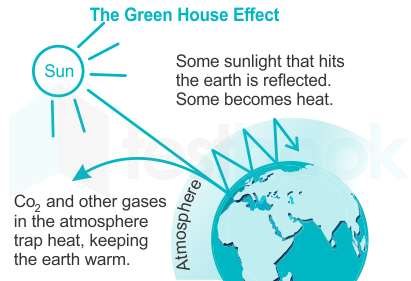
  • Greenhouse gases such as methane and carbon dioxide in the atmosphere prevent the rays of the Sun reflected from the Earth’s surface to escape the atmosphere thus trapping the radiations.
  • The trapped radiations warm the Earth’s atmosphere, causing increases in the global temperature. This is called the greenhouse effect.

  • And because of the increase in temperature icy bodies start melting and increases the sea level.

Explanation:

The greenhouse effect is due to an increase in the temperature of the planet due to an increase in carbon dioxide concentration of the atmosphere 

Mistake Points

Global Warming

  • An increase in average temperature of the earth surface due to the greenhouse effect is called global warming
  • It also refers to the increase in average temperature of the air and sea at the earth's surface
  • Hence, the surface of the earth becomes warm which causes global warming
  • The phenomenon is similar to that of greenhouse in which the glass-enclosed atmosphere gets heated up due to its insulation from the rest of the environment
27

Green coloured pigment present in leaves is called ____.

  1. ((a))

    Carotene

  2. ((b))

    Phycobilin

  3. ((c))

    Xanthophyll

  4. ((d))

    Chlorophyll

Show Answer
Answer: ((d))

Chlorophyll

The correct answer is chlorophyll.

Key Points

  • The green pigment present in leaves is called chlorophyll.
  • Chlorophyll is located in a plant's chloroplasts.
  • It is green in colour because it does not absorb the green wavelengths of white light.
  • Phloem is tissues in plants that conduct food to other parts of the plant.
  • Phloem is also called bast.
  • Xylem is a vascular tissue that conveys water and dissolved minerals to the rest of the plant.
28

Inverter is a device which converts _____.

  1. ((a))

    DC into DC

  2. ((b))

    AC into DC

  3. ((c))

    DC into AC

  4. ((d))

    AC into AC

Show Answer
Answer: ((c))

DC into AC

The correct answer is DC into AC.

Key Points

  • An inverter is an electronic circuit that converts low voltage DC into high voltage AC power.
  • An inverter may take the 12, 24, or 48 volts DC and convert to 230 volts AC.
  • Step-up transformer is used in home inverters.
  • The main power AC is supplied to the inverter, and it is transformed into DC simultaneously, which keeps charging the battery continuously.
  • There are a sensor and relay structure that always monitors the ON or OFF status of the main supply.
  • Rectifier is an electrical device which convert A.C. to D.C.
  • A frequency changer or frequency converter is an electronic or electromechanical device that converts alternating current (AC) of one frequency to alternating current of another frequency.
29

The common name for potassium carbonate is ______.

  1. ((a))

    Vinegar

  2. ((b))

    Soda

  3. ((c))

    Baking powder

  4. ((d))

    Pearl Ash

Show Answer
Answer: ((d))

Pearl Ash

The correct answer is Pearl Ash.

Key Points

**Some common names of the chemical compound, their chemical name, and chemical formula are as follows:**​

Common name
Chemical name
Chemical formula
Washing sodaSodium carbonateNa2CO3.10H2O
Baking sodaSodium bicarbonateNaHCO3
Caustic sodaSodium hydroxideNaOH
Bleaching powderCalcium hypochloriteCa(ClO)2
Quick LimeCalcium oxideCaO
MarbleCalcium carbonateCaCO3
Plaster of ParisCalcium sulfateCaSO4..1/2H2O
AspirinAcetylsalicylic acidC9H8O4
Epsom saltsMagnesium sulfateMgSO4·7H2O
Heavy WaterDeuterium oxide2H2O or D2O
Pearl AshPotassium carbonateK2CO3
PlumbagoGraphiteC
Prussic acidHydrogen cyanideHCN
SaltpetrePotassium nitrateKNO3
VinegarAcetic acidCH3CO2H
30

A temperature of 295 Kelvin is equivalent to approximately ____.

  1. ((a))

    32.33°F

  2. ((b))

    71.33°F

  3. ((c))

    0°F

  4. ((d))

    96.33°F

Show Answer
Answer: ((b))

71.33°F

The correct answer is 71.33°F.

Key Points

  • Fahrenheit scale is a temperature scale that is based on the freezing point of water at 32°F and the boiling point of water at 212°F.
  • The region between these two temperatures is divided into 180 equal parts i.e. each part equals 1°F.
  • The absolute zero value is at -459.67°F.
  • Kelvin scale is a temperature scale that is based on the freezing point of water at 273K and the boiling point of water at 373K.
  • The region between these two temperatures is divided into 100 equal parts i.e. each part equals 1K.
  • The absolute zero value is at 0K.

 Temperature conversion formulas:

to Celsiusto Fahrenheitto Kelvin
Celsius°C95C+32\frac{9}{5} {^{\circ}C} + 32°C + 273.15
Fahrenheit59(F32)\frac{5}{9} ({^{\circ}F} - 32)°F59(F32)+273.15 \frac{5}{9}({^{\circ}F} - 32) + 273.15
KelvinK - 273.1595(K273.15)+32\frac{9}{5}(K - 273.15) + 32K

​CALCULATION:

Given that:

Temperature = 295 K

Kelvin to Fahrenheit: 95(K273.15)+32=95(295273.15)+32=71.33F\frac{9}{5}(K - 273.15) + 32 = \frac{9}{5}(295 - 273.15) + 32 = 71.33 ^{\circ}F

Mathematics (15 questions)

31

With a average speed of 40 km/hour a train reaches its destination in time. If it goes with average speed of 35 km/hour, it is late by 15 minutes. Find the distance of whole jounrey.

  1. ((a))

    70 km

  2. ((b))

    30 km

  3. ((c))

    40 km

  4. ((d))

    80 km

Show Answer
Answer: ((a))

70 km

Given :

With a average speed of 40 km/hour a train reaches its destination in time but when it goes with average speed of 35 km/hour, it is late by 15 minutes.

Formula used :

Distance = speed × time 

Calculations :

Let the time be 't' hours when train move with a speed of 40 km/h 

Time will be 't + (1/4)' hours when train move with a speed of 35 km/h        (15 minutes = 15/60 = 1/4 hour)

According to the question 

40 × t = 35 × [t + (1/4)]              (distance is the same in both cases) 

⇒ t = 7/4 hours 

So, 

Total distance = 40 × (7/4) 

⇒ 70 km 

∴ Option 1 is the correct answer.

32

5 men do a piece of work in 12 days. In how many days will 6 men complete the same work.

  1. ((a))

    9 days

  2. ((b))

    8 days

  3. ((c))

    7 days

  4. ((d))

    10 days

Show Answer
Answer: ((d))

10 days

Given :

5 men can do a piece of work in 12 days. 

Concept used :

Total work = Number of persons × time duration × Person's capacity 

Calculations 

Let the working capacity of each person is x units 

Total work = 5 × 12 × x 

⇒ 60x units 

Now time taken by 6 men to complete this work 

60 x (Total work) = 6 × x × Number of days 

⇒ Number of days = 60x/6x 

⇒ 10 days 

∴ Option 4 is the correct answer.

33

Write the following mixed number as an improper fraction. 6256\frac{2}{5}

  1. ((a))

    3 15\frac{3 \ 1}{5}

  2. ((b))

    3 45\frac{3 \ 4}{5}

  3. ((c))

    3 35\frac{3 \ 3}{5}

  4. ((d))

    3 25\frac{3 \ 2}{5}

Show Answer
Answer: ((d))

3 25\frac{3 \ 2}{5}

Calculations :

 6256\frac{2}{5}= (6 × 5 + 2)/5 

⇒ 32/5 

∴ Option 4 is the correct answer.

34

Find the Perimeter of square Garden whose Area is 5625 sq/m?

  1. ((a))

    1200 m

  2. ((b))

    300 m

  3. ((c))

    1300 m

  4. ((d))

    1600 m

Show Answer
Answer: ((b))

300 m

Given :

Area of the garden is 5625 m2

Formula used :

Area of square = side × side 

Perimeter of square = 4 × length of side 

Calculations :

Let the side of square be 's' m 

According to the question 

5625 = s × s 

⇒ s × s = 75 × 75 

⇒ s = 75 m 

Perimeter of square = 4 × side 

⇒ 4 × 75 

⇒ 300 m 

∴ Option 2 is the correct answer.

35

Ram buys a newspaper of Rs. 0.50 daily. How much money he will have to pay for the month of January?

  1. ((a))

    Rs. 15.50

  2. ((b))

    Rs. 120

  3. ((c))

    Rs. 150

  4. ((d))

    Rs. 50

Show Answer
Answer: ((a))

Rs. 15.50

Given :

The cost of the paper bought by Ram is Rs. 0.5. 

Calculations :

Money paid by Ram in January for paper = Number of days in January × Cost of each paper 

⇒ 31 × 0.5 

⇒ Rs. 15.50 

∴ Option 1 is the correct answer.

36

The algebraic sum of the deviations of a frequency distribution from its mean is always _____.

  1. ((a))

    Less than zero

  2. ((b))

    Zero

  3. ((c))

    Greater than zero

  4. ((d))

    A non - zero number

Show Answer
Answer: ((b))

Zero

Calculations :

The algebraic sum of the deviations of a frequency distribution from its mean is always zero

Let us assume the data 5, 7, 8, 9 and 11 

The mean of the data will be

Mean = (5 + 7 + 8 + 9 + 11)/5 = 40/5 = 8

Now,

⇒ Deviation of 5 from the mean = 5 - 8 = -3

⇒ Deviation of 7 from the mean = 7 - 8 = -1

⇒ Deviation of 8 from the mean = 8 - 8 = 0

⇒ Deviation of 9 from the mean = 9 - 8 = 1

⇒ Deviation of 11 from the mean = 11 - 8 = 3

Now,

Algebraic sum of the deviations = (-3) + (-1) + (0) + 1 + 3 

⇒ -4 + 4 

⇒ 0 

∴ Option 2 is the correct answer.

37

Solve the sequence 2, 3, 5, 9, 17, 33, 65, __?

  1. ((a))

    136

  2. ((b))

    149

  3. ((c))

    129

  4. ((d))

    100

Show Answer
Answer: ((c))

129

Calculations :

3 - 2 = 1 

⇒ 5 - 3 = 2 

⇒ 9 - 5 = 4 

⇒ 17 - 9 = 8

⇒ 33 - 17 = 16 

⇒ 65 - 33 = 32

The difference is the series is the increasing power of 2

1, 2, 4, 8, 16, 32 

So the difference between 65 and the next number will be 64 

So last number of the series = 65 + 64 

⇒ 129 

∴ Option 3 is the correct answer.

38

LCM of the given number 'X' and 'Y' where 'Y' is a multiple of 'X' is given by ____.

  1. ((a))

    XY

  2. ((b))

    X/Y

  3. ((c))

    Y

  4. ((d))

    X

Show Answer
Answer: ((c))

Y

Given :

There are two numbers X and Y, where Y is the multiple of X 

Calculations :

Let Y be 'AX' as Y is the multiple of X 

Now, 

X = X1 and Y = AX = A1X1

LCM of X and Y = A1X1

⇒ LCM = AX 

⇒ Y  

∴ Option 3 is the correct choice.

39

The sum of all odd integers between 2 and 100 divisible by 3 is _____.

  1. ((a))

    867

  2. ((b))

    17

  3. ((c))

    786

  4. ((d))

    876

Show Answer
Answer: ((a))

867

Concept used :

Sum of all numbers in a given Series = (n/2) × [2a + (n - 1)d)], where n is the number of terms, a is the first term and d is the common difference. 

Last term of a series = [a + (n - 1)d] where n is the number of terms, a is the first term and d is the common difference. 

Calculations :

First term between 2 and 100 divisible by 3 is 3 

Last term between 2 and 100 divisible by 3 is 99

Odd integers between 2 and 100 divisible by 3 will be 3, 9, 15, 21......  99

Now, for number of terms for series 3, 9, 15, 21......  99

99 = 3 + (n -1)6           (difference between terms is 6)

⇒ (n - 1) × 6 = 96 

⇒ n - 1 = 16 

⇒ n = 17 

So, 

Sum of all terms = (17/2) × [2 × 3 + (17 - 1)6] 

⇒ (17/2) × (102)

⇒ 17 × 51 

⇒ 867

∴ Option 1 is the correct answer.

40

If the roots of px2 + qx + 2 = 0 are reciprocal of each other, then

  1. ((a))

    P = 0

  2. ((b))

    P = 1

  3. ((c))

    P = 2

  4. ((d))

    P = -2

Show Answer
Answer: ((c))

P = 2

Given :

If the roots of px2 + qx + 2 = 0 are reciprocal of each other

Formula used :

For a equation ax2 + bx + c, 

Sum of roots = -(b/a) and product of roots = c/a 

Calculations :

Let the roots of the equation be x and 1/x (roots are reciprocal)

So, 

(sum of roots) = -(q/p)

⇒  x + (1/x) = -(q/p)  

Product of roots = 2/p

⇒ x × (1/x)  = 2/p 

⇒ 2/p = 1 

⇒ p = 2 

∴ The correct answer will be option 3.

41

In an examination, a candidate needs 40% marks. All questions carry equal marks. A candidate just passed by getting 10 answers correct by attempting 15 of the total questions. How many questions are there in the examination?

  1. ((a))

    40

  2. ((b))

    45

  3. ((c))

    30

  4. ((d))

    25

Show Answer
Answer: ((d))

25

Given :

A candidate needs 40% marks to pass the examination 

He solved 10 questions correctly and passed 

Calculations :

Let the total questions be x 

The candidate solved 10 questions correctly and passed 

That means 10 questions are 40% of the total questions as every question carries equal marks 

So, 

40% of x = 10 

⇒ x = 1000/40 

⇒ 25 

∴ The correct choice is option 4.

42

Solve: 2.81 + 0.002 + 0.01 = ?

  1. ((a))

    2801

  2. ((b))

    2

  3. ((c))

    822

  4. ((d))

    2.822

Show Answer
Answer: ((d))

2.822

Calculations :

2.81 + 0.002 + 0.01 = 2.822 

∴ The correct choice will be option 4.

43

If x+(1x)x + (\frac{1}{x}) = 3, then the value of x2 + (1 / x2) is _____.

  1. ((a))

    4

  2. ((b))

    6

  3. ((c))

    7

  4. ((d))

    2

Show Answer
Answer: ((c))

7

Given :

x + (1/x) = 3 

Concept used :

(a + b) = a2 + b2 + 2ab 

Calculations :

[x + (1/x)]2 = x2 + (1/x2) + 2.x.(1/x) 

⇒ 32 = x2 + (1/x2) + 2

⇒ x2 + (1/x2) = 9 - 2 

⇒ 7 

∴ The correct answer is option 3.

44

The total cost of two tables and three chairs is Rs. 3500. The cost of three tables and two chairs is Rs. 4000, then the total cost of a chair and a table is _____.

  1. ((a))

    800

  2. ((b))

    1500

  3. ((c))

    500

  4. ((d))

    6500

Show Answer
Answer: ((b))

1500

Given :

The total cost of two tables and three chairs is Rs. 3500 and the cost of three tables and two chairs is Rs. 4000.

Calculations :

Let the each table be 't' rupees and the cost of each chair be 'c' rupees 

According to the question 

2t + 3c = 3500    ......(1) 

3t + 2c = 4000    ......(2) 

Solving both the equations we get 

t = 1000 rupees and c = 500 rupees 

So, 

Total cost of a chair and a table = 1000 + 500 

⇒ 1500 rupees 

∴ Option 2 is the correct choice.

45

A businessman allows a discount of 10% on the marked price. How much above the cost price must he mark his goods to make a profit of 8%?

  1. ((a))

    10%

  2. ((b))

    18%

  3. ((c))

    30%

  4. ((d))

    20%

Show Answer
Answer: ((d))

20%

Given :

A businessman allows a discount of 10% on marked price.

Concept used :

Marked price(at increment) = cost price + increment in cost price 

Selling price(at discount) = marked price - decrement in marked price 

Calculations :

Let the cost price be 100 rupees. 

Selling price at 8% profit = 100 + 8% of 100 

⇒ 100 + 8 = 108 rupees 

Now according to the question 

108 = Marked price - 10% of marked price 

⇒ 90% of marked price = 108 

⇒ Marked price = 120 rupees 

Per cent increment in cost price = (120 - 100)/(100) × 100 

⇒ 20 

∴ The correct choice is option 4.

Logical Reasoning (5 questions)

46

Arrange the given words in alphabetical order and tick the one that comes second last.

Clear, Contrast, Bosh, Constantly, Checked

  1. ((a))

    Clear

  2. ((b))

    Bosh

  3. ((c))

    Checked

  4. ((d))

    Constantly

Show Answer
Answer: ((d))

Constantly

Arranging all the words as per their order in the dictionary:

(1) Bosh

(2) Checked

(3) Clear

(4) Constantly

(5) Contrast

Hence, constantly is the correct answer.

47

Choose out the odd one.

  1. ((a))

    Blacksmith

  2. ((b))

    Barber

  3. ((c))

    Tailor

  4. ((d))

    Carpenter

Show Answer
Answer: ((b))

Barber

Logic:

(1) Blacksmith → Blacksmiths shape and join metals to make items such as wrought-iron gates, railings, furniture, tools, and horseshoes.

(2) Barber → Barber shave, trim, and shaping clients' beards and moustaches. 

(3) Tailor → A tailor sews, joins, reinforces, or finishes clothing or other items.

(4) Carpenter → Carpenters construct, install, and repair a variety of residential, commercial, and industrial structures and fixtures.

Thus, All Blacksmith, Tailor, and Carpenter create something whereas Barber cut/trim hair, he does not create anything.

Hence, Barber is the odd one.

48

Complete the series: A, B, D, ___, K, P.

  1. ((a))

    E

  2. ((b))

    F

  3. ((c))

    G

  4. ((d))

    H

Show Answer
Answer: ((c))

G

Given: A, B, D, ___, K, P.

Logic:

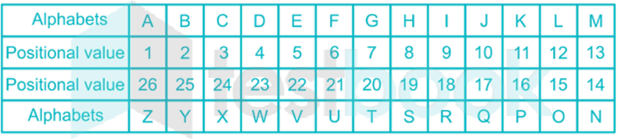
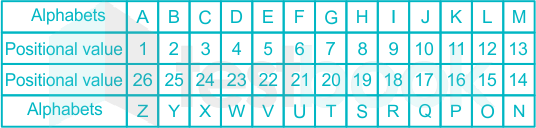
Hence, G is the correct answer.

49

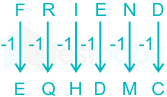
In a certain code language SLOW is written as RKNV, then in the same manner FRIEND will be written as _____.

  1. ((a))

    EQHDMF

  2. ((b))

    EQMDEM

  3. ((c))

    UQHDME

  4. ((d))

    EQHDMC

Show Answer
Answer: ((d))

EQHDMC

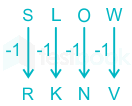
Given: SLOW is written as RKNV.

Logic: -1 to the position of letters.

Similarly,

Hence, EQHDMC is the correct answer.

50

Select the odd word?

  1. ((a))

    Train

  2. ((b))

    Bus

  3. ((c))

    Wheel

  4. ((d))

    Boat

Show Answer
Answer: ((c))

Wheel

Logic:

Train, Bus, and Boat are all vehicles whereas wheel is not a vehicle but a part of it.

Hence, "Wheel" is the odd word.

Attempt this paper under real exam conditions

Timed interface, section switching, instant scoring, and question-by-question analytics — free.

Start Timed Attempt