Official Paper

Allahabad High Court RO 2019 Official Paper 1 (Previous Year Paper)

200 questions · 150 minutes · with answers · free

Full Test (200 questions)

1

The watchwords of the French Revolution-Liberty, Equality and _______ inspired the whole world. 

  1. ((a))

    Fraternity

  2. ((b))

    Justice

  3. ((c))

    Simplicity

  4. ((d))

    Freedom

Show Answer
Answer: ((a))

Fraternity

The correct answer is Fraternity.

Key Points

  • The slogan "Liberté, Egalité, Fraternité" was initially used during the French Revolution and is a remnant of the Enlightenment.
  • Despite being questioned numerous times, it was finally formed during the Third Republic.
  • It is currently part of the French national heritage, having been incorporated into the 1958 Constitution. "Liberty, Equality, and Fraternity" was one of the numerous mottos used during the French Revolution.
  • Maximilien Robespierre proposed that the words "The French People" and "Liberty, Equality, Fraternity" be put on uniforms and flags in a December 1790 speech on the establishment of the National Guards, but his suggestion was rejected.

Important Points

  • The French Revolution was a period of significant political and societal change in France that began in 1789 with the founding of the Estates-General and ended in November 1799 with the formation of the French Consulate.

2

The Indian National Congress was founded by _______ in 1885.

  1. ((a))

    Allan Octavian Hume

  2. ((b))

    Lord Dufferin

  3. ((c))

    Badruddin Tayabji

  4. ((d))

    Annie Besant

Show Answer
Answer: ((a))

Allan Octavian Hume

The correct answer is Allan Octavian Hume.

Key Points

  • On the suggestion of retired Civil Service official Allan Octavian Hume, the Indian National Congress held its first session in Bombay from December 28 to December 31, 1885.
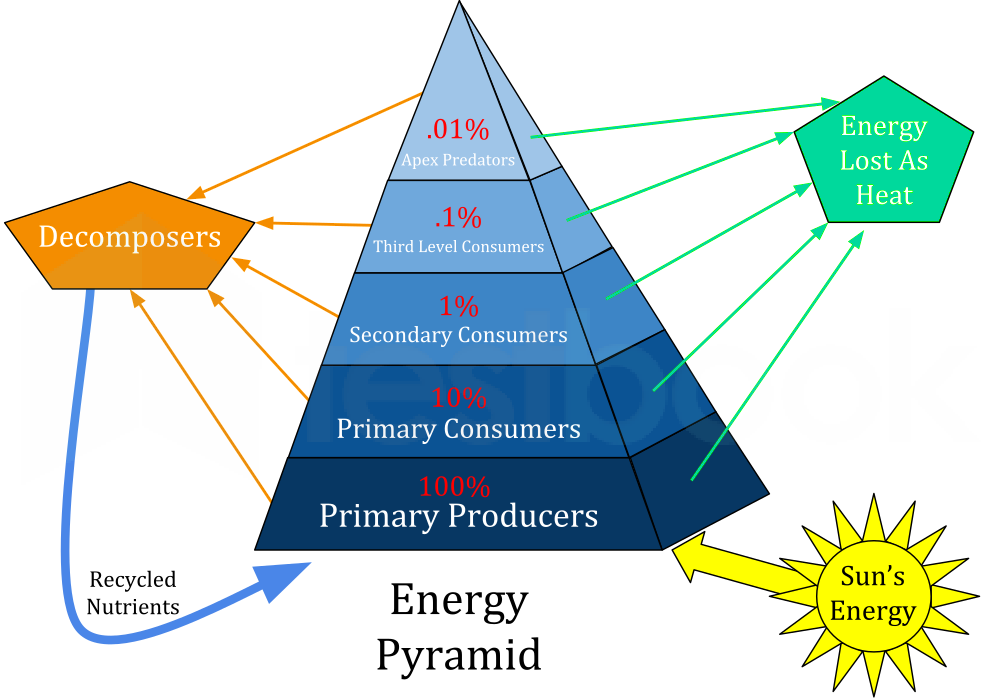
  • In an open letter to graduates of the University of Calcutta in 1883, Hume presented his notion for a group representing Indian interests.
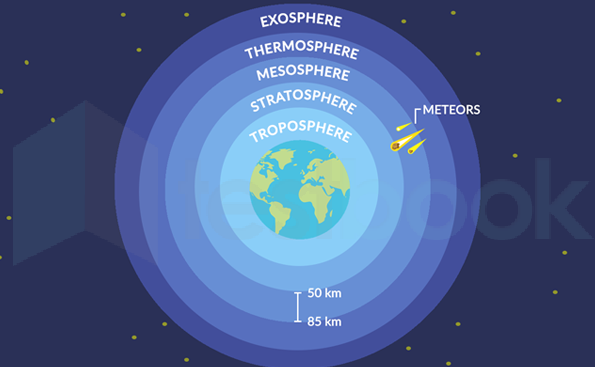
  • Its goal was to give educated Indians a bigger say in government and to provide a forum for civic and political conversation with the British Raj.
  • The French Revolution was a period of significant political and societal change in France that began in 1789 with the founding of the Estates-General and ended in November 1799 with the formation of the French Consulate.


Important Points

  • The Indian National Congress is a broad-based political party in India.
  • It was the first modern nationalist movement to develop in the British Empire in Asia and Africa, having been founded in 1885.
  • Under the leadership of Mahatma Gandhi, Congress became the primary leader of the Indian independence struggle in the late nineteenth century, particularly after 1920.
3

_______ passed the Indian Universities Act in 1904, imposing stiff control over Indian Universities.

  1. ((a))

    Lord Dufferin

  2. ((b))

    Lord Curzon

  3. ((c))

    Lord Simon

  4. ((d))

    Lord Robertson

Show Answer
Answer: ((b))

Lord Curzon

The correct answer is Lord Curzon.

Key Points

  • Lord Curzon passed the Indian Universities Act in 1904, imposing stiff control over Indian Universities.
  • The British government enacted severe legislation to regulate education and the media.
  • In 1904, Lord Curzon, the British Viceroy, passed the Indian Universities Act, which tightened authority over Indian universities.
  • Curzon was on a mission to quell India's budding nationalism. The partition of Bengal was declared by Curzon.

Important Points

  • Lord Curzon announced the Indian Universities Act in 1904 in an attempt to modernize and elevate the Indian educational system.
  • It all started with Lord Curzon convening a round table meeting in Simla in September 1901.
  • This meeting was attended by all of India's educational ministers. After much deliberation, a commission led by Sir Thomas Raleigh was appointed on January 27, 1902, to investigate the state and prospects of universities in India.
4

_______ means, made in our own country by our own people.

  1. ((a))

    Swadeshi

  2. ((b))

    Videshi

  3. ((c))

    Garam Dal

  4. ((d))

    Renaissance

Show Answer
Answer: ((a))

Swadeshi

The correct answer is Swadeshi.

Key Points

  • Swadeshi means, made in our own country by our own people.
  • Swadeshi is a Sanskrit word that combines two Sanskrit words: swa ("self" or "own") and desh ("country").
  • It is a word that signifies "from one's own country."
  • In India, the Swadeshi Movement has been described as fabric manufacture.
  • It began in Bengal, where there were strong feelings about the closure of the home cloth business.
  • By 1857, the East India Company had planned to undermine the native fabric industry by chopping the thumbs of spinners who used to spin fine muslin cloth (exceeding 200 counts) to make room for English cloth, which was not as fine as Indian hand-spun cloth.

Important Points

  • The Swadeshi movement contributed to the growth of Indian nationalism as part of the Indian independence movement.
  • Following the partition of Bengal, the Swadeshi movement was formally launched on August 7, 1905, from Town Hall in Calcutta, with the goal of reducing foreign imports by relying on native manufacture.
  • It is the soul of swaraj, according to Mahatma Gandhi (self-rule).
5

It was _______ who realized the importance of boycott as a weapon that country used to paralyze the whole British administrative machinery in India.

  1. ((a))

    Bal Gangadhar Tilak

  2. ((b))

    Gopal Krishna Gokhale

  3. ((c))

    Dadabhai Naoroji

  4. ((d))

    Firoz Shah Mehta

Show Answer
Answer: ((a))

Bal Gangadhar Tilak

The correct answer is Bal Gangadhar Tilak.

Key Points

  • The usage of Swadeshi (made in India by Indians) commodities, business, national education, and Indian languages was encouraged.
  • The terror of persecution, including imprisonment and brutal torture, was replaced by a new nationalist attitude of self-reliance.
  • Bal Gangadhar Tilak was the first to recognize the relevance of boycotting as a weapon for paralyzing the entire British administrative apparatus in India.
  • Swadeshi firms, such as textile mills, banks, hosiery, tanneries, chemical works, and insurance companies, were established as a result of the boycott and Swadeshi movements.

Important Points

  • Swadeshi outlets have opened their doors. Volunteers delivered goods to each household's doorstep.
  • The movement swept through all social classes and organizations. Women and children alike stepped forward to participate.
6

_______, _______ and _______ important leaders of the Radical group.

  1. ((a))

    Lala Lajpat Rai, Bal Gangadhar Tilak and Gopal Krishna Gokhale

  2. ((b))

    Dadabhai Naoroji, Firoz Shah Mehta Gopal Krishna Gokhale

  3. ((c))

    Lala Lajpat Rai, Dadabhai Naoroji, Firoz Shah Mehta

  4. ((d))

    Lala Lajpat Rai, Bal Gangadhar Tilak and Bipin Chandra Pal

Show Answer
Answer: ((d))

Lala Lajpat Rai, Bal Gangadhar Tilak and Bipin Chandra Pal

The correct answer is Lala Lajpat Rai, Bal Gangadhar and Bipin Chandra Pal.

Key Points

  • Lala Lajpat Rai, Bal Gangadhar Tilak, and Bipin Chandra Pal were the three important leaders of the Radical Nationalists group.
  • The Radical Reform Organization was a lobbying group inside the Liberal Party that was founded in 1952 to promote social liberalism and Keynesian economics.
  • The Radical Reform Group thought that "the role of Liberals was not to withdraw from Social Liberalism but to offer methods in which the Welfare State's institutions and policies could be enhanced and expanded," according to Andrew Gamble.

Important Points

  • Desmond Banks (later Lord Banks of Kenton) and Peter Grafton, the Liberal candidate for Bromley in the general election of 1950, were the two key players in the establishment of the Radical Reform Group. However, this plan failed, and the Group narrowly voted in 1955 to rejoin the Liberal Party.

Additional Information 

  • Lala Lajpat Rai was an Indian nationalist who fought for independence. He was a key figure in the Indian independence struggle.
  • Bal Gangadhar Tilak was an Indian nationalist, educator, and freedom fighter. He was one of the Lal Bal Pal triumvirate's three members.
  • During the Indian Independence Movement, Gopal Krishna Gokhale was an Indian liberal political leader and social reformer.
7

_______ gave a slogan 'Freedom is our birth right and we must have it'.

  1. ((a))

    Lala Lajpat Rai

  2. ((b))

    Mahatma Gandhi

  3. ((c))

    Bal Gangadhar Tilak

  4. ((d))

    Jawaharlal Nehru

Show Answer
Answer: ((c))

Bal Gangadhar Tilak

The correct answer is Bal Gangadhar Tilak.

Key Points

  • Bal Gangadhar Tilak gave a slogan 'Freedom is our birthright and we must have it.
  • Lokmanya Bal Gangadhar Tilak roused the Indian people and injected fresh life into our liberation cause with his electrifying phrase, "Swaraj is my birth-right and I shall have it."
  • Lokmanya Tilak was born in 1856, barely one year before the First War of Indian Independence, into a disappointed and sullen India, and following the defeat of the 1857 insurrection, into a swirl of sorrow and hopelessness.

Important Points

  • Bal Gangadhar Tilak worked valiantly to aid the country's independence from British domination.
  • Bal Gangadhar Tilak, a member of the Lal-Bal-Pal troika, was dubbed the "Father of Indian Unrest" by British colonial rulers.
  • Lokmanya Tilak founded and published two newspapers: the Marathi Kesari and the English The Mahratta. To criticize the colonial overlords, he used his pen as a weapon.
8

_______ started working for the Home Rule Movement in 1916.

  1. ((a))

    Mahatma Gandhi

  2. ((b))

    Jawaharlal Nehru

  3. ((c))

    Annie Besant

  4. ((d))

    Bal Gangadhar Tilak

Show Answer
Answer: ((d))

Bal Gangadhar Tilak

The correct answer is Bal Gangadhar Tilak.

Mistake Points

  • Bal Gangadhar Tilak started working for the Home rule Movement in April 1916 at Belgaum.
  • Annie Besant launched the Home Rule League in September 1916 at Madras.

Key Points

  • Bal Gangadhar Tilak started working for the Home Rule Movement in 1916.
  • Bal Gangadhar Tilak, a member of the Lal-Bal-Pal troika, was dubbed the "Father of Indian Unrest" by British colonial rulers.
  • Lokmanya Tilak founded and published two newspapers: the Marathi Kesari and the English The Mahratta.

Important Points

  • Home Rule Movement, led by stalwarts such as Bal Gangadhar Tilak and Annie Besant, grew and flourished during the Indian independence movement, between 1916 and 1918.
  • The goal of the home rule movement was to give India, like Canada and Australia, home rule or dominion status under the British Empire. The two home rule leagues were used to carry out this campaign.
  • Annie Besant was an Irish socialist, author, and orator who advocated for Irish and Indian self-determination. In 1893, she came to India.
9

In 1916, Muslim League and Congress came to an understanding with each other and signed the ______.

  1. ((a))

    Bengal Pact

  2. ((b))

    Treaty of Calcutta

  3. ((c))

    Self-Government Act

  4. ((d))

    Lucknow Pact

Show Answer
Answer: ((d))

Lucknow Pact

The correct answer is Lucknow Pact.

Key Points

  • The Lucknow Pact was a combined conference of the Indian National Congress and the Muslim League (AIML) conducted in Lucknow in December 1916 that resulted in an agreement between the two organizations.
  • The two parties agreed to provide religious minorities participation in provincial legislatures as part of the agreement.
  • Leaders of the Muslim League agreed to join the Congress-led push for Indian independence. This is an example of a consociational practice in Indian politics, according to scholars.
  • The Congress was led by Ambika Charan Majumdar, and Muhammad Ali Jinnah (who was a member of both the Congress and the Muslim League in 1916) and Mahatma Gandhi were also there.

Important Points

  • The Lucknow Pact was viewed as a ray of hope for Hindu–Muslim cooperation.
  • It was the first time Hindus and Muslims had made a combined appeal to the British for political reform.
  • As a result, there was a growing belief throughout British India that Home Rule (self-government) was a viable option. The accord also marked the pinnacle of Hindu-Muslim cooperation.
10

On 30th December, 1906, the _______ was founded.

  1. ((a))

    Lucknow Pact

  2. ((b))

    All India Muslim League

  3. ((c))

    Self Government Act

  4. ((d))

    Bengal Pact

Show Answer
Answer: ((b))

All India Muslim League

The correct answer is All India Muslim League.

Key Points

  • The All-India Muslim League was a political party in British India that was founded in 1906. Its ardent advocacy, beginning in 1930, for the establishment of a distinct Muslim-majority nation-state, Pakistan, culminated in the British Empire's partition of India in 1947.
  • The party developed from a literary movement that began at the Aligarh Muslim University and was founded in Dhaka (now Bangladesh) several years after the death of Syed Ahmad Khan, the university's founder. Until 1937, when the leadership began mobilizing the Muslim masses, the league remained an elitist institution.

Important Points

  • The All-India Muslim League was abolished after India's partition in 1947. In the new India, the Indian Union Muslim League took its place. Under the Indian Constitution, the Indian Union Muslim League runs in general elections.
  • The party has always had a presence in the Indian Parliament, although a little one.
  • With the exception of the Second, where it had no members, and the Fourth, where it had three members, the party has had two members in every Lower House from the third through the sixteenth.
  • In the 14th Lower House, the party only had one member. Currently, the party has four MPs in Parliament.
11

Montague-Chelmsford Reforms introduced _______ which was a kind of double government in the provinces.

  1. ((a))

    Dual

  2. ((b))

    Self-Government

  3. ((c))

    Legislative Reform

  4. ((d))

    Dyarchy

Show Answer
Answer: ((d))

Dyarchy

The correct answer is Dyarchy.

Key Points

  • Montague-Chelmsford Reforms introduced Dyarchy which was a kind of double government in the provinces.
  • The Montague–Chelmsford Reforms were enacted by the colonial government to gradually install self-governing institutions in British India.
  • The amendments are named after Edwin Montague, Secretary of State for India from 1917 to 1922, and Lord Chelmsford, Viceroy of India from 1916 to 1921.
  • The Montague-Chelmsford Report, released in 1918, emphasized the reforms that were later incorporated into the Government of India Act of 1919.

Important Points

  • The Central Legislative Assembly and the Council of State would now make up the Imperial Legislative Council.
  • The Dual Government System, or dyarchy, was to be followed by the provinces.
  • The review commission (Simon Commission) was led by Sir John Simon, who suggested further constitutional changes.
12

For people protest against the Rowlatt Act, people had gathered on 13th April, 1919 on the occasion of Baisakhi fair at

  1. ((a))

    Bengal

  2. ((b))

    First World War

  3. ((c))

    Jallianwalla Bagh

  4. ((d))

    Khalipha

Show Answer
Answer: ((c))

Jallianwalla Bagh

The correct answer is Jallianwalla Bagh.

Key Points

  • On the 13th of April 1919, the Jallianwala Bagh massacre, also known as the Amritsar massacre, occurred.
  • The arrest of pro-Indian independence leaders Dr. Saifuddin Kitchlu and Dr. Satya Pal drew a large but peaceful crowd to Amritsar's Jallianwala Bagh in Punjab.
  • Although following British actions during the Mau Mau insurgencies in Kenya have led historian Huw Bennett to highlight that the new policy was not always followed, the massacre caused a re-evaluation by the British Army of its military role against civilians to use minimal force if possible.

Important Points

  • The British government attempted to conceal the massacre's specifics, but news leaked across India, causing great indignation; the massacre's facts were not revealed in Britain until December 1919.
  • World War I, sometimes known as the First World War, was a global conflict that began in Europe and lasted until November 11, 1918.
13

What is the minimum essential duration of professional practice by an advocate for appointment as a High Court judge?

  1. ((a))

    5 years

  2. ((b))

    10 years

  3. ((c))

    15 years

  4. ((d))

    20 years

Show Answer
Answer: ((b))

10 years

The correct answer is 10 years.

Key Points

  • The states need the indicated minimal experience as a lawyer as a requirement for entry into the lowest rung of the judiciary.
  • In this regard, it should be noted that under Article 233(2) of the Constitution, no person can be appointed a District Judge unless he has worked as an advocate or a pleader for at least seven years, whereas Articles 217(2)(b) and 124(3)(b) require at least ten years of experience as a High Court advocate for appointment to the posts of judge of the High Court.
  • All States include three years of legal practice as one of the essential criteria for recruitment as a lower-level judicial officer.
  • A candidate is not entitled to take the entire examination unless he has worked as a lawyer for at least three years at the time of his application to take the exam. Following that, the Apex Court reversed its earlier ruling, holding that three years of minimum experience as a lawyer was not required since, after three years of practice, outstanding law graduates were not attracted by the Judicial Service's circumstances.
14

Which of the following states has maximum Lok Sabha seats in 2014?

  1. ((a))

    Uttar Pradesh

  2. ((b))

    Rajasthan

  3. ((c))

    Madhya Pradesh

  4. ((d))

    Maharashtra

Show Answer
Answer: ((a))

Uttar Pradesh

The correct answer is Uttar Pradesh.

Key Points

  • The 404 members of the Legislative Assembly are elected for five-year periods.
  • The Legislative Council is a 100-member permanent council, with 33 members retiring every two years.
  • Uttar Pradesh is sometimes regarded as one of the most important states in Indian politics because it sends the most legislators to the national Parliament.
  • The state contributes 80 seats to the Indian Parliament's lower chamber, the Lok Sabha, and 31 seats to the upper house, the Rajya Sabha.

Important Points

  • The Governor is the constitutional head of the Uttar Pradesh government, which is democratically elected and appointed by the President of India for a five-year term.
  • Rajasthan held its general election in 2014, with 25 seats up for grabs.
  • Madhya Pradesh had 29 seats up for election in the 2014 Indian general election.
  • Maharashtra had three general elections in 2014, the first on April 10, the second on April 17, and the third on April 24.
15

The Department of Mines Safety comes under which Central Ministry in India?

  1. ((a))

    Ministry of Mines

  2. ((b))

    Ministry of Labour and Employment

  3. ((c))

    Ministry of Environment, Forest and Climate Change

  4. ((d))

    Ministry of Health and Family Welfare

Show Answer
Answer: ((b))

Ministry of Labour and Employment

The correct answer is Ministry of Labour and Employment.

Key Points

  • In matters pertaining to occupational safety, health, and welfare of those employed in mines, the Directorate General of Mines Safety, or DGMS for short, is the Regulatory Agency under the Ministry of Labour and Employment, Government of India (Coal, Metalliferous and oil-mines).
  • The Central Government is responsible for the safety, welfare, and health of mine workers under the Indian Constitution (Entry 55-Union List-Article 246).
  • The Mines Act of 1952, as well as the Rules and Regulations enacted under it, governs the goal.
  • The Directorate-General of Mines Safety (DGMS), which is part of the Union Ministry of Labour and Employment, is in charge of these.

Important Points

  • The Director-General of Mines Safety is in charge of the organisation, which is based in Dhanbad (Jharkhand).
  • The Director-General is supported at the headquarters by specialists in mining, electrical and mechanical engineering, occupational health, law, survey, statistics, administration, and accounts.
  • As a back-up support for the organisation, the headquarters also features a technical library and S&T laboratories.
16

In 2018, through which scheme, was National health protection with insurance introduced in India?

  1. ((a))

    Pradhanmantri Matritva Vandan Yojana

  2. ((b))

    Janani Yojana

  3. ((c))

    Ayushman Bharat

  4. ((d))

    National Pension Scheme

Show Answer
Answer: ((c))

Ayushman Bharat

The correct answer is Ayushman Bharat.

Key Points

  • Ayushman Bharat Pradhan (Ayushman Bharat Pradhan): The Government of India's Mantri Jan Arogya Yojana is a nationwide public health insurance fund that aims to provide low-income Indians with free health insurance coverage.
  • This programme benefits around half of the country's population. Primary Health Care Center in the City of Nagpur's Ayushman Bharat Bidipeth.
  • The programme is means-tested and is part of the Indian government's National Health Policy. The Ministry of Health and Family Welfare introduced it in September 2018.
  • The National Health Authority was eventually established by that ministry to handle the programme.

Important Points

  • The Pradhan Mantri Matri Vandana Yojana (PMMVY), formerly known as the Indira Gandhi Matritva Sahyog Yojana, is an Indian government-run maternity benefits programme. It was first released in 2010 and was renamed in 2017.
  • The Janani Suraksha Yojana (JSY) is a safe motherhood initiative being undertaken under the National Rural Health Mission (NRHM) with the goal of reducing maternal and neonatal mortality among poor expectant women by encouraging institutional delivery.
  • The National Pension System Trust is a specialised section of the Pension Fund Regulatory and Development Authority, which is under the Ministry of Finance's supervision.
17

Which of the following is a subsidiary of RBI?

  1. ((a))

    National Housing Bank

  2. ((b))

    ICICI

  3. ((c))

    SBI

  4. ((d))

    SIDBI

Show Answer
Answer: ((a))

National Housing Bank

The correct answer is National Housing Bank.

Key Points

  • National Housing Bank is a subsidiary of RBI.
  • The National Housing Bank (NHB) is India's apex regulatory authority for housing finance enterprises' overall regulation and licensing.
  • It is governed by the Government of India's Ministry of Finance.
  • The National Housing Bank Act of 1987 was established on July 9, 1988.
  • The National Housing Bank (NHB) is the most important financial institution in the housing industry.
  • NHB was founded with the goal of serving as a primary agency for promoting housing finance institutions at the local and regional levels, as well as providing financial and other support to such institutions and matters related to them.

Important Points

  • The National Housing Bank Act of 1987 was revised by the Finance Act of 2019.
  • The Reserve Bank of India gains regulatory authority over Housing Finance Companies (HFCs) as a result of the change.
  • The NHB registers and oversees Housing Finance Companies (HFCs), conducts on-site and off-site surveillance, and collaborates with other regulators.
18

In India, the Social Entrepreneur Award-2018 was conferred to

  1. ((a))

    Neichute Doulo

  2. ((b))

    Poonam Bir

  3. ((c))

    Prema Gopalan

  4. ((d))

    Azim Premji

Show Answer
Answer: ((c))

Prema Gopalan

The correct answer is Prema Gopalan.

Key Points

  • In India, the Social Entrepreneur Award-2018 was conferred to Prema Gopalan.
  • Prema Gopalan was recognized for her efforts to encourage rural women to become businesswomen, engage in local governance, and act as resilient leaders, particularly in the face of climate change.
  • In front of approximately 150 participants in New Delhi, Rajiv Kumar, Vice-Chairman, National Institution for Transforming India, NITI Aayog, Government of India, proclaimed the winner.
  • Prema Gopalan of Swayam Shikshan Prayog (SSP) was named India Social Entrepreneur of the Year (SEOY) 2018 by the Schwab Foundation for Social Entrepreneurship in collaboration with the Jubilant Bhartia Foundation.

Important Points

  • Prema Gopalan is a social activist from India. In 1984, she helped to form the Society for the Promotion of Area Resource Centers (SPARC).
  • Swayam Shikshan Prayog (SSP), which supports underprivileged rural women in business projects, was started by her and she has been its executive director for over 20 years. She is also well-known in Bihar, Gujarat, Kerala, Maharashtra, and Tamil Nadu for her disaster relief efforts.
  • The United Nations Framework Convention on Climate Change and the United Nations Development Programme have both given Gopalan awards.
19

Which of the following in India, is not a commodity listed under Essential Commodities Act, 1955?

  1. ((a))

    Drugs

  2. ((b))

    petroleum

  3. ((c))

    Fertilizers

  4. ((d))

    Food Machinery

Show Answer
Answer: ((d))

Food Machinery

The correct answer is Food Machinery.

Key Points

  • Food Machinery is not a commodity listed under the Essential Commodities Act, 1955.
  • The Necessary Commodities Act of 1955 does not contain a detailed definition of essential commodities.
  • According to Section 2(A), an "essential commodity" is defined as a commodity included in the Act's Schedule.
  • The Act gives the federal government the authority to add or remove commodities from the Schedule.
  • In conjunction with state governments, the Centre can declare an item essential if it believes it is vital in the public interest.

Important Points

  • The Schedule currently contains seven commodities, according to the Ministry of Consumer Affairs, Food and Public Distribution, which implements the Act: drugs; fertilizers, whether inorganic, organic or mixed; foodstuffs, including edible oils; hank yarn made entirely of cotton; petroleum and petroleum products; raw jute and jute textiles; seeds of food-crops and seeds of fruits and vegetables.
20

In India, "Operation Flood" is associated with

  1. ((a))

    Water conservation

  2. ((b))

    Dairy product

  3. ((c))

    Flood rescue

  4. ((d))

    Crime prevention

Show Answer
Answer: ((b))

Dairy product

The correct answer is Dairy products.

Key Points

  • In the 1970s, Operation Flood, also known as the White Revolution in India, was begun with the goal of making Indian milk self-sufficient.
  • Dr. Verghese Kurien is regarded as the father of India's White Revolution.
  • The White Revolution is linked to a significant increase in milk production. Operation Flood has aided dairy farmers in directing their own development, giving them ownership over the resources they generate.
  • A National Milk Grid connects milk producers in India with customers in over 700 towns and cities, minimizing seasonal and regional price differences and guaranteeing that producers receive fair market rates on a consistent basis.

Important Points

  • India produces more milk than any other country on the planet.
  • Although India's milk output is lower than that of Western countries, it still ranks first among the world's largest milk producers due to the country's enormous cattle population.
  • The biggest milk-producing states in India include Uttar Pradesh, Rajasthan, Andhra Pradesh, Punjab, and Haryana. India is also the world's largest producer of buffalo milk.
21

In India, Mewar festival is celebrated at

  1. ((a))

    Jaisalmer

  2. ((b))

    Jodhpur

  3. ((c))

    Udaipur

  4. ((d))

    Jaipur

Show Answer
Answer: ((c))

Udaipur

The correct answer is Udaipur.

Key Points

  • In Udaipur, Rajasthan, the Mewar festival is held to celebrate the entrance of spring with zeal and dedication.
  • The festival's spirit can be found throughout Rajasthan, but because Udaipur has always been the Mewar rulers' capital, the city of Udaipur bears the festival's identical essence.
  • The Mewar Celebration in Udaipur is a renowned Rajasthani festival that is known throughout India for its vibrancy. During the festival days, the entire city of Udaipur is bathed in festive colors.

Important Points

  • The city of Udaipur, commonly known as the "City of Lakes," is located in Rajasthan, India. In the erstwhile Rajputana Agency, it is the medieval capital of the kingdom of Mewar.
  • It was constructed in 1559 by Udai Singh II of the Sisodia Rajput dynasty when he relocated his capital from Chittorgarh to Udaipur following the siege of Chittorgarh by Akbar.
  • It remained the capital city until 1818 when it became a British princely state, and after that, when India got independence in 1947, the Mewar region became a part of Rajasthan.
22

Which of the following monasteries is situated in Sikkim?

  1. ((a))

    Rumtek Monastery

  2. ((b))

    Namgyal Monastery

  3. ((c))

    Ghum Monastery

  4. ((d))

    Tawang Monastery

Show Answer
Answer: ((a))

Rumtek Monastery

The correct answer is Rumtek Monastery.

Key Points

  • Rumtek Monastery, also known as the Dharma Chakra Centre, is a gompa in Sikkim, India, near the capital of Gangtok.
  • It is the Gyalwang Karmapa's seat-in-exile, which was inaugurated by the 16th Karmapa in 1966.
  • It is also a focal point for the 17th Karmapa controversy's sectarian conflicts within the Karma Kagyu school of Tibetan Buddhism.
  • Rumtek was established in the mid-18th century under the leadership of Changchub Dorje, the 12th Karmapa Lama, and functioned as the major seat of the Karma Kagyu lineage in Sikkim for a period.
  • The monastery, however, was in ruins when Rangjung Rigpe Dorje, the 16th Karmapa, arrived in Sikkim in 1959 after escaping Tibet.

Important Points

  • Namgyal Monastery is currently located in Dharamsala, India, in Mcleod Ganj.
  • The Gelukpa or Yellow Hat sect owns the ghum monastery, which is noted for its 15-foot-high Maitreya Buddha statue.
  • Tawang Monastery is India's largest and the world's third-largest monastery, after the Potala Palace in Lhasa, Tibet. It is in the Indian state of Arunachal Pradesh, in the Tawang city in the Tawang district.
23

In India, Jnanpith Award is associated with

  1. ((a))

    Classical Singing

  2. ((b))

    Literature

  3. ((c))

    Classical Dance

  4. ((d))

    Cinema

Show Answer
Answer: ((b))

Literature

The correct answer is Literature.

Key Points

  • Every year, the Bharatiya Jnanpith organisation bestows the Jnanpith Award on a writer from India.
  • This award, which was established in 1961, is only granted to Indian writers who write in both Indian languages and English. Until 1982, the Jnanpith Award was only granted for a single work. After 1982, the Jnanpith award is granted for contributions to Indian literature over a lifetime.
  • The Award considers English as well as other Indian languages.
  • A cash prize of Rs. 11 lakh is awarded to the winner, as well as a bronze replica of Goddess Saraswati, the Hindu goddess of learning.
  • In 1965, Malayalam novelist G Sankara Kurup received the award for his novel "Odakkuzhal" (The Bamboo Flute).

Important Points

  • In 1976, Ashapoorna Devi, a Bengali writer, was the first woman to receive this honour.
  • Sahu Shanti Prasad Jain, an industrialist and philanthropist, founded the organisation that gives out this prize in 1944.
  • Bharatiya Jnanpith, a cultural organisation, sponsors the Jnanpith Award.
  • Sahu Shanti Prasad Jain, an industrialist and philanthropist, founded the organisation that gives out this prize in 1944.
24

In which Indian city is Panch Mahal Located

  1. ((a))

    Lucknow

  2. ((b))

    Golconda

  3. ((c))

    Agra

  4. ((d))

    Fatehpur Sikri

Show Answer
Answer: ((d))

Fatehpur Sikri

The correct answer is Fatehpur Sikri.

Key Points

  • Fatehpur Sikri, Uttar Pradesh, India's Panch Mahal is a palace. Akbar commissioned the Panch Mahal, which means 'Five Level Palace.'
  • This edifice is located adjacent to the Zenana quarters (Harem), implying that it was utilised for entertainment and relaxation.
  • This is one of Fatehpur Sikri's most important structures. This is a remarkable construction that incorporates Buddhist Temple design characteristics; it is fully columnar, with four storeys of diminishing size organised asymmetrically on the ground floor, which comprises 84 columns.
  • The entire building is supported by these columns, which originally had jaali (screens) between them.

Important Points

  • There are 84 columns on the ground floor, 56 columns on the first storey, and 20 and 12 columns on the second and third stories, respectively.
  • A chhattri is supported by four columns at the uppermost storey.
  • There are a total of 176 columns, each of which is an artistically carved pillar with a distinct pattern.
25

Which of the following IIT, is situated in Uttar Pradesh?

  1. ((a))

    IIT Roorkee

  2. ((b))

    IIT BHU

  3. ((c))

    IIT Bhilai

  4. ((d))

    IIT Mandi

Show Answer
Answer: ((b))

IIT BHU

The correct answer is IIT BHU.

Key Points

  • The Indian Institute of Technology (BHU) Varanasi (IIT BHU) is a public technical and research institution in Varanasi, Uttar Pradesh, India.
  • The Banaras Hindu University Institute of Technology was founded in 1919 as the Banaras Engineering College and renamed the Institute of Technology, Banaras Hindu University in 1968.
  • In 2012, it was recognised as an Indian Institute of Technology. There are 16 departments, three inter-disciplinary schools, and a Humanities and Social Sciences Section of the Indian Institute of Technology (BHU) in Varanasi.
  • It is not associated with Banaras Hindu University, despite its location on the campus.

Important Points

  • The Indian Institute of Technology Roorkee (abbreviated IIT Roorkee or IITR) is a public technical and research university in Roorkee, Uttarakhand, India, led by Director Ajit Kumar Chaturvedi.
  • The Indian Institute of Technology Bhilai (IIT Bhilai) is a public technical and research institution in Bhilai, Chhattisgarh, India.
  • The Indian Institute of Technology Mandi (IIT Mandi) is a public technical and research university in the Mandi district of Himachal Pradesh.
26

In which year was the Banaras Hindu University established?

  1. ((a))

    1910

  2. ((b))

    1916

  3. ((c))

    1920

  4. ((d))

    1921

Show Answer
Answer: ((b))

1916

The correct answer is 1916.

Key Points

  • Banaras Hindu University, located in Varanasi, Uttar Pradesh, is a collegiate central university.
  • It was founded in 1916 by the Maharaja of Darbhanga Rameshwar Singh, Maharaja of Banaras Prabhu Narayan Singh, Madan Mohan Malaviya, Sunder Lal, and British Theosophist and Home Rule League founder Annie Besant in collaboration with the Maharaja of Darbhanga Rameshwar Singh, Maharaja of Banaras Prabhu Narayan Singh, Madan Mohan Malaviya, It is Asia's largest residential university, with over 30,000 students living on site.
  • The university's main campus, which spans 1,300 acres, was established on land granted by Banaras' hereditary monarch, Kashi Naresh Prabhu Narayan Singh.

Important Points

  • BHU consists of six institutes, 14 faculties (streams), and around 140 departments. As of 2017, the university had 27,359 students enrolled from 48 different countries.
  • It contains around 75 hostels for students who live there. Arts (FA - BHU), commerce, management studies, science, performing arts, law (FL-BHU), agricultural science, medical science, environment and sustainable development, as well as departments of languages, journalism, and mass communication, are among its faculties and institutes.
  • In June 2012, the university's engineering institute was named an Indian Institute of Technology (IIT BHU).
27

In which of the following places is the Indian Veterinary Research Institute situated in Uttar Pradesh?

  1. ((a))

    Bagpat

  2. ((b))

    Noida

  3. ((c))

    Lucknow

  4. ((d))

    Izzat Nagar Bareilly

Show Answer
Answer: ((d))

Izzat Nagar Bareilly

The correct answer is Izzat Nagar Bareilly.

Key Points

  • In Uttar Pradesh, the Indian Veterinary Research Institute (IVRI) is located in Izatnagar, Bareilly.
  • It is a cutting-edge research facility in veterinary medicine and related fields. Mukteshwar, Bangalore, Palampur, Pune, Kolkata, and Srinagar are among its regional campuses.
  • It was renamed Imperial Veterinary Research Institute in 1925 after it was renamed Imperial Bacteriological Laboratory. Following independence, the institute was renamed Indian Veterinary Research Institute.
  • The institute is currently under the administrative supervision of the Indian Council of Agricultural Research (ICAR), New Delhi.

Important Points

  • Izzatnagar is a neighborhood in Bareilly, Uttar Pradesh, India.
  • The railway station it houses is one of North Eastern Railways' Divisional Headquarters.
  • The Indian Veterinary Research Institute (IVRI), the Central Avian Research Institute (CARI), the Railway Mechanical Workshop [founded in 1913], the Diesel Loco Shed, and Hartmann College are all located in Izzatnagar. Izzatnagar is also home to the Indian Air Force's Trishul Air Base.
28

Ustad Bismillah Khan is famous for _______ and was awarded _______.

  1. ((a))

    Shehnai, Bharat Ratna

  2. ((b))

    Sitar, Bharat Ratna

  3. ((c))

    Flute, Padma Shri

  4. ((d))

    Sarod, Bharat Ratna

Show Answer
Answer: ((a))

Shehnai, Bharat Ratna

The correct answer is Shehnai, Bharat Ratna.

Key Points

  • Bismillah Khan was an Indian musician who popularised the reeded woodwind instrument shehnai. Khan is recognised with boosting the shehnai's reputation and introducing it to the concert stage, despite the fact that it had long been revered as a folk instrument used largely in traditional ceremonies.
  • In 2001, he received India's highest civilian honour, the Bharat Ratna, making him the third classical musician to receive the honour after M. S. Subbalakshmi and Ravi Shankar.

Important Points

  • The Bharat Ratna is the Republic of India's highest civilian honour.
  • The award, which was established on January 2, 1954, is given in appreciation of excellent service/performance of the highest level, regardless of race, occupation, status, or sex.
  • The award was once restricted to achievements in the arts, literature, science, and public service, but in December 2011, the government broadened the requirements to include "any sphere of human endeavour."
29

The Chaukhandi Stupa is situated at

  1. ((a))

    Bodhgaya

  2. ((b))

    Sarnath

  3. ((c))

    Kaushambi

  4. ((d))

    Ayodhya

Show Answer
Answer: ((b))

Sarnath

The correct answer is Sarnath.

Key Points

  • Chaukhandi Stupa is a Buddhist stupa in Sarnath, Uttar Pradesh, India, approximately 8 kilometers from Cantt Railway Station.
  • Stupas are Buddhist shrines that emerged from burial mounds. They house a relic of the Buddha.
  • The Archaeological Survey of India named the site a monument of national significance in June 2019.

Important Points

  • The Chaukhandi Stupa was built as a terraced temple during the Gupta dynasty, during the 4th and 6th centuries, to commemorate the meeting of Buddha and his first pupils while traveling from Bodh Gaya to Sarnath.
  • Later, Govardhan, the son of a Raja Todar Mal, renovated the stupa to its current shape by adding an octagonal tower to commemorate the visit of Mughal ruler Humayun.
30

Which of the following Agriculture Universities is not in Uttar Pradesh?

  1. ((a))

    Banda University of Agriculture and Technology

  2. ((b))

    Sardar Vallabh Bhai Patel University of Agriculture and Technology

  3. ((c))

    G.B. Pant University of Agriculture and Technology

  4. ((d))

    Rani Laxmi Bai Central Agriculture University

Show Answer
Answer: ((c))

G.B. Pant University of Agriculture and Technology

The correct answer is G.B. Pant University of Agriculture and Technology.

Key Points

  • Pantnagar University, also known as G. B. Pant University of Agriculture, was India's first agricultural university.
  • Jawahar Lal Nehru established the "Uttar Pradesh Agricultural University"(UPAU) on November 17, 1960.
  • In 1972, the name was changed to "Govind Ballabh Pant University of Agriculture and Technology" in honour of Pandit Govind Ballabh Pant, the first Chief Minister of Uttar Pradesh, statesman, and Bharat Ratna laureate.
  • The university is located in Pantnagar, Uttarakhand's campus town, in the district of Udham Singh Nagar. The university is recognized as a forerunner of India's Green Revolution.

Important Points

  • Banda University of Agriculture and Technology (BUAT) is a university in Banda, Uttar Pradesh, India, that specializes in agriculture.
  • Sardar Vallabhbhai Patel University of Agriculture and Technology is an agricultural university in Meerut, Uttar Pradesh, India. It was established in the year 2002.
  • In Uttar Pradesh's Jhansi district, the Rani Lakshmi Bai Central Agricultural University is a central agricultural university.
31

Which of the following nuclear power plants is situated in Uttar Pradesh?

  1. ((a))

    Rawatbhata

  2. ((b))

    Kakrapar

  3. ((c))

    Narora

  4. ((d))

    Tarapura

Show Answer
Answer: ((c))

Narora

The correct answer is Narora.

Key Points

  • Two PHWRs with a total capacity of 440MW are located at the Narora Nuclear Reactor in Uttar Pradesh, Northern India.
  • The first unit was erected in January 1991, while the second was placed in July 1992.
  • Despite a catastrophic fire in unit 1 in May 1993 and a month out of service in September 1999 due to an air-locking inner door malfunction, Narora is one of the safest nuclear facilities in the country, winning the Golden Peacock award for environmental management in 2000.

Important Points

  • Two PHWR reactors with a total installed capacity of 440MW are located at the Kakarapar Atomic Power Plant in Gujarat, Western India.
  • The Rajasthan Atomic Power Station (RAPS; also known as the Rajasthan Atomic Power Project - RAPP) is a nuclear power plant in the Indian state of Rajasthan. It is located in Rawatbhata.
  • T.A.P.S. (Tarapur Atomic Power Station) is a nuclear power plant in Tarapur, Palghar, India. It was the country's first commercial nuclear power plant.
32

Which of the following places in Uttar Pradesh has an Aluminium plant?

  1. ((a))

    Rayagarh

  2. ((b))

    Renukoot

  3. ((c))

    Hirakund

  4. ((d))

    Mathura

Show Answer
Answer: ((b))

Renukoot

The correct answer is Renukoot

Key Points

  • India's second-largest metallurgical industry is the aluminium industry.
  • Because it is a light metal, resistant to corrosion, a good conductor of heat, malleable, and becomes strong when mixed with other metals, aluminium has gained favour as a substitute for steel, copper, zinc, and lead in a variety of industries.
  • Renukoot: Hindustan Aluminium Corporation Ltd. (HINDALCO). It was founded in 1958 at Renukoot, roughly 160 kilometres south of Mirzapur.
  • It gets bauxite from Lohardaga (Jharkhand and Amarkantak region of Madhya Pradesh) and power from the Rihand Dam.

Important Points

  • Hirakud's Indian Aluminium Company Ltd. (INDAL) began manufacturing in 1938 as a private company before becoming a public company in 1944.
  • Jaykaynagar (near Asansol): The Aluminium Corporation of India began operations in 1942.
33

Which among the following industries is Mathura famous for?

  1. ((a))

    Limestone Mining Industry

  2. ((b))

    Granite Industry

  3. ((c))

    Oil Refinery

  4. ((d))

    Marble Industry

Show Answer
Answer: ((c))

Oil Refinery

The correct answer is Oil Refinery.

Key Points

  • Mathura Refinery, Indian Oil's sixth refinery, was built in 1982 with a capacity of 6.0 MMTPA to service the demand for petroleum products in the country's northwestern region, which includes the National Capital Region.
  • The refinery is around 154 kilometers from Delhi on the Delhi-Agra National Highway.
  • The Fluidised Catalytic Cracking Unit (FCCU), Vis-breaker Unit (VBU), and Bitumen Blowing Unit were the three principal secondary processing units provided (BBU).
  • The original technology for these devices came from the former USSR, UOP, and other sources.
  • In the year 1993, EIL's soaker drum technology was introduced at VBU.

Important Points

  • The Indian Oil Corporation's Mathura Refinery is the company's sixth refinery, located in Mathura, Uttar Pradesh, India.
  • The refinery processes Bombay High low-sulphur oil, Nigerian low-sulphur crude, and Middle Eastern high-sulphur crude.
  • The refinery, which cost Rs.253.92 crores to construct, was inaugurated on January 19th.
  • The refinery's construction began in October 1972. Indira Gandhi, India's former prime minister, laid the foundation stone.
34

Which city is famous for Glass industry in India?

  1. ((a))

    Farrukhabad

  2. ((b))

    Firozabad

  3. ((c))

    Moradabad

  4. ((d))

    Azamgarh

Show Answer
Answer: ((b))

Firozabad

The correct answer is Firozabad.

Key Points

  • Firozabad, a small industrial town almost 200 kilometers from India's capital, New Delhi, is famous for its glass sector, especially its bangles.
  • Traditional glass-making technologies are still widely used, and chimneys blazing black smoke from decaying glass factories show little trace of industrial modernization.
  • Bangle-making is a family custom that has been passed down through the centuries.
  • Firozabad has been producing glass bangles for over 200 years and is the world's largest glass bangle factory.

Important Points

  • Revenue was brought into the city during Akbar's reign, but it was looted by the Afghans.
  • Firoz Shah Mansab Dar led Akbar's soldiers to Chandrawar to establish a cantonment to collect taxes, and the city was renamed Firozabad after him.
  • Firoz Shah's tomb is still standing today. It has featured glass and bangle works, as well as small-scale manufacturing, since the beginning.
35

In which of the following cities is the UP Stock Exchange situated?

  1. ((a))

    Noida

  2. ((b))

    Meerut

  3. ((c))

    Lucknow

  4. ((d))

    Kanpur

Show Answer
Answer: ((d))

Kanpur

The correct answer is Kanpur.

Key Points

  • The UP Stock Exchange (UPSE) is a stock exchange based in Kanpur.
  • It held a prominent position among India's stock exchanges.
  • The Exchange was opened by then-Finance Minister Pranab Mukherjee on August 27, 1982.
  • It had a significant impact on the growth of North India's capital market. It began with 350 members and has since grown to 540.
  • The UPSE is the only stock market in Uttar Pradesh, and its membership is not limited to the state's borders. Members from outside Kanpur have made significant contributions to the creation of the equity cult in Uttar Pradesh.

Important Points

  • The India International Exchange Limited (India INX) is a subsidiary of the Bombay Stock Exchange and India's first international stock exchange.
  • It's in Gujarat's GIFT City, at the International Financial Services Centre.
  • It is a BSE Limited subsidiary. On January 9, 2017, it was launched by Indian Prime Minister Narendra Modi.
  • On January 16, 2001, the trading operations commenced.
36

In which of the following places did the Indian Rebellion of 1857 start?

  1. ((a))

    Varanasi

  2. ((b))

    Meerut

  3. ((c))

    Faizabad

  4. ((d))

    Lucknow

Show Answer
Answer: ((b))

Meerut

The correct answer is Meerut.

Key Points

  • A mutiny of Company sepoys at the garrison town of Meerut, 64 kilometers northeast of Delhi, started the revolt on May 10, 1857.
  • It eventually burst into further mutinies and civilian rebellions, primarily in the upper Gangetic plain and central India, though there were also incidences of insurrection in the north and east.
  • The uprising constituted a significant danger to British dominance in the region, and it was only put down on June 20, 1858, when the rebels were defeated in Gwalior.
  • The Indian rebellion of 1857 was a significant, but ultimately failed, rebellion in India between 1857 and 1858 against the British East India Company, which served as the royal power of the British Crown.

Important Points

  • The uprising constituted a significant danger to British dominance in the region, and it was only put down on June 20, 1858, when the rebels were defeated in Gwalior.
  • The British gave amnesty to those rebels who were not implicated in murder on November 1, 1858, however, they did not proclaim the war officially finished until July 8, 1859.
  • The Sepoy Mutiny, also known as the Indian Mutiny, the Great Rebellion, the Revolt of 1857, the Indian Insurgency, and the First War of Independence, is a disputed name.
37

Out of the following options, in which State of India is the sex ratio minimum as per Census 2011?

  1. ((a))

    Kerala

  2. ((b))

    Andhra Pradesh

  3. ((c))

    Chhattisgarh

  4. ((d))

    West Bengal

Show Answer
Answer: ((d))

West Bengal

The correct answer is West Bengal.

Key Points

  • In 2011, West Bengal's male-to-female ratio was 950 females per 1,000 males.
  • West Bengal's male-to-female ratio increased from 905 females per 1,000 males in 1921 to 950 females per 1,000 males in 2011, expanding at a 0.56 percent annual pace.
  • In 2011–2013, a population census using the Sample Registration System (SRS) found that India's sex ratio was 909 females per 1000 males.
  • Since then, it has skewed lower, with 900 girls per 1000 males in 2013–2015 and 896 in 2015–17.
  • Furthermore, the SRS survey revealed that Chhattisgarh had the greatest sex ratio of 961, while Haryana had the lowest at 831.

Important Points

  • Kerala's sex ratio is 1084.
  • Andhra Pradesh's sex ratio is 993.
  • Chhattisgarh's sex ratio is 991.
38

What is the interval between two consecutive Censuses?

  1. ((a))

    3 years

  2. ((b))

    5 years

  3. ((c))

    10 years

  4. ((d))

    15 years

Show Answer
Answer: ((c))

10 years

The correct answer is 10 years.

Key Points

  • As of 2011, India's decennial census had been held 15 times.
  • The first comprehensive census was taken in 1881, after being conducted every ten years from 1872 under British Viceroy Lord Mayo.
  • It has been carried out by the Registrar General and Census Commissioner of India since 1949, under the Ministry of Home Affairs of the Government of India.
  • Since 1951, all censuses have been conducted under the Census of India Act of 1948.
  • House listing and population enumeration were the two parts of the 15th Indian Census.
  • The house listing phase, which began on April 1, 2010, entailed gathering information about all buildings.

Important Points

  • In the first phase, data for the National Population Register (NPR) was collected, which would be utilized by the Unique Identification Authority of India to give a 12-digit unique identification number to all registered Indian inhabitants (UIDAI).
  • Between 9 and 28 February 2011, the second phase of population enumeration was carried out.
  • India has been conducting censuses since 1872, but this is the first time biometric data has been collected.
  • According to provisional reports provided on March 31, 2011, India's population climbed to 1.21 billion, representing a 17.70 percent decadal increase.
39

Out of the following options, which State of India has maximum population density as Census 2011?

  1. ((a))

    Kerala

  2. ((b))

    Rajasthan

  3. ((c))

    Maharashtra

  4. ((d))

    Madhya Pradesh

Show Answer
Answer: ((a))

Kerala

The correct answer is Kerala.

Key Points

STATEPOPULATIONPOPULATION DENSITY
KERALA33,406,061859
RAJASTHAN68,548,437201
MAHARASHTRA112,374,333365
MADHYA PRADESH72,626,809236
40

_______ is a branch of ecology in which we study the interaction of an individual organism or a single species with the live and non-living factors of its environment.

  1. ((a))

    Chemical Ecology

  2. ((b))

    Auto Ecology

  3. ((c))

    Genetic Ecology

  4. ((d))

    Paleoecology

Show Answer
Answer: ((b))

Auto Ecology

The correct answer is Auto Ecology.

Key Points

  • Auto ecology, sometimes known as Species Ecology, is the study of how a single organism or species interacts with its environment's living and nonliving components.
  • Auto ecology is mostly experimental, focusing on easily observable variables such as light, humidity, and accessible nutrients in order to better understand an organism's or species' requirements, life history, and behavior, and consider the concept of synecology.

Important Points

  • Chemical ecology is the study of chemically mediated interactions between living species and their impact on the demography, behavior, and evolution of the animals involved.
  • The study of the stability and expression of various genetic materials within abiotic environments is known as genetic ecology.
  • The study of interactions between once-living animals and their environs is known as paleoecology.
41

The source of energy in ecosystem is

  1. ((a))

    Oxygen

  2. ((b))

    DNA

  3. ((c))

    Sun

  4. ((d))

    Geological reserves

Show Answer
Answer: ((c))

Sun

The correct answer is Sun.

Key Points

  • The Sun is the major source of energy for organisms and the ecosystems of which they are a part.
  • Sunlight allows plants, algae, and cyanobacteria to use photosynthesis to convert carbon dioxide and water into organic compounds like carbohydrates.
  • Plants are then eaten by primary consumers who are in turn eaten by secondary consumers, and so on.
  • In each step, the energy that was originally emitted by the Sun is consumed, but that energy also dissipates with each step.
  • Animals use up 90% of the energy contained in the foods they eat for their normal activities. This leaves just 10% of the original energy available for the next consumption.
  • This is how the sun keeps the ecosystem stable.
42

Which of the following layers of atmosphere is nearest to the Earth's surface?

  1. ((a))

    Troposphere

  2. ((b))

    Stratosphere

  3. ((c))

    Mesosphere

  4. ((d))

    Thermosphere

Show Answer
Answer: ((a))

Troposphere

The correct answer is Troposphere.

Key Points

  • Troposphere
  • It is the nearest layer of the atmosphere of the Earth.
  • It is wider at the equator (10mi) than at the poles (5mi).
  • It contains 99% of the water vapor in the atmosphere.
  • The uneven heating of the regions of the troposphere by the sun causes convection currents, large-scale patterns of winds that move heat and moisture around the globe.
  • Stratosphere
  • It is located above the troposphere and below the mesosphere.
  • The ozone layer helps protect us from ultraviolet radiation (UV) from the sun is found here.
  • Temperatures in the stratosphere are highest over the summer pole and lowest over the winter pole.
  • Mesosphere
  • This is the region above the stratosphere.
  • Here the temperature again decreases with height, reaching a minimum of about -90°C at the "mesopause".
  • Thermosphere
  • It lies above the mesopause.
  • It is a region in which temperatures again increase with height.
  • This temperature increase is caused by the absorption of energetic ultraviolet and X-Ray radiation from the sun.
43

_______ speciation occurs when a species separates into two separate groups which are isolated from one another.

  1. ((a))

    Allopatric

  2. ((b))

    Peripatric

  3. ((c))

    Parapatric

  4. ((d))

    Sympatric

Show Answer
Answer: ((a))

Allopatric

The correct answer is Allopatric.

Key Points

  • There are five types of speciation: allopatric, peripatric, parapatric, and sympatric, and artificial.
  • Allopatric speciation
  • It occurs when a species separates into two separate groups which are isolated from one another.
  • A physical barrier, such as a mountain range or a waterway, makes it impossible for species to breed with one another.
  • The biological populations are physically isolated by an extrinsic barrier and evolve intrinsic (genetic) reproductive isolation, such that if the barrier breaks down, individuals of the population can no longer.
  • Peripatric speciation
  • It is a special version of the allopatric speciation mode and happens when one of the isolated populations has very few individuals.
  • The main difference between allopatric speciation and peripatric speciation is that in peripatric speciation, one group is much smaller than the other.
  • Parapatric speciation
  • ​The species is spread out over a large geographic area in this.
  • Instead of being separated by a physical barrier, the species are separated by differences in the same environment.
  • It sometimes happens when part of an environment has been polluted. Mining activities leave waste with high amounts of metals like lead and zinc.
  • These metals are absorbed into the soil, preventing most plants from growing.
  • Sympatric speciation
  • ​It occurs when there are no physical barriers preventing any members of a species from mating with another, and all members are in close proximity to one another.
  • The theory is that some individuals become dependent on certain aspects of an environment—such as shelter or food sources—while others do not.
44

_______ is the ability of a population of a living species to increase under ideal environmental conditions.

  1. ((a))

    Ecological potential

  2. ((b))

    Biotic potential

  3. ((c))

    Multidirectional potential

  4. ((d))

    Genetic potential

Show Answer
Answer: ((b))

Biotic potential

The correct answer is Biotic potential.

Key Points

  • Biotic potential
  • It indicates the capacity for a species to reproduce under environmental conditions that are ideal.
  • It is the maximum reproductive capacity of an organism under optimum environmental conditions.
  • It can also be expressed as the time it takes for a population to double in size.
  • For example, insects can have thousands of offspring every year, while large mammals are not able to reproduce as abundantly.
  • Genetic potential is the likelihood that a mutation to a gene coding for the currently favored phenotype will produce the intermediate or unfavored phenotype.
  • There is not much clarity in the definition of Ecological potential and Multidirectional potential.
45

Which of the following is a carnivore in the ecosystem?

  1. ((a))

    Giraffe

  2. ((b))

    Elephant

  3. ((c))

    Deer

  4. ((d))

    Dolphin

Show Answer
Answer: ((d))

Dolphin

The correct answer is Dolphin.

Key Points

  • Carnivores generally eat herbivores, but can eat omnivores, and occasionally other carnivores.
  • Animals that eat other animals, like carnivores and omnivores are important to any ecosystem because they keep other species from getting overpopulated.
  • Each food chain consists of several trophic levels, which describe an organism’s role in an ecosystem. Carnivores and omnivores occupy the third trophic level.
  • Carnivores that have no natural predators are known as apex predators; they occupy the top of the food chain.
  • Dolphins eat a variety of fish, squid, shrimps, jellyfish, and octopuses. Hence, dolphins are carnivores.
  • The types of fish and other creatures dolphins eat depend on the species of dolphin, where the dolphins live, and the wildlife that shares their habitats.
46

Which of the following is not a cause of urbanization?

  1. ((a))

    Education

  2. ((b))

    Cultivation

  3. ((c))

    Industrilization

  4. ((d))

    Economic cause

Show Answer
Answer: ((b))

Cultivation

The correct answer is Cultivation.

Key Points

  • Urbanization is the process through which cities grow, and higher and higher percentages of the population come to live in the city.
  • Nearly half of all people now live in urban areas. They are attracted by jobs in manufacturing and the professions, as well as by increased opportunities.
  • Hence, industrialization plays a good role in providing opportunities.
  • People also migrate to cities for acquiring education, availing better medical facilities, and seeking better employment opportunities.
  • The urban area has better and various academic options to choose from.
  • One can earn more in urban areas than in rural areas for the same job.
  • By 2050, 68% of the world population is projected to live in urban areas.
  • Cultivation is not the cause of urbanization. It is largely limited to rural areas.
47

Which of the following is not an environmental impact of urbanization?

  1. ((a))

    Air pollution

  2. ((b))

    Solid waste

  3. ((c))

    Flash flood

  4. ((d))

    Crime

Show Answer
Answer: ((d))

Crime

The correct answer is Crime.

Key Points

  • Urban populations interact with their environment. Urban people change their environment through their consumption of food, energy, water, and land.
  • Some of the environmental impact of urbanization-
  • Air Pollution: Episodes of high levels of sulfurous smog killed or sickened thousands in Donora in 1948, as well as in London in 1952. Other cities—primarily in the industrialized regions suffer from notoriously bad air quality. It is the result of very high emissions of sulfur dioxide, smoke, and other particles during stagnant, foggy weather conditions.
  • Solid waste: Urbanization directly contributes to waste generation, and unscientific waste handling causes health hazards and urban environmental degradation.
  • Flash flood: Removing vegetation and soil, grading the land surface, and constructing drainage networks increase runoff to streams from rainfall and snowmelt. As a result, the peak discharge, volume, and frequency of floods increase in nearby streams.
  • Crime is not an environmental impact of urbanization.
48

A cosmopolitan city means

  1. ((a))

    It is a capital city

  2. ((b))

    It is a city of less dense population

  3. ((c))

    It is a city composed of people from various cultural backgrounds

  4. ((d))

    It is a city of large financial centres

Show Answer
Answer: ((c))

It is a city composed of people from various cultural backgrounds

The correct answer is It is a city composed of people from various cultural backgrounds.

Key Points

  • Cosmopolitan cities are where people from different backgrounds live.
  • The lifestyles in cosmopolitan cities are blends of various customs, cultures, and languages.
  • The following are the basic characteristics of a cosmopolitan city-
  • Diversity
  • Sophistication
  • Civility
  • Economy
  • Quality of Life
  • Creativity
  • Tourism
49

The Palk Strait is situated between

  1. ((a))

    India and Sri Lanka

  2. ((b))

    India and UAE

  3. ((c))

    North Korea and South Korea

  4. ((d))

    Asian and European parts of Turkey

Show Answer
Answer: ((a))

India and Sri Lanka

The correct answer is India and Sri Lanka.

Key Points

  • Palk Strait
  • The strait is between southeastern India and northern Sri Lanka.
  • The southwestern portion of the strait is also called Palk Bay.
  • The strait is named after Robert Palk, who was a governor of Madras during the Company Raj period.
  • The strait is 40 to 85 miles (64 to 137 km) wide, 85 miles long, and less than 330 feet (100 meters) deep.
  • It receives several rivers, including the Vaigai (India), and it contains many islands on the Sri Lankan side.
  • The port of Jaffna, the commercial center for northern Sri Lanka, lies on the strait.
50

The Busan Harbour is situated in

  1. ((a))

    North Korea

  2. ((b))

    South Korea

  3. ((c))

    China

  4. ((d))

    Japan

Show Answer
Answer: ((b))

South Korea

The correct answer is South Korea.

Key Points

  • Busan Harbour
  • It is located at the mouth of the Naktong River in South Korea.
  • It is the fifth busiest container port in the world and the largest transshipment port in northeast Asia.
  • Apart from Jeju City, the Port of Busan was the only city that was not occupied by North Korea during the Korean War (1950-1953).
  • The city has become home to major industries including shipbuilding, automobiles, steel, electronics, chemicals, ceramics, and paper.
  • It is developed, managed, and operated by the Busan Port Authority (BPA) which was established in January 2004.
  • The Port uses state-of-the-art facilities to enable it to handle active exchange with 500 ports in 100 countries, including the latest generation high-speed container cranes.
51

The Tropic of Cancer does not pass through which of the following countries?

  1. ((a))

    Mexico

  2. ((b))

    Myanmar

  3. ((c))

    India

  4. ((d))

    Brazil

Show Answer
Answer: ((d))

Brazil

The correct answer is Brazil.

Key Points

  • Tropic of Cancer
  • It is a parallel of latitude on the Earth, 23.5 degrees north of the equator.
  • On the northern summer solstice/southern winter solstice (around the 21st of June each year), the Sun reaches its most northerly declination of +23.5 degrees. At this time, the Sun is directly overhead for an observer on the Tropic of Cancer.
  • Excluding cooler highland regions in China, the climate at the Tropic of Cancer is generally hot and dry except for easterly coastal areas.
  • The highest mountain on or adjacent to the Tropic of Cancer is Yushan in Taiwan.
  • Tropic of Cancer passes through 8 Indian states including Gujarat, Rajasthan, Madhya Pradesh, Chhattisgarh, Jharkhand, West Bengal, Tripura, and Mizoram.
  • The Tropic of Cancer passes through 16 countries: Algeria, Niger, Libya, Egypt, Saudi Arabia, United Arab Emirates, Oman, India, Bangladesh, Myanmar, China, Taiwan, Mexico, Bahamas, Mauritania, and Mali.
  • It also passes through Mexico (North America), Myanmar (Asia), India among many other countries/
  • It does not pass through Brazil.
52

Which of the following is not an island of Japan?

  1. ((a))

    Hokkaido

  2. ((b))

    Honshu

  3. ((c))

    Shikoku

  4. ((d))

    Sin Cowe

Show Answer
Answer: ((d))

Sin Cowe

The correct answer is Sin Cowe.

Key Points

  • Four main islands of Japan - Hokkaido, Honshu, Shikoku, and Kyushu.
  • Hokkaido
  • It is the second largest, northernmost, and least developed of Japan's four main islands.
  • Its weather is harsh in winter with lots of snowfall, below zero temperatures, and frozen seas.
  • It is bordered by the Sea of Japan (East Sea) to the west, the Sea of Okhotsk to the north, and the Pacific Ocean to the east and south.
  • Honshu
  • It is Japan's largest island and contains most of the country's best-known cities and destinations.
  • It's split into five regions (from the northeast to southwest): Tohoku, Chubu, Kanto, Kansai (also known as Kinki), and Chugoku.
  • Shikoku
  • It is the second-smallest main island after Okinawa.
  • It is separated from Honshu by the Inland Sea (north) and the Kii Strait (east) and from Kyushu by the Bungo Strait (west).
  • Sin Cowe is the seventh-largest Spratly island and the third largest of those occupied by Vietnam.
53

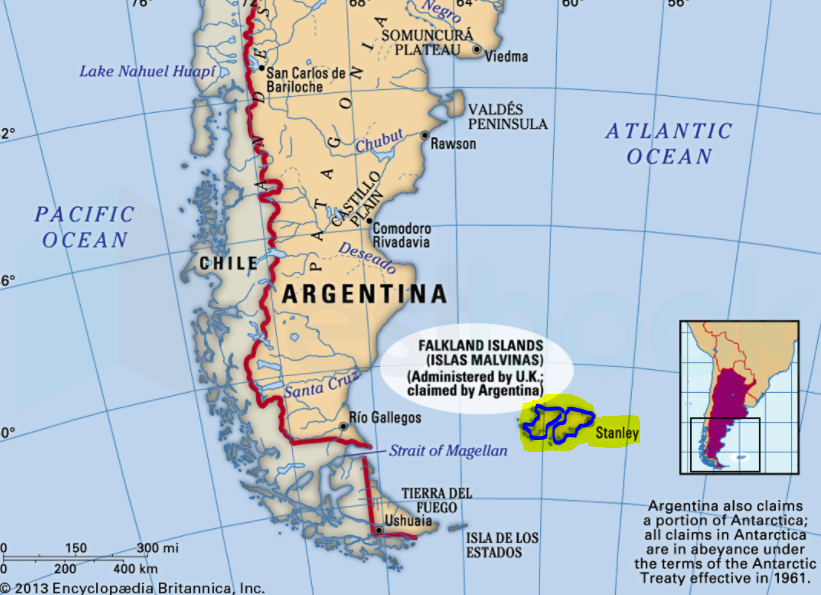
The Falkland conflict over Falkland Islands is between

  1. ((a))

    Mexico and USA

  2. ((b))

    Urugay and Argentina

  3. ((c))

    U.K and Argentina

  4. ((d))

    Urguay and Paraguay

Show Answer
Answer: ((c))

U.K and Argentina

The correct answer is U.K and Argentina.

Key Points

  • Falkland Island
  • It lies about 300 miles (480 km) northeast of the southern tip of South America.
  • The capital and major town: Stanley
  • The islands’ vegetation is low and dense in a landscape with no natural tree growth.
  • There are no longer any land mammals indigenous to the Falklands, the wild fox being extinct.

  • The conflict
  • It remains the subject of a sovereignty dispute between Britain and Argentina, who waged a brief but bitter war over the territory in 1982.
  • Argentina says it has a right to the islands, which it calls the Malvinas because it inherited them from the Spanish crown in the early 1800s.
  • Britain rests its case on its long-term administration of the Falklands and on the principle of self-determination for the islanders, who are almost all of British descent.
54

Which of the following rivers does not culminate in Bay of Bengal?

  1. ((a))

    Mahanadi

  2. ((b))

    Krishna

  3. ((c))

    Kaveri

  4. ((d))

    Narmada

Show Answer
Answer: ((d))

Narmada

The correct answer is Narmada

Key Points

  • Bay of Bengal
  • It is a sea that is part of the northeastern Indian Ocean.
  • This sea has played a pivotal role in the histories of the nations that surround it, including India, Bangladesh, Myanmar, and Indonesia.
  • It is characterised by a broad U-shaped basin with its south opening to the Indian Ocean.
  • The islands in the bay are very numerous, including the Andaman, Nicobar and Mergui groups.
  • The monsoon currents regulate the climate of the Bay of Bengal and the regions around it.
  • During the months of January to October, the current flows towards the north in a clockwise circulation pattern and is called the East Indian Current.
  • A number of large rivers—the Mahanadi, Godavari, Krishna, and Kaveri (Cauvery) on the west and the Ganges (Ganga) and the Brahmaputra on the north—flow into the Bay of Bengal.
  • Narmada flows into the Arabian Sea.
55

Which of the following is the highest peak of Aravalli hill range?

  1. ((a))

    Gurushikhar

  2. ((b))

    Dhupgarh

  3. ((c))

    Panchmarhi

  4. ((d))

    Anamudi

Show Answer
Answer: ((a))

Gurushikhar

The correct answer is Gurushikhar.

Key Points

  • Guru Shikhar
  • It is the highest point of the Aravalli Range.
  • It rises to an elevation of 1,722 meters (5,650 ft).
  • The famous Dattatreya Temple is located here.
  • Dhupgarh
  • It is the highest point in the Mahadeo Hills (Satpura Range), Madhya Pradesh, India.
  • It is located in Pachmarhi in the Hoshangabad district.
  • Pachmarhi
  • It is a hill station in Madhya Pradesh.
  • The landscape is characterized by rugged hills, forests, and deep ravines.
  • It is popularly known as 'Satpura ki Rani' (Queen of Satpura).
  • Anamudi
  • It is the highest peak in the Western Ghats.
  • Since it is located in the subtropical region, the peak does not experience any snowfall.
  • It hosts the endangered Asian elephants, Nilgiri Tahr and Gaur.
56

India's largest Tulip garden is situated at _______ in Jammu and Kashmir.

  1. ((a))

    Kokernag

  2. ((b))

    Verinag

  3. ((c))

    Srinagar

  4. ((d))

    Pahalgam

Show Answer
Answer: ((c))

Srinagar

The correct answer is Srinagar.

Key Points

  • The Indira Gandhi Memorial Tulip Garden is home to around 65 varieties of tulips.
  • It is the largest tulip garden in Asia spread over an area of about 30 hectares. It is situated on the foothills of Zabarwan Range with an overview of Dal Lake.
  • It is in Srinagar.
  • The tulip garden was opened in 2007 with the aim of boosting floriculture and tourism in the Kashmir Valley by then Chief Minister Ghulam Nabi Azad.
  • The garden is built on sloping ground in a terraced fashion consisting of seven terraces.
  • Apart from tulips, many other species of flowers like hyacinths, daffodils, and ranunculus can be spotted here.
57

Mount Girnar is situated in the ______ district of Gujarat.

  1. ((a))

    Mehsana

  2. ((b))

    Junagarh

  3. ((c))

    Kheda

  4. ((d))

    Porbandar

Show Answer
Answer: ((b))

Junagarh

The correct answer is Junagarh.

Key Points

  • Mount Girnar
  • This sacred mountain also known as Revatak Parvata, rising dramatically from the plains, is covered with Jain and Hindu temples.
  • It is in Junagarh, Gujarat.
  • It is believed to be the Nirvana bhumi of 22nd Tirthankara Lord Neminatha.
  • A temple that commemorates the Tirthankara was built in the 11th century.
  • Locals of the area say that Paduka of Guru "Dattatreya" is resting on the uppermost tonk of the Girnar.
  • As per the facts, Guru Dattatreya is the incarnation of the three Hindu gods Brahma, Vishnu, and Shiva.
  • Dattatreya Paduka is located on 9,999 steps of Girnar Hill.
58

For which metal is Bauxite exploited from the earth?

  1. ((a))

    Zinc

  2. ((b))

    Copper

  3. ((c))

    Aluminium

  4. ((d))

    Manganese

Show Answer
Answer: ((c))

Aluminium

The correct answer is Aluminium.

Key Points

  • Bauxite
  • It is a sedimentary rock with a relatively high aluminum content.
  • It is a rock formed from a reddish clay material called laterite soil.
  • It is primarily comprised of aluminum oxide compounds (alumina), silica, iron oxides, and titanium dioxide.
  • In 1821, the French geologist Pierre Berthier discovered bauxite near the village of Les Baux in Provence, southern France.
  • The ore must first be chemically processed to produce alumina (aluminum oxide).
  • Alumina is then smelted using an electrolysis process to produce pure aluminum metal.
  • Bauxites are typically classified according to their intended commercial application:  abrasive, cement, chemical, metallurgical, refractory, etc.
59

Farakka water sharing treaty is between

  1. ((a))

    India and Pakistan

  2. ((b))

    India and Nepal

  3. ((c))

    India and China

  4. ((d))

    India and Bangladesh

Show Answer
Answer: ((d))

India and Bangladesh

The correct answer is India and Bangladesh.

Key Points

  • Farakka water-sharing treaty
  • The Ganges-Brahmaputra-Meghna mega-basin is the second largest hydraulic region in the world, and one of the most densely populated regions.
  • The Ganges Treaty between India and Bangladesh is an agreement to share surface waters at the Farakka Barrage near their mutual border. It was signed in 1996.
  • The treaty is known as the Ganges Water-Sharing Treaty and regulates water distribution from Farakka Barrage over a thirty-year period.
  • ​The Farakka Barrage was created by India in 1975 to divert water from the Ganges River system.
  • The aim of the barrage was to maintain the navigability of the Kolkata port in the state of West Bengal.
  • The barrage diverts water from one of the most populated basins in the world, the Ganges-Brahmaputra-Meghna basin.
60

Which of the following does not have a nuclear power plant?

  1. ((a))

    Narora

  2. ((b))

    Kudankulam

  3. ((c))

    Kaiga

  4. ((d))

    Rampura Agucha

Show Answer
Answer: ((d))

Rampura Agucha

The correct answer is Rampura Agucha.

Key Points

  • Rampura Agucha is the second-largest zinc mine in the world with a production of 3.9 million MT in FY 2020.
  • The ongoing underground mine project is being developed with a vision of producing 5.0 million MT per annum ore production.
  • Narora Atomic Power Station is a nuclear power plant located in Narora, Bulandshahar District in Uttar Pradesh, India.
  • The Kudankulam Nuclear Power Plant is the largest nuclear power plant in India, situated in Kudankulam in Tamil Nadu. The construction began in March 2002, but the launch was delayed due to protests by local fishermen. It became operational in 2013.
  • The Kaiga Generating Station (KGS) is a nuclear power plant located in the Karwar district of Karnataka state in India. It is operated by the Nuclear Power Corporation of India (NPCIL).
61

Which of the following is not a feature of a computer?

  1. ((a))

    Speed

  2. ((b))

    Storage

  3. ((c))

    Economy

  4. ((d))

    Reliability

Show Answer
Answer: ((c))

Economy

The correct answer is Economy.

Key Points

  • Some of the characteristics of the computer system are-
  • Speed- The time taken by computers for their operations is microseconds and nanoseconds.
  • Accuracy- Computers perform calculations with 100% accuracy.
  • Diligence- A computer can perform millions of tasks or calculations with the same consistency and accuracy.
  • Versatility- It refers to the capability of a computer to perform different kinds of works with the same accuracy and efficiency.
  • Reliability- It is reliable as it gives consistent results for a similar set of data i.e., if we give the same set of input any number of times, we will get the same result.
  • Memory/Storage-  It has built-in memory called primary memory where it stores data.
  • The economy is not a feature of computers.
62

Computer software is divided mainly which categories? Choose the appropriate option

  1. ((a))

    System software

  2. ((b))

    User software

  3. ((c))

    Application software and system software

  4. ((d))

    Application software and User software

Show Answer
Answer: ((c))

Application software and system software

The correct answer is Application software and system software.

Key Points

  • There are four main types of software-
  • Application Software
  • It can be defined as end-user programs that help you perform tasks or achieve a desired outcome.
  • Application software is installed on a computer or mobile device based upon a user’s need.
  • Some examples of application software include internet browsers, a CRM tool like Hubspot, a photo-editing software like Adobe or Lightroom, or a word processing application like Microsoft Word.
  • System Software
  • It helps the user, the computer or mobile device, and an application all work together seamlessly.
  • This makes system software crucial to running any kind of application software as well as the whole computer system.
  • Programming Software
  • It is designed for end-users, and system software is designed for computers or mobile devices, programming software is for computer programmers and developers who are writing code.
  • These are programs that are used to write, develop, test, and debug other software programs.
  • Driver Software
  • It operates and controls devices that are plugged into a computer.
  • These drivers make it possible for devices to perform their necessary functions.
63

Which of the following is not a part operation of instruction cycle?

  1. ((a))

    Fetch

  2. ((b))

    Indirect

  3. ((c))

    Execute

  4. ((d))

    Memory

Show Answer
Answer: ((d))

Memory

The correct answer is Memory.

Key Points

  • Memory is not a part of the instruction cycle.
  • A program residing in the memory unit of a computer consists of a sequence of instructions.
  • In a basic computer, each instruction cycle consists of the following phases:
  • Fetch the instruction from memory.
  • Decode the instruction.
  • Read the effective address from memory.
  • Execute the instruction.
  • Fetch
  • It is the first of two stages involved in computer processing.
  • The processor operates by processing instructions in what is called the "fetch/execute cycle."
  • The processor fetches (reads from memory) an instruction and then, depending on the instruction, executes it.
  • Indirect addressing is a scheme in which the address specifies which memory word or register contains not the operand but the address of the operand.
  • Execute
  • It is a term that describes the process of running a computer software program, script, or command.
  • For example, each time you open your Internet browser, you are executing the program.
64

The system bus is separated into functional groups, Choose the appropriate option from the following:

  1. ((a))

    Data bus, Address bus and Control bus

  2. ((b))

    Star bus, Mesh bus and Data Bus

  3. ((c))

    Control bus, Data bus and Star bus

  4. ((d))

    Address bus, Star bus and Mesh bus

Show Answer
Answer: ((a))

Data bus, Address bus and Control bus

The correct answer is Data bus, Address bus and Control bus.

Key Points

  • System bus
  • It is a single computer bus that connects the major components of a computer system.
  • It is a pathway composed of cables and connectors used to carry data between a computer microprocessor and the main memory.
  • It works by combining the functions of the three main buses: namely, the data, address, and control buses.
  • The system bus combines the functions of the three main buses, which are as follows-
  • The control bus carries the control, timing, and coordination signals to manage the various functions across the system.
  • The address bus is used to specify memory locations for the data being transferred.
  • The data bus, which is a bidirectional path, carries the actual data between the processor, the memory, and the peripherals.
  • The design of the system bus varies from system to system and can be specific to a particular computer design or may be based on an industry standard.
  • The size of a bus, also known as its width, determines how much data can be transferred at a time and indicates the number of available wires.
  • A 32-bit bus, for example, refers to 32 parallel wires or connectors that can simultaneously transmit 32 bits.
65

For converting raw input data into information, all computer systems perform following basic process:

  1. ((a))

    Input - Store - Process - Output-Control

  2. ((b))

    Input - Process

  3. ((c))

    Process - control - Output

  4. ((d))

    Input - Store - Output

Show Answer
Answer: ((a))

Input - Store - Process - Output-Control

The correct answer is Input - Store - Process - Output-Control.

Key Points

  • All computer systems perform the following five basic operations for converting raw input data into useful information-
  1. Inputting: Process of entering data and instructions into a computer system.
  2. Storing: Saving data and instructions to make them readily available for initial or additional processing as and when required.
  3. Processing: Performing arithmetic operations (add, subtract, multiply, divide, etc.) or logical operations (comparisons like equal to, less than, greater than, etc.) on data to convert them into useful information.
  4. Outputting: Process of producing useful information or results for a user, such as printed reports or visual displays.
  5. Controlling: Directing the manner and sequence in which the above operations are performed.
66

If a computer has more than one processor then it is known as

  1. ((a))

    Uniprocessor

  2. ((b))

    Multiprocessor

  3. ((c))

    Multithreaded

  4. ((d))

    Multiprogramming

Show Answer
Answer: ((b))

Multiprocessor

The correct answer is Multiprocessor.

Key Points

  • Multiprocessor
  • It is a computer system with two or more central processing units (CPUs) share full access to a common RAM.
  • The main objective of using a multiprocessor is to boost the system’s execution speed, with other objectives being fault tolerance and application matching.
  • A multiprocessor is regarded as a means to improve computing speeds, performance, and cost-effectiveness, as well as to provide enhanced availability and reliability.
  • A symmetric Multiprocessor is a multiprocessor in which all processors are connected to each other with peer-to-peer relationship nature, it means no master & slave relation.
  • Asymmetric Multiprocessor is a multiprocessor in which every processor is allotted predefined tasks, and the master processor has the power for controlling the entire system.
  • Examples for Symmetric Multiprocessor – Windows NT, Solaris, Digital UNIX, OS/2 & Linux.
  • Examples for Asymmetric Multiprocessor – SunOS Version 4, IOS
67

Which of the following terms is defined by "A step by step description of how to arrive at a solution to a given problem"?

  1. ((a))

    Algorithm

  2. ((b))

    Program

  3. ((c))

    Software

  4. ((d))

    Hardware

Show Answer
Answer: ((a))

Algorithm

The correct answer is Algorithm.

Key Points

  • The answer to this question can be Algorithm and Program too. However, the general consensus is that Algorithm is the right answer to this.
  • Algorithm
  • It is a well-defined procedure that allows a computer to solve a problem.
  • It is also a step-by-step description of how to arrive at a solution to a given problem.
  • Program
  • It is a collection of instructions that can be executed by a computer to perform a specific task.
  • Programs are created using specific programming languages such as C++, Python, and Ruby.
  • These are high-level programming languages that are human-readable and writable.
  • Software
  • It comprises the entire set of programs, procedures, and routines associated with the operation of a computer system.
  • Hardware
  • It is the physical components that a computer system requires to function.
  • It encompasses everything with a circuit board that operates within a PC or laptop.
68

From the following, does the actual instruction execute during data processing?

  1. ((a))

    Arithmetic logic unit

  2. ((b))

    Information unit

  3. ((c))

    Storage unit

  4. ((d))

    Output unit

Show Answer
Answer: ((a))

Arithmetic logic unit

The correct answer is Arithmetic logic unit.

Key Points

  • Arithmetic logic unit
  • It is a main component of the central processing unit.
  • It performs arithmetic and logic operations.
  • It has the ability to perform all processes related to arithmetic and logic operations such as addition, subtraction, and shifting operations, including Boolean comparisons.
  • The actual instruction is executed during data processing.
  • A Byte is the basic unit of information in computer storage and processing.
  • A Memory unit is the amount of data that can be stored in the storage unit.
  • After processing data, it is converted into a format that humans can understand. After conversion, the output units display this data to users.
69

Currently which generation of computers are we using?

  1. ((a))

    2nd

  2. ((b))

    5th

  3. ((c))

    6th

  4. ((d))

    3rd

Show Answer
Answer: ((b))

5th

The correct answer is 5th.

Key Points

  • Second Generation
  • It is a computer that uses discrete transistors instead of vacuum tubes.
  • In this generation, transistors were used that were cheaper, consumed less power, more compact in size, more reliable, and faster than the first-generation machines made of vacuum tubes.
  • Fifth Generation
  • The period of fifth-generation is the 1980-till date.
  • In the fifth generation, VLSI technology became ULSI (Ultra Large Scale Integration) technology, resulting in the production of microprocessor chips having ten million electronic components.
  • This generation is based on parallel processing hardware and AI (Artificial Intelligence) software.
  • Sixth Generation
  • These computers are called intelligent computers based on artificial intelligence or artificial brains.
  • Complex problem solving is possible and researches are ongoing to find ways to solve the problems more efficiently and easily.
  • Third Generation
  • It is marked by the use of Integrated Circuits (IC's) in place of transistors.
  • In this generation, remote processing, time-sharing, multiprogramming operating systems were used.
70

Which device among the following is used for sending digital data over a phone line?

  1. ((a))

    USB

  2. ((b))

    Scanner

  3. ((c))

    Printer

  4. ((d))

    Modem

Show Answer
Answer: ((d))

Modem

The correct answer is Modem.

Key Points

  • USB
  • It is Universal Serial Bus.
  • It is a standard type of connection for many different kinds of devices.
  • USB ports and cables are used to connect hardware such as printers, scanners, keyboards, etc.
  • Scanner
  • It is a device that captures images from photographic prints, posters, magazine pages, and similar sources for computer editing and display.
  • Printer
  • It is an output device.
  • It accepts text and graphic output from a computer and transfers the information to paper.
  • Modem
  • ​​The modem receives information from ISP through the phone lines, optical fiber, or coaxial cable in the home (depending on your service provider) and converts it into a digital signal.
  • It is used to send digital data over a phone line.
71

The computer system can store any kind data in the form of 0's and 1's which is known as 

  1. ((a))

    Binary number system

  2. ((b))

    Number system

  3. ((c))

    Text number system

  4. ((d))

    Number unit

Show Answer
Answer: ((a))

Binary number system

The correct answer is the Binary number system.

  • The computer system can store any kind of data in the form of 0's and 1's which is known as the Binary number system.

Key Points

  • Binary number system a high is symbolically represented by a ‘1’ and a low is represented by a ‘0’.
  • The 1s and 0s are known as binary digits, or in short ‘bits’.
  • Computers always work with bits.
  • Every bit can take one of two possible values, the total number of combinations possible, using eight bits, the computer can represent 256 different symbols.
  • This is enough to cover our entire range of alphabets, numbers, and other special characters like $, @, +, etc.
  • Such a combination of eight bits is called a byte.
  • The basic elements of computers that can signal a 1 or 0 are called flip-flops.
  • It is a simple electrical device and can either be a ‘0’ or a ‘1’, which means that the flow of current is either inward or outward.
72

BCD stands for

  1. ((a))

    Binary Coded Decimal

  2. ((b))

    Bit Control Decimal

  3. ((c))

    Binary Code Device

  4. ((d))

    Byte Coded Data

Show Answer
Answer: ((a))

Binary Coded Decimal

The correct answer is Binary Coded Decimal.

  • BCD stands for Binary Coded Decimal.

Key Points

  • Binary Coded Decimal (BCD):
  • BCD is the storage of numbers in which each decimal digit is converted into a binary number and stored in a single 8-bit byte.
  • BCD uses more storage for numbers than binary encoding.
  • The Binary Coded Decimal method codes each decimal digit in binary and stores it in its own byte.
  • This encoding can be done in 4-bit or 8-bit (usually 4-bit is preferred).
  • It is a fast and efficient system that converts decimal numbers to binary numbers as compared to the existing binary system.
  • These are commonly used in digital displays where the manipulation of data is a lot of work.
73

Auxiliary memory is popularly known as

  1. ((a))

    Primary Storage

  2. ((b))

    Secondary Storage

  3. ((c))

    Random Access Storage Device

  4. ((d))

    Processing Unit

Show Answer
Answer: ((b))

Secondary Storage

The correct answer is Secondary Storage.

  • Auxiliary memory is popularly known as Secondary Storage.

Key Points

  • Auxillary memory:
  • These units are among computer peripheral equipment.
  • Many times they are also referred to as secondary storage.
  • They have slower access rates for greater storage capacity and data stability.
  • This memory holds programs and data for future use and it is nonvolatile.
  • It is used to store inactive programs and to archive data.

Additional Information

  • Primary storages are the key component of a computer system that enables it to function. Its examples are random access memory (RAM), read-only memory (ROM) and cache.
  • The RAM is a read/write memory.
  • The CPU can change the contents of the RAM at any time.
  • RAM is volatile.
  • Read-Only Memory (ROM) is non-volatile and retains its information even after the power is turned off.
74

Flash drive is popularly known as

  1. ((a))

    Microprocessor

  2. ((b))

    RAM

  3. ((c))

    ROM

  4. ((d))

    Pen drive

Show Answer
Answer: ((d))

Pen drive

The correct answer is Pen drive.

  • Flash drive is popularly known as a pen drive.

Key Points

  • A pen drive is also called a USB flash drive.
  • It is a data storage device that includes flash memory with an integrated USB interface.

Additional Information

  • The RAM is a read/write memory.
  • The CPU can change the contents of the RAM at any time.
  • RAM is volatile.
  • Read-Only Memory (ROM) is non-volatile and retains its information even after the power is turned off.
75

WORM stands for

  1. ((a))

    Write Once, Read Many

  2. ((b))

    Write Read Memory

  3. ((c))

    Wipe Only, Read Memory

  4. ((d))

    Read Write Memory

Show Answer
Answer: ((a))

Write Once, Read Many

The correct answer is Write Once, Read Many.

  • WORM stands for Write Once, Read Many.

Key Points

  • WORM is an acronym for write once, read many.
  • It is an optical disk technology that allows users to write data onto a disk just once.
  • After writing the data, it becomes permanent and can be read any number of times.
  • The data is stored on WORM devices.
  • The data stored in these devices are in a non-rewritable format to prevent users from accidentally erasing or altering sensitive information.
76

Choose the compile-time error from the following options:

  1. ((a))

    Logic error

  2. ((b))

    Syntax error

  3. ((c))

    Application error

  4. ((d))

    Testing error

Show Answer
Answer: ((b))

Syntax error

The correct answer is a Syntax error.

  • The syntax error is a compile-time error.

Key Points

  • Compile Time Error:
  • Those errors prevent the code from running due to an incorrect syntax such as a missing semicolon at the end of a statement or a missing bracket, class not found, etc.
  • These are detected by the java compiler and an error message is displayed on the screen while compiling.
  • They are sometimes also referred to as Syntax errors.
  • These errors are easy to spot and rectify.
  • Syntax errors represent grammatical errors in the use of the programming language.

Additional Information

  • A logic error is an error in a program’s source code that leads to an unanticipated and erroneous behaviour of the program.
  • An application error occurs when a web-based or desktop application fails to work according to plan.
77

Convert the decimal fraction number 0.8125 into its binary equivalent.

  1. ((a))

    0.1111

  2. ((b))

    0.111

  3. ((c))

    0.0011

  4. ((d))

    0.1101

Show Answer
Answer: ((d))

0.1101

Concept:

Decimal to binary: (Fractional part)

  • Take the decimal numbers as the multiplicand.
  • Multiply this number by 2 (2 is the base of binary so multiplier here).
  • Store the value of the integer part of the result in an array (it will be either 0 or 1 because of multiplier 2).
  • Repeat the above two steps until the number became zero.
  • Write these resultant integer part


Calculation:

Here, decimal fraction: 0.8125

MultiplicationResultant integer part (R)
0.8125 x 2 = 1.6251
0.625 x 2 = 1.251
0.25 x 2 = 0.50
0.5 x 2 = 11


Now, write these resultant integer parts, this will be 0.1101 which is the equivalent binary fractional number of decimal fractional 0.8125

∴ 0.8125 can be written as 0.1101 in binary.

Important Points

Decimal to Binary:

  • Take the decimal number as a dividend.
  • Divide the number by 2.
  • Get the integer quotient for the next iteration.
  • Get the remainder (it will be either 0 or 1 because of divisor 2).
  • Repeat the steps until the quotient is equal to 0
  • Write the remainders in reverse order (which will be the equivalent binary number of a given decimal number).
78

Convert the decimal number 759 into its equivalent octal number.

  1. ((a))

    1365

  2. ((b))

    1752

  3. ((c))

    1367

  4. ((d))

    1771

Show Answer
Answer: ((c))

1367

The correct answer is 1367.

  • The equivalent octal number of 759 is 1367.

Key Points

  • To convert decimal number 759 to the octal following are the steps:
  • Divide 759 by 8 keeping note of the quotient and the remainder.
  • Continue dividing the quotient by 8 until you get a quotient of zero.
  • Later, write out the remainders in the reverse order to get the octal equivalent of decimal number 759.
  • 759 / 8 = 94 with remainder 7
  • 94 / 8 = 11 with remainder 6
  • 11 / 8 = 1 with remainder 3
  • 1 / 8 = 0 with remainder 1
  • Hence, the number is 1367.
79

Data entry cannot be captured by which of the following options?

  1. ((a))

    OCR

  2. ((b))

    OMR

  3. ((c))

    COM

  4. ((d))

    MICR

Show Answer
Answer: ((c))

COM

The correct answer is COM.

  • Data entry cannot be captured by COM.

Key Points

  • Data entry cannot be performed by COM.
  • The process of entering data into a computerized database or spreadsheet is called data entry.
  • OCR, OMR, MICR, and Voice-recognition systems are used for data entry.
  • Optical character recognition (OCR):
  • It is a technology that recognizes text within a digital image, images like typed, handwritten, or printed text into machine-encoded text, whether from a scanned document, a photo of a document, a scene photo, or from subtitle text superimposed on an image.
  • It is commonly used to recognize text in scanned documents and images.
  • ​Optical mark recognition (OMR):
  • It is the method of capturing human-marked data from document forms such as surveys and tests.
  • Magnetic ink character recognition (MICR):
  • It is a technology used primarily to identify and process cheques.
80

______ feature of MS Word helps to create a list in a document.

  1. ((a))

    Word Art

  2. ((b))

    Scaling

  3. ((c))

    Bullets and Numbering

  4. ((d))

    Word Wrap

Show Answer
Answer: ((c))

Bullets and Numbering

The correct answer is Bullets and Numbering.

  • Bullets and Numbering feature of MS Word help to create a list in a document.

Key Points

  • Bullets and Numbering are used to create a list in documents in MS word.
  • To create a list in MS Word:
  • Select the text required to format as a list.
  • Click on the Bullets or Numbering drop-down option on the Home tab.
  • Select the bullet or numbering style required, and it will appear in the document.


Additional Information

  • Word wrap is a word processing feature that automatically transfers a word that has no insufficient space from the end of one line of text to the beginning of the next.
  • Scaling in MS Word is another text effect to make the text larger or smaller.
  • WordArt is used to create decorative effects to the text styles
81

The Kyoto Protocol is related to 

  1. ((a))

    Trade

  2. ((b))

    Climate change

  3. ((c))

    Security

  4. ((d))

    Extradition

Show Answer
Answer: ((b))

Climate change

The correct answer is Climate change.

  • The Kyoto Protocol is related to Climate change.

Key Points

  • Kyoto Protocol:
  • It is an international treaty to reduce greenhouse gas emissions.
  • It applies to 6 greenhouse gases i.e. carbon dioxide, methane, nitrous oxide, hydrofluorocarbons, perfluorocarbons, sulfur hexafluoride.
  • It was adopted in Kyoto, Japan in December 1997.
  • The protocol came into force in February 2005.
  • Kyoto Protocol is an extension to the 1992 UNFCCC.

Additional Information

ConventionYear of Establishment
Ramsar Convention1971
CITES1973
Bonn Convention1979
Montreal Protocol1987
Vienna Convention1985
Basel Convention1989
Cartagena Protocol on Biosafety2000
Stockholm Convention2001
Nagoya Protocol2010
COP242018
82

Which legendary comic writer who created famous characters like Spiderman, Hulk, passed away recently at the age of 95?

  1. ((a))

    Disney

  2. ((b))

    Friz Freleng

  3. ((c))

    Matt Groening

  4. ((d))

    Stan Lee

Show Answer
Answer: ((d))

Stan Lee

The correct answer is Stan Lee.

  • Stan Lee, who created famous characters like Spiderman, Hulk, passed away recently at the age of 95.

Key Points

  • Stan Lee was a comic book writer, editor, publisher, and producer.
  • He created superheroes like Spider-Man, the X-Men, Iron Man, Thor, the Hulk, Ant-Man, the Wasp, the Fantastic Four, Black Panther, Daredevil, Doctor Strange, etc.
  • He passed away on 12 November 2018 due to heart failure.

Additional Information

  • Friz Freleng is an animator, cartoonist, director, producer, and composer.
  • He is the creator of Looney Tunes.
  • Matthew Abram Groening is a cartoonist, writer, producer, and animator.
  • He is the creator of The Simpsons, Futurama, and Disenchantment.
  • Walter Elias Disney was an entrepreneur, animator, writer, voice actor, and film producer. 
  • He created Mickey Mouse.
83

In which of the following cities of Turkey, was a big airport inaugurated recently in 2018?

  1. ((a))

    Istanbul

  2. ((b))

    Ankara

  3. ((c))

    Diyarbakir

  4. ((d))

    Antalya

Show Answer
Answer: ((a))

Istanbul

The correct answer is Istanbul.

  • In Istanbul, Turkey a big airport was inaugurated in 2018.

Key Points

  • Istanbul Airport is the main international airport serving Istanbul, Turkey.
  • It was inaugurated in October 2018.
  • It is located in the Arnavutköy district.

Additional Information

  • Turkey:
  • Capital: Ankara
  • Currency: Turkish lira
  • President: Recep Tayyip Erdoğan.
84

The 12th ASEAN Defence Ministers' Meet was held at ________ In October 2018.

  1. ((a))

    Jakarta

  2. ((b))

    Kuala Lumpur

  3. ((c))

    Singapore

  4. ((d))

    Bangkok

Show Answer
Answer: ((c))

Singapore

The correct answer is Singapore.

  • The 12th ASEAN Defence Ministers' Meet was held in Singapore In October 2018.

Key Points

  • 12th ASEAN Defence Ministers' Meet:
  • The meet was held in Singapore on October 19-20, 2018.
  • India was represented by the then Defence Minister Nirmala Sitharaman.
  • It was also the 5th ADMM-Plus meet.
  • The meeting was also attended by the defence ministers from Australia, China, Japan, New Zealand, South Korea, Russia, and the U.S.A.

Additional Information

  • The 8th ASEAN Defence Ministers Meeting (ADMM) Plus meet was held in June 2021.
  • India was represented by ​Defence Minister Rajnath Singh.
  • Association of Southeast Asian Nations (ASEAN)
  • It is a regional organization that was established to promote political, social stability and peace among the Asia-Pacific’s post-colonial states.
  • Its motto is “One Vision, One Identity, One Community”.
  • 8th August is observed as ASEAN Day.
  • The Secretariat of ASEAN is in Indonesia, Jakarta.
85

Which of the following is not a European Union (EU) country?

  1. ((a))

    Austria

  2. ((b))

    Turkey

  3. ((c))

    Belgium

  4. ((d))

    Finland

Show Answer
Answer: ((b))

Turkey

The correct answer is Turkey.

  • Turkey is not a European Union (EU) country.

Key Points

  • Countries in European Union are Austria, Belgium, Bulgaria, Croatia, Republic of Cyprus, Czech Republic, Denmark, Estonia, Finland, France, Germany, Greece, Hungary, Ireland, Italy, Latvia, Lithuania, Luxembourg, Malta, Netherlands, Poland, Portugal, Romania, Slovakia, Slovenia, Spain and Sweden.
  • Hence, Turkey is not a European Union (EU) country.

Additional Information

  • The European Union is a political and economic union of 27 member states that are located primarily in Europe. The union has a total area of 4,233,255.3 km² and an estimated total population of about 447 million.
  • Founded: 1 November 1993, Maastricht, Netherlands
  • Founders: Germany, Italy, France, Netherlands, Belgium, Luxembourg
  • Member states: 27 states
86

In December 2018, which country has recently banned Indian currency notes Rs 100 denomination?

  1. ((a))

    Malaysia

  2. ((b))

    UAE

  3. ((c))

    Myanmar

  4. ((d))

    Nepal

Show Answer
Answer: ((d))

Nepal

The correct answer is Nepal.

  • In December 2018, Nepal banned Indian currency notes Rs 100 denomination.

Key Points

  • The Government of Nepal banned Indian currency notes Rs 100 denomination.
  • The Government also asked its citizens to refrain from keeping new Indian notes of Rs 2,000, Rs 500, and Rs 200 denominations.
  • The Nepal government has not notified legalization of new Indian notes.

Additional Information

Indian currency and motifs

DenominationObverse
INR 5Tractor
INR 10Sun Temple, Konark
INR 20Ellora Caves
INR 50Hampi
INR 100Rani ki vav
INR 200Sanchi Stupa
INR 500Red Fort
INR 2000Mangalyaan
87

Who was sworn in as the Chief Minister of Rajasthan in the December, 2018 Vidhan Sabha elections?

  1. ((a))

    Kamal Nath

  2. ((b))

    K. Chandrasekhar Rao

  3. ((c))

    Bhupesh Baghel

  4. ((d))

    Ashok Gehlot

Show Answer
Answer: ((d))

Ashok Gehlot

The correct answer is Ashok Gehlot.

  • Ashok Gehlot was sworn in as the Chief Minister of Rajasthan in the December 2018 Vidhan Sabha elections.

Key Points

  • Ashok Gehlot was sworn in as the 14th Chief Minister of Rajasthan.
  • He is a Member of Parliament from the Sardarpura constituency of Jodhpur.
  • He replaced Vasundhara Raje as the Chief Minister of Rajasthan.

Additional Information

  • As in September 2021,
  • Kamal Nath was the 18th Chief Minister of Madhya Pradesh.
  • Shivraj Singh Chouhan is the current Chief Minister of Madhya Pradesh.
  • K. Chandrasekhar Rao is the current Chief Minister of Telangana.
  • Bhupesh Baghel is the current Chief Minister of Chhattisgarh.
88

Out of the following cricketers, who wrote his autobiography recently titled "281 and Beyond"?

  1. ((a))

    Yuvraj Singh

  2. ((b))

    V.V.S laxman

  3. ((c))

    Sachin Tendulkar

  4. ((d))

    Harbhajan Singh

Show Answer
Answer: ((b))

V.V.S laxman

The correct answer is V.V.S Laxman.

  • V.V.S Laxman wrote his autobiography recently titled 281 and Beyond.

Key Points

  • V.V.S Laxman:
  • His full name is Vangipurapu Venkata Sai Laxman.
  • His nickname is Very Very Special(VVS).
  • He is popularly called the 'God of 4th Innings'.
  • His autobiography is 281 and Beyond.

Additional Information

  • The Test of My Life is the biography of Yuvraj Singh.
  • Playing It My Way is the autobiography of Sachin Tendulkar.
89

Who was appointed as the Chairman of UPSC in November, 2018?

  1. ((a))

    Arvind Saxena

  2. ((b))

    Sunil Arora

  3. ((c))

    A.M.Naik

  4. ((d))

    M.P.Poonia

Show Answer
Answer: ((a))

Arvind Saxena

The correct answer is Arvind Saxena.

  • Arvind Saxena was appointed as the Chairman of UPSC in November 2018.

Key Points

  • Union Public Service Commission:
  • It comes under Articles 315 to 323 in Part XIV of the Constitution.
  • It consists of a chairman and other members appointed by the president of India.
  • The commission also consists of nine to eleven members including the chairman.
  • The chairman and members of the Commission hold office for a term of 6 years or 65 years whichever is earlier.
  • No qualifications have been prescribed for the Commission’s membership.
  • Except for that one-half of the members of the Commission should be such persons who have held office for at least ten years either under the Government of India or under the government of a state.
  • The President can remove the chairman or any other member of UPSC.
  • Arvind Saxena was appointed as the Chairman of UPSC in November 2018.

Additional Information

  • Dr Manoj Soni is the current chairman of the UPSC (September 2022).
90

Marry Kom scripted history by clinching a record_______ World Championship Boxing Gold medal in the light flyweight 48 kg category

  1. ((a))

    fourth

  2. ((b))

    fifth

  3. ((c))

    sixth

  4. ((d))

    seventh

Show Answer
Answer: ((c))

sixth

The correct answer is sixth.

  • Marry Kom scripted history by clinching a record sixth World Championship Boxing Gold medal in the light flyweight 48 kg category.

Key Points

  • M.C. Mary Kom:
  • Her full name is Mangte Chungneijang Mary Kom Oly.
  • She won her sixth World Championship Boxing Gold medal in the light flyweight 48 kg category, for which she defeated Ukraine’s Hanna Okhota.
  • She is the only female boxer to have won a medal in each one of the first seven World Championships.
  • She is the only boxer (both in the male and female category) to win eight World Championship medals.

Important Points

  • Terminologies associated with Boxing are Knockout, Round, Ring Stoppage, Punch, Upper-cut, Kidney Punch, Timing, Foot Work, etc.
91

Which movie won the Golden Peacock Award in the International Film Festival of India held in November 2018?

  1. ((a))

    Donbass

  2. ((b))

    Ee Ma Yau

  3. ((c))

    When the Tress Fall 

  4. ((d))

    Aga

Show Answer
Answer: ((a))

Donbass

The correct answer is Donbass.

  • Donbass won the Golden Peacock Award in the International Film Festival of India held in November 2018.

Key Points

  • Donbass won the coveted Golden Peacock Award at the 49th International Film Festival of India (IFFI).
  • The movie is directed by Sergei Loznitsa.

Additional Information

  • 49th International Film Festival of India:
  • The Film Festival was held in Goa.
  • Two new sections such as Sketch on Screen, A Retrospective of Masters were inculcated.
  • 212 films were being showcased during the event.
  • Israel was the country of focus.
  • Best Director award was given to Lijo Jose Pellissery for Ee.Ma.Yau.
  • IFFI Best Actor Award (Male) Silver Peacock Award was given to Chemban Vinod Jose for Ee.Ma.Yau.
  • IFFI Best Actor Award (Female): Silver Peacock Award was given to Anastasiia Pustovit for When the Trees Fall.
92

Which is the first State to launch Pan India single emergency number "112", in November 2018?

  1. ((a))

    Himachal Pradesh

  2. ((b))

    Kerala

  3. ((c))

    Telangana

  4. ((d))

    Sikkim

Show Answer
Answer: ((a))

Himachal Pradesh

The correct answer is Himachal Pradesh.

  • Himachal Pradesh is the first State to launch Pan India single emergency number "112", in November 2018.

Key Points

  • Himachal Pradesh became the first state to launch a pan-India single emergency number '112'.
  • All kinds of immediate help in urgent matters can be sought at this number.
  • An Emergency Response Centre (ERC) has been established in Shimla along with 12 district command centers (DCCs) that cover the entire state.
  • The ERC has been integrated with emergency services like police (100), fire (101), health (108), and women (1090) helpline numbers to provide emergency services through the emergency number 112.
  • It also includes a 112 India mobile app that is integrated with a panic button for smartphones and state Emergency Response Support System (ERSS) websites for ease of citizen in availing immediate assistance.
93

Aahana was born on 18th of April, 1971, which was a Sunday. What shall be the day she becomes exactly 10 years old?

  1. ((a))

    Thursday

  2. ((b))

    Saturday

  3. ((c))

    Sunday

  4. ((d))

    Monday

Show Answer
Answer: ((b))

Saturday

Aahana was born on 18th of April, 1971, which was a Sunday.

The year she becomes exactly 10 years old = 1971 + 10 = 1981

Day she becomes exactly 10 years old = 18th of April, 1981

As an ordinary year has 1 odd day and a leap year has 2 odd days.

So, day on:

18th of April, 1971 → Sunday 

18th of April, 1972 → Sunday + 2 = Tuesday

18th of April, 1973 → Tuesday + 1 = Wednesday

18th of April, 1974 → Wednesday + 1 = Thursday

18th of April, 1975 → Thursday + 1 = Friday

18th of April, 1976 → Friday + 2 = Sunday

18th of April, 1977 → Sunday + 1 = Monday

18th of April, 1978 → Monday + 1 = Tuesday

18th of April, 1979 → Tuesday + 1 = Wednesday

18th of April, 1980 → Wednesday + 2 = Friday

18th of April, 1981 → Friday + 1 = Saturday

Shortcut Method:

Number of odd days between 18th of April, 1971 to 18th of April, 1981 = 2 + 1 + 1 + 1 + 2 + 1 + 1 + 1 + 2 + 1 = 13

13 when divided by 7, leaves 6 as remainder.

Sunday + 6 = Saturday

Hence, 'Saturday' is the correct answer.

94

In a code language BIGGEST is written BGGST; KINGSTON is written as KNGSTN TRICKS is written as TRCKS. how was CRYPTS be written in the same language?

  1. ((a))

    CRYPTS

  2. ((b))

    CRPTS

  3. ((c))

    CRPT

  4. ((d))

    CRYPT

Show Answer
Answer: ((a))

CRYPTS

According to the question:

BIGGEST → BGGST

KINGSTON → KNGSTN

TRICKS → TRCKS

To form the code of a word, the vowels are omitted from the words.

In the word CRYPTS, there are no vowels. Thus, the code of the word CRYPTS will be CRYPTS.

Hence, "CRYPTS" is the code for the word 'CRYPT'.

95

In a code language CONTROLLING is write as GNILLORTNOC; VOLLEYBALLS is written as SLLABYELLOV, how would SANCTUARIES be written in the sample language?

  1. ((a))

    SANCTURIES

  2. ((b))

    SEIRUATCNAS

  3. ((c))

    SEIRAUTCNAS

  4. ((d))

    SEIRAUCTNAS

Show Answer
Answer: ((c))

SEIRAUTCNAS

According to the question:

CONTROLLING → GNILLORTNOC

VOLLEYBALLS → SLLABYELLOV

To form the code of a word, the order of the letters of a word is reversed.

Thus, to get the code of SANCTUARIES, we would reverse the order of the letters of the word.

SANCTUARIES → SEIRAUTCNAS

Hence, "SEIRAUTCNAS" is the code for the word SANCTUARIES.

96

In a code language GODSENT is written FNCRDMS; JOKING is written as INJHMF how would BRAZENLY be written in same language?

  1. ((a))

    AQZYDMKX

  2. ((b))

    AQAYDMKX

  3. ((c))

    AQZYMDKX

  4. ((d))

    ASZYMDKX

Show Answer
Answer: ((a))

AQZYDMKX

The position of letter according to the English alphabet series:

GODSENT → FNCRDMS

JOKING → INJHMF

The code of a word is formed by replacing each letter of the word with its predecessor as per the English alphabetical series.

Similarly,

we can get the code for the word BRAZENLY,

Hence, the correct answer is "AQZYDMKX".

97

Ranjeeta is walking along the seaside one clear bright sunny morning. If her shadow falling towards her right hand side, her back is facing which of the given directions?

  1. ((a))

    East

  2. ((b))

    South

  3. ((c))

    West

  4. ((d))

    North

Show Answer
Answer: ((d))

North

The sun rises from the east. Thus, the shadow always falls in the west.

Now, Ranjeeta's shadow falls to her right, implies, she must be walking towards the south. It further implies that her back must be facing the north.

Hence, Ranjeeta's back is facing the "north".

98

Three of the following four numerals are alike in a certain way so form a group. which is the one that does not belong to that group?

1

125000

681400

2197

  1. ((a))

    1

  2. ((b))

    2197

  3. ((c))

    125000

  4. ((d))

    681400

Show Answer
Answer: ((d))

681400

Among the given numbers, except for 681400, all are perfect cubes as shown below:

13 = 1

503 = 125000

133 = 2197

Hence, "681400" does not belong to the group as it is not a perfect cube.

99

In a code language, BEASTLY is written as 84; GIVEAWAY is written as 93. How would XEREXES be written in the same language?

  1. ((a))

    103

  2. ((b))

    99

  3. ((c))

    100

  4. ((d))

    101

Show Answer
Answer: ((c))

100

According to the question,

BEASTLY = 84

GIVEAWAY = 93

The code is determined by adding the place value of the letters in the word as per the English alphabetical series.

B(2) + E(5) + A(1) + S(19) + T(20) + L(12) + Y(25) = 84

G(7) + I(9) + V(22) + E(5) + A(1) + W(23) + A(1) + Y(25) = 93

Similarly, to get the code for XEREXS

X(24) + E(5) + R(18) + E(5) + X(24) + E(5) + S(19) = 100

Hence, "100" is the code for the word XEREXS

100

Instructions: Given below is a situation, followed by four choices, namely, A, B, C, D. You need to choose your response in the given situation by marking any one of the four responses. Shailendra is on his way to Delhi from the Mathura train. On the way, he sees a camel being mistreated by its handler. What should Shailendra do?

  1. ((a))

    Continue with his journey and hope that the ill treatment of the camel shall be stopped.

  2. ((b))

    Pull the chain, stop the train, get down and hand over the handler to the nearby Police station.

  3. ((c))

    Take out a procession after reaching Delhi against the way animals get treated in India,

  4. ((d))

    Call up the helpline for the organisation that deals with such mistreatment against animals, tell them the location and facts of the matter from his mobile phone with a resolve that he shall be ready to help in the matter once he completes his journey.

Show Answer
Answer: ((d))

Call up the helpline for the organisation that deals with such mistreatment against animals, tell them the location and facts of the matter from his mobile phone with a resolve that he shall be ready to help in the matter once he completes his journey.

According to the question, Shailendra is on his way to Delhi from the Mathura train. On the way, he sees a camel being mistreated by its handler.

Course of actions:

1) Continue with his journey and hope that the ill treatment of the camel shall be stopped → It is not correct as in this case, Shailendra is leaving everything to the camel's fate.

2) Pull the chain, stop the train, get down and hand over the handler to the nearby Police station → It is not correct as pulling the chain and stopping a train is an offense in itself.

3) Take out a procession after reaching Delhi against the way animals get treated in India → It is not correct as by the time Shailendra would reach Delhi, the camel would have suffered.

4) Call up the helpline for the organisation that deals with such mistreatment against animals, tell them the location and facts of the matter from his mobile phone with a resolve that he shall be ready to help in the matter once he completes his journey → It is correct as the organisation responsible for wildlife protection would have taken the appropriate action immediately based on Shailendra's call.

Hence, "option (4)" is correct.

101

Instructions :Two statements I and II followed by two conclusions I and II.

Statement I:

All weeks have seven days

Statement II:

Wednesday lies in the middle of the week.

Conclusion I: 

The following week shall have six days.

Conclusion II:

Thursday shall not lie exactly in the middle of the following week.

Mark your answer as

  1. ((a))

    if only conclusion I follows

  2. ((b))

    if only conclusion II follws

  3. ((c))

    if both I and II follow

  4. ((d))

    if neither I nor II follows

Show Answer
Answer: ((b))

if only conclusion II follws

According to the statements:

I) All weeks have seven days.

II) Wednesday lies in the middle of the week.

Implies, the week starts from Sunday and ends on Saturday. Thus, the order of days in the week are Sunday, Monday, Tuesday, Wednesday (middle day), Thursday, Friday, and Saturday.

Conclusions:

I) The following week shall have six days → It is not true as every week has seven days as per the first statement.

II) Thursday shall not lie exactly in the middle of the following week → It is true as Wednesday lies in the middle of the week as per the second statement.

Hence, "only conclusion II follows".

102

Aaryaman owns a non-digital ordinary clock that has minute and hour hands. How many times would the two hands be exactly over on another in a continuous period of twenty-four hours considering that the clock is working properly throughout the given duration ?

  1. ((a))

    22

  2. ((b))

    24

  3. ((c))

    12

  4. ((d))

    48

Show Answer
Answer: ((a))

22

Calculation:

The speed of the hour hand = 30º per hour

The speed of the minute hand = 360º per hour

At 12 O'clock in the night, both hands will be at 12.

The relative speed of both the hands = 360º - 30 = 330º per hour

These hands would meet again after = 360330{360 \over 330} hours

These hands would meet again after = 1211{12 \over 11} hours

Thus, the minute hand and hour hand meet each other after every 1211{12 \over 11} hours.

In 24 hours, they would meet x number of times where x is:

x=24×1112x = {24 × 11 \over 12}

x = 22 times

Hence, the minute and the hour hands would meet "22 times" in a day.

103

Catherine is playing with a standard dice, she gets the number five on the face of the dice, which number shall lie on the side exactly opposite to the face of the dice ?

  1. ((a))

    3

  2. ((b))

    6

  3. ((c))

    4

  4. ((d))

    2

Show Answer
Answer: ((d))

2

In standard dice, the sum of the numbers on the opposite faces are always 7.

The number that Catherine got is 5. 

5 + 2 = 7

Thus, the number on the opposite face must be 2.

Hence, "2" is the number opposite 5 in the dice.

104

Ruchit is standing on the thirty-second position from the left end in a row of forty-eight students. What shall be his position from the right end in the same row ?

  1. ((a))

    17

  2. ((b))

    16

  3. ((c))

    32

  4. ((d))

    18

Show Answer
Answer: ((a))

17

According to the question, Ruchit is standing on the thirty-second position from the left.

Implies, there must be 31 people to the left of Ruchit. Also, as there are 48 people on the row, implies, there would be 16 people to his right.

Hence, Ruchit is the "17th person" from the right end.

105

_______ play an Important role in our health to carry oxygen throughout the body.

  1. ((a))

    Red blood cells

  2. ((b))

    White blood cells

  3. ((c))

    Plasma

  4. ((d))

    Platelets

Show Answer
Answer: ((a))

Red blood cells

The correct answer is Red Blood cells.

Key Points

  • Red blood cells play an important role in our health to carry oxygen throughout the body.
  • A protein called haemoglobin in the red blood cells carries the oxygen around your body.
  • Blood brings oxygen and nutrients to all the parts of the body so they can keep working.
  • Blood carries carbon dioxide and other waste materials to the lungs, kidneys, and digestive system to be removed from the body.

Important Points

  • Red blood cells are also known as erythrocytes.
  • White blood cells are also known as leukocytes.
  • Platelets are also known as thrombocytes.

Additional Information

  • A normal RBC count:
  • men – 4.7 to 6.1 million cells per microlitre (cells/mcL)
  • women – 4.2 to 5.4 million cells/mcL.
  • The normal number of WBCs in the blood is 4,500 to 11,000 WBCs per microliter.
106

What is the standard unit of kinetic energy?

  1. ((a))

    Ampere-hour

  2. ((b))

    Coulomb

  3. ((c))

    Joule

  4. ((d))

    Kilowatt-hour

Show Answer
Answer: ((c))

Joule

The correct answer is Joule.

  • Joule is the standard unit of kinetic energy.
  • Other units for energy include the newton-meter (Nm) and the kilogram meter squared over seconds squared (kg m2/s2).
  • Kinetic energy is a scalar quantity, which means it only has a magnitude and not a direction.

Important Points

The seven SI base units, which are comprised of:

  • Length - meter (m)
  • Time - second (s)
  • Amount of substance - mole (mole)
  • Electric current - ampere (A)
  • Temperature - kelvin (K)
  • Luminous intensity - candela (cd)
  • Mass - kilogram (kg)
107

Name the instrument used for measuring atmospheric pressure.

  1. ((a))

    Decibel meter

  2. ((b))

    Barometer

  3. ((c))

    Hertz

  4. ((d))

    Anemometer

Show Answer
Answer: ((b))

Barometer

The correct answer is Barometer.

  • A barometer is a scientific instrument used to measure atmospheric pressure.
  • It is also called barometric pressure.
  • A simple barometer consists of a long glass tube (closed at one end, open at the other) filled with mercury and turned upside down into a container of mercury.

Image: 

Important Points

  • Sudden fall of barometer indicates storm and the slow falling of barometer reading indicates that the weather will be rainy weather.
  • Barometer scale range between 28 and 31 inches Hg.

Additional Information

  • Hertz is the unit of frequency.
  • An anemometer is an instrument that measures wind speed.
  • A decibel meter is a measuring instrument used to assess noise or sound levels by measuring sound pressure.
108

Who first discovered nucleic acid ?

  1. ((a))

    Friedrich Miescher

  2. ((b))

    Edward Jenner

  3. ((c))

    Charles Darwin

  4. ((d))

    Alexander Fleming

Show Answer
Answer: ((a))

Friedrich Miescher

The correct answer is Friedrich Miescher.

Key Points

  • Friedrich Miescher discovered nucleic acid.
  • The Swiss scientist Friedrich Miescher discovered nucleic acids (DNA) in 1868.
  • He also raised the idea that they could be involved in heredity.
  • Friedrich Miescher isolated a new compound from the nuclei of white blood cells.
  • This compound was neither a protein nor lipid nor a carbohydrate.

Important Points

  • In 1889 Richard Altmann creates the term nucleic acid.
  • The term nucleic acid is the overall name for DNA and RNA.
  • In 1953 Watson and Crick presented the structure of DNA.
109

______ is a linear network of links, that starts from the producer organism and ends at apex predator species.

  1. ((a))

    Food web

  2. ((b))

    Food chain

  3. ((c))

    Food Pyramid

  4. ((d))

    Food Path

Show Answer
Answer: ((b))

Food chain

The correct answer is Food chain.

Key Points

  • The food chain is a linear network of links, that starts from the producer organism and ends at apex predator species.
  • A food chain also shows how organisms are related to each other by the food they eat.
  • Producers, or autotrophs, make their own organic molecules.
  • Consumers, or heterotrophs, get organic molecules by eating other organisms.
  • In a food chain, each organism occupies a different trophic level, defined by how many energy transfers separate it from the basic input of the chain.

Pyramid of Food chain

Important Points

  • Food webs consist of many interconnected food chains and are a more realistic representation of consumption relationships in ecosystems.
  • Energy transfer between trophic levels is inefficient—with a typical efficiency of around 10%.

Additional Information

  • Apex predators are - lions, tigers, jaguar, etc.
  • The primary source of energy is Sunlight in the food chain.
110

Which of the following is not an abiotic component of the ecosystem ?

  1. ((a))

    Organism

  2. ((b))

    Light

  3. ((c))

    Water

  4. ((d))

    Soil

Show Answer
Answer: ((a))

Organism

The correct answer is Organism.

Key Points

  • The organism is not an abiotic component of the ecosystem.
  • It includes plants, animals, and humans.
  • Resources that are non-living are abiotic resources.
  • These resources fall under the broader category of natural resources that exist naturally in the world and are not man-made or man-made.

Important Points

  • Biotic influences live within the environment or once-living species.
  • Light, Water, Soil all are non-living things, therefore these are abiotic components.
111

Which of the following is a non-renewable resource?

  1. ((a))

    Wind energy

  2. ((b))

    Biomass

  3. ((c))

    Biogas

  4. ((d))

    Coal

Show Answer
Answer: ((d))

Coal

The correct answer is coal.

Key PointsRenewable resource:

  • Renewable resources are replenished naturally and over relatively short periods of time.
  • The five major renewable energy resources are solar, wind, water (hydro), biomass, and geothermal.

Non-renewable resources:

  • Non-renewable resources are those which have limited stock.
  • Once the stocks are exhausted it may take thousands of years to be renewed or replenished.
  • Since this period is much more than human life spans, such resources are considered non-renewable.
  • Coal, petroleum, and natural gas are some examples.

Important Point

There are basically two sources of energy:

Renewable resources or Non-ConventionalNon-Renewable resources or Conventional
The resources can renew themselves or can be used again and again.The sources cannot be replaced or reused once they are destroyed.
Renewable resources are replenished naturally and over relatively short periods of time. It is present in unlimited quantityThese are limited resources and consume millions of years to make. So these are used limitedly.
It has low carbon emission and is hence is environment friendly.These are not environmentally friendly because the amount of carbon emission is high.
The cost is low.The cost of these resources is high.
A large land area is required for the installation of these plants.Less land requirement of installation of these plants.
They require high maintenance costs.They require low maintenance costs.
Example: soil, water bodies, sun (solar energy), wind, tidal energy, atomic energy, geothermal, forest, mountains, wildlife, atmospheric resources.Example: coal, oil,  petroleum, natural gas, LPG, batteries, shale gas, soil and phosphate, uranium are some examples.
<br>

Thus, solar energy is a renewable resource.

112

Which of the following is the outermost layer of the atmosphere?

  1. ((a))

    Troposphere

  2. ((b))

    Mesosphere

  3. ((c))

    Asthenosphere

  4. ((d))

    Lithosphere

Show Answer
Answer: ((b))

Mesosphere

The correct answer is Mesosphere.

Key Points

  • The mesosphere is the outermost layer of the atmosphere among these all options.
  • Among all layers of the earth's atmosphere Exosphere is the outermost layer.
  • The mesosphere is the third layer of the atmosphere, directly above the stratosphere and directly below the thermosphere.
  • In the mesosphere, temperature decreases as altitude increases.

Image: 

Important Points

  • The Ozone layer is in Stratosphere.
  • Planes generally fly in Stratosphere.
  • The stratosphere is about 5 kilometres from the ground.

Additional Information

  • The asthenosphere is the highly viscous, mechanically weak, and ductile region of the upper mantle of Earth.
  • The lithosphere is the rocky outer part of the Earth.
  • The troposphere is the bottom-most layer of the Earth's atmosphere.
113

Name the discipline that determines the age of rocks, fossils, and Sediments using signatures inherent in the rocks.

  1. ((a))

    Geochronology

  2. ((b))

    Biogeochemistry

  3. ((c))

    Petrology

  4. ((d))

    Volcanology

Show Answer
Answer: ((a))

Geochronology

The correct answer is Geochronology.

Key Points

  • Geochronology is the science of determining the age of rocks, fossils, and sediments using signatures inherent in the rocks themselves.
  • Absolute geochronology can be accomplished through radioactive isotopes, whereas relative geochronology is provided by tools such as palaeomagnetism and stable isotope ratios.
  • By combining multiple geochronological (and biostratigraphic) indicators the precision of the recovered age can be improved.

Important Points

  • The founder of biogeochemistry is Vladimir Vernadsky.
  • The father of Petrology is Sir James Hall.
  • The father of Volcanology is Howel Williams.

Additional Information

  • Biogeochemistry is the scientific discipline that involves the study of the chemical, physical, geological, and biological processes and reactions that govern the composition of the natural environment.
  • Petrology is the study of rocks - igneous, metamorphic, and sedimentary - and the processes that form and transform them.
  • Volcanology is the study of the generation and movement of molten rock on Earth and other planetary bodies, primarily through volcanoes and volcanic eruptions.
114

What are the causative agents of "Tuberculosis" ?

  1. ((a))

    Bacteria

  2. ((b))

    Viruses

  3. ((c))

    Fungi

  4. ((d))

    Parasites

Show Answer
Answer: ((a))

Bacteria

The correct answer is Bacteria.

Key Points

  • Bacteria is the causative agent of "Tuberculosis".
  • Tuberculosis (TB) is caused by a bacterium called Mycobacterium tuberculosis.
  • The bacteria usually attack the lungs, but TB bacteria can attack any part of the body such as the kidney, spine, and brain.
  • Not everyone infected with TB bacteria becomes sick.

Important PointsSome important Virus, Fungus, Parasitic, Bacterial disease:

VirusFungusBacteriaParasite
Covid 19RingwormCholeralymphatic filariasis
Ebolaathlete's footdiphtheriaonchocerciasis
AidsonychomycosistetanusGuinea worm
115

What is the theme of the 106th Indian Science Congress ?

  1. ((a))

    Future India : Science and Technology

  2. ((b))

    Reaching the Unreached through Science and Technology

  3. ((c))

    Science and Technology for National Development

  4. ((d))

    Science and Technology for Human Development

Show Answer
Answer: ((a))

Future India : Science and Technology

The correct answer is Future India: Science and Technology.

Key Points

  • The theme of the 106th Indian Science Congress is Future India: Science and Technology.
  • The 106th Indian Science Congress (ISC-2019) has been inaugurated by Prime Minister Narendra Modi at Lovely Professional University (LPU) in Jalandhar, Punjab from 3rd January 2019.
  • It is a 5 days event and approx 30,000 delegates, including 300 top scientists and Nobel Laureates from across the world are attending the congress.

Important Points

  • Pune hosts the 108th Indian Science Congress.
  • The theme of the 108th Indian Science Congress is “Science and Technology for Sustainable Development with Women Empowerment”.
  • This will be the fourth time that the city will host the prestigious meet in the last 100 years.

Additional Information

  • Dr Vijay Laxmi Saxena has been elected general president of the Indian Science Congress, 2021.
  • The science congress had commenced in 1914 from then Calcutta with 105 members.
  • Indian Science Congress Association Headquarters is in Kolkata, West Bengal.
116

Where is the Indian Space Research Organisation's headquarter situated in India?

  1. ((a))

    New Delhi

  2. ((b))

    Mumbai

  3. ((c))

    Bengaluru

  4. ((d))

    Kolkata

Show Answer
Answer: ((c))

Bengaluru

The correct answer is Bengaluru.

Key Points

  • The headquarter of the Indian Space Research Organisation is situated in Bengaluru.
  • It operates under the Department of Space (DOS) which is directly overseen by the Prime Minister of India, while the Chairman of ISRO acts as the executive of DOS as well.
  • It is one of six government space agencies in the world that possess full launch capabilities, deploy cryogenic engines, launch extraterrestrial missions and operate large fleets of artificial satellites.

Important Points

  • ISRO was founded in 1969.
  • The Chairman of ISRO is Dr. V. Narayanan​.
  • Vikram Sarabhai is known as the Father of the Indian Space program.

Additional Information

  • INCOSPAR is the preceding space agency of ISRO.
  • The Primary spaceports of ISRO are:
  • Satish Dhawan Space Centre (SDSC/SHAR)
  • Thumba Equatorial Rocket Launching Station (TERLS)
  • Kulasekharapatnam
117

The fear of the Phallus worship was replaced in the _______by its recognition as an official ritual.

  1. ((a))

    Rig Veda

  2. ((b))

    Sama Veda

  3. ((c))

    Yajur Veda

  4. ((d))

    Atharva Veda

Show Answer
Answer: ((c))

Yajur Veda

The correct answer is Yajur Veda.

  • The fear of the Phallus worship was replaced in the Yajur Veda by its recognition as an official ritual.
  • Harappans worshipped Mother Goddess but the female deities played a minor part in the Vedic religion.
  • Aryans were said to provide spouses to their gods by later Vedic times.
  • But the fear of the Phallus worship was replaced in the Yajur Veda by its recognition as an official ritual.

Additional Information 

  • RigVeda:
  • The oldest religious text in the world.
  • It is the collection of hymns, composed around 1700 BC, contains 1,028 hymns and is divided into 10 mandalas.
  • The third mandala contains the Gayatri Mantra.
  • Samaveda:
  • It is called the book of chants.
  • It is a collection of melodies.
  • The hymns of the Samaveda were recited by Udgatri at the Soma sacrifice.
  • It contains Dhrupad Raga.
  • Atharva Veda
  • It is a book of magical formulas.
  • Mentioned in the Gotra is found in Atharvaveda.
118

After the death of King Ashoka the ______ declined rapidly.

  1. ((a))

    Maurya Dynasty

  2. ((b))

    Chola Dynasty

  3. ((c))

    Chalukya Dynasty

  4. ((d))

    Gupta Dynasty

Show Answer
Answer: ((a))

Maurya Dynasty

The correct answer is Maurya Dynasty.

  • After the death of King Ashoka, the Maurya Dynasty declined rapidly.

Key Points

  • The later Mauryas ruled from 232 BC-185 BC.
  • Ashoka’s death was followed by the division of the Mauryan Empire into two parts– Western and Eastern regions.
  • The Western part came to be ruled by Kunala (son of Ashoka) and the Eastern part came to be ruled by Dasaratha.
  • The last Mauryan ruler, Brihadratha, was assassinated in 185 BC by his commander-in-chief, Pushyamitra Sunga.
  • Causes for the Decline:
  • Highly centralized administration.
  • Pacific policy of Ashoka.
  • Brahmanical reaction.
  • The partition of the Mauryan Empire.
  • Weak later Mauryan rulers.
  • Pressure on Mauryan economy.
  • Neglect of North-West Frontier.

Additional Information

  • The founder of the Chola dynasty was Vijayalaya.
  • Pulakesin I founded the Chalukya dynasty.
  • The Gupta dynasty was founded by Sri Gupta.
119

The best known Chahamana, later known as Chauhan, the ruler was ____ who defeated the Afghan ruler named Sultan Muhammad Ghori in 1191.

  1. ((a))

    Ashoka

  2. ((b))

    Prashasti

  3. ((c))

    Harischandra

  4. ((d))

    Prithviraj III

Show Answer
Answer: ((d))

Prithviraj III

The correct answer is Prithviraj III.

  • The best-known Chahamana ruler was Prithviraj III (1168- 1192), who defeated an Afghan ruler named Sultan Muhammad Ghori in 1191, but lost to him the very next year, in 1192.

Key Points

  • Mohammad Ghori’s invasion (1175 AD-1206 AD):
  • Mohammad Ghori invaded India and laid the foundation of Muslim domination in India.
  • He is often considered the founder of Muslim rule in India.
  • Battle of Tarain:
  • In the first battle of Tarain was fought in 1191 the Ghori Forces were completely rooted out by Prithviraj Chauhan.
  • The second battle of Tarain was fought in 1192 in which Prithviraj Chauhan was defeated by Ghori.

Additional Information

  • The Cholas:
  • From the Seventh Century AD to Twelfth Century AD, the ruling dynasty of a particular region wanted to control the other kingdoms.
  • In order to gain control over Kanauj in the Ganga valley, rulers belonging to the Gurjara-Pratihara, Rashtrakuta, and Pala dynasties fought for centuries.
  • Since there were three “parties” involved in this long-drawn conflict, historians describe it as a “tripartite struggle”.
120

______ is a set of edicts that formed a policy of the Mauryan emperor Ashoka Maurya, who succeeded to the Mauryan throne in modern-day India around 269 B.C.

  1. ((a))

    Dhamma

  2. ((b))

    Rules

  3. ((c))

    Dharma

  4. ((d))

    Karma

Show Answer
Answer: ((a))

Dhamma

The correct answer is Dhamma.

  • Dhamma is a set of edicts that formed a policy of the Mauryan emperor Ashoka Maurya, who succeeded to the Mauryan throne in modern-day India around 269 B.C.

Key Points

  • Ashoka’s Dhamma
  • The word Dhamma is the Prakrit form of the Sanskrit word Dharma.
  • Dharma is not a particular religious faith or practice, or an arbitrary formulated royal policy whilst it is related to generalized norms of social behaviour and activities.
  • Ashoka’s Dhamma cannot be regarded as a sectarian faith.
  • Its broad objective was to preserve the social order it ordained that people should obey their parents, pay respect to Brahmans and Buddhist monks show mercy to slaves and servants.
  • After the Kalinga War in 261 BC, Ashoka was moved by the massacre in this war and, therefore, abandoned the policy of physical occupation in favour of the policy of cultural conquest.
  • Hence, Bherighosa was replaced by Dhammaghosa.
  • He embraced Buddhism under Upagupta.
  • Later, he sent his son Mahendra and daughter Sanghamitra to Ceylon(Sri Lanka) as Buddhist missionaries with a sapling of the original peepal tree.
121

The last battle fought and won by king Ashoka was____.

  1. ((a))

    Battle of Panipat

  2. ((b))

    Kalinga war

  3. ((c))

    Pannar war

  4. ((d))

    Buxar war

Show Answer
Answer: ((b))

Kalinga war

The correct answer is Kalinga war.

Key Points

  • The last battle fought and won by king Ashoka was the Kalinga war.
  • The Kalinga War was fought in ancient India between the Maurya Empire under Ashoka and the state of Kalinga, an independent feudal kingdom located on the east coast, in the present-day state of Odisha and northern parts of Andhra Pradesh.
  • It is presumed that the battle was fought on Dhauli hills in Dhauli which is situated on the banks of the Daya River.

Important Points

  • The founder of the Mauryan Empire was Chandragupta Maurya.
  • The time period of the Mauryan Empire was 321 BC -185 BC.
  • Capital of Mauryan Empire was Pataliputra.
122

Emperor Ashoka was the son of

  1. ((a))

    Rajaraja

  2. ((b))

    Akbar

  3. ((c))

    Bindusara

  4. ((d))

    Vijayalaya

Show Answer
Answer: ((c))

Bindusara

The correct answer is Bindusara.

Key Points

  • Emperor Ashoka was the son of Bindusara.
  • Kunala is the son of Emperor Ashoka.
  • Mauryan Empire was declined after about 50 years after Ashoka's rule and dissolved in 185 BCE with the assassination of Brihadratha by Pushyamitra Shunga and the foundation of the Shunga dynasty in Magadha.
  • Emperor of Mauryan Empire: 
  • 322–298 BCE - Chandragupta
  • 298–272 BCE - Bindusara
  • 268–232 BCE - Ashoka
  • 232–224 BCE - Dasharatha
  • 224–215 BCE - Samprati
  • 215–202 BCE - Shalishuka
  • 202–195 BCE - Devvarman
  • 195–187 BCE - Shatadhanvan
  • 187–185 BCE - Brihadratha

Important Points

  • The founder of the Mauryan Empire was Chandragupta Maurya.
  • The time period of the Mauryan Empire was 321 BC -185 BC.
  • Capital of Mauryan Empire was Pataliputra.
123

Another reason for the decline of Mauryas was that the coup of _____ was a peoples' revolt against Mauryan Oppression and a rejection of the Mauryan adoption of foreign ideas, as for instance in Mauryan Art.

  1. ((a))

    Vijayalaya

  2. ((b))

    Pushyamitra

  3. ((c))

    Aryanism

  4. ((d))

    Mauryan

Show Answer
Answer: ((b))

Pushyamitra

The correct answer is Pushyamitra.

  • Another view regarding the decline of Mauryas was that the coup of Pushyamitra was a peoples' revolt against Mauryans oppression and a rejection of the Maurya adoption of foreign ideas, as far as interest in Mauryan Art.

Additional Information

  • The Mauryan empire was founded by Chandragupta Maurya around 322 BCE.
  • The Mauryan empire was the geographically extensive historical power belonging to the iron age.
  • Three famous rulers of the Mauryan dynasty who took the glory of the Mauryan empire to peak were Chandragupta Maurya, Bindusara and Ashoka.
  • Political unity was achieved for the first time in Indian history under the Mauryas reign.
  • With the conquest of the Indo-Gangetic Plain, the empire was centralized.
124

The converging point of trade routes was_____ which was connected with the Silk Route passing through Central Asia.

  1. ((a))

    Taxila

  2. ((b))

    Buxar

  3. ((c))

    Bindusara

  4. ((d))

    Vijayalaya

Show Answer
Answer: ((a))

Taxila

The correct answer is Taxila.

  • The converging point of trade routes was Taxila which was connected with the Silk Route passing through Central Asia.

Key Points

  • Silk Route:
  • Silk was first discovered in ancient China about 7000 years ago and it became famous in ancient times for its richness in silk.
  • Silk in the West was imported mainly from China by the overland trade route called the Silk Route.
  • It was between India or the West and China passing through Central Asia, better known as 'Ser India.
  • The Kushanas controlled the famous silk route starting from China, passing through their empire on to Iran and Western Asia.
  • Taxila acted as a focal point in these east-west routes.
  • It acted as a gateway to India.
  • All land routes from the west and north were passing through this city.

Additional Information

  • The Kushanas:
  • They replaced the Greeks and Parthians.
  • The first Kushana dynasty was founded by Kujula Kadphises.
  • Vima Kadphises gold coins in India.
  • Kanishka founded the second Kushana dynasty.
  • Their capitals were at Peshawar (Purushapura) and Mathura.
  • The most famous Kushana ruler was Kanishka.
  • He is also known as ‘Second Ashoka’.
  • He started an era in 78 AD which is now known as the Saka Era and is used by the Government of India.
  • The Kushanas were the first rulers in India to issue gold coins on a wide scale.
125

Malavikagnimitram refers to Sungas as brahmins belonging to _____ gotra.

  1. ((a))

    Agastya

  2. ((b))

    Atri

  3. ((c))

    Kashyap

  4. ((d))

    Bhrigu

Show Answer
Answer: ((c))

Kashyap

The correct answer is Kashyap.

Key Points

  • Malavikagnimitram refers to Sungas as brahmins belonging to Kashyap gotra.
  • The Malavikagnimitram is a Sanskrit play by Kalidasa.
  • It is based on some events of the reign of Pushyamitra Shunga, it is his first play.
  • Malavikagnimitram tells the story of the love of Agnimitra, the Shunga Emperor at Vidisha, for the beautiful handmaiden of his chief queen.

Important Points

  • Maharishi Bhrigu was one of the seven great sages, the Saptarshis, one of the many Prajapatis created by Brahma.
  • Bhrigu is considered a Manasa Putra of Brahma.
  • Atri or Attri is a Vedic sage, who is credited with composing numerous hymns to Agni, Indra and other Vedic deities of Hinduism

Additional Information

  • Works of Kalidas includes - three plays, two epic poems, and two shorter poems.
  • Other important work of Kalidas are - Kumarasambhavam, Abhijnanasakuntalam, Raghuvaṃsa, Meghaduta, Vikramorvasiyam.
126

Delhi first became the capital of a kingdom under the ______Rajputs.

  1. ((a))

    Chahamanas

  2. ((b))

    Chauhans

  3. ((c))

    Tomara Rajputs

  4. ((d))

    Gupta Dynasty

Show Answer
Answer: ((c))

Tomara Rajputs

The correct answer is Tomara Rajputs.

Key Points

  • Delhi first became the capital of a kingdom under the Tomara Rajputs.
  • They were defeated in the middle of the twelfth century by the Chauhans ('Chahamanas) of Ajmer.
  • It was under the Tomaras and Chauhans, Delhi became an important commercial centre.
  • Many rich Jaina merchants lived in the city and constructed several temples.
  • Coins minted here, called dehliwal, had a wide circulation.

Important Points

  • Tomar Dynasty was founded by Anangapal Tuar in 736 CE.
  • Tomars were displaced by the Chahamanas of Shakambhari in the 12th century.
  • The Tomara territory included parts of present-day Delhi and Haryana.
127

The government of the Satavahana Kingdom was organized on the traditional lines where the kingdom was divided into

  1. ((a))

    Gupta Dynasty

  2. ((b))

    Janapadas

  3. ((c))

    Amataya

  4. ((d))

    Gamika

Show Answer
Answer: ((b))

Janapadas

The correct answer is Janapadas.

  • The government of the Satavahana Kingdom was organized on the traditional lines where the kingdom was divided into Janapadas.

Key Points

  • Satvahana Kingdom:
  • Simuka was the founder of the Satavahana Dynasty.
  • It majorly comprised the present states of Andhra Pradesh, Maharashtra and Telangana.
  • Their kingdom also included parts of Gujarat, Karnataka as well as Madhya Pradesh.
  • Administration under Satvahana:
  • The government of the Satavahana kingdom was organized on the traditional lines.
  • The kingdom was divided into Janapadas, which were further sub-divided into aharas.
  • Amataya was the leader of each ahara.
  • The basic unit of the ahara was the grama with the village headman called gramika.
  • Provinces were maintained by central control.
  • Princes were the viceroys.
  • The kings were expected to maintain dharma.
128

Janapadas were sub-divided into

  1. ((a))

    Gram

  2. ((b))

    Gamika

  3. ((c))

    Pratishthana

  4. ((d))

    Aharas

Show Answer
Answer: ((a))

Gram

The correct answer is Gram.

Key Points

  • Janapadas were sub-divided into Gram.
  • The Janapadas were the realms, republics (ganapada), and kingdoms (saamarajya) of the Vedic period on the Indian subcontinent.
  • The Vedic period reaches from the Late Bronze Age into the Iron Age: from about 1500 BCE to the 6th century BCE.
  • With the rise of sixteen Mahajanapadas ("great janapadas"), most of the states were annexed by more powerful neighbours, although some remained independent.

Important PointsList of Janapadas:

  1. Udichya (Northern region)
  2. Prachya (Eastern region)
  3. Dakshina (Southern region)
  4. Pratichya (Western region)
  5. Madhya-Desha (Central region)
129

For which of the following fertilizers, sulphuric acid is being used in large amounts?

  1. ((a))

    Organic fertilizers

  2. ((b))

    Phosphate fertilizers

  3. ((c))

    Potassium fertilizers

  4. ((d))

    Nitrogen fertilizers

Show Answer
Answer: ((b))

Phosphate fertilizers

The correct answer is Phosphate fertilizers.

Key Points

  • For Phosphate fertilizers, sulphuric acid is being used in a large amount.
  • By far the largest amount of sulfuric acid is used to make phosphoric acid, used, in turn, to make the phosphate fertilizers, calcium dihydrogen phosphate, and ammonium phosphates.
  • It is also used to make ammonium sulfate, which is a particularly important fertilizer in sulfur-deficient.

Additional Information

  • Examples of naturally occurring organic fertilizers include manure, slurry, worm castings, peat, seaweed, and guano.
  • Fertilizers that are high in potassium include burned cucumber skins, sulfate of potash magnesia, Illite clay, kelp, wood ash, etc.
  • The nitrogenous fertilizer industry includes the production of synthetic ammonia, nitric acid, ammonium nitrate, and urea.
130

Which agency of the Central Government is responsible for coordinating agriculture education and research in India?

  1. ((a))

    CIMER

  2. ((b))

    AICTE

  3. ((c))

    ICAR

  4. ((d))

    UGC

Show Answer
Answer: ((c))

ICAR

The correct answer is ICAR.

Key Points

  • The ICAR is responsible for coordinating agriculture education and research in India.
  • The Indian Council of Agricultural Research (ICAR) is an autonomous body.
  • It reports to the Department of Agricultural Research and Education, Ministry of Agriculture.
  • The Union Minister of Agriculture serves as its president.

Image: 

Additional Information 

  • The motto of ICAR is Agrisearch with a human touch.
  • It was established in 1929.
  • Indian Council of Agricultural Research's headquarters is in New Delhi.
131

At which of the following places, is the RBI printing press situated?

  1. ((a))

    Dewas

  2. ((b))

    Chennai

  3. ((c))

    Banaras

  4. ((d))

    Sriperumbudur

Show Answer
Answer: ((a))

Dewas

The correct answer is Dewas.

Key Points

  • At Dewas, the RBI printing press is situated.
  • The government-owned presses are at Nashik (Western India) and Dewas (Central India).
  • The other two presses are at Mysore (Southern India) and Salboni (Eastern India).
  • Coins are minted in four mints owned by the Government of India.
  1. Alipore
  2. Saifabad(Hyderabad)
  3. Cherlapally (Hyderabad)
  4. Noida (UP)

Important Points

  • Printing notes comes under the Department of Currency Management (DCM).
  • The Department of Currency Management (DCM) is headed by a Chief General Manager.
  • The Department addresses policy and operational issues relating to :
  • designing of banknotes
  • forecasting demand for notes and coins
  • ensuring the integrity of banknotes.

Additional Information About RBI

  • Governor -Shaktikanta Das (25th)
  • Headquarters - Mumbai.
  • Total Offices - 31.
132

_______ in reference to international trade means the export by country or company of product at a price that is lower in the foreign market than the price charged in the domestic market.

  1. ((a))

    Shelving

  2. ((b))

    Dumping

  3. ((c))

    Propagating

  4. ((d))

    Sounding

Show Answer
Answer: ((b))

Dumping

The correct answer is Dumping.

Key Points

  • Dumping in reference to international trade means the export by country or company of product at a price that is lower in the foreign market than the price charged in the domestic market.
  • Dumping typically involves substantial export volumes of a product, it often endangers the financial viability of the product's manufacturer or producer in the importing nation.
  • The biggest advantage of dumping is the ability to flood a market with product prices that are often considered unfair.
  • Countries use tariffs and quotas to protect their domestic producers from dumping.
133

As on October, 2018, the investment limit of FDI in insurance sector is ______%.

  1. ((a))

    38

  2. ((b))

    45

  3. ((c))

    49

  4. ((d))

    51

Show Answer
Answer: ((c))

49

The correct answer is 49.

  • As of October 2018, the investment limit of FDI in the insurance sector is 49.

Key Points

  • FDI in the insurance sector is restricted to 49 per cent.
  • Foreign Direct Investment
  • FDI is said when a company invests in a business that is located in another country and it is investing not less than 10% of shares belonging to the foreign company.
  • It is a non-debt capital flow.
  • If the investment is less than 10% shares then it is called FII (Foreign Institutional Investment).
  • Foreign portfolio investment occurs, when foreign investment in the form of shares, equities and bonds, is made by a foreign company.
  • Different types of FDI:
  • Automatic Route:
  • In this, no approval or authority is required by the private foreign investor with no need for government approval.
  • Government Route:
  • In this route, there is no investment without the prior approval of the Government of India.
  • As of October 2018, the investment limit of FDI in the insurance sector was 49 %.


Additional Information

  • Current FDIs in different sectors:
  • | Sector | FDI Limit | Route | | --- | --- | --- | | Agriculture and allied activities | 100% | Automatic | | Coal Mining | 100% | Automatic | | Defence | 100% | Automatic up to 49%
    Government Route beyond 49% | | Print Media | 26% | Government Route | | Airports | 100% | Automatic | | Telecom | 100% | Automatic up to 49%
    Government Route beyond 49% | | Single Brand Retail | 100% | Automatic up to 49%
    Government Route beyond 49% | | Private Sector Banks | 74% | Automatic up to 49% Government route beyond 49% | | Public Sector Banks | 20% | Government Route | | Insurance and Pension | 49% | Automatic Route |
134

MICR code in the banking stands for

  1. ((a))

    Magnetic ink colour recognition

  2. ((b))

    Magnetic ink commodity recognition

  3. ((c))

    Magnetic interpretation of colour recognition

  4. ((d))

    Magnetic ink character recognition

Show Answer
Answer: ((d))

Magnetic ink character recognition

The correct answer is Magnetic Ink Character Recognition.

  • MICR code in the banking stands for Magnetic Ink Character Recognition.

Key Points

  • MICR (Magnetic Ink Character Recognition) code is a code printed on cheques.
  • The embedded code is printed in MICR.
  • It enables the identification of the cheques, which results in faster processing.
  • A MICR code is a 9-digit code.

  • It identifies the bank and branch participating in an Electronic Clearing System (ECS).
  • It comprises of 3 parts:
  • The first three digits represent the city i.e. City Code.
  • The next 3 digits represent the bank i.e. Bank Code.
  • The last 3 digits represent the branch i.e. Branch Code.
135

Which of the following is a nationalized bank in India?

  1. ((a))

    IDBI

  2. ((b))

    HDFC Bank

  3. ((c))

    Canara Bank

  4. ((d))

    Axis Bank

Show Answer
Answer: ((c))

Canara Bank

The correct answer is Canara Bank.

  • Canara Bank is a nationalized bank in India.

Key Points

  • Canara Bank:
  • It was established in 1906 at Mangalore by Ammembal Subba Rao Pai.
  • Its headquarter is in Bengaluru.
  • It is the third-largest Nationalised Bank in India.
  • It comes under the ownership of the Ministry of Finance, Government of India.

Additional Information

  • Other nationalized banks are Punjab National Bank, Bank of Baroda, Bank of India, Central Bank of India, Canara Bank, Union Bank of India, Indian Overseas Bank, Punjab and Sind Bank, Indian Bank, UCO Bank and Bank of Maharashtra, State Bank Of India.
  • Reserve Bank of India was the first bank in India to be nationalized in January 1949.
  • The State Bank of India was nationalized in 1955.
136

Which of the following areas is famous for the marble mining in India ?

  1. ((a))

    Neyveli

  2. ((b))

    Makrana

  3. ((c))

    Zawar

  4. ((d))

    Jadugoda

Show Answer
Answer: ((b))

Makrana

The correct answer is Makrana.

  • Makrana area is famous for marble mining in India.

Key Points

  • Makrana:
  • It is located in the Nagaur district of Rajasthan.
  • It is famous for white marble mining.
  • It is also famous for supplying white marble, artisans, and stonemasons for the construction of the Taj Mahal.
  • Marble from Makrana is also used in some famous buildings such as White House, Cambridge University, Victoria Memorial of Kolkata, Birla Temple of Jaipur.

Additional Information

  • Neyveli is famous for the lignite coal mine.
  • Zawar is famous for zinc mines.
  • It is one of the oldest zinc mines in the world.
  • Jadugoda is the first Uranium Mine in the country.
137

In which year was the Royal Commission of Agriculture set up to examine and report the status of India’s agricultural and rural economy and in which year did it submit the report?

  1. ((a))

    1926, 1928

  2. ((b))

    1938, 1940

  3. ((c))

    1942, 1944

  4. ((d))

    1946, 1947

Show Answer
Answer: ((a))

1926, 1928

The correct answer is 1926, 1928.

  • The Royal Commission of Agriculture was set up in 1926 to examine and report the status of India’s agricultural and rural economy and it submitted the report in 1928.

Key Points

  • The Royal Commission of Agriculture was set up under the chairmanship of Lord Linlithgow.
  • The aim was to examine India’s agricultural and rural economy as early as 1926 that had submitted its report in 1928.
  • Later on, various other committees were set up they were Gregory Committee in 1943 (mainly to focus on food availability, supplies, distribution, and control price), the Maitra committee (1950), Mehta Committee (1957), Venkatappaiah committee (1966).
  • The government set up the ‘National Commission on Agriculture’ in 1970 to review the progress of agriculture and suggests for its improvement and modernization that submitted its report in 1976.
  • In 2004, the ‘National Commission for Farmers’ was constituted that submitted its fifth and final report in October 2006.
  • The report was popularly known as the M.S Swaminathan Committee Report.

Additional Information

  • National Commission on Farmers:
  • It was constituted on November 18, 2004, under the chairmanship of Professor M.S. Swaminathan.
  • The aim of the commission was to address the nationwide calamity of farmers suicides in India.
  • The commission also contained:
  • Full-time Members – Ram Badan Singh, Y.C. Nanda
  • Part-time Members – R. L. Pitale, Jagadish Pradhan, Chanda Nimbkar (yet to join), Atul Kumar Anjan
  • Member Secretary – Atul Sinha
  • Based on the studies the NCF submitted four reports in December 2004, August 2005, December 2005 and April 2006.
  • The fifth report was submitted in October 2006 it suggested achieving the goal of "faster and more inclusive growth" as envisaged in the Approach to 11th Five Year Plan.
138

In which year was the national commission on Farmers set up?

  1. ((a))

    2001

  2. ((b))

    2004

  3. ((c))

    2006

  4. ((d))

    2007

Show Answer
Answer: ((b))

2004

The correct answer is 2004.

  • The national commission on Farmers was set up in 2004.

Key Points

  • National Commission on Farmers:
  • It was constituted on November 18, 2004, under the chairmanship of Professor M.S. Swaminathan.
  • The aim of the commission was to address the nationwide calamity of farmers suicides in India.
  • The commission also contained:
  • Full-time Members – Ram Badan Singh, Y.C. Nanda
  • Part-time Members – R. L. Pitale, Jagadish Pradhan, Chanda Nimbkar (yet to join), Atul Kumar Anjan
  • Member Secretary – Atul Sinha
  • Based on the studies the NCF submitted four reports in December 2004, August 2005, December 2005 and April 2006.
  • The fifth report was submitted in October 2006 it suggested achieving the goal of "faster and more inclusive growth" as envisaged in the Approach to 11th Five Year Plan.
139

Direction: Identify the word that is spelt correctly.

  1. ((a))

    Conscientiuous

  2. ((b))

    Consientious

  3. ((c))

    Conscientious

  4. ((d))

    Consceintious

Show Answer
Answer: ((c))

Conscientious

The correct answer is- 'Conscientious'

Key Points

  • let's look at the meaning of the correct answer.
  • Conscientious(adjective): Putting a lot of effort into your work. (अपने काम में बहुत मेहनत करना।)
  • *​Example: She was a conscientious worker, and I’ll miss her.*​

Hence, the correct answer is option 3.

140

Choose the correct meaning of the given idiom.

"Once in a blue moon"

  1. ((a))

    Night time

  2. ((b))

    An incident that happens extremely rarely

  3. ((c))

    An incident that happens very frequently

  4. ((d))

    Moonless night

Show Answer
Answer: ((b))

An incident that happens extremely rarely

The correct answer is- 'An incident that happens extremely rarely'

Key Points

  • let's look at the meaning of the given proverb
  • Once in a blue moon: Not very often/An incident that happens extremely rarely.(बहुत बार नहीं/एक घटना जो बहुत कम होती है।)
  • Example: My sister lives in Alaska, so I only see her once in a blue moon.
  • Once in a blue moon, there's an issue I can't resolve.

​​

From the above lines, we can say that An incident that happens extremely rarely is the correct meaning of the given idiom.

141

The closest meaning of the word "Claustrophobia" is

  1. ((a))

    Fear of clouds

  2. ((b))

    Fear of closed spaces

  3. ((c))

    Fear of clowns

  4. ((d))

    Fear of nothing

Show Answer
Answer: ((b))

Fear of closed spaces

The correct answer is- 'Fear of closed spaces'

 Key Points

  • let's look at the meaning of the given word and the correct answer.
  • Claustrophobia(noun): Fear of being in closed spaces. (बंद जगह में रहने का डर।)
  • ​Example: He suffers from claustrophobia so he never travels on underground trains.

 Hence, the word Claustrophobia means fear of closed spaces.

 Additional Information

  • ​Let's explore the meaning of other options:
  • Nephophobia(noun): Fear of clouds. (बादलों का डर।)
  • Coulrophobia (noun): Fear of clowns. (जोकरों का डर।)
  • Example: Lazlo has a really serious case of coulrophobia.
142

Direction: Complete the given sentence using the appropriate pronoun from the following options:

This is the boy ______ scored the highest marks.

  1. ((a))

    it

  2. ((b))

    whose

  3. ((c))

    which

  4. ((d))

    who

Show Answer
Answer: ((d))

who

The correct answer is 'who.'

Key Points 

  • The most suitable pronoun for the given blank is 'who'.
  • A pronoun is a word that replaces a noun to avoid its repetition.
  • A relative pronoun is one which is used to refer to nouns mentioned previously, whether they are people, places, things, animals, or ideas" (i.e. Who, whom, that, which, etc.).
  • Who should be used to refer to the subject of a sentence.
  • Example:  Jack is the one who wants to go. (Right)

                 Jack is the one which/whose/whom wants to go. (Wrong)

  • ​Here, in the given above sentence, who will be used for the subject(the boy).
  • The correct answer is 'who.'
  • ​Correct sentence: This is the boy who scored the highest marks.

Additional Information

  • Let's have a look at the usage of other pronouns which are given in the option:
  • It- "It can be used for small and domestic animals".
  • Example: I will not sell my cow because it yields 10 liters of milk every day.
  • Whose- "Whose is a possessive pronoun like hisher, and our. We use whose to find out which person something belongs to".
  • Example: The man whose daughter won the tournament is a tennis coach.
  • Which- "Which is used for animals in general or things".
  • Example: *Bridget visited the park with her dog, which likes to chase squirrels.*

Hinglish

  • दिए गए रिक्त स्थान के लिए सर्वाधिक उपयुक्त pronoun 'who' है।
  • Pronoun एक ऐसा शब्द है जो किसी noun को उसकी पुनरावृत्ति से बचने के लिए प्रतिस्थापित करता है।
  • एक relative pronoun वह है जिसका उपयोग पहले उल्लेखित संज्ञाओं को संदर्भित करने के लिए किया जाता है, चाहे वे लोग, स्थान, चीजें, जानवर या विचार हों" (i.e. Who, whom, that, which, etc.)।
  • वाक्य के विषय को संदर्भित करने के लिए who का उपयोग किया जाना चाहिए।
  • Example:  Jack is the one who wants to go. (सही)

                                      Jack is the one which/whose/whom wants to go. (गलत)

  • यहाँ, ऊपर दिए गए वाक्य में, subject (the boy) के लिए who का उपयोग किया जाएगा।
143

From the given options, identify the synonym of the word 'Consequences'.

  1. ((a))

    Antecedents

  2. ((b))

    Perceptions

  3. ((c))

    Results

  4. ((d))

    Applications

Show Answer
Answer: ((c))

Results

The correct answer is- 'Results'

Key Points 

  • let's look at the meaning of the given word and the correct answer.
  • Consequences(noun): A result of a particular action or situation, often one that is bad or not convenient. (किसी विशेष क्रिया या स्थिति का परिणाम, जो अक्सर खराब या सुविधाजनक नहीं होता है।)
  • ​Example: Not making a will can have serious consequences for your children and other family members.
  • Result(noun): Something that happens or exists because of something else. (ऐसा कुछ जो किसी और चीज के कारण होता है या होता है।)
  • Example: The road has been widened, but the result is just more traffic.

Hence, the word Results is the most appropriate synonym for Consequences.

Additional Information 


  • Let's explore the meaning of other options:
  • Antecedents(noun): someone or something existing or happening before, especially as the cause or origin of something existing or happening later.(कोई व्यक्ति या कोई चीज पहले से मौजूद या घटित हो रही है, विशेष रूप से किसी मौजूदा या बाद में होने वाली किसी चीज के कारण या उत्पत्ति के रूप में।)
  • Example: Many people feel a great curiosity to find out about their antecedents.
  • Perceptions(noun): A belief or opinion, often held by many people and based on how things seem.(एक विश्वास या राय, जो अक्सर कई लोगों द्वारा धारण की जाती है और इस पर आधारित होती है कि चीजें कैसी दिखती हैं।)
  • Example: We have to change the public's perception that money is being wasted.
  • Applications(noun): An official request for something, usually in writing. (किसी चीज़ के लिए आधिकारिक अनुरोध, आमतौर पर लिखित रूप में।)
  • Example: I've sent off applications for four different jobs.
144

Direction: Which of the given words describe Yashpal's state most appropriately?

"I am feeling under the weather, today," said Yashpal.

  1. ((a))

    Brightness

  2. ((b))

    Hardness

  3. ((c))

    Wellness

  4. ((d))

    Illness

Show Answer
Answer: ((d))

Illness

The correct answer is 'Illness.'

Key Points

  • If someone is or feels under the weather, they feel ill. (अगर कोई under the weather, feel करता है, तो वह बीमार महसूस करता है।)
  • Example: I'm feeling a bit under the weather - I think I'm getting a cold.
  • Hence, the word that describes Yashpal's state most appropriately is illness.
  • Therefore, the correct answer is 'Illness.'
<br>

Additional Information

  • Let us discuss the meanings of other options:
ProverbMeaningअर्थ
A bird in hand is worth two in the bush.Things we already have are more valuable than what we hope to get.जो चीजें हमारे पास पहले से हैं, वे हमारी अपेक्षा से अधिक मूल्यवान हैं।
Absence makes the heart grow fonder.When people we love are not with us, we love them even more.जब हम जिन लोगों से प्यार करते हैं वे हमारे साथ नहीं होते हैं, हम उनसे और भी ज्यादा प्यार करते हैं।
Actions speak louder than words.Actions are a better reflection of one’s character because it’s easy to say things, but difficult to act on them and follow through.कार्य किसी के चरित्र का एक बेहतर प्रतिबिंब हैं क्योंकि बातें कहना आसान है, लेकिन उन पर कार्य करना और उनका पालन करना कठिन है।
145

Choose the option that cannot be made by using the letters of the given word:

CHROMATOGRAPHY

  1. ((a))

    CARROT

  2. ((b))

    CHROME

  3. ((c))

    GRAPH

  4. ((d))

    GRAM

Show Answer
Answer: ((b))

CHROME

The given word: CHROMATOGRAPHY

CARROT → CHROMATOGRAPHY

CHROME → CHROMATOGRAPHY (E is missing in CHROMATOGRAPHY)

GRAPH → CHROMATOGRAPHY

GRAM → CHROMATOGRAPHY

Hence, "CHROME" cannot be formed using the letters of the word CHROMATOGRAPHY.

146

Which of the following is a wrong spelling ?

  1. ((a))

    Embarass

  2. ((b))

    Acknowledge

  3. ((c))

    Conscious

  4. ((d))

    Definite

Show Answer
Answer: ((a))

Embarass

The correct answer is- 'Embarass'

Key Points

  • let's look at the meaning of the correct answer.
  • Embarrass(verb): To cause someone to feel nervous, worried, or uncomfortable. (किसी को घबराहट, चिंतित या असहज महसूस कराने के लिए।)
  • ​Example: I didn't want to embarrass her in front of her friends.

Hence, the word Embarass is wrongly spelt.

Additional Information 


  • Let's explore the meaning of other options:
  • Acknowledge(verb): To accept, admit, or recognize something, or the truth or existence of something. (किसी चीज को स्वीकार करना, स्वीकार करना या पहचानना या किसी चीज का सत्य या अस्तित्व।)
  • Example: You must acknowledge the truth of her argument.
  • Conscious(adjective): To notice that a particular thing or person exists or is present.(यह नोटिस करना कि कोई विशेष वस्तु या व्यक्ति मौजूद है या मौजूद है।)
  • Example: He's still conscious but he's very badly injured.
  • Definite(adjective): Fixed, certain, or clear. (निश्चित, निश्चित या स्पष्ट।)
  • Example: She has very definite opinions.
147

Direction: Fill in the blank with the most appropriate option as given:

Giving money to the poor is a/an ______ act of service to the poor.

  1. ((a))

    benevolent

  2. ((b))

    bemused

  3. ((c))

    atrocious

  4. ((d))

    bad

Show Answer
Answer: ((a))

benevolent

The correct answer is 'benevolent.'

Key Point

  • According to the given sentence, giving money to the poor is an act of charity.
  • दिए गए वाक्य के अनुसार गरीबों को धन देना पुण्य का कार्य है।
  • Therefore, we need a word whose meaning is close to kind/helpful.
  • इसलिए, हमें एक ऐसे शब्द की आवश्यकता है जिसका अर्थ kind/helpful के करीब हो।
  • Let us see the meanings of the given words:
  • Benevolent: kind and helpful, giving money or help to people or organizations that need it. (दयालु और मददगार, उन लोगों या संगठनों को पैसा या मदद देना जिन्हें इसकी आवश्यकता है।)
  • Bemused: slightly confused. (थोड़ा भ्रमित।)
  • Atrocious: of very bad quality. (बहुत खराब गुणवत्ता का।)
  • Bad: unpleasant and causing difficulties. (अप्रिय और कठिनाइयों का कारण।)
  • So, according to the context of the sentence, 'benevolent' fits appropriately in the given blank.
  • Therefore, the correct answer is 'benevolent.'​
  • ​Correct sentence: Giving money to the poor is a benevolent act of service to the poor.

Additional Information

  • Let's have a look at the sentence with the given words:
  • BemusedHe was looking from one face to the other with an air of bemused disbelief.
  • AtrociousThe weather has been atrocious all week.
  • ​Bad: We've just had some very bad news.
148

Direction: Out of the following options, select the word that best substitutes the given sentence:

"Official prohibition or order to stop something"

  1. ((a))

    Ban

  2. ((b))

    Bane

  3. ((c))

    Curse

  4. ((d))

    Ruin

Show Answer
Answer: ((a))

Ban

The correct answer is '​Ban.'

Key Points 

  • Let us discuss the meanings of the given words:
  • Ban: an official order that prevents something from happening. (एक आधिकारिक आदेश जो कुछ होने से रोकता है।)
  • Bane: a cause of continuous trouble or unhappiness. (निरंतर परेशानी या नाखुशी का कारण।)
  • Curse: magic words that are intended to bring bad luck to someone. (जादुई शब्द जो किसी के लिए दुर्भाग्य लाने का इरादा रखते हैं।)
  • Ruin: the process or state of being spoiled or destroyed. (खराब होने या नष्ट होने की प्रक्रिया या अवस्था।)
  • Therefore, the word that best substitutes the given sentence is 'Ban.'
  • ​Therefore, the correct answer is '​Ban.'

Additional Information 

  • Let us see the synonyms of the given words:
WordSynonym
BanProhibition
BaneScourge
CurseMalediction
RuinDisintegration
149

Direction: Three of the options are related in some way except one option. Select the odd one out of the following options.

  1. ((a))

    Eulogy

  2. ((b))

    Panegyric

  3. ((c))

    Ignominy

  4. ((d))

    Glorification

Show Answer
Answer: ((c))

Ignominy

The correct answer is 'Ignominy.'

Key Points

  • Let us see the meanings of the following words:
  • Eulogy: a speech or piece of writing that says good things about somebody/something. (एक भाषण या लेखन का टुकड़ा जो किसी के बारे में अच्छी बातें कहता है।)
  • Panegyric: a piece of writing or speech praising somebody/something. (किसी की / किसी चीज की प्रशंसा करने वाला लेखन या भाषण।)
  • Ignominy: public embarrassment. (सार्वजनिक शर्मिंदगी।)
  • Glorification: the action of describing or representing something as admirable, especially unjustifiably. (किसी चीज का सराहनीय, विशेष रूप से अनुचित रूप से वर्णन या प्रतिनिधित्व करने की क्रिया।)
  • Eulogy, Panegyric, and Glorification are the words that are related to praising somebody or something.
  • Therefore, the odd one out of the following options is Ignominy.
  • ​Therefore, the correct answer is 'Ignominy.'

Additional Information

  • Let us see the synonyms of the following words:
WordSynonym
EulogyAccolade
PanegyricEulogy
GlorificationDeference
150

Choose the option that is closest in meaning to the word 'Quagmire'.

  1. ((a))

    Buffoon

  2. ((b))

    A traitor

  3. ((c))

    An admirer

  4. ((d))

    A predicament

Show Answer
Answer: ((d))

A predicament

The correct answer is- 'A predicament'

Key Points

  • let's look at the meaning of the given word and the correct answer.
  • Quagmire(noun): An area of soft, wet ground that you sink into if you try to walk on it. (नरम, गीली जमीन का एक क्षेत्र जिसमें आप उस पर चलने की कोशिश करते हैं तो आप डूब जाते हैं।)
  • ​Example: At the end of the game, the pitch was a real quagmire.
  • Predicament(noun):  An unpleasant situation that is difficult to get out of. (एक अप्रिय स्थिति जिससे बाहर निकलना मुश्किल है।)
  • Example: She is hoping to get a loan from her bank to help her out of her financial predicament.

Hence, the word Predicament is the most appropriate synonym for Quagmire.

Additional Information

  • Let's explore the meaning of other options:
  • Buffoon(noun): A person who does silly things, usually to make other people laugh. (एक व्यक्ति जो मूर्खतापूर्ण बातें करता है, आमतौर पर दूसरे लोगों को हंसाने के लिए।)
  • Example: Doesn't he get tired of playing the buffoon in class?
  • Traitor(noun): A person who is not loyal or stops being loyal to their own country, social class, beliefs, etc.(एक व्यक्ति जो वफादार नहीं है या अपने देश, सामाजिक वर्ग, विश्वासों आदि के प्रति वफादार होना बंद कर देता है।)
  • Example: The leaders of the rebellion were hanged as traitors.
  • An admirer (noun): Someone who finds someone else sexually attractive, or someone who admires someone or something. (कोई है जो किसी और को यौन रूप से आकर्षक लगता है, या कोई व्यक्ति जो किसी की या किसी चीज़ की प्रशंसा करता है।)
  • Example: She's got plenty of admirers.
151

Direction: Among the following options, select the word that can best complete the given sentence:

When I met Ram yesterday, it was the first time I ______ him since my graduation.

  1. ((a))

    met

  2. ((b))

    had meet

  3. ((c))

    have meet

  4. ((d))

    have been seeing

Show Answer
Answer: ((a))

met

The correct answer is '​met.'

Key Points 

  • The first part of the given sentence is in the Past Tense.
  • Since the principal clause of the sentence is in the past tense, the following clause will also be in the past tense.
  • Example: When I went for the interview on Monday, I saw Kiya for the first time since my college.
  • So, 'met' is the appropriate word to be used.
  • ​Therefore, the correct answer is '​met.'
  • The correct sentence: When I met Ram yesterday, it was the first time I met him since my graduation.

Additional Information 

  • As an adverb, since means from a particular time in the past until a later time, or until now.
  • ExampleEmma went to work in New York a year ago, and we haven't seen her since.

Hinglish 

  • दिए गए वाक्य का पहला भाग Past Tense में है।
  • चूँकि वाक्य का principal clause, past tense में है, निम्नलिखित clause भी, past tense में होगा।
  • Example: When I went for the interview on Monday, I saw Kiya for the first time since my college.
  • अतः 'met' उपयुक्त शब्द है जिसका प्रयोग किया जाना चाहिए।​
152

Direction: Complete the analogy:

Bamboozle: Hoodwink:: Recluse:?

  1. ((a))

    Upbeat

  2. ((b))

    Whirl

  3. ((c))

    Hermit

  4. ((d))

    Plug

Show Answer
Answer: ((c))

Hermit

The correct answer is 'Hermit.'

Key Points 

  • Let us see the meanings of the words:
  • Bamboozle: to trick or deceive someone, often by confusing them. (किसी को धोखा देना, अक्सर उन्हें भ्रमित करके।)
  • Hoodwink: to deceive or trick someone. (किसी को धोखा देना या धोखा देना।)
  • Recluse: a person who lives alone and avoids going outside or talking to other people. (एक व्यक्ति जो अकेला रहता है और बाहर जाने या अन्य लोगों से बात करने से बचता है।)
  • Upbeat: full of hope, happiness, and good feelings. (आशा, खुशी और अच्छी भावनाओं से भरा हुआ।)
  • Whirl: to (cause something to) turn around in circles. (कुछ करने के लिए चक्कर लगाना।)
  • Hermit: a person who lives alone and apart from the rest of society, especially for religious reasons. (एक व्यक्ति जो अकेले और बाकी समाज से अलग रहता है, खासकर धार्मिक कारणों से।)
  • Plug: to advertise something by talking about it a lot or praising it, especially on the radio or television. (किसी चीज़ के बारे में बहुत बात करके या उसकी प्रशंसा करके, विशेष रूप से रेडियो या टेलीविज़न पर किसी चीज़ का विज्ञापन करना।)
  • In the given pair (Bamboozle: Hoodwink), the synonym of 'Bamboozie' is 'Hoodwink'. ('Bamboozie' का समानार्थी शब्द 'Hoodwink' है।)
  • The synonym of Recluse is Hermit.
  • ​Therefore, the correct answer is 'Hermit.'
  • Complete analogyBamboozle: Hoodwink:: Recluse: Hermit

Additional Information 

  • Let us see some more examples of analogies:
  • Pen : Paper
  • Path : Highway
  • Vein : Artery
  • Sculptor : Chisel
153

Direction: Identify the adjunct in the following sentence:

Every Wednesday, the shop opens at nine o'clock.

  1. ((a))

    Every Wednesday

  2. ((b))

    the shop

  3. ((c))

    opens

  4. ((d))

    at nine o'clock

Show Answer
Answer: ((a))

Every Wednesday

The correct answer is 'Every Wednesday'.

Key Points

  • Adjuncts are one of the five major elements of clause structure.
  • An adjunct is a phrase that is not necessary to the structure of the clause, but which adds some extra meaning to it.
  • In the sentence: They waited outside for ages, the phrases outside and for ages add extra meaning to waited. They tell us where, and for how long, the people waited. They are adjuncts.
  • Therefore, in the given sentence, an adjunct is 'Every Wednesday.'
  • Hence, the correct answer is 'Every Wednesday'.

Additional Information

  • Adjuncts are different from postmodifiers in noun phrases.
  • An adjunct adds extra information to a clause.
  • A postmodifier tells us more about the noun

Hinglish

  • Adjuncts, clause structure के पाँच प्रमुख तत्वों में से एक है।
  • एक Adjuncts एक वाक्यांश है जो clause की structure के लिए आवश्यक नहीं है, लेकिन जो इसमें कुछ अतिरिक्त अर्थ जोड़ता है।
  • वाक्य में: They waited outside for ages, वाक्यांश outside और for ages, waited करने के लिए अतिरिक्त अर्थ जोड़ते हैं। वे हमें बताते हैं कि लोगों ने कहां और कब तक इंतजार किया। वे adjuncts हैं।
  • इसलिए, दिए गए वाक्य में, एक adjuncts 'Every Wednesday' है।​
154

Choose the correct option which gives the plural of the given word.

'Handful'

  1. ((a))

    Handfulls

  2. ((b))

    Handfuls

  3. ((c))

    Handful

  4. ((d))

    Handfill

Show Answer
Answer: ((b))

Handfuls

The correct answer is- 'Handfuls'

Key Points 

  • Here, to make the plural of a noun ending with -ful are usually formed by adding -s to the suffix.
  • Example: Cupfuls, Spoonfuls
  • ​A handful (noun): An amount of something that can be held in one hand. (किसी चीज की वह मात्रा जो एक हाथ में रखी जा सके।)
  • Example: ​He pulled out a handful of coins from his pocket.

Hence the correct option is option 2.

155

Direction: Complete the sentence with the appropriate phrase. To help you, the meaning of the phrase is given in the brackets.

Sharmila has a ______ approach to management. She gets things done very efficiently, rather than following theory. (practical)

  1. ((a))

    baneful

  2. ((b))

    rabid

  3. ((c))

    speculative

  4. ((d))

    pragmatic

Show Answer
Answer: ((d))

pragmatic

The correct answer is 'pragmatic.'

Key Points

  • Let us explore the meanings of the given words:
  • Baneful: harmful or destructive. (हानिकारक या विनाशकारी।)
  • Rabid: having or proceeding from extreme or fanatical support of or belief in something. (किसी चीज में अत्यधिक या कट्टर समर्थन या विश्वास से होना या आगे बढ़ना।)
  • Speculative: engaged in, expressing, or based on conjecture rather than knowledge. (ज्ञान के बजाय अनुमान लगाने, व्यक्त करने या अनुमान पर आधारित।)
  • Pragmatic: dealing with things sensibly and realistically in a way that is based on practical rather than theoretical considerations. (चीजों को समझदारी से और वास्तविक रूप से इस तरह से व्यवहार करना जो सैद्धांतिक विचारों के बजाय व्यावहारिक पर आधारित हो।​)
  • The word that is close in meaning to 'practical' is pragmatic.
  • Hence, the correct answer is 'pragmatic.'
  • ​​Correct sentence: Sharmila has a pragmatic approach to management. She gets things done very efficiently, rather than following theory.

Additional Information

  • Let us see the synonyms of the following words:
WordSynonym
BanefulDestructive
SpeculativeTheoritical
PragmaticPractical
156

Direction: Complete the given sentences using the correct form of the verb in the brackets. Choose present simple or present continuous tense.

a. What's your skirt made from? It _____ like wool.

b. I won't be coming to work today. I ______ very well. (feel)

  1. ((a))

    feels, not feeling

  2. ((b))

    feels, don't feel

  3. ((c))

    is feeling, feeling

  4. ((d))

    feeling, feel

Show Answer
Answer: ((b))

feels, don't feel

The correct answer is '​feels, don't feel.'

Key Points

  • We commonly use the pronoun it as both a subject and an object pronoun.
  • It always takes a singular verb.
  • ExampleIt is too expensive for us.
  • ​I is a singular pronoun but it always takes a plural verb.
  • Example: I don't want to go there.
  • Hence, the correct answer is '​feels, don't feel.'
  • ​​Correct sentence: 

a. What's your skirt made from? It feels like wool.

b. I won't be coming to work today. I don't feel very well.

Additional Information

  • We use 'can' and 'could' to talk about a skill or ability.
  • Example: My grandfather could play golf very well.
  • We can use verbs such as 'must' or 'should' to say when something is necessary or unnecessary or to give advice.
  • Example: Children must do their homework.

Hinglish

  • हम आमतौर पर सर्वनाम it का उपयोग subject और object pronoun दोनों के रूप में करते हैं।
  • It हमेशा, singular verb लेता है।
  • Example: It is too expensive for us.
  • ​I, एक singular pronoun है लेकिन यह हमेशा एक plural verb लेता है।
  • Example: I don't want to go there.​​
157

Direction: Fill in the blanks with a, an, or the.

Madhav left in ______ hurry after eating _____ bowl of porridge, and ______ orange.

  1. ((a))

    a, a, a

  2. ((b))

    the, a, a

  3. ((c))

    the, the, a

  4. ((d))

    a, a, an

Show Answer
Answer: ((d))

a, a, an

The correct answer is 'a, a, an.'

Key Points

  • 'A' is used with a singular countable noun that is random in nature and has a consonant sound.
  • 'An' is used with a singular countable noun that is random in nature and has a vowel sound.
  • 'The' refers to a particular object of which the reader is aware of.
  • The words 'hurry' and 'bowl' start with a consonant, therefore an article 'a' is used.
  • The word 'orange' starts with a vowel, therefore, an article 'an' is used.
  • Therefore, the word 'a, a, an' should be used**.**
  • Hence, the correct answer is 'a, a, an.'
  • ​​Correct sentence: Madhav left in a hurry after eating a bowl of porridge, and an orange.
<br>

Additional Information

  • 'An/A' is used as an indefinite article for a thing or person when the reader doesn't know which one we are referring to out of many nouns.
  • It states the random nature of the subject.
  • 'The' is used as a definite article for a thing or person when the reader knows which one we are exactly referring to.
  • It states the specific nature of the subject.
  • Example: He eats an apple.

                He eats a mango.

                He came into the room.

Hinglish

  • 'A' का प्रयोग singular countable noun के साथ किया जाता है जो प्रकृति में random है और इसमें consonant sound है।
  • 'An' का प्रयोग singular countable noun के साथ किया जाता है जो प्रकृति में random है और इसमें vowel sound है।
  • 'The' एक विशेष वस्तु को संदर्भित करता है जिसके बारे में पाठक जानता है।
  • शब्द 'hurry' और 'bowl' एक consonant से शुरू होते हैं, इसलिए article 'a'  का उपयोग किया जाता है।
  • 'Orange' शब्द vowel से शुरू होता है, इसलिए article 'an' का प्रयोग किया जाता है।​
  • इसलिए वाक्य को व्याकरण की दृष्टि से शुद्ध करने के लिए 'a, a, an' शब्द का प्रयोग करना चाहिए।
  • अत: सही उत्तर 'a, a, an' है।​

Direction: Read the passage given below and answer accordingly:

She was suddenly roused by the sound of the doorbell, and her spirits were a little fluttered by the idea of it being Colonel Fitzwilliam himself, who had once before called late in the evening and might now come to inquire particularly after her. But this idea was soon banished, and her spirits were very differently affected, when, to her utter amazement, she saw Mr Darcy walk into the room. In a hurried manner, he immediately began an inquiry after her health, imputing his visit to a wish of hearing that she was better. She answered him with cold civility. He sat down for a few moments, and then getting up, walked about the room. Elizabeth was surprised but said not a word. After a silence of several minutes, he came towards her in an agitated manner, and thus began, "In vain have I struggled. It will not do. My feelings will not be repressed. You must allow me to tell you how ardently I admire and love you." Elizabeth's astonishment was beyond expression.  She stared, coloured doubted and was silent This he considered sufficient encouragement and the avowal of that he felt and had long felt for her, immediately followed. He spoke well, but there were feelings besides those of the heart to be detailed and he was not more eloquent on the subject of tenderness than of pride. His sense of her inferiority - of its being a degradation - of the family obstacles which judgement had always opposed to inclination, were dwelt on with a warmth which seemed due to the consequence he was wounding but was very unlikely to recommend his suit.

158

Which statement best expressed how the author used emotions to describe the meeting?

  1. ((a))

    Upon hearing Mr Darcy, Elizabeth was roused and fluttered.

  2. ((b))

    Elizabeth's astonishment was beyond expression.

  3. ((c))

    Mr Darcy spoke well and could convey his true feelings.

  4. ((d))

    None of the above

Show Answer
Answer: ((b))

Elizabeth's astonishment was beyond expression.

The correct answer is 'Elizabeth's astonishment was beyond expression.'

Key Points

  • Let's see the sixth line of the passage:
  • 'Elizabeth's astonishment was beyond expression.'
  • Therefore, the correct option is 'Elizabeth's astonishment was beyond expression.'

Additional Information

  • Let us discuss the meanings of some words:


WordMeaningअर्थ
Rousedto make somebody/something very angry, excited, interested, etc.किसी को/किसी चीज़ को बहुत क्रोधित, उत्तेजित, रुचिकर बनाना आदि।
Flutteredyour heart or stomach flutters when you feel nervous and excited.घबराहट, परेशानी और उत्तेजना के कारण हृदय या पेट में हलचल होना।
Spiritsthe mood, attitude or state of mind of somebody/something.किसी का मनोभाव, मनोवृत्ति या मनोदशा।
<br>

Hinglish

  • आइए देखें passage की छठी पंक्ति:
  • 'Elizabeth's astonishment was beyond expression.'
  • इसलिए सही विकल्प 'Elizabeth's astonishment was beyond expression' है।
159

Direction: Fill in the blank by choosing the correct preposition from the following options:

Everything ______ this store is for sale.

  1. ((a))

    on

  2. ((b))

    in

  3. ((c))

    through

  4. ((d))

    over

Show Answer
Answer: ((b))

in

The correct answer is 'in.'

Key Point

  • The most appropriate preposition for the given blank is 'in.'
  • A preposition is a word or group of words used before a noun, pronoun, or noun phrase to show direction, time, place, location, spatial relationships, or to introduce an object.
  • To refer to a place, use the prepositions "in".
  • Here, in the given blank, the preposition 'in' is used to show the place where everything is for sale.
  • ExampleThey will meet in the lunchroom. (Right)

                 *They will meet on the lunchroom. *(Wrong)​​

  • Therefore, the correct answer is **'in.'**​
  • ​Correct sentence: Everything in this store is for sale.

Additional Information

  • Let's have a look at some other usage of the preposition "in".
  • In(preposition of time)-  ‘in’ when referring to an unspecific time of the day, a month, a season, or a year.
  • Example: I always brush my teeth in the morning.
  • ​In(preposition of place)-  ‘in’ is used to indicate a location or place
  • Example: I used to live in Florida.

Hinglish

  • दिए गए रिक्त स्थान के लिए सबसे उपयुक्त preposition 'in' है।
  • एक preposition एक शब्द या शब्दों का समूह है जिसका उपयोग संज्ञा, सर्वनाम या संज्ञा वाक्यांश से पहले दिशा, समय, स्थान, स्थान, स्थानिक संबंध दिखाने या किसी वस्तु को पेश करने के लिए किया जाता है।
  • किसी स्थान को संदर्भित करने के लिए, prepositions "in" का उपयोग करें।
  • यहां, दिए गए रिक्त स्थान में, preposition 'in' का प्रयोग उस स्थान को दिखाने के लिए किया जाता है जहां सब कुछ बिक्री के लिए है।​
  • Example: They will meet in the lunchroom. (Right)

                 They will meet on the lunchroom. (Wrong)

  • इसलिए, सही उत्तर 'in' है।​
160

Direction: Identify the figure of speech used in the following sentences:

"Even though many were called for the auditions, few were chose."

  1. ((a))

    Metaphor

  2. ((b))

    Simile

  3. ((c))

    Hyperbole

  4. ((d))

    Antithesis

Show Answer
Answer: ((d))

Antithesis

The correct answer is 'Antithesis.'

Key Points

  • Let us see the definition of these figures of speech:
  • Metaphor: A metaphor is a figure of speech that is used for implying a comparison between two things that have something in common but are in general different from each other. (Metaphor, speech का एक figure है जिसका उपयोग उन दो चीजों के बीच तुलना करने के लिए किया जाता है जिनमें कुछ समान है लेकिन सामान्य रूप से एक दूसरे से अलग हैं।)
  • Simile: A simile is a figure of speech that compares two things that are different from each other but have similar qualities. (Simile भाषण का एक आंकड़ा है जो दो चीजों की तुलना करता है जो एक दूसरे से भिन्न होते हैं लेकिन समान गुण होते हैं।)
  • Hyperbole: A hyperbole is a figure of speech that consists of an exaggeration. (Hyperbole भाषण की एक आकृति है जिसमें एक अतिशयोक्ति होती है।)
  • Antithesis: Antithesis is a part of speech in which a sentence is stated and then it is contradicted. (Antithesis भाषण की एक आकृति है जिसमें एक वाक्य कहा जाता है और फिर उसका खंडन किया जाता है।)
  • In this case, the sentence is written and then it is contradicted.
  • इस case में, वाक्य लिखा जाता है और फिर इसका खंडन किया जाता है।
  • Hence, the figure of speech of the sentence is Antithesis.
  • ​Therefore, the correct answer is 'Antithesis.'

Additional Information

  • The word 'metaphor' is a word or phrase that is used in an imaginative way to show that somebody/something has the same qualities as another thing.
  • Example: ‘Her words were a knife in his heart’ is a metaphor
161

Direction: Chosen the correct option to complete the idiom which means "to overcome a barrier, especially the ones related to gender or race":

"To ______ through the glass ceiling"

  1. ((a))

    crack

  2. ((b))

    break

  3. ((c))

    beat

  4. ((d))

    melt

Show Answer
Answer: ((b))

break

The correct answer is 'break.'

Key Points

  • The meaning of the idiom 'to break through the glass ceiling' is to overcome invisible barriers that are related to gender or race.
  • 'To break through the glass ceiling' मुहावरे का अर्थ लिंग या जाति से संबंधित अदृश्य बाधाओं को दूर करना है।
  • Example: We need to break through the glass ceiling to survive in this organization.
  • Therefore, the correct answer is 'break.'
  • Correct answer: To break through the glass ceiling.

Additional Information

  • Some other idioms with break are as follows:
  • Break bad: defy authority.
  • Break bread: to dine together, thus symbolizing peace and cooperation.
  • Break a law: do something illegal.
162

The word "approach" can be used as

  1. ((a))

    both noun and verb

  2. ((b))

    both noun and adjective

  3. ((c))

    both adjective and adverb

  4. ((d))

    noun, verb and adverb

Show Answer
Answer: ((a))

both noun and verb

The correct answer is- 'both noun and verb'  

Key Points

  • let's look at the meaning of the given word.
  • ​Approach(noun): A way of considering or doing something. (किसी बात पर विचार करने या करने का ढंग।)
  • Example: I've just read an interesting book which has a new approach to Shakespeare.

                                     *Michael is always very logical in his *approach.

  • Approach(verb): To come near or nearer to something or someone in space, time, quality, or amount. (अंतरिक्ष, समय, गुणवत्ता या राशि में किसी चीज़ या किसी के निकट आना।)
  • Example: We could just see the train approaching in the distance.

                                      I see it's approaching lunchtime, so let's take a break.

​​​From the above lines, we can say that Approach can be used as both noun and verb.

163

Direction: Fill in the blank with the appropriate option:

The teacher complained ______ him when she met his mother in the market.

  1. ((a))

    in

  2. ((b))

    against

  3. ((c))

    on

  4. ((d))

    by

Show Answer
Answer: ((b))

against

The correct answer is 'against.'

Key Points

  • We use in to talk about where something is in relation to a larger area around it.
  • Example: She’s in the garden.
  • We use against to refer to negative, hostile or opposing reactions to situations, beliefs, people, events, etc.
  • The noun 'complaint' is followed by the preposition against.​
  • Example: He filed a complaint against his school.
  • ​"On" is used to indicate position, usually indicating that something is on top of something else. 
  • Example: My journal is on the desk.
  • When we use the passive voice, we can use a phrase with by to say who did the action.
  • Example: The new street was opened by the Mayor.
  • Hence, the correct answer is 'against.'
  • ​​The Correct Sentence: The teacher complained against him when she met his mother in the market.

Additional Information

  • A preposition is a word or group of words used before a noun, pronoun, or noun phrase to show direction, time, place, location, spatial relationships, or to introduce an object.
  • Some examples of prepositions are words like "in," "at," "on," "of," and "to."


  • हम in का उपयोग इस बारे में बात करने के लिए करते हैं कि कोई चीज़ उसके आस-पास के बड़े क्षेत्र के संबंध में कहाँ है।
  • Example: She’s in the garden.
  • हम विपरीत परिस्थितियों, विश्वासों, लोगों, घटनाओं आदि के प्रति नकारात्मक, शत्रुतापूर्ण या विरोधी प्रतिक्रियाओं का उल्लेख करने के लिए against उपयोग करते हैं।
  • Noun 'complaint' के बाद preposition against आता है।​
  • Example: He filed a complaint against his school.
  • "On" का उपयोग स्थिति को इंगित करने के लिए किया जाता है, आमतौर पर यह दर्शाता है कि कुछ और चीज के ऊपर है। 
  • Example: My journal is on the desk.
  • जब हम passive voice का उपयोग करते हैं, तो हम यह कहने के लिए by का उपयोग कर सकते हैं कि किसने कार्रवाई की।​
  • Example: The new street was opened by the Mayor.
  • इसलिए, सही उत्तर 'against' है।
164

Direction: Fill in the blanks with the correct tense from the following options:

Galileo ______ that the Earth ______ around the Sun.

  1. ((a))

    discovers, moved

  2. ((b))

    discovered, had moved

  3. ((c))

    discovered, moves

  4. ((d))

    discovers, has moved

Show Answer
Answer: ((c))

discovered, moves

The correct answer is 'discovered, moves.'

Key Points

  • The first part of the sentence must be in the Past Tense as it is talking about the discovery of Galileo which happened in the past.
  • Therefore, the verb discovered is the correct choice for the first blank.
  • The second part of the sentence is a universal truth.
  • Therefore, it should be in the Present Tense.
  • So, the verb moves is the correct choice for the second blank.
  • Therefore, the correct answer is 'discovered, moves.'
  • ​​Correct sentence: Galileo discovered that the Earth moves around the Sun.

Additional Information

  • The simple past is a verb tense that is used to talk about things that happened or existed before now.
  • ExampleHe won the silver medal.

Hinglish

  • वाक्य का पहला भाग Past Tense में होना चाहिए क्योंकि यह Galileo की खोज के बारे में बात कर रहा है जो अतीत में हुआ था।
  • इसलिए, verb discovered पहले रिक्त स्थान के लिए सही विकल्प है।
  • वाक्य का दूसरा भाग एक universal truth है।
  • इसलिए इसे Present Tense में होना चाहिए।
  • इसलिए, verb moves दूसरे रिक्त स्थान के लिए सही विकल्प है।​
  • इसलिए, सही उत्तर 'discovered, moves' है।​
165

Direction: Identify the grammatical error in the given sentence:

"We went to the market yesterday to buy some fruits and furnitures."

  1. ((a))

    we went to

  2. ((b))

    the market yesterday

  3. ((c))

    to buy some

  4. ((d))

    fruits and furnitures

Show Answer
Answer: ((d))

fruits and furnitures

The correct answer is 'fruits and furnitures.'

Key Points

  • Furniture is an uncountable noun and is not used in the plural.
  • Example: The house has some beautiful old furniture.
  • Therefore, the use of 'furnitures' in the sentence should be replaced with 'furniture' to make it grammatically correct.
  • Therefore, the correct answer is 'fruits and furnitures.'
  • ​​Correct sentence: We went to the market yesterday to buy some fruits and furniture.

Additional Information

  • Uncountable nouns are for the things that we cannot count with numbers.
  • They may be the names for abstract ideas or qualities or for physical objects that are too small or too amorphous to be counted (liquids, powders, gases, etc.).
  • Uncountable nouns are used with a singular verb.
  • They usually do not have a plural form.
  • Example: tea, sugar, milk, furniture etc.

Hinglish

  • Furniture एक uncountable noun है और plural में इसका उपयोग नहीं किया जाता है।
  • Example: The house has some beautiful old furniture.
  • इसलिए, वाक्य में 'furnitures' का उपयोग 'furniture' के साथ प्रतिस्थापित किया जाना चाहिए, इसे व्याकरणिक रूप से सही बनाने के लिए।
  • इसलिए, सही उत्तर 'fruits and furnitures' है।​
166

Choose the correct option which gives the antonym of the given word.

'Precarious'

  1. ((a))

    Secure

  2. ((b))

    Equivocal

  3. ((c))

    Dubious

  4. ((d))

    Dicey

Show Answer
Answer: ((a))

Secure

The correct answer is- 'Secure'

Key Points

  • let's look at the meaning of the given word and the correct answer.
  • Precarious(adjective): In a dangerous state because of not being safe or not being held in place firmly. (सुरक्षित न होने या मजबूती से पकड़ में न आने के कारण खतरनाक स्थिति में।)
  • ​Example: The lorry was lodged in a very precarious way, with its front wheels hanging over the cliff.
  • Secure(adjective): Positioned or fixed firmly and correctly and therefore not likely to move, fall, or break. (मजबूती से और सही ढंग से तैनात या तय किया गया है और इसलिए हिलने, गिरने या टूटने की संभावना नहीं है।)
  • Example: That ladder doesn't look very secure to me.

Hence, the word Secure is the most appropriate antonym for Precarious.

Additional Information

  • Let's explore the meaning of other options:
  • Equivocal(adjective): Not clear and seems to have two opposing meanings, or confusing and able to be understood in two different ways.(स्पष्ट नहीं है और दो विपरीत अर्थ हैं, या भ्रमित करने वाले और दो अलग-अलग तरीकों से समझने में सक्षम हैं।)
  • Example: His words to the press were deliberately equivocal - he didn't deny the reports but neither did he confirm them.
  • Dubious(adjective): Thought not to be completely true or not able to be trusted. (पूरी तरह से सच न होना या भरोसा न कर पाना।)
  • Example: These claims are dubious and not scientifically proven.
  • Dicey(adjective): Slightly dangerous or uncertain. (थोड़ा खतरनाक या अनिश्चित।)
  • Example: The company's finances look a little dicey.
167

Direction: Complete the analogy:

Acrophobia : Fear of heights :: Anglophobia : ?

  1. ((a))

    Fear of pain

  2. ((b))

    Fear of open spaces

  3. ((c))

    Fear of English culture, people

  4. ((d))

    Fear of opinions

Show Answer
Answer: ((c))

Fear of English culture, people

The correct answer is 'Fear of English culture, people.'

Key Points

  • The meaning of the word 'Anglophobia' is a strong dislike of or prejudice against England or Britain.
  • 'Anglophobia' शब्द का अर्थ इंग्लैंड या ब्रिटेन के खिलाफ एक मजबूत नापसंद या पूर्वाग्रह है।
  • Example: He hates England and has left a trail of Anglophobia behind him everywhere.
  • Therefore, the correct answer is 'Fear of English culture, people.'
  • Correct analogy: Acrophobia : Fear of heights :: Anglophobia : Fear of English culture, people

Additional Information

  • Let us see the meanings of the given words:
WordMeaningअर्थ
AlgophobiaFear of pain.दर्द का डर।
KenophobiaFear of open spaces.खुली जगह का डर।
168

Substitute the phrase in bold italics with the appropriate option:

Usually, no one gives a job to someone who runs away from the law.

  1. ((a))

    a fugitive

  2. ((b))

    a persistent

  3. ((c))

    a juvenile

  4. ((d))

    None of the above

Show Answer
Answer: ((a))

a fugitive

The correct answer is- ​'a fugitive'

Key Points

  • let's look at the meaning of the correct option.
  • Fugitive:  A person who is running away or hiding from the police or a dangerous situation. (जो एक खतरनाक स्थिति से भाग रहा है या पुलिस से छिप रहा है; भगोड़ा)
  • Example: Thousands of fugitives are fleeing from the war-torn area.

                 Butch Cassidy and the Sundance Kid were fugitives from justice.

​​

​​From the above lines, we can say that fugitive is the correct meaning of the given sentence. 

Additional Information

  • Let's look at the meaning of other options
  • Persistent(adjective): Lasting for a long time or difficult to get rid of. (लंबे समय तक चलने वाला या छुटकारा पाने म���ं मुश्किल।)
  • Example: Symptoms of the illness include a high temperature and a persistent dry cough.
  • Juvenile(adjective): Relating to a young person who is not yet old enough to be considered an adult.(एक ऐसे युवा से संबंधित है जो अभी तक इतना बूढ़ा नहीं हुआ है कि उसे वयस्क माना जा सके।)
  • Example: He was later taken to juvenile detention for violating the terms of his parole.
169

Direction: Fill in the blank and complete the idiom:

They had successfully hidden the news of their venture from everyone. It was now time to let the ______ out of the bag.

  1. ((a))

    dog

  2. ((b))

    toy

  3. ((c))

    cat

  4. ((d))

    cards

Show Answer
Answer: ((c))

cat

The correct answer is 'cat.'

Key Points 

  • The most suitable word to complete the idiom is 'cat.'
  • Let's have a look at the meaning of the given idiom:
  • Let the cat out of bag means- "to allow something that is hidden to be revealed".
  • ExampleI have let the cat out of the bag, there is no point pretending that this job is working out for me.
  • Therefore, the correct answer is 'cat.'
  • ​The correct sentence: *They had successfully hidden the news of their venture from everyone. It was now time to let the cat out of the bag.*​

Additional Information

  • Let us see some idioms with animals:
IdiomMeaning
Ants in one's pantsunable to sit still or remain calm out of nervousness or excitement
Cat napa short sleep
Chicken outto decide not to do something out of fear (usually just before)
Copy cata person who does the same thing as someone else

Hinglish

  • मुहावरे को पूरा करने के लिए सबसे उपयुक्त शब्द 'cat' है।
  • आइए एक नजर डालते हैं दिए गए मुहावरे के अर्थ पर:
  • Let the cat out of bag का अर्थ है- "किसी ऐसी चीज को प्रकट करने की अनुमति देना जो छिपी हुई है"।
  • Example: I have let the cat out of the bag, there is no point pretending that this job is working out for me.​​​
  • इसलिए, सही उत्तर 'cat' है।
170

Direction: Fill in the blanks using the options given below:

If you wish to survive here, you must prove your ______.

You ought _______ to touch the fire unless you want to get burned.

  1. ((a))

    medal, knot

  2. ((b))

    mettle, not

  3. ((c))

    meddle, nought

  4. ((d))

    metal, note

Show Answer
Answer: ((b))

mettle, not

The correct answer is 'mettle, not.'

Key Points

  • For the first blank, we need a word whose meaning is close to spirit.
  • ​पहले रिक्त स्थान के लिए, हमें एक ऐसे शब्द की आवश्यकता है जिसका अर्थ spirit के करीब हो।
  • Let us examine the given options:
  • Medal: a small flat piece of metal, usually with a design and words on it, which is given to somebody who has shown courage or as a prize in a sporting event. (धातु का एक छोटा सा सपाट टुकड़ा, आमतौर पर एक डिज़ाइन और उस पर शब्दों के साथ, जो किसी ऐसे व्यक्ति को दिया जाता है जिसने साहस दिखाया हो या किसी खेल आयोजन में पुरस्कार के रूप में।)
  • Knot: a place where two ends or pieces of rope, string, etc. have been tied together. (वह स्थान जहाँ दो सिरे या रस्सी, डोरी आदि के टुकड़े आपस में बंधे हों।)
  • Mettle: a person's ability to cope well with difficulties; spirit and resilience. (किसी व्यक्ति की कठिनाइयों का अच्छी तरह से सामना करने की क्षमता)
  • Meddle: to try to change or have an influence on things that are not your responsibility, especially by criticizing in a damaging or annoying way. (उन चीजों को बदलने या उन पर प्रभाव डालने की कोशिश करना जो आपकी जिम्मेदारी नहीं हैं, विशेष रूप से हानिकारक या कष्टप्रद तरीके से आलोचना करके।)
  • Nought: the number 0 or zero. (संख्या 0 या शून्य।)
  • Metal: a chemical element, such as iron or gold, or a mixture of such elements, such as steel, that is generally hard and strong, and through which electricity and heat can travel. (एक रासायनिक तत्व, जैसे लोहा या सोना, या ऐसे तत्वों का मिश्रण, जैसे स्टील, जो आम तौर पर कठोर और मजबूत होता है, और जिसके माध्यम से बिजली और गर्मी यात्रा कर सकती है।)
  • Note: a short piece of writing. (लेखन का एक छोटा टुकड़ा।)
  • For the second blank, we need an adverb not because of the presence of the verb ought.
  • दूसरे रिक्त स्थान के लिए, हमें verb ought की उपस्थिति के कारण adverb not की आवश्यकता होनी चाहिए।​
  • Example: They ought not to respect the law
  • Hence, the correct answer is 'mettle, not.'
  • Complete sentence: If you wish to survive here, you must prove your mettle.

                                   You ought not to touch the fire unless you want to get burned.

Additional Information

  • Let us explore the synonyms of some words:
WordSynonym
MeddleInterfere
KnotTie
171

Direction: Fill in the blank using the options given below:

The activity that you are doing should ______ your interest.

  1. ((a))

    peak

  2. ((b))

    pique

  3. ((c))

    peek

  4. ((d))

    peke

Show Answer
Answer: ((b))

pique

The correct answer is 'pique'

Key Points 

  • In this blank, we need a word whose meaning is close to 'to excite or cause interest.'
  • इस रिक्त स्थान में, हमें एक ऐसे शब्द की आवश्यकता है जिसका अर्थ 'to excite or cause interest' के करीब हो।
  • Let us see the meanings of the given words:
  • Peak: to reach the highest, strongest, or best point, value, or level of skill. (उच्चतम, सबसे मजबूत, या सर्वोत्तम बिंदु, मूल्य या कौशल के स्तर तक पहुँचना।)
  • Pique: to excite or cause interest. (उत्तेजित करना या रुचि पैदा करना।)
  • Peek: to look, especially for a short time or while trying to avoid being seen. (देखने के लिए, विशेष रूप से थोड़े समय के लिए या देखे जाने से बचने की कोशिश करते समय।)
  • Peke: a small dog with long, soft hair and a wide, flat nose. (लंबे, मुलायम बाल और चौड़ी, सपाट नाक वाला एक छोटा कुत्ता।)
  • ​Therefore, the correct answer is 'pique'.
  • The correct sentence: The activity that you are doing should pique your interest.

Additional Information 

  • Homophones are words that sound the same when spoken but have different meanings and spellings.
  • Peak, peek, and pique are examples of homophones.
172

Direction: Complete the analogy:

Dirty : Filthy :: Silly : ?

  1. ((a))

    Mundane

  2. ((b))

    Frivolous

  3. ((c))

    Serious

  4. ((d))

    Discreet

Show Answer
Answer: ((b))

Frivolous

The correct answer is 'Frivolous.'

Key Points 

  • Let us see the meanings of the given words*:*
  • Mundane: ordinary; not interesting or exciting. (साधारण; दिलचस्प या रोमांचक नहीं।)
  • Frivolous: not serious; silly. (गंभीर नहीं; नासमझ।)
  • Serious: bad or dangerous. (बुरा या खतरनाक।)
  • Discreet: careful in what you say and do so as not to cause embarrassment or difficulty for somebody. (आप जो कहते हैं उसमें सावधानी बरतना और ऐसा करें कि किसी के लिए शर्मिंदगी या कठिनाई न हो।)
  • The synonym of Dirty is Filthy.
  • The synonym of Silly is Frivolous.
  • Therefore, the correct answer is 'Frivolous.'
  • Correct analogy: Dirty : Filthy :: Silly : Frivolous

Additional Information 

  • Let us see the synonyms of the given words:
WordSynonym
MundaneOrdinary
SeriousSignificant
DiscreetCareful
173

Direction: Which part of the sentence has an error?

"I found a purse lying in the corridor. I have no idea who it belonged to."

  1. ((a))

    A purse

  2. ((b))

    lying in

  3. ((c))

    have no idea

  4. ((d))

    who it belonged

Show Answer
Answer: ((d))

who it belonged

The correct answer is 'who it belonged.'

Key Points

  • “Who” is a subjective pronoun and “Whom” is an objective pronoun.
  • “Who” is always subject to a verb, and “whom” is always working as an object in a sentence.
  • If you can replace the word with “he” or "she,” use who.
  • If you can replace it with “him” or “her,” use whom.
  • ExampleWho would like to go on vacation?

                 I do not know with whom I will go to the prom.

  • Therefore, the use of 'who' in the sentence should be replaced with 'whom' to make it grammatically correct.
  • Therefore, the correct answer is 'who it belonged.'
  • ​​Correct sentence: I found a purse lying in the corridor. I have no idea whom it belonged to.

Additional Information

  • A pronoun is “any member of a small class of words found in many languages that are used as replacements or substitutes for nouns and noun phrases, and that have a very general reference,” such as I, you, he, this, it, who, what.
  • Types:
  • Personal pronouns
  • Possessive pronouns
  • Relative pronouns
  • Reflexive pronouns
  • Intensive pronouns
  • Indefinite pronouns
  • Demonstrative pronouns
  • Interrogative pronouns
  • Reciprocal pronouns
  • Distributive pronouns

Hinglish

  • “Who” एक subjective pronoun  है और “Whom” एक objective pronoun  है।
  • “Who” हमेशा एक verb के अधीन होता है, और “Whom” हमेशा एक वाक्य में एक object के रूप में कार्य करता है।
  • यदि आप शब्द को 'he' या 'she' से बदल सकते हैं, तो who का उपयोग करें।
  • यदि आप इसे “him” या “her” से बदल सकते हैं, तो whom उ���योग करें।​
  • Example: Who would like to go on vacation?

                 I do not know with whom I will go to the prom.

  • इसलिए, वाक्य में 'who' का उपयोग 'whom' के साथ प्रतिस्थापित किया जाना चाहिए, इसे व्याकरणिक रूप से सही बनाने के लिए।
  • इसलिए, सही उत्तर 'who it belonged' है।​
174

Direction: Complete the sentence using the correct words from the brackets.

Presidential _______ (assent / ascent) is a must _______ (in /on /for) the new Legislation.

  1. ((a))

    assent, in

  2. ((b))

    ascent, on

  3. ((c))

    assent, for

  4. ((d))

    ascent, in

Show Answer
Answer: ((c))

assent, for

The correct answer is 'assent, for.'

<br>

Key Points

  • For the first blank, we need a word whose meaning is close to agreement.
  • ​पहले रिक्त स्थान के लिए, हमें एक ऐसे शब्द की आवश्यकता है जिसका अर्थ agreement के करीब हो।
  • Let us discuss the options for the first blank:
  • Assent: official agreement to something. (किसी बात के लिए आधिकारिक समझौता।)
  • Ascent: the act of climbing or going up. (चढ़ाव, आरोहण।)
  • Therefore, the correct word for the first blank is assent.
  • Let us discuss the uses of given prepositions in the bracket:
  • In: "In" is defined as inside an area, moving from a point outside to a point inside.
  • In: "In" को एक क्षेत्र के अंदर के रूप में परिभाषित किया गया है, जो बाहर एक बिंदु से अंदर एक बिंदु पर जा रहा है।​
  • Example: The dog is in her bed.
  • On: "On" is used to indicate position, usually indicating that something is on top of something else.
  • On: "On" का उपयोग स्थिति को इंगित करने के लिए किया जाता है, आमतौर पर यह दर्शाता है कि कुछ और चीज के ऊपर है। 
  • Example: My journal is on the desk.
  • For: We use for to talk about a purpose or a reason for something.
  • ​For: हम किसी उद्देश्य या किसी कारण के बारे में बात करने के लिए for उपयोग करते हैं। 
  • Example: I wear these old trousers for painting.
  • ​​Therefore, the correct preposition for the second blank is for.
  • Hence, the correct answer is 'assent, for.'
  • ​The Correct Sentence: Presidential assent is a must for the new Legislation.
<br>

Additional Information

  • Let us explore the synonyms of the given words:
WordSynonym
AssentAcceptance
AscentClimb
175

Direction: Choose the correct word from the given pairs to complete the sentence:

As the ATM ran out of ______ , the manager ordered to get money from the ______ to refill the ATM.

  1. ((a))

    cash, cash

  2. ((b))

    cash, cache

  3. ((c))

    cache, cache

  4. ((d))

    cache, cash

Show Answer
Answer: ((b))

cash, cache

The correct answer is 'cash, cache.'

Key Points

  • For the first blank, we need a word whose meaning is close to money.
  • ​पहले रिक्त स्थान के लिए, हमें एक ऐसे शब्द की आवश्यकता है जिसका अर्थ money के करीब हो।
  • For the second blank, we need a word whose meaning is close to hidden store.
  • दूसरे रिक्त स्थान के लिए, हमें एक ऐसे शब्द की आवश्यकता है जिसका अर्थ hidden store के करीब हो।​
  • Let us examine the given options:
  • Cash: money in the form of coins or notes and not cheques, plastic cards, etc. (रोकड़, नक़दी।)
  • Cache: a hidden store of things, or the place where they are kept. (चीजों का एक छिपा हुआ भंडार, या वह स्थान जहाँ उन्हें रखा जाता है।)
  • After examining all the options, the correct pair is 'cash, cache.'
  • Hence, the correct answer is 'cash, cache.'
  • Complete sentence: As the ATM ran out of cash, the manager ordered to get money from the cache to refill the ATM.

Additional Information

  • The meaning of the word 'Refill' is to fill something again.
  • Example: Can I refill your cup?
176

Choose the correct meaning of the given idiom:

"Raining cats and dogs"

  1. ((a))

    very heavy rain

  2. ((b))

    A strange event

  3. ((c))

    A false gossip

  4. ((d))

    Something impossible

Show Answer
Answer: ((a))

very heavy rain

The correct answer is- 'Very heavy rain'

Key Points

  • Let's look at the meaning of the given proverb:-
  • Raining cats and dogs: raining very heavily. (बहुत तेज बारिश)
  • Example: It’s raining cats and dogs, I am worried about how my kids will reach home.

                 It rains cats and dogs when the Monsoon comes to India.

​​​From the above lines, we can say that 'Very heavy rain' is the correct meaning of the given idiom.

177

Direction: Which among the following phrase describes someone who comes up with a counterargument contrary to what other people have?

  1. ((a))

    Midnight's children

  2. ((b))

    Dark sheep

  3. ((c))

    Devil's advocate

  4. ((d))

    Devil's child

Show Answer
Answer: ((c))

Devil's advocate

The correct answer is 'Devil's advocate.'

Key Points

  • Let us discuss the meanings of the given phrases:
  • Midnight's children: Term applied sometimes to children with xeroderma pigmentosum, a genetic disease with such extraordinary sensitivity to sunlight that ordinary sun exposure results in the development of skin cancer at a very early age. (यह शब्द कभी-कभी xeroderma pigmentosum वाले बच्चों के लिए लागू होता है, एक आनुवंशिक बीमारी जिसमें सूर्य के प्रकाश के प्रति इतनी असाधारण संवेदनशीलता होती है कि सामान्य सूर्य के संपर्क में आने से बहुत कम उम्र में त्वचा कैंसर का विकास होता है।)
  • Dark sheep: a person who has done something bad that brings embarrassment or shame to his or her family. (एक व्यक्ति जिसने कुछ बुरा किया है जिससे उसके परिवार को शर्मिंदगी या शर्म आती है।)
  • Devil's advocate: someone who pretends, in an argument or discussion, to be against an idea or plan that a lot of people support, in order to make people discuss and consider it in more detail. (कोई व्यक्ति जो किसी तर्क या चर्चा में, किसी ऐसे विचार या योजना के विरुद्ध होने का दिखावा करता है, जिसका बहुत से लोग समर्थन करते हैं, ताकि लोगों से चर्चा की जा सके और उस पर अधिक विस्तार से विचार किया जा सके।)
  • Devil's child: People who do evil things often seem to have good luck despite their actions. (जो लोग बुरे काम करते हैं उन्हें अक्सर अपने कार्यों के बावजूद अच्छी किस्मत दिखाई देती है।)
  • Hence, the phrase that describes someone who comes up with a counterargument contrary to what other people have is Devil's advocate.
  • Therefore, the correct answer is 'Devil's advocate.'

Additional Information

  • Let us explore some other phrases:
PhraseMeaning
Hellbentdetermined and eager to do something in spite of knowing the risks involved or possible bad results.
Go To Hell In A HandbasketTo be in an extremely and increasingly bad or ruinous condition; to be on the inevitable path to utter failure or ruin.
178

Which among the following is the correct spelling according to the dictionary?

  1. ((a))

    Millenieum

  2. ((b))

    Milennieum

  3. ((c))

    Millennium

  4. ((d))

    Mileniumm

Show Answer
Answer: ((c))

Millennium

The correct answer is- '​Millennium'

Key Points

  • Let's look at the meaning of the correct answer.
  • Millennium(noun): A period of 1,000 years, or the time when a period of 1,000 years ends. (१,००० वर्ष की अवधि, या वह समय जब १,००० वर्ष की अवधि समाप्त होती है।)
  • ​Example: How did you celebrate the millennium?​

                 Imagine what the world will be like at the end of the next millennium

Hence, the correct spelt word is option 3.

179

Direction: Given below are parts of a single sentence, Each part is labelled as K, L, M, N, you need to arrange the given to form a coherent sentence by identifying the correct sequence.

K : a reception which will be attended by

L : from the film and sports fraternity

M : a host of celebrities

N : tonight the couple will host

  1. ((a))

    NLMK

  2. ((b))

    KLMN

  3. ((c))

    NKLM

  4. ((d))

    NKML

Show Answer
Answer: ((d))

NKML

The correct answer is 'NKML.'

Key Points

  • While arranging the parts of the sentence given in options, we have to find some grammatical or contextual connections between them, so let’s find out.
  • The sentence must start with N as it is having the subject 'couple.'
  • N should be followed by K as it is proving information about 'reception.'
  • When we use the passive voice, we can use a phrase with by to say who did the action.
  • Therefore, K should be followed by M.
  • ​L is the last part as it is providing a conclusion to the sentence.
  • Thus, the correct order is 'NKML.'
  • ​​Correct sentence: Tonight the couple will host a reception which will be attended by a host of celebrities from the film and sports fraternity.

Additional Information

  • Before rearranging parts of the sentence, it is very important to read them carefully.
  • It is very important to analyse the use of a determiner and conjunction in such cases.
  • This confusion can be eradicated by practising more and more questions of Sentence Jumbles.

Hinglish

  • विकल्पों में दिए गए वाक्य के भागों को व्यवस्थित करते समय हमें उनके बीच कुछ व्याकरणिक या प्रासंगिक संबंध खोजने होंगे, तो आइए जानें।
  • व��क्य की शुरुआत N से होनी चाहिए क्योंकि इसमें subject 'couple' है।
  • N के बाद K आना चाहिए क्योंकि यह 'reception' के बारे में जानकारी साबित कर रहा है।
  • जब हम passive voice का उपयोग करते हैं, तो हम यह कहने के लिए by का उपयोग कर सकते हैं कि किसने कार्रवाई की।
  • इसलिए, K के बाद M आना चाहिए।
  • L अंतिम भाग है क्योंकि यह वाक्य को निष्कर्ष प्रदान कर रहा है।
  • अत: सही क्रम 'NKML' है।
180

Identify the word that is spelt correctly.

  1. ((a))

    Baleweather

  2. ((b))

    Ballwether

  3. ((c))

    Bellwether

  4. ((d))

    Belwether

Show Answer
Answer: ((c))

Bellwether

The correct answer is- ​'Bellwether'

Key Points

  • let's look at the meaning of the correct answer.
  • Bellwether(noun): Someone or something that shows how a situation will develop or change. (कोई या कुछ ऐसा जो दिखाता है कि स्थिति कैसे विकसित होगी या बदलेगी।)
  • ​Example: Investors will be eagerly awaiting guidance from bellwether stocks.

                 The report is viewed as a bellwether for national economic trends.

Hence, the correct spelt word is option 3.

181

Choose the correct meaning of the given idiom:

"To tie the knot"

  1. ((a))

    Get married

  2. ((b))

    Playing with a coir rope

  3. ((c))

    Give a death penalty

  4. ((d))

    Commit suicide

Show Answer
Answer: ((a))

Get married

The correct answer is- 'Get married'

 Key Points

  • Let's look at the meaning of the given Idiom:
  • To tie the knot​: To get married. (शादी करना।)
  • Example: So when are you two going to tie the knot?

                                      Christina and Bill are about to tie the knot. The wedding is on Saturday!

​​From the above lines, we can say that Get married is the correct meaning of the given idiom.

182

Direction: Fill in the blanks with the correct form of the word given in the brackets:

My guide ______ (tell) me If I wanted to meet these people, I would have to walk two miles.

  1. ((a))

    telling

  2. ((b))

    tell

  3. ((c))

    told

  4. ((d))

    has tell

Show Answer
Answer: ((c))

told

The correct answer is '​told.'

Key Points

  • The second part of the given sentence is in the Past Tense.
  • When the second part of the sentence is in the Past Tense, then the first part of the sentence must be in the Past Tense.
  • Example: John left and I arrived at the office.
  • The past tense of the verb tell is 'told.'
  • ​Therefore, the correct answer is '​told.'
  • The correct sentence: My guide told me If I wanted to meet these people, I would have to walk two miles.

Additional Information 

  • The meaning of the word 'guide' is a person who shows the way to others, especially one employed to show tourists around places of interest.
  • Example: We hired a guide to take us up into the mountains.

Hinglish

  • दिए गए वाक्य का दूसरा भाग Past Tense में है।
  • जब वाक्य का दूसराभाग Past Tense में हो तो वाक्य का पहला भाग Past Tense में होना चाहिए।
  • Example: John left and I arrived at the office.
  • Verb tell का past tense 'told' है।​​
  • इसलिए, सही उत्तर '​told' है।
183

Identify the word that is spelt correctly.

  1. ((a))

    Bougeinvillea

  2. ((b))

    Bougainvillea

  3. ((c))

    Bougainvillae

  4. ((d))

    Bouganvillea

Show Answer
Answer: ((b))

Bougainvillea

The correct answer is- 'Bougainvillea'

 Key Points

  • let's look at the meaning of the correct answer.
  • Bougainvillea(noun): A climbing plant, common in hot countries, that has red or purple flowers. (एक चढ़ाई वाला पौधा, जो गर्म देशों में आम है, जिसमें लाल या बैंगनी रंग के फूल होते हैं।)
  • ​Example: Plants include bougainvilleas, royal palms, water lilies, shrimp planta, and fruit trees.

​​                                    Local flowers include cartucho, gladiolus, marigold, bougainvillea, roses and geraniums.

Hence, the correct spelt word is option 2.

184

Direction: Identify the word from the following options that shall appear last in an ordinary English dictionary.

  1. ((a))

    June

  2. ((b))

    May

  3. ((c))

    July

  4. ((d))

    March

Show Answer
Answer: ((b))

May

The correct answer is 'May.'

Key Points

  • In an ordinary English dictionary, words are arranged in alphabetical order.
  • The given options are June, May, July and March.
  • Out of these, June, July will come before May and March as J comes before M in an ordinary English dictionary**.**
  • Ju is common in 'June-July', but the third letter l comes before n.
  • Therefore, the sequence will be July-June.
  • Similarly, Ma is common in 'May-March', but the third letter r comes before y.
  • Therefore, the sequence will be July - June - March - May.
  • So, the last word that shall appear last in an ordinary English dictionary is May.
  • Hence, the correct answer is 'May.'

Additional Information

  • Alphabetical order is a system whereby character strings are placed in order based on the position of the characters in the conventional ordering of an alphabet.
  • To determine which of two strings of characters comes first when arranging in alphabetical order, their first letters are compared.

Hinglish

  • एक साधारण अंग्रेजी शब्दकोश में, शब्दों को वर्णानुक्रम में व्यवस्थित किया जाता है।
  • दिए गए विकल्प June, May, July और March हैं।
  • इनमें से June, July, May, March से पहले आएंगे क्योंकि J एक सामान्य अंग्रेजी शब्दकोश में M से पहले आता है।
  • Ju,'June-July' में common है, लेकिन तीसरा अक्षर l, n से पहले आता है।
  • इसलिए यह क्रम July-June रहेगा।
  • इसी तरह, 'May-March' में Ma, common है, लेकिन तीसरा अक्षर r, y से पहले आता है।
  • अतः यह क्रम July - June - March - May रहेगा।
  • तो, अंतिम शब्द जो एक साधारण अंग्रेजी शब्दकोश में अंतिम दिखाई देगा वह May है।
185

Direction: Given below are parts of a single sentence. Each part is labelled as K, L, M, N you need to arrange the given parts to form a coherent sentence by identifying the correct sequence:

K : lies in 

L : beholder

M : beauty

N : the eyes of the

  1. ((a))

    MNLK

  2. ((b))

    MKNL

  3. ((c))

    KLMN

  4. ((d))

    MKLN

Show Answer
Answer: ((b))

MKNL

The correct answer is 'MKNL.'

Key Points

  • The sentence must start with the subject 'Beauty.'
  • Therefore, the part should be M.
  • M must be followed by K as it is having a verb 'lies.'
  • A sentence cannot end with an article 'the.'
  • Therefore, the conclusion part must be L.
  • Therefore, the correct answer is 'MKNL.'
    • ​​Correct sentence: Beauty lies in the eyes of the beholder.

Additional Information

  • Steps to solve questions for sentence jumbles:
  • The first trial is to read the words/phrases properly and understand what the sentence wants to say.
  • It is treated to be the most critical step as our base of solving the question depends on this step.
  • First of all, we will read all of them and then try to establish a link between the common ones.
  • All we have to do is to read all the given words/phrases and try to understand the overall concept behind it.

Hinglish

  • वाक्य, subject 'Beauty' से शुरू होना चाहिए।
  • इसलिए, भाग M होना चाहिए।
  • M के बाद K आना चाहिए क्योंकि इसमें verb 'lies' है।
  • एक वाक्य, article 'the' के साथ समाप्त नहीं हो सकता।
  • इसलिए, निष्कर्ष भाग L होना चाहिए।​
  • इसलिए, सही उत्तर 'MKNL' है।​
186

from the given options, identify the word that does not signify the meaning of the word.

Traduce

  1. ((a))

    Revile

  2. ((b))

    Vilify

  3. ((c))

    Besmirch

  4. ((d))

    Plaudit

Show Answer
Answer: ((d))

Plaudit

The correct answer is- 'Plaudit'

Key Points

  • let's look at the meaning of the given word and the correct answer.
  • Traduce(verb): To strongly criticize someone, especially in a way that harms their reputation. (किसी की कड़ी आलोचना करना, विशेष रूप से इस तरह से जो उनकी प्रतिष्ठा को नुकसान पहुँचाता है।)
  • ​Example: It was regarded as respectable political tactics to traduce him.
  • Plaudit(noun): An expression of praise or approval. (प्रशंसा या अनुमोदन की अभिव्यक्ति।)
  • Example: She's received plaudits for her work with homeless people.

Hence, the word is Plaudit is not signifying the meaning of Traduce

 Additional Information

  • Let's explore the meaning of other options:
  • Revile(verb): To criticize someone strongly, or say unpleasant things to or about someone.(किसी की कड़ी आलोचना करना, या किसी को या उसके बारे में अप्रिय बातें कहना।)
  • Example: The judge was reviled in the newspapers for his opinions on rape.
  • Vilify(verb): To say or write unpleasant things about someone or something, in order to cause other people to have a bad opinion of them.(किसी के बारे में अप्रिय बातें कहना या लिखना, ताकि दूसरे लोगों को उनके बारे में बुरा विचार आए।)
  • Example: He was vilified by the press as a monster.
  • Besmirch(verb): To say bad things about someone to influence other people's opinion of them. (किसी के बारे में बुरी बातें कहना दूसरों की राय को प्रभावित करने के लिए)
  • Example: His accusations were false, but they served to besmirch her reputation.
187

Which of the given options best describes the meaning of the phrase:

"To stew in one's own juice"?

  1. ((a))

    To eat healthy food

  2. ((b))

    To suffer the results of one's own actions

  3. ((c))

    To eat unhealthy food

  4. ((d))

    To suffer the results of other's actions

Show Answer
Answer: ((b))

To suffer the results of one's own actions

The correct answer is- 'To suffer the results of one's own actions

Key Points

  • let's look at the meaning of the given phrase
  • To stew in one's own juice:  Be left to suffer the consequences of one's own actions. (स्वयं के कार्यों के परिणाम भुगतने के लिए छोड़ दिया जाना चाहिए।)
  • Example: Let him stew in his own juices for a while.

                  He's run into debt again, but this time we're leaving him to stew in his own juice.

​​​

From the above lines, we can say that To suffer the results of one's own actions is the correct meaning of the given phrase.

188

Choose the correct meaning of the given proverb:

"To make hay while the sun shines"

  1. ((a))

    To make good use of an opportunity

  2. ((b))

    To put out the cut grass for drying up

  3. ((c))

    To create a mayhem during daytime

  4. ((d))

    Be fearful of nights and darkness

Show Answer
Answer: ((a))

To make good use of an opportunity

The correct answer is- 'To make good use of an opportunity'

 Key Points

  • Let's look at the meaning of the given proverb
  • To make hay while the Sun Shines: taking advantage of a good situation or of good conditions. (अच्छी स्थिति या अच्छी परिस्थितियों का लाभ उठाना)
  • Example: We've got a few days off work so let's make hay while the sun shines and do some landscaping around the back of the house.

                Jim works too much, but he reckons he's just making hay while the sun shines. He says he'll slow down once he's made his fortune.

​​​

From the above lines, we can say that To make good use of an opportunity is the correct meaning of the given proverb.

189

इनमें से कौन सा शब्द 'इच्छा' शब्द का पर्यायवाची नहीं है, उसे पहचानिएः

  1. ((a))

    लिप्सा

  2. ((b))

    कामना

  3. ((c))

    वैभवी

  4. ((d))

    स्पृहा

Show Answer
Answer: ((c))

वैभवी

सही उत्तर विकल्प 'वैभावी' है। 

Key Points

  • दिए गए विकल्पों में से 'वैभावी' शब्द 'इच्छा' का पर्यायवाची नहीं है।
  • अन्य सभी शब्द इच्छा के पर्यायवाची शब्द हैं।
  • इच्छा के अन्य पर्यायवाची शब्द हैं - अभिलाषा, चाह, लालसा, मनोरथ, आकांक्षा, ईप्सा, मर्जी आदि।
  • वैभावी के पर्यायवाची शब्द हैं - सम्रद्धि, ऐश्वर्य, सम्पन्नता, सम्पदा आदि।

Additional Information 

शब्दपरिभाषाउदाहरण
पर्यायवाची/ समानार्थीएक ही अर्थ में प्रयुक्त होने वाले शब्द जो बनावट में भले ही अलग हों, पर्यायवाची या समानार्थी शब्द कहलाते हैं।आग-अनल, पावक, दहन। हवा-समीर, अनिल, वायु।
190

इन शब्दों में से तद्भव शब्द पहचानिएः

  1. ((a))

    उपवास

  2. ((b))

    वधू

  3. ((c))

    शत

  4. ((d))

    अचरज

Show Answer
Answer: ((d))

अचरज

सही उत्तर विकल्प 'अचरज' है। 

Key Points

  • दिए गए विकल्पों में से 'अचरज' शब्द तद्भव है।
  • अचरज का तत्सम आश्चर्य होता है।
  • अन्य सभी शब्द तत्सम हैं।

अन्य विकल्प - 

  • उपवास का तद्भव उपास होता है।
  • वधू का तद्भव बहू होता है।
  • शत का तद्भव सौ होता है।

Additional Information

परिभाषाउदाहरण
तत्सम शब्दऐसे शब्द जो संस्कृत से ज्यों के त्यों लिए गए, तत्सम होते हैं।कूप, उष्ट्र, पंचम आदि
तद्भव शब्दसंस्कृत से हिंदी में आने पर जिन शब्दों का रूप बदल गया हो, तद्भव कहलाते हैं।आग, काम, पाँच आदि।
191

इनमें से कौन सा शब्द 'अश्व' शब्द का पर्यायवाची नहीं है, उसे पहचा��िएः

  1. ((a))

    सेंध

  2. ((b))

    घोटक

  3. ((c))

    तुरंग

  4. ((d))

    घोड़ा

Show Answer
Answer: ((a))

सेंध

सही उत्तर विकल्प 1 'सेंध' है। 

Key Points

  • दिए गए विकल्पों में से 'सेंध' शब्द 'अश्व' का पर्यायवाची नहीं है।
  • अन्य सभी शब्द 'अश्व' के पर्यायवाची शब्द हैं।
  • अश्व के अन्य पर्यायवाची शब्द हैं - बाजी, रविपुत्र, हय, सैंधव, दधिका, सर्ता आदि।
  • चोरी करने के लिए मकान की दीवार में किया हुआ बड़ा छेद को 'सेंध' कहते हैं।

Additional Information 

शब्दपरिभाषाउदाहरण
पर्यायवाची/ समानार्थीएक ही अर्थ में प्रयुक्त होने वाले शब्द जो बनावट में भले ही अलग हों, पर्यायवाची या समानार्थी शब्द कहलाते हैं।आग-अनल, पावक, दहन। हवा-समीर, अनिल, वायु।
192

रवि का मन आज पढ़ाई में नहीं लग रहा था उसे आज चाट पकोड़ी खाने का मन था, वो अपनी माँ के पास गया और बोला, "माँ तुम आज बहुत सुन्दर दिख रही हो"।

कौन सा मुहावरा रवि के इस व्यवहार को सबसे बखूबी दर्शाता है?

  1. ((a))

    मन मन भाये मुंड़ी हिलाये

  2. ((b))

    नाच ना जाने आँगन टेढ़ा

  3. ((c))

    अपना उल्लू सीधा करना

  4. ((d))

    ना नौ मन तेल होगा न राधा नाचेगी

Show Answer
Answer: ((c))

अपना उल्लू सीधा करना

सही उत्तर विकल्प 'अपना उल्लू सीधा करना' है। 

Key Points

  • "माँ तुम आज बहुत सुन्दर दिख रही हो"। इसके लिए उचित मुहावरा है - अपना उल्लू सीधा करना।
  • अर्थ - अपना हित साधना।
  • वाक्य - अपना उल्लू सीधा करने के लिए रवि ने माँ को खुश करने का प्रयास किया।

अन्य विकल्प - 

  • मुहावरा - मन मन भाये मुंड़ी हिलाये।

  अर्थ - इच्छा रहने पर भी माना करना।  

  • मुहावरा - नाच ना जाने आँगन टेढ़ा।

  अर्थ - कार्य न आने पर बहाना करना। 

  • मुहावरा - ना नौ मन तेल होगा न राधा नाचेगी।

  अर्थ - किसी कार्य के लिए असंभव शर्त रखना।  

Additional Information

मुहावरा परिभाषा
मुहावरा का शाब्दिक अर्थ ‘अभ्यास’ है। मुहावरा शब्द अरबी भाषा का शब्द है। हिन्दी में ऐसे वाक्यांशों को मुहावरा कहा जाता है, जो अपने साधारण अर्थ को छोडकर विशेष अर्थ को व्यक्त करते हैं।
193

इन शब्दों में से तत्सम शब्द पहचानिएः

  1. ((a))

    अज्ञानी

  2. ((b))

    अदरक

  3. ((c))

    किवाड़

  4. ((d))

    गाँव

Show Answer
Answer: ((a))

अज्ञानी

सही उत्तर विकल्प 'अज्ञानी' है। 

Key Points 

  • दिए गए विकल्पों में से 'अज्ञानी' शब्द तत्सम है।
  • ज्ञानी शब्द में 'अ' उपसर्ग के योग से 'अज्ञानी' शब्द बना है।
  • अज्ञानी विशेषण शब्द है जिसका अर्थ होता है - मूर्ख या नासमझ।

अन्य विकल्प - 

  • अदरक का तत्सम शब्द आर्द्रक होता है।
  • किवाड़ का तत्सम शब्द कपाट होता है।
  • गाँव का तत्सम शब्द ग्राम होता है।

Additional Information 

परिभाषाउदाहरण
तत्सम शब्दऐसे शब्द जो संस्कृत से ज्यों के त्यों लिए गए, तत्सम होते हैं।कूप, उष्ट्र, पंचम आदि
तद्भव शब्दसंस्कृत से हिंदी में आने पर जिन शब्दों का रूप बदल गया हो, तद्भव कहलाते हैं।आग, काम, पाँच आदि।
194

दिए गए शब्दों में से 'आविर्भाव' शब्द का विलोम शब्द पहचानिएः

  1. ((a))

    अनविर्भव

  2. ((b))

    भार्गव

  3. ((c))

    तिरोभाव

  4. ((d))

    ग्रहणी

Show Answer
Answer: ((c))

तिरोभाव

सही उत्तर विकल्प 'तिरोभाव' है। 

Key Points 

  • दिए गए विकल्पों में से 'आविर्भाव' का विलोम शब्द 'तिरोभाव' होगा।
  • आविर्भाव का अर्थ 'प्रकट होना' होता है।
  • तिरोभाव का अर्थ 'अदृश्य होना या लोप होना' होता है।

Additional Information 

शब्दपरिभाषाउदाहरण
विलोम/ विपरीतार्थक'विलोम' शब्द का अर्थ है-उल्टा या विपरीत। अत: किसी शब्द का उल्टा अर्थ व्यक्त करने वाला शब्द विलोमार्थक या विपरीतार्थक शब्द कहलाते हैं।राग-द्वेष सामिष-निरामिष व्यष्टि-समष्टि आकाश-पाताल
195

दिए गए अनेक शब्दों के लिए एक उपयुक्त शब्द पहचानिएः

'पच्चीस वर्ष पूरे करने के उपलक्ष्य में होने वाला उत्सव'

  1. ((a))

    स्वर्ण जंयती

  2. ((b))

    वीर जयंती

  3. ((c))

    कांस्य जयंती

  4. ((d))

    रजत जयंती

Show Answer
Answer: ((d))

रजत जयंती

सही उत्तर विकल्प 'रजत जयंती' है। 

Key Points 

  • 'पच्चीस वर्ष पूरे करने के उपलक्ष्य में होने वाला उत्सव' को 'रजत जयंती' कहते हैं।
  • 'स्वर्ण जयंती' का प्रयोग पचासवीं जयंती अथवा पचासवीं वर्षगाँठ के लिये किया जाता है।
  • जयंती शब्द का प्रयोग मुख्यत: किसी घटना के घटित होने के दिन की, आगे आने वाले वर्षों में पुनरावृत्ति को दर्शाने के लिये किया जाता है।
  • इसे वर्षगाँठ भी कह सकते हैं।

Additional Information

  • शब्द समूह का वह सार्थक रूप जिससे एक विचार की स्पष्ट एवं पूर्ण अभिव्यक्ति होती हो, उसे वाक्यांश कहते हैं।
  • वाक्यांश का अर्थ वाक्य का अंश होता है।
  • जैसे -
  1. जिसका अनुभव किया गया हो – अनुभूत
  2. जो परीक्षा में उत्तीर्ण नहीं हुआ हो – अनुत्तीर्ण
196

हिन्दी के एक पूर्ण वाक्य को चार भागों में बाँट दिया गया है, आपको चारों भागों को चुन कर सही क्रम में लगाना है

  1. परन्तु अधिक संगठित और शक्तिशाली भी है
  2. विश्वासराव को तथागत की विशाल सेना का अनुमान था
  3. नही होगा क्योंकि तथागत की सेना न केवल संख्या में अधिक है
  4. और उसने विचार बना लिया था कि ये साधारण युद्ध
  1. ((a))

    4, 3, 2, 1

  2. ((b))

    2, 3, 1, 4

  3. ((c))

    2, 4, 1, 3

  4. ((d))

    2, 4, 3, 1

Show Answer
Answer: ((d))

2, 4, 3, 1

सही उत्तर विकल्प '2 4 3 1' है। 

Key Points

  • सही क्रम -

1. विश्वासराव को तथागत की विशाल सेना का अनुमान था (2)

(उपर्युक्त वाक्य के बाद निम्नलिखित वाक्य आएगा क्योंकि जिस तरह विश्वासराव को पता था कि सेना की संख्या ज्यादा है तो युद्ध साधारण नहीं हो सकता)

2. और उसने विचार बना लिया था कि ये साधारण युद्ध (4)

(उपर्युक्त वाक्य को सही क्रम में जोड़ते हुए निम्नलिखित वाक्य आएगा क्योंकि सेना को यहाँ विशाल बताया गया है)

3. नहीं होगा क्योंकि तथागत की सेना न केवल संख्या में अधिक है (3)

(उपर्युक्त वाक्य के बाद निम्नलिखित वाक्य आएगा क्योंकि इसे 'परन्तु' संयोजक द्वारा जोड़ा गया है)

4. परन्तु अधिक संगठित और शक्तिशाली भी है (1)

Additional Information

  • सार्थक शब्दों का वह व्यवस्थित समूह जो सार्थक अर्थ प्रकट करे, वाक्य कहलाता है।
  • वाक्य में प्रमुखतया छ: तत्व अनिवार्य होते हैं -
  1. सार्थकता
  2. योग्यता
  3. आकांक्षा
  4. सन्निधि
  5. पदक्रम
  6. अन्वय
197

निम्नलिखित में से कौन सा शब्द 'परमार्थ' शब्द का विलोम है, उसे पहचानिएः

  1. ((a))

    स्वार्थ

  2. ((b))

    साक्षर

  3. ((c))

    मूर्ख

  4. ((d))

    इनमें से कोई नहीं

Show Answer
Answer: ((a))

स्वार्थ

सही उत्तर विकल्प 'स्वार्थ' है। 

Key Points

  • दिए गए विकल्पों में से 'परमार्थ' का विलोम शब्द 'स्वार्थ' होगा।
  • परमार्थ पुल्लिंग शब्द है जिसका अर्थ परोपकार या मोक्ष होगा।
  • स्वार्थ का अर्थ अपना हित साधने वाला होता है।

अन्य विकल्प- 

  • साक्षर का विलोम निरक्षर होता है।
  • मूर्ख का विलोम शब्द बुद्धिमान होगा।

Additional Information

शब्दपरिभाषाउदाहरण
विलोम/ विपरीतार्थक'विलोम' शब्द का अर्थ है-उल्टा या विपरीत। अत: किसी शब्द का उल्टा अर्थ व्यक्त करने वाला शब्द विलोमार्थक या विपरीतार्थक शब्द कहलाते हैं।राग-द्वेष सामिष-निरामिष व्यष्टि-समष्टि आकाश-पाताल
198

इनमें से कौन सा शब्द 'ज्वाला' शब्द का पर्यायवाची नहीं है, उसे पहचानिएः

  1. ((a))

    आग

  2. ((b))

    अग्नि

  3. ((c))

    कानन

  4. ((d))

    अनल

Show Answer
Answer: ((c))

कानन

सही उत्तर विकल्प 'कानन' है। 

Key Points

  • दिए गए विकल्पों में से 'कानन' शब्द 'ज्वाला' का पर्यायवाची नहीं है।
  • अन्य सभी शब्द 'ज्वाला' के पर्यायवाची शब्द हैं।
  • ज्वाला के अन्य पर्यायवाची शब्द हैं - पावक, दहन, ज्वलन, धूमकेतु, कृशानु, हुताशन, वैश्वानर, शुचि आदि।
  • कानन के पर्यायवाची शब्द हैं - वन, अरण्य, गहन, अख्य, कान्तार, जंगल, विपिन आदि।

Additional Information 

शब्दपरिभाषाउदाहरण
पर्यायवाची/ समानार्थीएक ही अर्थ में प्रयुक्त होने वाले शब्द जो बनावट में भले ही अलग हों, पर्यायवाची या समानार्थी शब्द कहलाते हैं।आग-अनल, पावक, दहन। हवा-समीर, अनिल, वायु।
199

नीचे दिए गए मुहावरों में से कौन सा मुहावरा, दर्शाये गए व्यवहार का सबसे सटीक वर्णन करता है?

कुछ लोगों की सोच तो साधारण होती है, मगर उनका मुँह हमेशा चलता रहता है।

  1. ((a))

    मन मन भाये मुंडी हिलाए

  2. ((b))

    नाच ना जाने आँगन टेढ़ा

  3. ((c))

    जितनी लम्बी चादर उतने लम्बे पैर

  4. ((d))

    अधजल गगरी छलकत जाए

Show Answer
Answer: ((d))

अधजल गगरी छलकत जाए

सही उत्तर विकल्प 'अधजल गगरी छलकत जाए' है। 

Key Points

  • "कुछ लोगों की सोच तो साधारण होती है, मगर उनका मुँह हमेशा चलता रहता है।" इसके लिए उचित मुहावरा है - अधजल गगरी छलकत जाए।
  • अर्थ - अधूरा ज्ञान दिखावा अधिक
  • वाक्य - जिसके पास थोड़ा ज्ञान होता हैं, वह उसका प्रदर्शन या आडम्बर करता है।

अन्य विकल्प - 

  • मुहावरा - मन मन भाये मुंड़ी हिलाये।

           अर्थ - इच्छा रहने पर भी माना करना।  

  • मुहावरा - नाच ना जाने आँगन टेढ़ा।

          अर्थ - कार्य न आने पर बहाना करना। 

  • मुहावरा - जितनी लम्बी चादर उतने लम्बे पैर।

            अर्थ - सामर्थ्य के अनुसार कार्य करना। 

Additional Information

मुहावरा परिभाषा
मुहावरा का शाब्दिक अर्थ ‘अभ्यास’ है। मुहावरा शब्द अरबी भाषा का शब्द है। हिन्दी में ऐसे वाक्यांशों को मुहावरा कहा जाता है, जो अपने साधारण अर्थ को छोडकर विशेष अर्थ को व्यक्त करते हैं।
200

इन शब्दों में से तत्सम शब्द पहचानिएः

  1. ((a))

    वधू

  2. ((b))

    घर

  3. ((c))

    सूत

  4. ((d))

    दूध

Show Answer
Answer: ((a))

वधू

सही उत्तर विकल्प 'वधू' है। 

Key Points

  • दिए गए विकल्पों में से 'वधू' शब्द तत्सम है।
  • जिसका तद्भव शब्द बहू होगा।
  • बहू स्त्रीलिंग शब्द है जिसका अर्थ 'नव विवाहिता स्त्री, दुलहिन' होगा।

अन्य विकल्प - 

  • घर तद्भव शब्द है जिसका तत्सम शब्द 'गृह' होगा।
  • सूत तद्भव शब्द है जिसका तत्सम शब्द 'सूत्र' होगा।
  • दूध तद्भव शब्द है जिसका तत्सम शब्द 'दुग्ध' होता है।

Additional Information

परिभाषाउदाहरण
तत्सम शब्दऐसे शब्द जो संस्कृत से ज्यों के त्यों लिए गए, तत्सम होते हैं।कूप, उष्ट्र, पंचम आदि
तद्भव शब्दसंस्कृत से हिंदी में आने पर जिन शब्दों का रूप बदल गया हो, तद्भव कहलाते हैं।आग, काम, पाँच आदि।

Attempt this paper under real exam conditions

Timed interface, section switching, instant scoring, and question-by-question analytics — free.

Start Timed Attempt